
Volume is back in bridal, and the brides who ask me for a big dress usually mean one feeling: walking in and filling the aisle. That can be a classic ball gown, layered tulle, a sculptural train, a drop waist, or a modern overskirt that comes off before dinner. Corset bodices, floral appliqués, bubble skirts, bows and basque waists are all part of the current mood. What I care about at a fitting is less the trend and more the arithmetic: your height, your venue’s doorways, how far you’ll walk, and how many hours you’ll wear the thing. Each look below comes with the styling I’d put with it and the check I’d make before you commit.
Does Your Venue Have Room for the Skirt?
Before I pull a single full gown for a bride, I ask about the venue. A ball gown that looks magnificent in a showroom can be a problem in real life: narrow church aisles, spiral staircases, small bridal suites, a vintage car with a low door, a reception where tables are packed close together.
A few things worth checking or measuring:
- Aisle width against the widest point of the skirt. Ask the salon for the hem circumference and estimate the width from it.
- Every doorway and staircase between getting ready, the ceremony and the reception.
- The car. Full skirts need a back seat to themselves, and tulle crushes quickly under pressure.
- The bathroom. Some venues have tiny cubicles that a hooped skirt simply won’t enter.
- The dance floor and the space between tables, where trains get stepped on most.
None of this means you can’t have a big dress. It means choosing how big, and sometimes choosing a removable overskirt or a petticoat that can come out for the reception.
1. Big Ball Gown Wedding Dress
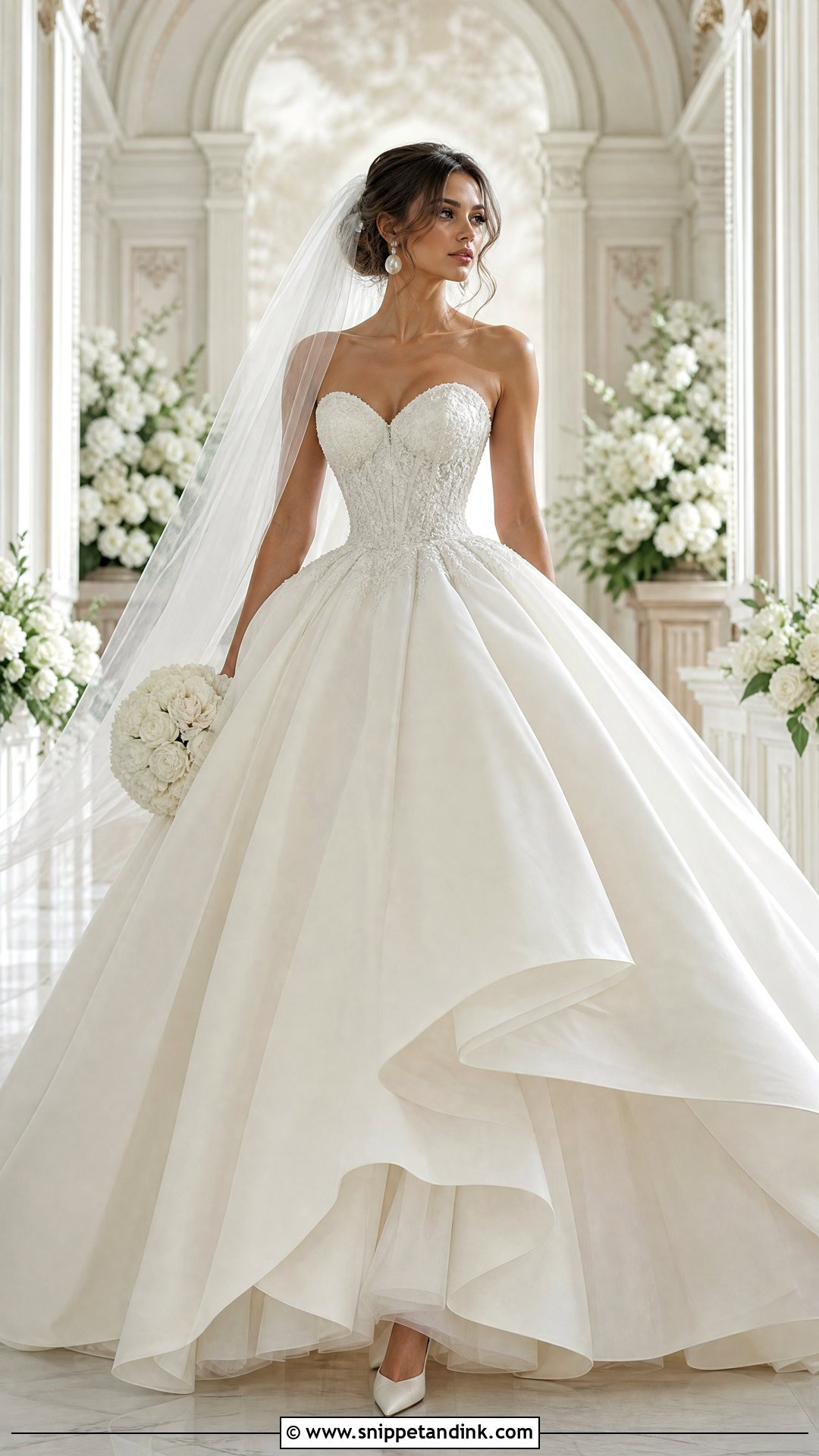
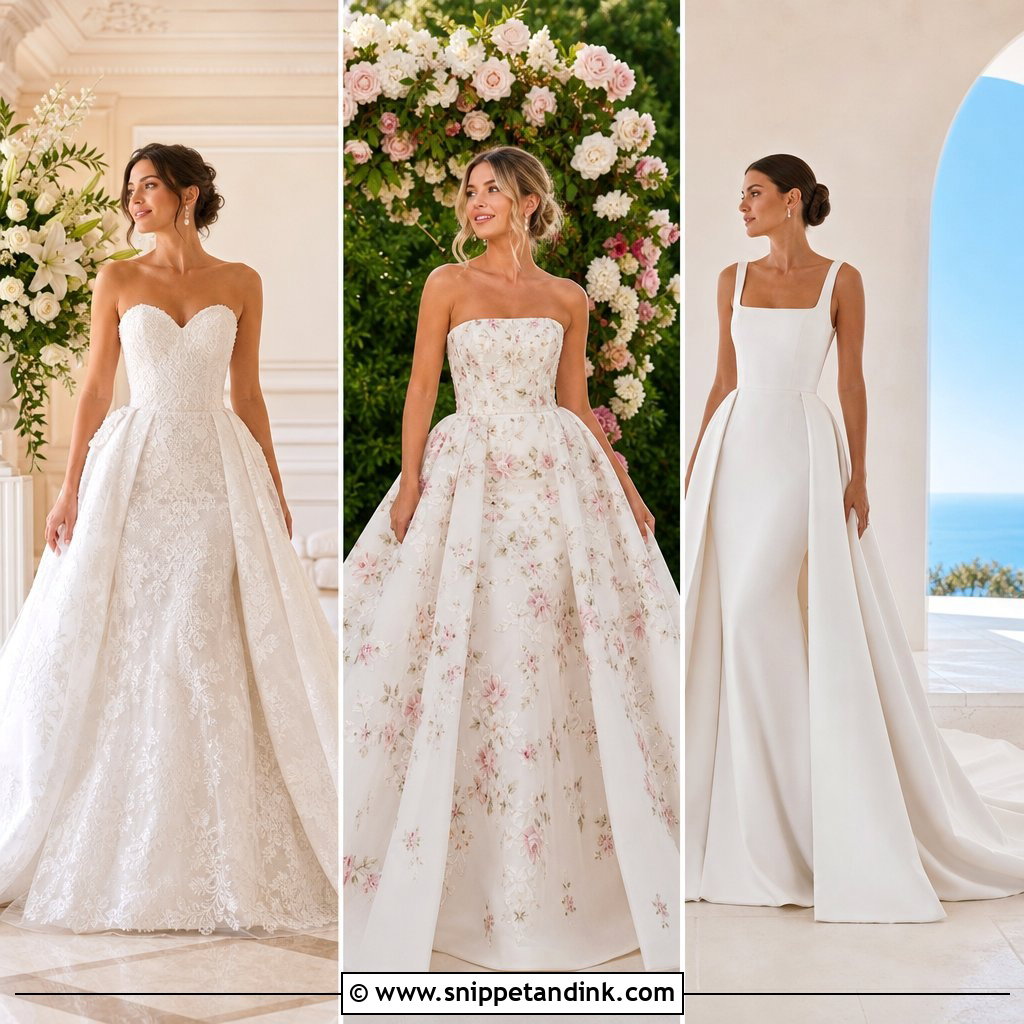
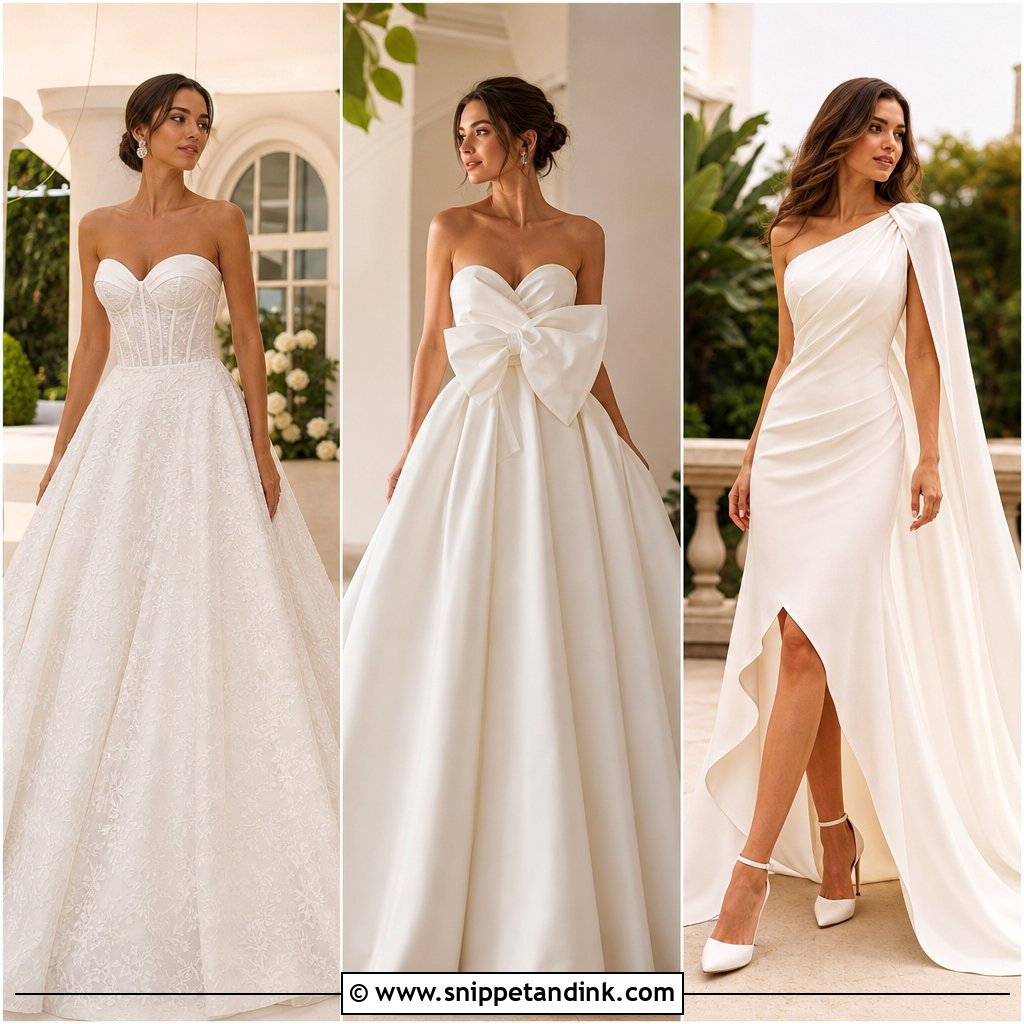
The full ball gown is the entrance dress: fitted bodice, defined waist, a skirt in tulle, organza, satin or mikado. In a large hall it has space to move and the photographer can actually get the whole silhouette in frame. I style it with a long veil, pearl earrings, a smooth low bun and pointed heels, which peek out and stop the lower half looking like a bell. If the skirt drags at you in the fitting room, ask whether it uses a hoop, a crinoline or just stacked layers; swapping one for another can take real weight out. Keep the bouquet compact and rounded.
2. Big Princess Wedding Dress
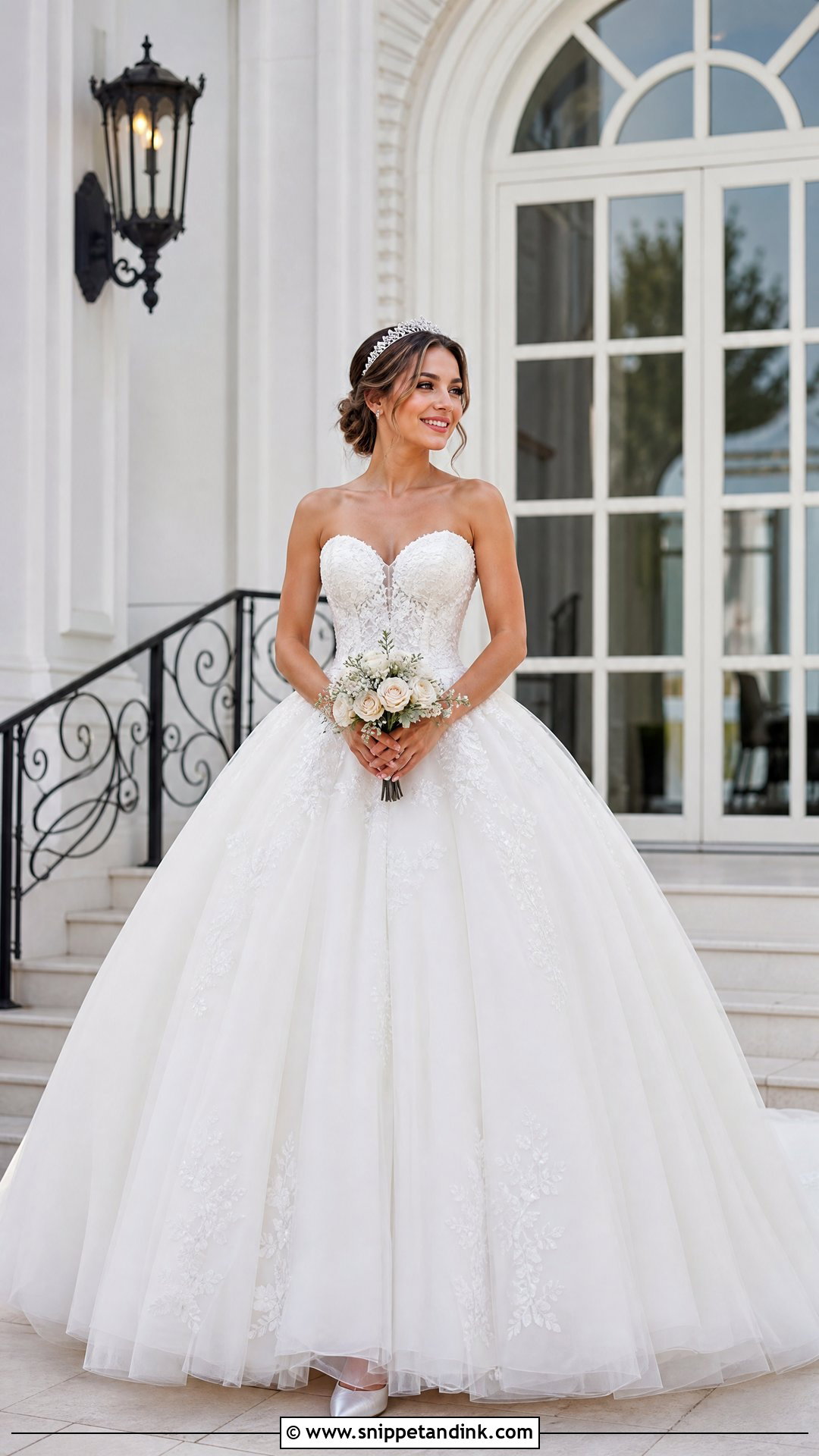
A big princess wedding dress is the fairytale shape done with restraint: sweetheart neckline, corset bodice, layered skirt. Lace appliqués, light sparkle or embroidered florals add detail, but I count them. Past a certain point the bodice starts to look crowded, especially on a petite frame. A headband with a tiara feel, small drop earrings and satin pumps keep it polished. On the veil, my rule is simple: a plain skirt can take a cathedral length, a heavily embellished one needs fingertip so the work isn’t hidden.
3. Big Tulle Wedding Dress
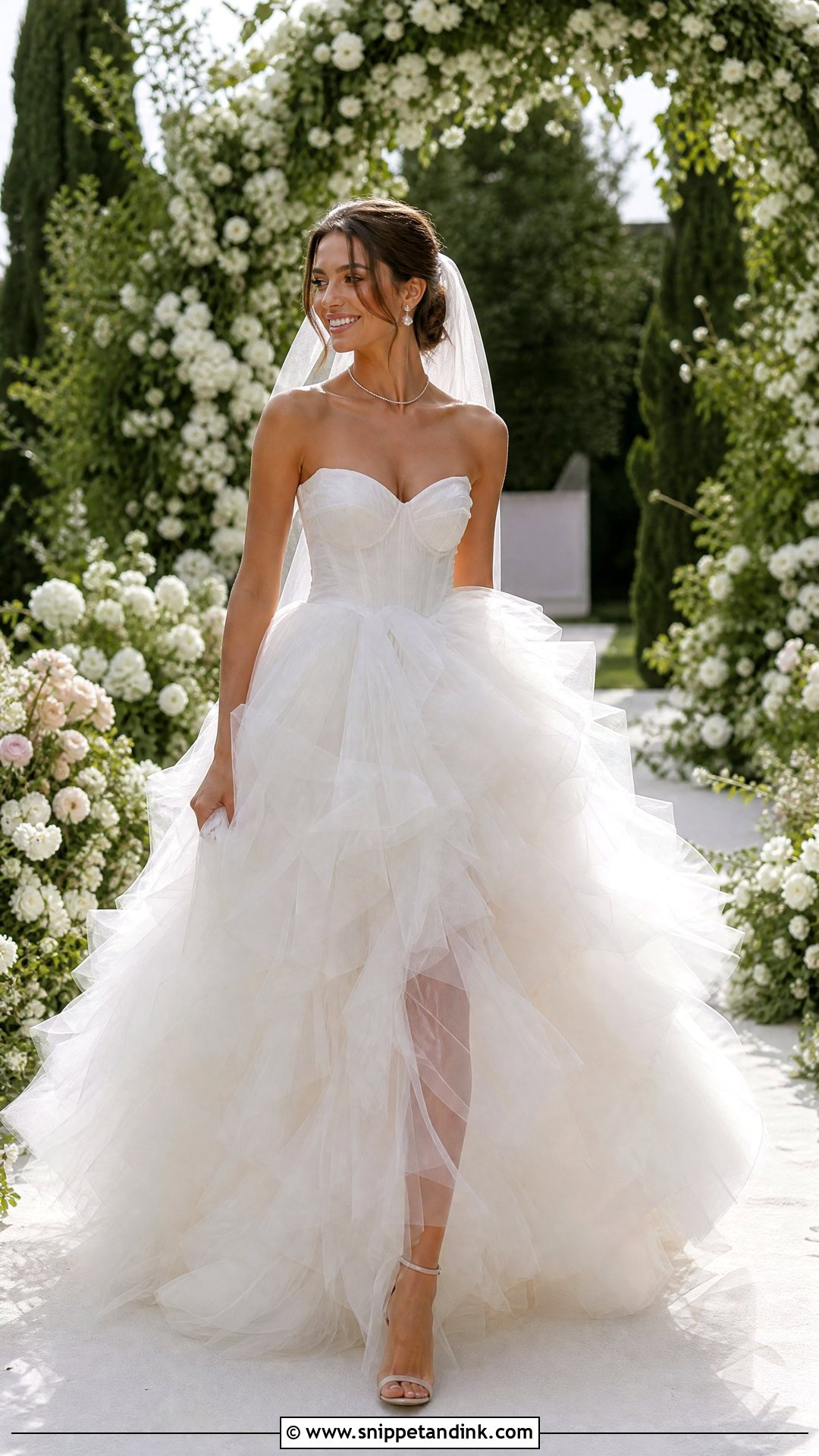
Tulle is how I give brides volume without weight. A full tulle skirt moves like smoke when you walk and catches daylight in a way stiffer fabrics don’t. A sheer corset bodice reads modern; a lined one reads classic. The catch: tulle snags on rough paving, brooch pins and velcro on a groomsman’s boutonnière, and soft tulle crushes if you sit in a car for an hour. Off-the-shoulder, scoop or strapless necklines all balance the skirt. Garden and estate venues suit it best.
4. Big Satin Wedding Dress
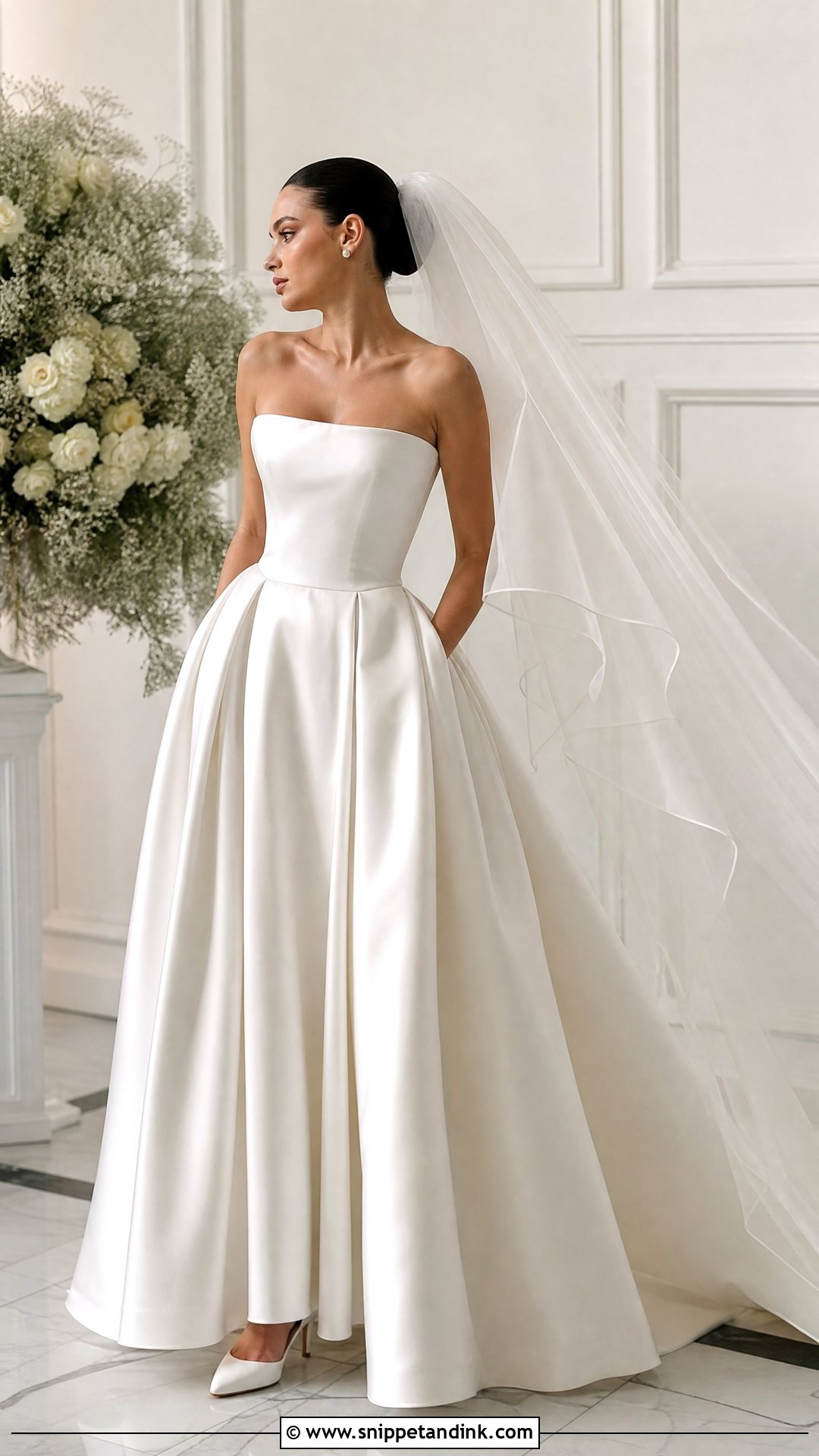
Satin is the opposite of tulle. It gives the skirt a smooth, heavy fall and very little texture, so the shape does all the talking. A strapless neckline, basque waist or square neckline keeps it clean. Because satin reflects light along every seam, any pull at the bodice shows in photos, which is why I book an extra fitting for satin gowns. A sleek bun, pearl studs, a sculptural veil and plain heels suit it. It’s the dress for a bride who wants grandeur and no embellishment at all.
5. Big Mikado Wedding Dress
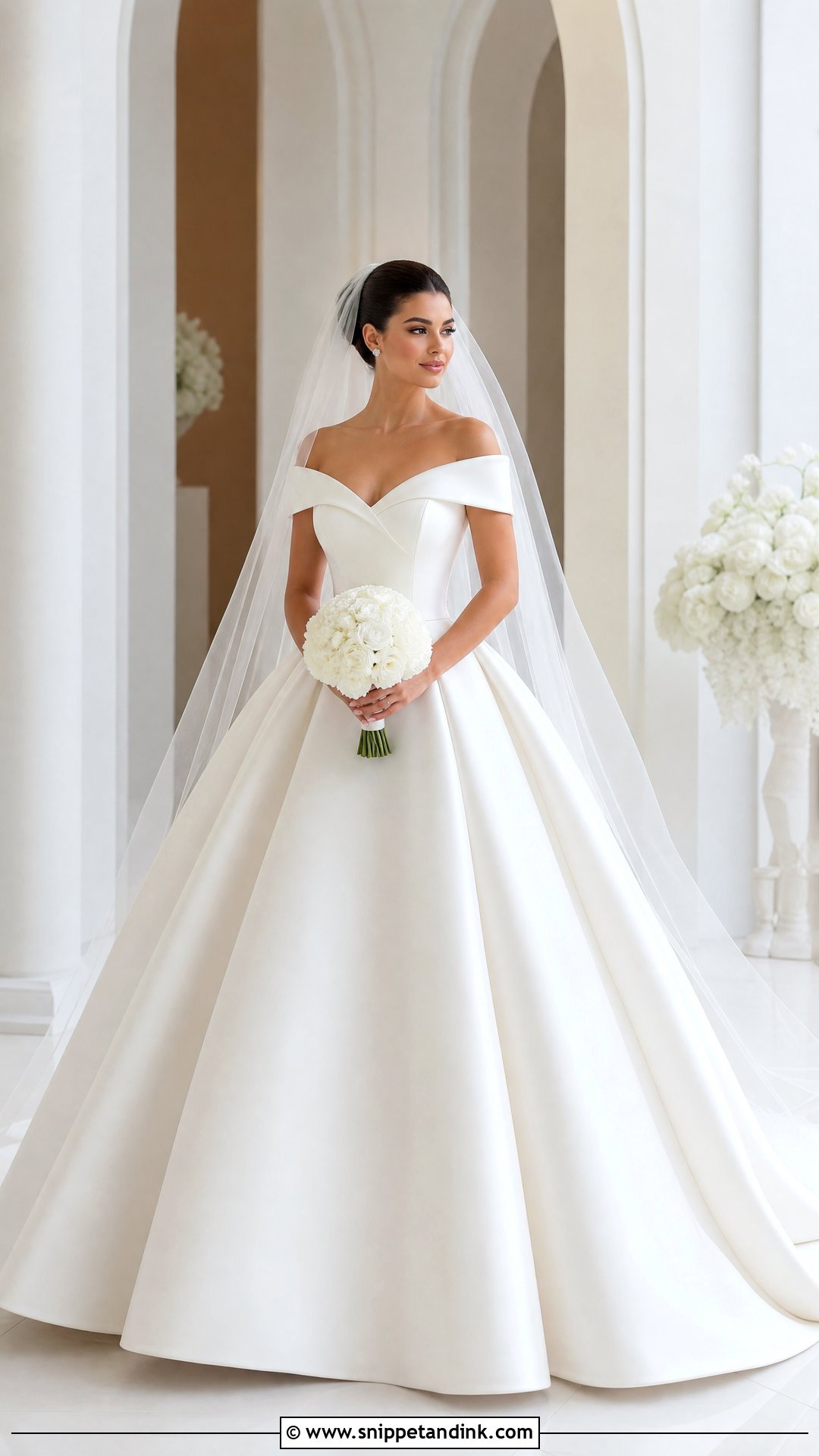
Mikado is the fabric I recommend when the shape has to hold on its own. It’s a heavy silk or silk-blend with a soft sheen, and it keeps pleats, folds and wide skirts crisp all day. A big mikado wedding dress with a fitted waist and minimal seaming looks quietly royal. A long veil, crystal studs and a structured bouquet complete it; a detachable bow, folded neckline or open back adds drama if you want it. It is warm to wear, though, so I’d keep it for formal indoor venues rather than a July garden.
6. Big Lace Wedding Dress
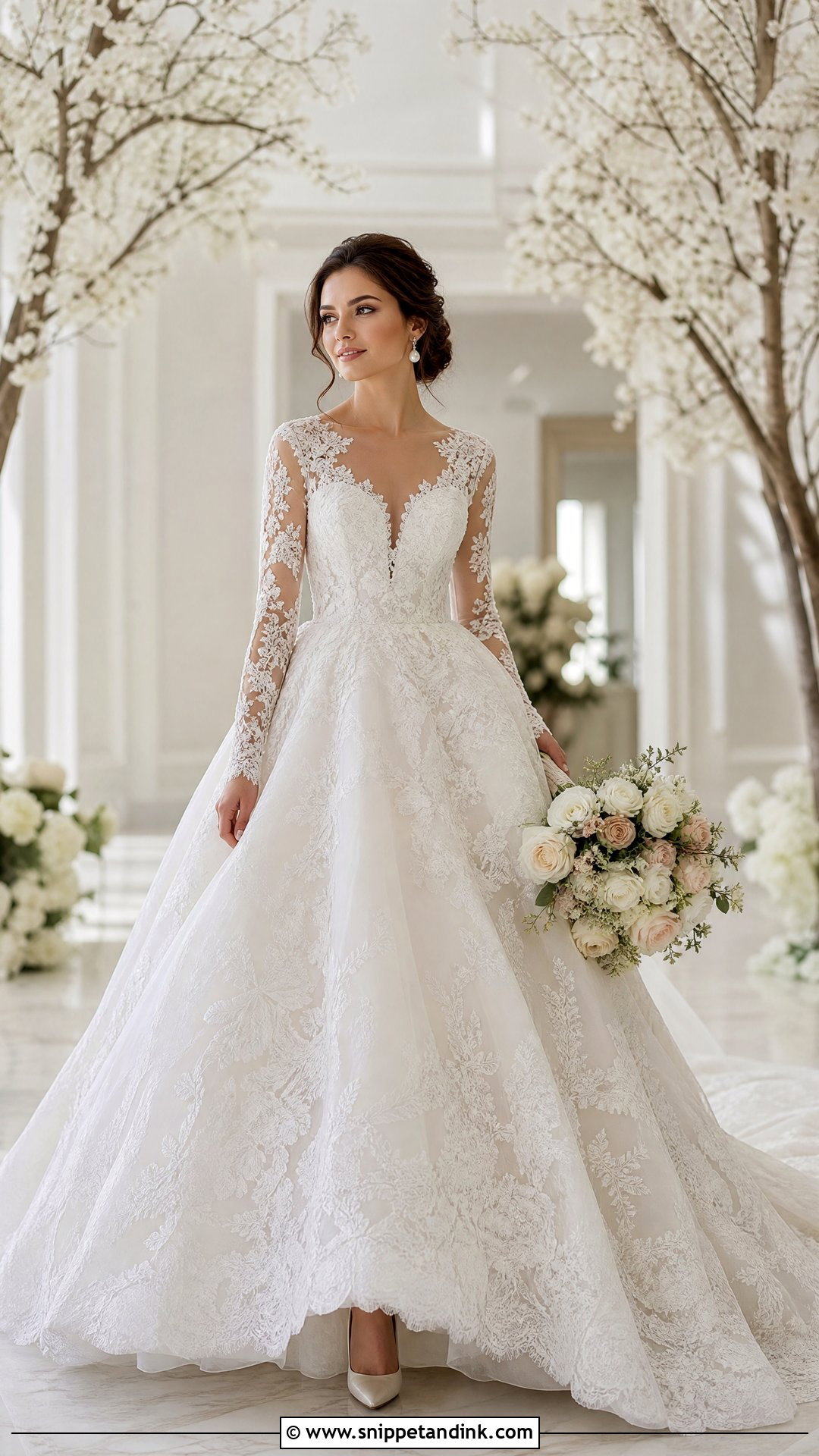
Lace changes the whole mood of a full gown depending on which kind you pick. Chantilly lace is fine and soft, almost vintage; bold guipure-style florals look much more modern. A full lace ball gown is a lot of pattern, so I balance it with a plain veil and very little jewellery. Long lace sleeves work in cooler months, a strapless lace bodice keeps it lighter. If you want more waist, ask for lace placed to run toward the centre front, it reads as shaping.
7. Big Sparkly Wedding Dress
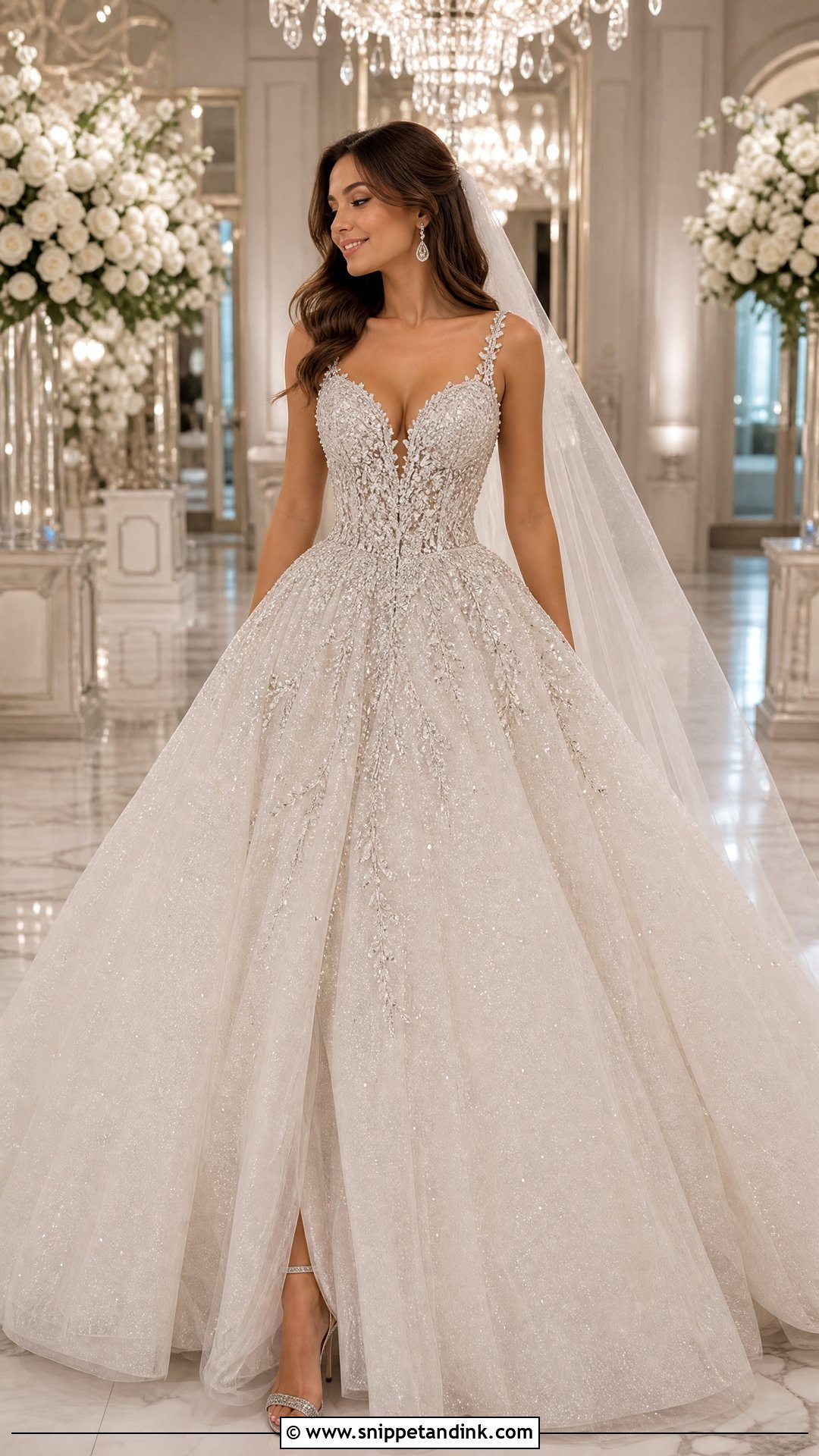
Sparkle on a full skirt multiplies fast. Glitter tulle, crystal embroidery, sequins or beaded appliqués over all that fabric can easily outshine your face, so I always pick one focal zone: bodice, skirt or train, never all three. Simple earrings, soft waves and a clean veil let the dress do its job. Silver-toned accessories sharpen bright white; pearls soften ivory. This one comes alive under evening lighting and in grand halls, and can look flat in grey daylight.
8. Big Off The Shoulder Wedding Dress
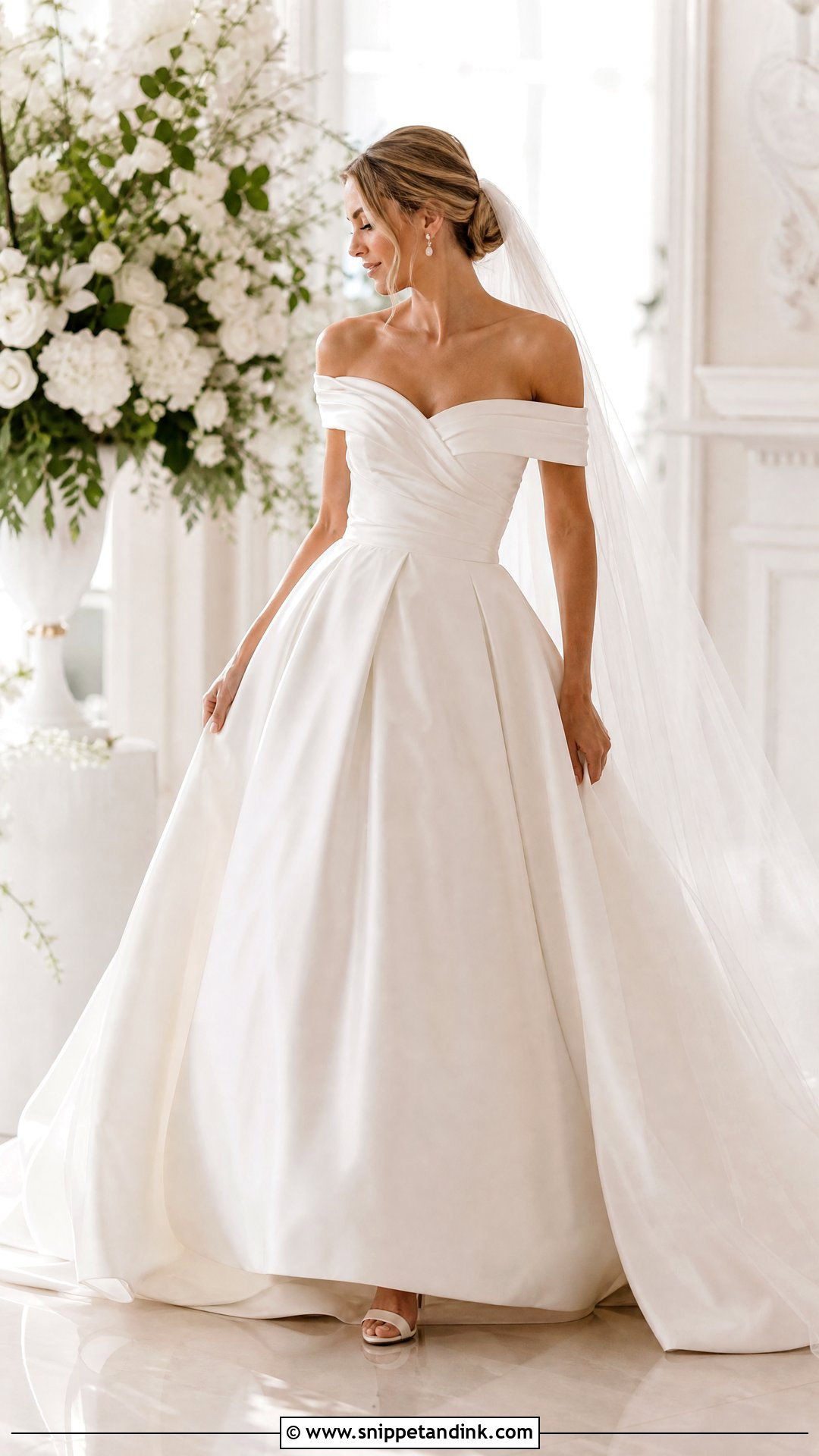
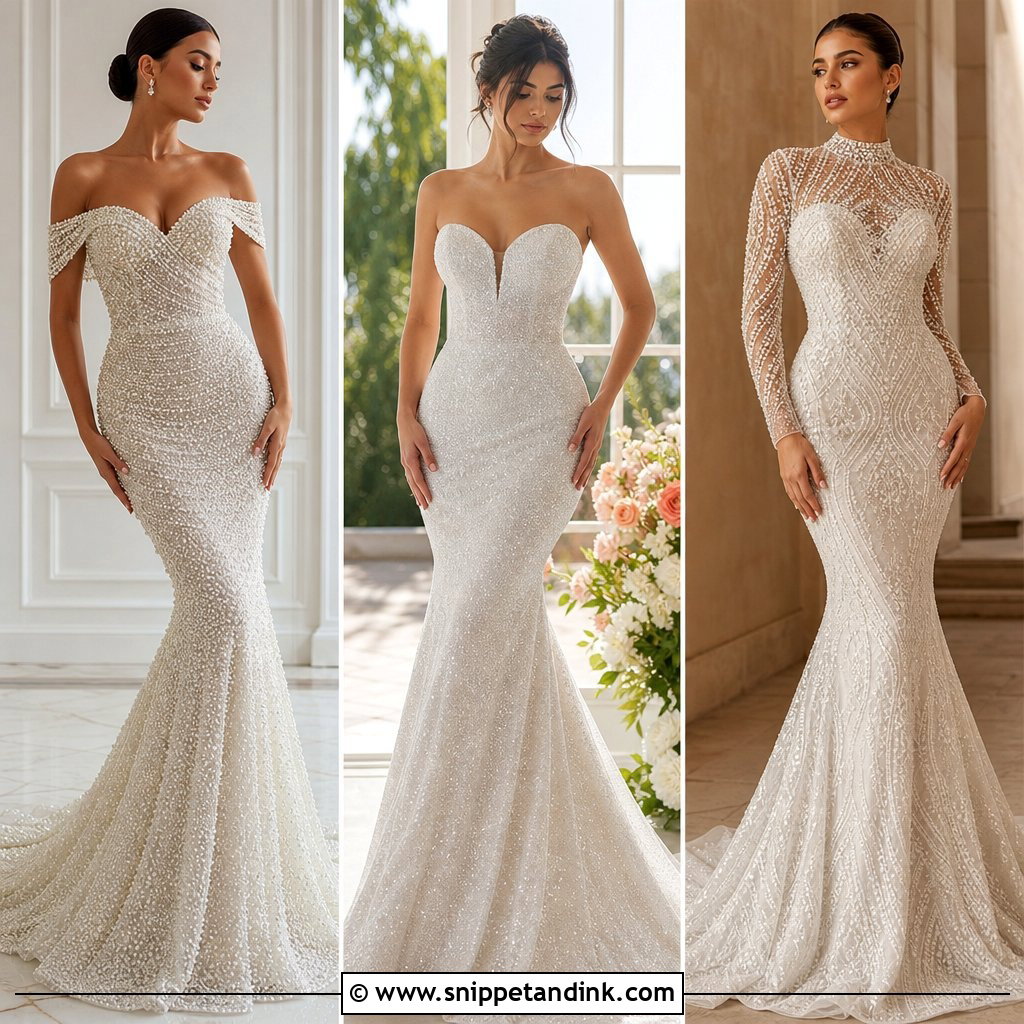
An off-the-shoulder neckline softens a big skirt and frames the collarbone. It works in satin, lace, tulle or mikado. The part brides don’t think about is hugging. Every time you raise your arms, a poorly built off-the-shoulder bodice rides up or slides down, so I insist on proper internal structure, boning plus a grip band, and I make you hug me in the fitting room. A low bun, small earrings and a veil set under the hair complete it. The full skirt and bare shoulders together give that hourglass outline.
9. Big Long Sleeve Wedding Dress
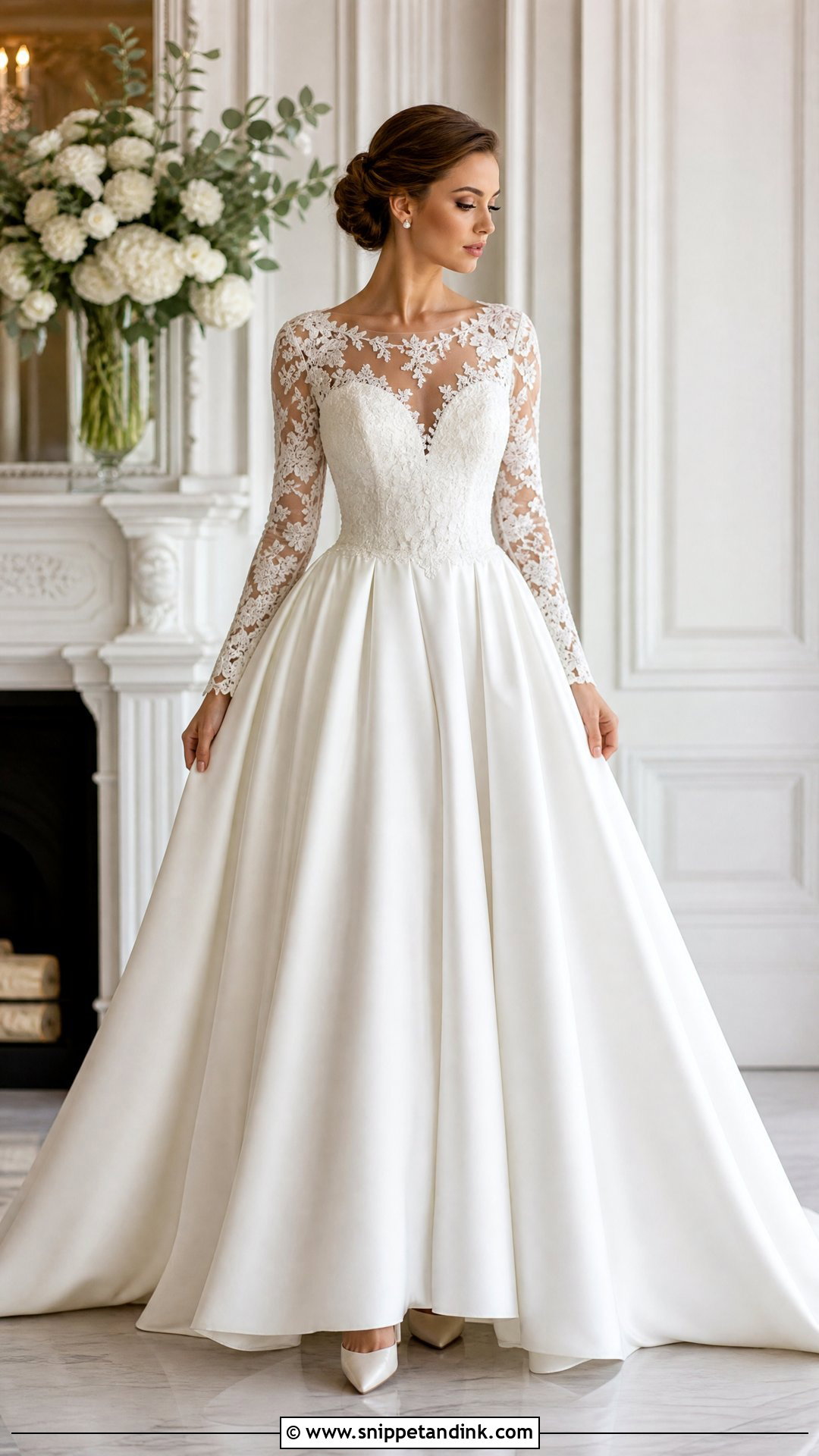
Long sleeves make a full gown feel considered rather than just big. They can be sheer lace, fitted satin, puffed organza or lightly beaded tulle. Sleeves are also where most fit complaints come from. A sleeve set too narrow at the armhole means you can’t lift a glass or hug your mother, so at every fitting I ask you to raise both arms, sit and reach forward. Keep the neck clear if the sleeves are detailed. A clean updo, small pearl earrings and pointed heels round it out for autumn, winter and formal indoor weddings.
10. Big Corset Wedding Dress
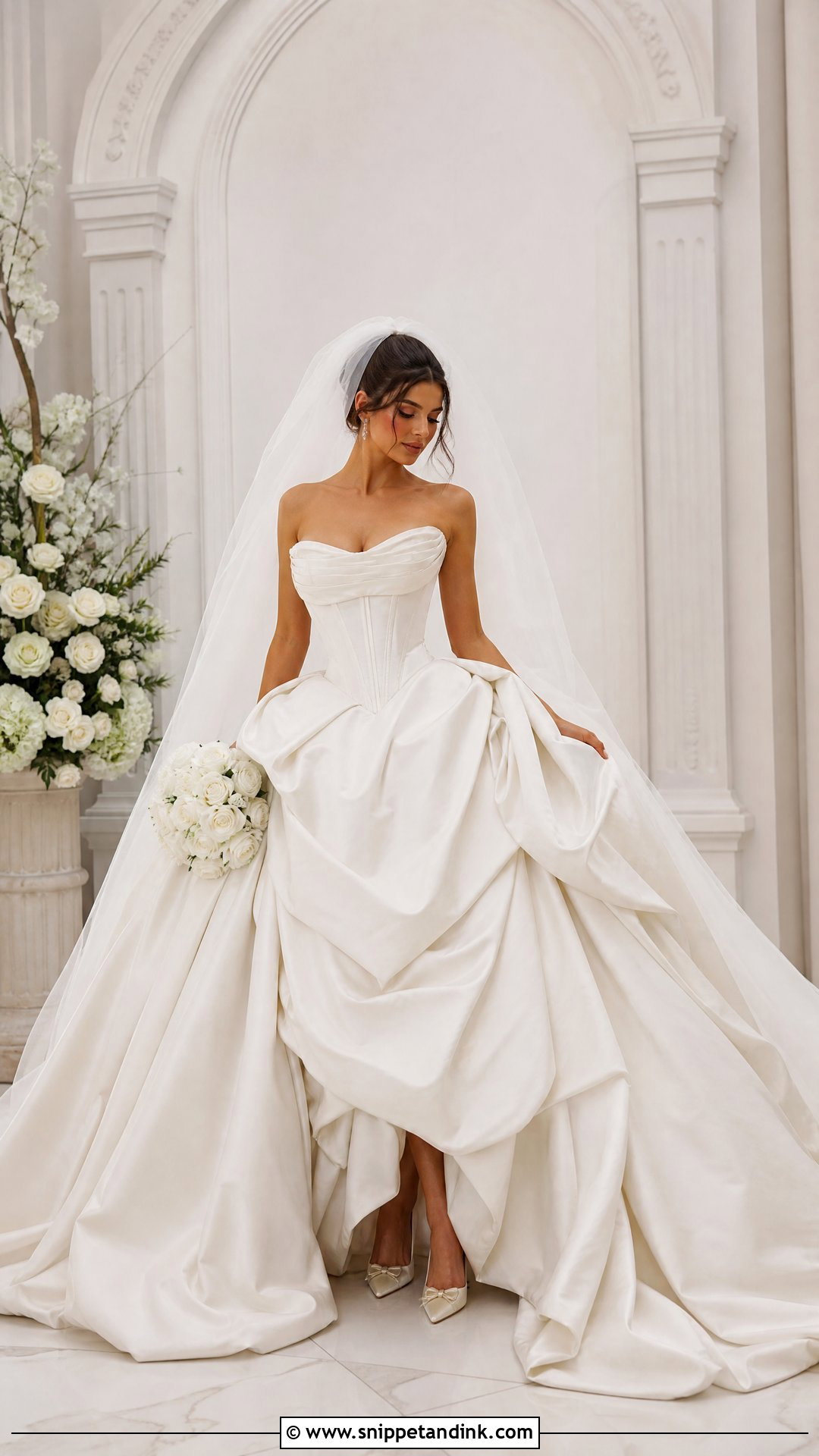
A corset bodice is what holds a big skirt up properly. It defines the waist, supports the bust and stops the weight of the skirt pulling the bodice down. Visible corsetry is the fashion-forward version; a fully lined one is classic. The comfort question is in the boning. I ask the seamstress to check where each bone sits against your ribs and how tight the waist is after you’ve eaten, since a corset fitted on an empty stomach can feel very different at 9pm. A big veil, soft glam makeup and simple heels are all it needs.
11. Big Drop Waist Wedding Dress
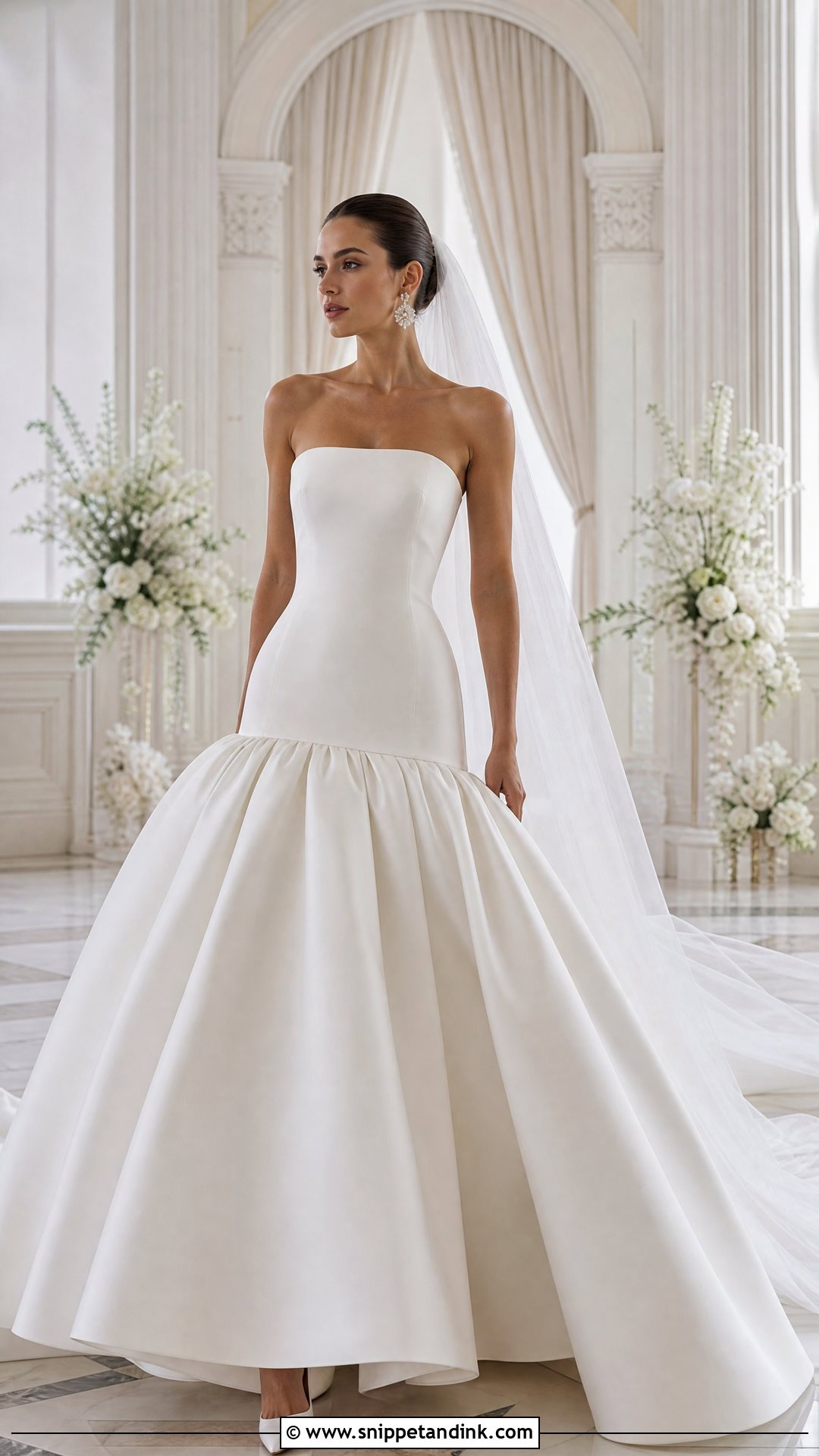
A drop waist has a long bodice that sits below the natural waist before the skirt opens out. It looks vintage and very current at once. Satin, mikado and structured tulle give the skirt the clean release point this shape needs; floppy fabrics make it look like it’s slipping. I’d be careful on petite brides: a deep drop can shorten the legs visually, so I’ll often soften it by an inch or two. A smooth hairstyle, sculptural earrings and a long veil all draw the eye upward.
12. Big Basque Waist Wedding Dress
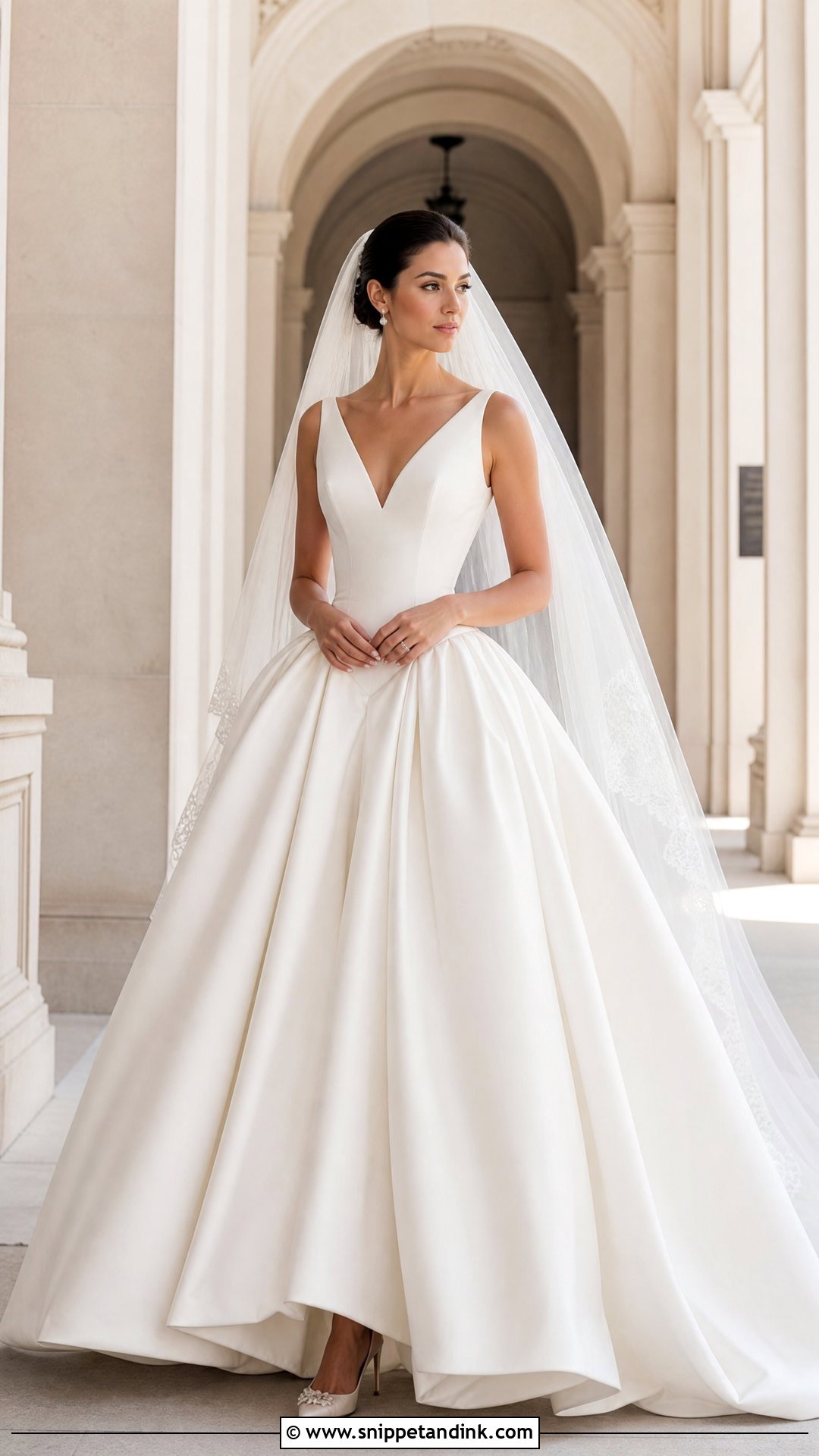
The basque waist dips into a V at the centre front, and that point is doing a lot of work. It lengthens the torso and gives you ball-gown fullness with real shape through the middle. In satin or mikado it looks formal; in lace it softens. Styling tip from the fitting room: hold the bouquet a little lower than usual so it doesn’t sit right over the point of the V and hide it. A cathedral veil and pearl earrings complete a properly grand ceremony look.
13. Big Floral Applique Wedding Dress
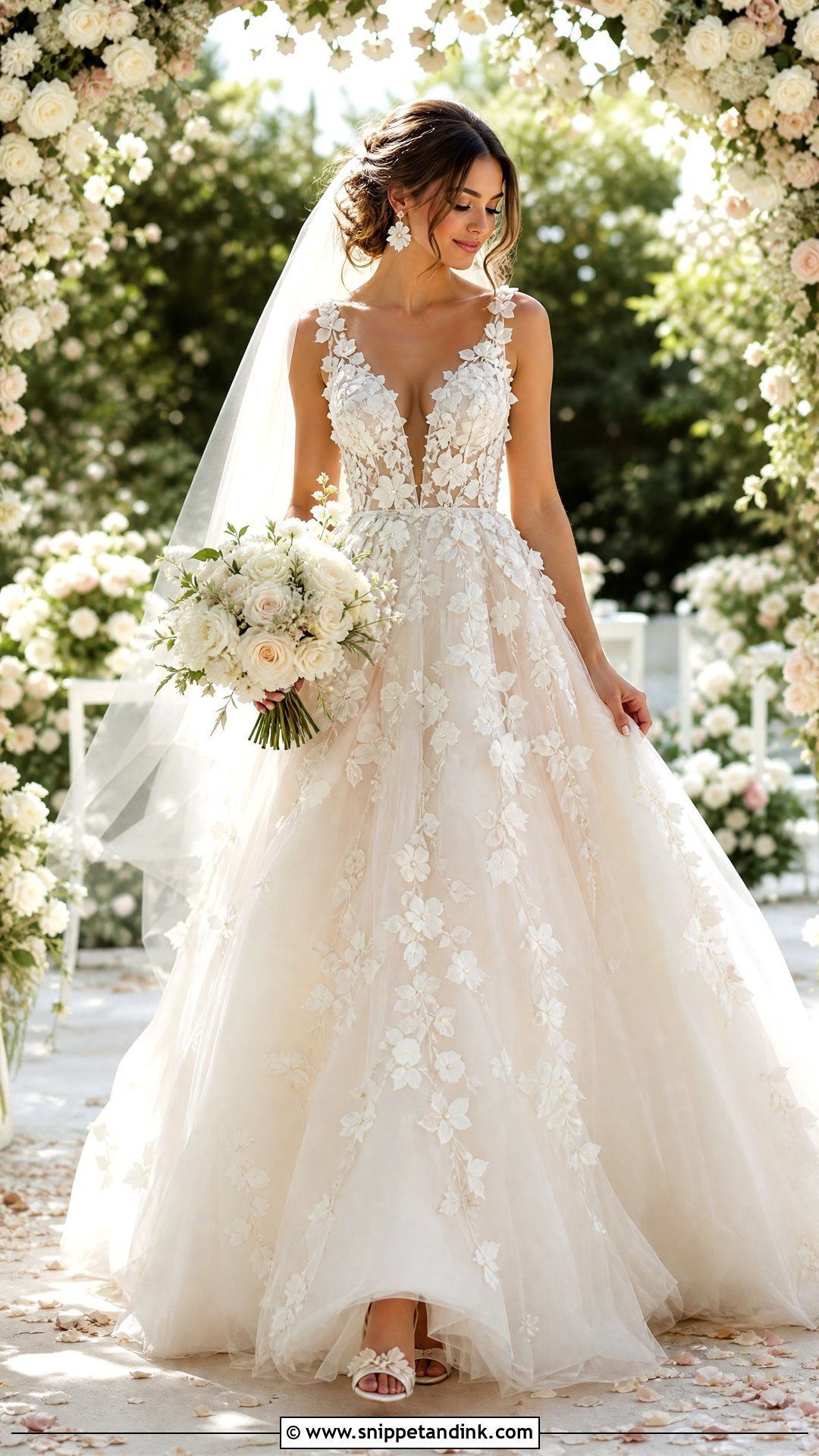
Three-dimensional floral appliqués give a full skirt depth: flowers trailing over the bodice, scattered on the skirt or framing the train. I keep them tone-on-tone, ivory or champagne on the base fabric, because contrasting flowers on that much skirt start to look like a print. Floral earrings, soft waves and a sheer veil that doesn’t bury the detail suit it. Go plain with the bouquet, white blooms or greenery, otherwise you end up with flowers on flowers.
14. Big Ruffle Wedding Dress
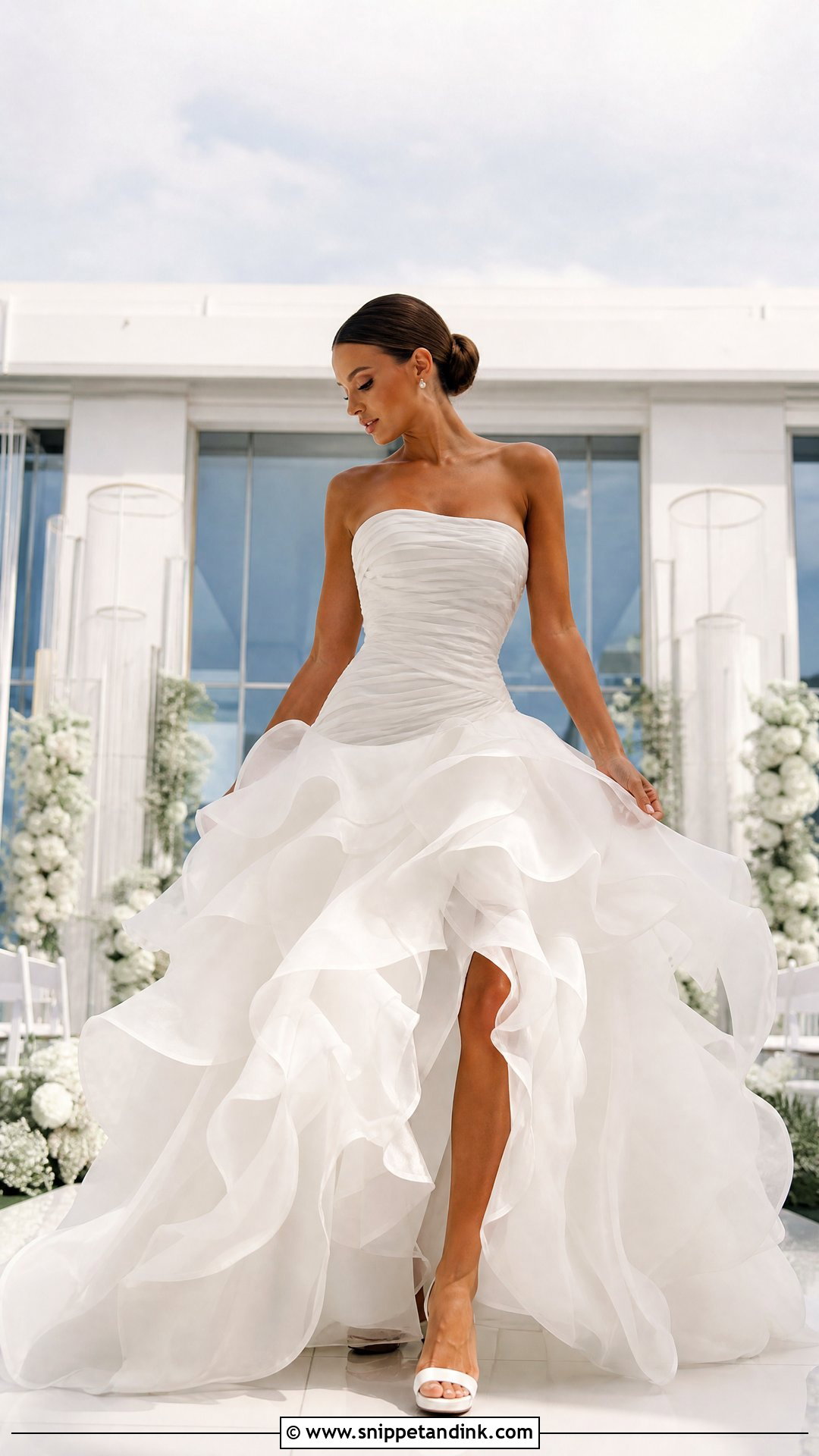
Ruffles give movement without beading or stiff fabric. Cascading tiers swing as you walk, and they look best from the side and back, so I check the train’s shape as carefully as the front. A simple bodice, strapless, square or off-the-shoulder, stops the whole thing from tipping into costume. Minimal jewellery and sleek hair. One practical thing: ruffles crush when packed, so the gown needs to be steamed on site, not just pressed at the shop days before.
15. Big Tiered Wedding Dress
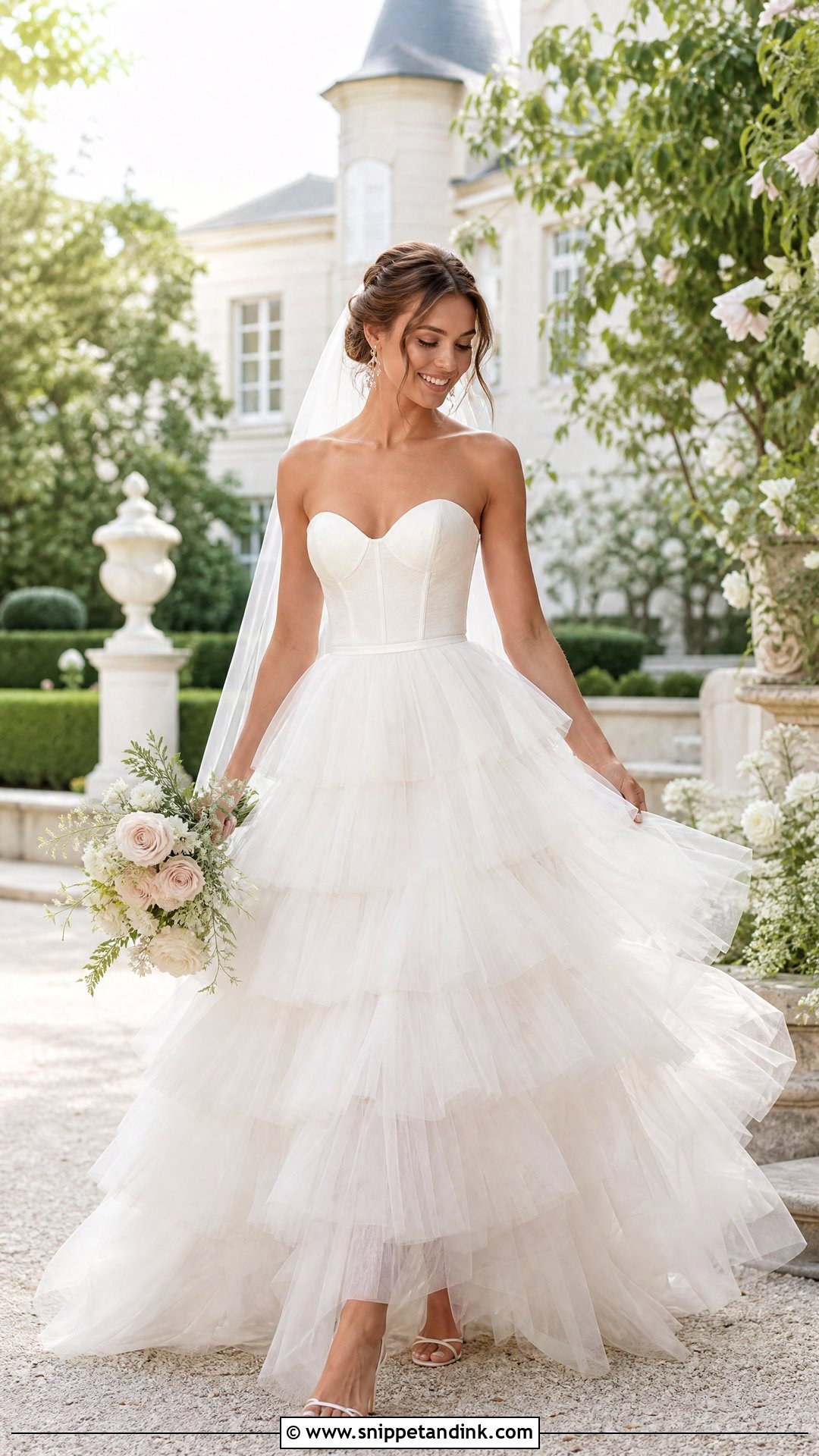
Tiered skirts stack horizontal layers for volume and texture. In tulle they float, in organza they hold a crisp edge, in lace they feel romantic. Horizontal lines can shorten the figure, so on shorter brides I look for finer tiers that start lower on the skirt. Pair with a fitted bodice, a simple veil and delicate earrings. Walking is where it shows off, because each layer moves on its own timing.
16. Big Bubble Skirt Wedding Dress
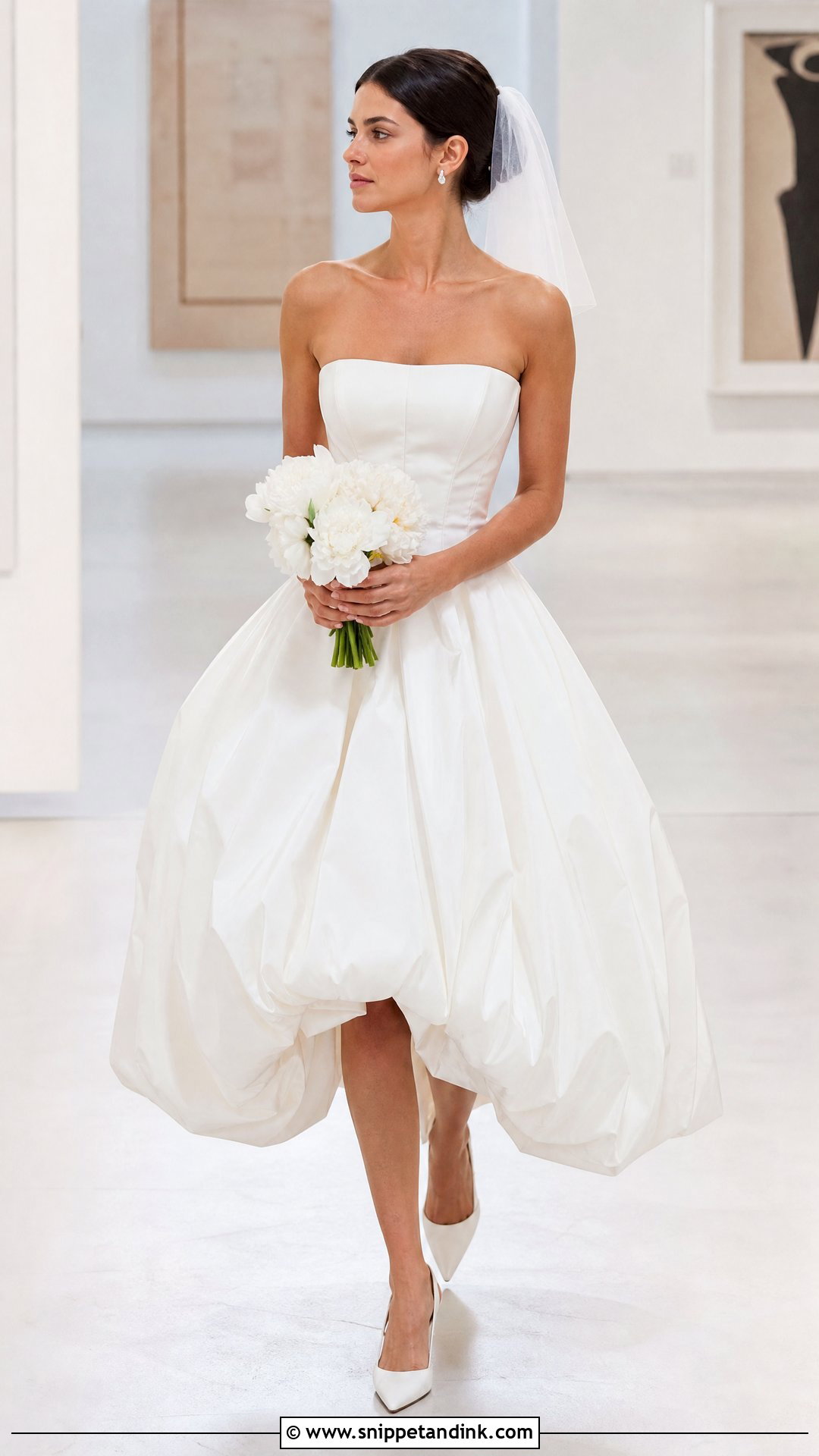
A big bubble skirt wedding dress is the most sculptural option here. The gathered, rounded volume stands apart from any traditional ball gown, so the bodice needs to be simple and fitted. Clean heels, sleek hair and small modern earrings are plenty. Check the length carefully: a bubble hem that hits mid-calf can look unfinished with the wrong shoes, which is a fitting-room conversation worth having. Short veil or plain long veil, depending on the train, and no extra detail beyond that.
17. Big Bow Wedding Dress
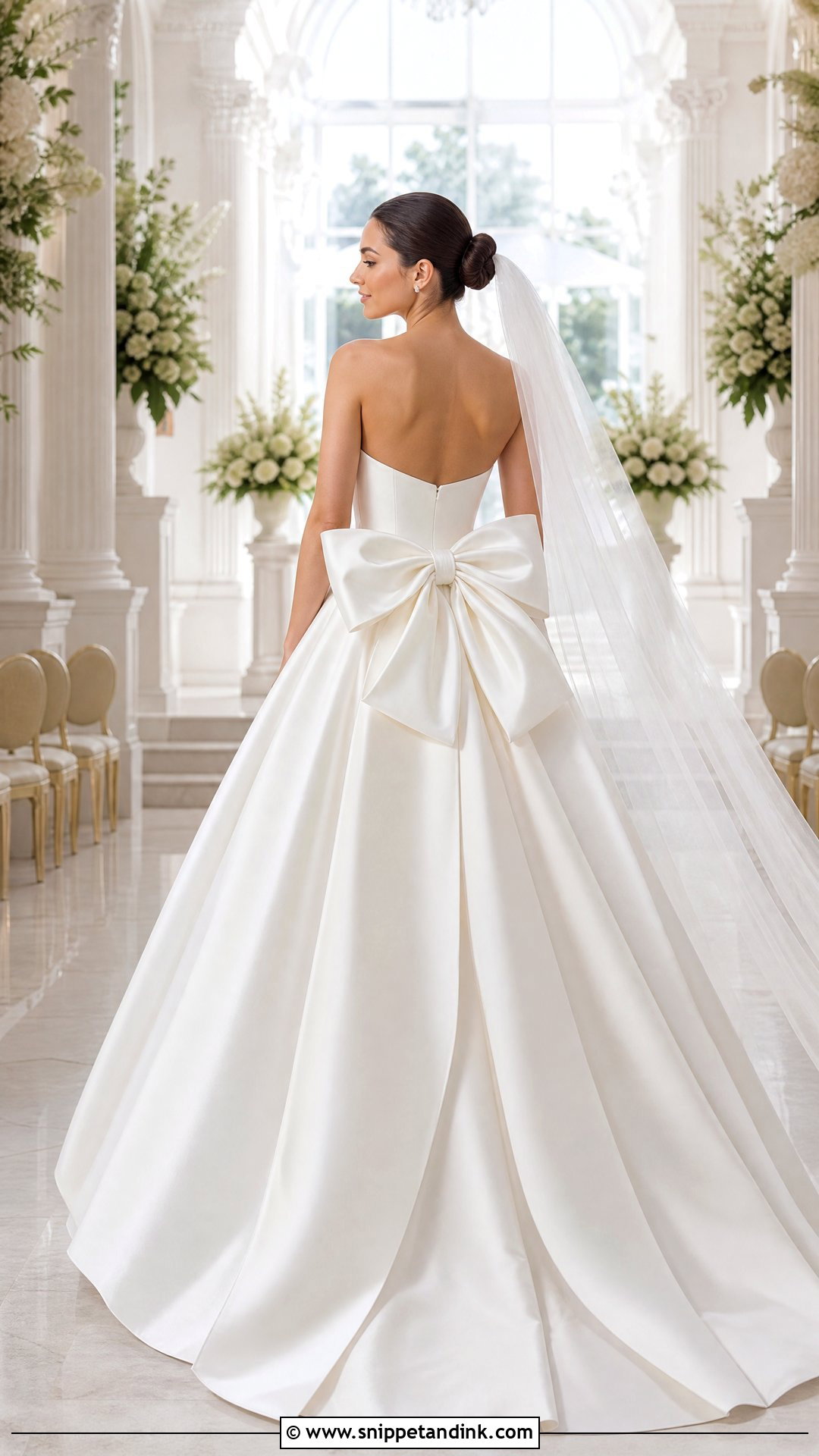
A big bow wedding dress puts the drama in one detail. At the back waist on a structured satin gown it’s classic; as an oversized bow at the shoulder it’s editorial. The thing I solve first is the veil, because a large back bow and a veil comb fight for the same space. I attach the veil above the bow or choose one short enough to sit over it without flattening it. A neat bun and plain heels keep the focus on the back view.
18. Big Train Wedding Dress
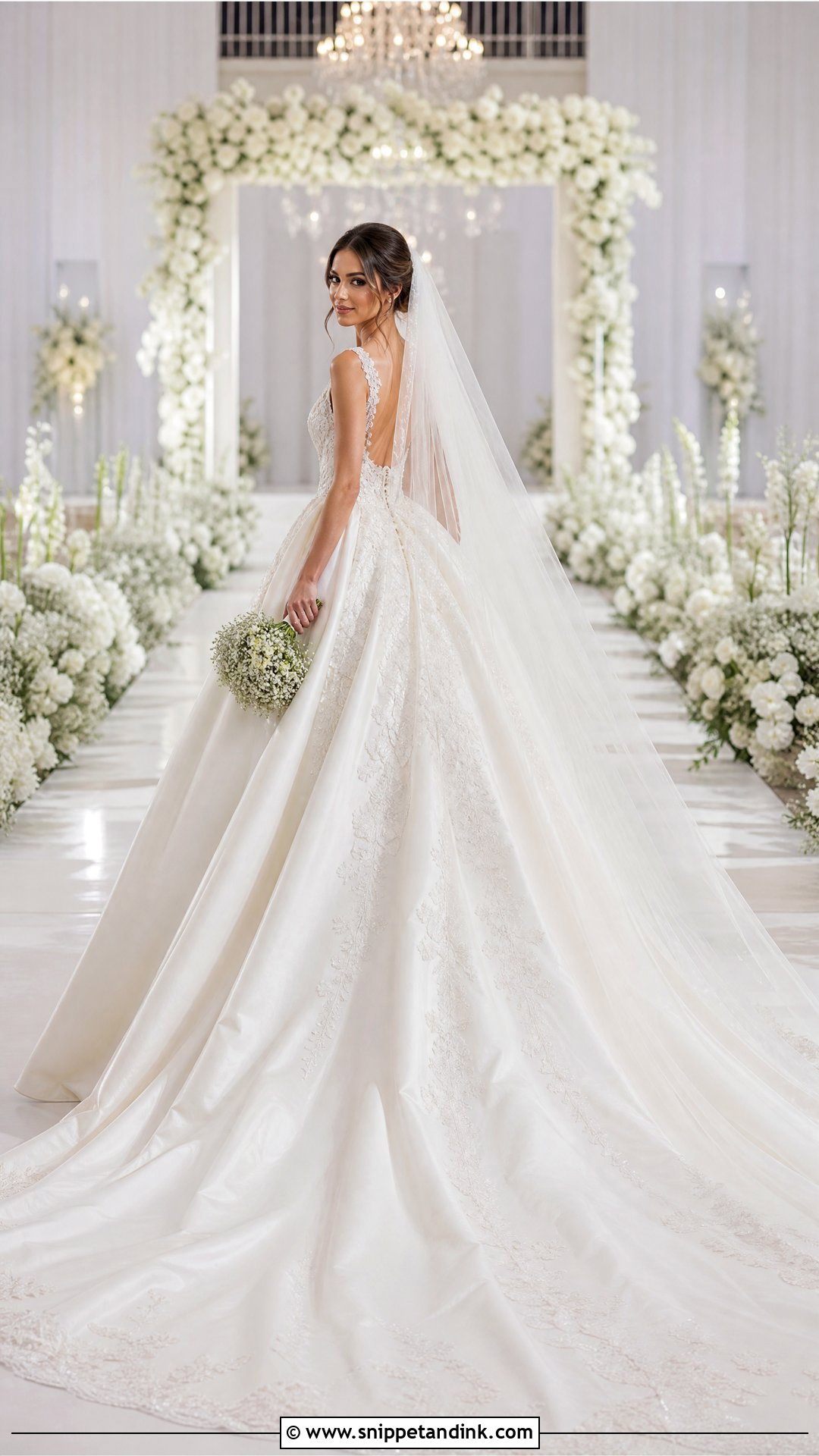
A long train is ceremony drama without any added sparkle. A cathedral or royal-length train needs a wide aisle and a venue where it can spread out; in a narrow chapel it just bunches. Before you buy, ask what bustle it takes and how many points it has, because you’ll want your hands and feet back after the ceremony. Shoes need to grip, since a heavy train pulls backward on every step. A long veil and an elegant updo complete the formal portrait look.
19. Big Detachable Overskirt Wedding Dress
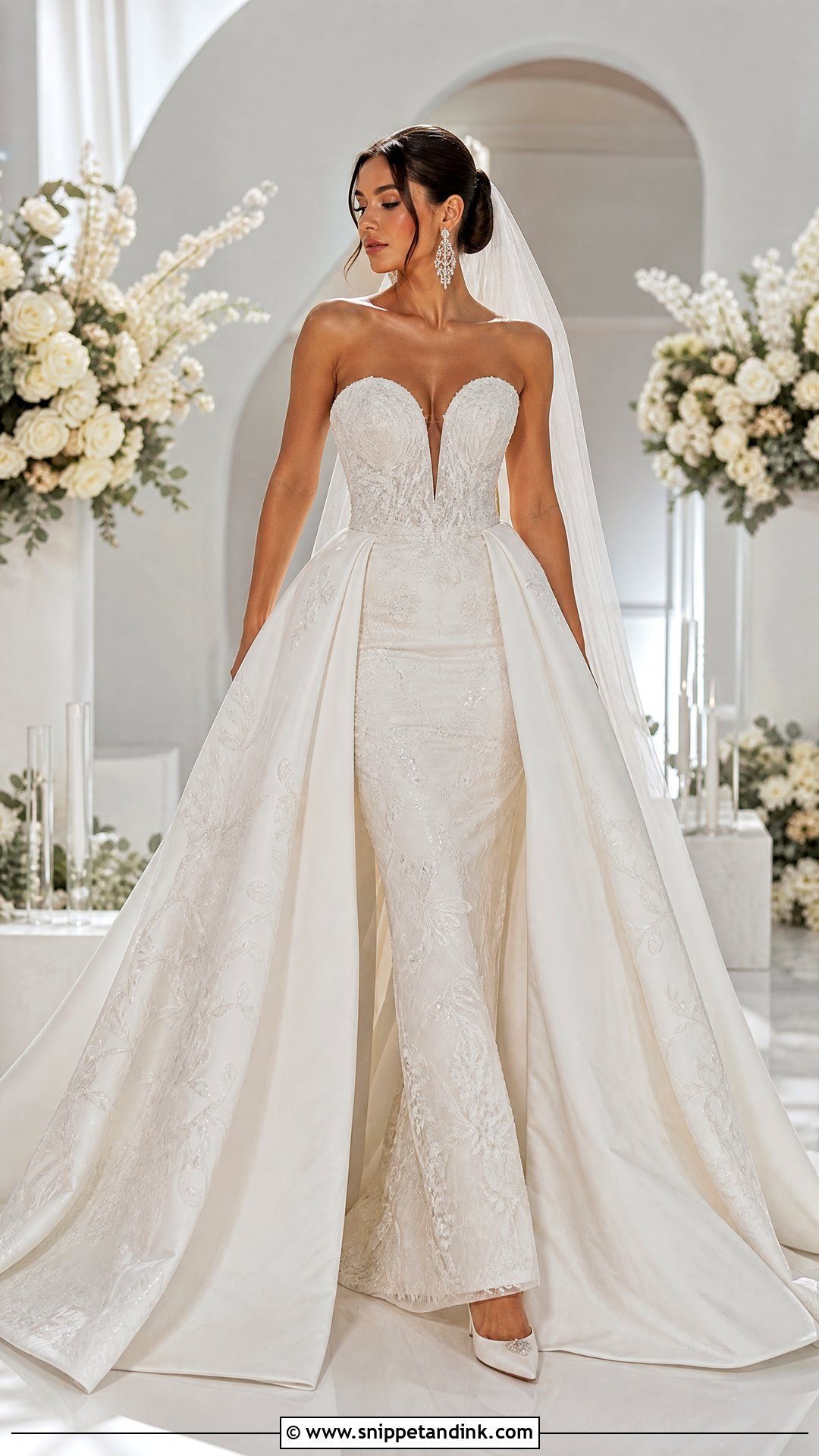
A detachable overskirt gives you two dresses: full volume for the ceremony and portraits, then a lighter base for dancing. The base can be a fitted column, an A-line or even a mini. I check two things at fittings. The attachment points need to be secure enough to survive the walk and hidden well enough that nobody sees hooks in photos. And someone other than you needs to practise taking it off, ideally twice, because the change usually happens in a rush. Switch to bolder shoes or a shorter veil for the second half.
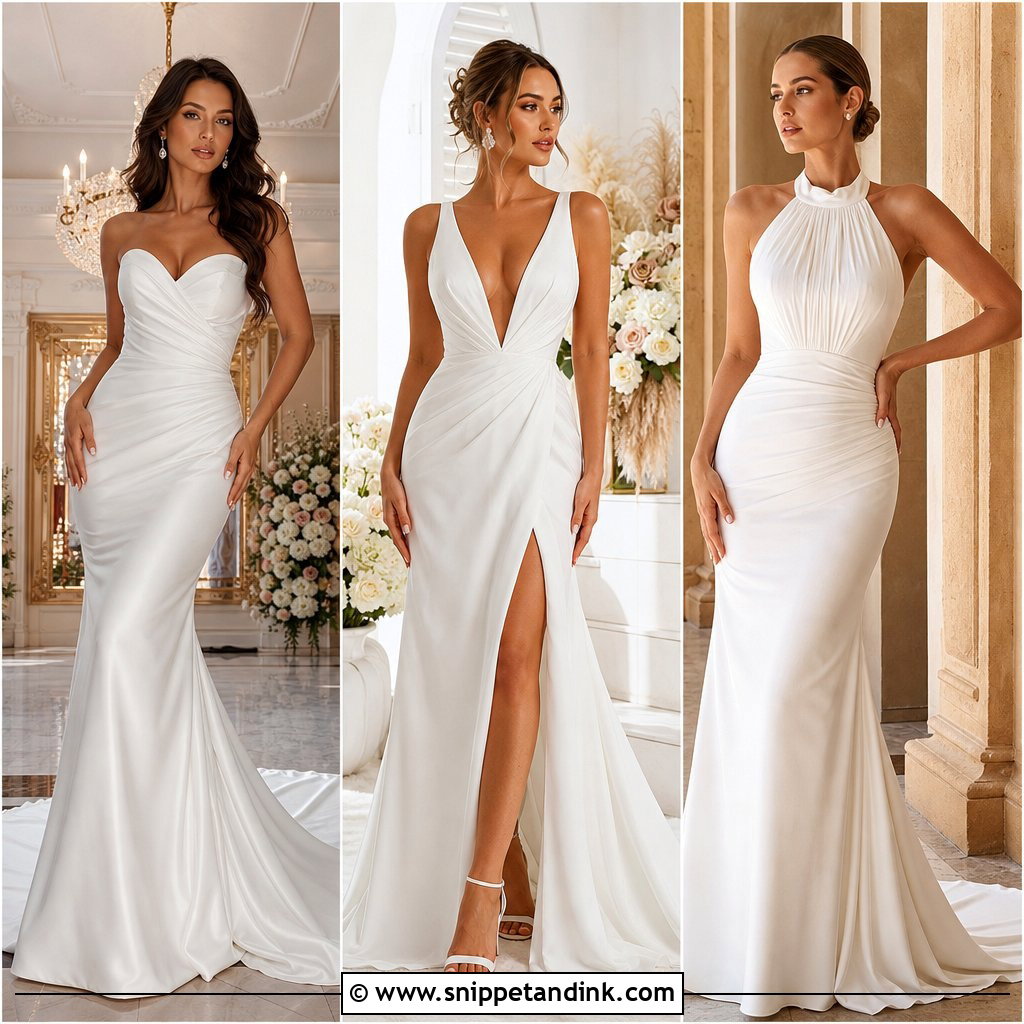
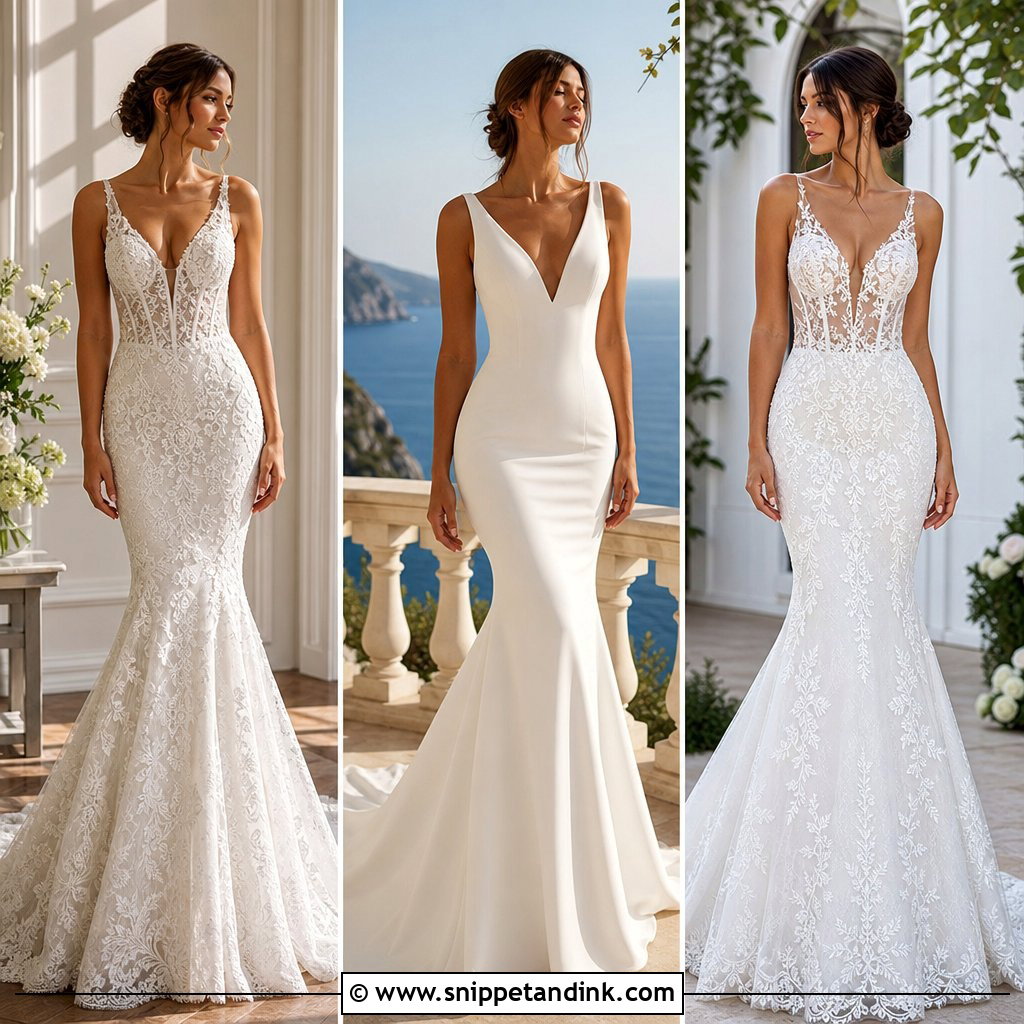
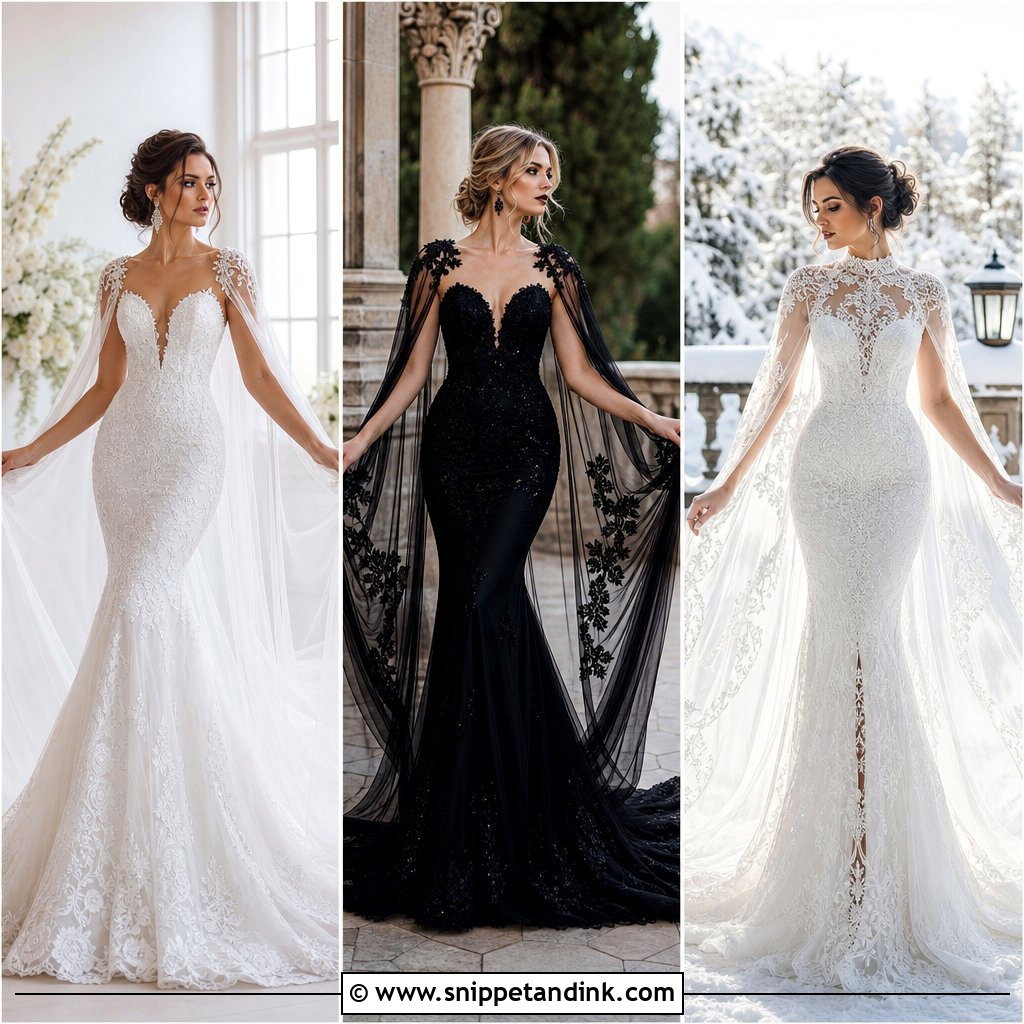
20. Big A Line Wedding Dress
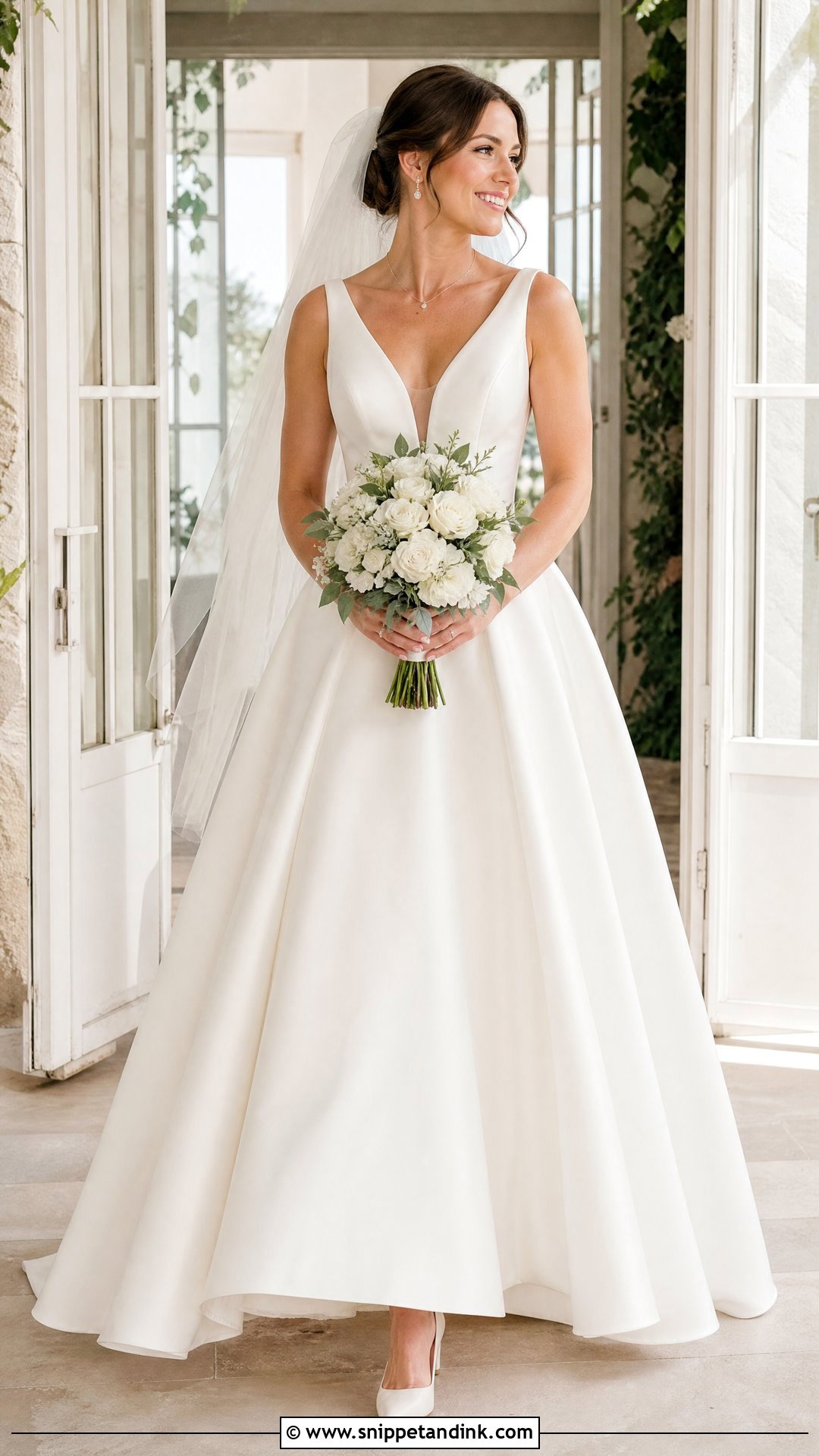
The A-line is the middle ground I steer most brides toward when they want volume but also want to sit down comfortably. Fullness through the skirt, a defined waist, and fabric that flows away from the hip rather than sitting out from it. Lace, satin and tulle all work. A medium-length veil, delicate jewellery and heels you can stand in. If it feels too quiet, adding a petticoat under it gives a little more width without changing the dress.
21. Big Organza Wedding Dress
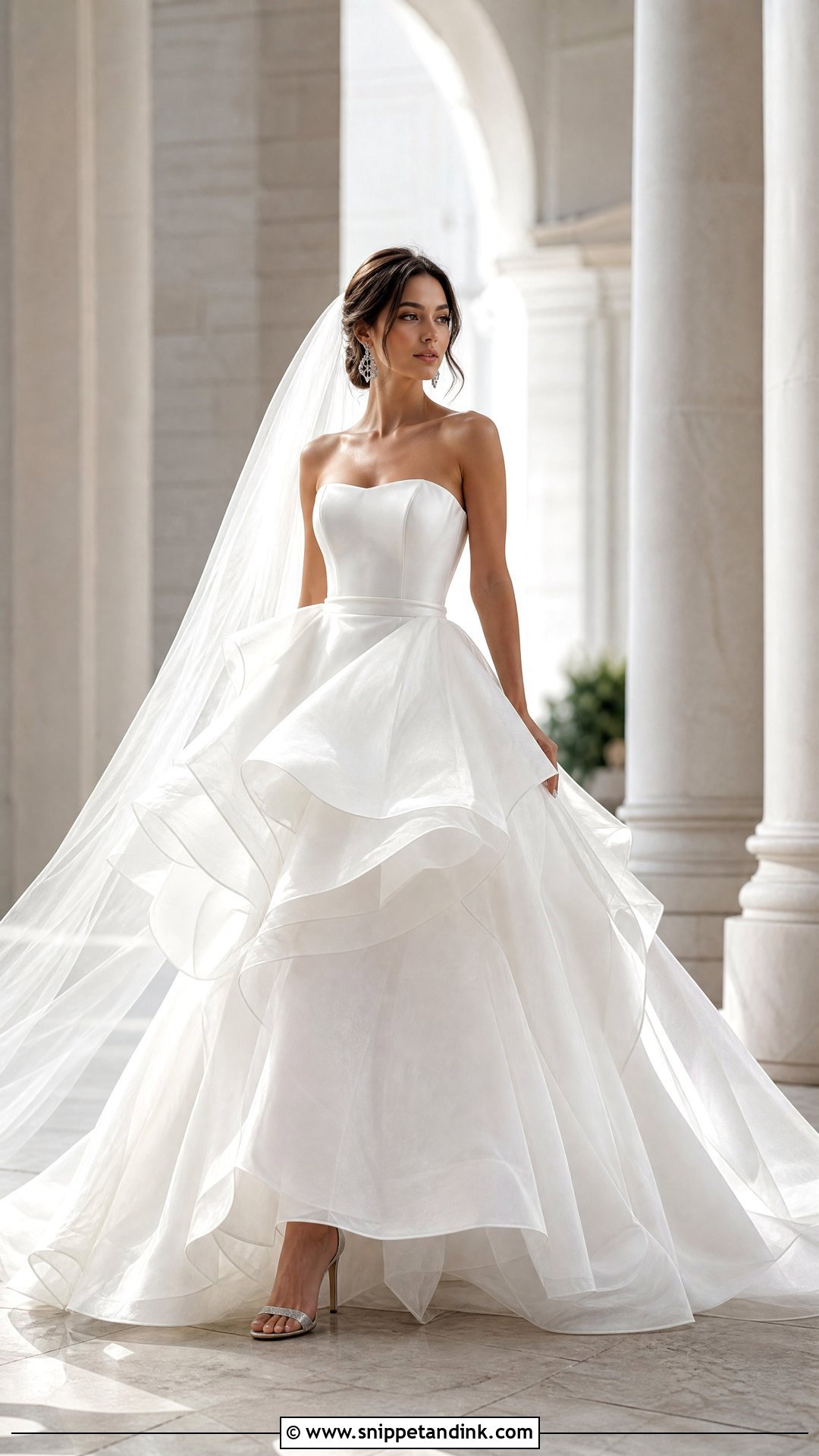
Organza sits between tulle and satin: crisp, airy, and better at holding volume than soft tulle. It takes layered skirts and sculpted folds well. A plain bodice keeps it modern; floral appliqués or subtle shimmer make it softer. Its sheerness shows in bright light, which is lovely outdoors, but it also shows every crease, so I tell brides to keep it hanging until the last possible minute. Clear or satin heels, a sleek veil and polished earrings complete it.
22. Big Beaded Wedding Dress
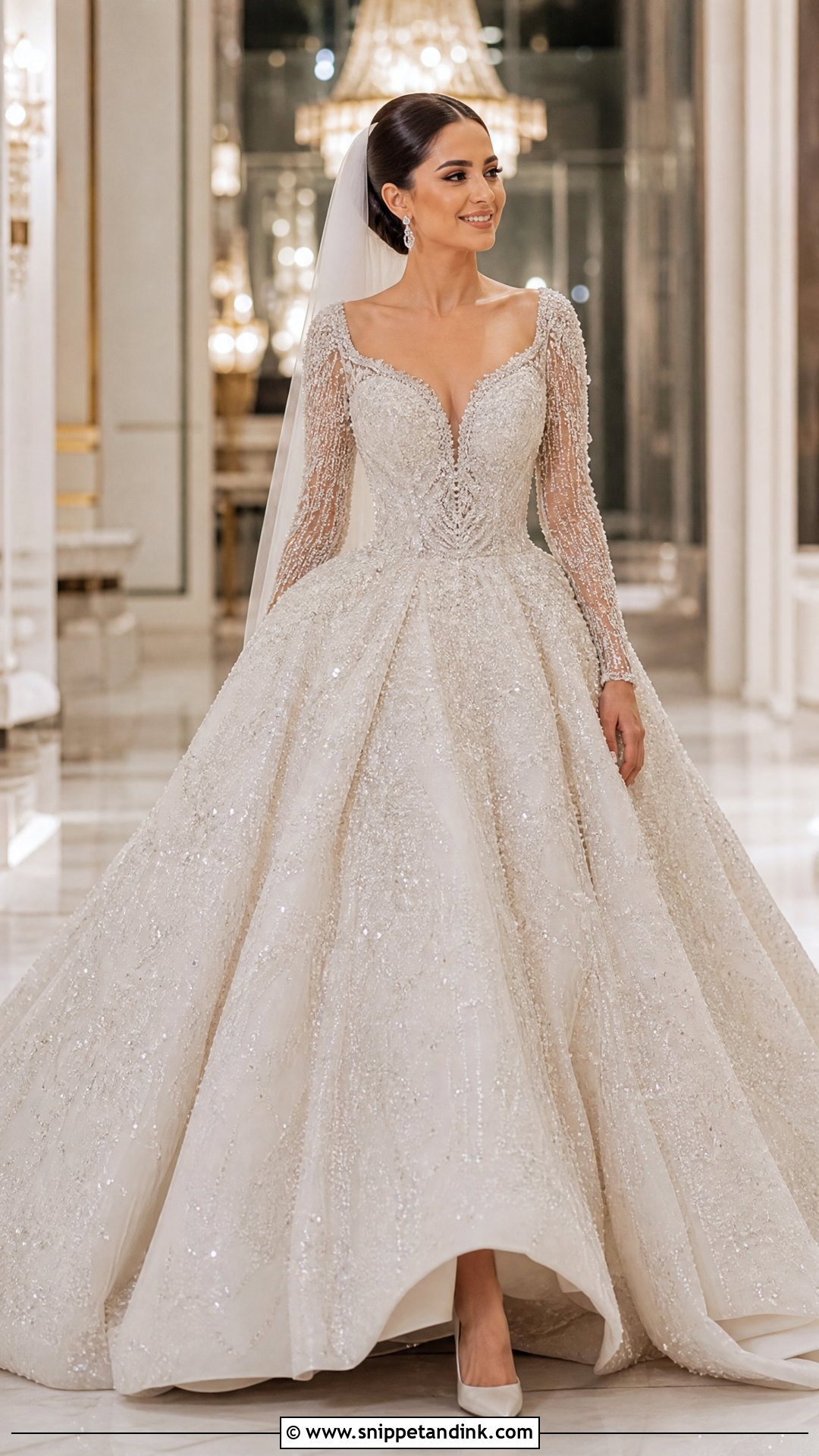
Beading brings glamour, and it brings weight. Beads can outline lace, cover a bodice, run down the skirt or trace the train, and a heavily beaded full skirt can feel surprisingly heavy by the end of the day. At fittings I make you walk, sit and lift the hem with one hand. Keep the hair smooth, the jewellery minimal and the veil plain; an embellished veil over beadwork just competes. Evening weddings and formal venues give this dress its best light.
23. Big Minimalist Wedding Dress
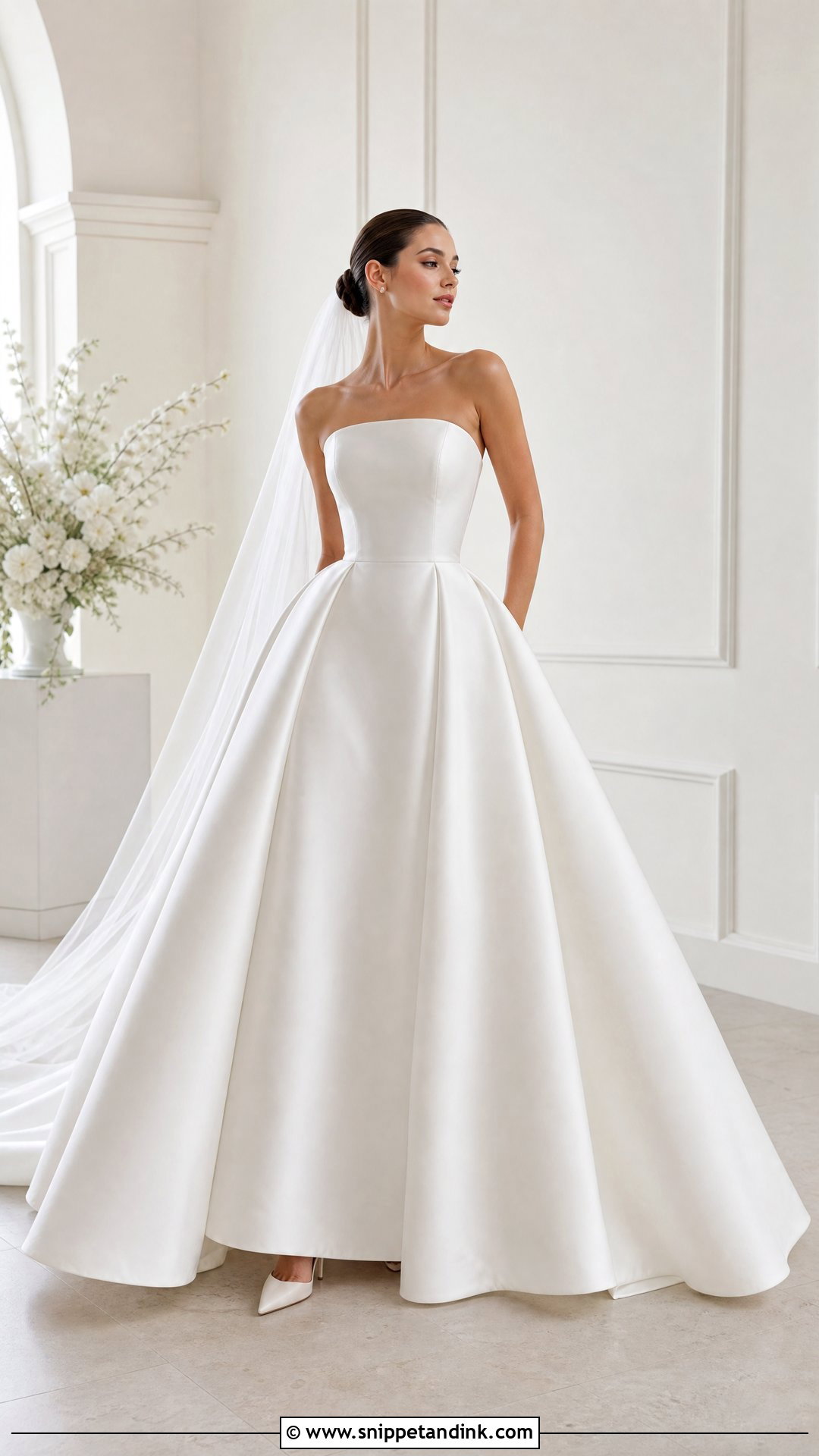
Volume doesn’t need decoration. A minimalist full gown in clean satin, mikado or crepe relies entirely on shape, fabric and tailoring, which means nothing hides a bad fit. I treat alterations on these as non-negotiable and budget an extra fitting. Pearl studs, a sleek bun, pointed heels and a simple veil keep the finish sharp. It’s the dress I’d suggest to a bride who finds embellishment fussy but still wants to feel grand.
24. Big Vintage Wedding Dress
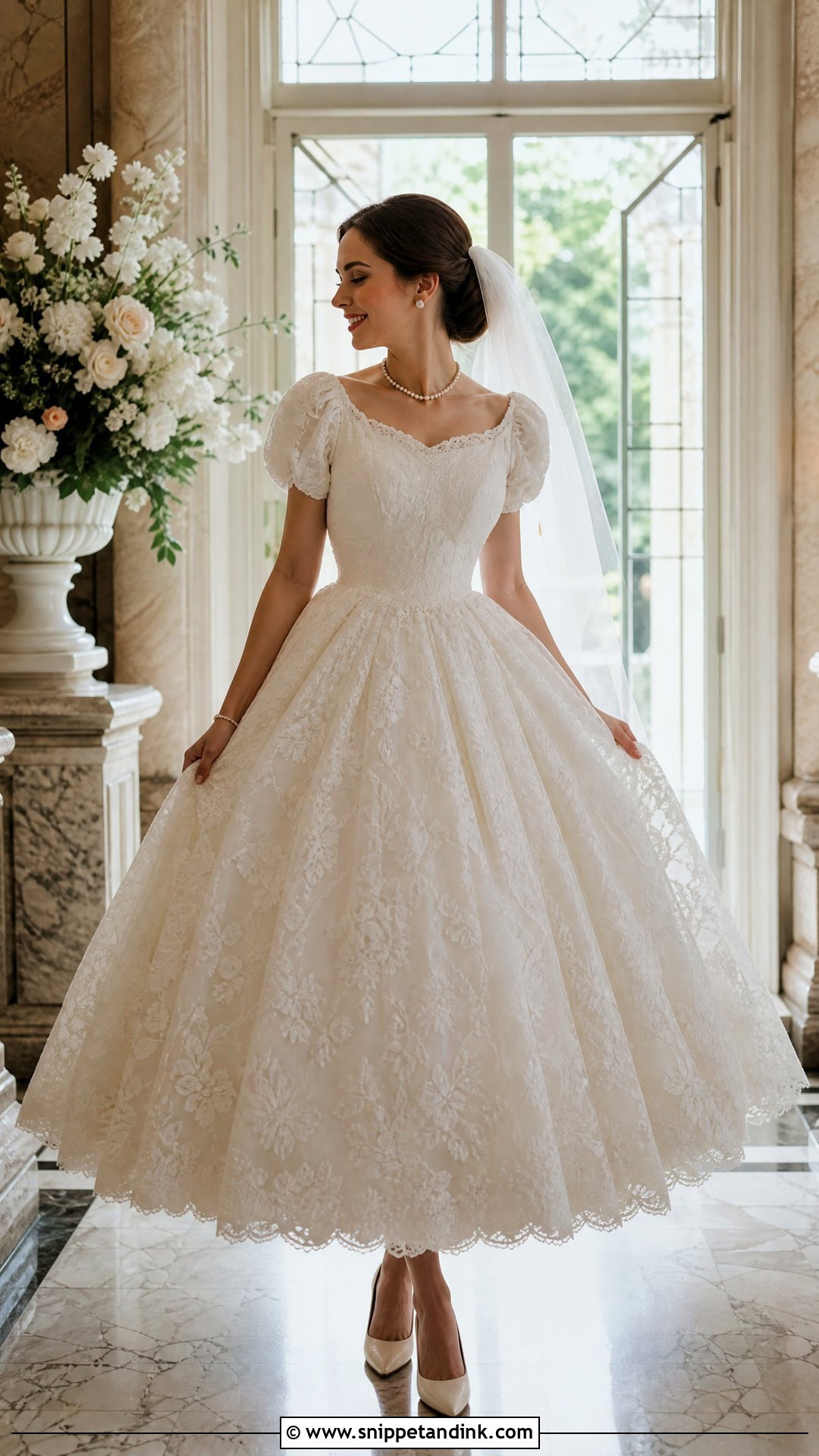
Vintage references on a full gown can mean puff sleeves, lace collars, basque waists, gathered skirts or romantic embroidery. My advice is to pick one or two, not five. A long-sleeved lace gown feels graceful, a satin gown with a basque waist feels regal, but all of the details at once turns into a costume. A soft veil, pearl jewellery and a low bun or brushed waves suit it. If you’re wearing a true vintage dress, have a seamstress check the old seams and zip before any alterations begin.
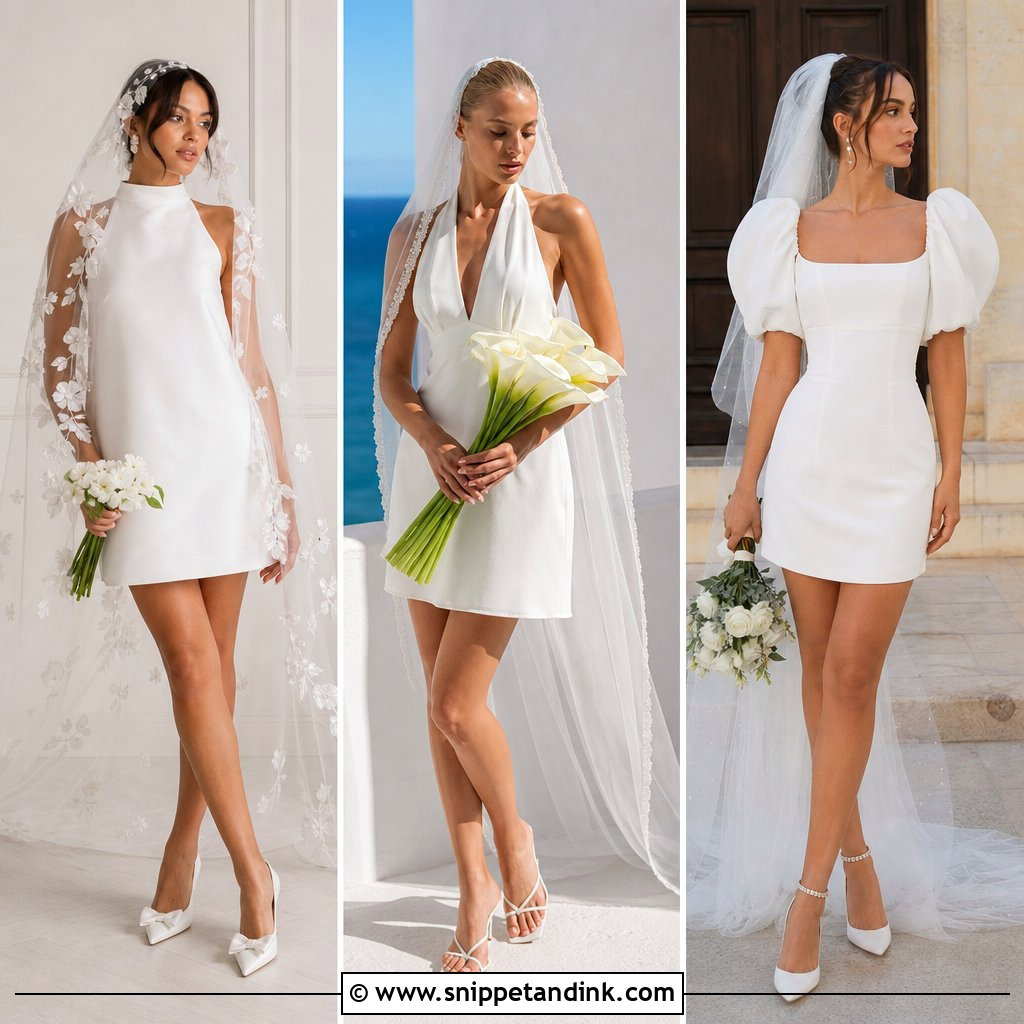

25. Big Color Wedding Dress
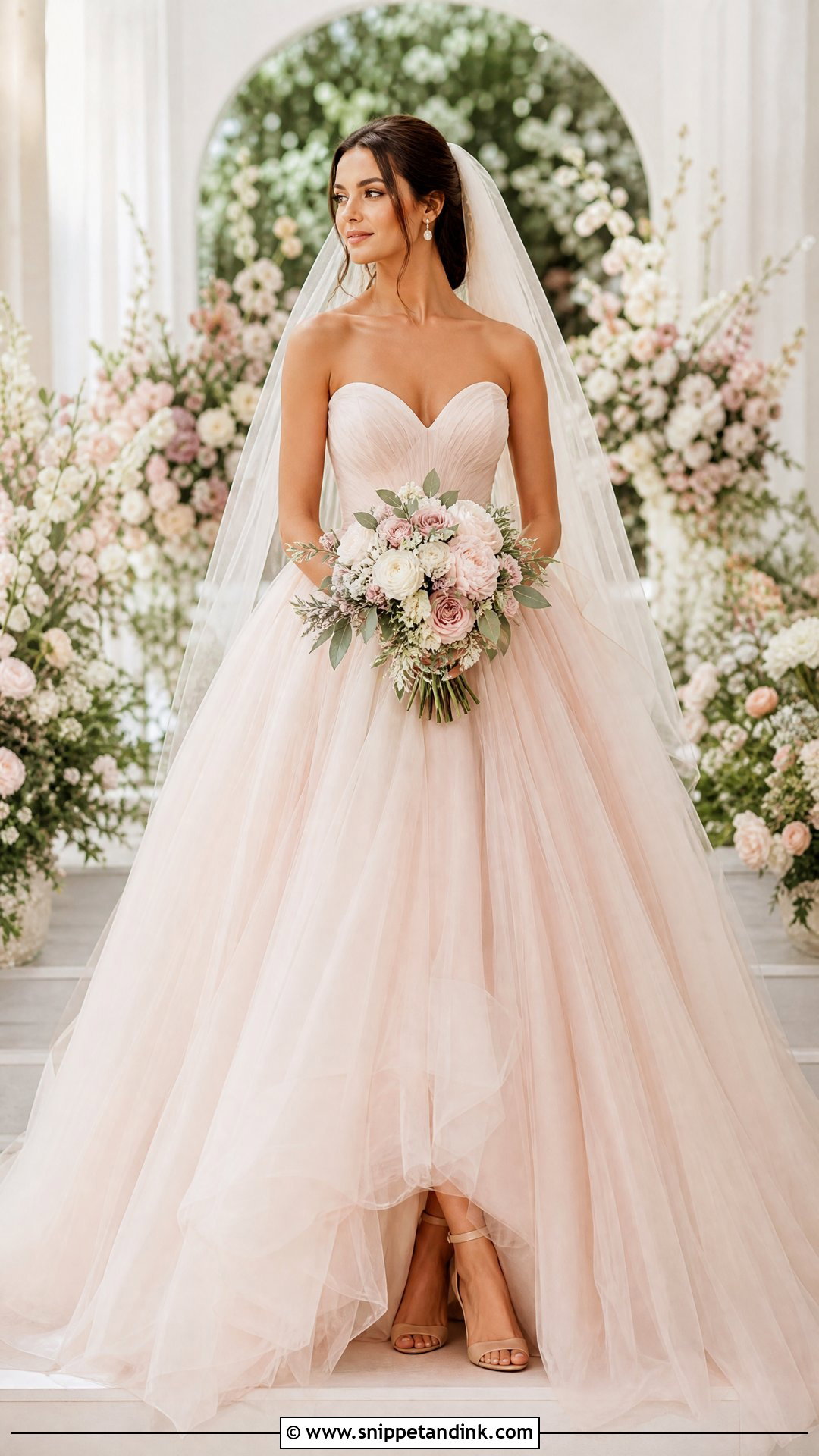
Colour on a full skirt makes it feel even bigger. Blush, champagne, pale blue, silver and light gold all still read bridal, especially in tulle, organza or embroidered fabric. I always look at colour swatches against the bride’s face in daylight, because some blushes turn grey or peach depending on skin tone. Keep accessories soft: pearls, neutral heels, a veil in a matching tone. If you’re nervous, start with a white base and coloured floral appliqués, which gives colour without commitment.
Petticoats, Bustles and Getting Through the Day
Most of what makes a big dress wearable sits underneath it. Ask your salon exactly what is giving the skirt its shape. A hoop is wide and light but swings when you sit; a soft crinoline or tulle petticoat bends more naturally but adds a bit of weight. Some gowns build volume into their own layers, so nothing extra is needed.
Learn the bustle before the wedding
Bustles lift the train off the floor after the ceremony, either by hooking it up over the skirt or folding it under. The number of points varies, and a long cathedral train can need several. I ask the seamstress to colour-code the ties or hooks and teach two people how to do it at the final fitting. Getting it wrong in a dark hallway at the reception is how trains tear.
Ordering early enough for real alterations
Full, structured gowns usually take several months to arrive once ordered, and alterations on them take longer than on a slim dress because there is more fabric and more construction to adjust. Leave time for at least two fittings, and bring the actual shoes and undergarments to each one. A hem taken up in flats will drag in heels.
After the wedding, have the gown professionally cleaned soon rather than months later, since sugar from drinks and perspiration can yellow fabric over time. Store it in a breathable bag or acid-free box, not plastic, somewhere cool and dark.
What a Big Dress Should Feel Like by the Last Dance
A dramatic gown should make you feel confident, not trapped. Volume, shape and detail need to suit your personality, but also your venue, season and the amount of walking, sitting and dancing ahead of you. Try more than one fabric, since tulle, satin, mikado, lace and organza all make volume in different ways. Look closely at where the waist sits, the neckline, the train length and the bustle. A princess gown, a bubble skirt or a clean minimalist ball gown can all be right; the one that still feels good at midnight usually is.
You'll Like These Ideas:






Leave a Reply