
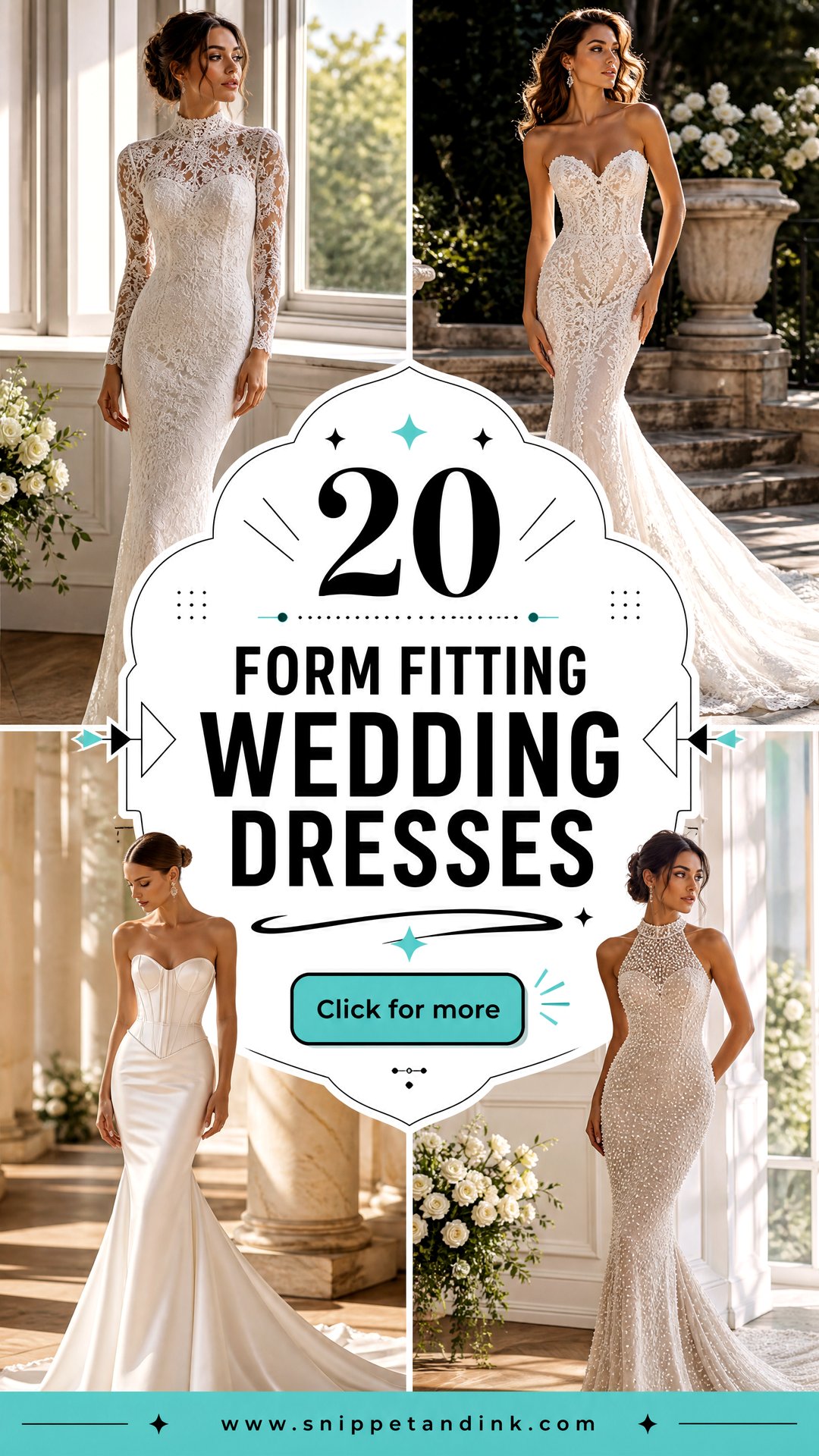
The tightest dress in the shop is rarely the right one. Form fitting wedding dresses follow your shape, but the good ones do it through structure: a supportive bodice, a comfortable lining and enough room to sit, walk and dance. The twenty below cover dramatic mermaids, softer fit-and-flare gowns, sleek sheaths and fluid slips, plus corset bodices, sculpted draping, Basque waists and detachable trains. As you look, keep your venue, the coverage you want and how much alteration you’re prepared for in mind. For each one, I’ve noted what I’d test at a fitting.
Foundations First: What Goes Under a Fitted Gown
A fitted gown is only as smooth as what’s under it. I ask brides to buy their foundations before the first fitting, because the seamstress pins the dress to your body in those exact pieces, and swapping later can throw the fit off.
- Match underwear to your skin tone, not to the dress. White shows through ivory and pale lining, while a nude close to your skin disappears.
- Shapewear should end well above or below where the gown fits tightest. A ridge at mid-thigh on a mermaid shows the moment you walk.
- For a low back or a strapless bodice, ask about sewn-in cups early. Adhesive bras can lose grip as you warm up over a long day.
- Choose bonded or laser-cut edges over lace trims, which print through satin and crepe.
Wear the whole set at home for an afternoon first. Something that pinches for ten minutes in a fitting room feels very different by the speeches.
1. Strapless Satin Mermaid Wedding Dress
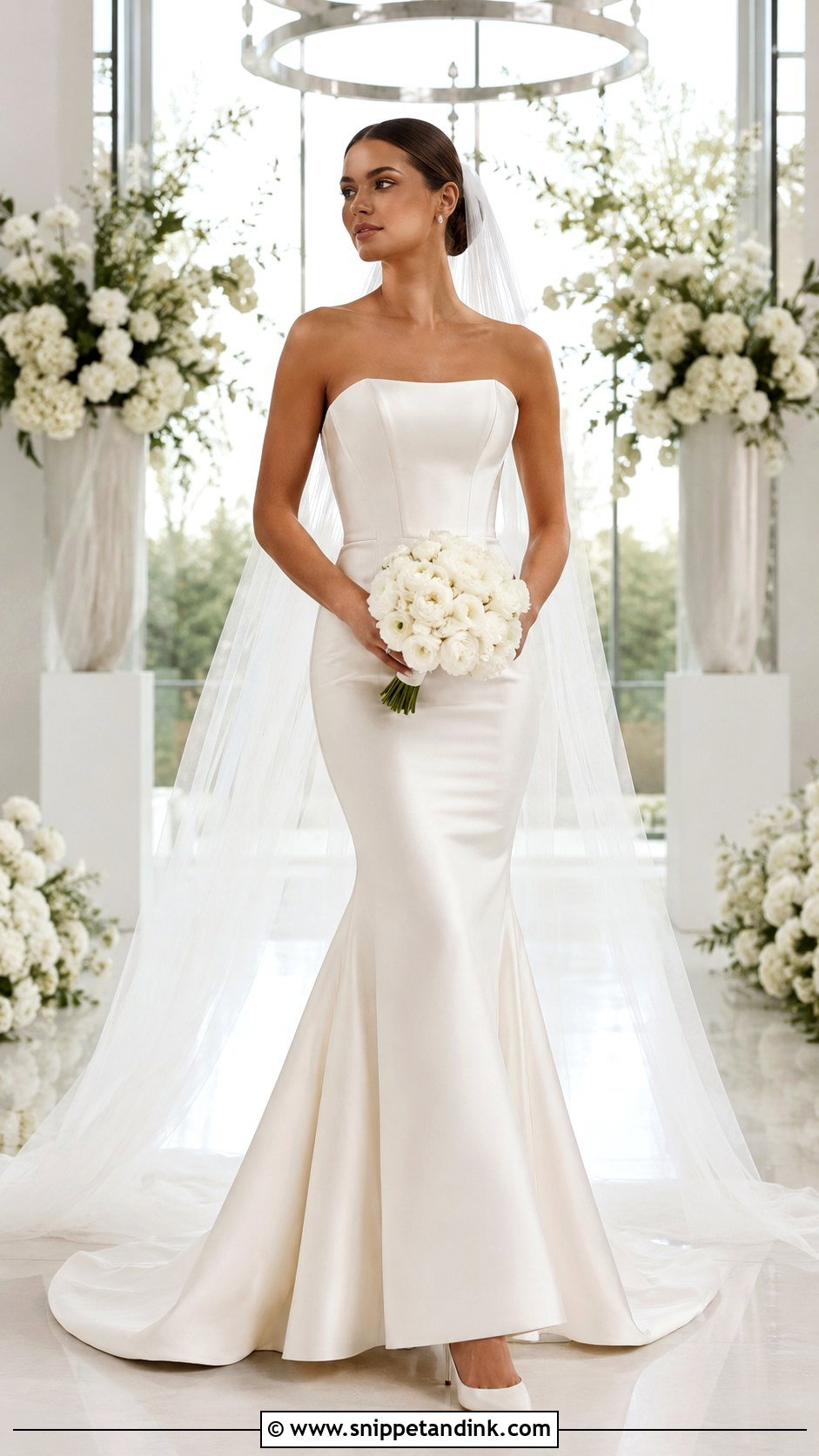
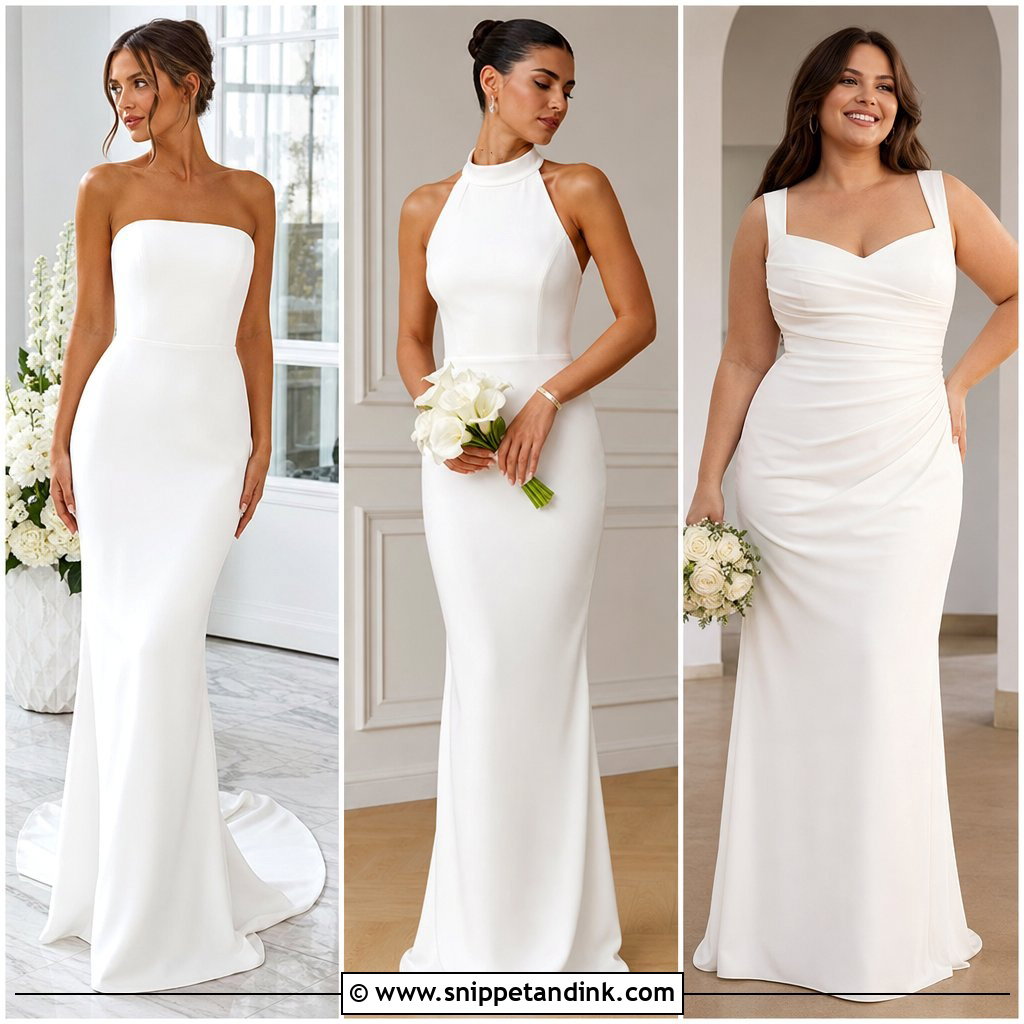
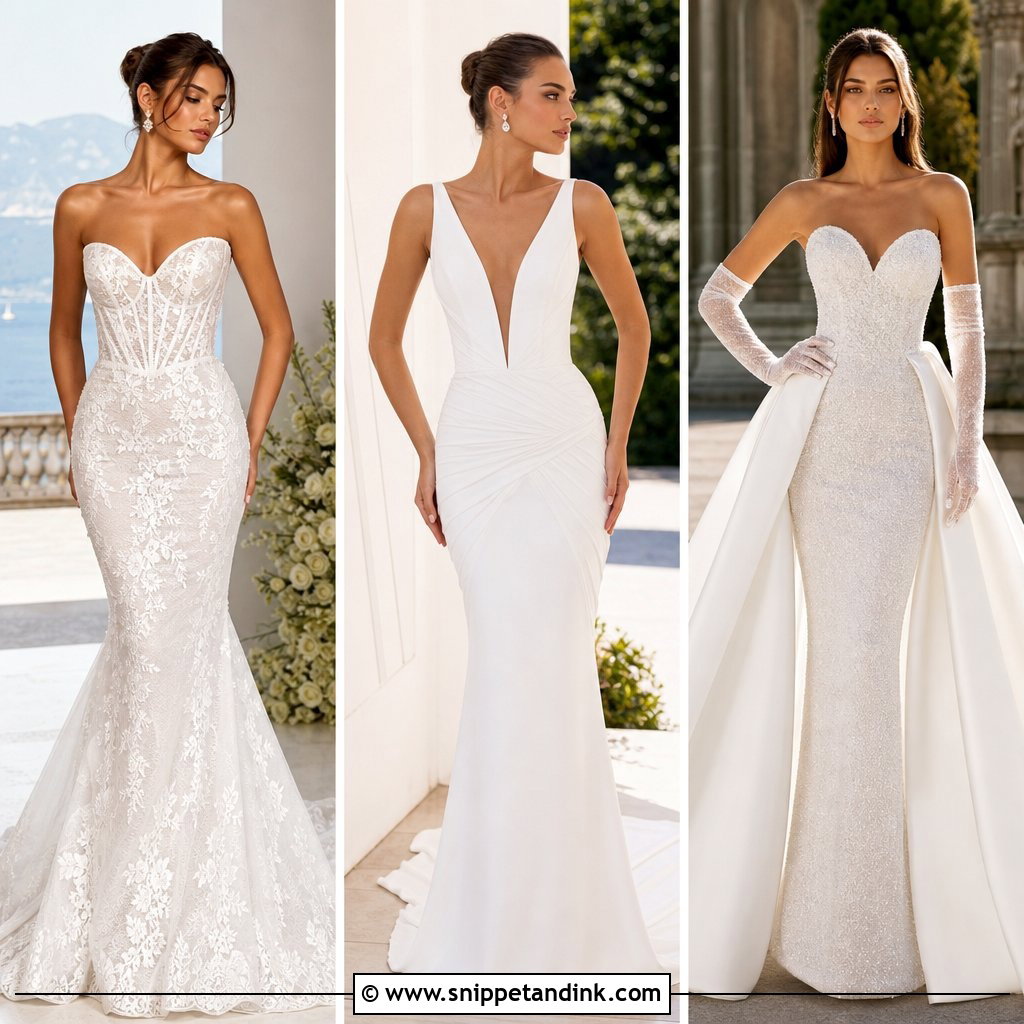
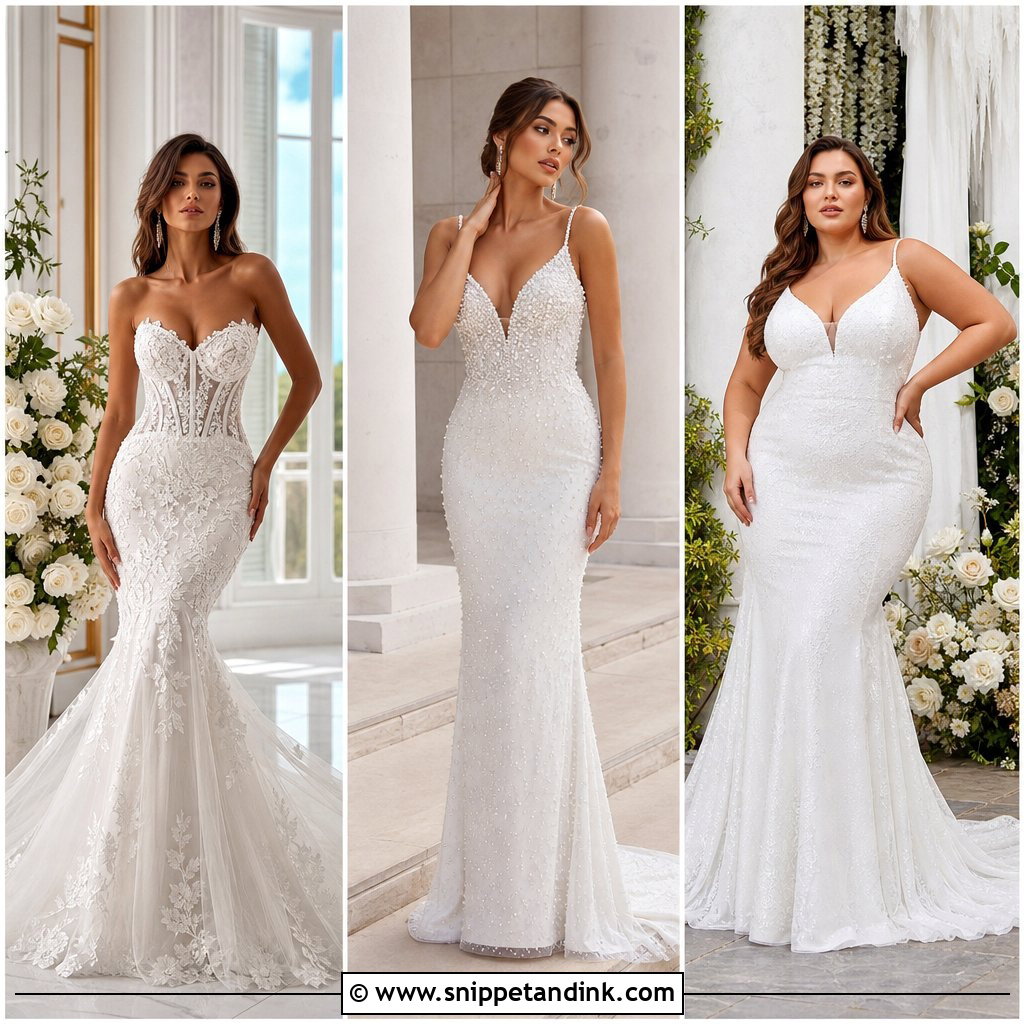
Strapless satin has nothing holding it up except its own construction, so that’s what I inspect before anything else. Internal boning, secure cups and a waist stay, a firm band inside that hooks closed at the waist, carry the weight so the bodice doesn’t slide when you lift your arms. The skirt follows the waist and hips and opens near the knee. Matte satin reads quieter, while glossy satin looks more formal under a flash. Pointed-toe pumps, pearl or diamond studs and a cathedral veil finish it. Take long steps and sit down at alterations, and ask for a structured bustle to control the train later.
2. Long Sleeve Lace Fit And Flare Wedding Dress
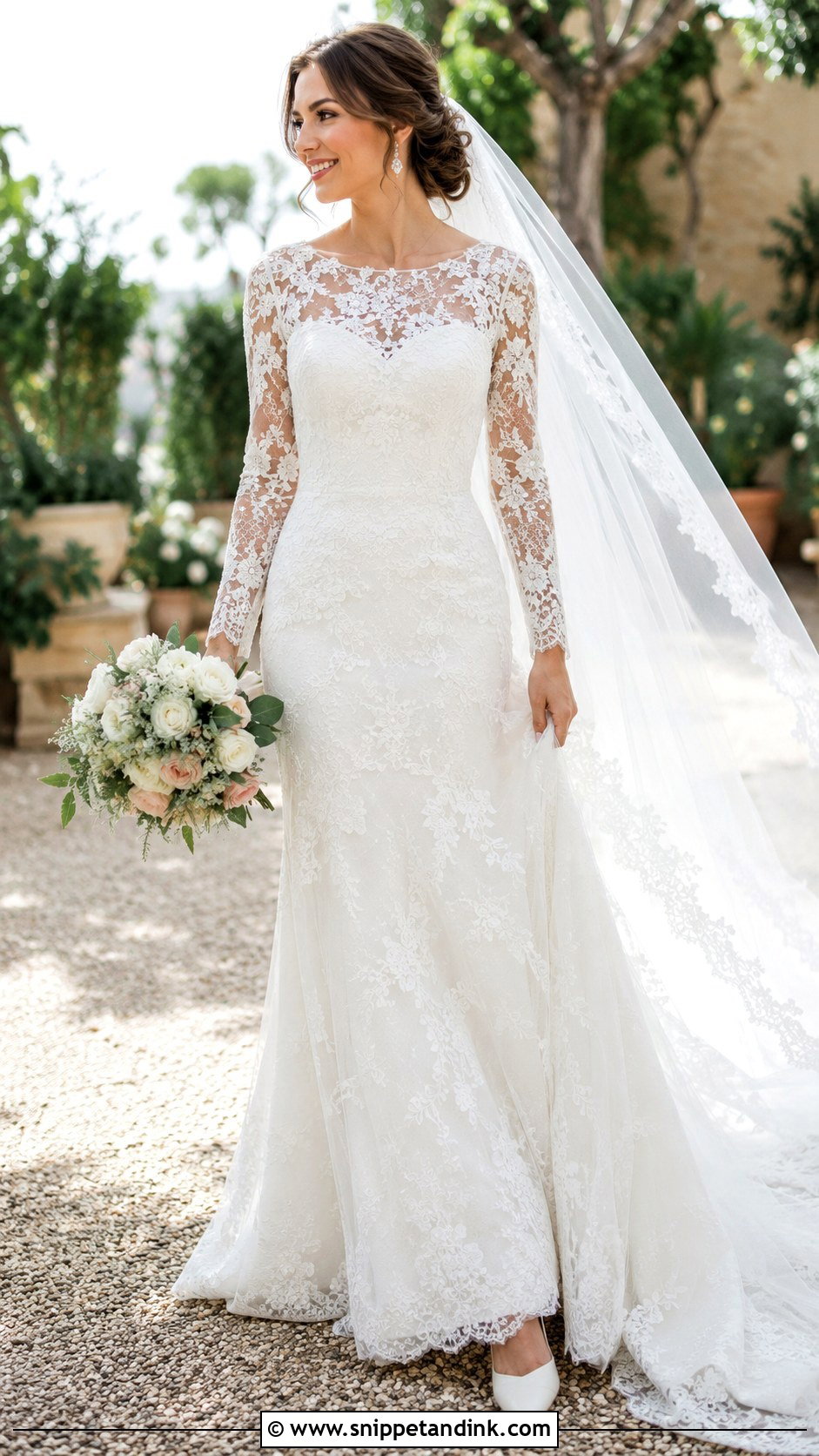
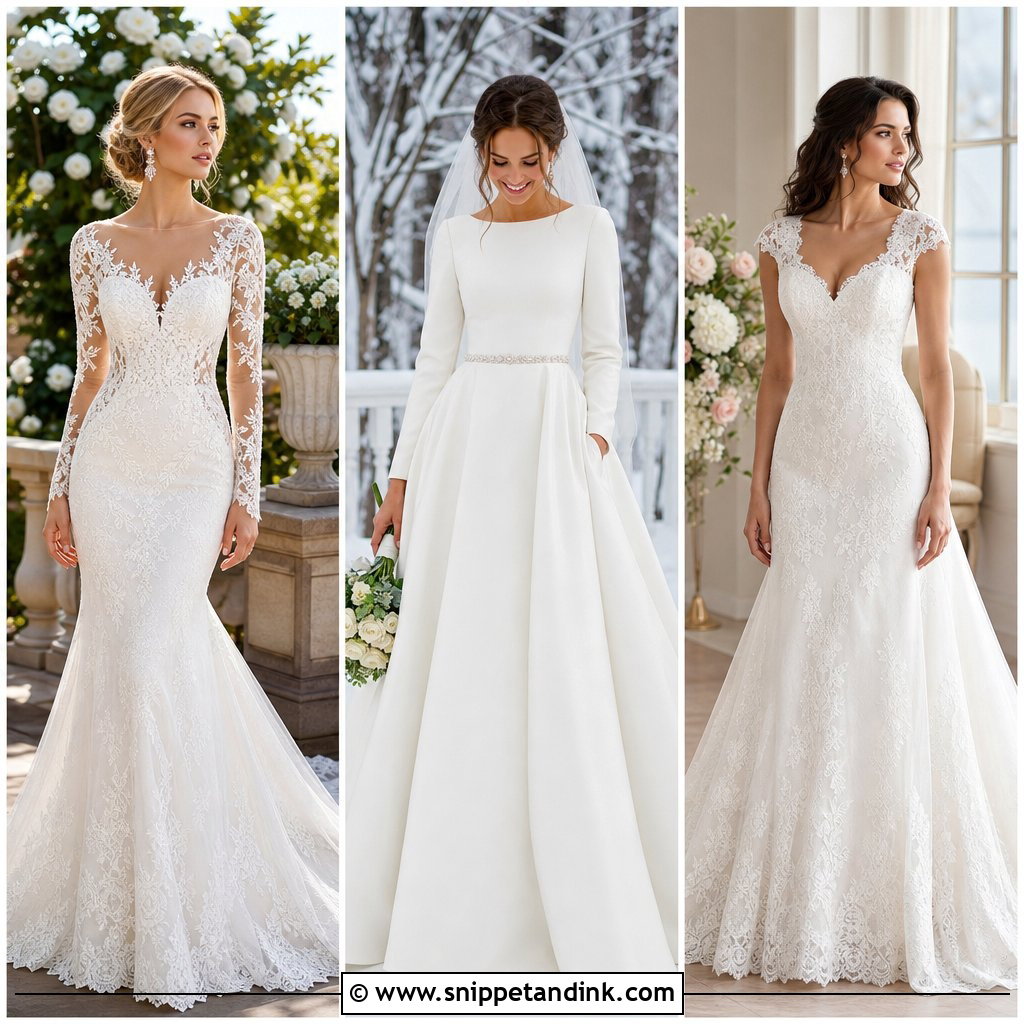
Of all the fitted shapes, this is the one I’d hand a bride who wants to dance all night. It stays close through the bodice and hips and widens gradually below them, which is far easier to move in than a sharp mermaid flare. Stretch lace earns its price on a long day. A lined bodice looks traditional, and illusion sleeves keep it light. Style it with a low bun, small drop earrings, pointed satin heels and a fingertip veil edged in matching lace. The fitting check is the armhole: lift both arms, and if the bodice rides up, the sleeve head needs reworking.
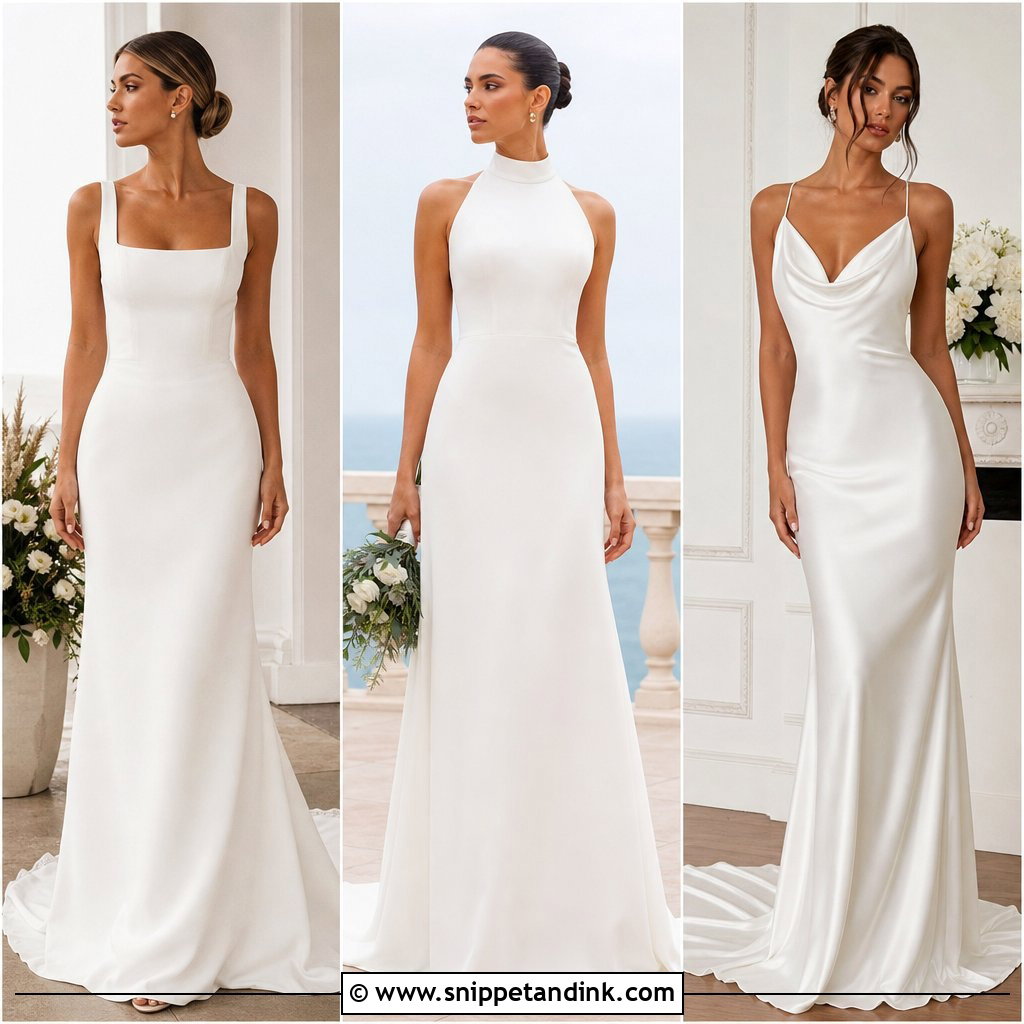
3. Square Neck Crepe Trumpet Wedding Dress
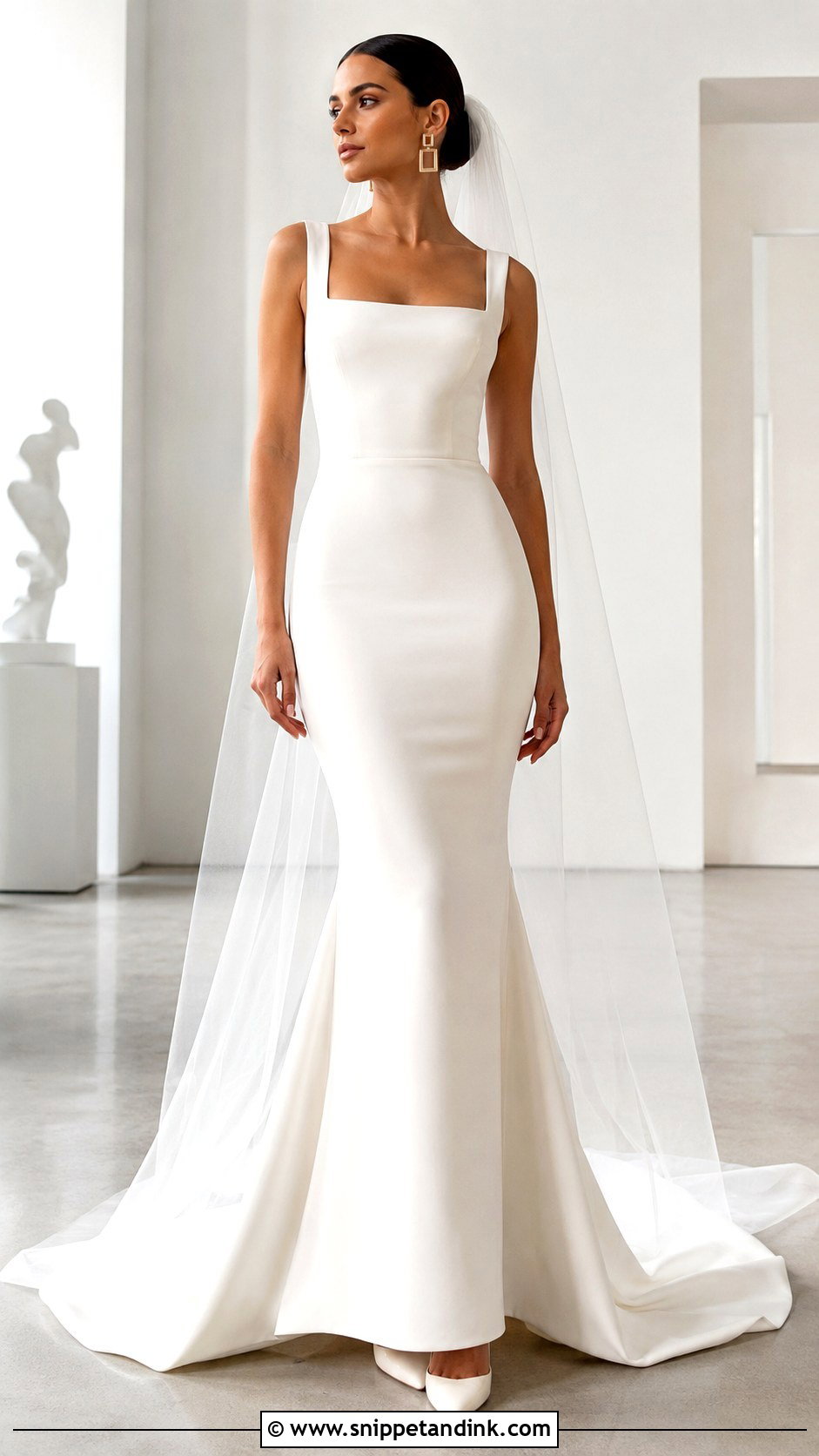
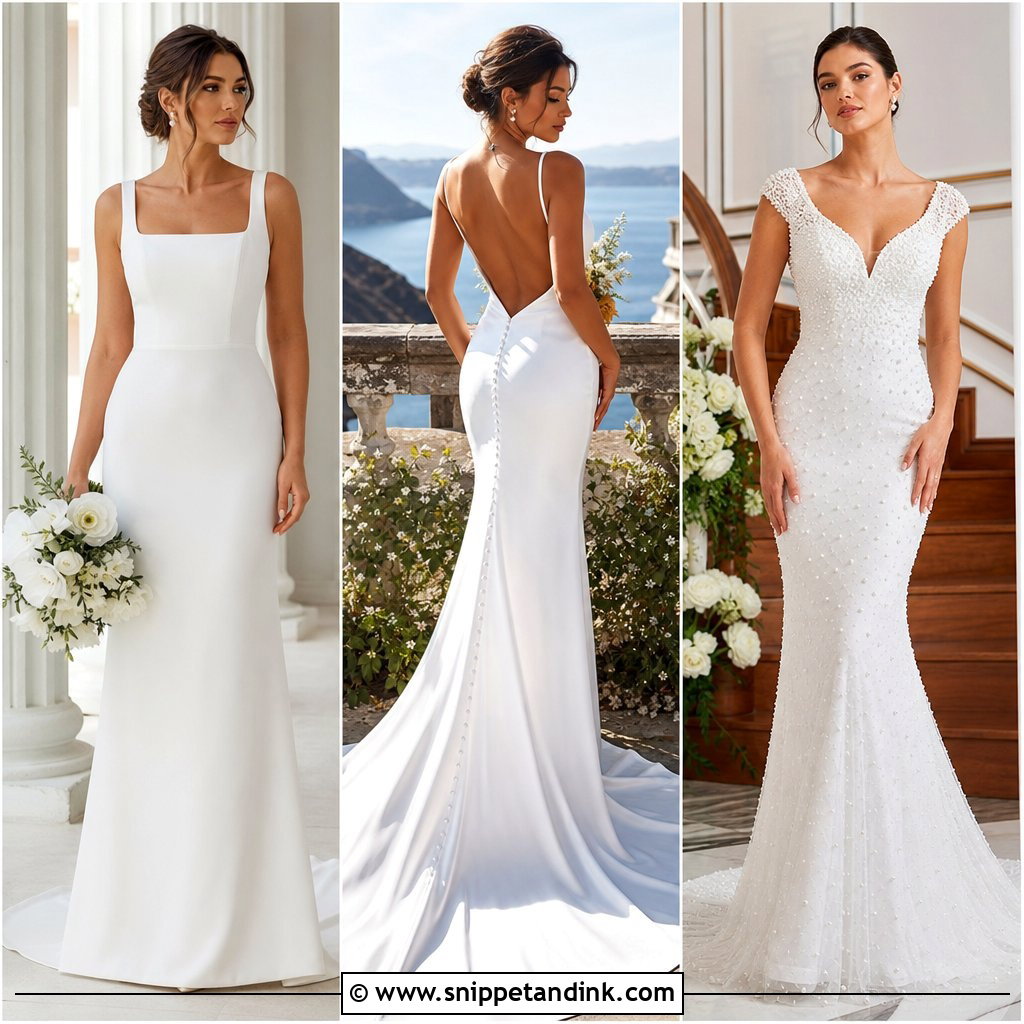
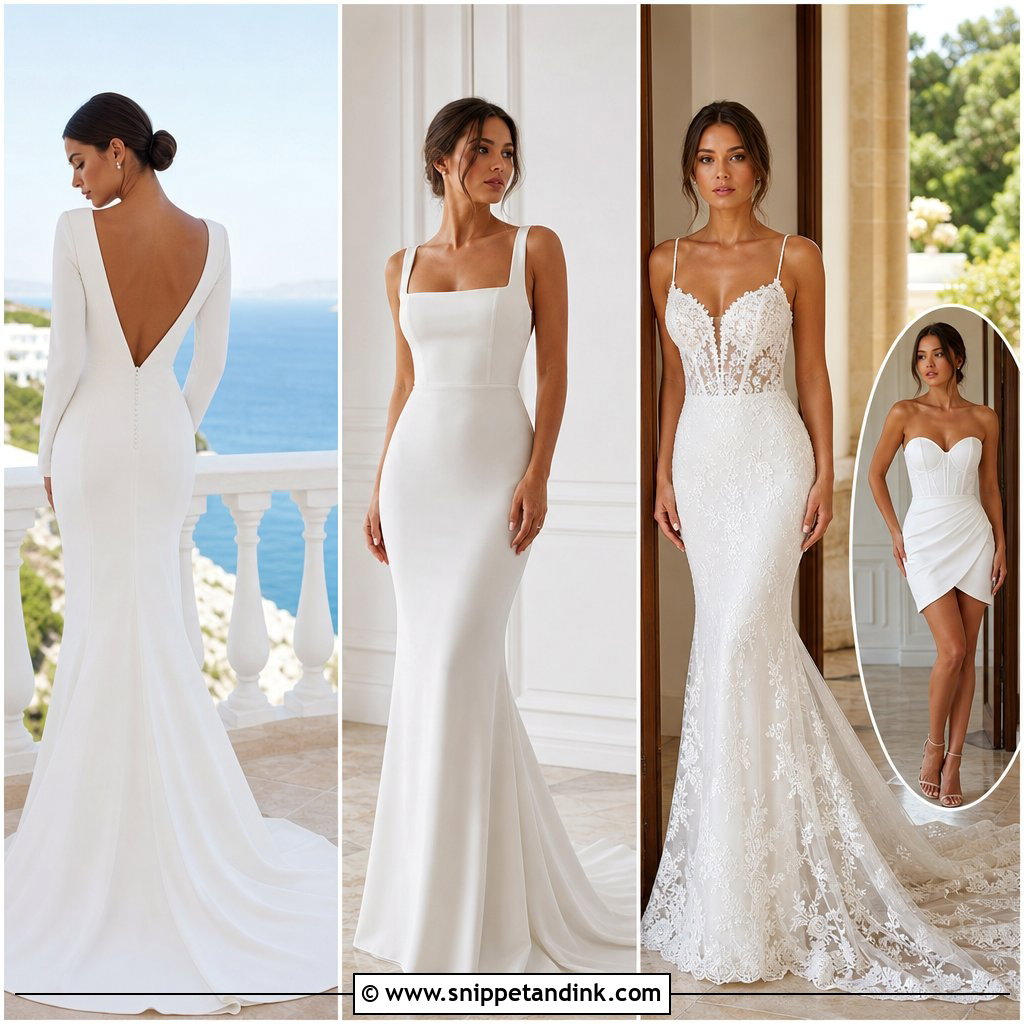
Crepe hides nothing, which is why a square-neck trumpet looks so sharp when it’s tailored well and so tired when it isn’t. The neckline frames the collarbone and the close crepe body runs in one long line. A trumpet opens higher on the leg than a mermaid, so the flare is softer and you can walk normally. Every seam shows on crepe, especially at the waist, hips and back zipper, so smooth foundations matter here. A sleek veil, geometric earrings, a compact clutch and pointed pumps keep it modern. Before you approve the hem, put on your wedding shoes and try stairs, carpet and a chair.
4. Off Shoulder Draped Wedding Dress
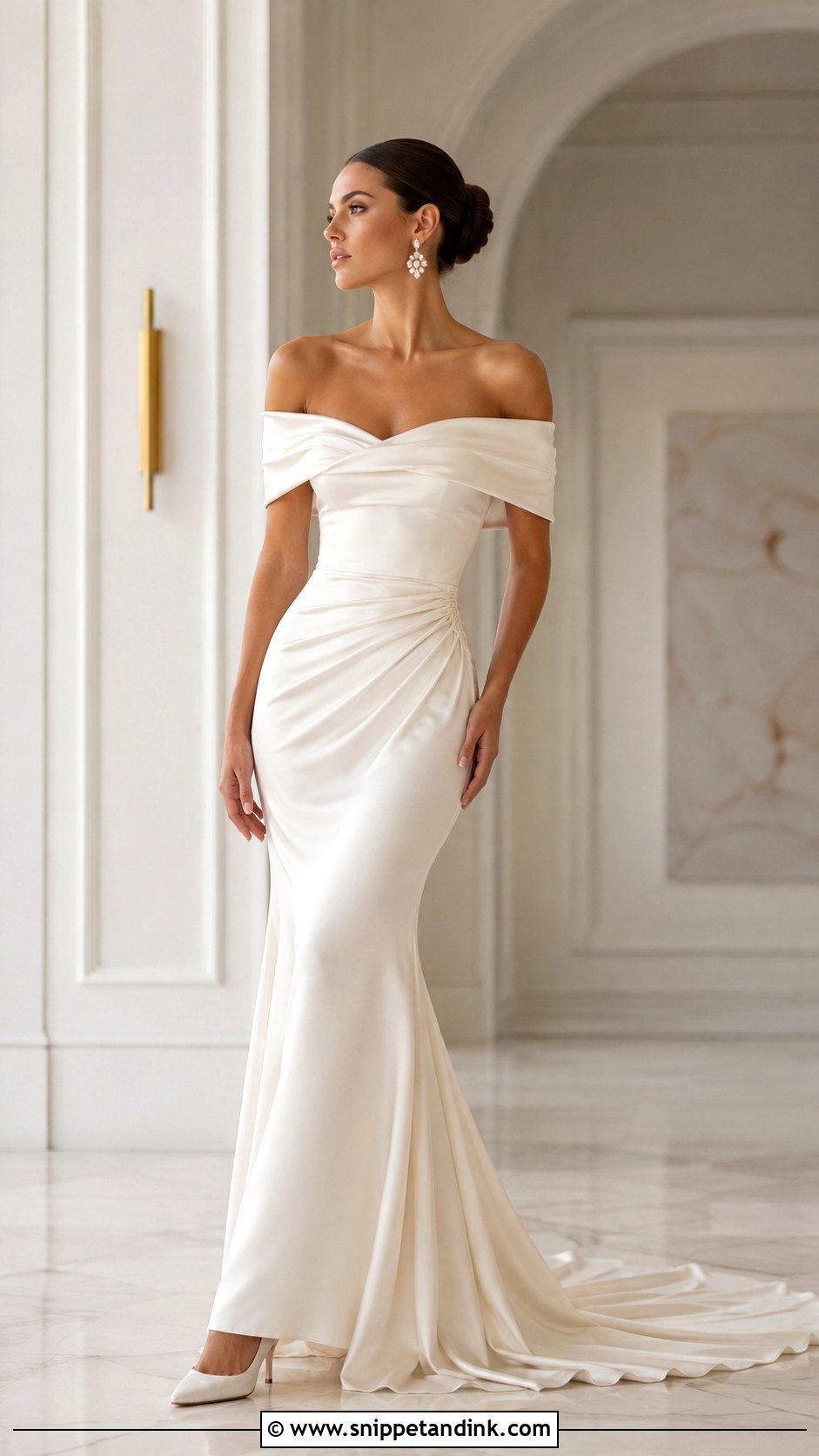
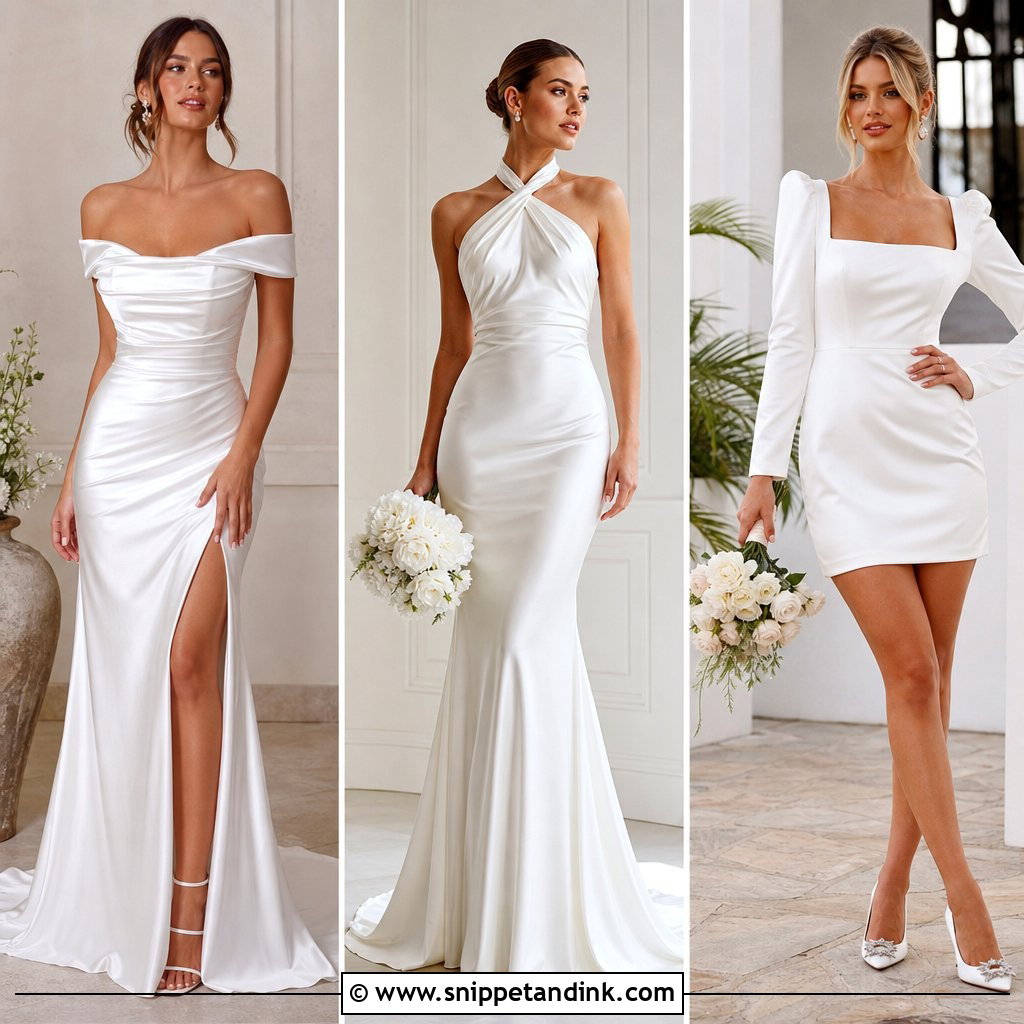
Drapery forgives. Folds crossing the bodice, gathered at the waist or swept over the hips soften a fitted gown and absorb small changes in your body between fittings, which plain crepe never will. Stretch satin, crepe or a light fabric over a supportive lining all hold drape well. A polished updo keeps the off-shoulder neckline open. A fine necklace only works if there’s bare skin to spare; otherwise statement earrings balance it better. Add closed-toe heels and a simple veil. At the fitting, reach forward and up. The band should stay exactly where it is.
5. Halter Neck Column Wedding Dress
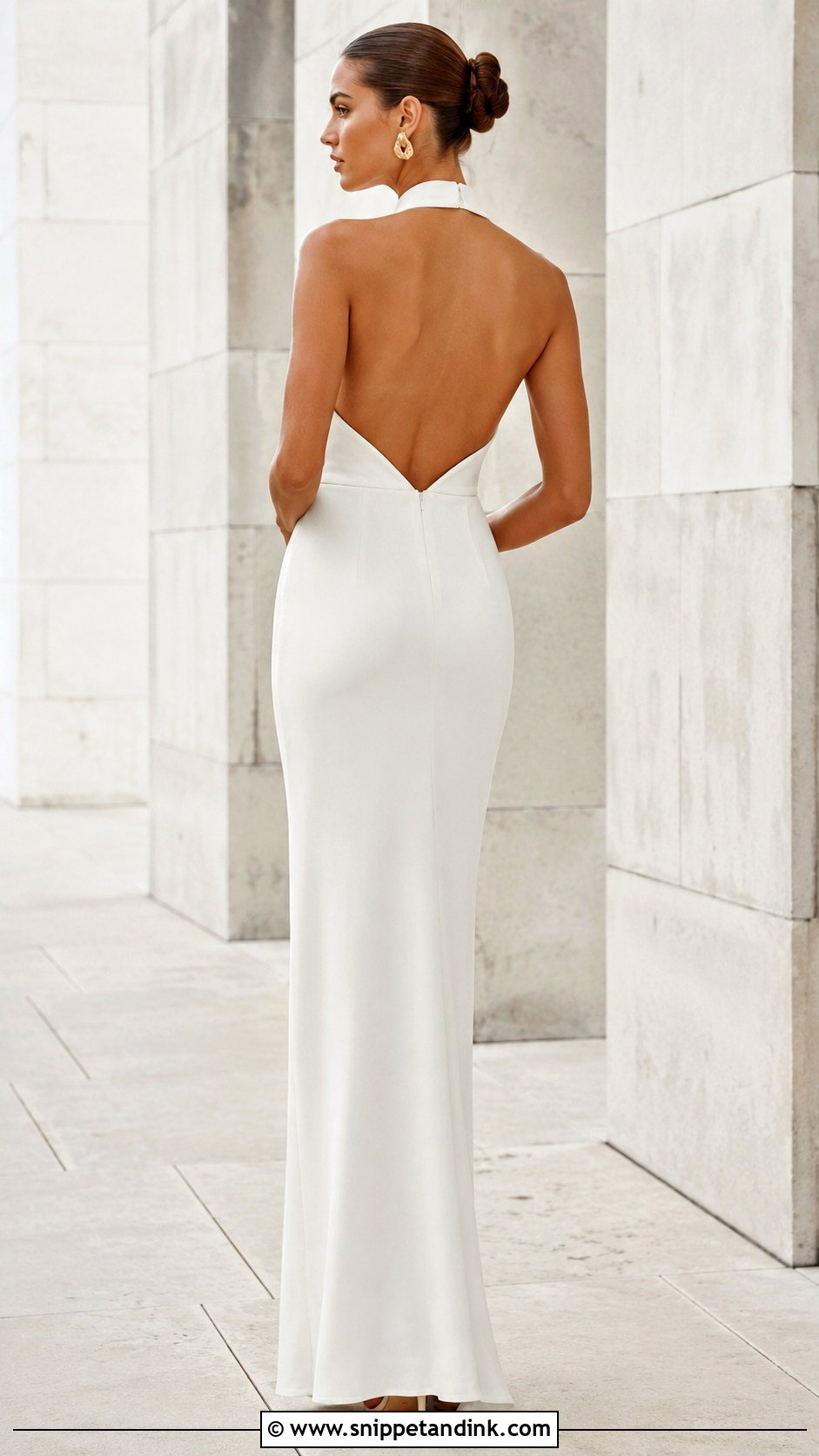
A halter neck column wedding dress pulls the eye upward and lets the skirt fall narrow, no flare needed. Fluid crepe holds a clean line, silk satin shines and stretch jersey drapes softly. The halter strap is the tricky part. Cut too short, it pulls at the back of the neck, and after a few hours that becomes a nagging ache, so I check it after the bride has worn it for ten minutes, not at first zip. Low-back versions need sewn-in cups rather than a standard bra. A back slit helps you walk but must be reinforced at the top. Wear an elegant bun, sculptural earrings and slim heels.
6. Corset Bodice Mermaid Wedding Dress
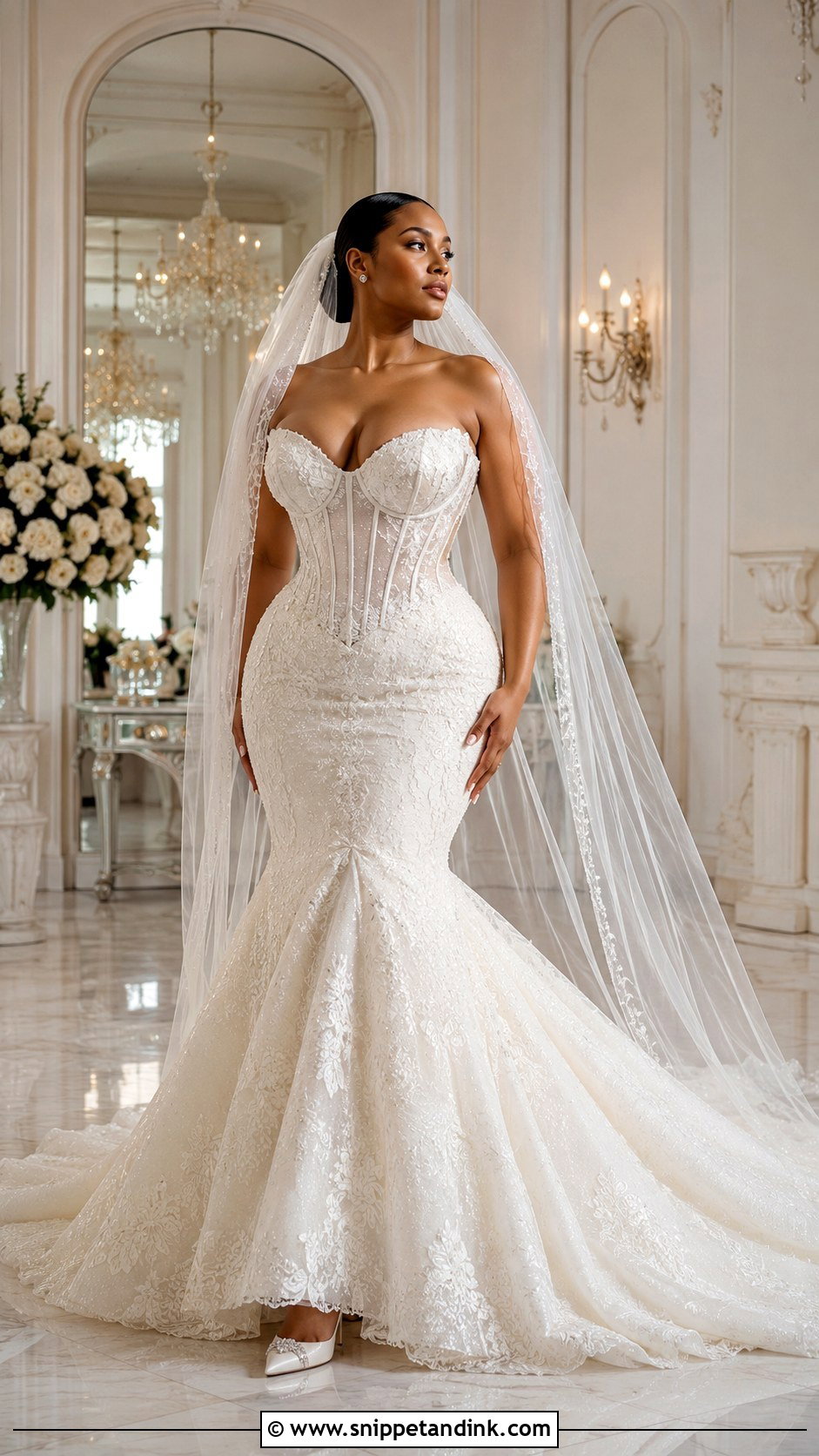
A corset should anchor at the waist, not push everything onto the bust. Visible boning reads contemporary, while concealed corsetry gives the same support under a softer outer layer. In satin it looks sculptural; in lace or layered tulle it softens. Ask how it closes. Lacing can be adjusted a little on the day, but hooks and zippers can’t, and that matters if your weight shifts before the wedding. Sit for a few minutes at the appointment. It should feel snug without pinching or folding at the hip. A chapel veil, sparkling studs and stable heels complete it.
7. High Neck Lace Sheath Wedding Dress
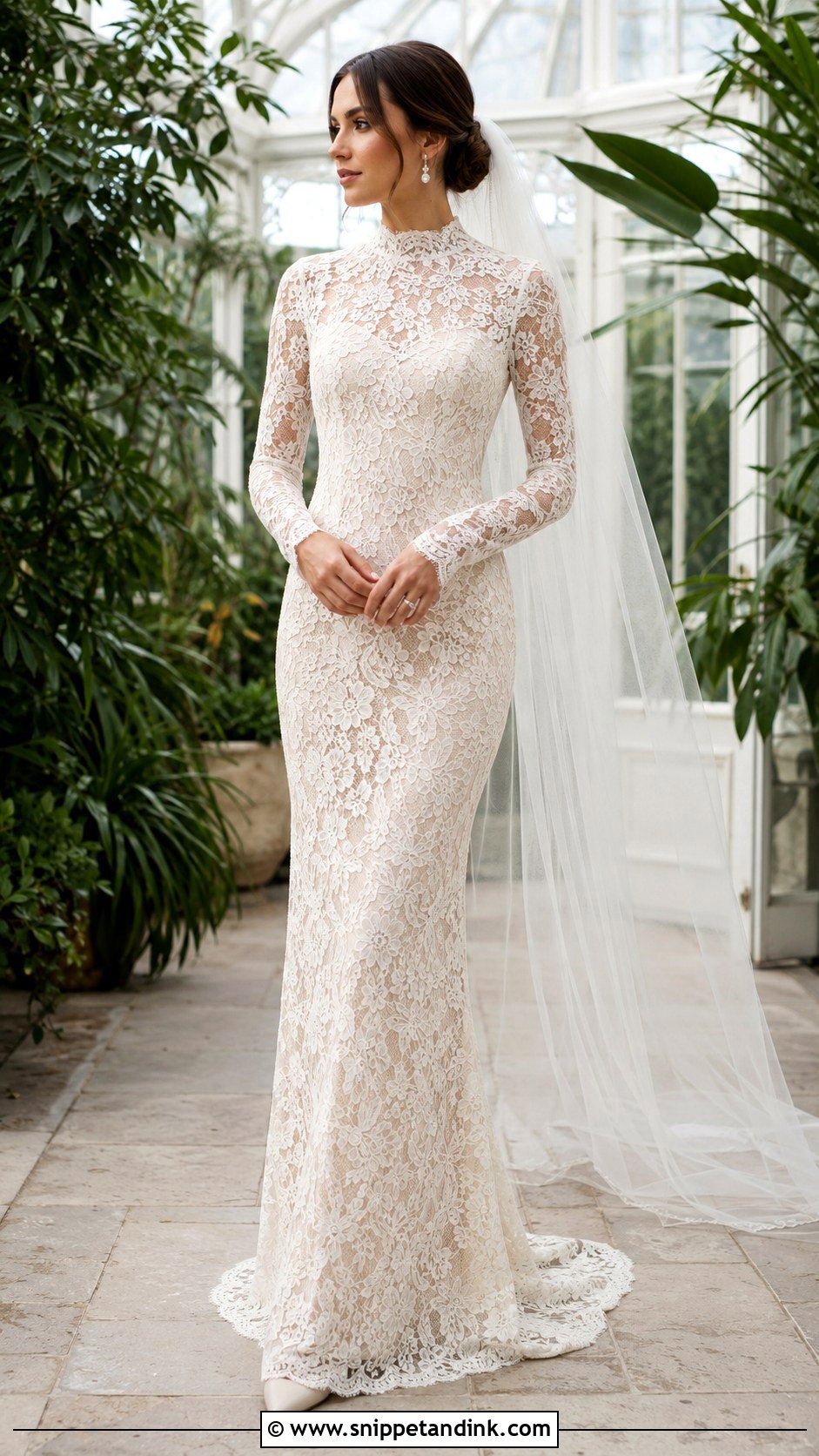
A sheath has no flare to distract, so the lace carries the whole dress. Choose a clear, well-scaled motif, because a busy pattern on a narrow shape looks crowded. A nude-toned lining makes the lace stand out, and ivory keeps it soft and traditional. Pearl earrings, a low chignon, pointed shoes and a plain tulle veil are enough, with no necklace, since the high collar is already the focus. The collar and shoulders are where I spend fitting time. They should sit flat without rubbing the neck or pulling across the upper back when you hug someone.
8. Scoop Neck Satin Fit And Flare Wedding Dress
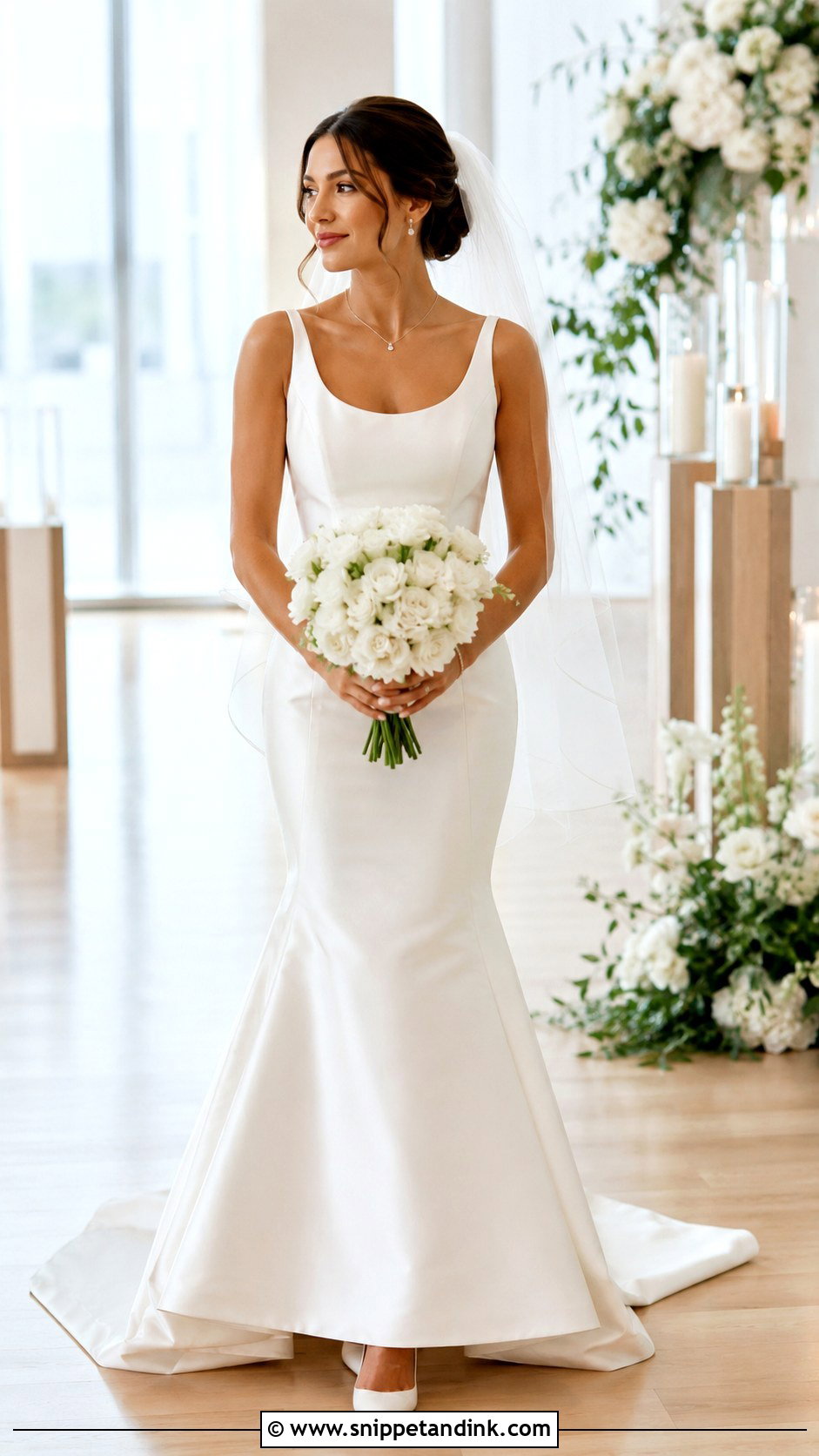
Heavy satin will find any weakness in a scoop neck. If the bodice lacks structure, the weight of the skirt drags the neckline forward and it gapes when you bend. A wider scoop feels open and modern, a higher one covers more. The waist and hips stay fitted before a manageable flare, which suits anyone who wants shape without a restrictive skirt. Add a short pendant, classic earrings, a sheer veil and almond-toe heels. Sit, turn and lean forward at each fitting while watching the neckline in a mirror.
9. One Shoulder Draped Wedding Dress
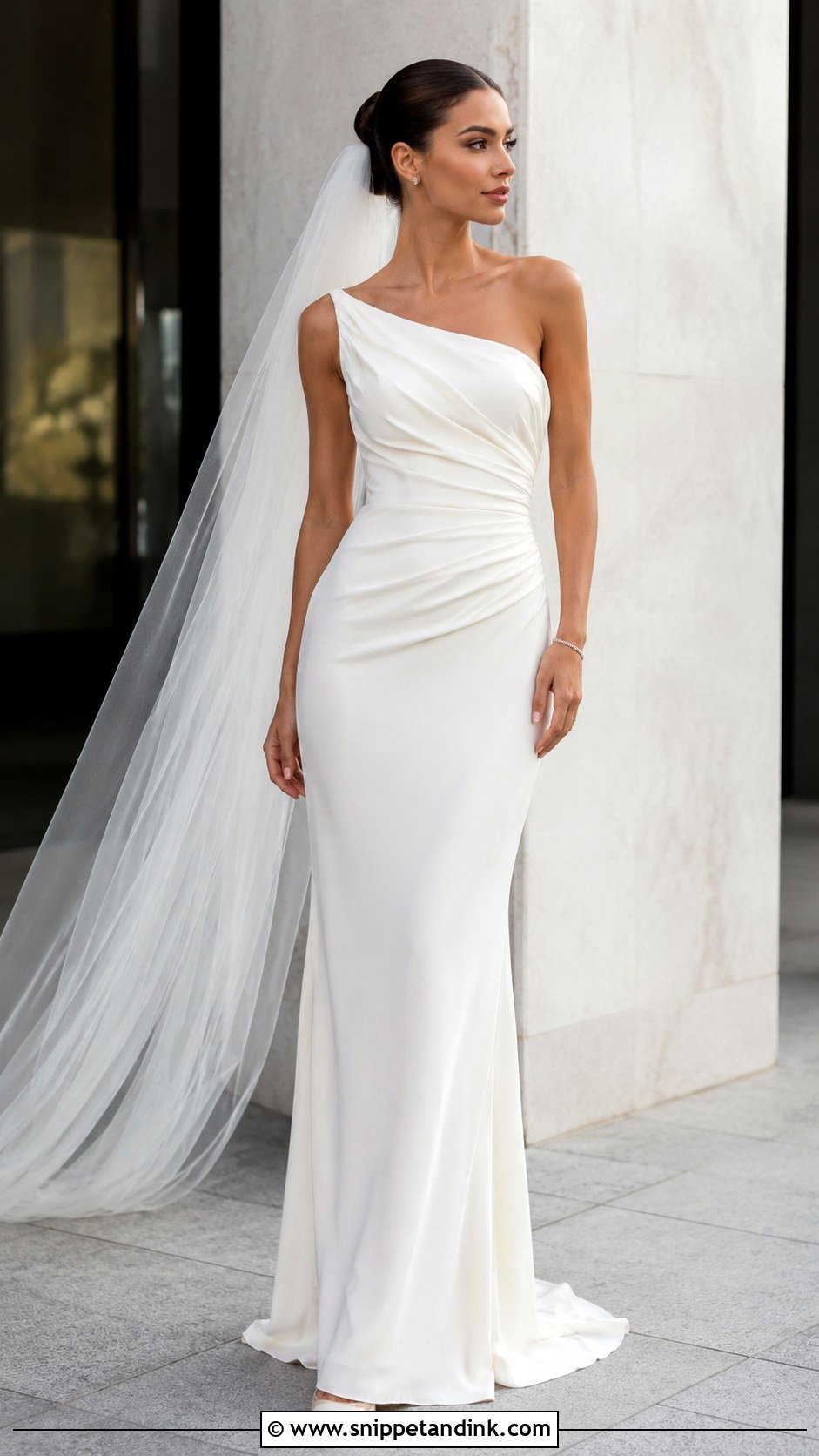
With one strap doing the work of two, the bare side needs hidden help: boning on that side, or silicone grip tape along the edge. Without it, the neckline creeps down through the evening. Diagonal draping across the bodice or waist adds movement without bulk, and stretch crepe or satin hold folds while following the body. A side-swept style or sleek bun keeps the shoulder in view. One bracelet, small earrings, pointed heels and a plain veil set under the hair are plenty.
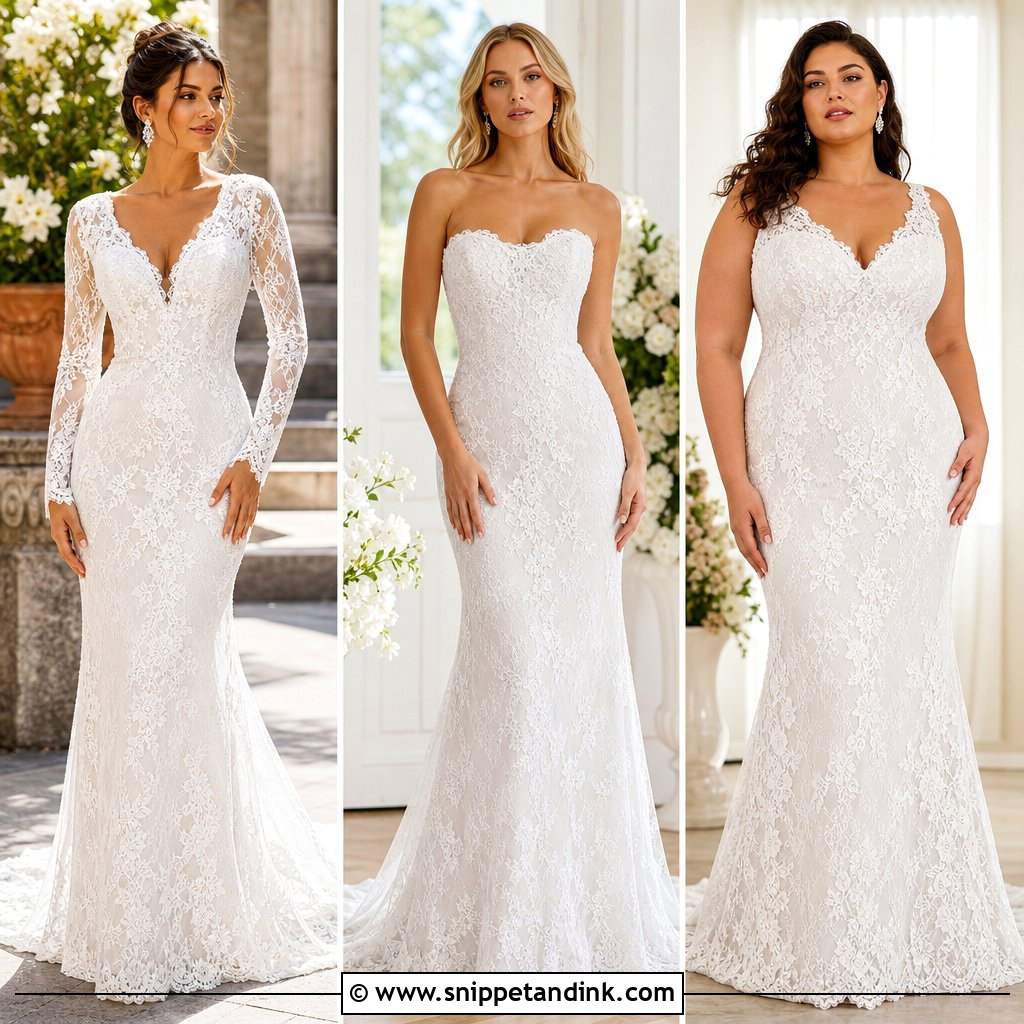
10. Sweetheart Lace Mermaid Wedding Dress
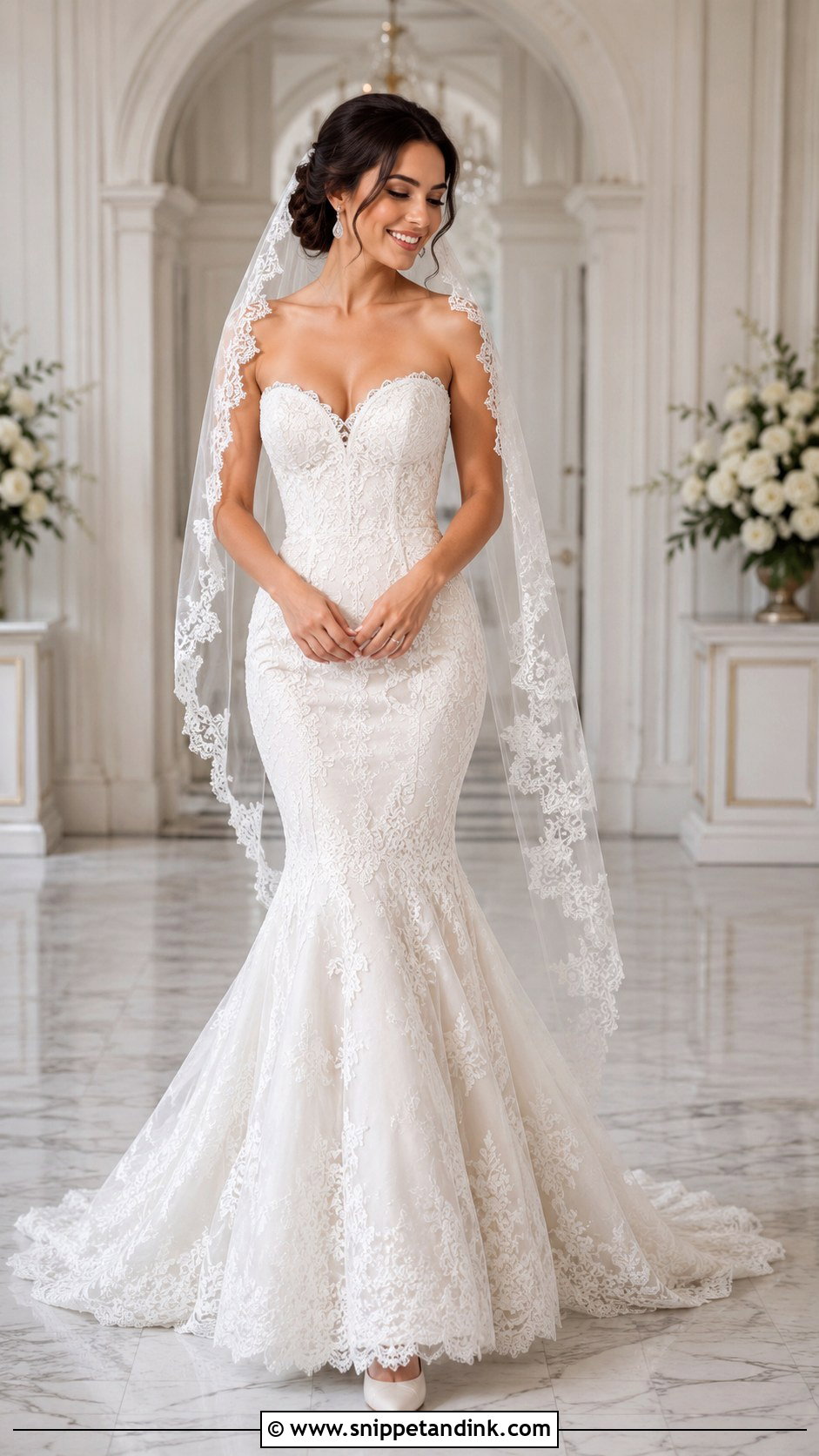
Curved neckline, close fit, dramatic skirt: the sweetheart mermaid is the classic fitted gown, and lace placement makes or breaks it. Good motifs run in a continuous pattern from torso to flare instead of stopping dead at a seam. Fully lined reads traditional, and small illusion panels lighten it. A matching lace veil, teardrop earrings and satin pumps suit it. Walk your normal stride before buying, because the thighs are fitted, and the flare should start where your legs can still move. Ask the seamstress to secure loose appliqués and reinforce lace near the zipper, hem and bustle points, which is where it tends to tear.
11. Basque Waist Satin Trumpet Wedding Dress
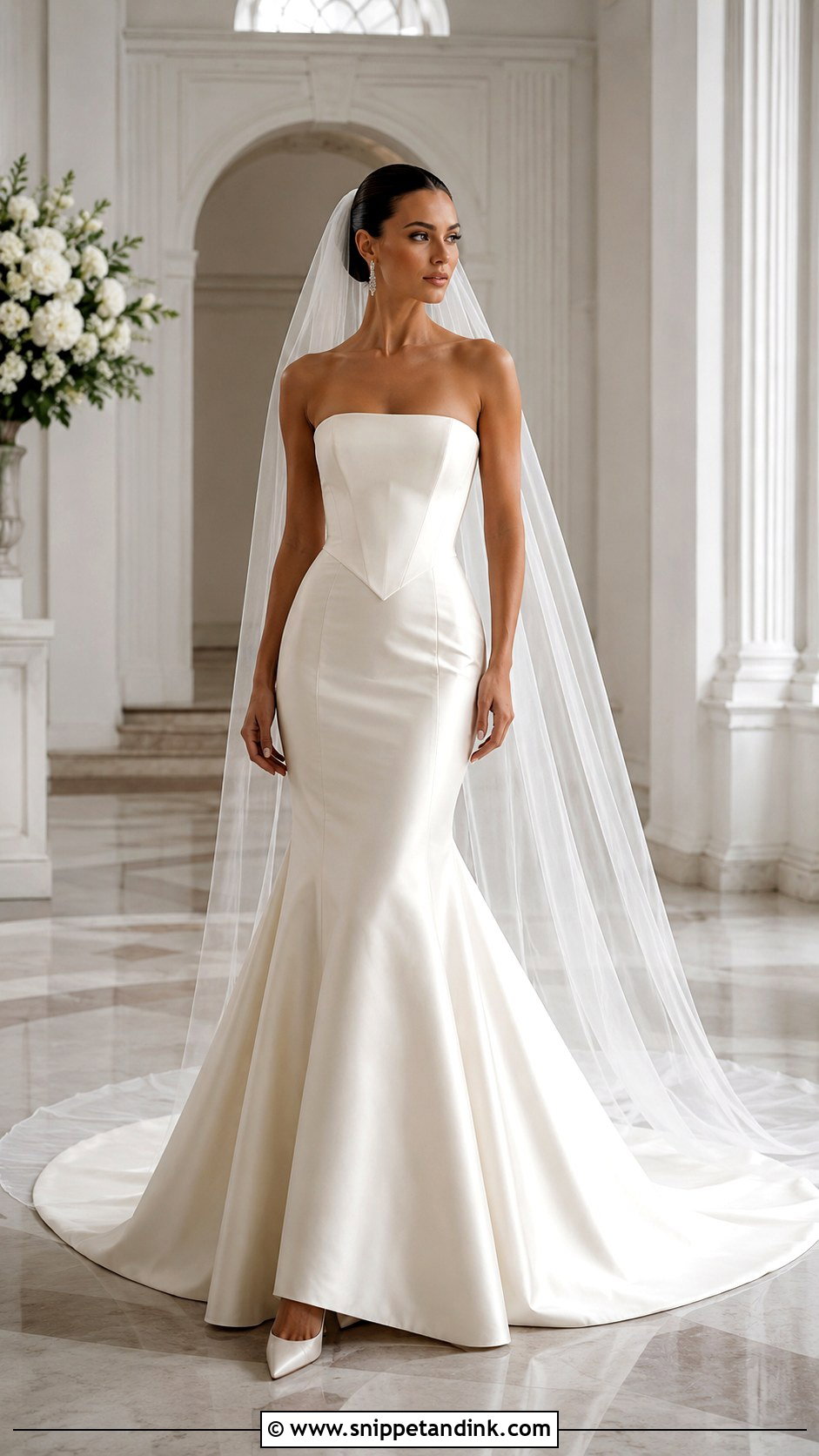
A Basque waist satin trumpet wedding dress dips below the natural waist in a point, which lengthens the torso and looks formal. Paired with a trumpet skirt, the body stays fitted and the flare comes later. The waist seam has to land in exactly the right place, so I order by the largest measurement and let a tailor take in the rest; you can’t move that point lower once it’s cut. Keep the accessories quiet so the waist stays the feature, with long earrings, a clean veil, satin heels and a small bouquet. Sit down at every fitting. A Basque point that’s slightly too long digs into the lap.
12. Open Back Crepe Sheath Wedding Dress
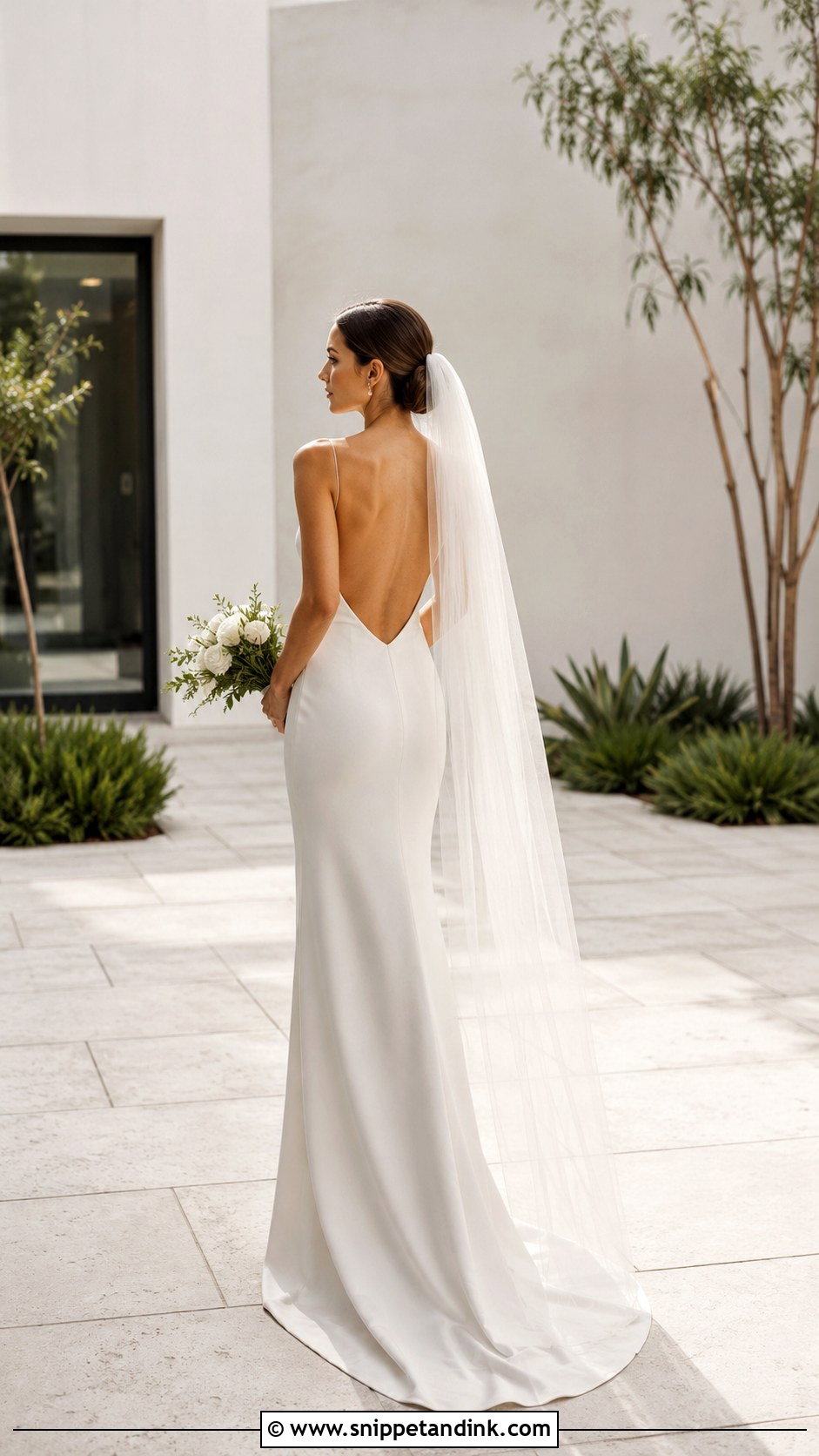
From the front, an open back crepe sheath wedding dress looks almost plain, and that’s the trick. The back does the work, through a low scoop, a geometric cutout or a soft cowl. Plan support at the first fitting, not the last. Sewn-in cups and an internal waist band are usually the cleanest answer, since ordinary underwear shows. A smooth updo, a back-drop necklace if it suits, tiny earrings and minimalist heels keep it clean. A veil set above the bun frames the back for the ceremony and comes off later. Bend, sit and reach; the back edge should stay against your skin throughout.
13. Pearl Beaded Fitted Wedding Dress
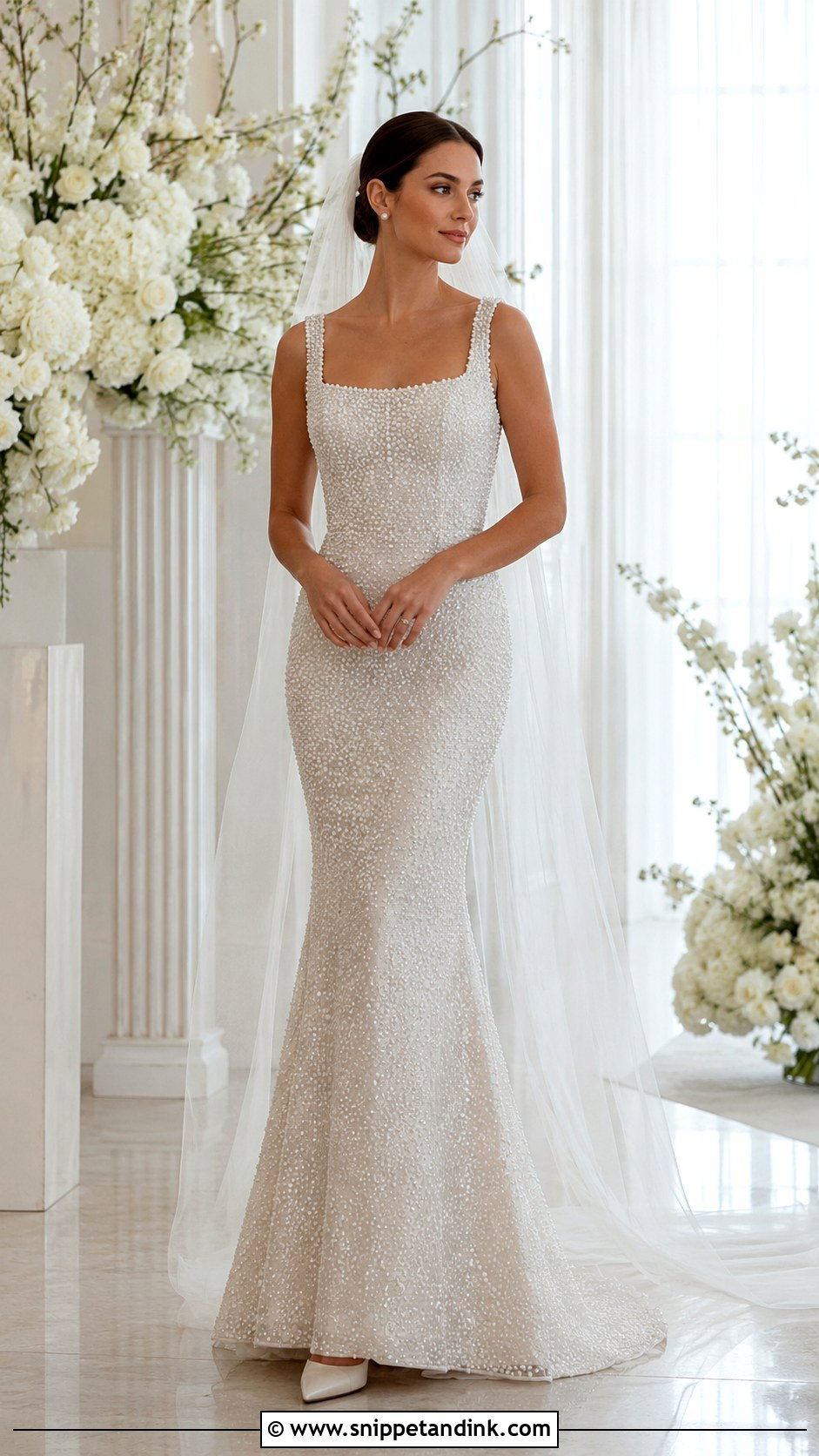
Pearls are heavier than they look. A fully beaded fitted gown can weigh noticeably more than a plain one, so lift the hanger before you fall for it. The beading may cover everything or sit only along the neckline, bodice, waist and train, and a simple sheath, trumpet or fit-and-flare shape keeps it balanced. Wear pearl studs, plain satin shoes and an unembellished veil, and resist matching pearls on everything else. Alterations on beaded fabric cost more because beads have to be removed and re-stitched around seams, hems and closures, so ask for a quote before committing. Sit, walk and raise your arms at the appointment.
14. Floral Applique Mermaid Wedding Dress
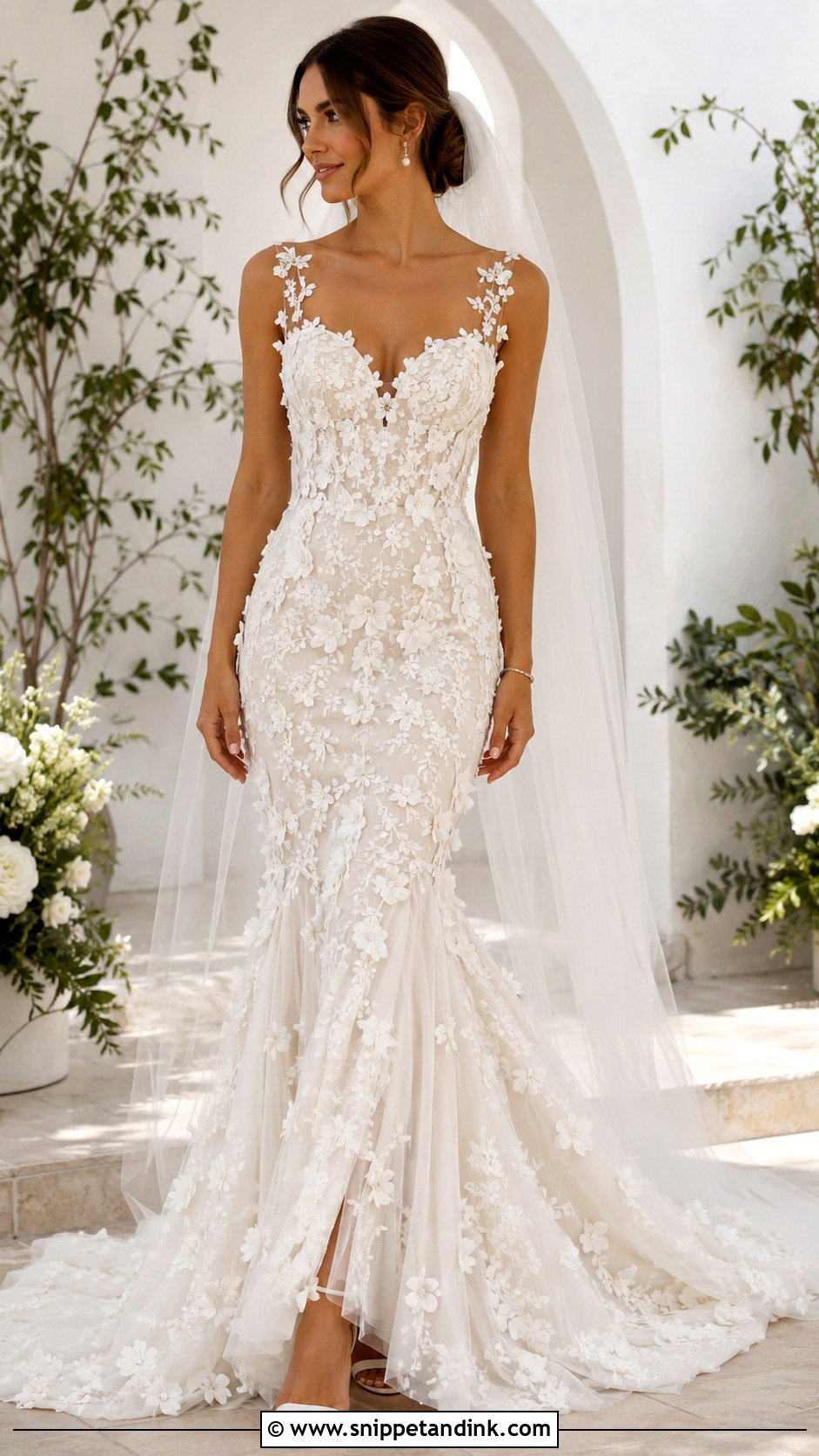
Raised flowers look wonderful and catch on everything. On a mermaid they need to follow the bodice seams and spread toward the skirt, so the decoration looks planned rather than piled on. Small blossoms read delicate, large ones read bold. Go with a sheer veil, subtle earrings, neutral heels and a bouquet that leaves the fabric alone. A lightly embellished veil only works when its flowers closely match the gown’s. Check under the arms and around the seat at your fitting, where raised petals rub skin or snag on chairs. Textured trains are heavy, so insist on strong bustle loops.
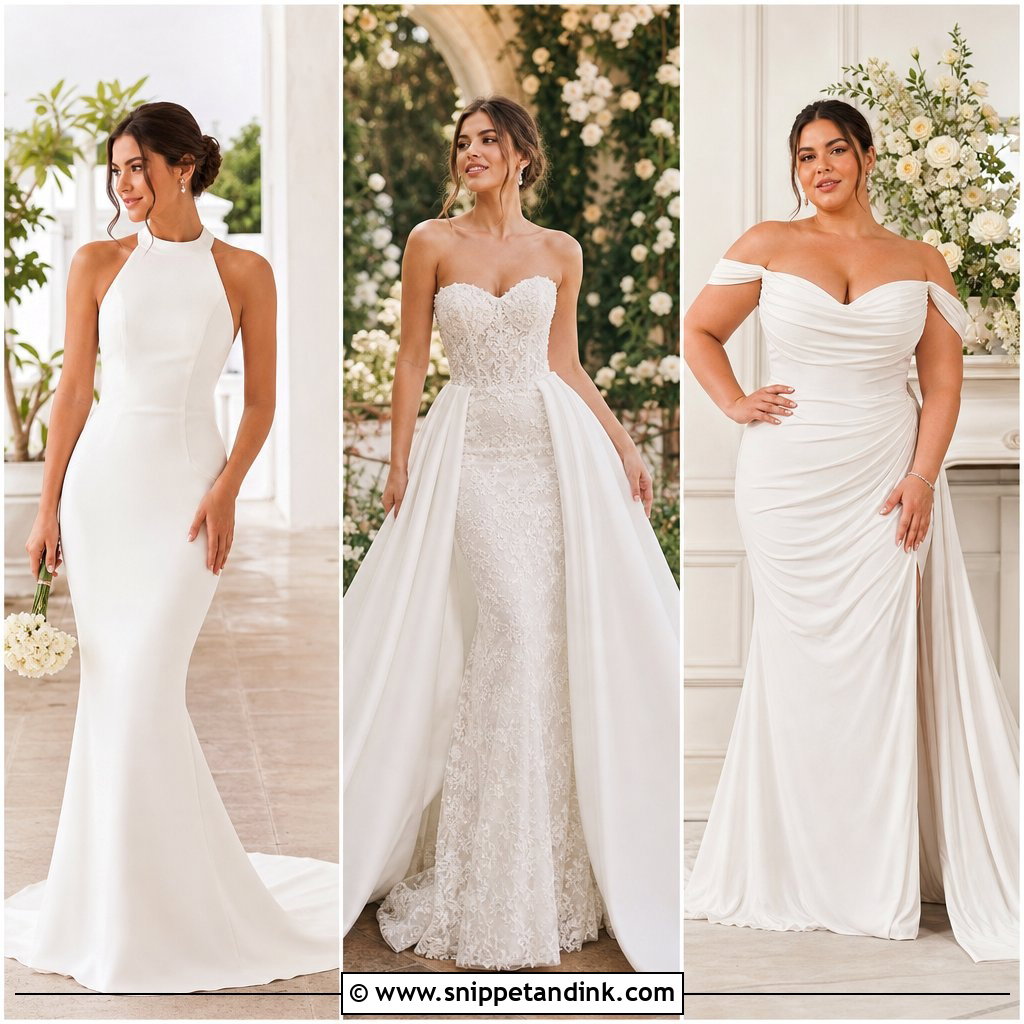
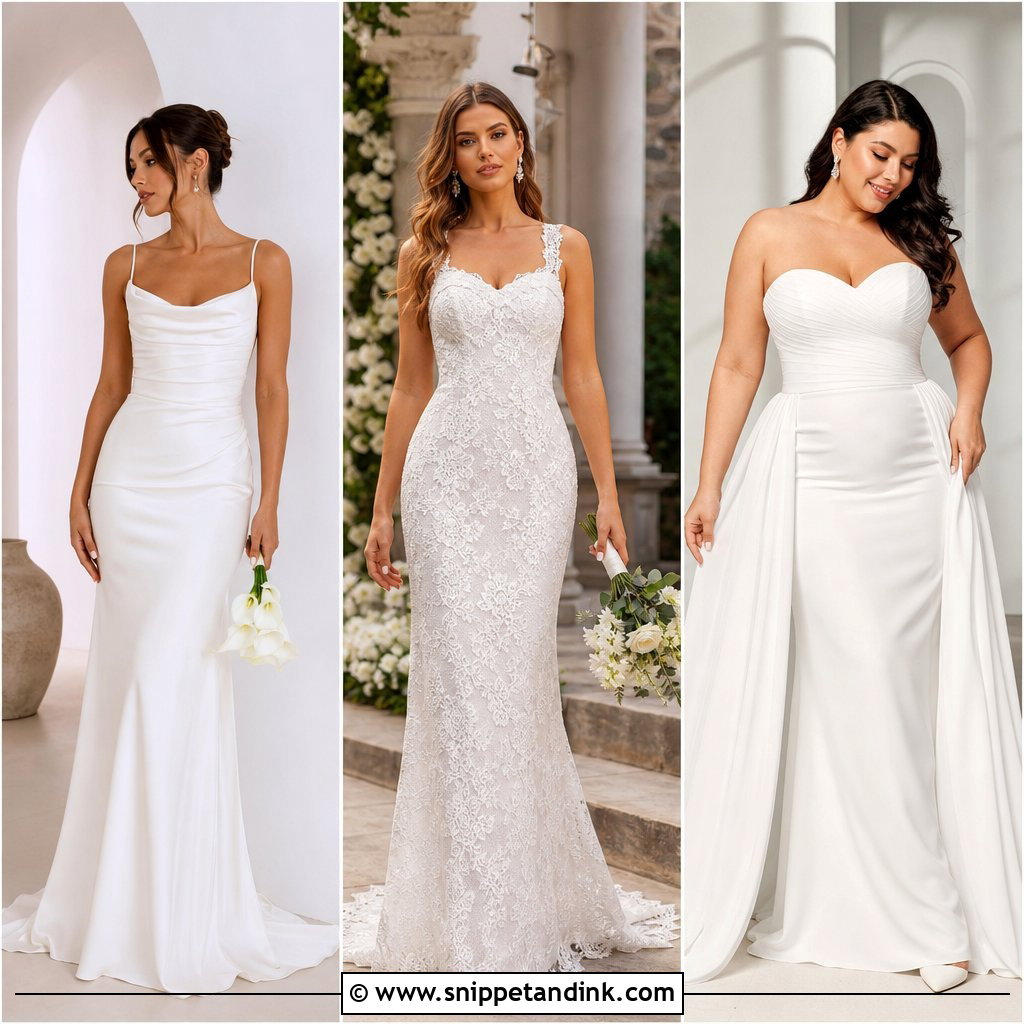
15. Minimalist Slip Wedding Dress
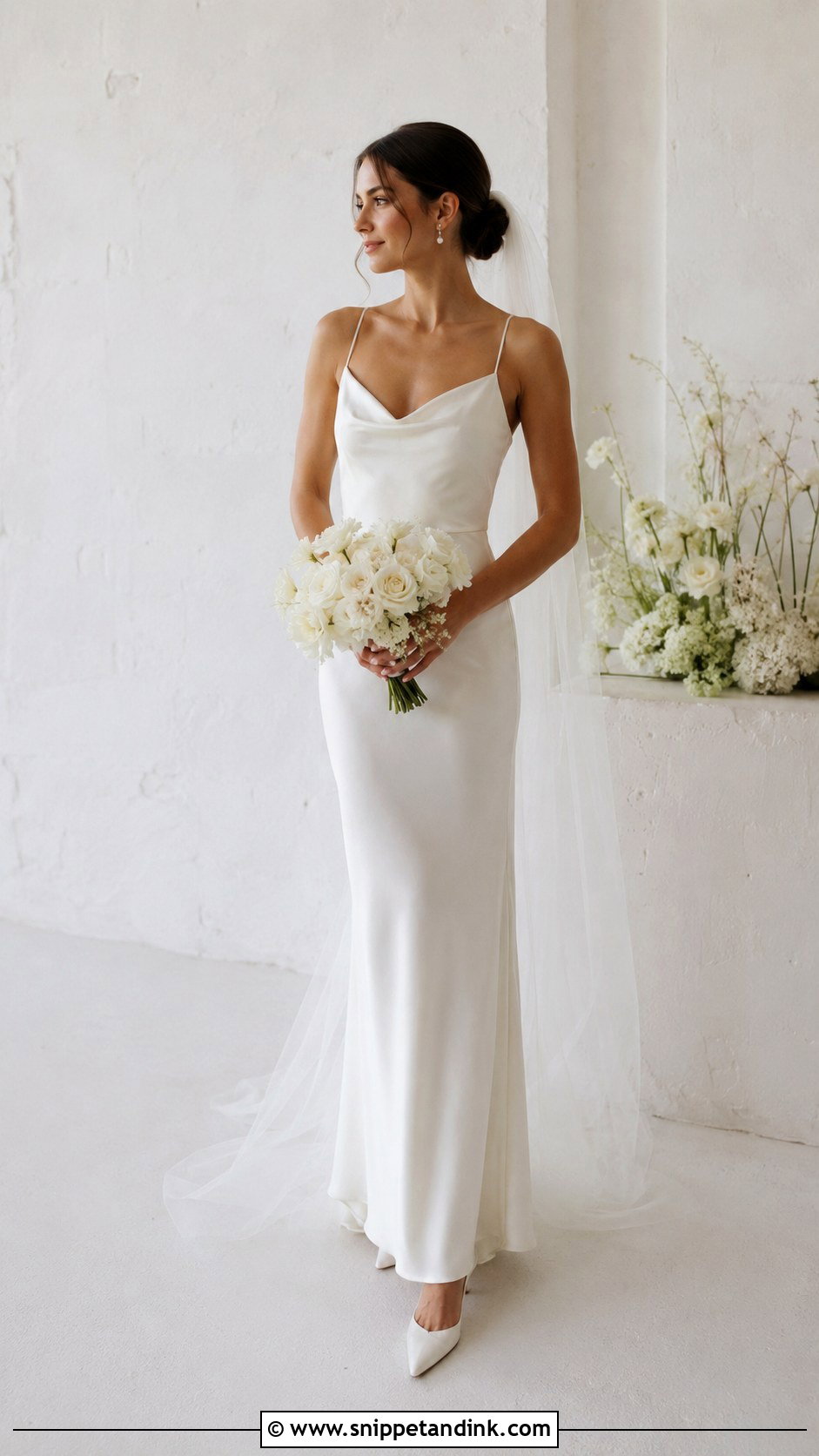
Bias-cut satin follows the body without corsetry, which is both the appeal and the risk, because a slip shows every seam, line and pull. A cowl neckline softens it, while a straight neckline looks sharper. Fabric quality matters more here than anywhere else on this list. The dress should skim the hips and waist, never strain across them, and smooth undergarments with well-placed cups keep the line fluid. Test it under bright light before the final fitting, since thin satin can turn slightly sheer. Slim sandals or pointed pumps, delicate earrings, a polished bun and a light veil finish it.
16. Cap Sleeve Lace Fitted Wedding Dress
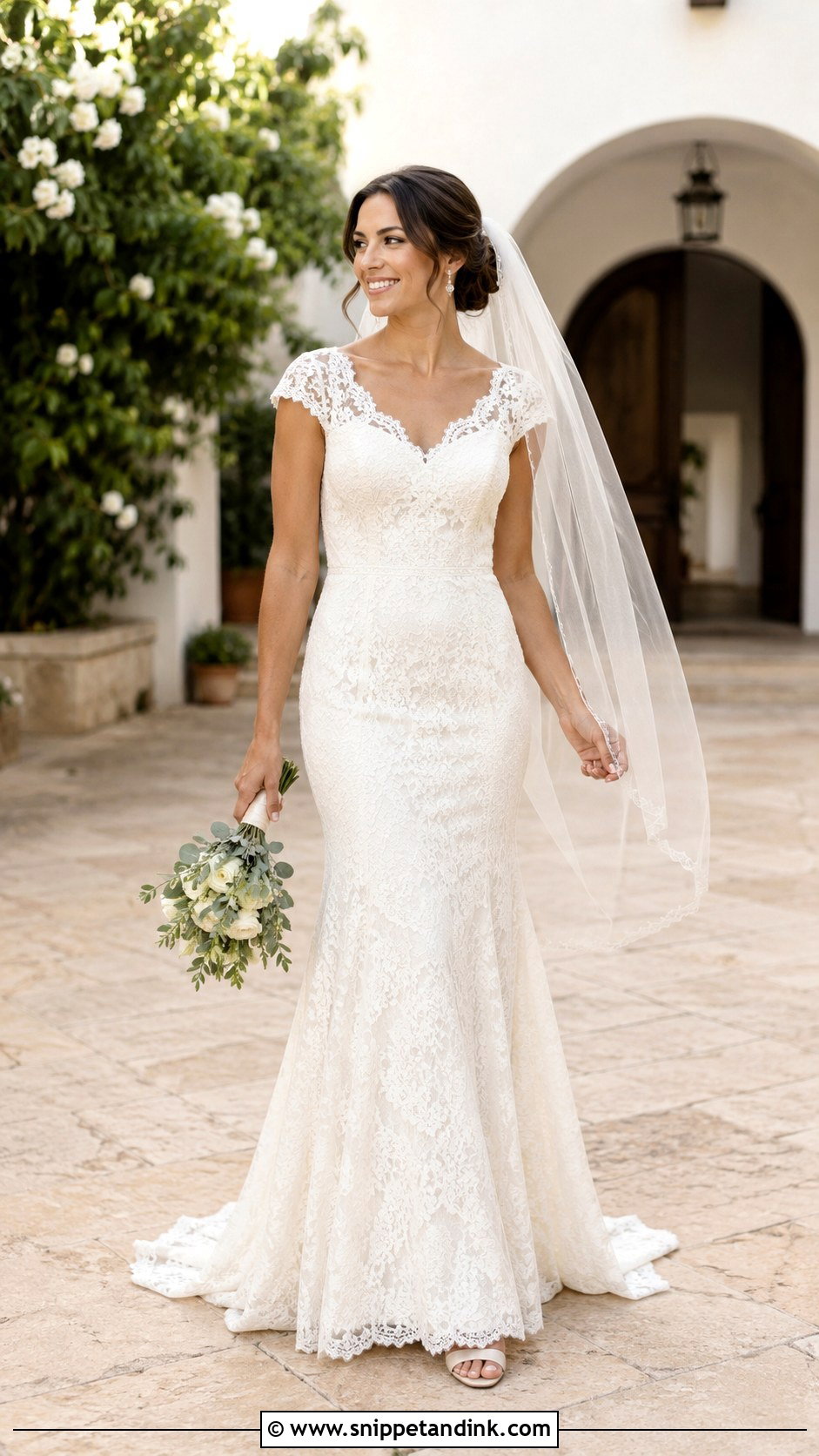
Cap sleeves add a touch of coverage and keep a lace gown light, and they sit well with a V-neck or scoop. A fit-and-flare skirt balances the delicate top and walks more easily than a narrow mermaid. The sleeve should follow the shoulder rather than stand away from it. At the fitting, raise your arms, reach forward and hold a dance pose. Rough lace at the armhole can be softened with binding or extra lining without changing how it looks. Pair it with a fingertip veil, pearl drops, low or mid heels and a small clutch for later in the day.
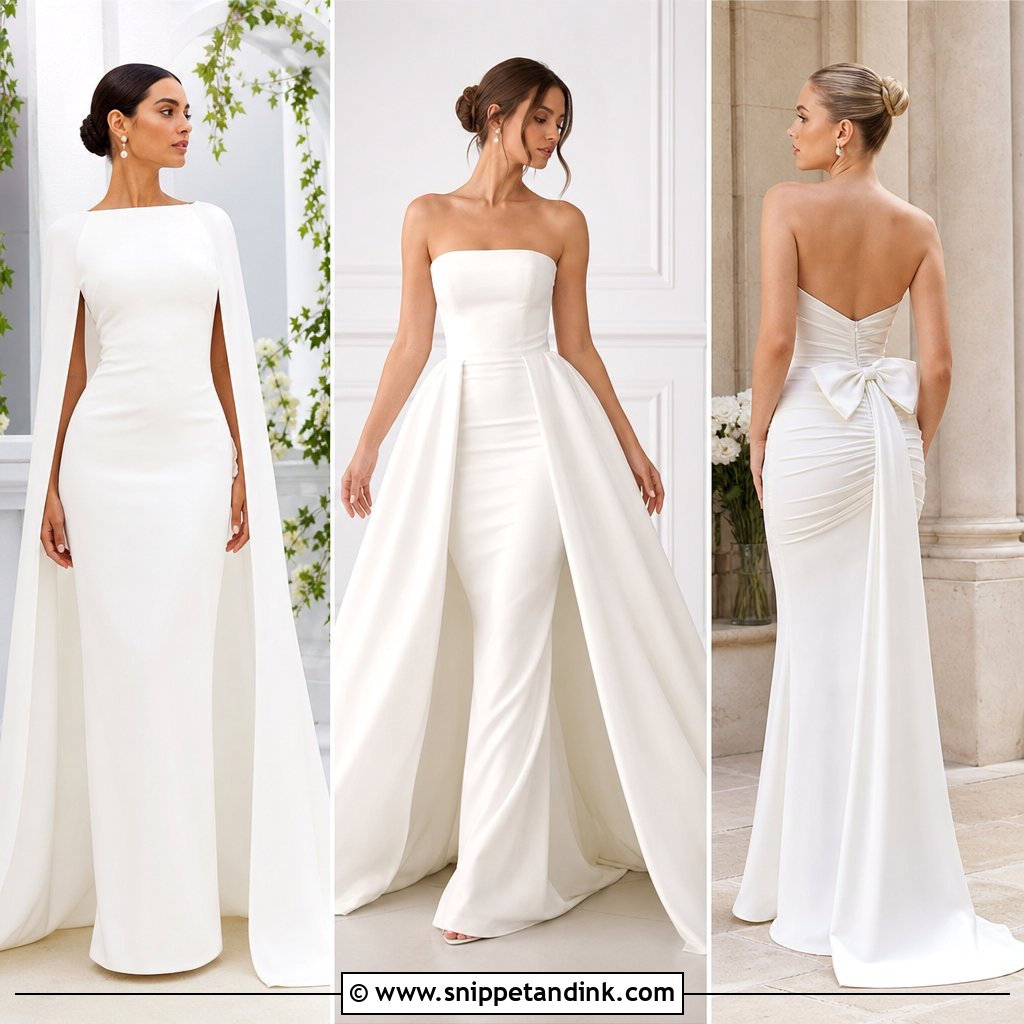
17. Detachable Overskirt Fitted Wedding Dress
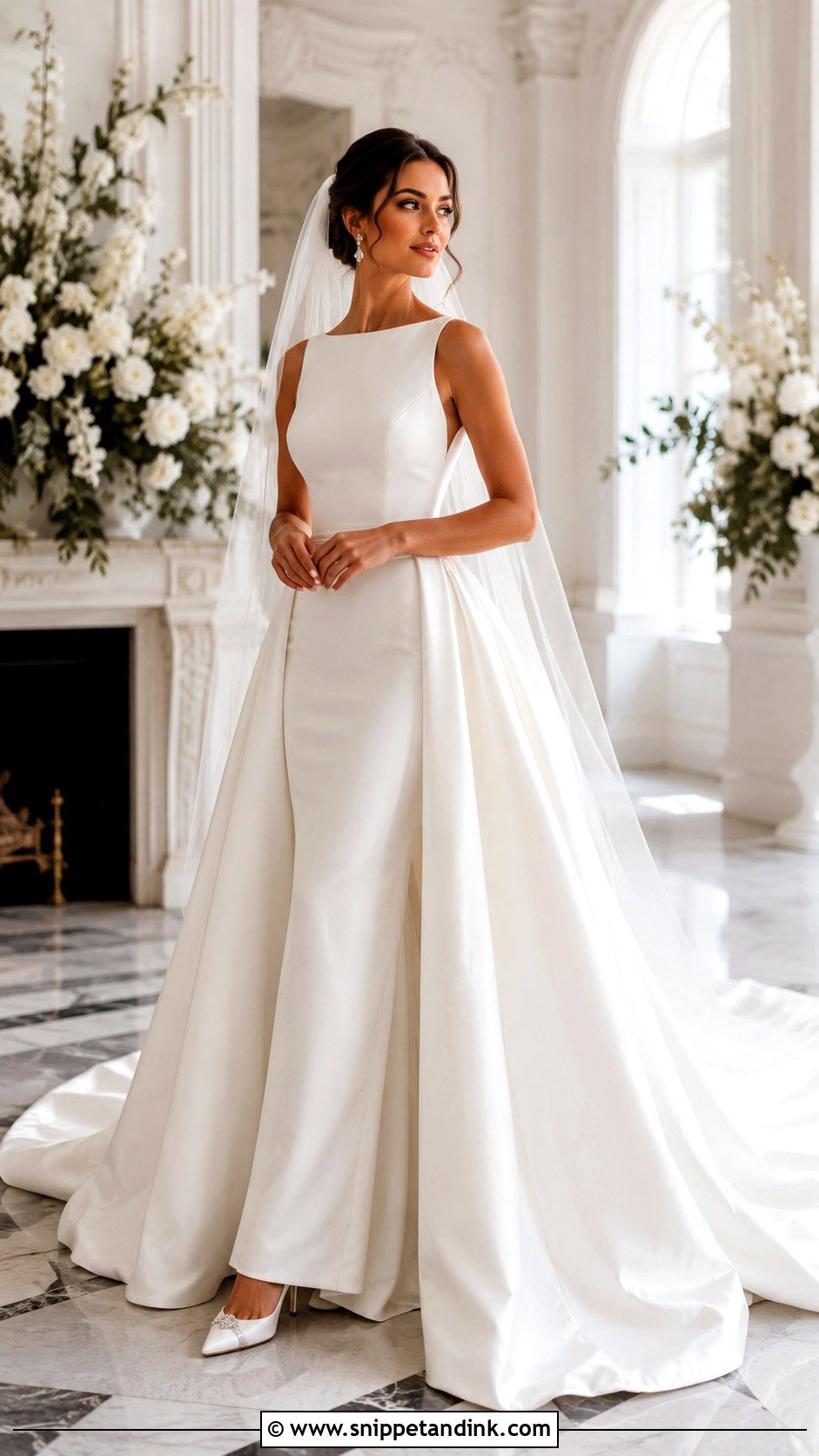
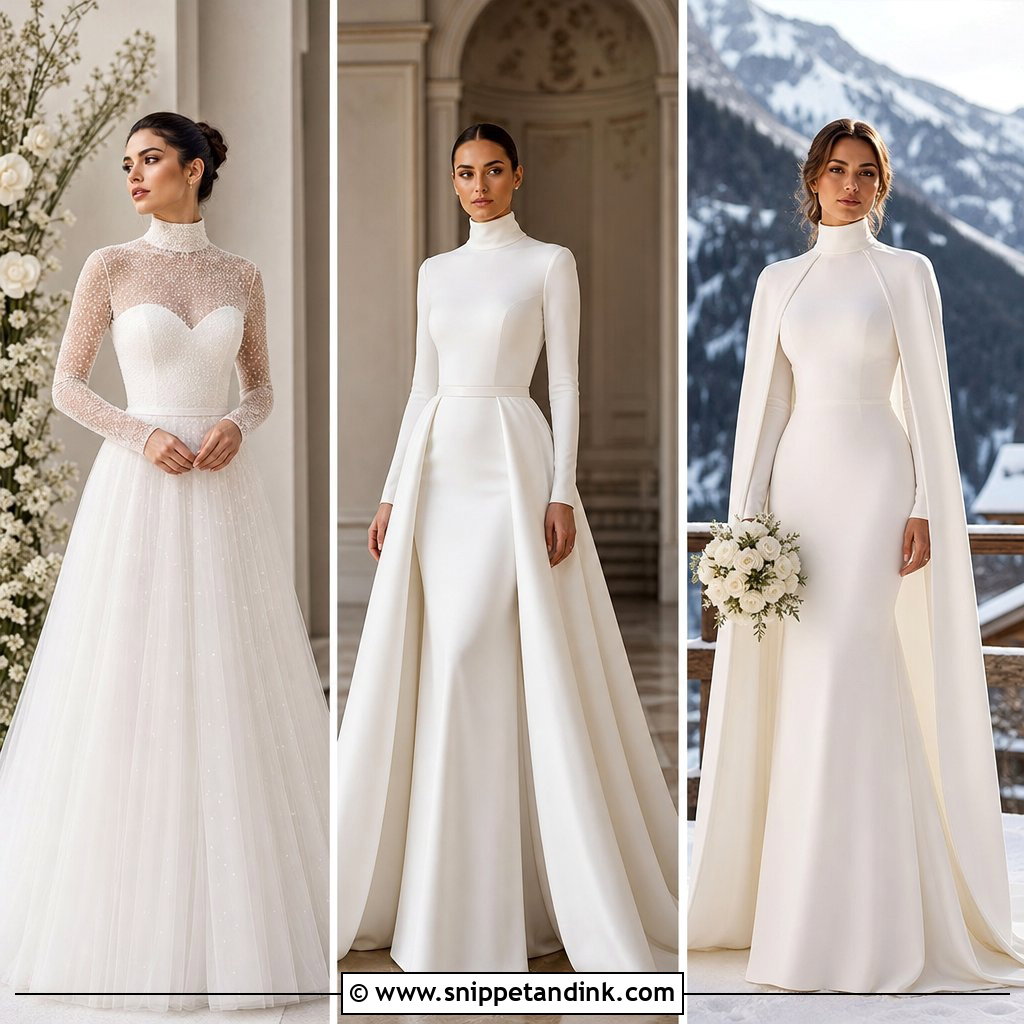
A detachable overskirt gives you ceremony volume and a longer train, then comes off to reveal a sheath, trumpet or mermaid for the reception. Satin makes the change dramatic, while tulle or organza keeps it light. The base dress has to look finished on its own rather than like an underlayer, so try it without the overskirt in the shop. Check the waistband from every side and keep the closure hidden. Classic earrings, comfortable heels and a veil that suits the base gown work for both versions. Practice the removal and give the job to one person who knows the fastenings.
18. Plus Size Corset Fit And Flare Wedding Dress
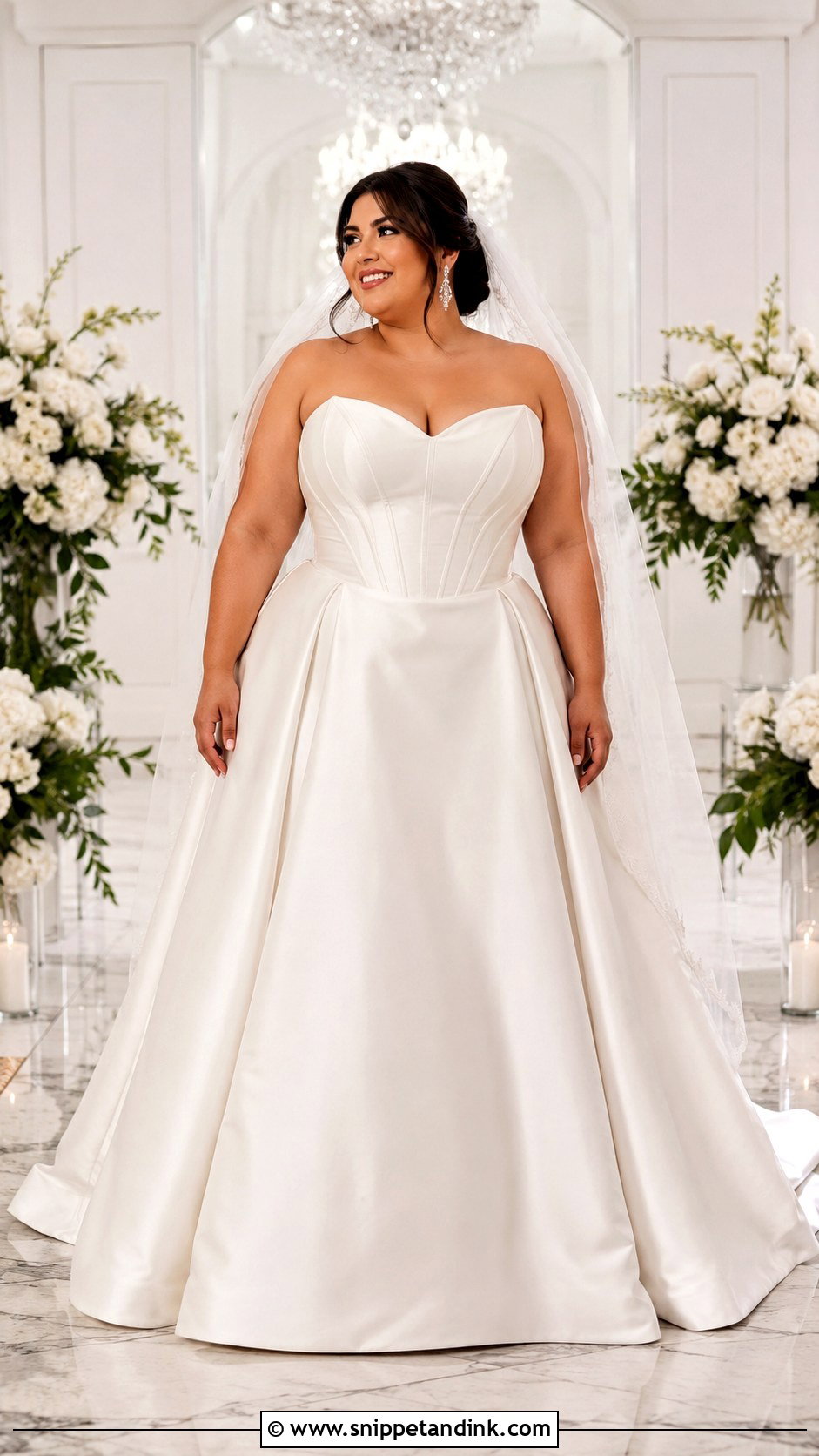
The most useful step for a plus-size bride is finding a salon with real samples in her size, so the neckline, waist, straps and skirt can be judged properly instead of imagined over clips. A good corset spreads support across the torso; one that squeezes a single spot is badly fitted. Stretch crepe, lined lace and structured satin all finish smoothly. Supportive heels, drop earrings and a veil in proportion suit it, with alterations made to your actual measurements. Forget body-type rules. Sit, climb steps, hug and dance in it, and if you have to change your posture to stay comfortable, keep looking.
19. Petite Crepe Trumpet Wedding Dress
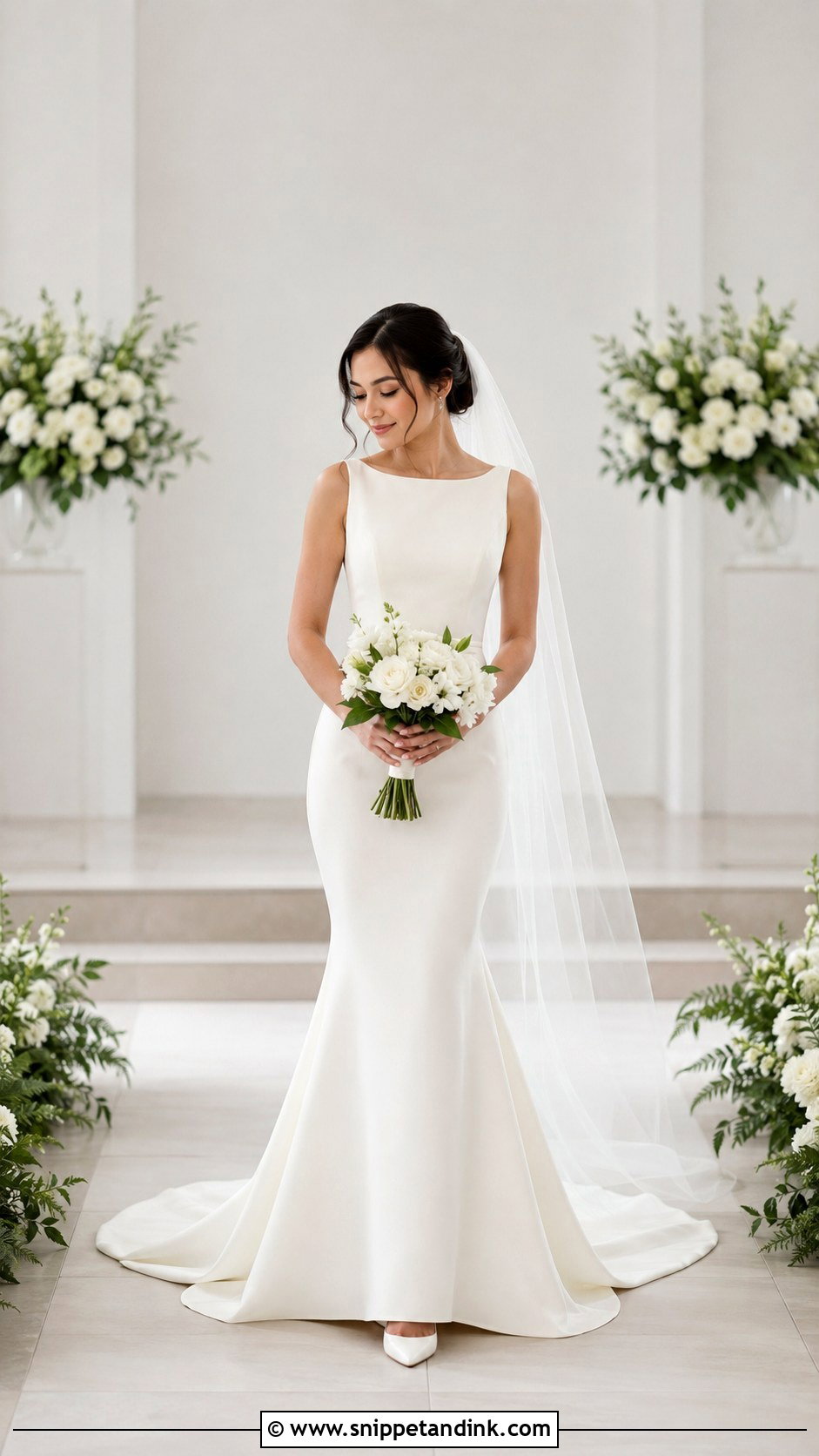
Most gowns are drafted for a taller woman, so on a petite bride the flare can land too low and swallow the leg. Where the waist and flare sit matters more than any rule. Crepe in a trumpet shape gives an unbroken vertical line, and a V, square or narrow scoop neckline suits it. Petite alterations often go beyond the hem, because the bodice, straps, hips and the flare point itself may all need moving. Bring your exact shoes to every major fitting. Pointed-toe shoes, small earrings and a simple veil keep the line long; skip a heavy train unless it bustles securely.

20. Modest Long Sleeve Crepe Wedding Dress
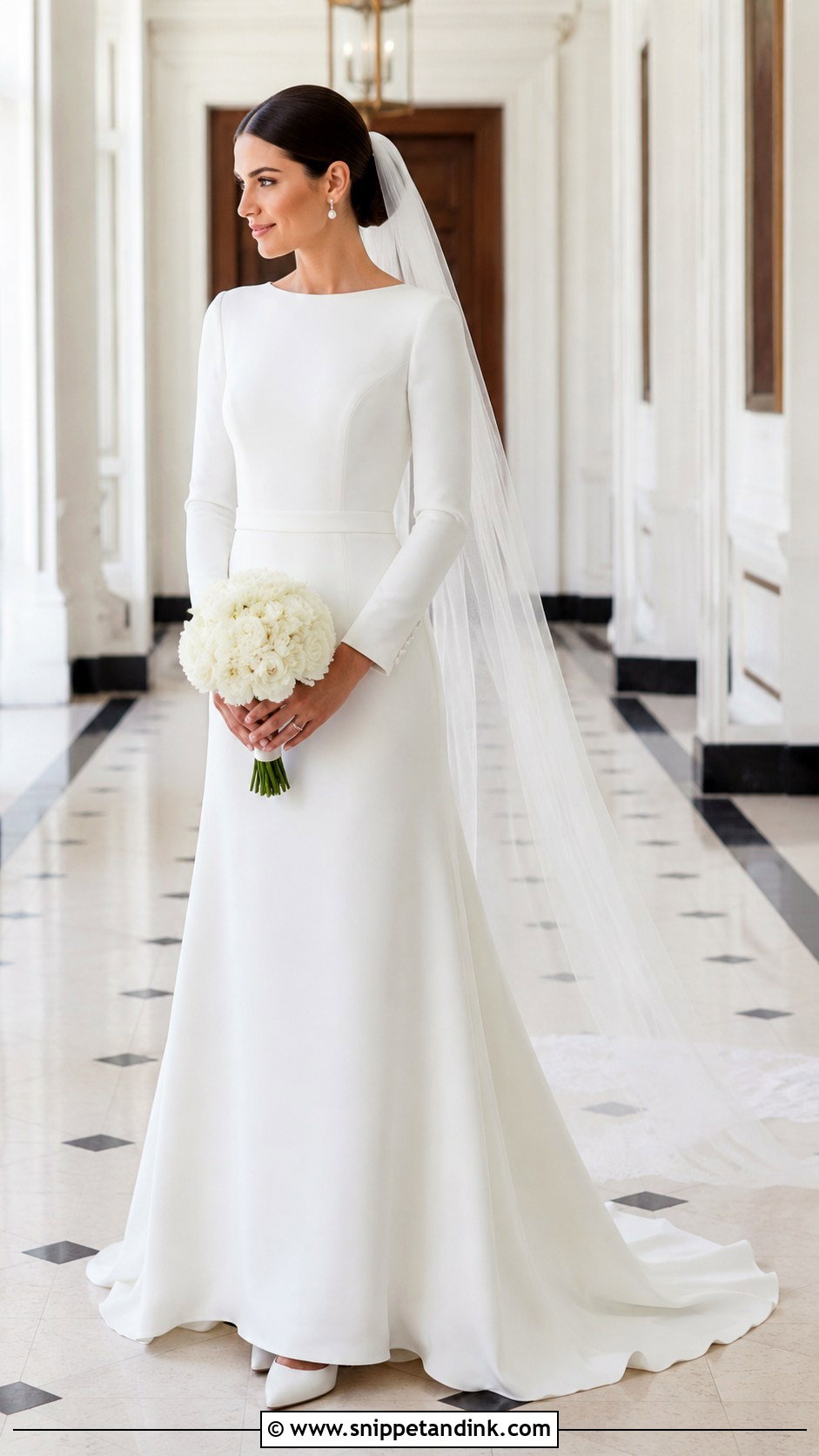
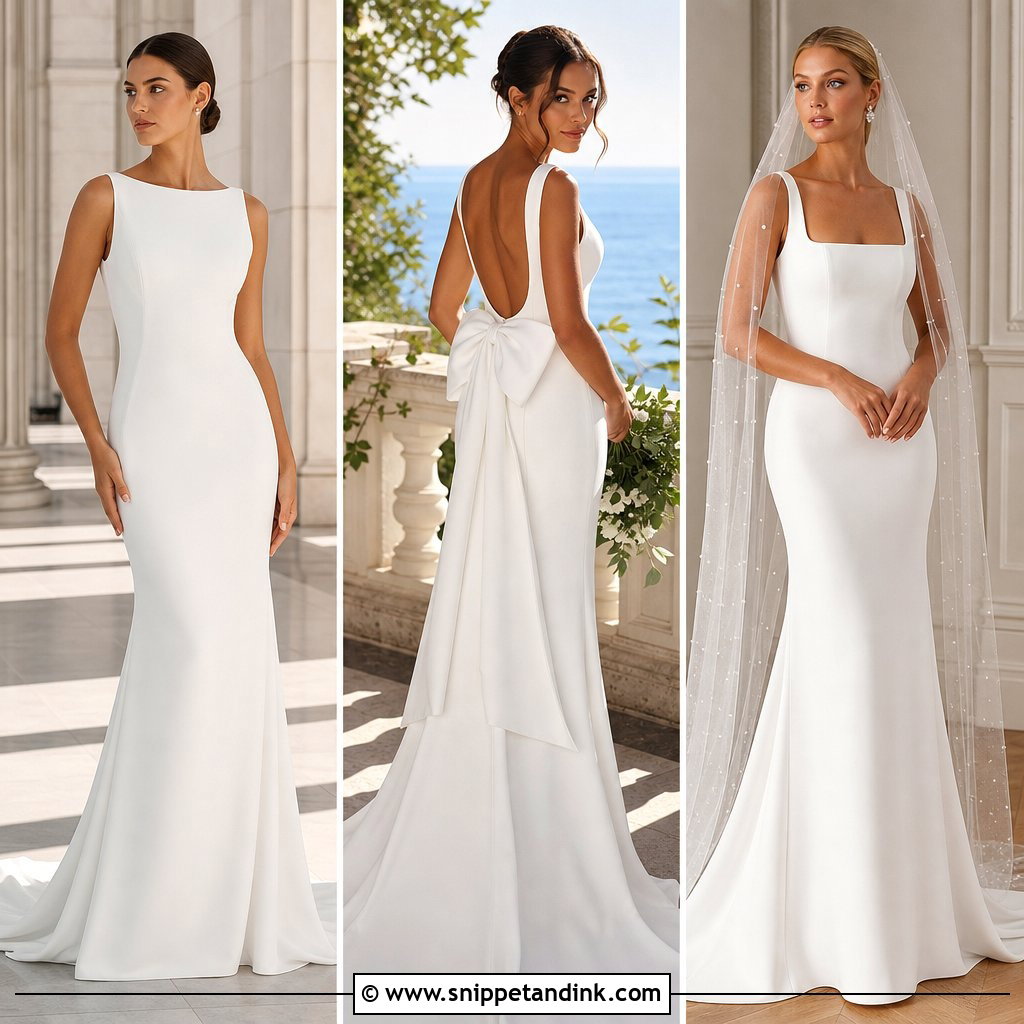
Covered and fitted aren’t opposites. A high boat neck, jewel neck or soft square pairs with slim sleeves and a smooth fit-and-flare skirt. Medium-weight crepe with stretch holds its shape and still moves with you, and covered buttons down the back or at the cuffs add quiet detail. Check the sleeve length with your arms relaxed and bent, since a fitted sleeve that’s right hanging down can ride up mid-forearm when you hold a bouquet. Breathable lining helps indoors and in warm months. Closed-toe pumps, pearl earrings, a low bun and a chapel veil complete it.
Getting Into, Out of and Through the Day in a Body-Skimming Dress
Dressing without spoiling hair and makeup
Step into a fitted gown; never pull it over your head. Have one person hold the bodice open while you step in, then zip slowly while someone else smooths the lining flat so it doesn’t catch in the teeth. If the dress has to go over your head after makeup, a silk scarf over the face stops foundation transferring onto the neckline.
The bathroom plan
Practice this at your last fitting. A fitted skirt can’t be hitched up like a ball gown, so many brides find it easier to face the toilet and have a friend hold the train and skirt behind. A gathering slip worn under the gown can make it a one-person job. Go before the ceremony, before photos and before dinner rather than waiting until it’s urgent.
Dinner without strain
Perch toward the front of the chair with your back straight, and lift the skirt slightly as you sit so you aren’t pulling against the fitted thighs. Trains left down get stepped on under tables, so bustle before the meal is served.
The Chair Test Comes Before the Mirror
Start with how you want to move, then how you want to look. Mermaid and corset gowns give the most definition, while trumpet, sheath, slip and fit-and-flare shapes are softer routes to a fitted line. Necklines, sleeves, fabric, trains and embellishment come after that. Try every serious contender in the right shoes and foundations, and move in it rather than posing. Support and tailoring count for more than the size on the label. Set body-type rules aside and pick the dress that fits your shape and lets you enjoy the whole day.
You'll Like These Ideas:






Leave a Reply