
A train changes the way a gown moves more than any other single detail. It follows you down the aisle, settles behind you at the altar and turns every back-view photo into a shape. The catch is that a long train also has to be lived in, so I judge a trail gown on how it handles the whole day, not the first ninety seconds. Fabric, train length, neckline and support all decide the result. Satin gives a smooth, heavy sweep; lace, tulle, sequins and appliqués add texture and lighten the drag. Stable shoes matter more than height, and a bustle or detachable train decides how comfortable the reception will be. Here are twenty gowns with the styling and fitting notes I’d give for each.
Sweep, Court, Chapel or Cathedral? What Each Train Length Means in Practice
Train names are used loosely, and bridal houses measure them slightly differently, so treat these as rough guides and ask the shop to measure the actual gown from the waist to the tip.
- Sweep: barely brushes the floor behind you. The easiest to live with, good for gardens, beaches and small rooms.
- Court: extends roughly a foot past the hem. Visible in photos, still light enough to walk around a reception for a short time.
- Chapel: around three to four feet from the waist. The most common bridal length and the one most people picture.
- Cathedral: roughly six to seven feet from the waist. Needs a long aisle and someone to arrange it every time you stop.
- Royal or monarch: longer still. Spectacular on a grand aisle, impractical anywhere crowded.
I match the train to the aisle before the dress. A cathedral train on a short aisle never fully unfolds, so you get the weight without the view. On grass or sand, a long train picks up everything it crosses, and a sweep or a detachable piece makes more sense. Think too about the fabric: the same length feels very different in chiffon than in velvet or beaded lace.
1. Satin Mermaid Trail Gown
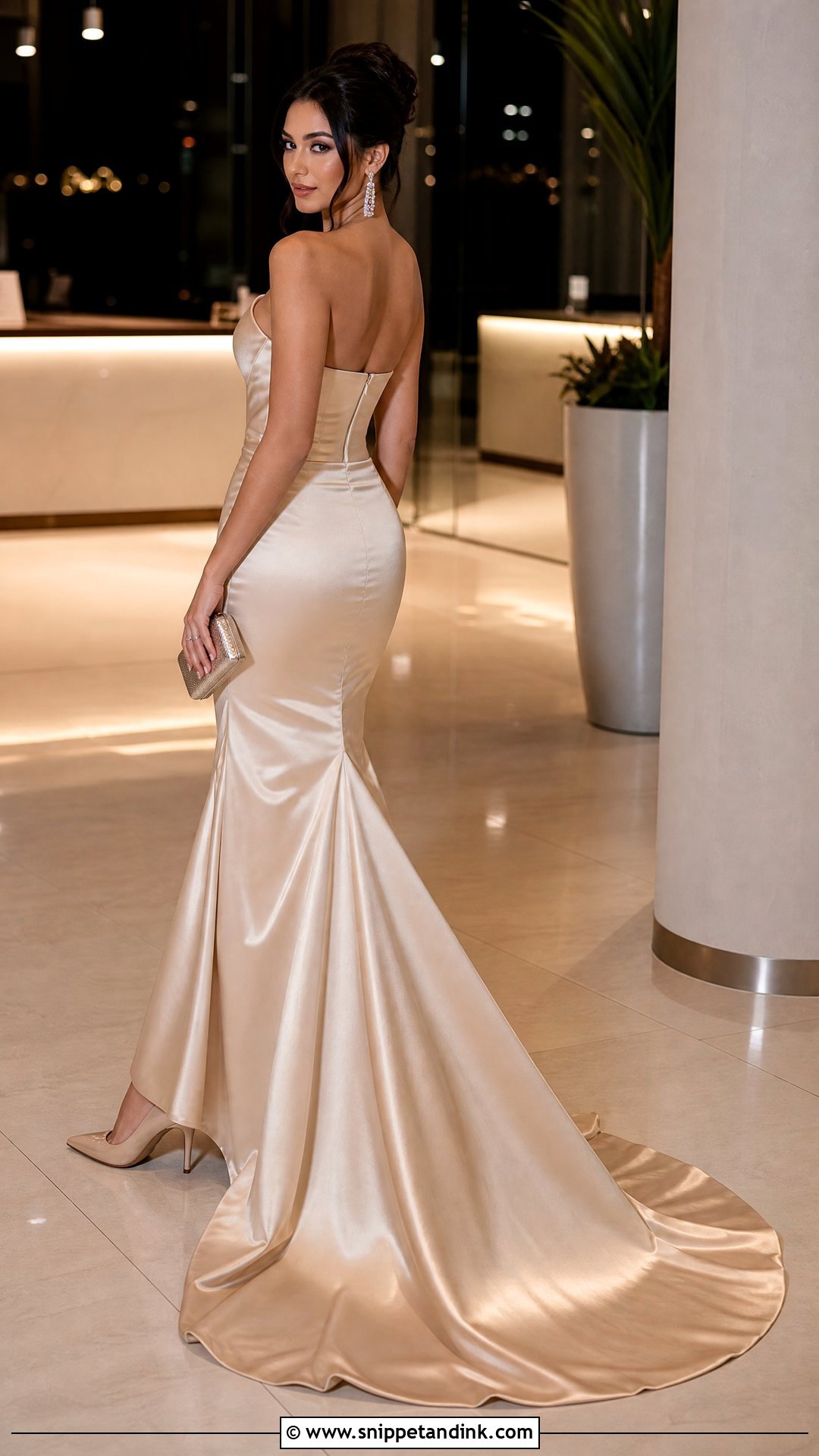
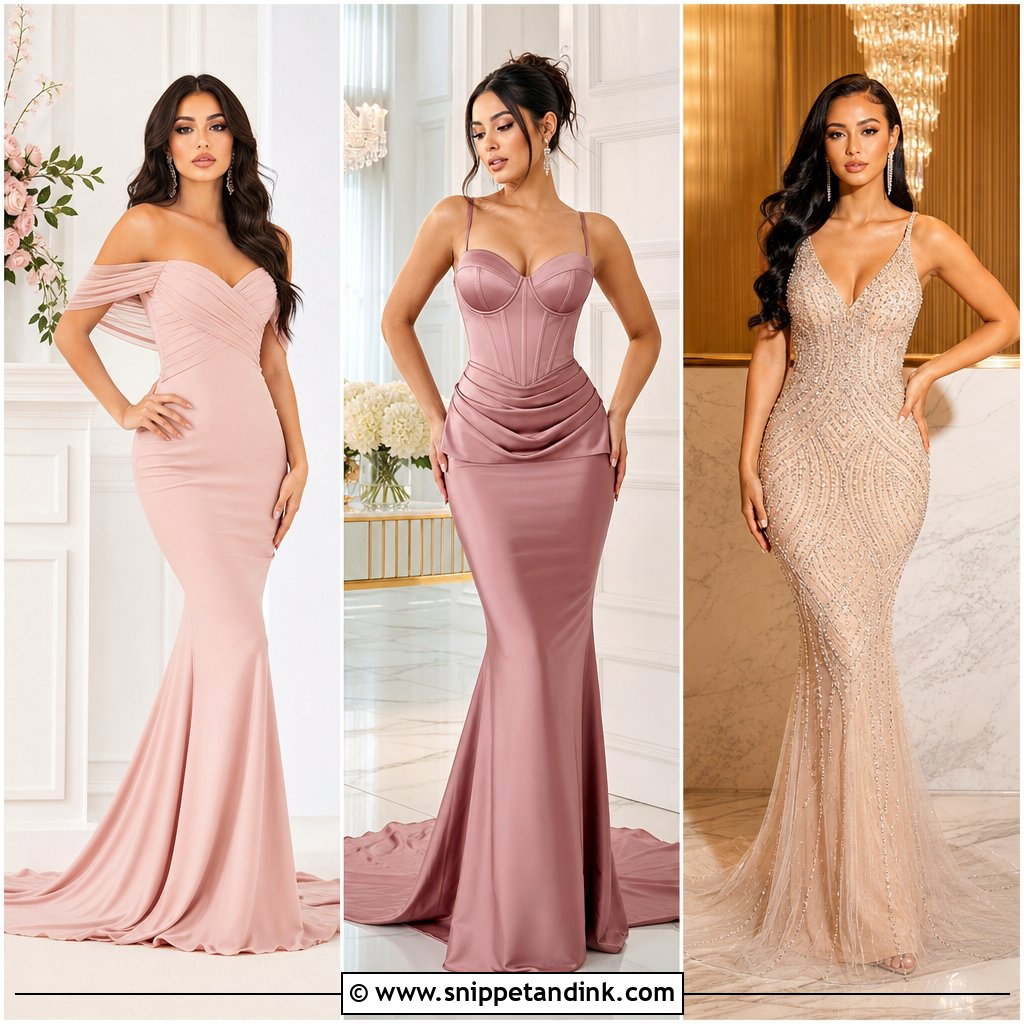
Satin and a mermaid cut are the most sculpted pairing on this list, which is exactly why fit has to be precise. A satin mermaid trail gown needs a structured bodice with supportive cups and princess seams that shape the waist without added decoration. The skirt should hug the hips and open near the knee into the train; if the flare starts too high, the line looks dropped on a shorter frame. Ivory, champagne, emerald and deep navy all look rich in satin. Pointed pumps or slim ankle straps stay hidden under the hem. Satin shows every edge underneath, so I insist on smooth, line-free shapewear. Crystal drops, a small metallic clutch and a low bun finish it, and a wrist loop or bustle handles the train after photos.
2. Lace Cathedral Trail Gown
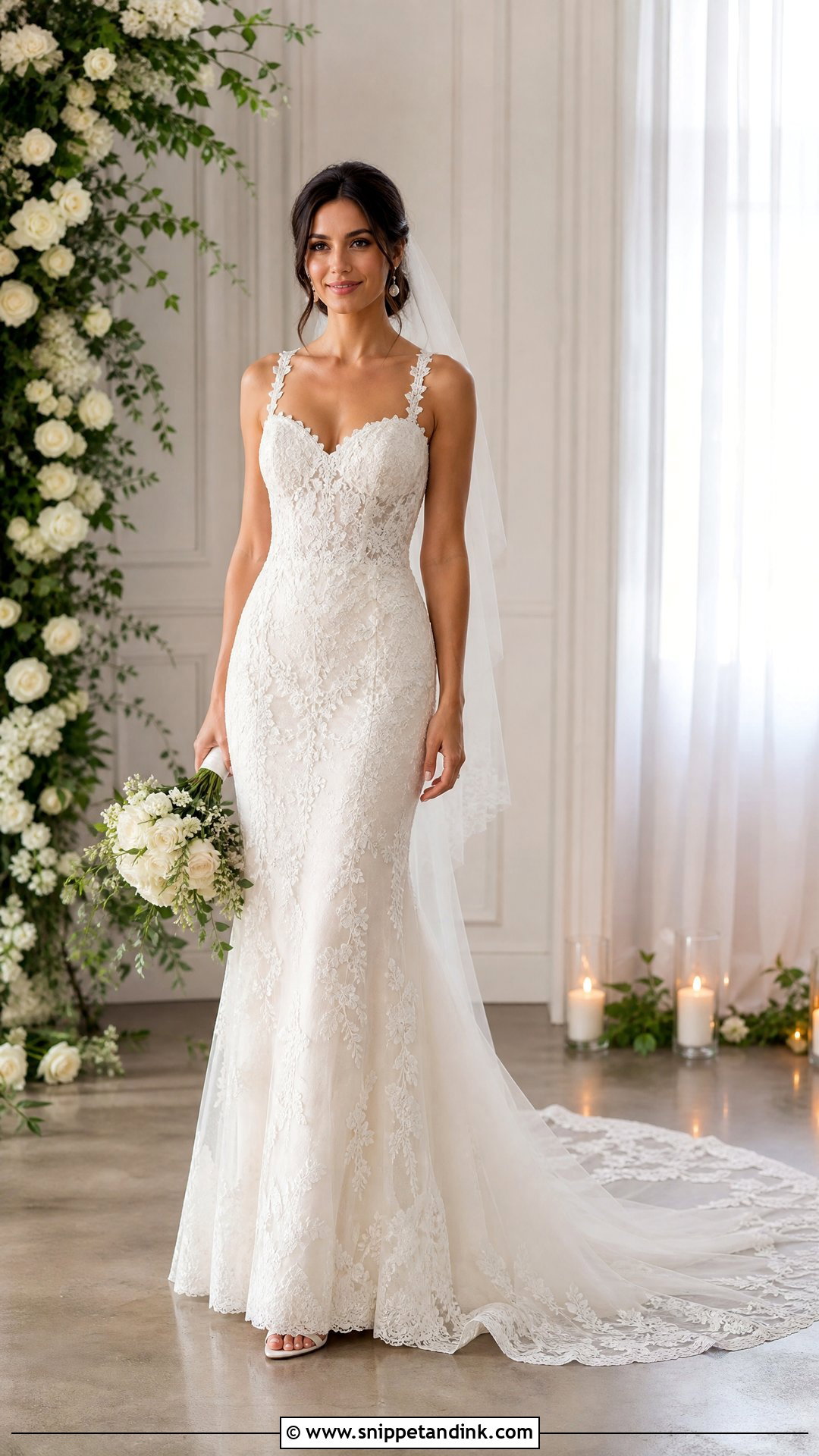
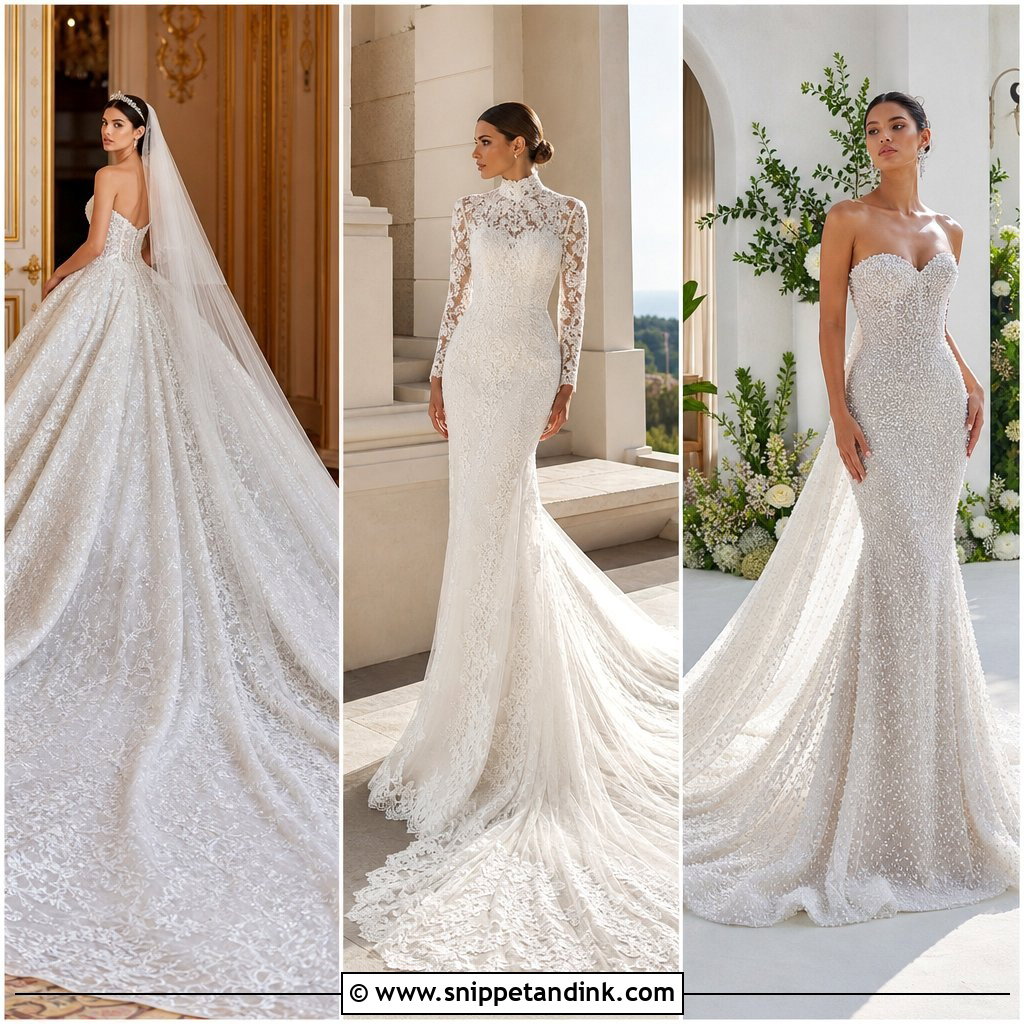
Nothing frames a long aisle like lace running all the way into a cathedral-length train. Start with a fitted lace bodice with internal support, then let the pattern flow into a softly flared skirt; a lightly lined neckline gives coverage while keeping the lace visible. The appliqués around the train’s edge are what show in back-facing photos, so I check they’re placed along the hem rather than bunched near the waist. Ivory block heels, pearl earrings and a fingertip veil that stops short of the lace keep it uncluttered. A twisted updo shows off the back. Skip the detailed necklace. Lace is heavy at that length, so ask for a bustle with clearly marked, color-coded loops.
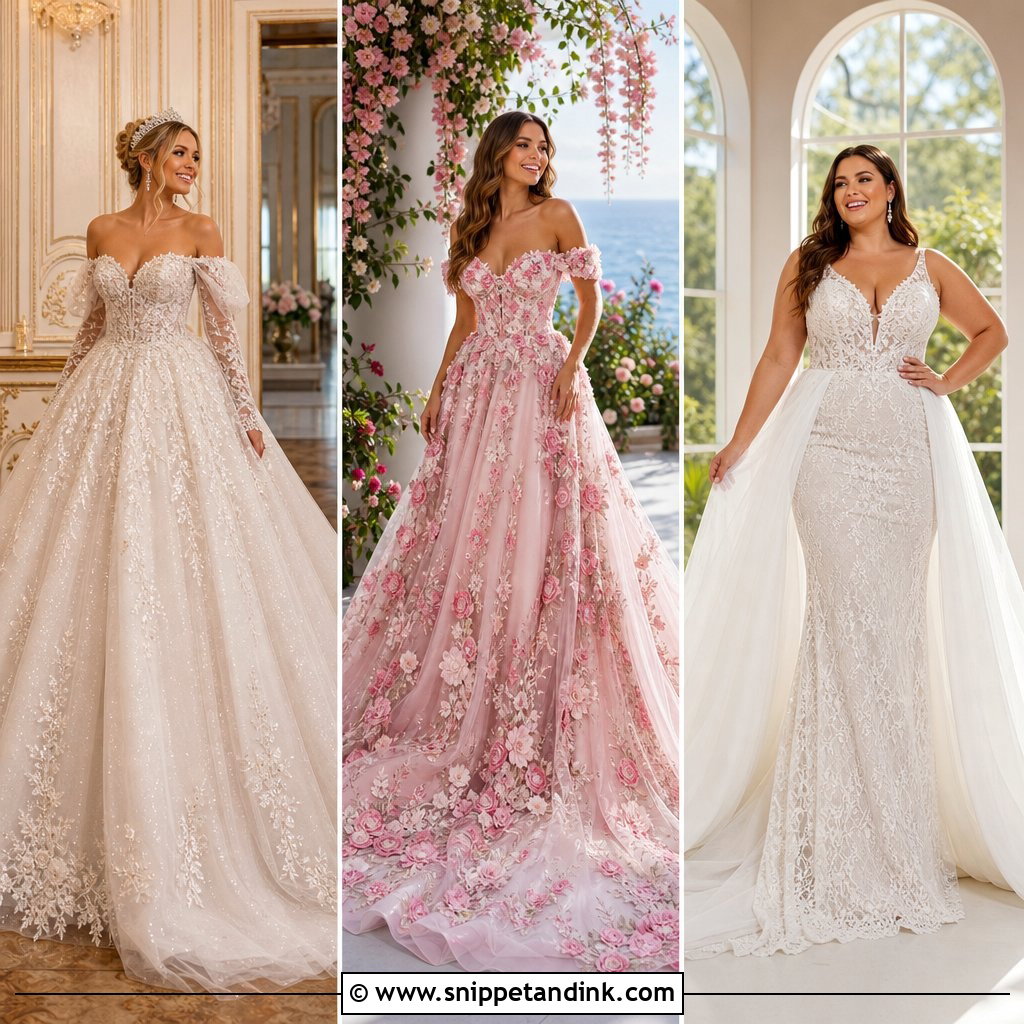
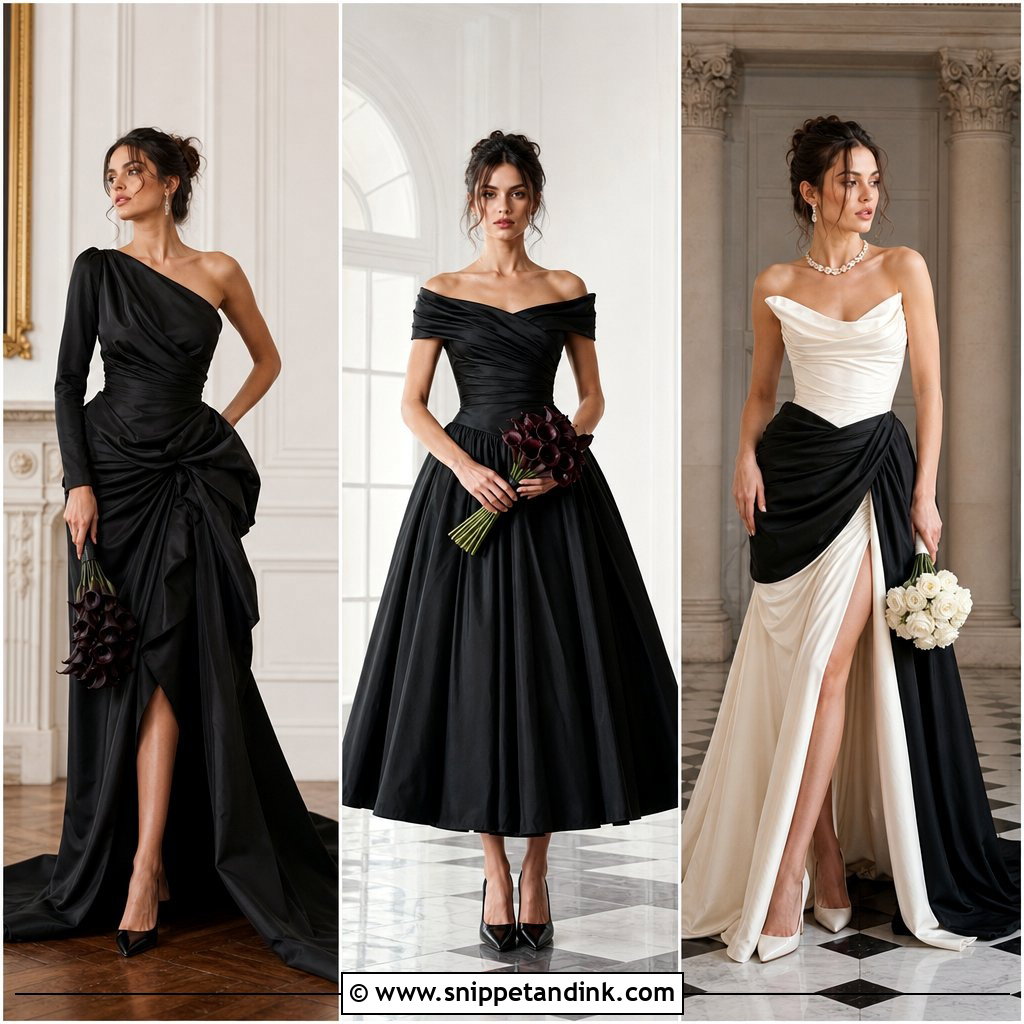
3. Off Shoulder Ball Trail Gown
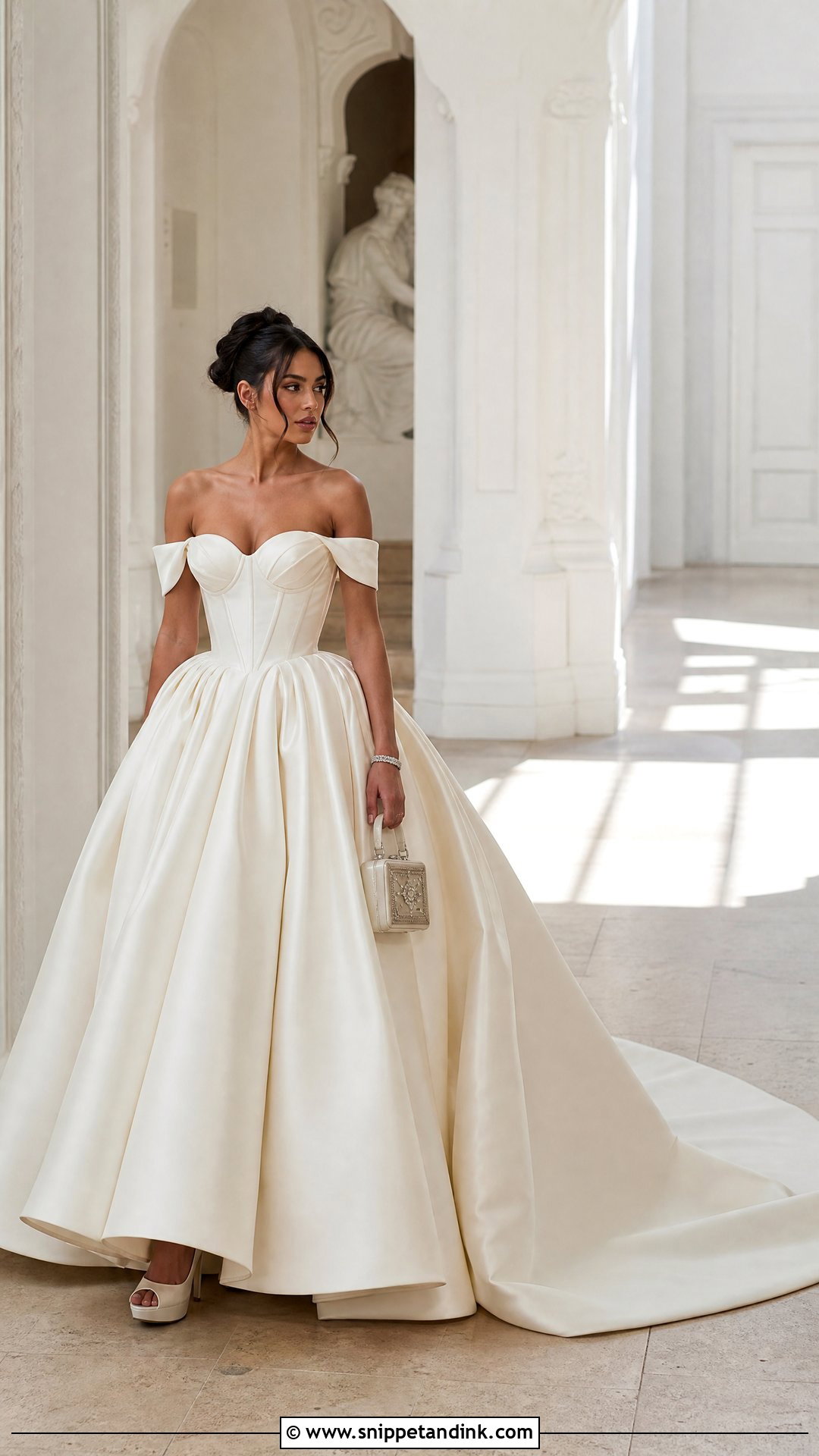
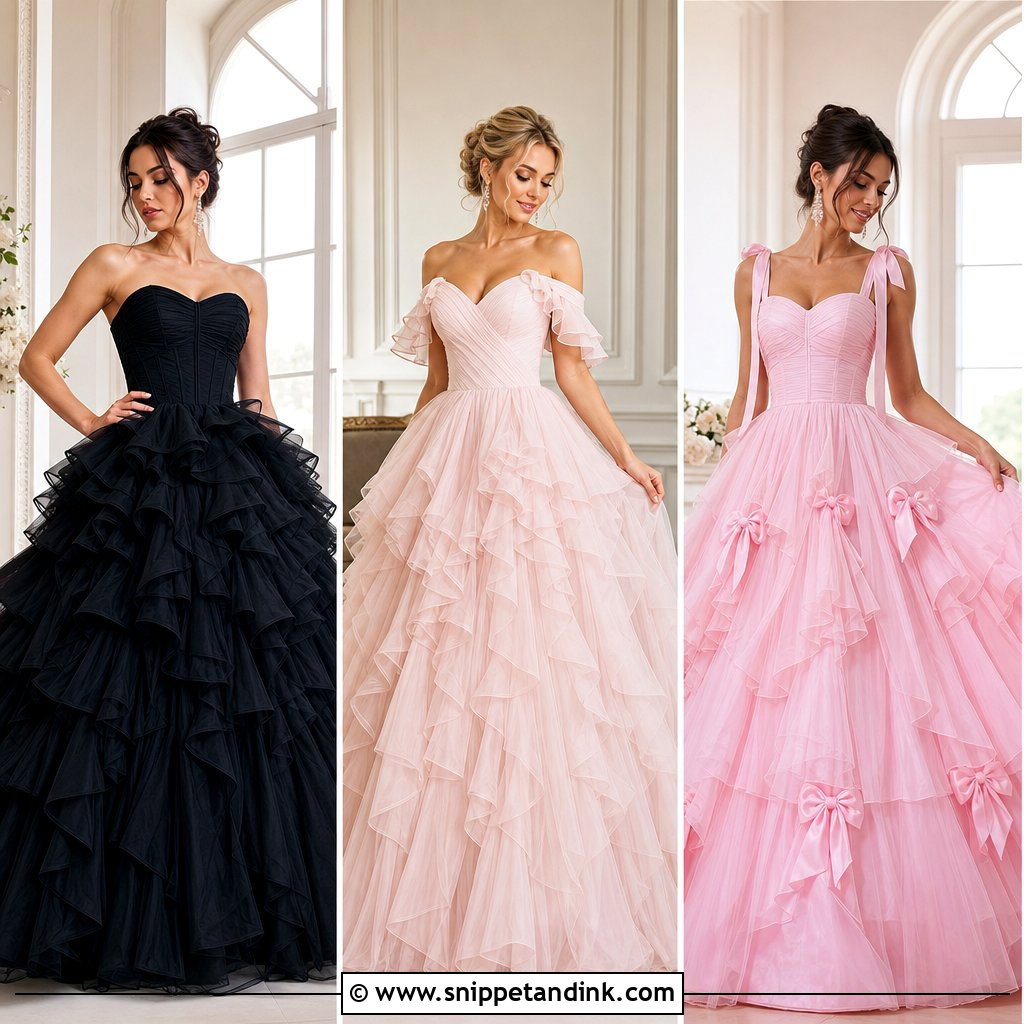
An off-shoulder ball gown is the traditional statement, and the corset is what makes it work. A boned bodice holds the neckline up, so you aren’t hitching it every few minutes, and a satin or mikado skirt keeps its shape in full-length photos. The train should grow out of the rounded back of the skirt rather than look like a separate panel. Platform heels or sturdy block pumps help with the weight of the skirt. A crystal bracelet, small drops and a structured mini bag complete it. I’d put the hair in a low chignon or brushed-back waves that sit behind the shoulders. The collarbone is the focus, so go light on jewelry and use a subtle body glow. Hidden skirt loops make dancing possible.
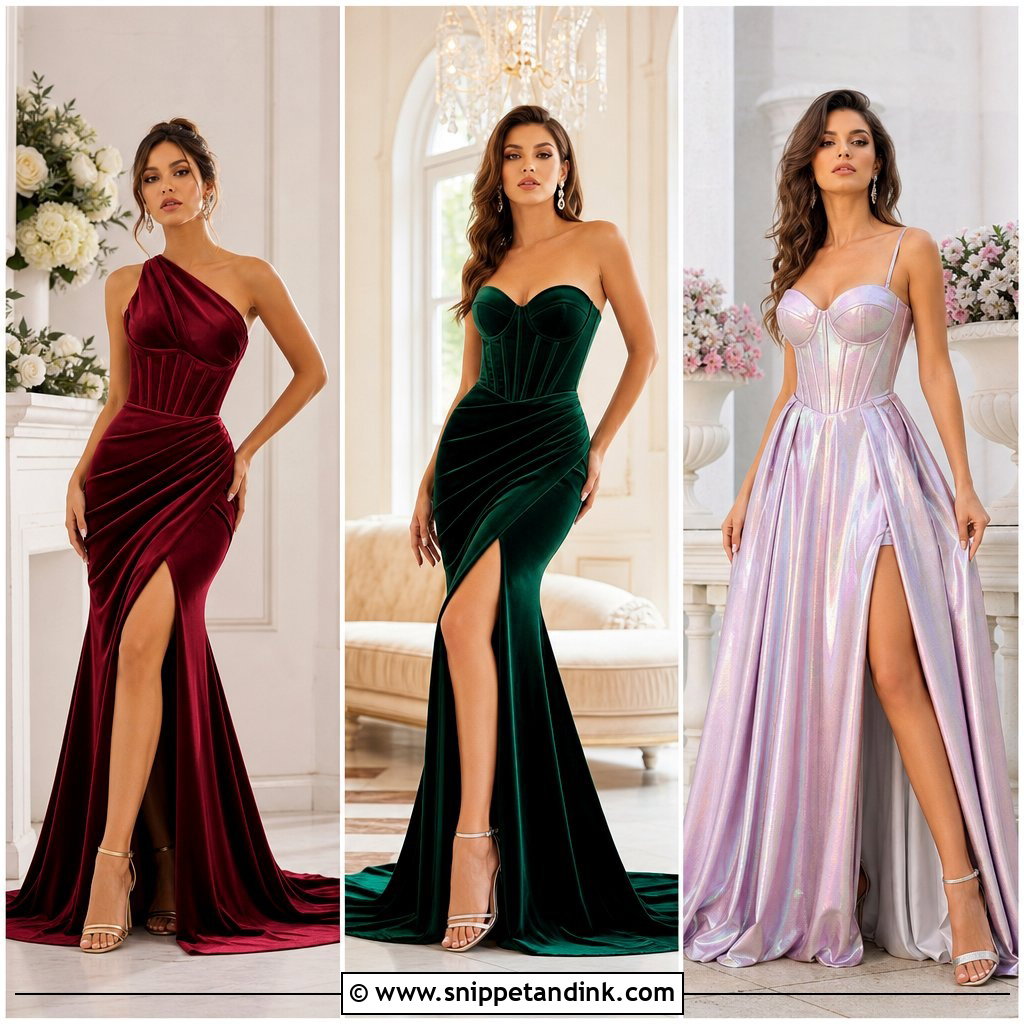
4. One Shoulder Trail Gown
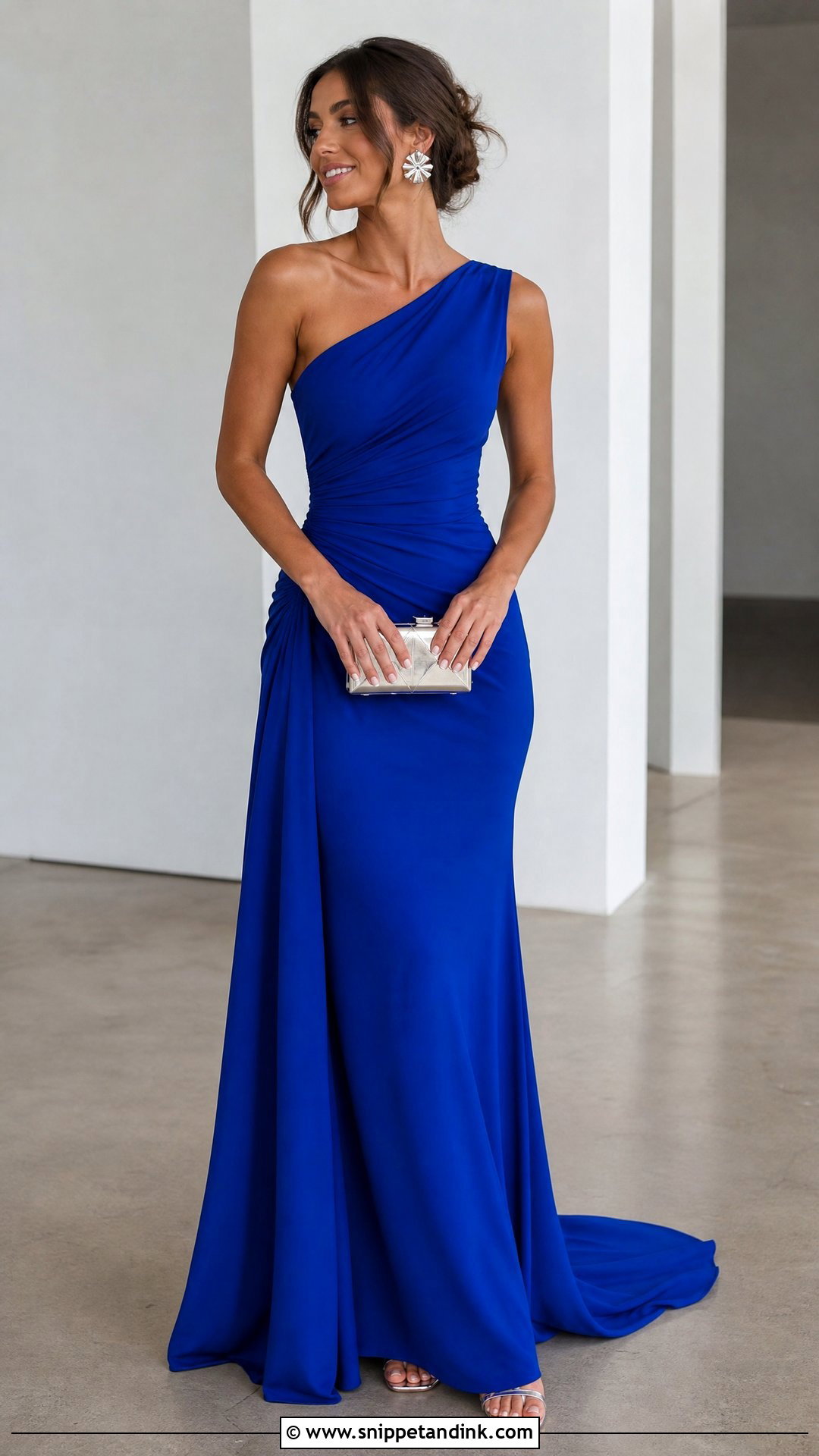
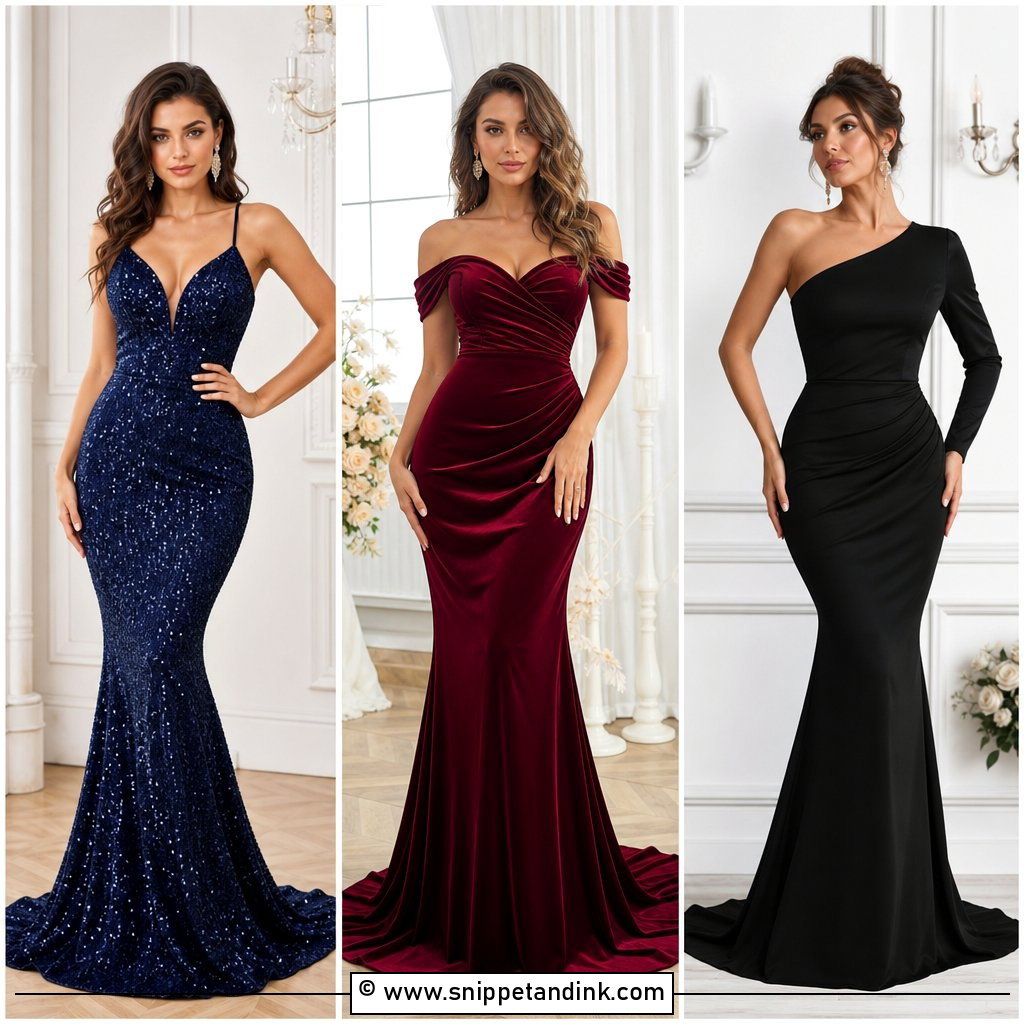
Asymmetry gives a one-shoulder gown its modern edge, but it also means one strap carries the whole bodice. I always test the internal grip at the fitting by having the bride raise both arms and hug someone; if the neckline shifts, it needs silicone tape or a tighter inner band. Look for a fitted bodice with draping that crosses the torso into a straight or gently flared skirt, and a side-set train that echoes the angled neckline. Cobalt, burgundy, plum and metallic silver suit the cut. Pair it with minimal strappy heels, a box clutch and an earring that’s a little bolder on the bare side. Keep the neck clear and the hair in a sleek ponytail or side bun.
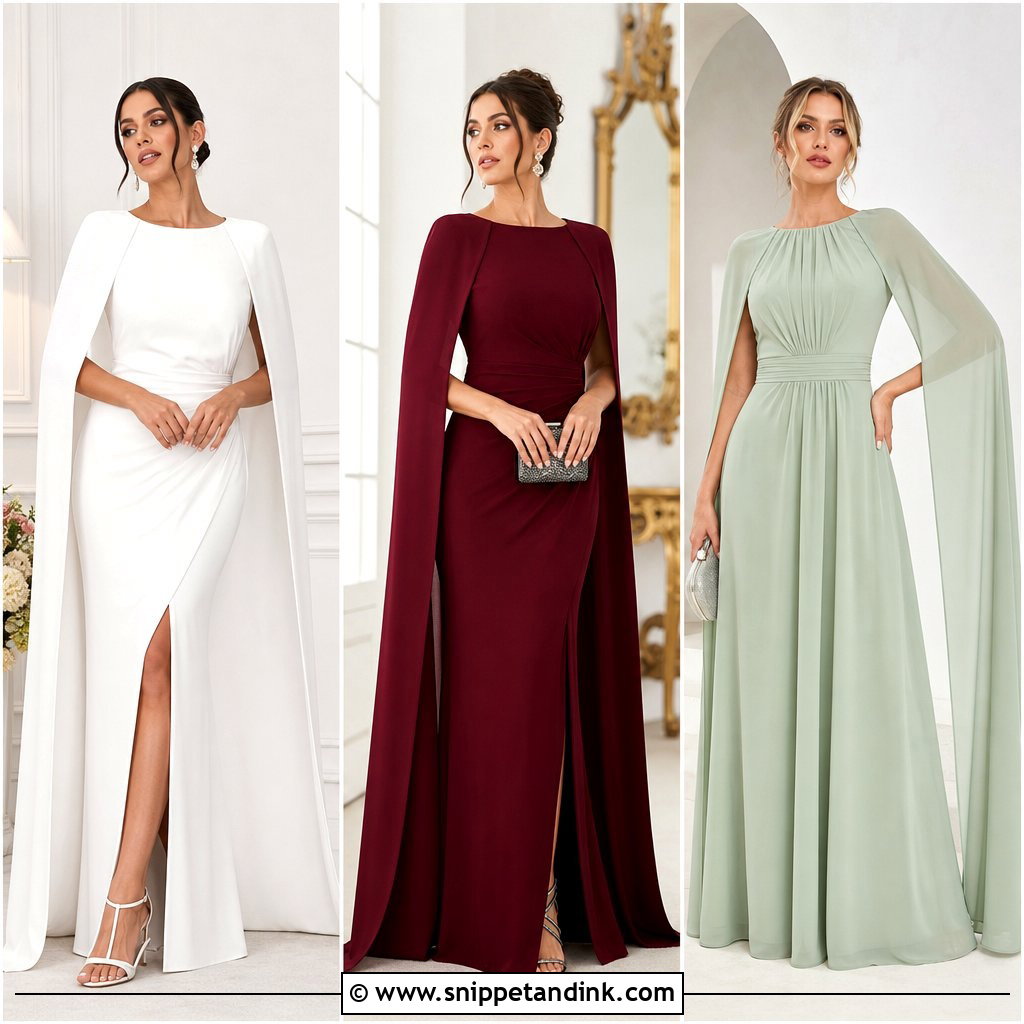
5. Cape Sleeve Trail Gown
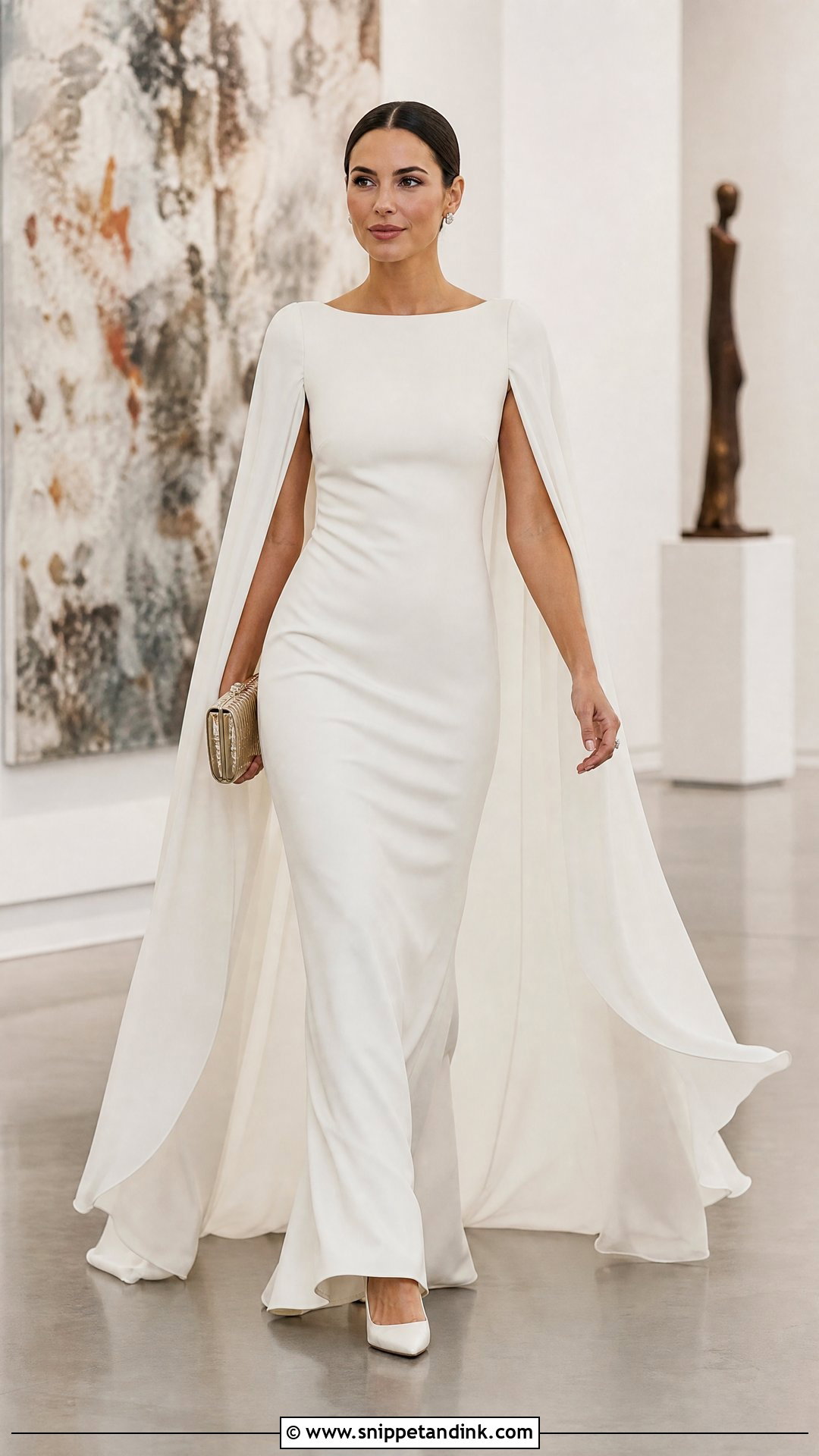
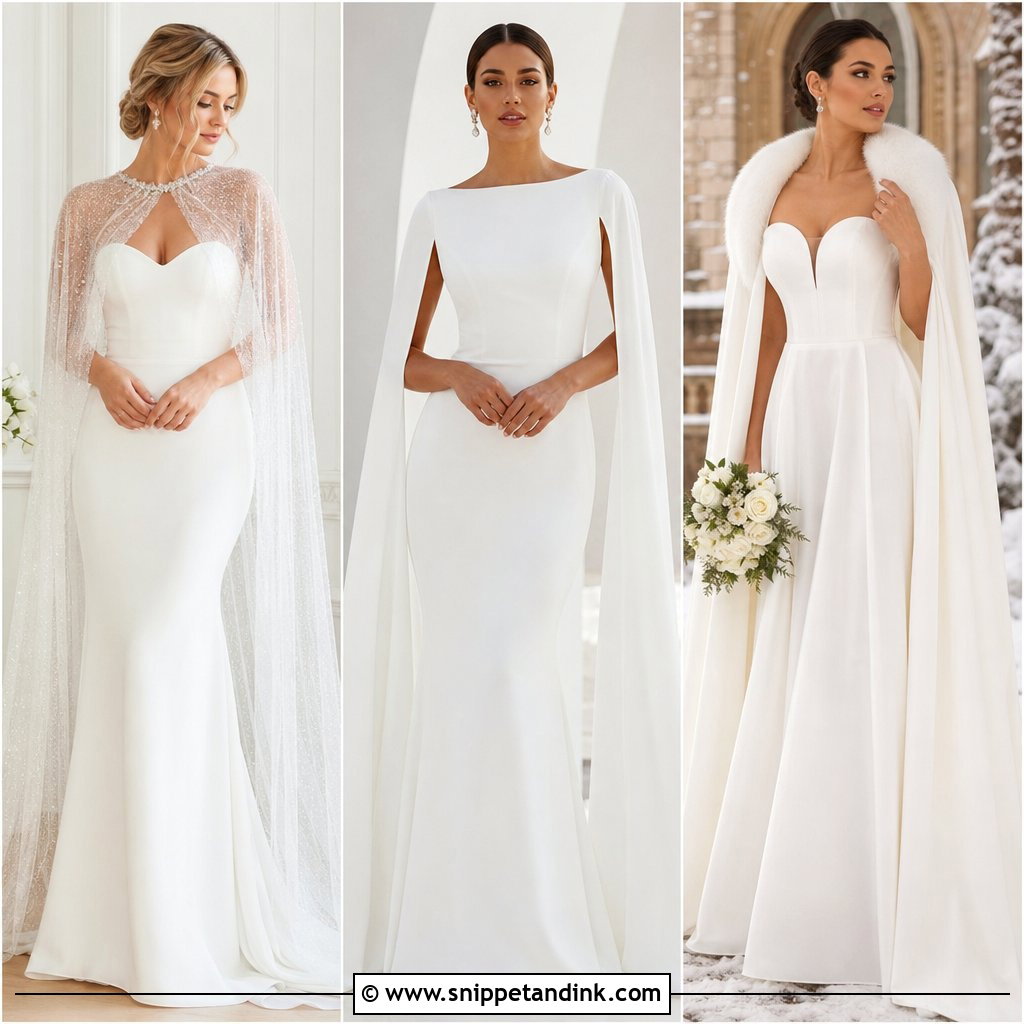
Cape sleeves give coverage without the warmth of full sleeves, which makes this a good summer option. Choose a column or soft A-line with cape panels attached at the shoulder; chiffon, crepe and georgette keep the layers light. The cape should stop well above the train, so the two read as separate pieces when you walk. I’d also make sure the cape is not sewn into the bustle points, because each layer has to move and fasten on its own. Pointed pumps, a slim clutch and polished studs suit it, and a low bun keeps the shoulder construction visible. If the gown is embellished, choose one metallic finish for everything else.
6. Detachable Trail Gown
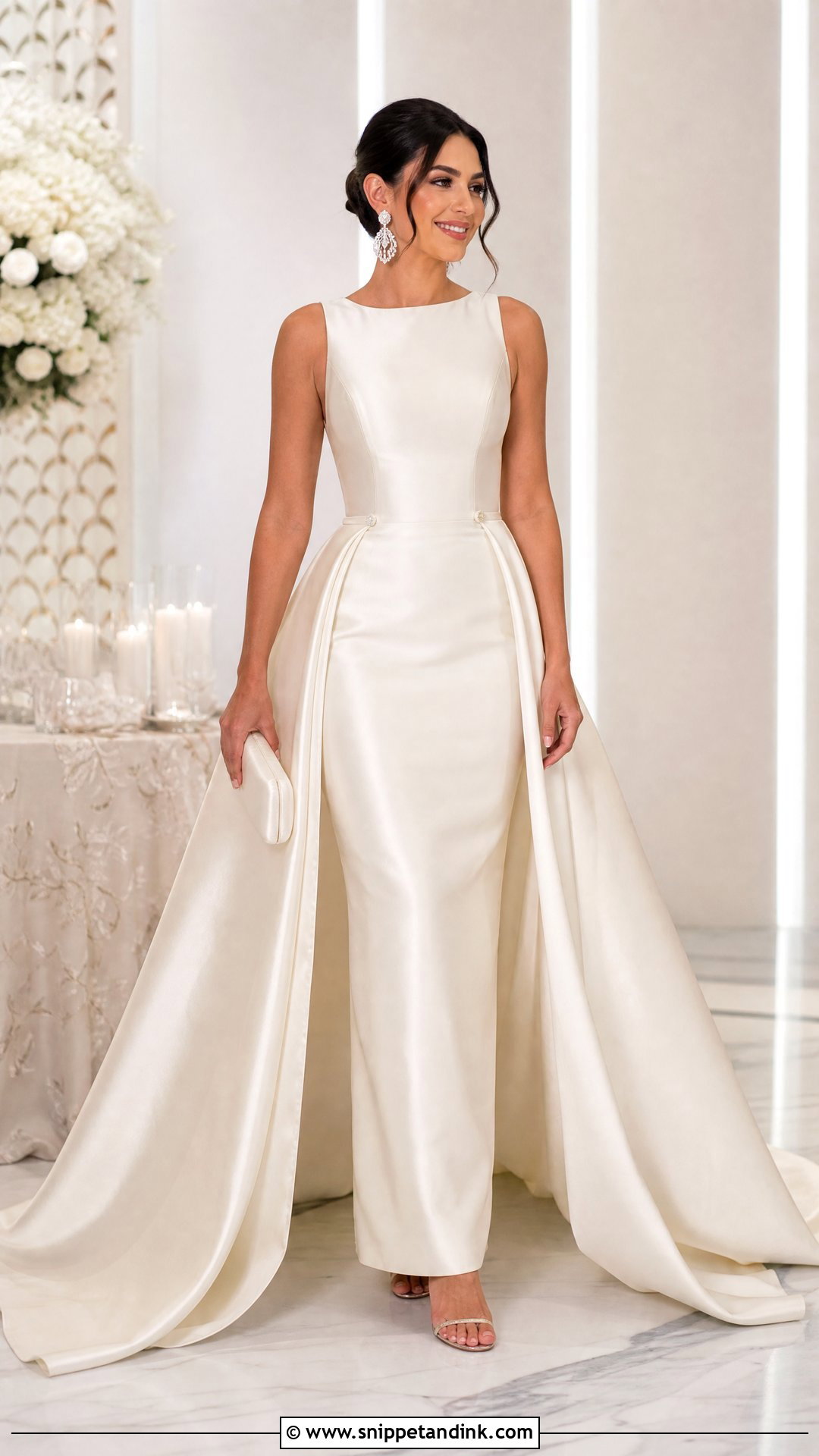
Want the dramatic entrance without dragging a train through the dinner? A detachable train gives you two finished looks. Start with a fitted column, mermaid or A-line gown, then attach a train or matching overskirt around the back waist with concealed hooks, snaps or buttons. The gown underneath must look complete on its own; I check the waistline from behind with the train off, since that’s where an unfinished seam shows. Comfortable heeled sandals, statement earrings and a small satin clutch work with both versions, and so should the updo. Practice taking the train off with whoever will help you, and time it. If it takes more than a couple of minutes, the fastenings need simplifying.
7. Sequin Evening Trail Gown
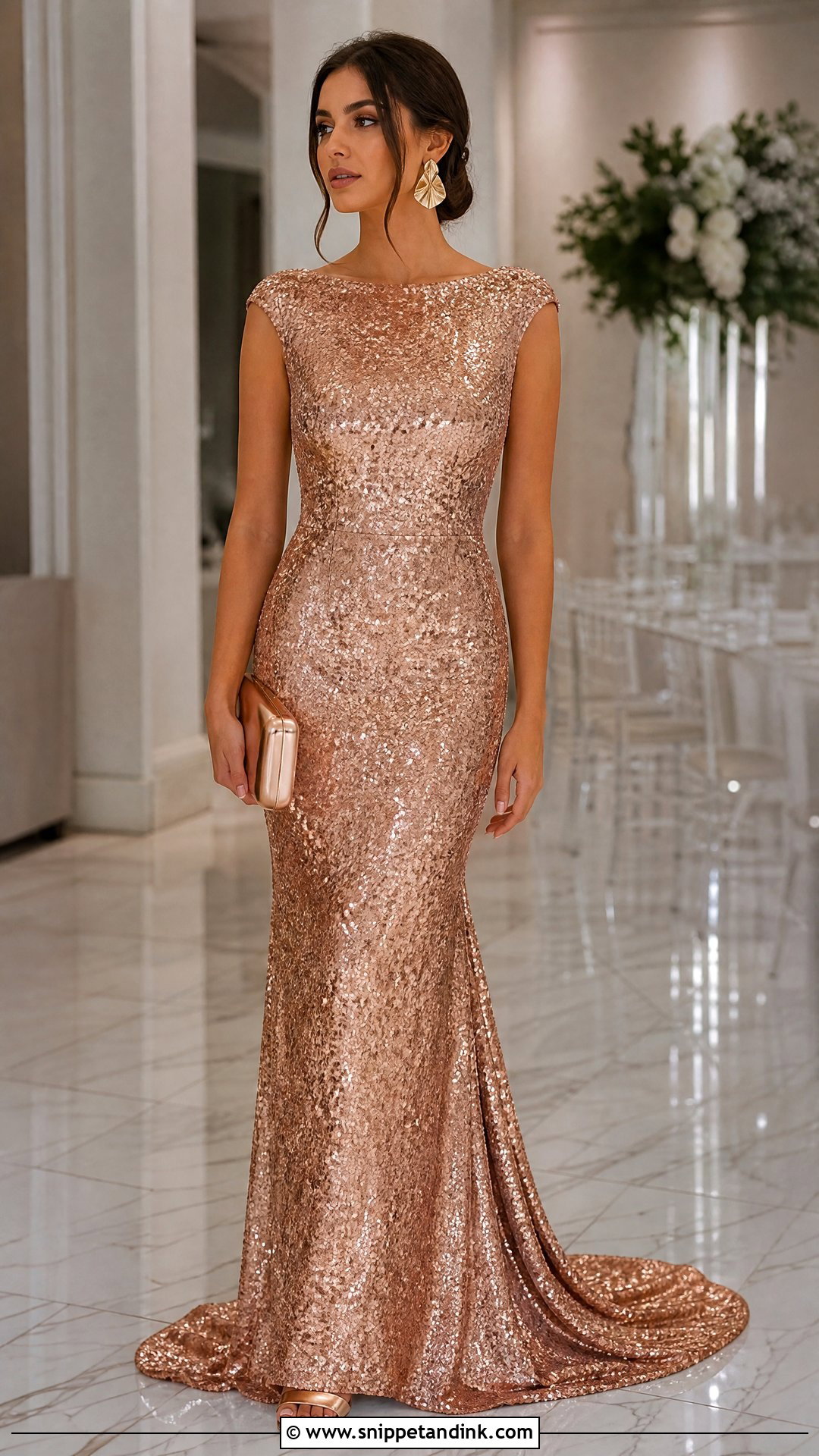
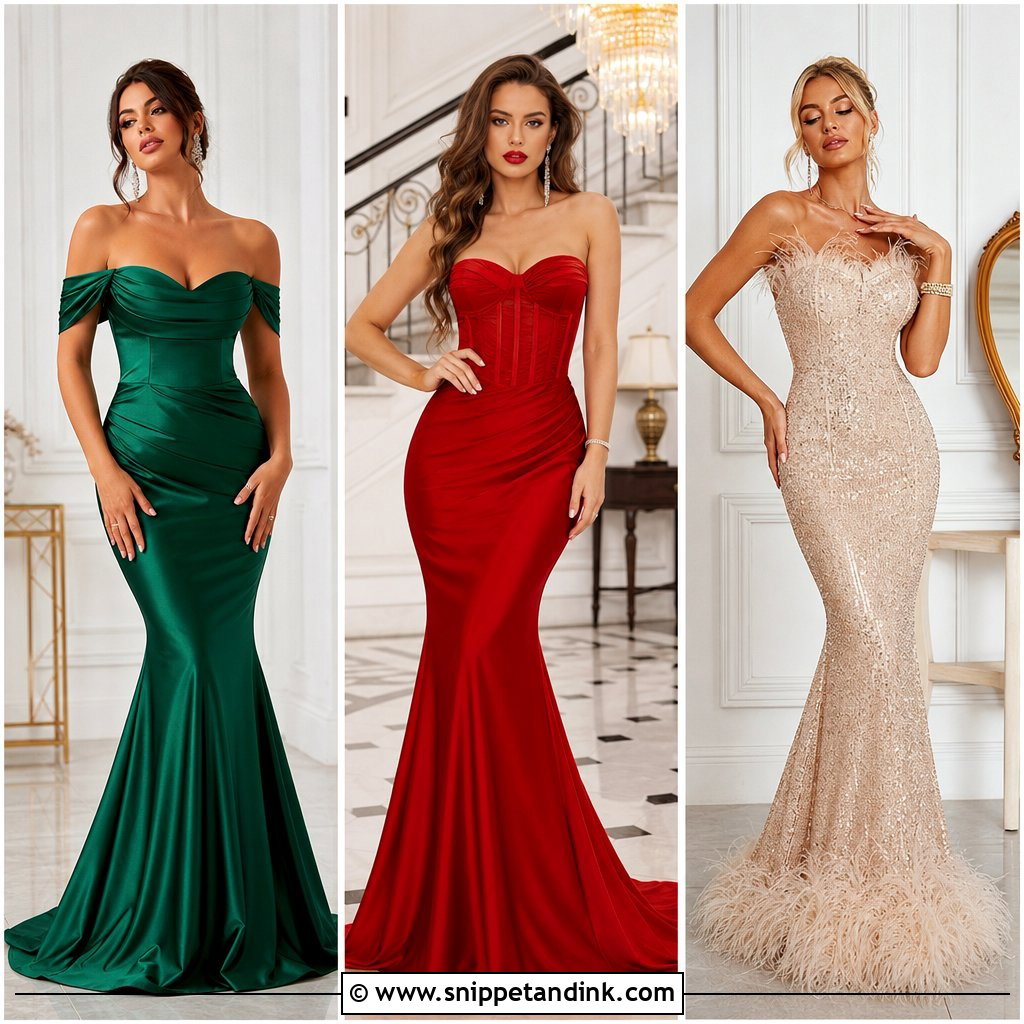
Sequins come alive under event lighting and look surprisingly flat in daylight, so I’d save this gown for an evening reception. Choose a simple column or softly flared mermaid so the shine doesn’t fight the shape. A modest sweep train is plenty; long sequinned trains are heavy and drag grit across the floor. Black, bronze, navy and rose gold sequins are more sophisticated than bright shades. Plain satin heels, a hard-case clutch and one pair of sculptural earrings are enough. Keep the hair smooth: a ponytail, sleek bun or polished side-part waves. Check that the lining runs fully under the train, or the sequins scratch the legs and snag hosiery.
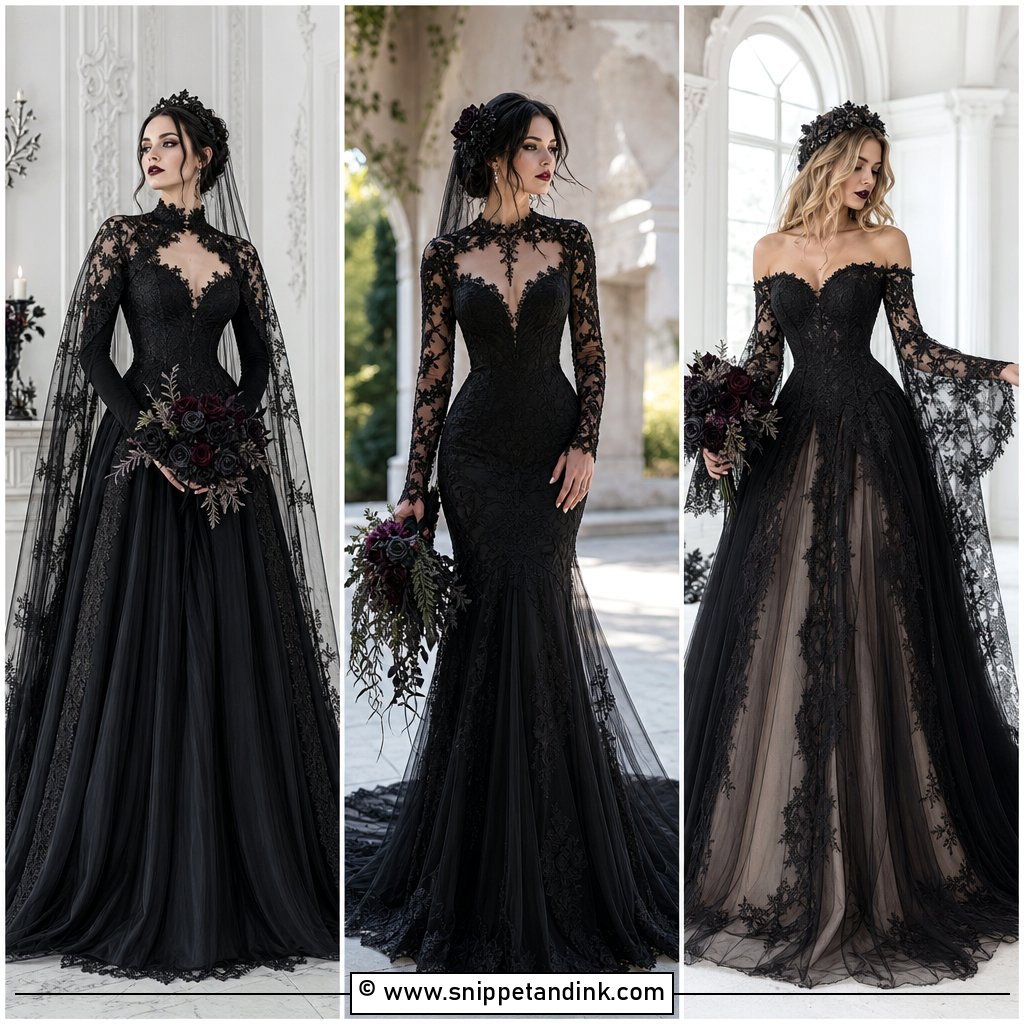
8. Black Velvet Trail Gown
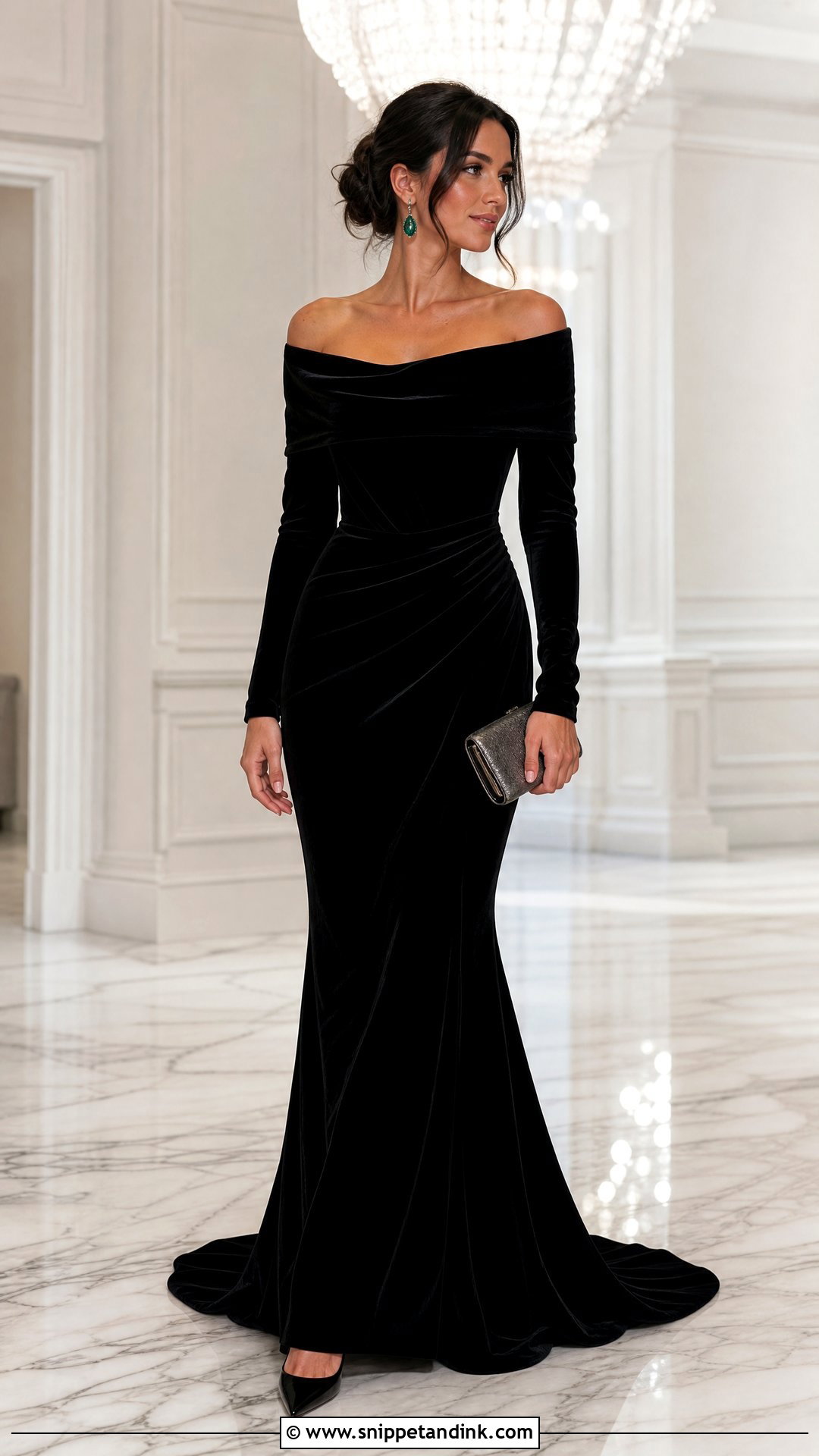
Black velvet belongs to cold-weather evenings. The pile soaks up light, which gives a clean fitted silhouette real depth, especially with a square, bateau or off-shoulder neckline. Velvet is heavy, so I’d steer you toward a modest puddle or sweep train rather than anything long. Black pointed pumps, crystal earrings and a silver or gunmetal clutch finish it. A deep side part with glossy waves softens the drama. Add color in one place only: emerald earrings or a deep red bag. Run a lint brush over it before you leave, and walk the train on the venue’s actual floor if you can, because velvet glides on polished stone and grips on carpet.
9. Red Corset Trail Gown
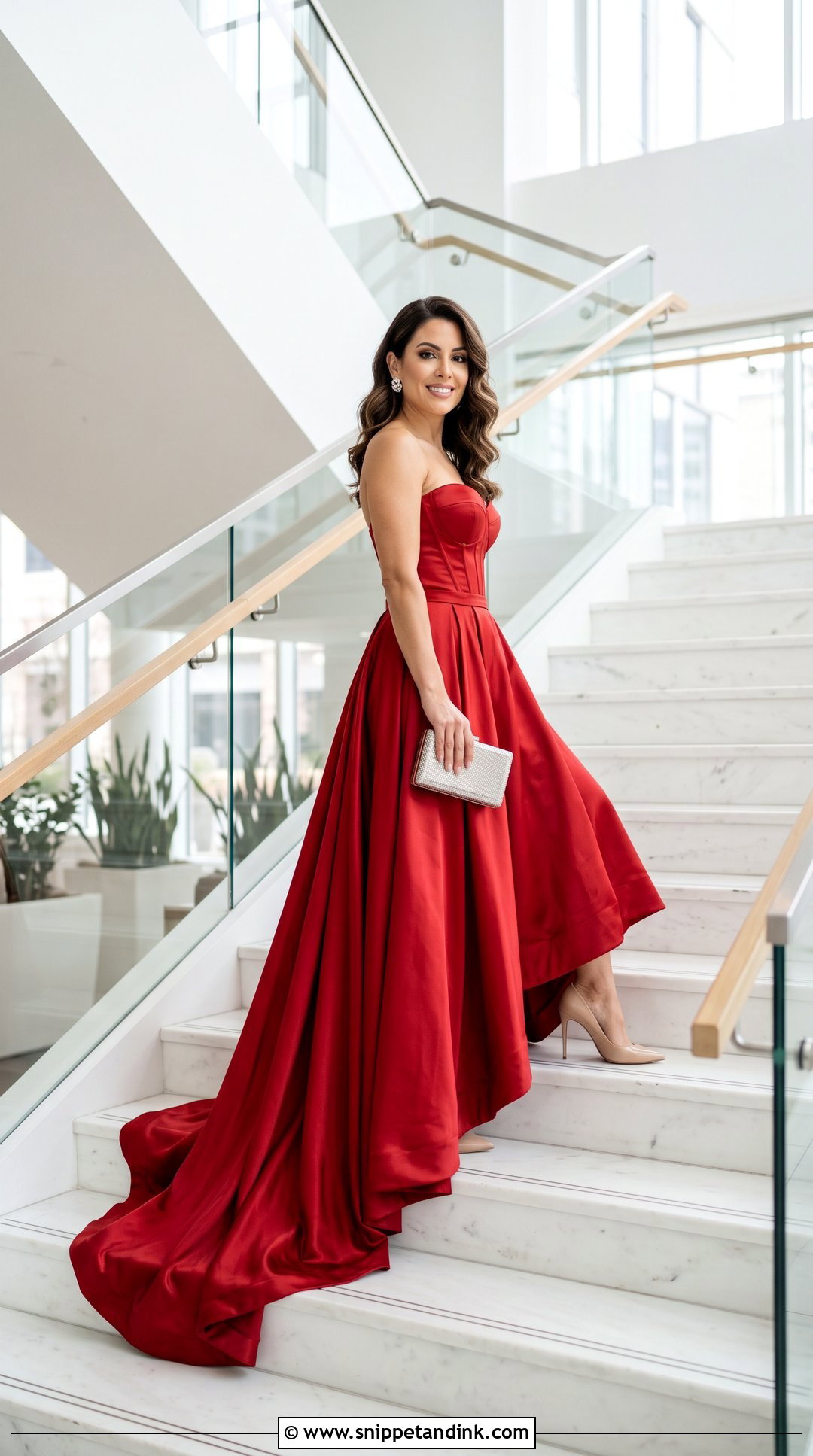
The corset is the reason a red trail gown feels secure, provided the boning actually fits you. I’d look for spiral steel or well-placed flexible boning, supportive cups and a smooth waist seam, and I check that no bone presses into the ribs when you sit. A full satin skirt gives formal volume; a fitted mermaid makes it sharper. Leave the train mostly bare so the color carries it. Neutral or metallic heels, a compact clutch and simple studs keep the focus on the red. A high bun balances the strong neckline. Match the lip with care: a neutral or a red with the same undertone as the fabric. Sit and walk in it before the day, since corsetry should support, not squeeze.
10. Emerald Draped Trail Gown
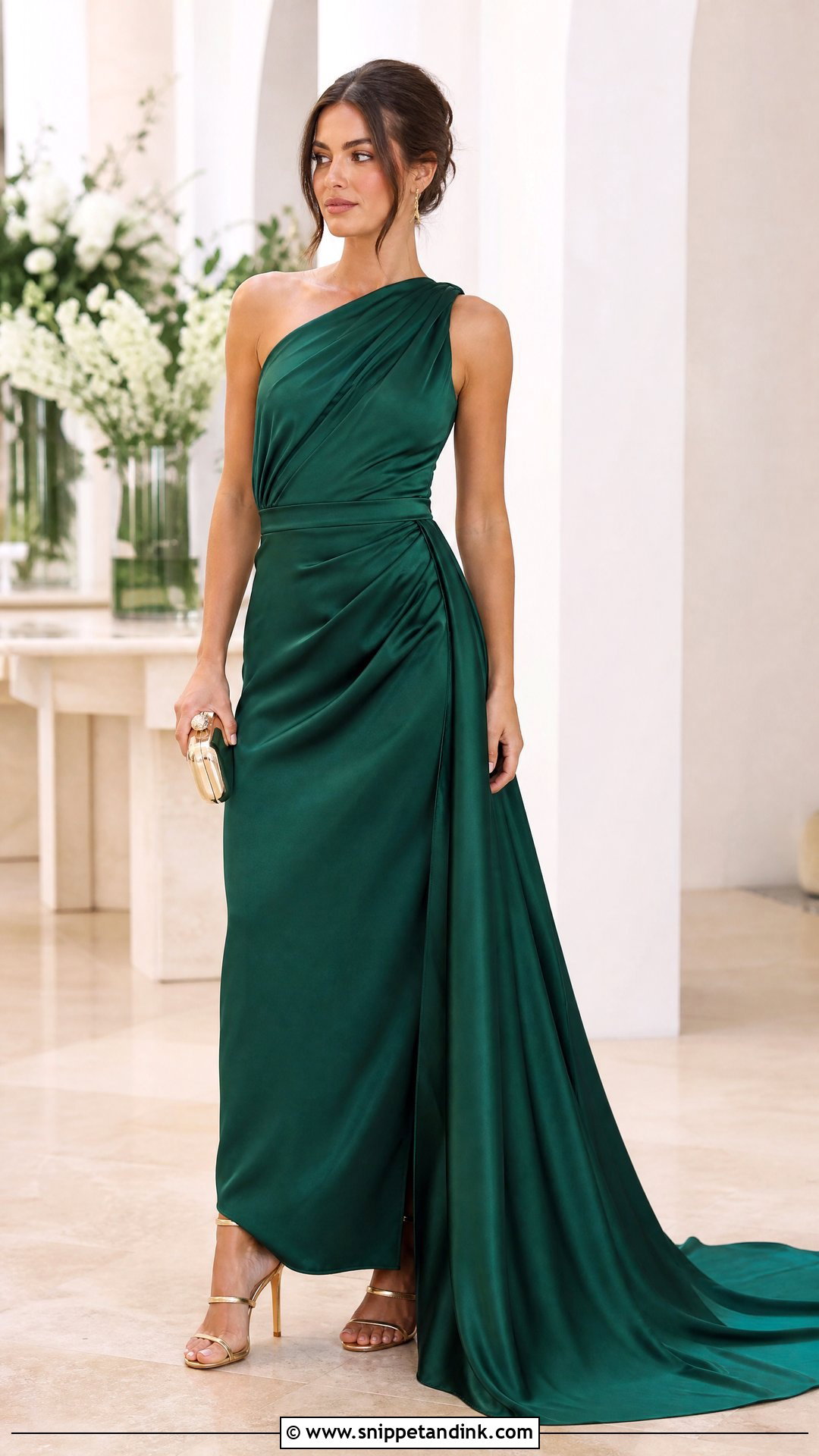
Emerald drapes like nothing else when the fabric is fluid enough. Satin, jersey or crepe should fall smoothly with no bulk at the hips, and the draping can cross the bodice, gather at one side and open into a soft back or side train. Gold sandals, a small metallic bag and fine drop earrings warm up the green. If the bodice has a cowl or folded detail, leave the neckline bare. A low ponytail with some movement keeps it relaxed. Drape is the part that slips, so I add fashion tape at the neckline and a hidden waist stay inside. Those two small fixes keep the folds where the designer put them while the skirt and train move freely.
11. Pastel Floral Trail Gown
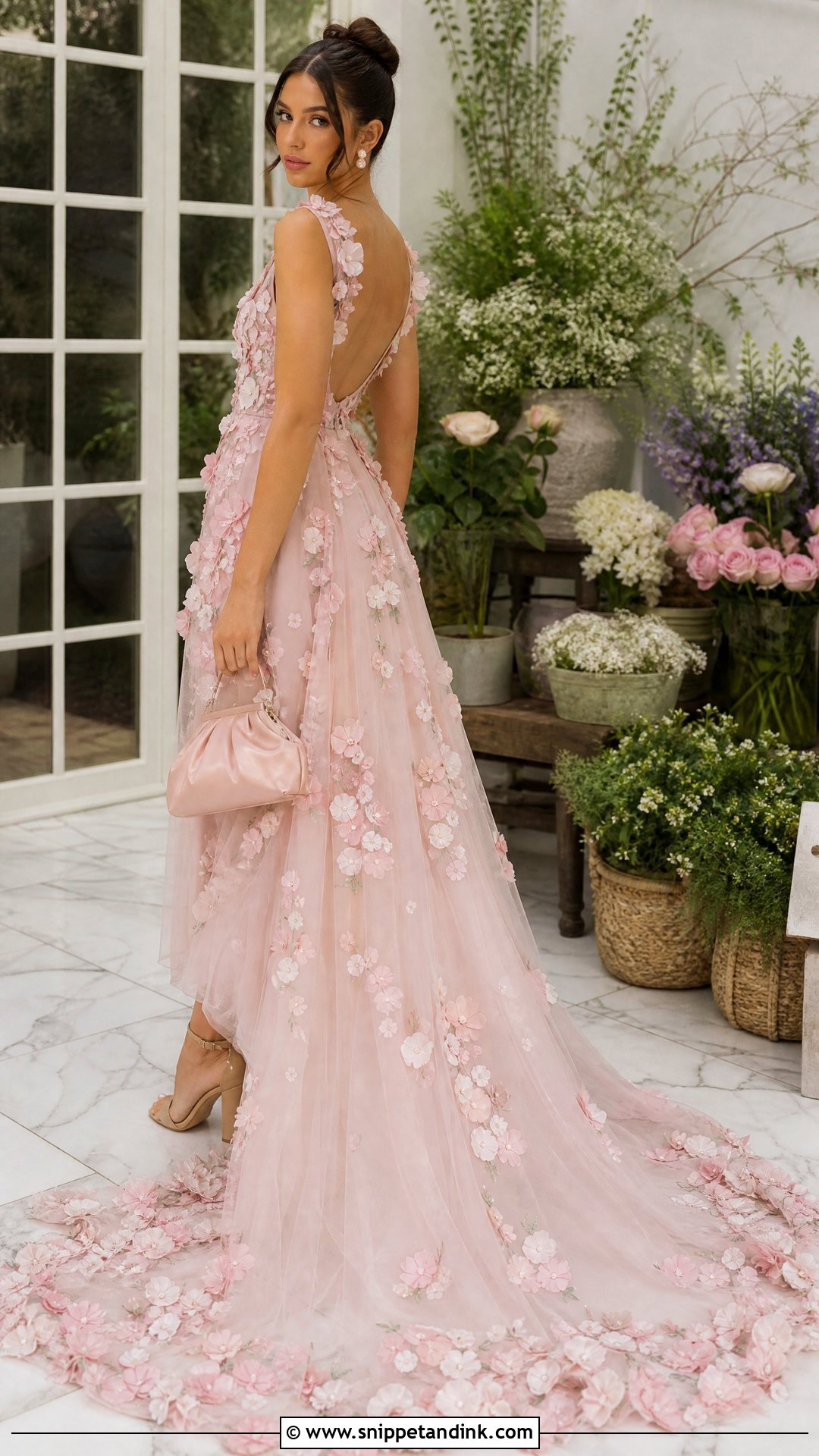
Soft color and dimensional flowers make a pastel floral trail gown feel fresh and romantic. Choose a blush, powder blue, lilac or pale sage base with appliqués across the bodice and outer skirt, thinning out toward the train so the hem stays light. Nude block heels, pearl drops and a small satin bag in one shade from the flowers are enough. A loose low bun or half-up style keeps the mood soft. Skip the floral necklace, decorated shoes and ornate headpiece; one botanical detail repeated is plenty. Raised petals near the hem take a beating on the floor, so I check every one is stitched, not glued, before the gown leaves the shop.
12. High Neck Trail Gown
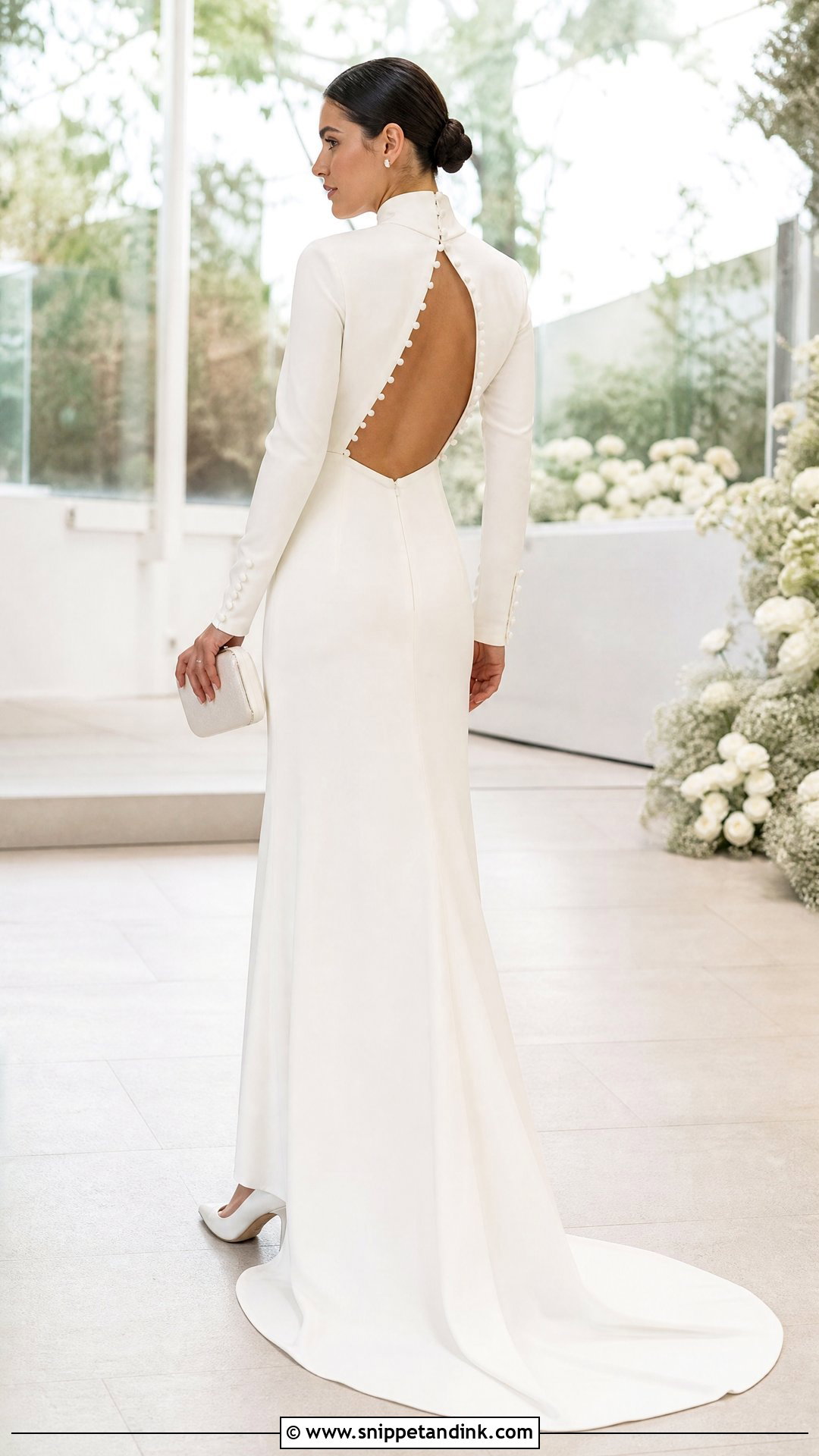
A high neck draws one long line from shoulder to hem, and that line is what makes the gown look tall. A fitted crepe version is the minimalist route; lace sleeves and a layered skirt add detail. An open, keyhole or buttoned back keeps the upper half from feeling closed in. Pointed heels, refined studs and a structured clutch suit it, and the neckline already frames the face, so skip the necklace and wear a neat updo. A chapel or court-style trail adds presence without competing with the covered bodice. At fittings I watch the collar when the bride sits, turns her head and lifts her arms. If it rides up or bites, it needs letting out.
13. Square Neck A Line Trail Gown
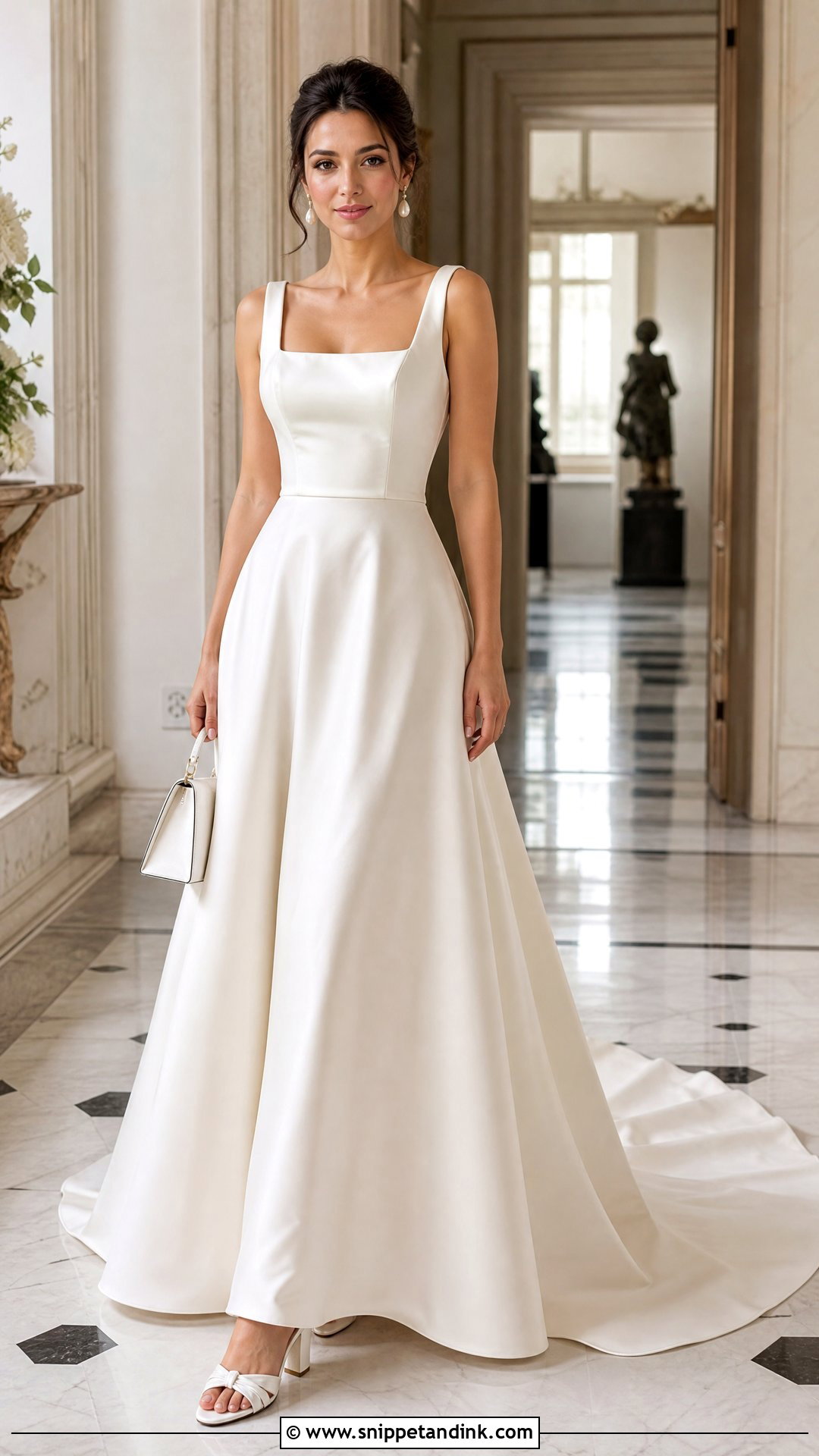
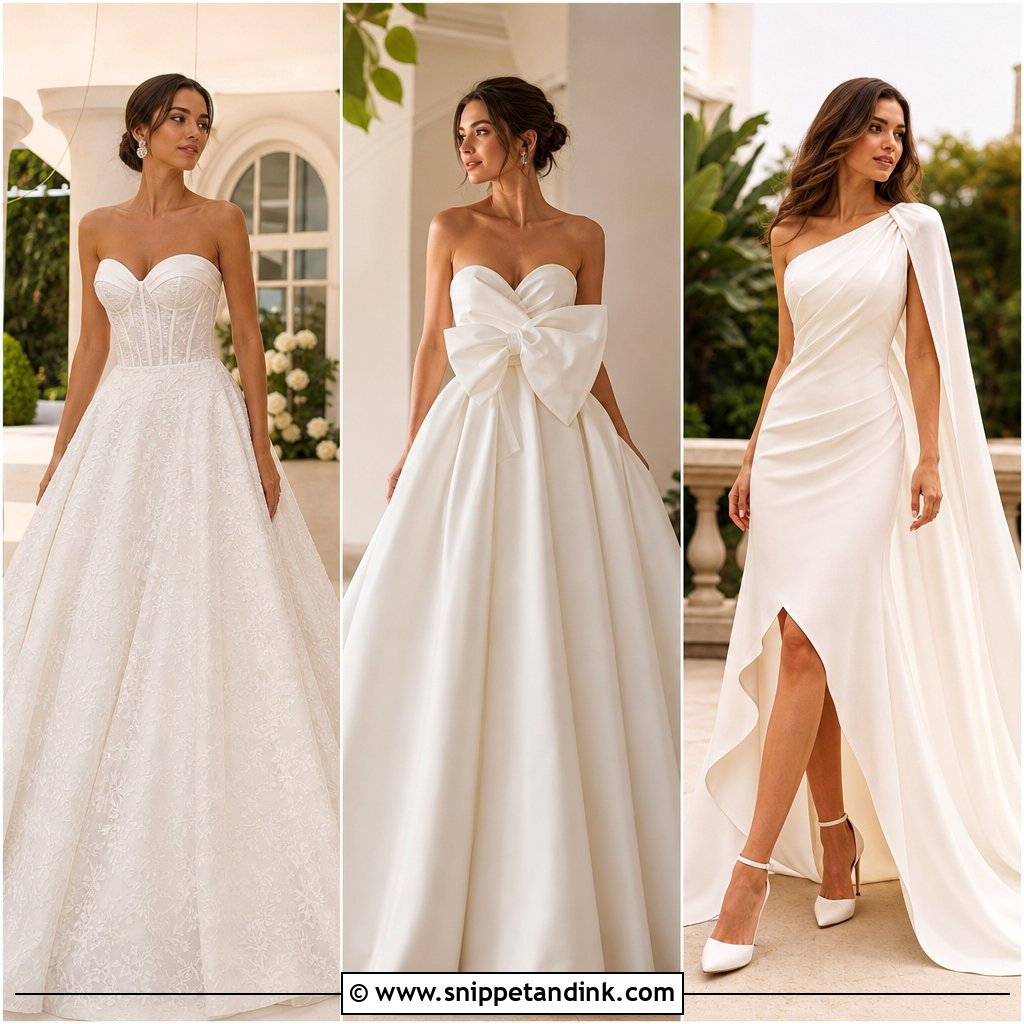
A square-neck A-line is one of the easiest gowns to wear well. The neckline frames the collarbone and the skirt falls from the waist without clinging. Satin gives structure, crepe keeps it minimal and layered tulle softens it. A chapel train adds drama but is still manageable at the reception. Pearl or crystal earrings, comfortable block heels and a top-handle bag complete it, and a low bun, soft curls or half-up style all suit the balanced neckline. Wide straps must sit flat and fully cover the bra; I check this from the side, where gaps show first. A narrow belt can mark the waist, but choose one that blends in rather than cutting the gown in half.
14. Halter Backless Trail Gown
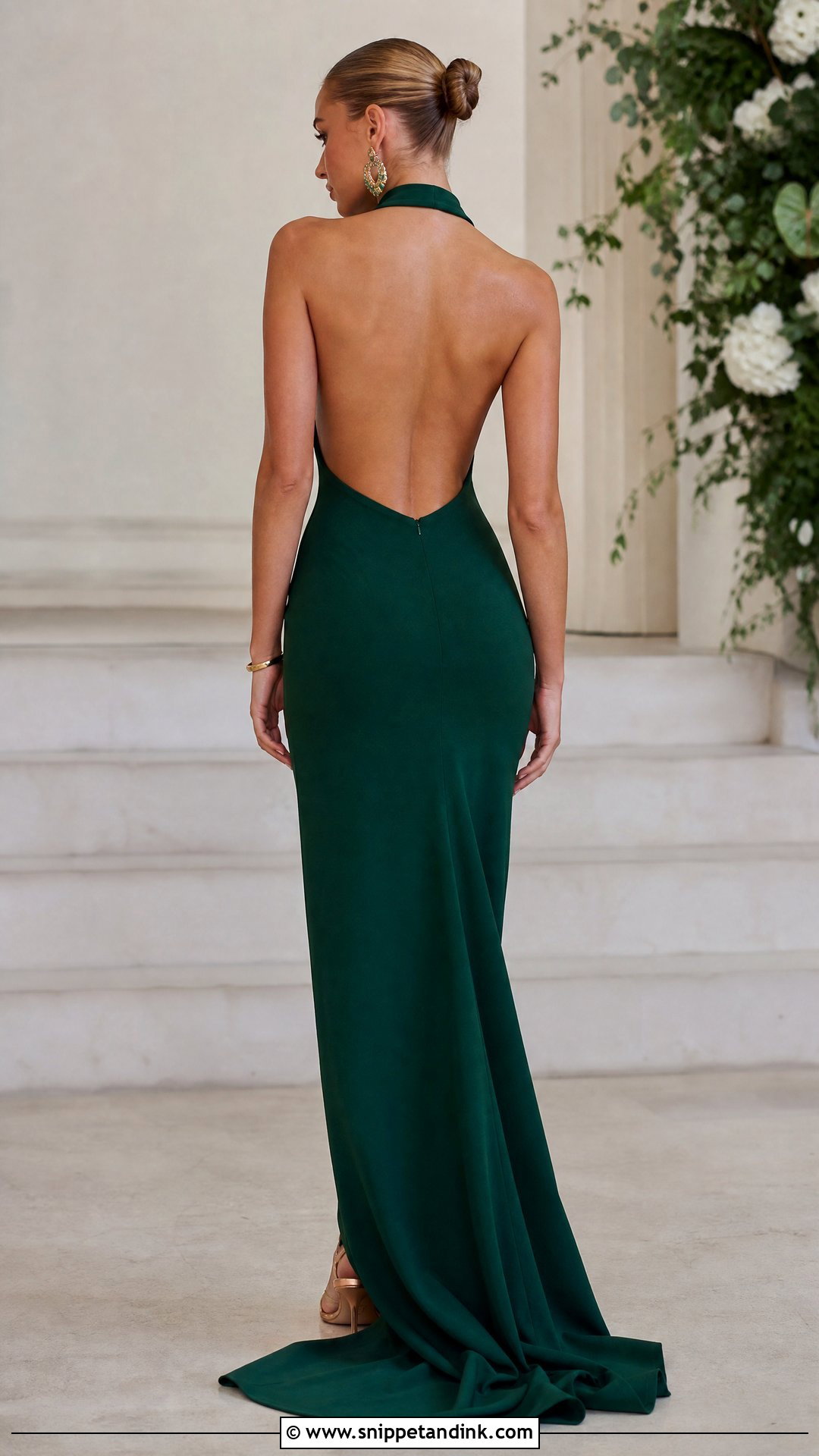
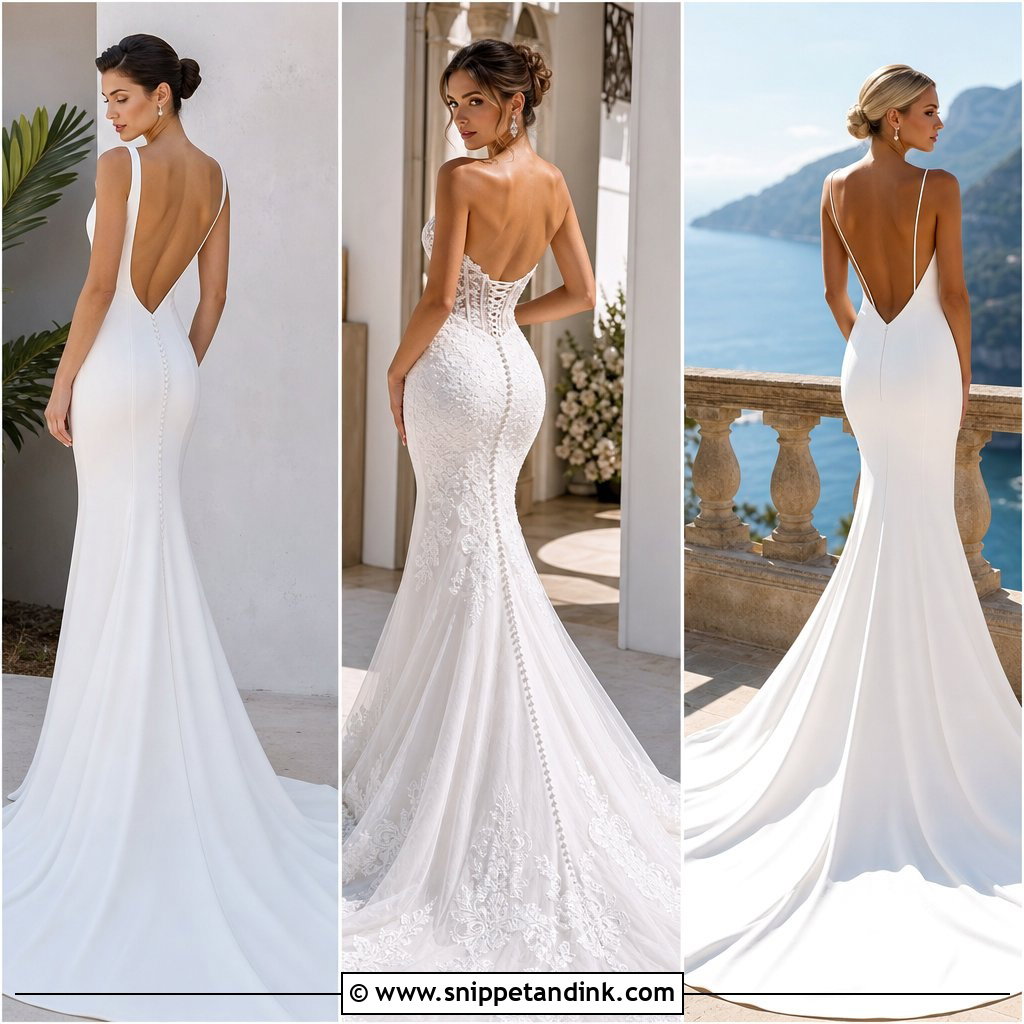
The open back is the whole point here, so everything else stays quiet. A fluid fabric that skims the body into a narrow sweep or court train suits it: satin, crepe or jersey. Metallic sandals, statement earrings and a slim bracelet are enough, with the neck left bare. Hair goes up in a high ponytail, braided bun or sleek knot. The real work is underneath. I’d have cups sewn into the bodice or ask a tailor to build in support, because there’s no bra that hides under a halter with no back. Test any fashion tape on your skin a few days before. Keep the train smooth and free of embellishment so the back stays the focus.

15. Asymmetrical Ruffle Trail Gown
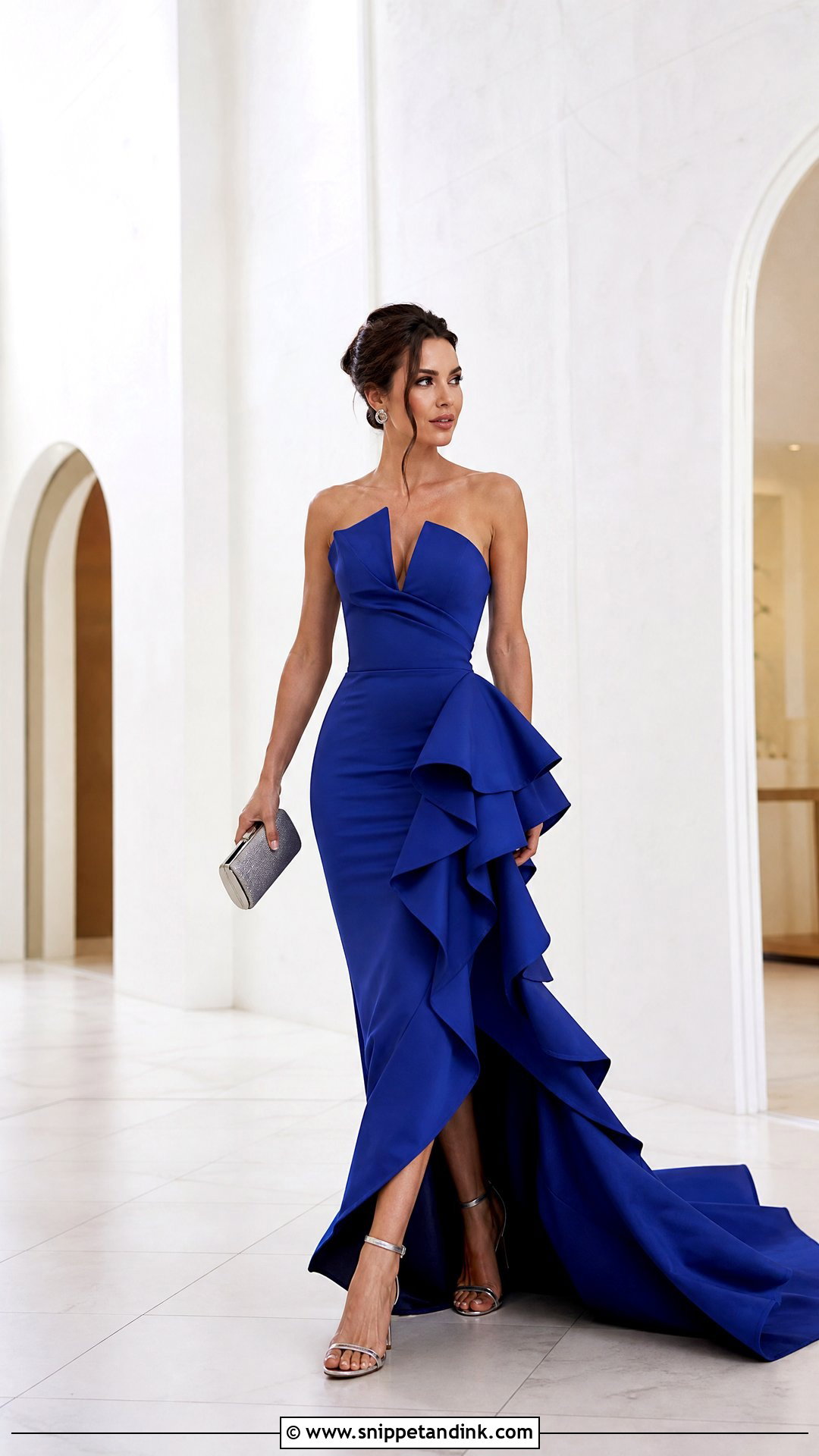
Movement is the attraction in an asymmetrical ruffle trail gown. A fitted bodice with a cascading ruffle that starts at the hip or thigh and runs into the train adds volume in a controlled way and gives a strong profile. Solid royal blue, magenta, ivory or deep purple keeps the sculptural shape readable. Sleek heels, a small clutch and compact earrings are enough. A smooth bun or tucked-back hair keeps it current. Height changes everything with this cut, so at alterations I mark where the ruffle starts in relation to your knee. The front hem should show enough of the shoe to walk safely, with the longest layers kept behind the feet.
16. Peplum Trail Gown
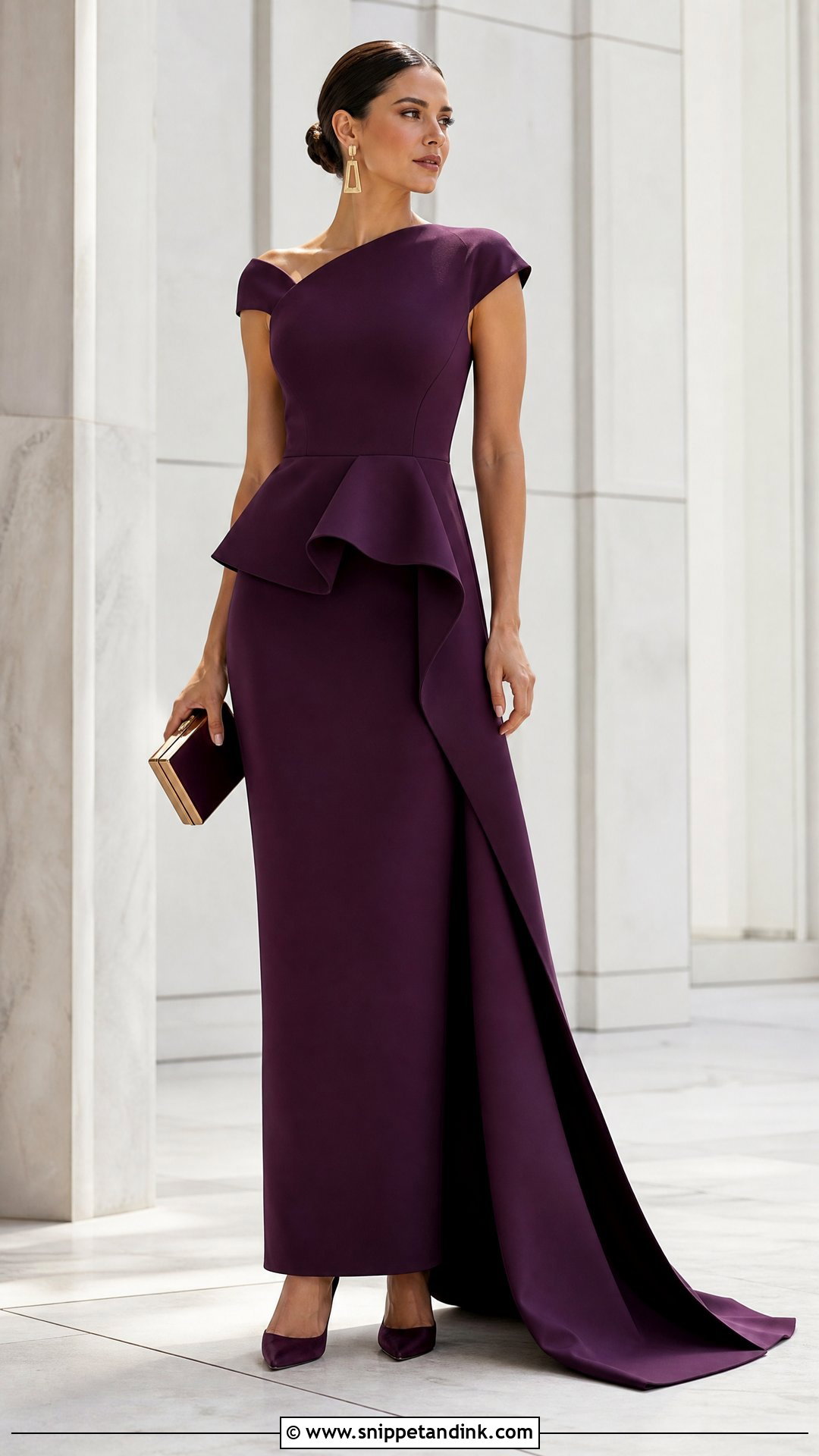
Peplum adds structure at the waist and a second layer over a fitted skirt. I’d choose a smoothly shaped peplum rather than a stiff, wide one, which can make the hips look boxy from the side. An asymmetric peplum can lead into a side train; a centered one sits well with a classic back train. Crepe, satin and mikado hold the shape. Pointed pumps, a box clutch and geometric earrings finish it, with a low ponytail or neat chignon. Put the embellishment on the bodice or the waist, never both. The peplum should end at a flattering point without gripping the hips, and the train should start below it so the two shapes stay distinct.
17. Empire Waist Trail Gown
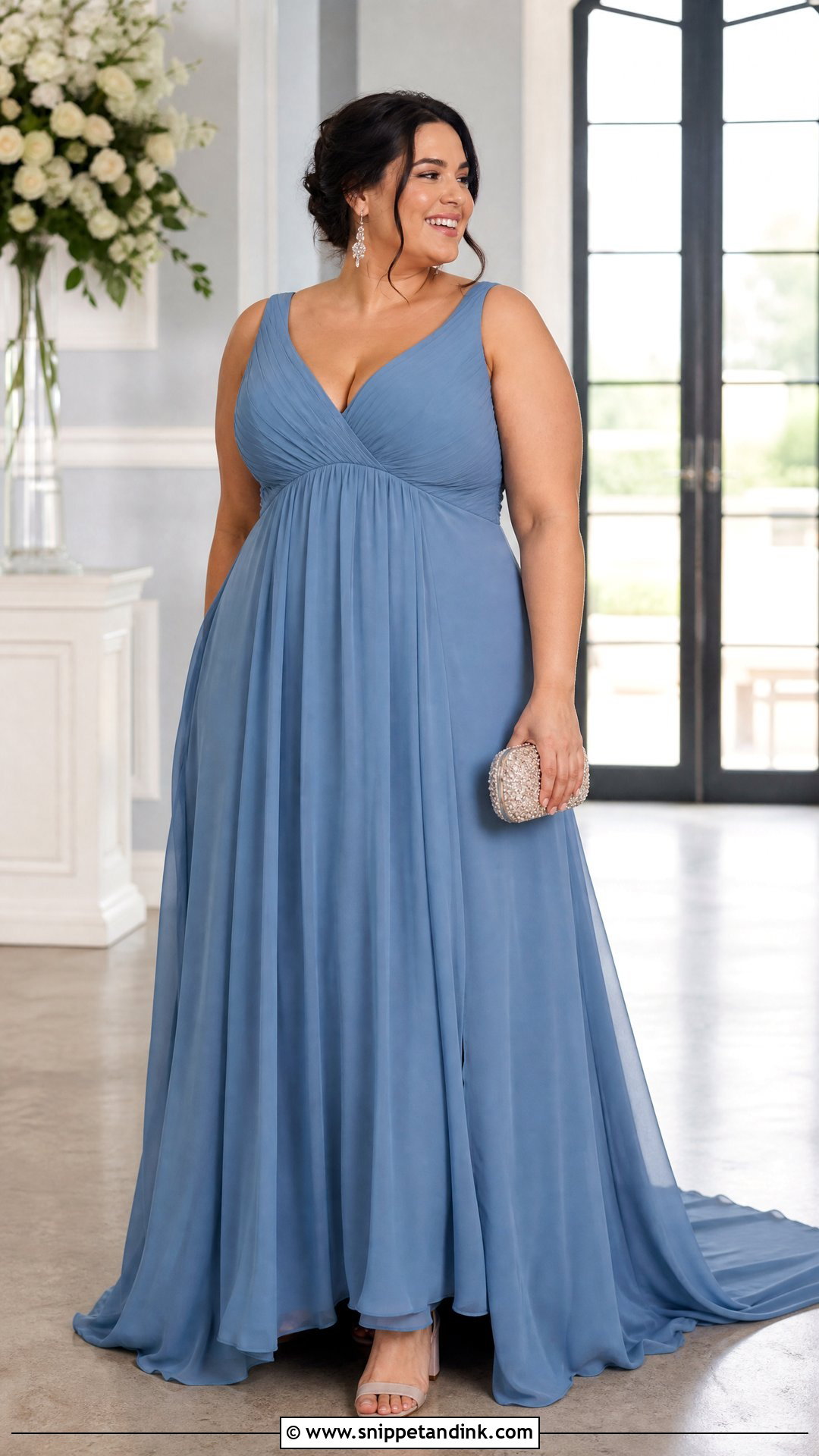
An empire waist sits just under the bust, so chiffon, georgette or soft satin can fall freely over the midsection and hips. That freedom is why I suggest it for anyone who dislikes structure at the natural waist, and it suits pregnant brides well too. Choose a V-neck, square neck or gathered supportive bodice depending on coverage. Low block heels, delicate earrings and a small beaded clutch keep it balanced, and soft waves or a relaxed updo match the fluid shape. Keep the train light and moderate. The under-bust seam has to sit firmly without riding up; a hidden elastic stay usually fixes that. Too many gathers at the front add volume you don’t want.
18. Modest Long Sleeve Trail Gown
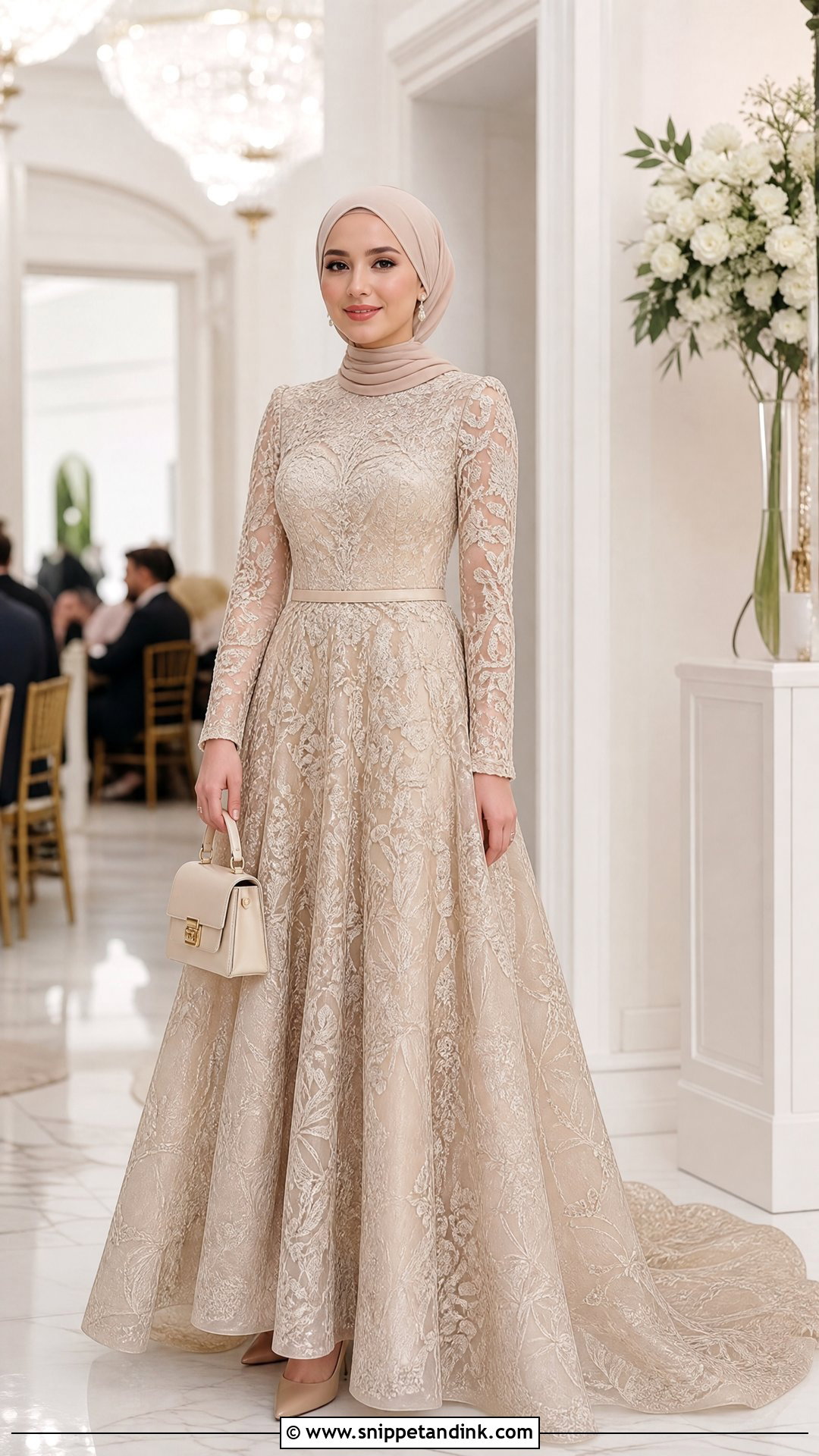
Coverage can still carry a lot of detail. A fully lined bodice with lace, beadwork or tonal embroidery over the sleeves and upper skirt makes a modest long-sleeve gown rich without a low neckline or open back. A defined waist and gentle A-line keep it from looking heavy. Ivory, champagne, dusty rose, navy and muted green all work. Closed-toe pumps, pearl earrings and a structured mini bag complete it, and a neat low bun keeps the neckline visible and stops hair rubbing on the beading. I always check the sleeve: lift your arms as if to hug, and if the fabric pulls across the back, it needs more ease at the armhole. A medium train with a bustle or wrist loop is easiest.
19. Minimalist Column Trail Gown
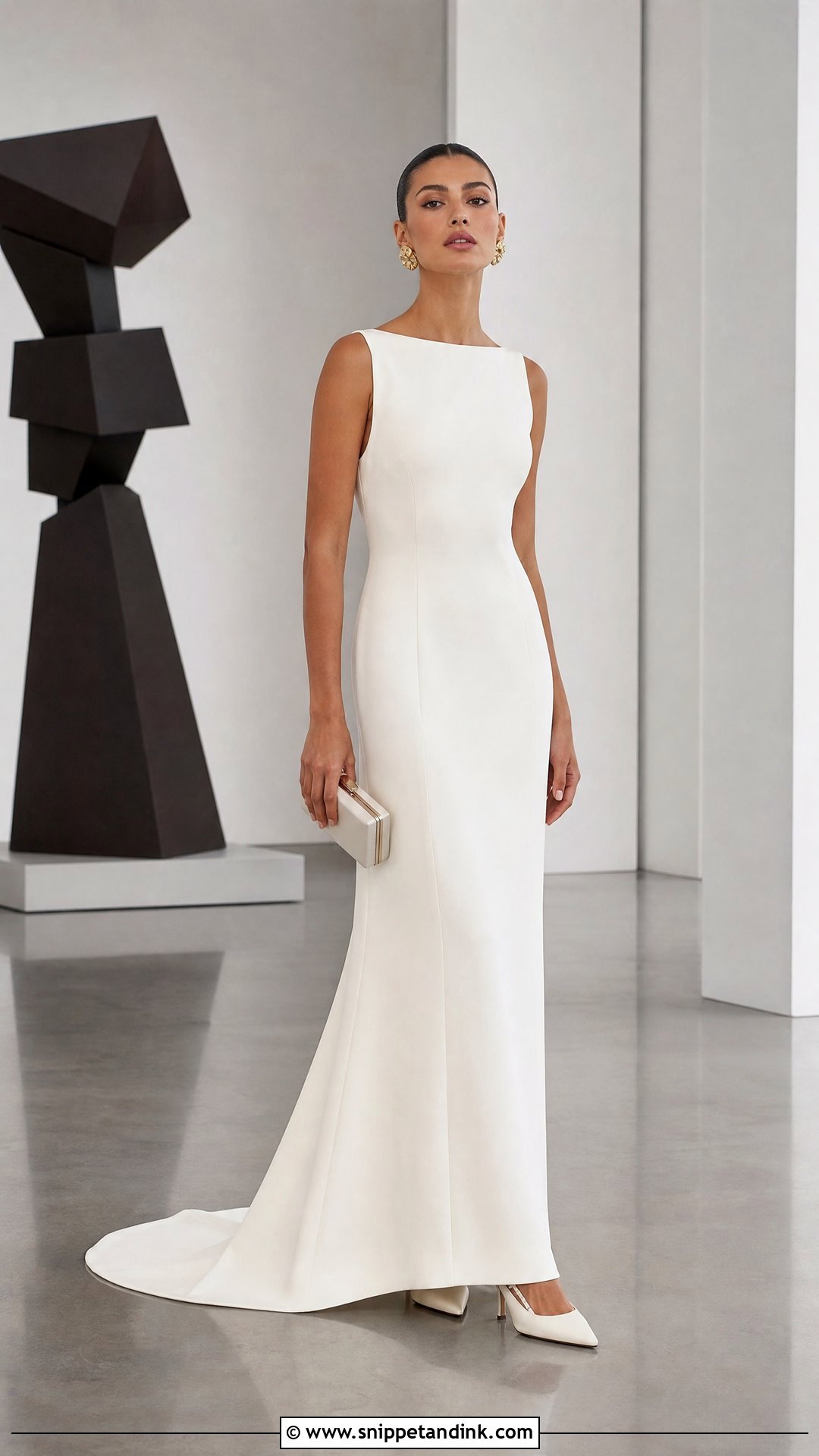
Minimalism is the least forgiving style, because there’s nothing to hide behind. A column gown in smooth crepe, matte satin or a silk-like fabric relies on fit and clean construction, with a straight skirt and subtle sweep train. A bateau, square or softly draped neckline keeps it refined. Pointed slingbacks, sculptural earrings and a structured clutch in ivory, black or metallic leather finish it, with hair in a polished bun or straight behind the shoulders. Line-free underwear is non-negotiable, since plain fabric shows every line. I’d hem it in the exact shoes you’ll wear, and ask for a bustle that tucks under rather than over, so the clean back stays unbroken.
20. High Low Trail Gown
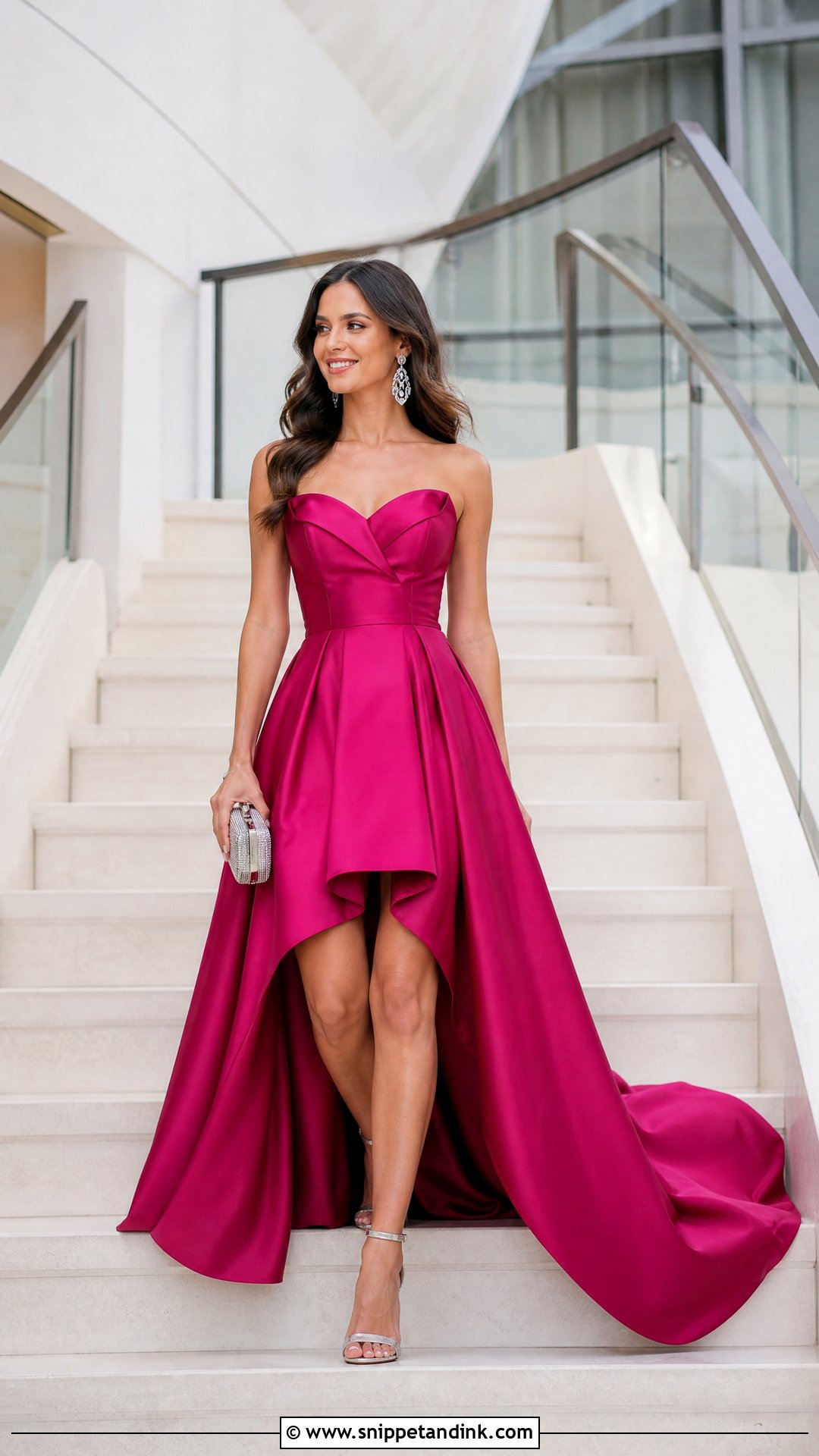
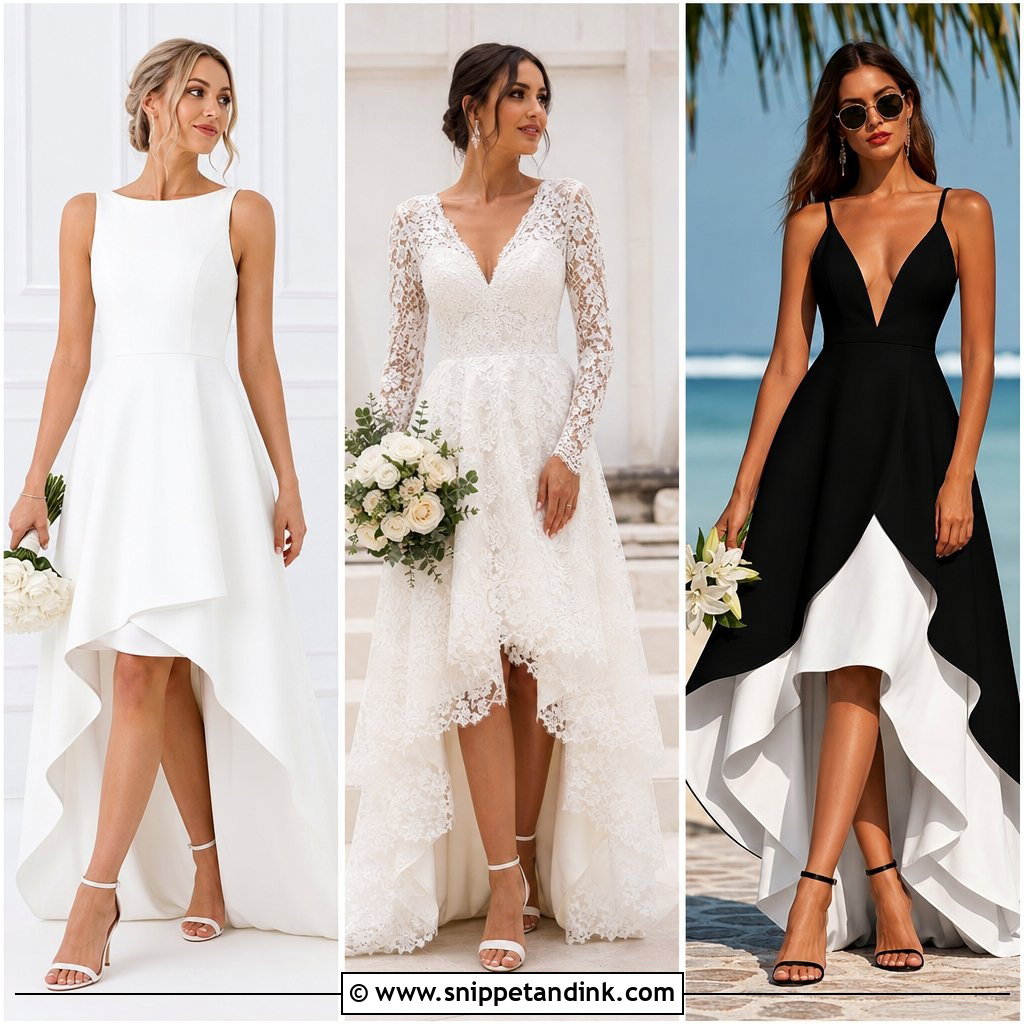
A high-low hem shows off the shoes and leaves the drama at the back. Choose a gradual slope rather than an abrupt cut, so the skirt flows around the legs. Structured satin gives bold volume, while chiffon is softer. Since the shoes are on display, pick polished ankle-strap heels or pointed pumps that match the gown. Add statement earrings and a compact clutch, and keep everything else small so the hemline stays the feature. A high ponytail or clean bun keeps it modern. Walk up some steps and turn in it during a fitting. The front should be easy, and the back should stay centered rather than wrapping around your ankles; if it twists, a small weight in the hem helps.
The Bustle Decides How Your Evening Goes
Almost every gown above needs some way to lift the train after the ceremony. Most are added during alterations, and the style should be agreed at the first fitting so it can be planned around the fabric.
Over, under or ballroom
An over bustle hooks the train up onto the back of the skirt with one or several points; it’s quick and suits lace and satin. A French or under bustle tucks the fabric beneath itself with ribbon ties, giving a soft layered drop that hides well on plain gowns like the column or the halter. A ballroom bustle lifts the train under the outer skirt so the gown looks floor length all round, the best choice for a ball gown you plan to dance in.
Teach one person, not five
Bring the person who’ll bustle you to your last fitting and let them do it twice. Color-coded ribbons help in dim light. Heavy trains need more points than people expect, and if a single hook carries too much weight it tears the fabric by the third song.
Moving with a long train
Walk with small steps and let the train follow; never step backward in it. To turn, take a few steps in a small arc rather than spinning on the spot. On stairs, lift the front of the skirt, not the train, and have someone gather the train behind you. Getting into a car, sit first, then swing your legs in and let your helper fold the train onto your lap.
A Train You Can Enjoy From the Aisle to the Last Dance
Every gown here balances impact against fit, movement and comfort. Start with a silhouette that supports your body and suits the formality of the day, then think about how the fabric shapes the train. Satin and mikado create structure, while chiffon, lace and crepe move more softly. Shoes, jewelry, hair and bag should finish the outfit without pulling eyes from the back. Practice sitting, walking, turning and bustling before the wedding, and leave time for proper hemming and internal support. Those unglamorous fittings are what let you forget about the dress and enjoy wearing it.
You'll Like These Ideas:





Leave a Reply