
A Jal ceremony is not a reception, and that changes how I dress people for it. Depending on the family, Jal Vidhi might be a sacred water ritual on its own or folded into the engagement celebrations, and either way there is usually sitting on the floor, walking to a water source, bending, pouring and greeting elders. So the clothes have to be festive and respectful, but they also have to move. I look for lightweight sarees, embroidered kurta sets, Anarkalis and lighter lehengas rather than full bridal weight. Daytime rituals call for breathable fabric and fresh colour; an evening gathering can carry richer tones and more shine. And footwear you can slip off and on in seconds matters more than people expect. Here are twenty complete looks for brides, relatives and guests.
Fabric That Can Take a Splash and an Hour on the Floor
Whatever form the ritual takes in your family, water is at the centre of it, and that is the first thing I dress around. Some fabrics shrug off a splash; others mark the moment a drop lands.
Forgiving: georgette, chiffon, crepe and most cotton-silks. They dry fast and don’t hold a ring. Printed fabrics also hide a damp patch far better than a plain pastel.
Risky: taffeta, some raw silks and tussar can water-spot, and dry-cleaning does not always lift the marks. Real bandhani and some hand-dyed pieces may also bleed onto skin or a pale blouse if they get wet. If you love one of these, keep the pallu or dupatta pinned well back and stand to the side when water is being poured.
Then think about the floor. Many Jal rituals involve sitting cross-legged or kneeling, sometimes outdoors. Before the day, sit on the floor at home in the full outfit for ten minutes. If the blouse digs in, the churidar cuts behind the knee or the lehenga can-can pokes up, you’ll know while there’s still time to alter it. Hems should clear the ground by a finger’s width for an outdoor ritual, or they will come home muddy.
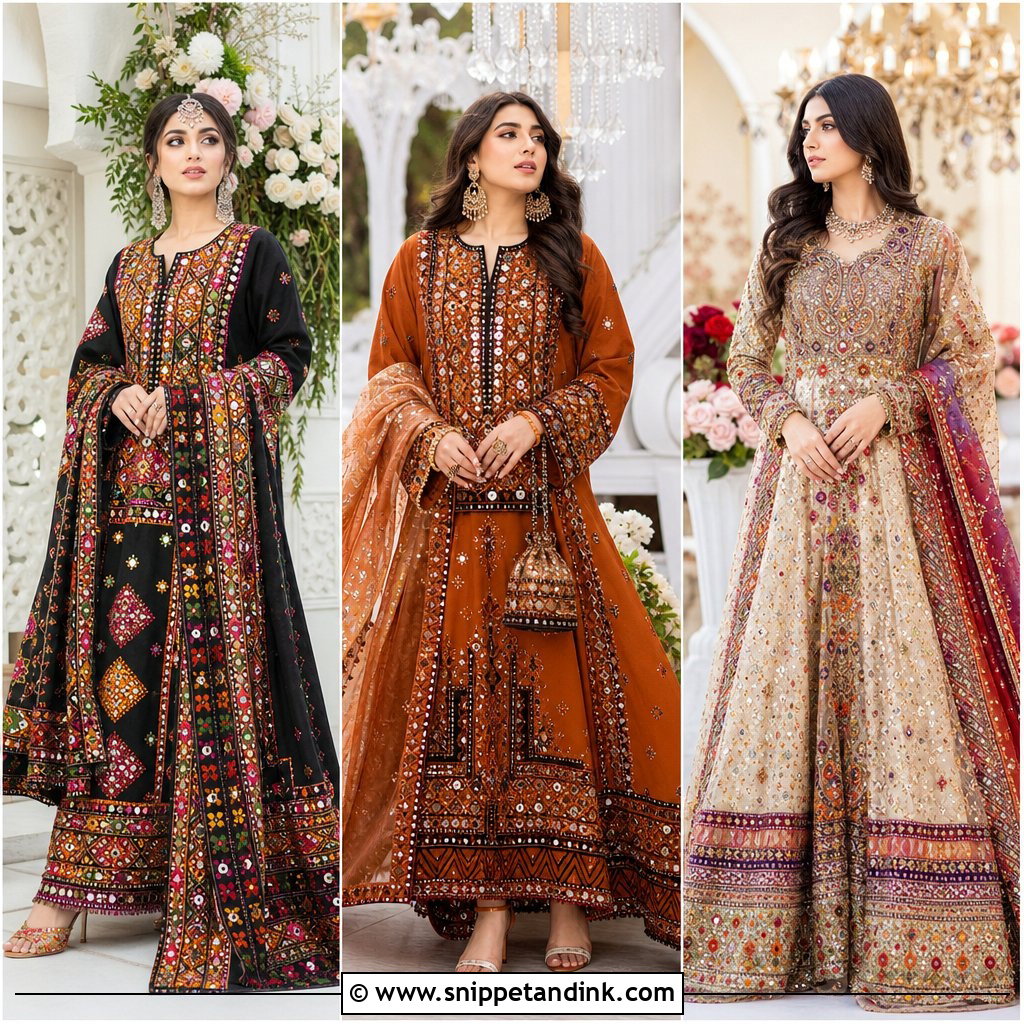
1. Yellow Anarkali Jal Ceremony Outfit
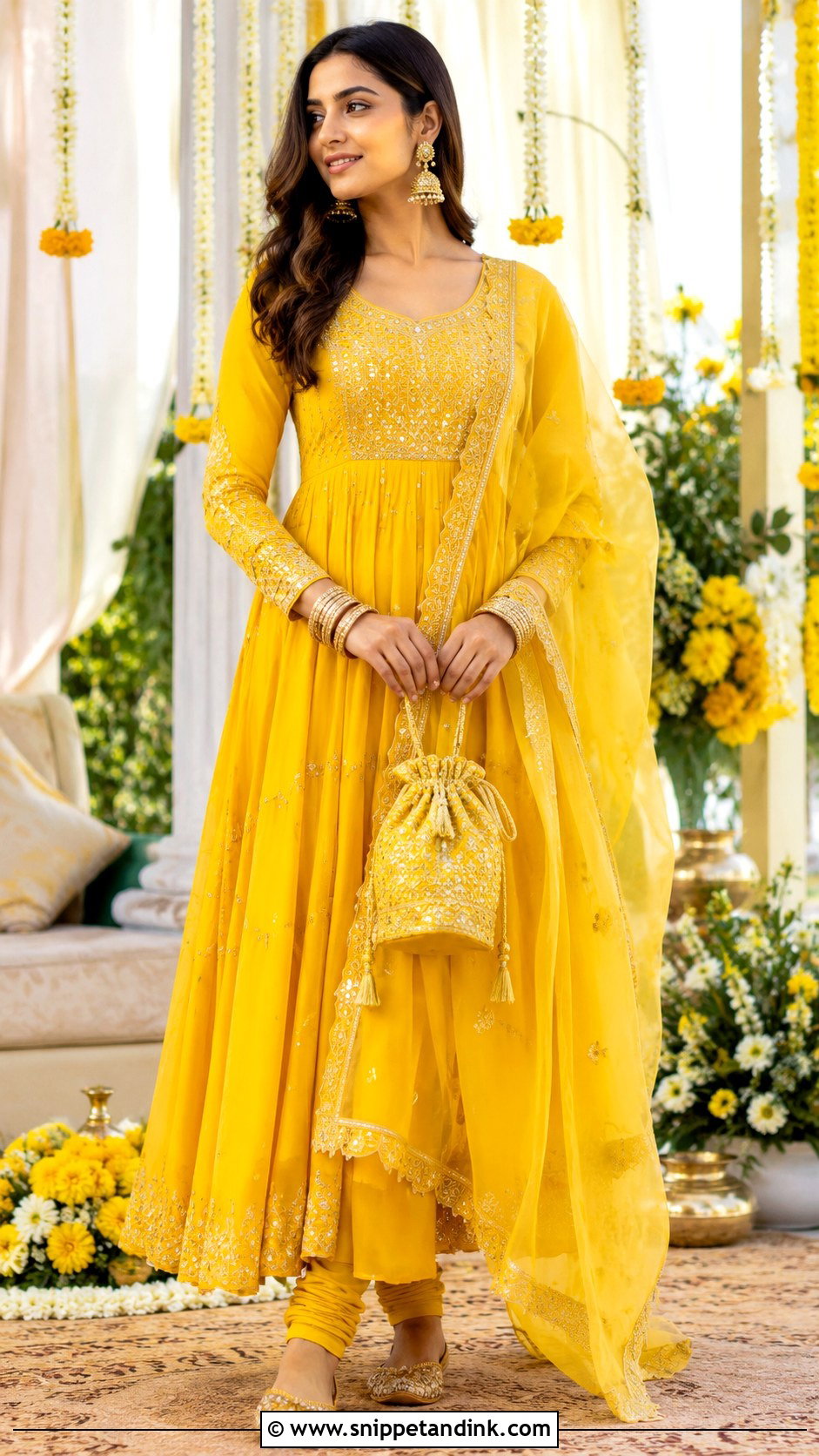
A yellow Anarkali is my first suggestion for a morning Jal ceremony, partly because yellow is so tied to auspicious beginnings and partly because cotton-silk or georgette stays cool. Keep the work light: gota patti or threadwork at the neckline rather than all over. Fitted churidar and a soft organza dupatta with a slim gold border, then gold jhumkas, stacked bangles and a small potli. The shade is personal. Mustard warms deeper skin; lemon can wash out a fair complexion in harsh sun, so hold the fabric to your face outdoors before you buy. Juttis or low block heels, and a low bun with fresh flowers.
2. Pink Organza Saree Jal Ceremony Outfit
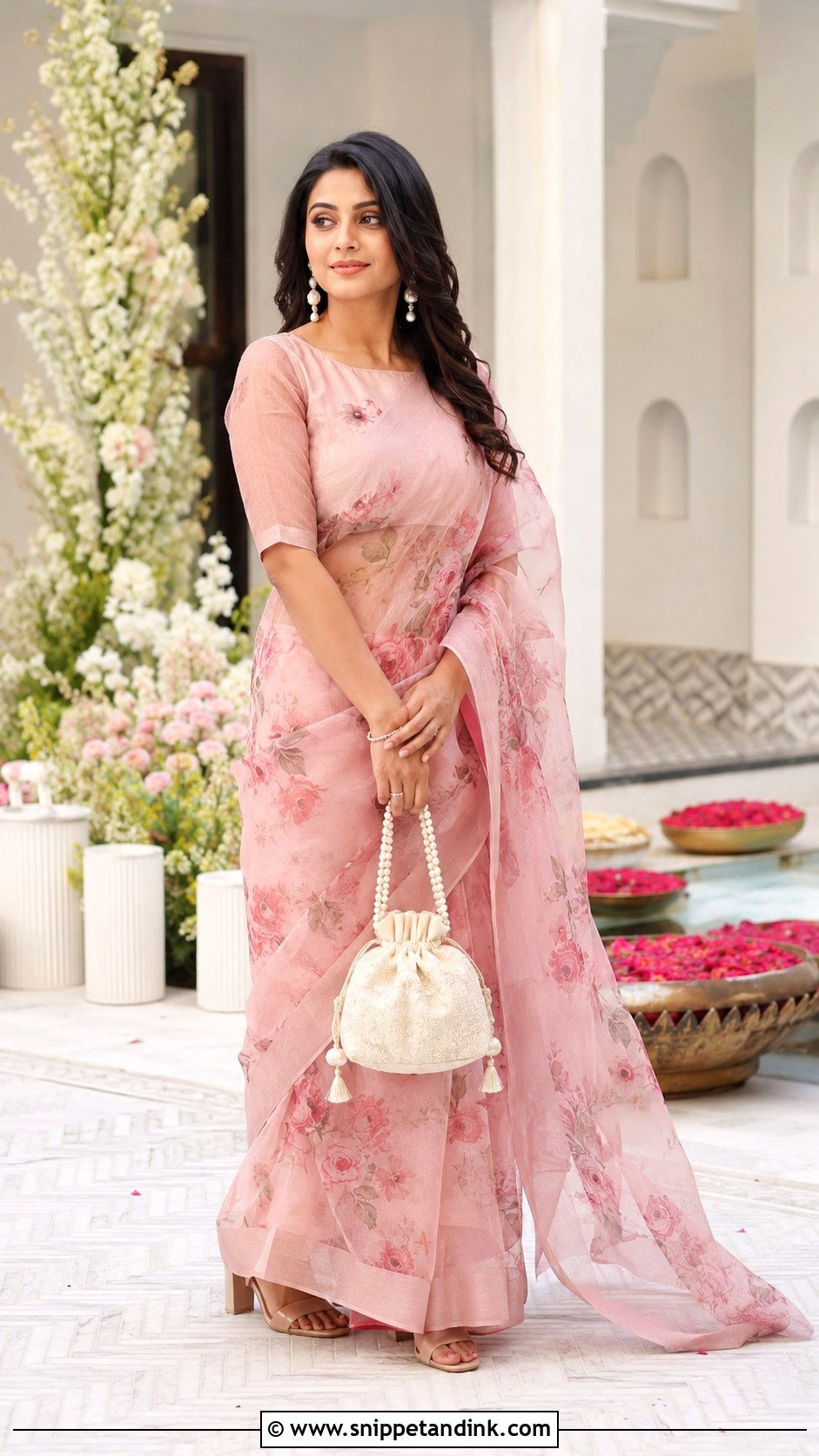
Organza looks soft but behaves stiffly, and that is the one thing to plan for with a pink organza saree. The crisp fabric won’t settle into pleats on its own, so I pin the pleats at the waist and the pallu at the shoulder, otherwise they splay out the moment you sit. Choose blush, rose or dusty pink with small embroidered flowers, scattered sequins or a narrow zari border, and a fitted silk blouse with elbow-length sleeves for a properly traditional feel. Pearl drops, a fine bracelet and an ivory or gold potli are enough. Nude block heels give height you can actually walk in. It suits sisters, cousins and guests who prefer understatement.
3. Green Sharara Jal Ceremony Outfit
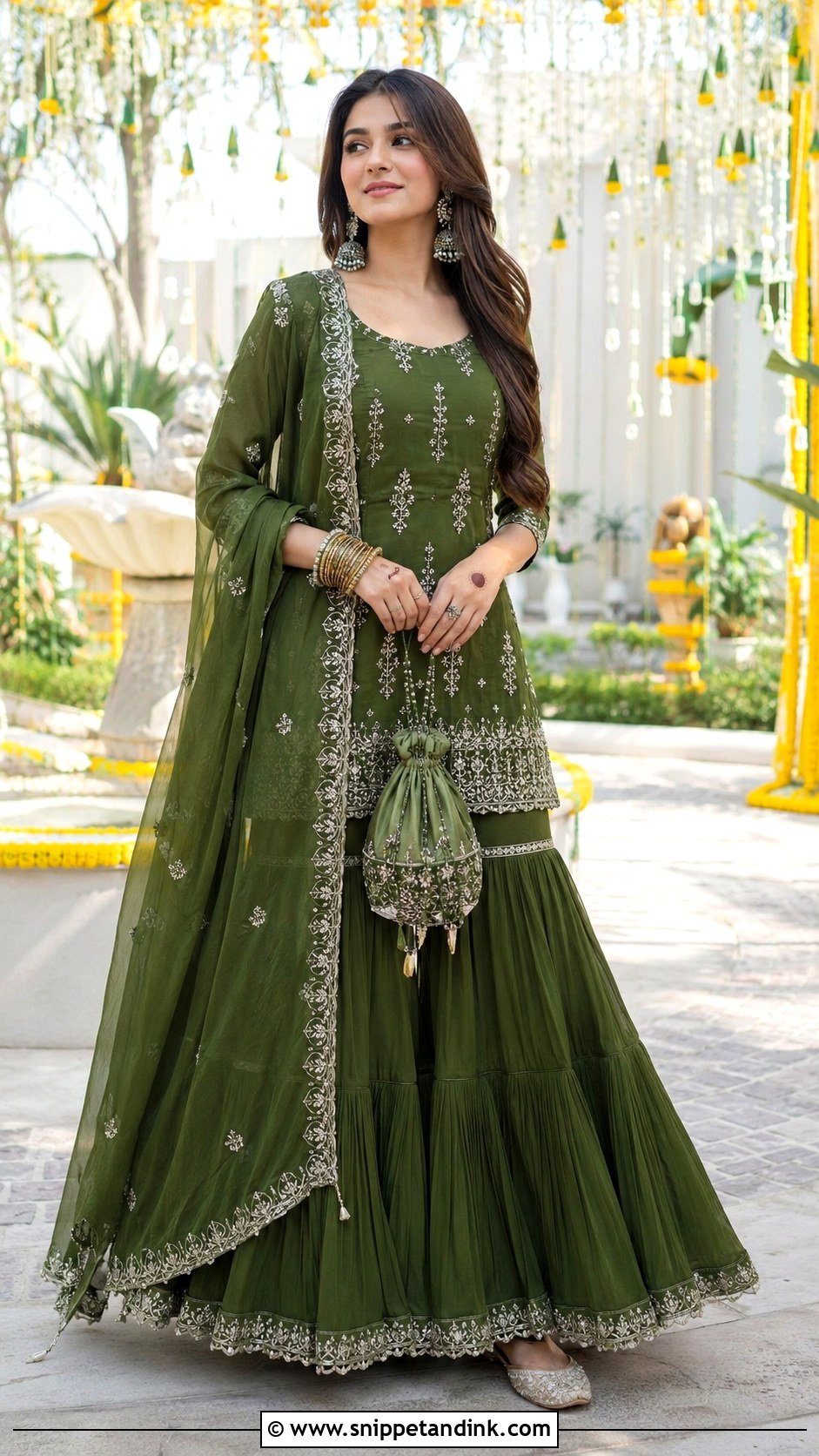
Shararas are the most forgiving outfit I know for floor seating, and a flowing green sharara brings colour and movement together. Choose a short embroidered kurti in mint or pistachio for daytime, emerald for evening, with wide flared pants and a light dupatta draped and pinned over one shoulder. Mirror work, gota trim or small florals add the festive shine. Silver jhumkas, matching bangles and embellished juttis. One caution: the flare that makes shararas comfortable also sweeps the floor, so have the hem finished just above the ground if the ritual is outdoors or near water. A braid or half-up waves and a small potli complete it.
4. Bandhani Lehenga Jal Ceremony Outfit
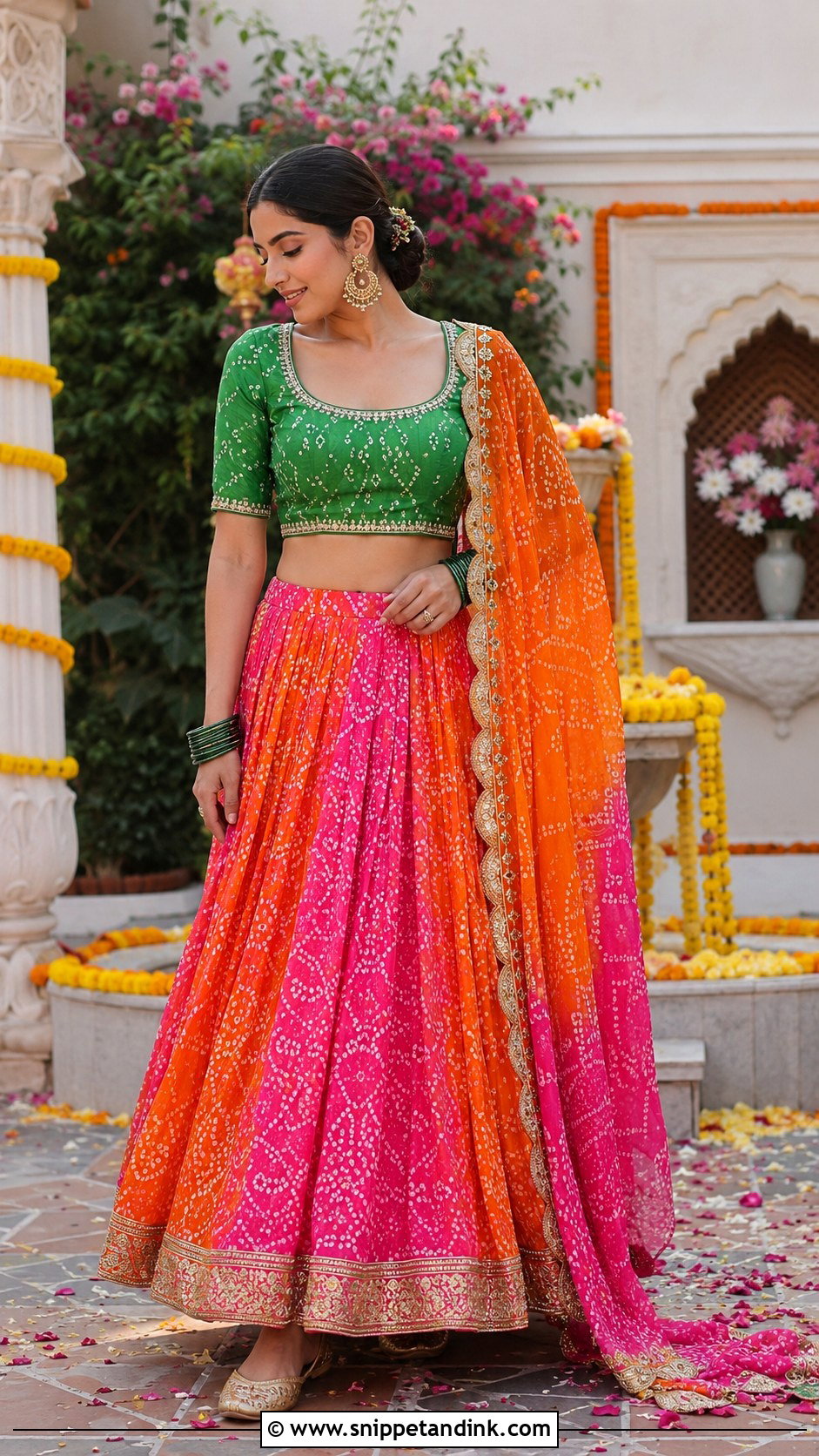
Bandhani has deep roots in western Indian celebrations, and a lightweight bandhani lehenga brings that colour and character with plenty of movement. Pick a skirt in pink, orange, red, green or a mix, a simple fitted choli and a contrasting dupatta with gota edging. Here is where etiquette comes in: heavy bridal embroidery is for the bride and immediate family. As a guest, I’d keep to printed bandhani with modest mirror or zari work. Chandbalis, glass bangles and comfortable gold juttis. Real tie-dyed bandhani can bleed when wet, so if water is splashed during the ritual, keep pale skin and blouses in mind. It suits a bright, traditional palette or a Gujarati-inspired color palette, and outdoors the colour really sings.
5. White And Gold Kurta Jal Ceremony Outfit
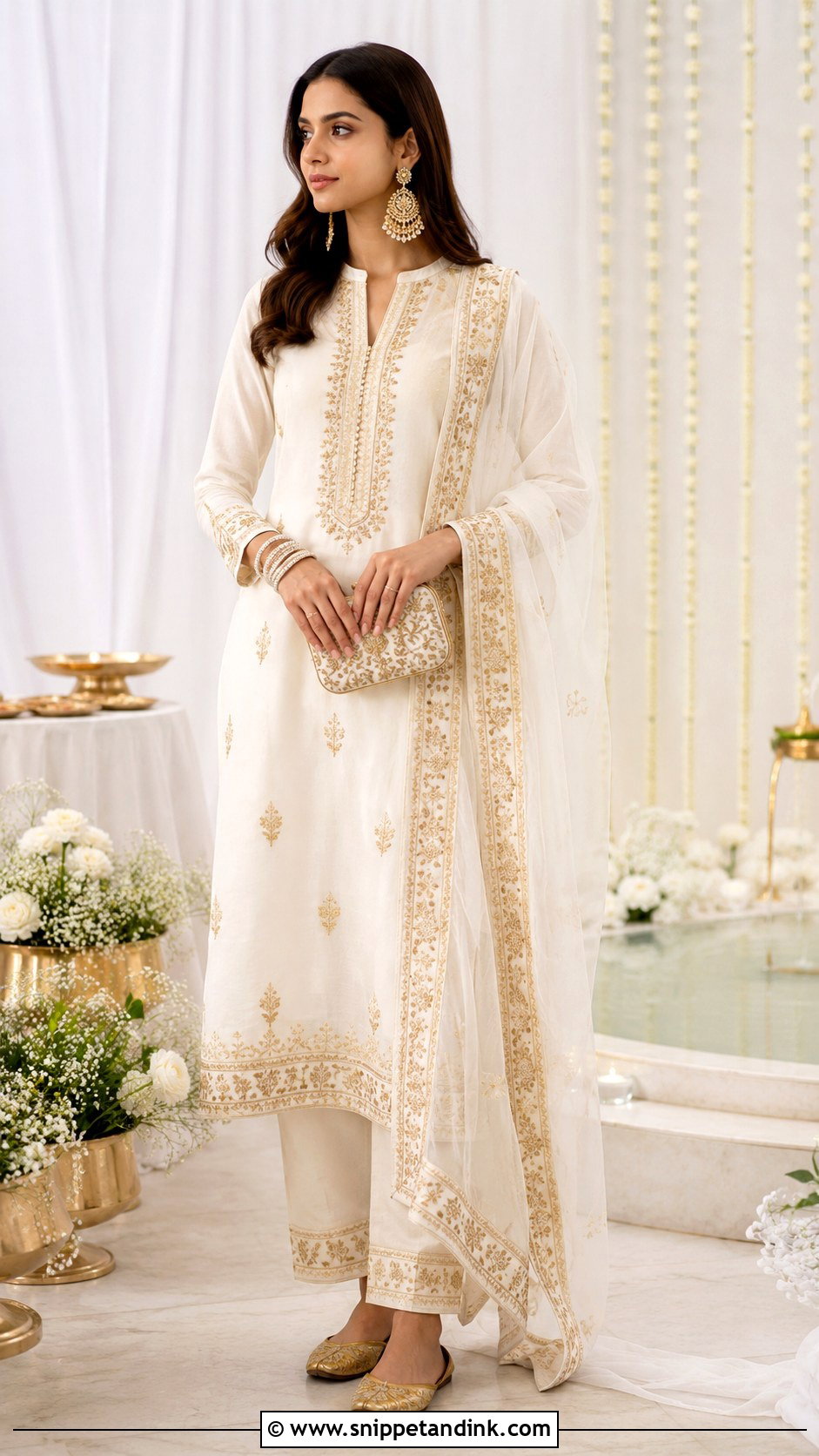
White is welcomed in some families and avoided in others, so I never send a client to a ritual in ivory without checking with the hosts first. Where it’s welcome, a white and gold kurta set looks clean and calm. Go for an ivory or soft white straight kurta with gold threadwork, matching ankle-length pants and a sheer dupatta with a narrow metallic border. Gold earrings, cream bangles and a small embroidered clutch. Choose metallic flats or low heels you can remove quickly at a home shrine or temple. White does show every mark, so think twice if the ceremony involves turmeric, kumkum or sitting on the ground. Fresh skin, a muted lip and a sleek bun keep the focus on the embroidery.
6. Floral Lehenga Jal Ceremony Outfit
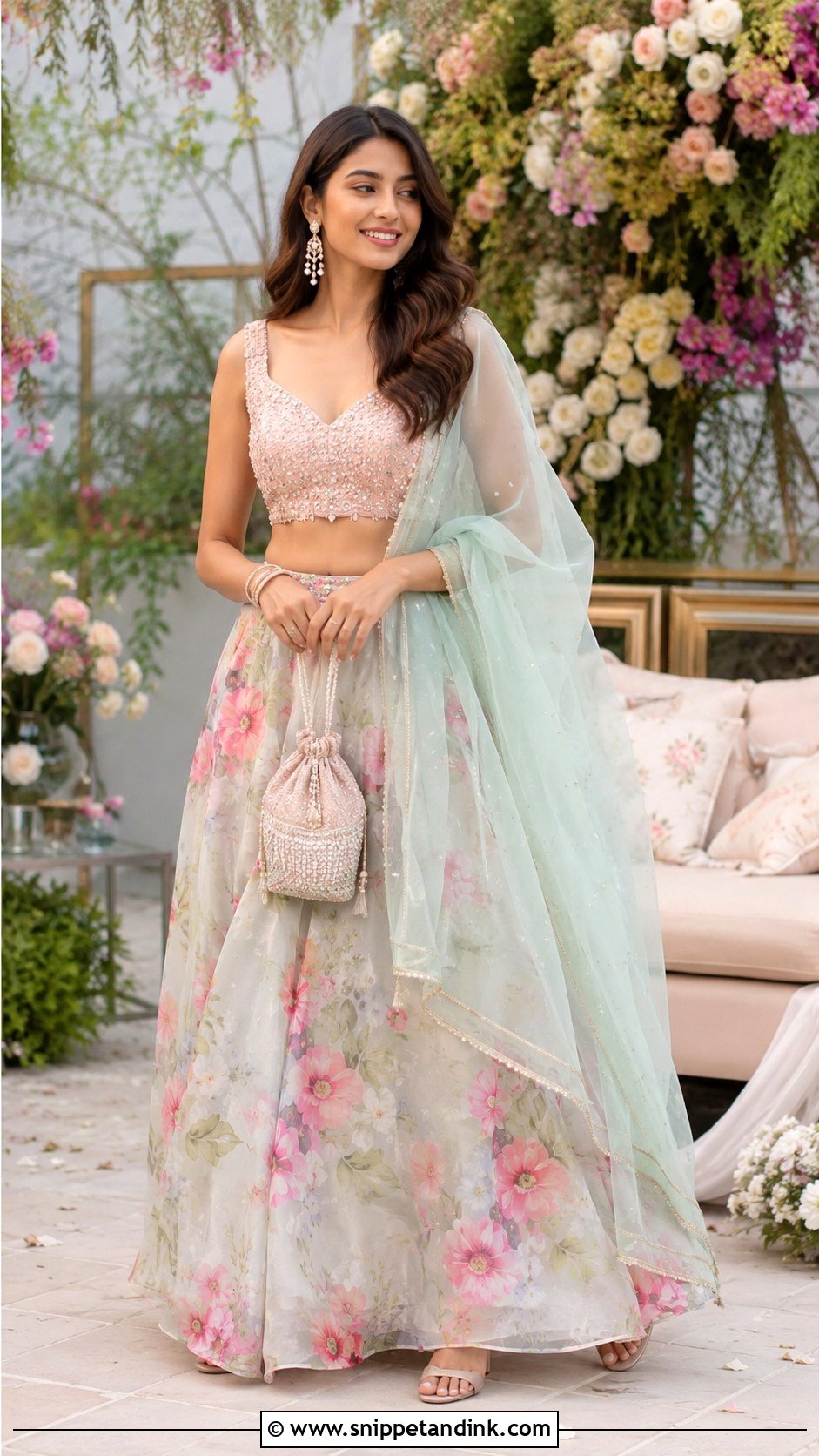
A floral lehenga is a daytime outfit, and for a garden or courtyard Jal ceremony it feels just right. Look for a light organza, georgette or cotton-silk skirt with printed or embroidered flowers, a solid blouse picking up one colour from the print, and a sheer dupatta with minimal trim. Pastels give a soft effect; brighter florals read more traditional. Pearl earrings, a slim bangle stack and a small potli. Weight is what I check here, because a lined floral lehenga with can-can can still get hot and heavy by noon; ask the boutique to skip the stiff layer for a daytime event. Block heels at a venue, decorated flats at home. It suits younger guests and close family.
7. Blue Chanderi Suit Jal Ceremony Outfit
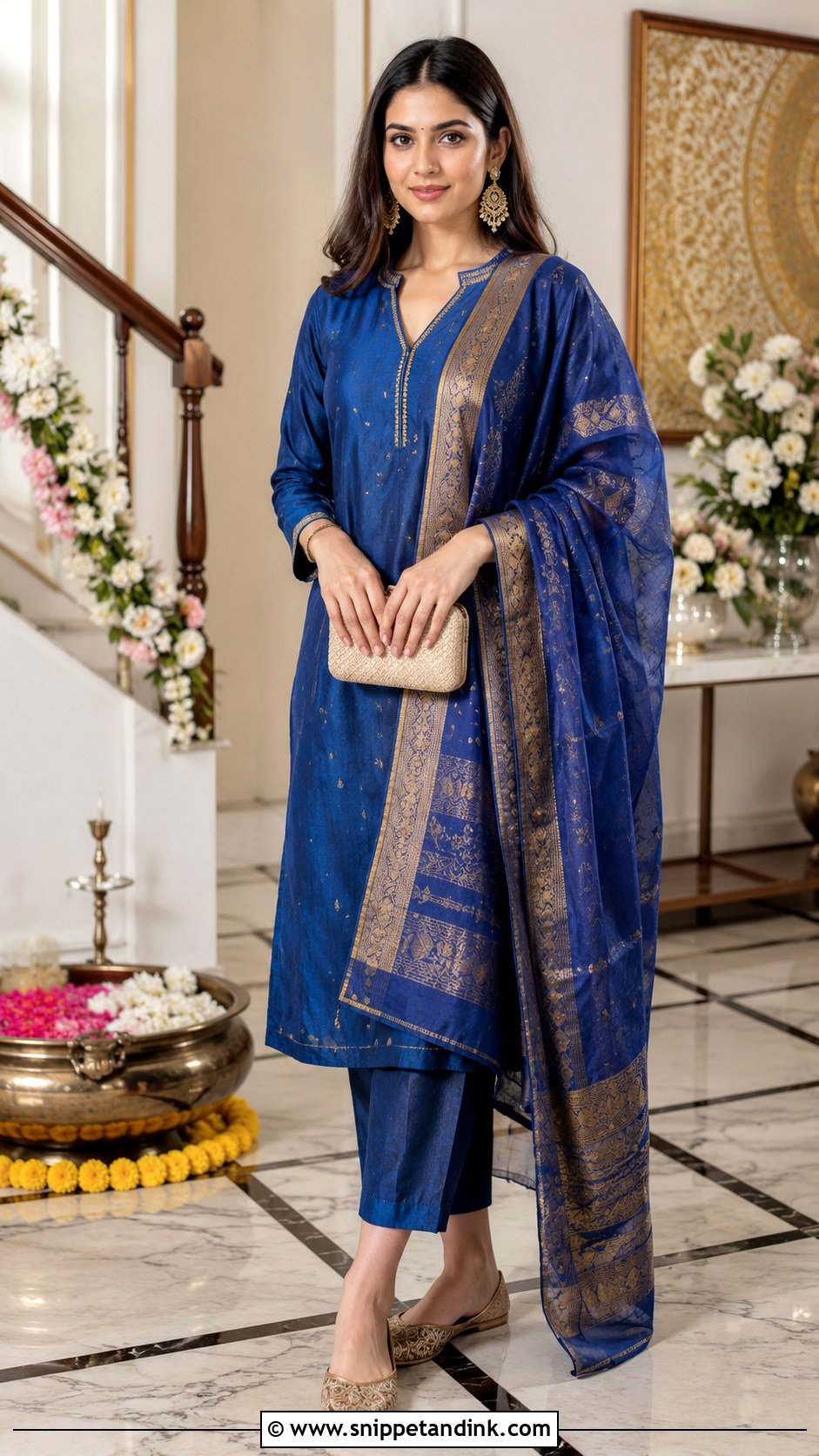
Chanderi is one of the most breathable festive weaves there is, which makes a blue Chanderi suit very practical for a long ritual. Choose a straight or slightly flared kurta in powder blue, turquoise, royal blue or navy with cigarette pants and a matching or contrasting woven dupatta. Small zari buttis, embroidered cuffs and a detailed neckline give festive character without weight. Gold drops, a simple ring and pointed juttis, plus a compact clutch for essentials. Pale blues belong to morning celebrations; royal blue and navy can take slightly stronger jewellery in the evening. Chanderi is sheer in places, so check the lining against daylight before you go.
8. Peach Palazzo Suit Jal Ceremony Outfit
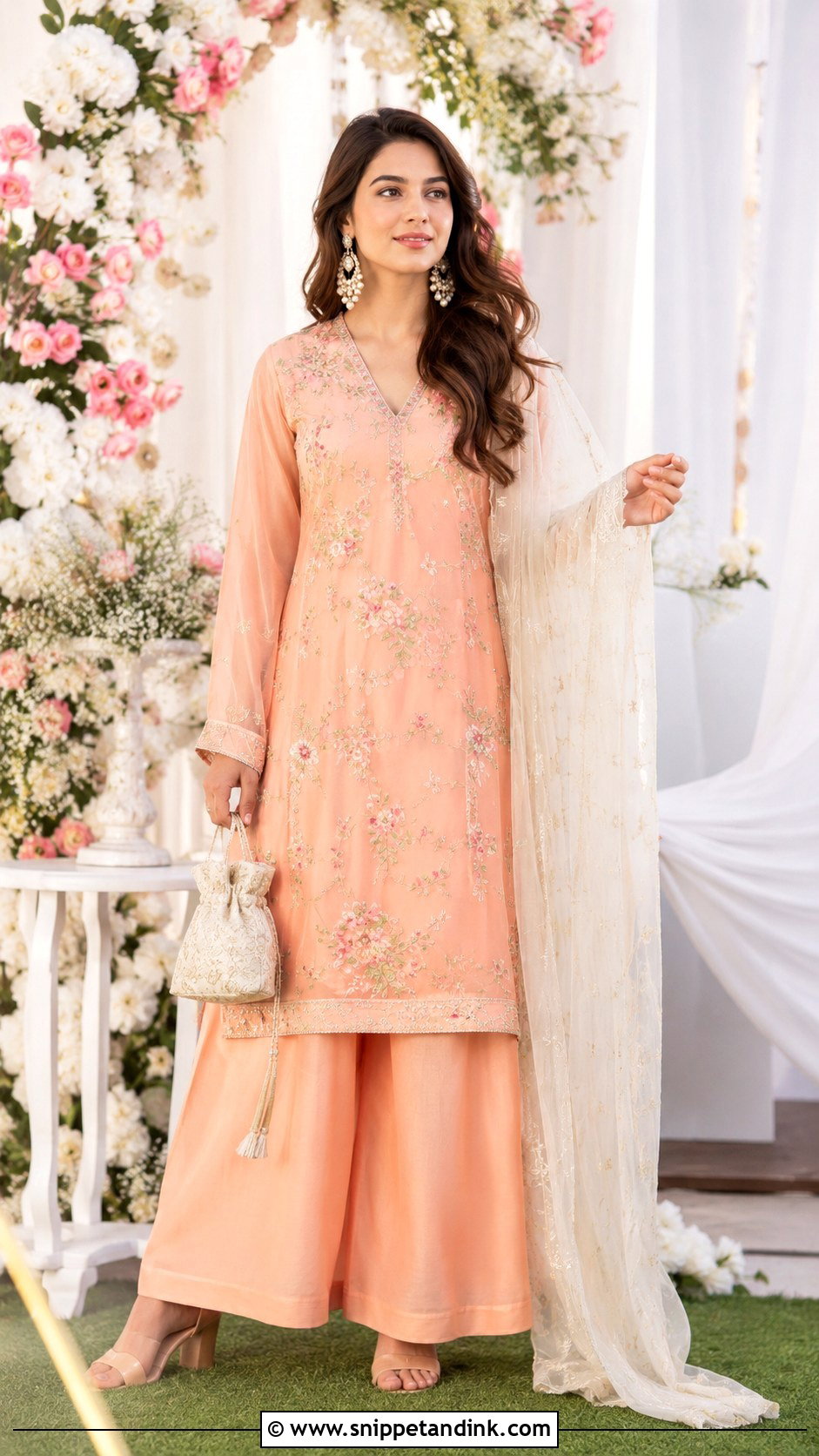
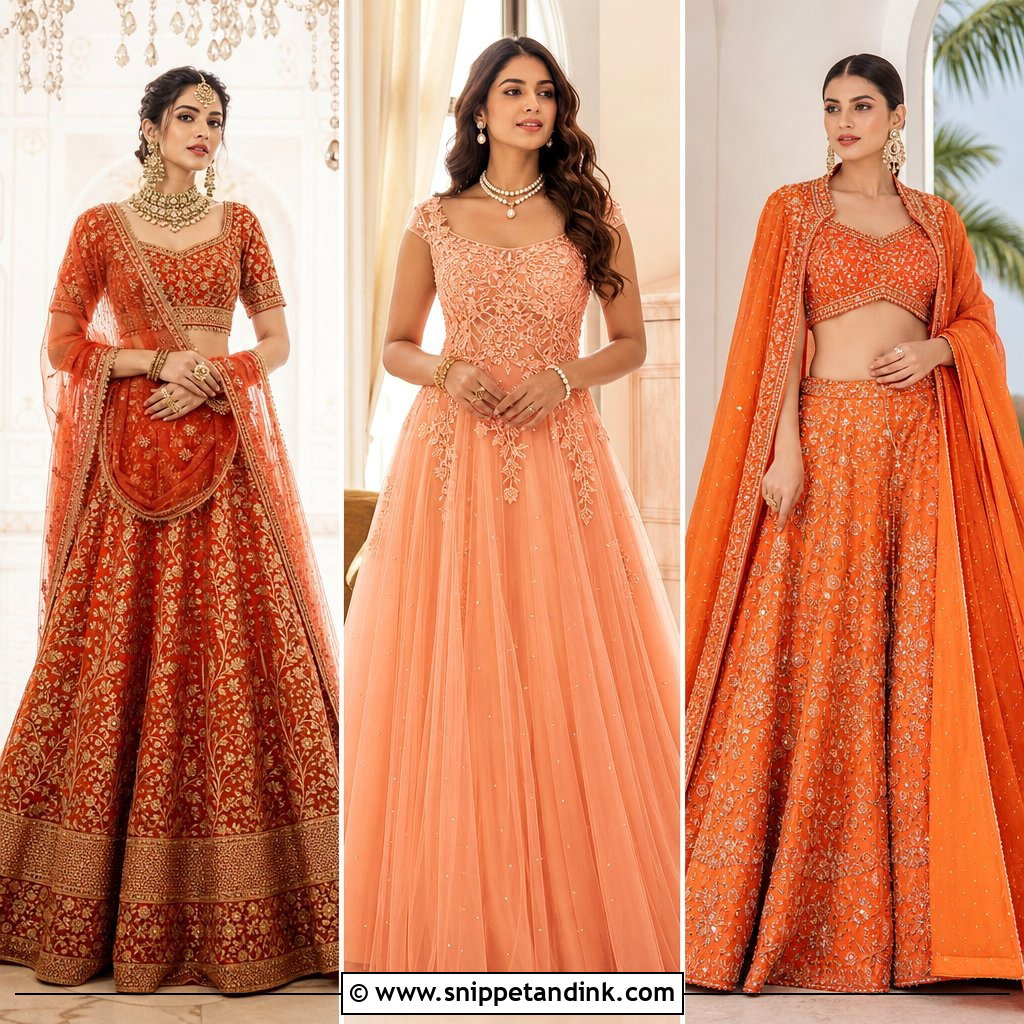
Peach is gentle on almost every skin tone, and layered shades of it look richer than a single flat peach. Start with an embroidered straight kurta with small florals, pearls or tonal threadwork, wide palazzos that let you sit cross-legged without strain, and a light chiffon dupatta in peach, ivory or soft gold. Pearl chandbalis, a delicate bangle set and nude or gold block heels; a beige potli keeps it balanced. Bring in coral through the lip, jewellery or the dupatta border if you want more definition. Soft waves or a low ponytail. It’s one I suggest for relaxed family gatherings.
9. Silk Saree Jal Ceremony Outfit
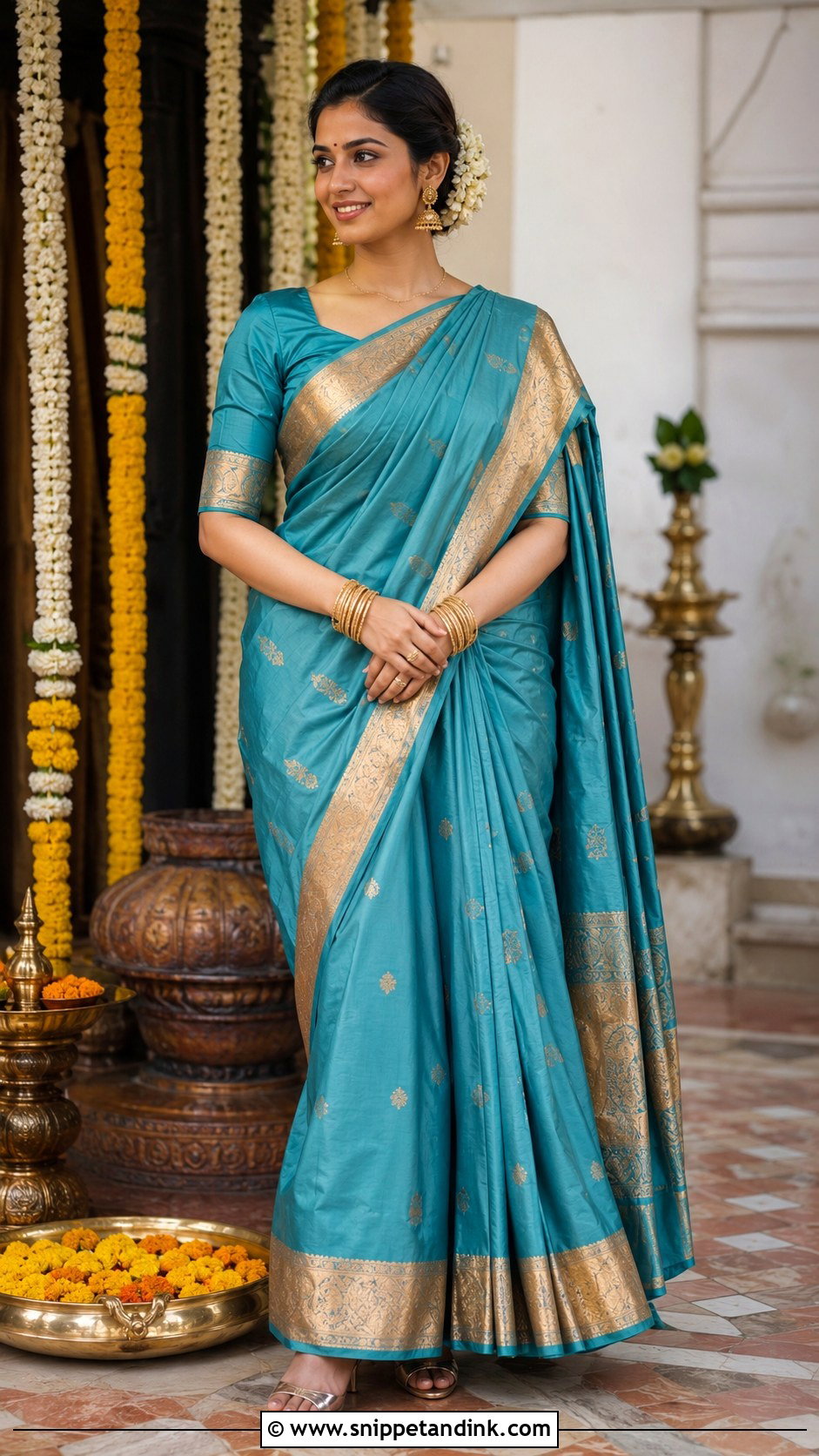
For a formal Jal ceremony, or one where many senior relatives will attend, a silk saree carries the right weight of respect. My advice is to go lighter than a wedding-day Kanjeevaram: a soft silk or silk-cotton weave if it’s warm or the rituals run for hours. Green, magenta, teal and purple with gold borders look rich. One practical warning: some silks water-spot, so if water is being poured or carried, keep the pallu tucked or pinned well away from it. A well-fitted blouse with elbow sleeves, temple-style earrings, gold bangles and a small bindi. Cushioned low heels or metallic sandals. A centre-parted bun with flowers, and discreet pins on the drape so you can bend and greet without fuss.
10. Lavender Gharara Jal Ceremony Outfit
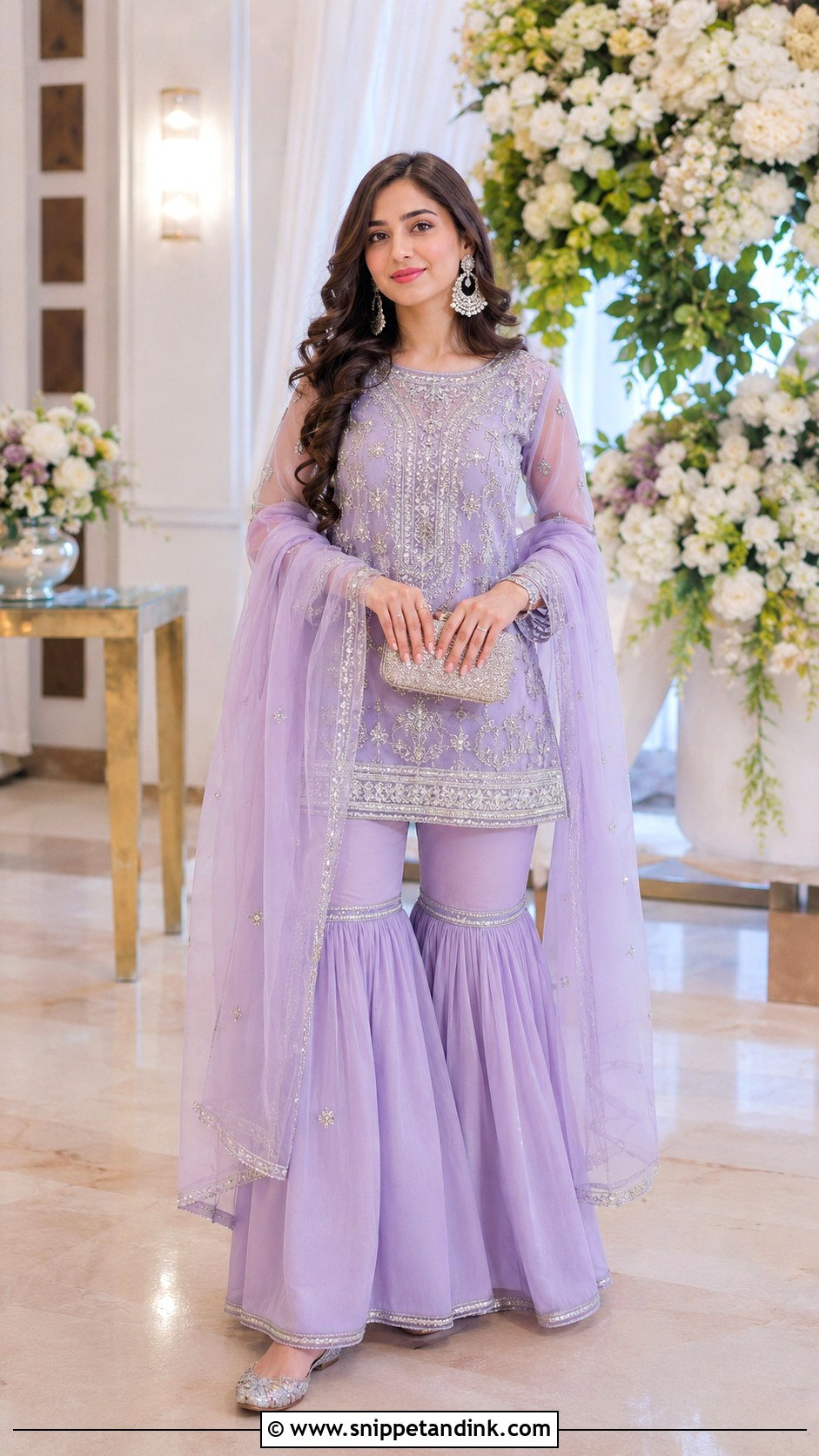
Lavender is a cool, quiet alternative to the brights that dominate most functions, and it suits a younger relative or friend who wants something current without breaking tradition. Pair a short kurti with delicate silver embroidery, pearl work or floral threadwork with a flared gharara that has a clearly defined knee seam and a decorated hem; that knee joint is what makes a gharara a gharara, so check it sits right at your knee. A sheer dupatta in the same shade. Silver chandbalis, a jewelled clutch and embroidered flats or low heels. Lavender looks best with very little added, so stop before the accessories pile up. Soft curls, luminous skin and a mauve lip.
11. Red Straight Suit Jal Ceremony Outfit
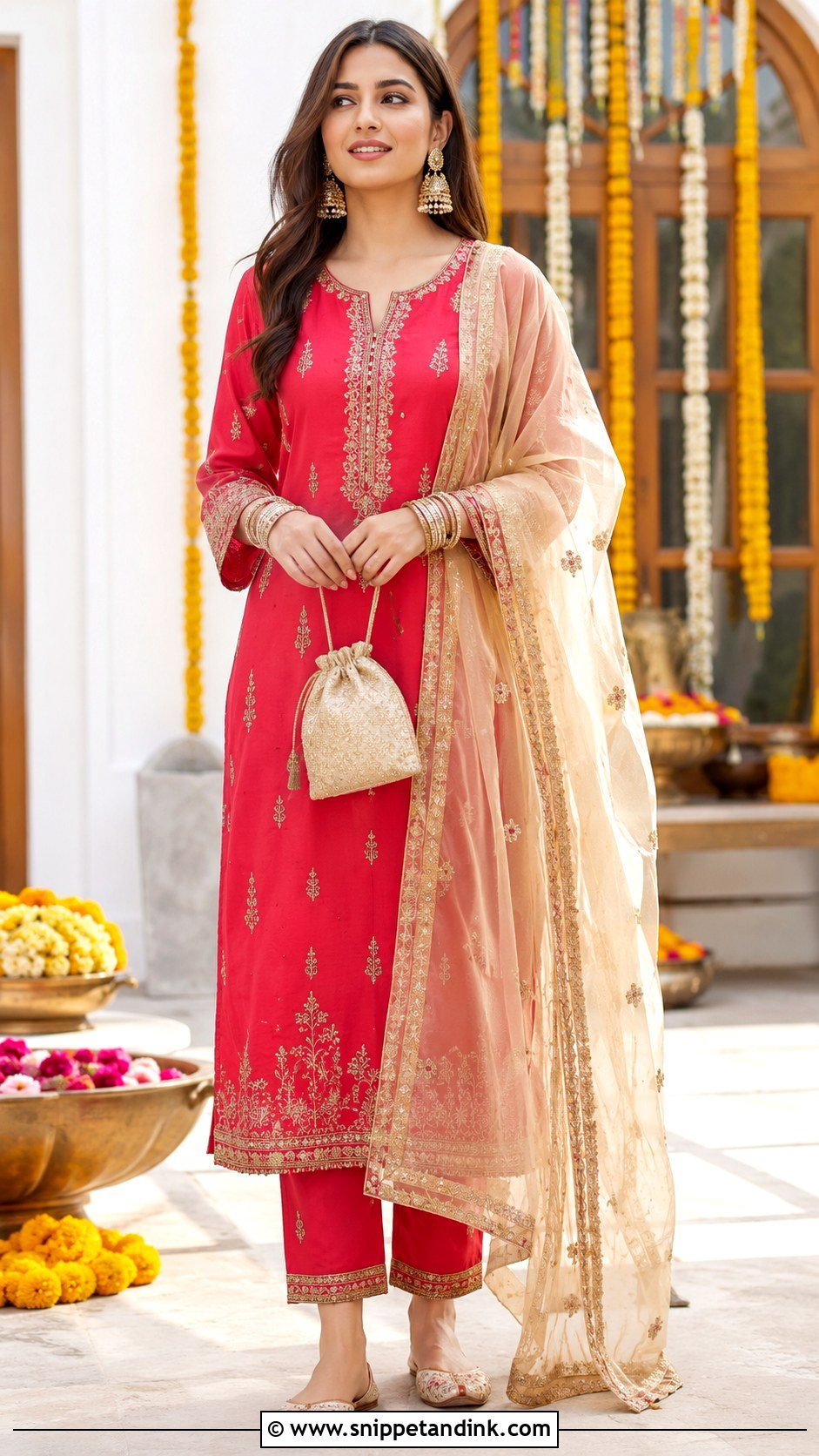
Red is often reserved for the bride, so as a guest I’d ask before wearing it. If it’s fine, a red straight suit is confident and very easy to move in. Choose tomato, coral red or deep ruby rather than a heavily embellished bridal red, with a knee-length kurta, ankle pants and a contrasting dupatta in beige, gold, pink or orange. Fine zari embroidery or a worked border is plenty. Antique gold earrings, a few bangles and embroidered juttis, with a neutral potli. Keep the hair simple, a sleek ponytail or low bun. It suits women who like clean lines and want traditional colour without a lehenga’s volume.
12. Mint Green Cape Set Jal Ceremony Outfit
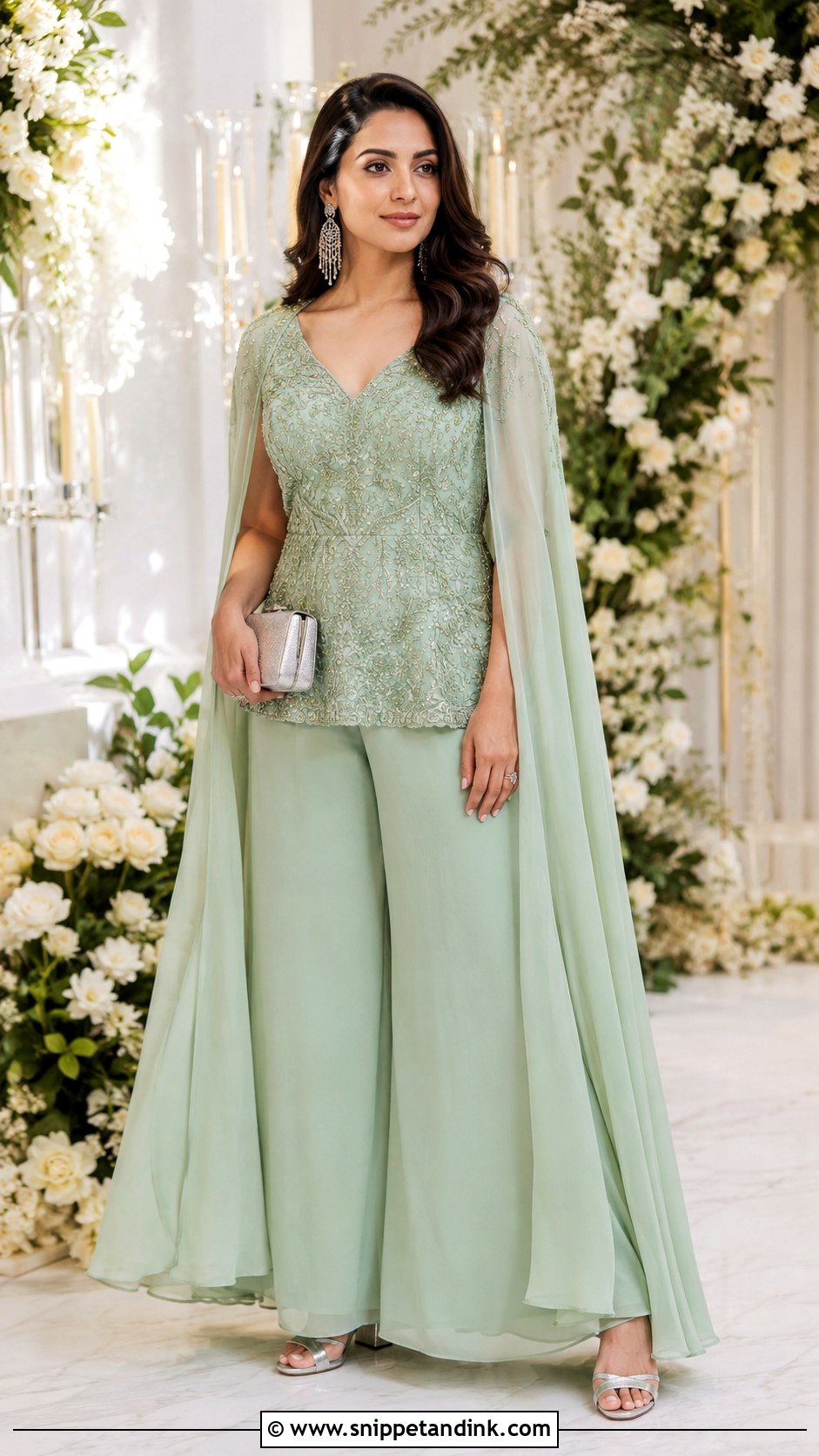
A mint cape set is my Indo-Western suggestion for anyone who finds dupattas a nuisance. Start with a sleeveless or short-sleeved embroidered top, high-waisted palazzos and a sheer cape falling below the knee; the cape gives you the movement and coverage a dupatta would, without the constant re-pinning. Look for pearl details, floral embroidery or restrained mirror work rather than dense sequins. Statement earrings, a small metallic clutch and low silver heels, with a sleek bun or side-parted waves to show the neckline. Bear in mind that a sleeveless top under a sheer cape may feel too bare for a conservative family ritual, so a short sleeve is the safer choice. It’s best at a venue-based or engagement-style gathering.
13. Orange Kurta And Skirt Jal Ceremony Outfit
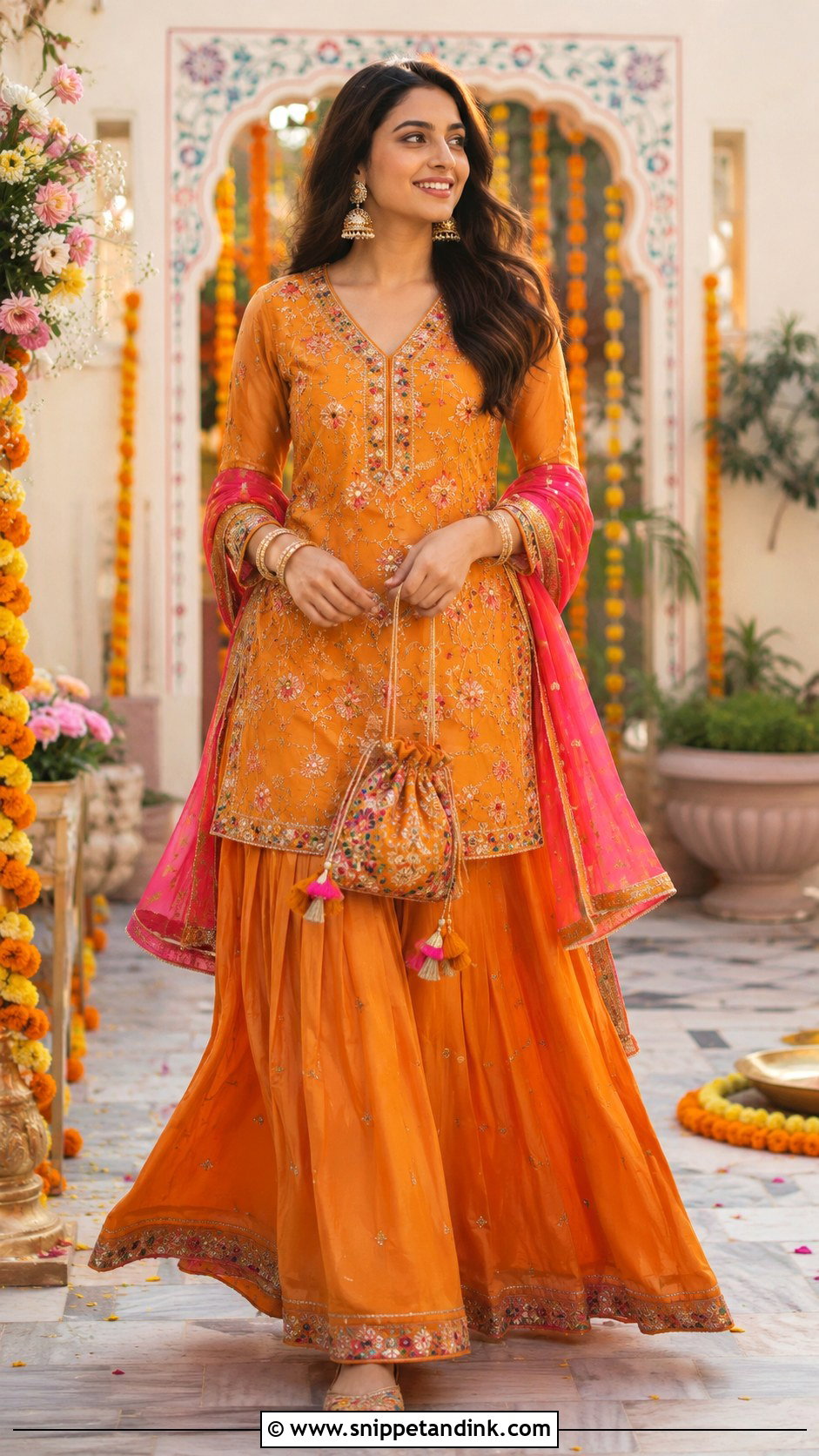
Orange gives a morning ceremony instant energy. Pair a fitted or slightly flared embroidered kurta with a long matching skirt in cotton-silk, georgette or light raw silk, choosing tangerine, rust, saffron or apricot depending on the season. A contrasting pink, green or ivory dupatta adds colour without taking over. Gold hoops or jhumkas, slim bangles and comfortable traditional flats. A braid finished with small flowers suits it. This kurta-and-skirt combination gives you a lehenga’s swing with a kurta’s coverage, and it’s kinder to more body shapes than a cropped choli. Make sure the potli fits your phone.
14. Teal Embroidered Anarkali Jal Ceremony Outfit
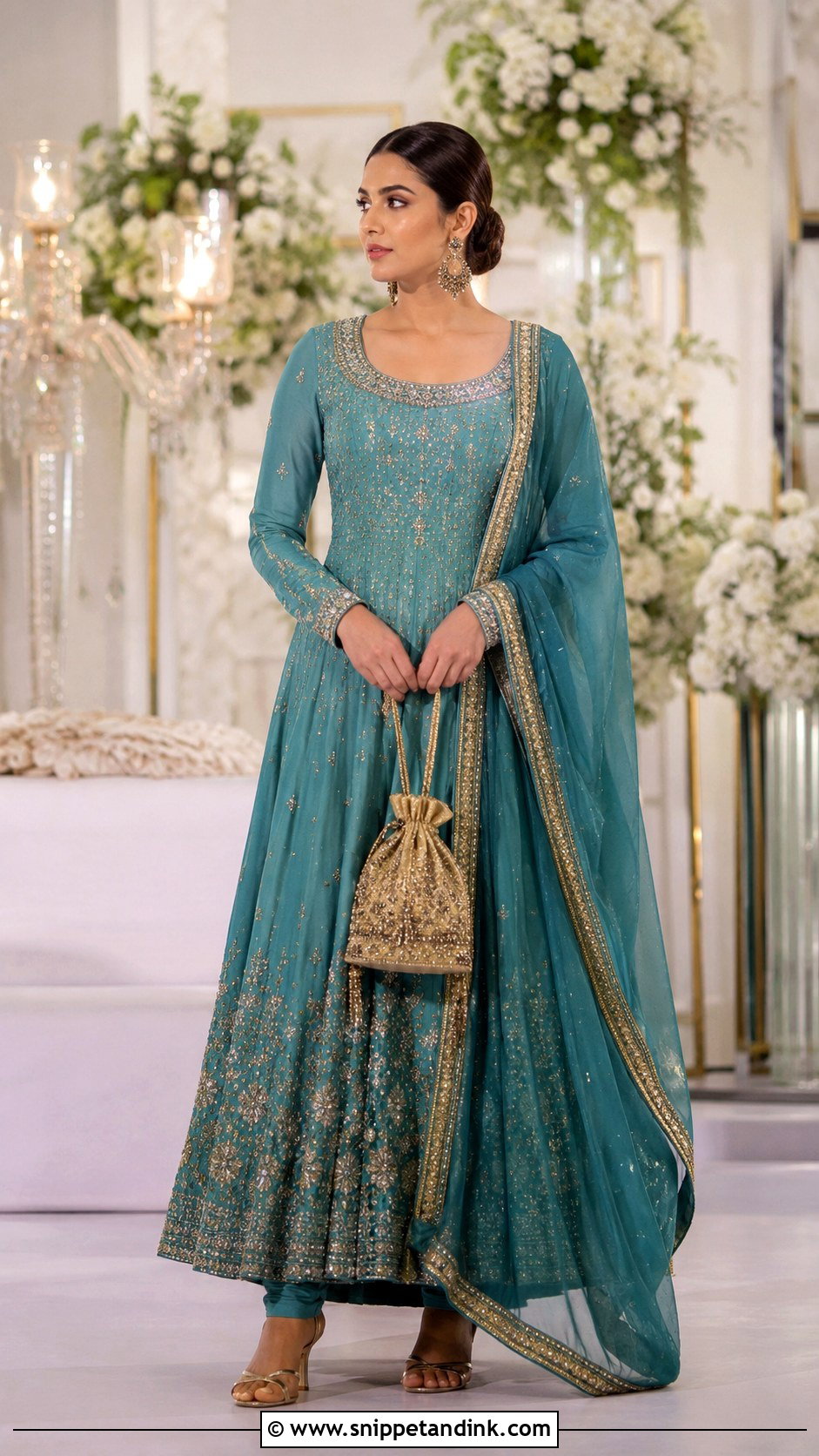
Teal is rich enough for an evening Jal ceremony and less expected than red or pink. I’d choose a floor-length georgette or silk Anarkali with gold work concentrated at the neckline, waist and hem, slim pants and a soft dupatta draped over one shoulder. Antique gold earrings, a matching bracelet and a bronze potli suit the depth of the colour, with low gold heels or decorated juttis. A smooth blowout or classic bun, defined eyes and a neutral lip. A floor-length Anarkali has a lot of fabric to manage when you sit on the floor, so gather the back panels before you lower yourself or you’ll crush the flare. Skip a big necklace unless the neckline is very plain.

15. Yellow Saree Jal Ceremony Outfit
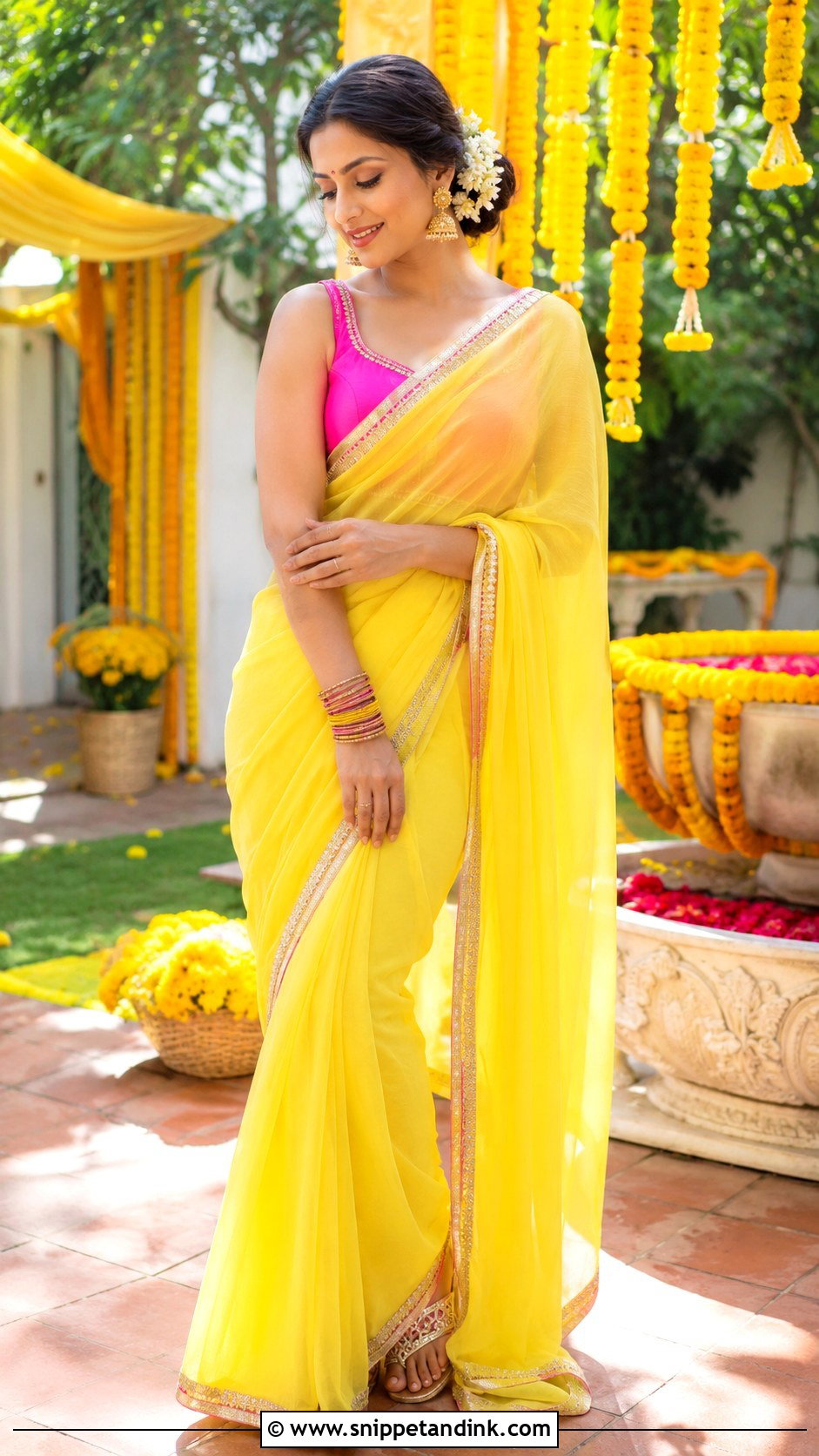
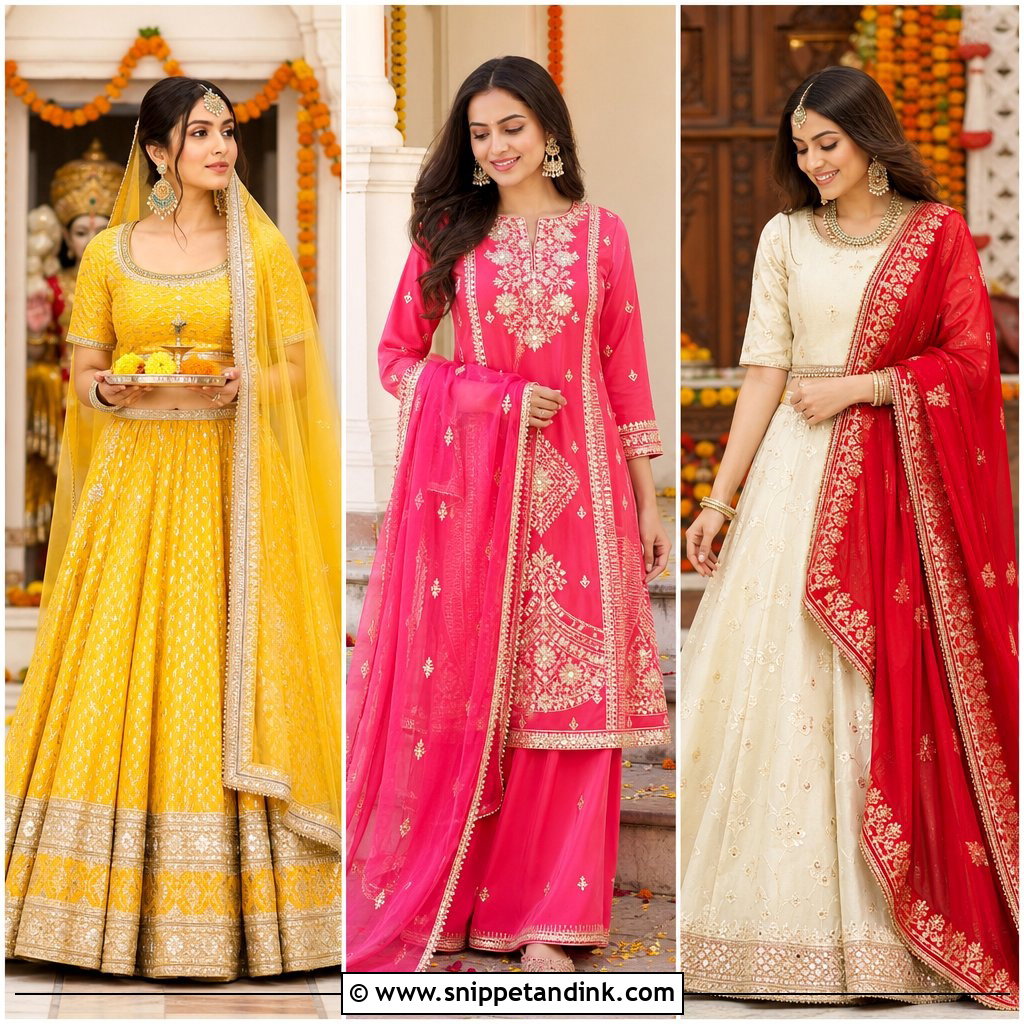
A yellow saree carries the brightness of a happy family ritual. Chiffon or georgette drape easily and dry quickly if they catch a splash; cotton-silk holds more structure. A slim gota border, small florals or tiny mirrors keep it festive. Match the blouse or contrast it in pink, green or gold. I’d wear floral earrings for a casual morning event and gold jhumkas for something formal, with bangles, a small bindi and cushioned heels or embellished sandals. Pin the pleats and pallu securely. A flower-wrapped bun or a loose braid finishes it.
16. Magenta Salwar Suit Jal Ceremony Outfit
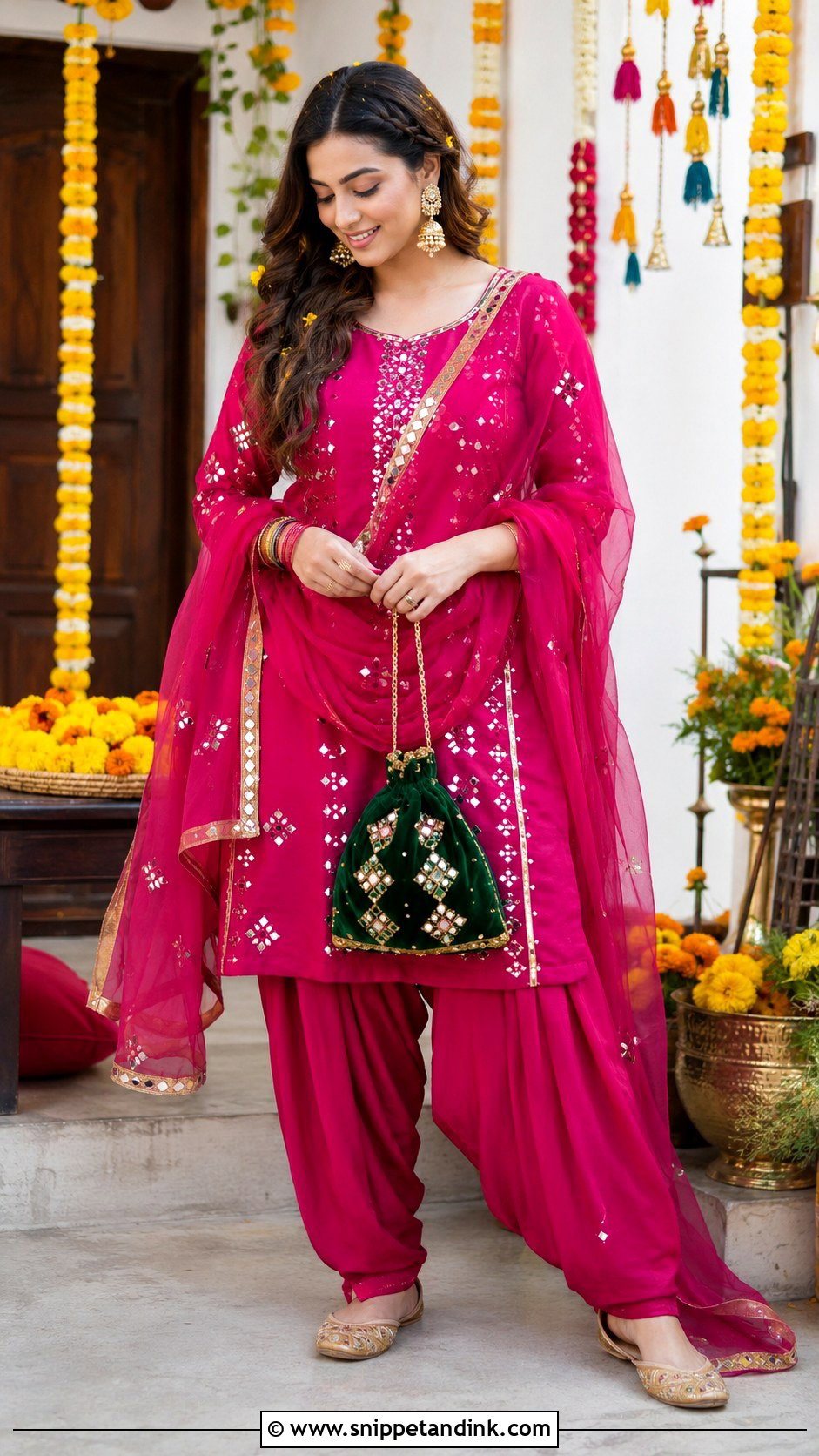
Magenta holds its colour in photos indoors and out, so it works for both morning and evening. Choose a straight or softly flared kurta with gold threadwork, mirror accents or an embroidered yoke, a classic salwar and a light dupatta with worked edges. A green or gold potli with gold jhumkas and bangles gives good contrast. Block heels or Punjabi juttis, depending on the venue. With a colour this strong, I pick one statement piece only, earrings or necklace or headpiece, never all three. A side braid or low bun keeps it neat and comfortable for hours.
17. Pastel Jacket Lehenga Jal Ceremony Outfit
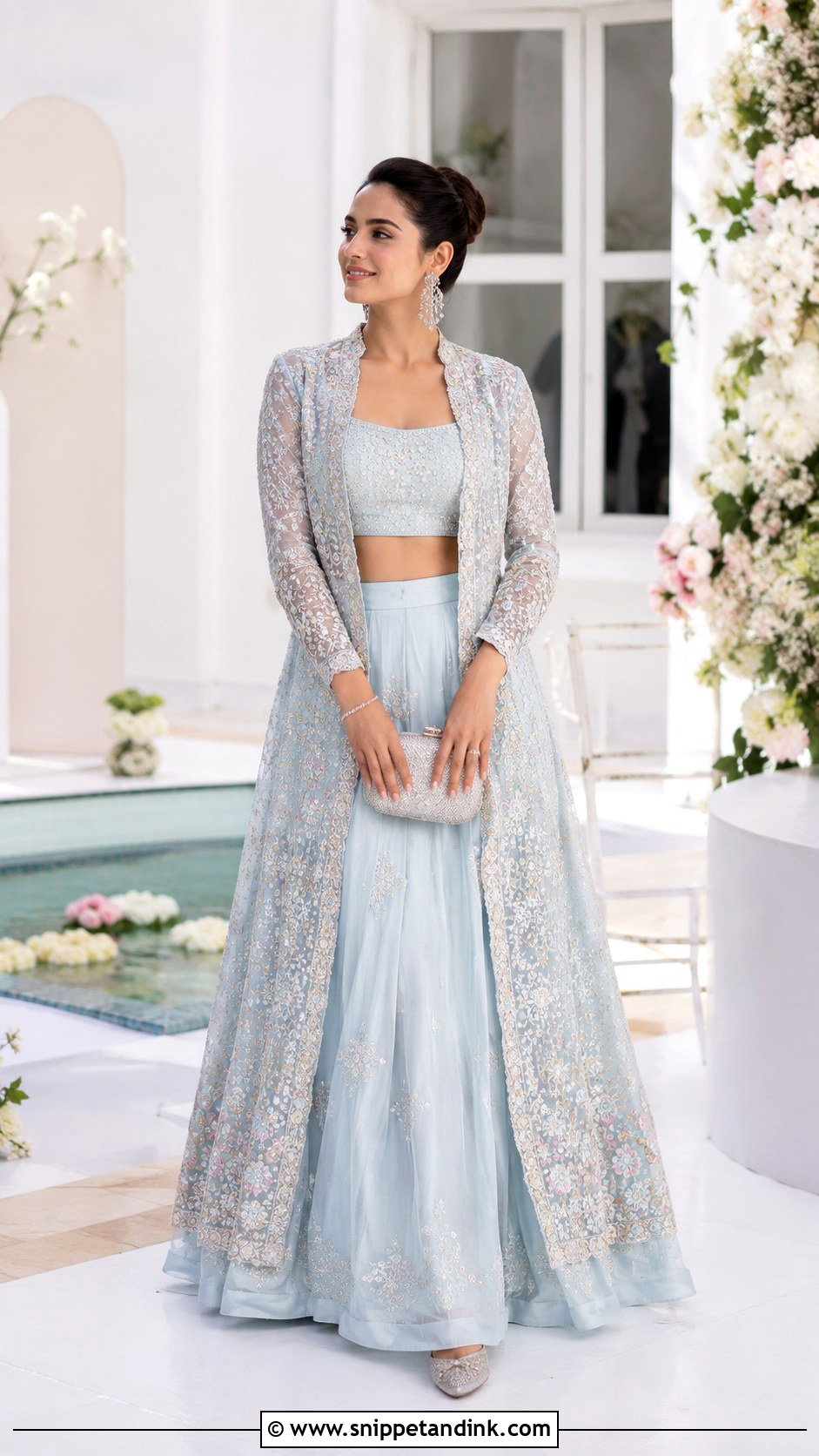
A pastel jacket lehenga solves the coverage question neatly, because the jacket replaces the dupatta and covers the shoulders and arms. Start with a light flared skirt and simple blouse in powder blue, blush, mint or lilac, then a long embroidered jacket worn open so the outfit moves. Tonal threadwork, pearls or subtle metallic embroidery suit a daytime event. Drop earrings, a slim bracelet and a small clutch; pointed flats or low heels keep the long skirt from dragging. Check the jacket’s armholes when you raise your arms, since a stiff embroidered jacket can bind when you’re pouring water or touching an elder’s feet. A high ponytail or soft waves balances the length.
18. Purple Palazzo Anarkali Jal Ceremony Outfit
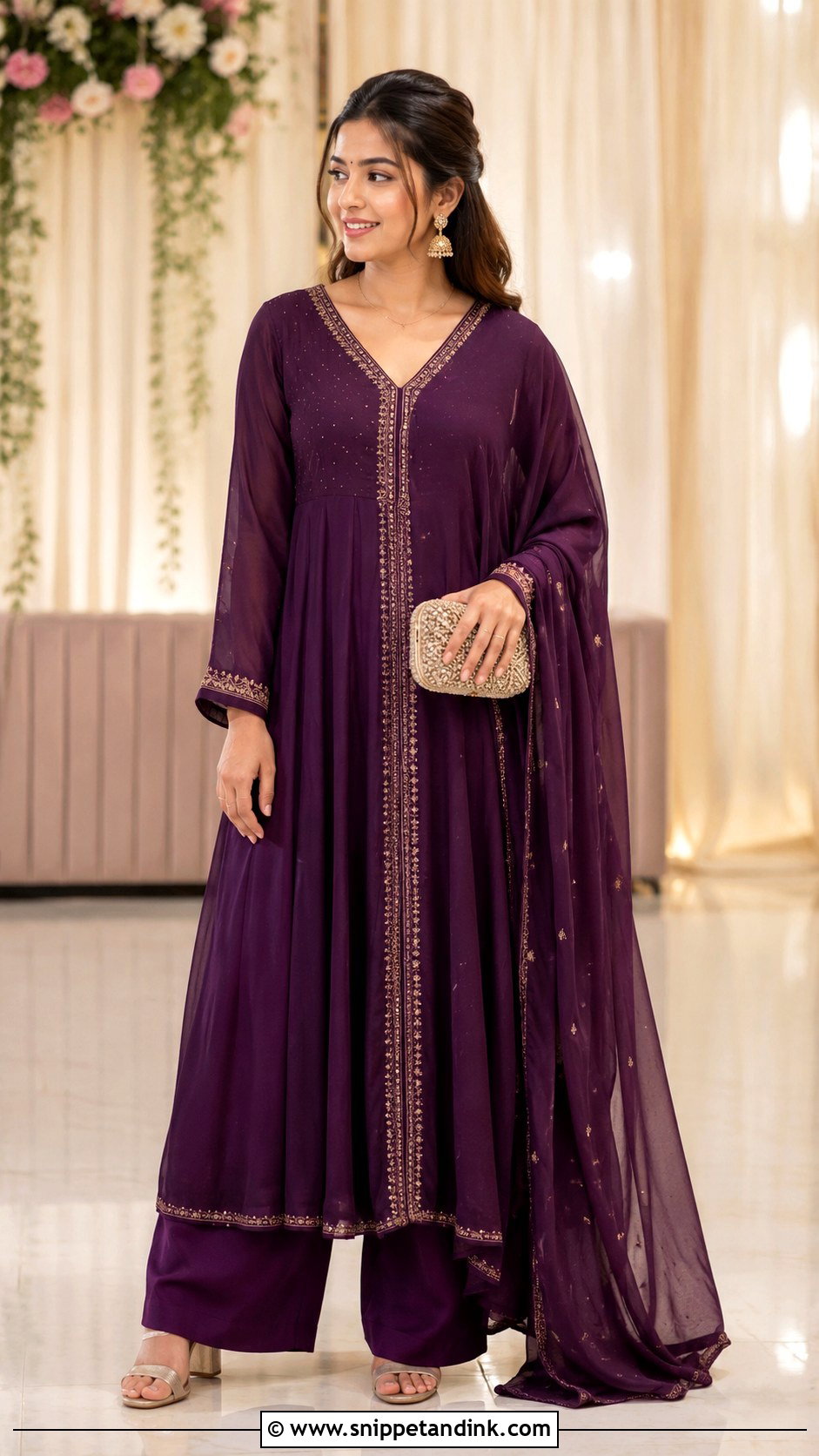
A purple palazzo Anarkali gives you the drama of a long kurta with wide-leg comfort underneath. Violet or plum suits evening; lilac is softer for daytime. Front or side slits let the palazzos show, and a light dupatta with a simple border can be pinned to one shoulder so it stays put. I match the metal to the purple: silver with cool violets, antique gold with warmer plums. A beaded clutch and comfortable block heels, a half-up style and soft makeup. It covers well without feeling restrictive, which matters when you’re on your feet for several hours.
19. Ivory Floral Kurta Jal Ceremony Outfit
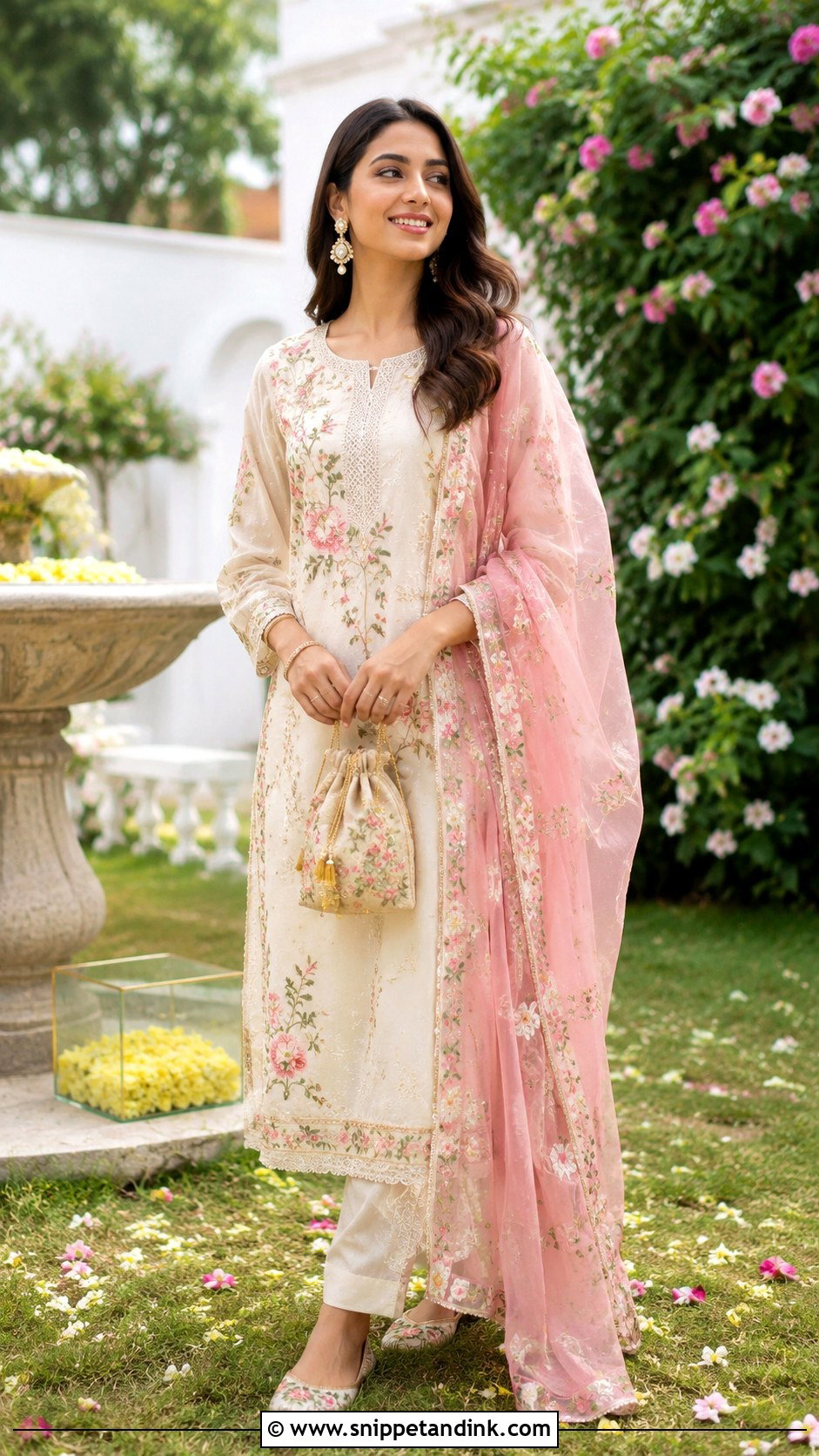
Where the family is happy with pale shades, an ivory floral kurta set is about as light as festive dressing gets. Choose a long kurta with colourful printed or embroidered flowers and matching straight pants, then a dupatta in pink, green, peach or blue to give the neutral base some definition. Pearl earrings, delicate bangles, pastel juttis and a small potli that picks up one colour from the florals. Loose curls or a relaxed low bun. It’s a hot-weather choice: no dark colours, no heavy fabric, no dense embellishment. Just confirm first that pale colours suit the family’s customs.

20. Emerald Green Lehenga Saree Jal Ceremony Outfit
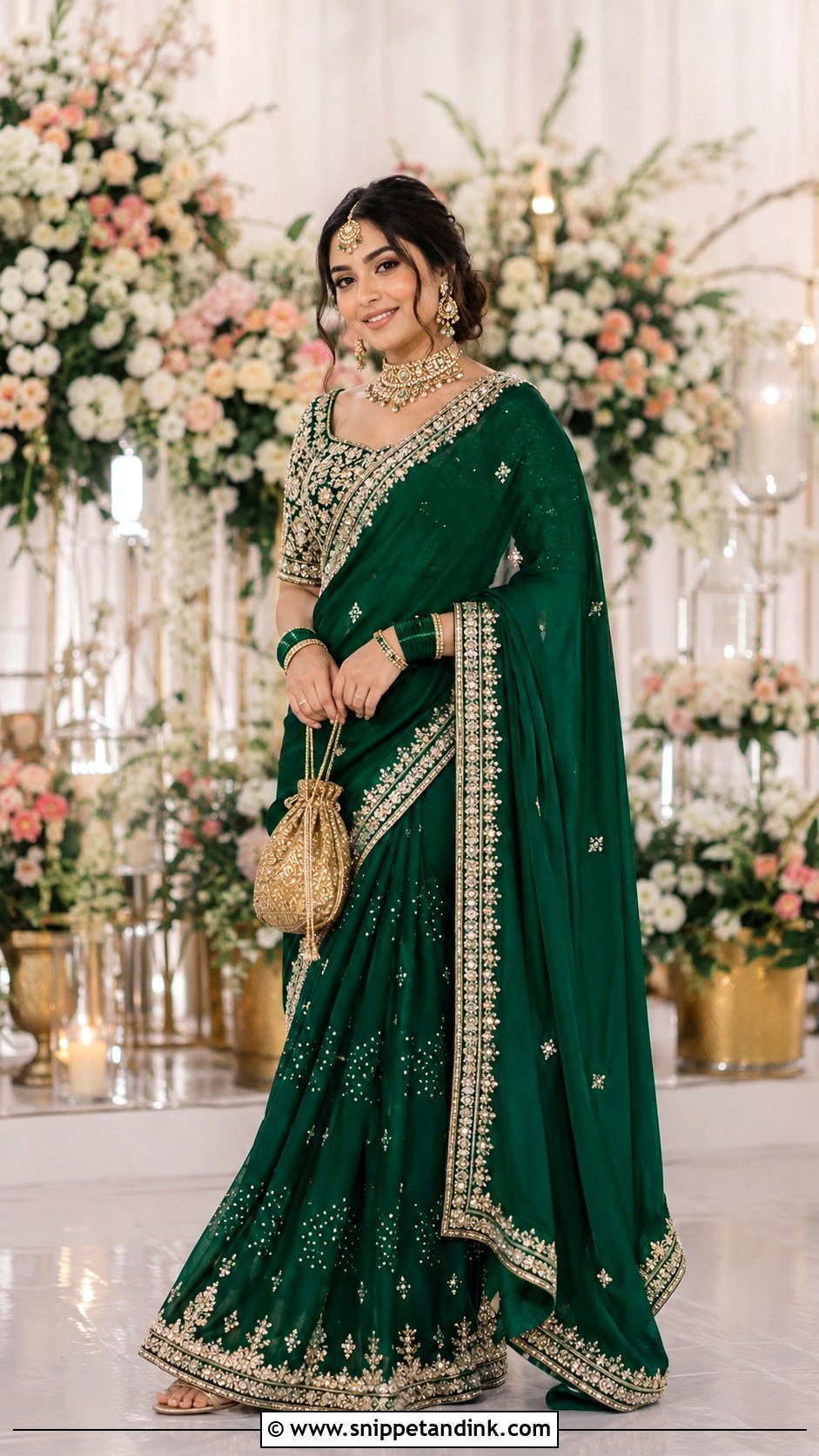
An emerald green lehenga saree gives the line of a saree without the worry of a full drape coming loose. Choose a pre-draped style with a flowing skirt, fitted blouse and an attached or easily secured pallu; gold embroidery, a zari border or subtle sequins add evening shine. Kundan-style earrings, a delicate necklace, coordinated bangles and a gold potli. The hem is set by the shoes you try it on with, so wear your actual low block heels at the fitting. A centre-parted bun or polished waves, defined eyes and a muted rose lip. I’d suggest it for close relatives and honoured guests at a formal ceremony.
If You Are the One Carrying the Kalash
In families where the bride or the women of the house carry a pot of water, the outfit has to do a little more work. I plan these looks differently from a guest’s.
- Keep the crown of the head flat. A high bun or a big hair accessory gives a pot nothing stable to sit on, so I’d style a low bun, a braid or loose waves, and keep heavy maang tikkas for later in the day.
- Pin the dupatta at both shoulders, or at the shoulder and the waist. With both hands steadying a pot, you can’t catch a sliding drape.
- Pick sleeves that let you raise your arms above your head. Tight, heavily embroidered sleeves bind at the armhole.
- Wear flat, closed-back sandals or juttis with grip. Wet stone and tiles around a well or tap are slippery.
Settle the Colour Question Before You Shop
Customs around colour differ a lot from one community to the next. Red may be reserved for the bride; white may be welcome or avoided; some families like a coordinated palette for the women of each side. A quick message to the host saves you buying an outfit you can’t wear. If you’re told anything goes, a mid-tone such as peach, green or teal is the safest choice I know: festive, photographs well, and never confused with the bride.
Ask About Colour, Then Dress for the Water
The right outfit for a Jal ceremony depends less on the trend and more on timing, venue, family custom and how formal the hosts expect it to be. Anarkalis, kurta sets, sarees, shararas and lehengas can all be right when they’re styled with the ritual in mind. Fresh colours and light embellishment suit daytime; jewel tones and richer work suit evening. Choose shoes you can slip off, drapes that stay pinned and jewellery that doesn’t compete with the clothes. And before anything else, ask the family about colour. Getting that right shows respect, and it means you can relax and take part.
You'll Like These Ideas:




Leave a Reply