
Kashmiri wedding clothes are layered, heavily worked and closely tied to community. The pheran is the defining garment. Kashmiri Pandit brides add the Taranga and Dejhoor, while Kashmiri Muslim brides have their own head coverings and jewelry, and families within each community still do things a little differently. So I never treat a list like this as a set of costumes. I treat it as a starting point for a conversation with the bride and the elders who will dress her. Below are pherans, sarees, lehengas, shararas and a few modern cuts, from classic red to winter velvet and soft pastels, with my notes on fabric, fit and how each one behaves over a long day.
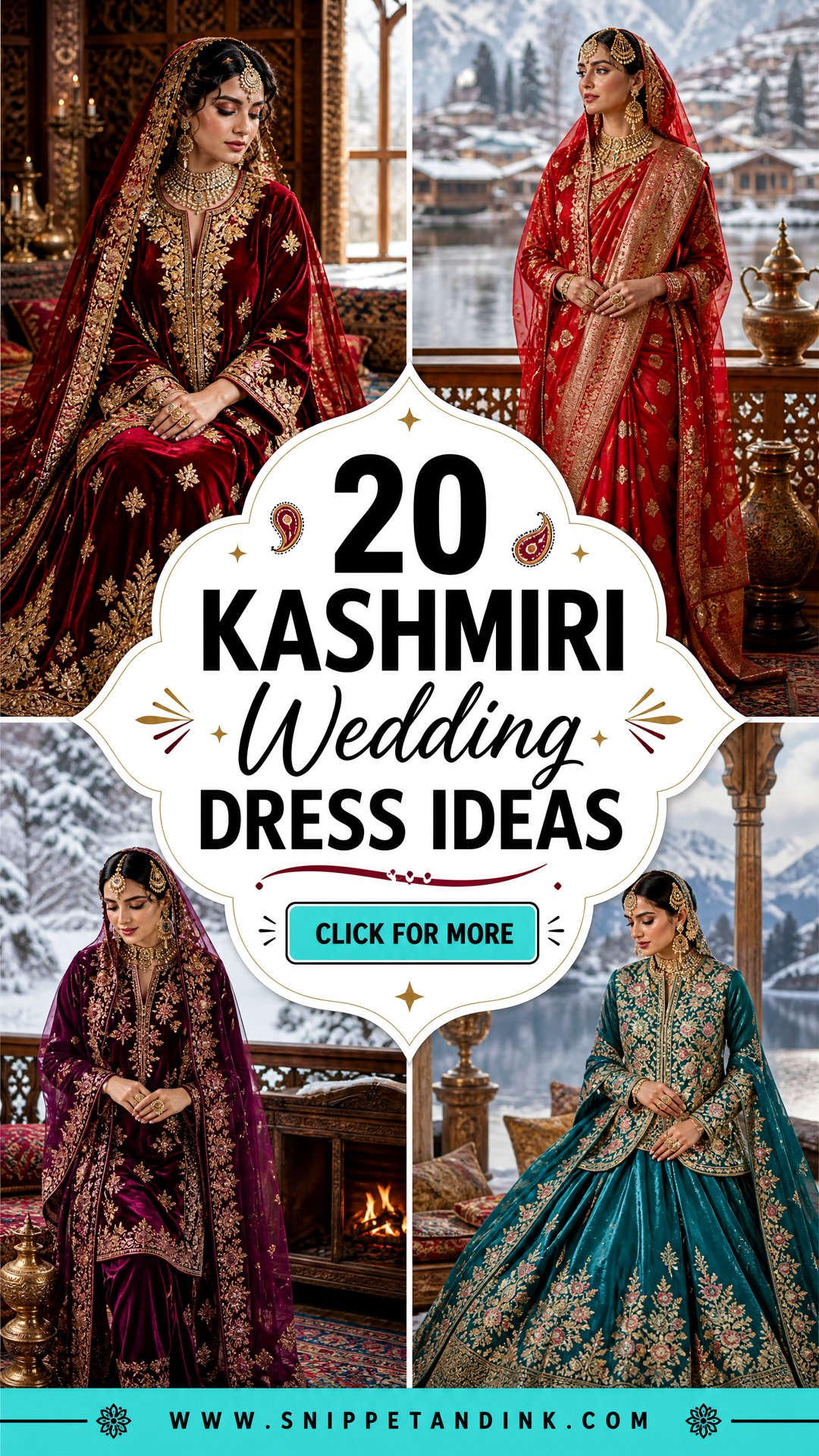
Tilla, Aari or Sozni? Reading the Embroidery Before You Pay
Kashmiri bridal clothes are priced mostly by their embroidery, and three techniques come up again and again. They look similar in a photograph and very different in the hand, so I always turn the garment inside out before anything else.
- Tilla: metallic gold or silver thread laid on the surface and held down with tiny stitches. Hand tilla shows only those small holding stitches on the reverse, not a mirror of the pattern. It is heavy, so dense tilla on a long pheran adds real weight at the hem.
- Aari: a chain stitch made with a hooked needle on a frame. It is quicker than other hand work and gives fine, continuous outlines. Good aari has even loops; loose loops catch on jewelry and bangles.
- Sozni: fine needlework in silk or wool thread, done slowly, often on pashmina shawls. It is light and soft, which makes it a good choice for the stole or shawl layer rather than the main garment.
Machine embroidery is not a sin, and plenty of guests and relatives wear it happily. Just know what you are paying for. Machine work has a perfectly uniform stitch length and a dense bobbin pattern on the back. Hand work shows small irregularities, and I take those as a good sign.
Ask how long the piece will take. Real hand tilla or sozni on a full bridal pheran is a matter of weeks to months, depending on density and the workshop’s queue, so order the wedding outfit first and the lighter functions later.
1. Red Velvet Kashmiri Bridal Pheran
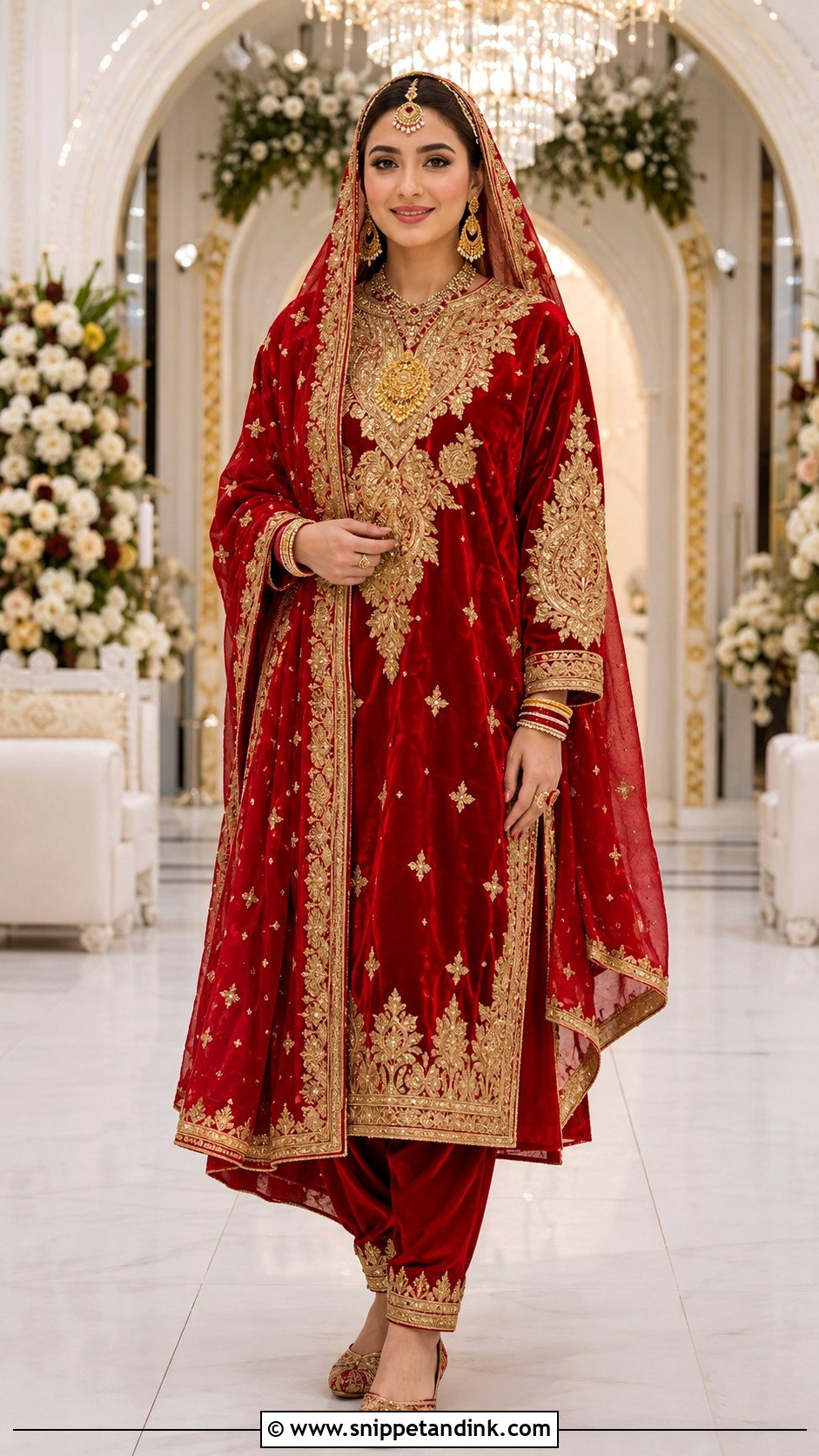
Velvet takes gold tilla better than almost any fabric, because the raised pile makes the metal thread sit up and catch light. I’d choose a long, structured red pheran with tilla at the neckline, cuffs, hem and side slits, over tapered red salwar so the pheran stays the focus. An embroidered dupatta gives coverage and a second layer. For a Pandit bride, the Taranga and Dejhoor complete it; the Taranga belongs to Kashmiri Pandit bridal attire and the Dejhoor marks a married woman, so ask the family who will arrange them. Gold bangles and juttis finish the look. Keep the makeup simple. The velvet and metal already carry it.
2. Red Kashmiri Bridal Saree With Taranga
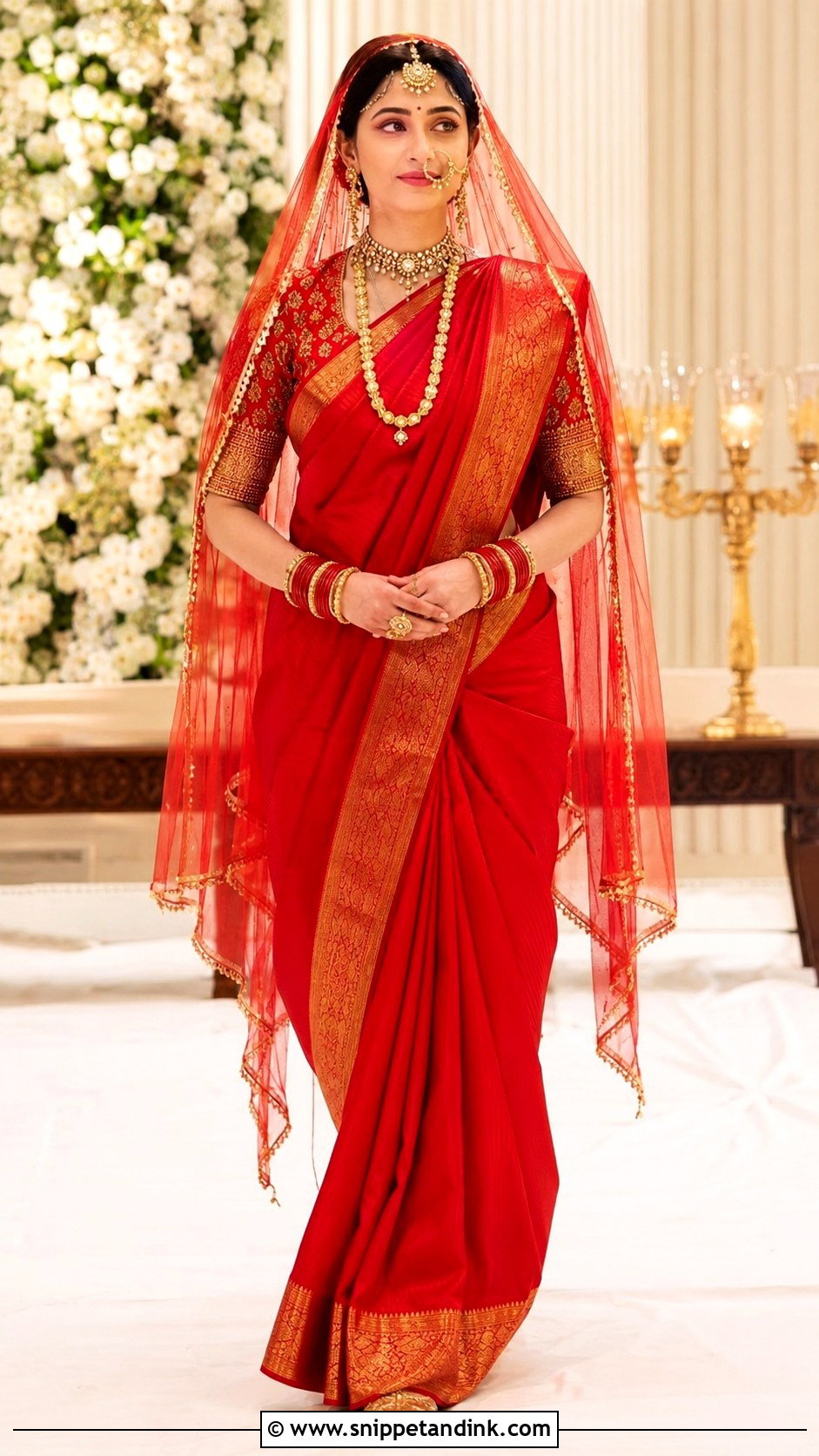
A full pheran with layers underneath can feel heavy by the third ritual, and a red silk saree with a broad gold border is the usual lighter route. Pick a drape that sits flat under the head covering; stiff, thick silk bunches at the crown. Pair it with a fitted elbow-sleeve blouse with restrained zari or tilla-style work. For a Pandit ceremony the Taranga goes over the head with a sheer red veil, plus Dejhoor, a layered gold necklace, bangles and anklets. Many contemporary Kashmiri brides wear the red saree in exactly this way. I pin the pleats, the shoulder and the veil as three separate jobs, so a tug on one never pulls the others loose.
3. Maroon Tilla Embroidered Kashmiri Pheran
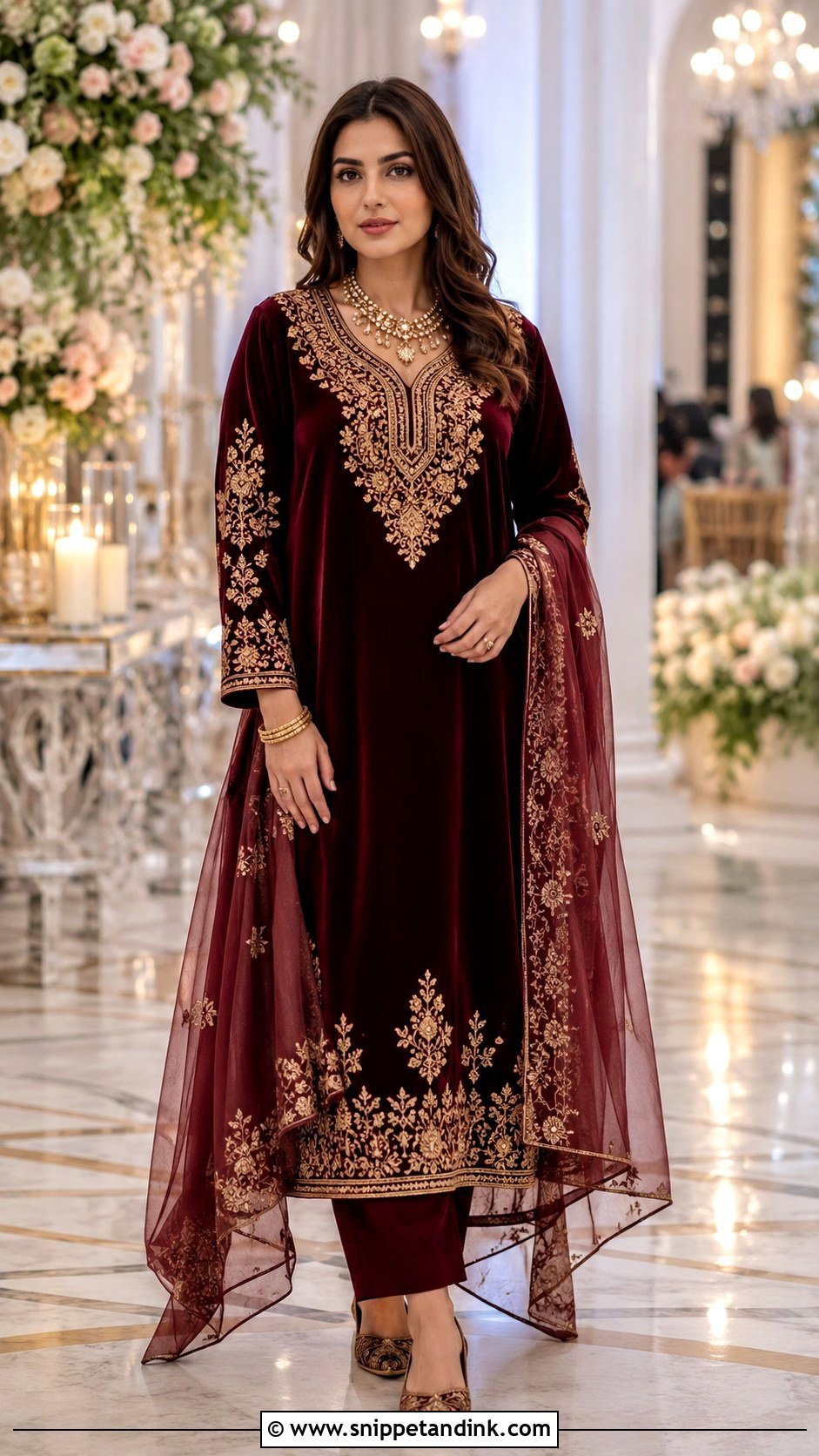
Maroon comes alive in evening light, and it is my first suggestion for a cold-weather celebration. Build around a floor-length velvet or silk-blend pheran with antique gold tilla. A vertical embroidered panel down the front lengthens the figure, which helps if you are petite and the pheran is cut loose. Straight maroon trousers and an organza dupatta edged in gold thread keep it light at the head. One statement necklace, stacked bangles and antique earrings are enough. Choose pointed embroidered flats or a low block heel. The same pheran with less embroidery suits a sister or a close relative just as well.
4. Ivory And Gold Kashmiri Bridal Pheran
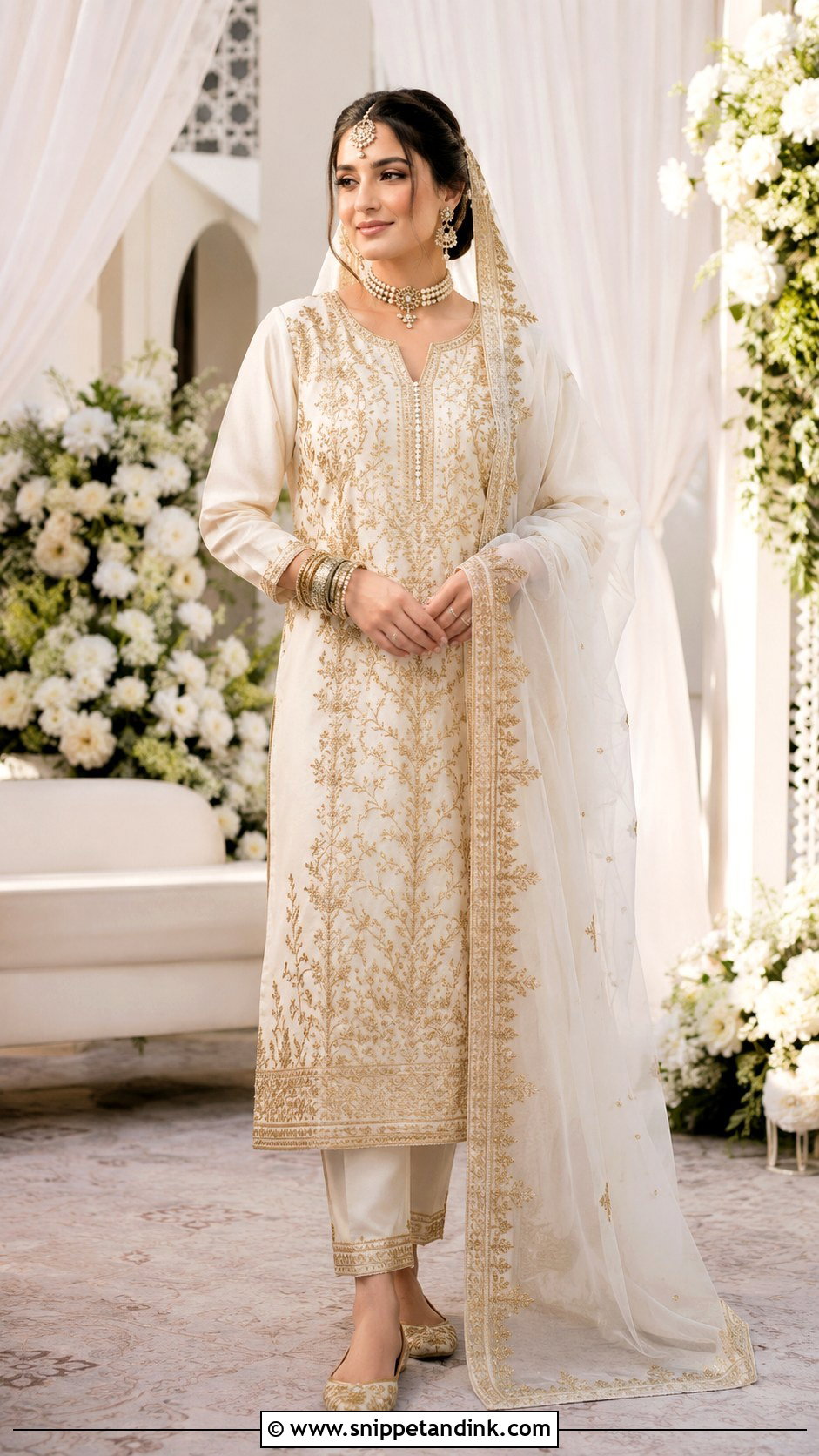
Ivory shows embroidery more clearly than any other base, so every stitch has to be good. I look for gold threadwork placed at the neckline, shoulders, sleeves and lower border, with fitted ivory pants for a column shape. A sheer gold-edged dupatta can go over the head or across one shoulder. Pearl and gold earrings, a fine necklace, metallic bangles and ivory juttis finish it, and a deep red or emerald dupatta border adds color if you want it. White carries different meanings across families and rituals, so check with your elders before you order. Daytime indoor light flatters it most.
5. Emerald Green Kashmiri Bridal Lehenga
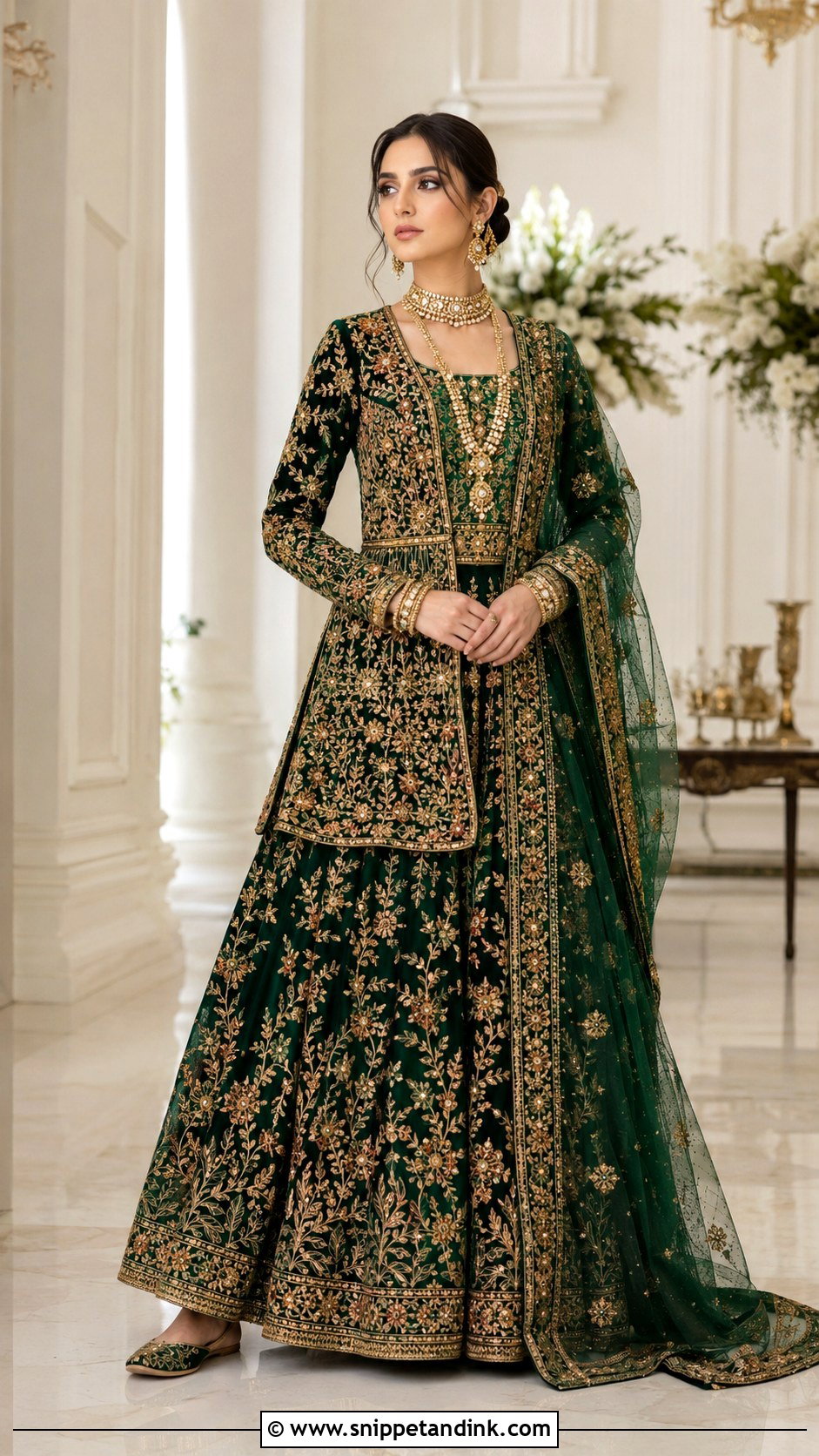
Crowded embroidery is the trap with a green lehenga. On a full silk skirt I’d rather see spaced aari motifs and a gold tilla border than a surface packed edge to edge, which adds weight and makes the skirt swing stiffly. A long-sleeve blouse and a short embroidered jacket add structure and some warmth. A sheer green or antique gold dupatta should frame the face and leave the blouse work visible. Pandit brides may add the Taranga and Dejhoor if it suits the ceremony. Hem the skirt in the actual shoes you will wear, and check that the waistband still feels fine after a meal.
6. Burgundy Kashmiri Lehenga With Taranga
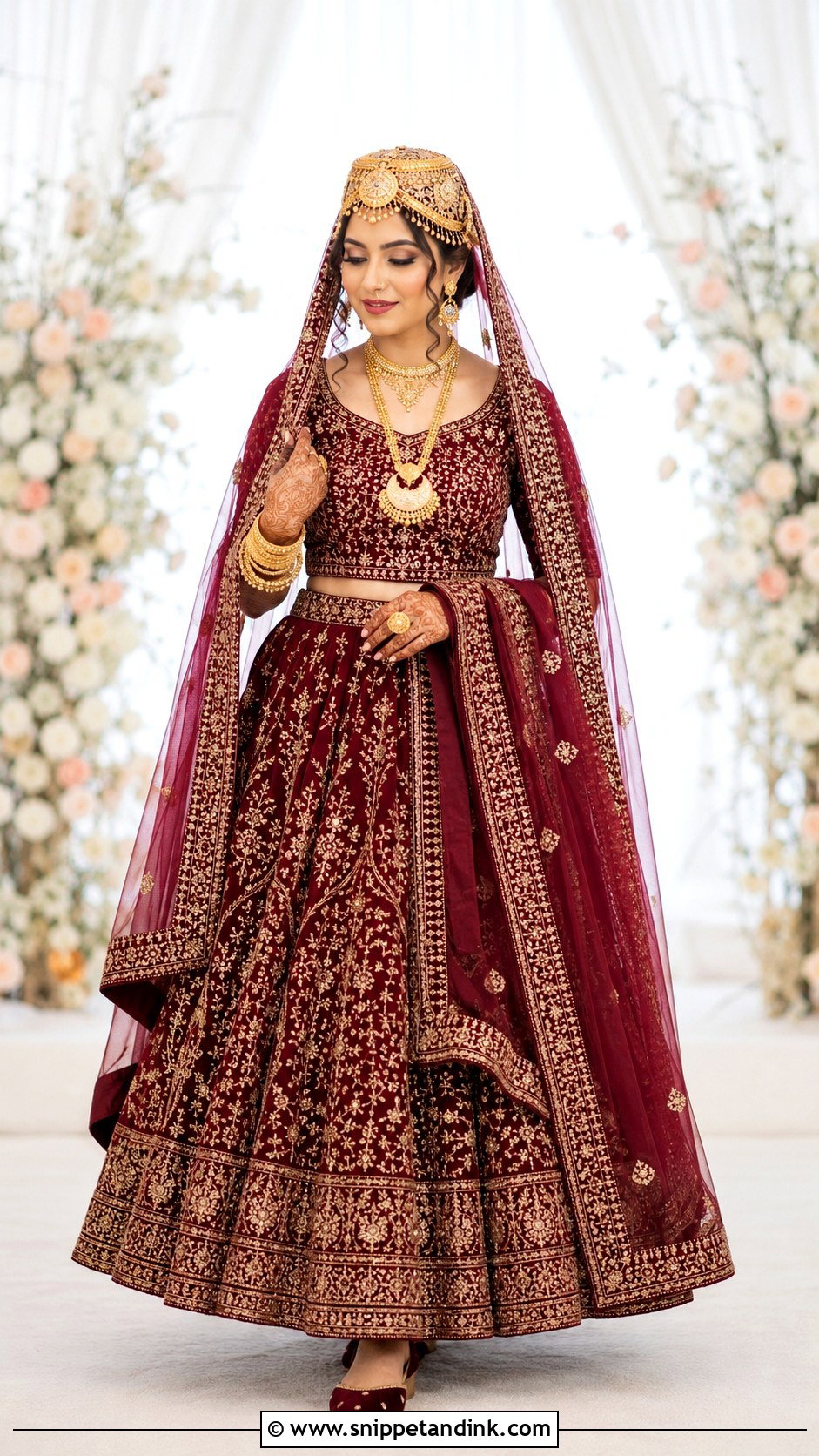
Burgundy is red that has calmed down, and it suits brides who find bright red harsh against their skin. Choose a moderately flared skirt with gold vines, paisley or chinar leaf motifs. The chinar is a very Kashmiri detail and reads well from a distance. A structured blouse with elbow sleeves and a higher neck balances the skirt. For a Pandit look, add a properly arranged Taranga, a light veil matched to the border, Dejhoor, a layered necklace and bangles. Burgundy velvet juttis stay hidden under the hem. Heritage pieces like these are best put on by someone in the family who has done it before; I’d rather defer to them than guess.
7. Red Kashmiri Bridal Pheran With Kasaba
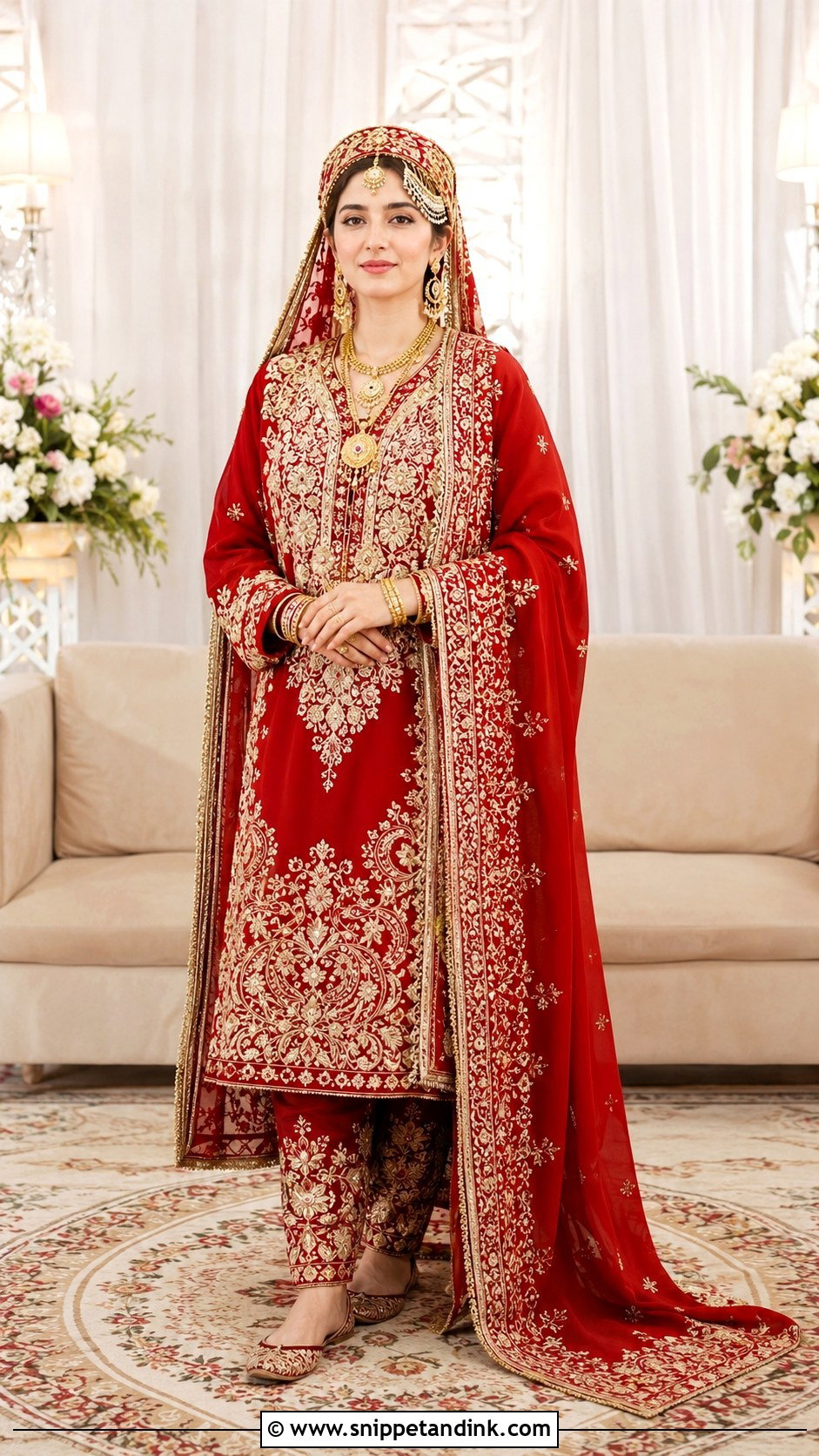
For a Kashmiri Muslim bride, rich red is the classic base. An ankle-length pheran in silk, velvet or brocade, with gold work at the neck and front panel, sits over narrow trousers with a long matching dupatta. The Kasaba is the defining headwear here, and it is a different piece from the Pandit Taranga, so don’t let anyone mix the two. Arrange it the way the bride’s own family does. Layered gold jewelry, ornate earrings, bangles and closed embroidered shoes complete it. I keep embellishment around the head light, because a heavily worked dupatta on top of the Kasaba pulls it backward within an hour.
8. Deep Green Kashmiri Gharara Outfit
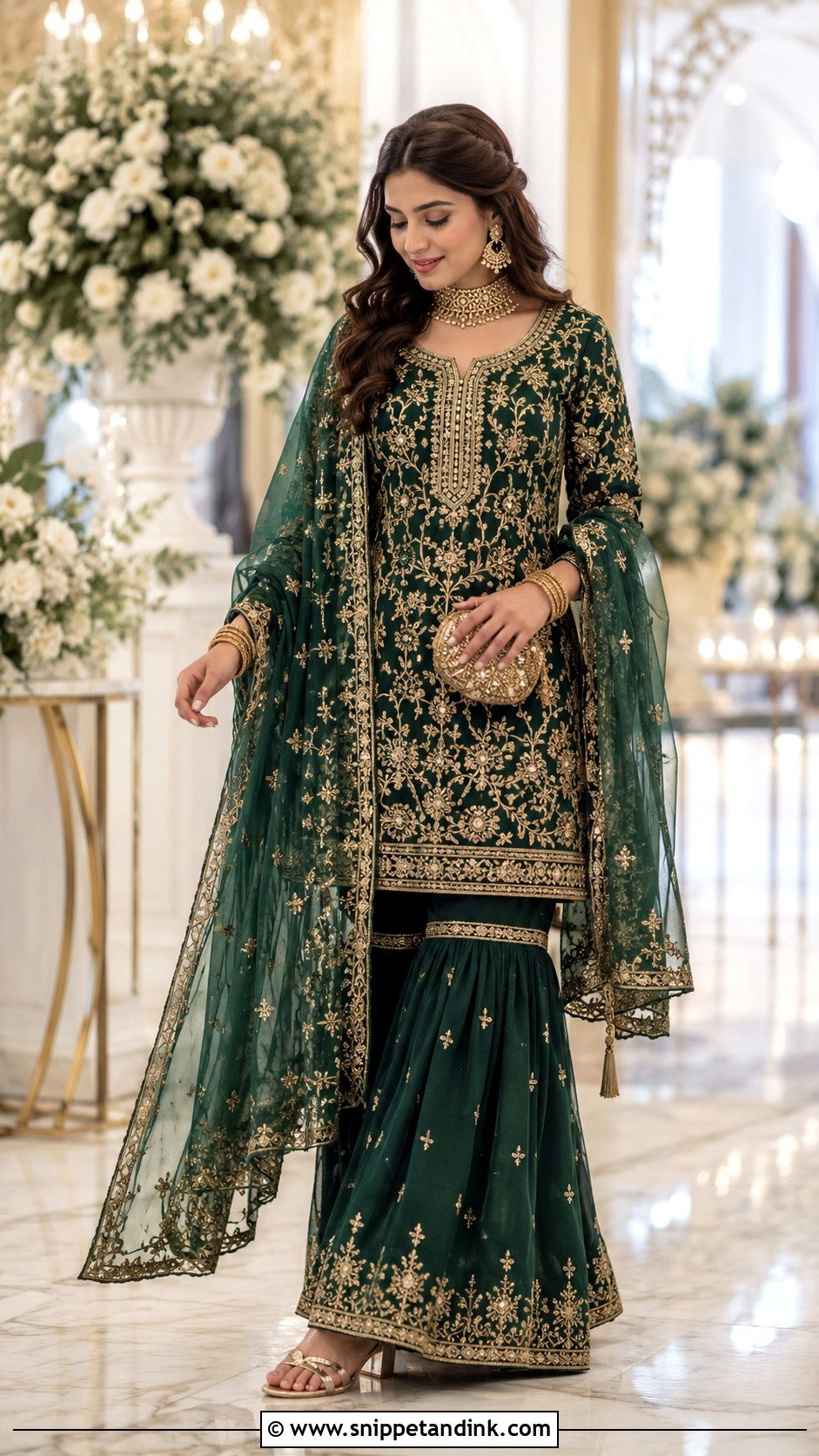
A deep green gharara is all about the swing below the knee, which makes it a natural choice for a nikah, engagement or formal family dinner. The wide flared pants go under a knee-length kurta with gold aari at the neck, sleeves and hem. Check the fitted section above the knee by sitting and climbing a step; too tight and the flare cannot open as you walk. An organza dupatta with a decorative border goes over the head or both shoulders. Gold earrings, a delicate choker, bangles, low block heels and a small clutch finish it. Pearls soften green and antique gold if the combination feels heavy. Keep the kurta embroidery symmetrical.
9. Pink Aari Embroidered Kashmiri Anarkali
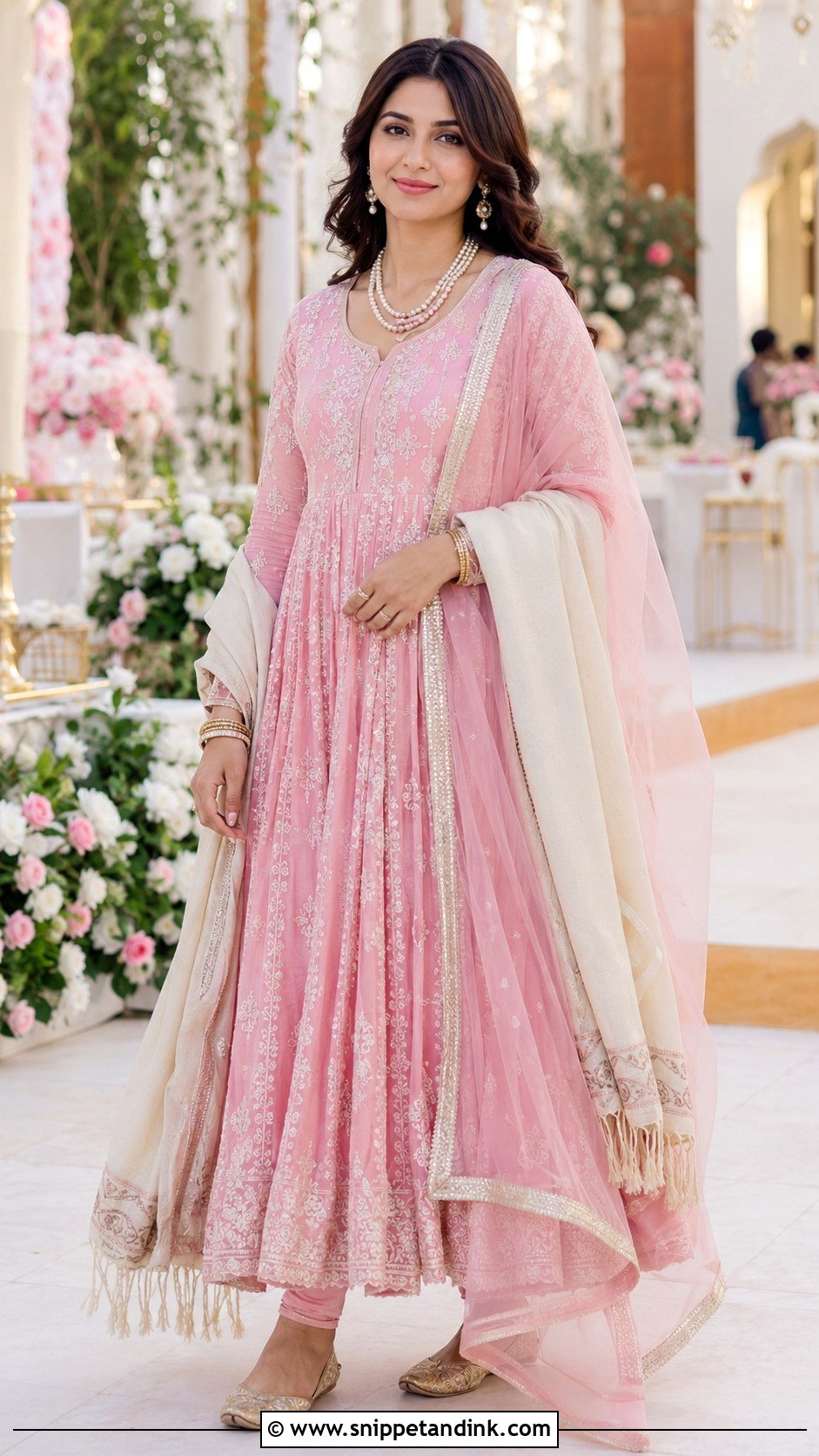
Pink in an anarkali gives presence without severity. The fit points I check are the bodice, a waist that sits at your natural waist, and a flare you can manage on stairs. Aari work around the neckline, cuffs and skirt border adds texture without much weight. Fitted churidar and a sheer dupatta with narrow metallic trim go with it, plus pearl earrings, a fine necklace, slim bangles and pale gold juttis. A bride can go deeper rose with heavier embroidery; bridesmaids look right in dusty pink. In cooler months a pashmina stole over the shoulders keeps you warm without hiding the bodice. A braided bun and fresh skin suit daytime photographs.
10. Saffron Yellow Kashmiri Mehndi Pheran
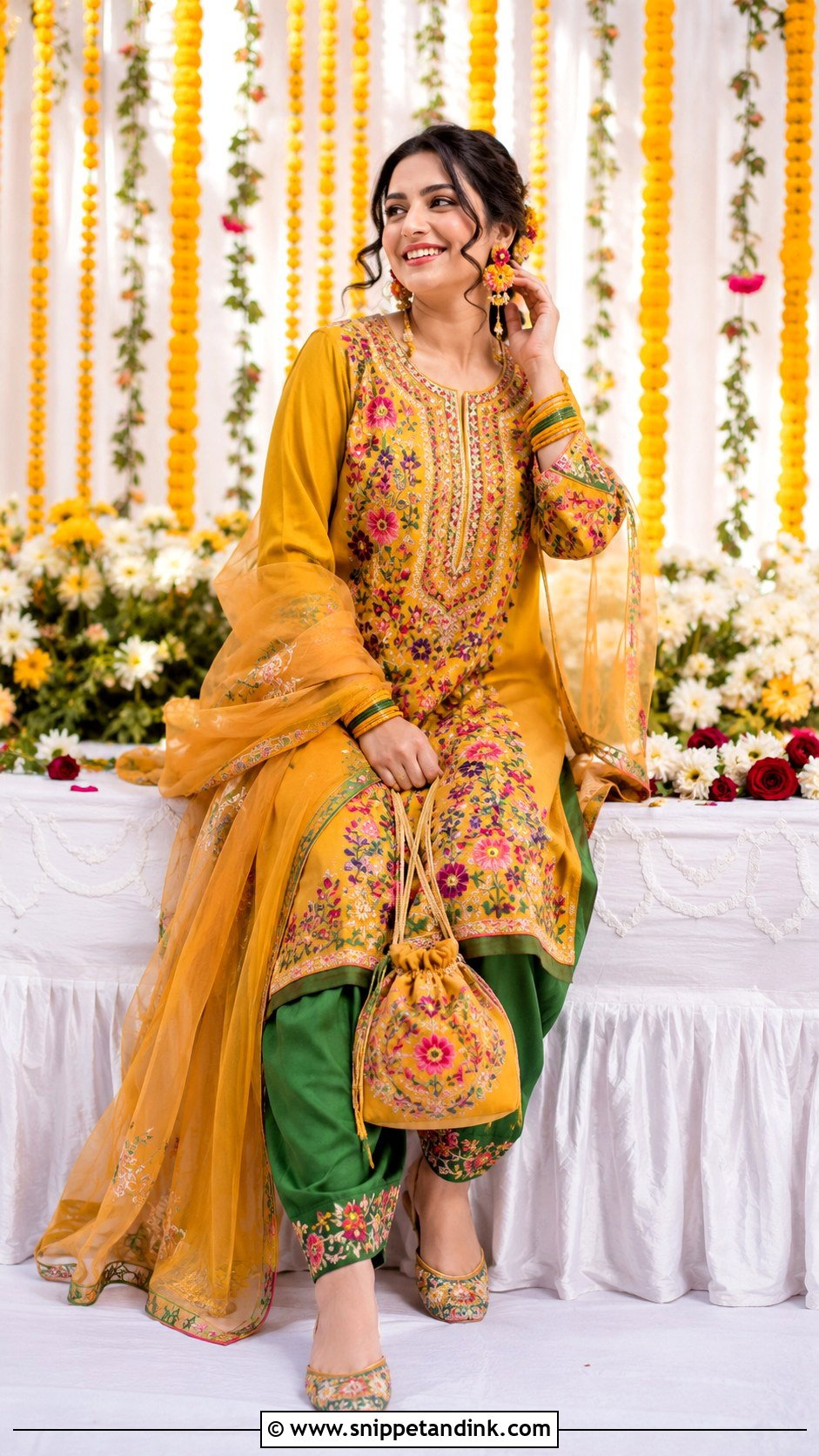
Saffron belongs to the mehndi. I’d choose a light cotton-silk pheran with green, pink and gold florals, over straight yellow pants or contrasting green salwar for easier movement. Keep the sleeve embroidery away from the wrist, because metallic work at the cuff smears wet henna and snags on the cone. An organza dupatta loose over one shoulder leaves both hands free. Floral earrings, light bangles to put on after the henna dries, an embroidered potli and flat juttis complete it. A bride can wear a slim gold headpiece; guests should keep accessories simpler. You will sit, dance and greet relatives for hours, so comfort wins every choice here.
11. Pastel Blue Kashmiri Nikah Pheran
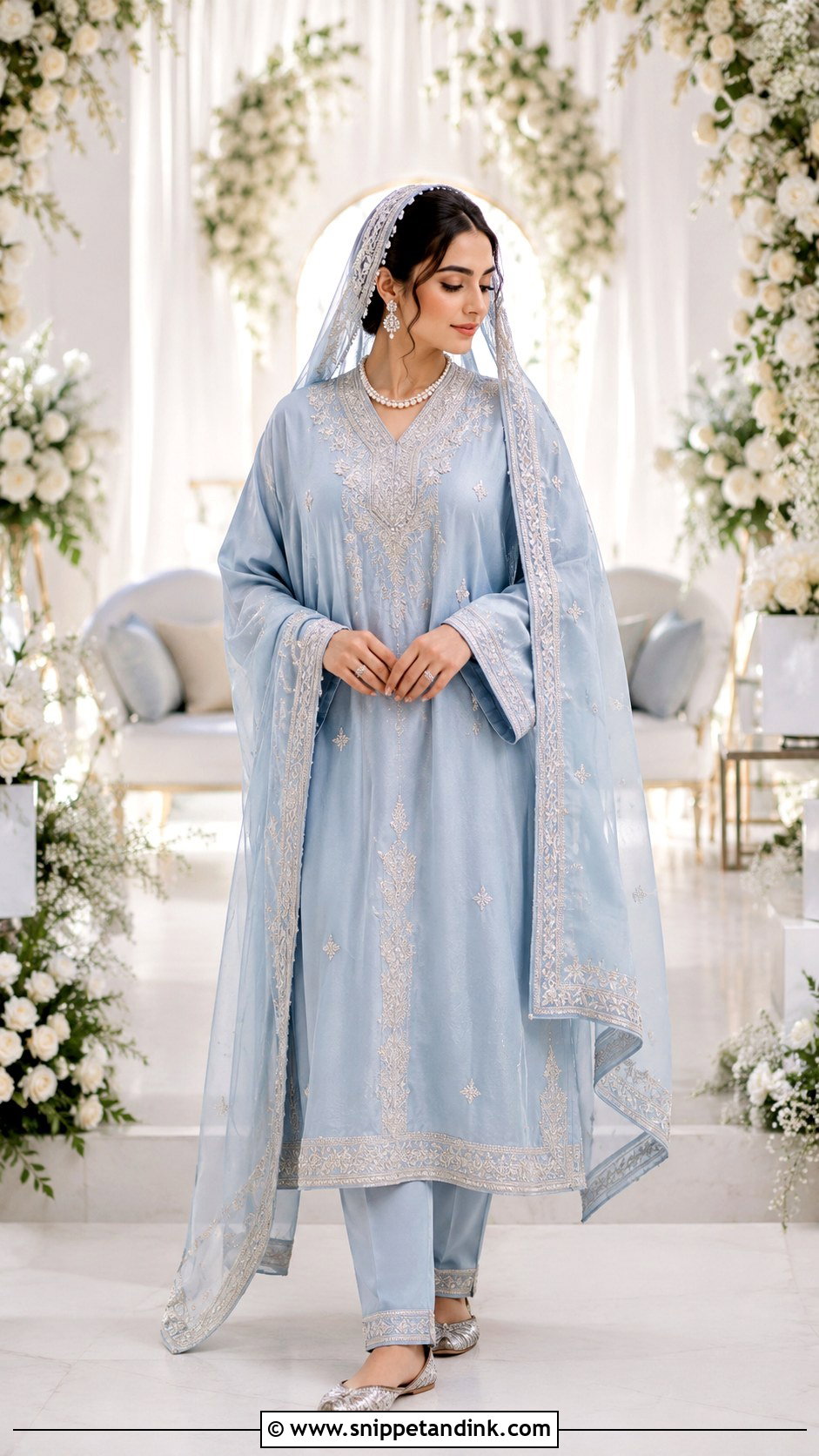
Pastel blue is calm and formal for a daytime nikah. A flowing silk-blend pheran with silver tilla-style work at the neck, cuffs and hem goes over straight matching trousers, with a sheer blue dupatta for head and shoulder coverage. Pearls in a layered necklace, drop earrings or a small head ornament suit it, and silver juttis keep the color continuous. The pheran should skim the body. If it looks shapeless, I ask the tailor to refine the shoulder seam rather than take in the waist, since a narrowed waist breaks the traditional line. Finish with cool eye makeup and a soft pink lip.
12. Dusty Rose Kashmiri Sharara Outfit
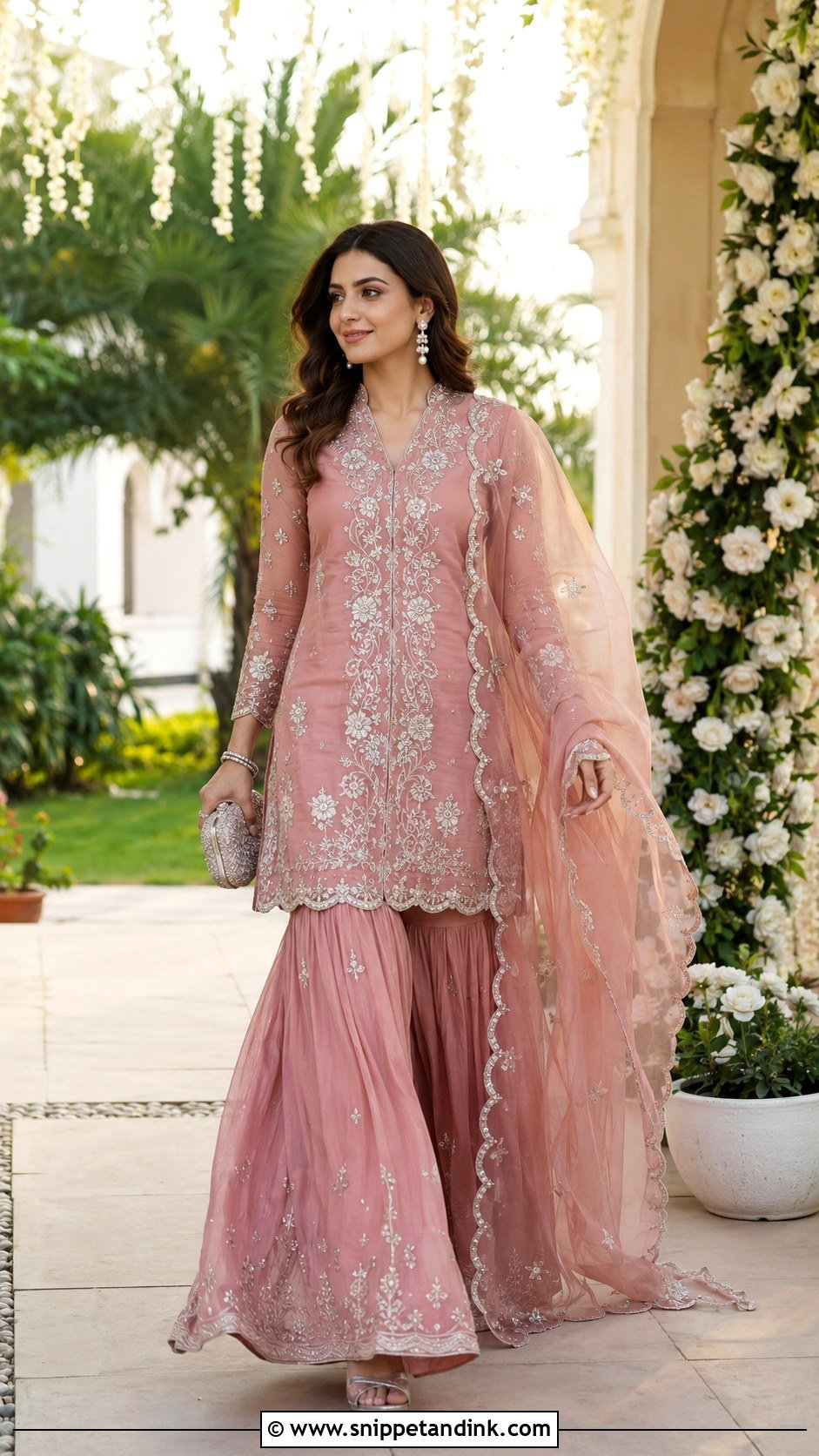
Dusty rose in a garden venue is hard to beat. A flared sharara with a hip-length kurta suits an engagement, mehndi or reception, with fine silver embroidery and a worked hem that shows off the flare. A fitted sleeve keeps the top half neat. Match the dupatta, finished with scallops or narrow tilla. Pearl earrings, slim bracelets, a clutch and silver block heels complete it. Keep heels moderate: a sharara hem catches a stiletto on grass or stairs. Dusty rose suits many skin tones, and it can lean mauve, blush or berry with the season.
13. Plum Velvet Kashmiri Winter Wedding Suit
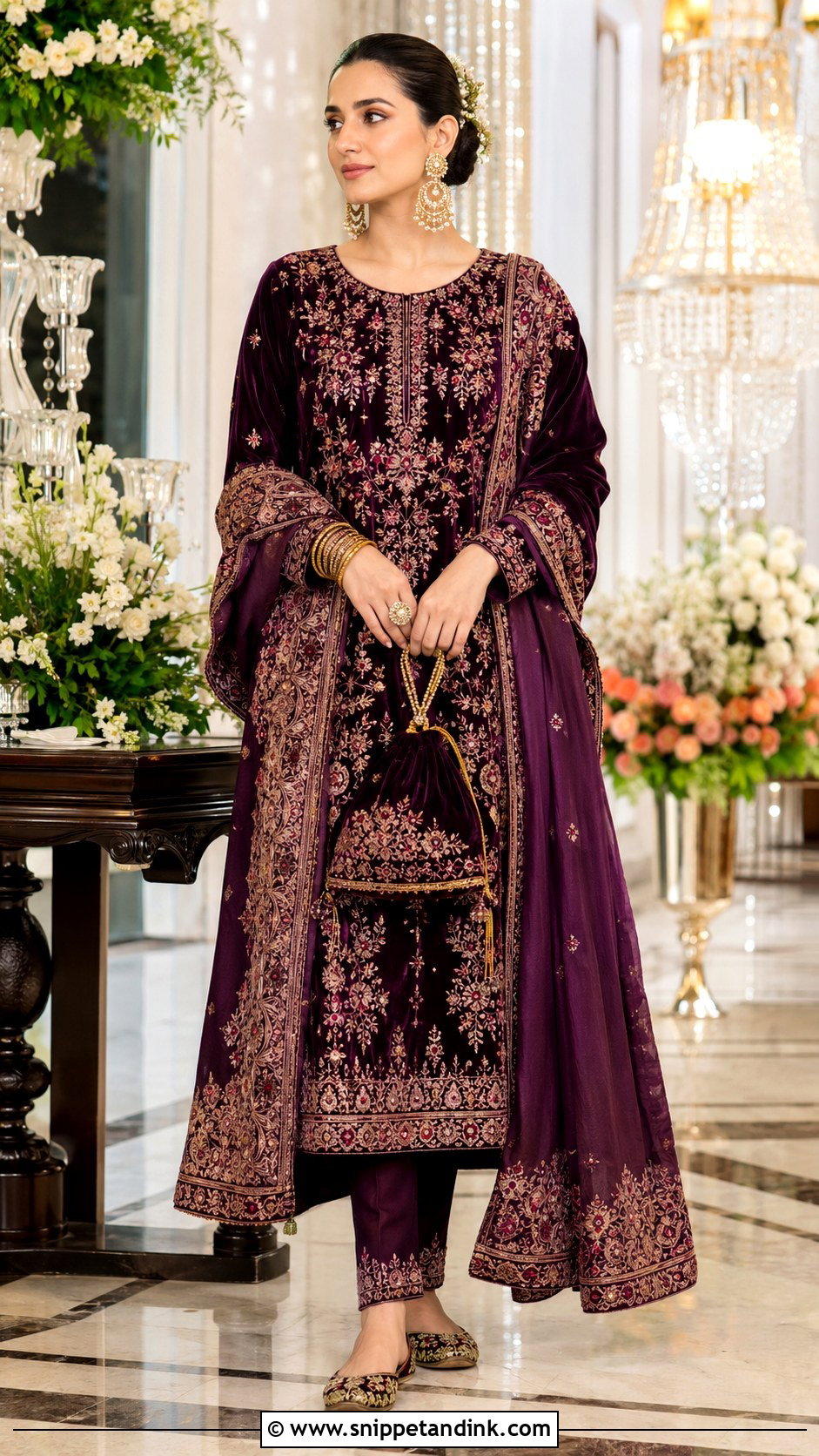
When the evenings turn cold, plum velvet keeps you warm and still looks ceremonial. A long straight kurta with Kashmiri-style work at the neck, cuffs and side slits pairs best with fitted silk trousers; velvet on velvet looks heavy. A pashmina shawl can replace the dupatta, or layer over it for outdoor photographs, as long as its border sits beside the kurta’s embroidery and not on top of it. Antique gold earrings, a statement ring, stacked bangles, closed juttis and a velvet potli keep it consistent. Plum pairs well with muted gold, copper and soft rose. It works for the bride’s family, formal guests, or the bride at a smaller pre-wedding function.
14. Navy Blue Pashmina Kashmiri Pheran
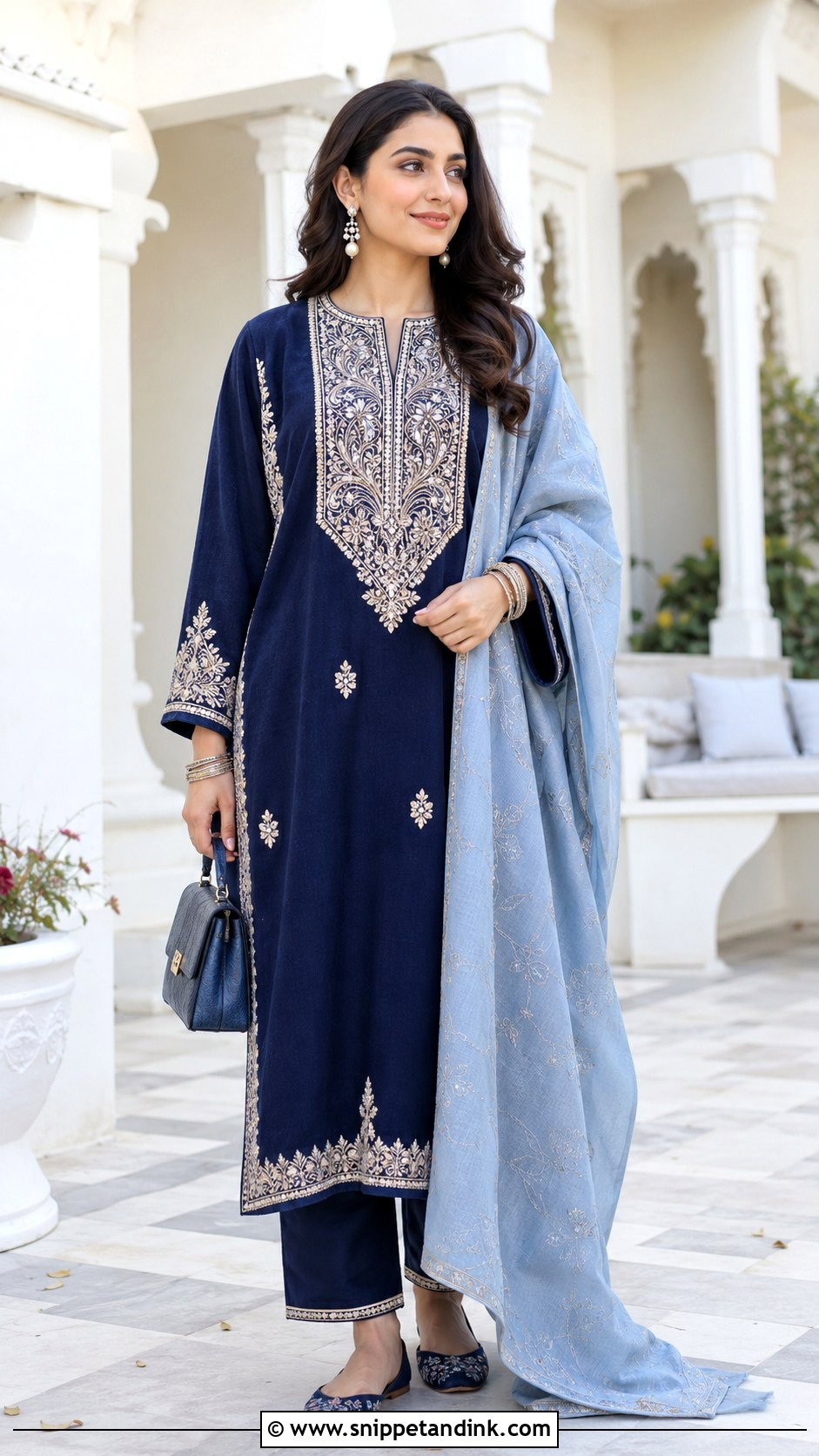
Navy makes needlework look crisp, especially cream or pale gold embroidery on pashmina or a wool blend. A lighter blue dupatta stops the whole outfit from going too dark in photographs. Straight navy pants, pearl drops, a slim metallic necklace, silver bangles, navy flats and a small structured bag finish it. For an outdoor winter gathering it is the practical pick, since the cloth gives real coverage. Fit the shoulders properly and skip bulky thermals underneath; a thin silk layer warms you without changing the drape. Guests can wear minimal embroidery, while close relatives can choose a denser neckline.
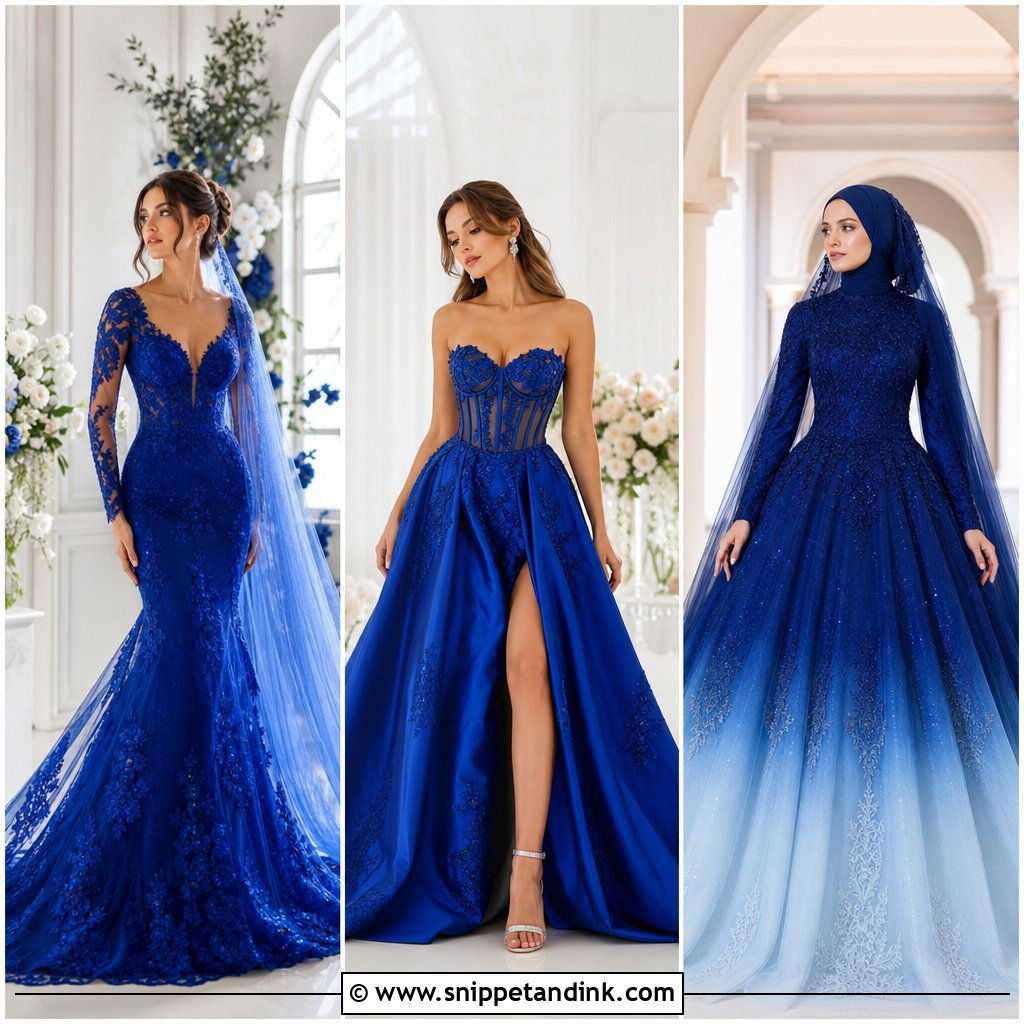
15. Peach Tilla Embroidered Kashmiri Lehenga
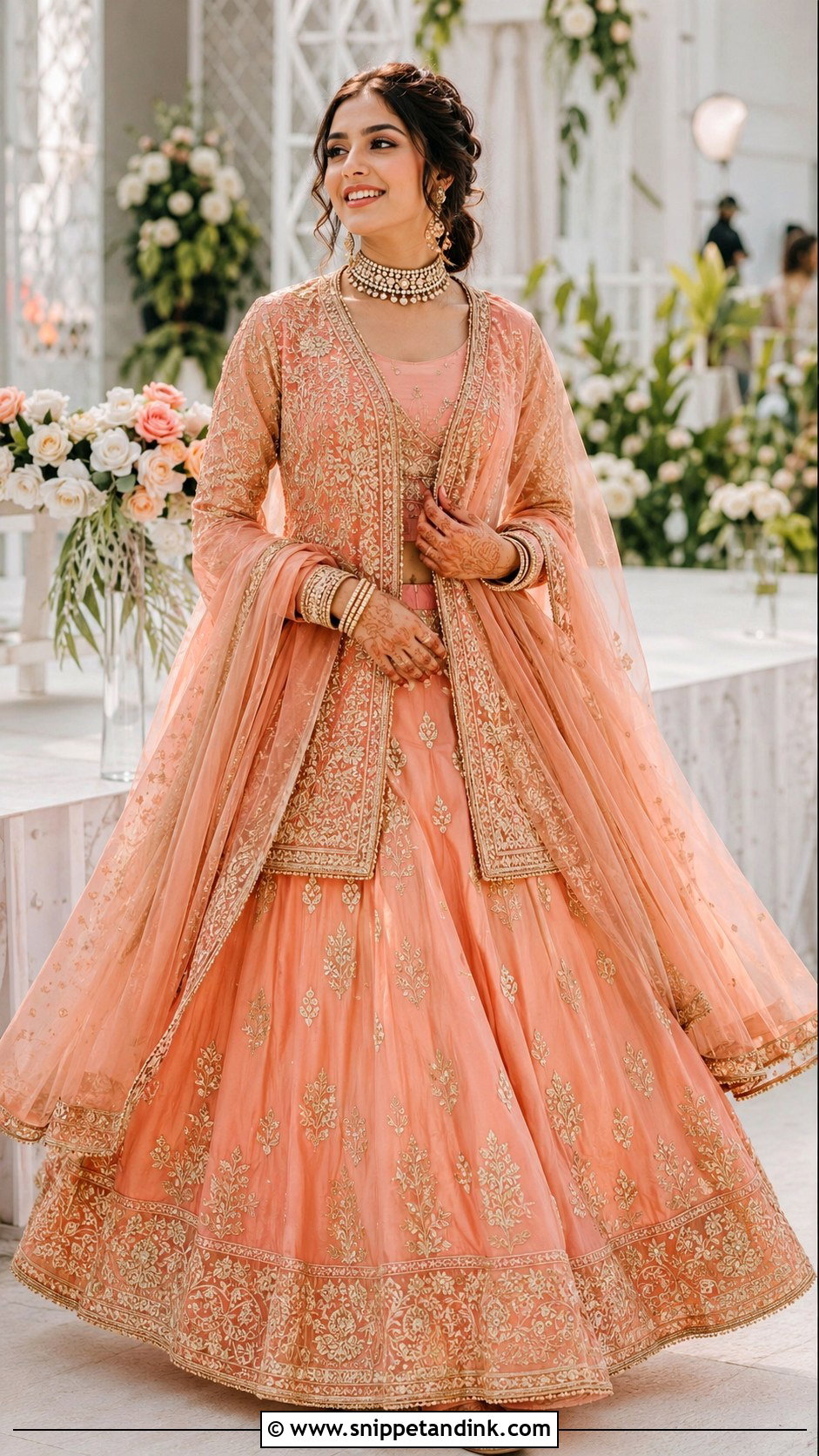
Peach is the color I test in daylight before anything is cut. Warm peach, coral peach and pink peach each look completely different against the face, and the wrong one can make you look tired. Choose a flowing lehenga with spaced tilla-style motifs, a fitted blouse and a waist-length embroidered jacket, which adds structure and some warmth for cooler days. A sheer peach dupatta with a narrow gold border finishes the layers. Pearl and gold earrings, a fine choker, slim bangles and metallic juttis suit it. Brides can add a second veil for ceremony portraits; guests keep it lighter.
16. Lavender Kashmiri Reception Gown
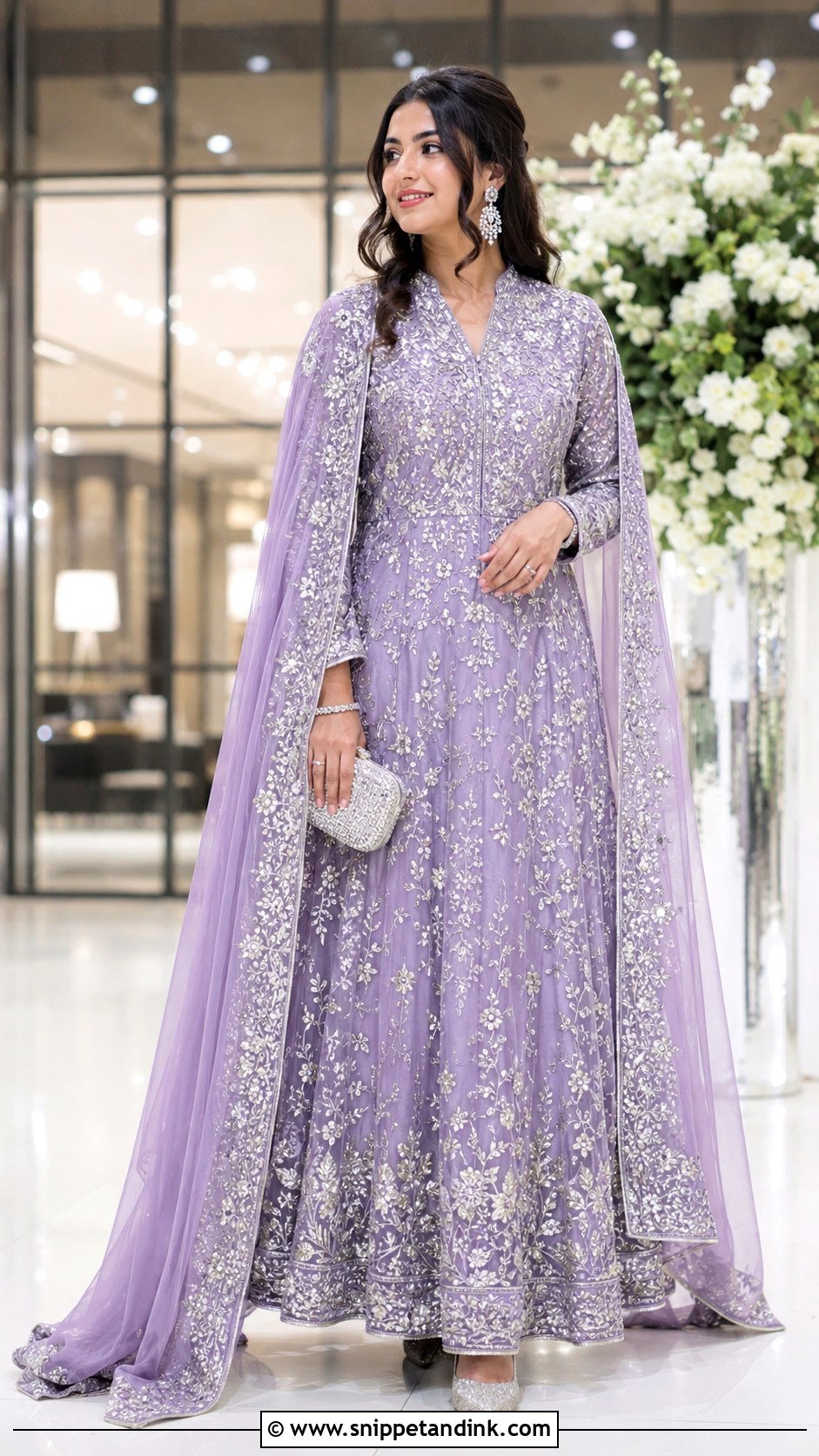
A lavender gown is the modern option, and I only recommend it for the reception, after the heavier traditional outfits are done. Pick a full-length A-line with a defined waist, long sleeves and Kashmiri-style embroidery on the bodice and cuffs; scattered silver motifs on the skirt give depth without overwhelming the pale color. An embroidered cape or a draped dupatta adds ceremony. Crystal earrings, a delicate bracelet, a silver clutch and closed-toe heels complete it. If you want to bring in an heirloom Kashmiri piece, follow your family’s custom for wearing it. A sleek hairstyle keeps the neckline visible, and the color reads well under bright indoor light.
17. Red Banarasi Saree With Dejhoor
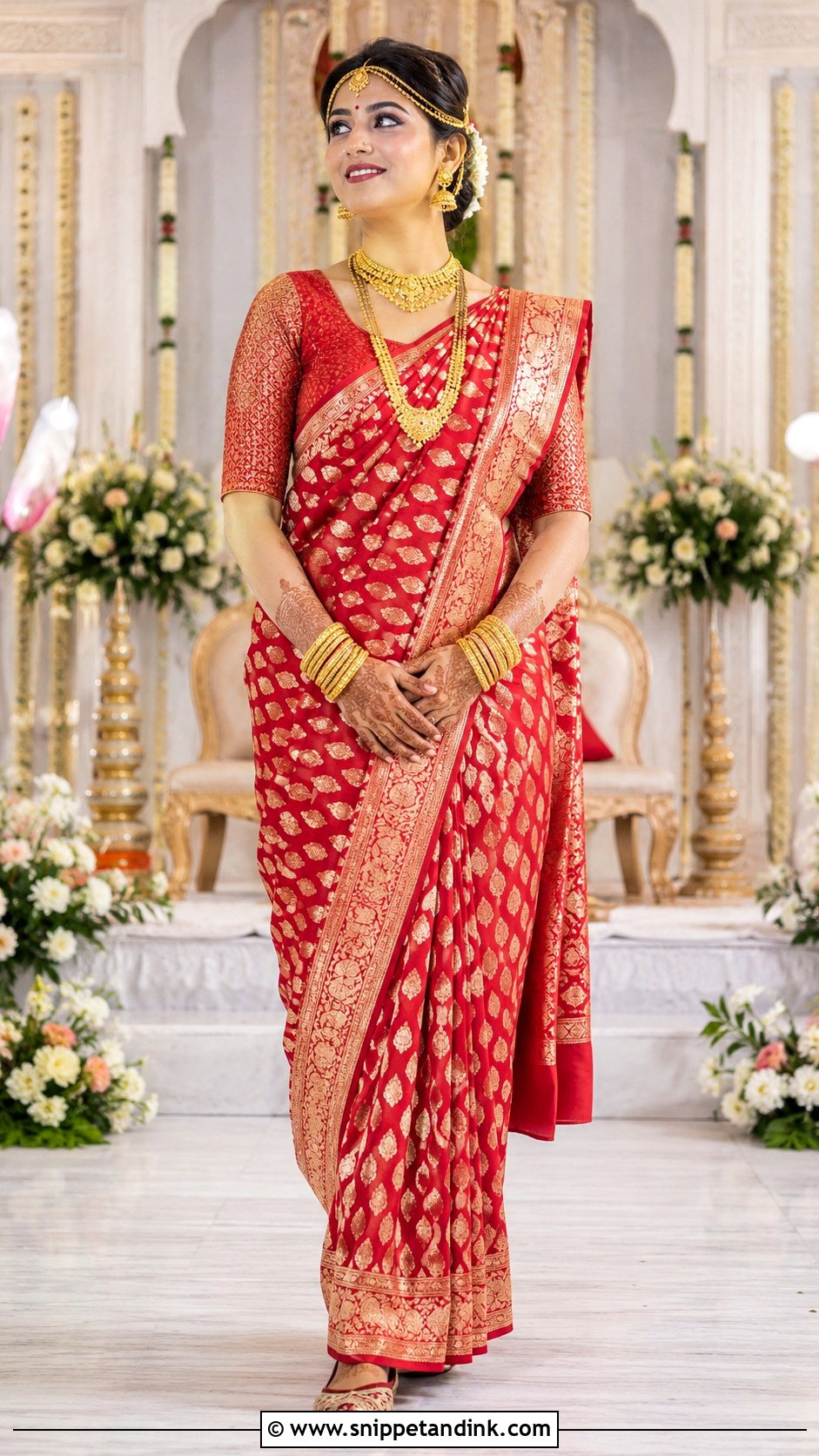
Red Banarasi silk has a glow that suits a bride who wants the classic look in saree form. I choose fine gold motifs and a border substantial enough to frame the drape but not so stiff that pleating becomes a fight. A fitted red blouse with elbow sleeves and a modest neck supports the jewelry. For a Pandit bride, the Dejhoor is the heritage centerpiece, with the Taranga when the ceremony calls for it. Add a layered necklace, bangles, anklets and juttis or low heels. Secure the shoulder pleats and the head covering separately; if they share pins, every turn of the head drags the pallu. Finish with a neat bun, defined eyes and a classic red lip.
18. Rust Orange Kashmiri Salwar Kameez
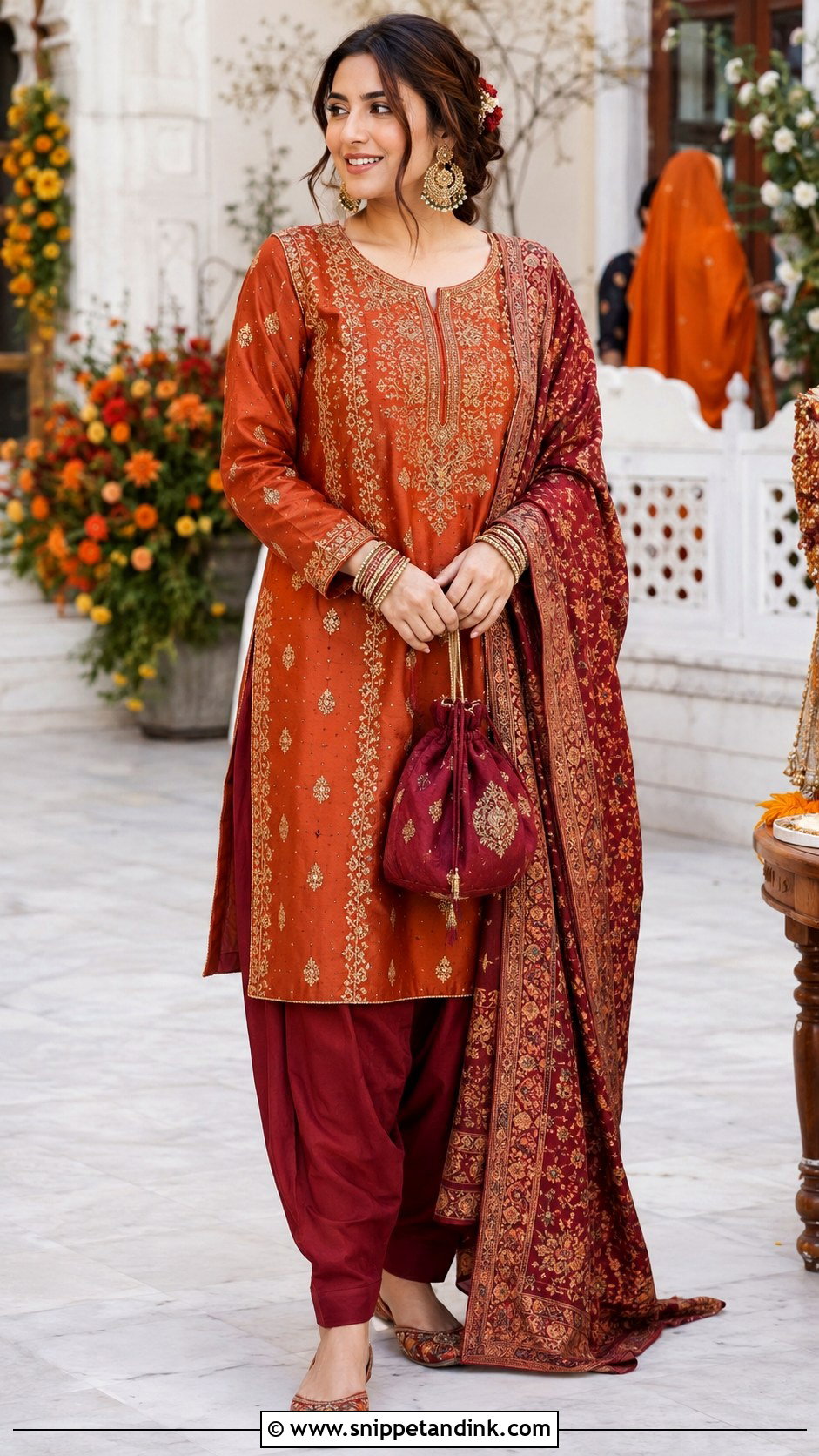
Rust orange is my favorite guest color for an autumn wedding, and it suits sisters and cousins as well. A knee-length silk kameez with worked neckline and hem goes over a softly gathered salwar in rust or a deeper maroon. The salwar lets you sit and walk for hours; the structured kameez keeps it formal. A Kashmiri-style printed or embroidered shawl adds warmth for evening. If that shawl carries several colors, I repeat just one of them in the accessories, so antique gold earrings, layered bangles, a maroon potli and rust juttis, and stop there.
19. Teal Kashmiri Jacket Lehenga
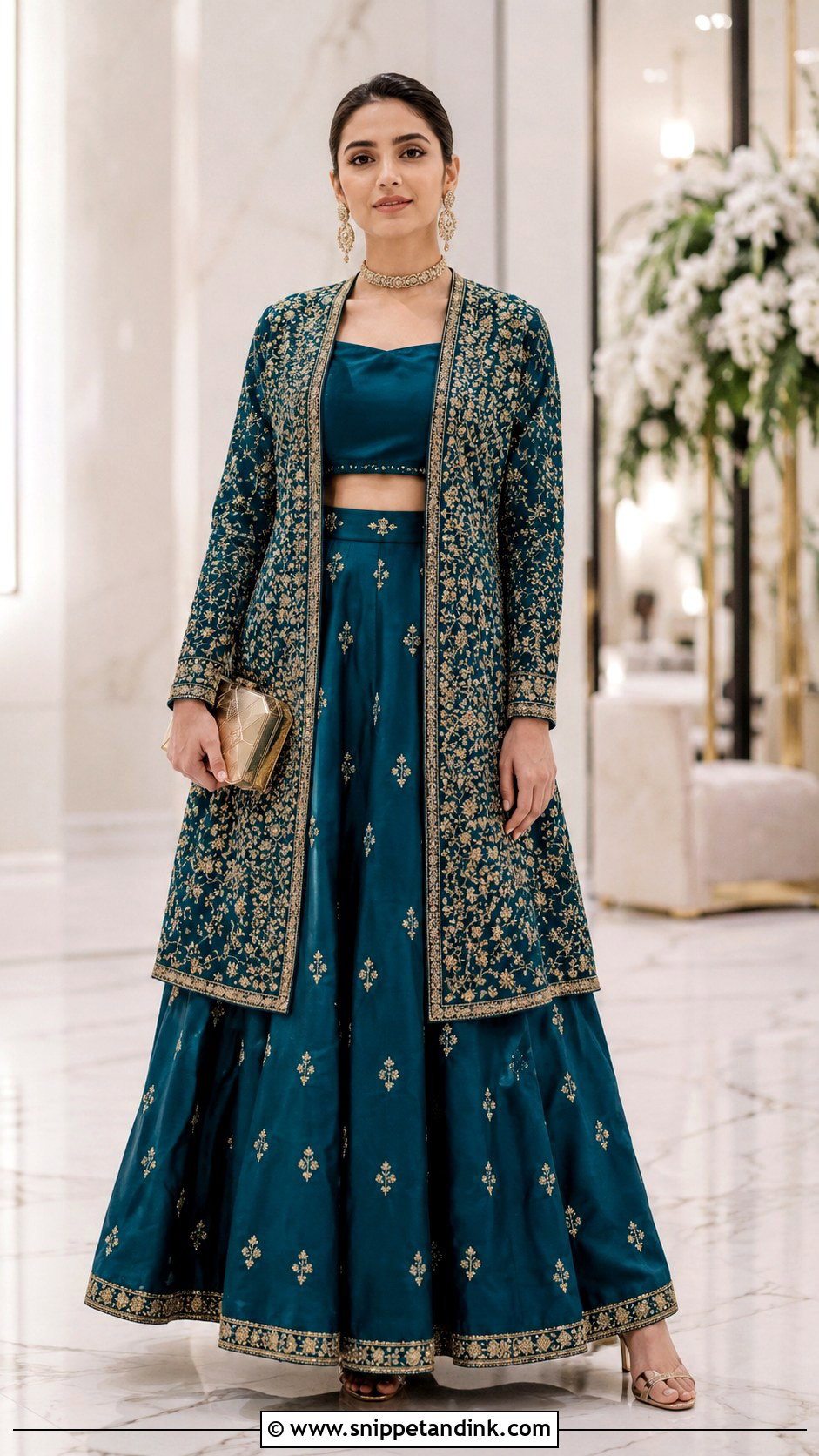
A teal jacket over a matching lehenga and blouse suits a reception or engagement where modern tailoring is welcome. Keep the skirt a fluid A-line and let the jacket fall between the waist and upper thigh; longer than that and it cuts your height in half. Kashmiri floral embroidery belongs along the jacket opening, cuffs and skirt border, with a plain fitted blouse underneath so three worked pieces don’t fight. A dupatta is optional unless the family dress code expects one. Gold drops, a slim choker, a structured clutch and low metallic heels finish it. Wear the jacket open to keep a long vertical line through the center.


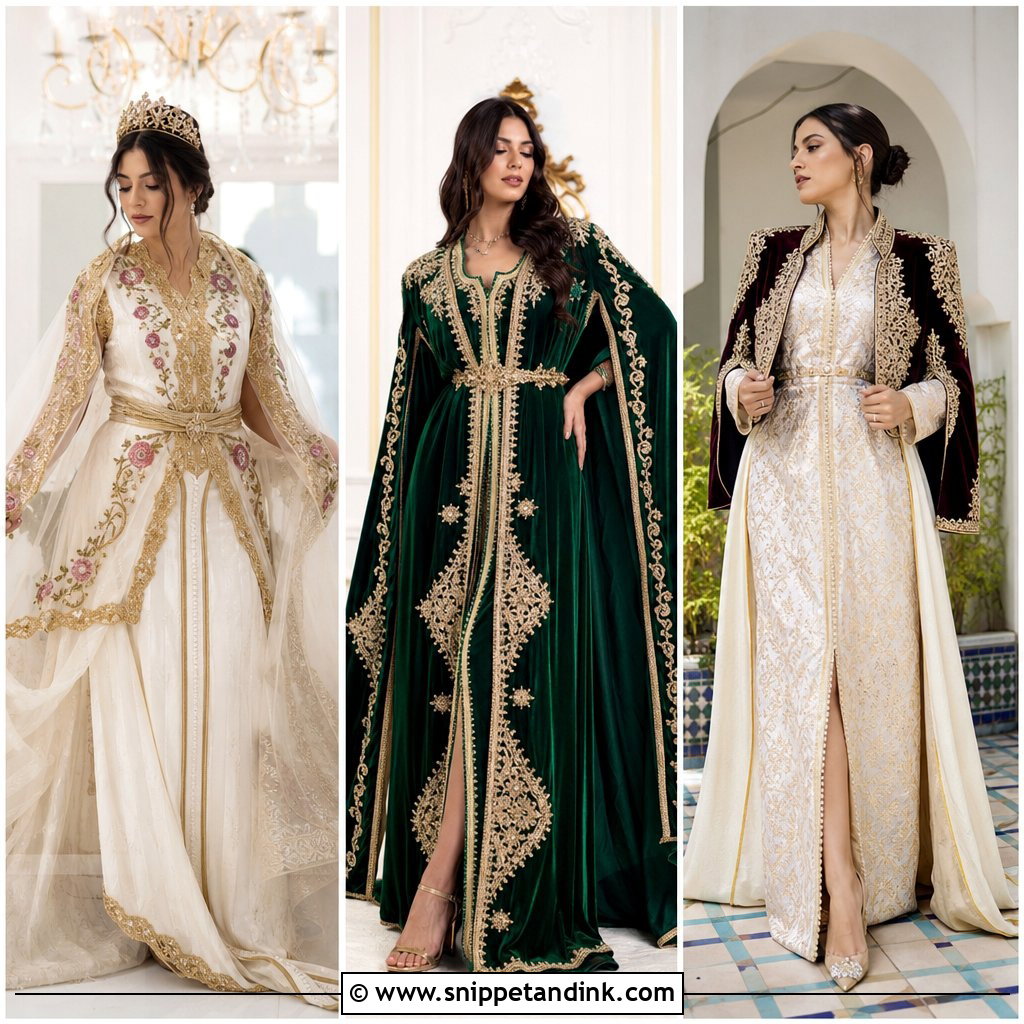

20. White And Gold Post-Wedding Pheran
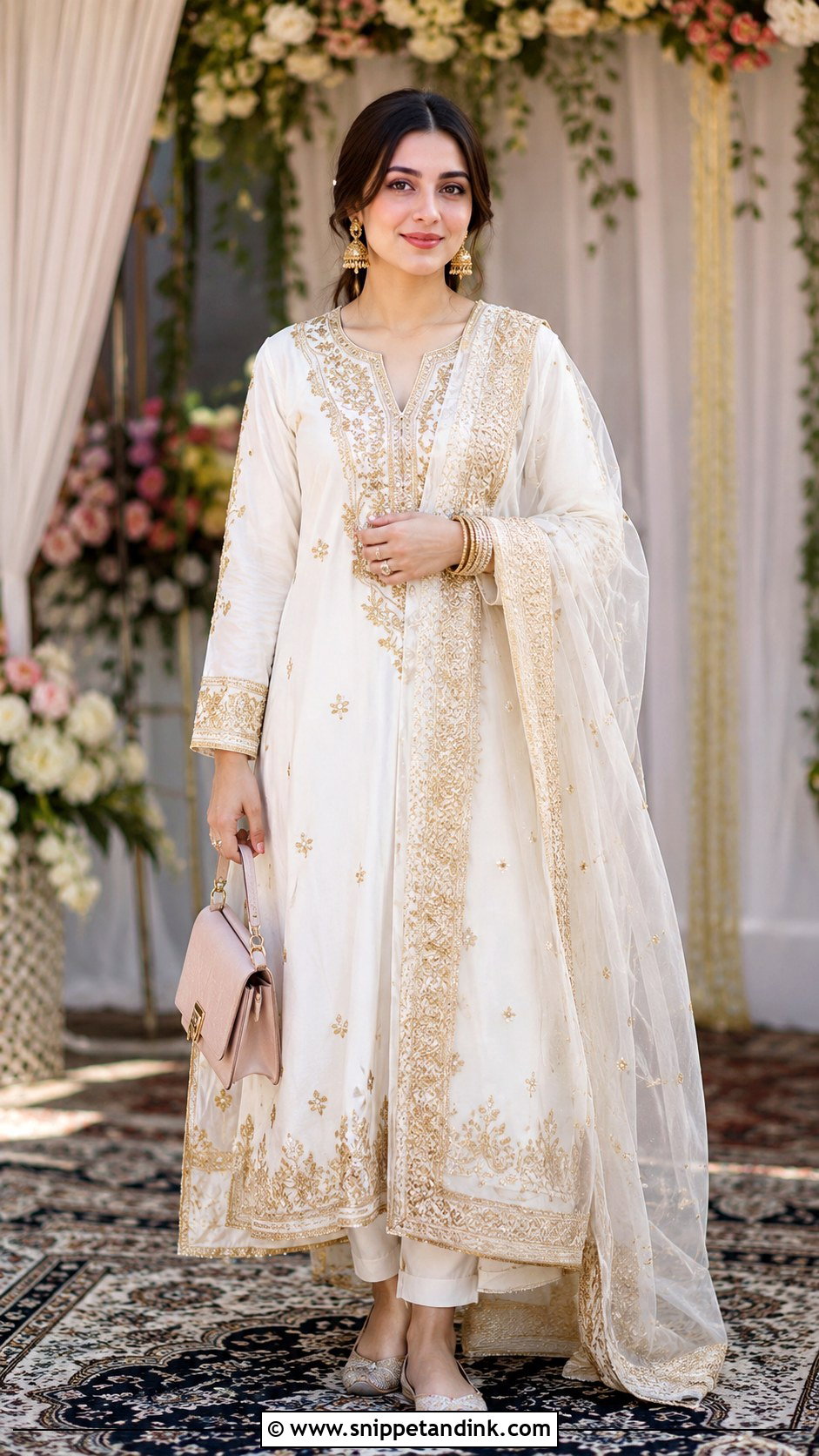
A white and gold pheran suits a post-wedding gathering or family meal, if white is acceptable in your family for that occasion. Choose ankle-length silk with fine gold work at the neck, cuffs and hem, over ivory trousers, with a sheer dupatta bordered to match. Bring in color through pale pink, sage or soft red in the jewelry and bag. Gold earrings, slim bangles and ivory juttis complete it. A bride can wear her community’s marital jewelry; guests should keep things simple. Hold the fabric up to a window before buying, since thin white silk can turn sheer in daylight. It reads quieter than the main wedding outfit, which is the point.
Carrying Velvet and Metal Thread Through a Week of Functions
A Kashmiri wedding wardrobe gets worn, packed and unpacked several times in a few days, and the two materials that suffer most are velvet and metallic thread. A little handling care keeps them looking new for the next event and for the years after.
Between events
Hang a velvet pheran on a padded hanger the moment it comes off, so the pile can recover from sitting. Creases from a long car ride respond to steam held a few inches away from the back of the fabric. I never press an iron onto velvet; it flattens the pile into a shiny patch that does not come back. Spray perfume before you dress, not onto the garment, because alcohol and oils dull metallic thread.
After the wedding
- Air everything for a day before it goes away, so trapped moisture does not stay in the lining.
- Wrap embroidered pieces in clean white cotton or muslin, never plastic, which holds damp and speeds tarnish on zari and tilla.
- Lay tissue between folds where embroidery would rub against embroidery, and refold along new lines every few months.
- Send velvet and heavy tilla to a dry cleaner who handles bridal work, and point out any henna or makeup marks so they are treated first.
Store the Taranga cloth and the Dejhoor threads separately from the clothes. They are the pieces most likely to be passed to a daughter or niece one day, and they are easy to lose in a trunk of dupattas.
Red Velvet, Pale Silk, and Who Wears Which
Every outfit here comes down to four things: what it means to your family, how you like to look, how long you will wear it, and how formal the event is. The deep reds, maroons, greens and plums carry the main ceremonies; peach, blue, lavender and ivory belong to the gentler functions. Ask for breathable linings, a dupatta you can actually manage, and shoes you can stand in for hours. Then check every ceremonial detail, the headwear and the marital jewelry above all, with the relatives or dressers who know your community’s way of doing it.
You'll Like These Ideas:








Leave a Reply