
Tulle is the fabric I’ve pinned, steamed and untangled more than any other in a bridal fitting room. It’s sheer and almost weightless, yet stacked in layers it builds a full skirt, and a single layer becomes the near-invisible mesh behind an illusion neckline. That range is why it suits a dramatic ball gown and a sleek modern dress equally well. The ideas below cover classic, romantic, minimal, colored and more fashion-led gowns, with my notes on fit, support and the small practical things that go wrong on the day. Let your proportions, your venue and the amount of drama you’re comfortable carrying for twelve hours guide you, and keep accessories quiet enough that the texture of the tulle still shows.
Silk, Nylon or Polyester Tulle, and Why the Label Matters
Two gowns can both say tulle on the tag and behave nothing alike. Before I talk shapes with a bride, I feel the skirt, because the fiber decides how it drapes, how it travels and how it holds up by midnight.
Silk tulle
The softest and most fluid. It falls close to the body rather than standing out, which is lovely on veils and slim skirts. It’s also the most fragile and the most expensive, and it creases more easily than synthetic versions.
Nylon tulle
The workhorse of most bridal skirts. Soft enough to look floaty, sturdy enough to survive a dance floor, and it steams back into shape well.
Polyester tulle and net
Stiffer, scratchier and very good at holding volume, which is why it often appears as a hidden underlayer. As the outer layer it can look a little crisp. Run it along the inside of your wrist; if it scratches there, it’ll scratch your legs all evening.
Count the layers too. More layers mean more lift and more warmth, and a heavier skirt to carry through a long reception. If you’re marrying in summer, ask whether a layer or two can come out of the underskirt without flattening the shape.
1. Tulle Ball Gown Wedding Dress
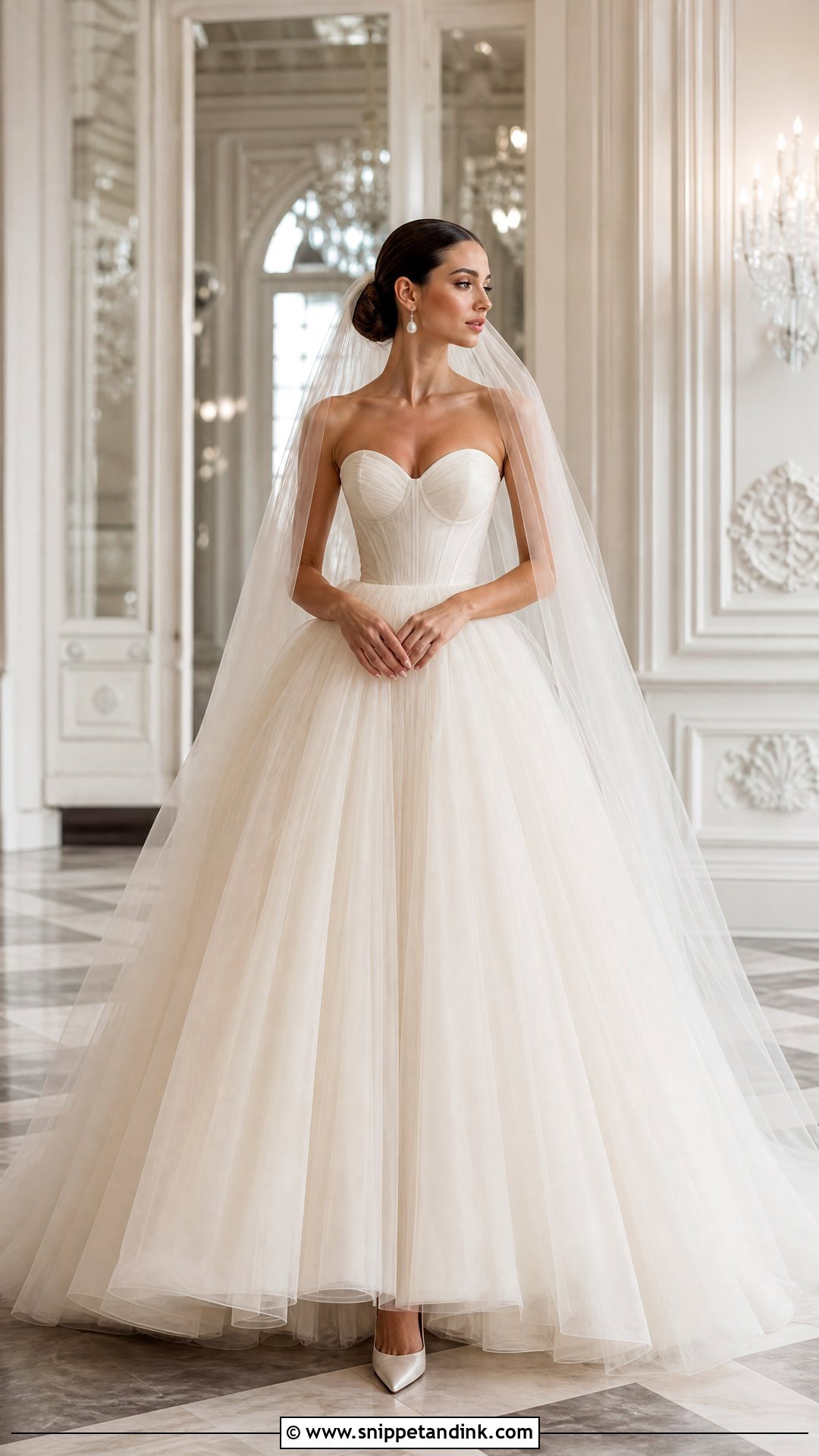
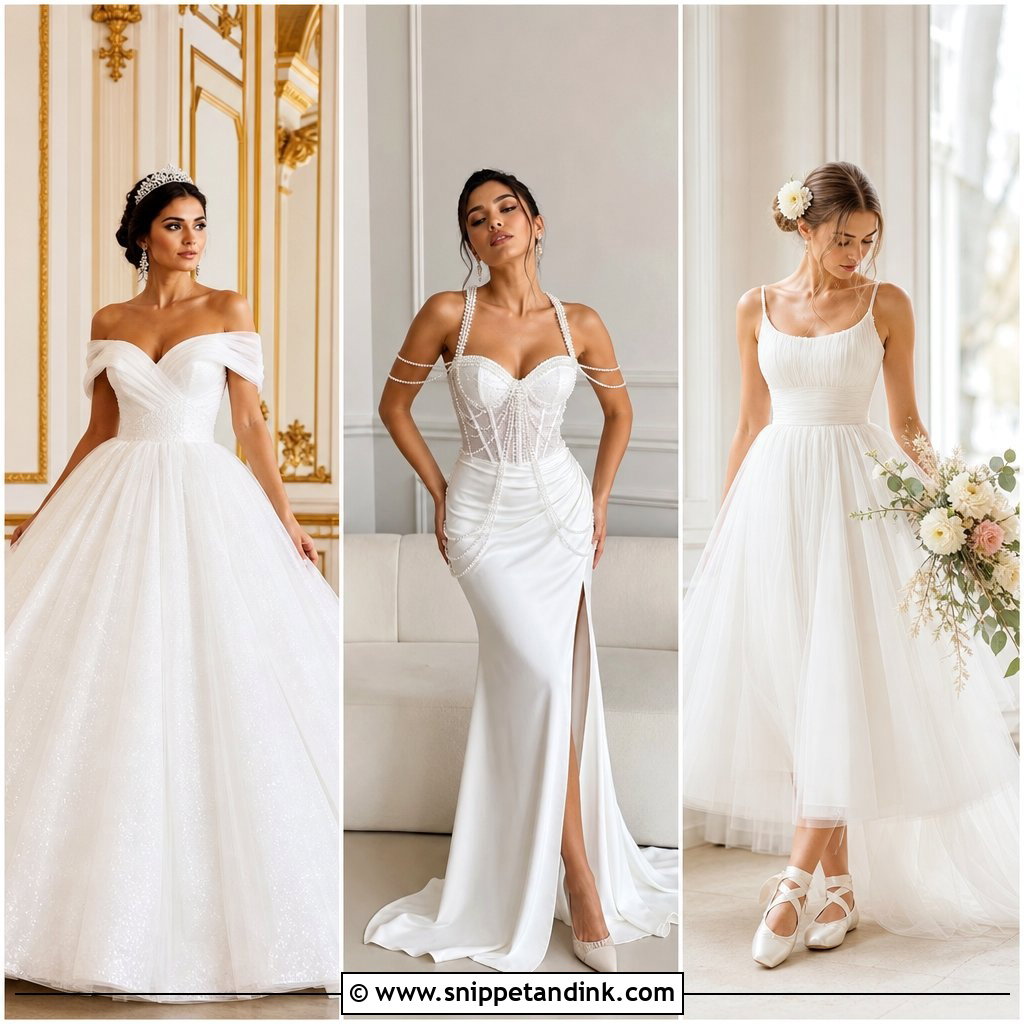
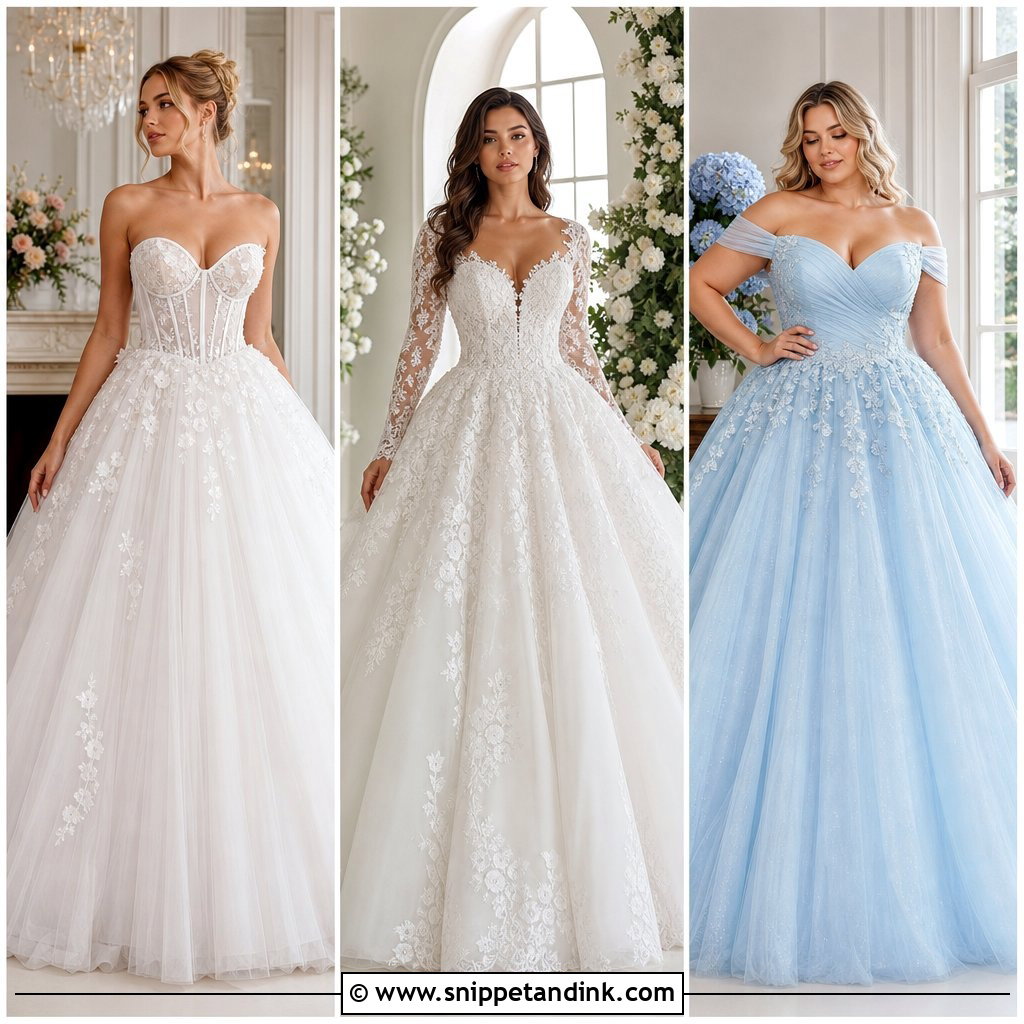
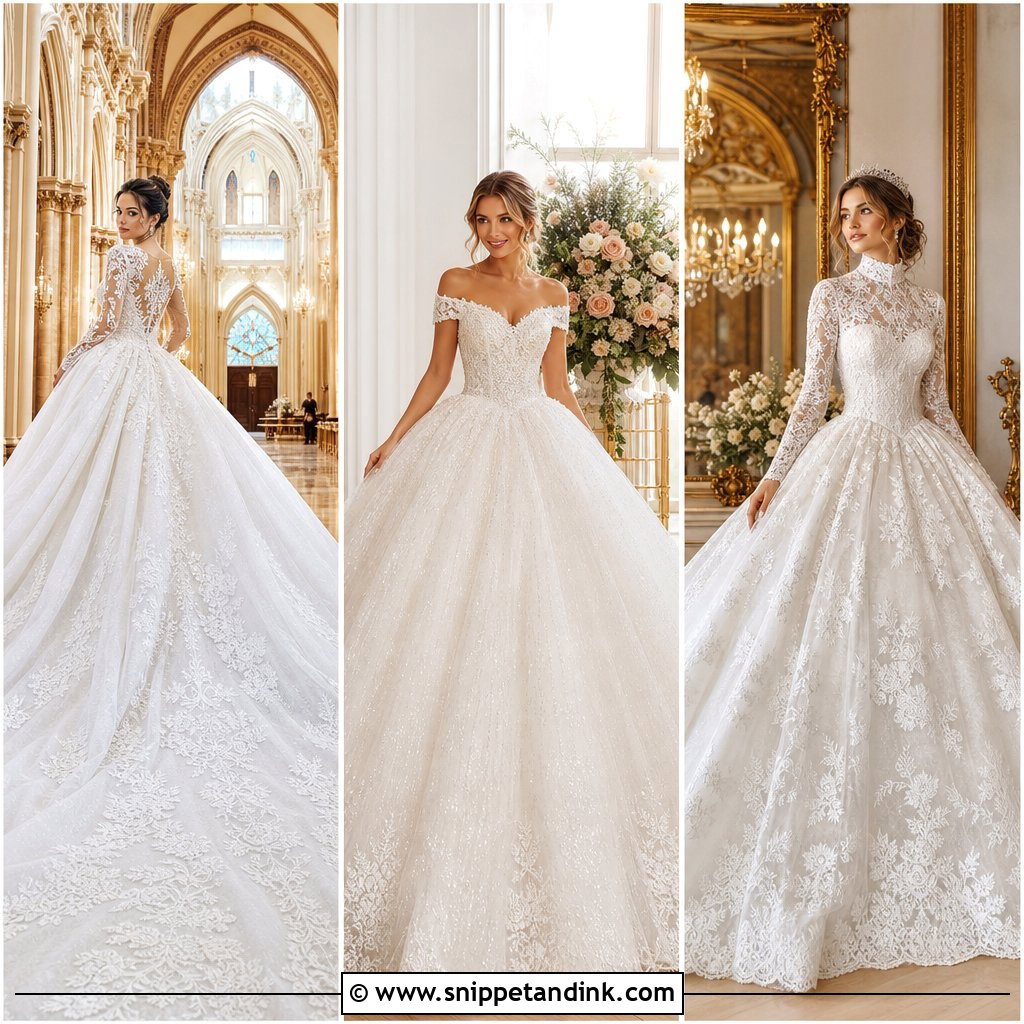
A tulle ball gown pairs a fitted bodice with a full, floating skirt, and the bodice is what makes or breaks it. Without a structured sweetheart or scoop-neck bodice, all that soft volume swallows the bride. Plain ivory is the classic route, and light floral appliqués add depth without fighting the shape. I’d style it with a fingertip veil, pearl drops, a neat low bun and pointed satin pumps, even though the skirt hides most of them. The thing I always ask about is the petticoat. A full skirt usually gets its lift from a stiff underlayer, and a lighter hoopless version makes a real difference when you sit, dance or use the bathroom. Give this one a ballroom, an estate or a wide garden aisle; it needs room.
2. Tulle A-Line Wedding Dress
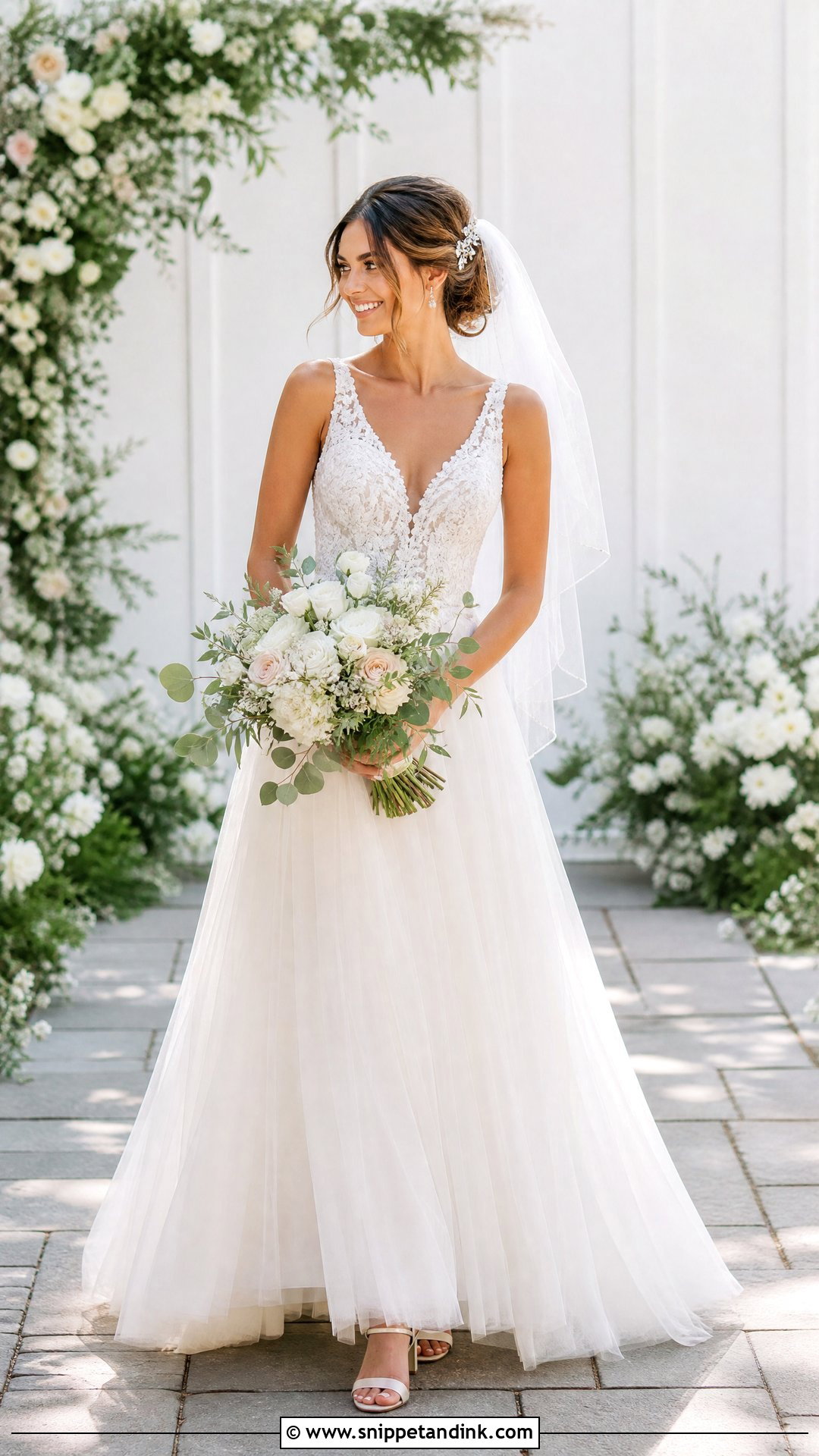
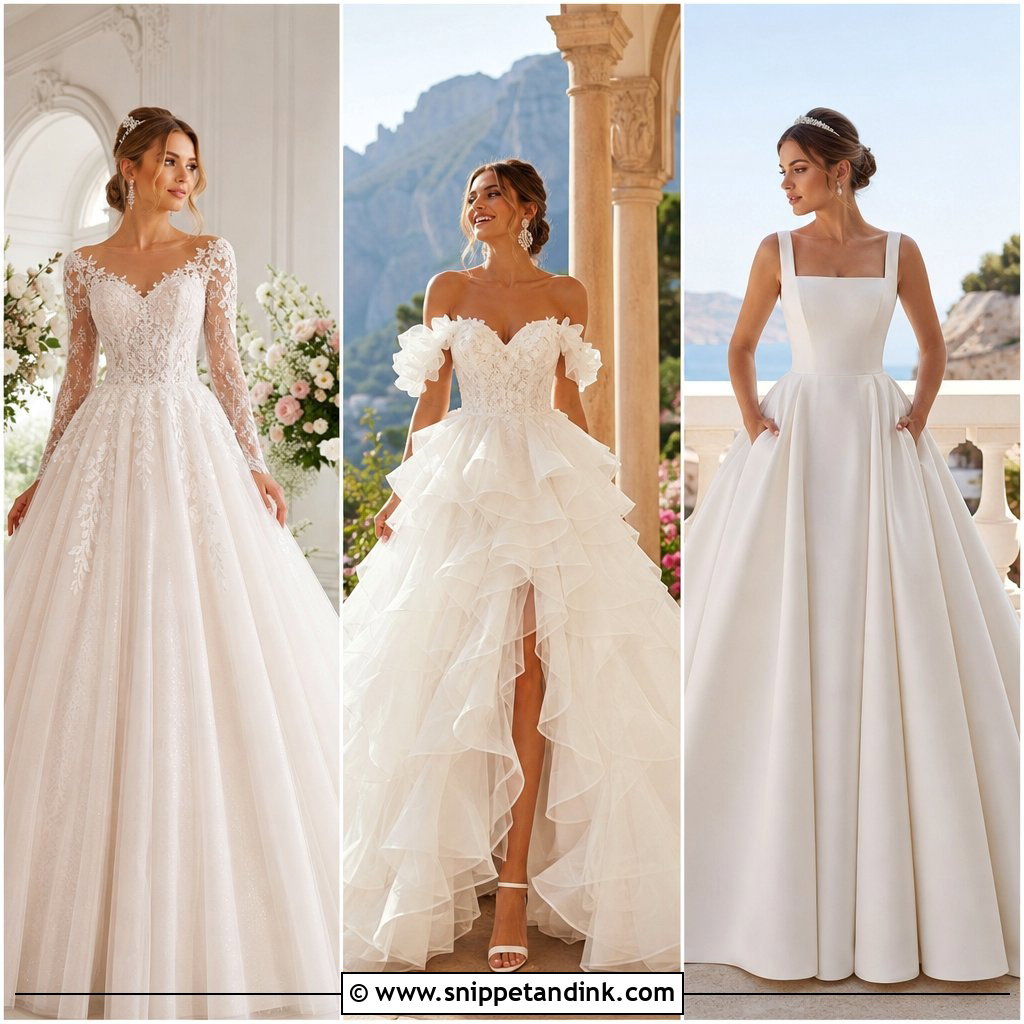
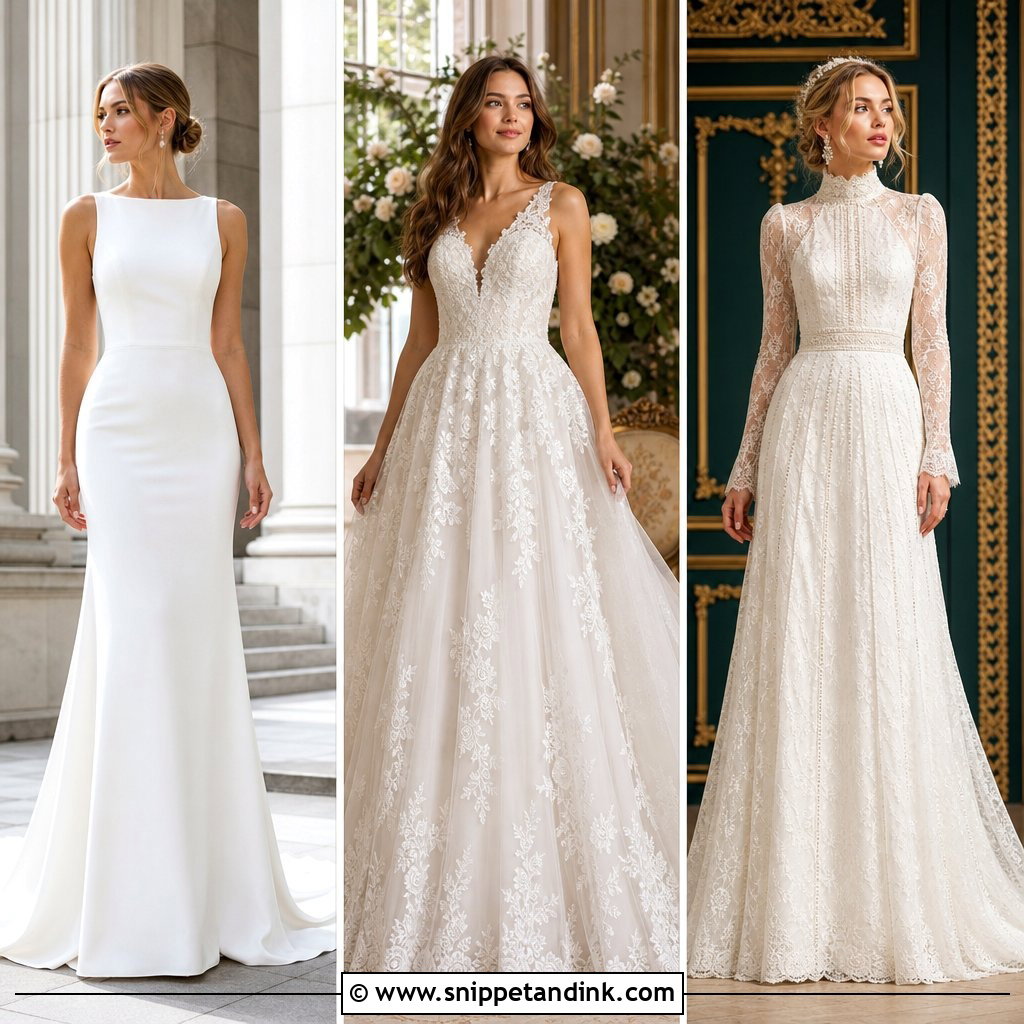
If a ball gown feels like too much width, an A-line gives you the tulle movement without the footprint. The fitted upper section defines the torso, then the skirt falls away gently from the waist. Pick the neckline by support: a V-neck or scoop for more freedom, a sweetheart if you want structure. Plain tulle reads clean, while lace scattered over the skirt softens it. Block-heel sandals, a small crystal comb and a fingertip veil suit garden, hotel and traditional venues. At alterations, sit down in it. An A-line waist that’s perfect standing can dig in when you’re seated through a long dinner.
3. Strapless Corset Tulle Wedding Gown
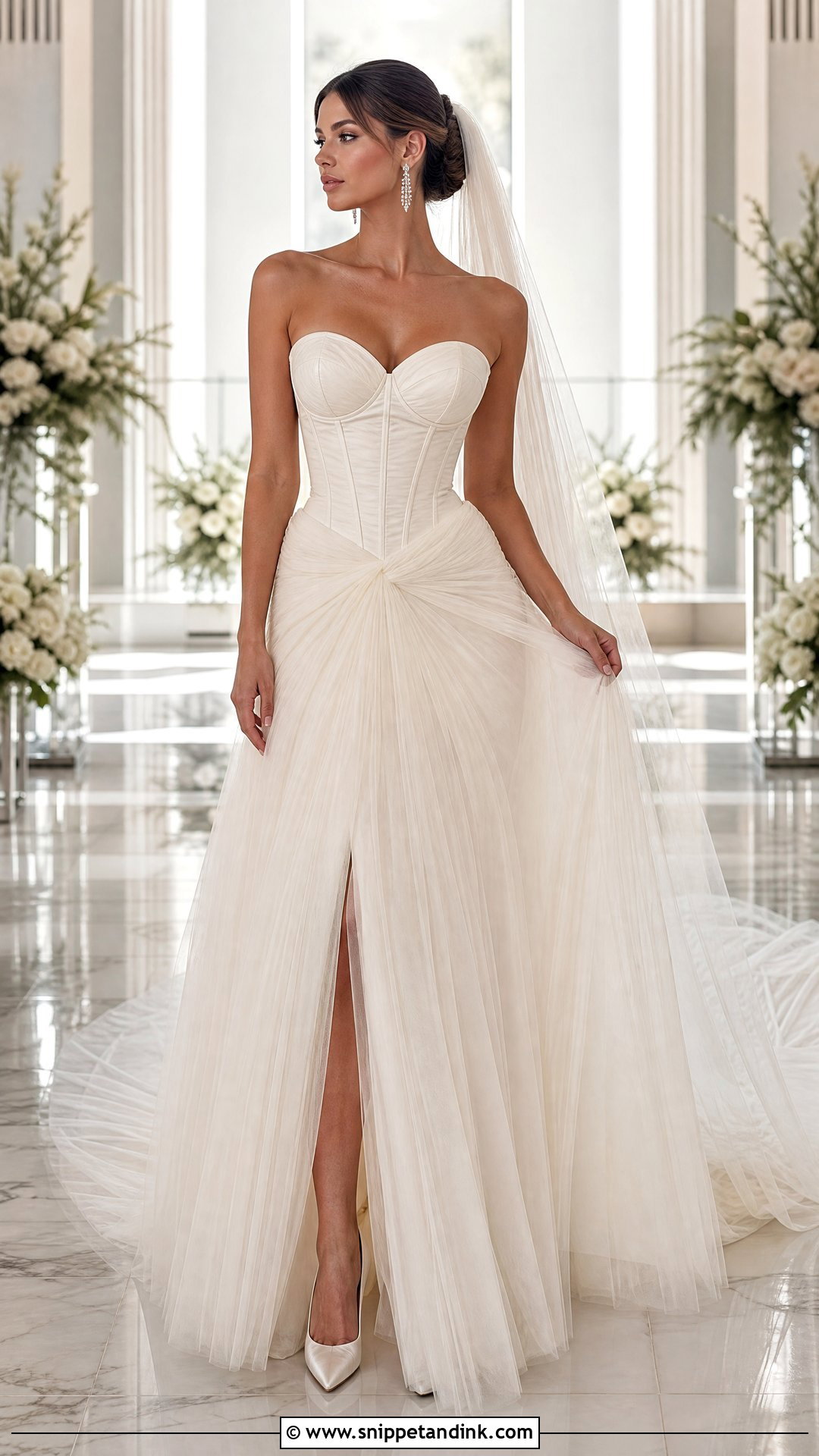
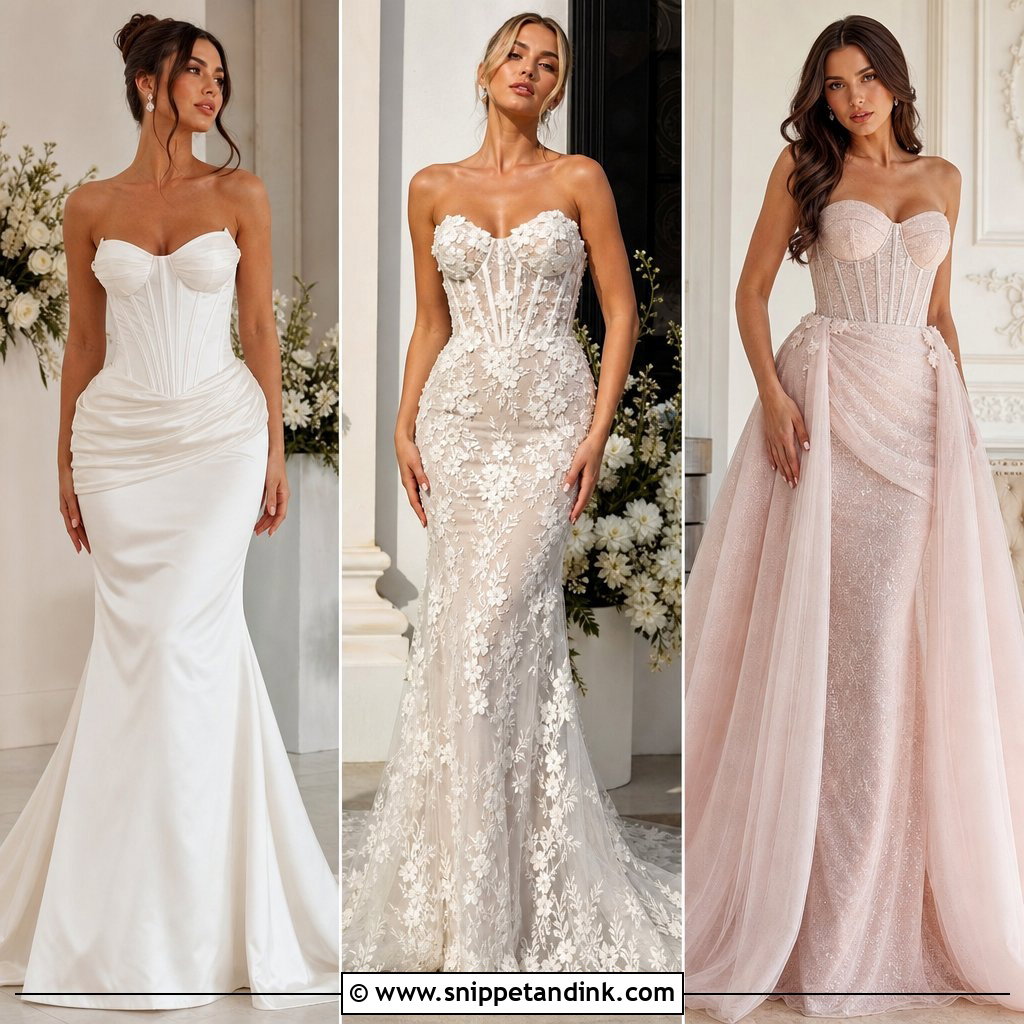
A strapless corset tulle gown sets visible structure against soft volume, and exposed boning over sheer fabric is still one of the strongest looks in bridal right now. Everything depends on the bodice. I look for secure boning, proper cups and a top edge that stays put when you lift your arms to hug someone. A gathered tulle skirt keeps the corset from looking severe. Only wear a collarbone necklace if the neckline is completely smooth; otherwise switch to statement earrings. Ivory pumps, a cathedral veil and a polished chignon finish it. Have it fitted by someone who knows corsetry, so it holds you up without pinching or making it hard to breathe through the vows.
4. Basque Waist Tulle Wedding Gown
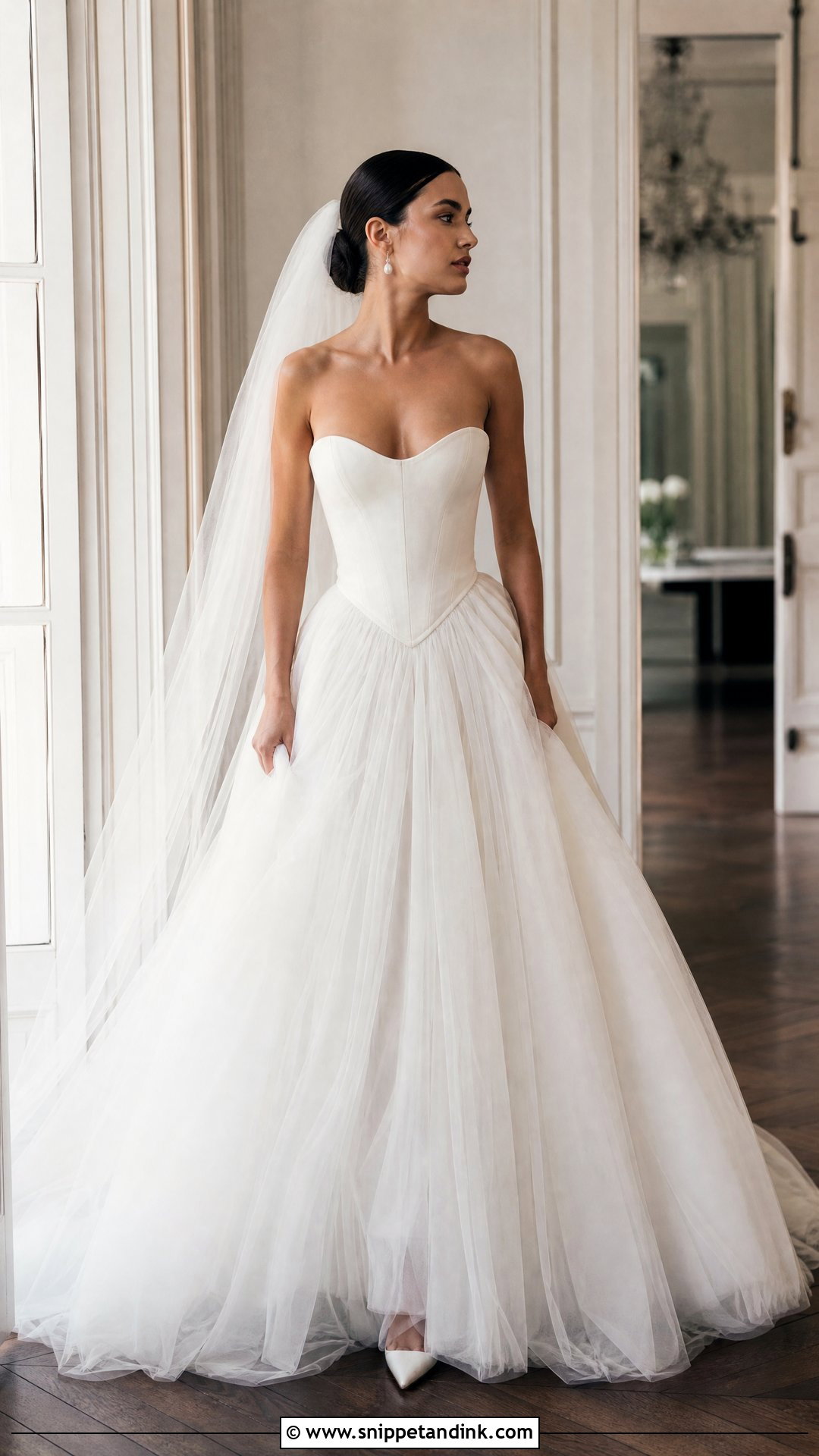
The basque waist dips into a V or U below the natural waist, which draws a long line from the bodice into the full skirt. It’s flattering on a long torso and can shorten a short one, so try it before you commit to the idea. Keep the bodice clean if you want the waist shape to be the feature, or add tonal embroidery for something more decorative, but never a wide belt, which cuts straight through the point. Pointed heels, small pearls and a long veil tucked under a smooth bun suit it. This waist only works when the point sits dead center and flat, so it’s worth paying for careful tailoring and checking it from the side and back in a mirror.
5. Off-Shoulder Tulle Wedding Gown
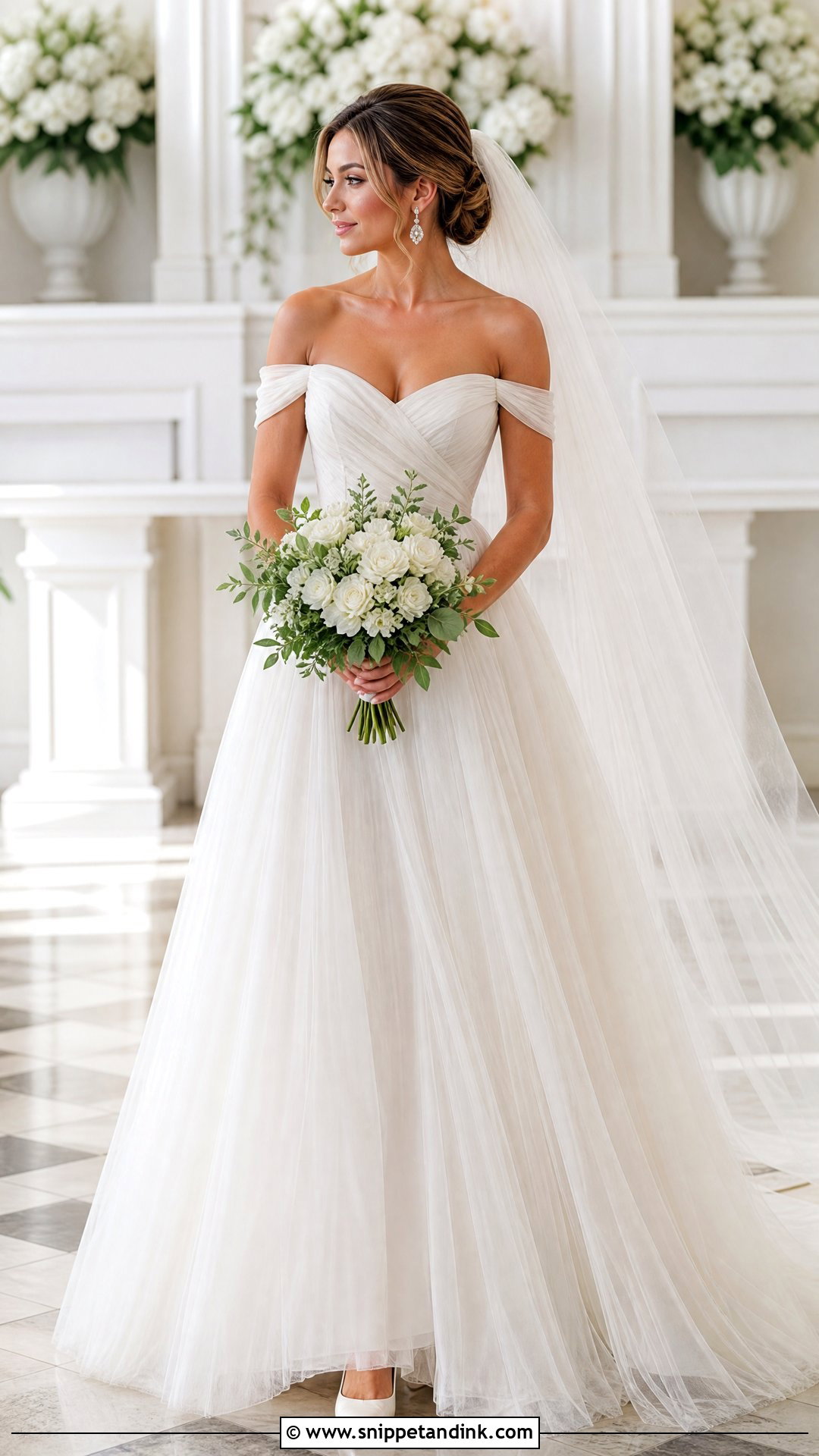
Off-shoulder draping frames the collarbones, and on tulle it looks lighter than the same neckline in satin. The bands are the tricky part. They need to sit securely on the upper arm without stopping you from lifting a glass or hugging your grandmother, so in fittings I have brides raise their arms, embrace someone and sit. A pleated bodice flowing into an A-line or ball gown skirt keeps it cohesive. Drop earrings work better than a necklace here, along with a low textured bun, a sheer cathedral veil and closed-toe satin heels. If movement worries you, ask about removable off-shoulder straps for the reception.
6. Long Sleeve Lace Tulle Wedding Gown
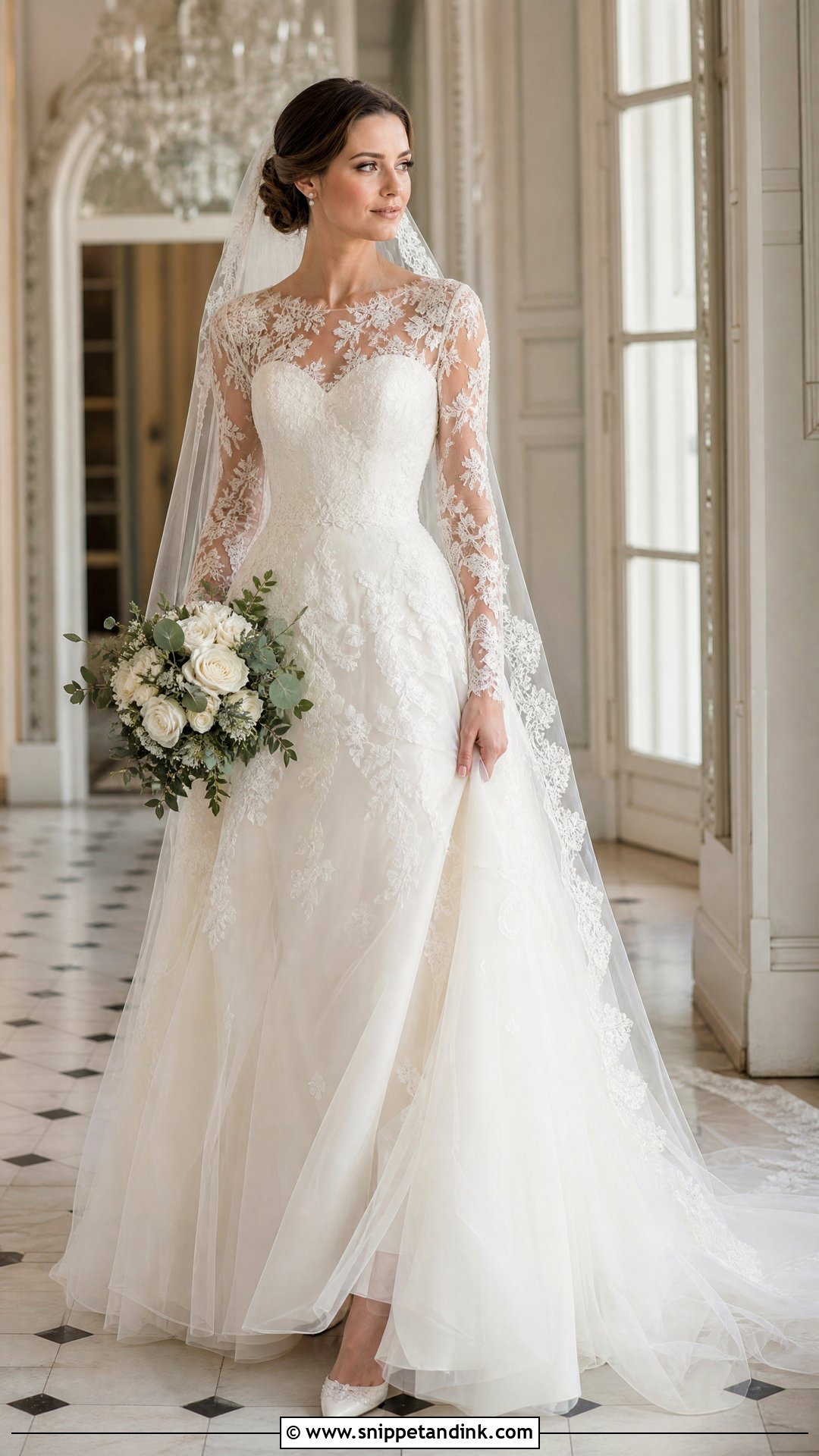
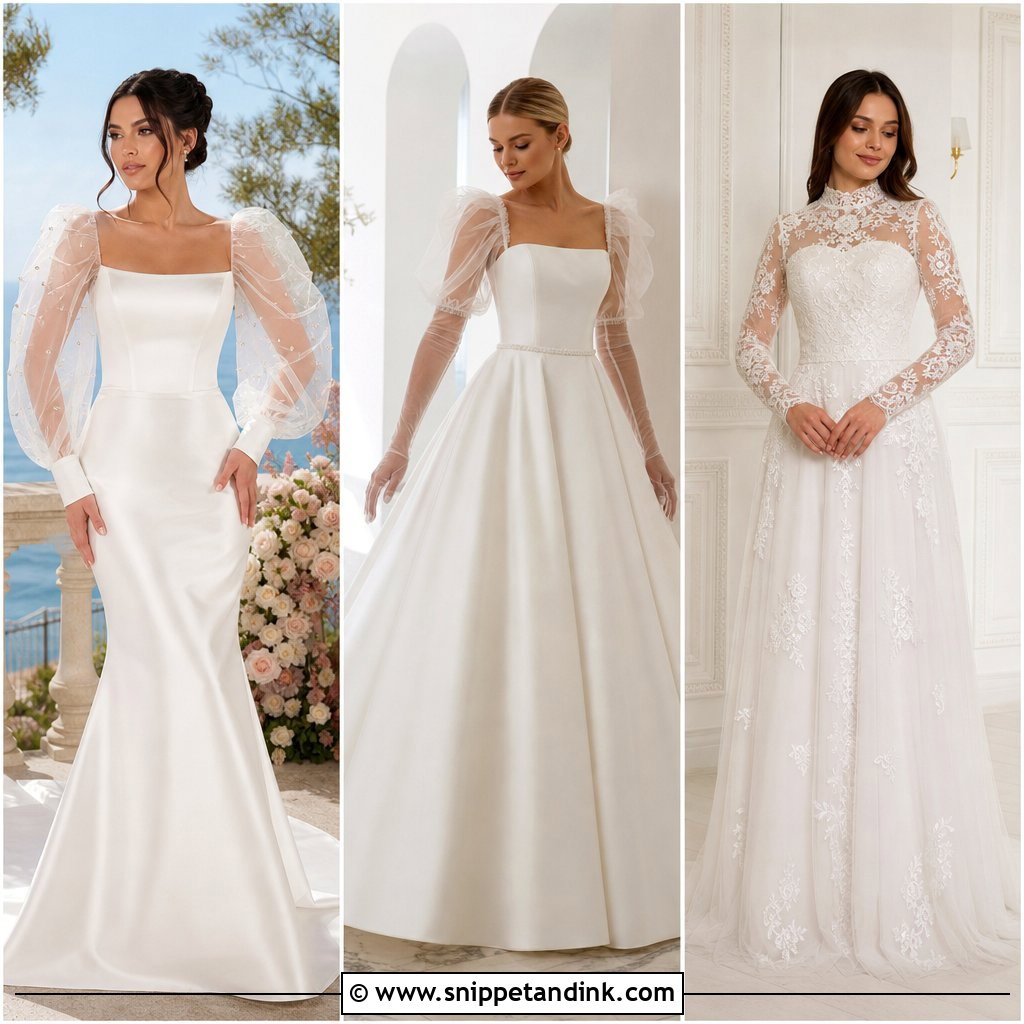
Long illusion sleeves give coverage while still looking light, as long as the lace motifs on the sleeves connect to those on the bodice and skirt. A lined sweetheart base under the lace gives you real support, and an A-line tulle skirt keeps the look soft. Undergarments are the hidden issue with sheer sleeves and backs: anything with a visible band shows, so bring the exact pieces to every fitting. Pearl studs, a low chignon, pointed pumps and a veil with a narrow lace edge complete it. Fine illusion mesh catches on rings and bracelets, so I’d keep your hands simple.
7. Illusion Neckline Tulle Wedding Gown
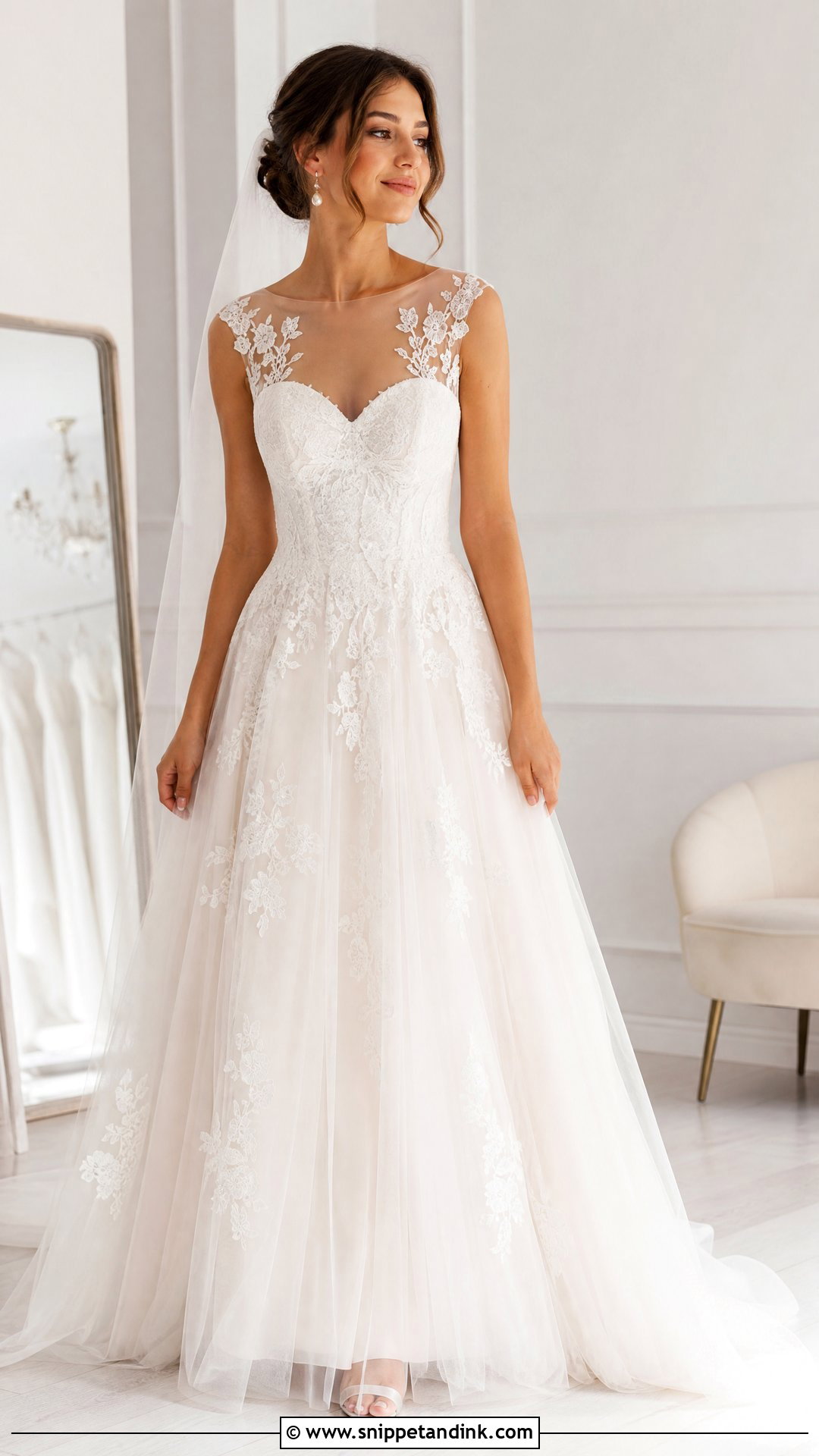
An illusion neckline makes lace, pearls or embroidery look as if they’re floating on the skin. The nearly transparent layer also secures a plunge, sweetheart or open back without adding visible bulk. The mesh needs to match your skin closely, and I always look at it in daylight and with a camera flash before signing off, because a shade that disappears under shop lights can turn grey or shiny in photos. Skip necklaces that might snag the fine net and wear crystal or pearl earrings instead. A soft updo keeps the neckline visible, and a plain veil stops the top half from getting crowded.
8. Floral Appliqué Tulle Wedding Gown
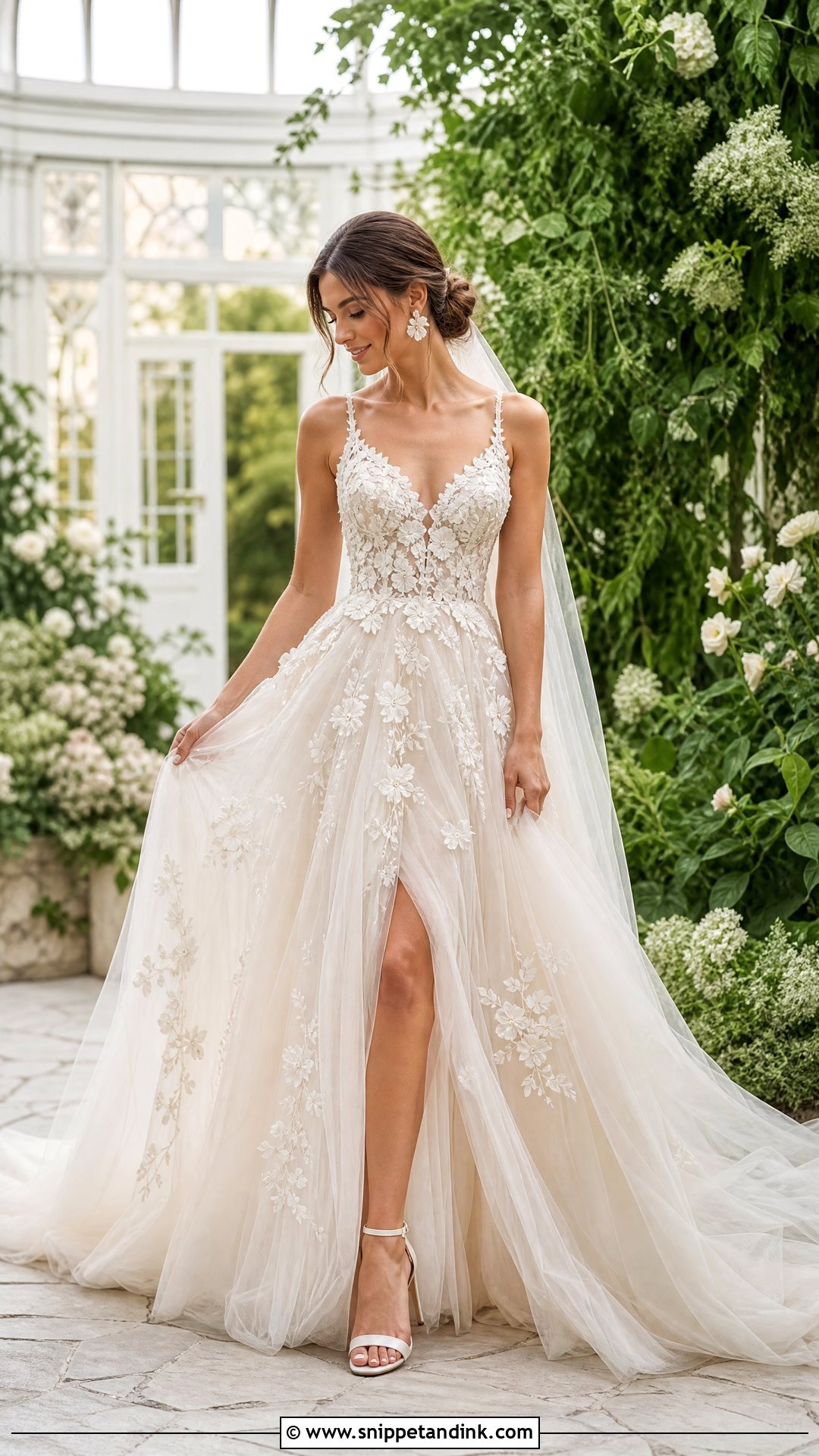
Three-dimensional flowers clustered on the bodice and thinning out down the skirt give a tulle gown a botanical feel without covering every layer. Ivory on ivory is the traditional version, and pale pastel embroidery suits a garden ceremony. The detail I check is where the petals sit. Raised flowers near the inner arm or the waist can rub, fold or catch on the veil, so ask your seamstress to flatten or move any that get in the way. Floral studs, a narrow veil, ankle-strap heels and a loose low bun keep the outfit from tipping into a theme, which suits conservatories, gardens and estates.
9. Pearl Beaded Tulle Wedding Gown
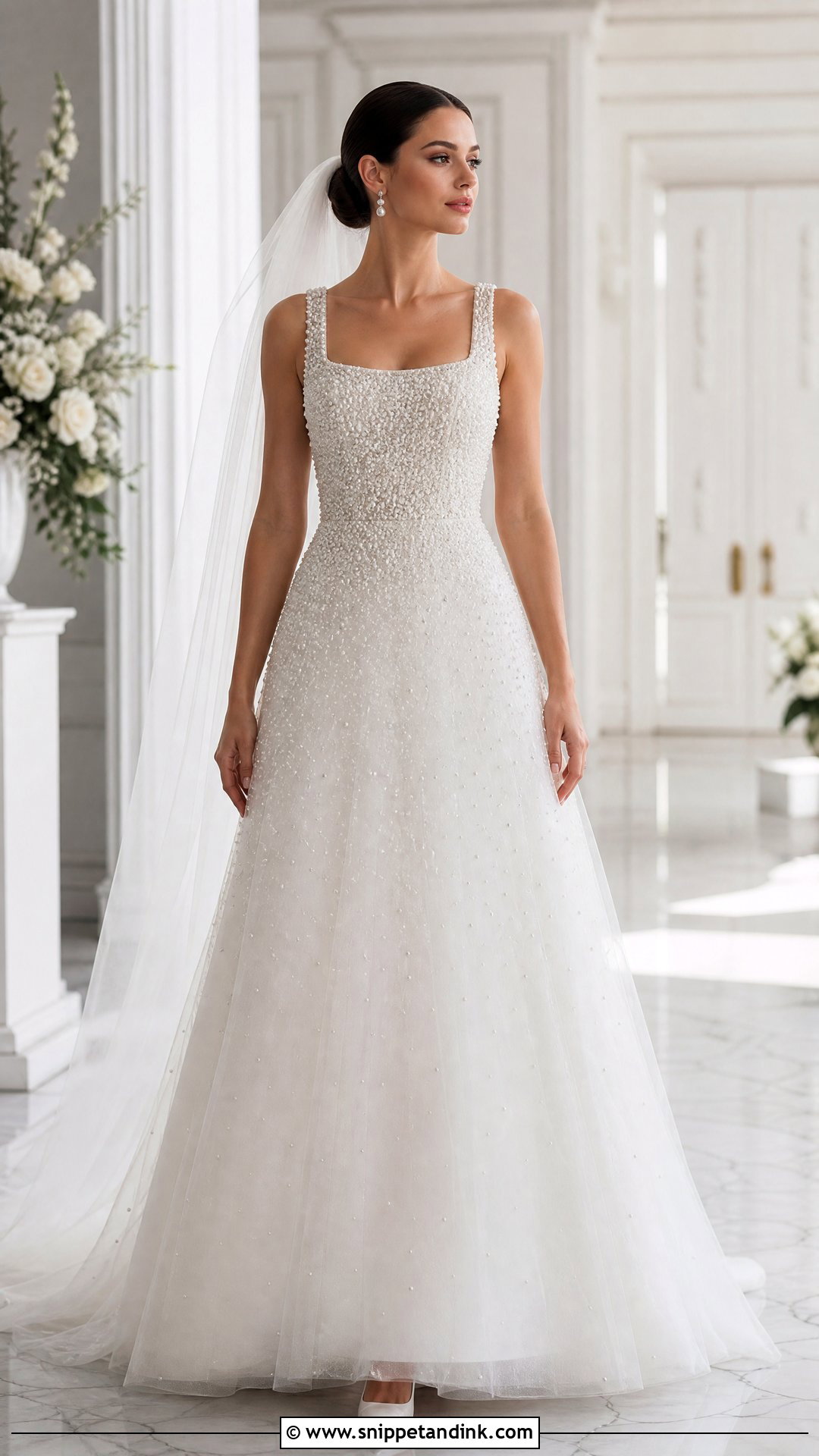
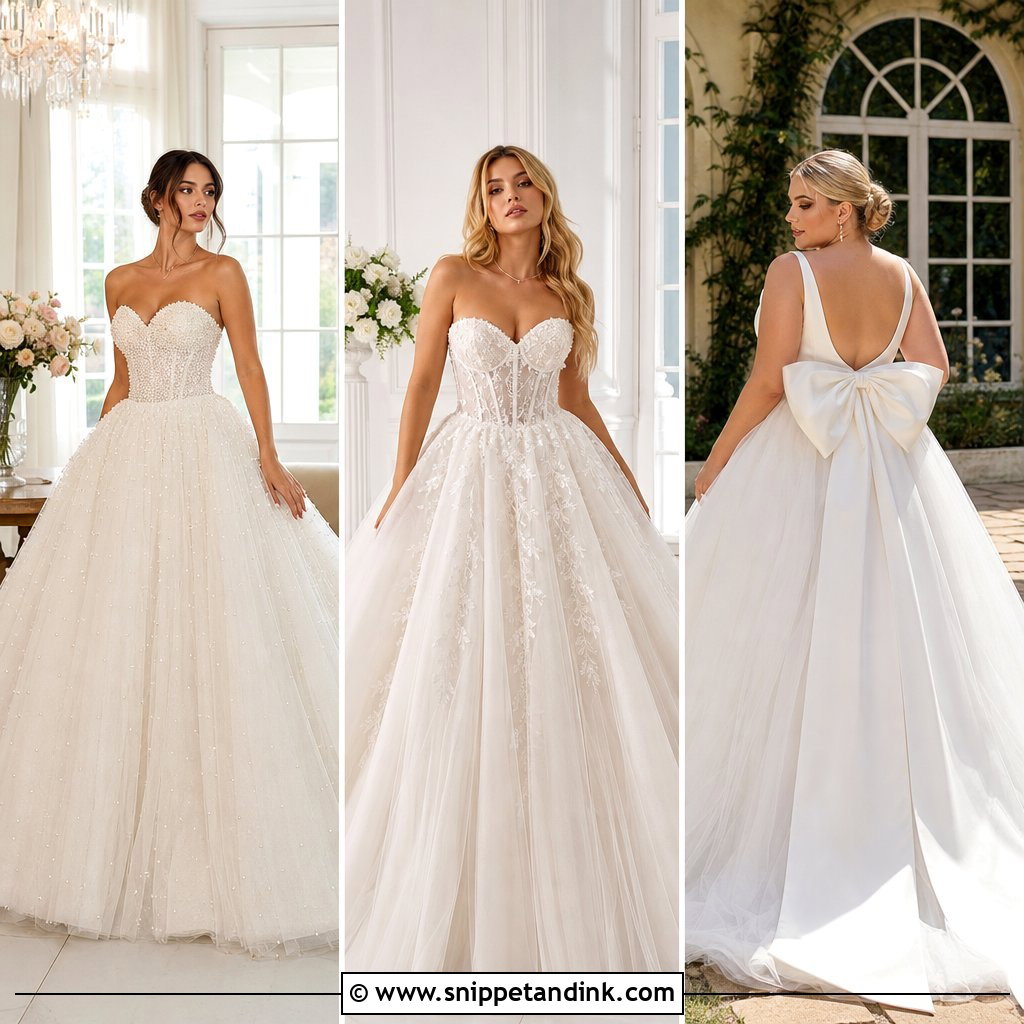
Pearls scattered over tulle give a soft glow instead of hard sparkle. A pearl-beaded bodice flowing into a lightly embellished A-line skirt catches the light as you walk. Before alterations, run your hand over the beading and look for loose threads; pearls are heavy for their size and pull on fine tulle if one comes free. Wear pearl earrings, satin pumps and a plain veil without extra beading, and keep your hair in a sleek bun so it doesn’t catch. One pearl element on top of the dress is enough. If the skirt is heavily beaded, ask whether there’s a smooth lining, since beads on the inner layers can scratch your legs and snag neighboring tulle.
10. Glitter Tulle Wedding Gown
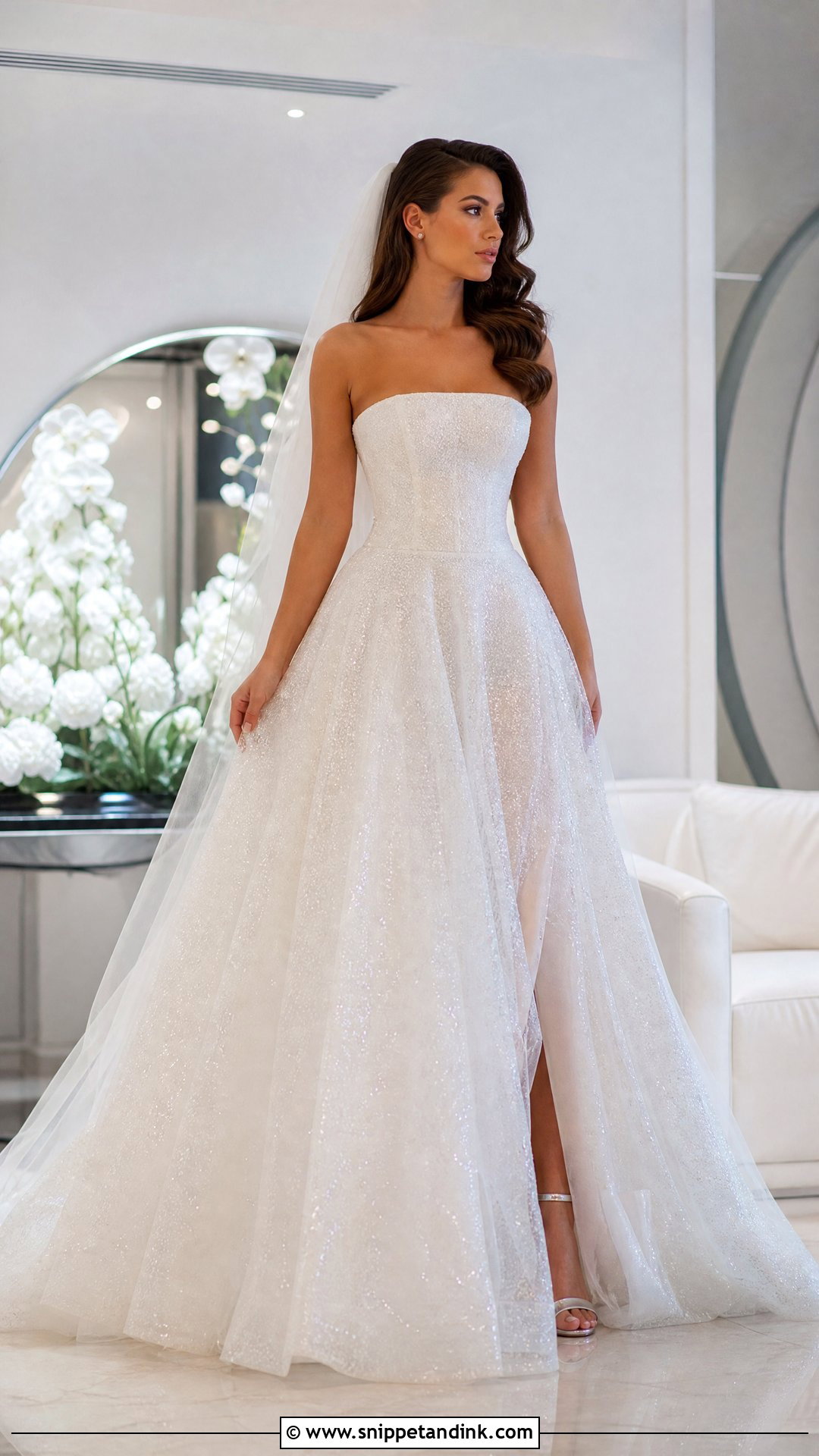
Glitter tulle gives a shimmer you can see across the room while the skirt stays airy. I’d choose fine, evenly spread sparkle over large flecks, and pair it with a clean strapless or square-neck bodice so the dress doesn’t look overdecorated. Crystal studs, silver heels and a single-layer veil are enough. Be aware that glitter tulle can shed onto your partner’s suit, the car seat and the carpet, so ask for a sample and rub it before you order. Ask how to store and steam it, too. Body shimmer and oily lotions cling to the surface and dull the finish, so apply them well before you step into the gown.
11. Tiered Tulle Wedding Gown
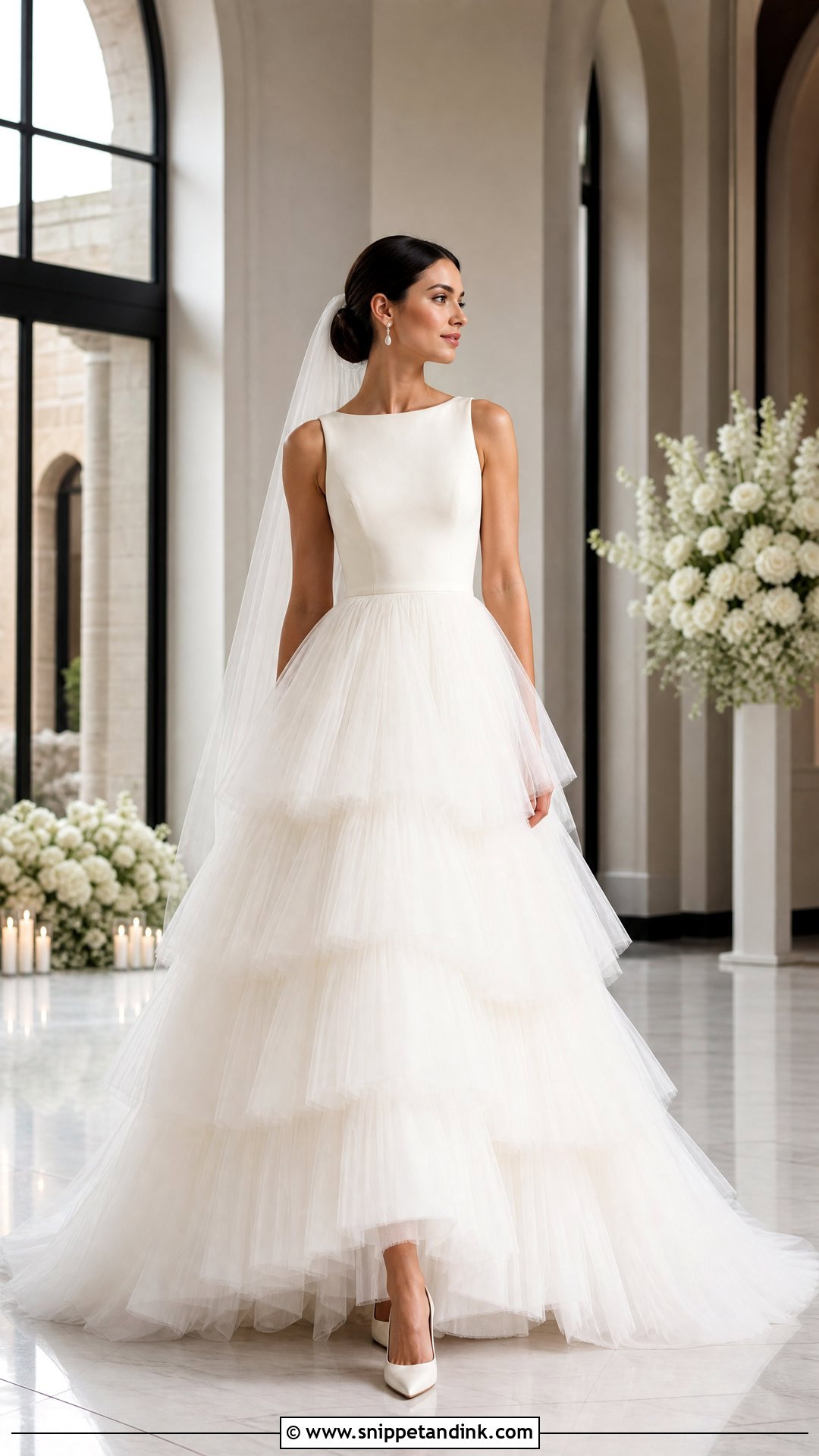
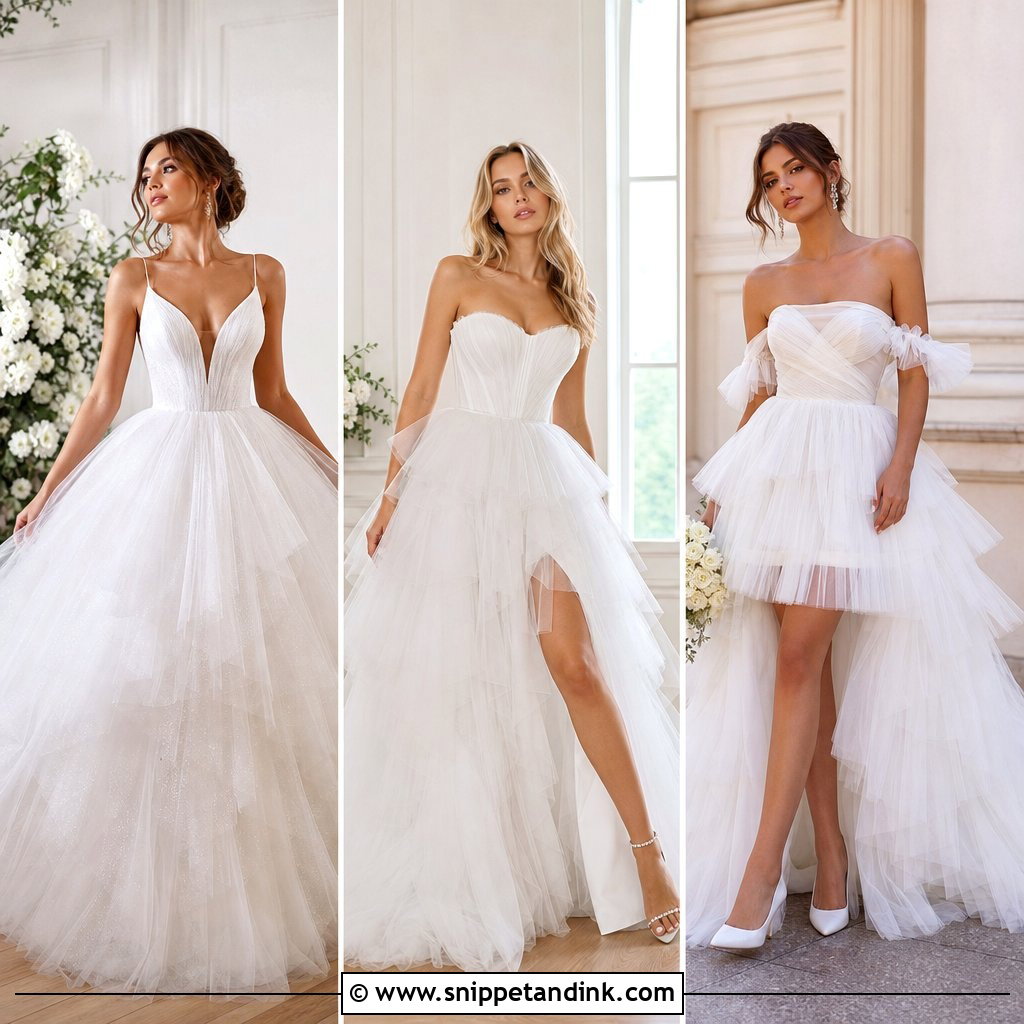
Horizontal tiers from the waist to the floor make movement visible every time you take a step. They can be subtle or wide and architectural, so pick a scale that matches the drama you want. A fitted bodice with little embellishment lets the skirt lead, with pointed pumps, small drops, a plain veil and smooth hair finishing it. Tiers can bunch at the hips when you sit, which is the first thing I watch for at a fitting. The upper tiers should lie smooth, and the lowest should just clear the floor in your actual shoes. Give it a spacious venue where the skirt can swing.
12. Ruffled Tulle Wedding Gown
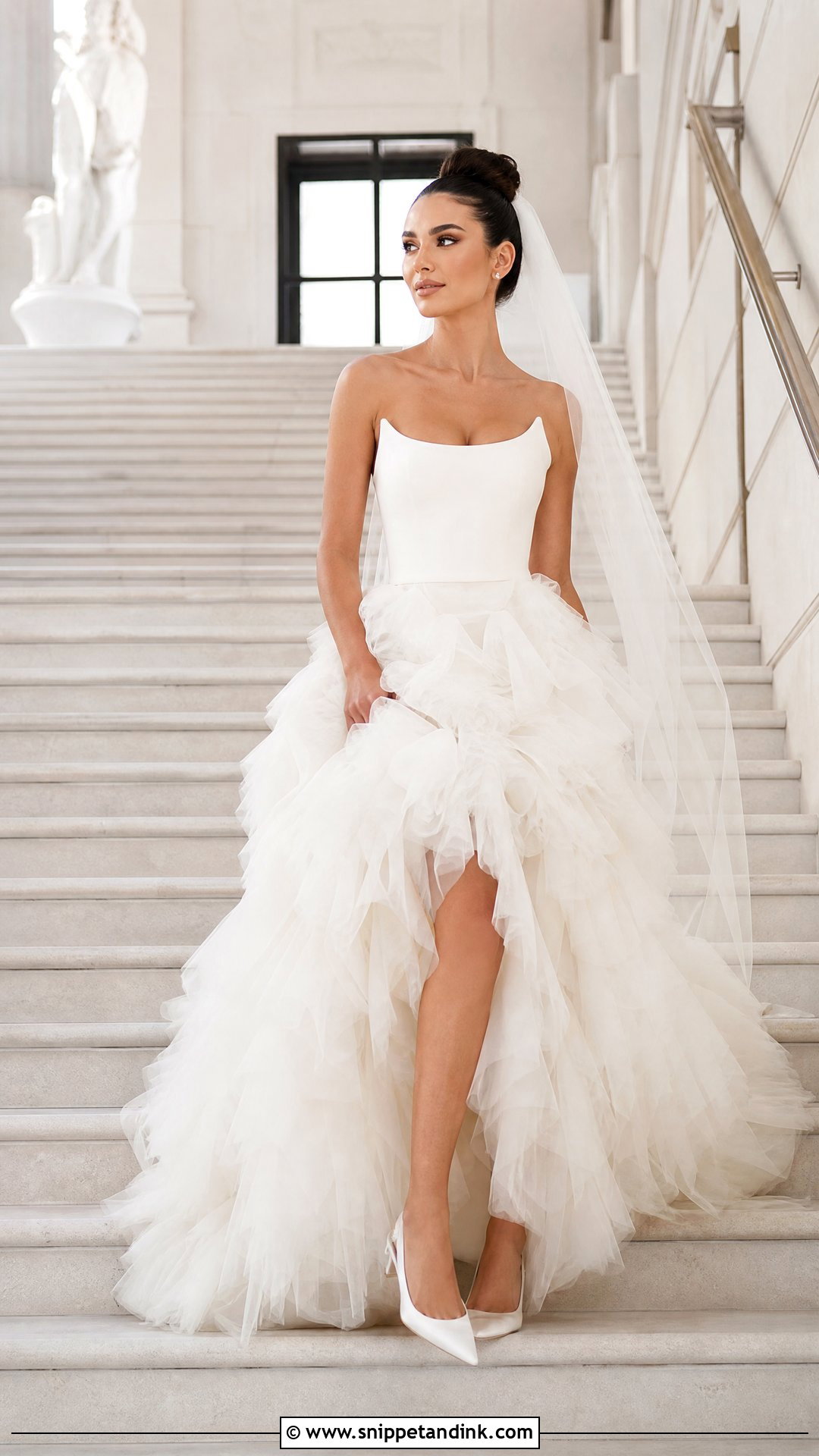
Cascading tulle ruffles give a gown energy and texture. Diagonal or vertical ruffles move the eye down the body, while soft horizontal ones build fuller, ball-gown volume. Keep the bodice simple, like a strapless scoop or a narrow-strap corset, and the styling restrained: studs, an unembellished veil, sleek satin heels and a high bun or neat low knot. Ruffles crush easily, and once flattened they don’t spring back by themselves, so ask how the gown should be packed and steamed. I’d also walk through a doorway and sit in a car in it before the day, just to learn how much room you need.
13. Drop Waist Tulle Wedding Gown
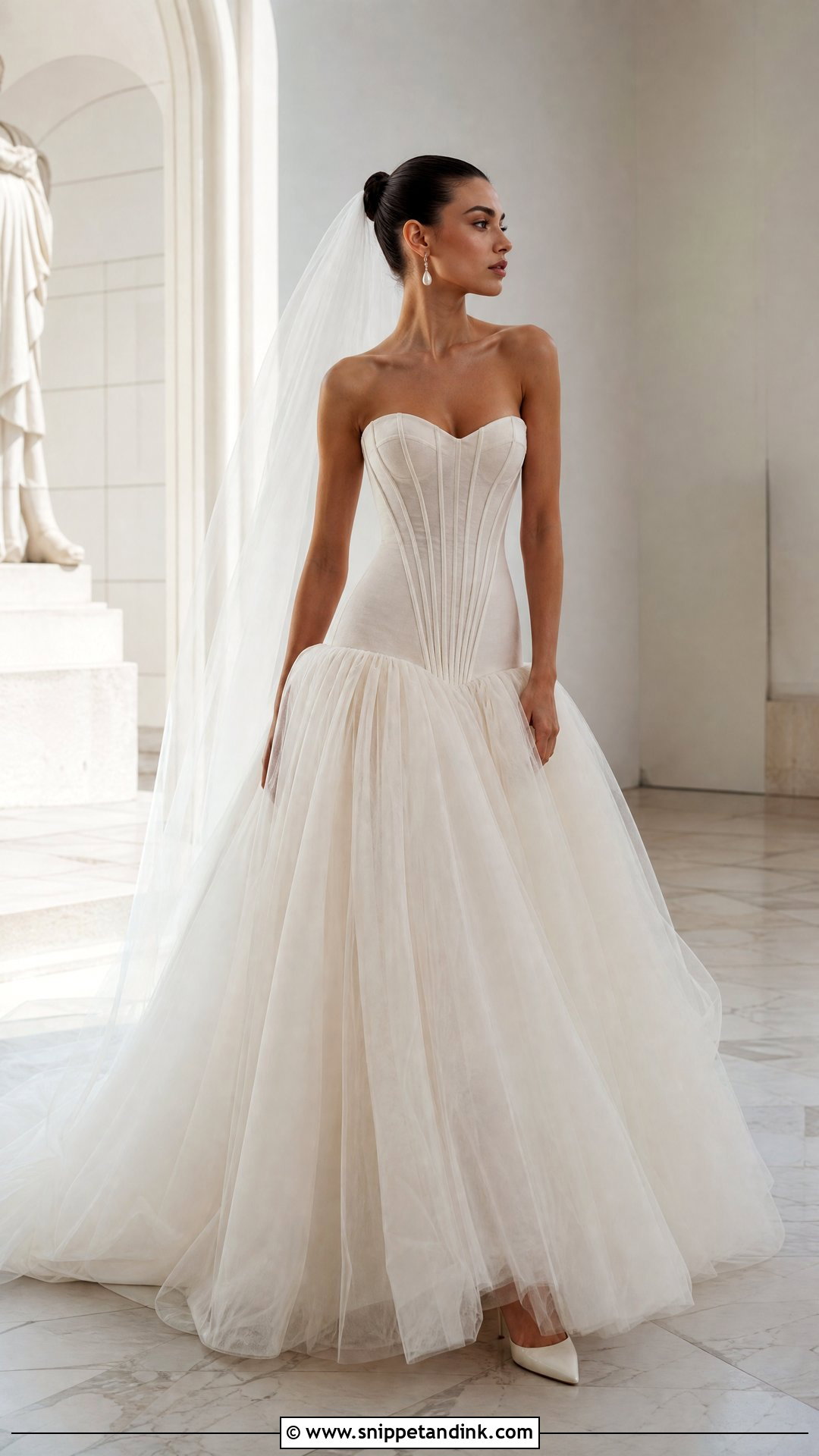
A drop waist carries the bodice below the natural waist before the skirt opens out, usually pairing a structured torso with a lot of tulle volume. It’s one of the more striking bridal shapes at the moment, and also one of the least forgiving. Pick a smooth corset for a clean finish or a draped bodice for a softer one, and skip belts and big waist embellishments that would compete with the line. Pearl drops, pointed heels and a veil set under a sleek bun suit it. Always test this shape seated: the longer bodice presses into the hips in a way a natural waist doesn’t, so the tailoring needs to keep it smooth without restricting you.
14. Detachable Tulle Overskirt Wedding Gown
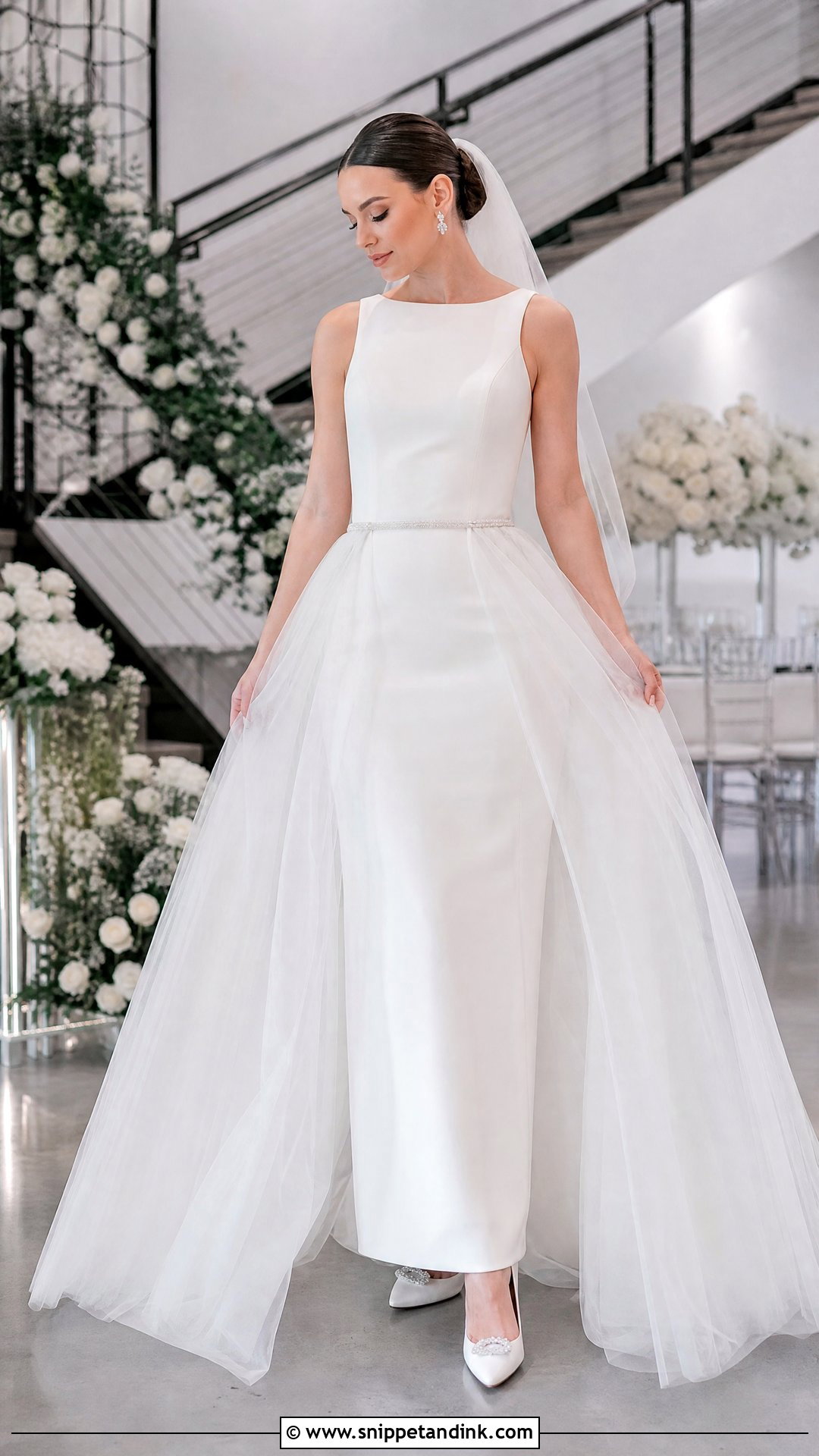
A detachable tulle overskirt turns one dress into two looks. Wear the full skirt over a fitted satin, crepe or lace gown for the ceremony, then take it off to reveal a slimmer dress for dancing. It’s a practical way to borrow volume for an hour and hand it back. Choose an attachment that lies flat at the waist and comes off without a seamstress, because on the day it’ll be an attendant doing it in a hurry. Have that person practice removing and folding the overskirt. I’d also photograph the back at a fitting, since a visible hook or ridge at the waist shows clearly once the tulle is gone. Elegant pumps, crystal earrings and a veil that works with both versions finish it.
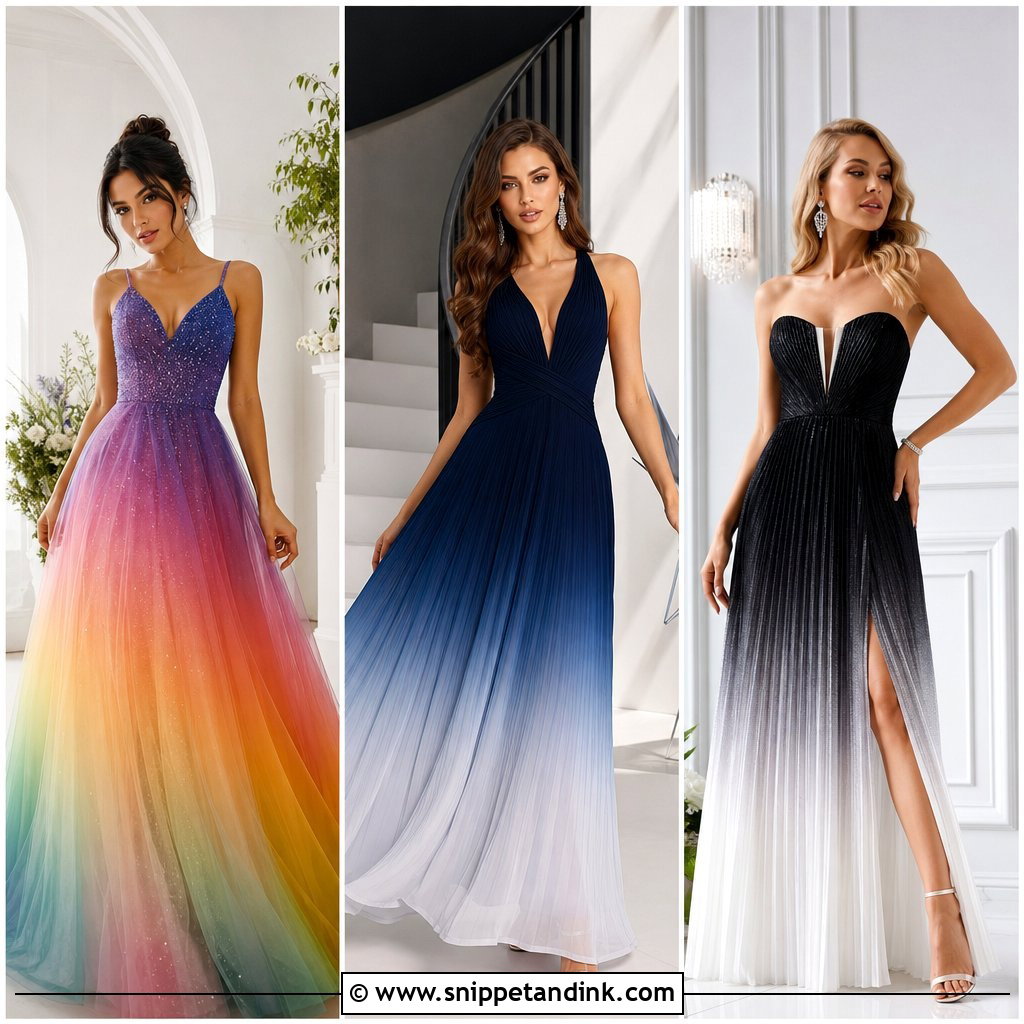
15. Mermaid Tulle Wedding Gown
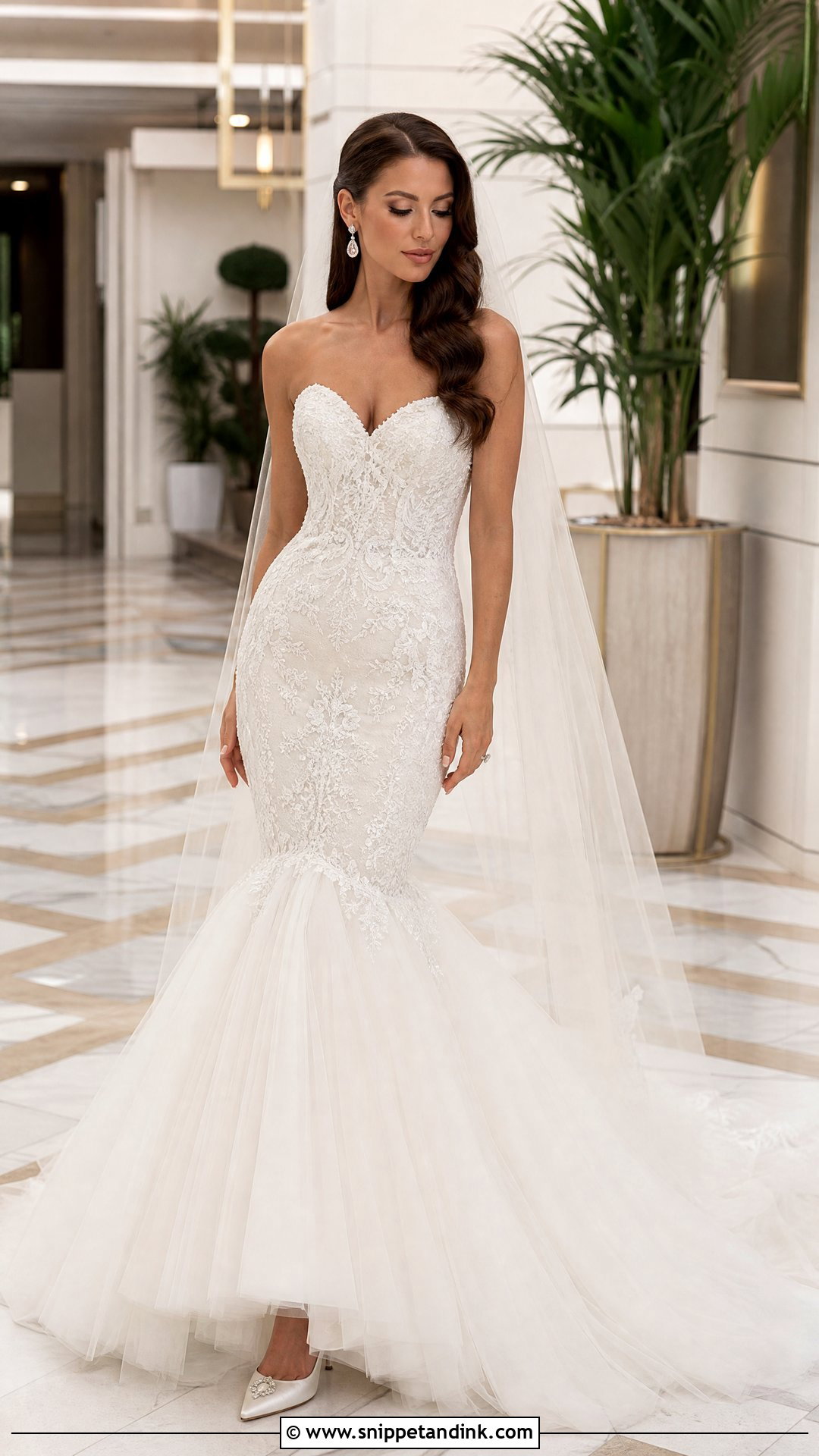
A mermaid follows the body through the torso and hips, then bursts into tulle layers near the knee. A supportive sweetheart bodice suits the line, and illusion straps help if you want extra security. A stretch lining makes a real difference to walking and sitting. The flare position is what I fuss over most: take full strides, climb stairs and sit naturally at every fitting, and if the flare locks your knees together, it needs raising. Drop earrings, a side-swept style, pointed heels and a long narrow veil complete it. Skip a very wide train in a compact venue.
16. Square Neck Tulle Wedding Gown
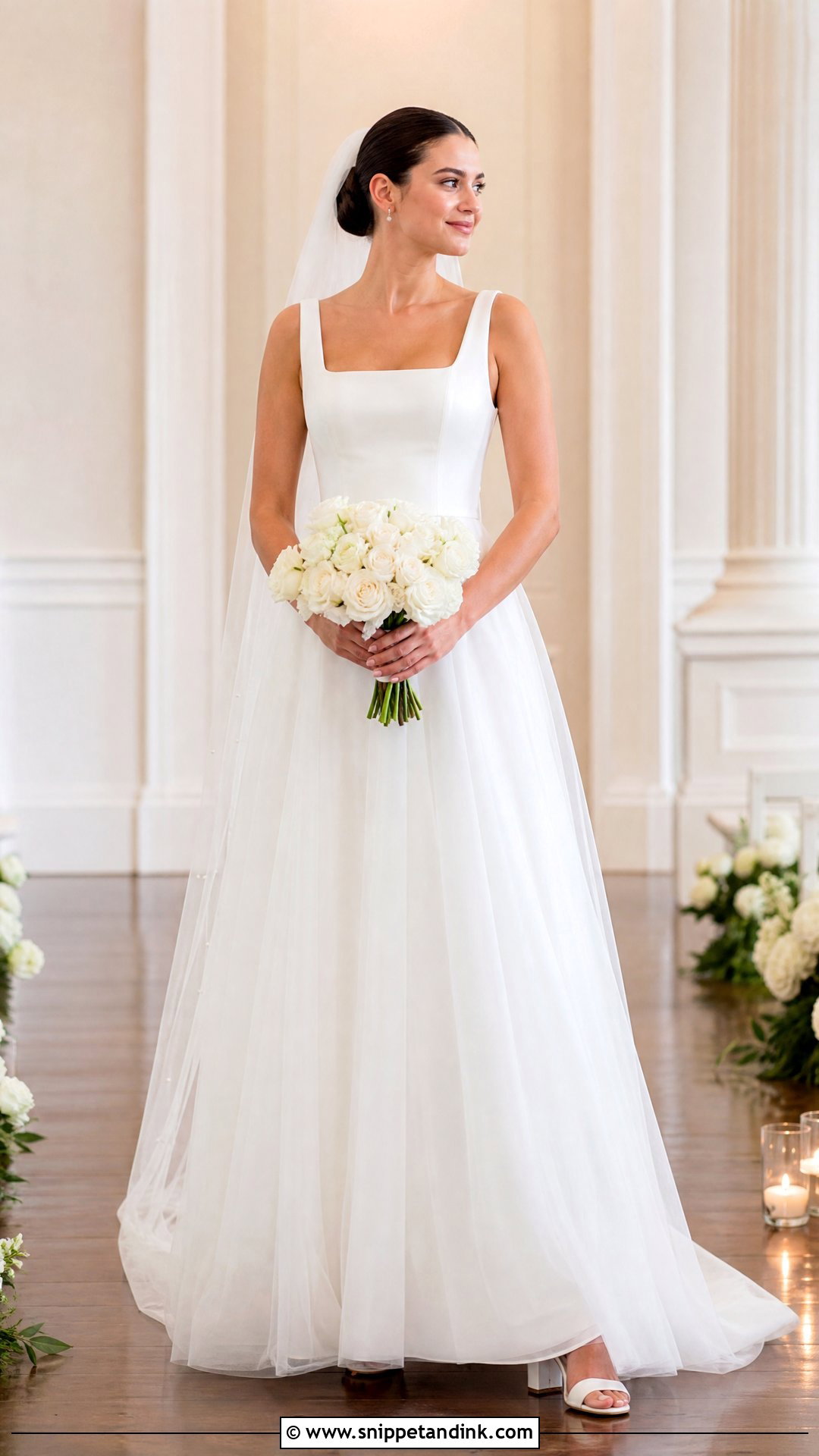
A square neckline has defined corners that feel classic and modern at once. Wide straps leave room for proper support, and a fitted bodice gives a smooth base for an A-line or gathered tulle skirt. Keep the front plain to show off the shape, or run light appliqués along the straps and waist. Pearl studs, a neat bun, satin block heels and a fingertip veil suit it, and I’d usually leave the collarbone bare. The corners are where square necks fail; if they gape when you lean forward, your seamstress can take in the straps and bodice so they stay flat while you dance.
17. High Neck Tulle Wedding Gown
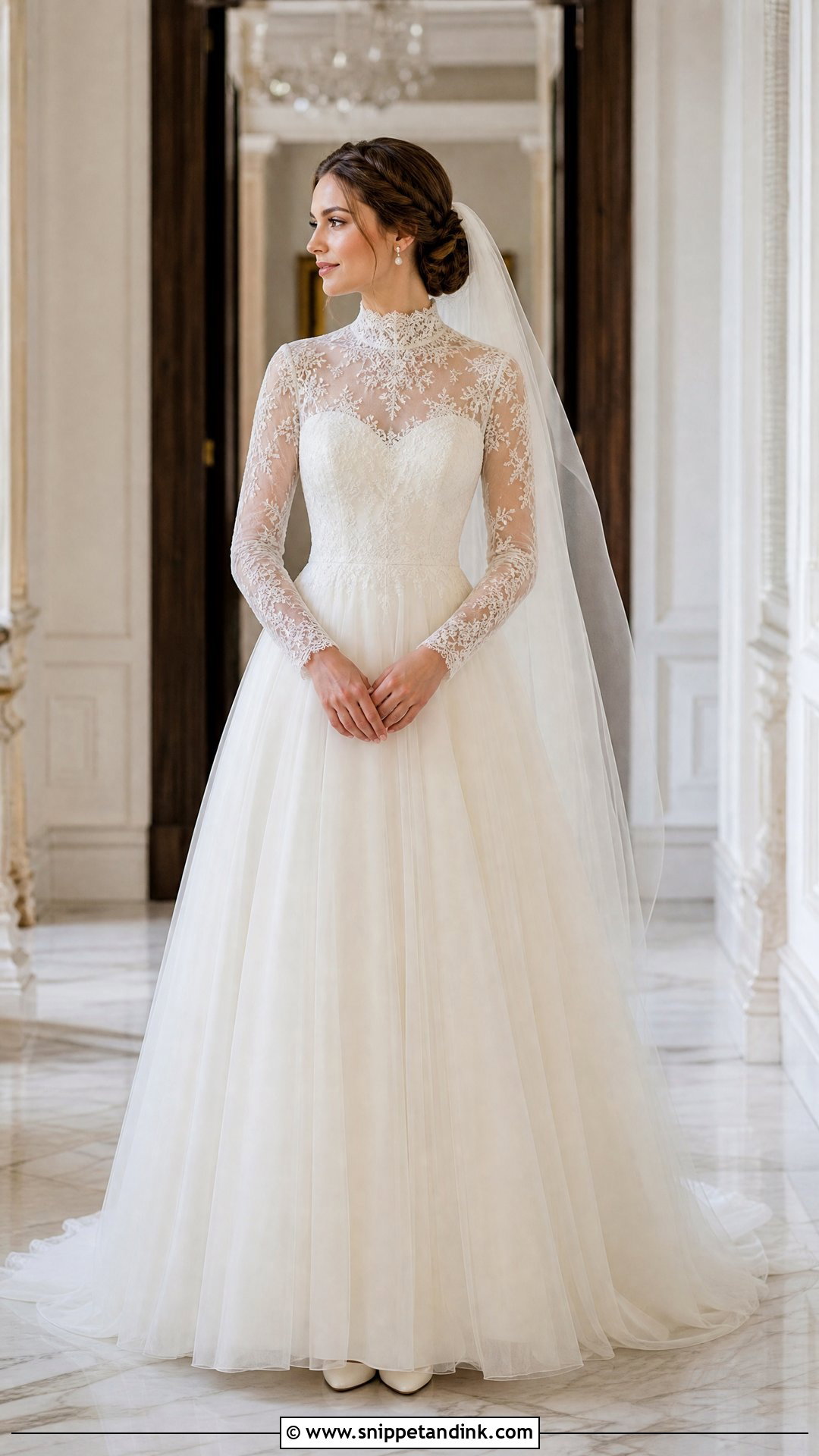
A high neck gives coverage while still letting fine detail show through an illusion layer, lace motifs, delicate beading or a gathered tulle collar. A lightly lined bodice and a flowing A-line skirt stop it feeling stiff. Leave the necklace off and choose pearl studs or small drops. A low bun, a braided updo or a smooth ponytail keeps the neckline clear, with closed-toe pumps and a plain veil to finish. Turn your head side to side in the fitting room. A collar that rubs for ten minutes in the shop will feel far worse by the end of the reception, and a soft binding along the edge solves most of it.
18. Cap Sleeve Tulle Wedding Gown
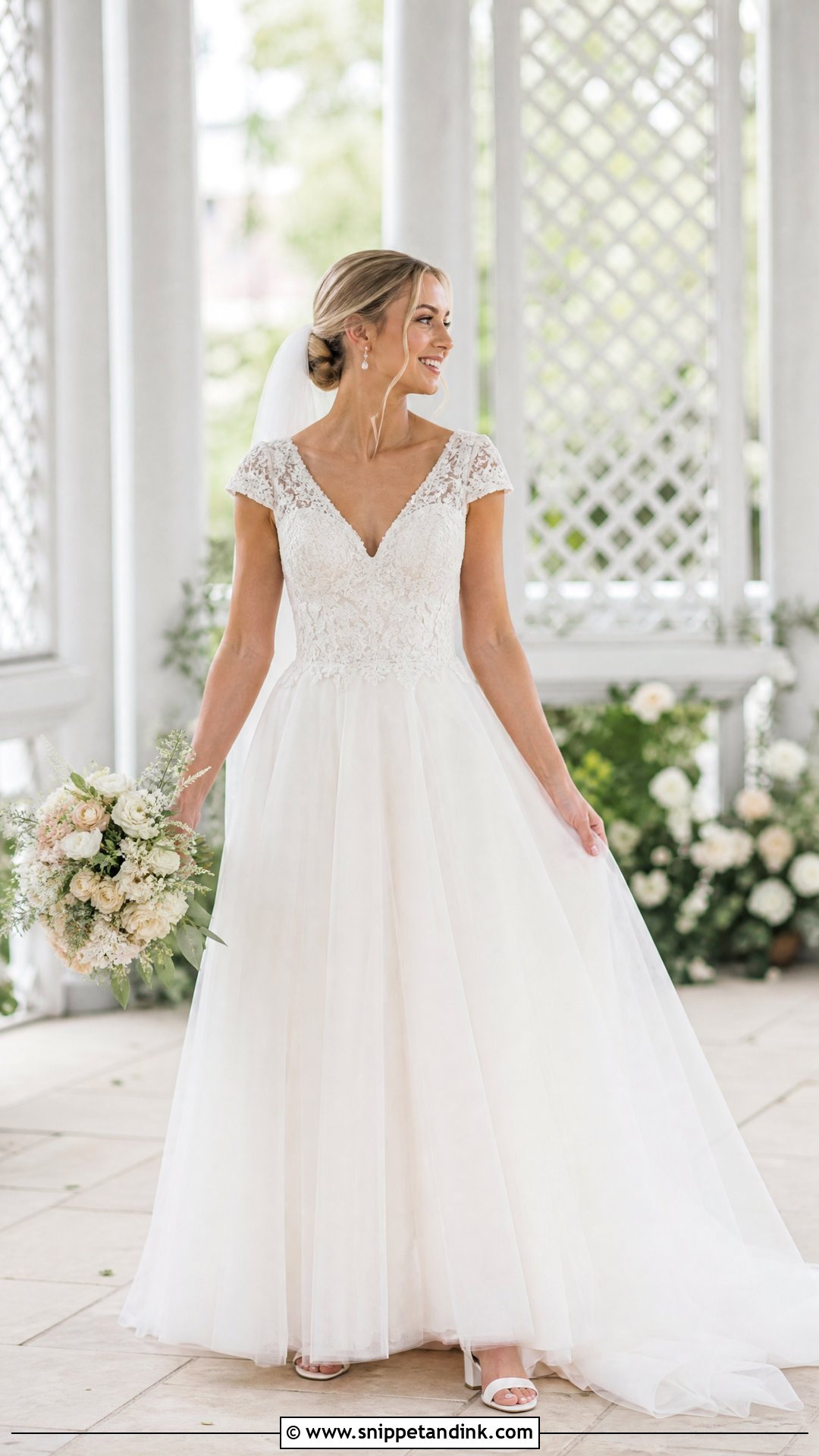
Cap sleeves give a little shoulder coverage without the weight of a full sleeve. Lace-edged or softly gathered tulle caps should flow straight into a fitted bodice. With an A-line skirt the look stays easy; with a full ball gown it reads more traditional. A low bun, pearl drops, a narrow veil and comfortable block heels suit it, and I’d skip bulky bracelets. Cap sleeves pull across the back when you reach forward, so move your arms forward and up during alterations. The openings should lie flat without cutting into the skin, and small hidden elastic sections keep them flexible through the evening.
19. Blush Tulle Wedding Gown
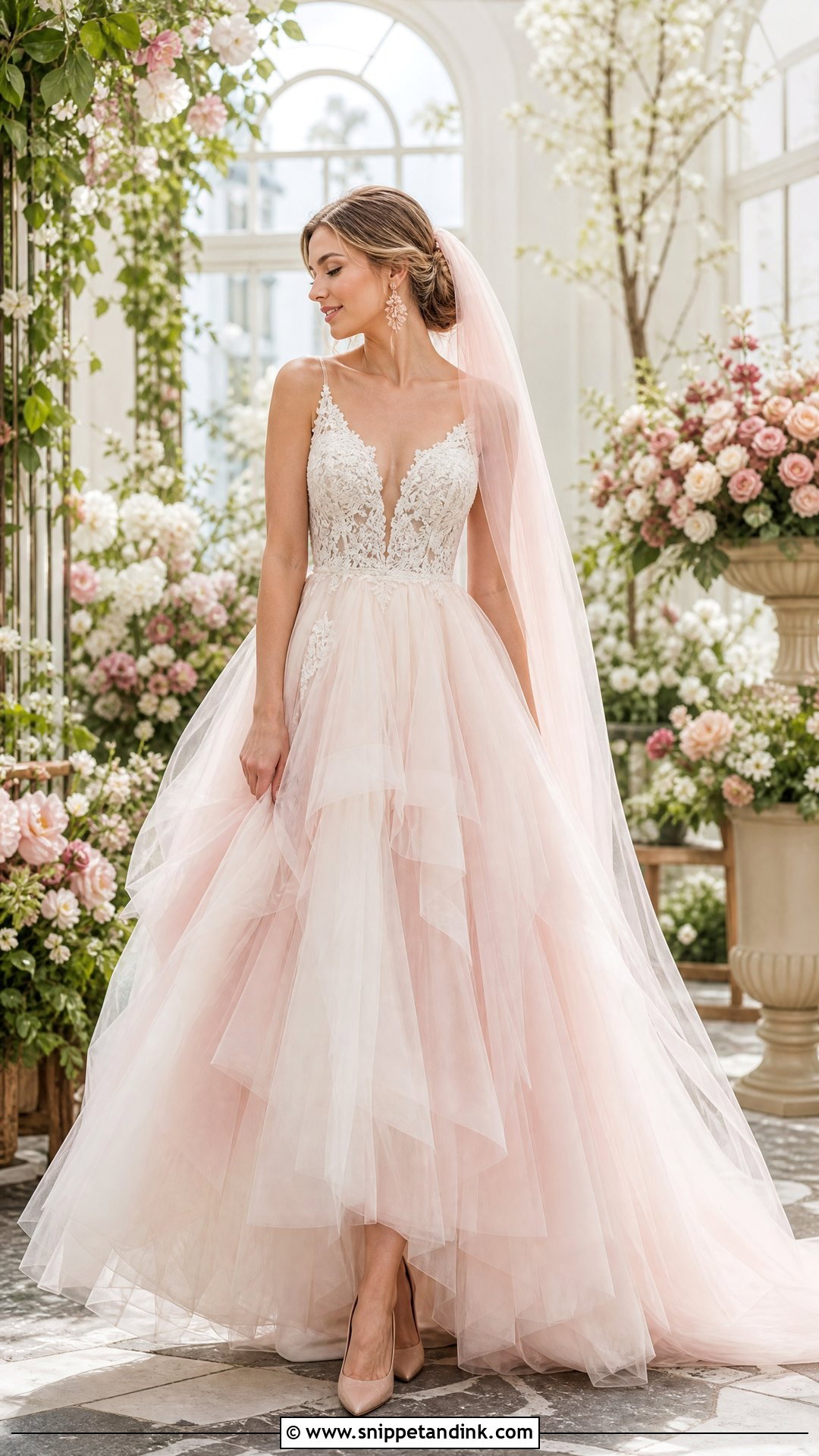
Blush adds gentle color without losing the bridal read. The prettiest versions layer pale pink, nude and ivory tulle so the color has depth instead of one flat shade, and an ivory lace bodice over a blush lining makes the appliqués stand out. Rose-gold earrings, neutral heels and a veil chosen in the same light as the dress keep it cohesive, along with soft waves and flowers in ivory, dusty pink or muted greens. View the gown in daylight and indoor light before ordering. Blush shifts noticeably between the two, and a shade that looks soft in the shop can turn peachy or almost grey outdoors.

20. Blue Tulle Wedding Gown
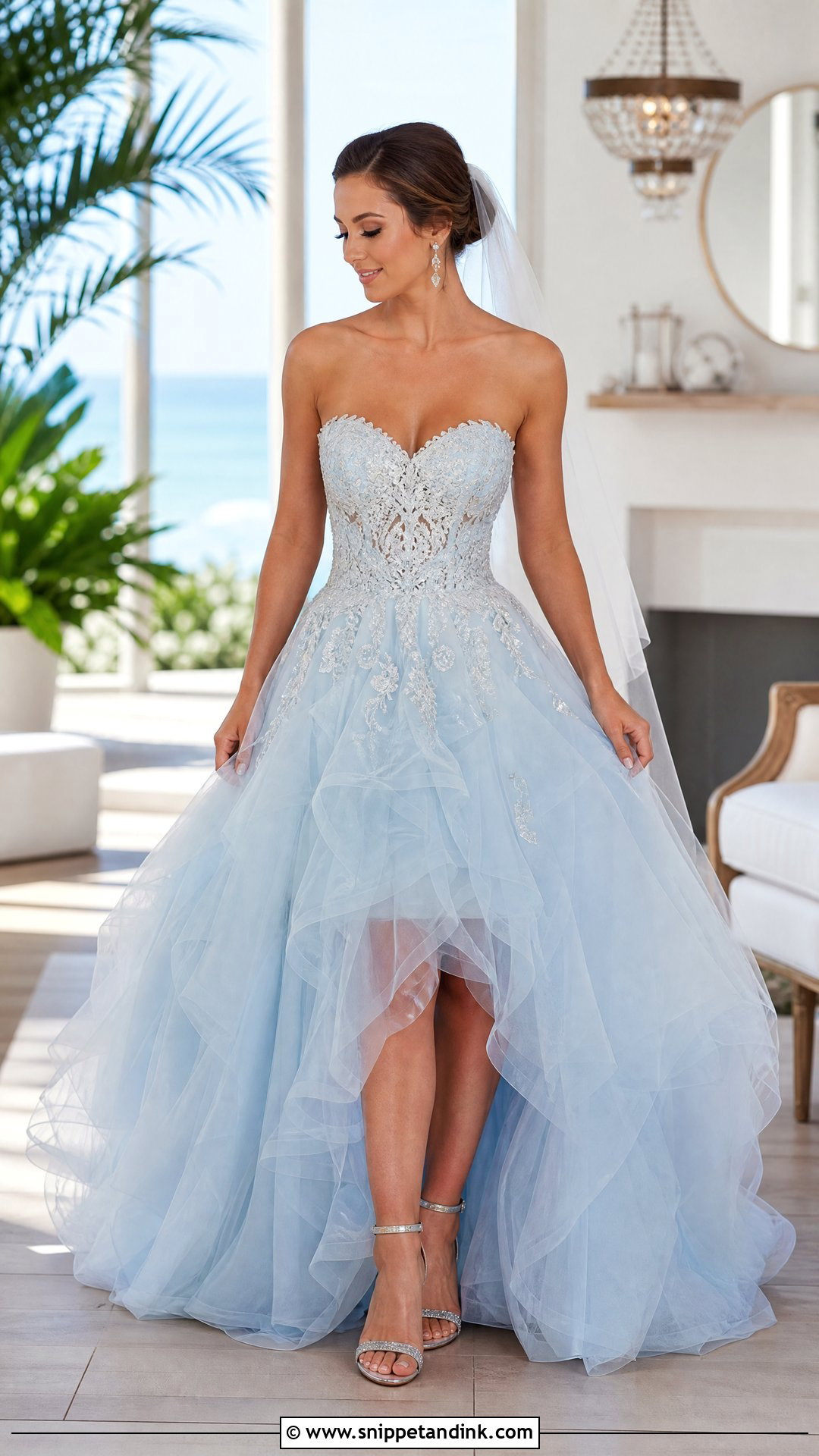
Pale blue is a fresh alternative to ivory. You can keep it subtle with a powder blue skirt under an ivory lace bodice, or go all in with blue layers throughout. Silver embroidery, small pearls or tonal appliqués suit the cool shade without tipping into costume. Silver heels, crystal earrings, a simple ivory veil and a sleek updo give it a polished base for coastal, garden or formal indoor settings. Hold the fabric against your decor before committing. Soft blue tulle can lean grey, icy or lavender depending on the number of layers and the lining color underneath.
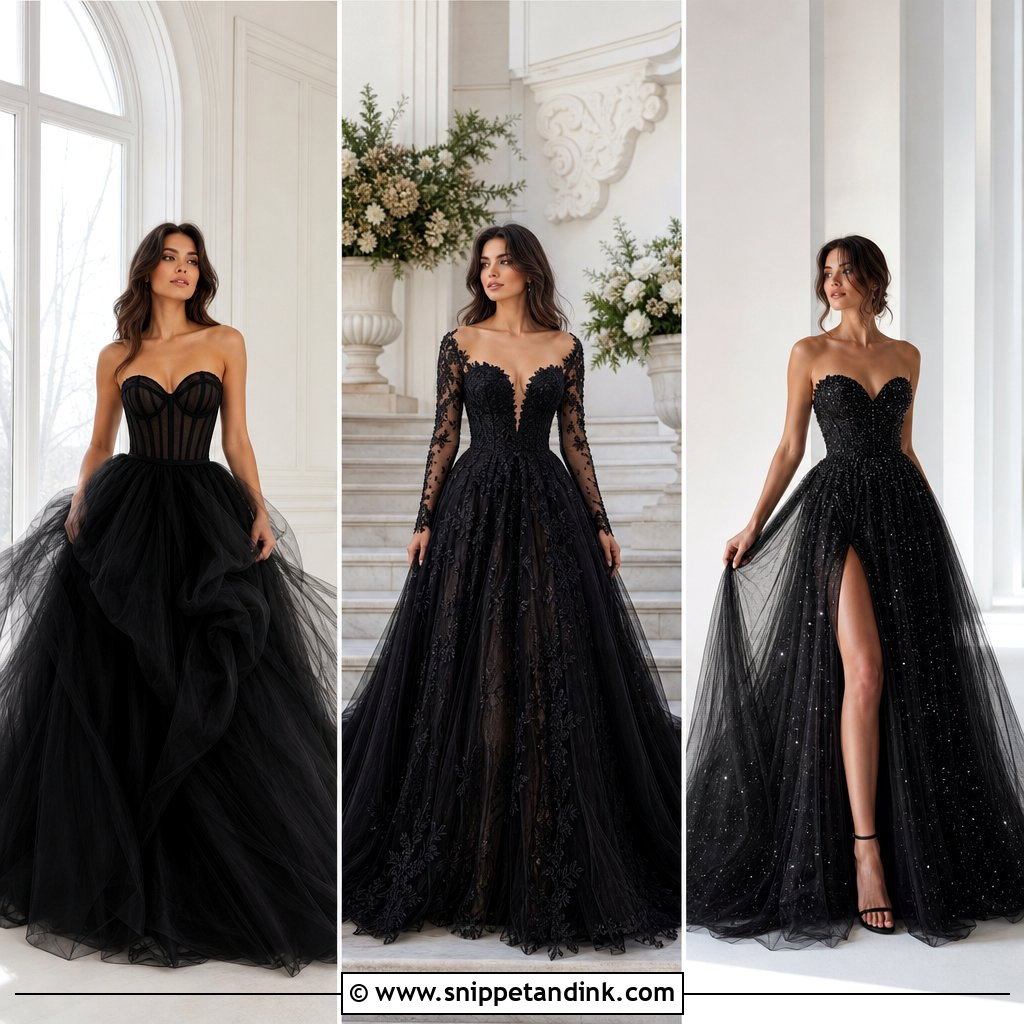
21. Black Tulle Wedding Gown
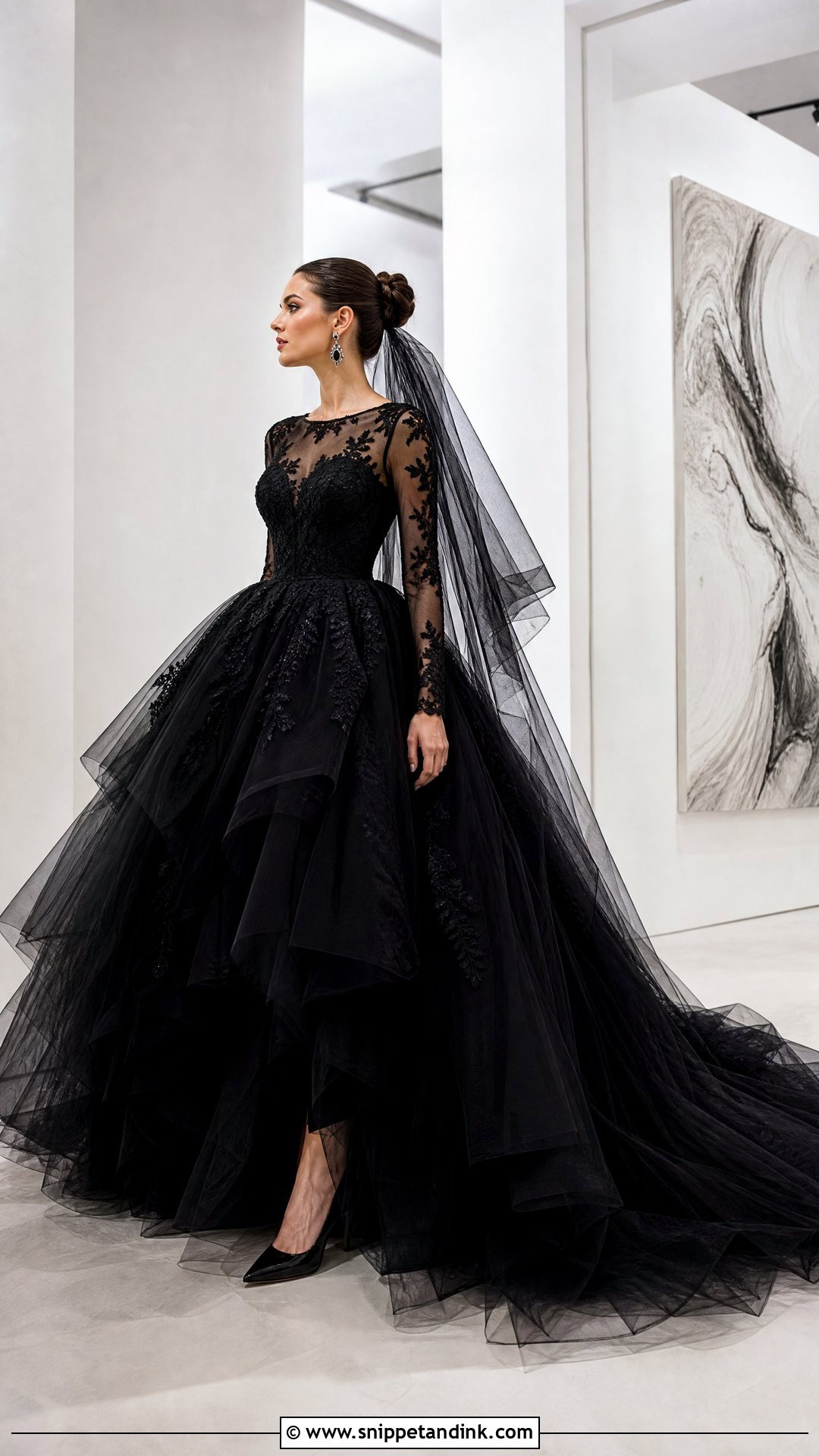
Black tulle gives a bold, editorial look with strong contrast. A structured corset with a full layered skirt is the formal option, while a softer A-line moves more quietly. Tonal lace and subtle beading add depth without breaking the single color. Black pointed pumps, crystal drops, a neat bun and clean makeup suit it, along with a black veil matched exactly to the gown’s undertone. Blacks rarely match each other, which is why I check every black fabric together in natural light. Layered tulle can read anywhere from charcoal to deep black depending on the angle, and a smooth lining stops the sheer skirt looking patchy in photos.
22. Tea Length Tulle Wedding Gown
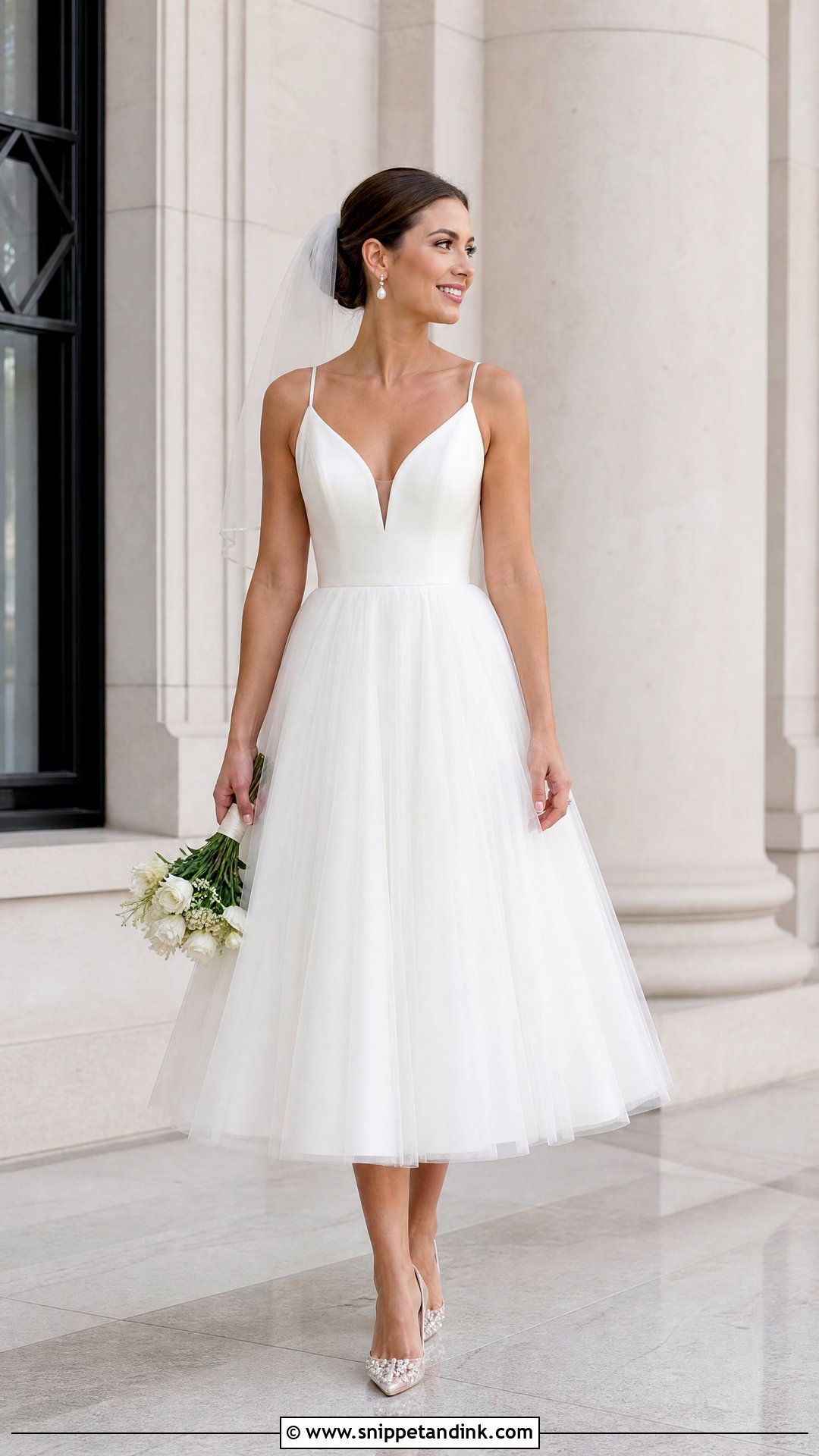
Tea length ends between the knee and ankle, so your shoes become part of the outfit. A fitted bodice with a softly flared skirt gives a light vintage feel. Pointed slingbacks, embellished pumps or polished block heels all suit it, as long as you can stand in them for hours. Pearl earrings, a short veil and a neat updo keep the proportions tidy; a very long veil fights the short hem. It’s a good fit for courthouse ceremonies, daytime celebrations and small venues. Tulle hems can look unfinished if the layers are cut unevenly, so check that every layer is trimmed to the same line at your final fitting.
23. Minimalist Tulle Wedding Gown
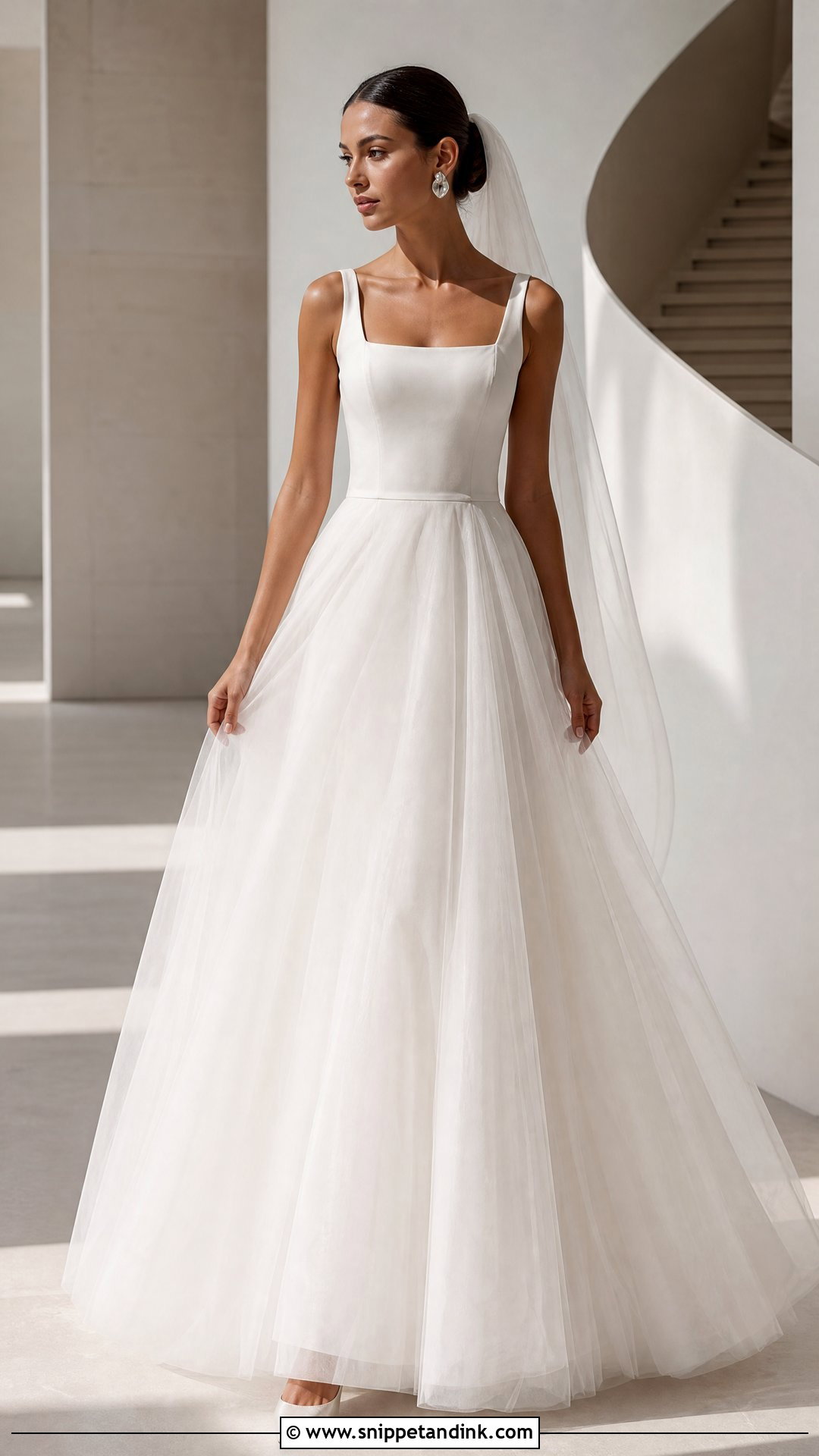
Minimal tulle gowns depend on clean construction and controlled volume. A smooth strapless, scoop or square-neck bodice over a plain A-line tulle skirt gives softness without lace, glitter or heavy beading. Sculptural earrings, pointed satin heels, a sleek bun and a single-layer veil suit it, and a narrow satin waistband can mark the waist if it blends with the dress. Simple gowns show everything, so this is where I spend the most fitting time. The bodice needs to sit flat, the waist level, and the tulle should fall evenly without bunching at the hips.
24. Bow Back Tulle Wedding Gown
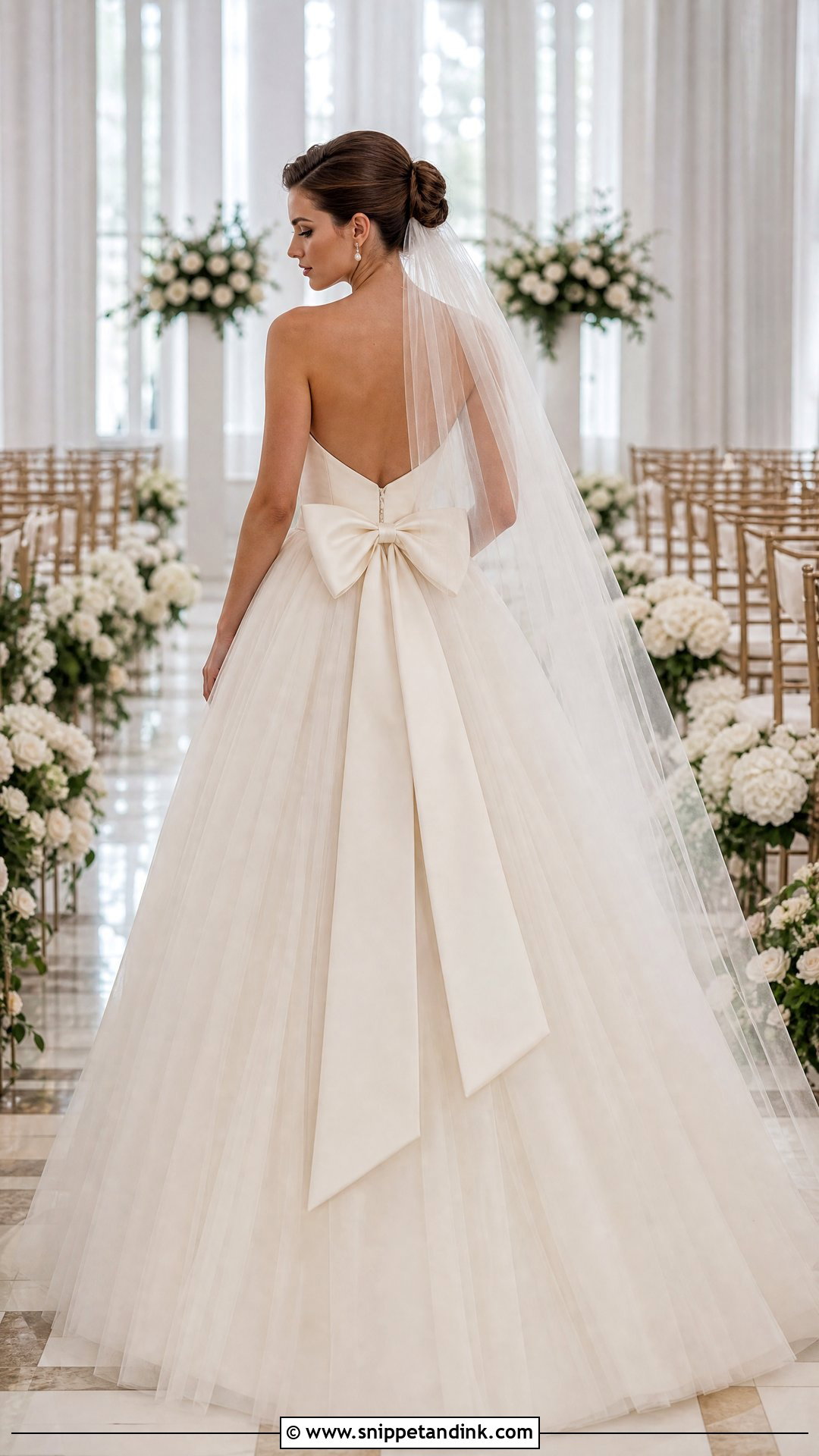
A bow at the back gives one clear focal point without covering the dress in decoration. It can sit at the waist, the upper back or the base of an open neckline, in structured satin or tulle. Scale matters: a full ball gown carries a large bow, while an A-line usually wants a smaller one. Keep the front quiet, add pearl earrings and understated heels, and plan to take the veil off at the reception so the bow shows. Ask whether the bow is detachable or pre-shaped. Soft bows collapse flat after an hour of sitting against a chair back, so a stiffened interior is worth asking for.
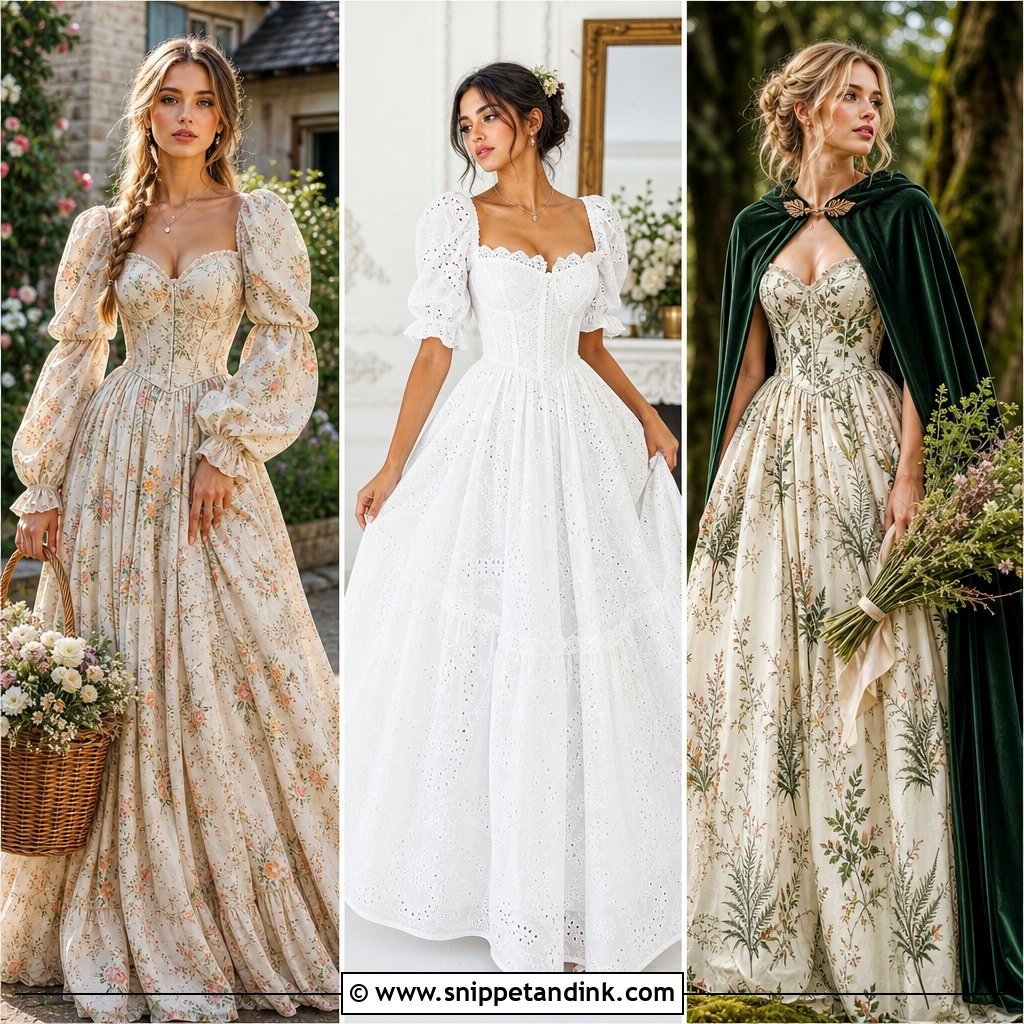


25. Cathedral Train Tulle Wedding Gown
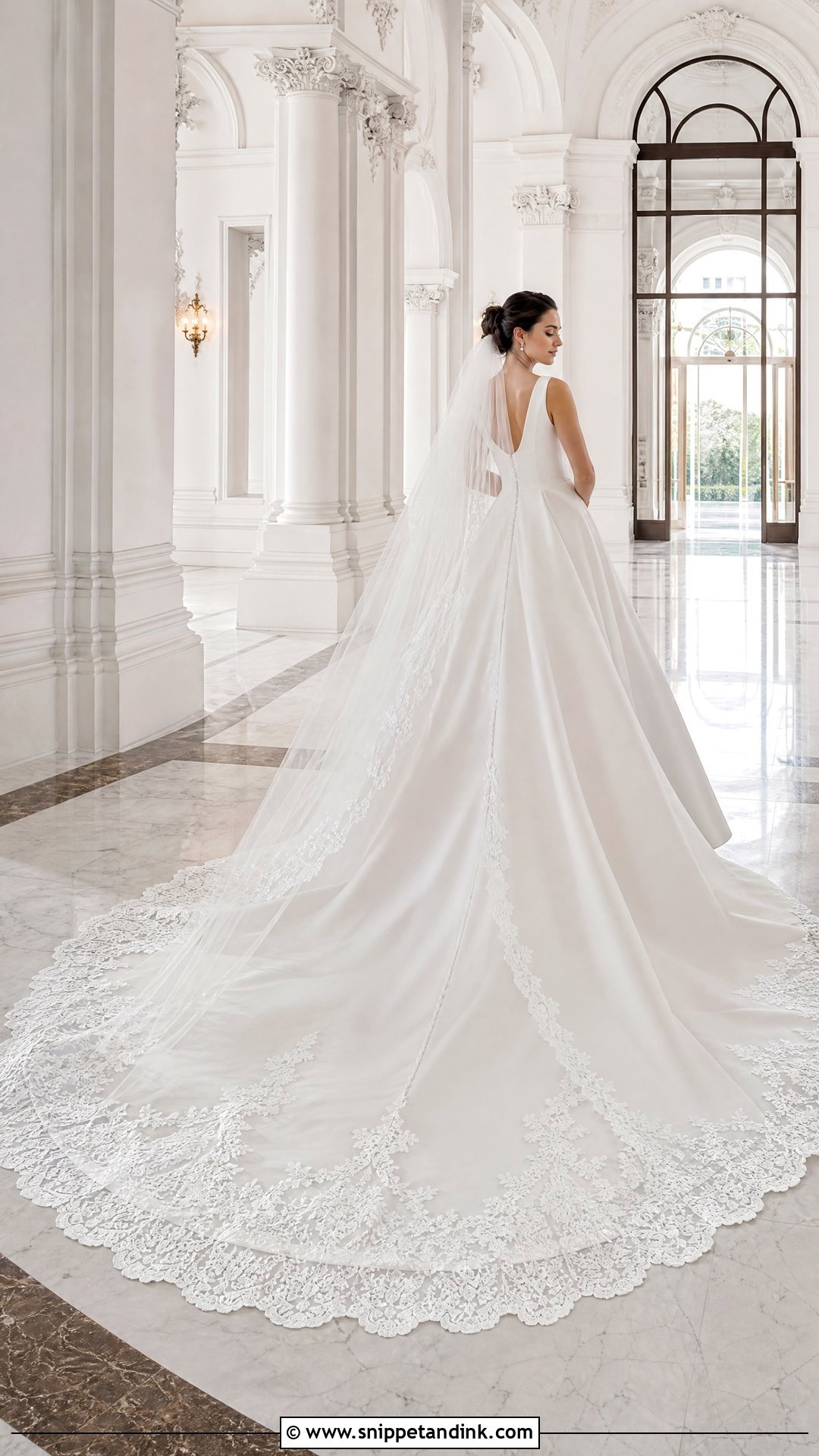
A cathedral train gives a formal ceremony its sweep down the aisle. Trim it with lace, scattered appliqués or plain layered tulle to match the bodice detail, and balance the length with a fitted corset or structured A-line top. A cathedral veil, pearl earrings, closed-toe heels and a polished updo complete the look, as long as the veil and train don’t carry competing patterns. Ask for a secure bustle and have your attendant learn it at the last fitting. Practice turning and climbing steps before the wedding. A long tulle train should glide behind you without twisting, pulling the waist back or catching your heels.
Cars, Doorways and Bathroom Trips in a Tulle Skirt
The practical side of a big tulle skirt rarely makes it into the dress photos, but it’s where most day-of stress comes from. A few habits I teach every bride at her last fitting:
- Getting into a car: sit first with your back to the seat, then swing your legs in while someone gathers the skirt in after you. Never step in forward.
- Doorways: walk through slightly sideways and let the skirt follow. Tulle compresses well, it just needs a moment.
- Bathroom: face the toilet rather than sitting normally, and have one attendant hold the gathered skirt up from behind. Practice once at home.
- Static: tulle clings to tights and legs in dry, air-conditioned rooms. A light mist of anti-static spray on the underlayers, tested on a hidden spot first, helps.
- Hem dirt: the bottom layers will pick up grass and dust outdoors. Accept it; it brushes off once dry and cleans later.
Caring for the Gown Once the Party Is Over
Get the gown to a wedding dress cleaner within a few weeks, even if it looks clean. Sugary drinks and sweat dry invisibly on tulle and can yellow over time. Don’t try spot-cleaning tulle at home; rubbing pulls the mesh out of shape and spreads the mark.
For storage, I’d keep it out of plastic garment bags, which trap moisture. Fold it loosely with acid-free tissue between the layers in a breathable box, store it somewhere cool and dark, and refold it along different lines every year or so to stop permanent creases forming in the net.
Tulle Forgives a Lot, Except a Bad Fit
One lightweight fabric covers a surprising range of bridal looks. A full ball gown gives ceremony drama, an A-line or minimal design moves more softly, and corsets, drop waists, appliqués, pearls, color and detachable overskirts all change the silhouette in their own way. When you compare dresses, think about support, lining, skirt volume, how you’ll manage the train and whether you can sit and walk comfortably. Bring your wedding shoes and undergarments to every alteration appointment. Then pick the gown that feels most like you, and shape the details around your venue.
You'll Like These Ideas:






Leave a Reply