
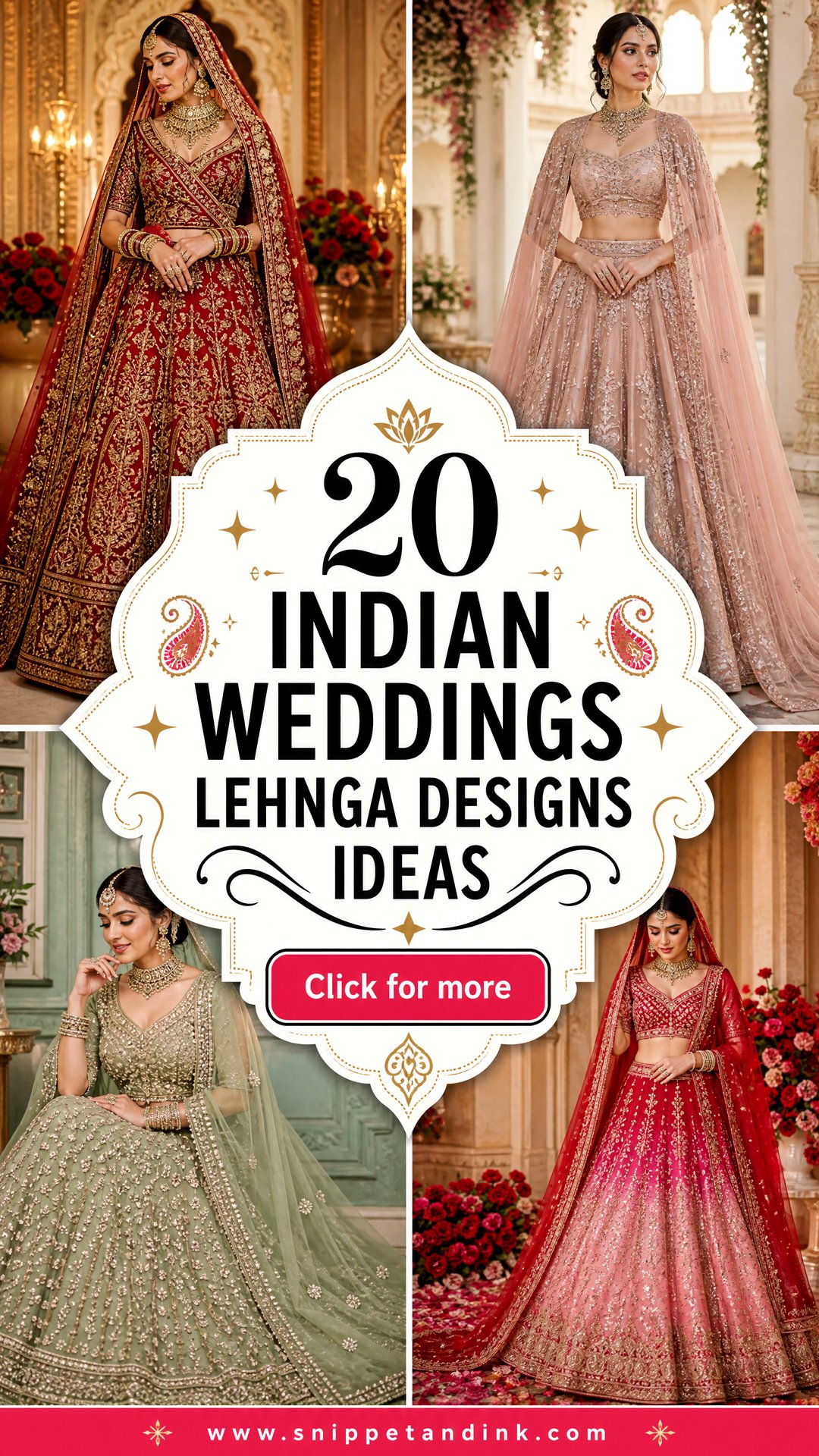
A lehenga is three pieces, skirt, blouse and dupatta, and nearly every problem I fix at fittings comes from one of those three being chosen without thinking about the other two. This list mixes bridal lehengas with lighter ones for sisters, bridesmaids and guests, for the sangeet, mehndi, reception and daytime ceremonies. Red still leads for brides, but pastels, jewel tones, metallic work and lighter fabrics give everyone else plenty to wear. Each entry is styled as a full outfit with blouse, dupatta, jewellery and shoes. Scale the embroidery and fabric weight up or down to suit your role in the wedding and the venue.
Bride, Sister or Guest: Reading Your Place in the Wedding
Half these lehengas could be worn by a bride or by her cousin, and what separates them is styling, not the skirt. As a guest, the polite default is to leave deep bridal red to the bride and keep the head dupatta, the heaviest jewellery and the longest veil off your own look.
Sisters and close family sit in between. They’re in the front row of every photo, so they can go richer, with emerald, wine, teal or brocade, but still one step lighter than the bride. If the couple has given the family a colour palette, follow it; mismatched siblings stand out far more in group portraits than anyone expects.
Black and white are the two colours I’d always ask the couple about first. Some families are relaxed about both; others associate them with mourning or bad luck.
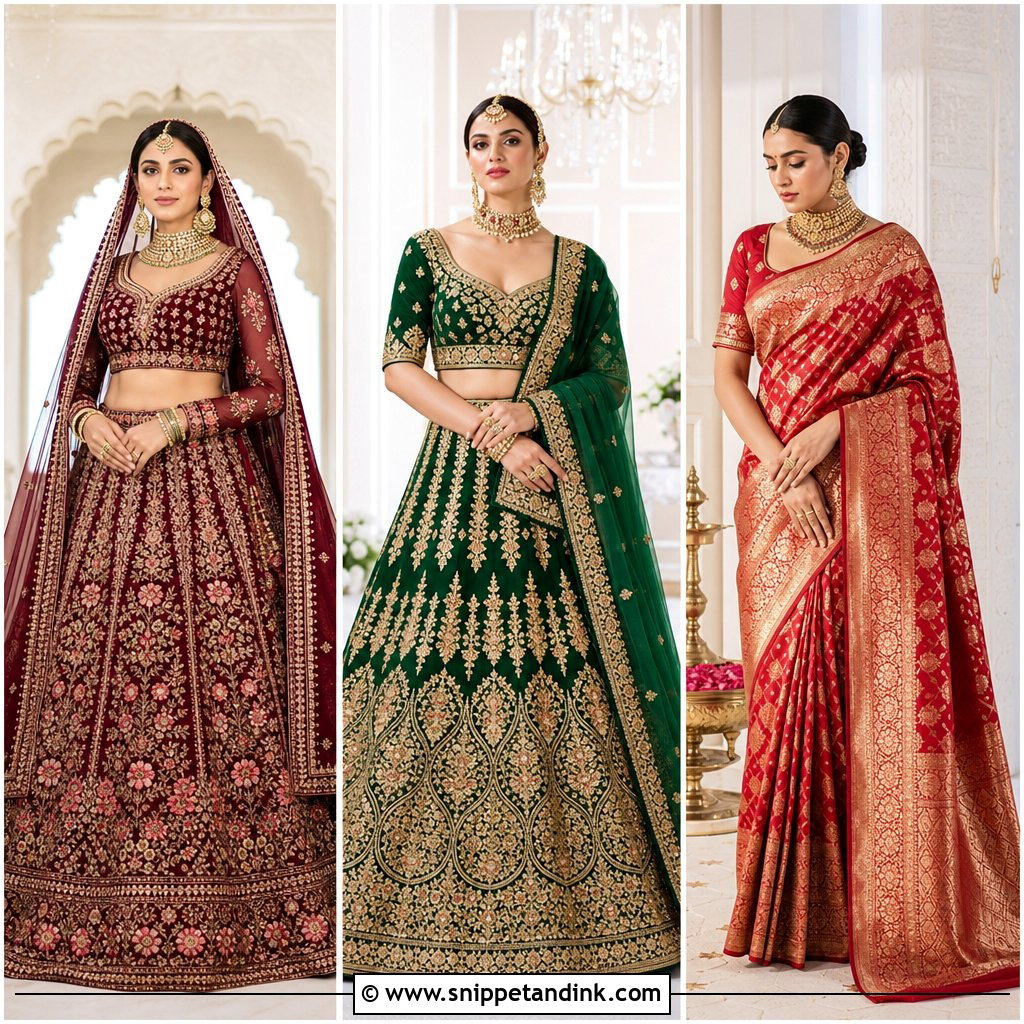
1. Red Zardozi Bridal Lehenga
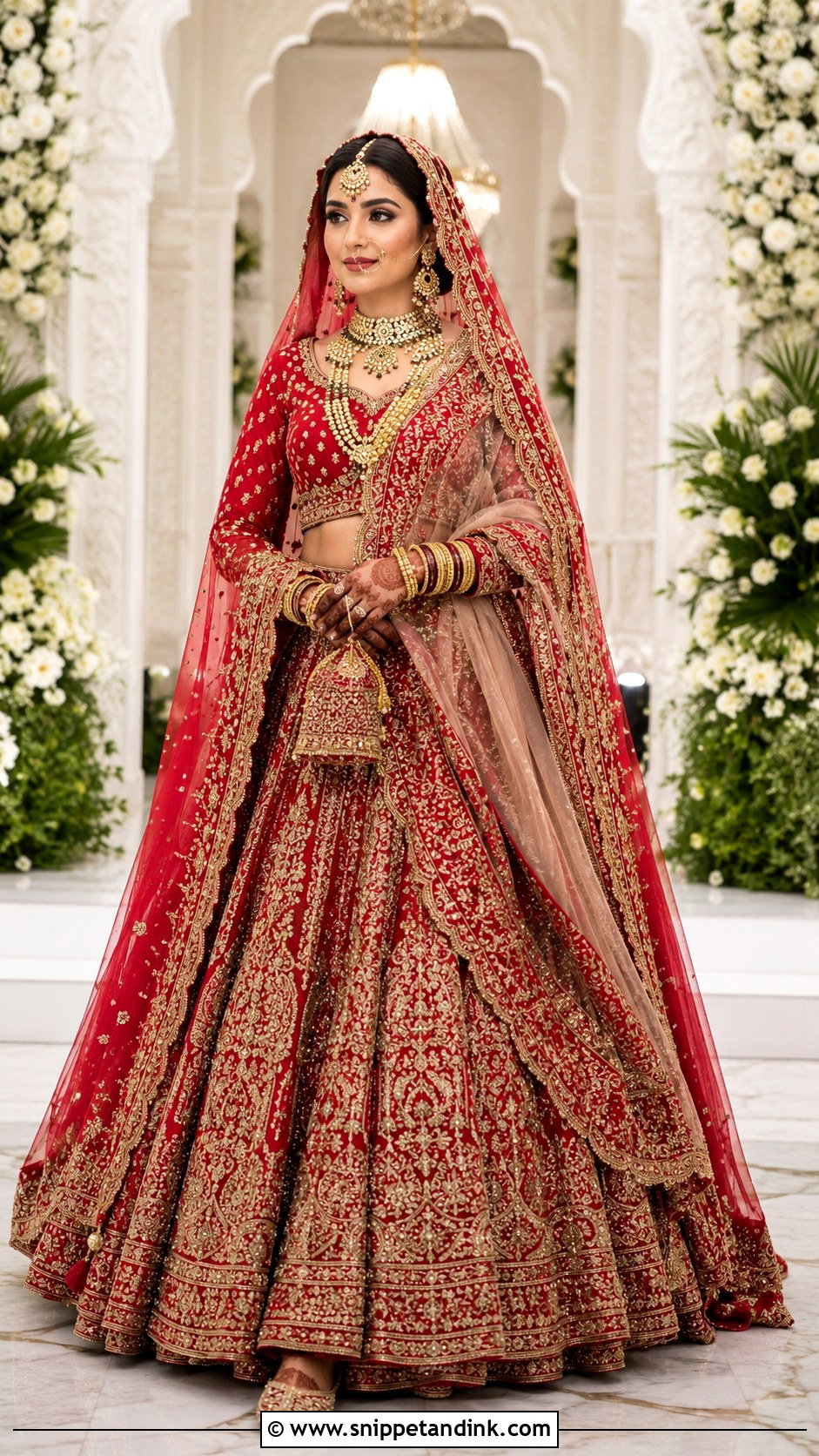
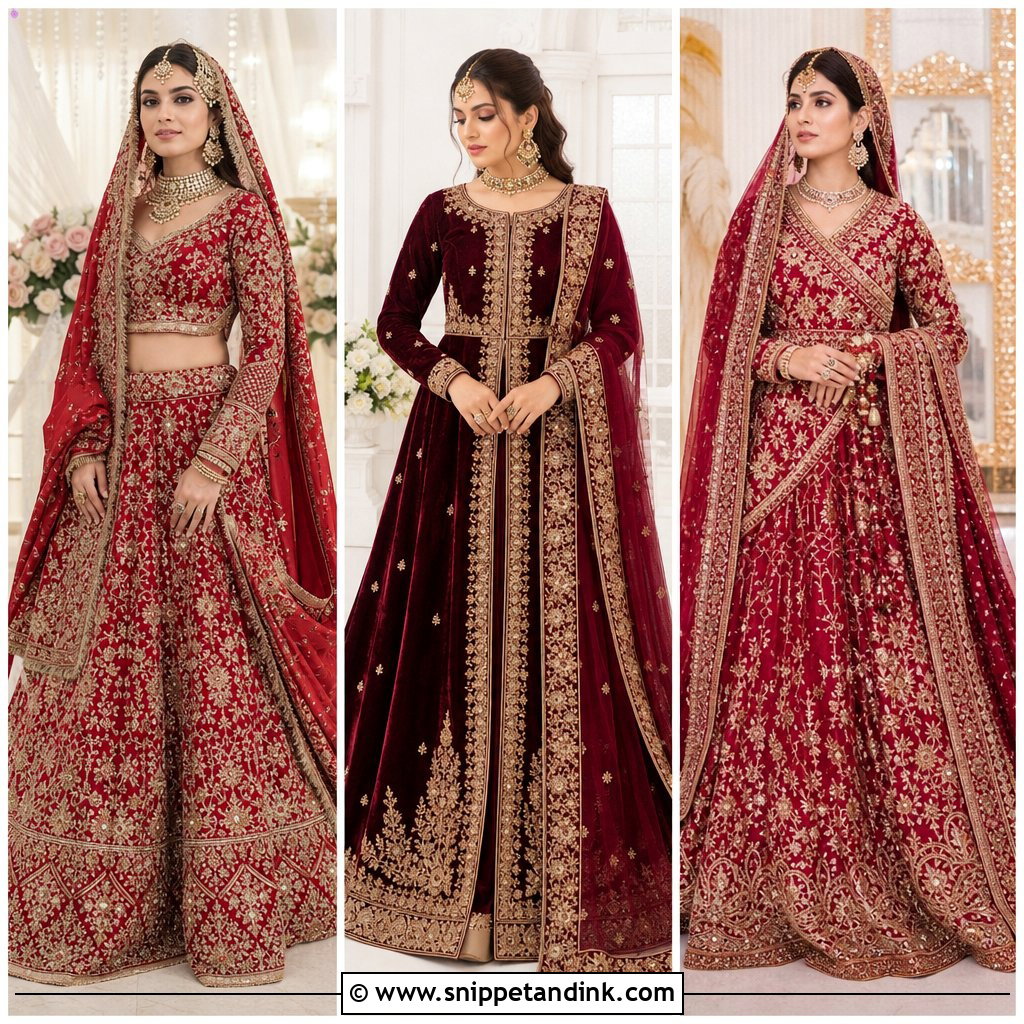
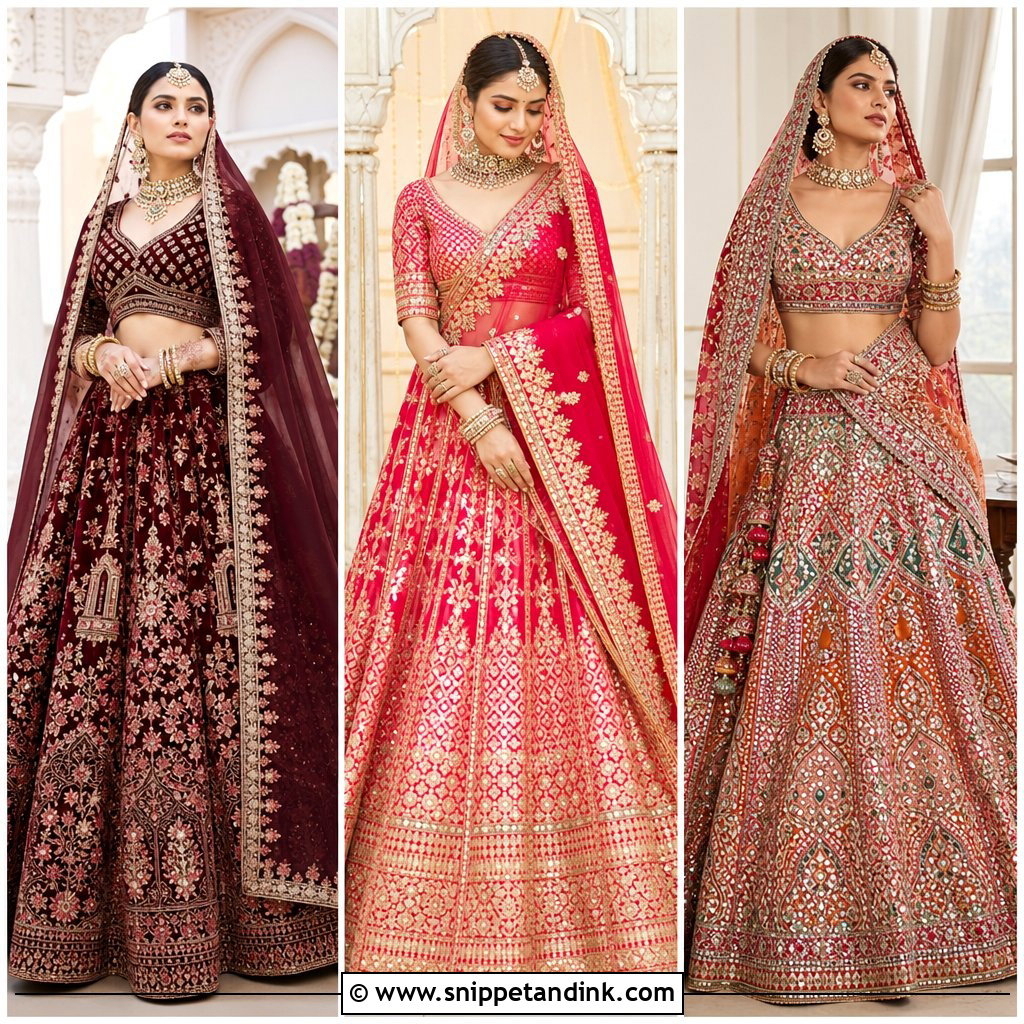
Zardozi is raised metal-thread embroidery, so a red zardozi skirt has real weight and catches light from every angle. Look for a full, paneled skirt with gold threadwork, dabka, sequins and floral motifs placed where they’ll show rather than spread evenly. A fitted blouse with a modest neckline balances the volume, and the scalloped dupatta goes over the head. A lighter second dupatta on one shoulder gives structure without hiding the skirt. Gold jhumkas, a choker, layered necklaces, bangles and a maang tikka match the richness, with red or antique gold juttis. Carry the smallest bag you can. Anything bigger competes with the skirt.
2. Maroon Velvet Bridal Lehenga
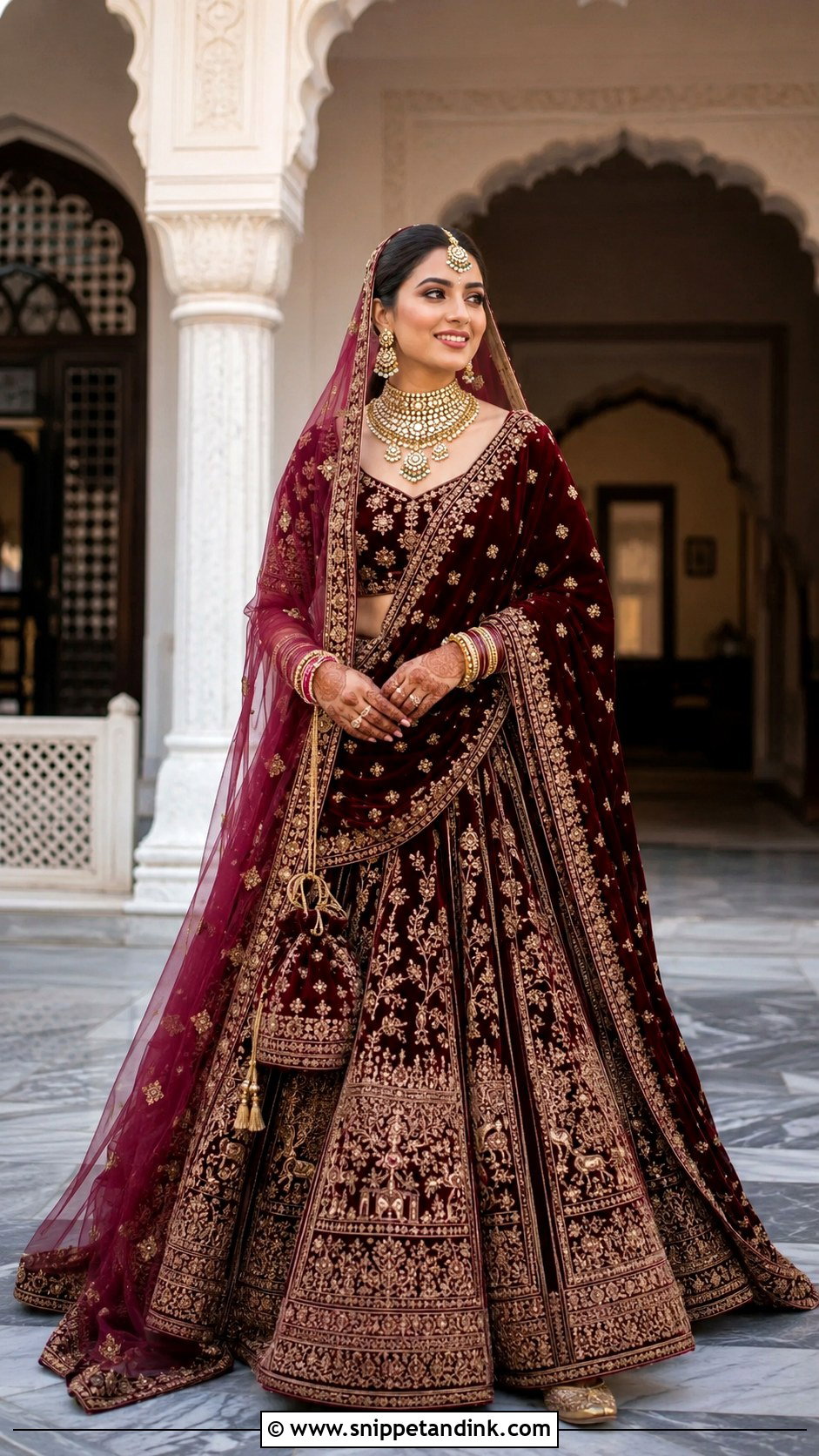
Velvet only makes sense in cool weather. In a warm room it becomes hard work within an hour. For winter, a deep maroon skirt with antique gold embroidery at the hem, repeated in smaller motifs across the body, looks properly formal. A structured velvet blouse with elbow-length sleeves and a square or sweetheart neckline matches it, and a lighter net dupatta stops the whole thing feeling solid. Kundan jewellery, stacked bangles, a statement ring and a compact potli are enough. I put velvet brides in gold juttis rather than fine heels because the skirt is heavy and the days are long. A sleek bun with fresh flowers keeps the neckline clear.
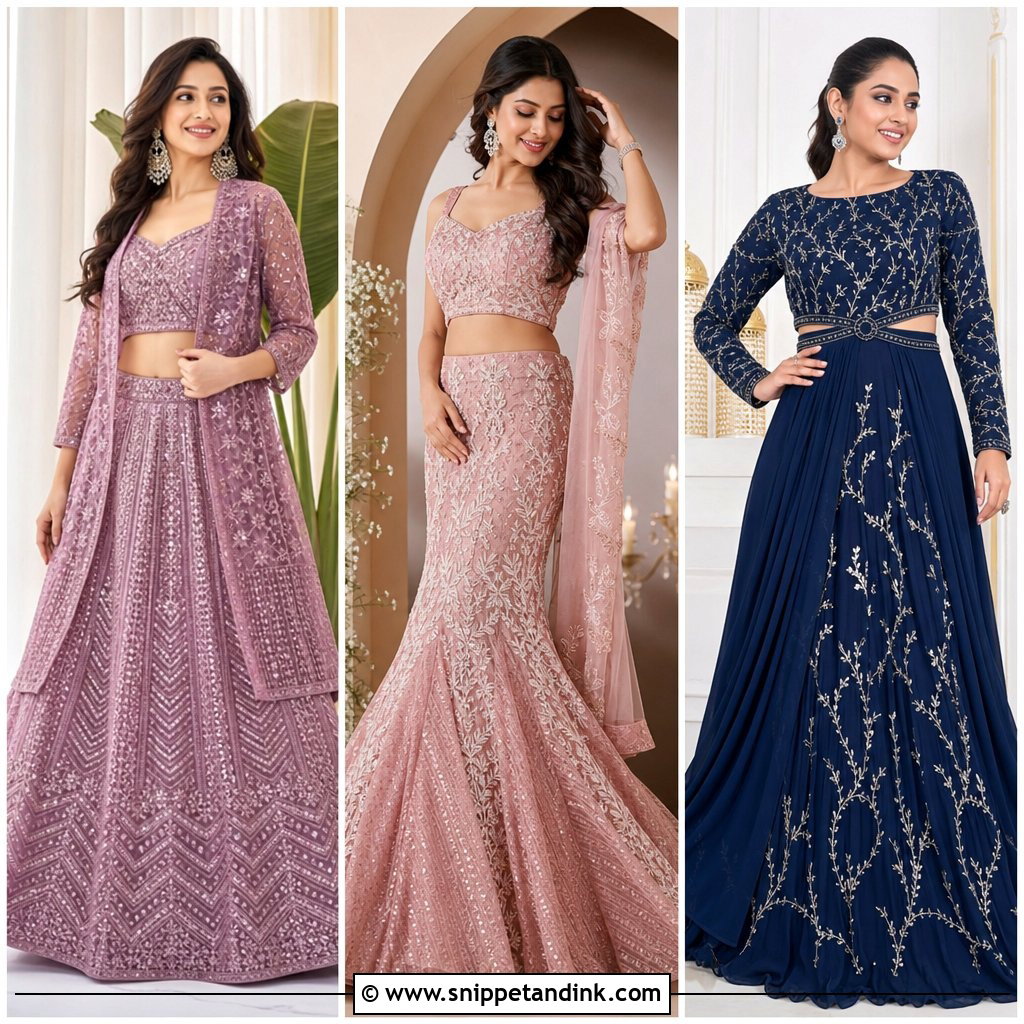
3. Pastel Pink Floral Lehenga
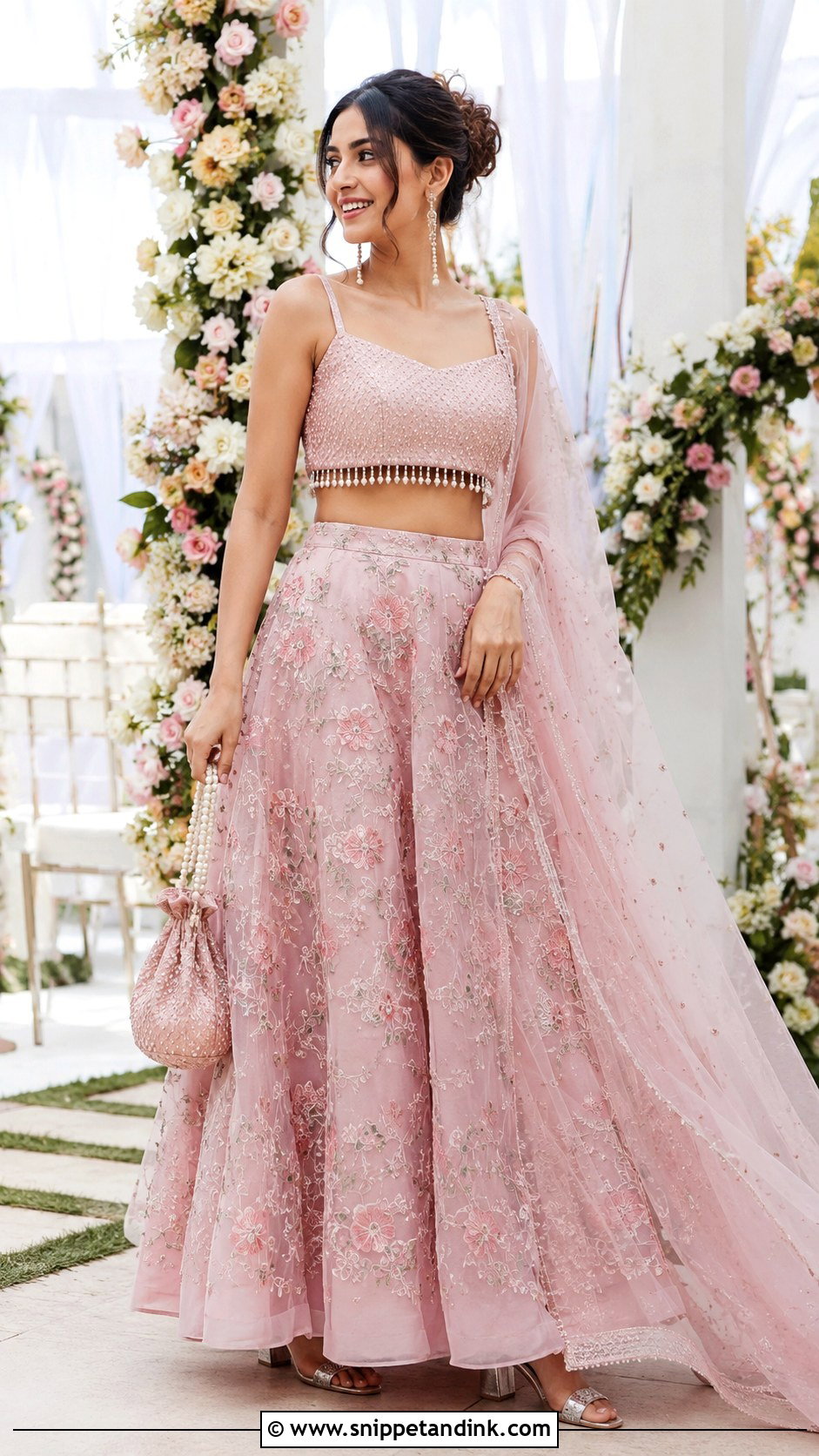
Pastel pink suits a daytime wedding, an engagement or a bridesmaid. Organza or light silk with delicate floral embroidery works better here than dense embellishment, which can look heavy on such a soft colour. A matching blouse with pearl details, fine straps or short sleeves keeps it modern; drape a sheer dupatta over one shoulder so the florals stay visible. Pearl drops, a slim bracelet and a small blush potli are plenty, with metallic block heels or embroidered flats. Soft curls or a low textured ponytail suit it. If it looks washed out at the trial, a mint, lavender or champagne border gives the colour an edge.
4. Ivory Gold Wedding Lehenga
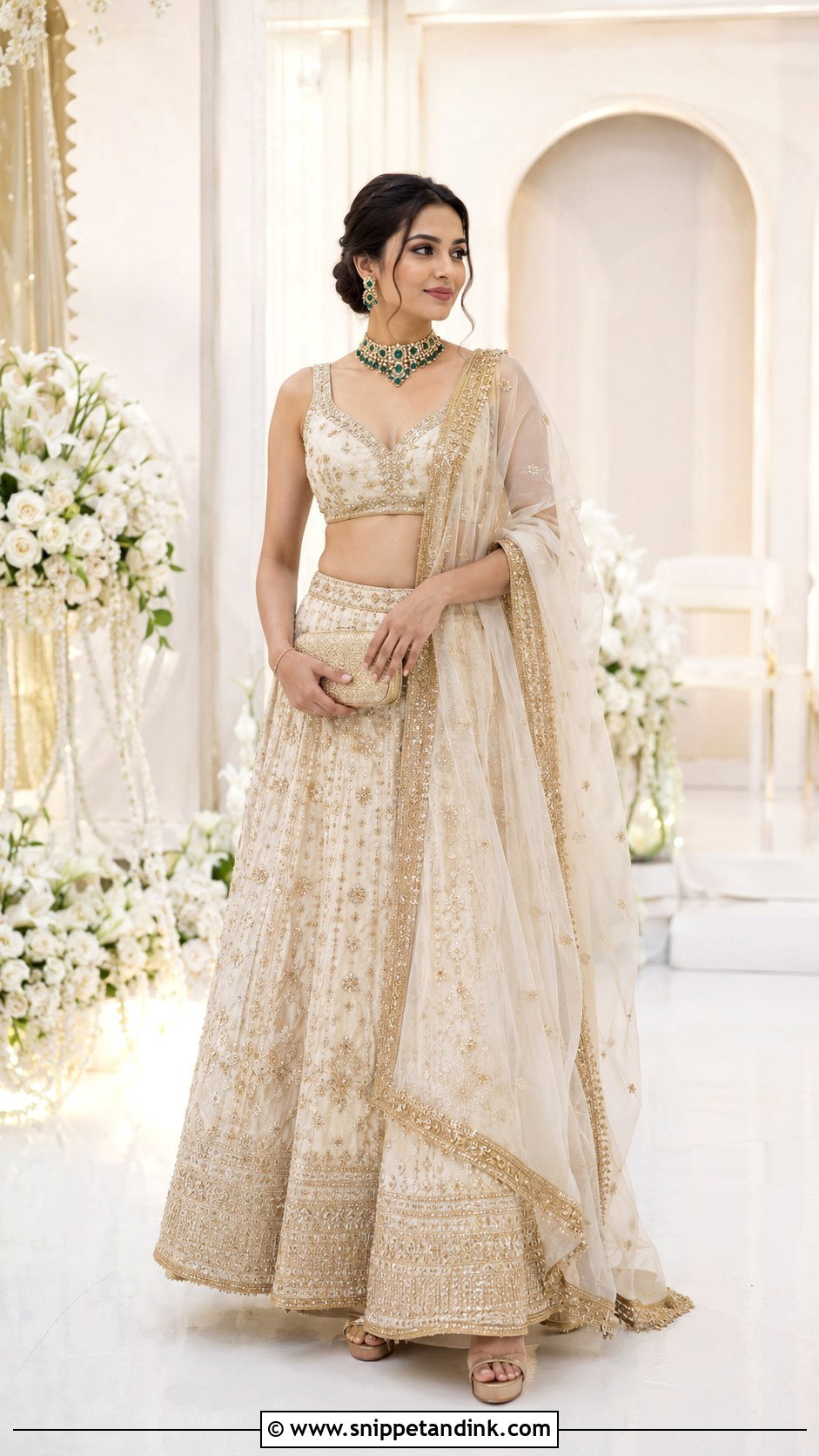
An ivory gold wedding lehenga is the quietest option here, and also the least forgiving. Raw silk or tissue with tonal embroidery, fine zari vines and small mirror or pearl accents looks rich up close. Pair it with an ivory blouse that has a shaped neckline and enough structure to hold the skirt, plus a sheer dupatta with a narrow gold border. Emeralds add contrast; pearls and uncut stones keep it monochrome. A gold clutch and champagne heels complete it. Brides can add a longer veil and a layered necklace, and guests should keep jewellery simpler. Pale fabric shows every pull and wrinkle, so the tailoring and a smooth underskirt are what I spend fitting time on.
5. Emerald Green Silk Lehenga
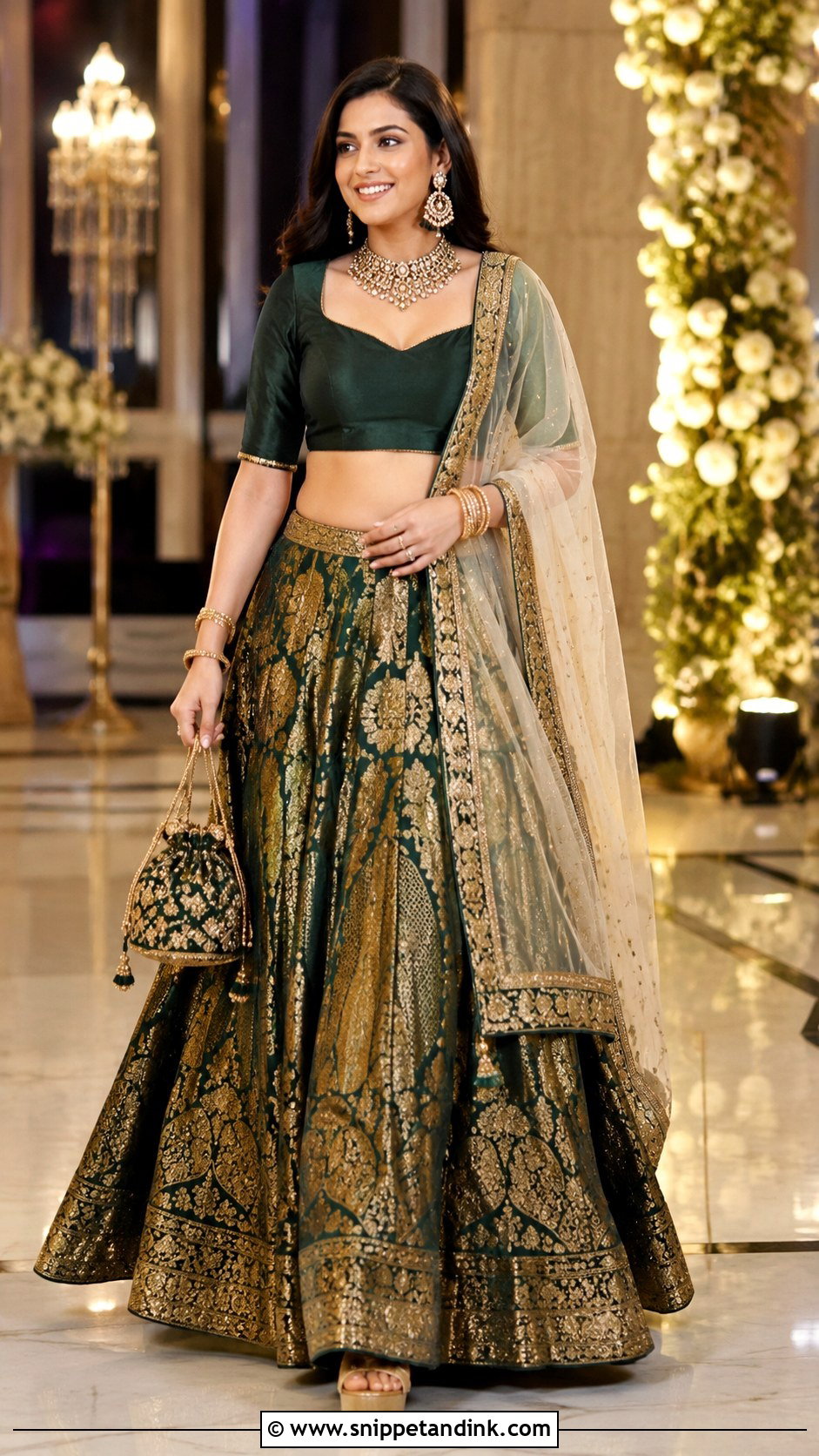
Emerald silk with gold zari motifs, a broad woven border and a little sequin highlighting has real presence without looking bridal, which is why I suggest it for the bride’s sisters, close relatives and reception guests. Match the blouse in green or contrast it with antique gold. A sheer dupatta in green, beige or muted rose draped across the arms finishes it. Kundan earrings, one statement necklace, gold bangles and an embroidered potli are enough. Silk skirts with heavy borders pull downward, so give the wearer a wedge rather than a stiletto. A centre-parted bun or loose waves both suit it.
6. Royal Blue Mirror Work Lehenga
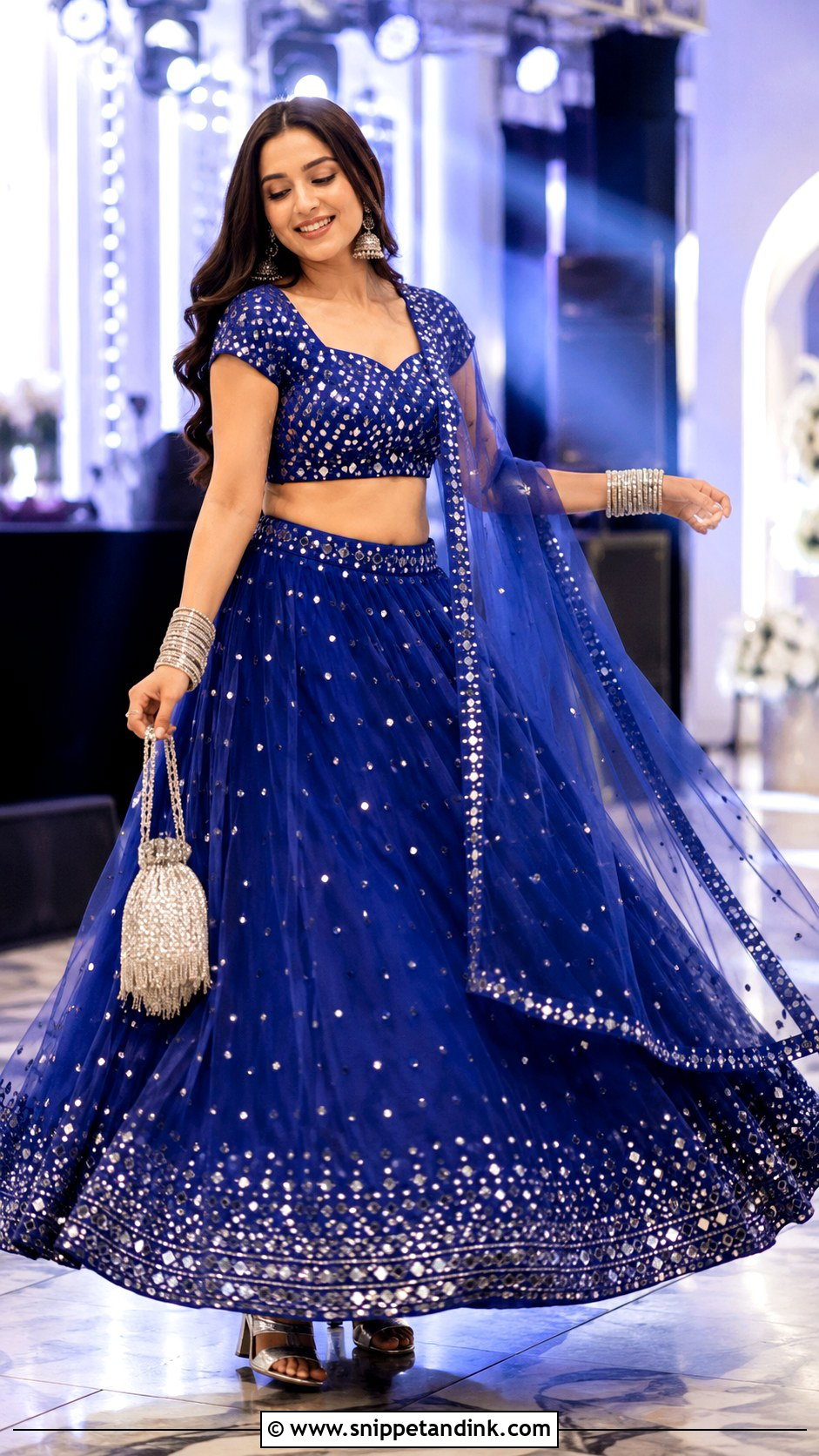
Mirror work is made for the sangeet. Every small mirror catches stage lights as you move. Choose a lightweight georgette skirt with the mirrors spread evenly and a wide border for definition, plus a supportive short-sleeve blouse you can dance in. Keep the net dupatta almost plain or the mirrors start to look like too much. Silver jhumkas, stacked bangles and a small mirrored potli tie it together, with silver block heels or embellished juttis. One honest warning: mirror edges can snag a net dupatta or fine hair, so I pin the dupatta clear of the blouse mirrors. A braided ponytail or low bun stays put, and cool-toned makeup with a bright lip holds up next to the blue.
7. Yellow Gota Patti Mehndi Lehenga
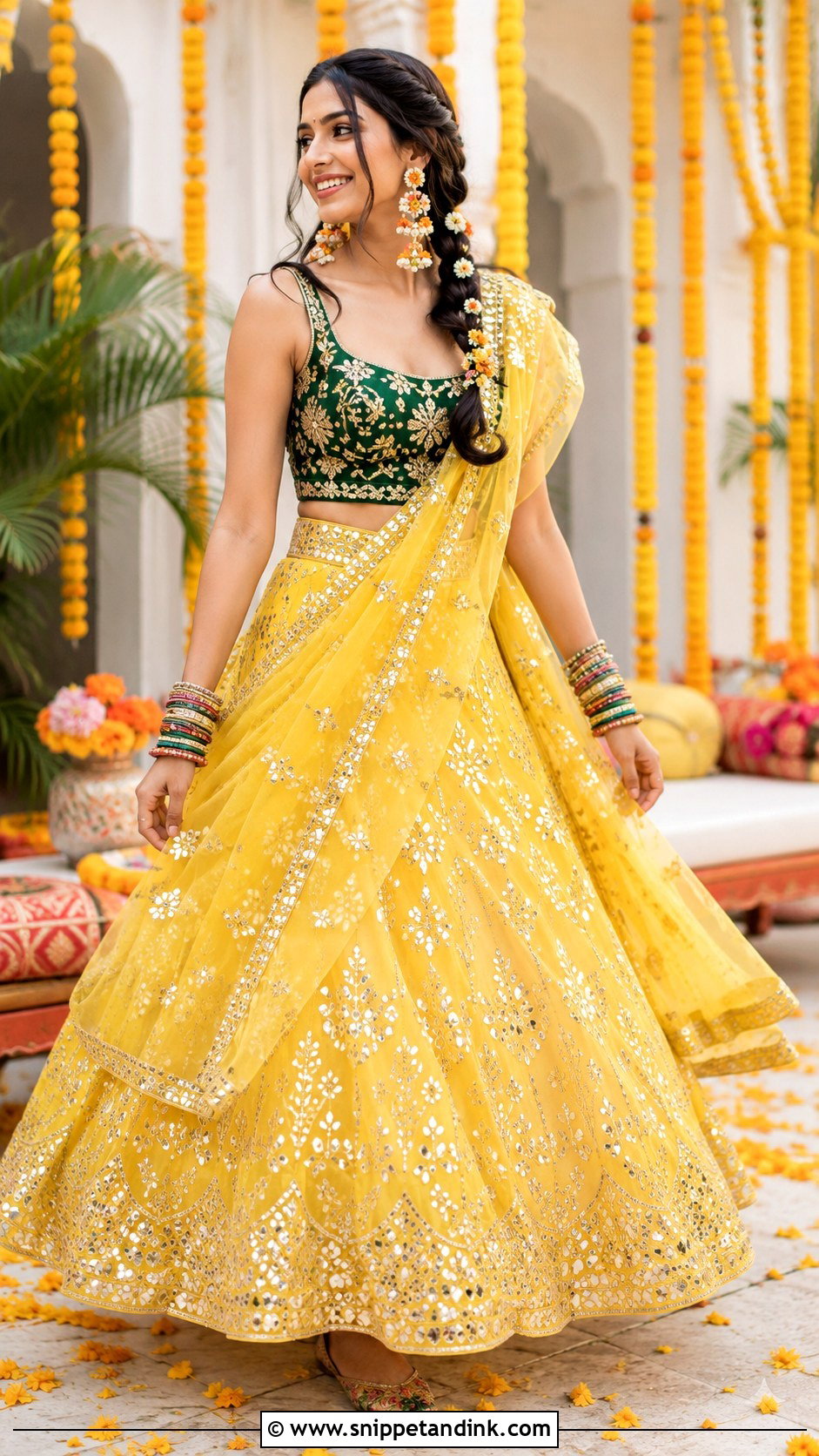
Gota patti is gold or silver ribbon cut into shapes and stitched flat onto fabric, which keeps it far lighter than metal embroidery. That’s why it suits a bright mehndi or haldi celebration where you’re on your feet and moving. Choose cotton-silk or georgette in yellow with gota in floral or geometric patterns, and contrast it with a green, pink or orange blouse. Pin a light dupatta securely so your hands stay free, then add floral earrings, colourful bangles, a small maang tikka and comfortable juttis. Hem the skirt slightly shorter if there will be dancing on grass. A braid with small flowers stays neat for hours.
8. Orange Bandhani Wedding Lehenga
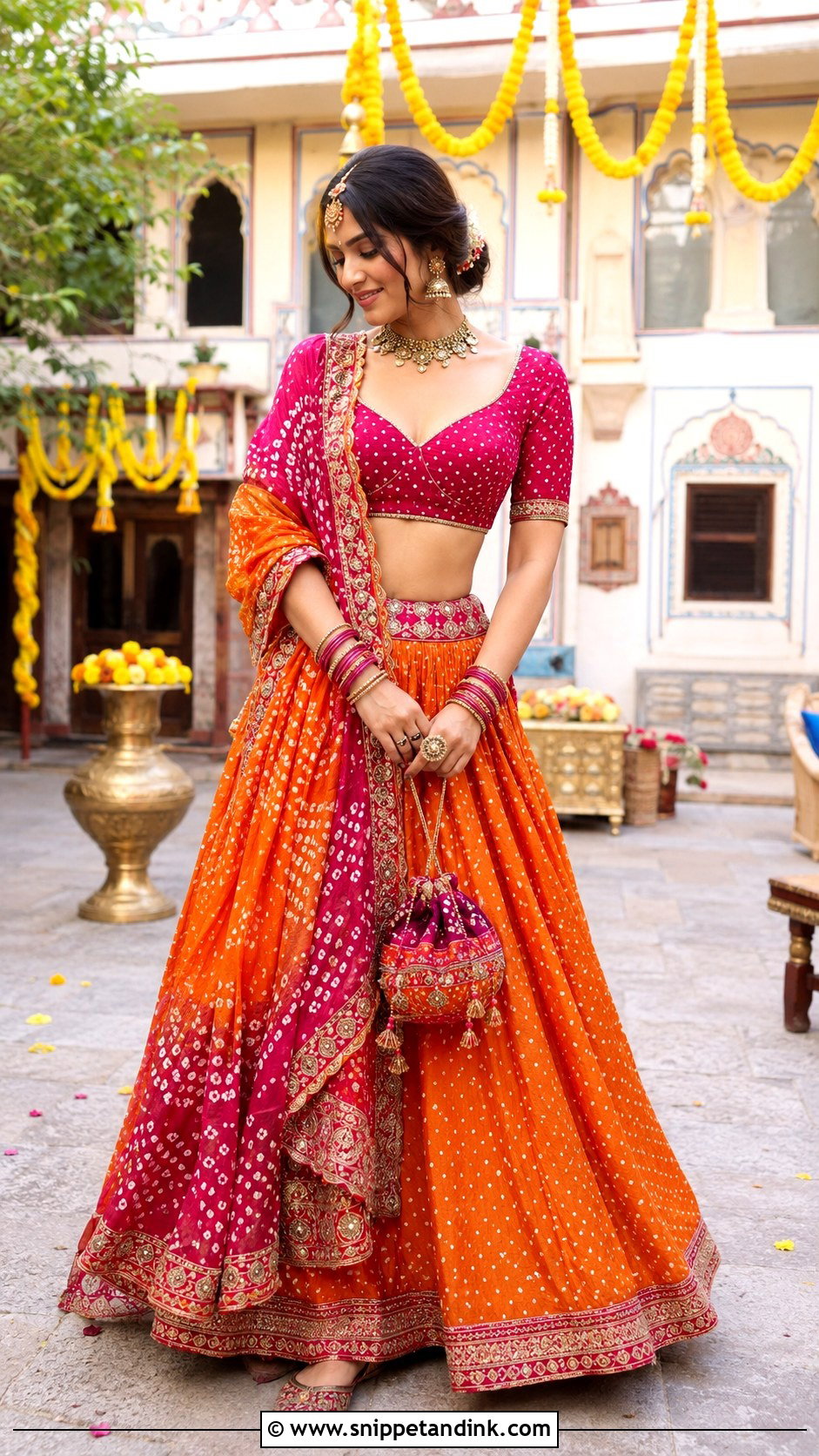
Bandhani is resist-dyed: tiny sections of cloth are tied off before dyeing, leaving the dotted pattern. In burnt orange, coral or tangerine with an embroidered border, it makes a strong daytime outfit. Repeat one colour from the skirt detailing in the blouse, such as magenta, red or green. The matching dupatta can go diagonally across the body or loosely over one arm. Oxidised gold jewellery, glass bangles, embroidered juttis and a fabric potli suit the regional character, as does a relaxed braid or soft bun. Keep any extra sequins minimal; the print is already doing the work.
9. Lavender Sequin Reception Lehenga
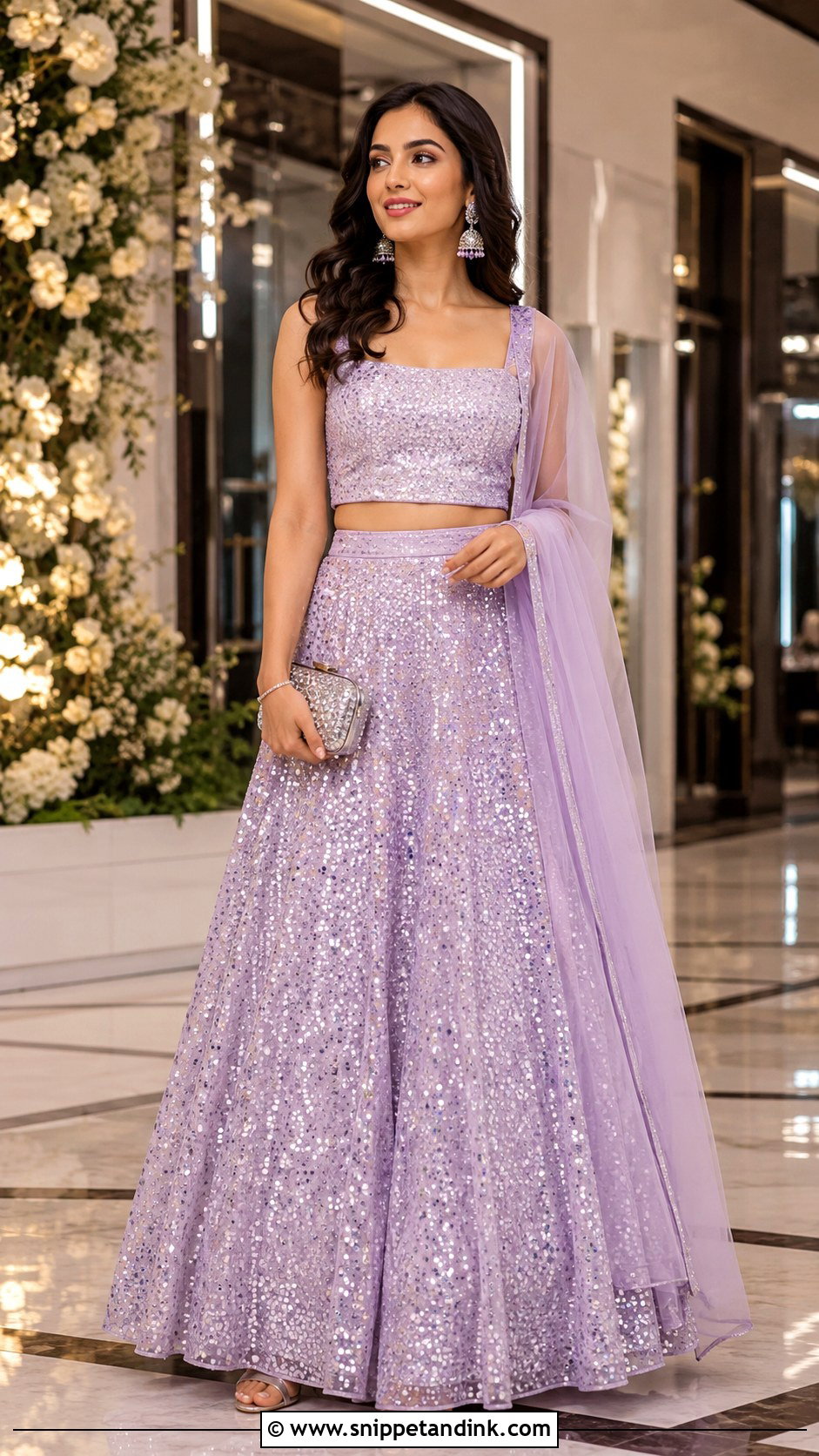
Lavender sequins are an evening option that isn’t black or navy. The sequins should be tonal and stitched onto soft net or georgette, because a dense, stiff sequin surface makes the skirt stand away from the body like a shell. A fitted blouse with a square neckline, short sleeves or a corset-style shape with real coverage keeps it modern. Swap a bordered dupatta for a plain sheer one or a light shoulder drape. Diamond-style earrings, a fine necklace, silver heels and a crystal clutch suit it, with smooth waves or a sleek low ponytail and mauve-toned makeup. I’d suggest it for bridesmaids, guests or a bride changing into something lighter later in the night.
10. Champagne Metallic Lehenga
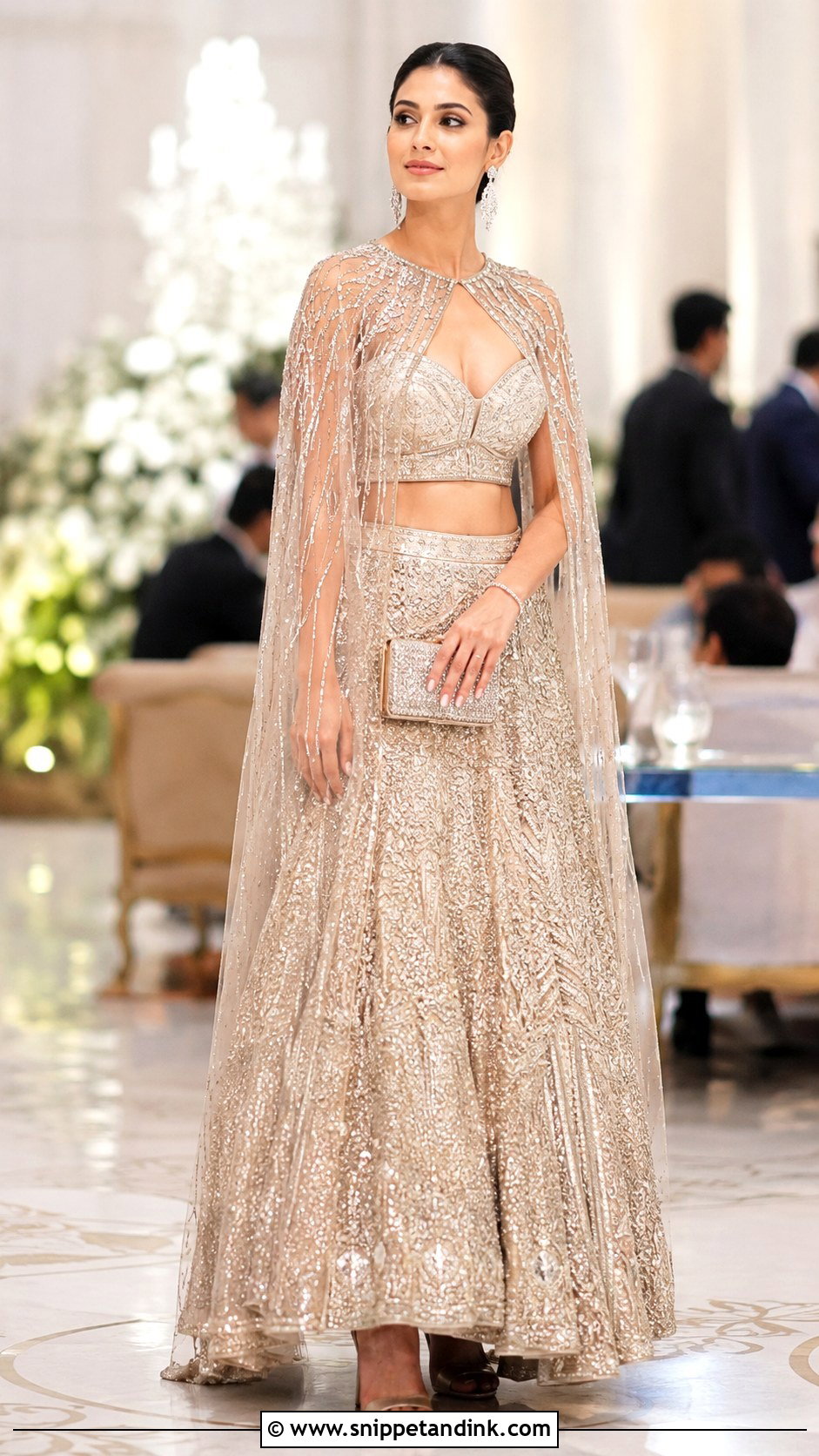
Champagne is metallic but soft, so it looks glamorous at a reception without competing with a bride in red. Choose silver-gold threadwork and fine sequins on a skirt that still moves. Stiff metallic fabric can look like foil. Match the blouse in the same tone and add a soft net dupatta or a detachable cape. Crystal earrings, a sleek bracelet, a box clutch and neutral metallic heels finish it. The mistake I see most is mixing metals: rose gold earrings, yellow gold bangles and a silver clutch all fight on a champagne base. Keep everything pale gold or soft silver. A neat bun or side-parted waves suit a ballroom and evening photos.
11. Black Embroidered Sangeet Lehenga
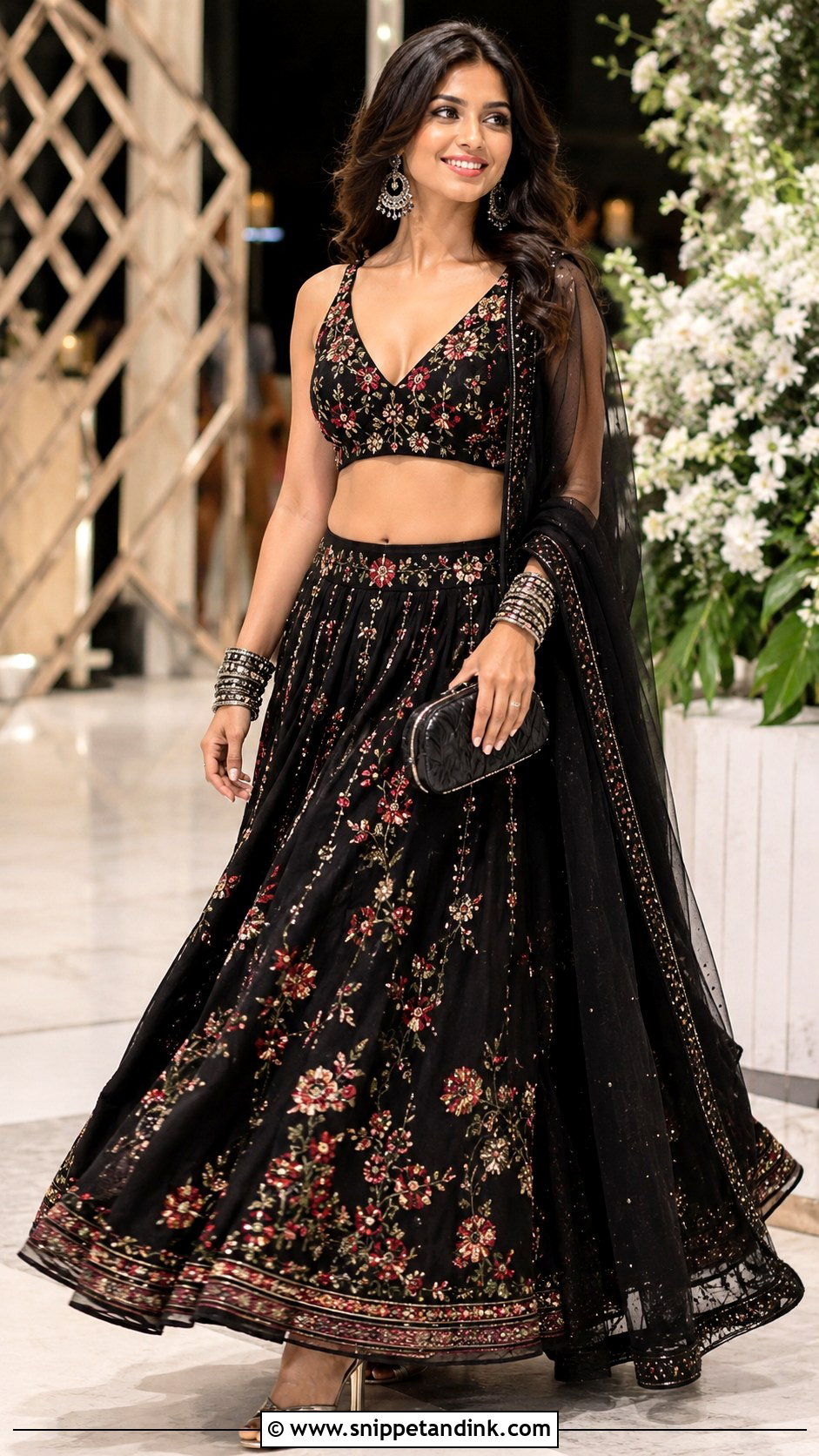
Black is not welcome at every Indian wedding. In some families it is considered unlucky at a celebration, so check with the couple before you buy. Where it is fine, usually a sangeet or a cocktail-style evening, a fluid black skirt with colourful thread embroidery, silver mirror work or restrained gold looks sharp. A fitted blouse you can dance in, a light dupatta over one shoulder, silver earrings, stacked cuffs, a compact clutch and block heels finish it. Wear a high ponytail or soft waves. On makeup, pick one strong feature, defined eyes or a berry lip, not both.
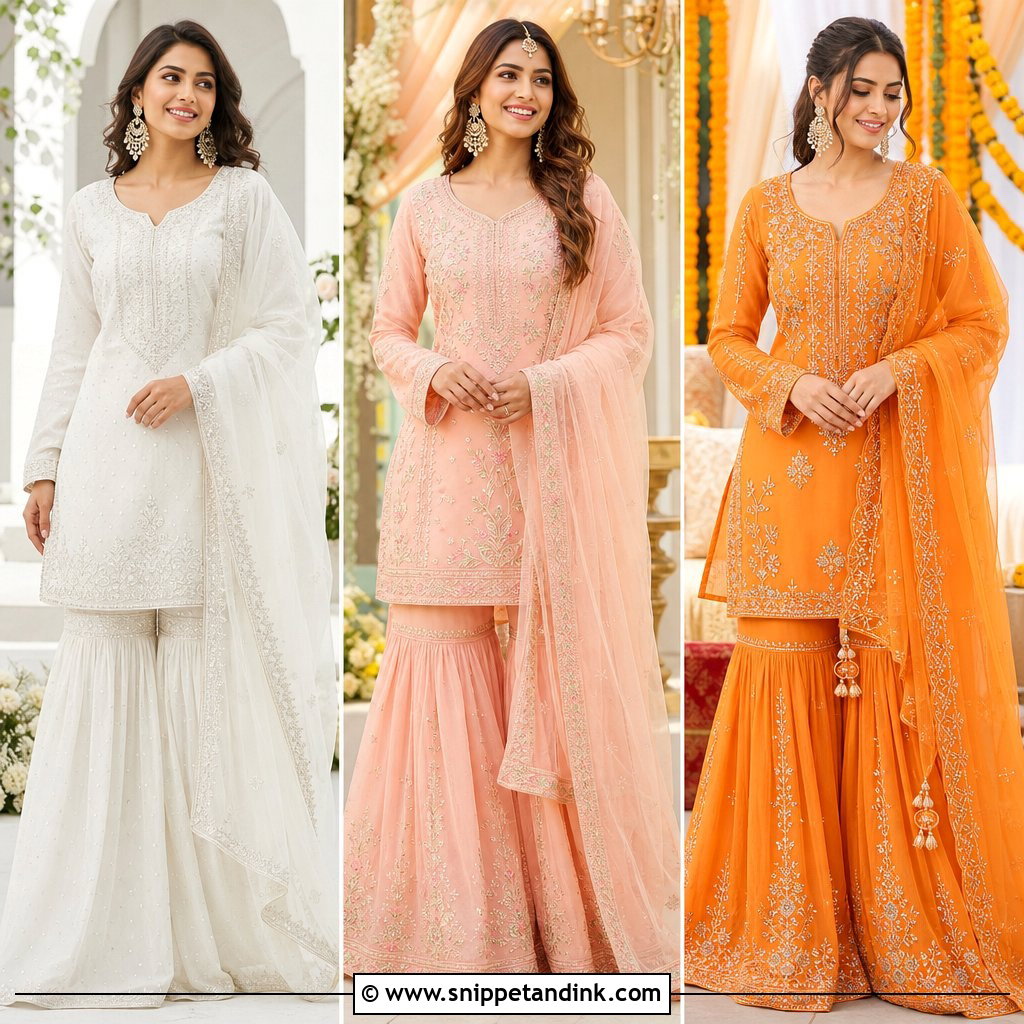
12. Peach Organza Wedding Lehenga
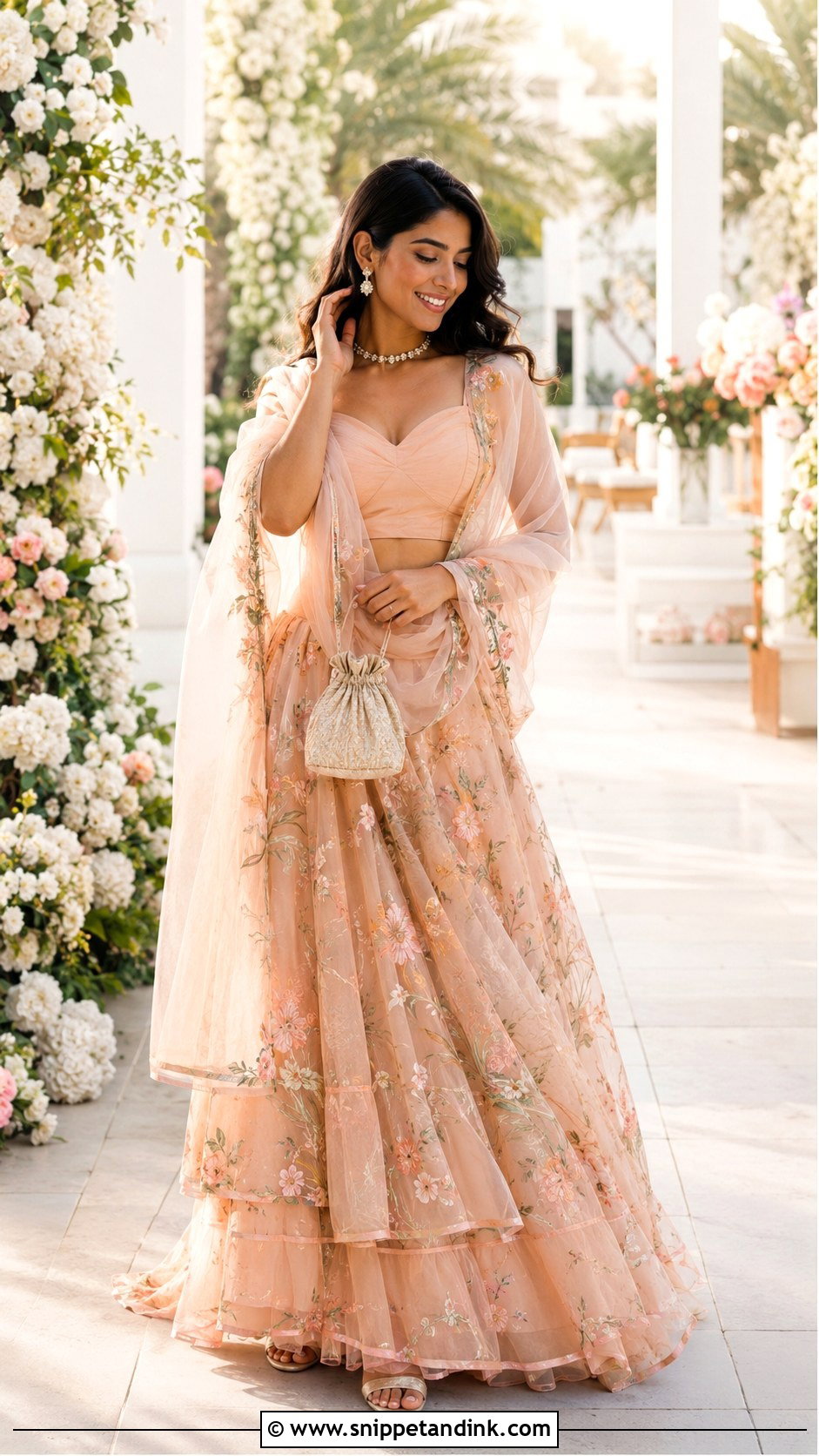
Peach organza works for warm-weather daytime events because organza gives volume with little weight; it holds its shape on its own instead of relying on a heavy can-can. Choose a softly layered skirt with embroidered flowers, scattered sequins or a satin border, a fitted peach blouse and a sheer dupatta pinned at the shoulder. Pearl earrings, a slim choker, a small potli and nude or champagne sandals keep it light. Don’t add a heavy underskirt, which flattens the fabric’s natural movement. A low bun with pale flowers suits it. My one caution: organza creases sharply when you sit, so steam it on a hanger the morning of the event rather than packing it folded.
13. Wine Velvet Reception Lehenga
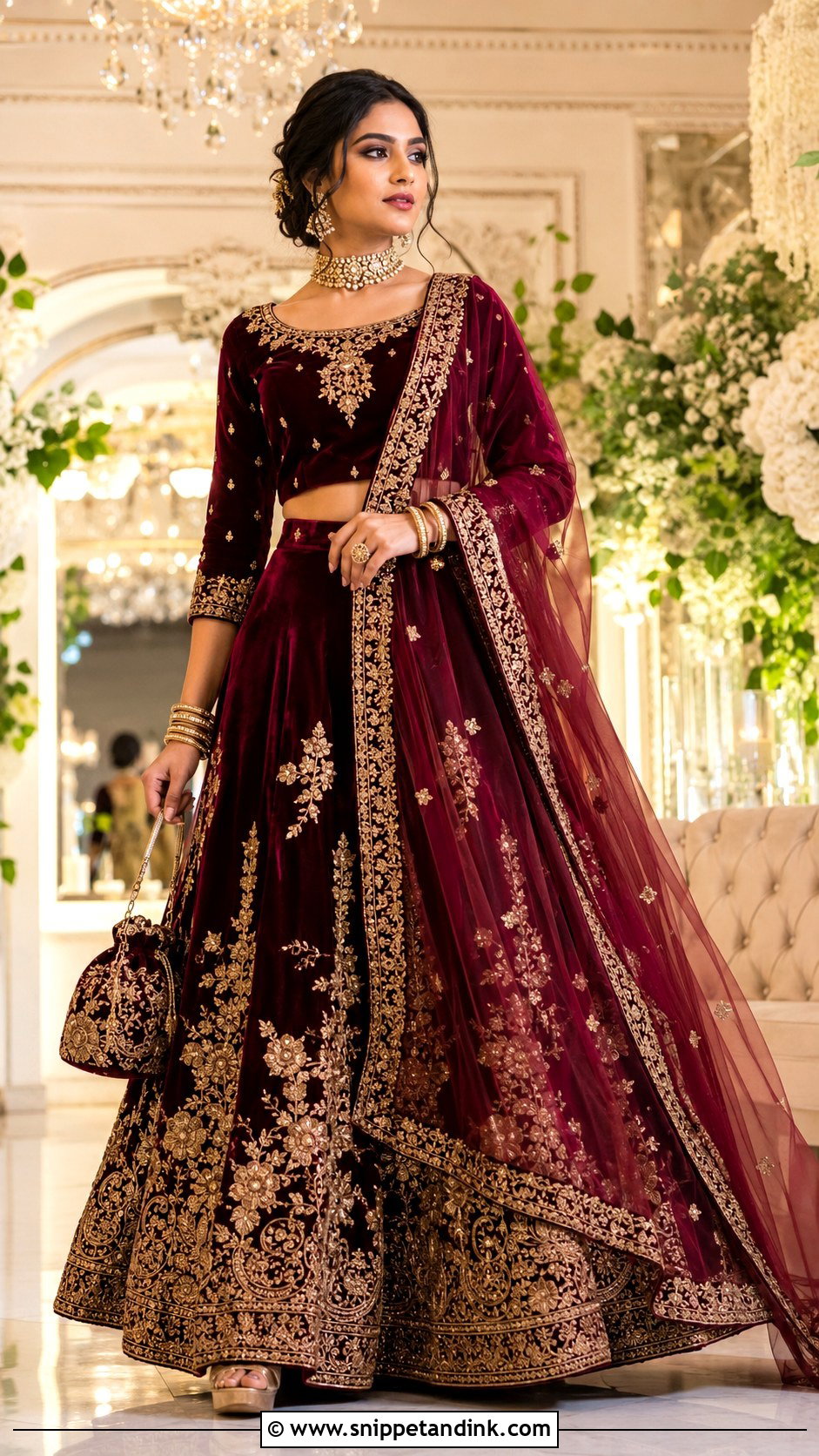
Wine velvet belongs to autumn and winter receptions. Look for antique gold embroidery concentrated at the hem and waist with scattered motifs elsewhere, so the weight isn’t spread across the whole skirt. A fitted blouse with three-quarter sleeves or a shaped neckline balances it, and a sheer wine dupatta with a narrow embroidered edge keeps it from looking dense. Polki earrings, a choker, gold bangles, a structured potli and platform heels finish the outfit. Keep the makeup warm but controlled: brown eyes and a muted berry lip. It suits the bride, close family or anyone hosting the reception.
14. Multicolor Patchwork Lehenga
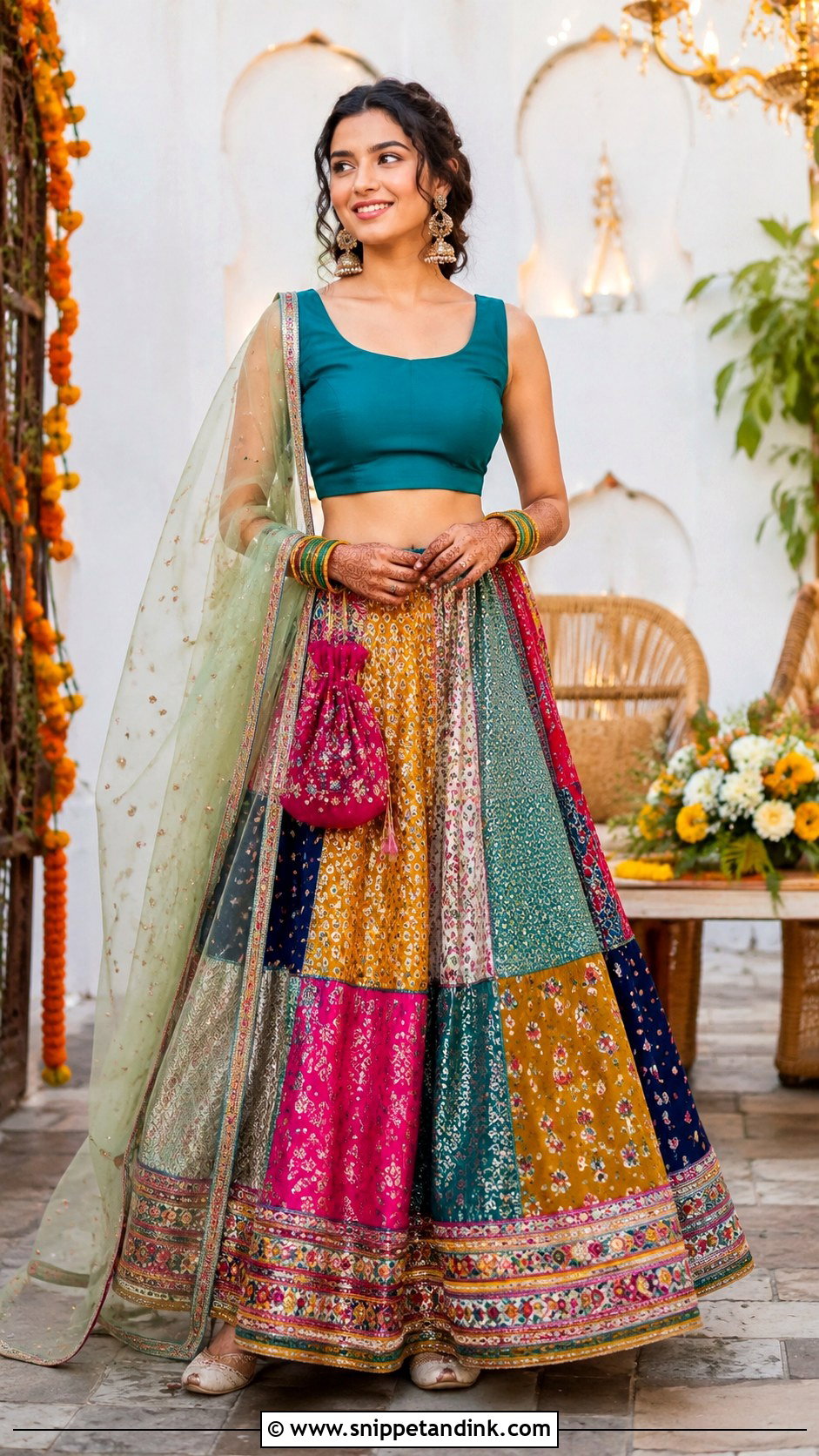
Patchwork goes wrong when the panels are random. A good multicolor patchwork lehenga uses coordinated textiles linked by embroidered borders, mirror work or a repeated print, so the eye reads one skirt, not a quilt. It’s a cheerful choice for a mehndi, daytime sangeet or outdoor event. Take one colour from the skirt for a plain blouse, such as fuchsia, teal, mustard or orange, and keep the net dupatta simple. Oxidised earrings, mixed bangles, a bright potli and neutral juttis complete it. A braid, ponytail or half-up style is comfortable for dancing, and smaller accessories keep it playful rather than busy.
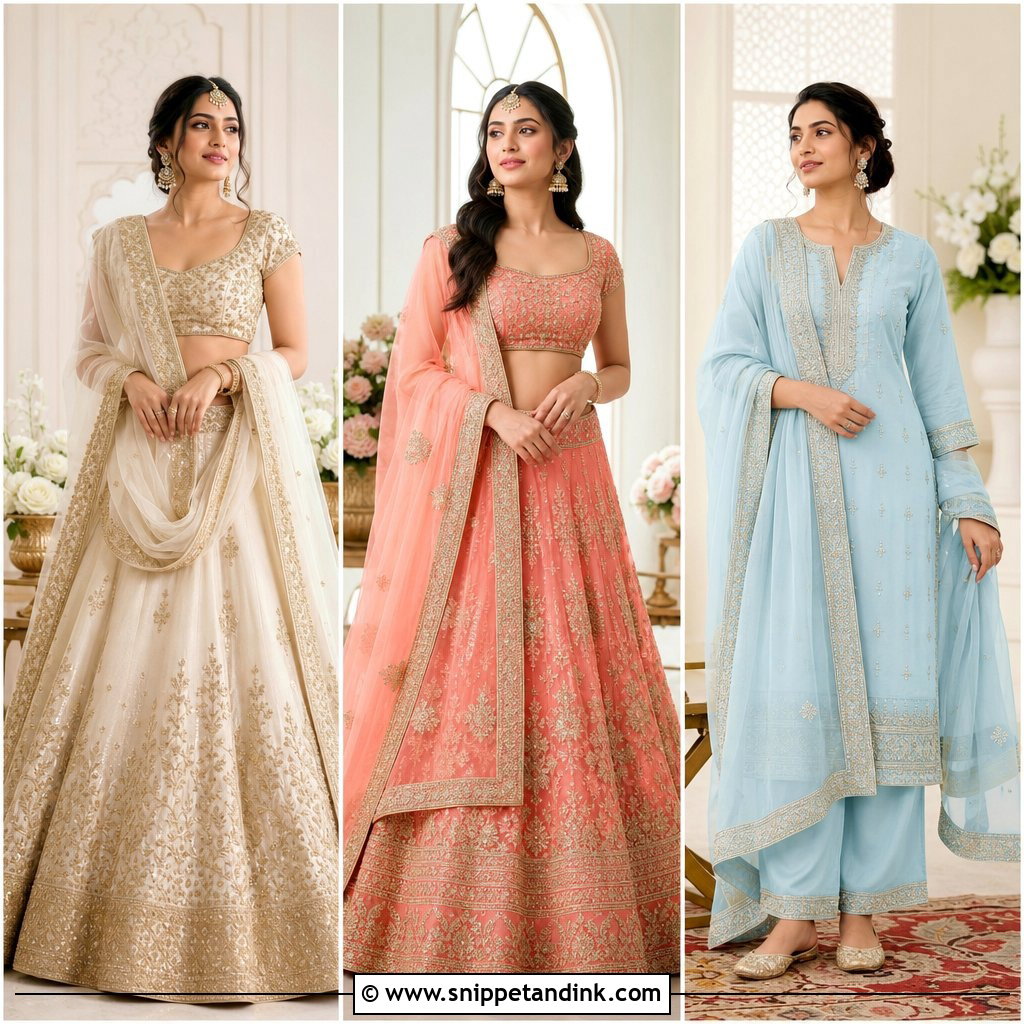


15. Blush Cape Lehenga
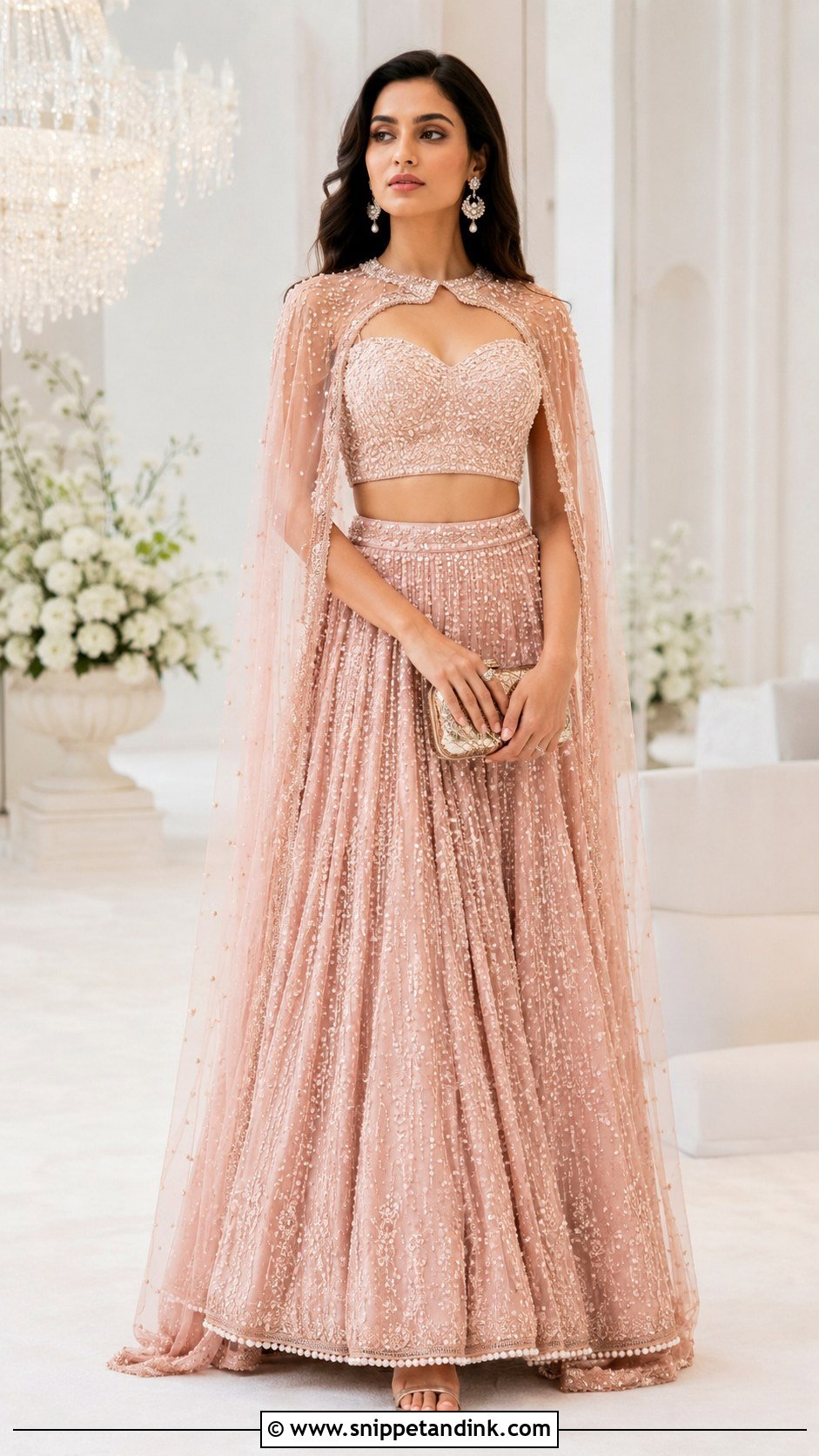
A cape replaces the dupatta, so there’s nothing to re-pin all night, which is the main reason I recommend it to bridesmaids and to brides at receptions and engagements. Pick a flowing blush skirt with pearl embroidery, fine sequins or tonal florals, a clean fitted blouse, and a sheer cape that falls to the waist or below the hips. The cape should be lighter than the skirt; a heavily worked cape drags on the shoulders and pulls the blouse back. Pearl earrings, a slim cocktail ring, a small clutch and metallic heels finish it. A sleek ponytail or low bun keeps the neckline of the cape visible.
16. Teal Peplum Lehenga
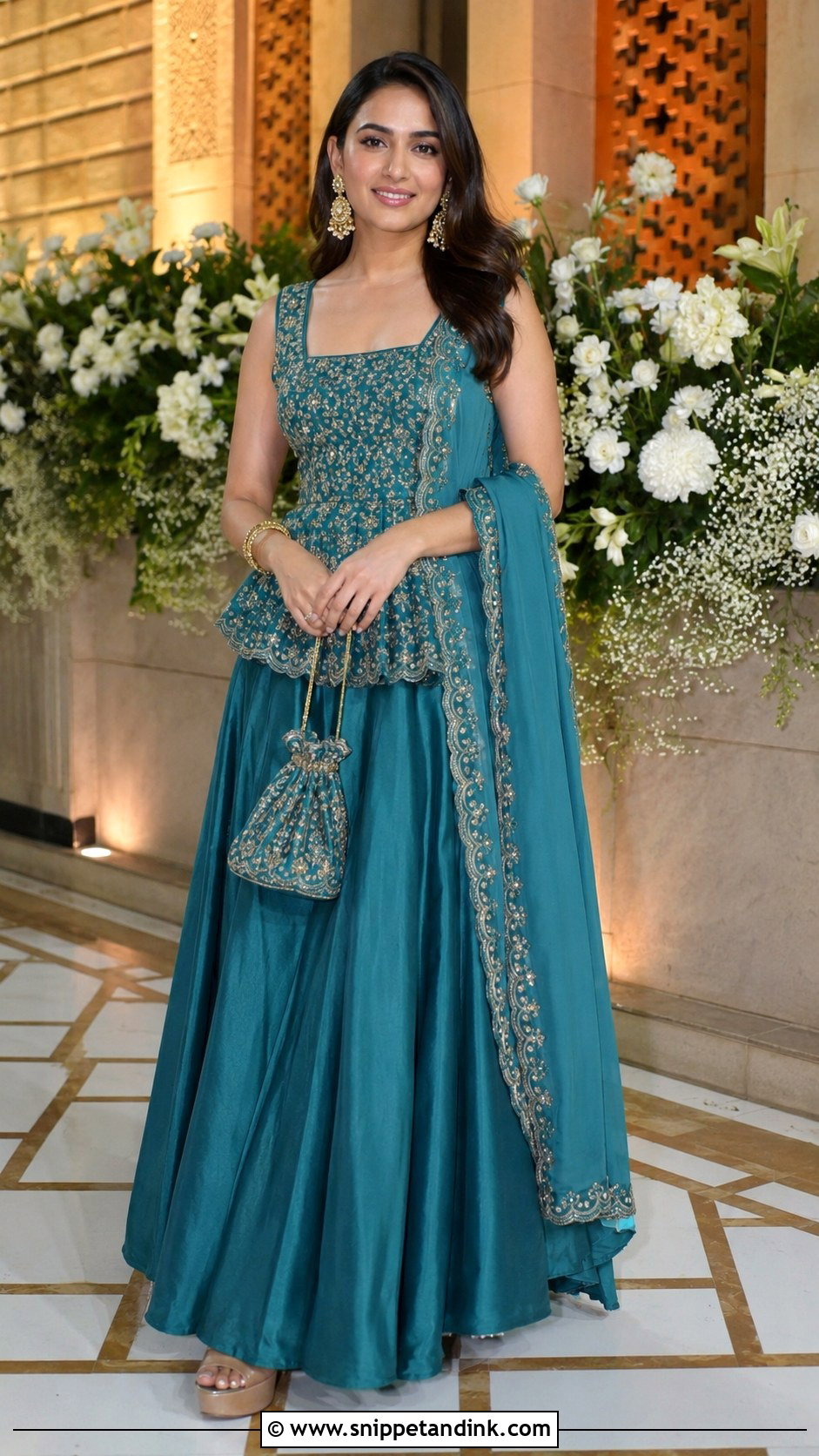
Teal suits evening weddings and anyone who wants rich colour without red. The peplum blouse is the interesting part: it ends near the upper hip, giving cover over the waist and a defined line where it flares. Choose a moderately flared skirt in silk, georgette or brocade with a fitted peplum blouse, linked by tonal embroidery, antique gold motifs or small mirrors. A narrow dupatta over one arm is enough, or skip it if the peplum is detailed. Add gold earrings, slim bangles, a potli and platform sandals, with a side-parted bun or polished waves. A peplum that’s too long cuts the leg line, so check the hem lands at the top of the hip.
17. Ivory Printed Wedding Lehenga
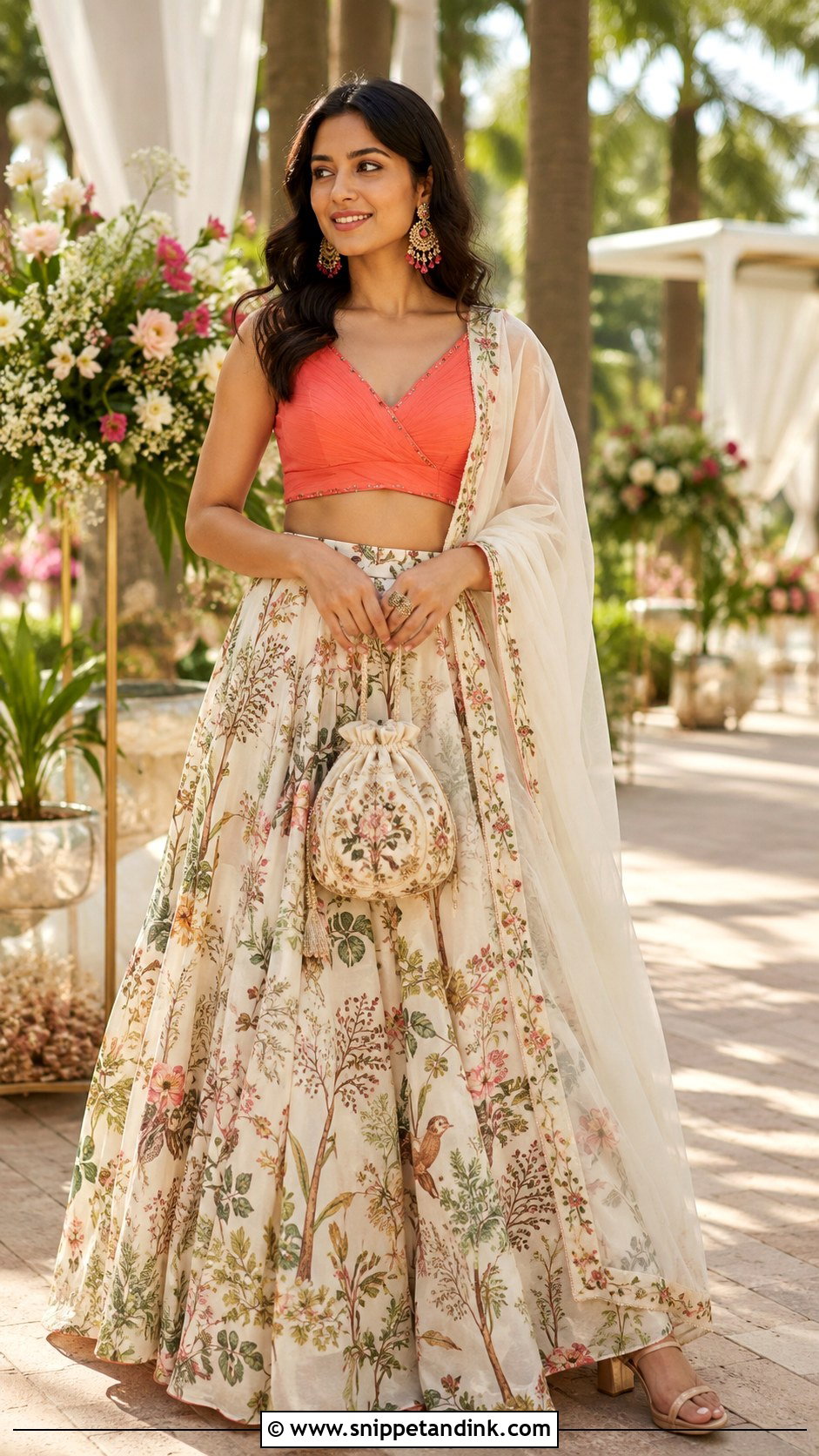
Prints are the easiest lehenga to travel with. Printed fabric hides small creases far better than plain satin or tissue, which matters when it has spent a day in a suitcase. For a daytime destination wedding, choose cotton-silk, chiffon or organza with botanical, Mughal-inspired or watercolour prints, a cropped blouse in ivory or a strong colour from the print, and a plain dupatta with a printed border. Pearl or meenakari earrings, a slim bangle stack, a woven potli and comfortable block heels suit it. Natural waves or a low ponytail match the relaxed mood. Guests should leave bridal-level jewellery at home.
18. Rani Pink Brocade Lehenga
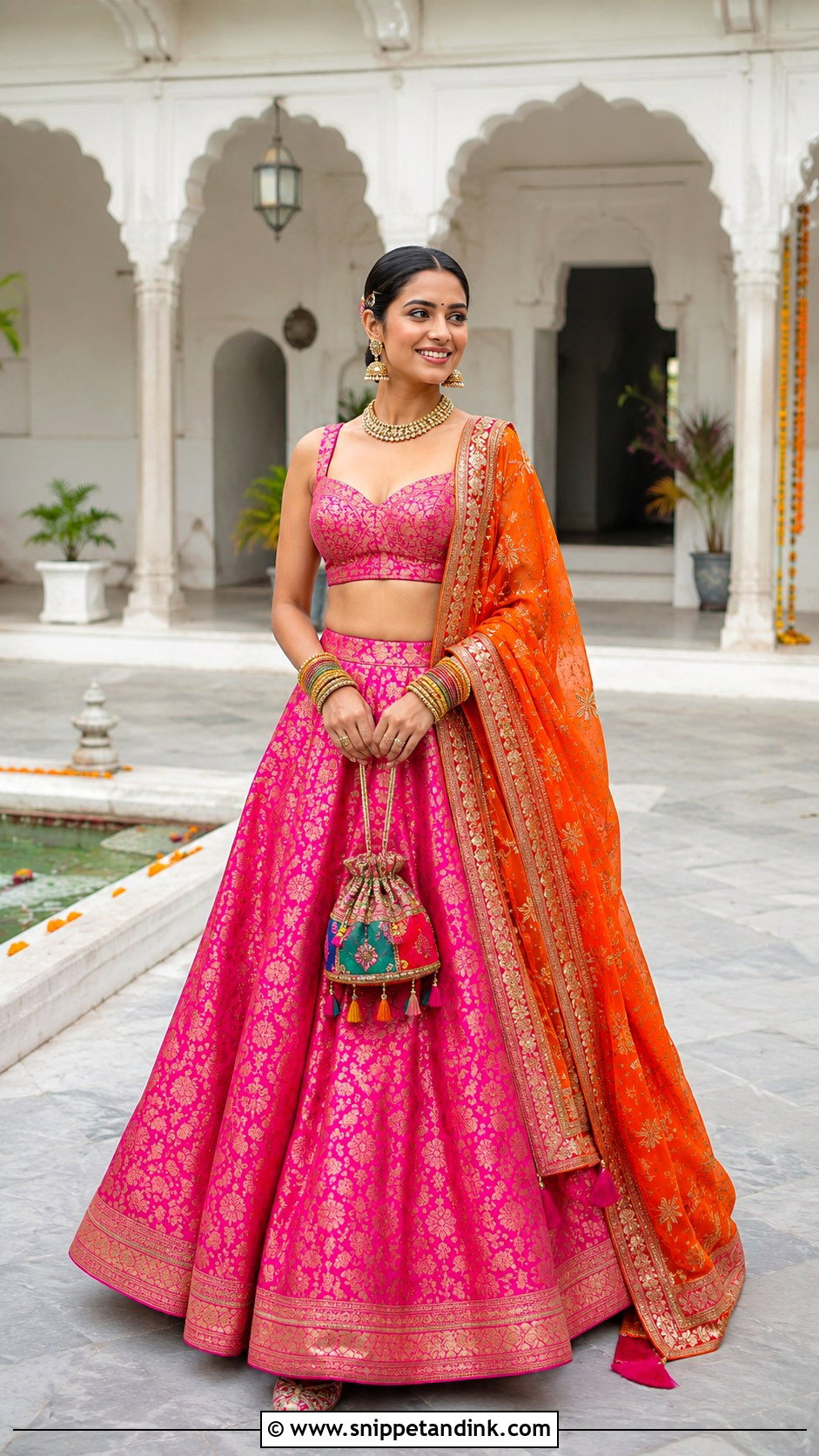
Rani pink is loud, and brocade is woven with its own shine, so this skirt needs very little added sparkle. Choose a full skirt woven with gold motifs and a simple fitted blouse in matching pink or contrasting red. A light orange, green or gold dupatta adds depth without hiding the weave. Traditional jhumkas, a short necklace, stacked bangles, a bright potli and embroidered juttis complete it. Brides can wear a heavier head dupatta, and guests a simpler shoulder drape. Brocade is stiff, so a clean waistline and good tailoring matter. A loose fit makes it look boxy. A sleek bun with a decorative hair accessory finishes it.
19. Sage Green Pearl Lehenga
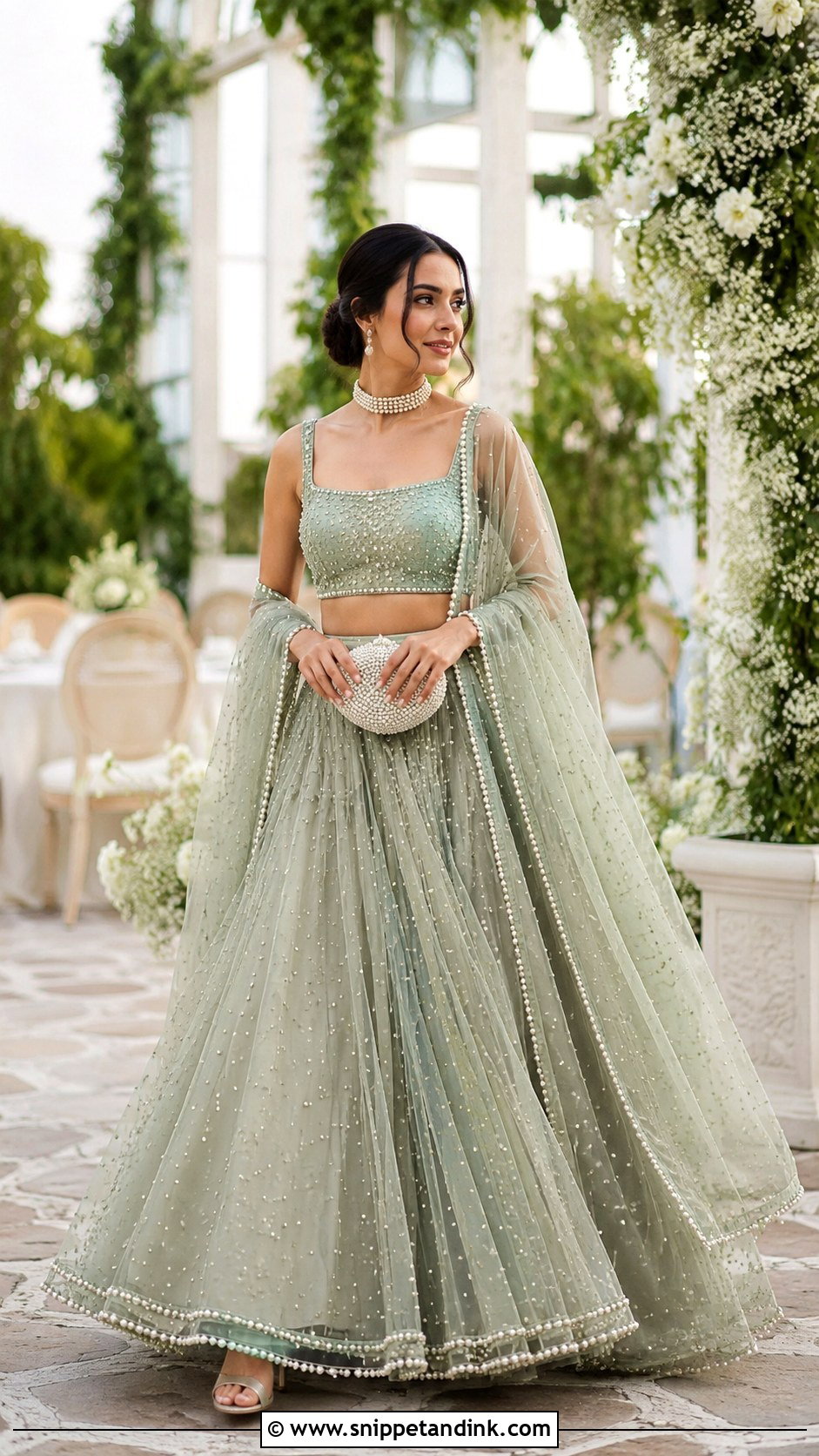
Sage green with pearls is calm and modern, and it suits engagements, garden weddings and daytime receptions. Choose a flowing skirt with tonal threadwork, scattered pearls and fine silver embroidery, a blouse with short sleeves, a square neckline or a modest back, and a sheer matching dupatta edged with pearls. Pearl drops, a delicate choker, an ivory or silver clutch and pale metallic heels finish it. Keep jewellery light so the pearl work on the fabric shows. Sewn pearls can pull fine net out of shape if a dupatta is pinned through them, so I pin beside the pearl clusters, never through them. A small emerald ring or earrings adds definition.


20. Red And Pink Ombre Lehenga
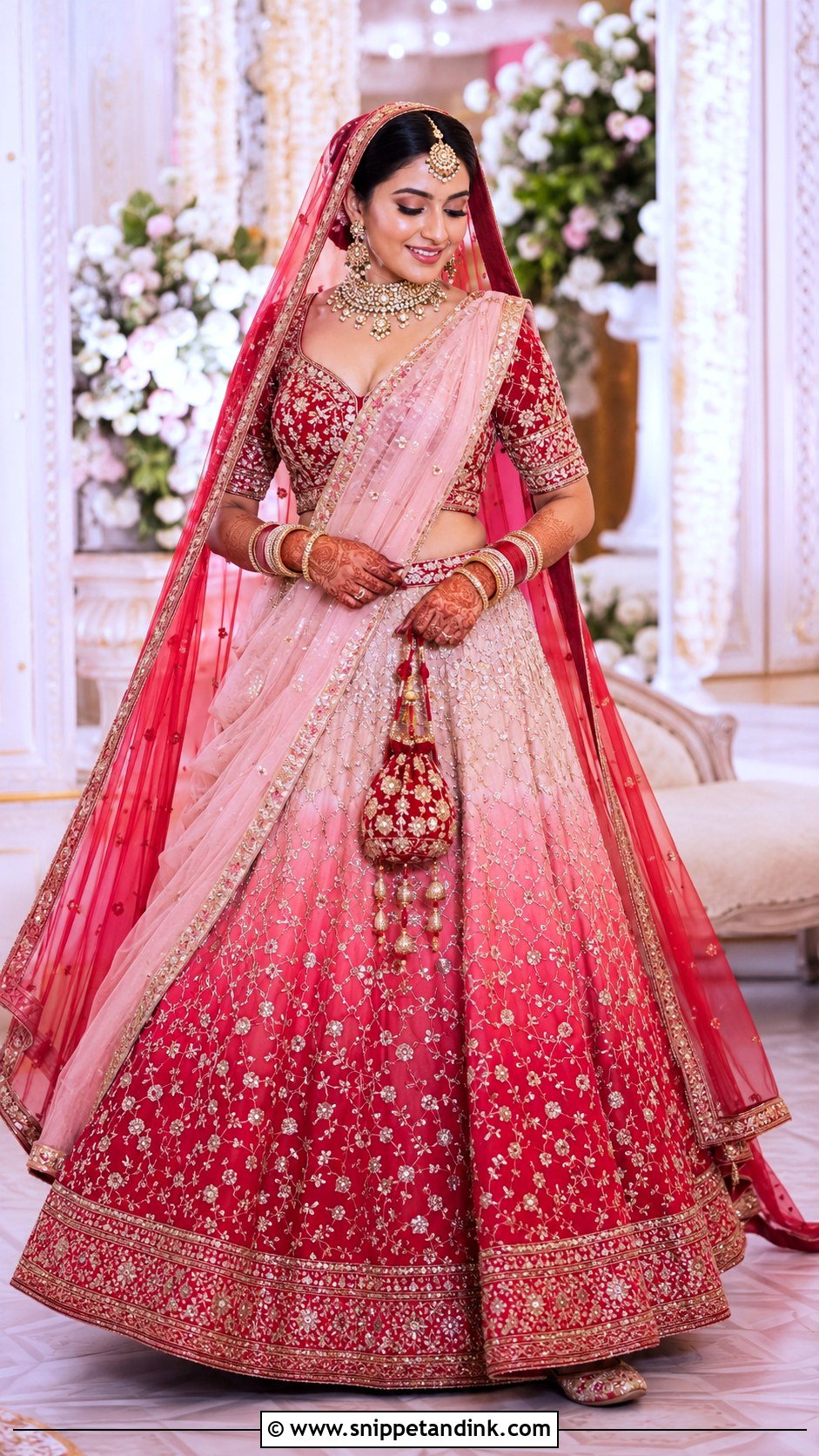
Ombre gives a bride red at the waist and something softer at the hem, moving from deep red to rani pink or blush. The gold embroidery should follow the colour shift rather than smother it, or you lose the gradient. Pair it with a deep red blouse and a light pink dupatta; brides can add a red veil and guests can wear one simple shoulder drape. Kundan jewellery, gold bangles, a jewelled potli and red embroidered juttis suit it, with a centre-parted bun or soft curls. It still reads as traditional bridal red in photos, just a little lighter.
What Gives a Lehenga Skirt Its Shape
Two skirts in the same colour and embroidery can look and feel completely different, and the reason is construction. When I’m assessing one in a shop, these are the things I turn inside out to check.
- Kalis (panels): more triangular panels give a fuller, swingier flare. A skirt cut from fewer panels sits flatter and lighter.
- Can-can: the stiff net layer that holds the volume. It can scratch bare legs and adds bulk when you sit, so ask whether it’s sewn in or detachable.
- Lining: cotton or soft silk lining is cooler and kinder to skin than polyester, and it stops embroidery threads catching on your legs.
- Waistband and drawstring: a wider band spreads the weight. A thin drawstring under a heavy skirt digs in by the second hour.
- Hem finish: a horsehair or padded hem helps the flare hold; a raw-feeling hem will catch on heels.
When a Hook Pops or the Dupatta Slides Mid-Event
Something always gives during a long function: a blouse hook, a dupatta pin, a skirt drawstring that loosens on the dance floor. Hand someone you trust a pouch with safety pins in two sizes, a few spare hooks, thread in the blouse colour, a needle and double-sided fashion tape.
If a blouse hook goes, a safety pin through the inside seam, not the fabric face, holds until the night ends. A slipping dupatta usually needs one more pin at the back of the shoulder, hidden under the hair. And if the skirt starts dragging, tie the drawstring with a double knot and tuck the ends, rather than retying a bow that will loosen again.
One Colour Story From Dupatta to Juttis
Start with the function, the season, the venue and your role. A bride may lean toward red zardozi, velvet or ombre, while bridesmaids and guests have organza, prints, mirror work, capes and lighter silks to pick from. Treat comfort as seriously as colour: a well-built blouse, a skirt length you can walk in, supportive shoes and a securely pinned dupatta change how the whole day feels. Then build the outfit as one look. When the lehenga, jewelry, hairstyle, shoes and accessories follow one direction, nothing looks borrowed from a different outfit.
You'll Like These Ideas:










Leave a Reply