
The haldi is the messiest function of a Pakistani wedding, and that should shape every outfit choice. Turmeric paste, oil, flower petals and a lot of loving hands all end up on the bride, and usually on whoever sits next to her. So the clothes have to breathe, move and ideally survive a wash. Traditional details like gota, mirror work and threadwork still have their place, and the range now runs from classic ghararas and lehengas to relaxed kurta sets, peshwas and fusion separates. Brides can go for a statement silhouette, while sisters and guests usually do better in lighter pieces that stay practical through a daytime event. Here are 20 looks I’d actually put on someone for a haldi, with notes on where each one works and where it doesn’t.
Bride, Sister or Guest at the Haldi
At most haldis everyone wears yellow, so the bride can disappear into the crowd. I solve that with volume and detail rather than color. The bride gets the fullest silhouette and the most handwork; sisters and close cousins wear a coordinated but lighter version; guests keep to simple kurta sets or prints.
If the family hasn’t set a theme, it’s worth asking. Some brides want every guest in yellow and green; others ask guests to wear any bright shade so their own yellow reads clearly. Either way, guests should avoid outfits as heavy or as embroidered as the bride’s.
A second outfit for the bride
Many brides now wear a washable outfit for the paste ritual and change into a better one for photographs and the evening. If your haldi is long or followed by dinner, I’d plan for this. It lets you choose silk or heavier work for the portraits without worrying about stains.
1. Yellow Gharara Haldi Dress
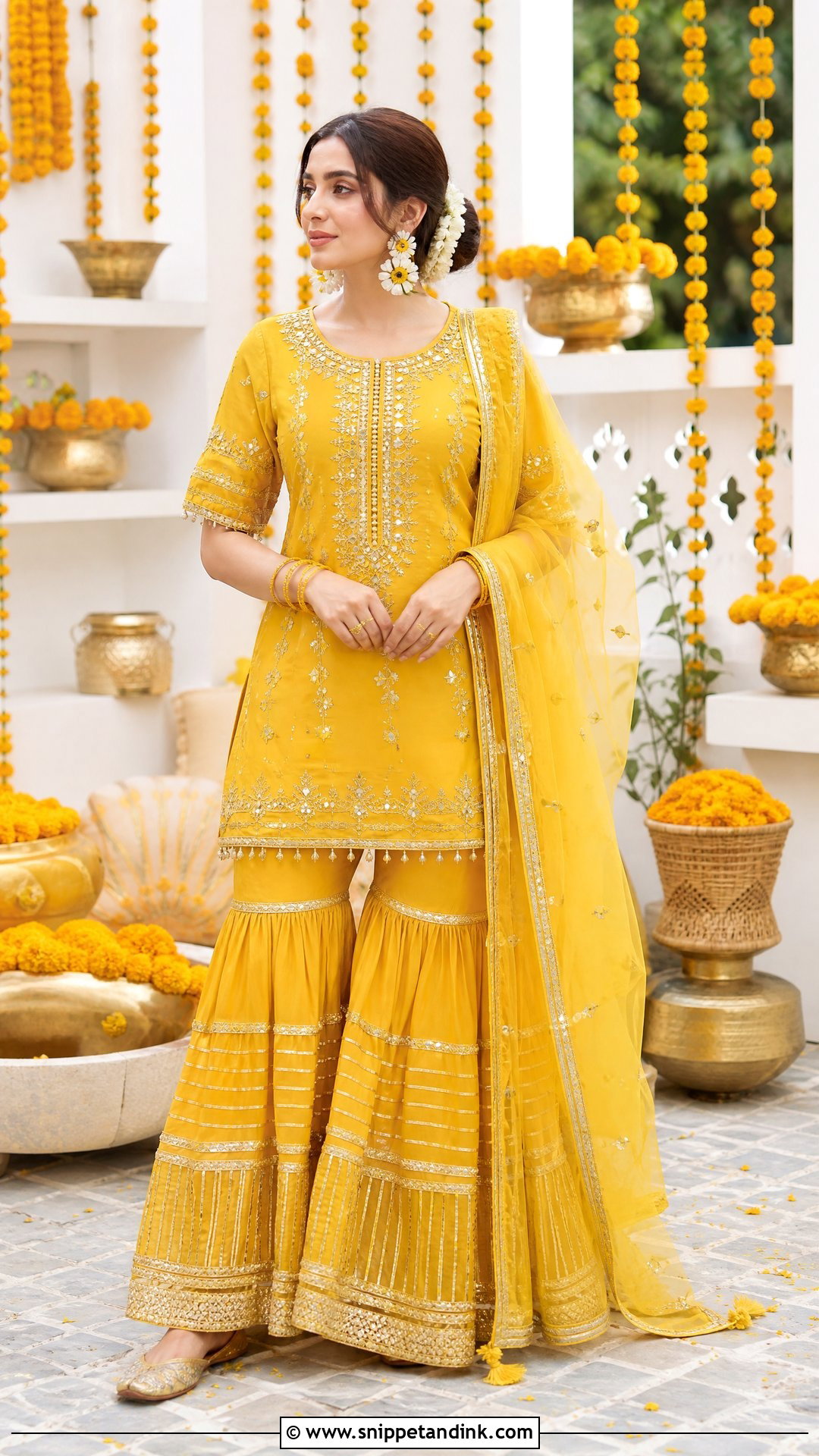
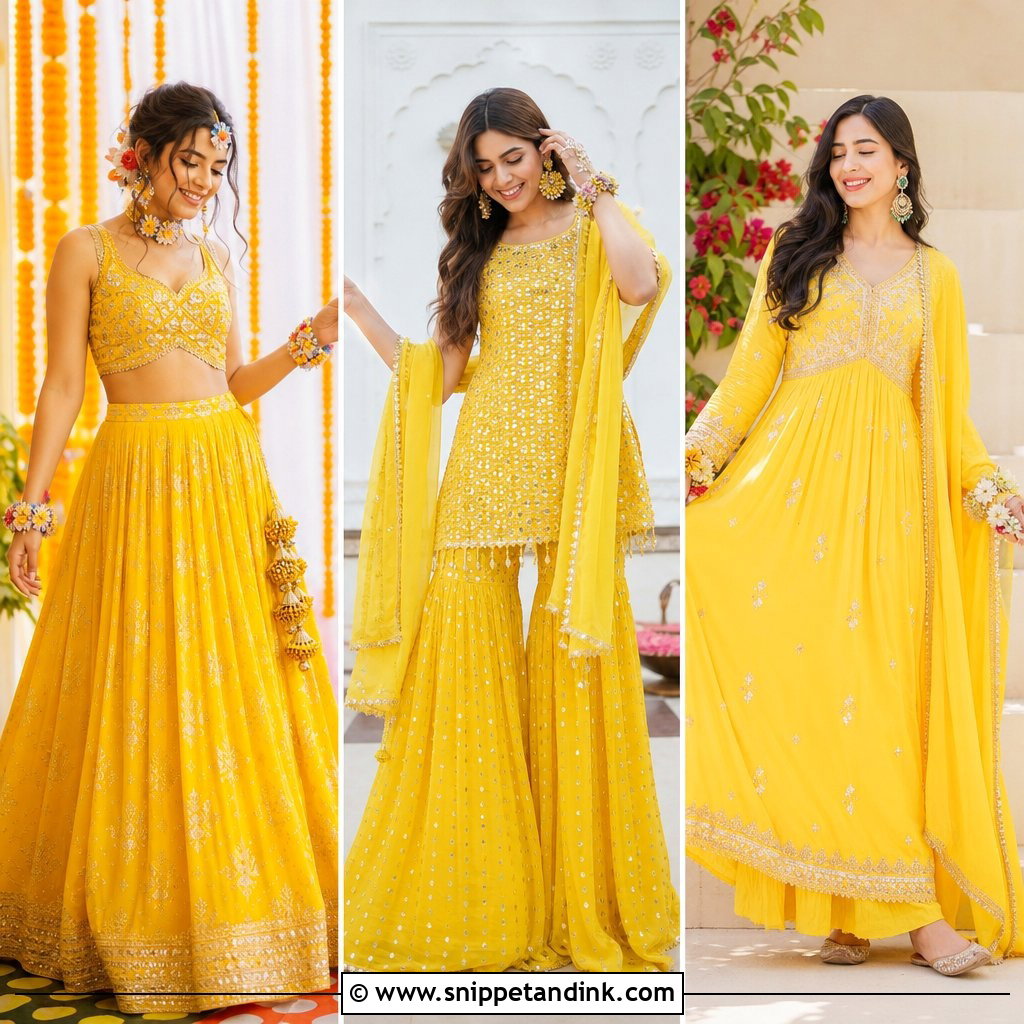
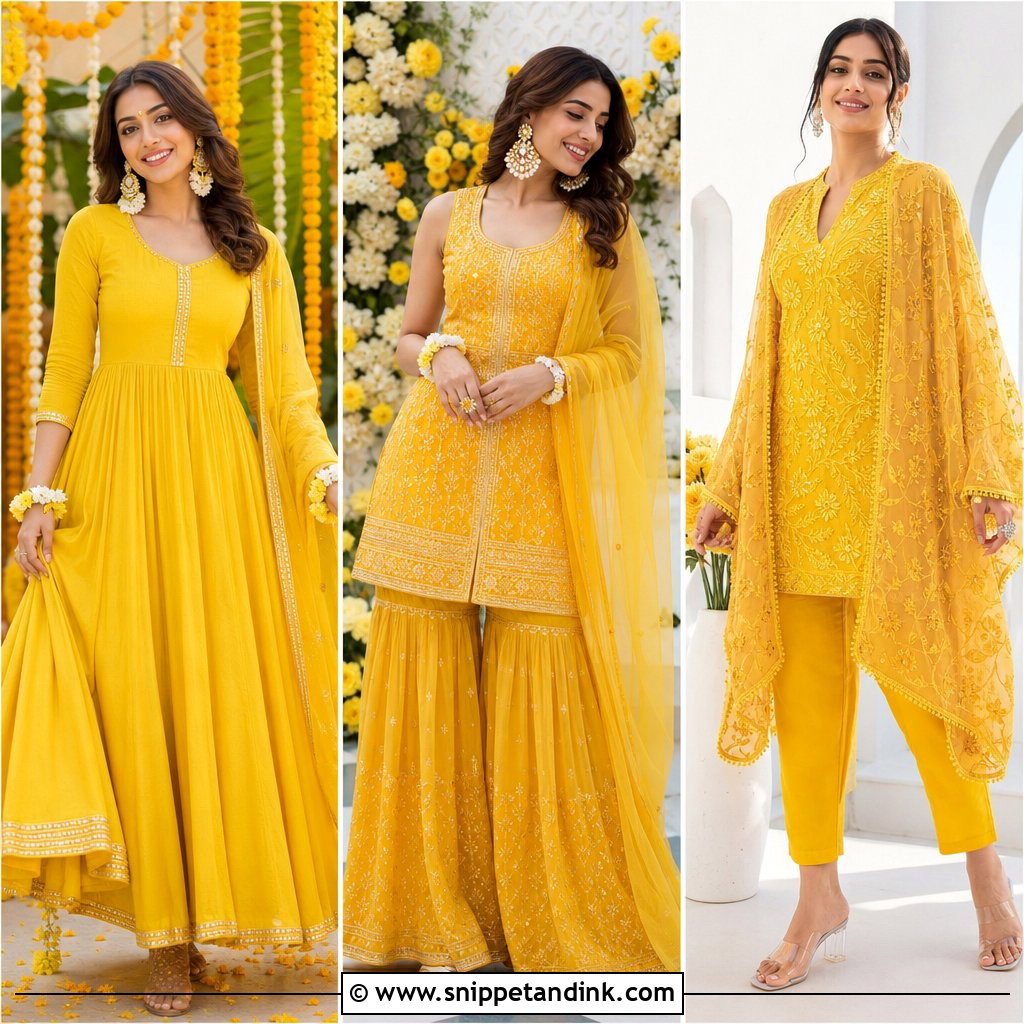
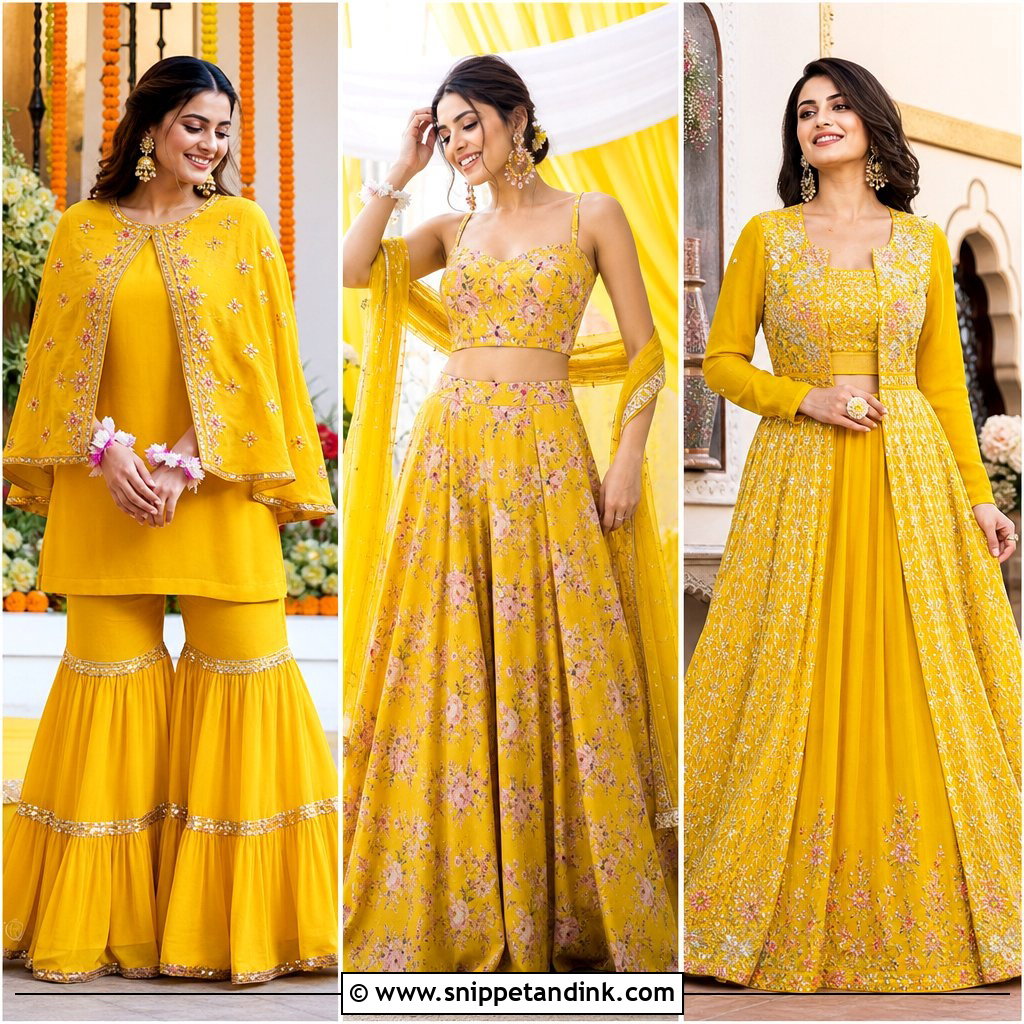
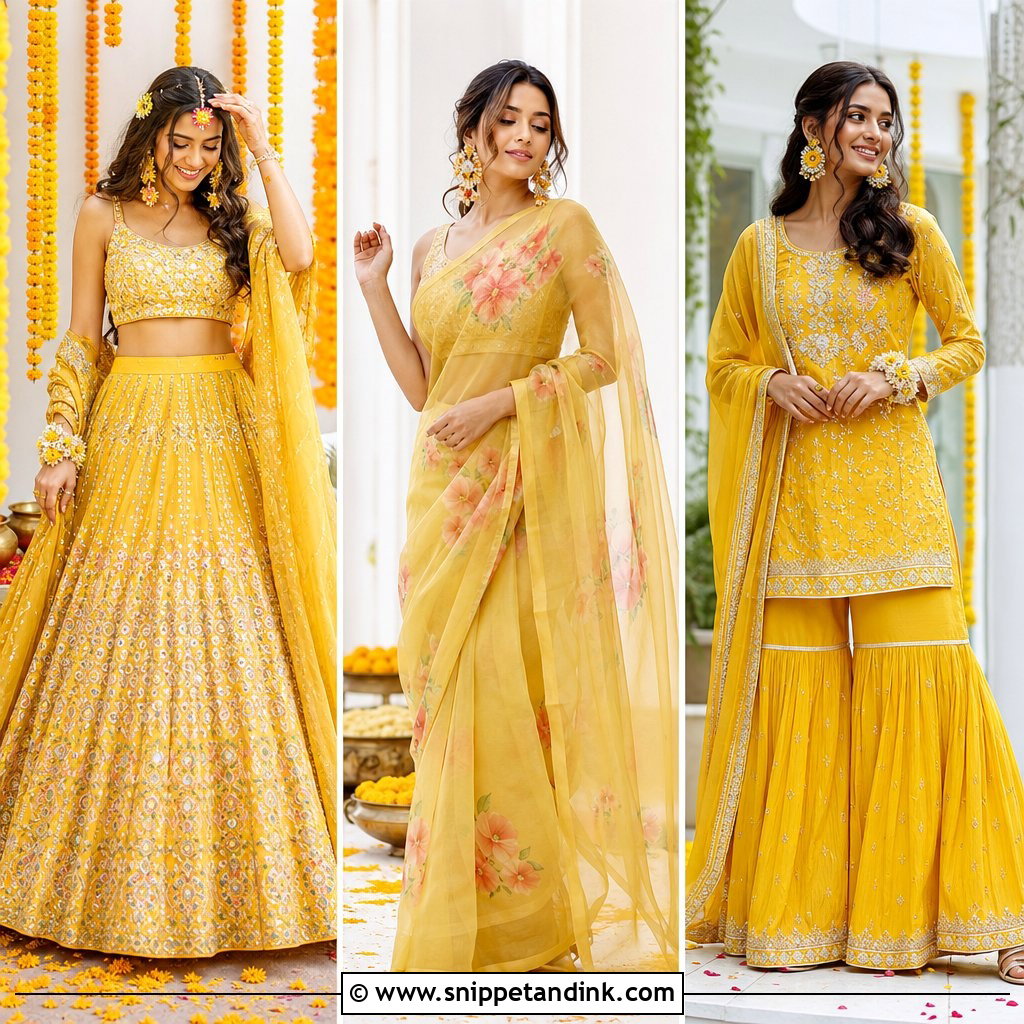
The yellow gharara is the default haldi outfit, and it earns that place because the flare starts at the knee, leaving your lap free when you sit on a low stool for the ubtan. Choose a short straight shirt in cotton net, organza or light raw silk, with gota at the knee and hem of the gharara. Keep the shirt relaxed through the waist; a fitted kameez rides up the moment you sit. A matching chiffon dupatta, gold khussas, floral earrings and slim bangles finish it. Brides can carry denser handwork at the neckline while guests keep it scattered. Pin a low bun with fresh flowers so loose hair doesn’t end up in the paste.
2. Mustard Sharara Haldi Dress
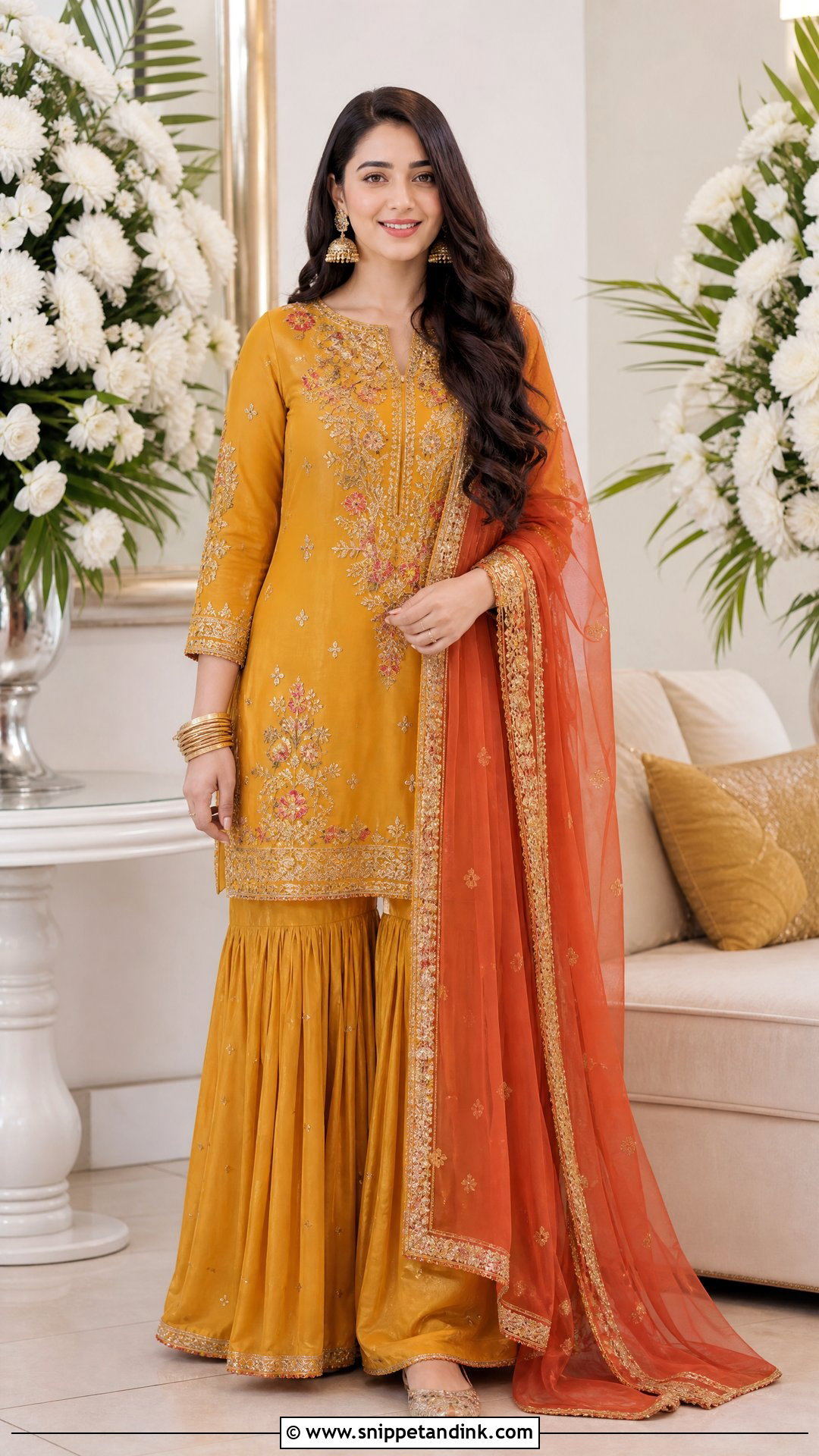
Mustard is the yellow I recommend for brides whose skin goes sallow in bright lemon. It’s deeper and warmer, and it suits an evening or indoor haldi especially. Pair a knee-length kurta with three-quarter sleeves and light gold embroidery over a wide georgette or crepe sharara. Three-quarter sleeves matter here: they stay out of the paste bowl when you reach. A rust or muted orange dupatta gives gentle contrast. Embroidered juttis, antique gold jhumkas and stacked bangles finish it. Keep the shirt lightly shaped rather than tight, and a warm pink lip keeps the strong color from overpowering your face.
3. Floral Lehenga Haldi Dress
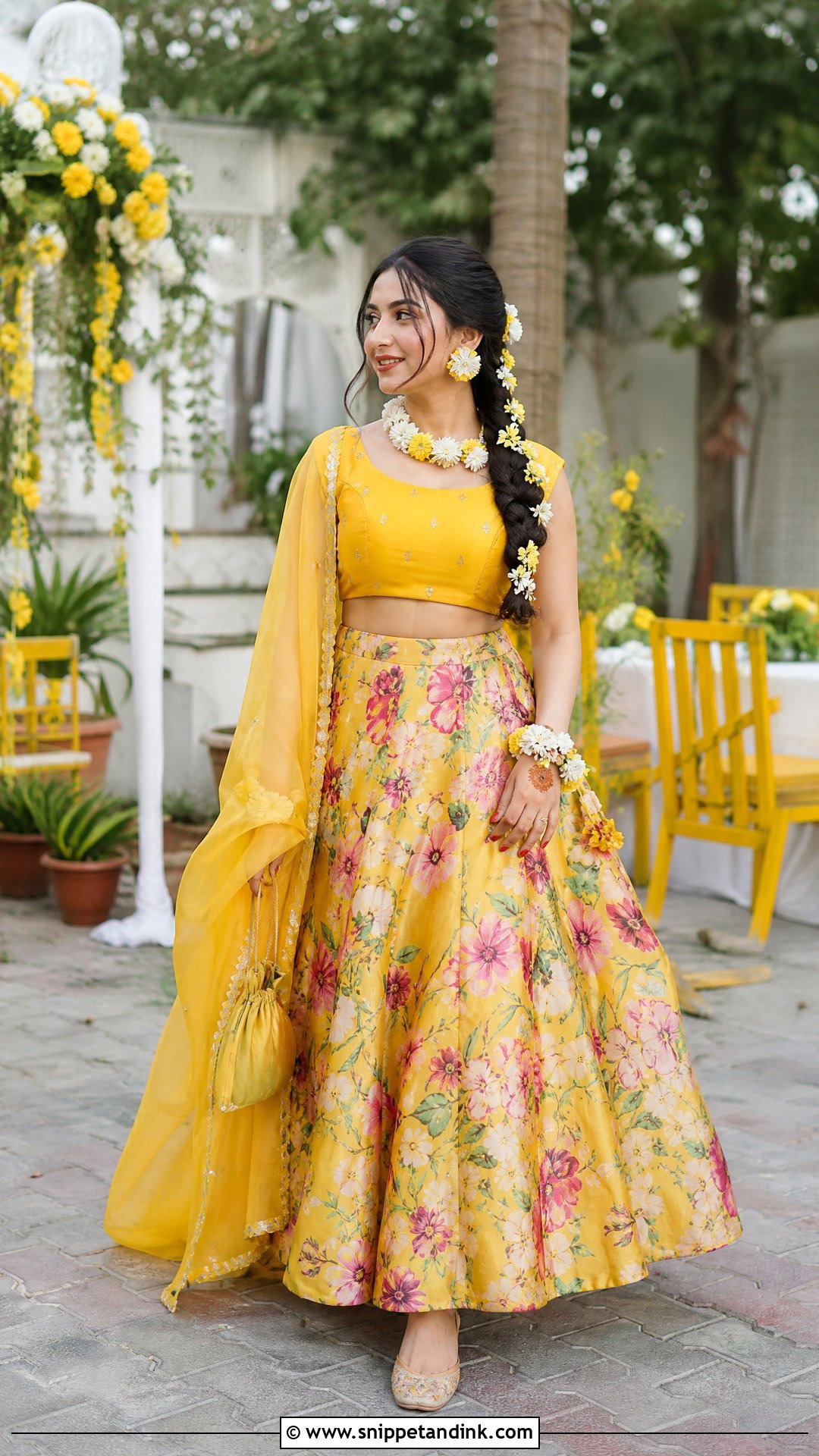
Printed florals give a Pakistani Haldi outfit plenty of color with no heavy embellishment, and prints have a practical advantage I always point out: they hide turmeric splashes far better than plain yellow. Pick a yellow lehenga with small pink, green or ivory flowers and a simple fitted choli. An organza dupatta with a slim gota border adds a little shine. Floral jewelry, neutral khussas and a small potli keep it light. Guests should reduce the skirt volume for easier movement. A braid with tiny flowers holds up well outdoors in wind.
4. Gota Patti Peshwas Haldi Dress
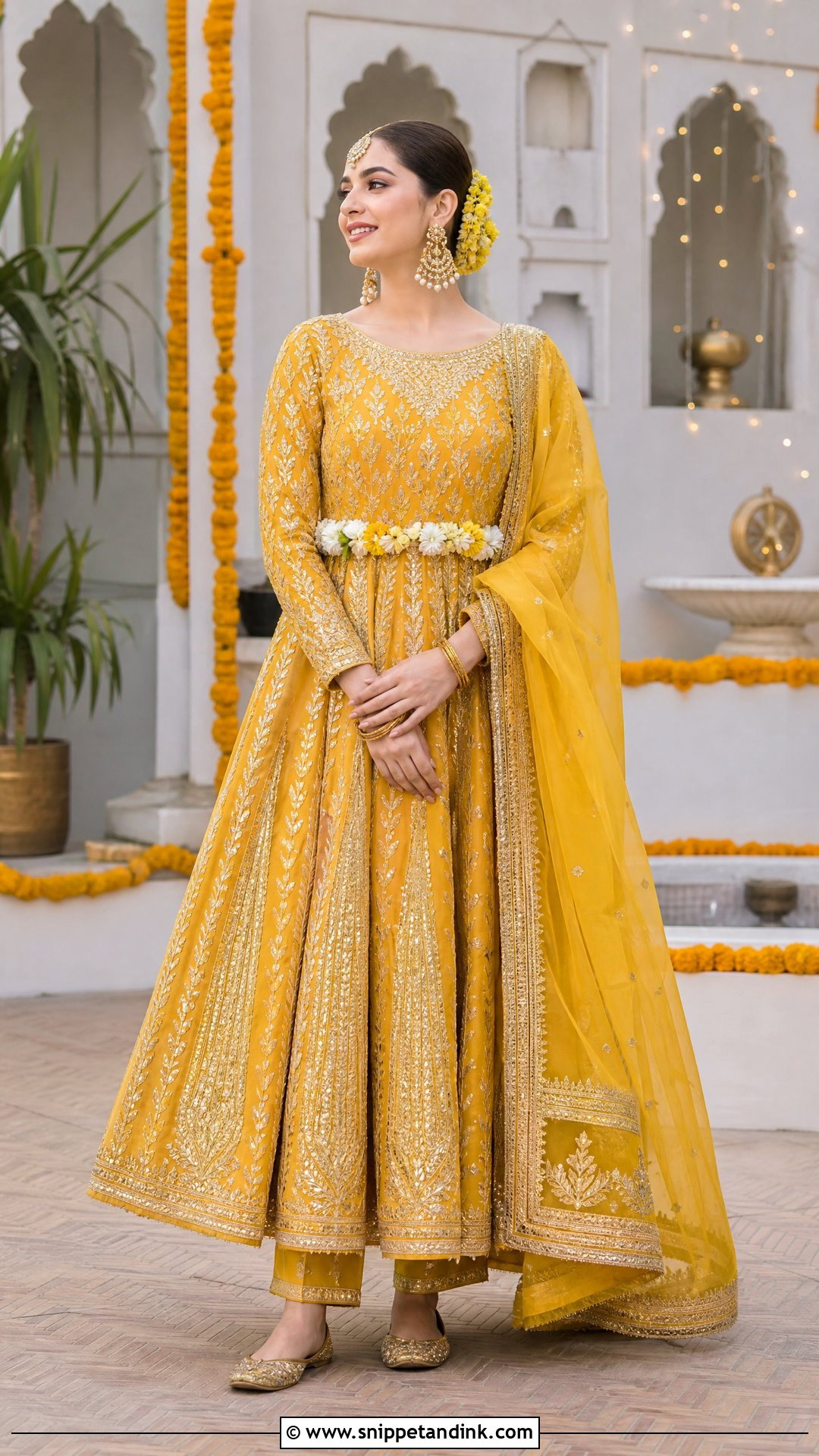
A peshwas gives full coverage and the volume of a proper celebration dress at the same time. Choose marigold or sunflower yellow with a fitted bodice and a wide paneled skirt, and let fine gota lines trace the neckline, cuffs, waist and hem. The number of panels decides how heavy it feels: the more kalis, the more fabric swings from your shoulders, so guests should go for fewer panels. Straight pants or a narrow churidar underneath, a chiffon dupatta and gold khussas complete it. Brides can add a decorated belt. A center-parted bun with a fresh gajra is neat and traditional.
5. Chikankari Kurta Haldi Dress
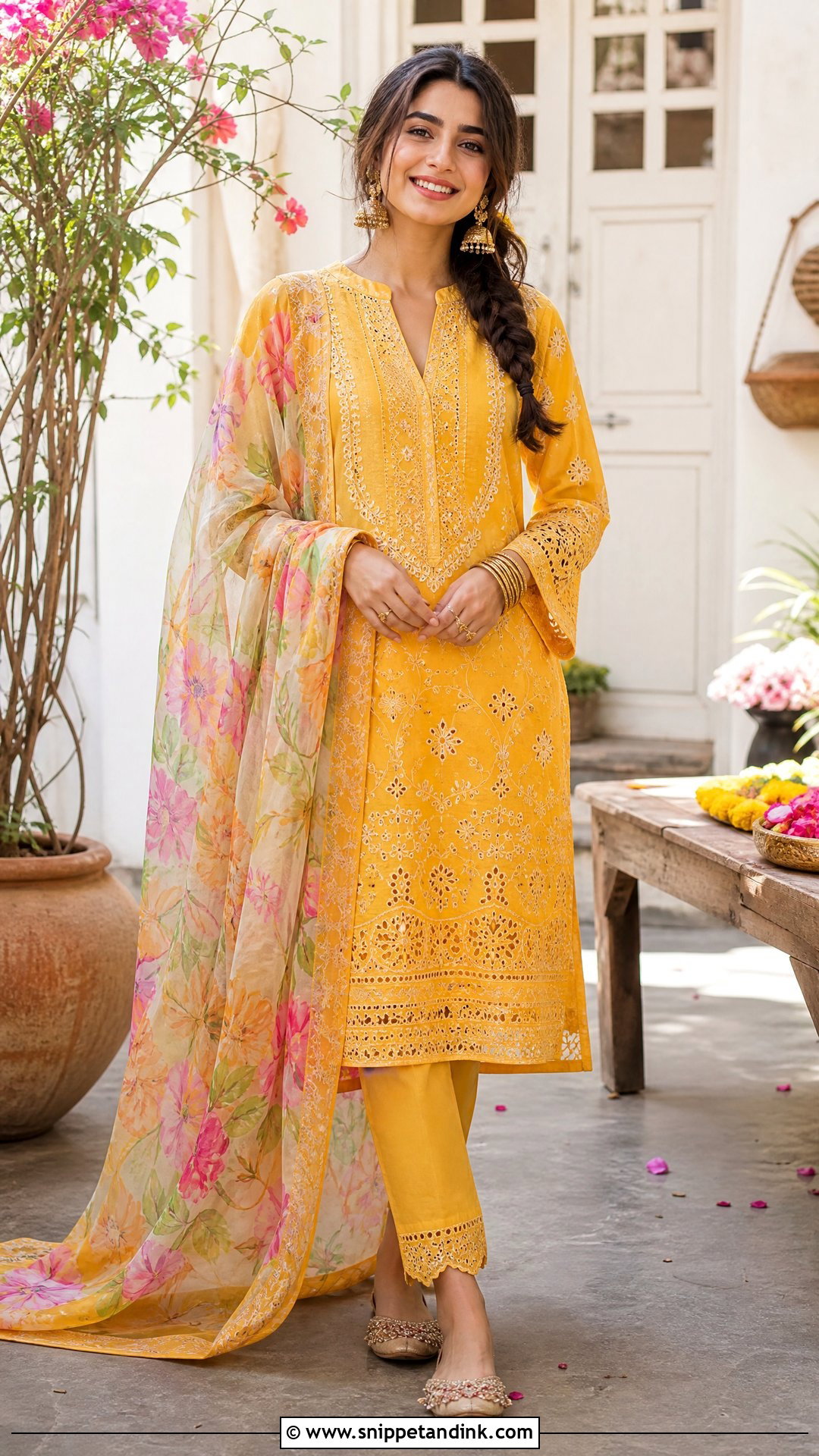
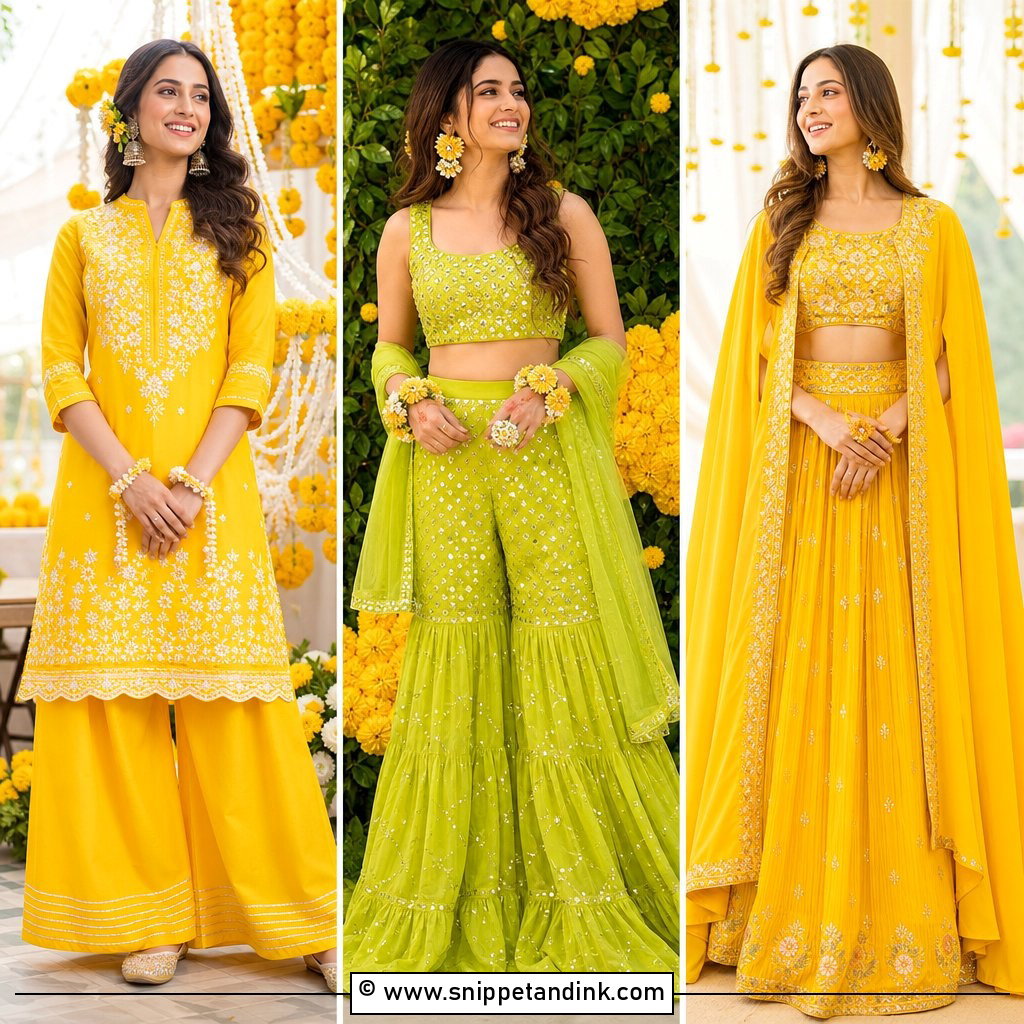
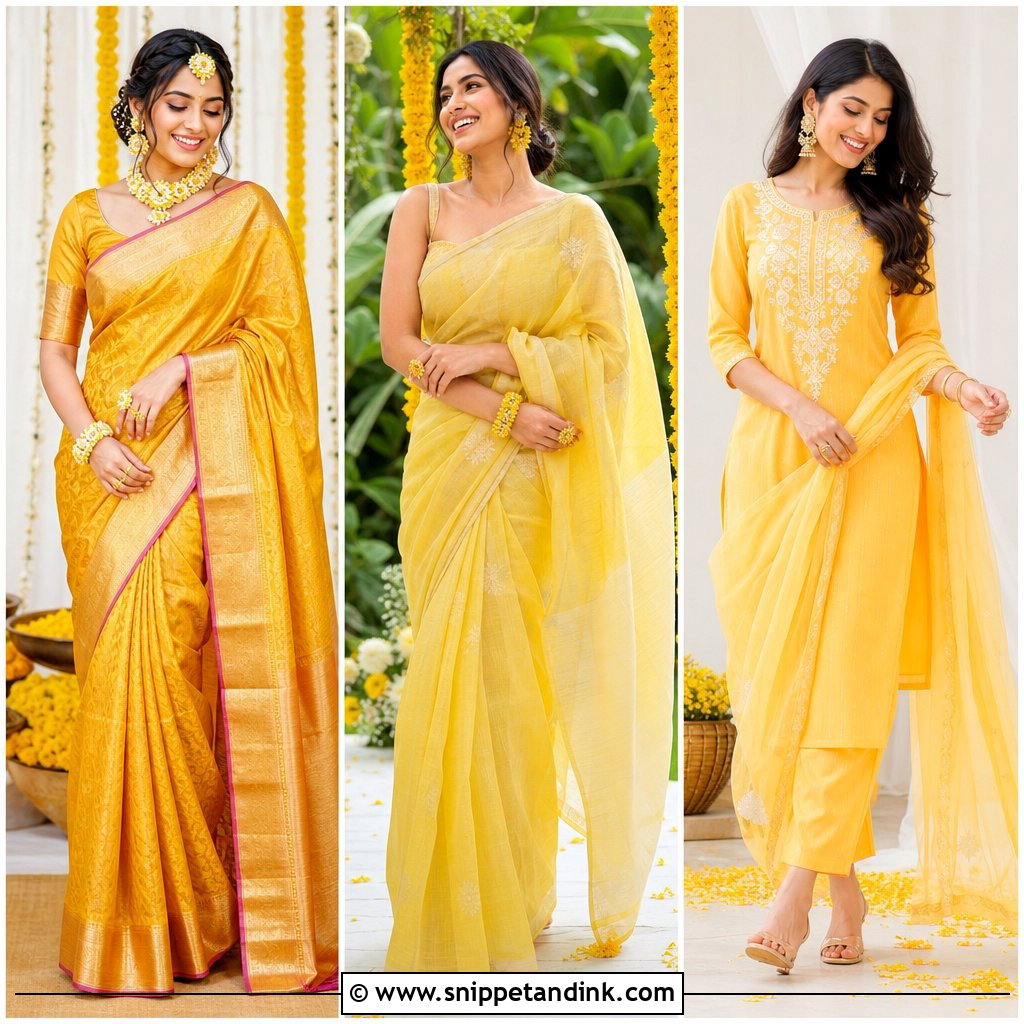
When comfort matters most, a yellow chikankari kurta with coordinated trousers is my first suggestion for guests and younger relatives. Chikankari is hand embroidery on fine cotton or lawn, so it breathes in heat. It’s also delicate: the shadow-work stitches are loose on the back and can snag on rings and bangle edges, so avoid rough metal bangles with it. Pair it with tapered pants or a simple shalwar in the same shade, and bring color in through a floral dupatta. Flat leather khussas and glass bangles finish it. You’ll wear it again long after the wedding.
6. Mirror Work Lehenga Haldi Dress
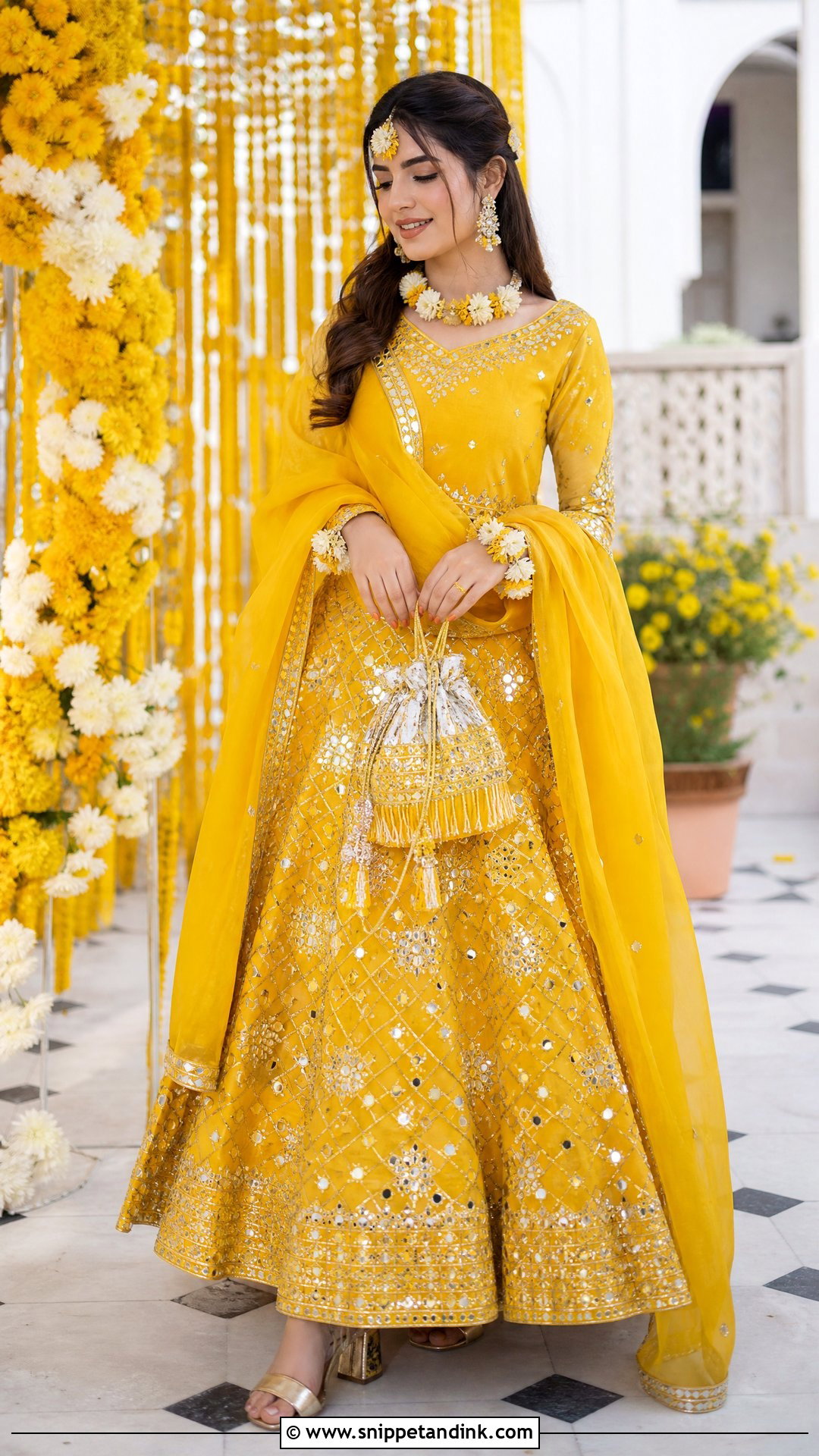
Mirror work can make a yellow lehenga feel bridal without dense embroidery, since the small glass pieces do the sparkling for you. Choose a lightweight skirt with evenly spaced mirrors and a clean hem border. A plain chiffon dupatta balances the reflective surface. Check how the mirrors are attached before buying; loosely stitched pieces pop off under the strain of sitting on the floor. Metallic block heels, mirror-work earrings and a compact potli complete it. Keep other jewelry limited. A bride can add a floral necklace or matha patti for more impact.
7. Short Kurta And Shalwar Haldi Dress
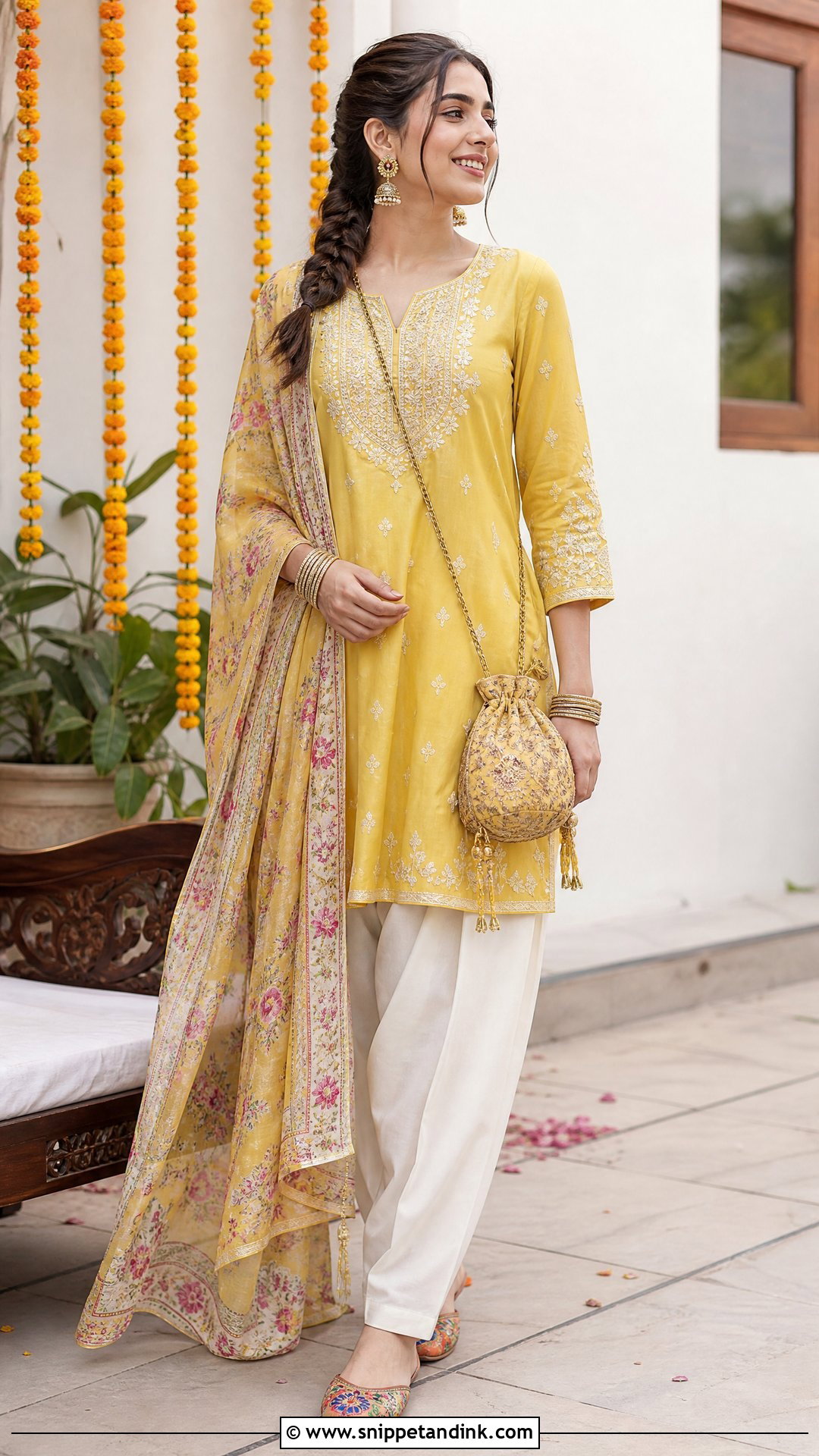
A short kurta with a traditional shalwar is the outfit for the cousin who’ll be running the music, carrying trays and dancing. Pick a hip-length yellow kurta with a slightly loose shape and embroidery at the neck and sleeves. A generously cut shalwar in white, ivory or yellow handles floor seating with ease. Secure a printed chiffon dupatta with a pin on one shoulder. A small crossbody potli keeps your phone close without a bag in your hand. Colorful khussas, medium jhumkas and slim bangles finish it. Wear a braided ponytail, since it lasts through a lot of movement.
8. Angrakha Anarkali Haldi Dress
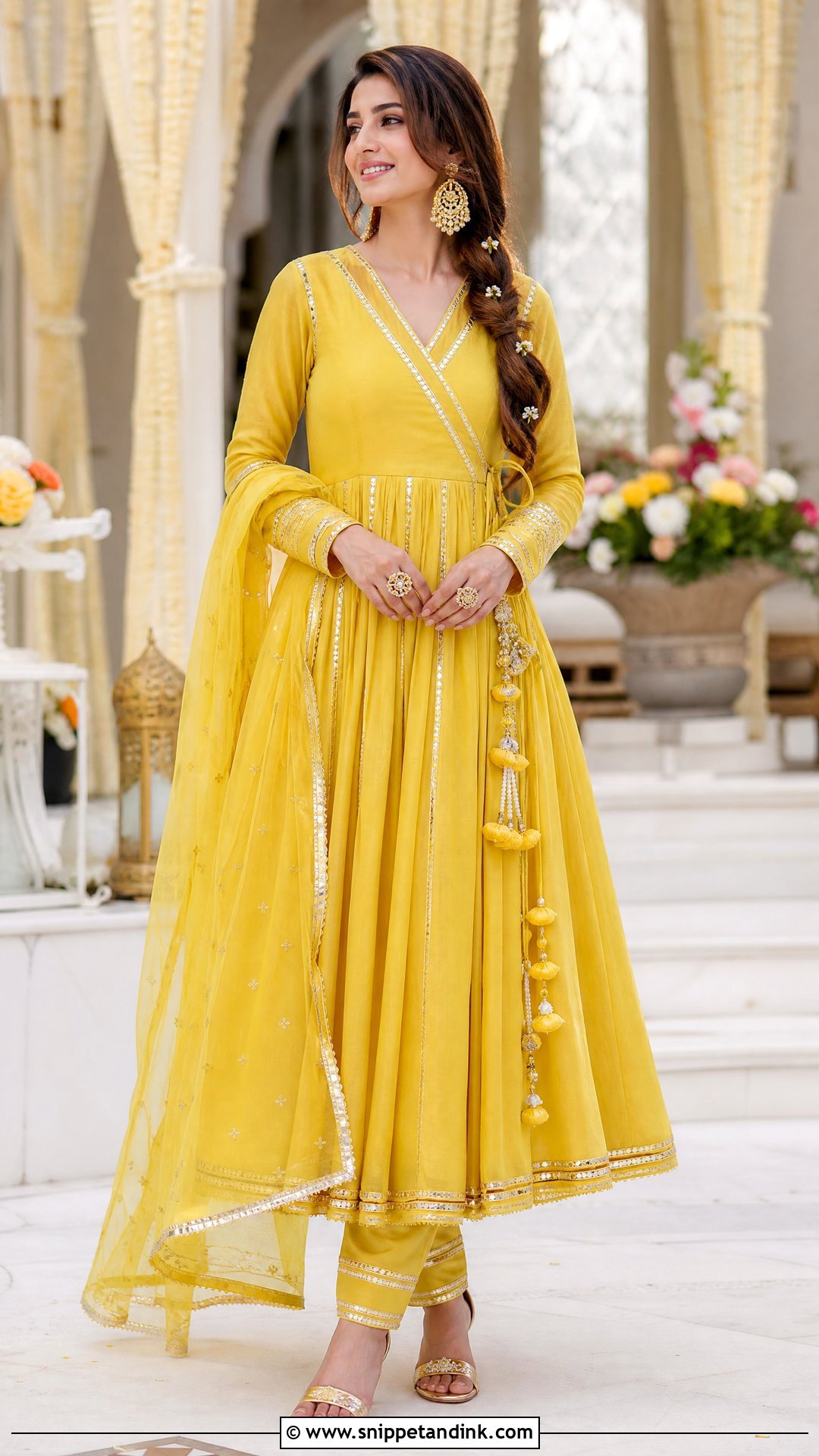
An angrakha Anarkali pairs a wrap bodice with a flared skirt, and the diagonal neckline defines the waist on most body shapes. Look for lemon or golden yellow with fabric ties, gota edging and small tassels. Cotton-silk or georgette holds the shape but stays easy to manage. The ties on many angrakhas are decorative only, so make sure there’s a secure inner closure; I add a hook at the cross point as standard. Narrow trousers, a sheer dupatta, gold sandals and chandbalis complete it. A side-parted braid suits the traditional cut.
9. Peplum Sharara Haldi Dress
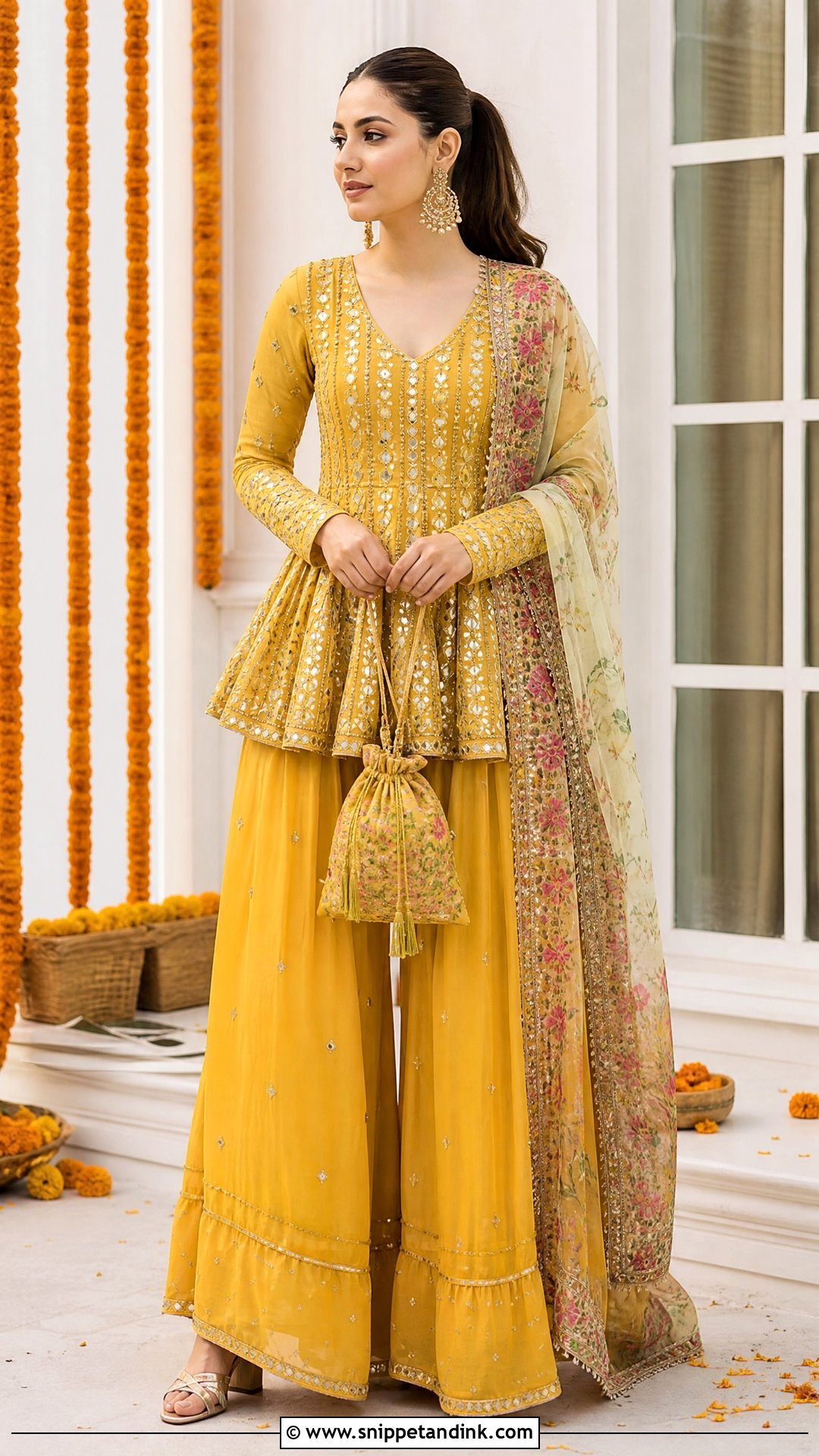
A peplum top over a sharara looks modern while still feeling like occasion wear. The peplum should fit smoothly through the bodice and flare gently below the waist into a high-waisted sharara in chiffon, crepe or a silk blend. Avoid a stiff, heavily interfaced peplum: it juts out when you sit and pokes your arms. Small mirror motifs or gota borders give enough detail. Add a matching or floral dupatta, block-heel sandals and statement earrings. The defined waist suits brides and sisters who want a sharper look, and a sleek ponytail keeps it clean.
10. Ivory And Yellow Haldi Dress
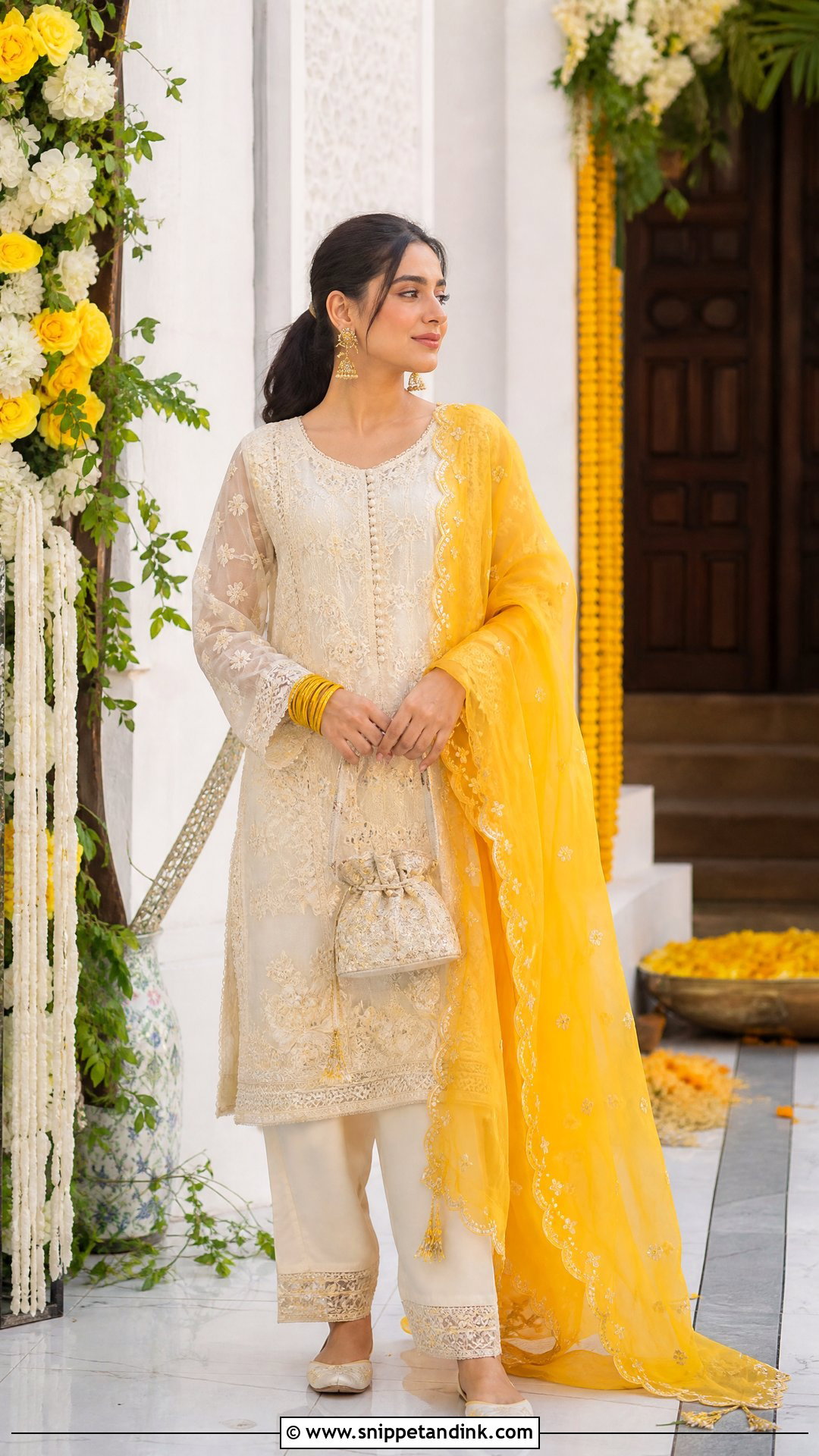
Not every haldi outfit has to be fully yellow. An ivory kurta and trousers with a bright yellow dupatta reads fresh and lets you wear yellow without it sitting against your whole body. Look for an ivory long shirt with yellow florals or small gold motifs, plus straight trousers with a narrow decorated hem. The dupatta is the focal point, so let it be the boldest piece. Ivory is a turmeric magnet, though. If you’ll be applying paste or sitting near the bride, I’d keep the dupatta draped away from the front and treat the ivory as a risk you’re choosing.
11. Farshi Gharara Haldi Dress
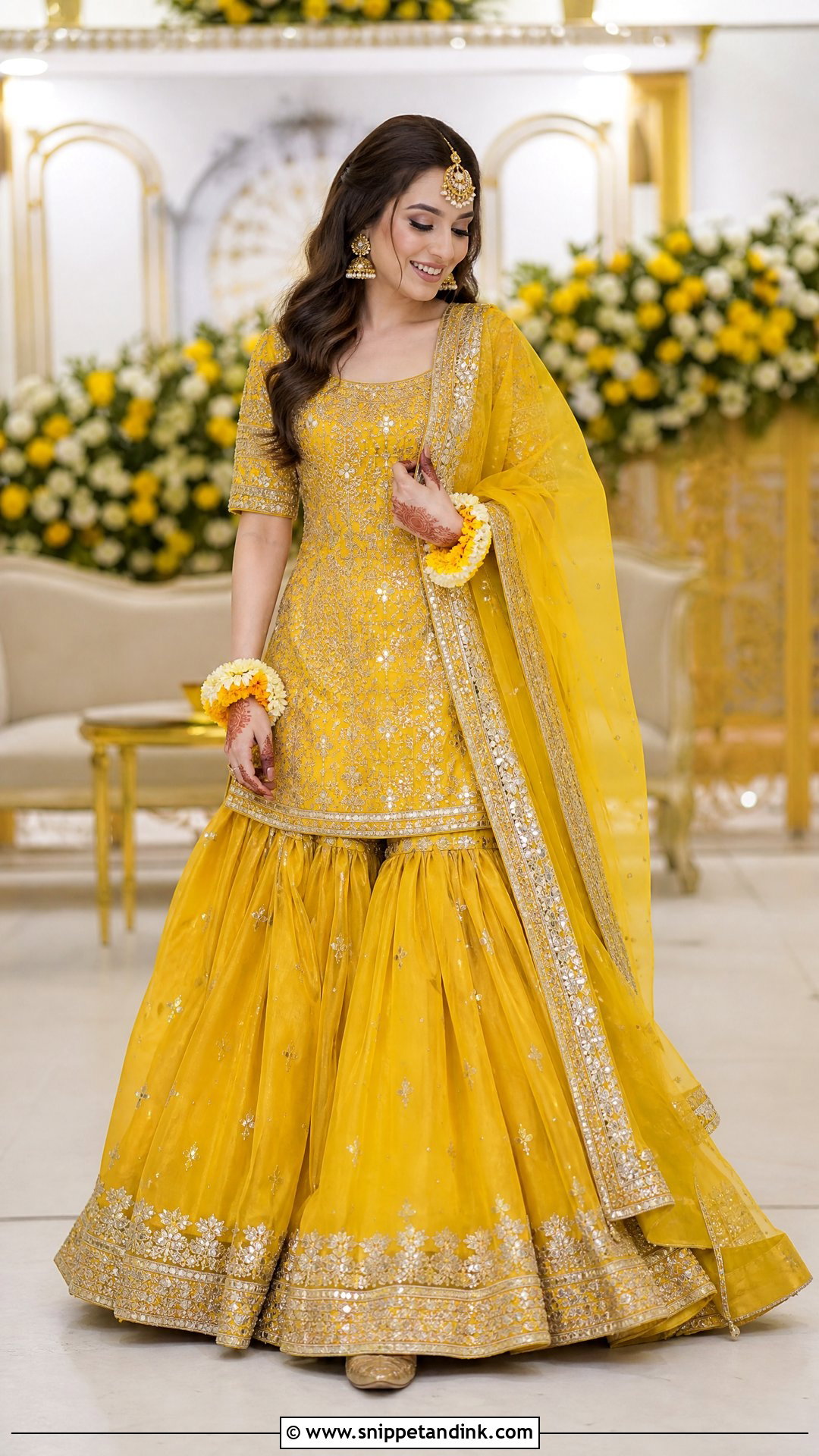
A farshi gharara gives a bride heritage drama, with an extra-wide leg that spreads across the floor. Pair it with a fitted short yellow shirt and fine zardozi, gota or resham work at the neckline, knees and borders. Choose fabric soft enough to fall rather than form stiff folds. Confirm the finished length while wearing the exact khussas you’ll use; a farshi is meant to pool, but it shouldn’t trip you. It’s a look for the bride or a very close family member, not for guests. A neat bun keeps attention on the jhumar and jewelry.
12. Printed Lawn Haldi Dress
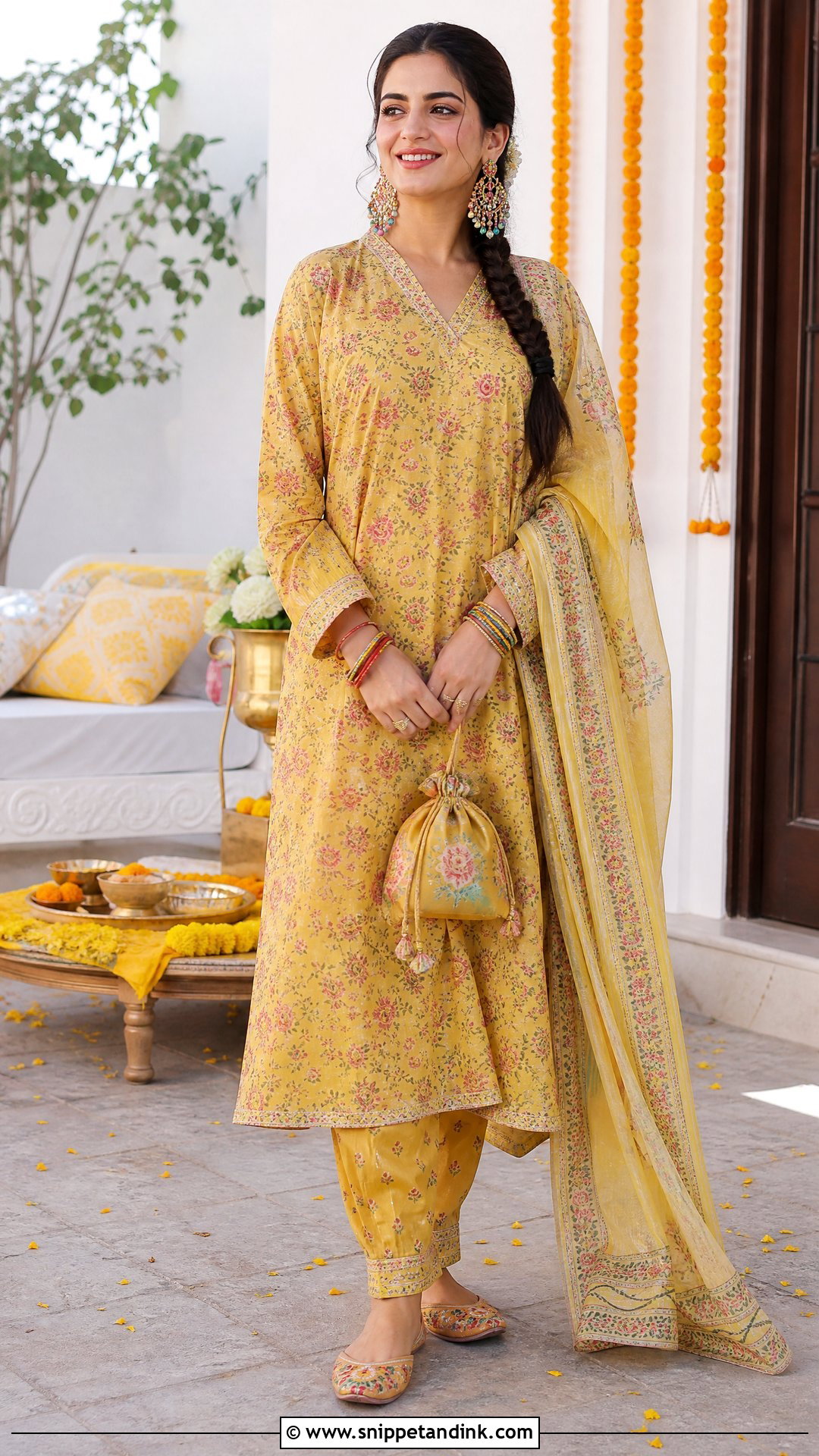
Printed lawn is my answer for a hot outdoor haldi or a casual one at home. It’s the most breathable fabric on this list, it washes at home, and turmeric comes out of it more easily than out of silk. Choose a coordinated yellow print with florals or block-style motifs, a straight or gently flared kurta and comfortable trousers. A light voile dupatta repeating one print color, flat khussas and a fabric potli suit it. Avoid adding embellishment, because that’s what ruins lawn’s wash-and-wear advantage. Guests of any age can adapt it by changing the shirt length.
13. Yellow Saree Haldi Dress
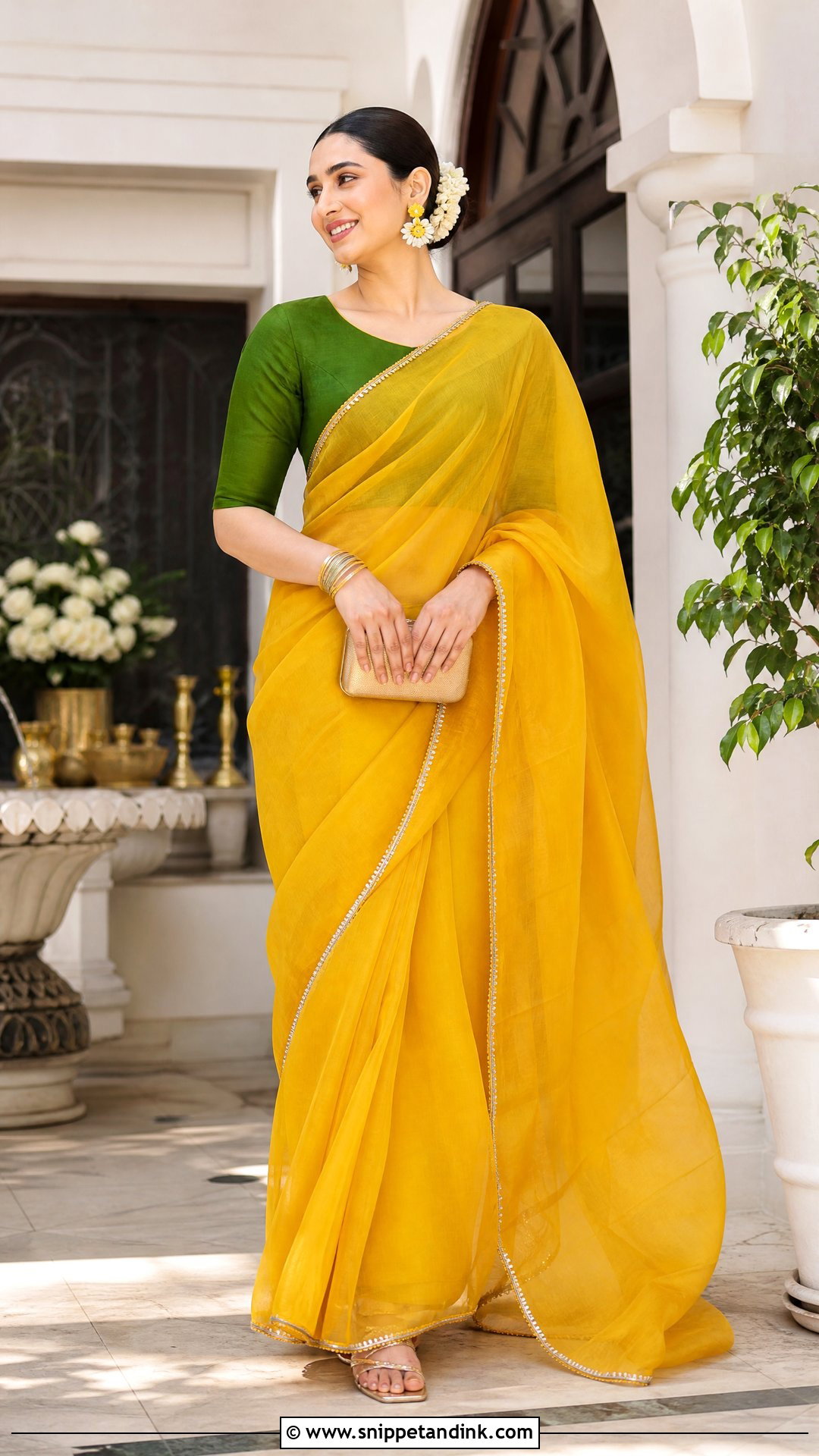
A yellow saree drapes gracefully and stands out from the kurtas around it, but sarees and floor seating need planning. I pin the pleats and keep the pallu shorter than usual, since a long pallu trails straight through the paste bowl. Lightweight organza, chiffon or cotton-silk pin securely. Pair it with a contrasting green, pink or ivory blouse. A pre-stitched saree gives the same look with far less fuss if you’re not used to draping. Metallic sandals and floral earrings finish it, with a sleek bun and white flowers.
14. Dhoti Pants Haldi Dress
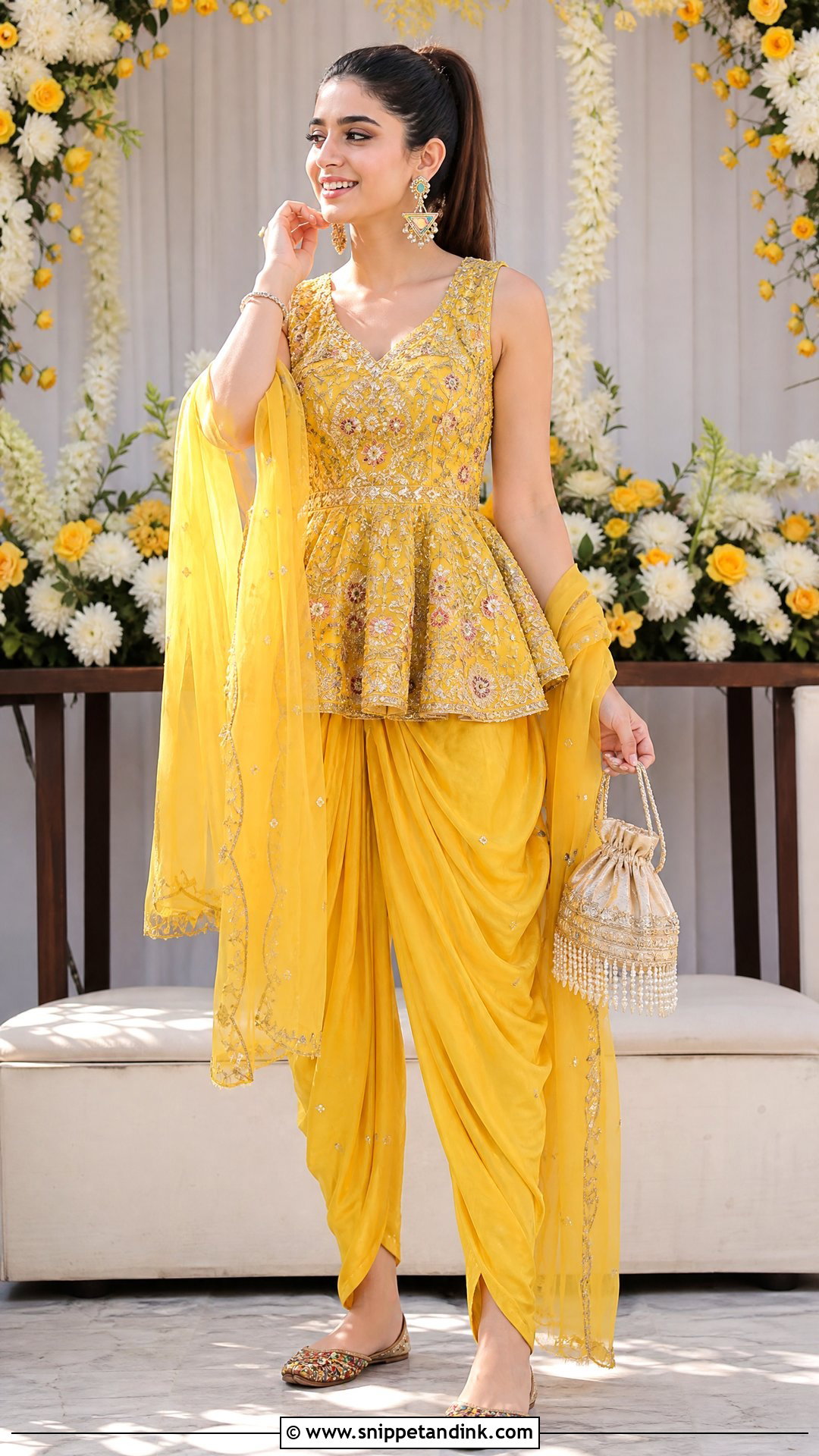
Dhoti pants bring relaxed volume and a younger energy to a haldi. Pair yellow dhoti-style trousers with a short embroidered kurta or fitted peplum that ends above the widest folds so the shape stays visible. The waistband is the weak point; drape-style dhotis can slide when you sit and stand repeatedly, so I’d choose one with a proper elasticated or hooked waist. A narrow chiffon dupatta or light cape adds coverage. Embellished flats and geometric earrings suit it. It works best for bridesmaids, younger guests or a bride planning an informal event.

15. Cape And Palazzo Haldi Dress
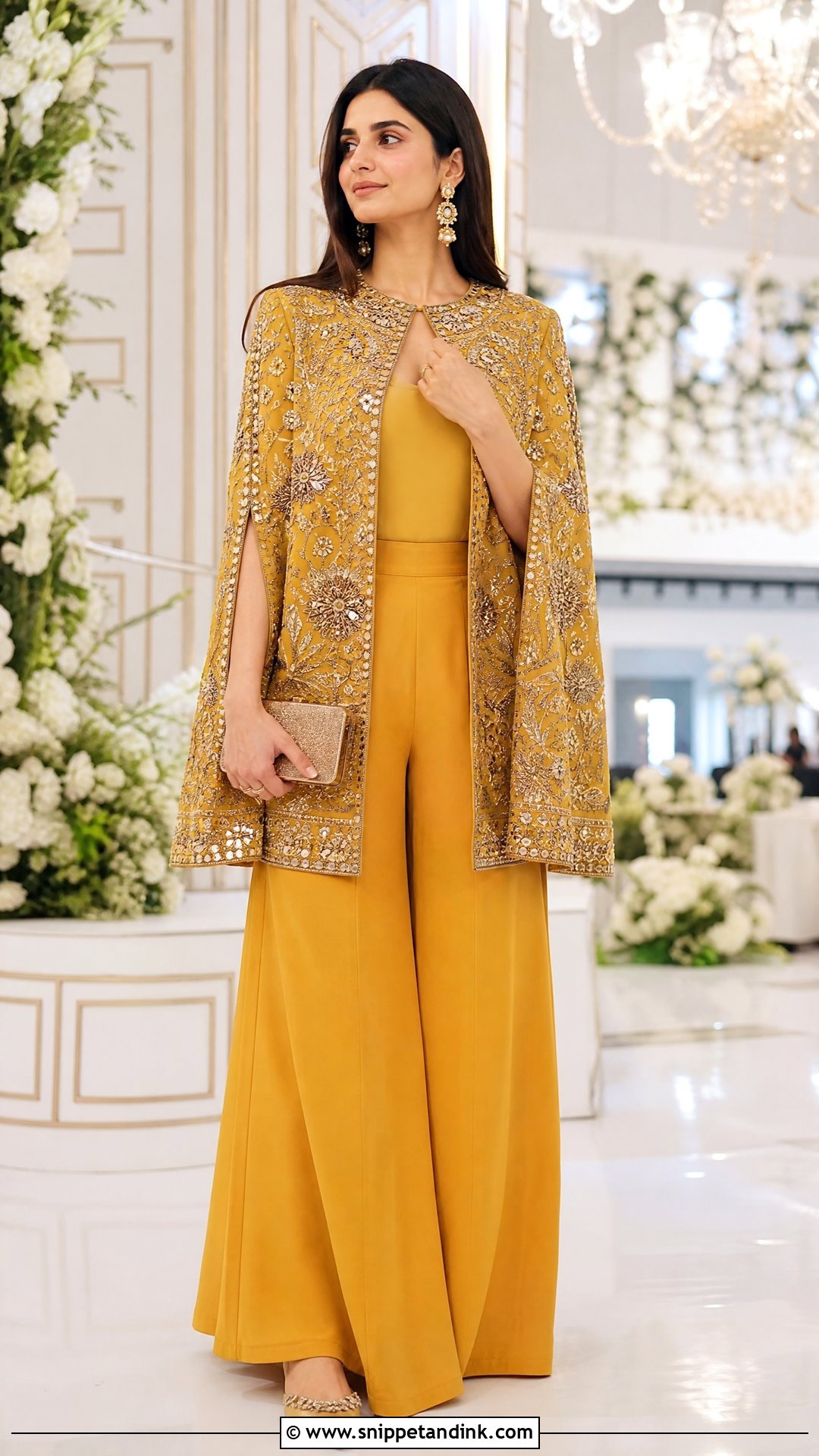
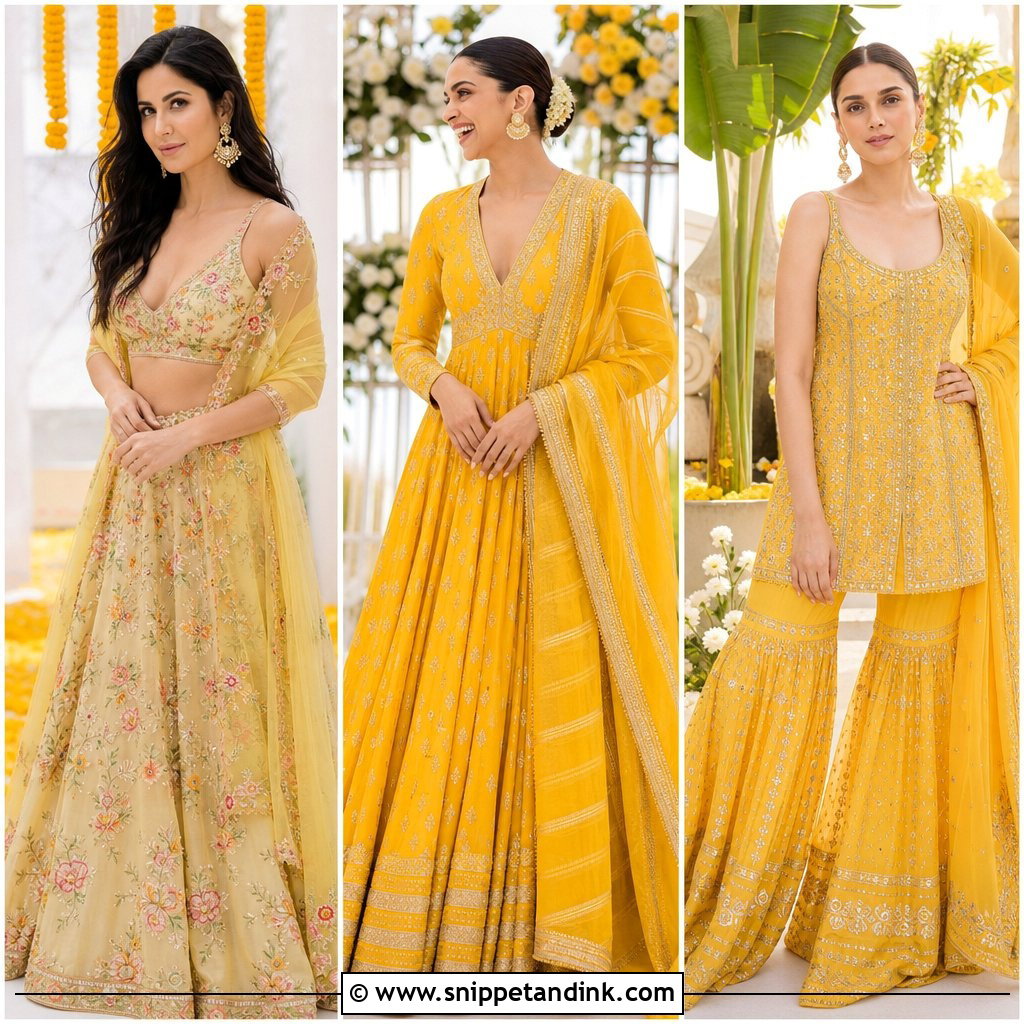
A cape over a coordinated top and palazzo pants gives a modest, modern look without a dupatta to manage. Start with a fitted yellow camisole or sleeveless kurta, then high-waisted palazzos in the same fabric. The cape carries the decoration: florals, sequins, mirrors or scalloped gota. Keep it around knee length. The fit at the shoulders is what I check first, because a cape that’s too wide slips backward all day and you’ll be adjusting it in every photo. Pointed flats and long earrings finish it, with sleek straight hair.
16. Mustard Raw Silk Haldi Dress
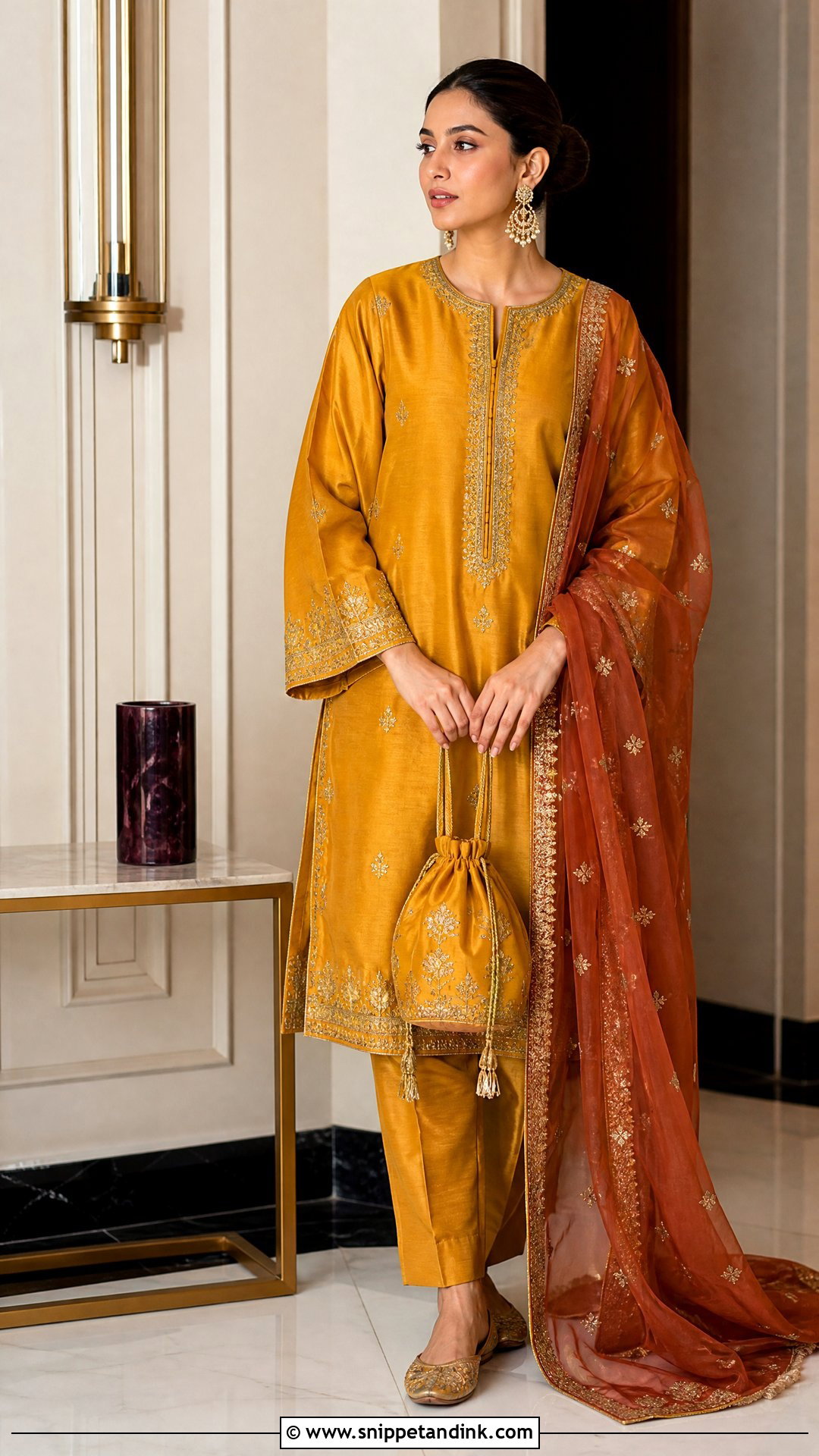
Raw silk in mustard gives a structured, more formal look for an evening or indoor haldi. Choose a straight knee-length shirt with restrained gold threadwork over cigarette pants or a narrow shalwar. A rust, magenta or bottle-green dupatta keeps the deeper yellow from looking flat. Here’s the honest trade-off: raw silk water-spots and holds turmeric, and it usually needs dry cleaning. I wouldn’t put the bride in it for the paste ritual itself, but it’s an excellent outfit for a guest or for the bride’s evening change. Antique gold jewelry and embroidered khussas suit it.
17. Floral Peshwas Haldi Dress
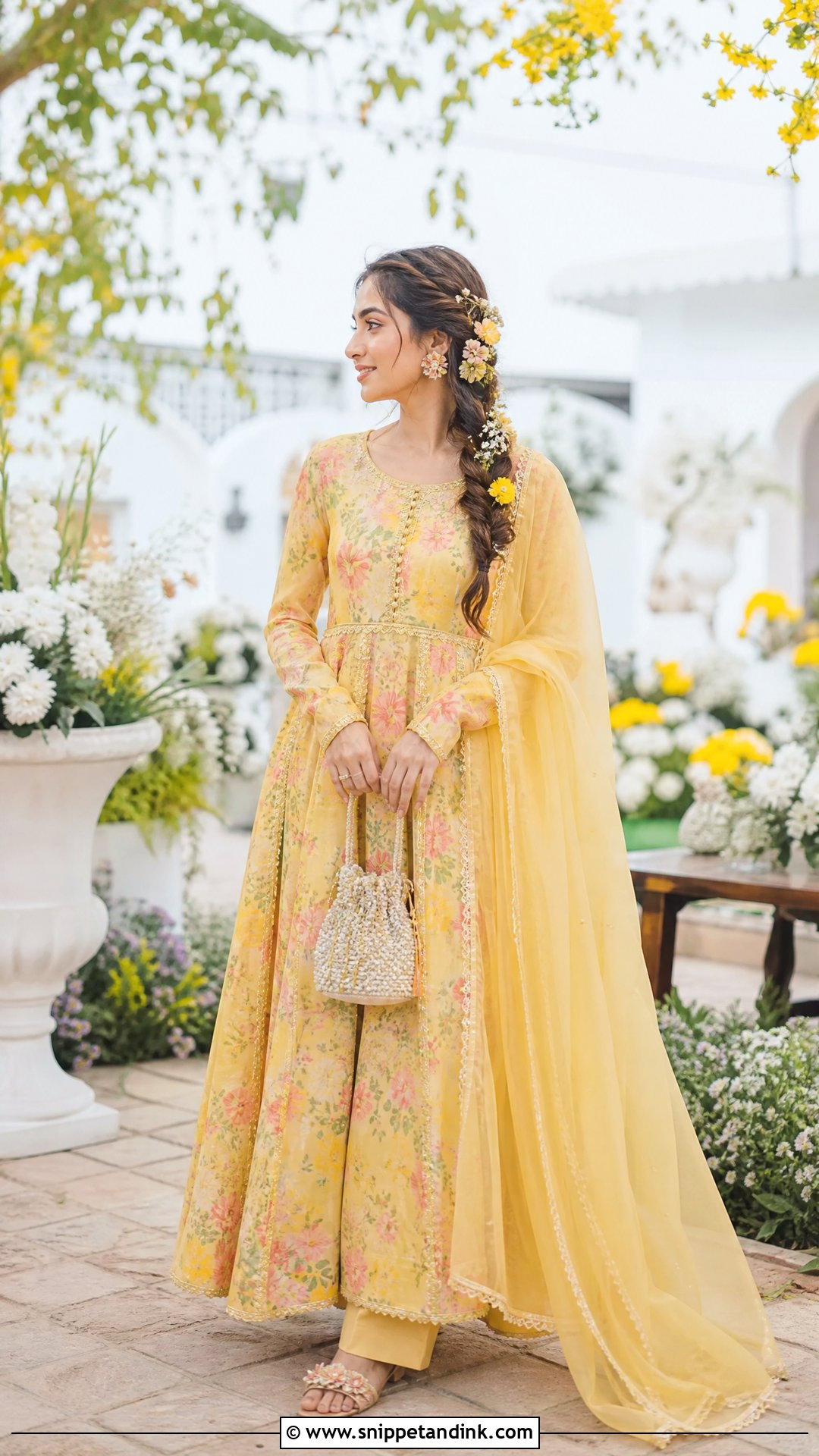
A soft yellow peshwas printed with small flowers moves with every step. Choose light fabric with a fitted upper section and evenly spread panels. Pink, coral, green and ivory flowers add depth while yellow stays the main color. Pair it with straight pants and a plain organza dupatta edged in one of the print shades. Brides who want romance without metallic embellishment tend to love it. Guests can choose a simpler print and less volume. A loose side braid with tiny flowers suits it, and soft makeup leaves the print to do the talking.
18. Kalidar Churidar Haldi Dress
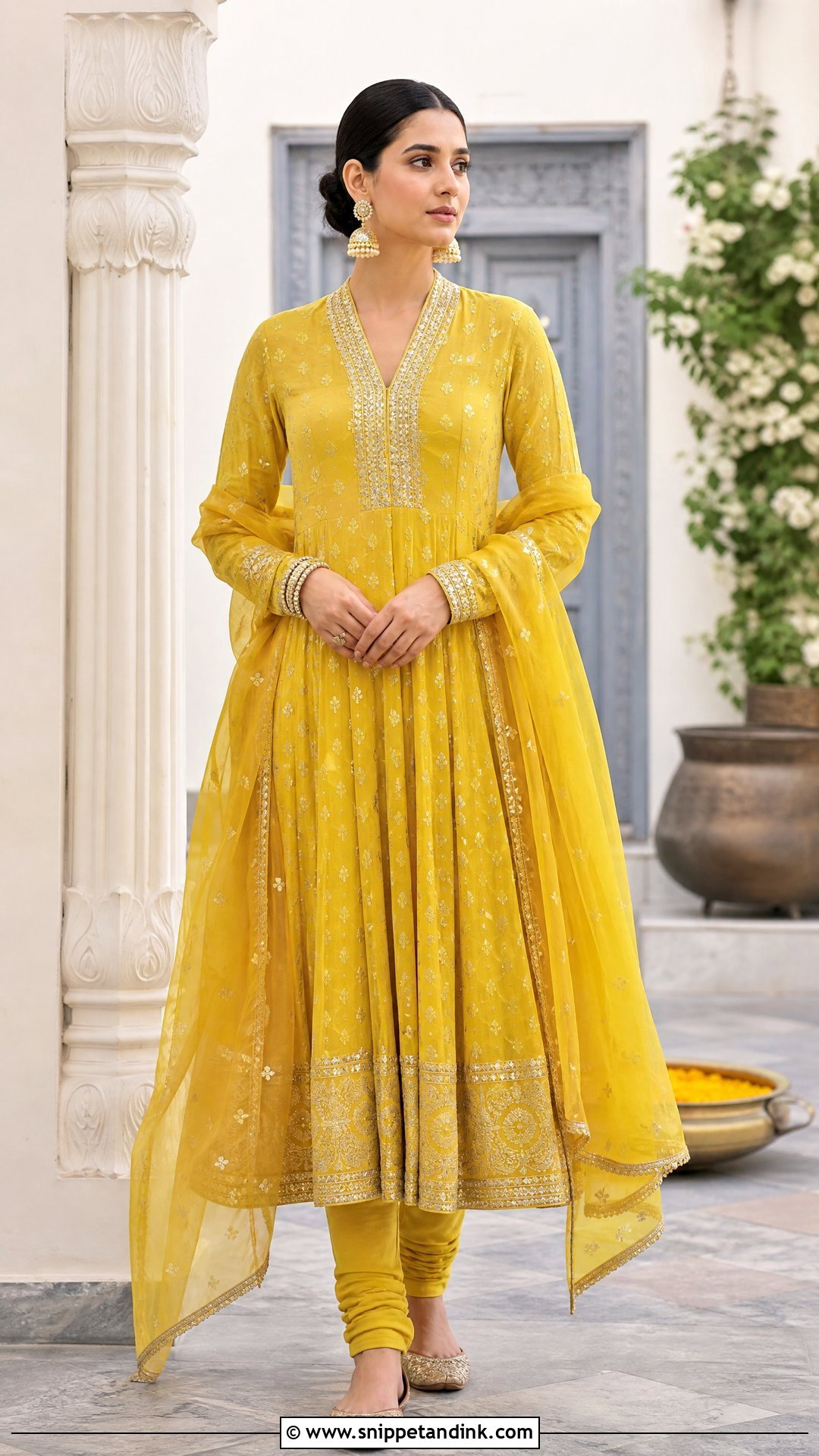
A kalidar kurta over a churidar gives long, gently flaring lines. Choose bright yellow or lemon with several panels widening from the bodice, and let piping or small gota motifs mark the seams. The churidar balances the volume. Churidars are cut extra long so they ruche at the ankle, and that ruching needs to sit above your shoe line, so fit them with your khussas on. Drape a sheer dupatta around the arms. Metallic khussas and pearl jhumkas complete it. The long shape lengthens the body when the waist and hem are fitted right.
19. Block Print Lehenga Haldi Dress
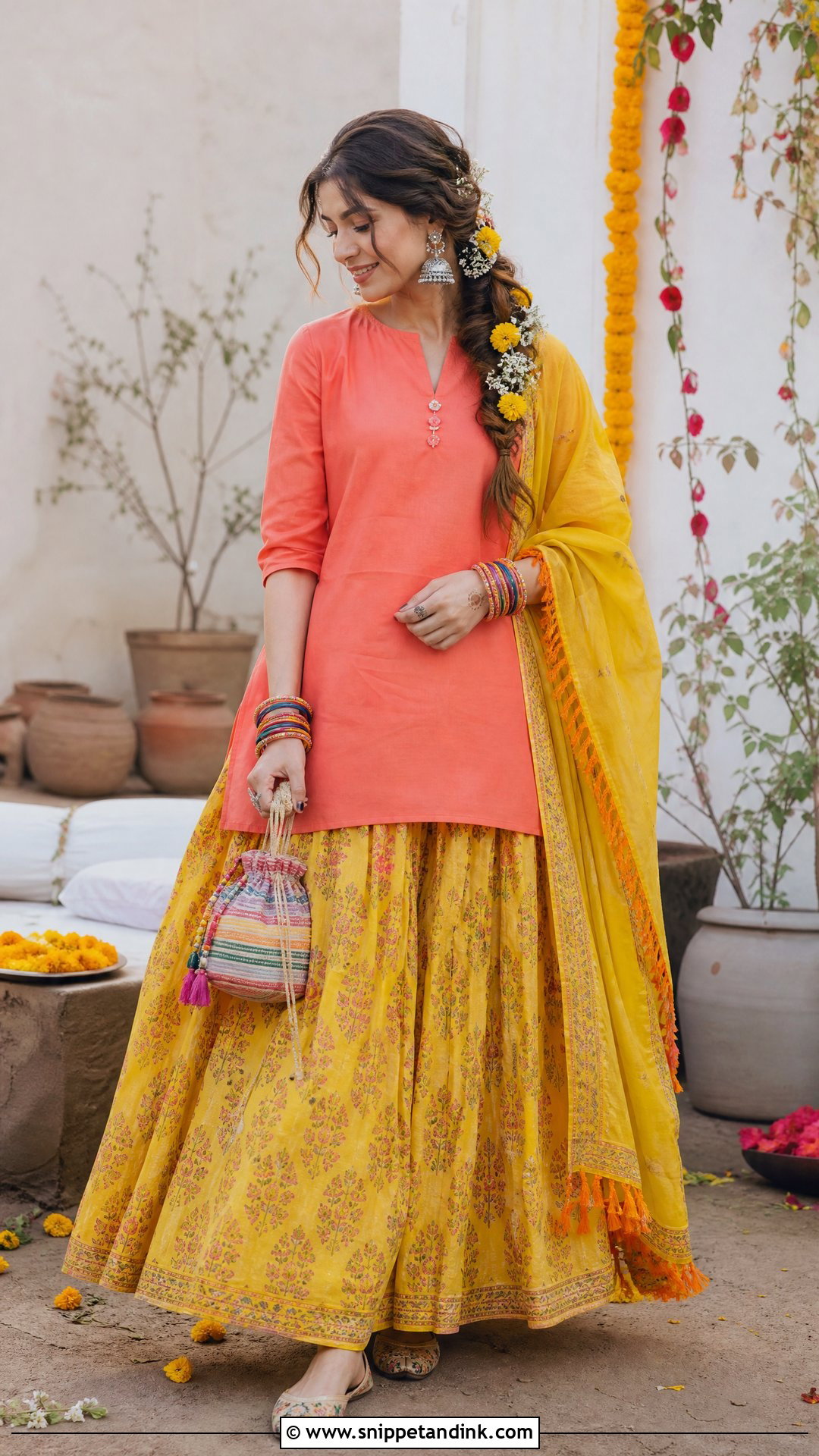
Block-style prints make a yellow lehenga feel handmade and relaxed. Pick a cotton or cotton-silk skirt with repeating florals or geometric motifs and pair it with a plain cropped blouse or short kurta in one of the supporting colors. A light yellow dupatta with tassels or pom-poms adds fun. Choose a moderate skirt flare if you’ll be sitting on the floor, because a full cotton skirt bunches up awkwardly around you. Flat leather khussas, oxidized earrings and a woven potli suit it. It works well outdoors in warm weather and washes more easily than silk.


20. Yellow Co-Ord Haldi Dress
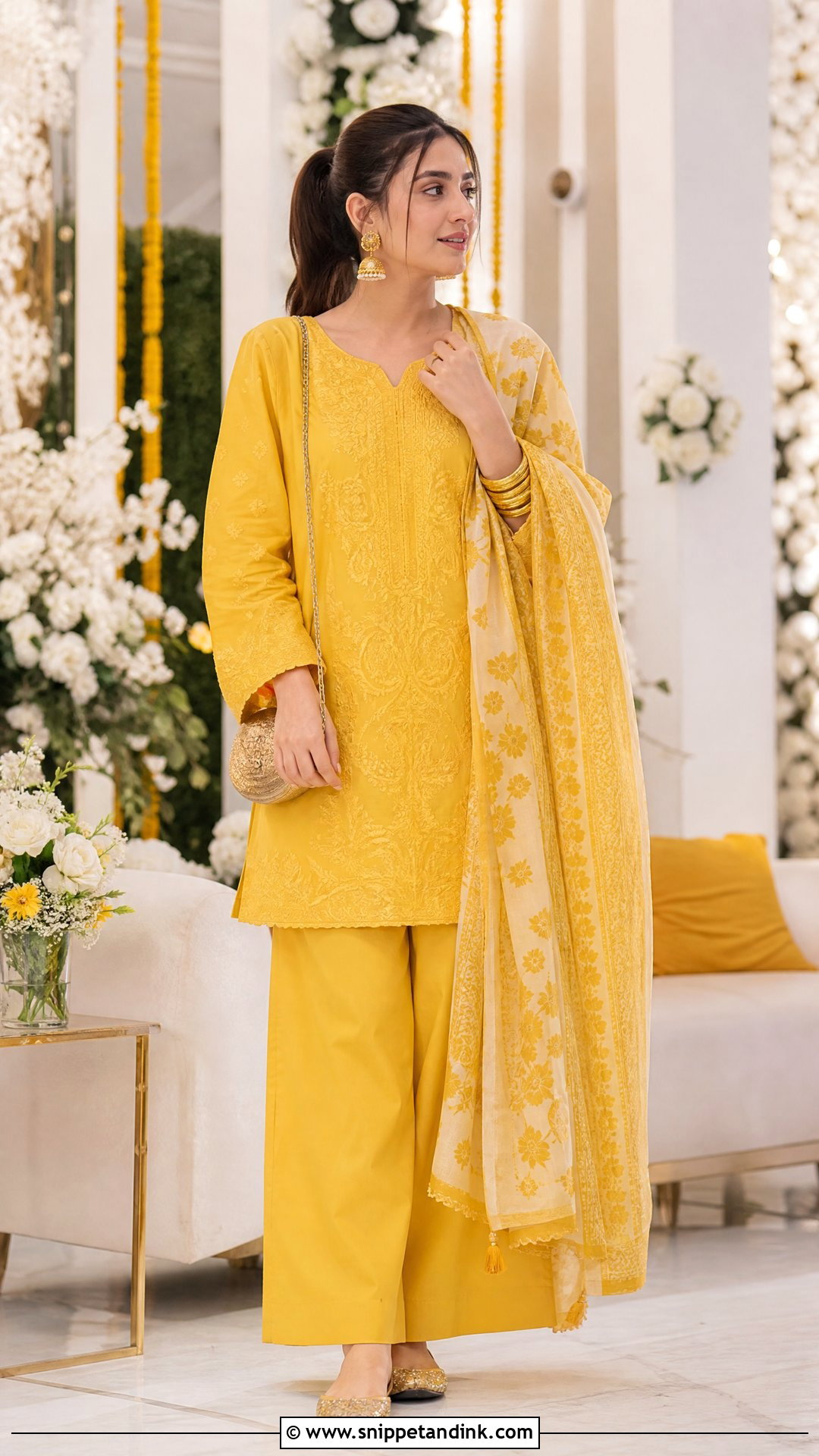
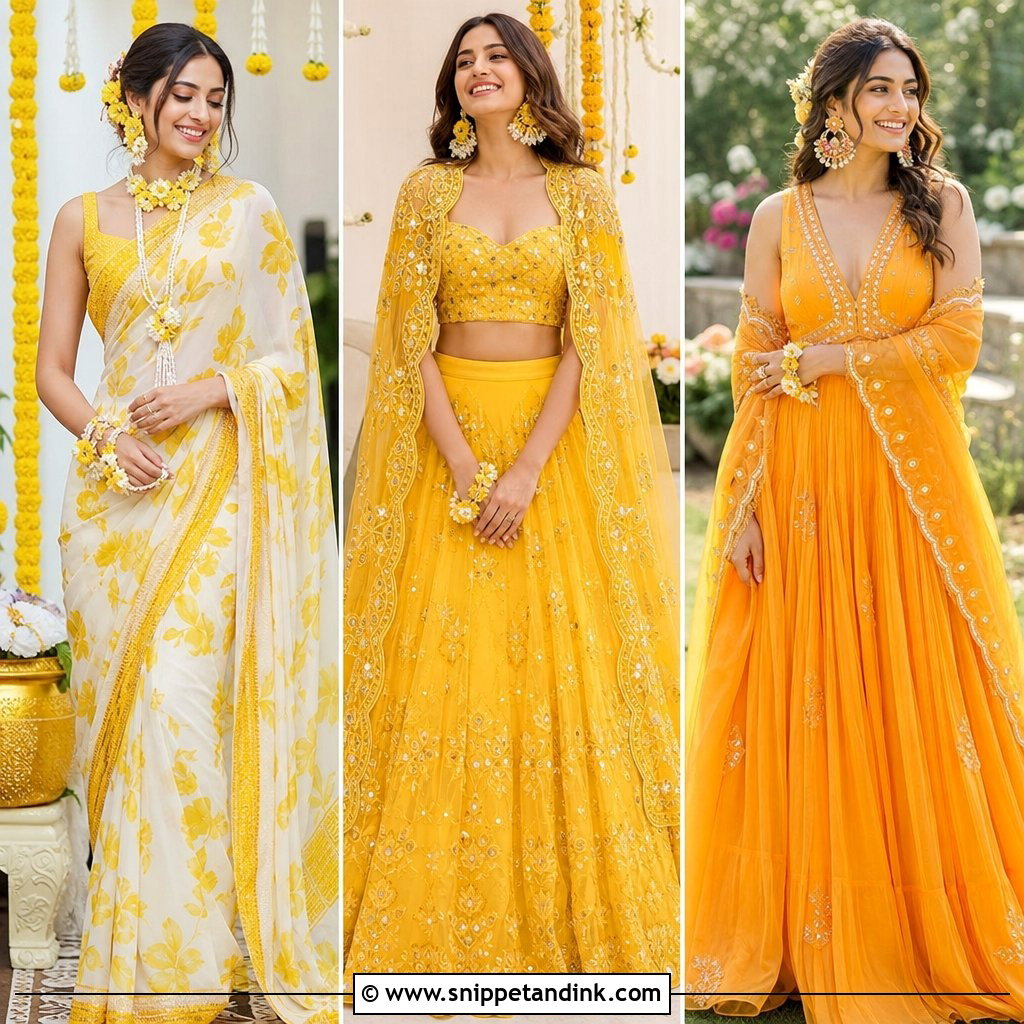
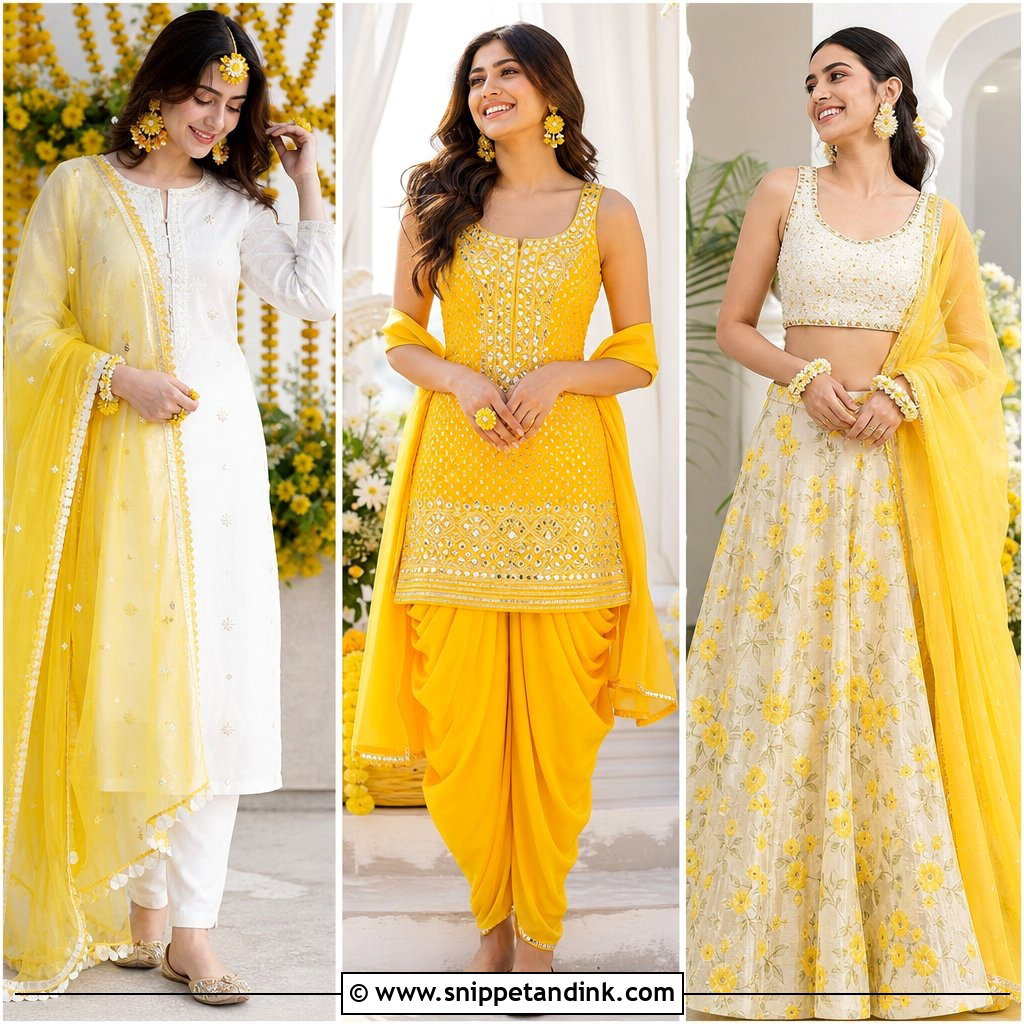
A yellow co-ord set is the simplest route to a clean, contemporary haldi outfit. Choose a long tunic or short kurta with matching wide-leg trousers in cotton-silk, crepe or a textured weave. Tonal embroidery or scalloped hems make it festive. Add a printed dupatta or light cape if the family expects more traditional coverage. Modern juttis, hoop-style jhumkas and a compact shoulder bag finish it. The single color lengthens the body. I like co-ords for bridesmaids because each piece can be worn separately afterward, so the money isn’t spent on one afternoon.
Getting Turmeric Out Before It Sets
Turmeric stains fast and hot water locks them in, so speed and temperature are everything. Scrape off any paste with a blunt edge, then rinse the stain from the back of the fabric under cold running water to push it out rather than through.
- Work a little liquid dish soap into the stain gently with your fingers. Don’t rub hard on embroidery.
- Rinse cold and repeat until the color stops coming out.
- Dry cotton and lawn in direct sunlight. Sunlight fades turmeric noticeably, often more than another wash.
- Don’t panic if the stain turns reddish when soap or baking soda touches it. Turmeric reacts that way to alkaline cleaners, and it usually fades again after rinsing.
- Send silk, raw silk and heavily embellished pieces to a dry cleaner the same week, and tell them it’s turmeric.
Oil from the ubtan is the second problem. A sprinkle of talc or cornstarch on the spot, left for an hour and brushed off, draws out a lot of it before washing.
Fresh Flower Jewelry in the Heat
Floral jewelry is part of so many haldi looks, and it wilts faster than people expect. Order it for the morning of the event, keep it in the fridge in its box until you dress, and have someone mist it lightly before photos. Jasmine and rose petals hold up better than delicate blooms. Ask the florist to wire pieces rather than tie them with thread, since wired pieces keep their shape when you move and dance.
Yellow, Turmeric and a Day Spent on the Floor
Haldi clothes have one hard job: looking festive while handling paste, oil, petals and hours of sitting low. Ghararas, peshwas, printed lehengas, kurta sets and fusion separates can all do it if the fabric breathes and the dupatta is secured. Decide your role first, since the bride, her sisters and guests each need different amounts of volume. Then choose the shade that suits your skin, whether that’s vivid marigold, deep mustard, soft lemon or ivory with yellow. Comfortable shoes and a hairstyle that stays off your face matter more here than at any other function.
You'll Like These Ideas:








Leave a Reply