
Most Pakistani bridal hair I do is planned around something other than the hair: a heavily worked dupatta that drags on every pin, a matha patti chain that has to sit at the right angle, and three or four functions packed into one week. A mehndi braid and a baraat bun are solving completely different problems. Below are twenty looks I’d actually put on a bride, with notes on what each one needs underneath to survive a long stage sitting, family photos and hot lights. Read them with your own outfit and hair texture in mind, not just the picture.
Heavy Dupatta, Light Dupatta: How the Base Gets Built
Before I look at a single inspiration photo, I ask how heavy the baraat dupatta is and how it will be worn. A heavily embroidered net or velvet dupatta pinned over the head pulls backward all evening, so the hair underneath is effectively a hanger. That’s why so many traditional brides end up in buns: a bun gives me a firm mass to pin into, and the pins can cross into it at angles that lock the fabric in place.
Lighter nikkah and walima dupattas change the rules. They can rest on curls or drape over a half-up style without dragging it flat, which is where open hair becomes realistic.
What I ask brides to bring to a trial
- The actual dupatta, or one of similar weight and fabric
- Your matha patti, tikka, jhumar or passa, so I can see where the chains need to sit
- A photo of the outfit neckline and back
- Extensions or a paranda if you plan to wear them
- Hair washed the day before rather than that morning, since freshly washed silky hair is the hardest to pin
Once the dupatta is pinned, I have the bride sit, stand and turn her head for ten minutes or so. If anything pulls behind the ears or slides forward, the trial is the time to fix it, not the wedding morning.
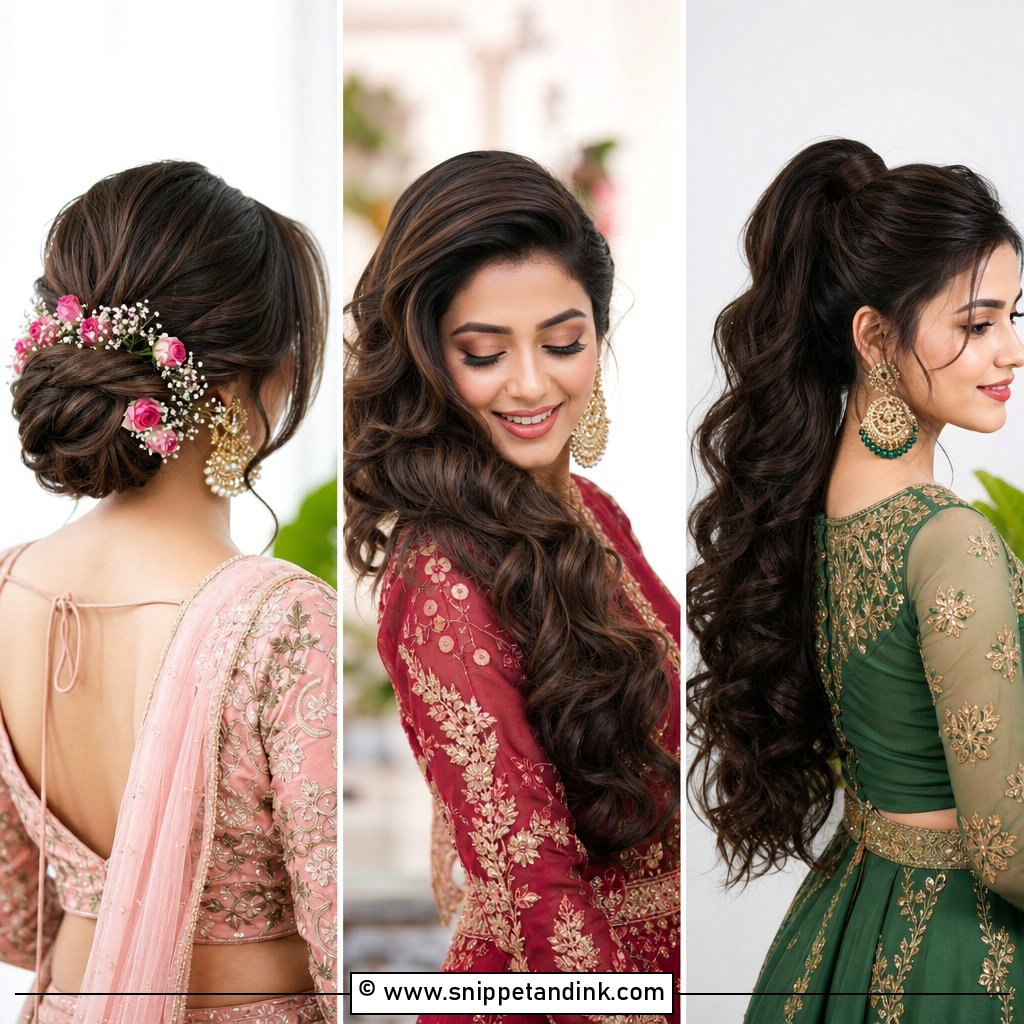
1. Pakistani Bridal Low Bun With Dupatta
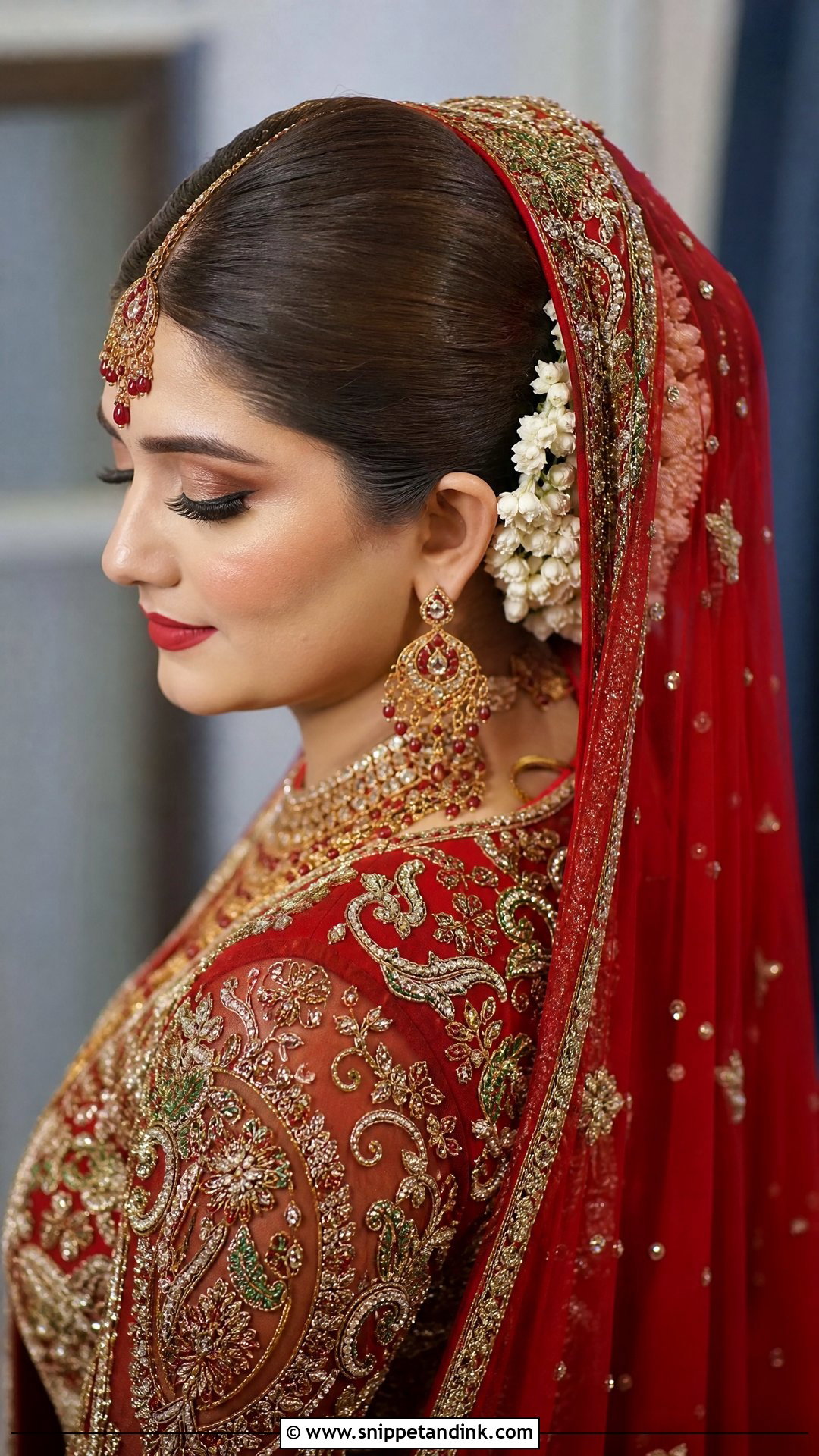
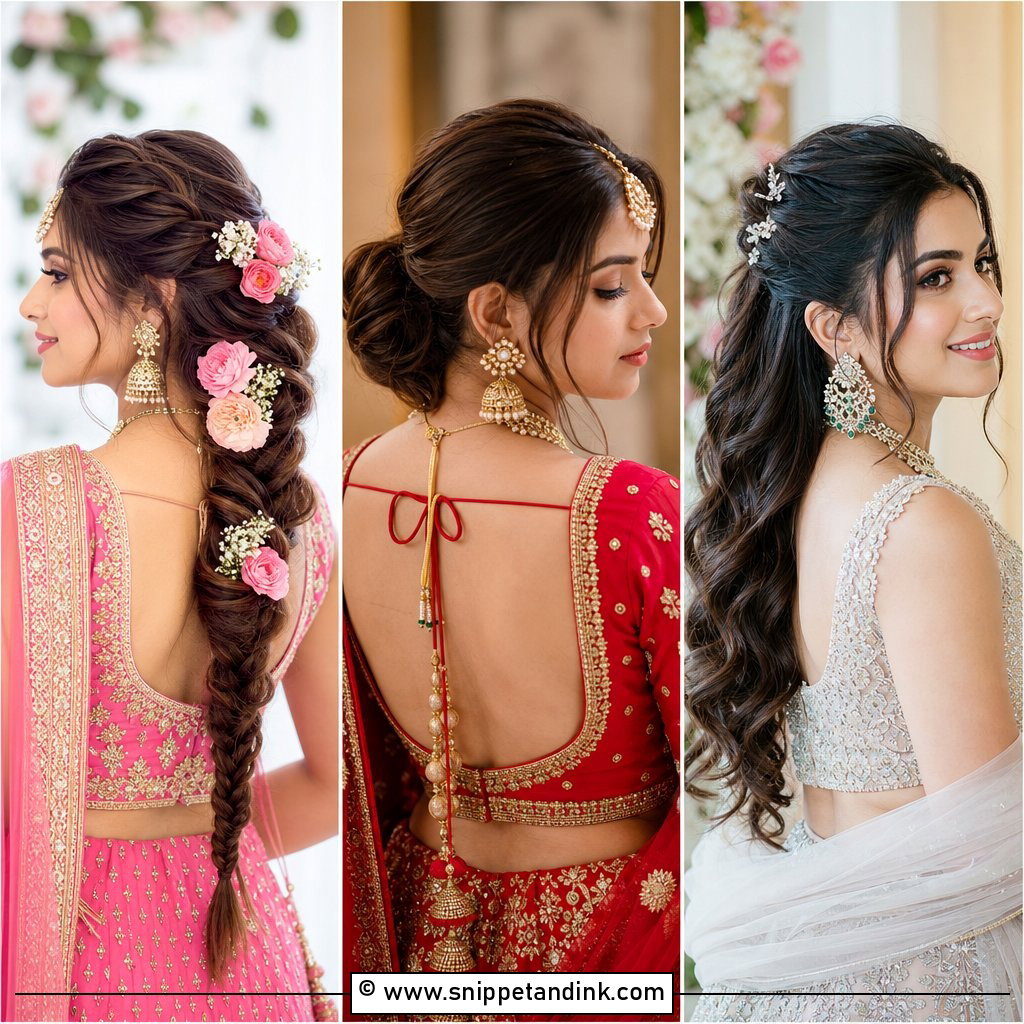
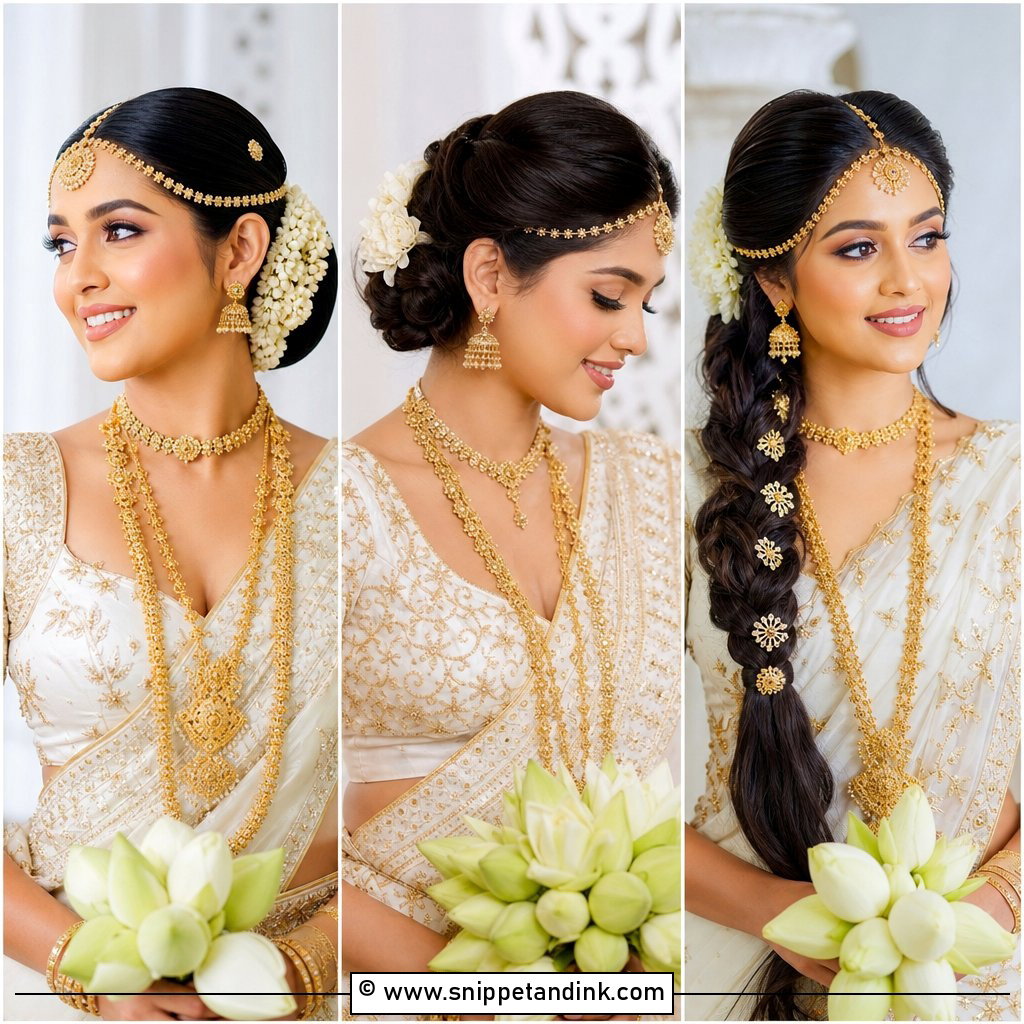
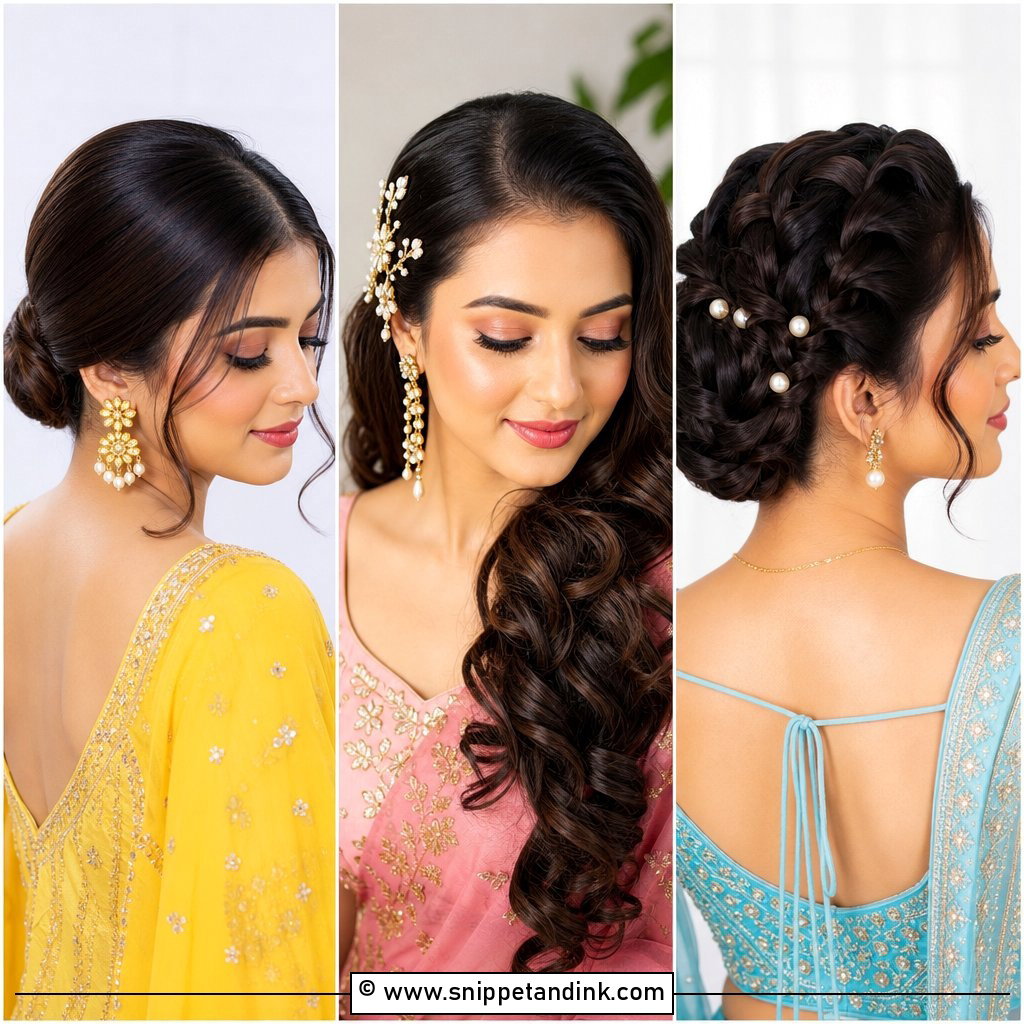
The low bun is the one I reach for most on baraat days, because it gives me a solid base at the nape to anchor the dupatta pins into. On fine hair I build it over a padded donut so the pins have something to grip, and I keep the center part smooth with a soft lift at the crown rather than a tight pull, which gives headaches by the third hour. Fresh roses or pearl pins can sit along the edge. For baraat brides in a lehenga, gharara or sharara, it’s the style least likely to shift when the dupatta gets tugged during the rukhsati.
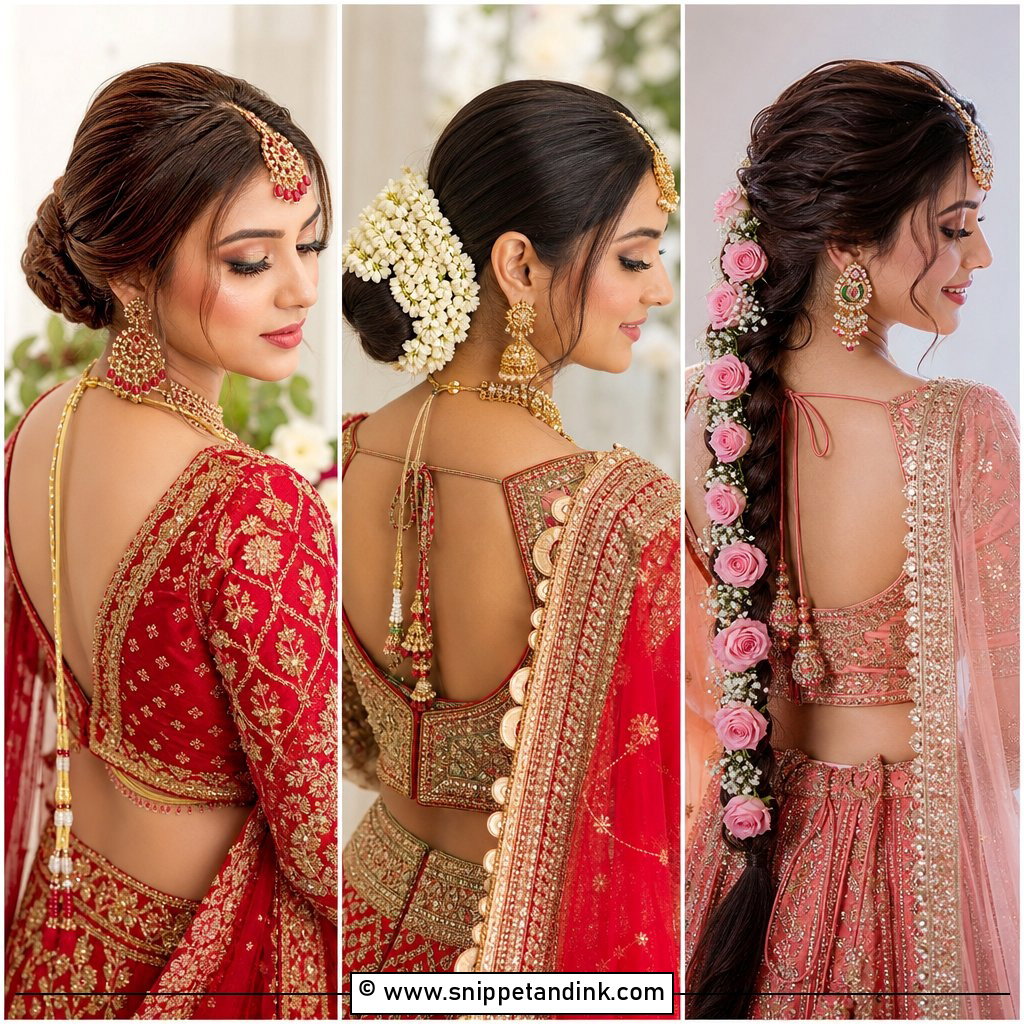
2. Pakistani Bridal High Bun With Matha Patti
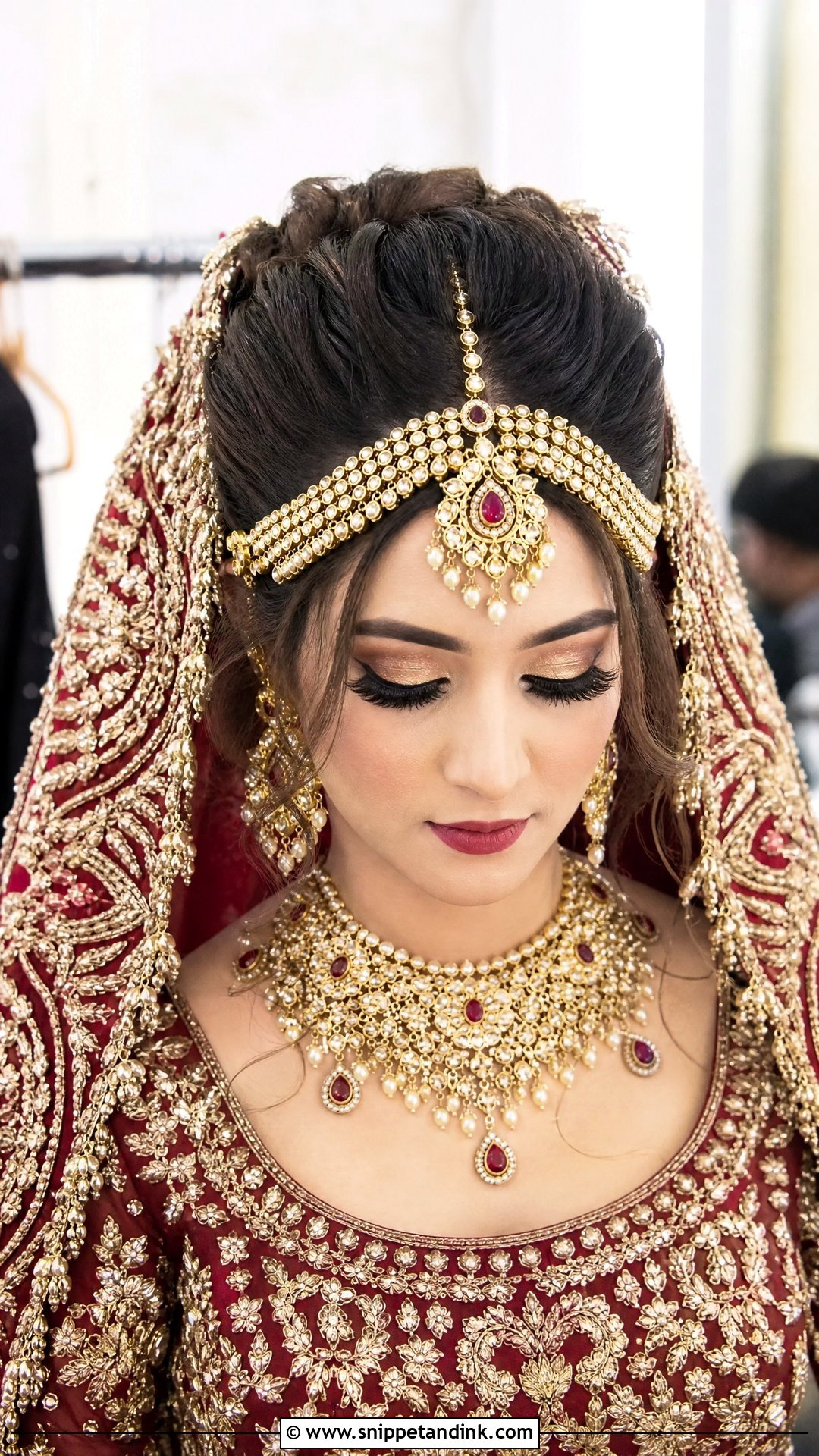
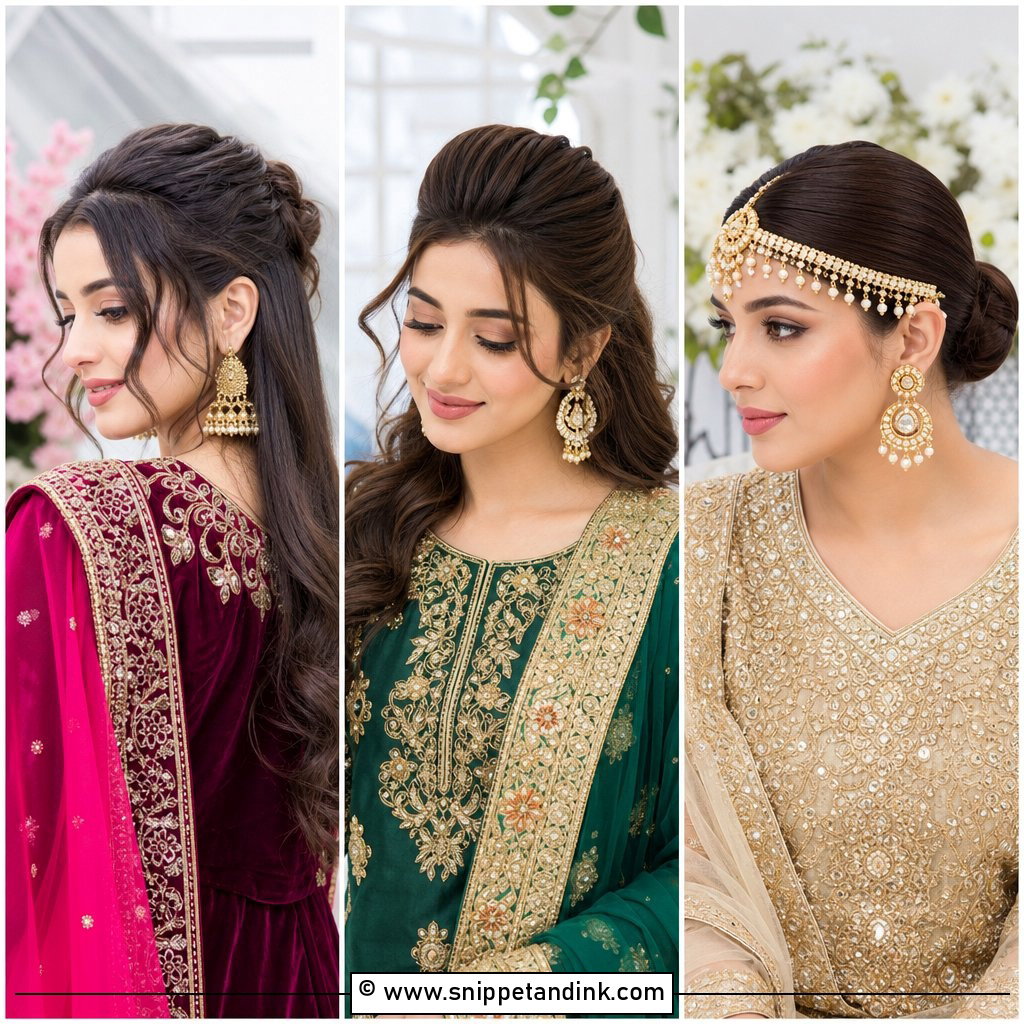
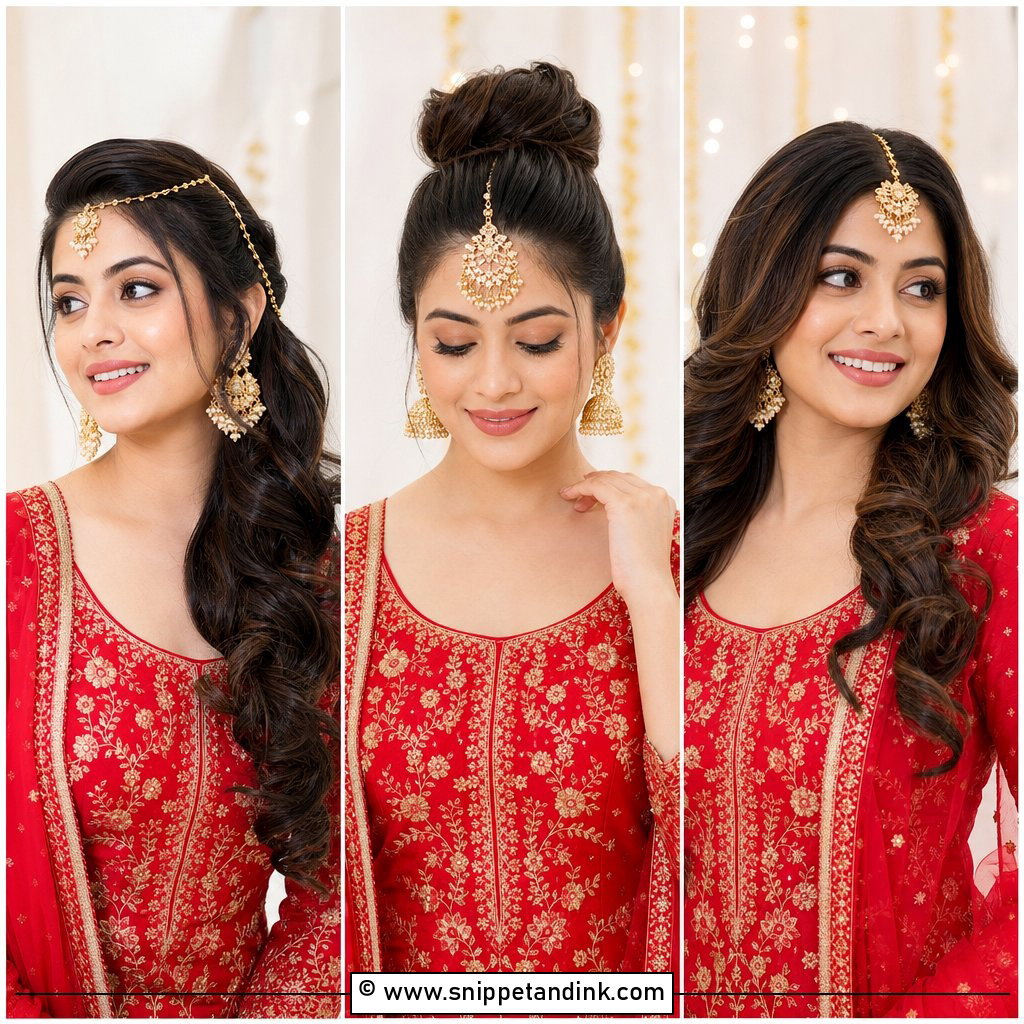
Placing the bun higher changes how the dupatta sits. It rests on the bun like a shelf instead of flattening the crown, which helps heavier head jewelry stay level. I only do it on hair long enough to wrap a full bun at that height; otherwise the padding shows from the side. With heavily embroidered red, maroon or deep green outfits, the matha patti frames the forehead so the height reads as balance rather than bulk. Two small tendrils at the temples soften it, and anything messier looks untidy under strong wedding lighting.
3. Pakistani Bridal Sleek Bun With Jhumar
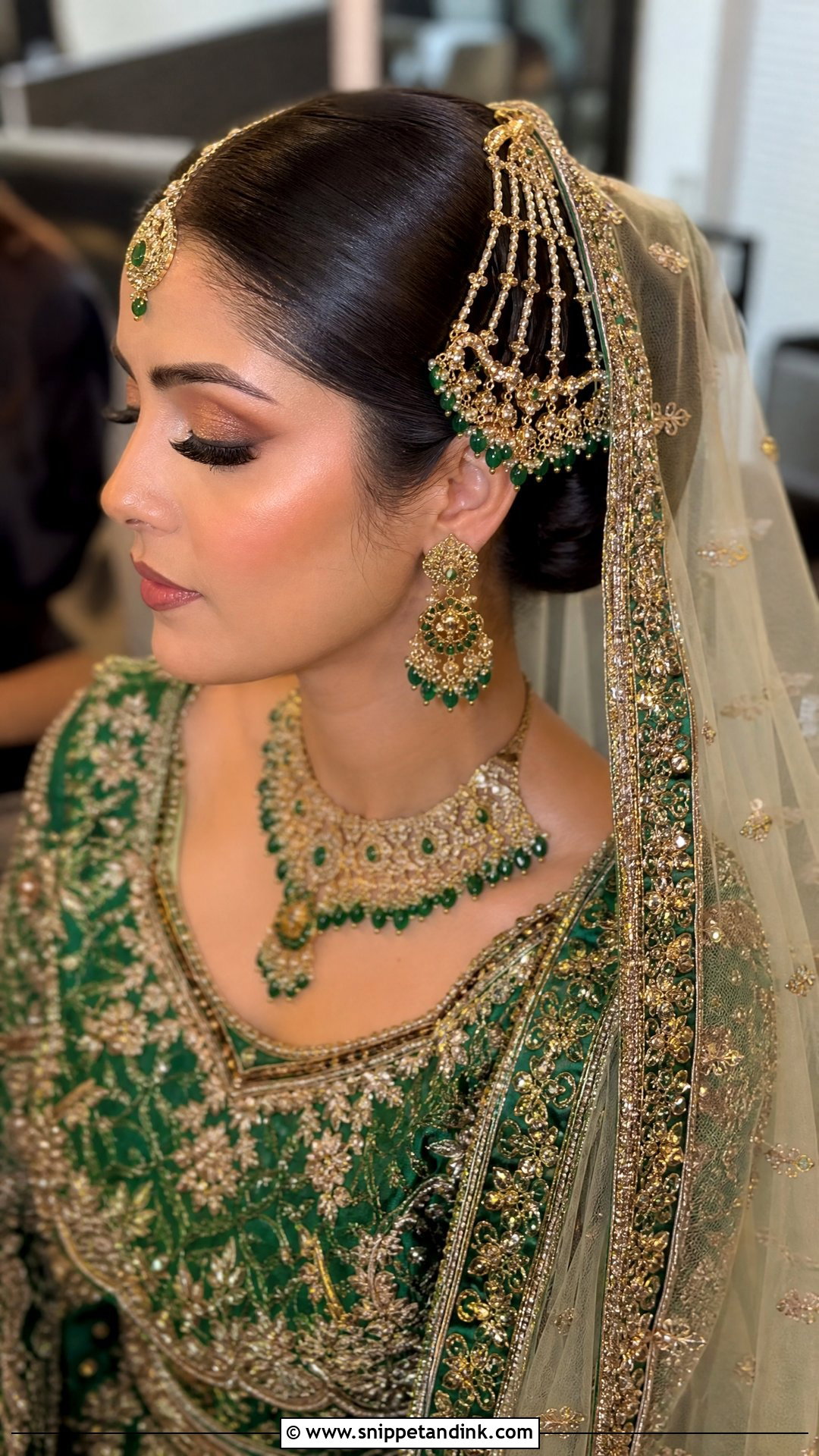
A jhumar only looks right if the side it hangs on is flat and smooth. So on this bun I part first, decide the jhumar side, then set the front with a little shine spray and crossed pins hidden under the part line. The bun can sit low or mid. If the dupatta goes over the head, I pin it so the jhumar chain lies on top of the fabric instead of getting trapped under it. Keep the eye makeup strong, because a sleek head shape leaves the face doing most of the work.
4. Pakistani Bridal Gajra Bun
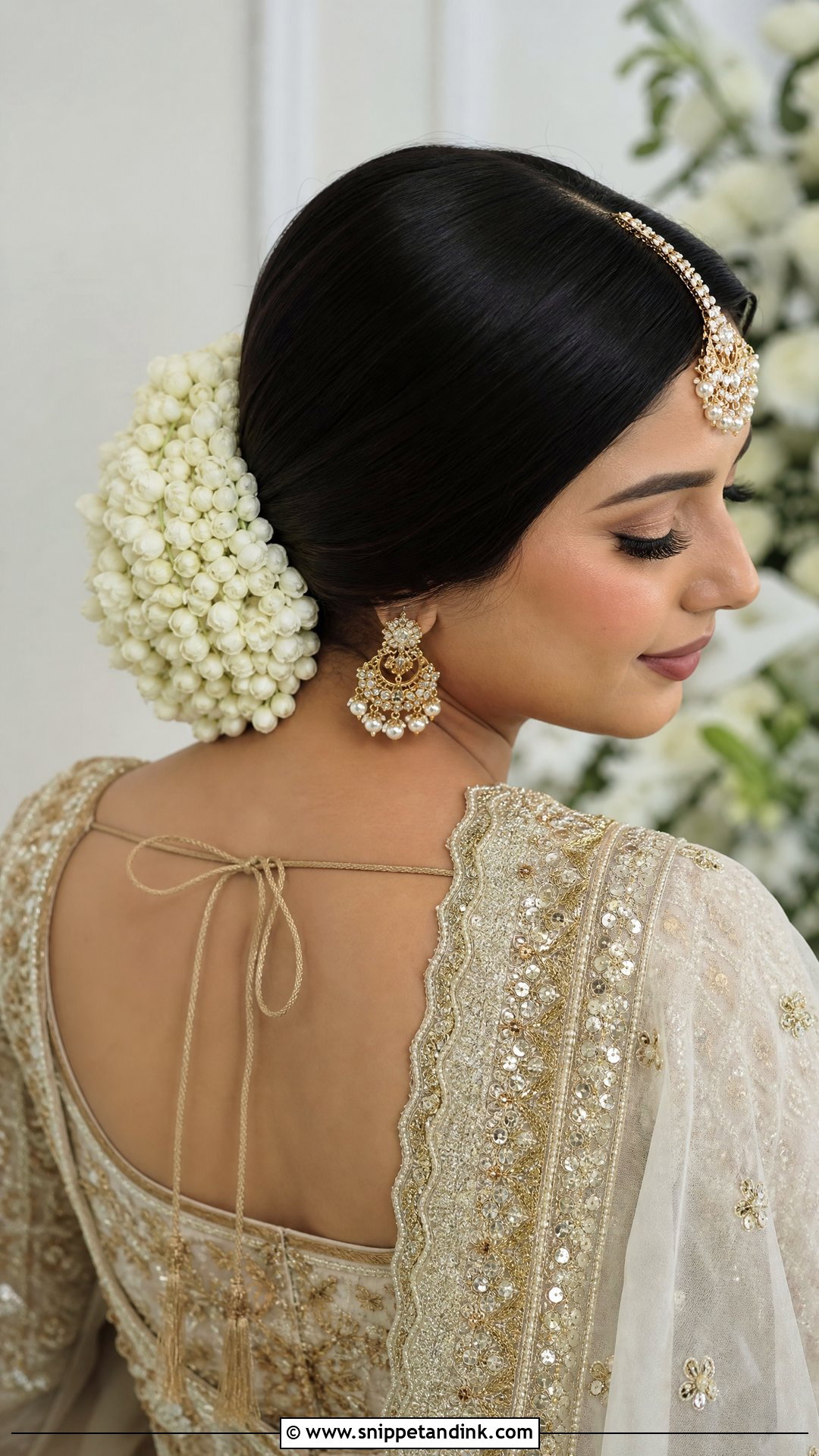
Jasmine gajra needs a bun with a firm, round edge to wrap around; on a loose textured bun the strand sags before the nikkah is over. I pin the gajra with U-pins every few centimeters along the inner edge so the buds face outward. The white against dark hair is the whole point, and it suits nikkah, baraat or mehndi depending on the jewelry. On a heavily embellished outfit, it finishes the hair without adding more shine. Ask your florist for closed buds rather than open flowers, so they open during the day instead of browning.
5. Pakistani Bridal Braided Bun
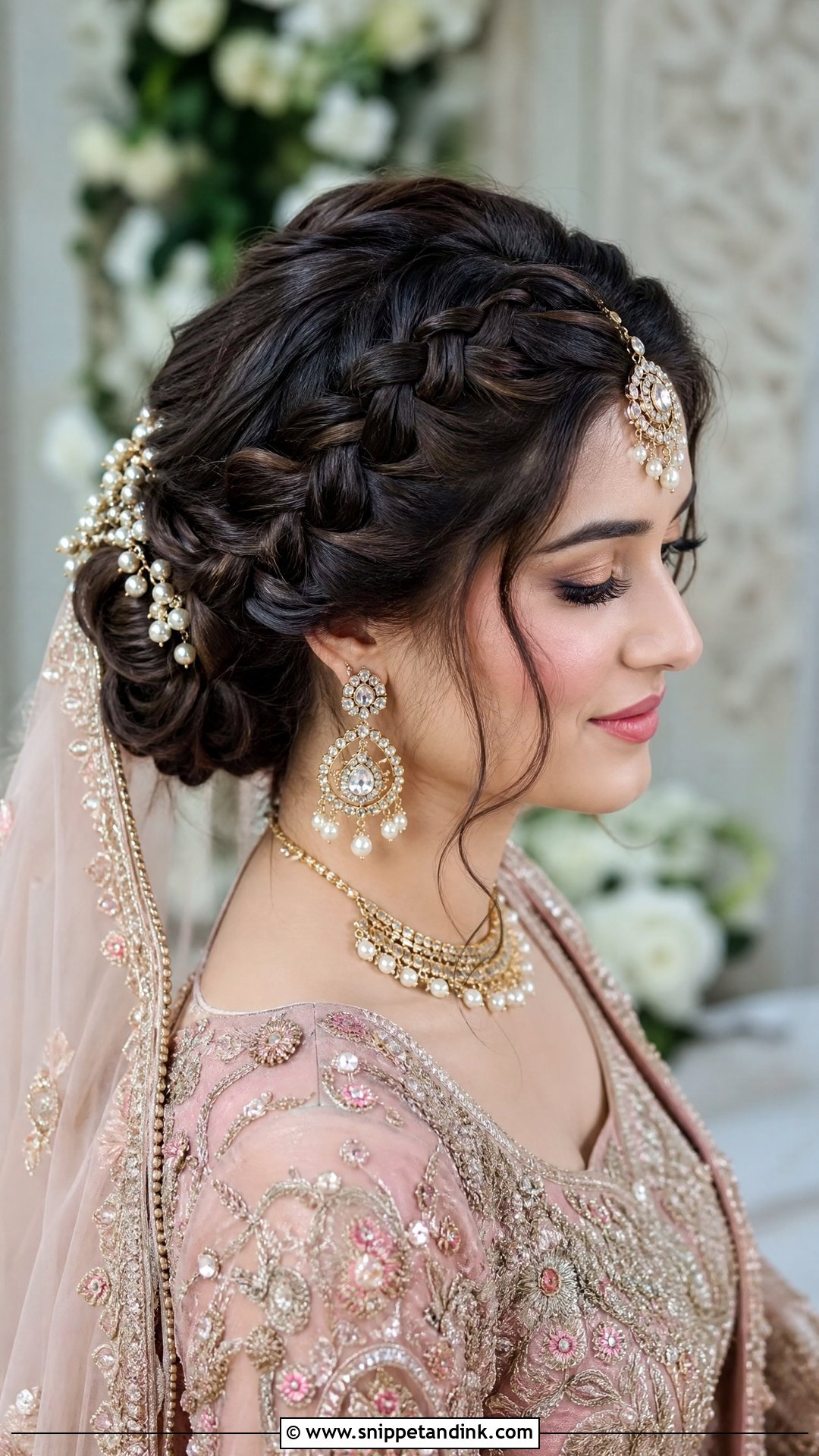
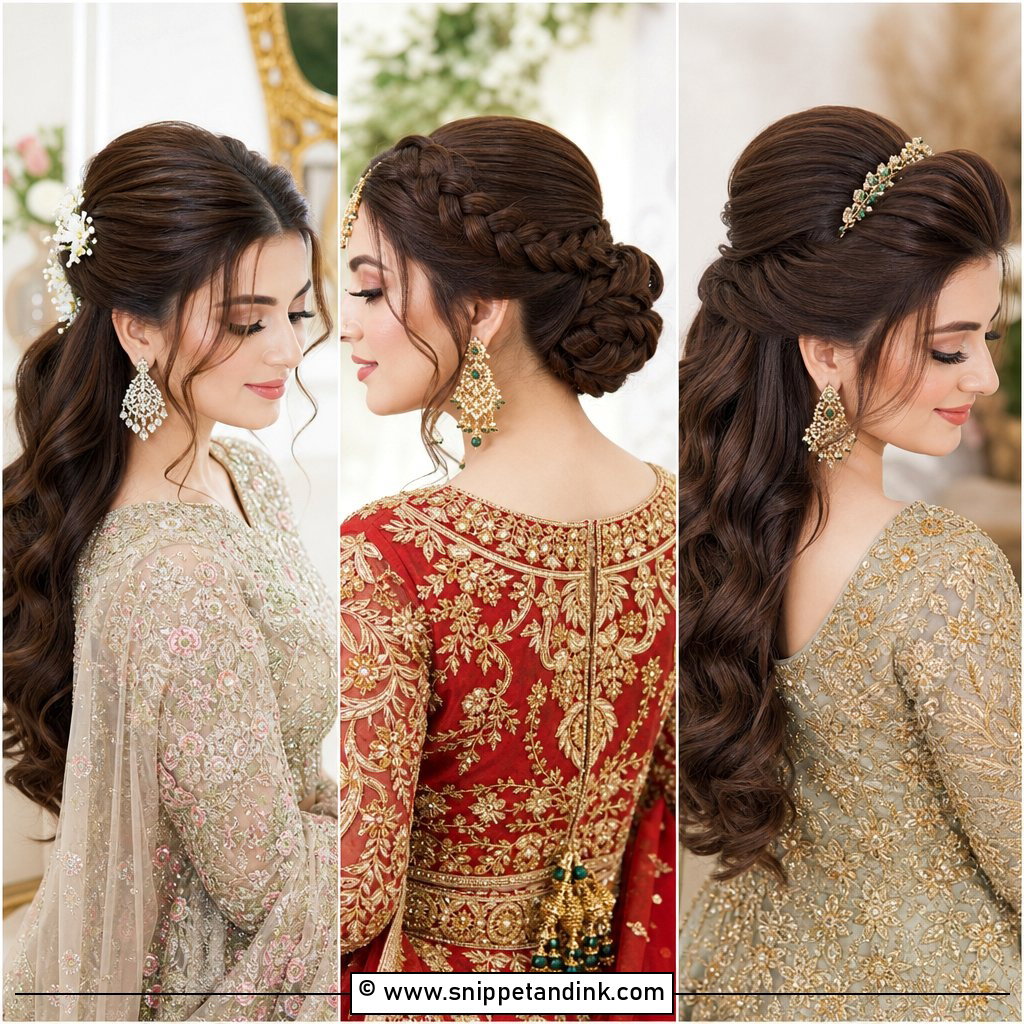
Braids through the sides, or wrapped into the bun itself, give you texture that reads in close-ups while the core underneath is still a solid bun for dupatta setting. I find braided buns very forgiving on fine hair. Pancaking the braid makes it look twice its width, and a little padding inside does the rest. Pearl pins, a tikka, a passa and layered earrings all sit comfortably with it, and I’d use it for baraat or walima when a plain bun feels too bare.
6. Pakistani Bridal Side Braid
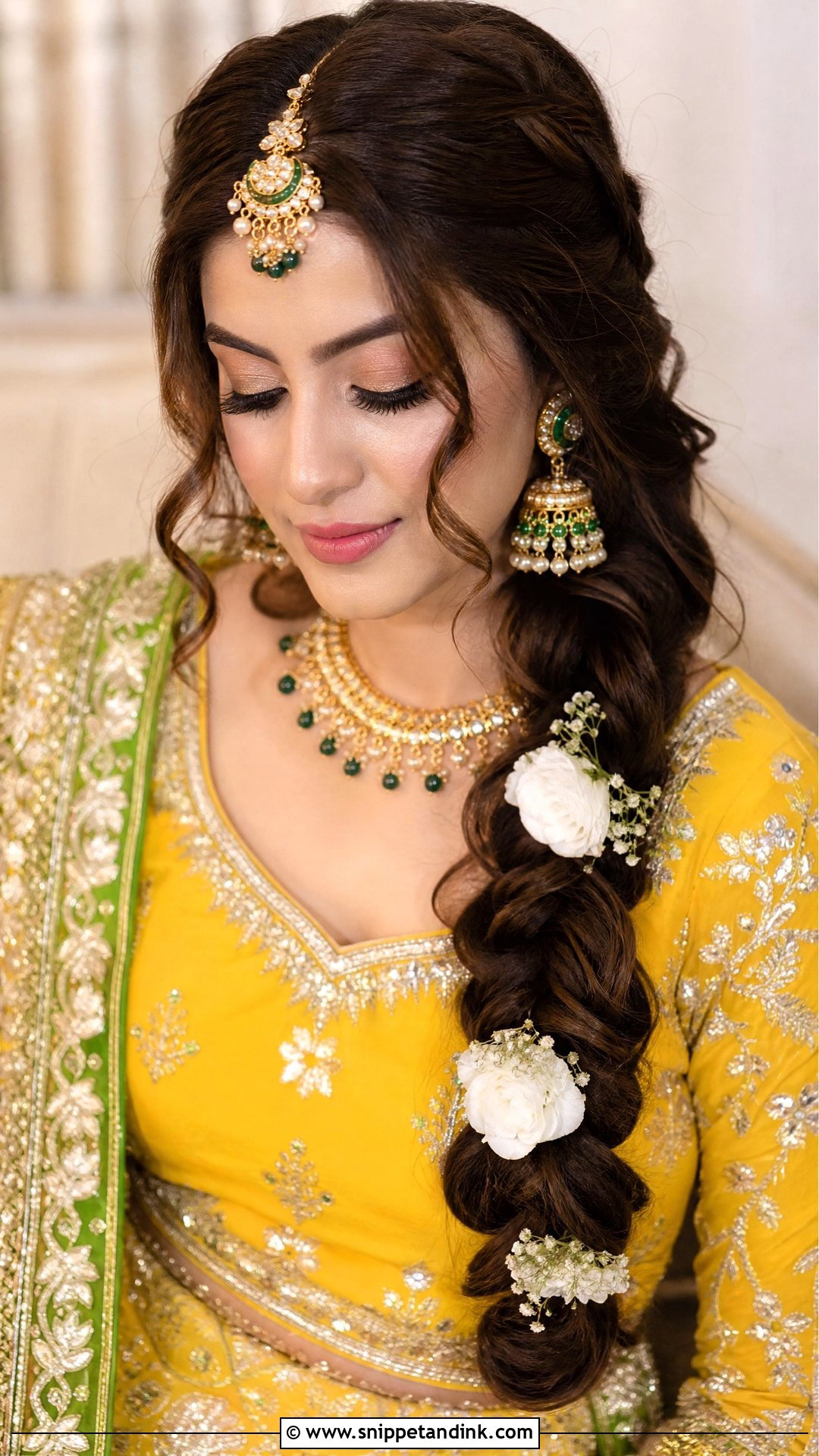
A side braid keeps your length on show while staying controlled, which is why I suggest it to mehndi brides who dislike tight updos. Since it falls over one shoulder, check which side your earrings and dupatta drape are heaviest and put the braid on the other. Gota, a paranda or small hair chains all work on it, and it sits happily with yellow, green or multicolor outfits. To look bridal the braid has to be thick, so I loosen it after plaiting and add a little crown volume.
7. Pakistani Bridal Paranda Braid
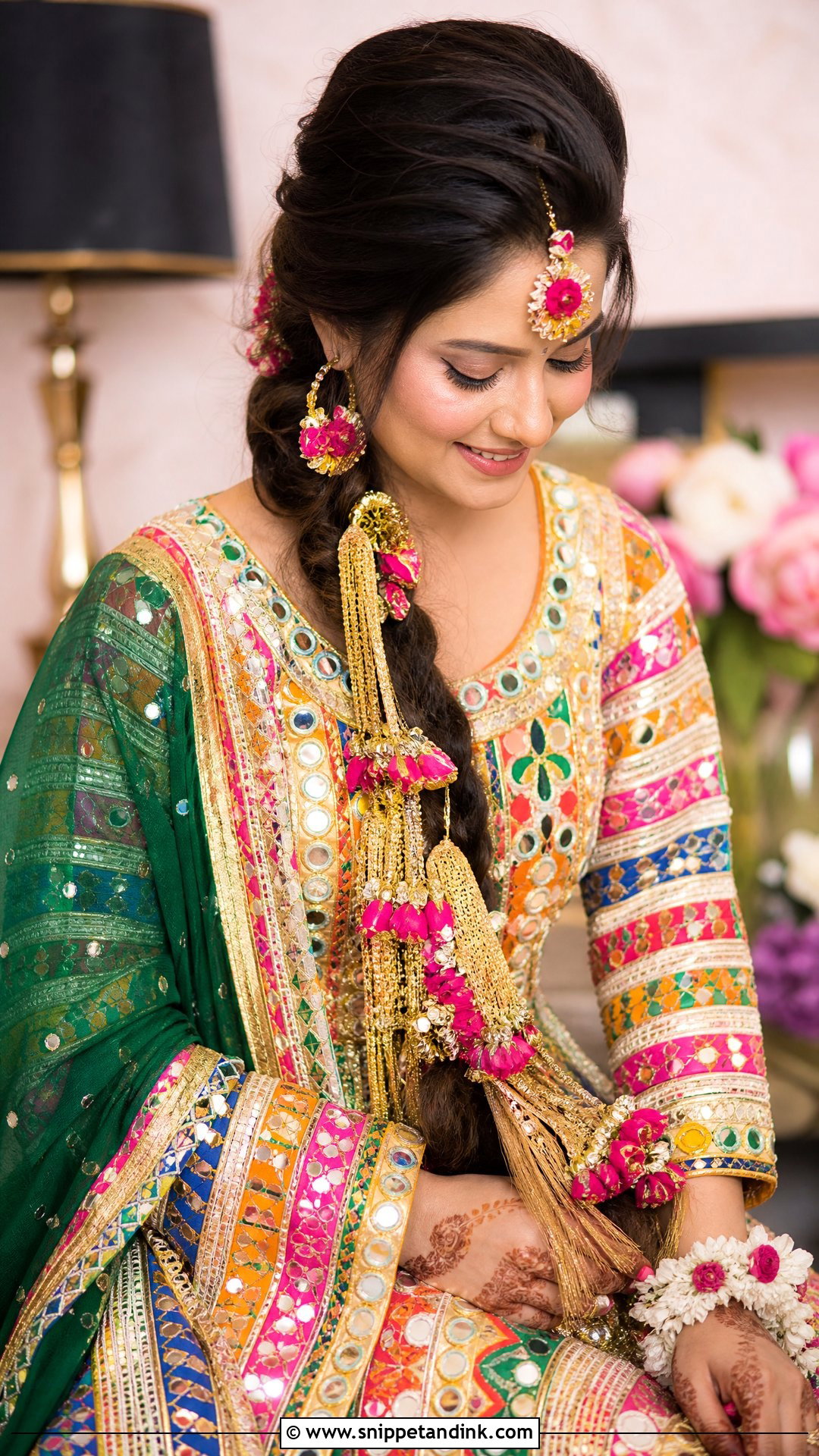
The paranda is the most cheerful accessory in Pakistani bridal hair, and a mehndi and dholki classic. Its tassels add weight at the tail, which pulls on a thin braid, so I braid from just below the nape and secure the top with a hidden elastic before the paranda takes over. Gold, red, green and mirror-work parandas are easy to match to outfit trims. Shorter hair can still carry one with a clip-in ponytail braided in behind it. Keep the front soft with a middle part and a tikka.
8. Pakistani Bridal Open Curls With Dupatta
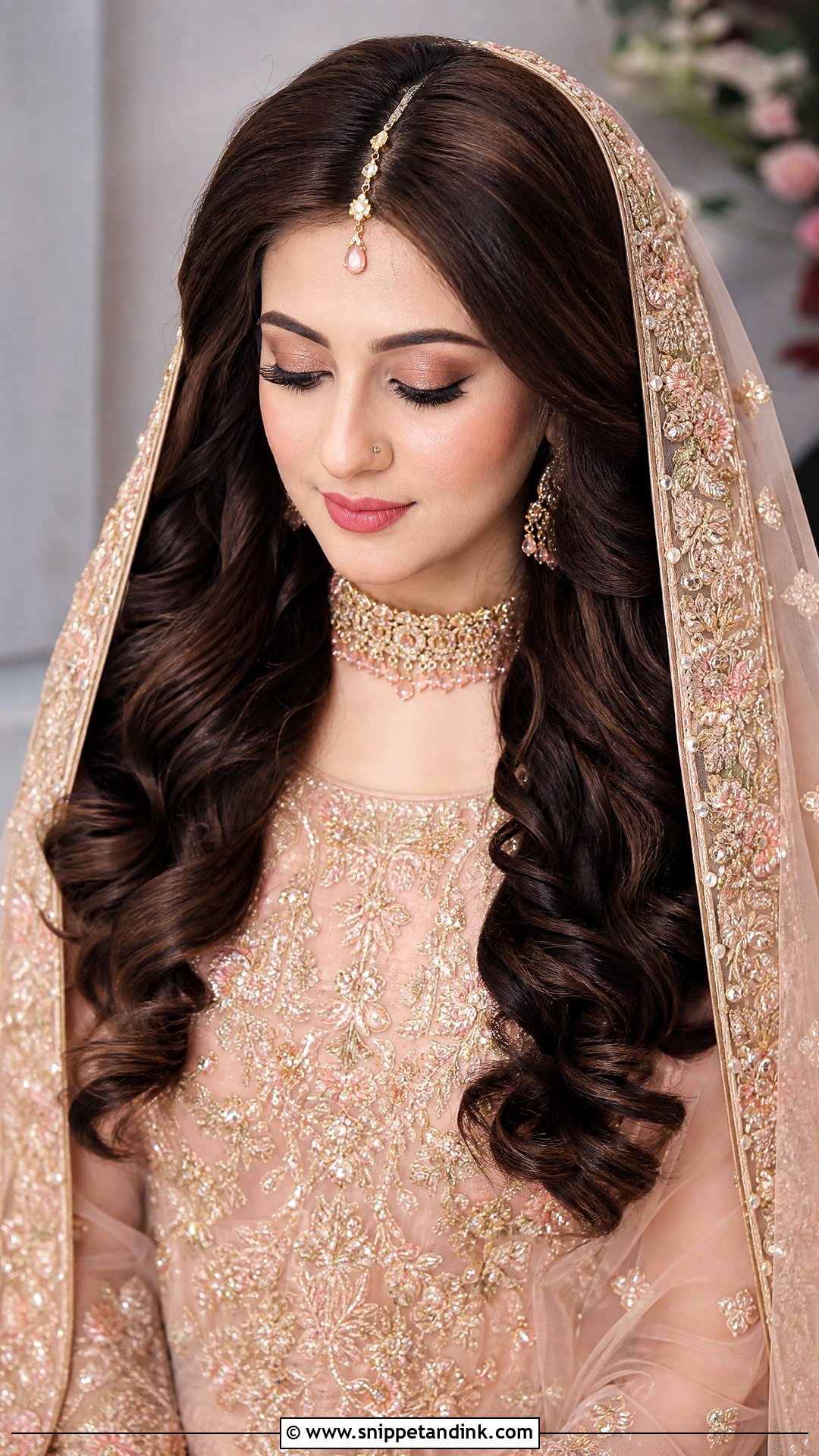
Walima and lighter nikkah looks are where I put Pakistani bridal open curls with dupatta, and honestly it’s the hardest look here to keep alive. The dupatta has to be pinned at the crown or just behind it without crushing the curls underneath. I set the curls, let them cool fully in pin curls, place the dupatta, and only then brush out. Fine hair loses shape fast, so a few extension wefts give the curls something to hold. Ask for polished waves rather than loose ringlets, which frizz the moment someone hugs you.
9. Pakistani Bridal Half Up Curls
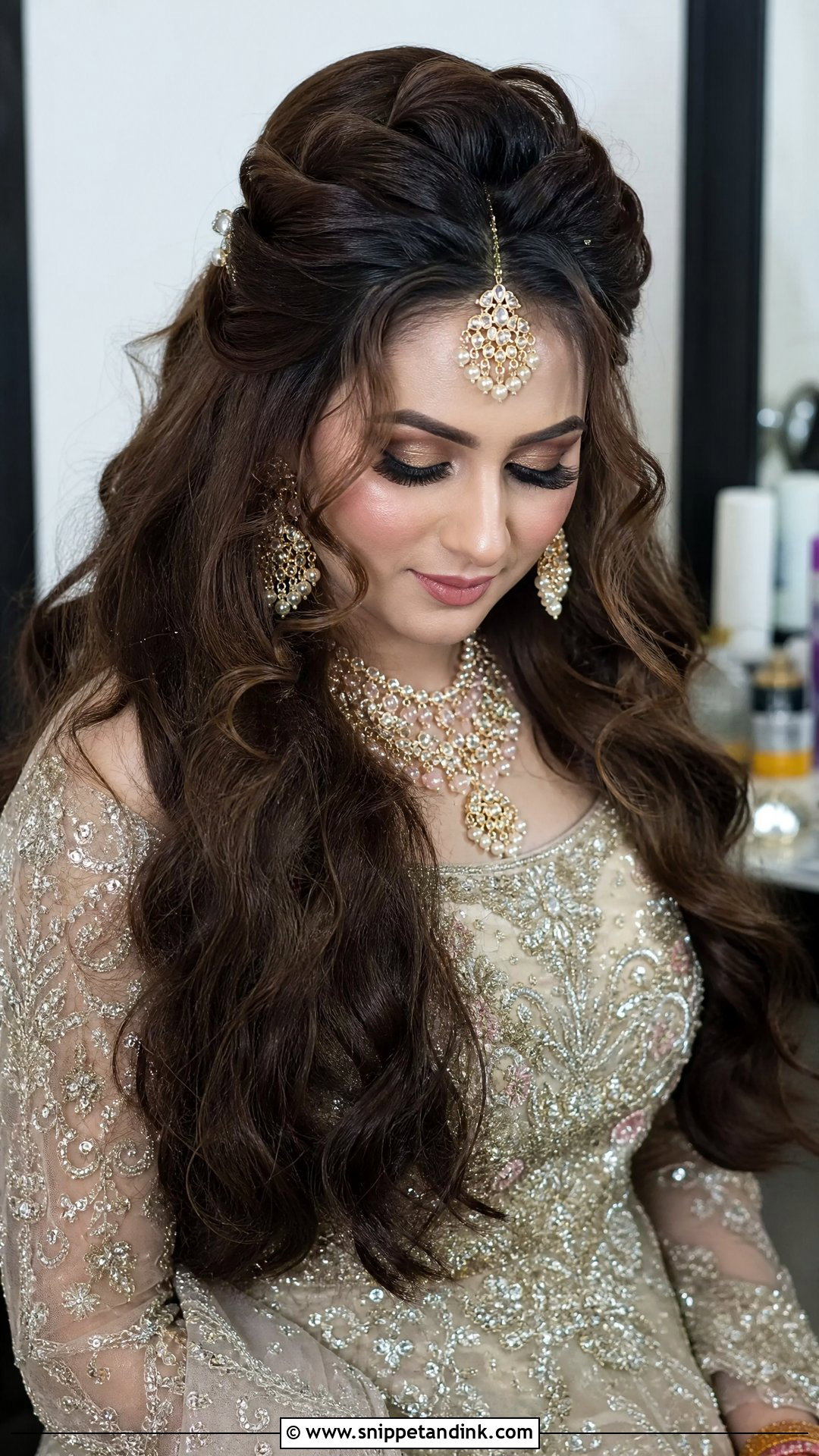
Half-up curls give you open hair plus a pinned section to anchor a tikka, small dupatta pins or jeweled clips. All the security lives in that top section, so I backcomb lightly at the root and cross-pin under the crown before anything goes on it. It adds height without pulling every strand back, which helps rounder faces. If your hair is very straight and drops curls quickly, test it at the trial and look again an hour later before committing.
10. Pakistani Bridal Soft Waves
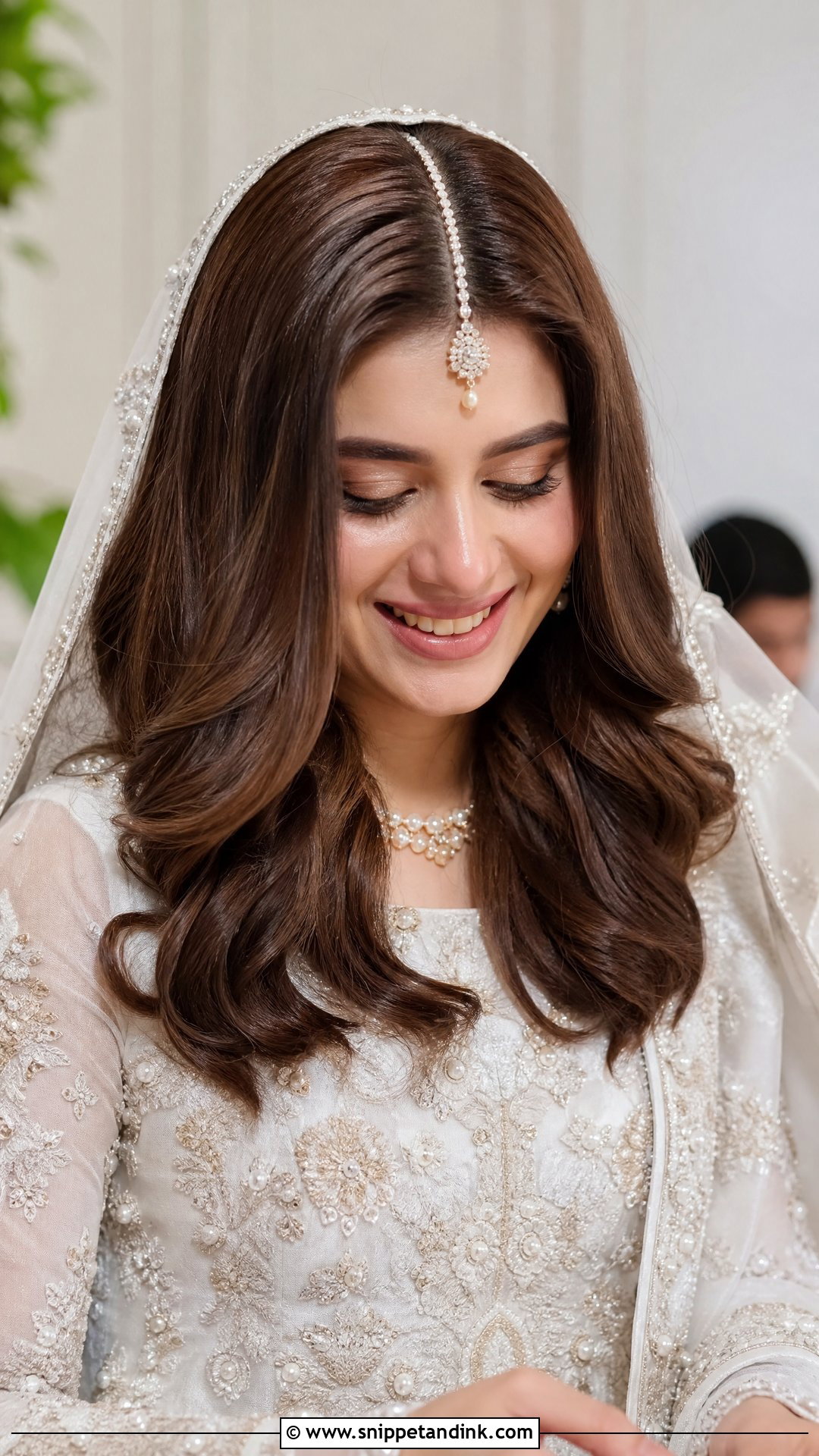
Soft waves are the quietest look here, and the one I’m most cautious about for long events. Heavy, glossy straight hair drops a wave within hours, so I curl with a smaller barrel than the wave I actually want and set it with a firm but brushable spray. A center part with a tikka keeps it traditional; a side part reads softer. Walima gowns, pastel maxis and ivory nikkah outfits all suit it, as long as the dupatta is light or worn behind the head.
11. Pakistani Bridal Hollywood Waves
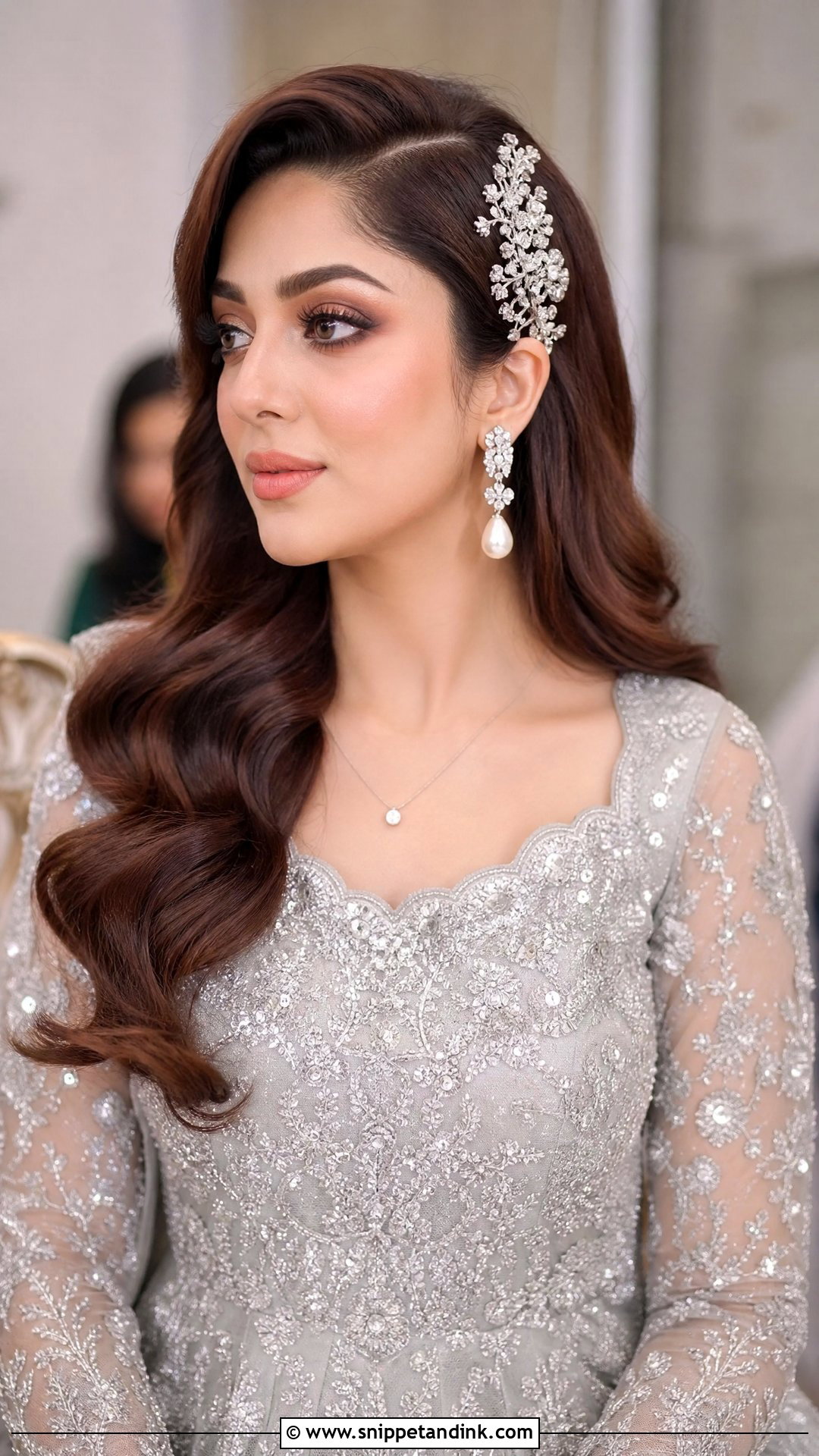
Hollywood waves are sculpted in one direction from a deep side part, and the polish is the entire look. I set them in clips while the hair cools, then brush them into one smooth ribbon; separated or frizzy waves ruin it. Fitted gowns, pearl jewelry and soft glam makeup sit well with it. I wouldn’t put a heavy head dupatta over these, because it presses the wave flat at the crown. Drape it on the shoulders or lightly behind the hair, and add a small jeweled clip on the flat side.
12. Pakistani Bridal Center Part Bun
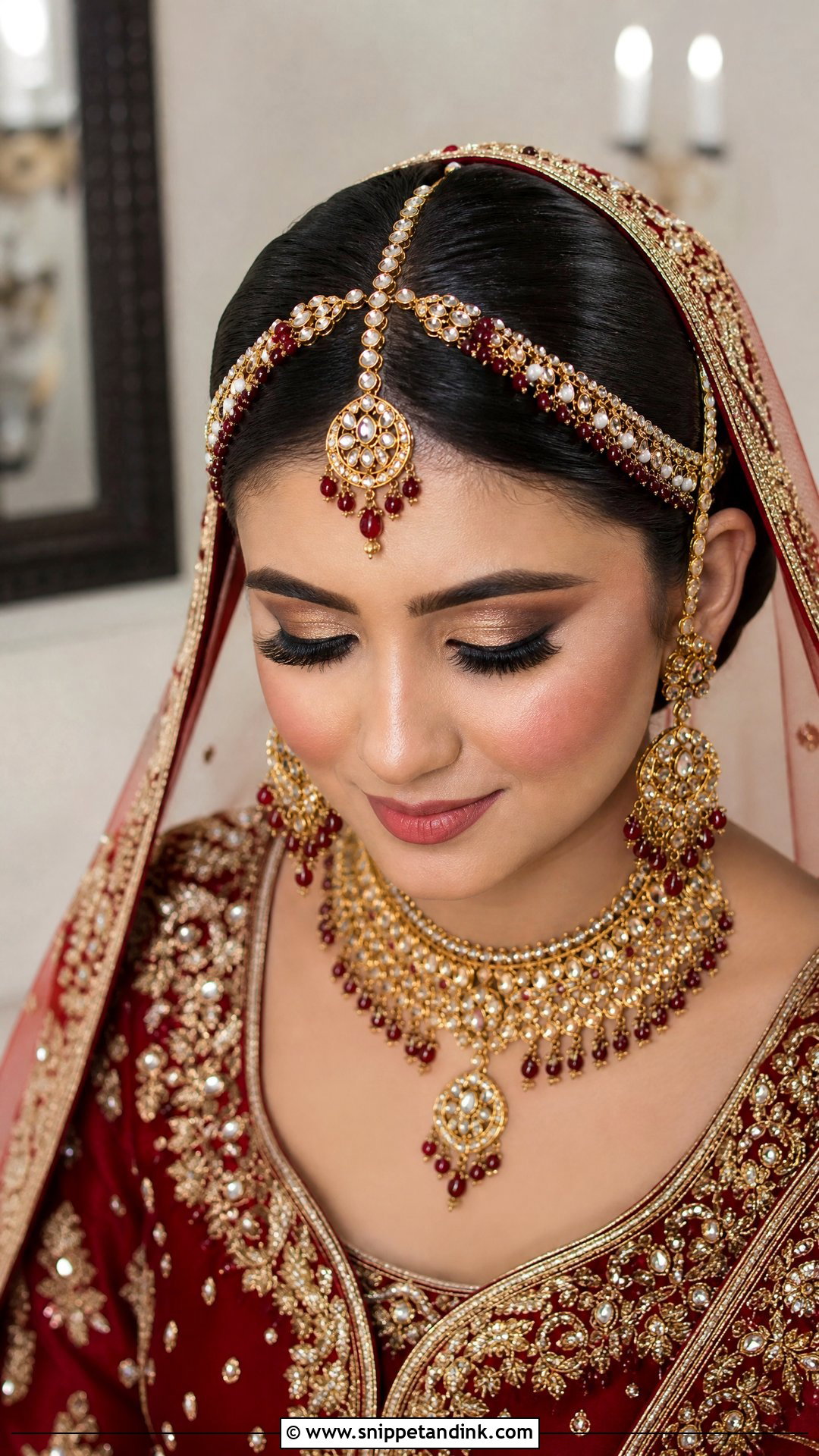
A center part bun is the most direct way to show off your jewelry. The part leaves a clean line for a maang tikka or full matha patti, and the bun keeps everything behind it secure for the dupatta. I adjust crown height to the face: a rounder face gets a gentle lift for length, a longer face gets a flatter top. Check the part at your trial under bright light. Any scalp gap or lump shows more on a center part than on any other style.
13. Pakistani Bridal Side Part Bun
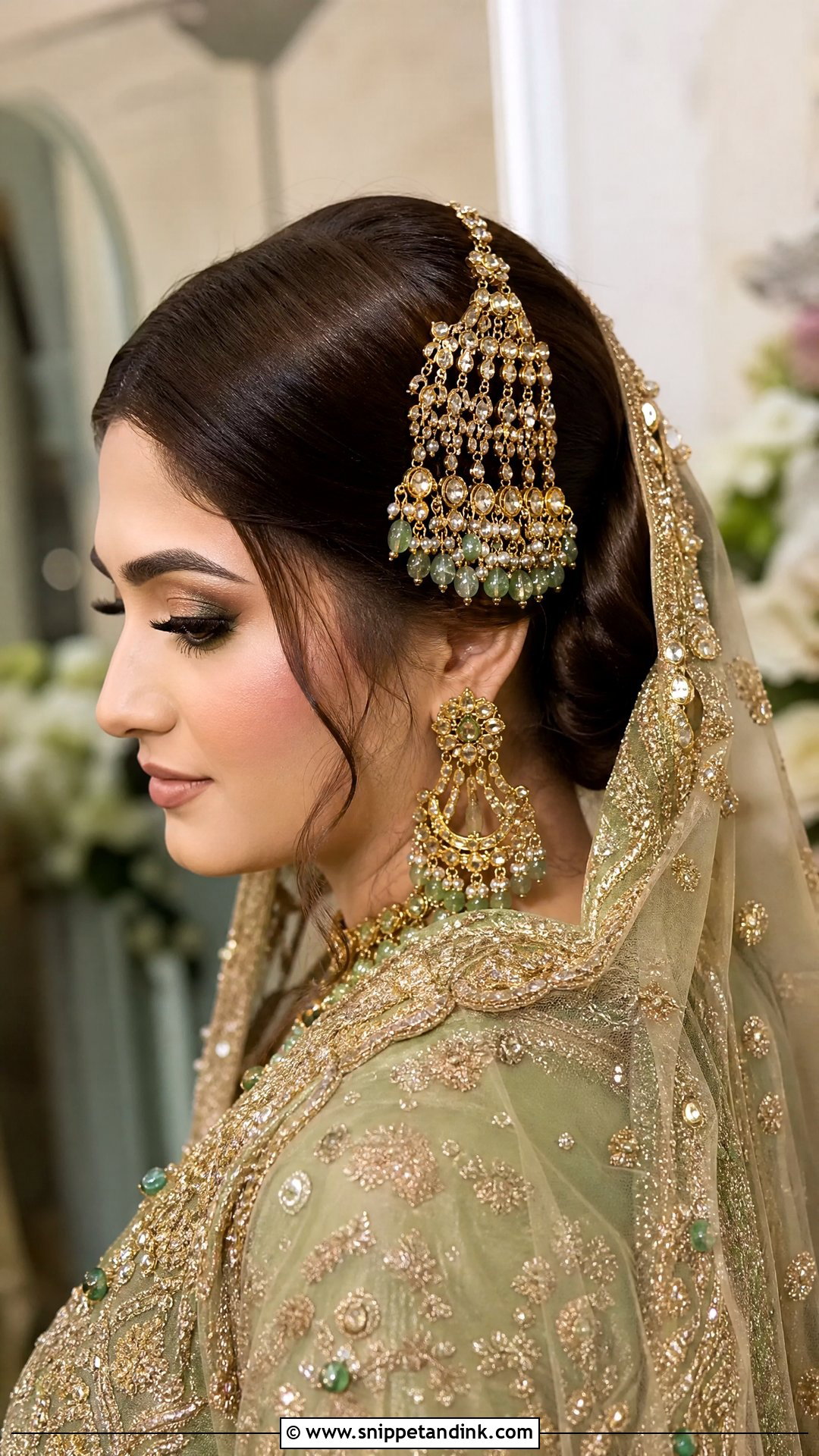
Some brides simply don’t like their face with a strict center part, and a side part bun fixes that while keeping the same secure base. Put the jhumar or passa on the heavier side of the part so the weight and the hair volume sit together. Because the front is asymmetric, I spend most of the pinning time there, so the dupatta edge near the hairline doesn’t lift the sweep out of place. The bun itself can be anything from sleek to braided.
14. Pakistani Bridal Messy Bun
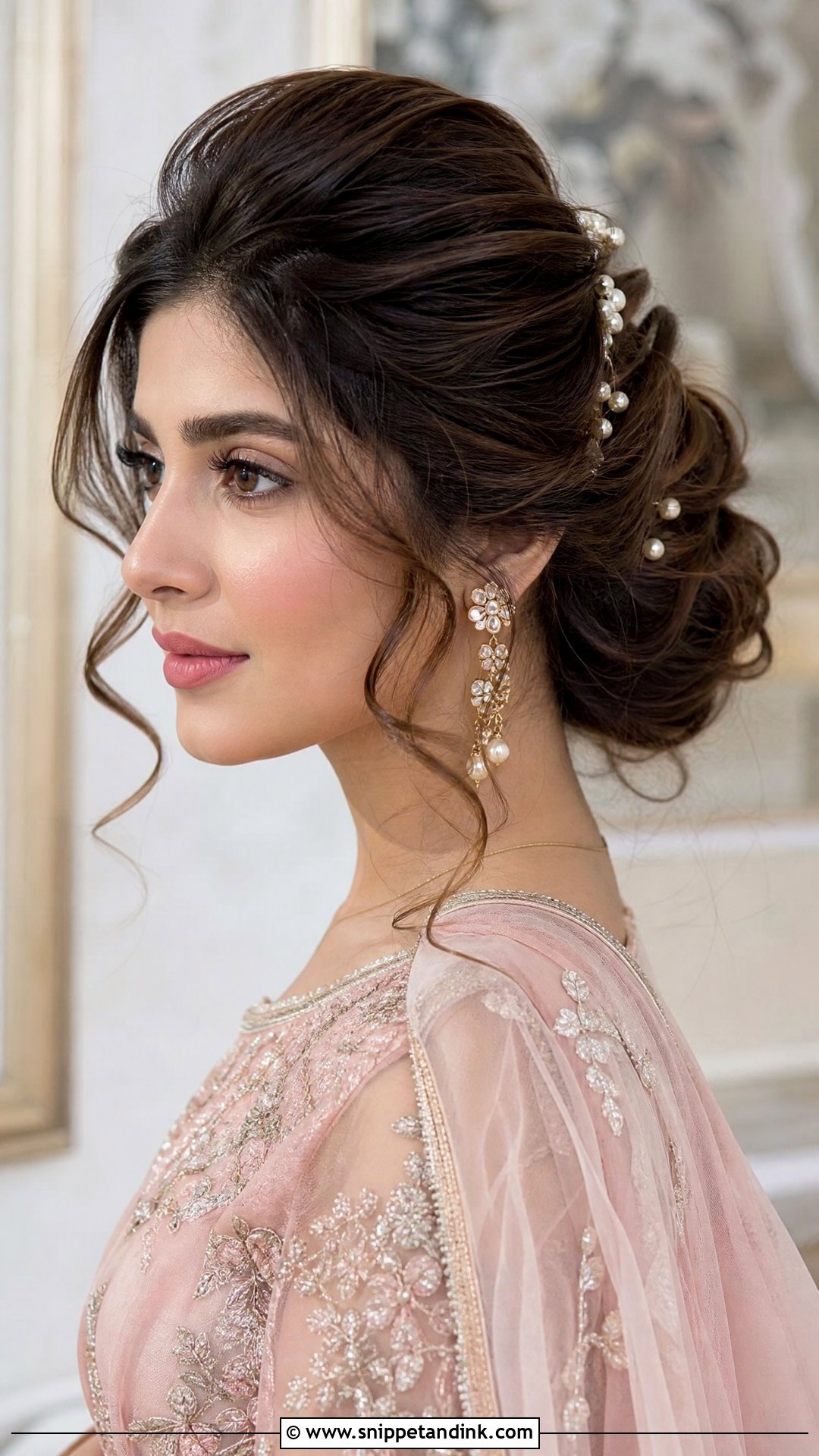
A messy bun on a bride still has to be engineered. I make a tight, secure bun underneath first and pull loose twists and texture out over it, so the jewelry and pins have a firm anchor even though the outside looks relaxed. It suits engagement, mehndi and walima, particularly with pastel or champagne outfits. Fine hair needs a texture spray before curling, or the mess just looks flat. Small pearls or baby’s breath keep it bridal.
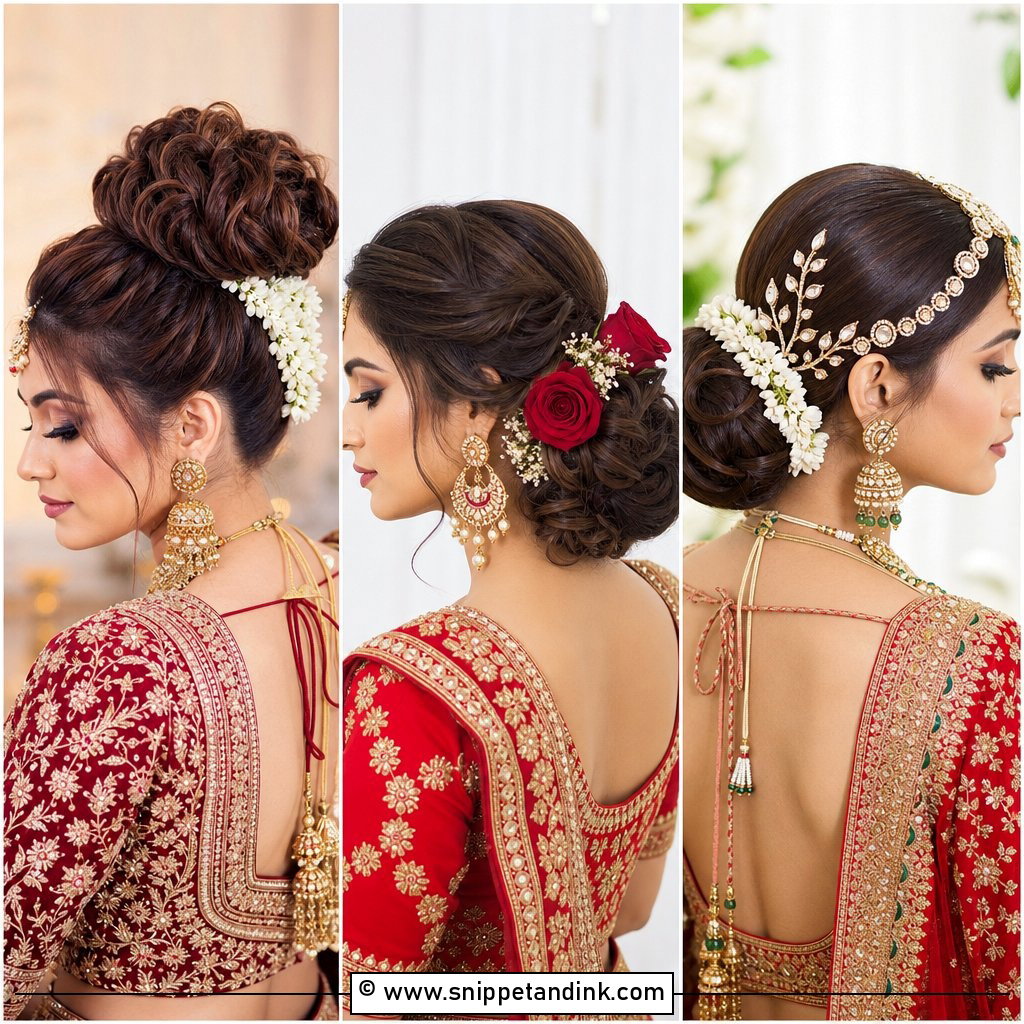

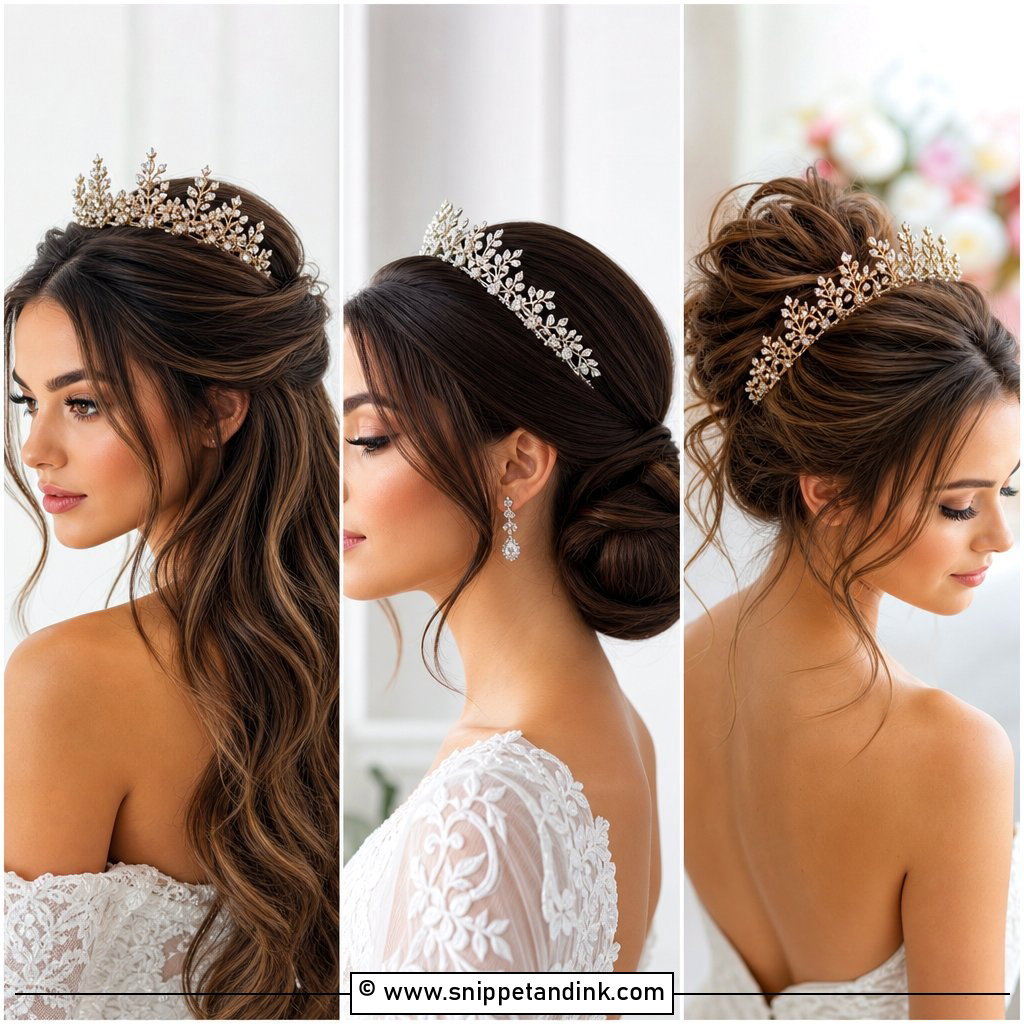
15. Pakistani Bridal Front Puff Bun
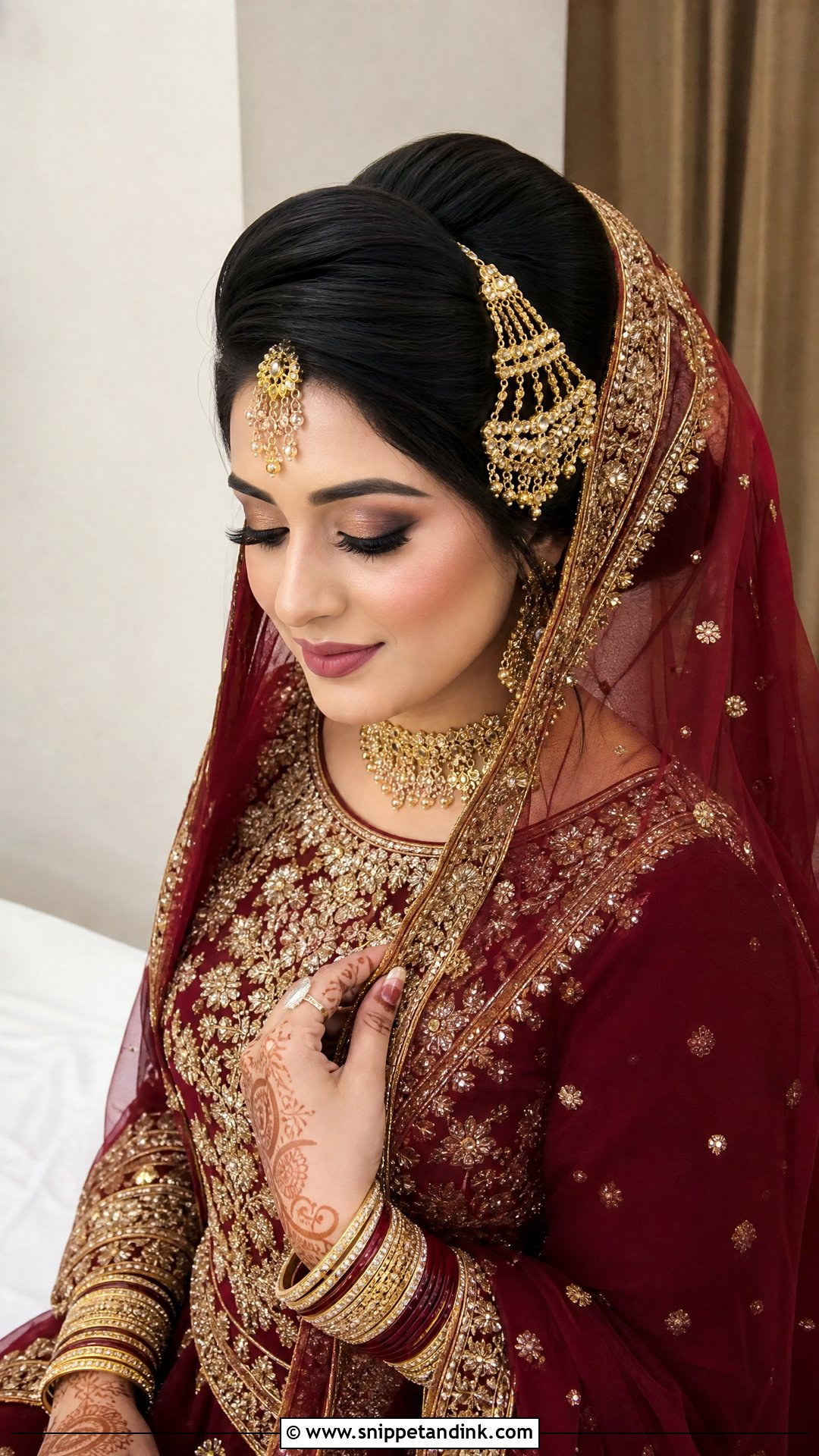
The front puff adds height at the crown and lifts the whole face, which helps when a dupatta would otherwise sit flat on the head. Keep it subtle. A puff that rises too high looks dated in photos and makes the dupatta tent. I backcomb a small section, smooth the top layer over it and pin underneath, then set the bun low or mid depending on the neckline. With that bit of crown structure, it holds matha patti, tikka, and jhumar without the chains sliding forward.
16. Pakistani Bridal Bun With Roses
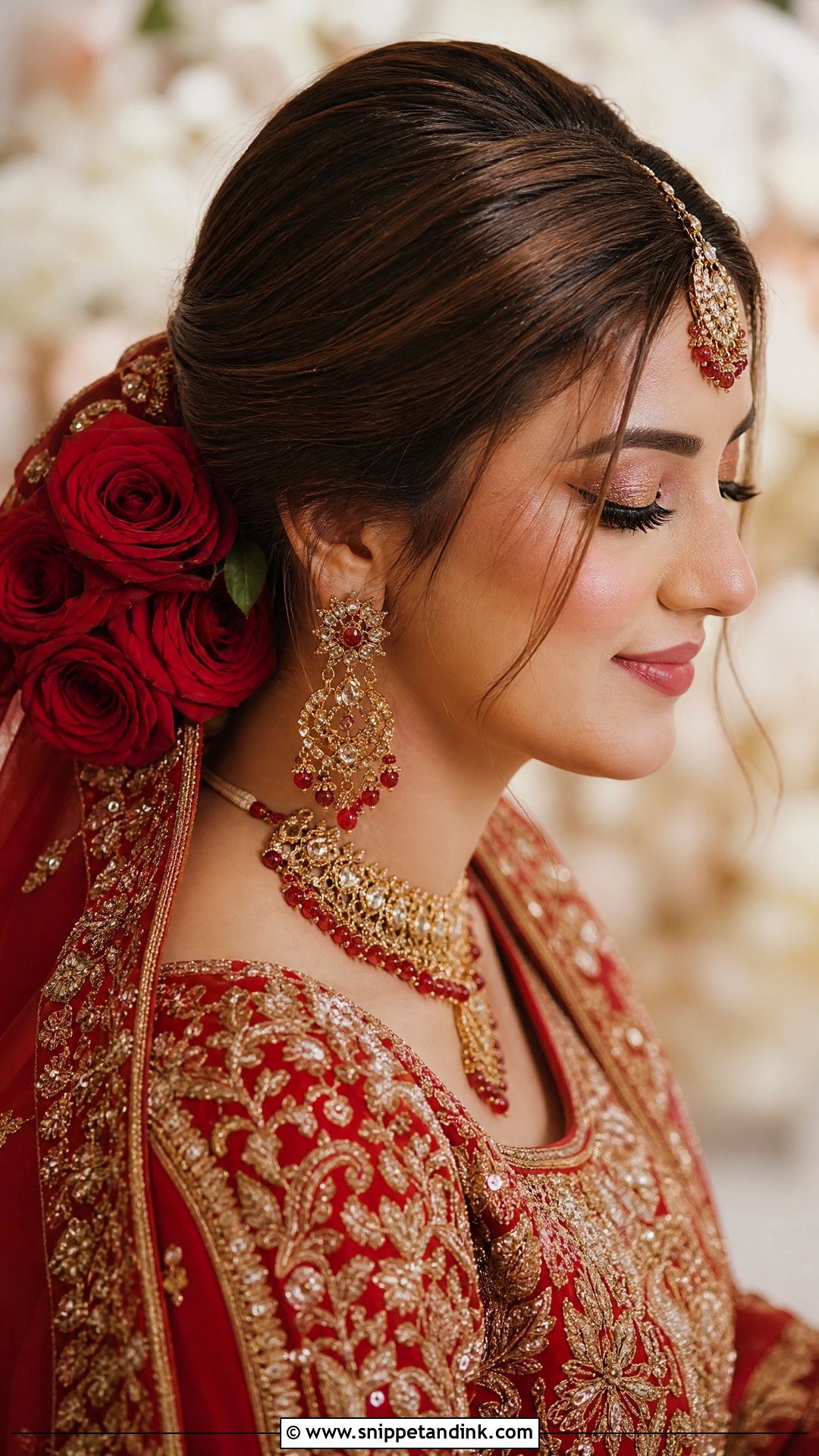
Roses stand up to hot lights better than jasmine, which is one reason I like them on a baraat bun. Red roses sit well with maroon, gold, and traditional red outfits, while blush or ivory suit nikkah and walima. I wire small heads or use short stems pushed into the bun, and keep the bun low or mid so the flowers stay visible under the dupatta. Keep the front classic so the hairline isn’t competing with them.
17. Pakistani Bridal Long Braid With Flowers
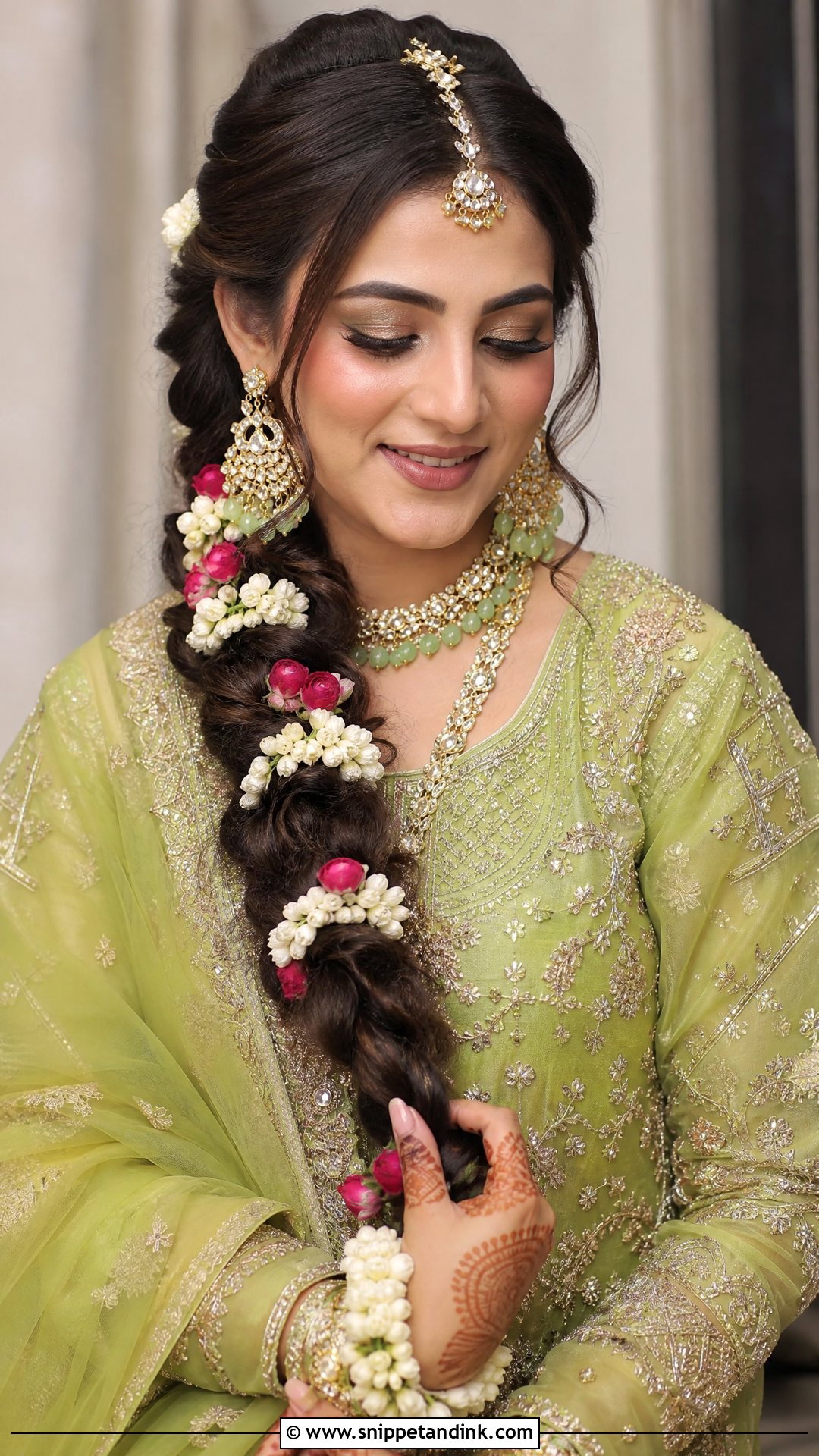
A long floral braid turns the hair into part of the outfit. I keep it thick and slightly pulled apart, then work in jasmine, small roses or baby’s breath, and it fits mehndi, mayun and daytime outdoor functions naturally. Most brides need extensions for real bridal length, and that’s fine: a clip-in weft braided in from the nape disappears once the flowers go on. Check it from behind in a hand mirror, because that’s the view guests get while you walk to the stage.
18. Pakistani Bridal Fishtail Braid
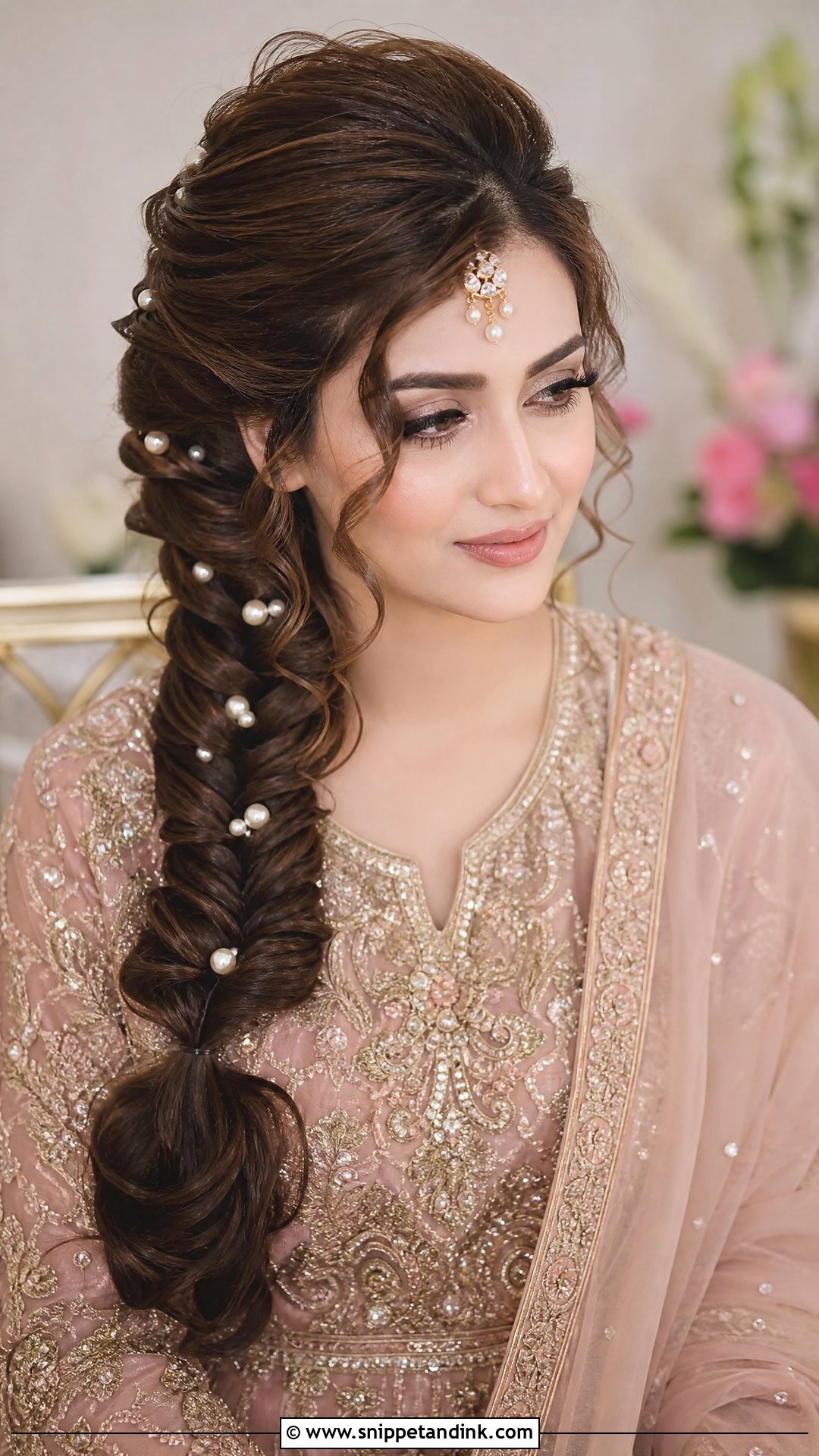
A fishtail has a finer pattern than a three-strand braid, so it looks modern while still feeling right at mehndi, engagement or walima. The usual mistake is a thin, tight fishtail. I plait it loosely, then pull each section outward until it looks full. Pearls, tiny flowers or delicate gold pins sit nicely in the gaps, and the hair stays controlled while your length still shows.
19. Pakistani Bridal Low Ponytail
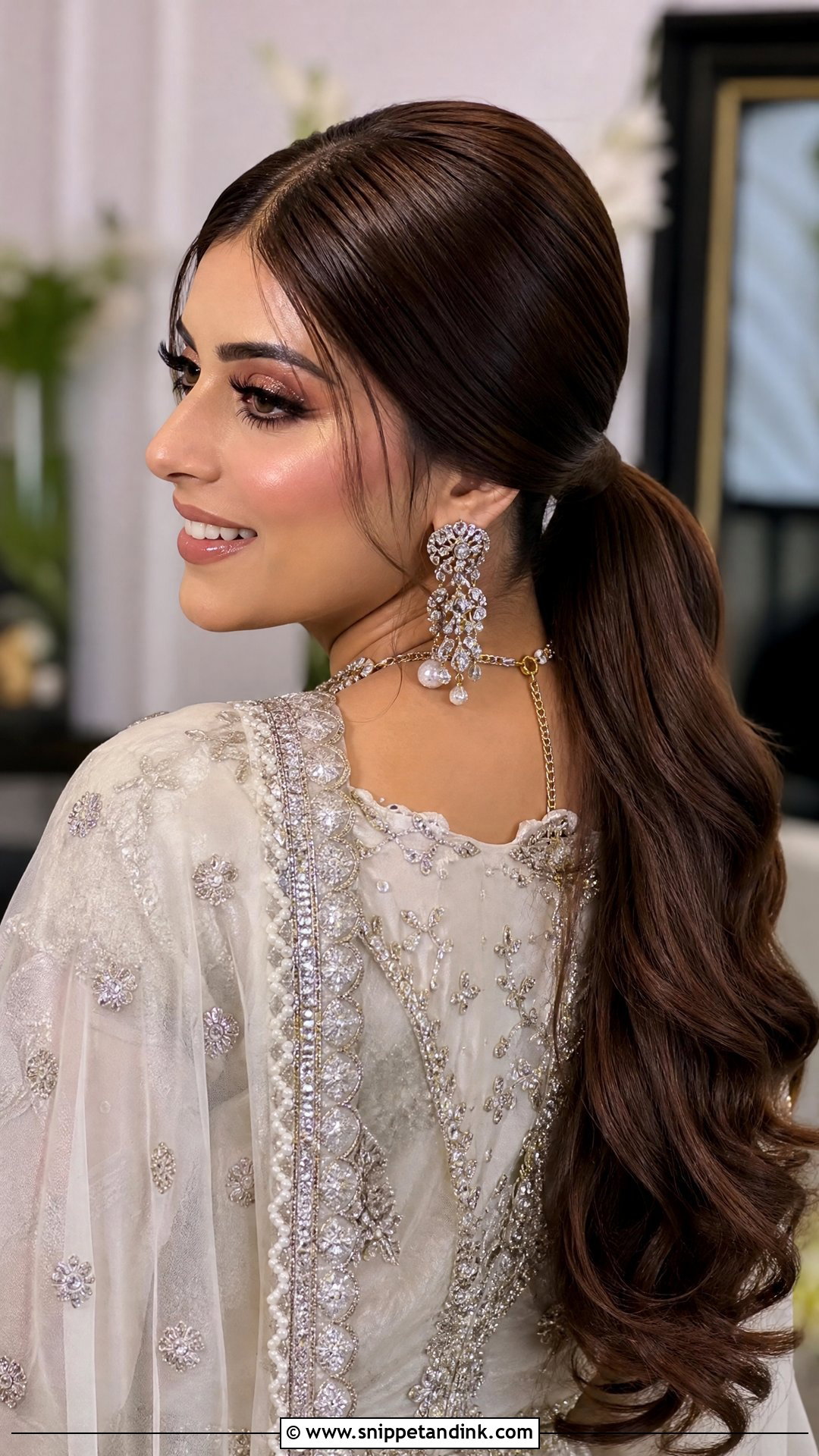
A low ponytail belongs at the walima or reception, not the baraat, since there’s nowhere to anchor a heavy head dupatta. It sits at the nape, straight or curled, with a center part for polish or a side part for softness. Statement earrings and a fitted gown or modern maxi suit it, and shoulder draping works fine. I wrap a strand around the base to hide the elastic, and I put a second elastic under the first so the ponytail doesn’t droop by evening.
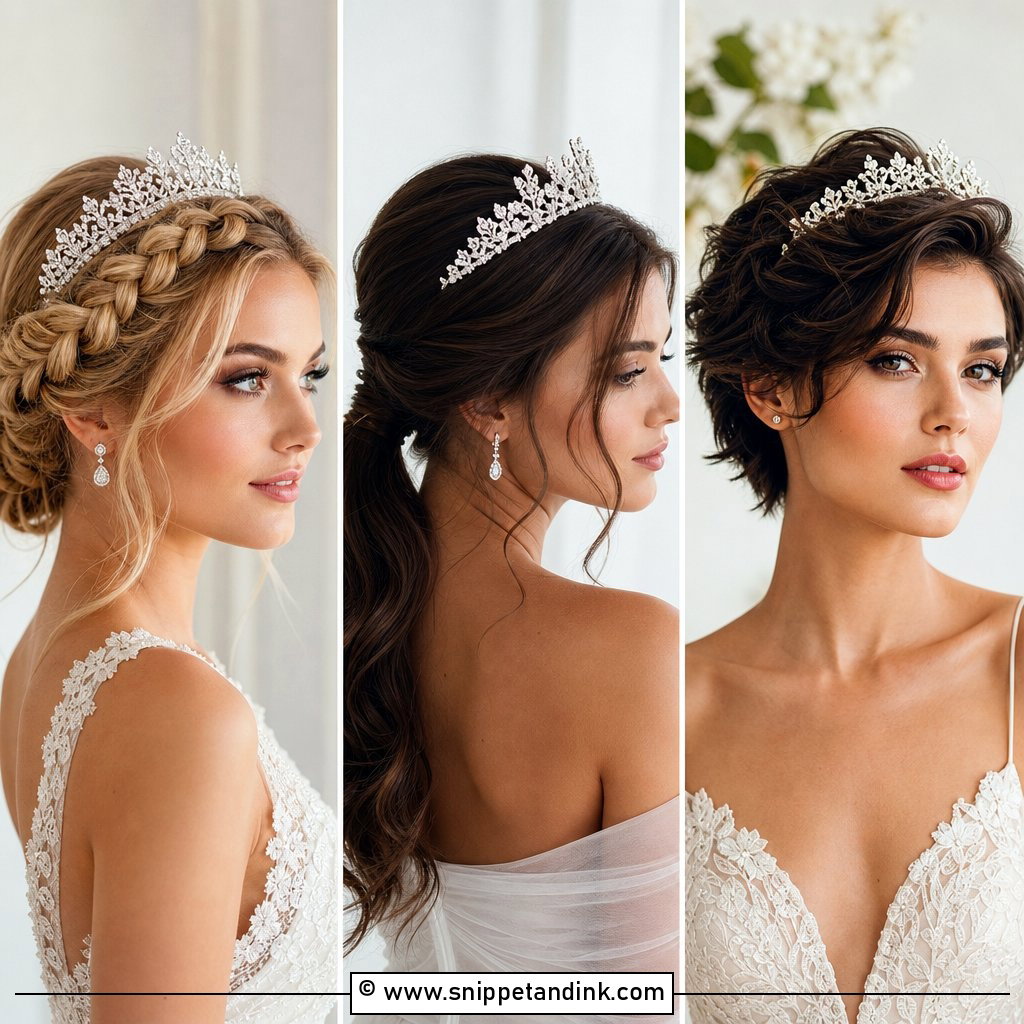

20. Pakistani Bridal Short Hair Curls
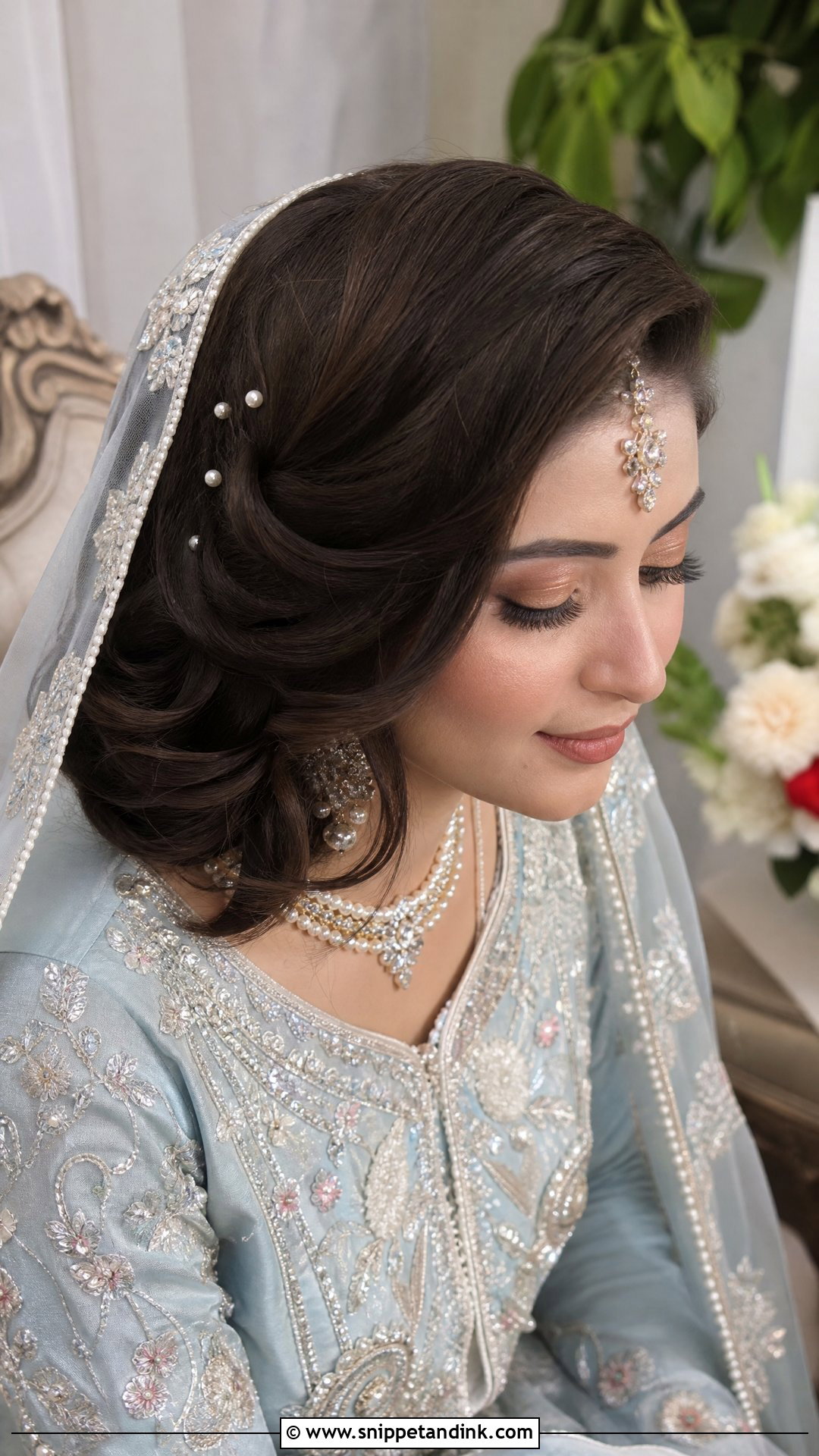
Short hair can carry a full bridal look, and bobs, lobs and shoulder-length cuts actually hold curls well because there’s less weight dragging them down. A tikka, pearl pins or a small jhumar make it read traditional, and it suits nikkah, engagement and walima with lighter dupattas. If you want more fullness, I add clip-ins only where the hair looks thin, usually at the back. Plenty of short-haired brides don’t need them at all. Keep the curls close to the face so the shape looks deliberate.
Mehndi on Monday, Baraat on Wednesday: Protecting Hair Between Events
Pakistani weddings run over several days, and back-to-back styling takes a toll. Each round of heat, backcombing and strong spray dries the lengths, and by the walima the ends can look frizzy in close-ups. A few habits keep the hair workable:
- Brush out backcombing gently from the ends upward after each function, with a little conditioner on the lengths
- Wash out heavy spray before the next styling instead of layering fresh product on top
- During a mayun with ubtan, keep the turmeric paste off blonde, highlighted or grey hair, because it can leave a yellow tint
- If you oil your hair between events, wash it out fully at least a day before the next look, since oily hair won’t hold pins
Where the schedule allows, leave a day between a tight pinned bun and the next one. Scalp tenderness after a night of pins is real, and a second tight bun the following morning feels much worse.
Real Jasmine and Roses Under Stage Lights
Fresh gajras wilt faster than people expect. Jasmine starts browning at the edges within a few hours in a warm, brightly lit hall, so I ask for buds that are just closed and keep them wrapped in a damp cloth somewhere cool until the last moment. Roses last longer, especially with trimmed, wired stems.
For an outdoor summer baraat, good silk flowers on the bun are a sensible choice. Save the real jasmine for the nikkah, where people are close enough to notice the scent.
Which Function Gets Your Biggest Hair Moment?
Start from the function and the dupatta. A heavy baraat dupatta almost always needs a secure bun, nikkah and walima give you room for half-up curls, waves or a low ponytail, and mehndi is where parandas, flowers and braids belong. Then factor in your hair thickness, how long each event runs and the weather. Padding, extensions and pins can make almost any of these last, but only if your stylist knows what is going on top. Save a few favorites for each function and book a trial with the real dupatta and jewelry.
You'll Like These Ideas:



Leave a Reply