
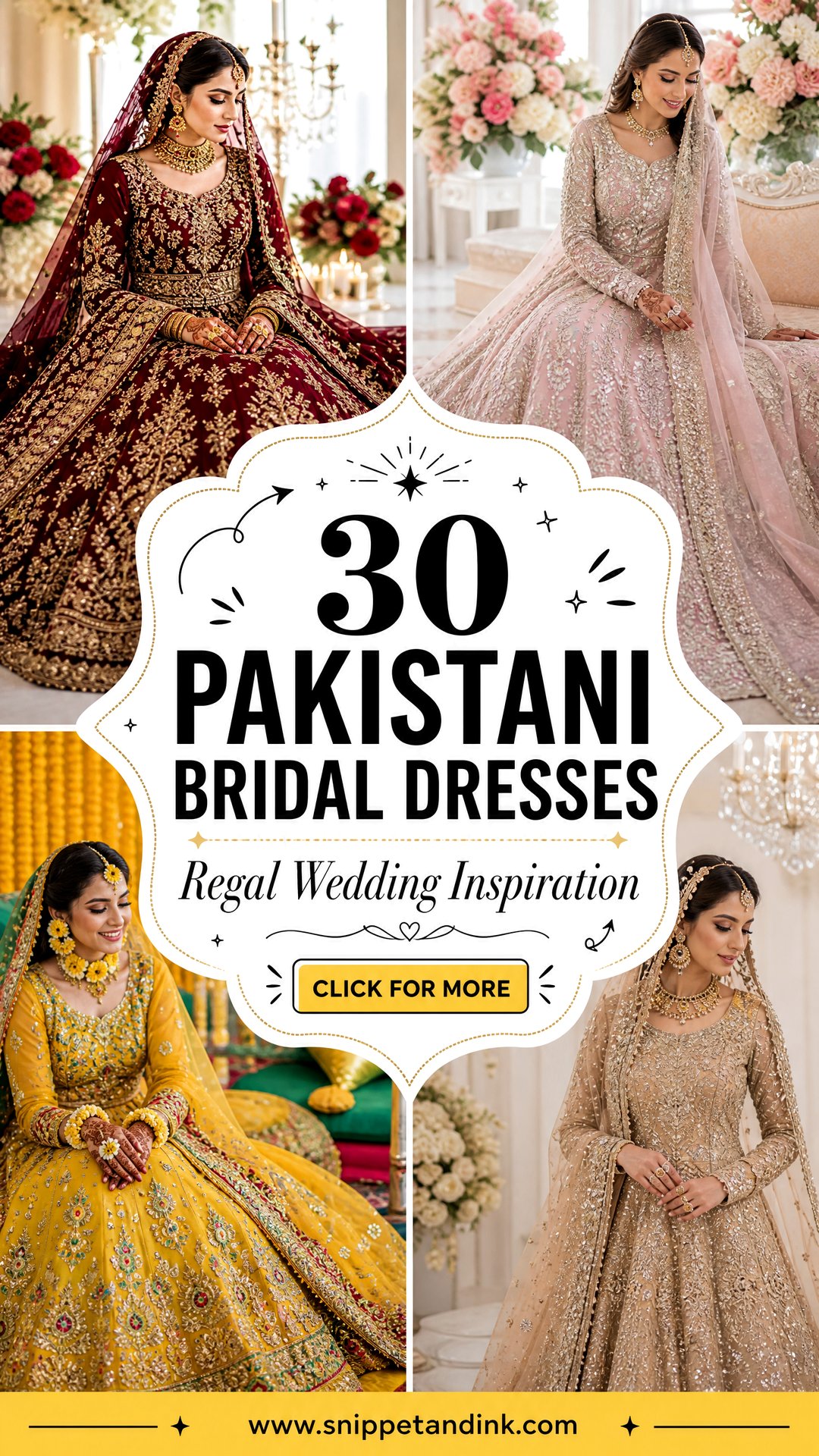
Every Pakistani wedding asks three different things of a bride’s wardrobe. The barat wants weight and color, the nikkah wants calm and coverage, and the walima wants something you can sit, eat and greet in for four hours. The fabrics haven’t changed much over the years: organza, net, tissue, velvet, jamawar and raw silk still carry most bridal work, and the finish still comes from zardozi, dabka, gota, resham, pearls and sequins. What changes from bride to bride is how much of that your frame, your venue and your season can handle. Below are 30 complete looks, with my notes on how each one behaves once it’s actually on.
Ordering a Handworked Jora Without a Last-Minute Panic
Heavy hand embroidery is slow. Zardozi and dabka are stitched by hand, motif by motif, and a full barat lehenga with a worked dupatta can take months once the design is approved. Lead times vary a lot between workshops and stretch in wedding season, so I ask the designer for a written delivery date before paying the deposit and build in at least a month of slack before the first event.
Before the embroidery starts, I ask for three things in hand:
- A stitched sample of the main motif on your actual fabric, so you see the thread color against the base under real light.
- Fabric swatches of the shirt, lehenga and dupatta together, approved in daylight, because pieces cut from different bolts rarely match perfectly.
- The finished weight estimate. A lehenga with a heavy border and can-can can feel very different after three hours, and I’d rather lighten the border now than watch a bride struggle on stage.
Plan two or three fittings. At the last one, bring the shoes, the jewelry and the dupatta pins you’ll actually wear. Hem length only makes sense with the real heel height, and a heavy necklace can pull a deep neckline out of place in a way nobody notices until the photos come back.
1. Red Pakistani Bridal Lehenga
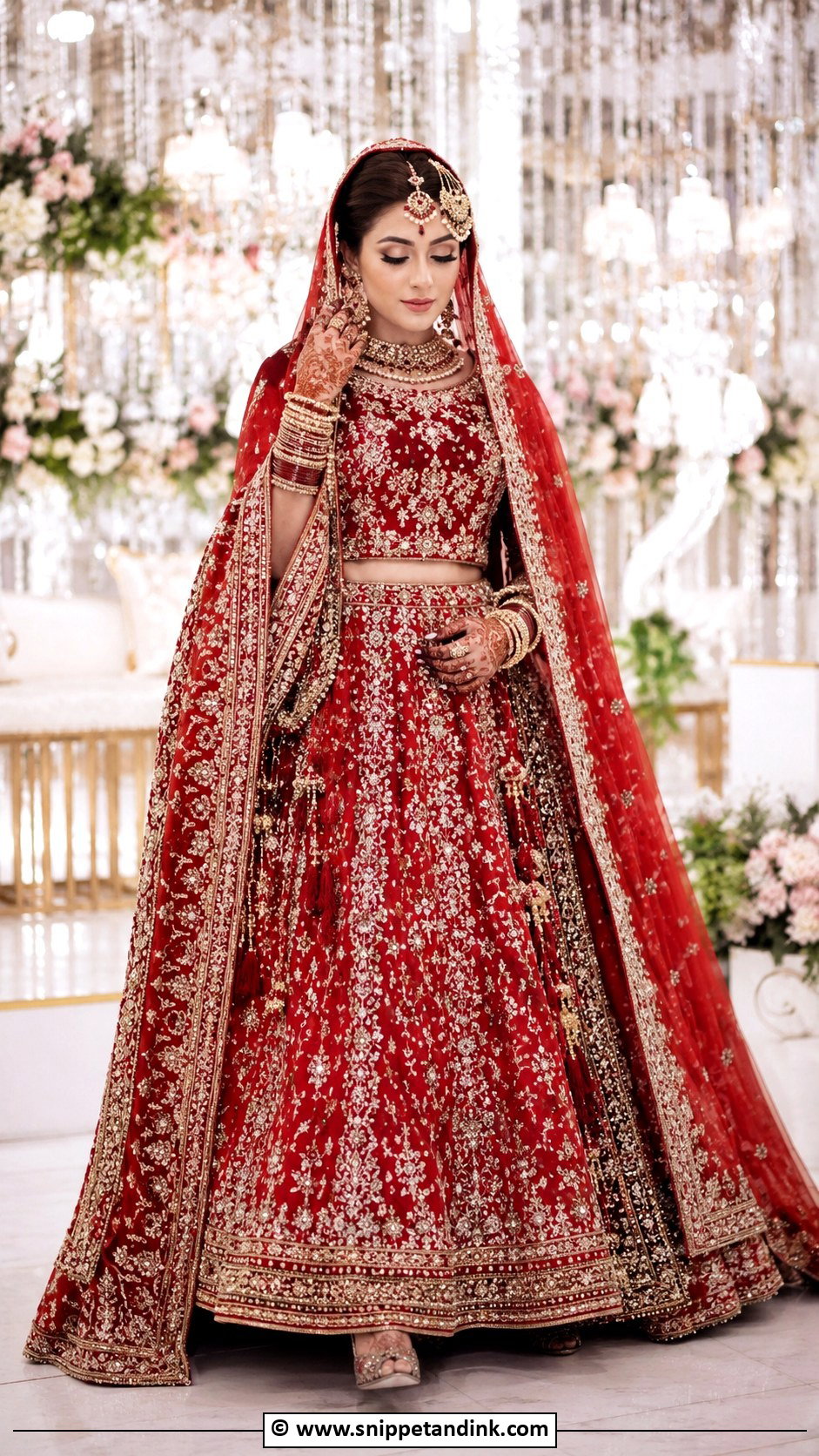
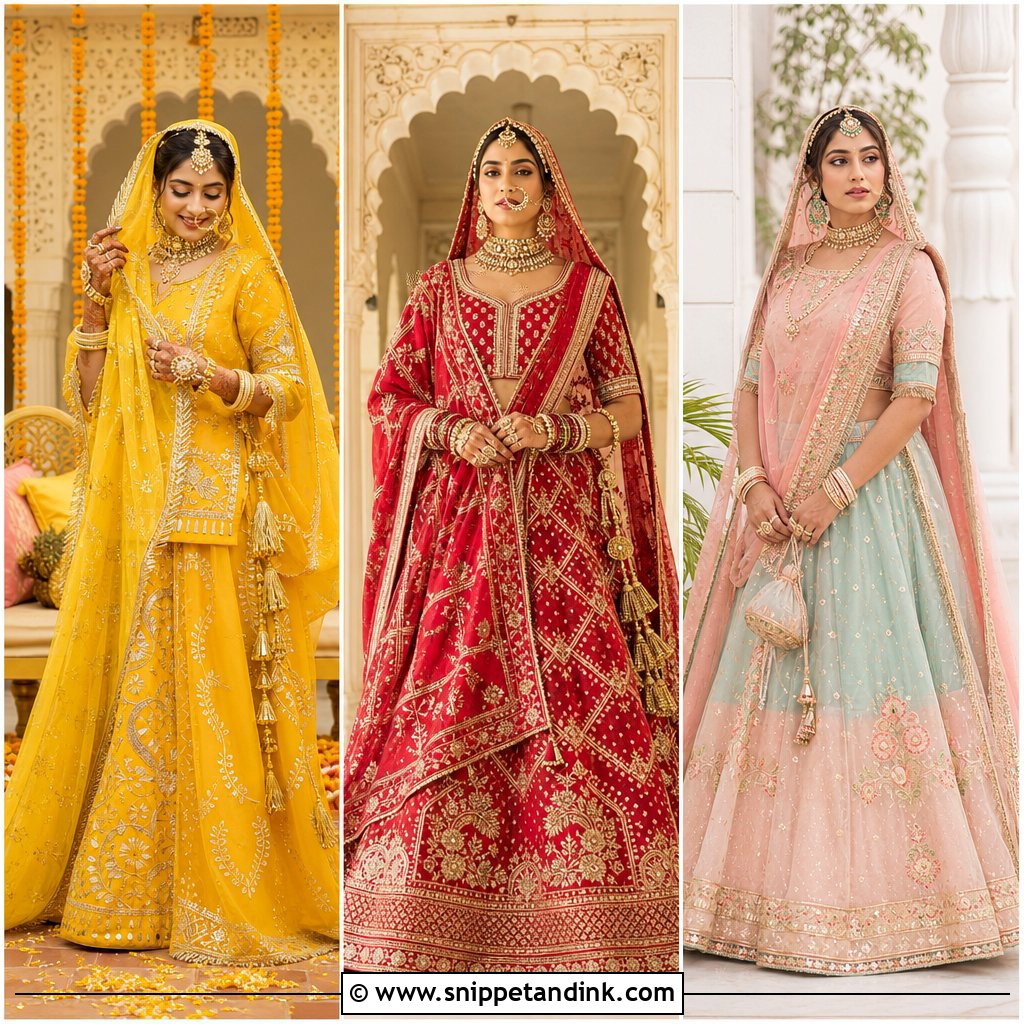
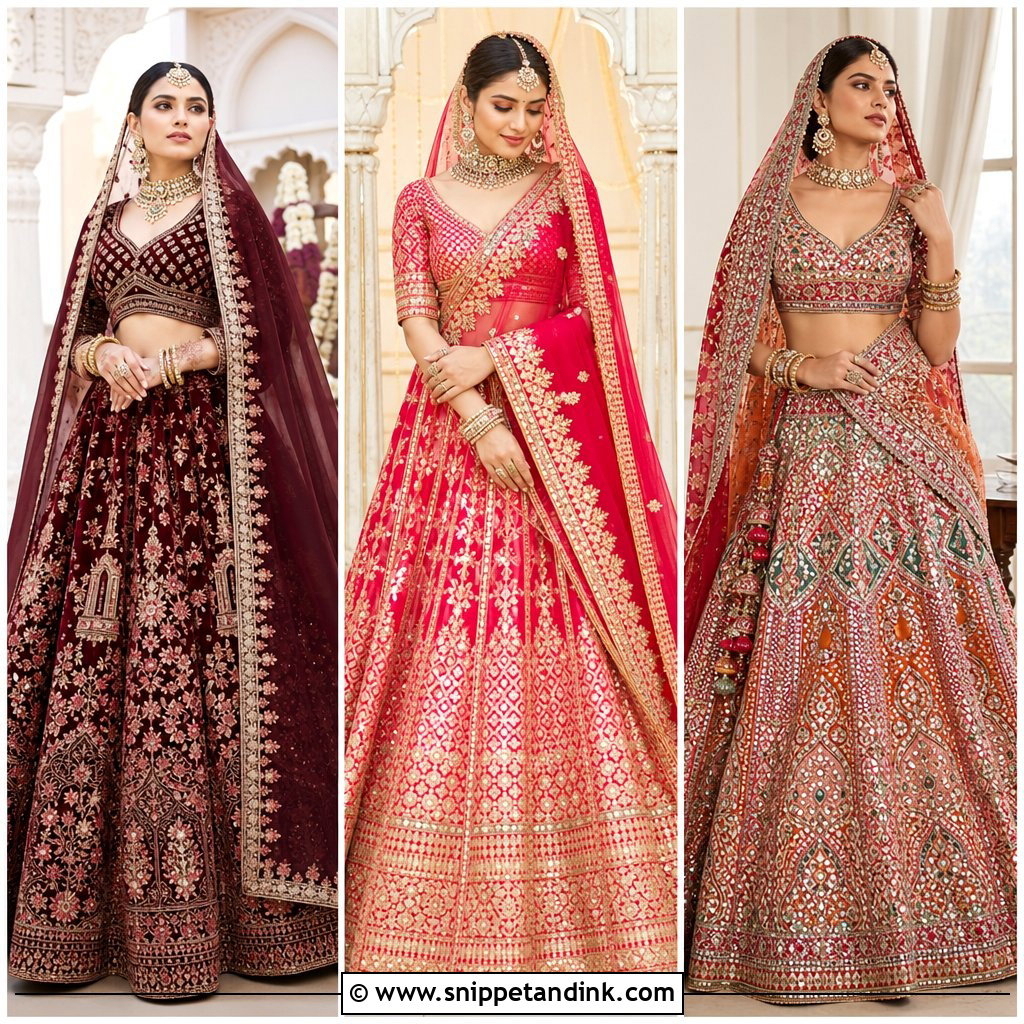
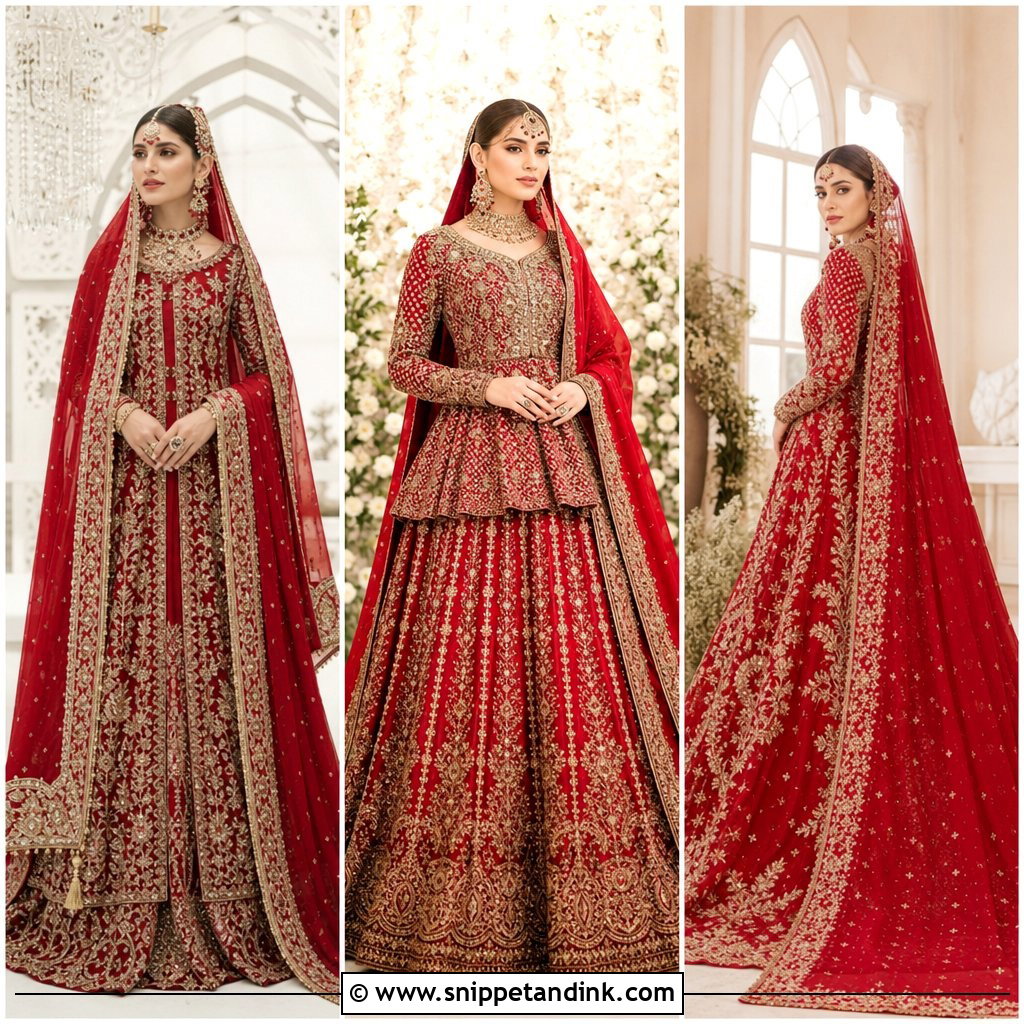
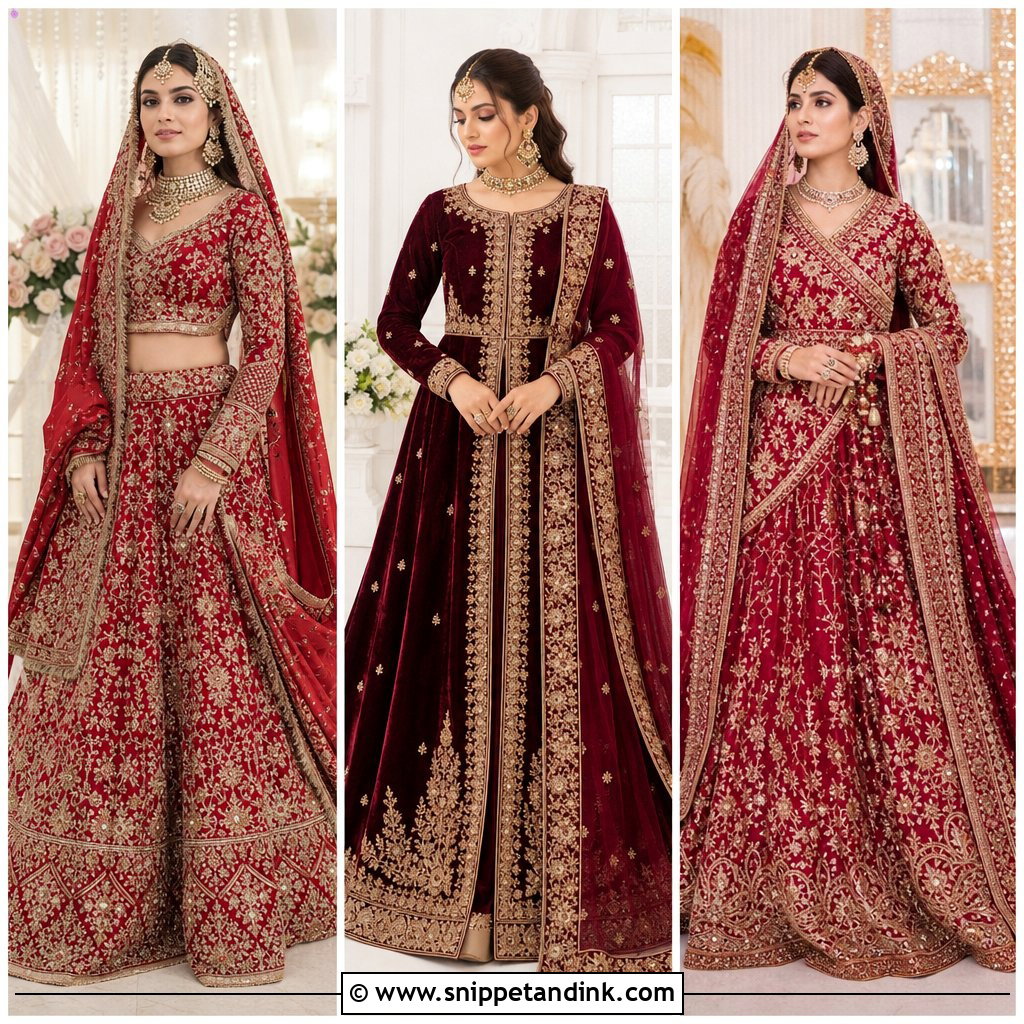
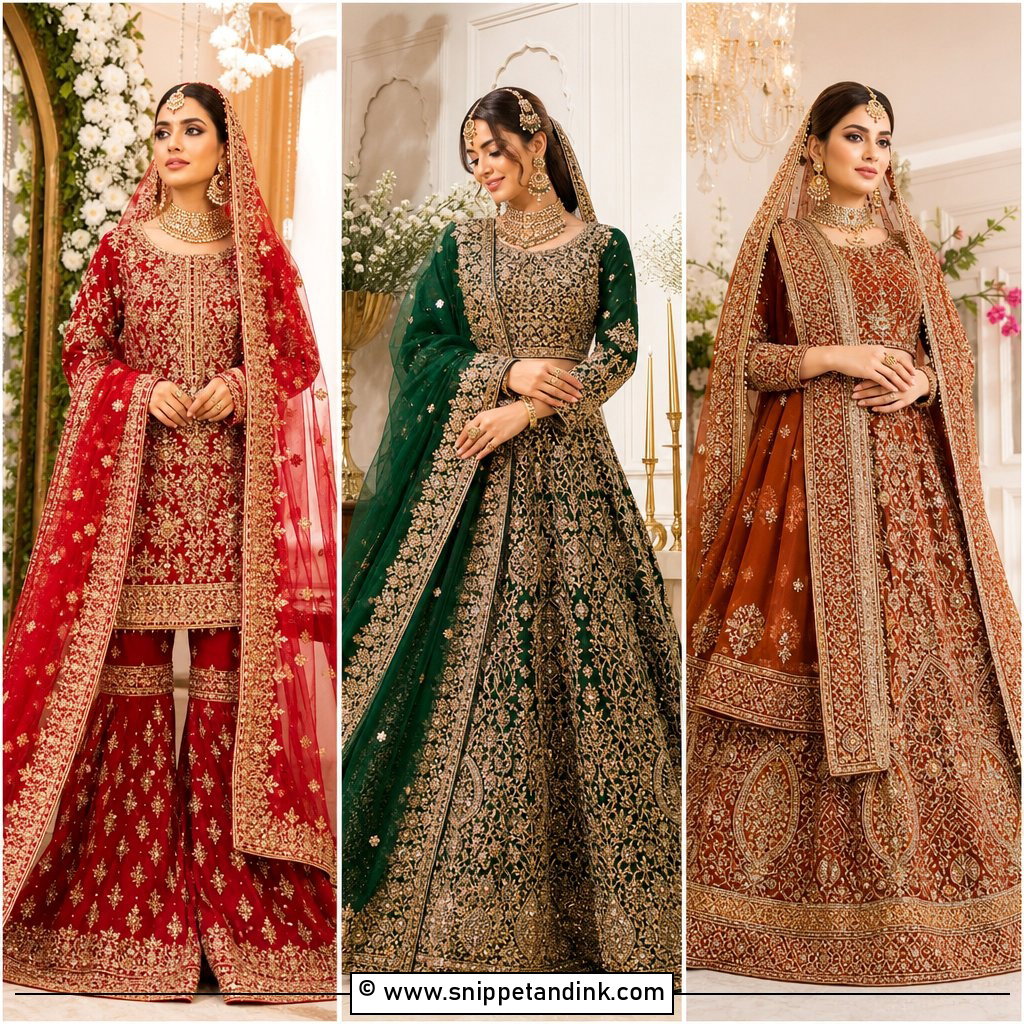
Red is still the barat color most families picture, and a deep crimson or ruby reads richer on camera than a bright tomato red, which can flare orange under warm hall lighting. The set is usually a heavily worked lehenga, a matching blouse or long kameez, and a dupatta over the head or shoulder. Gold zardozi, dabka and tilla carry the warmth, and a wide border gives the hem its weight. At fittings I check that border first: a deep border pulls the skirt down slightly over a long evening, so I have the hem finished with that drop in mind. Add a matha patti, jhumkas, a choker and khussas or embellished heels.
2. Maroon Pakistani Bridal Lehenga
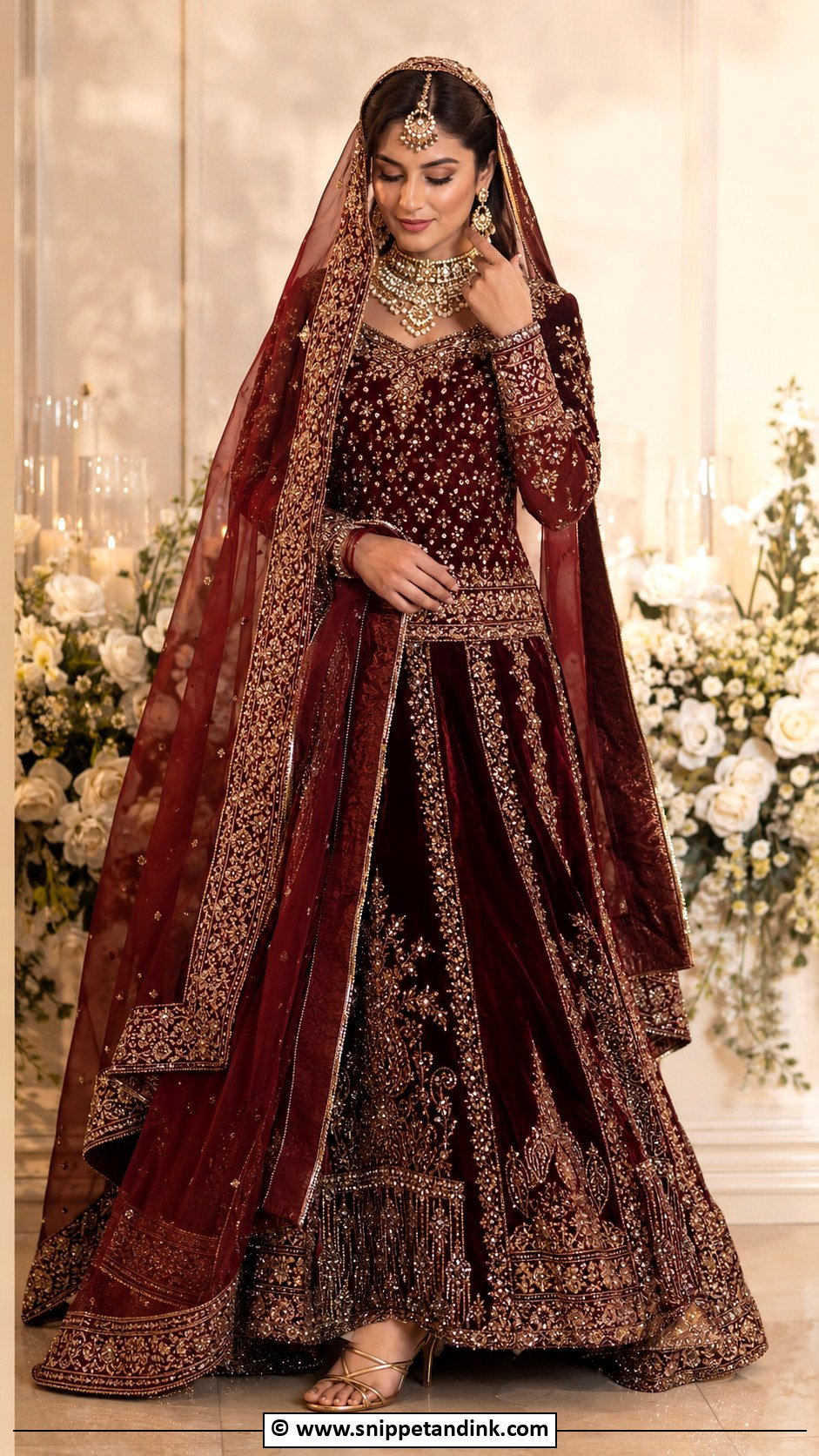
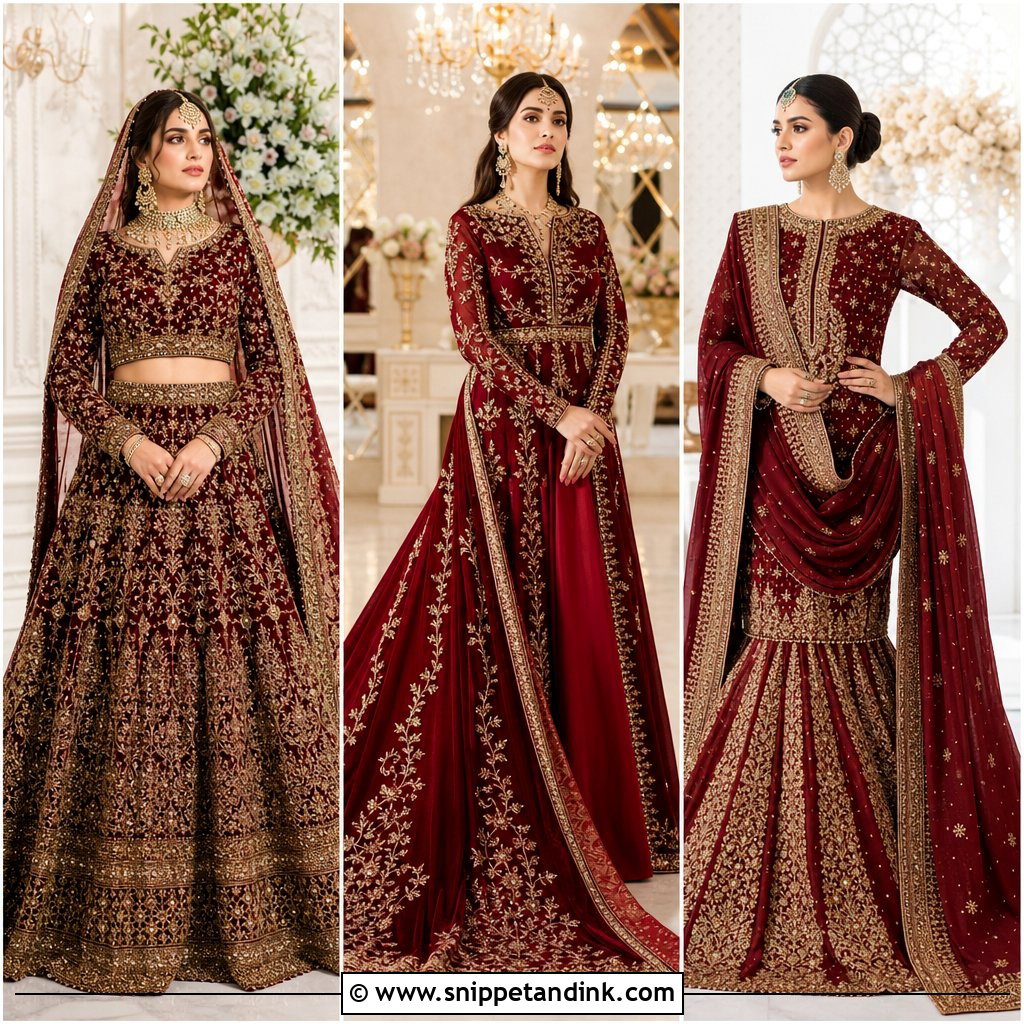
Maroon suits brides who find true red too loud against their skin. In velvet or raw silk it absorbs light, so antique gold embroidery, dabka, naqshi and sequins stand out instead of competing with the base. I pair it with kundan, gold heels and soft glam makeup. The one thing I watch is the lip: next to maroon velvet, a brick or terracotta lip can make the whole face look muddy in hall lighting, so I steer toward a true berry.
3. Ivory Pakistani Bridal Gharara
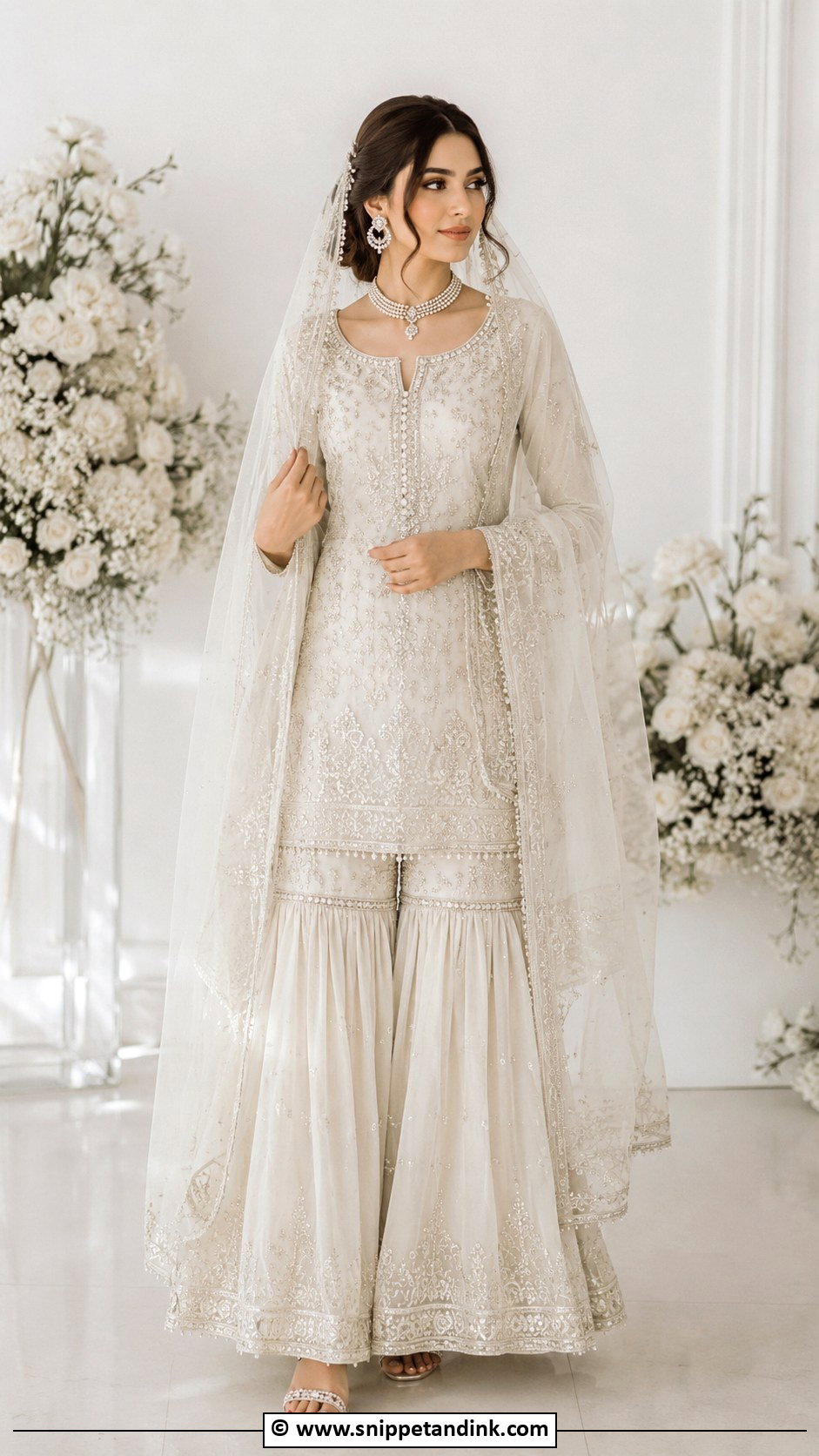
For a nikkah or a daytime event, an ivory gharara is calm and modest. The set is a short or mid-length kameez, a flared gharara and an organza or net dupatta, with gold or silver handwork on ivory, cream or pearl. The gota band where the gharara flares at the knee is the detail people notice, so I make sure it sits level when the bride stands straight. Ivory shows every mark, which is why I tell brides to keep fresh mehndi well away from the fabric and to dress last. Soft makeup, a sleek bun and delicate jewelry keep the mood quiet, with embellished sandals matched to the embroidery.
4. Gold Pakistani Bridal Sharara
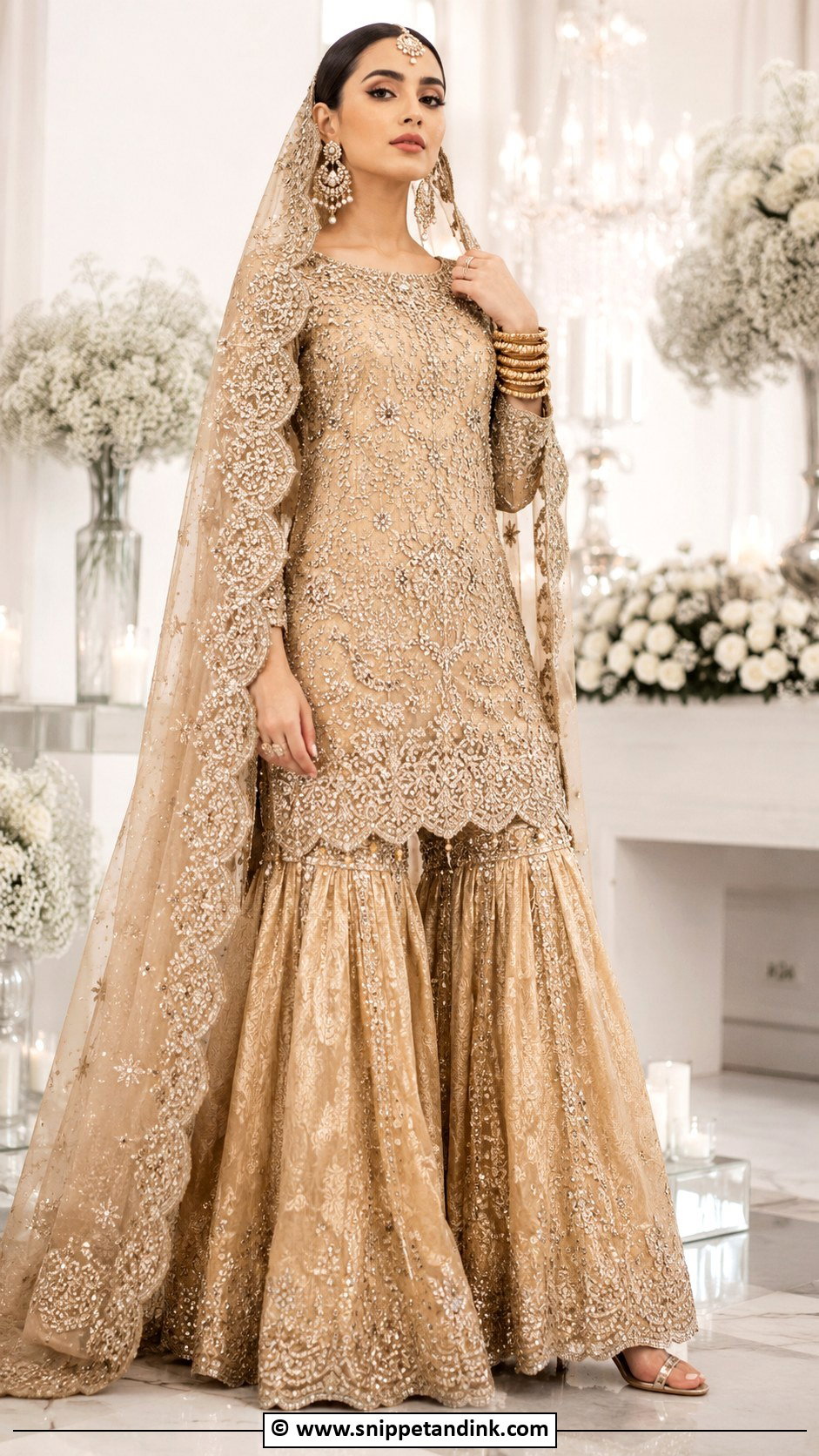
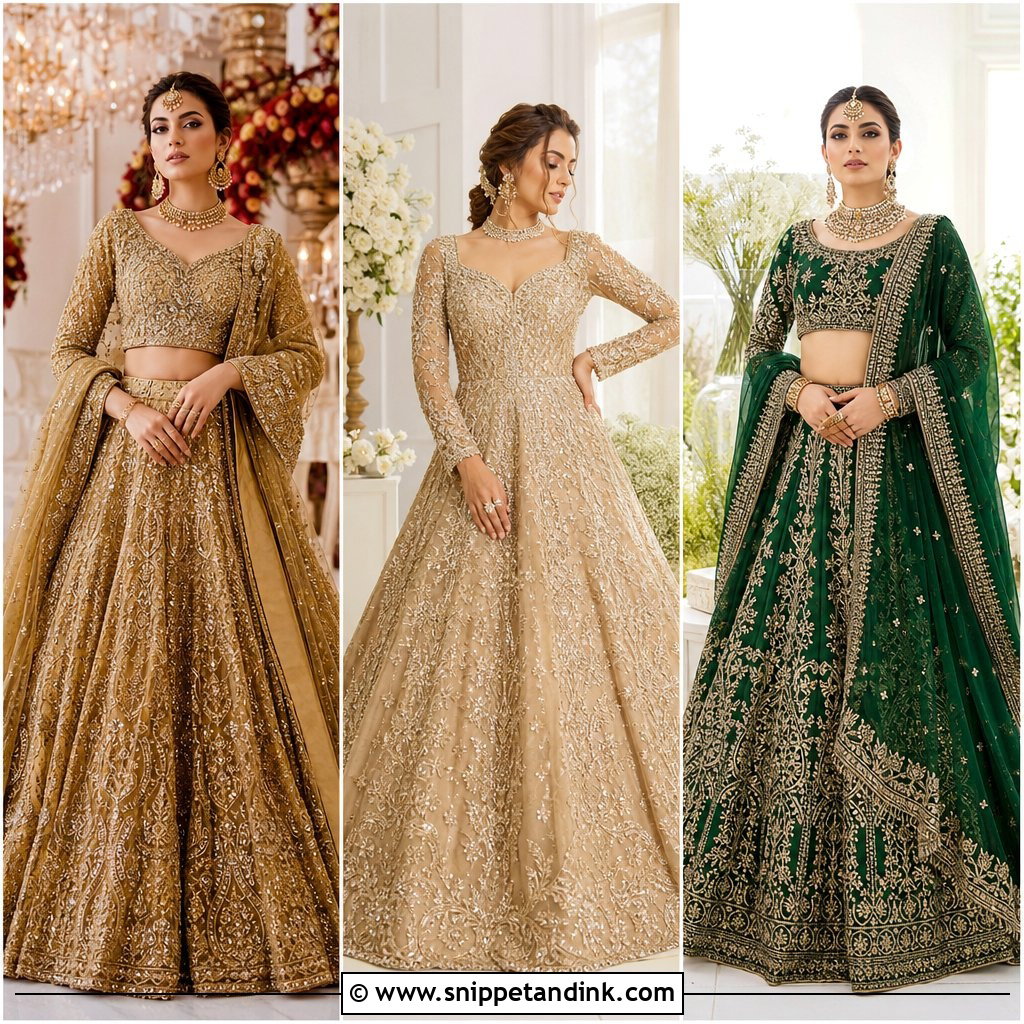
A gold sharara looks regal without leaning on color at all. Expect a heavily worked short kameez, wide sharara pants and a dupatta with scalloped or embroidered edges. Gold-on-gold embroidery is rich, and a little champagne, beige or antique metallic thread keeps it from reading flat. It suits a nikkah or reception, and a barat too with statement kundan, bangles and embellished heels. Because the sharara already carries volume from the waist down, I keep the neckline and sleeves simple; a busy top over wide legs makes most frames look shorter than they are.
5. Pastel Pakistani Bridal Maxi
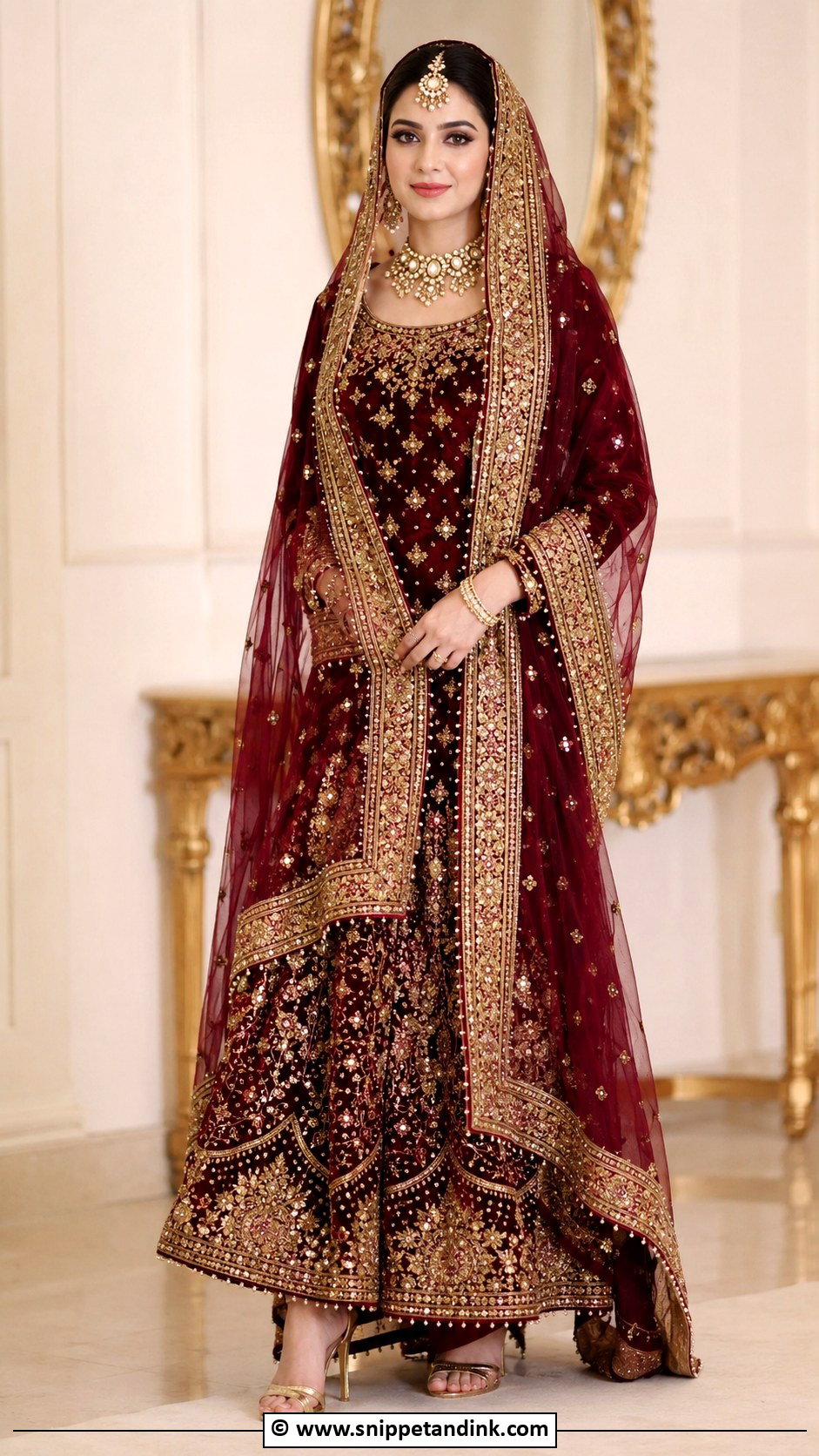
A pastel Pakistani bridal maxi is the walima outfit I reach for most often. Blush, powder blue, mint, lilac and peach all work, in net, organza or chiffon over a long flared skirt with a sheer dupatta, finished with silver, pearl, crystal or light gold work. Check the lining before you approve it. Pastel net over a stark white lining can look washed out beside a groom in a dark suit, so I ask for the lining to be dyed a shade deeper than the outer layer. Diamond-look jewelry, soft waves and heels do the rest.
6. White Pakistani Bridal Nikkah Dress
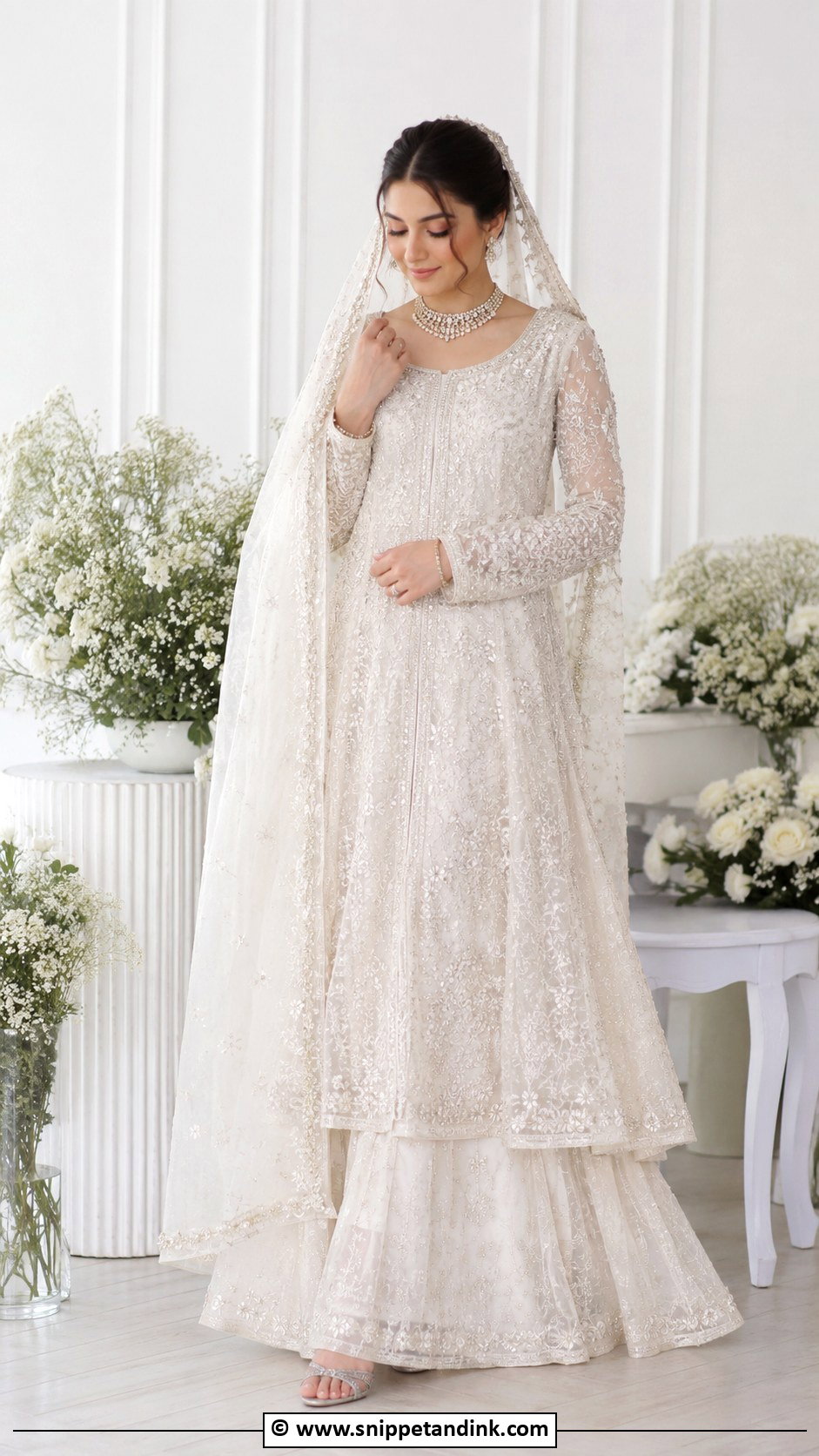
A white Pakistani bridal nikkah dress can be a pishwas, lehenga, gharara or long kameez with trousers, always with a dupatta. Pearls, sequins, silver zari or light gold tilla make it bridal rather than plain. I put most of the budget into the dupatta border, because during the nikkah you’re seated with the dupatta over your head, and that border frames your face in nearly every photo. Pure white can look harsh at close range on some skin tones; an off-white with a hint of warmth is often kinder. Pearl jewelry, soft pink makeup and white or silver heels complete it.
7. Green Pakistani Bridal Mehndi Dress
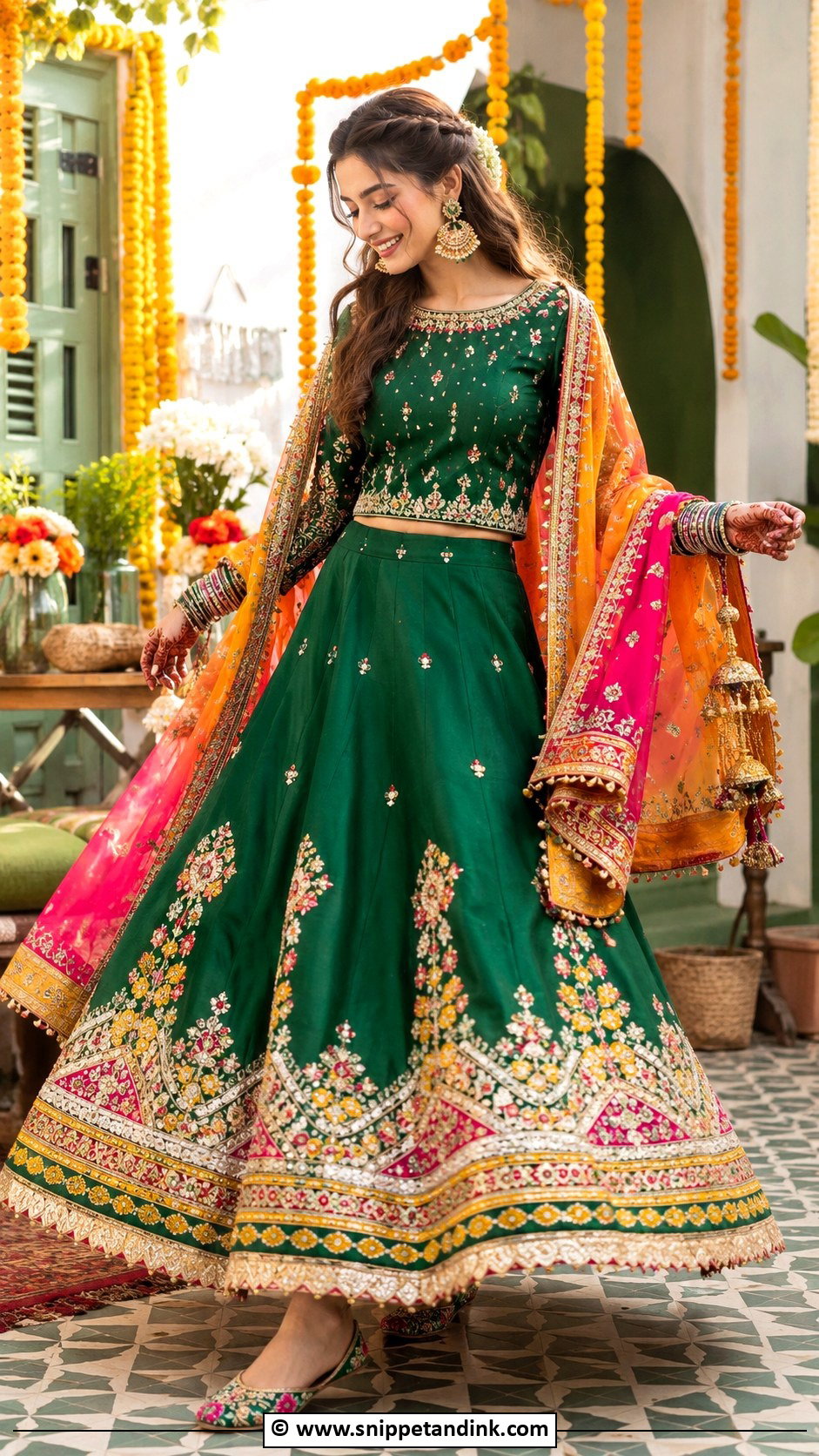
Mehndi outfits have to survive dancing. A green lehenga choli, sharara set or pishwas with a contrasting yellow, orange or pink dupatta gives that festive clash, and gota, mirror work and colored thread keep it lighter than barat embroidery. Emerald suits an evening event, a brighter mehndi green suits daytime. I ask for the lehenga to sit a little higher than barat length here, since you’ll be on a dhol floor, and I pair it with a paranda and flat embellished khussas so you last the whole night.
8. Yellow Pakistani Bridal Mehndi Lehenga
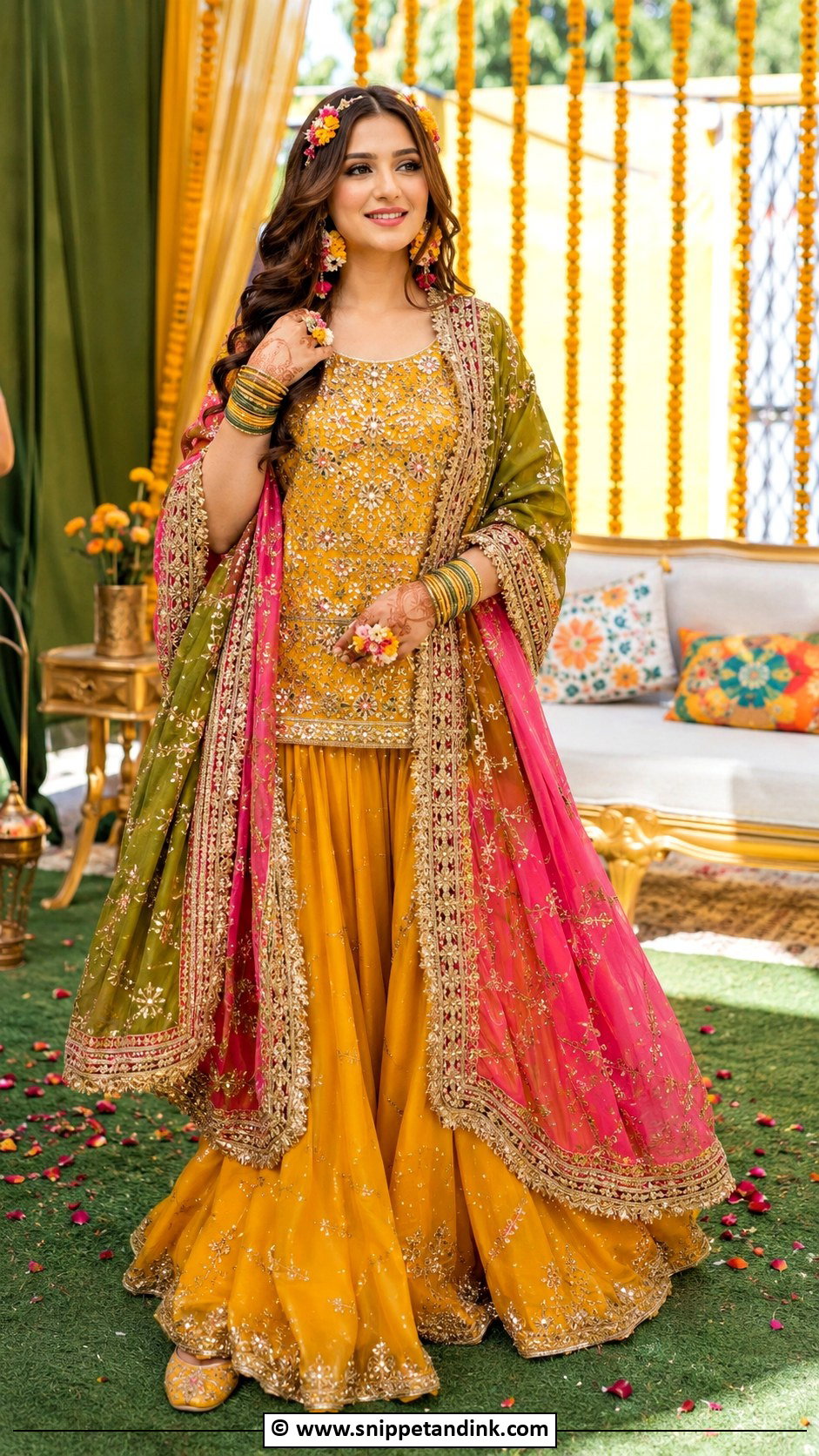
The shade of yellow matters more than people expect. Mustard is generous to olive and deeper skin, a pale lemon can make the same skin look tired under tube lights, and marigold sits well on most people. The set is a yellow lehenga, a short choli or kurti and a dupatta with gota or mirror work; a pink, green or orange dupatta adds contrast. Floral jewelry is light and fun, but fresh flowers wilt quickly in a warm room, so I have them made the afternoon of the event rather than the day before. Gold bangles and khussas finish it.
9. Pink Pakistani Bridal Walima Dress
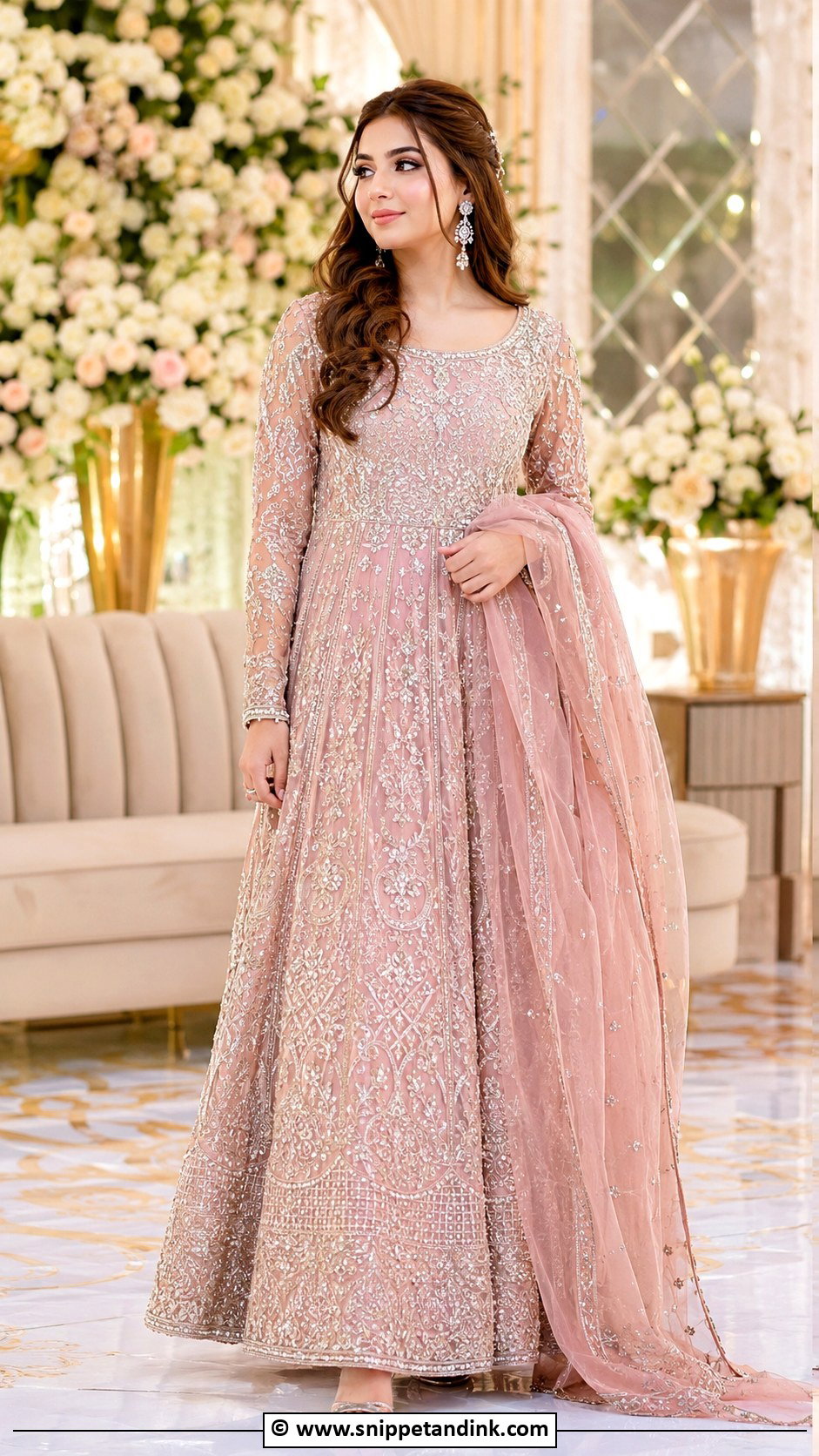
Pink is the walima color I’m asked about most, whether that’s blush, rose, dusty pink or tea pink, as a maxi, lehenga or pishwas. Silver embroidery, pearls, crystals and light sequins suit it, with a sheer dupatta and a slim border. Pair diamond-look jewelry, glossy makeup and silver or nude heels. My one warning: blush fabric with blush makeup can flatten the face in photos, so I’d add definition through the brows and lashes and let only the lip stay soft.
10. Peach Pakistani Bridal Pishwas
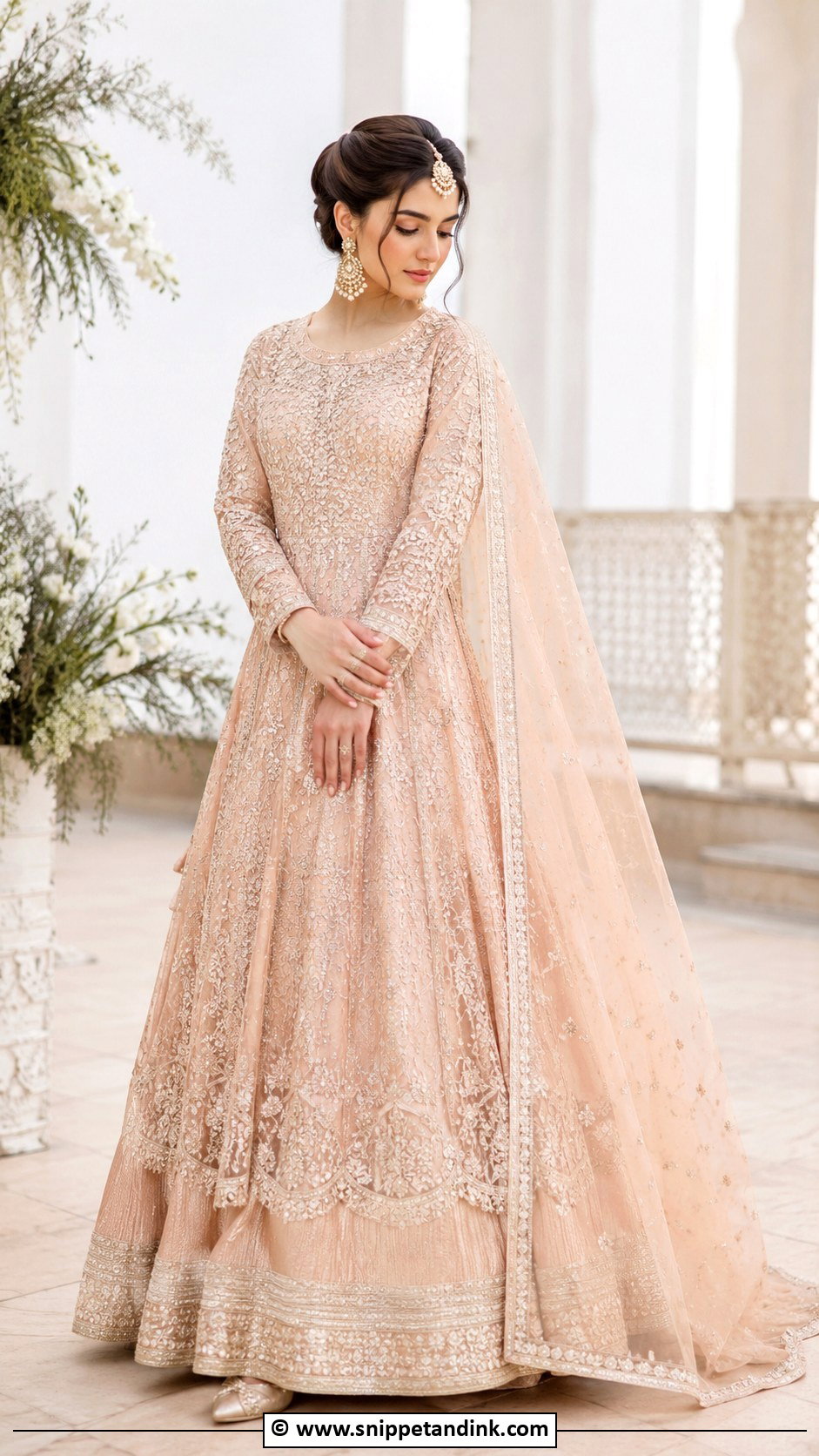
Peach takes gold, pearl and champagne embroidery well, which makes a peach pishwas a natural fit for a daytime nikkah or walima. It’s a flared, many-paneled pishwas over a matching or tonal lehenga, with a sheer dupatta, so it moves when you turn while covering you fully. Before I approve one I look at how the panels fall from the waist seam. If the fabric or lining is too stiff, the skirt stands out like a lampshade instead of hanging in folds. A passa, small earrings, soft curls or a neat bun, and heels matched to the embroidery rather than the fabric.
11. Mint Pakistani Bridal Gown
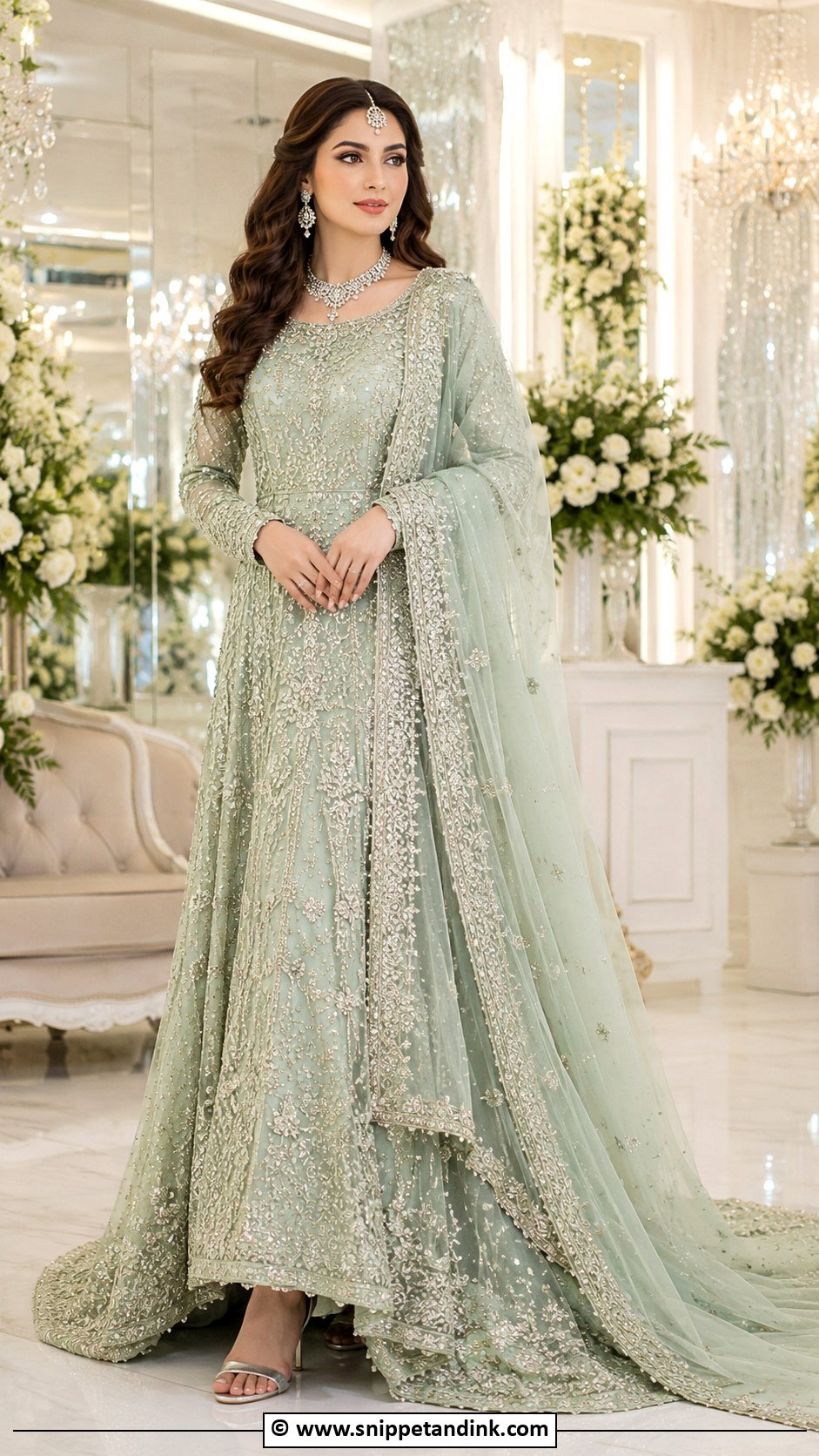
Mint reads calm and modern at a walima, and it takes silver, pearl, crystal and soft gold without effort. Most mint outfits pair an embroidered long gown or maxi with a matching dupatta and a small train; choose a fitted bodice and flared skirt if you’d like more shape. I flag one thing early. Mint is hard to match between dye lots, so if your dupatta is made separately, approve both pieces side by side in daylight before any embroidery starts. Sleek jewelry, soft makeup and metallic heels finish it.
12. Emerald Pakistani Bridal Lehenga
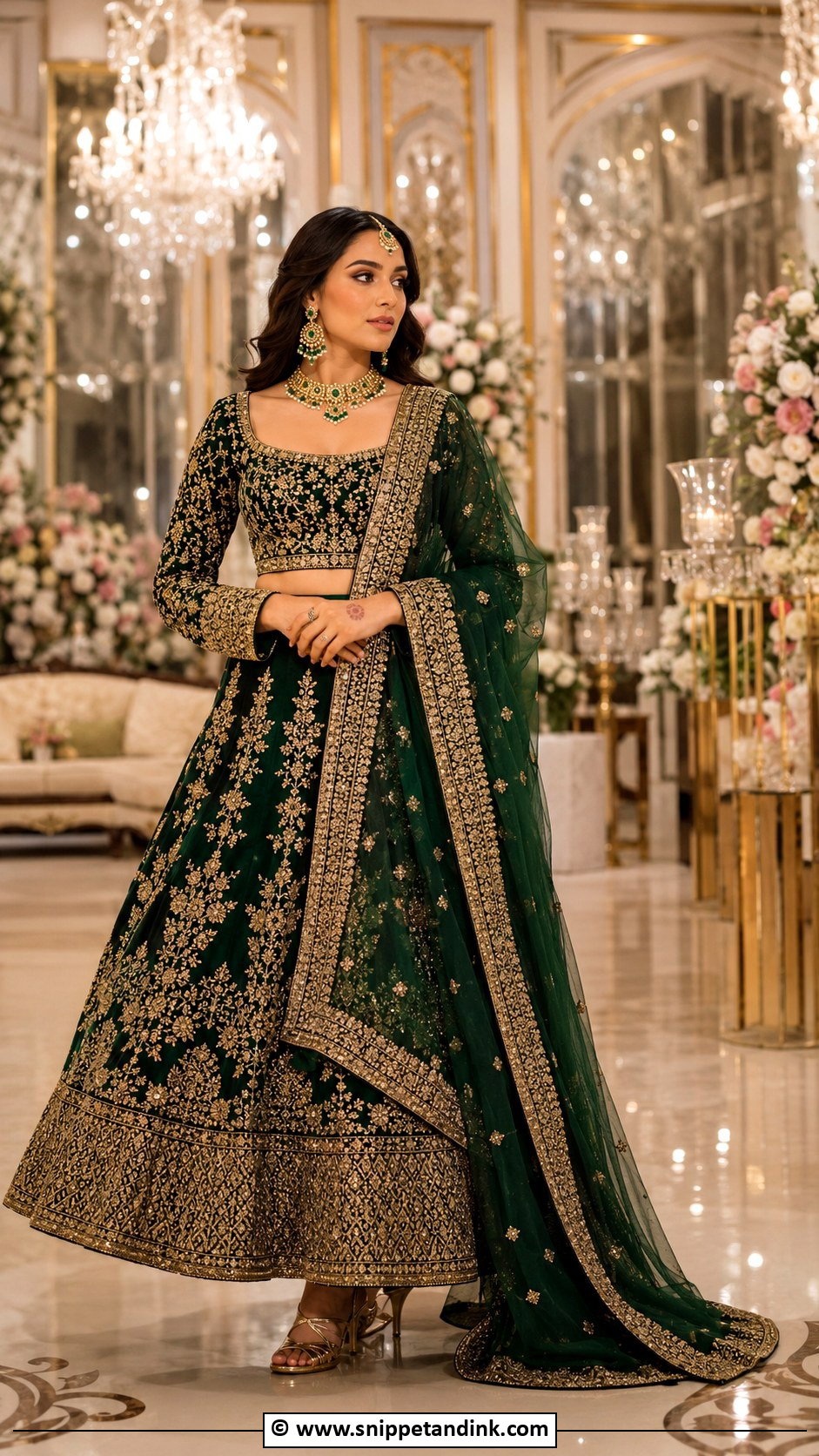
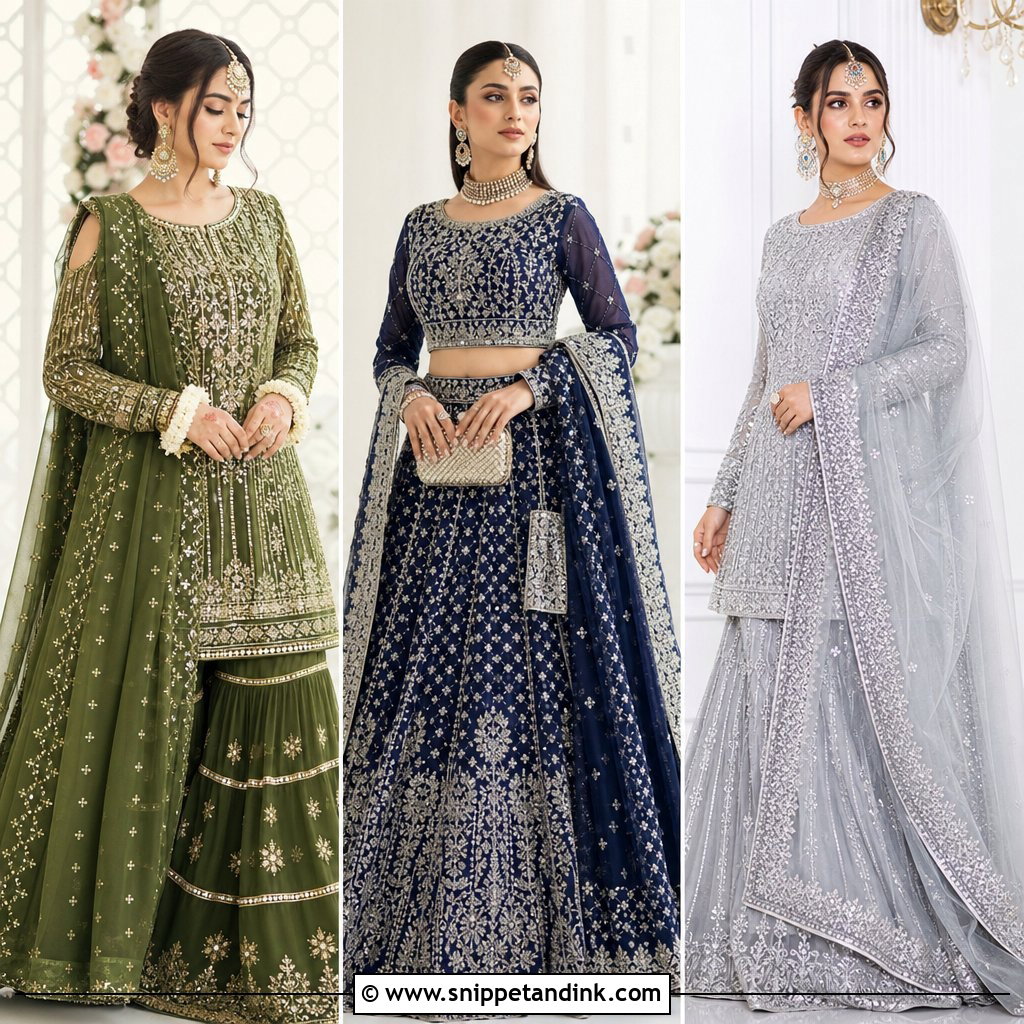
I suggest emerald to brides who want a barat look that isn’t red but still carries real weight. A deep green lehenga, a heavily worked blouse or long kameez and a gold-bordered dupatta hold antique zardozi, dabka and stonework well, and kundan with a statement necklace sits naturally against it. Warm bronze eyes and a soft lip balance the depth, where a bright red lip on emerald tends to fight the outfit. It works for barat, reception or any grand evening event.
13. Navy Pakistani Bridal Maxi
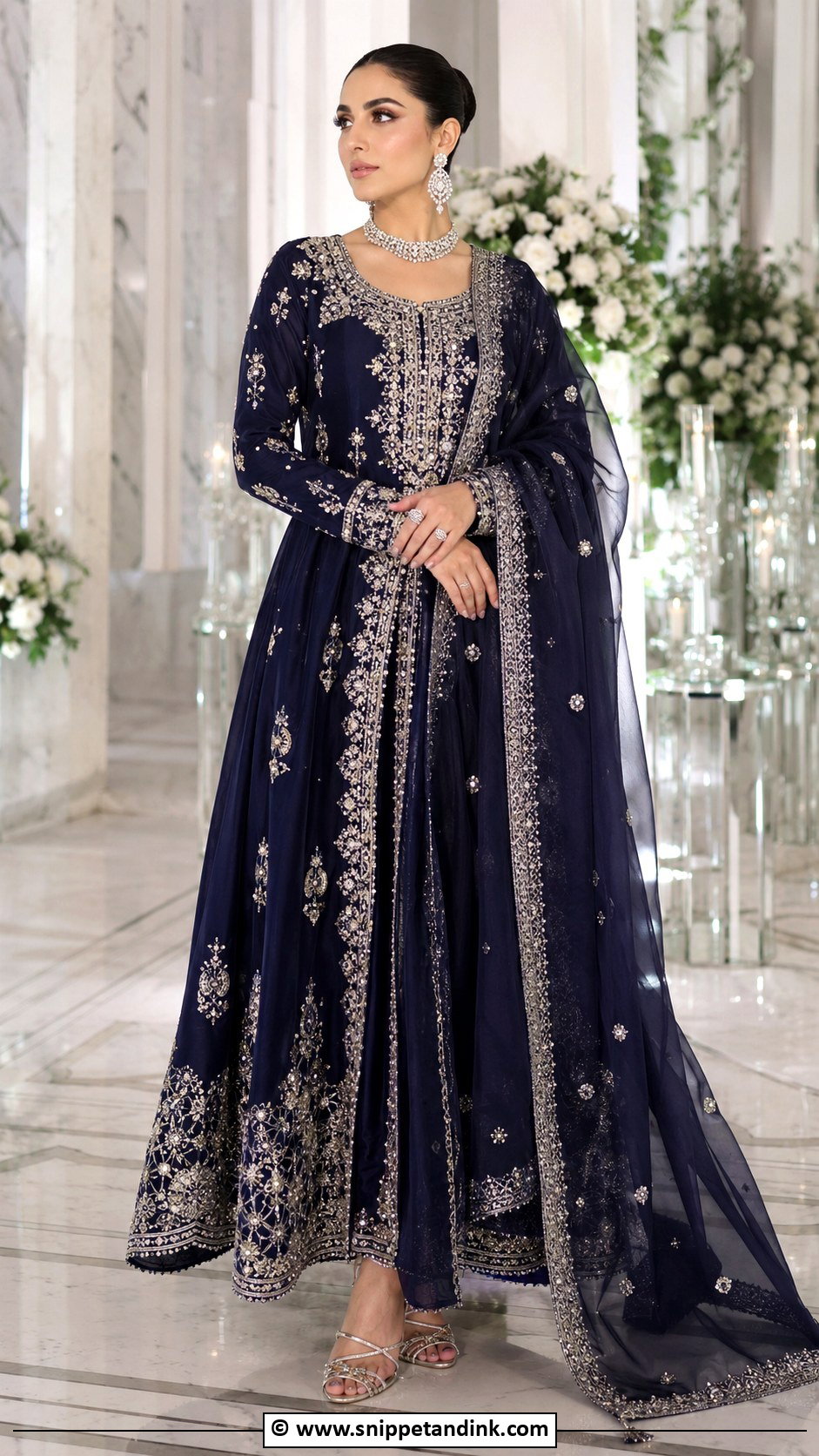
Navy gives you the depth of black without the debate black brings to a wedding. A long navy maxi with silver or gold embroidery, a sheer dupatta and matching heels is the usual set, with crystals, sequins or pearls for the bridal finish. Dark grounds swallow fine work in photographs, so here I push for bolder, lighter embroidery; a tone-on-tone thread that looks rich in person can vanish on camera. Silver jewelry and a sleek hairstyle keep it clean for a walima, reception or formal dinner.
14. Black Pakistani Bridal Lehenga
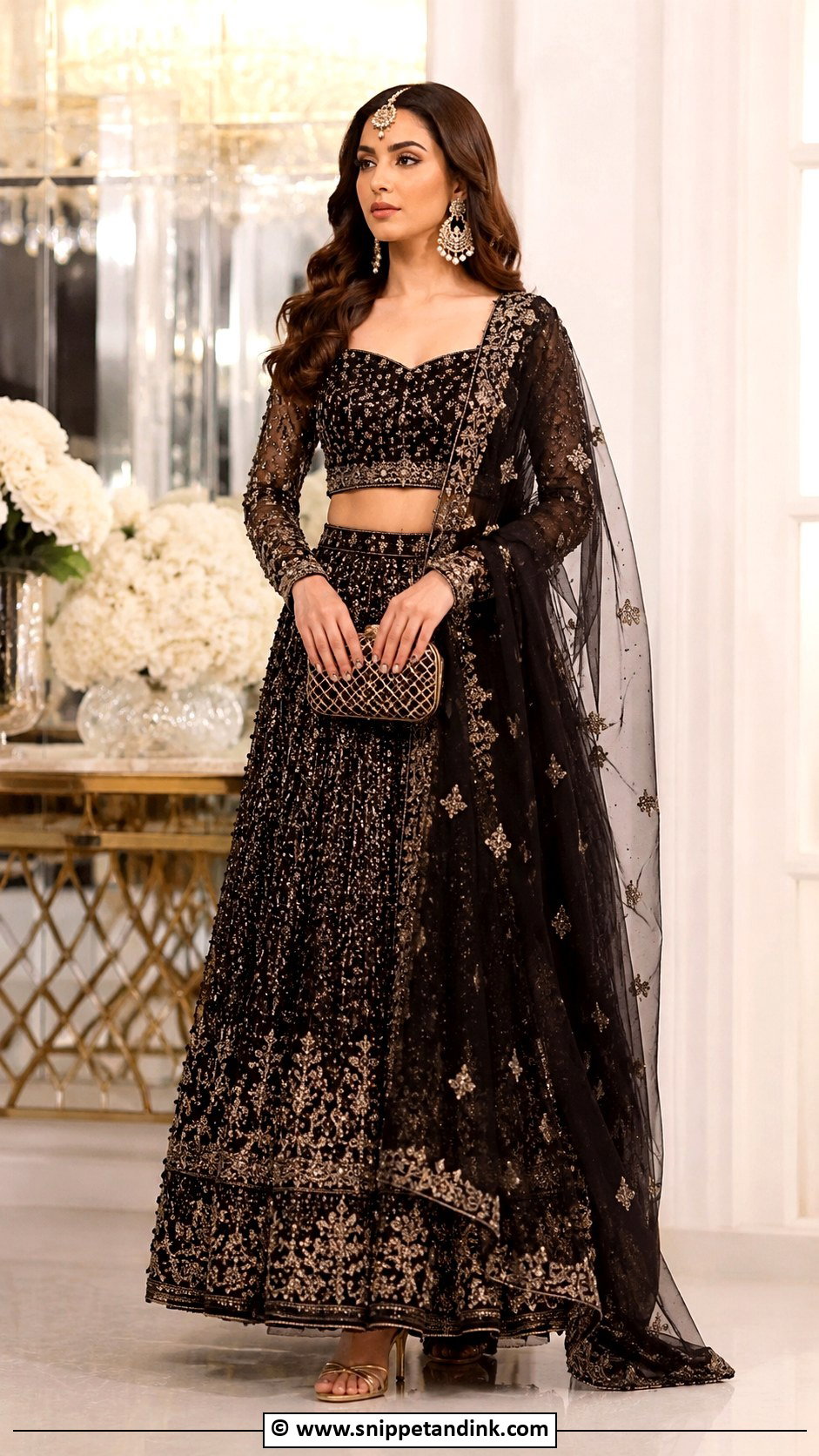
Black belongs at a reception, and not every family will welcome it, so I suggest a quiet conversation at home before the order goes in. When it works, it’s because the embroidery is unmistakably bridal: heavy gold, silver or antique work and a detailed dupatta that’s draped neatly rather than bunched. Velvet suits winter, while organza or net feels lighter for warmer months. Metallic heels, a structured clutch and soft glam makeup finish it. Black velvet shows lint and stray dupatta threads badly, so a lint roller goes in my kit for this one.
15. Red Pakistani Bridal Gharara
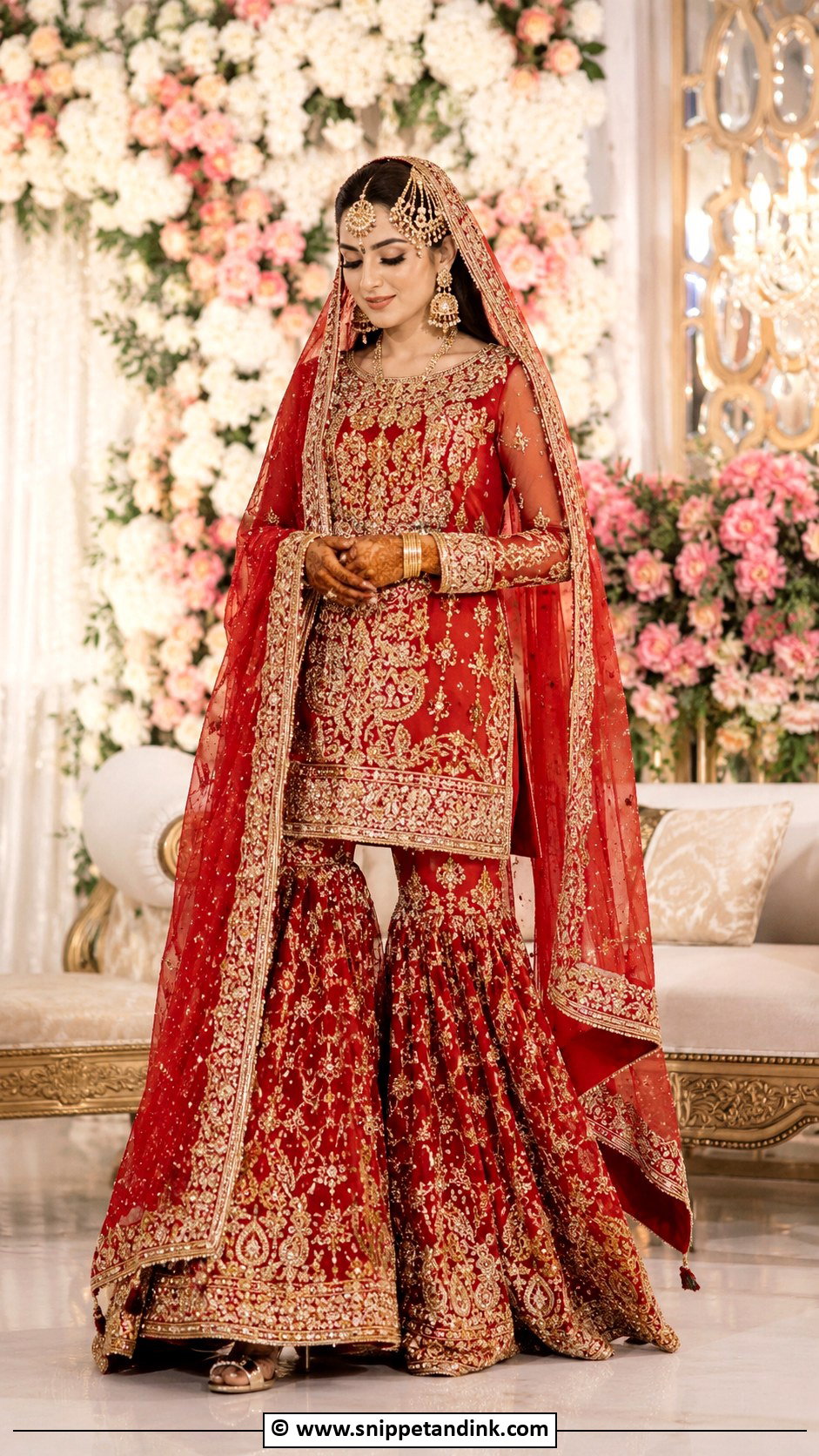
The gharara comes from the old courtly dress of Lucknow, and a red one still feels right at a barat or nikkah. The set is a short heavily embroidered shirt, a flared gharara and a matching dupatta, worked in gold embroidery, gota, tilla and dabka. Pick it when you want something more traditional than a lehenga but just as grand. Practice sitting in it, though: the knee joint bunches when you sit on a stage, and I smooth the flare out before every seated photo. A matha patti, jhumkas, bangles and embellished heels complete it.
16. Rust Pakistani Bridal Sharara
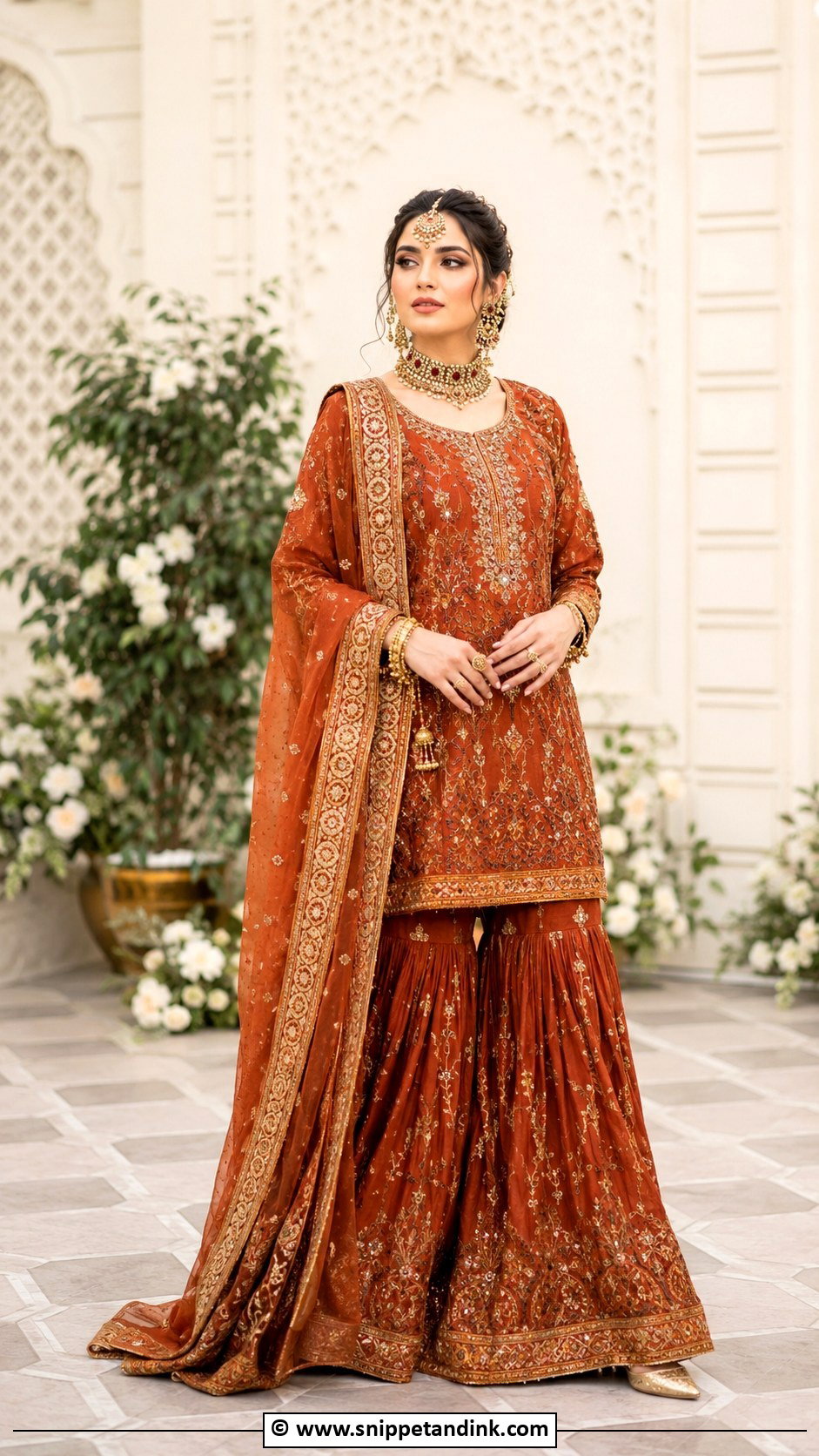
Rust gives you the warmth of red with something less expected. A rust short kameez, wide sharara pants and a dupatta in gold or copper embroidery; raw silk or jamawar for cooler months, organza for warm ones. Antique gold jewelry, warm makeup and metallic heels suit it. Rust can go muddy if the embroidery is too close in tone, so I ask for at least one contrasting thread, usually a soft gold or ivory, to lift the motifs. It sits well at a mehndi, barat or any event with a heritage theme.
17. Beige Pakistani Bridal Lehenga
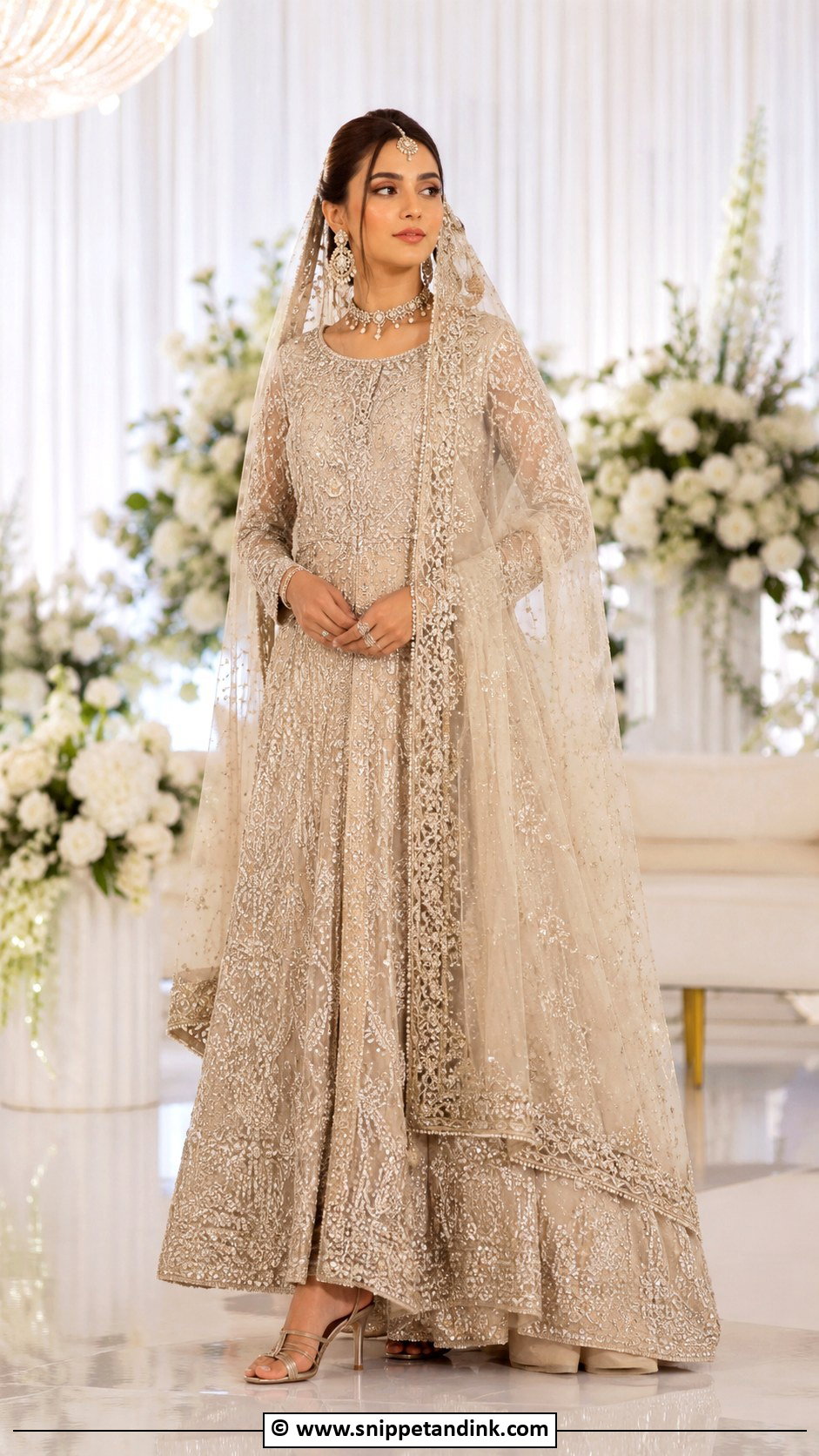
Beige needs heavy work, or it looks like a guest outfit. Gold, champagne, pearl or silver embroidery gives it bridal weight, and a matching dupatta with a strong border adds structure. Statement jewelry, soft makeup and nude or metallic heels complete it for a nikkah, walima or reception, indoors or out. A practical note from fittings: a beige too close to your own skin tone blurs the line between you and the outfit in photos, so I pick one a few shades lighter or darker than the bride’s skin.
18. Silver Pakistani Bridal Maxi
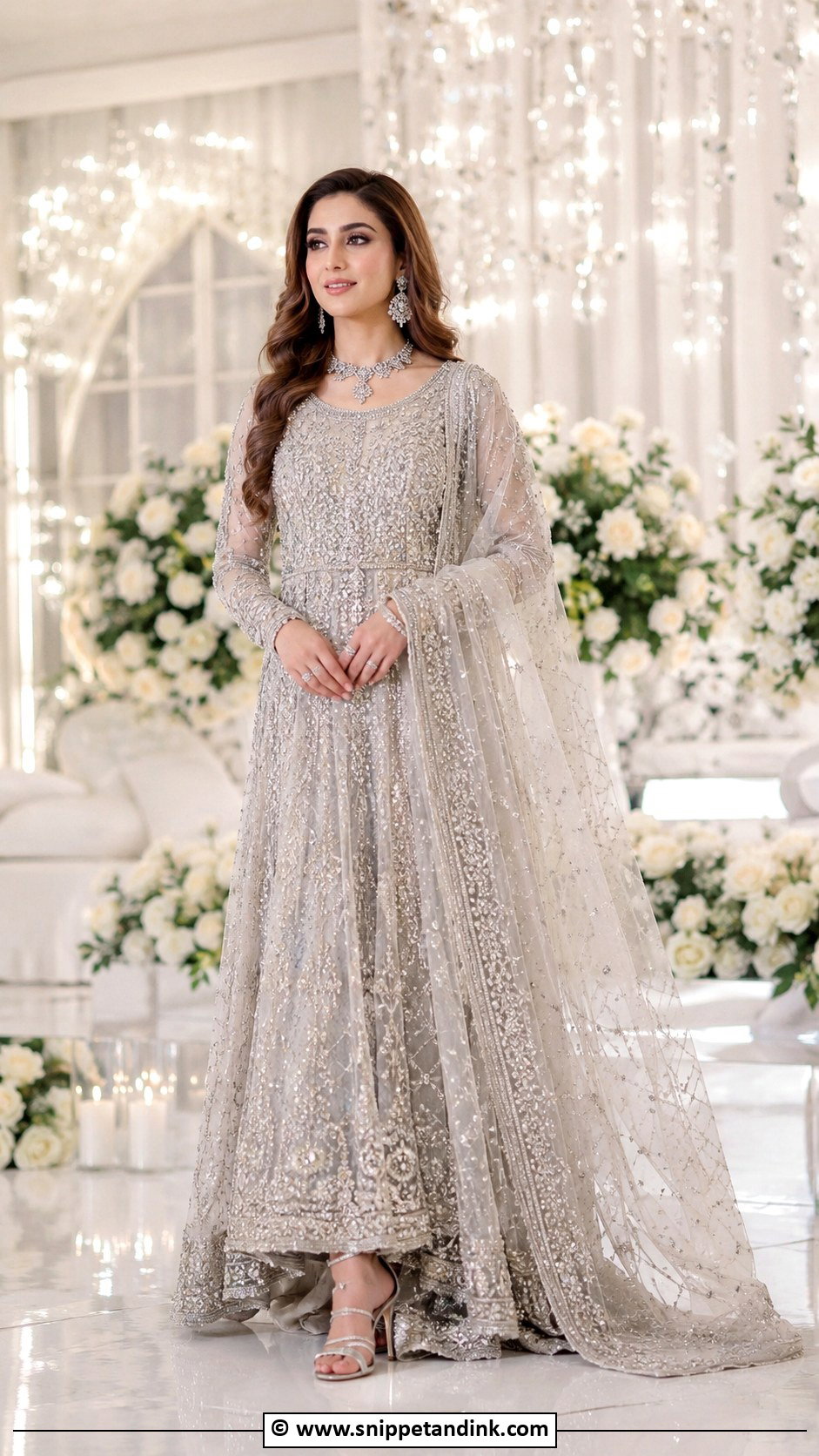
A silver maxi is the sparkle option for a walima: net or organza with crystal, pearl and sequin work, a matching sheer dupatta and a gently flared skirt. Silver is cool-toned, so I warm the face with a blush lip and a skin finish that isn’t too matte. Sequins and crystals on net snag on lace and on jewelry backs, which is why I check every clasp and earring post before the bride dresses. It reads well in bright reception halls and in evening photography.
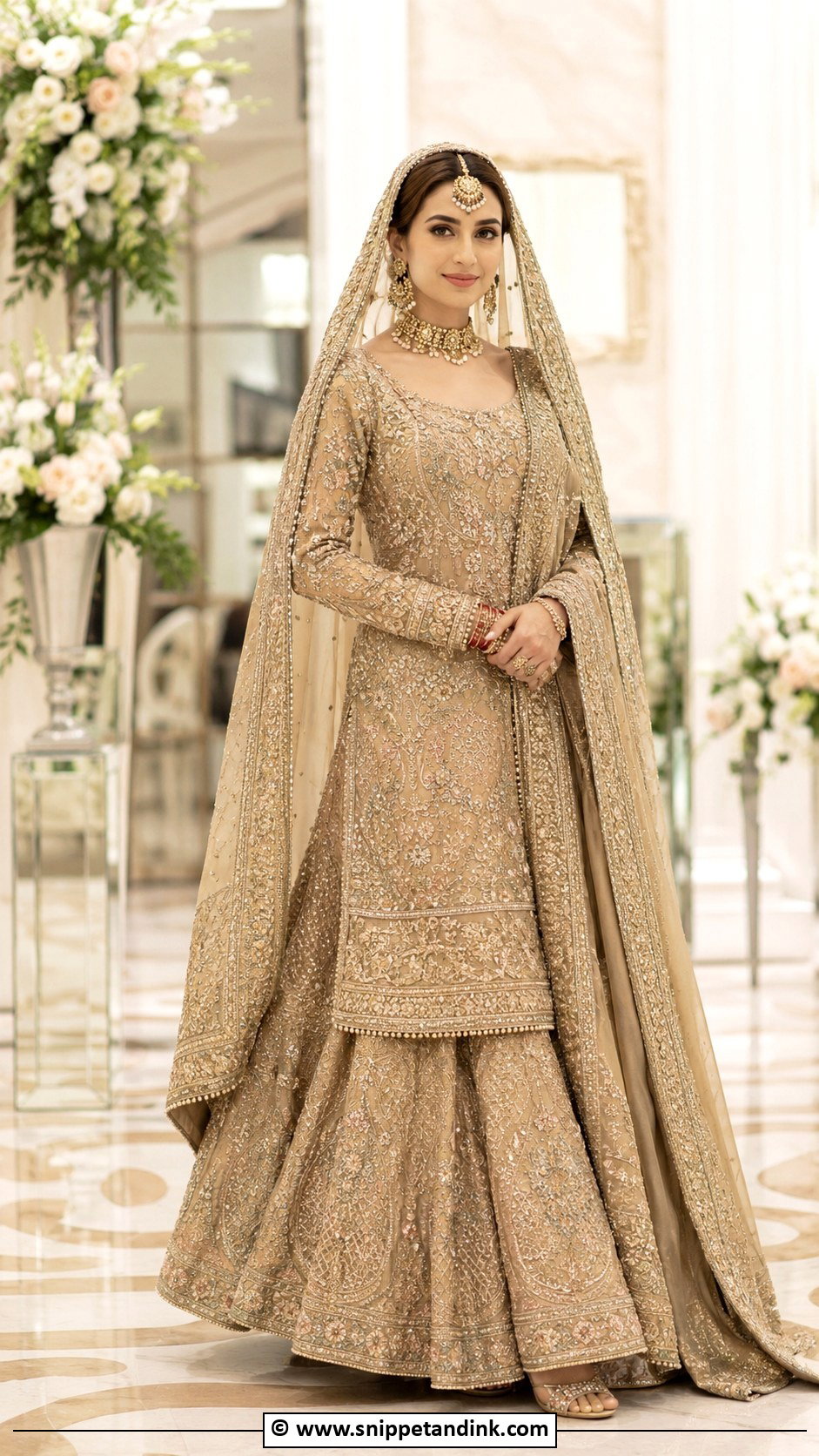
19. Champagne Pakistani Bridal Dress
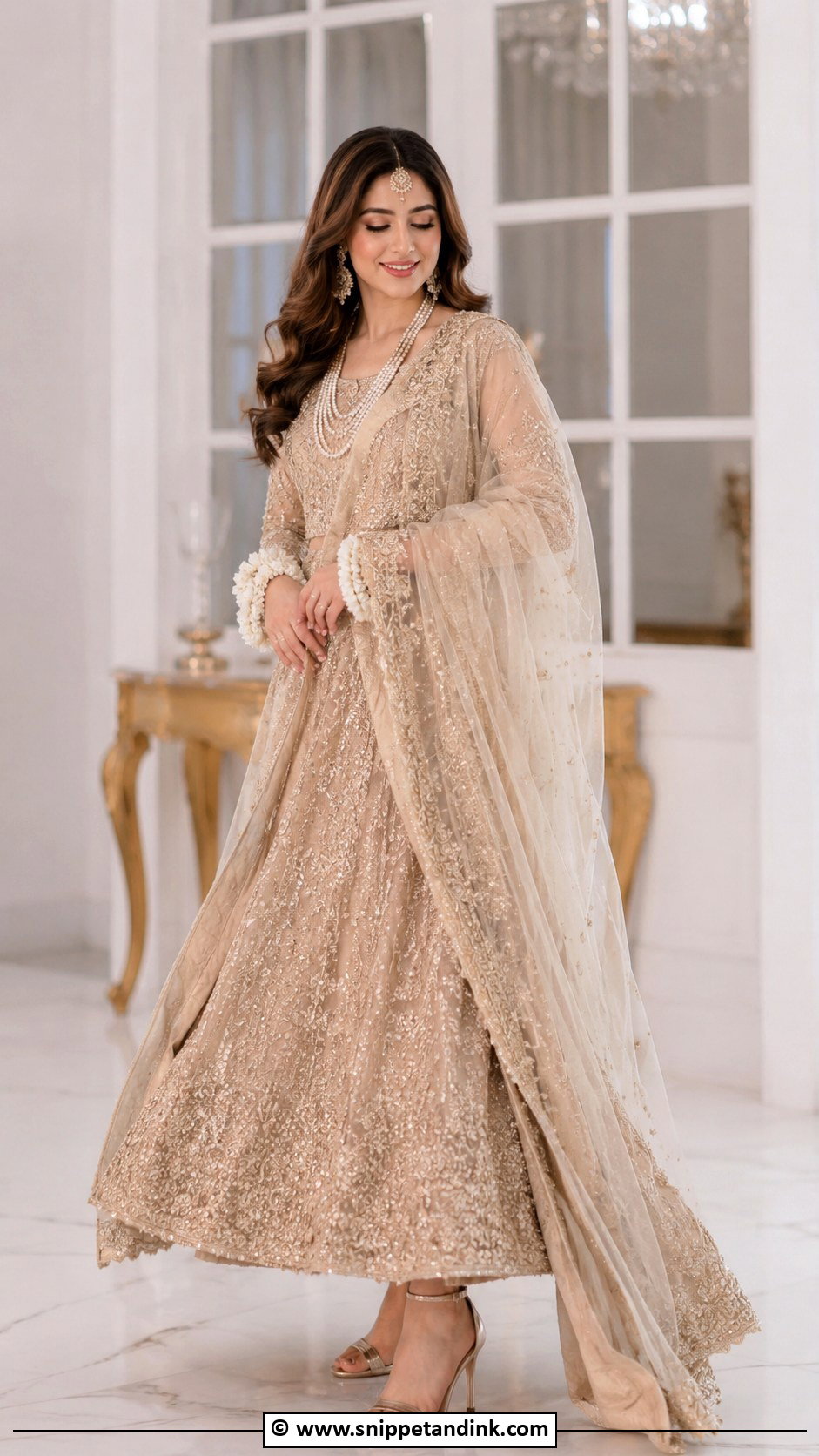
Champagne sits between beige, gold and soft bronze, and that middle position is why it flatters so many skin tones. A champagne lehenga, maxi or pishwas with fine metallic embroidery, pearl or kundan jewelry, a sheer dupatta and metallic heels is enough; keep the makeup glowing. Under warm yellow bulbs champagne can merge into plain gold. If your walima venue is lit that way, I’d lean toward a slightly pinker champagne so the color still reads.
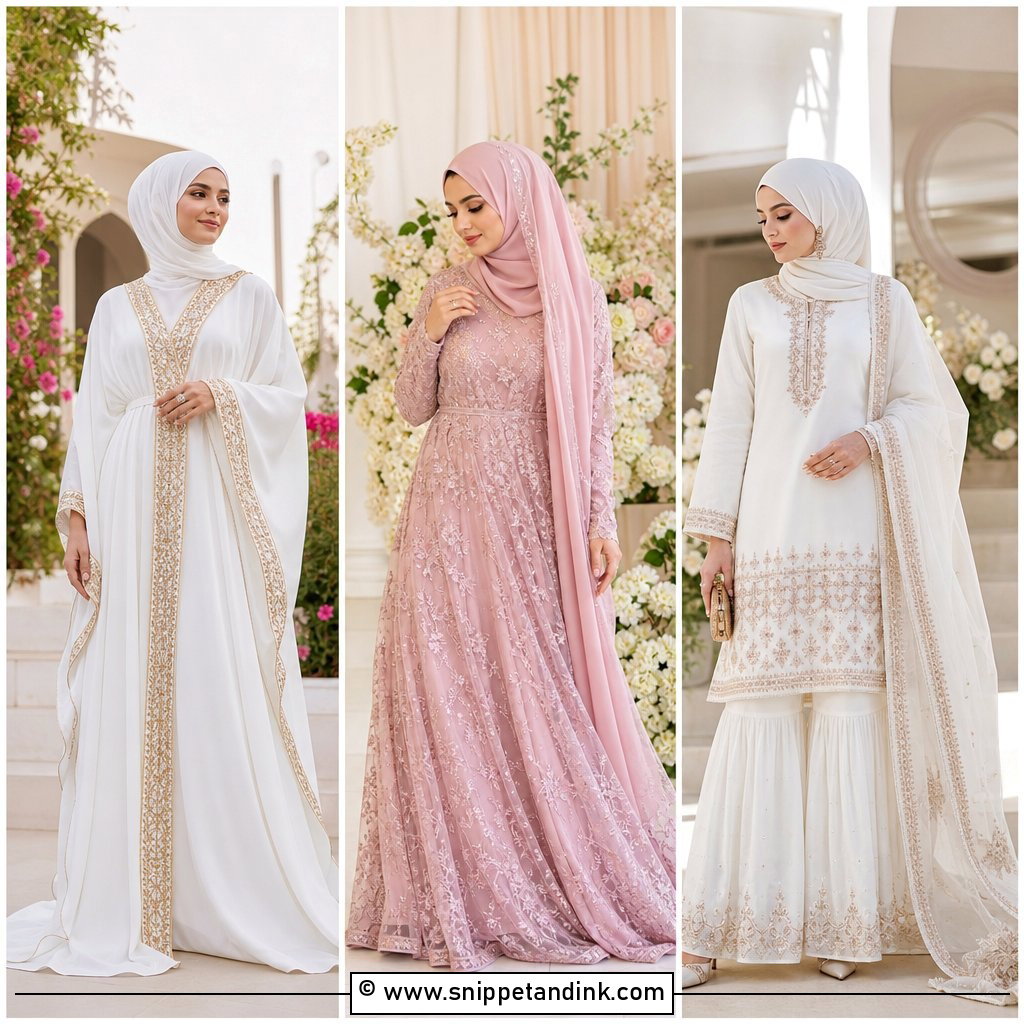


20. Blue Pakistani Bridal Walima Dress
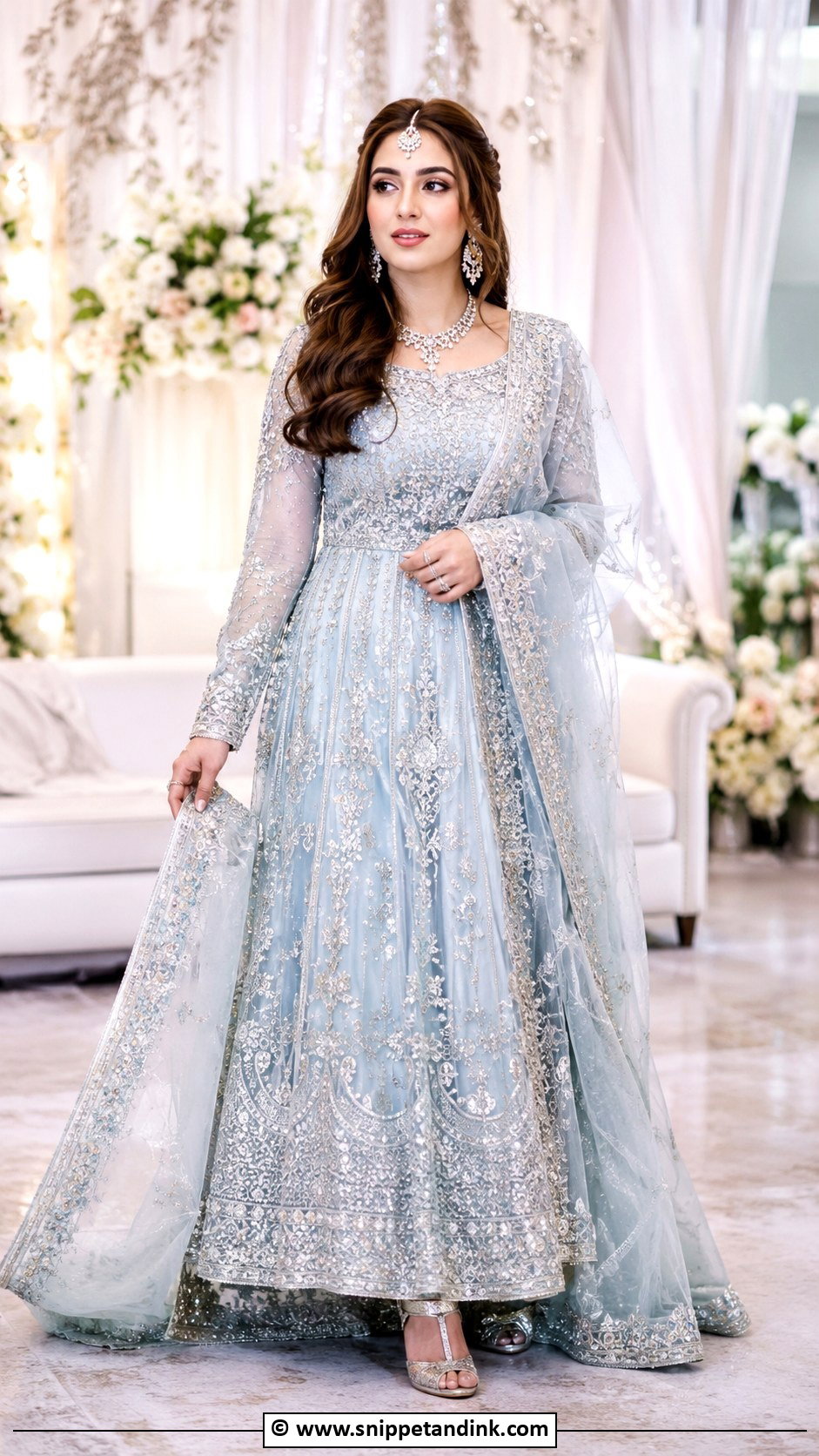
A blue Pakistani bridal walima dress breaks from red while staying formal. Powder blue is soft, ice blue is modern and royal blue is the dramatic one. A maxi, lehenga or gown with silver, pearl or crystal work and a sheer dupatta keeps it bridal, and silver jewelry, soft curls and embellished heels finish it. If you’re torn between shades, hold each fabric under your chin beside a window. Very pale blue on fair skin can read cold, and you’ll see it instantly in daylight.
21. Purple Pakistani Bridal Lehenga
Plum with gold work feels royal, and lavender or mauve with silver feels soft, so purple covers a wide range of moods. Velvet suits cooler months, organza or net lighter wear. Purple is one of the colors cameras struggle with most; lavender in particular can come out grey or blue, so I tell brides to show the real fabric to their photographer before the day. A matching dupatta, statement earrings and metallic heels complete it for a reception, walima or a mehndi with colorful accents.
22. Teal Pakistani Bridal Sharara
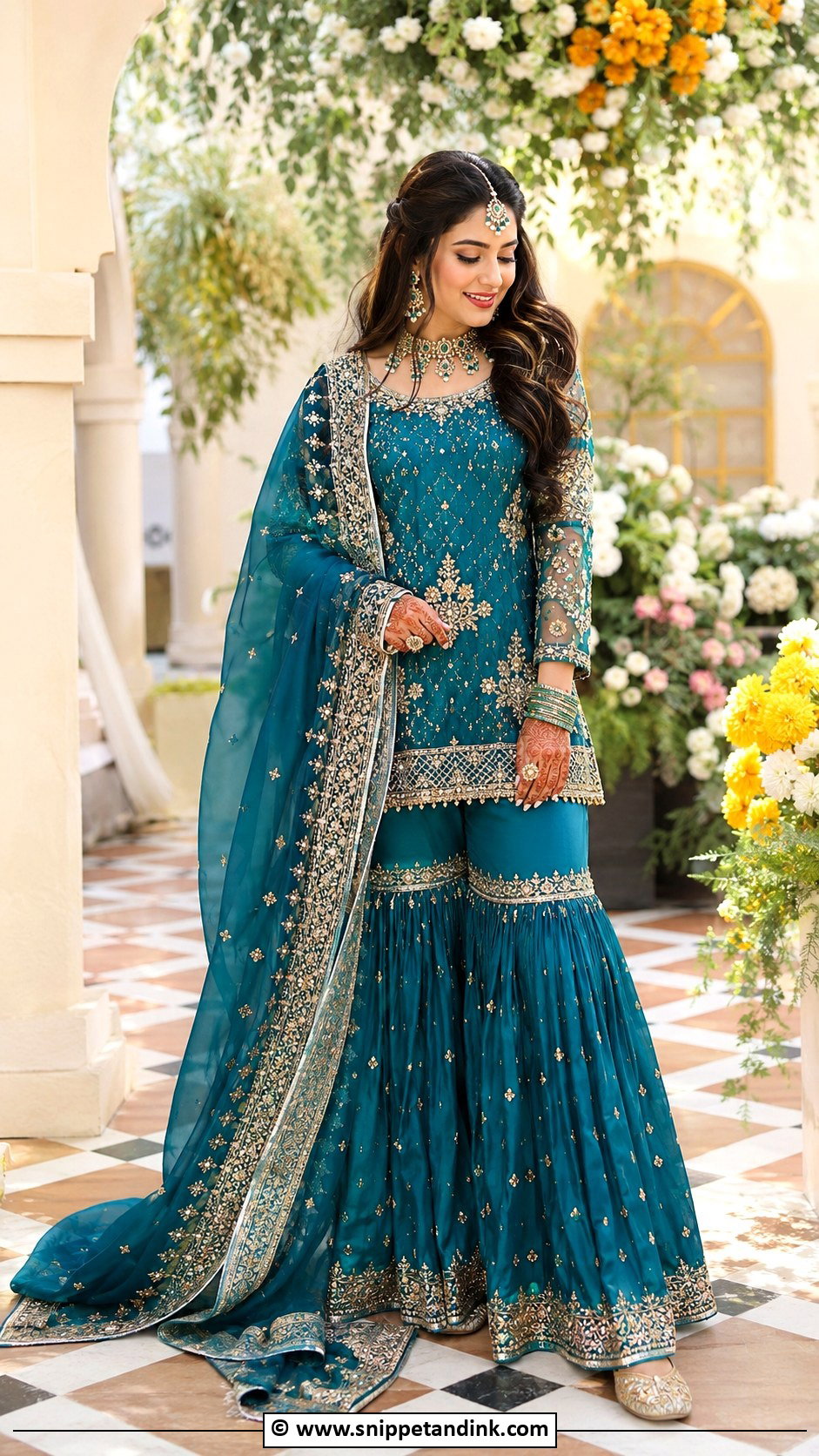
Teal sits between blue and green, which is why it suits so many skin tones without shouting. Pair a teal short shirt and wide sharara with a dupatta in gold, silver or multicolor work, then add kundan, bangles and embellished khussas. If the shirt is heavily worked, I pin the dupatta flat on one shoulder so the embroidery isn’t buried under folds. It sits well at a mehndi, reception or colorful nikkah.
23. Organza Pakistani Bridal Lehenga
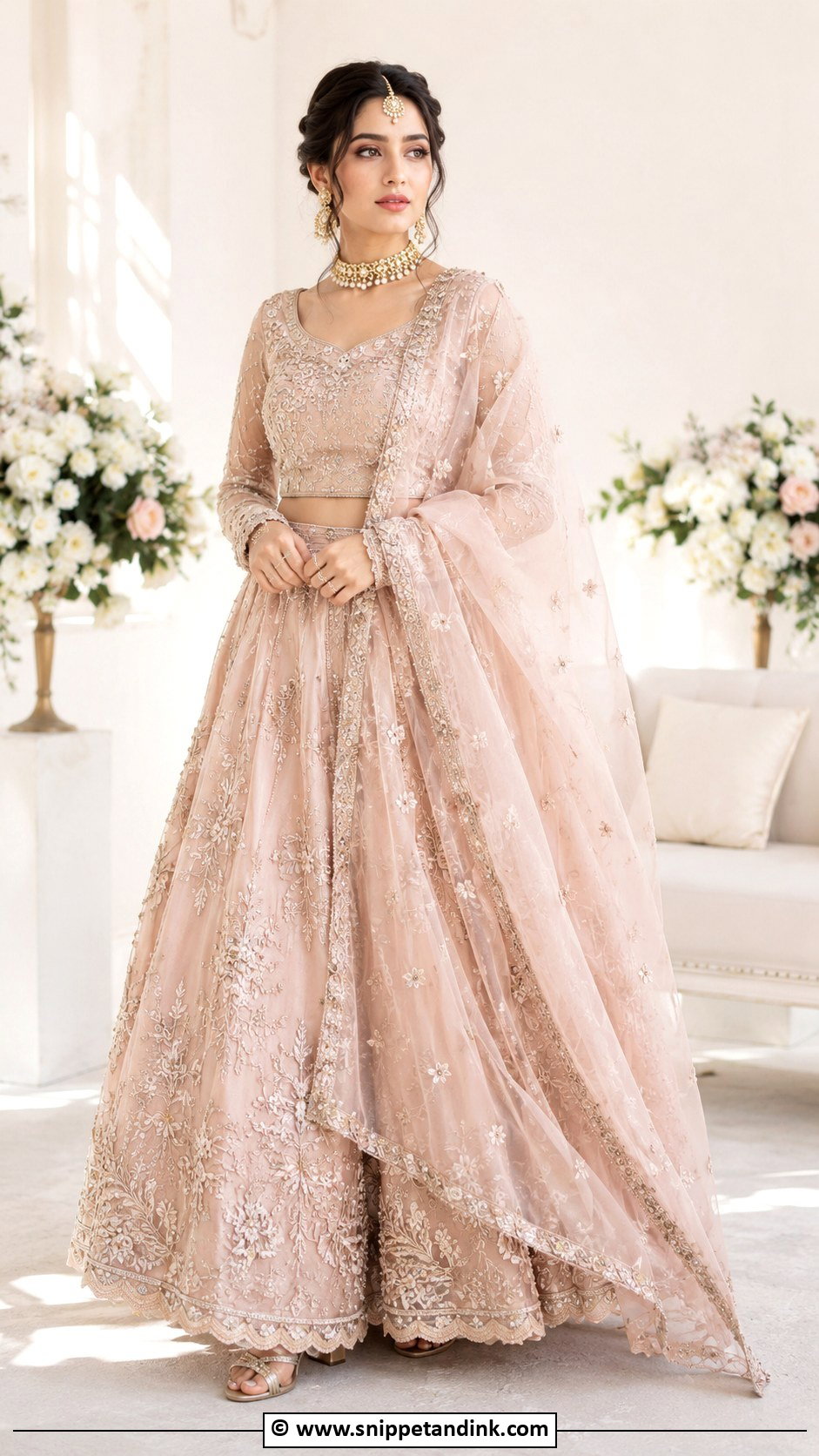
Organza gives volume without weight, which is why I suggest it to brides who find raw silk lehengas exhausting by midnight. The usual set is an embroidered organza lehenga, a blouse or long kameez and a sheer dupatta, in pastel, ivory, peach, mint or blush. Organza is crisp and creases sharply, and dense embroidery packed close together turns it stiff, so I prefer spaced motifs that let the fabric float. Steam it on a hanger and never press directly over the work. Delicate jewelry and soft glam keep it light for a nikkah, walima or daytime wedding.
24. Velvet Pakistani Bridal Dress
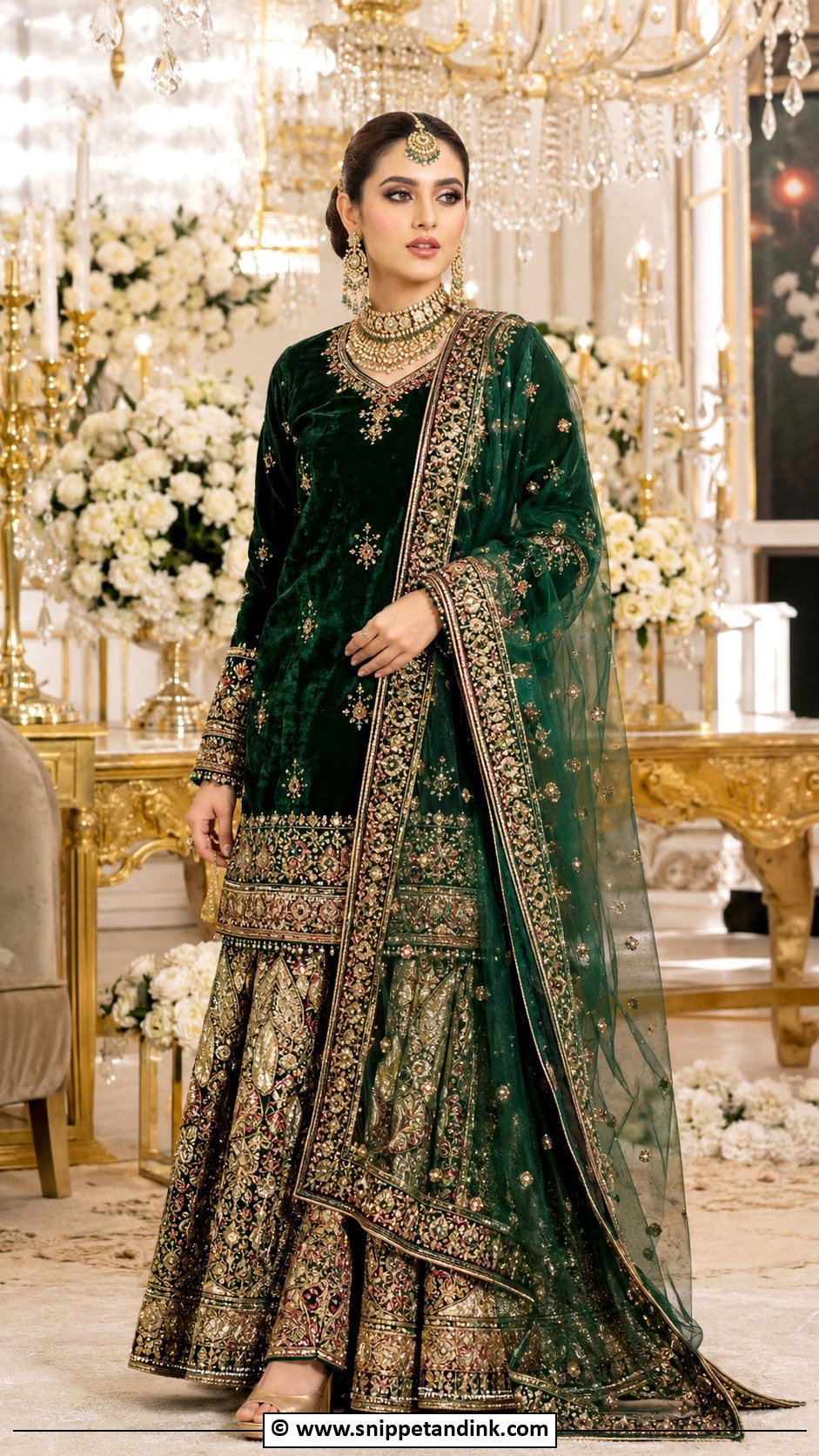
A velvet Pakistani bridal dress belongs to winter and indoor evening venues. A velvet lehenga, maxi, gharara or long shirt in maroon, emerald, navy or plum carries gold zardozi, dabka and stonework with real depth. Velvet is heavy and warm, so I always pair it with a net or organza dupatta to stop the outfit feeling like a blanket. The pile crushes wherever you sit, so between events I hang it rather than fold it and steam only from the reverse. Statement jewelry and elegant heels complete it.
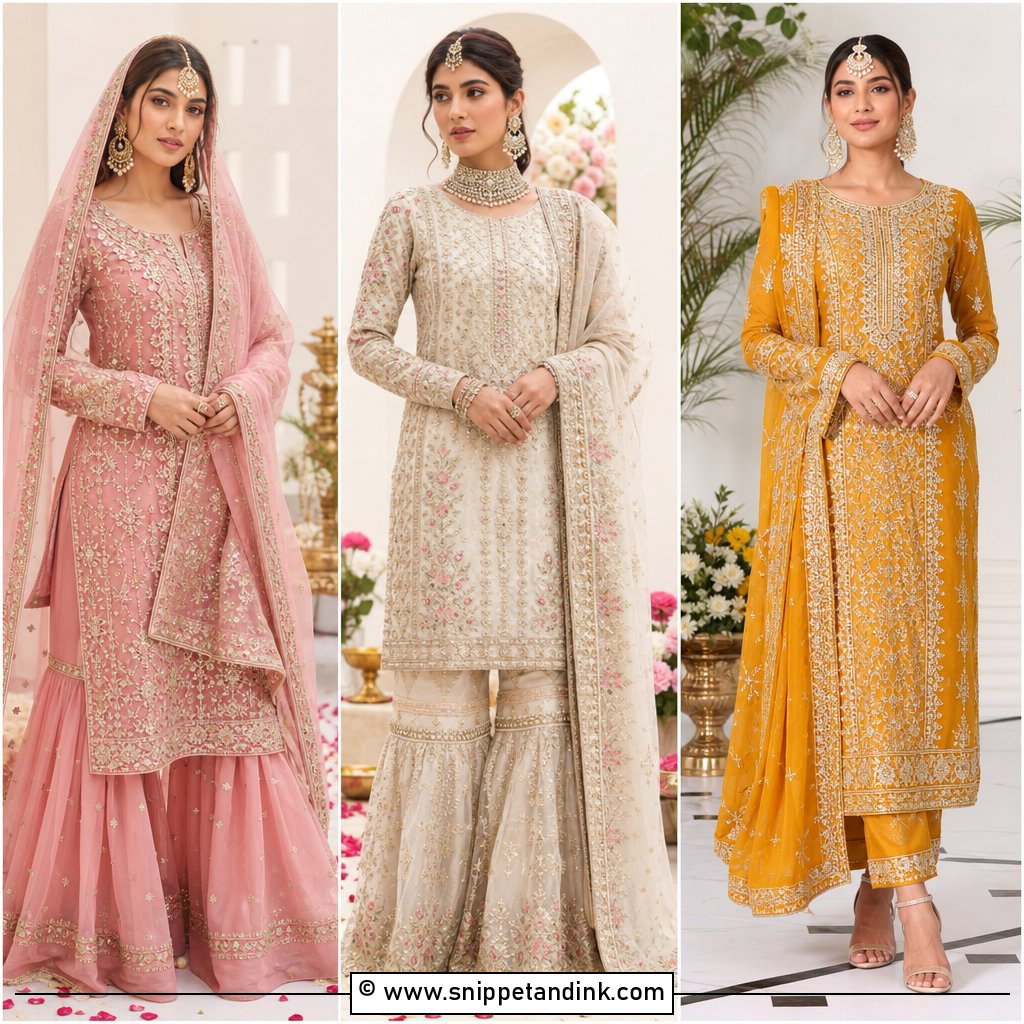

25. Tissue Pakistani Bridal Pishwas
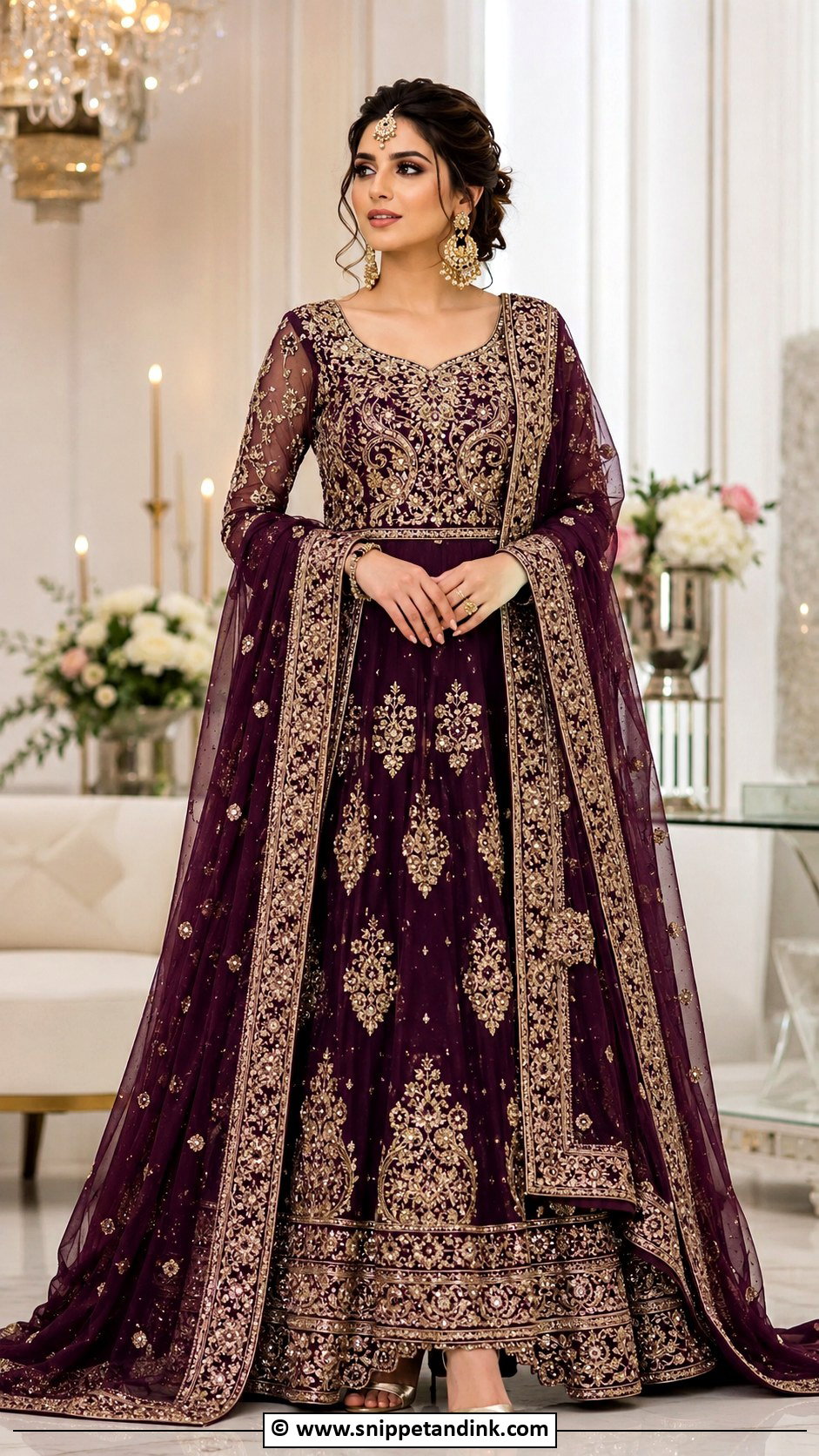
Tissue has metallic thread woven right into it, so it shines on its own and needs less embroidery than you’d think. A tissue pishwas over a matching lehenga or churidar, with a sheer bordered dupatta, works in gold, champagne, ivory or peach. I keep the handwork light on this fabric; heavy zardozi tends to pucker tissue around each motif. Kundan, soft makeup and metallic heels finish it for a nikkah, walima or reception.
26. Net Pakistani Bridal Maxi
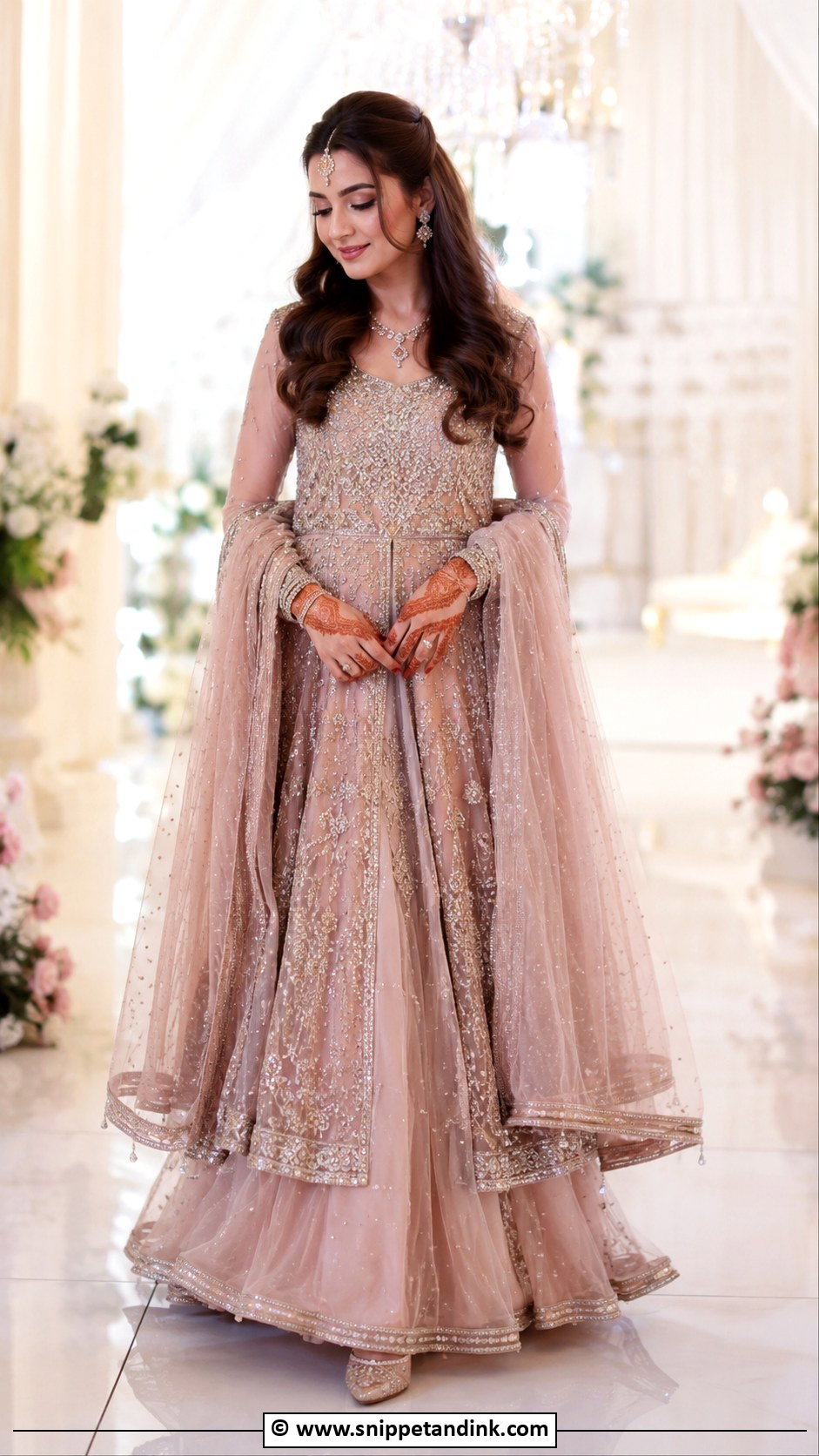
Net is the usual walima maxi fabric because it layers into a full skirt without much weight. Expect a layered net maxi with embroidery, a proper inner lining and a delicate dupatta, with sequins, pearls, crystals or resham. Net itself has no structure, so all the shape comes from the bodice. I check the bodice at every fitting and ask for boning or a firm canvas if it wrinkles at the waist. Pastels suit a walima, richer colors an evening event; finish with elegant jewelry, soft curls and embellished heels.
27. Jamawar Pakistani Bridal Lehenga
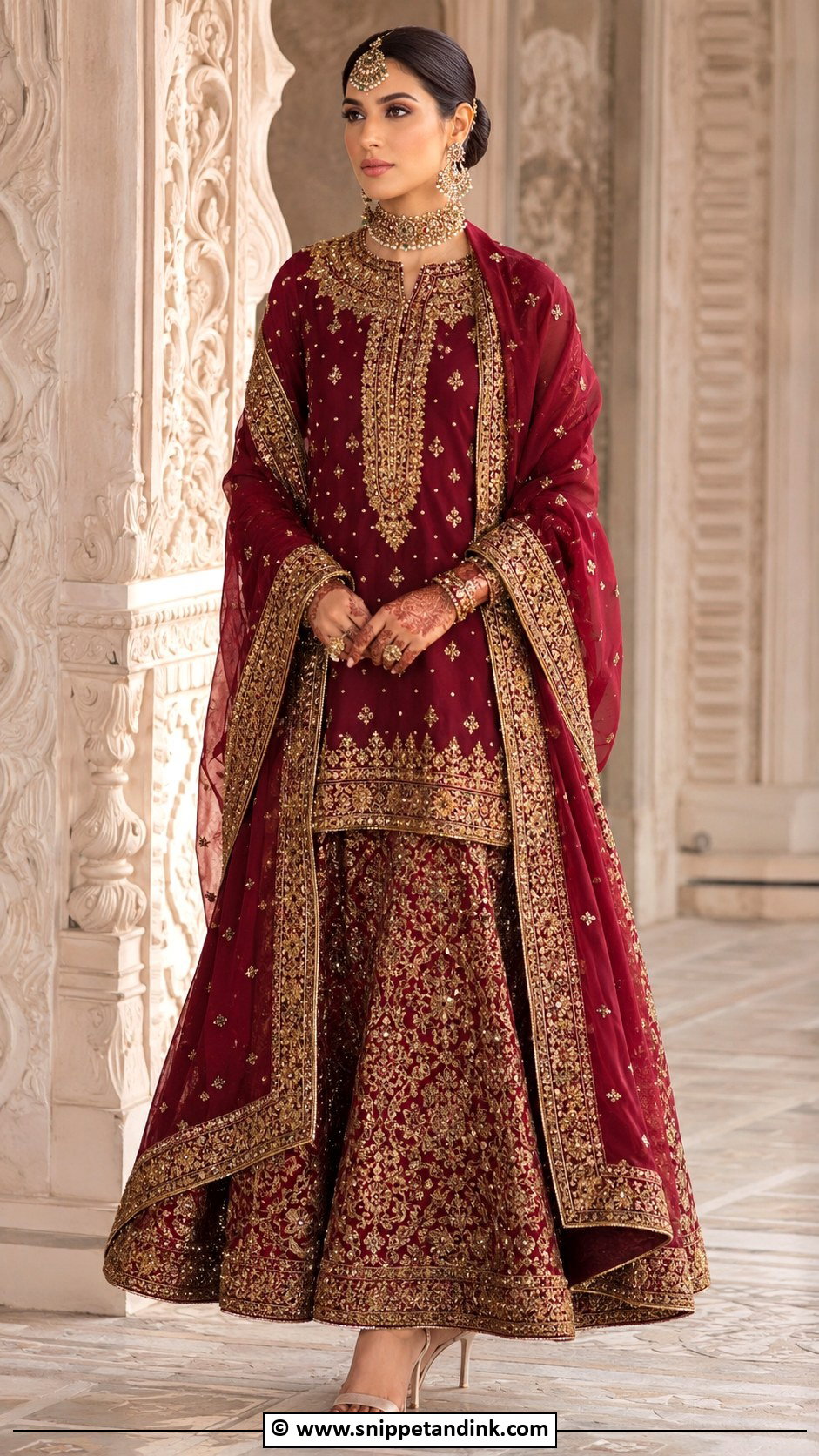
Jamawar has its pattern woven in, so it looks rich before a single stitch of embroidery goes on. A jamawar lehenga, a worked blouse or kameez and a dupatta with detailed borders, in red, maroon, gold, rust or emerald. Because the base is already busy, I keep jewelry to one focal piece and a neat hairstyle; stacking heavy necklaces over a patterned fabric usually turns into noise in photos. Antique jewelry and classic heels suit it.
28. Farshi Pakistani Bridal Lehenga
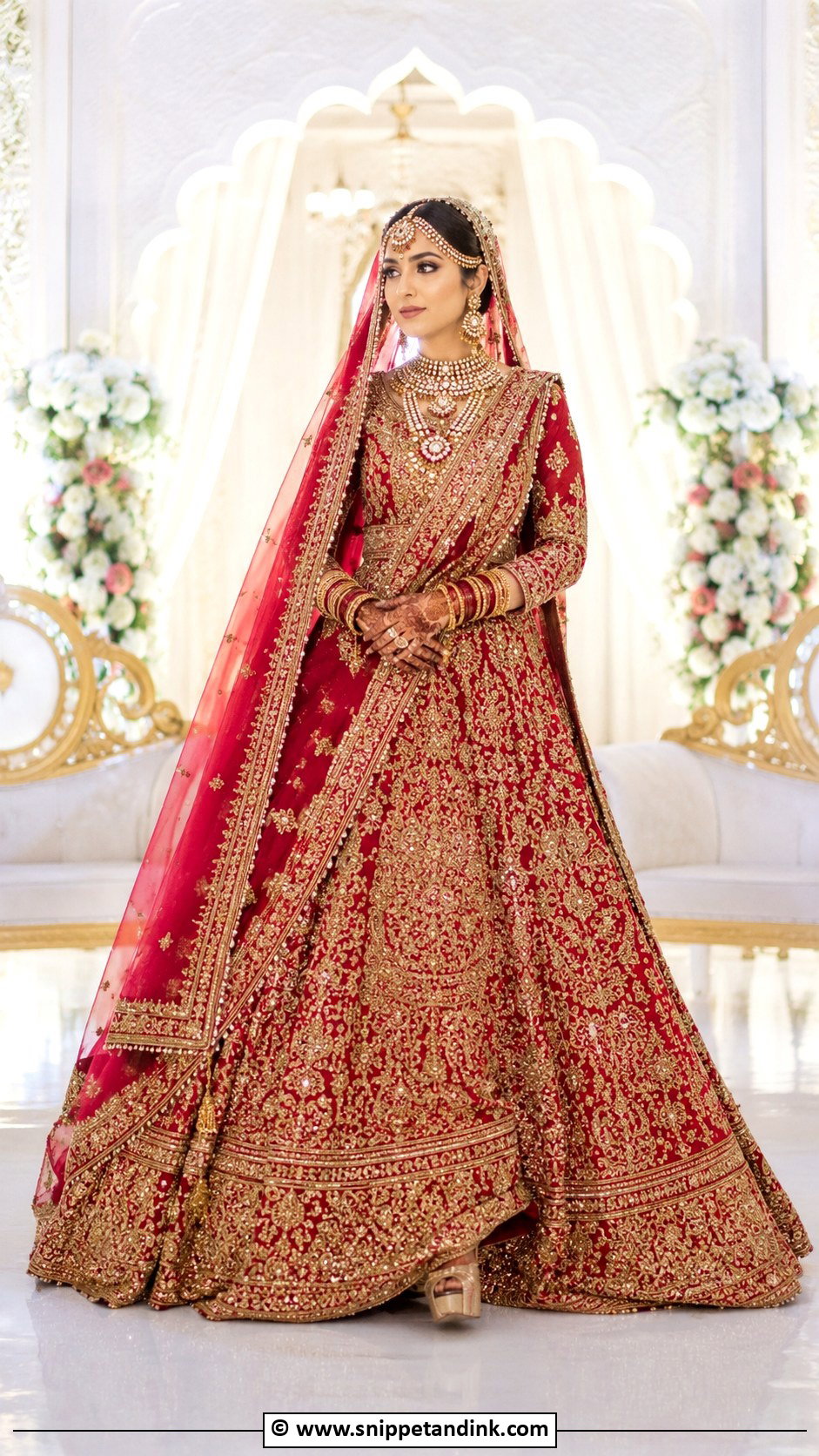
A farshi Pakistani bridal lehenga is the grandest barat silhouette: a wide skirt that sweeps the floor and trails behind you, a heavily embroidered top and a dupatta to match, usually in red, maroon, gold or deep green with heavy borders, zardozi, dabka and tilla. It is also hard to walk in. I have brides practice at home in the shoes they’ll wear, and I assign one sister or cousin to lift and arrange the trail every time the bride stands or sits. A matha patti, a layered necklace and bangles finish it.
29. Pakistani Bridal Saree
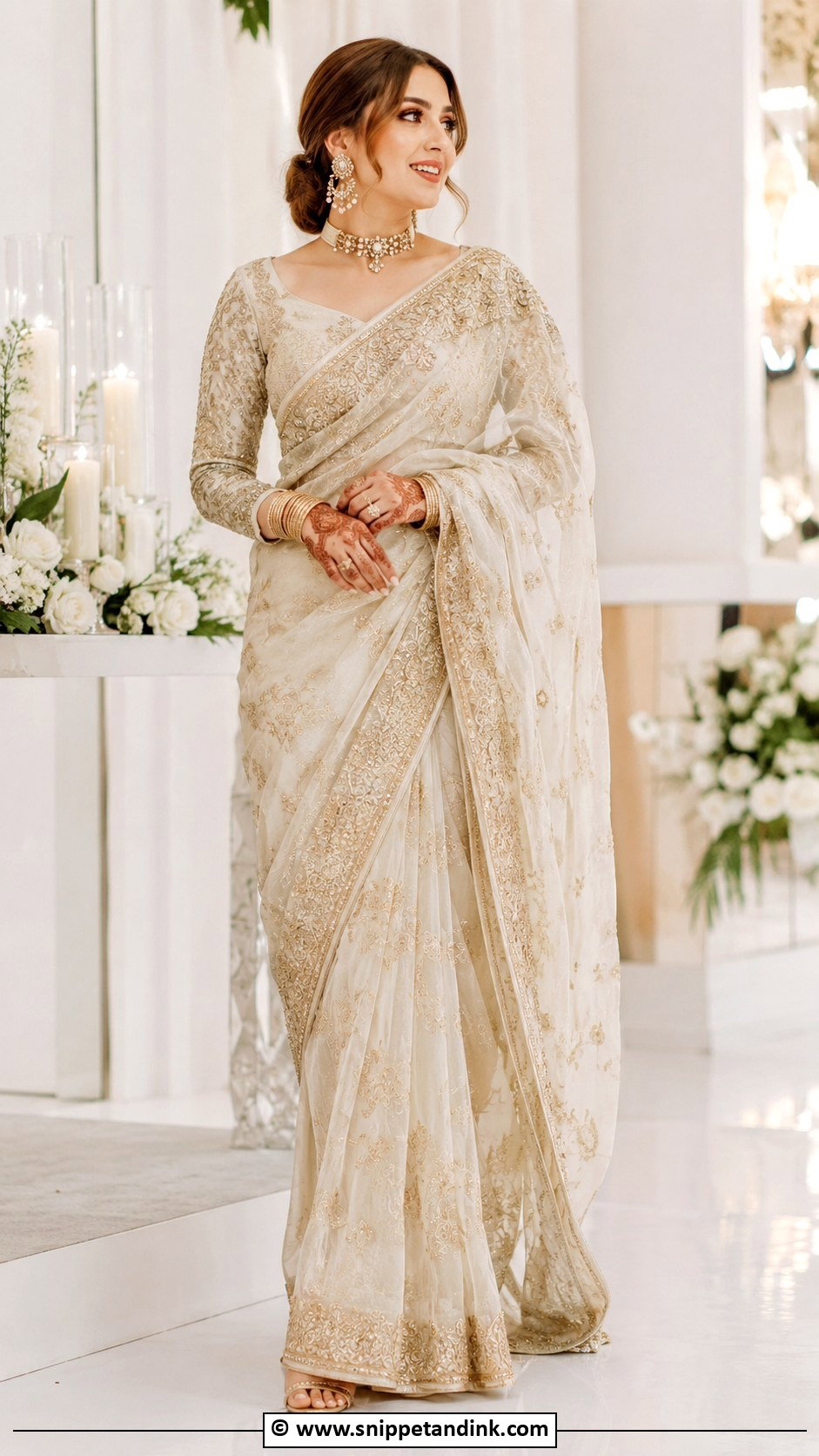
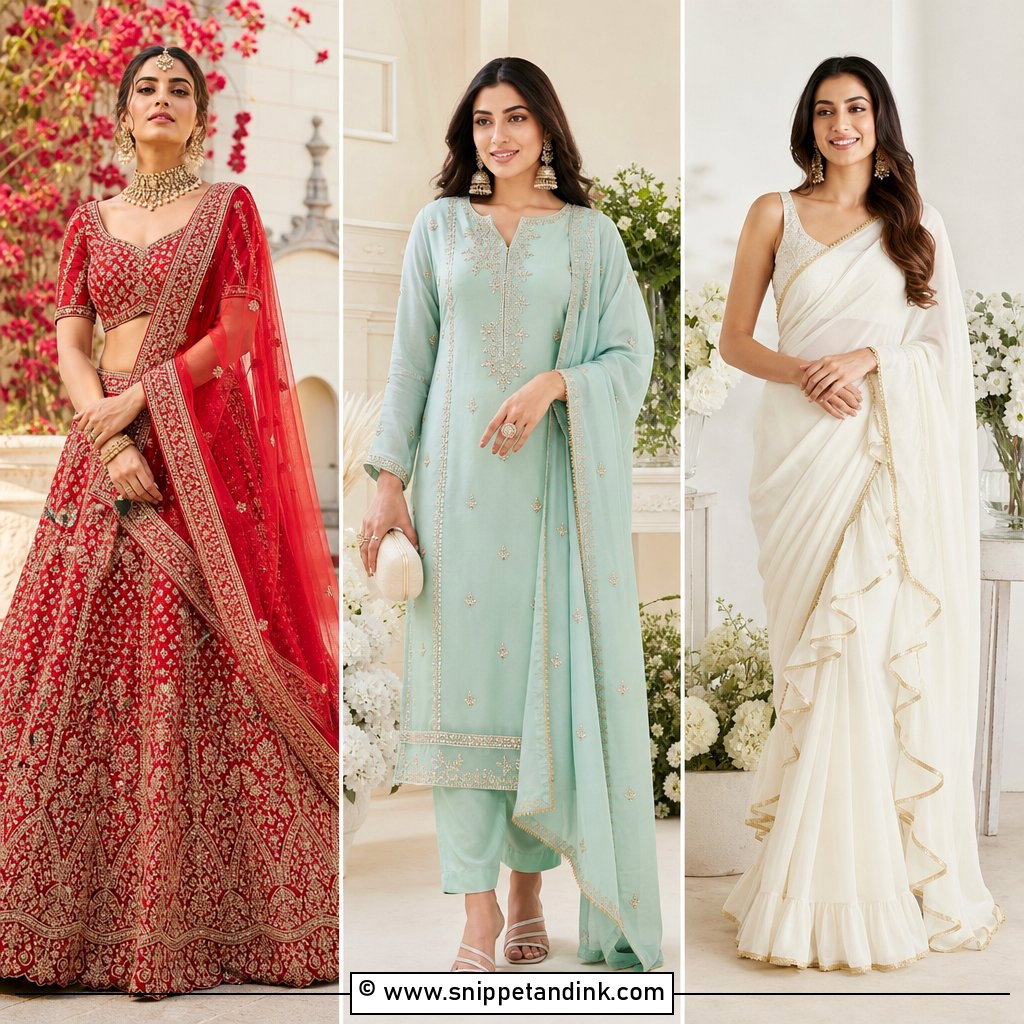
A bridal saree changes the whole line of the outfit, and it suits brides who already carry a drape with confidence. Chiffon, net, organza, silk or tissue all work, embroidered and paired with a fitted blouse, in red, ivory, gold, blush or emerald. The blouse fit decides everything, so I schedule its final fitting last of all the pieces. Have the saree draped by someone experienced and pinned at the shoulder and pleats; a heavy bridal saree tied in a hurry rarely stays put through a long reception. Statement earrings, a choker, bangles and comfortable heels complete it.
30. Pakistani Bridal Long Shirt With Lehenga
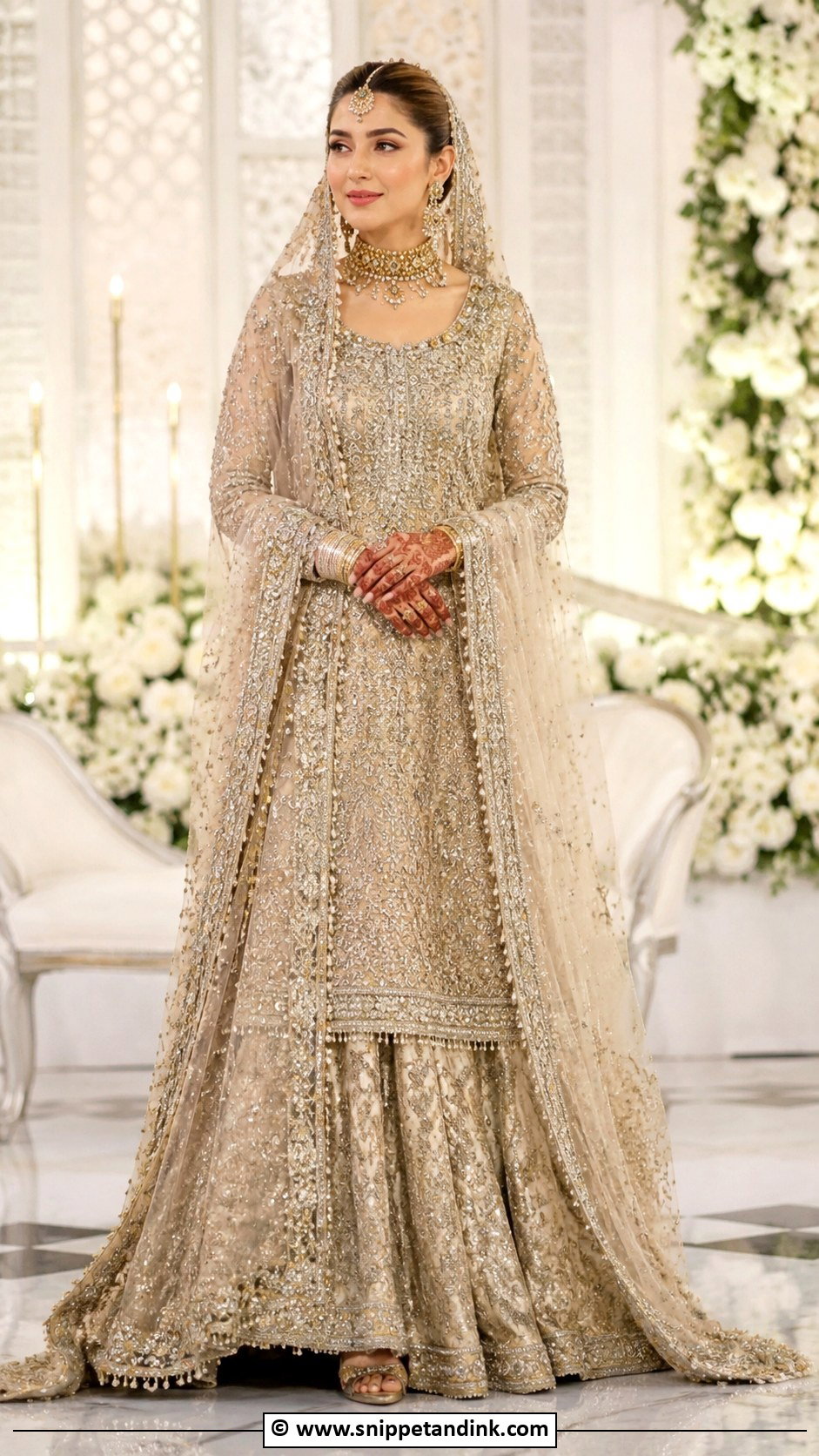
A long kameez over a flared lehenga gives full coverage on top while the lehenga still shows at the hem, and many modest brides ask for exactly that. It works in red, ivory, green, peach, maroon and pastels, with zardozi, resham, pearls or gota depending on the event. Watch the kameez length: just below the knee lets enough lehenga show, while a shirt reaching mid-calf hides the very border you paid for. Traditional jewelry, embellished heels and soft makeup complete it.
Surviving a Long Barat in Heavy Embroidery
A worked dupatta is the piece that slips, tugs and pulls hair loose by the end of the night. I pin it in layers: two or three small pins into the hair or a hidden band at the crown, then one at the shoulder of the shirt, never through the embroidery itself, where a pin can pull a thread or bend a dabka coil.
- Keep a small kit with a sister: safety pins in two sizes, a needle and matching thread, fashion tape and blotting papers.
- Sit on the back of the lehenga skirt, not the border, so the heavy hem doesn’t crease into the floor.
- Eat before the photos, with the dupatta lifted off and folded over a chair. Oil marks on silk and tissue are very hard to remove.
Putting the Lehenga Away So the Tilla Stays Bright
Metallic thread dulls and tarnishes when it sits in damp air, especially real zari and tilla. After the wedding, air the outfit inside out for a day, then take it to a dry cleaner who specifically handles bridal handwork rather than a general high-street cleaner.
For storage I wrap each piece in soft white muslin or cotton, never plastic, which traps moisture. Fold with acid-free tissue between the layers so the embroidery doesn’t press against itself, and refold along different lines every few months to stop permanent creases. Keep perfume and mothballs away from the fabric; I tuck cloves or a cedar block nearby instead, outside the wrapping.
Matching the Jora to Barat, Nikkah and Walima
Start with the event, then the season, then the fabric, and the color usually settles itself. A red lehenga or a farshi carries a barat, an ivory gharara suits a nikkah, and a pastel maxi feels right at a walima. If tradition matters most to your family, ghararas, shararas, jamawar and farshi cuts deliver it; if you want lighter wear over a long day, organza, net, tissue and pastel maxis are kinder. Whatever you choose, wear it for a full hour at your last fitting, sitting, standing and climbing a stage step, because comfort shows in every photo.
You'll Like These Ideas:







Leave a Reply