
A Pakistani bridal wardrobe carries a lot of family feeling. Mothers remember their own baraat red, aunts have opinions on dupattas, and the bride is trying to look like herself through all of it. Today that wardrobe can include ghararas, shararas, pishwas, farshi lehengas, jacket sets and full-sleeve looks with heavy dupattas, alongside the classic red lehenga and the pastel walima maxi. I’ve organised these thirty outfits by colour first and then by cut and fabric, because those are the three decisions I walk every bride through. Comfort matters as much as the photos; you’ll wear each one for hours.
Where the Money Should Go in a Five-Event Wardrobe
Every bride I dress has a budget, and the most common mistake is spreading it evenly across every function. Prices vary hugely by designer and city, but the priorities stay the same.
- Spend most on the baraat outfit. It’s in the most photos, it’s often kept for years and it carries the most handwork.
- Put real money into the dupatta for each main event. It frames your face in close-ups more than any other piece.
- Save on mayun and dholki outfits. Ubtan and turmeric stain, so a simple yellow outfit in cotton silk does the job.
- Choose a walima piece you can rewear, such as a pastel maxi or a lighter lehenga that works for family weddings later.
- Keep some budget for alterations and a final fitting. A well-fitted mid-range outfit always looks better than an expensive one that pulls at the seams.
If the budget is tight, I’d rather see a bride borrow or restyle her mother’s jewellery and spend the difference on tailoring.
1. Red Pakistani Bridal Lehenga
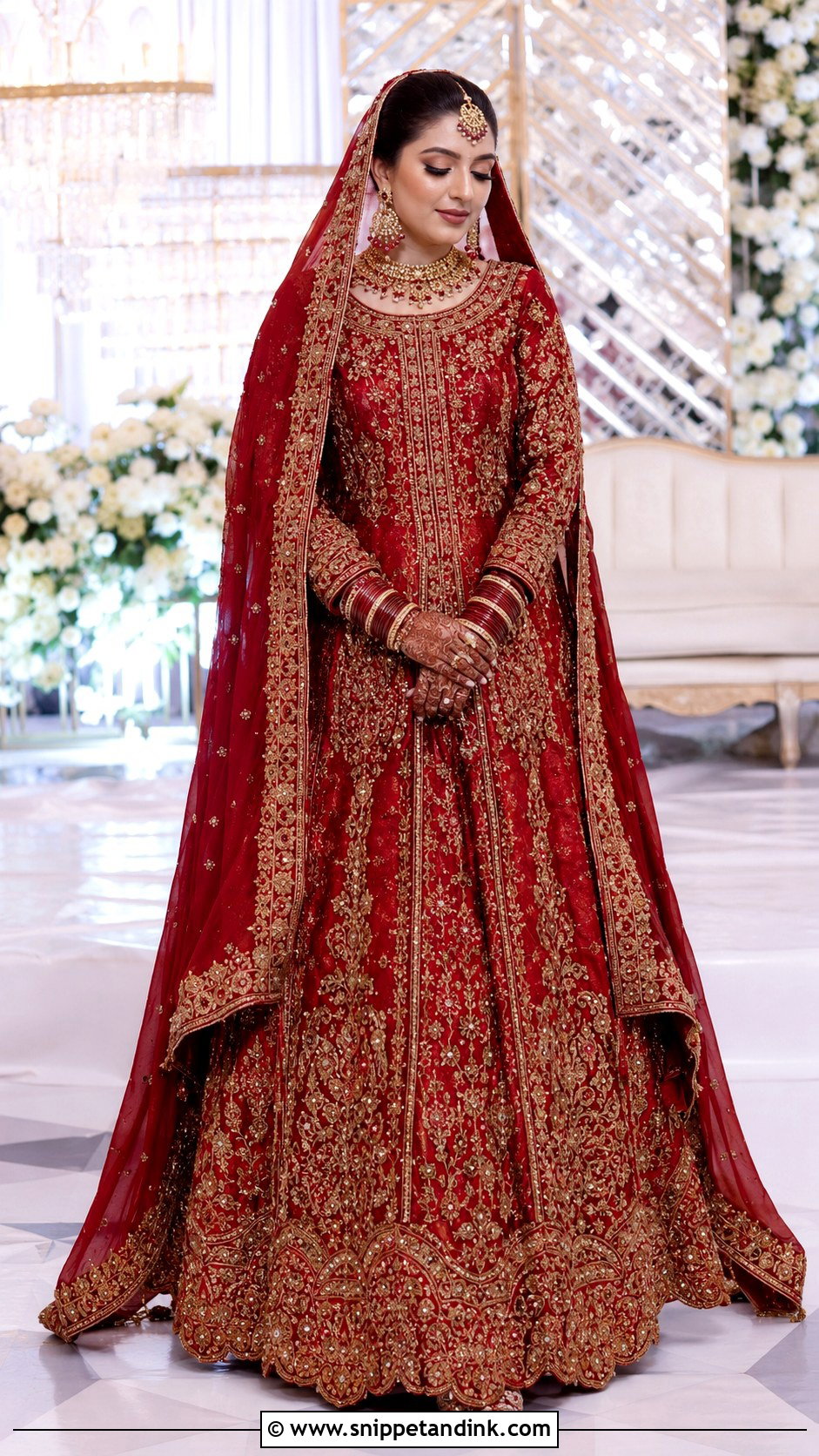
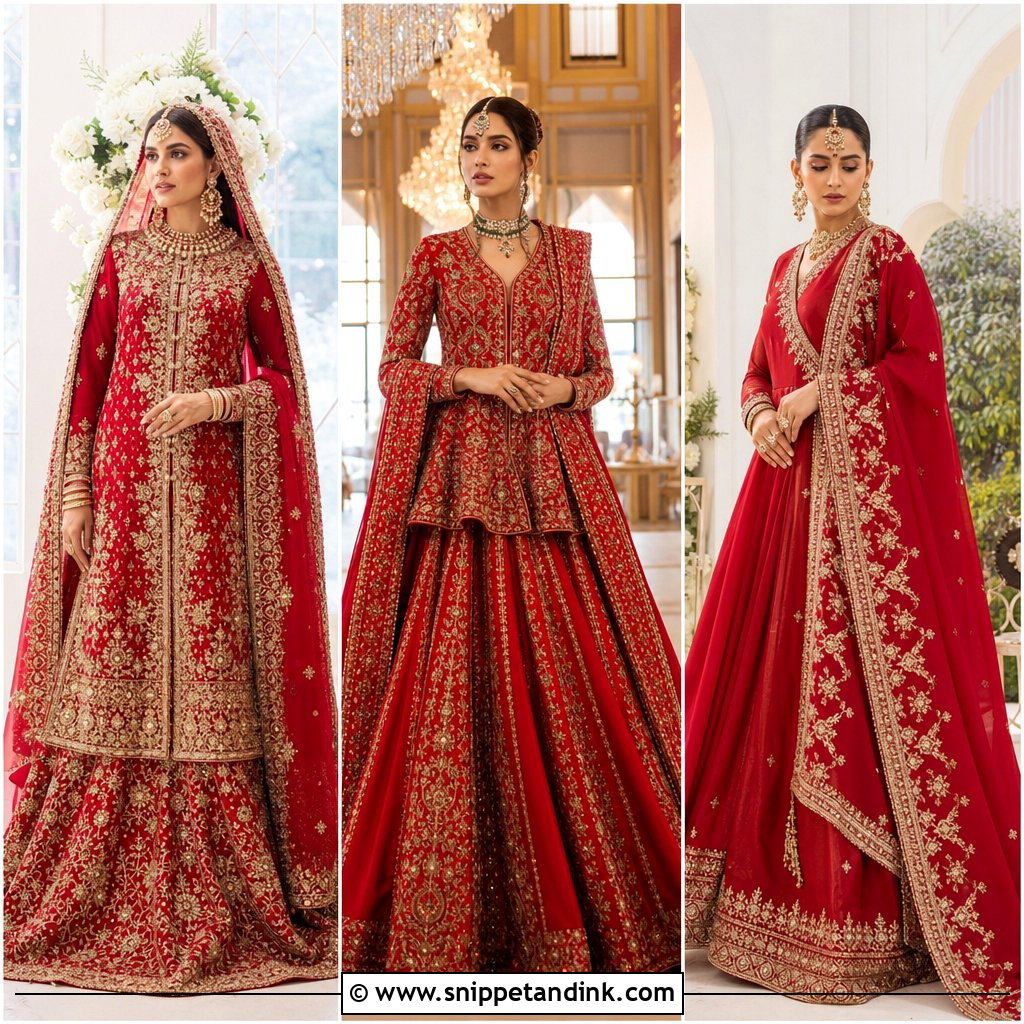
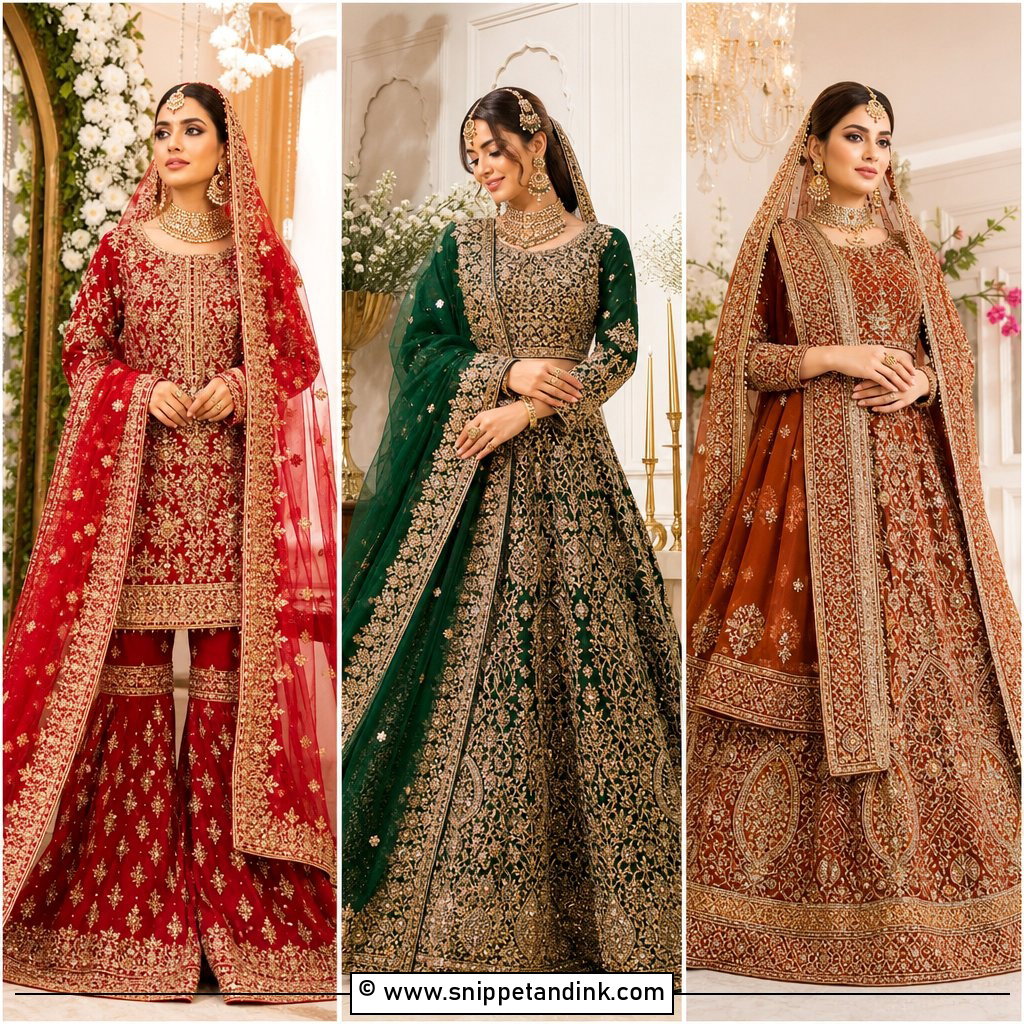
For the main day, red still carries the most meaning. A deep red or ruby lehenga with gold zardozi, dabka, tilla, sequins and hand embroidery, and a longer blouse or choli for a modest Pakistani line, is the look generations of brides have worn. I like the two-dupatta method here: a heavy one over the head and a lighter one draped across the shoulder, so the weight is shared. Gold jhumkas, a matha patti, layered necklaces and khussas complete it, and red holds up under stage lights and outdoors alike.
2. Maroon Pakistani Bridal Lehenga
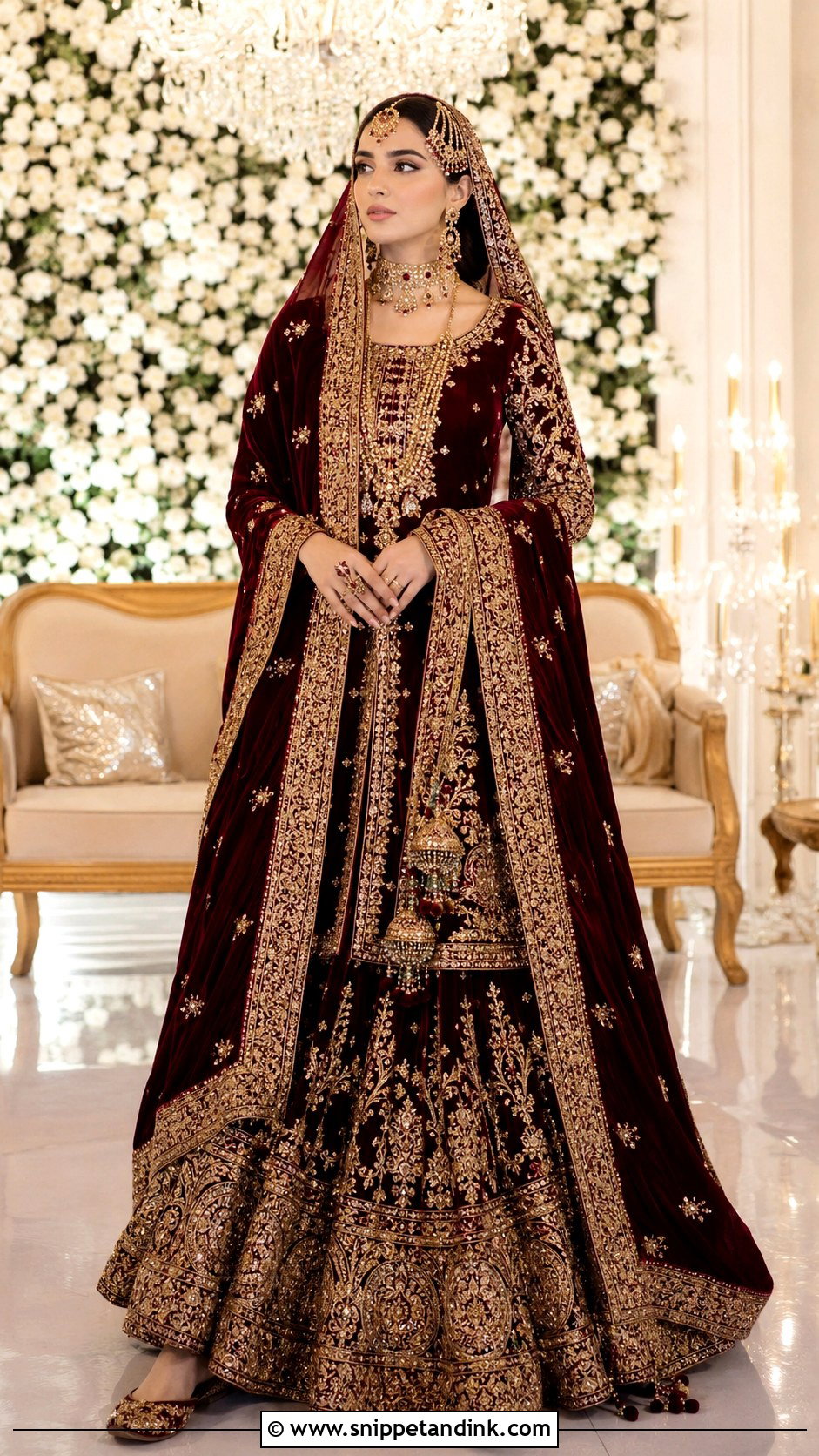
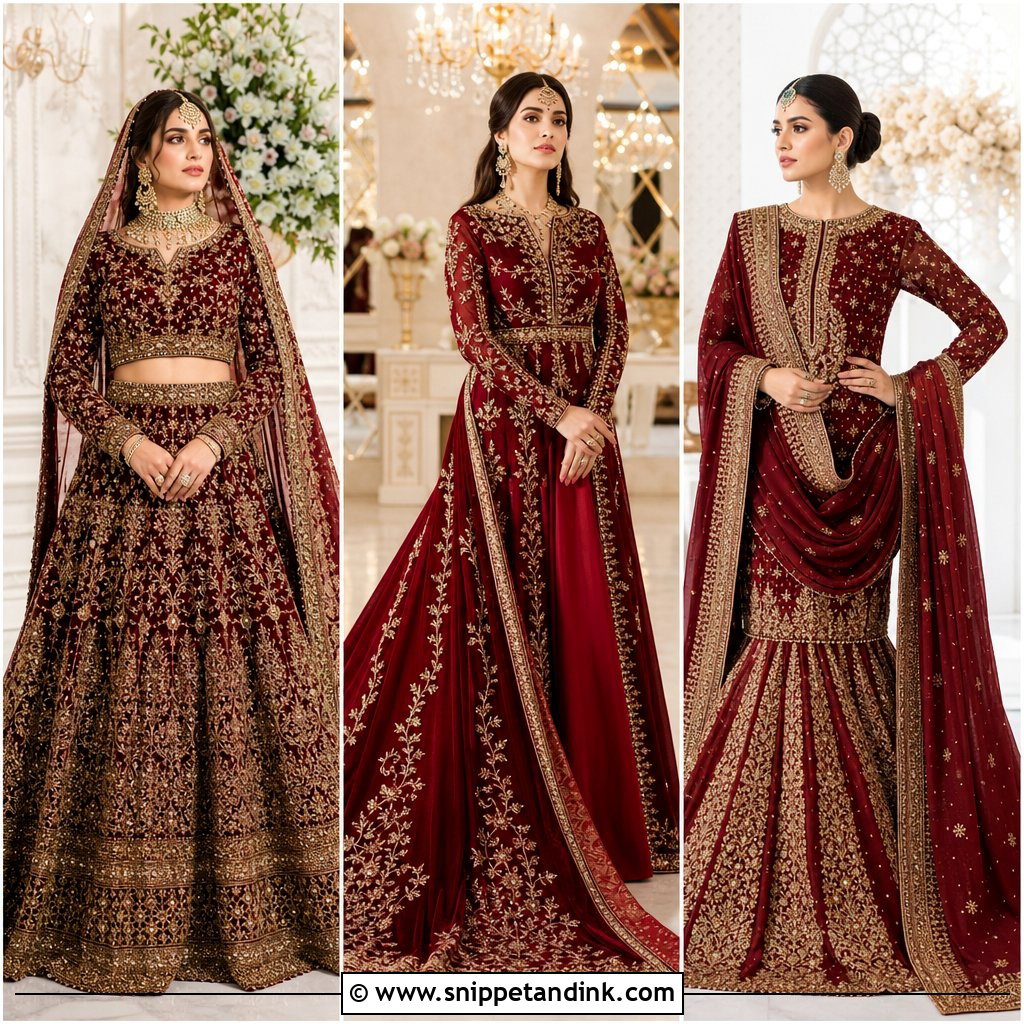
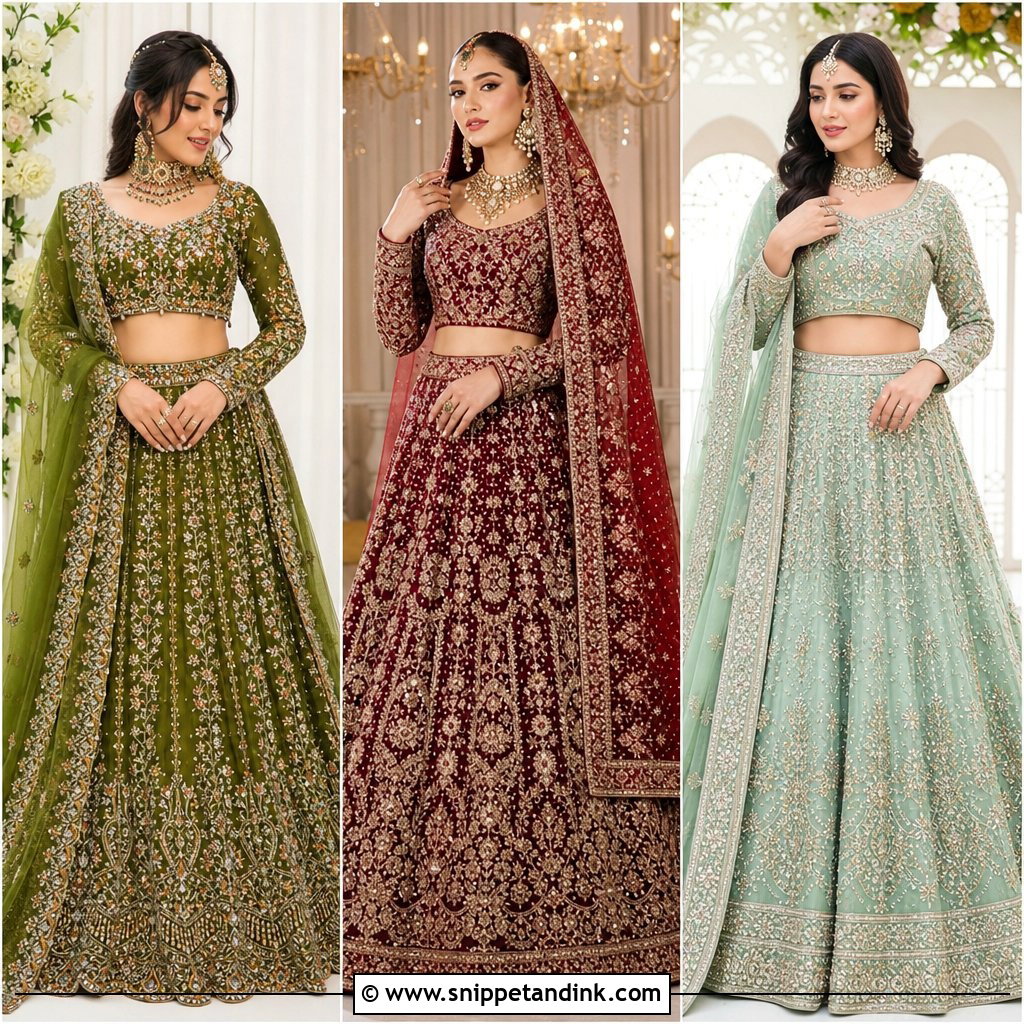
Maroon gives you tradition in a deeper, quieter register than bright red. Velvet, raw silk or jamawar with antique gold embroidery makes it luxurious, and pairing it with a long shirt gives a very Pakistani silhouette with extra coverage. Kiran edging on the dupatta, that narrow metallic fringe, adds movement as you walk. Polki-style jewellery, a passa and a bold necklace hold their own against the depth. I’d keep maroon for evening; in harsh noon sun it can look almost brown.
3. Gold Pakistani Bridal Lehenga
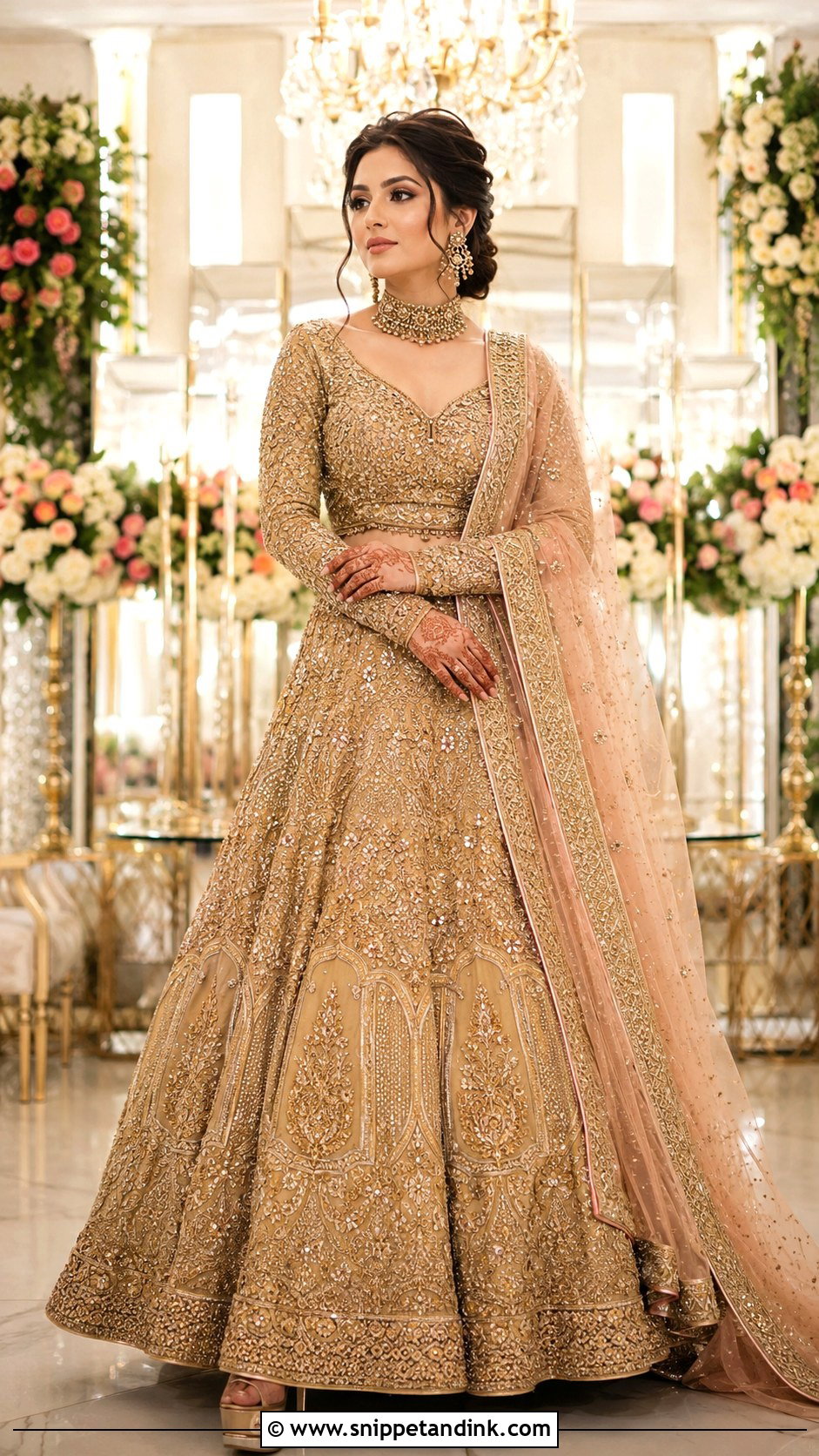
Gold is the non-red route to a royal look. Champagne, antique or beige gold, chosen to suit your skin, with heavy threadwork, pearls, crystals and dabka, reads bridal without shouting. The decision I help with most is the dupatta: a red, rust or blush dupatta brings colour back to the face, which matters because an all-gold outfit can flatten warm skin. A sleek bun, statement earrings and a choker keep it polished for baraat, reception or a grand indoor wedding.
4. Ivory Pakistani Nikkah Dress
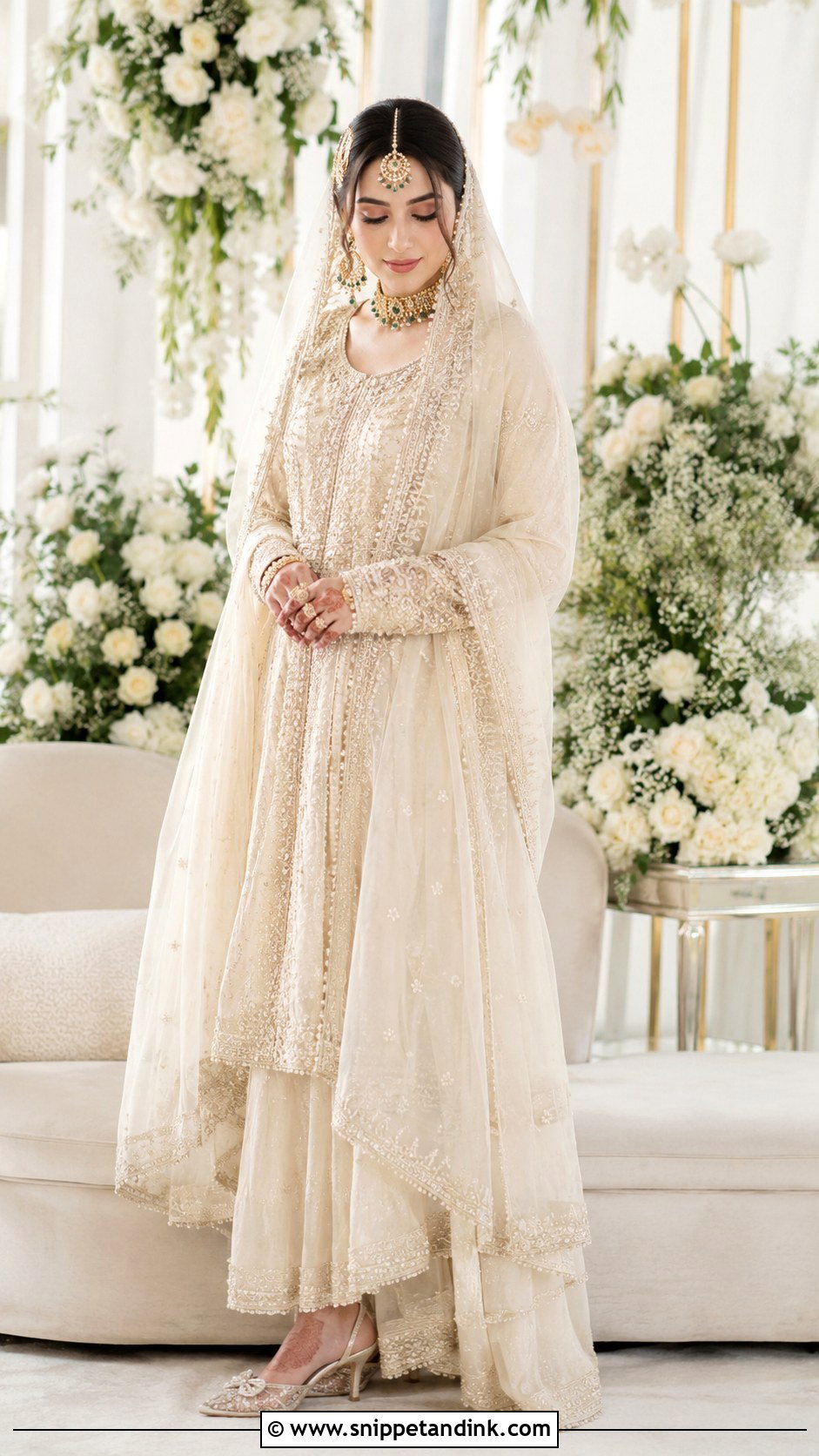
An ivory Pakistani nikkah dress can be a long pishwas, a flowing maxi or a straight shirt with gharara. Pearl embroidery, silver tilla, white-on-white threadwork and delicate sequins all suit ivory. White-on-white work is subtle in person and even more so in photos, so I ask for a little raised texture so the detail actually shows. A sheer organza dupatta with a scalloped border, pearls or light polki, and soft makeup suit a daytime nikkah or intimate gathering.
5. White Pakistani Nikkah Sharara
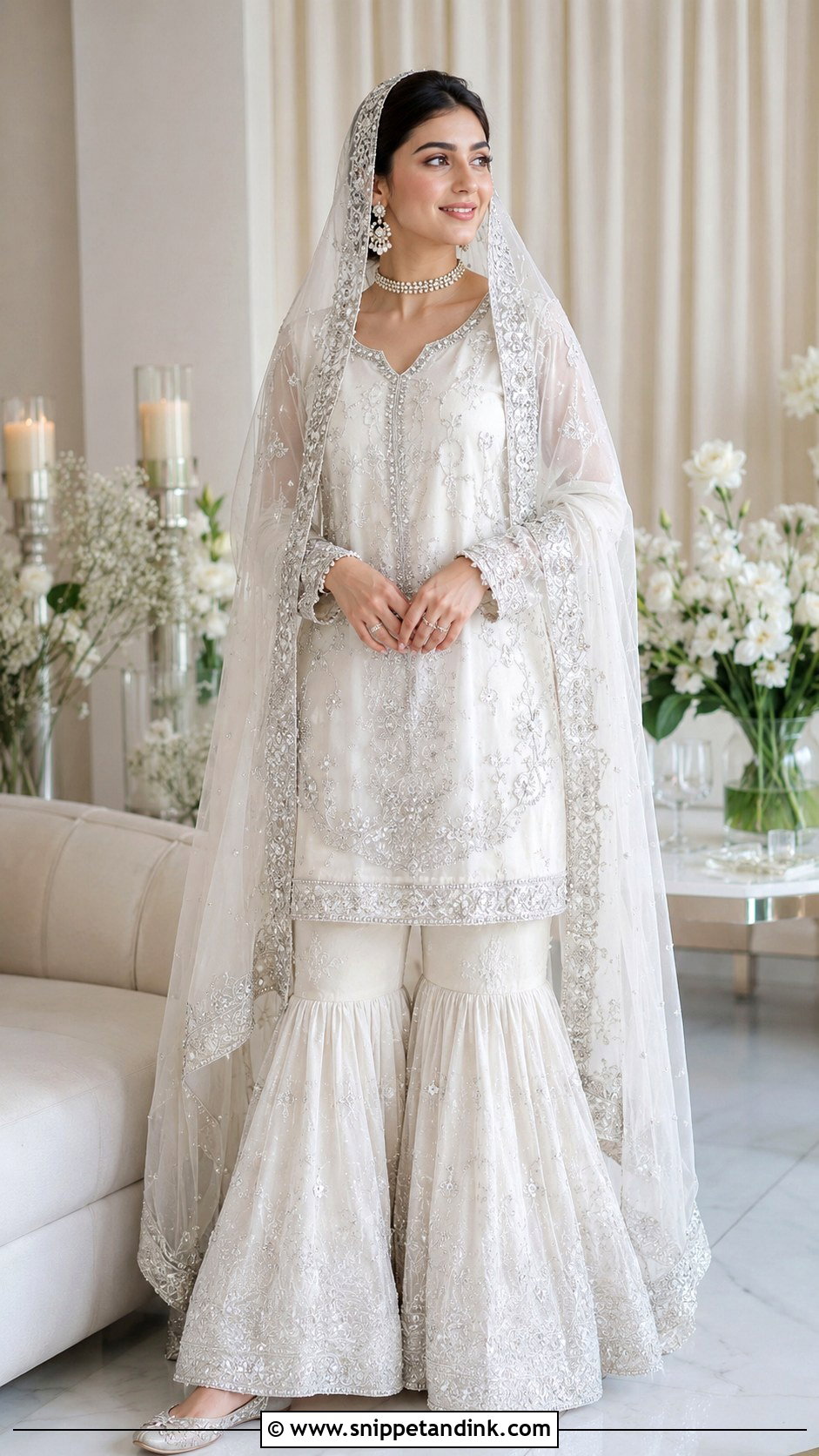
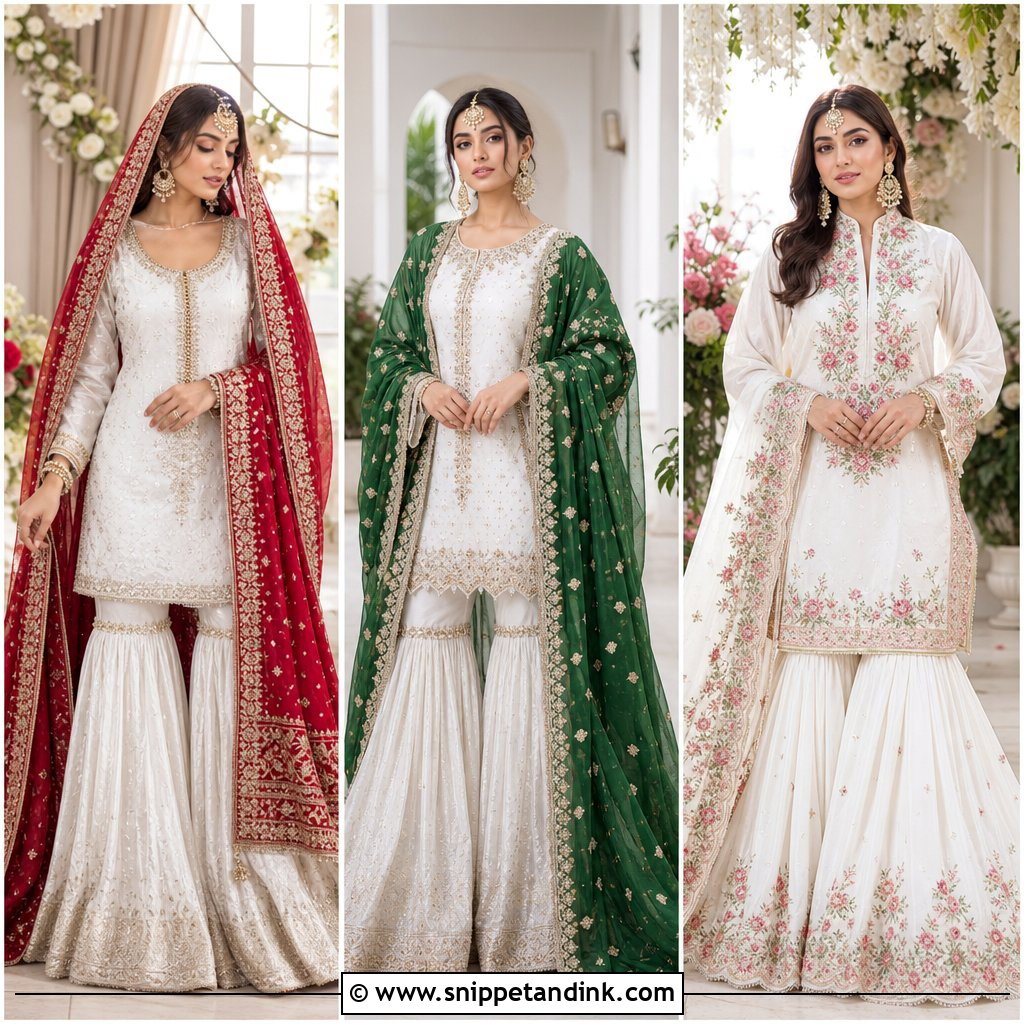
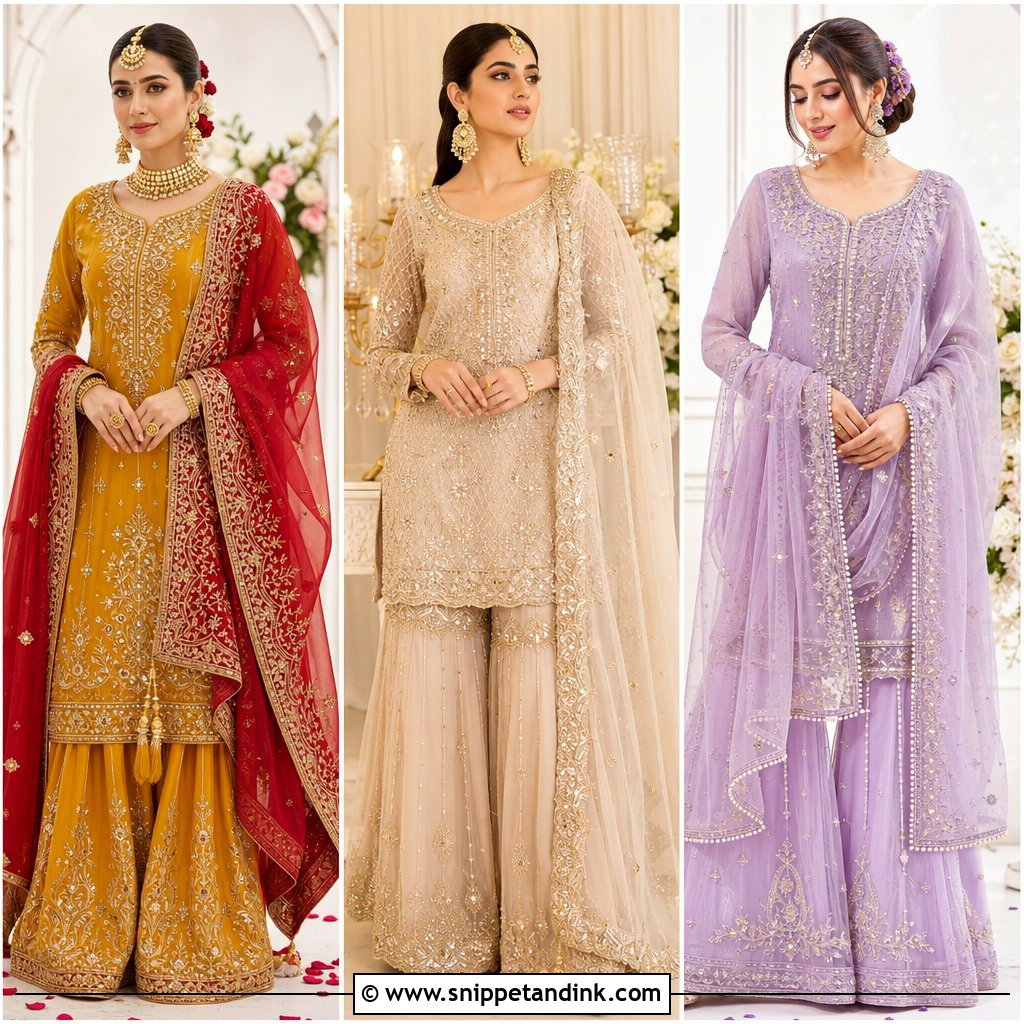
A white sharara is modest and graceful, and its wide legs make sitting easy, which matters at a nikkah where you’ll be seated for the ceremony and photos. A short or mid-length kameez balances the volume. Put the embroidery on the hem, sleeves, neckline and dupatta border so the outfit reads bridal from all sides. Silver, pearl or champagne thread suits white. Pin the dupatta over the head, add white or silver khussas, a delicate choker and soft earrings.
6. Champagne Pakistani Walima Gown
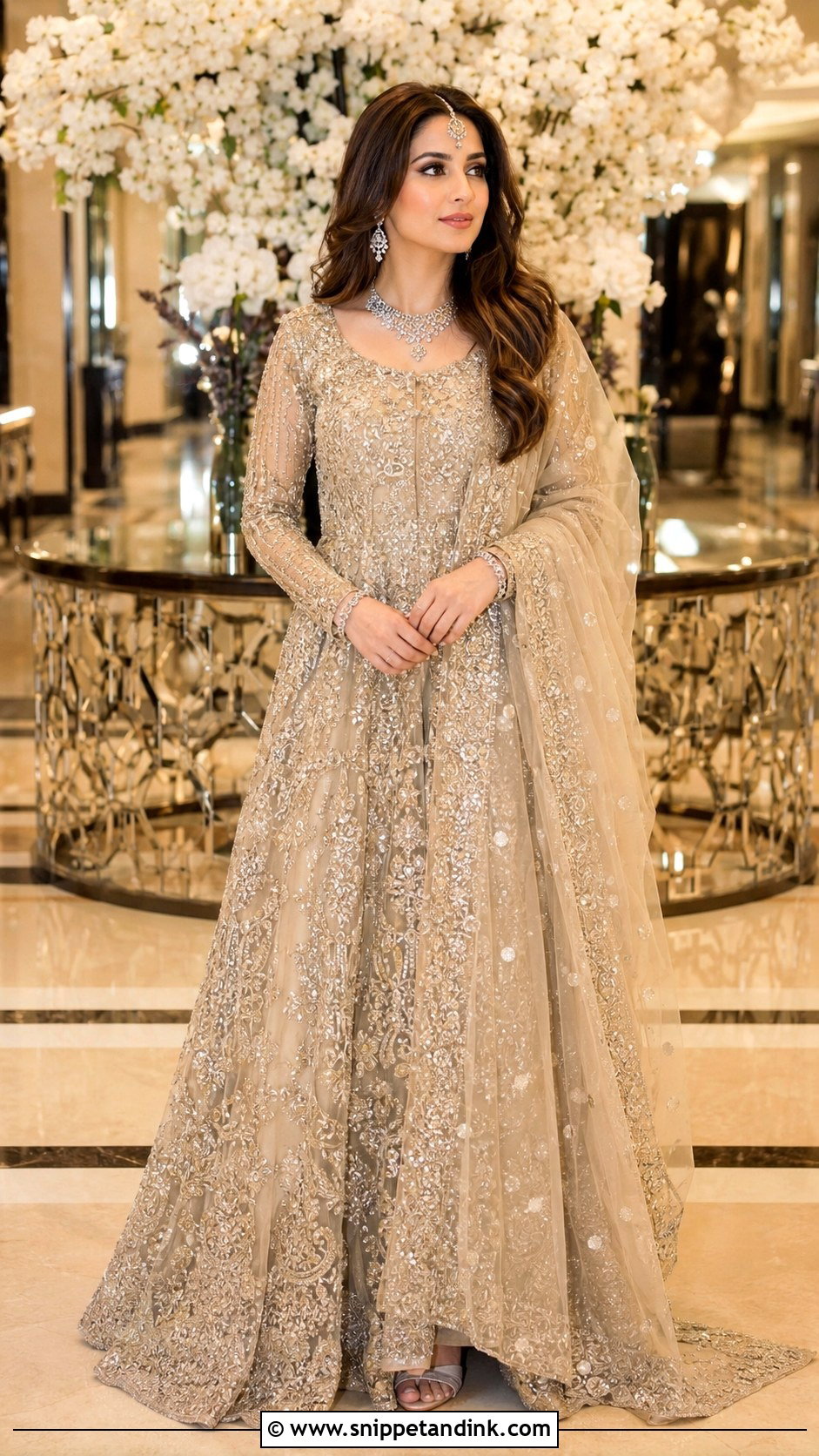
Champagne gives a walima the polish of a Western gown while keeping Pakistani detail in the embroidery, sleeves and dupatta. A floor-length maxi with a fitted bodice, gentle flare and an embellished net or organza overlay suits hotel receptions and ballrooms. I check the overlay against the lining in daylight: if the lining is too pale, champagne can look like bare skin from a distance. Pearls, crystals and tonal thread, a dupatta draped over one shoulder, diamond-style jewellery and soft curls finish it.
7. Blush Pink Pakistani Bridal Maxi
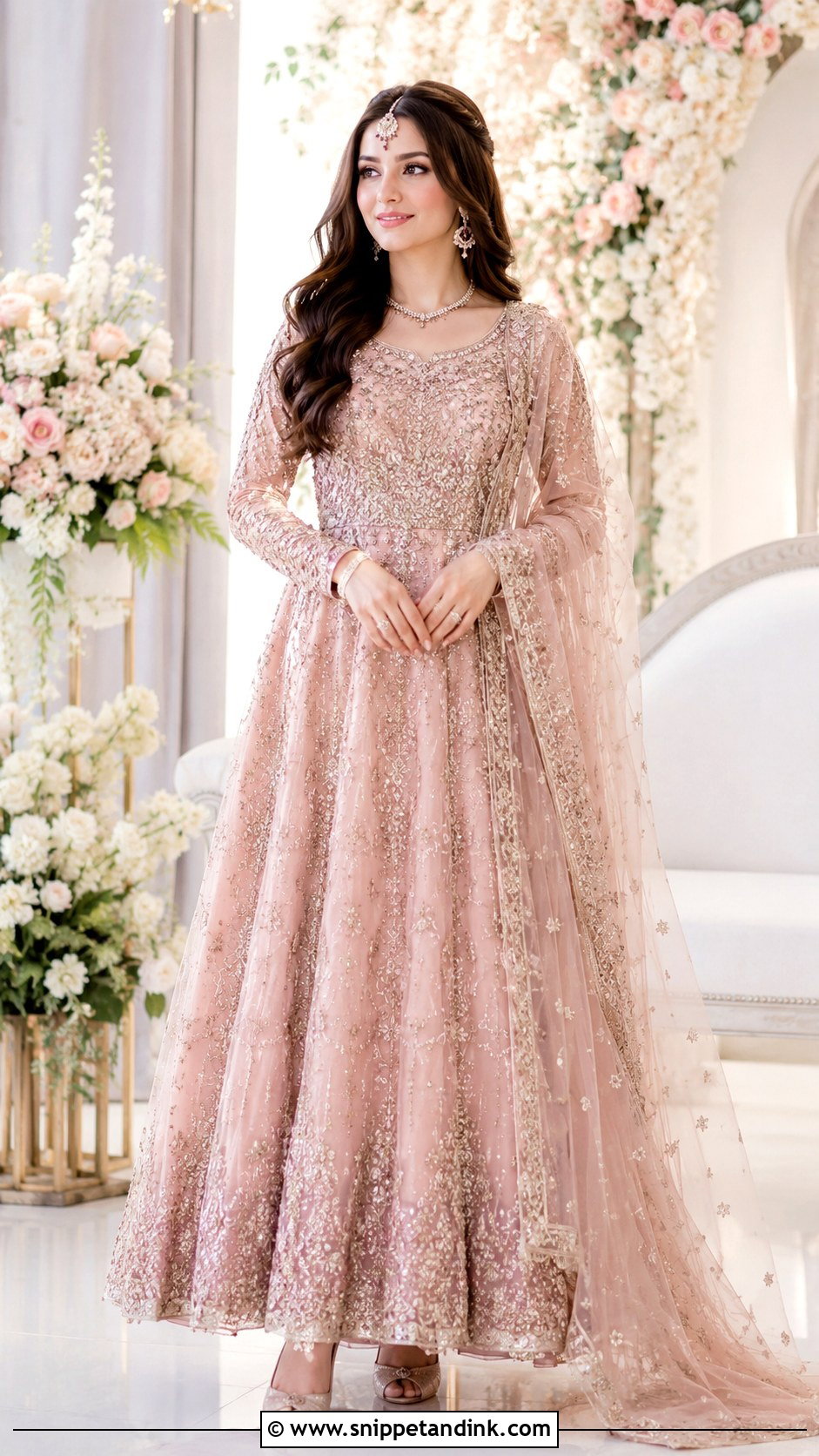
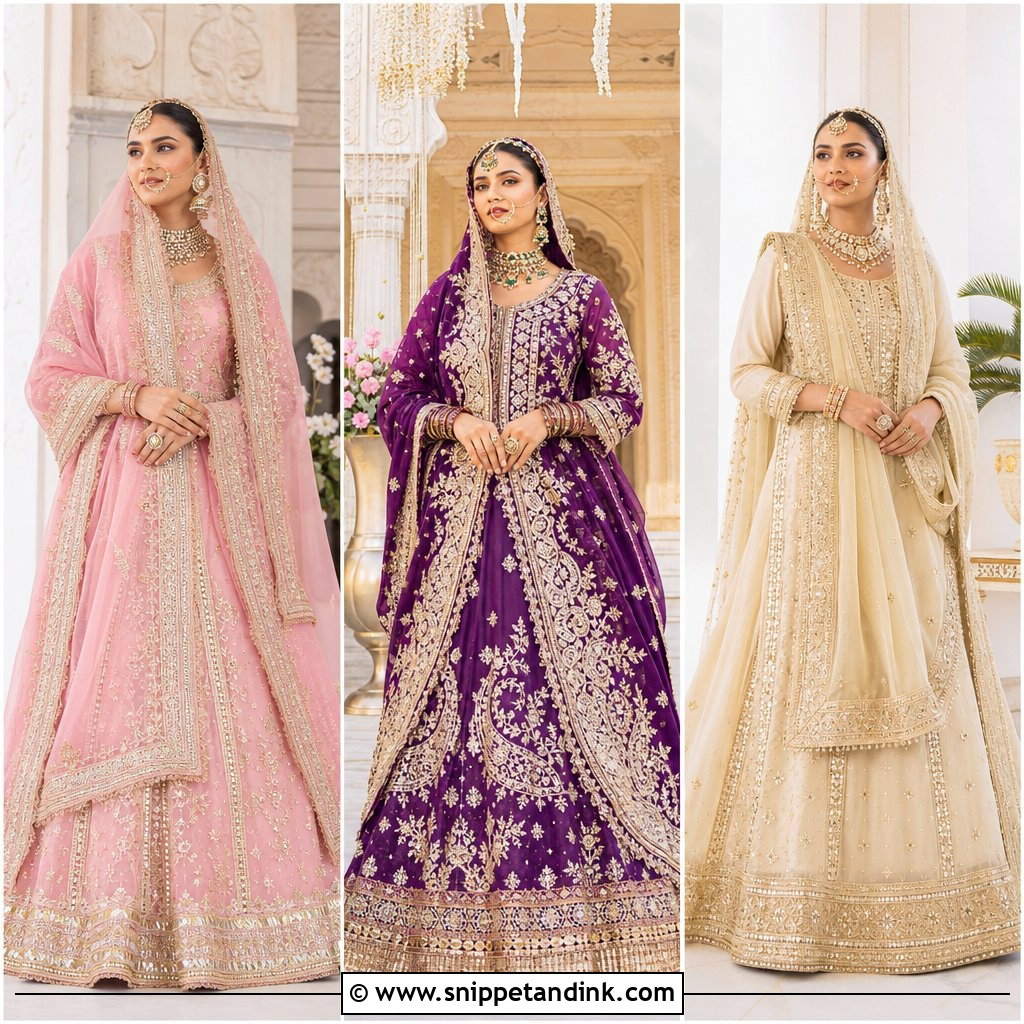
Blush pink is romantic and fresh for walima, nikkah or a smaller daytime event. A long, flared maxi with silver, rose gold or pearl embellishment, a fitted waist and a flowing skirt feels modest and moves well. The dupatta can be sheer with a worked border or scattered motifs. Blush is gentle in natural light, but next to very fair skin it can disappear, so a slightly deeper rose tone is often the better pick. Delicate jewellery and soft pink makeup complete it.
8. Pastel Pakistani Walima Lehenga
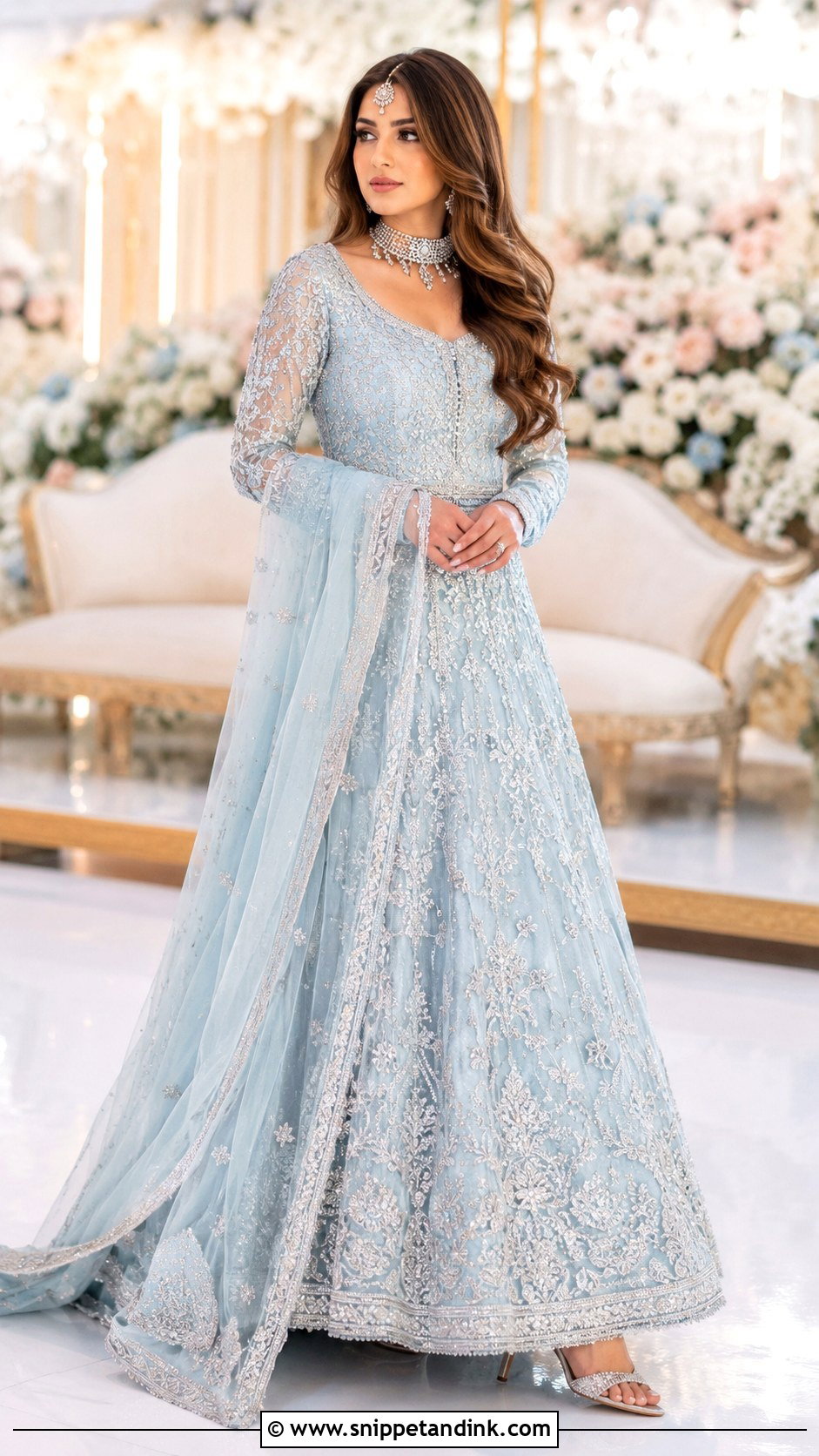
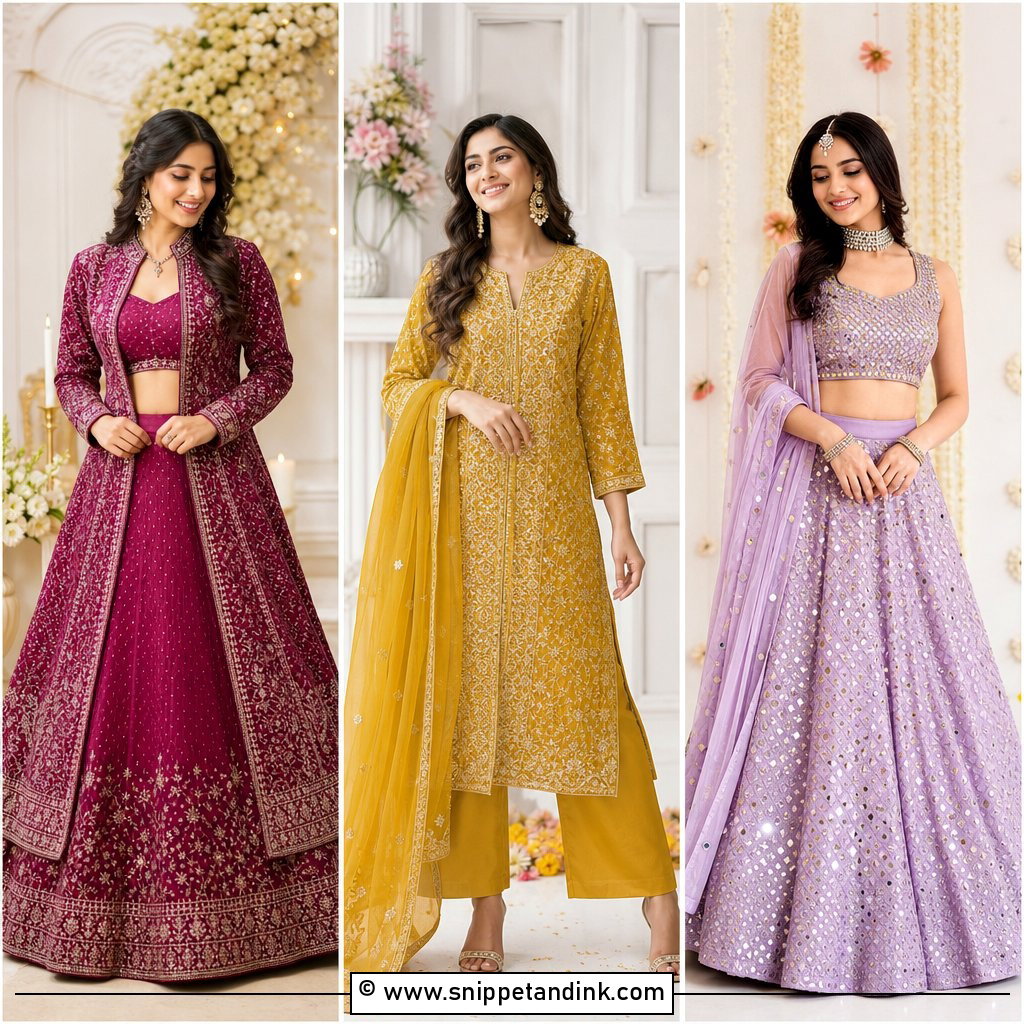
A pastel Pakistani walima lehenga in powder blue, mint, lilac, peach or rose pink feels modern but still bridal when the work is detailed. A long blouse or peplum keeps it comfortable through hours of greeting. Silver embroidery, mirror accents, pearls and crystals give it glow. Pin the dupatta to one side; for a walima I rarely put it over the head unless the family prefers it. Diamond-inspired jewellery and embellished heels finish a lighter look after the baraat red.
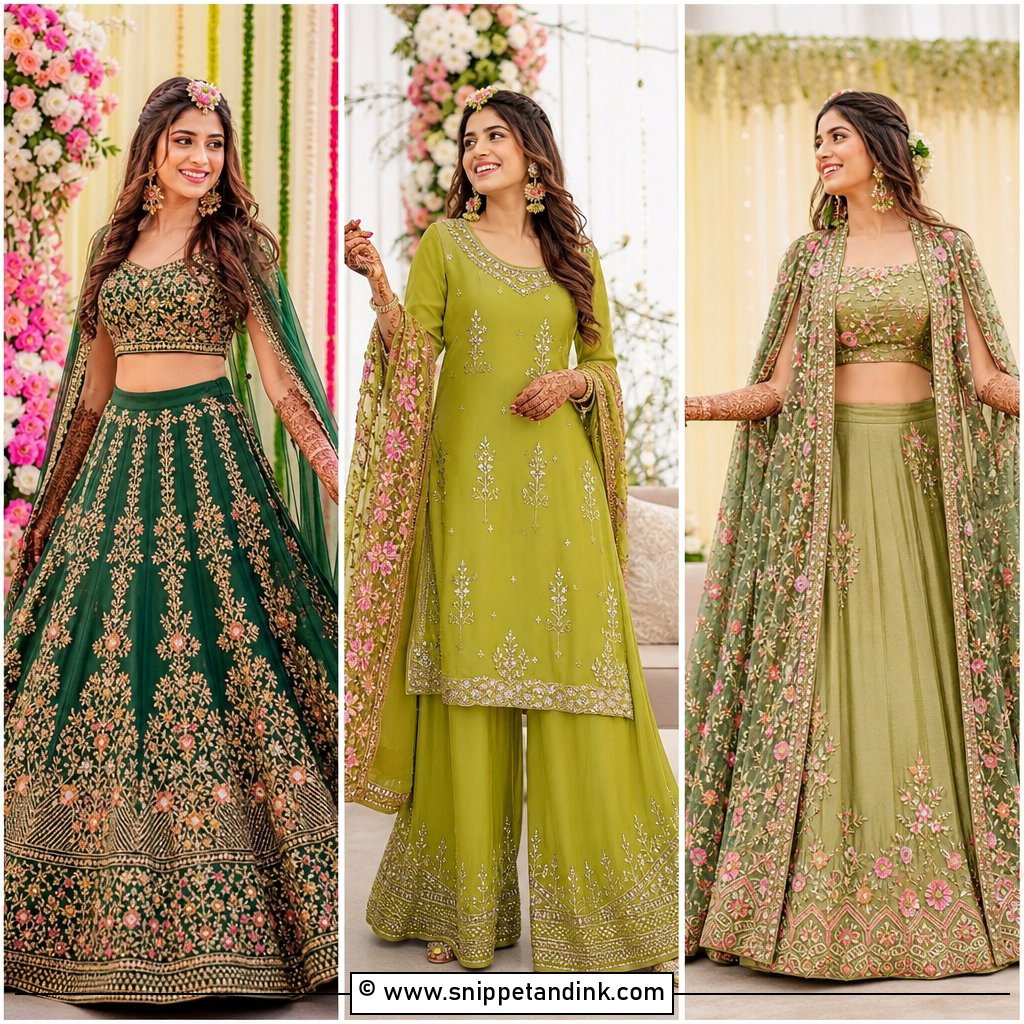
9. Green Pakistani Mehndi Lehenga
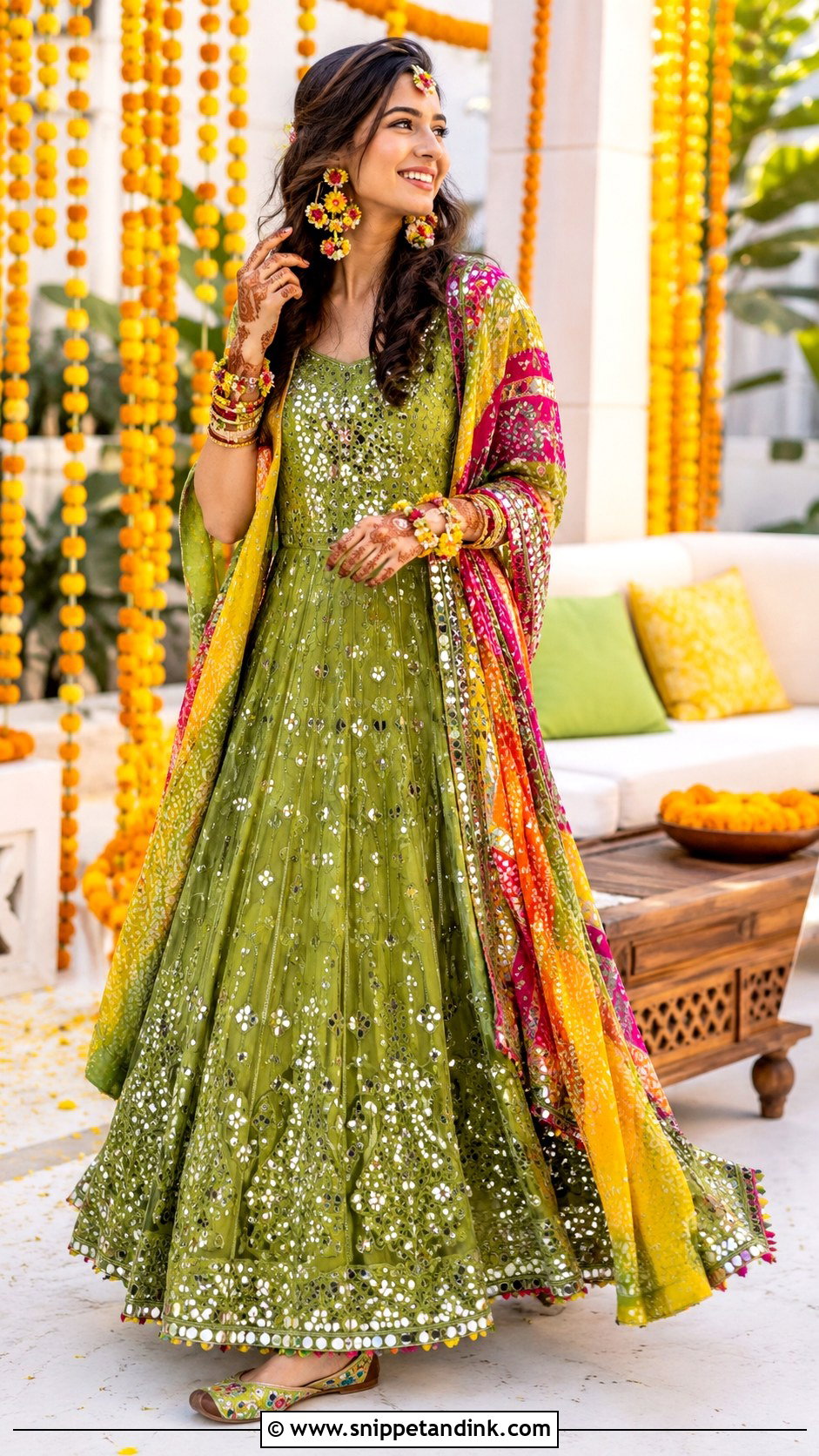
Green ties naturally to mehndi, and a green lehenga in mehndi green, emerald or olive suits the bride as well as anyone. Mirror work, gota, zari, colourful thread and tassels keep it playful, and a yellow, orange or pink dupatta adds contrast. If you plan to dance, keep the skirt to a weight you can lift with one hand; I test this at the fitting by asking the bride to do a few steps. Floral jewellery, bangles and khussas keep it fun and ceremony-ready.
10. Yellow Pakistani Mehndi Gharara
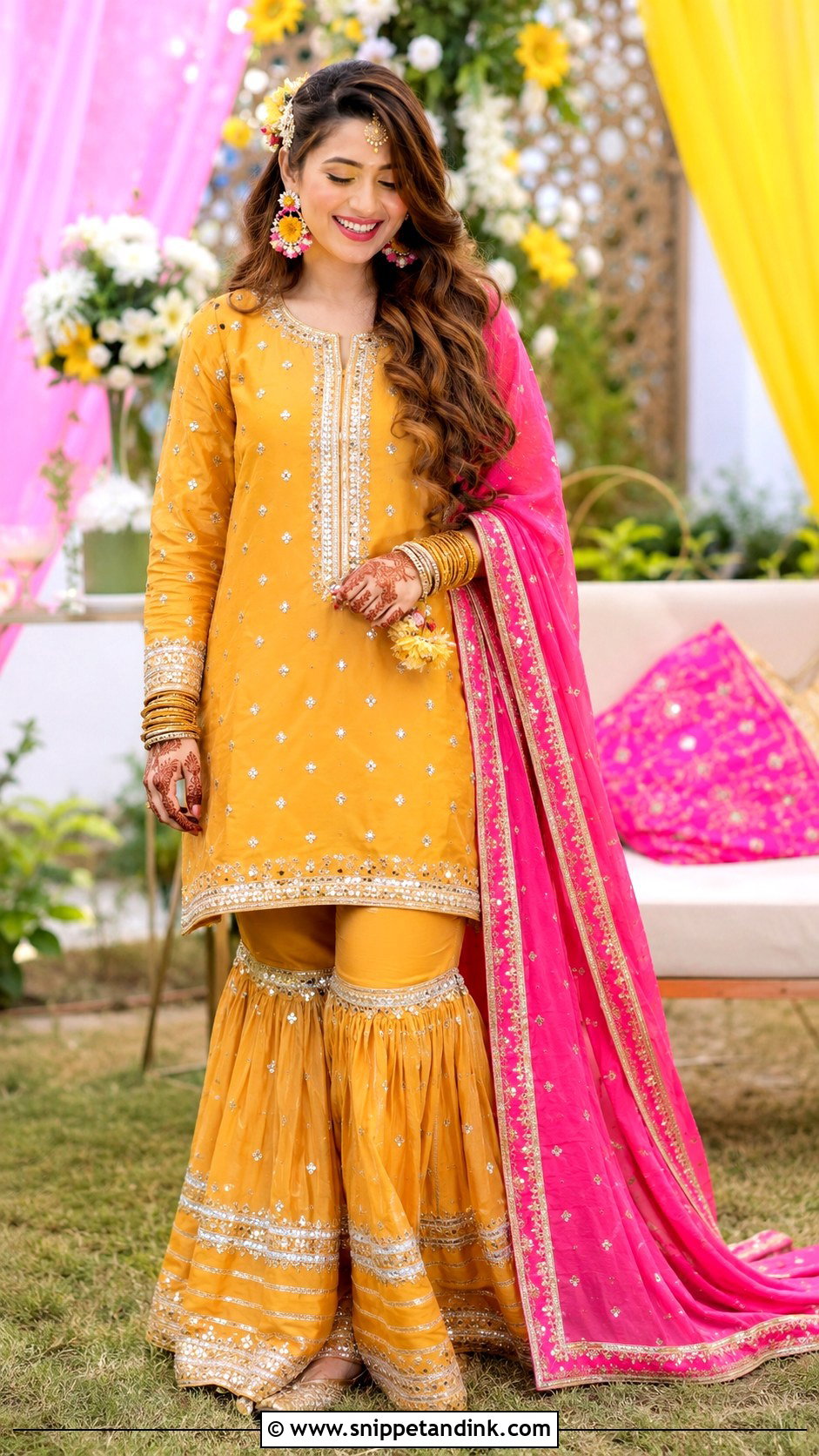
A yellow Pakistani mehndi gharara is the classic pre-wedding look. It fits close through the upper leg and flares below the knee, a shape that looks dramatic in motion. Mustard, marigold or soft yellow in gota, mirror accents and colourful embroidery, under a short kameez or peplum, balances that volume. The fitted section has to allow you to sit cross-legged for the rasams, so I always ask brides to sit on the floor at the fitting. A green, pink or orange dupatta, floral earrings and khussas finish it.
11. Orange Pakistani Mehndi Sharara
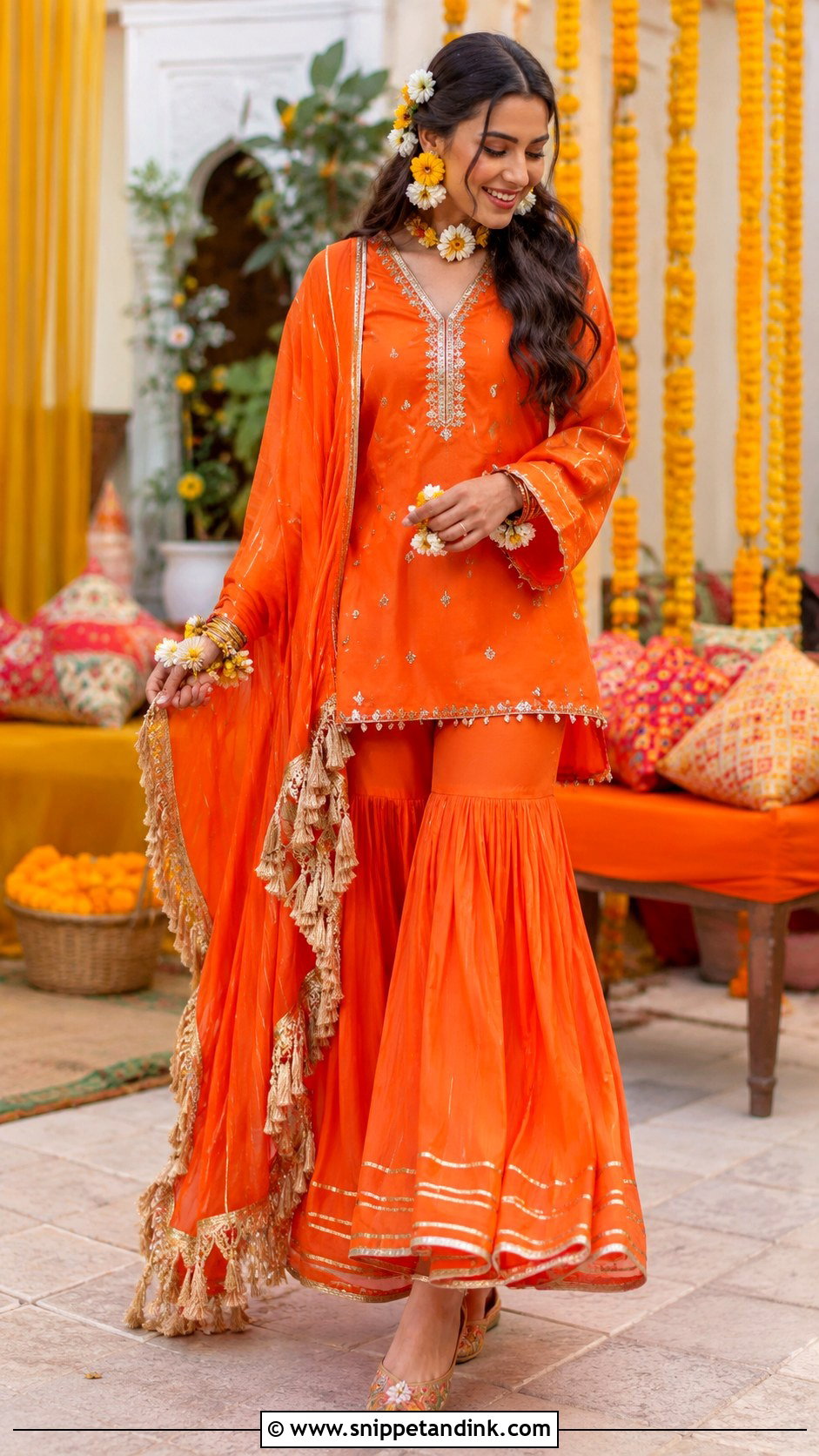
Orange gives the mehndi bride something bolder than yellow or green. A flowing sharara with a short kurti, heavily worked borders and a tasselled or gota-edged dupatta suits warm skin especially well. Pink, green, gold or mustard accents pair easily. Outdoors in daylight, orange glows; under cool white LEDs indoors it can turn slightly harsh, so I prefer it for outdoor or warmly lit venues. Floral pieces, bangles and a braid with flowers keep it youthful.
12. Pakistani Pishwas Bridal Dress
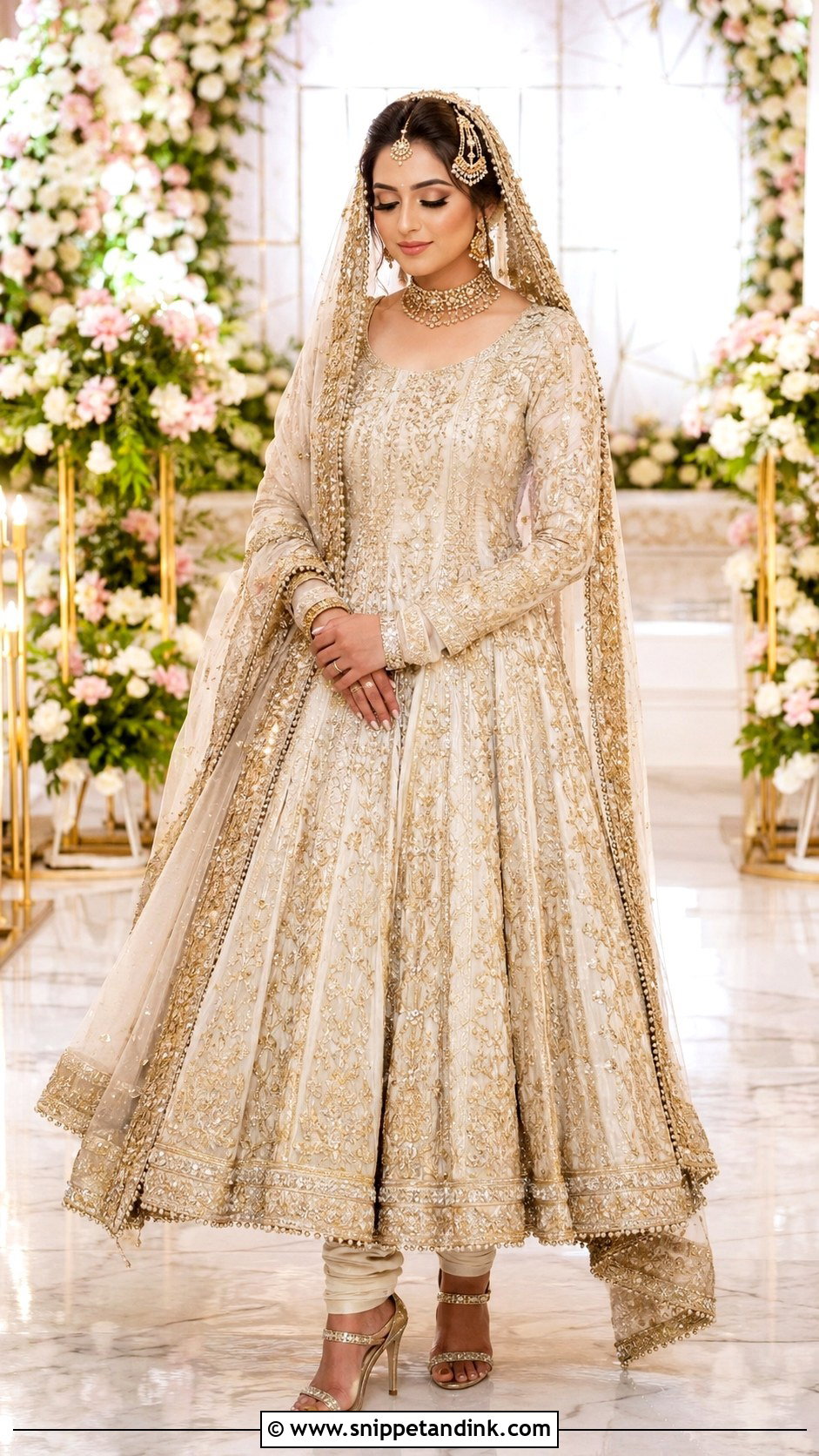
A Pakistani pishwas bridal dress gives the princess shape with modest coverage: a fitted bodice and long flared panels. Red or maroon reads classic; ivory, blush or sage reads modern. Over churidar it’s light, over a lehenga skirt or farshi bottom it gets dramatic. The bodice fit is everything with a pishwas, because the flare starts right under it, so I’d have it fitted with the jewellery and dupatta on. A choker, jhumkas and a passa complete it.
13. Pakistani Farshi Gharara Bride
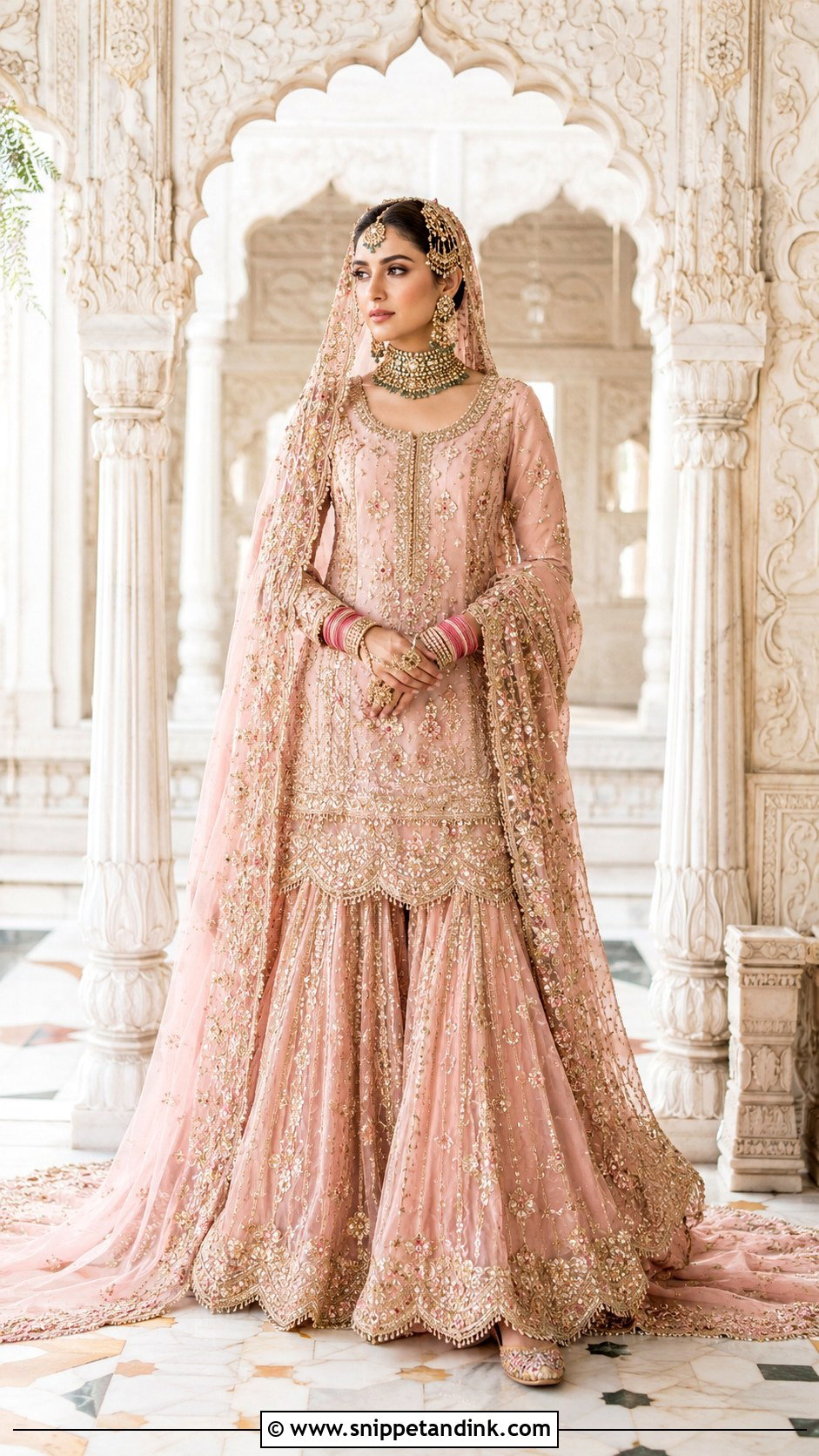
The farshi gharara is the most regal and the most vintage-feeling outfit here. Its extra fabric trails as the bride walks, which looks grand in an entrance and very awkward on stairs. Pair it with a long kameez, a heavy dupatta and traditional jewellery in deep red, maroon, gold, tea pink or ivory. Keep the embroidery on the borders, panels, sleeves and dupatta edges so the structure shows. I’d plan a helper for the walk in and a clear path at the venue.
14. Pakistani Sharara Bride
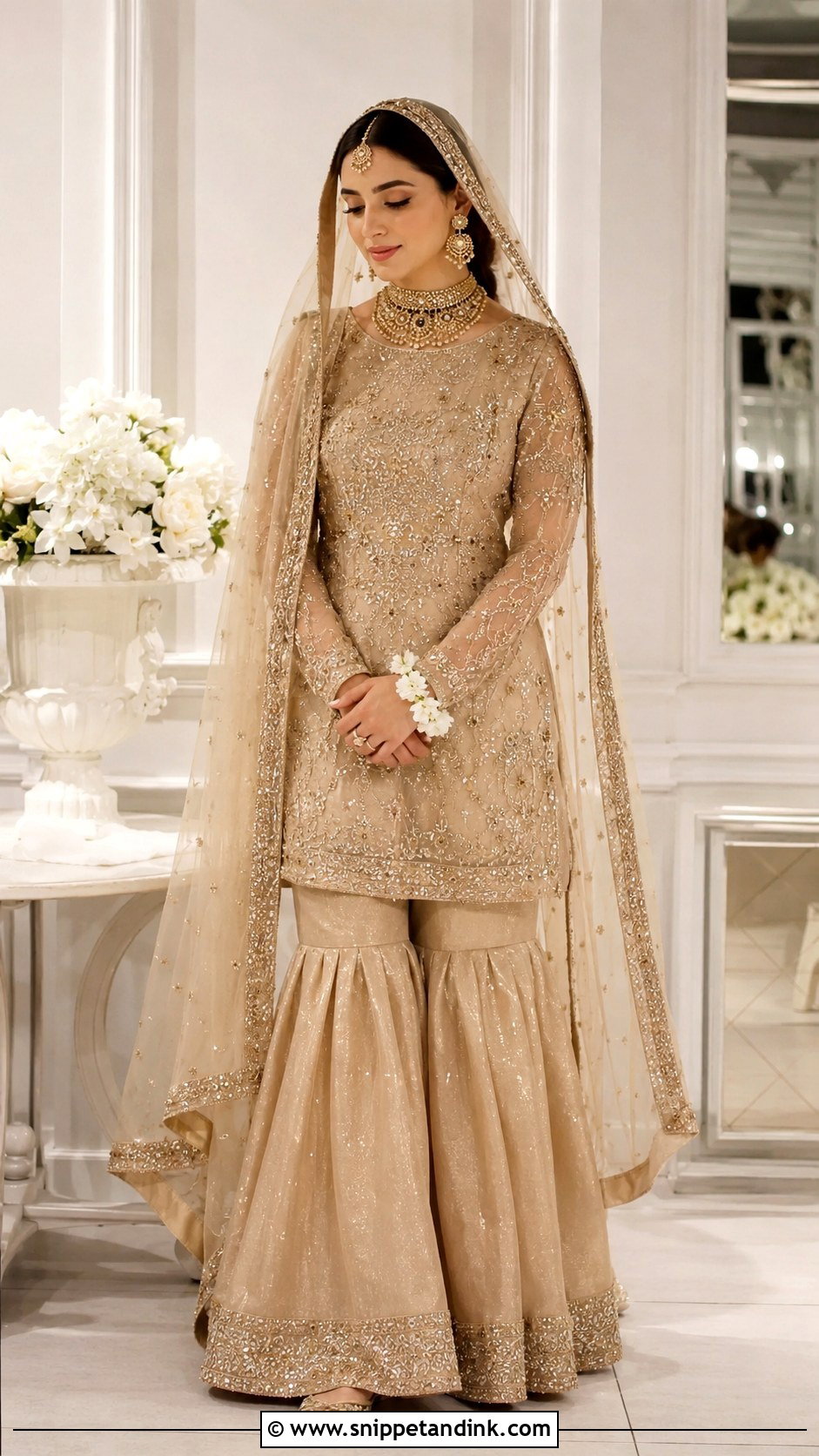
People mix up sharara and gharara, but they wear differently. The sharara is wide and fluid from the hip down, with no knee joint, so it’s the easier of the two for a long event. Pair it with a short kameez, peplum or long shirt. Heavy borders at the hem make it bridal and give it swing. In red, emerald, gold, blush or ivory, with a pinned, embroidered dupatta, it’s a softer shape than a lehenga with just as much tradition.

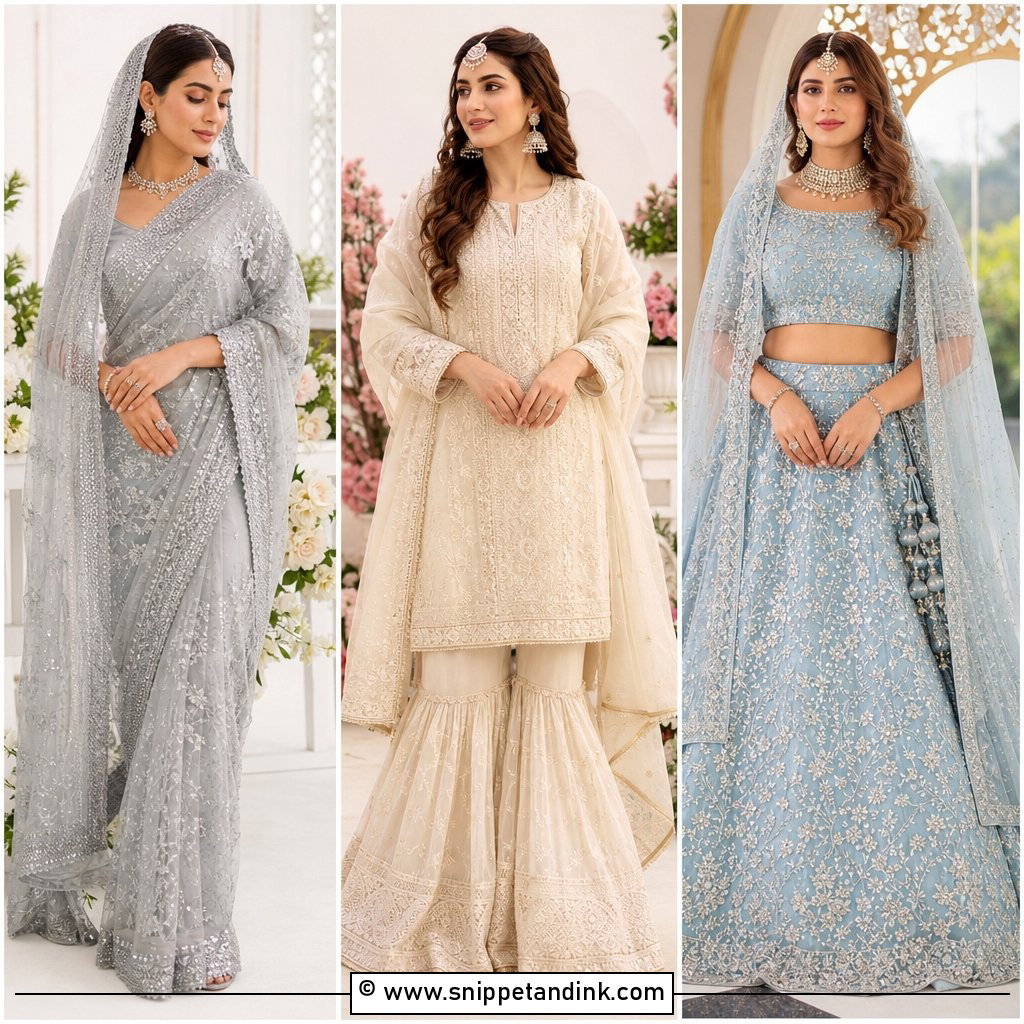
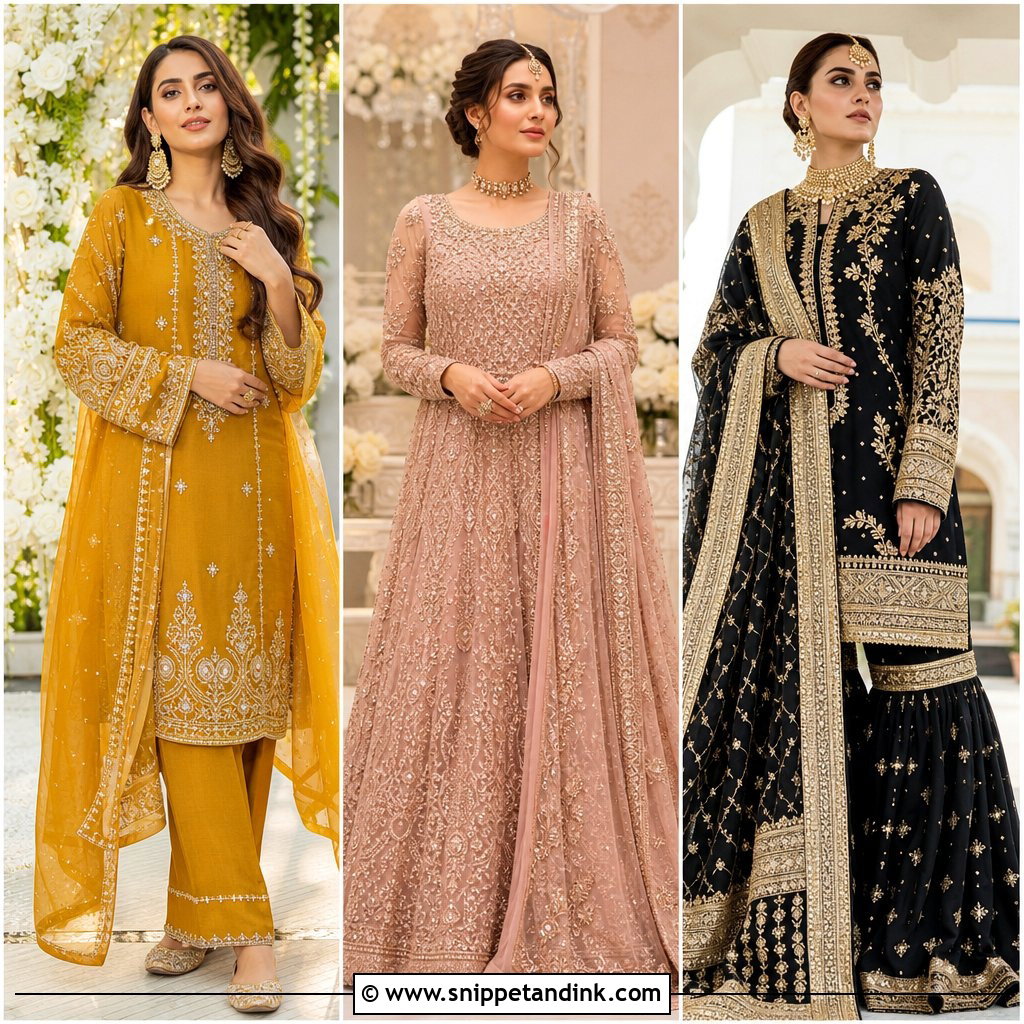
15. Pakistani Gharara Bride
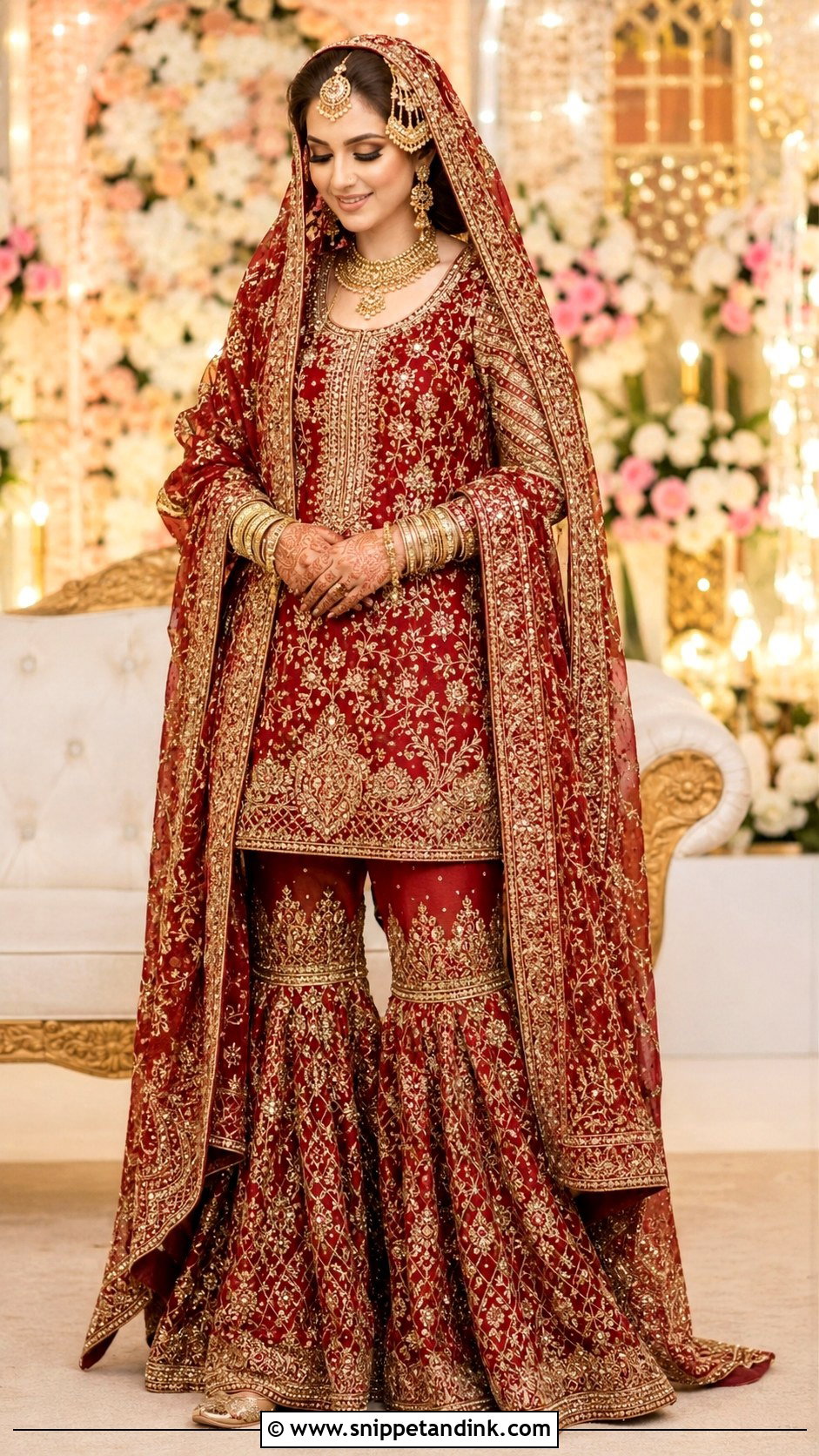
The gharara is unmistakably Pakistani: fitted through the thigh, joined at the knee with a decorative band, then flared to the floor. With a short kameez it’s classic, with a longer shirt more modest. Jamawar, raw silk, tissue or organza give it texture, and heavy embroidery makes it baraat-worthy. I tell brides that the knee band is the detail people photograph most, so it deserves real embroidery rather than a plain strip. A tikka, passa and bangles finish it.
16. Pakistani Bridal Lehenga With Long Shirt
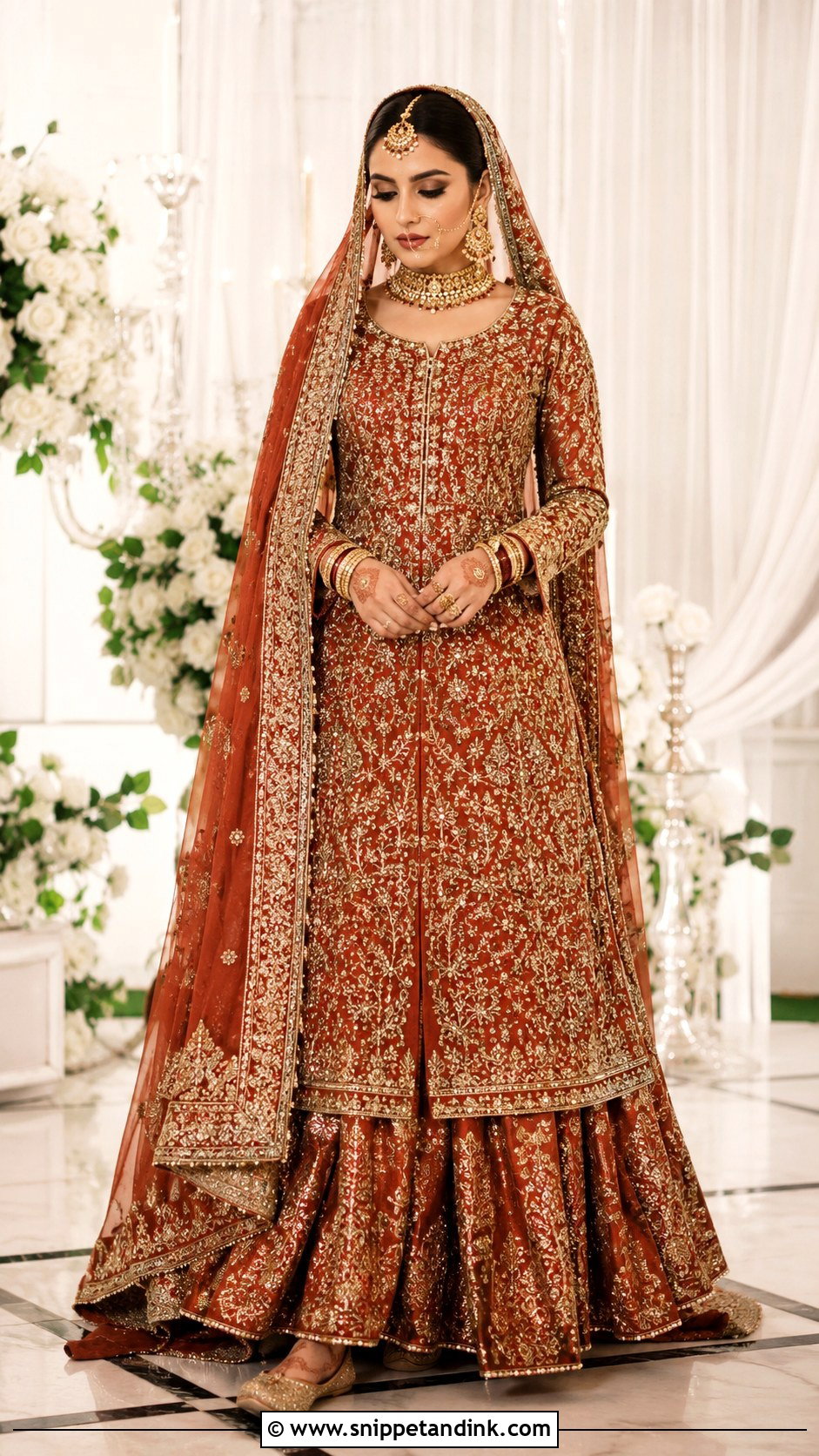
Long shirt with lehenga is the shape I’d recommend to most brides who want coverage without giving up volume. The shirt draws a long vertical line, the lehenga adds ceremony. It works in red, maroon, gold, rust, emerald or ivory, with embroidery at the neckline, sleeves, front panels and border. It also feels secure; nothing rides up when you hug relatives or bend to touch an elder’s feet. A head dupatta, traditional jewellery and embroidered shoes complete it.
17. Pakistani Bridal Lehenga With Peplum
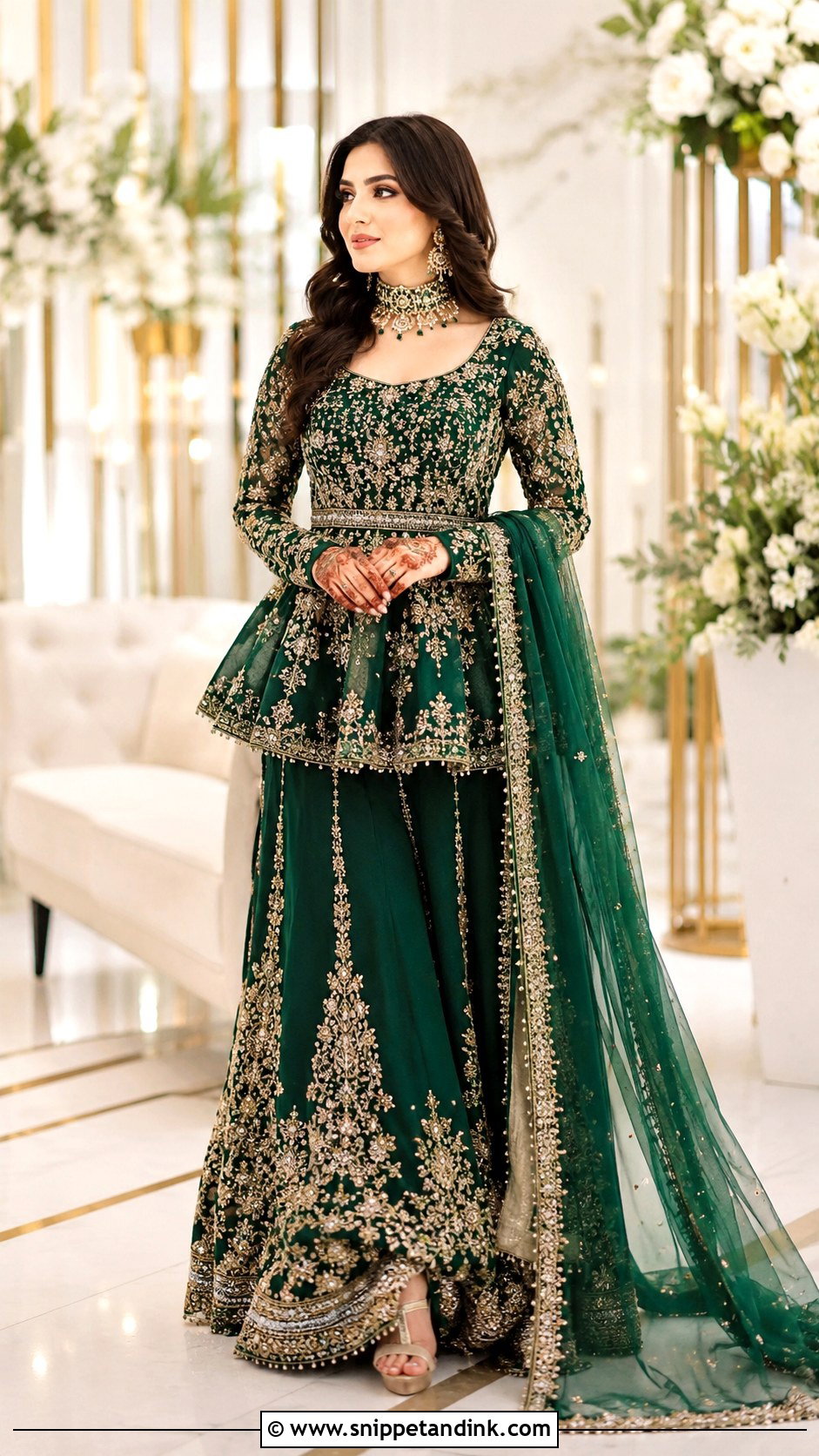
The peplum defines the waist and gives structure while the lehenga adds volume, which makes it a youthful, tailored option. A short peplum in mirror work suits mehndi; a heavily embroidered one in red or gold can carry the main day. The peplum’s flare needs a light interfacing so it holds out rather than collapsing after an hour of sitting. Drape the dupatta on one shoulder or pin it over the head, and balance the neckline with a choker and statement earrings.
18. Pakistani Bridal Jacket Lehenga
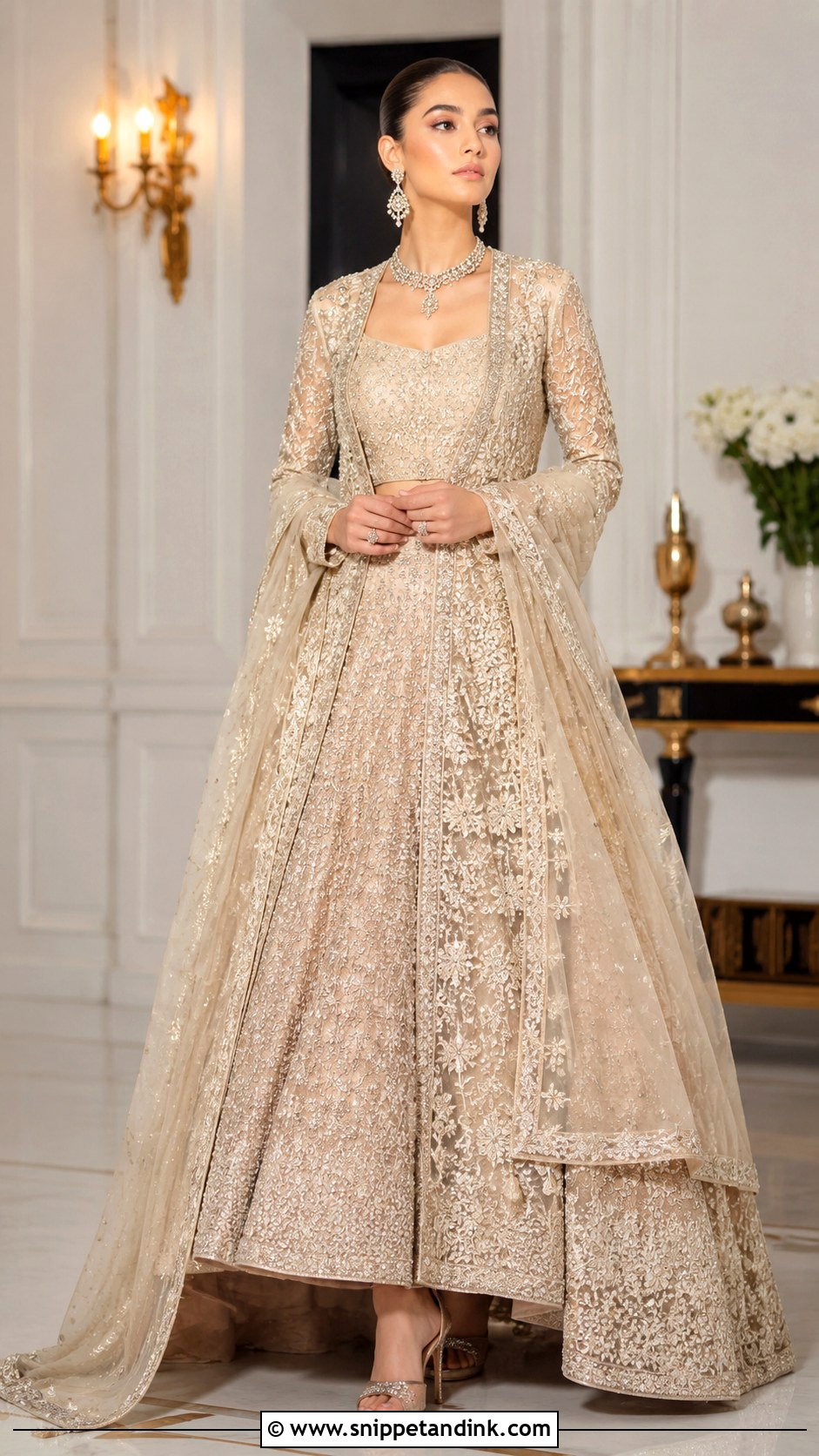
A jacket lehenga is modest and contemporary, with the jacket adding coverage and structure over a lehenga and blouse. Velvet jackets suit winter; organza or net feel lighter in warm months. Front-open, closed or belted all work. Because the jacket already carries embroidery and weight, I keep the dupatta light and sometimes skip it entirely for a reception. It suits walimas, receptions or a modern baraat.
19. Pakistani Bridal Saree
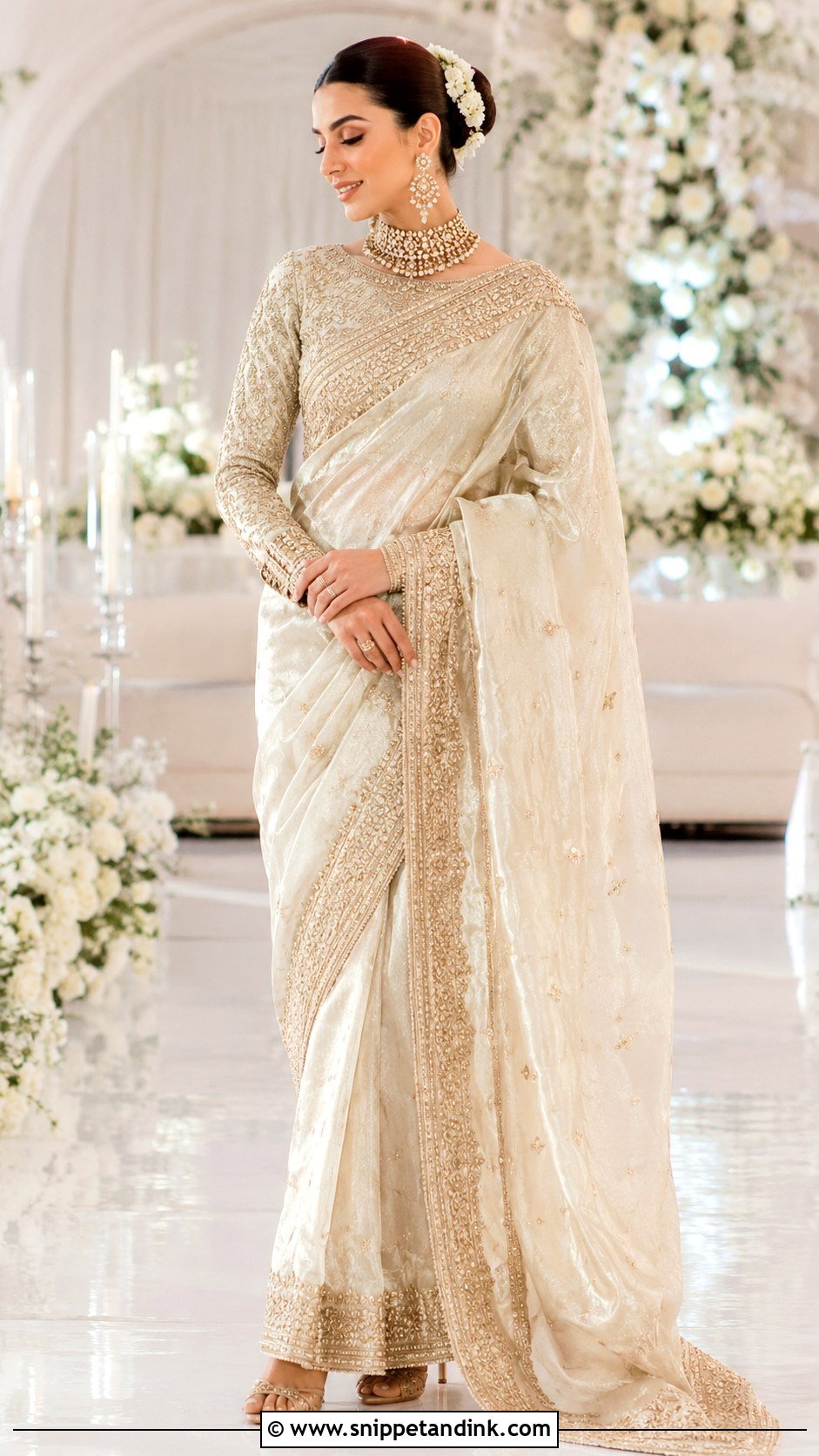
Sarees are less common than lehengas and ghararas at Pakistani weddings, but they can look very bridal. Tissue, silk, chiffon or organza with heavy borders and a modest blouse, in ivory, gold, blush, red or champagne, carries a reception or nikkah. Chiffon drapes softly but shows every crease; tissue and organza hold pleats crisply. I’d pick by how much you’ll be sitting. A statement necklace, earrings and sleek hair give a composed finish.



20. Pakistani Bridal Anarkali Dress
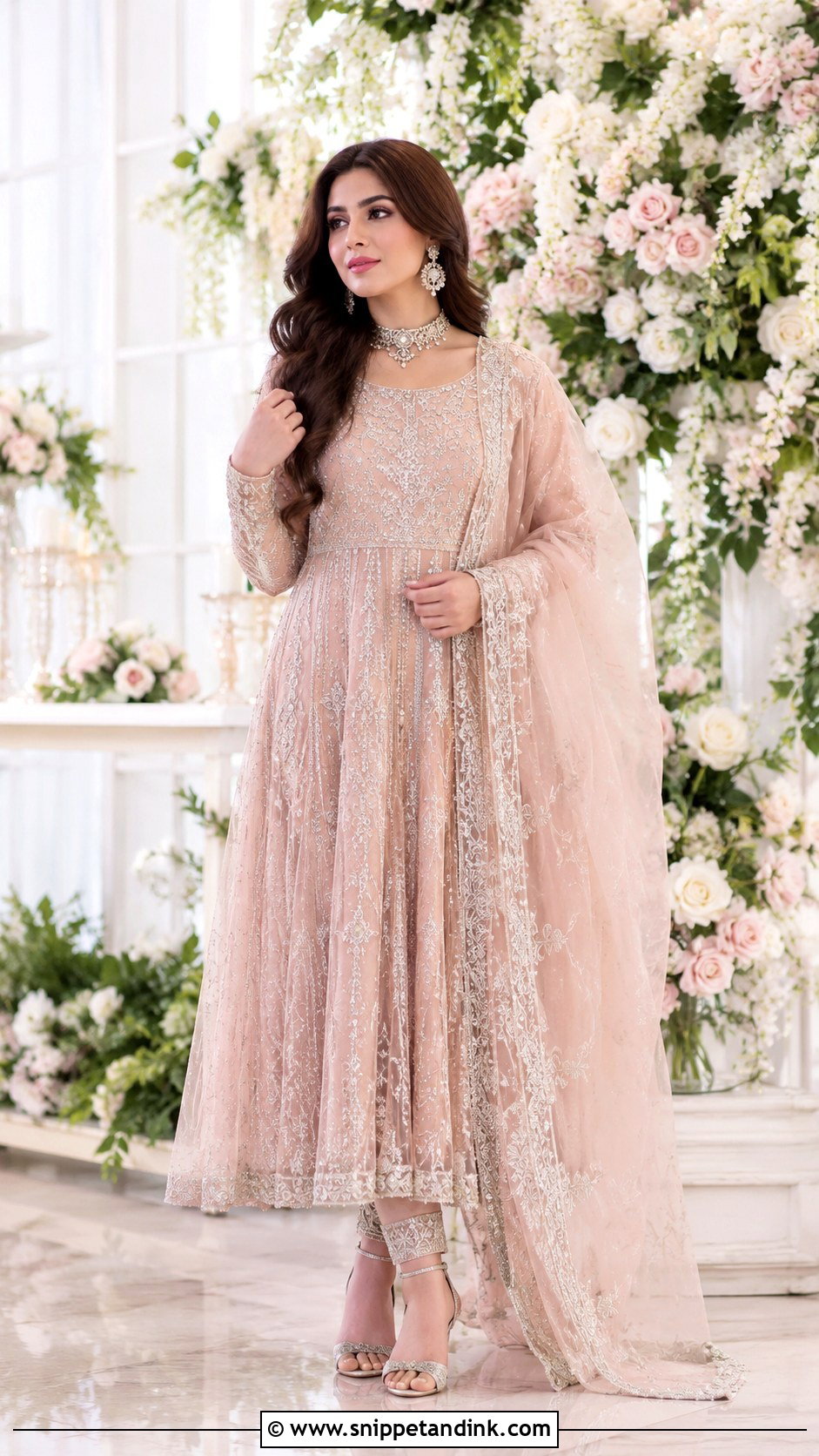
The anarkali resembles a pishwas but usually flares in one longer, continuous line from the bodice. With churidar, a matching dupatta and detailed sleeve work, it suits nikkah, walima or engagement events. Ivory, blush, mint and powder blue feel graceful; red and maroon feel more formal. Full length gives comfort and coverage for long hours. I’d choose it over a lehenga for anyone who prefers movement to weight, and it’s easier to manage on stairs too.
21. Pakistani Bridal Maxi With Dupatta
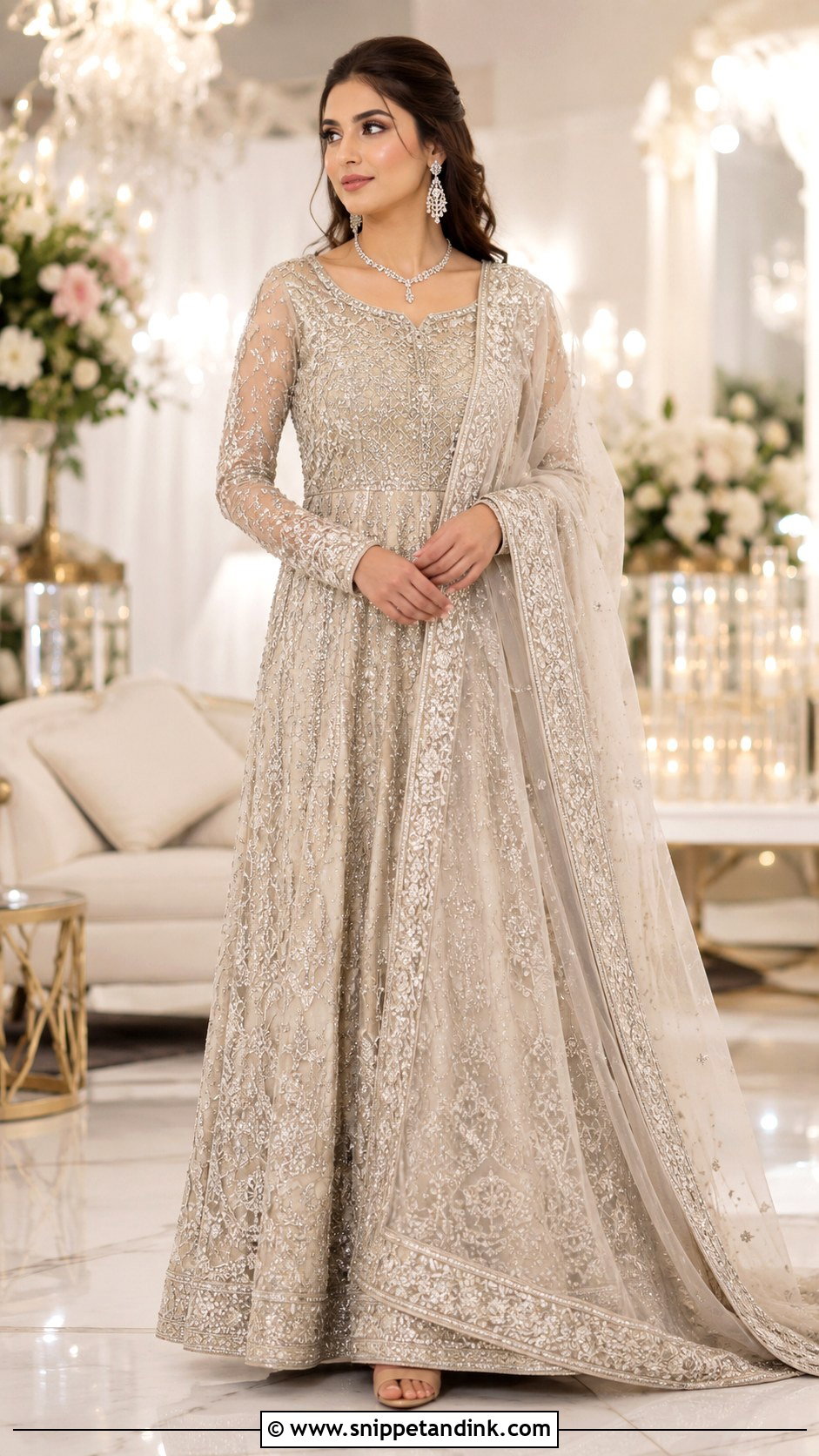
A maxi with dupatta is the most practical bridal choice here. The gown-like shape is easy to wear and the dupatta keeps it connected to Pakistani tradition. A fitted bodice with a flared skirt and embroidery on the sleeves, waist and hem suits walima, nikkah or a formal reception. Pastel, champagne, ivory, silver and rose gold all work. Soft glam makeup and delicate jewellery finish it. It also travels well, which matters for a destination function.
22. Pakistani Bridal Velvet Lehenga
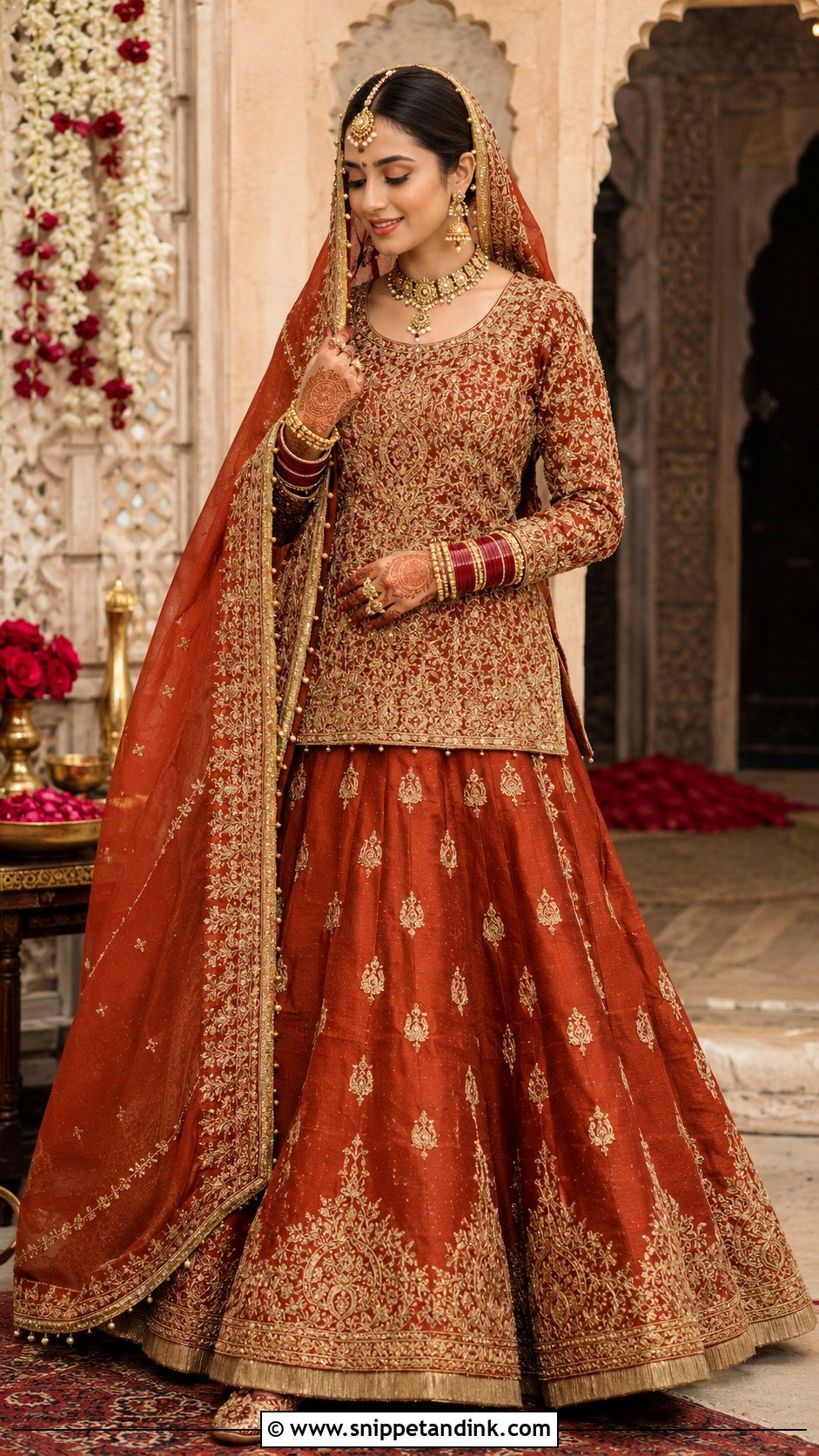
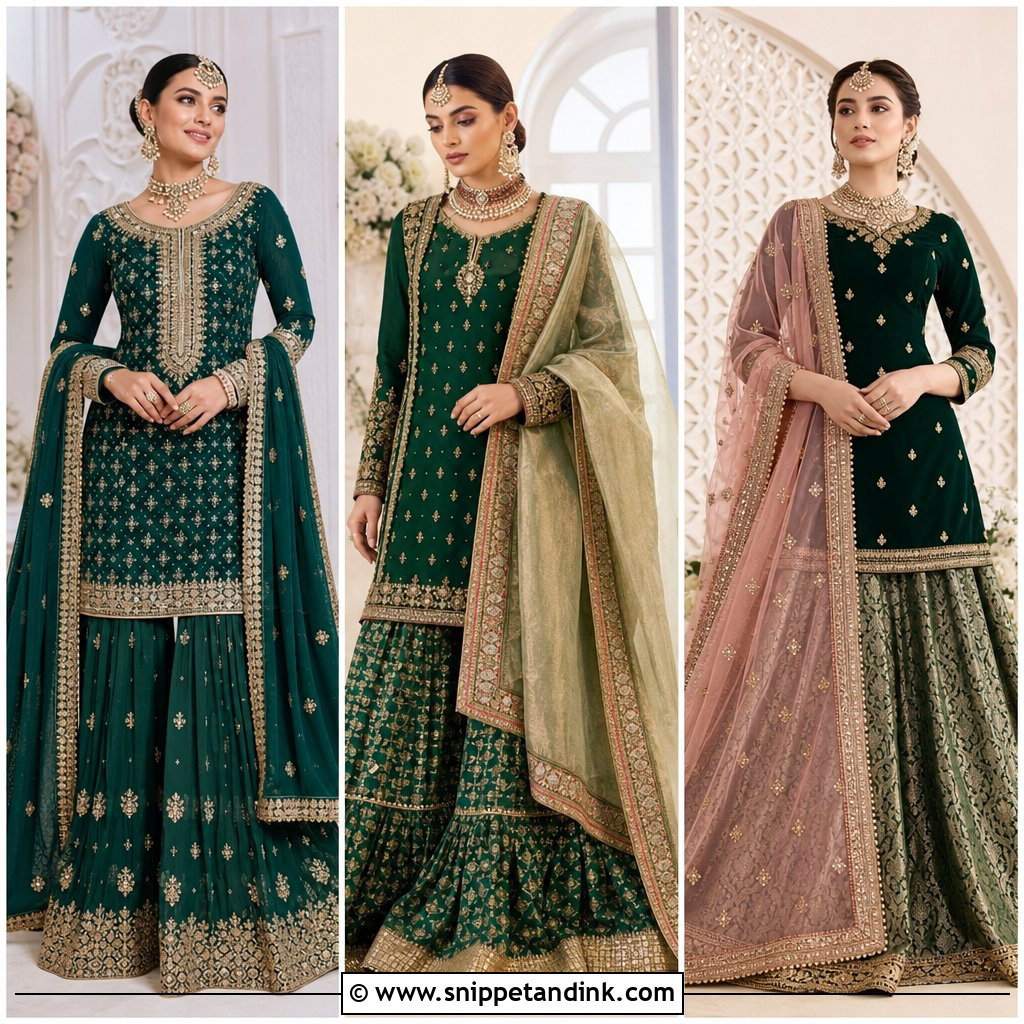
Velvet belongs to winter and evening. It adds depth and a royal weight, especially in maroon, emerald, navy, plum or dark red, and gold embroidery, dabka, zardozi and sequins show up vividly on it. Pair the lehenga with a matching blouse or long shirt and a lighter dupatta. A bun and bold eyes suit its drama. If your function is in a warm hall, think twice: velvet is hot, and a flushed, uncomfortable bride is not the look anyone wants.
23. Pakistani Bridal Organza Lehenga
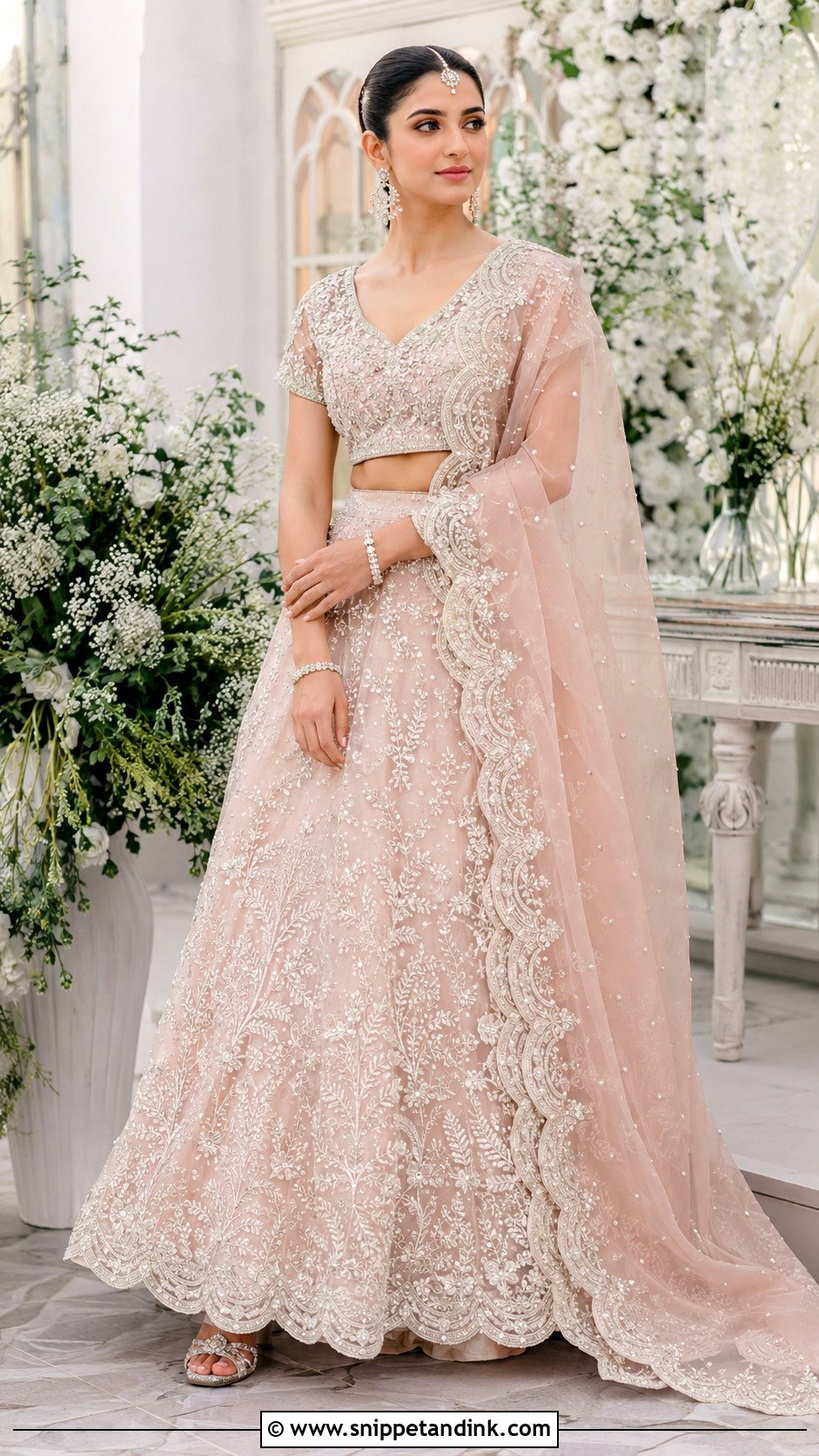
Organza gives volume without weight, which makes it my go-to for daytime weddings, nikkah events and summer ceremonies. Soft embroidery, pearls, sequins or floral motifs work with its sheer texture, in ivory, blush, mint, powder blue or champagne. A matching organza dupatta with a scalloped edge or thin border keeps it refined. Because organza is sheer, check the lining length and colour carefully; a mismatched lining shows through in every photo.
24. Pakistani Bridal Tissue Lehenga
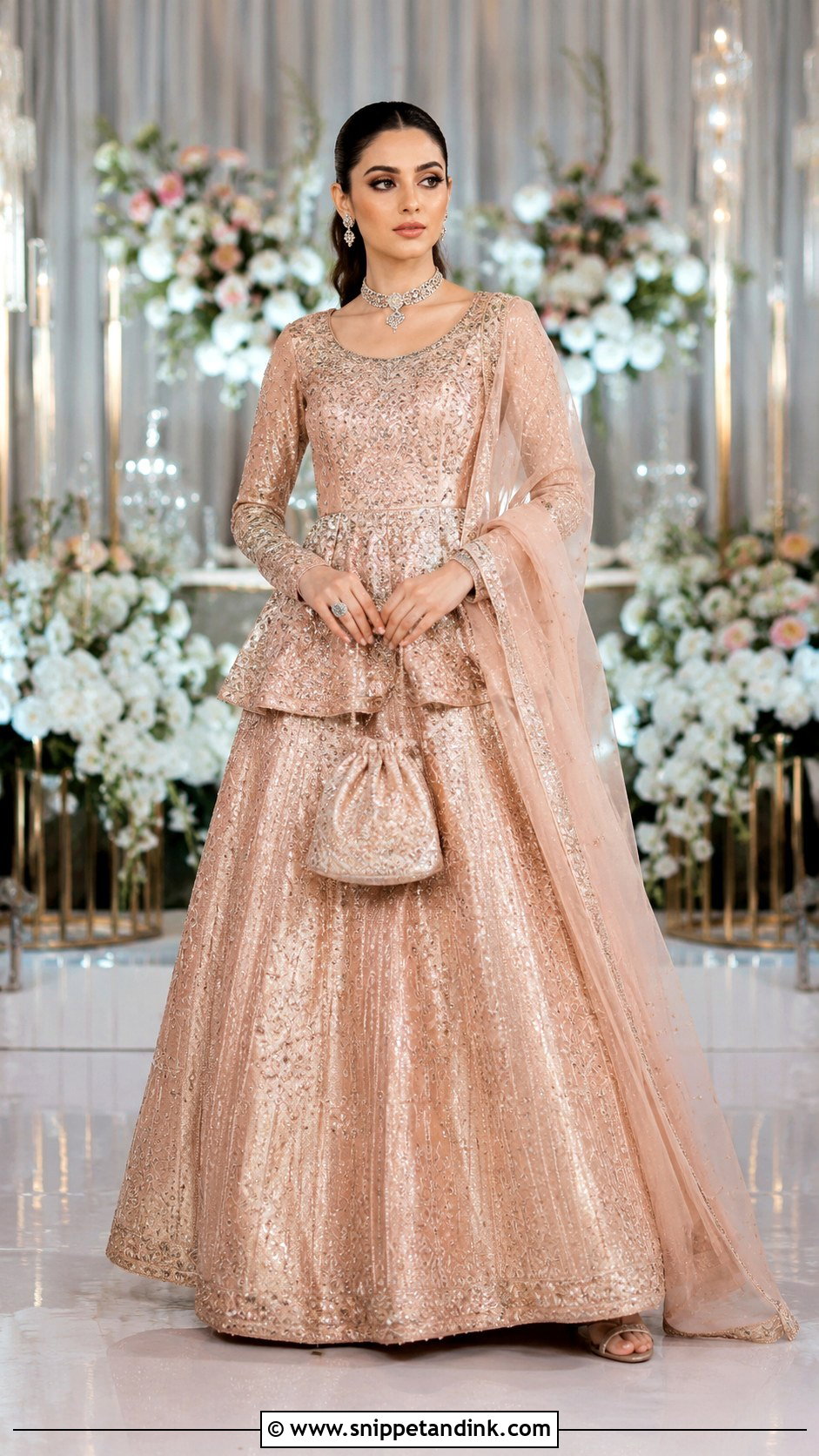
Tissue has a soft metallic shimmer woven in, so a Pakistani bridal tissue lehenga glows without heavy embellishment. Gold, rose gold, silver, peach and ivory tissue suit walima, nikkah or formal events. Let the fabric show; covering tissue entirely in embroidery wastes its sheen. A long shirt, peplum or modest blouse all work, with a soft net or organza dupatta. Tissue creases sharply and those creases catch light, so steam it on the morning, not the night before.

25. Pakistani Bridal Net Lehenga
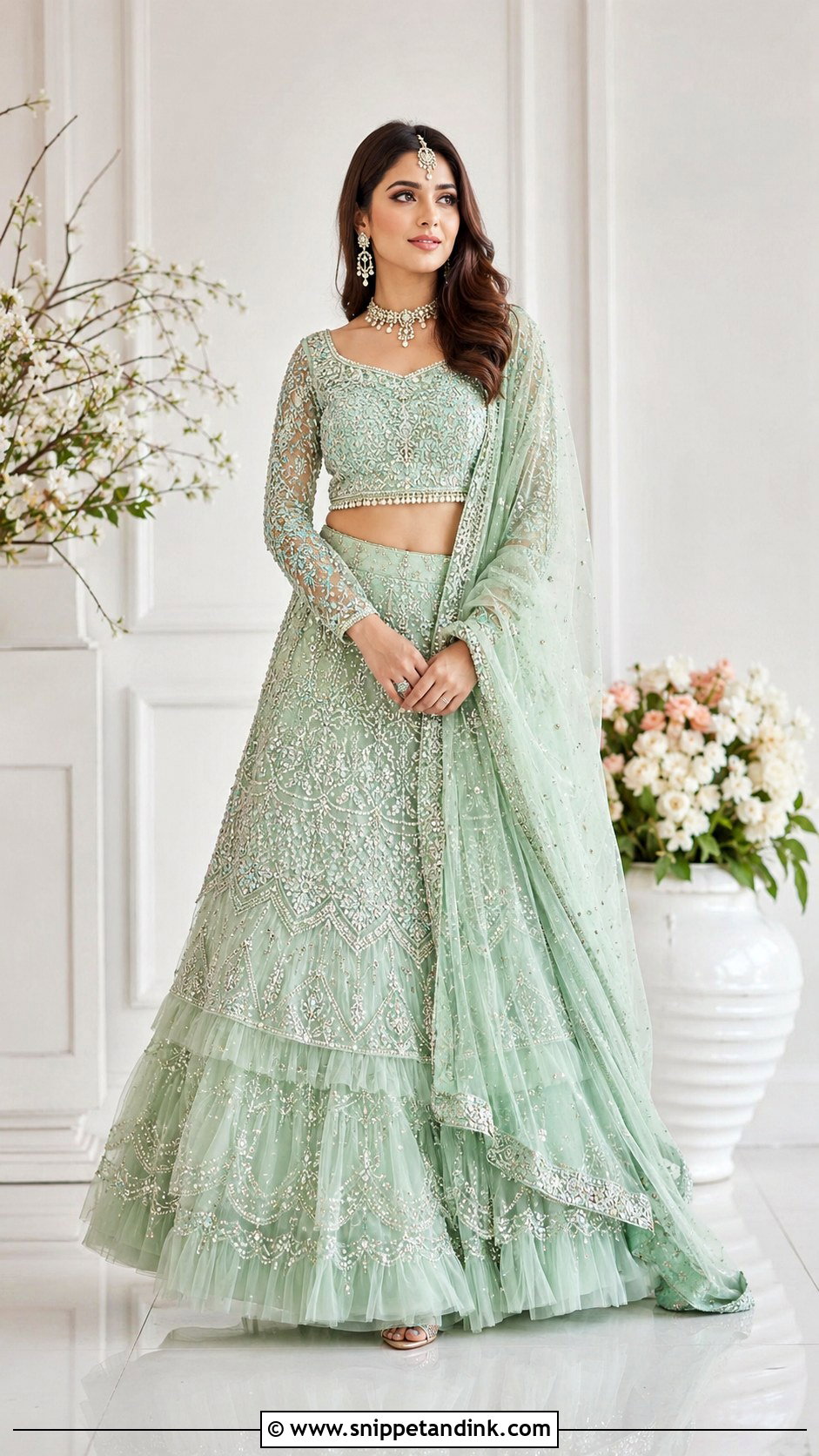
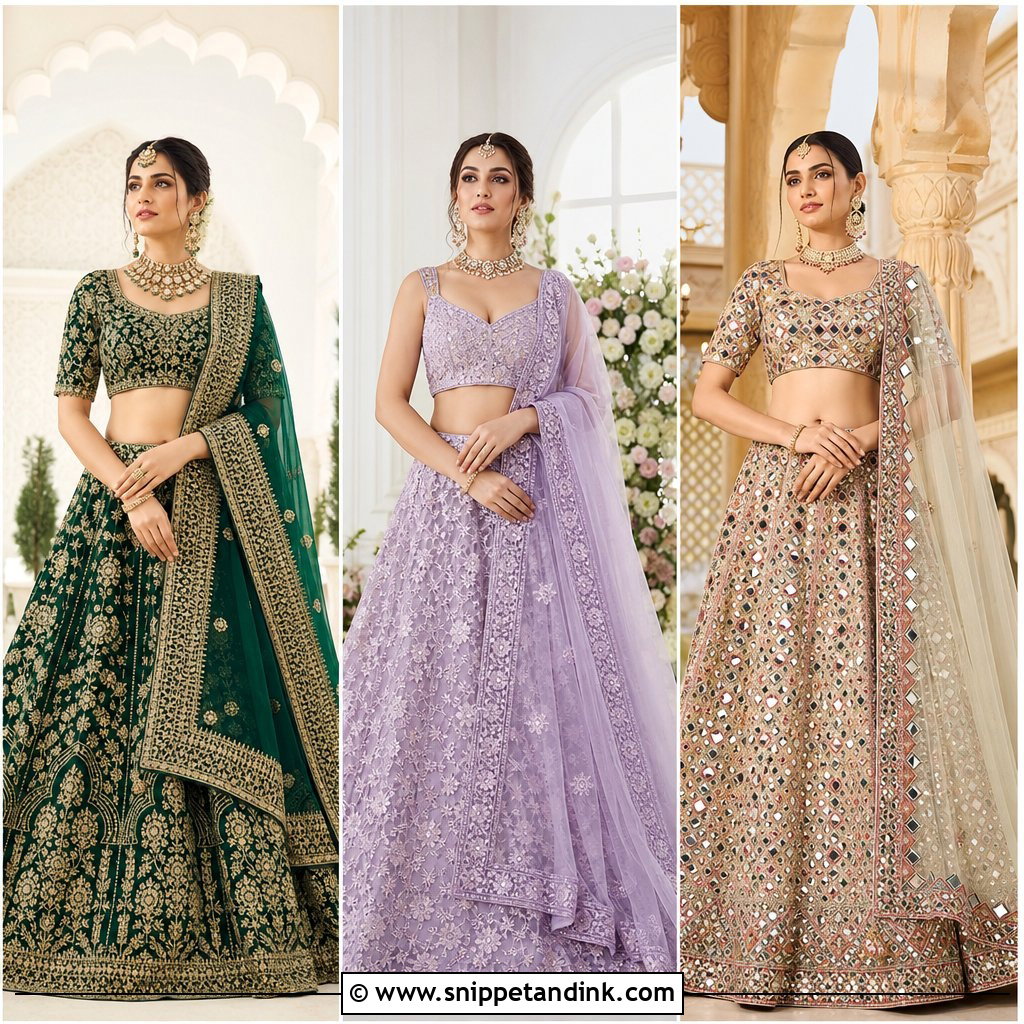
Net is the fabric for volume with softness. It lets embroidery, sequins, pearls and appliqué stand out, and layered net skirts give fullness without stiffness. It suits walima, reception and pastel looks. The trade-off is snagging: net catches on bangles, rings and heel buckles, so I check every piece of jewellery for sharp prongs before the bride gets dressed. A fitted blouse, long shirt or peplum, a matching net dupatta and crystal jewellery complete it.
26. Pakistani Bridal Silk Lehenga
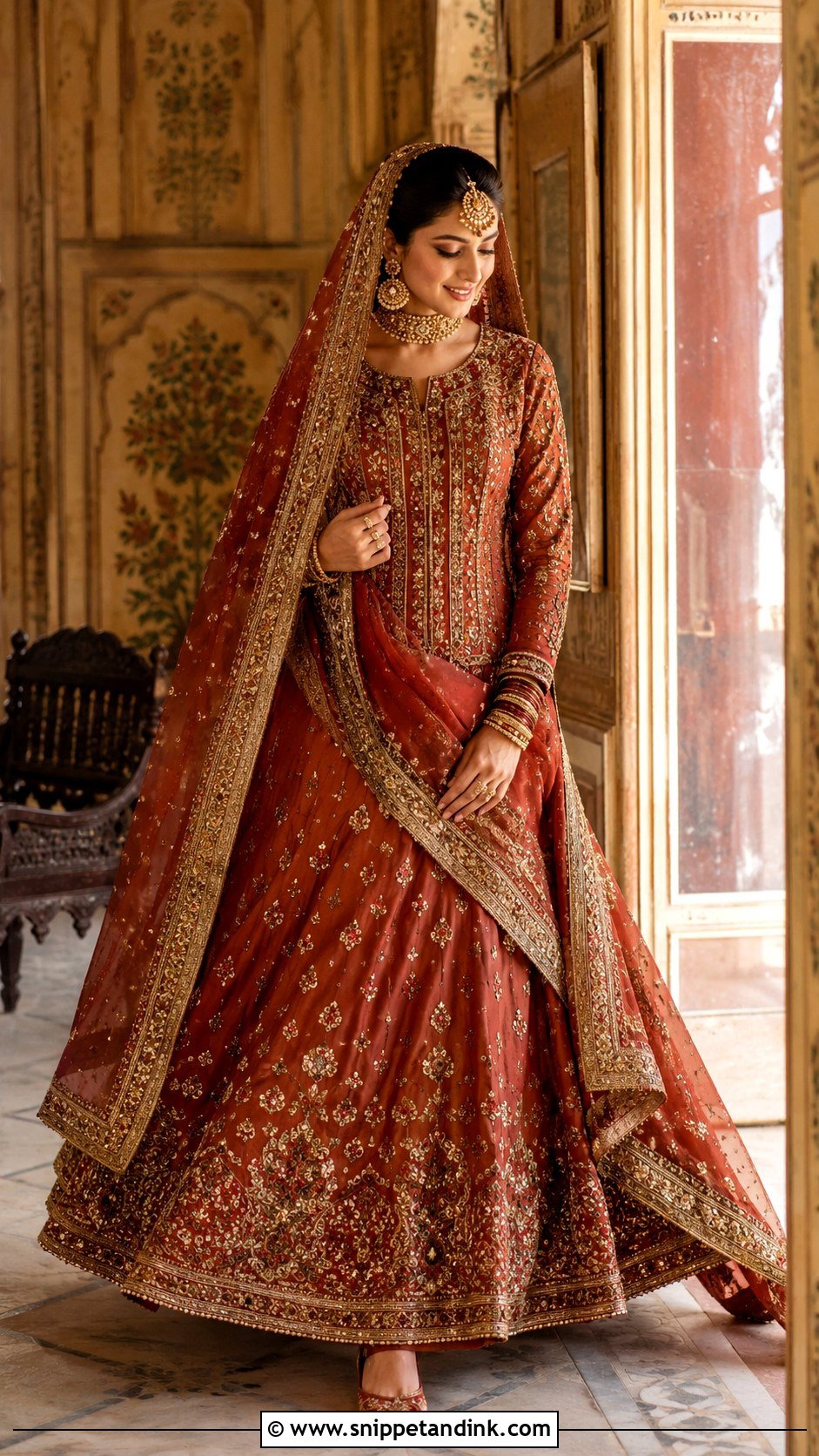
Silk holds its shape, so a silk lehenga gives a clean, structured silhouette. Raw silk, pure silk and silk blends all finish well. If you want something refined, put the embroidery on the border, waist, blouse and dupatta rather than covering every inch. Red, rust, emerald, gold, ivory and peach suit it. Silk water-marks easily, so keep drinks and rain away, and store it carefully afterwards; it is one of the outfits most worth keeping for years.
27. Pakistani Bridal Mirror Work Lehenga
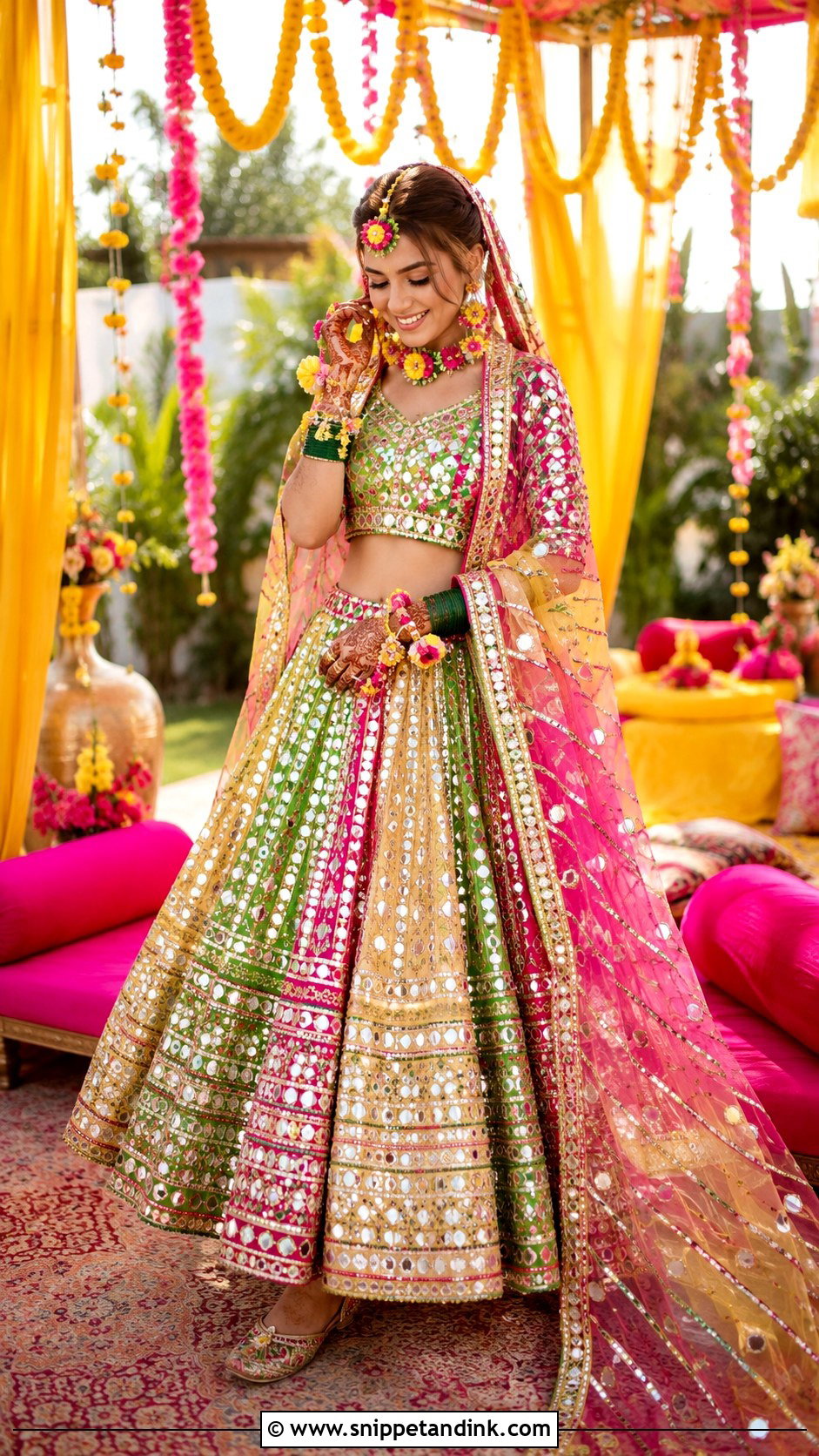
A Pakistani bridal mirror work lehenga is made for mehndi and mayun, when the tiny mirrors catch every flicker of light as you move. Green, yellow, orange, pink or turquoise give a true celebration palette. A short blouse or peplum over a flared lehenga keeps the balance, and a dupatta with gota, tassels or mirror borders adds more sparkle. I check that the mirrors are stitched with enough thread to survive dancing; loose ones fall off by the end of the night.
28. Pakistani Bridal Gota Work Dress
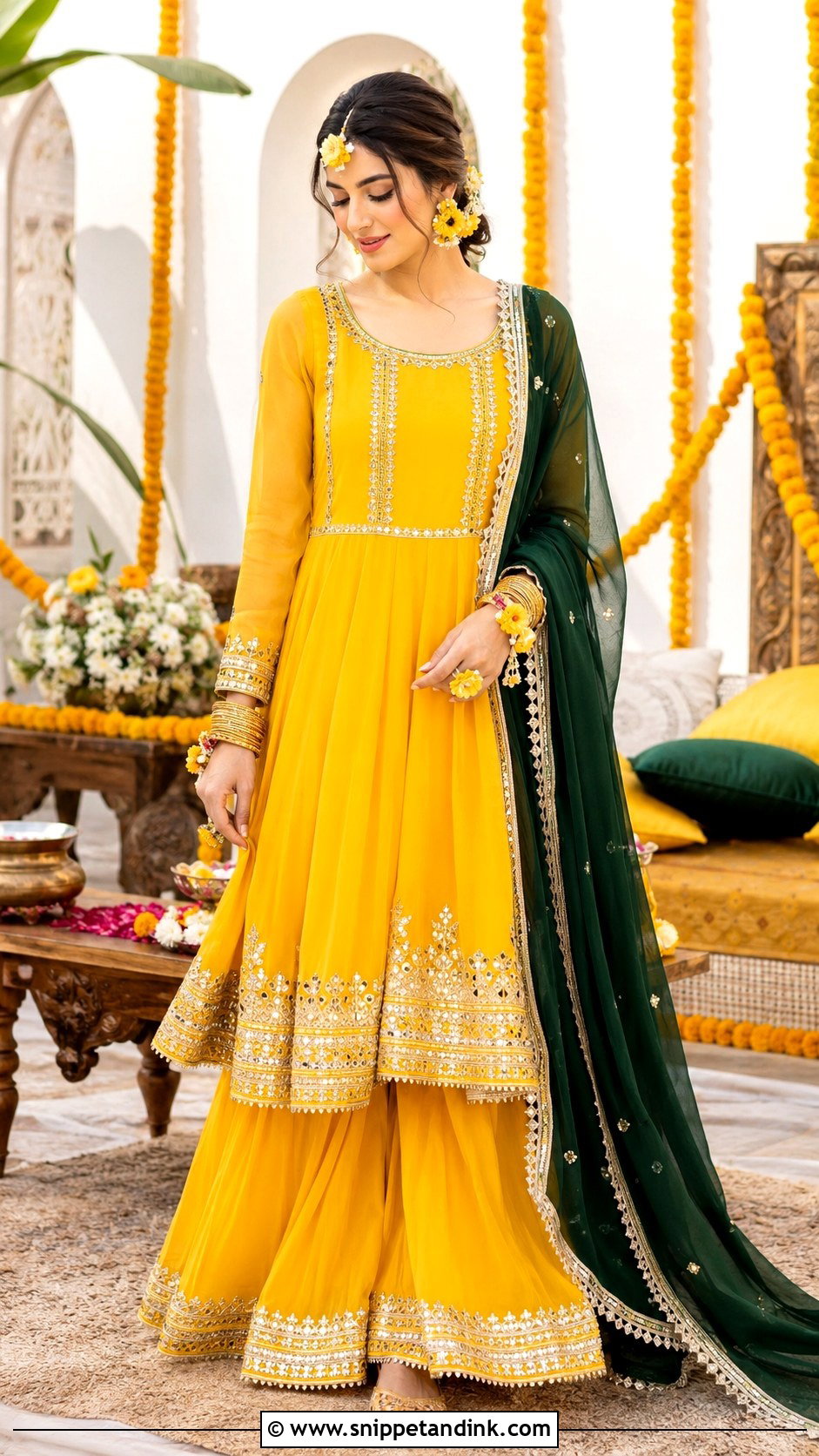
Gota brings shine and texture to pre-wedding events without stiffness, and it works on ghararas, shararas, lehengas and pishwas alike. Yellow, green, orange, pink or red suit different events. A gota border on the dupatta and hem has the most impact for the least weight. Khussas, bangles and fresh floral accessories complete a mehndi or mayun look. Gota can tarnish over time, so wrap it in cotton when you store it.
29. Pakistani Bridal Cape Lehenga
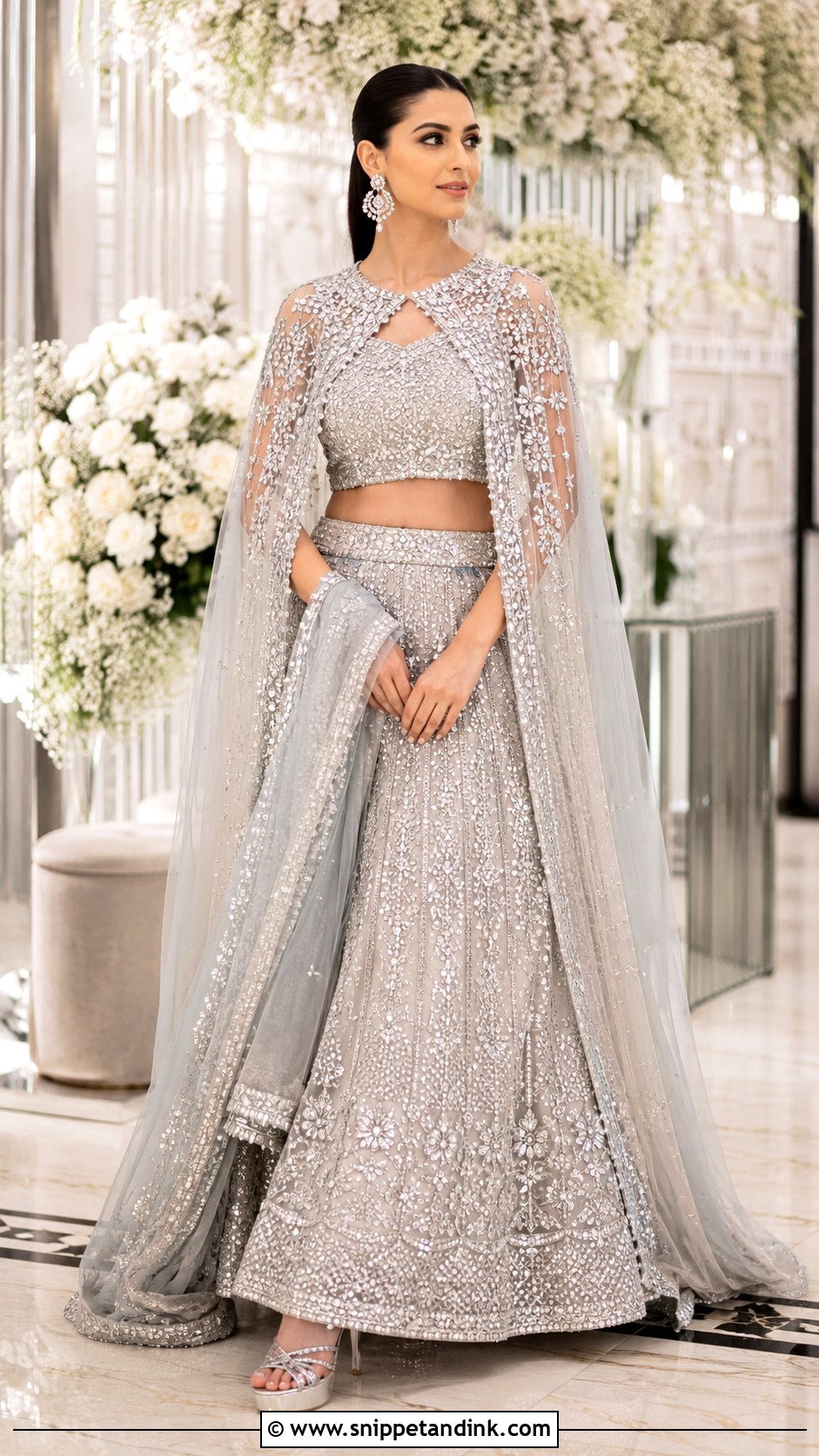
A cape can replace the dupatta or sit over it for extra drama, and it suits engagement, mehndi, walima or reception. A sheer embroidered cape with a lehenga and fitted blouse gives a balanced silhouette in pastels, champagne, silver or jewel tones. Keep the jewellery clean so the cape stays the focus, and secure it at the shoulders with small hidden snaps so it doesn’t slide back when you raise your arms. Heels, soft waves and glowing makeup finish it.
30. Pakistani Bridal Trail Gown
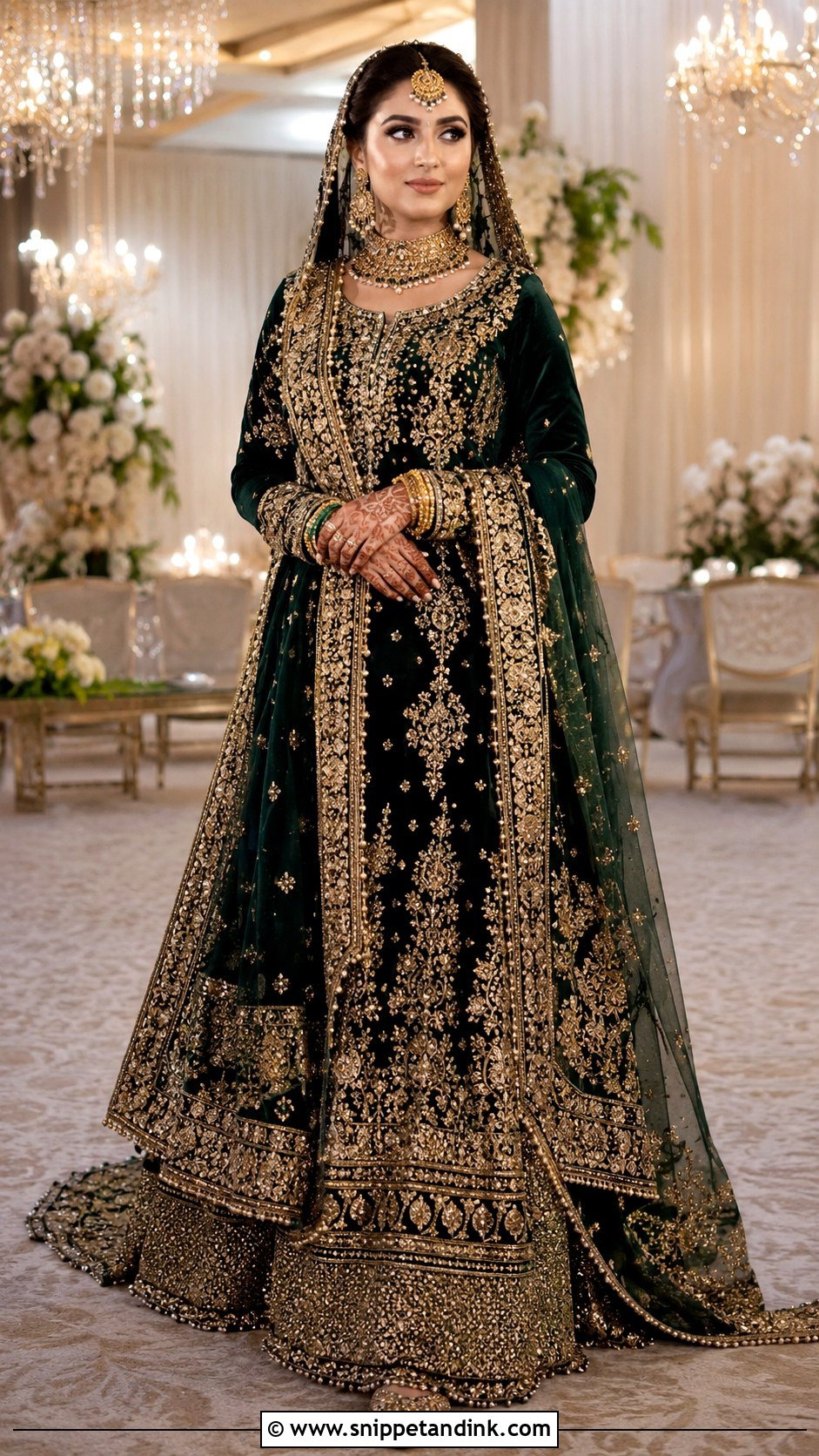
A trail gown brings drama to a walima or a grand reception. The silhouette is modern, but the embroidery, sleeves and dupatta keep it Pakistani. Keep the trail soft and moderate; a long, heavy trail needs someone to manage it every time you move. Champagne, ivory, silver, blush and powder blue are the usual shades, with pearl, crystal or thread work. A light dupatta over the shoulder or head adds tradition.
Velvet for December Nights, Organza for June Afternoons
Fabric is the first thing I ask about once I know the dates, because the wrong one makes a bride miserable no matter how good it looks on the hanger.
Winter functions
Velvet, jamawar and raw silk keep you warm and hold deep colour well. Wear a thin, fitted thermal layer under the blouse if the venue is outdoors or in a marquee, and choose a lighter dupatta so the outfit isn’t heavy everywhere.
Summer and humid weather
Organza, tissue, net and chiffon breathe far better than velvet. Ask for cotton linings rather than polyester, and dress shields under the arms. In monsoon humidity, silk can water-mark and heavy embroidery stays damp, so I keep a dry cloth and a handheld fan in the bridal bag and plan indoor photos as a backup.
Spring and autumn in between
These are the easiest months, and raw silk and tissue shine in them. Evenings can still turn cool, though, so for an outdoor mehndi I suggest a shawl or a velvet dupatta held in reserve rather than wearing velvet all night.
Plan Around the Ceremony, Then Around the Trend
Trends change every season, but your wedding photos stay. Plan each outfit around the ceremony’s mood, the venue, the season, your family’s traditions and the jewellery you’ll wear, then let personal taste choose between the options. From red lehengas and farshi ghararas to pastel walima gowns and quiet nikkah dresses, Pakistani bridal fashion has room for every kind of bride. The right wardrobe is the one you can move in, sit in and feel like yourself in, from mayun to walima.
You'll Like These Ideas:






Leave a Reply