
Picking an outfit for your sister’s haldi should be fun, and it gets easier once you accept two facts: you’ll be moving all morning, and you’ll get turmeric on you. The looks below are all complete outfits, from breathable cotton suits to light lehengas, modern drapes and Indo-Western sets, and none of them is heavier than what a bride would wear. Yellow is the obvious colour, though mustard, ivory, green, orange and florals belong at a haldi too. In my fittings I spend as much time on shoes, dupatta pins and earrings as on the outfit itself, because those are what fail first when you’re dancing and helping with the rituals. Use these as a starting point and adjust for your taste and the scale of the celebration.
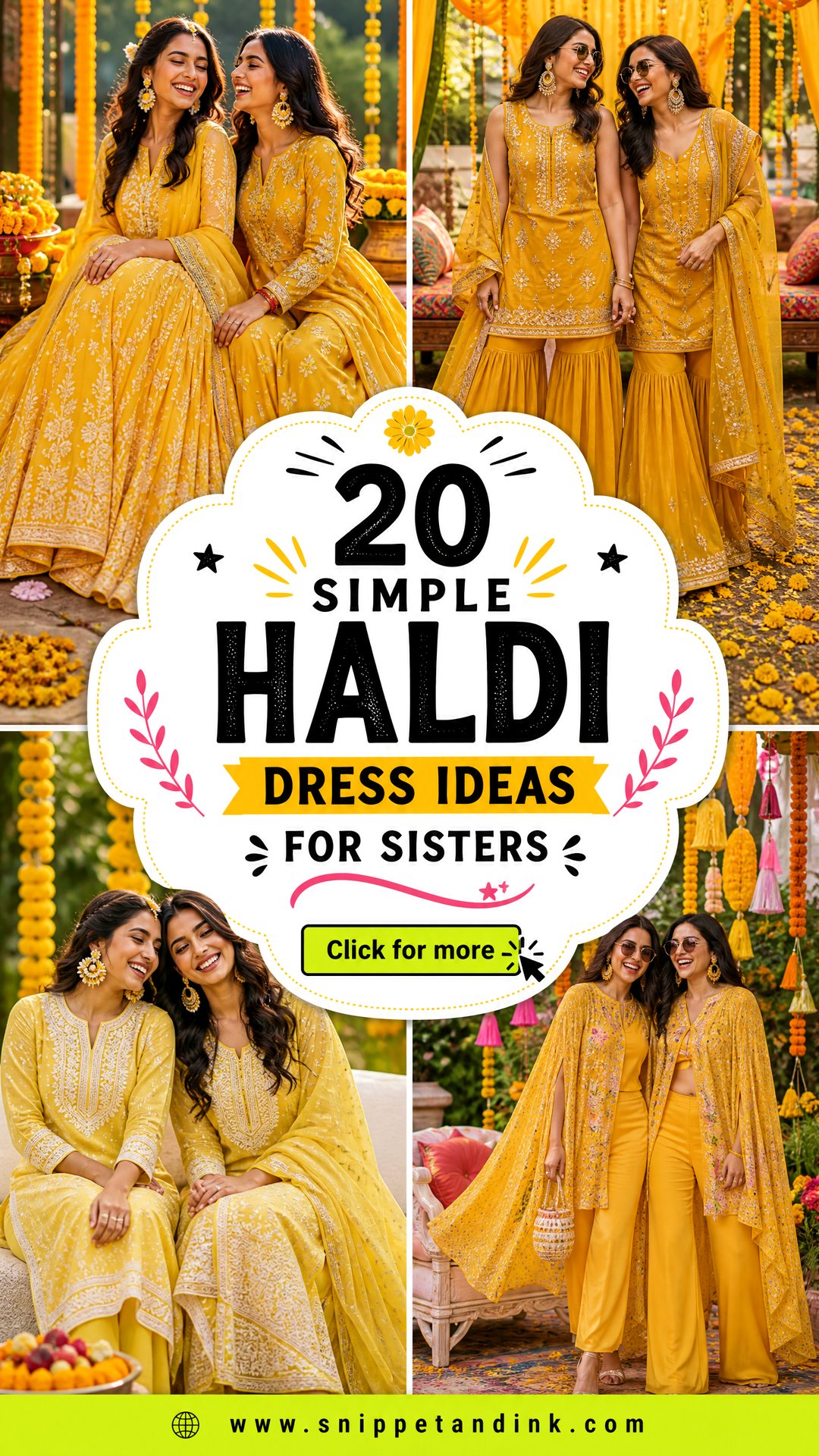
Should All the Sisters Match?
When a bride has two, three or more sisters and cousins dressing together, families often ask me whether everyone should wear the same outfit. My answer is usually no. Identical sets look like uniforms in photos and rarely suit every body and age in the group.
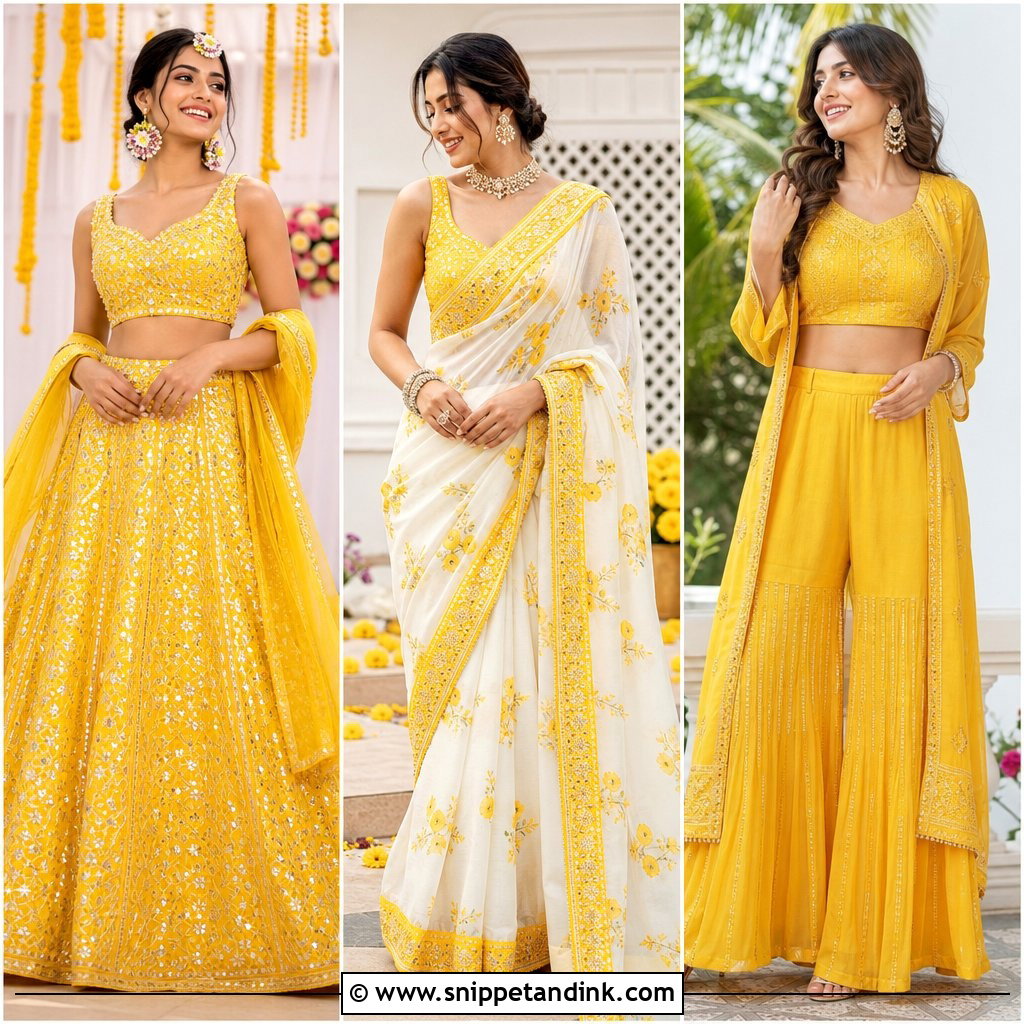
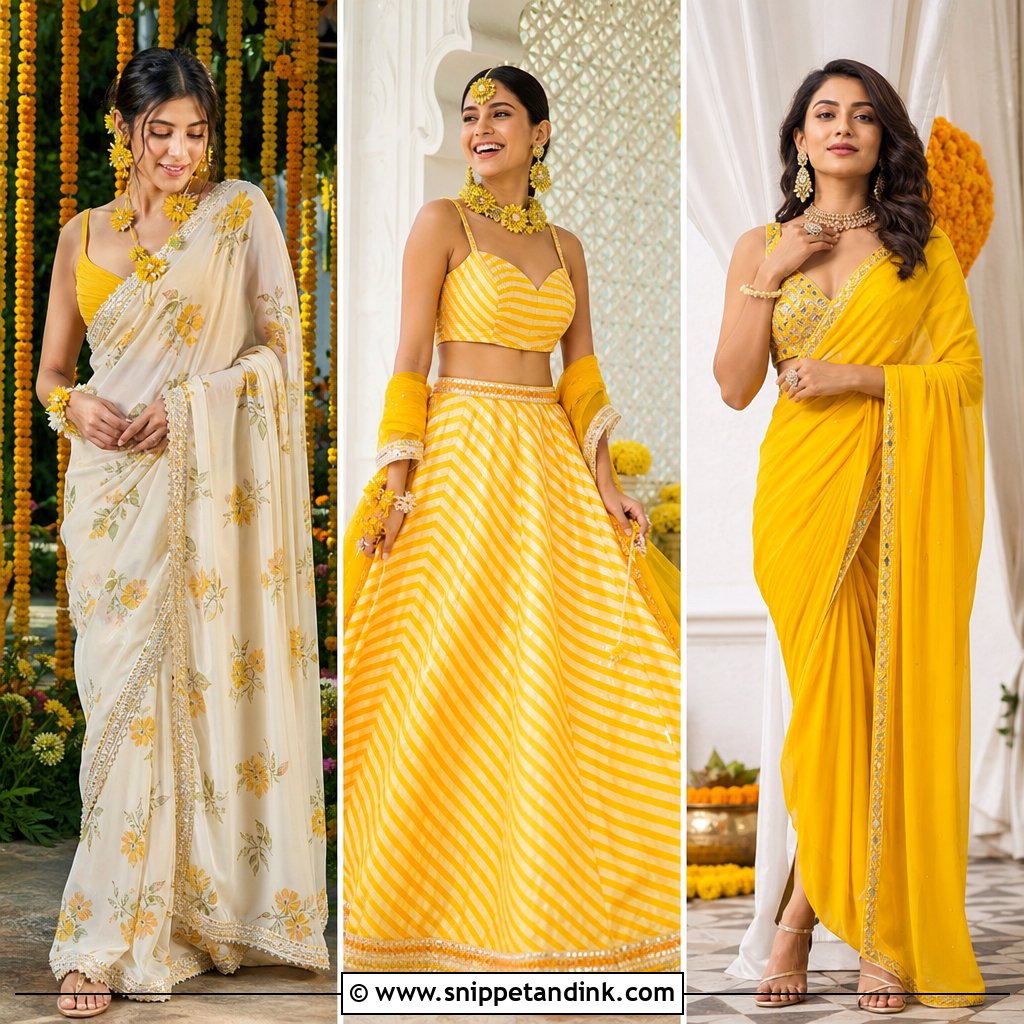
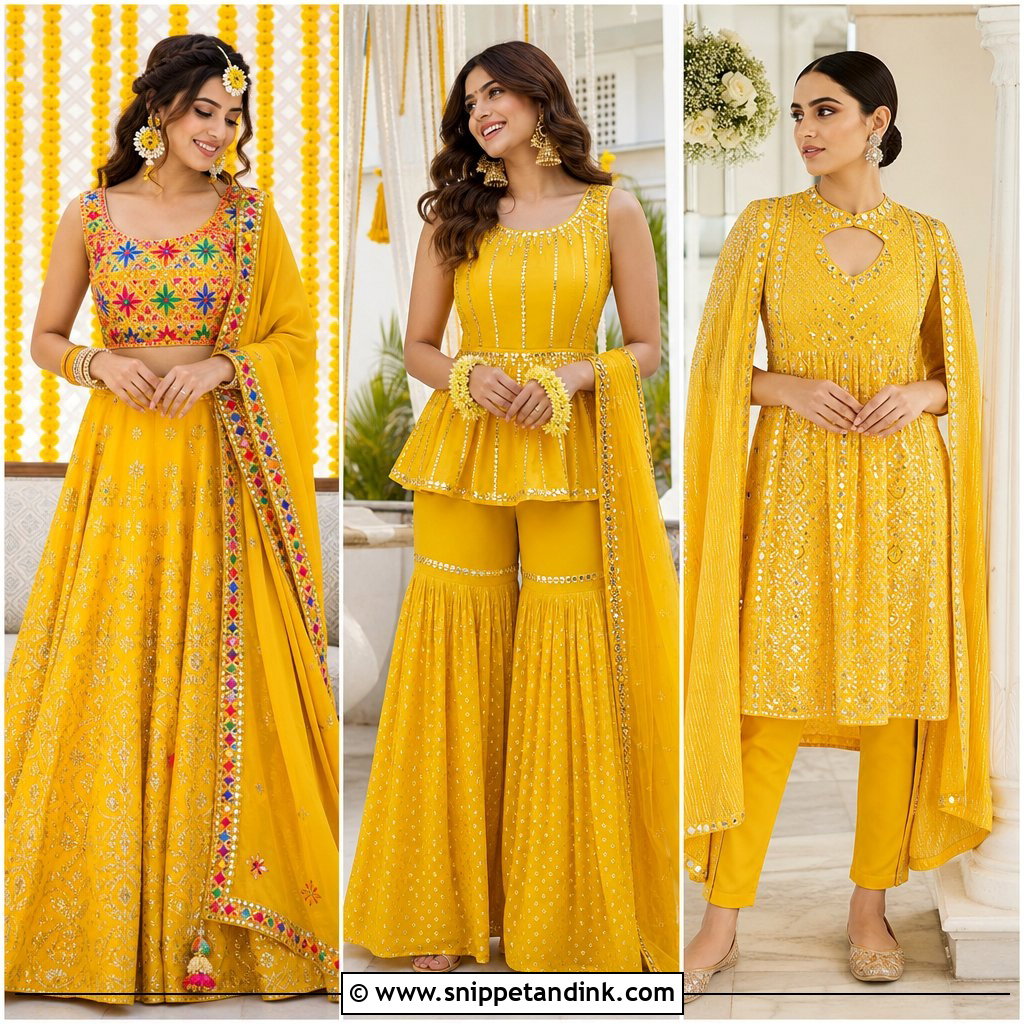
What works better is a shared thread with individual choices. Agree on one or two colours, say mustard and green, and let each sister pick her own silhouette: a sharara for one, a saree for another, a co-ord for the sister who hates skirts. Or keep the silhouette the same and vary the shade from lemon to marigold. Either way, the group reads as one family without anyone being squeezed into a cut that doesn’t work for her.
- Match the level of embellishment across the group, so no one looks underdressed beside a heavily mirrored cousin.
- Give the eldest or a sister with a role in the rituals something easy to kneel and bend in.
- Check outfits together in daylight before the day; dye lots and shades vary more than the screen suggests.
1. Yellow Cotton Anarkali Haldi Dress
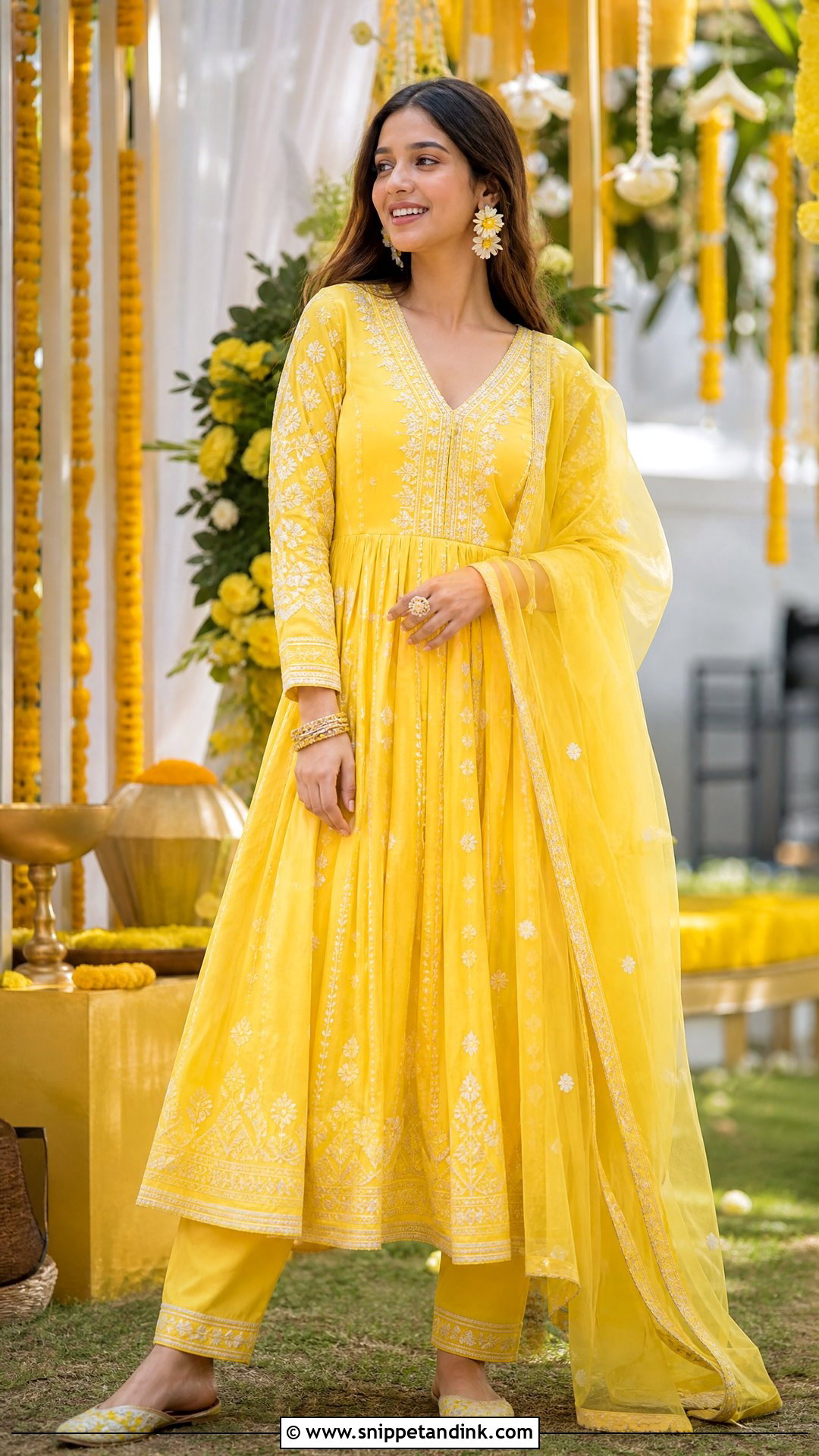
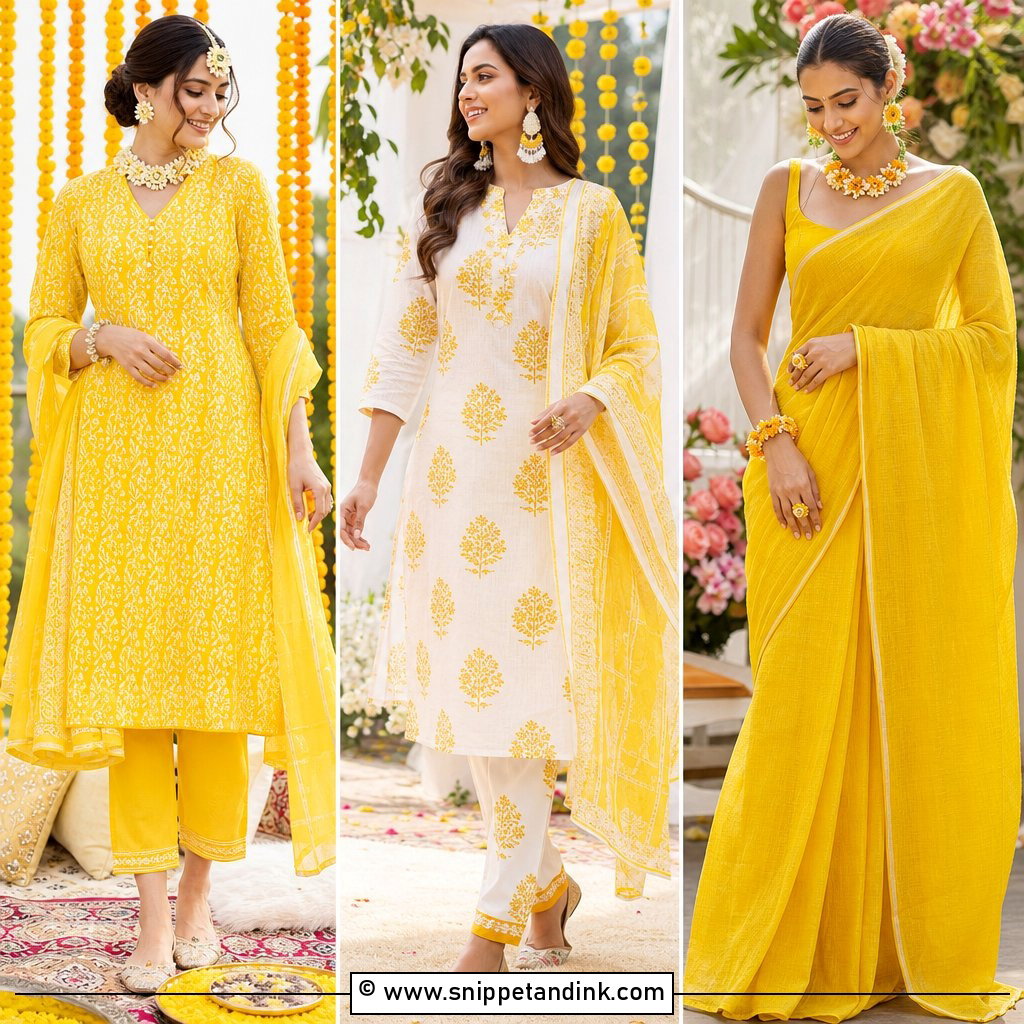
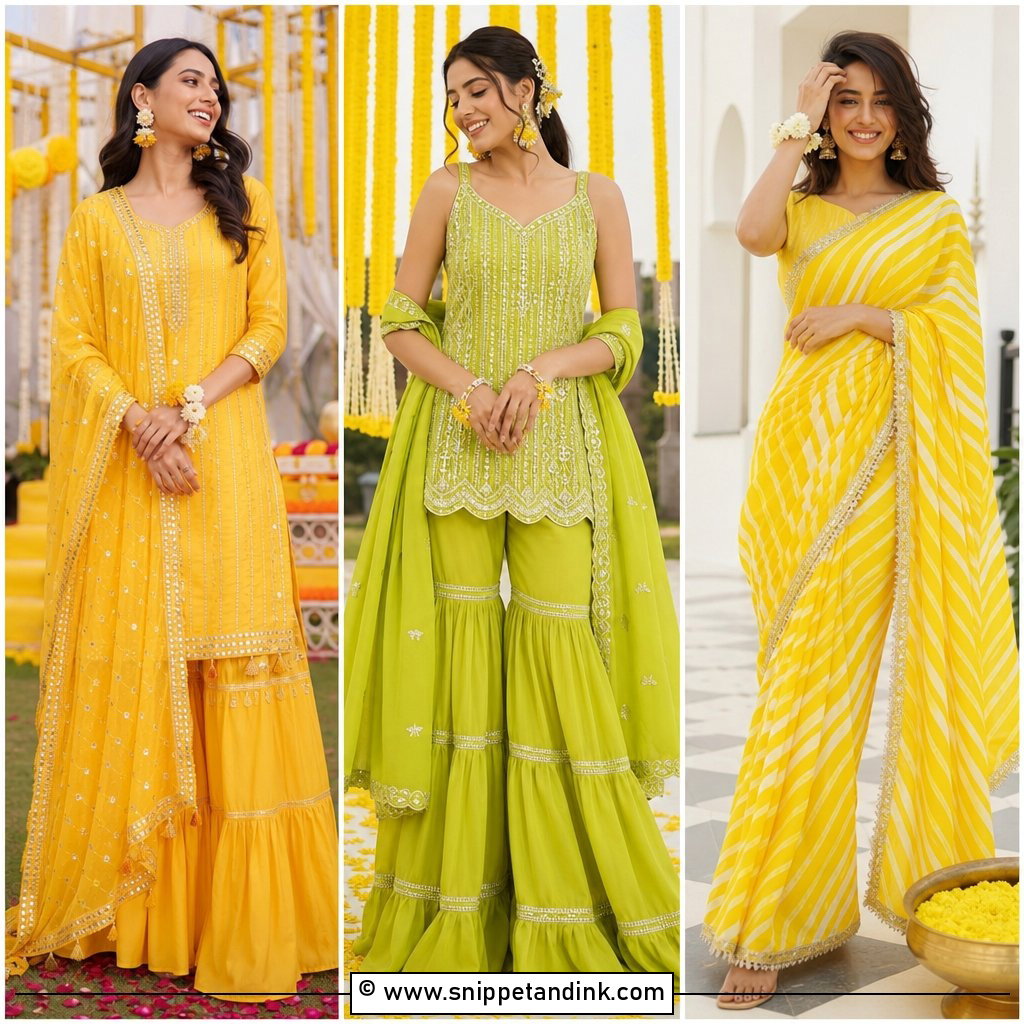
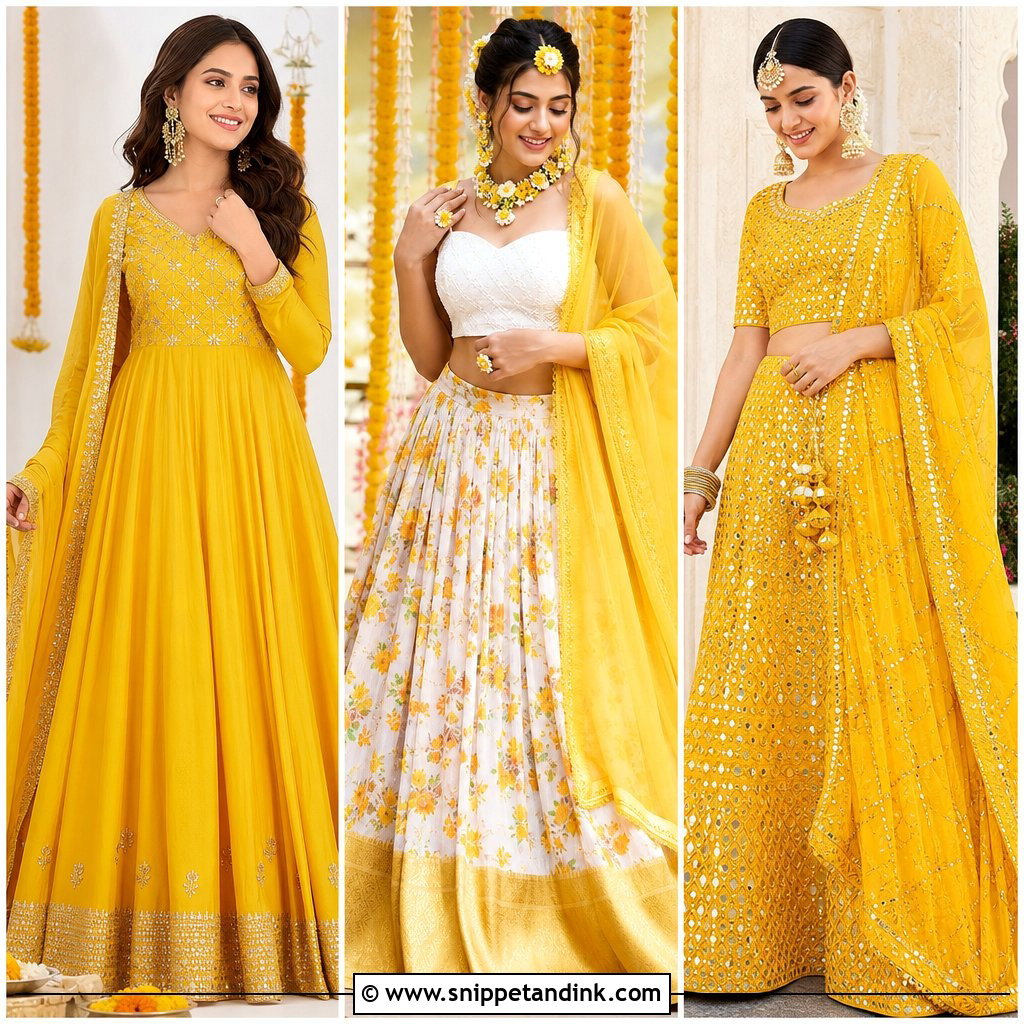
Start here if you want something traditional that won’t fight you. A yellow cotton Anarkali with a light flare, small floral motifs and a narrow gota border handles a warm outdoor morning far better than silk. Cotton or cotton-silk, with straight pants or churidar and an organza dupatta. Floral earrings, thin bangles and embroidered juttis add no weight. A low ponytail or loose braid. Lemon reads young and fresh; mustard reads richer and suits warmer skin. I check one thing at the try-on: the armhole. A tight Anarkali armhole means you can’t raise your arms to apply paste or dance.
2. Mustard Sharara Haldi Dress
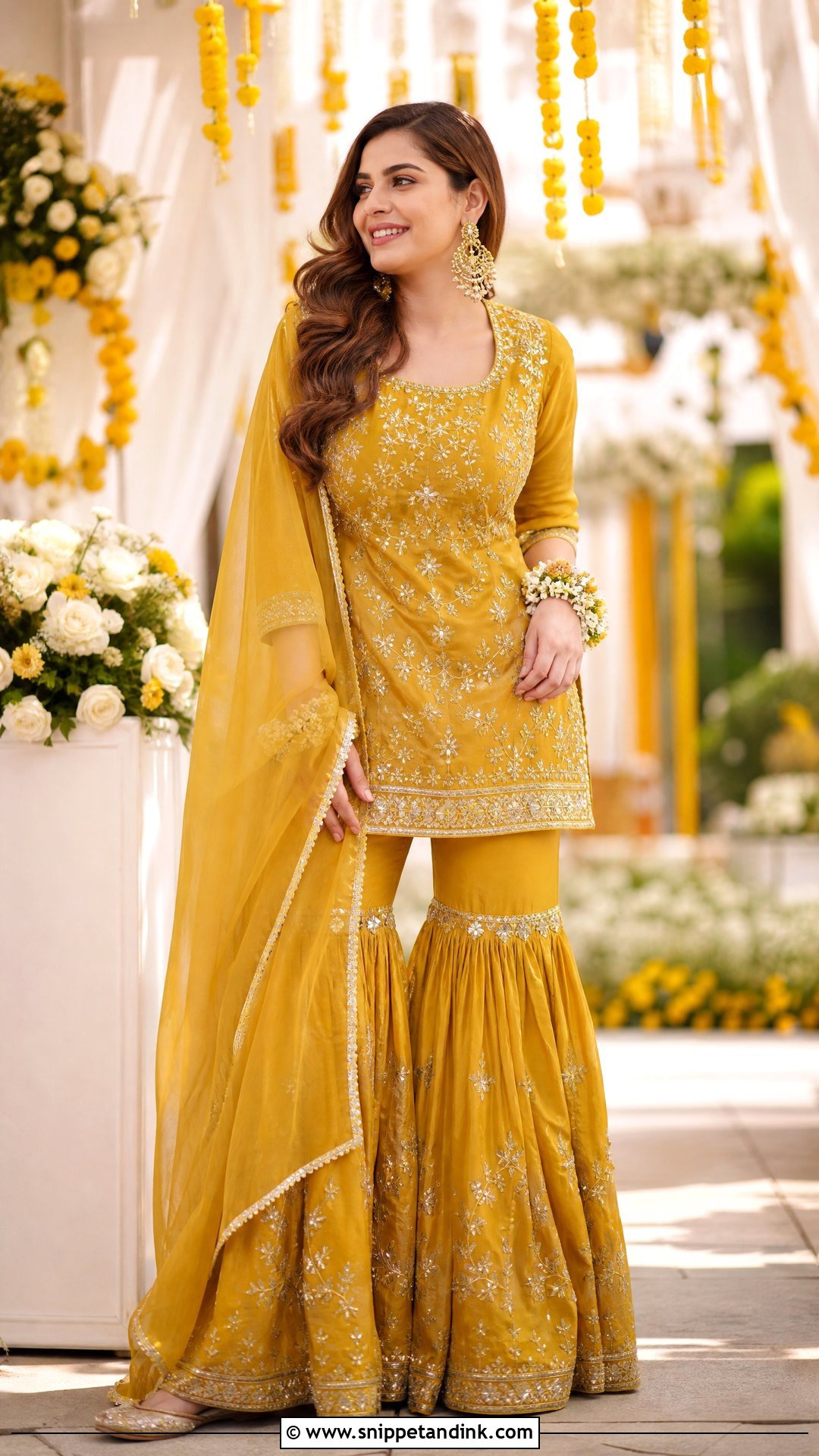
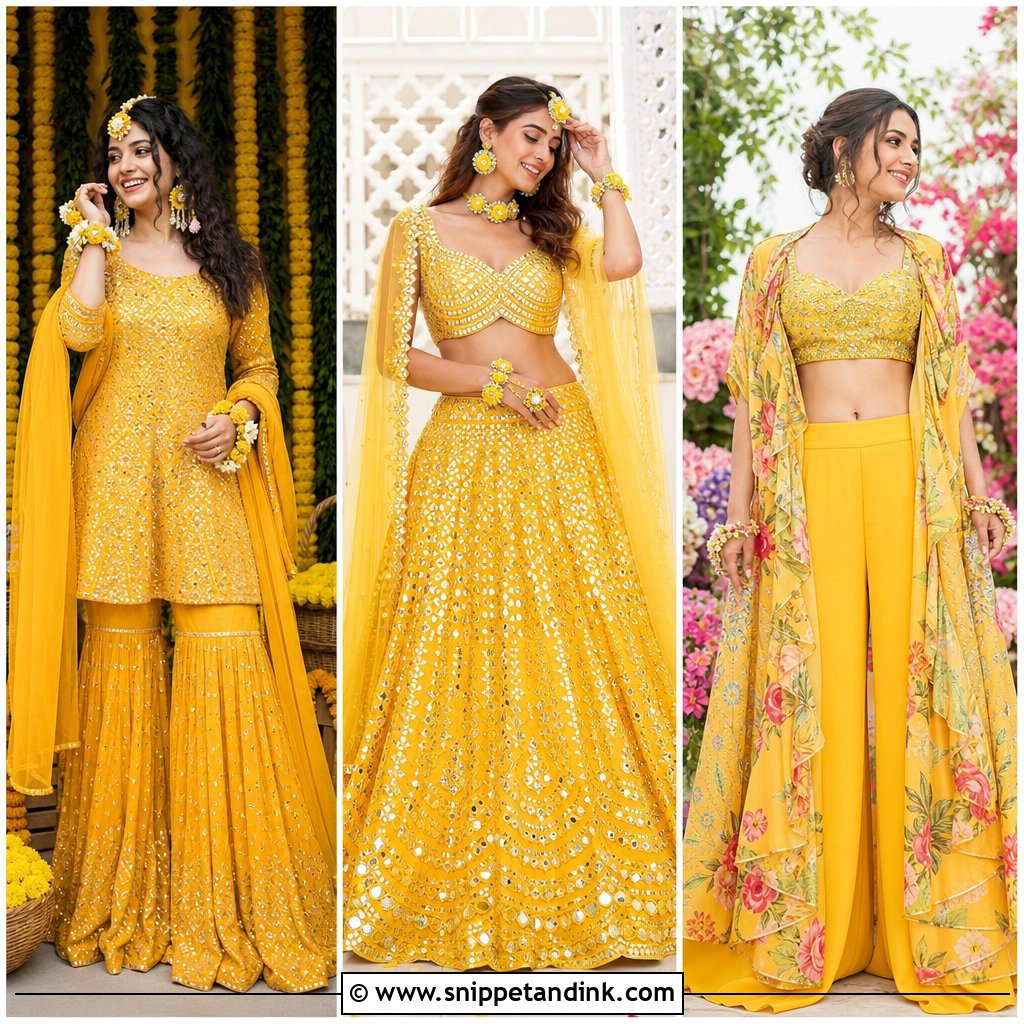
Want movement without formality? A mustard sharara set gives you exactly that. Wear a short kurti with light embroidery at the neck and sleeves over wide sharara pants, and a plain chiffon dupatta with a narrow border. Gold chandbalis, a few floral bangles and flat juttis keep you steady. If the bride is in bright yellow, mustard keeps you distinct while staying in the haldi palette. The kurti should end above the point where the sharara flares, otherwise the two volumes merge and you look shorter. Soft curls or a half-up style finish it.
3. Floral Lehenga Haldi Dress
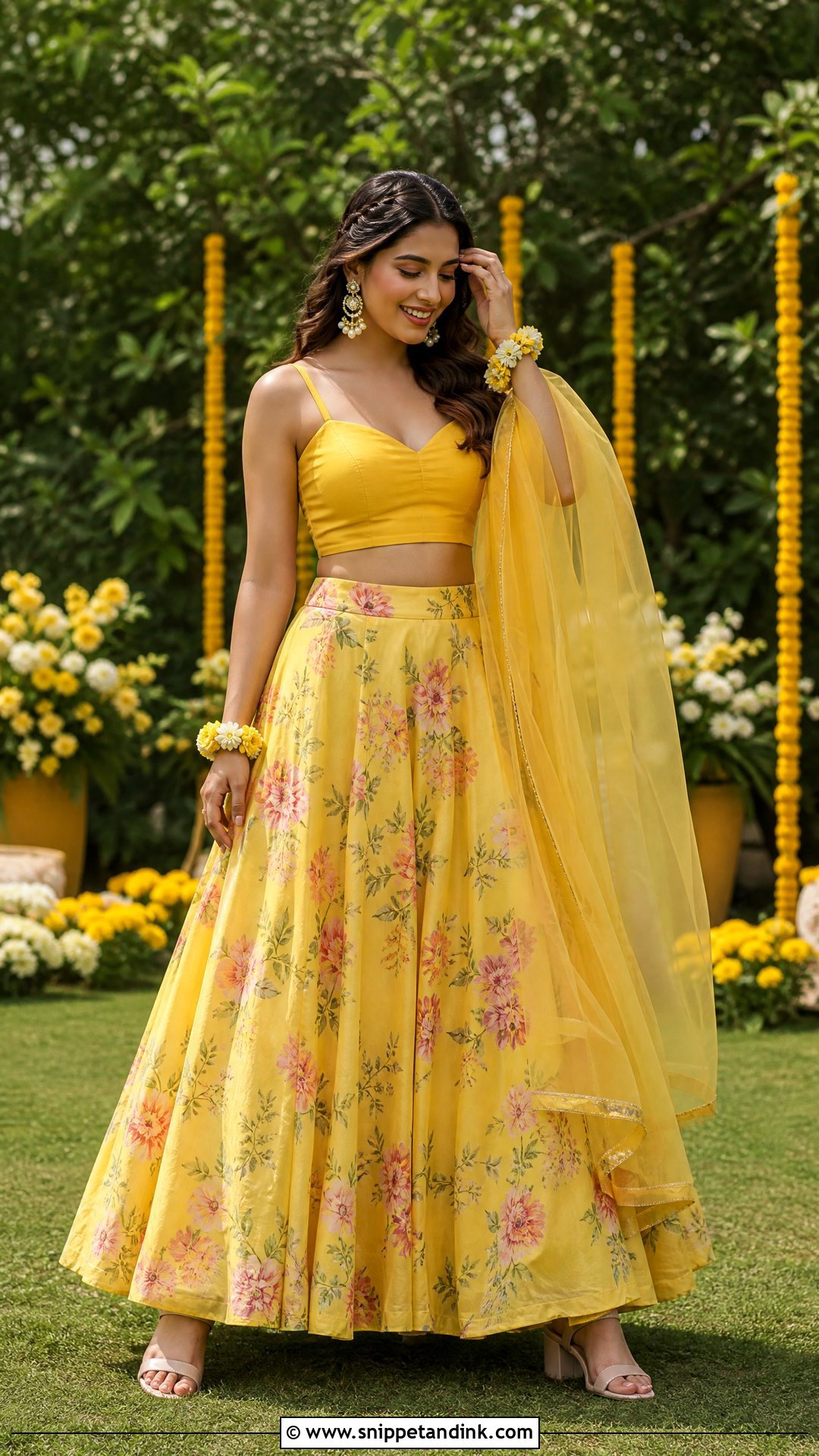
Small botanical prints on a light lehenga suit a garden haldi in daylight. Choose a yellow, ivory or pale green skirt with print rather than embroidery, a fitted solid blouse, and a net or organza dupatta over one shoulder. The print gives detail without weight. Pearl earrings, yellow flower bracelets and block heels or juttis complete it, and a braid with a few flowers echoes the print. My fitting note on printed lehengas: have the waistband taken in snugly with a hook and a drawstring, because cotton skirts relax and slide as the day warms up. Keep the hem short enough to walk on grass without lifting it.
4. White Suit With Yellow Dupatta Haldi Dress
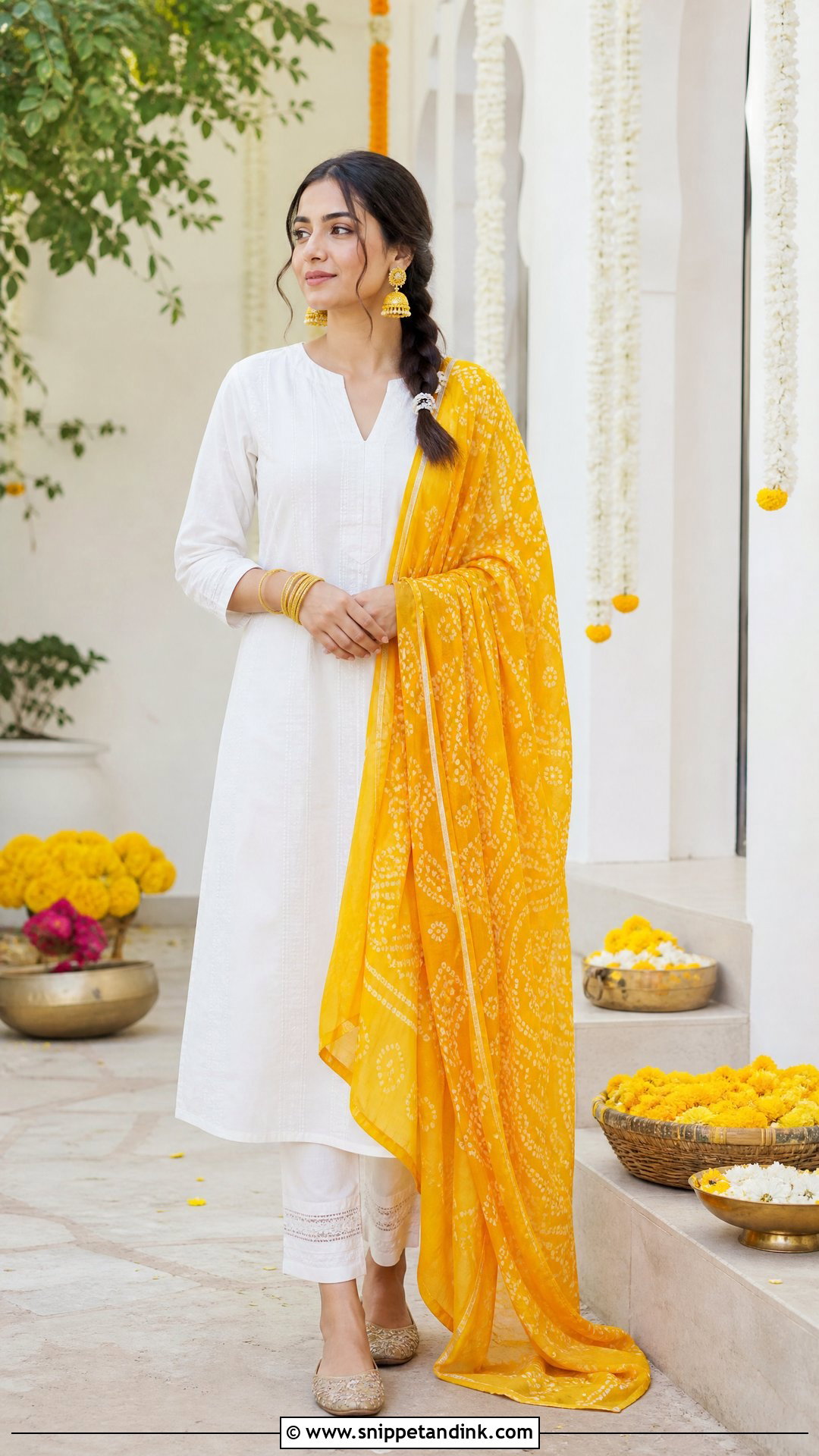
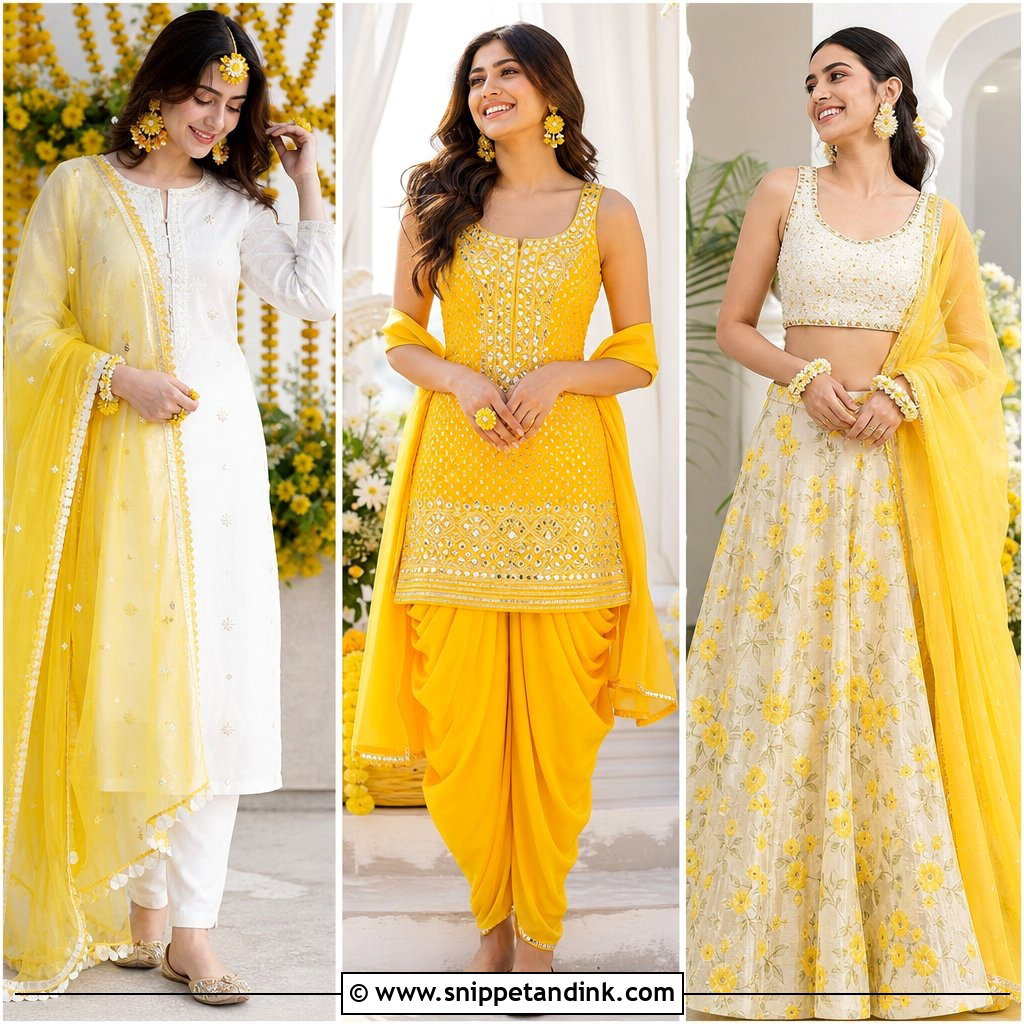
This one is all about the dupatta. Start with a plain white straight-cut kurta and ankle-length pants, perhaps with chikankari-style texture, tonal embroidery or scalloped edges. Then drape a yellow bandhani, leheriya or floral dupatta across both shoulders. Yellow jhumkas, slim bangles and neutral juttis finish it, with a sleek braid or low bun. Be realistic about white: turmeric will mark it, so wear it only if you’re happy with a few yellow splashes or the set is washable cotton. Against a sea of yellow, the white also gives the photographer a clean shape to find you in.
5. Yellow Organza Saree Haldi Dress
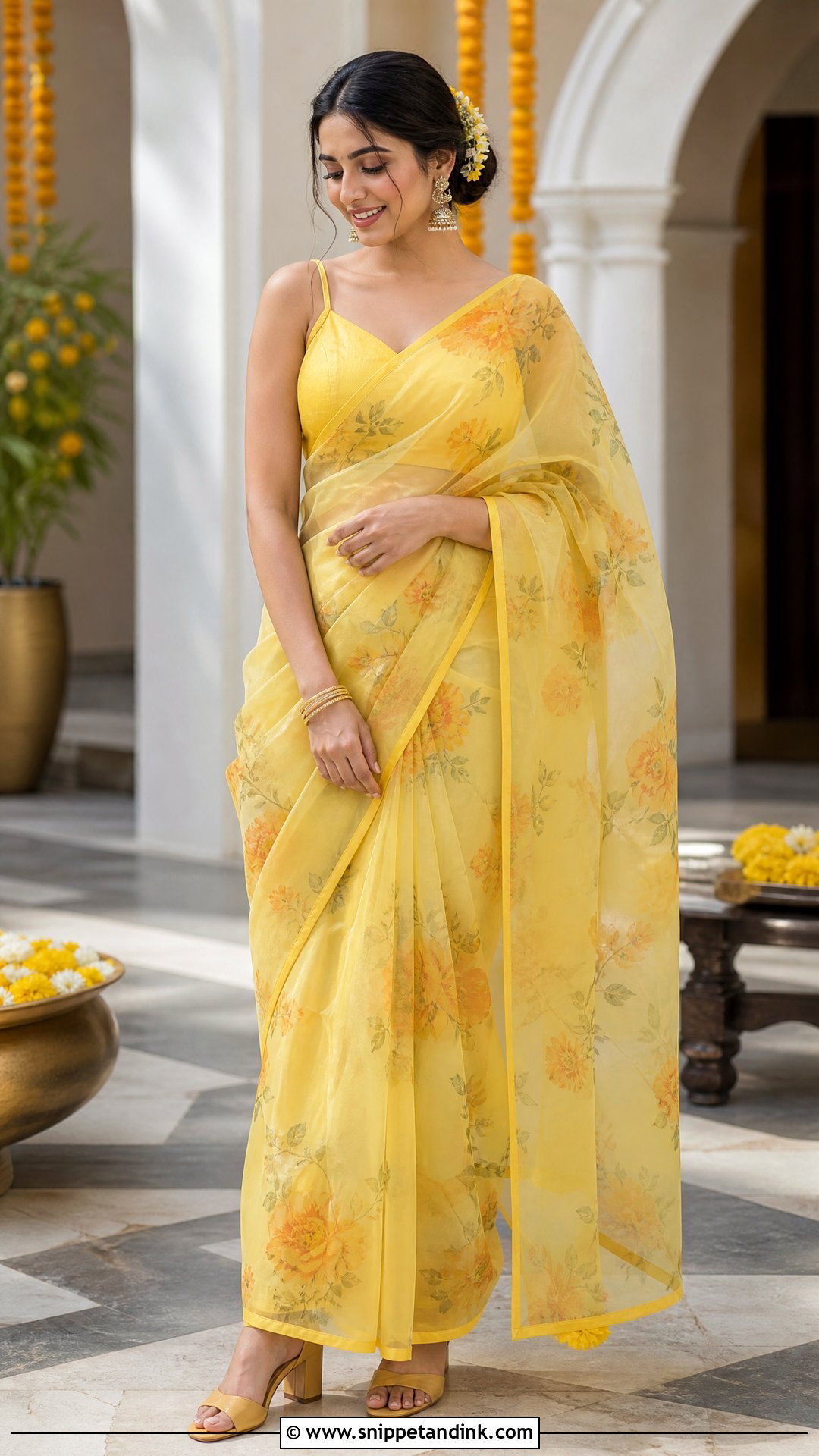
Organza is crisp, so a saree in it stands slightly away from the body and holds its pleats well, which is helpful on a long morning. It also scratches if the edges are unfinished, so I check that the border is soft and the blouse is lined. Choose a light yellow organza with a small print, embroidered border or scattered threadwork, and a matching blouse with a secure neckline and sleeves that let you lift your arms. Pin the pallu firmly at the shoulder. Delicate jhumkas, a stack of slim bangles and low block heels are enough, with a small floral accent in a bun or ponytail. Organza already has structure, so skip extra layers and heavy necklaces.
6. Yellow Crop Top And Palazzo Haldi Dress
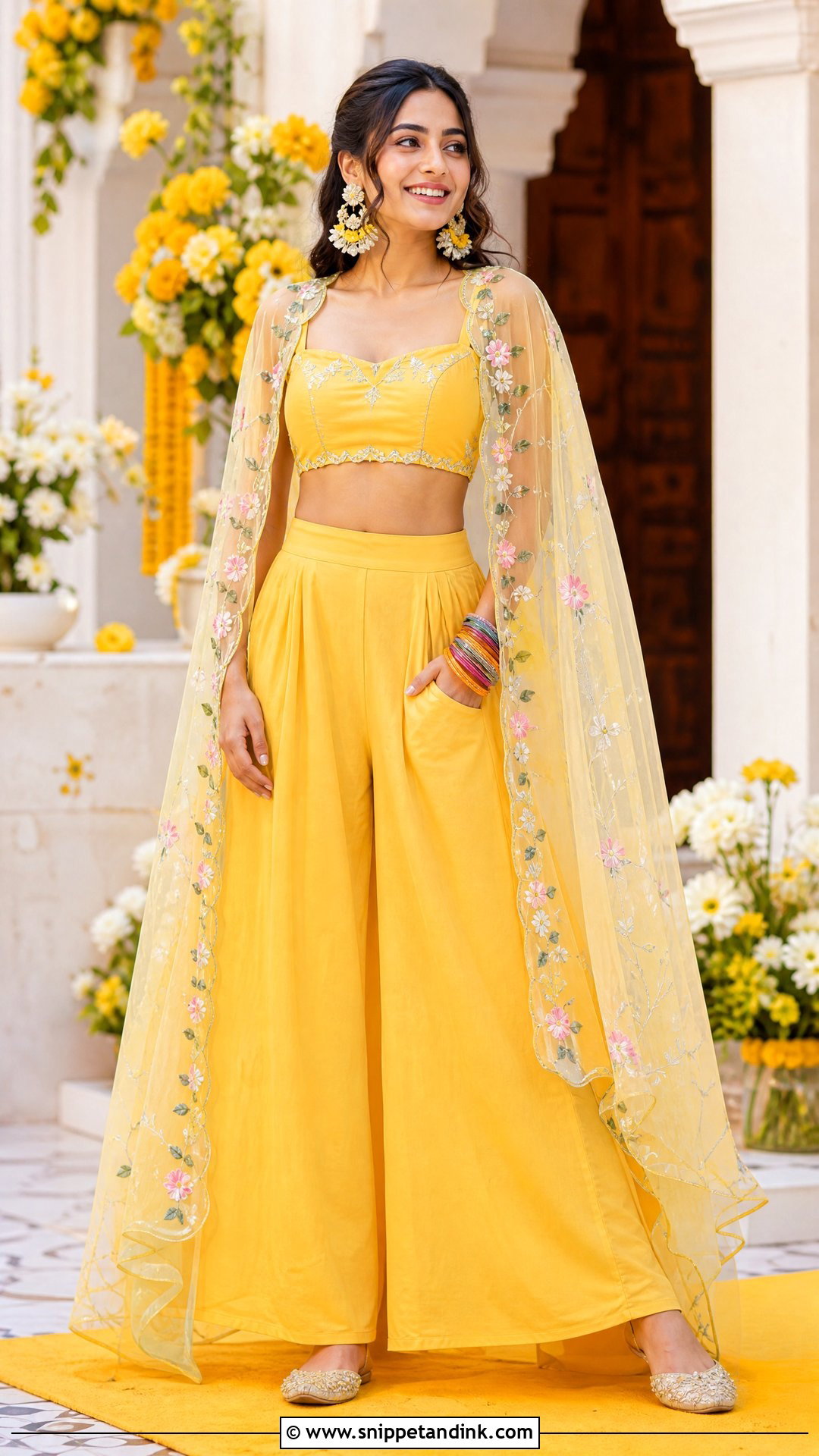
Wide palazzos are simply easier to manage than a long skirt when you’re on your feet. Wear a yellow crop top with short sleeves, a modest neck and light mirror or threadwork at the edges, over matching high-waisted palazzos. Add a sheer cape, short jacket or light dupatta if you want coverage. Statement earrings, a few coloured bangles and embroidered flats complete it, with a high ponytail or soft half-up style. Pick fabric with a little body, such as crepe or cotton-silk, because very thin palazzos cling to damp legs on a hot day. It’s the set for sisters who’ll be dancing and running errands in equal measure.
7. Yellow Bandhani Skirt Haldi Dress
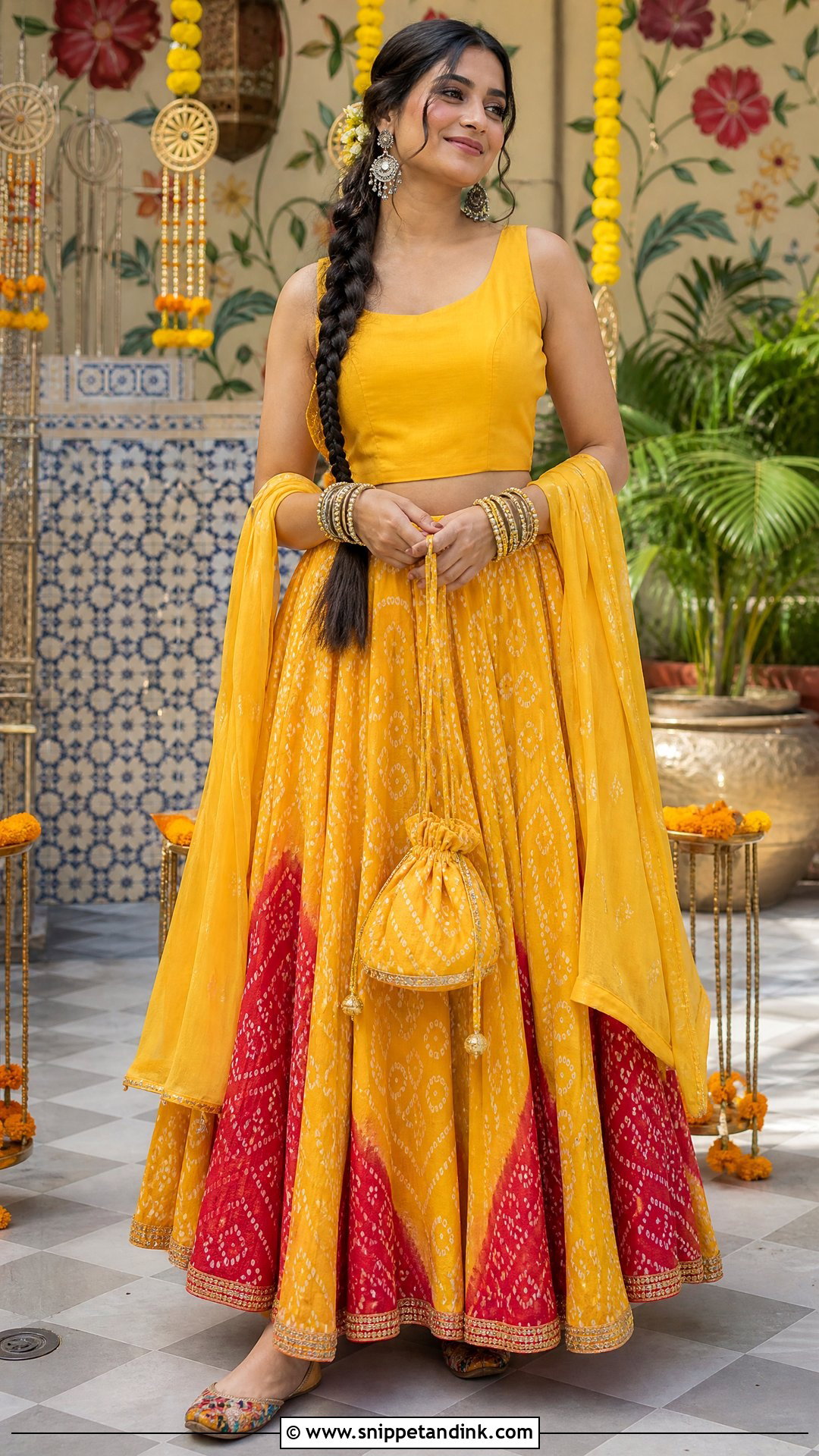
Bandhani gets its dots from tiny tied sections resisting the dye, and a skirt in it brings that folk character instantly. Choose a flared yellow or mustard skirt with white, red or green dots, then keep the top quiet: a plain fitted blouse or short kurti in a coordinating colour. A solid dupatta pinned on one shoulder is optional. Oxidized silver earrings make it casual and folk; gold makes it dressier. Juttis and a small potli bag that holds your phone and safety pins keep you practical, and a textured braid suits the skirt’s relaxed mood. The plain top is what stops the outfit competing with the bride.
8. Peplum Kurti And Dhoti Pants Haldi Dress
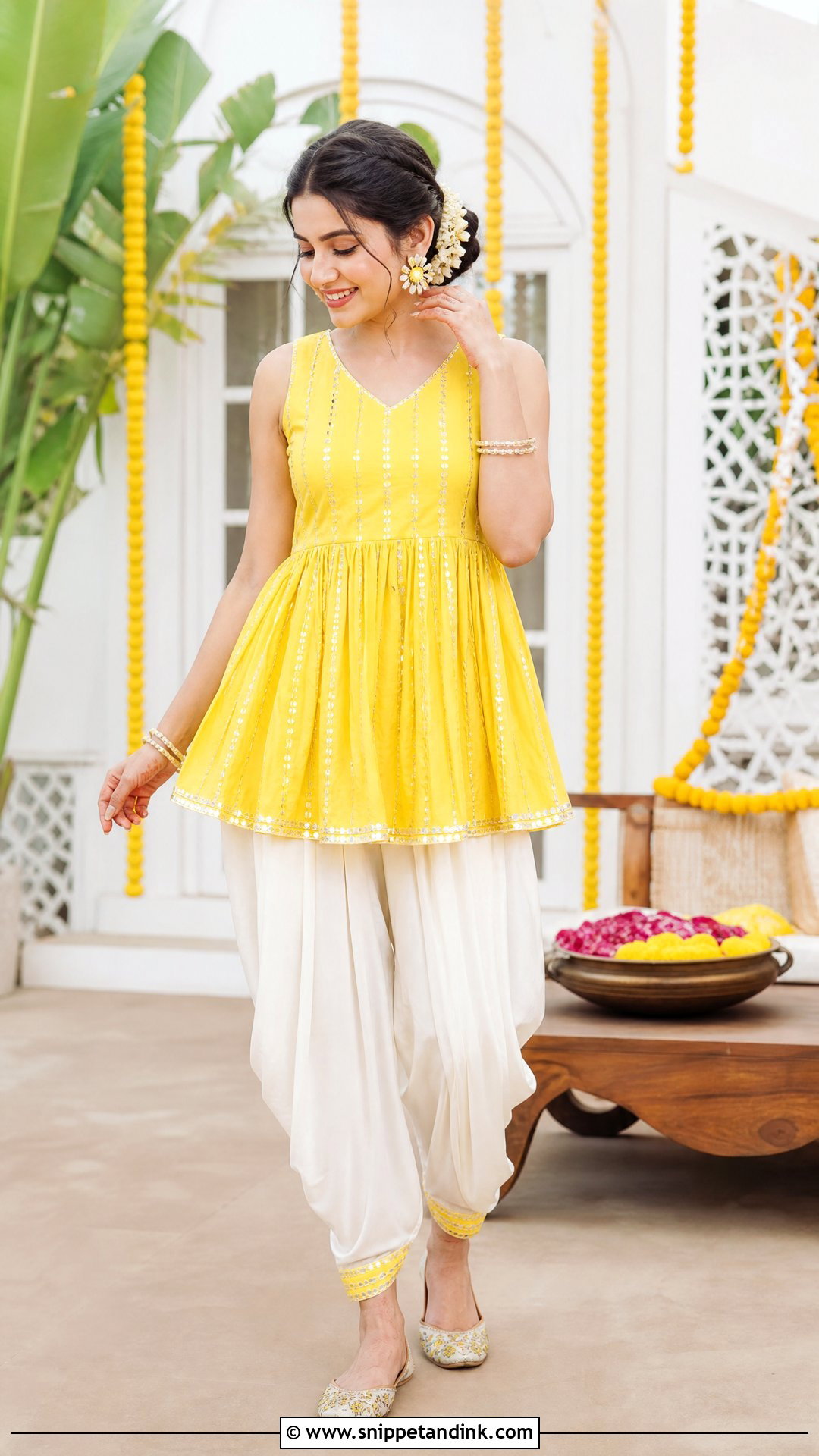
A peplum kurti paired with dhoti pants looks modern but keeps a traditional root. Choose a short yellow peplum with a fitted waist and minimal mirror work or gota, and ivory, mustard or yellow dhoti pants in a soft fabric that drapes rather than puffs. A long dupatta gets in the way when dancing, so use a short cape or none. Floral studs, stacked bangles and juttis with a back strap or firm fit complete it, with a neat ponytail or braided bun. I always ask clients to squat at the fitting, because dhoti pleats that are stitched too tight pull at the crotch the moment you sit on the floor.
9. Yellow Chikankari Kurta Haldi Dress
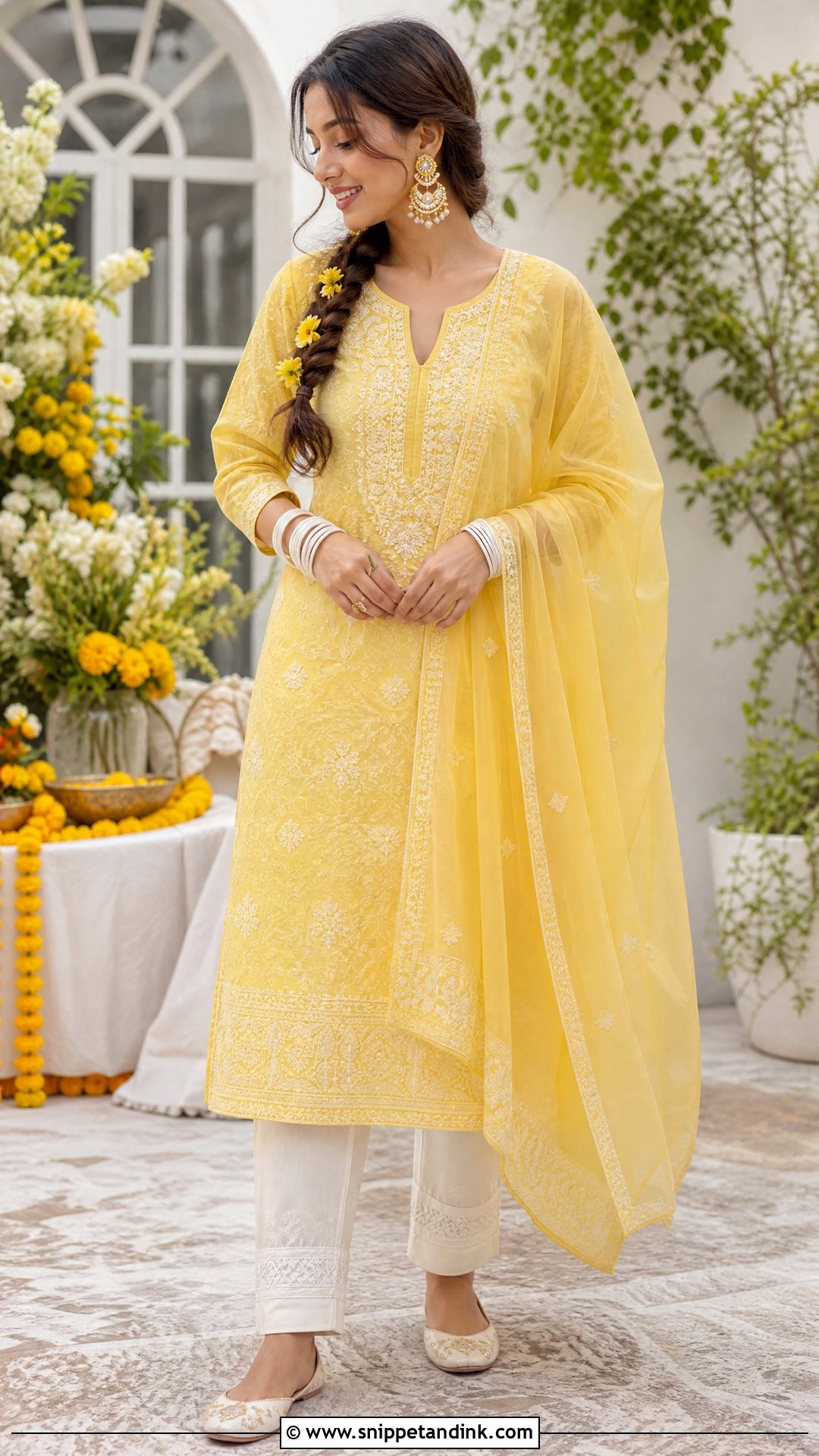
For a small, relaxed haldi, nothing beats chikankari for comfort. The hand embroidery is usually worked on soft cotton or mul, so it breathes and feels light all morning. Pair a knee or calf-length yellow kurta with straight white pants for contrast. Tonal threadwork is quieter; white threadwork shows more detail. Add a light chiffon dupatta, pearl jhumkas, white bangles and embroidered flats, with a loose braid or soft ponytail. A narrow fabric belt can shape a relaxed kurta. Keep accessories plain so the embroidery stays the focus. Hand-wash chikankari gently in cold water afterwards; it’s the outfit on this list you’ll wear again most.
10. Pre-Draped Saree Haldi Dress
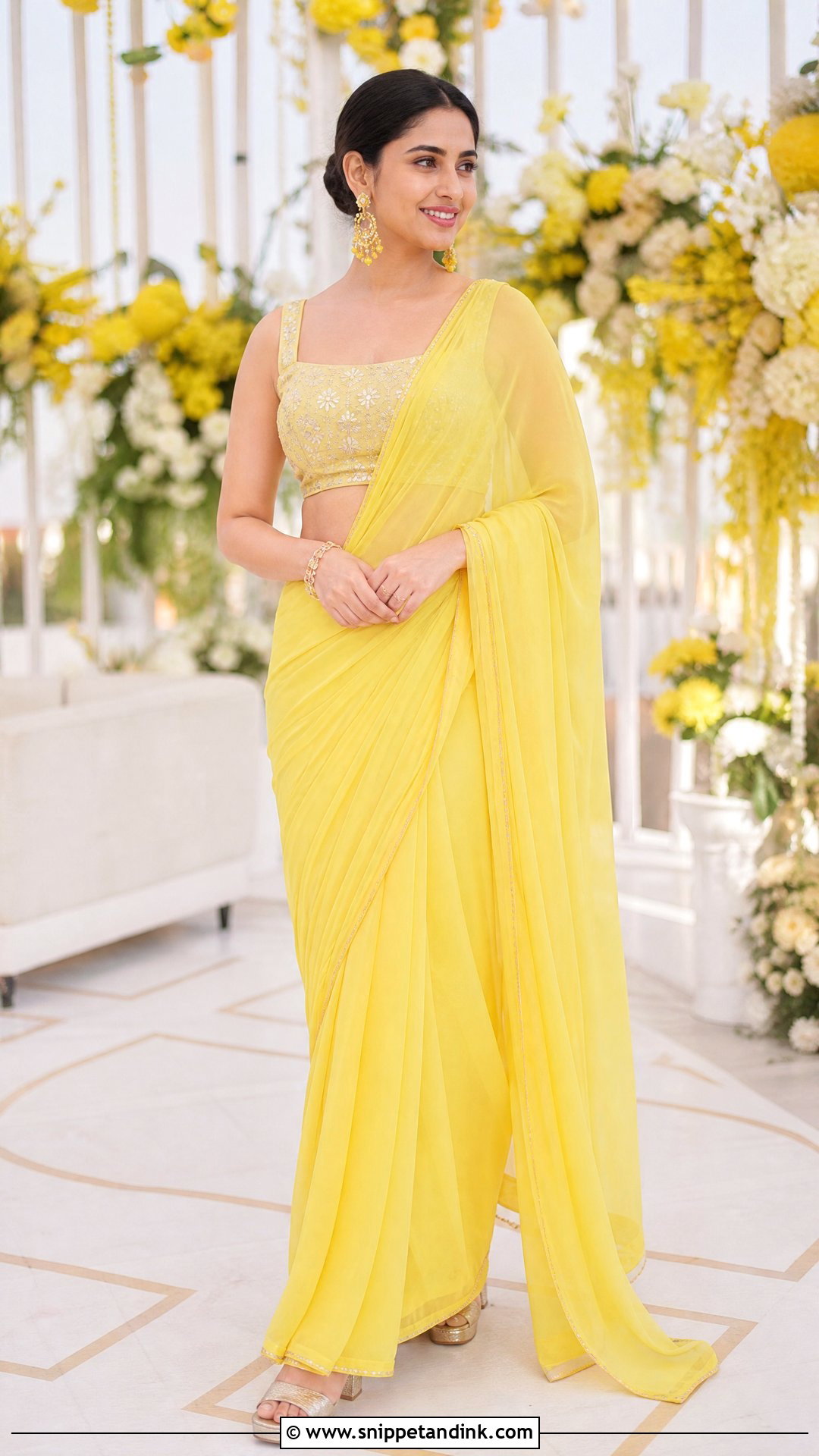
When you love the saree look but want freedom, a pre-draped yellow saree takes away the anxiety. Choose stitched pleats and a pallu you can pin at the shoulder, and a simple blouse with fine embroidery, small mirror details or a clean square neck. Medium earrings, a decorative bracelet and low block heels complete it, with a sleek low bun or polished ponytail. Chiffon or georgette moves best when you dance. Because the pleats are sewn, you won’t spend the ceremony re-tucking them. Order it slightly long and have it hemmed with your actual shoes on.
11. Yellow Mirror Work Garara Haldi Dress
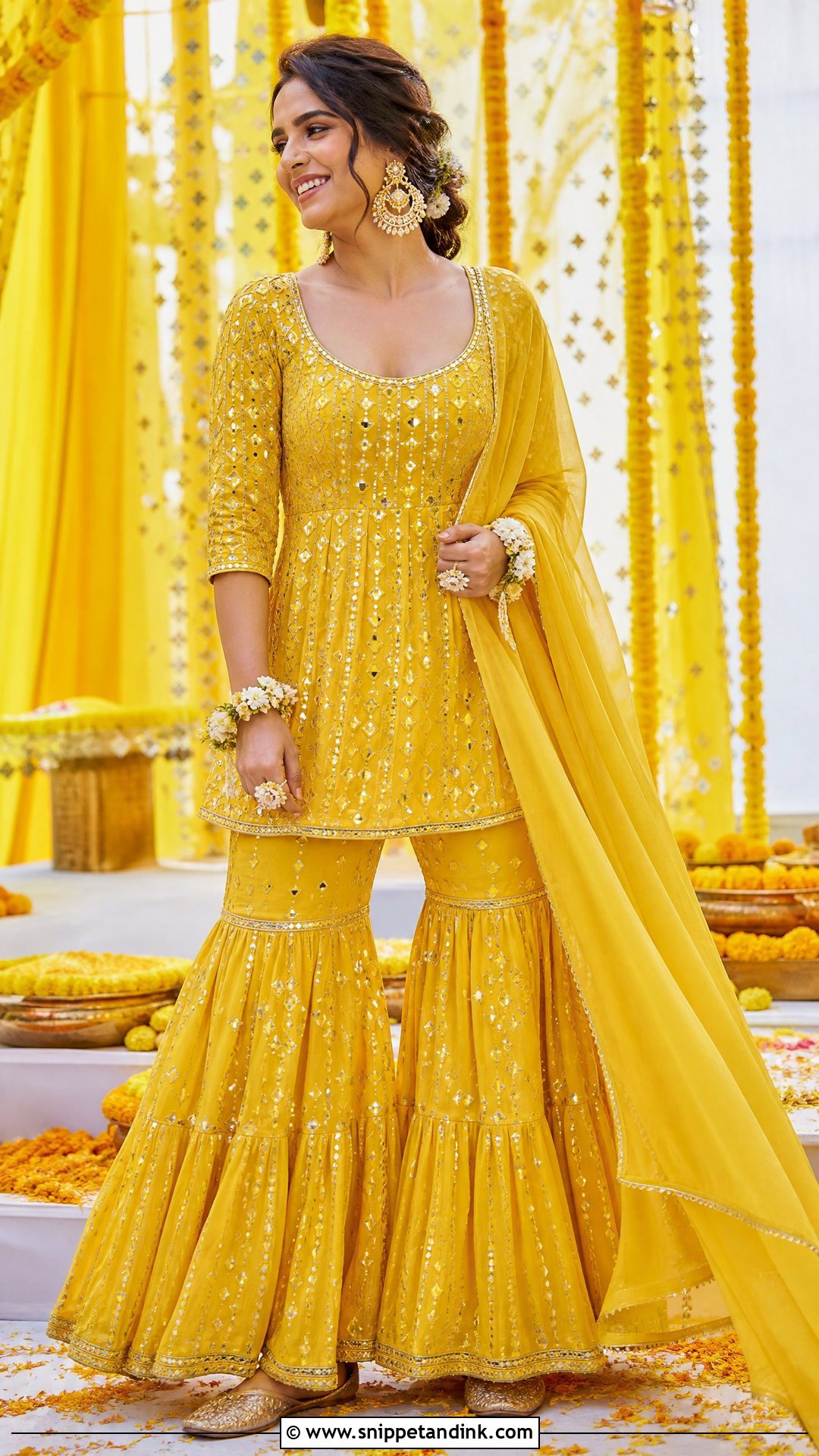
Mirror work is made for daylight, which bounces off even small mirrors. Choose a short yellow kurti with restrained mirror work at the neck, cuffs and hem, and a flared garara with one decorative band near the knee rather than embellishment everywhere. A plain chiffon dupatta balances it. Small chandbalis, floral bracelets and metallic or neutral juttis are plenty, with a side braid or soft waves. Run your hand over the mirrors before buying: rough edges snag dupattas and fine hair alike. Garara pants gather at the knee, so they’re easy to walk in but take some care when you sit cross-legged.
12. Yellow Cape And Pants Haldi Dress
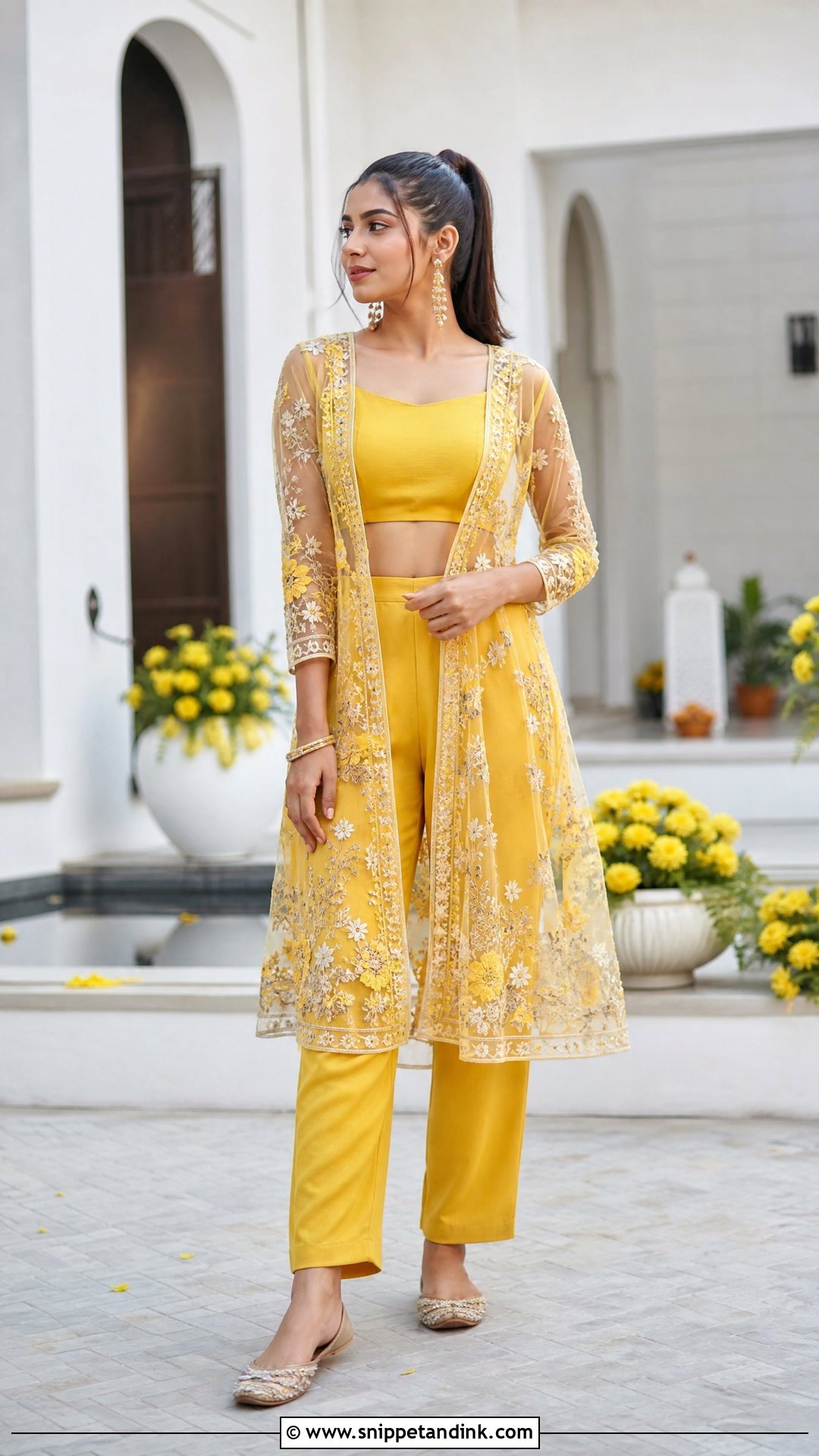
A cape turns simple separates into an outfit without any dupatta drama. Wear a fitted yellow blouse or sleeveless kurti with straight pants, then add a sheer knee-length cape with embroidered edges, light tassels or scattered mirrors. Keep the inner pieces plain. Long earrings, a slim stack of bangles and low block heels or embellished flats complete it, and a clean ponytail lets the cape show. Tailored pants make it a good choice if you don’t wear skirts. Check the cape’s armholes before you buy; the dancing-friendly ones have side openings or generous sleeves that don’t pin your arms to your sides.
13. Yellow Floral Maxi Haldi Dress
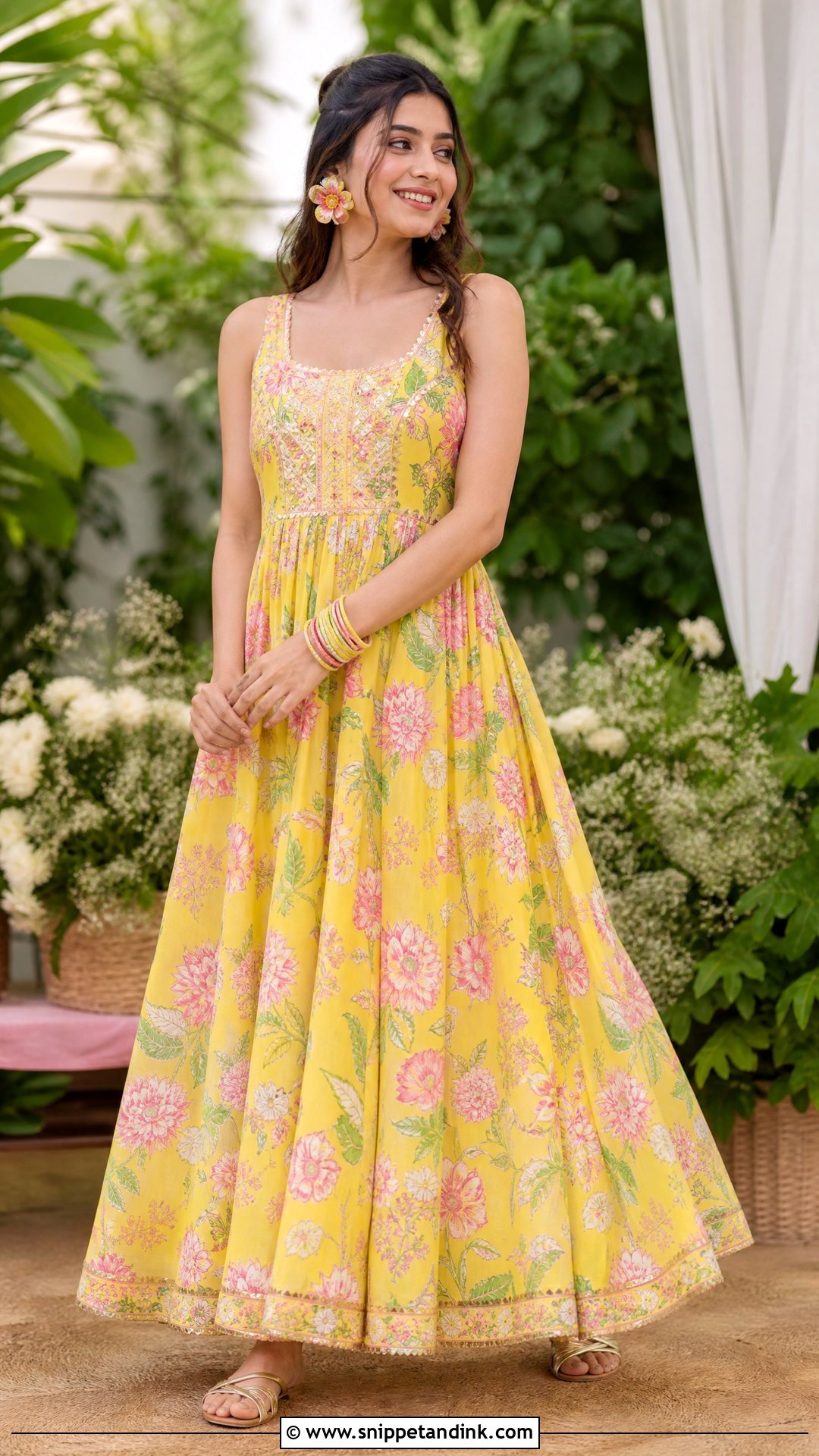
If you want a single piece and no layers, a floral maxi is the simplest outfit on this list. Look for a yellow base with white, pink, orange or green flowers, a defined waist, a modest neck and a gently flared skirt. Add an organza dupatta only if the family expects a traditional touch; otherwise floral earrings, coloured bangles and metallic flats are enough. A loose braid or half-up style suits the print. Cotton, crepe and georgette all breathe. A maxi that touches the floor on a lawn will be wet and yellow at the hem by noon, so take it up an inch. It’s my pick for an outdoor lawn ceremony.
14. Yellow Jacket Lehenga Haldi Dress
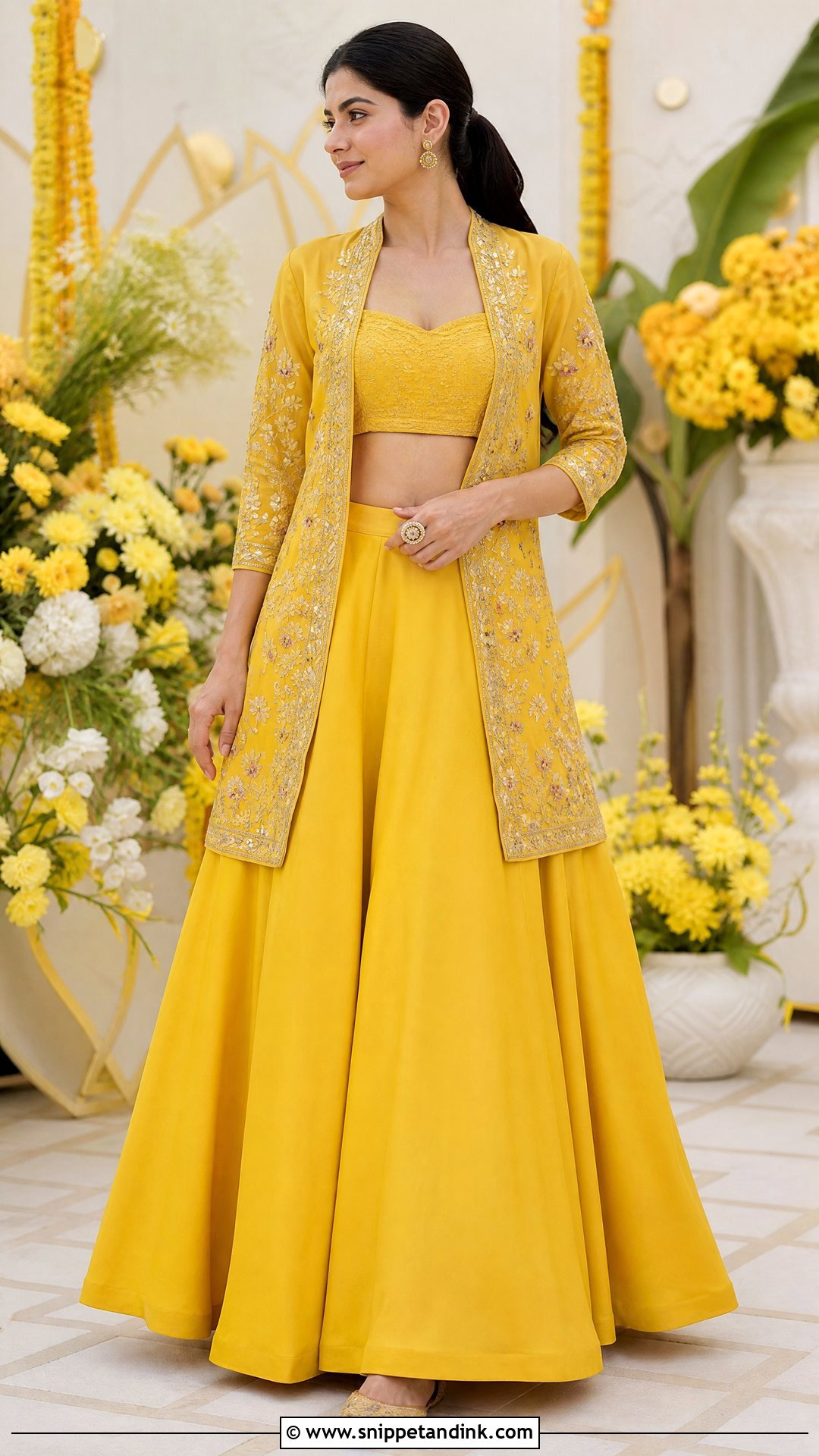
A jacket gives a lehenga extra coverage and some structure. Start with a plain yellow flared skirt and fitted matching blouse, then layer a light embroidered jacket ending at the waist, hip or knee. Open-front jackets show the pieces underneath and feel less bulky. Small earrings, one statement ring and wedges or juttis are enough, with a sleek low ponytail to offset the extra volume. Skip the dupatta, since the jacket is already the decorative piece. Jackets get warm quickly, so I look for unlined georgette or cotton for a summer haldi and keep the heavier ones for winter weddings.


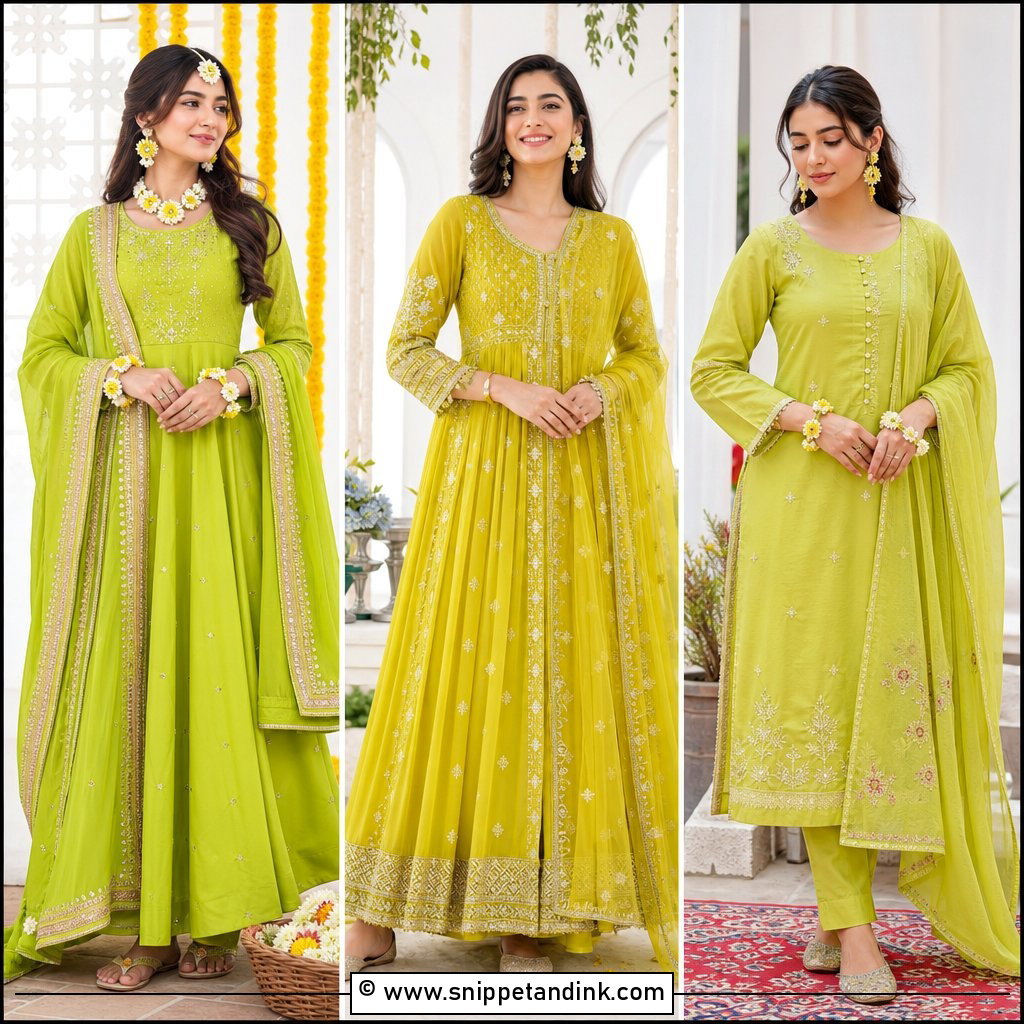
15. Green And Yellow Salwar Suit Haldi Dress
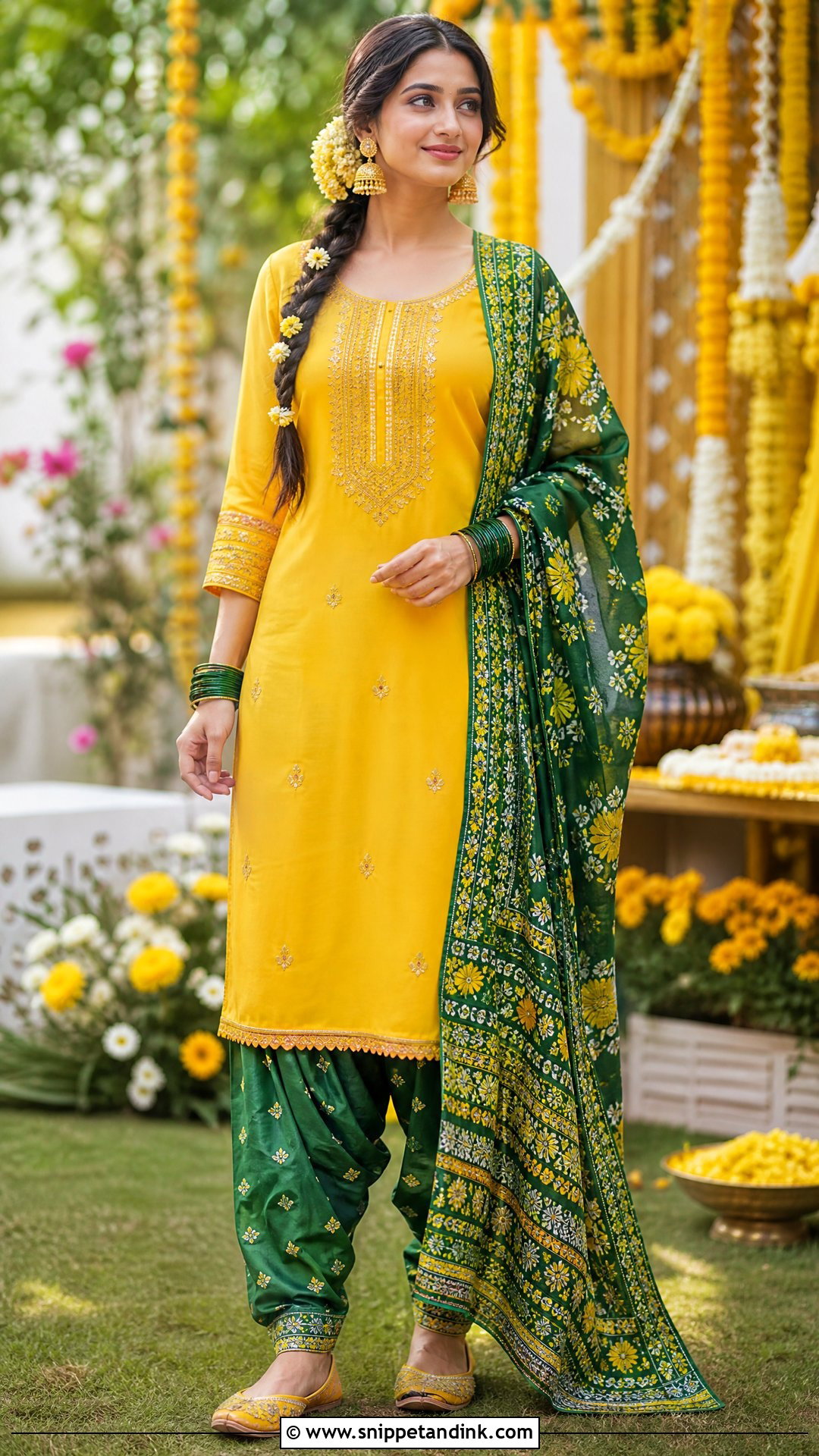
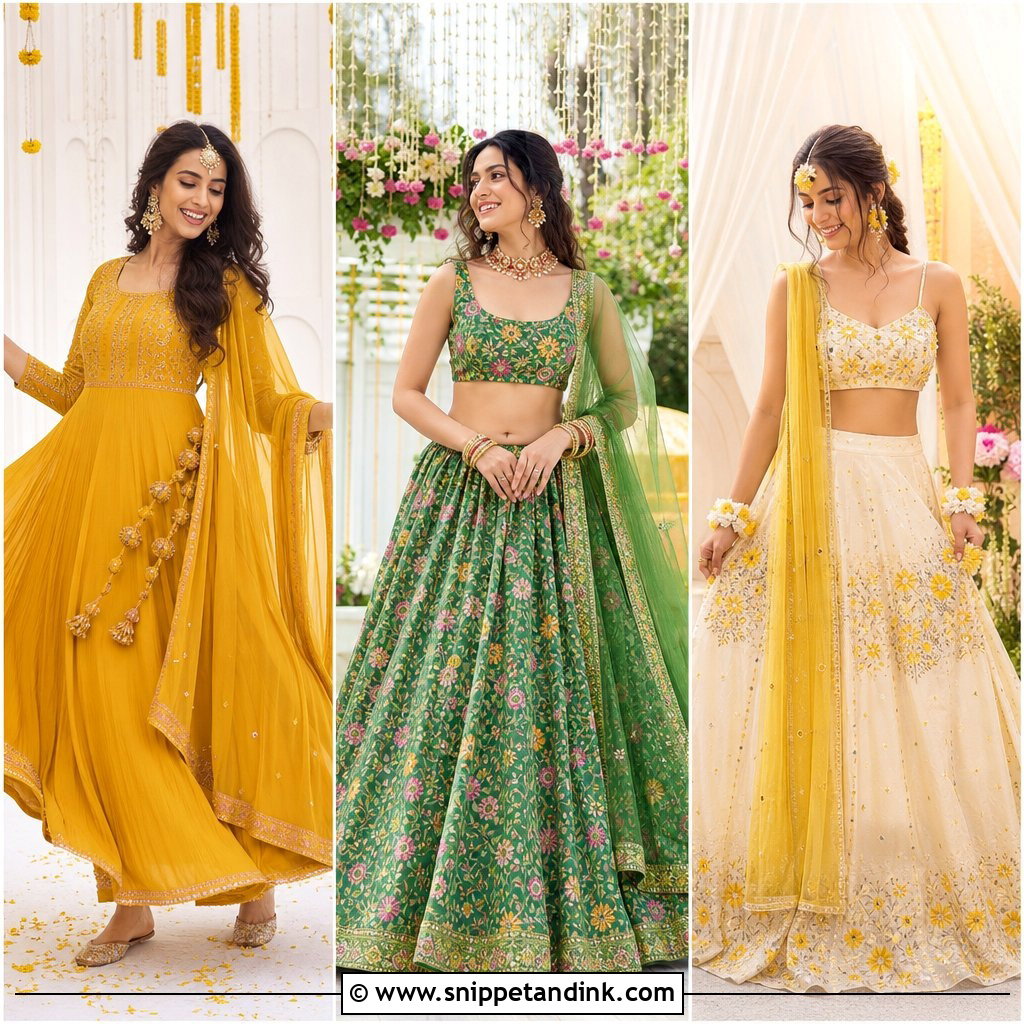
Green and yellow helps a sister step out of an all-yellow family palette. Wear a yellow straight kurta with green salwar, or flip it: green kurta, mustard bottoms. A printed dupatta containing both shades ties them together. Small gota details, floral threadwork or contrast piping make the suit festive. Gold jhumkas, green bangles and yellow embroidered juttis complete it, with a low braid and a simple flower accent. Keep the kurta loose enough to sit and dance in. Salwar pants have generous fabric through the seat, which makes floor-sitting rituals far more comfortable than slim pants. Against marigolds and greenery, the two colours hold their own in photos.
16. Orange Kurta And Yellow Skirt Haldi Dress
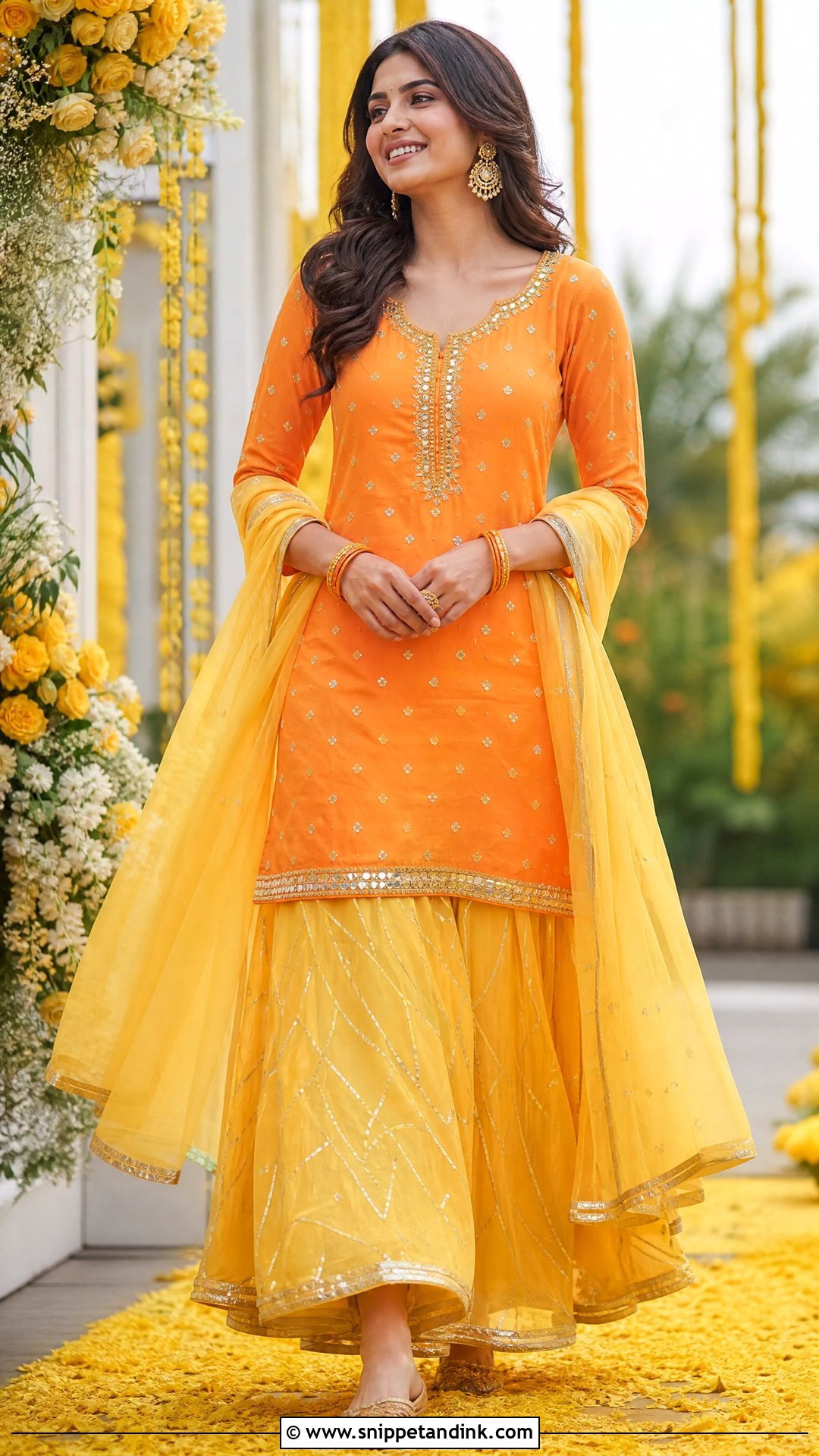
Orange gives depth against all that yellow. Pair a short orange kurta with a flowing yellow skirt in light fabrics, connected by small gold borders, subtle block prints or restrained threadwork. Drape a sheer yellow or multicolour dupatta over one shoulder and pin it before the ceremony starts. Gold earrings, orange bangles and neutral juttis keep the palette to three tones at most. A relaxed ponytail or braid is practical. The kurta should sit flat over the skirt’s waistband; a thick waistband under a fitted kurta shows as a ridge in photos. It keeps the sister coordinated without wearing the same yellow as everyone else.
17. Ivory And Yellow Co-Ord Haldi Dress
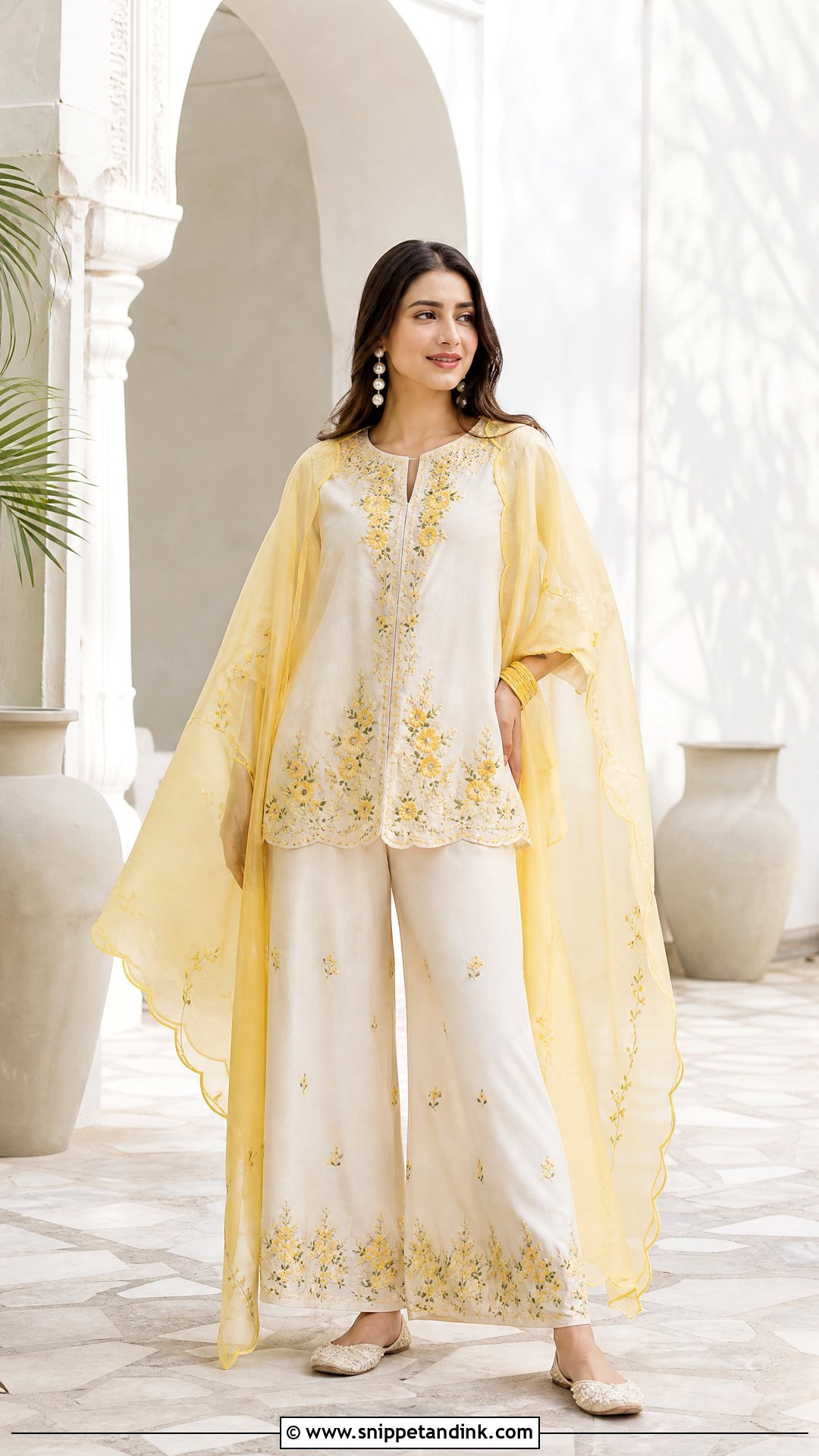
Ivory works as a soft backdrop for yellow embroidery and accessories. Choose an ivory crop top or short kurti with yellow floral threadwork and matching wide-leg pants, then add a yellow organza cape or dupatta to bring in the haldi colour. Pearl earrings, yellow bangles and ivory juttis with small gold details complete it, with a smooth ponytail or low bun. Light fabrics turn see-through in strong sun, so I ask every client to stand by a bright window in the outfit before the day; anything that shows through needs a lining. It suits a sister who likes neutrals but wants to respect the mood of the morning.
18. Yellow Ruffle Saree Haldi Dress
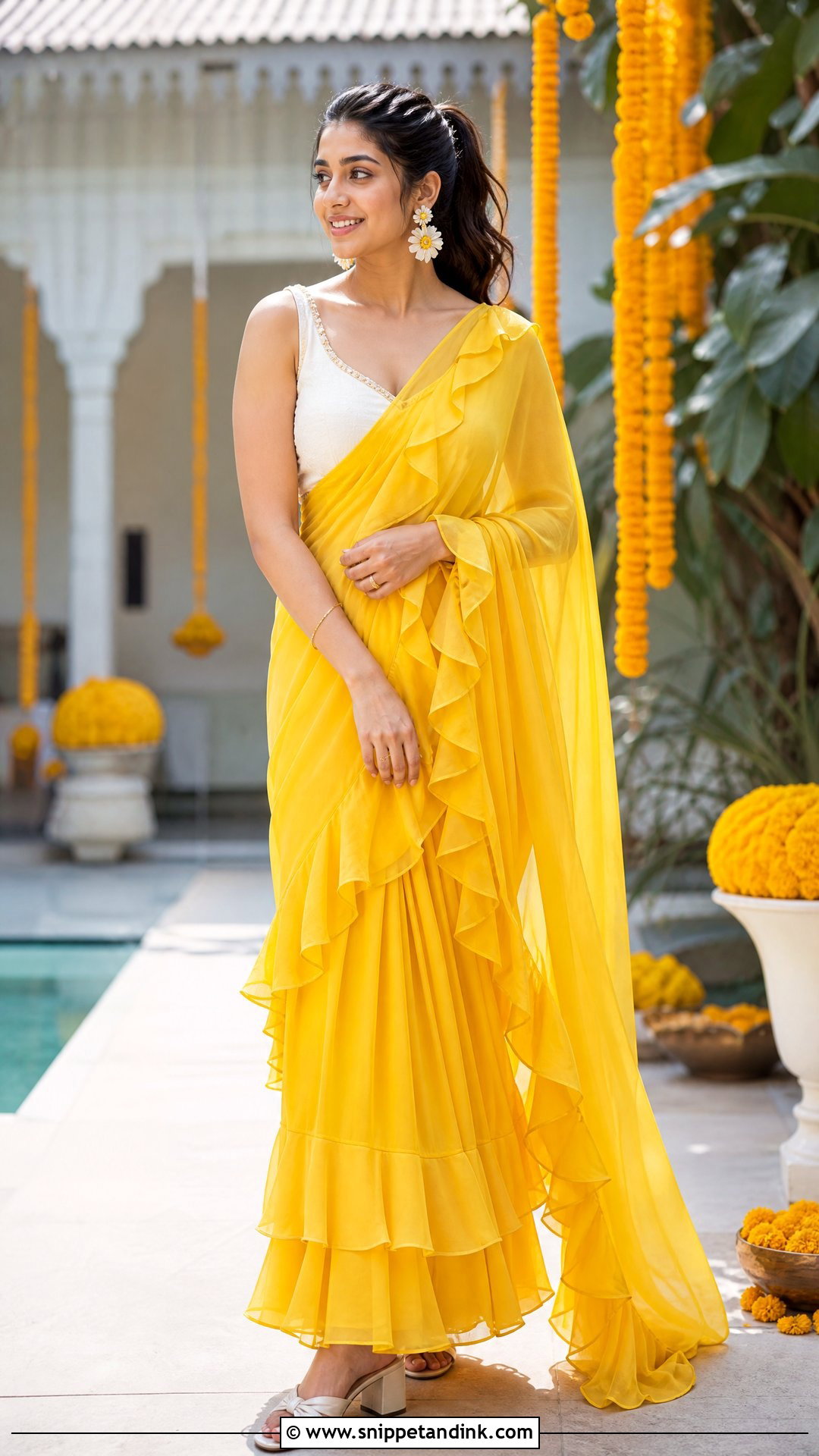
One ruffle is fun; three is a costume. Choose a light yellow saree with a single ruffled border and a simple fitted blouse in yellow, ivory or a floral print. Pin it at the waist and shoulder so the ruffle doesn’t flap around your ankles. Floral earrings, a fine bracelet and block heels that won’t catch on the hem finish it, with a high ponytail to balance the flowing edge. Skip heavy necklaces when the blouse and ruffle already frame the upper body. Ruffles in georgette fall softly; in organza they stand out stiffly, so decide which you want before you buy.
19. Yellow Suit With Phulkari Dupatta Haldi Dress
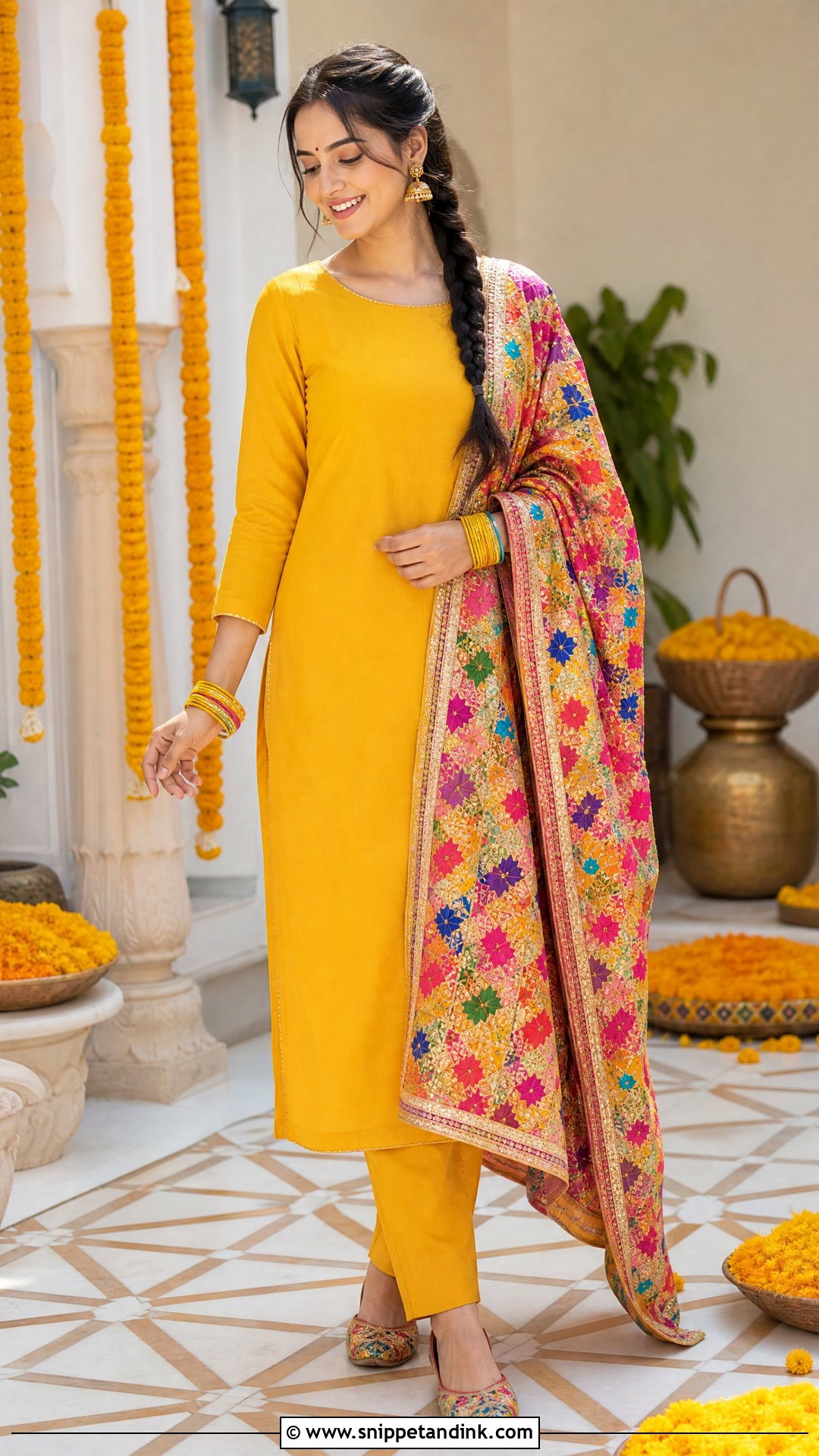
A colorful phulkari dupatta turns a plain yellow suit festive in seconds. Start with a straight kurta and matching pants in cotton, silk blend or another breathable fabric, then add a phulkari in pink, orange, green or red embroidery. Keep the kurta free of heavy work so the dupatta leads. Small gold earrings, coloured bangles and Punjabi juttis complete it, with a long braid or low ponytail. Pin it at one shoulder or drape it across both arms for photos. Phulkari is dense embroidery and fairly heavy, so a pin at the back of the neck stops it pulling your neckline sideways. It’s also the easiest look to build from your own wardrobe.

20. Mustard Jumpsuit Haldi Dress
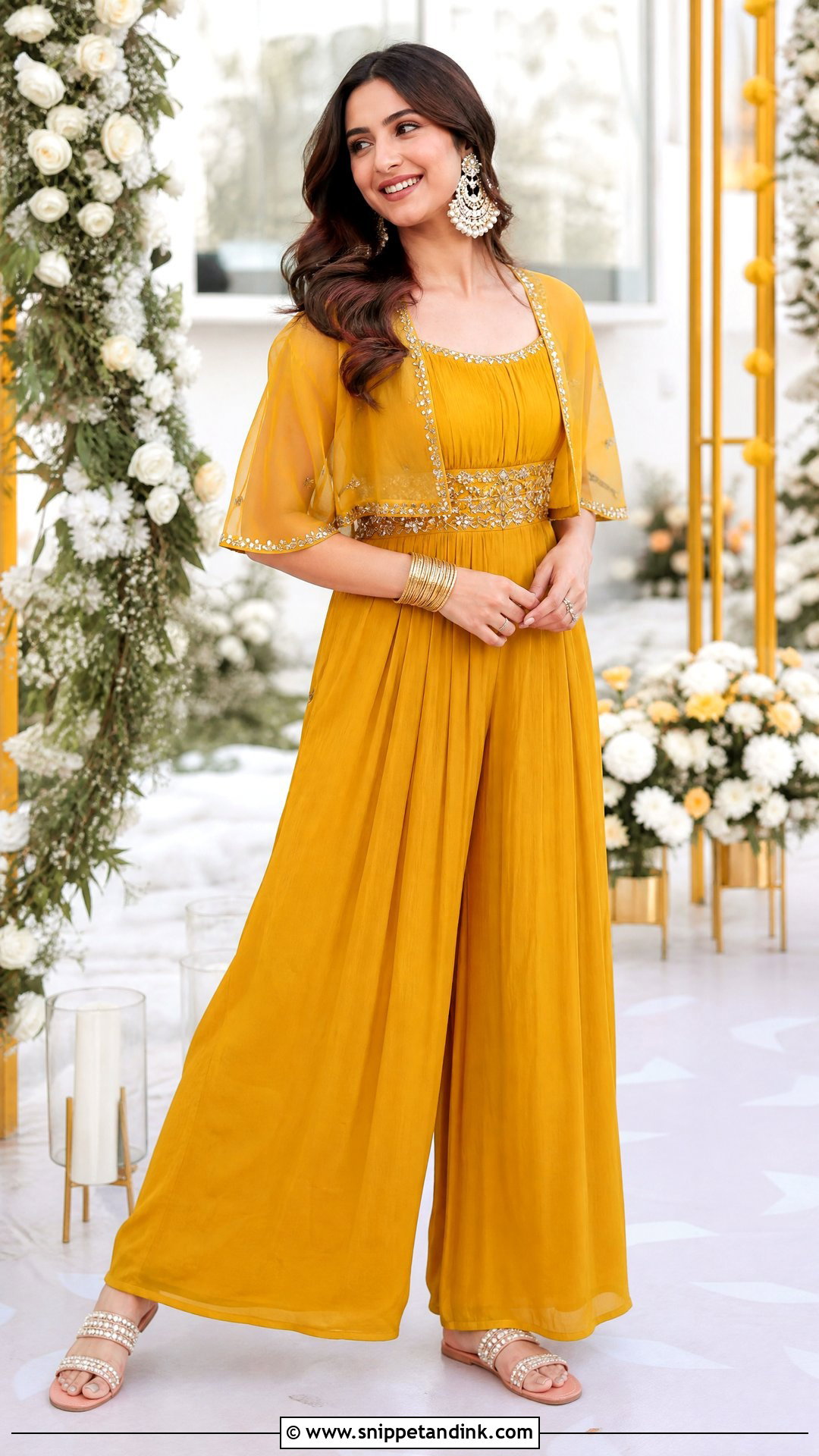
A mustard jumpsuit is the streamlined alternative to a saree, suit or lehenga. Choose a wide-leg design with a defined waist, comfortable sleeves and a neckline that stays put when you bend. Small mirror accents, an embroidered belt or a draped shoulder panel give it a festive Indian touch. Statement earrings, gold bangles and embellished flats complete it, with a short organza cape for extra coverage if you like. A high ponytail or sleek braid suits the clean line. At the fitting, sit on the floor and raise both arms: if the crotch pulls or the shoulders lift, ask for more length in the torso. It’s built for the sister who plans to dance and coordinate all morning.
A Stitching Timeline That Leaves Room for Alterations
Most of the outfits above can be bought ready-made, but blouses, sharara lengths and kurta fits almost always need a tailor. Wedding season is when tailors are busiest, and a sister’s outfit is easy to leave until the last fortnight while everyone focuses on the bride. That’s when blouses come back too tight with no time to fix them.
- Six to eight weeks before: settle on colours with the bride and buy fabric or the ready-made set, so there’s time to exchange a wrong size.
- Four to six weeks before: hand over fabric and a well-fitting blouse or kurta as a reference. Custom stitching usually takes a couple of weeks, longer in peak season.
- Two to three weeks before: first trial. Sit on the floor, lift your arms, dance a little. Mark anything that pulls.
- One week before: collect the altered pieces and do a full try-on with shoes, jewelry and dupatta pinned exactly as you’ll wear it.
- The night before: pack a small kit with safety pins, a needle and thread in the outfit colour, wipes and a spare dupatta.
If the dates are tight, choose a ready-to-wear set that only needs hemming. A simple outfit that fits is far better than an elaborate one you’re tugging at all morning.
Comfort First, Then the Colour Story
A haldi outfit has done its job if you forget about it while you’re celebrating your sister. Cotton Anarkalis and chikankari suits fit relaxed home functions; sarees, lehengas and shararas dress things up; co-ords, capes and jumpsuits give you the most freedom. Whatever you wear, put breathable fabric, a secure drape, comfortable shoes and jewelry that stays out of the way first. Talk to the bride about colours, and avoid copying her exact shade, embroidery or accessories. Get those basics right and you’ll be free to join every ritual and still look put-together in the family photos.
You'll Like These Ideas:






Leave a Reply