
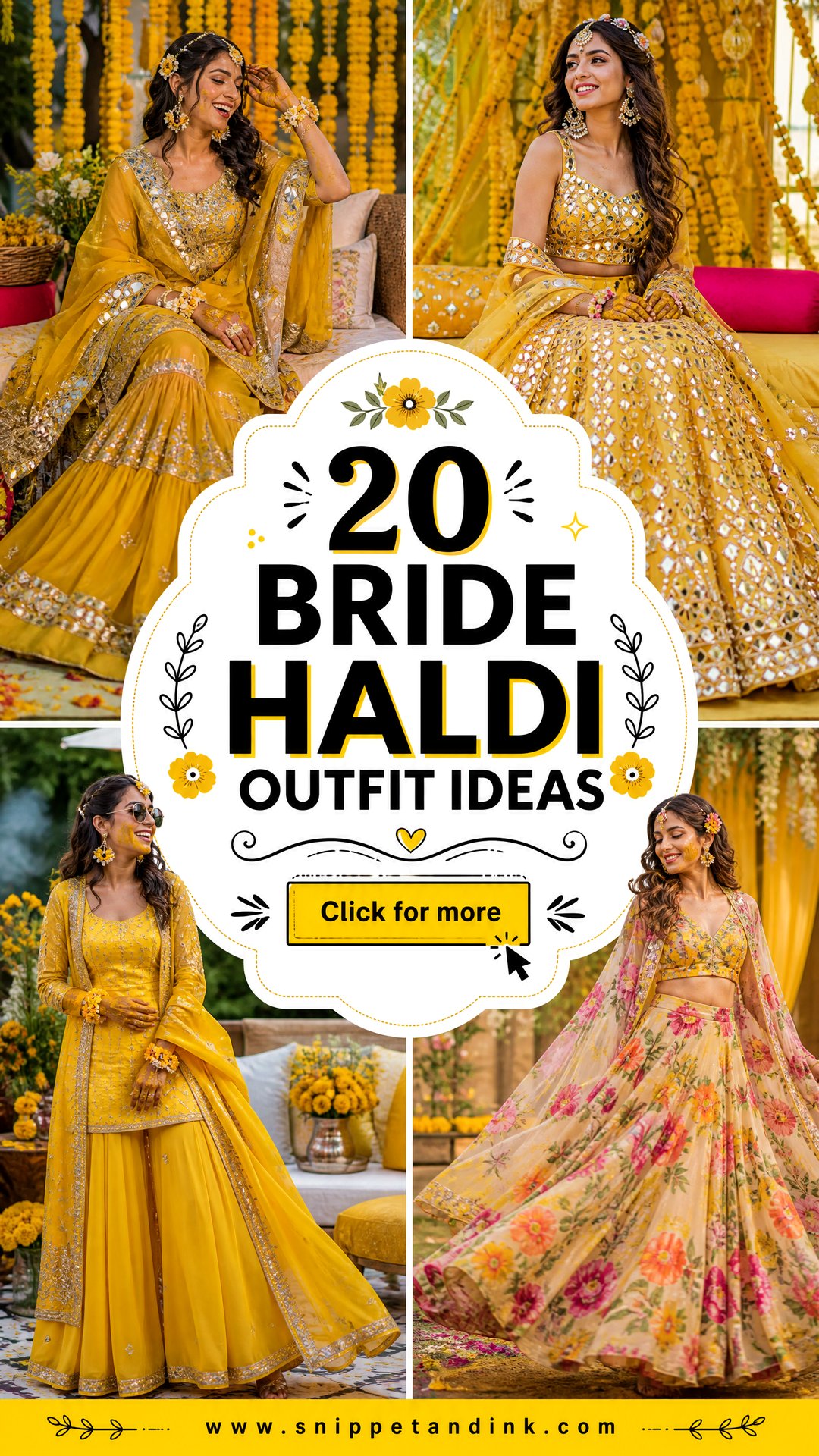
Dressing a bride for her haldi is a balancing act I enjoy: she has to look like the center of the party, yet she’ll be sitting low, getting smeared with paste and probably pulled up to dance before it’s dry. Classic yellow lehengas and sarees are here, alongside shararas, pre-draped sets and a few outfits that aren’t yellow at all, from ivory to pink to green bandhani. Lighter fabrics, firm pinning and flat shoes matter more at this function than at any other. For each look I’ve added the practical detail I’d raise with a bride at her fitting, so you can judge which one fits the way your family celebrates.
How Much Paste Is Your Family Planning to Use?
The first question I ask a haldi bride isn’t about color. It’s about how her family does the ritual, because that decides the fabric far more than the decor does. Haldi customs differ a lot between regions and households, and the same outfit can be ideal at one and ruined at another.
A gentle dab on the face and arms
If elders apply a little paste to your cheeks, hands and feet, you can wear almost anything here, including silk or ivory. Keep the sleeves short or elbow length so paste goes on skin rather than fabric, and pin the dupatta back off the shoulders.
Generous smearing and playful chaos
When cousins join in and the paste ends up in your hair and down your back, choose cotton, bandhani, printed georgette or a pre-draped saree. Prints hide marks, cotton washes, and stitched drapes don’t come undone when someone grabs you.
Water, flowers or color afterwards
Some families finish with a ritual bath, buckets of water or a petal shower, and a few turn it into a game with colors. Anything wet becomes heavy and see-through, so avoid organza and thin chiffon in pale shades, wear a well-fitted inner layer, and plan a full change for afterwards.
1. Yellow Lehenga Bride Haldi Outfit
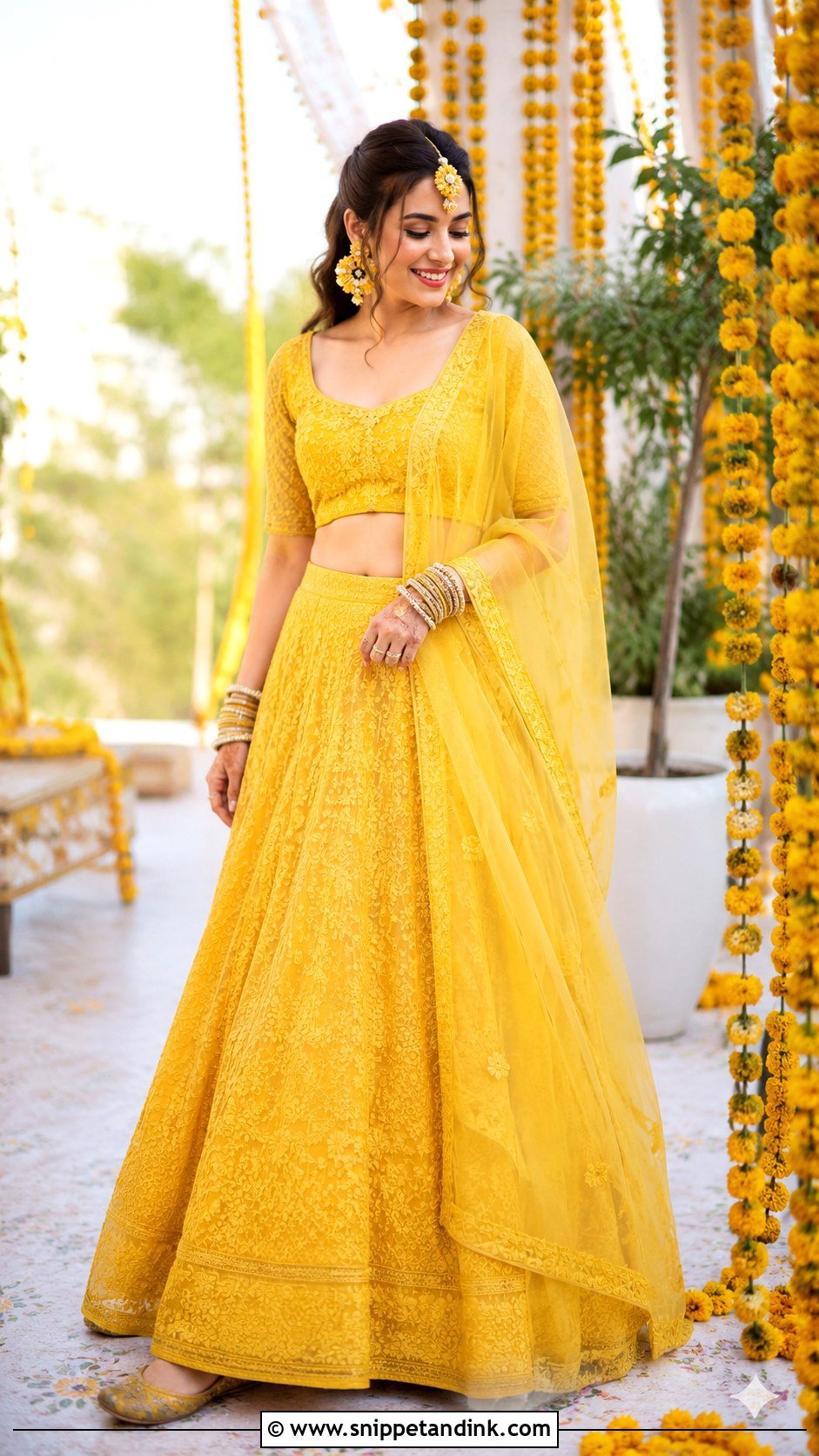
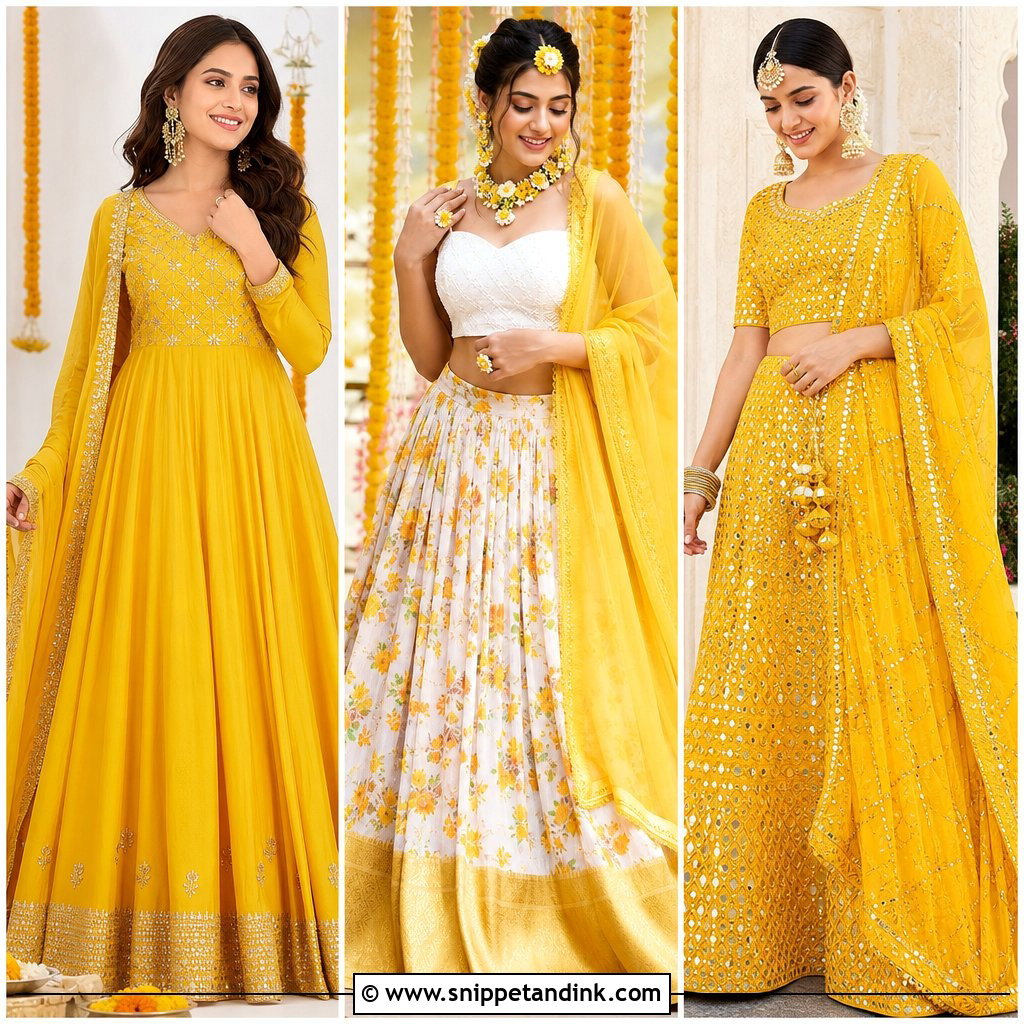
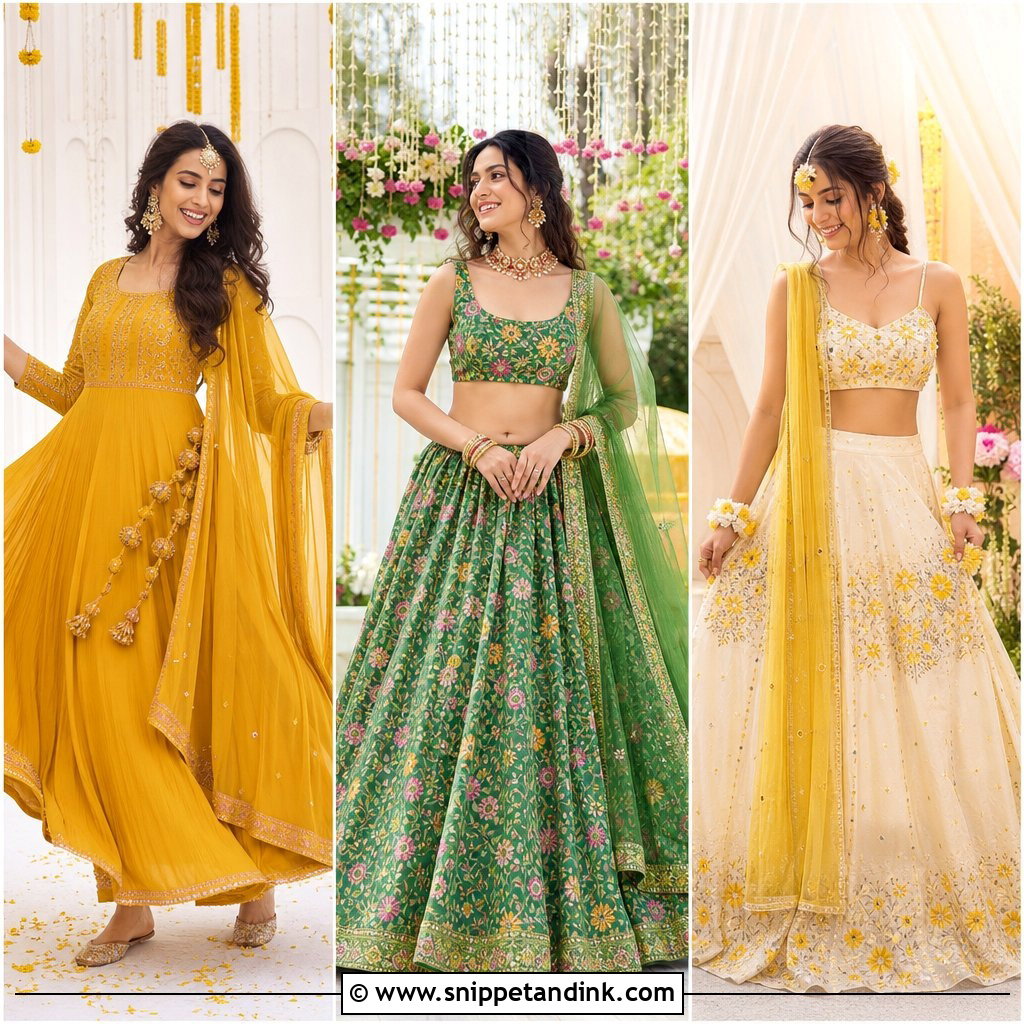
Start here if you want the look everyone pictures. A classic yellow lehenga in georgette or cotton-silk, with fine threadwork or a narrow gota border, gives you sparkle without the stiffness of a reception piece. I keep the skirt to two or three layers of can-can at most; anything fuller tips forward when you sit on a low stool and pushes into your lap. Floral earrings, a matching maang tikka, stacked bangles and embroidered juttis are enough, with small white flowers in a braid. Keep the dupatta short. A long one ends up trailing through the paste bowl.
2. Yellow Saree Bride Haldi Outfit
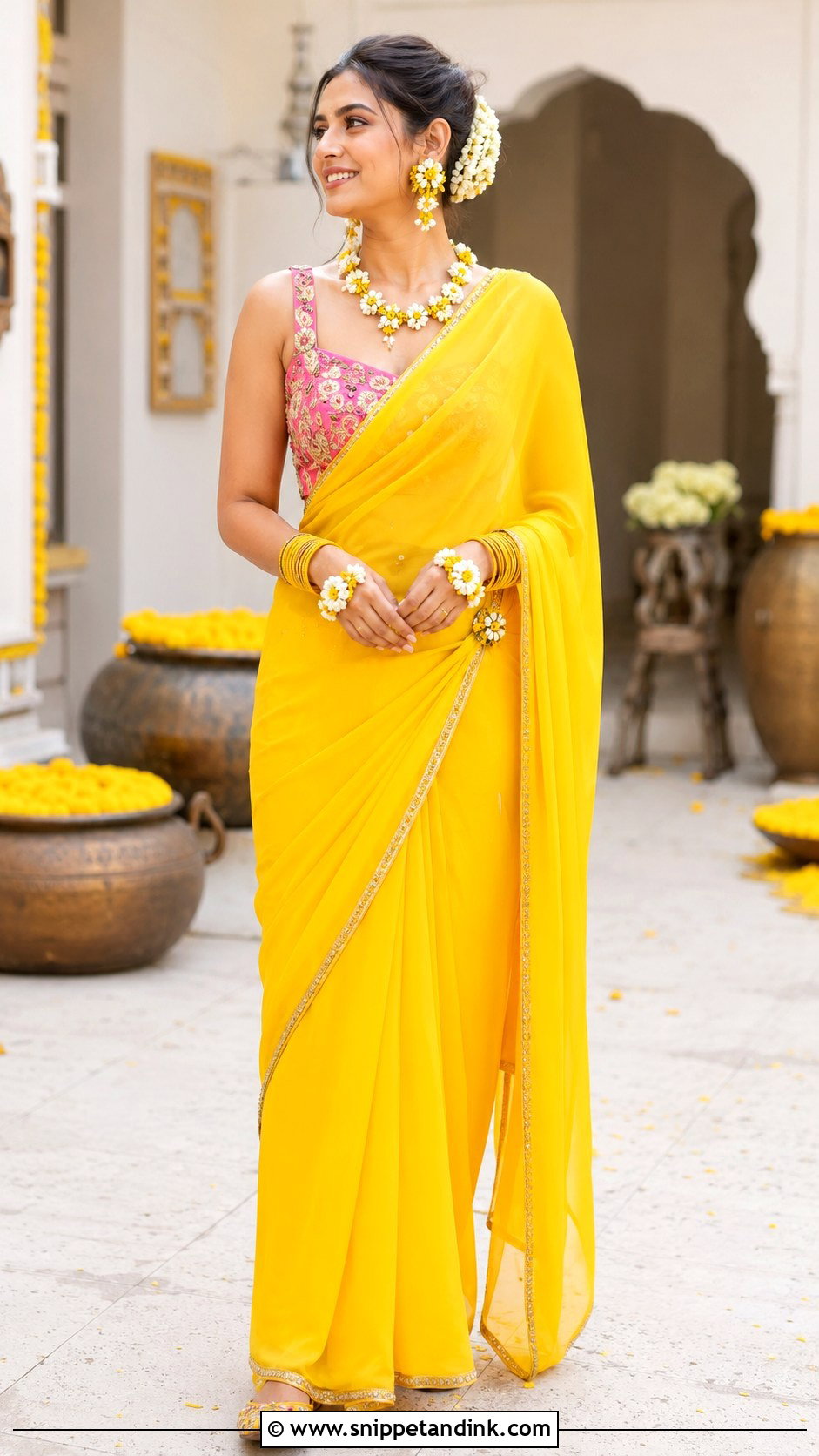
Chiffon and georgette are the sarees I’d put a haldi bride in, because they’re soft enough to fold under you when seated and they don’t hold creases. A yellow saree with a short-sleeve blouse, light embroidery or a contrasting pink border looks graceful in daylight. Pin the pallu at the shoulder and again at the waist; one pin alone lets it slide off when someone hugs you. Floral jewelry, gold-toned bangles, a small bindi, flat juttis and a low bun wrapped in jasmine finish it. If dancing is on the schedule, a pre-stitched version gives the same line with none of the risk.
3. White Floral Saree Bride Haldi Outfit
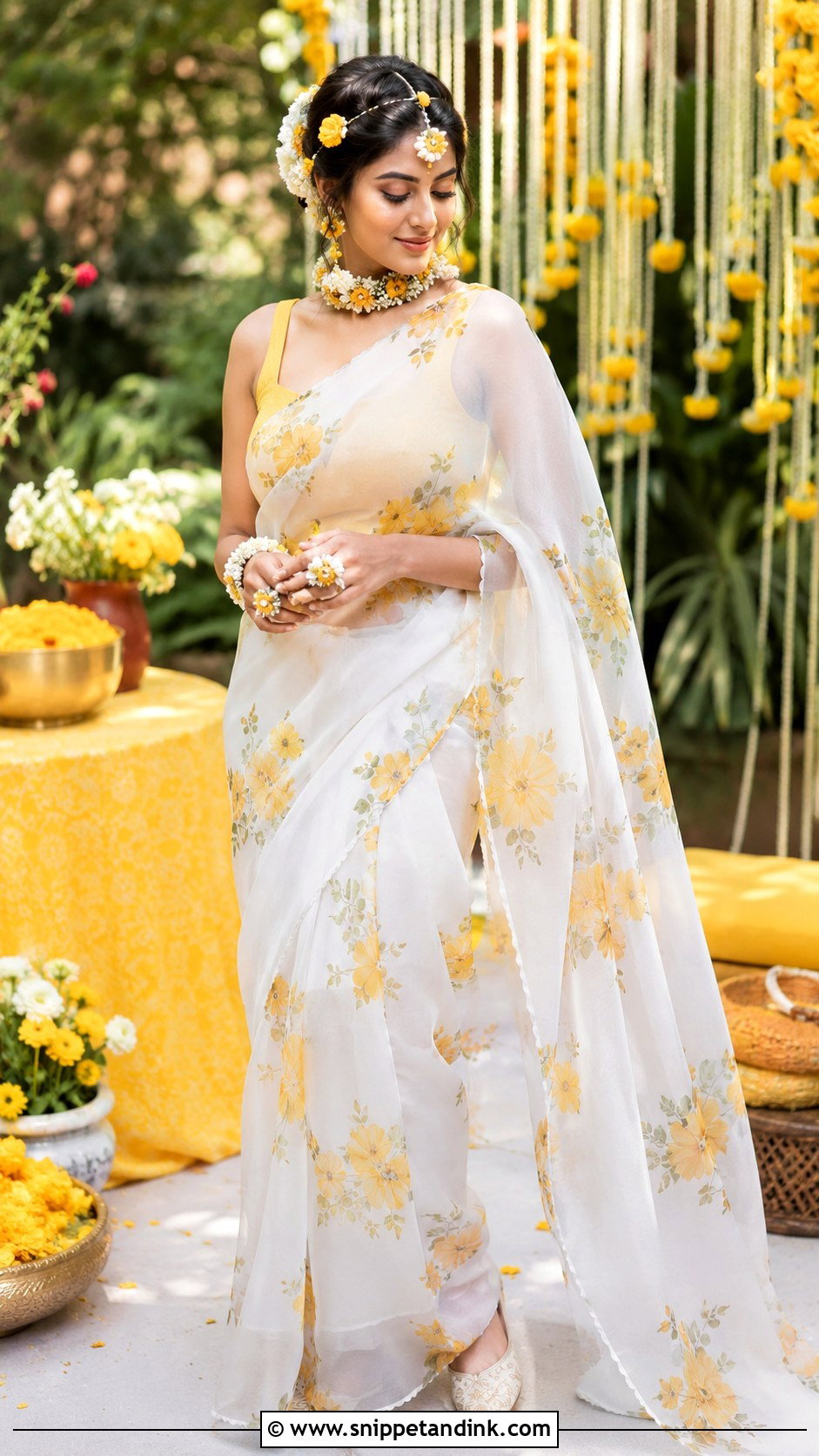
White organza or chiffon scattered with yellow flowers is the softest alternative to all-yellow, and it reads clearly in group photos because it contrasts with everyone around you. A plain yellow blouse pulls it back to the haldi palette. Use discreet safety pins rather than brooches here, since organza snags. Floral earrings, a delicate choker and a small flower tikka keep the botanical theme, with ivory or yellow flats and a relaxed bun or half-up style with fresh blooms. Be honest with yourself about the white: turmeric will mark it, so only choose it if you’re fine with the saree being a one-morning outfit or a dry-cleaning project.
4. Mustard Sharara Bride Haldi Outfit
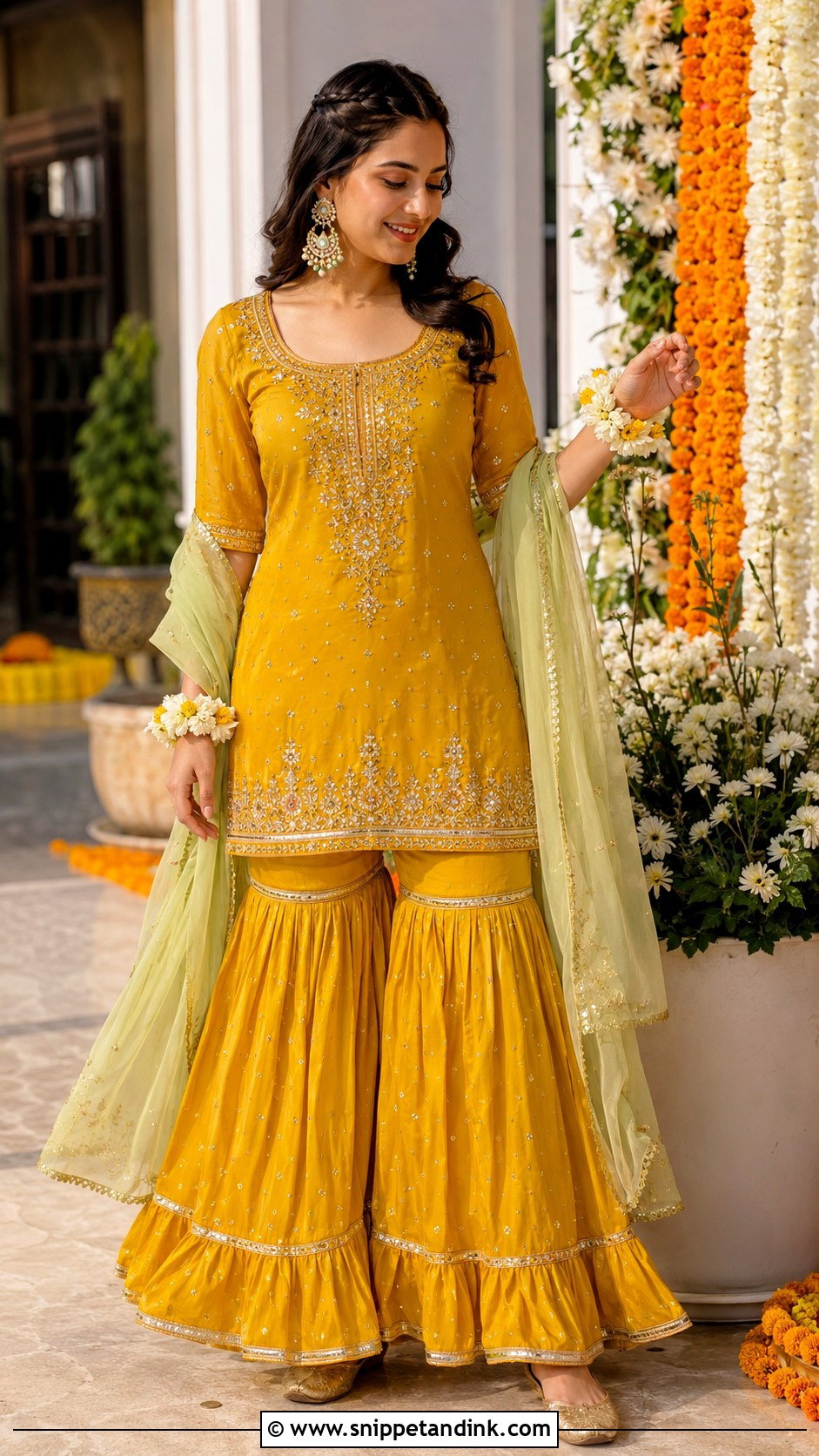
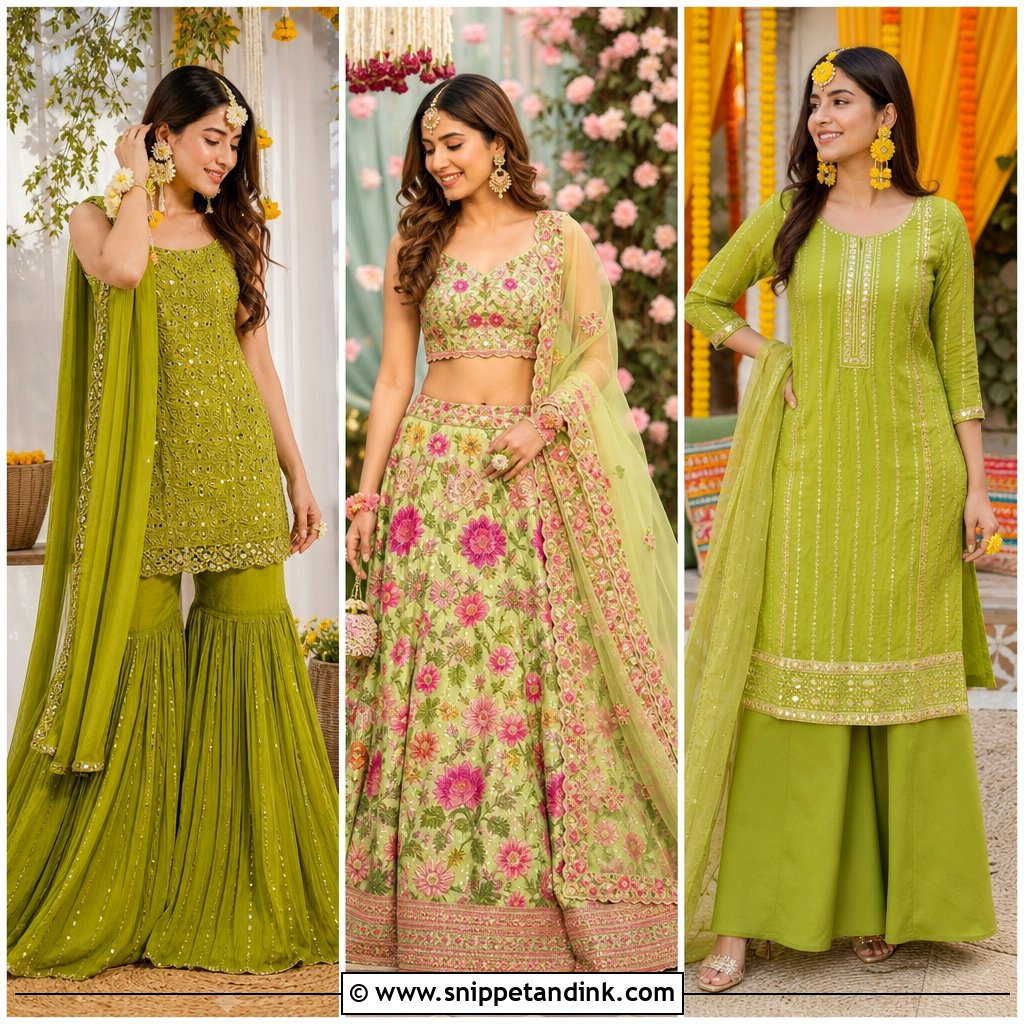
A mustard sharara gives you volume and movement without a lehenga’s weight, and the split legs make getting down onto a cushion and back up easy. Wide pants, a short embroidered kurti and a light dupatta across one shoulder are the base. Mustard is a deeper yellow, so gota, small mirrors or tonal threadwork show up well against it. I ask tailors to keep the kurti fitted through the shoulders; a loose top over that much flare makes the whole outfit look wide on camera. Kundan earrings, floral wrist pieces, gold juttis and a ponytail or braid complete it. Mustard also sits nicely against ivory, orange and green decor.
5. Yellow Gharara Bride Haldi Outfit
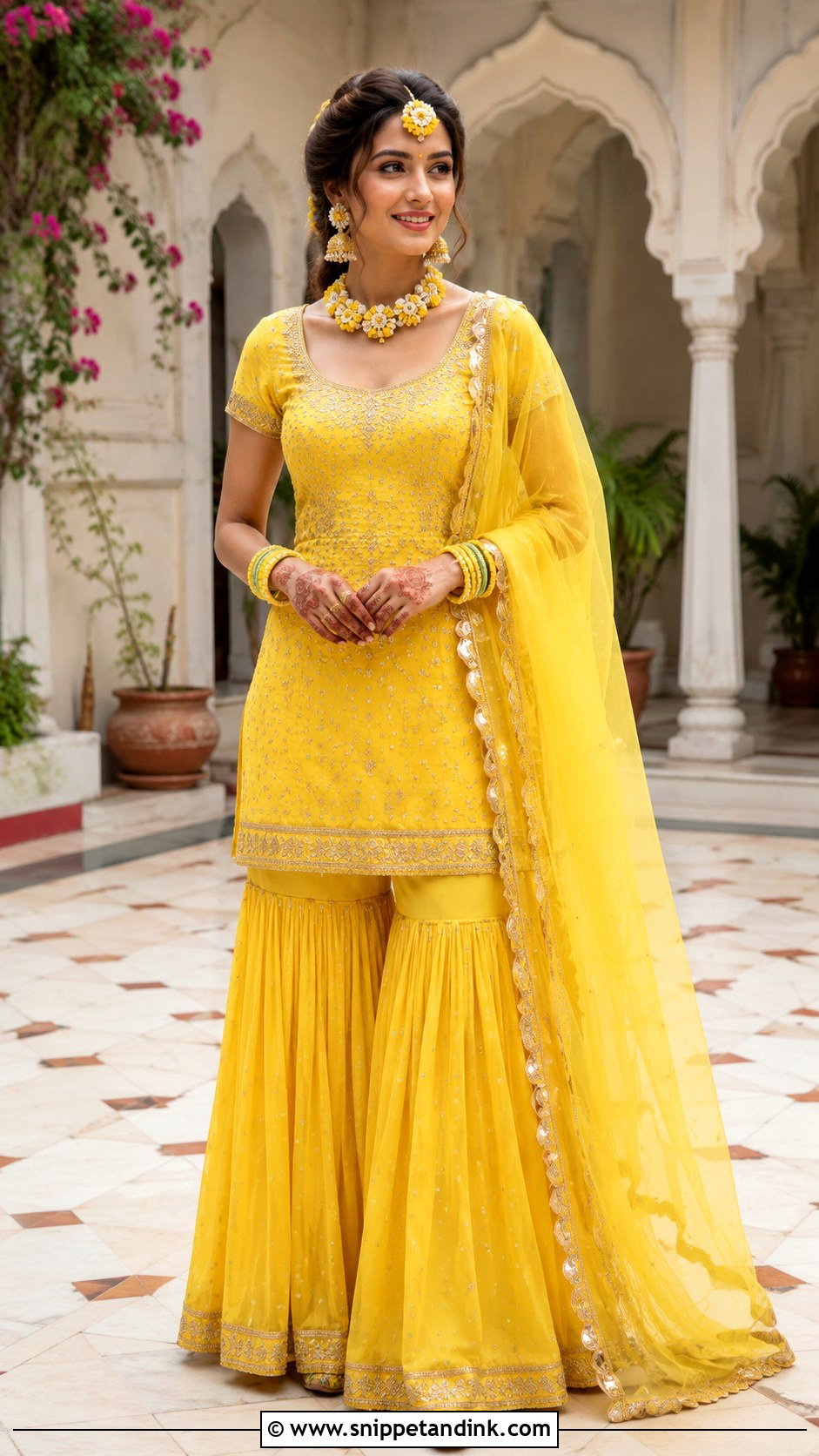
Gharara pants are fitted to the knee, where a band of gota or a jori seam joins a flared lower section. That knee seam is what makes them look distinctive, and it’s also what to check: if it sits too low, you’ll trip, and if the pants are long, the flare drags across the floor and collects every petal. Pair a fitted short kurti with an organza dupatta edged in slim gota. Jhumkas, a floral necklace, bangles and embroidered flats work, with a center-parted low bun and small roses. Lemon yellow is cheerful, while marigold or mustard looks richer.
6. Mirror Work Lehenga Bride Haldi Outfit
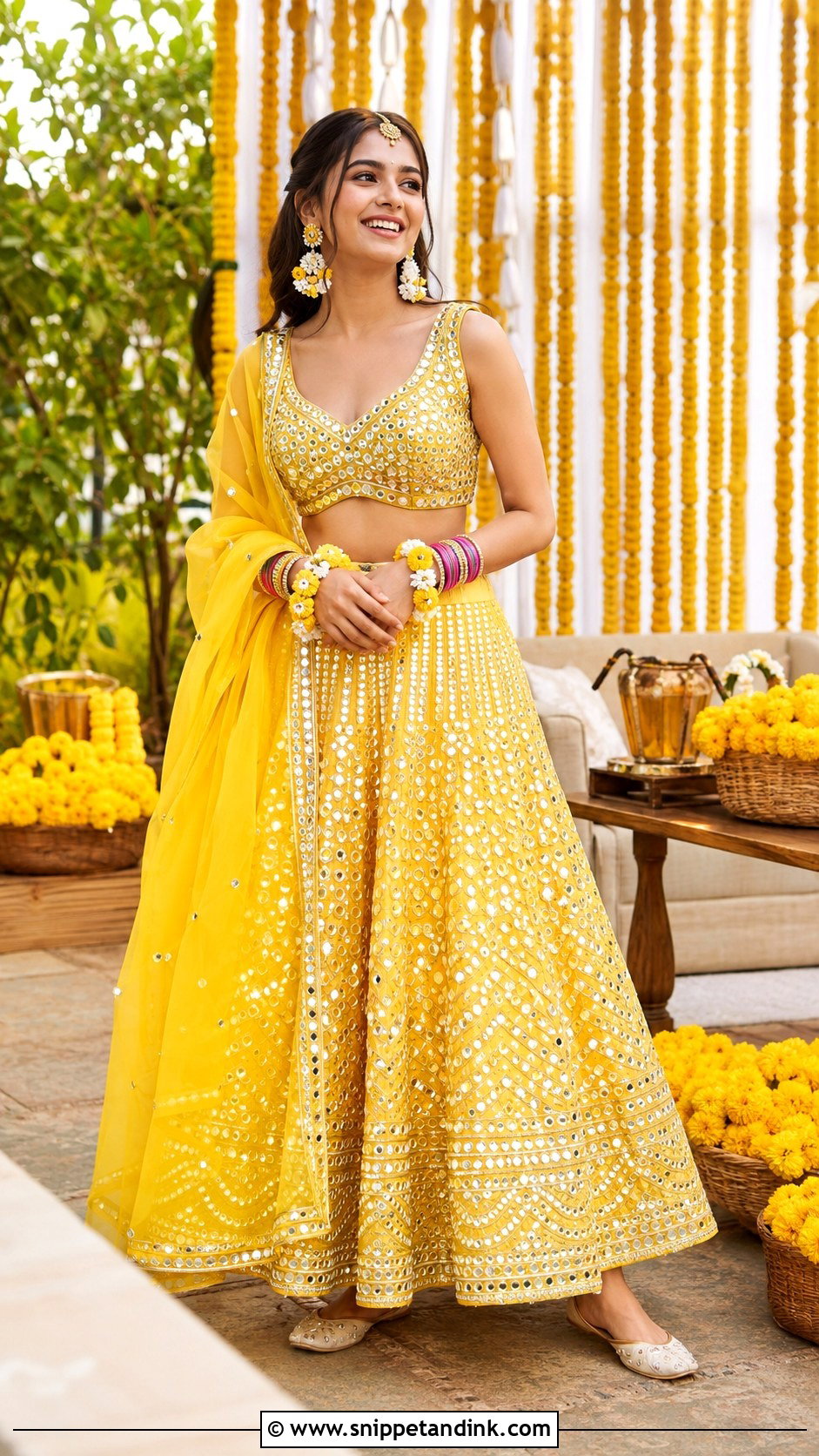
Mirrors catch sunlight, so in an open-air setup a mirror work lehenga sparkles more than any heavy jewelry would. Look for mirrors spaced evenly and stitched firmly; loose ones chip and the frames catch on long hair, which is why I’d style this with a soft braid or low ponytail rather than open waves. Keep the dupatta simple so it doesn’t compete. Floral earrings, a slim maang tikka, a few colored bangles and yellow, ivory or metallic juttis are plenty. Because the outfit already reflects so much light, skip shimmer in the makeup and go for a fresh, matte base.
7. Floral Lehenga Bride Haldi Outfit
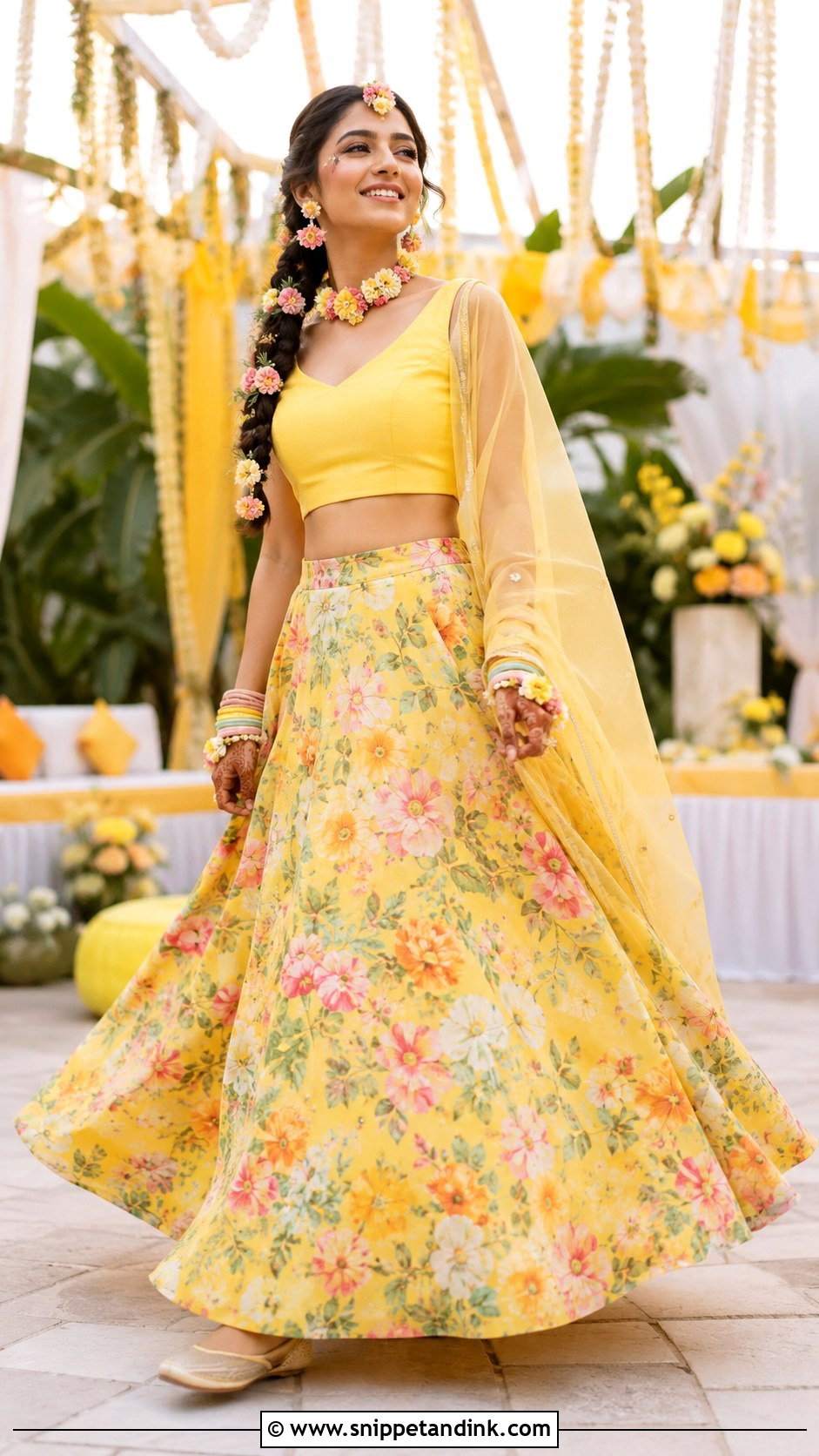
A floral print lehenga is the easiest way to bring several colors into a haldi without losing the yellow. Choose a yellow ground with pink, orange, white or green flowers and a plain blouse to calm it, plus a sheer dupatta with a small border that lets the print show through. Flower earrings, a simple choker, pastel bangles and neutral juttis work, and blooms in the braid can echo the print. Keep the flare moderate. A huge printed skirt on a seated bride turns into a pool of pattern in photos and the flowers lose their shape. Bridesmaids also have an easy time matching one shade from the print.
8. Yellow Anarkali Bride Haldi Outfit
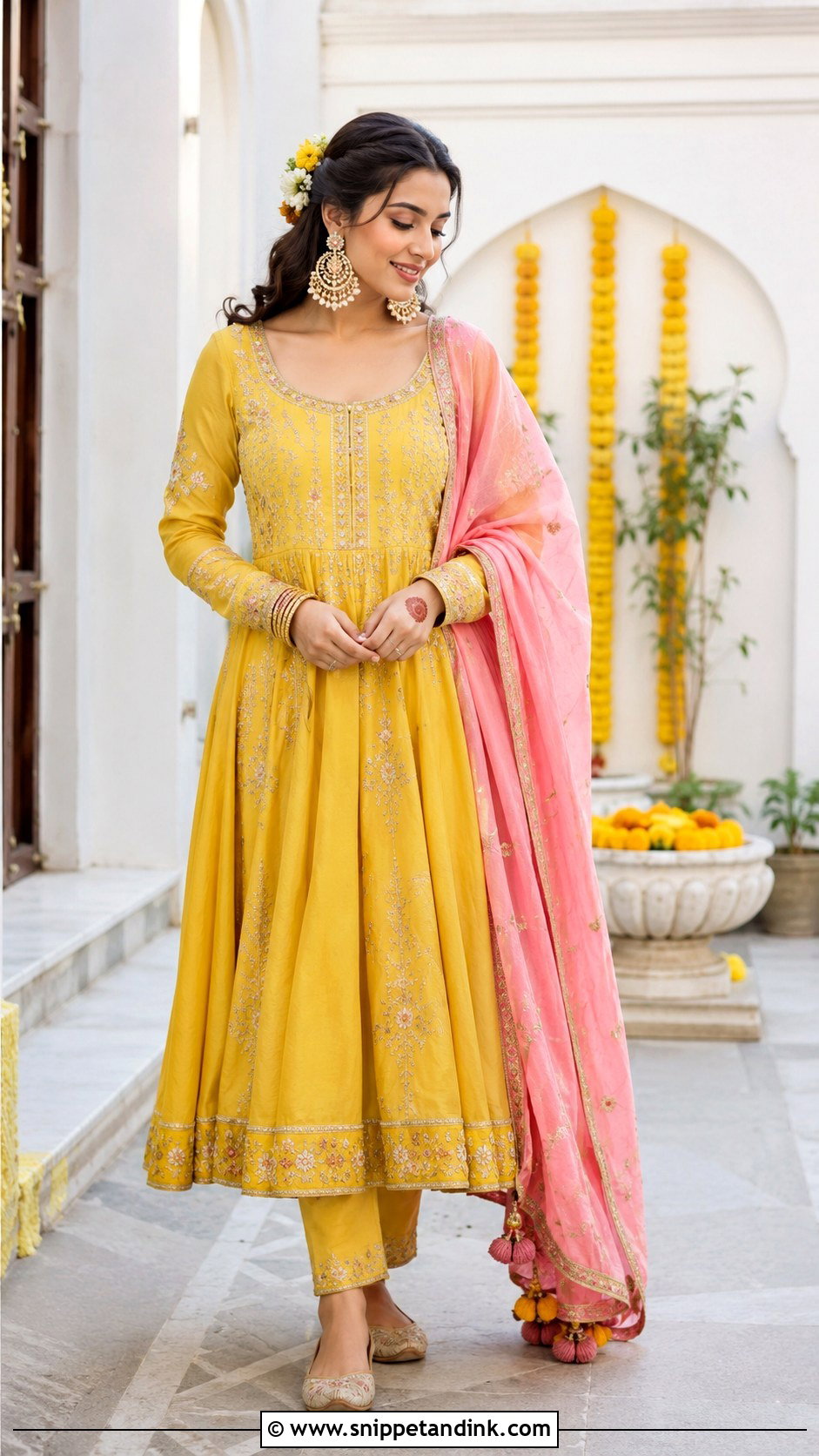
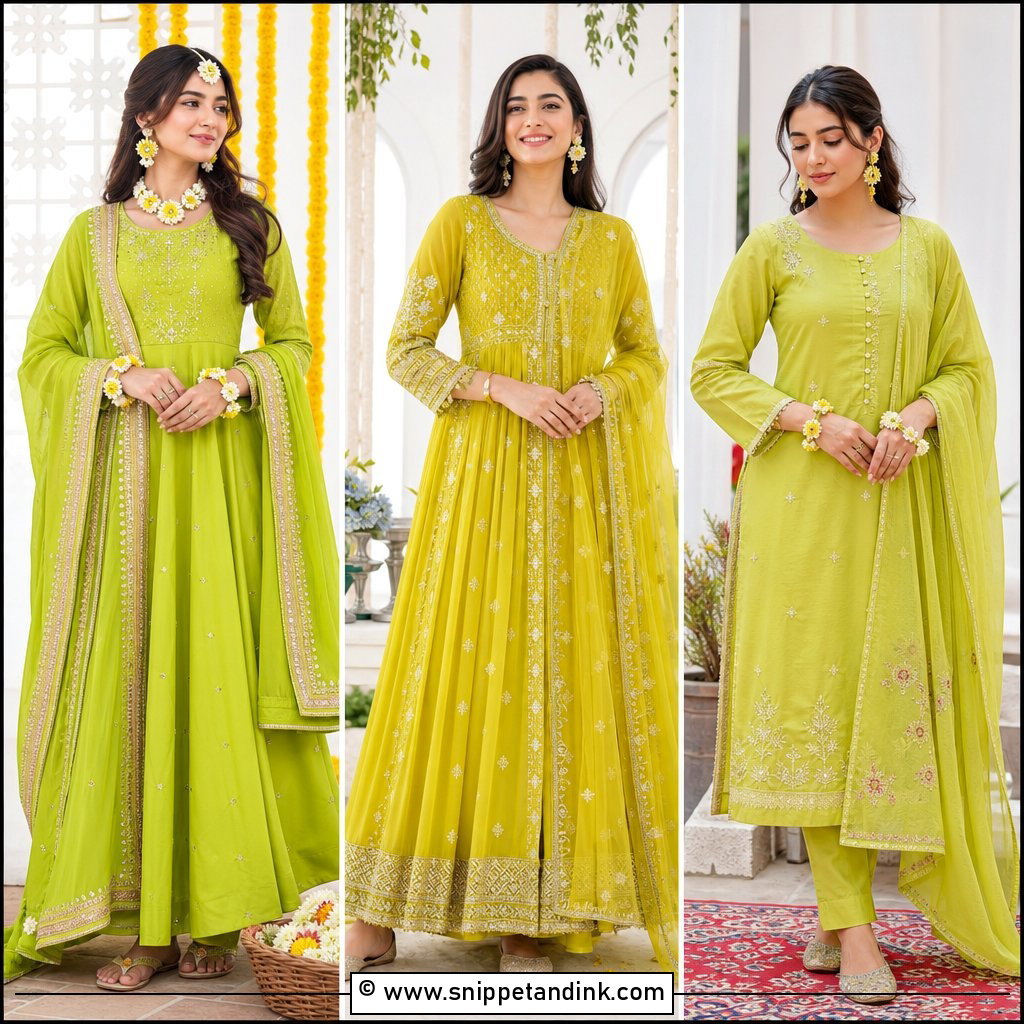
Anarkalis are the one-piece answer if you’d like full coverage and no fiddling. Calf or ankle length in cotton silk, georgette or chanderi, with narrow pants and a light dupatta, is the comfortable version, and embroidery at the neck and cuffs frames the face. For a more bridal effect, add a contrasting pink dupatta or a floral belt at the waist. Floral chandbalis, bangles, pointed juttis and a half-up style with flower pins finish it. Have the hem taken up so it clears the floor when you stand; outdoors on grass, a long Anarkali hem soaks up dew and paste alike.
9. Yellow Palazzo Set Bride Haldi Outfit
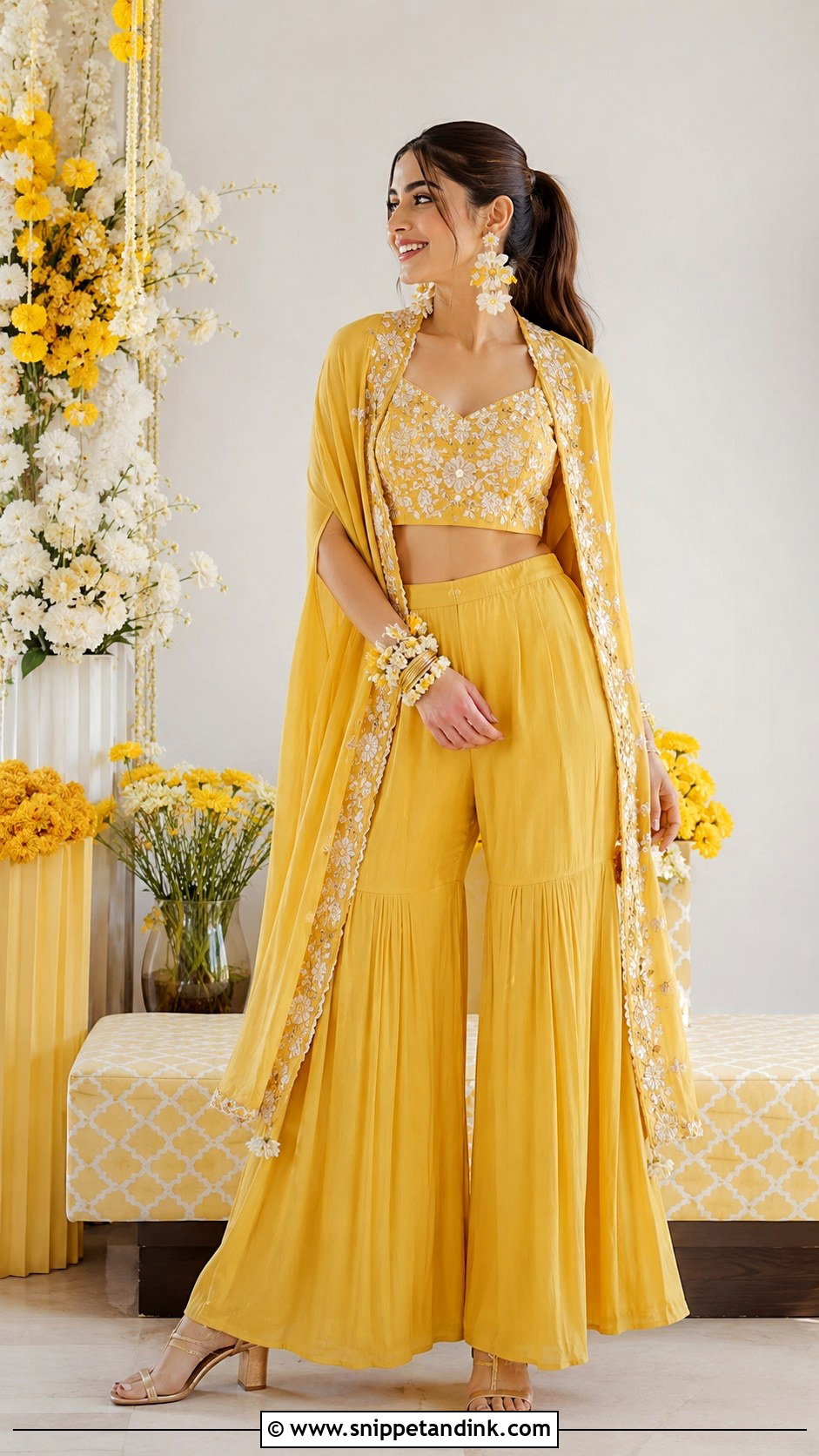
A yellow palazzo set is about as relaxed as bridal gets. High-waisted palazzos with an embroidered crop top or short kurti, layered with a light cape or dupatta, move well and stay cool. If you go for a crop top, check the neckline sits securely, since relatives will be reaching across you to apply paste to your shoulders. Pearl details, mirror work or floral appliqué on the top are what make it read as the bride’s outfit. Floral statement earrings, stacked bangles, block heels or juttis and a high ponytail keep it fresh. It’s the one I’d put forward for a poolside or casual home function.
10. Peplum Dhoti Bride Haldi Outfit
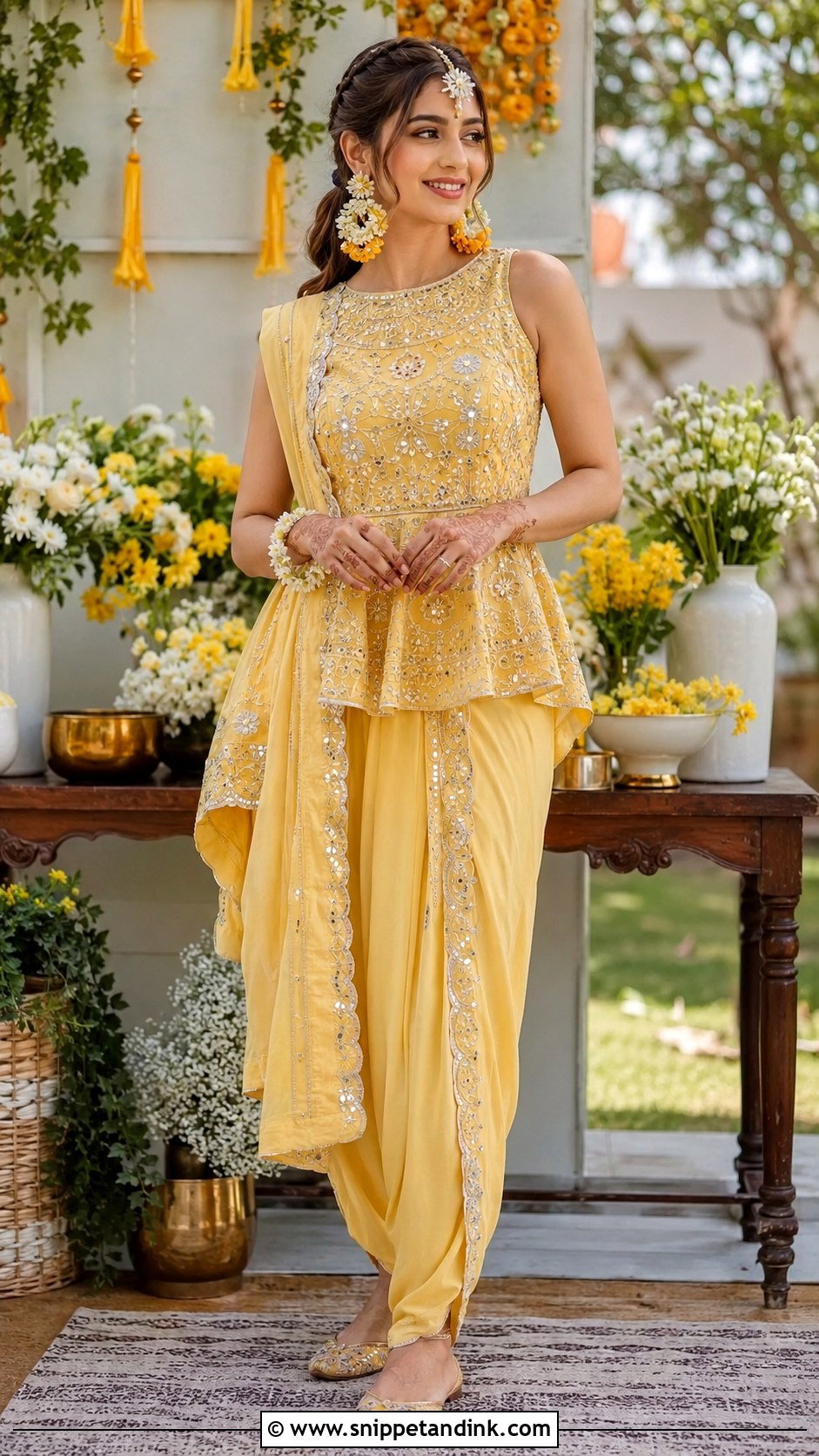
This is a fusion look and it needs precise tailoring to work. The peplum should end right at the natural waist, with embroidery concentrated at the neckline and waist seam, and the dhoti pants should be draped neatly rather than piled with extra fabric, because loose folds look shapeless in photos. Add a short, firmly pinned dupatta or cape, big floral earrings, a delicate forehead piece and embellished juttis. A sleek braided ponytail suits the modern shape. It’s at its best at a lively haldi with music, when you’ll be up and moving more than seated.
11. Draped Saree Bride Haldi Outfit
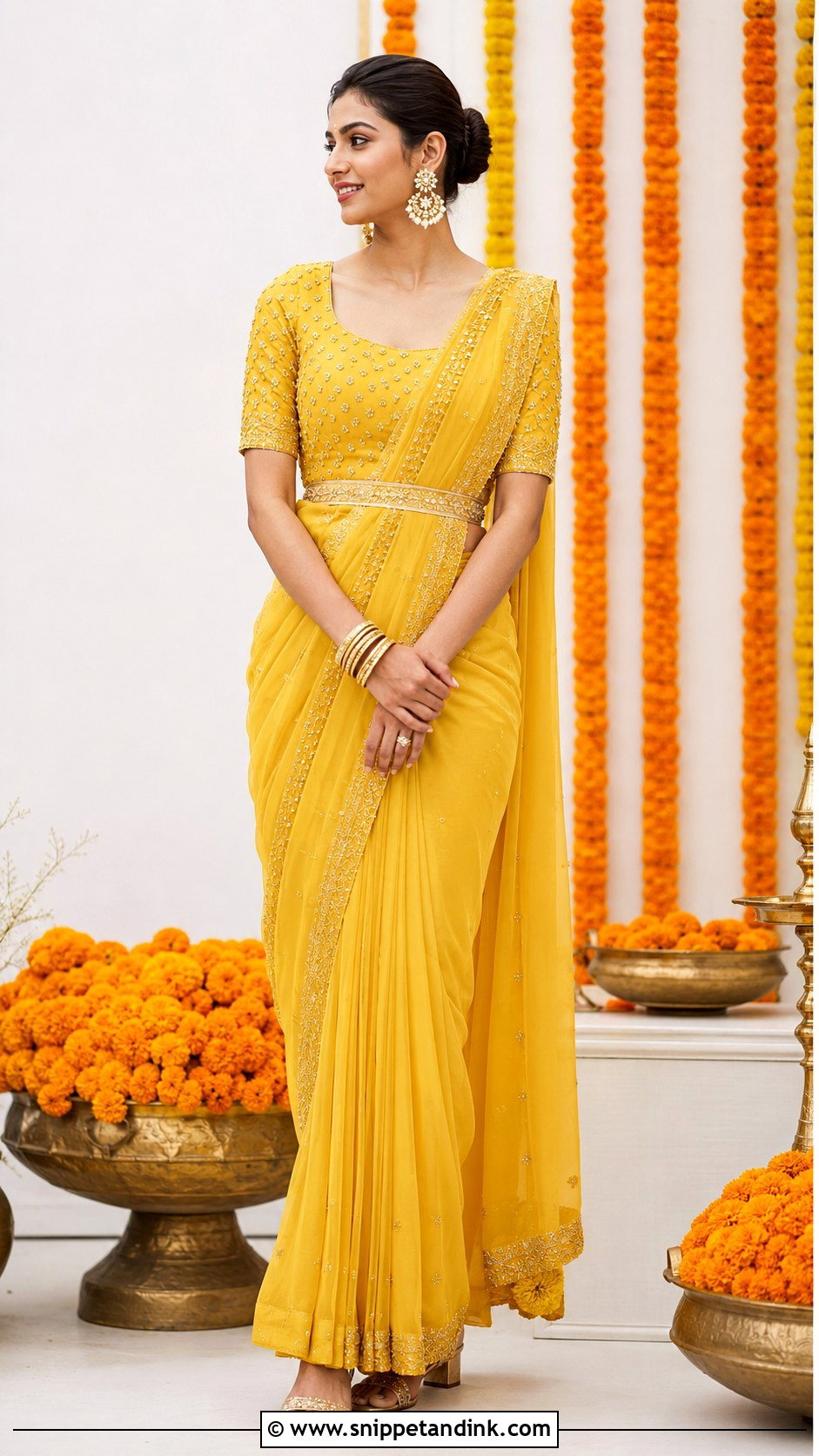
Pre-draped sarees remove the two things that go wrong most often at a haldi: pleats coming loose and the pallu slipping. A soft georgette version with a fitted blouse and a slim embroidered belt at the waist gives you the saree line with ready-to-wear security. Ruffled edges or a lightly embellished pallu add movement. The belt should hold, not squeeze; you’ll be sitting and eating in it. Before the day, sit on the floor in it, because stitched pleats have less give than hand-draped ones. Floral earrings, gold bangles, low block heels and a smooth bun or long braid round it out.
12. Yellow Orange Ombré Bride Haldi Outfit
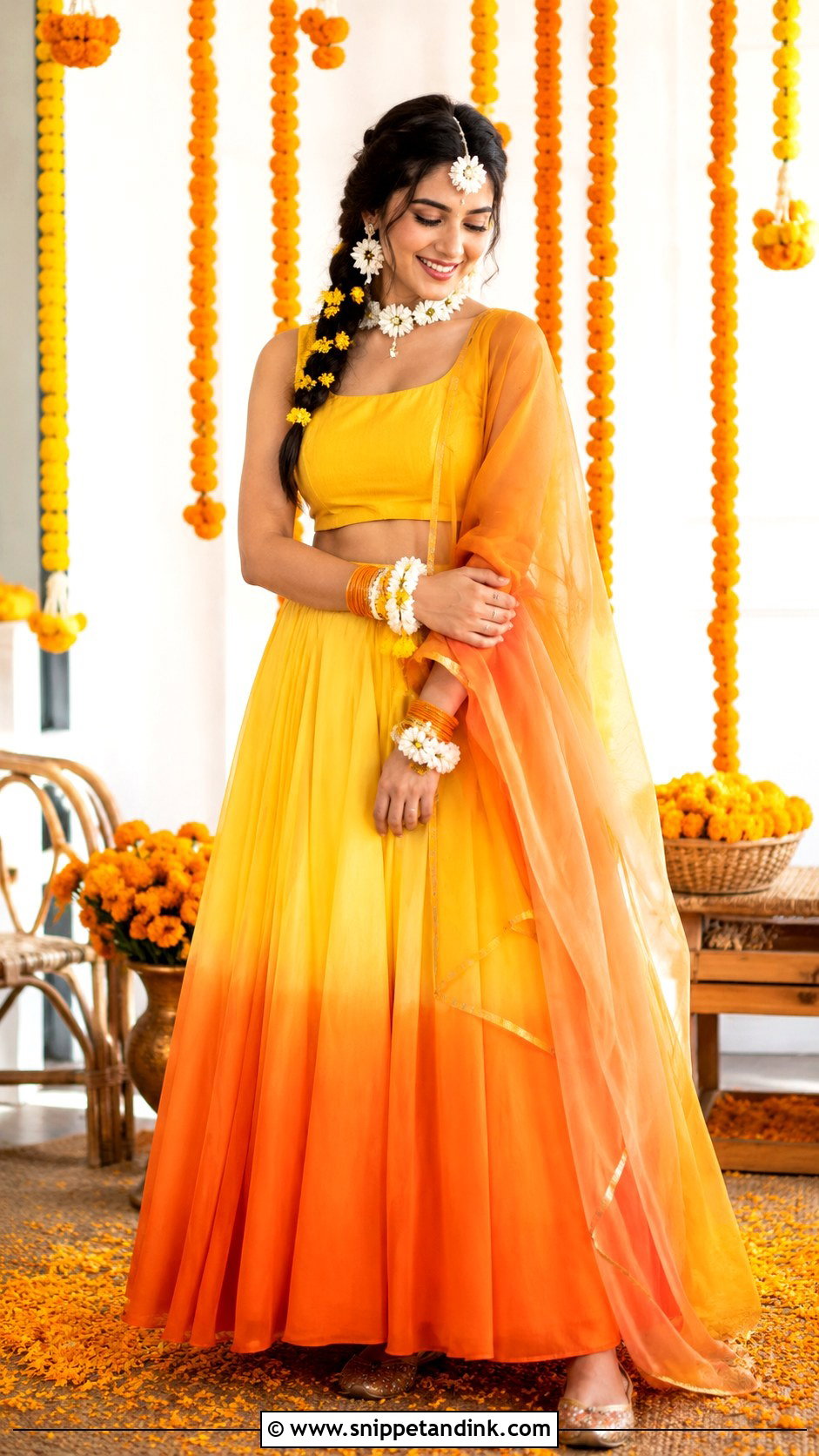
Ombré from yellow into orange is the shade change I’d pick for a setup full of marigolds. The deeper orange end anchors you against the flowers so you don’t blend in, while the yellow keeps the haldi feel. An ombré lehenga or sharara with a plain yellow blouse and an orange-tinted dupatta needs very little embroidery; the gradient is the feature. White floral jewelry, orange bangles, gold or neutral juttis and a side braid with small yellow flowers balance the warm palette. Lightweight fabric shows the transition best because it falls in long, unbroken lines.
13. Ivory Lehenga Bride Haldi Outfit
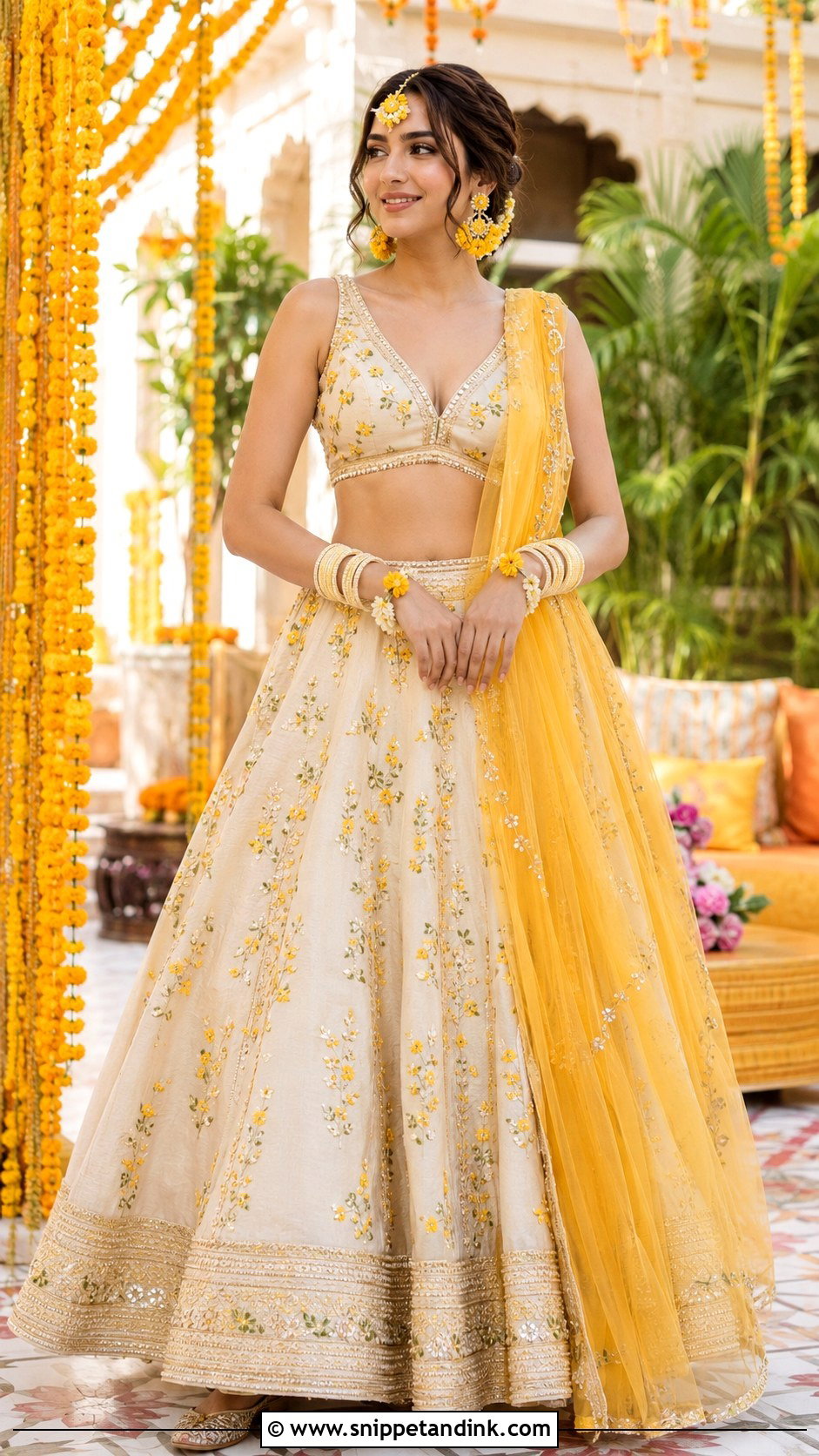
Ivory with yellow accents suits a bride who wants calm rather than color, especially if the decor is already bright and busy. A simple ivory skirt and blouse with small yellow florals, then a marigold dupatta for the strong color, is how I’d build it. Yellow flower earrings, a floral tikka, ivory bangles, gold flats and a low bun with white and yellow blossoms keep it consistent. Ivory shows turmeric instantly, so I’d steer you to an affordable or rewearable piece here rather than a heavily embellished investment. Soft makeup with a fresh base and rosy lips keeps you from looking washed out against the pale fabric.
14. Pink Floral Lehenga Bride Haldi Outfit
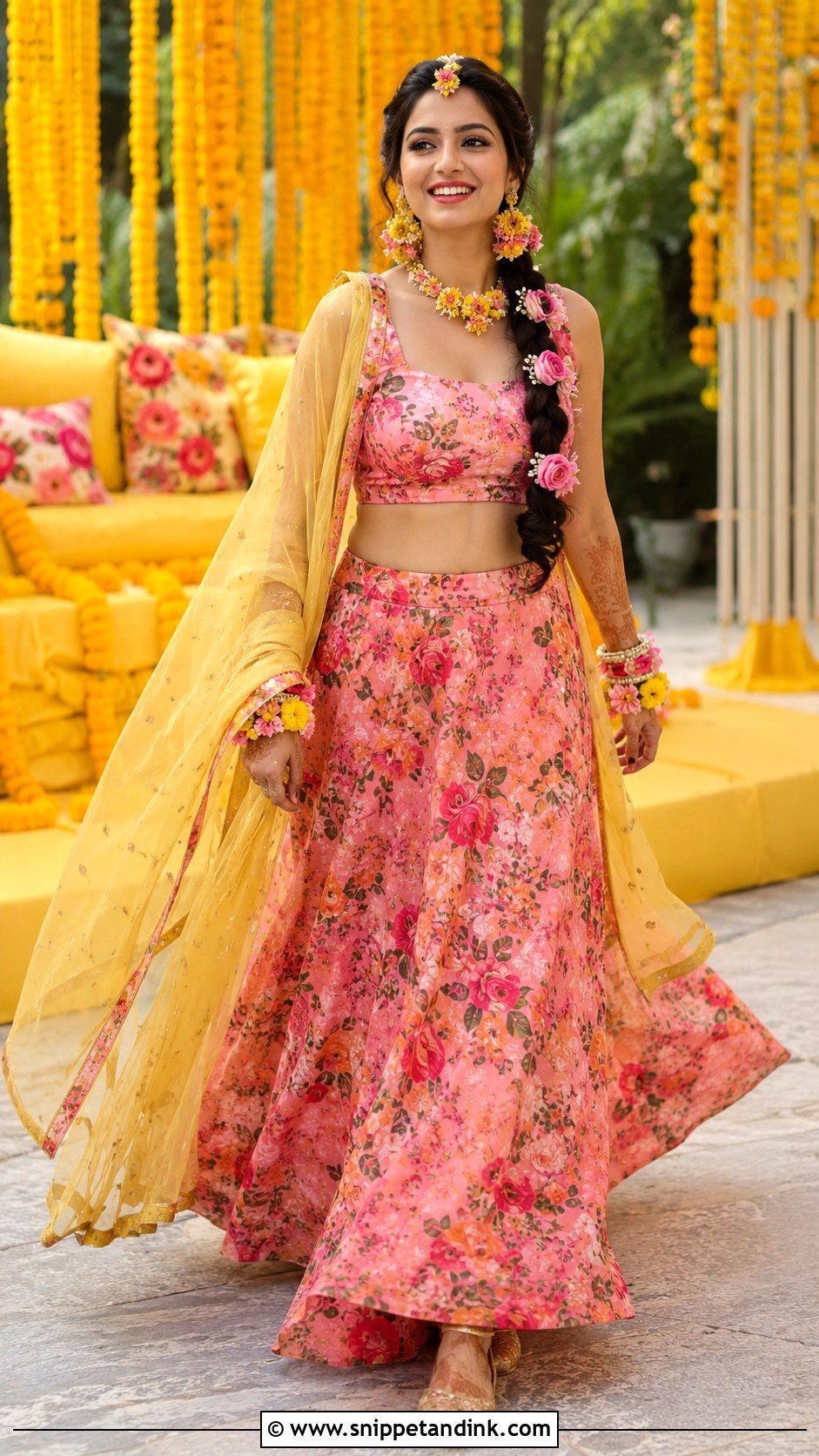
Nobody says the bride has to wear yellow head to toe. A pink lehenga printed with yellow flowers keeps the haldi link through the print and a light yellow dupatta, while the pink makes you the obvious bride in a room of yellow outfits. Blush, coral or bright pink all work; coral is the most forgiving if you’re unsure which pink suits your skin in daylight. Floral jewelry in both colors ties it together. Gold juttis, mixed bangles and yellow roses in a braid finish it. Keep the embroidery light, since the color contrast already does the work.
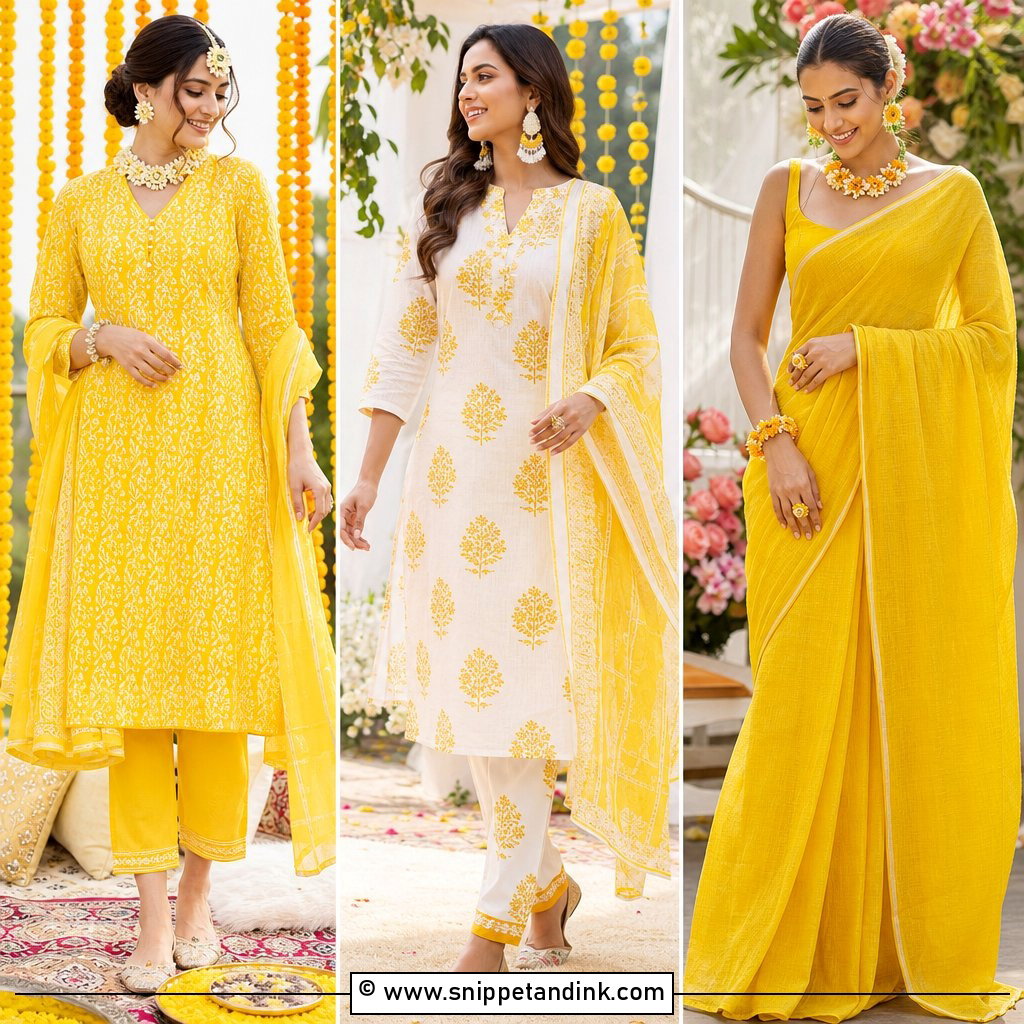
15. Green Bandhani Bride Haldi Outfit
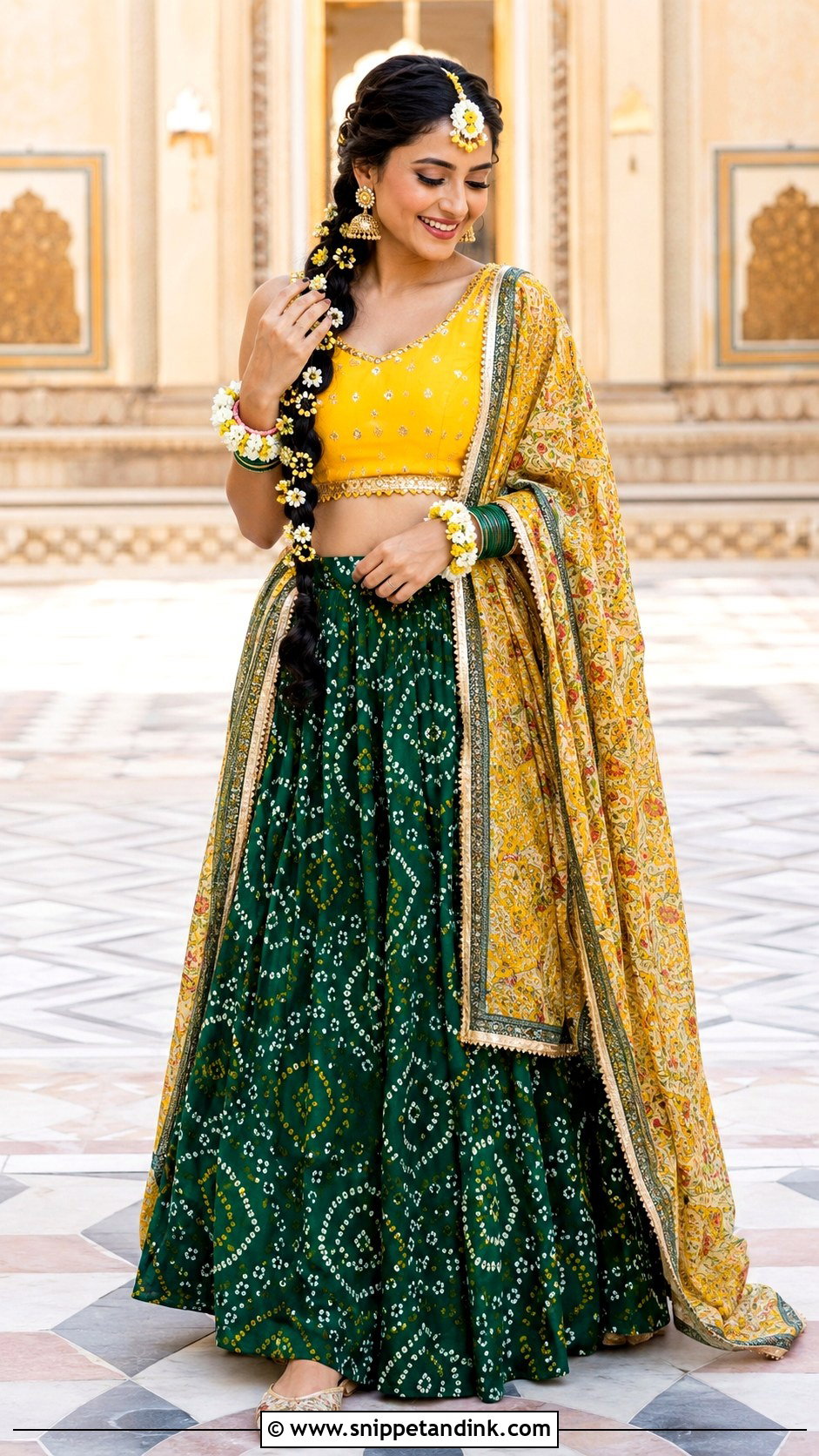
Bandhani’s tiny tied dots disguise turmeric splashes better than almost any plain fabric, which makes this one practical as well as bright. Try a green bandhani skirt with a yellow blouse and printed dupatta, or reverse it with a yellow bandhani lehenga and a green blouse. Keep the blouse simple so the dots stay legible. Oxidized or gold jhumkas, green glass bangles, floral wrist pieces and embroidered juttis suit it, with a long braid and yellow flowers. Hand-dyed bandhani can bleed if it stays wet, so rinse paste off reasonably soon. It looks especially good in a courtyard or heritage setting.
16. Yellow Phulkari Suit Bride Haldi Outfit
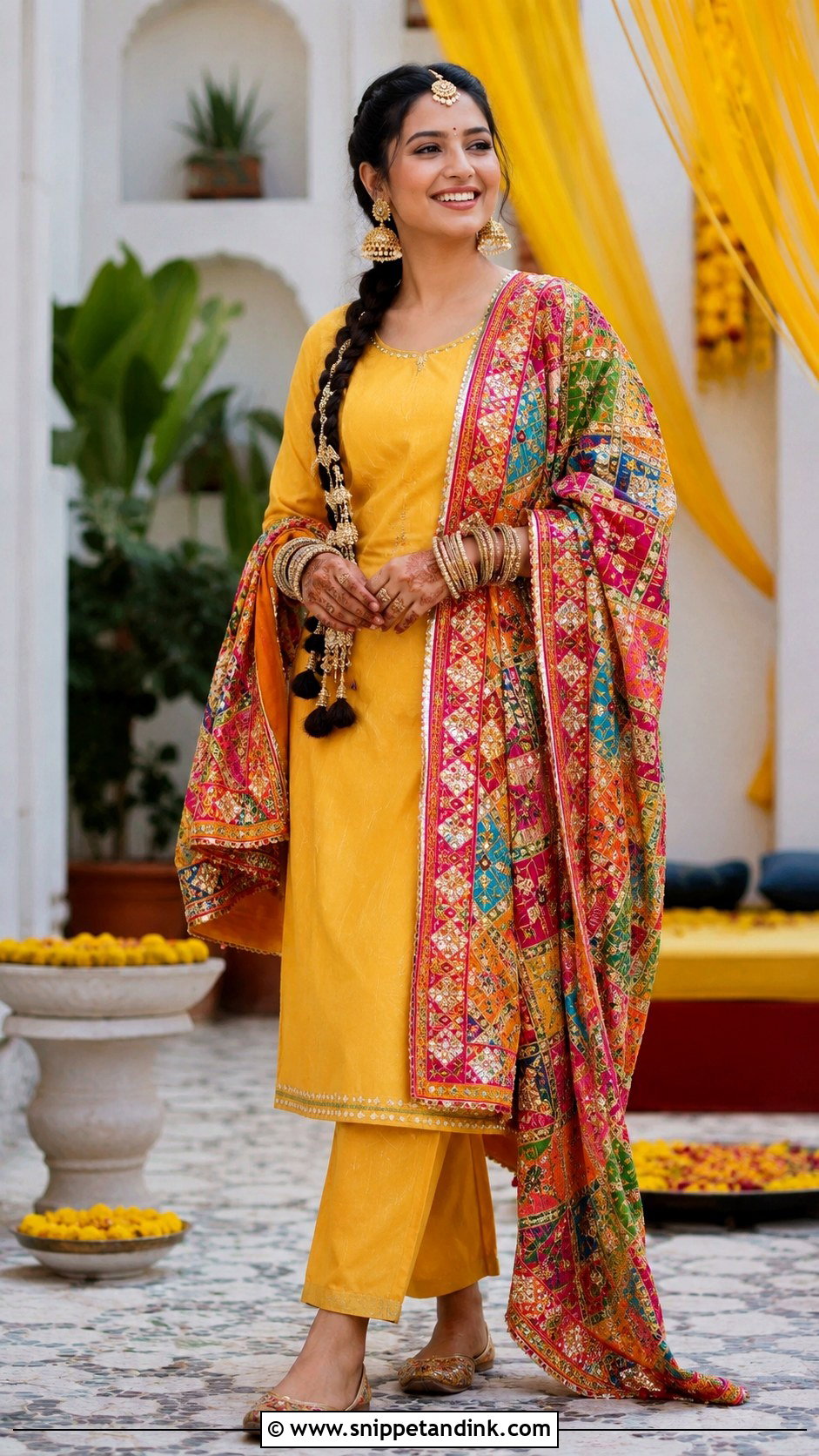
With phulkari, the dupatta is the outfit and everything else should step back. A plain yellow kurta and straight pants, lightly detailed, let the dense pink, orange, green and red embroidery take over. Traditional jhumkas, stacked bangles, a small maang tikka and Punjabi juttis suit it, and a paranda braid or low braided ponytail fits the regional feel. Pin the dupatta across one shoulder so the corners don’t land in the paste. Phulkari embroidery is often silk floss, which stains easily, so if yours is precious, wear it before the ritual and swap to a cotton dupatta for the messy part.
17. Yellow Chikankari Sharara Bride Haldi Outfit
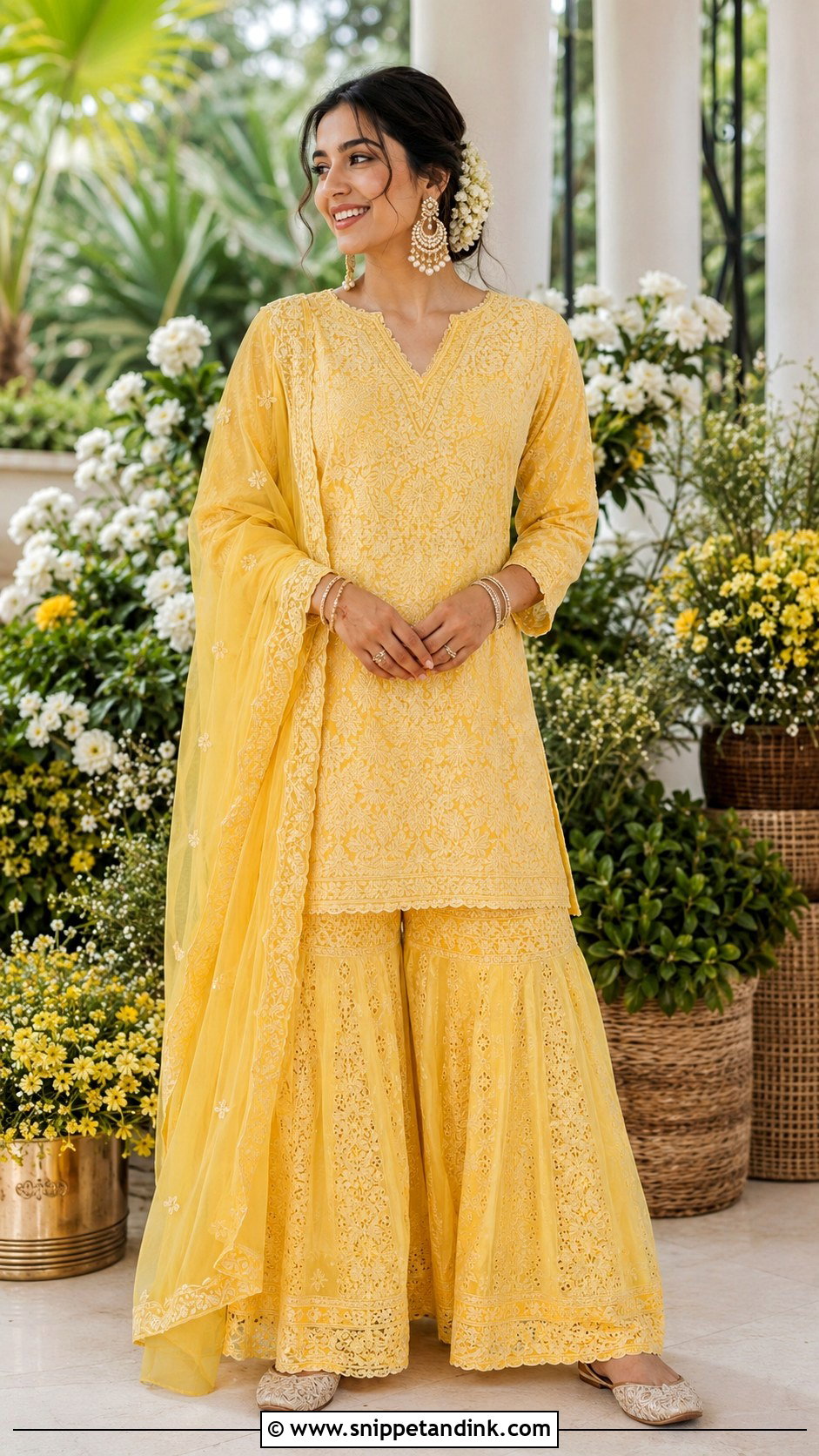
Chikankari is fine hand embroidery from Lucknow, traditionally white thread on light cotton or georgette, and its shadow work looks soft and detailed in daylight. On a yellow sharara set, white thread feels fresh, while yellow-on-yellow is quieter. A short kurti, wide sharara and a sheer dupatta with a narrow embroidered edge make the set. Pearl and floral earrings, slim bangles, ivory juttis and a loose bun with jasmine suit the texture. Only add a floral necklace if the neckline is plain. Chikankari stitches are delicate, so avoid scrubbing paste out of them; soak gently in cold water instead.
18. Yellow Silk Saree Bride Haldi Outfit
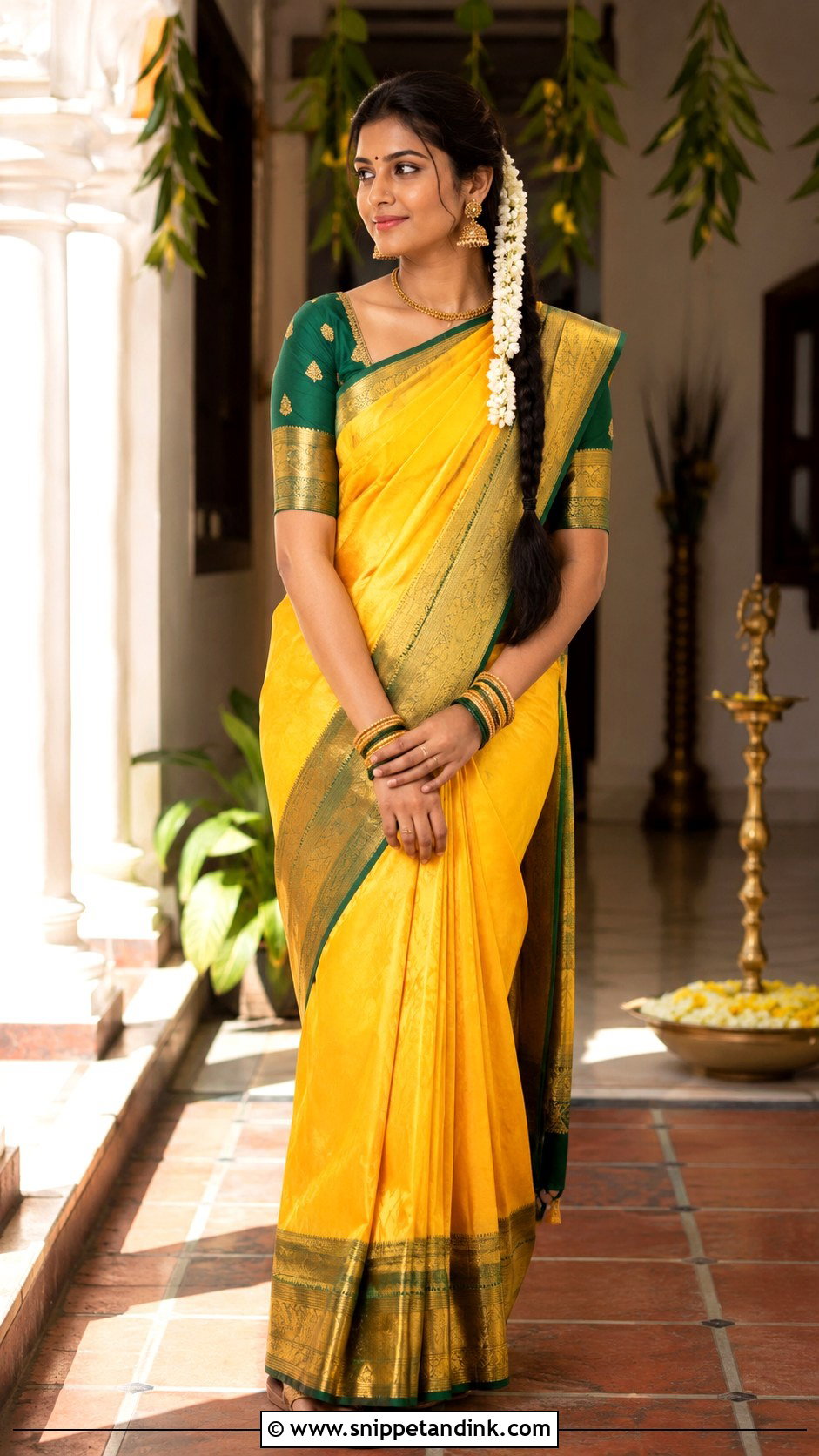
A yellow silk saree is the choice for families who keep the ceremony traditional. Lightweight silk or silk-cotton with a green, pink or gold border, a contrasting short-sleeve blouse and carefully pinned pleats is the classic combination. Gold jhumkas, glass bangles, a small necklace, flat sandals, a jasmine-wrapped braid or bun and a small bindi keep attention on the weave. Pure silk with a zari border is the fabric I’m most cautious about at a haldi: water spots and turmeric both mark it, and zari tarnishes. If the saree is precious, keep it for the puja portion and change before the paste.
19. Floral Cape Skirt Bride Haldi Outfit
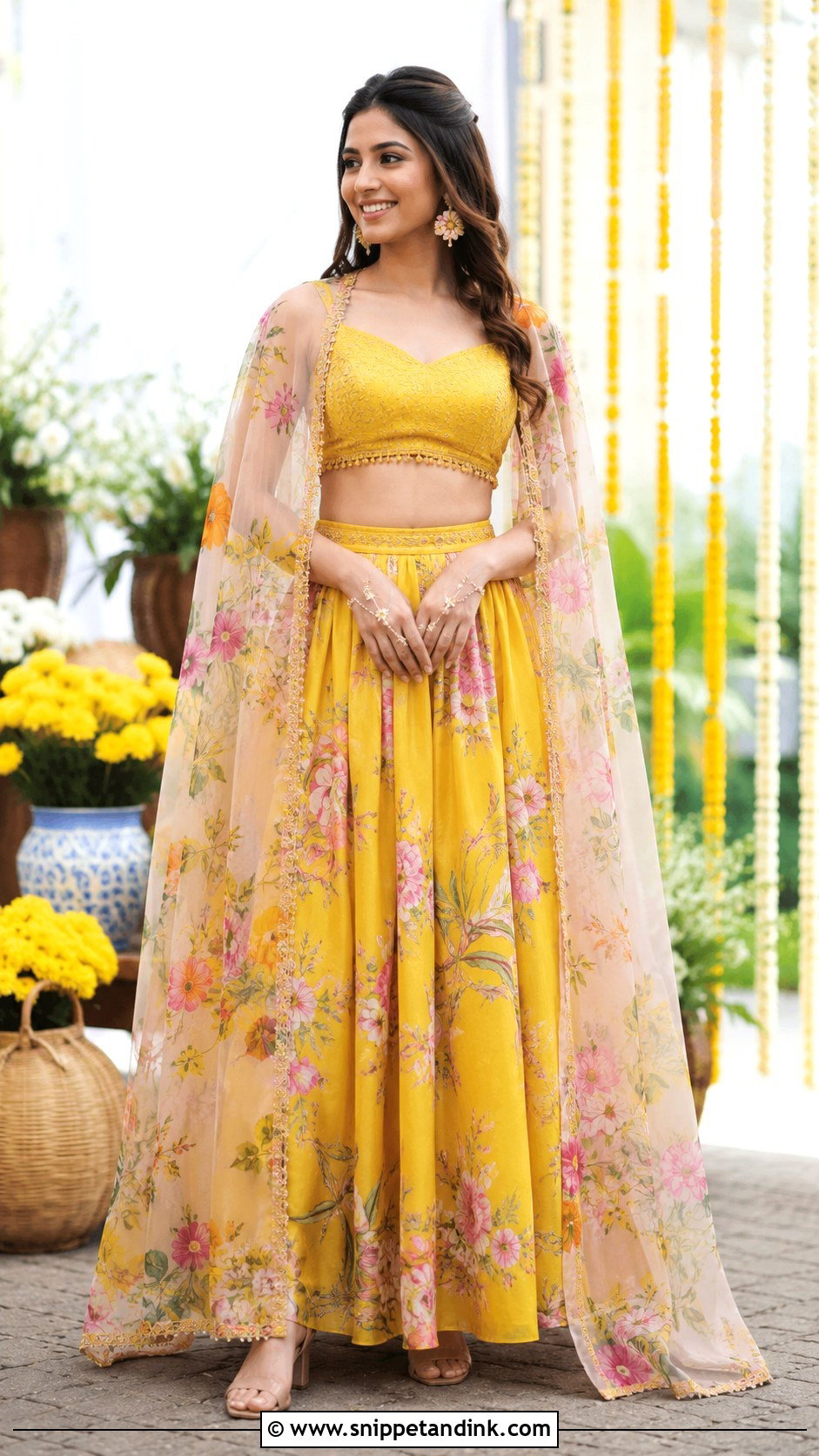
A sheer floral cape turns a plain yellow crop top and ankle-length skirt into something you’ll want to walk towards the camera in. Wear the cape open at the front so the silhouette shows and your arms stay free. Floral earrings, a delicate hand harness, neutral block heels or juttis and a soft ponytail or half-up style suit the movement. Skip the dupatta entirely; two outer layers compete and add fabric you’ll keep sitting on. This one’s for a modern outdoor celebration where you get coverage and drama without a heavy lehenga.
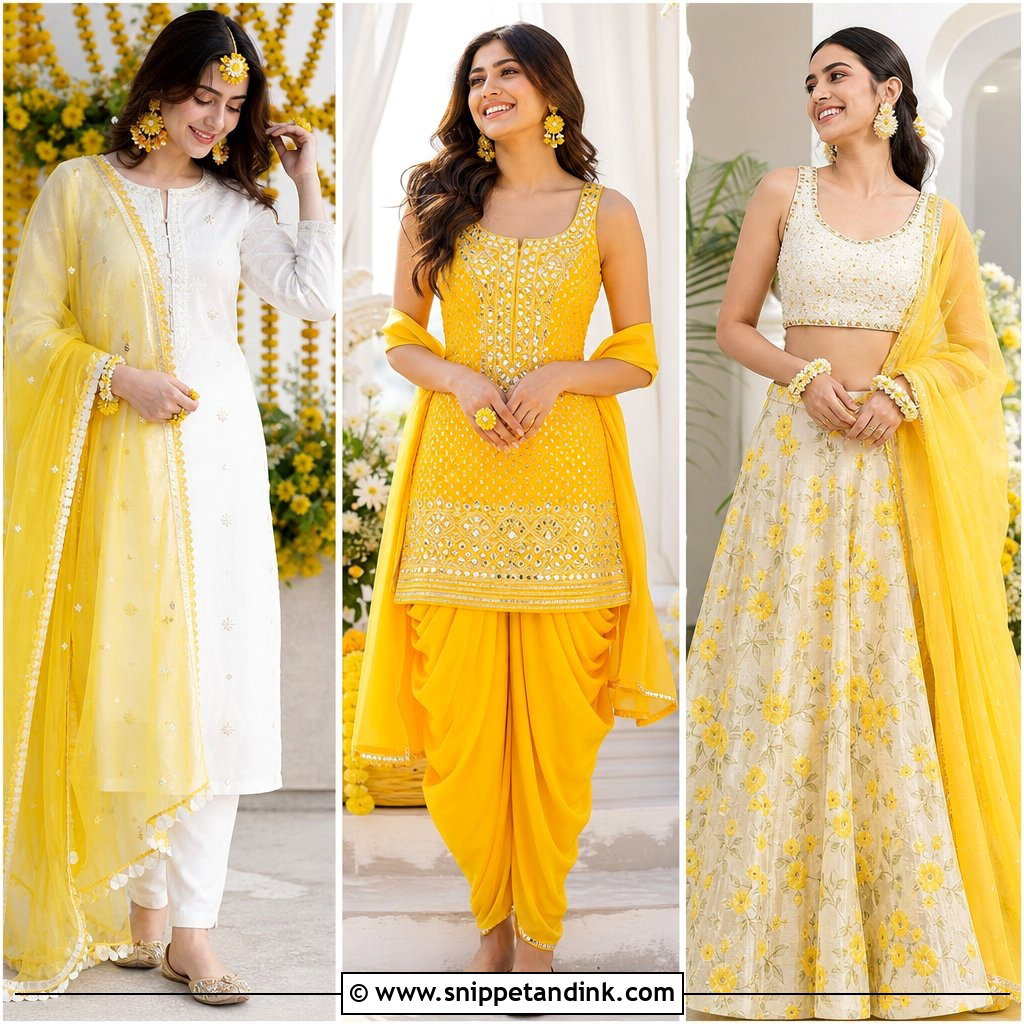


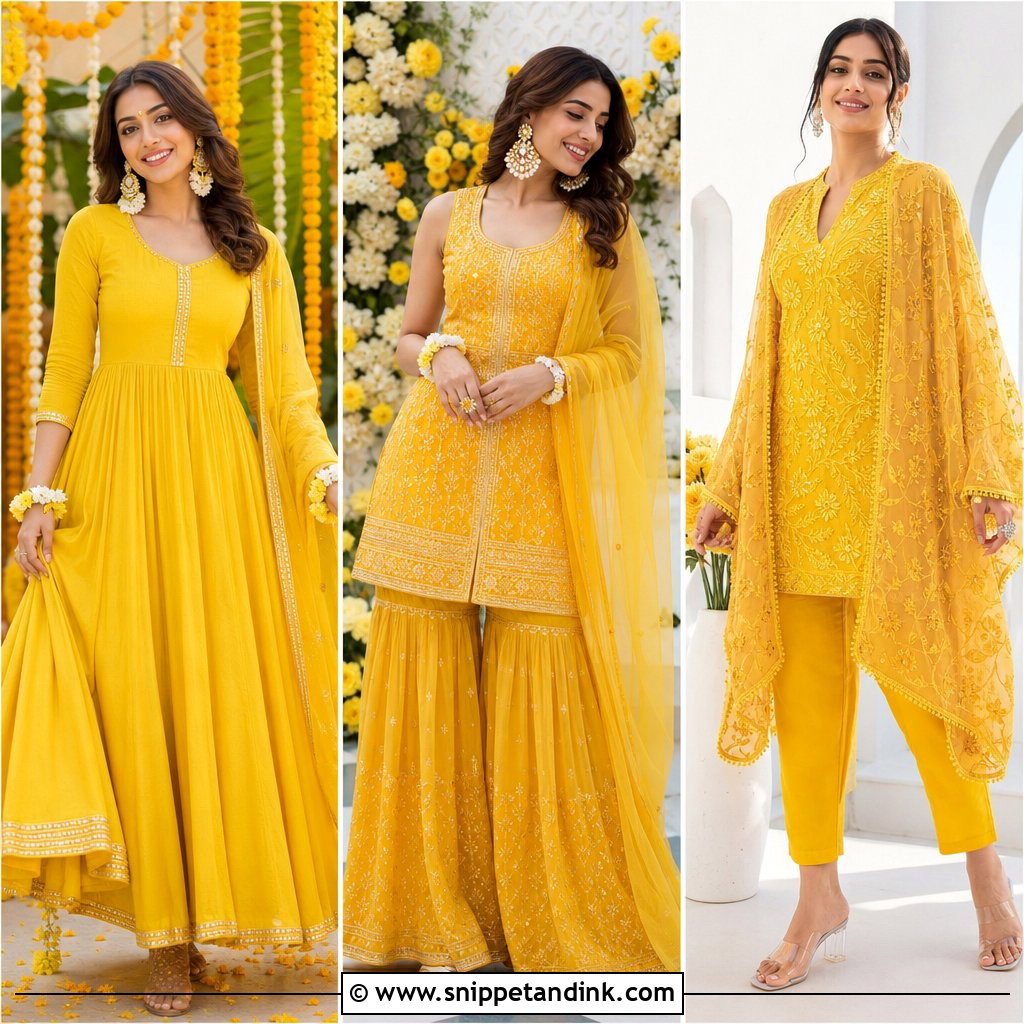

20. Simple Cotton Suit Bride Haldi Outfit
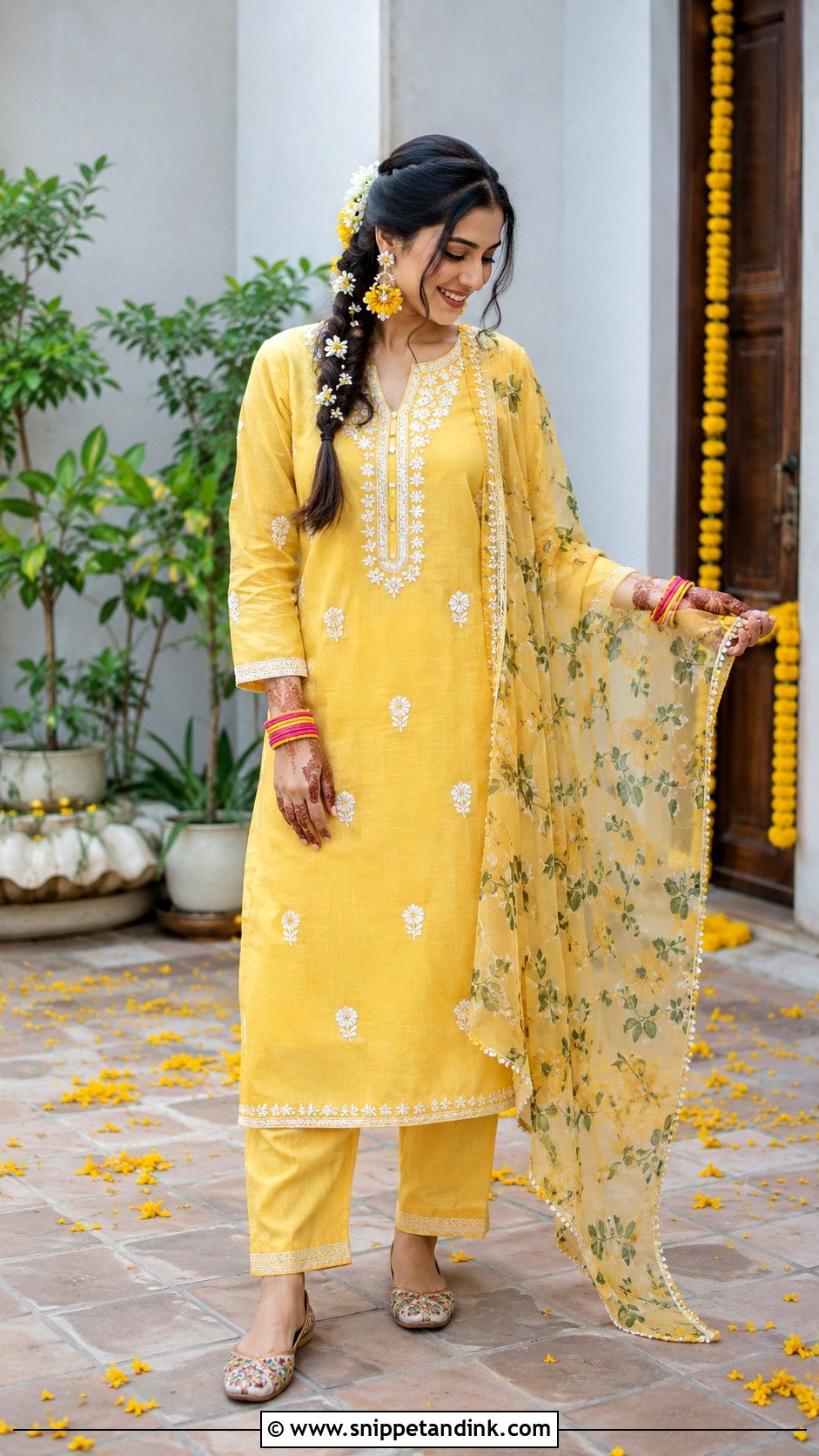
If you want to enjoy the messy part without a second thought, wear a simple yellow cotton suit. A straight kurta, ankle-length pants and a printed dupatta breathe in warm weather and go straight in the wash. Gota trim, colored piping or small floral embroidery make it feel special. Flower earrings, bright bangles, flat juttis you don’t mind getting yellow and a secure braid with fresh flowers finish it. Many of my brides wear something like this for the ritual and change into a dressier outfit afterwards. Family jewelry or a dupatta sewn from a mother’s old saree personalizes it.
Floral Jewelry, Real Gold and the Change Bag
Accessories cause more haldi stress than outfits do. Fresh flower jewelry is the traditional choice and it’s light, but real blooms wilt in heat, so I have it made or delivered the same morning and kept somewhere cool until you put it on. Artificial or fabric floral sets last all day and can be reused for the mehndi, though they look stiffer up close.
Solid gold handles turmeric and oil fine and wipes clean. Plated imitation jewelry and kundan sets are another story: wet paste can dull the plating, and water seeping behind set stones loosens them over time. If a piece is borrowed or precious, take it off before the ritual. Many brides go barefoot for the ceremony itself, so the juttis matter less than you’d think; just pick ones you can slip back on easily.
Ask someone you trust to carry a change bag. Mine usually holds:
- A second, simple outfit and fresh underwear
- An old towel and a dark dupatta to sit on in the car
- Wet wipes and a small bottle of oil, which loosens dried paste from skin and hairlines more gently than scrubbing
- A zip bag for wet jewelry and another for the stained outfit
- Hair ties and a wide-tooth comb, since paste mixed with oil tangles hair quickly
Will You Be Dancing, Sitting or Both?
Sarees, lehengas, shararas, suits and fusion sets all have a place at a haldi; the question is which one lets you move, sit and dance while still looking like the bride. Start from the silhouette you feel most natural in, then get the fabric light, the draping firm and the shoes flat. Yellow is the tradition, though ivory, pink, green and orange belong here too. Factor in the venue, the weather and how much paste your family will actually use. Then wear the outfit that feels like you, and enjoy being covered in yellow.
You'll Like These Ideas:







Leave a Reply