
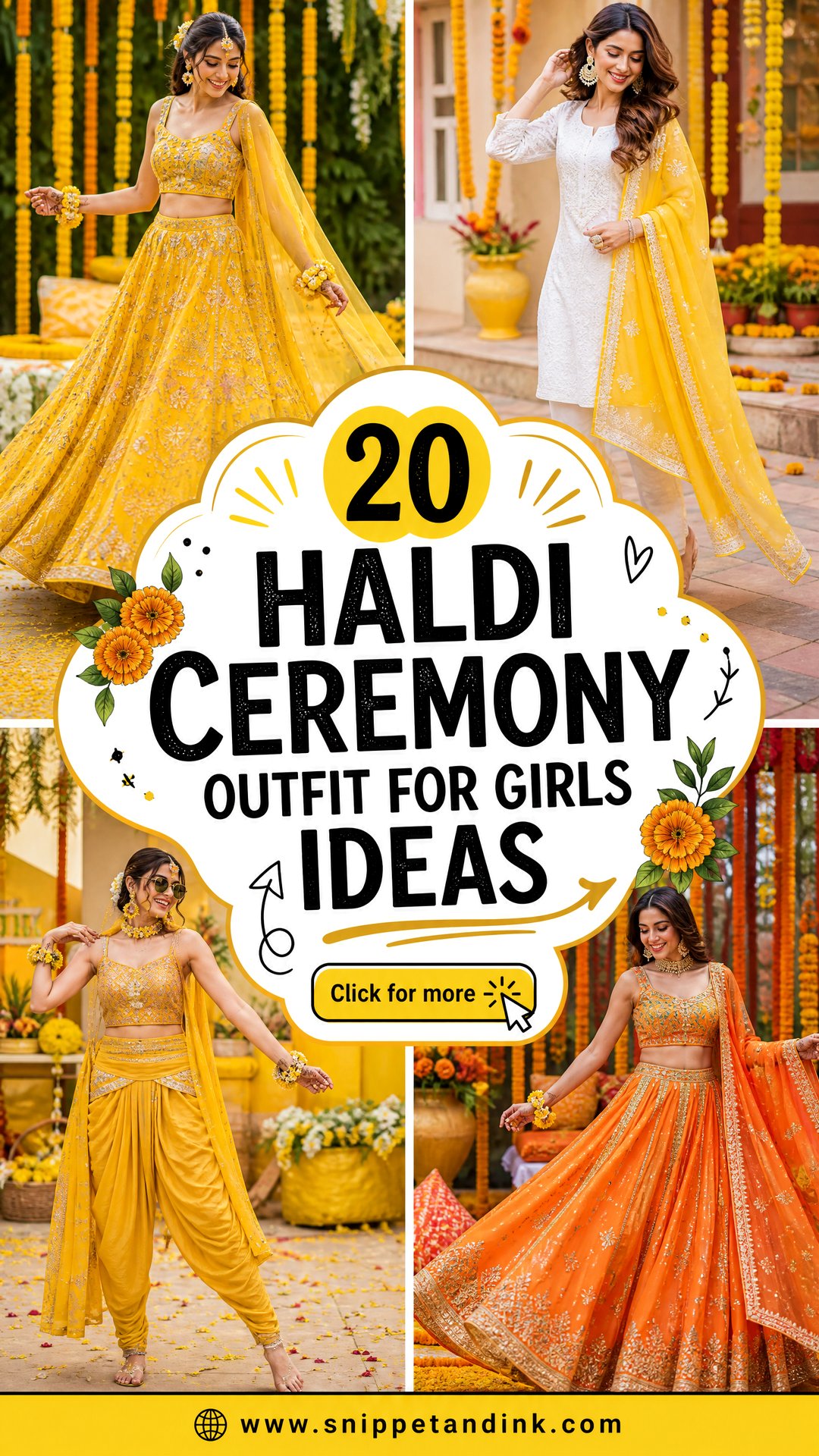
A Haldi outfit has to survive turmeric paste, a morning of sitting on low stools or the floor, and plenty of dancing, so I dress girls for the ritual first and the photos second. Breathable fabrics and simple shapes do far better than delicate, heavily worked pieces. Yellow is the traditional color, though marigold, mustard, orange, ivory, green, pink and florals all look right in daylight. Lightweight lehengas, sharara sets, Anarkalis, sarees and modern co-ords all have a place, finished with flat shoes, light jewelry and hair that stays neat through the rituals. Below are outfits for the bride, sisters, cousins, bridesmaids and guests, each with the practical point I’d check before wearing it.
How Close You’ll Sit to the Turmeric Bowl
The first question I ask any girl dressing for a Haldi is where she’ll be during the ritual. The outfit for someone applying paste is not the outfit for someone watching from the courtyard steps.
The bride
She usually sits on a low stool or floor seat while family members apply paste to her face, arms, feet and often her clothes. Many families have the bride wear a simple yellow outfit she’s happy to retire afterward. Short or elbow sleeves make it easier for relatives to reach her arms, and a plain cotton fabric washes far better than embroidered silk.
Sisters, cousins and bridesmaids
You’ll be kneeling, reaching and getting your hands in the bowl, and very often you’ll be smeared in return. Pick sleeves that end above the wrist or roll up, pin every dupatta, and choose a hem you can kneel on without tripping. Rings and bangles you love can come off for this part.
Guests and little girls
Guests can wear lighter colors and finer fabric, but expect a friendly smudge on the cheek at most Haldis. For small girls, keep skirts above the ankle, choose soft cotton without scratchy sequins, and pack a spare outfit; children always end up in the paste.
1. Yellow Lehenga Haldi Outfit
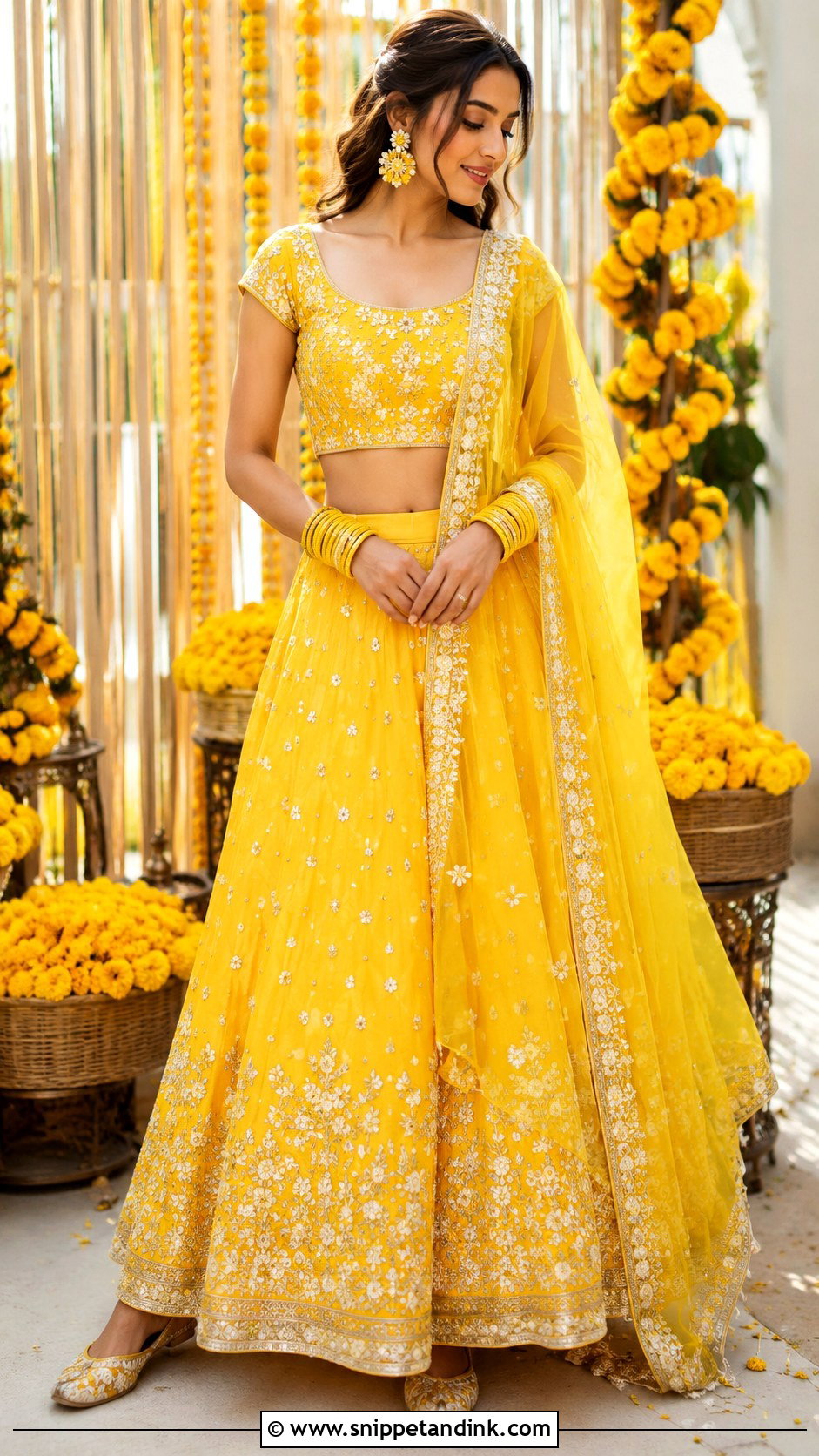
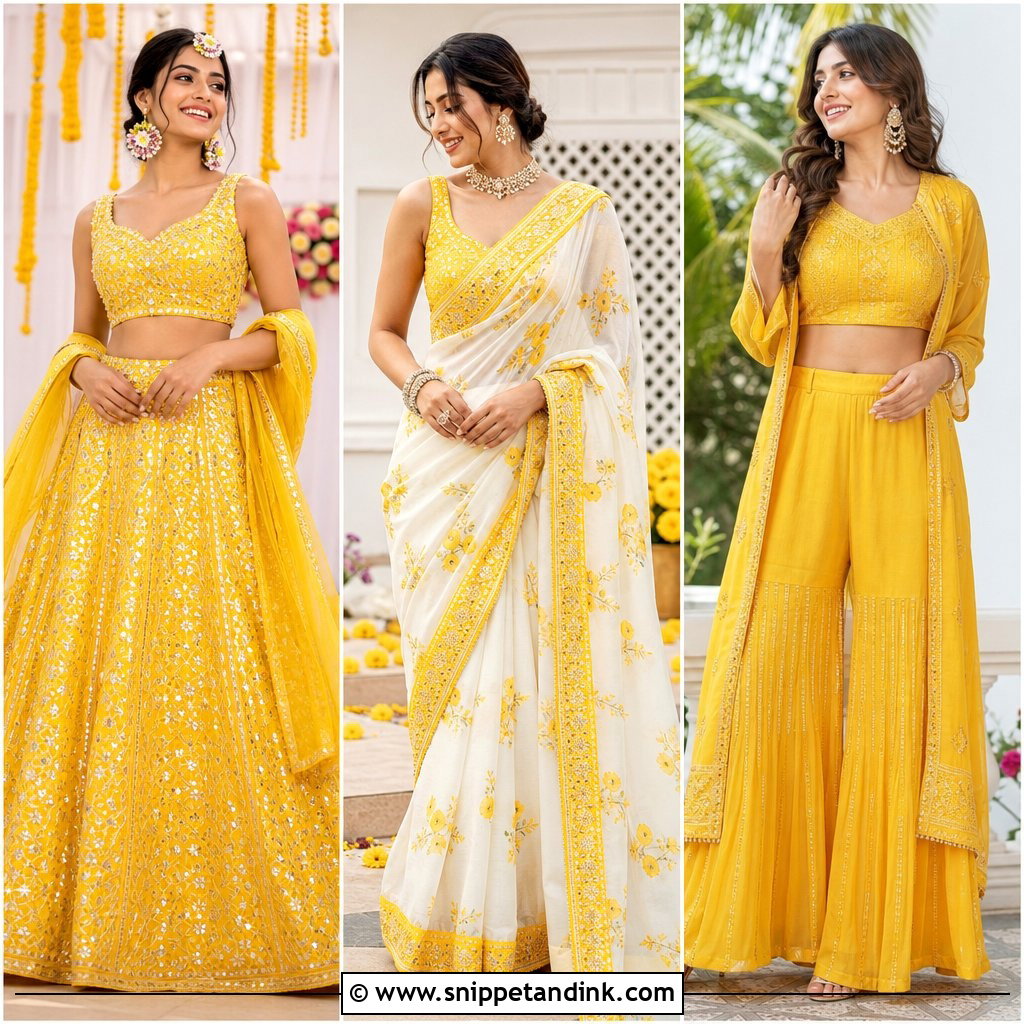
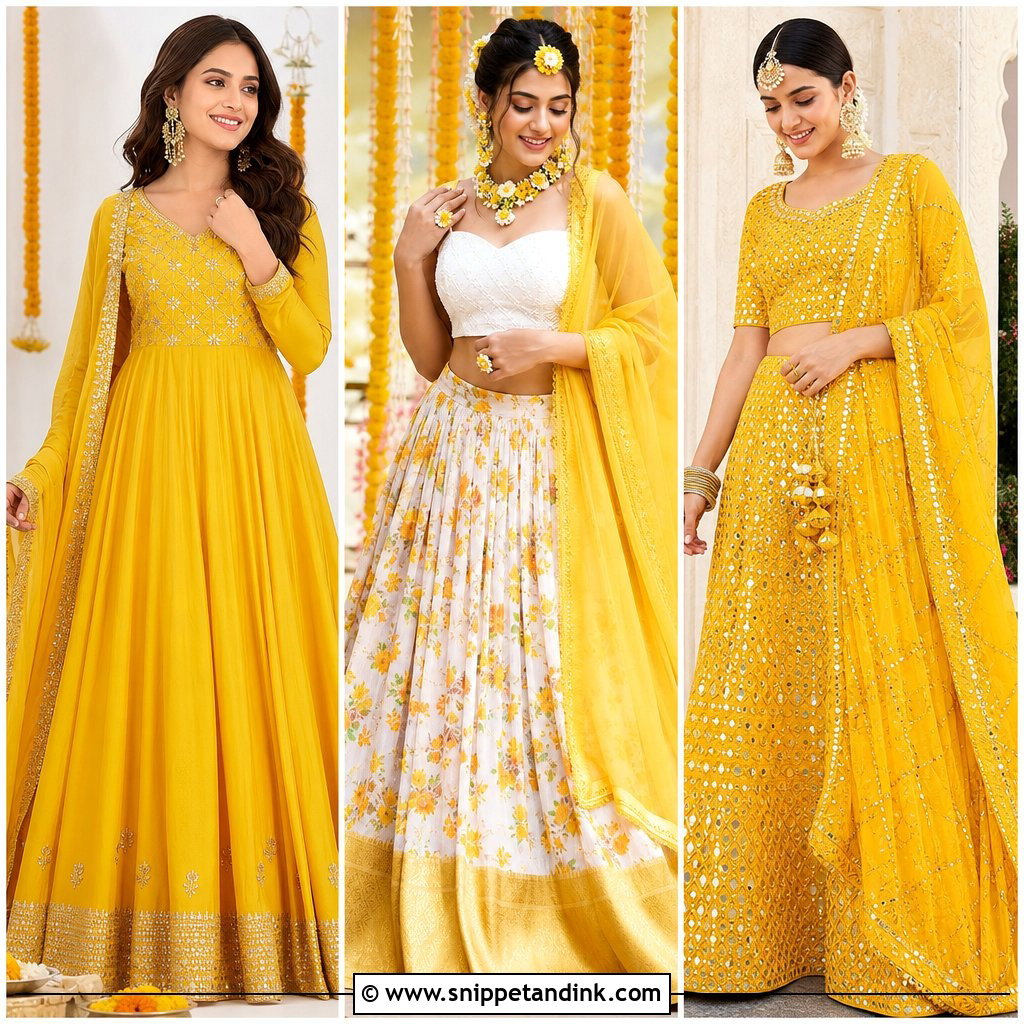
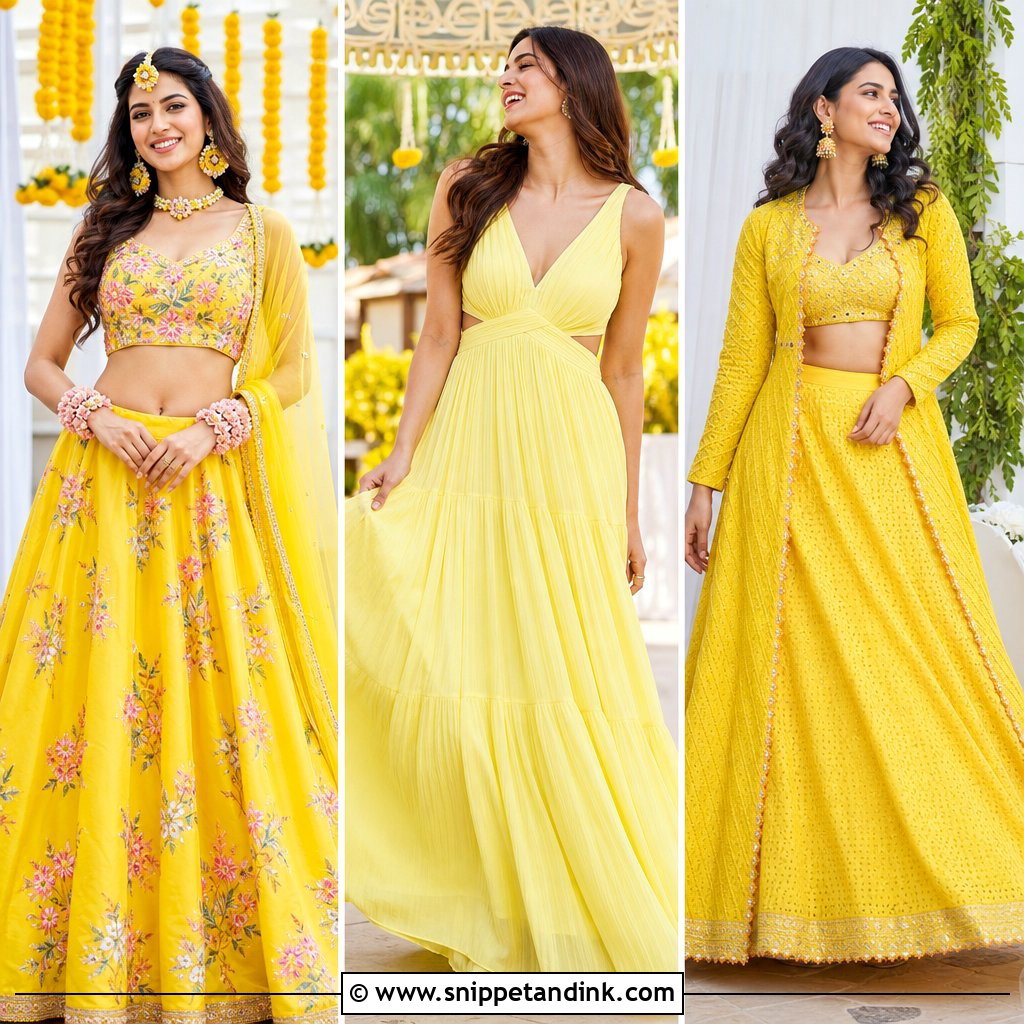
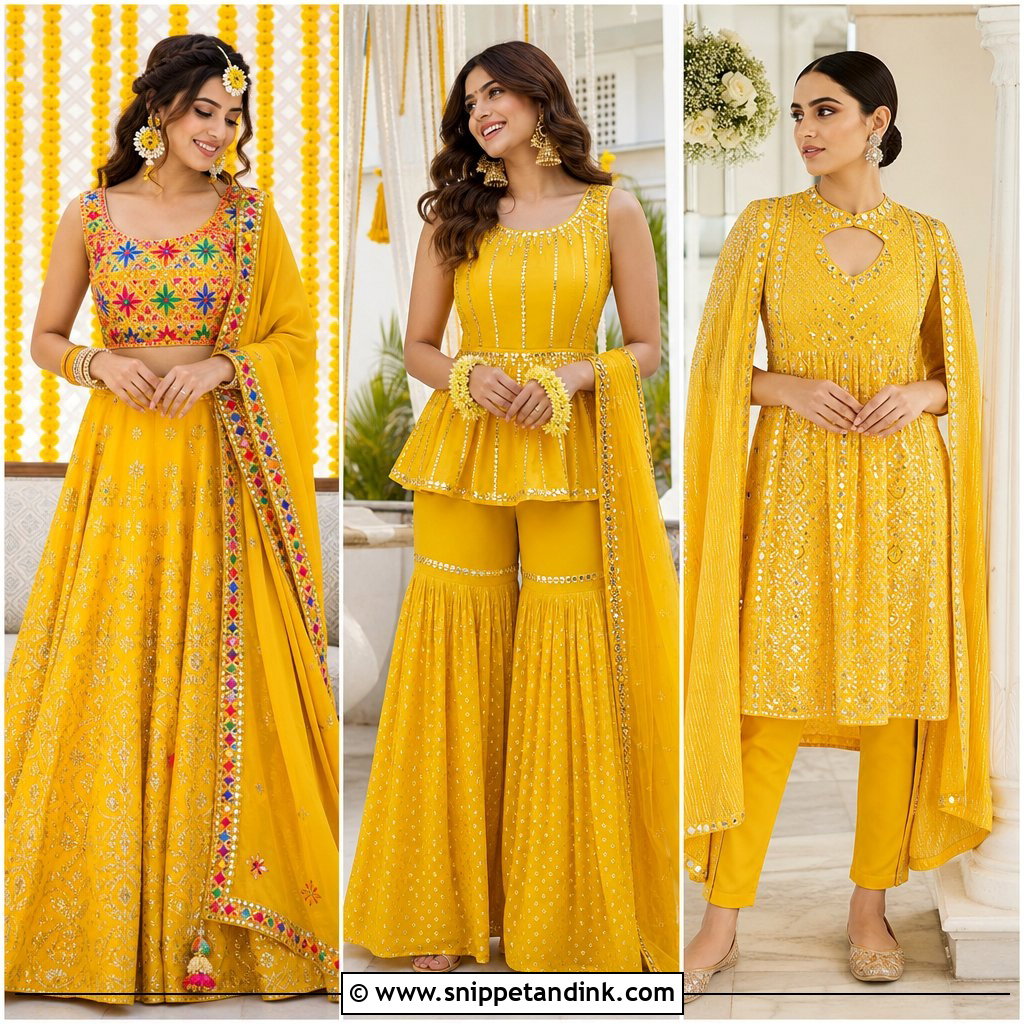
The classic, and the easiest to get right. A cotton, organza or chanderi skirt with a comfortable flare and minimal embroidery, a matching blouse and a soft dupatta pinned firmly to one shoulder. Mirror work, thread embroidery or a slim gota border add enough festivity. Floral earrings, stacked bangles and embroidered juttis complete it, with a braid or low ponytail. Organza looks crisp but shows turmeric marks more than cotton, because the paste sits on its smooth surface and dries there. If you’ll be in the thick of the ritual, choose a washable lehenga you won’t mourn; it will look just as good in photos as a designer piece.
2. Yellow Sharara Suit Haldi Outfit
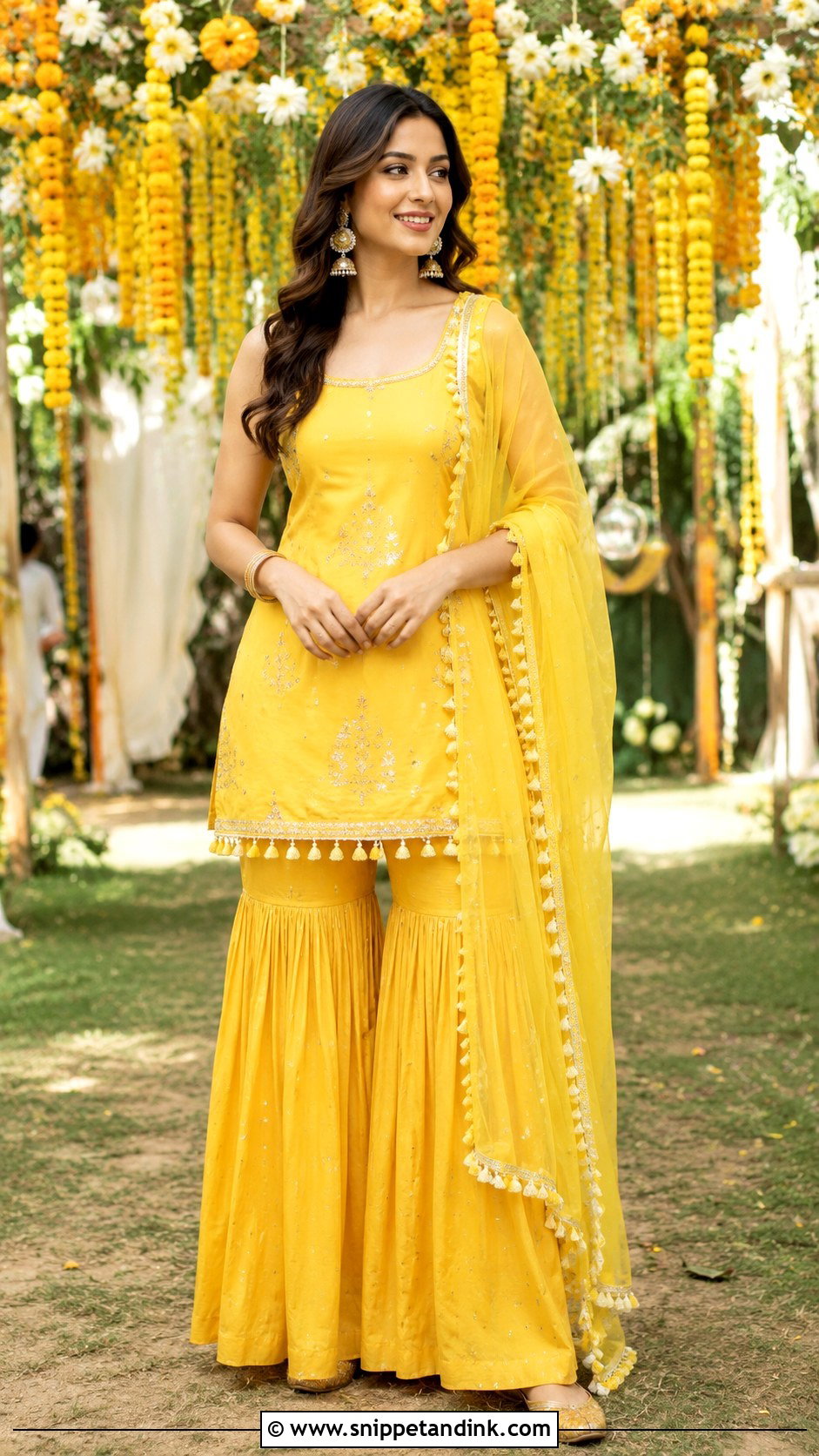
Sharara pants give you room to sit cross-legged and still look graceful when you stand up to dance. Pair a short straight kurta with wide, flowing sharara in cotton, georgette or cotton-silk, and a light dupatta with tassels or a narrow gota border. Mustard, sunflower and turmeric gold suit different complexions; hold the fabric up to your face in daylight to choose. Jhumkas, a delicate maang tikka and flat juttis finish it. Keep the kurta embroidery light for a daytime function. One thing I check is the sharara length: it should just clear the floor in flats, or the flare gets trodden on every time you kneel to apply paste.
3. Floral Anarkali Haldi Outfit
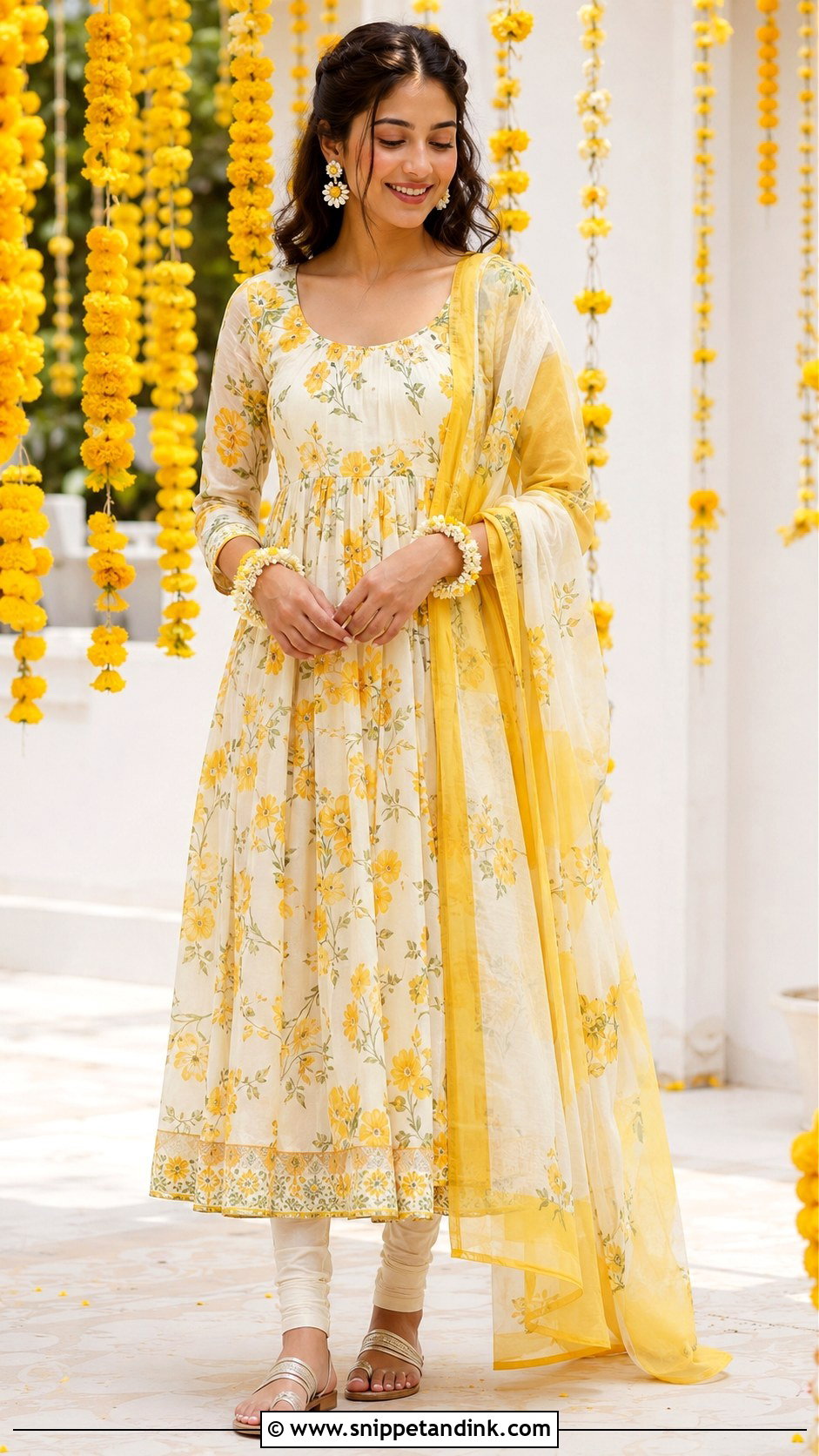
Small floral prints keep an Anarkali fresh rather than formal. Pick a yellow, ivory, peach or pale green base with little botanical motifs, in calf or ankle length with comfortable leggings. For an outdoor Haldi, cotton or mulmul breathes far better than dense synthetics, which trap heat under all that flare. Add a sheer dupatta only if it can be pinned securely and kept away from the paste bowls. Pearl earrings, floral bangles and metallic sandals give a refined finish, with a half-up style and small flower pins. Cousins, younger bridesmaids and guests who want graceful coverage tend to love it.
4. Mustard Kurta Palazzo Haldi Outfit
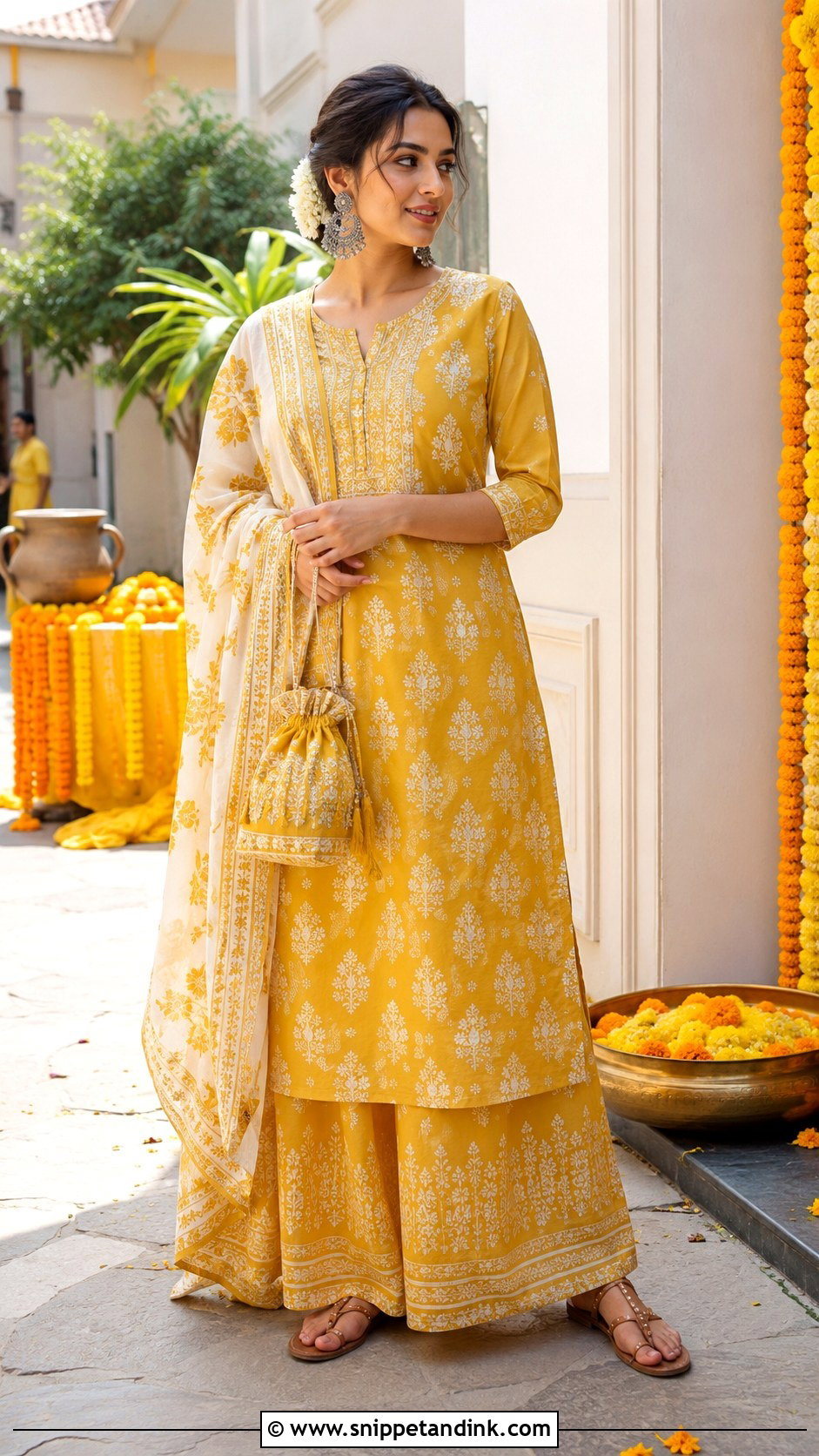
Mustard is the yellow I suggest to girls who feel washed out in lemon; it’s warmer and deeper against most Indian skin tones. Wear a straight or slightly flared kurta with coordinating palazzo pants, with subtle block printing, white threadwork or a narrow gota neckline. An ivory or floral dupatta adds contrast, and oxidized silver earrings with tan Kolhapuris suit the earthy tone. A crossbody potli keeps your hands free for the rituals. Gardens, courtyards and family homes all suit it. If you’ll be close to the turmeric, pick washable cotton or rayon and have the hems an inch off the ground, since floor-skimming palazzos act like a mop.
5. White Kurta With Yellow Dupatta Haldi Outfit
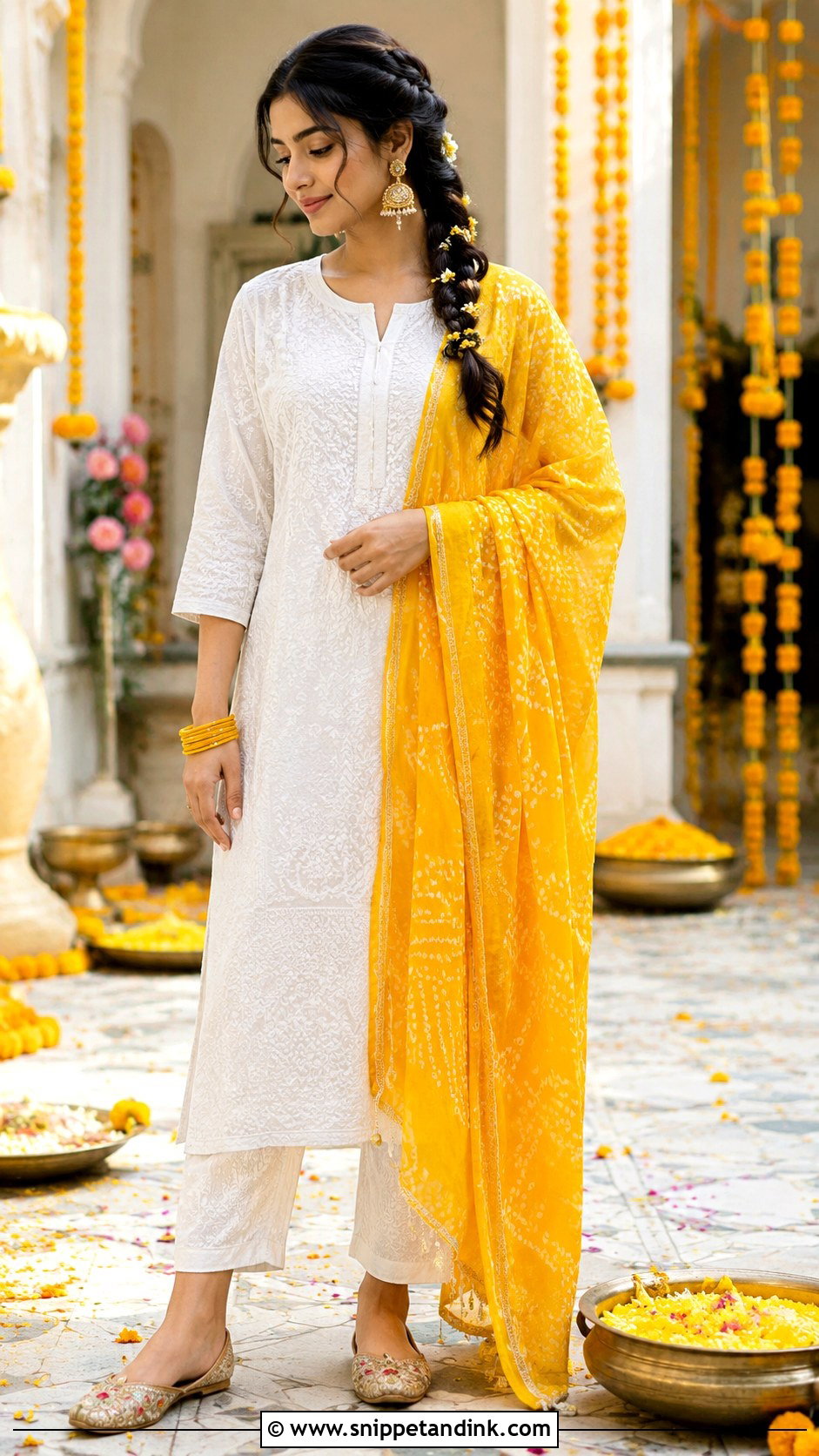
White and yellow photograph brightly together in daylight, but be honest about where you’ll stand. Turmeric on white cotton shows instantly. Start with a simple white kurta and straight pants and bring the color in through a marigold bandhani, leheriya or floral dupatta, pinned so it stays put. Yellow bangles, small gold jhumkas and white or mustard juttis tie it together, with peach blush, a soft lip and a sleek braid with tiny yellow flowers. This is the outfit for guests who’ll watch from a step back, or for anyone happy to treat the stains as a souvenir.
6. Yellow Saree Haldi Outfit
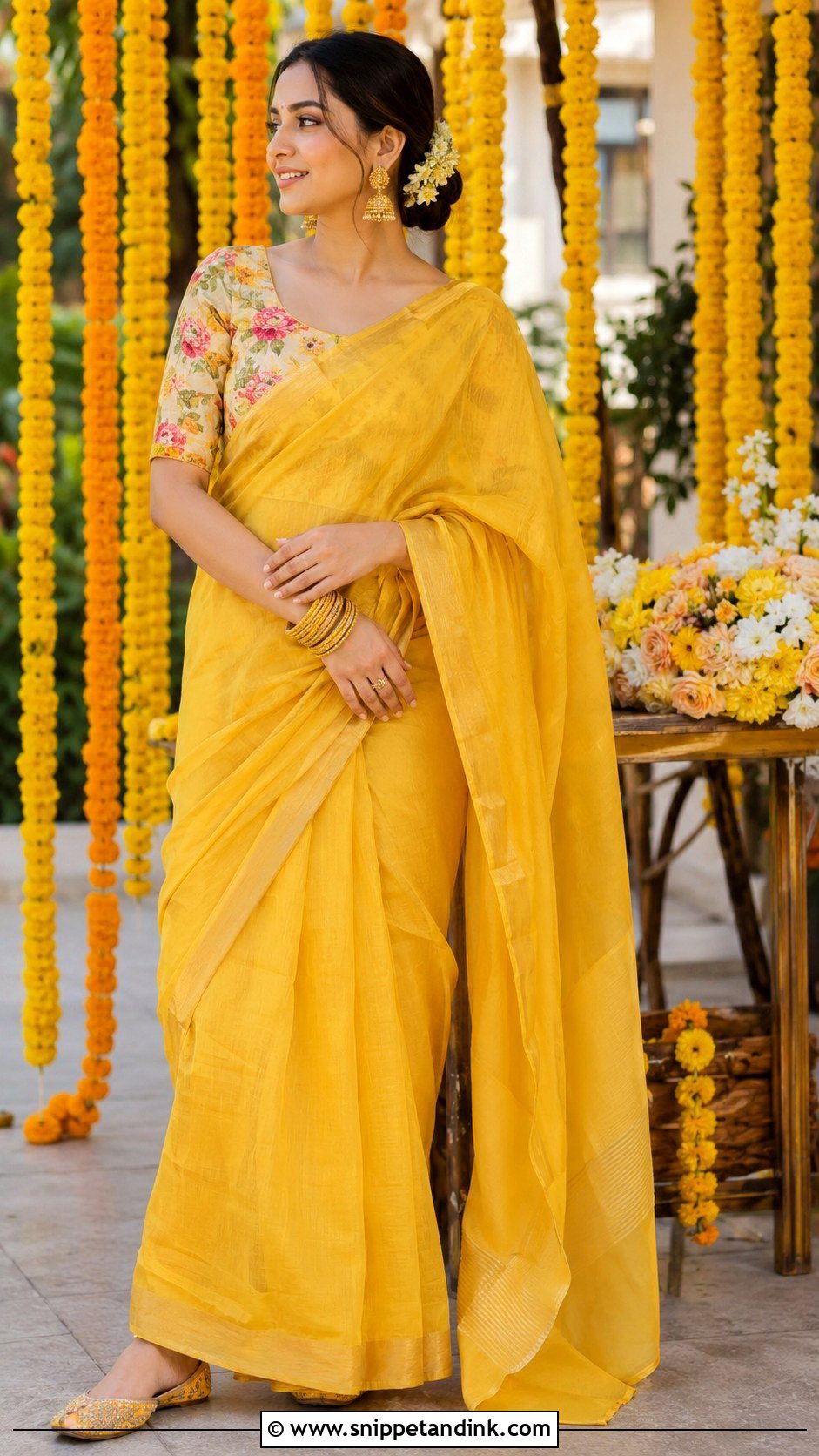
A lightweight yellow saree works for a morning Haldi as long as the fabric is easy: cotton, chiffon, linen blends or soft chanderi. Heavy silks and stiff borders fight you when you sit on a low seat. Pair it with a sleeveless, short or elbow-sleeve blouse with light mirror work or a contrasting print. Pin the pleats at the waist and the pallu at the shoulder, so neither slips toward the paste. Medium jhumkas, glass bangles and flat juttis complete it, with a low flower-decked bun. First-time saree wearers should consider a pre-stitched one; it looks the same and won’t come undone mid-ritual.
7. Yellow Crop Top And Skirt Haldi Outfit
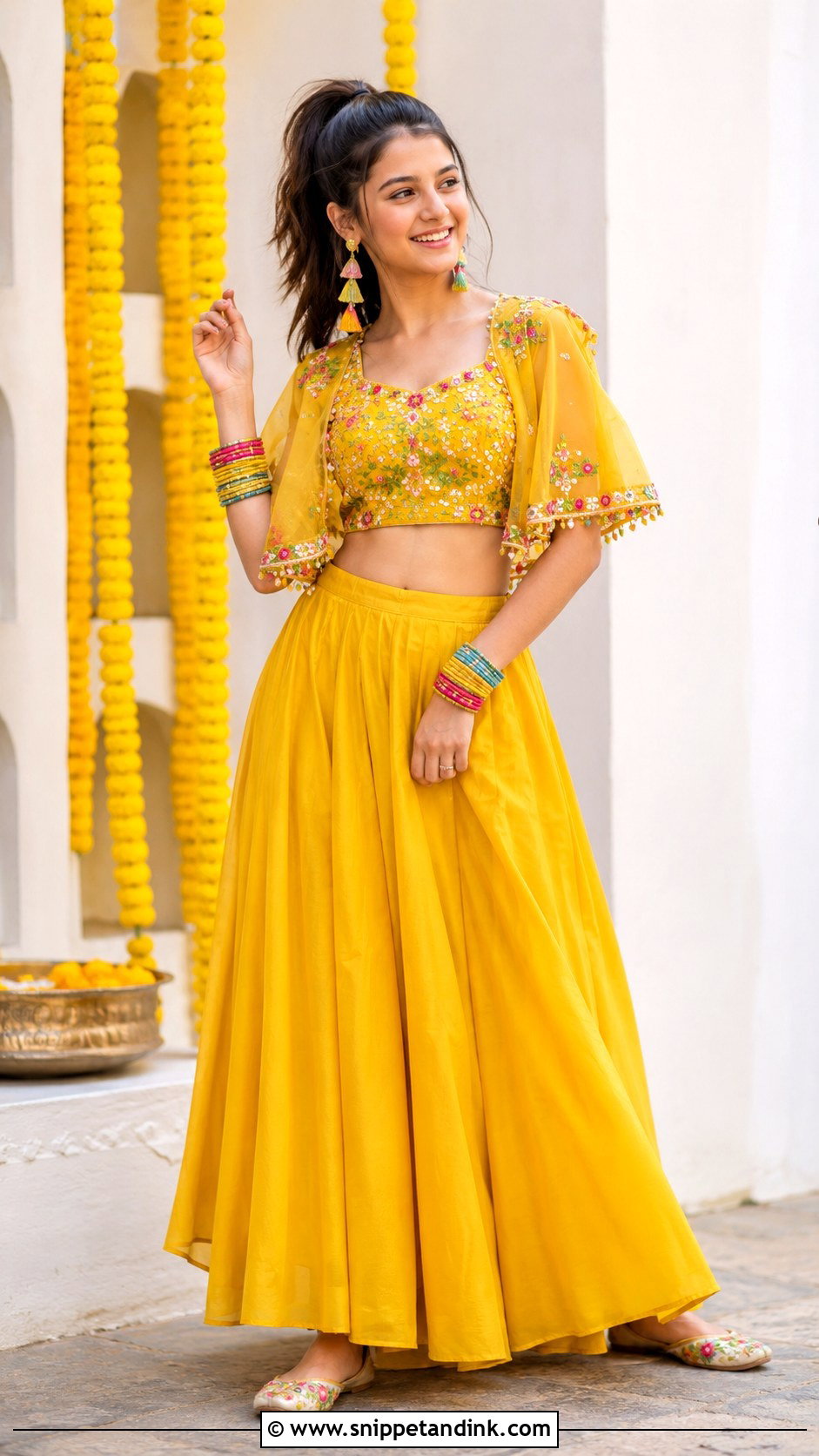
Crop top and skirt is the outfit younger girls ask for most. Choose a fitted top with straps or sleeves that you’re comfortable in, and a light ankle-length skirt with floral print, mirror accents or a gota border. A short cape or pinned dupatta gives more coverage without restricting movement. Tassel earrings, bright bangles and embroidered juttis finish it, with a high ponytail or loose braid. Skip stiff can-can layers and loose sequins; they scratch when you sit on the floor and shed onto the bride. Teenage girls, younger sisters and bridesmaids at a casual or outdoor Haldi suit this one.
8. Floral Lehenga Haldi Outfit
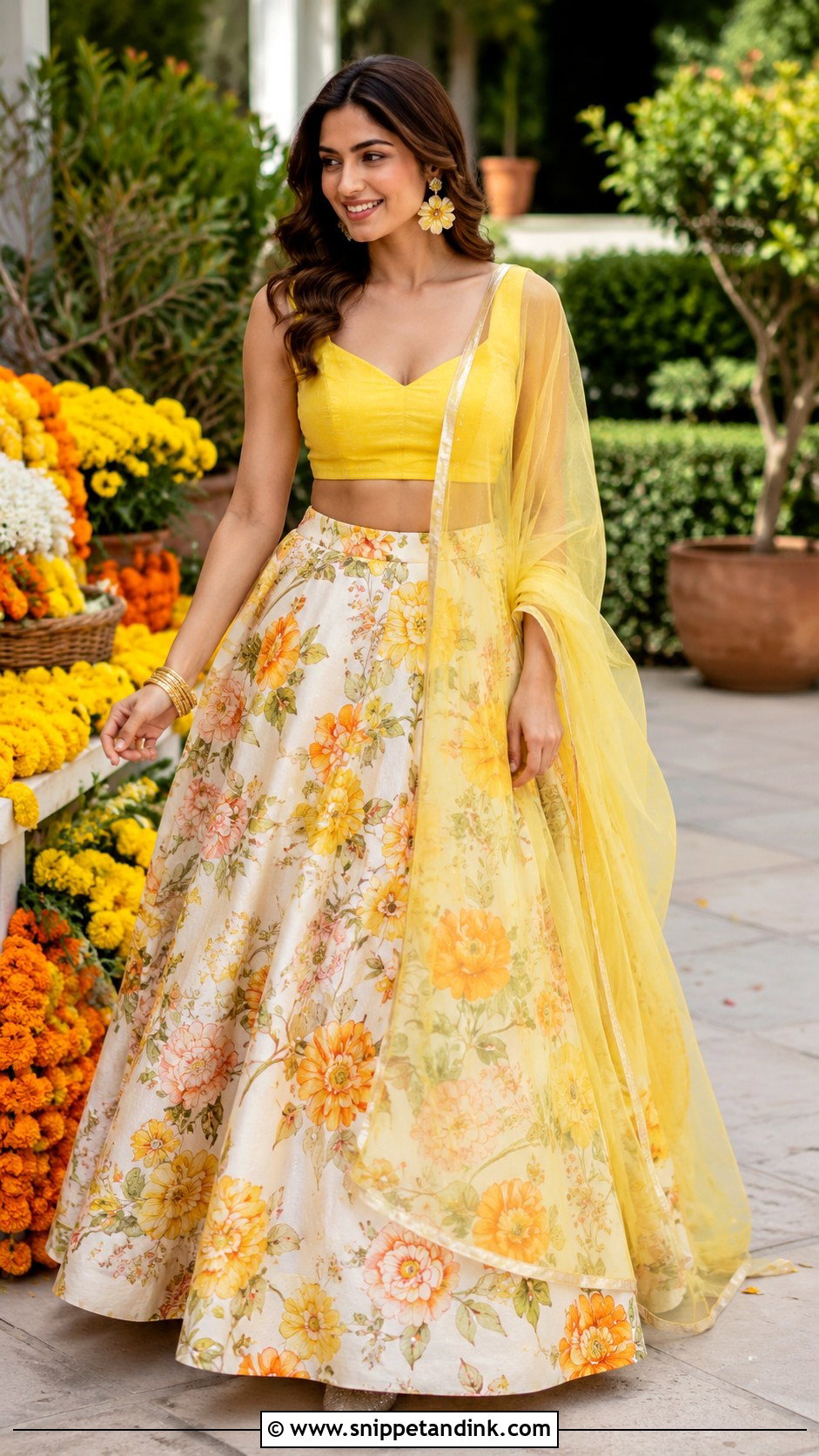
A floral lehenga brings several colors into the yellow mood. Choose a yellow, ivory, mint or peach skirt with printed flowers and a solid blouse pulled from one of the print’s colors. A light organza or chiffon dupatta softens it without hiding the pattern. Flower-shaped earrings, slim bangles and metallic flats are enough; the skirt already provides the interest. Natural makeup and soft curls suit daylight. If you’re close to the bride, borrow one color from the bridesmaids’ palette so the group photos connect. And ask for minimal underskirt volume, because a big can-can won’t fold neatly when you sit on a floor cushion.
9. Yellow Chikankari Suit Haldi Outfit
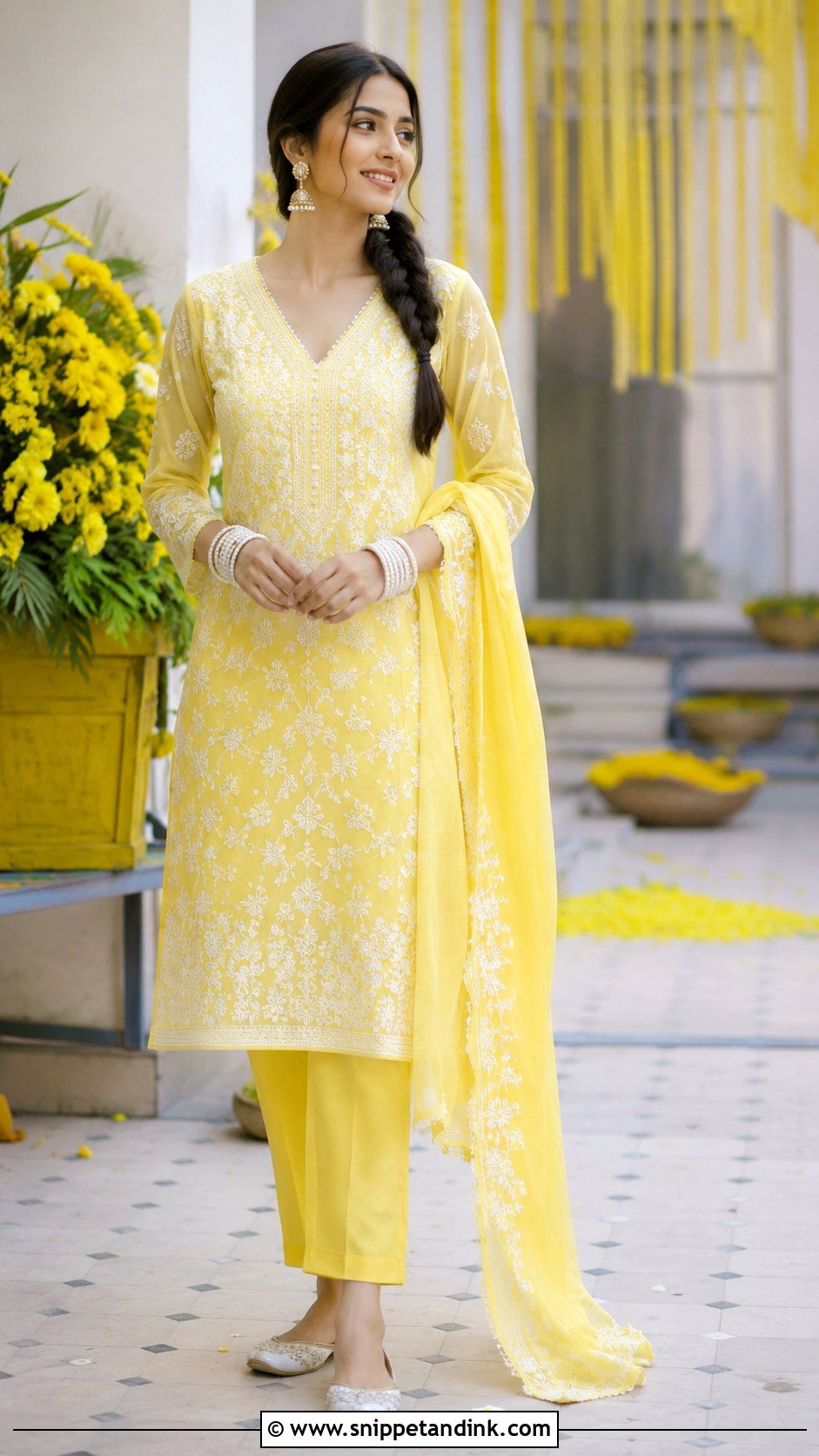
Chikankari is fine hand embroidery, traditionally white thread on light cotton, and it gives a yellow suit polish without any weight. Choose a straight or A-line kurta in cotton, rayon or georgette with matching pants or a soft sharara; white work looks especially fresh on lemon, mango or mustard. A light dupatta, pearl jhumkas, white bangles and embellished juttis complete it, with a low ponytail or side braid. Much chikankari is sheer, so wear a fitted lining or a matching slip. A practical bonus: a good chikankari suit can be worn again for festive lunches and family events long after the wedding.
10. Yellow Dhoti Pant Haldi Outfit
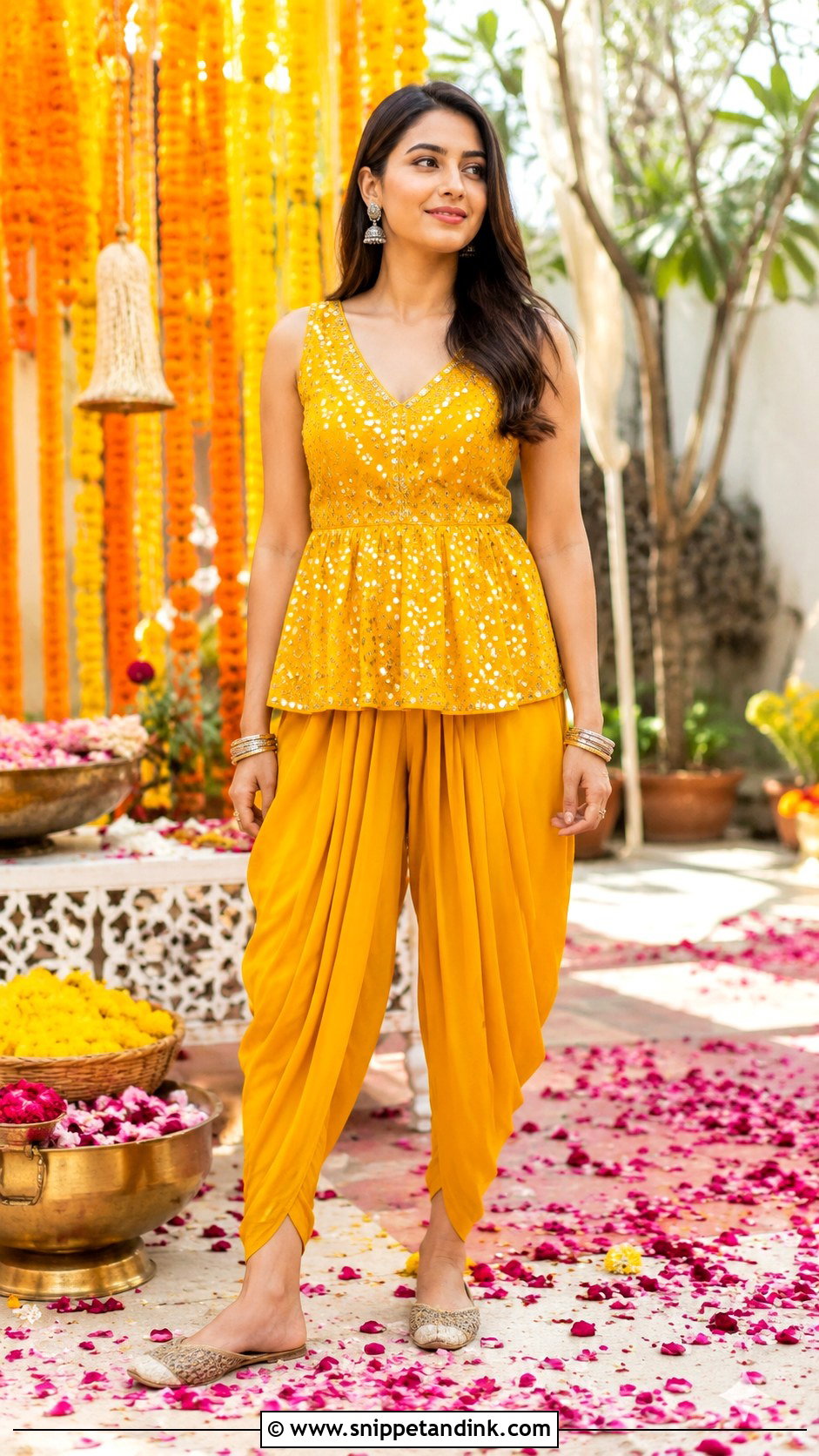
Dhoti pants give a comfortable Indo-Western silhouette that stands apart from the usual suits. Pair yellow or mustard draped pants with a short peplum kurta, a structured crop top or an asymmetric tunic that ends above the gathers. A light embroidered jacket adds coverage and detail. Statement earrings, slim bangles and flat mojaris are enough, with a simple neckline, since the draped bottom already draws the eye. I’d choose a soft, fluid fabric for the pants; stiff cotton puffs out at the hips, while rayon or georgette falls into neat folds. Girls planning to dance or join the games will appreciate the freedom.
11. Yellow Jacket Lehenga Haldi Outfit
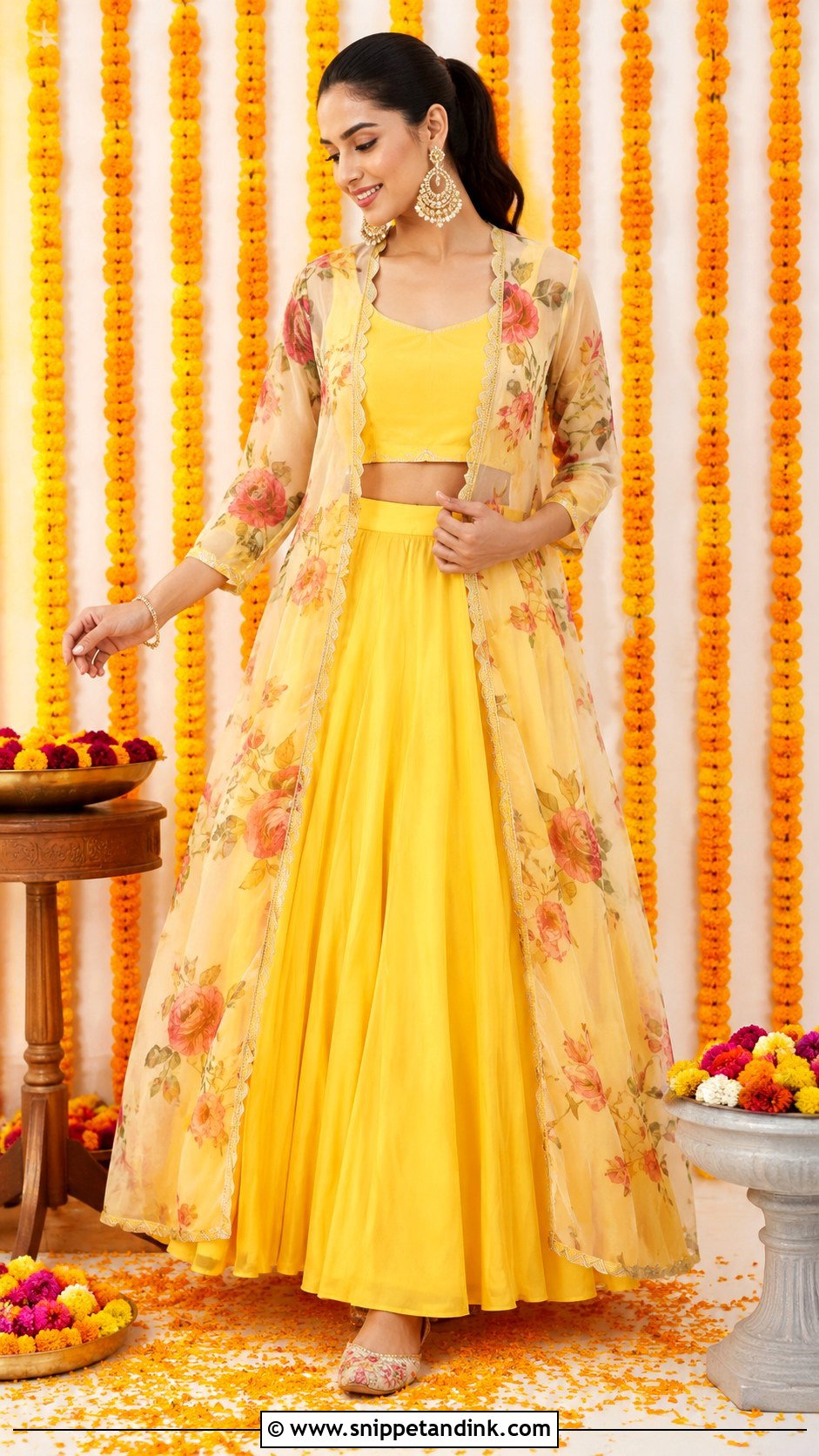
Want coverage without a dupatta to manage? A jacket lehenga gives it. Start with a simple yellow skirt and fitted blouse and add a light floral, embroidered or sheer long jacket, open for long vertical lines or fastened at the waist for more shape. Chandbalis, a delicate bracelet and matching juttis, plus a sleek ponytail to balance the extra layer. Petite girls look best in a calf-length jacket; taller girls can go longer. Choose cotton-silk or organza for the jacket, not velvet or brocade, which are far too warm for a daytime function.
12. Yellow Peplum Sharara Haldi Outfit
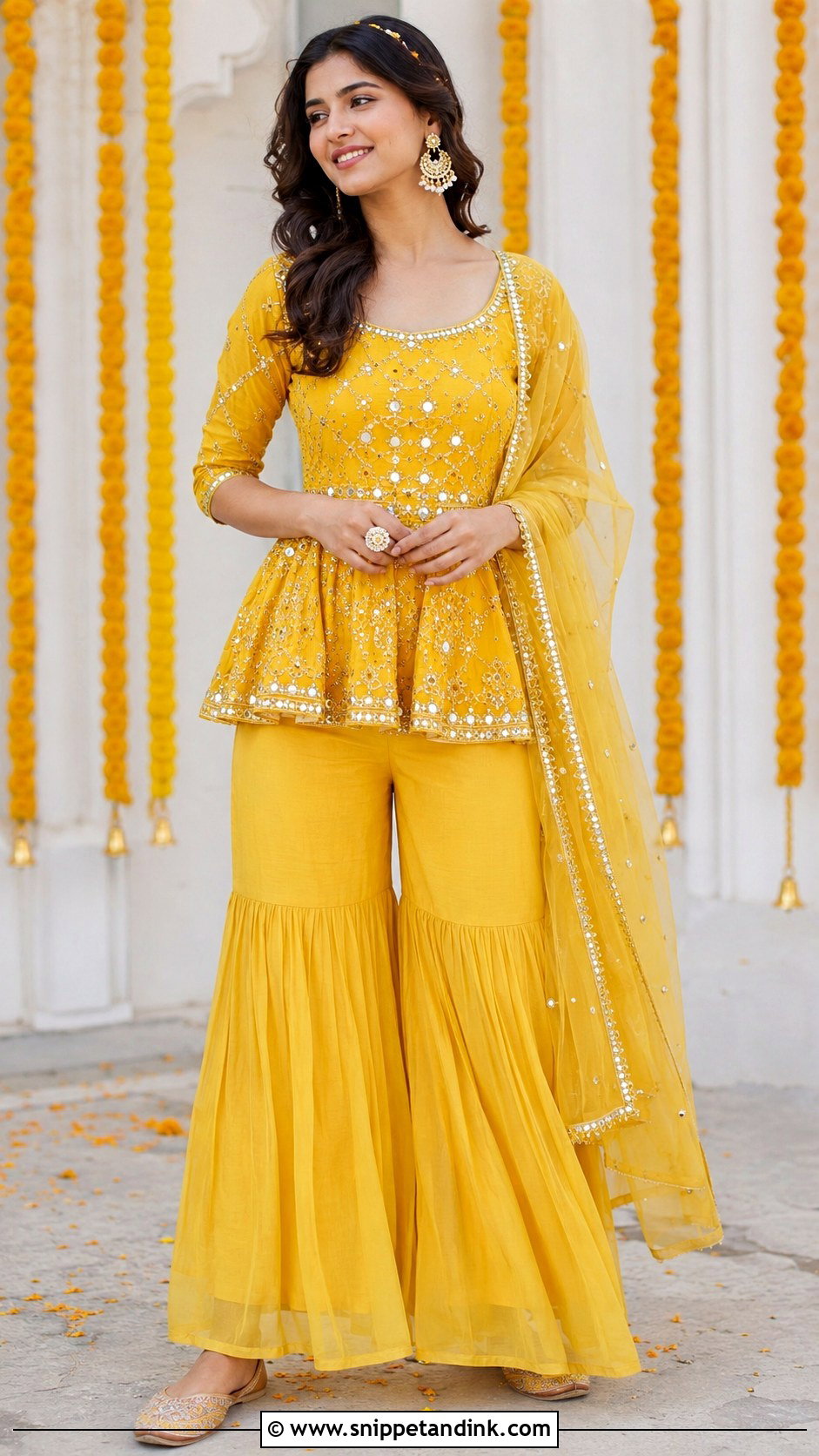
A peplum top cinches the waist and flares just enough to sit well over wide sharara pants. Choose a yellow top with subtle mirror work, floral embroidery or gota trim, and keep the sharara plain so the outfit balances. A sheer matching dupatta over one shoulder is optional. Small chandbalis, a statement ring and cushioned juttis finish it. The peplum gives comfortable coverage through the middle, but check its length while seated, since a short peplum rides up when you lean forward to apply paste. For bridesmaids, I like everyone in the same silhouette with slightly different yellows: mustard, marigold, lemon and soft gold.
13. Marigold Orange Lehenga Haldi Outfit
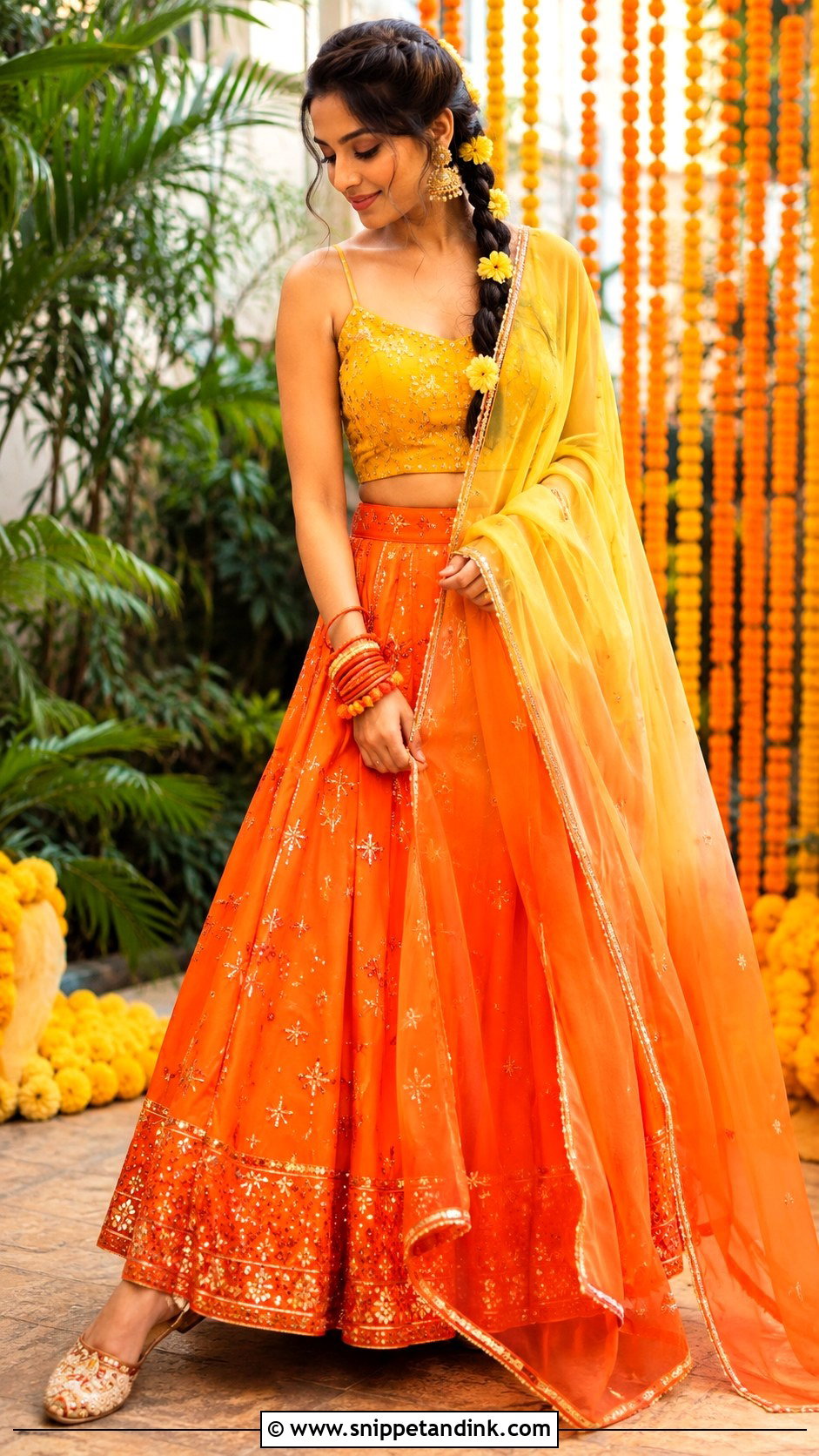
Marigold orange is the obvious step away from all-yellow, and it’s richer on camera. Pair a lightly printed or embroidered orange skirt with a yellow blouse and a sheer dupatta mixing both shades. Gold-toned earrings, orange bangles and neutral juttis complete the palette, with a braid threaded with yellow flowers. Keep the embroidery moderate, or the lehenga starts to look like reception wear. It glows against green garden decor and floral backdrops, and suits the bride’s sister, a close cousin or a family following a yellow-and-orange dress code.
14. Green And Yellow Salwar Suit Haldi Outfit
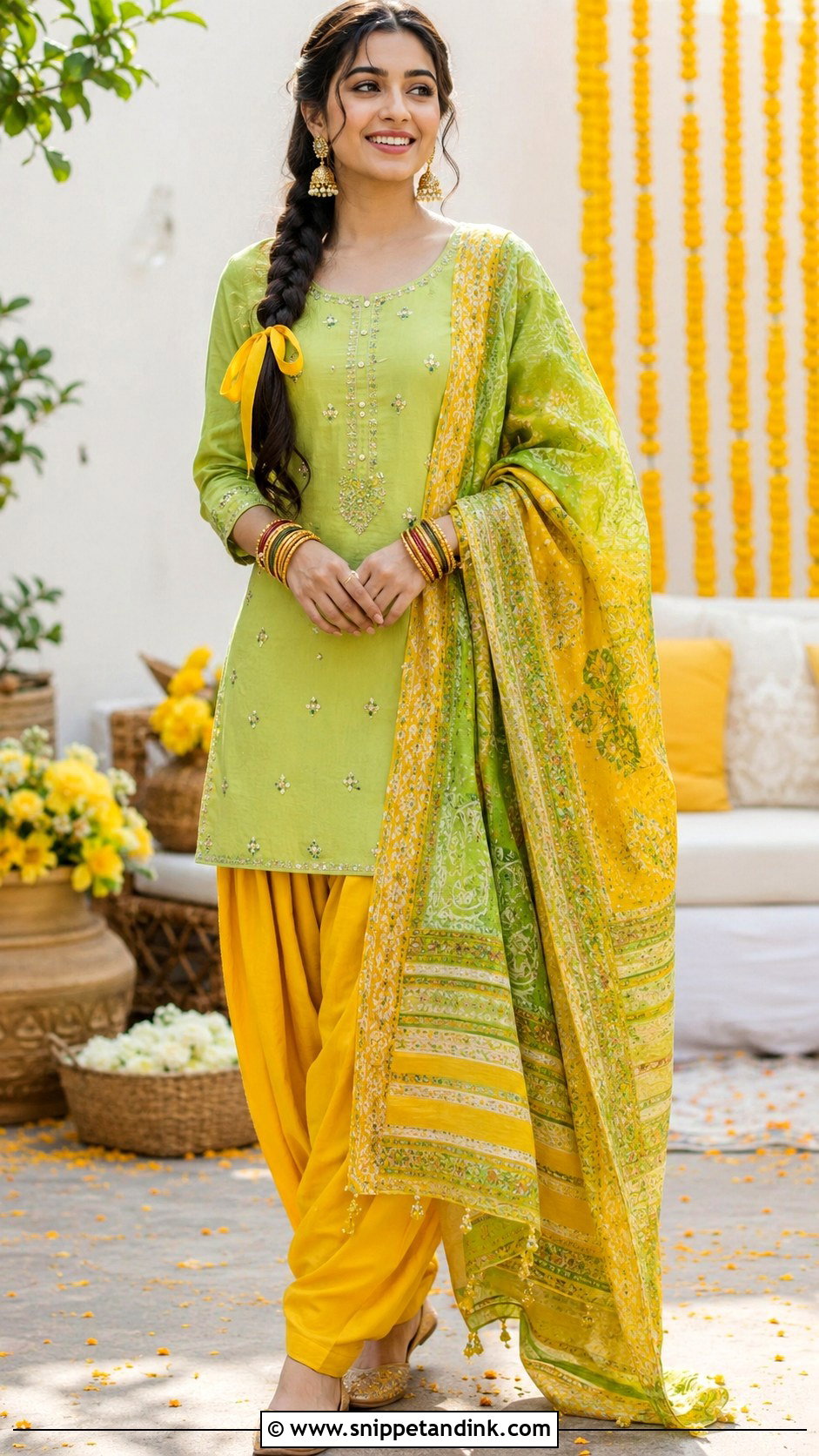
Green against yellow is a fresh contrast for guests who don’t want solid yellow. Wear a lime, mint or leaf-green kurta with yellow salwar and a dupatta mixing both colors in bandhani, florals or block print, or reverse it with a yellow kurta and green accessories. Gold jhumkas, mixed green and yellow bangles and neutral embroidered flats unite the outfit, with a braid tied with yellow ribbon. Keep the fabrics breathable for a garden or summer Haldi. Leaf green sits naturally among marigold garlands and mango leaves, so it looks at home in the decor.
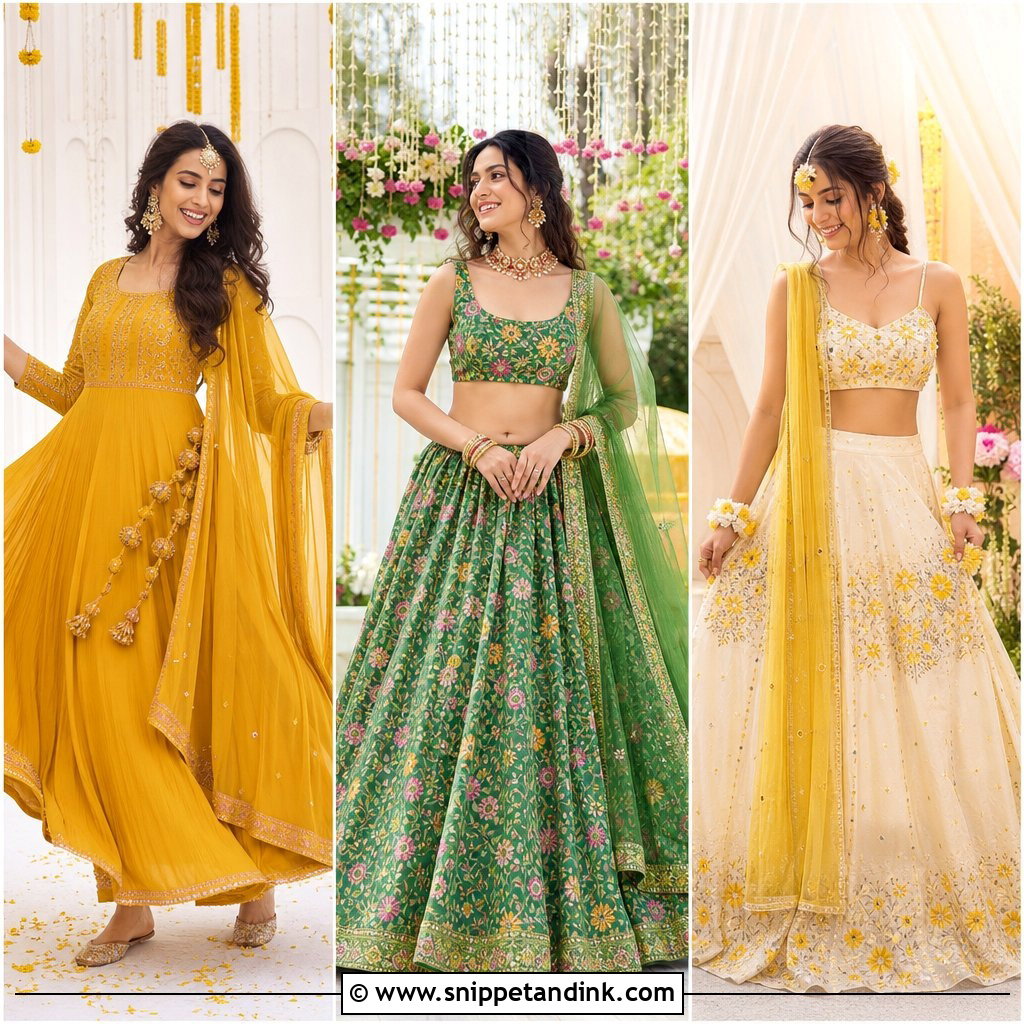

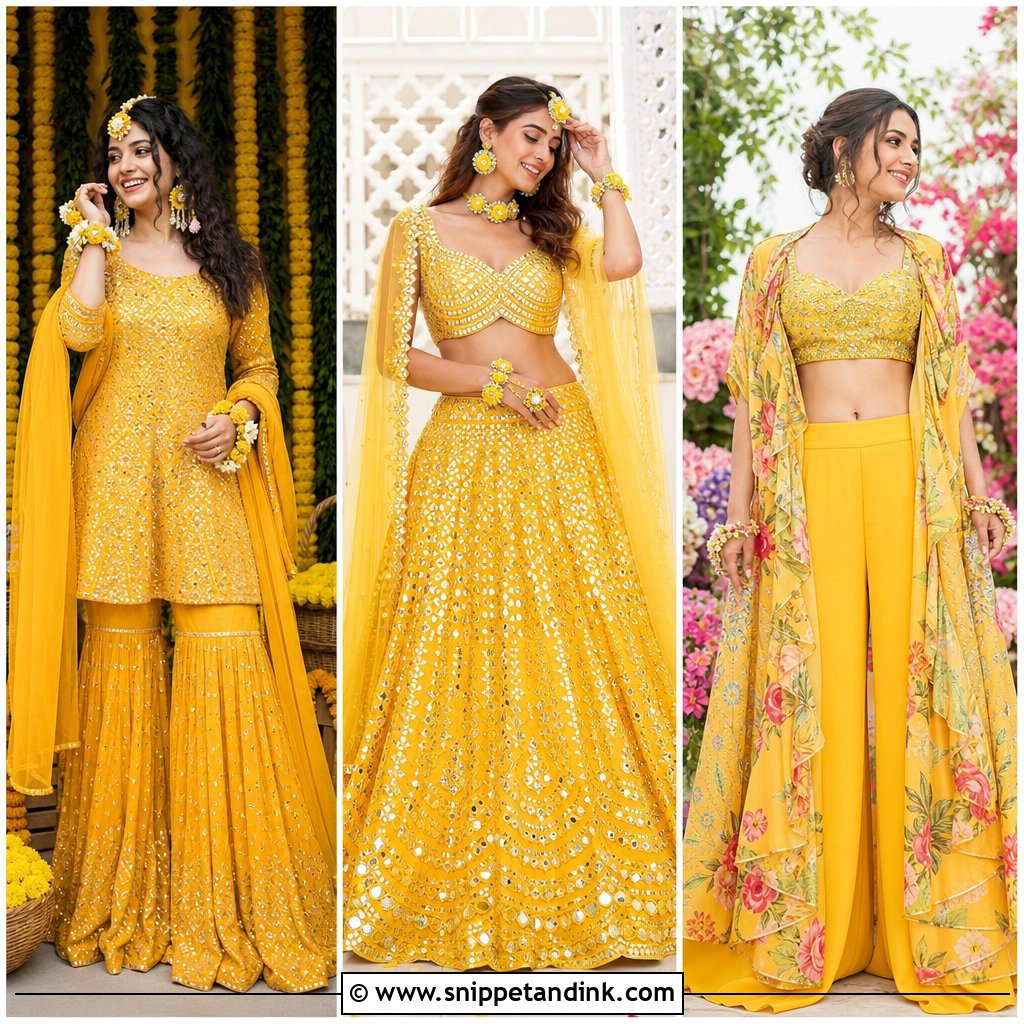
15. Yellow Bandhani Suit Haldi Outfit
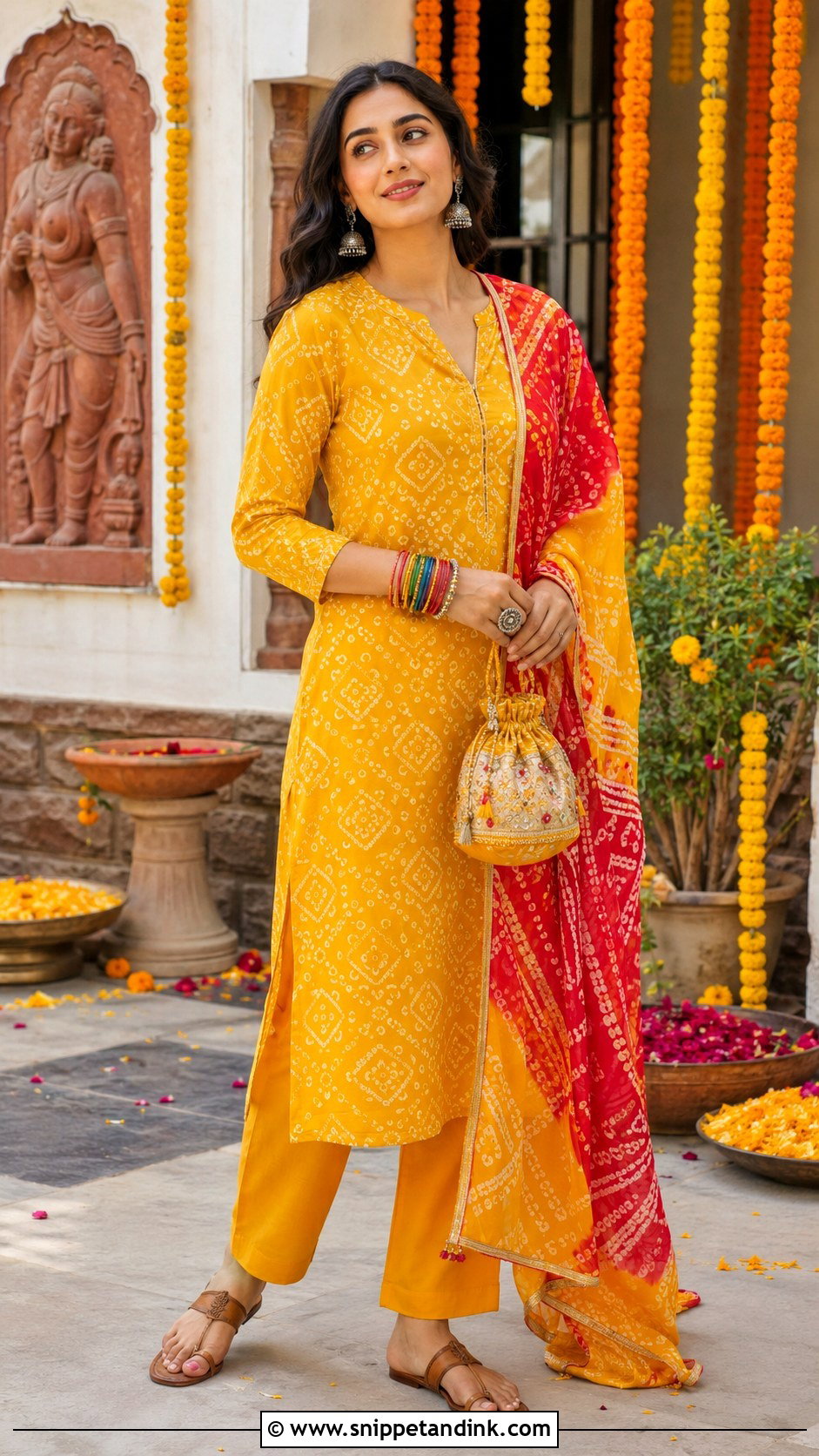
Bandhani is tie-dye made by binding tiny points of cloth before dyeing, which gives those dotted patterns, and it brings texture to a plain shape. Choose a yellow bandhani kurta with plain pants, or a solid mustard kurta with a red-and-yellow bandhani dupatta. Oxidized jhumkas, bright bangles, a compact potli and flat leather sandals complete it, with a center-parted braid or relaxed bun. With this much pattern, limit yourself to one or two noticeable jewelry pieces. It suits girls of every age and size: a slightly flared kurta gives ease at the waist while straight pants keep the line clean. New bandhani can bleed in its first wash, so wash it alone.
16. Yellow Palazzo Co-Ord Haldi Outfit
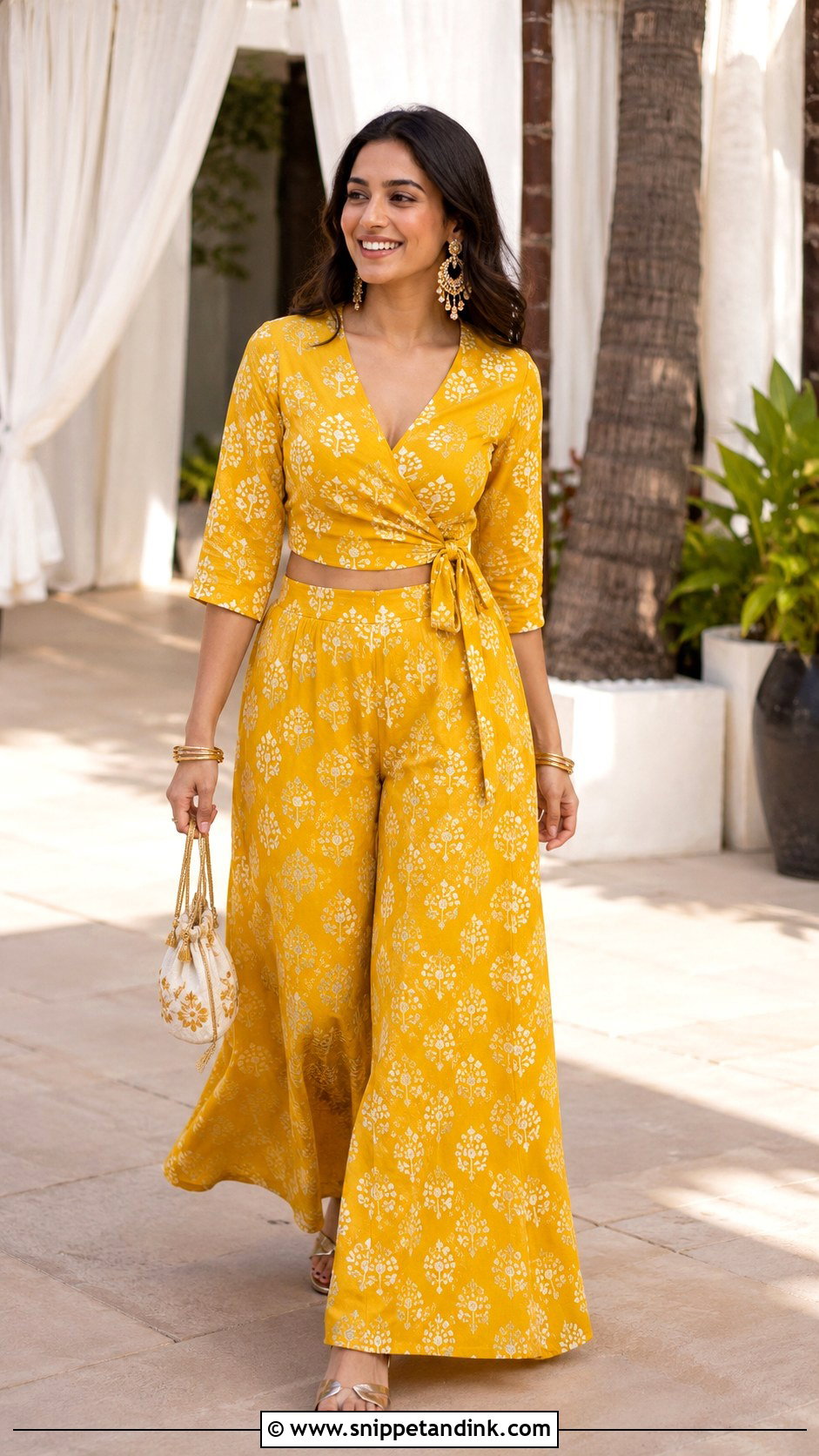
For girls who’d rather skip traditional layers, a matching palazzo co-ord is simple and modern. Pair a short yellow tunic, crop top or wrap top with high-waisted palazzos in the same fabric, ideally cotton with block printing, light embroidery or small florals. Statement earrings, a few slim bangles, metallic flats and a small potli or mini bag are enough. Skip the dupatta if the top covers you comfortably, or add a short cape. I like co-ords because they’re easy to wear again as separates. Home ceremonies, resort Haldis and relaxed daytime gatherings suit them best.
17. Yellow Kaftan Haldi Outfit
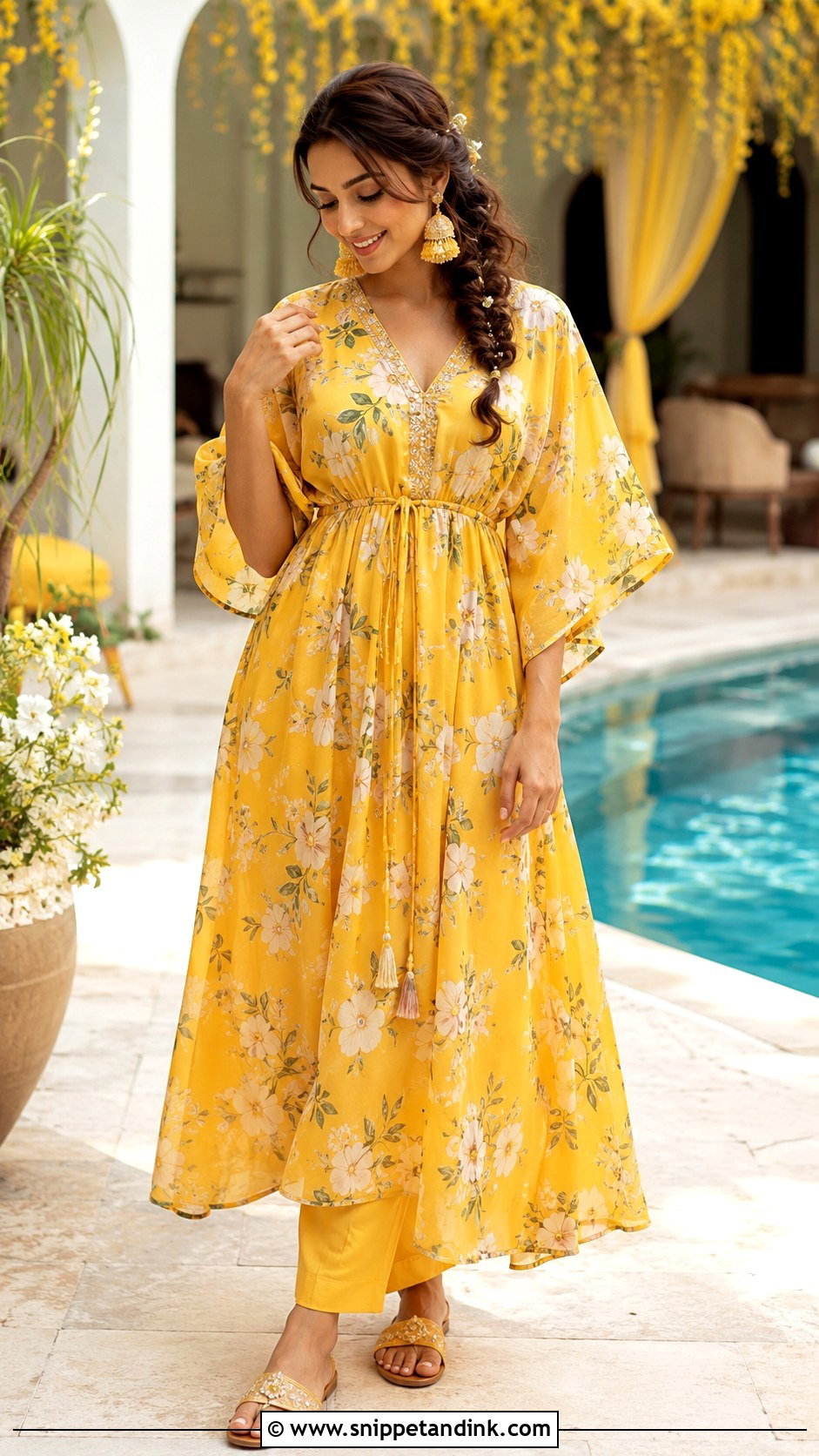
A kaftan is the coolest thing you can wear to an outdoor Haldi in summer, because air moves through it. Choose an ankle-length design with a defined waist, side slits or a light belt so the fabric doesn’t swallow you, decorated with florals, a little mirror work or an embroidered neckline. If the slits are high, add straight pants underneath. Tassel earrings and embellished flat sandals finish it, with a ponytail, braid or half-up style. Watch the sleeves. Wide, trailing kaftan sleeves dip straight into the turmeric bowl when you reach forward, so pick a shorter or narrower cut.
18. Yellow Jumpsuit Haldi Outfit
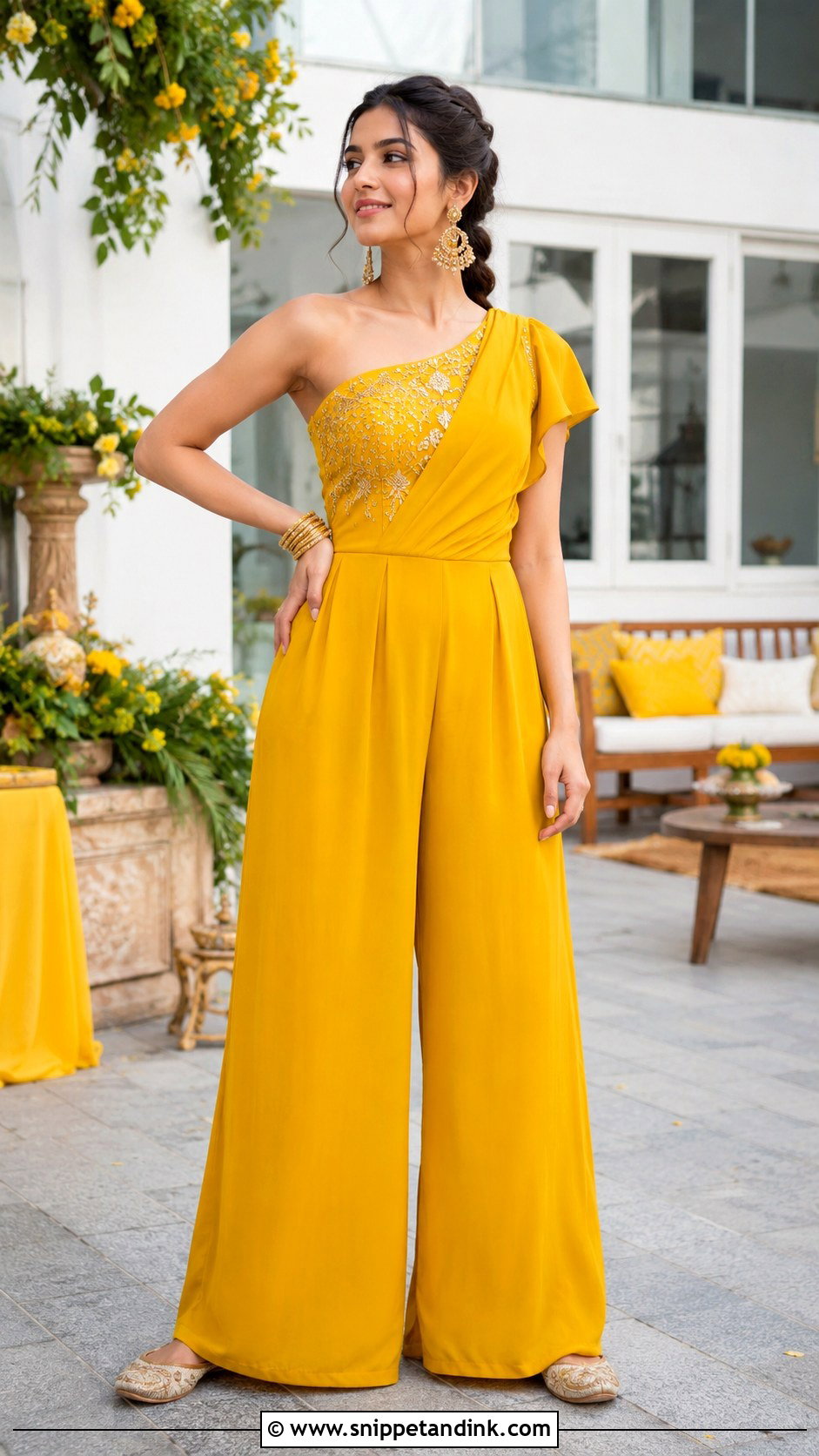
A yellow jumpsuit suits girls who are happier in Western or fusion shapes. Look for wide legs, a defined waist and a secure neckline, with embroidery at the bodice, a draped shoulder panel or an attached cape for festivity. Gold earrings, bangles and embellished flats, plus a braided ponytail and fresh makeup. For a traditional dress code, add a printed dupatta or an ethnic jacket. Before you buy, think about the bathroom. A jumpsuit with a long back zip you can’t reach alone is a real nuisance at a crowded family event, so choose a side zip or front buttons.
19. Yellow Skirt And White Kurta Haldi Outfit
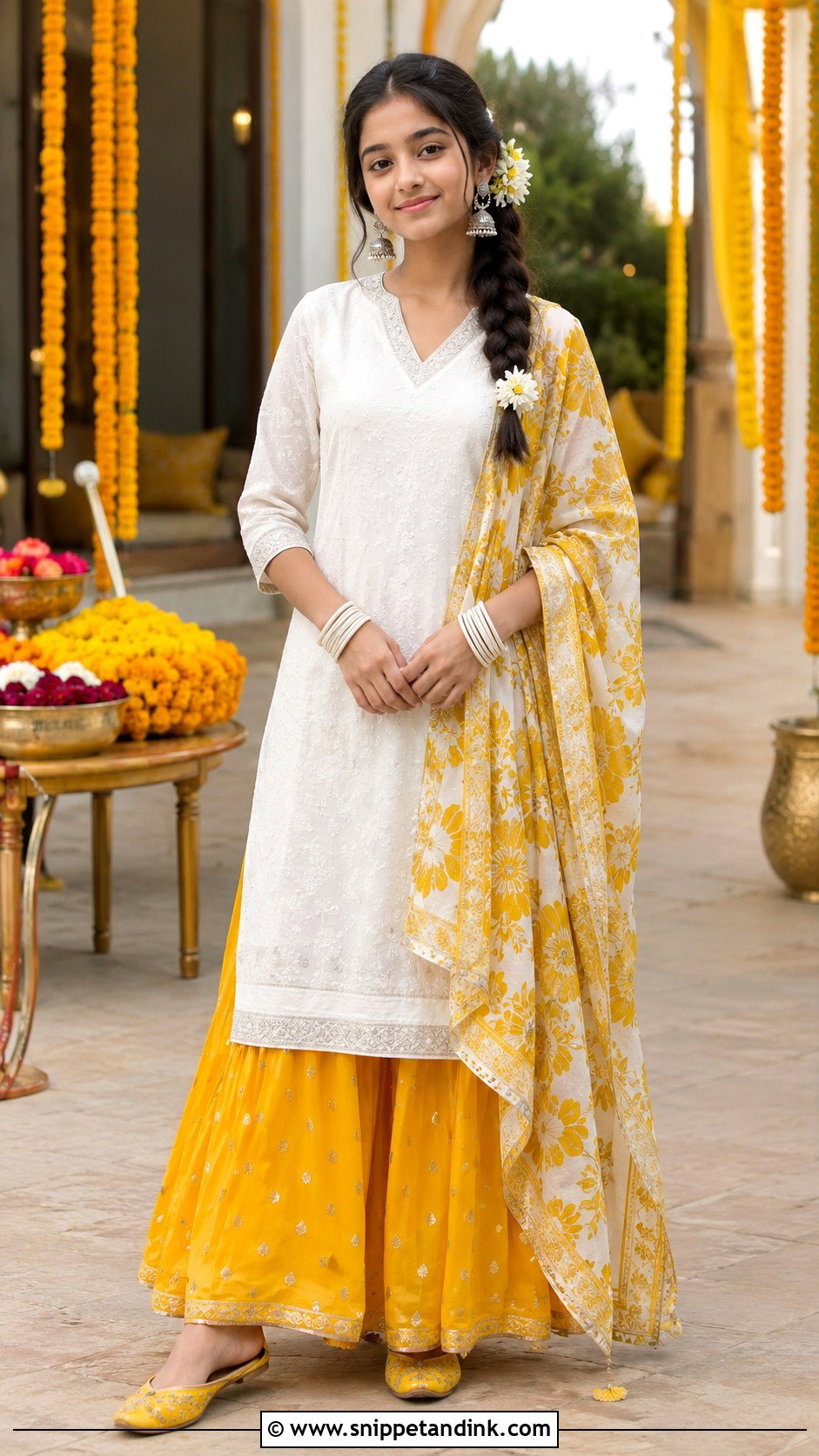
A white kurta over a yellow skirt is a fusion look you may already own half of. Choose a short or knee-length kurta with side slits over a light flared skirt in mustard, lemon or marigold, with an optional yellow-and-white printed dupatta. Silver jhumkas, white bangles and yellow embroidered juttis tie it together, with a side braid and tiny floral pins. The rule I follow is to keep the volumes apart: a straight kurta with a full skirt looks deliberate, while a flared kurta on a flared skirt just looks bulky. Teenage girls, cousins and guests at a family-hosted daytime Haldi suit it well.

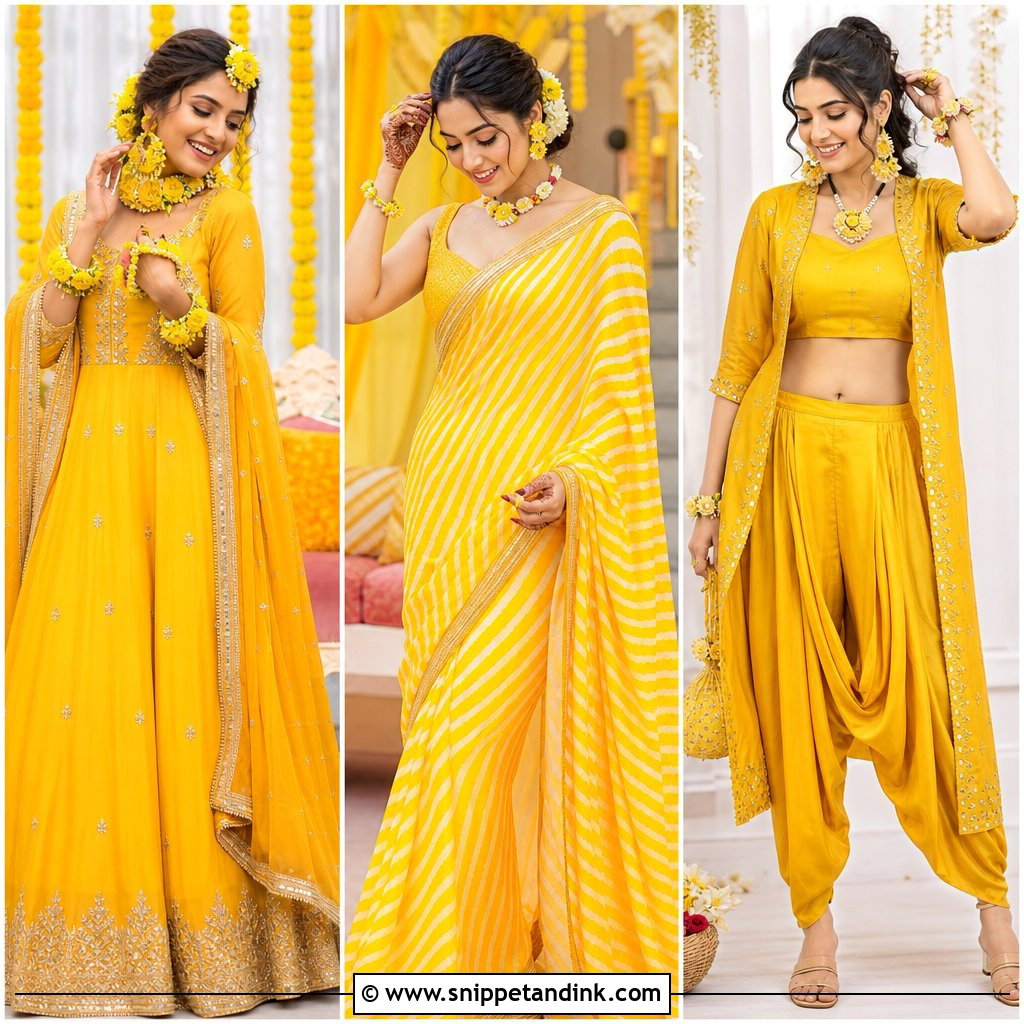
20. Pink And Yellow Lehenga Haldi Outfit
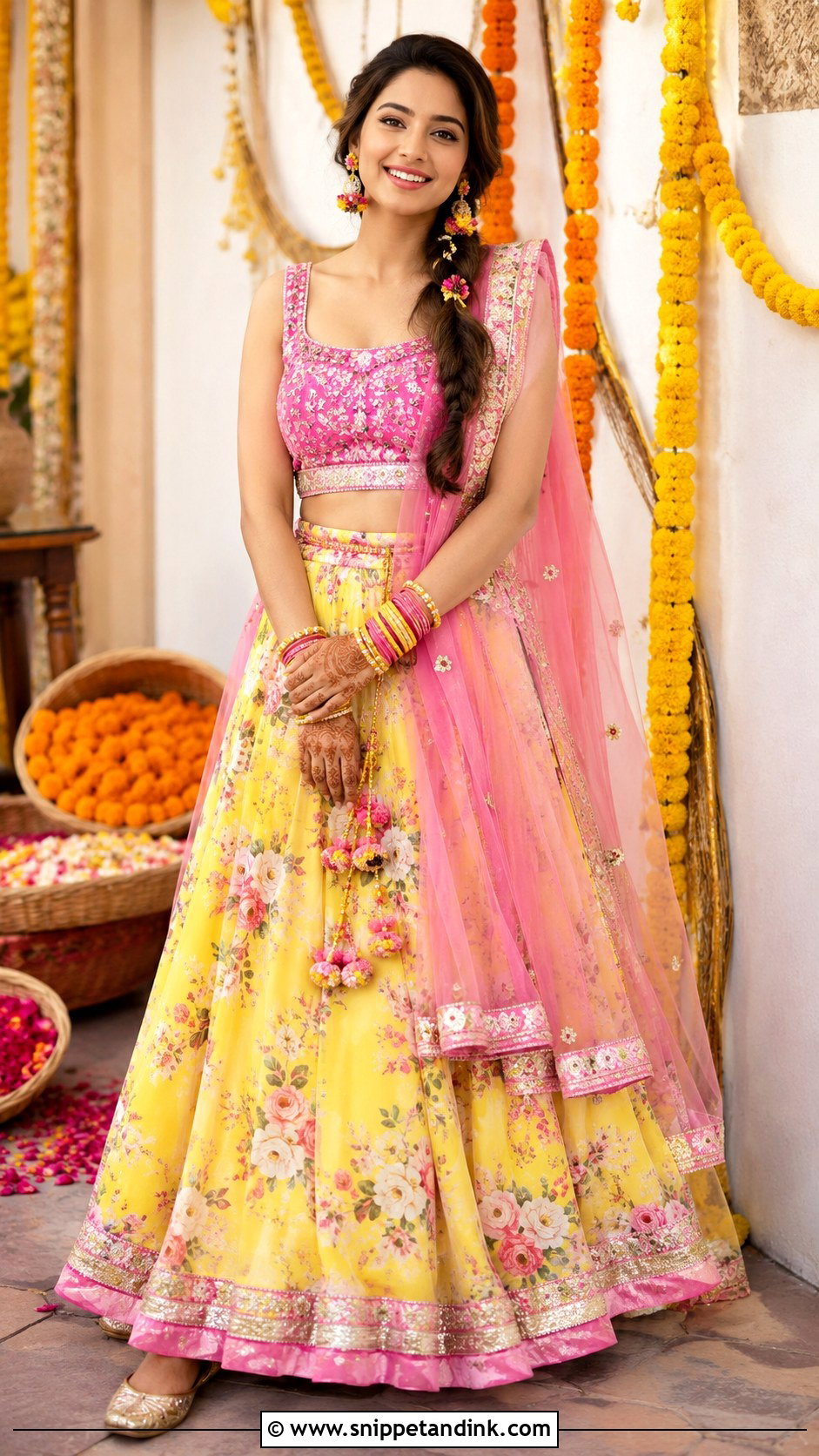
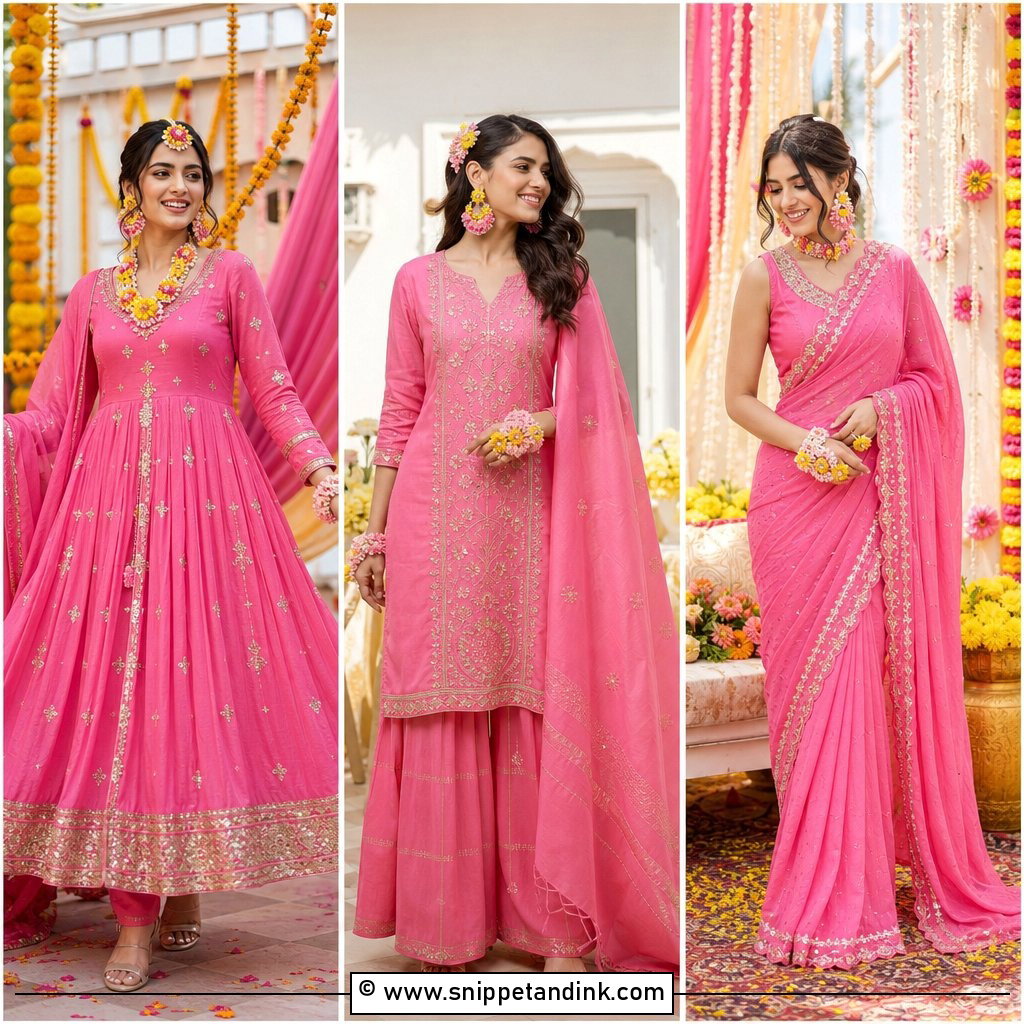
Pink brings warmth to yellow without clashing, which makes this pairing an easy win for group photos. Pair a yellow skirt with a pink blouse, or choose a floral lehenga that already carries both. Pin a light pink or yellow dupatta across one shoulder, and add floral earrings, mixed bangles and gold juttis. If the skirt has detailed print or mirror work, keep the blouse plain. A loose braid with small pink and yellow flowers ties the colors together. Soft pink keeps it gentle; bright fuchsia works when the decor is just as bold. Bridesmaids, sisters and younger guests tend to gravitate to this one.
Getting Turmeric Out of Cotton, Silk and Skin
Turmeric stains fast, but it isn’t hopeless if you act the same day and avoid heat.
- Let wet paste dry a little, then lift it off with a blunt knife or spoon. Rubbing it while wet pushes the color deeper into the weave.
- Rinse from the back of the fabric under cold water, so the stain is pushed out rather than through.
- Work in a little liquid dish soap or detergent and soak in cool water. Don’t panic if the yellow turns reddish; turmeric changes color with alkaline soap, and it rinses back.
- Dry the piece in direct sunlight. Sun fades turmeric remarkably well, often more than any product.
- Skip hot water and the tumble dryer until the mark is gone, because heat sets it.
For silk, embroidered pieces and anything with gota or mirror work, don’t experiment at home. Take it to a dry cleaner quickly and tell them the stain is turmeric, so they choose the right treatment and test it on a hidden seam first.
On skin, the glow fades by itself over a day or two of washing. A paste of gram flour with yogurt or milk speeds it up and is gentle enough for the face. Bare nails stain easily too. A coat of polish on the Haldi morning takes the color instead of your nails, and it comes off with the polish before your wedding manicure.
Wear It Expecting a Yellow Handprint
The Haldi outfits that work best are the ones you can celebrate in without worrying. Yellow lehengas, sarees, shararas and Anarkalis are reliable, and jumpsuits, kaftans, co-ords and fusion skirts give modern alternatives. Breathable fabric, secure draping and flat shoes matter most outdoors or when the dancing starts, and light jewelry with a neat hairstyle keeps the look practical. Above all, wear something you won’t mind getting turmeric on, because someone will make sure you do. Start from your role in the ceremony, then let your age, taste and the family’s dress code shape the rest.
You'll Like These Ideas:









Leave a Reply