
The Haldi ceremony is the one wedding function where your clothes are supposed to get messy. Turmeric paste goes on your face, arms and feet, relatives laugh, someone tips a bowl, and then there’s dancing. When I style a Haldi look, I’m planning for that mess first and the photographs second. The outfits below run from yellow lehengas and light sarees to shararas and fusion sets, in marigold, mustard, lemon, ivory, pink and lime. Brides can wear the more embroidered versions; sisters and guests can take a simpler cut of the same idea. Wherever it’s held, indoors, in a garden or by a pool, breathable fabric, secure draping and flat shoes matter more than embellishment.

Dressing for the Turmeric Paste, Not Just the Photos
Turmeric is a strong natural dye. Whatever you wear will meet it, so I plan the outfit around three questions before we look at color.
Will the fabric wash?
Cotton, mulmul, chanderi and georgette usually come through a Haldi with a careful wash. Pure silk and anything with metallic zari or zardozi often keeps a yellow shadow for good. If you want silk, choose an older piece or plan to change before the paste goes on.
Can you sit on the floor in it?
The bride usually sits on a low stool or on the floor while relatives apply the paste. Try that position at home. Stiff skirts flare up in front, tight kurtas pull at the hip, and long dupattas pool around you on a wet floor.
What jewelry can get dirty?
Paste sinks into kundan settings, pearl strands and thread-wrapped pieces and is hard to clean. Floral jewelry, glass bangles and simple metal pieces are the safer choice for Haldi. Save the heirloom sets for later functions.
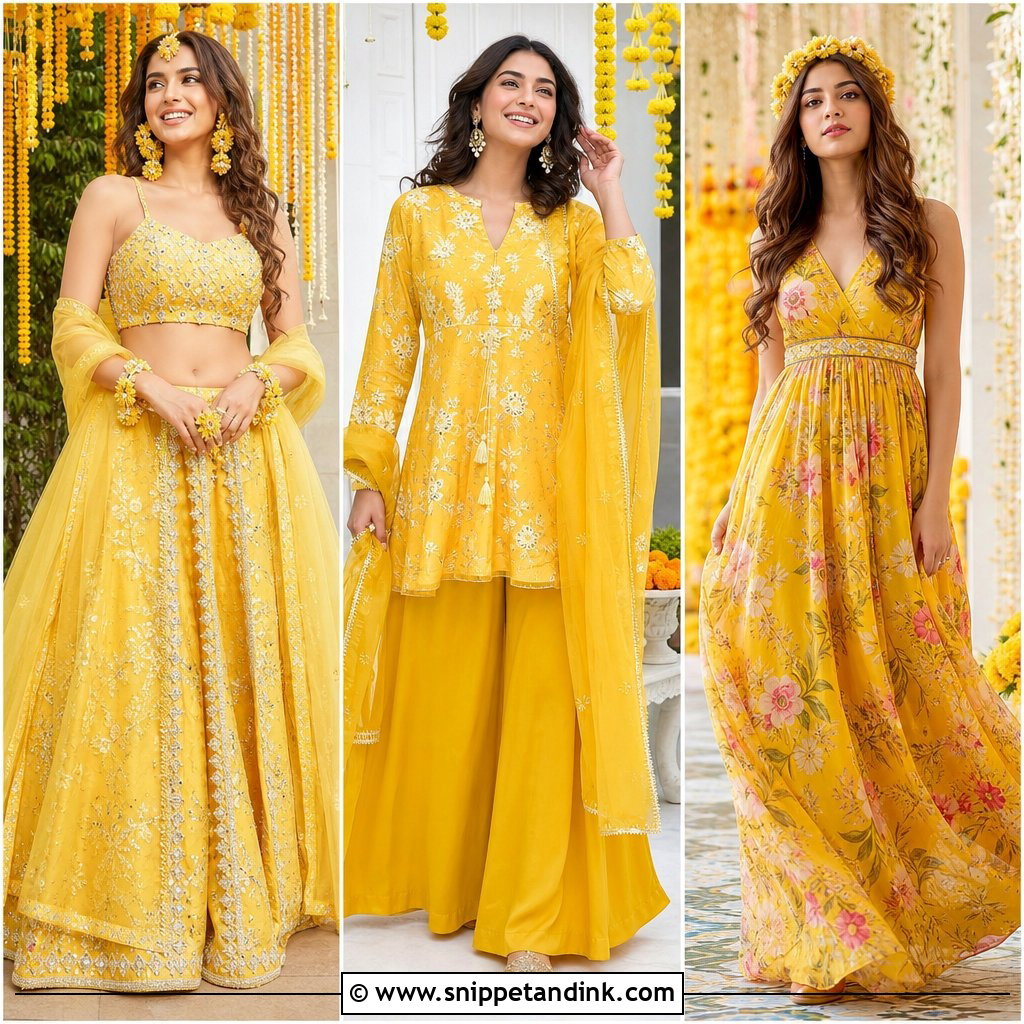
1. Yellow Floral Lehenga Haldi Outfit
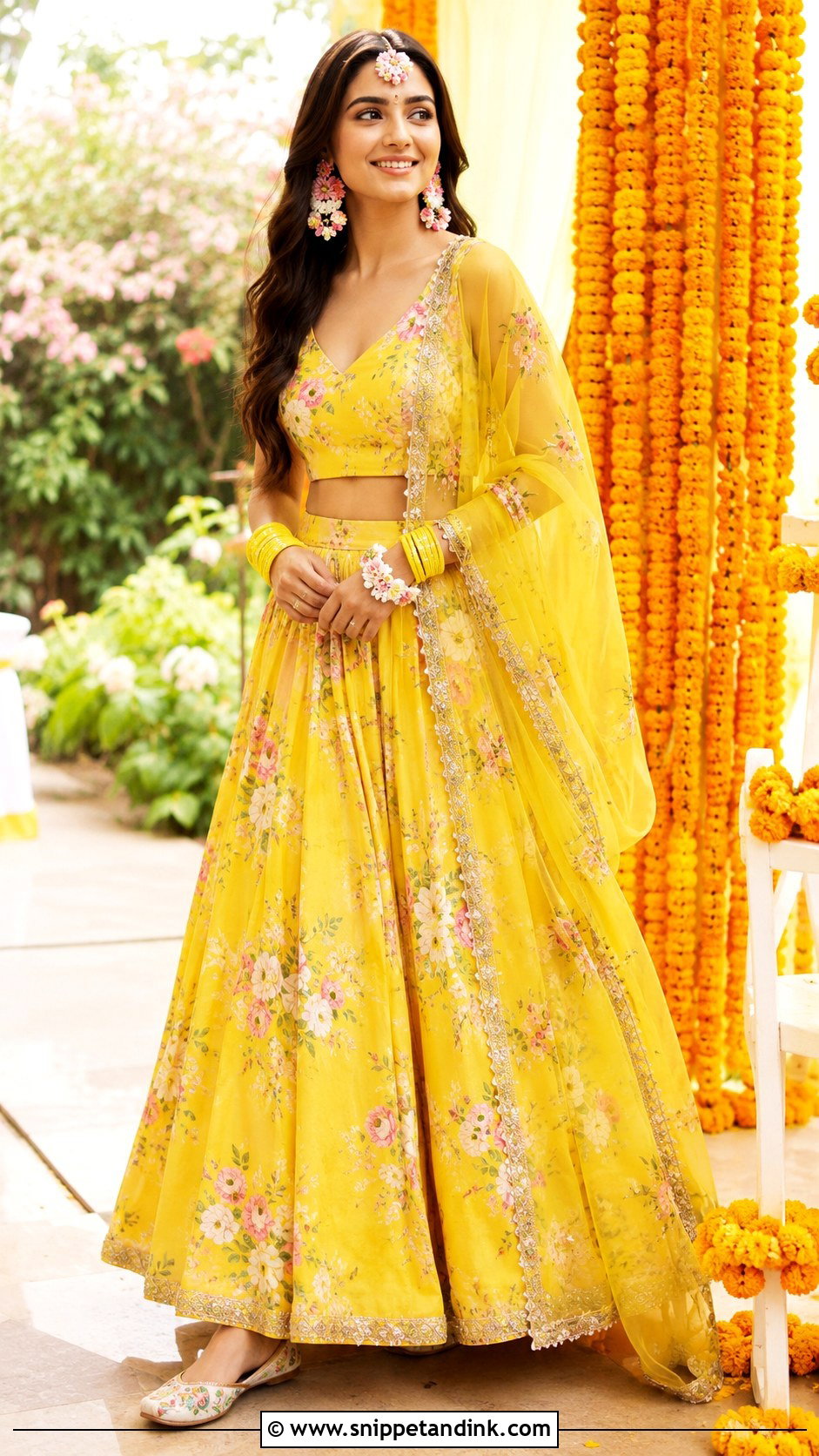
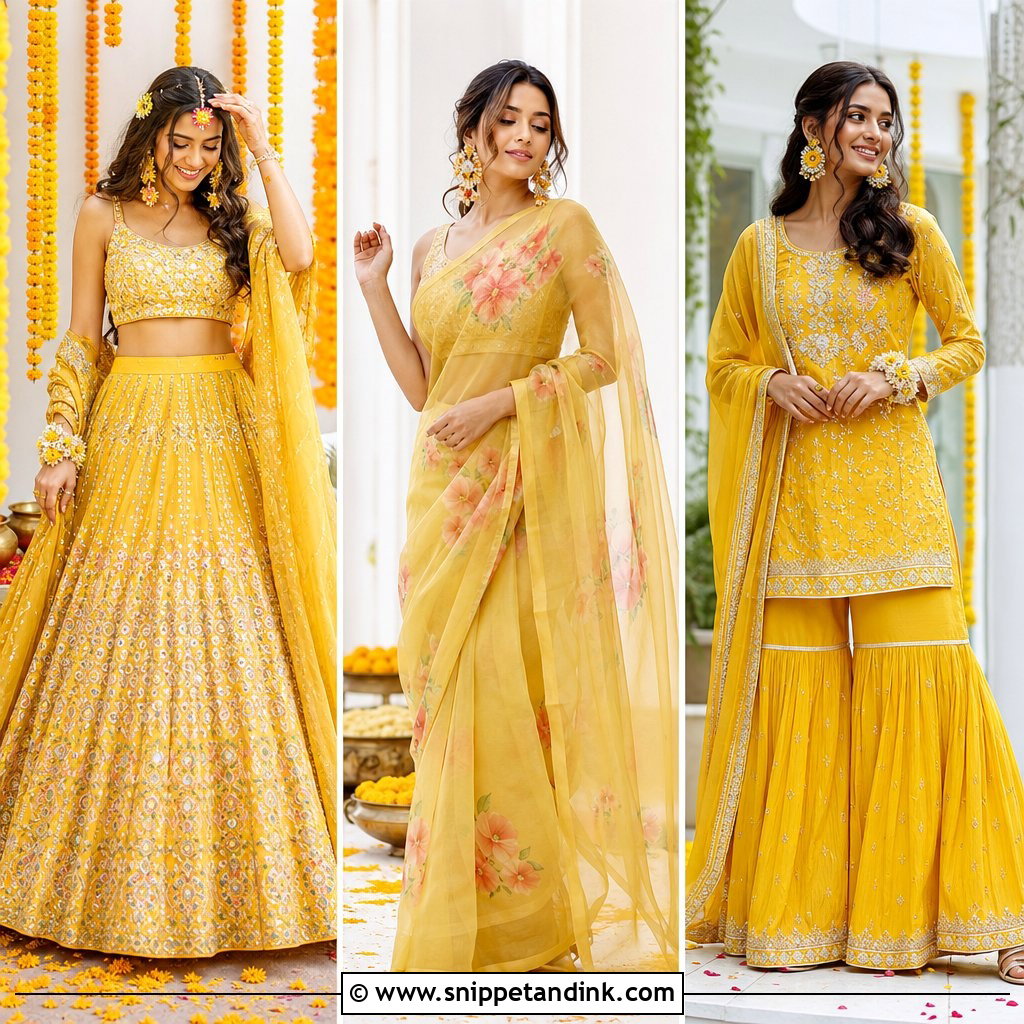
A floral lehenga gives the bride a festive look that’s still a step down from the wedding itself. I’d pick printed or thread-embroidered flowers over heavy zardozi, because paste lodges in raised metallic work and it’s hard to get out. Ask for a skirt without stiff can-can; you’ll be sitting cross-legged on a low stool, and a rigid skirt bunches up in front of you in every photo. A fitted short-sleeve blouse keeps the paste off your sleeves, and an organza dupatta over one shoulder stays out of the bowl. Add floral earrings, a light maang tikka and comfortable juttis, with a low bun dressed in flowers.
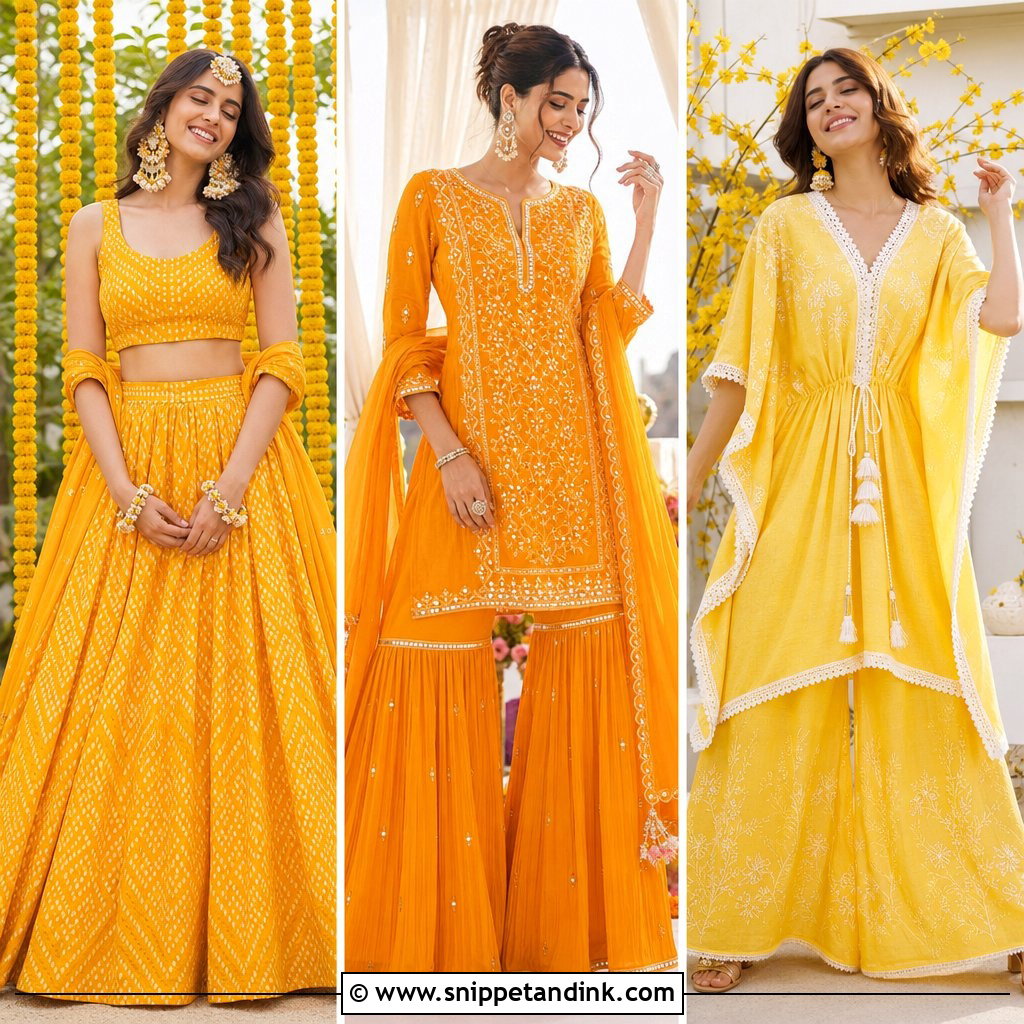
2. Mustard Sharara Haldi Outfit
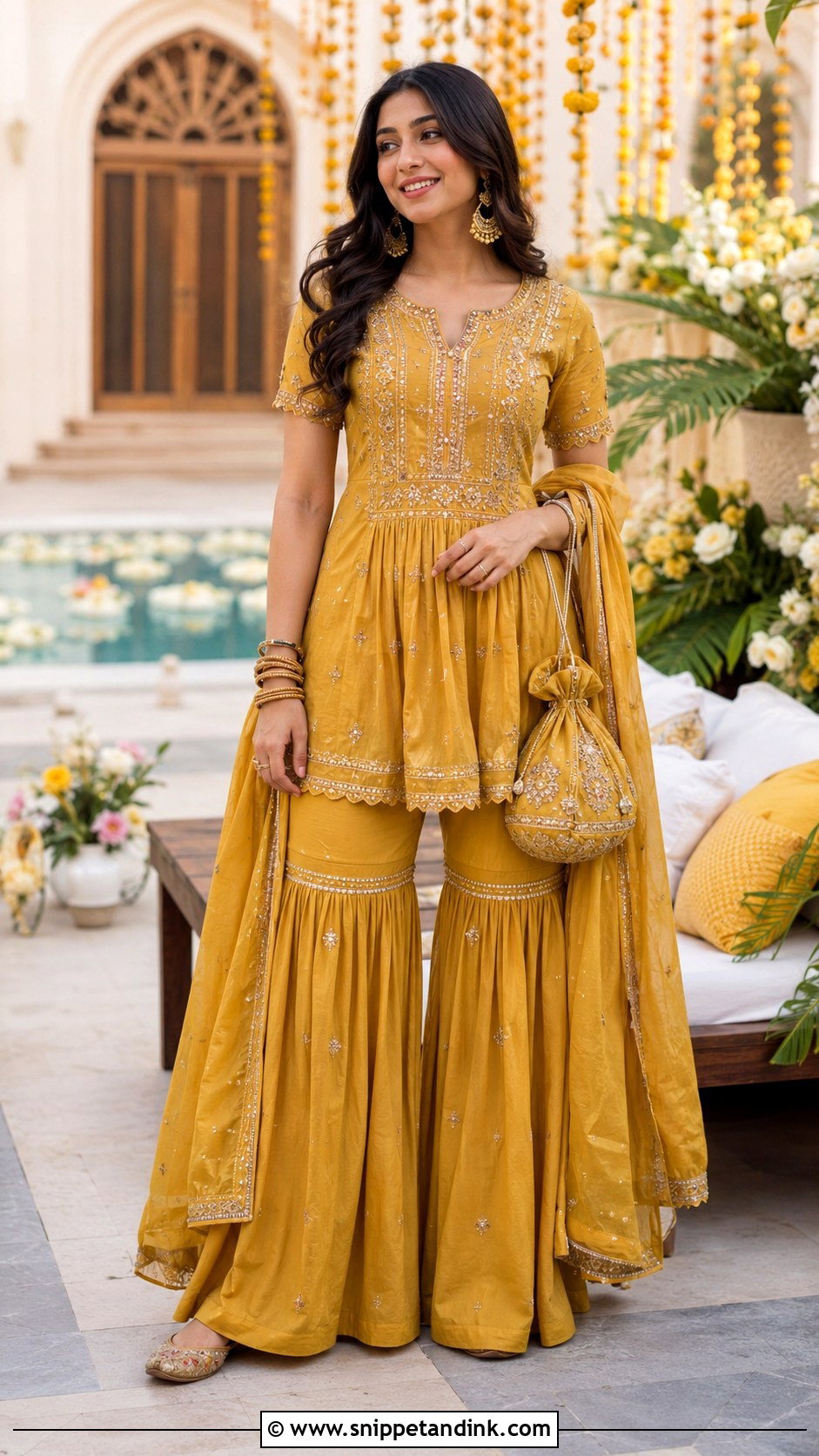
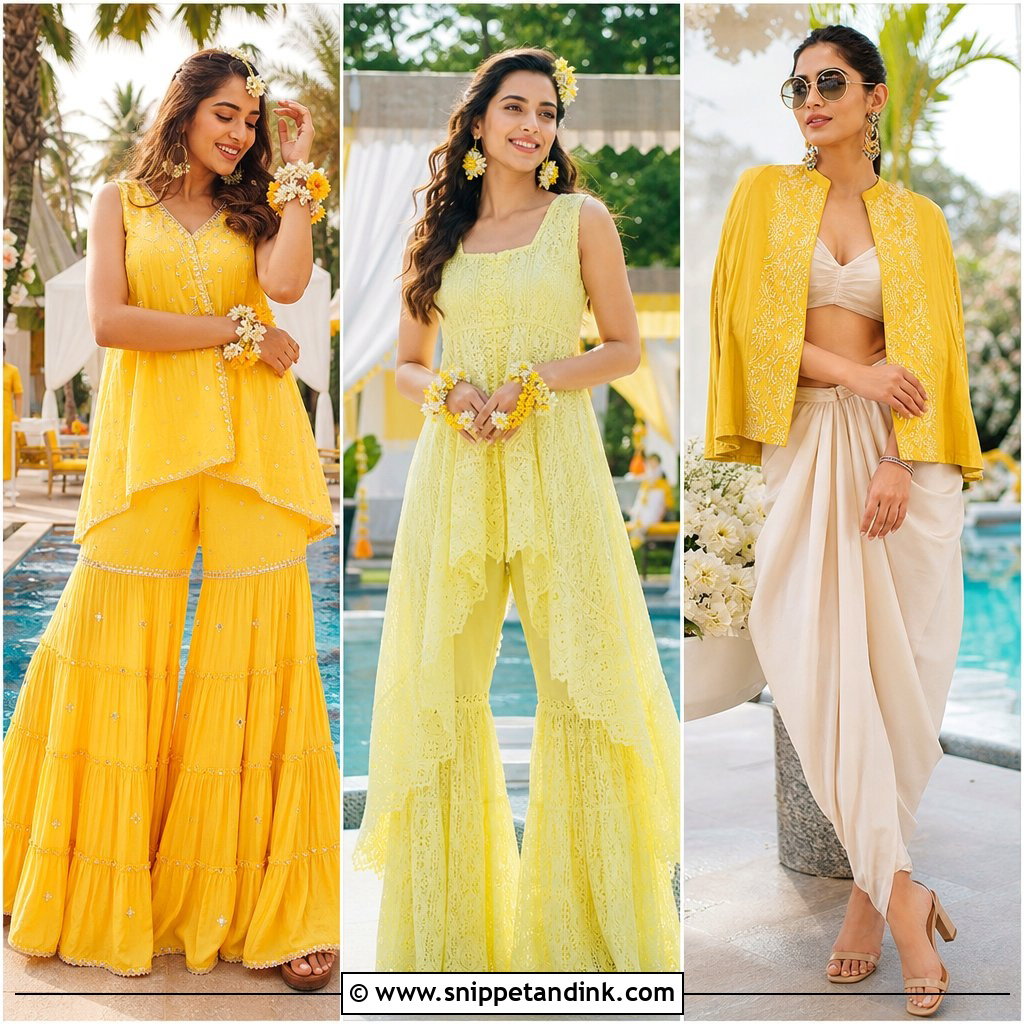
Mustard is the deeper yellow, and it hides turmeric marks better than pale lemon does, which is a practical reason to choose it. A short kurti over flared sharara pants in georgette or cotton silk moves well when you dance. Gota trim along the hem adds shine without weight. I always pin the dupatta at the shoulder for this one so both hands stay free for the ritual. Gold-tone earrings, stacked bangles and a small potli finish it, with flat juttis or a low block heel. It’s the look I suggest most often for bridesmaids, since it suits most heights and body shapes.
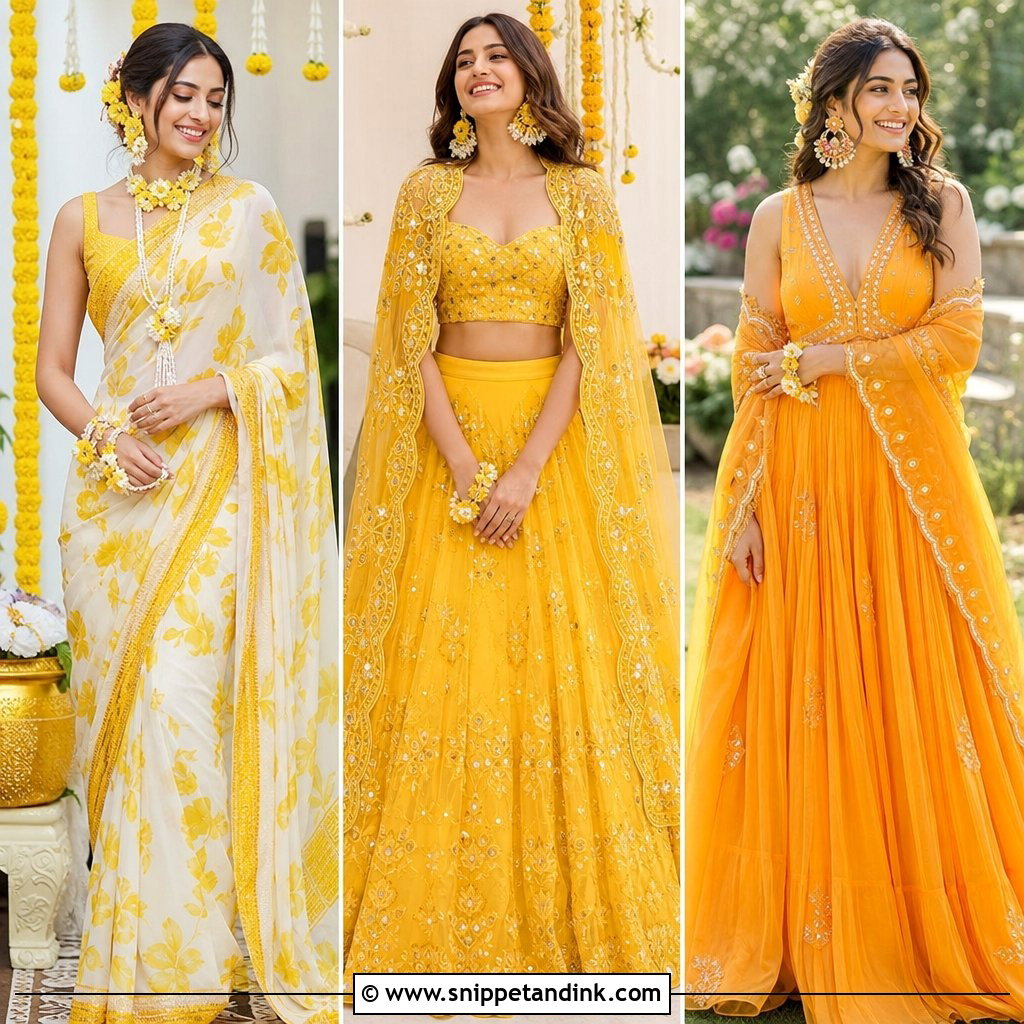
3. White And Yellow Organza Saree Haldi Outfit
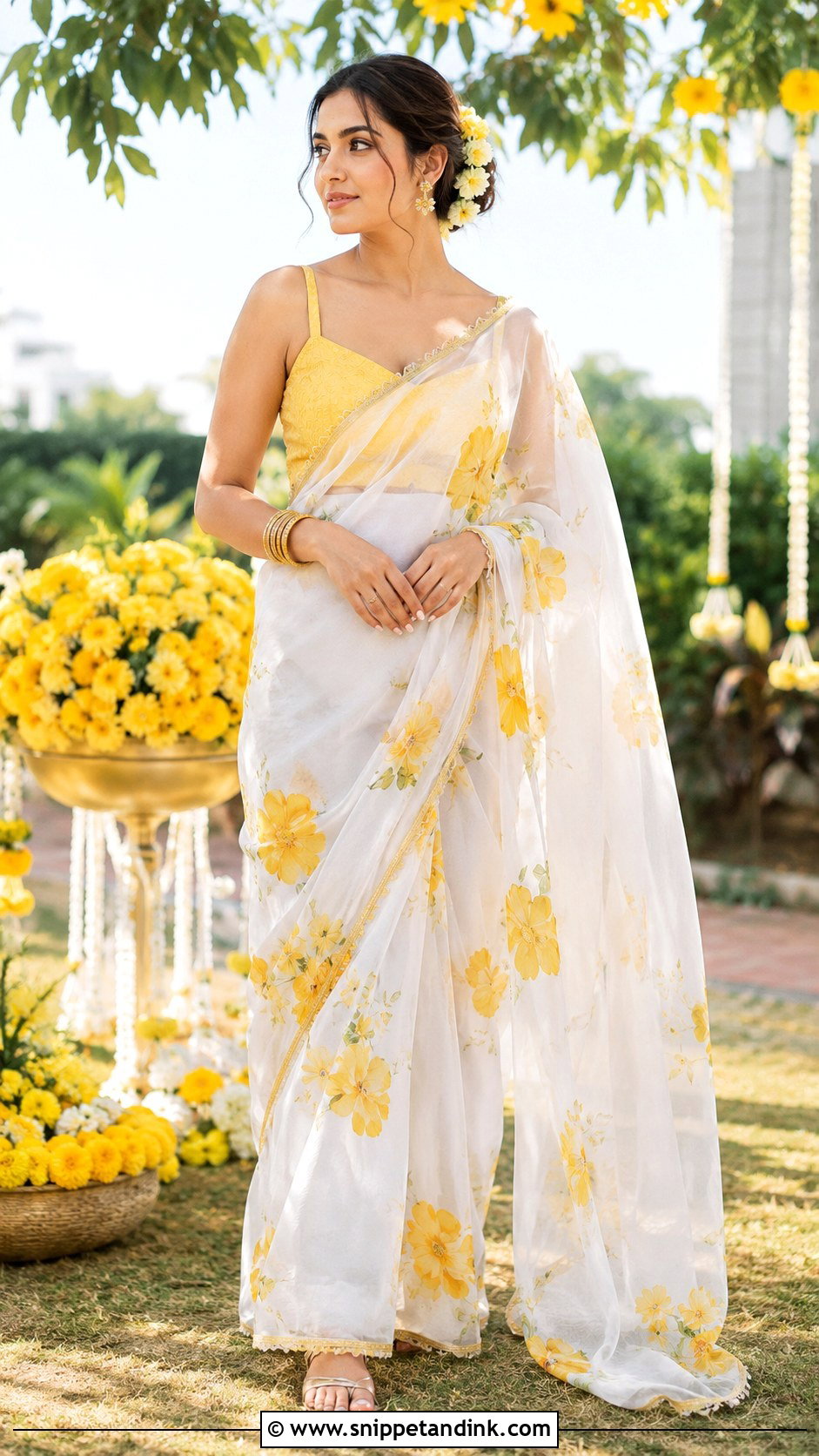
White organza with yellow florals is the riskiest choice here, so go in with your eyes open. The light background looks fresh in a garden, but turmeric on white organza often leaves a faint stain even after washing. If you love it, wear it knowing it may not come out perfect, or change before the paste. Pin the pleats firmly and fix the pallu at the shoulder so it doesn’t slide into the bowl during rituals. A plain yellow blouse, floral studs, a slim bangle stack and a white-and-yellow gajra are all it needs. Metallic flats beat heels on wet floors and grass.
4. Marigold Anarkali Haldi Outfit
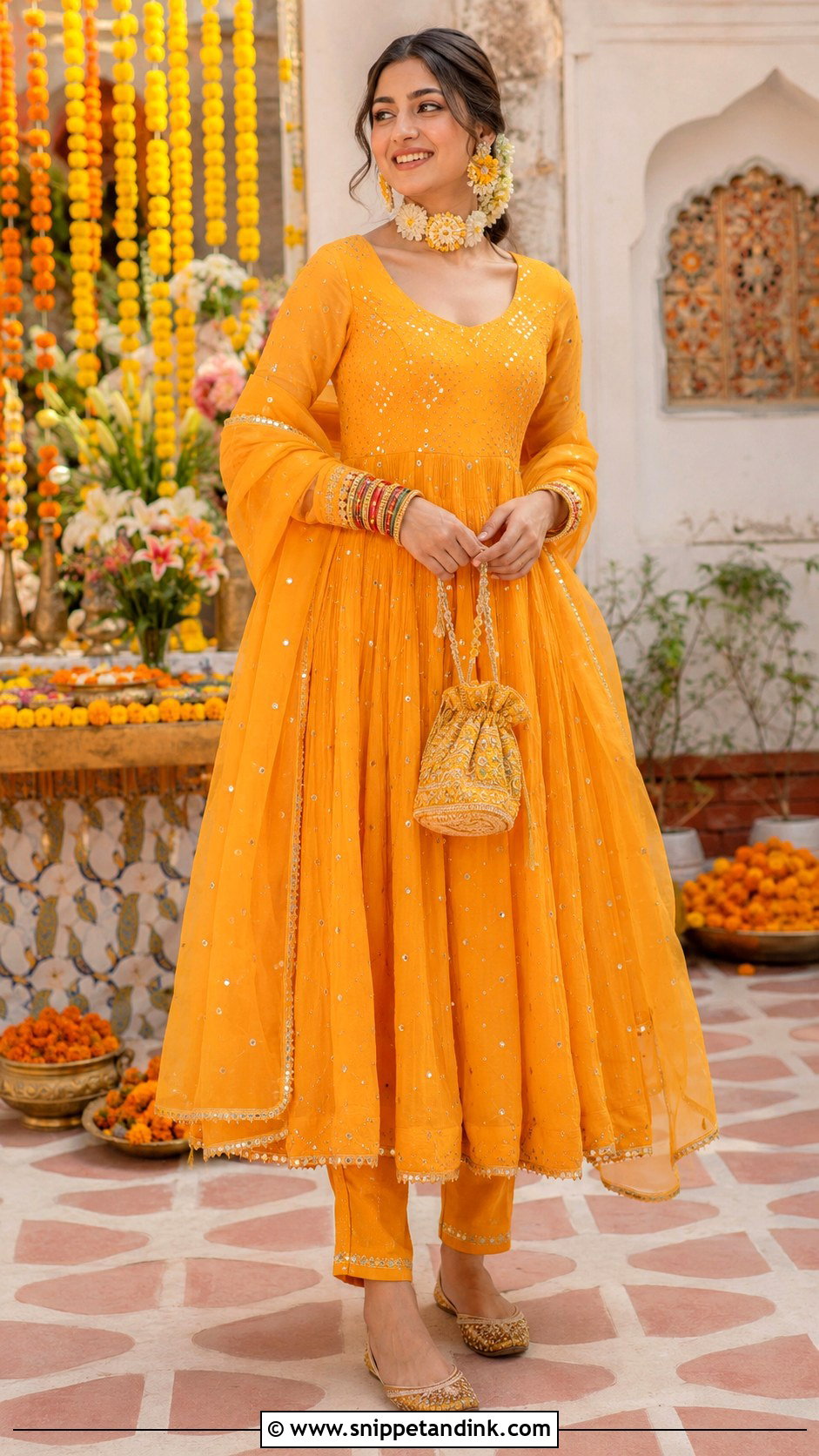
An Anarkali gives more coverage than a lehenga and moves beautifully when you spin, which is why older relatives often prefer it. Choose a calf or ankle length with mirror work or gota at the yoke. Watch the hem: a floor-sweeping Anarkali drags through spilled paste, water and petals, so I’d take it up an inch or two for this function. Wear it with slim pants and a sheer dupatta pinned to one shoulder. A floral choker, matching earrings, a few bright bangles, gold juttis and a compact potli complete it. The flared shape is forgiving on most figures.
5. Yellow Chikankari Kurta Palazzo Haldi Outfit
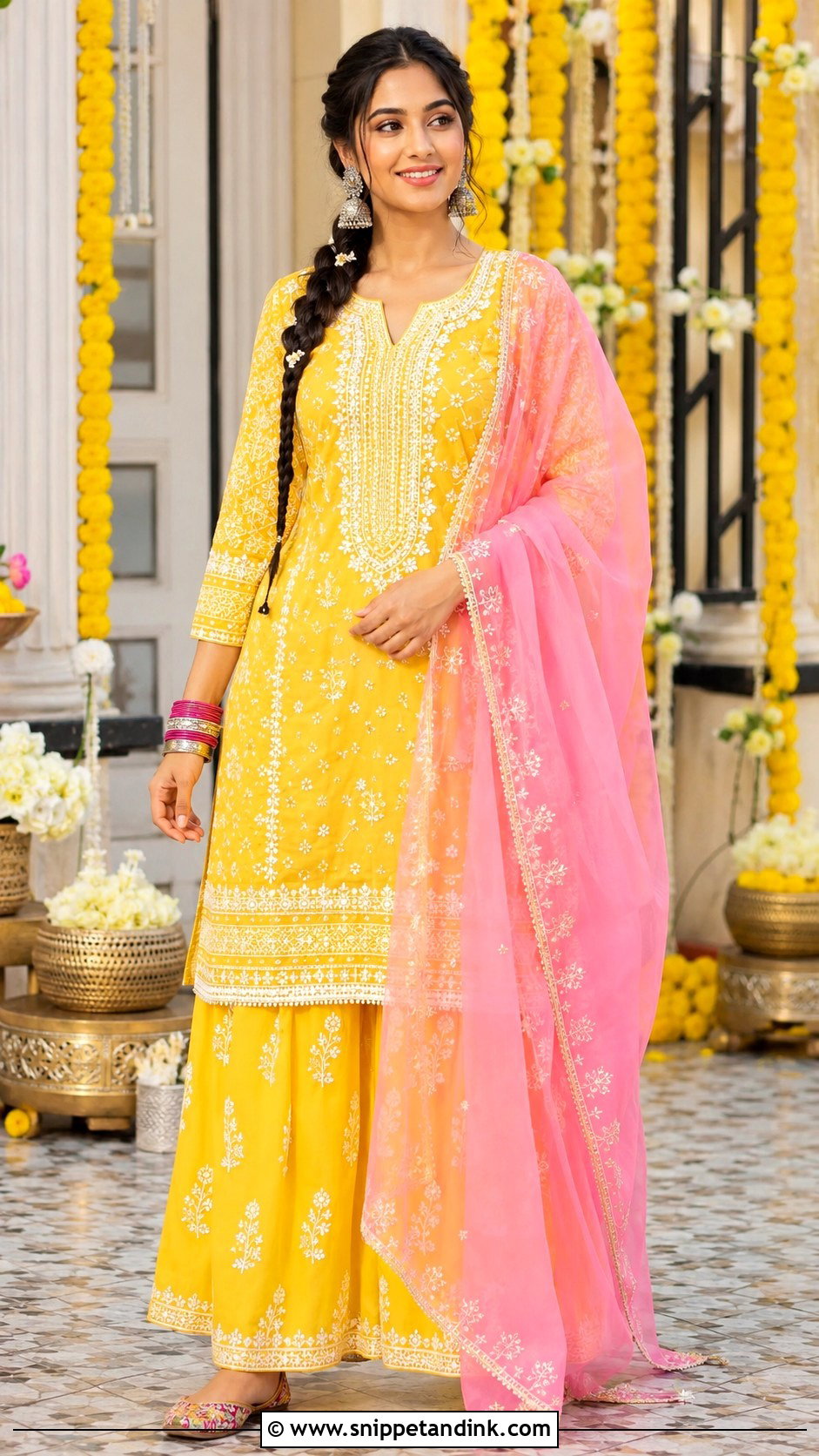
Chikankari is hand embroidery on fine cotton or georgette, and it’s one of the few embellishments that washes well after a Haldi. A yellow kurta and palazzo combination in breathable cotton keeps you cool through a hot afternoon. Check that the kurta has a lining, since chikankari cotton can be sheer once it’s damp. A contrasting pink or white dupatta adds color; a matching yellow one is calmer. Silver jhumkas, glass bangles and embellished flats suit it, with a braid or low ponytail. It works for guests and older family members, and a bride can dress it up with heavier floral jewelry and an embroidered dupatta.
6. Yellow Dhoti Pants And Cape Haldi Outfit
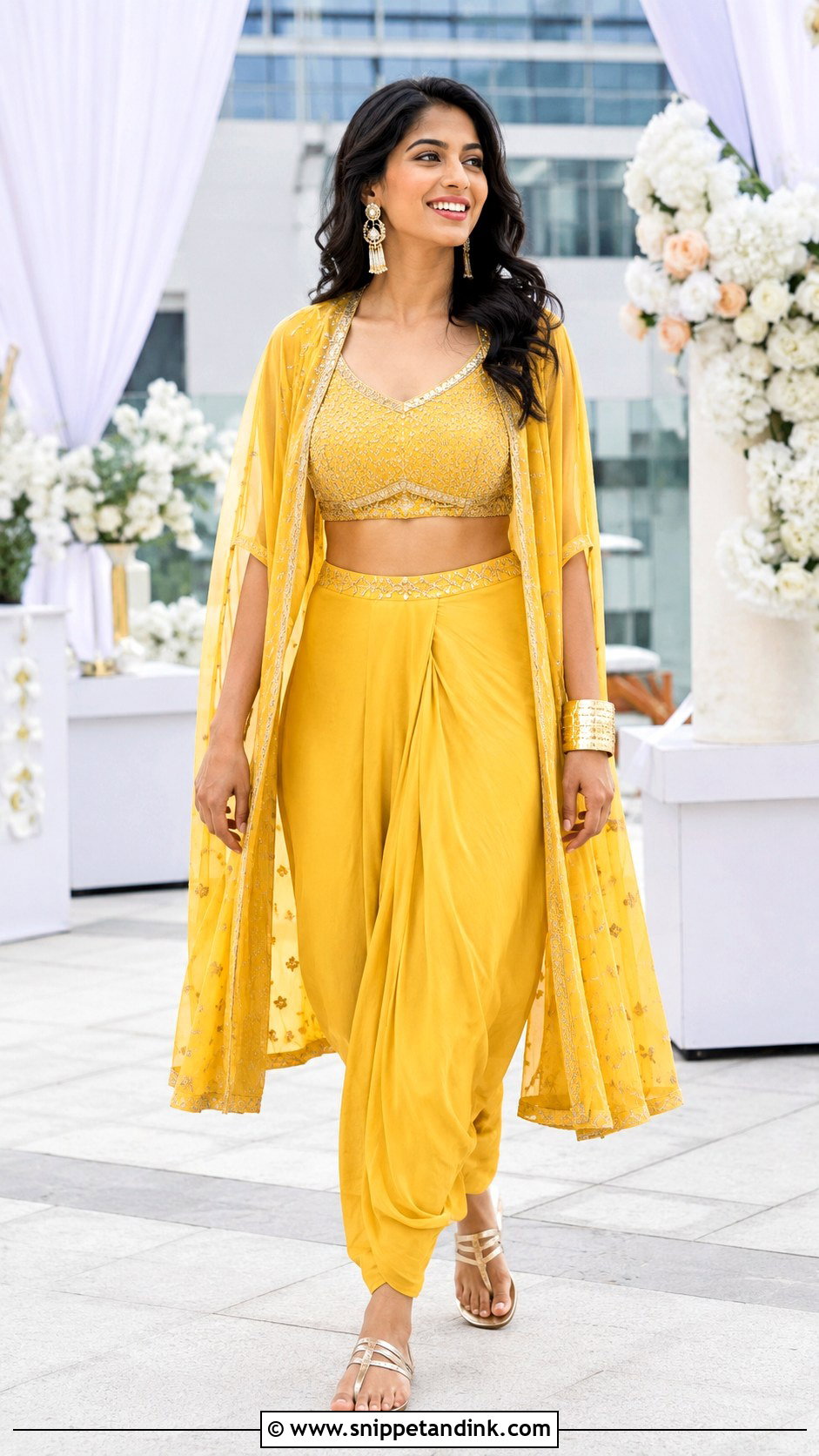
Dhoti pants are made for dancing. The draped crotch gives you full range of movement, so you can sit on the floor and get up again without adjusting anything. Pair them with a fitted blouse or short kurti and swap the dupatta for a sheer cape. A cape can’t fall into the turmeric bowl the way a loose dupatta does, but keep it at knee or calf length so it doesn’t drag. Statement earrings, a cuff and metallic flat sandals are enough. A sleek ponytail or textured braid suits the modern shape. This one is for the bride, sister or bridesmaid who plans to dance all afternoon.
7. Pre-Draped Saree Haldi Outfit
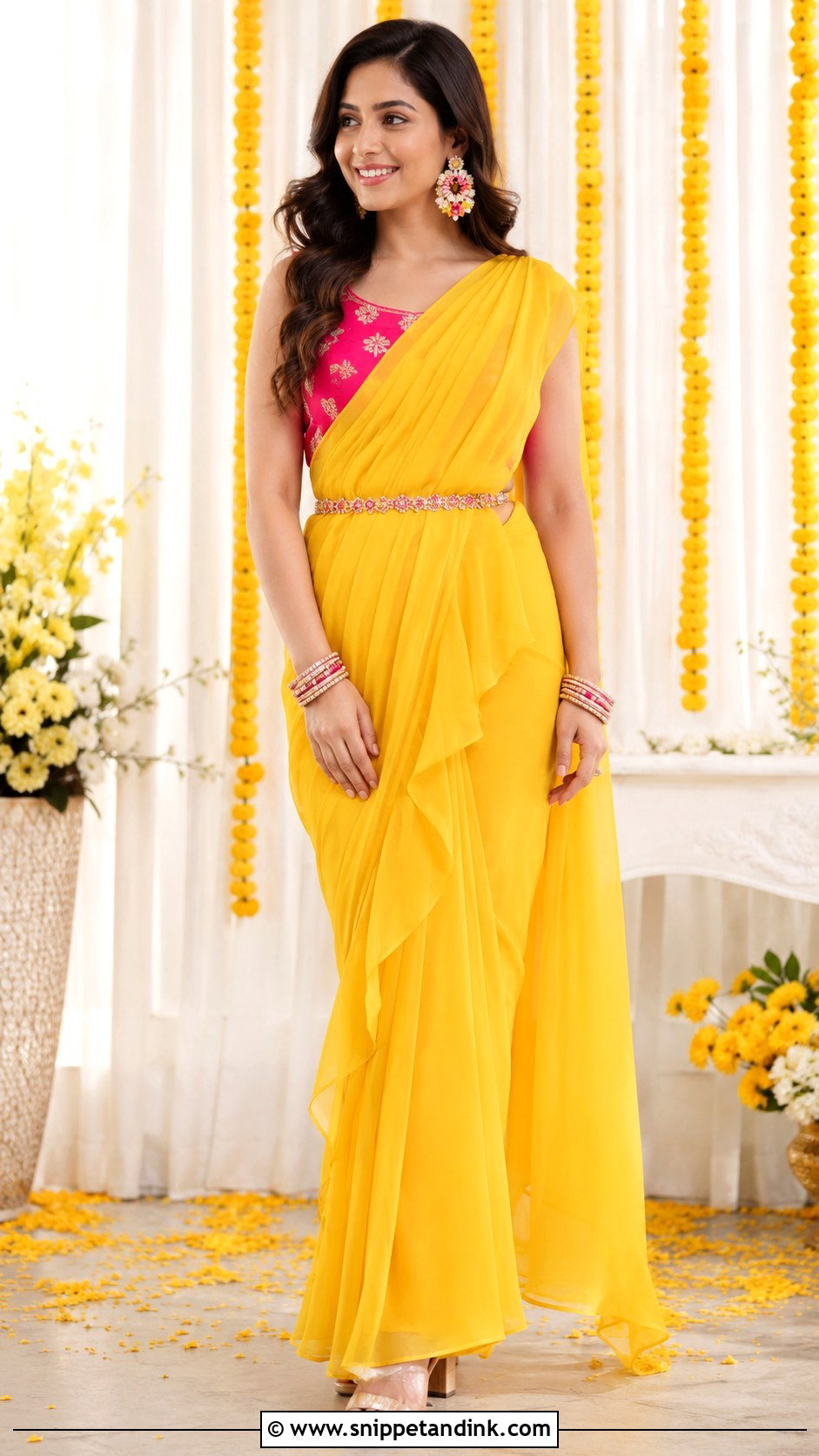
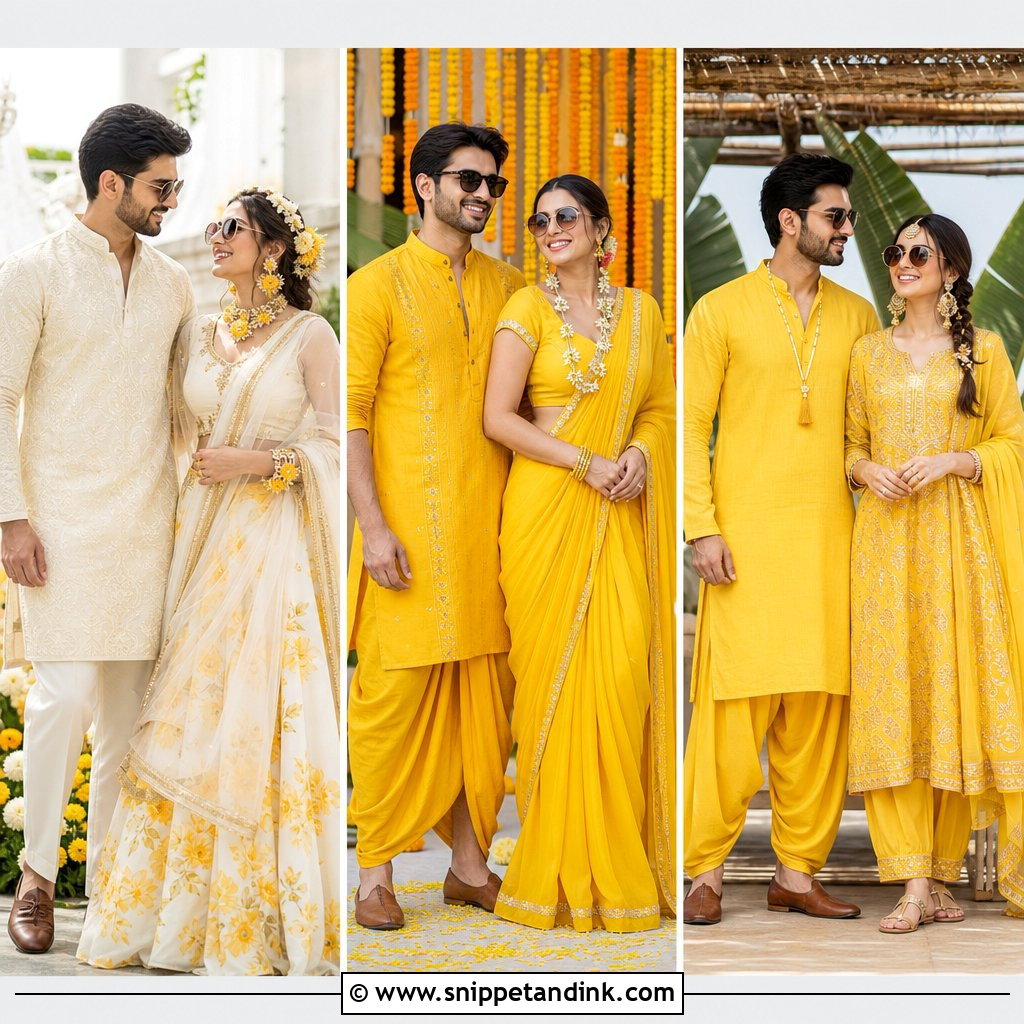
If you love sarees but hate re-tucking pleats, a pre-draped saree solves it. The pleats and pallu are stitched in place on a waistband, so they can’t loosen when someone hugs you or you sit on the floor. Chiffon or georgette washes far better after turmeric than silk. A contrasting hot-pink or orange blouse gives definition against yellow in photos; sleeveless feels modern, short embroidered sleeves give more coverage. Add floral earrings, a slim waist belt, stacked bangles and low block heels, with soft waves or a low bun. It’s practical for brides and guests alike.
8. Yellow And Orange Bandhani Lehenga Haldi Outfit
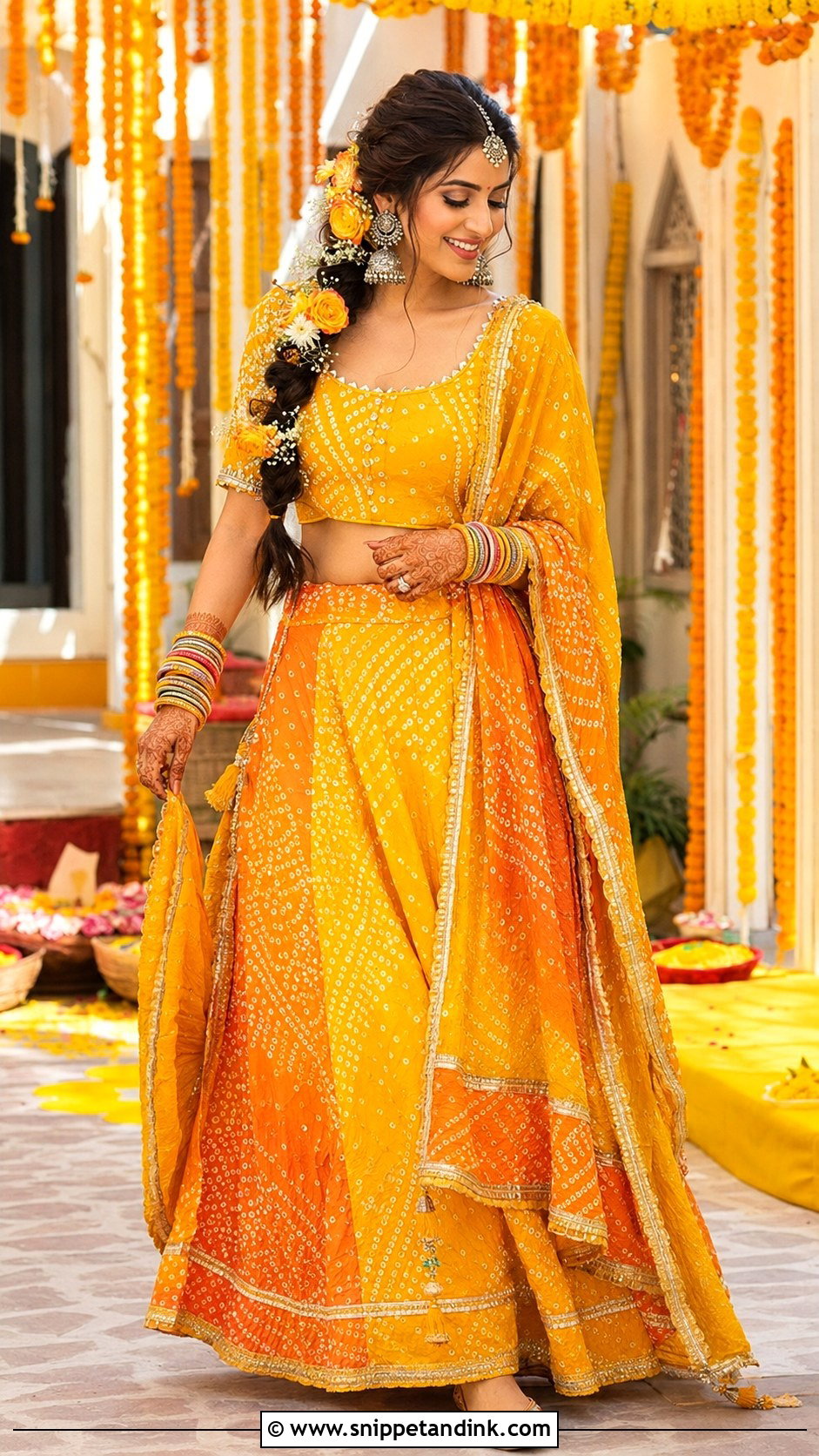
Bandhani is a tie-dye craft, and the dots carry color in a way that suits a ritual where color gets added to you. A yellow lehenga skirt with orange or pink bandhani panels moves well without heavy embroidery. One thing I warn about: traditional bandhani dyes can bleed when wet, so don’t let a damp, paste-covered skirt sit against a white blouse for long. Drape the dupatta diagonally or pin it at one shoulder. Oxidized earrings, multicolored bangles and embroidered juttis suit the craft, and a long braid with small flowers finishes it. Brides can add a statement necklace and maang tikka.
9. Ivory Floral Skirt Haldi Outfit
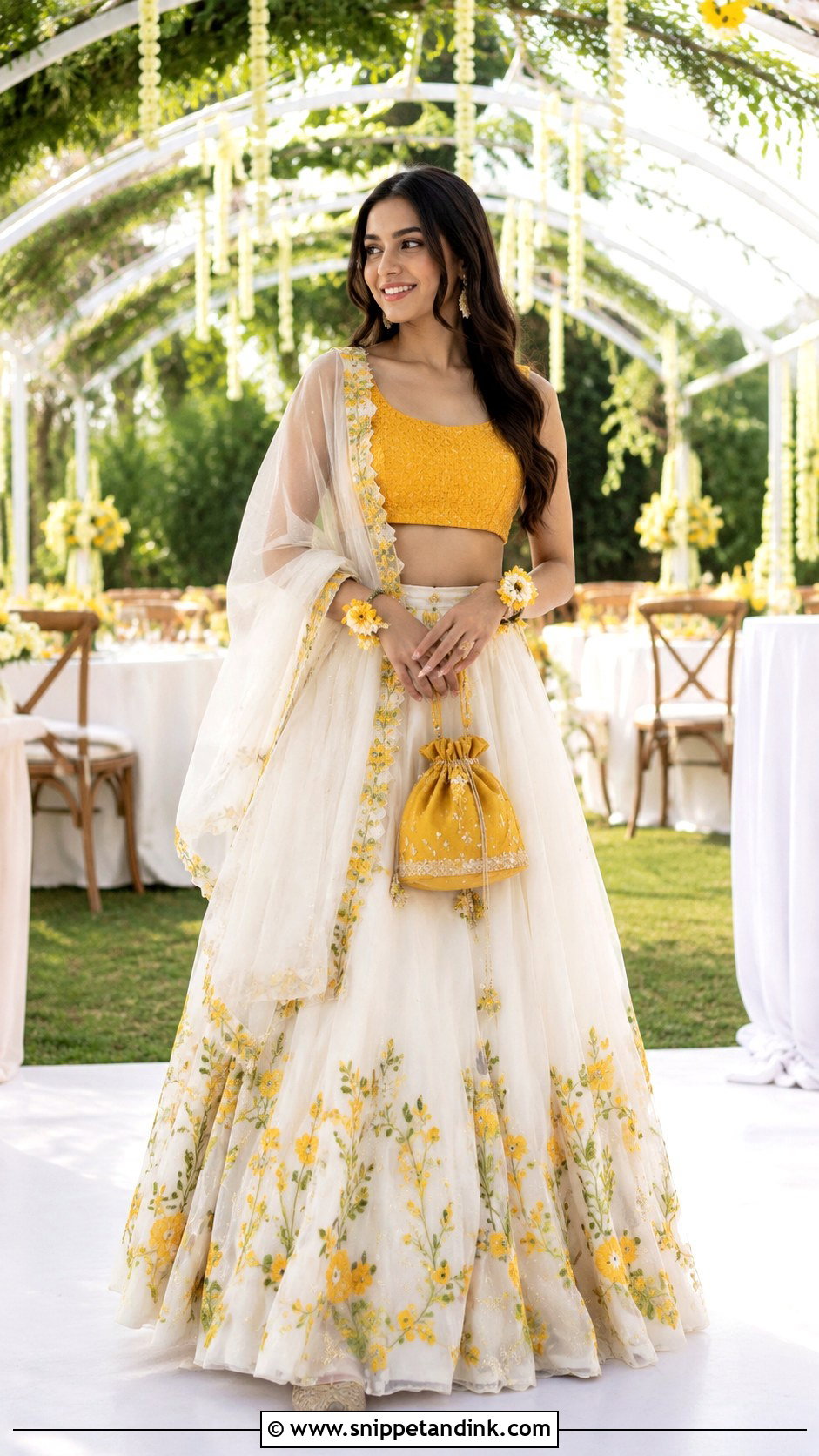
Yellow doesn’t have to cover the whole outfit. An ivory skirt printed or embroidered with yellow flowers, under a solid yellow crop top or blouse, gives a lighter take on Haldi dressing. Add a sheer ivory dupatta with a slim yellow border, pearl earrings, floral wrist jewelry and neutral juttis. A half-up style with small white flowers keeps it soft. The same caution applies as with any ivory fabric. If guests will rub turmeric directly onto your clothes, choose washable, reasonably priced fabric you won’t mourn if a mark stays.
10. Lime Green Sharara Haldi Outfit
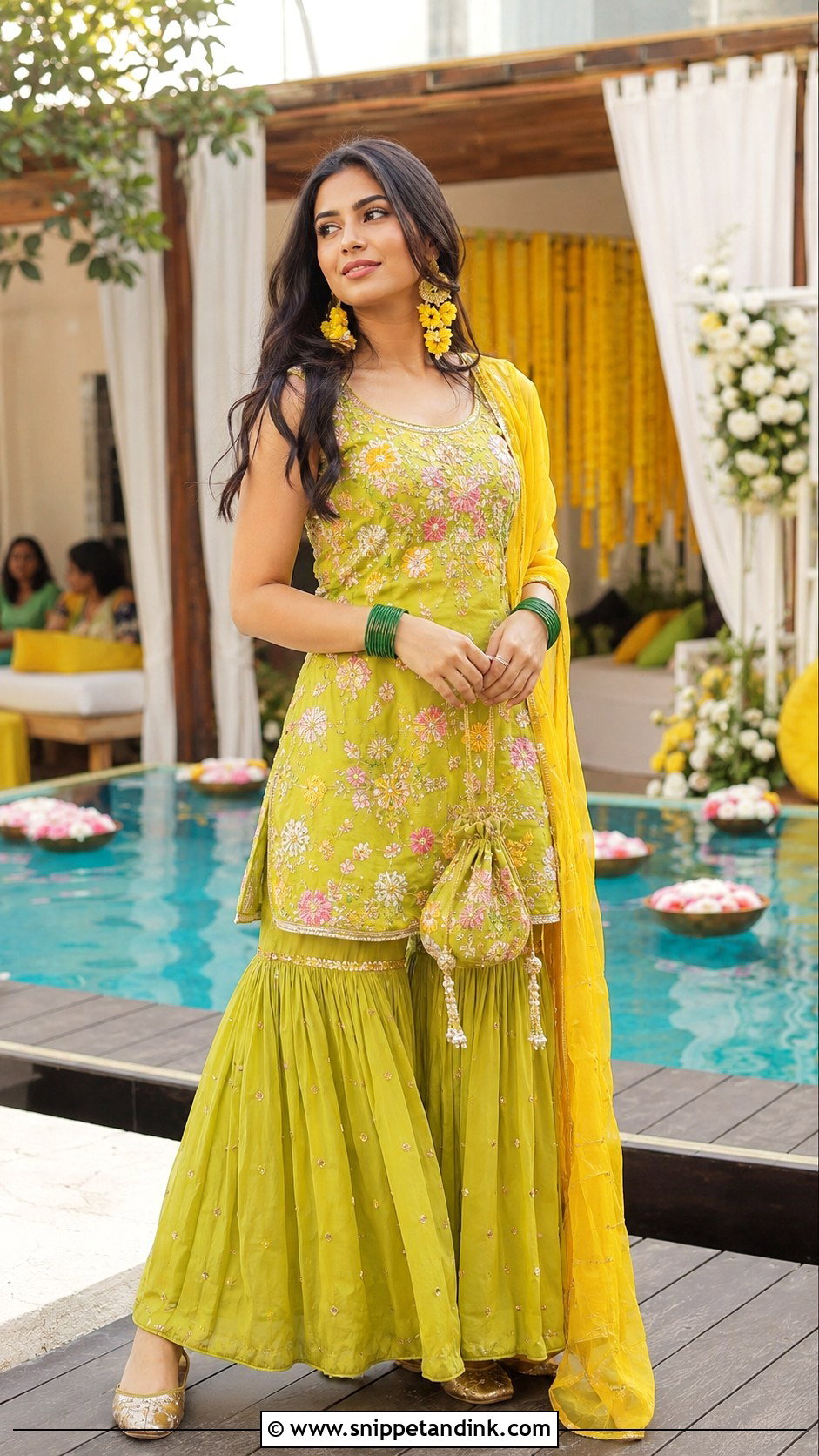
Lime green looks especially fresh against turmeric and marigold decor. Build it with a short lime kurti, wide sharara pants and a yellow dupatta with a green border; a lime-and-yellow print is gentler if a solid feels too loud. Small mirror details give sparkle without weight. Yellow floral earrings, green bangles, a small potli and gold flats finish it. With clothing this bright, I keep makeup natural so the face doesn’t compete. Bridesmaids and younger guests tend to love it, and it reads clearly in photos at garden, courtyard, and poolside celebrations.
11. Yellow Mirror Work Gharara Haldi Outfit
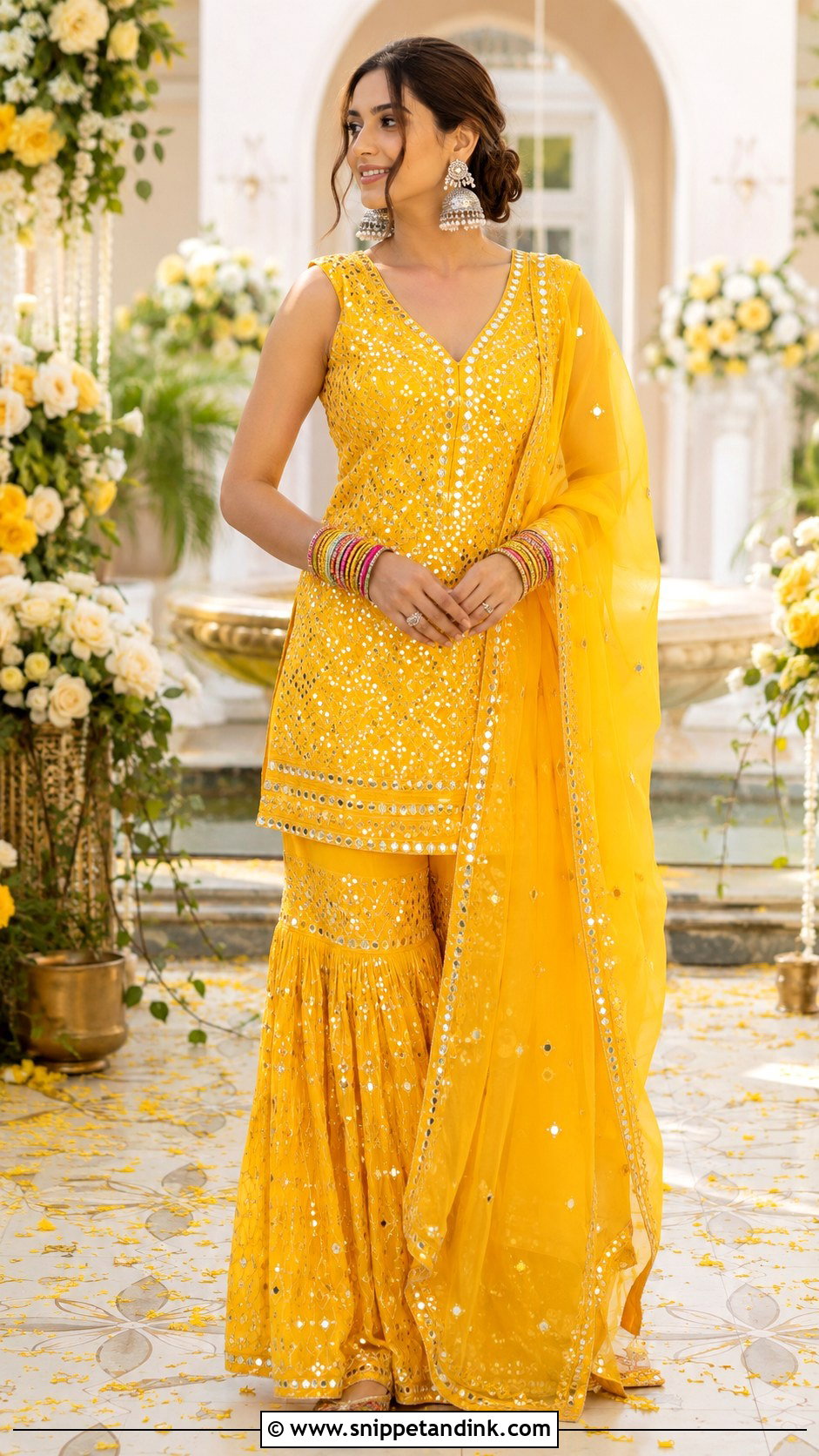
A mirror-work gharara has sparkle and the ease of pants. Choose a short kurti that ends above the flare at the knee, so the gharara shape stays visible. Keep the mirrors concentrated at the neckline, cuffs and borders. Too many mirrors on the skirt get heavy, and paste dries into the stitching around each one. Secure a net or organza dupatta at the shoulder and wrist if the ceremony gets busy. Mirror-work juttis, silver jhumkas and colorful bangles suit it, with a middle-parted low bun. A bride can personalize it with floral kaleeras and a contrasting dupatta.
12. Yellow Cotton Silk Saree Haldi Outfit
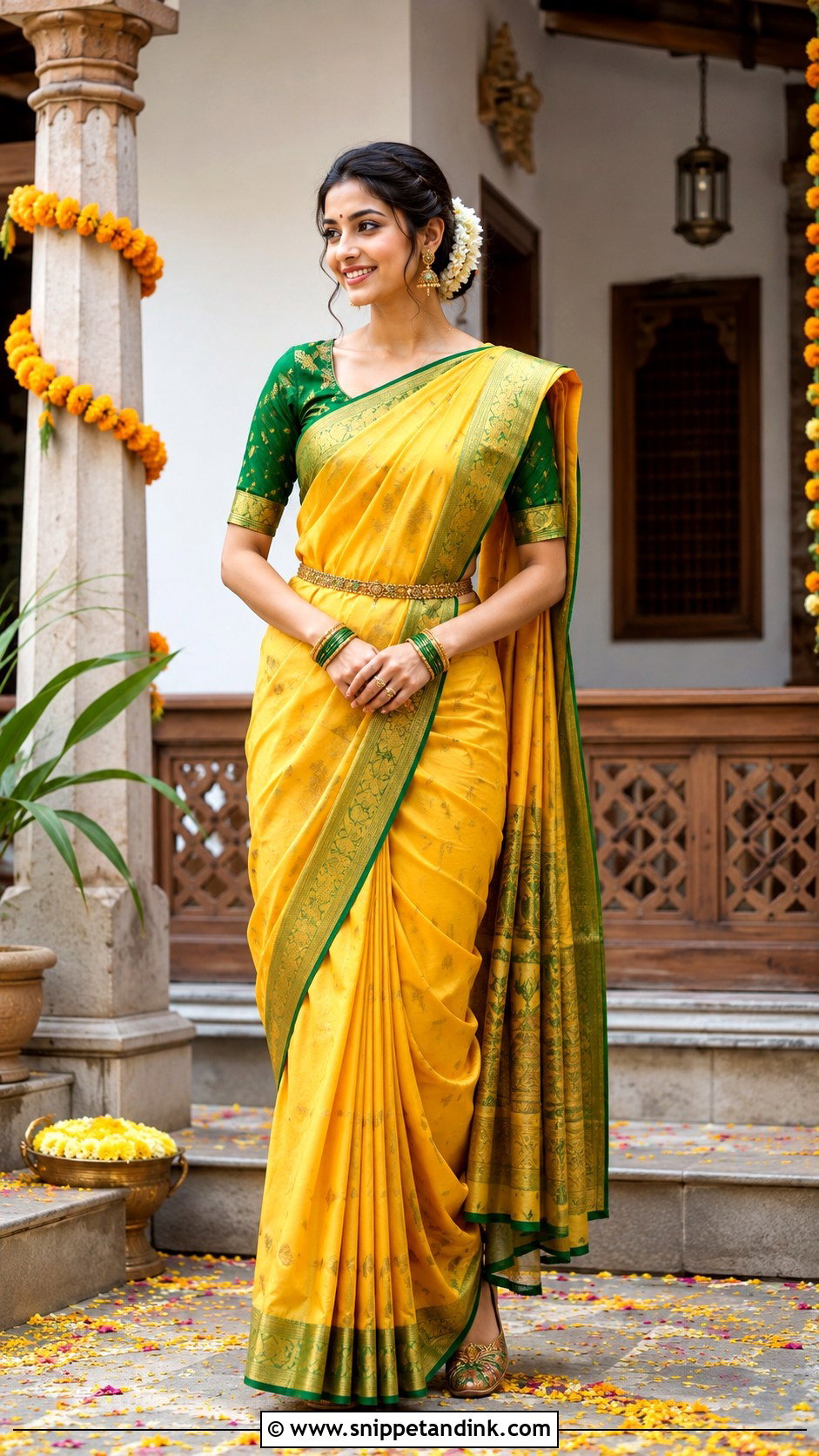
Cotton silk gives a saree structure and a soft sheen while breathing far better than heavier silks. It’s the fabric I suggest for mothers and aunts at a traditional ceremony. Pair yellow with a green, pink or orange blouse, picking a woven border that links the two. I tie the pleats a touch higher than usual for Haldi, just above the floor, so the hem doesn’t soak up spilled paste or catch underfoot. Temple-style earrings, glass bangles, a small bindi and fresh flowers in a low bun complete it. A bride can make it hers with a floral necklace and ornate blouse sleeves.
13. Yellow Floral Kurta Pants Haldi Outfit
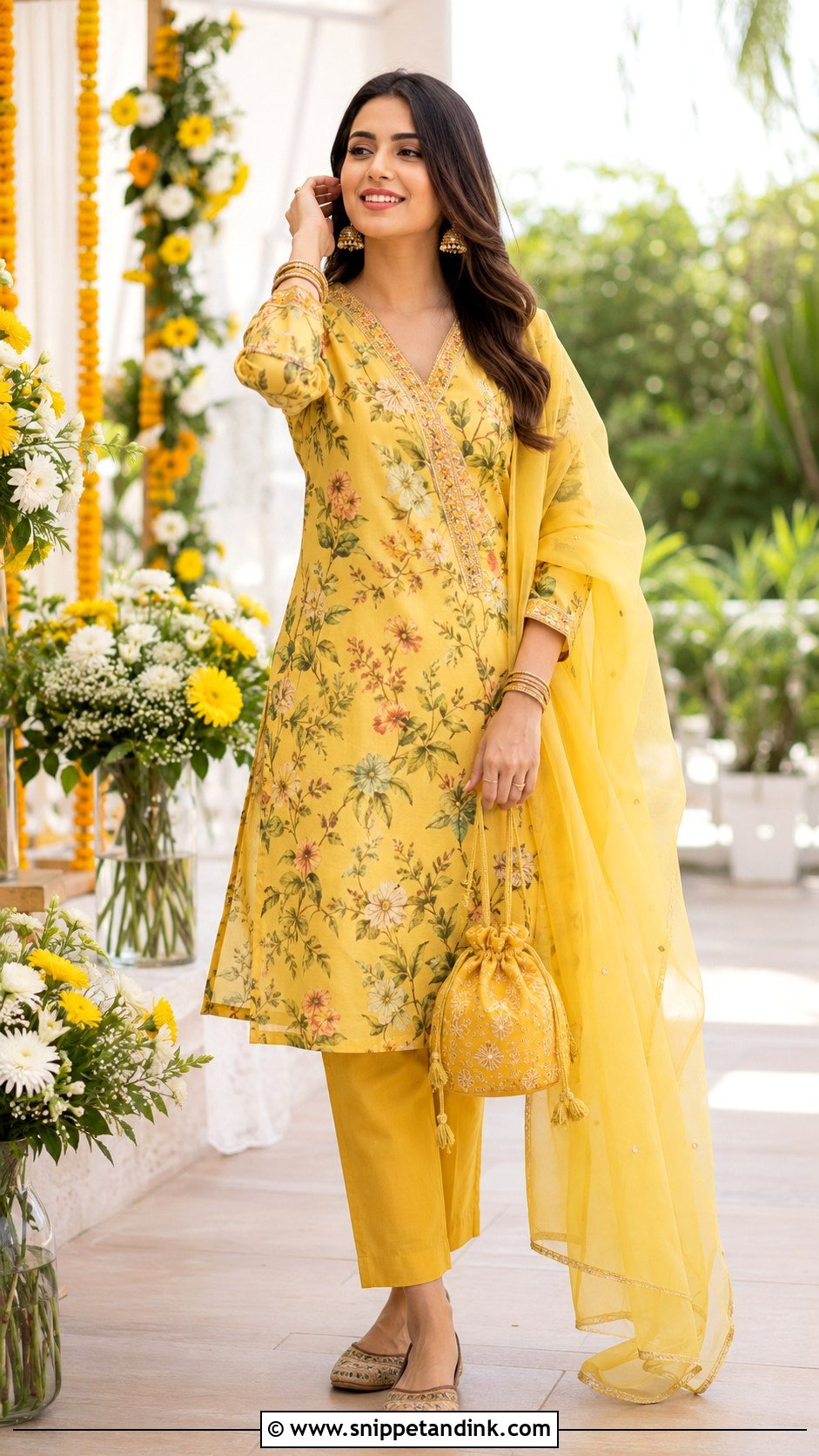
A floral kurta with straight pants is the easiest outfit on this list to wear again. Look for a yellow base with white, pink or green botanical prints and keep the pants plain so the print isn’t crowded. A light organza dupatta with a narrow border adds enough occasion. I recommend it to anyone helping with preparations, since they’ll be carrying bowls and moving between rooms all day and need something that won’t slow them down. Hoop jhumkas, slim bangles, a crossbody potli and neutral juttis keep it practical, with loose waves or a ponytail.
14. Yellow Ethnic Co-Ord Haldi Outfit
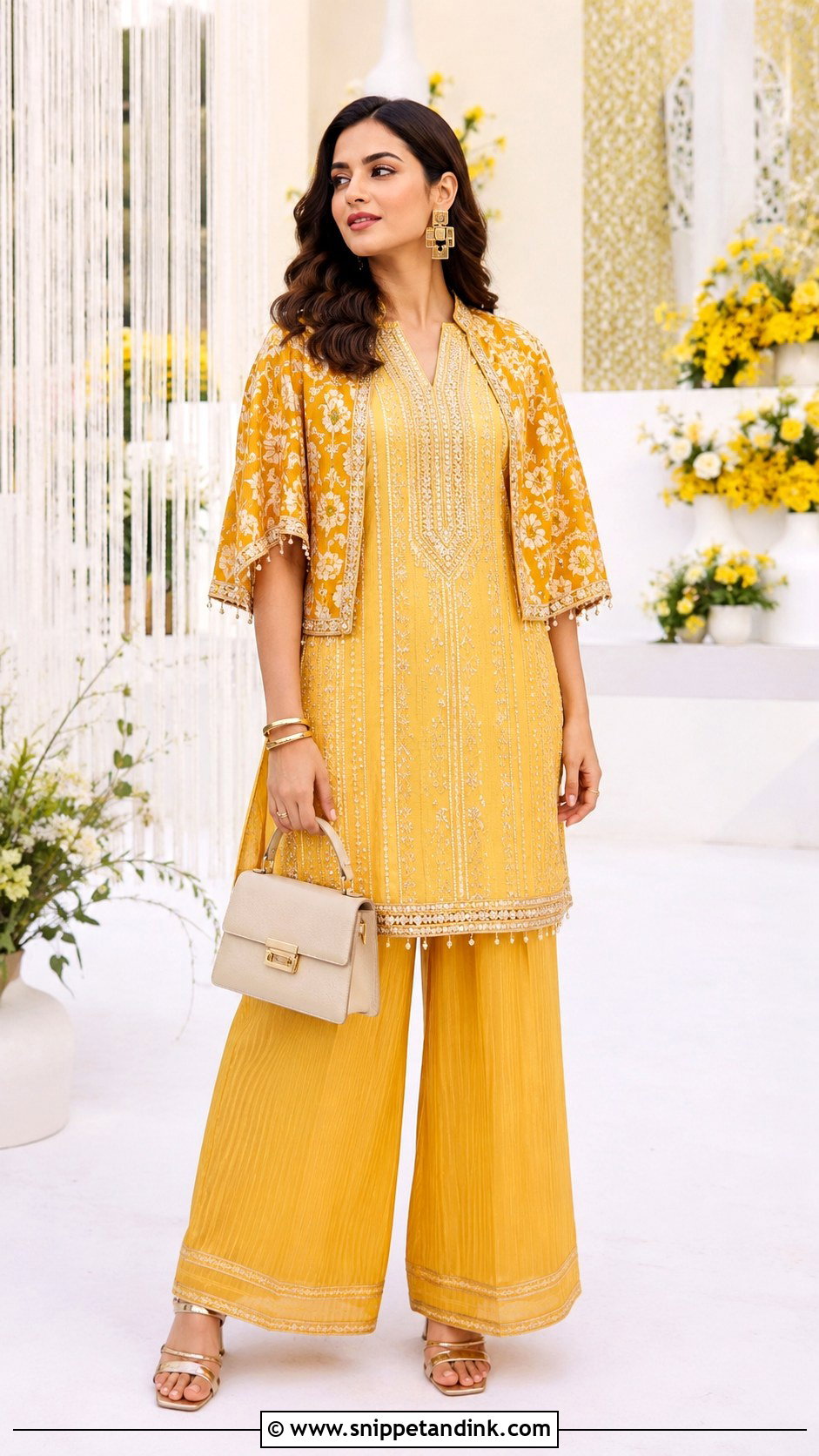
A co-ord set is the low-effort option: matching top and wide-leg pants, nothing to drape or pin. Scalloped edges, tonal embroidery or a lightly embellished neckline lift it above everyday wear. A printed cape or short dupatta adds movement if you want it. Geometric earrings, slim bracelets, a compact bag and metallic sandals suit the clean lines, and a sleek ponytail matches. It’s my go-to suggestion for cousins and friends at a modern Haldi, and the pieces can be worn separately later, which matters when you’re buying outfits for several wedding functions.

15. Yellow Peplum Sharara Haldi Outfit
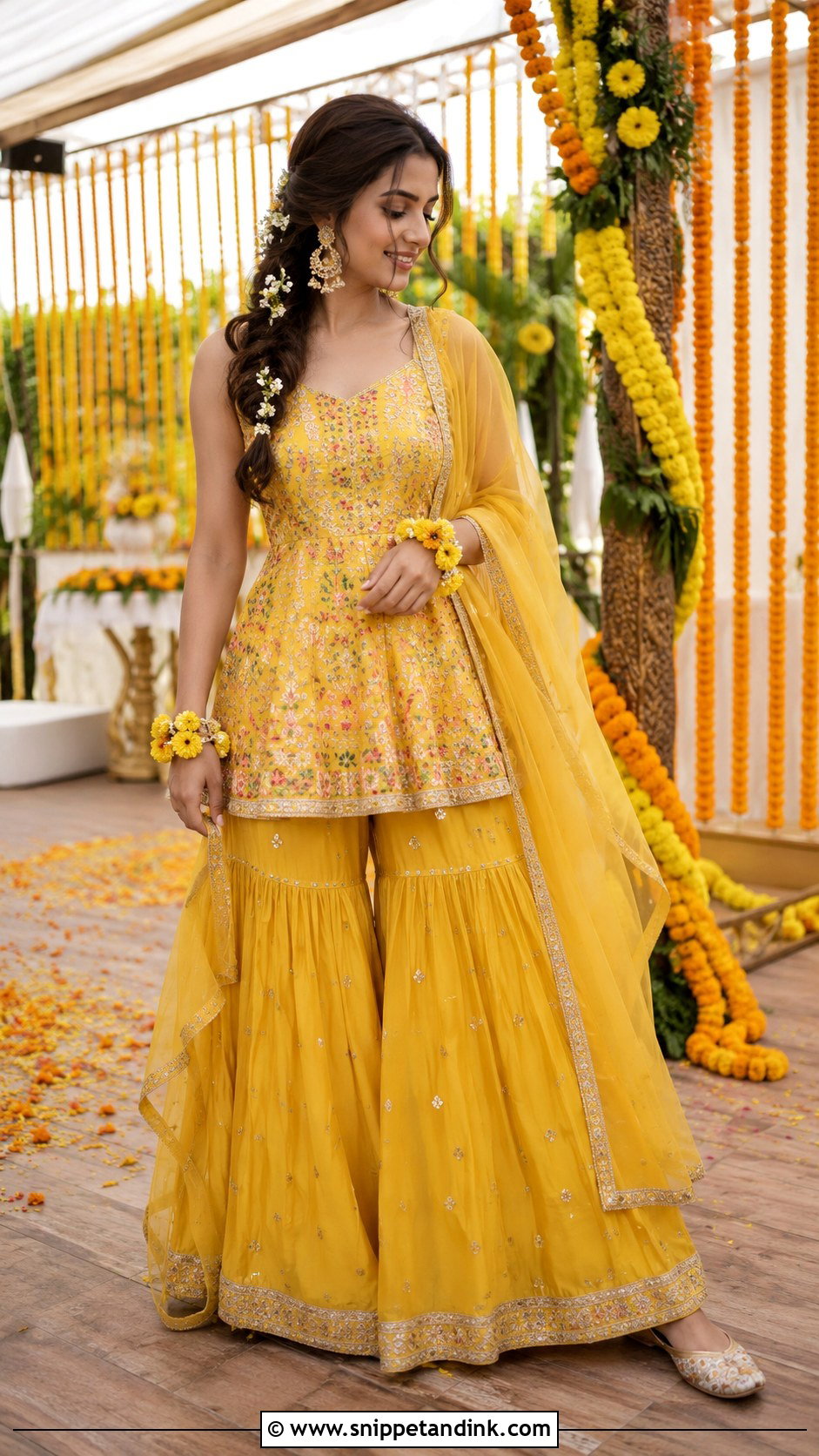
A peplum top over a flowing sharara defines the waist, but only if the peplum seam sits exactly at your natural waist. Too high and it looks like maternity wear; too low and it shortens the legs. That’s the one fitting point I’d pay a tailor for. Choose a yellow peplum with floral embroidery or gota edging and pair it with a plain sharara. The flare gives some midsection coverage. Add a light dupatta across one shoulder, or skip it if the sleeves are detailed. Statement jhumkas, floral bracelets and embellished juttis finish it, with a side braid or half-up hair.
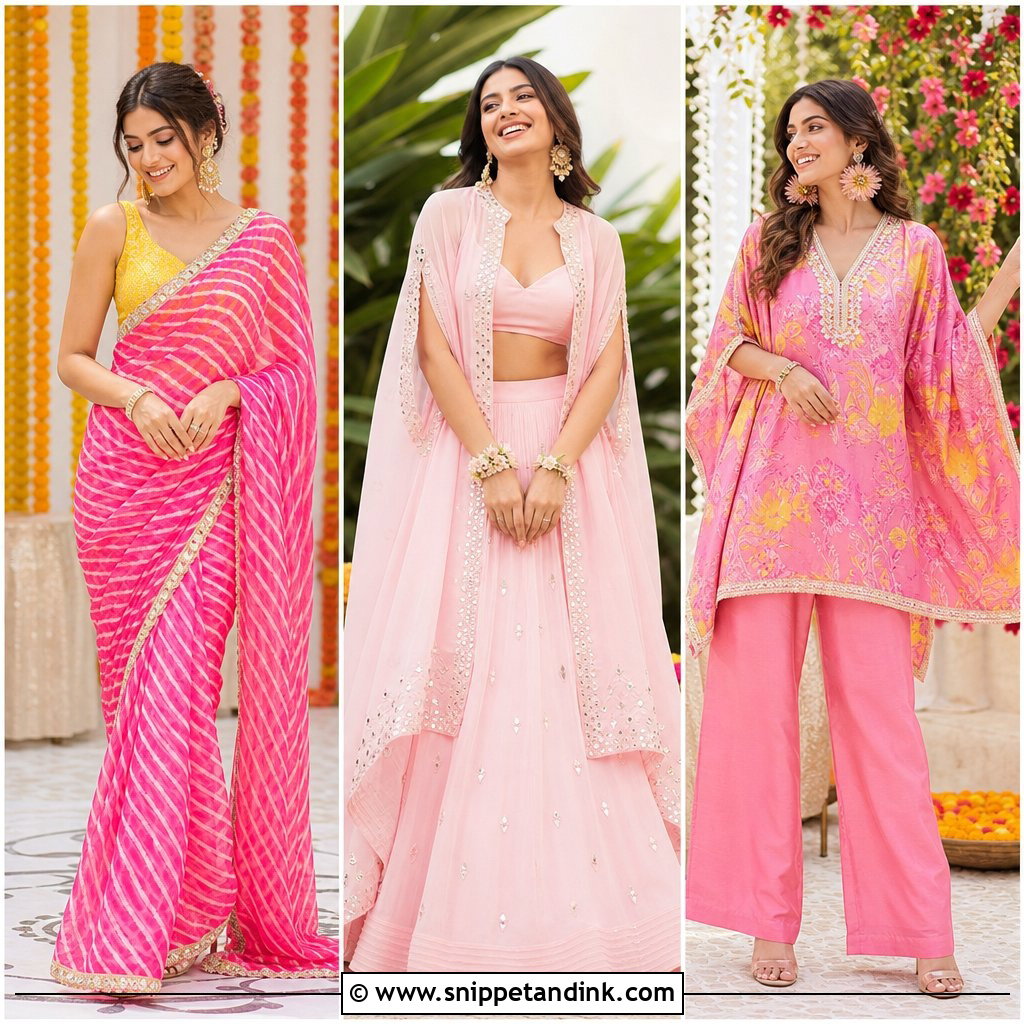
16. Pastel Yellow Jacket Lehenga Haldi Outfit
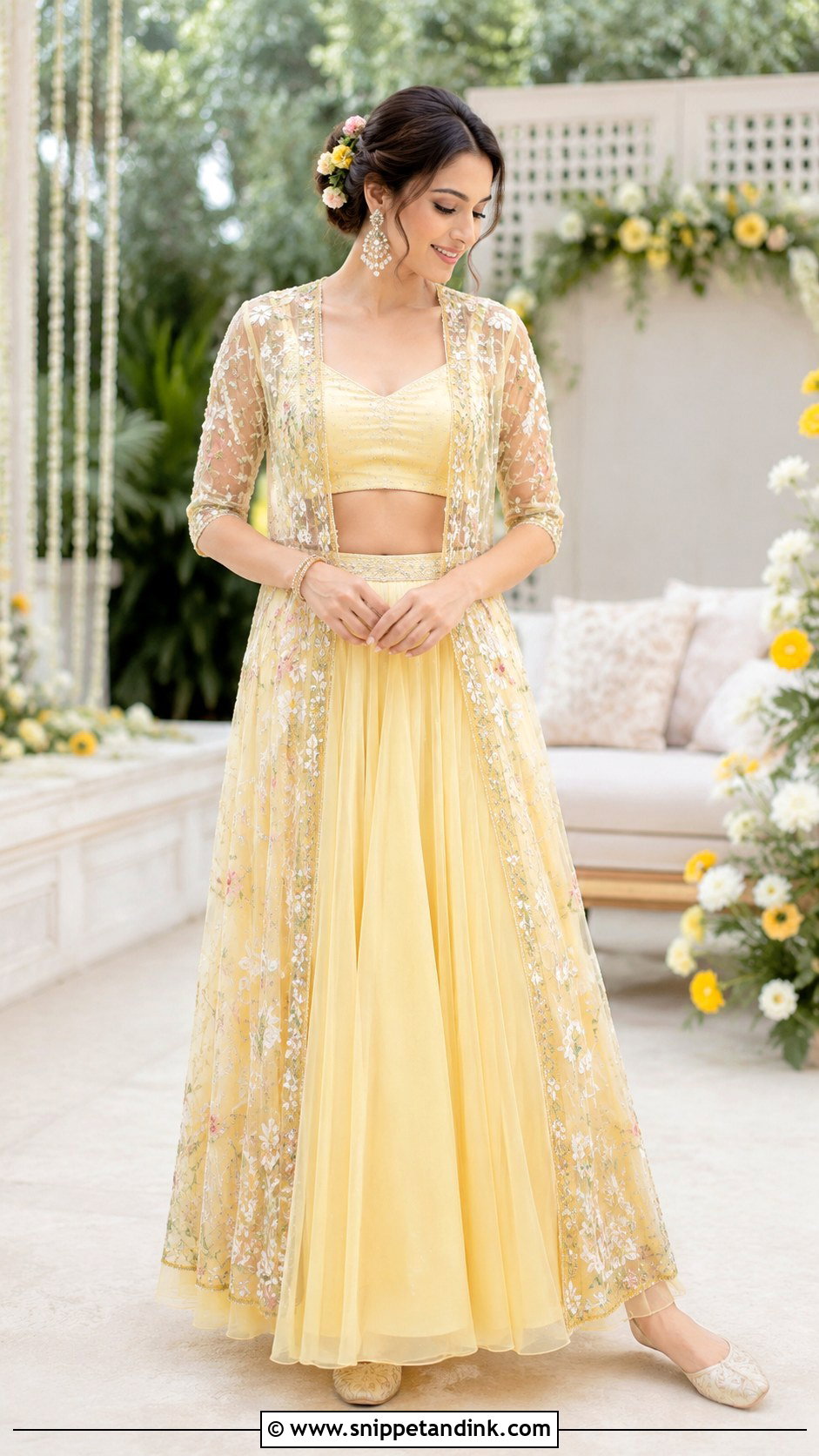
Pastel yellow suits women who find marigold or mustard too strong against their skin. Pair a lightweight lehenga and simple blouse with a sheer embroidered jacket instead of a dupatta. Waist length looks youthful, calf length adds drama and coverage. Check the jacket sleeves before you commit. Loose sleeves catch paste every time someone applies turmeric to your arms, so keep them fitted or short. Pearl-and-floral earrings, delicate bangles and ivory juttis suit the palette, with soft curls or a floral bun. Bridesmaids can wear a printed skirt and shorter jacket so the bride’s look stays distinct.
17. Pink And Yellow Leheriya Saree Haldi Outfit
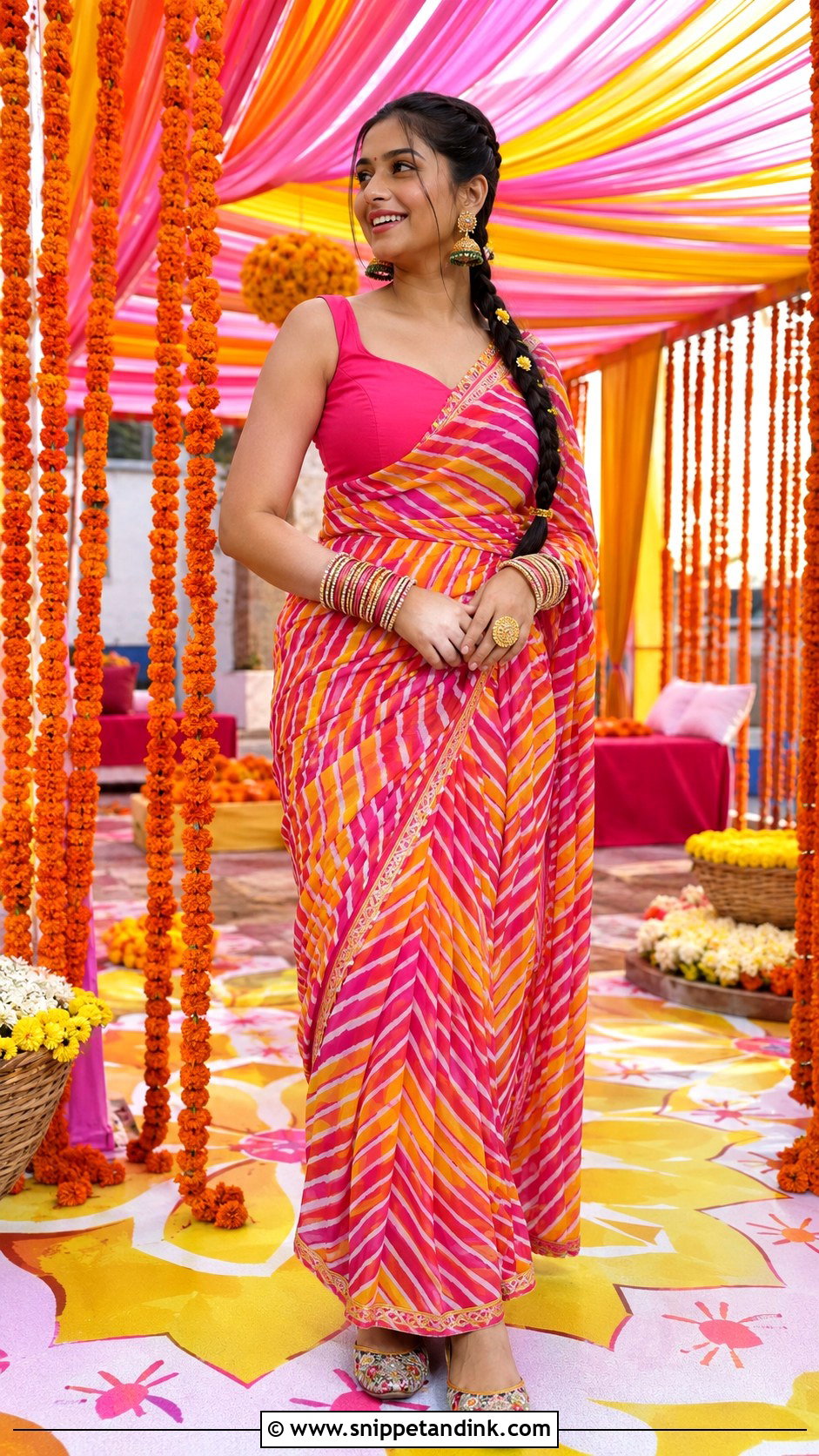
Leheriya is a resist-dyeing craft that creates wave-like diagonal stripes, and it brings motion to a light saree. Pink and yellow together are bright without being all-yellow. Pair with a solid pink or yellow blouse; sleeveless reads young, elbow sleeves more traditional. Pin the drape discreetly at the waist and shoulder, because light leheriya fabric slips. Brass earrings, layered bangles, a statement ring and comfortable juttis finish it, with a neat braid or low ponytail so the stripes stay the focus. The colors sit naturally against marigold garlands and canopies.
18. Yellow Salwar Kameez Haldi Outfit
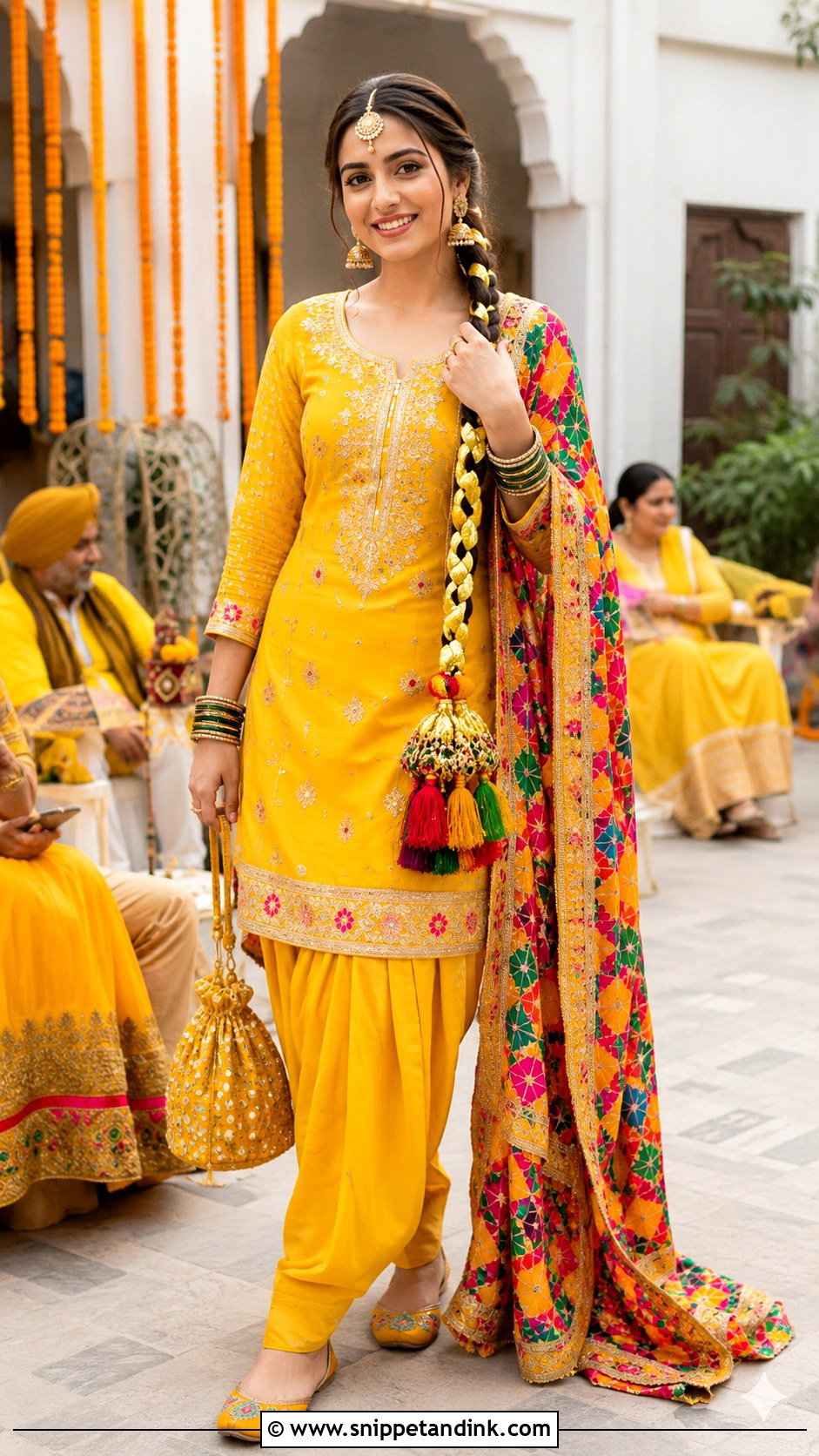
A classic salwar kameez is the dependable choice when comfort and tradition come first. A knee-length yellow kameez with a relaxed fit, a gathered salwar and a contrasting phulkari or printed dupatta works for every age. Phulkari is dense embroidery, so it’s heavier than it looks and needs pinning at the shoulder. Neckline and sleeve embroidery keep it festive. Jhumkas, bangles, embroidered Punjabi juttis and a potli finish it. A paranda braid adds character; a low bun is quieter. A bride can make it more ceremonial with a heavier dupatta border and floral jewelry.
19. Yellow Kaftan Set Haldi Outfit
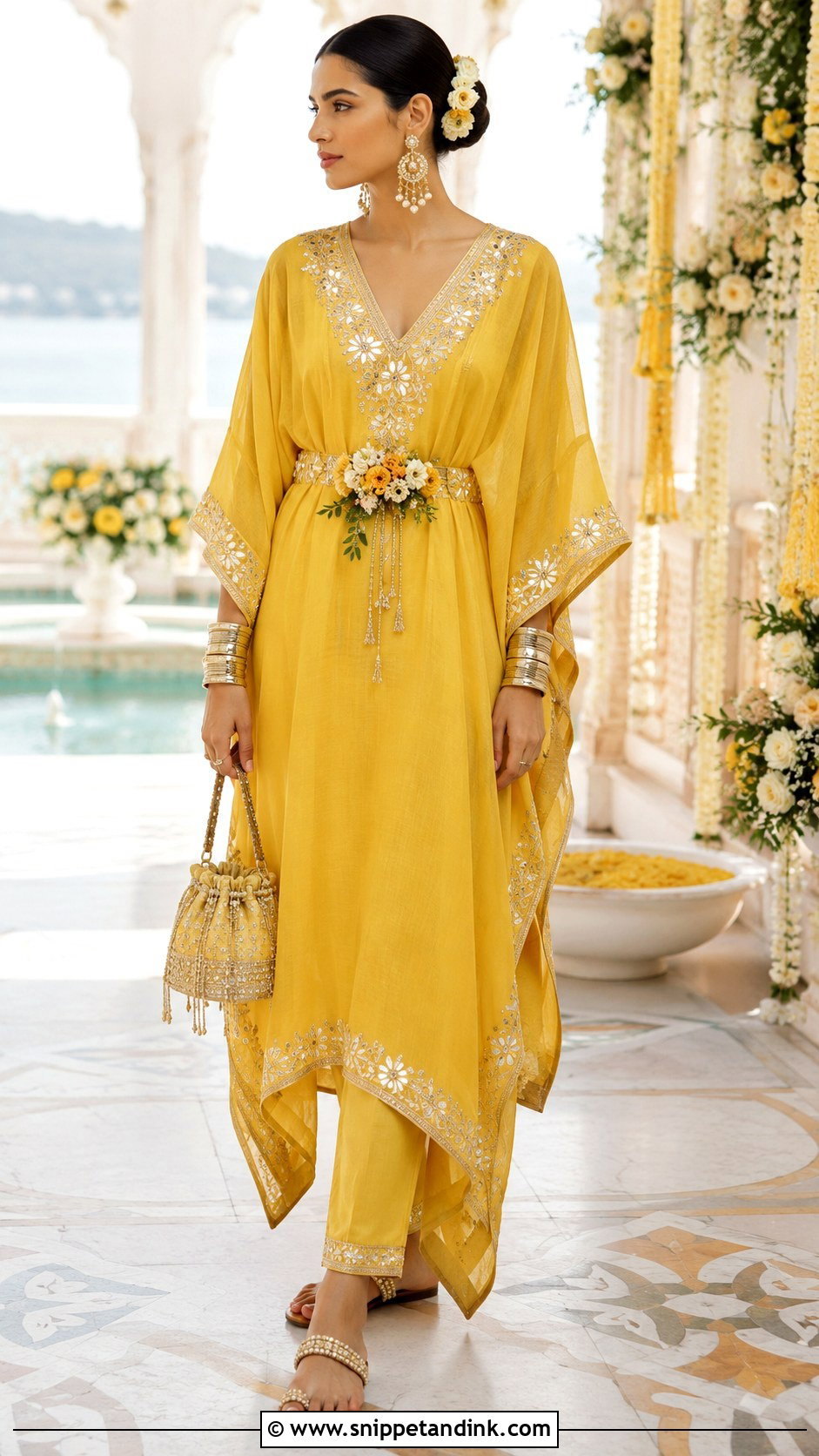
A kaftan-style tunic over straight pants is the most comfortable outfit here, and in summer heat that counts for a lot. The loose cut lets air move. Look for defined shoulder seams, a lightly shaped waist and embroidery at the neckline, otherwise a kaftan can look like loungewear. Slim pants, statement earrings, stacked cuffs and beaded flat sandals balance the volume, with a structured potli and sleek bun. I suggest it for pregnant guests, older relatives and anyone who finds fitted clothing uncomfortable. A bride can belt it with flowers and add a maang tikka.




20. Yellow Skirt And Cape Blouse Haldi Outfit
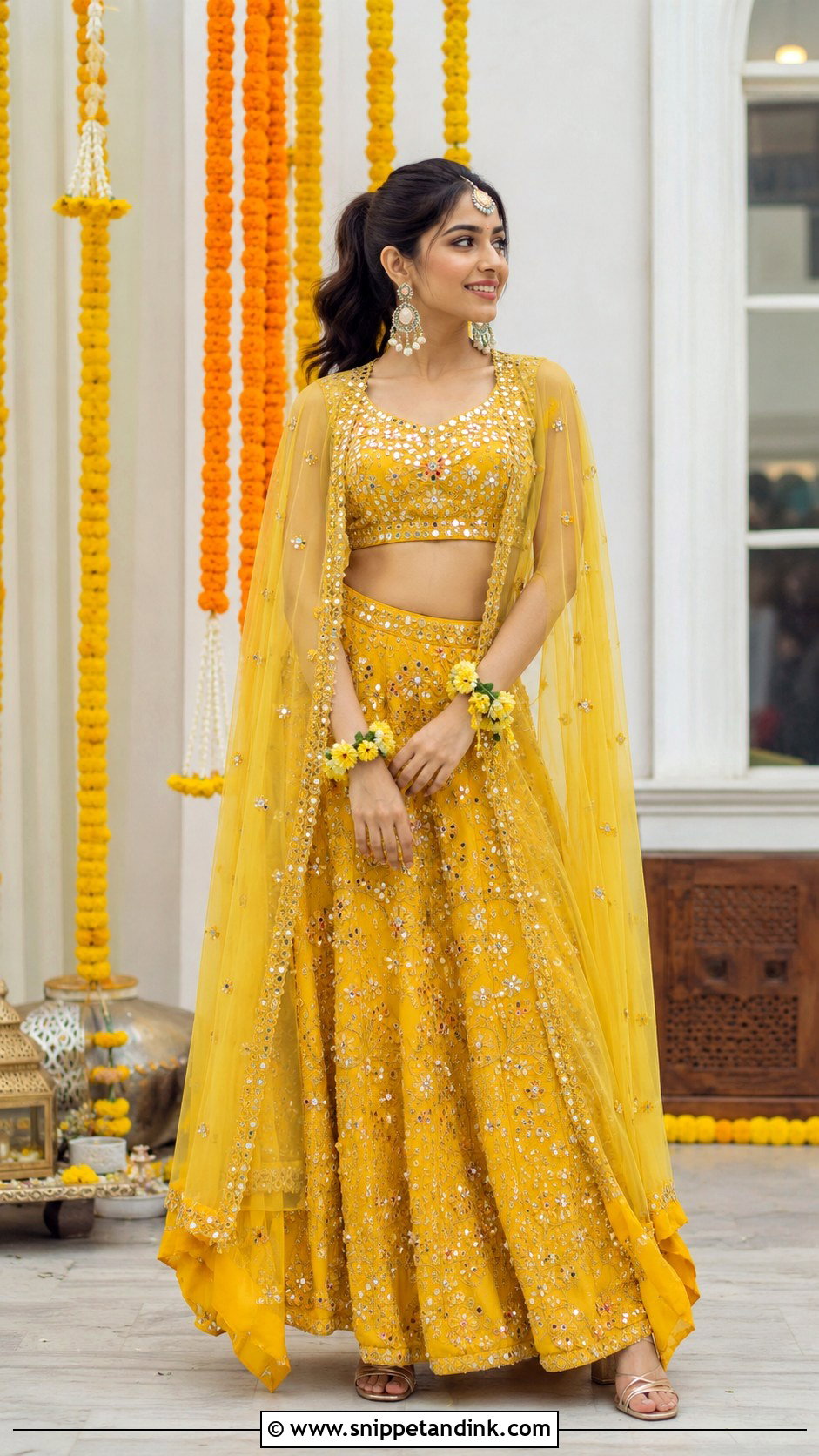
A skirt with a cape blouse gives you the movement of a lehenga with nothing loose to manage. Pair a flowing yellow skirt with a fitted blouse that has an attached cape or cape sleeves; elbow length is easiest, knee length more dramatic. Tonal embroidery, small sequins or floral appliques add dimension. Drop earrings, a delicate maang tikka, floral bangles and low metallic heels finish it, with a high ponytail or neat bun so the cape shows. Before you buy, sit on a low stool in it. A long cape bunches behind you on the floor, and you’ll be sitting there for the whole ritual.
Getting Turmeric Out of Clothes the Same Evening
The faster you treat it, the better your chances. This is the routine I hand to families after the ceremony:
- Let thick paste dry, then scrape and brush off as much as you can. Rubbing wet paste spreads it.
- Rinse from the back of the fabric with cold water. Hot water sets turmeric into the fibers.
- Work a little liquid dish soap into the mark. Don’t panic if it turns reddish; turmeric changes color with alkaline soap and it rinses back.
- Dry the washed piece in sunlight. Direct sun fades the remaining yellow better than most stain removers, though it can also fade bright dyes, so turn colored pieces inside out.
- Send silk, zari and embroidered pieces to a dry cleaner within a day or two and tell them the stain is turmeric.
For skin, a gram flour and yogurt rub or a gentle oil cleanse lifts most of the yellow tint. It fades on its own within a day or so anyway, and many brides like keeping the glow.
What Matters More Than the Shade of Yellow
A good Haldi outfit has to cope with sitting on the floor, dancing and a lot of turmeric, so comfort and washability come before embroidery. Sarees, kurta sets, lehengas, shararas and fusion pieces all work when they’re cut for that. Match the colors to the decor, but don’t feel tied to solid yellow; orange, ivory, pink, green and florals all belong. Pin your dupatta or pallu, keep hems off the floor and wear flat shoes suited to the venue. Above all, wear something you won’t need to fix every few minutes, so you can enjoy the ritual.
You'll Like These Ideas:






Leave a Reply