
Haldi is the one wedding event where your outfit is expected to get dirty. Turmeric paste goes on the bride’s face, arms and feet, family members join in, and at many celebrations it ends up on everyone nearby. So I plan haldi outfits from the fabric up. Yellow is the classic, and mustard, orange, ivory, pink and floral prints all work as alternatives. Light lehengas, sarees, shararas, kurta sets and fusion pieces suit the event because you’ll be sitting low, getting up again and probably dancing. The looks below cover brides, bridesmaids and guests, with notes on draping, shoes and jewelry that won’t get in the way.
How Close to the Paste Will You Be?
Before choosing a haldi outfit, work out your role in the ritual. The bride gets covered: face, neck, arms, hands and feet. Parents, siblings and close cousins apply the paste and usually get some back. Guests further out may only receive a dab on the cheek, though at livelier celebrations paste and colored water get thrown around freely.
That decides your fabric. The bride and close family should wear cotton, cotton silk or georgette that can go into a cold wash, not pure silk or anything marked dry clean only. Guests on the edge of the action can wear something finer. A few things I tell every haldi bride:
- Wear floral or fabric jewelry. Paste works its way into kundan settings and filigree, and real pearls are porous enough to discolor.
- Put an old bra and petticoat underneath, because wet paste soaks through thin fabric.
- Smooth a thin layer of coconut oil along your hairline and over your nails before the ritual. The paste washes off skin more easily and your nails won’t turn yellow.
- Book your wedding manicure for after the haldi if the schedule allows.
1. Yellow Floral Lehenga Haldi Dress
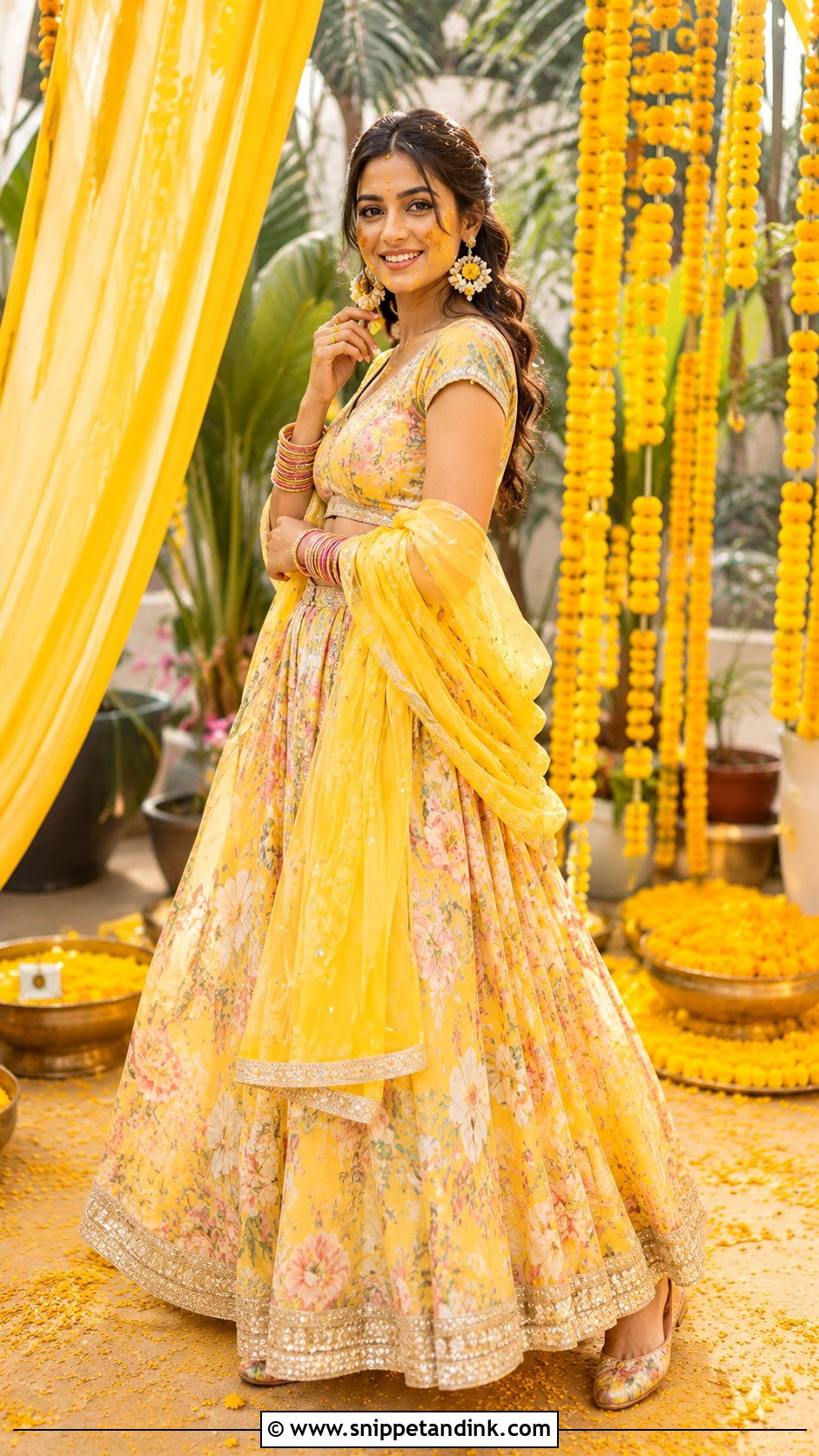
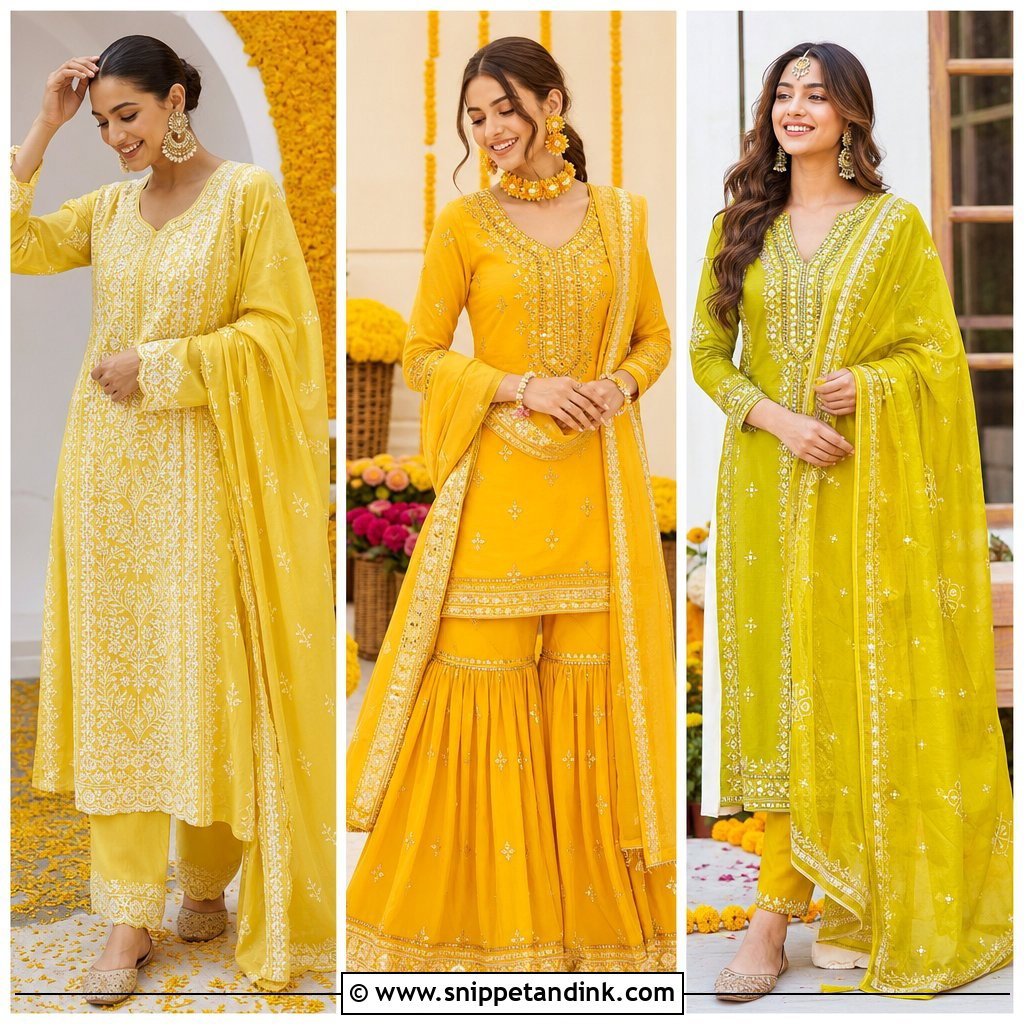
I always steer haldi brides toward small florals over large ones, because a turmeric smudge disappears into a busy print and sits loudly on a plain panel. Pick a light yellow skirt scattered with pink, white or orange flowers, and a fitted blouse with straps or short sleeves. A soft organza dupatta with a narrow floral border is easy to keep clear of the paste. Fresh flower earrings, matching bangles and embroidered juttis finish it. Brides can go fuller in the skirt while guests keep the print simpler. Have the hem sit just above the floor, since a dragging edge picks up every spill.
2. Mustard Sharara Haldi Dress
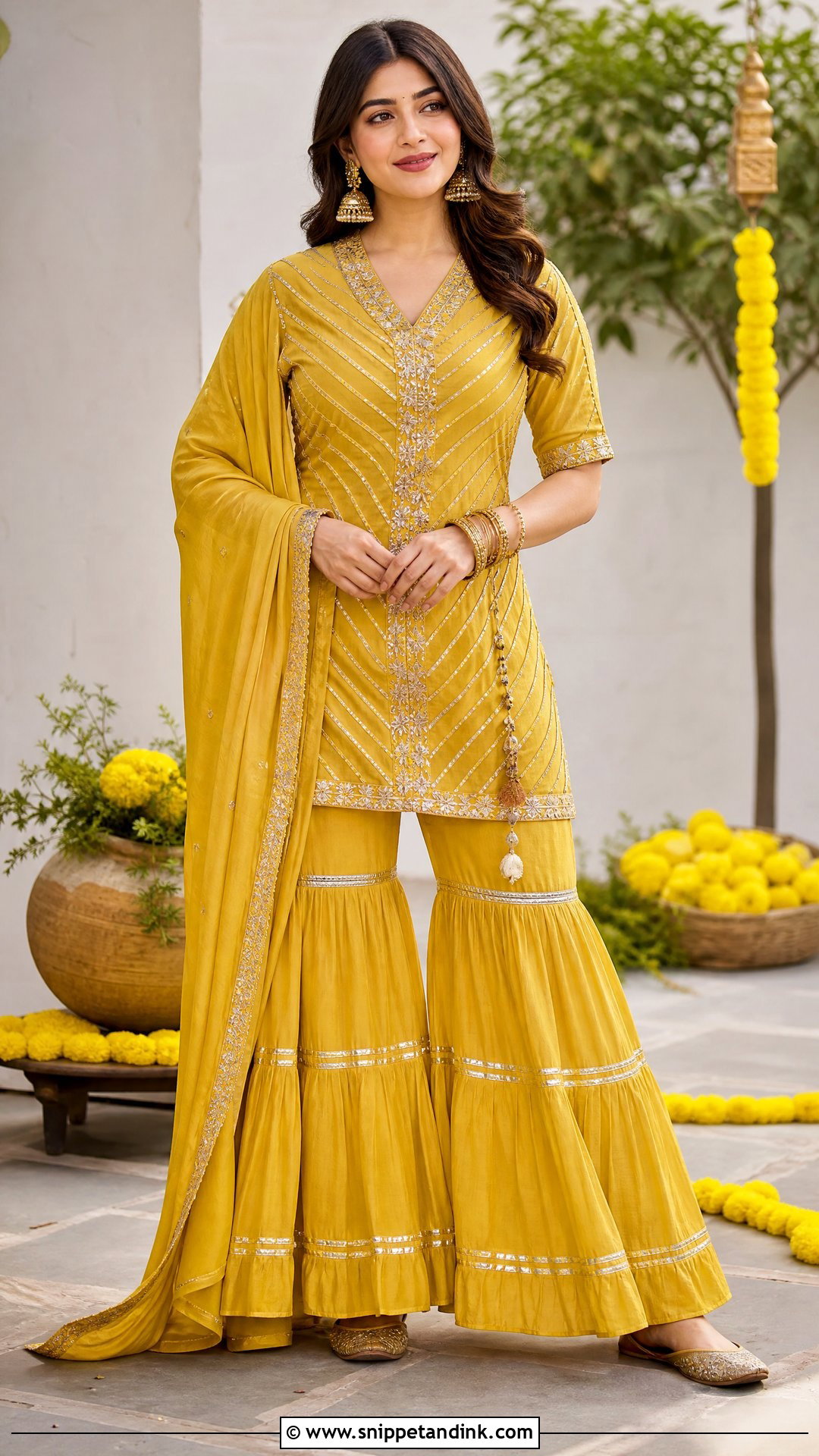
Mustard is the yellow I often suggest to brides with warm or deeper skin tones. It reads richer than bright lemon yellow, and turmeric stains blend into it instead of standing out. A short embroidered kurta, wide sharara pants and a light matching dupatta make the set, and gota trim or a little mirror work adds festivity without weight. Gold jhumkas, stacked bangles and flat juttis or cushioned kolhapuris finish it. For more coverage, choose a slightly longer kurta with elbow sleeves. Pin the dupatta at one shoulder so both hands stay free, and tie hair in a low ponytail.
3. Yellow Chikankari Anarkali Haldi Dress
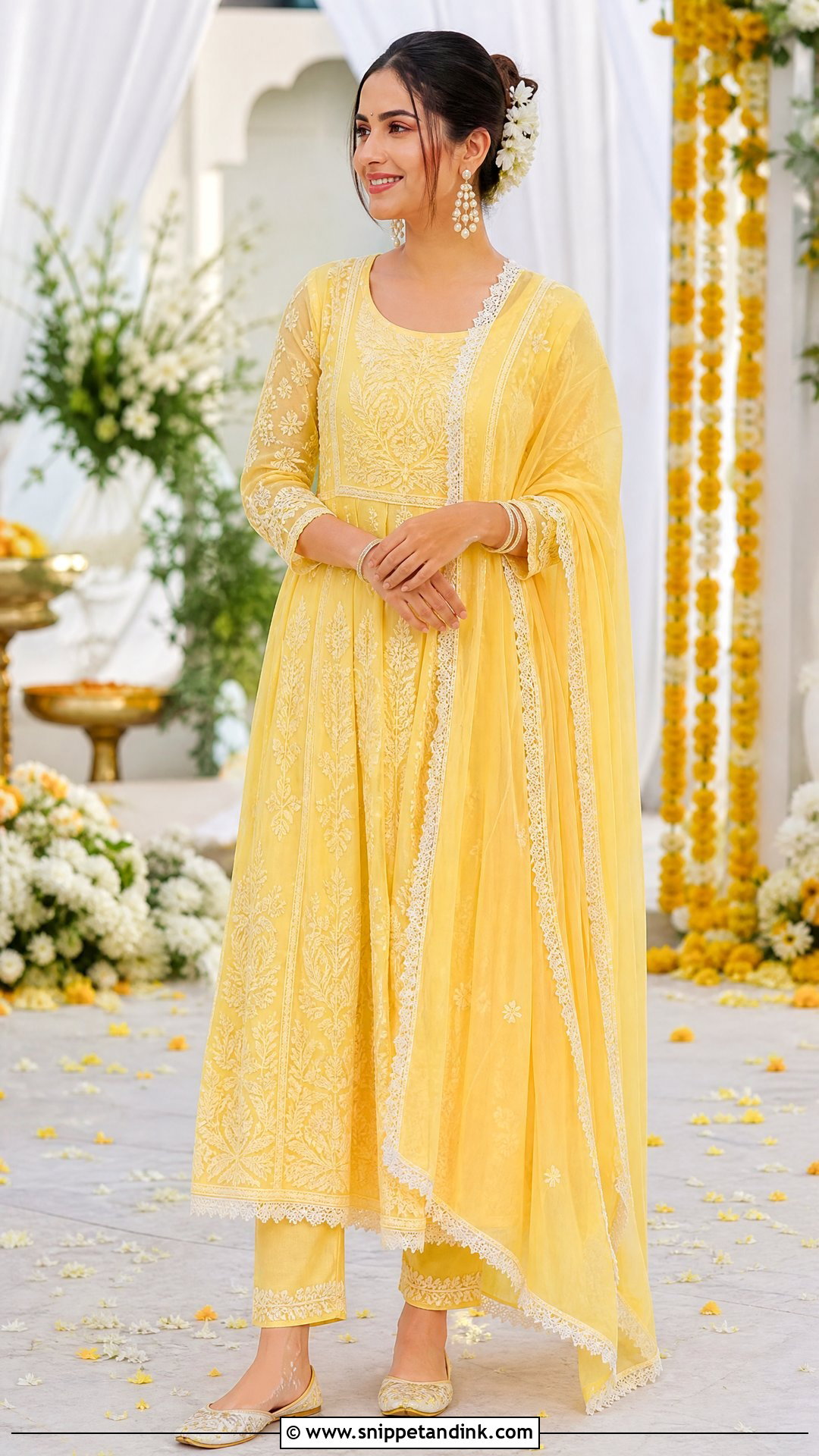
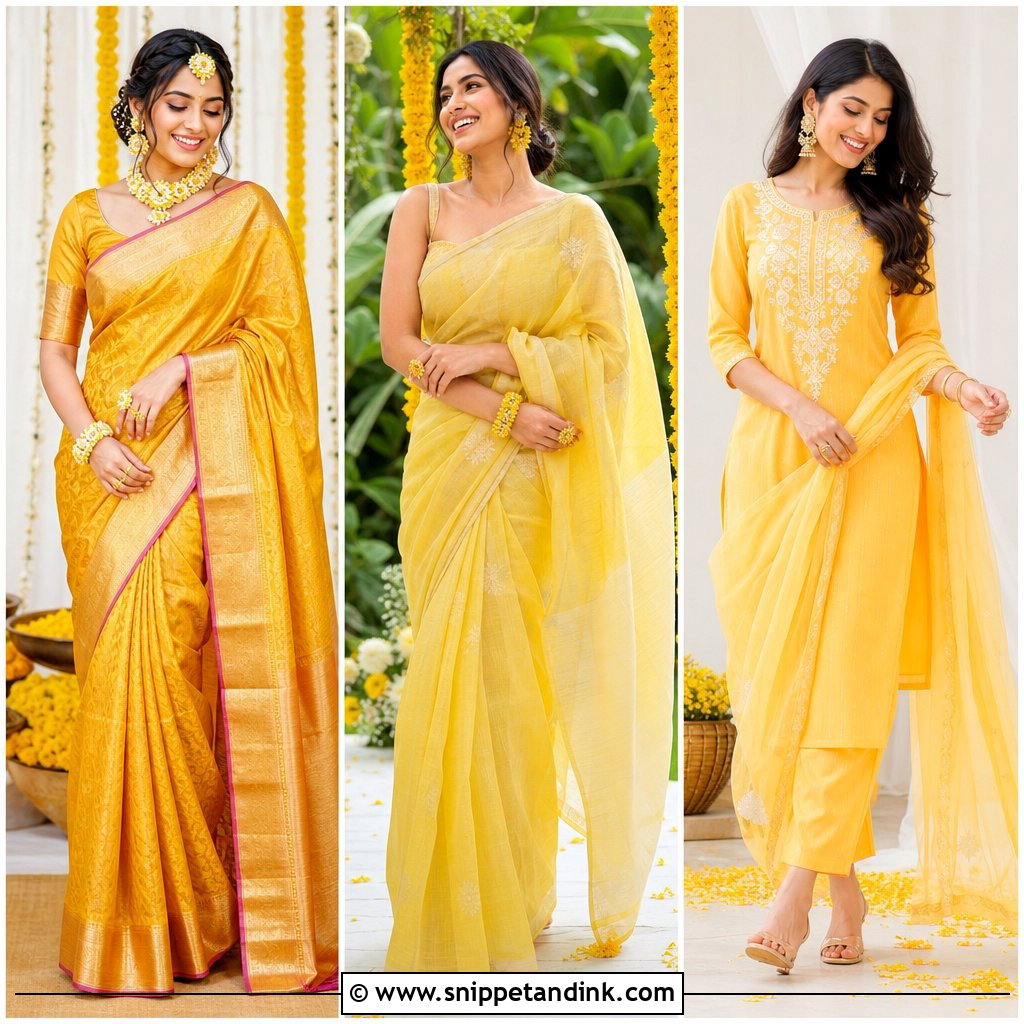
Chikankari on yellow is quiet and textural, and because the embroidery is flat thread it copes with a gentle hand wash after the ceremony far better than sequins do. A knee or calf-length Anarkali with a fitted bodice and soft flare works with straight pants or churidar and a lace-edged sheer dupatta. Pearl earrings, slim bangles and cream juttis keep it refined; bridesmaids can switch to floral jewelry. Cotton or a georgette blend breathes in daytime heat. Check the neckline as you bend forward, since haldi involves a lot of leaning in. A neat bun with fresh flowers and peach or golden makeup complete it.
4. Yellow Organza Saree Haldi Dress
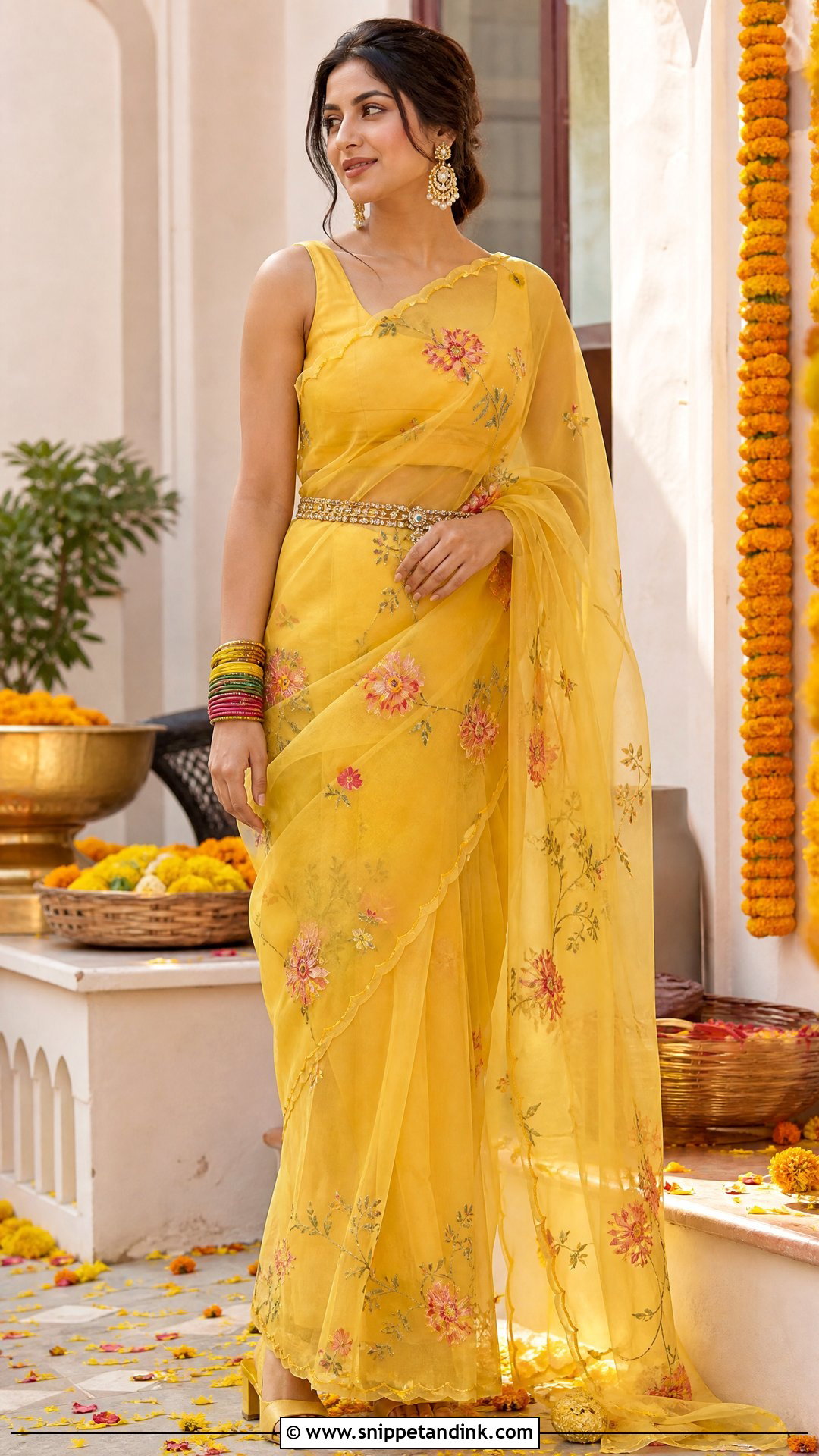
Organza gives a saree shape without weight, which matters when you’ll be perched on a low stool for the ritual. Choose yellow with floral embroidery or a slim scalloped border. A matching blouse keeps it calm, while a white, pink or green one adds contrast. Pin the pleats and pallu firmly so you aren’t adjusting them with yellow fingers. Statement earrings, a few colored bangles and low block heels complete it. Organza already holds its shape, so skip bulky layers. Sleeveless reads modern and puff sleeves read playful. Guests should keep embroidery light, while brides can add floral appliques and a waist belt.
5. White And Yellow Haldi Lehenga
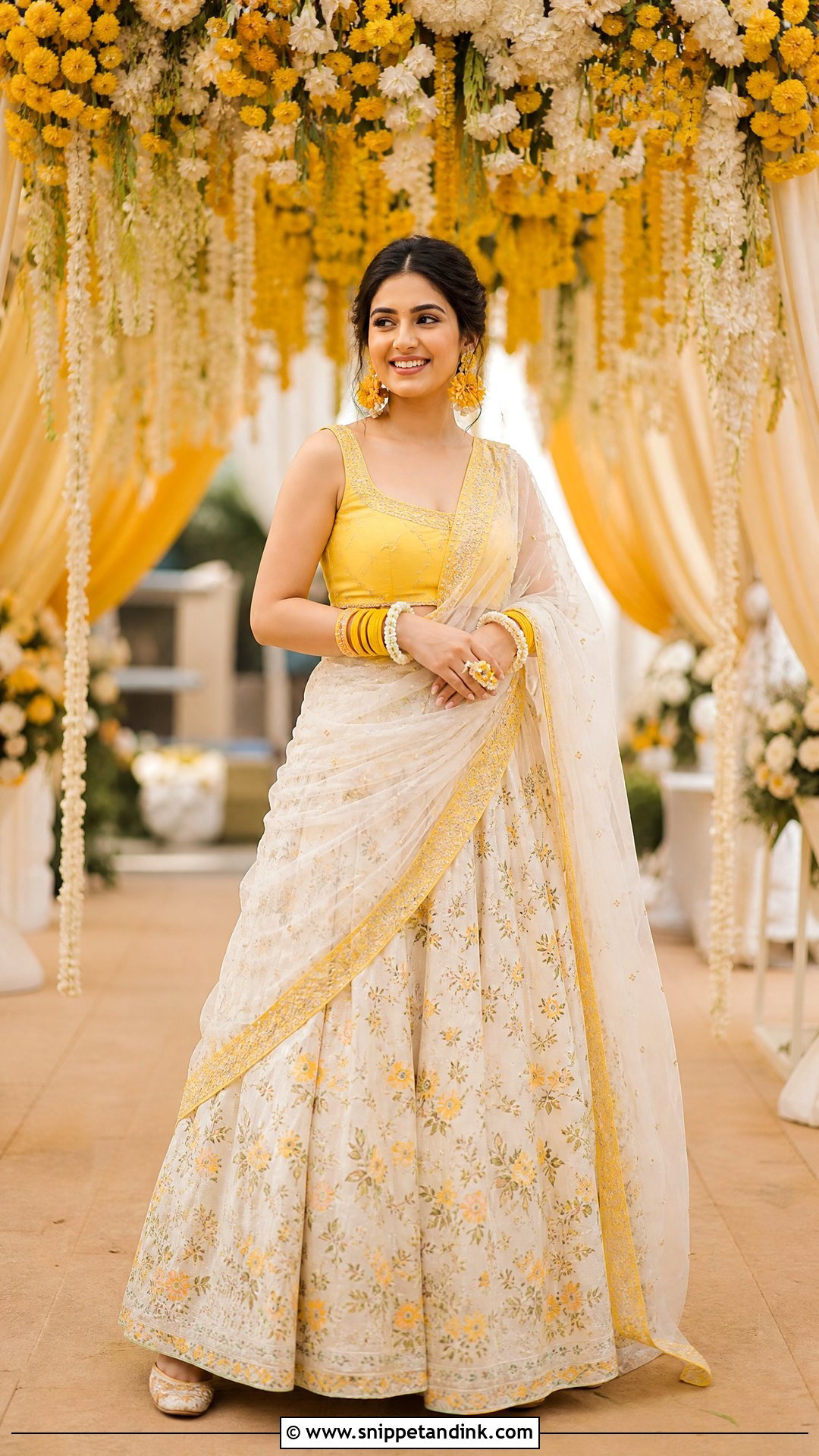
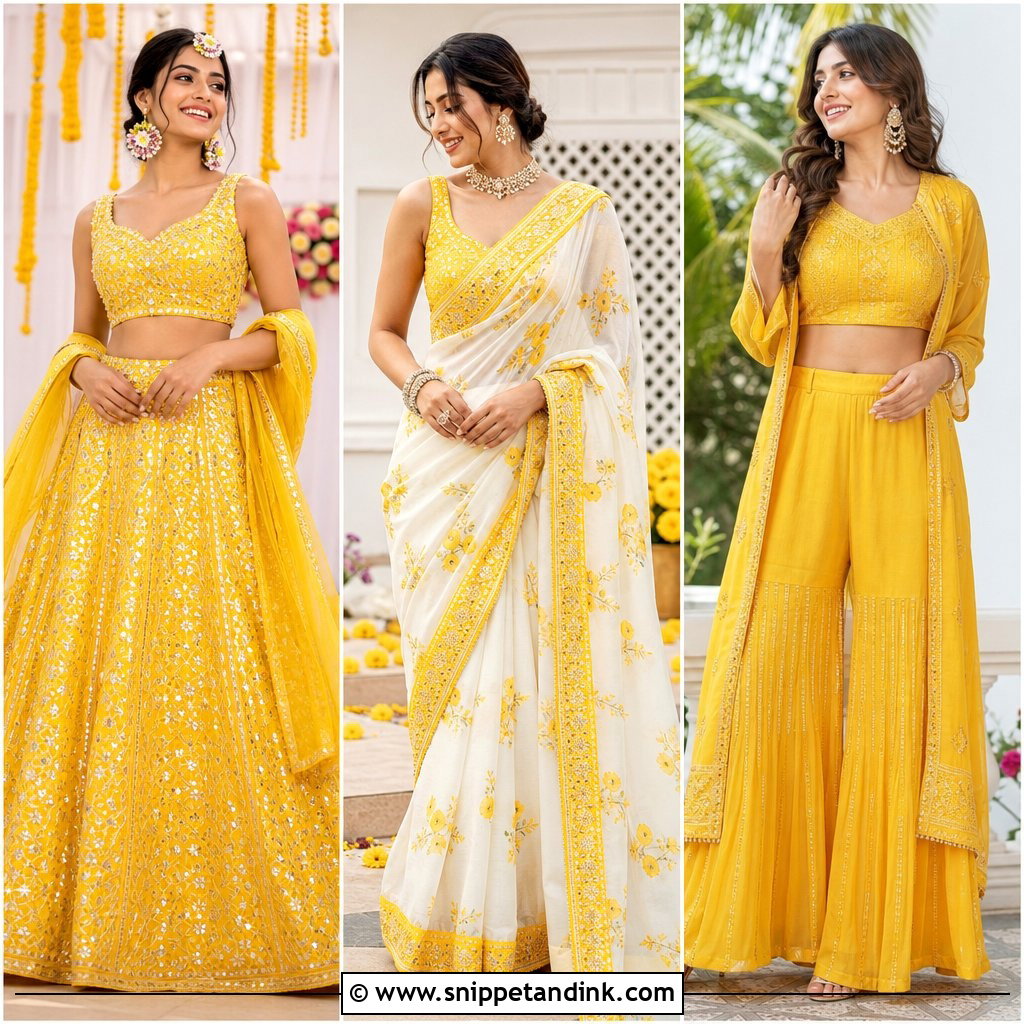
I only put a bride in white at a haldi when she’s chosen it deliberately. It will stain, and some brides want exactly that, because a yellow-streaked white outfit tells the story of the morning in every photo. An ivory lehenga with yellow florals or mirror details, a yellow blouse and a light ivory dupatta tie the two colors together. Marigold-style earrings, yellow bangles and neutral juttis finish it. Guests who’ll stay back from the paste can wear it safely, but anyone in the thick of it should accept the marks in advance. A cropped blouse with a high-waisted skirt flatters most figures, and a longer blouse adds coverage. Braid in small yellow flowers.
6. Yellow Kurta Palazzo Haldi Dress
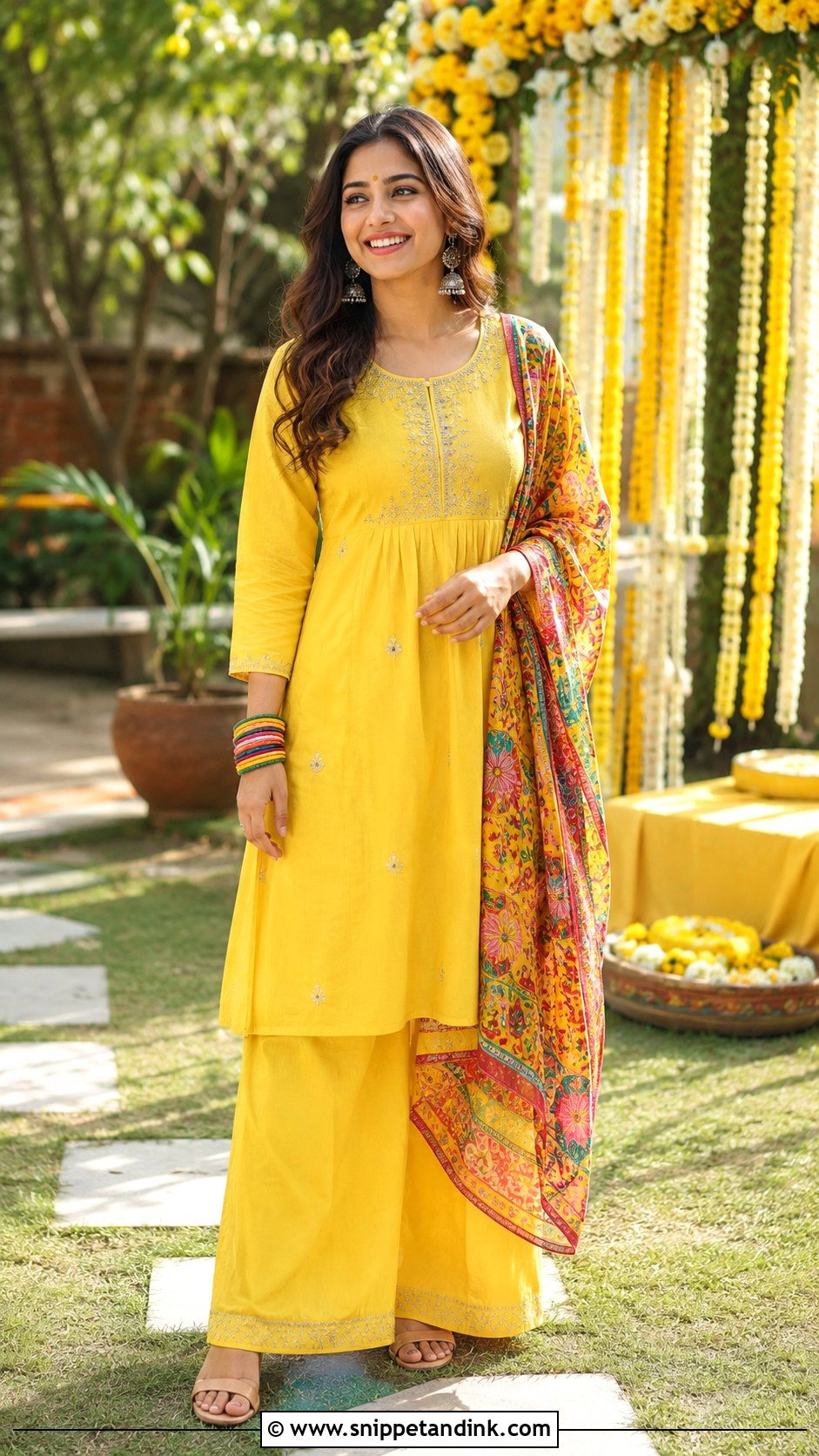
Nothing moves easier at a busy haldi than a yellow kurta and palazzo set. An A-line or straight kurta in cotton, rayon or light Chanderi over wide palazzos gives room to sit, walk and dance. A printed dupatta in pink, green or ivory adds contrast. Oxidized silver earrings, colored bangles and flat sandals are practical, and costume pieces cost little if turmeric ruins them. Petite women look best in ankle-length pants with a shorter kurta, and taller women can carry longer, flowing proportions. Modest embroidery at the neckline or cuffs keeps it festive. Half-up hair, natural makeup and a small bindi finish it.
7. Yellow Mirror Work Lehenga Haldi Dress
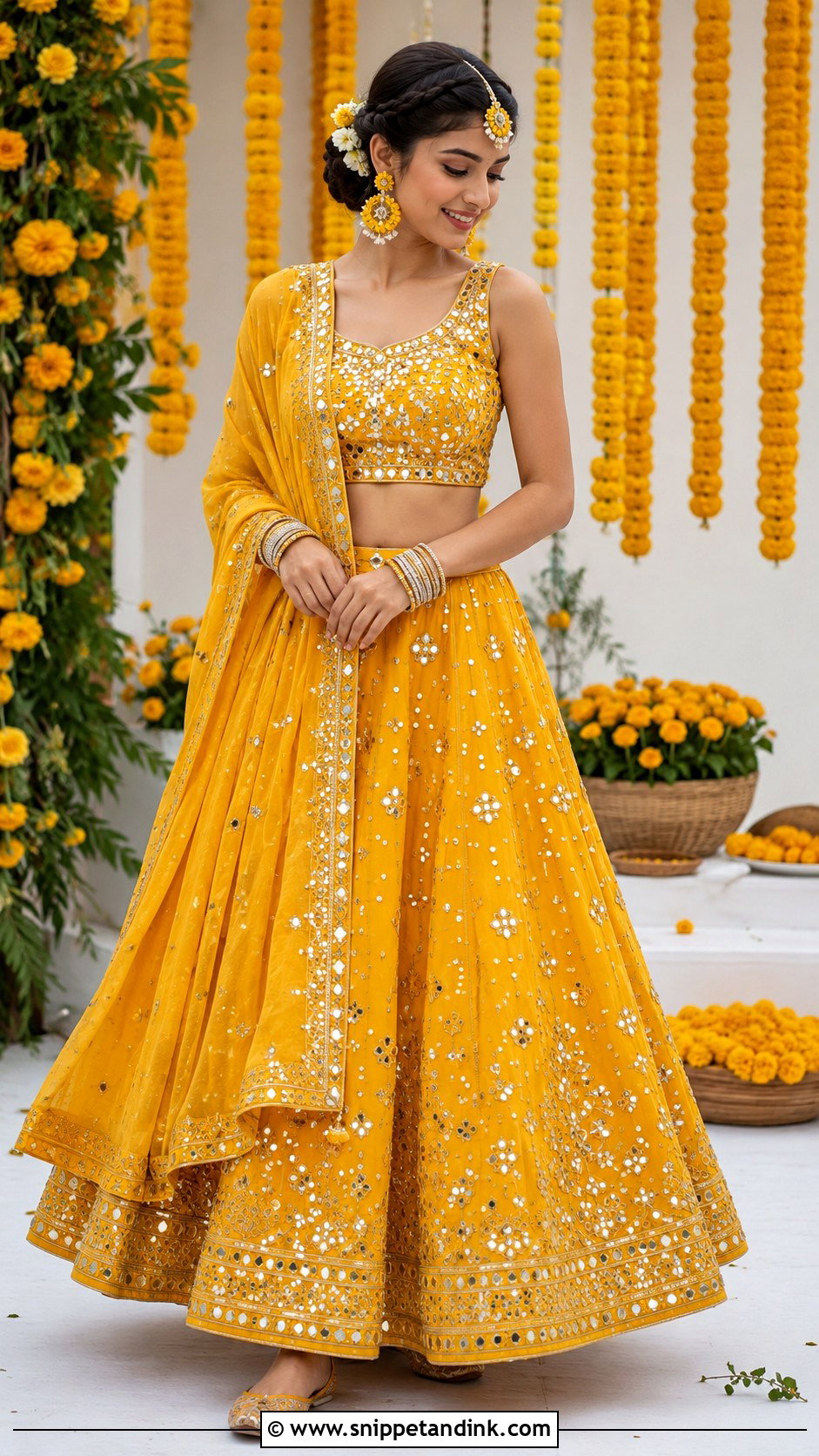
Mirror work flashes in outdoor daylight rather than glittering, which is why a mirror work lehenga suits an open-air haldi. Keep the mirrors small and evenly spaced so the skirt stays light, framed by thread embroidery and a narrow gota border. A matching cropped blouse and simple dupatta, worn across one shoulder or like a cape, leave your hands free. Floral earrings, a delicate maang tikka and embroidered juttis are enough. Brides can go fuller, bridesmaids sleeker. Turmeric collects in the stitching around each mirror, so blot it rather than scrub. Waterproof mascara and a braided bun cope with the mess.
8. Yellow Bandhani Saree Haldi Dress
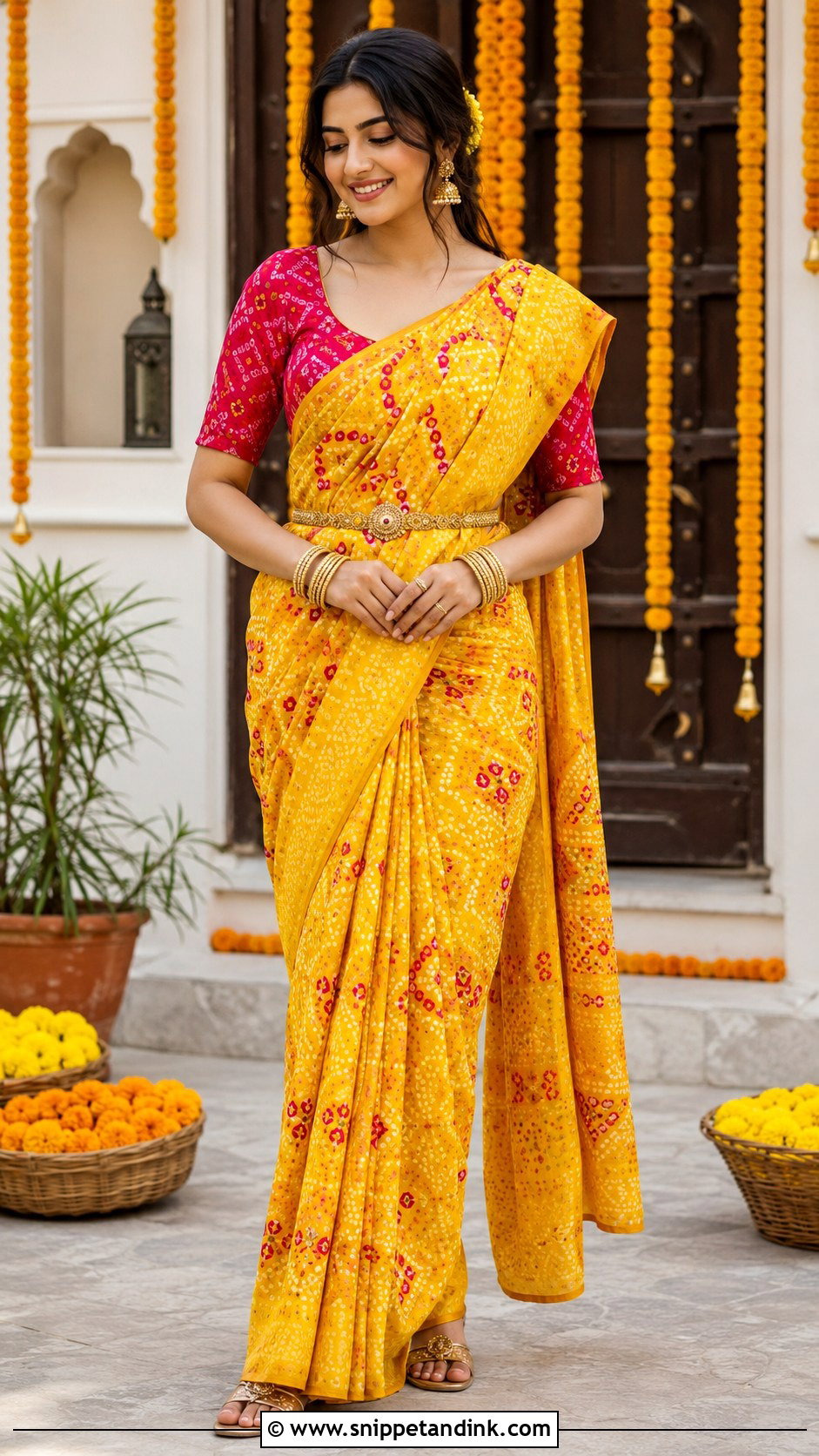
When a family member asks me what will survive the paste, I point to bandhani first, because the scattered tie-dye dots break up a stain. A light georgette, cotton or chiffon yellow Bandhani saree with red, green or white dots pairs well with a red or fuchsia blouse that brightens the print. Gold jhumkas, glass bangles and flat sandals are enough. Pin the pleats and pallu carefully if there’ll be dancing, and a waist belt adds security. Bandhani dyes can bleed when wet, so wash it separately in cold water. A low flower bun or side braid finishes it, and it sits naturally on family members and traditional guests.
9. Yellow Peplum Sharara Haldi Dress
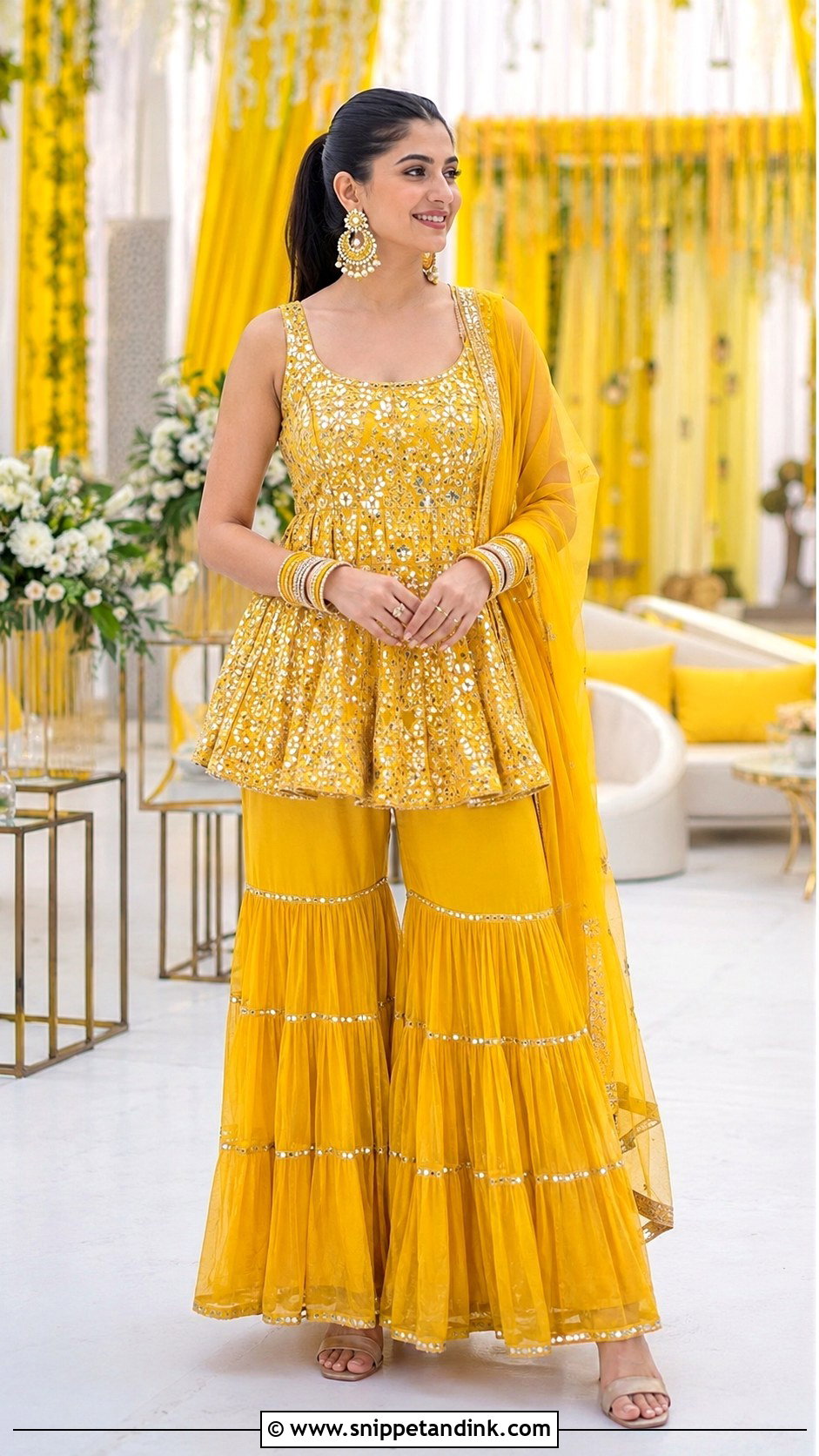
A peplum top and sharara combination gives a fusion shape that still feels festive. A fitted yellow peplum with a flared waist goes over tiered sharara pants, and embroidered cuffs or mirror accents dress it up. Skip the dupatta for a clean line, or add a light one for coverage. Statement earrings, stacked bangles and low block heels or juttis finish it. Tiered shararas carry a lot of fabric at the hem and will sweep up any paste on the floor, so keep them at ankle length. A sleek ponytail shows off the neckline. Sisters, bridesmaids and younger guests tend to reach for it.
10. Yellow Dhoti Saree Haldi Dress
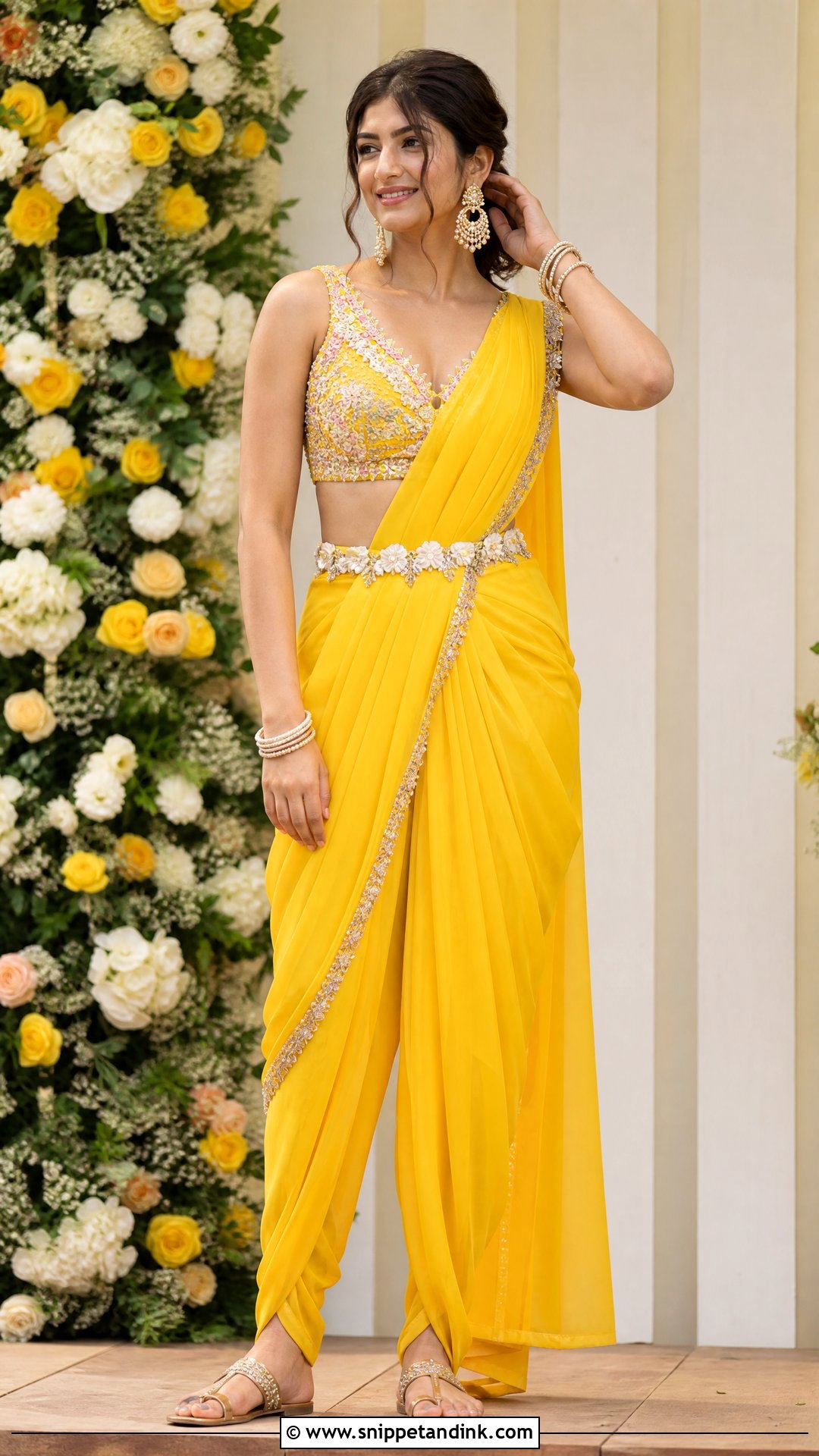
A pre-draped dhoti saree gives you a saree’s look and the freedom of pants, and at a haldi, where you may sit on a low stool or the floor, that freedom matters. Look for structured pleats, a cropped blouse and a pallu stitched on securely. A floral or embroidered belt stops the drape from shifting. Chandbali earrings, slim bangles and metallic kolhapuris finish it. Brides can add a mirror-work blouse, and guests can keep it plain or lightly printed. A braided ponytail or high bun suits the modern shape, and bright pink lips add contrast.
11. Yellow Gota Patti Anarkali Haldi Dress
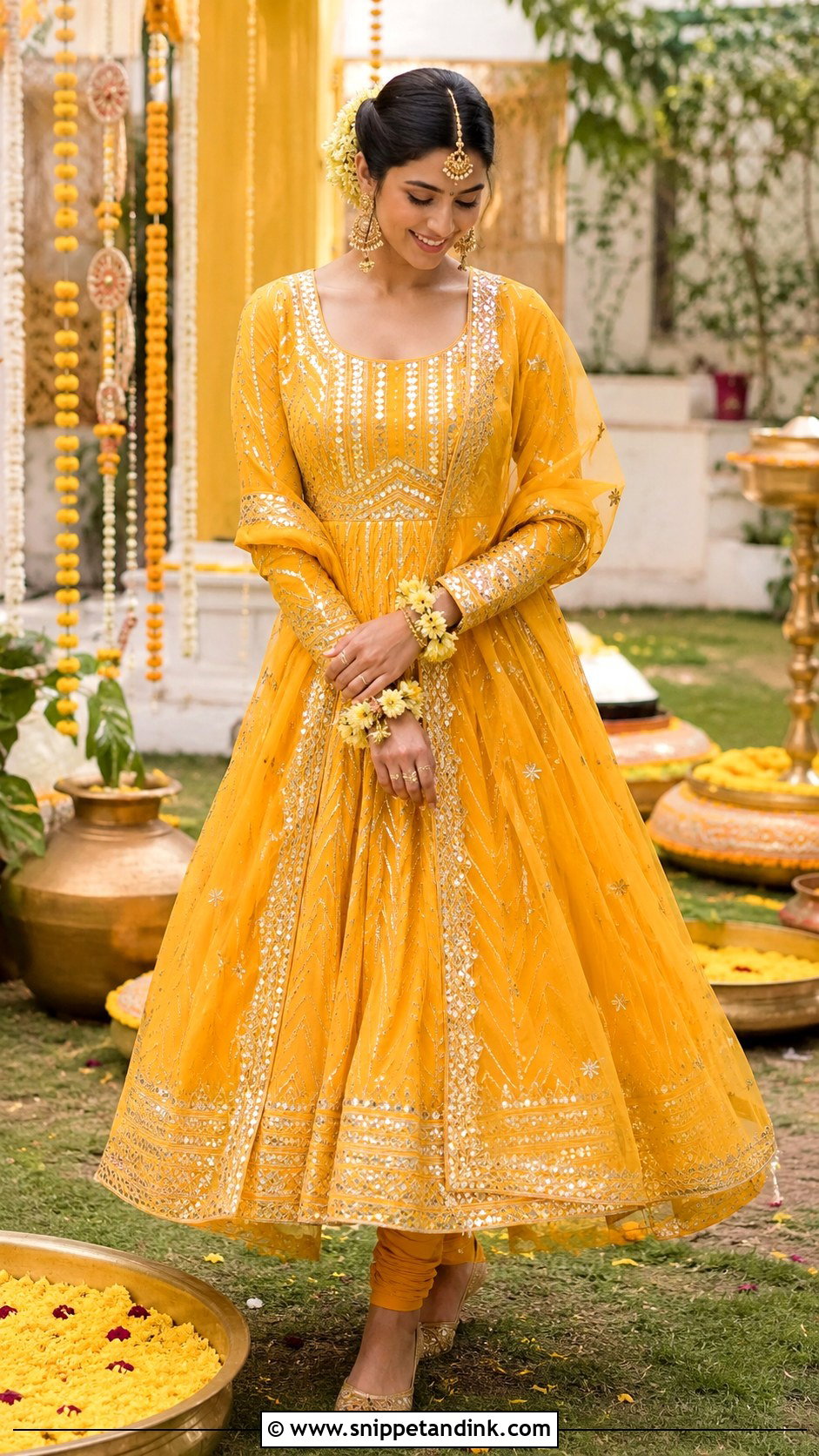
Gota patti is metallic ribbon appliqued onto fabric, and it gives traditional shine for far less weight than zardozi. A calf-length yellow Anarkali with small gota motifs, an embellished neckline and a decorated hem pairs with churidar and a sheer dupatta with matching trim. Gold-toned earrings, a simple maang tikka and cushioned juttis complete it. Brides can choose a broader border, while guests should keep the metal subtle. Gota can tarnish if damp paste is left on it, so wipe it with a damp cloth soon after. Pin the dupatta at one shoulder and wear a center-parted bun with fresh flowers.
12. Floral Printed Saree Haldi Dress
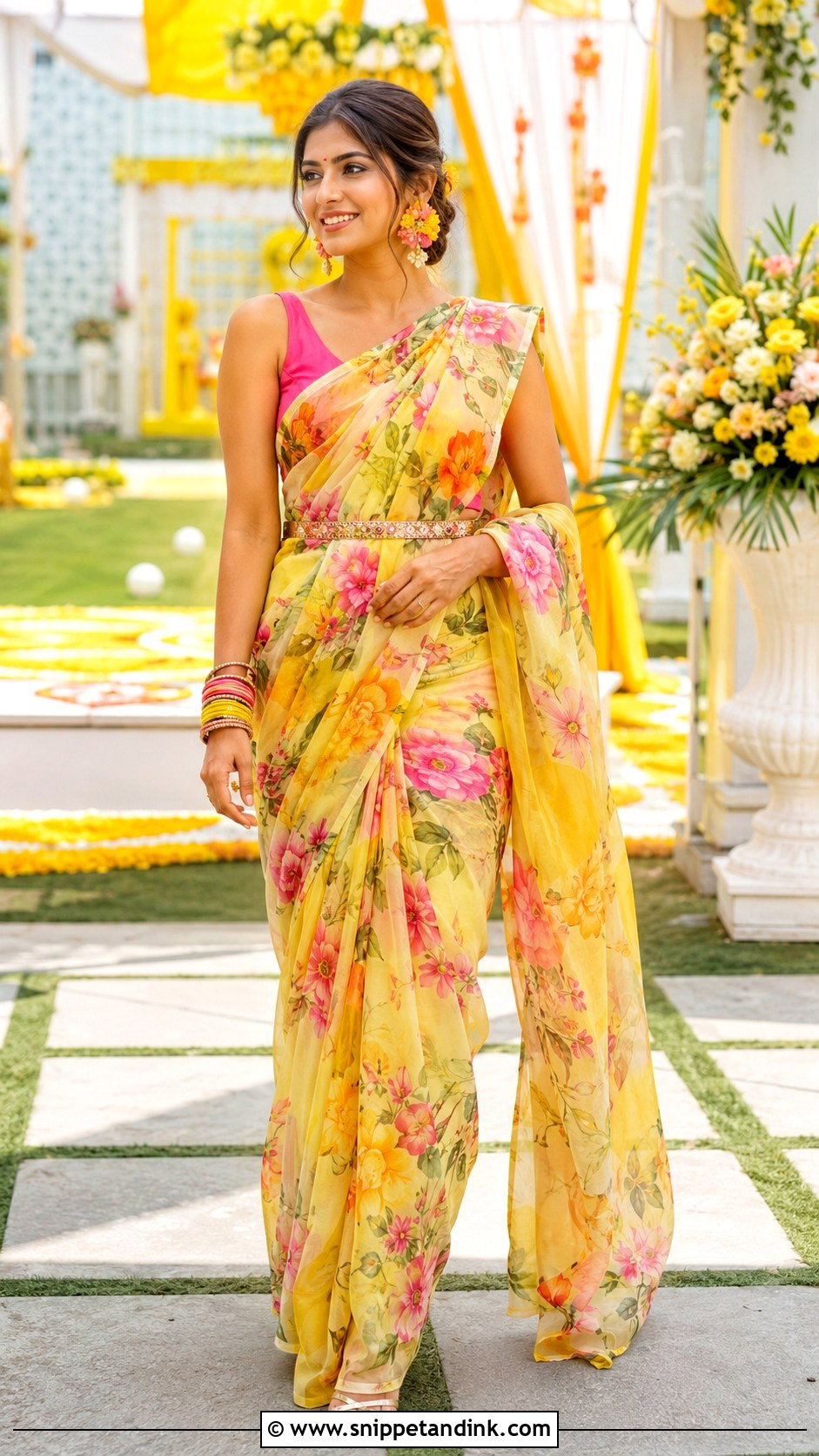
Of everything here, a floral printed saree is the piece I’d expect you to wear most often afterward. A yellow chiffon or georgette base with pink, green or blue flowers drapes lightly. Pick a plain blouse that repeats one color from the print, so the outfit looks planned rather than random. Secure the pallu at the shoulder and add a slim belt if you need support. Flower earrings, colored bangles and low heels complete it; a heavy necklace only fights the print. A soft bun or polished ponytail suits it, and it adapts easily to modest, petite, tall or plus-size wardrobes.
13. Yellow Cape Lehenga Haldi Dress
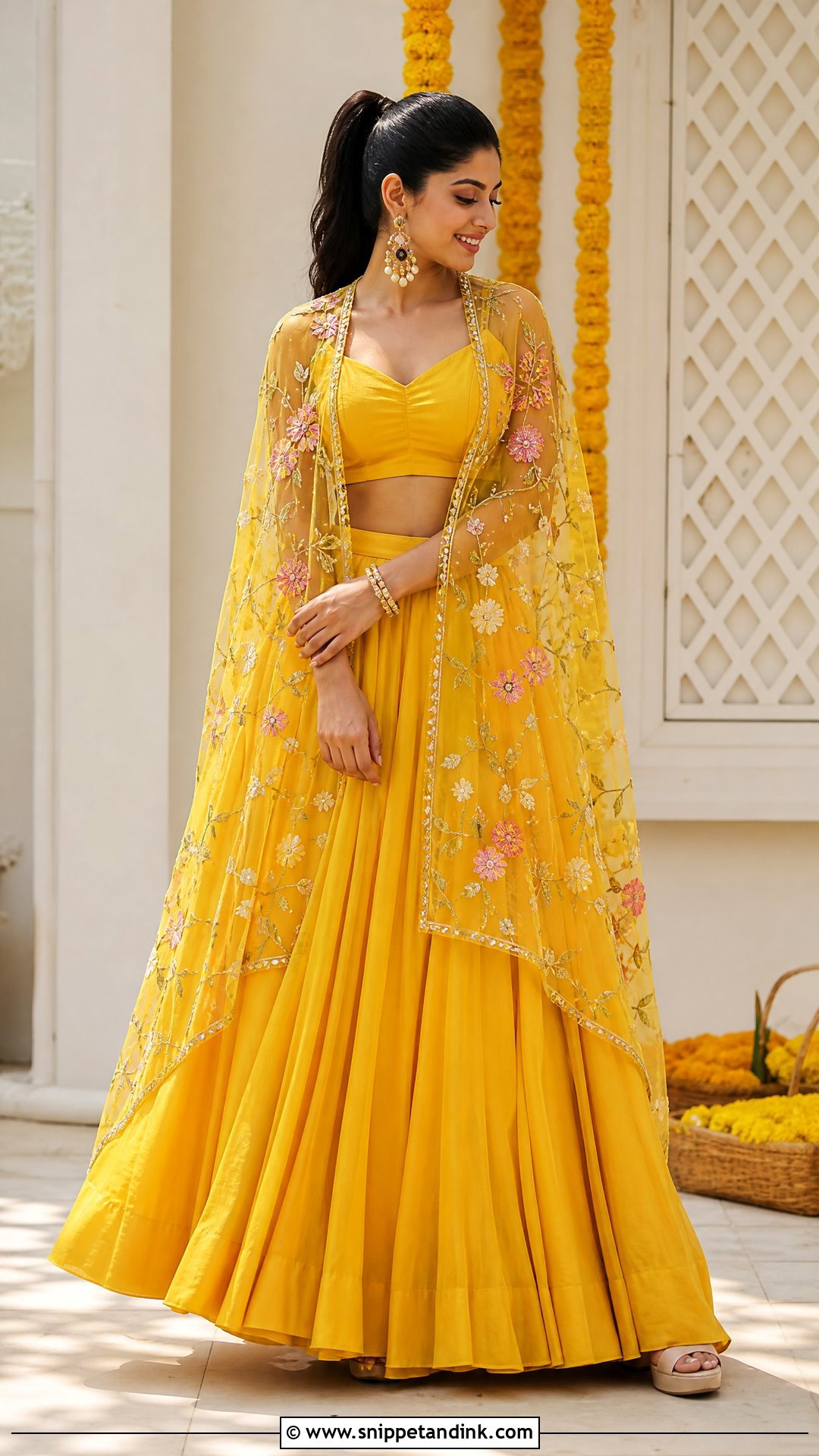
A cape gives coverage without a dupatta, and at a haldi a dupatta is one more thing to trail through the paste. Wear a simple yellow lehenga and fitted blouse under a sheer embroidered cape ending at the waist or hips; longer capes catch turmeric at the hem. Floral appliques or light mirror work add dimension. Choose a fluid skirt that clears the floor. Drop earrings, a bracelet stack and platform sandals or juttis complete it. Leave the large necklace at home, and keep the shoulders clear with a sleek bun or high ponytail. Coordinated bridesmaids and modern brides wear this well.
14. Orange And Yellow Haldi Dress
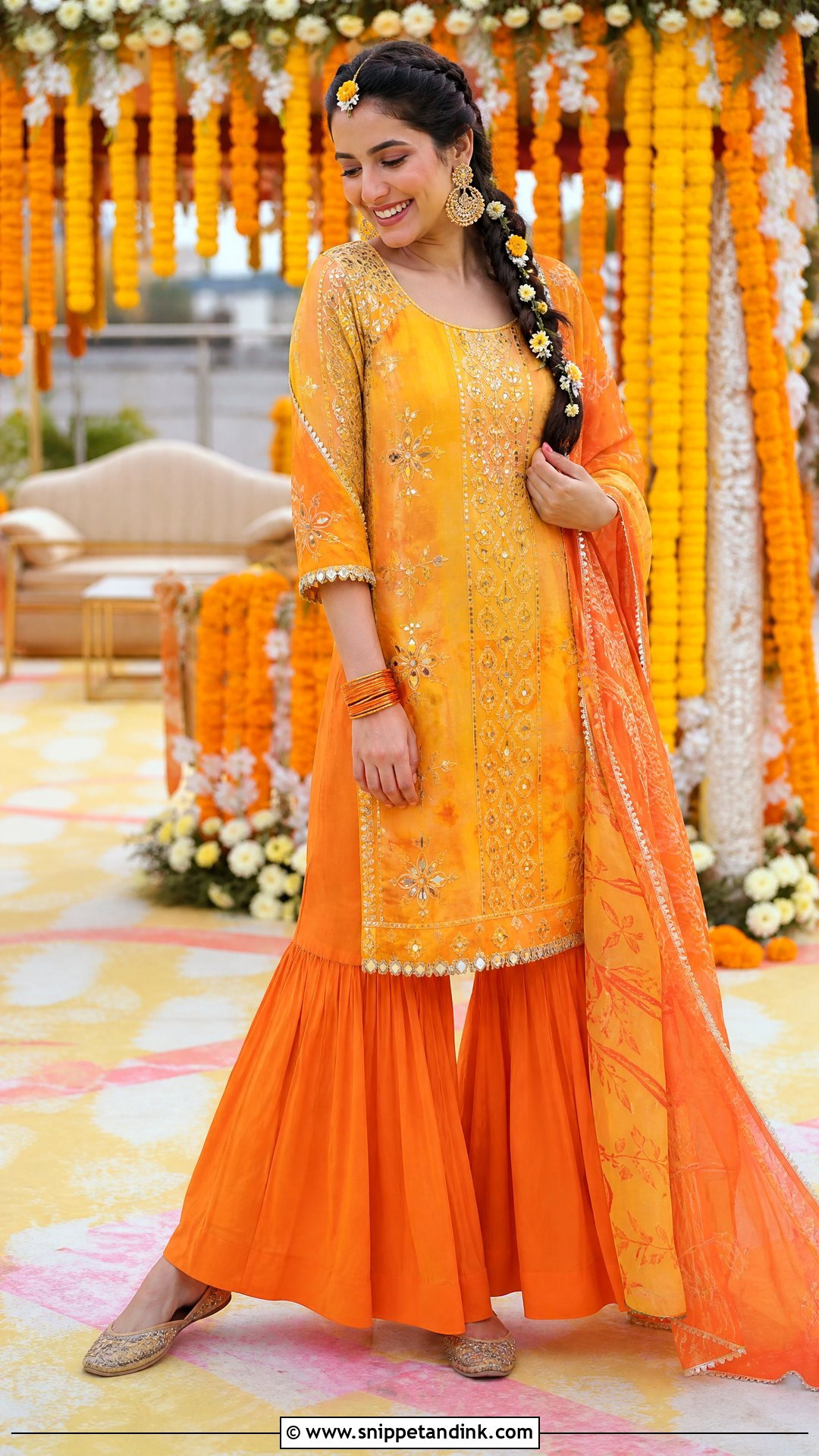
Orange and yellow sit side by side on the color wheel, so they always agree, but they need one clear leader. Start with a marigold kurta or lehenga and bring orange in through the dupatta, blouse or lower piece. Gold earrings, orange bangles and tan juttis tie the palette together. For guests, a yellow kurta with orange sharara is practical, and brides can wear a yellow lehenga with an embroidered orange blouse. Light cotton-silk or georgette keeps you cool. Braid yellow flowers and orange ribbons into the hair and keep makeup soft bronze, which flatters both colors.
15. Yellow Co-Ord Set Haldi Dress
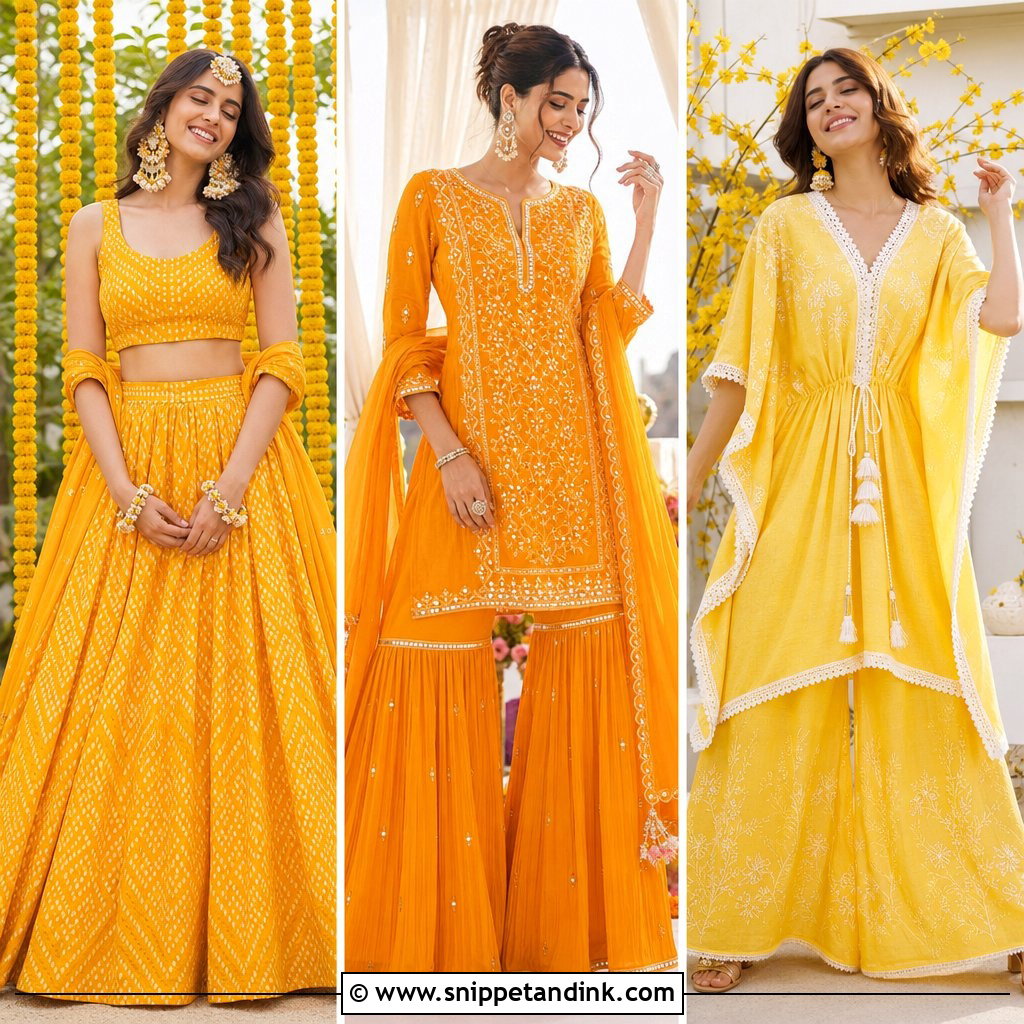
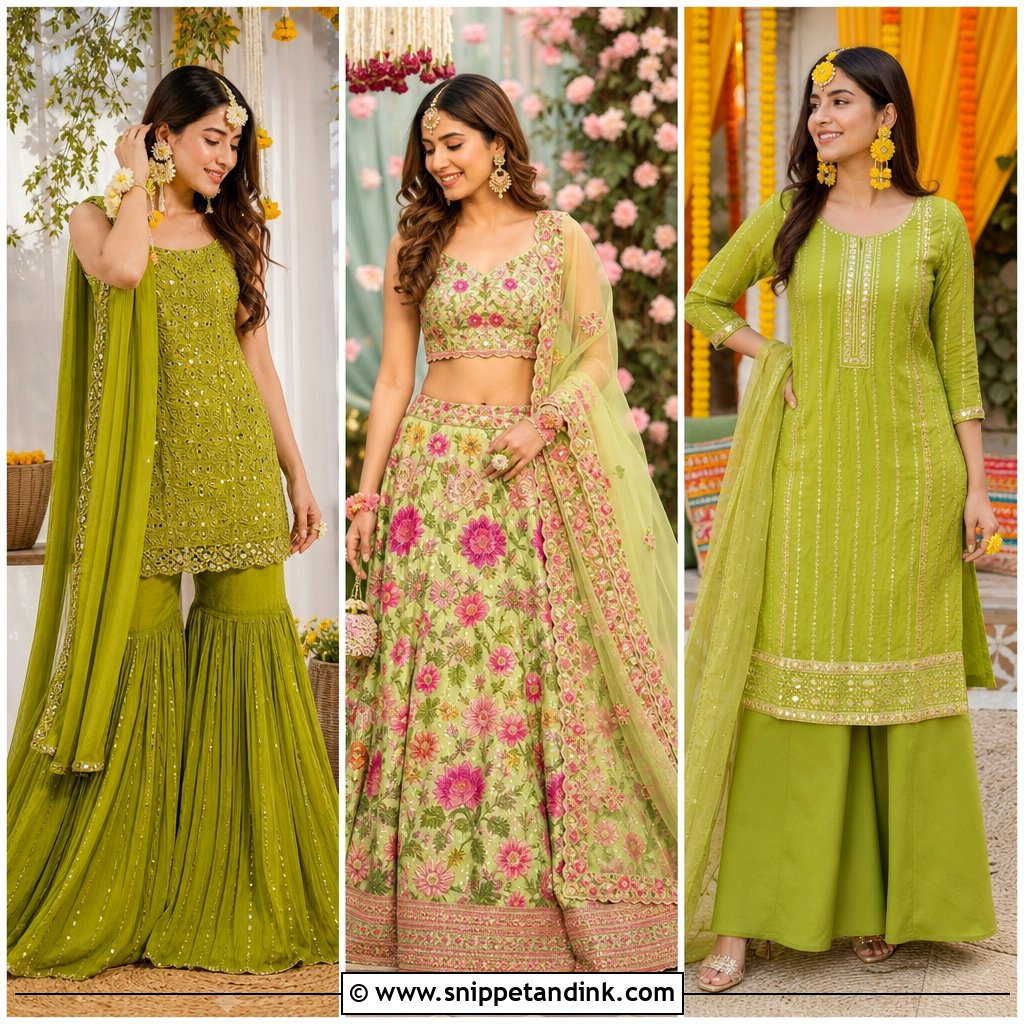
A co-ord set suits a relaxed or destination haldi, and anyone who doesn’t drape sarees. Wide-leg pants with a cropped top, tunic or peplum in the same yellow fabric make one long line, which lengthens the figure. An embroidered jacket or light cape adds interest. Statement earrings, stacked bracelets and embellished flats make it feel like wedding wear, and block prints or floral embroidery lift it above everyday fabric. Rewear is the selling point, since the pieces split up afterward. Choose soft waves or a sleek ponytail depending on the neckline.
16. Yellow Skirt And Crop Top Haldi Dress
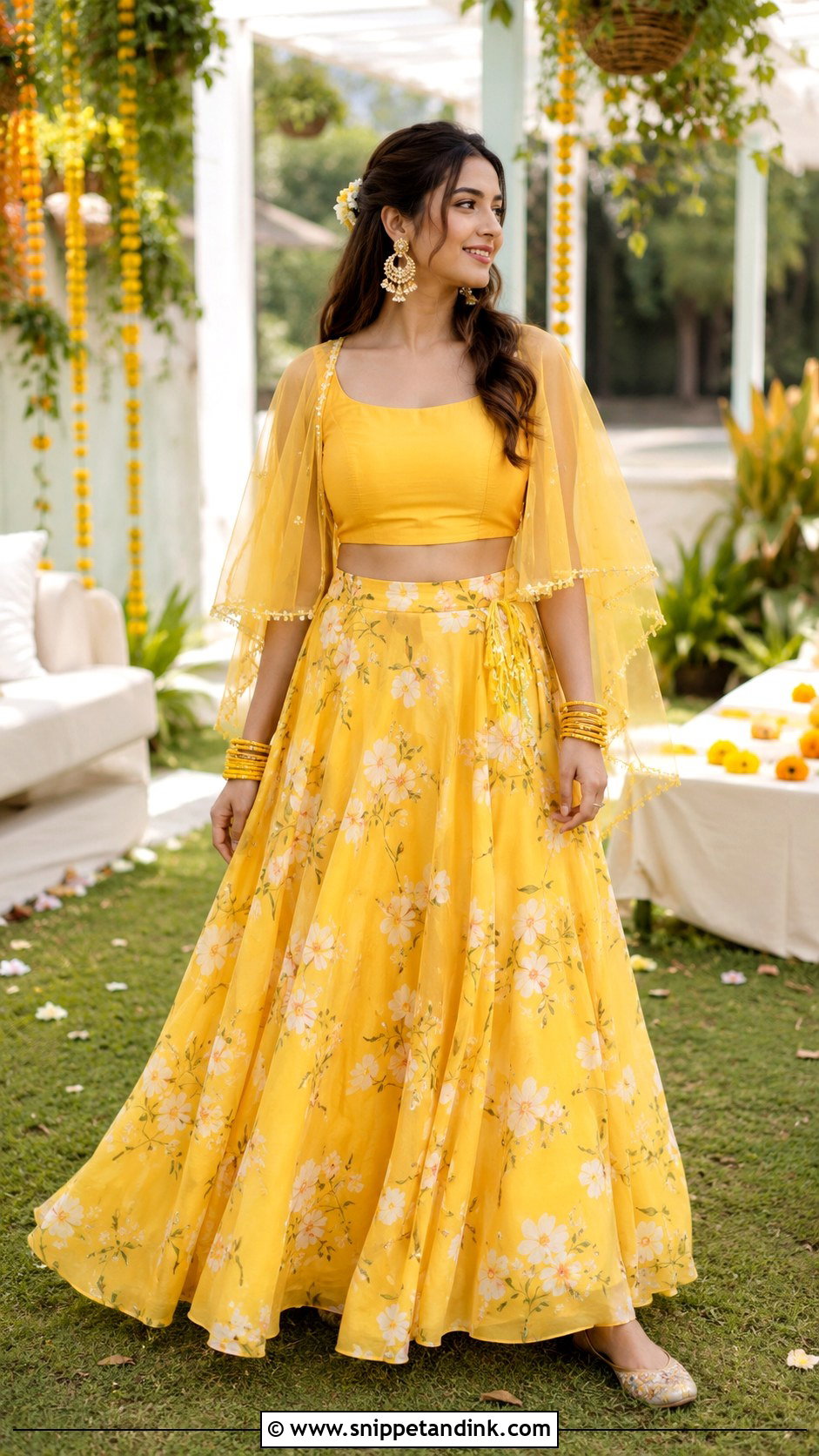
A yellow skirt and crop top move like a lehenga but read less formal. Pair a printed skirt with a solid blouse, or a plain skirt with an embroidered top, and add a short cape, organza dupatta or open jacket for coverage. Hoop jhumkas, colored bangles and flat juttis finish it. The skirt should end at the ankle, never pooling. A high waist makes a cropped blouse feel more secure, which counts when you’re leaning in to apply paste. Bridesmaids can share one print and still choose different blouse shapes. Half-up hair with flower clips and light makeup complete it.
17. Pastel Yellow Lehenga Haldi Dress
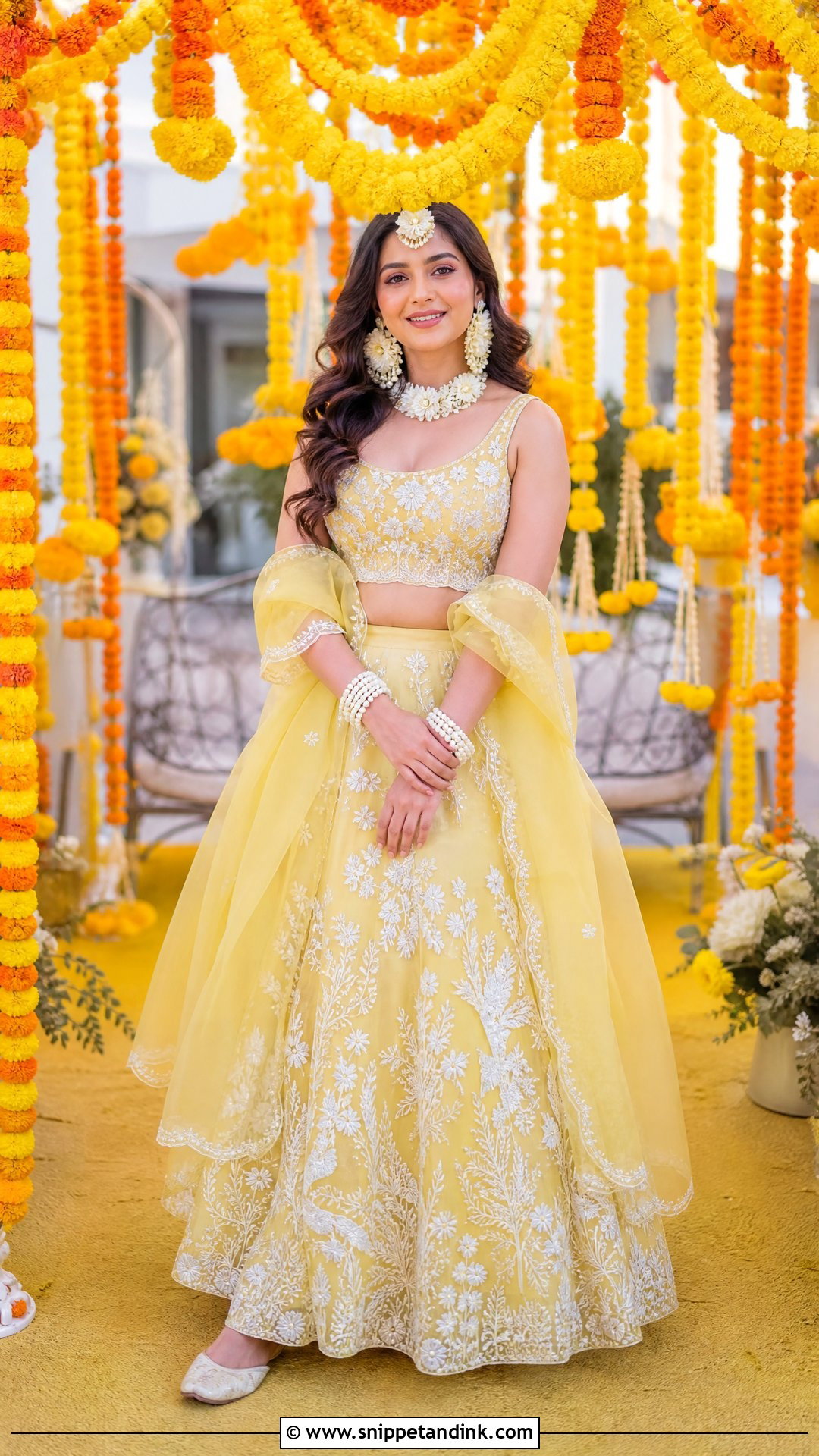
Pastel yellow is the shade for brides who find bright haldi yellow too loud. It’s also the shade that shows turmeric most clearly, so go in knowing that. A light lehenga with white threadwork, tiny pearls or floral embroidery, a matching blouse and an airy organza dupatta in the same pale tone keep the palette soft. White flower jewelry, pearl-look bangles and ivory juttis follow, and a peach or pink floral border adds gentle contrast. In bright sun against marigolds, pale yellow glows. Keep the skirt easy to lift and skip any train. Loose waves or a low flower bun, peach blush and a neutral lip finish it.
18. Green And Yellow Sharara Haldi Dress
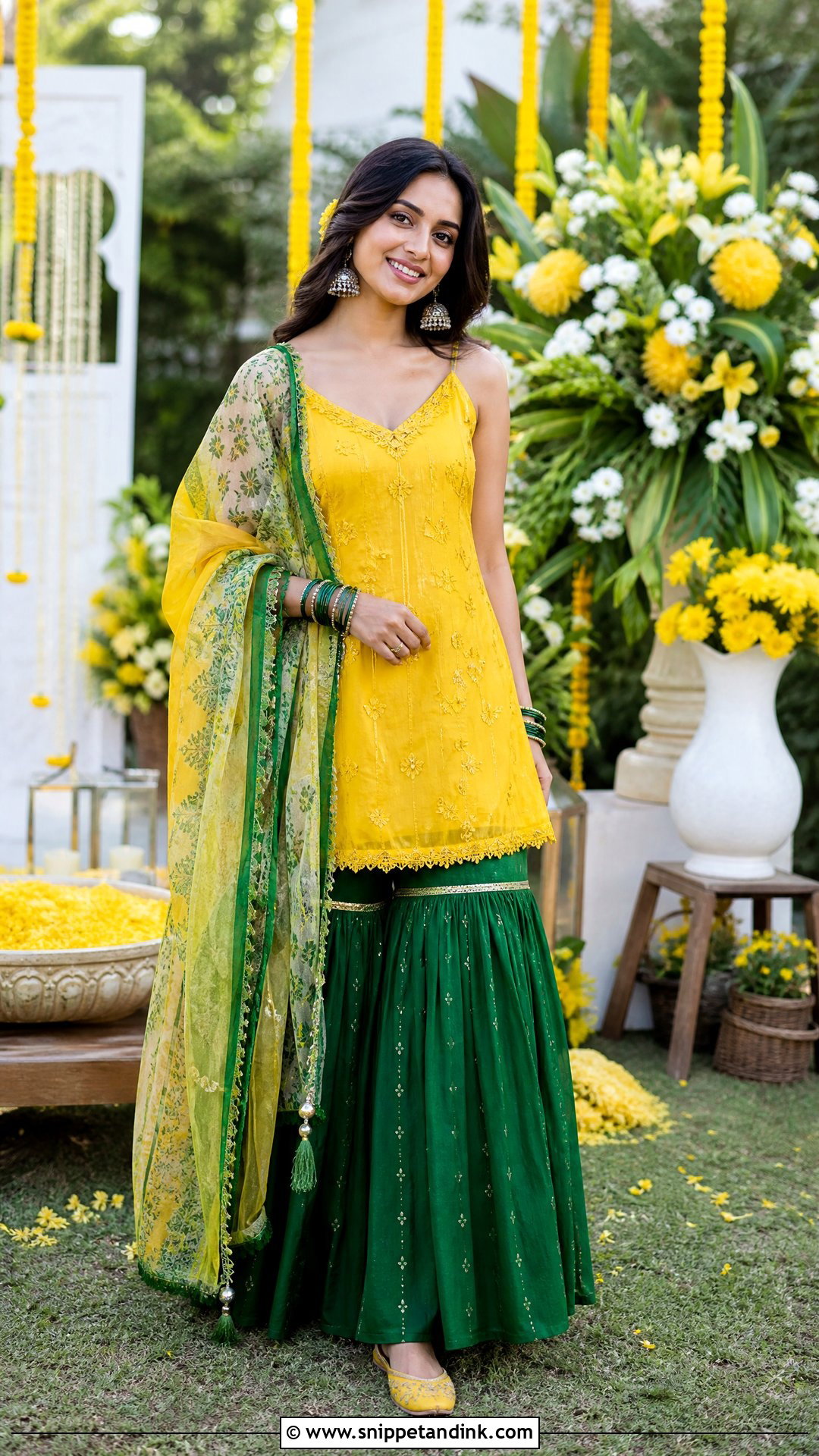
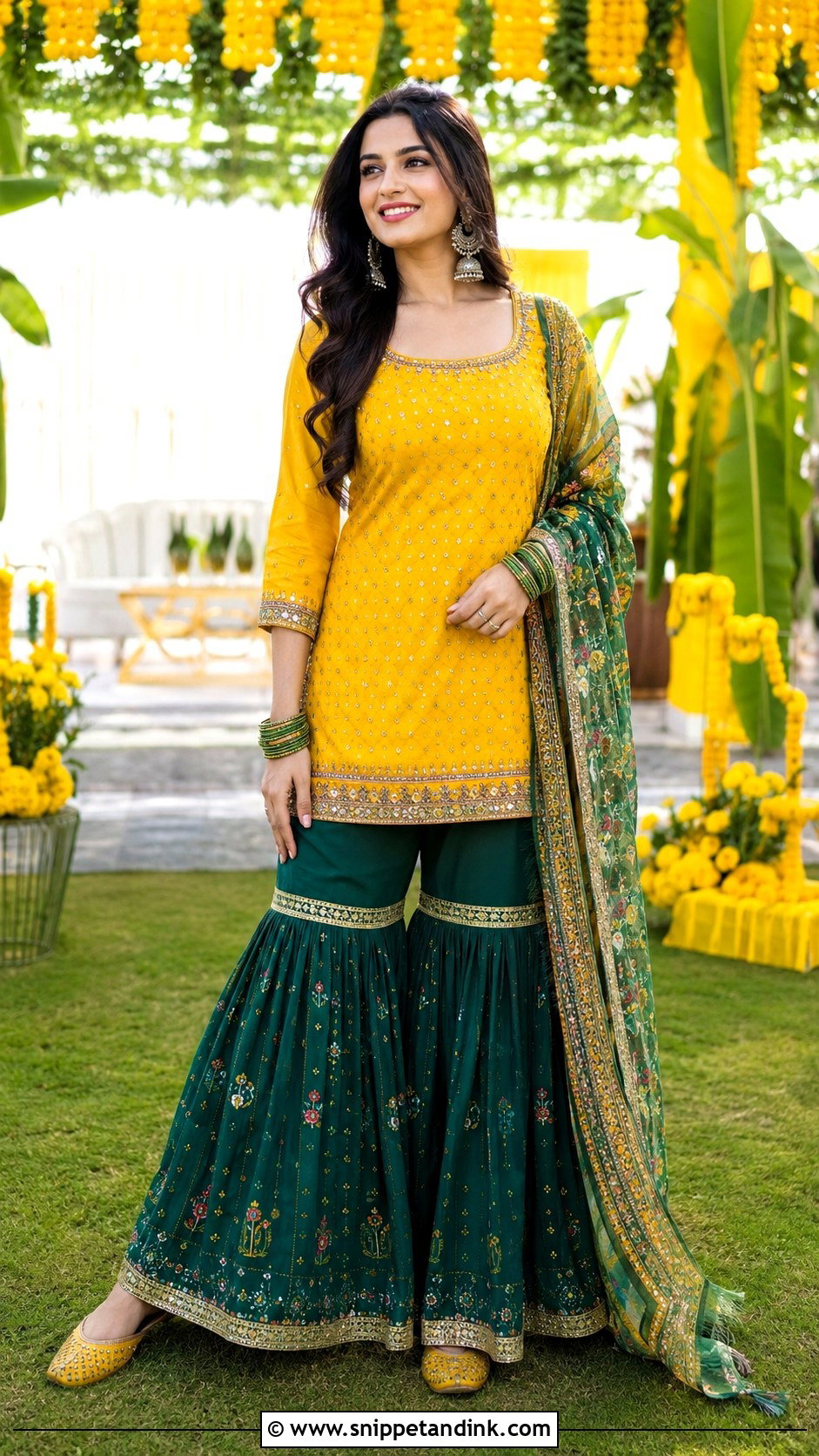
Green and yellow bridge the haldi and mehndi palettes, which suits couples who combine the two events. Wear a yellow short kurta with green sharara pants, or a green embroidered blouse under a yellow jacket, with a printed dupatta carrying both colors. Oxidized earrings, green glass bangles and neutral juttis finish it. Bridesmaids can share the palette and swap which color goes where. Small florals keep it uncluttered. Glass bangles are traditional but break easily when you dance, so wear a few rather than a forearm full. A low ponytail, small bindi and fresh flowers complete the look.
19. Pink And Yellow Haldi Lehenga
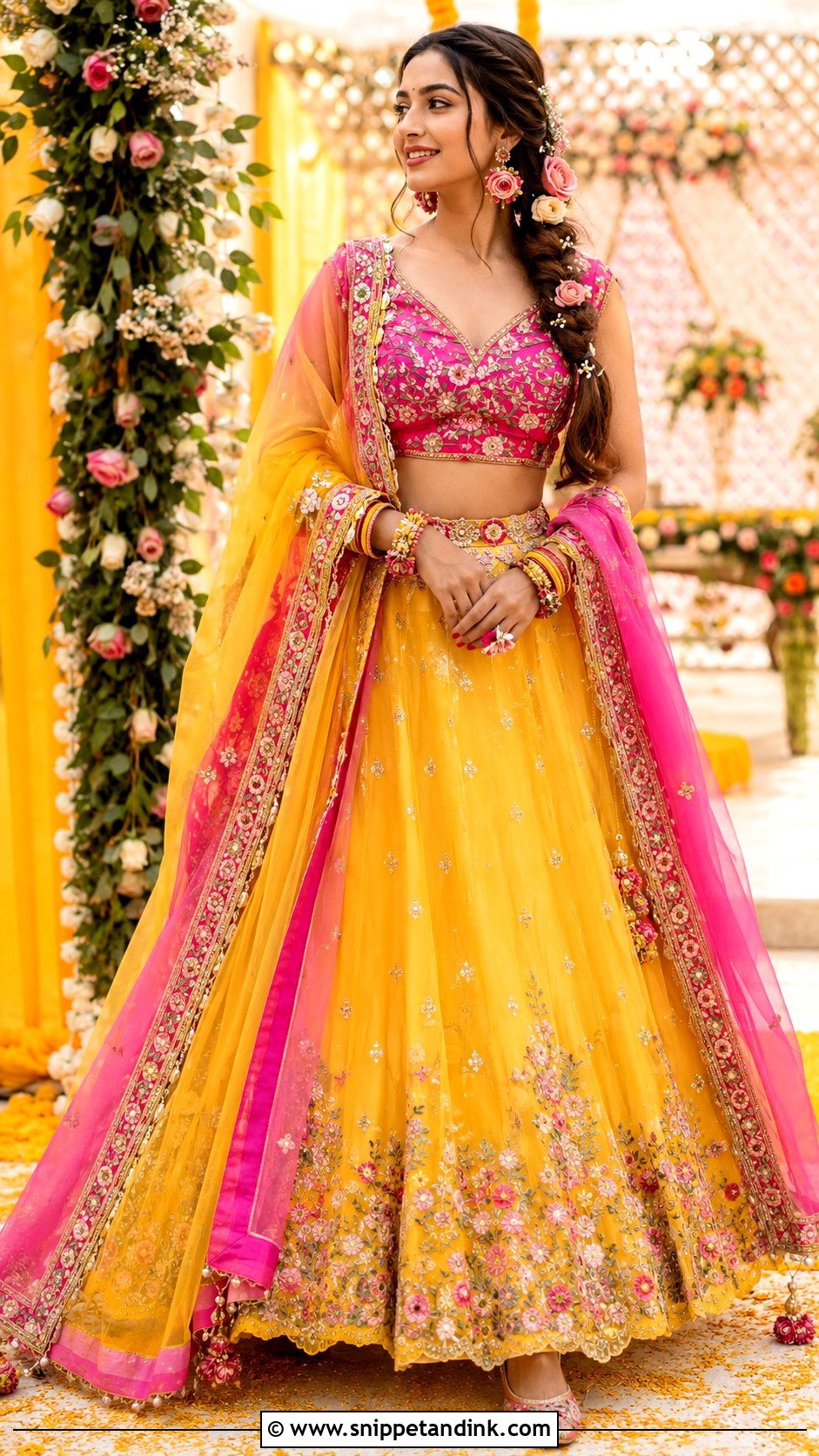
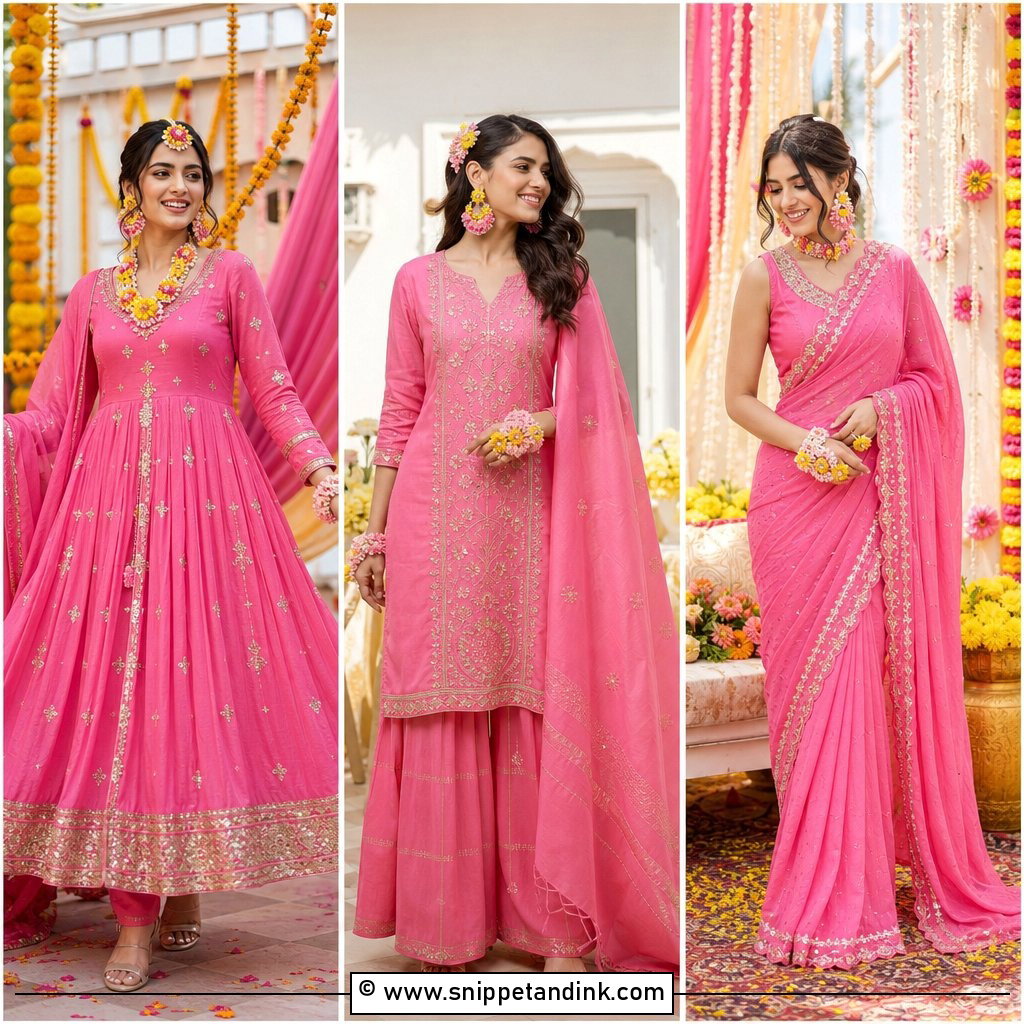
Pink brings playful contrast to yellow, and the trick is pairing one bright shade with one soft one. Fuchsia suits mustard and blush suits pastel yellow, while two brights side by side fight in photos. Wear a yellow lehenga with a pink blouse and a sheer dupatta carrying both, or reverse it with a pink floral skirt and a yellow crop top. Pink flower earrings, mixed bangles and embroidered juttis finish it. Brides can add a waist belt and floral maang tikka, and guests should keep accessories simpler. A loose braid with small flowers and pink-toned makeup connect the pieces.
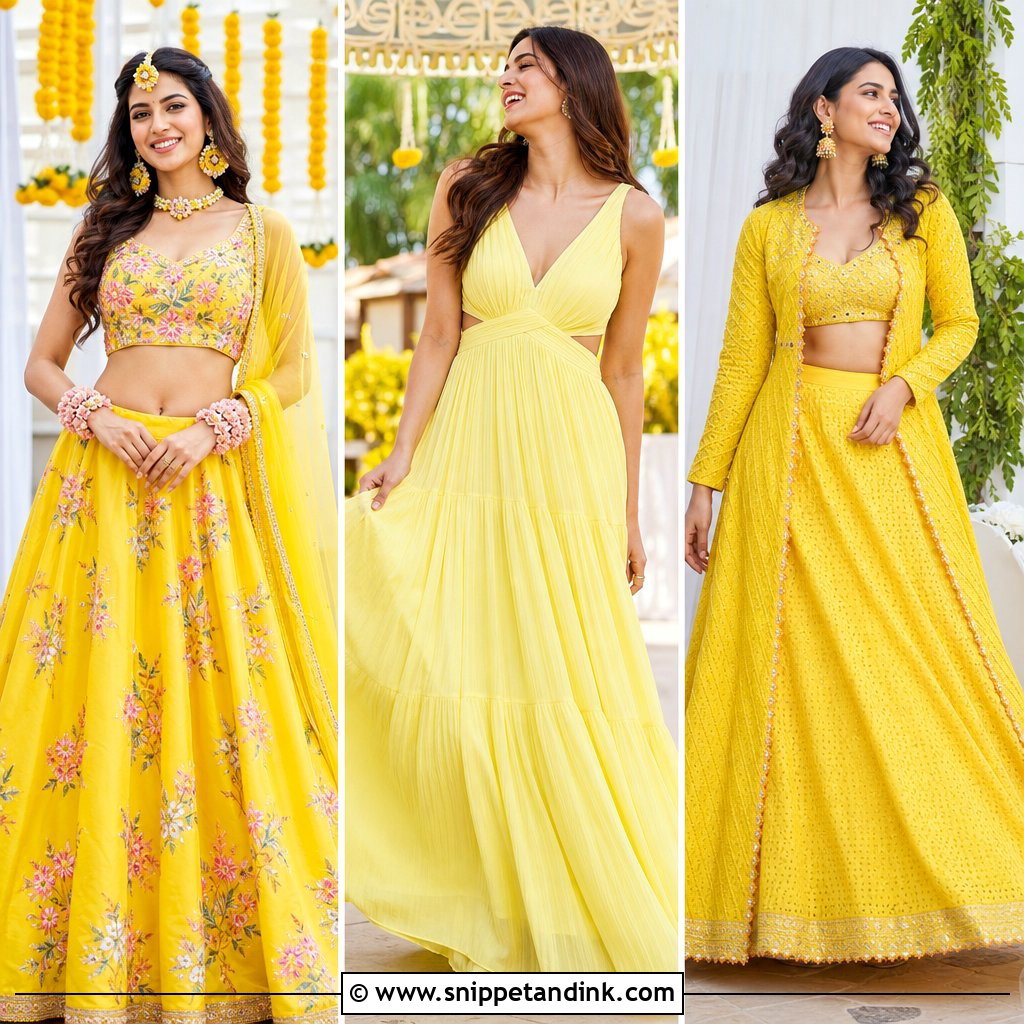
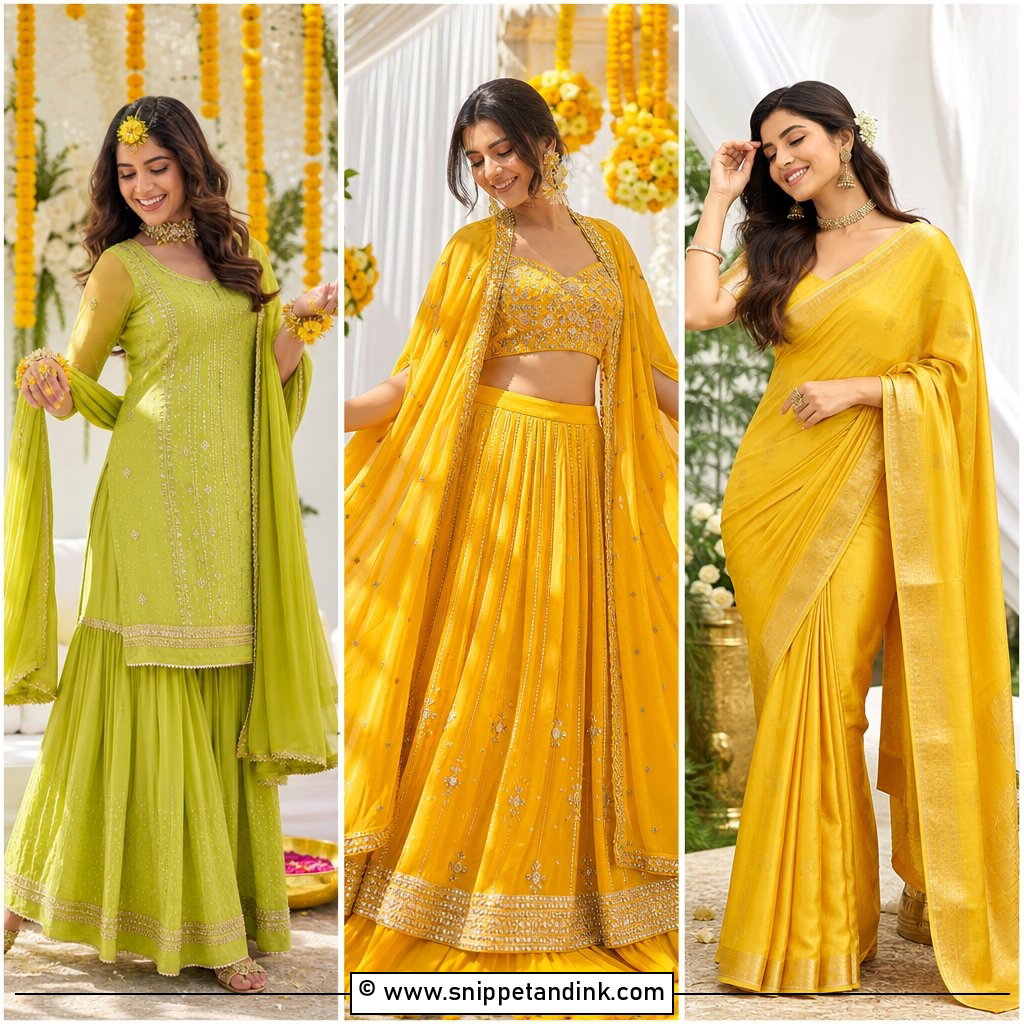
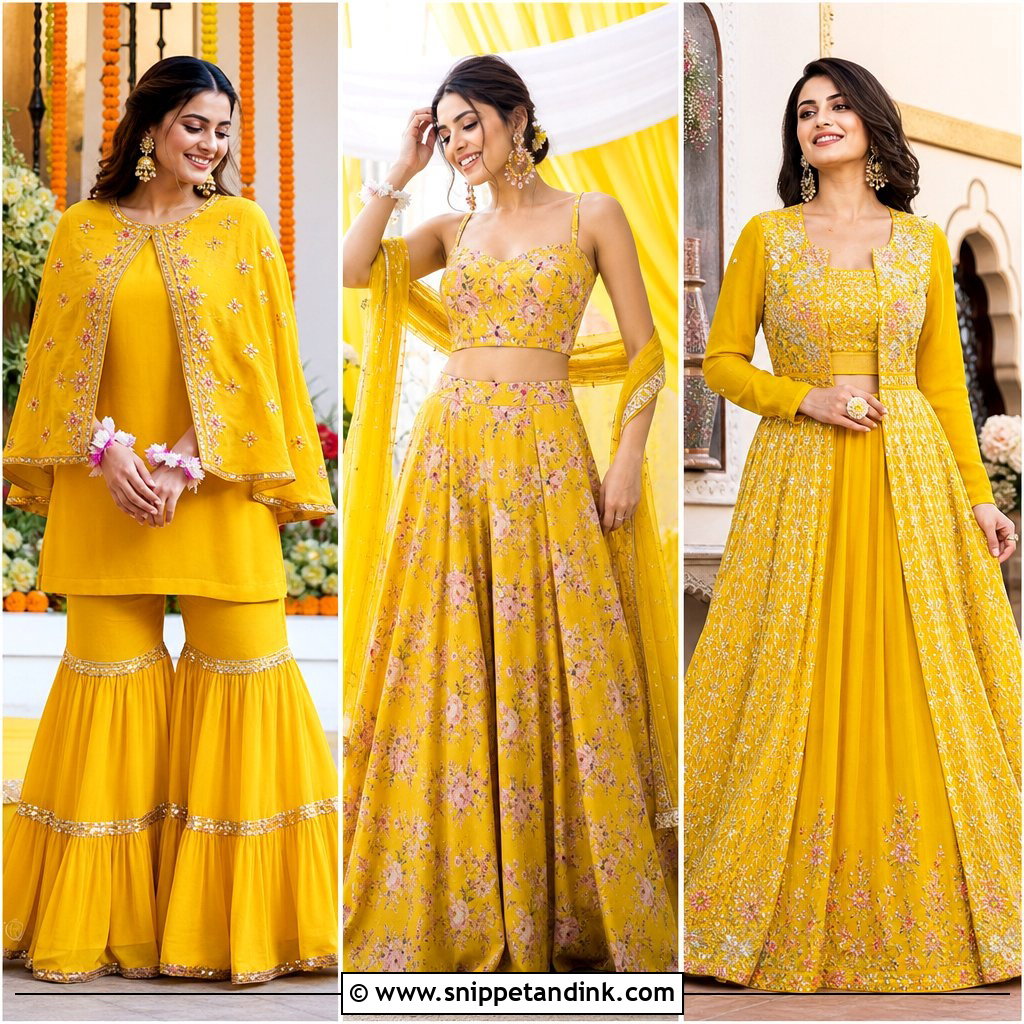
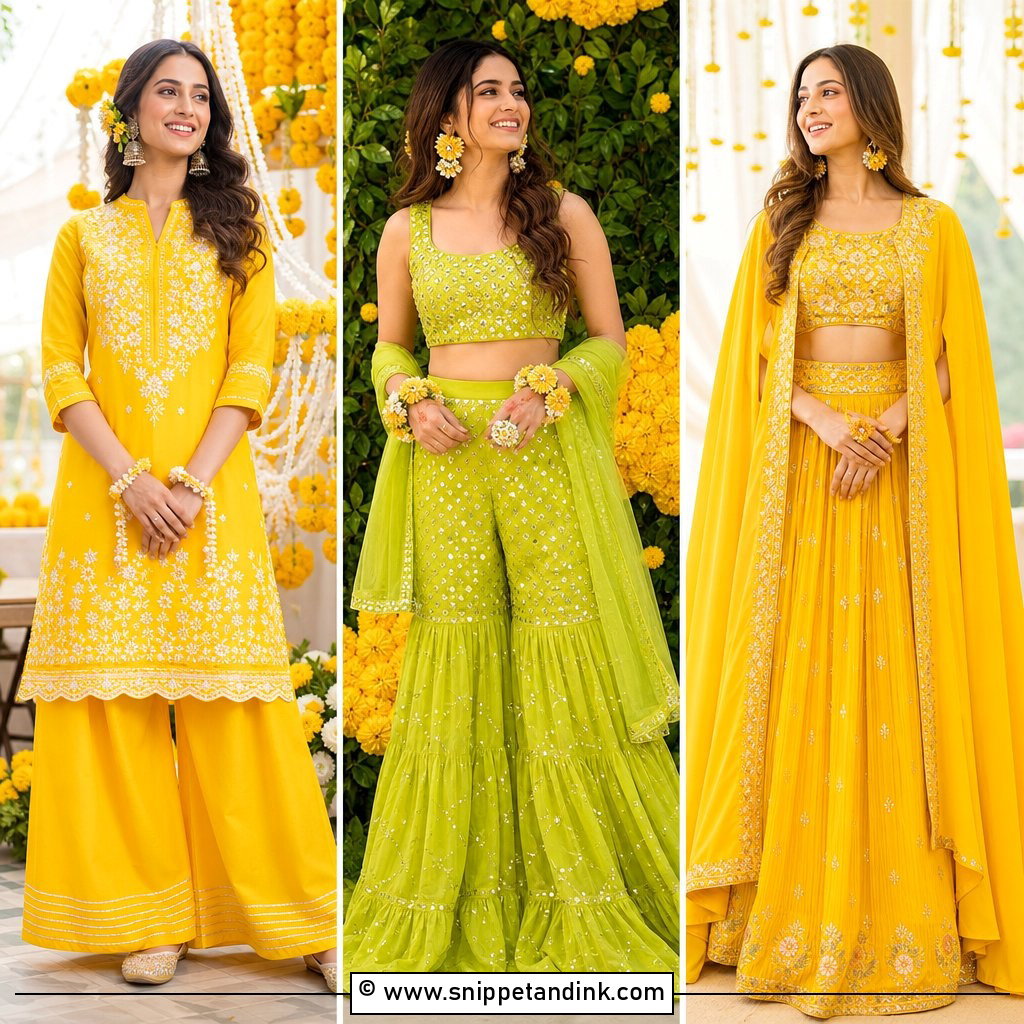

20. Yellow Kaftan Haldi Dress
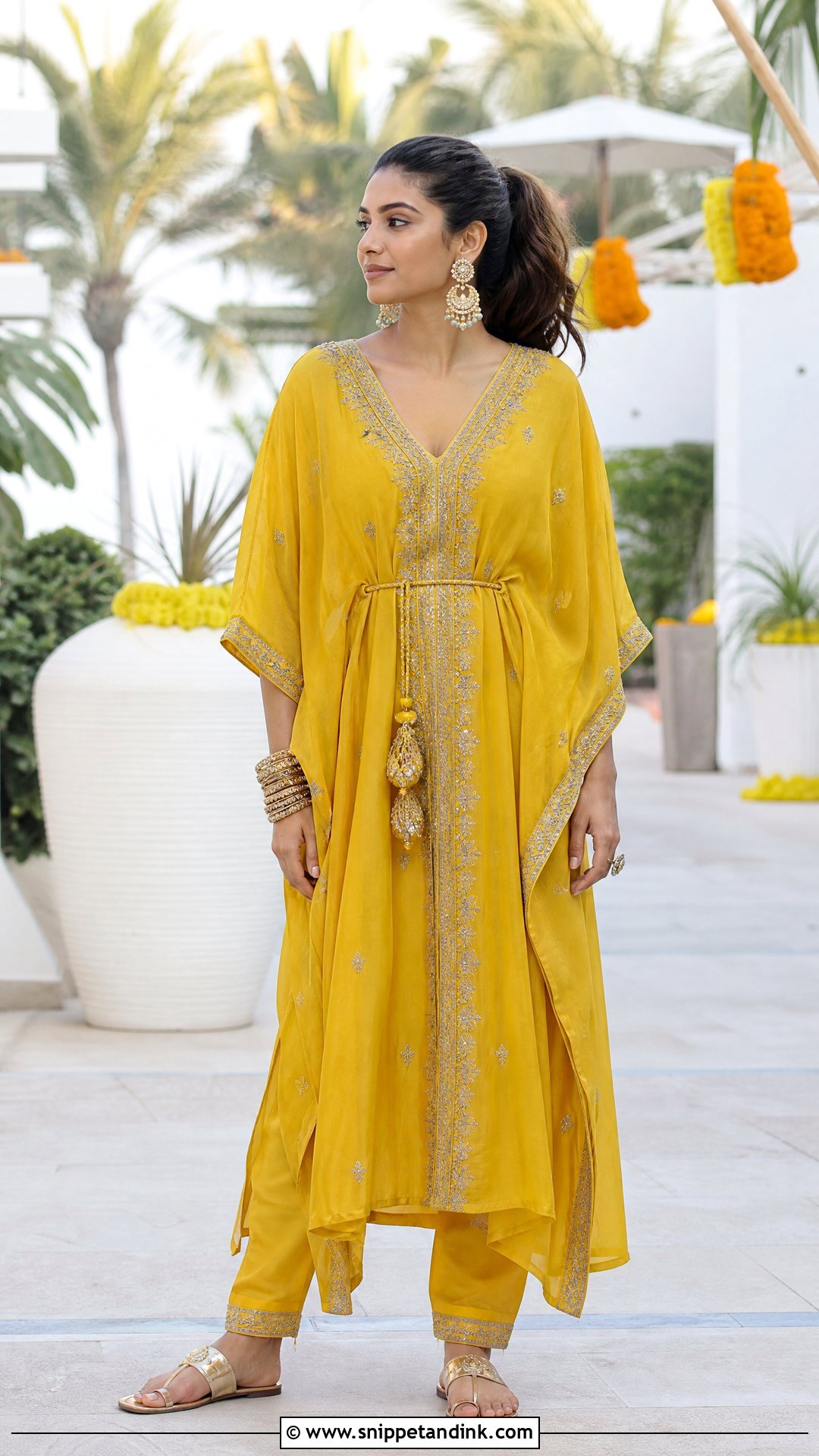
A kaftan is the most forgiving haldi outfit on a hot day or at a resort, because nothing is fitted tightly enough to trap heat. Choose ankle length, with a defined waist, side slits and embroidery at the neckline. I’d add slim pants underneath if the slits are high, since you’ll be sitting low. Oversized earrings, a few bangles and metallic flats complete it, and a tasseled belt shapes the waist without restricting you. Keep the hem off the ground so it doesn’t collect turmeric or dust. A high ponytail or soft waves suit it, and the cut works across a wide range of sizes.
Getting Turmeric Out of Clothes the Same Day
Turmeric’s color comes from curcumin, a strong natural dye that sets quickly. The sooner you deal with it, the more of the outfit you save.
- Scrape off dried paste with a blunt knife or spoon before anything gets wet, since water spreads loose powder.
- Rinse from the back of the fabric with cold water, pushing the stain out the way it came in. Hot water sets it.
- Work in a little liquid dish soap or detergent with your fingertips, then rinse again. Repeat rather than scrubbing hard.
- Dry the piece in the sun. Sunlight fades curcumin, and marks that survive washing often vanish after a day or two outdoors.
- Keep baking soda and ammonia away from it. Curcumin turns red in alkaline conditions, so a yellow mark can become a reddish-brown one.
Silk, zari and gota work should go to a dry cleaner with the stain pointed out. On white cotton only, a diluted oxygen bleach can lift what remains.
And on your skin
The yellow tint fades by itself within a day or two. A paste of gram flour and yogurt, or an oil-based cleanser, speeds it along. Scrubbing hard only irritates skin that’s about to be photographed at the wedding.
Expect Turmeric, Then Dress for It
Color matters less at a haldi than you might think; how the outfit handles paste, heat and sitting matters more. A floral lehenga gives the bride a memorable look, and shararas, Anarkalis, sarees, kurta sets, kaftans and co-ords cover bridesmaids and guests. Think about the setting, the dress code, the weather and how close to the paste you’ll be. Light fabric, secure draping, shorter hems and flat shoes let you join every ritual. Yellow is always right, but mustard, orange, green, pink and ivory are fair game. Wear something you’d be happy to see streaked yellow by lunchtime.
You'll Like These Ideas:











Leave a Reply