
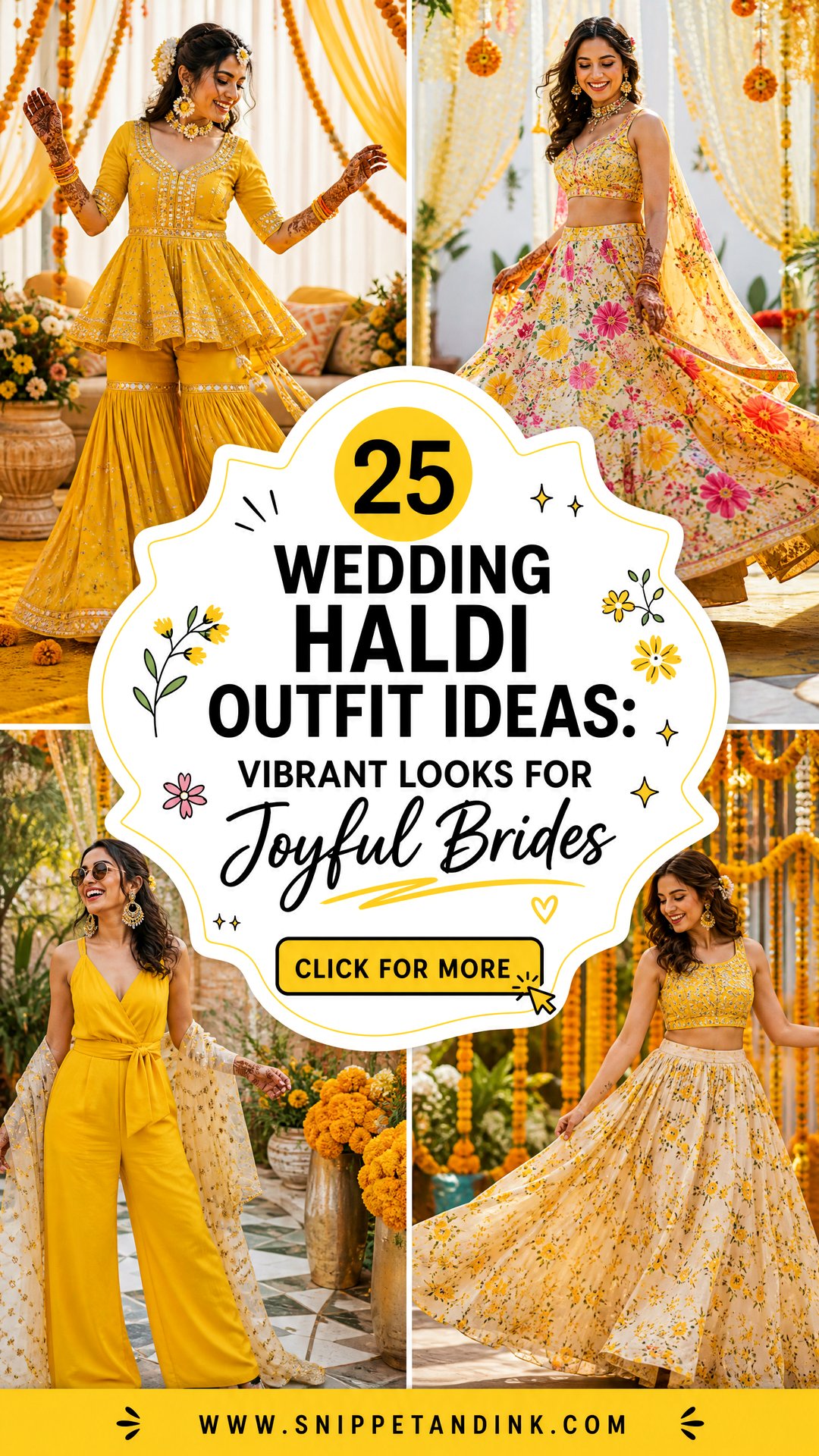
Haldi is the one wedding function where the outfit is guaranteed to get dirty, and I plan every look around that fact. The bride sits low while family smear turmeric paste on her face, arms and feet; cousins chase each other with it; someone always ends up in the flower petals. So the outfit has to look bright in daylight photos, survive paste and still let you sit cross-legged. The palette has widened well beyond plain yellow into ivory, marigold, lime, peach and florals, in lehengas, shararas, sarees, co-ords and Indo-western cuts. Below are 25 looks for the bride, her sisters, cousins and guests, each with what I’d check before you commit.
Sitting on the Patla in Your Outfit
For the bride, haldi mostly happens sitting down. You’ll be on a low wooden seat or the floor while one relative after another applies paste to your face, arms and feet. That position shapes what I’d put you in more than any trend does.
- Sleeves short enough, or loose enough, to push above the elbow. Paste goes on the forearms and most families go higher.
- A hem that clears your ankles when seated, since feet get paste too and a skirt pooled around them will soak it up.
- A dupatta pinned firmly to one shoulder or skipped altogether. A loose one ends up in the turmeric bowl within minutes.
- Fresh flower jewelry instead of good gold. Paste works into the settings of real jewelry and stones, and flowers are part of the tradition anyway.
- Hair up and off the neck, so nobody has to wash paste out of a blow-dry the night before the wedding.
Try the outfit on at home and sit cross-legged on the floor for five minutes. If the blouse rides up, the skirt pulls tight across the knees or the dupatta keeps sliding, fix it now, not with family watching.
1. Yellow Lehenga Haldi Outfit
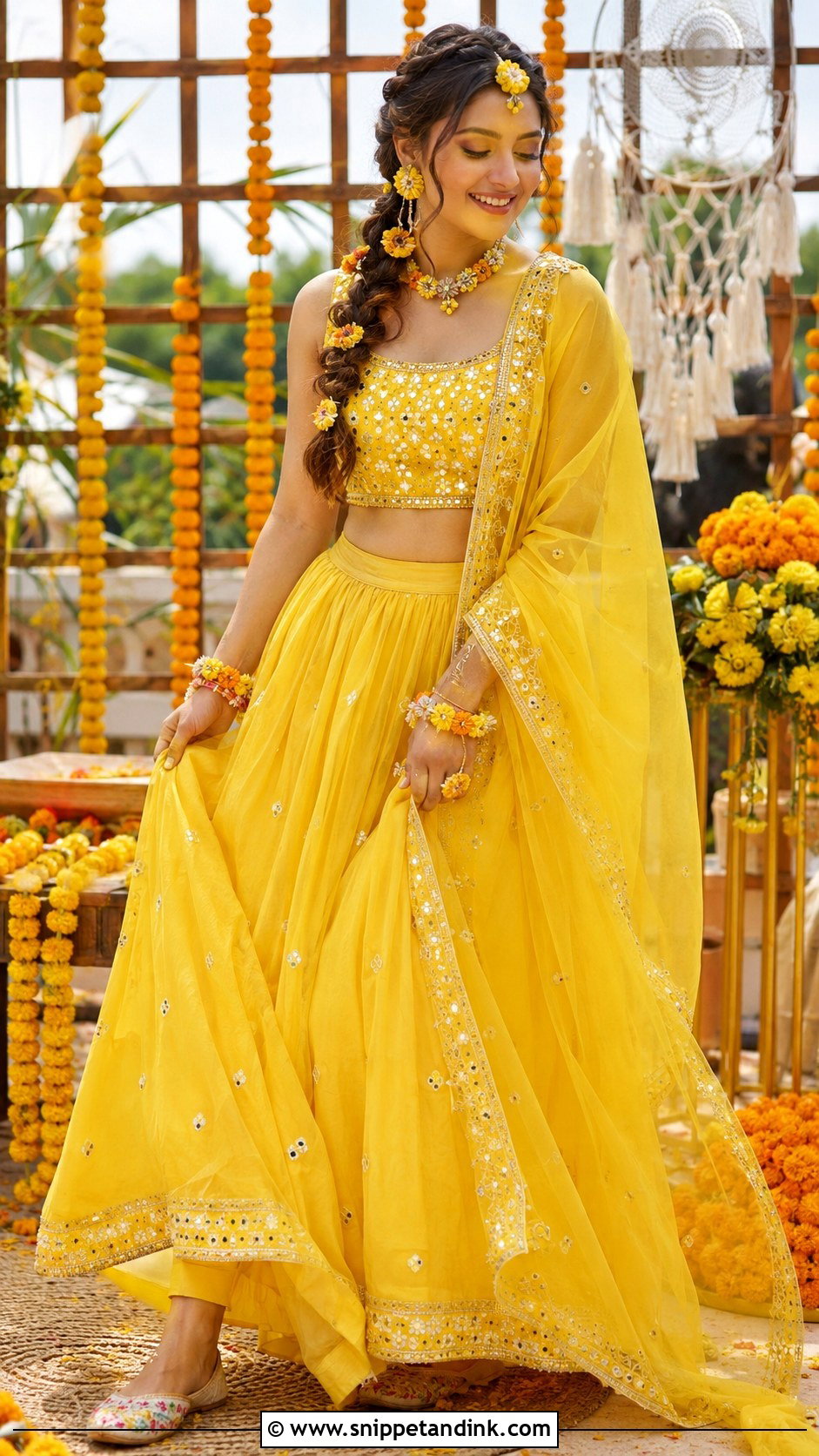
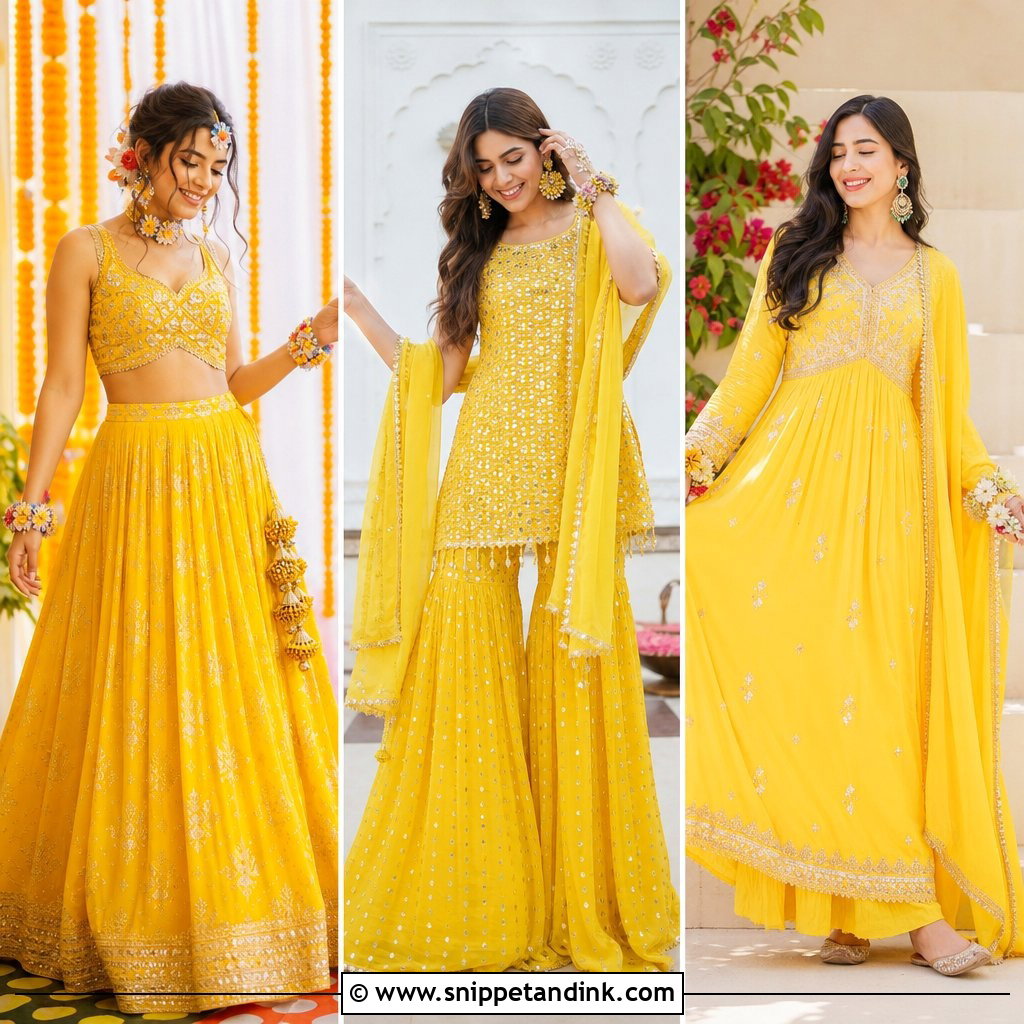
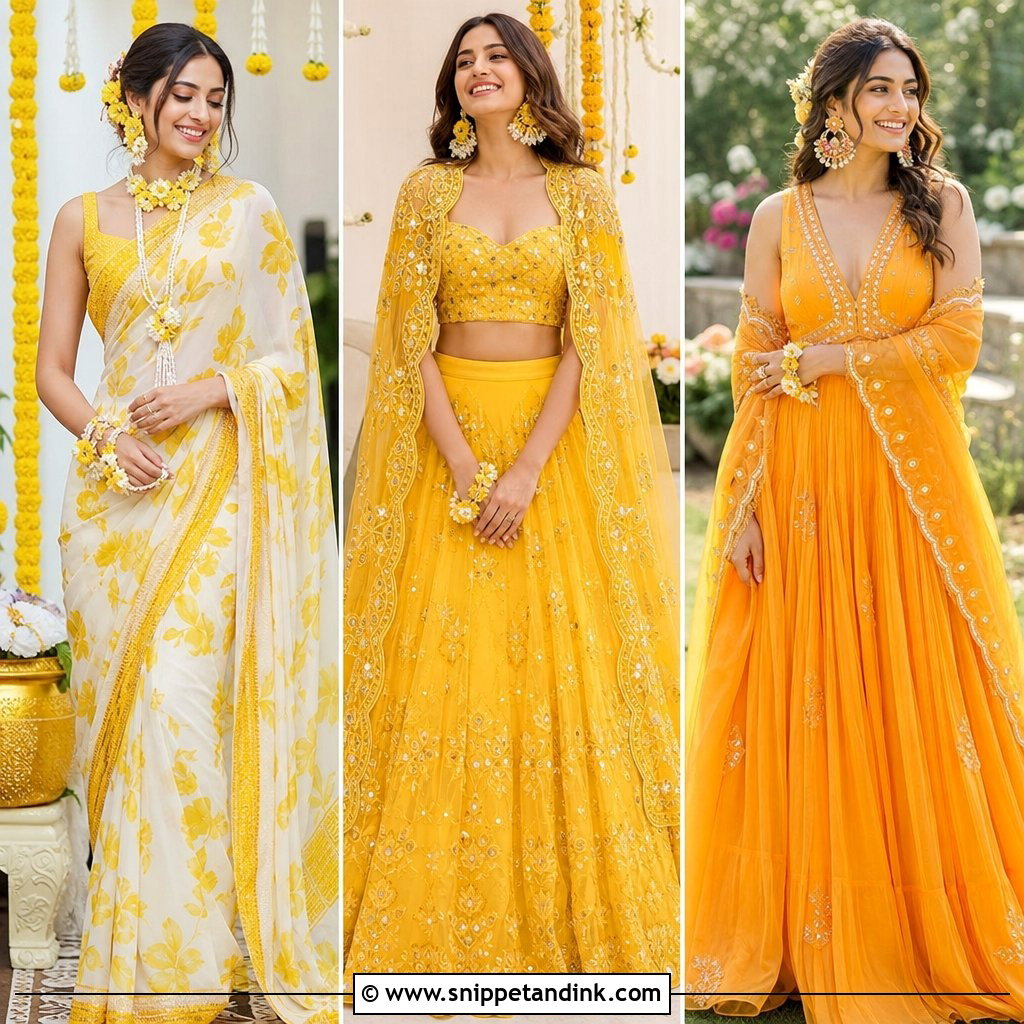
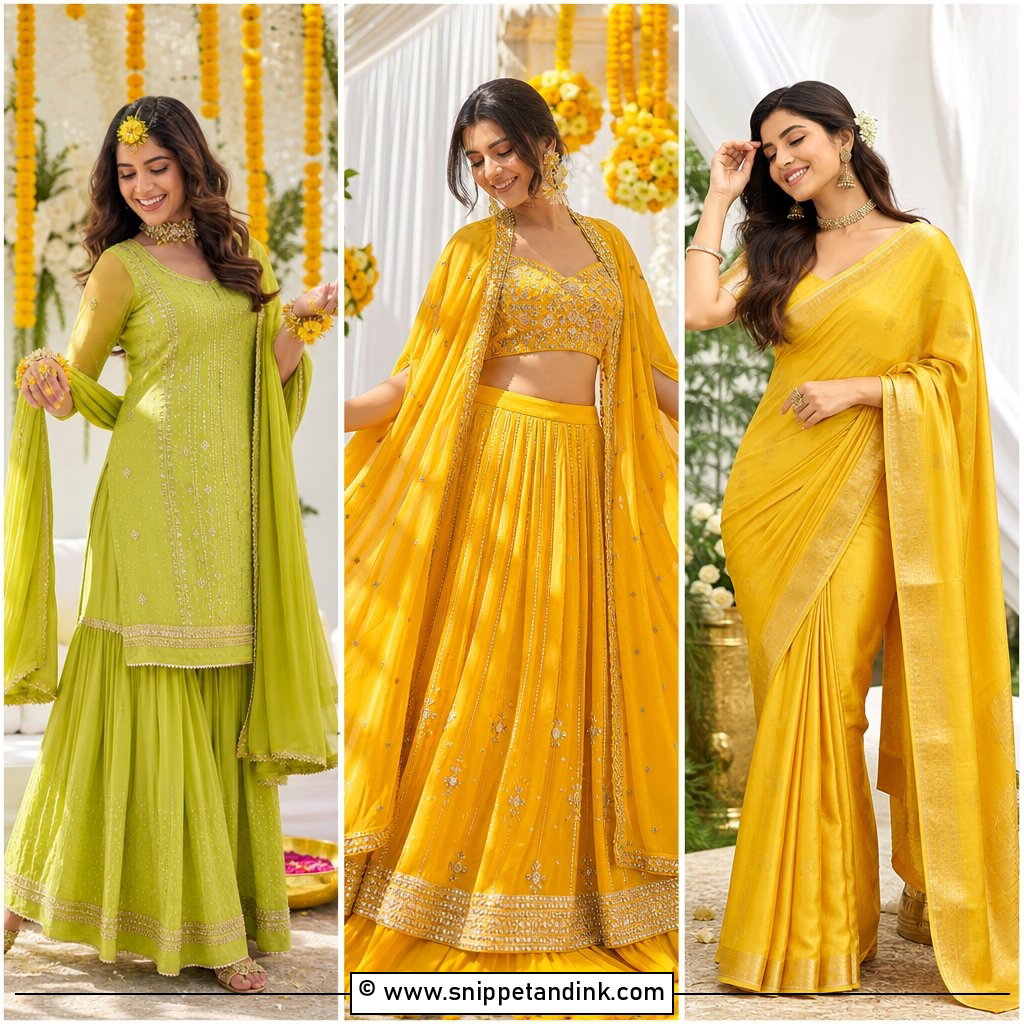
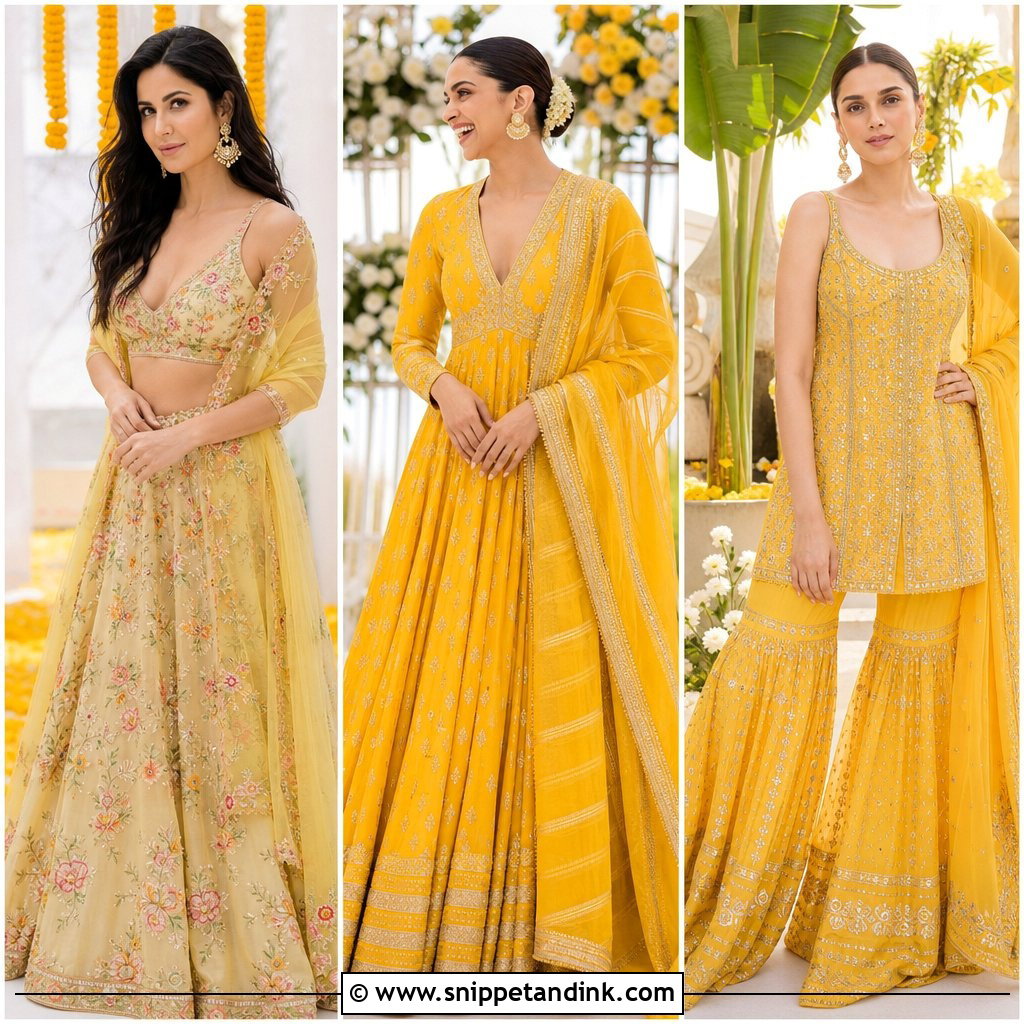
A yellow lehenga is the most classic haldi outfit, and the fabric choice decides whether you enjoy wearing it. Georgette, organza, cotton silk or chiffon keep the skirt light enough to sit on a low stool and get up again without help. Put the detail in the blouse with mirror work, gota patti or fine threadwork, since that’s what the camera sees while you’re seated. I pin the dupatta over one shoulder rather than over the head, so paste-covered hands don’t drag it. Marigold earrings, a flower necklace and fresh bangles, then juttis or flat sandals for an outdoor courtyard.
2. White Lehenga Haldi Outfit
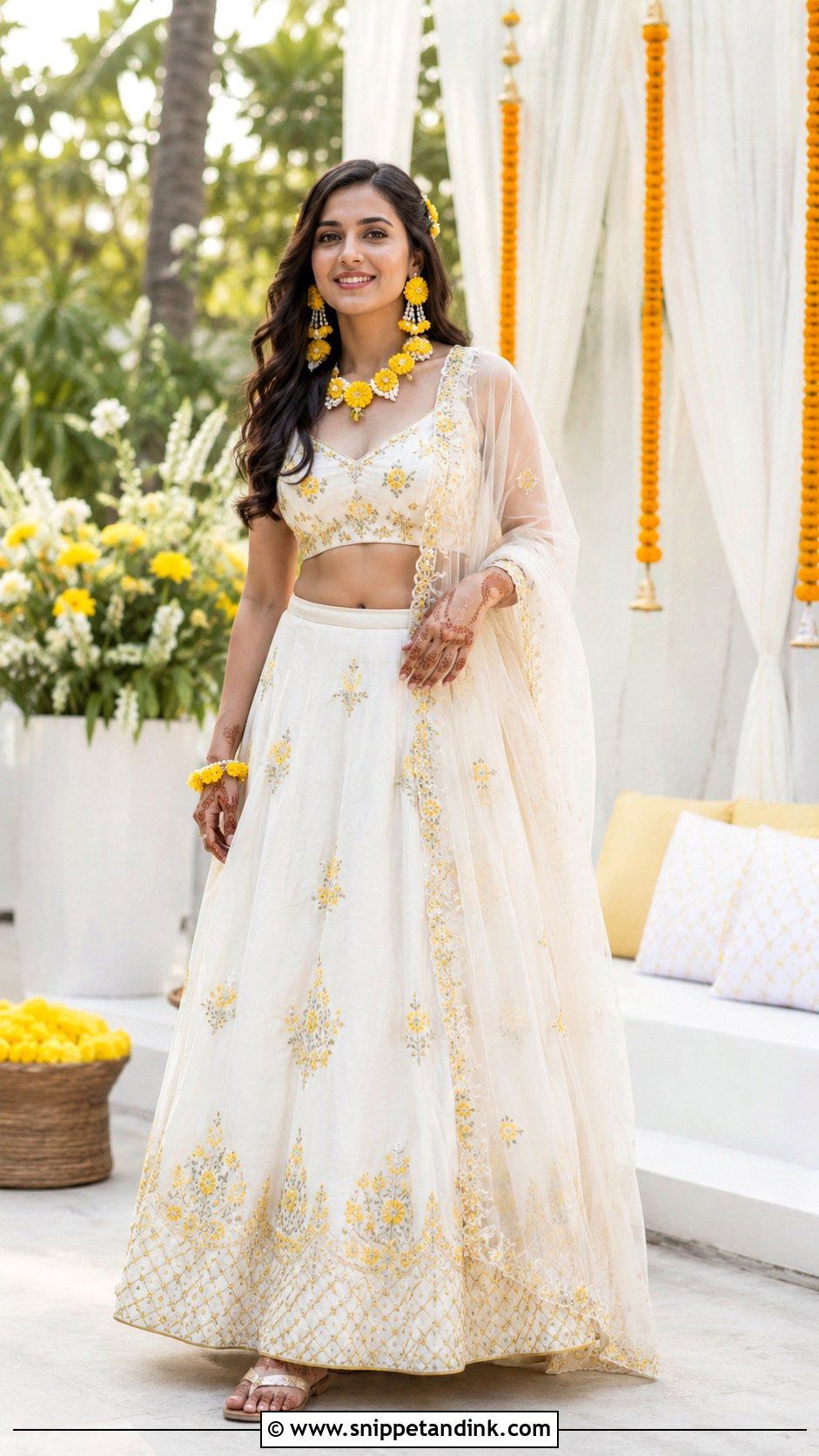
White is the background that makes turmeric glow in photos, which is exactly why brides love it and exactly why I warn them. An ivory lehenga with yellow embroidery, mirror borders or floral applique gives you a crisp base; a cropped blouse and a sheer dupatta keep it light. Treat it as a one-wear outfit unless you’re happy with faint yellow marks afterward, because turmeric on white cotton or silk rarely lifts completely. Yellow floral jewelry, a soft bun and comfortable flats finish it.
3. Mustard Saree Haldi Outfit
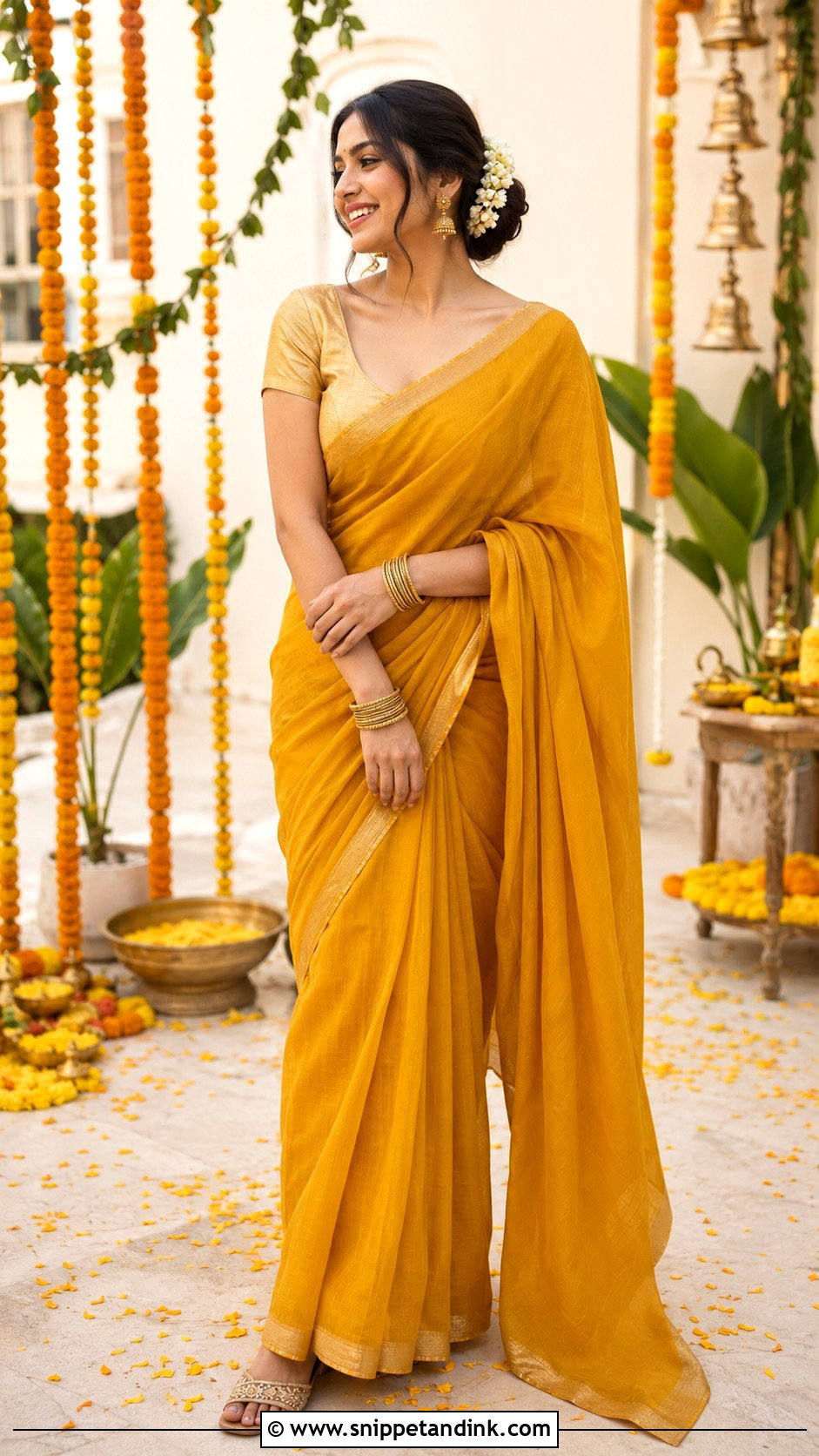
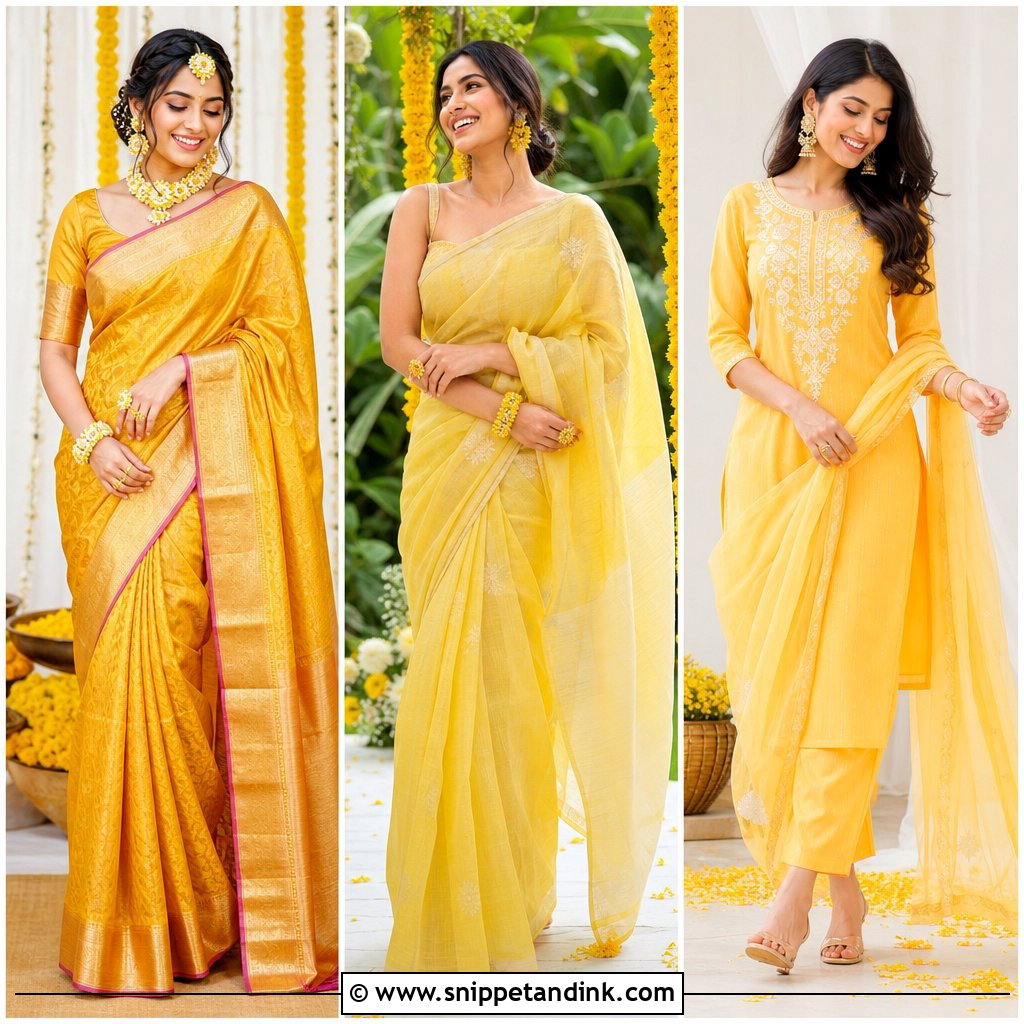
Mustard is the practical bride’s yellow. The deeper shade hides turmeric marks far better than pale lemon, and a saree drapes quickly without fiddly fastenings. Cotton silk, linen silk, chiffon or light georgette all stay comfortable through a daytime ritual. A sleeveless or short-sleeved blouse in gold, cream or matching mustard keeps your forearms free for the paste. Gold bangles, small jhumkas and a gajra around a bun are plenty. I’d choose kolhapuris over heels for a garden. Mothers and aunts often pick this exact look for the same reasons.
4. Floral Saree Haldi Outfit
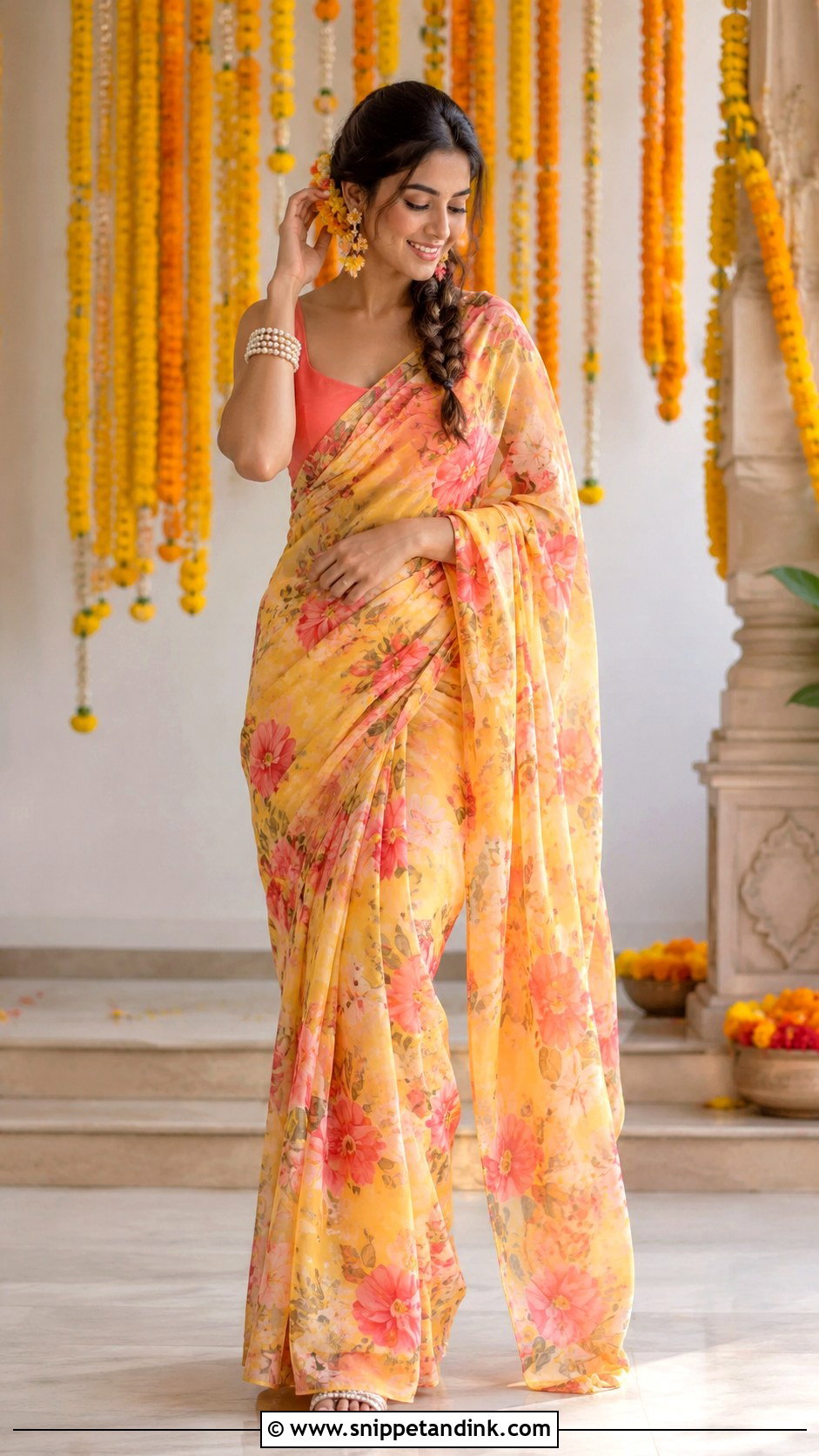
Small florals on a yellow, peach, lime or ivory ground give colour and movement without heavy embroidery, which keeps the saree cool in midday sun. Pick a plain blouse in one shade lifted from the print, maybe lemon, coral or cream, so the outfit doesn’t fight itself. Flower earrings, pearl bangles and a loose braid keep it relaxed. Guests and bridesmaids who want to look festive without competing with the bride do well here. I always pin the pleats and pallu securely, because floral georgette slips more than you’d expect when you’re bending to apply paste.
5. Sharara Haldi Outfit
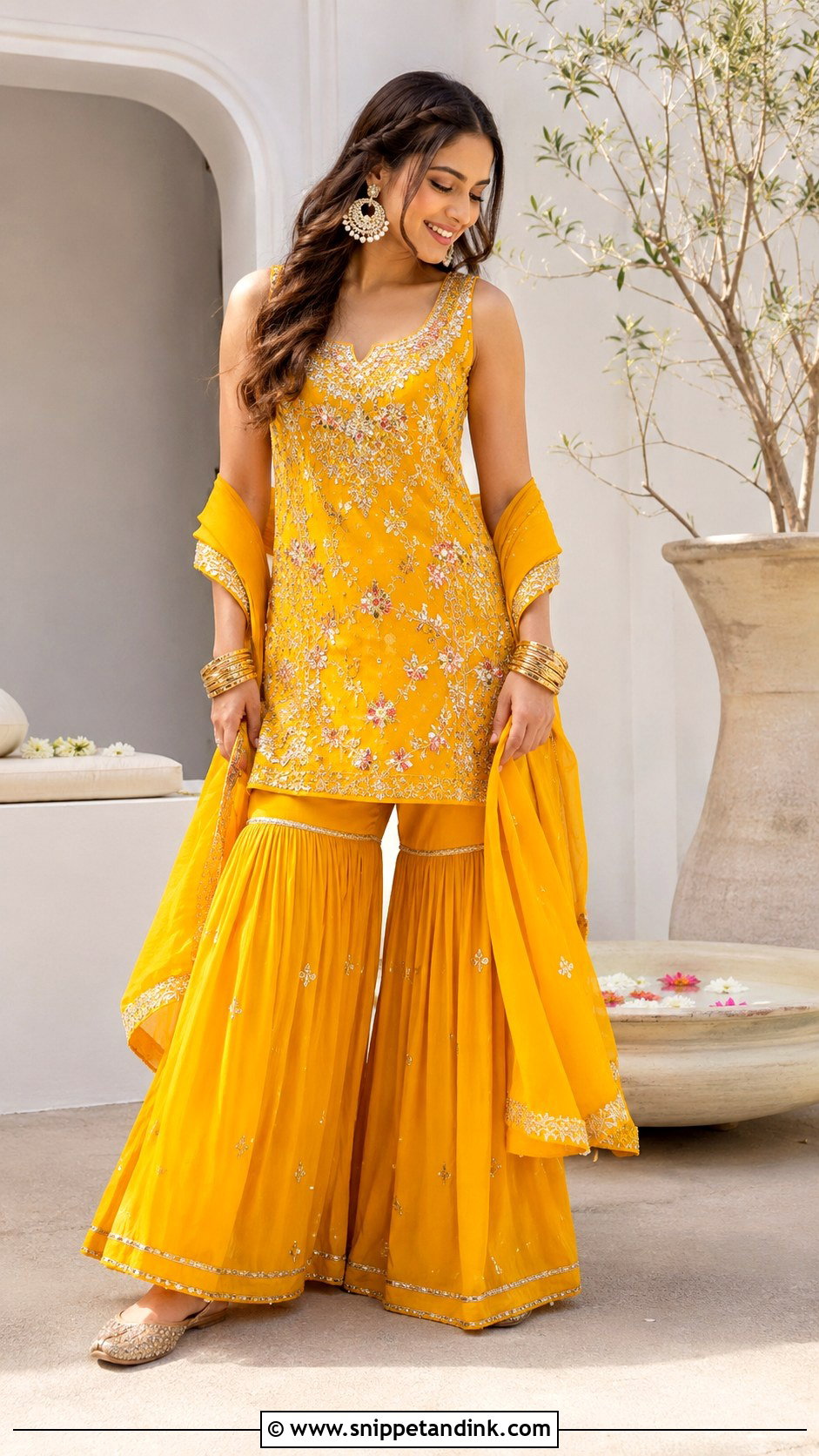
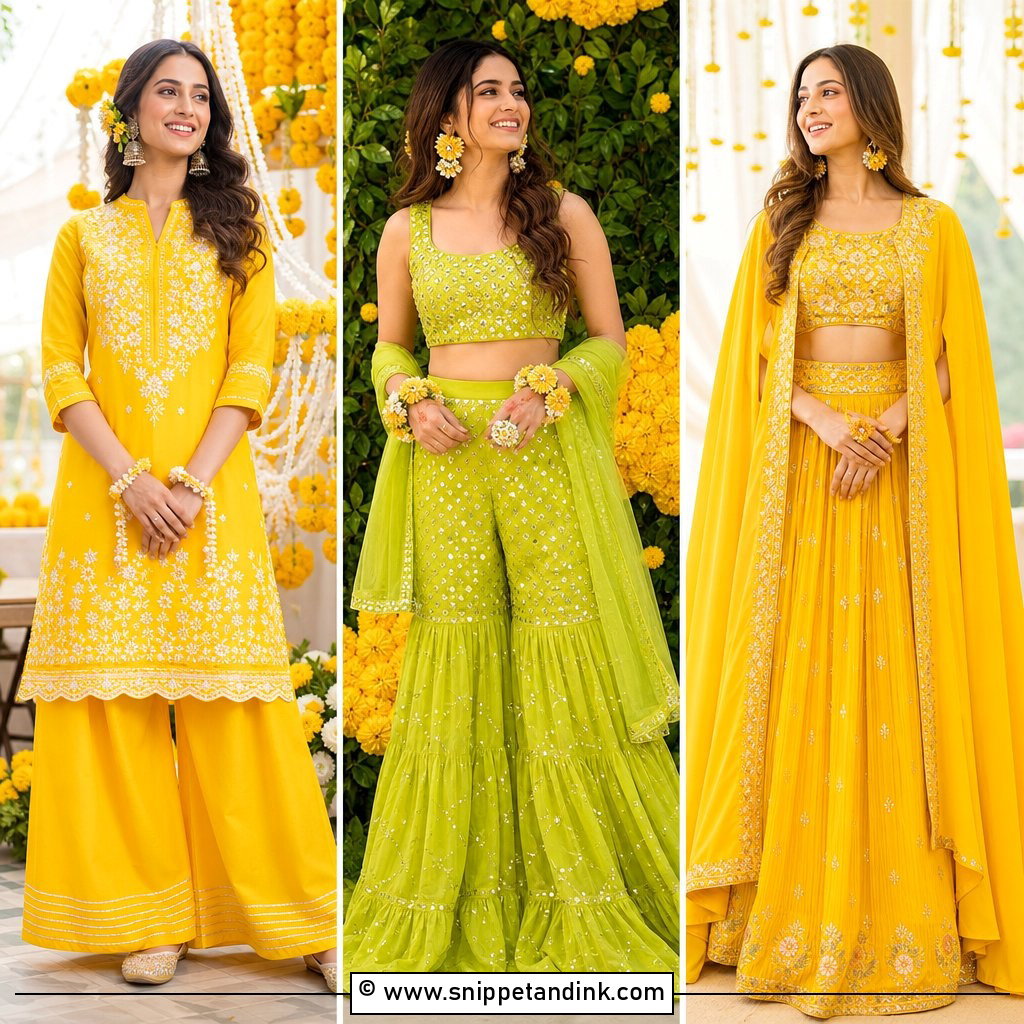
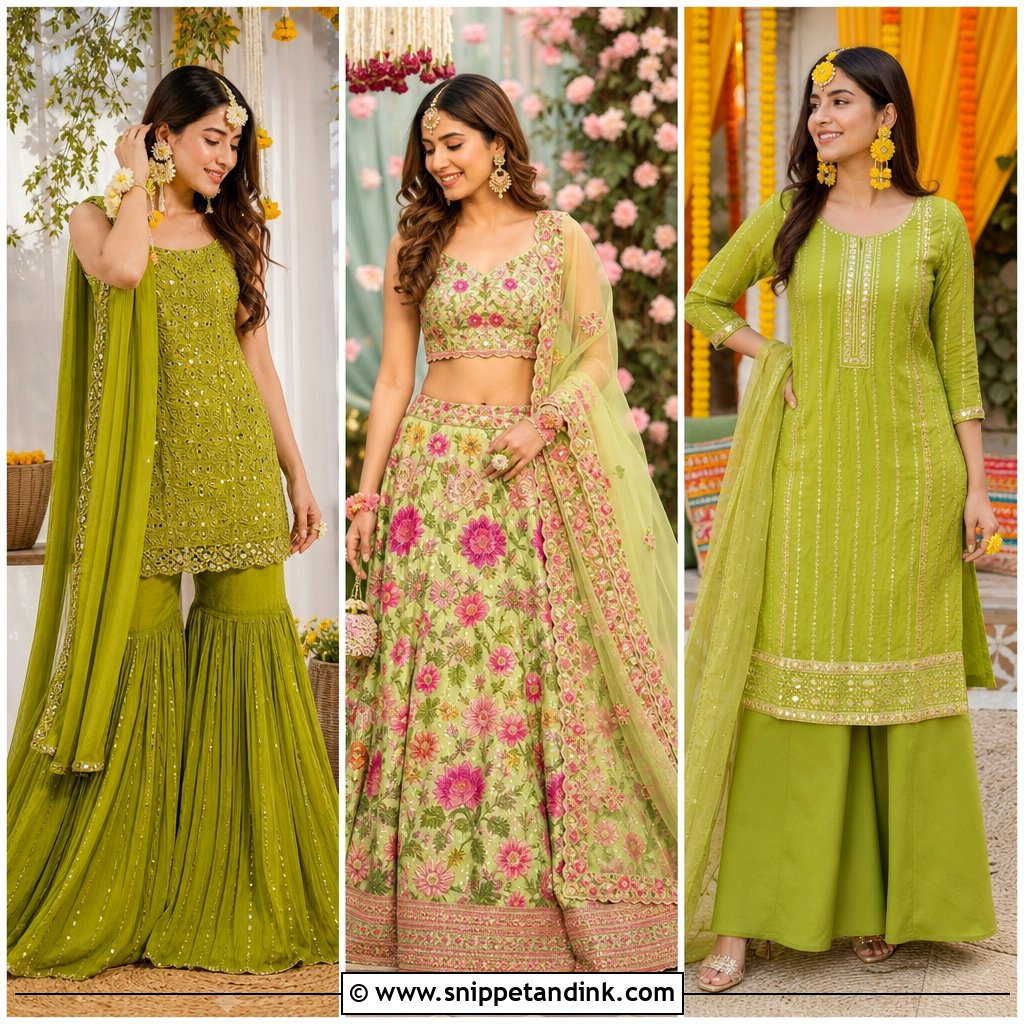
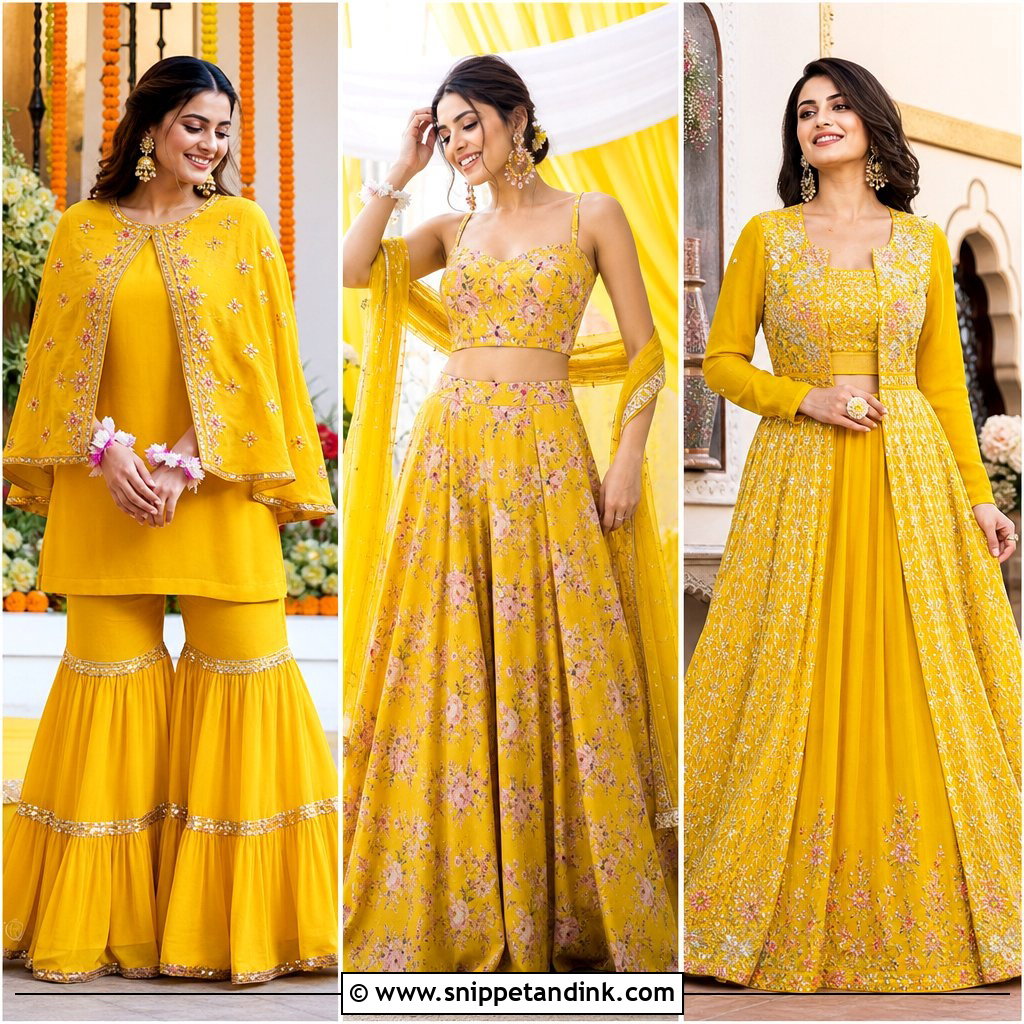
Shararas give you volume without a lehenga’s weight, and that makes them my first suggestion for anyone who’ll be dancing. The flared pants do the festive work; a short kurti keeps it playful. Mango, peach, lime and yellow tones with light mirror work, gota edging or threadwork all suit haldi. Pin the dupatta so your hands stay free for the ritual. Chandbalis, stacked bangles and flat juttis finish it. Sisters and cousins coordinate easily in shararas, and they look dressy in group photos while letting you sit on the floor comfortably.
6. Gharara Haldi Outfit
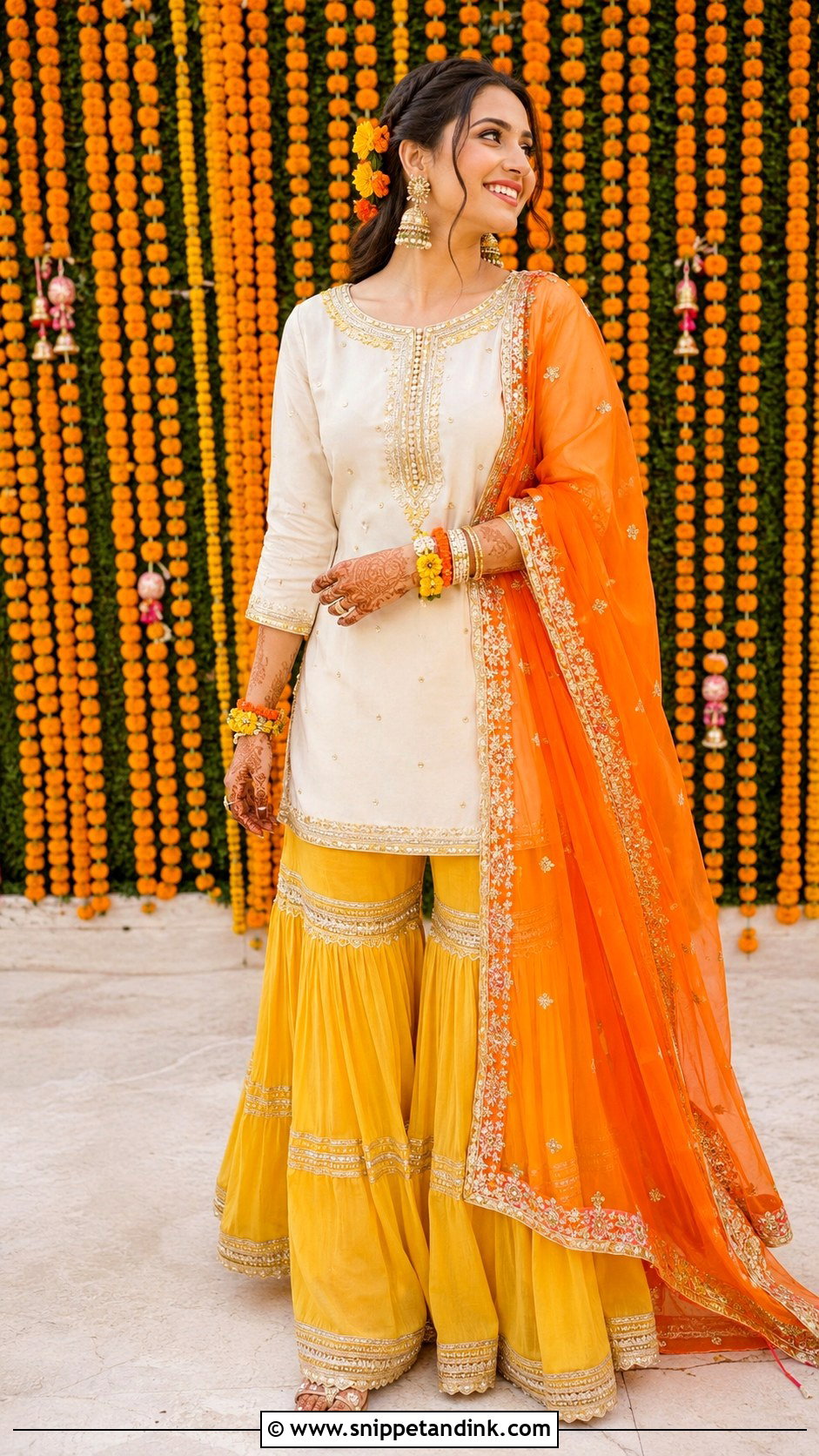
A gharara is fitted to the knee and then flares, joined by a decorative band, which gives it a more traditional line than a palazzo or sharara. Pair a short kurta in yellow, ivory, mint or peach with gota patti, zari borders or light mirror work. A contrasting dupatta in orange, rani pink or lime brightens it in photos. The knee seam is the fitting point; too tight and sitting cross-legged becomes awkward, so I have the wearer sit down during the trial. Small jhumkas, floral hair pins and simple bangles suit the bride’s sister, a best friend or a guest who wants something culturally rooted.
7. Kurta Palazzo Haldi Outfit
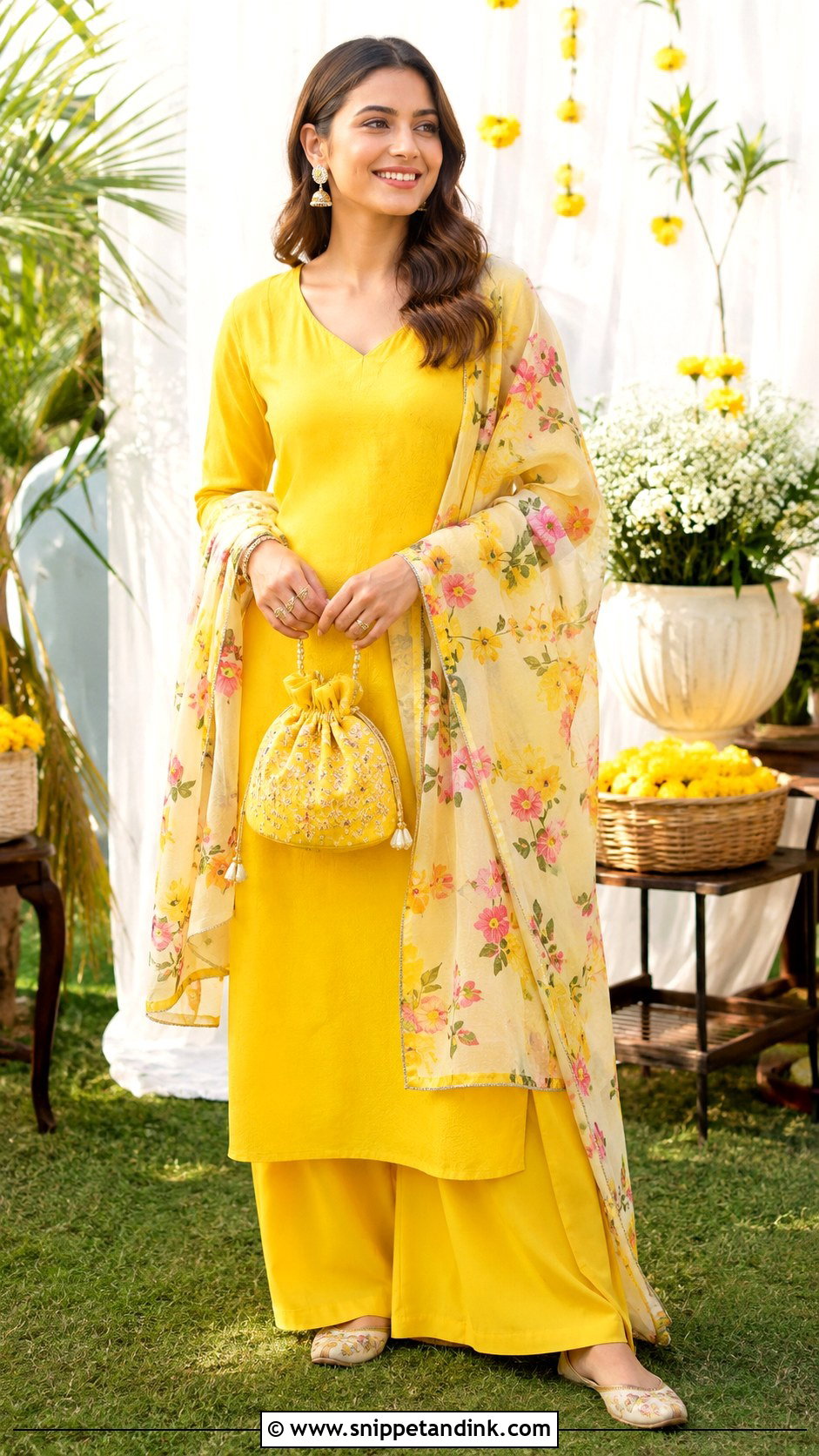
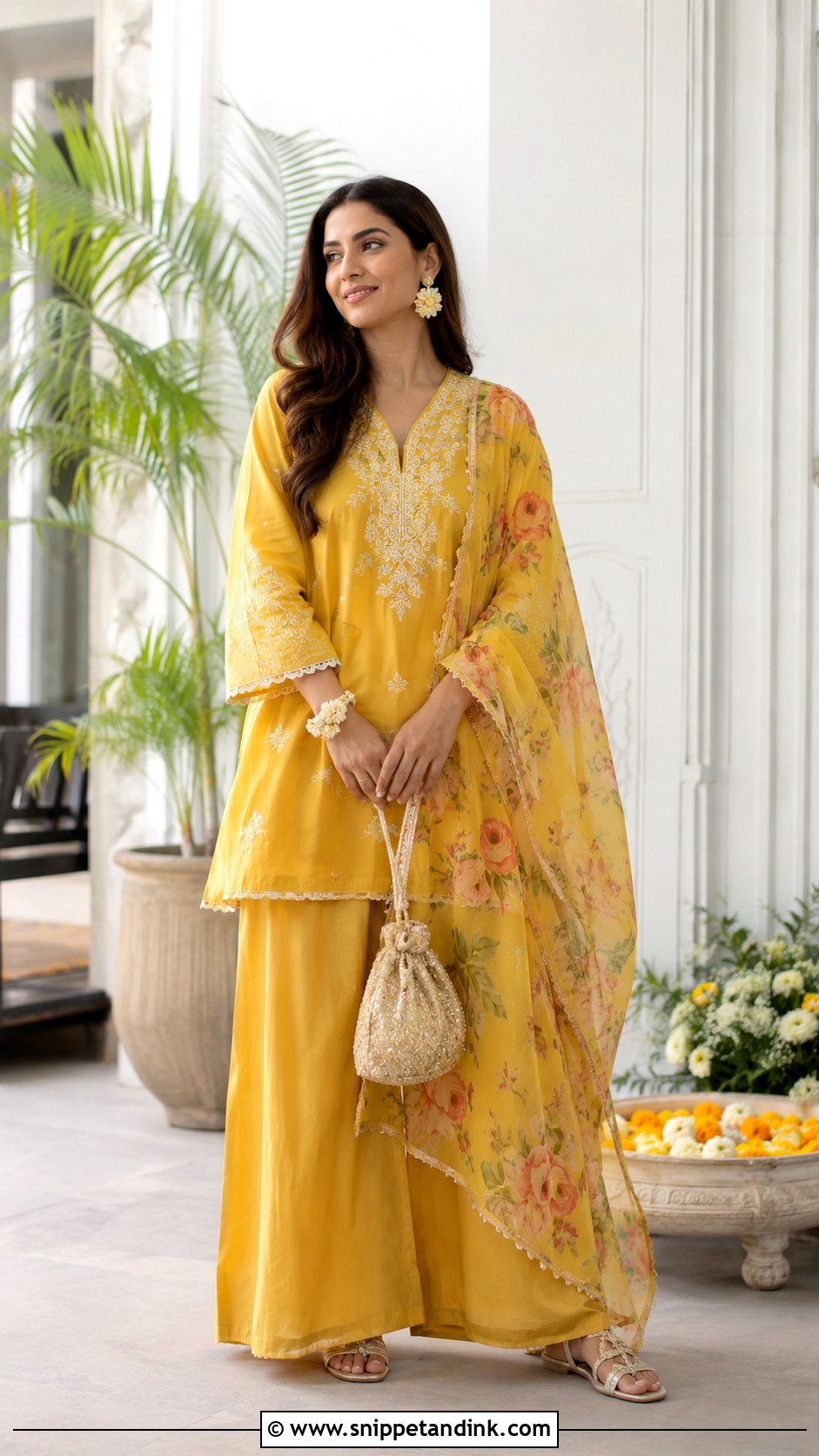
Comfort first, and it still looks put together. A straight kurta or short kurti with wide palazzo pants in yellow, ivory, gold or soft orange breathes well at warm outdoor ceremonies. A printed dupatta or mirror-work border adds the festive note. Juttis, small earrings and a potli bag complete it. Older relatives often prefer the modest coverage, and it’s the easiest outfit on this list to wear again later. Choose cotton or a cotton blend if you can; it takes a stain treatment far better than synthetics.
8. Anarkali Haldi Outfit
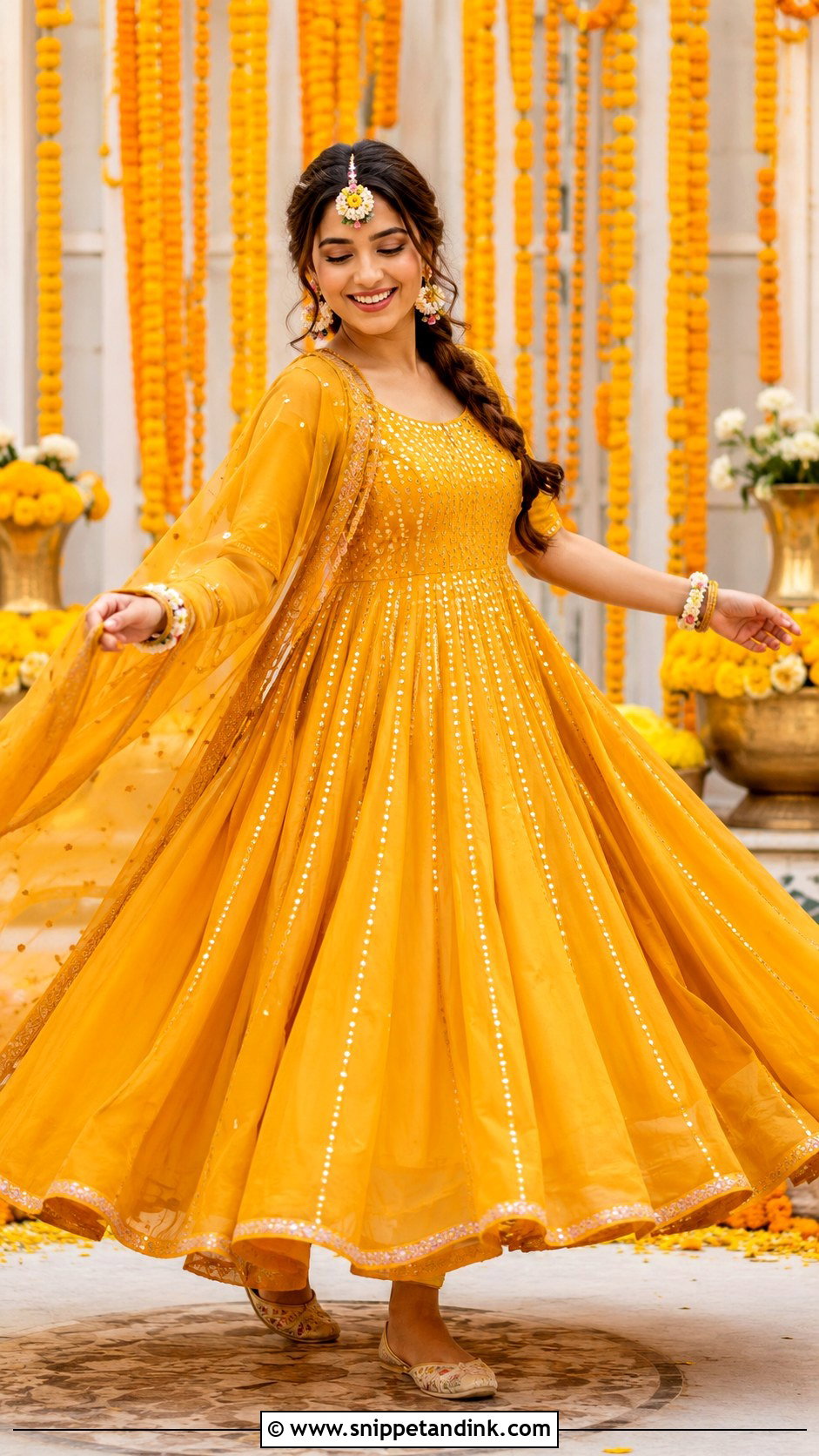
An Anarkali does most of the styling for you because the flare moves in every candid shot. Lemon, marigold, ivory, peach and light green all suit a daytime haldi. I’d avoid heavy cancan underlayers and stiff linings, which feel hot and scratchy over a long ceremony and make sitting on the floor difficult. A sheer dupatta, floral earrings and soft curls are enough. Brides can add a floral maang tikka or haathphool; guests should keep jewelry simple and let the silhouette carry it.
9. Chikankari Kurta Haldi Outfit
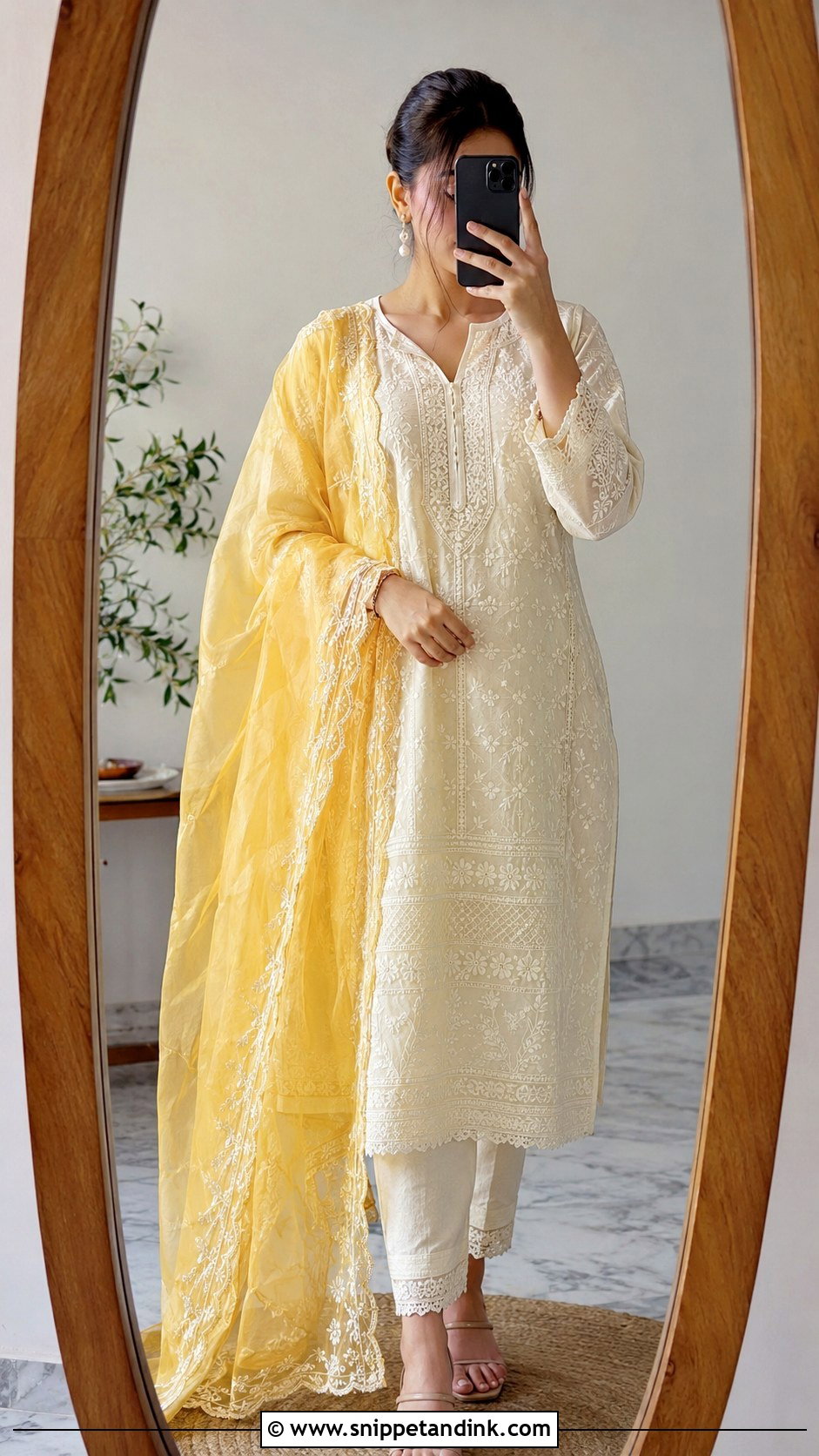
Chikankari is hand embroidery from Lucknow worked on fine, breathable cotton, georgette or mul, and it’s one of the coolest things you can wear on a hot morning. White, ivory, pastel yellow and lemon all look fresh in daylight. Straight pants keep it understated; a sharara makes it dressier. Add a yellow dupatta for colour or stay tonal. Pearl earrings, nude sandals and a neat bun. Brides like it for a quieter pre-ritual look, but I’d warn that fine white chikan is hard to clean once turmeric gets into the embroidery.
10. Mirror Work Haldi Outfit
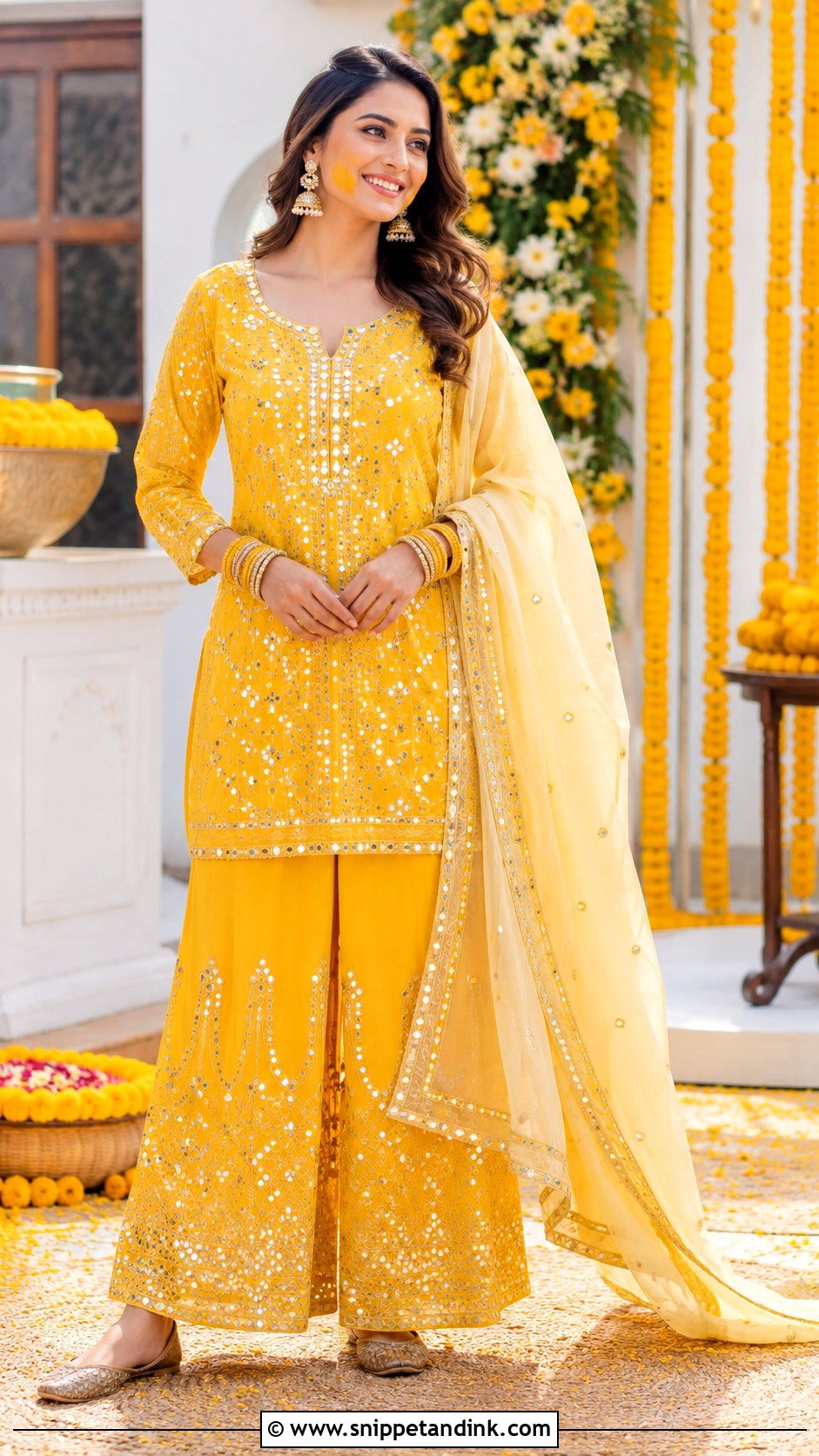
Sunlight bounces off mirror work in a way that shows up well in outdoor photos. A lehenga, sharara or kurta set in yellow, ivory, peach or lime with mirror details looks festive without much jewelry. Placement matters: heavy work on the blouse with a light skirt, or mirror borders on a plain kurta. Dense mirror embellishment gets heavy and the edges can scratch the inner arm, so I go for small scattered pieces. Minimal earrings, bangles and soft makeup. Paste wipes off mirrors easily, which is a small practical bonus.
11. Cape Set Haldi Outfit
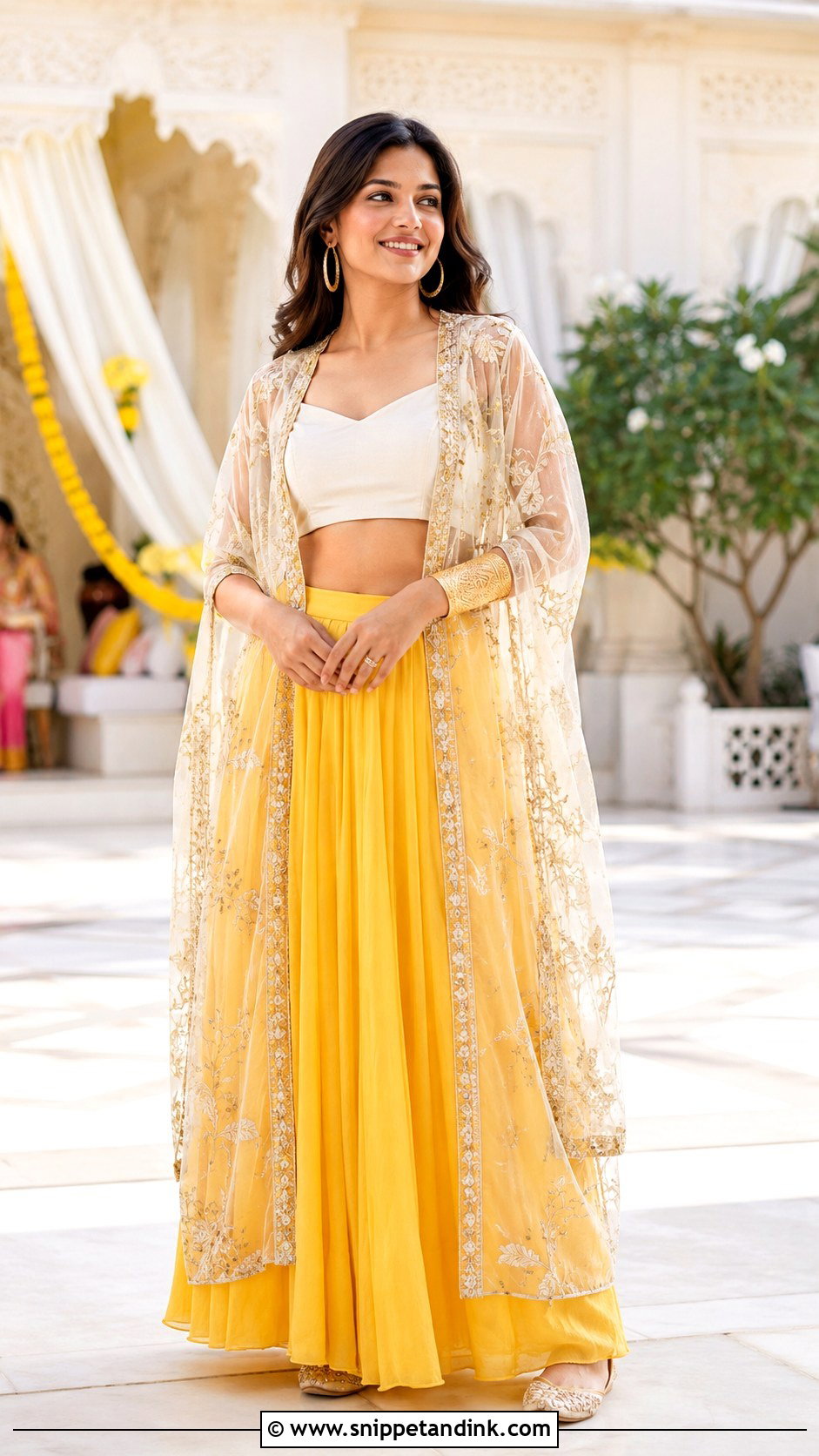
A cape replaces the dupatta, which means nothing to pin, nothing slipping off the shoulder and nothing trailing in the turmeric bowl. Wear it over a crop top and skirt, dhoti pants or palazzos in yellow, ivory or peach. Light embroidery, sequins or mirror details lift it. Sisters and bridesmaids who want an Indo-western look tend to gravitate here. Keep jewelry clean: hoops, a cuff or floral earrings. Block heels are fine on a terrace, but on grass or soft ground I’d switch to embellished flats.
12. Dhoti Pants Haldi Outfit
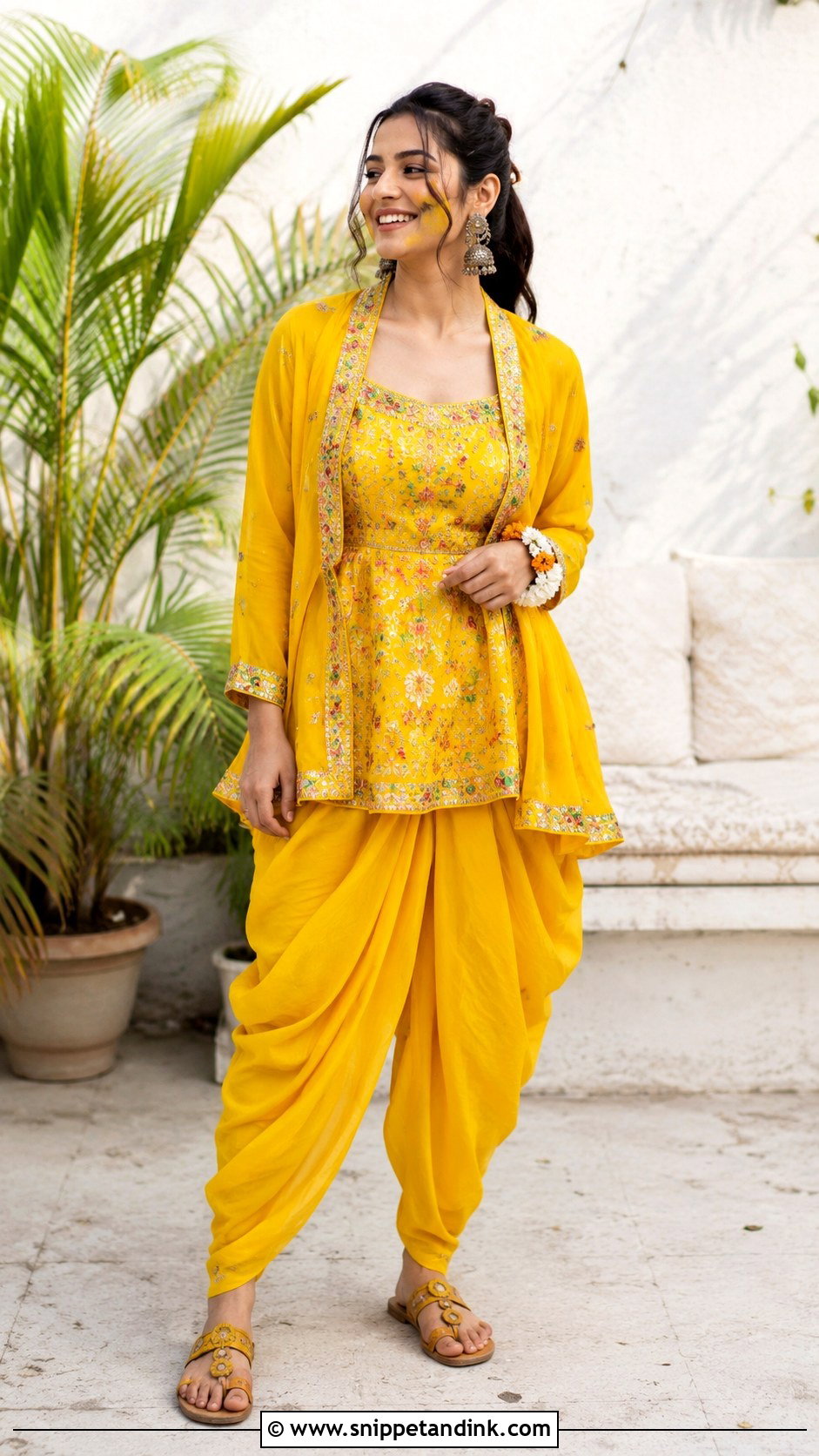
Dhoti pants are made for sitting on the floor, which is exactly what haldi asks of you. Pair yellow or ivory dhoti pants with a short kurti, peplum top, crop blouse or embroidered jacket. Cotton silk, crepe or georgette keeps the drape from looking bulky. Oxidised earrings, floral bangles or a small potli add detail. Younger guests and cousins who’ve had their fill of sarees and lehengas usually love it. Flat juttis or kolhapuris finish the look.
13. Peplum Sharara Haldi Outfit
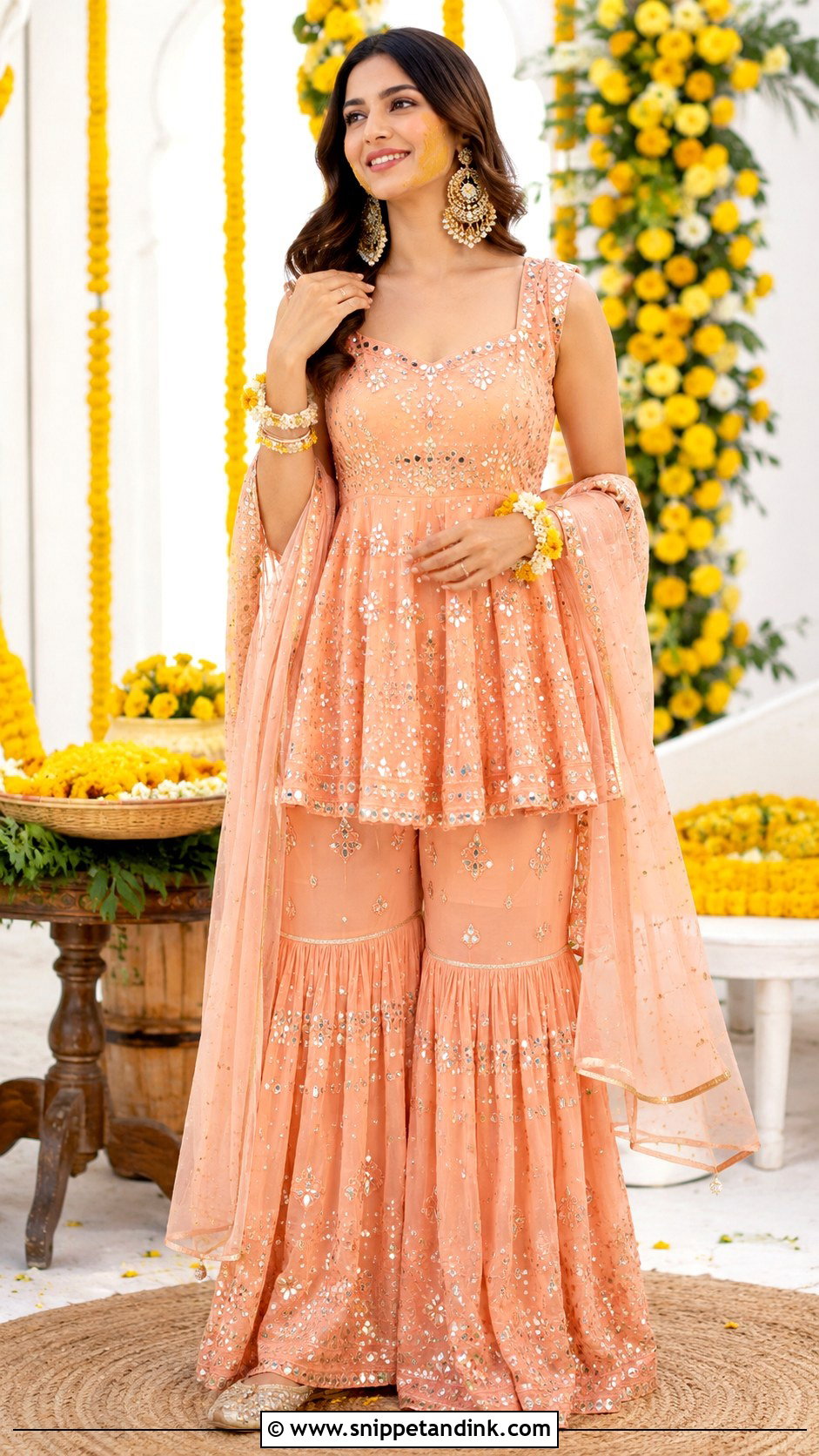
The peplum shapes the waist and the sharara adds volume below, so the balance is flattering on most figures. Yellow, mango, coral, ivory and lime with mirror work, gota patti or floral embroidery all suit it. It gives coverage without a long kurta, and if the top is detailed you can skip the dupatta entirely, which I often suggest for a busy ceremony. Statement earrings, soft waves and embroidered flats. Check the peplum’s flare when seated; very stiff peplums can stick out awkwardly when you sit.
14. Yellow Co-Ord Set Haldi Outfit
Co-ords suit a relaxed haldi with a modern dress code. A matching crop top and skirt, a short kurta and palazzo, or a tunic with wide-leg pants all count, and the single colour makes it look intentional. Textured cotton, linen blends, georgette or light silk give it finish. Add a printed dupatta, floral earrings or a statement bangle if you’d like more festivity. Guests get a lot of rewear from a co-ord. Flats, a small bag and fresh, natural makeup keep it daytime.

15. Printed Lehenga Haldi Outfit
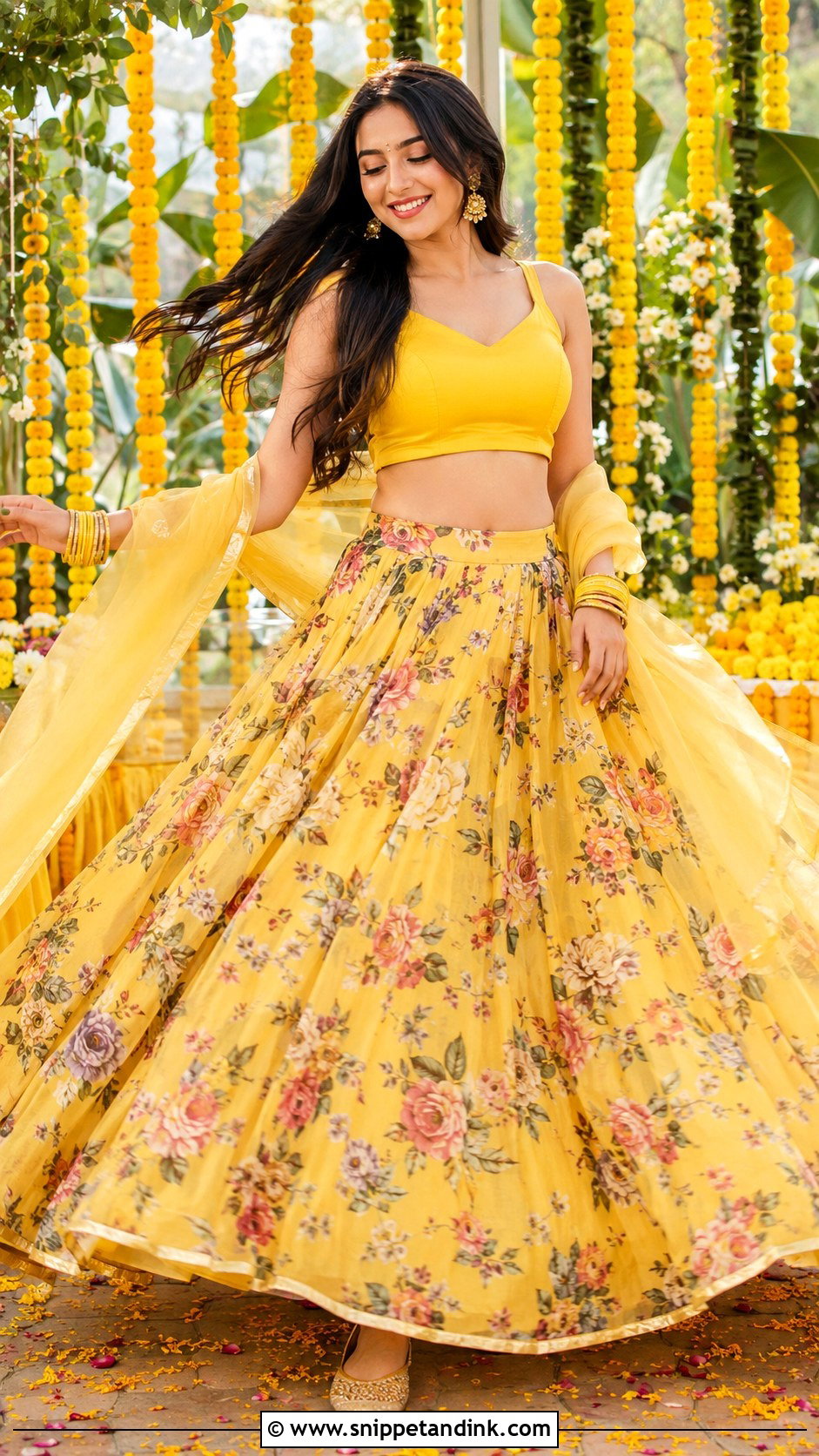
Printed lehengas are lighter and cheaper to risk than embroidered ones, which is a good reason to choose one for a messy ceremony. Florals, block prints, tropical or abstract designs on yellow, orange, peach or green all suit the mood. A plain blouse calms a busy print; a matching printed blouse makes it bolder. A sheer dupatta adds tradition. Small earrings, bangles and comfortable juttis. Bridesmaids and guests wear it easily, and a bride can too with floral jewelry for a playful pre-wedding look.
16. Organza Saree Haldi Outfit
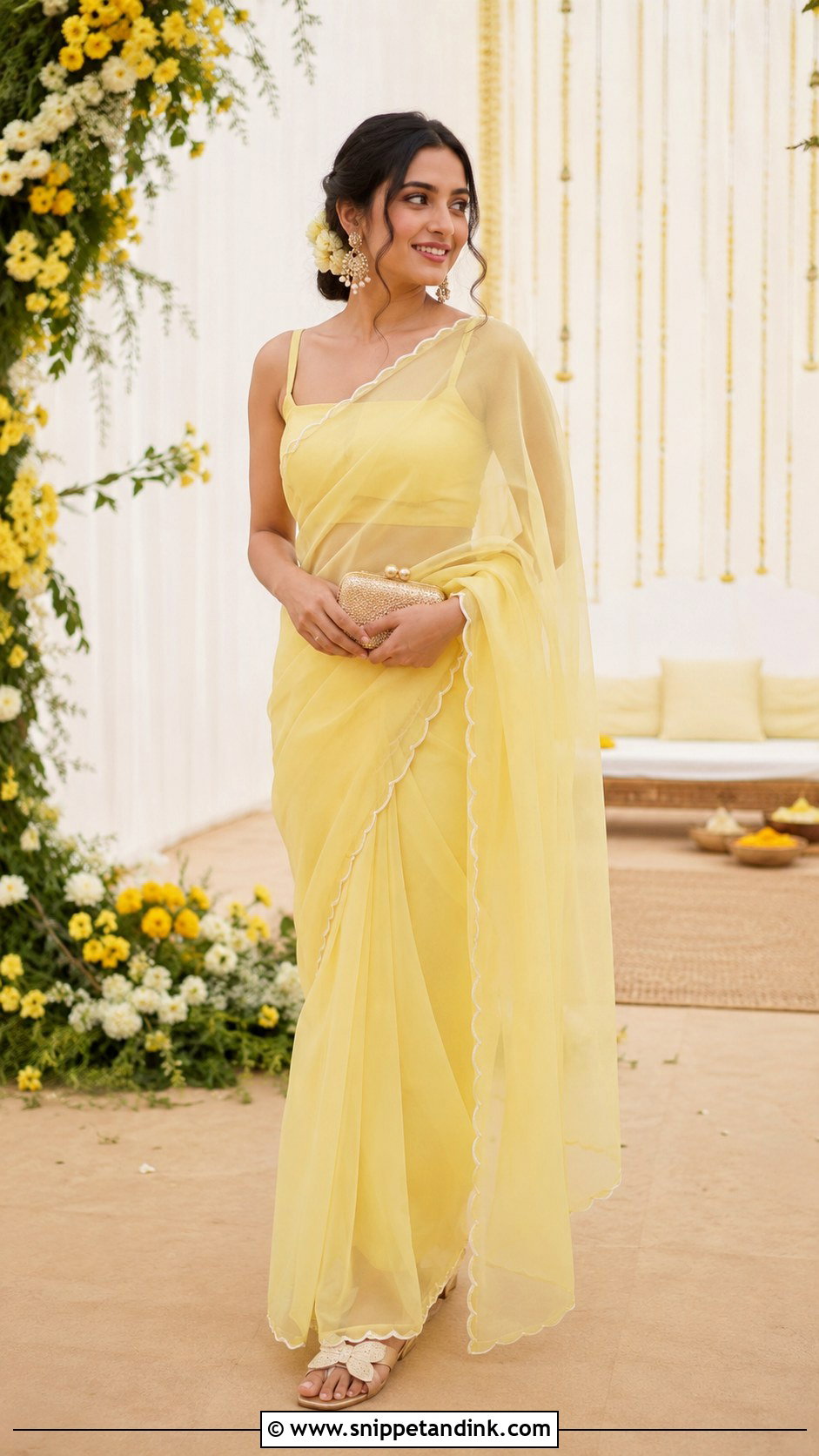
Organza looks airy and catches soft daylight, but it has a crisp body that doesn’t drape like chiffon. I pin the pleats and pallu firmly so it holds, and I warn wearers that organza creases sharply if you sit on it for long. Yellow, ivory, peach or pastel green with floral embroidery, scalloped edges or mirror accents. A simple blouse, pearl earrings, flowers in the hair and a small clutch. Sisters, guests and family members who want elegance without weight suit it, and it sits well with more formal haldi decor.
17. Cotton Saree Haldi Outfit
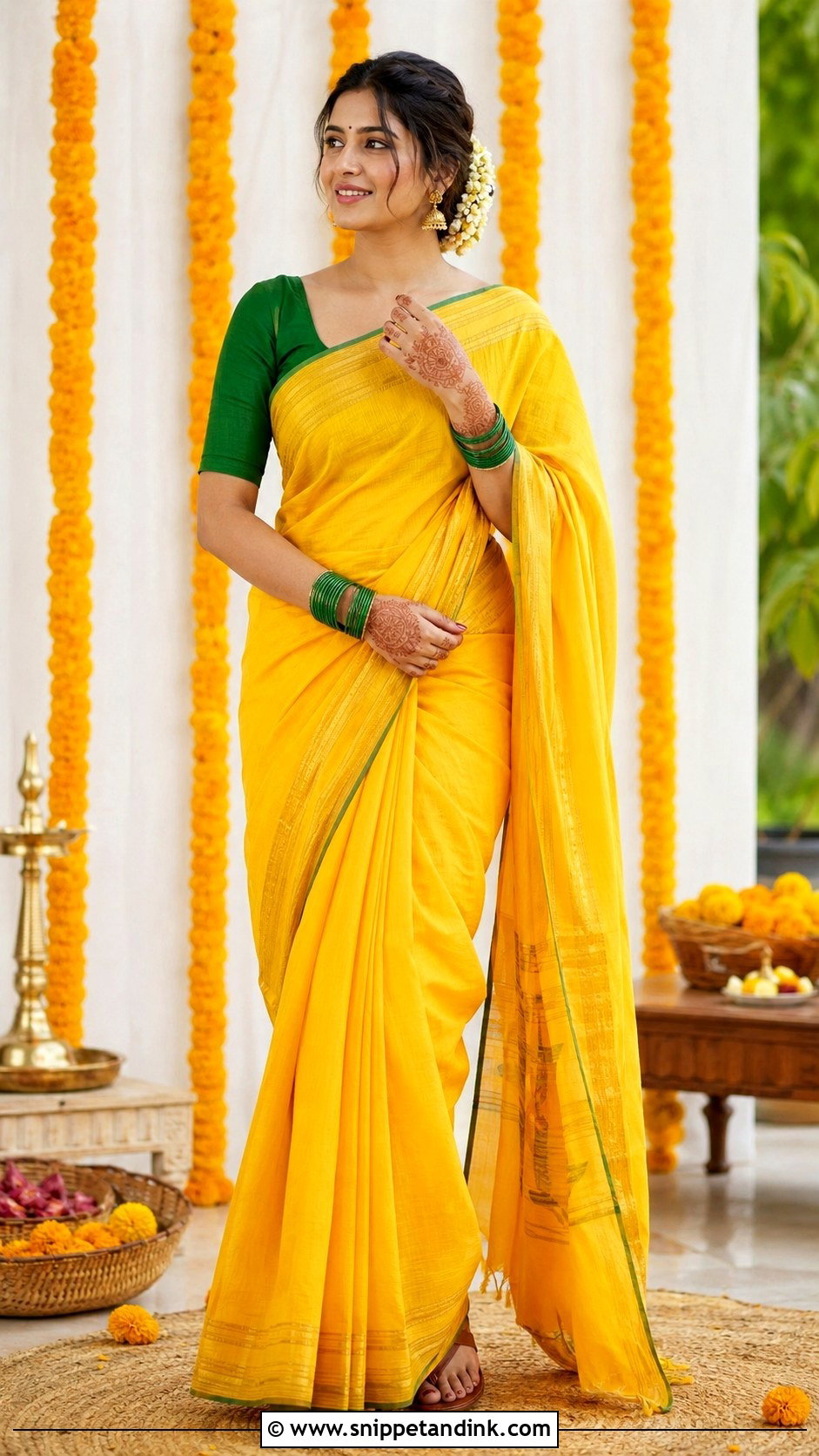
Cotton is the fabric I’d pick for a home haldi on a hot day, full stop. It breathes, it washes, and it takes the wear of sitting, bending and paste. A yellow, turmeric, white, orange or green cotton saree with a woven border or block print looks grounded and festive. Add a fitted blouse in a contrast shade, glass bangles, small jhumkas and a gajra. Flat sandals or kolhapuris keep it practical. Mothers, aunts and brides who prefer simplicity all look right in it, and it goes straight back into your wardrobe afterward.
18. Lime Green Haldi Outfit
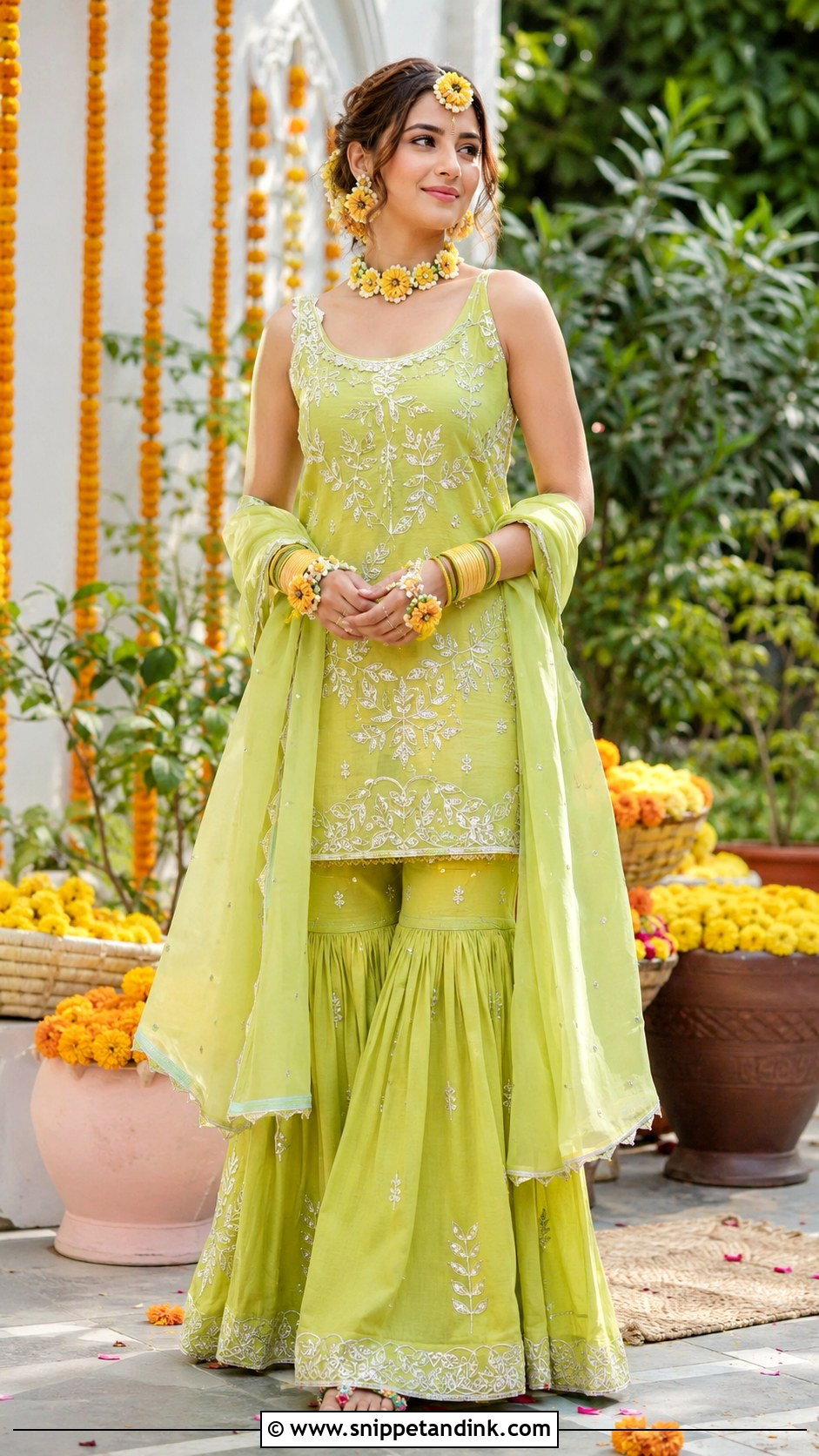
Lime is the shade I suggest when someone is tired of yellow but still wants to look like she’s at a haldi. It sits brightly beside marigold decor and turmeric. Choose a lime green lehenga, sharara, kurta set or saree with white, gold or mirror details. Keep accessories light so the colour stays clean. White or yellow floral jewelry suits it, along with embroidered flats and dewy makeup. Some brides choose it to stand apart from the sea of yellow around them.
19. Orange Haldi Outfit
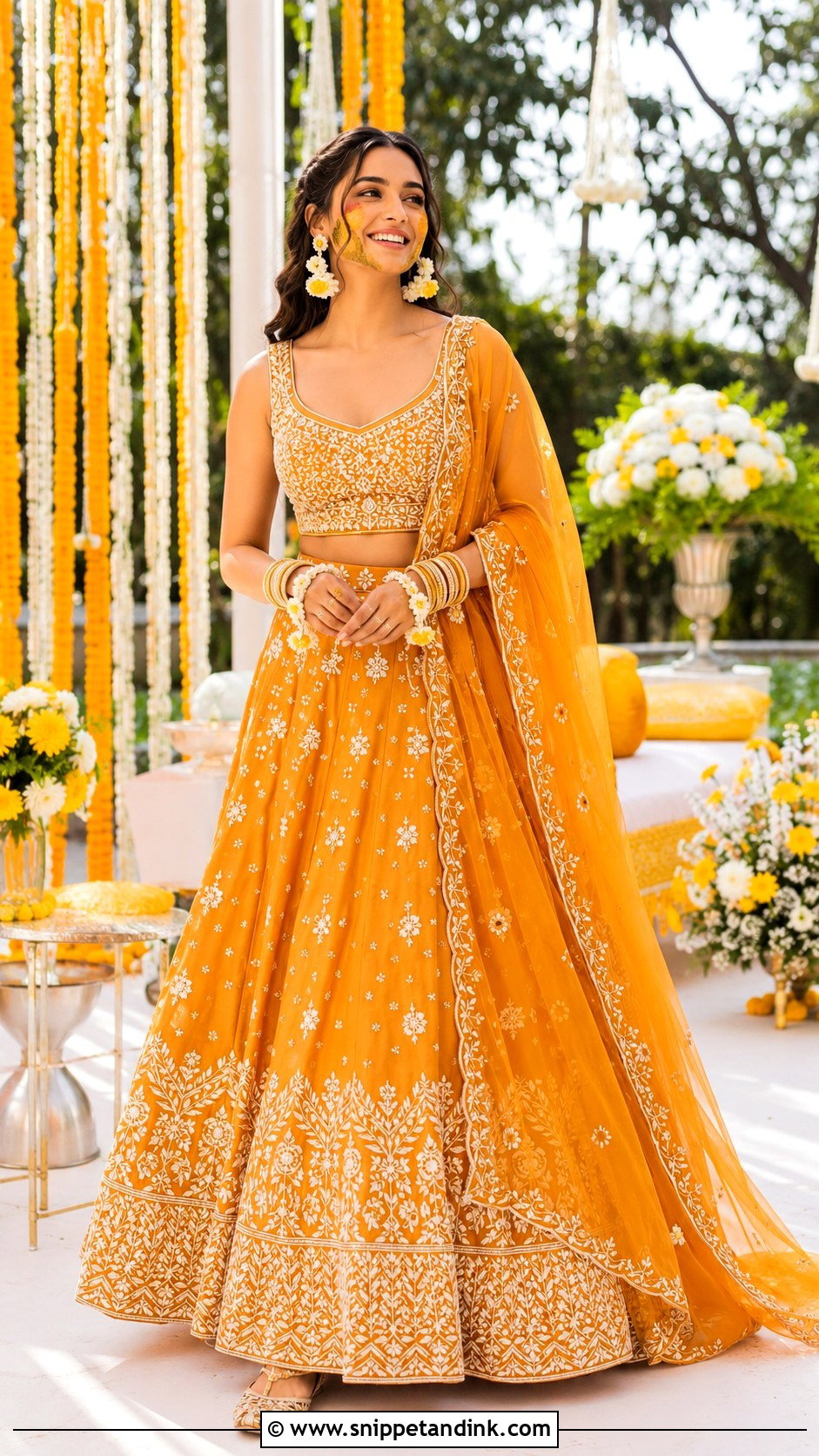
Marigold, tangerine and saffron are warm and loud in the best way, and they read beautifully in daytime photos. A lehenga, saree, sharara or kurta set all work. If the shade feels too strong for you, ivory embroidery, gold borders or a soft dupatta tone it down. Floral jewelry, gold bangles and natural makeup suit it. Choose juttis or flat sandals for outdoor movement. The bride’s sister or a guest who wants to stand out within the haldi palette often picks orange, and turmeric stains barely show on it.
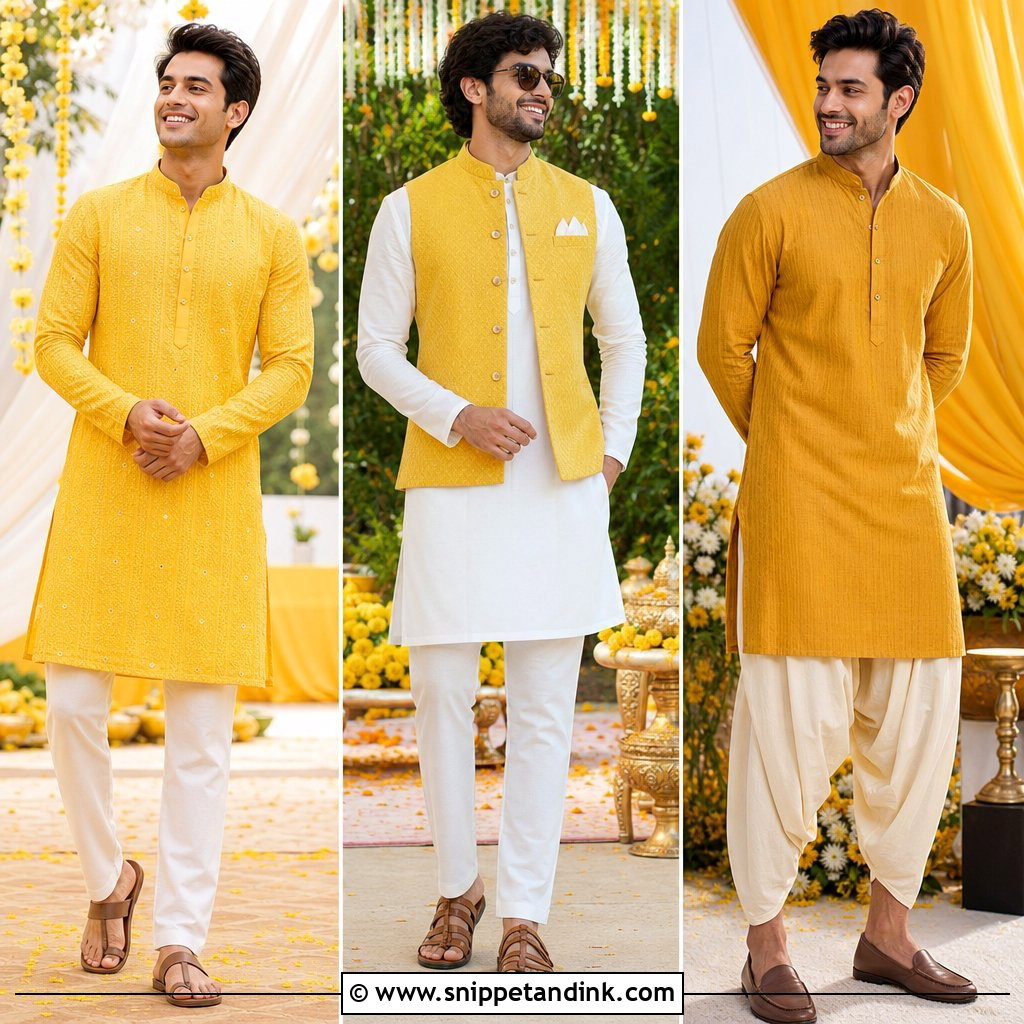
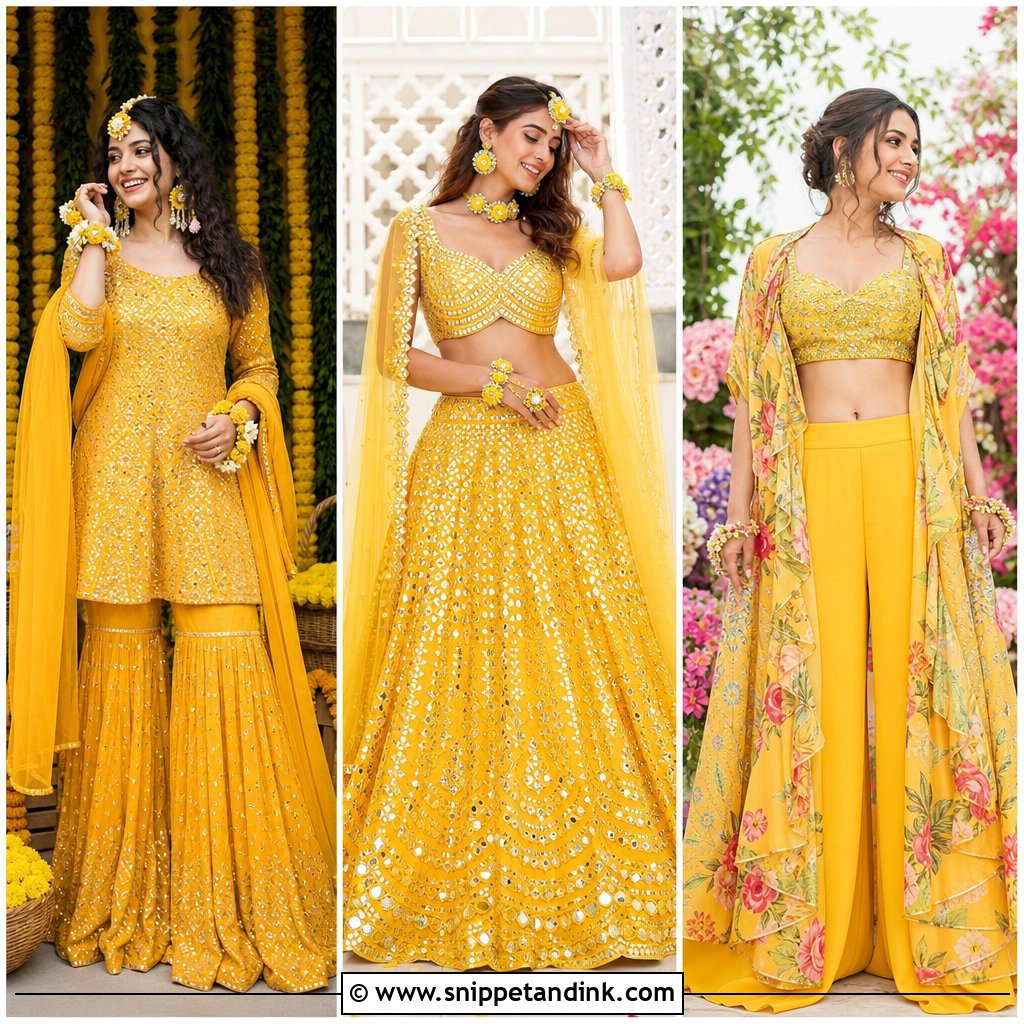
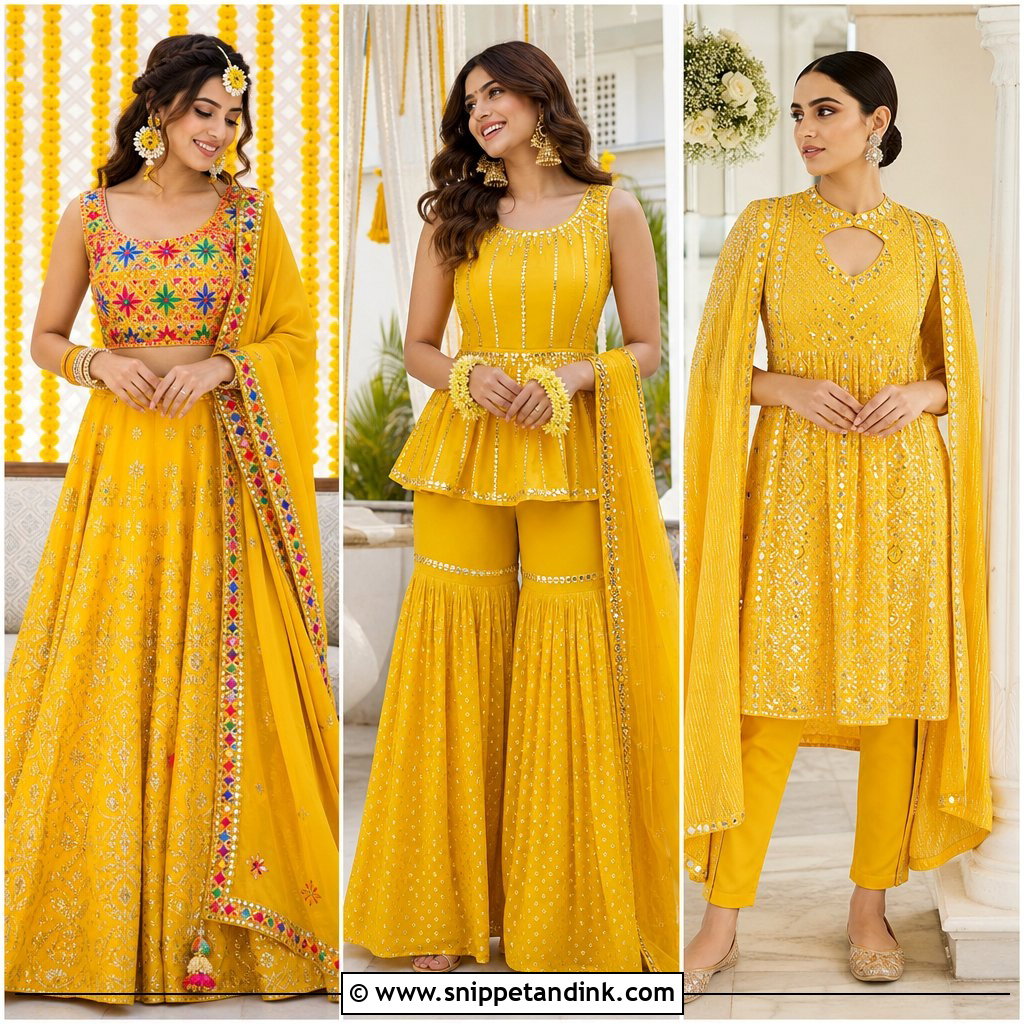
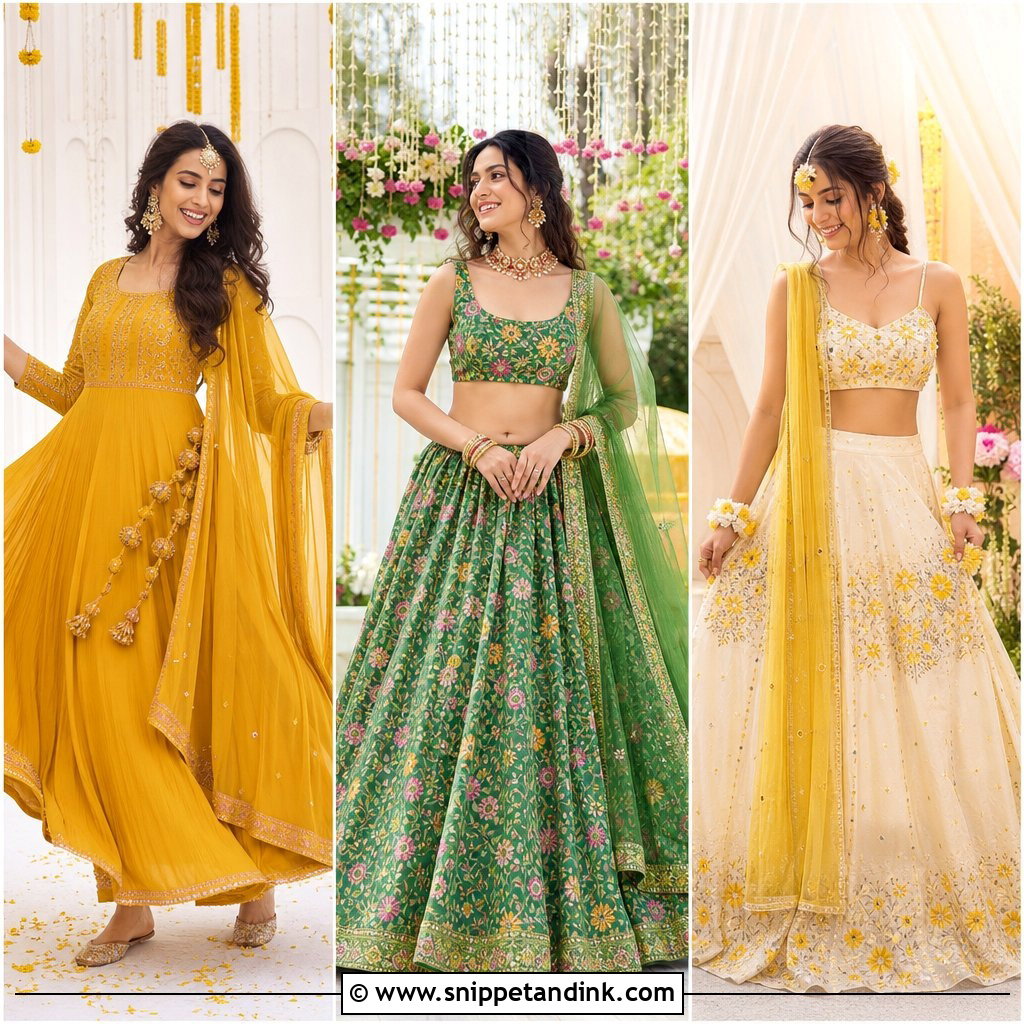

20. Peach Haldi Outfit
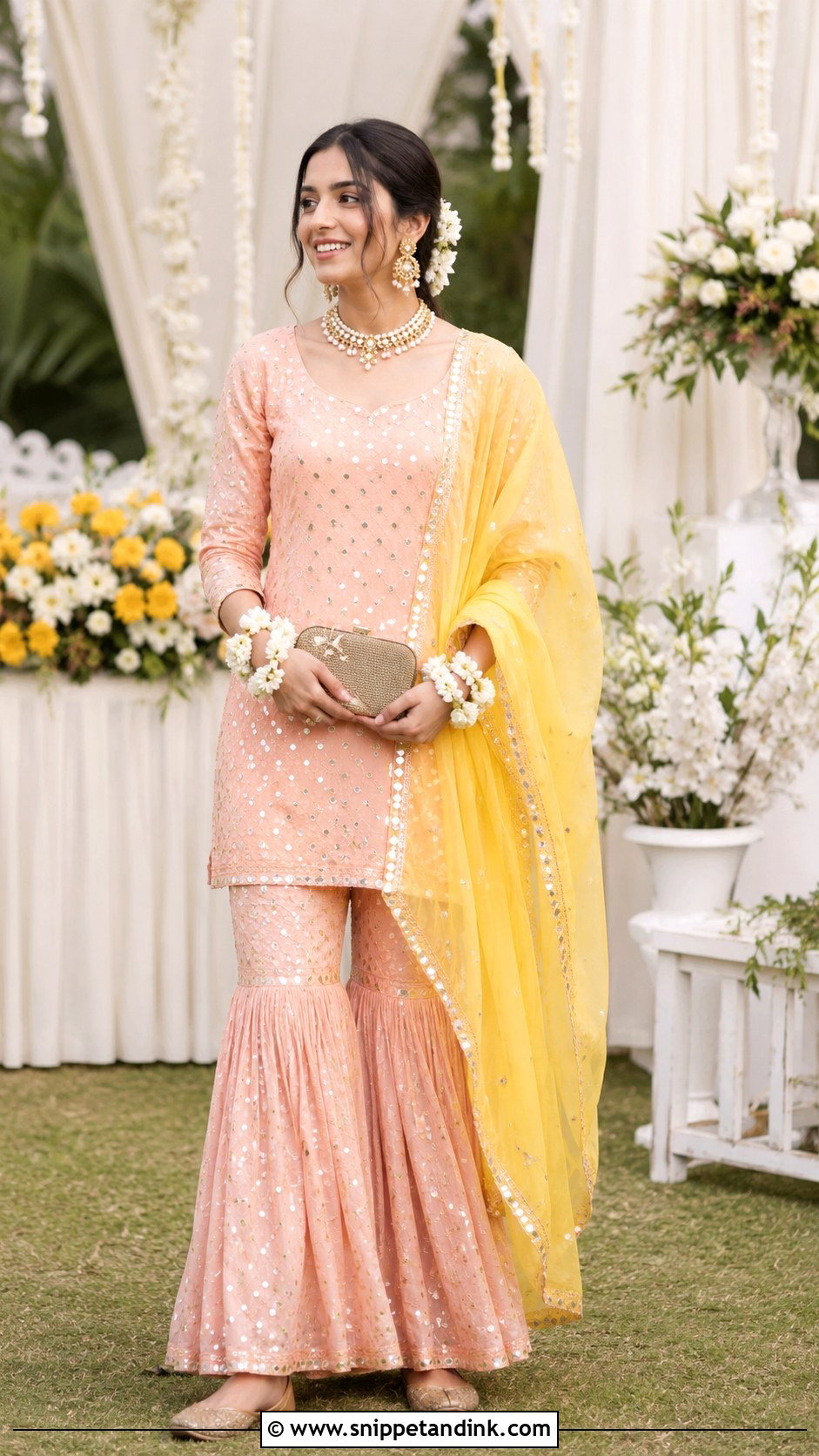
Peach is gentler than yellow and flatters a wide range of skin tones because it carries warmth without glare. A peach sharara, saree, lehenga or Anarkali with light embroidery or subtle mirror work looks fresh with gold, ivory or floral accessories. A yellow dupatta brings the haldi theme in without making it loud. Pearl jewelry, fresh flowers and nude or gold flats. Garden and poolside settings suit it, and so do brides who want a softer pre-wedding look. Pale peach does show turmeric, so treat any marks the same day.
21. Ivory And Gold Haldi Outfit
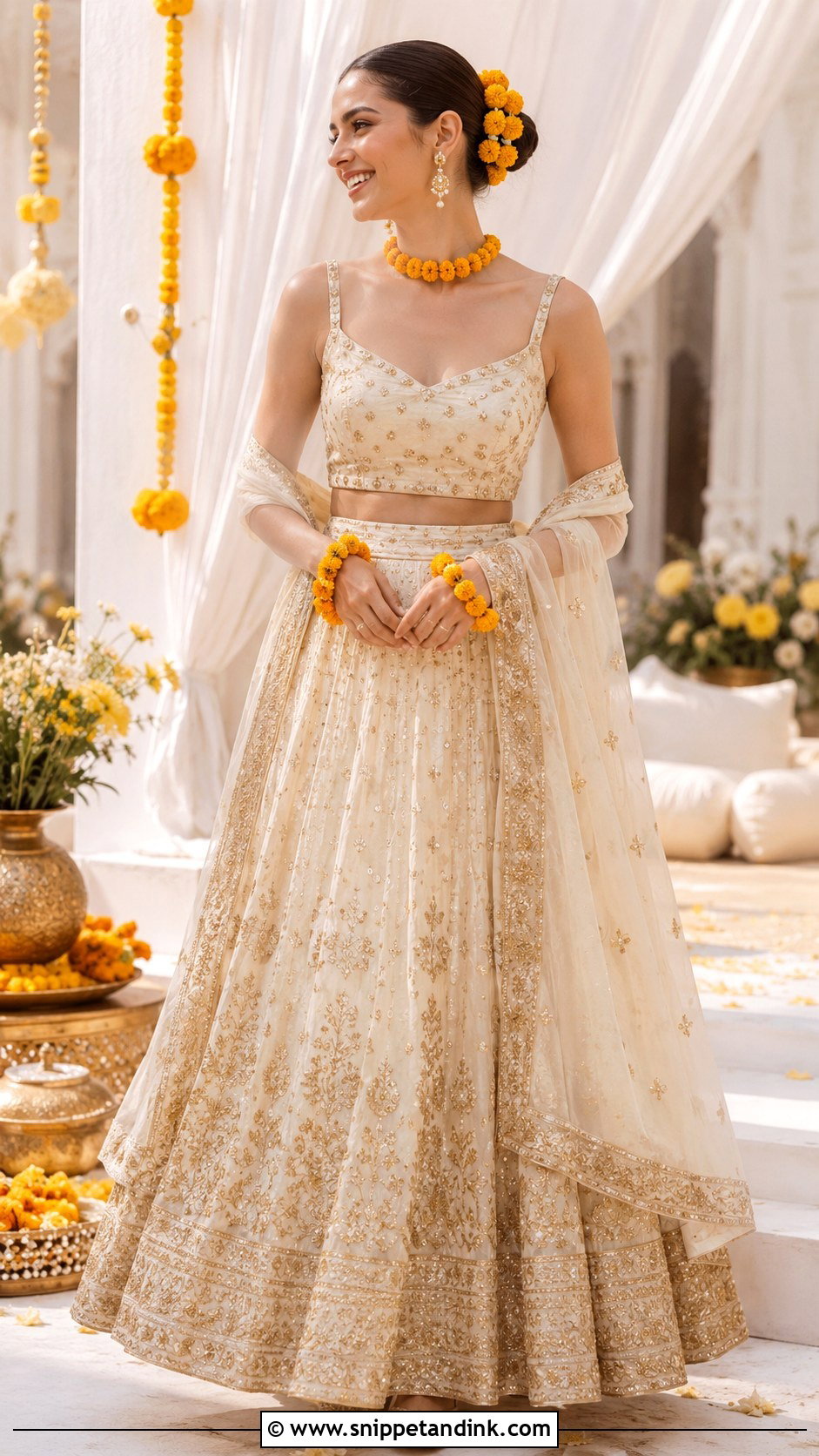
Ivory and gold is the polished choice, best for whoever will be posing more than getting covered in paste. An ivory lehenga, saree or kurta set with gold threadwork, sequins or gota borders, plus yellow floral jewelry or a marigold dupatta, ties it to the ceremony. Fresh makeup, delicate jewelry, gold juttis, pearl earrings and a neat hairstyle. I’d honestly steer a bride away from ivory if her family applies haldi generously; save this palette for the sisters and mothers standing beside her.
22. Yellow Jumpsuit Haldi Outfit
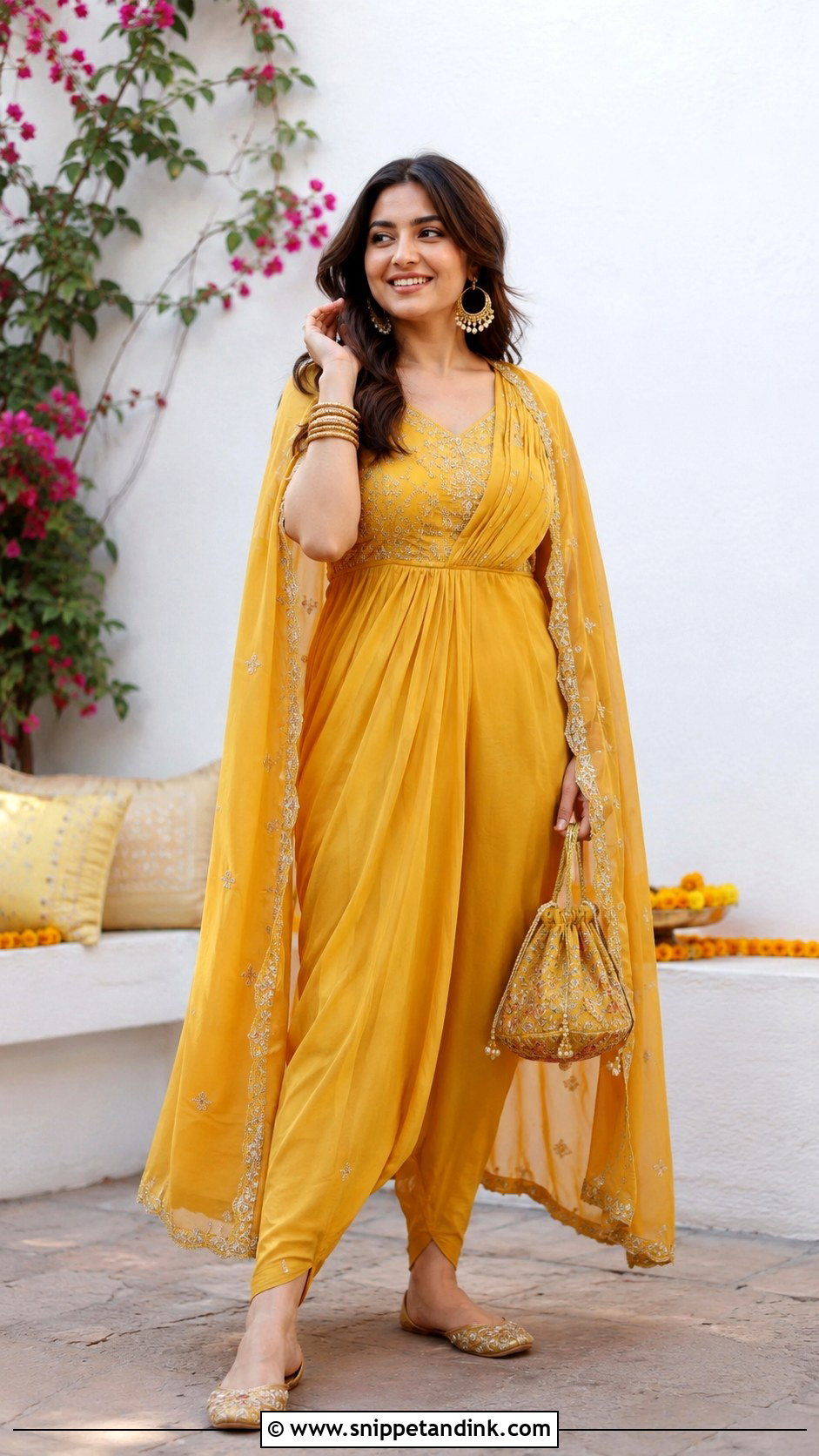
Draped, caped or belted ethnic jumpsuits with mirror work or embroidered trim give you one piece to manage and nothing to adjust. You can dance, sit and help with the ceremony without holding a dupatta in place. Add a sheer cape or light jacket for coverage. Hoops, bangles and embellished flats keep it festive. Check the bathroom situation before you commit: a one-piece is quick to wear and slow to take off at an outdoor venue. Bridesmaids, cousins and guests who prefer Indo-western fashion love the rewear value.
23. Skirt And Crop Top Haldi Outfit
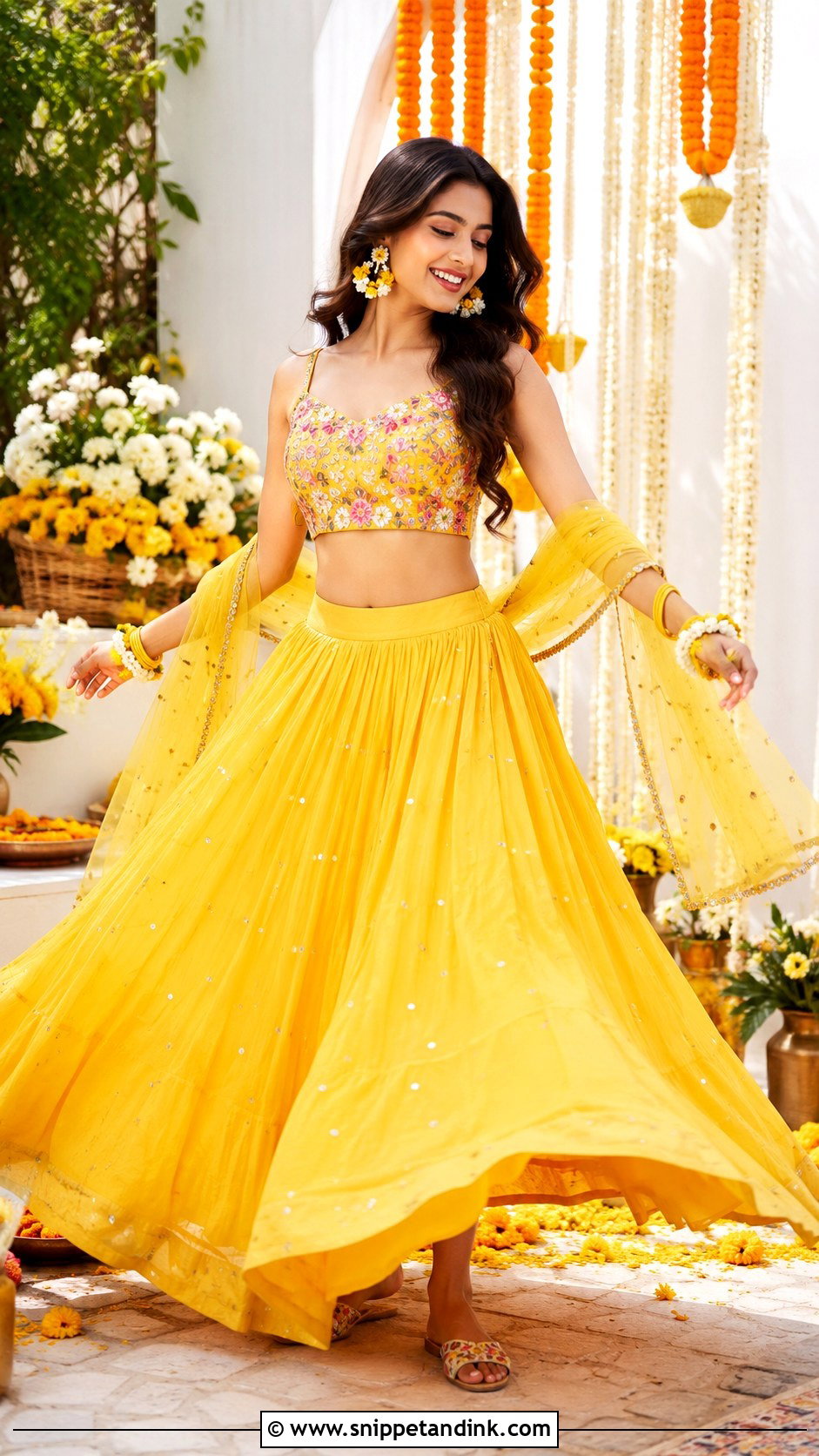
You get the look of a lehenga with half the effort. A flowy skirt in yellow, ivory, orange or a floral print, with a fitted crop top or embroidered blouse, does it. Add a dupatta for tradition or skip it for a modern line. It moves well for dancing, twirling and group shots, and bridesmaids can coordinate in a shared colour family. Floral earrings, bangles and flat sandals. A bride can make it her own with a floral veil or headpiece. Choose a skirt with a lining; unlined light skirts go see-through in bright sun.
24. Jacket Kurta Haldi Outfit
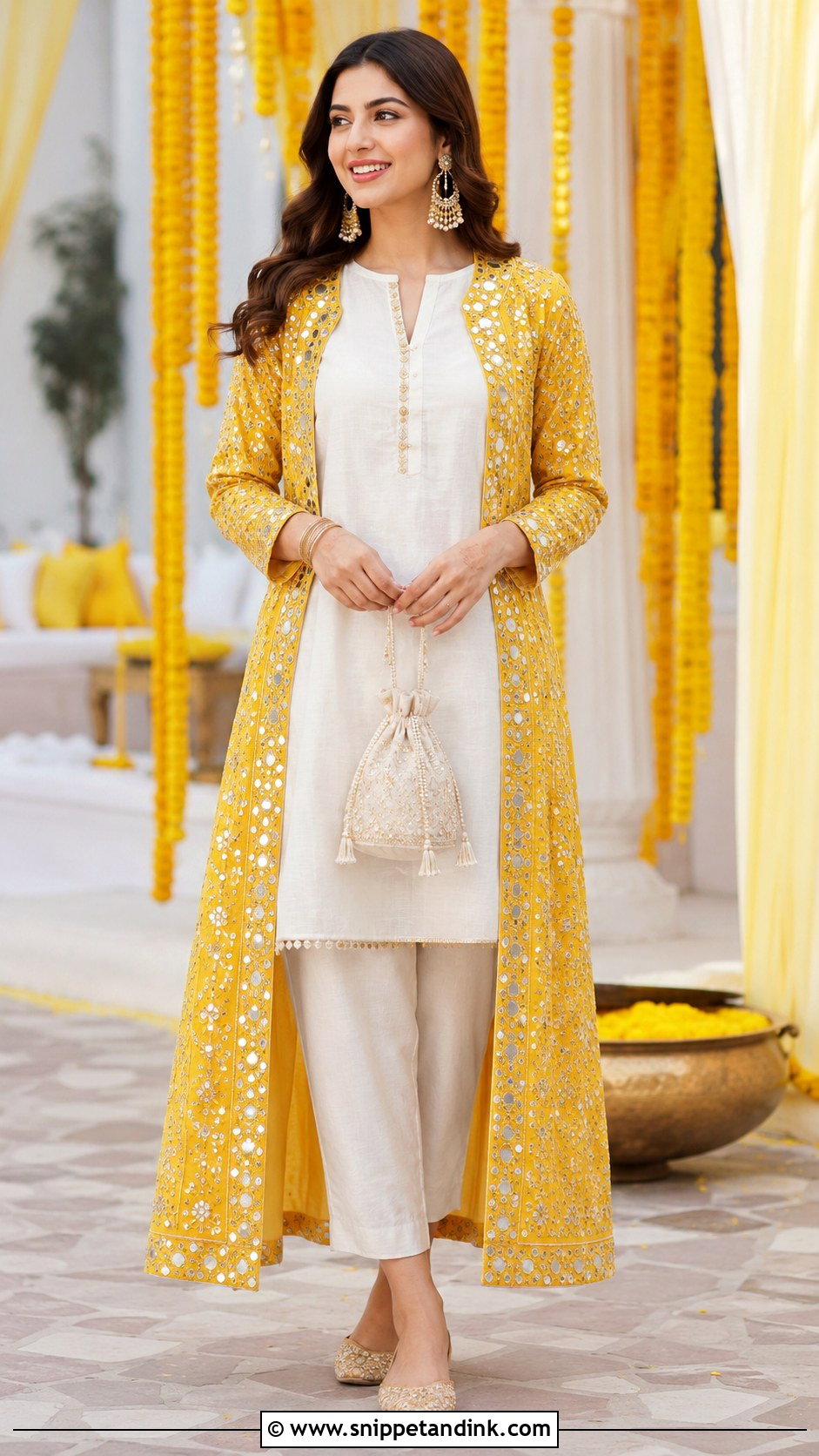
A jacket kurta set layers festive detail on top of a simple base: kurta and pants underneath, an embroidered, printed or mirror-work jacket over them. No dupatta needed, which is practical for rituals. Yellow, ivory, lime, peach or orange depending on your role in the wedding. A sleeveless jacket stays cool; a long one looks dramatic but can be warm by noon. Juttis, earrings and a small potli. If the jacket takes a turmeric hit, you can slip it off and the kurta still looks complete.

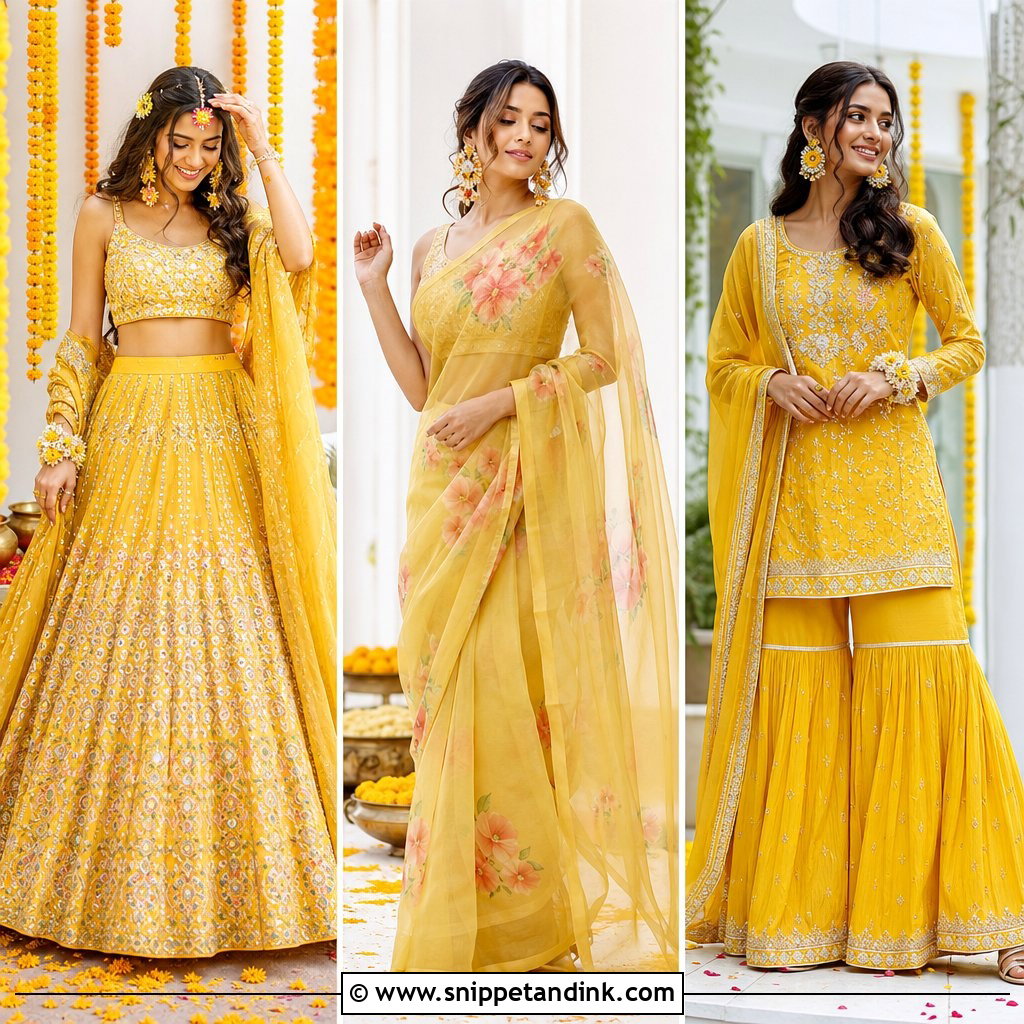
25. Pastel Haldi Outfit
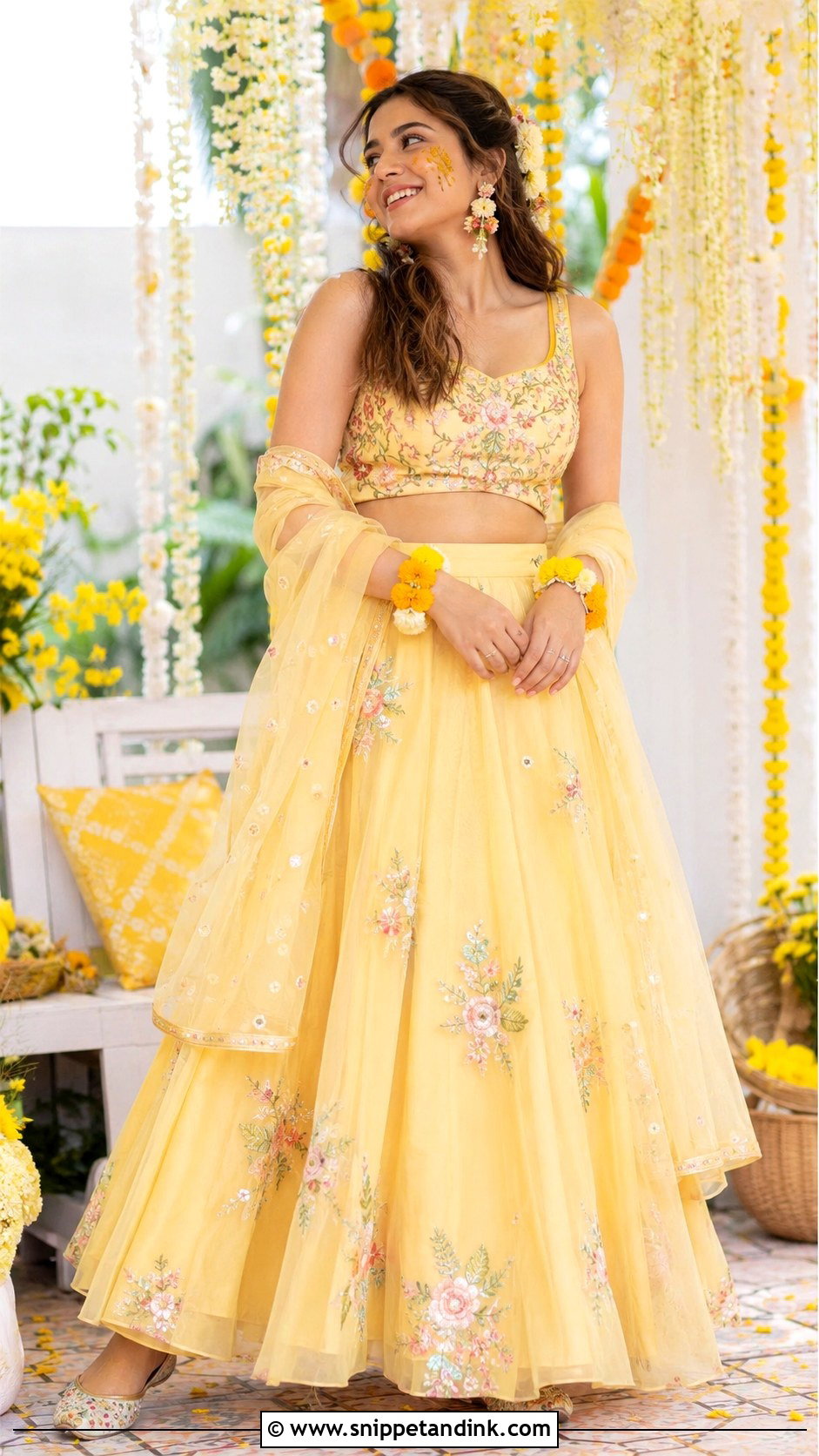
Butter yellow, mint, powder blue, blush peach and pale lavender with gold or floral details give a softer, modern palette. A pastel lehenga, saree, sharara or kurta set can all work depending on what you’re comfortable in. Add yellow flowers or marigold bangles to keep it connected to the ritual. Neutral shoes and minimal jewelry let the colour stay delicate. Guests and bridesmaids wear pastels easily; brides can too for a dreamy, understated look. Pastels are the least forgiving shades on this list with turmeric, so plan to wash or dry clean promptly.
Turmeric on Fabric, and How Much of It Comes Out
Turmeric’s colour comes from curcumin, a pigment that binds quickly to natural fibres and is often carried in an oily paste. The honest answer is that deep yellow, mustard and orange outfits hide whatever stays, while white, ivory and pastels may never be quite the same. Here’s how I’d handle it once the ceremony ends.
- Scrape off wet or dried paste with a blunt edge. Don’t rub, which pushes pigment deeper.
- Rinse the stain from the back of the fabric with cold water, so it flushes out rather than through.
- On washable cotton, work in a little liquid dish soap to cut the oil, then wash as normal. Don’t panic if the mark turns reddish when soap touches it; turmeric changes colour with alkali and goes back to yellow once rinsed.
- Dry the garment in sunlight. Curcumin fades in strong light, and a day in the sun often removes the last trace on cotton.
- Send silk, organza, chikankari and anything embellished straight to a dry cleaner, and tell them it’s turmeric. Home treatment on these fabrics risks watermarks and loosened embroidery.
If you’re set on ivory or pastel, I’d buy an outfit you’re comfortable treating as single-use, or keep an old dupatta to drape over it while the paste is being applied.
Dress for the Paste First, the Photos Second
The best haldi outfit is festive, comfortable and ready for turmeric, flowers, music and a lot of movement. You’ve got options for every role here, from a classic yellow lehenga for the bride to kurta sets, floral sarees, shararas, jumpsuits and pastels for guests and bridesmaids. Prioritise breathable fabric, secure draping, light jewelry and flat shoes. Traditional leans yellow, mustard and orange; modern leans ivory, lime, peach or a co-ord. Above all, pick something you won’t worry about, because the people who enjoy haldi most are the ones who don’t mind getting a little yellow.
You'll Like These Ideas:









Leave a Reply