
The haldi is the messiest event of an Indian wedding and often the happiest, so what you wear has to cope with turmeric, flowers, water and a lot of hugging. Yellow is still the default, but modern Haldi outfits now take in ivory, orange, lime, pastels, florals, mirror work, capes, co-ords and draped fusion pieces. Your role decides more than the trend does. The bride is the one sitting on the low stool being covered in paste; bridesmaids and guests are standing, dancing and passing bowls. Start from that, then pick the fabric and color. Below are twenty-five outfits, with a note on each about who it really suits.
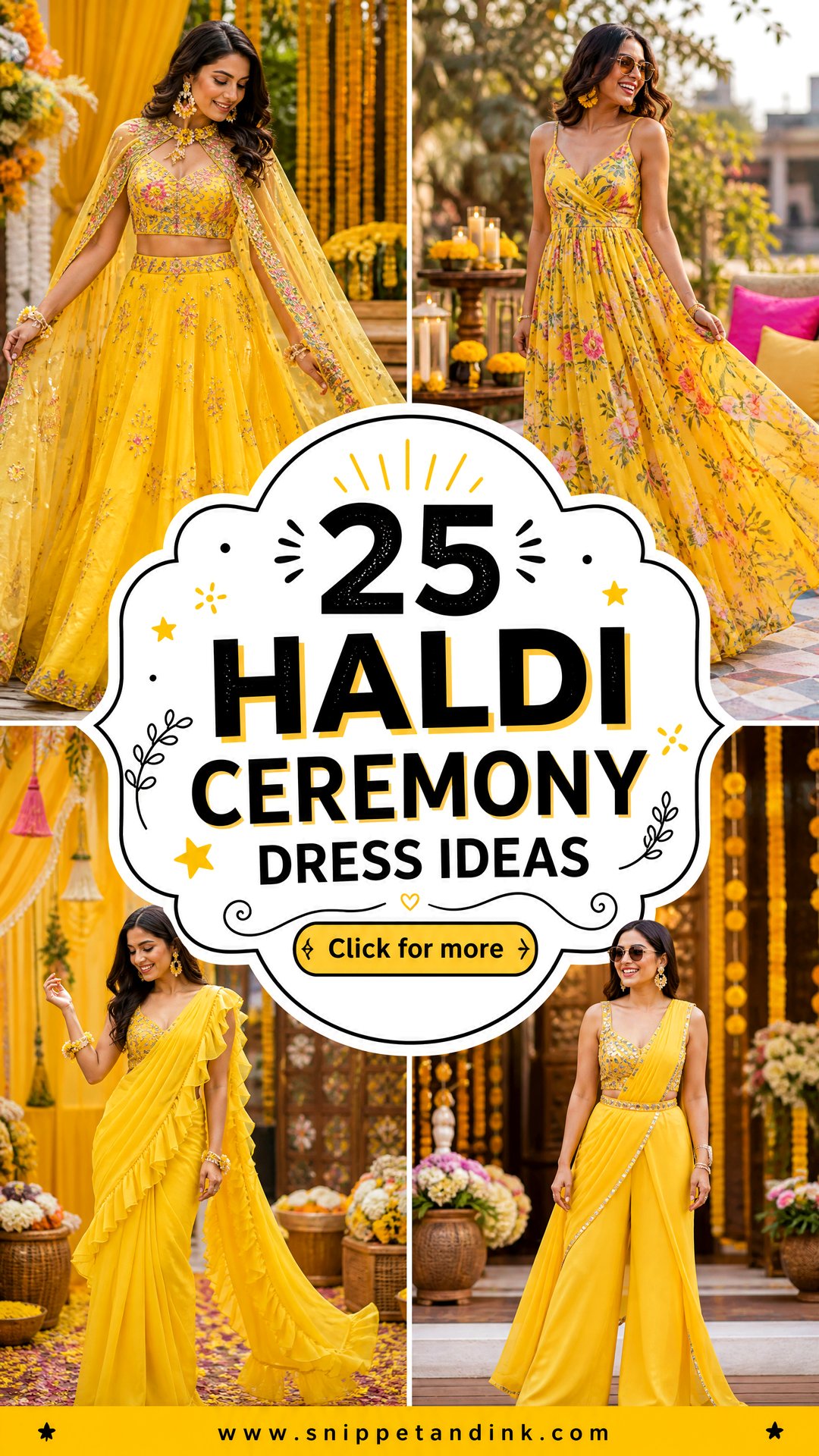
The Bride on the Stool Needs a Different Outfit From Everyone Else
At most haldis, the bride sits on a low wooden stool, often with family on either side, and relatives take turns applying paste to her face, neck, arms, hands and feet. That simple fact shapes her outfit more than any trend.
- Sleeves: short, cap or elbow sleeves let the paste reach the arms without soaking the fabric. Long fitted sleeves get pushed up and stretched.
- Neckline: a slightly open or sweetheart neckline gives room for paste on the collarbones; a high neck ends up stained at the edge.
- Hem: an ankle-length skirt or sharara can be lifted for paste on the feet without a struggle.
- Head: skip a heavy dupatta on the head for the paste itself; it slips forward and catches turmeric.
Sitting low with your knees bent is also the least flattering angle for stiff fabric, so I look for skirts that fold softly. Guests and bridesmaids have a different job: they stand, dance, carry bowls and get the odd splash. For them, the rules are simpler. Light fabric, flat shoes, and a color that can take a little yellow.
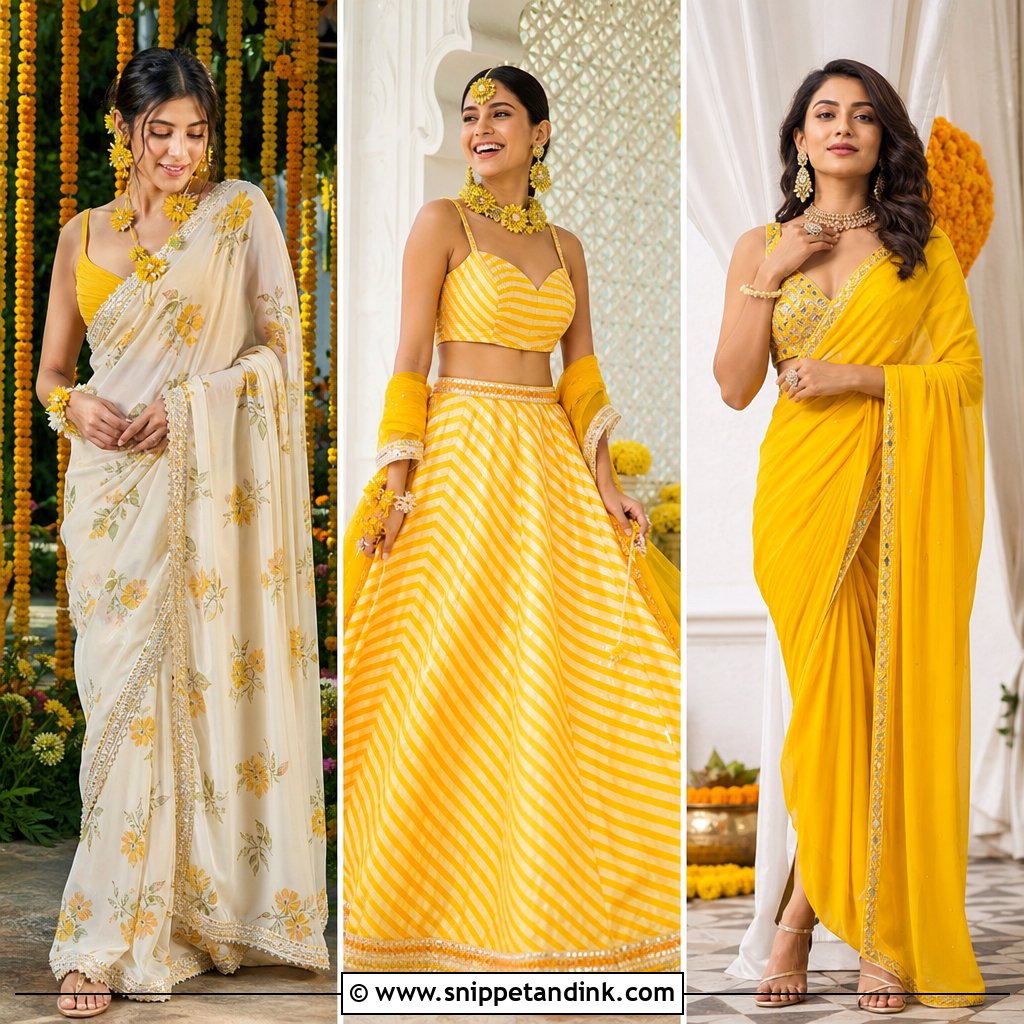
1. Yellow Lehenga For Haldi Ceremony
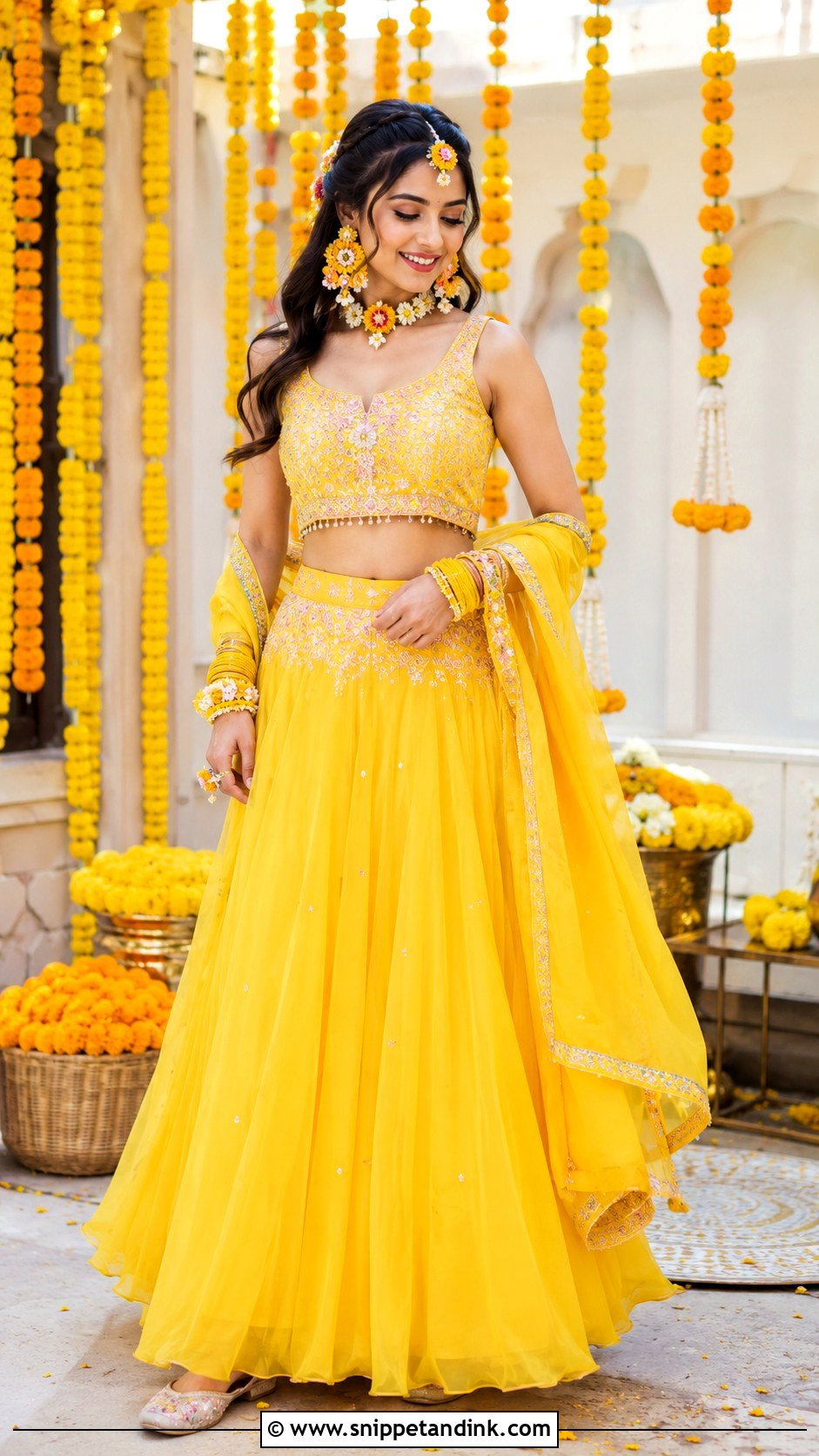
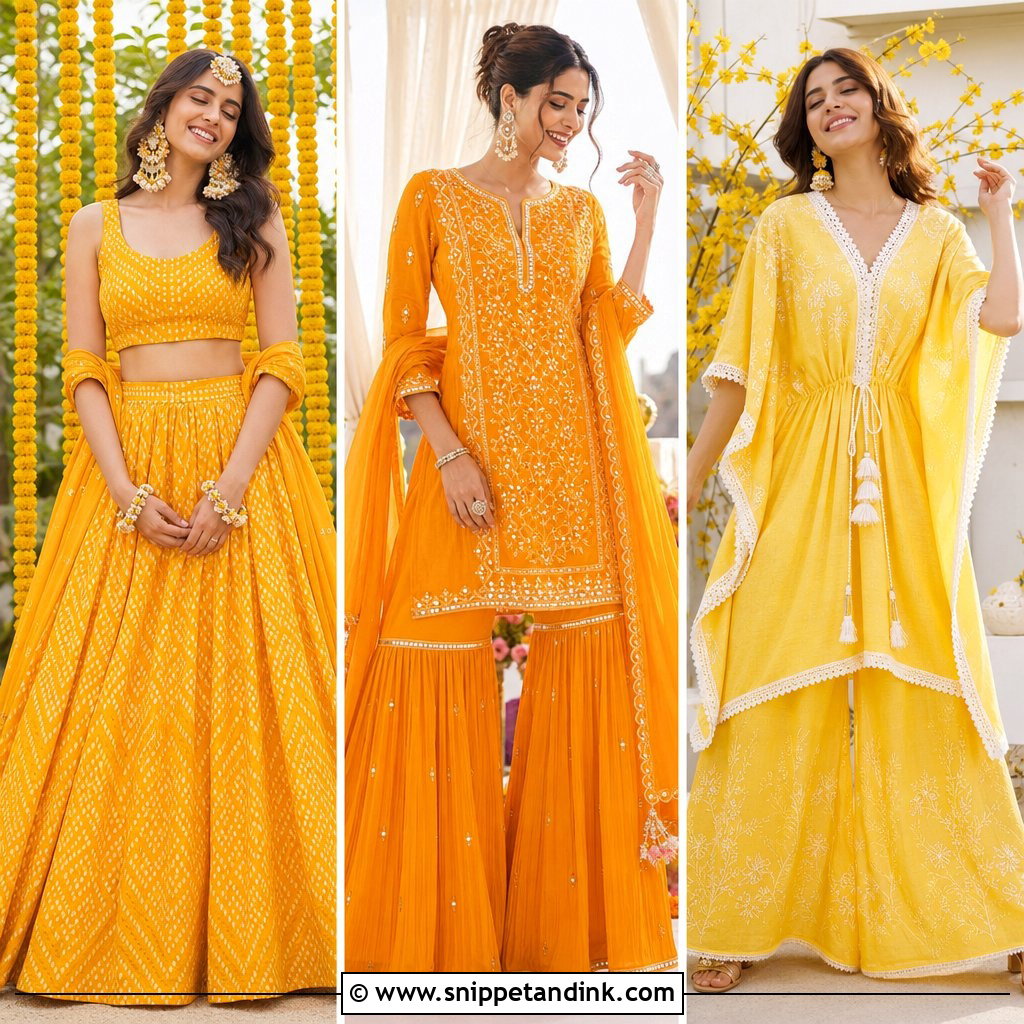
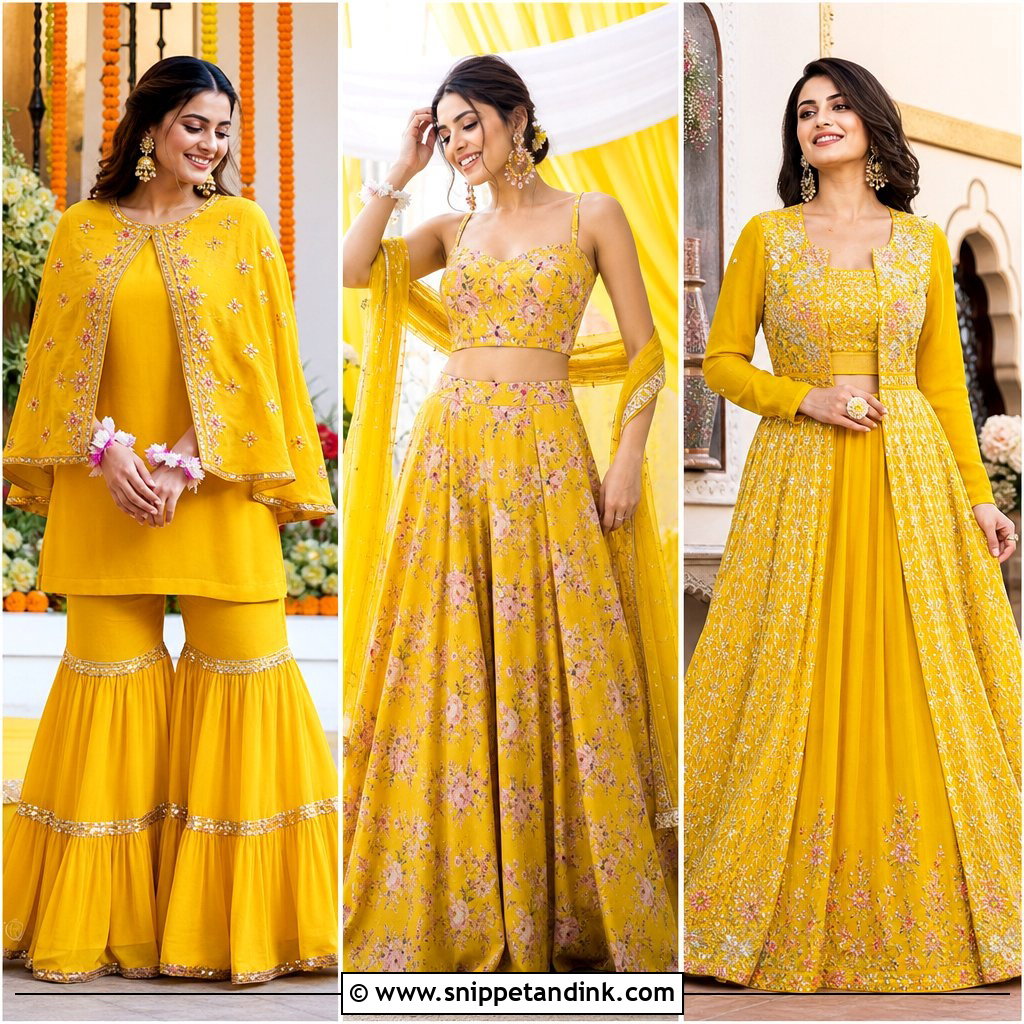
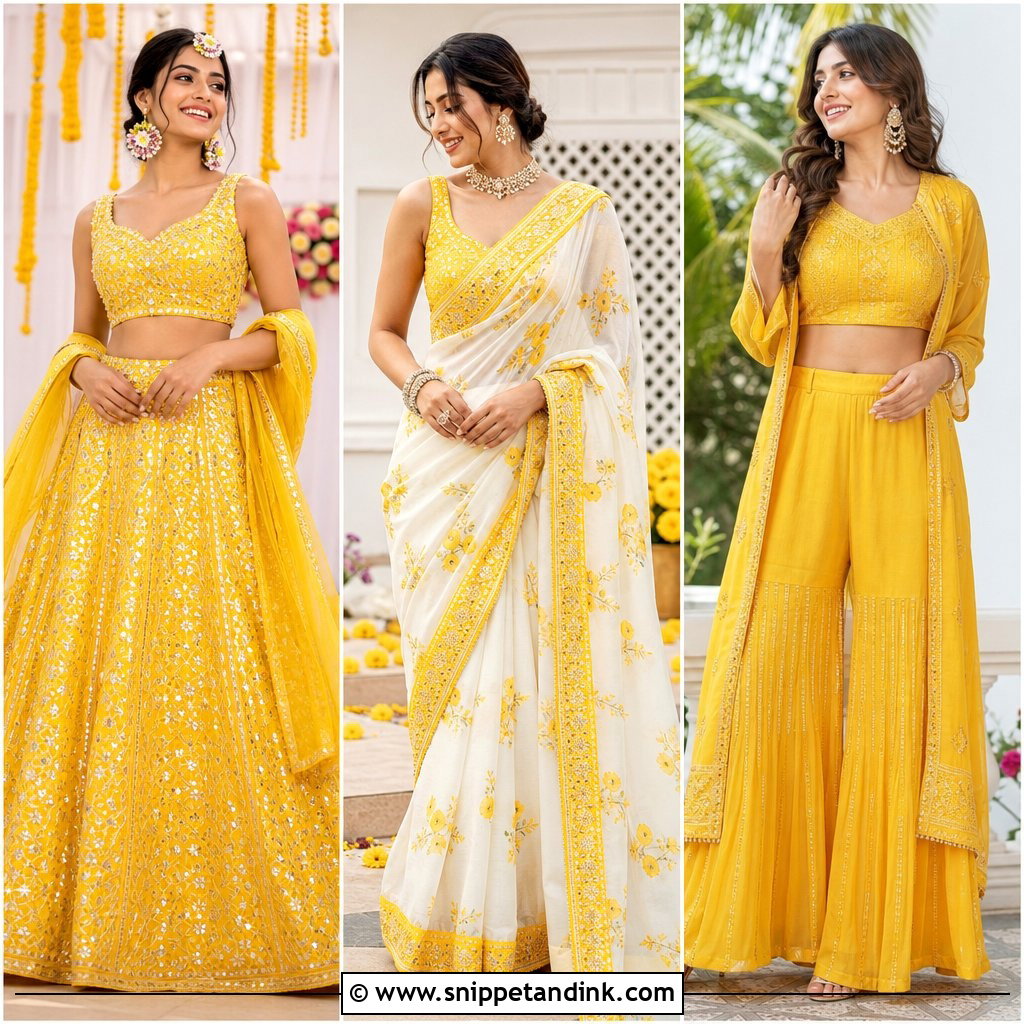
Every haldi has a yellow lehenga in it somewhere, and it never looks wrong. Georgette, organza, cotton silk or chiffon keeps it light enough to move in. Brides can take gota patti, mirror work, threadwork or floral appliqué; guests and bridesmaids do better letting the color lead and keeping the embroidery soft. A short blouse, a breezy dupatta, fresh flower jewelry, juttis and loose waves or a low bun. The detail I look at first is the can-can: for a haldi I’d have it removed or kept to a single soft layer, since stiff net under the skirt makes sitting on a low stool awkward.
2. Mustard Yellow Saree For Haldi
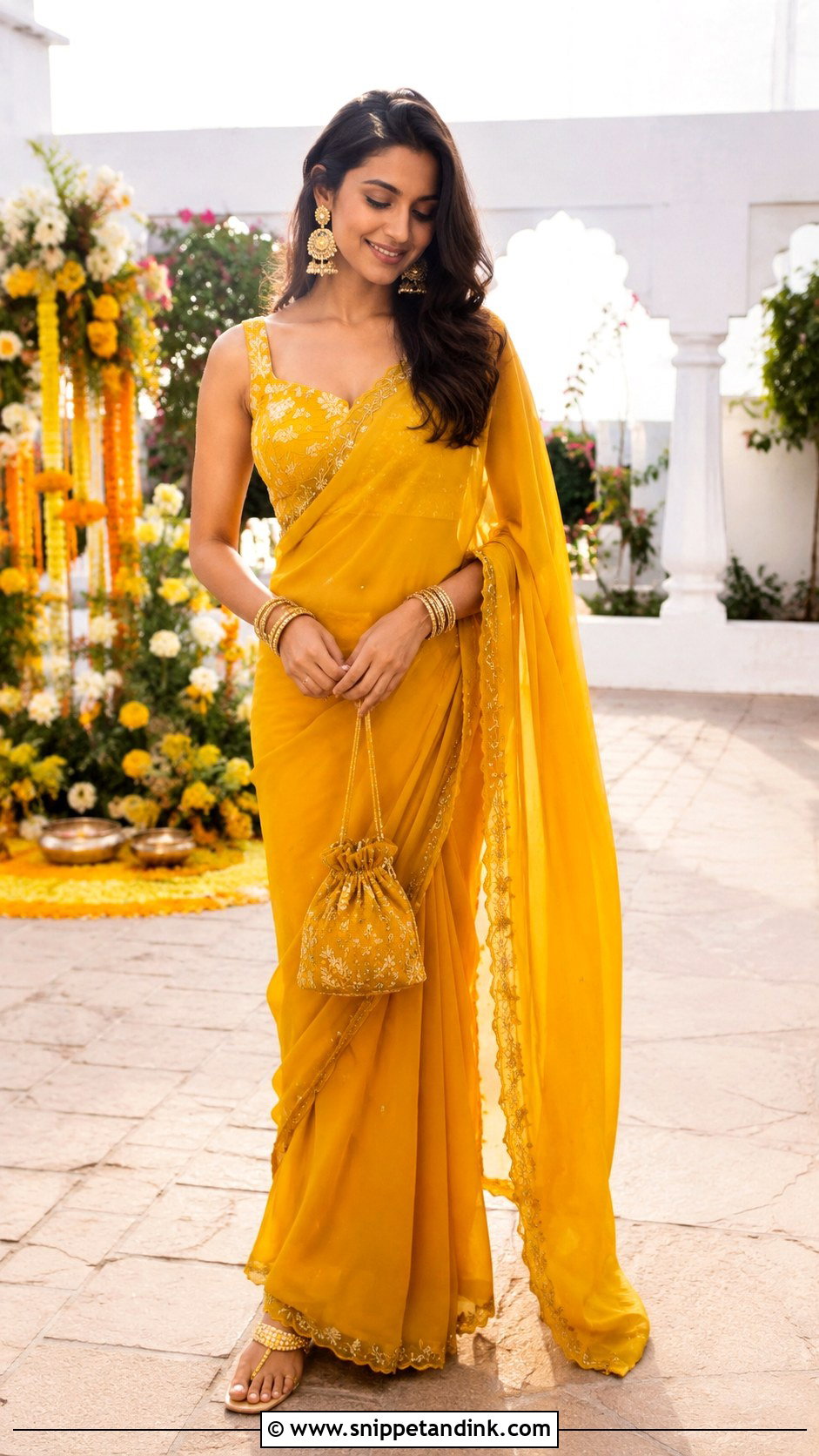
Mustard is a kinder yellow than lemon on most skin tones, especially deeper ones, and it photographs warmer in daylight. Choose organza, chiffon, georgette, linen silk or a soft silk so the drape is easy. Let the blouse carry the festivity with mirror work, tassels, puff sleeves or a tie back. Gold earrings, stacked bangles, comfortable sandals and a small potli. Brides can add floral jewelry; guests can stop at very little. It also hides turmeric splashes better than paler shades, which you’ll appreciate later.
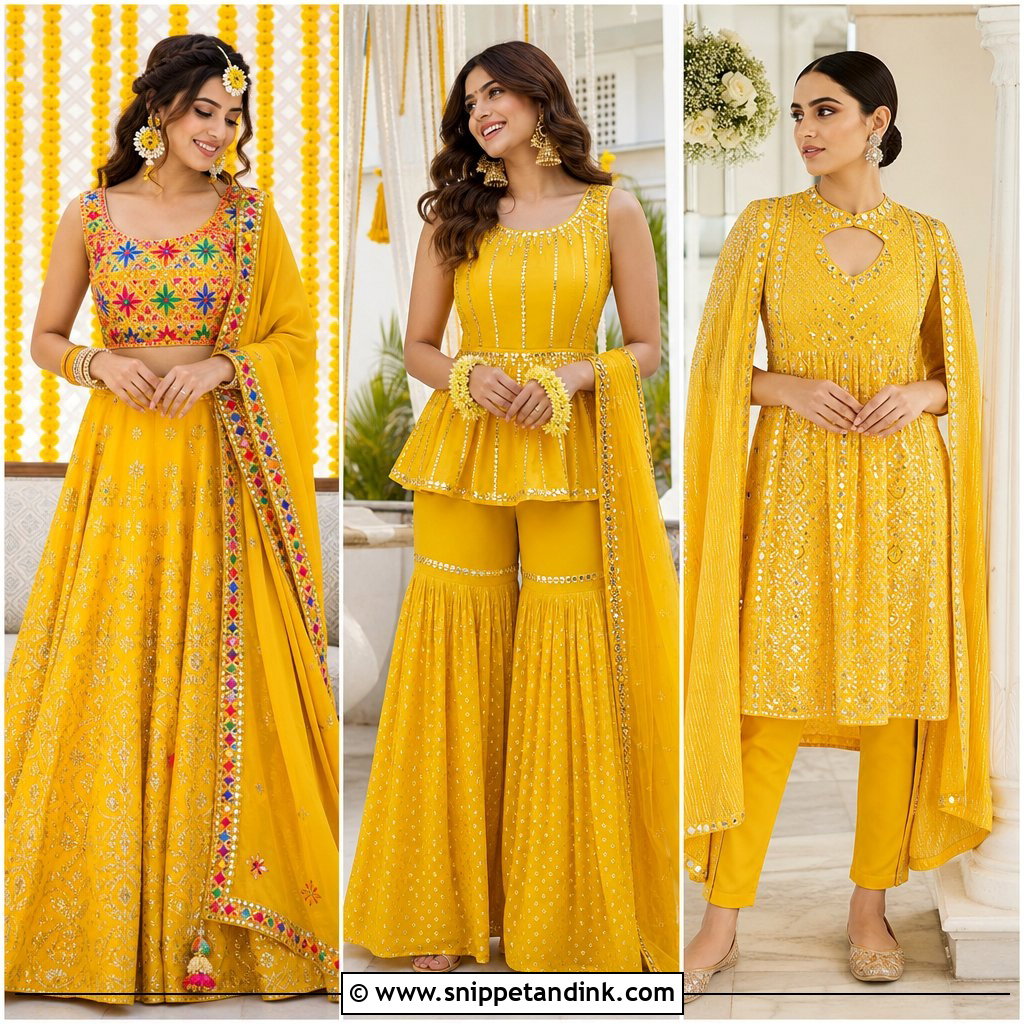
3. Floral Sharara Set For Haldi
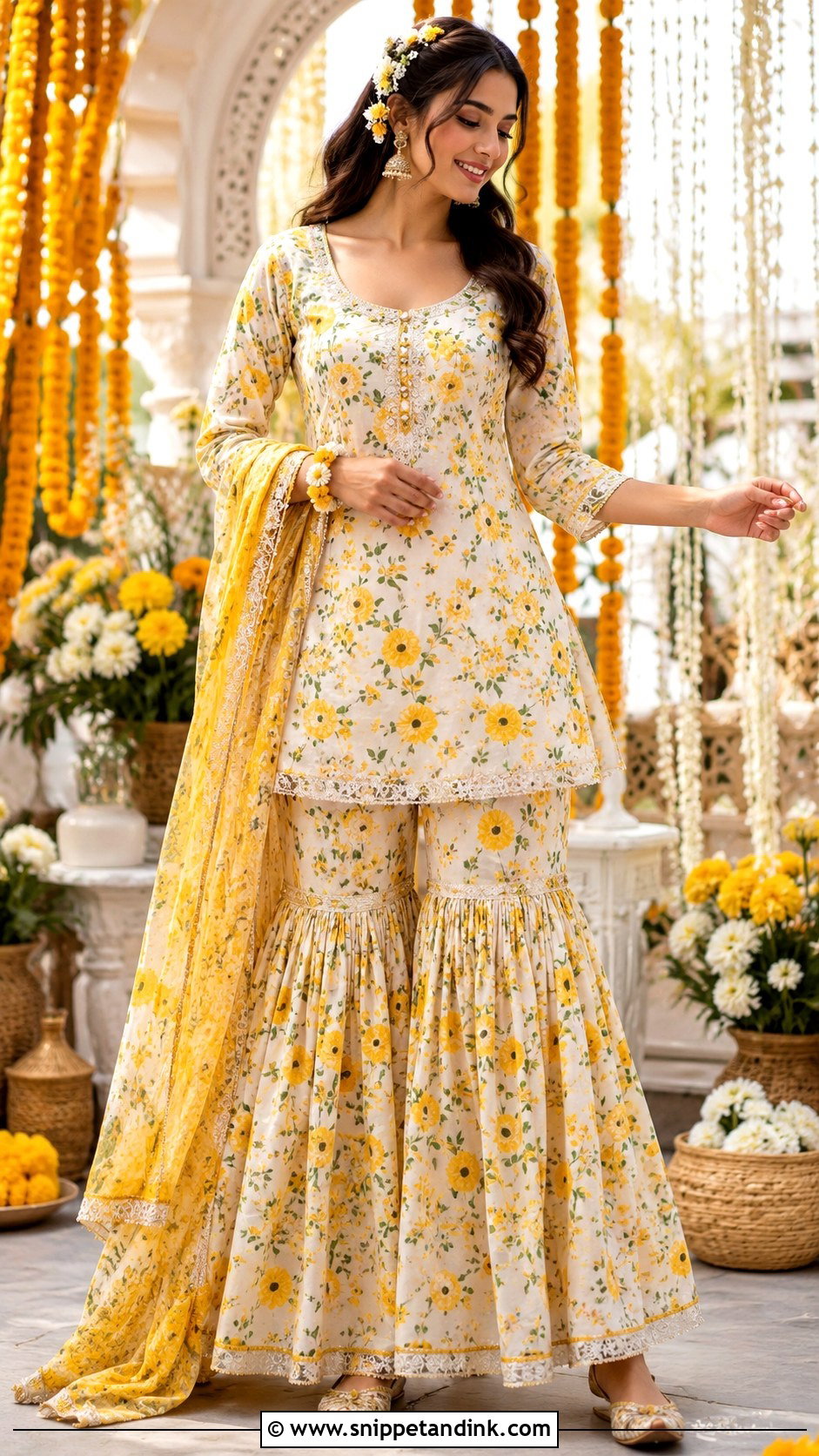
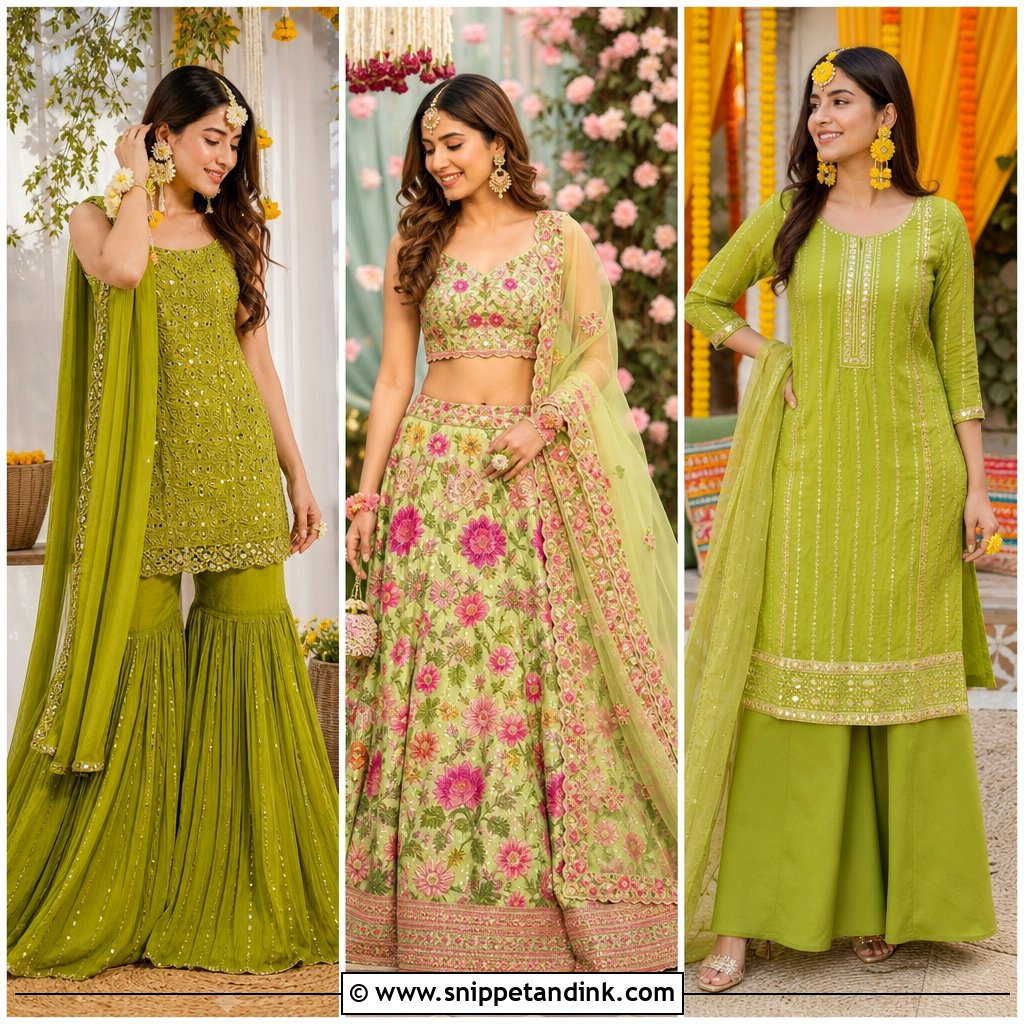
Wide sharara legs give you room to sit cross-legged, dance and climb onto a stage without lifting a hem. A floral print in yellow, ivory, peach or lime looks fresh in the daytime. For bridesmaids, a printed sharara with light mirror work is festive without crowding the bride. Brides can go more detailed: short kurti, flared sharara, matching dupatta. Jhumkas, a braid with floral clips and embellished flats. Print scale matters in photos, so hold the fabric at arm’s length; tiny florals blur into a solid from a distance, while medium prints still read.
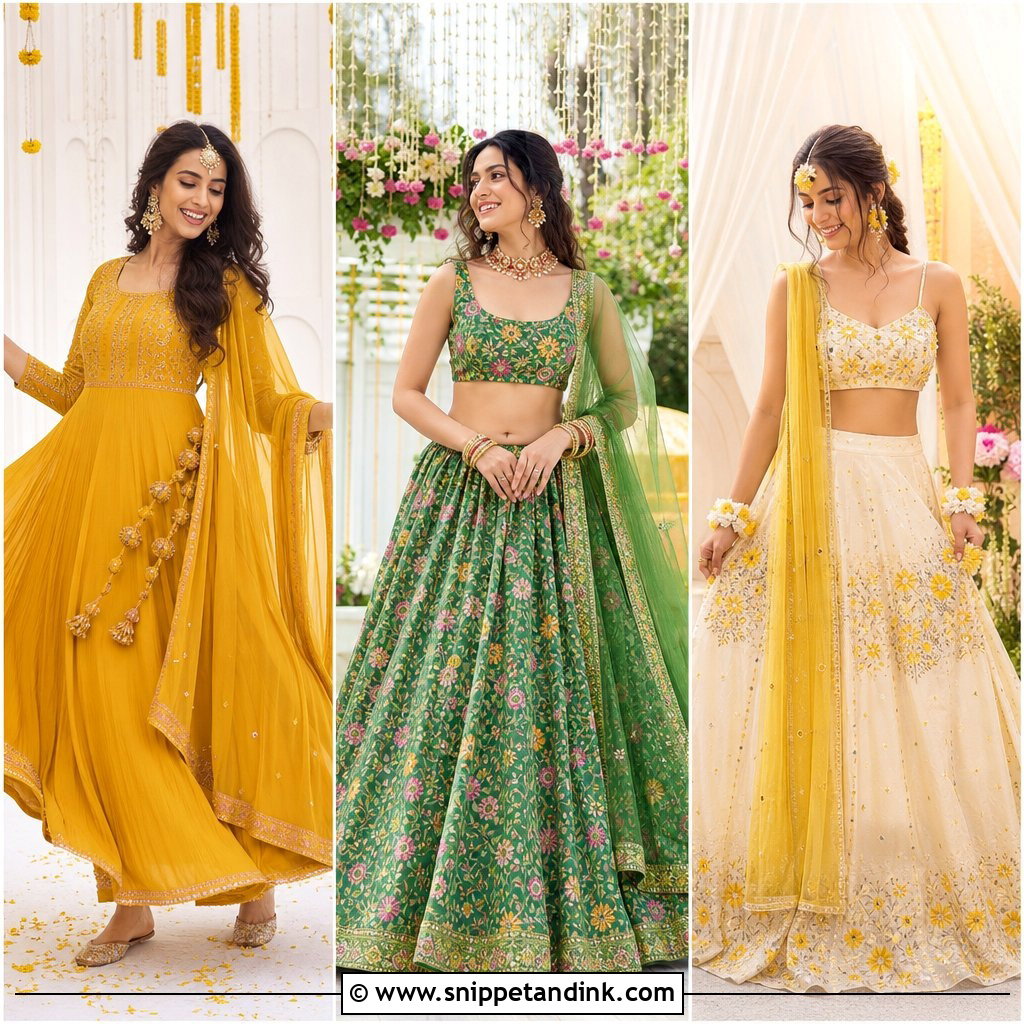
4. Yellow Anarkali Suit For Haldi
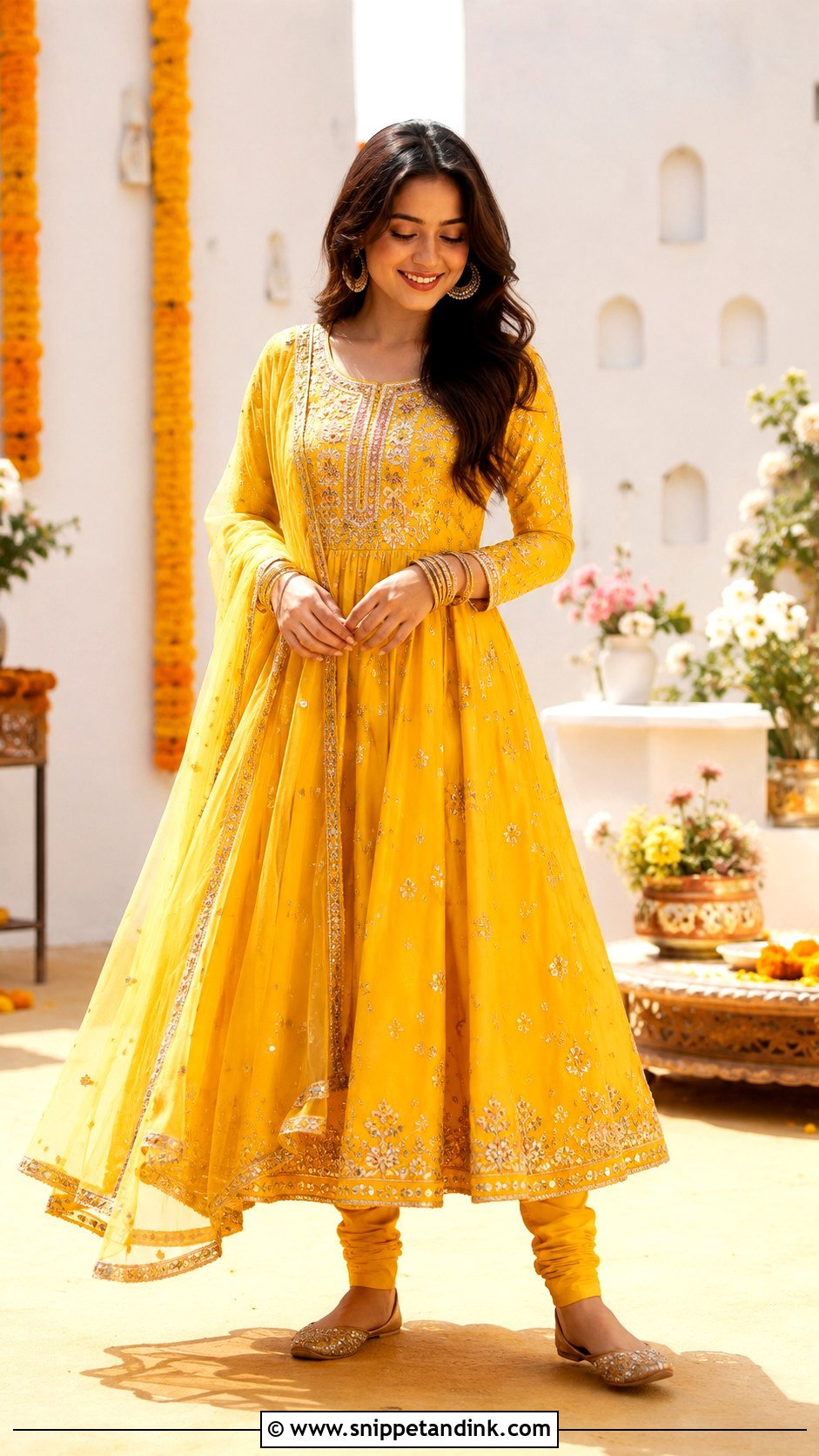
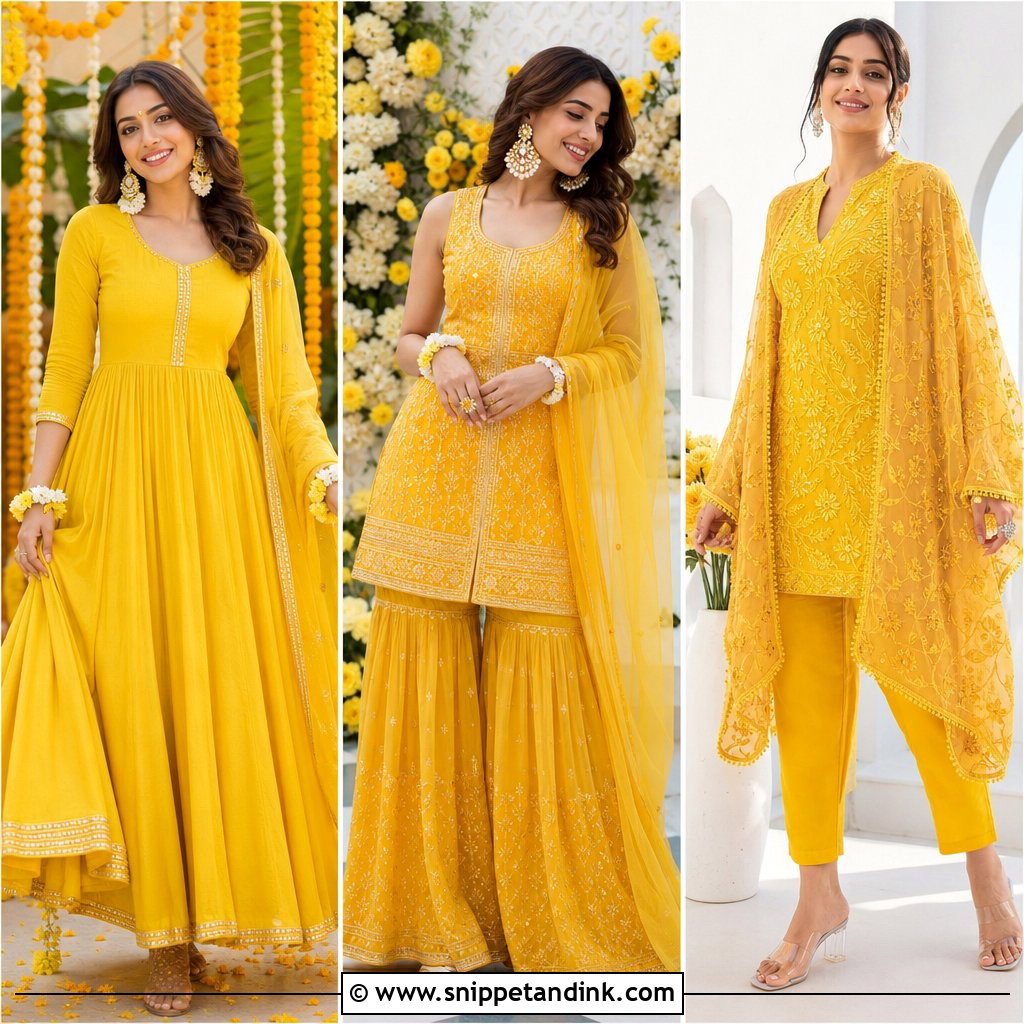
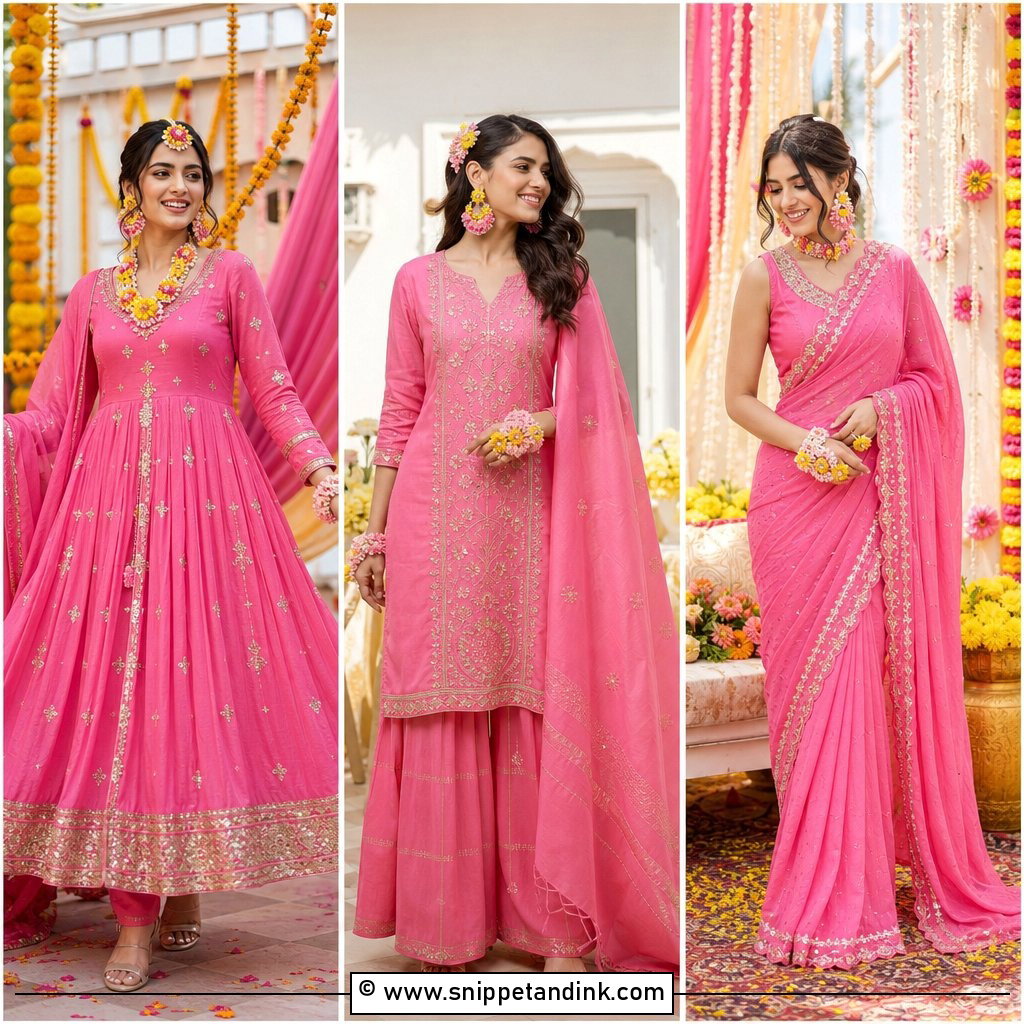
Anarkalis give plenty of coverage and a flare that moves well on camera. For a haldi, pick cotton, mulmul, georgette or chanderi; velvet and dense embroidery are too hot and too precious for paste. A simple Anarkali with gota borders, a floral print or small mirrors is enough. Churidar, palazzos or straight pants underneath, depending on how much you’ll be sitting. Juttis, gold hoops, bangles and a soft dupatta. Mulmul is my quiet favorite for summer haldis: it’s so light it barely registers, though it creases easily and wants a steam on the morning.
5. White And Yellow Lehenga For Haldi
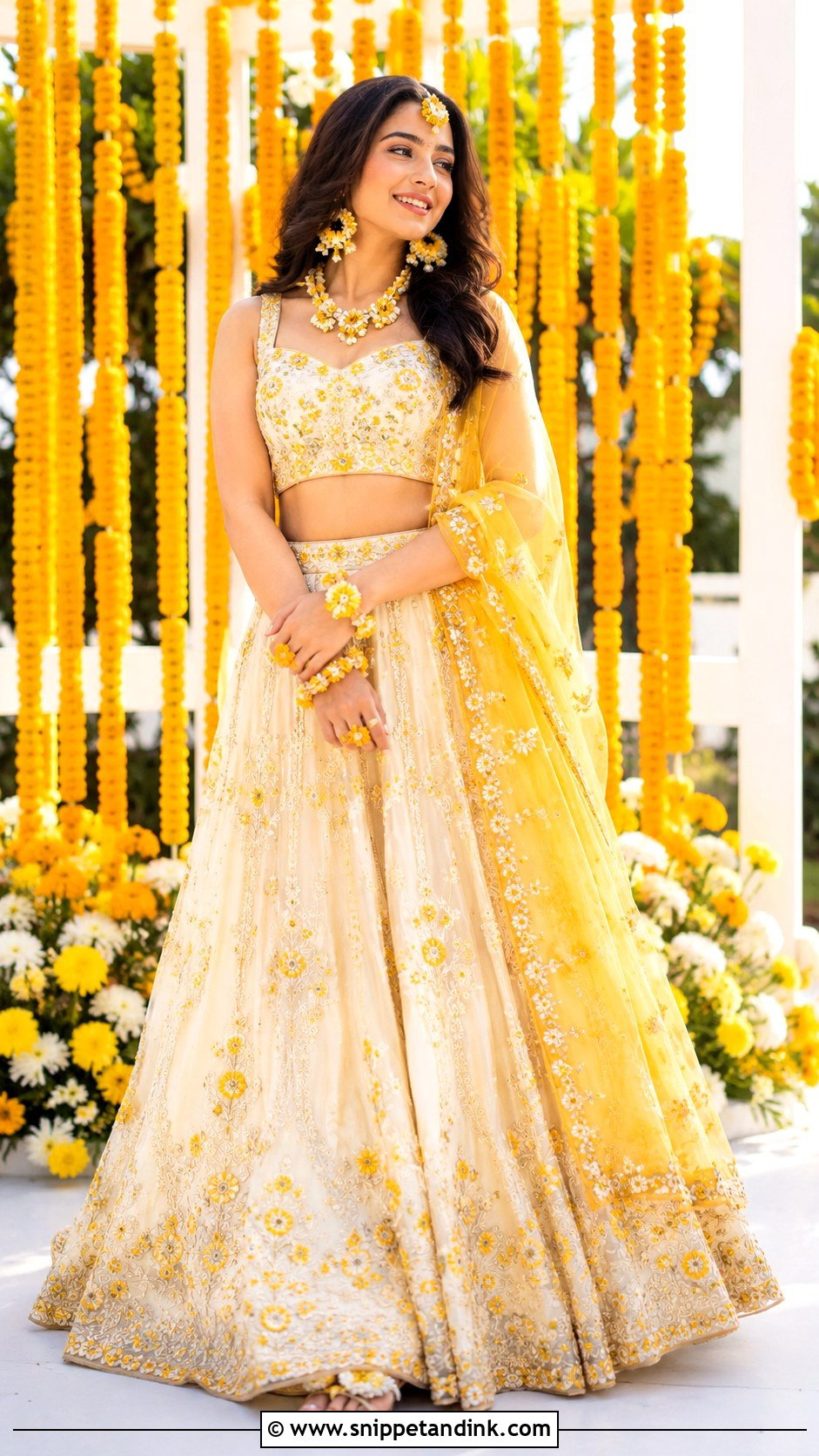
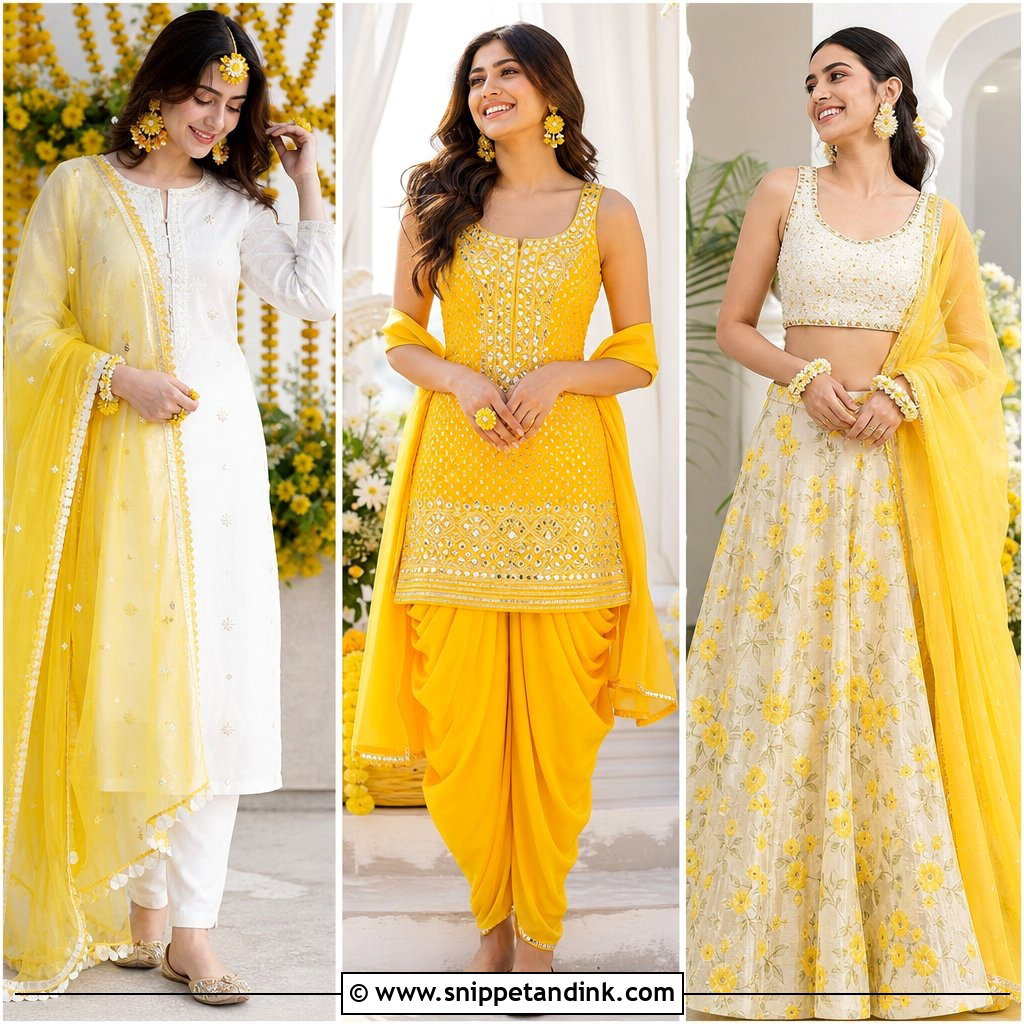
White with yellow is the bride’s alternative to head-to-toe yellow, and it’s very fresh in daylight. A white base with yellow embroidery, florals or a yellow dupatta keeps the tradition while looking cleaner. Marigold prints, mirror borders, threadwork or hand-painted motifs all suit it. The blouse has to stay secure, because you’ll be leaning, laughing and being pulled in for photos. Floral jewelry, dewy makeup and flats or juttis. I’ll be honest: white cotton and turmeric are a hard combination. If you love this look, wear it for the portraits and have something else ready for the paste.
6. Yellow Kurta Palazzo Set For Haldi
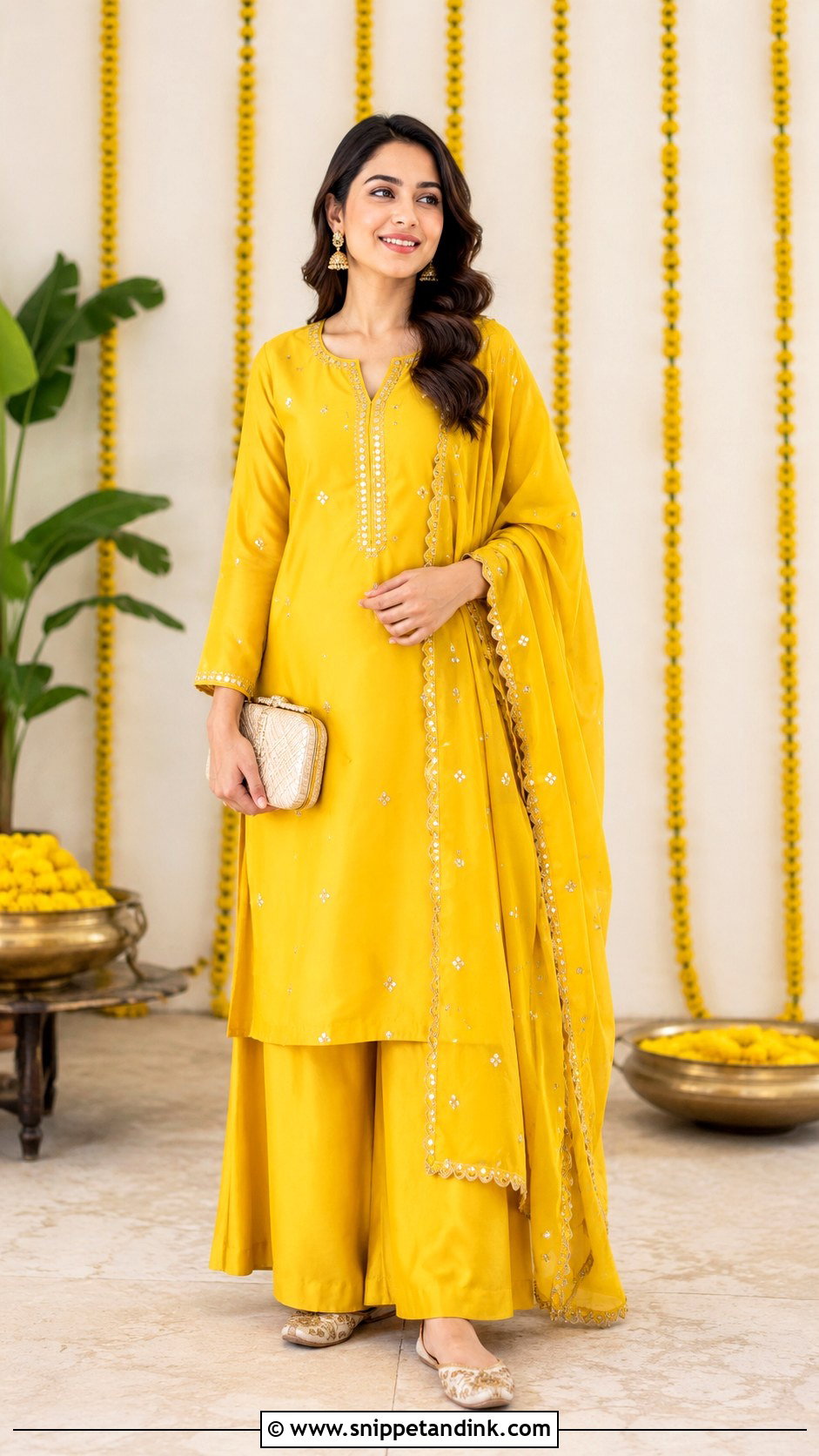
Guests and bridesmaids who just want to be comfortable for a long morning can’t do better than a kurta and palazzos. Straight, A-line or short kurti, depending on your style. Light embroidery, block prints, mirror work or lace give it occasion. Add a matching dupatta for tradition or leave it off for a cleaner modern line. Juttis, small earrings and a simple clutch. The palazzo width is what makes this outfit work, so go wide; narrow palazzos lose the ease that makes this set so comfortable. It goes straight back into your wardrobe afterward.
7. Orange Lehenga For Haldi Ceremony
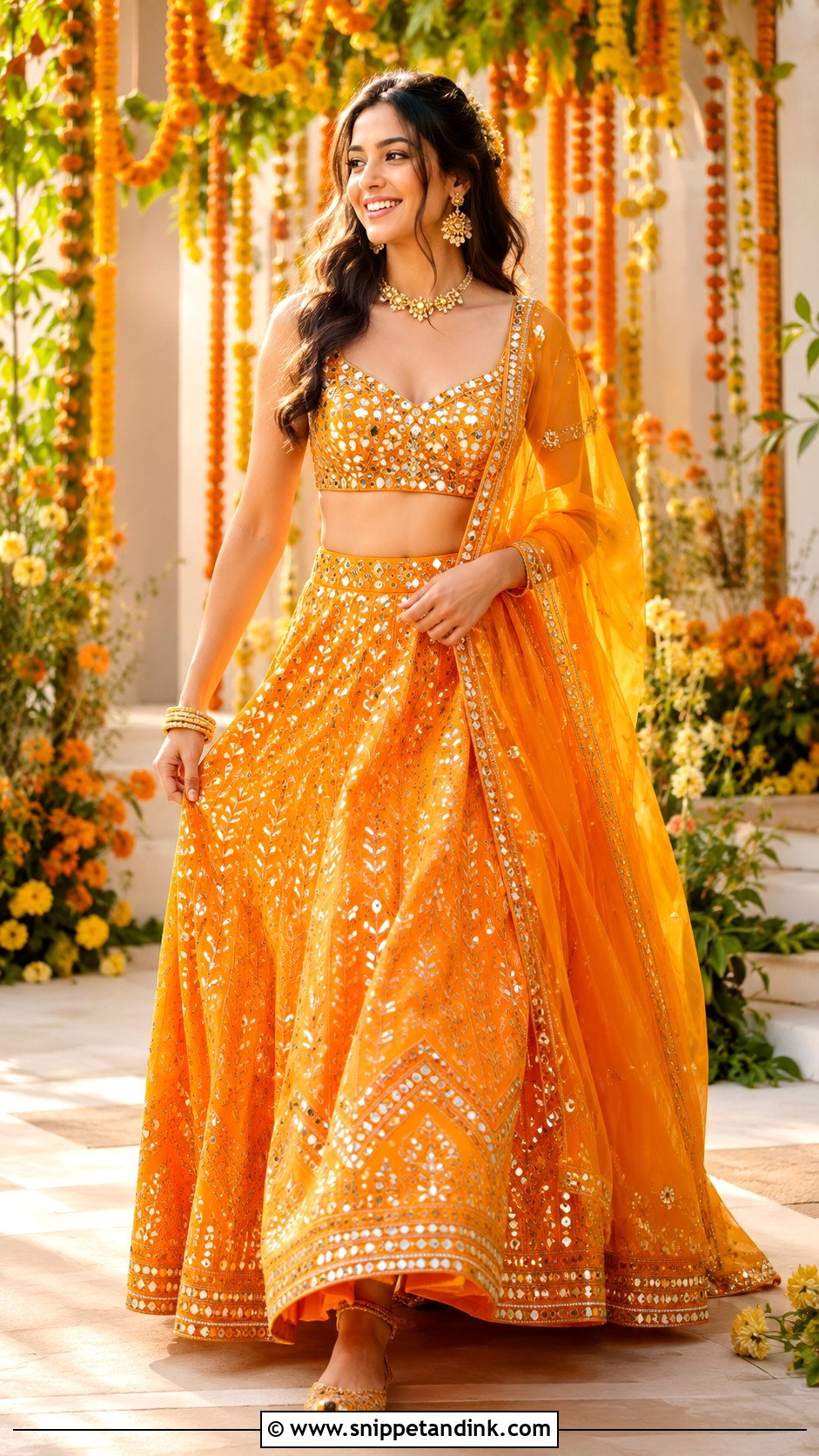
Orange is just as bright as yellow and arguably warmer in outdoor light. Tangerine, marigold or saffron lehengas look vivid in sunshine and work with gold, ivory and pink. Brides can choose mirror work or gota patti for a bold pre-wedding look; guests can go for a lighter printed version with a plain blouse. A soft dupatta matters if paste will be flying. Gold jewelry, fresh flowers and comfortable flats. Saffron sits better on cool skin than tangerine, which can drift toward red in photos, so test both in daylight if you can.
8. Yellow Saree With Mirror Work Blouse
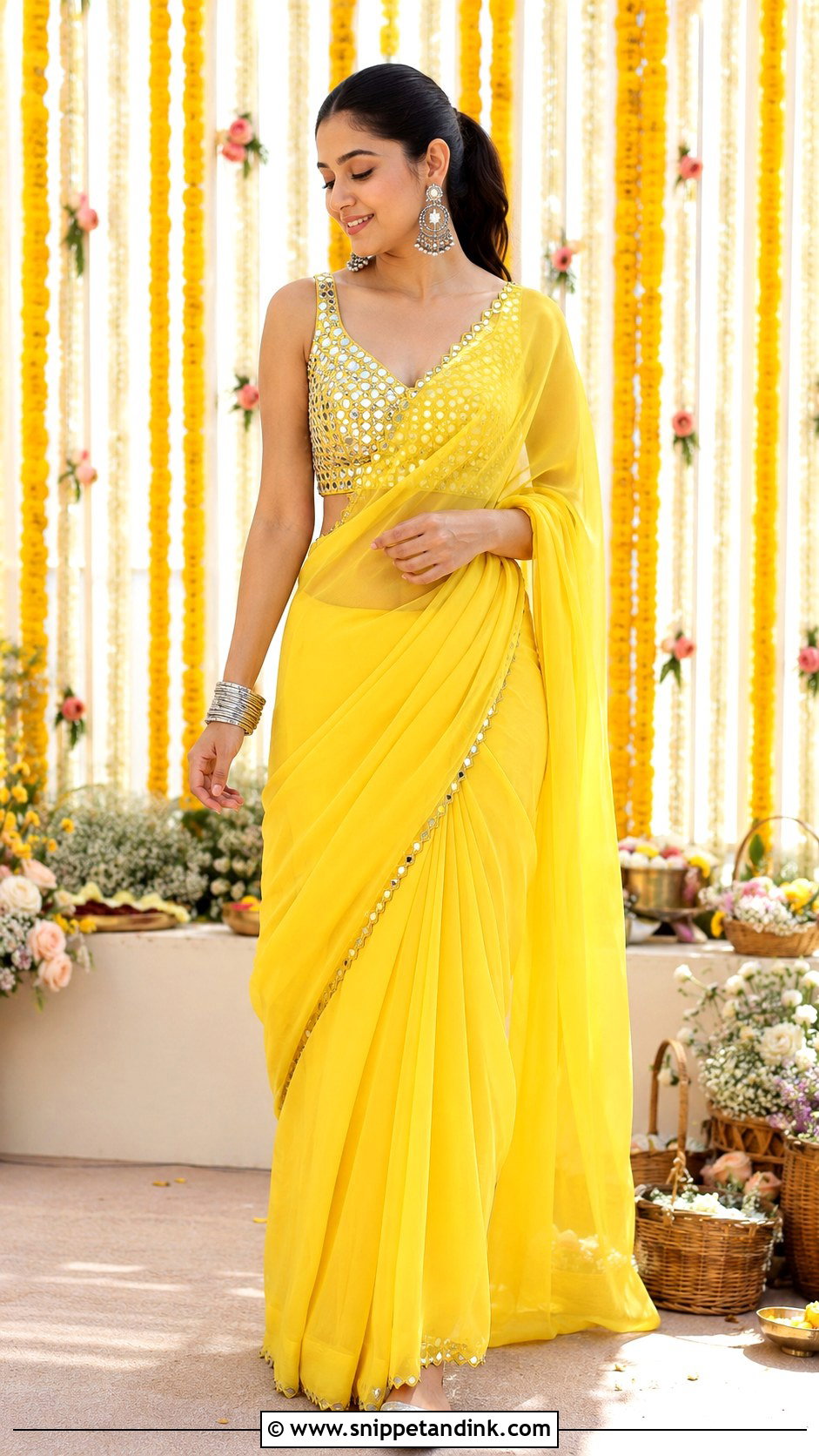
A plain or lightly printed yellow saree with a mirror blouse puts the sparkle exactly where the camera looks. You get festivity with almost no weight. Sleeveless, elbow-sleeve or tie-back, depending on how much coverage you want. Chiffon, georgette, organza and crepe all drape easily. Oxidized silver gives a boho feel; gold reads classic. Wedges, flats or embellished sandals. Mirror blouses are scratchy on the inside unless they’re lined well, so check the seams before you buy; a rough lining becomes a long, itchy morning.
9. Yellow Gharara Set For Haldi
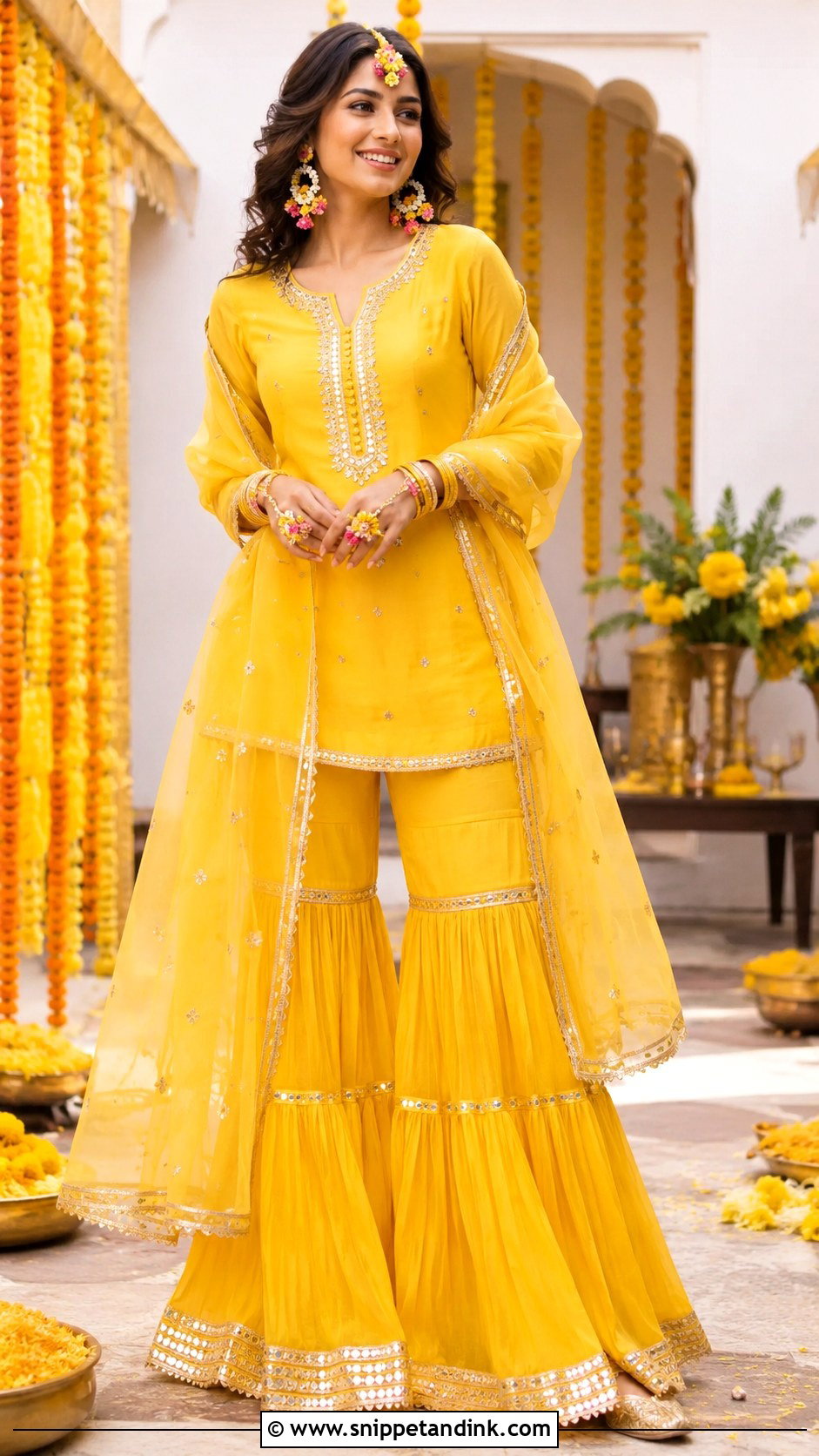
The gharara’s fitted thigh and flare from the knee has real drama, especially with a short kurti. For a haldi, keep the fabric light and avoid stiff flares that need managing every time you sit. Gota borders, mirror work, lace or delicate embroidery on yellow or ivory-yellow. Brides can add floral jewelry and drape the dupatta over one shoulder; guests can keep earrings small and makeup soft. Ask your tailor where the knee seam falls on you; if it sits too low, the flare starts at the calf and the shape is lost. It moves wonderfully in walking shots.
10. Pastel Yellow Organza Saree For Haldi
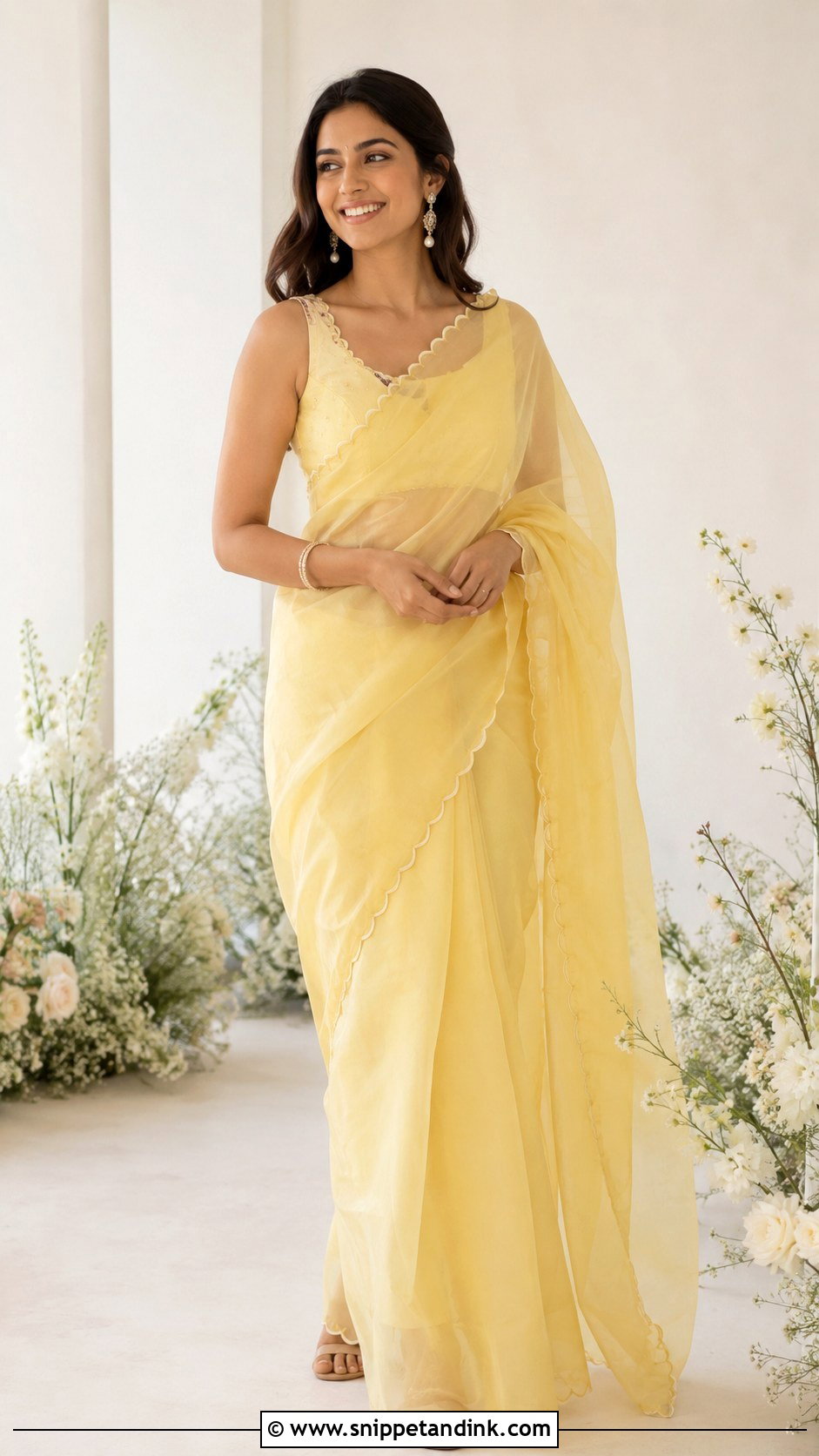
Organza holds its shape, so pleats and pallu stay crisp in photos all morning. A pastel yellow organza saree is soft and polished, light enough for a daytime function. Floral embroidery, scalloped edges or a few sequins for detail. A matching blouse keeps it clean; ivory, pink or mint adds a fresh contrast. Keep jewelry minimal: pearl earrings, loose curls and clear sandals or juttis. The trade-off is that organza spots with water and shows wet turmeric clearly, so this suits bridesmaids and sisters more than the bride on her stool.
11. Yellow Co Ord Set For Haldi
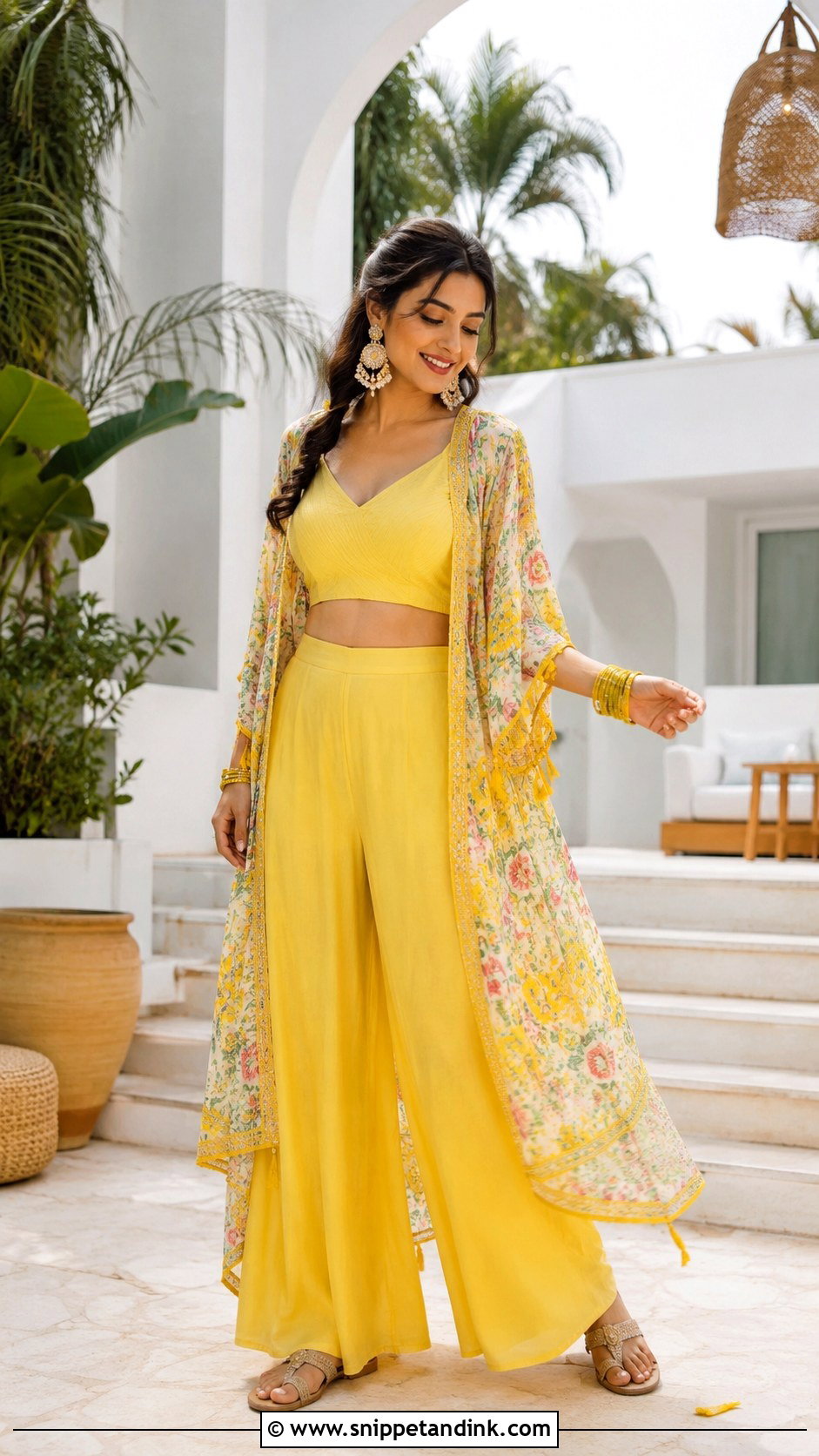
Not everyone wants layers at nine in the morning. A yellow co-ord is the relaxed route: crop top and palazzos, short kurta and flared pants, or a printed jacket set. Matching pieces look intentional even in a loose cut. It suits a home haldi, a destination wedding or a poolside celebration. Cotton, linen, crepe or georgette breathes well. Statement earrings, bangles and flat sandals add the festive note. Throw a light cape or dupatta over it if you’d like more coverage for the ceremony itself.
12. Yellow Cape Lehenga For Haldi
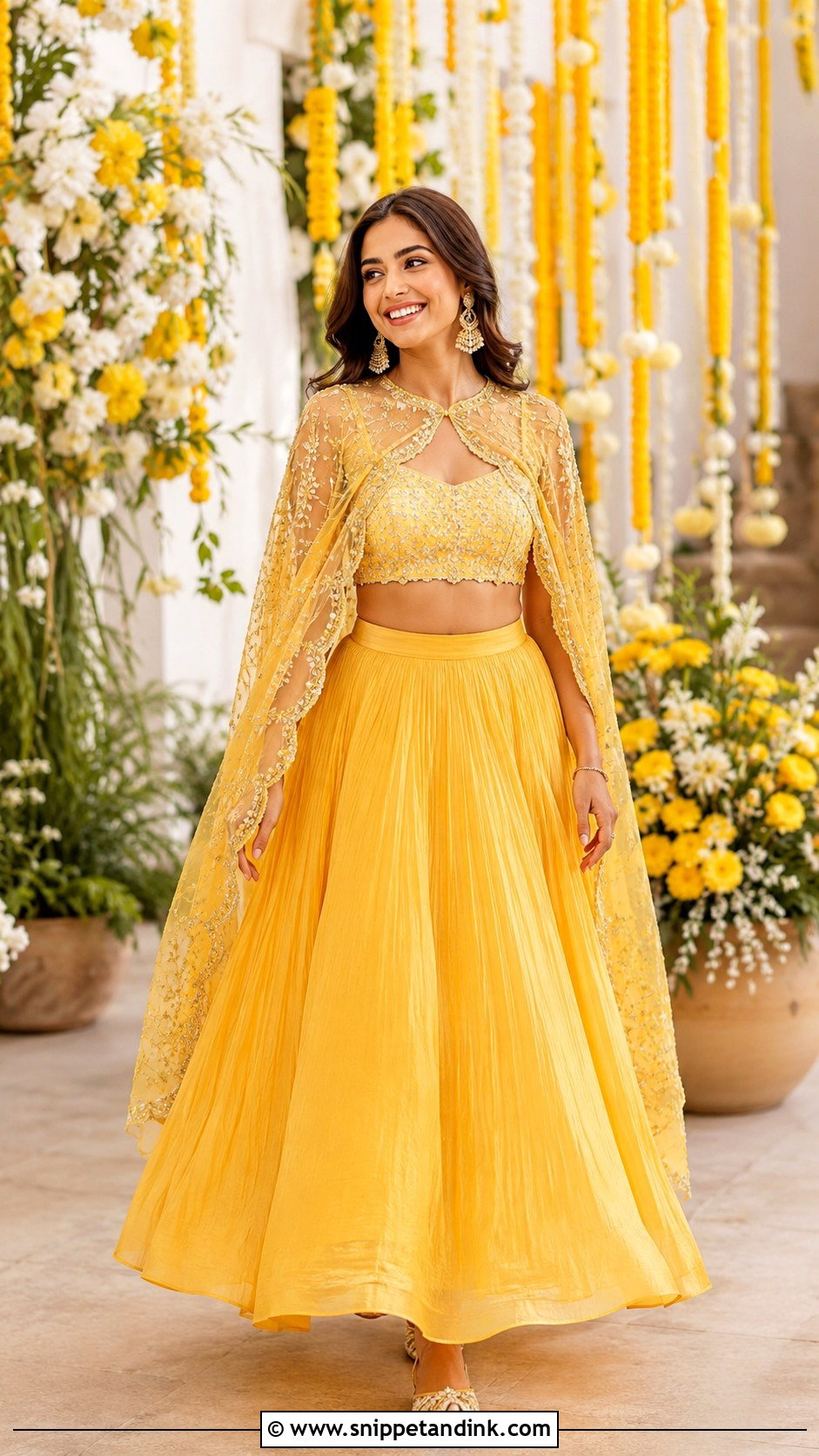
Cape lehengas free your hands, and at a haldi that’s worth a lot: you’ll be holding bowls, flowers and other people. A light skirt, a blouse, and a sheer or embroidered cape. Brides can go for floral appliqué, mirror work or pearls; guests suit a simple cape over a printed skirt. If the cape is sheer, the blouse underneath needs to be the finished piece, since it will show. Statement earrings, soft glam and embellished flats. A cape that’s fastened at the shoulders stays put far better than one that only drapes.
13. Printed Yellow Maxi Dress For Haldi
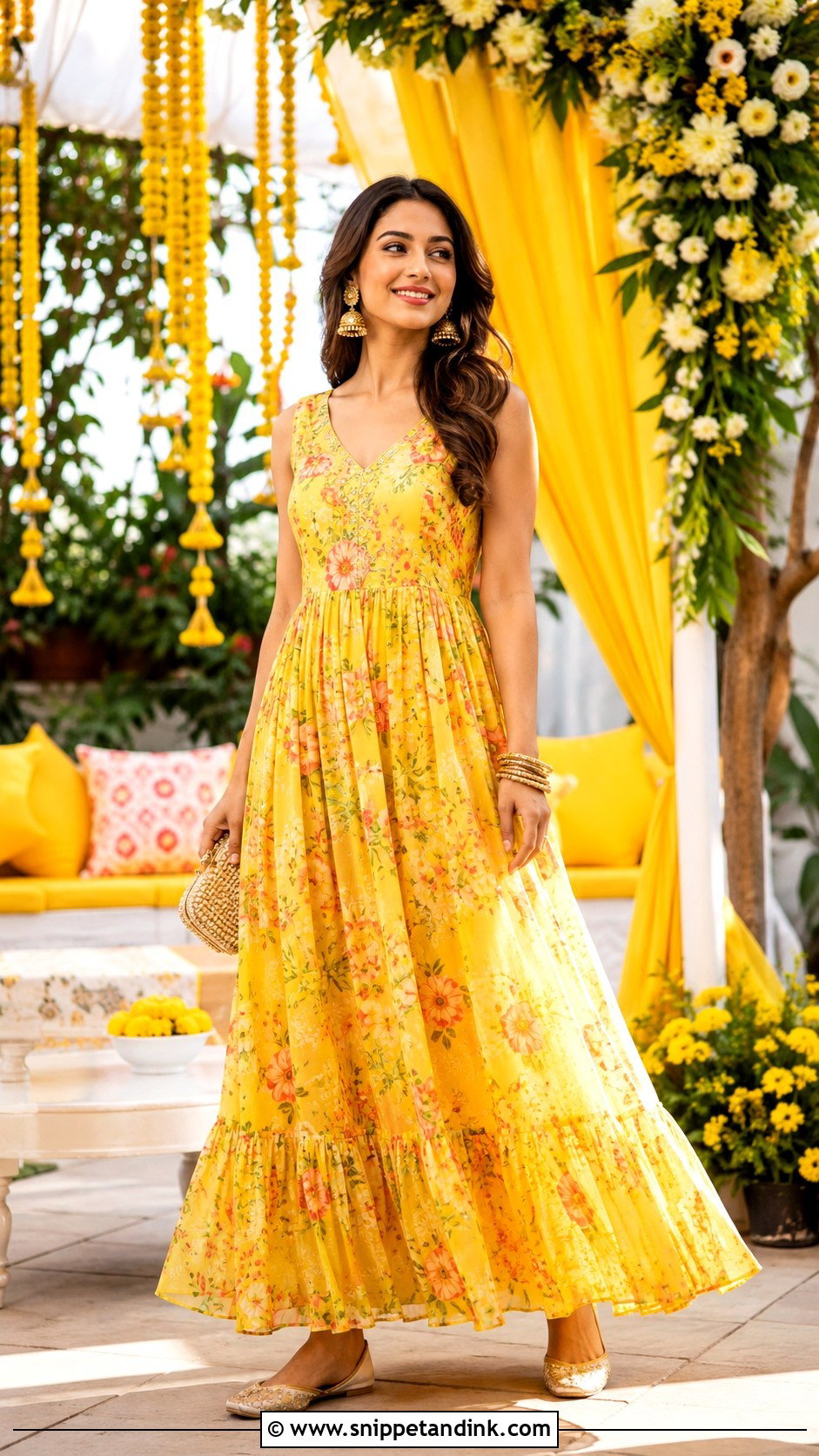
For a relaxed haldi, a printed yellow maxi dress is the easy answer for guests who don’t wear sarees or lehengas. Indian-inspired prints like florals, paisley, block prints or marigolds keep it connected to the day. An empire waist, tiered skirt or wrap shape stays comfortable. Jhumkas, bangles, embroidered flats and a small clutch bring it closer to traditional dress; a light dupatta or cropped jacket adds coverage. Watch the hem on a low seat: a long, narrow maxi rides up when you sit on the floor, so a tiered or A-line skirt is the safer cut.
14. Ivory Lehenga With Yellow Dupatta For Haldi
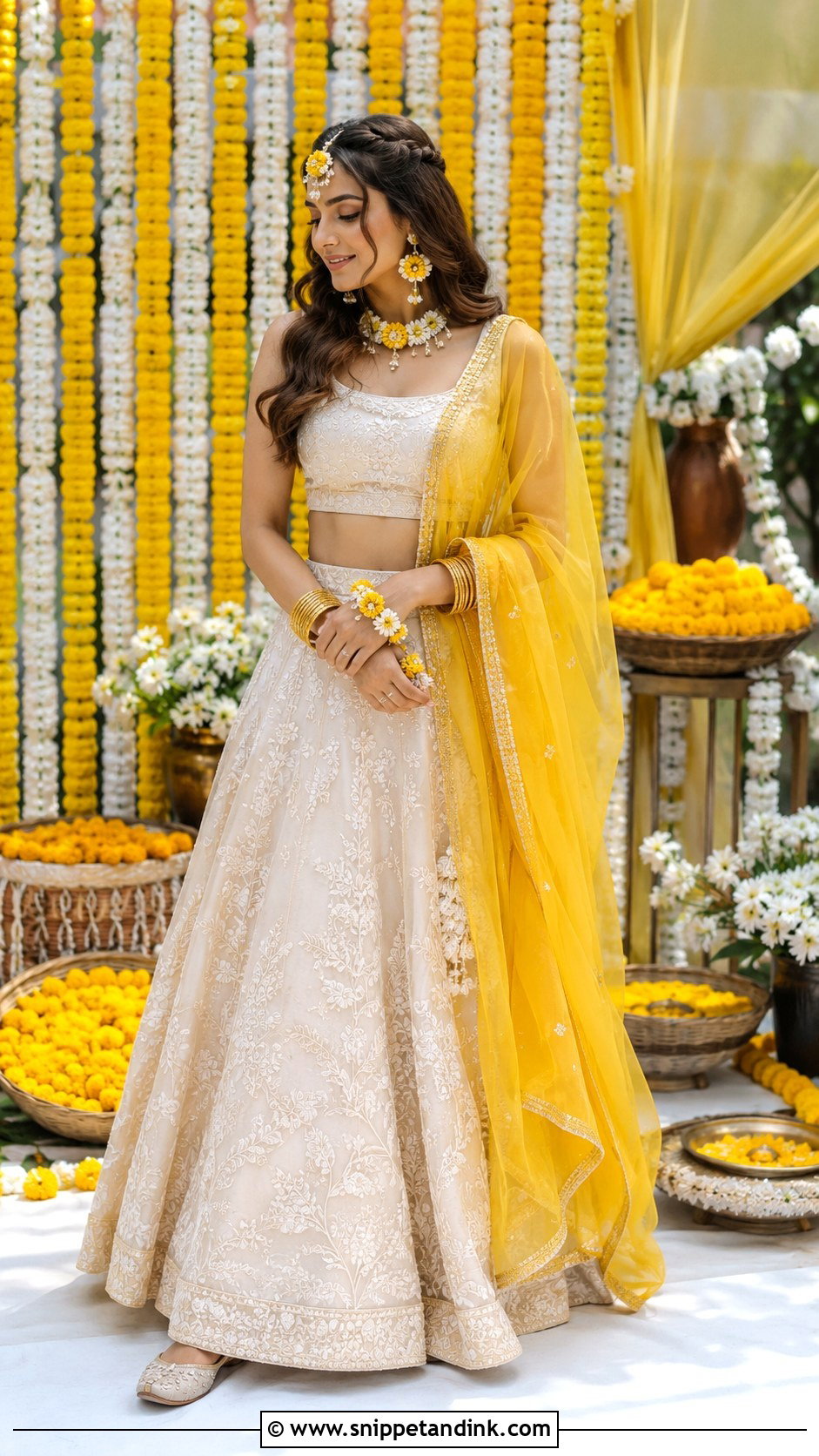
A bride who wants calm photographs should consider an ivory lehenga with a yellow dupatta. The ivory skirt with threadwork, mirror borders or florals stays quiet, and the yellow dupatta in organza, chiffon or net brings the color right up to your face. Plain, scalloped or gota-edged. Blouse in ivory, yellow or a soft metallic. Floral jewelry, gold bangles and juttis. The ivory will take turmeric badly, so do the formal portraits first, while it’s still clean, and change before the paste comes out if you’d like to keep the outfit.
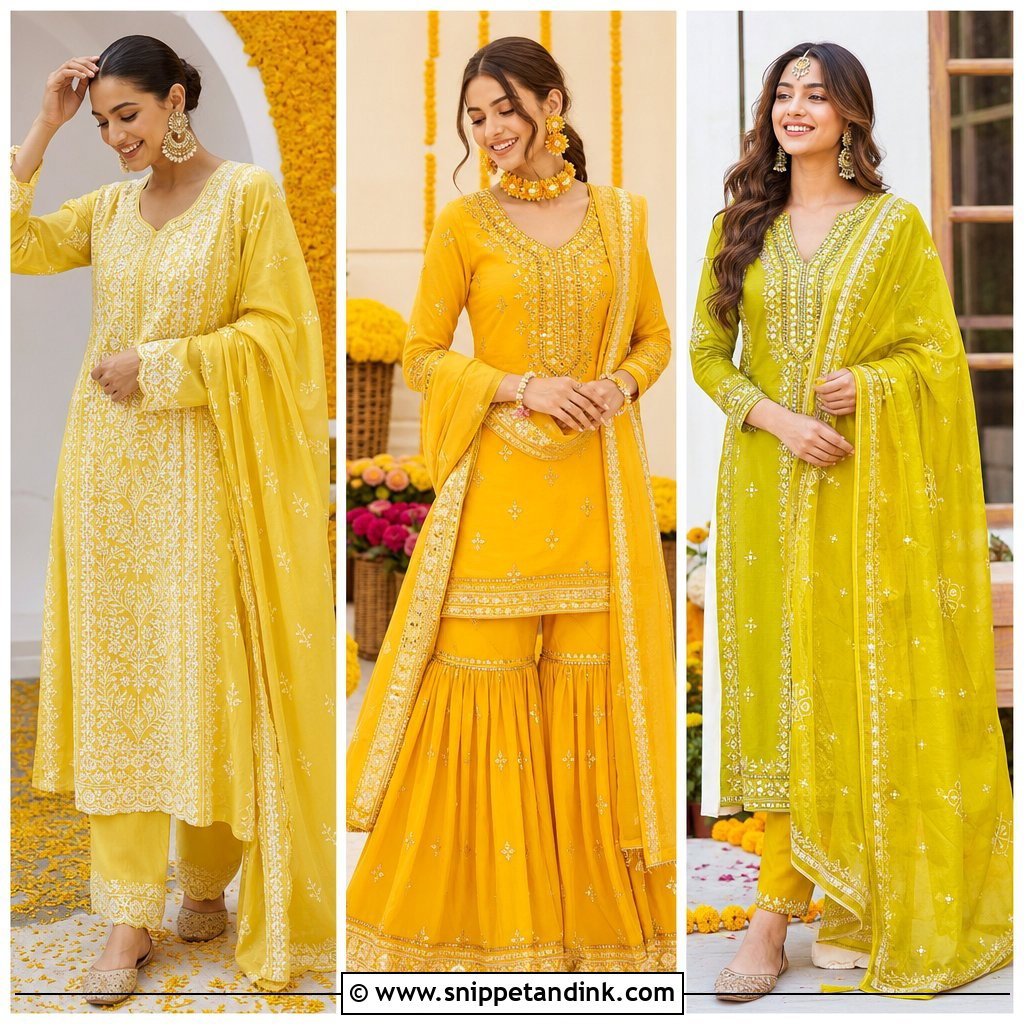
15. Yellow Peplum Sharara Set For Haldi
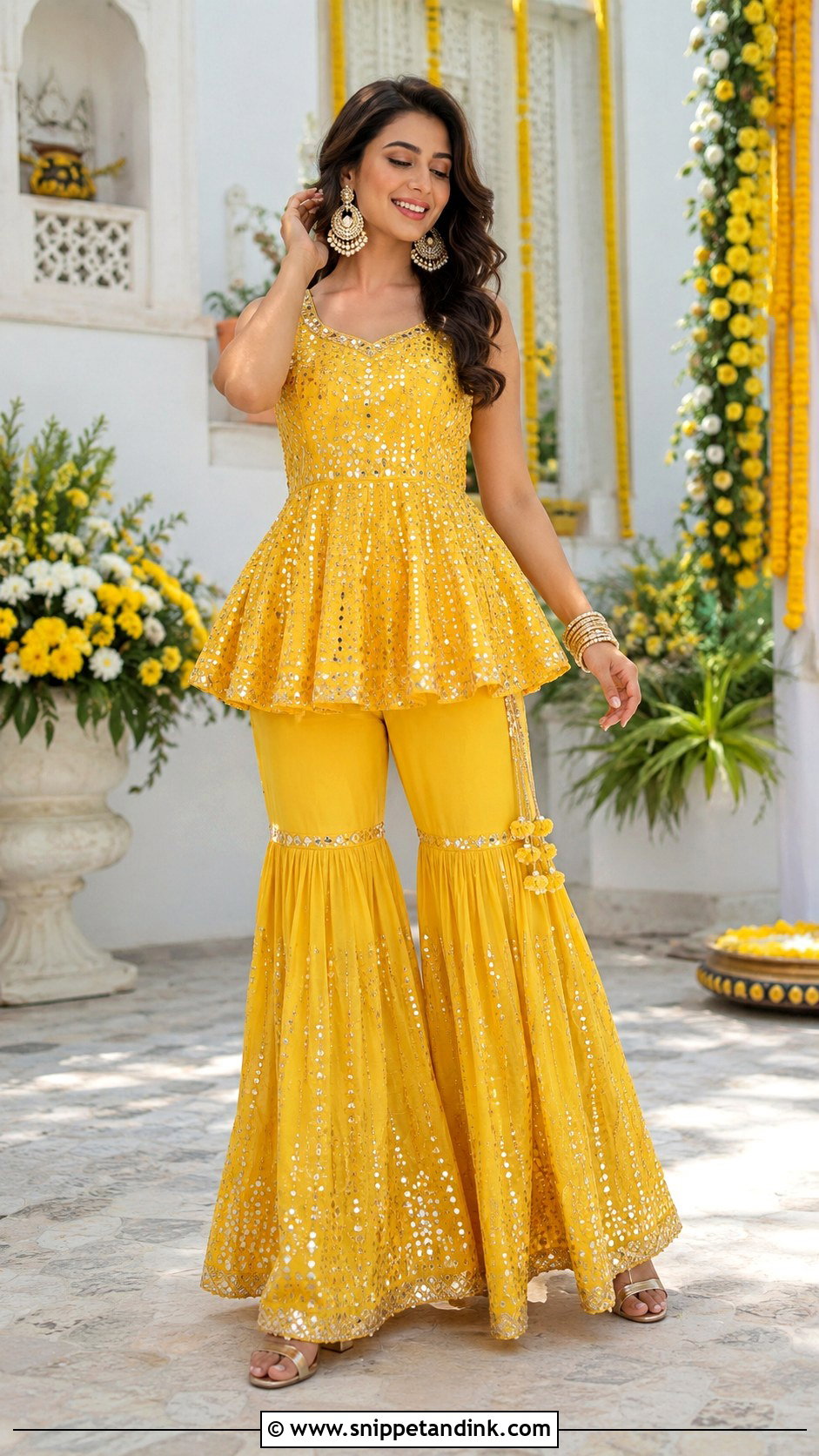
A peplum top over a flared sharara gives shape at the waist and movement below. It’s a bit more structured than a kurta set, which bridesmaids often like for photos. Lightweight fabric with mirror work, threadwork or small sequins. V, square or sweetheart necklines feel current. Chandbalis, stacked bangles, soft curls, and juttis or block heels depending on the ground. Have the peplum seam set at your true waist; too low and it shortens your legs. It’s built for dancing.
16. Yellow Ruffle Saree For Haldi
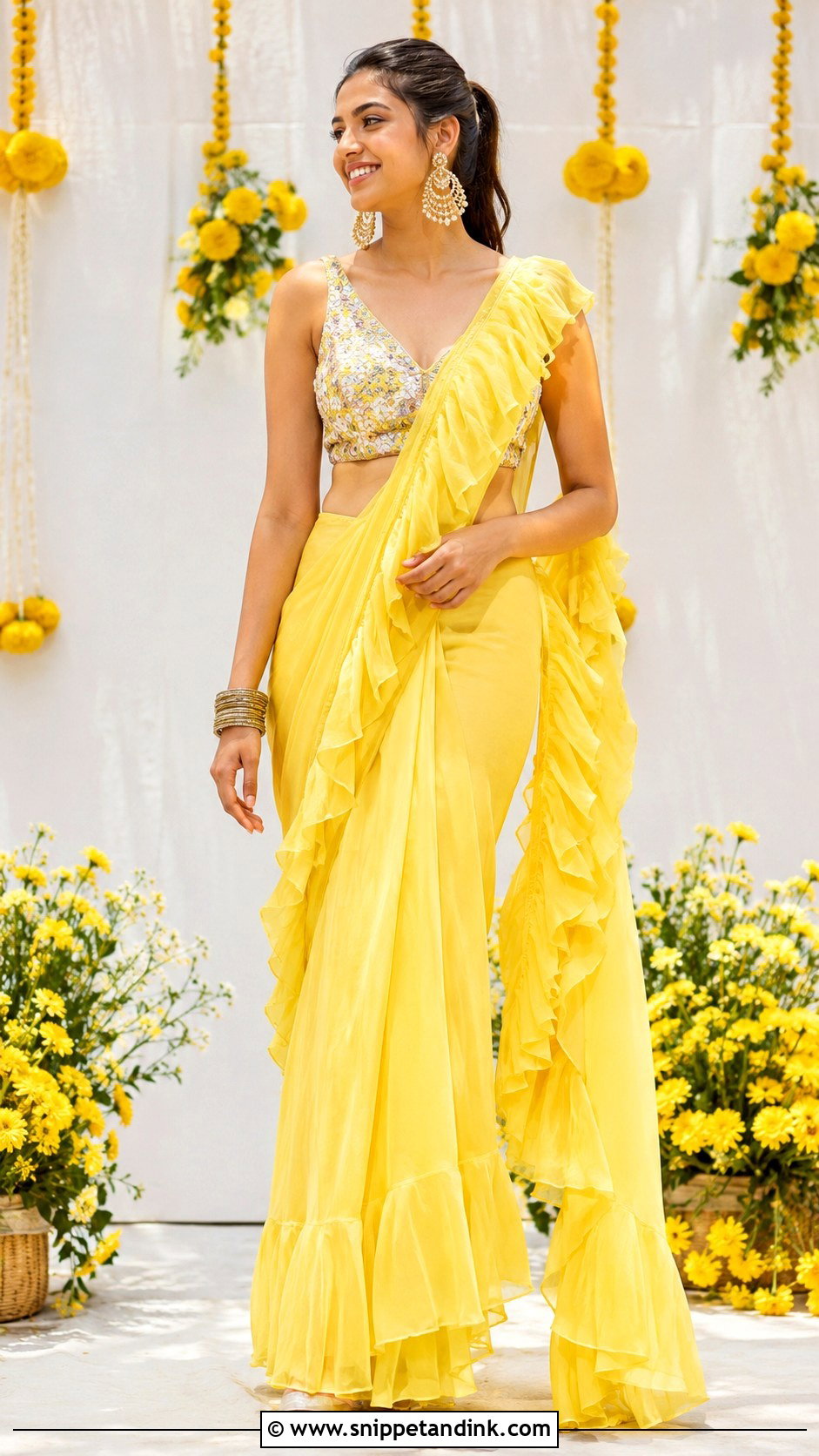
Ruffles add volume and look lively in candid shots, which is most of what haldi photography is. Keep the fabric light and the blouse well fitted, since the saree is already busy. A mirror blouse, embroidered blouse or plain crop blouse, depending on how dressy you want it. Younger guests and bridesmaids tend to suit this one best. Statement earrings, a sleek ponytail and comfortable heels or sandals. Georgette ruffles go limp and cling once wet, so keep a little distance from the water and paste if you want them to keep their bounce.
17. Lime Green Lehenga For Haldi
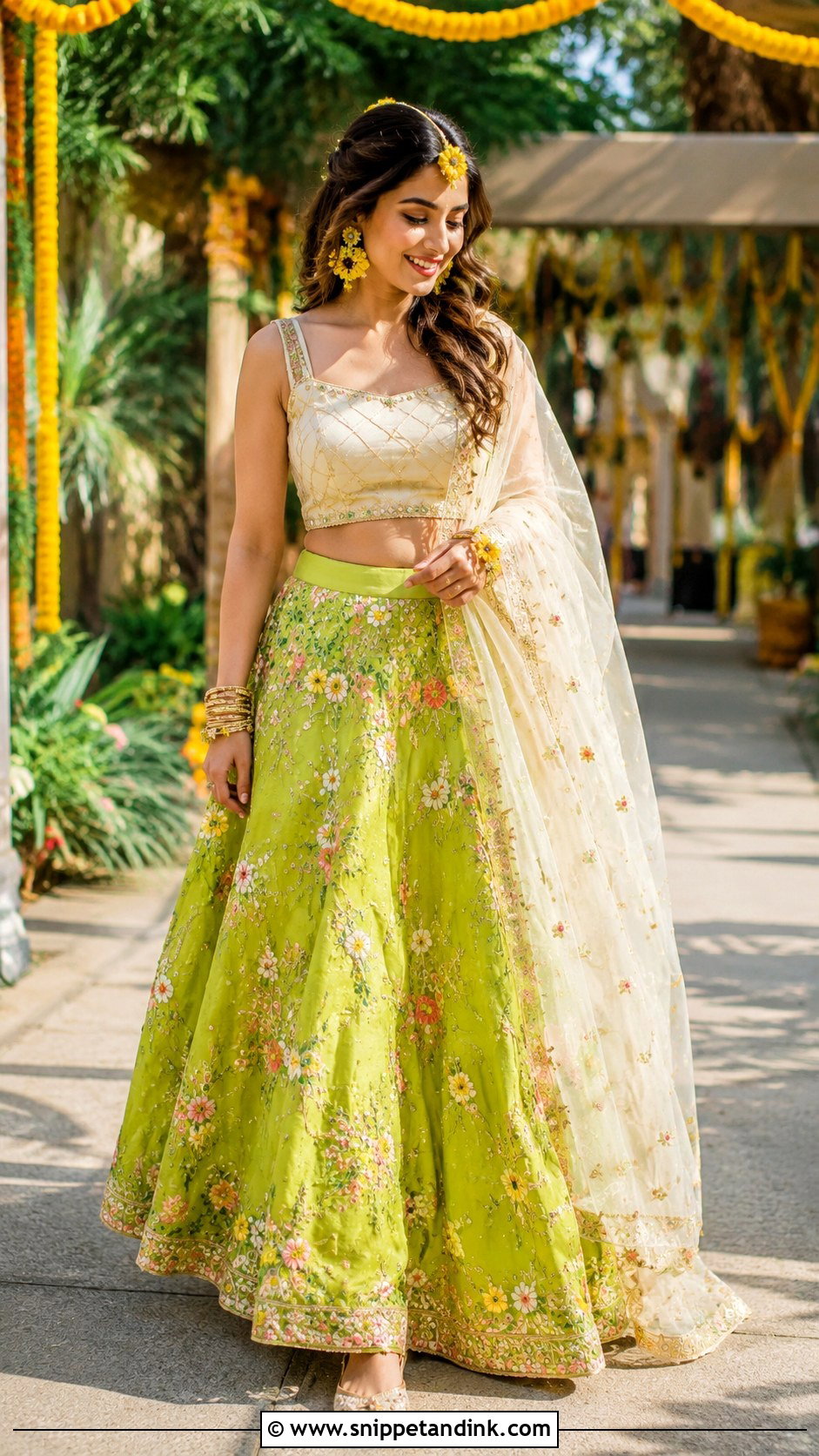
Lime is for anyone who wants to be bright without wearing yellow. It feels young and tropical, and it’s made for outdoor daytime light. Floral prints, sequins, mirror work or threadwork on the lehenga; a matching blouse for impact or ivory for softness. Yellow flower jewelry ties it back to the haldi. Keep the dupatta light and pinned. Gold earrings, bangles and juttis. Lime is unforgiving on some olive and sallow skin tones, so hold it near your face in daylight before ordering. In a sea of yellow, it’s the outfit people notice in group photos.
18. Yellow Patiala Suit For Haldi
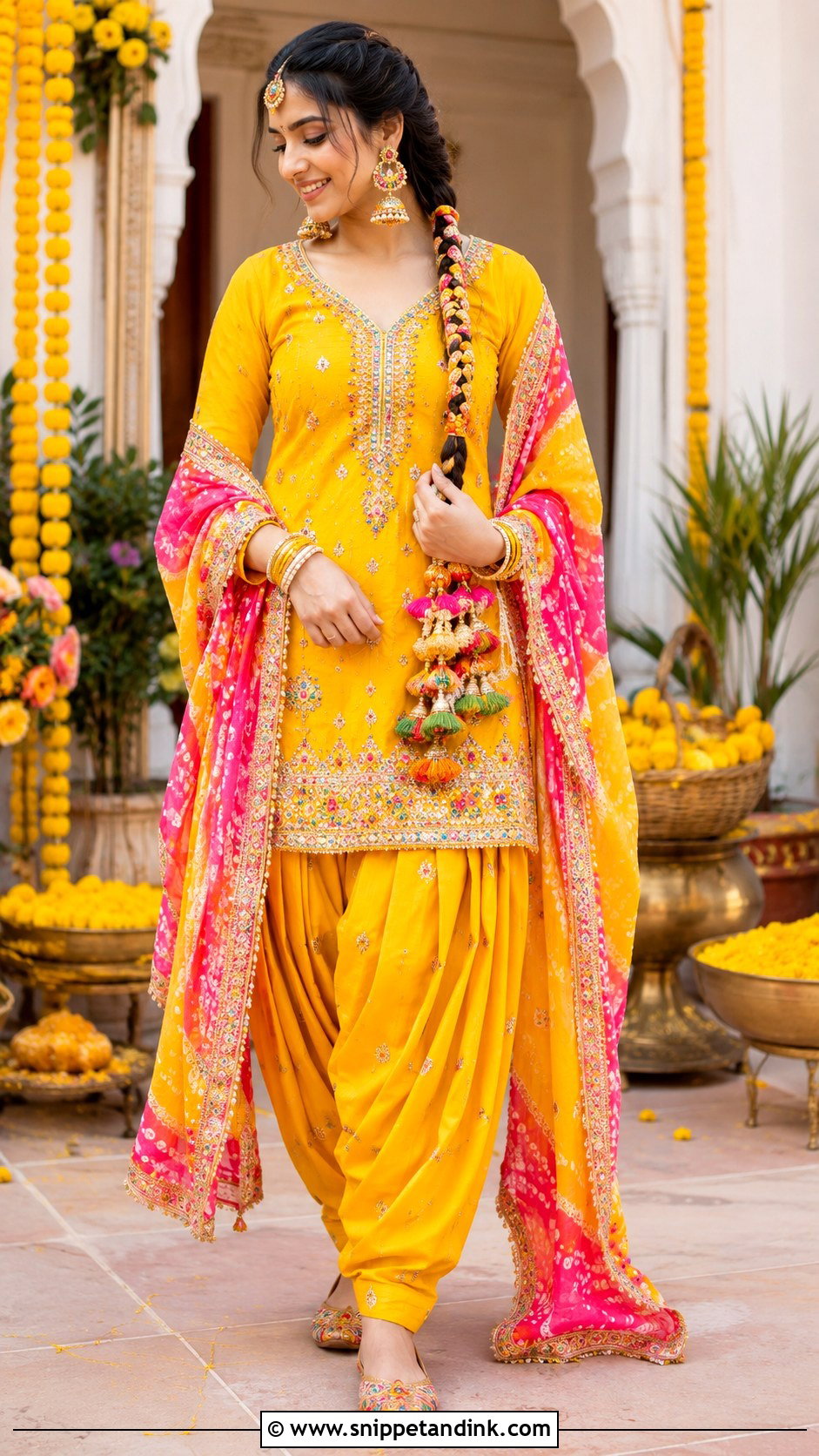
Pleated Patiala pants are made for movement, which suits a haldi with dancing, games and family crowding in. A yellow Patiala suit with a short kurti and a bright dupatta is a classic Punjabi look. Phulkari, gota borders or mirrors make it festive. Guests, cousins and bridesmaids get a practical, colorful outfit. Parandas, jhumkas, bangles and Punjabi juttis complete it. A cotton Patiala uses a lot of fabric in those pleats and gets heavy if it’s soaked, so take a lighter cotton-silk for a haldi with water play.
19. Yellow Skirt And Crop Top For Haldi
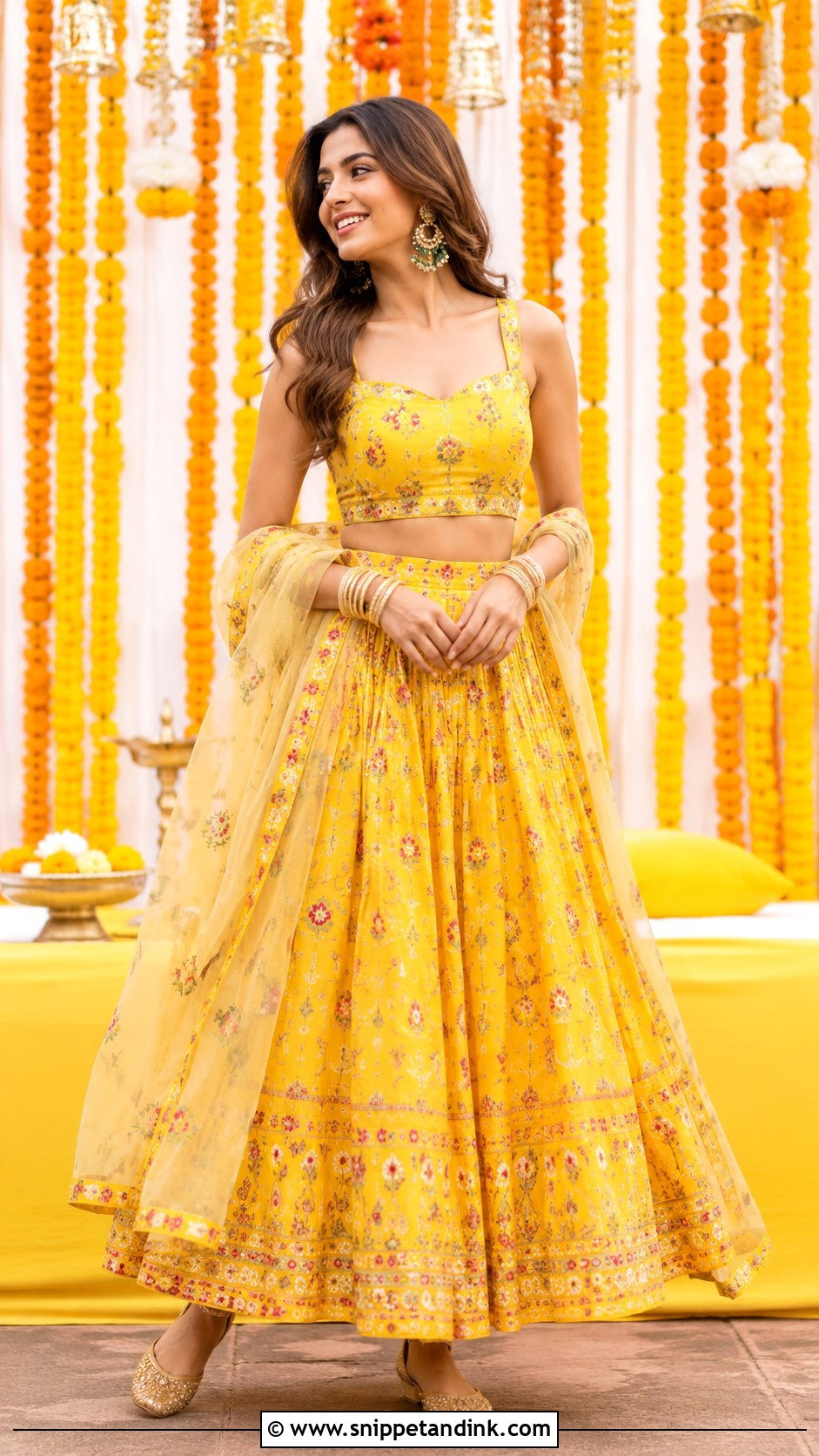
A skirt and crop top sits halfway between a lehenga and a co-ord, and you can tilt it either way. A flowy cotton silk, georgette or organza skirt with a crop top, blouse or short kurti. Printed skirt with a solid top looks easy and modern; a fully embroidered set feels closer to bridal. A dupatta makes it traditional, a cape makes it fusion. Keep jewelry light if the print is busy. Bangles, earrings and juttis. The skirt and top can be worn separately afterward, so you’ll get several outfits out of one purchase.
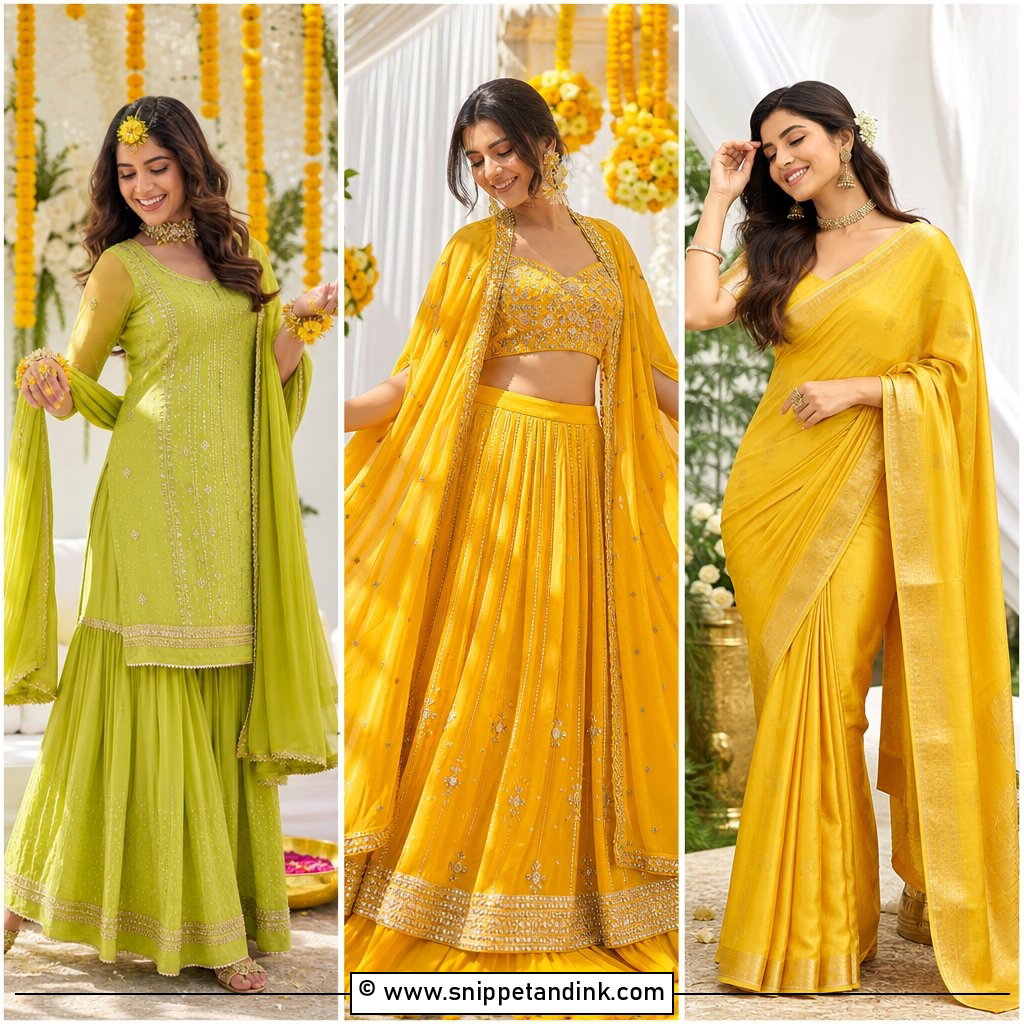

20. Yellow Jacket Kurta Set For Haldi
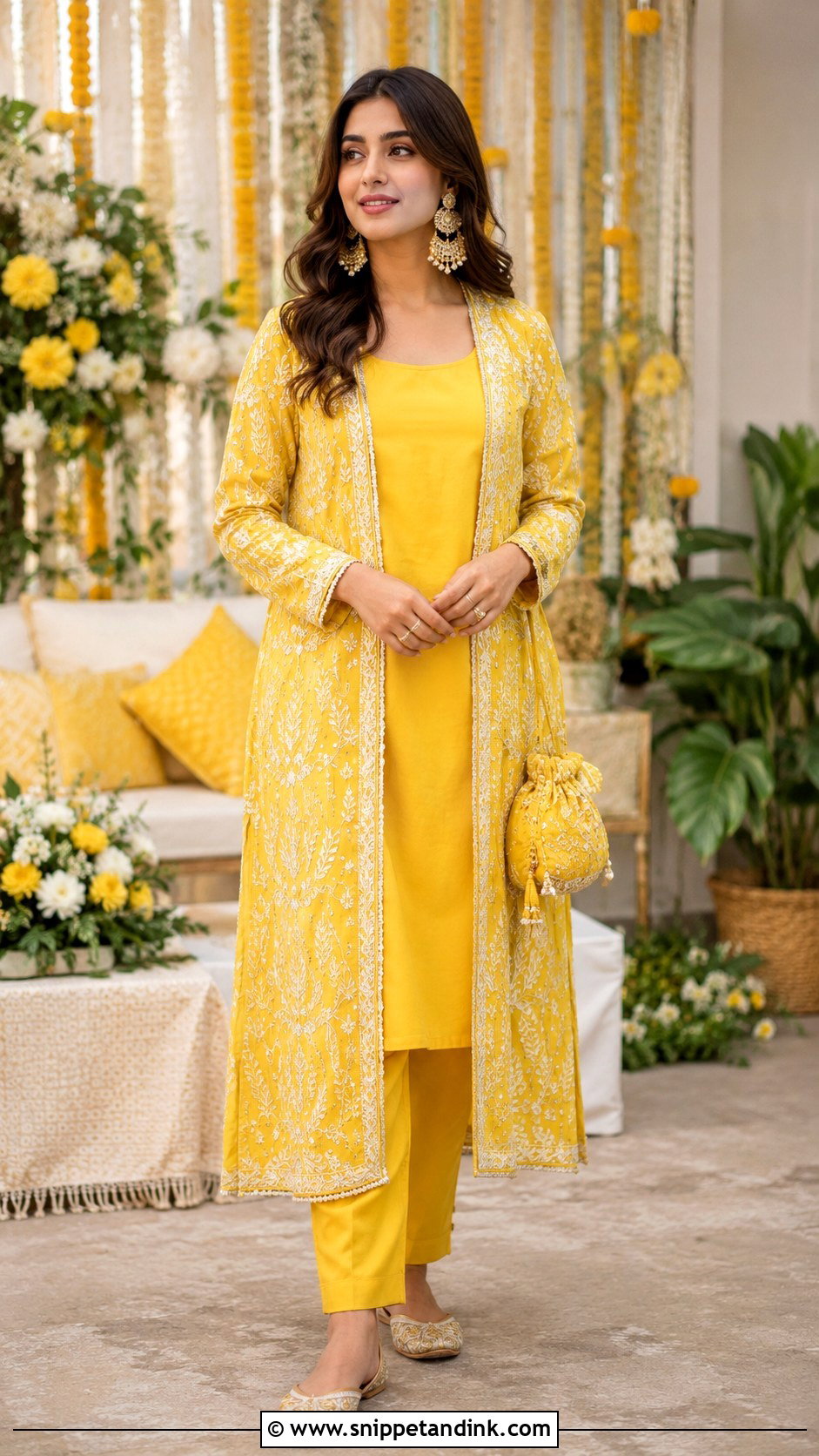
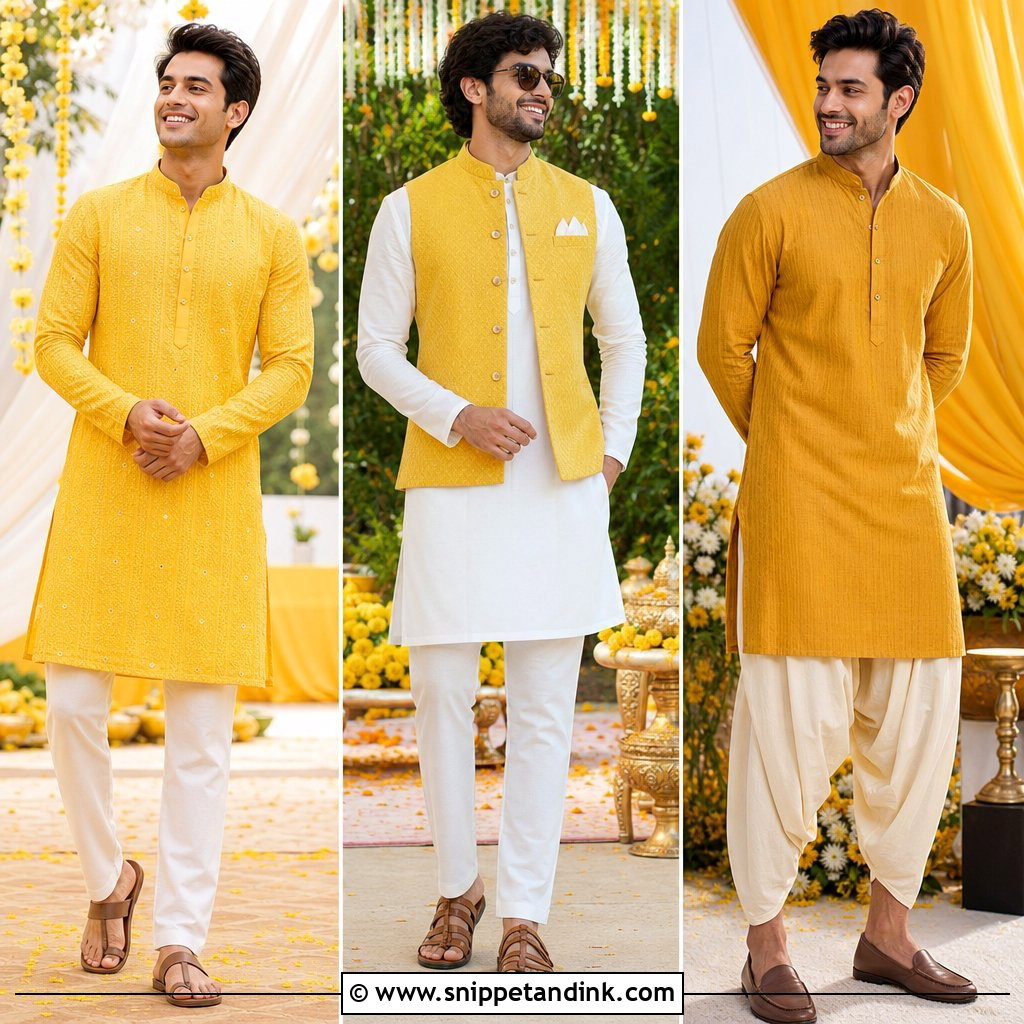
If you hate managing a dupatta, a jacket kurta set gives you the layered look without one. Sleeveless, longline or short embroidered jackets over a simple kurta set. Florals, mirror work and gota borders suit a haldi. Straight pants, palazzos or cigarette pants underneath, depending on comfort. Juttis, a potli and statement earrings. A heavy jacket gets hot quickly outdoors, so I prefer an unlined or cotton-lined one for summer ceremonies. Guests and bridesmaids look festive without much weight.
21. Yellow Pre Draped Saree For Haldi
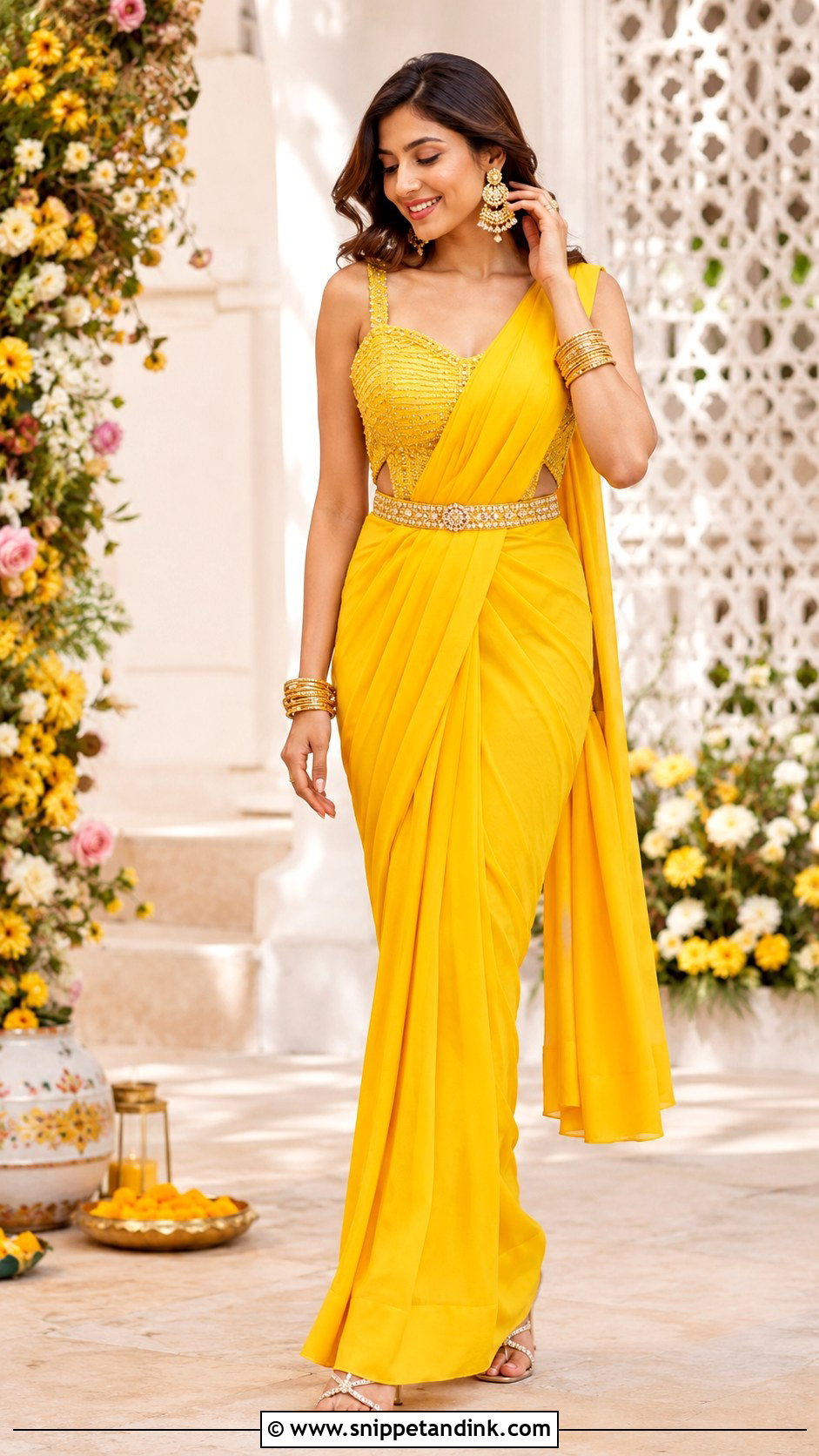
Pre-draped sarees stay exactly where they were stitched, so there’s no re-tucking pleats after every dance. Many come with belts, ruffles, capes or structured blouses built in. Choose a light fabric so it doesn’t get bulky at the waist. Brides can go for floral embroidery or mirror work; guests suit a simpler printed version. Add a waist belt for definition. Earrings, bangles and comfortable heels or flats. Get your size right: unlike a regular saree, a pre-draped one can’t be adjusted much once it’s stitched, so try it on with the shoes you’ll wear.
22. Yellow Palazzo Saree For Haldi
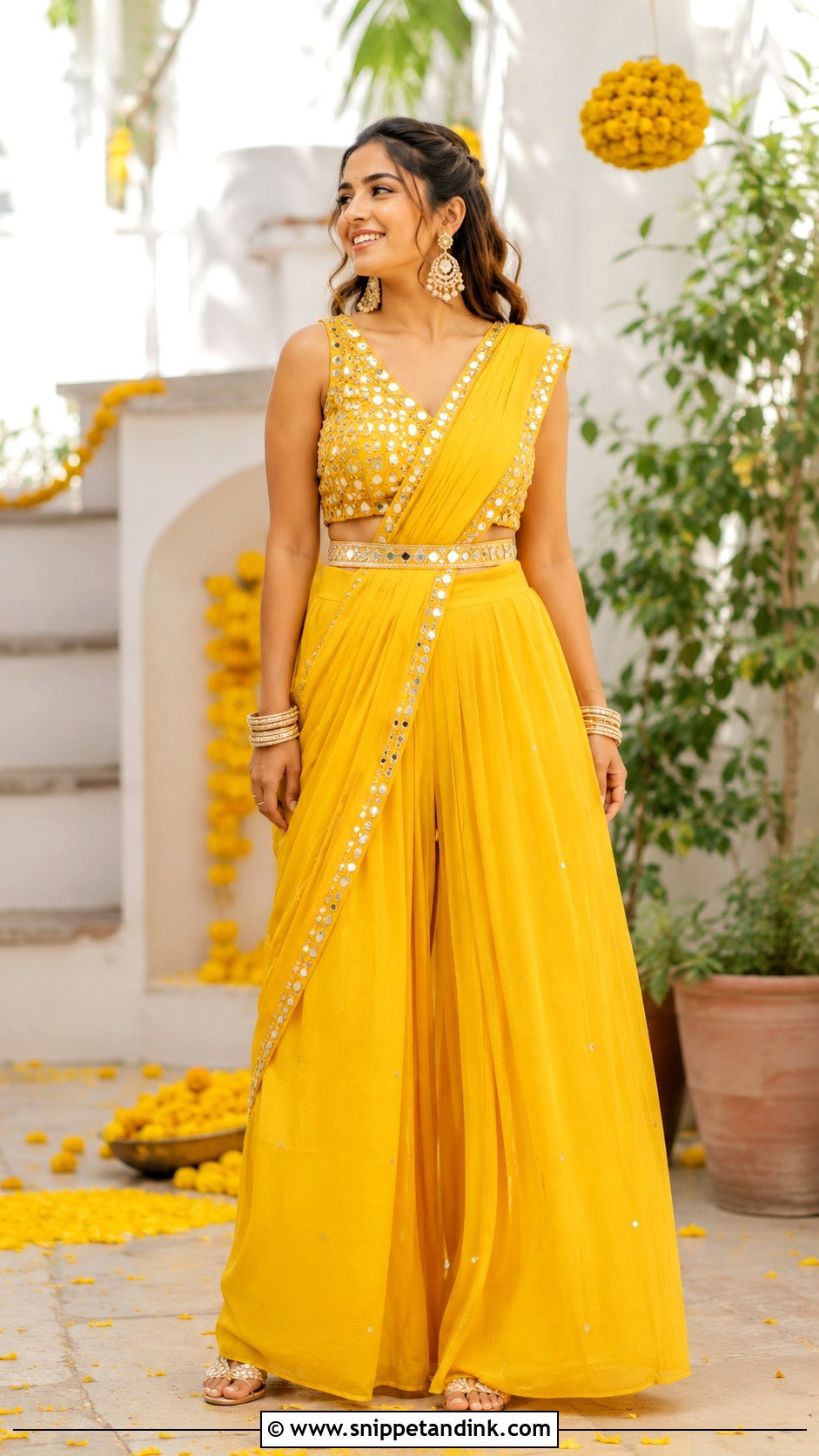
A yellow palazzo saree gives the saree drape over the security of pants, so there’s no pleating or tucking all day. Walking, sitting and dancing are all easier. Bright yellow, pastel or ivory-yellow depending on your role. A mirror blouse or embroidered crop top makes it festive, and a belt keeps the drape in place. Statement earrings, soft makeup and embellished sandals. It’s the fusion piece I suggest to people who love a saree’s look but have never draped one themselves.
23. Yellow Kaftan Set For Haldi
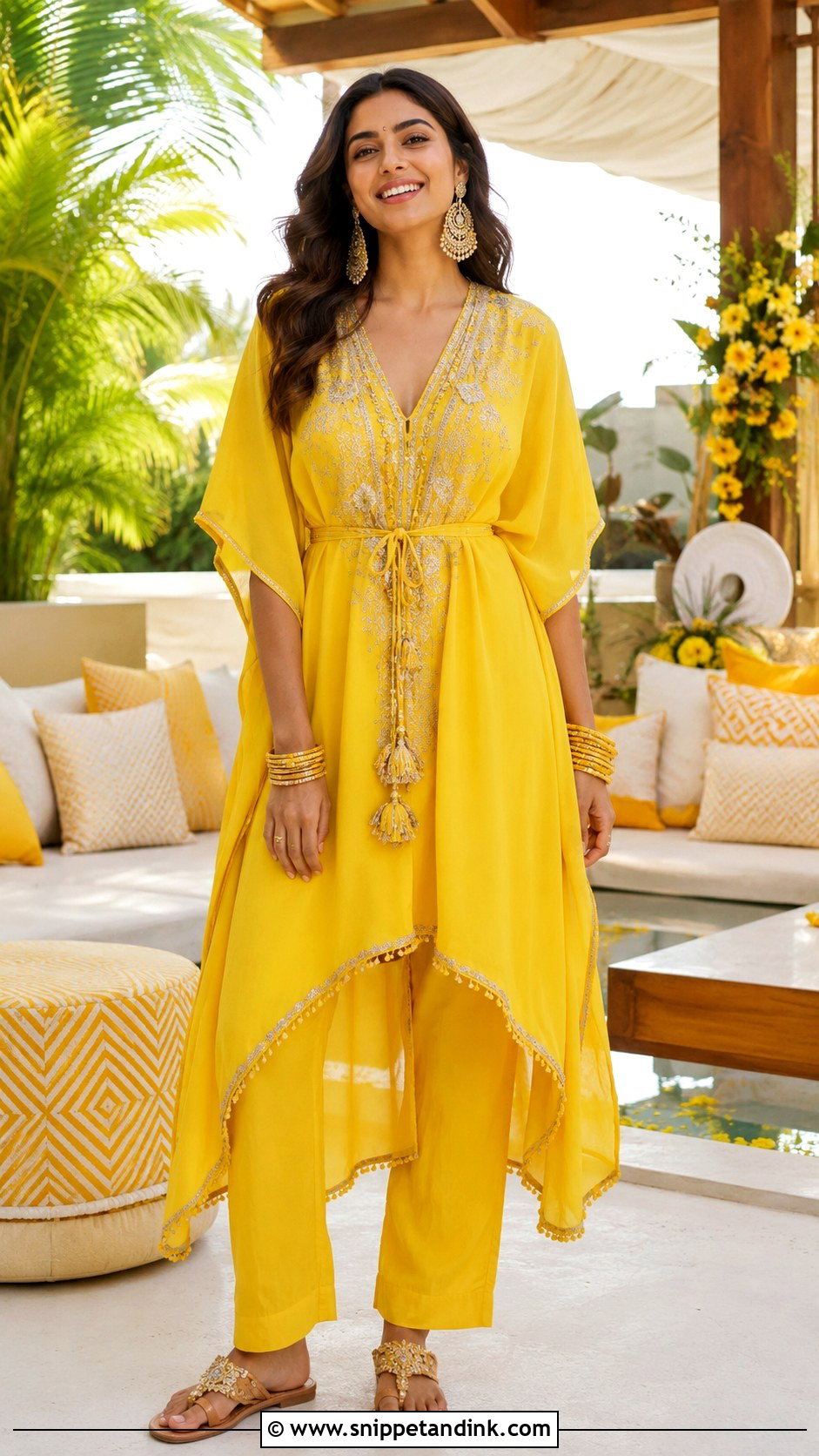
Kaftans are cool, loose and easy, which is why they suit outdoor, resort and hot-weather haldis. Choose one with light embroidery, mirror work, tie-dye or florals so it still feels festive. Straight pants, palazzos or a slip dress underneath, depending on the design. A belt cinches it if you want shape. Large earrings or stacked bangles, flat sandals and soft waves. The risk with a kaftan is looking like you’ve come from the pool, so I’d always go for one with real embroidery at the neck. Easy to wear for hours.
24. Yellow Jumpsuit With Dupatta For Haldi
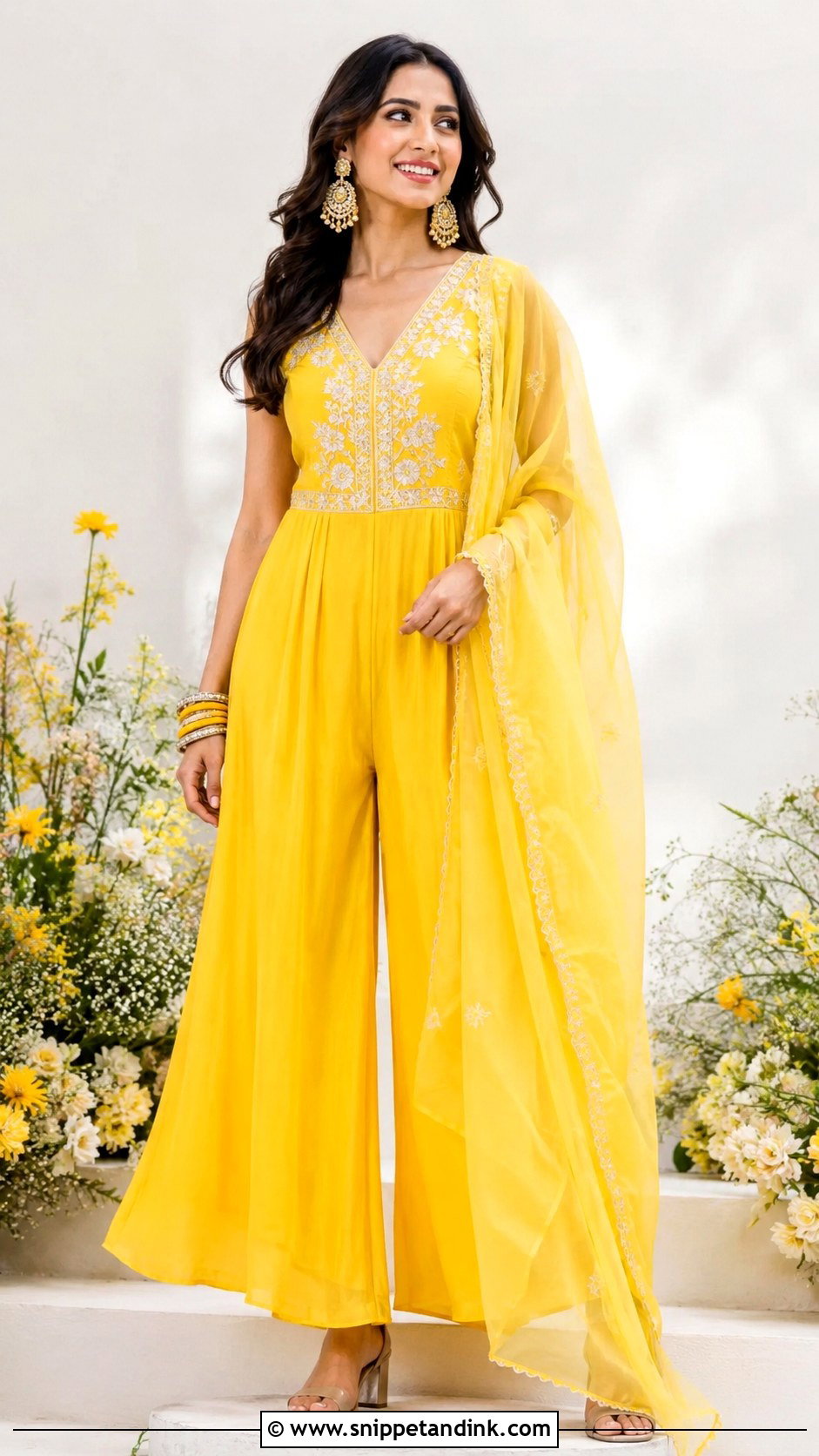
A yellow jumpsuit with a dupatta is the Indo-western route for anyone who wants modern and simple. The one-piece is quick to put on, and the dupatta brings the tradition back. Wide legs, wrap bodices, embroidered necklines or attached drapes look festive. Pin an organza or chiffon dupatta to one shoulder so it stays put. Bridesmaids, cousins and guests suit it well. Statement earrings, bangles and block heels or flats. Check the length of the torso when you sit, because a short-bodied jumpsuit pulls uncomfortably on a low stool.
25. Yellow Floral Lehenga For Haldi
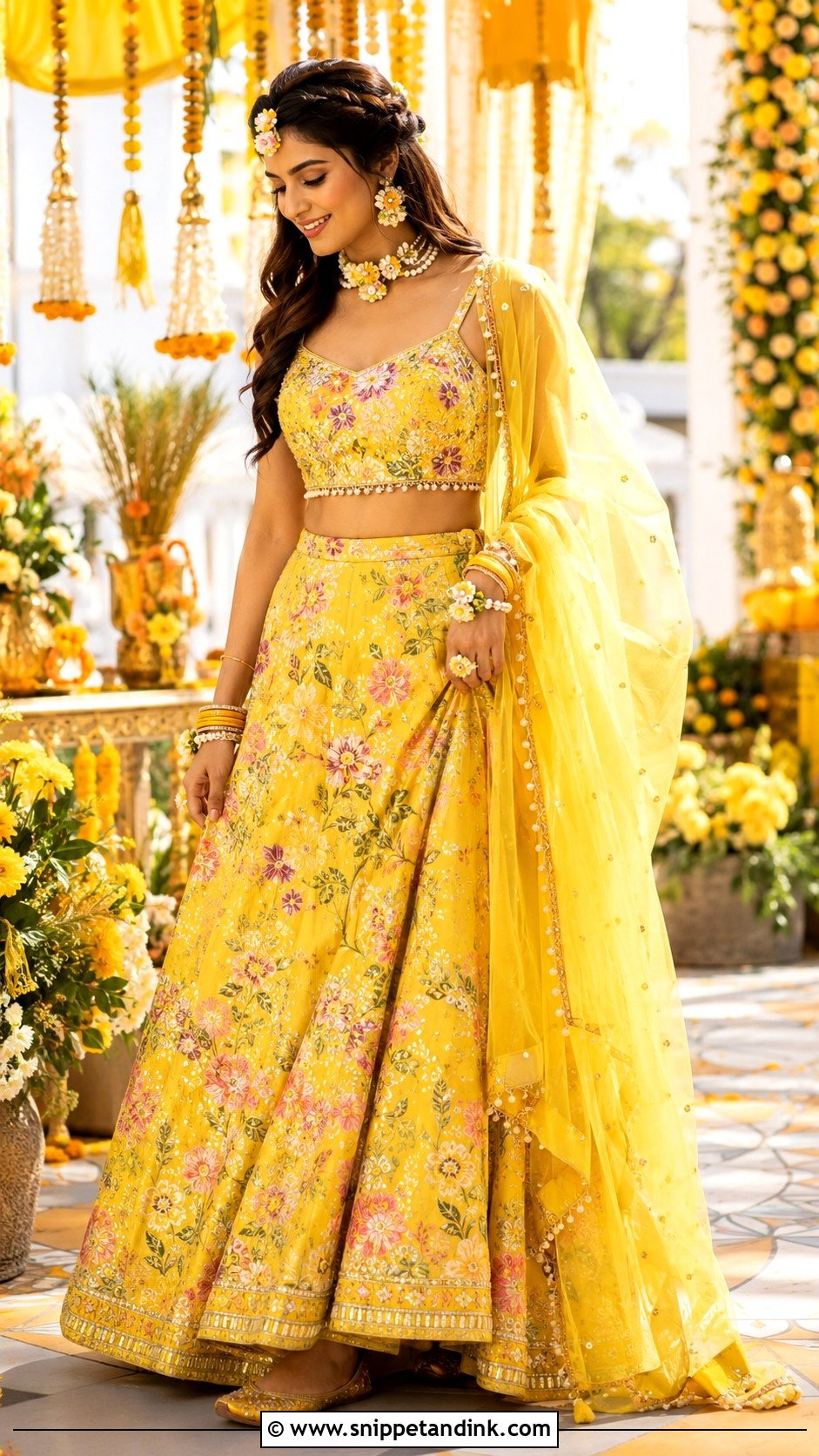
Florals belong at a haldi because marigolds and fresh blooms are everywhere already. A yellow floral lehenga with a matching blouse and soft dupatta looks cheerful in the daytime. Brides can take larger embroidery, 3D flowers or appliqué; guests and bridesmaids suit printed florals with little embellishment. Floral earrings, pearls or small gold pieces. Juttis or sandals for moving around. Raised 3D flowers flatten when you sit or get hugged, so if you choose them, keep them on the skirt hem and the dupatta rather than across the seat.
Six Bridesmaids, One Yellow
Yellow is the hardest color to match across a group. Two outfits sold as “mustard” from different shops can be a full shade apart, and that gap shows clearly in group photos. If the bridesmaids are coordinating, order from one seller and, if possible, from one dye batch, or have the fabric dyed together by one tailor.
Getting the timing right
Ready-made sets still usually need blouse or waist alterations, and stitched-to-measure outfits take longer again, so I’d settle the group’s choice about six to eight weeks before the haldi. That leaves room for a second fitting and for one person whose outfit arrives in the wrong shade.
- Look at every swatch together in daylight, not under shop lights, which push yellow toward green.
- Check each yellow against each skin tone; one undertone may flatter some faces better than others.
- If yellows refuse to match, give everyone the same print or embroidery and let the shades vary deliberately.
- Agree on footwear and jewelry metal so the group still reads as one.
Wear What Lets You Laugh Through the Paste
The right haldi outfit lets you enjoy every ritual without fussing with your clothes. Yellow lehengas, sarees, shararas, Anarkalis, co-ords, kaftans and fusion pieces all work once the fabric is light and the styling practical. Brides can take statement pieces and floral jewelry; guests can keep it simpler with prints, soft embroidery and comfortable shoes. Ivory, orange, lime and pastels give a fresh angle if yellow isn’t your color. Pick the one that feels like you, then stop worrying and let the turmeric fly.
You'll Like These Ideas:











Leave a Reply