
Your sister’s haldi is a working day for you. You’ll pass bowls of paste, keep cousins in line for photos, sit on the floor beside her and dance once the music starts, usually in midday warmth. That’s why I fit sisters for movement before I fit them for colour. Cotton, georgette, chiffon, organza and chanderi all breathe in daylight, and yellow is only one option among mustard, ivory, peach, green, pink and florals. Flat juttis or kolhapuris and a hairstyle that won’t drop into the turmeric bowl matter as much as the outfit. The twenty looks below run from traditional sets to modern fusion, and each comes with what I’d check before you buy it.
Agreeing on Colours With the Bride and the Cousins
Most haldi photo problems I see come from nobody talking about colour beforehand. Either three sisters arrive in the exact shade the bride chose, or everyone wears different yellows that clash in a group shot. A short family message a few weeks out fixes both.
- Find out the bride’s exact shade first and stay one step lighter, darker or softer than it.
- Give siblings and cousins a palette rather than a uniform. Two or three related colours look planned without looking like a team kit.
- Ask about the decor. Against a wall of marigolds, orange can disappear; green and pink stand out.
- Agree on how traditional the dress code is, so nobody turns up in a jumpsuit beside elders expecting sarees.
If you’re the bride’s only sister, you have a little more room to stand out. A contrasting colour like green, or a distinctive textile such as bandhani, helps the photographer pick you out quickly in group frames.
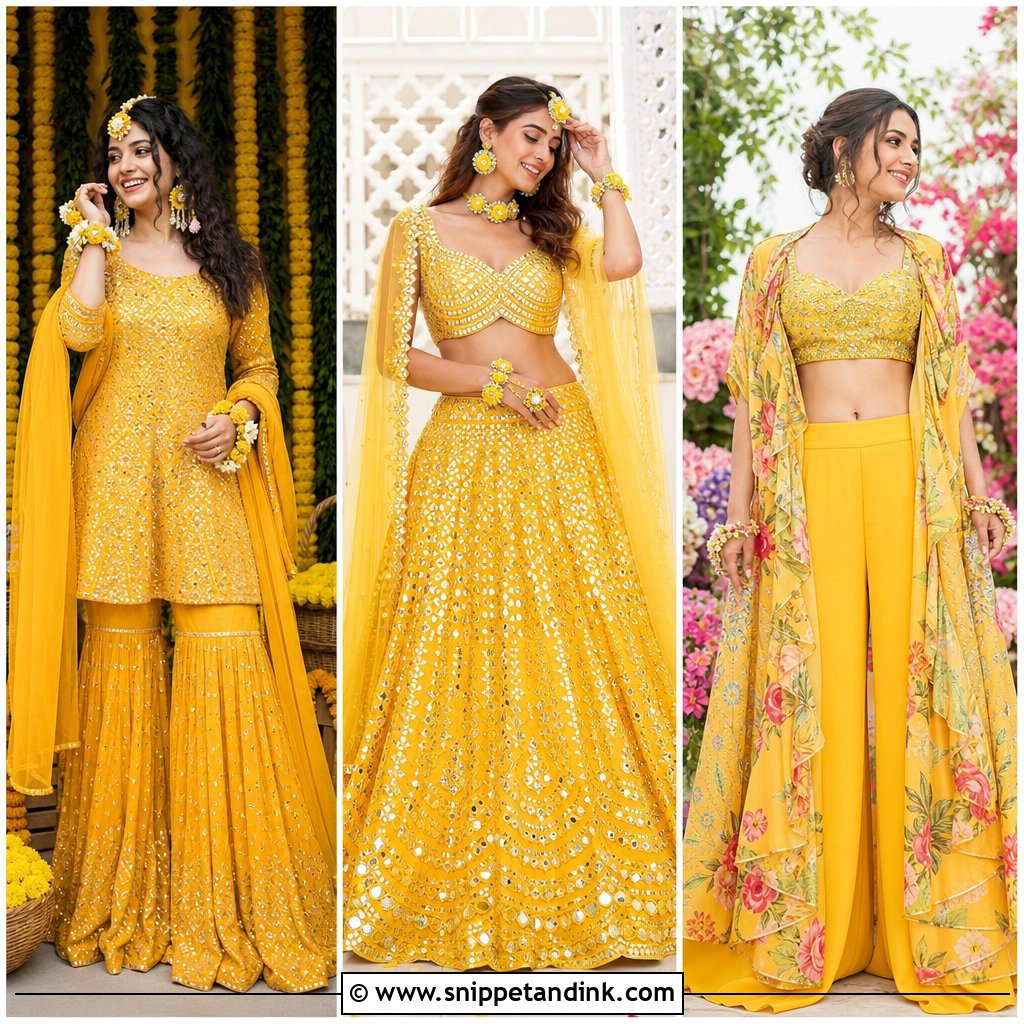
1. Yellow Sharara Set for Haldi Ceremony
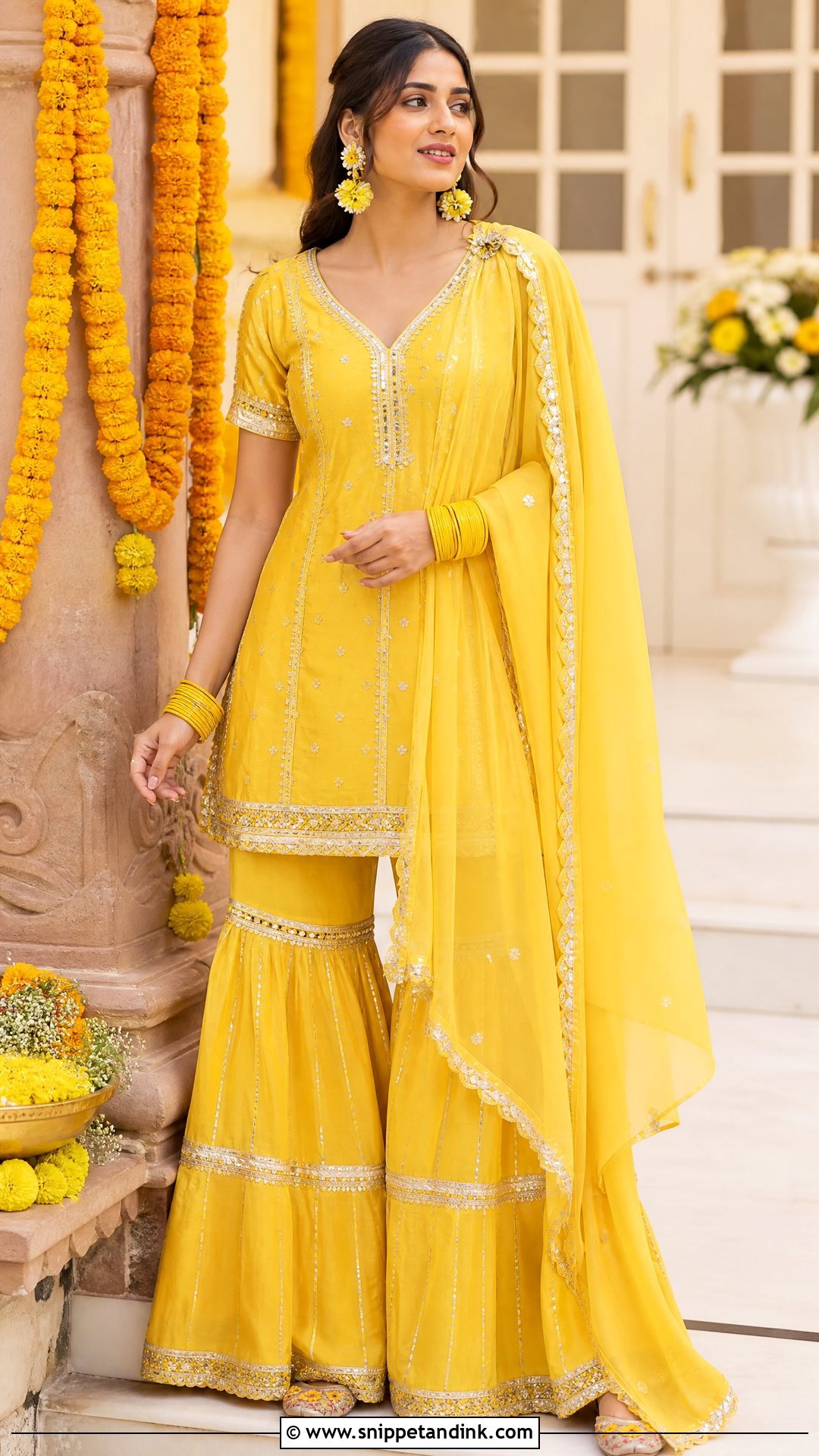
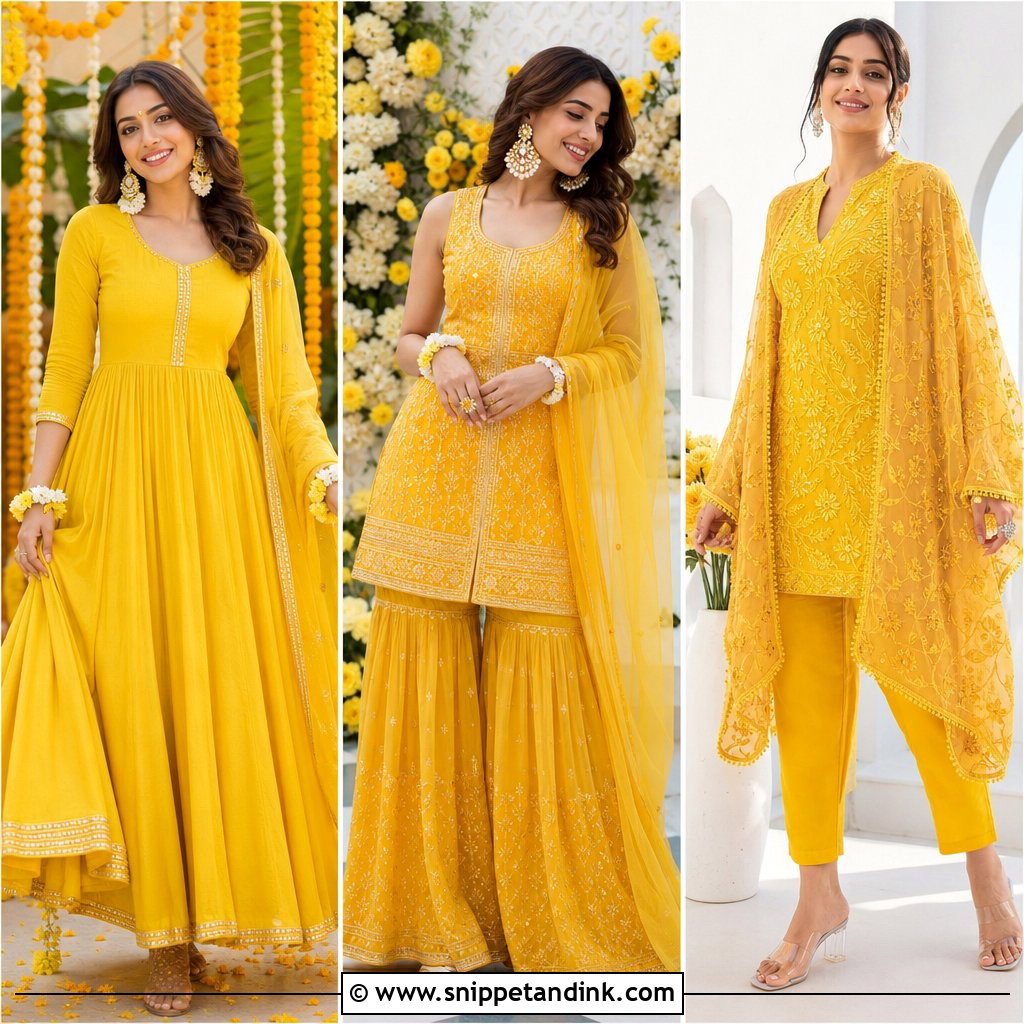
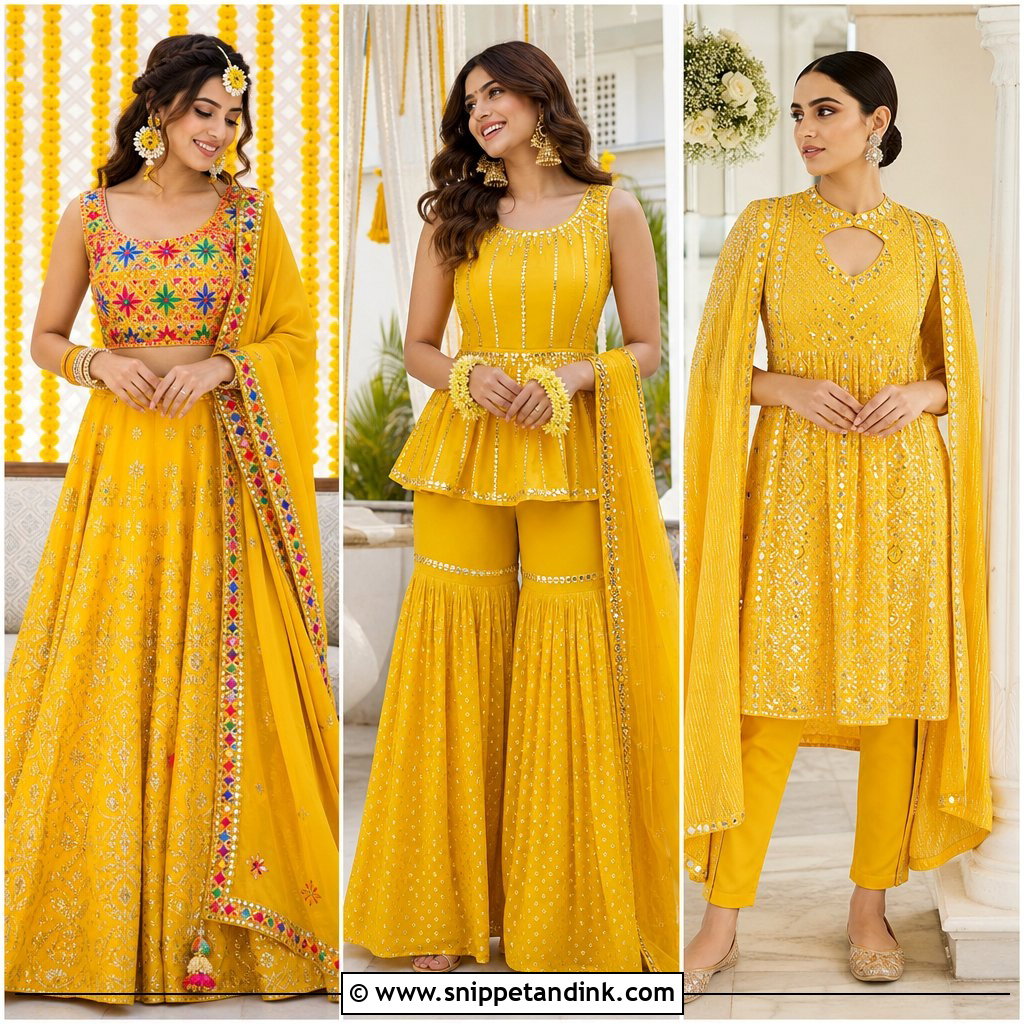
Start here if you want something traditional that still lets you move. A short kurti with light gota, a flared sharara and a dupatta pinned at one shoulder is the most common sister outfit I see at haldis, and for good reason: the fitted kurti balances the volume below, and the pants never ride up when you sit. Cotton silk, georgette or chanderi keep it cool. If the bride is in bright yellow, drop to mustard or pale lemon so you sit next to her rather than echo her. Embroidered juttis, small floral earrings and a braided ponytail finish it.
2. Floral Lehenga for Haldi Ceremony
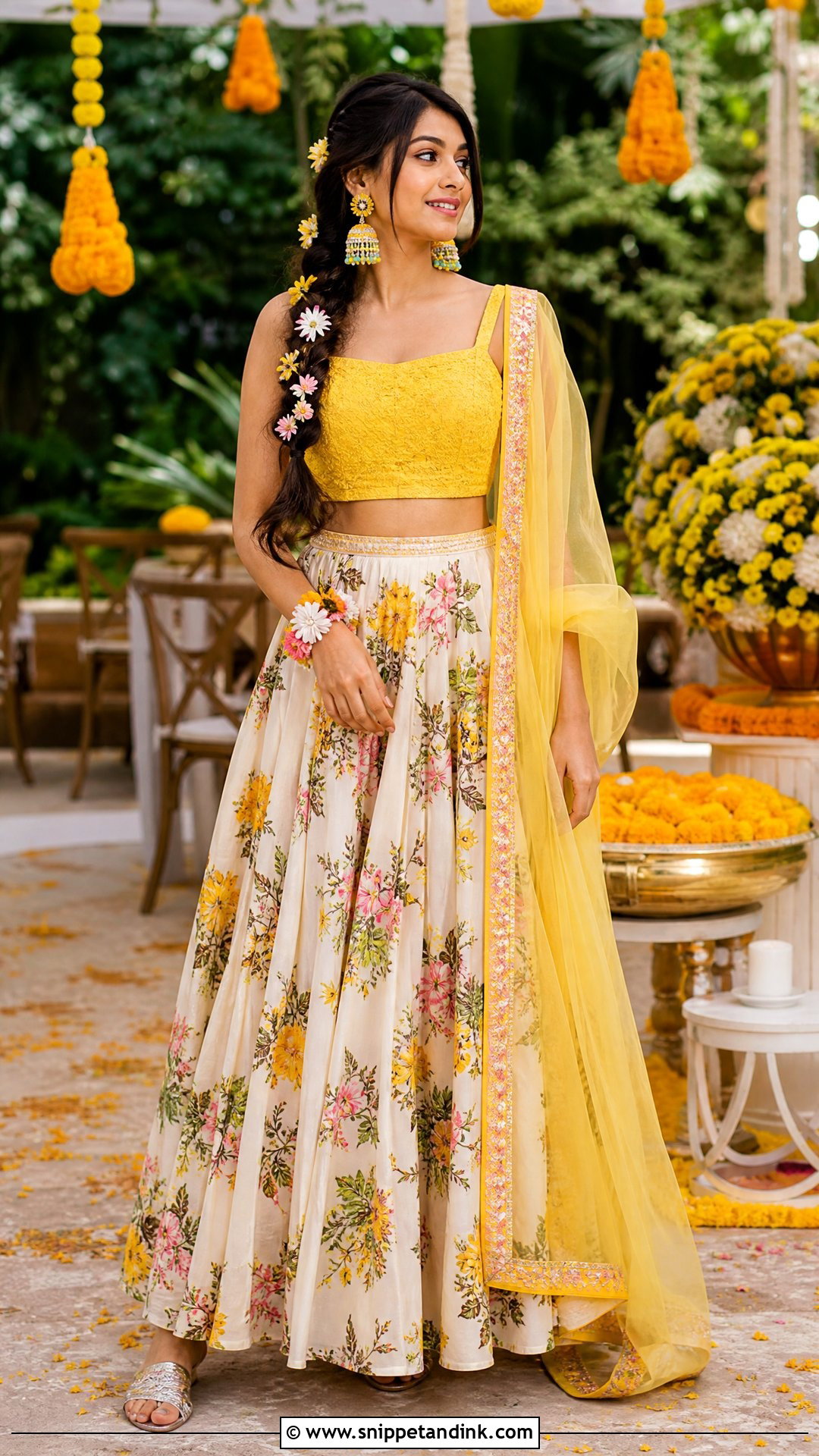
A floral lehenga on an ivory or pale-yellow ground lets marigold, pink and green arrive through the print. Keep the skirt light. A heavily embroidered lehenga with a stiff can-can is exhausting when you’re the one fetching things for the bride. I’d pair it with a simple blouse with wider straps, which hold better than spaghetti straps once you start lifting and reaching, and a chiffon dupatta. Metallic flats, medium jhumkas and fresh flowers in a loose braid suit both garden and indoor venues.
3. Yellow Kurta Palazzo Set for Haldi Ceremony
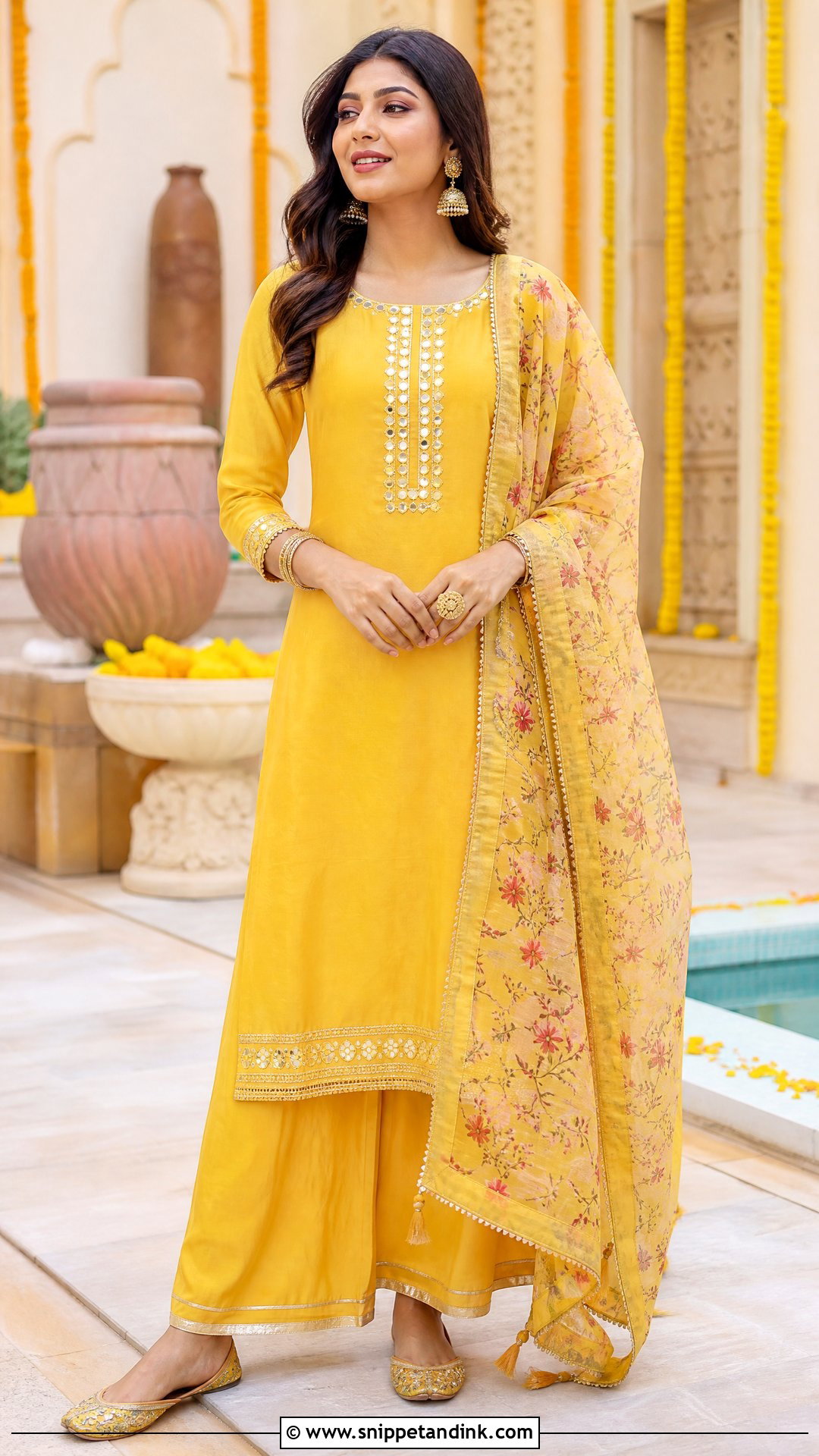
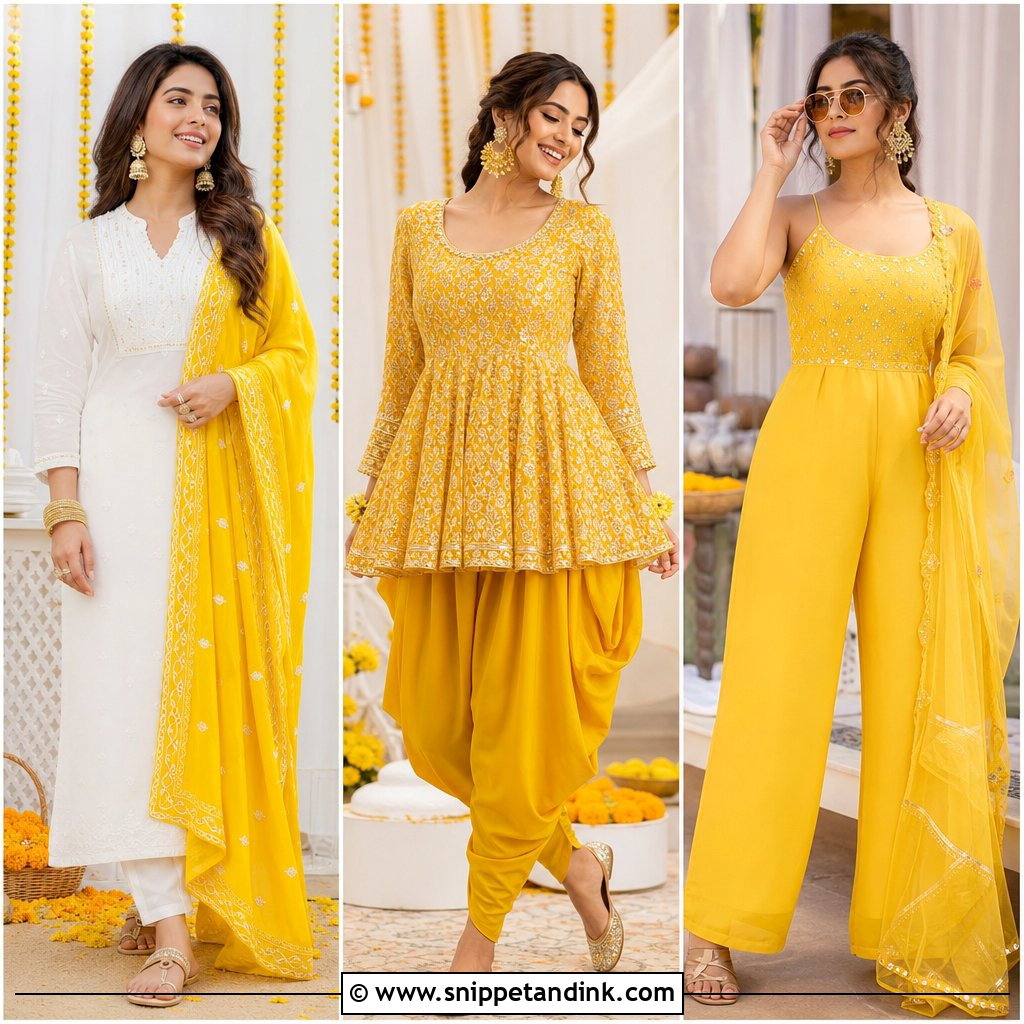
Nothing on this list is easier to live in than a kurta and palazzos. Wide legs mean you can sit cross-legged on a mat for an hour without a single adjustment, and a longer kurta covers you when you bend. Choose cotton for an outdoor summer haldi, georgette if you want more swing. Mirror accents or lace borders are enough decoration. A printed dupatta brings in colour, flat juttis and slim bangles keep it light, and a sleek ponytail survives the dancing. This set is kind to every size and age, which makes it a good base if several sisters and cousins want to coordinate.
4. Organza Saree for Haldi Ceremony
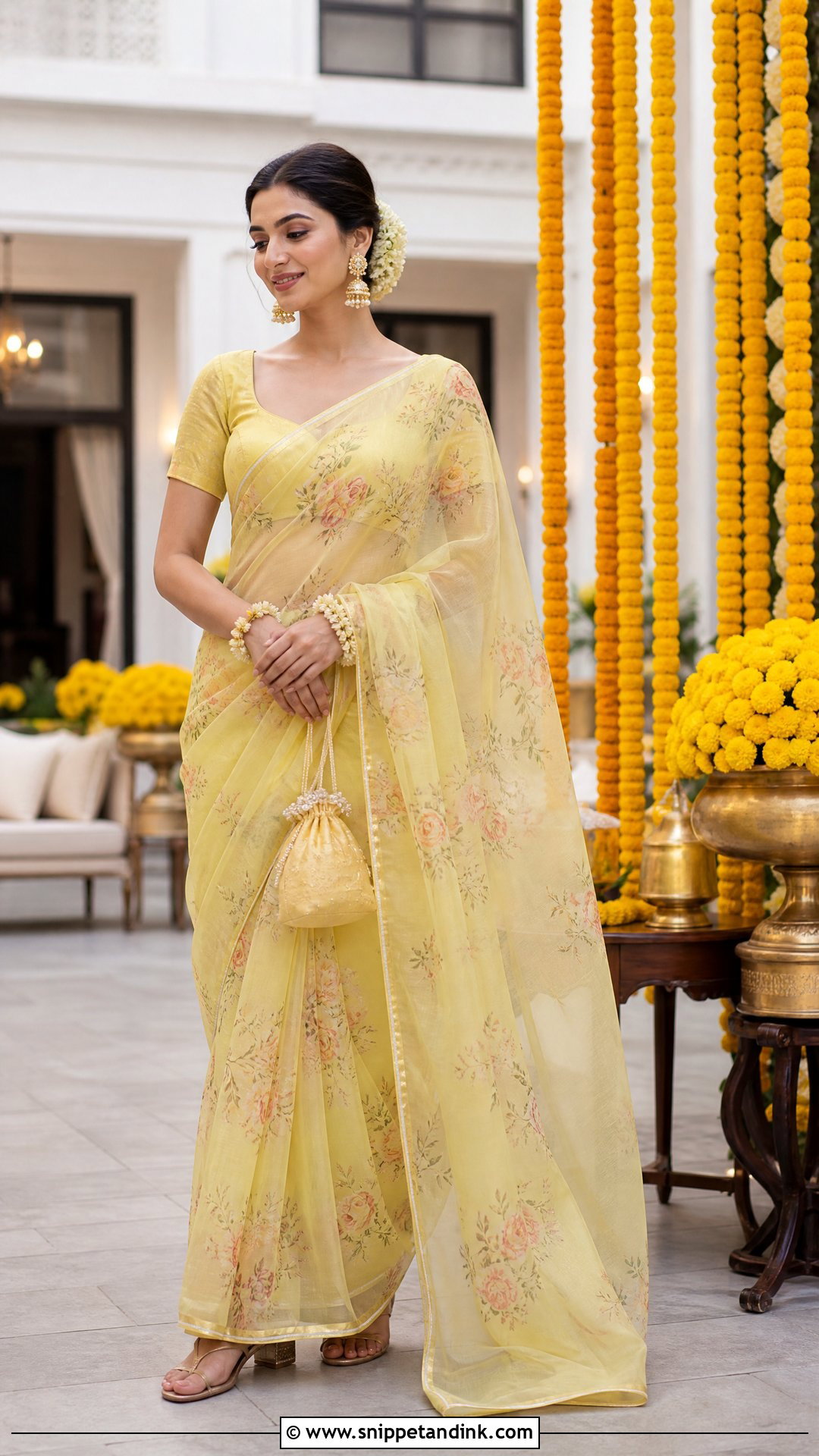
Organza is light, but it’s crisp, so it holds sharp pleats and also shows every crease from sitting. I’d pick yellow, ivory or pale orange with small florals or a fine embroidered border, and a blouse with sleeves and a neckline you won’t need to keep checking. Pin the pallu at the shoulder from the inside; organza is slippery and will slide off the moment you lean over the bride. Block heels or embellished flats are steadier than stilettos on wet floors. Pearl jhumkas and a low bun with tiny flowers suit a hotel or banquet haldi where the paste play is gentle.
5. Dhoti Pants and Crop Top for Haldi Ceremony
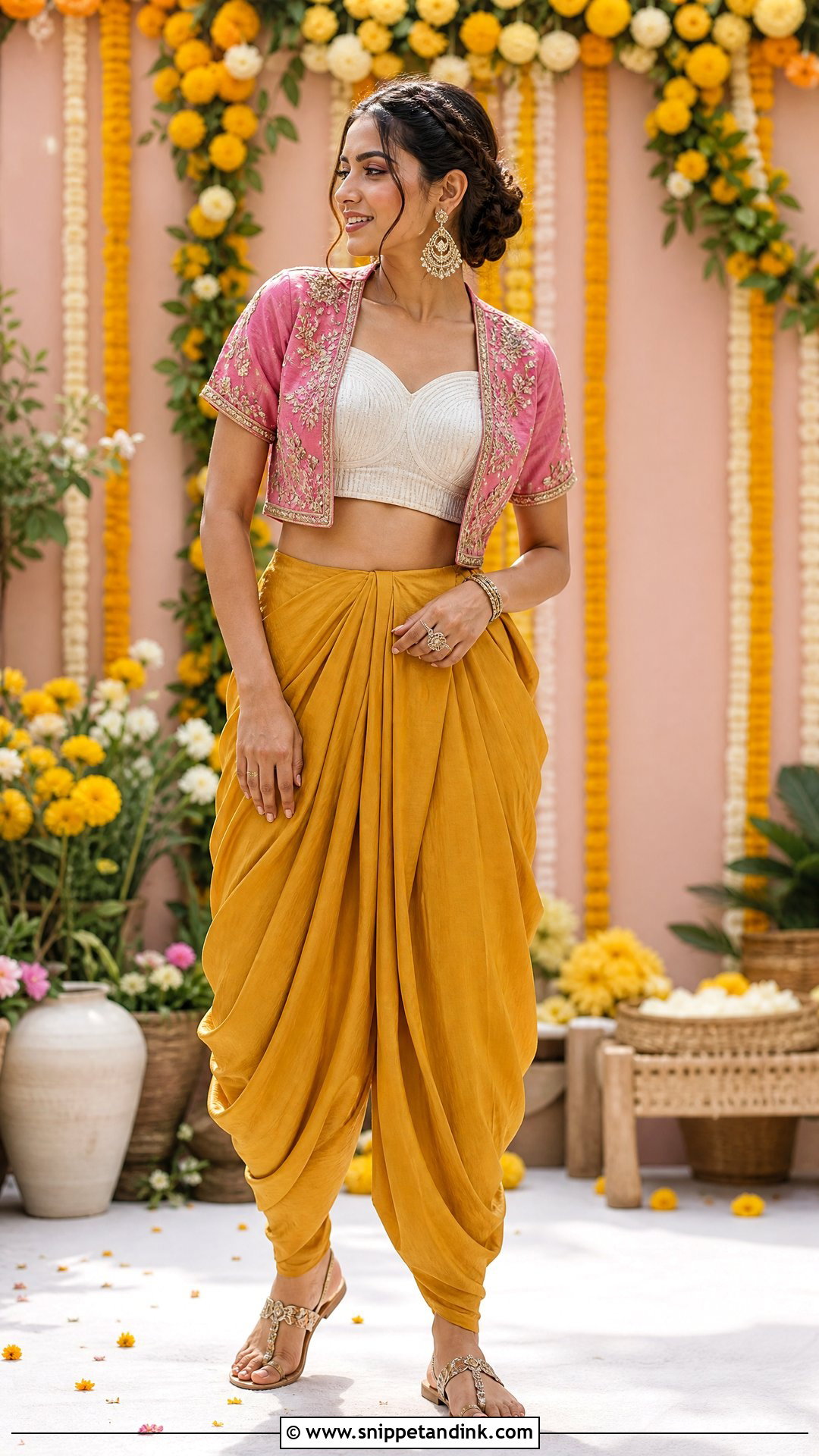
Dhoti pants with a crop top and short jacket give a modern fusion look that’s built for dancing. Mustard pants with an ivory top and a pink or green jacket balance well; an all-yellow set suits planned family photos. The draped crotch of dhoti pants gives full freedom to squat and sit, which is why choreographers love them. If a cropped blouse isn’t for you, ask for a longer fitted top that meets the waistband. Kolhapuris and a wrist pouch rather than a handbag keep your hands free. Casual, outdoor and destination haldis suit this one best.
6. Yellow Anarkali Suit for Haldi Ceremony
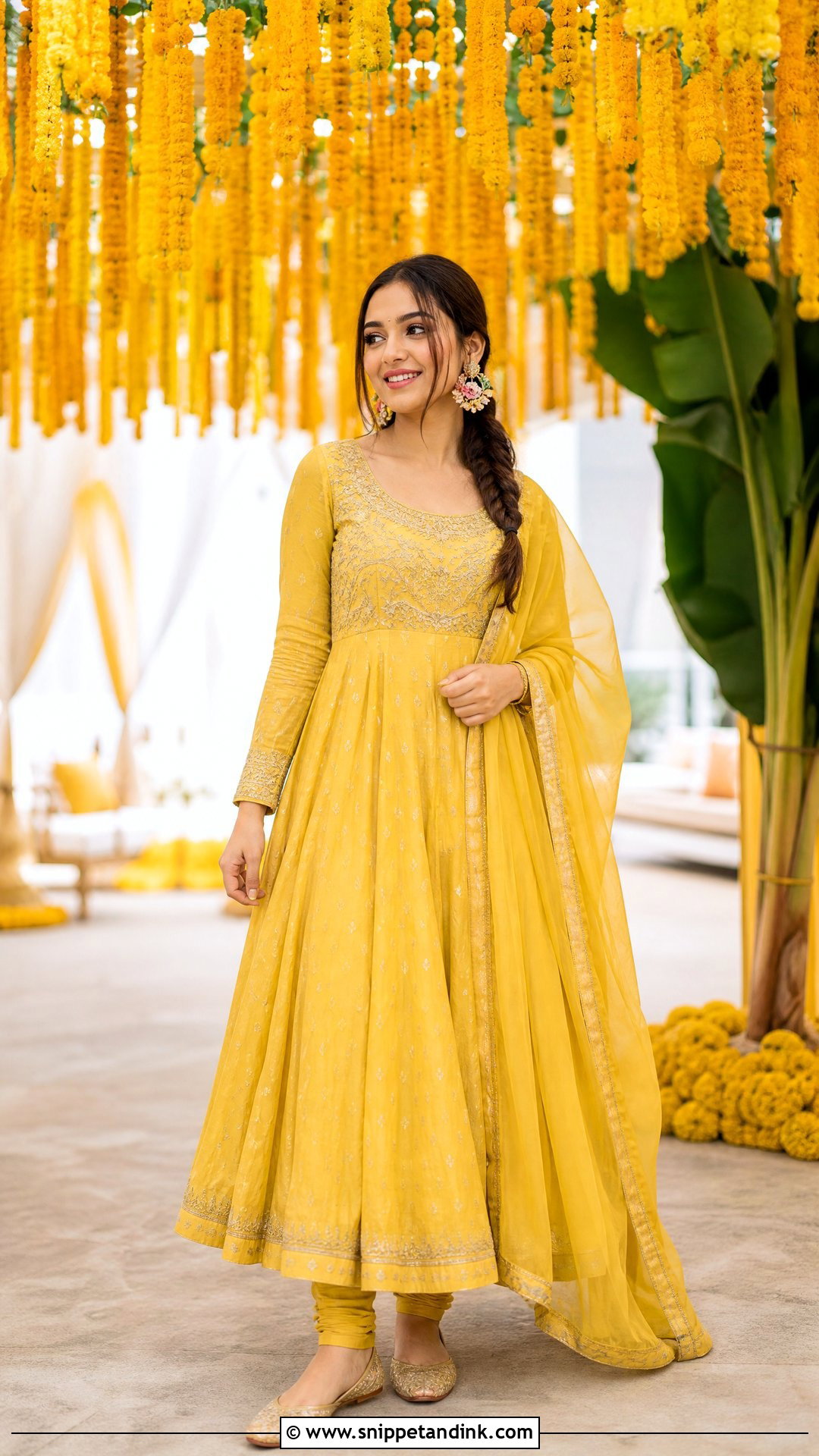
An Anarkali needs almost no styling, which is useful when you’re also managing half the family. Calf or ankle length in cotton, chiffon or light georgette, with a fitted bodice and a gentle flare, moves well and covers well around running children. Lemon yellow suits a morning ceremony; mustard holds up better in strong afternoon light. If the neckline has mirror work, skip the necklace altogether and let earrings carry the jewellery. Narrow pants, embroidered flats and a side braid complete it. One fit check: the flare should start at your natural waist, or the skirt looks shorter and wider than you intended.
7. Floral Co-Ord Set for Haldi Ceremony
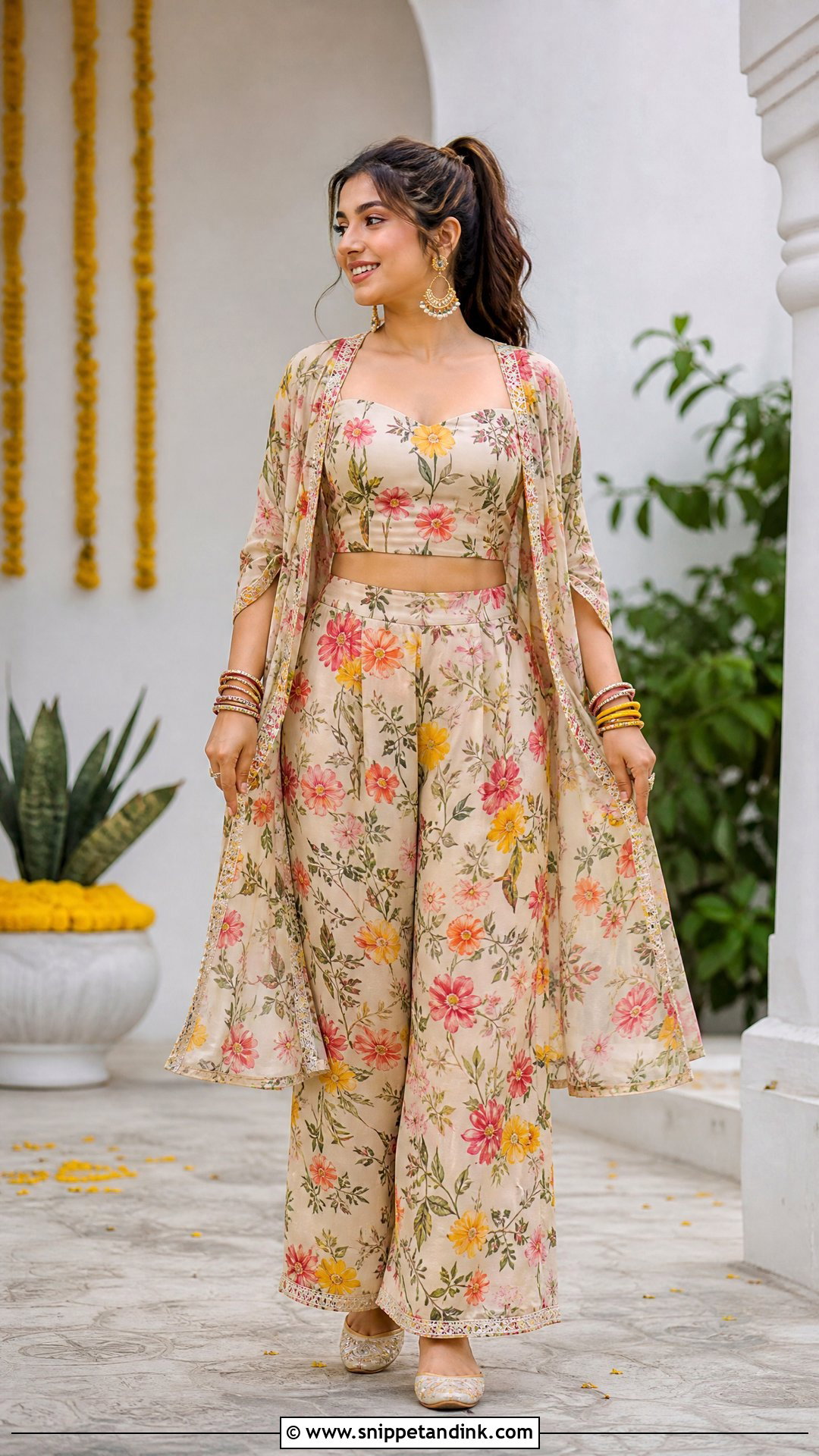
Co-ords solve the time problem. During a wedding week, sisters rarely get an hour to coordinate separates, and a printed top with matching wide-leg pants is ready the moment you put it on. Add a light cape or long shrug for movement. Yellow, coral, pink and green prints show up clearly against marigold decor. I look for an adjustable waistband and a breathable lining, because co-ords from fashion labels are often cut slimmer than traditional sets. Neutral juttis, hoop-style jhumkas and a half-up style keep the look relaxed for games and dancing.
8. Cape Sharara Set for Haldi Ceremony
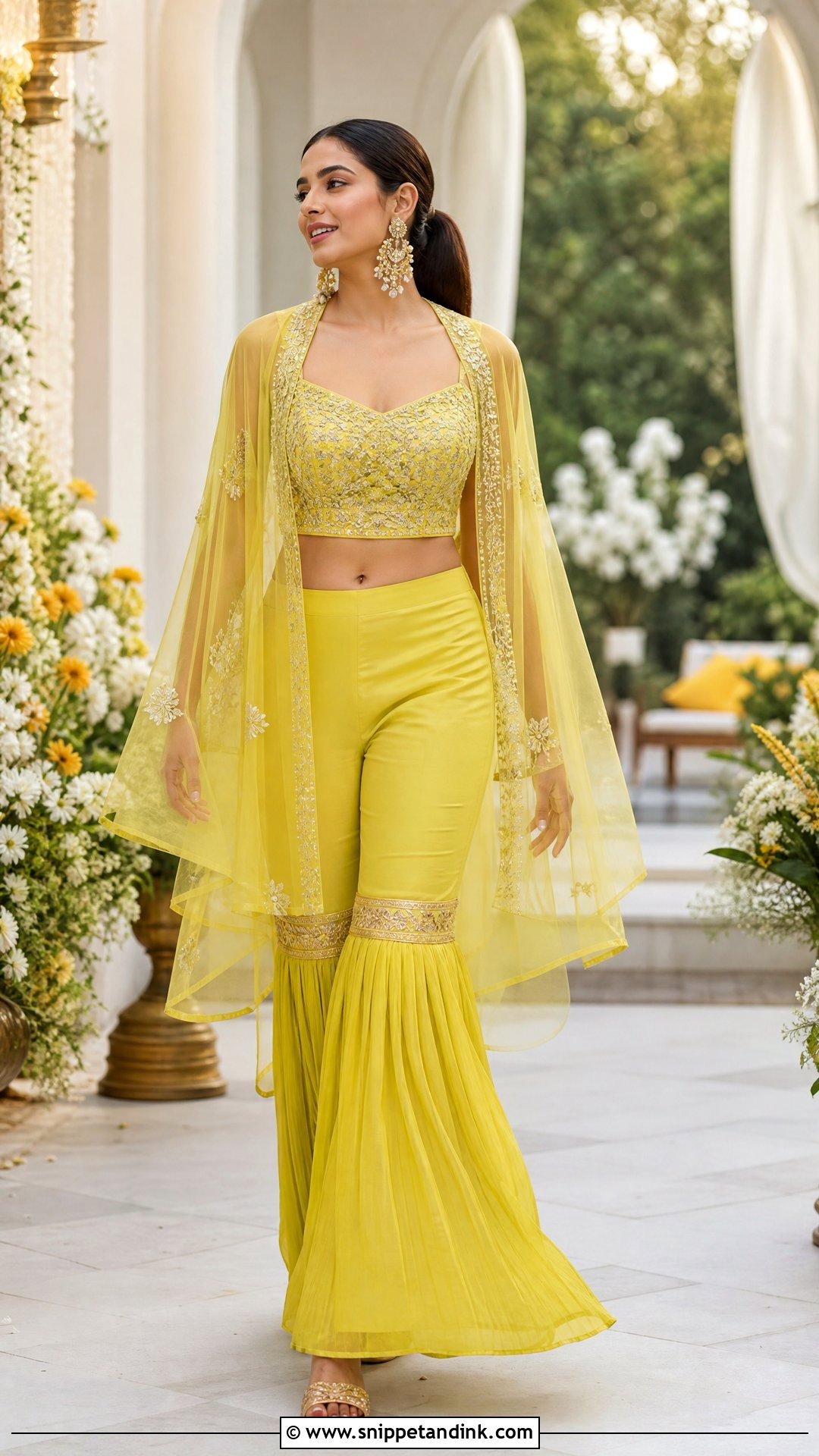
The cape replaces the dupatta, so nothing slips off your shoulder while you’re applying paste. Pair a fitted blouse with flowing sharara pants and a sheer embroidered cape in mustard, lime-yellow or mango. For contrast, try yellow pants with a white blouse and a floral cape. Length is the detail I’d fuss over: a hip or knee length cape stays out of the bowls and off the floor, while a floor-sweeping one becomes a turmeric mop. Chandelier earrings and a low ponytail suit it, and the neckline should stay bare so the cape reads clearly.
9. Yellow Gharara Suit for Haldi Ceremony
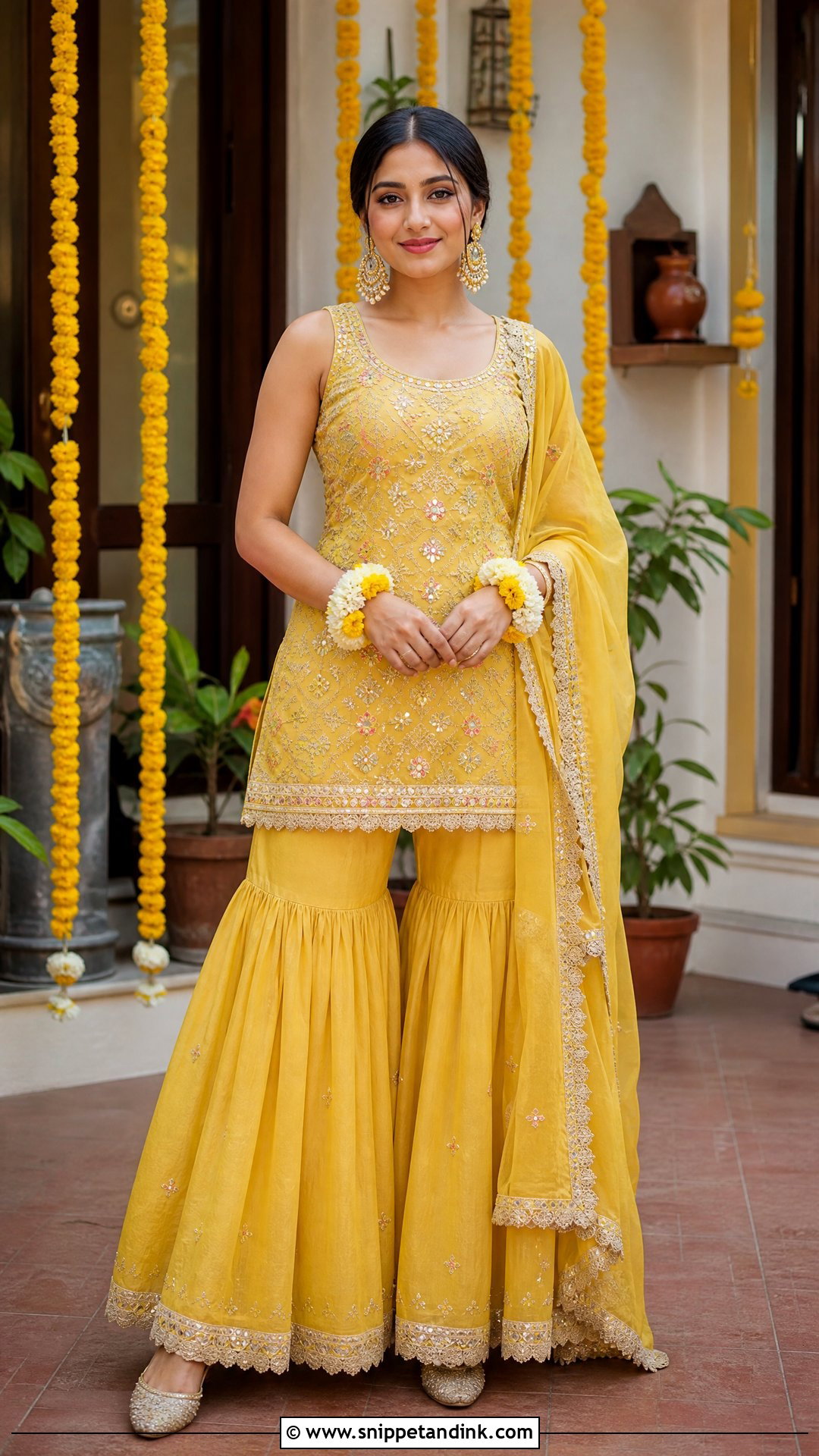
Ghararas flare from the knee, which gives a distinctive outline and a nice swing when you dance. That joint at the knee is also where they catch, so the hem must clear the floor with your actual shoes on. Pair a short embroidered kurti with a gharara in mango yellow, marigold or mustard, or ivory with yellow florals, and a dupatta edged in lace or gota. Drape the dupatta over the arms for portraits, then pin it or set it aside for the rituals. Pointed juttis, small chandbalis and a centre-parted low bun give a classic finish on most heights and figures.
10. Bandhani Lehenga for Haldi Ceremony
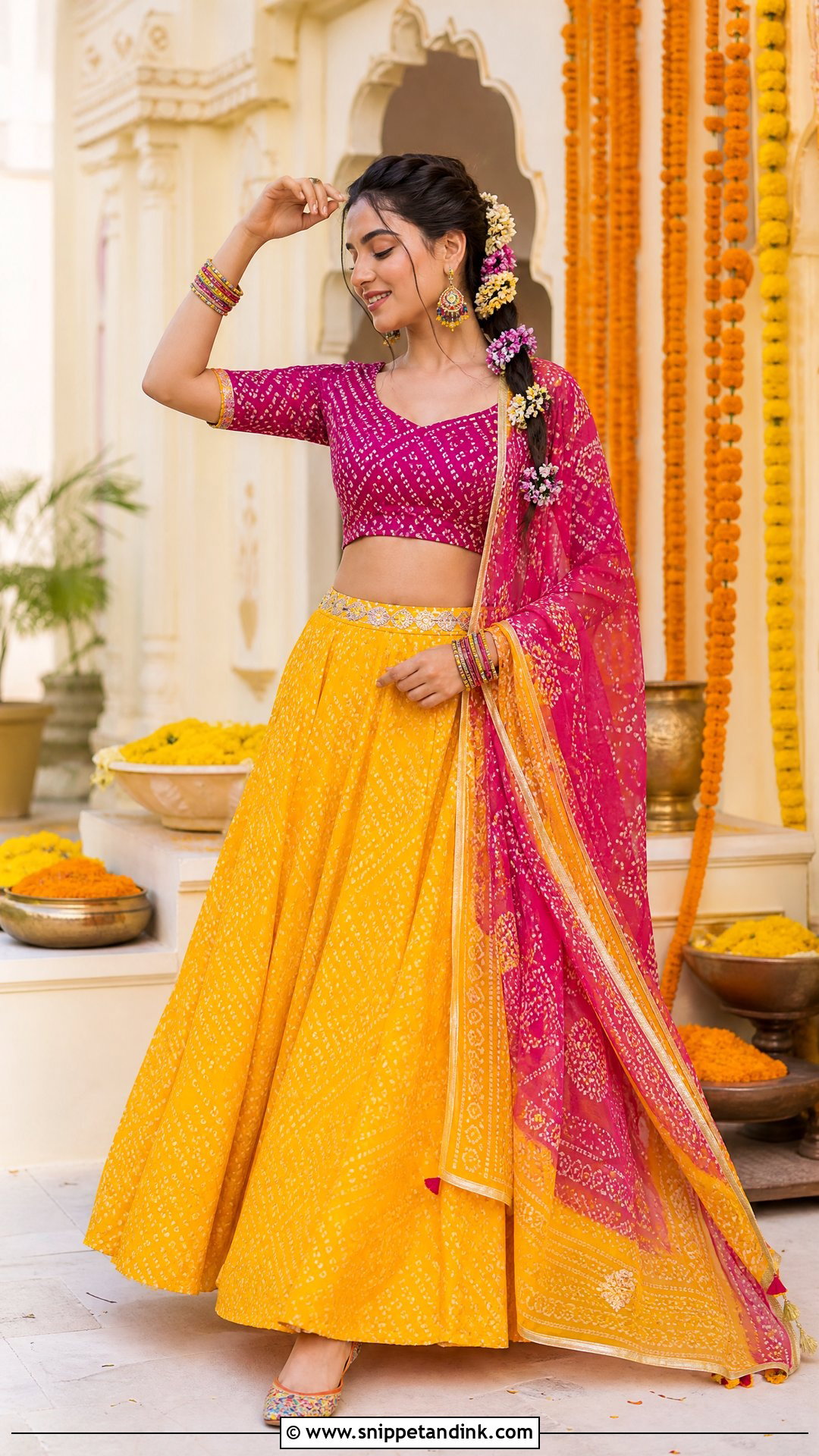
Bandhani’s dotted pattern is dyed into the cloth, so the skirt carries plenty of visual detail without any added weight. Choose a lightweight yellow bandhani skirt with a solid pink, green or orange blouse, and a soft contrasting dupatta that pins easily. Don’t pile on embellishment; the print is already busy. Elbow-length sleeves give comfortable coverage, and a long braid with small flowers or tassels suits the folk feel. Bandhani dyes can run when wet, so if the haldi involves water, keep the white blouse option off the table. Home ceremonies and heritage venues show this textile at its best.
11. Chikankari Kurta Set for Haldi Ceremony
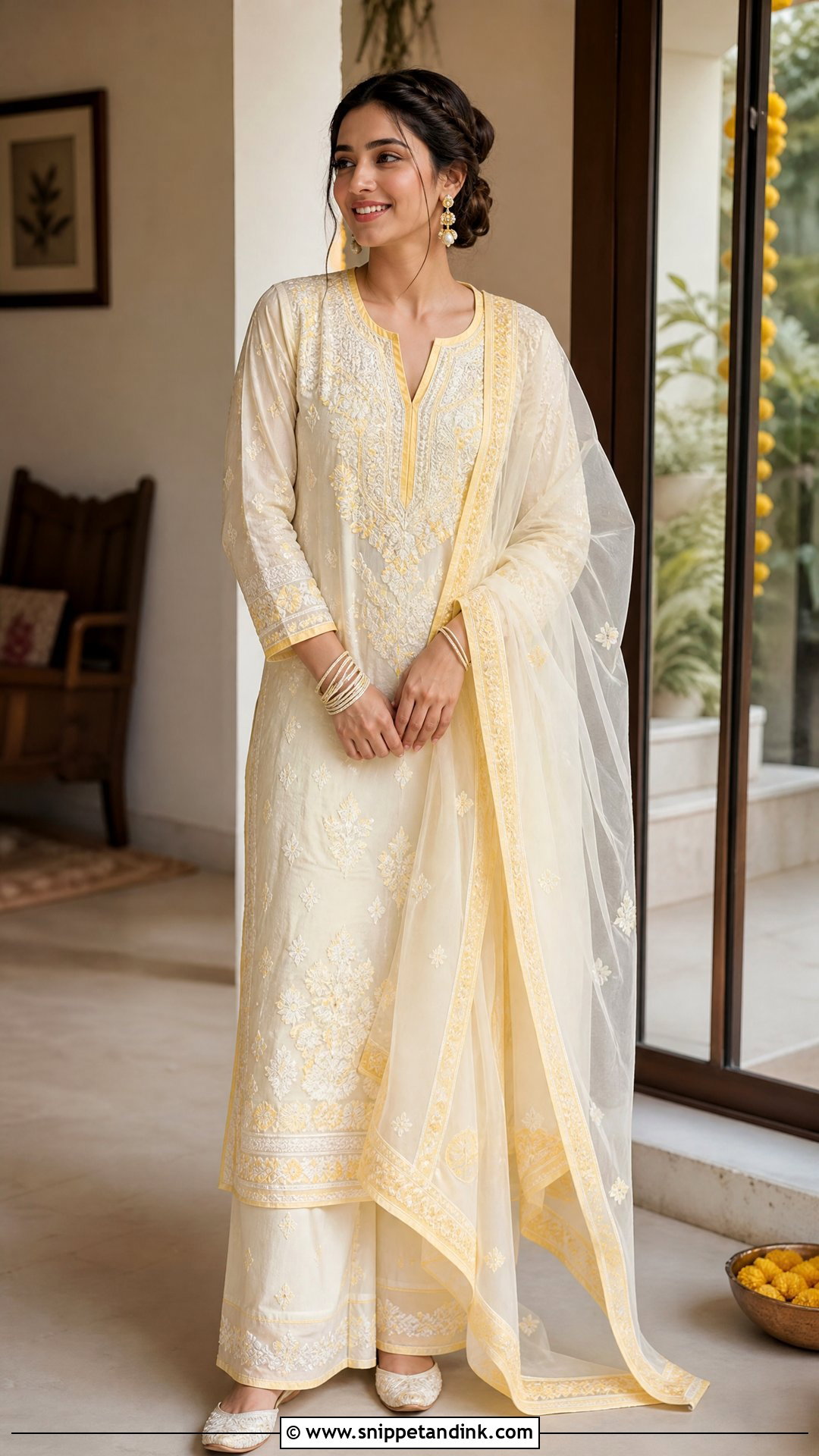
Chikankari is fine hand embroidery, usually tone on tone, and a Chikankari kurta set in pale yellow, ivory or lemon suits a sister who likes understated clothes. Add a yellow-bordered organza dupatta to tie it to the ceremony, then stop at pearl earrings and a few bangles. Sheer chikan work needs a nude lining underneath for clean coverage. Light colours show turmeric, so pick a washable cotton version rather than a delicate georgette one if the family plays with paste. It keeps the attention on the bride at small home events.
12. Jacket Lehenga for Haldi Ceremony
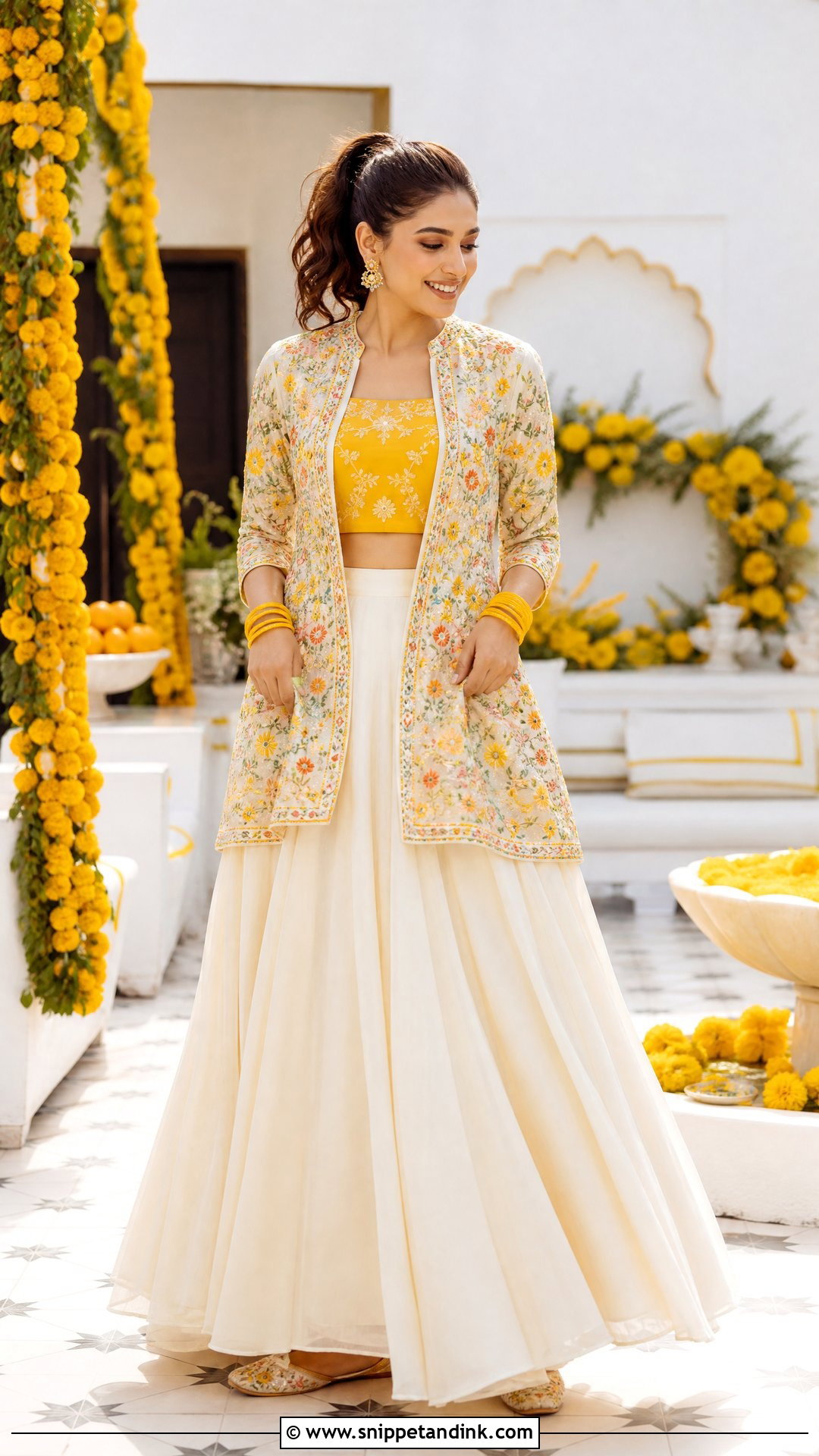
A jacket lehenga gives you a layer without a dupatta to manage. Wear a light yellow or floral skirt, a simple blouse and an open-front jacket. Proportion matters here: a waist-length jacket keeps a petite frame from looking swallowed, while a knee-length one draws a long line on taller sisters. Keep the embroidery on the neckline and borders so the jacket doesn’t get hot and heavy. For a soft palette, try ivory with a yellow floral jacket; for something bolder, mustard with magenta or emerald. Flat juttis and a neat ponytail let you move straight from portraits to dancing.
13. Peplum Sharara for Haldi Ceremony
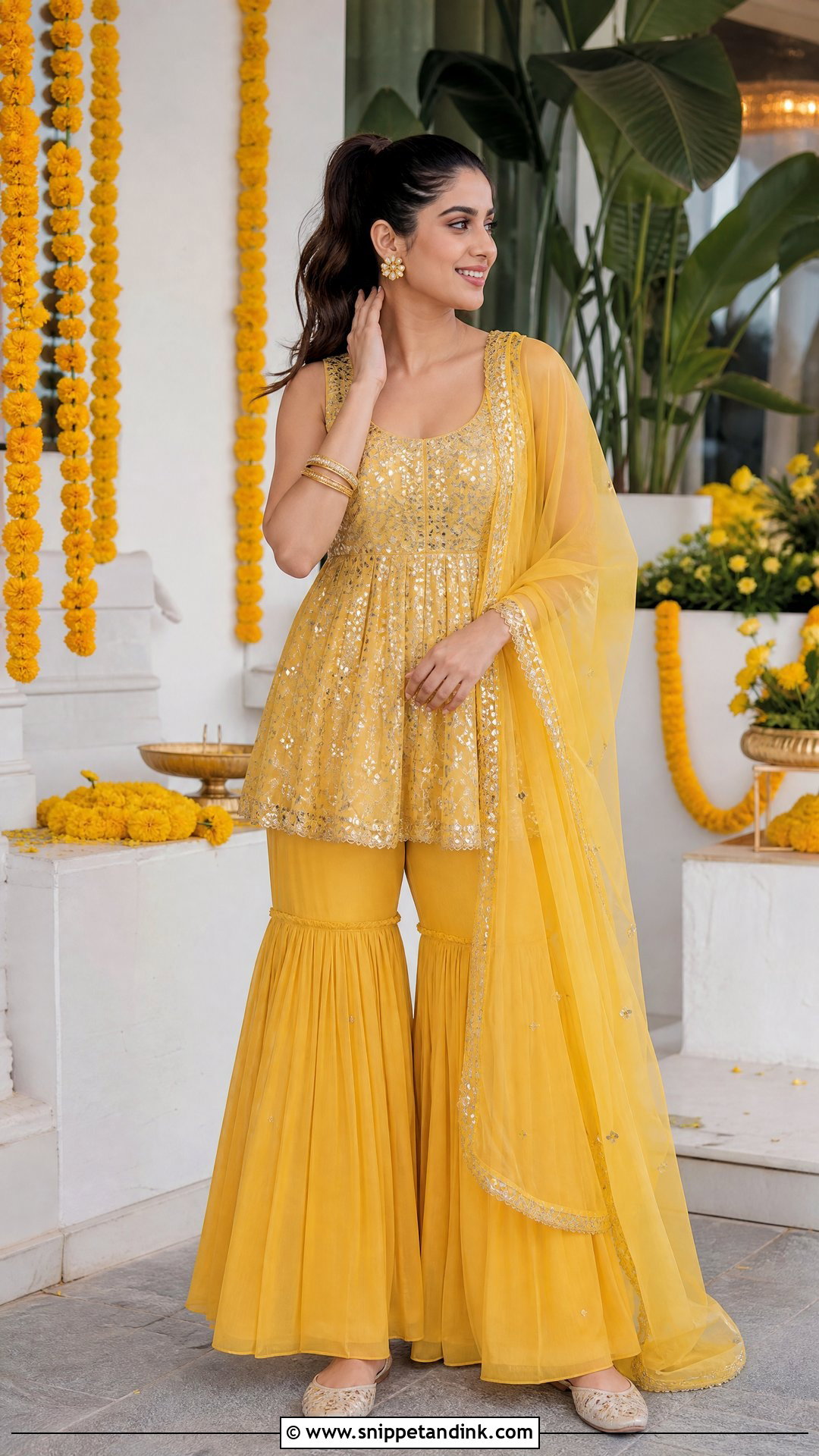
A peplum ending just below the waist covers more than a short blouse and still shows your shape. Pick a yellow peplum with light mirror work over a matching or contrasting sharara, and only add a net or chiffon dupatta if the outfit looks bare without it. Fit advice I give often: a fuller bust sits better in a V neckline with wider straps, and fuller hips suit a peplum that flares gently rather than one that juts out stiffly. Metallic juttis, floral studs and a high ponytail suit the youthful line.
14. Yellow Kaftan Set for Haldi Ceremony
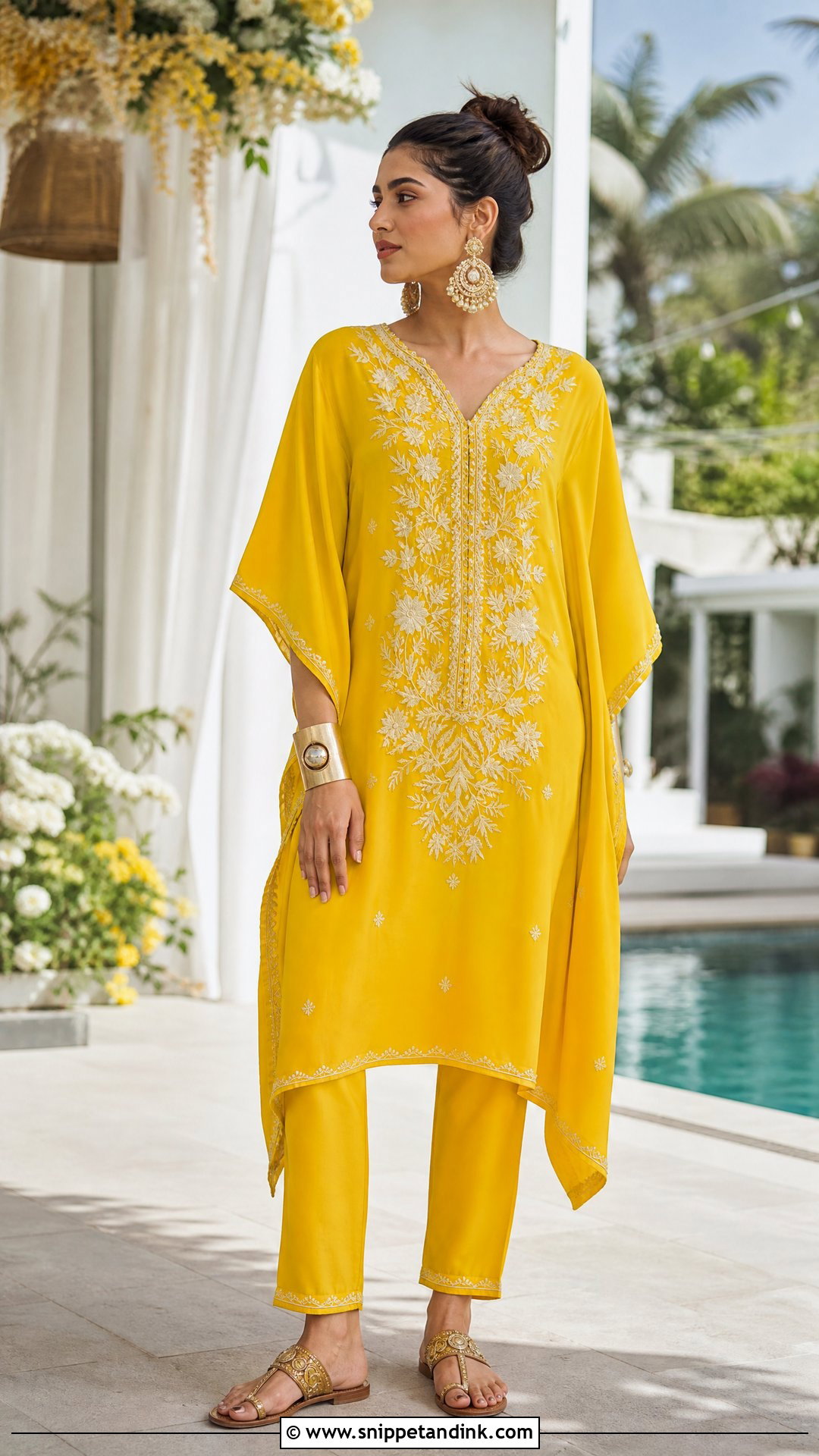
A yellow kaftan set belongs at a relaxed haldi at home, by a pool or at a resort. Knee length with a lightly defined waist over straight pants keeps it from looking like loungewear. Embroidered borders, tassels or small mirrors give it occasion weight. Cotton handles heat; crepe drapes more richly for a dressier setting. Steer clear of floor-length kaftans if water is involved, since the hem soaks up paste and drags. Kolhapuris, oversized earrings and a high bun keep it tidy, and the loose cut is comfortable for hours on any body type.

15. Draped Skirt and Crop Top for Haldi Ceremony
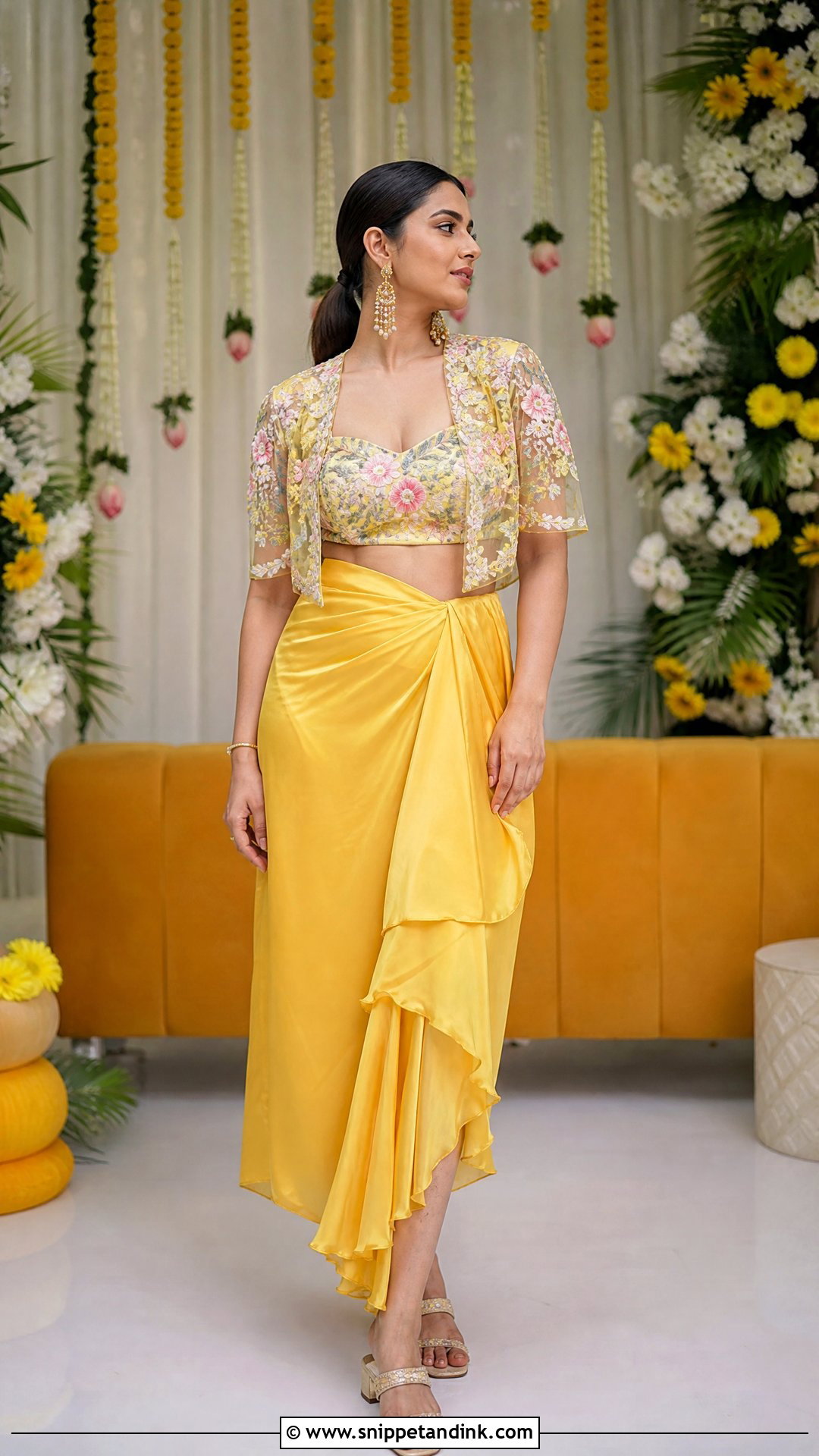
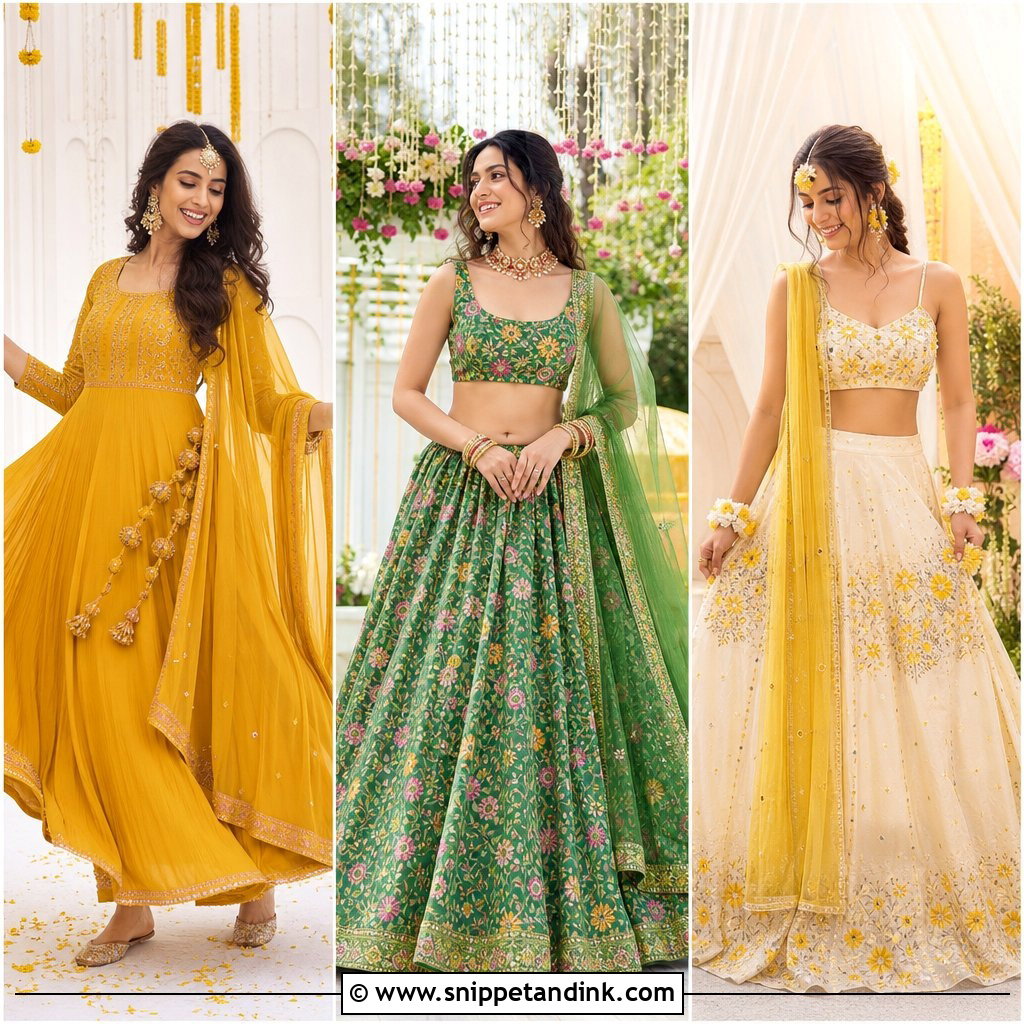
Pre-draped skirts give you the look of a saree with none of the pleating. Choose yellow with an asymmetric hem or soft pleats, a fitted floral blouse, and a shoulder drape or short cape if you want more coverage. Check the fastening carefully before the day: a hook-and-zip closure is far more secure than a single button when you’re dancing. A high-rise waistband covers more of the midsection and lengthens the legs. Block-heel sandals and a smooth low ponytail suit a banquet or destination haldi, and the skirt shouldn’t trail on the floor.
16. Cotton Salwar Suit for Haldi Ceremony
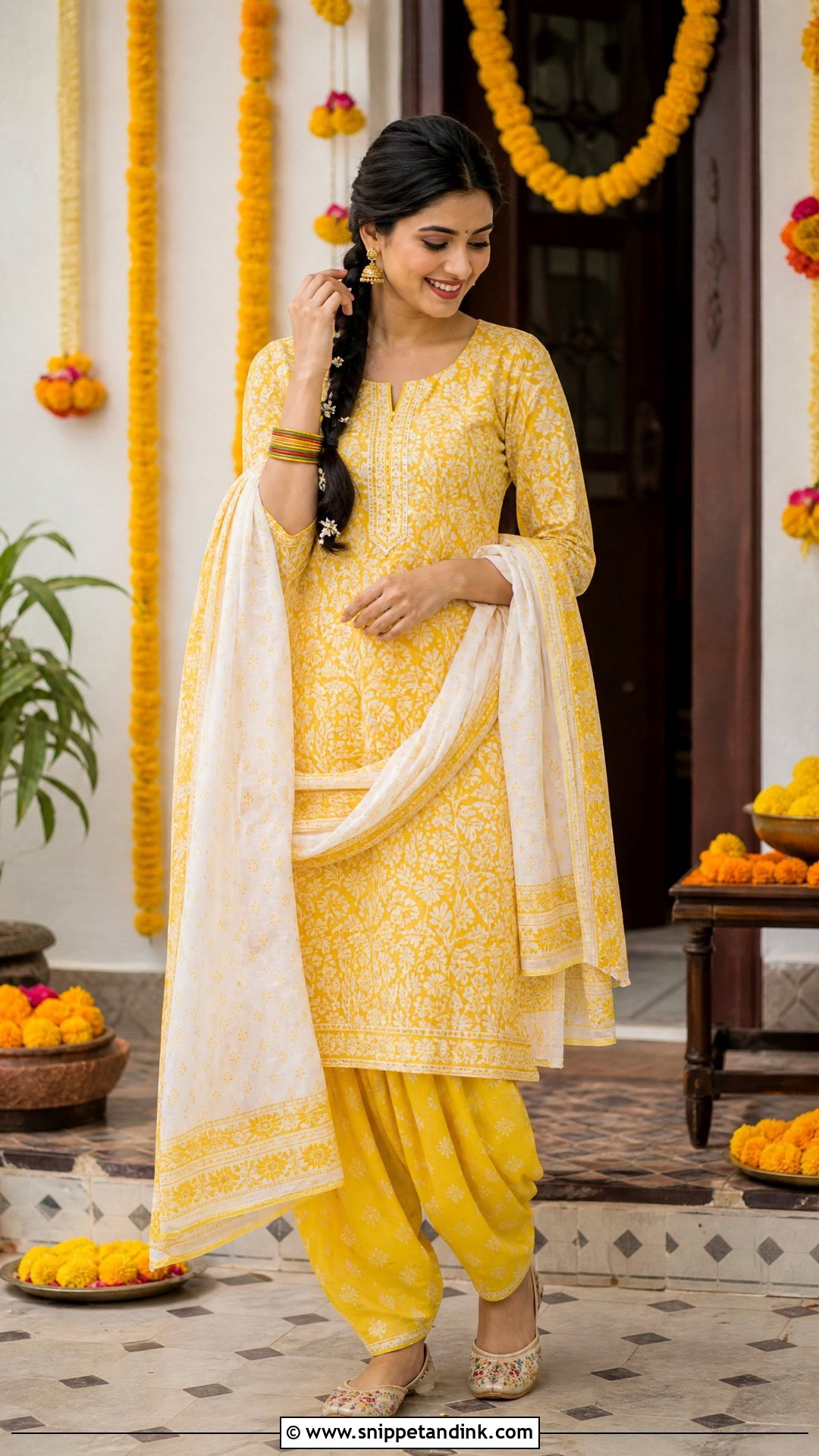
If your family’s haldi ends with everyone yellow and wet, this is the outfit I’d actually put you in. A printed cotton kurta with a salwar is comfortable, easy to wash and not precious, so you can join in without guarding your clothes. Block prints, small florals or gota borders make it feel dressed up enough. Side slits help when you sit and stand repeatedly. Pin the dupatta or take it off for the messy part. Flat juttis, small jhumkas, glass bangles and a long braid keep everything under control at a traditional home ceremony.
17. Linen Saree for Haldi Ceremony
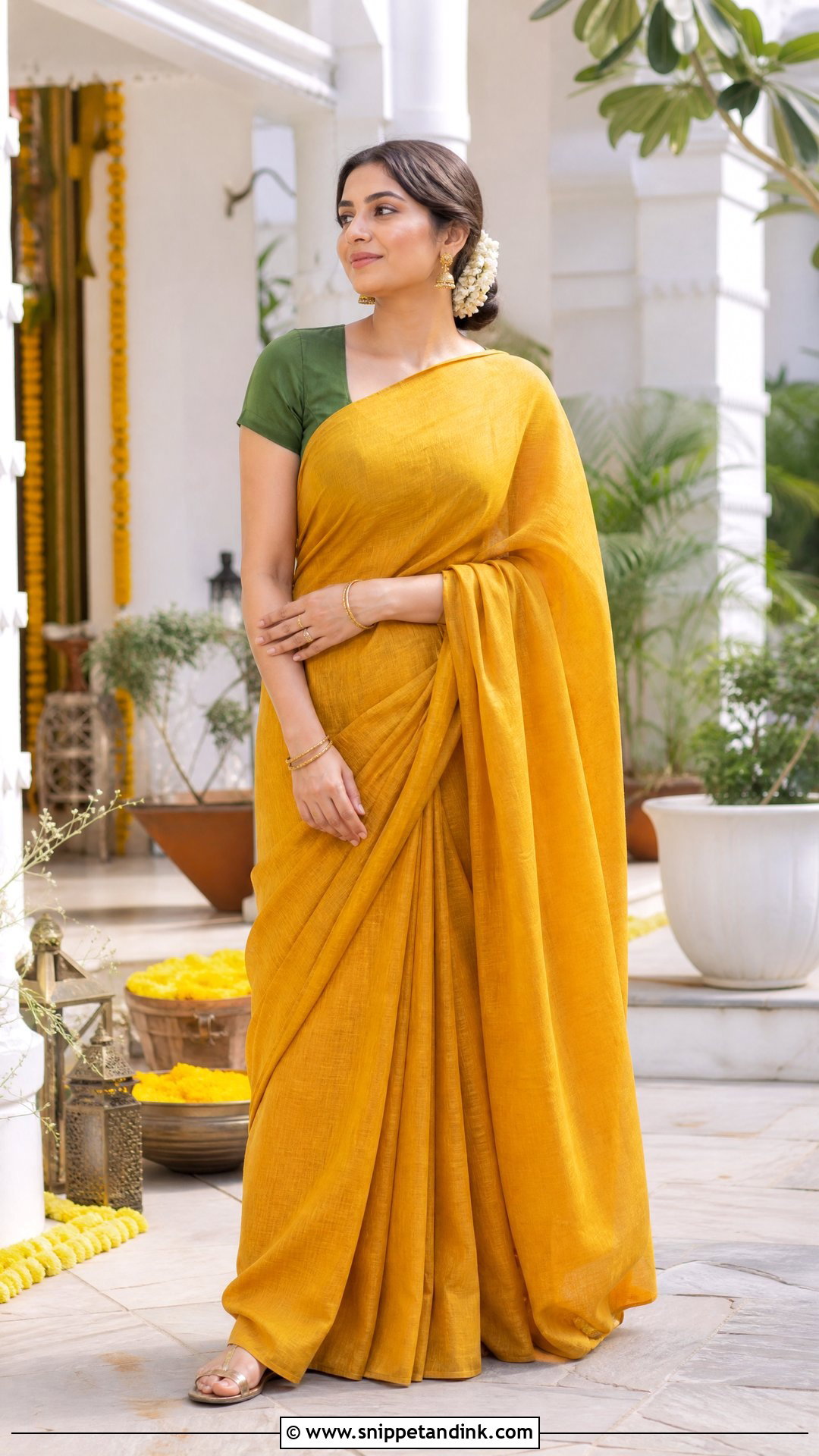
Linen creases, and that’s part of its charm. A mustard, lemon or ivory linen saree with a contrasting yellow border suits an older sister or anyone who prefers quiet traditional clothes. Buy a soft, pre-washed weave; stiff linen fights the pleats and feels scratchy after an hour on the floor. A slightly shorter drape makes walking easier. Pair it with a short-sleeve blouse in green, pink, orange or matching yellow, gold jhumkas and flat sandals or low heels. A centre-parted bun with fresh flowers gives it a graceful finish.
18. Mirror Work Lehenga for Haldi Ceremony
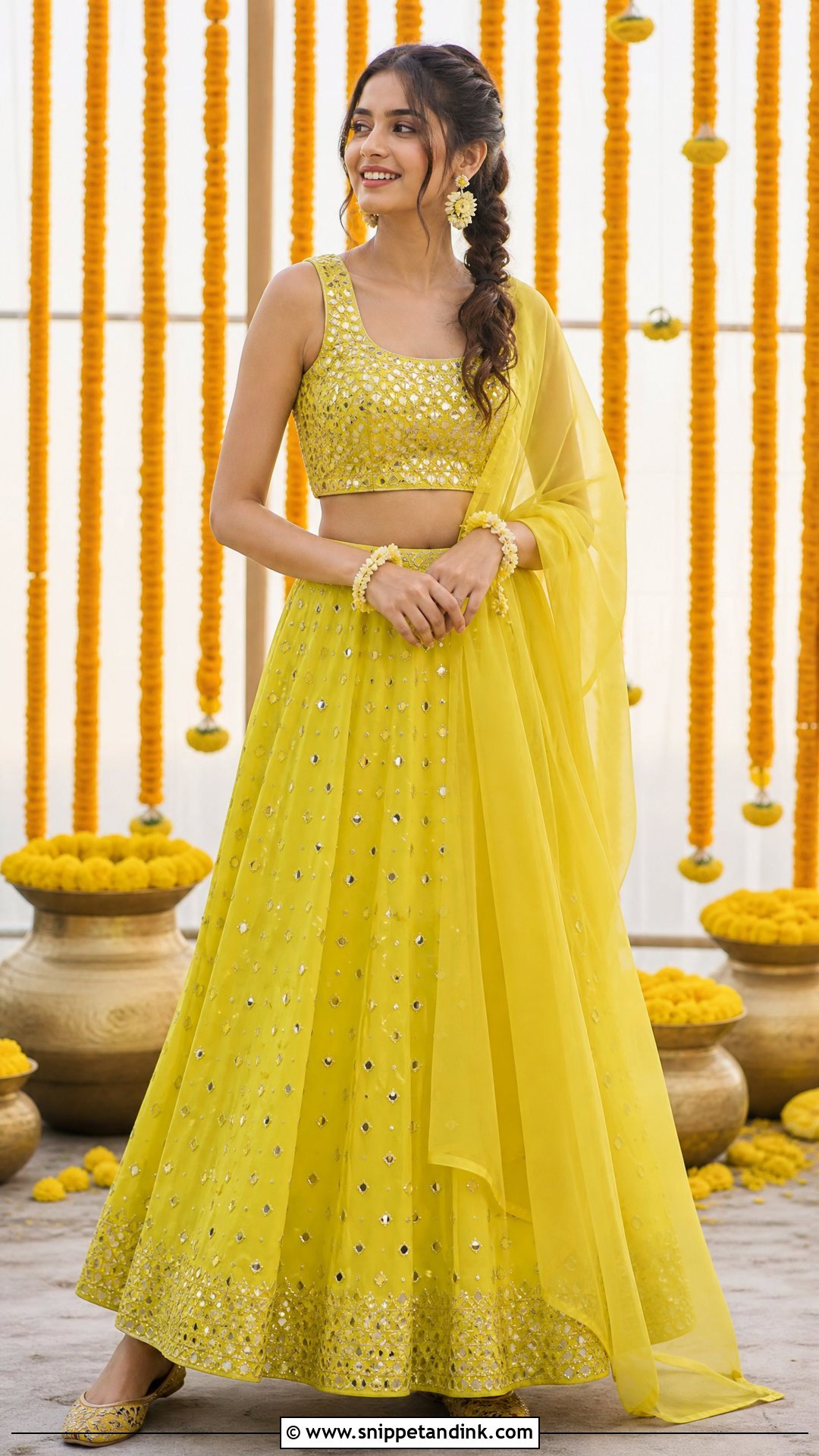
Mirrors catch daylight, so even a lightly embellished mirror work lehenga has plenty of sparkle for a daytime function. Choose small, scattered mirrors on a yellow, lime or mustard skirt rather than dense work, which gets heavy and can scratch the bride when you hug her. A matching blouse, a plain chiffon dupatta and minimal jewellery balance it. Make sure the skirt has a secure drawstring or side fastening. This is the dressier choice, best when there’s a professional photographer and planned family portraits.
19. Tulip Pants and Kurti for Haldi Ceremony
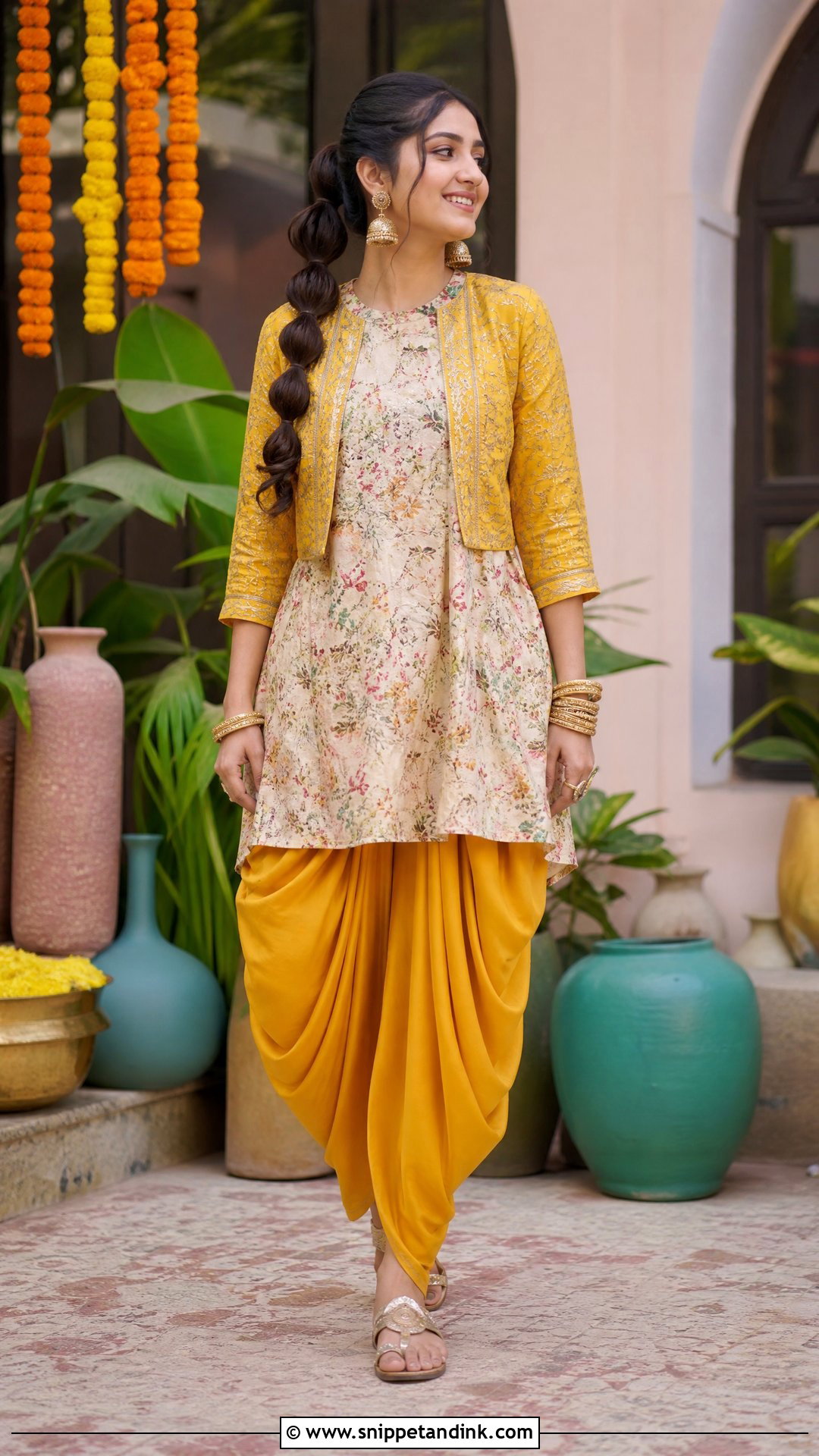
Tulip pants wrap and overlap at the front, giving a petal-shaped leg that’s playful and very easy to dance in. Wear mustard or yellow tulip pants with an ivory, pink or floral kurti ending near the upper hip. Soft fabric is essential; stiff fabric makes the overlap stand away from the body and adds bulk. A cropped jacket or slim belt adds structure. For more coverage, choose a longer A-line kurti and skip the belt. Kolhapuris, jhumkas and a bubble ponytail suit a sister who wants something lighter than a lehenga or Anarkali.

20. Yellow Indo-Western Jumpsuit for Haldi Ceremony
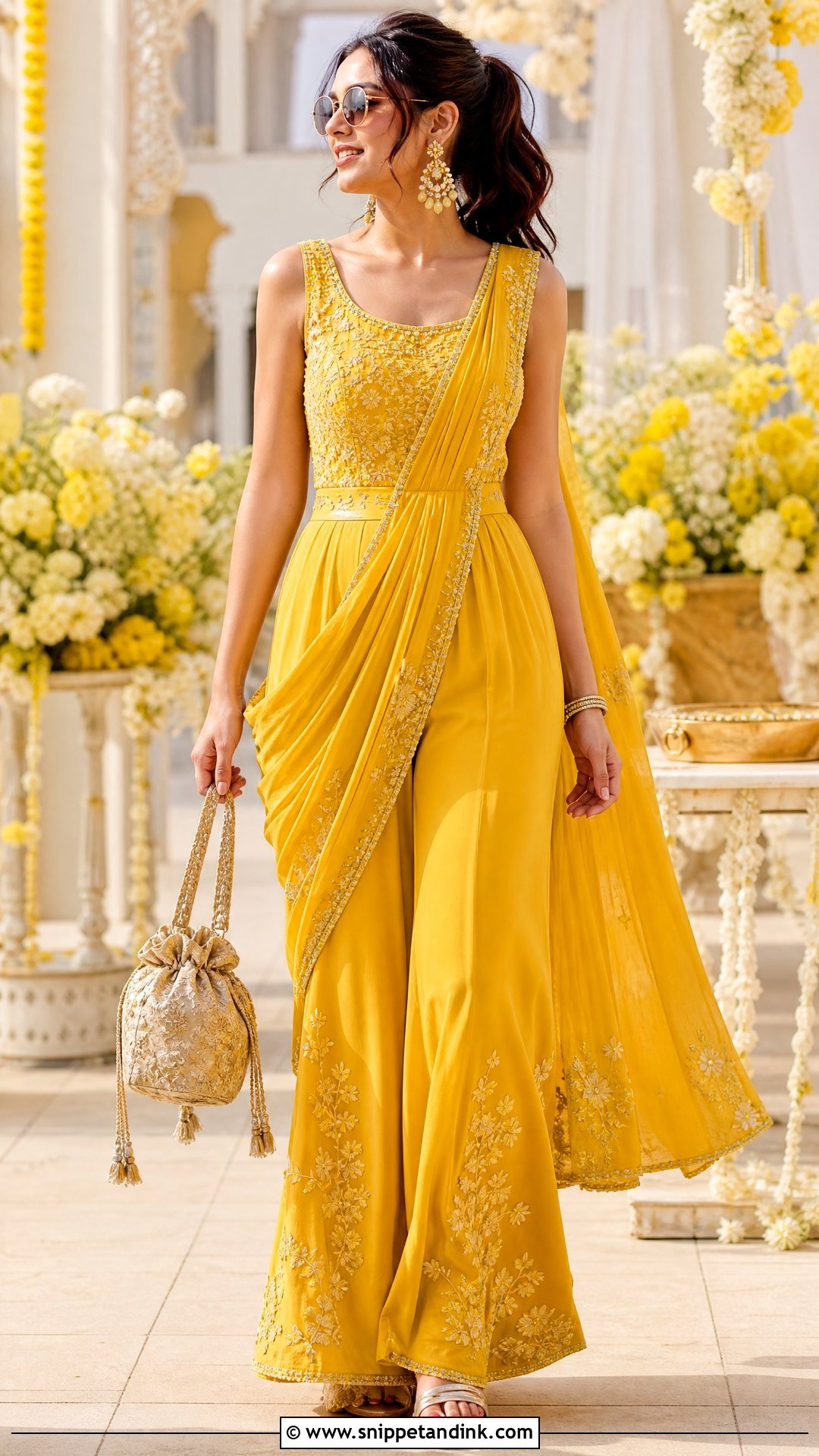
A yellow Indo-Western jumpsuit gives you one garment with a full festive effect. Look for wide legs, a defined waist and an attached drape that reads like a pallu. Before you buy, sit down in it: if the torso is too short, the crotch pulls and you’ll feel it every time you kneel. The closure matters too, since you’ll be removing the whole thing for every restroom trip. Petite sisters often prefer a narrower leg; taller or curvier sisters usually suit a flowing palazzo shape. Metallic sandals and a sleek ponytail suit a hotel or destination haldi.
Leave Time for the Tailor
Almost every outfit here needs at least one alteration before it’s comfortable to wear for a full ceremony, and tailors get booked solid in wedding season. I’d buy at least a month out so there’s room for a fitting and a fix.
What to get adjusted
- Hems on shararas, ghararas, lehengas and kaftans, measured with the exact shoes you’ll wear.
- Blouse armholes, so you can raise your arms to apply paste without the fabric cutting in.
- Dupatta loops or hidden snaps on the shoulder, which hold better than safety pins alone.
- Waistbands with a little extra room, because you’ll eat, sit and dance in this for hours.
Do your final try-on in daylight with your jewellery and shoes, then sit, kneel and dance for a minute. If anything pinches or slips during that minute, there’s still time to change it.
Pack a small bag for the day too: spare safety pins, a needle with yellow thread, a few hairpins and wet wipes. Organza and linen will have creased in transit, so hang the outfit up as soon as you arrive or give it a quick steam rather than ironing embroidery directly.
Hour Four Is the Real Test of a Haldi Outfit
Most outfits look right in the first photo. The one to choose is the outfit you’re still comfortable in after hours of sitting, helping and dancing. Breathable fabric, secure draping and shoes you can kneel in will carry you there. Yellow is always welcome, but ivory, mustard, pink, orange, green and florals sit just as happily around the bride. Expect a little turmeric whatever you wear, and dress accordingly. Then put your phone down and enjoy your sister’s morning.
You'll Like These Ideas:








Leave a Reply