
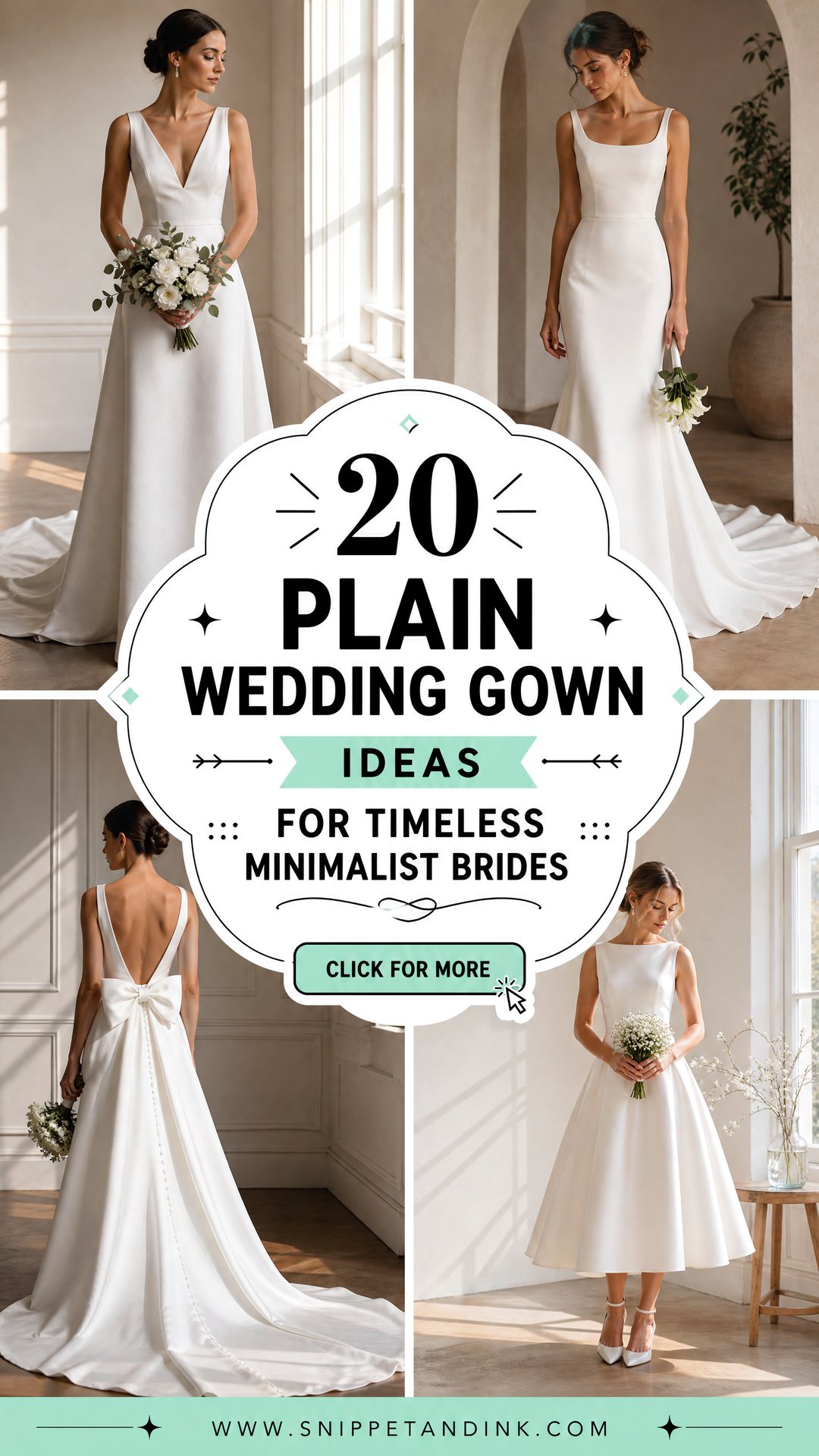
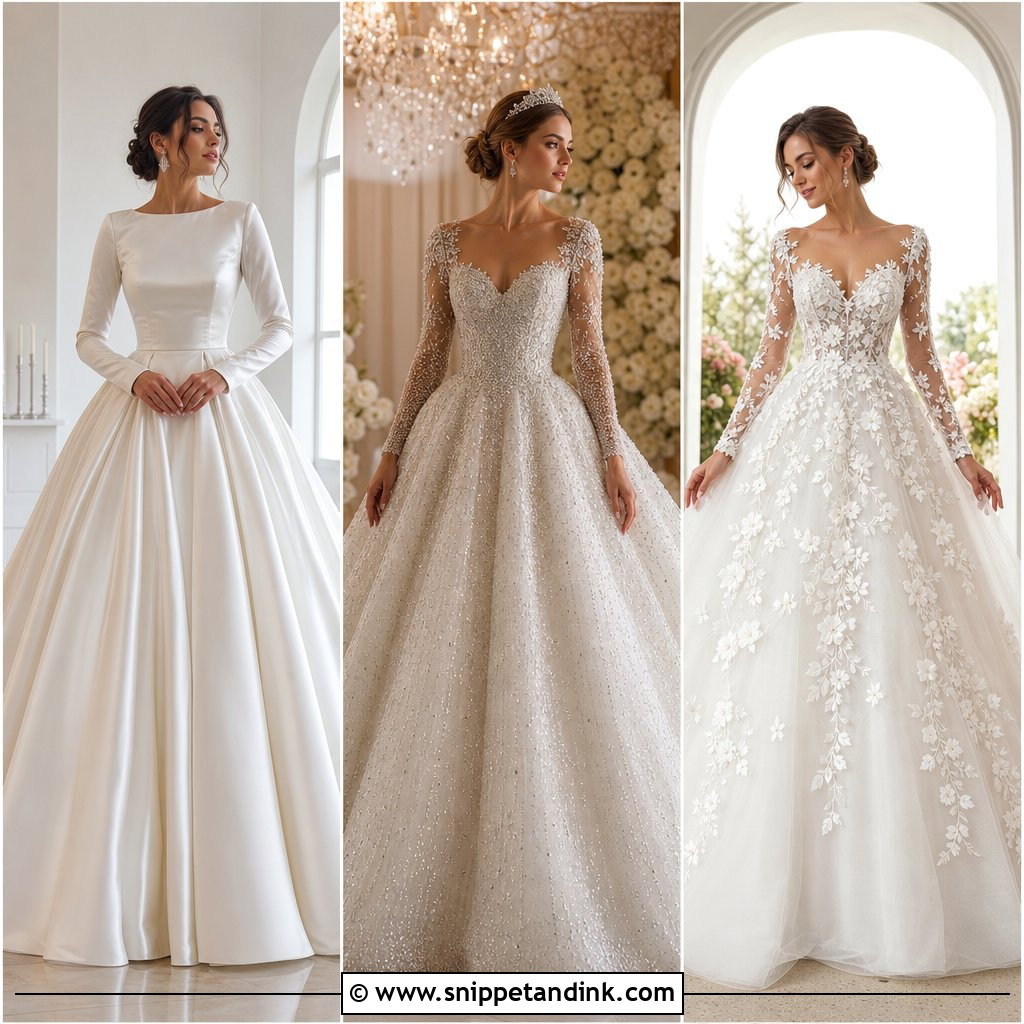
A dress with no lace, beading or sequins has nowhere to hide, and that’s exactly why I love styling one. Without embellishment, the eye goes straight to the cut and to how well the bodice has been fitted to you. Satin, crepe, chiffon and Mikado each set their own mood, and the neckline, sleeves, train and accessories do the rest. A clean gown can work in a ballroom, on a beach or in a city registry office. What decides it is your body, your venue, the season and how many hours you’ll spend in it. Below are twenty bridal looks I’d happily dress a bride in, with notes on what each one asks of the fitting room.
Why a Dress With No Lace Needs a Better Seamstress
Lace and beading cover a lot. An appliqué can hide a seam that wanders, a pucker at the zip or a bodice that’s a few millimeters off. A plain dress shows all of it, so I tell brides to put as much thought into their alterations as into the gown itself.
When I check a clean gown at a fitting, these are the spots I look at before anything else:
- The zip or button placket, which should lie flat with no rippling when you breathe in.
- The side seams, which should run straight down from the underarm without twisting toward the front.
- The bodice edge, which shouldn’t gape when you lean forward or cut in when you sit.
- Pull lines across satin, the small diagonal creases that point straight at wherever the fit is too tight.
Plan on two or three fittings, with the last one a couple of weeks before the wedding so the dress fits the body you’ll actually have that week. Bring your real shoes and underwear every time. A hem set in borrowed shoes is a hem you’ll probably redo.
1. Plain A-Line Wedding Gown
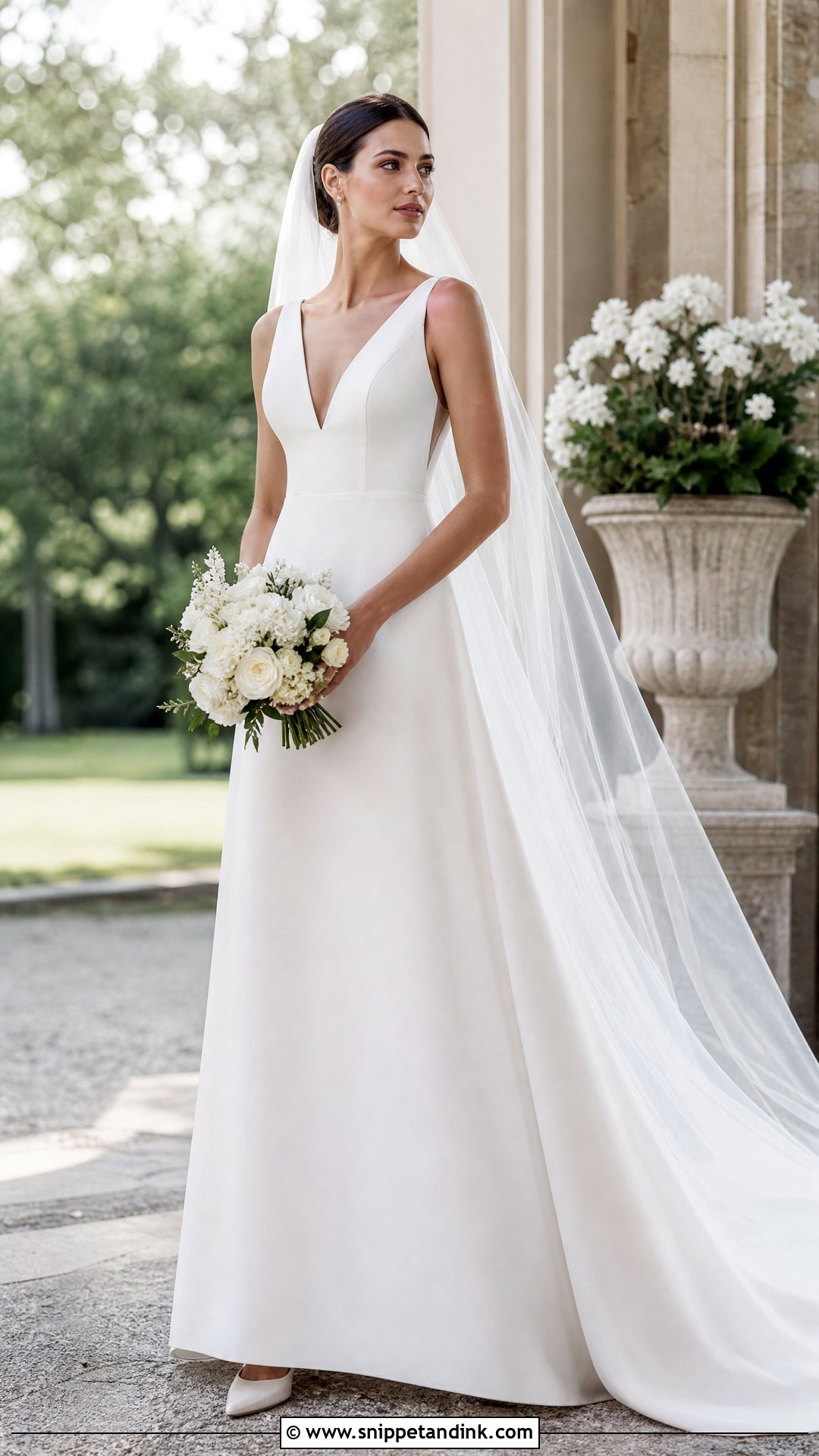
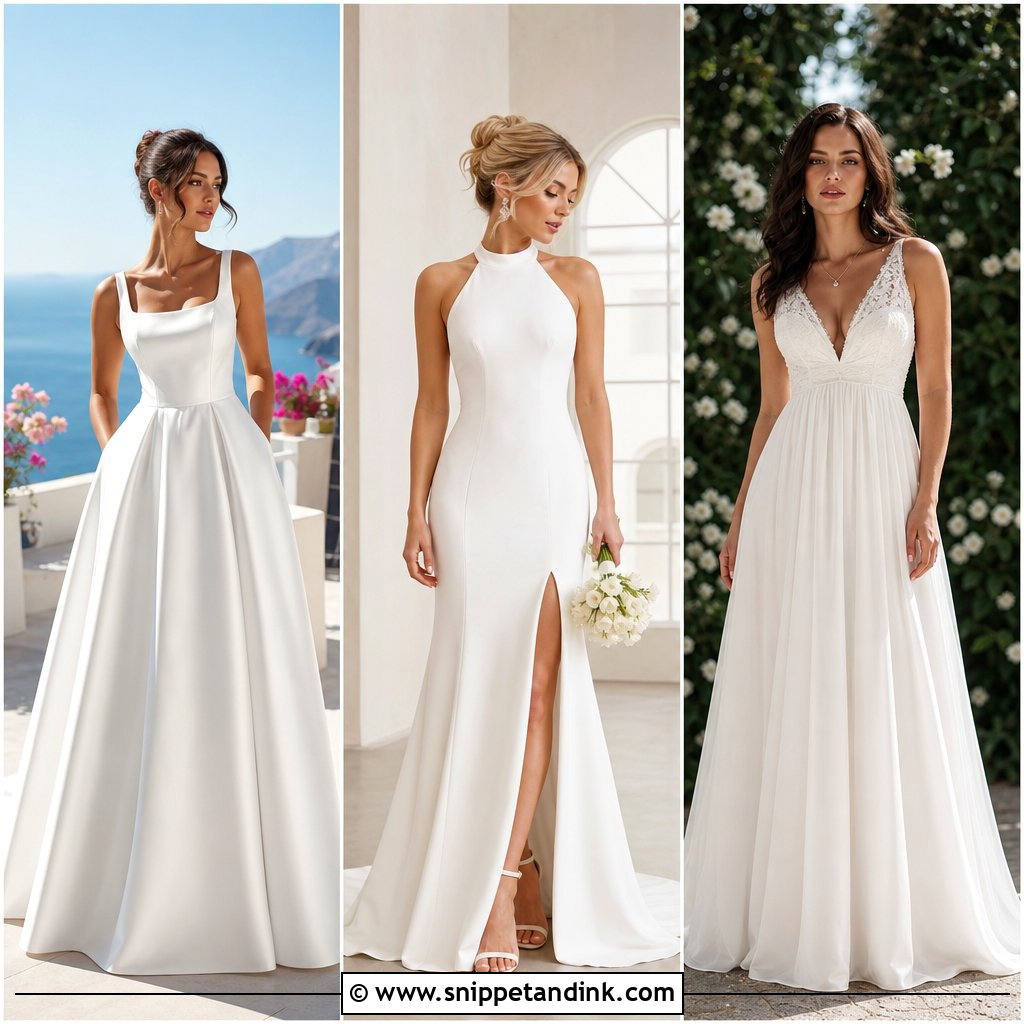
This is the shape I pull first when a bride tells me she doesn’t know where to start. It’s fitted through the bodice and widens gradually from the waist, so there’s definition without anything gripping your hips. Matte crepe reads modern; soft satin reads traditional and catches light along the skirt folds. A scoop or V-neckline keeps the top uncomplicated. Pointed ivory pumps, small pearl earrings and a smooth fingertip veil finish it, with a structured white bouquet that won’t fight the clean line. One thing I nearly always ask for in an A-line is hidden pockets in the side seams, because the skirt has enough fabric to hide them completely.
2. Plain Satin Ball Gown
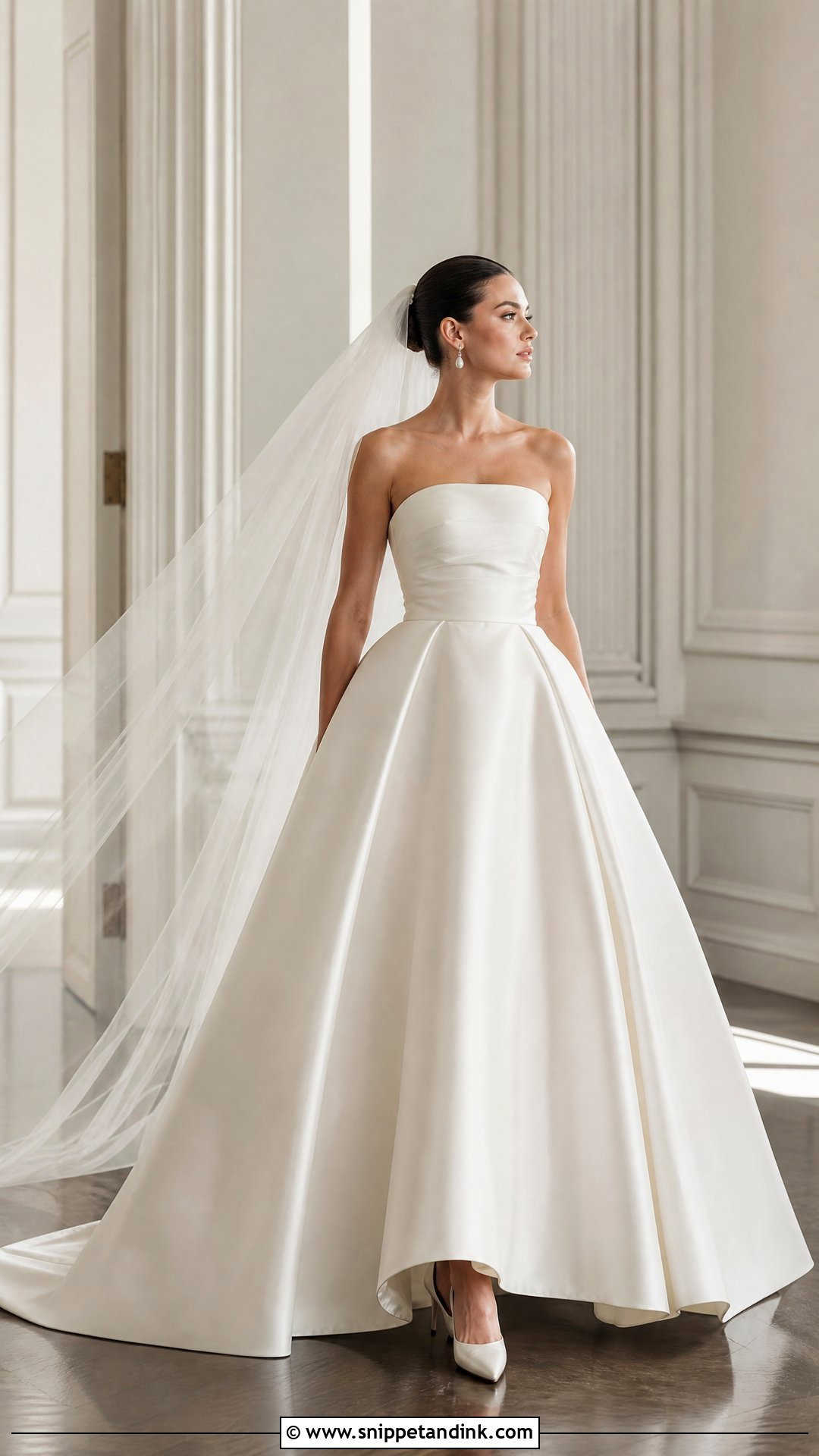
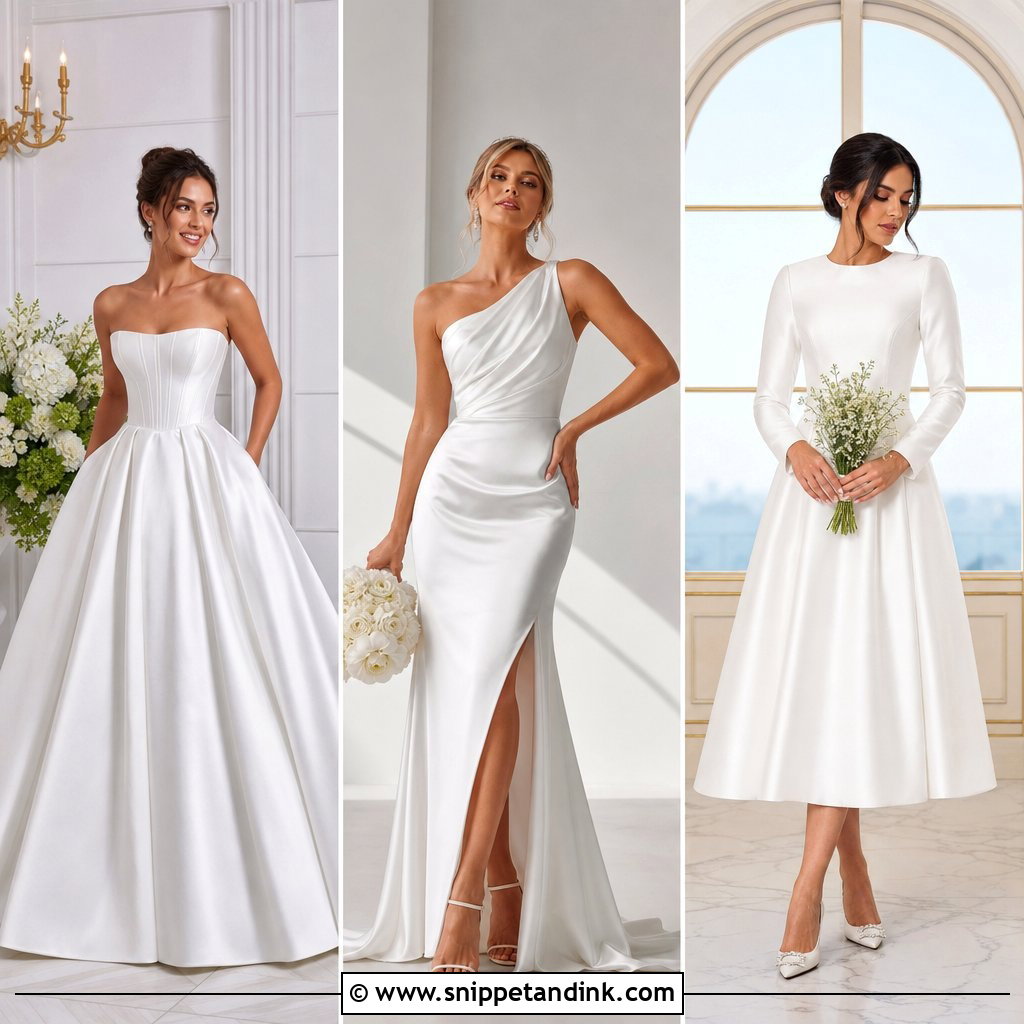
A satin ball gown moving through a formal room still makes people turn around. With no decoration on the fabric, the skirt’s volume has to come from its weight, so I look for heavyweight satin or Mikado and steer brides away from thin satin, which collapses and shows every crease by the first dance. A strapless or softly scooped neckline suits the shape. Keep the neck bare and let a sleek bun, pearl drops, satin pumps and a long plain veil do the work. A petticoat adds volume, but sit down in it at your fitting: some hoops push the skirt up awkwardly at the front. The hem should skim the floor with just the toes of your shoes showing.
3. Plain Crepe Sheath Wedding Gown
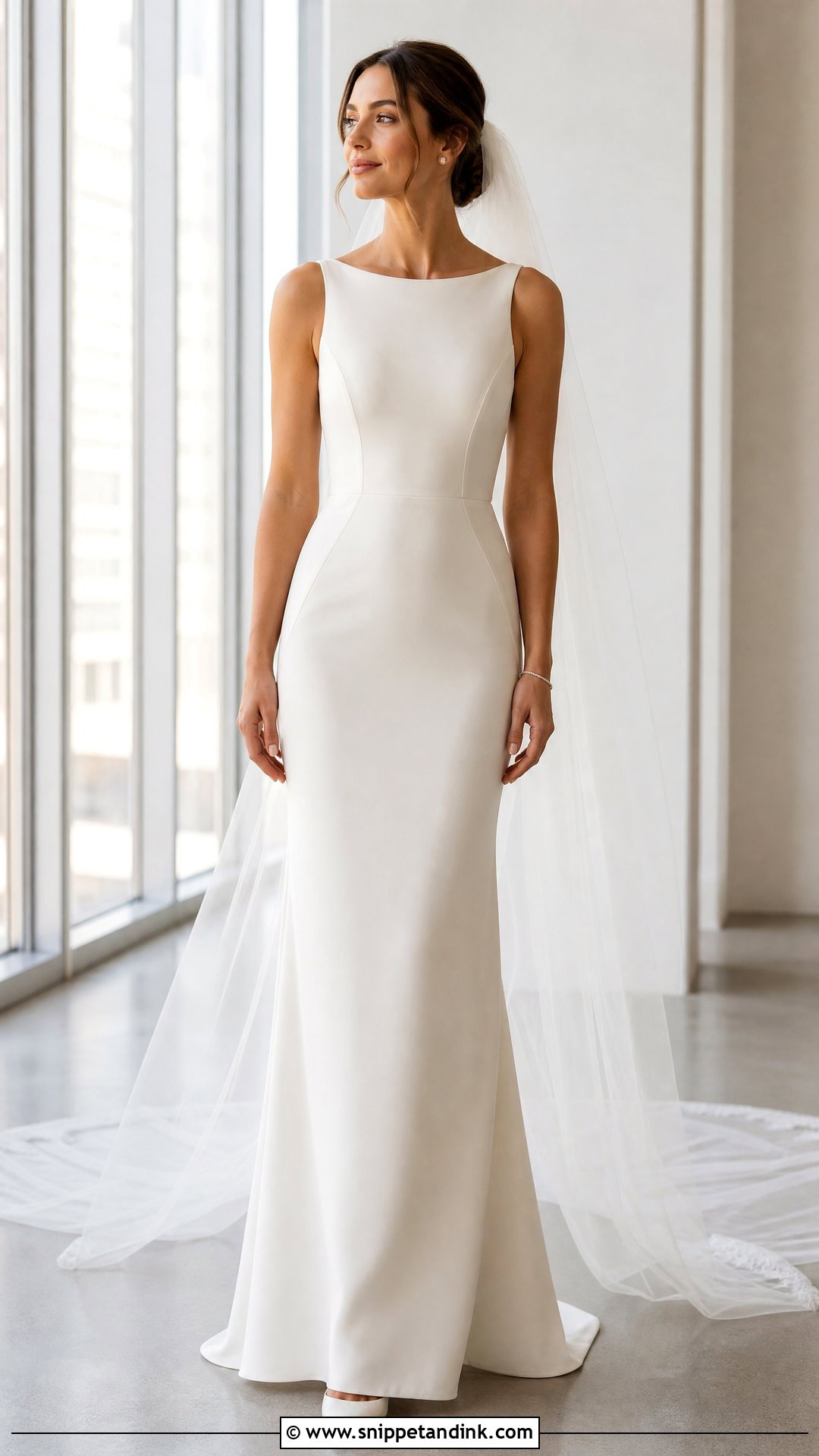
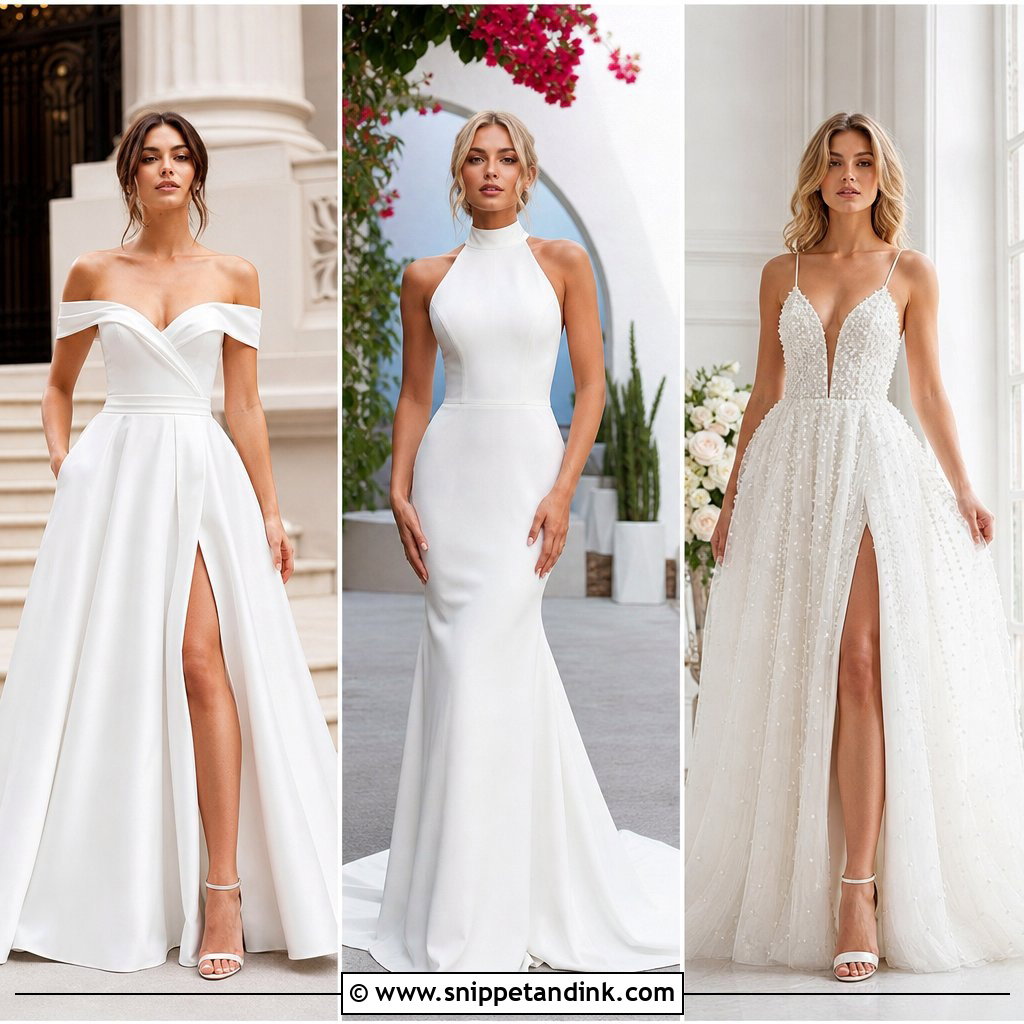
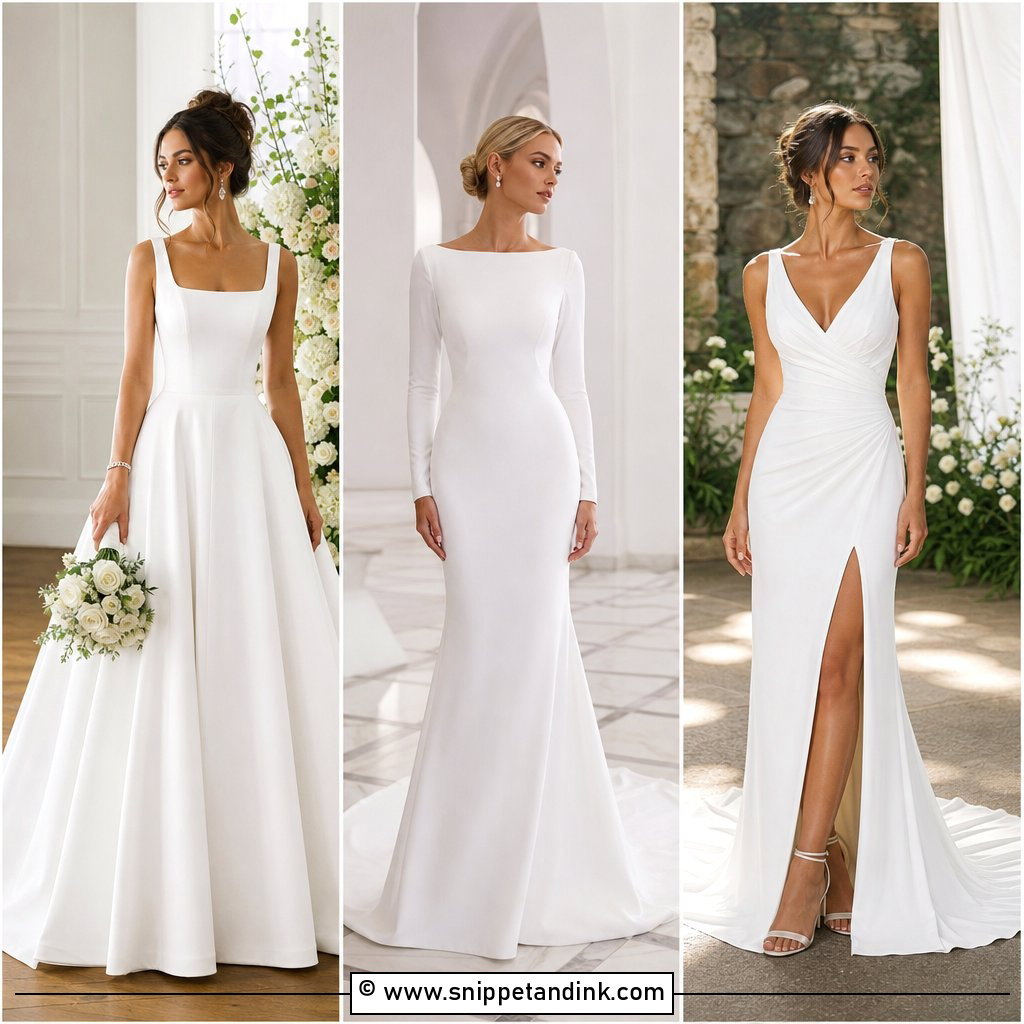
A crepe sheath follows the body with no skirt to soften anything, which makes it the least forgiving dress on this list and one of my favorites. Good crepe has enough weight to drape rather than cling. What I check first is seam placement: princess seams should run over the bust point, not beside it, and the lining needs a little ease or the dress pulls tight when you sit. A back vent makes walking possible. Pointed-toe heels, a narrow bracelet and small studs keep it quiet, while a plain cathedral veil brings the ceremony drama. Bring your actual shoes and underwear to every fitting. Shapewear is optional, and if it stops you breathing deeply at the first fitting, it’ll be miserable by hour six.
4. Plain Strapless Column Wedding Gown
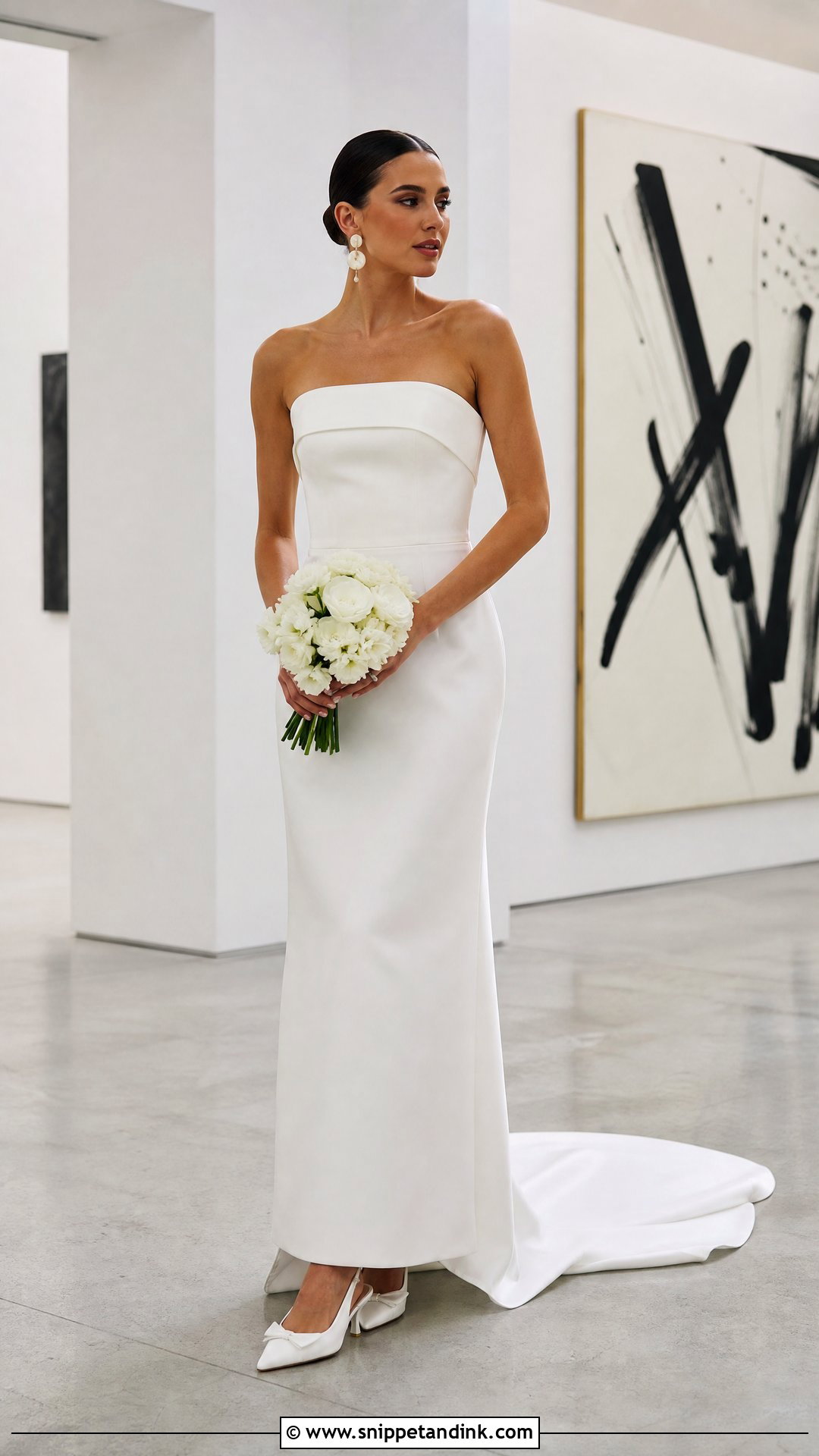
With a straight column there’s no flare or volume to look at, so construction carries the whole outfit. I’d only put a bride in one if the bodice has proper boning and a waist stay, the inner grosgrain tape that anchors the dress at your natural waist so the top isn’t doing all the holding. A folded neckline or internal corset gives shape while the outside stays clean. Sculptural earrings, a low bun, ivory slingbacks and a small structured bouquet suit galleries, hotels and modern event spaces. Pack a satin wrap if the evening turns cool. At fittings, raise your arms, sit and dance a little. If you’re tugging it up within a minute, it needs taking in.
5. Plain Square Neck Wedding Gown
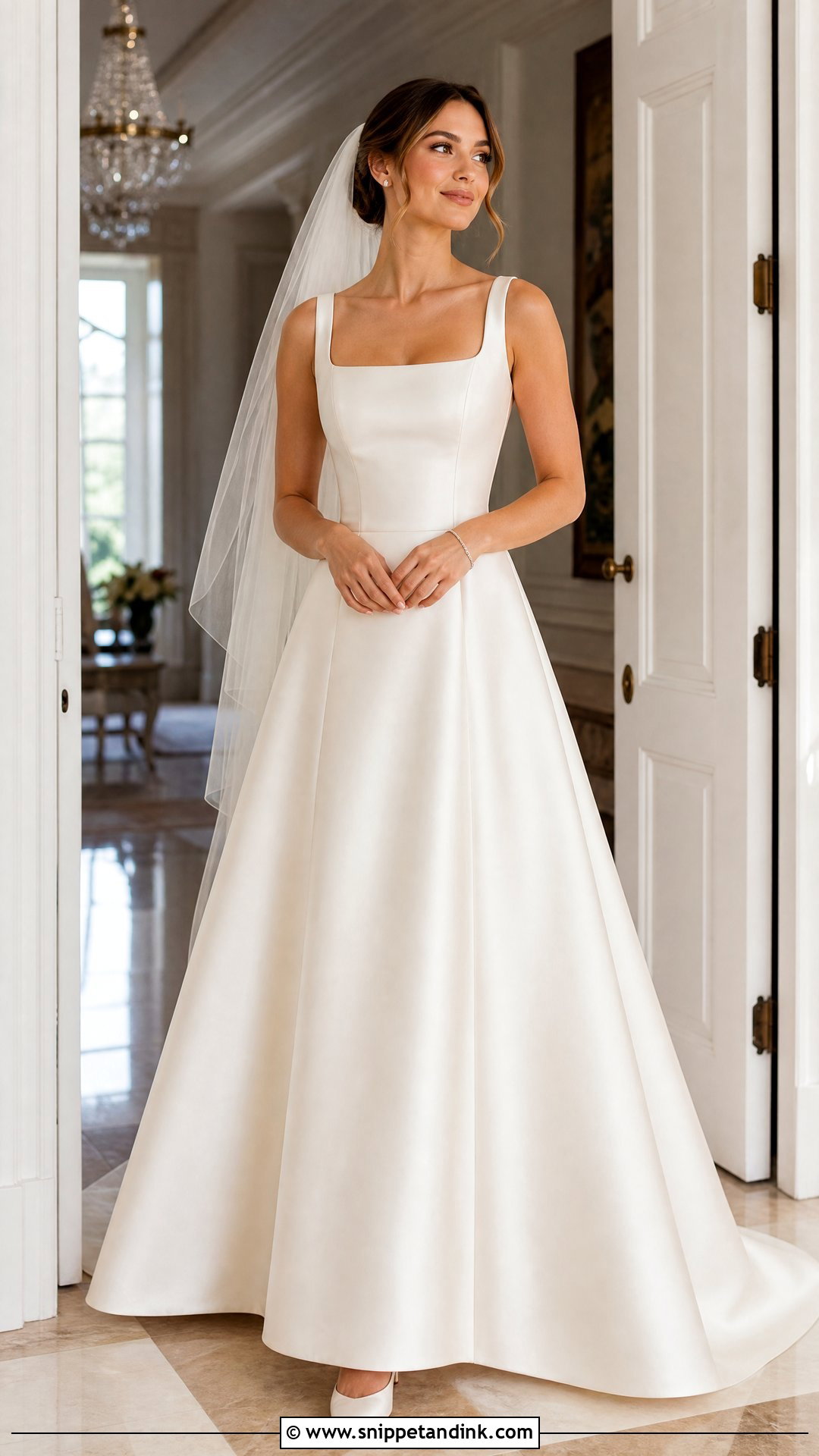
The angular line of a square neck frames the collarbone and gives a plain bodice a focal point with no embroidery at all. Its weak spot is the corners. If they aren’t interfaced, or the fit is slightly loose, they buckle forward when you lean and the camera picks it up instantly. Fitted crepe looks sleek, and an A-line in satin moves more. Short straps feel delicate; wider ones carry more support. I pair it with pearl studs, a fine bracelet, closed pumps, a clean tulle veil and a center-parted bun that repeats the straight lines. Check the bra or built-in cups too, since a square neck usually sits wider than a standard bra is cut.
6. Plain Long Sleeve Wedding Gown
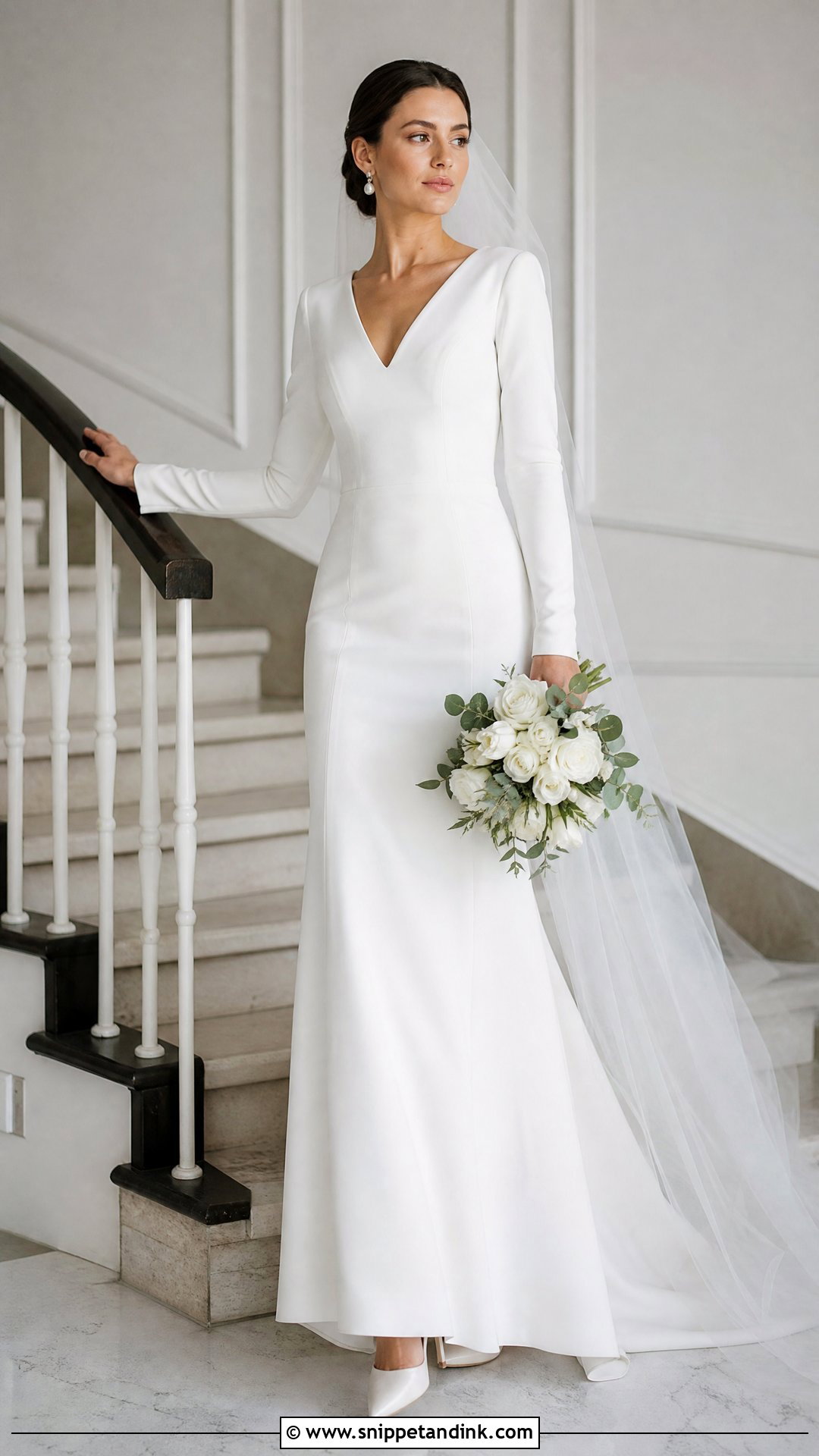
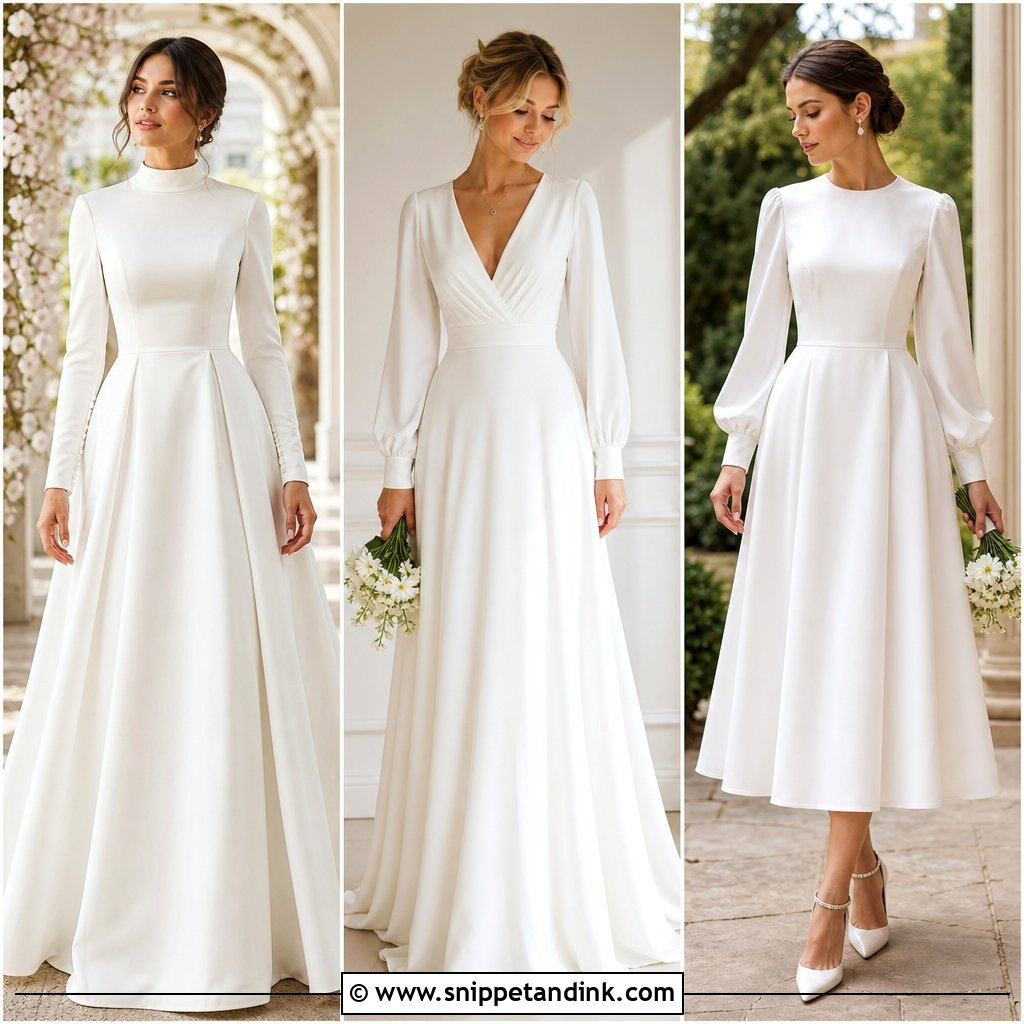
Long sleeves earn their place in cooler months, and they’re the hardest detail to get right on a plain dress. Matte crepe moves comfortably in a fitted shape, while satin or Mikado gives a more structured look over an A-line skirt. Choose a boat, scoop, or modest V-neckline to balance the covered arms. The test I make every bride do is hug someone. If the sleeve pulls across the back of the shoulders, the armhole or the sleeve ease is off, and that’s an alteration, not something to live with. Have the tailor set the cuff length while you’re holding your bouquet, because bent arms ride sleeves up. A low chignon, pearl earrings, pointed pumps and a plain veil complete it, and covered buttons at the wrists add a quiet bridal detail.
7. Plain Off Shoulder Wedding Gown
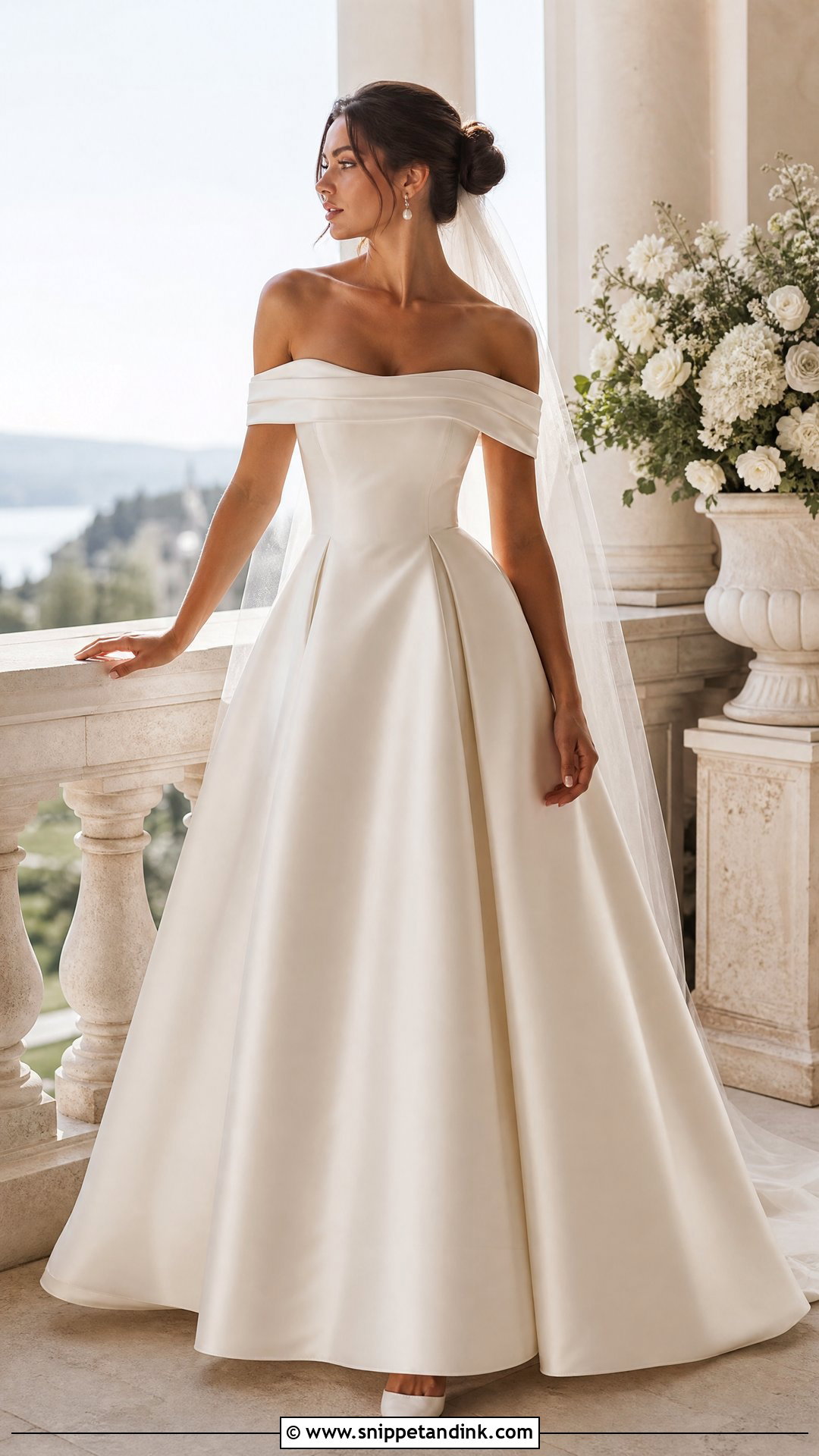
An off-shoulder band draws the eye to the collarbone and can sit close to the arms for a crisp look or drape loosely for something softer. The catch is movement. A band resting on the upper arm limits how high you can lift them, so at fittings I ask brides to raise an imaginary glass for a toast and hug someone taller. If the band rides up or digs in, it needs elastic or an inner stay. Over a fitted satin skirt, an A-line or a full Mikado skirt, it adapts to how formal the day is. A neat updo, small drops, pointed heels and a sheer veil anchored below the bun keep it tidy. Skip a bold necklace; the neckline is the jewelry.
8. Plain V-Neck Wedding Gown
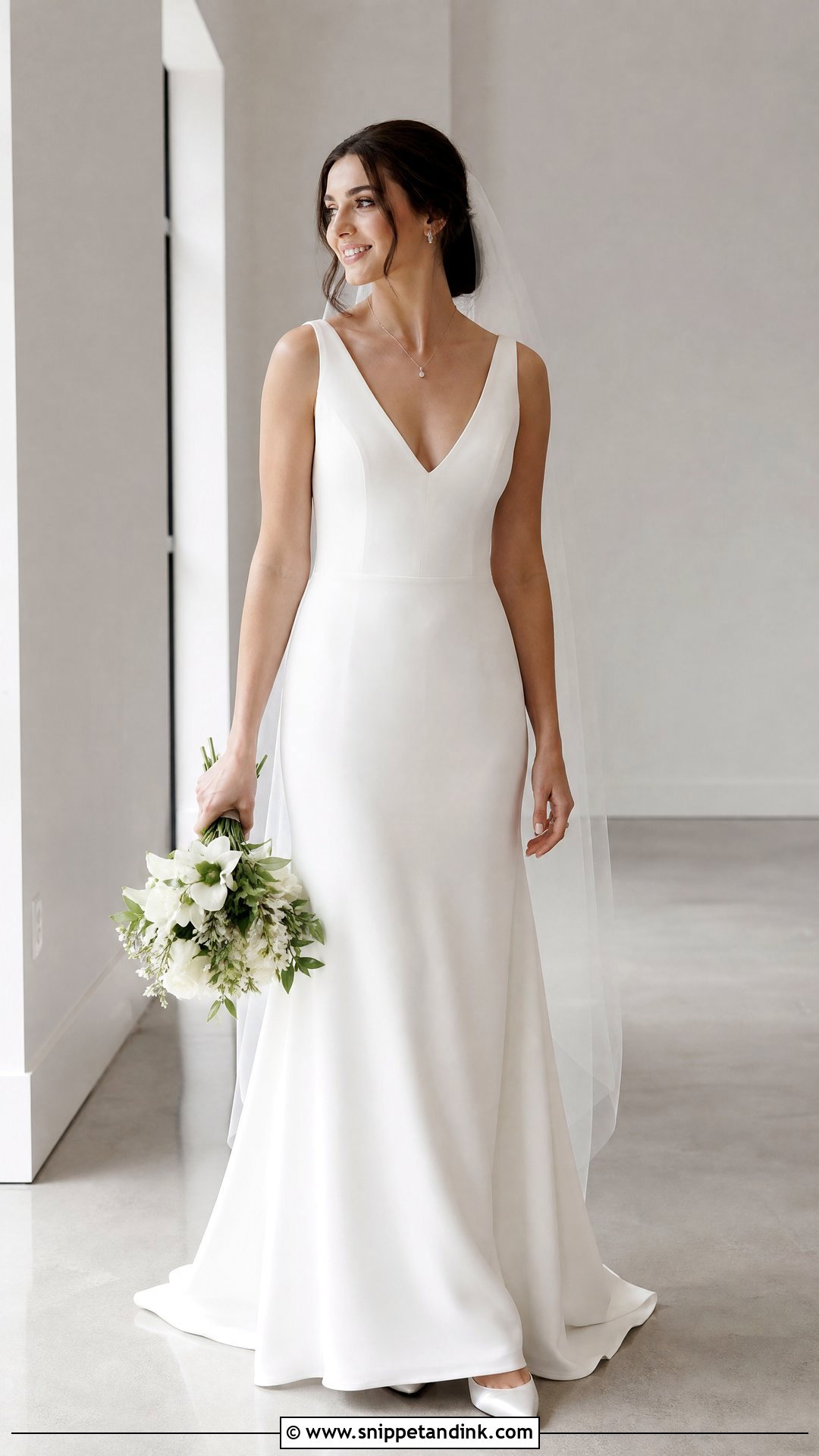
A V opens the upper body, and its depth decides the mood: shallow for coverage, deeper for a sharper modern edge. Crepe suits a fluid fit-and-flare, and satin holds a structured A-line. Deep Vs need help to stay put, so I’d ask for skin-toned mesh at the center or moulded cups, and I keep double-sided fashion tape in my kit for the day. I check a V from the front, the side and seated, because sitting is when the edges gape. Straps should lie flat without digging in or slipping. A fine pendant, small earrings, an understated veil and almond-toe heels finish it. Hold the bouquet low so the bodice stays visible.
9. Plain Halter Wedding Gown
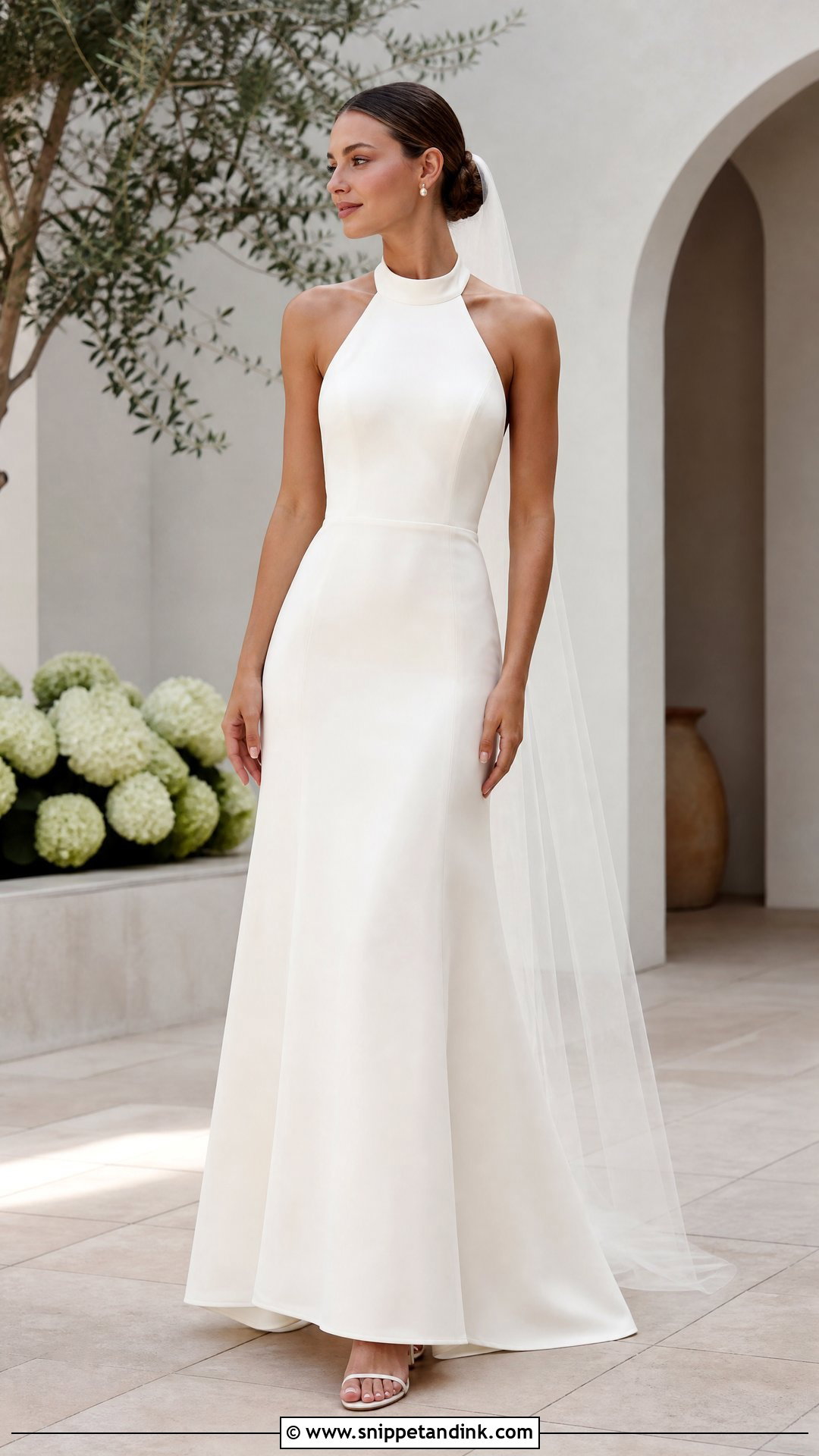
A halter swaps straps and sleeves for one clean line up to the neck, and in satin or fluid crepe it shows off the shoulders well. The flaw I watch for is weight. If the skirt hangs off the halter strap alone, the back of your neck will ache within a couple of hours. A well-made one grips at the ribs so the strap is decorative, not structural. A fitted column skirt suits contemporary venues; a soft flare moves more easily. Sweep the hair back and wear simple studs, metallic or ivory sandals and a small clutch for the reception. No necklace. Anchor a narrow veil under a bun so the back stays visible.
10. Plain Cowl Neck Slip Wedding Gown
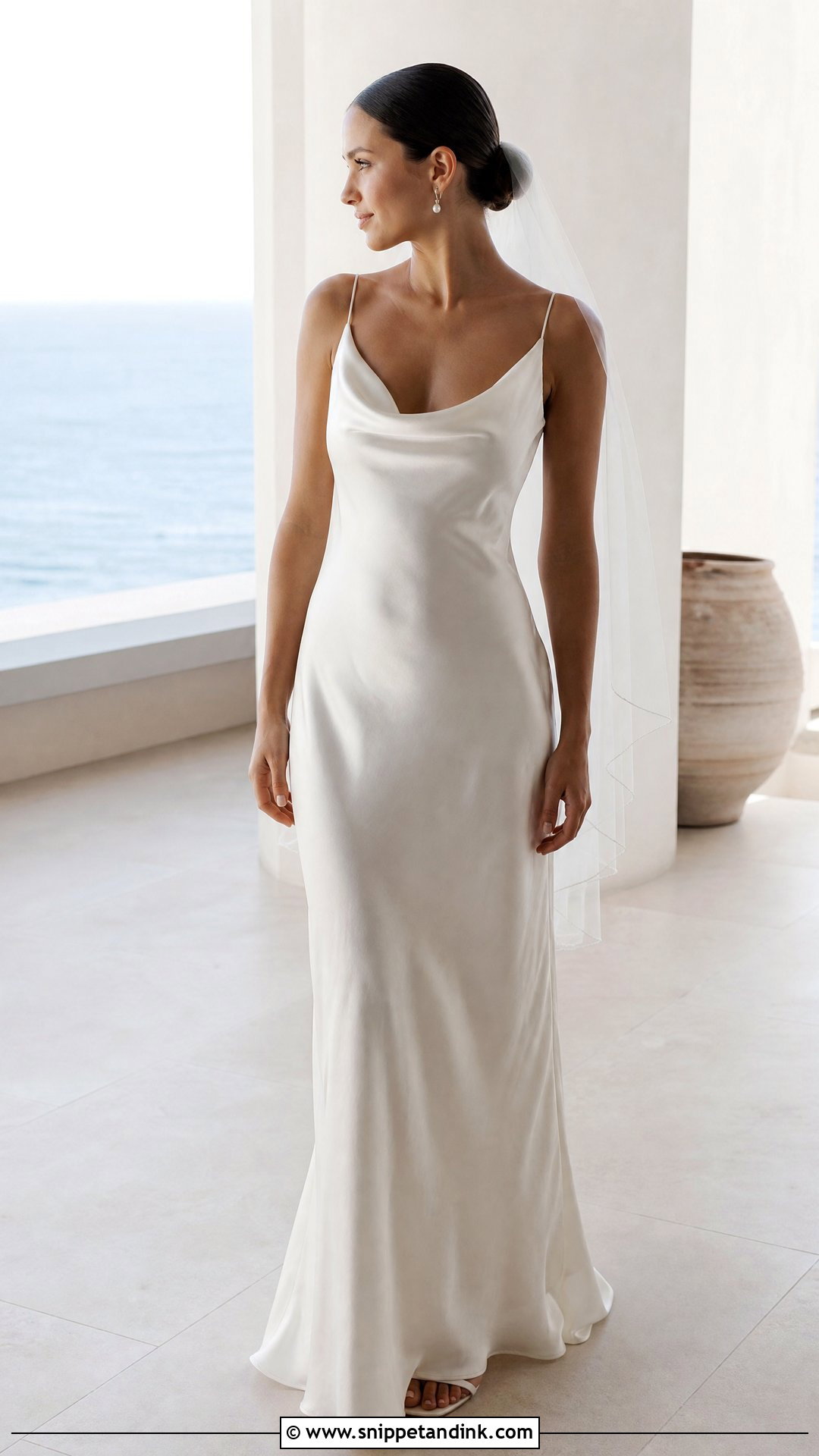
Soft satin and a draped neckline give a plain cowl neck slip wedding gown an easy, relaxed character. Look for a bias cut, where the fabric runs diagonally so it follows the body as you move. That same cut makes these gowns tricky, because bias fabric drops and lengthens as it hangs, so a good seamstress lets the dress settle before hemming. Leave extra time for that. Satin also shows every line underneath, so wear smooth underwear at every fitting and stand in daylight to check the lining is opaque. Delicate sandals, small pearl drops, a low bun and a light fingertip veil keep it simple, with a satin wrap for later. It’s happiest at intimate dinners, warm-weather ceremonies and modern reception spaces.
11. Plain High Neck Wedding Gown
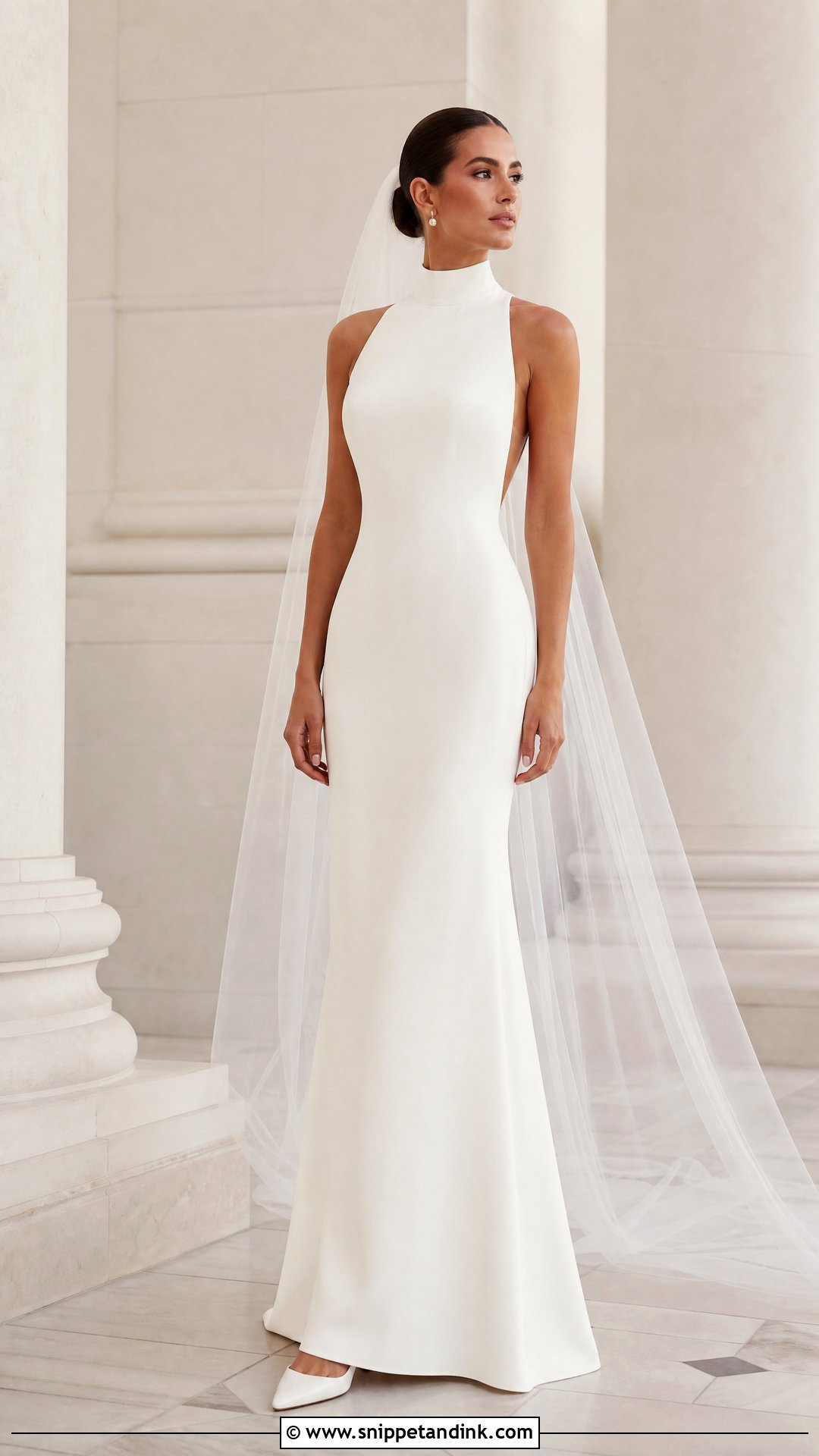
Coverage replaces decoration here. The neckline can be a softly gathered halter neckline, a clean mock neck or a smooth bateau front, balanced with a sleeveless bodice, an open back or a gently fitted skirt. Crepe keeps it modern and satin makes it formal. The collar is what I watch. Slightly too tight and it creases at the throat every time you look down to read your vows; too loose and it folds over. Shoulder tailoring matters as much, since there’s no pattern to distract from a wrinkle. Wear a polished bun, button earrings, pointed heels and a veil tucked under the hair, and leave off the necklace.
12. Plain Empire Waist Wedding Gown
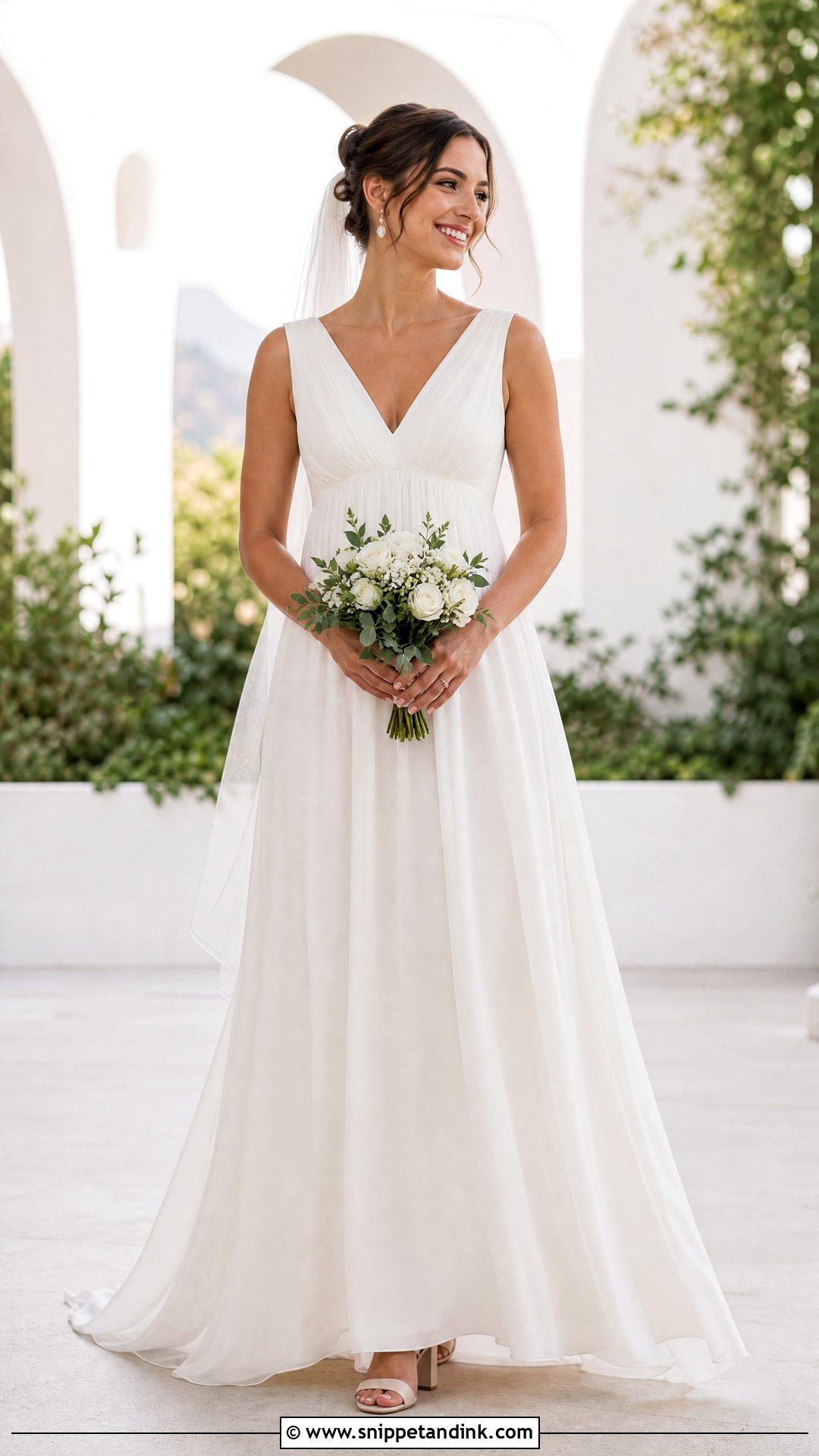
A plain empire waist wedding gown gathers just under the bust and falls loosely, so nothing is fitted at the waist or hips. It’s the dress I suggest for long ceremonies, hot climates and brides who simply don’t want to feel held in. Chiffon floats; satin makes it more formal. I check two things. The raised seam should sit on the ribcage rather than across the bust, and the lining has to stay opaque in direct sun, because light chiffon goes see-through outdoors. Low block heels, delicate earrings, a soft updo, a narrow veil and a bouquet with trailing greenery suit the proportions. Hem it carefully so the fluid skirt doesn’t catch underfoot.
13. Plain Fit And Flare Wedding Gown
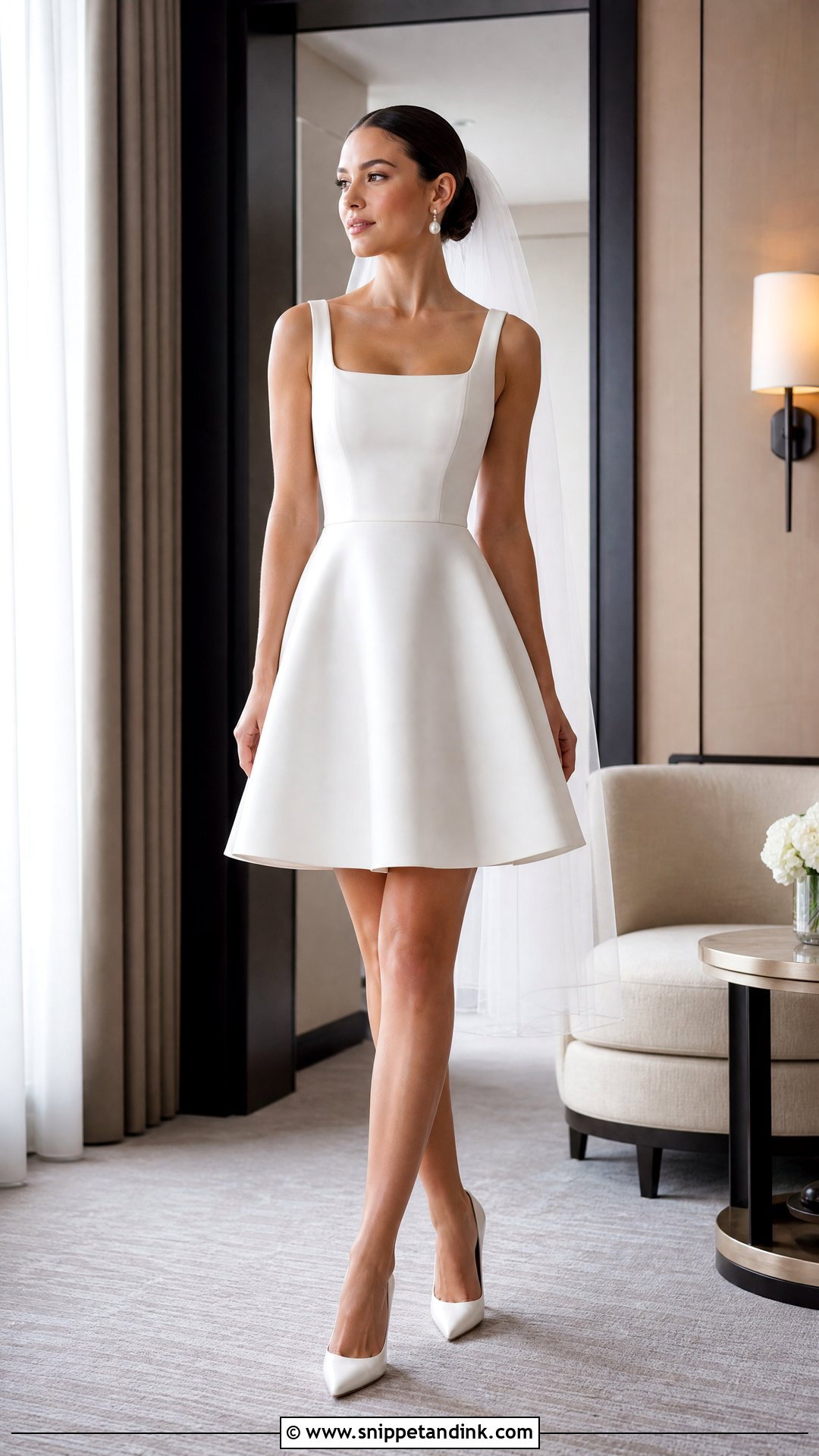
Fitted through the torso and hips, then flaring above or around the knee, this shape gives definition without the extreme proportions of a mermaid. Stretch crepe is the practical choice, holding a smooth line while still letting you walk and sit. I make brides take full strides and climb a few stairs in the fitting room. If the skirt binds at the knee, the flare point needs to move up. Pair a square or V bodice with pointed pumps, a neat veil and understated pearl or crystal earrings, plus a low bun to show the shoulders. Ask for a secure bustle for the train. Because the dress relies on cut alone, precise seam placement makes or breaks it.
14. Plain Mermaid Wedding Gown
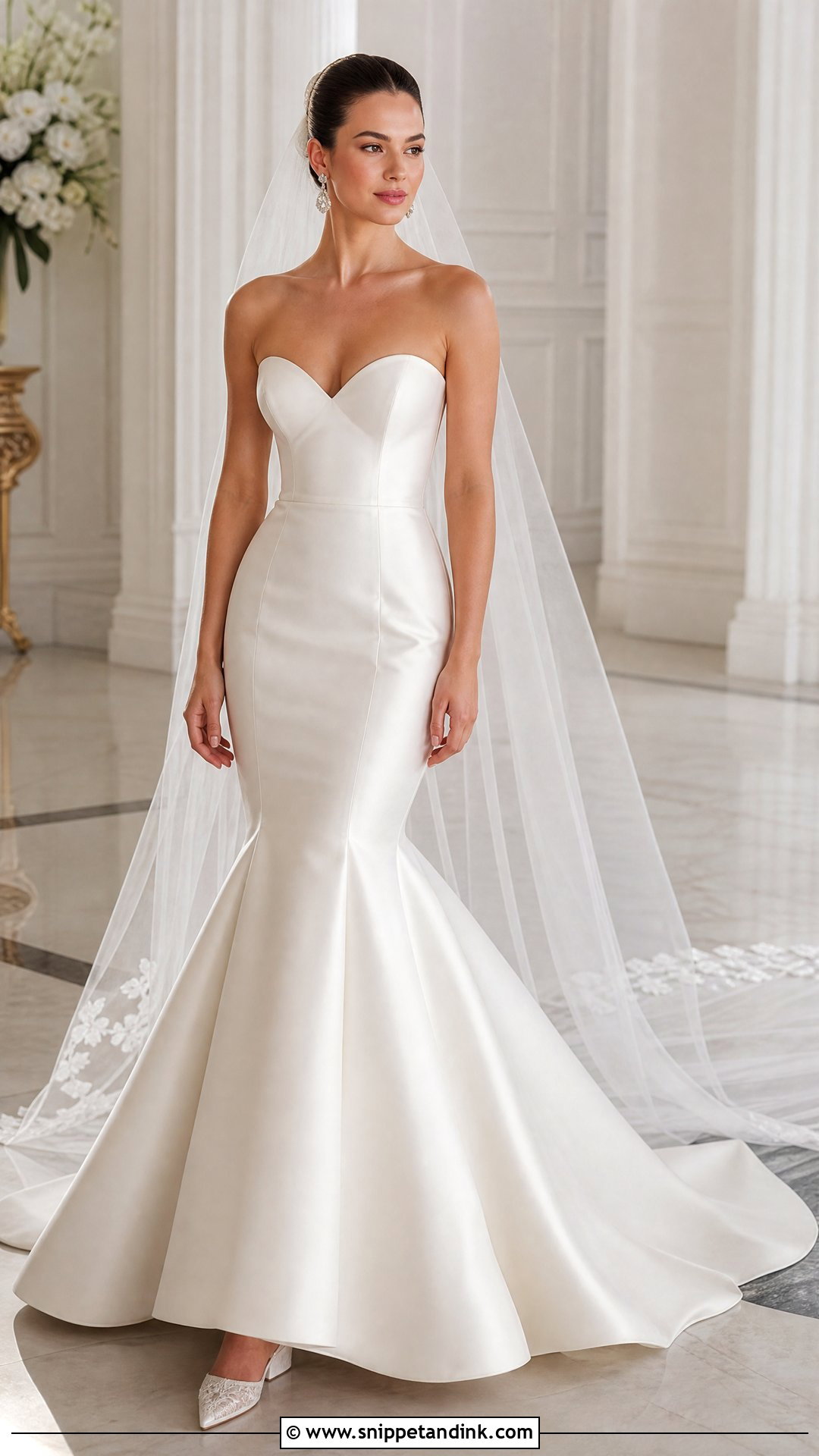
This is the most dramatic shape on the list, with a fitted body and a flare that starts low on the leg. Smooth satin looks sculpted; crepe is softer and gives a little. Where the flare begins matters more than anything else. Set it too low and you’ll shuffle all evening, so try several skirt shapes and pick the one you can actually walk in. A strapless sweetheart or clean scoop neckline suits the curve. Drop earrings, a sleek updo, pointed heels and a sheer cathedral veil finish it, with a narrow bouquet that doesn’t hide the waist. Sit, climb steps and dance before signing off alterations, and have a sturdy bustle sewn in for after the formal photographs.
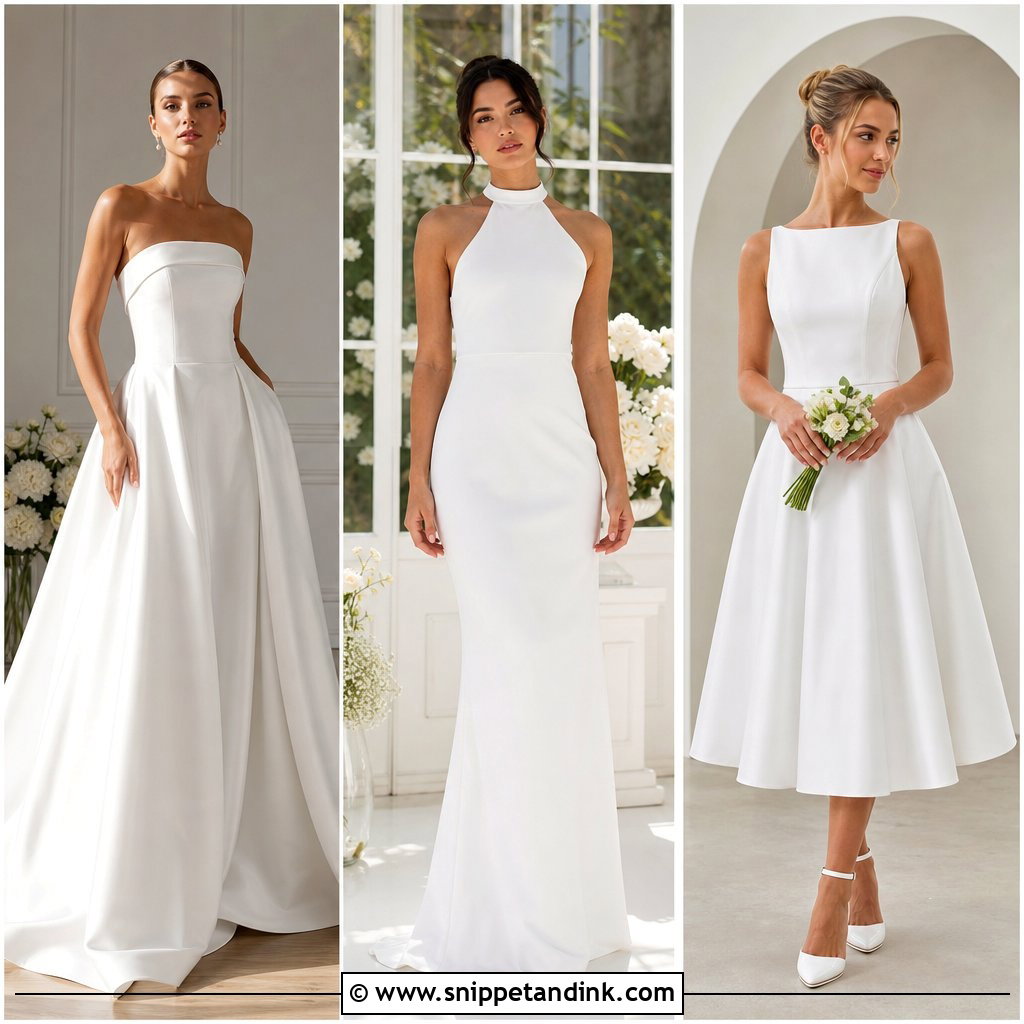
15. Plain Wedding Gown With Pockets
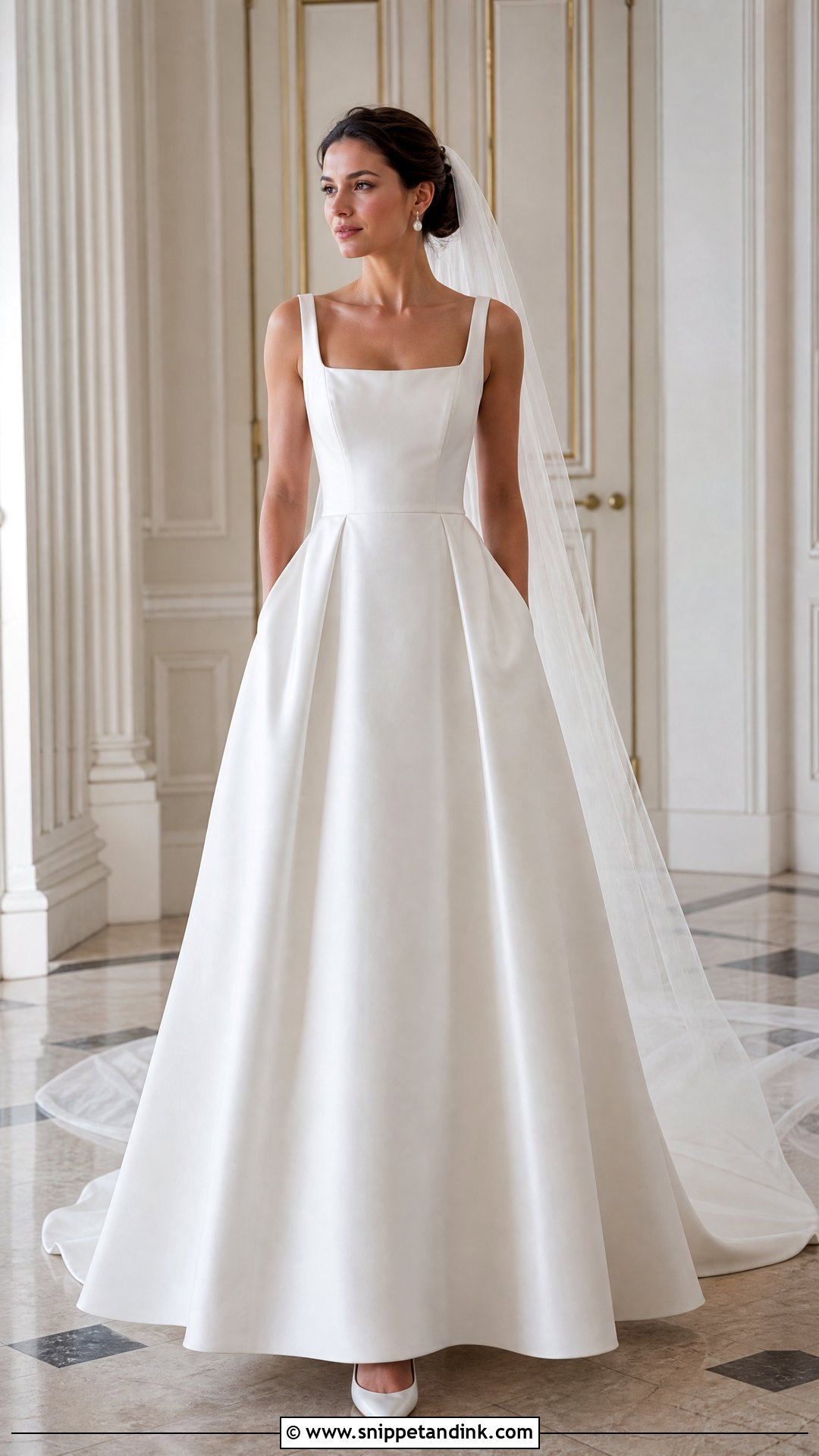
A plain wedding gown with pockets gets the most delighted reactions in a fitting room. Pockets hide best in A-line and ball gown skirts, where there’s enough fabric to swallow them, and structured satin or Mikado keeps the skirt crisp around the openings. My rule is lip balm, a tissue and maybe a phone. Anything heavier drags one side of the skirt down, and it shows in photographs. They also give your hands somewhere to rest during portraits, which relaxes most brides instantly. Pair it with a square-neck or strapless bodice, pearl earrings, pointed pumps and a plain veil, and check that both openings sit flat at a comfortable height.
16. Plain Wedding Gown With Bow Back
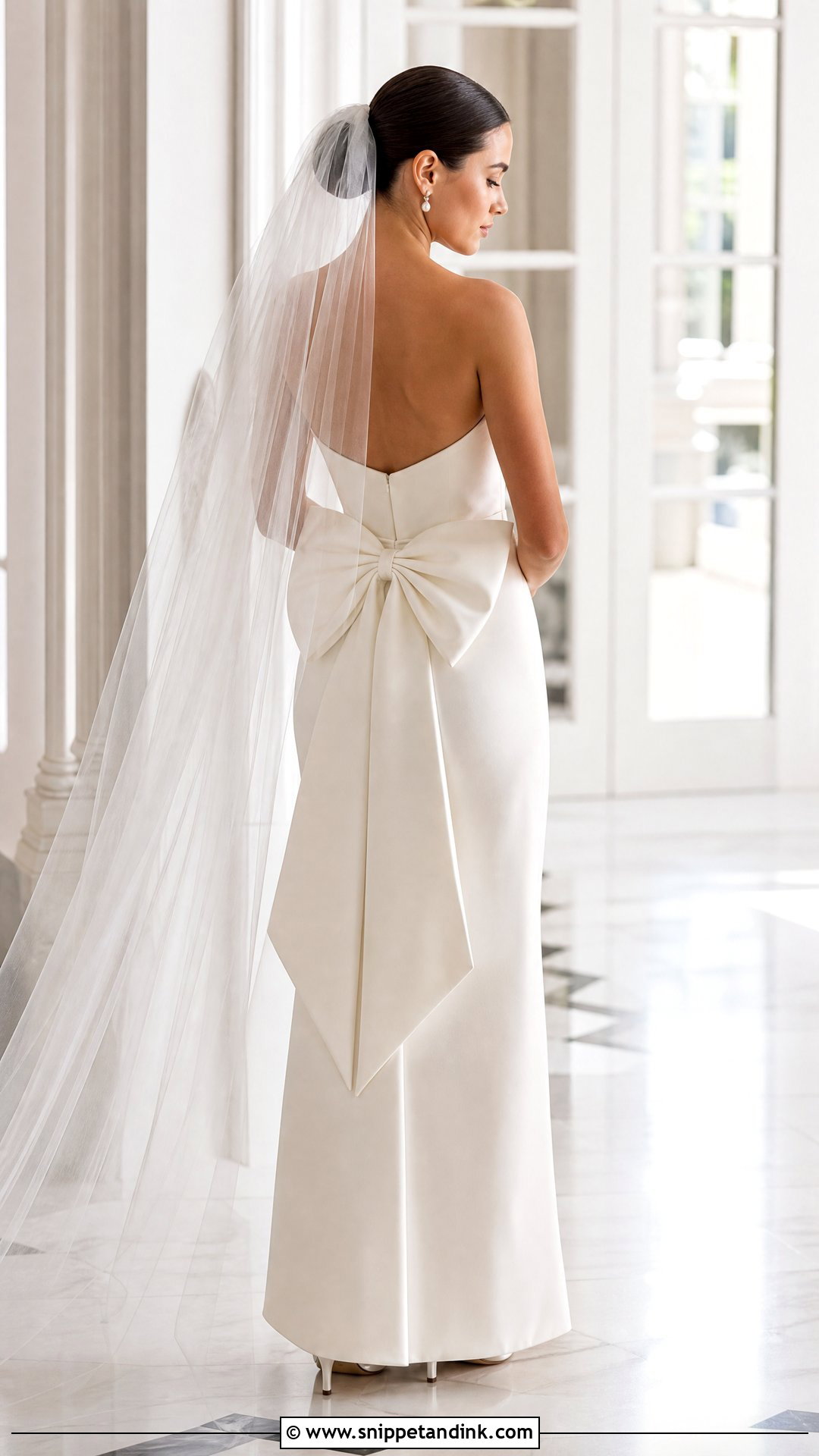
One carefully chosen detail can change a minimalist dress, and a bow at the lower back does it without touching the front. Look for a clean front, a fitted waist and a structured satin bow, ideally removable. Its scale decides the silhouette: a small bow suits a column, while a big one needs an A-line or ball gown to balance it. The practical problem is sitting. A large bow gets crushed against a chair back through dinner and can clash with the bustle points, so check both at the fitting. Wear a smooth bun, simple earrings and ivory pumps, and position the veil so the bow still shows. A detachable bow lets you wear it for the ceremony and take it off before dancing.
17. Plain Wedding Gown With Low Back
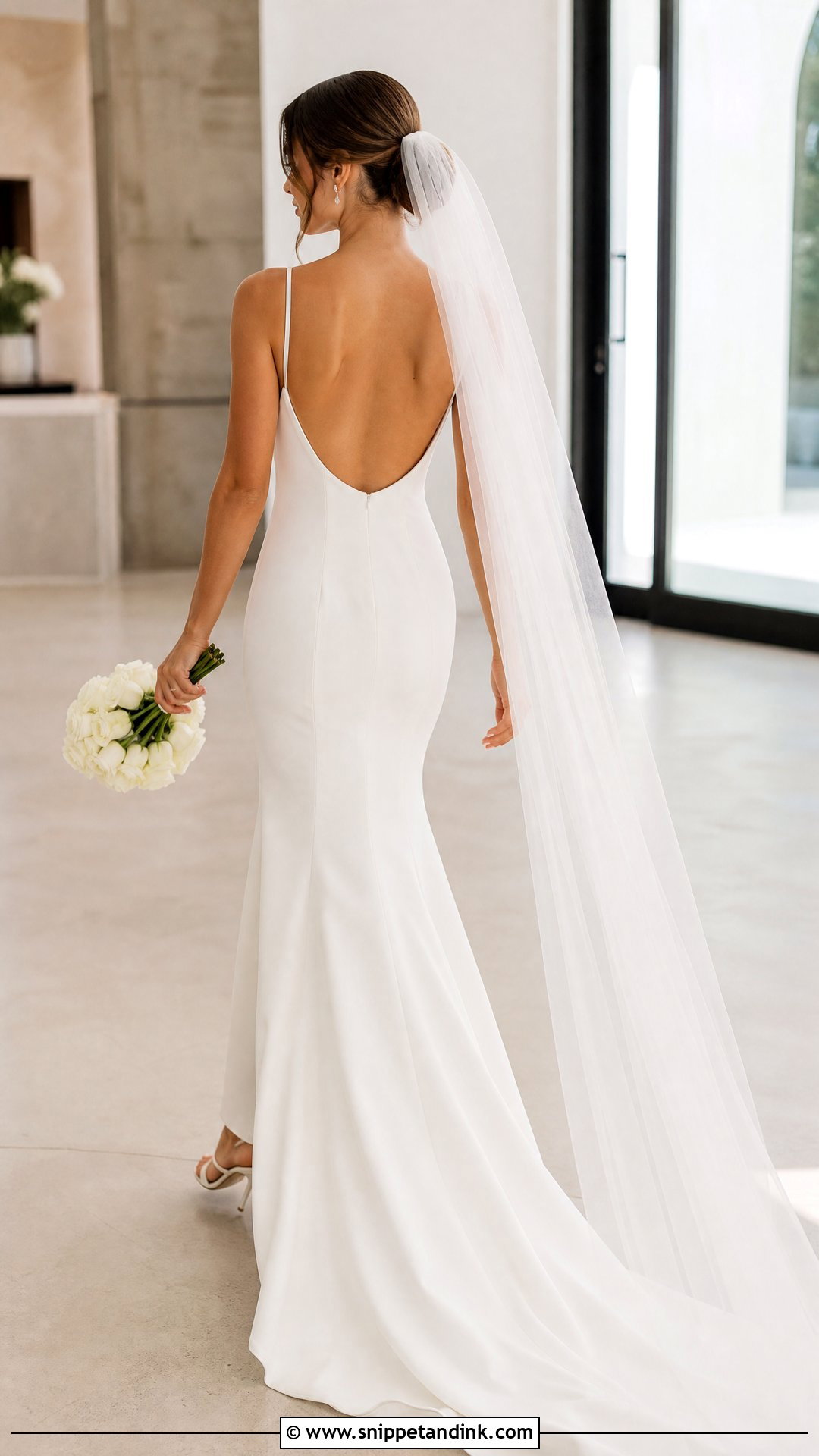
With a low back, the front stays quiet and all the interest is behind you, which is why I think about the veil first. A long, dense veil hides the main feature entirely; a sheer one anchored below the bun works far better. A crepe sheath, satin column or soft flare all make a clean base. Support has to be built in with cups, side panels or discreet mesh, because a normal bra will show. Bring the underwear you plan to wear to fittings and watch the back edge as you walk and lift your arms. If it gapes, it needs a small dart or a length of elastic along the edge. Thin straps feel delicate, long sleeves contrast nicely with the open back, and slingback heels with small earrings round it out.
18. Plain Tea Length Wedding Gown
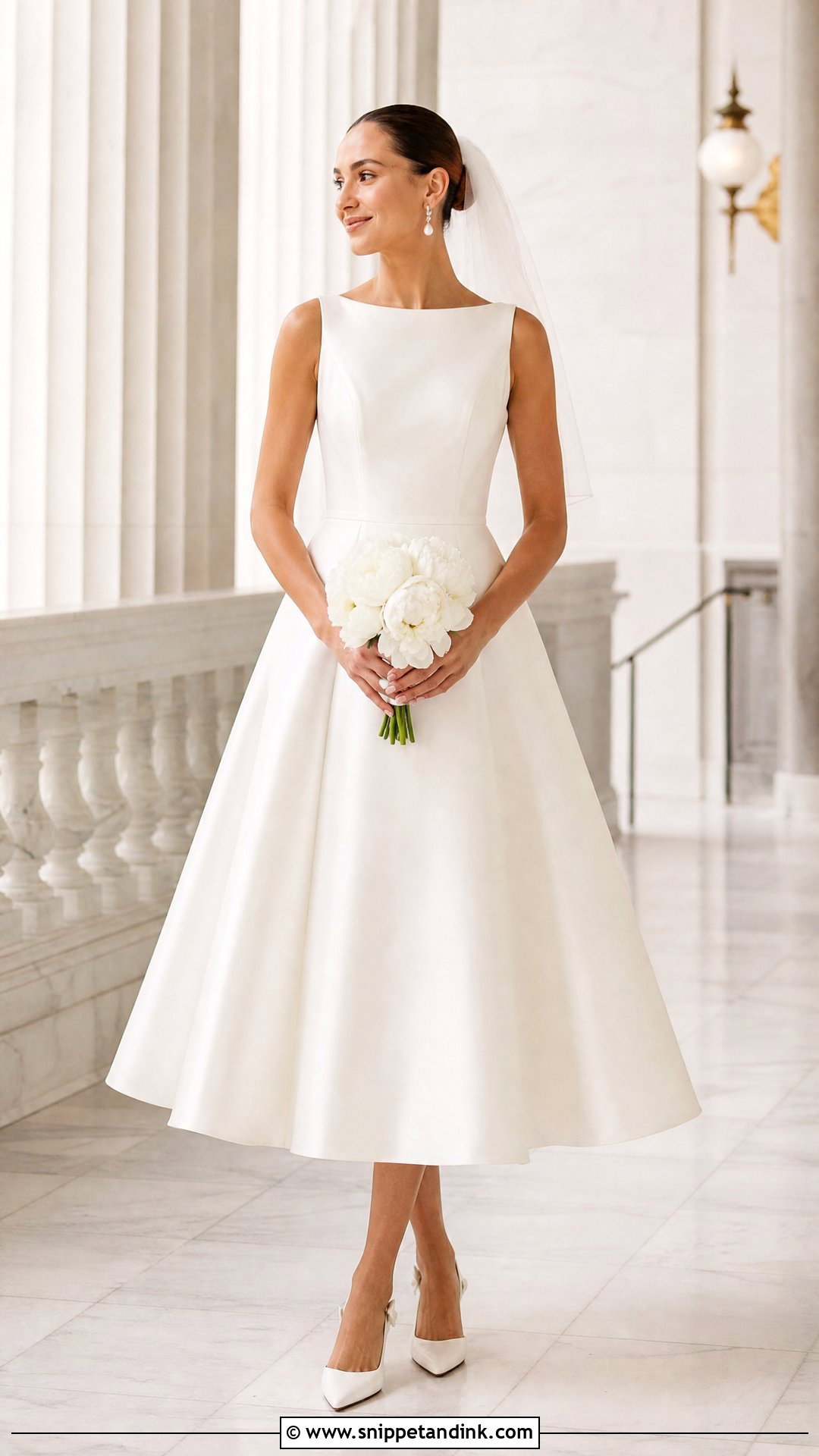
A tea length dress feels playful and still unmistakably bridal. The skirt falls between knee and ankle, so the shoes become part of the outfit in a way they never are under a floor-length hem. I like structured satin or Mikado in an A-line, with pointed pumps or slingbacks, pearl earrings, a short veil and a compact bouquet. A bateau, square or strapless neck keeps it classic. It’s my first suggestion for courthouse ceremonies and daytime parties. Test the hem with the exact shoes you’ll wear. Half an inch changes the balance, and you want it to look deliberately cropped, not like a long dress someone shortened.
19. Plain Wedding Gown With Cape
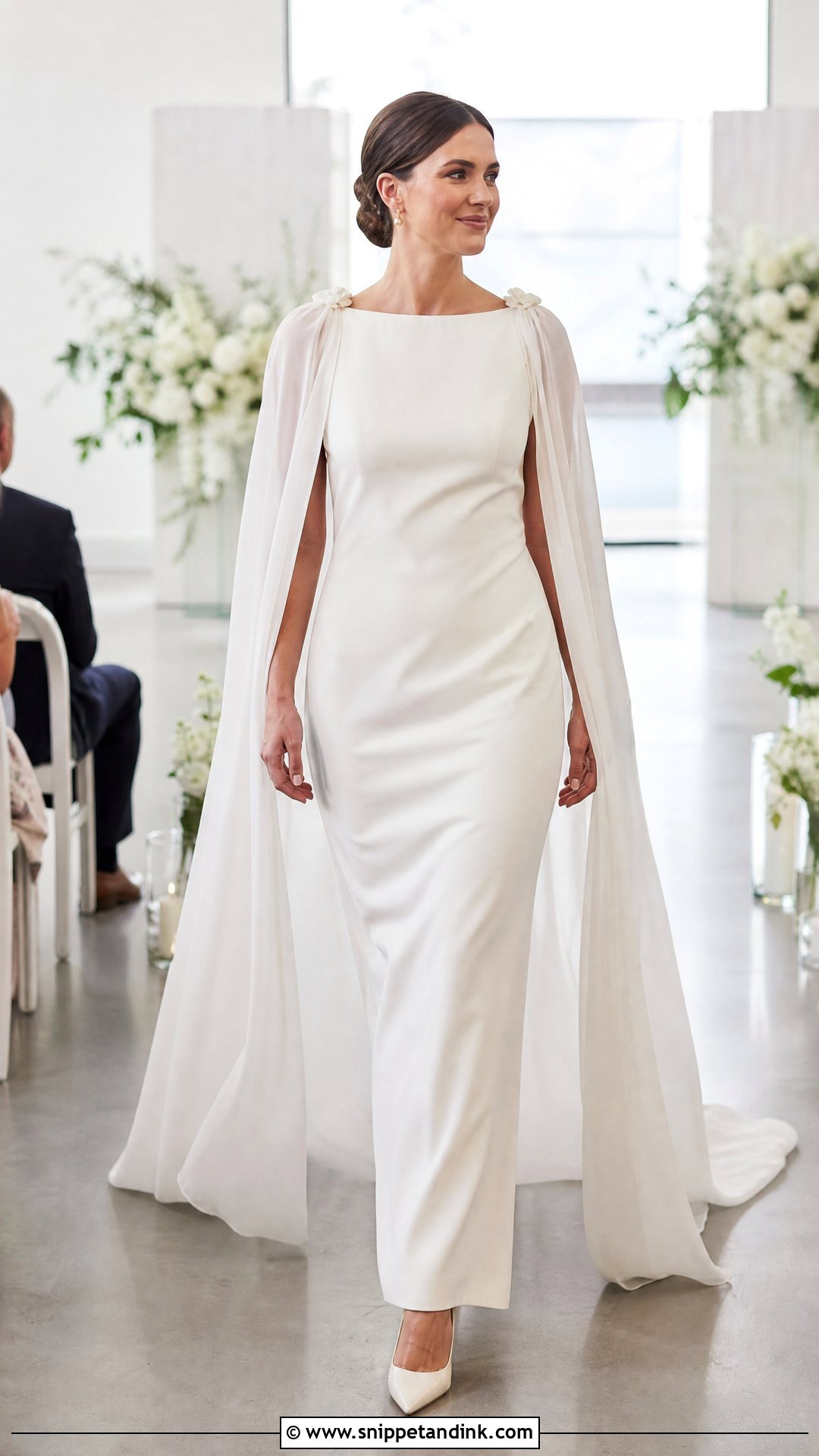
A cape adds coverage and movement without committing to sleeves. Start with a simple column, sheath or A-line, then layer a light chiffon cape or a floor-length one in matching fabric. It can fasten at the shoulders, neckline or back depending on how much of the bodice you want seen. Chiffon capes catch the wind badly, so for beach and rooftop weddings I have small weights or a discreet wrist loop added to the hem. A separate veil is usually too much fabric. Understated earrings, a low bun and pointed heels finish it. Check that the cape doesn’t pull at the neckline when you reach forward. If it’s detachable, wear it for the ceremony and portraits, then take it off for the reception.

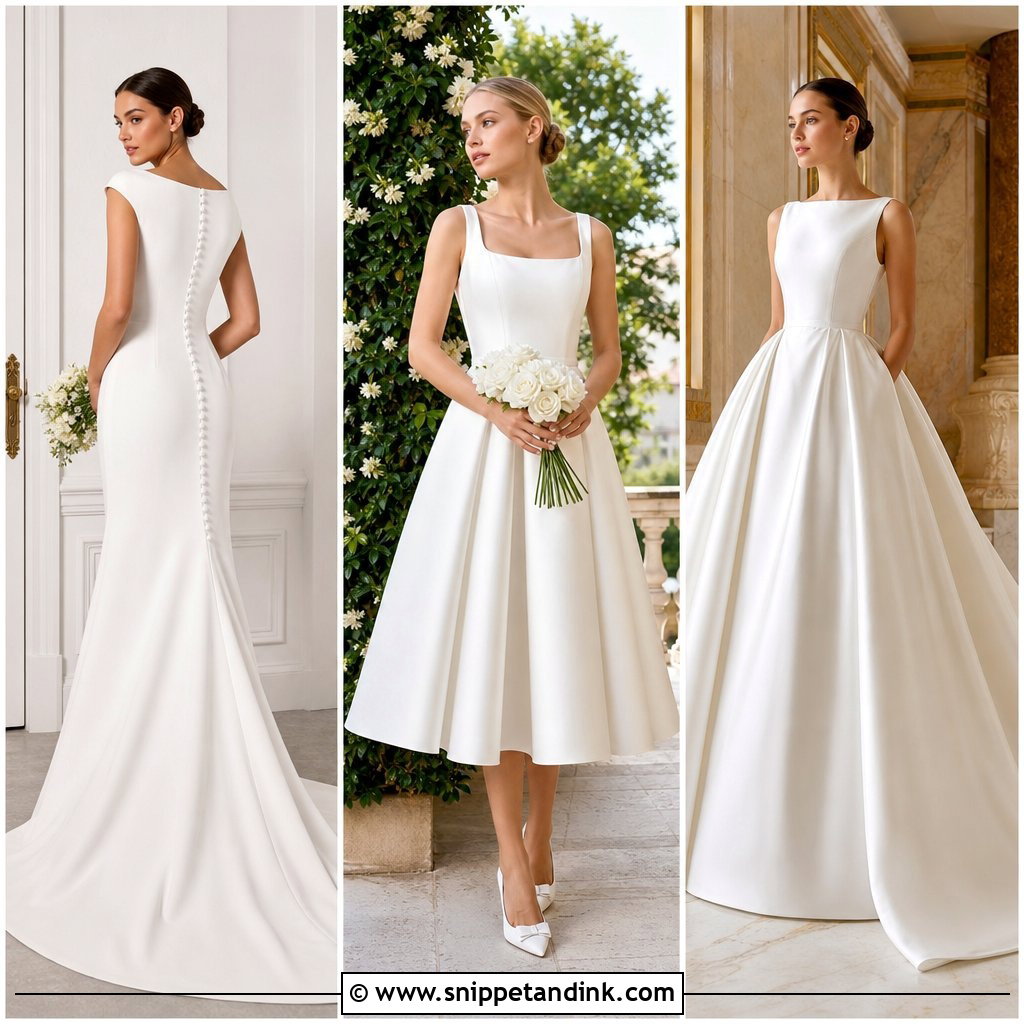
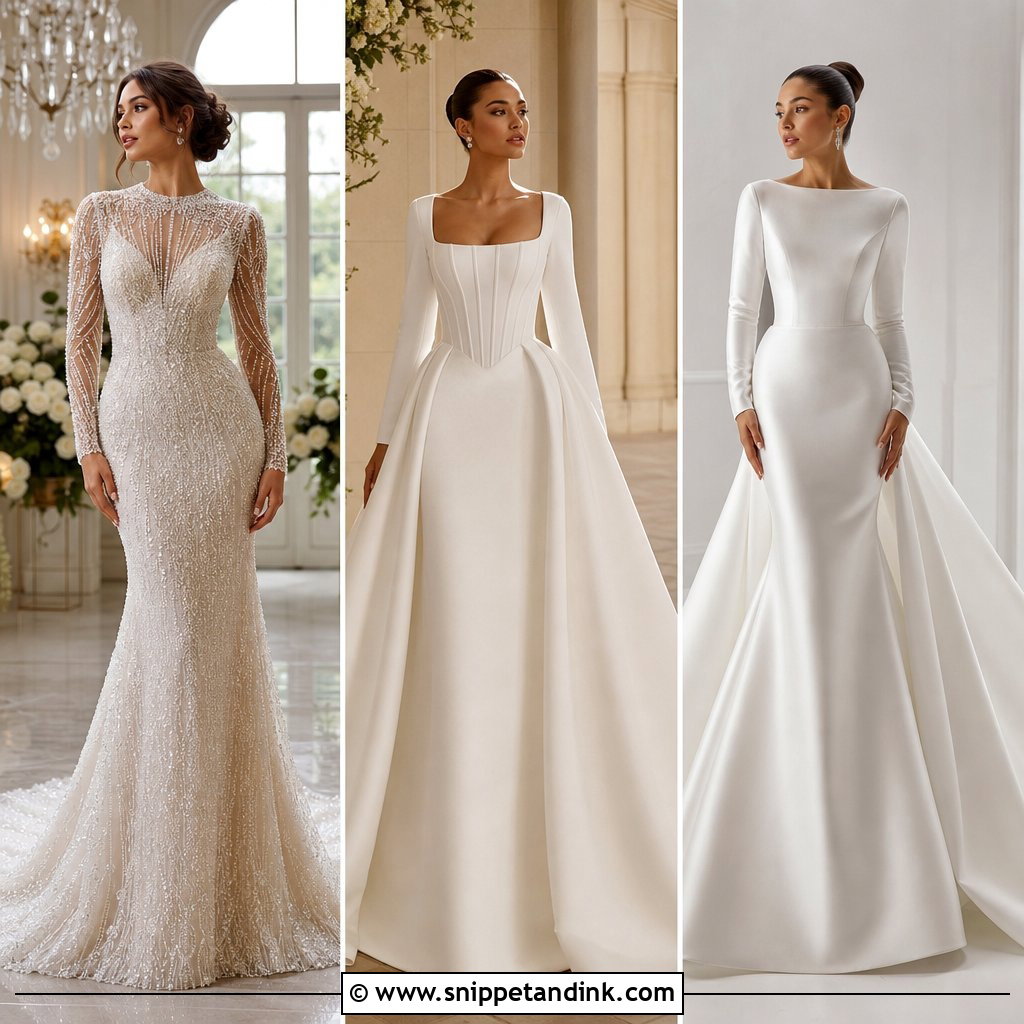
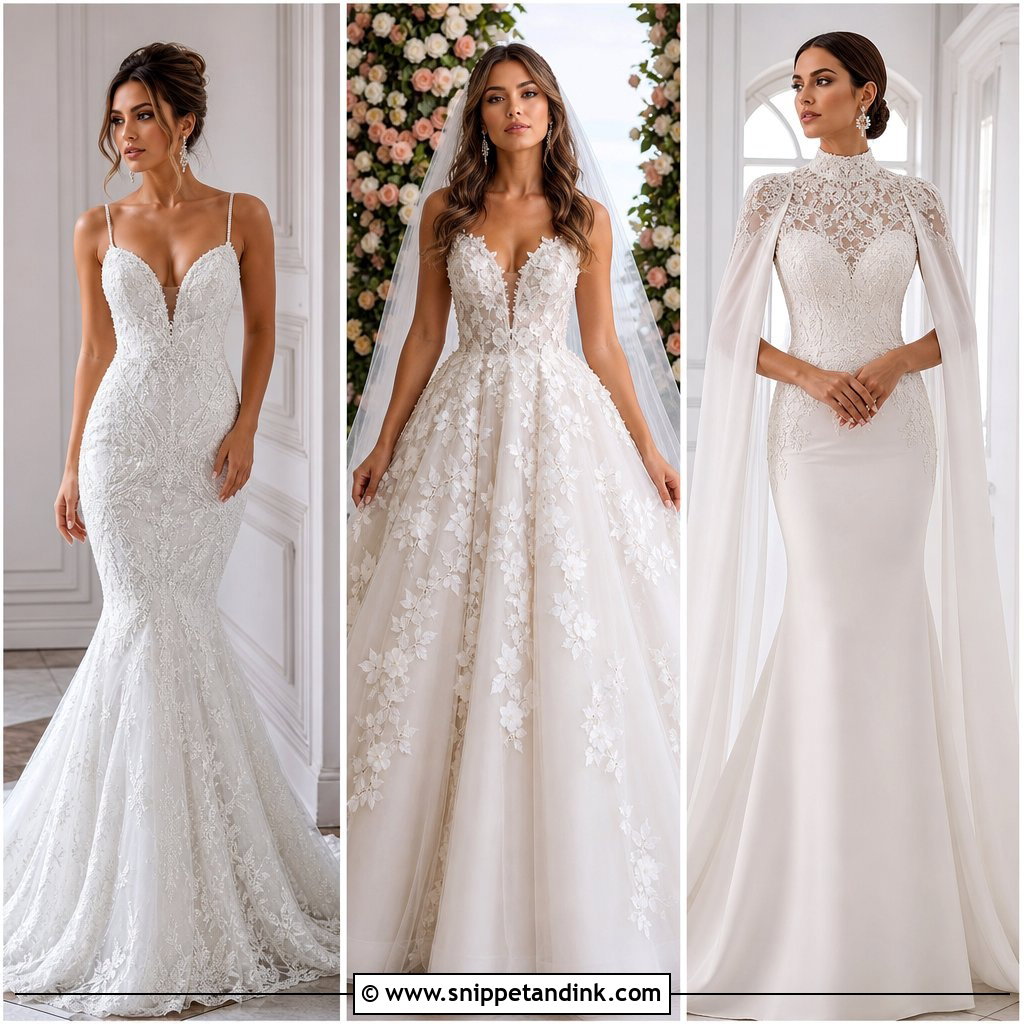
20. Plain Plus Size Wedding Gown
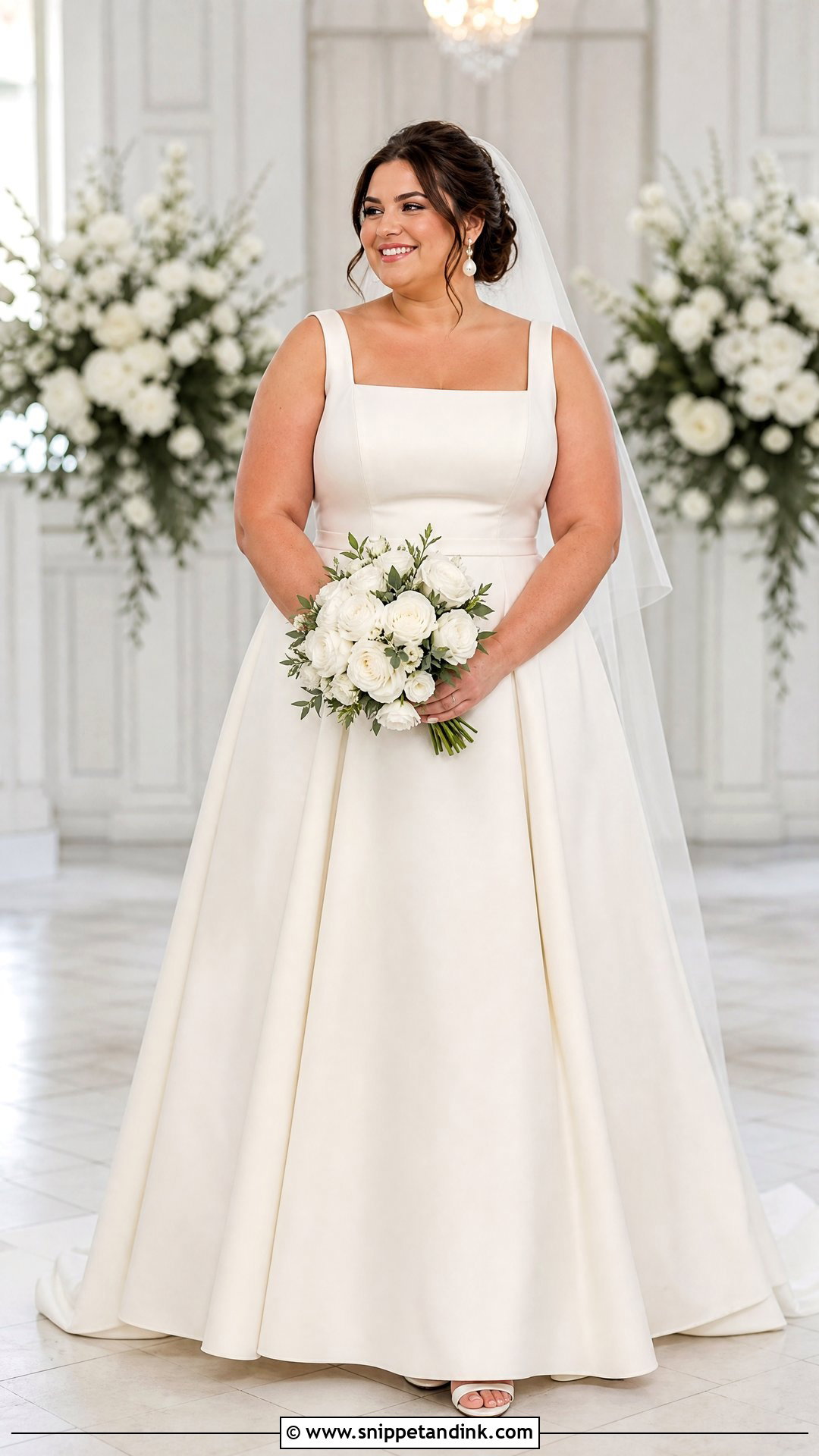
In plus sizes, support and seam placement come before any style decision. A structured A-line gives balanced volume, and a stretch-crepe fit-and-flare shows curves while still flexing as you move. Square, scoop and V necks with wider straps feel secure. Sample sizes are the real frustration: many shops carry small samples that get clipped onto larger bodies, which distorts the shape and tells you very little. Ask whether the sample can be fitted properly, or whether the shop stocks larger sizes to try. Ignore labels about what is supposedly flattering and judge by how freely you can walk, sit and dance. Comfortable heels, pearl drops, a smooth veil and a bouquet scaled to the gown, not hiding it, complete the look.
What Each Fabric Looks Like by the Last Dance
Plain fabric photographs honestly at noon and honestly again at midnight, and the two pictures can look quite different. Here’s what I tell brides to expect from the fabrics in this list.
Satin and Mikado
Satin catches the light, which is its whole appeal, but it creases wherever you sit and those creases show. Heavier duchess satin and Mikado recover better than thin satin. Both water-mark, so keep drinks and rain away from the skirt.
Crepe
Crepe is the most forgiving over a long day. It resists wrinkling and moves well, though a lightweight crepe can cling to whatever is underneath, so check the lining.
Chiffon
Chiffon barely creases and breathes in the heat. It does snag on rough stone, brick and bouquet wire, and it blows about in any wind.
Steaming, Hanging and Storing a Gown With No Embellishment
Have the dress steamed, never ironed, the day before or that morning. A hand steamer held a few inches off the fabric relaxes travel creases, while pressing directly on satin can leave a shine you can’t remove. Hang it from the internal ribbon loops rather than the straps, so the weight of the skirt doesn’t stretch the shoulders.
Afterward, have it professionally cleaned within a few weeks, even if it looks clean. Sugary drinks dry invisibly and turn yellow-brown months later. Store it folded with acid-free tissue in a breathable box somewhere cool and dark, not in the plastic bag it came home in.
Where a Simple Dress Gets Its Polish
With no lace or beading, fabric and tailoring carry the whole dress. Yours might be a flowing chiffon empire, a sculpted satin ball gown or a crepe sheath with a low back. Look at the outfit as one piece, from shoes and jewelry to hair, veil and bouquet. Treat comfort as seriously as appearance by walking, sitting and lifting your arms in every dress on your shortlist. Good alterations are what make a simple gown look considered rather than unfinished, so plan time for them as carefully as you plan the budget. Start with the shapes above, then settle on the neckline and finishing details that still feel like you.
You'll Like These Ideas:







Leave a Reply