
Plain Fabric Hides Nothing, So Test It Under Your Hand First
A printed fabric disguises a wobbly seam, a cheap weave or a lining that shows through. A solid one shows all of it, which is why I judge plain material in the shop before I think about the design.
- Scrunch a corner in your fist for ten seconds, then let go. Crepe and good duchess satin spring back; cheap polyester satin and linen keep the creases, and those creases will be across your lap after the first sit-down.
- Hold a single layer up to daylight. If you can see your fingers through a pale colour, budget for a full lining, or the gown will show every seam allowance and undergarment in flash photos.
- Look at the shine from an angle. High-gloss satin bounces flash and makes any ripple over the hips look twice as large, while a matte or semi-matte finish reads richer on camera.
- Drape a length over your arm. Fabric that falls in soft folds suits kaftans, wraps and empire gowns; fabric that holds its own shape is what peplums, mermaid flares and puff sleeves need.
Buy all the yardage from one bolt. Dye lots vary, and in a solid colour a panel from a second roll can look a shade off once the gown is sewn together.
1. Plain Material A-Line Gown With Block Heels
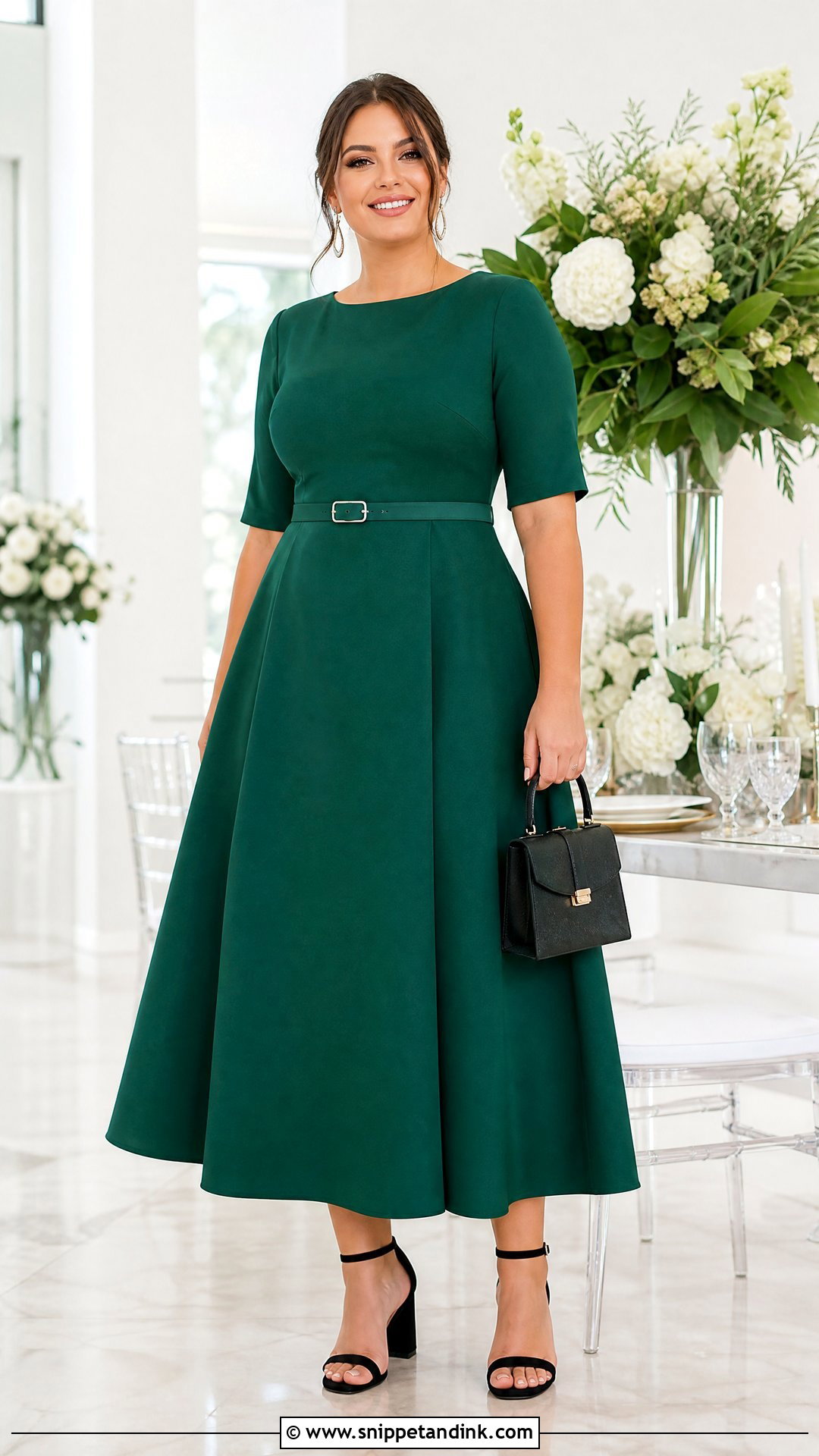
An A-line is the cut I reach for first when someone wants shape without having to hold their breath all evening. The bodice does the defining and the skirt widens gradually from the waist, so it skims the hips rather than gripping them. In a solid fabric the seams are on show, which is why I prefer crepe or a duchess weave in emerald, burgundy, navy or rust: both press to a clean line and hide a slightly uneven hem better than thin satin. Short puff sleeves or tidy elbow-length sleeves keep the top half in proportion with the skirt. Block-heel sandals, a structured mini bag and plain drop earrings finish it, and a slim self-fabric belt sharpens the waist if the bodice seam sits a little low on you.
2. Plain Material Mermaid Gown With Metallic Accessories
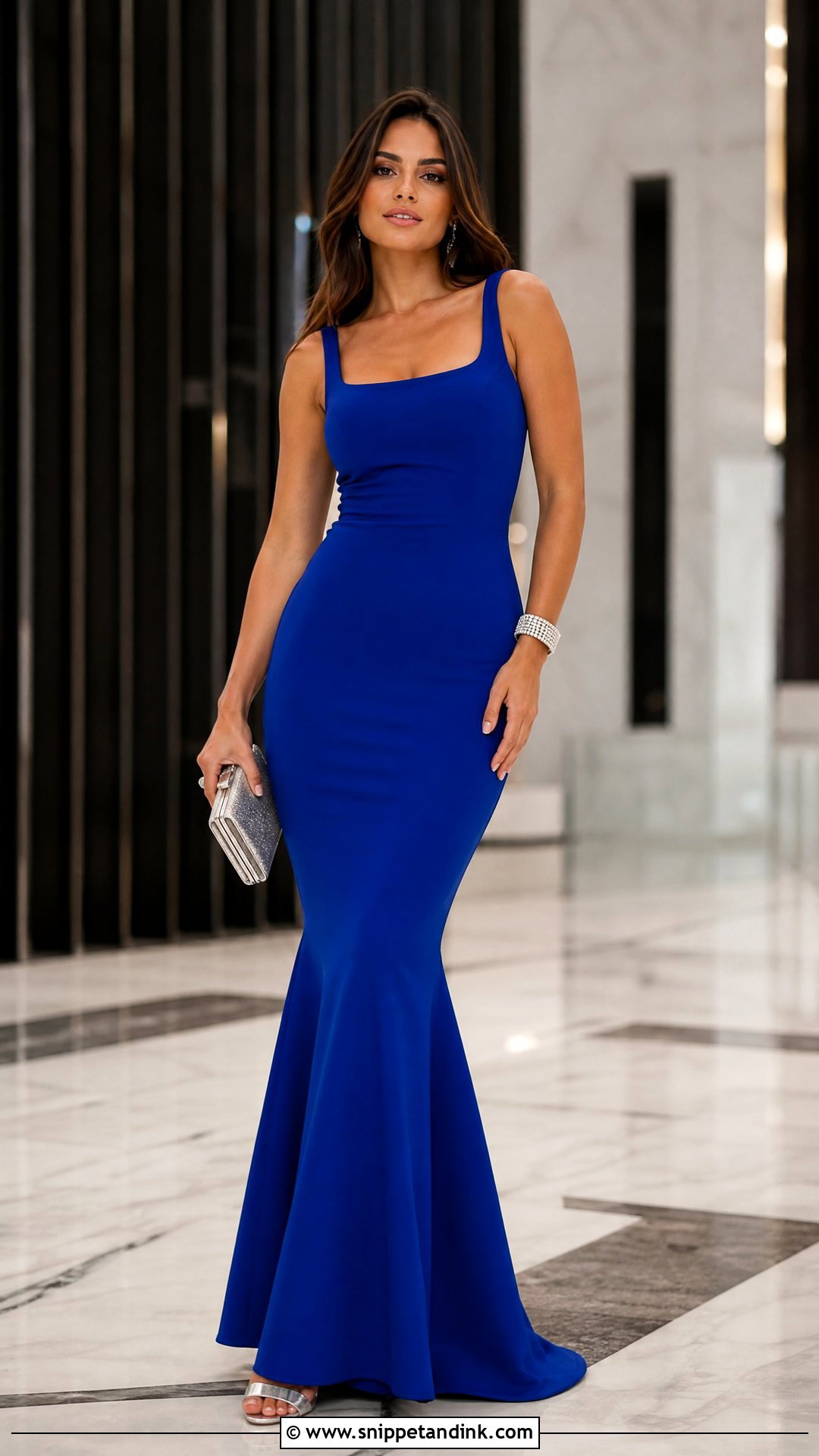
The mermaid is the one cut in this list where I won’t compromise on tailoring. It follows the body through the waist and hips and only releases at the knee, so if the flare point is set too high you shuffle, and too low you can’t climb a step. Structured crepe, satin or duchess fabric keeps the lower flare standing instead of collapsing. I like plum, royal blue, forest green or black here, worn with metallic heels, a compact clutch and a single bracelet. A square, sweetheart or asymmetrical neckline all suit the shape. Sit, walk and take a stair at your fitting before you sign off on it.
3. Plain Material Bubu Gown With Flat Mules
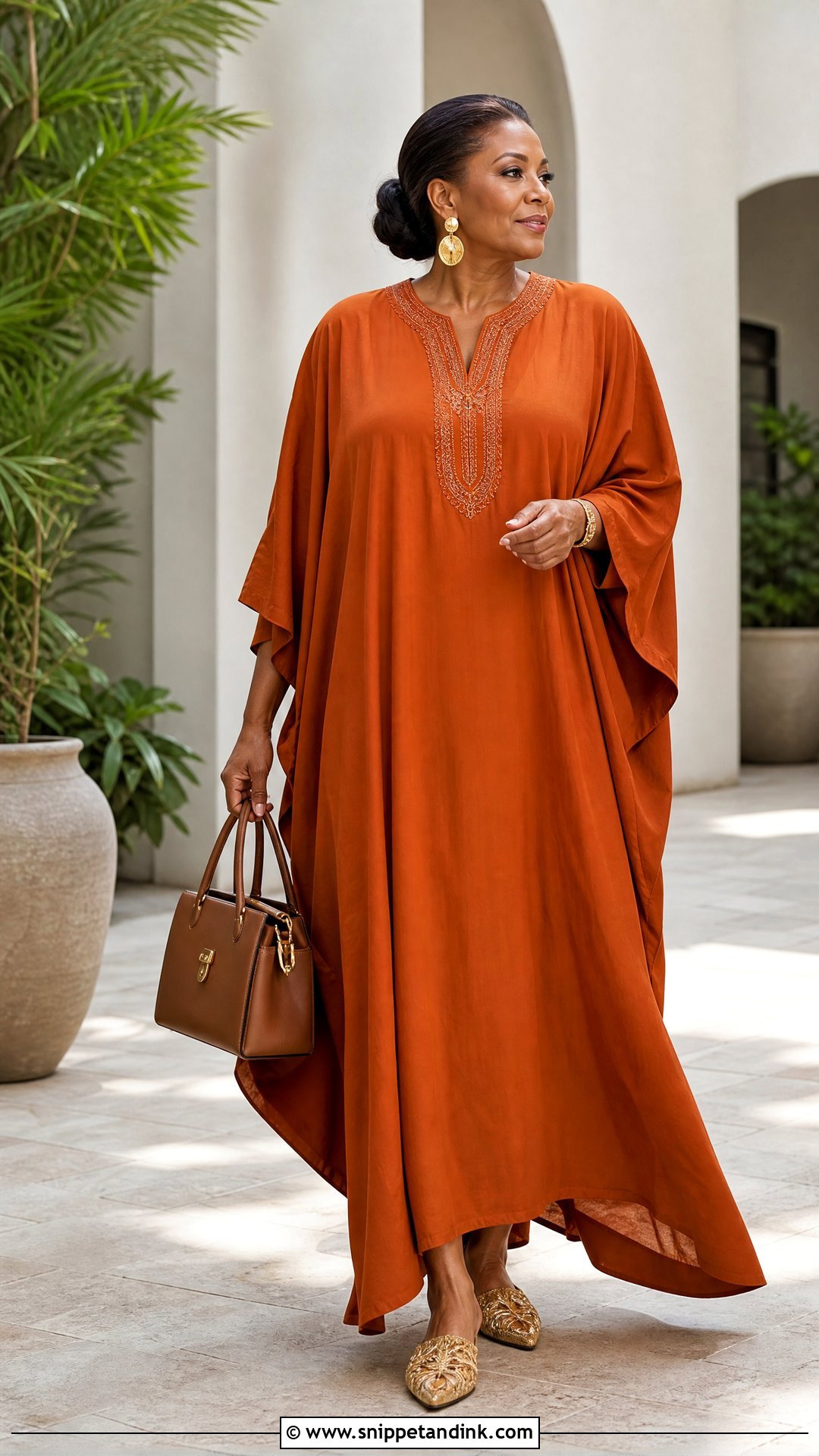
A bubu is the easiest gown in the list to wear for a full day, and I say that as someone who usually argues for structure. The wide cut lets air move and the long, unbroken line from shoulder to hem reads as dressed up even though nothing is fitted. Lightweight crepe, silk or chiffon in olive, cobalt, chocolate or burnt orange drapes properly; a stiff fabric turns the shape boxy. A little embroidery at the neckline gives the face a frame. Embellished flat mules, a medium structured bag and bold earrings carry it, and with wide sleeves I’d skip bracelets entirely because they slide into the sleeve and catch. It’s also one of the few event gowns that genuinely works through pregnancy.
4. Plain Material Peplum Gown With Pointed Heels
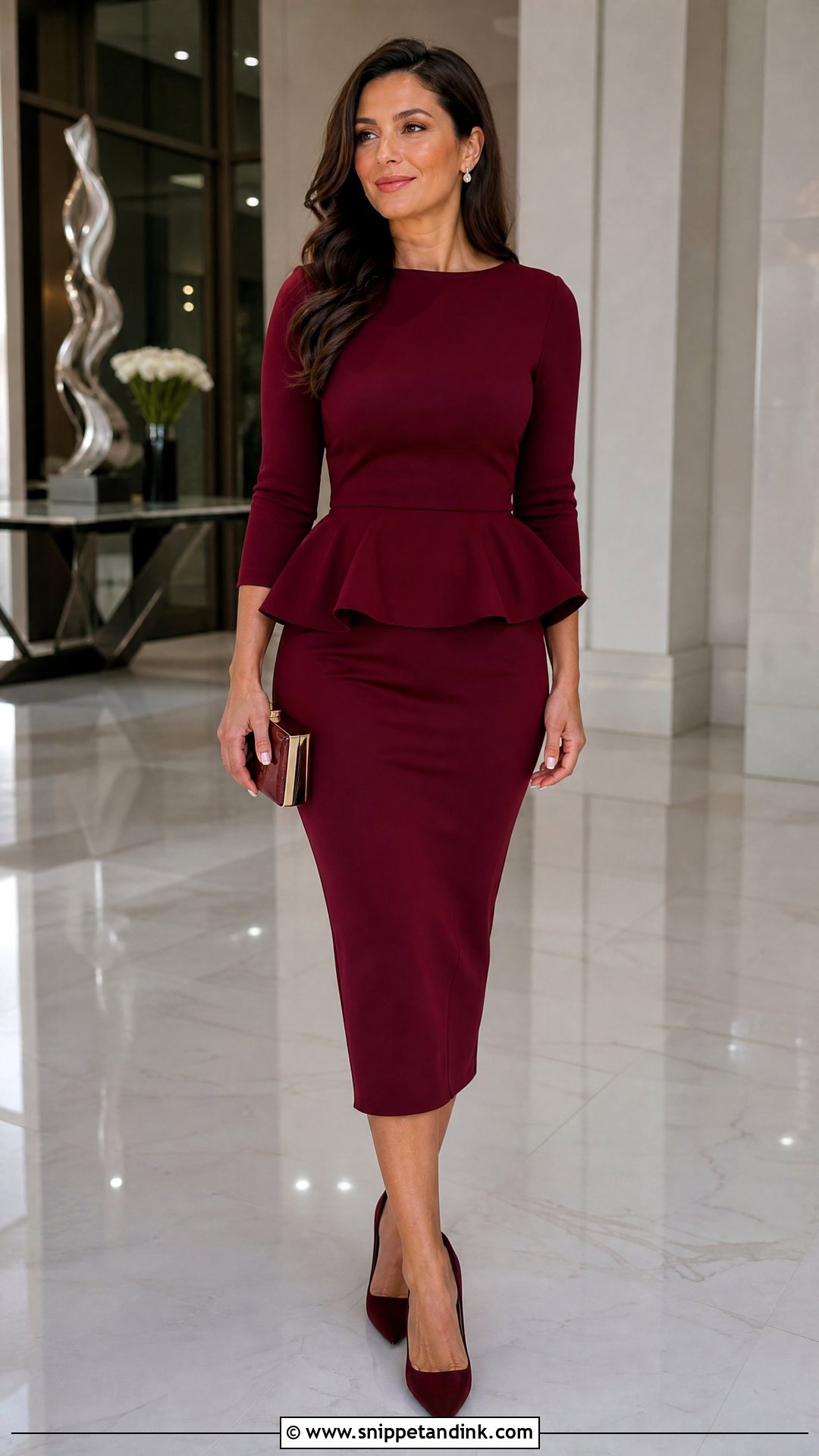
Placement is everything with a peplum. Set at the natural waist it defines; dropped to the widest point of the hip, it adds width exactly where most people don’t want it, so I always pin it on the body before it’s stitched. Firm crepe or duchess satin holds the flounce out cleanly, while a soft fabric makes it droop like a damp ruffle. A fitted three-quarter sleeve balances the extra volume at the waist. Pointed heels, a box clutch and stud earrings keep the rest quiet, and covered buttons or a thin contrast trim at the neckline add interest if the gown feels too bare. Adjusted properly, it suits straight, pear-shaped and curvy figures. Midi or ankle length lets you walk freely.
5. Plain Material Wrap Gown With Strappy Sandals
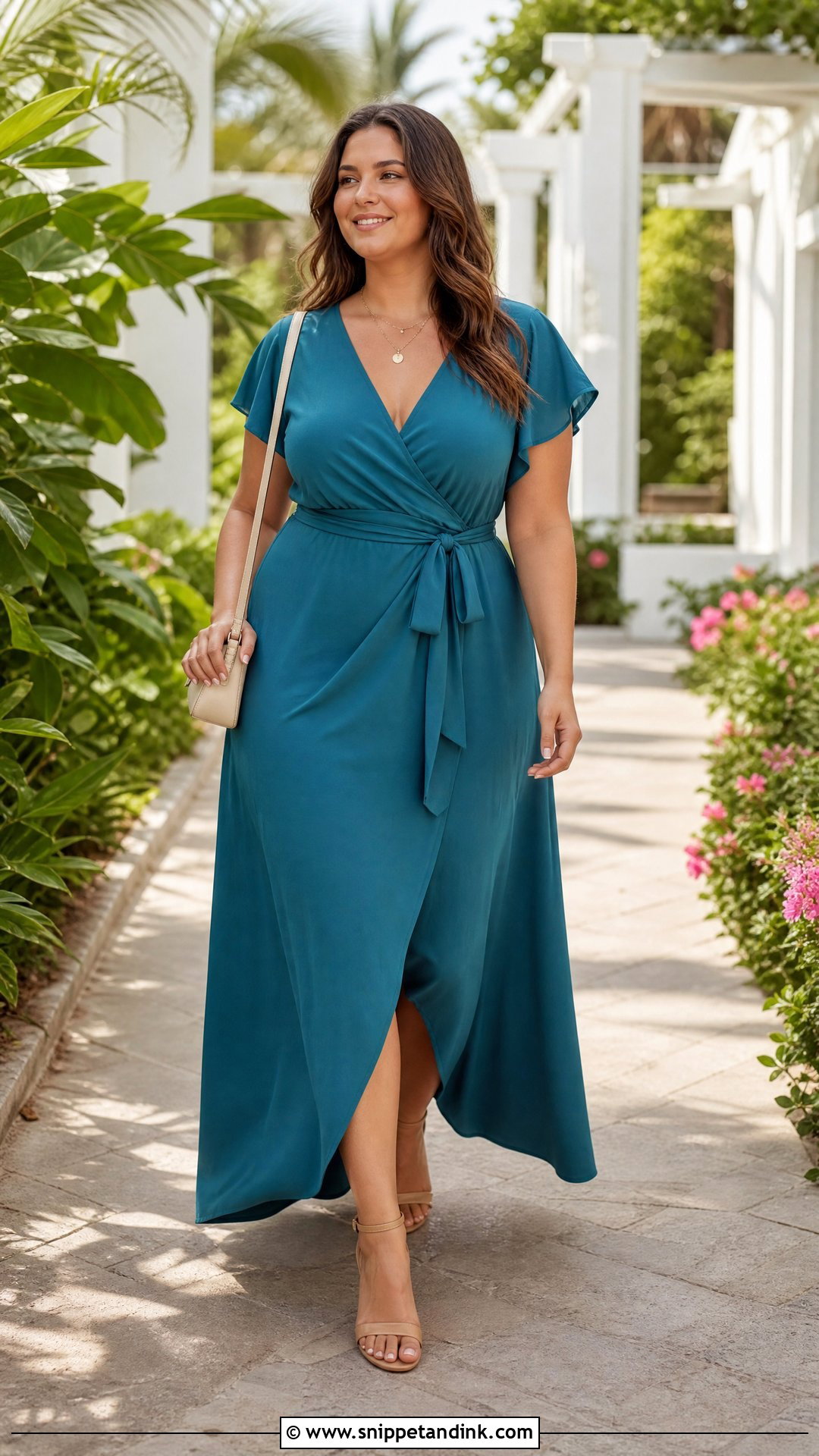
The wrap is the most forgiving cut here, because the tie lets you adjust the waist on the day rather than relying on a measurement taken weeks earlier. The overlap forms a soft V, and the one fitting note I give everyone is about that overlap: if it’s shallow, the front opens when you sit or lean, so ask for a generous wrap and a hidden snap at the bust. Fluid crepe, matte satin or chiffon in wine, teal, mustard or dusty rose all tie well; stiff fabrics make a bulky knot. A flutter sleeve adds movement, and a pendant that follows the neckline finishes it alongside strappy sandals and a small shoulder bag. It copes with small weight changes better than anything fitted.
6. Plain Material Kaftan Gown With Embellished Sandals
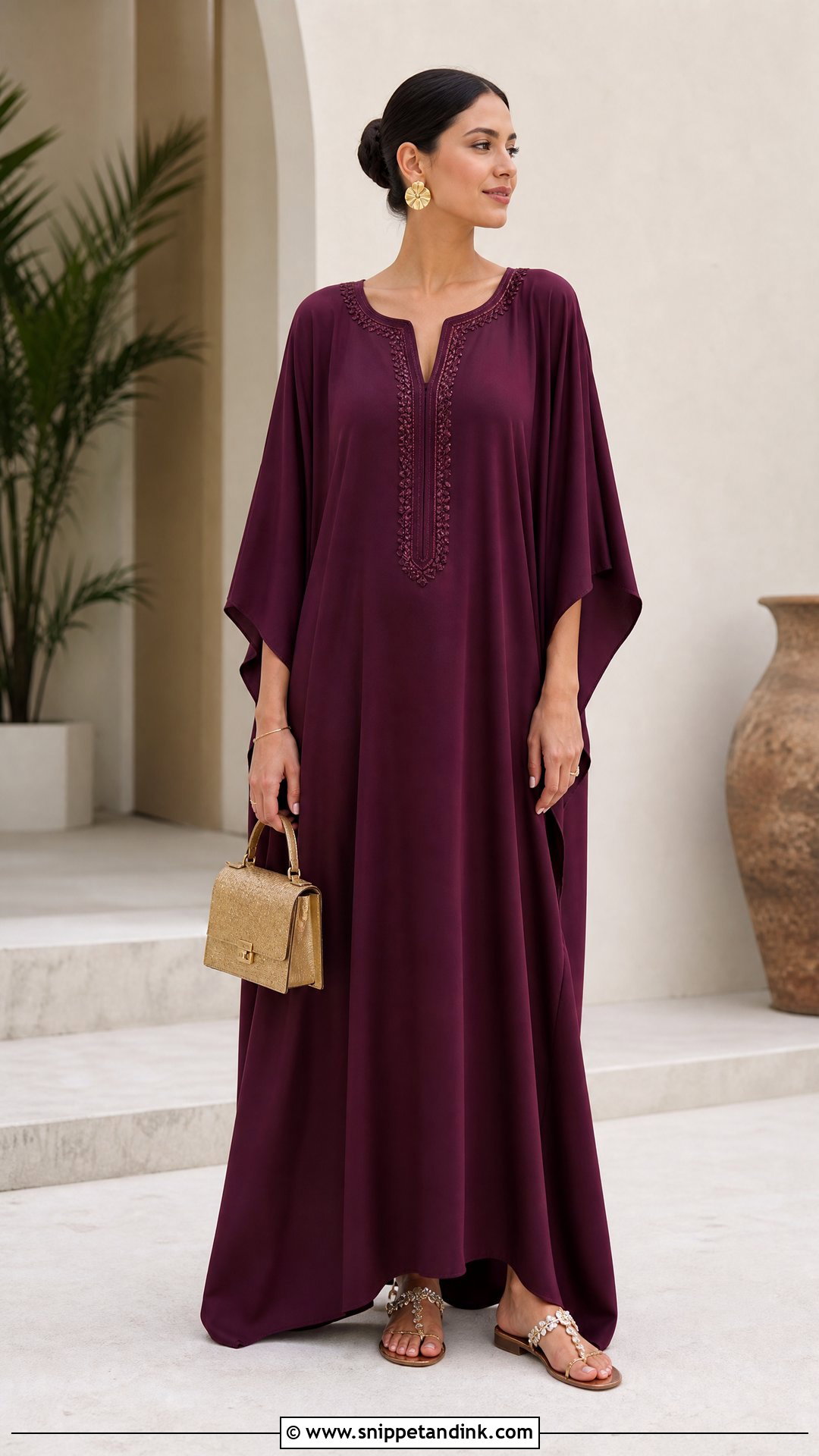
A kaftan falls loosely from the shoulders, so it looks dressed up without a single fitted seam. That looseness is also its weakness on camera: in a heavy fabric it can read as a tent, which is why I keep it to lightweight silk, crepe or chiffon that moves when you do. Jewel tones, soft pastels or earthy neutrals all work, depending on the event. An embroidered neckline or a narrow worked panel down the centre gives the plain fabric a focal point. Embellished sandals, a compact top-handle bag and sculptural earrings complete it. If you’d like a hint of a waist, ask for an internal drawstring; it gathers the fabric only when you choose to tie it.
7. Plain Material High-Low Gown With Ankle-Strap Heels
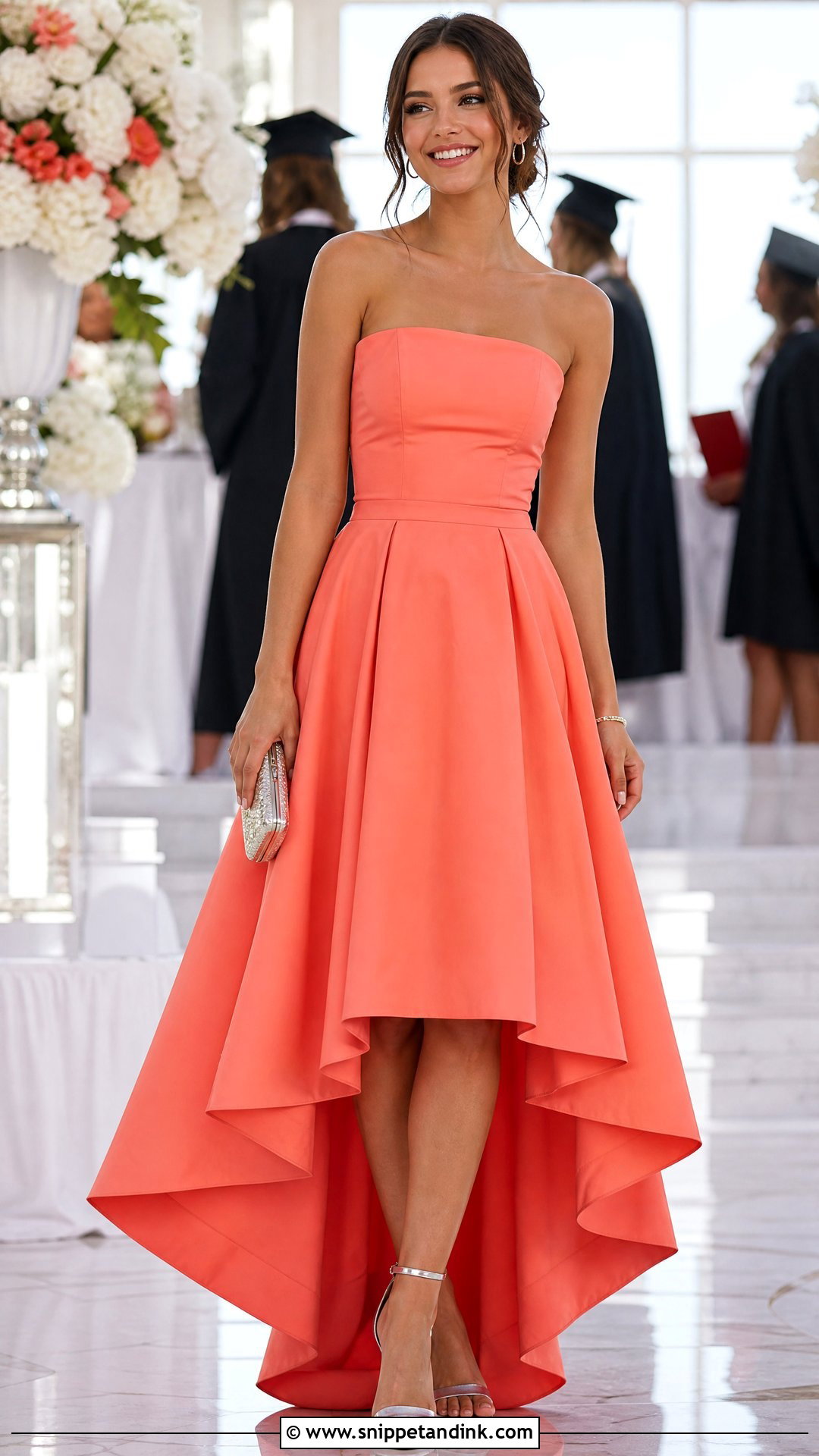
With a high-low hem, the size of the drop decides whether it looks considered or costume. I keep the difference moderate, roughly mid-calf at the front to ankle at the back, because an extreme dip tends to tangle around the heels when you turn. Crisp cotton blends, mikado, duchess satin and structured crepe hold the curve of the hem; a limp fabric lets the back fold under itself. A fitted bodice with a gently gathered skirt keeps the proportions right. Since the shoes are on display, the ankle-strap heels deserve real attention, paired with a small clutch and medium hoops. Elbow-length sleeves give coverage without more volume, and the shorter front suits receptions where full floor length would feel stiff.
8. Plain Material Off-Shoulder Gown With Statement Earrings
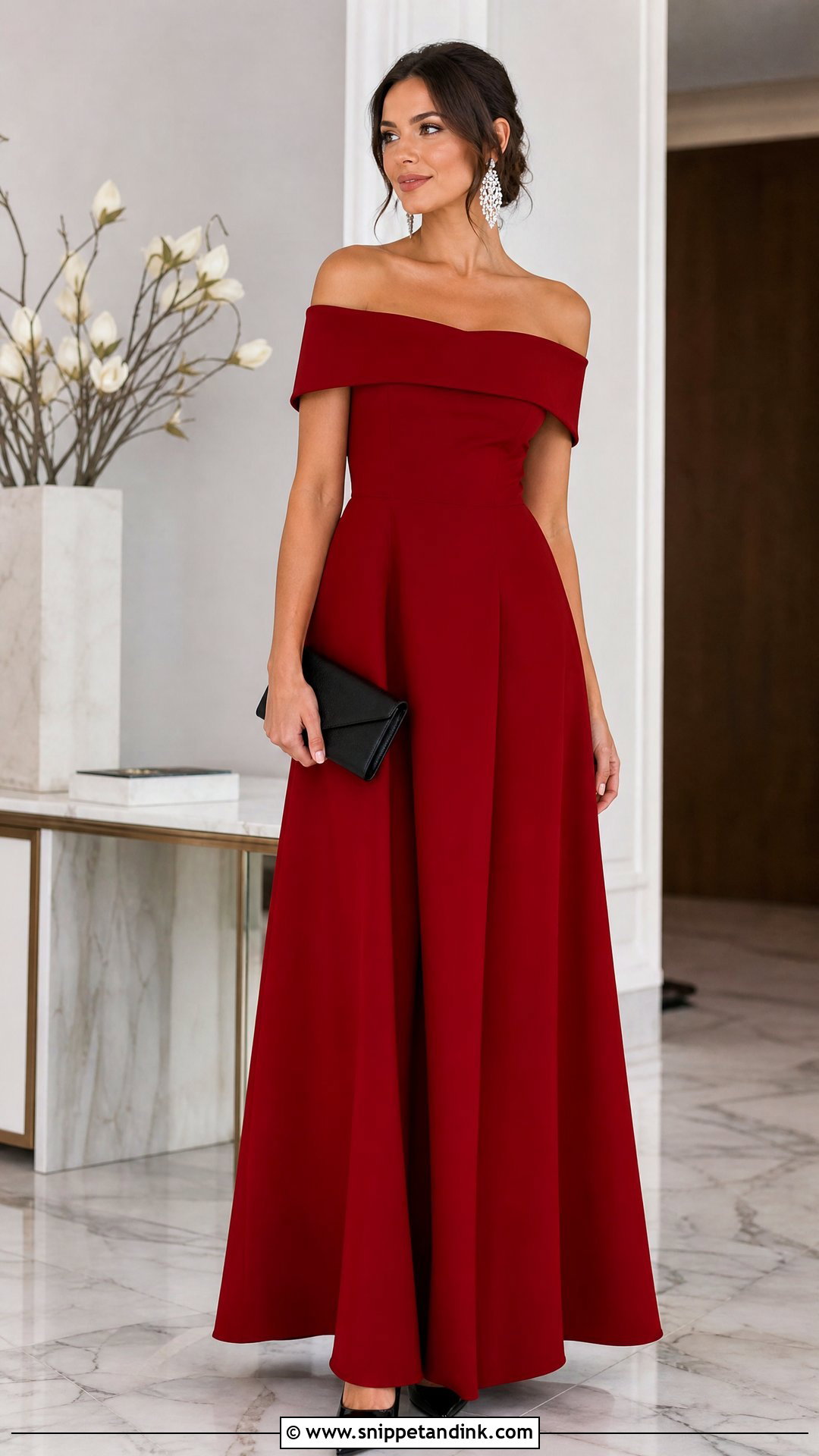
The first thing I check on an off-shoulder gown is what’s holding it up. Without boning or silicone grip tape along the neckline, the band creeps up onto the shoulders within an hour and you spend the evening tugging it down. Satin, velvet or structured crepe in red, navy, emerald or deep purple carries the neckline best. A folded band looks clean; short puff sleeves soften it. Because the shoulders are the feature, I’d leave the necklace off and let statement earrings, pointed pumps and a slim envelope clutch do the work. Pick a flared or straight skirt depending on how formal the event is and how much you plan to move.
9. Plain Material Pleated Gown With Kitten Heels
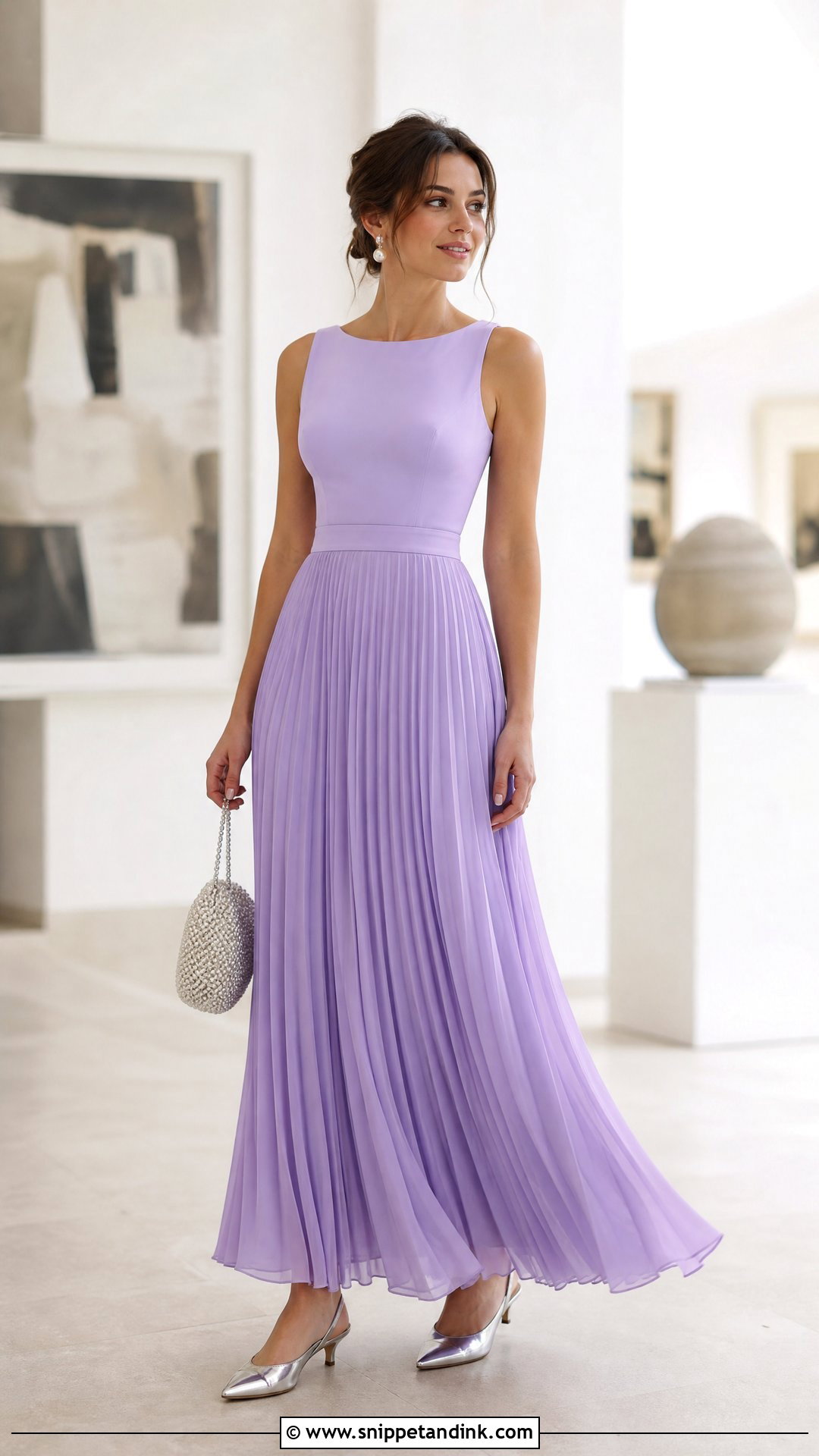
Fine pleats add texture to a solid colour, but they need a smooth anchor. A pleated chiffon skirt under a plain fitted bodice is the version that works; pleats on both halves start to look busy. Lavender, blush, sage, powder blue or champagne suit daytime, and a deeper shade turns the same gown into an evening piece. A defined waistband stops the pleats from fanning out across the stomach. Kitten heels, a beaded mini bag and small pearl or crystal earrings complete it, with cap sleeves or long sheer sleeves cut from matching fabric. One practical warning: machine pleats in polyester chiffon are heat-set and survive a long day, but natural-fibre pleats relax if you get caught in the rain.
10. Plain Material Shirt Gown With Slingback Shoes
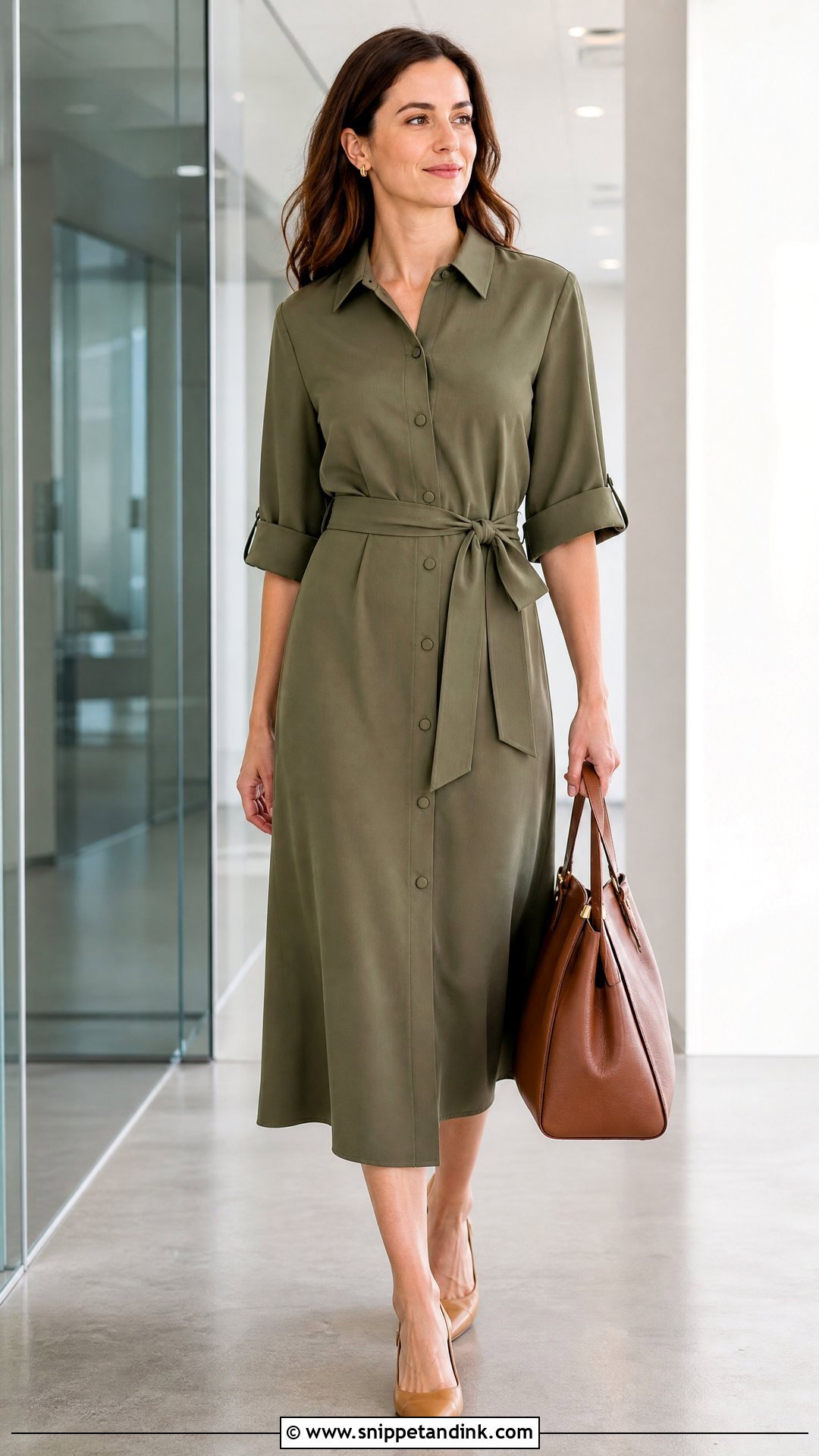
A shirt gown borrows the collar and placket of a button-front shirt and turns it into a full dress. What separates a smart one from a nightshirt is the collar: it needs interfacing so it stands rather than flops, and covered buttons keep the front quiet. Cotton, linen blend or medium-weight crepe stays crisp. A midi length with slingbacks, a structured tote and small gold earrings is my default styling, and rolled sleeves relax it for daytime. Camel, navy, olive or charcoal suit work events; a brighter shade carries it into weekends. Check the gaps between buttons at the bust while seated, which is where shirt dresses most often pull open.
11. Plain Material Puff-Sleeve Gown With Minimal Jewelry
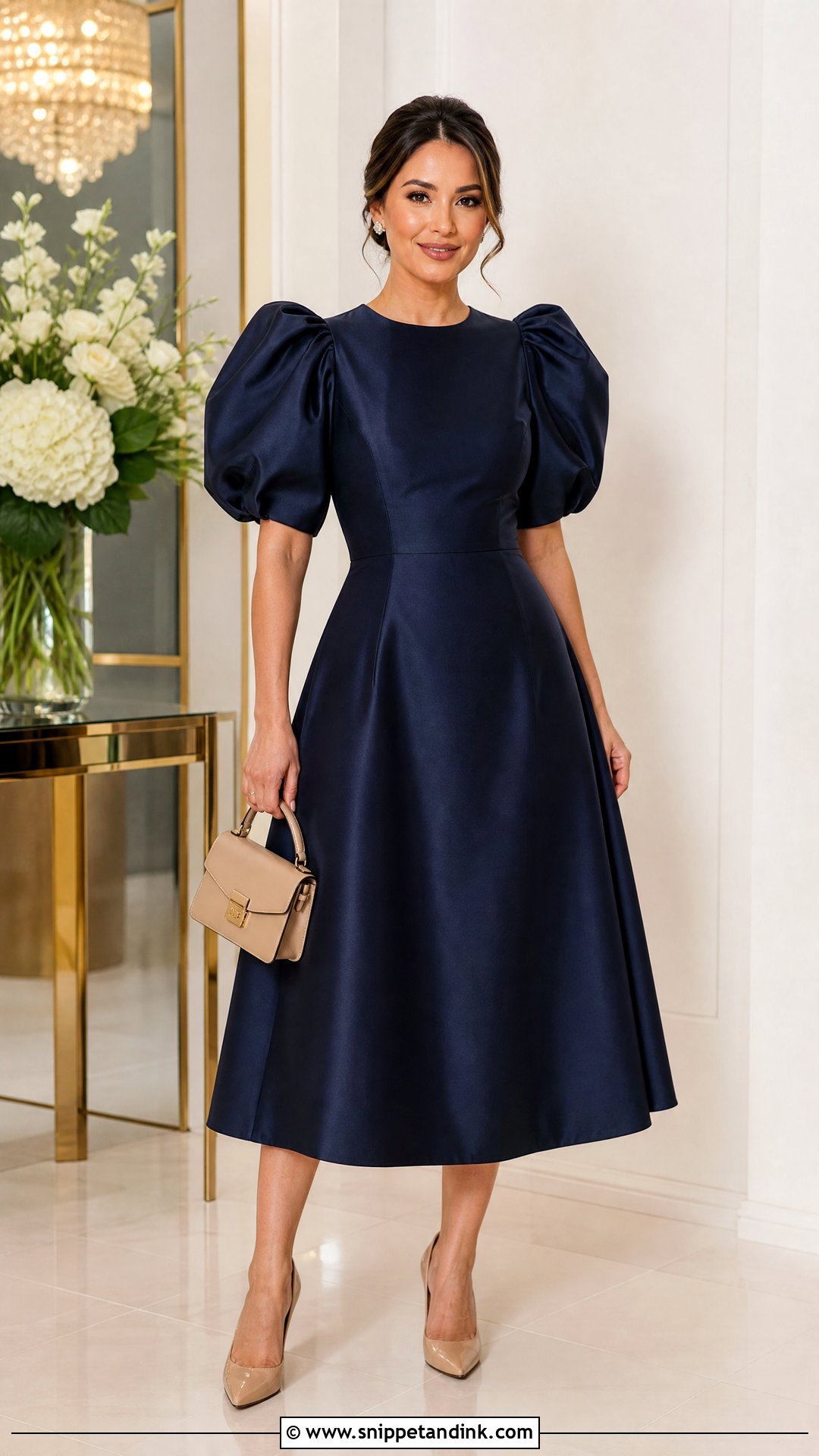
Puff sleeves become the focal point the moment you add them, so the rest of the gown should stay calm: a fitted bodice and a straight, pencil or gently flared skirt. The sleeve fabric matters more than the body fabric. Duchess satin, taffeta or firm crepe holds a puff up for hours, while a soft fabric deflates by the second course. With broad shoulders I place a smaller puff slightly below the shoulder line; narrow shoulders can carry far more volume. Sleek pumps, a small bag, studs and one fine ring are plenty. A midi or ankle-length hem keeps it grown up.
12. Plain Material Tiered Gown With Wedge Sandals
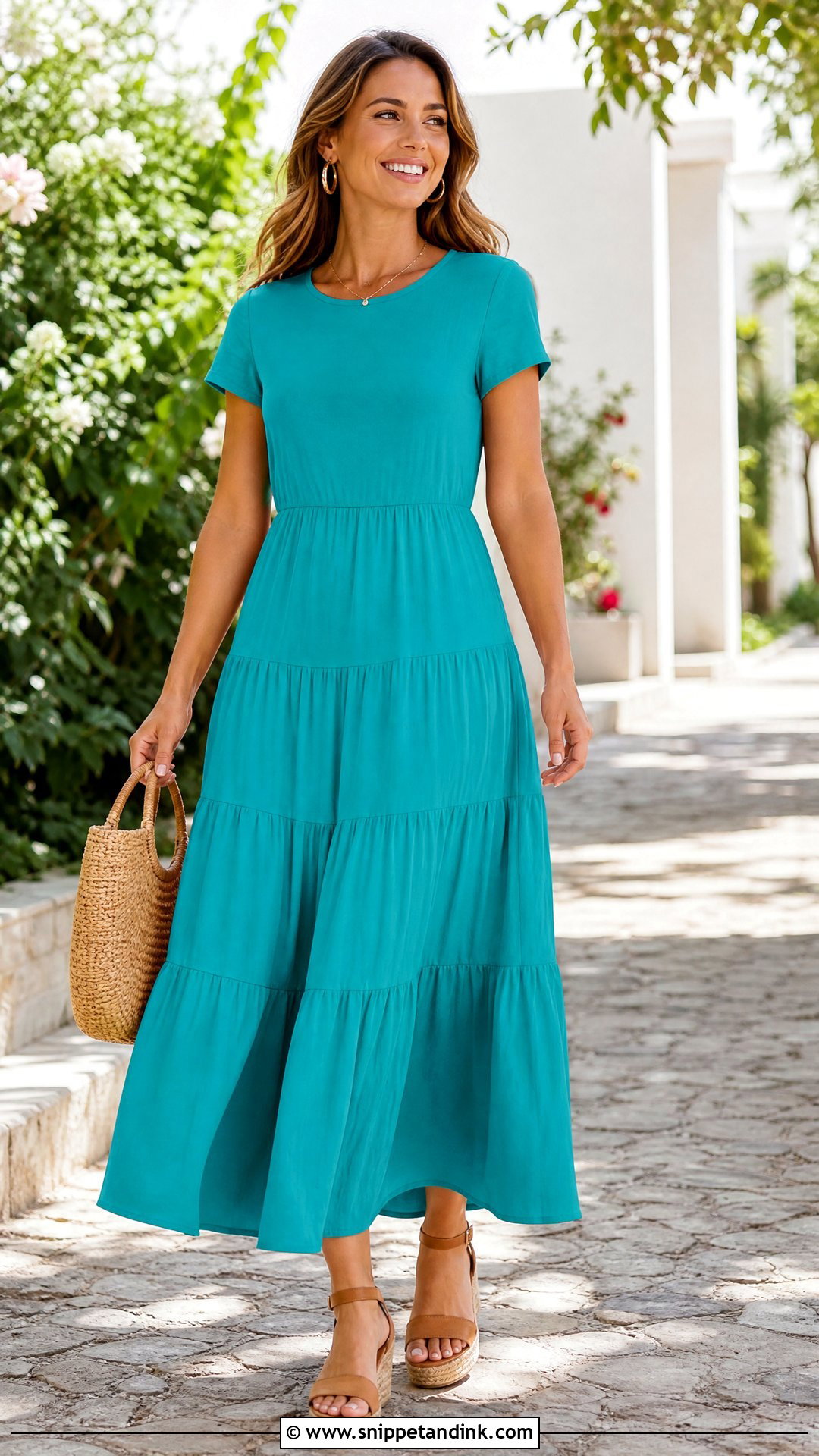
Tiers create movement through the skirt itself, which is why this gown is so comfortable in heat. Breathable cotton, linen blend, soft crepe or light chiffon in coral, turquoise, lemon, white or terracotta suits it. The risk is width: three generous tiers on a loose bodice quickly look oversized, so I keep each tier softly gathered and the top half fitted, or add a narrow belt if the bodice is relaxed. Wedge sandals are the right shoe here because they won’t sink into lawns at outdoor parties, paired with a woven bag and simple hoops.
13. Plain Material Cape Gown With Pointed Pumps
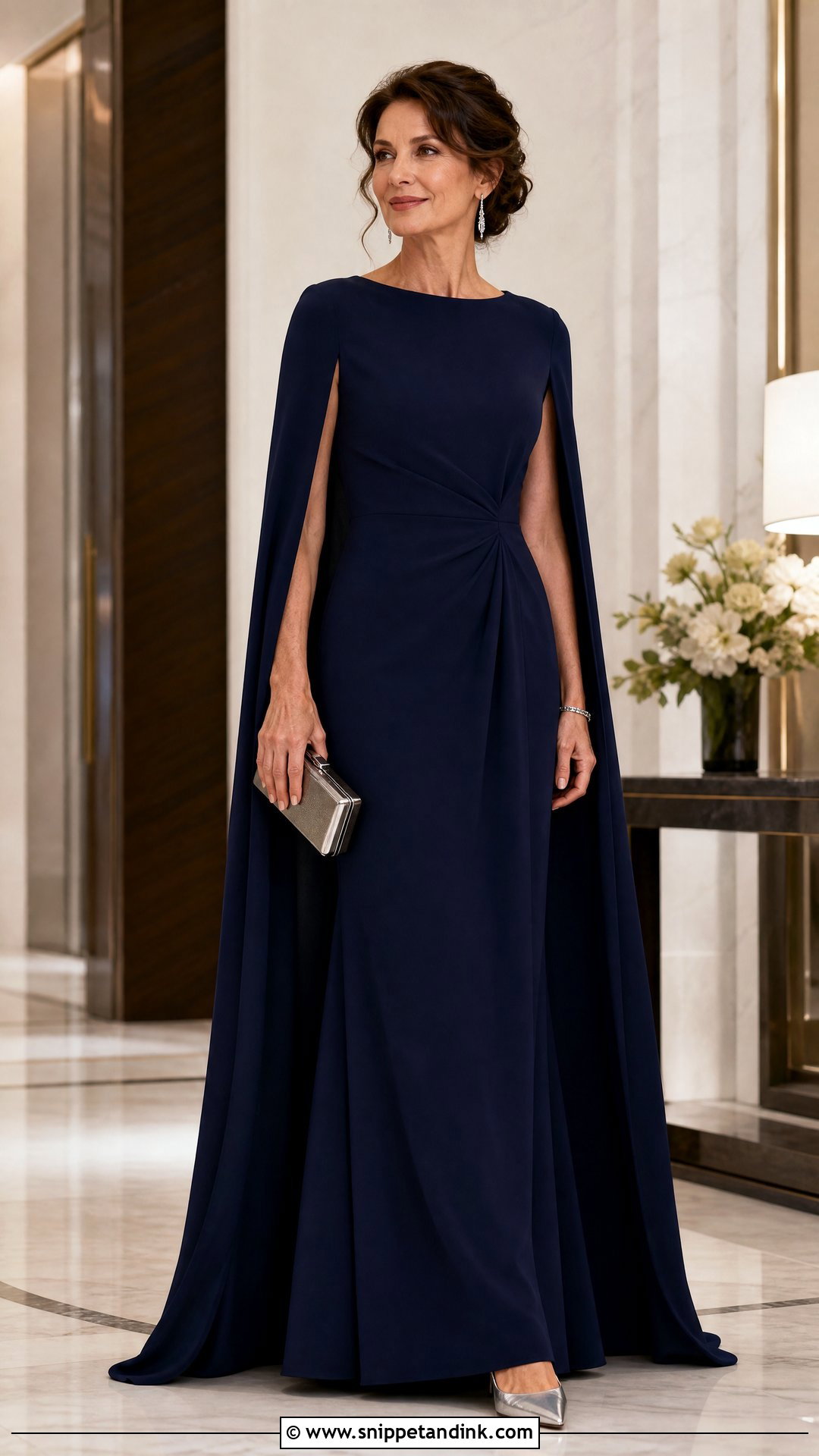
A cape gives a solid gown real presence and covers the shoulders and upper arms without a sleeve seam to restrict reaching or dancing. It can fall from one shoulder, from both, or sit as a short overlay on the bodice. Fluid crepe or chiffon floats as you move; structured satin gives a sharper outline that photographs more graphically. I keep the skirt straight or slightly flared so the silhouette doesn’t double its volume, and I avoid a bulky necklace, which fights the cape at the neckline. Deep green, burgundy, midnight blue and plum suit formal evenings. Pointed pumps, a hard-case clutch and slim drop earrings finish it. Do check the cape’s attachment points, because chiffon caught under a bag strap pulls the whole neckline sideways.
14. Plain Material Ruched Gown With Clear Heels
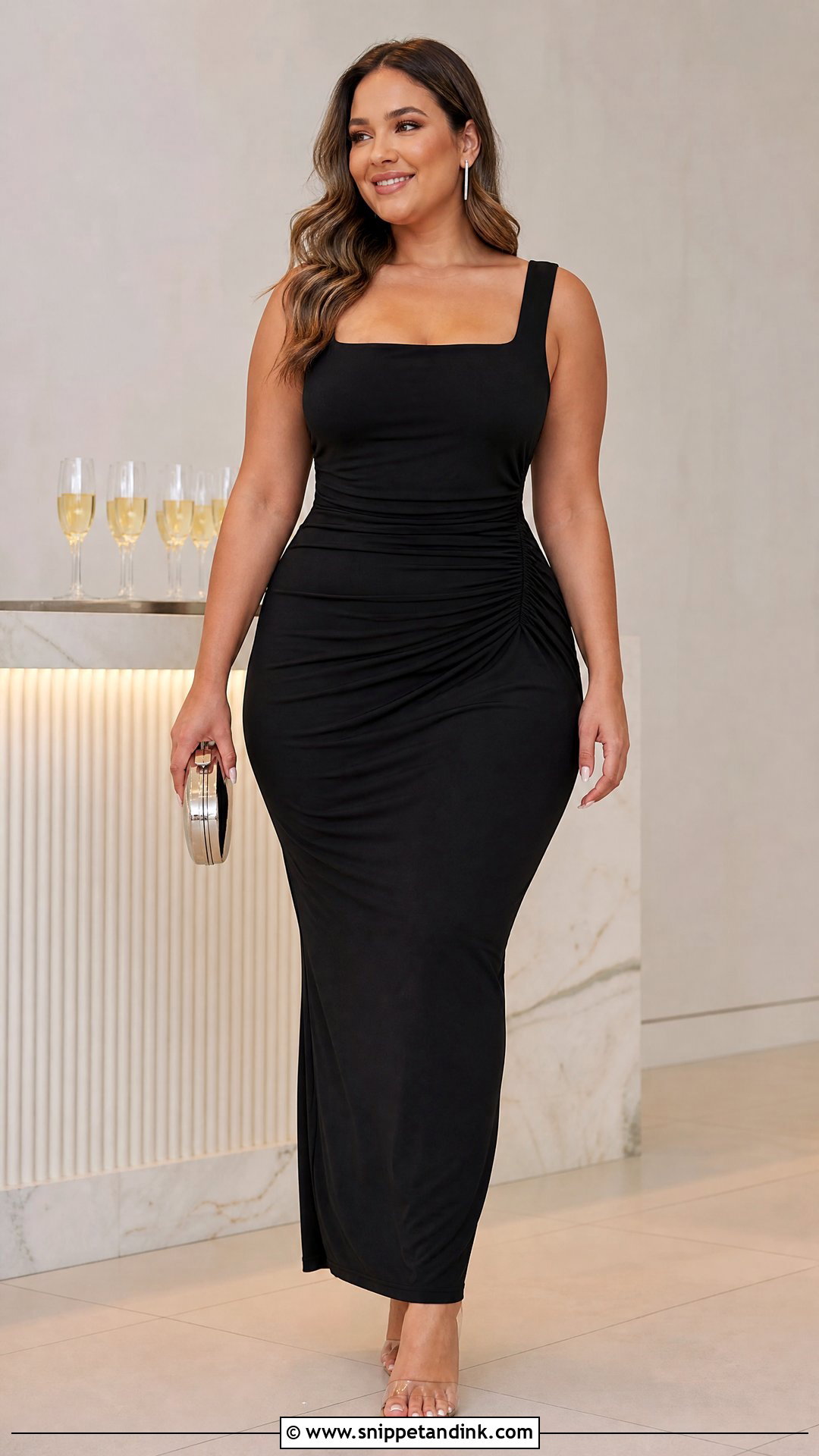
Ruching shapes the body and adds texture at once, and side ruching at the waist gives definition with no belt at all. It only works in fabric with give: stretch crepe, jersey, stretch satin or a flexible blend lets the gathers sit flat. In a rigid fabric the gathers pull into diagonal drag lines across the stomach, which is the first thing I look for at a fitting. Knee, midi or ankle length depends on the event. Clear or neutral heels, a metallic clutch and slim earrings keep it modern, and a one-shoulder or square neckline helps too. Done well, the gathers soften lines and pull the eye toward the waist and neckline.
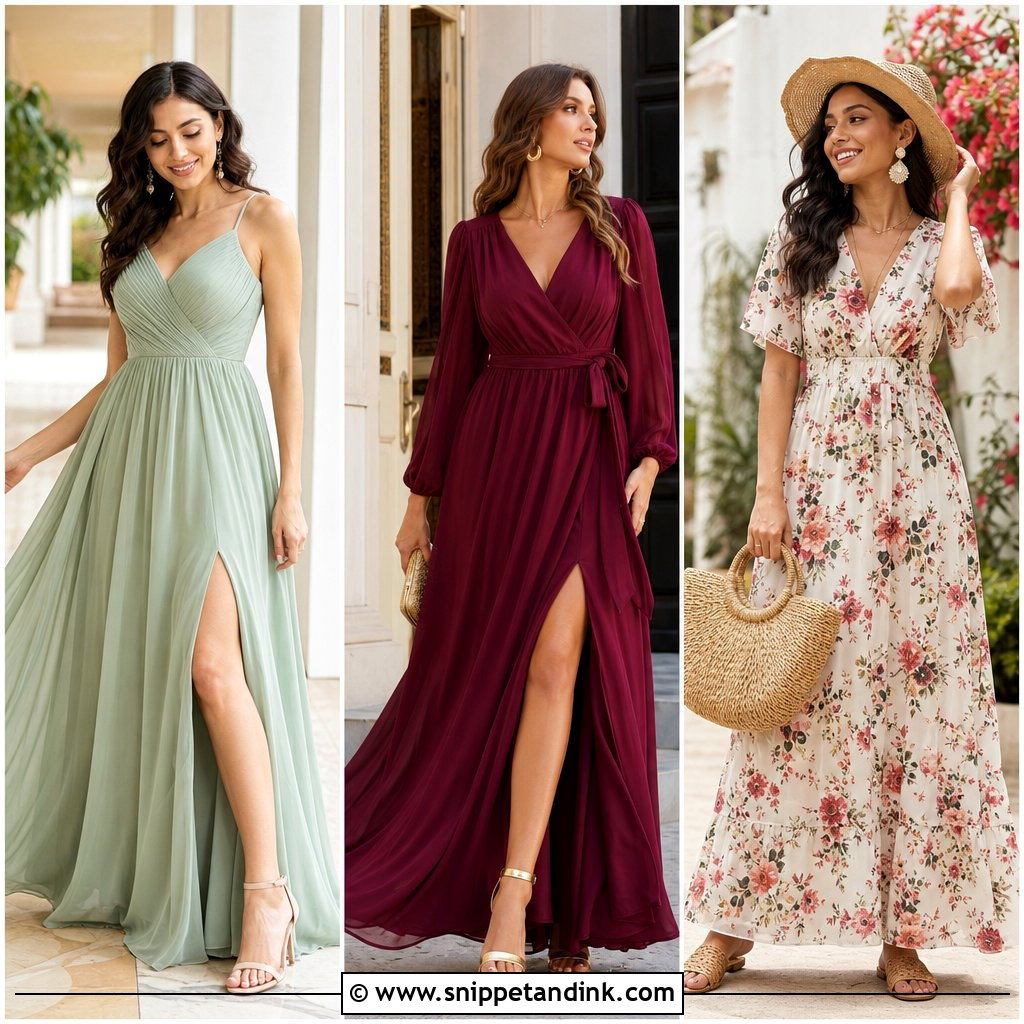
15. Plain Material Empire Waist Gown With Low Heels
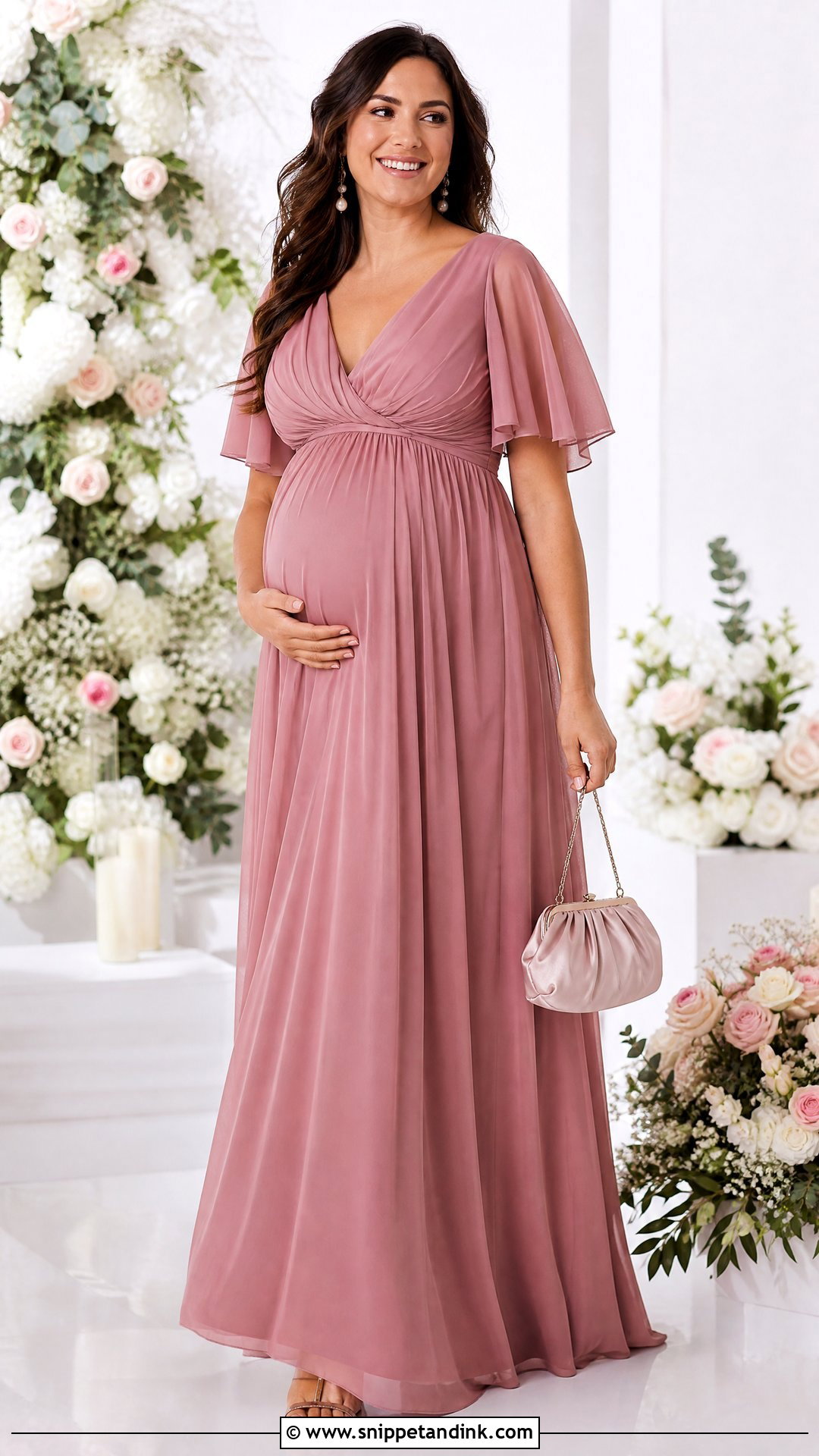
An empire waist sets the seam just under the bust, and everything below falls freely past the waist and hips. That makes it one of the most comfortable shapes for long dinners and for pregnancy. Chiffon, silk, satin or lightweight crepe gives the smooth drape it needs; a full, stiff skirt kills the long line, so I keep the volume modest. A gentle V, a scoop or a softly gathered bodice suits the high seam. Low heels, a small satin bag and delicate drop earrings finish it. If you’re fuller in the bust, ask for wider straps or a discreet internal band, since the whole gown hangs from that one seam.
16. Plain Material Asymmetrical Gown With Metallic Heels
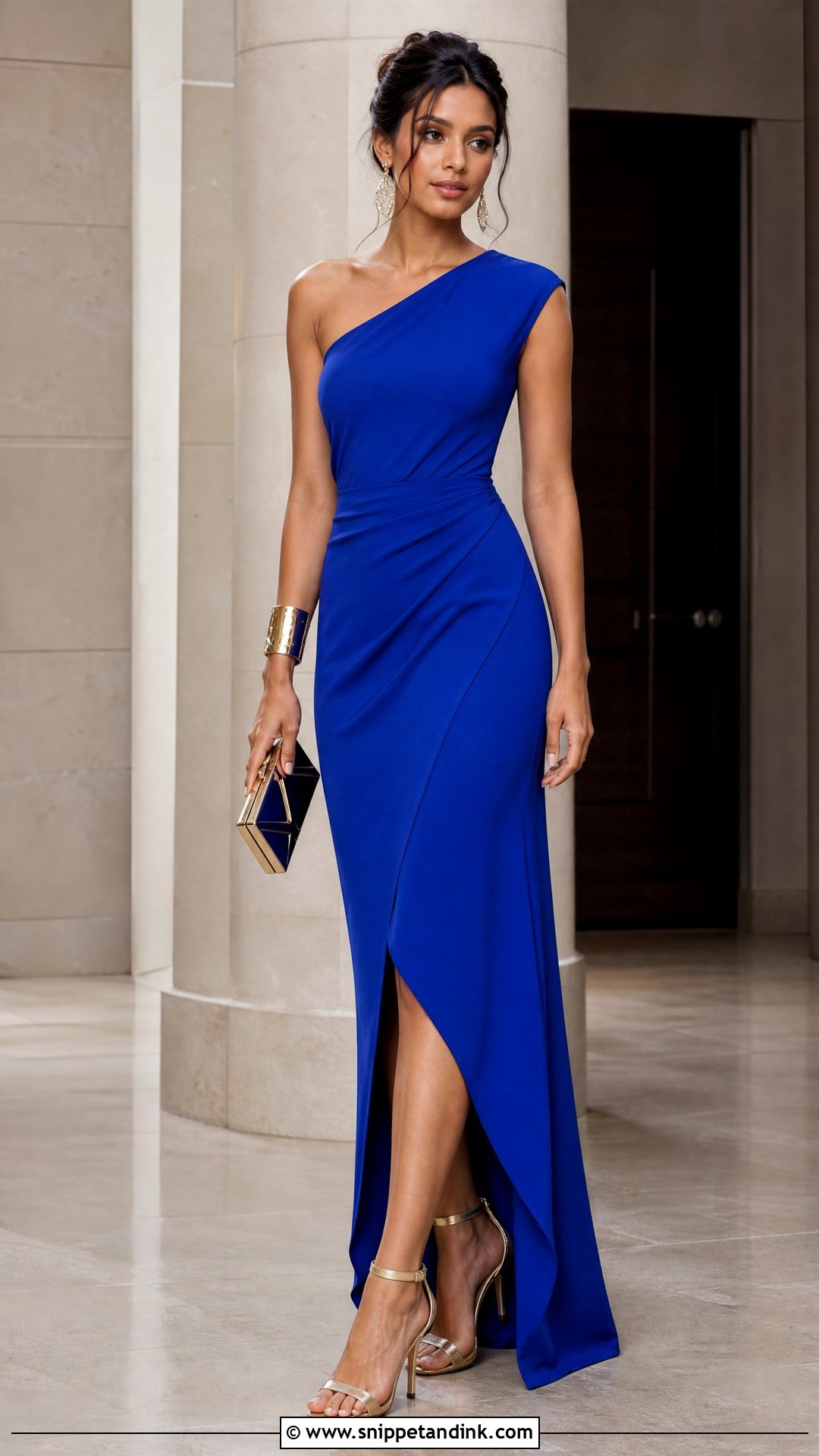
In a plain material asymmetrical gown, the cut is the decoration: an angled neckline, uneven drape or a one-sided overlay that a print would only hide. Structured crepe, satin or jersey in cobalt, fuchsia, black or emerald keeps the lines sharp. One bold cuff on the bare arm balances the one-shoulder side, with metallic heels and a geometric clutch, and everything else stays simple. Asymmetric hems and folds often look right from the front and wrong from the side, so at the fitting I have clients turn slowly in front of a mirror and check every angle. It suits contemporary receptions where you want something modern you can still sit down in.
17. Plain Material Flare Gown With Platform Sandals
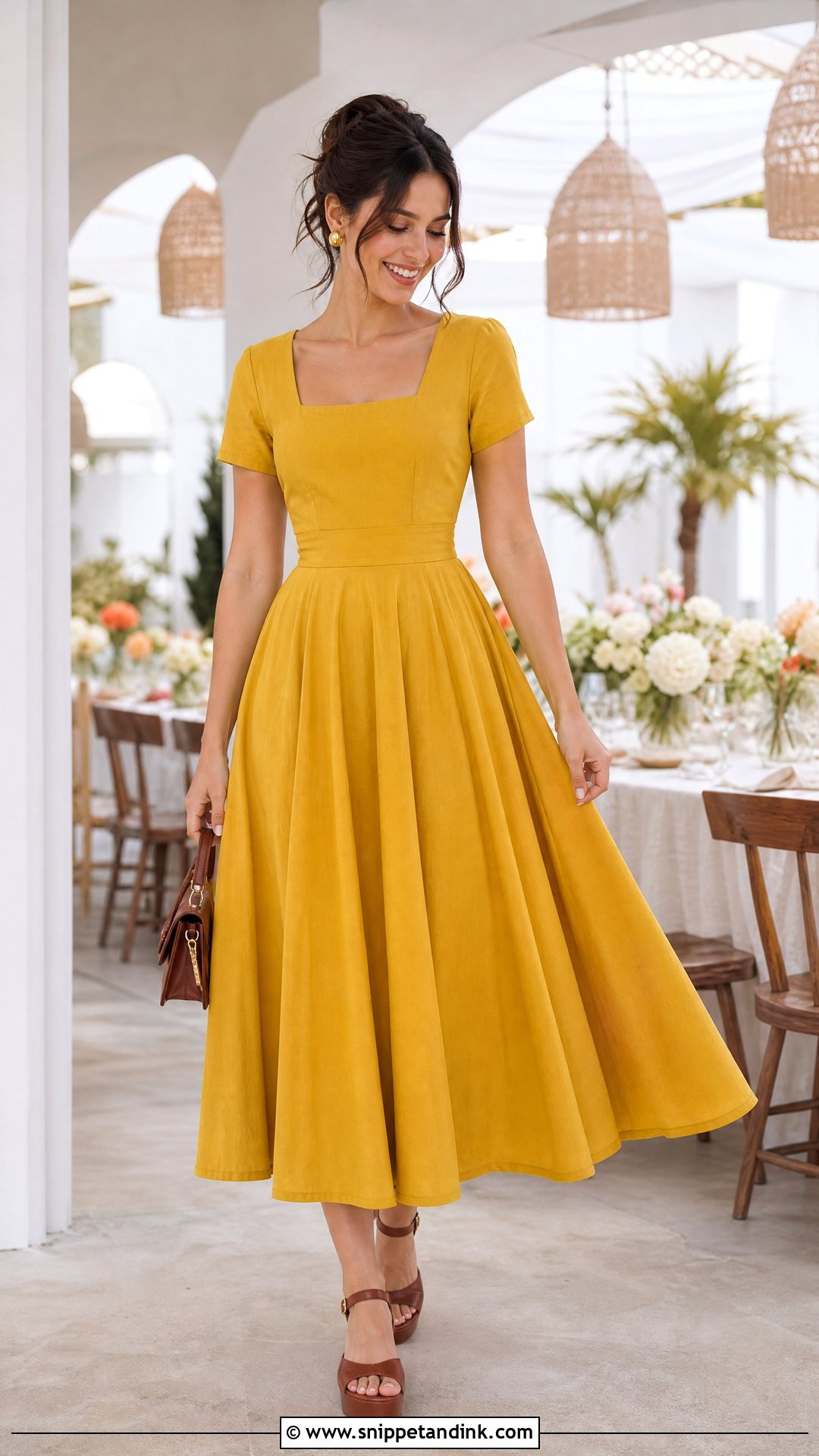
This is the gown I suggest to anyone who plans to dance. A fitted bodice and a skirt that opens generously from the waist give room to move, and it can be cut at knee, midi or ankle length. To keep the skirt full all night it needs body: cotton sateen, mikado, duchess fabric or structured crepe, sometimes with a light net underlayer. If the skirt is very full, I keep the bodice clean of oversized trims. A square neckline and short sleeves balance it, finished with platform sandals, a compact handbag and either a short necklace or neat earrings, not both.
18. Plain Material Balloon-Sleeve Gown With Closed-Toe Heels
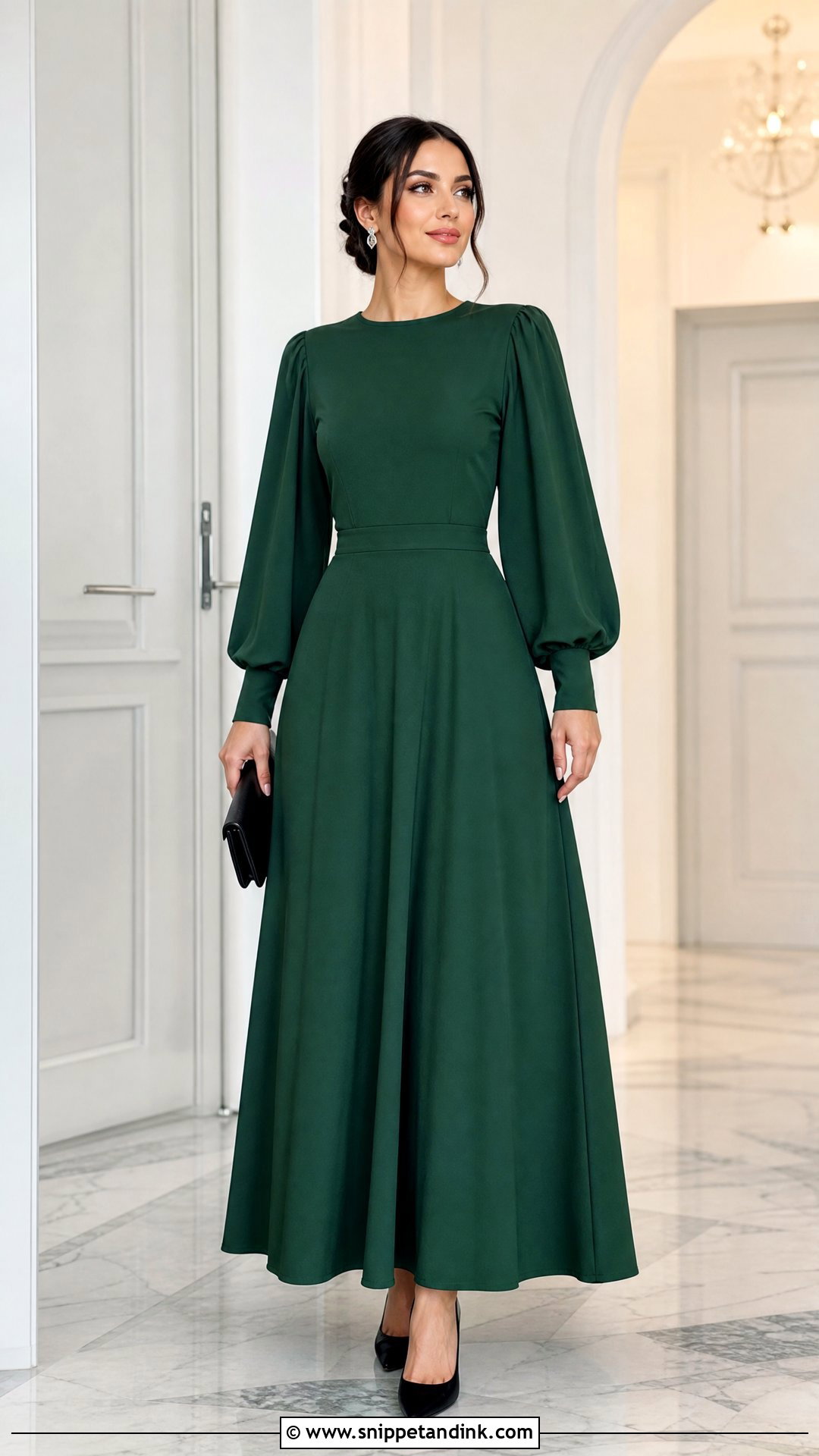
Balloon sleeves gather into a cuff at the wrist, and the cuff is where I look first, because a loose one slides over the hand and a tight one makes eating awkward. Pair them with a fitted waist and a simple straight or flared skirt so the volume stays in the arms. Lightweight crepe, chiffon or a silk blend fills the sleeve with air rather than weight. A neutral reads understated and a saturated shade reads bold. Closed-toe heels, a structured clutch and small earrings suit it; skip bracelets, which snag on the gathered cuff. A high round neck balances the sleeves, though a V-neck lengthens the upper body. The arm coverage makes it a sensible pick for cool indoor evenings.
19. Plain Material Two-Tone Gown With Matching Accessories
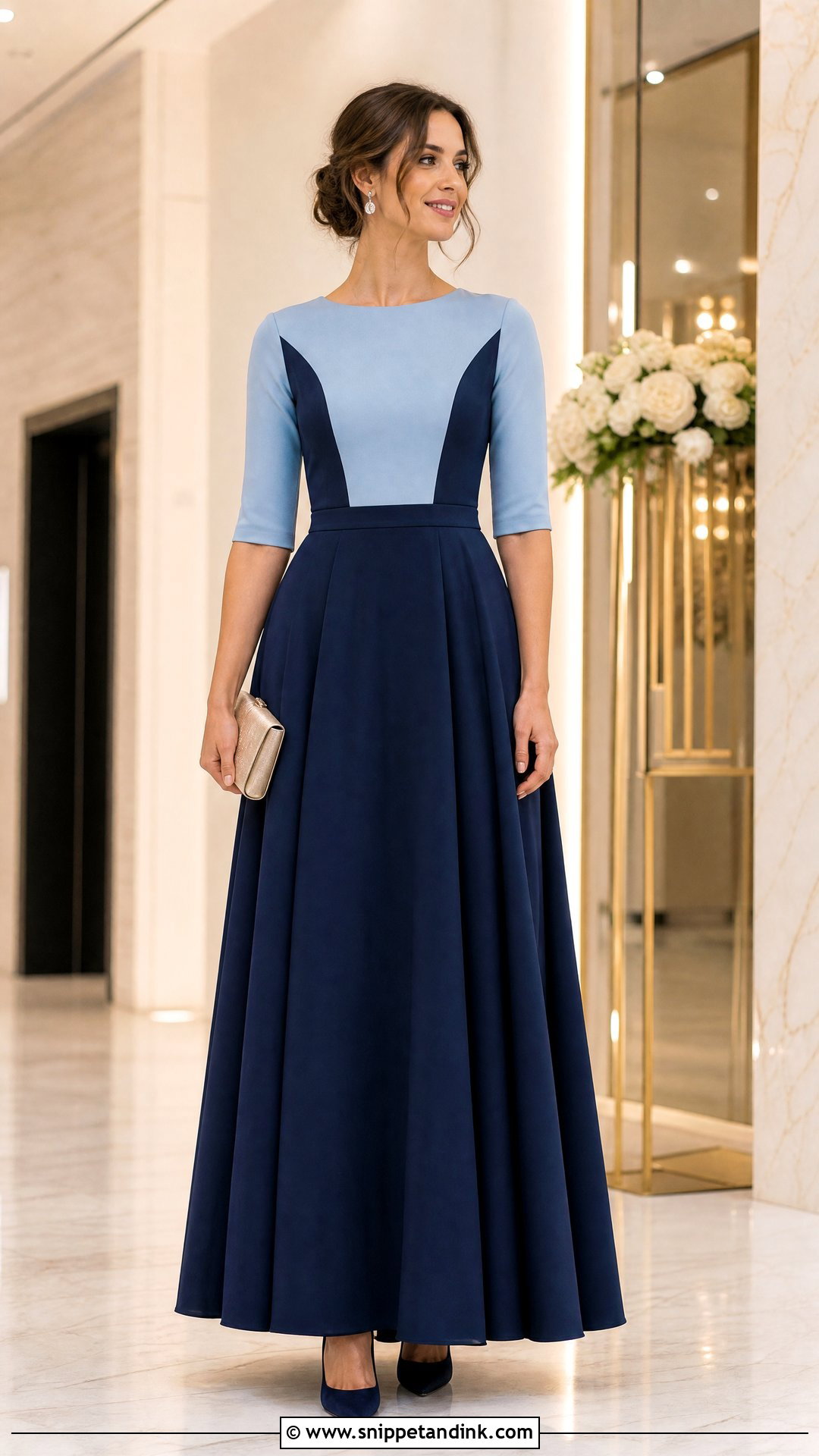
Two solid colours give a plain gown energy without a single print. The simplest split is bodice in one shade and skirt in another; more advanced versions run the contrast down the sleeves, waistband or side panels. Navy with powder blue, burgundy with blush, or black with emerald look coordinated. The technical point people miss is fabric weight: if the two shades come from different bolts with different weights, the skirt pulls on the bodice and the seam twists, so I match weights before matching colours. Darker side panels slim the outline visually and a lighter bodice lifts attention to the face. Shoes in one gown colour, a neutral clutch and simple earrings keep it calm.
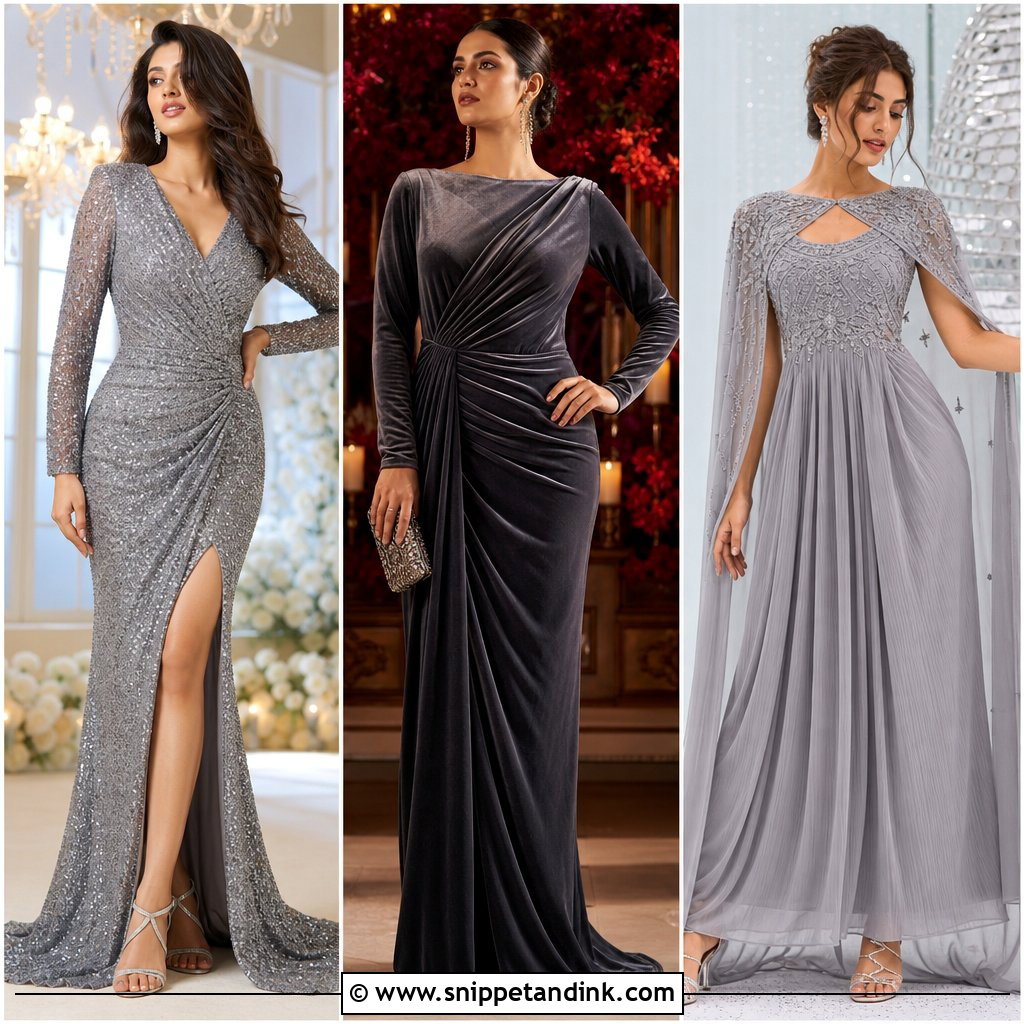

20. Plain Material Maxi Gown With Flat Sandals
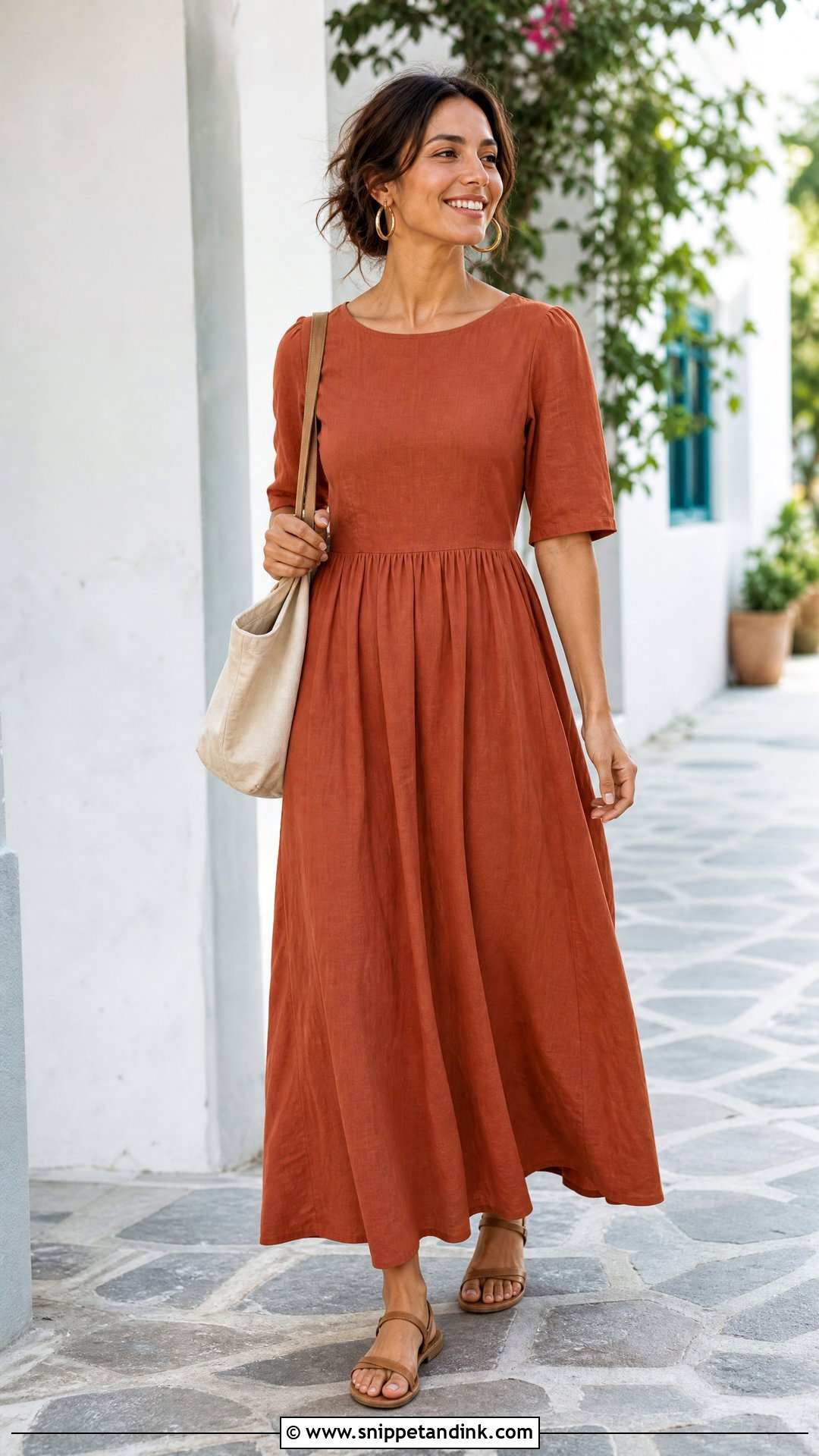
A maxi in breathable fabric is the most practical gown on this list, the kind you can wear to a garden lunch and still feel dressed for the evening. A defined waist, softly gathered skirt and short or elbow sleeves keep it tidy. Cotton, linen blend, rayon or lightweight crepe all breathe in warm weather. Earthy colours, soft pastels and plain black all suit it, with flat leather sandals, a roomy tote and understated hoops. Belt it if it needs shape, or leave it loose. The detail that matters most is the hem: have it measured while you’re wearing the actual flats, so it clears the floor rather than dragging through grass and gravel.
Handing Your Fabric to a Tailor Without Losing Weeks
Most of the gowns above are sewn from fabric you buy yourself, so the tailor is working from your brief and your measurements. A clear handover saves you from the classic last-minute alteration.
What to bring to the first appointment
- A front and back reference photo of the cut you want, plus a sketch or note of anything you’d change, such as a higher neckline or longer sleeves.
- The shoes you’ll wear, so the hem is set at the right height from day one.
- Enough fabric with some spare. Full skirts, capes and bias-cut drapes eat far more yardage than straight styles, so ask the tailor to confirm the amount before you buy.
How many fittings to expect
For a straight shift or kaftan, one fitting is often enough. Fitted shapes like the mermaid, peplum and ruched gowns usually need two, and I’d give a busy tailor at least three to four weeks so there is time for a second fitting without a rush. Wear the undergarments you plan to wear on the day to every fitting, since a different bra moves the bust point and throws off the whole bodice.
How Each Fabric Looks After Five Hours of Sitting
A gown looks perfect in the mirror at home. What matters is how it looks after the car ride, the ceremony and dinner.
- Crepe recovers best. Hang it for a few minutes and most seated creases relax.
- Satin shows water spots and sweat marks, so carry a tissue rather than dabbing a spill with a wet napkin.
- Linen and cotton crease across the lap within the first hour. If you choose them, enjoy the relaxed look rather than fighting it.
- Velvet crushes where you sit and can leave a shiny patch. A quick steam from the back side lifts the pile again.
Steam the gown the morning you wear it rather than the night before, and travel with it hanging, not folded in a bag.
A Solid Fabric Rewards the Fitting More Than the Fabric
Without a print to distract the eye, the cut and the fit carry the whole gown. A-line, wrap, empire and flare shapes are the comfortable end of this list, while mermaid, cape, ruched and asymmetrical gowns are the dramatic end that need more tailoring to look right. Match fabric weight to the weather and to how much moving you’ll do, put your budget into a proper fitting before anything else, and let the shoes, bag and jewellery support the shape instead of competing with it. Then wear the one you can sit, walk and laugh in.
You'll Like These Ideas:





Leave a Reply