
Plain satin has nowhere to hide, and that’s exactly why I like dressing brides in it. Without lace or beading to distract the eye, the gown is judged on cut, fit and the quality of the fabric, so a sculpted strapless ball gown and a fluid slip dress can each look as dramatic as anything embellished. Bridal collections now cover that whole range. What decides whether a plain satin dress works for you is the neckline, where the waist sits and how the skirt is shaped, measured against your body, your venue and how much you want to move. Shoes, jewelry, a veil and flowers come after, and they set the mood. Below are twenty minimalist satin gowns for anything from a ballroom to a registry office, with what I watch for in the fitting room on each.
Duchess, Mikado or Charmeuse? Reading the Fabric Tag
Satin is a weave, not a fiber, so two plain satin gowns can behave completely differently. Before a bride falls for a silhouette, I want to know which satin it’s cut in, because that decides how it holds shape, how it creases and how it photographs.
- Duchess satin is heavy with a soft, low sheen. It holds structured bodices and full skirts, and it hides small fitting flaws better than lighter satins.
- Mikado has a slight twill texture and a stiff hand. It’s what sculpted ball gowns and crisp pleats are made from, but it won’t drape.
- Charmeuse is light and fluid with a high shine on one side. It’s the fabric for bias-cut slips and cowl necks, and it shows everything underneath.
- Crepe-back satin has a matte crepe face on one side and satin on the other. It drapes well and creases less than charmeuse.
Fiber matters too. Silk satin breathes and has a softer glow, but it creases readily and water-spots. Polyester satin resists creases and costs less, though it can feel warm in summer and look shinier under flash. Neither is wrong; just choose knowing the trade-off.
1. Strapless A-Line Satin Wedding Dress
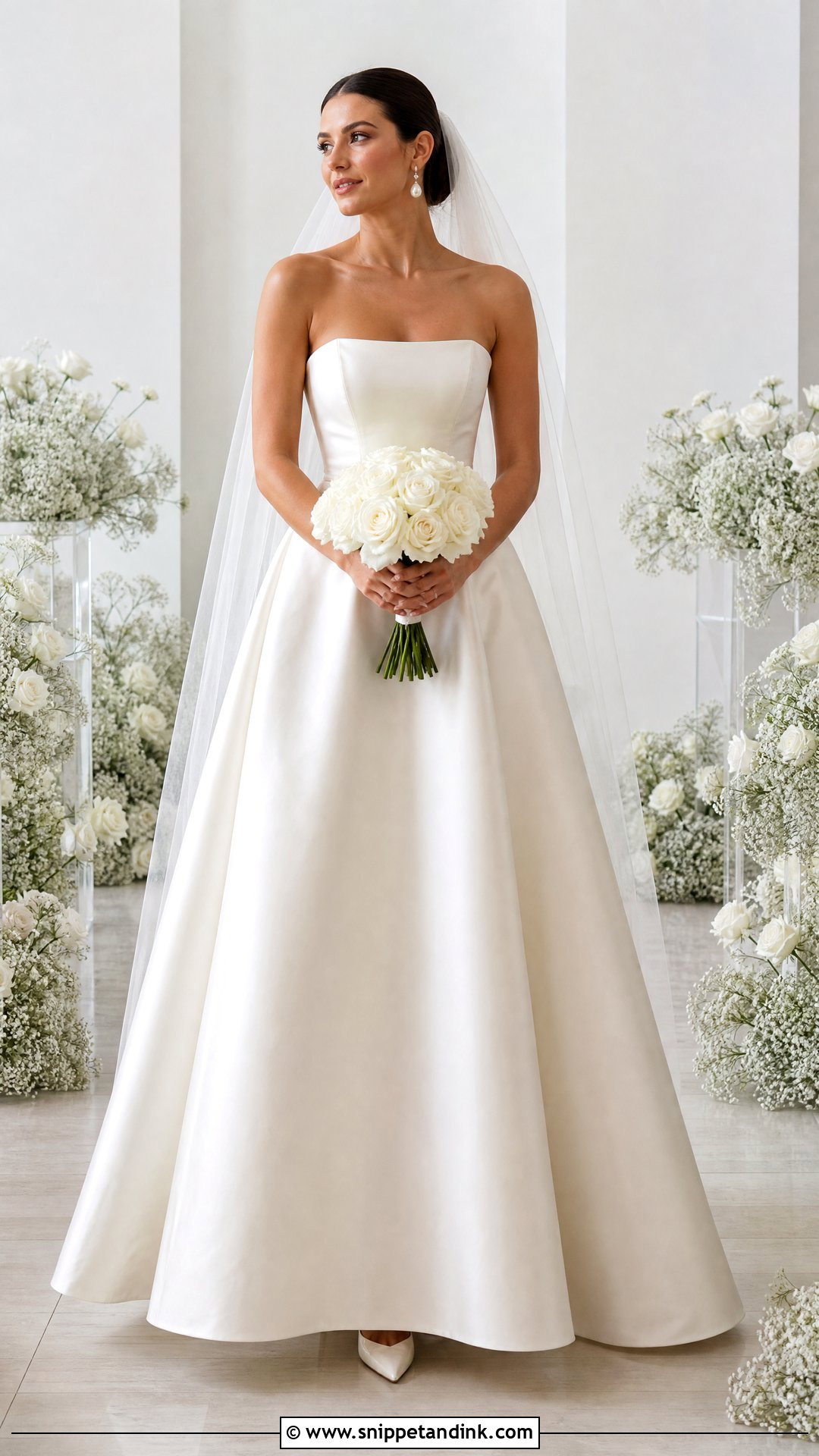
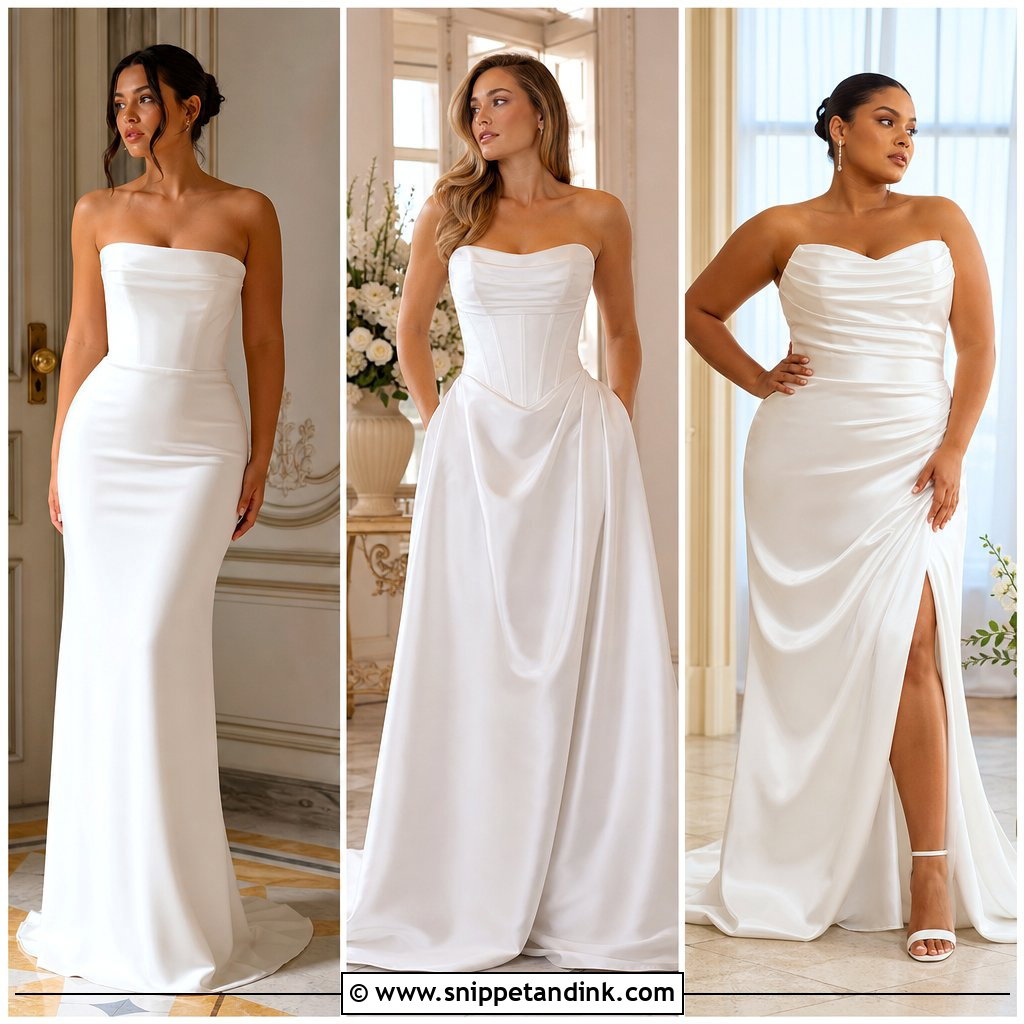
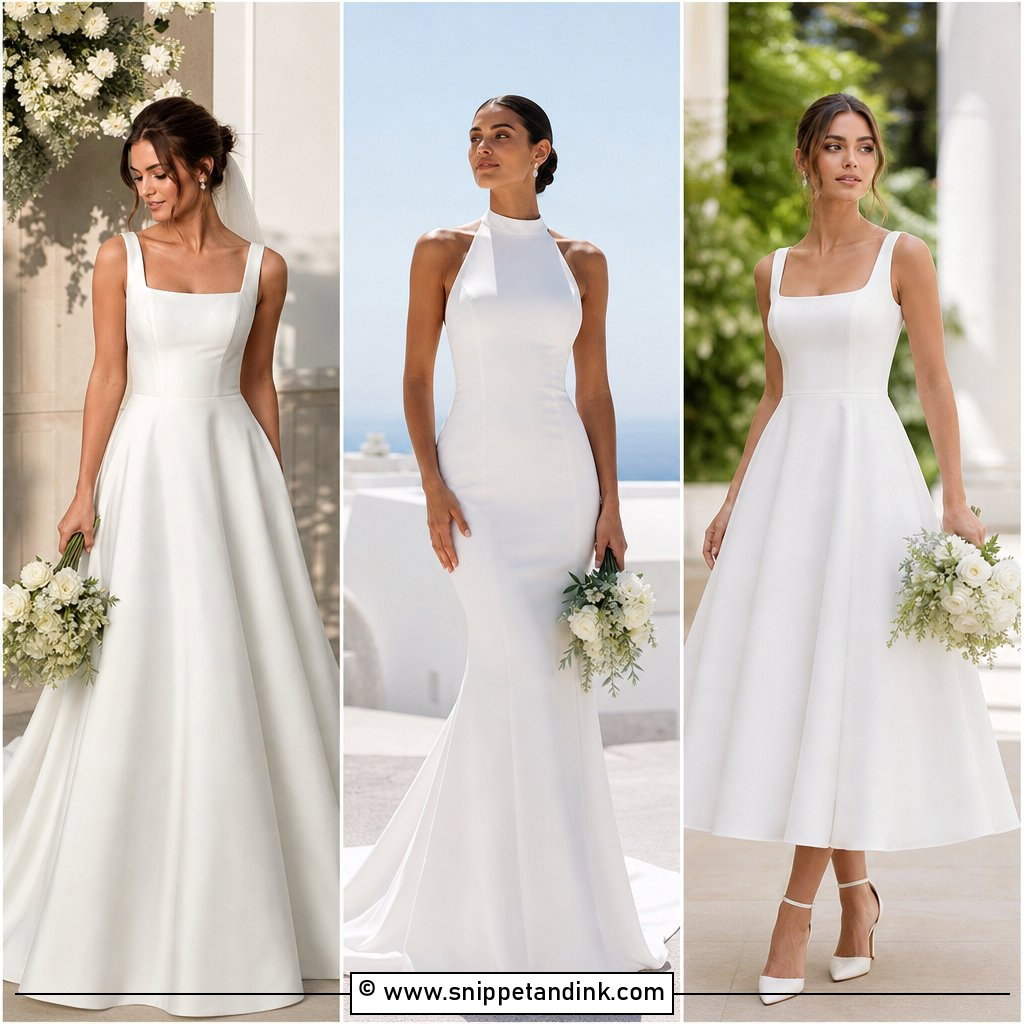
If I had to put one satin gown on the most brides, it would be the strapless A-line. It’s balanced, it moves and it doesn’t feel costume-like. The bodice needs internal boning and a gently sculpted neckline, because a strapless top with weak boning slides down an inch every time you sit. The skirt should skim the waist and then widen gradually. Pointed ivory pumps, pearl drops, a fingertip veil with a raw edge and a small bouquet of white roses or calla lilies follow the clean lines. At each fitting, sit, walk and lift your arms. A well-tailored bodice stays put, and the waist seam stays where it should through the ceremony and the reception.
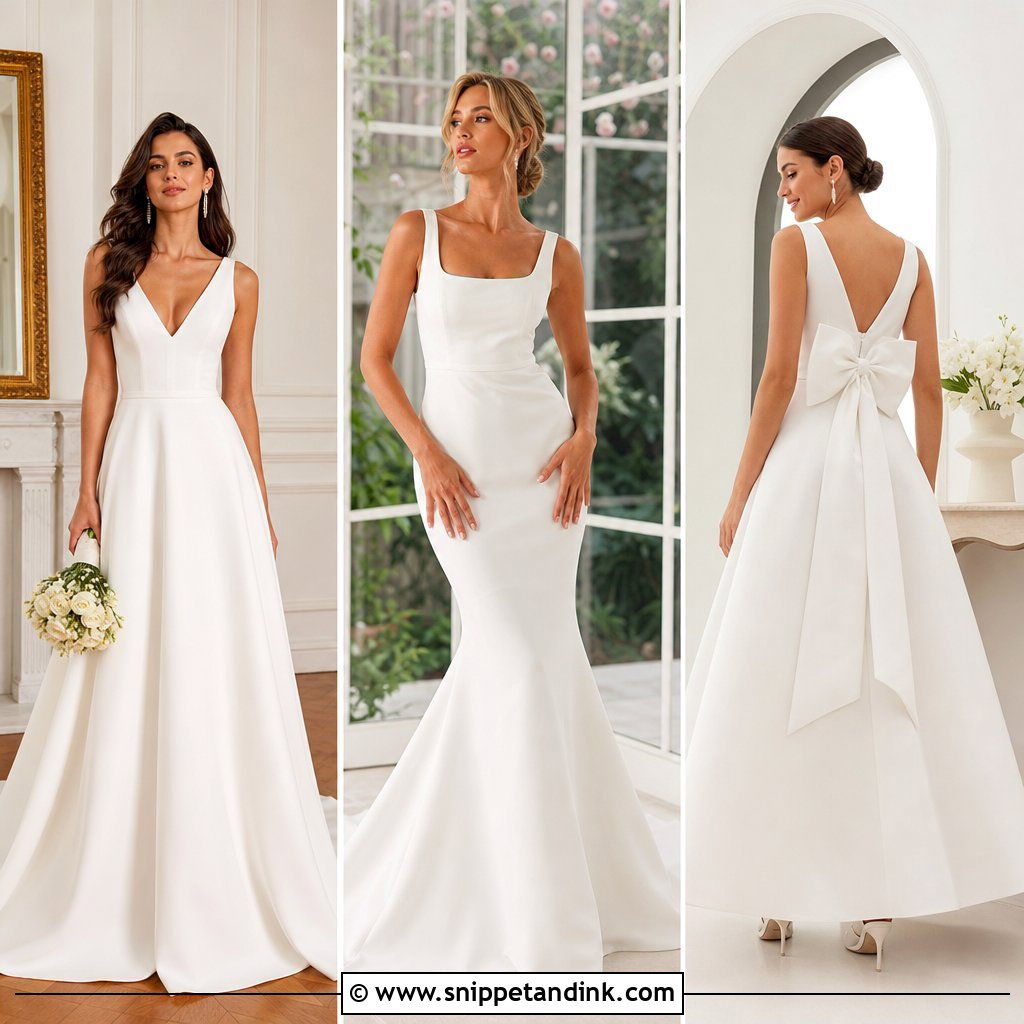
2. Square Neck Satin Ball Gown
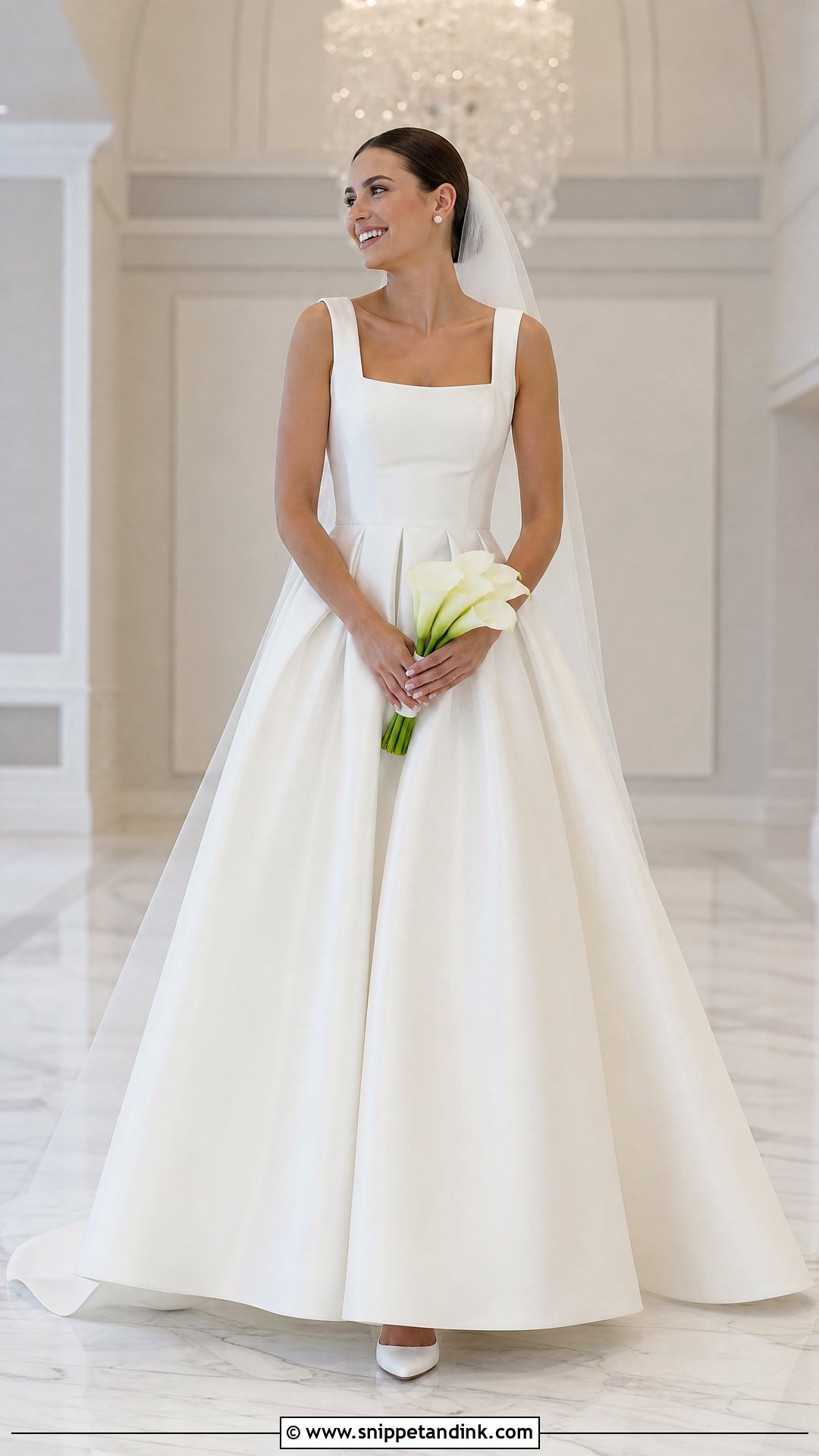
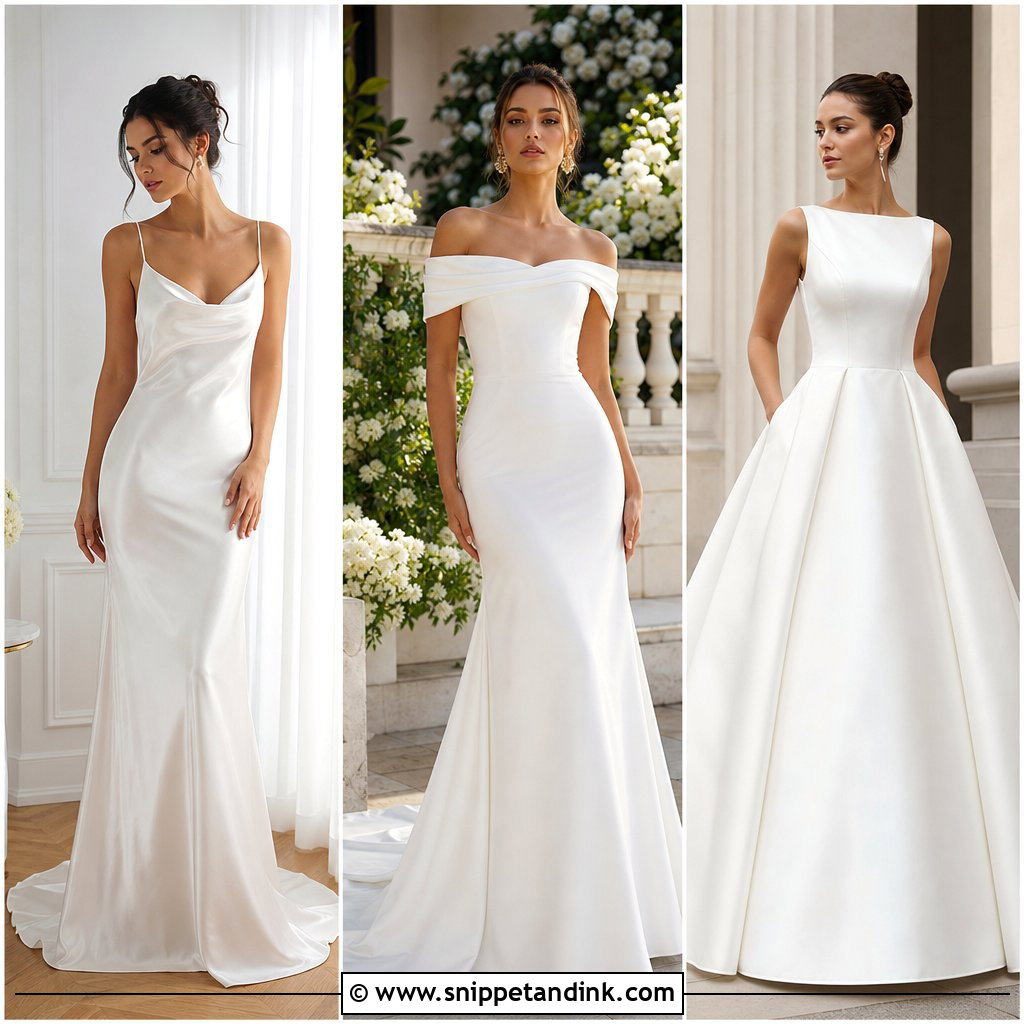
Wide straps make a square-neck ball gown easier to wear than a strapless one, and they carry some of the skirt’s weight off the bodice. For crisp pleats and a skirt that holds its shape, ask for structured satin or mikado; soft satin collapses under that much volume. A natural or slightly dropped waist on a fitted bodice gives extra definition. Pearl studs, a smooth low bun and closed-toe satin heels keep it refined, and a chapel-length veil adds drama without covering the neckline. Get the hem taken to your exact shoe height. The front should float just above the floor so you aren’t kicking it as you walk.
3. Cowl Neck Satin Slip Wedding Dress
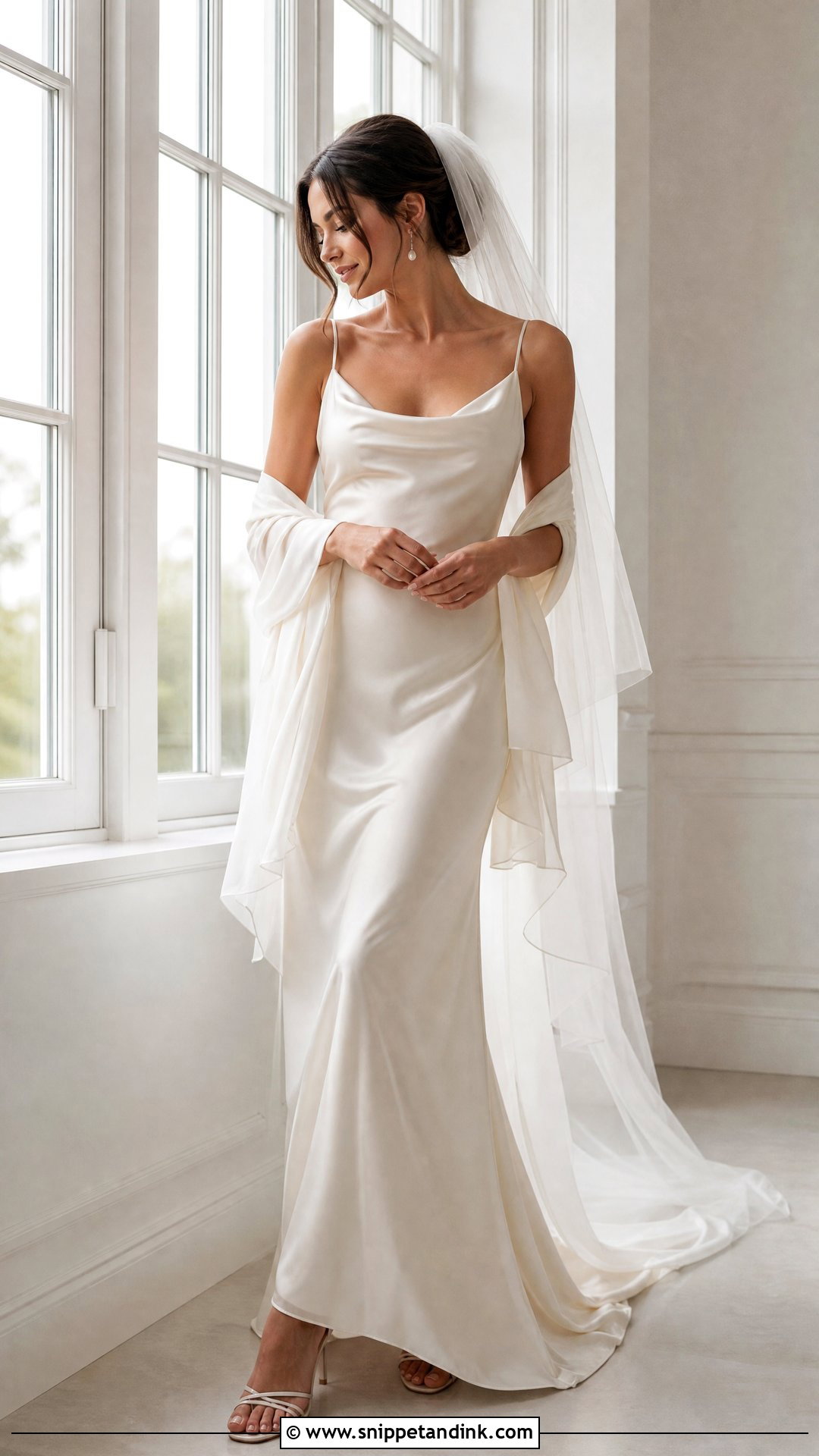
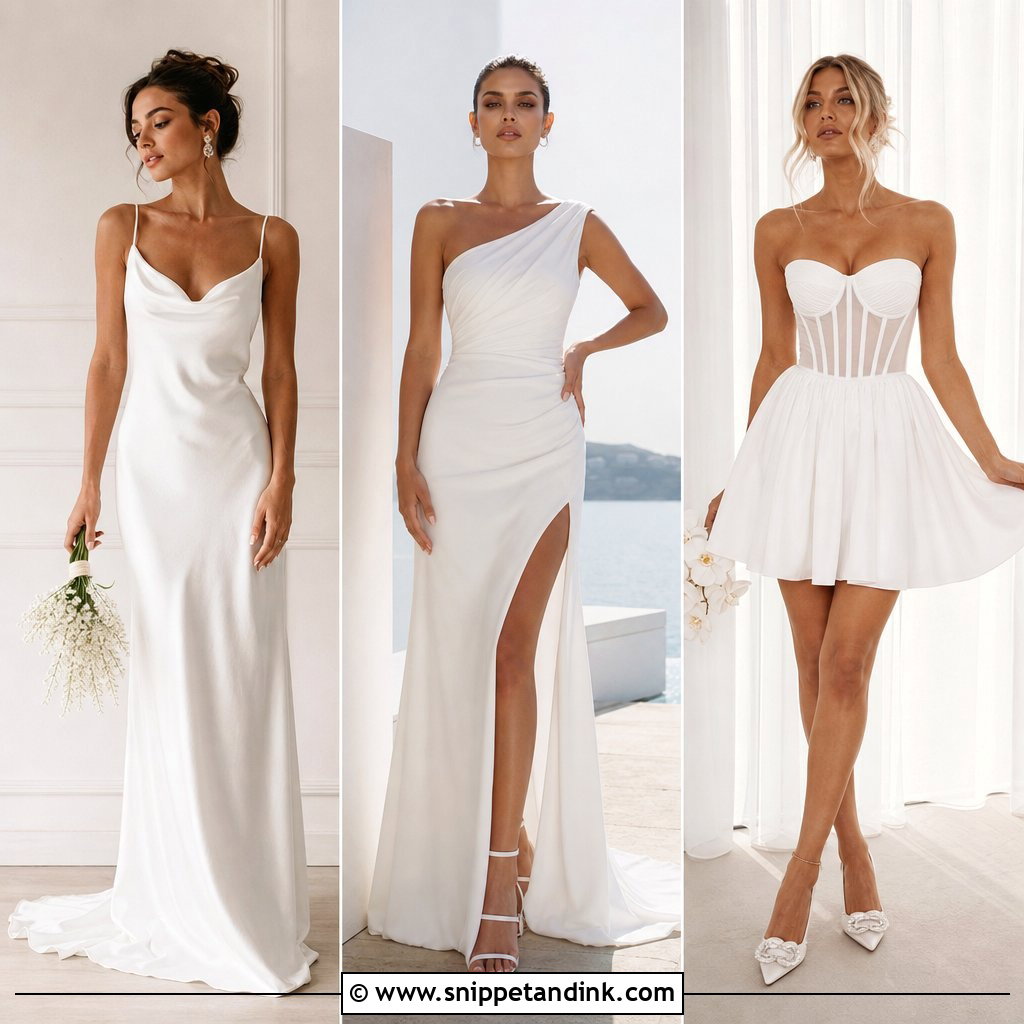
Cowl necks are cut on the bias, which is what makes the folds fall softly. It’s also why a cowl-neck satin slip dress clings: bias-cut satin follows every curve and every edge of what’s underneath. Smooth, laser-cut underwear is non-negotiable. This one suits intimate weddings, destination ceremonies and modern venues. Delicate drops, slim strappy sandals, a simple gathered veil and a loose bun or soft waves suit the fluid line. Ask whether thin straps can be adjusted. The dress should glide over the hips; if it pulls across them, go up a size and take in the bust. Carry a light shawl or a tailored ivory coat if the evening turns cold.
4. Off The Shoulder Satin Wedding Dress
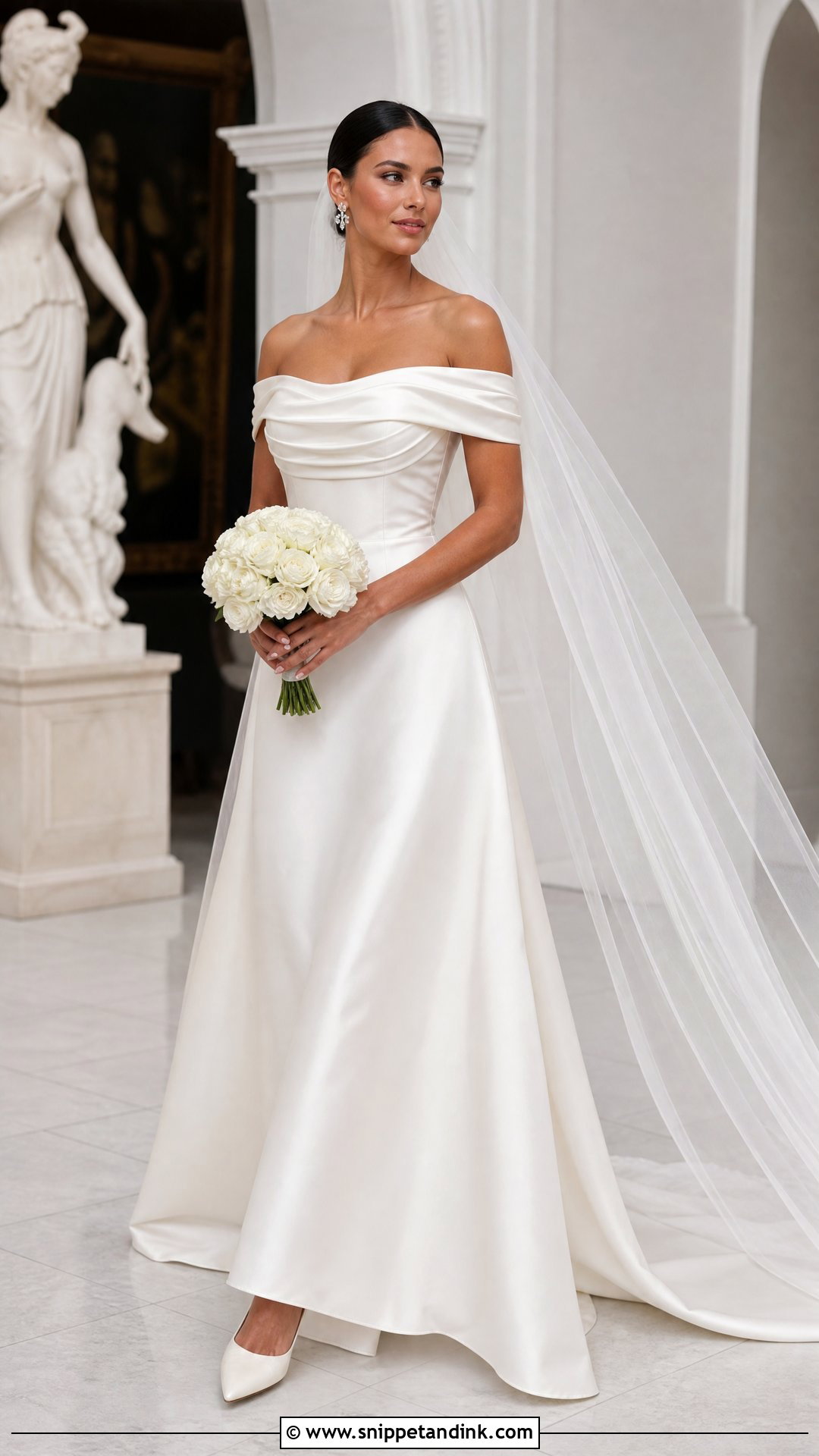
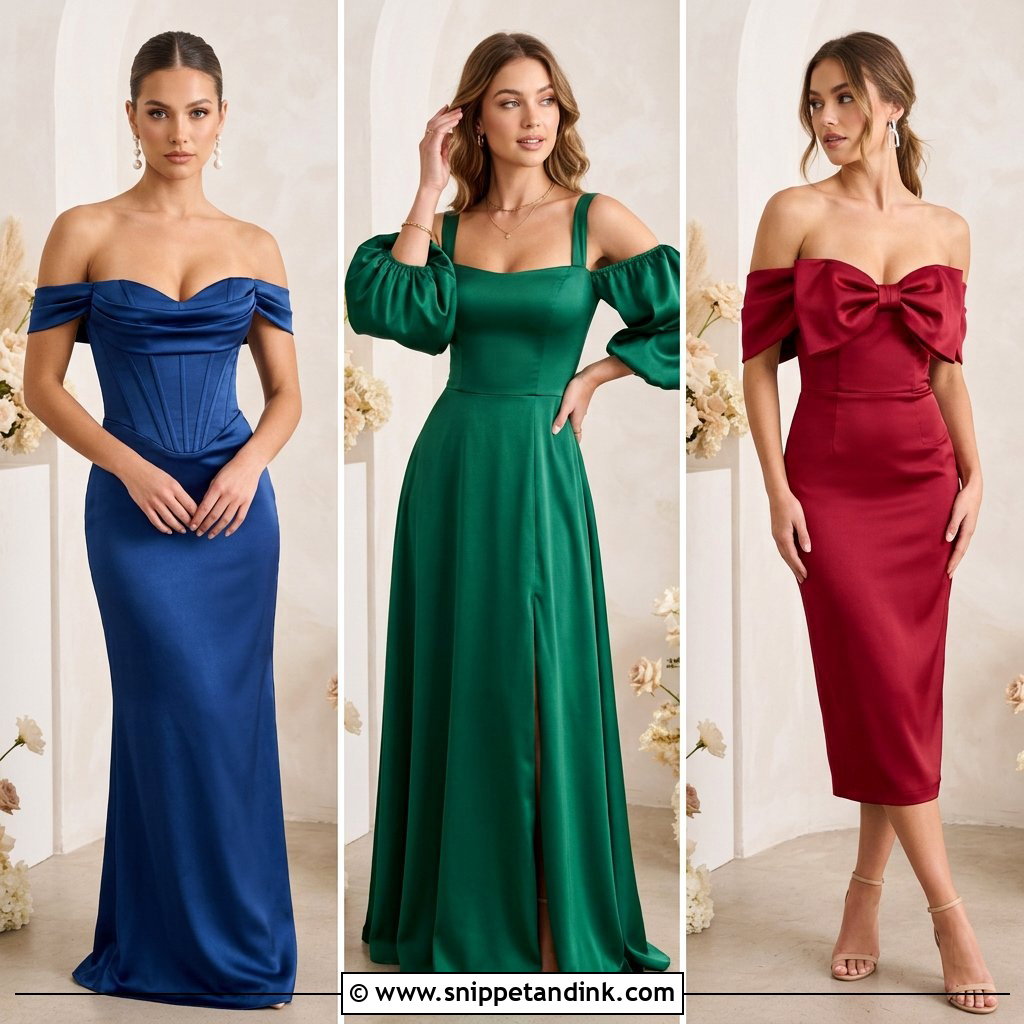
The collarbone becomes the focal point on an off-the-shoulder satin gown, and a folded or draped neckline gives it a sculptural edge without any decoration. It pairs with an A-line, trumpet or column skirt depending on how much structure you want. With a plain fold, a short pearl necklace, classic pumps and a sheer cathedral veil under a low bun look right. With dramatic folds, drop the necklace and wear statement earrings and a bracelet instead. Satin has no stretch, so a sleeve band set low on the arm limits movement. Practice hugging and holding a bouquet in the fitting room until you’re sure you can enjoy the reception in it.
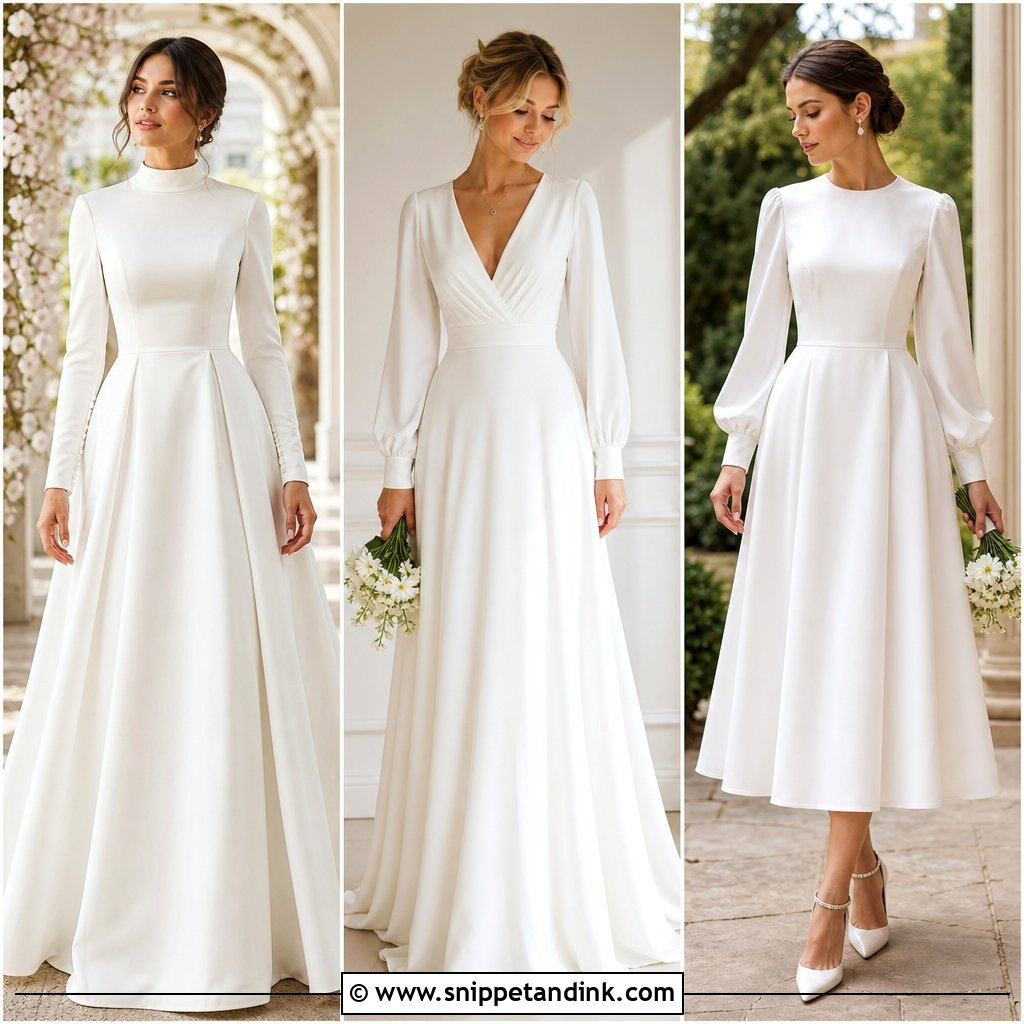
5. Long Sleeve Boat Neck Satin Wedding Dress
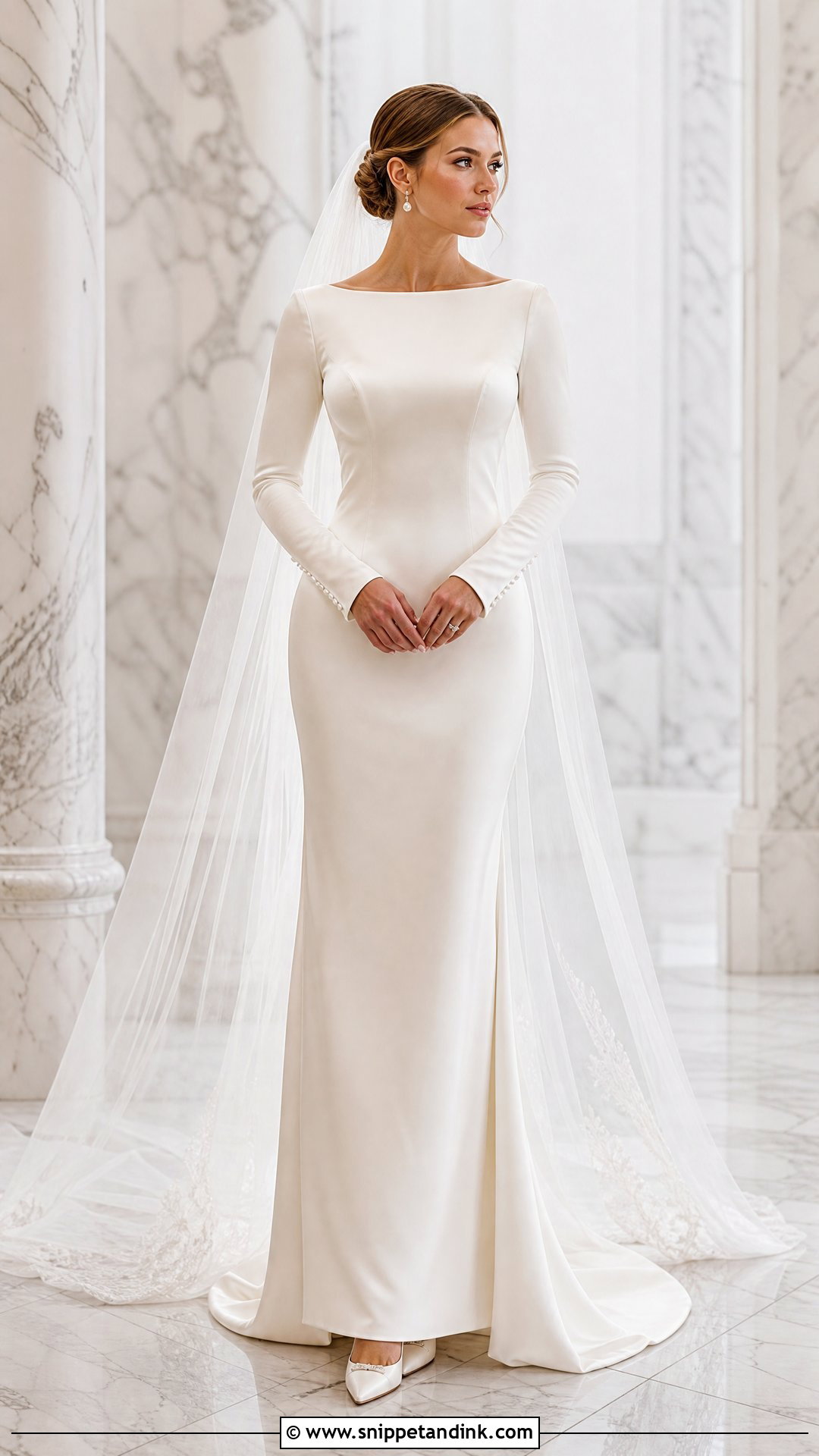
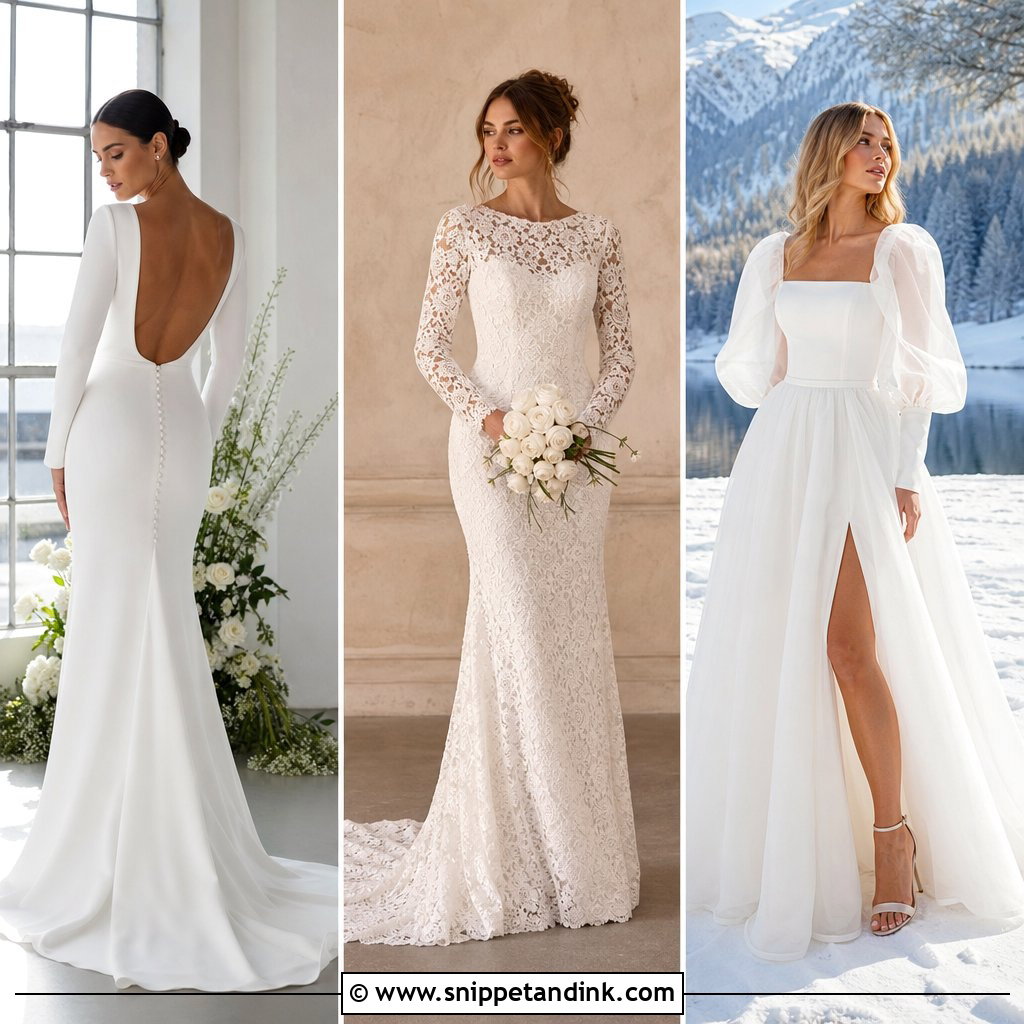
Coverage, shoulders and clean lines come together in a long-sleeve boat-neck gown. The wide neckline shows off the shoulders, and fitted sleeves sharpen the upper body; below that, a column or softly flared skirt keeps it modern. Covered satin buttons on the cuffs or down the back add detail without breaking the plain look. Satin sleeves have no give, so armholes cut too low or elbows fitted straight will stop you raising your arms. I always test reach before signing off alterations. Pearl earrings, pointed slingbacks and a long veil on a sleek chignon finish it. It’s the most practical choice here for cold seasons, formal indoor venues and evening ceremonies.
6. Halter Neck Satin Column Wedding Dress
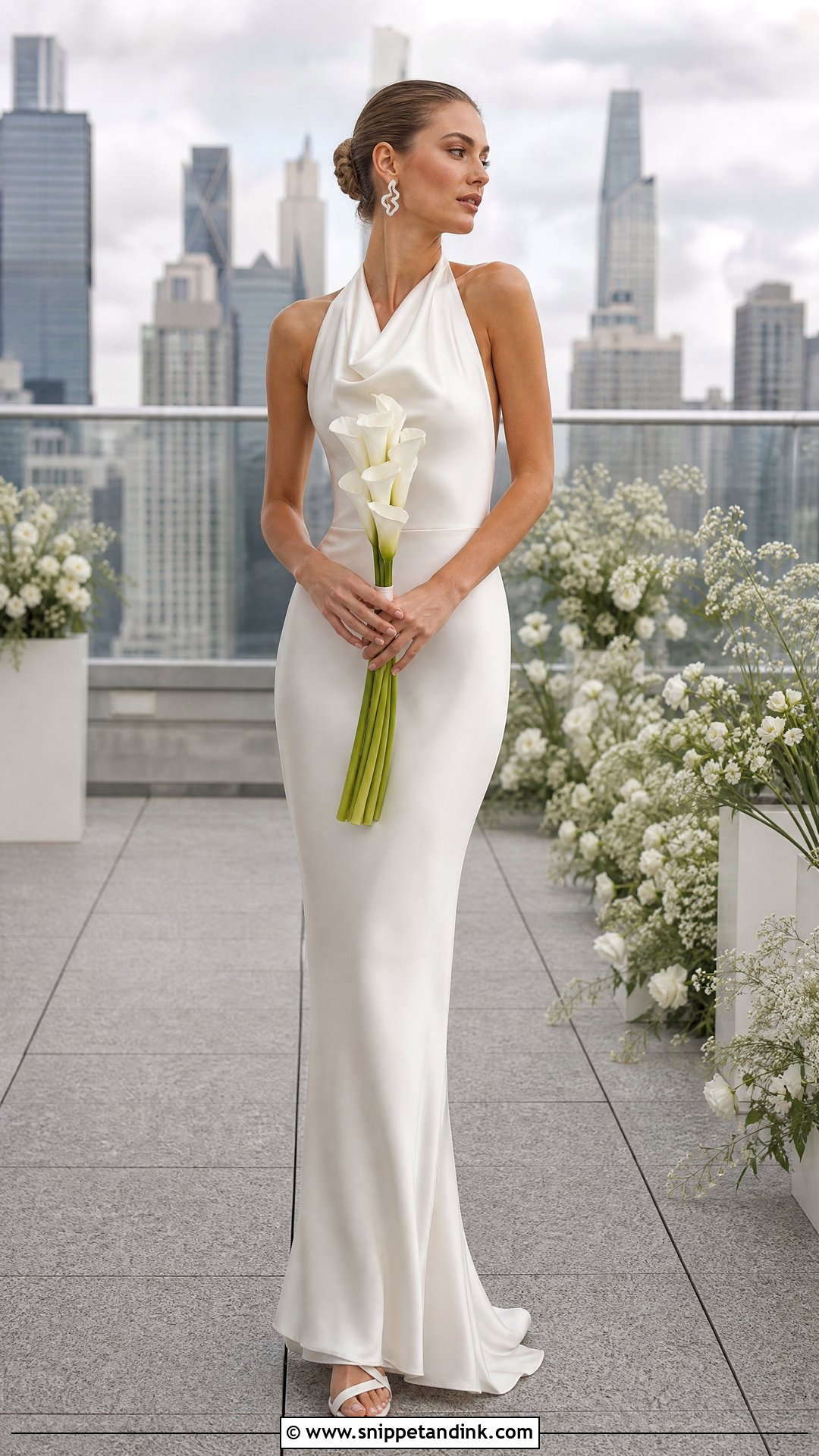
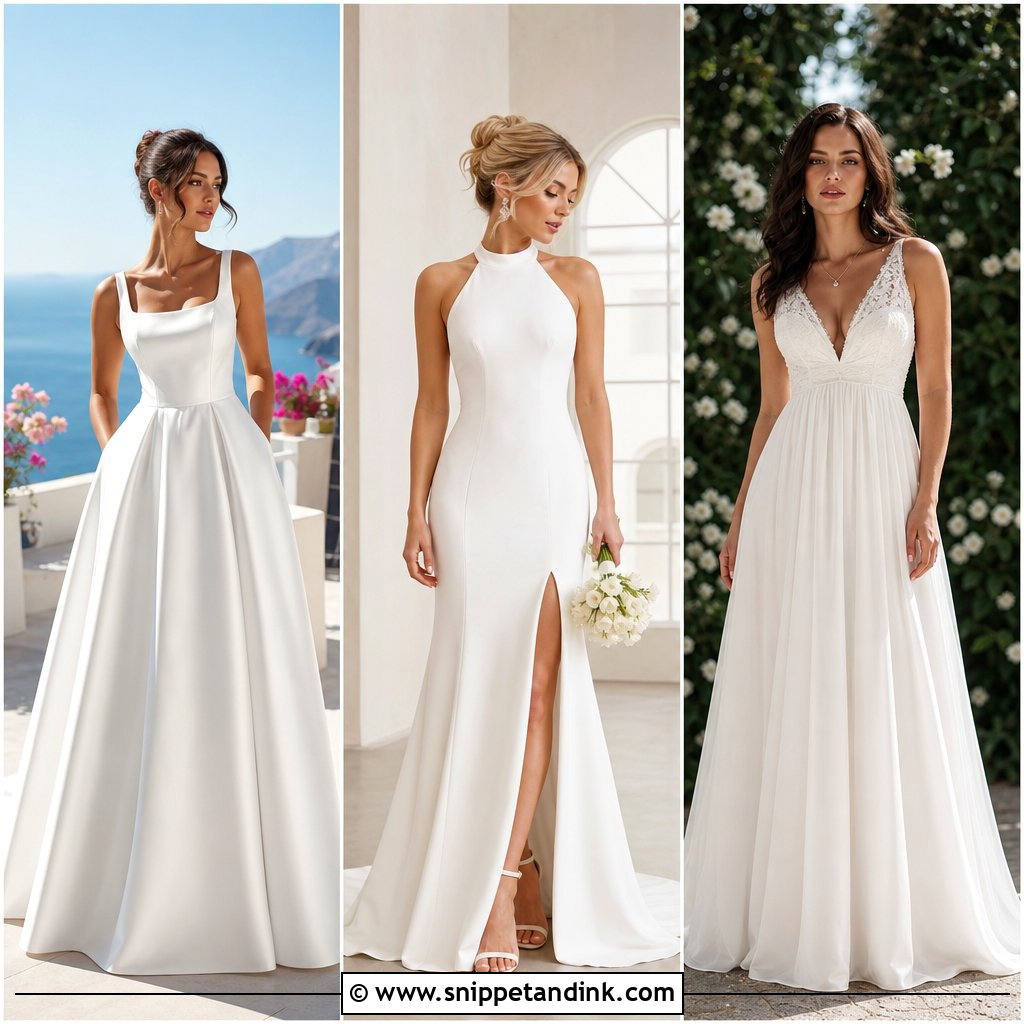
A halter column draws one long line from the neck to the floor, and with an open back it’s even more striking. A soft draped halter feels relaxed; a high structured one is sharper. The halter holds the bodice from the neck, so a closure that’s too tight gives you a headache by dinner. Check it after twenty minutes of wear, not two. Sculptural earrings, a smooth bun, metallic or ivory sandals and a narrow bouquet complete it, with no necklace. A chapel veil softens the look; a short one keeps it contemporary. Column skirts need a hidden slit or kick pleat at the back if you want to walk naturally and sit without strain.
7. Sweetheart Mermaid Satin Wedding Dress
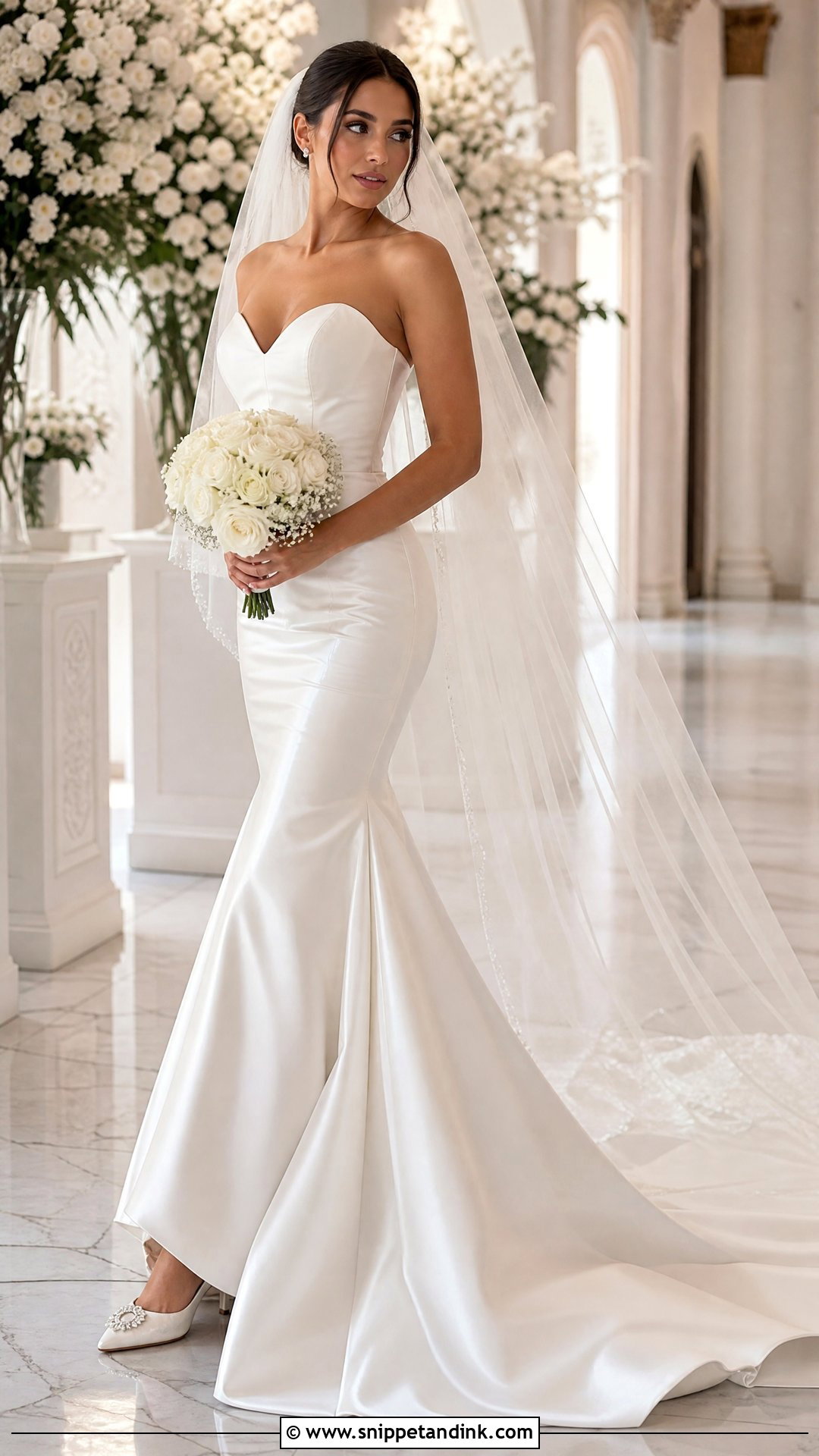
Satin shows tension more plainly than textured fabric, and a sweetheart mermaid is where that matters most. Don’t buy by the label. Fit the widest part of your body first, then have the waist and bodice taken in. Supportive cups, secure boning and clean seam placement keep the curved neckline smooth. The skirt follows the body and flares at or just below the knee, depending on how much stride you want. Balance the fitted shape with a sheer cathedral veil, crystal studs and pointed pumps, and keep the bouquet compact so the dress shows in photos. Before the final fitting, take full steps and climb a stair. If the flare starts too high, you’ll know straight away.
8. Basque Waist Satin Ball Gown
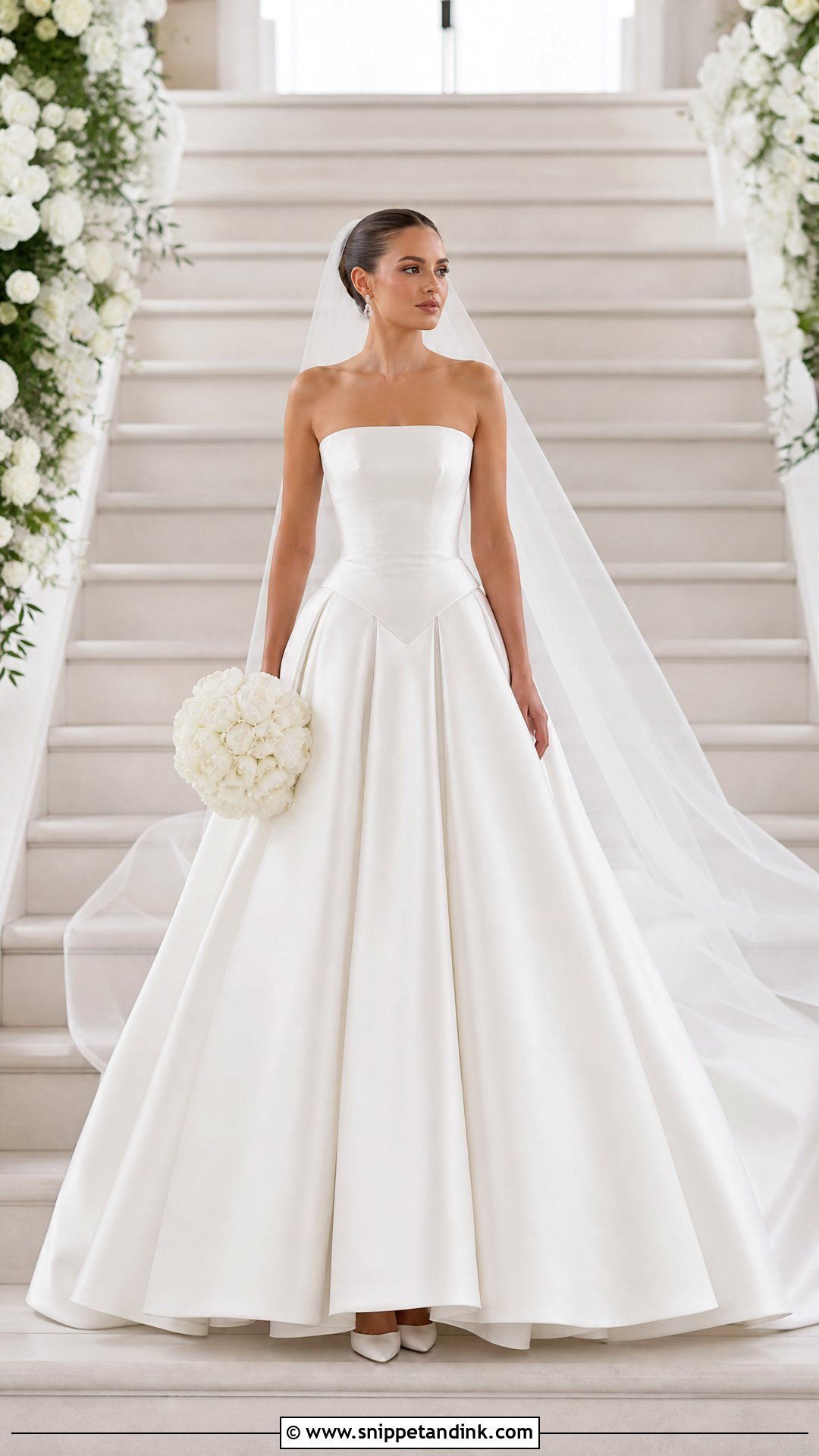
The pointed waist seam is the whole design on a basque-waist satin ball gown, and it reads regal even with no decoration at all. A strapless, scoop or square bodice changes the coverage. Pearl drops, closed-toe heels, a cathedral veil and a rounded bouquet complete it; anything more is too much. The point can fold or dig in when you sit if it’s even slightly too long for your torso, so sit down at every fitting. The bodice has to carry a heavy skirt without feeling tight. Ask for a bustle, because a satin train is heavy and needs to be lifted securely for dancing.
9. High Neck Satin Sheath Wedding Dress
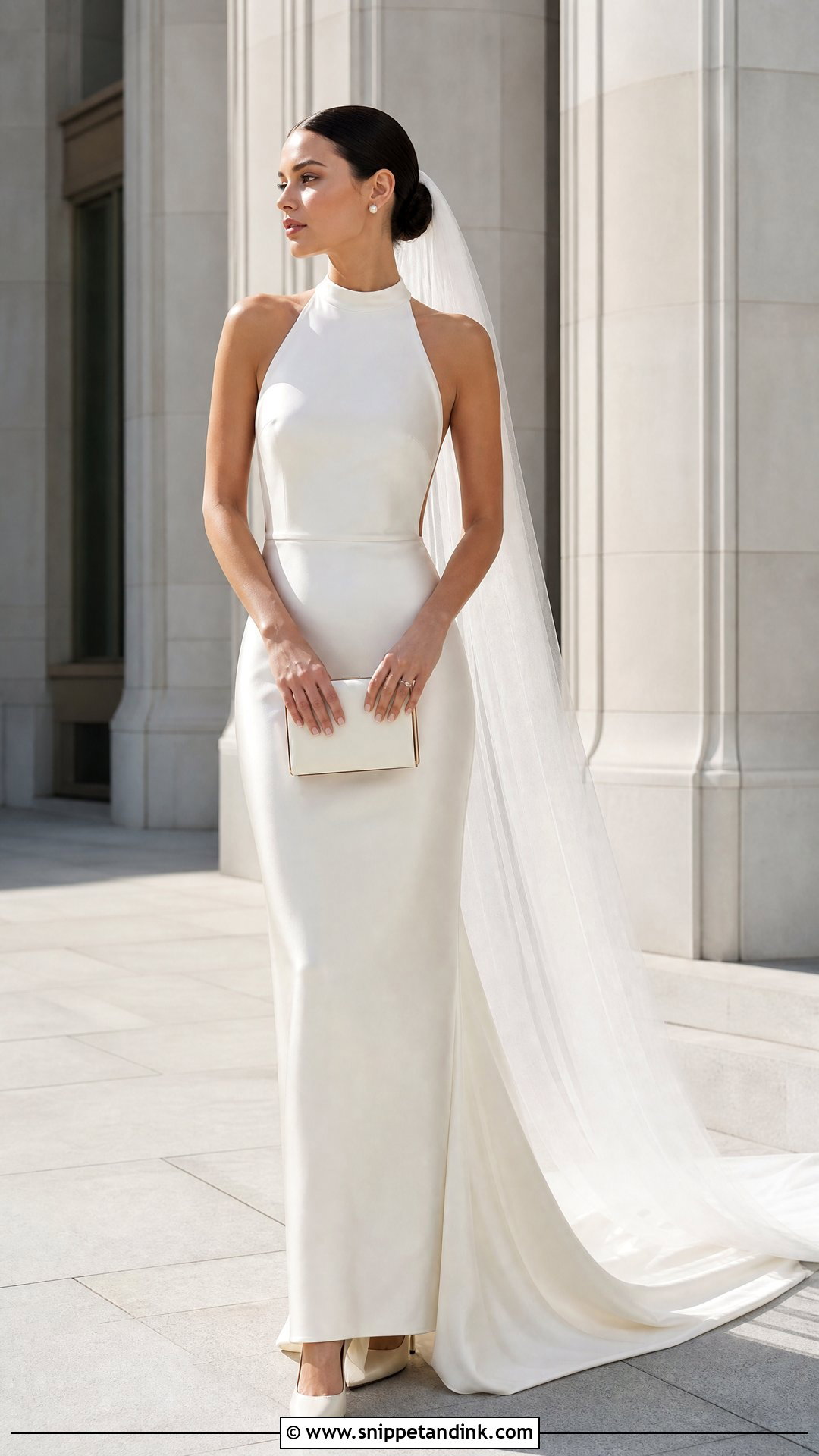
Clean and sophisticated, a high-neck satin sheath dress covers the chest and still follows the body. Sleeveless keeps it light; cap or long fitted sleeves make it more modest. Balance the high front with an open, keyhole or buttoned back. The sheath should skim the waist and hips, never squeeze. Horizontal pulling lines across the hips or stomach tell you it needs more room, and satin shows them in every photo. Small earrings, a sleek bun, pointed pumps and a narrow chapel veil complete it. Skip the necklace and put the detail in a hair accessory. A structured ivory clutch suits a civil ceremony or the reception.
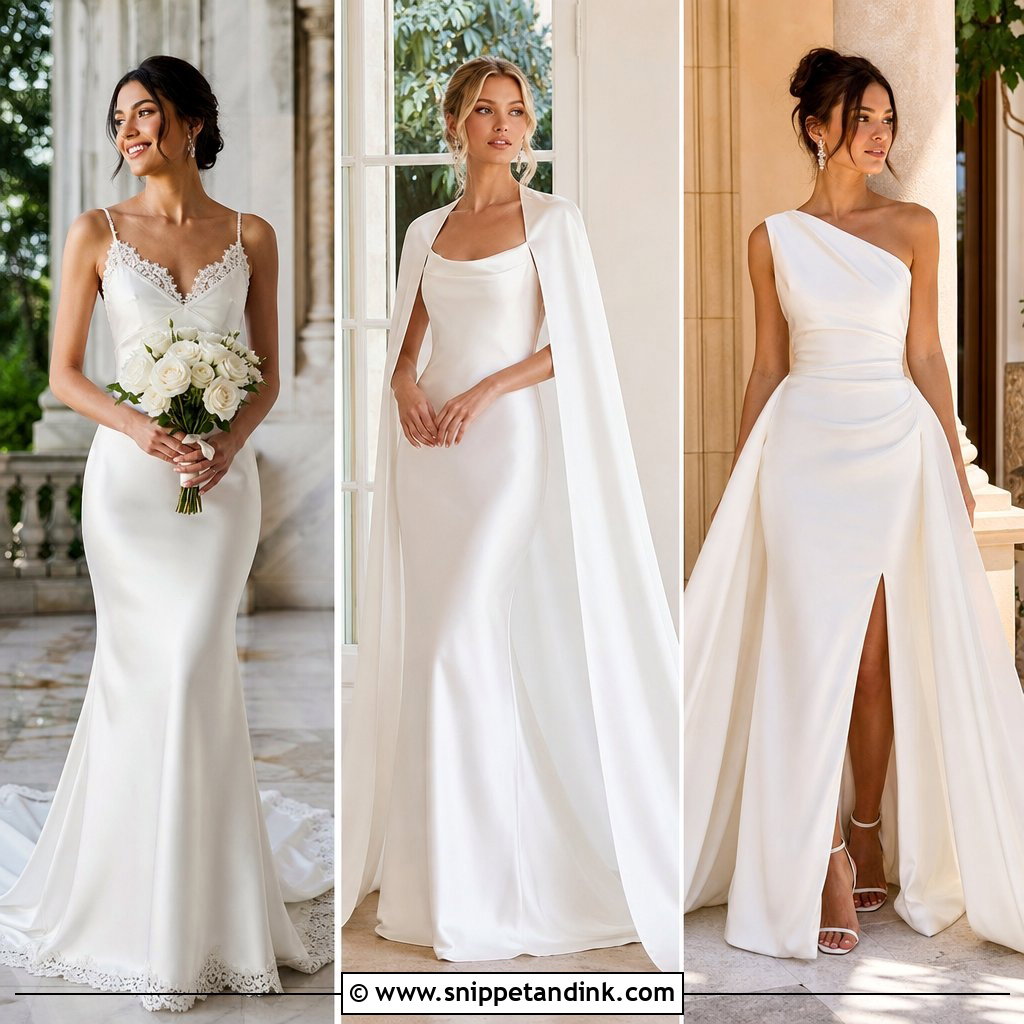
10. One Shoulder Satin Wedding Dress
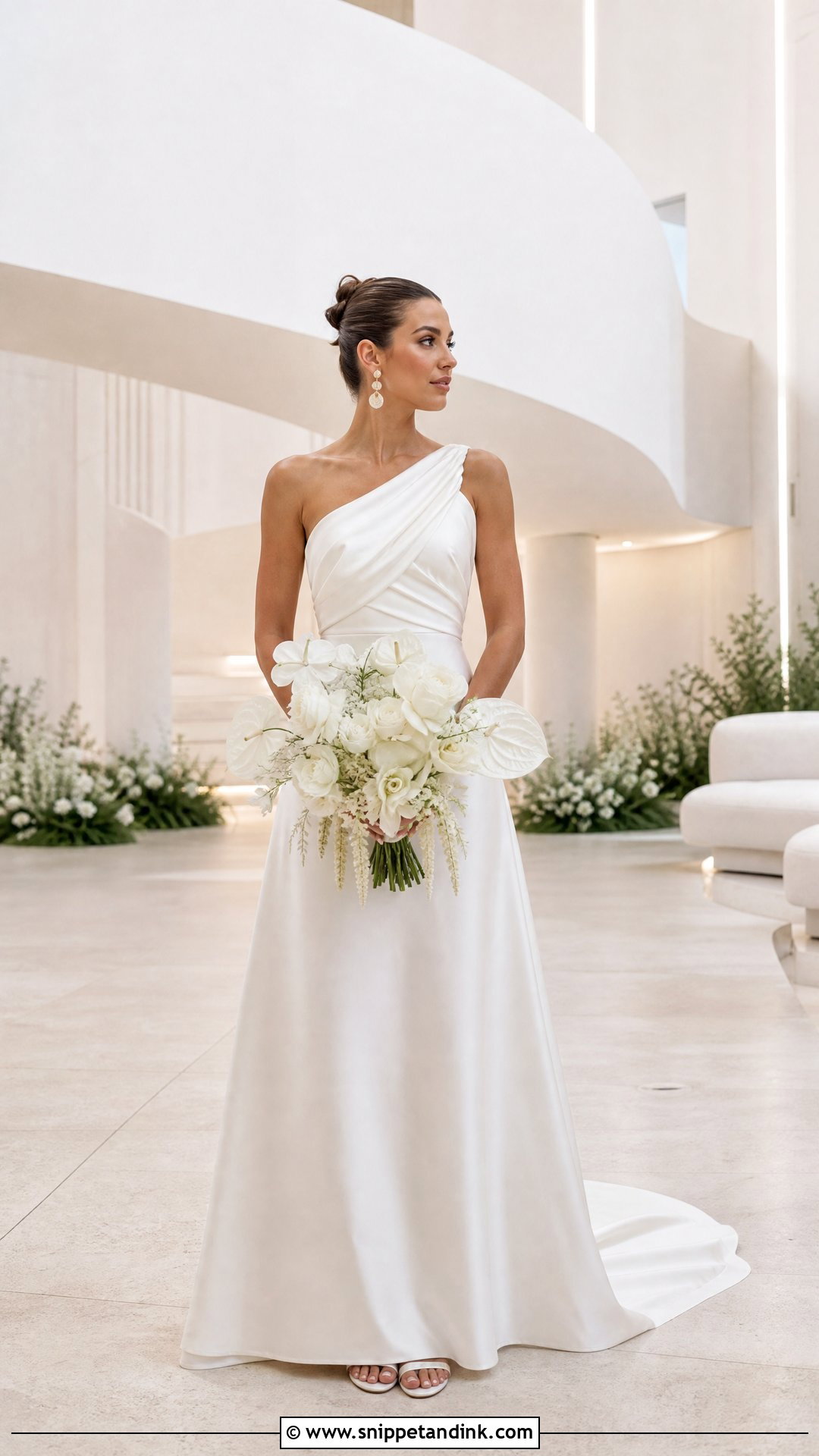
Asymmetry is the only feature a one-shoulder satin gown needs. A column skirt is understated; a fuller A-line brings more volume for the ceremony. A draped shoulder panel softens it, while a sharply tailored strap looks architectural. The fitting issue is balance. With all the support on one side, the bodice can pull toward the strap and twist the neckline off-center, so I ask for a hidden elastic or silicone grip along the bare side. Wear one statement earring or a pair of small drops, a neat updo and minimalist sandals. A veil works if it’s placed away from the shoulder; a sleek comb is cleaner.
11. Empire Waist Satin Wedding Dress
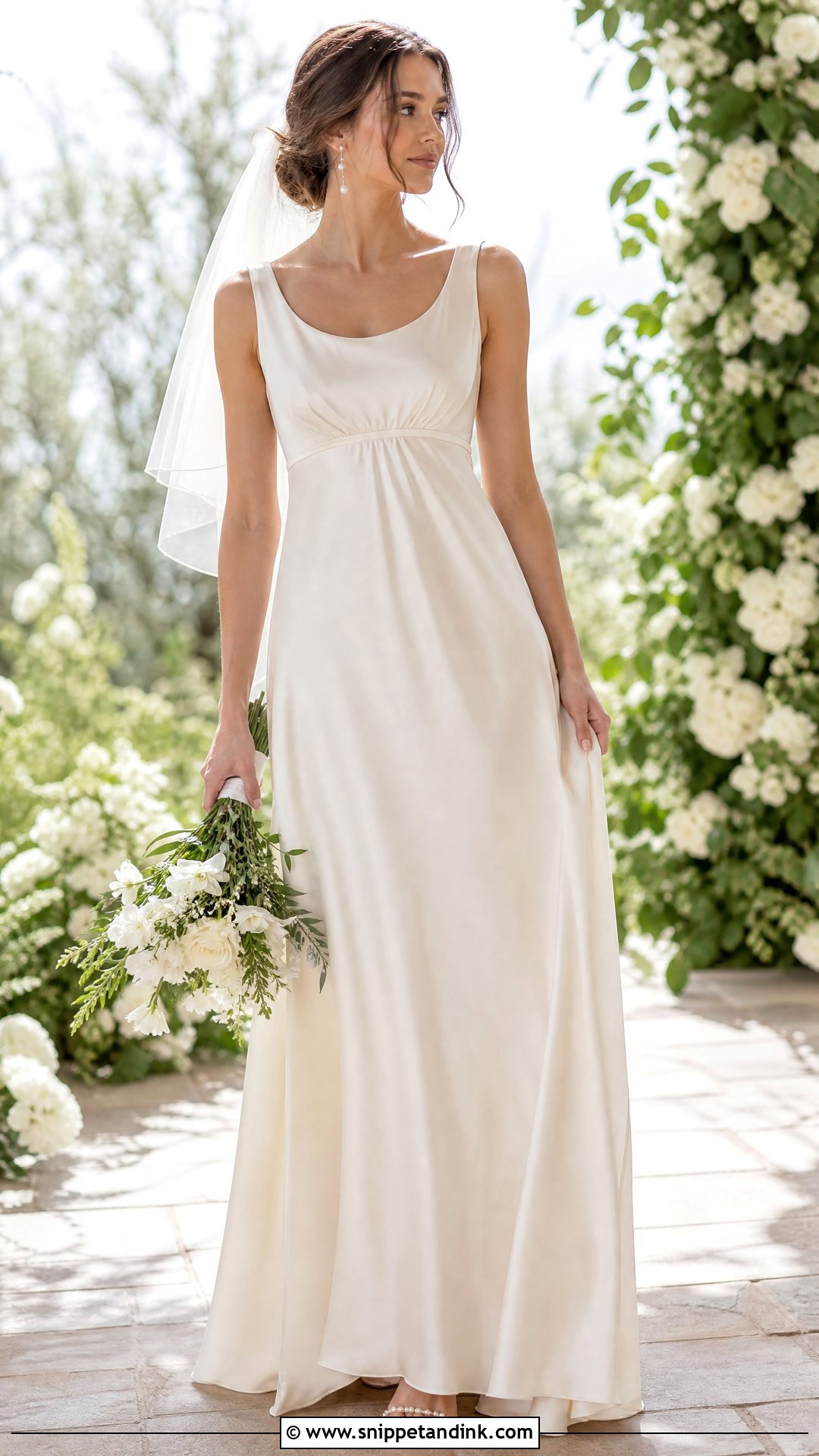
Empire waists sit right under the bust, so the skirt falls loosely over the stomach and hips. In fluid satin, this is one of the most comfortable gowns to wear for a long day, and it’s kind to anyone who doesn’t want a defined waist. A rounded, square or draped neckline shapes the top. Delicate sandals, small pearl earrings, a light veil and a loose low bun or soft waves suit the relaxed proportions. Don’t add a heavy belt at the raised seam; it chops the line. The skirt needs enough fabric to move, but too much at the front makes satin balloon outward, so check the side view in the mirror.
12. V Neck A-Line Satin Wedding Dress
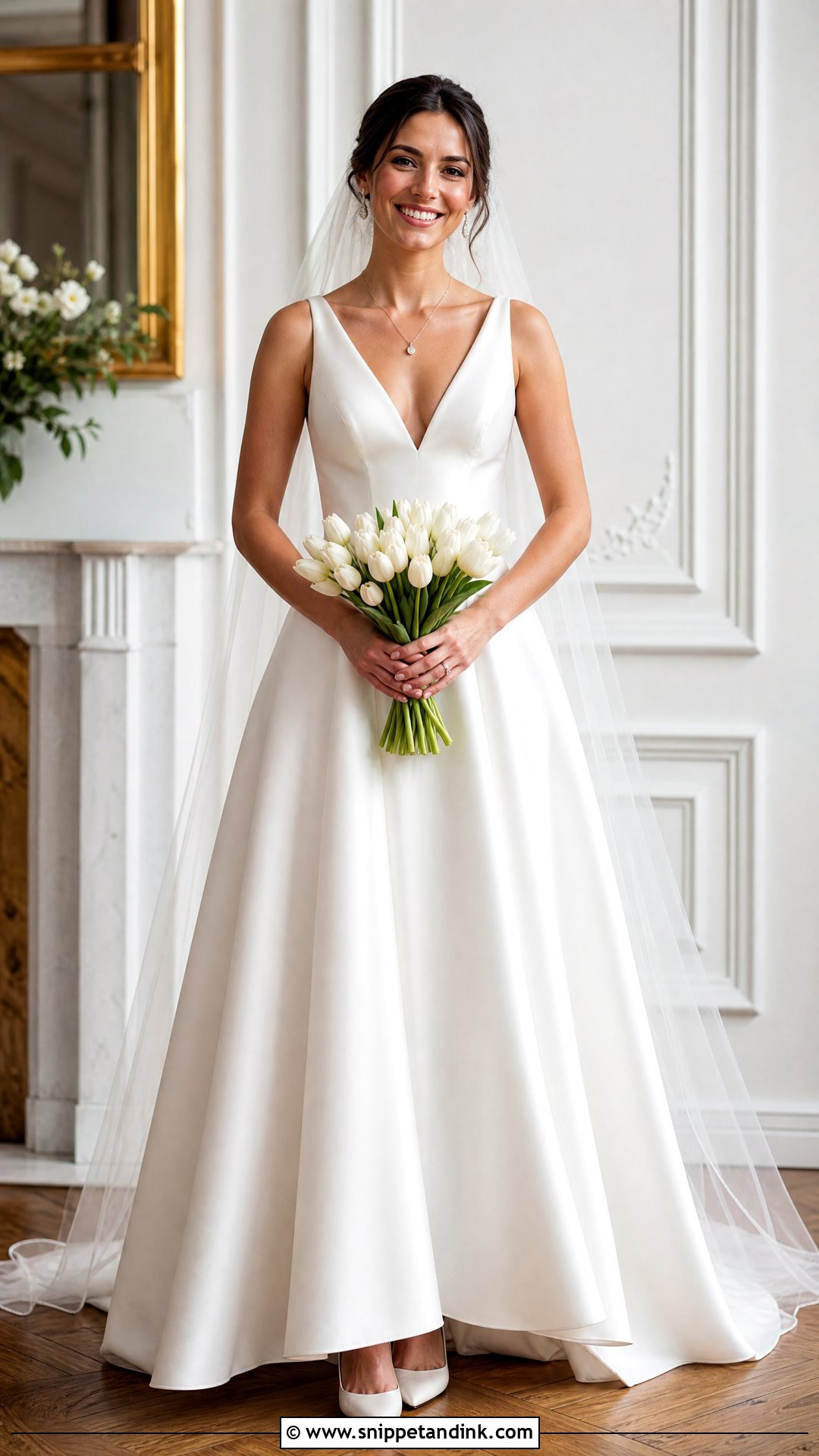
V-necks are the easiest neckline to adjust for comfort. A shallow V is modest, a deep one dramatic. Wider straps frame the bodice and hold the cups in place, and the skirt drops cleanly from the waist. A fine pendant, drop earrings, pointed pumps and a chapel veil complete it. On a deep V, a strip of illusion mesh at the center keeps everything secure while preserving the shape. Gaping is the most common fault I see on plain satin V-necks, since the fabric doesn’t stretch to close a gap, so have the tailor check the neckline from the side as well as the front. The waist seam should stay at your natural waist when you move.
13. Scoop Neck Satin Tank Wedding Dress
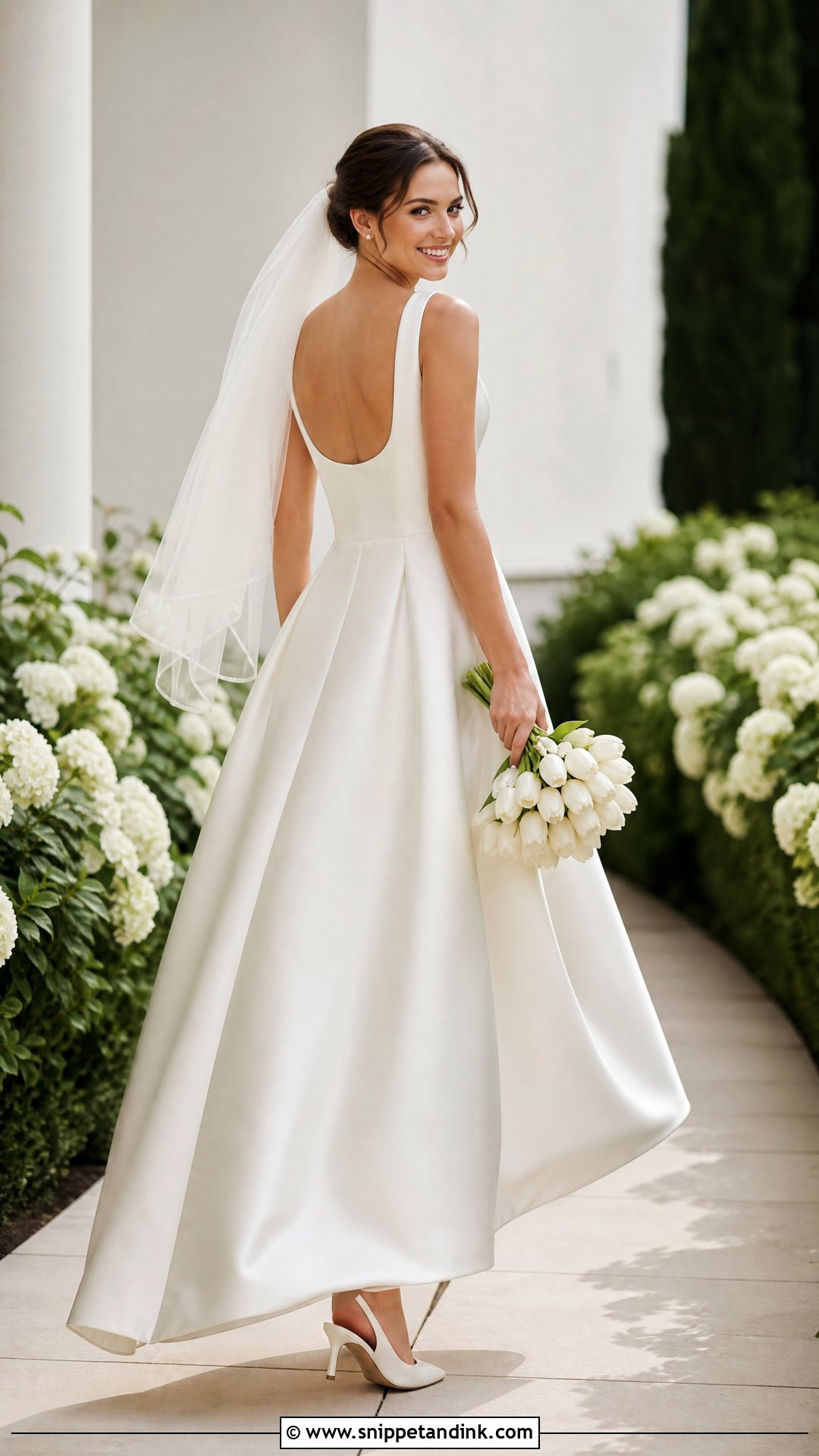
Scoop-neck tank gowns are approachable: wide straps, a rounded neckline and nothing tricky about wearing them. They fit minimalist weddings, garden ceremonies and indoor receptions alike. A sheath skirt is sleek, while an A-line gives more room through the hips and legs. Pearl studs, ivory slingbacks, a clean-edged veil and a structured bouquet of white tulips keep it modern. If the back scoops low, set the veil above a polished bun so the back shows once the veil comes off. The armholes are where tank gowns go wrong. Too low and they show the sides of your bra; too high and they rub raw by evening.
14. Tea Length Satin Wedding Dress
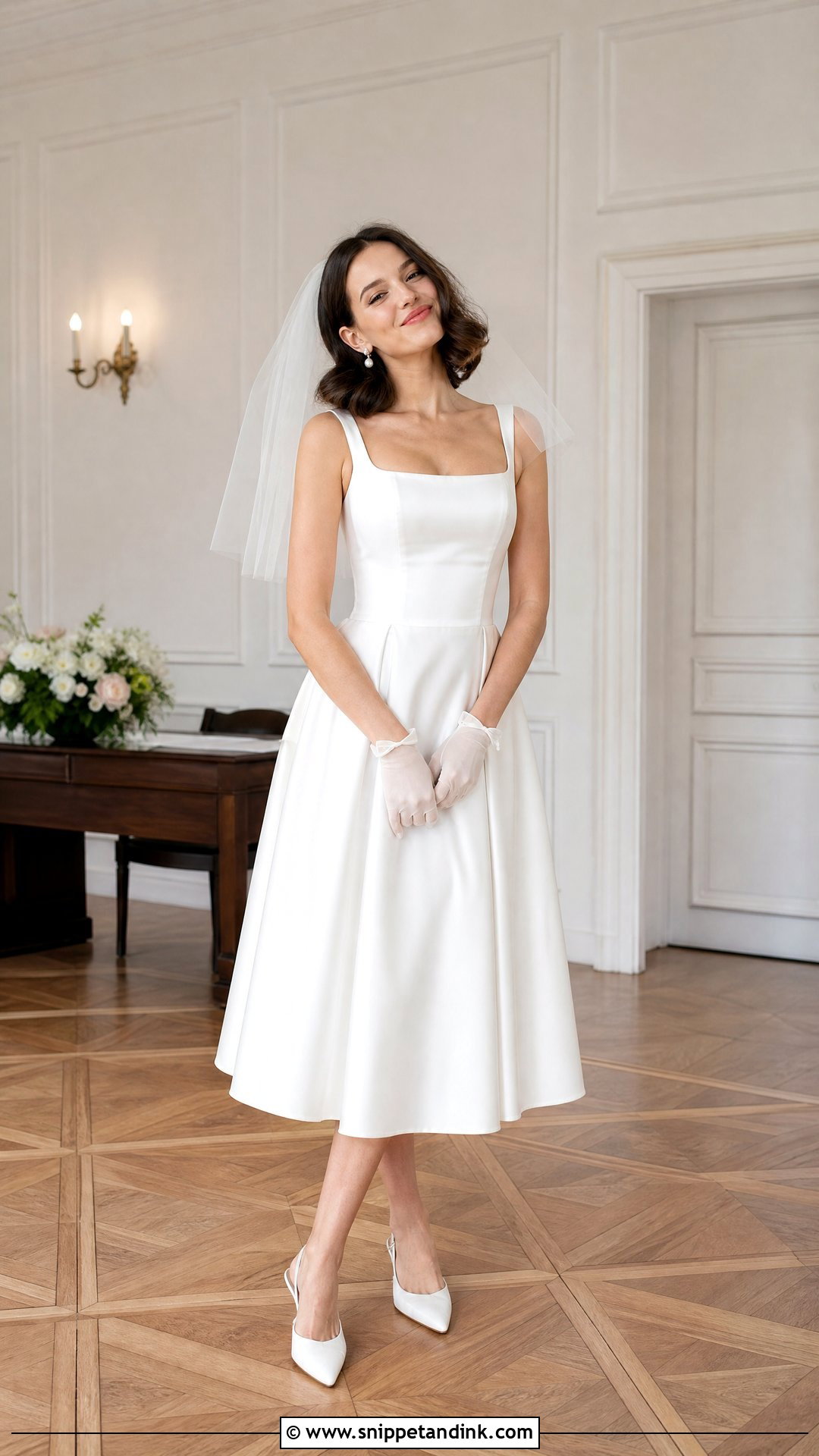
With tea length, your shoes become part of the dress. The hem lands between knee and ankle, which makes for easy movement and a playful shape. A fitted bodice with a square, sweetheart or off-the-shoulder neckline over a softly flared skirt keeps it balanced and looks good mid-stride. Slingback pumps, pearl earrings, short gloves and a shoulder-length veil complete the retro version; a structured headband instead of the veil feels more current. Where the hem ends matters more than at any other length. Just below the fullest part of the calf is usually more flattering than across it. Wear your actual wedding shoes at every fitting.


15. Satin Mini Wedding Dress
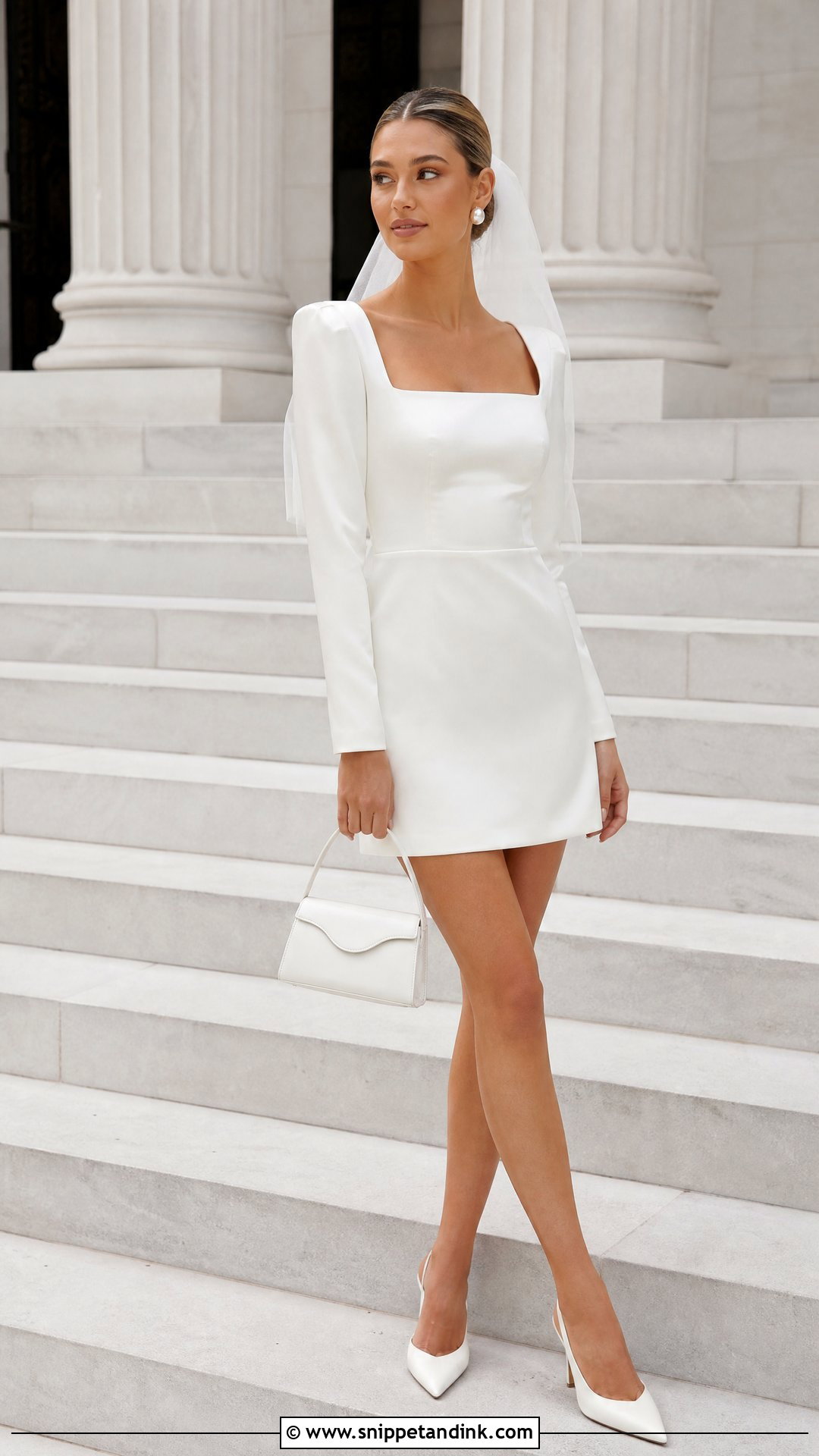
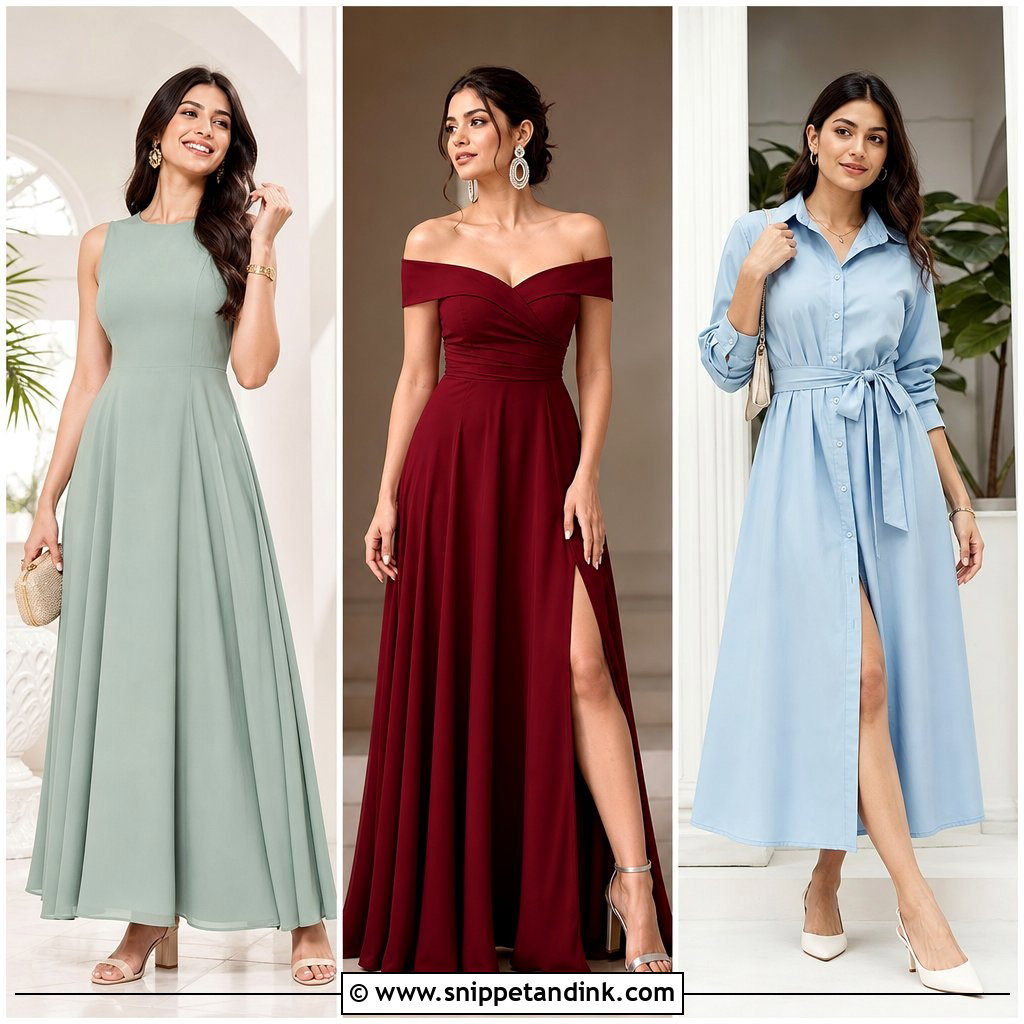
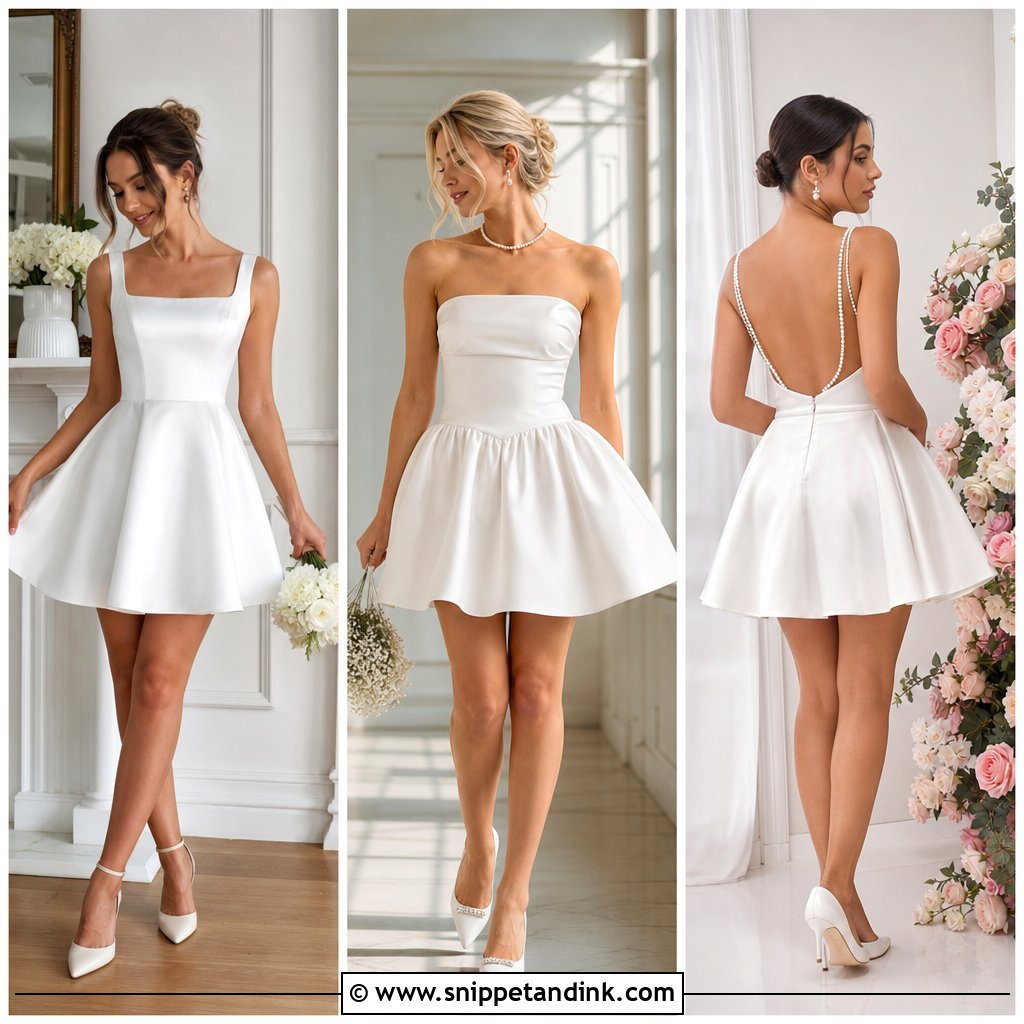
A plain satin mini is the answer for a courthouse ceremony, a reception change or a relaxed celebration. A shift, sheath or softly flared shape all feel bridal when the satin is heavy enough not to wrinkle at a glance. Balance the short hem with coverage elsewhere, such as a square neck, long sleeves or a high neck. Pointed slingbacks, pearl earrings and a short veil or a small hair bow make it read as a wedding dress, with a top-handle bag for essentials. Sit and walk to check coverage, and wear fitted shorts underneath if you’ll dance. A removable ivory coat helps with cold outdoor photos.
16. Satin Wedding Dress With Detachable Overskirt
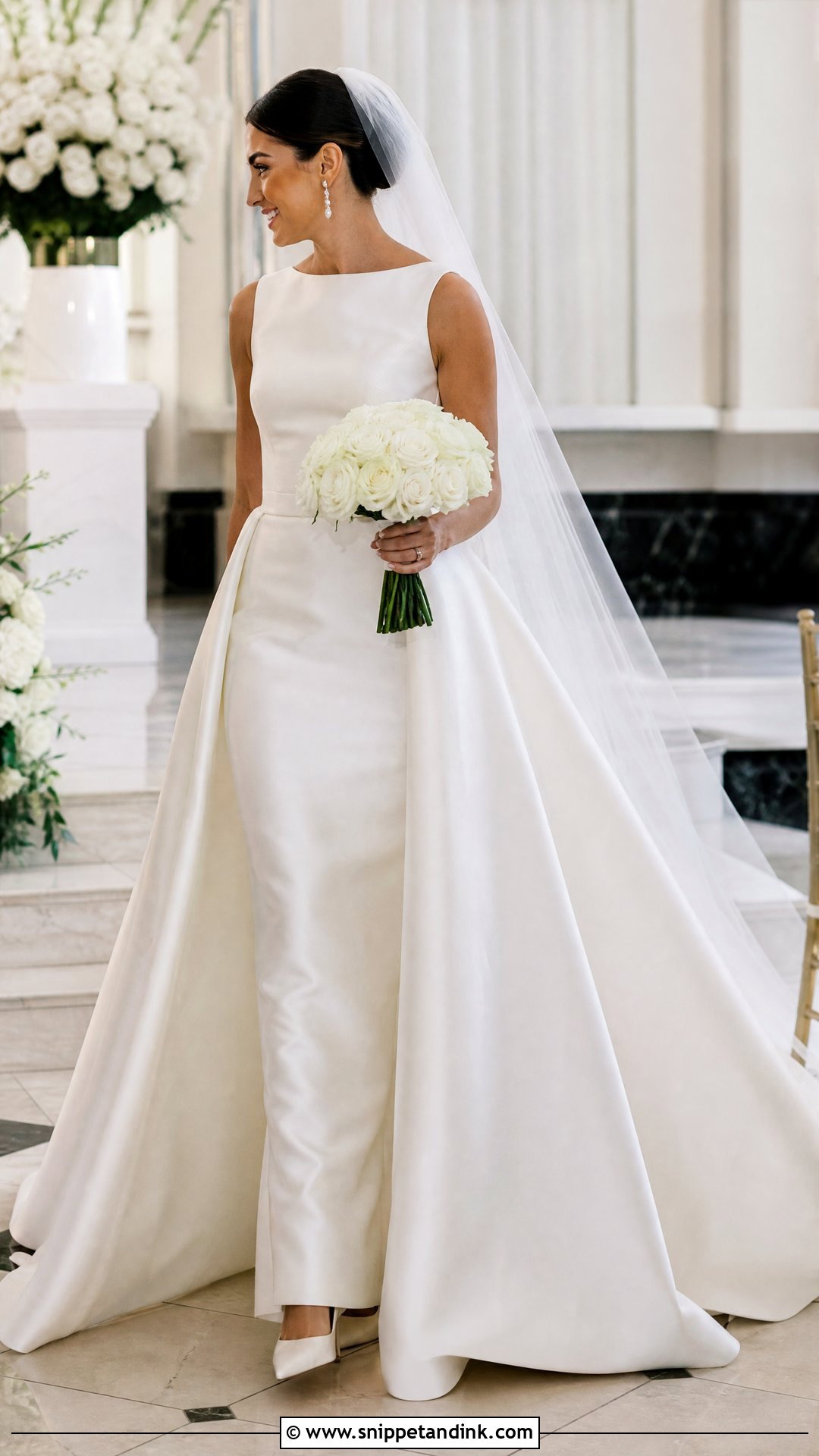
Two silhouettes, one dress: a detachable overskirt turns a sleek sheath, column or mermaid into a full ceremony gown with a train, then comes off for the reception. Drop earrings, pointed heels and a long veil matched to the overskirt length suit the first look; afterward, a bracelet or a shorter veil refreshes it. The waistband has to fasten smoothly and stay hidden from the front and sides. Removal takes far longer than planned when nobody has practiced, so ask your tailor to demonstrate the closure to the person who’ll help you. It should come off without creasing or dragging the gown underneath.
17. Satin Wedding Dress With Bridal Cape
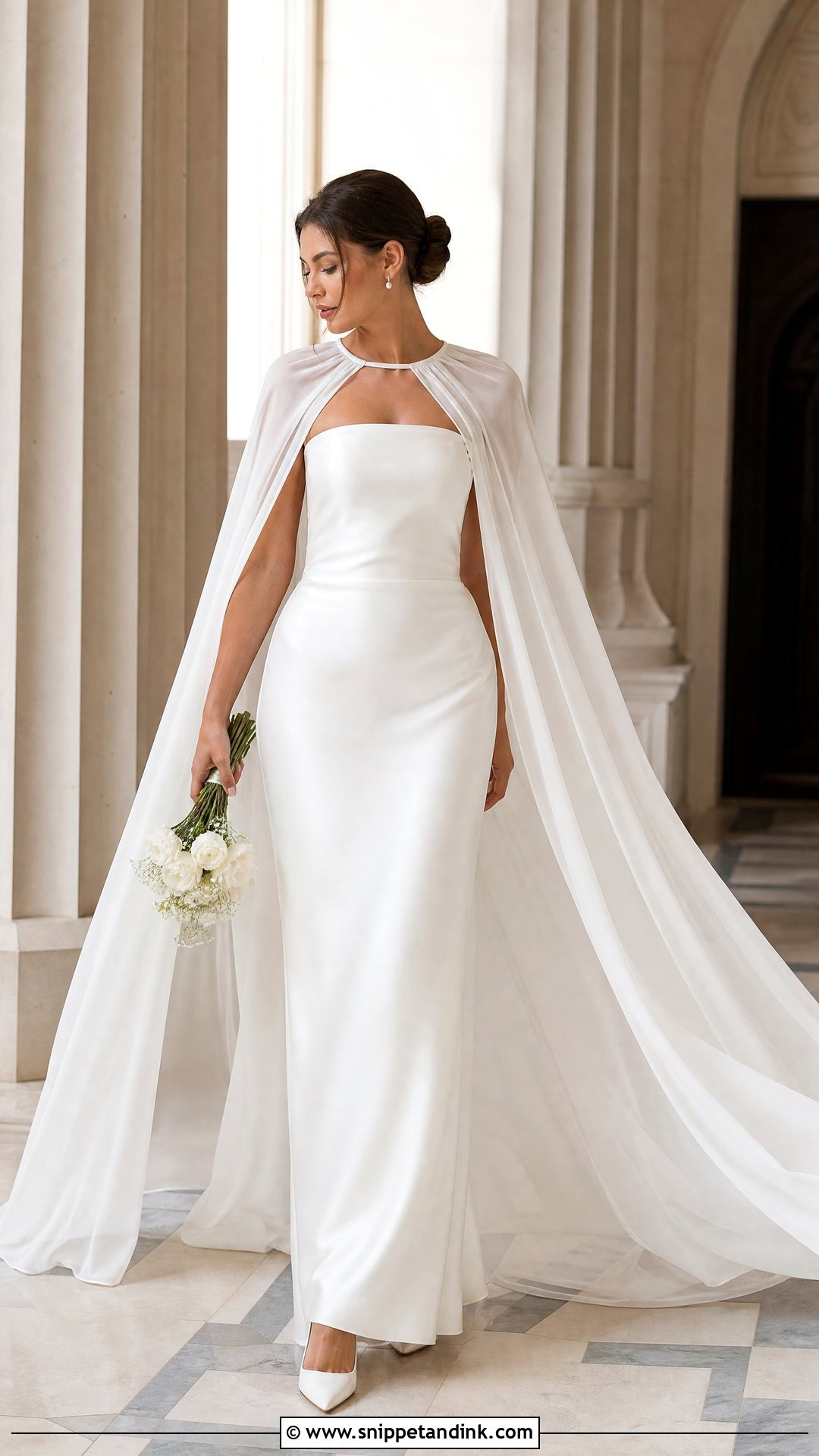
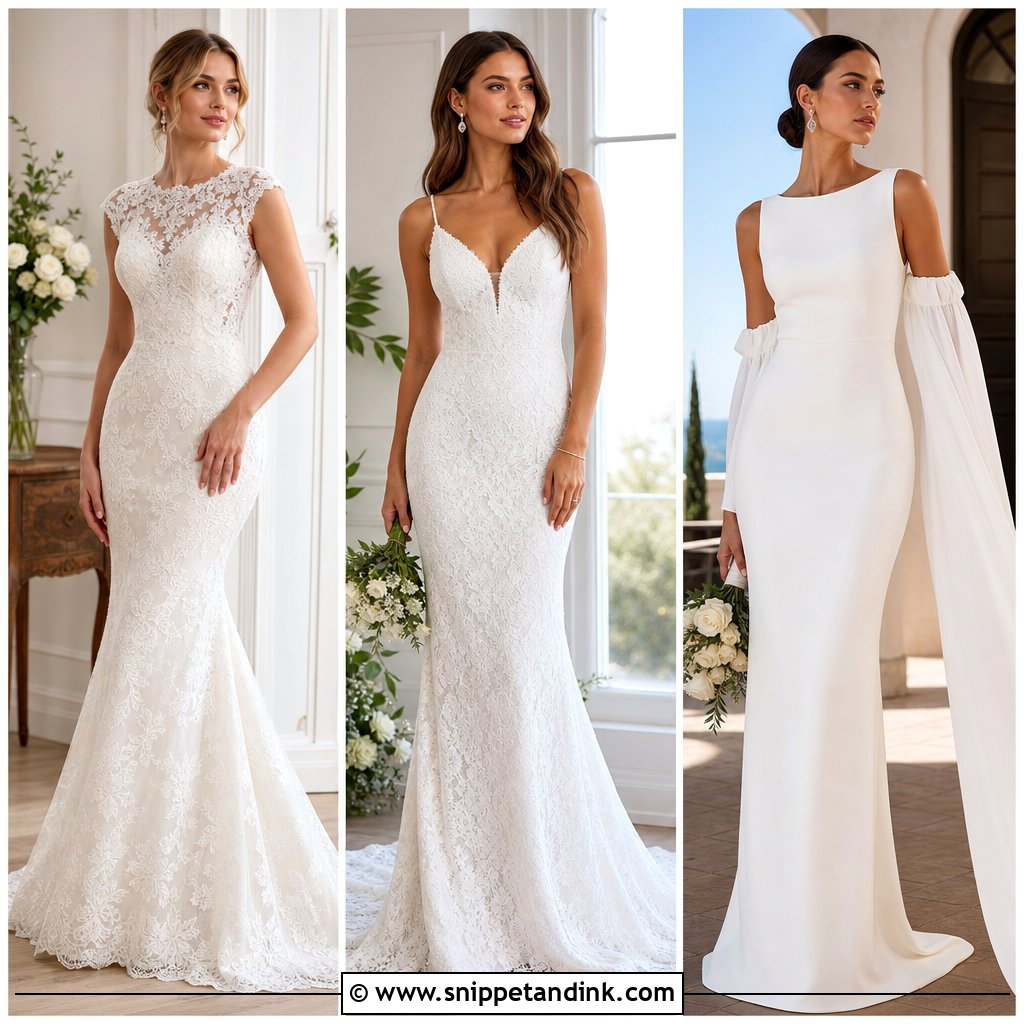
Capes do the job of a veil and add coverage too. A sheer floor-length cape over a strapless column, or an opaque satin cape over a sleeveless A-line, keeps the base dress plain while adding movement. Small earrings, closed-toe pumps and a low bun are enough. Most brides skip the veil with a cape, since the back already flows. Check the attachment closely. A cape fastened only at the neck can twist sideways as you walk, so I prefer one that also hooks at the shoulders. If it has a long train, decide who removes it before the first dance and where it goes afterward.
18. Backless Spaghetti Strap Satin Wedding Dress
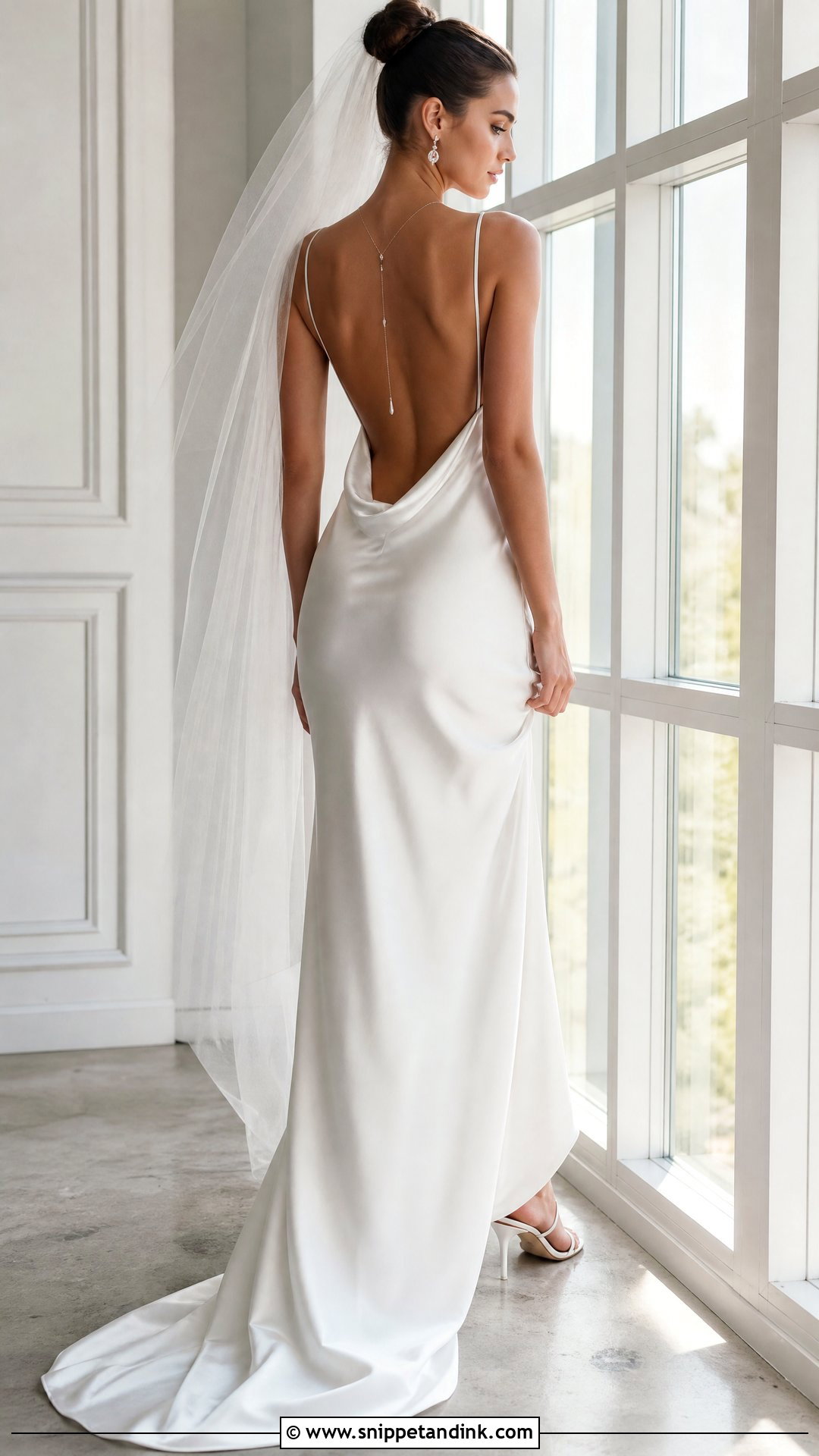
A low back is the one detail on a backless satin wedding dress with slender straps, and the front can stay simple with a straight, scoop or cowl neckline. Delicate drops, strappy sandals and a veil under a sleek bun suit it; a fine backward necklace adds a subtle touch. Standard bras won’t work with a low back, so choose a gown with built-in cups and real internal structure. Ask the tailor to set each strap separately, since most bodies aren’t perfectly symmetrical. The back edge should lie flat, not gape. Test it bending, sitting and lifting your arms, because that’s when a loose back edge shows.
19. Corset A-Line Satin Wedding Dress
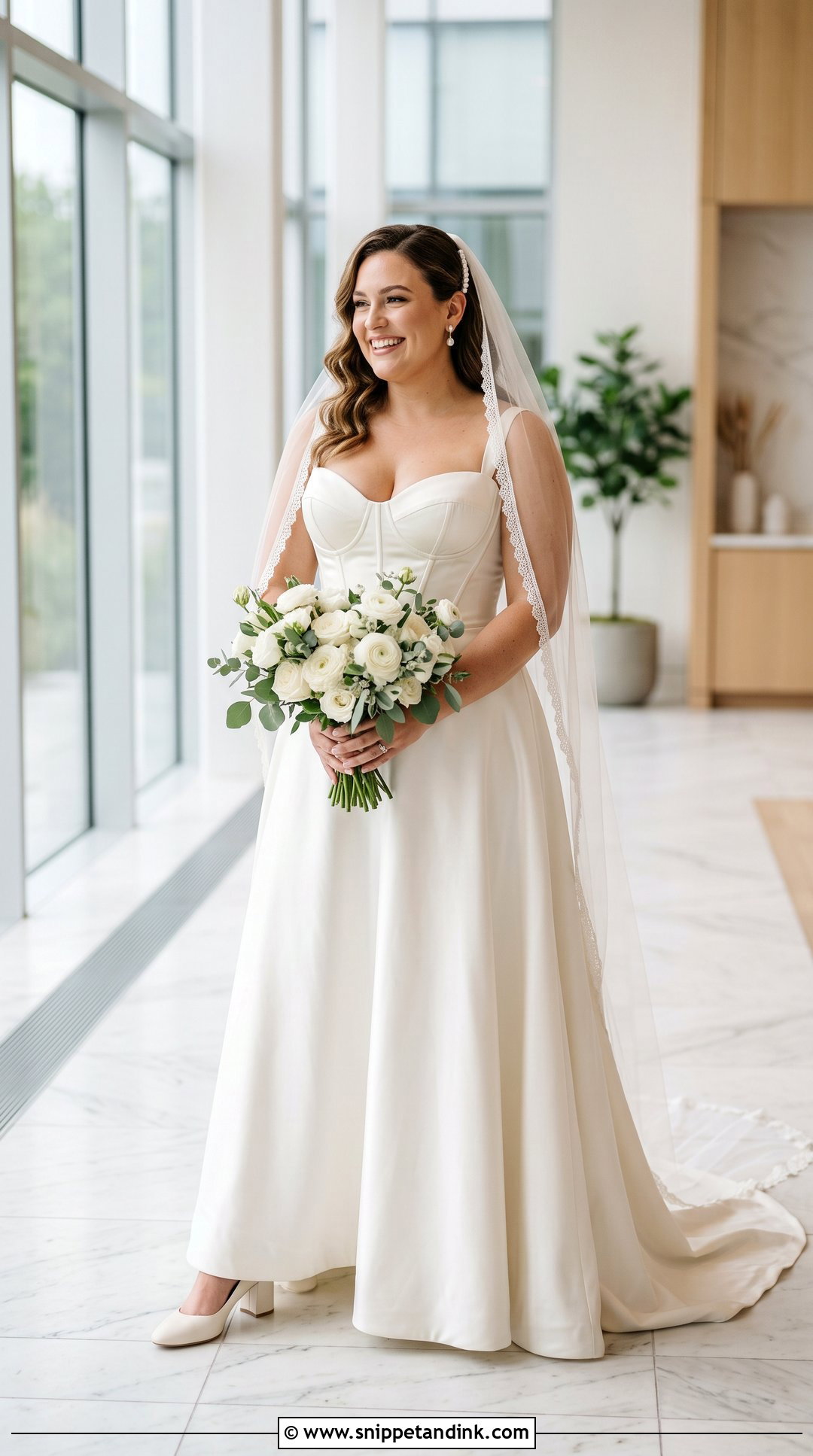
Visible structure up top and a forgiving skirt below make the corset A-line one of the most adaptable shapes in satin. Curved seams, supportive boning and a straight or sweetheart neckline give the bodice its shape; the skirt starts at the natural waist and widens gradually, with room through the hips but none of a ball gown’s bulk. Because the bodice and skirt can be fitted separately, it works across many sizes. Block-heel pumps, pearl earrings and a chapel veil finish it. A lace-up back adjusts on the day, while a zip looks cleaner. Make sure the bodice supports rather than squeezes. You should be able to breathe deeply, sit and eat a full dinner.

20. Modest Satin Wedding Dress With Sleeves
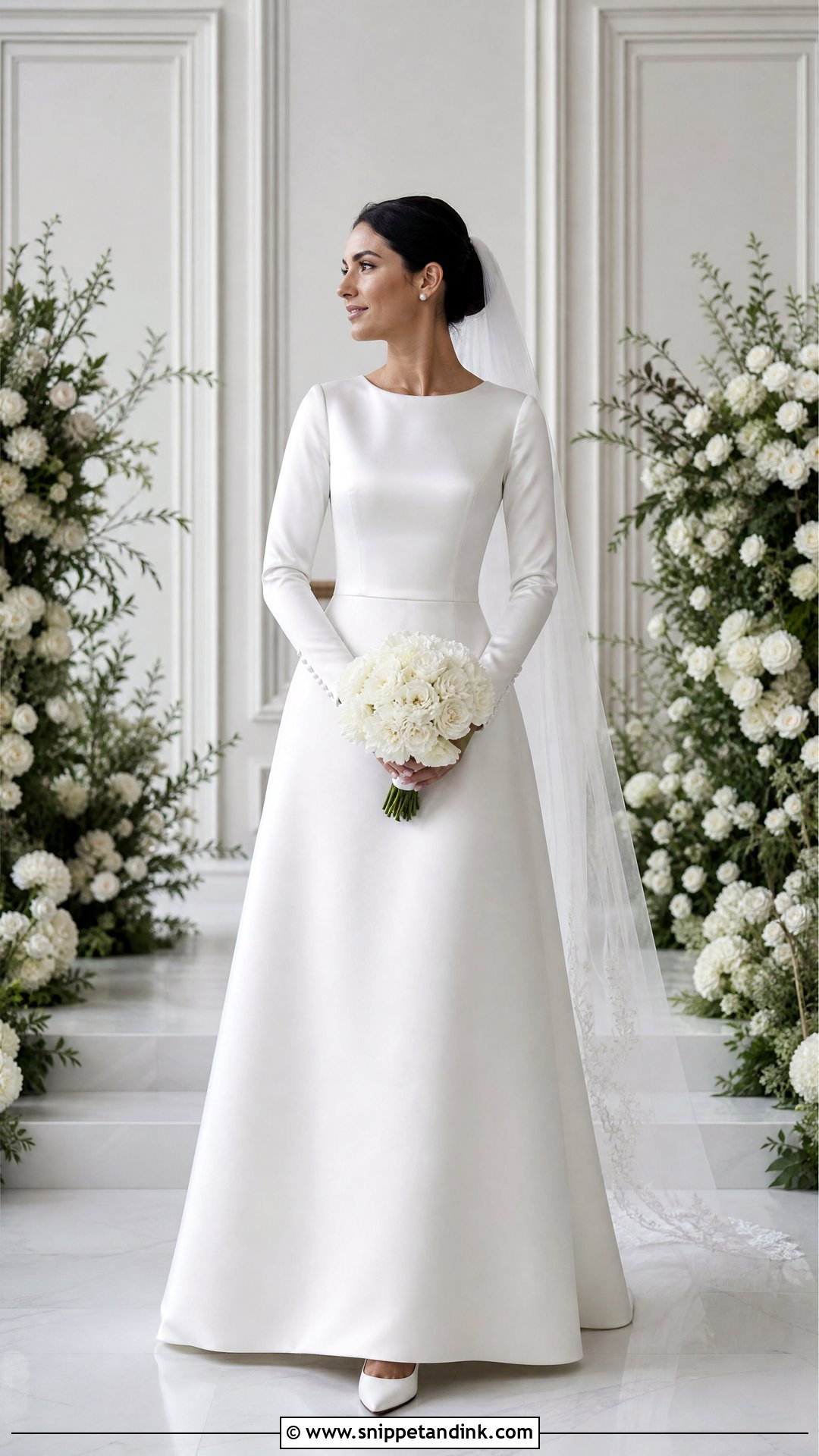
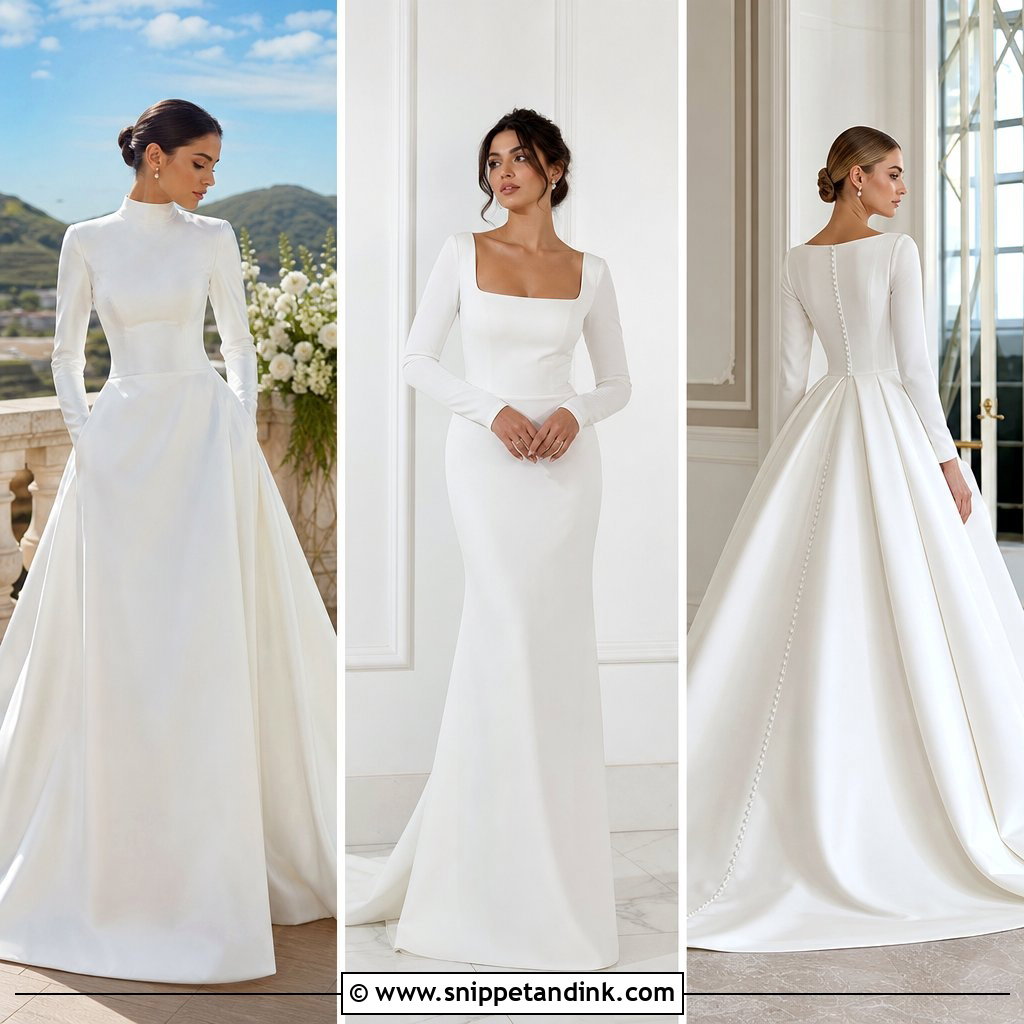
Full coverage can still look current in satin. A bateau, jewel or gently raised neckline, long fitted sleeves and a softly defined waist set the shape, over a clean A-line for movement or a column for a sharper look. Covered buttons at the wrists and back give a quiet bridal detail. Pearl studs, closed-toe pumps, a smooth bun and a simple cathedral veil complete it. Heavy satin with full sleeves gets warm, so ask whether the lining can be a lighter fabric. The real risk with a covered gown is looking swamped. Precise tailoring at the shoulder seam, cuffs and waist keeps it neat rather than oversized.
What Shows Through Plain Satin
Plain satin almost always reveals something underneath at the first try-on: a seam, a strap, the edge of shapewear. Bring the underwear you plan to wear to every fitting, and stand under a bright light with a mirror behind you. Laser-cut, skin-tone pieces disappear best. White underwear often shows through ivory satin more than a nude tone does.
If your gown has built-in cups, ask the seamstress to stitch them in their final position once your fit is settled. Loose cups shift and leave a visible ridge.
Getting Creases Out on the Wedding Morning
Satin creases in transit, even when it travels in a garment bag. Hang the gown by its inner loops, not the straps, as soon as you arrive. Steam it from the inside of the skirt where you can, holding the steamer a hand’s width away and using distilled water, because drips leave marks on silk satin that won’t steam out. Never iron satin directly; if a crease is stubborn, a pressing cloth and low heat on the reverse is the most I’d try. Leave this job for someone calm, and finish it before makeup starts.
Satin Rewards Good Fit More Than Any Trim
Plain satin puts all the attention on shape, fit and workmanship. A sculpted ball gown feels grand; a fluid slip dress is softer and more relaxed. Neckline, fabric weight, internal support and alterations matter more here than with any embellished gown, because there’s nothing else for the eye to land on. Once the silhouette is right, pick shoes, jewelry, a veil and flowers that respect its clean design, either all minimal or with one deliberate statement. Above all, make sure you can move in it and still feel like yourself after hours of wear.
You'll Like These Ideas:




Leave a Reply