
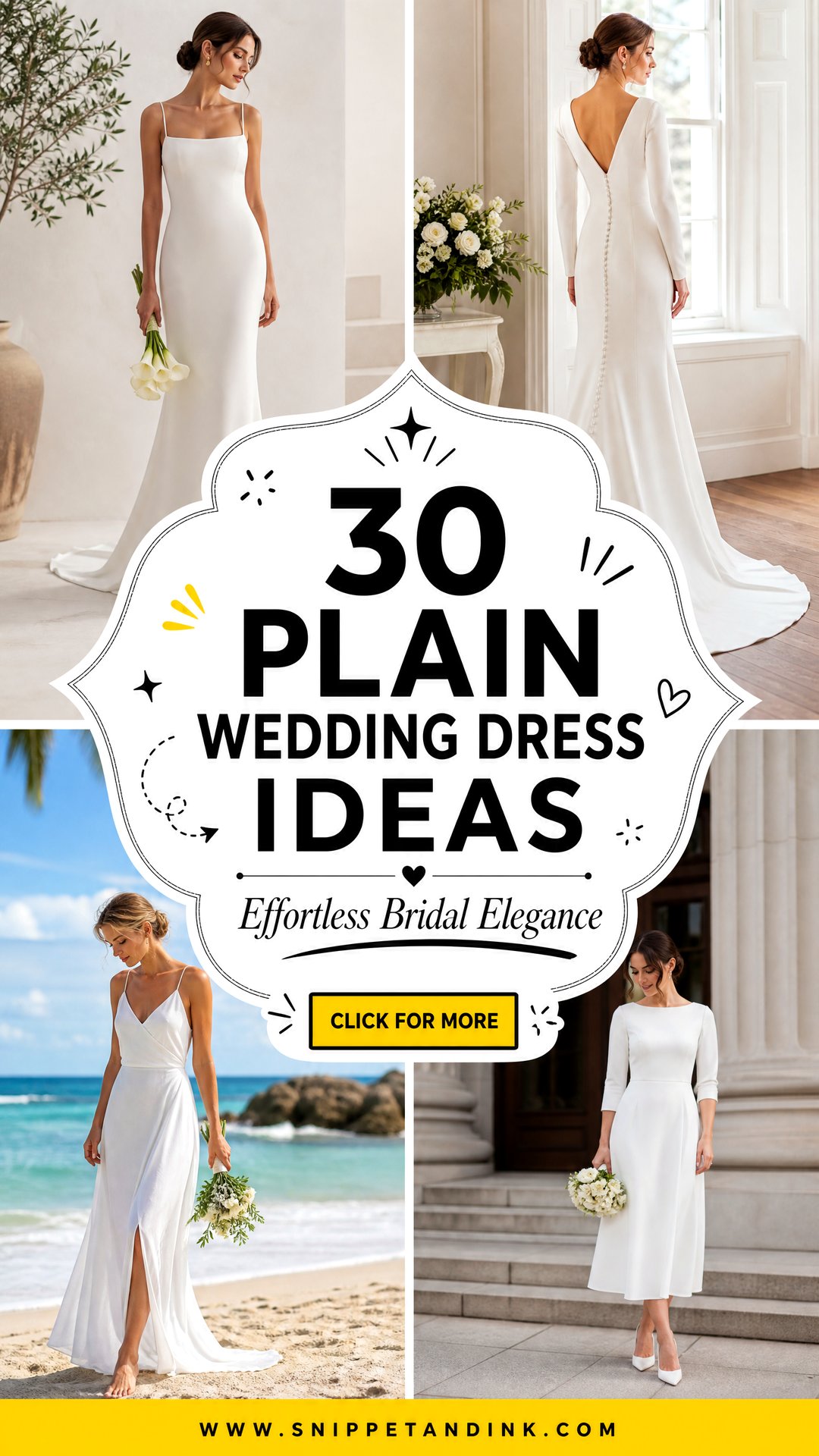
A plain wedding dress has nowhere to hide, and that is exactly why I love styling one. With no beading or lace to pull the eye, the fabric, the cut and the fit carry everything, so a satin slip reads sleek and city-ready while a clean ball gown still feels grand. What I tell brides at the first appointment is that simple is not the same as easy: a minimal gown asks more of the tailoring and gives you more freedom with the veil, earrings and shoes. Below are thirty simple silhouettes and details I’d actually put in front of a bride, with notes on how each one behaves once you’re wearing it.
What a Plain Gown Shows That a Lace One Hides
Embellishment covers a lot. Lace disguises a slightly uneven seam, beading draws the eye away from a bodice that pulls, and texture hides the faint line of a bra strap. Take all of that away and every fitting detail is on display, which is why I judge a plain dress differently in the fitting room.
- Look at the side seams in a three-way mirror. They should run straight down the body, not twist toward the front or back.
- Check for drag lines across the bodice and hips. Diagonal ripples mean the dress is too tight in one spot, and plain satin shows them under flash.
- Wear the actual underwear and shapewear you plan to buy, even at the first appointment. Bias-cut satin and thin crepe will show every edge.
- Sit, bend and lift your arms. A plain bodice that gapes or rides up has no lace to soften the problem.
- Ask to see the fabric in daylight by a window. Some ivories look grey or yellow outdoors and only warm under shop lighting.
On timing, most made-to-order gowns take several months to arrive, so I suggest ordering six to nine months out where you can. Alterations then usually run across two or three fittings, starting around two months before the wedding. Bring your shoes to every one, because the hem is measured against them.
1. Plain Satin Slip Wedding Dress
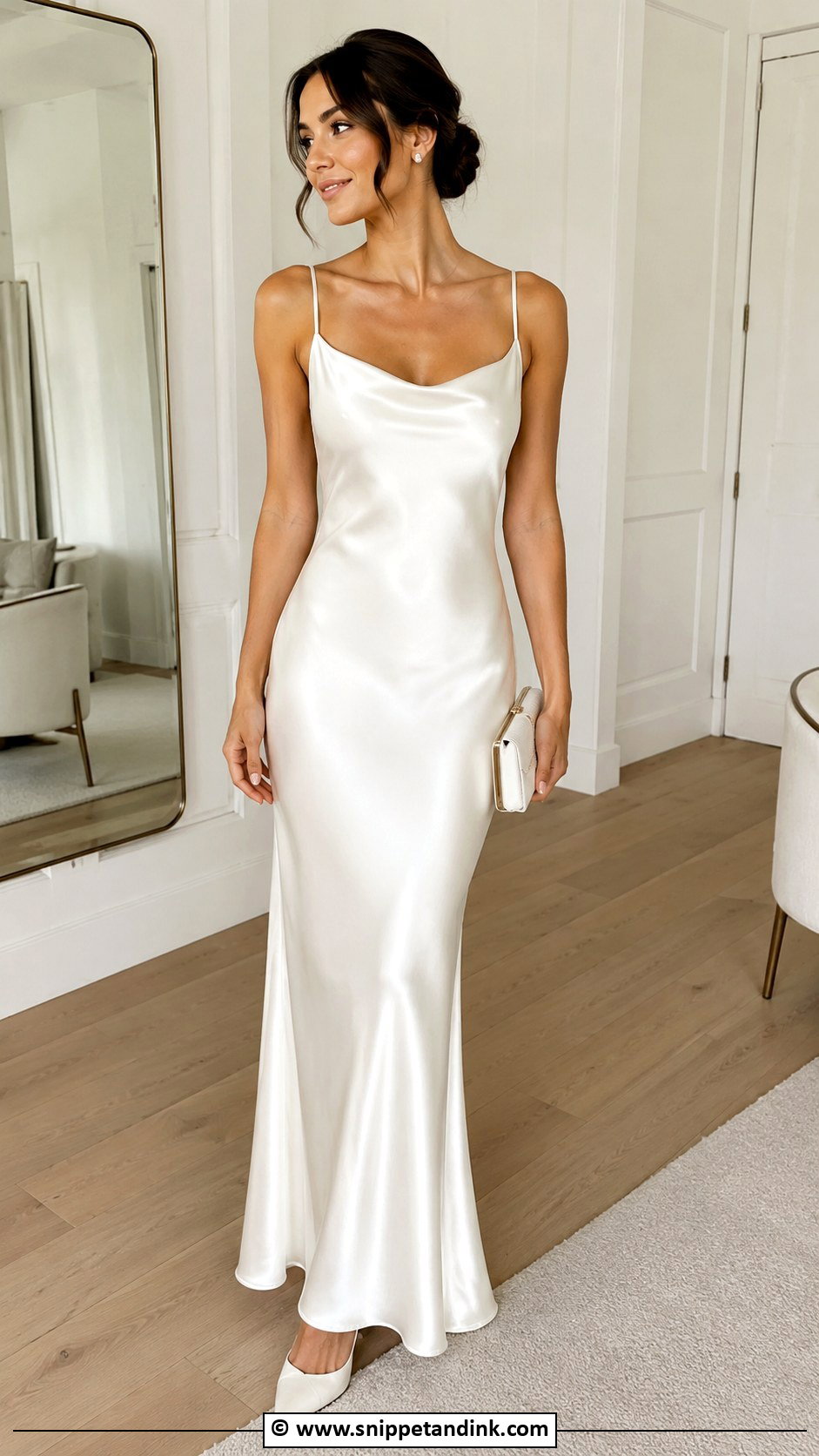
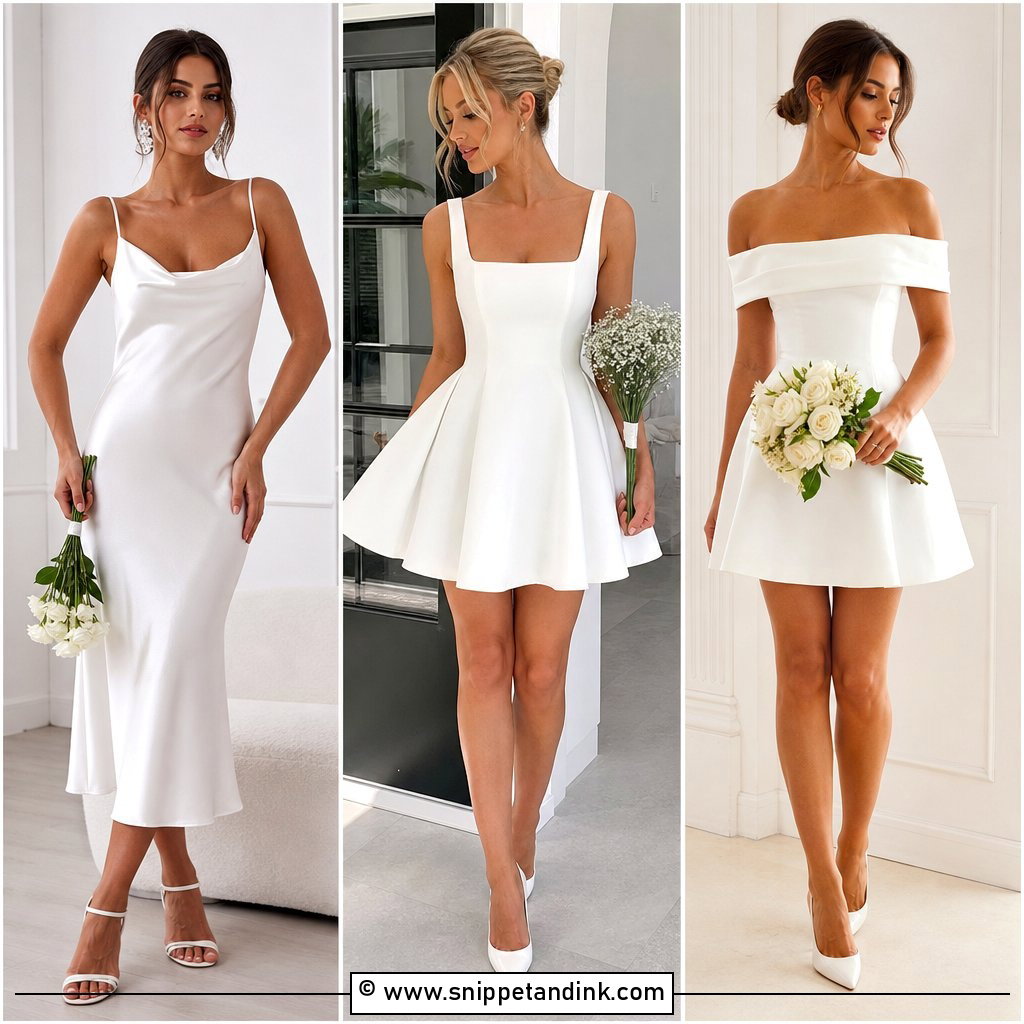
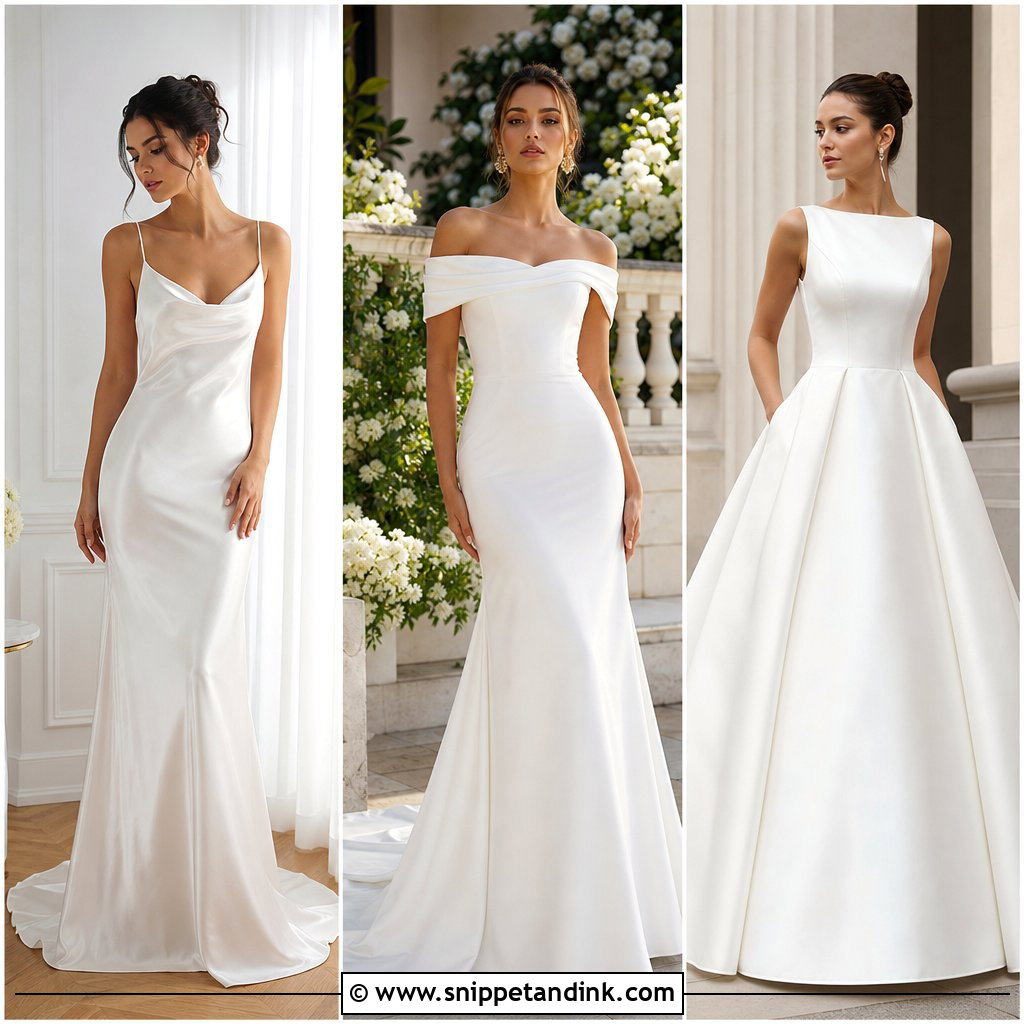
Bias-cut satin is the reason this dress skims rather than clings, because cutting the fabric on the diagonal lets it stretch and fall with you. The catch is that bias satin shows every line underneath, so I always do the first fitting in the exact underwear she plans to wear. Thin straps or a soft cowl suit it best. I keep the styling spare: pointed white heels, pearl studs, a smooth low bun and a small structured clutch, with an ivory wrap or cropped jacket if the evening turns cool. City ceremonies and small dinners are where it feels most at home.
2. Plain Crepe Column Wedding Dress
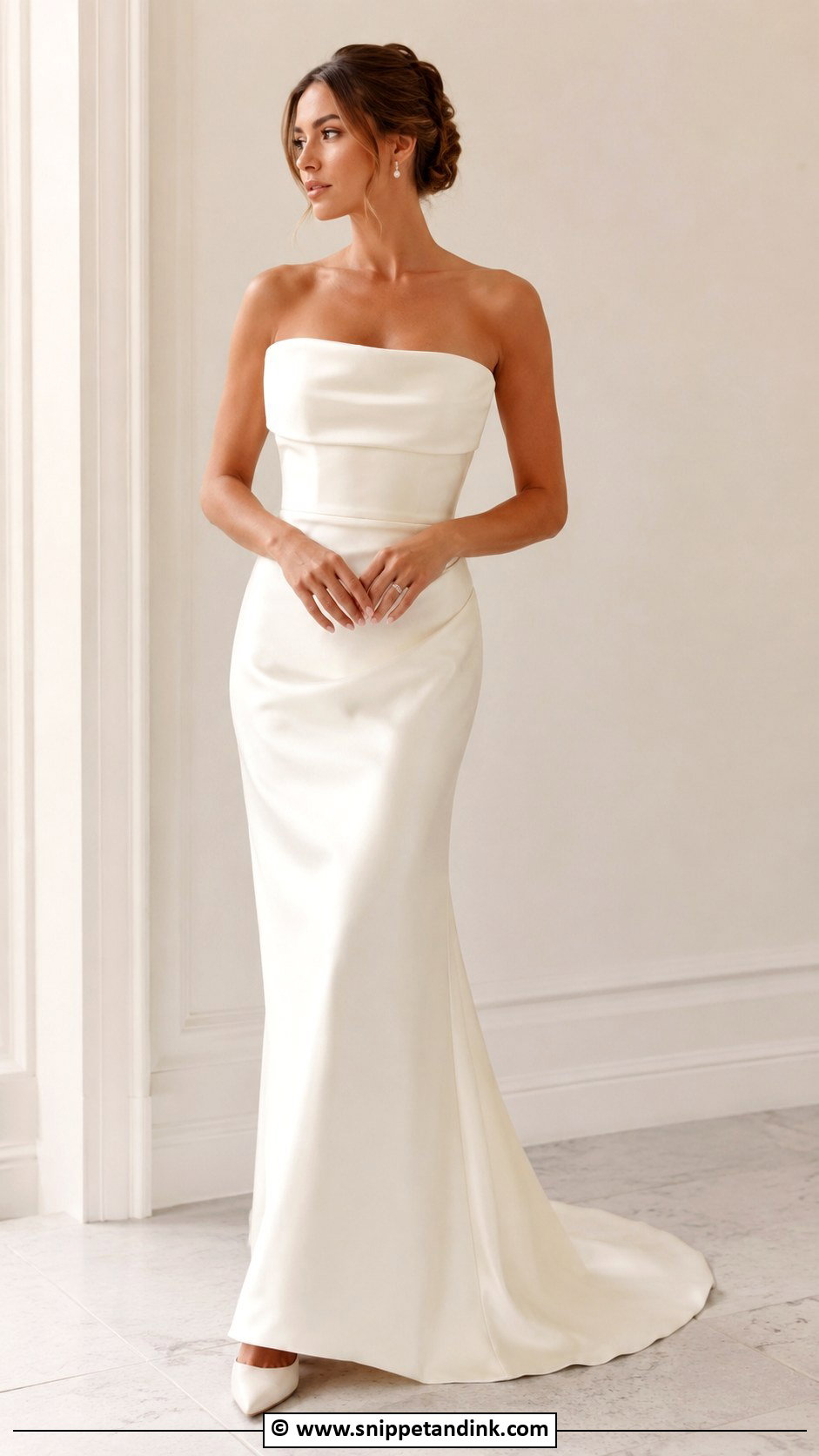
Crepe is the fabric I reach for when a bride wants structure without shine. It has enough weight to hang straight from the shoulder to the floor, so a column cut gives one long unbroken line from any angle. I’d pair it with a square, bateau neckline or a simple high neck, then add slingbacks, a low chignon and slim drop earrings. One honest warning: lighter crepes can crease at the hip after a long seated dinner, so ask the shop how the sample has held up. A long veil or removable cape adds drama for the aisle.
3. Plain A Line Wedding Dress
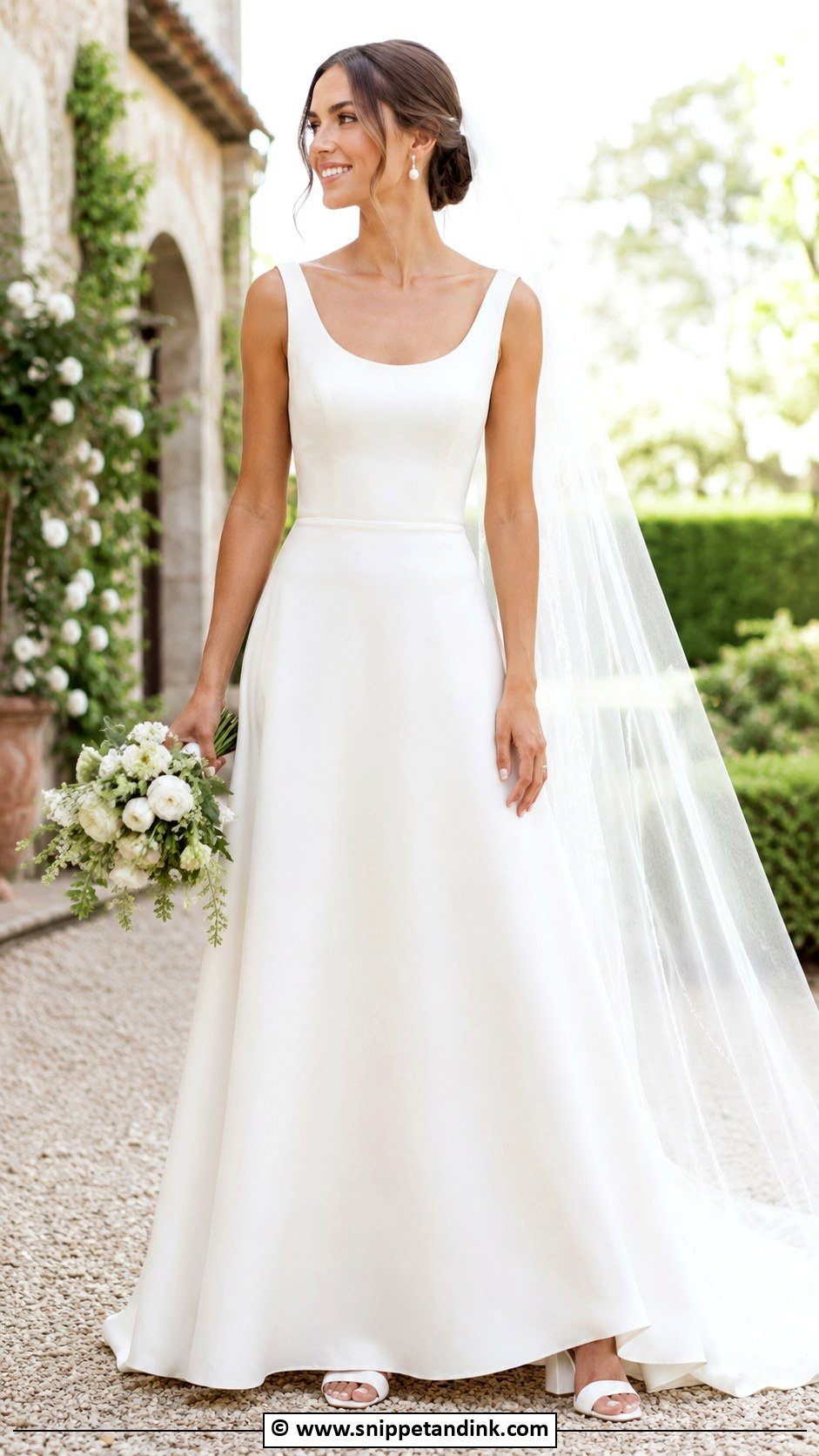
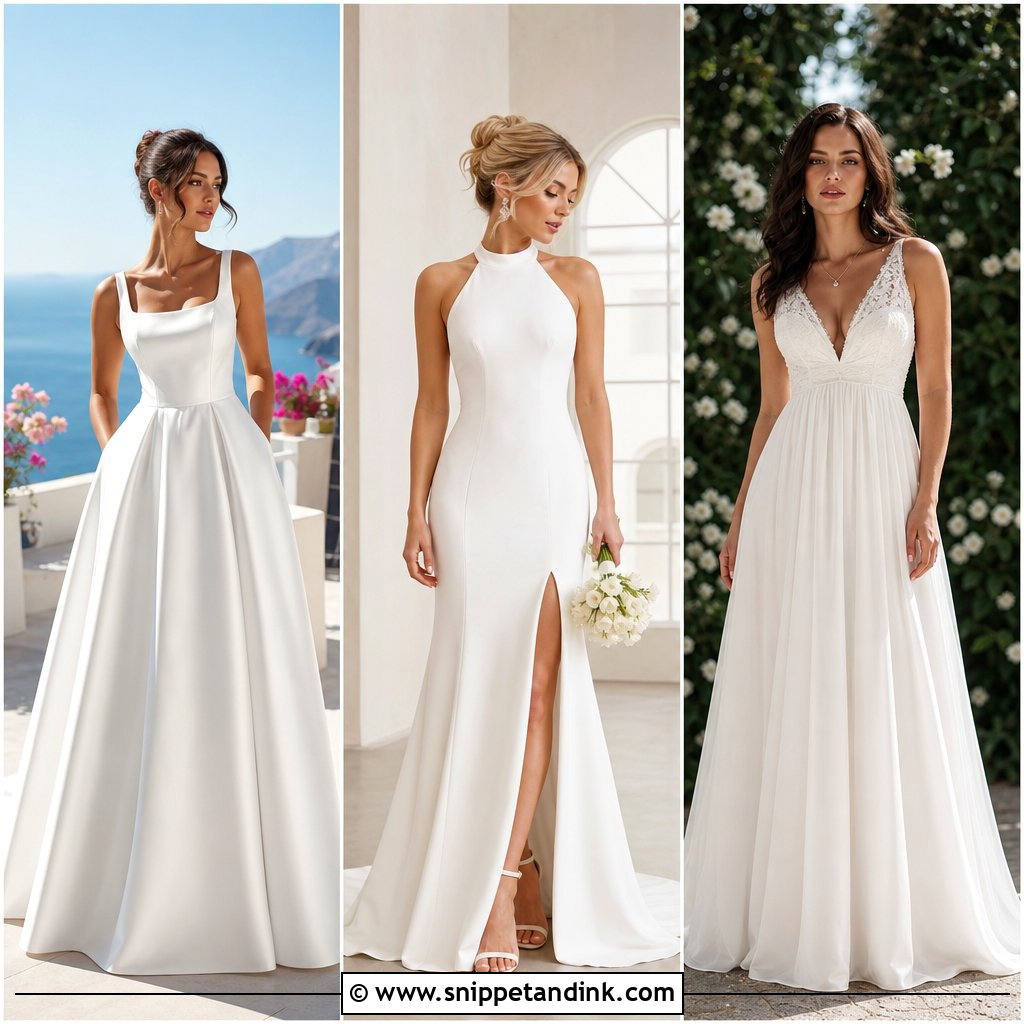
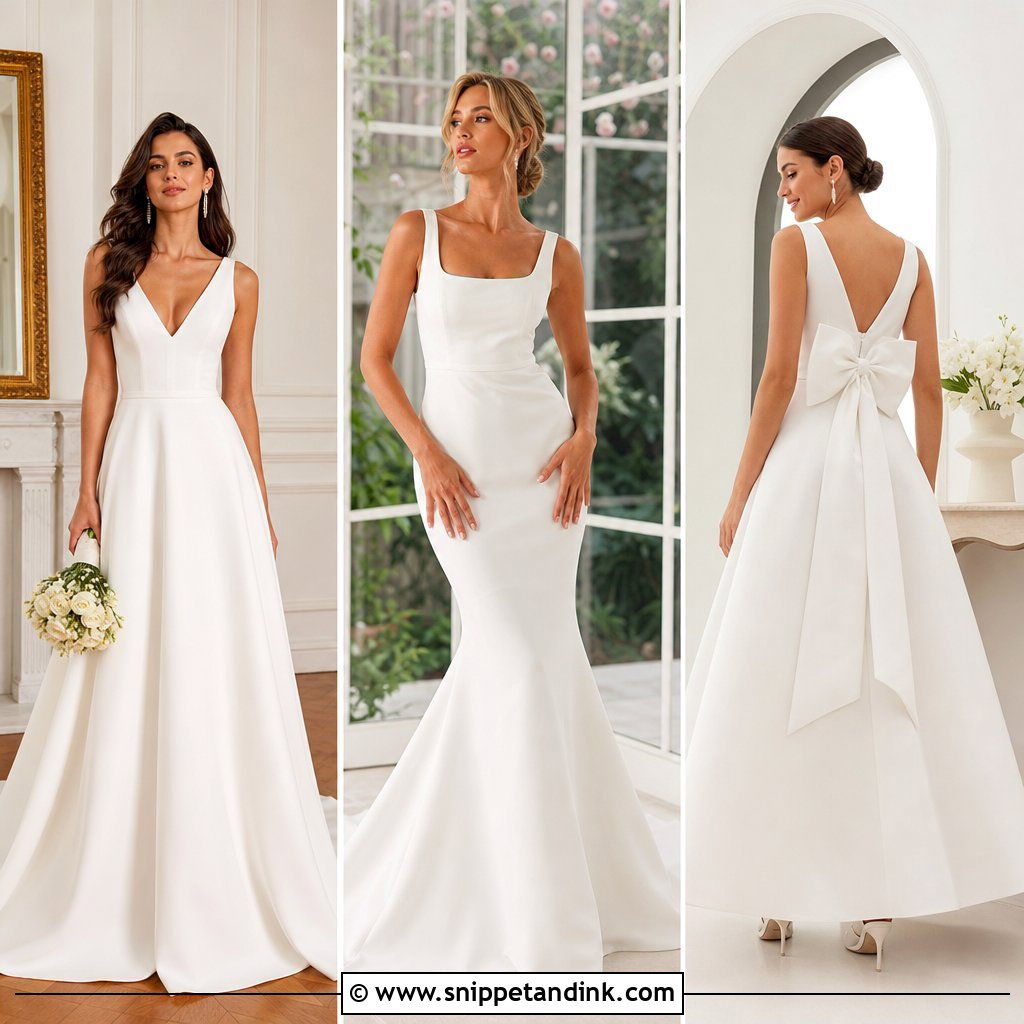
If a bride is unsure where to start, I usually pull an A line first. The fitted bodice sets the waist, and the skirt falls away from the hips, so walking, sitting and dancing all feel normal. Matte satin and mikado give it a crisp shape; organza makes it lighter but marks more easily on outdoor ground. A scoop or square neck keeps it fresh. Block heels, a soft veil and small pearl earrings are all it needs, which is why it works from a garden to a ballroom.
4. Plain Ball Gown Wedding Dress
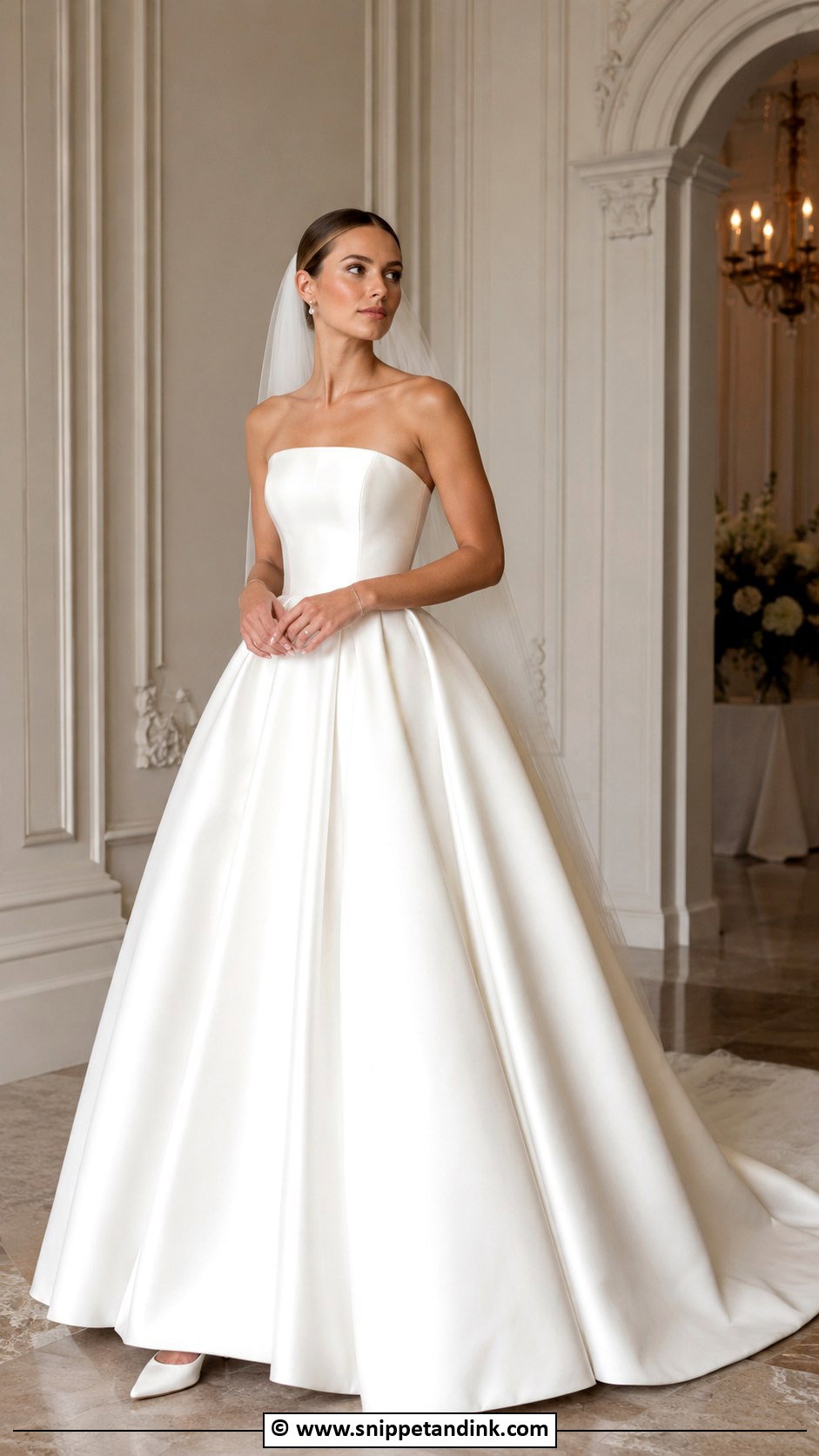
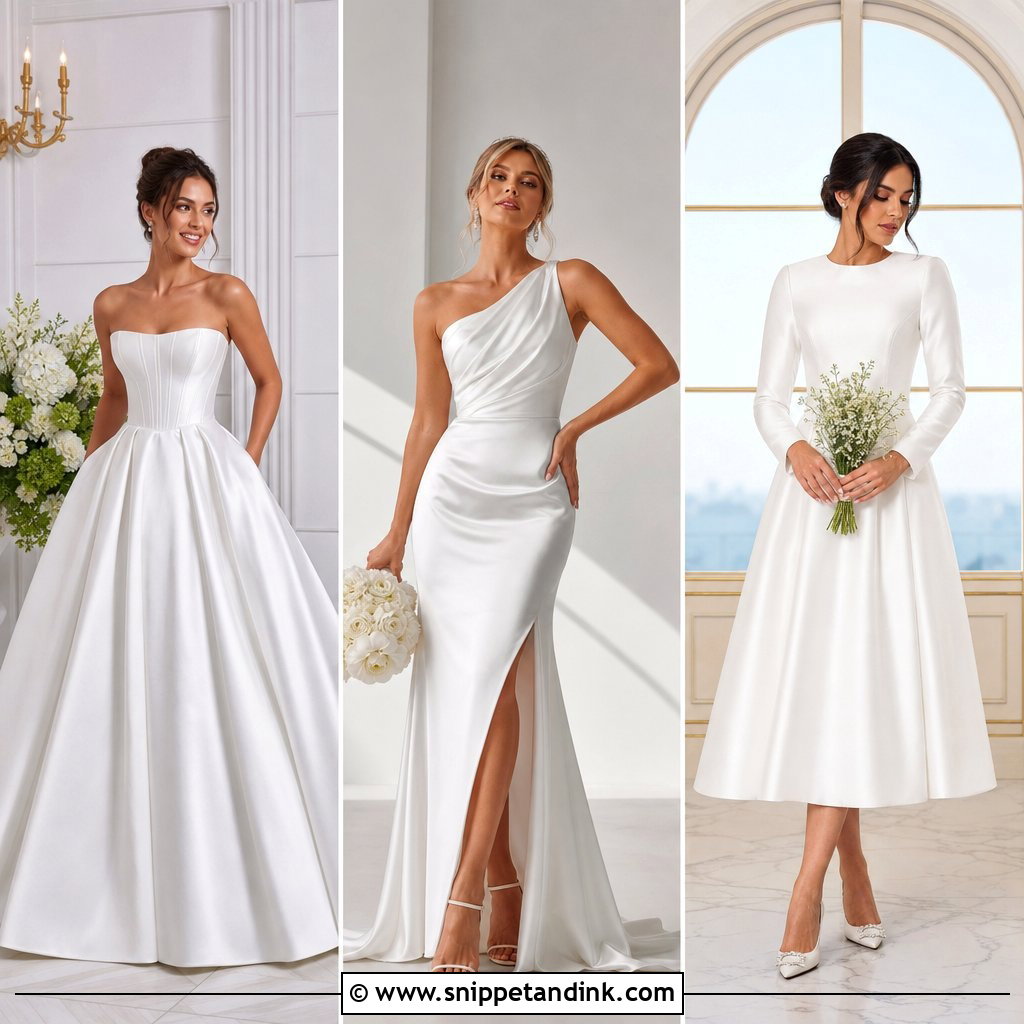
With a plain ball gown, the volume does the talking, so I keep everything above the waist quiet. Satin and mikado are the fabrics that actually hold a full skirt without collapsing by evening; softer fabrics need a heavier petticoat, which adds weight you’ll feel by the third hour. A strapless, square or scoop bodice keeps the line clean. Minimal jewelry, sleek heels and a classic veil finish it. I’d only suggest this for a venue with wide aisles and room to turn, because a full skirt needs space at tables and doorways too.
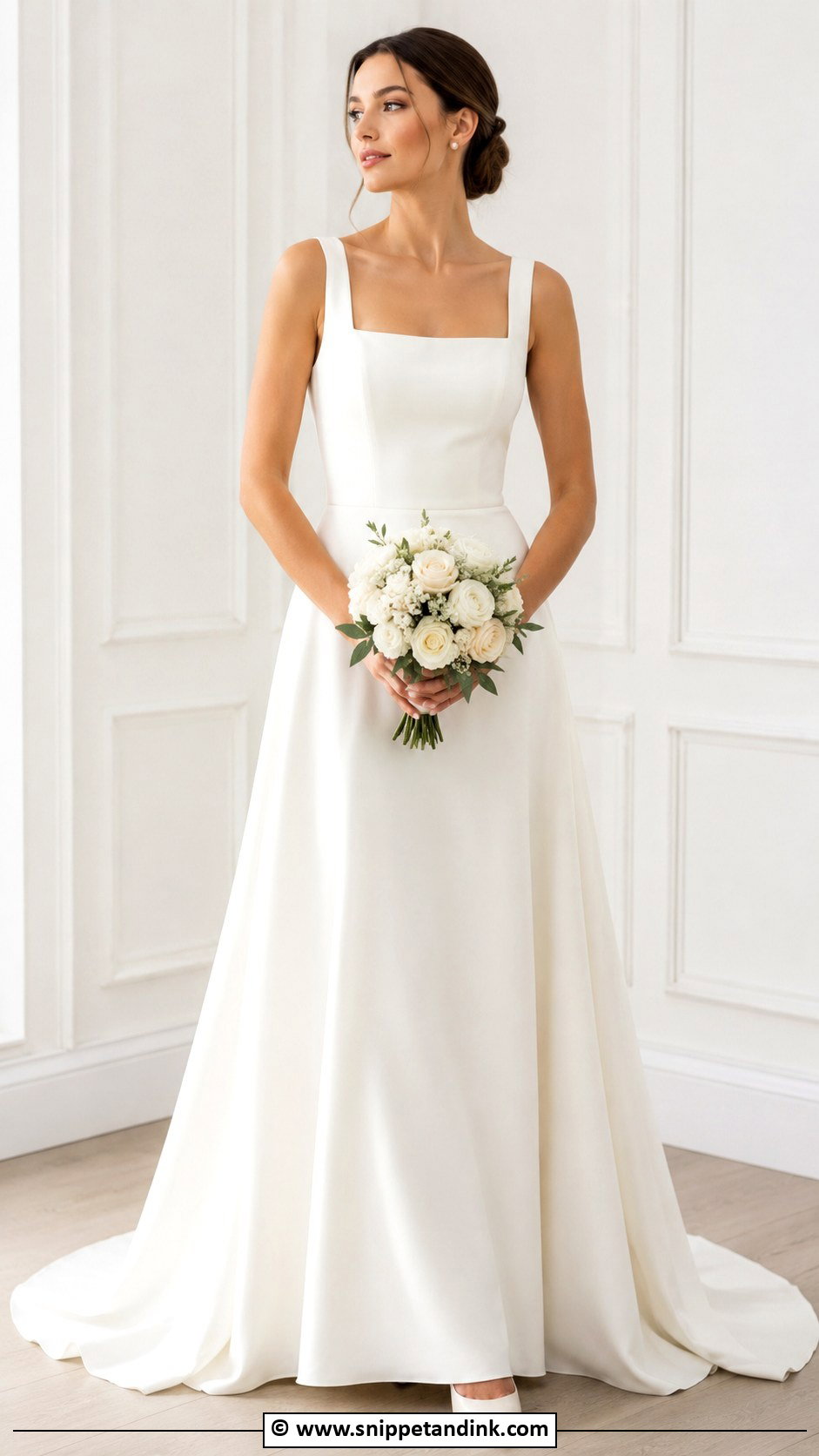
5. Plain Square Neck Wedding Dress
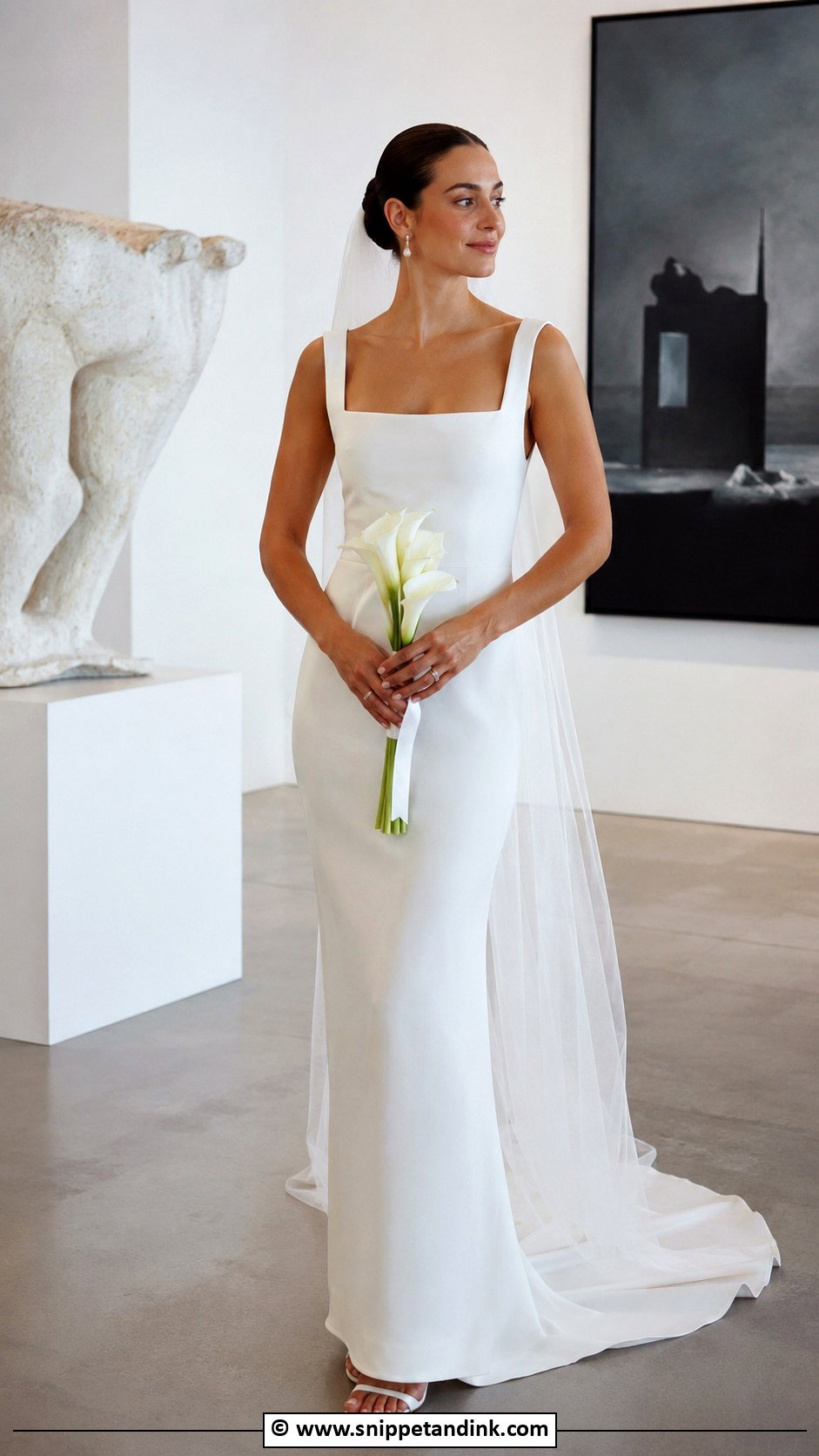
A square neck frames the collarbones with a crisp, architectural edge, and it sits well on sheaths, A lines and simple ball gowns. The detail I check at the fitting is whether the corners lie flat when she lifts her arms; if they gape, the bodice needs taking in at the side seams. Wide straps in ivory crepe or satin give the most support. Pearl studs, a sleek veil and white pumps are enough. Pulling the hair into a low bun keeps the neck and shoulders visible, which is the whole point of the shape.
6. Plain Strapless Wedding Dress
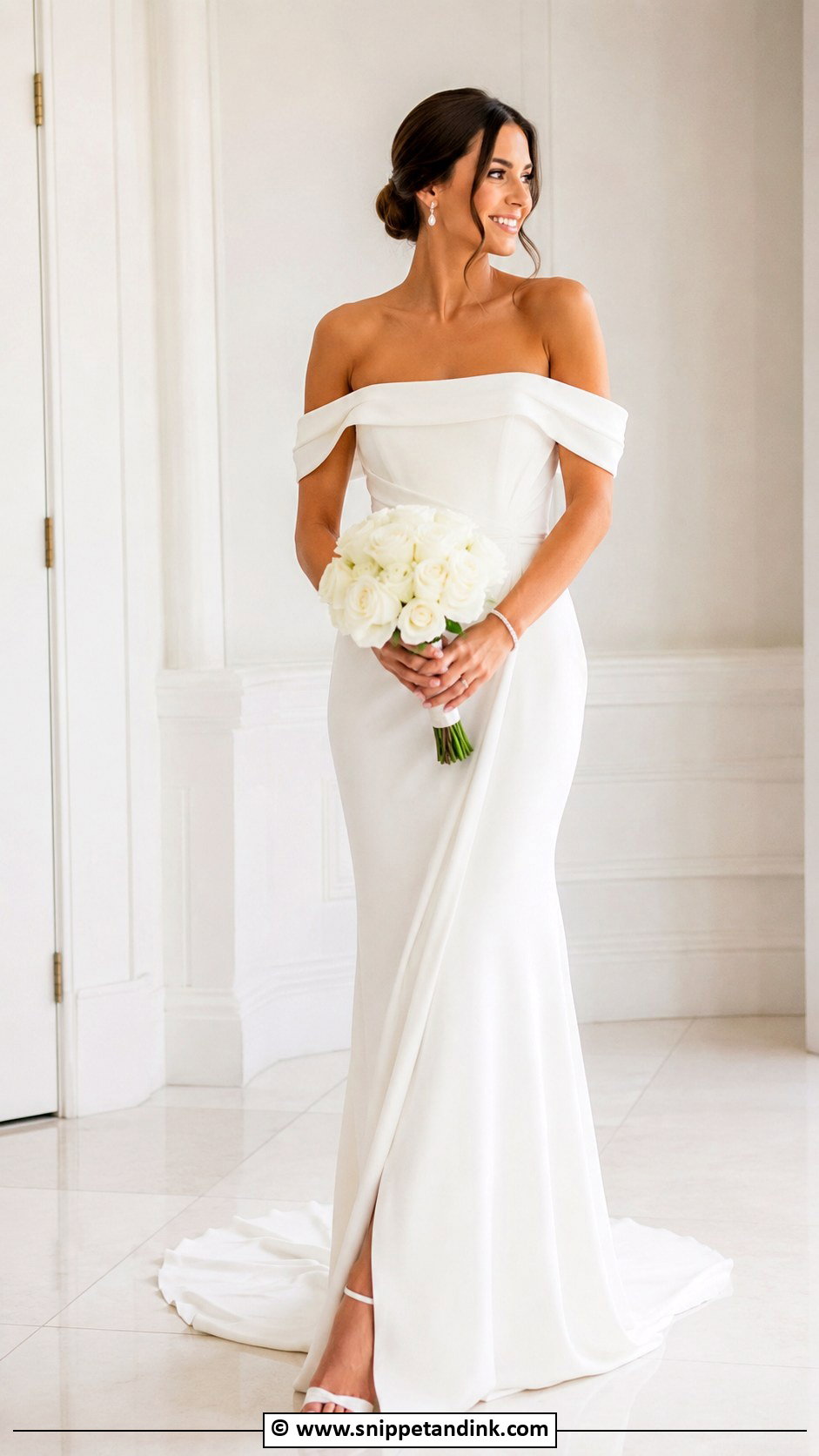
Strapless is the most personalizable neckline I work with, because the open shoulders leave space for anything from pearls to a statement veil. Satin reads classic, crepe reads sculpted. What decides whether you’ll enjoy wearing it is the inner structure: boning and a waist stay should hold the bodice up so you are not tugging it all night. I’d skip strapless for anyone who hates feeling held in. Pointed heels, a soft updo and a small bouquet are plenty, and detachable sleeves or a sheer wrap give you a second look for the reception.
7. Plain Long Sleeve Wedding Dress
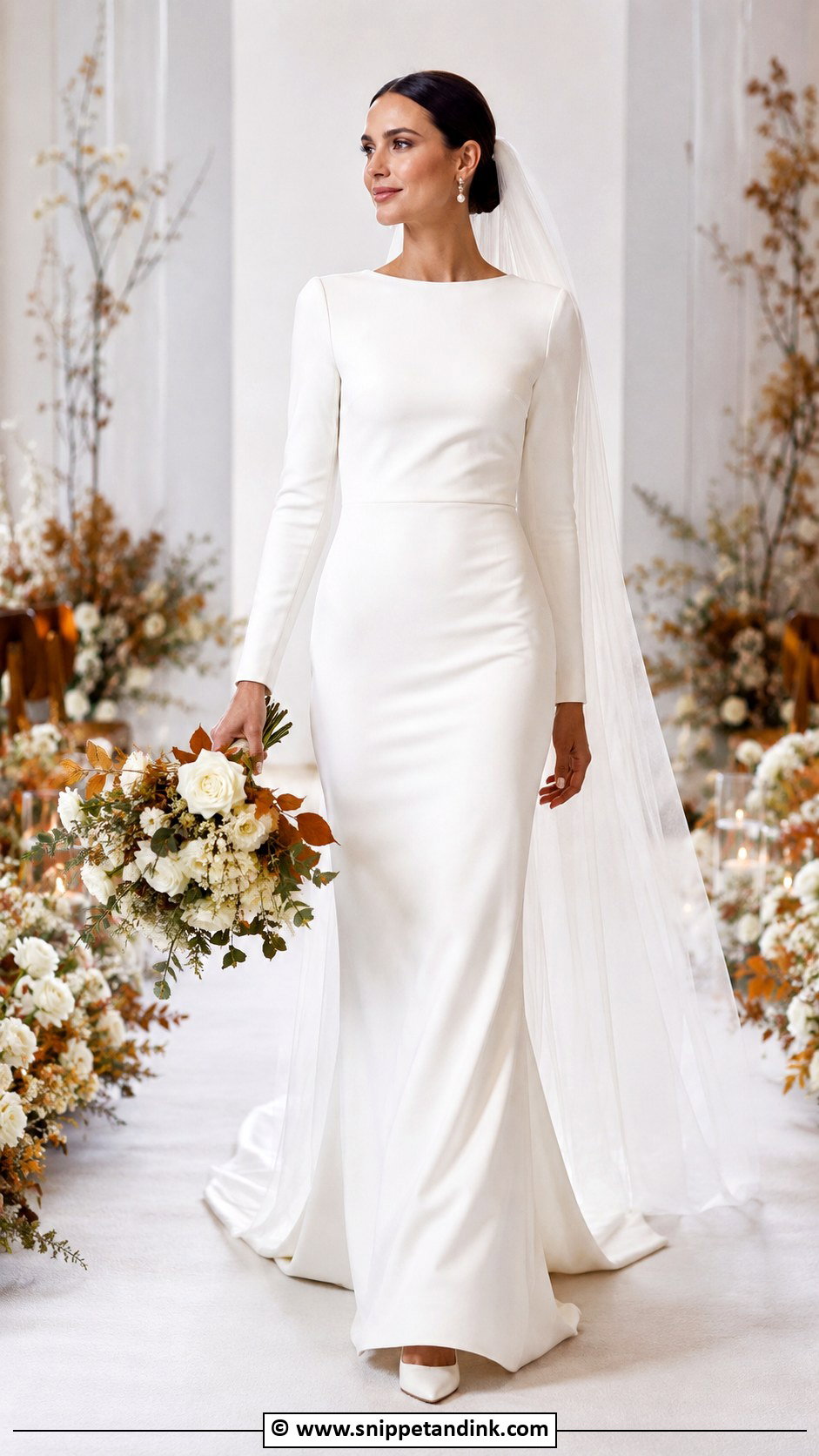
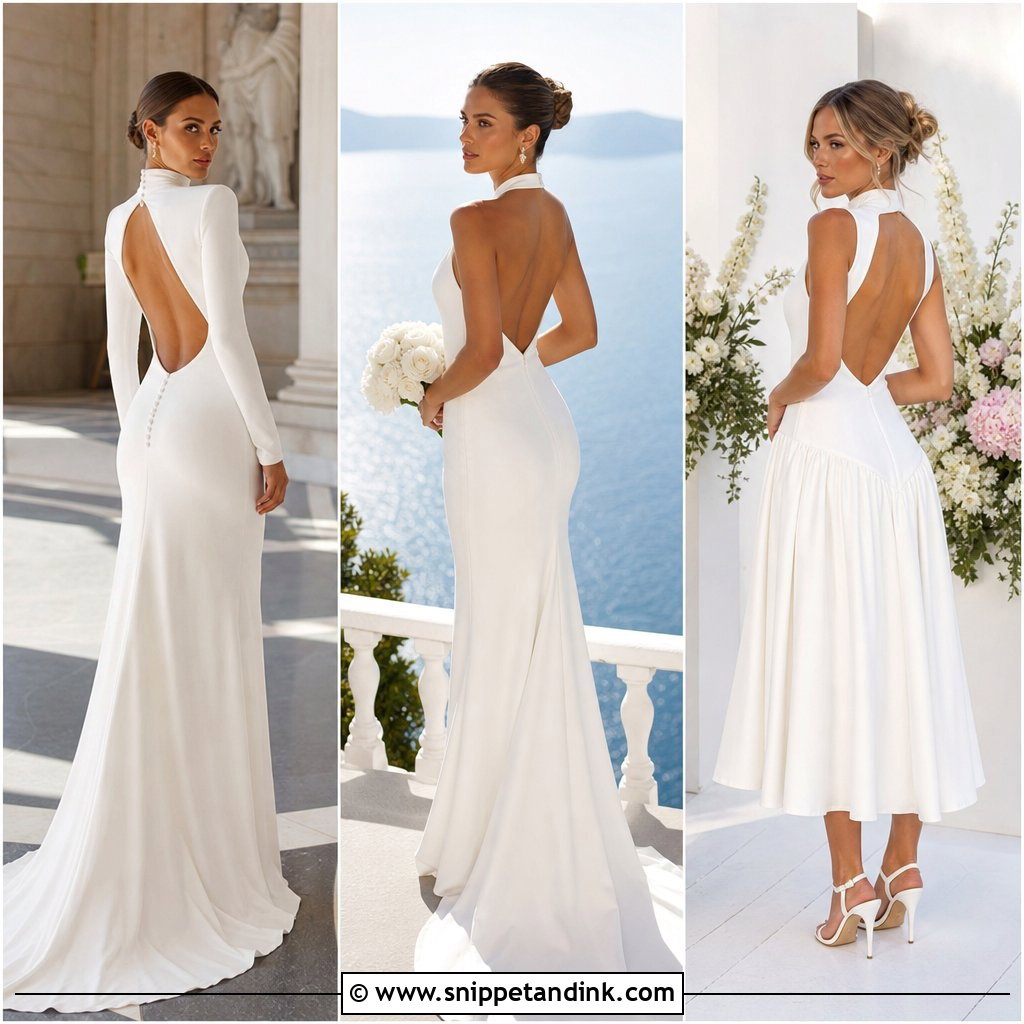
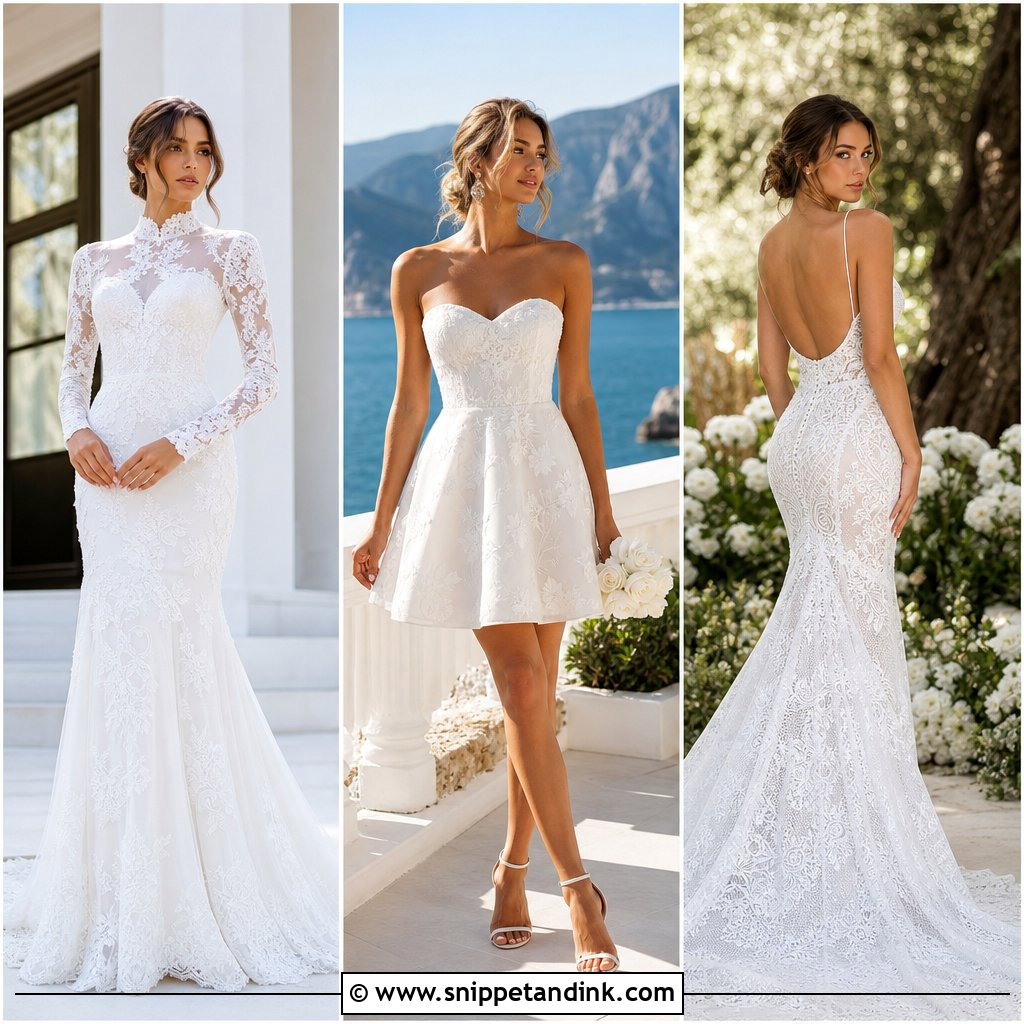
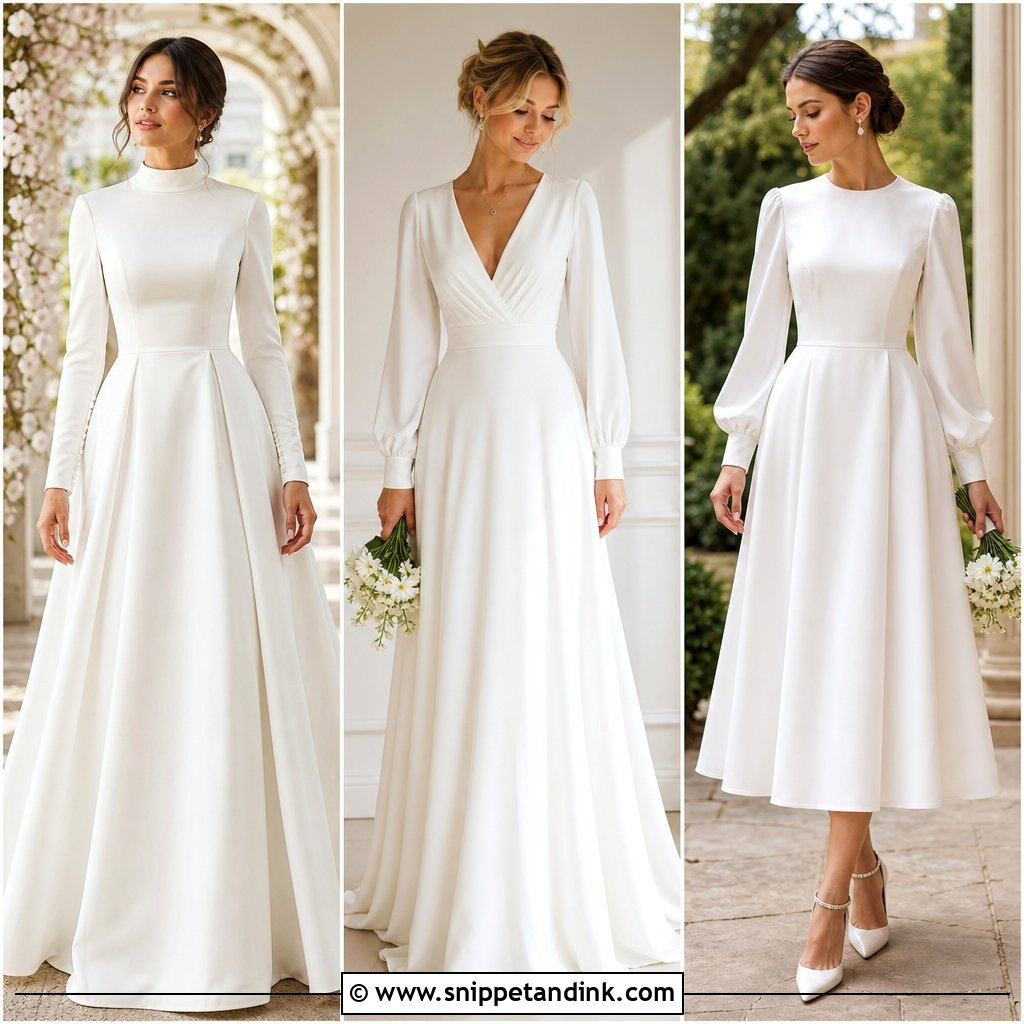
Long sleeves bring coverage without needing lace. I steer brides toward smooth crepe, satin or a fabric with a little stretch, since a fitted sleeve with no give restricts lifting your arms for a hug or a bouquet toss. A plain long sleeve wedding dress sits well with a high neck, a boat neck or a deep back, and it makes sense for autumn, winter and formal indoor venues. Closed-toe heels, pearl drops, a low bun and a long veil complete it. On a fitted cut, a short train balances the sleeves.
8. Plain High Neck Wedding Dress
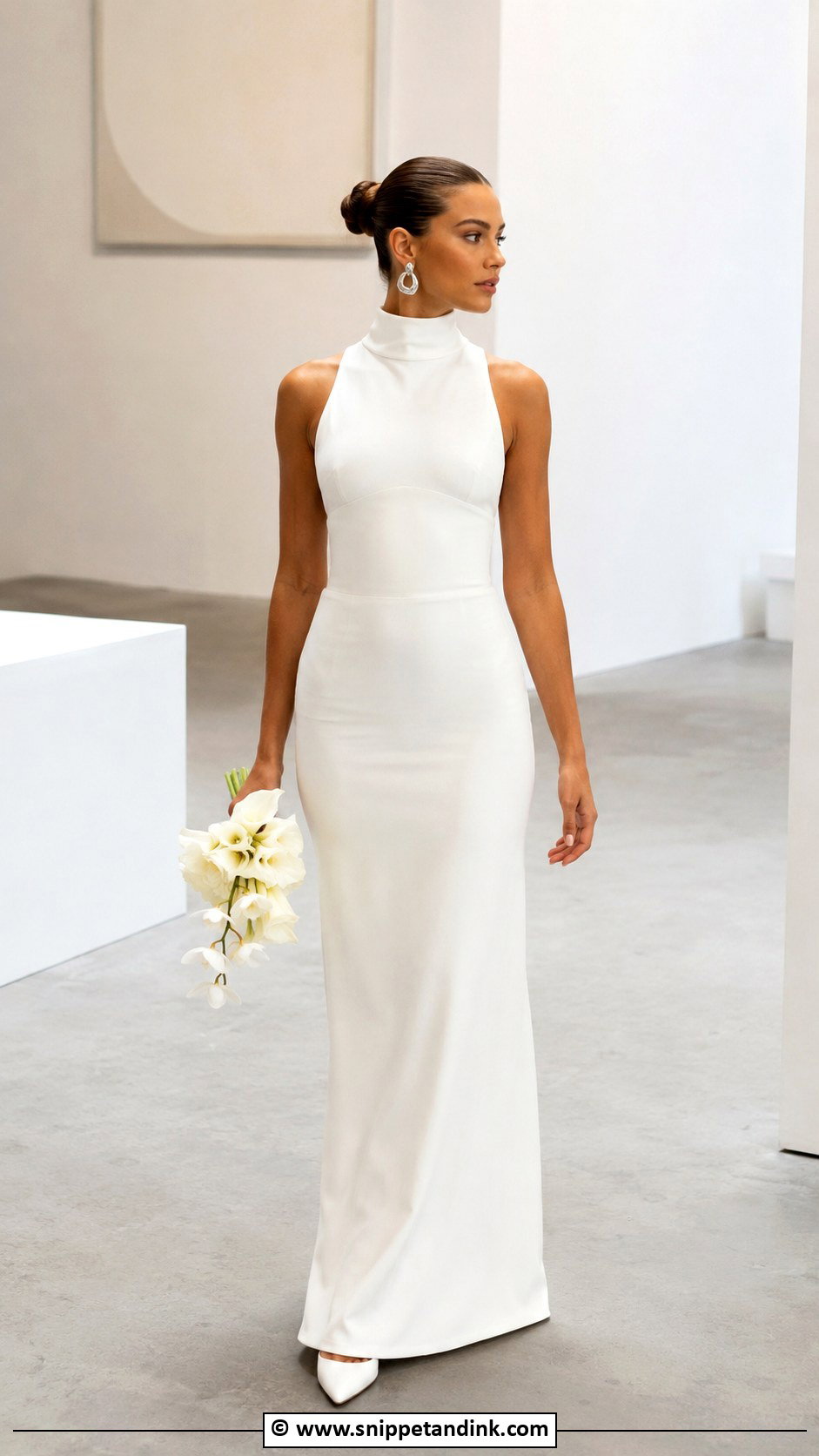
A covered neckline lengthens the whole frame and makes a simple dress look deliberate. It needs a fabric that lies flat at the throat: crepe, satin or soft jersey all behave. Because the neck is covered, I skip necklaces and give the bride sculptural earrings instead. The veil should start at the crown or the back of the head so it doesn’t fight the collar. A column cut keeps it sharp; a fuller skirt makes it more traditional. Gallery venues and evening city weddings suit it, and I’d hesitate in high summer heat.
9. Plain V Neck Wedding Dress
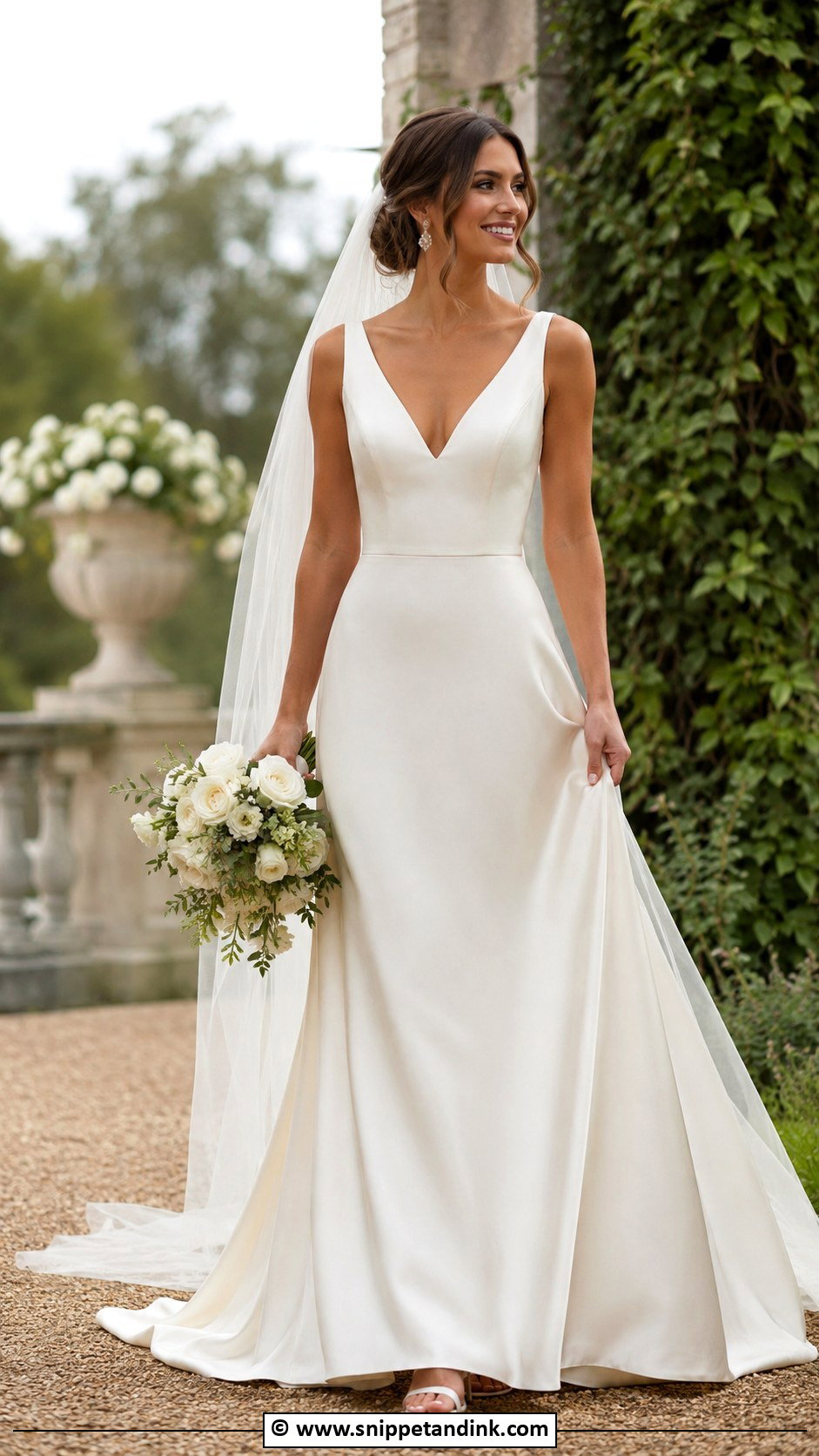
The V neck is the shape I suggest to brides who feel boxed in by straight necklines. It draws the eye down and lengthens the upper body on almost any frame. A modest V feels classic, while a deep plunge needs tape or built-in mesh, and I always test it with the bride bending forward. Satin makes it softer; crepe gives it an edge. Slim heels, delicate earrings and a half-up style keep the face open. A sheer scarf in place of a veil adds movement outdoors.
10. Plain Off Shoulder Wedding Dress
Off shoulder necklines put the detail into the shape itself, so there is no need for sparkle. Satin, mikado or stretch crepe all hold the band in place. The fitting question I always ask is: can you raise your arms to shoulder height? Many off shoulder bands pin the upper arm, which matters for hugging guests and dancing. A fitted version feels grown-up, an A line version softer. Drop earrings and a low bun suit it, and I leave the neck bare so the line stays clean.
11. Plain Tea Length Wedding Dress
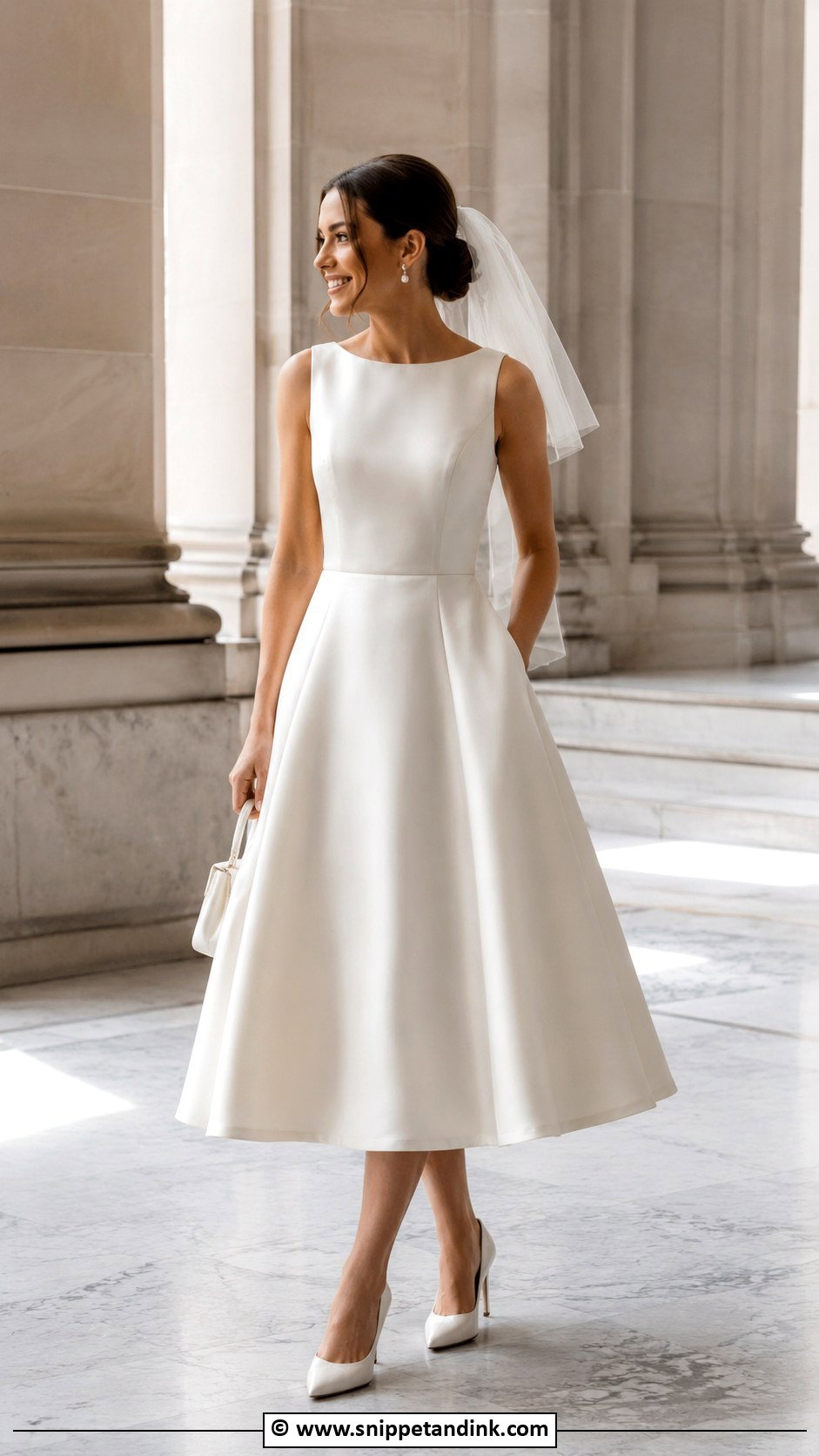
Tea length lands between knee and ankle, so your shoes become part of the outfit and deserve real thought. I like satin, taffeta or crepe here; taffeta gives that crisp, vintage flare when the skirt is full. A fitted bodice with a flared skirt reads 1950s, while a straight cut feels current. Pointed pumps, pearl earrings, a short veil and a small handbag complete it. Courthouse ceremonies and brunch weddings are its natural home. On a very formal evening, it can look underdressed beside floor-length guests.
12. Plain Mini Wedding Dress
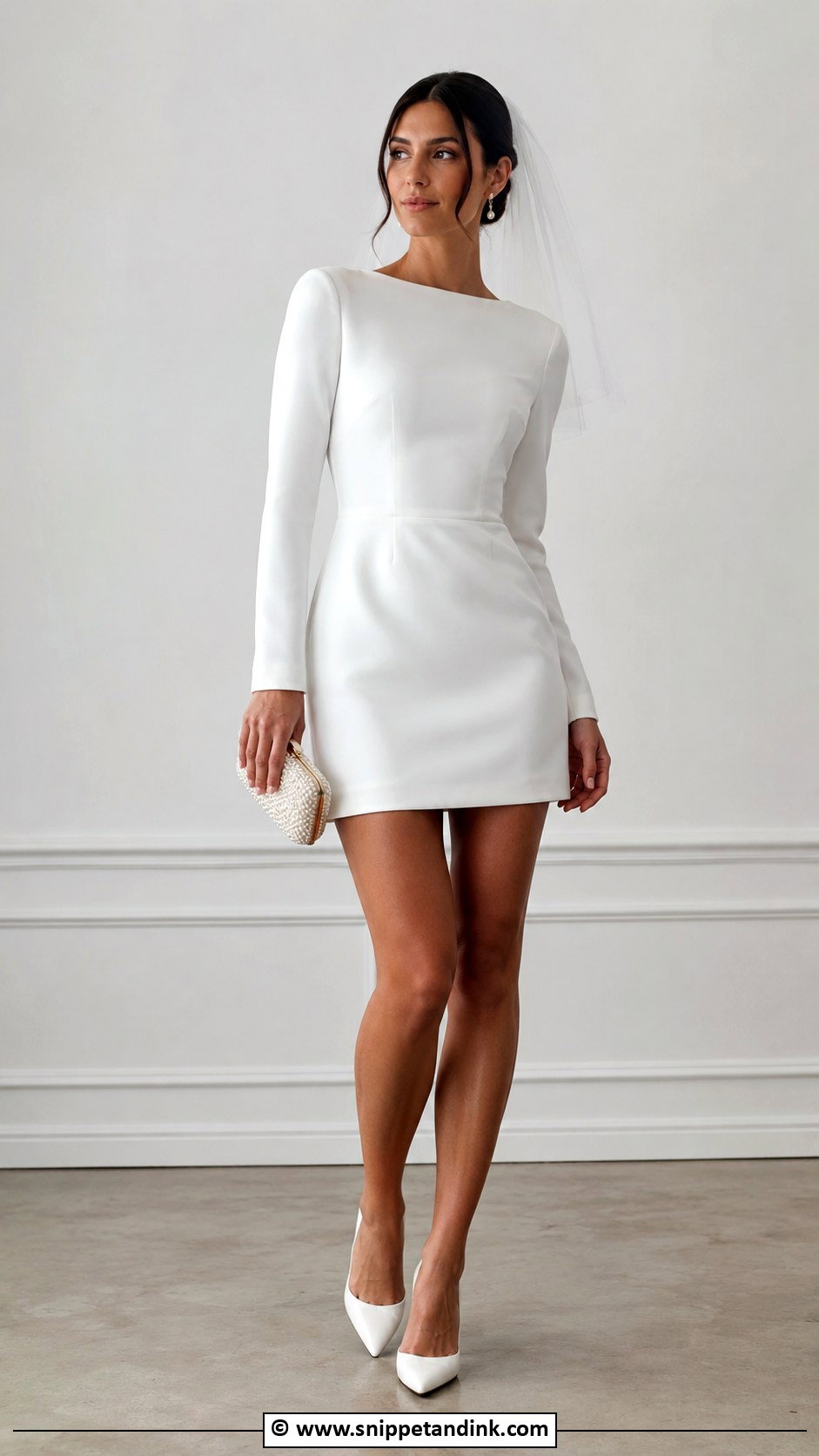
I usually suggest a mini as a second look or for a civil ceremony rather than a full formal day. A clean shape matters more at this length, because there is so little dress for the eye to read: a structured shift, a satin mini or a long sleeve mini depending on the season. White heels, pearl earrings and a short veil make it clearly bridal. Sheer tights or a cropped jacket add coverage. Sit down in it before you buy; a mini that rides up on a chair will bother you all evening.
13. Plain Midi Wedding Dress
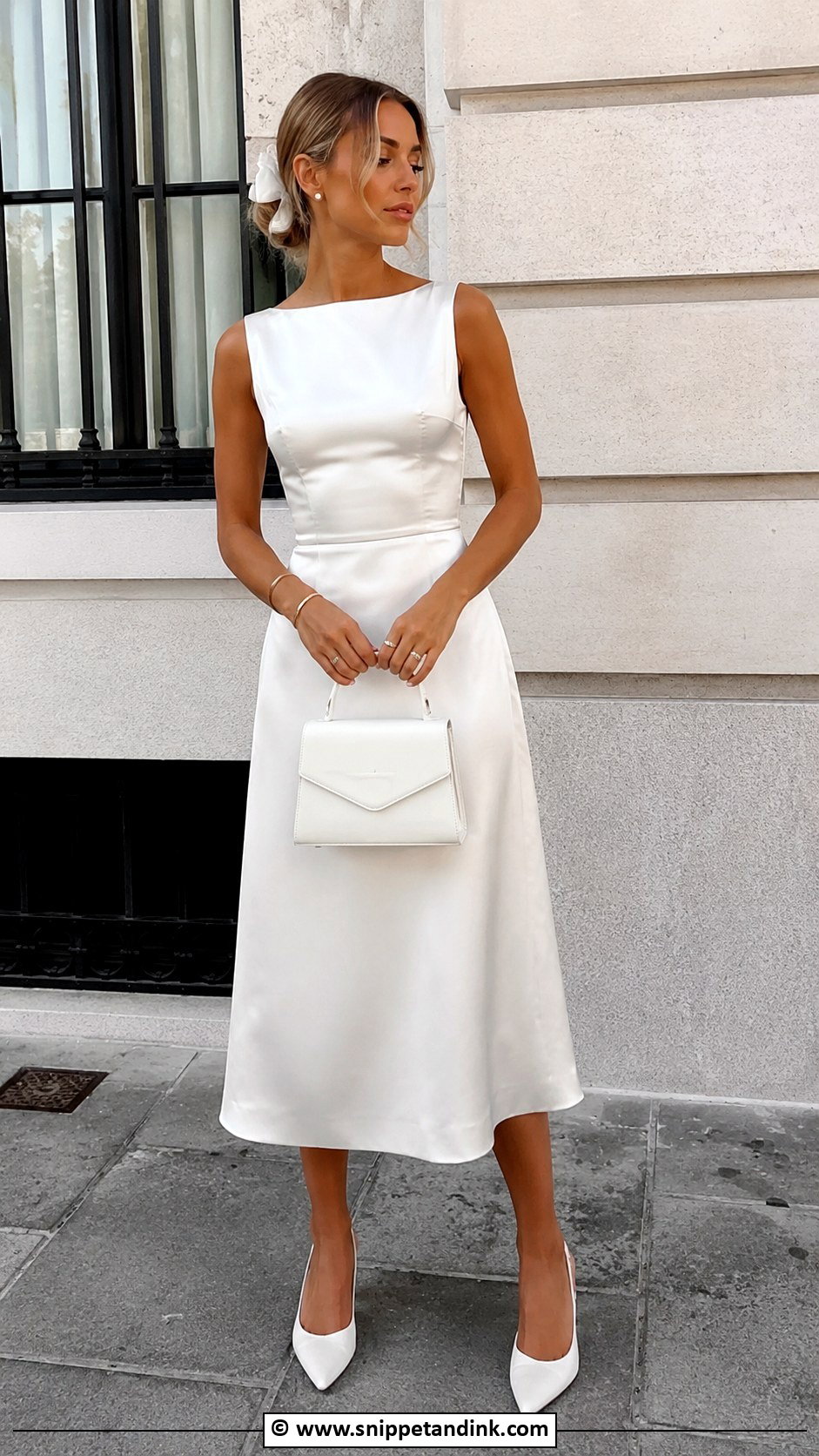
A midi is the dress brides most often wear again, which is a fair reason to choose one. The length feels polished without the formality of a gown. A satin slip midi is sleek, a crepe pencil midi is tailored and an A line midi moves well. Slingbacks, pearl studs and a structured top-handle bag suit it, and a short veil or a hair bow tips it into bridal territory. Hem it to the shoes you’ll actually wear, since a midi that hits mid-calf at the wrong point can shorten the leg in photos.
14. Plain Halter Wedding Dress
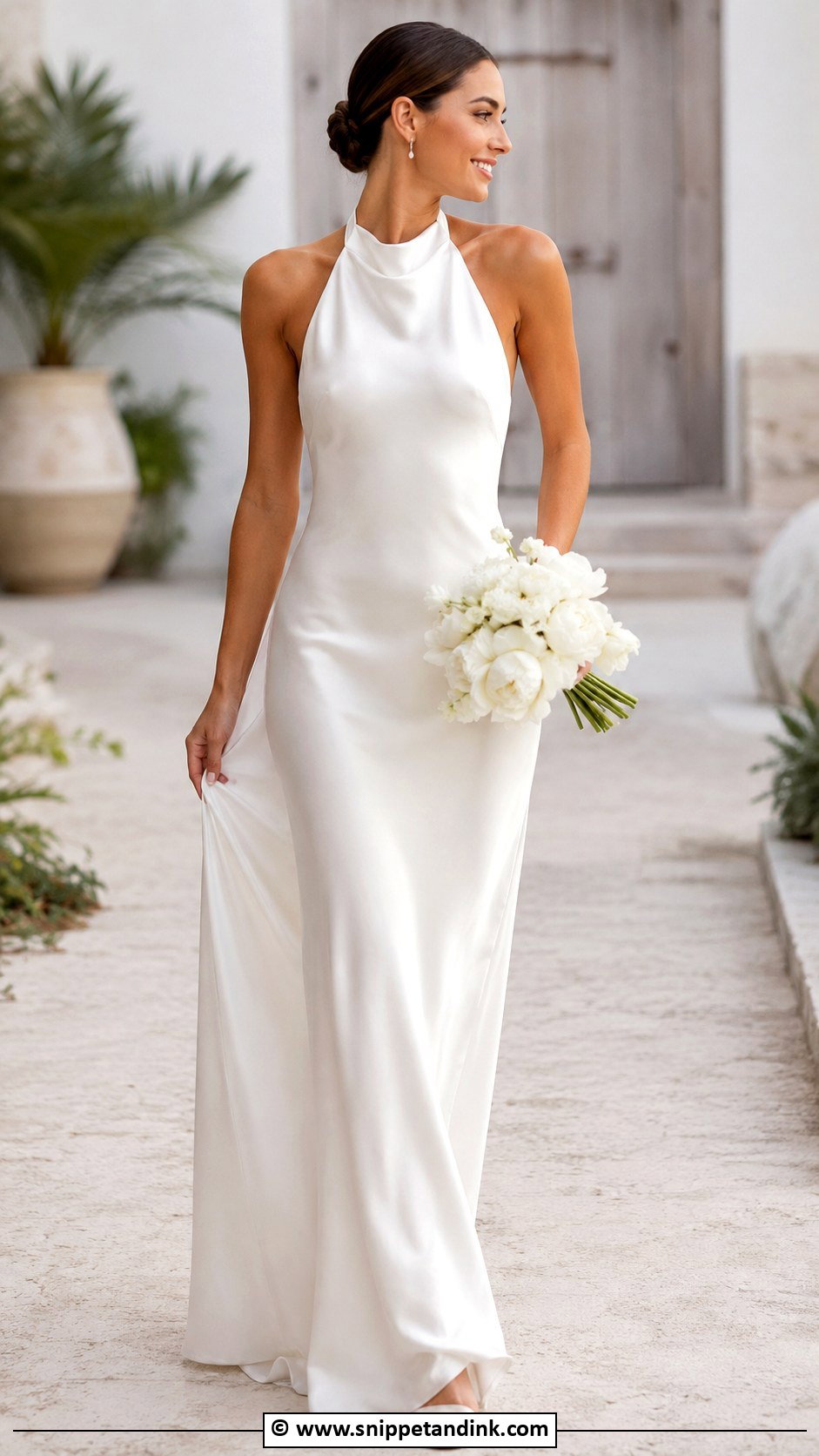
Halters put everything on the shoulders and upper back. They suit brides with defined shoulders, and they are kind to anyone who wants more support than spaghetti straps give, since the neckband takes some of the weight. Satin slips, crepe columns and soft A lines all carry the shape. With a neckline this strong, I keep accessories small: earrings, a bracelet, clean heels and no necklace. A low bun or smooth ponytail shows off the cut. Check the neck strap after an hour of wear; a tight one rubs.
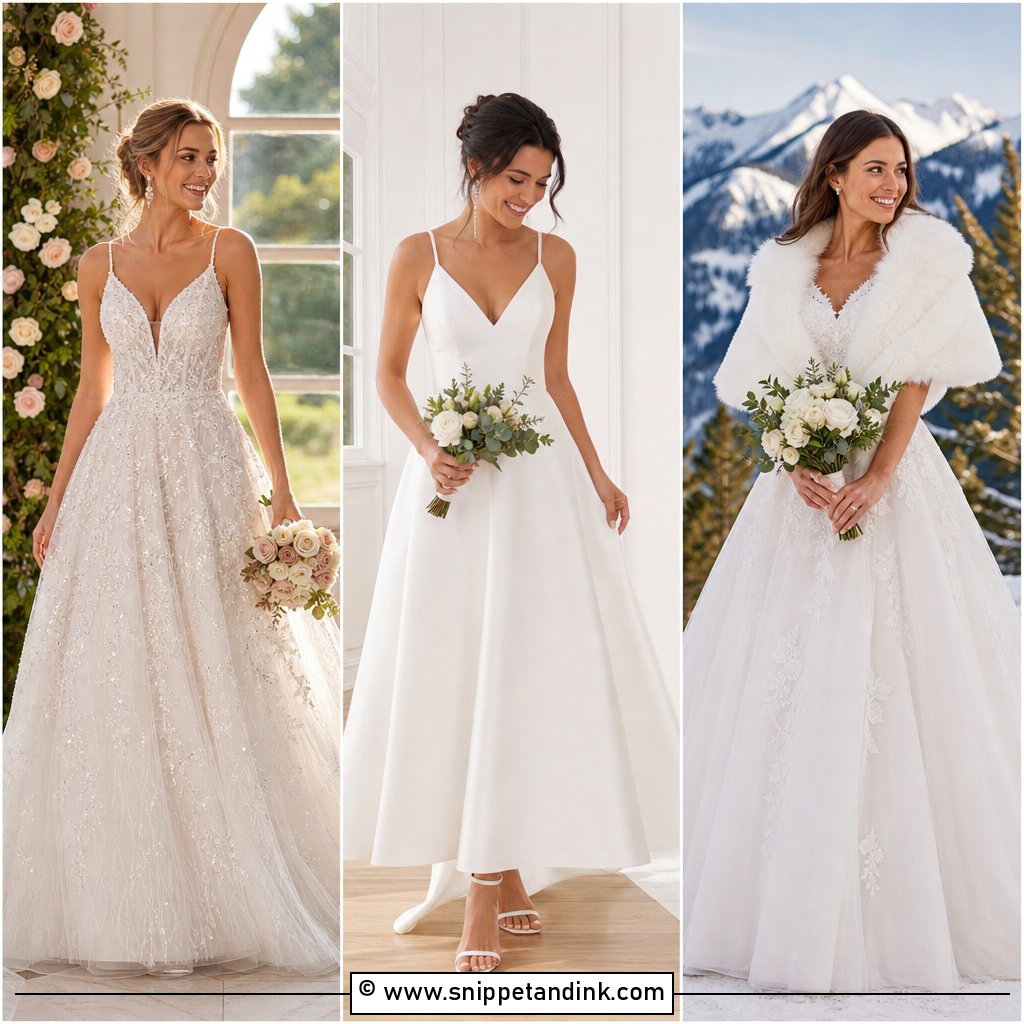
15. Plain One Shoulder Wedding Dress
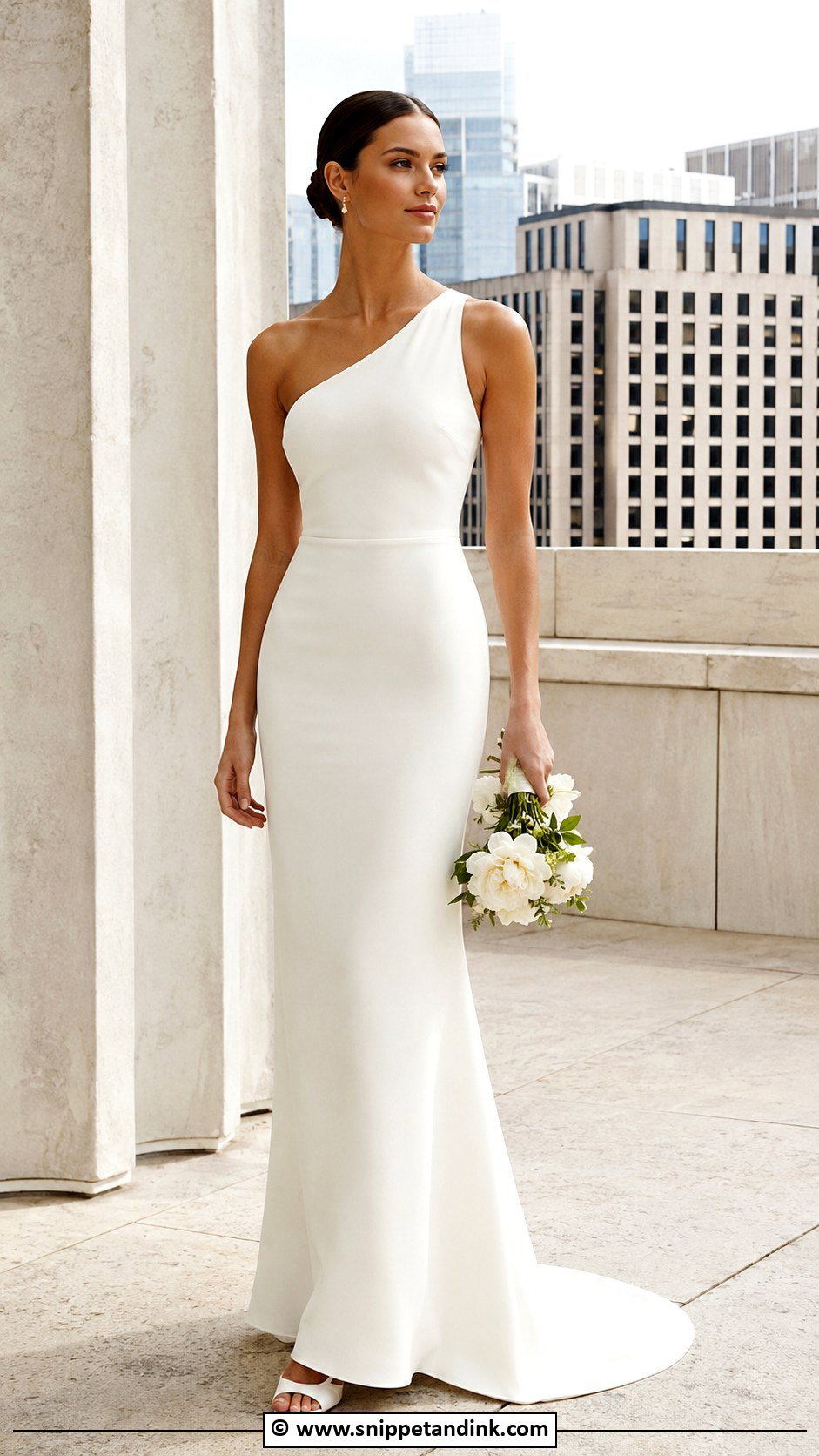
One shoulder cuts are asymmetry doing the work that embellishment would normally do. Fitted crepe looks sculptural, satin more fluid. The styling rule I follow: either one bold earring on the bare side or two small studs, never a necklace. I like the veil tucked low at the back of the head so it falls behind the bare shoulder. The single strap has to be cut snug, or it slides when you raise your arm. Rooftops and modern city venues suit this neckline best.
16. Plain Cowl Neck Wedding Dress
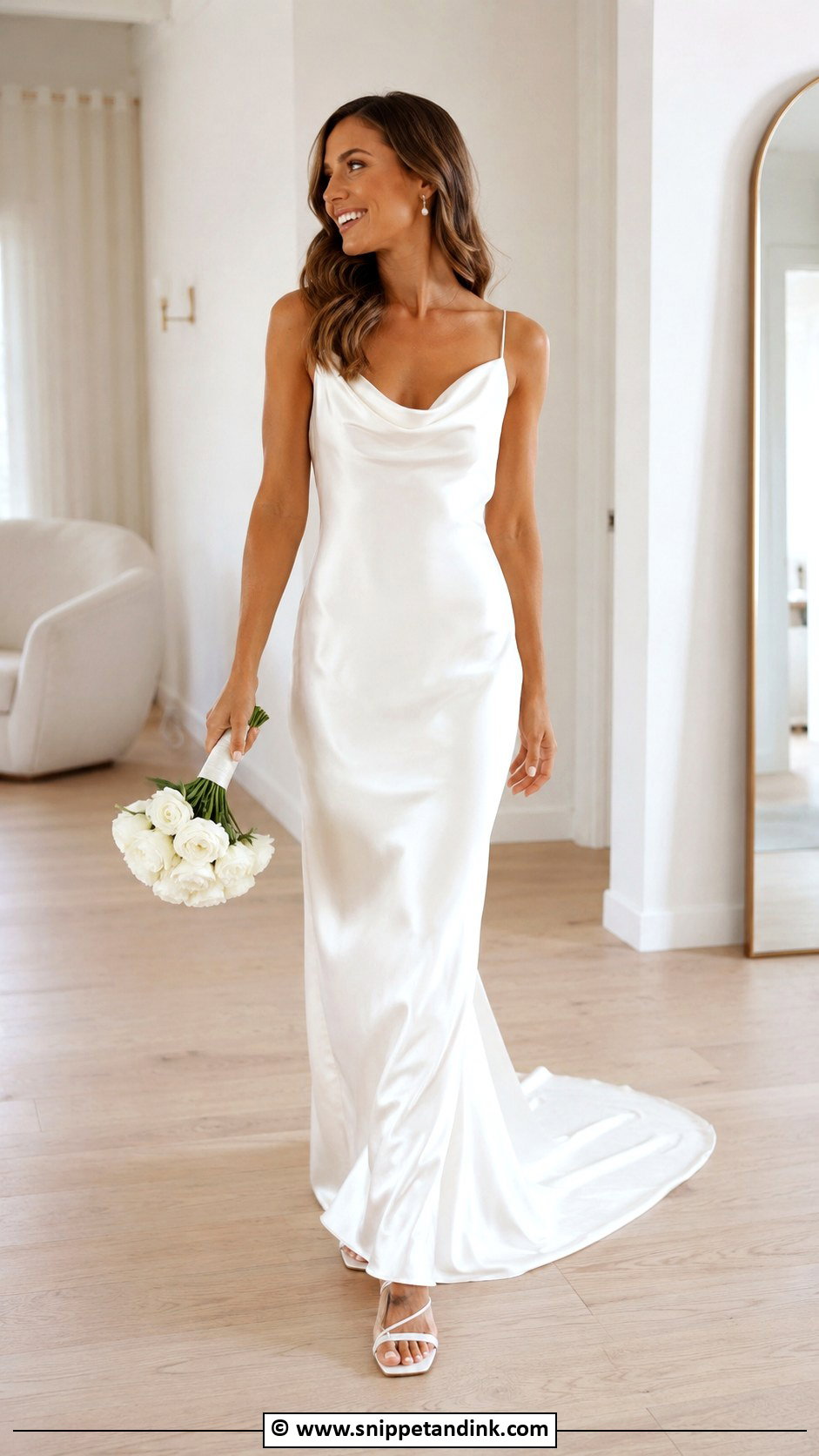
A cowl is fabric draped from the neckline in soft folds, and it only works in fluid fabrics. You’ll see it most on satin or silk slip dresses, though it can sit on midi and column cuts as well. The folds behave differently when you lean forward, so I always check how much the cowl opens with the bride seated. Delicate straps feel lighter; wider straps hold more. Strappy heels, pearl earrings and loose waves keep the mood relaxed, and a white bouquet keeps it simple. Warm-weather and beach weddings suit it.
17. Plain Empire Waist Wedding Dress
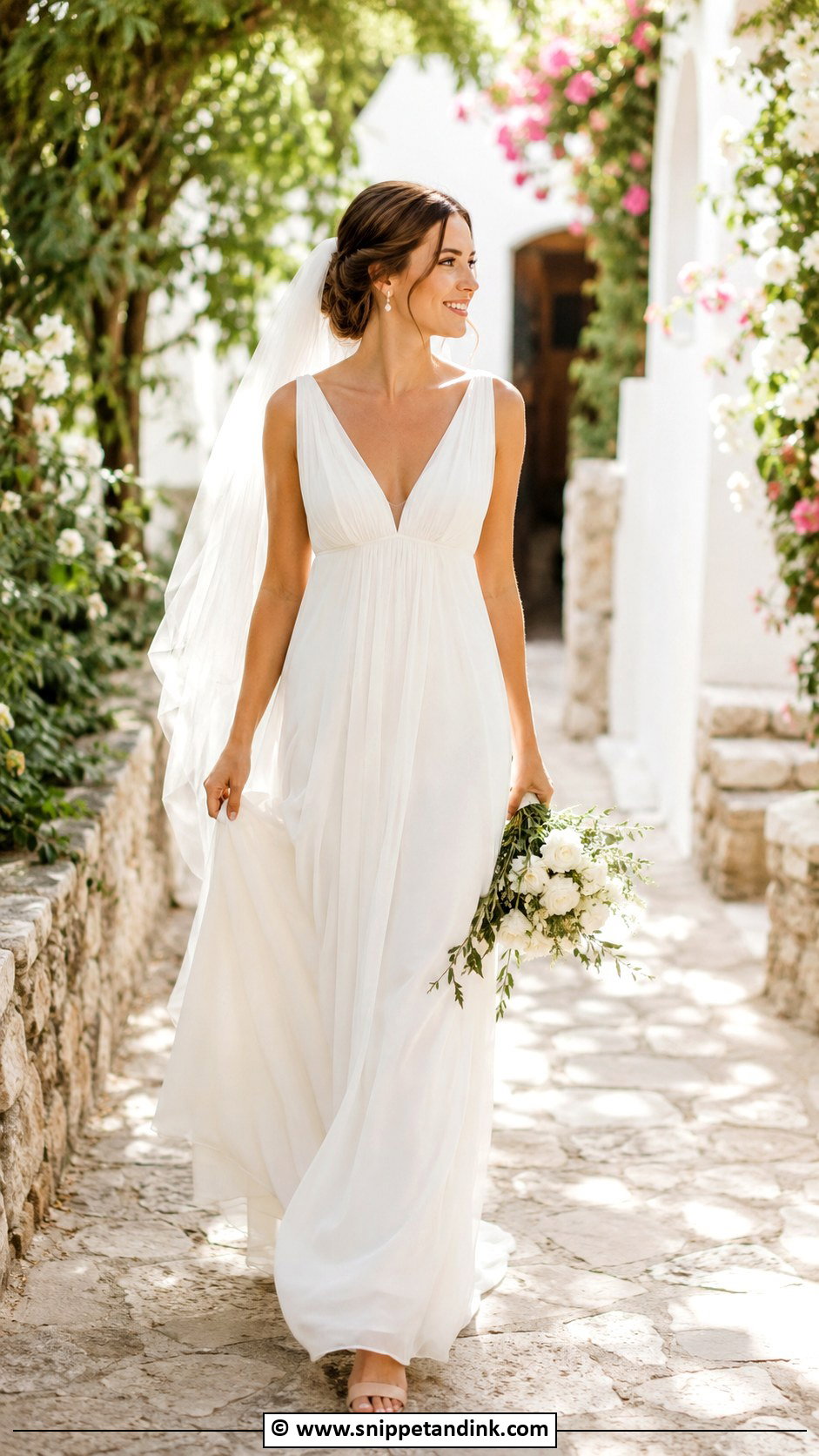
A plain empire waist wedding dress raises the seam to just under the bust, so the skirt falls freely from there. It’s the silhouette I suggest most to brides who don’t want anything tight at the waist, and it adapts well for pregnancy because there is room below the seam. Chiffon or soft crepe moves without weight. A simple V or square neck keeps it clean. Low block heels, delicate earrings and a soft veil finish it. Outdoor and destination weddings suit it best.
18. Plain Sheath Wedding Dress
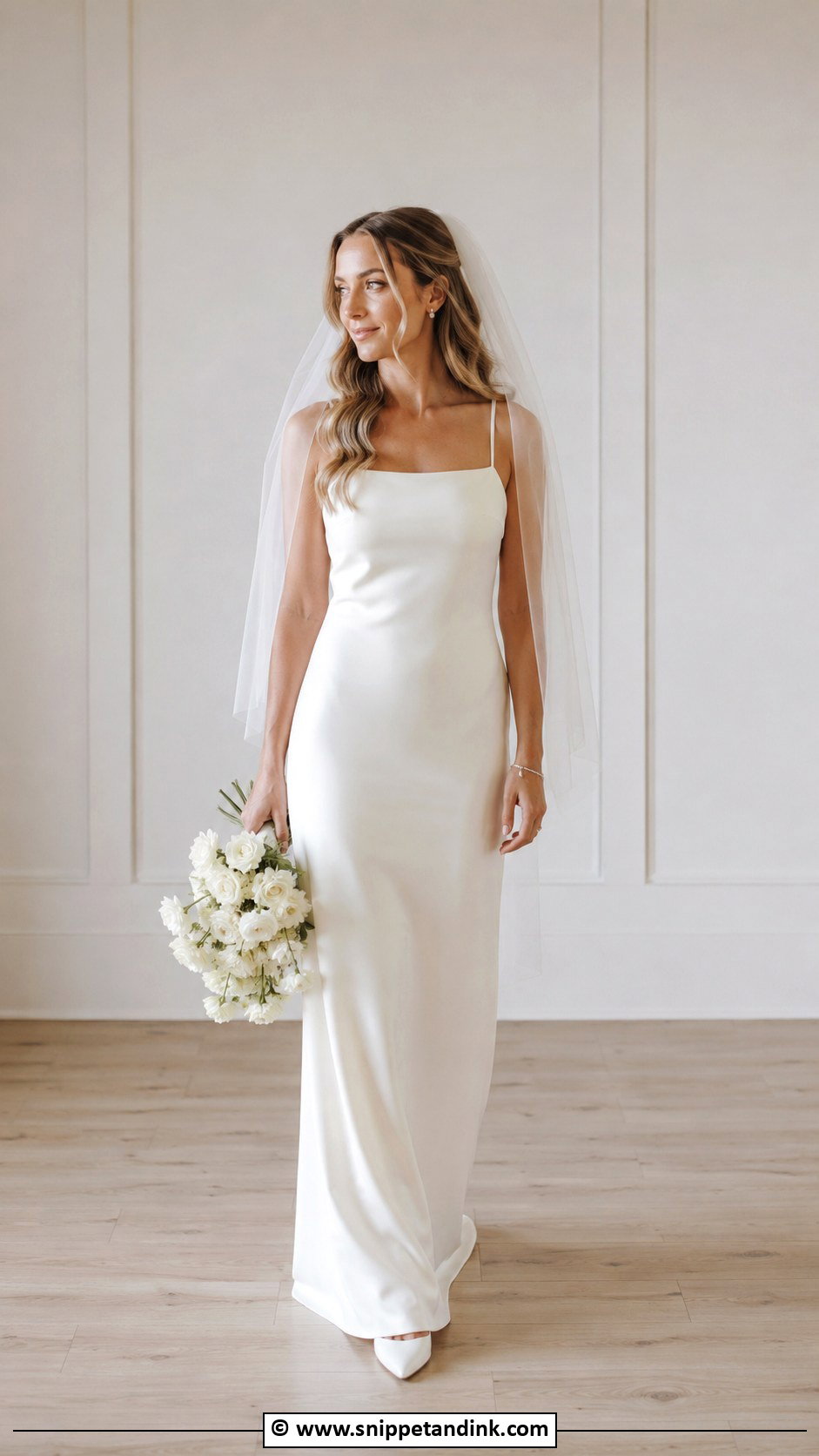
A sheath follows the natural line of the body without the volume of a ball gown or A line skirt. Crepe is my first pick because it smooths the figure, while satin adds shine but shows every seam and dimple of fabric underneath. Walk the length of the shop in it: a sheath that is too narrow at the knee shortens your stride. Pointed heels, a fingertip veil and clean jewelry are plenty, and a center-part bun or soft waves both suit it. It’s an easy gown to wear for a long day.
19. Plain Mermaid Wedding Dress
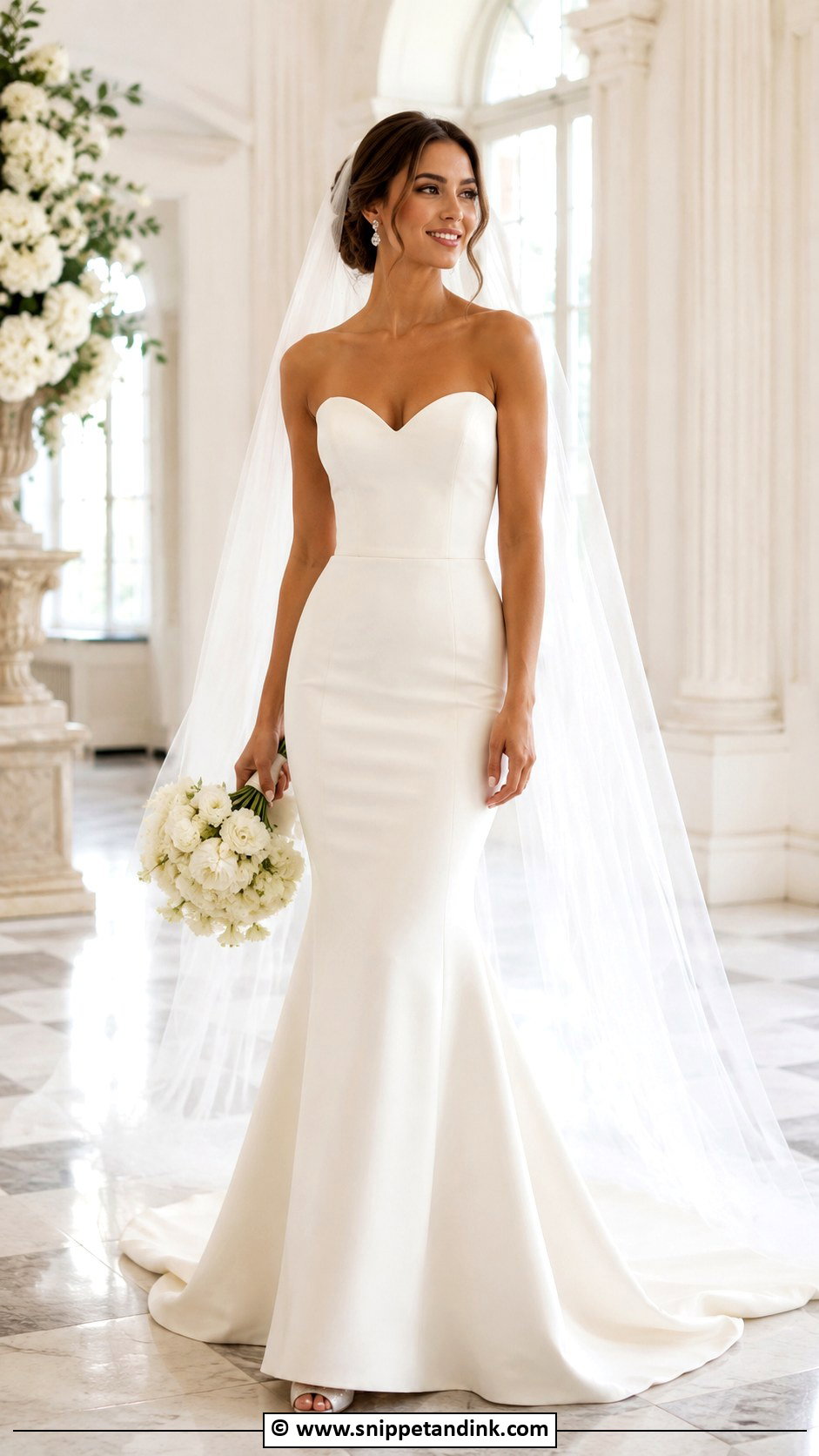
The mermaid creates its drama from shape alone: snug through the body and flaring low on the leg. Stretch crepe, satin or mikado gives structure. Here is where I’m most careful at fittings. If the flare starts too low, you’ll shuffle instead of walking, so I have every mermaid bride climb a step and sit on a chair before we commit. A sweetheart neck is classic; square or straight feels modern. High heels and a long veil balance the fitted line. Formal evenings suit it more than a casual field.

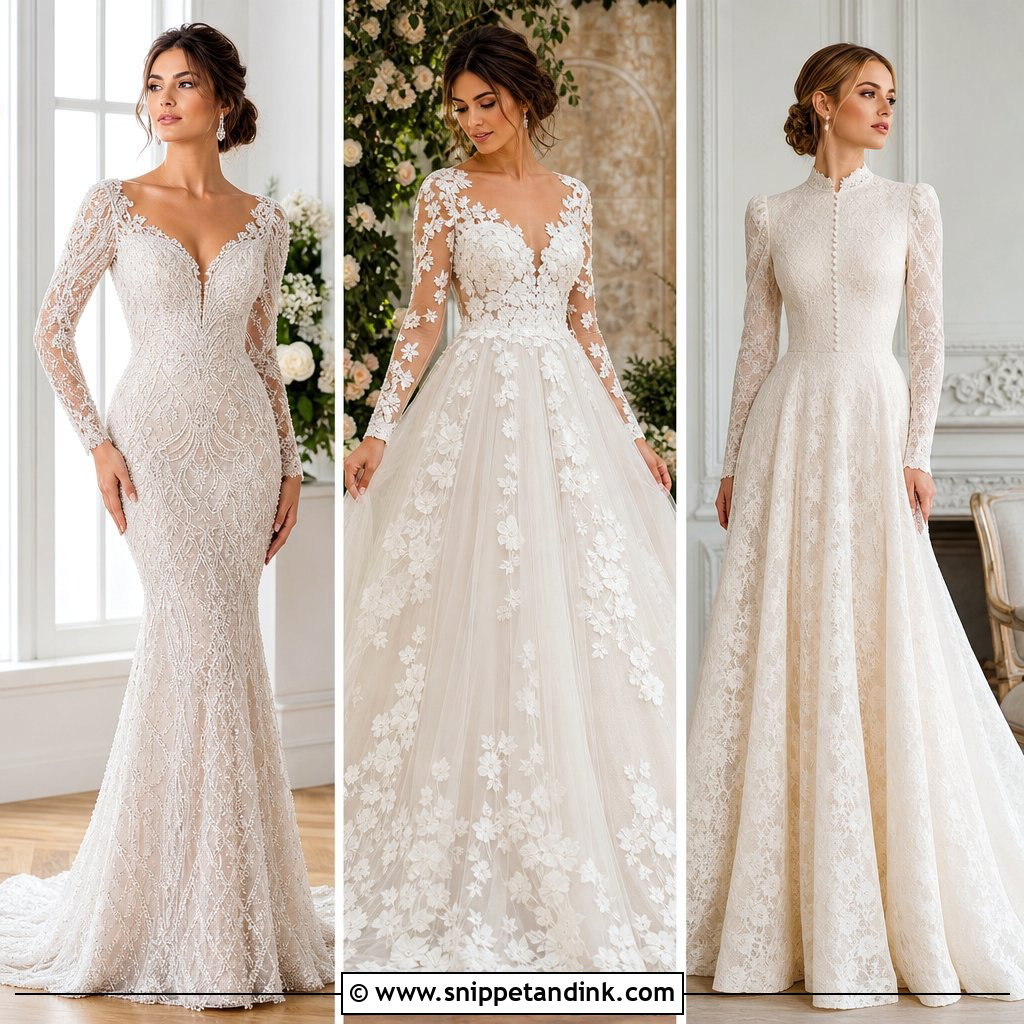
20. Plain Fit And Flare Wedding Dress
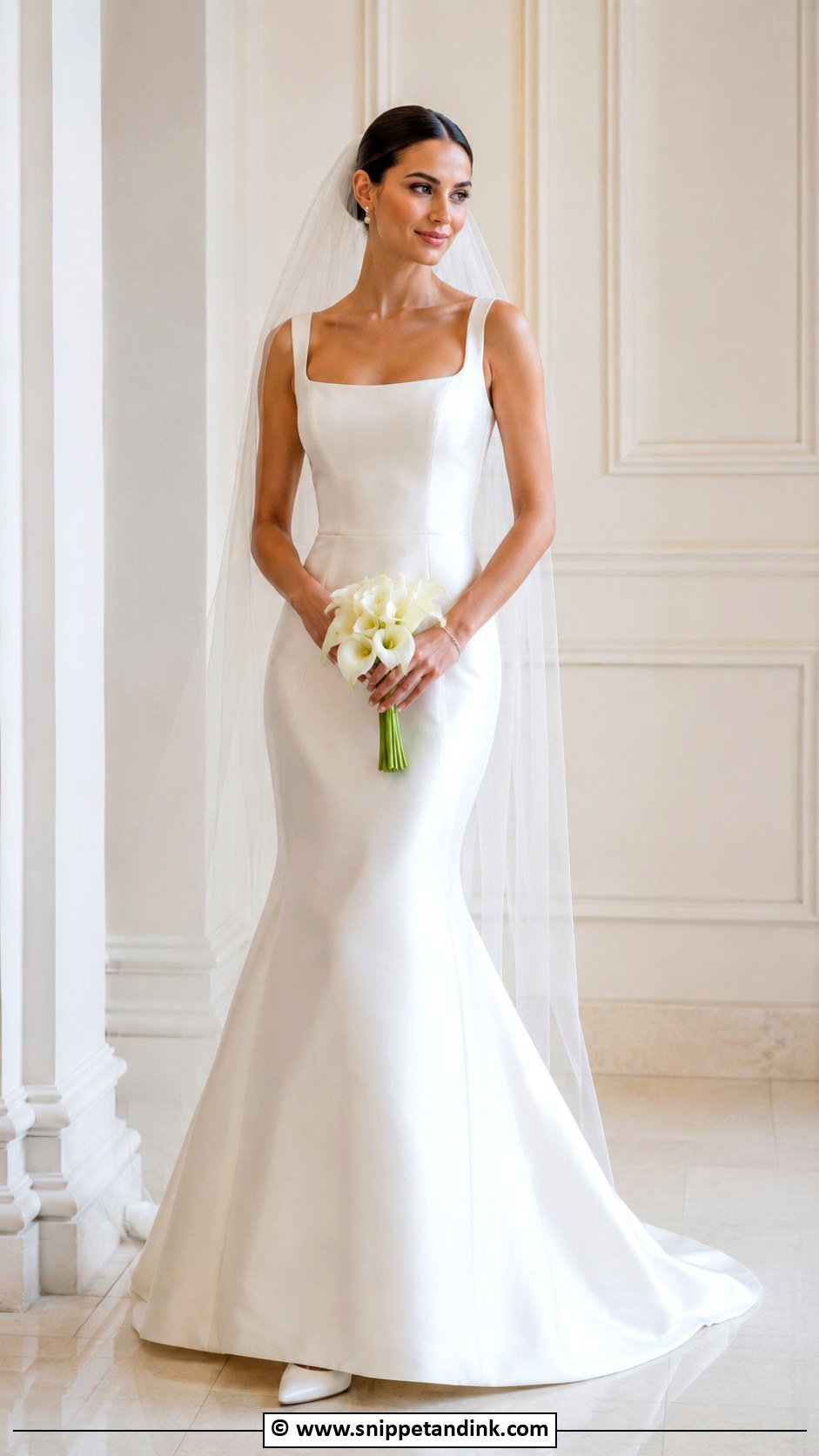
Fit and flare is a softer mermaid: it hugs the bodice and hips, then opens around the thighs or knees, which makes it far easier to dance in. I often move brides here after they try a true mermaid and find the knees too tight. Smooth crepe looks modern, satin more classic. A strapless, square or off shoulder neckline all suit the shape. A sleek veil, white pumps and understated jewelry finish it, and a compact bouquet balances the hip line without hiding it.
21. Plain Wedding Dress With Bow
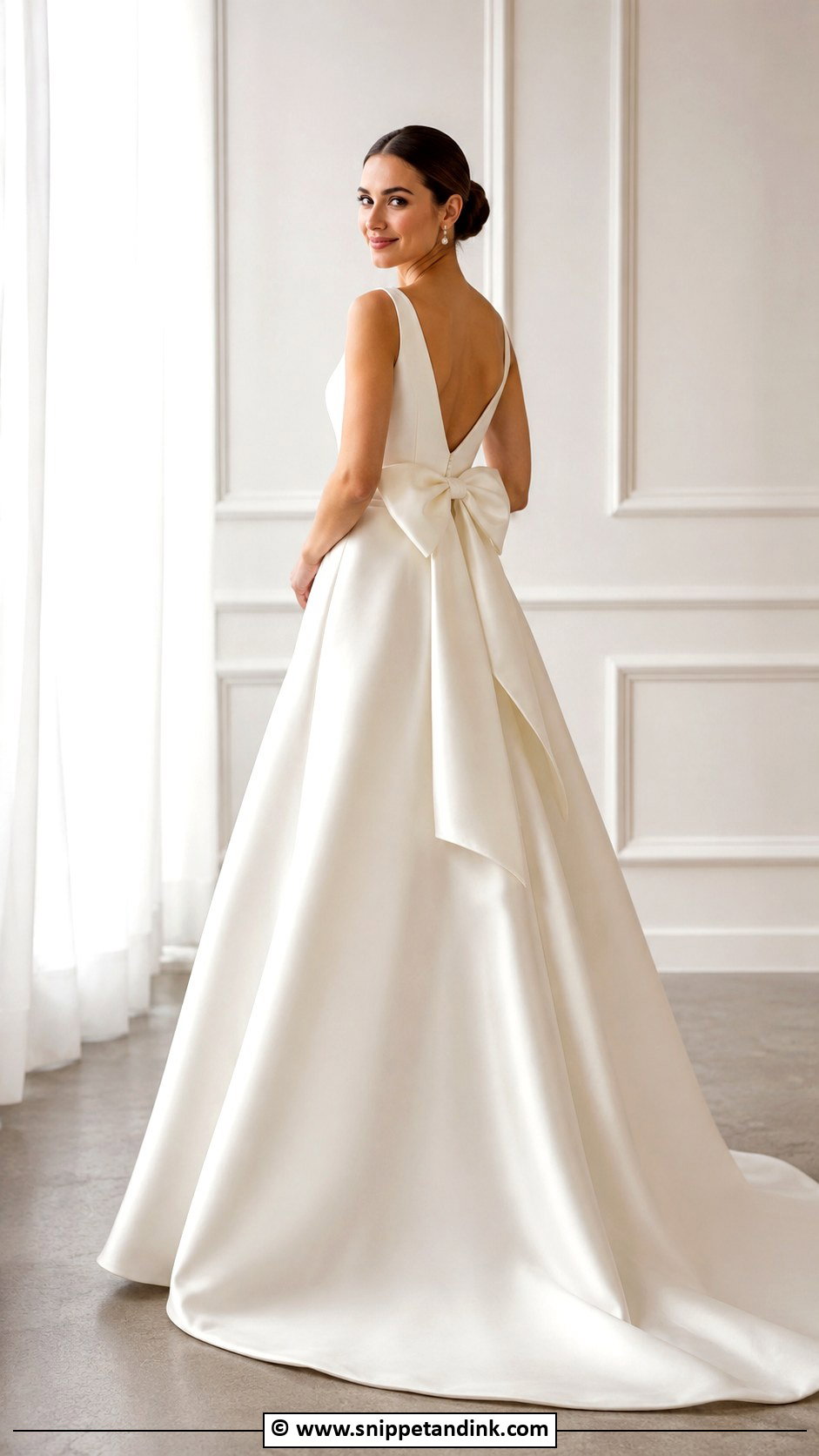
A single bow is the easiest way to give a plain gown one point of focus. It can sit at the back waist, the shoulder, the neckline or the train. On a smooth fabric, the bow reads intentional; on a textured one, it gets lost. The practical check: a bow at the back waist will be sat on all evening, so ask whether it is removable or sewn to hold its shape. A satin A line with a back bow feels classic; a crepe column with a shoulder bow feels modern. Keep the bouquet small so the bow stays the focal point.
22. Plain Wedding Dress With Buttons
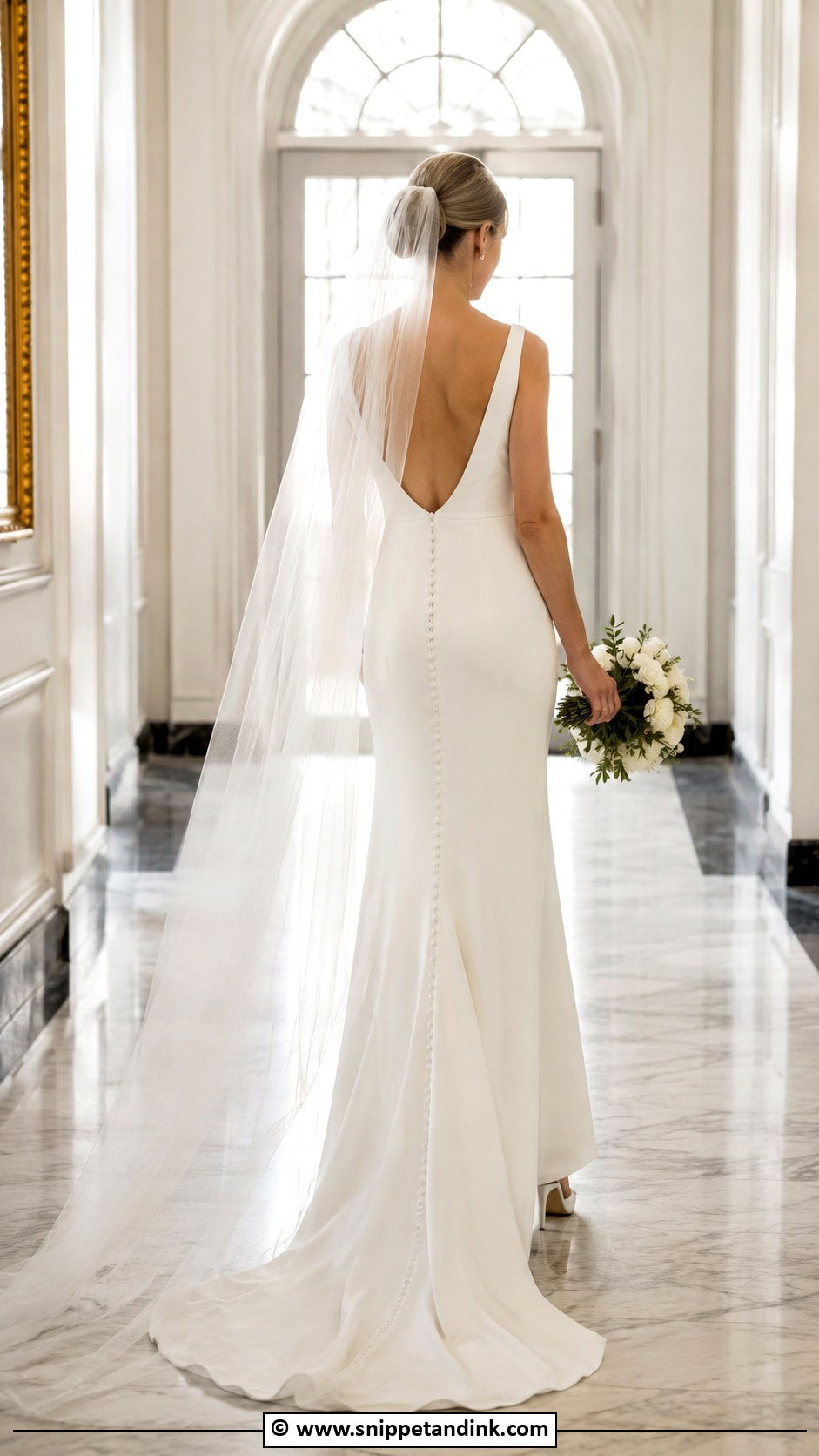
Covered buttons add rhythm to the back without decoration. They can run down the bodice, along the train or the full length of the gown, and they read especially well on crepe, satin and mikado. Ask your seamstress whether they are functional or sit over a zip; real buttons look wonderful but take a long time to fasten, so build ten minutes into the dressing schedule. A sheer veil, simple earrings and a smooth updo let the back show clearly. Sheaths, A lines and long sleeve gowns all carry the detail.
23. Plain Wedding Dress With Pockets
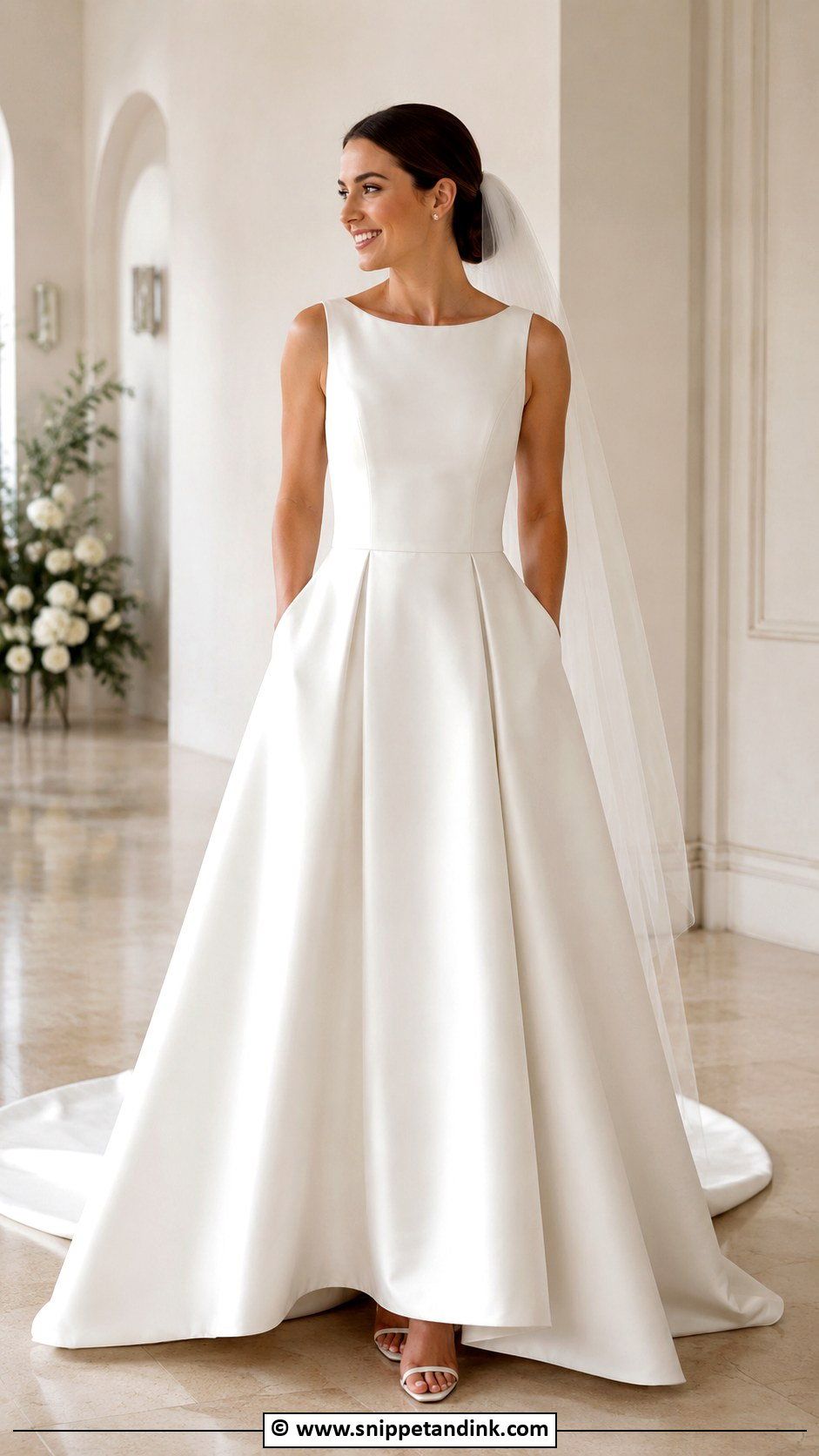
Pockets usually sit hidden in the side seams, so the front stays clean. They need a skirt with some volume or the pocket bags show at the hip, which is why they work best on A line, ball gown and midi cuts. Satin, mikado and taffeta hold their shape well enough to keep the openings flat. I tell brides to carry only lipstick and tissue in them; anything heavier drags the skirt. Pockets also give you somewhere to put your hands in photos, which helps a camera-shy bride relax.
24. Plain Wedding Dress With Train
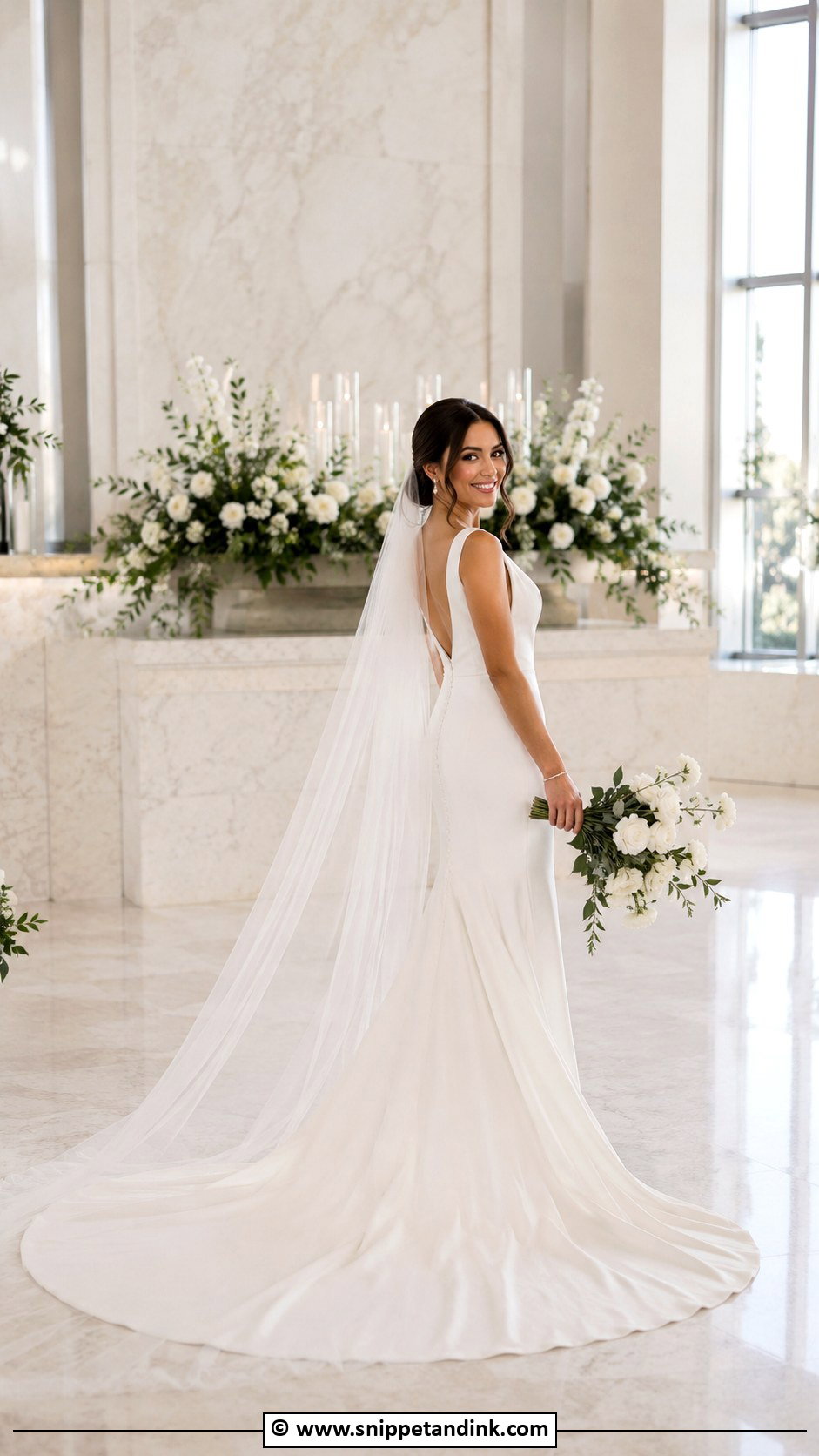
A train adds movement and length without sparkle or lace. A crepe column with a chapel train feels sleek; a satin A line with a longer train feels classic. The question I raise early is the bustle: how many points it has, and who will learn to fasten it. A long train needs a bustle for dancing, and that job usually falls to a bridesmaid who should practise at the final fitting. A long veil, elegant heels and minimal jewelry finish the look, and a clean hairstyle lets the silhouette show.
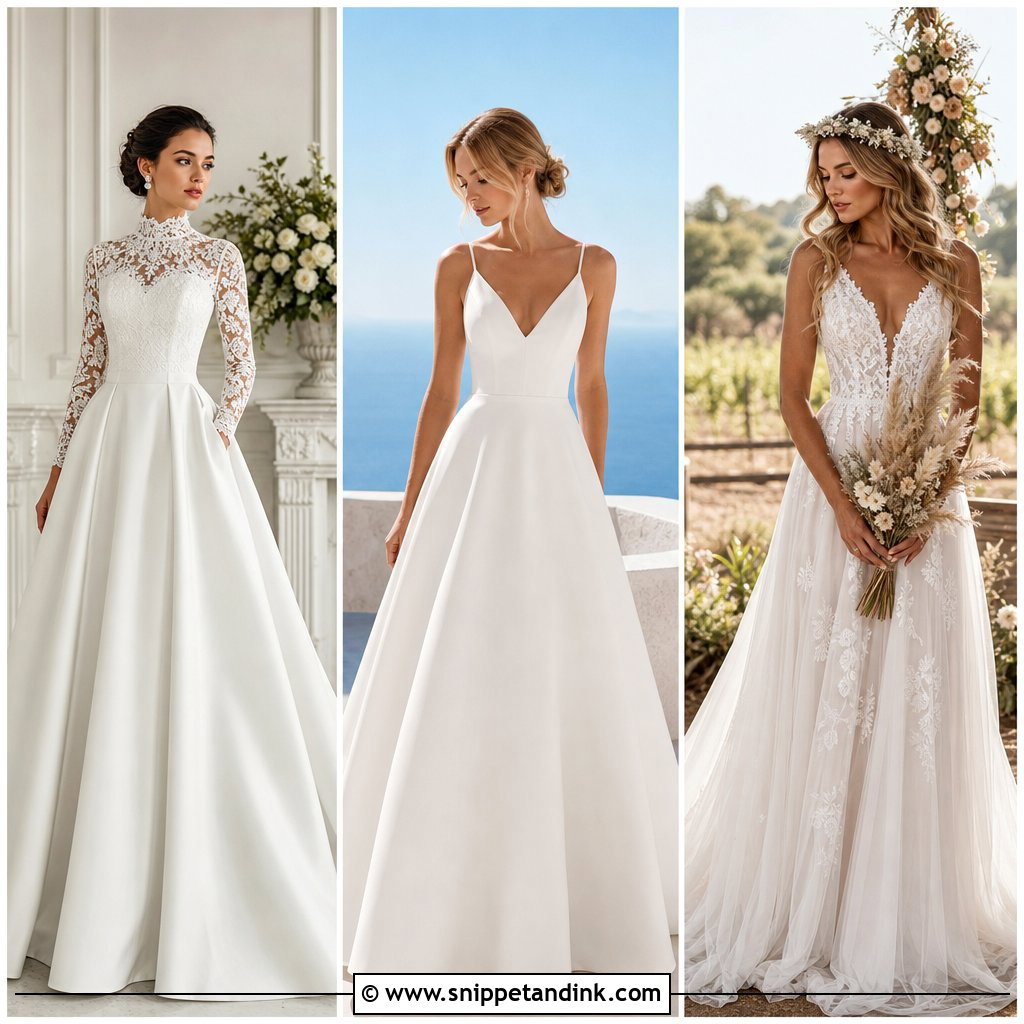
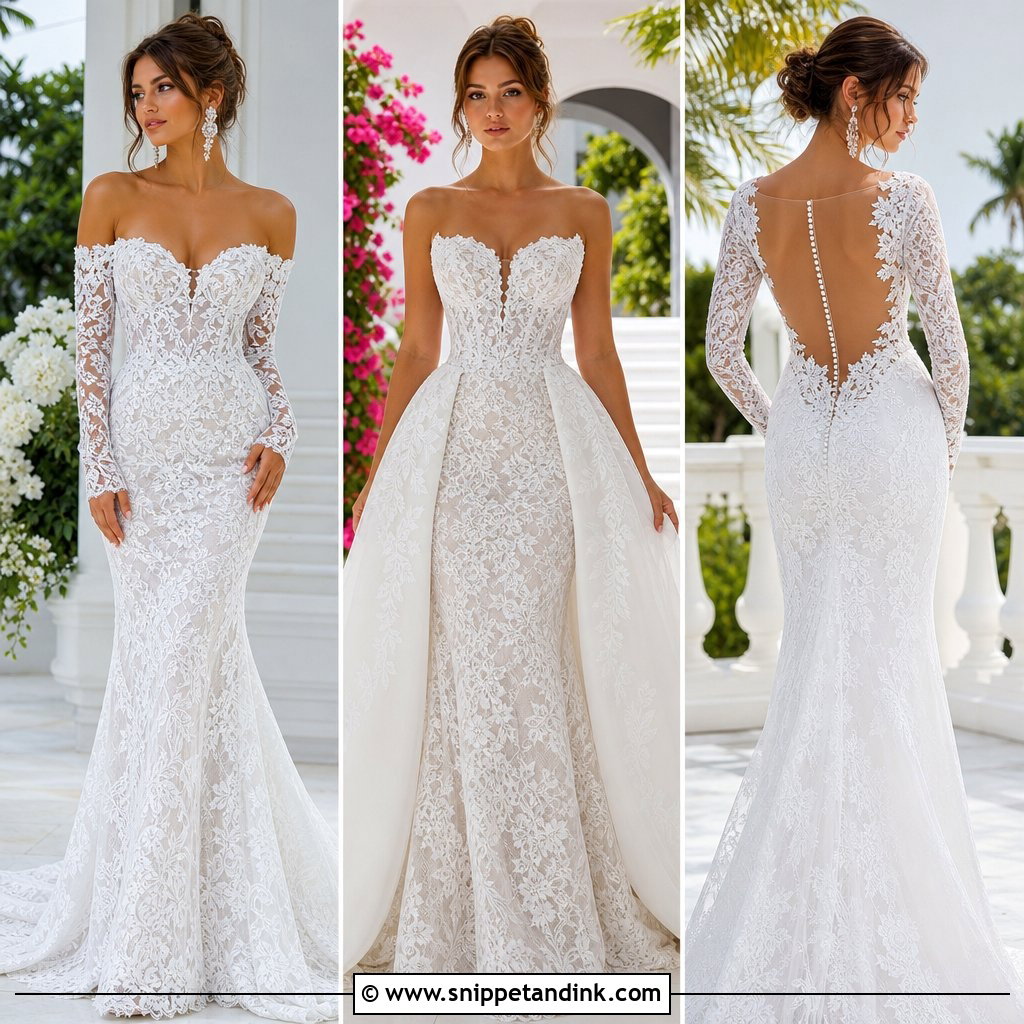

25. Plain Wedding Dress With Cape
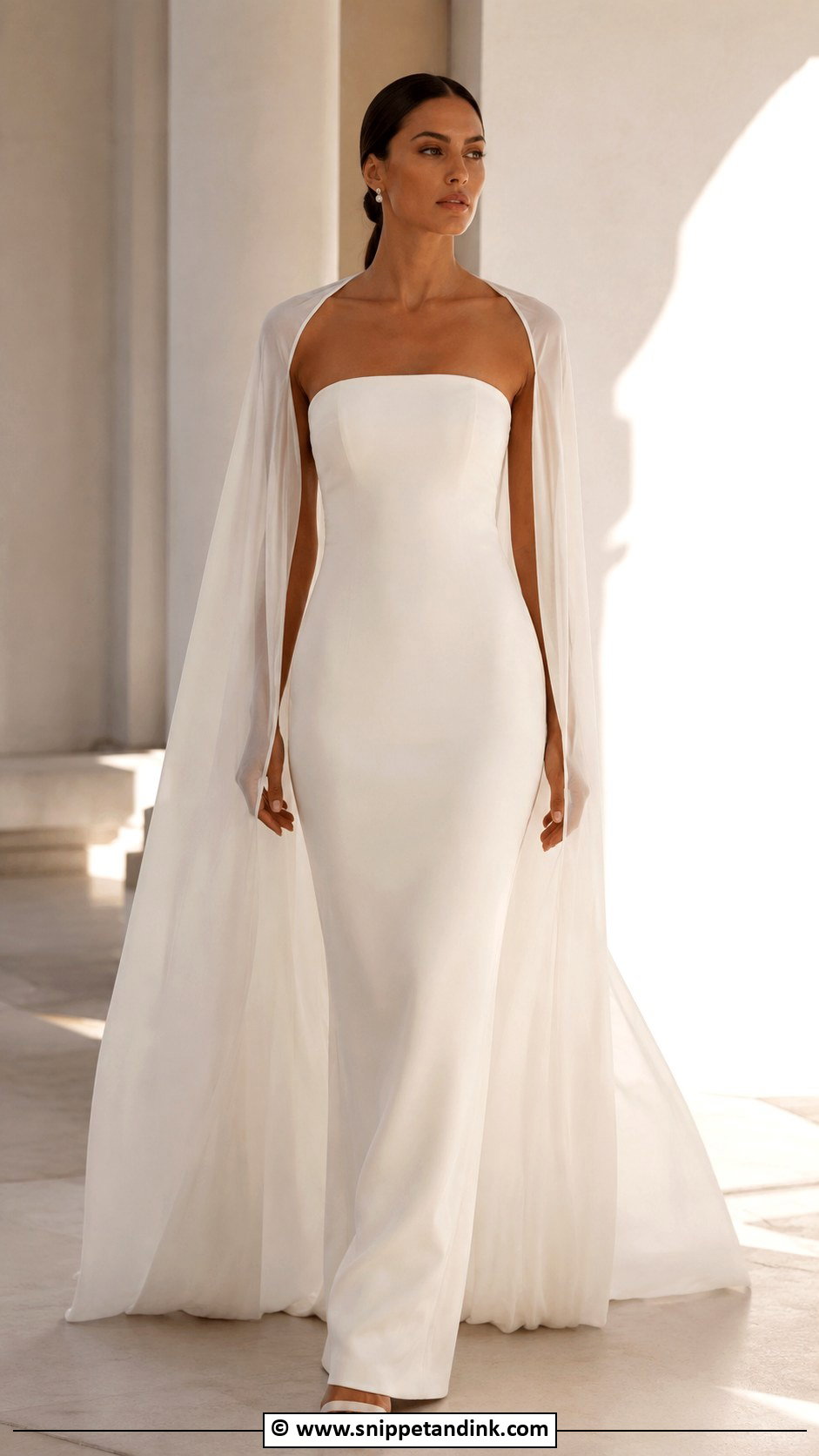
A cape gives you a veil’s movement in a more modern form. It can be sheer tulle, satin, crepe or light chiffon, depending on the dress and the season, and it attaches either at the shoulders or the back neckline. Shoulder-anchored capes look sharp but can restrict reaching forward, so I always test a hug in one. Strapless, square neck and column gowns pair best with it. Simple heels, small earrings and smooth hair let the fabric fall freely. I suggest it when a bride wants her arms covered for a religious ceremony but dislikes sleeves.
26. Plain Wedding Dress With Jacket
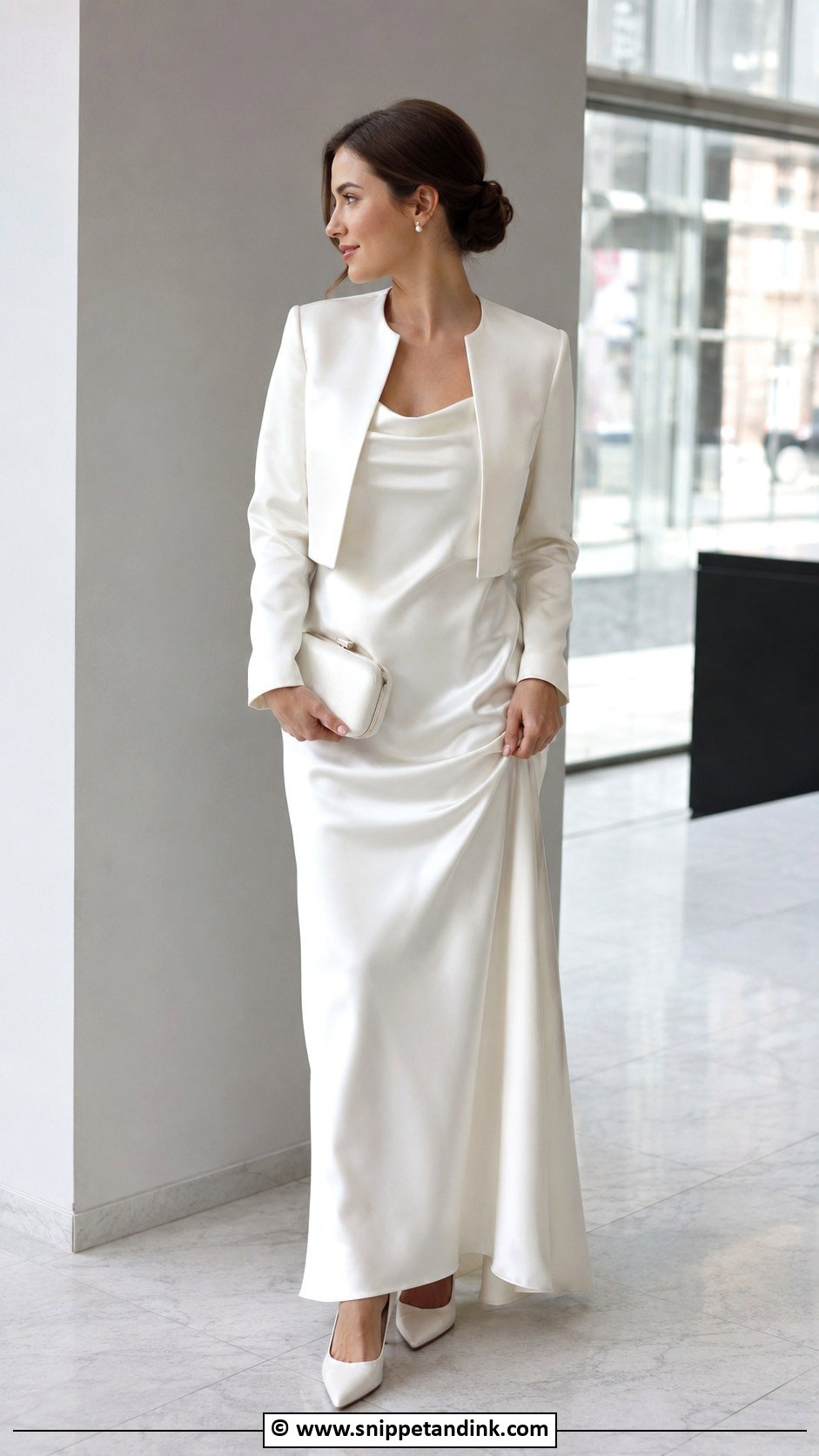
A jacket is the most practical layer I style, especially for cooler months or a ceremony-to-reception change. A cropped satin jacket feels bridal; a tailored blazer turns the gown city-sharp. It sits well over a slip, a column, a midi or a fitted crepe dress. The detail to get right is color: white, ivory and off-white rarely match across brands, so bring a swatch of your dress when you shop. Pointed heels, pearl studs and a sleek clutch finish it, and you can take the jacket off for dancing.
27. Plain Wedding Dress With Detachable Sleeves
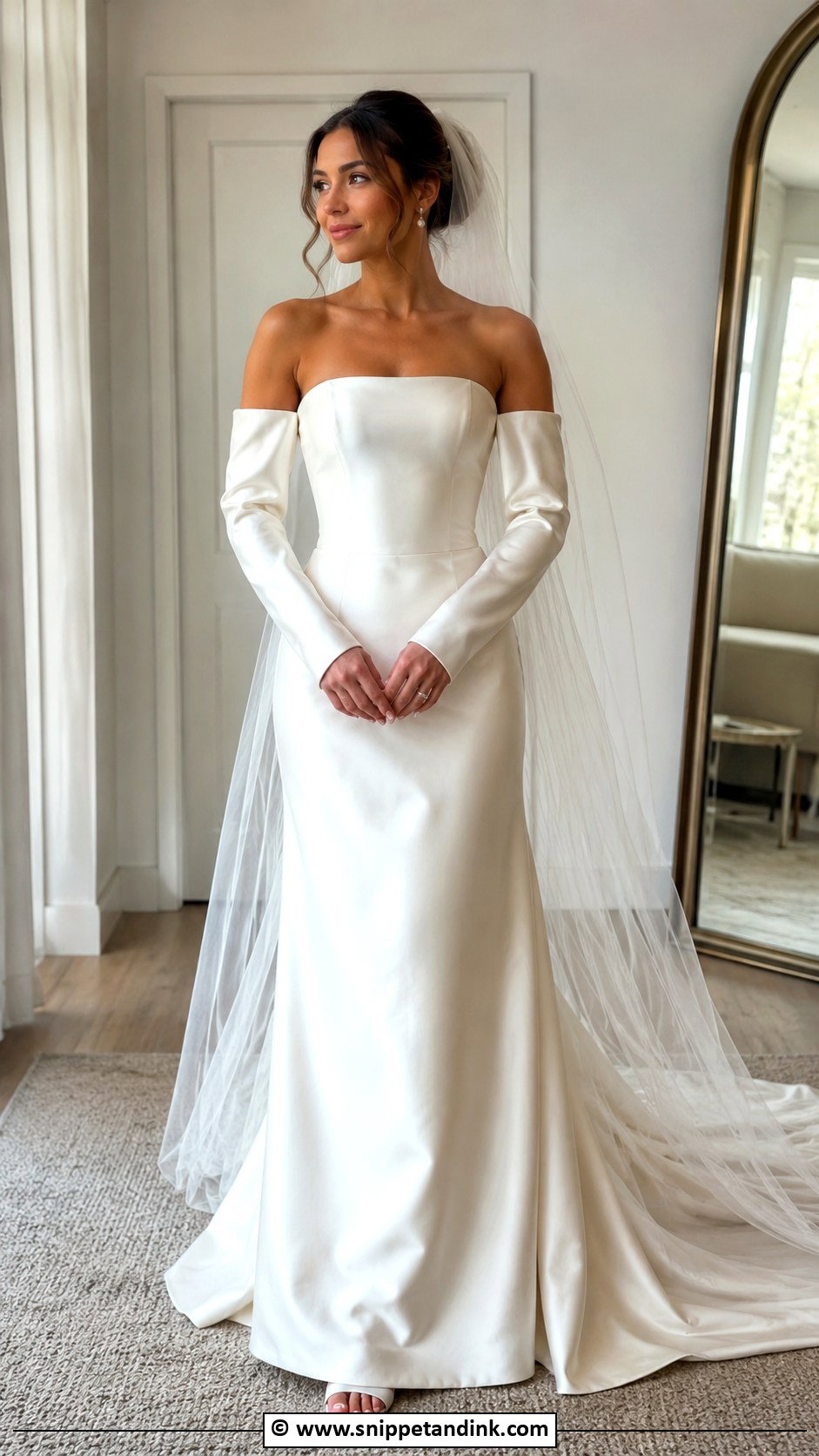
Detachable sleeves give you two looks without a full change: sleeves for the ceremony, bare shoulders for the reception. They work with strapless, straight neck and sweetheart bodices. Satin sleeves read classic, sheer ones softer, crepe ones modern. Most attach with small elastic loops or snaps, so ask someone to practise removing them before the day; a sleeve that snags on a hairpin is a common hiccup. Simple earrings, a long veil and elegant heels suit the look. Keep the base gown plain so the sleeves look deliberate.
28. Plain Beach Wedding Dress
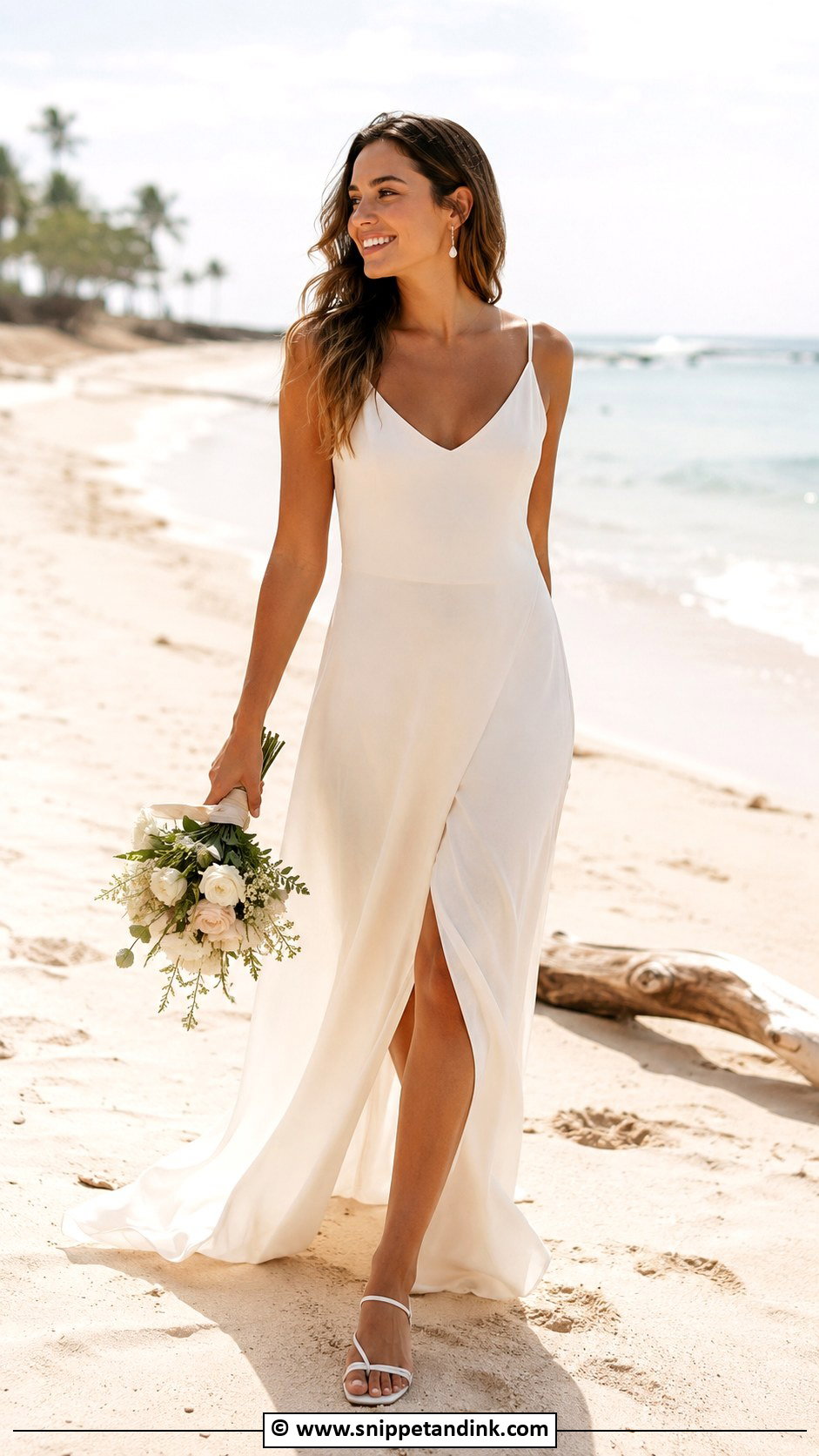
Sand, wind and heat decide the beach dress, not the mood board. Light chiffon, silk, soft satin or crepe all move well, while heavy fabrics drag and collect sand at the hem. A slip, an empire waist or a relaxed A line suits the setting. Go with flat sandals, delicate earrings, loose waves and a small bouquet. A short veil or hair scarf handles wind far better than a cathedral length. I’d also take the hem up a touch so it skims the sand rather than sweeping it.
29. Plain Courthouse Wedding Dress
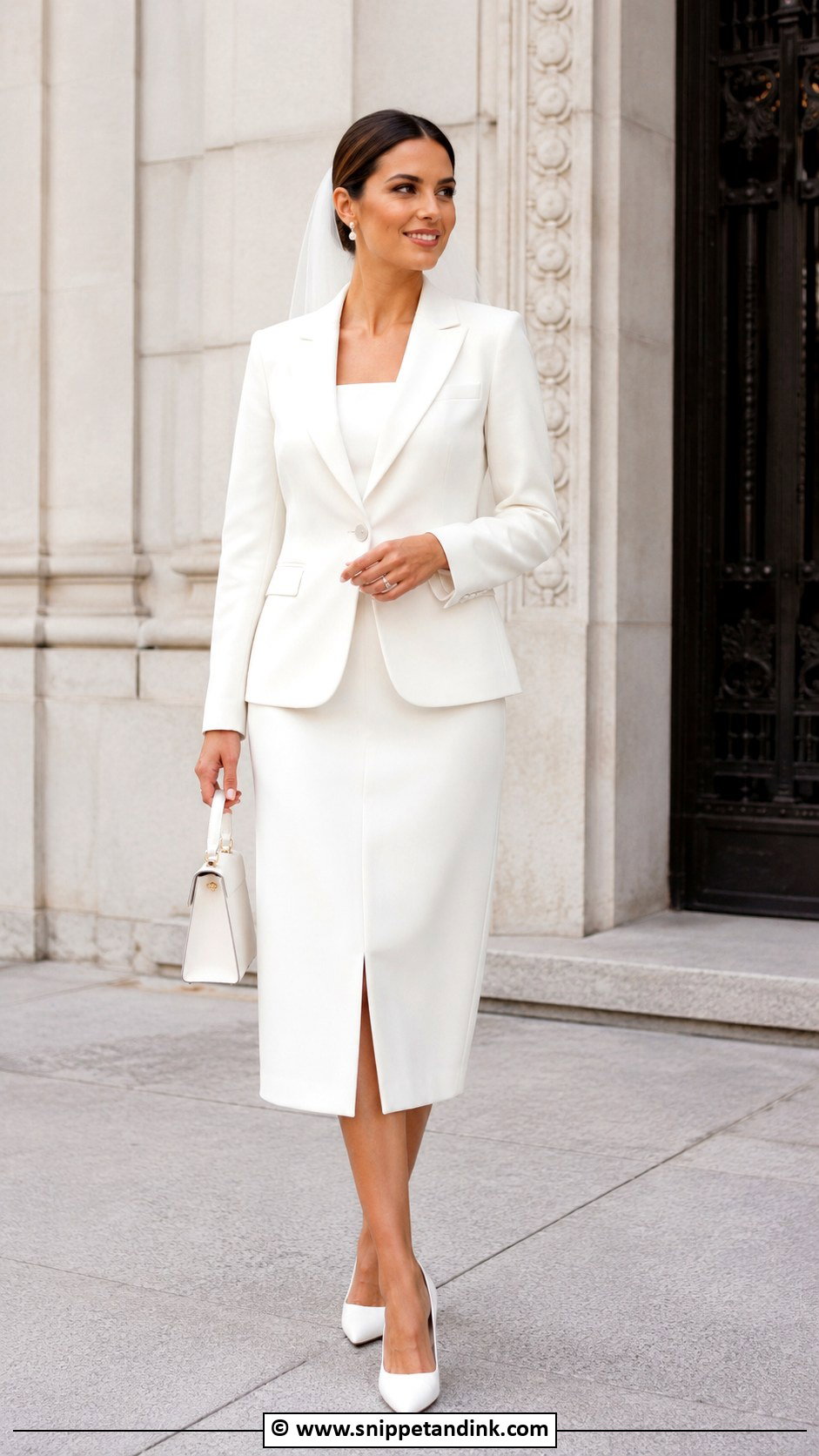
For a courthouse wedding I’d put comfort and a sharp fit ahead of volume. Midi dresses, minis, tailored crepe gowns and simple satin slips all suit the room, which is usually small and brightly lit. White pumps, a structured bag, pearl earrings and a short veil or hair bow keep it bridal, and a blazer gives a city edge. Simple dresses depend on tailoring, so I’d still budget for a hem and a waist adjustment even on an off-the-rack piece. Clean fabric matters, too; small marks show under office lighting.
30. Plain Reception Wedding Dress
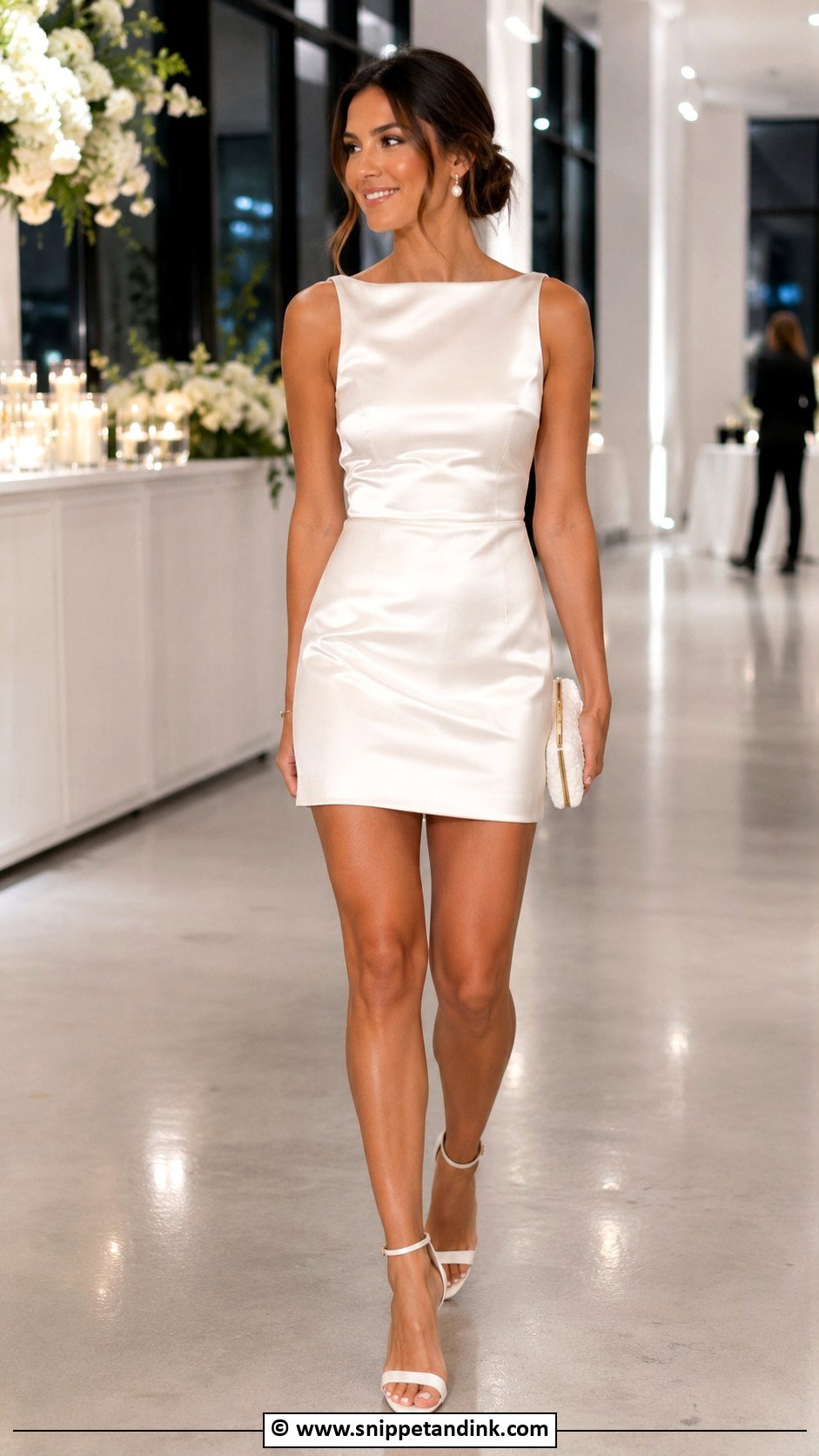
A reception change is a gift to your feet and your back after a structured ceremony gown. A satin mini, sleek midi, simple slip or clean column all dance well. I plan the change with the bride’s hairstylist so the hair survives a dress coming off over the head; side zips are kinder than back-only fastenings here. Dance-friendly heels, pearl earrings and a small clutch keep it bridal. The second outfit also gives your photographer a fresh look for the evening shots.
How Satin and Crepe Behave Over a Ten Hour Day
A dress that looked crisp at 10am can look tired by the first dance, and with a plain gown there is nothing to distract from creases. Satin is the worst offender: it marks across the lap the moment you sit in a car. Crepe recovers better but can bag slightly at the seat after hours of sitting. Mikado holds its structure best of the three.
- Have the gown steamed the day before, from the inside, with distilled water. Tap water can leave mineral spots on satin, and an iron directly on the fabric will leave a shine.
- Travel standing up or with the skirt spread across the back seat, not bunched under you.
- Pack a small kit for whoever is helping: white chalk for light marks, clear tape for fallen hems, safety pins and a handheld steamer if the venue allows it.
- Learn the bustle at your final fitting with the person who will fasten it, then take a phone photo of each hook or loop.
Cleaning and Storing a Simple Gown Afterward
Spills you can’t see still matter. Champagne and sugary drinks often dry invisibly, then turn brown months later as the sugar oxidizes, which on a plain ivory surface is very noticeable. That’s why I tell brides to get the dress to a specialist cleaner within a few weeks, even if it looks spotless.
Once it’s clean, store it folded with acid-free tissue in a breathable box or a cotton garment bag, away from light. Avoid long-term storage in plastic, which traps moisture and can yellow the fabric. Heavy gowns shouldn’t hang for years either; the weight of the skirt stretches the shoulders. Check on it once a year and refold it along new lines so creases don’t set.
Let the Fabric and Fit Speak for You
The plainest dress in the shop often turns out to be the one a bride feels most like herself in, as long as the fit is right. Satin, crepe, mikado, chiffon and silk all hold up when they are cut and altered with care, and the personality can come from the veil, shoes, jewelry, a jacket or the flowers. Bring this list to your appointments, try at least three shapes you didn’t expect to like, and let the venue and your own comfort settle the final choice.
You'll Like These Ideas:





Leave a Reply