
A plain dress is harder to get right than a decorated one. With no lace or beading to draw the eye, every seam, every centimetre of hem and every ripple in the fabric is on show. That’s also why a good one looks so clean in photographs. The cut, fabric, neckline, tailoring, veil, shoes and accessories are doing all the work. Satin, crepe, mikado, chiffon, organza and silk each give a different mood: a sleek city dress, a soft A-line for a garden, a structured ball gown for a grand room. Below are 25 plain white gowns, with what I look for in each when a bride tries it on.
Optic White, Soft White or Ivory?
White isn’t one colour in bridal shops. Optic or bright white has a slightly blue cast and looks crisp against deep or olive skin. Soft white, sometimes called natural or silk white, is a shade warmer and suits most people. Ivory has a touch of cream and flatters fair and pink-toned skin that bright white can make look ruddy.
On a plain gown the shade matters more than on a lace one, because there’s no pattern to break it up. I hold swatches against the bride’s face in daylight and look at her skin, not the fabric. If one shade makes your teeth look yellow or your cheeks look red, that’s your answer. Make sure your veil, shoes and gloves are ordered in the same shade too; a bright white veil over an ivory dress turns the gown grey in photos.
1. Plain White Satin Slip Wedding Dress
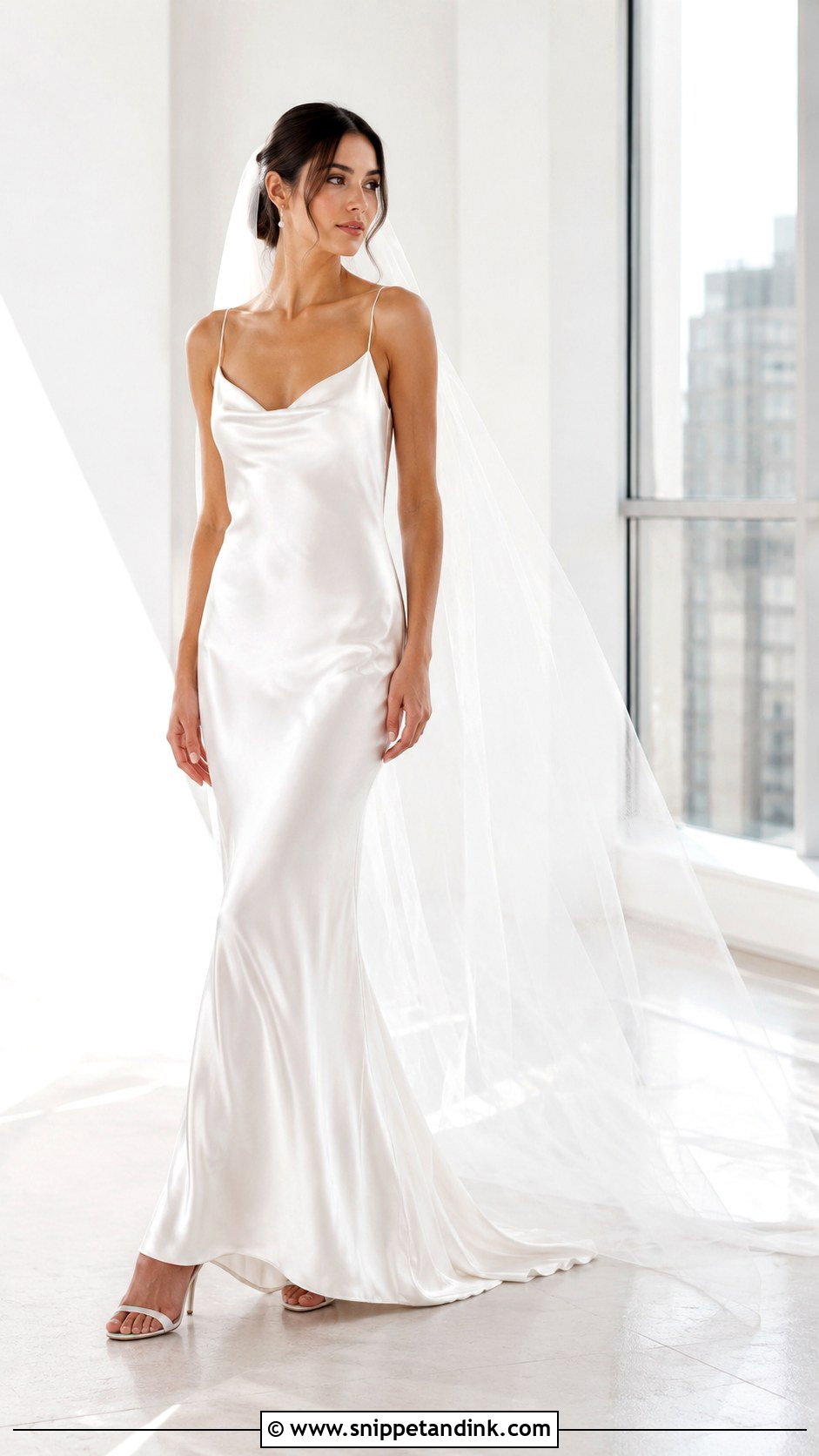
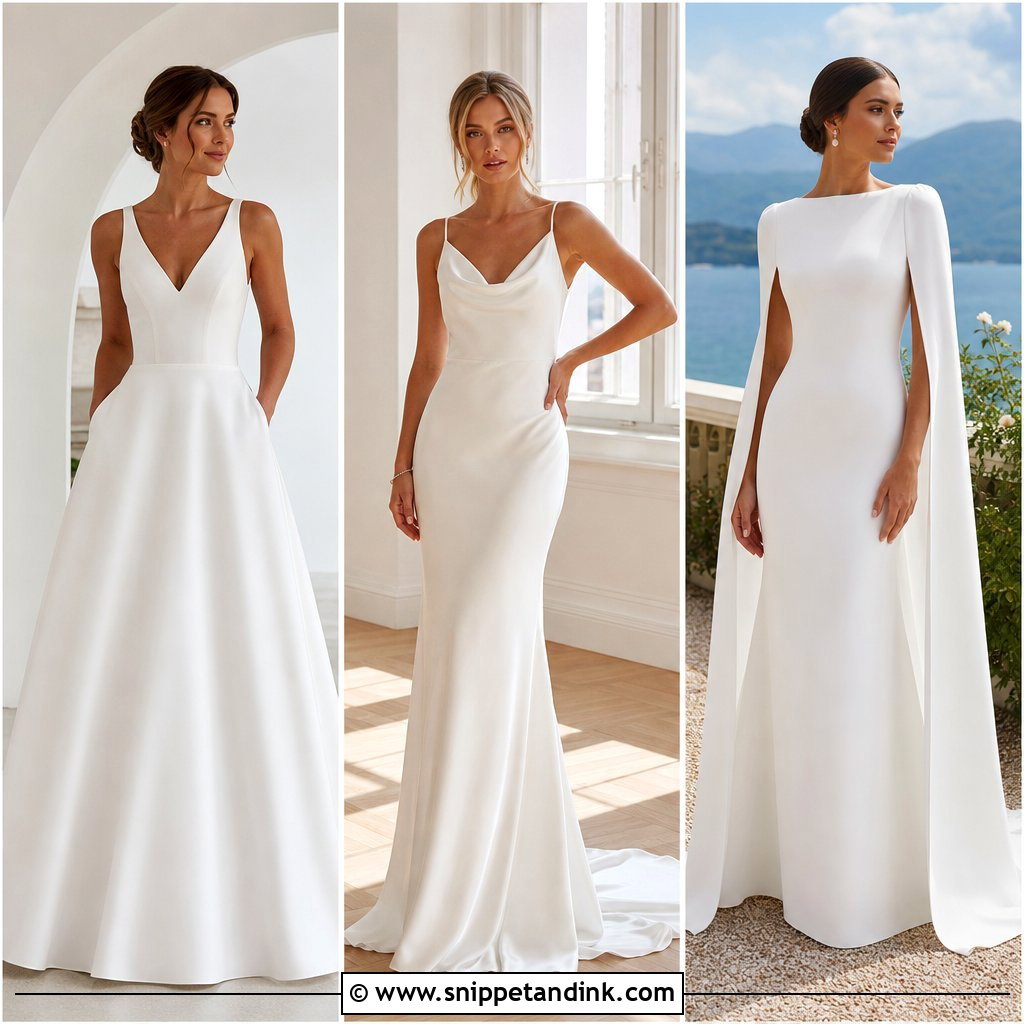
The bias-cut slip is the plainest dress there is, and it’s the most honest about fit. Cut on the diagonal, the satin stretches slightly and follows the body, so it skims beautifully on some figures and clings in the wrong places on others. Try it standing and sitting before you decide. A cowl neckline, spaghetti straps and a slightly open back keep it soft. Pointed white satin heels, pearl drops and a long sheer veil give it balance, and white roses or calla lilies keep the bouquet as clean as the dress. City weddings, beaches, rooftops and small receptions suit it.
2. Plain White A Line Wedding Dress
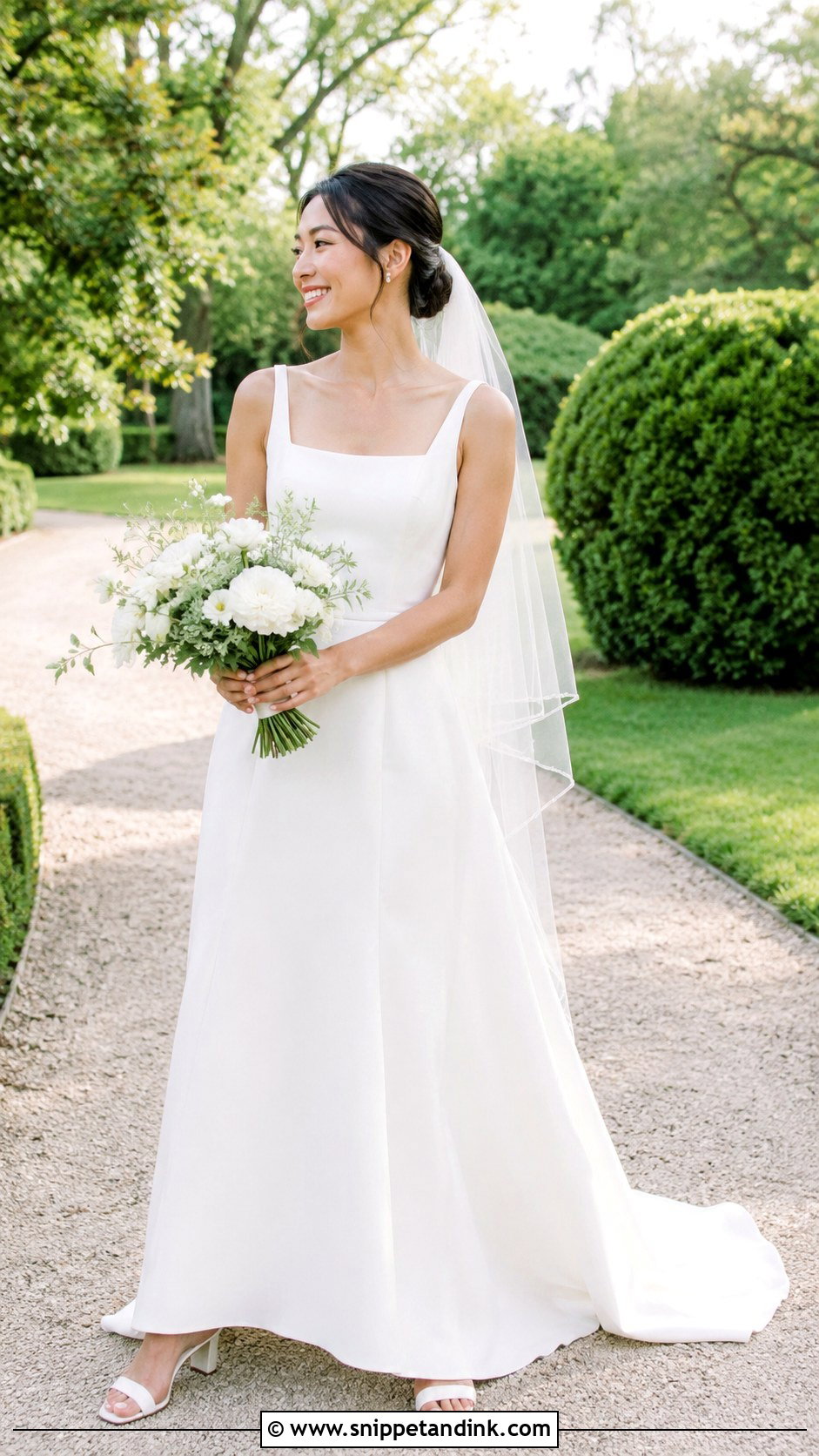
If a bride tells me she wants to forget she’s wearing a dress by the evening, I bring out an A-line. The fitted bodice holds the waist and the skirt falls away from the hips, so it flatters a wide range of figures and stays comfortable all day. Matte mikado, soft satin and clean crepe give a smooth finish without lace or beading. Block heels or low pumps, a fingertip veil and small pearl studs suit it, along with a structured bouquet and a neat low bun. It looks polished without ever trying too hard.
3. Plain White Strapless Wedding Dress
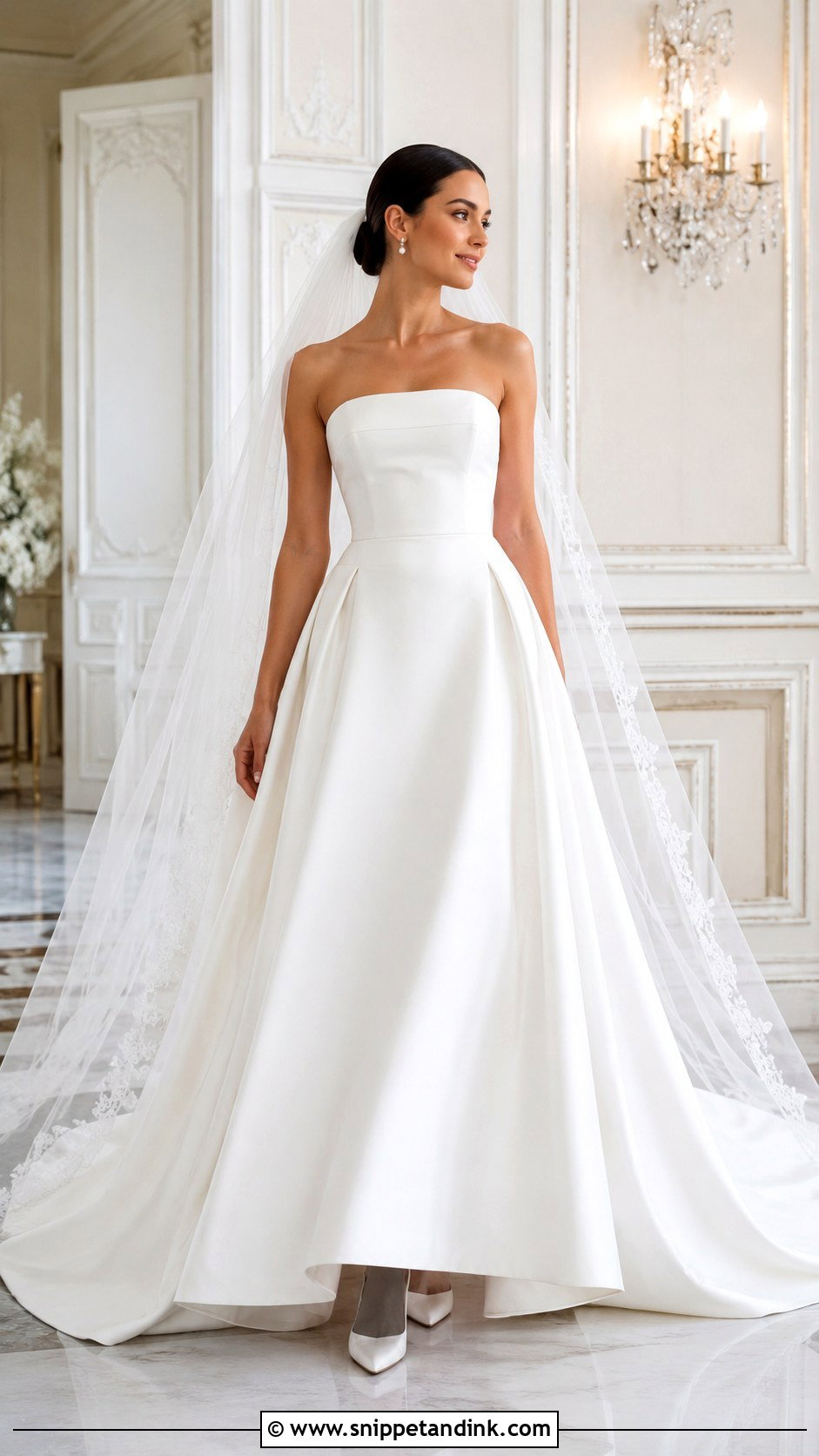
Strapless gowns stay up because of the internal structure, not because they’re tight at the top. A proper corset bodice with boning and a waist stay is essential, especially under a full skirt or long train, which pull the dress down as you move. A straight neckline looks modern; a soft sweetheart feels romantic. With the shoulders bare, jewellery and posture are on display, so a smooth updo, pearl studs and a sheer cathedral veil frame it well. White pointed pumps or satin sandals keep it refined for ballrooms, modern venues and outdoor celebrations.
4. Plain White Long Sleeve Wedding Dress
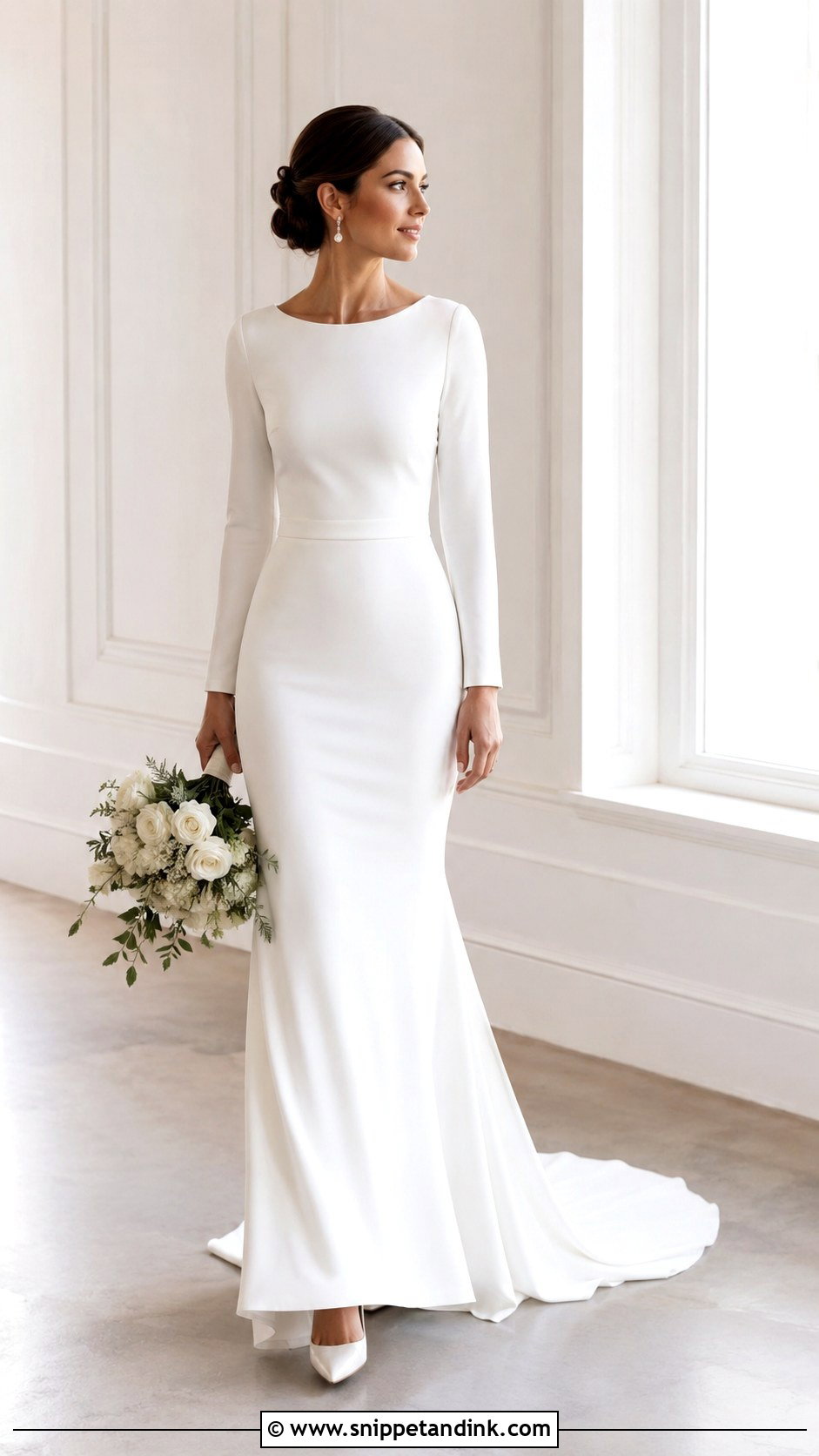
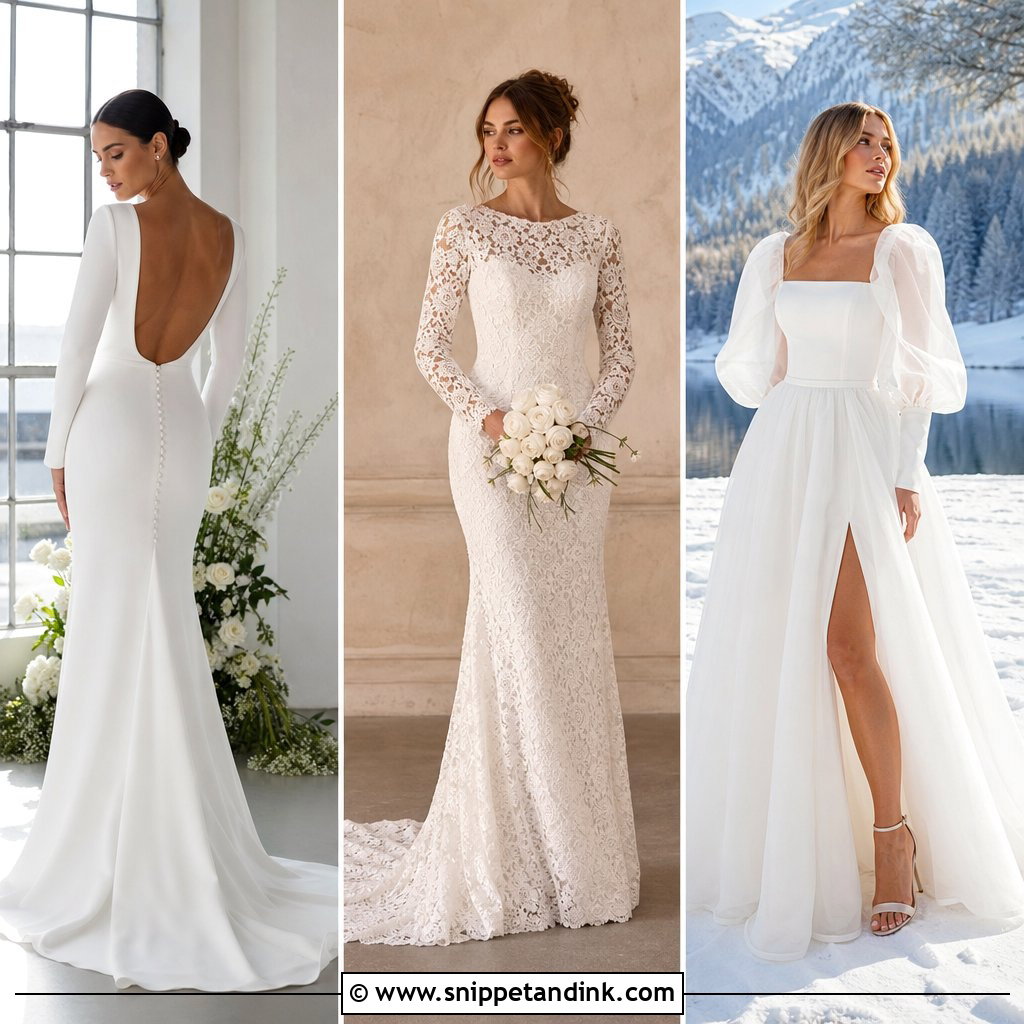
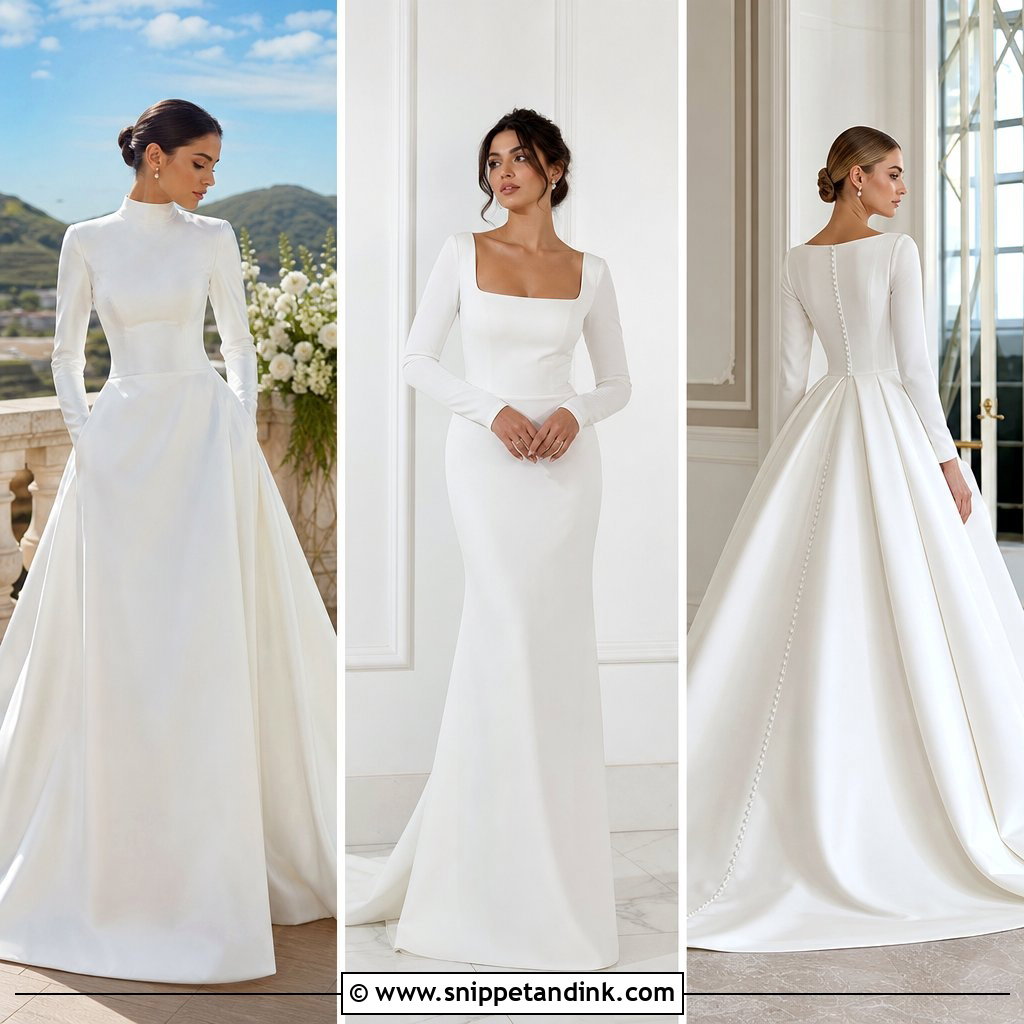
The difference between a long sleeve that looks intentional and one that looks heavy is usually the fabric. Smooth crepe sleeves give a sleek line; sheer chiffon feels lighter. A high neck reads modern, a V-neck more relaxed. I always check arm movement: fitted sleeves with a low armhole stop you raising your arms to hug or dance, so ask for a higher armhole or a small gusset. Sleek white heels, delicate earrings and a low chignon finish it. It’s a natural fit for autumn and winter, and light fabrics carry it into spring.
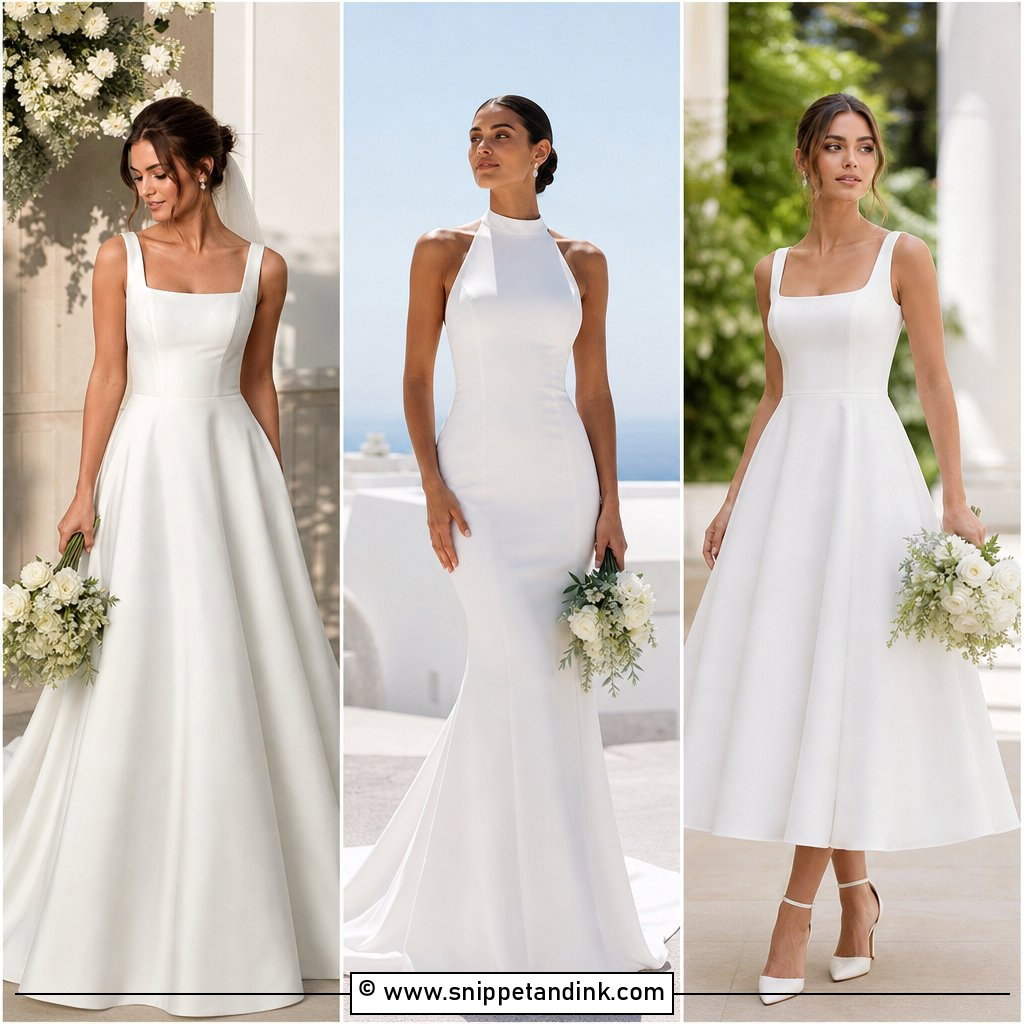
5. Plain White Square Neck Wedding Dress
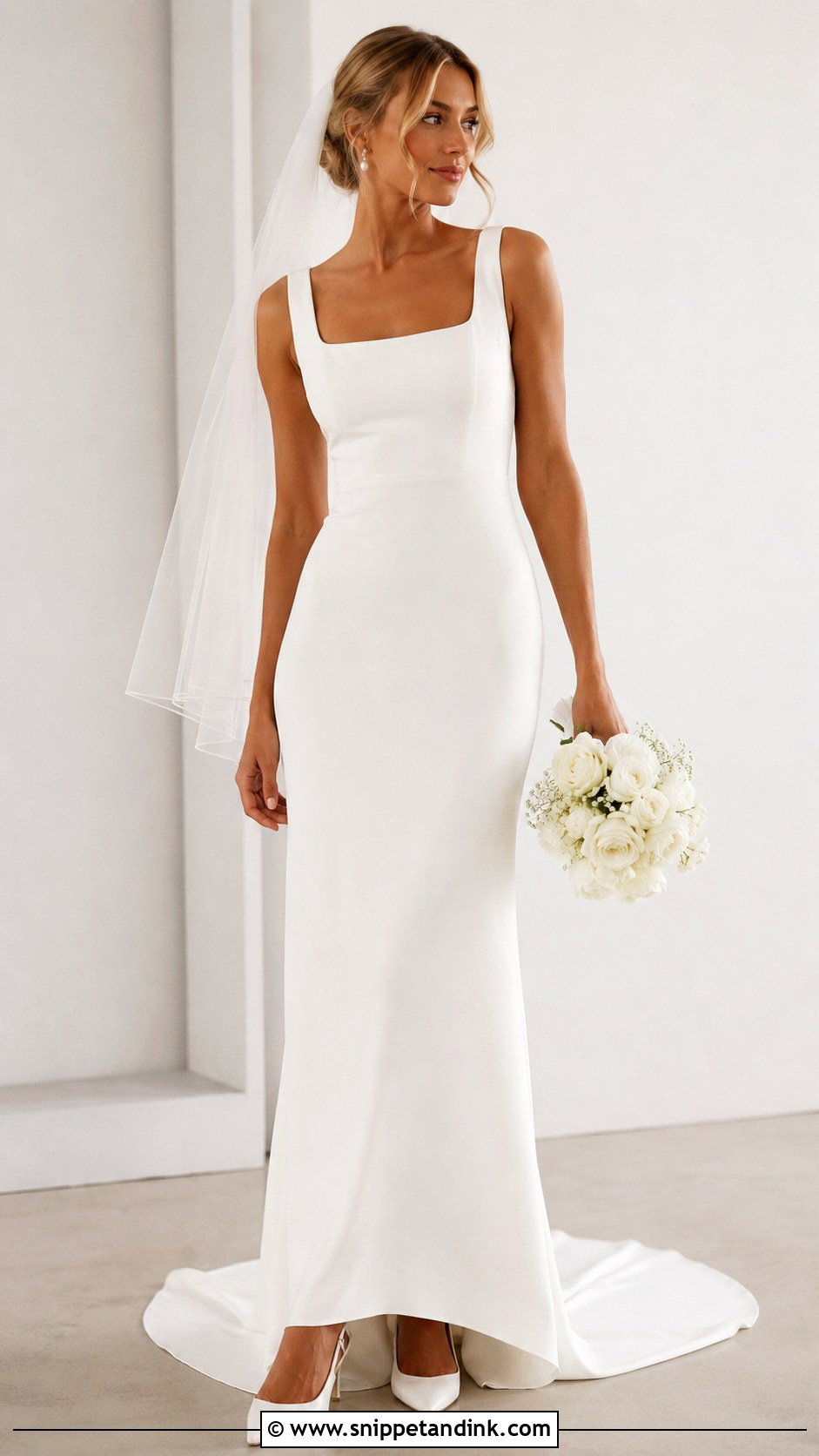
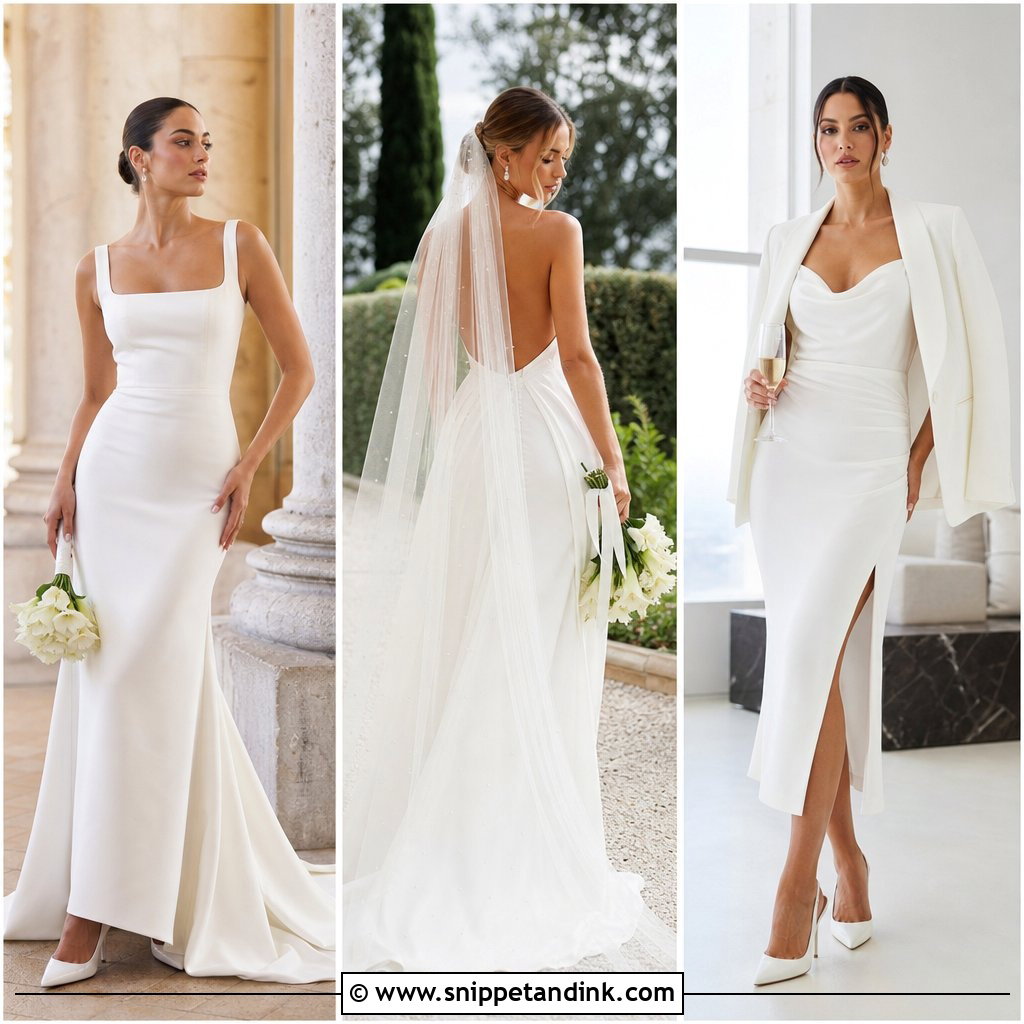
A square neckline gives a plain gown one clear design feature, and it’s flattering on most shoulders. It frames the collarbone and adds structure. The corners need to lie flat against the chest; if they lift when you breathe in, the bodice needs taking in at the side seams. Smooth crepe with wide straps looks modern, satin with a gentle flare softer. Pearl earrings, a sleek bracelet and white slingbacks suit it, and a shoulder-length or fingertip veil keeps the neckline visible.
6. Plain White Halter Wedding Dress
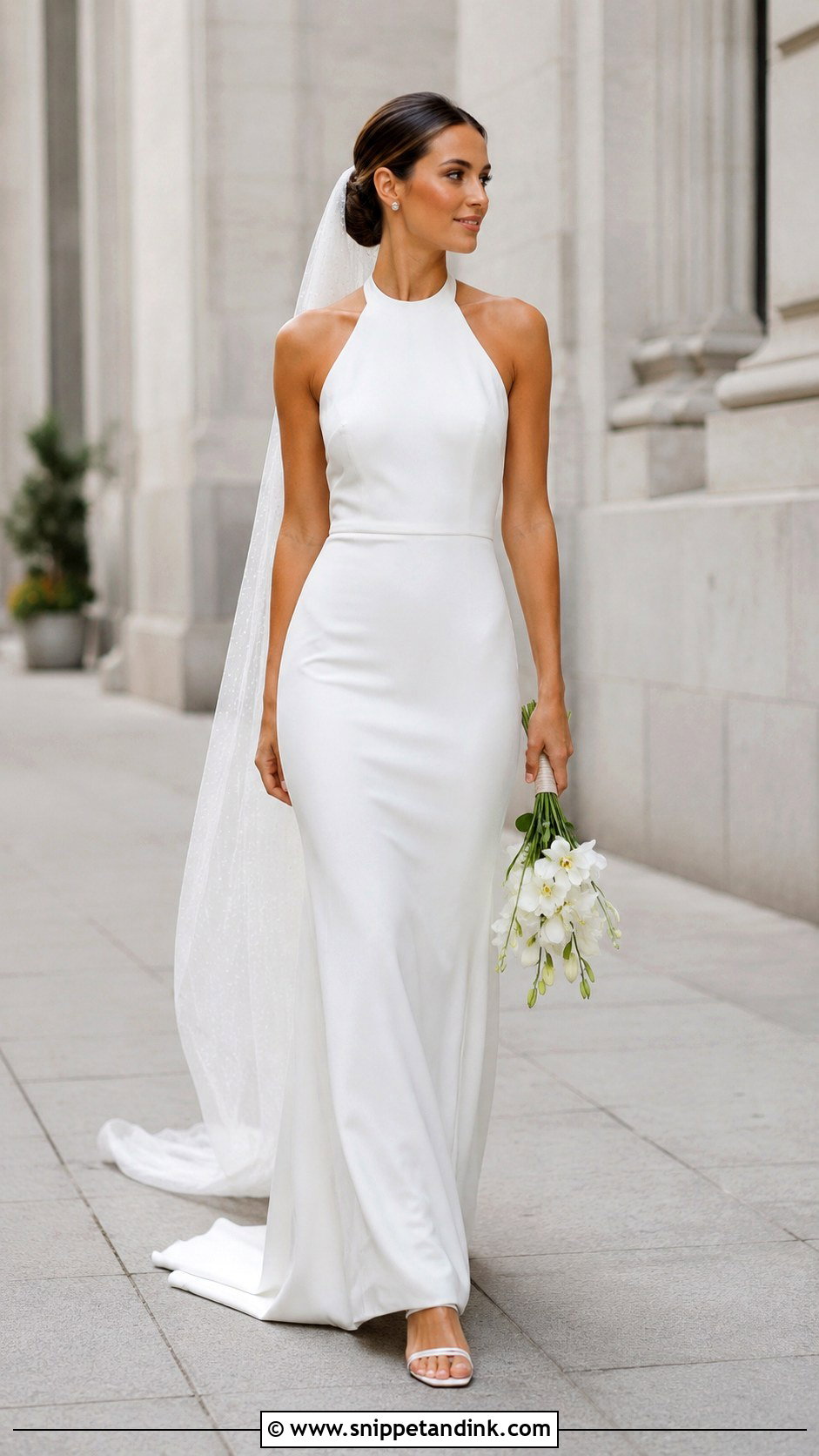
A plain white halter wedding dress draws the eye upward and creates a long line through the torso. Crepe, satin and silk keep that line smooth; a column shape looks sharp for a city wedding, while a soft A-line skirt gives more movement. Skip the necklace and wear studs, because the neckline is already the feature. One practical point: a halter puts weight on the back of your neck, so the strap needs to be wide enough to be comfortable for hours. Strappy white heels, a neat bun and a slim bouquet complete it.
7. Plain White Off Shoulder Wedding Dress
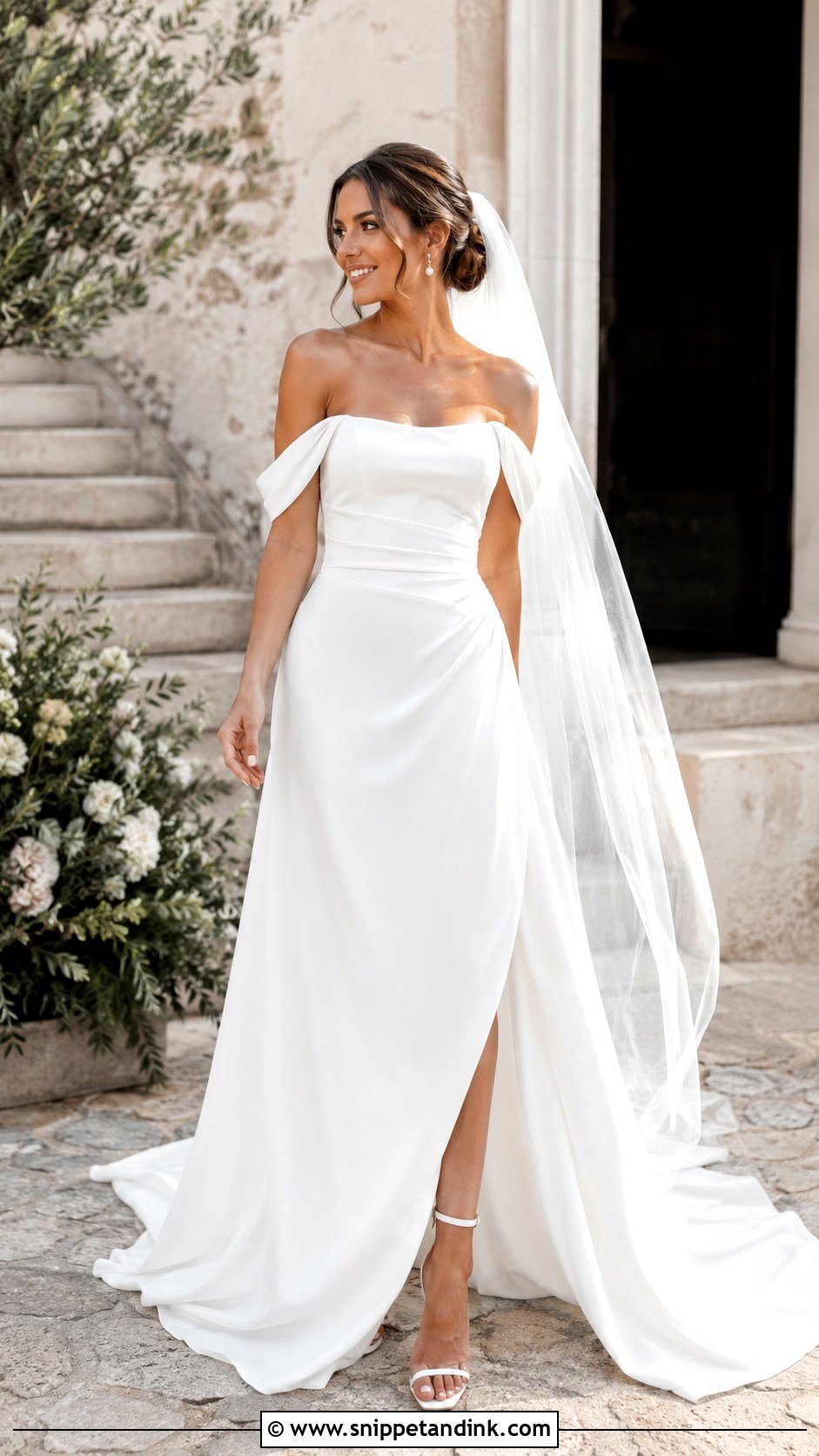
Off-shoulder softens a plain dress without adding decoration. It frames the shoulders and suits a fitted bodice, a flowing A-line or a sleek mermaid. Satin or mikado gives structure, crepe a softer finish. The band across the arms is the part I fuss over most, since it slides up when you lift your arms unless it’s cut close and backed with silicone tape. A low bun, pearl earrings and a medium veil placed below the crown keep the shoulders clear. Closed-toe heels or a delicate ankle strap finish it.
8. Plain White Crepe Wedding Dress
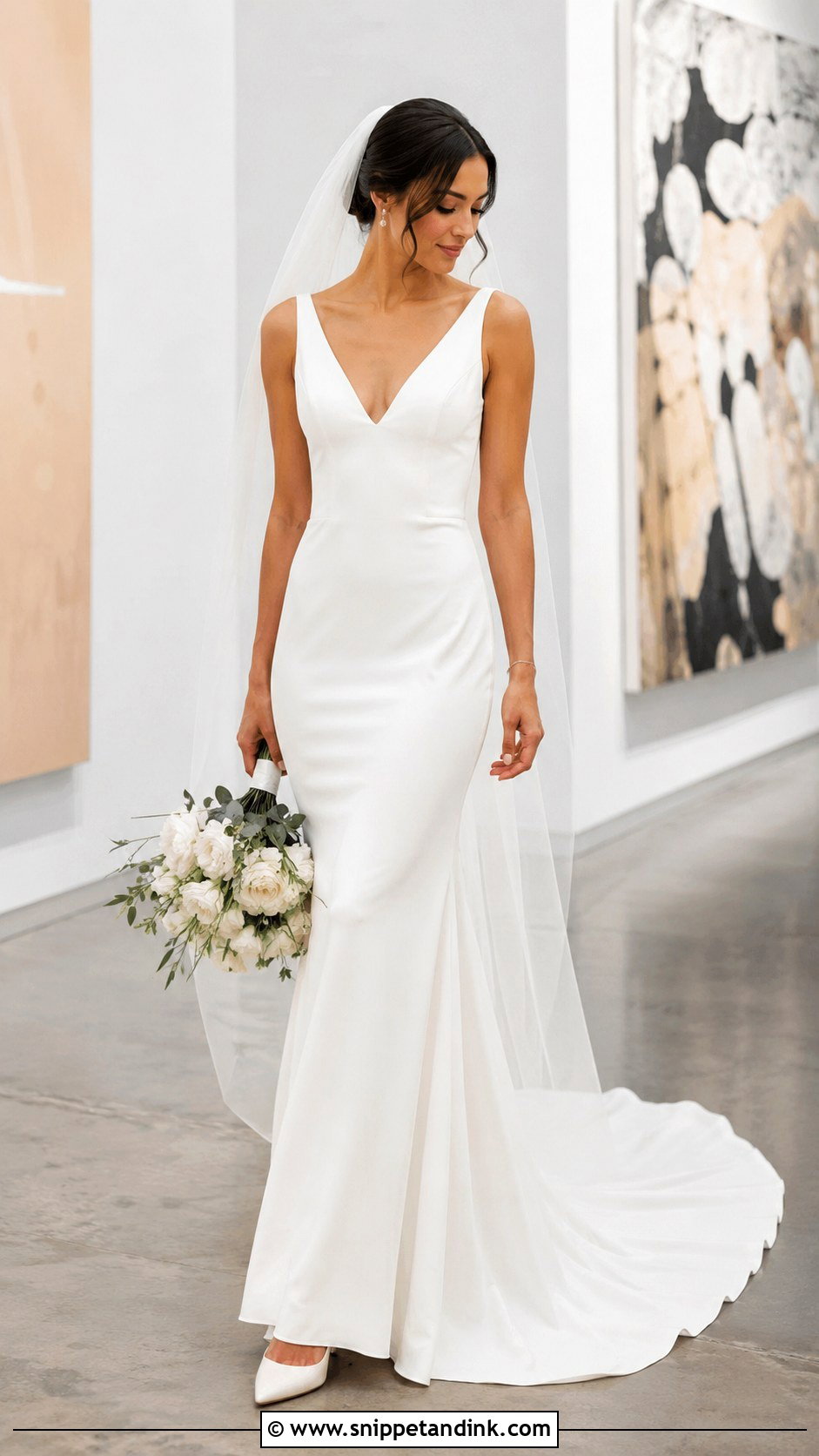
Crepe has a soft matte finish that looks modern and understated, and it gives shape without shine. It’s also honest: crepe shows lumps and underwear lines more than any other fabric here, so this is the dress I’d do a full fitting in with your actual shapewear. A V-neck, long train or clean seam details make a crepe gown look expensive even when the design is simple. White pointed heels, a sleek veil, minimal jewellery and a low ponytail or soft bun keep it sharp for modern venues and courthouse ceremonies.
9. Plain White Mikado Wedding Dress
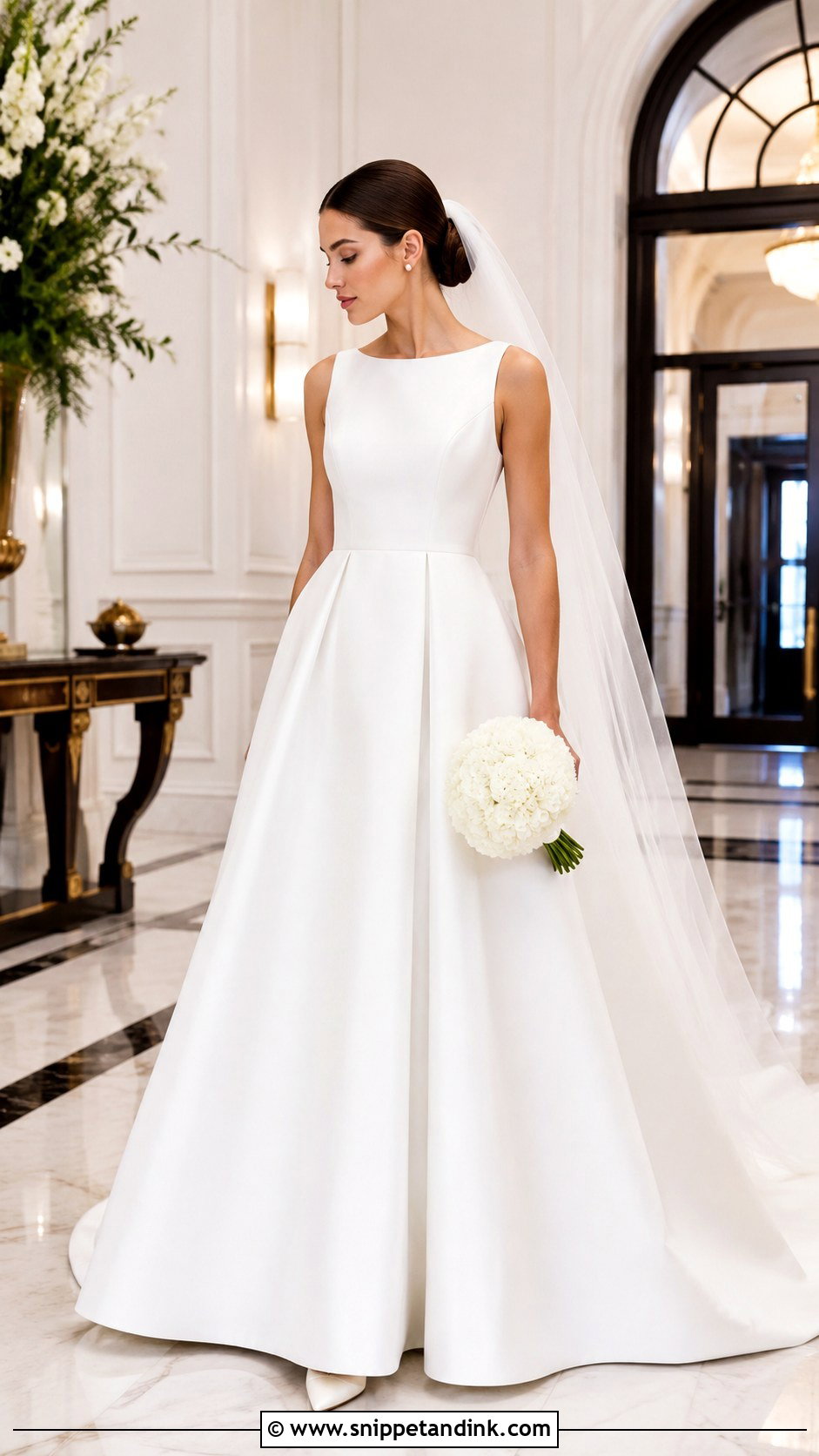
Mikado is a heavy, slightly stiff silk or silk-blend weave that holds its own shape, which is why it’s used for ball gowns, A-line skirts and architectural cuts. From a distance it looks simple; up close and in photos, the fabric has real presence. Because it’s stiff, it creases at the folds rather than draping, so a structured cut suits it far better than anything that needs to flow. Strapless, square or bateau necklines finish it neatly. Satin pumps, pearl studs, a plain long veil and a smooth bun suit formal venues and hotel weddings.
10. Plain White Ball Gown Wedding Dress
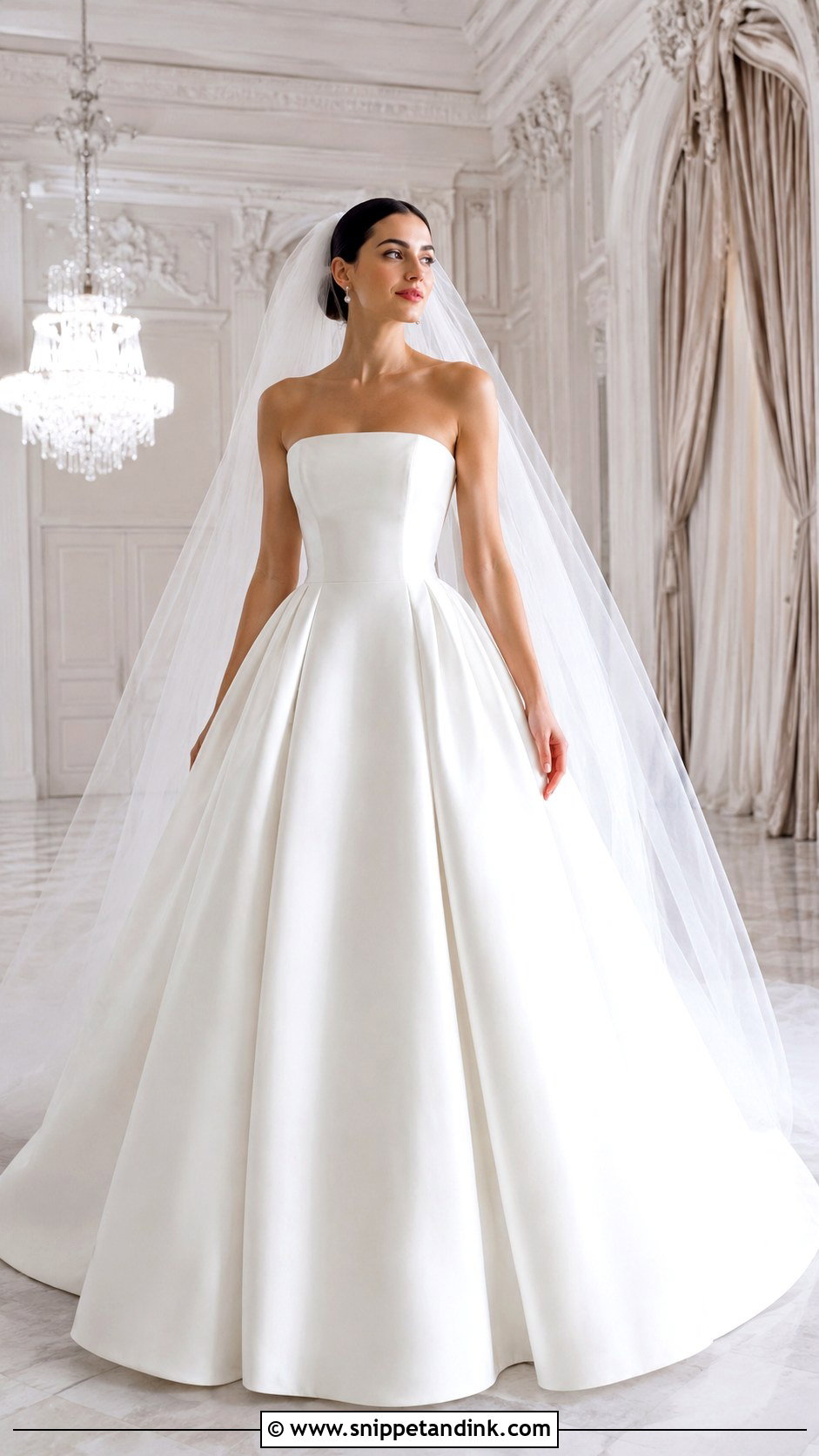
A plain ball gown lets volume do the job that lace or sparkle would normally do. Pair a clean bodice with a strapless, square or bateau neckline, and use mikado or satin, which hold the skirt’s shape. Underneath, a good petticoat or a hoop decides how full the skirt stays by evening, so ask what’s built in. Pearl earrings, a sleek veil and white pumps hidden under the skirt are enough. Large venues and traditional ceremonies give it the space for a dramatic entrance.
11. Plain White Column Wedding Dress
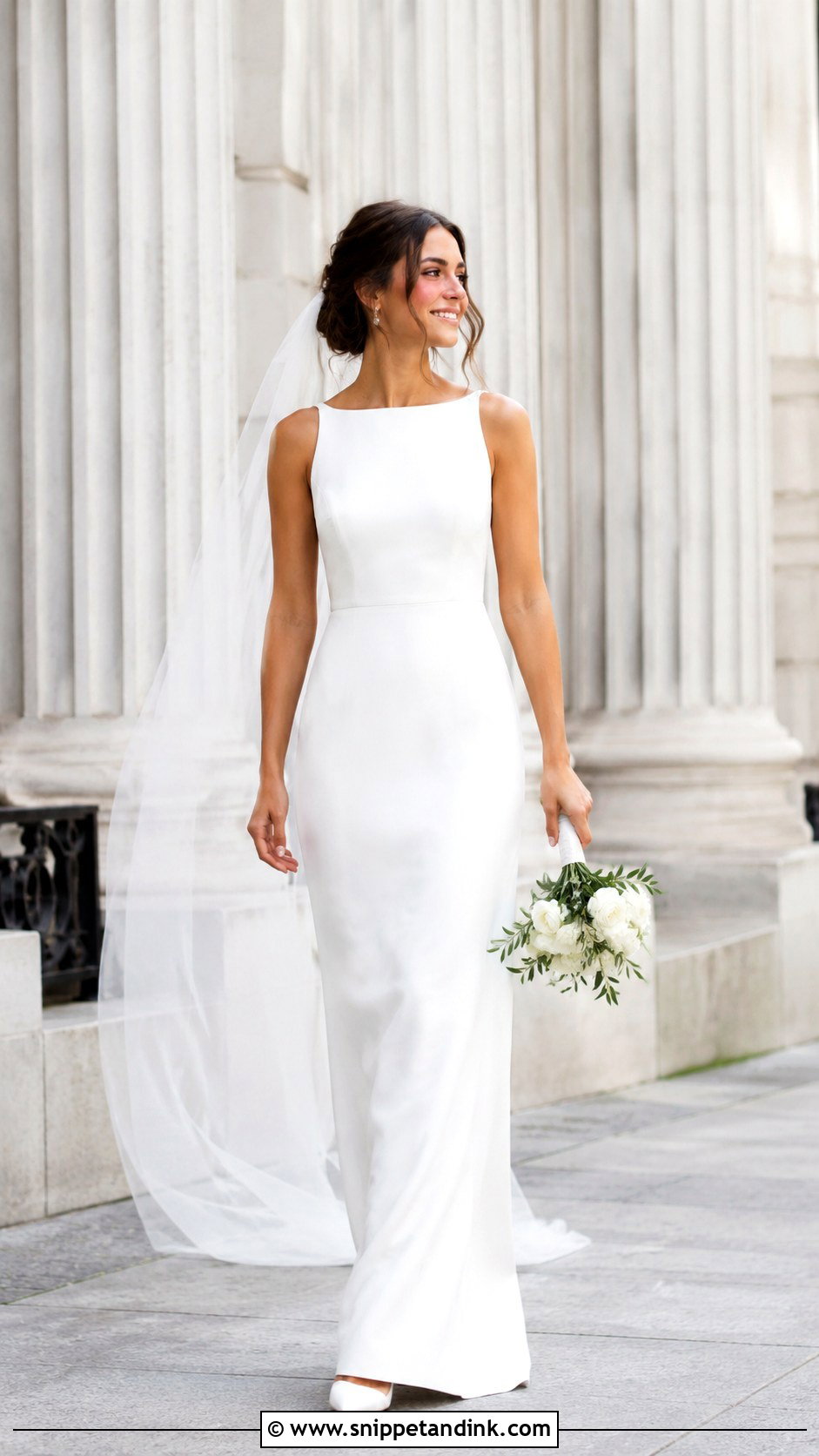
Column gowns are calm and modern. The straight shape follows the body without the flare of a mermaid or the volume of an A-line. What makes or breaks one is the hem: it has to break just at the top of your shoe, level all the way round, because there’s nothing else to look at. Crepe, satin or silk with strong tailoring suit it. Pointed heels, a slim veil and delicate jewellery finish it, and a cape veil or simple gloves add interest. Courthouses, galleries and city venues suit its clean line.
12. Plain White Mermaid Wedding Dress
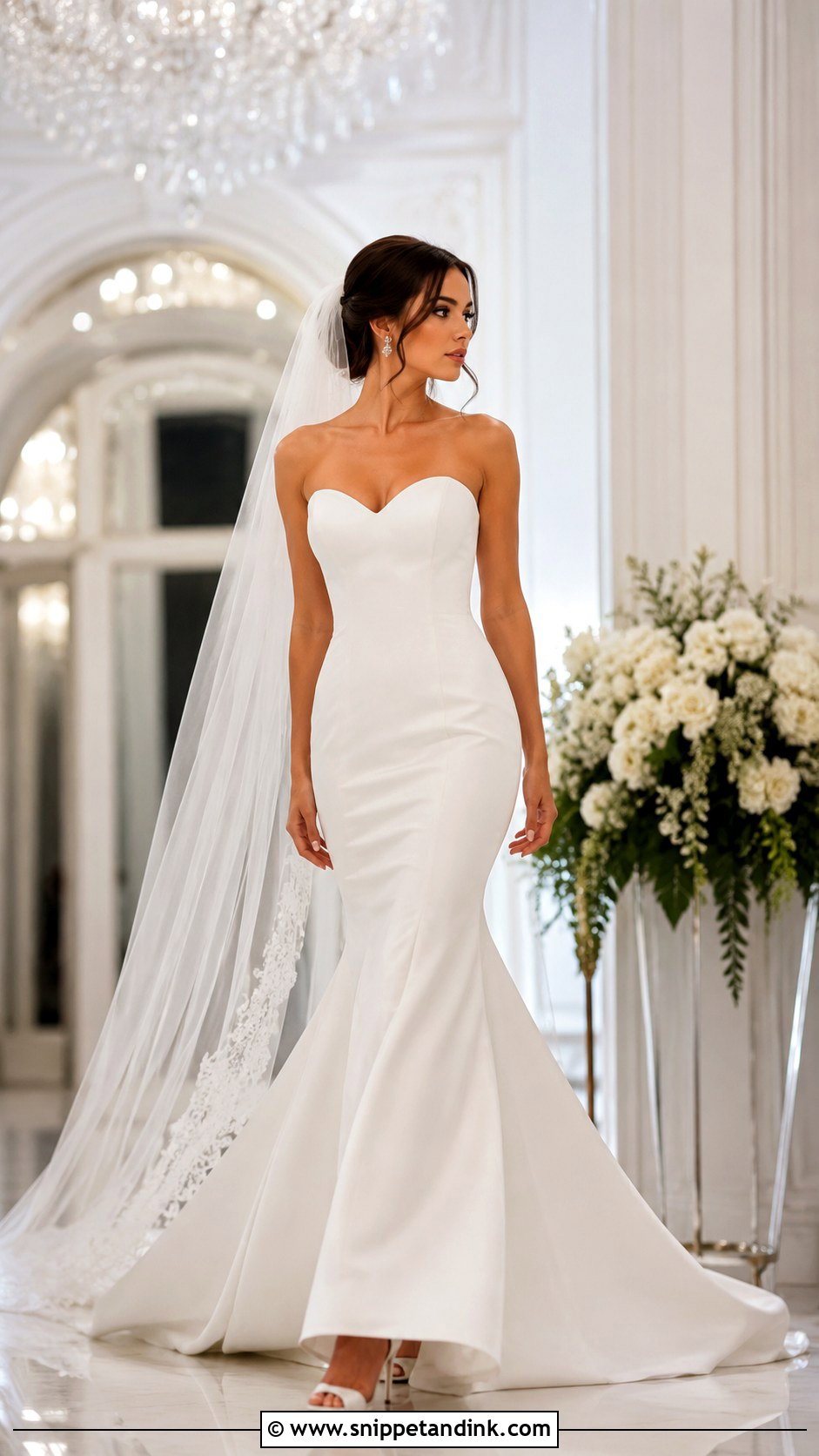
A plain mermaid makes shape the whole story. The fitted bodice and hips give drama; the flared skirt adds movement. Crepe, satin and mikado keep it smooth. Where the flare starts matters: at or just above the knee you can walk and climb steps, lower than that and you’ll shuffle. A sweetheart neckline is classic, a straight one modern. High white heels support the long silhouette, a cathedral veil balances it, and jewellery stays simple. Formal receptions, ballrooms and evening ceremonies suit it.
13. Plain White Tea Length Wedding Dress
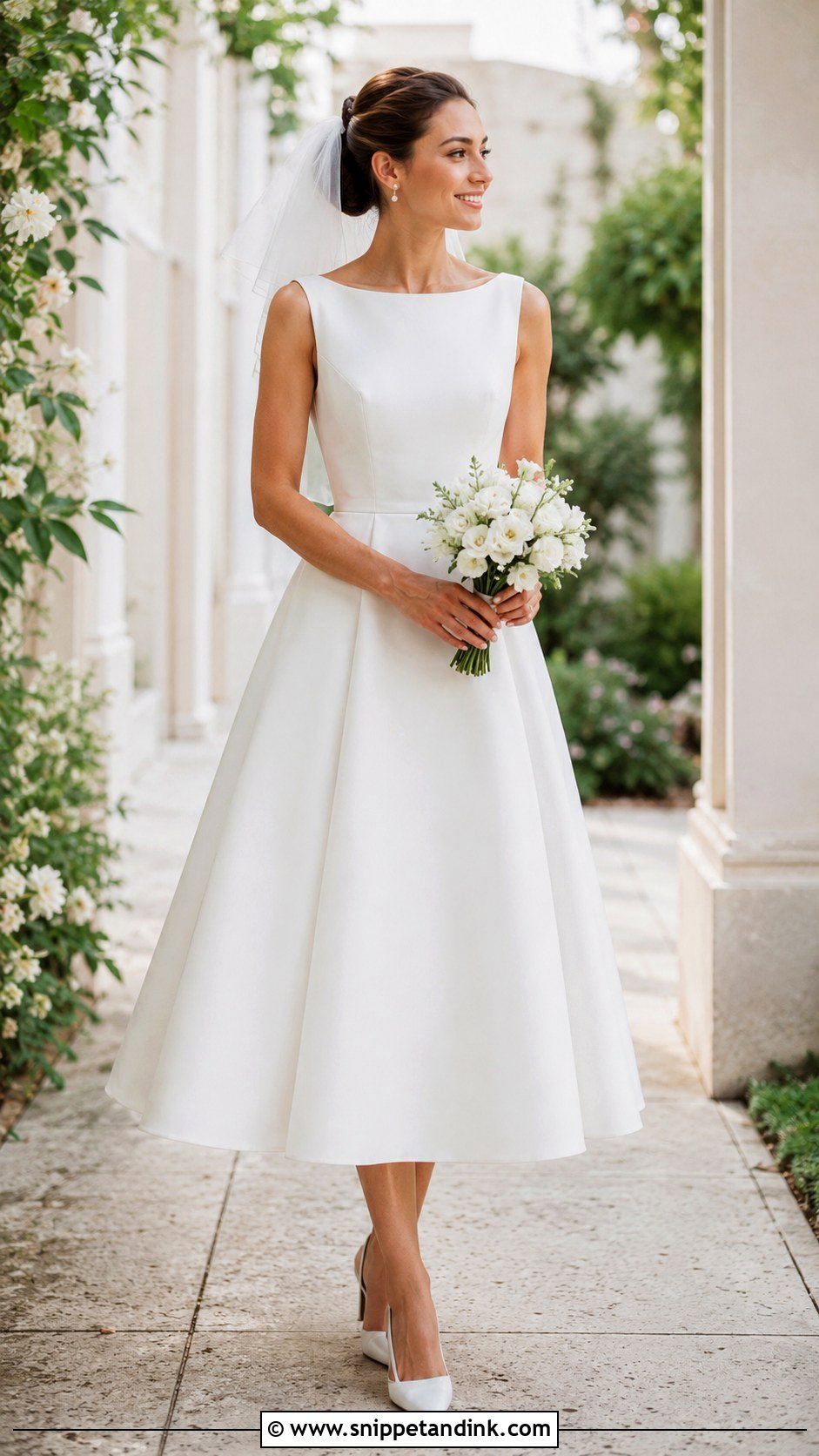
Tea length falls between knee and ankle and puts your shoes in the picture. The exact hemline is everything: just below the widest part of the calf flatters most legs, while a few centimetres either way can shorten them. Structured satin or mikado looks vintage, soft crepe more modern. White slingbacks, pearl studs and a short veil or hair bow complete it. It’s comfortable for dancing and suits courthouse weddings, garden ceremonies, bridal brunches and second looks.
14. Plain White Midi Wedding Dress
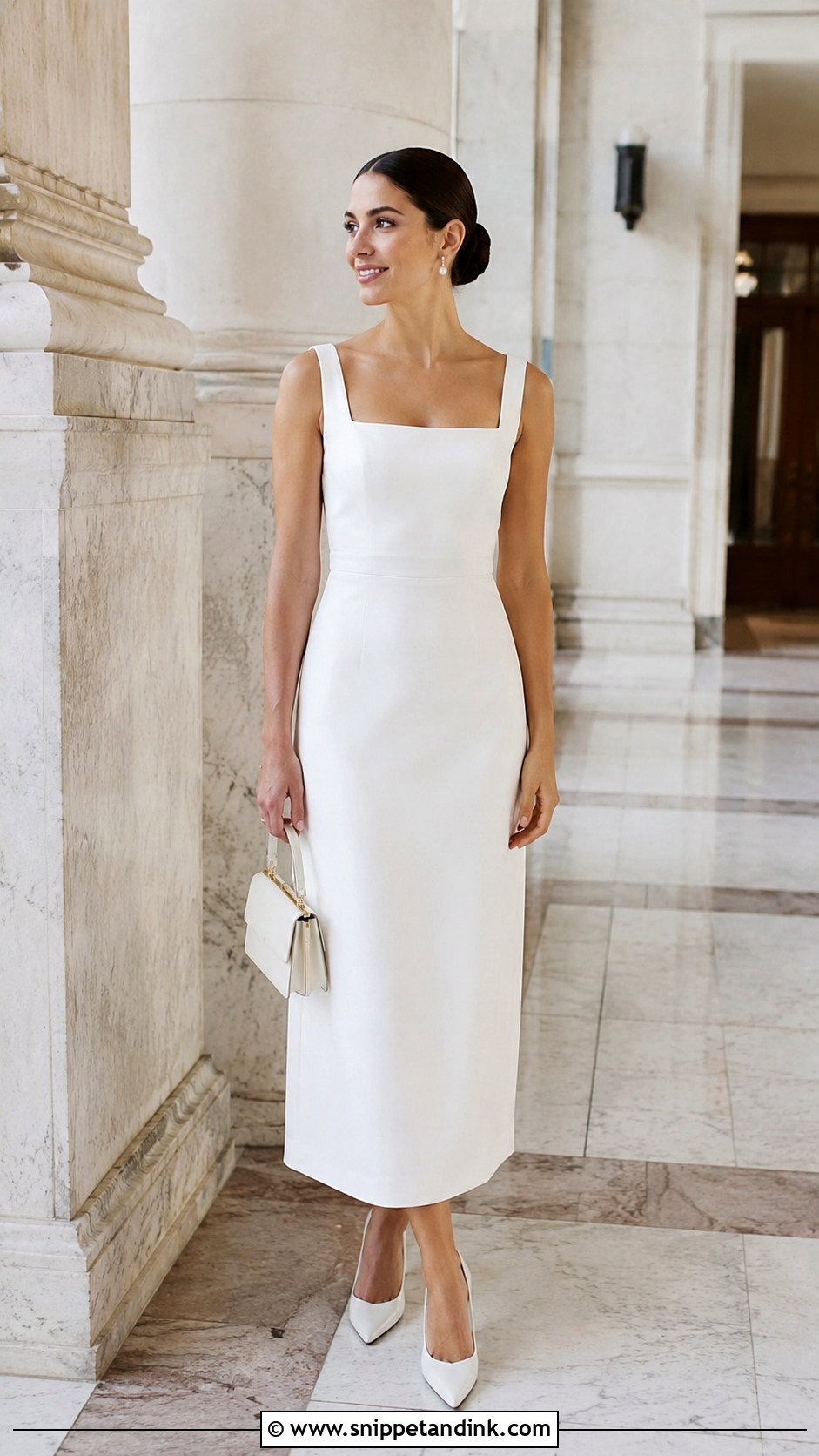
A plain white midi wedding dress is my usual suggestion for civil ceremonies and small weddings where a full gown would feel out of place. A fitted bodice, clean straps or a square neckline keep it bridal. Satin, crepe and structured cotton blends all work. Satin midis show creases from sitting in a car, so I’d choose crepe or a cotton blend if you’re travelling to the ceremony. White pointed pumps, pearl earrings and a small structured bag finish it, with a birdcage veil or simple headband for the bridal touch. It’s also one you can wear again.
15. Plain White Mini Wedding Dress
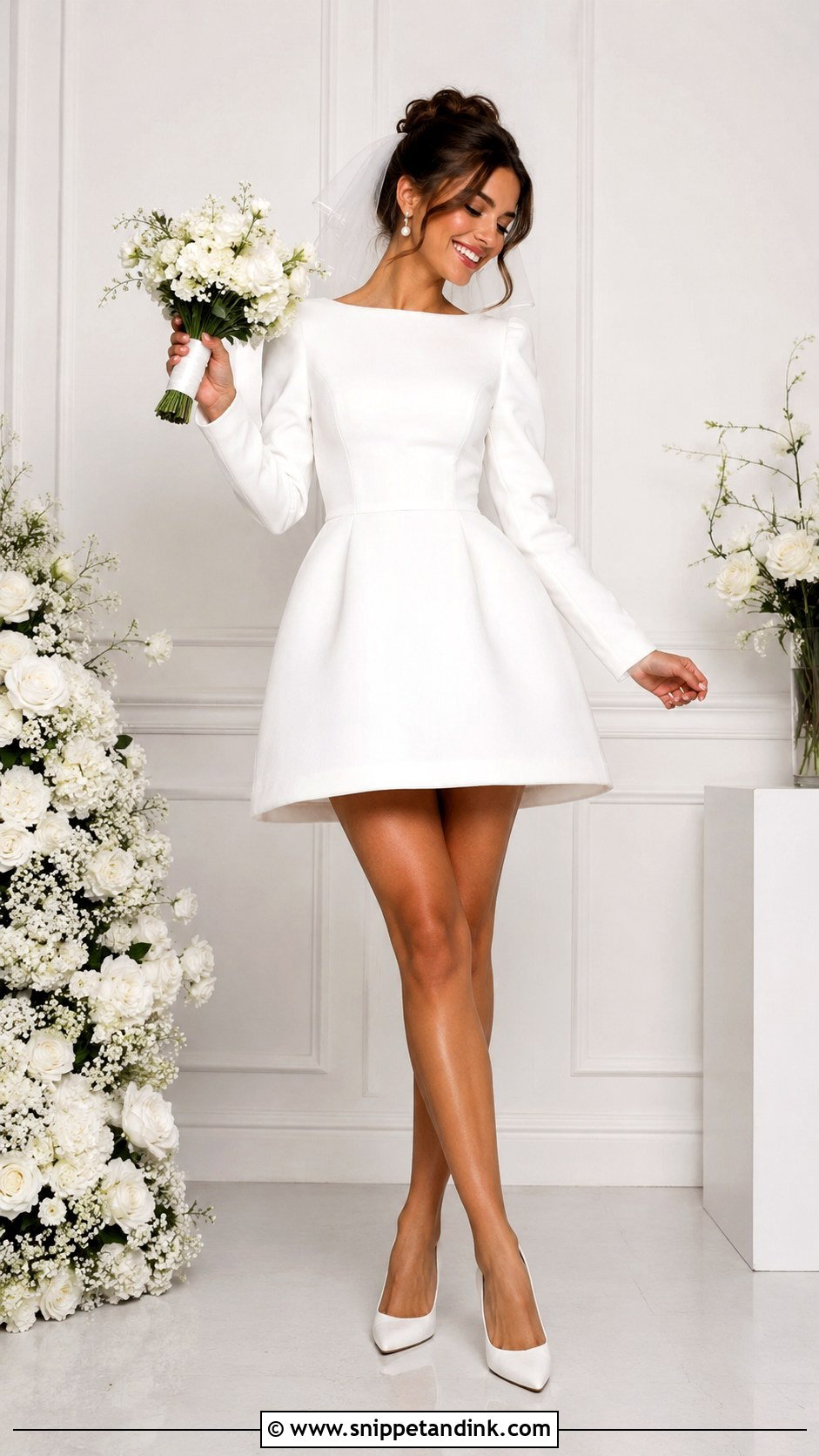
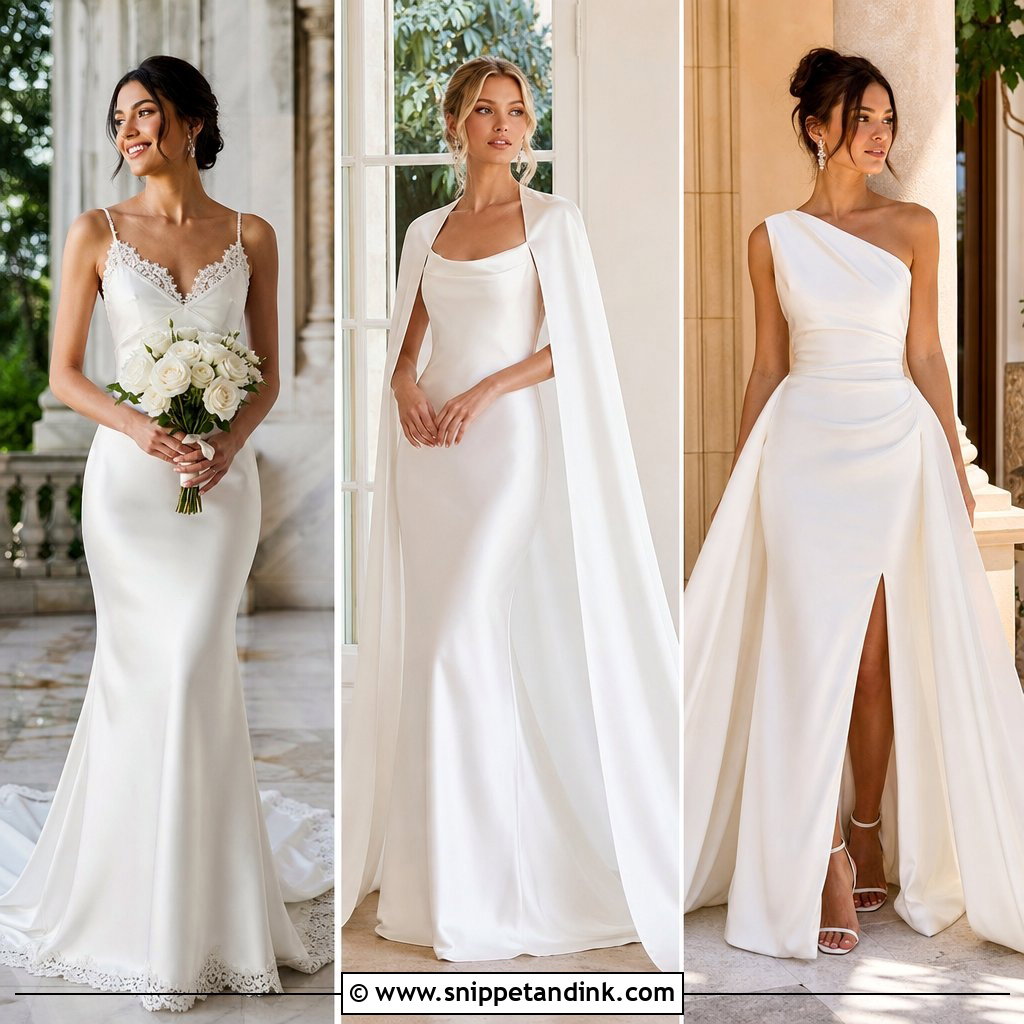
A short white dress is easy to dance in and easy to make look casual, so the fabric has to carry the occasion. Structured fabric, tailored fit and a clean neckline keep it bridal. A long-sleeve mini feels chic, a strapless mini playful. Try sitting down in it at the fitting, because minis ride up more than you expect when seated for dinner. White pumps, pearl earrings and a short veil or oversized bow make it read as wedding, and sheer tights work in cooler weather. After-parties and courthouse weddings suit it.
16. Plain White High Neck Wedding Dress
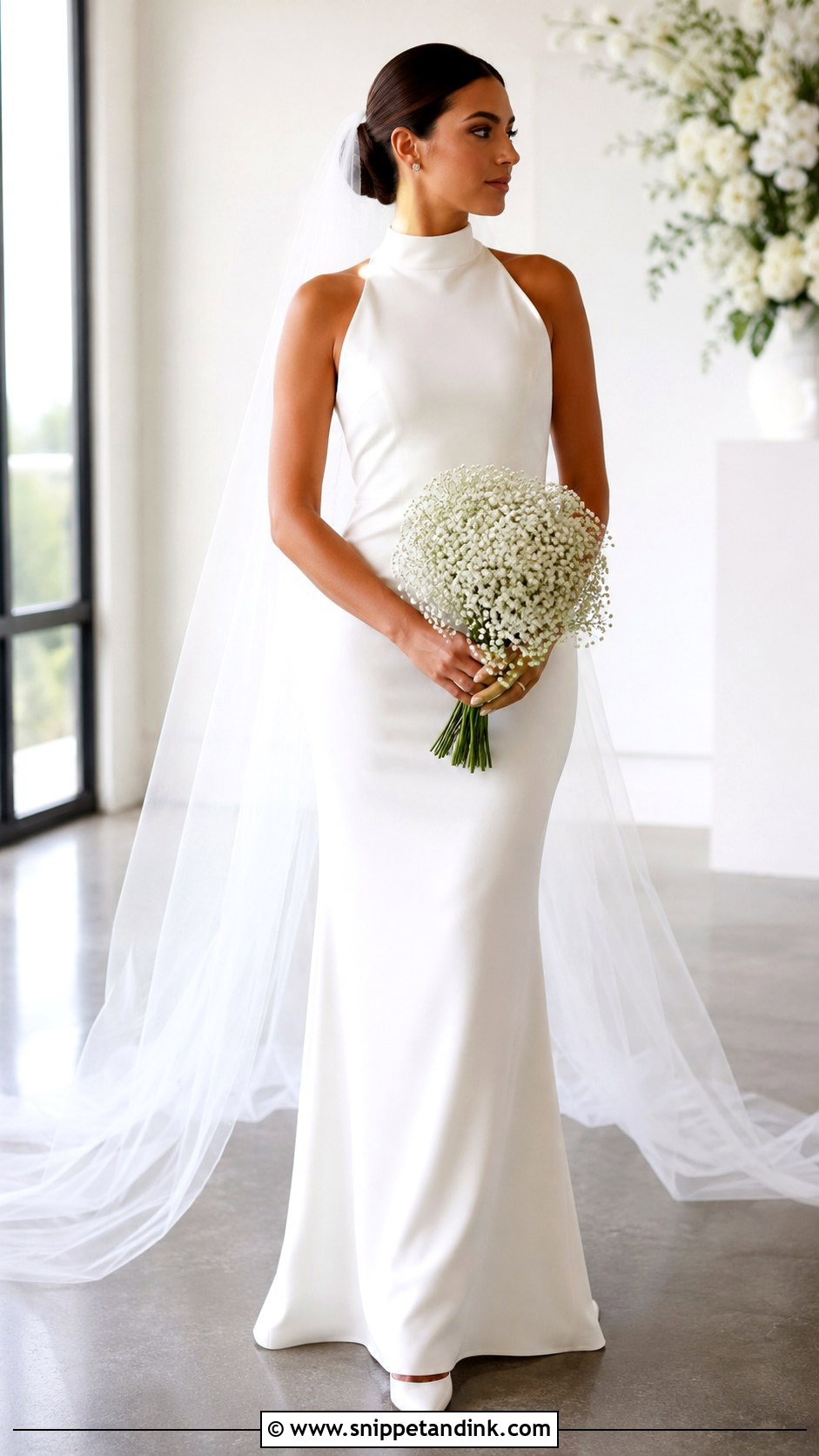
A high neck brings attention to the face and creates a long, graceful line. Crepe, satin and silk suit it, especially in column or A-line shapes. If the front is fully covered, a low back gives contrast. I check the neckline fit carefully, because a high collar that sits even slightly tight will feel like a hand at your throat by the evening. Small earrings, sleek heels and a smooth bun keep it clean, and a long veil softens it. Formal ceremonies and modern venues suit its polish.
17. Plain White V Neck Wedding Dress
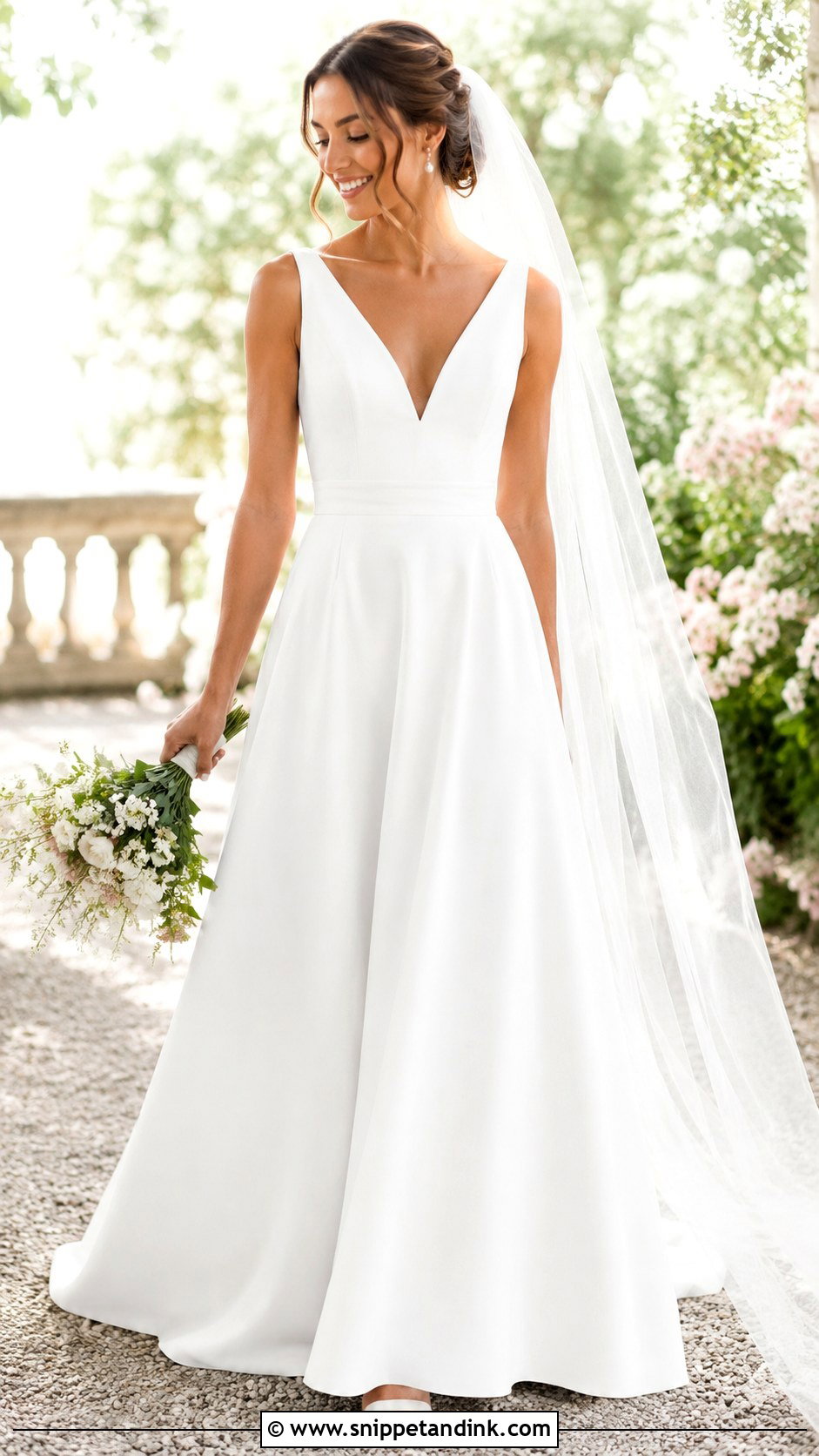
The V-neck lengthens the upper body and works across many bust sizes when it’s fitted properly. That fit is the crux: on a larger bust a deep V needs internal support or fashion tape to stay in place when you move. A deep V looks modern, a soft V classic. An A-line skirt is romantic, a column minimalist, a fitted crepe sleek. Skip the pendant, wear pearl earrings and white heels, and add a veil with a clean edge. It keeps a simple gown feeling feminine and well shaped.
18. Plain White Bateau Neck Wedding Dress
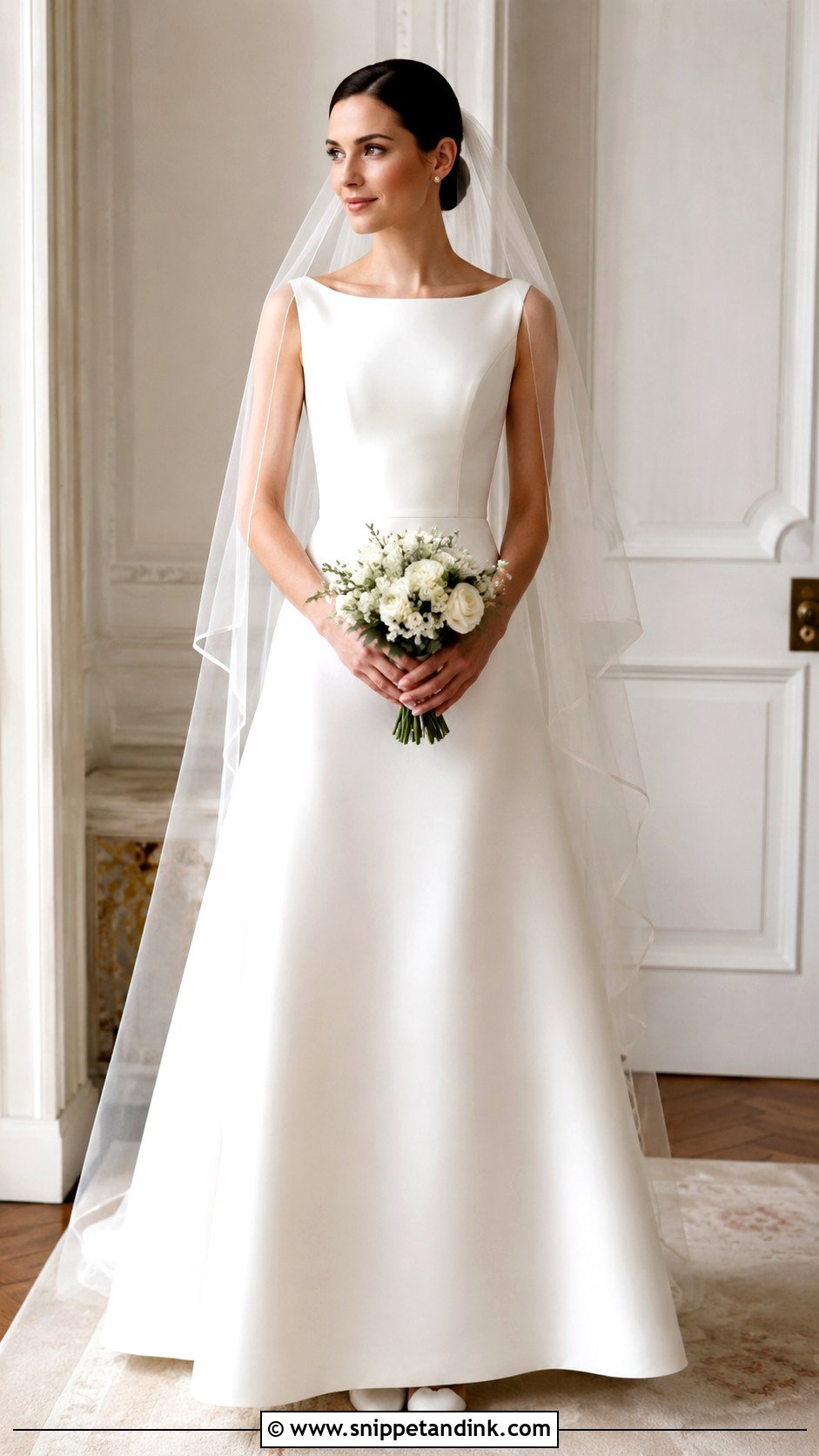
The bateau neck runs wide across the collarbone and almost up to the shoulder points, giving a clean, horizontal line. It suits structured gowns because the neckline holds its form, and it widens the shoulders slightly, which is flattering on narrow frames and less so on broad ones. A fitted waist with an A-line skirt is classic, a slim column more modern. Pearl studs, a neat bun and white satin pumps finish it, and a fingertip or chapel veil leaves the neckline visible.
19. Plain White Backless Wedding Dress
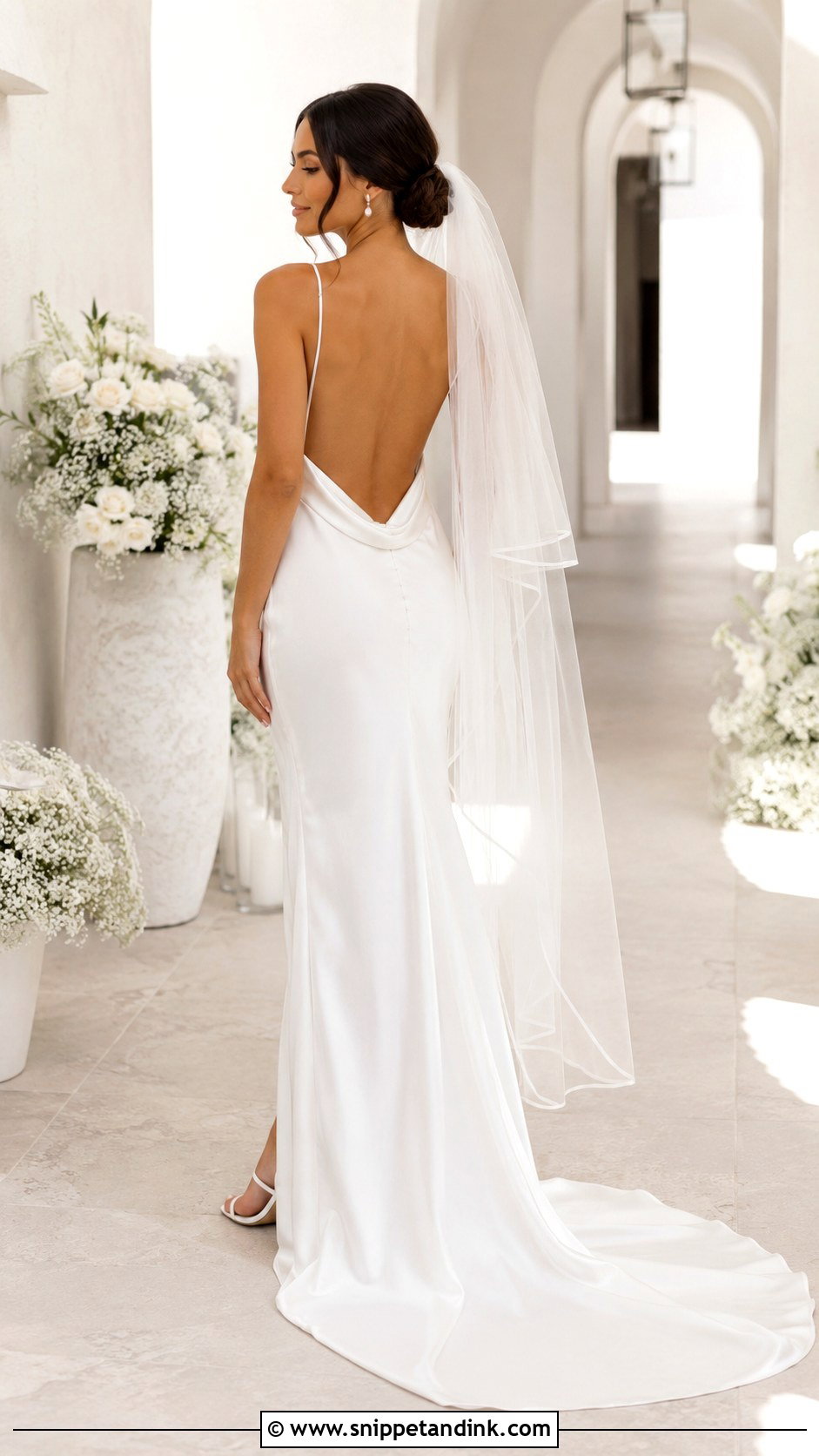
A plain white backless wedding dress looks simple from the front and striking from behind, which is a good way to give a plain gown one memorable feature. A satin slip, crepe column or fitted halter all suit an open back. Plan the underwear early, because a backless dress may need built-in cups, adhesive support or a low-back body, and that decision affects how it’s altered. Minimal earrings, a low bun or soft waves and strappy white heels finish it. Wear a sheer veil for the ceremony and remove it for reception photos.
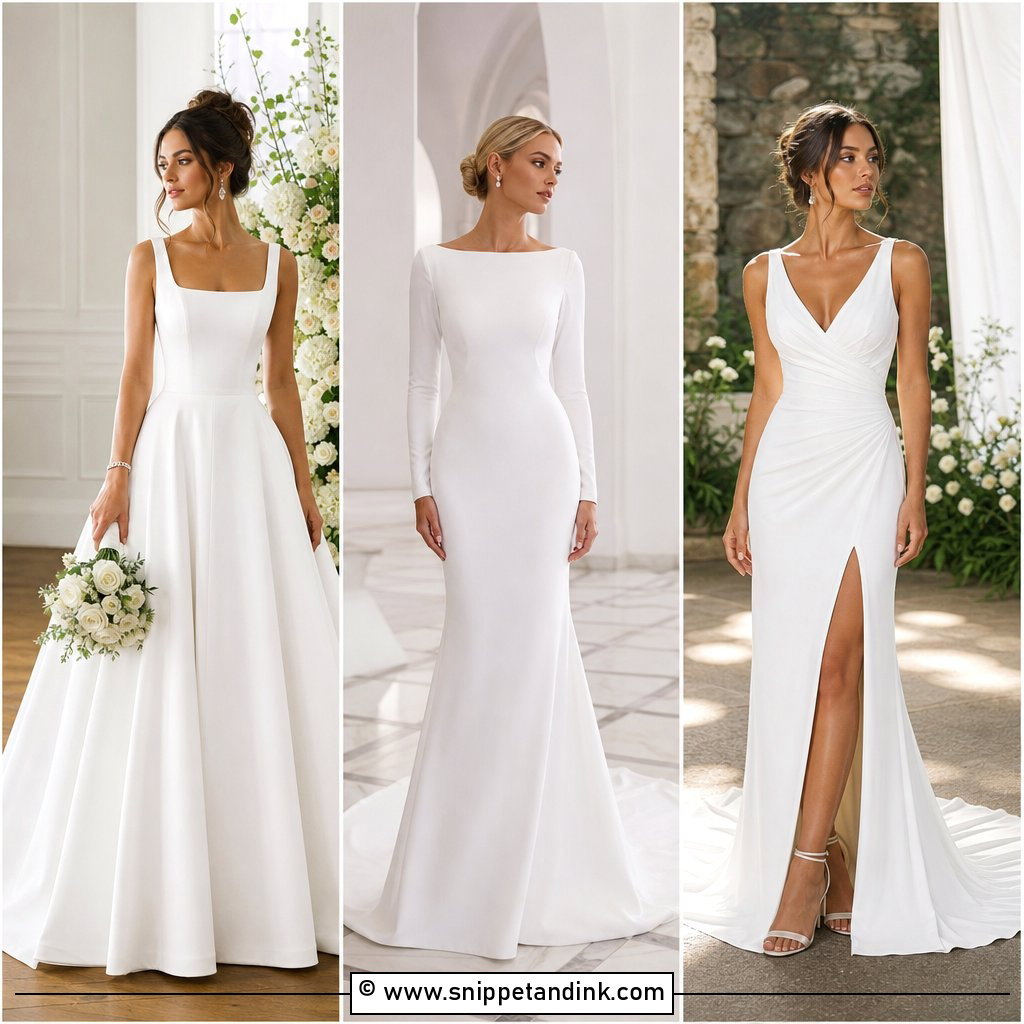

20. Plain White Wedding Dress With Bow
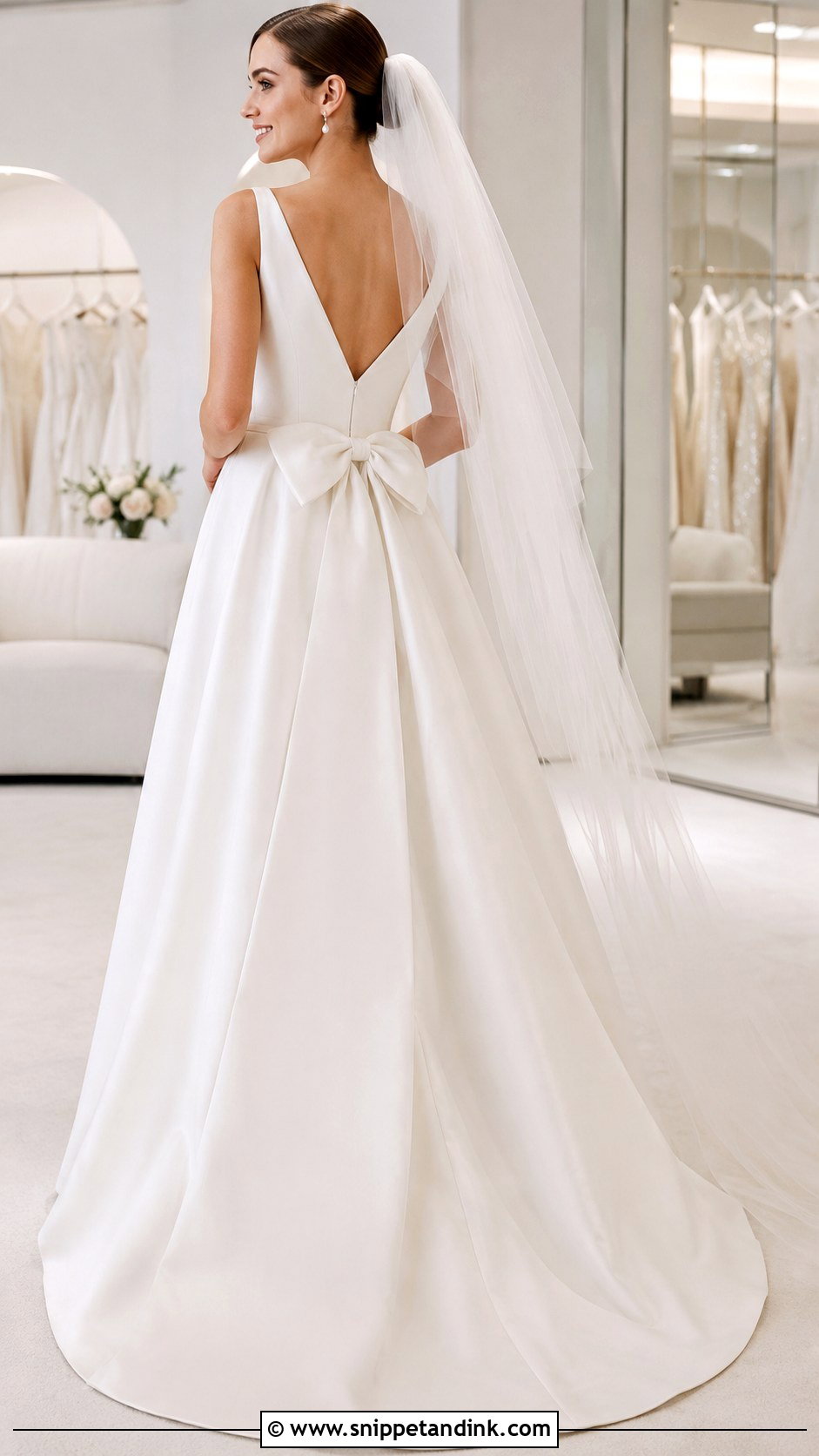
One bow gives a plain dress personality without sparkle or lace. It can sit at the back waist, on a shoulder or along the neckline. A satin A-line with a back bow feels classic, a mini with a shoulder bow modern. I’d keep the rest of the outfit minimal so the bow stays the focus. Big satin bows can collapse during the day, so ask whether it’s stiffened inside; if not, a little interfacing keeps the loops full. Pearl earrings, white pumps and a simple veil complete it.
21. Plain White Wedding Dress With Pockets
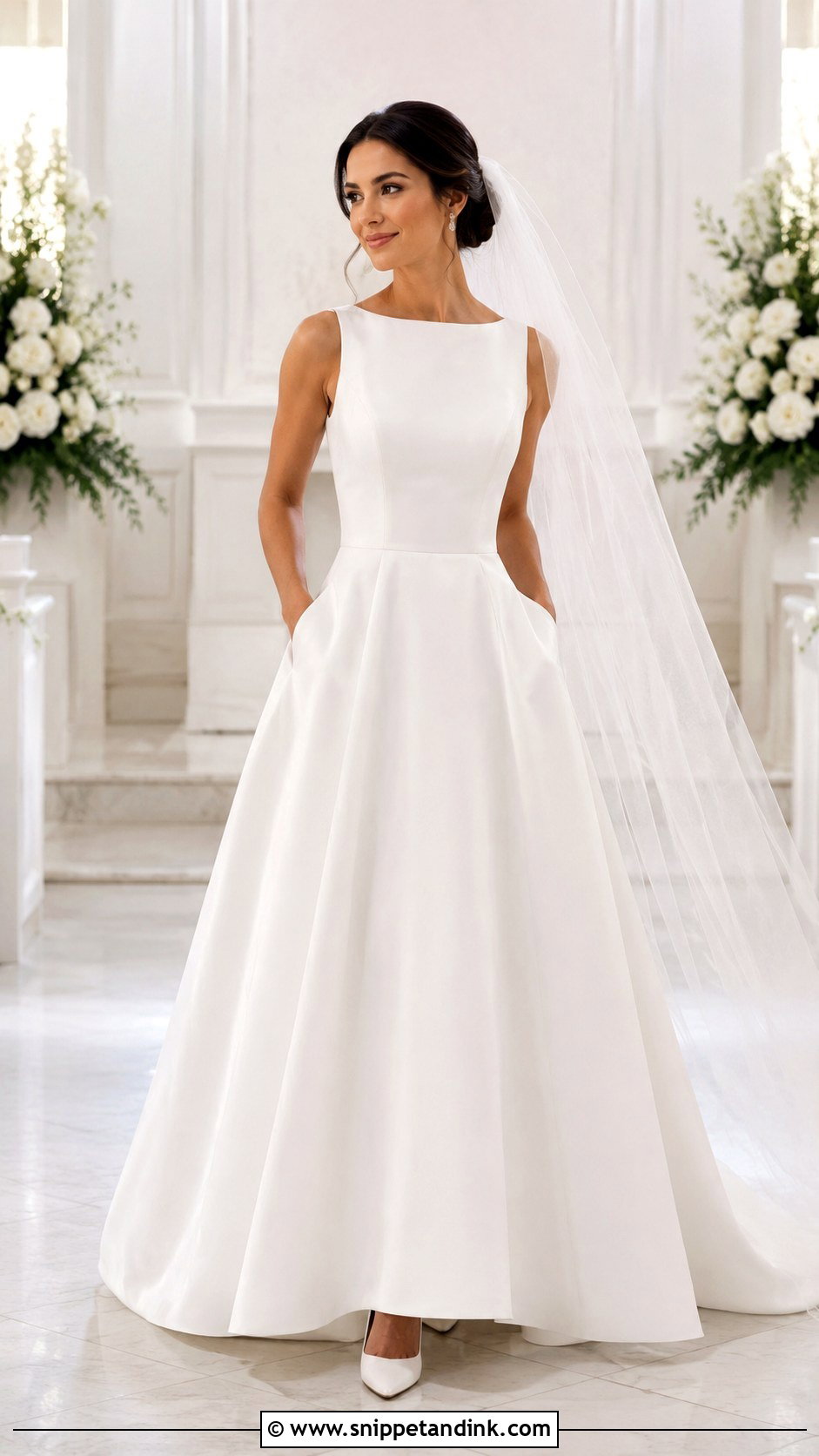
Pockets sound small, but brides who have them use them all day: lip balm, tissues, a hand to rest in during photos. They sit best in fuller skirts of mikado, satin or structured taffeta, where the fabric hides them; in a clingy crepe they bulge. Don’t fill them with a phone, which pulls the skirt down on one side. A simple bodice, clean waistline and A-line or ball gown skirt suit them best. Classic white pumps, small earrings and a plain long veil complete it.
22. Plain White Wedding Dress With Cape
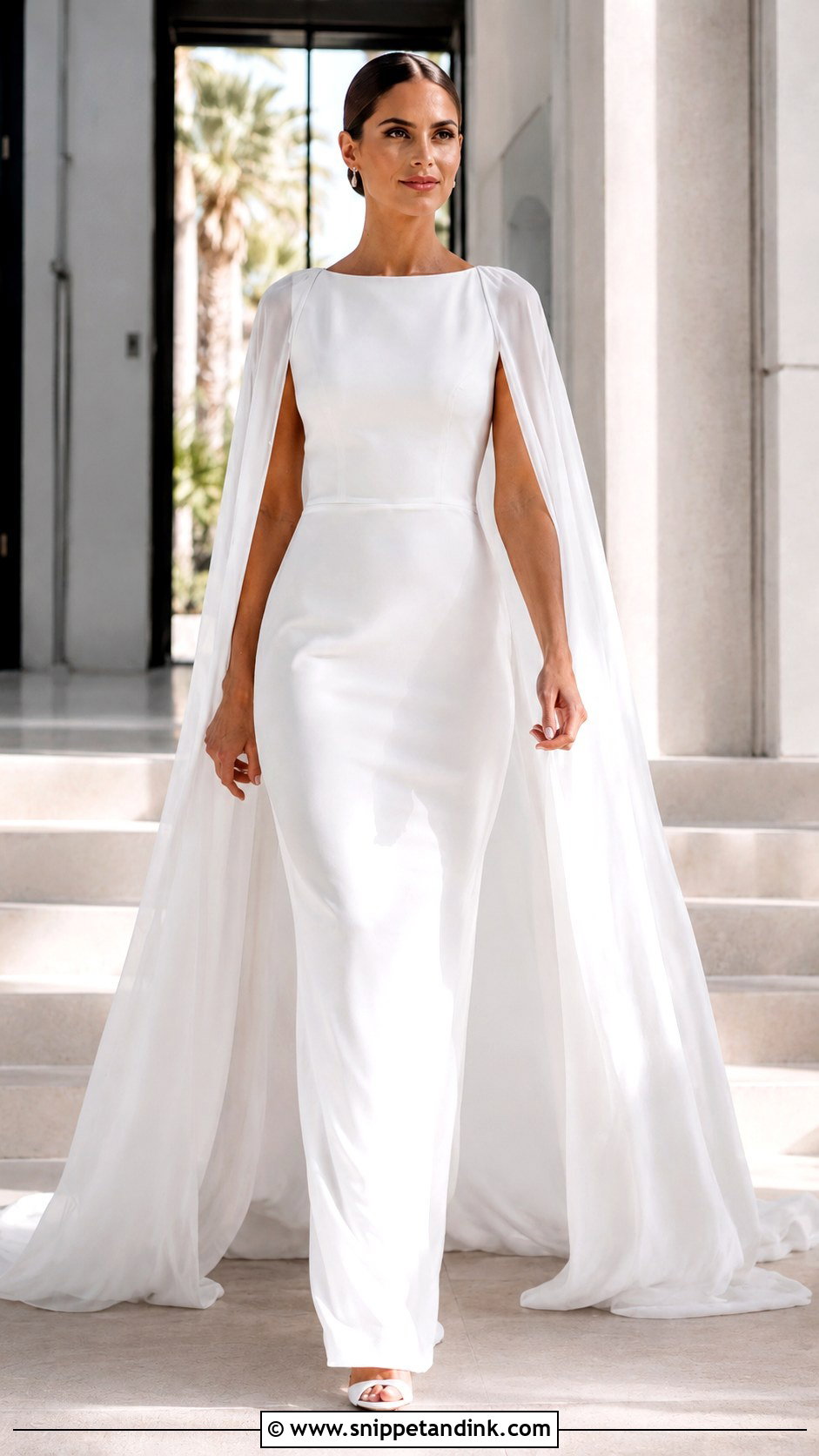
A cape gives you ceremony impact without a veil. The gown underneath can be very plain: a crepe column, satin slip or strapless A-line. Sheer capes feel soft, structured ones fashion-forward. The cape needs secure anchoring at the shoulder seams, with hidden snaps or loops, because a cape held only at the neck pulls back as you walk. Sleek heels, minimal jewellery and a smooth hairstyle finish it. It looks especially strong from the back and side, which is where most aisle photos are taken.
23. Plain White Wedding Dress With Gloves
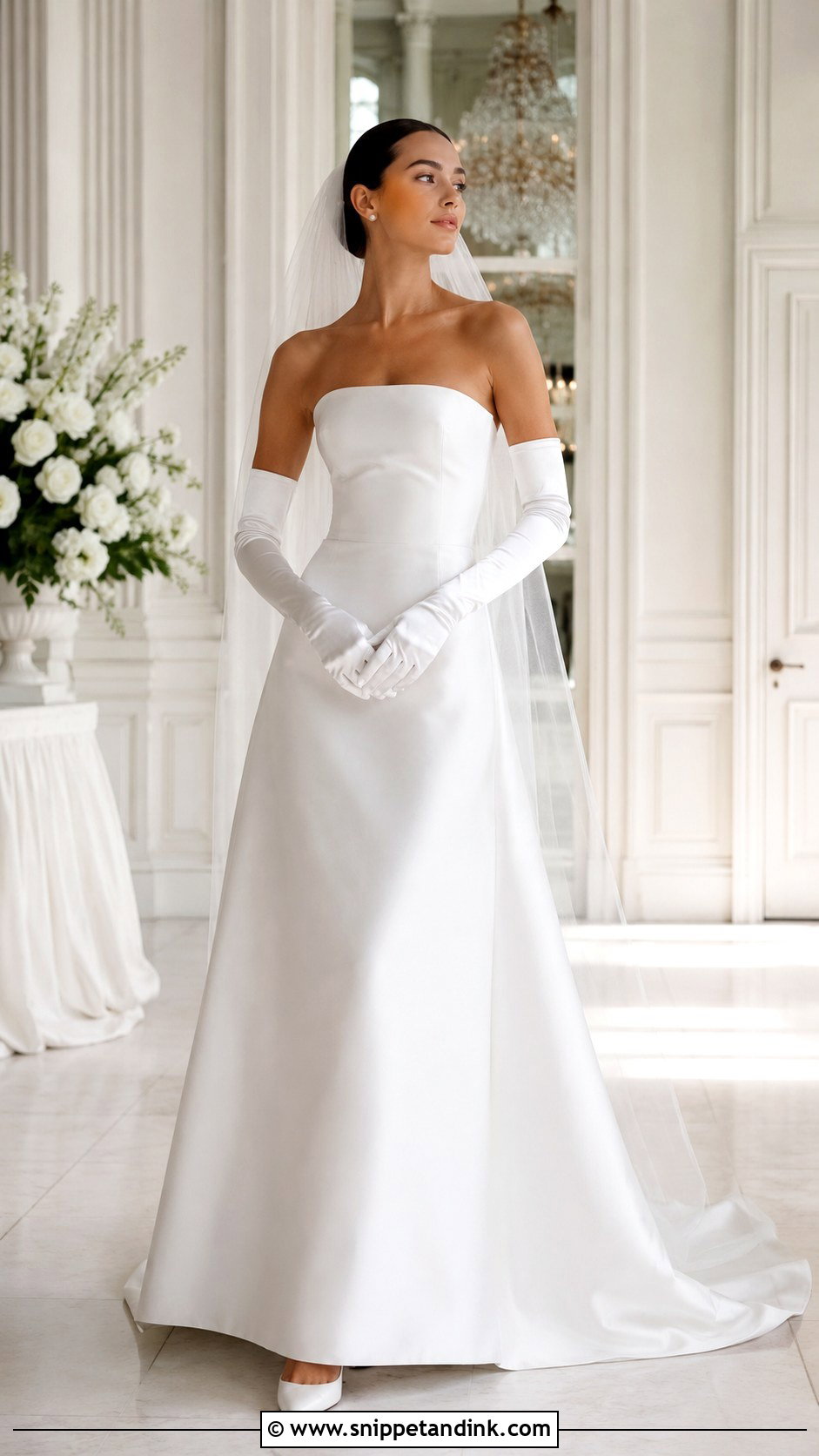
Gloves add a finished, slightly old-fashioned polish without touching the dress itself. They suit strapless, off-shoulder, square and short-sleeve gowns. Smooth satin or sheer tulle in a matching white keeps it clean; opera gloves with a column feel sleek, gloves with a ball gown more formal. Plan the ring moment: either remove the left glove before the vows or have the seam on the ring finger opened so the ring can go on. Small earrings, white pumps and a plain veil complete it.
24. Plain White Wedding Dress With Overskirt
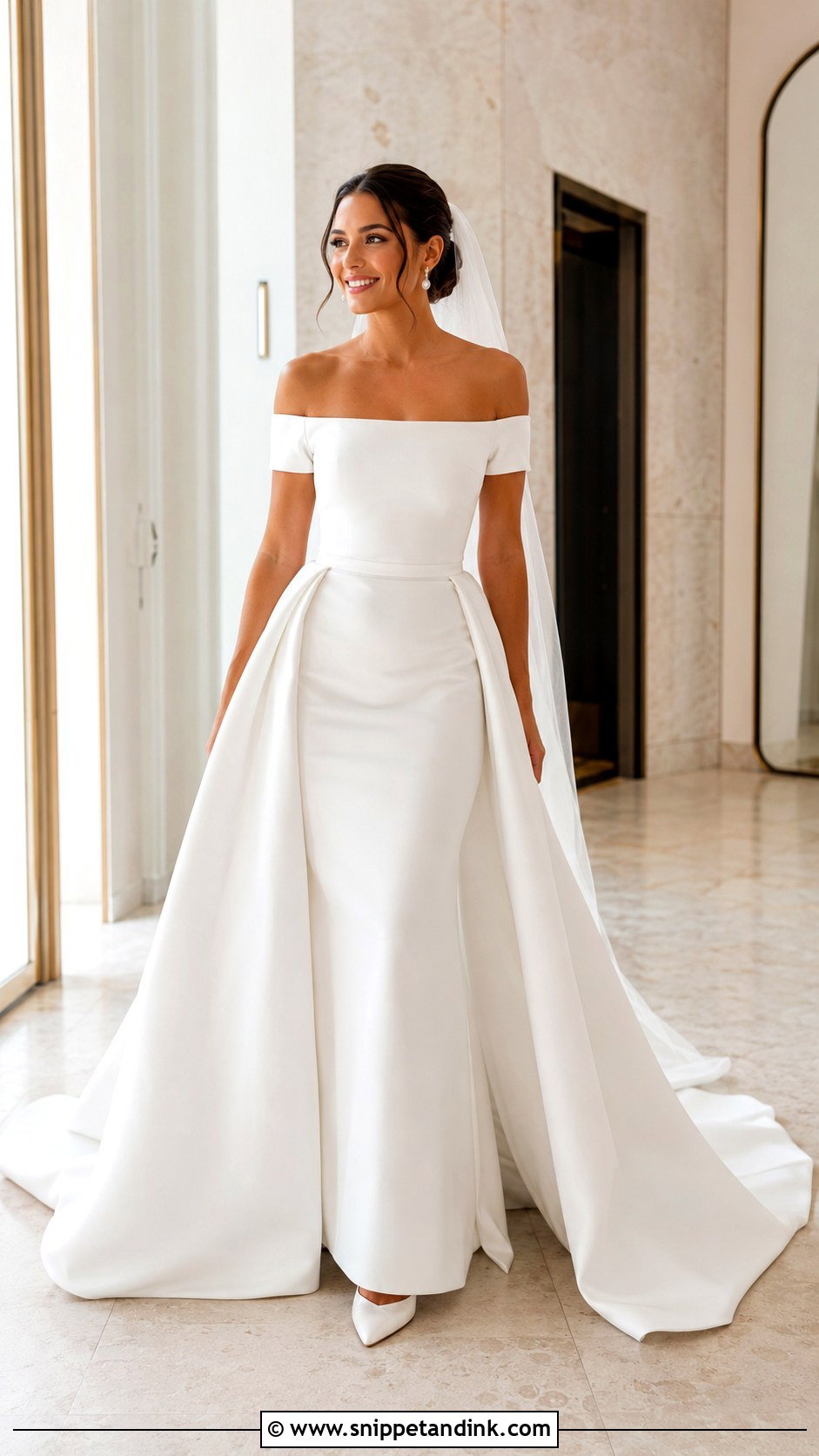
A plain white wedding dress with overskirt gives you two looks in one: a slim column, sheath or crepe gown underneath, and volume for the ceremony that comes off for dancing. The overskirt should be in satin, mikado or organza with no lace or sparkle to stay plain. Practise taking it off with whoever will help you; most fasten with hooks or snaps at the waist and need a second pair of hands. White heels, pearl earrings and a clean veil complete both versions.



25. Plain White Courthouse Wedding Dress
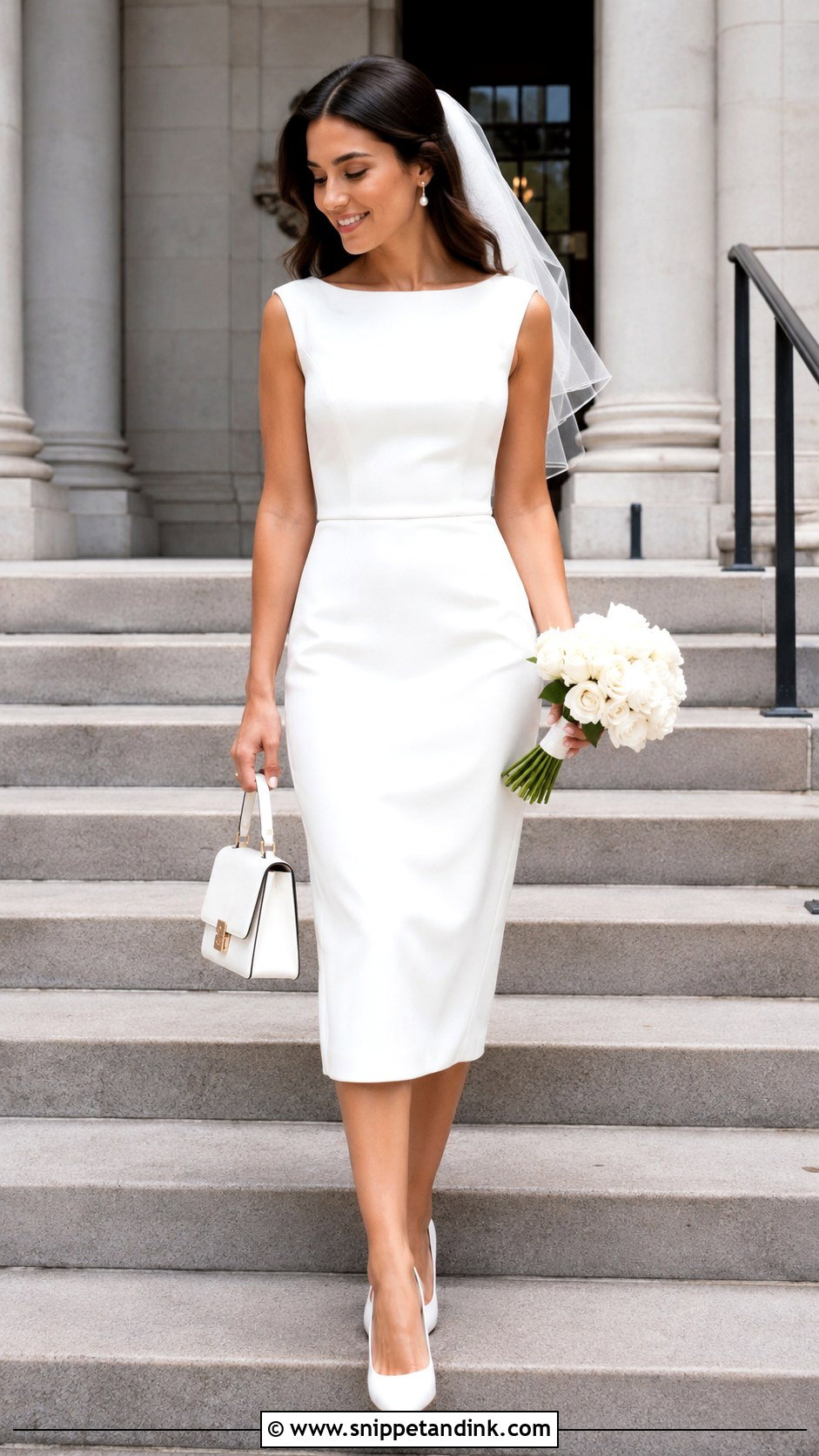
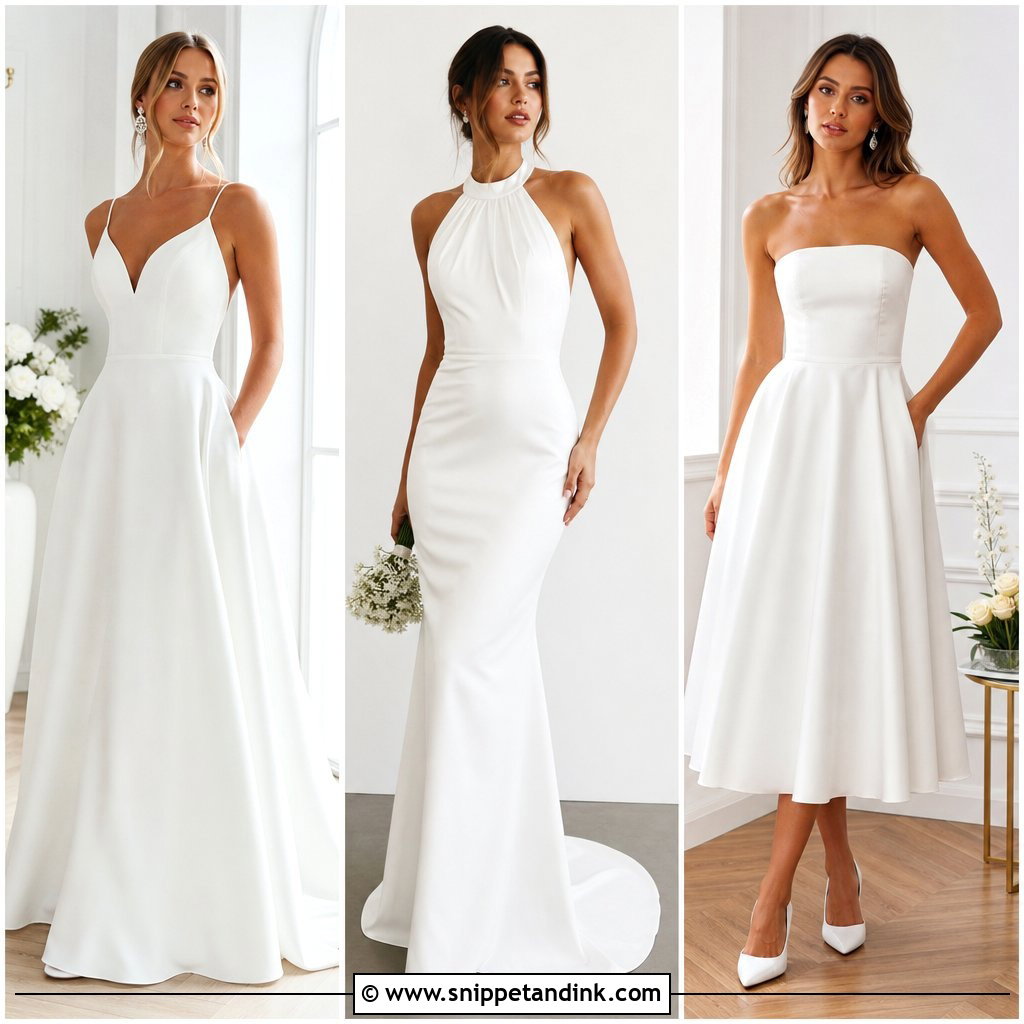
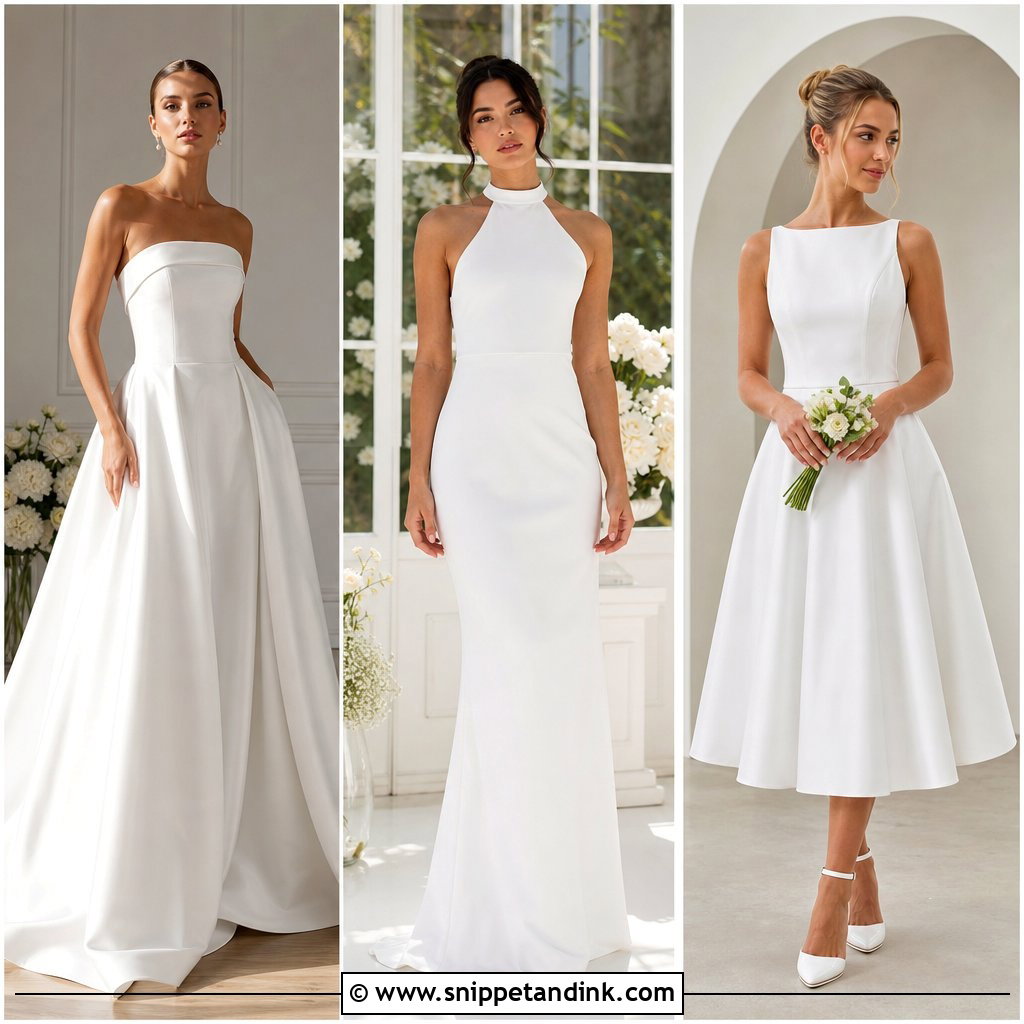
At a courthouse, the dress needs to sit, walk and climb steps easily, and look right standing next to a clerk’s desk rather than an altar. Midi dresses, sleek minis, satin slips and tailored columns all suit it. I’d do a quick sit-and-stand test in the mirror, because courthouse photos are often taken right after you’ve been seated in a waiting area. White pumps, a small bouquet, pearl earrings and a structured handbag finish it, with a short veil, headband or hair bow for the bridal note. It feels personal and right for an intimate ceremony.
A Plain Gown Shows Everything Underneath It
With nothing on the surface, the layers beneath are what people see. Smooth crepe and thin satin show the edge of a bra band, the seam of shapewear and the line of underwear in strong light. Decide what you’ll wear underneath before the first fitting, not the last, because adding shapewear later can change the fit by a size.
- Choose underwear close to your skin tone, not white. White shows through white fabric; skin tone disappears.
- Bonded, laser-cut edges are less visible than lace or elastic trims.
- If the dress has a low back or deep V, ask about cups sewn into the bodice. It’s often more secure than any stick-on option.
- Have someone photograph you with flash at your final fitting. Flash reveals lines the mirror misses.
Judging Fabric and Finish Before You Pay
In a plain dress, quality is easy to see once you know where to look. Turn the hem over: it should be finished neatly, with no puckering along the stitch line. Seams should lie flat without pulling. Run your hand over the bodice to feel for boning channels that show through, and squeeze a handful of skirt fabric for a few seconds; good satin and crepe recover, while cheaper versions hold the crease.
Ask whether the gown is lined, and with what. A proper lining makes plain fabric hang smoothly and stops it clinging to your legs. Check the zip as well. An invisible zip should be truly invisible and sit flat, while buttons over a zip are a nice touch that adds fitting time. These are the details I check first, because on a gown with no decoration they are the decoration.
When the Cut Has to Carry the Whole Dress
A plain white gown proves that the detail doesn’t have to be sewn on. The right shape, good fabric and careful styling do the job. A satin slip is sleek, a mikado ball gown grand, a crepe column modern. Accessories, from gloves and veils to bows, capes and pearls, change the mood without changing the dress. If you take one thing from this list, let it be fit. Book enough fittings, bring the real shoes and underwear to each one, and judge the dress moving, not just standing still. A plain gown that fits perfectly will always look more expensive than an embellished one that doesn’t.
You'll Like These Ideas:





Leave a Reply