
What Satin, Silk and Crepe Give Away Under Camera Flash
A gown with no lace or beading has nowhere to hide. Embellishment covers a slightly crooked seam, a dart that runs a touch too long, the outline of a bra band. On plain satin or crepe all of that shows, and flash makes it show more. So I treat a minimalist dress as a fitting project first and a shopping trip second.
How each fabric behaves once you’re wearing it
- Satin creases wherever you sit. A heavy duchess satin recovers far better than thin polyester satin, and a quick steam before the ceremony lifts most car-ride wrinkles.
- Silk charmeuse marks with water and sweat and clings to whatever is underneath it. A lined slip behaves much better than an unlined one.
- Crepe is the most forgiving of the three. It skims, rarely shines and hides small fitting flaws, though it can relax at the hips if the seams aren’t stayed.
- Mikado holds a crisp, sculpted shape but it is heavy, so lift the hanger before you fall for a full skirt in it.
Timing the fittings
Ordered gowns often take several months to arrive, and lead times vary a lot between shops, so ask before you fall in love. Alterations usually run to two or three fittings over the last six to eight weeks. I like the final one within about two weeks of the wedding, because most brides change shape a little in the run-up. Bring the exact shoes, the exact undergarments and the veil to every appointment, plus one friend who will tell you the truth.
1. Simple Satin A-Line Bridal Gown
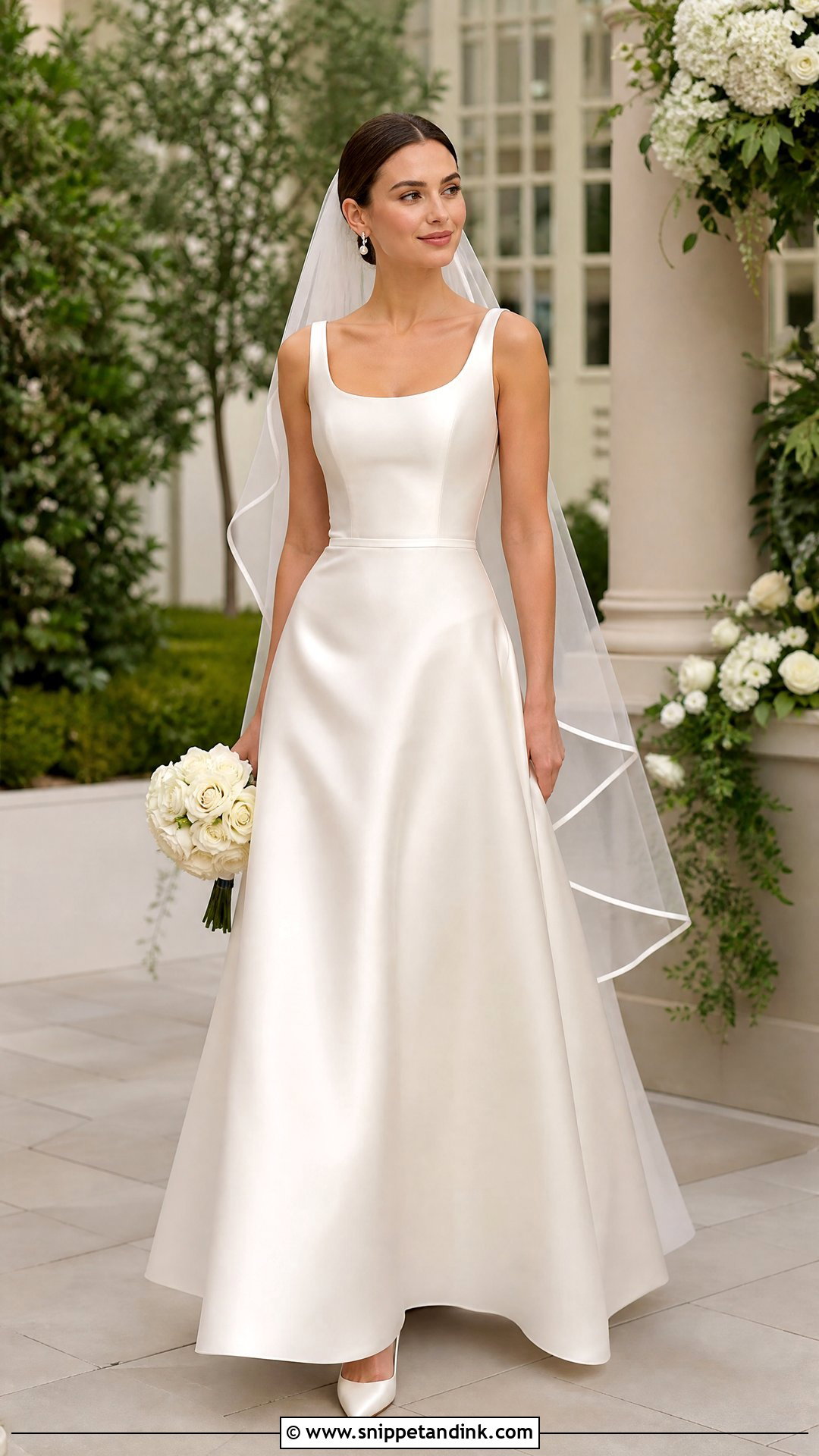
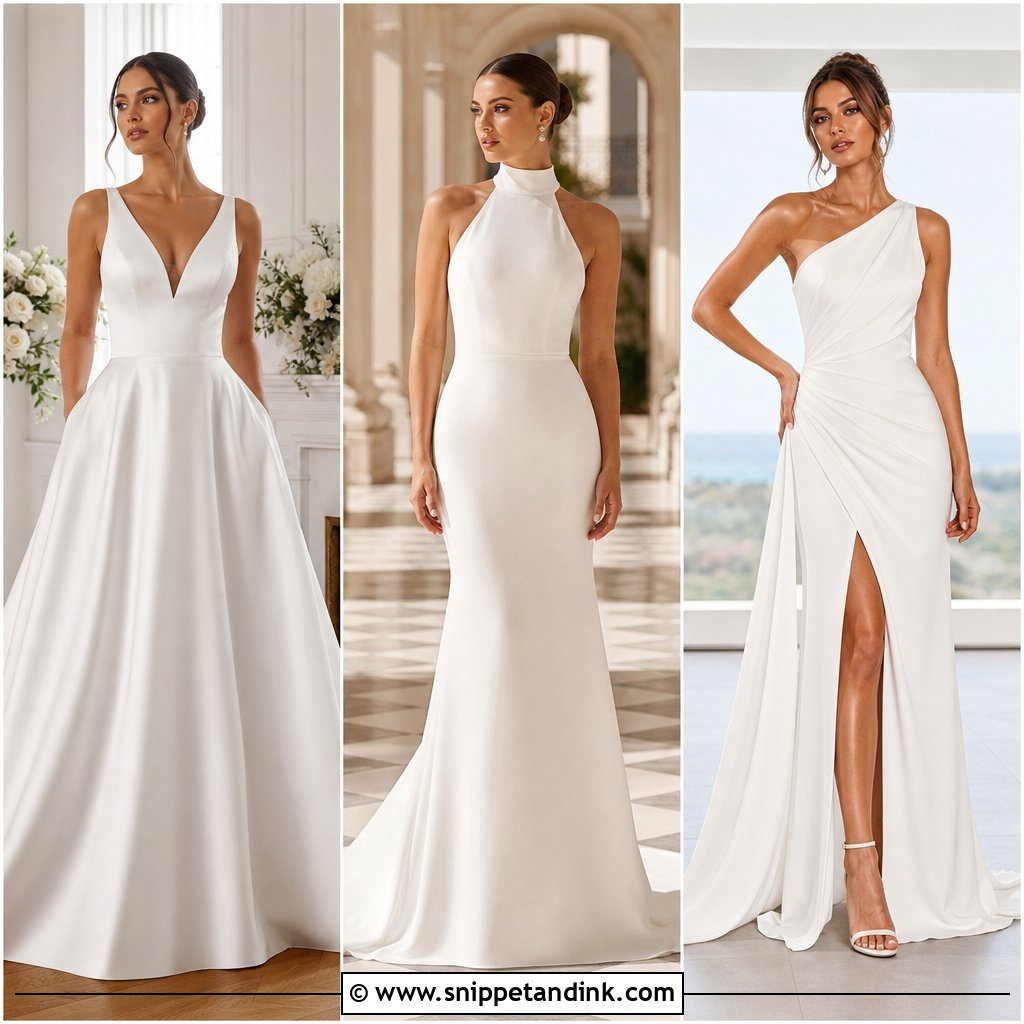
Satin A-line is the shape I pull first for a bride who isn’t sure what she wants, because almost every body reads well in it. The bodice holds the waist and the skirt clears the hips, so you can sit through dinner without the fabric fighting you. Ask for satin with a soft, low sheen; high-gloss satin shows every ripple and every crease from the car ride. A scoop or V-neck, pointed ivory pumps, pearl drops and a mid-length veil edged in narrow ribbon is all it needs, with a small bunch of white roses or calla lilies. Where I’d spend the money is the alteration. A waist taken in by half an inch and a hem cut to your actual shoes is what makes plain satin look expensive.
2. Simple Silk Slip Bridal Gown
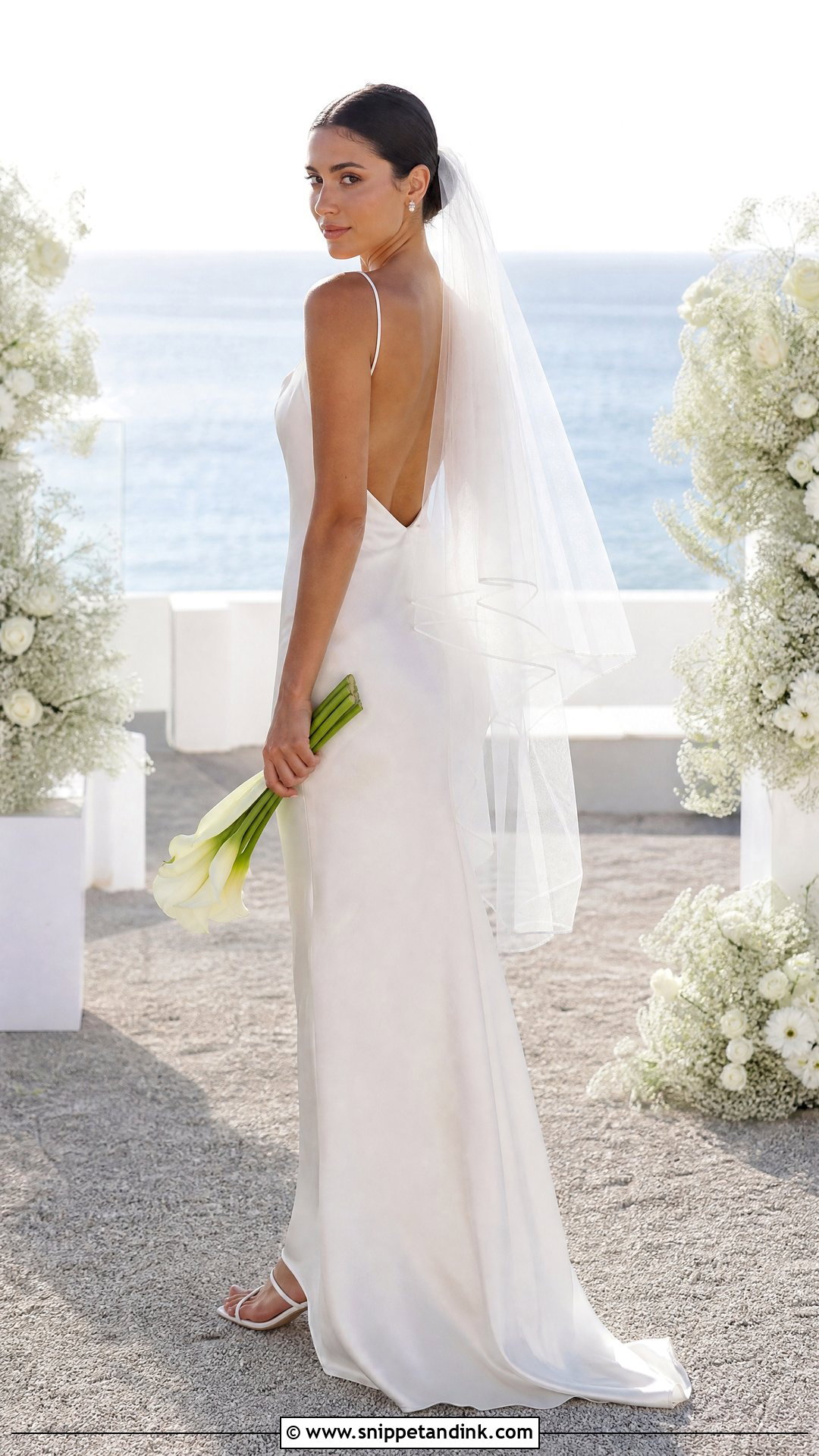
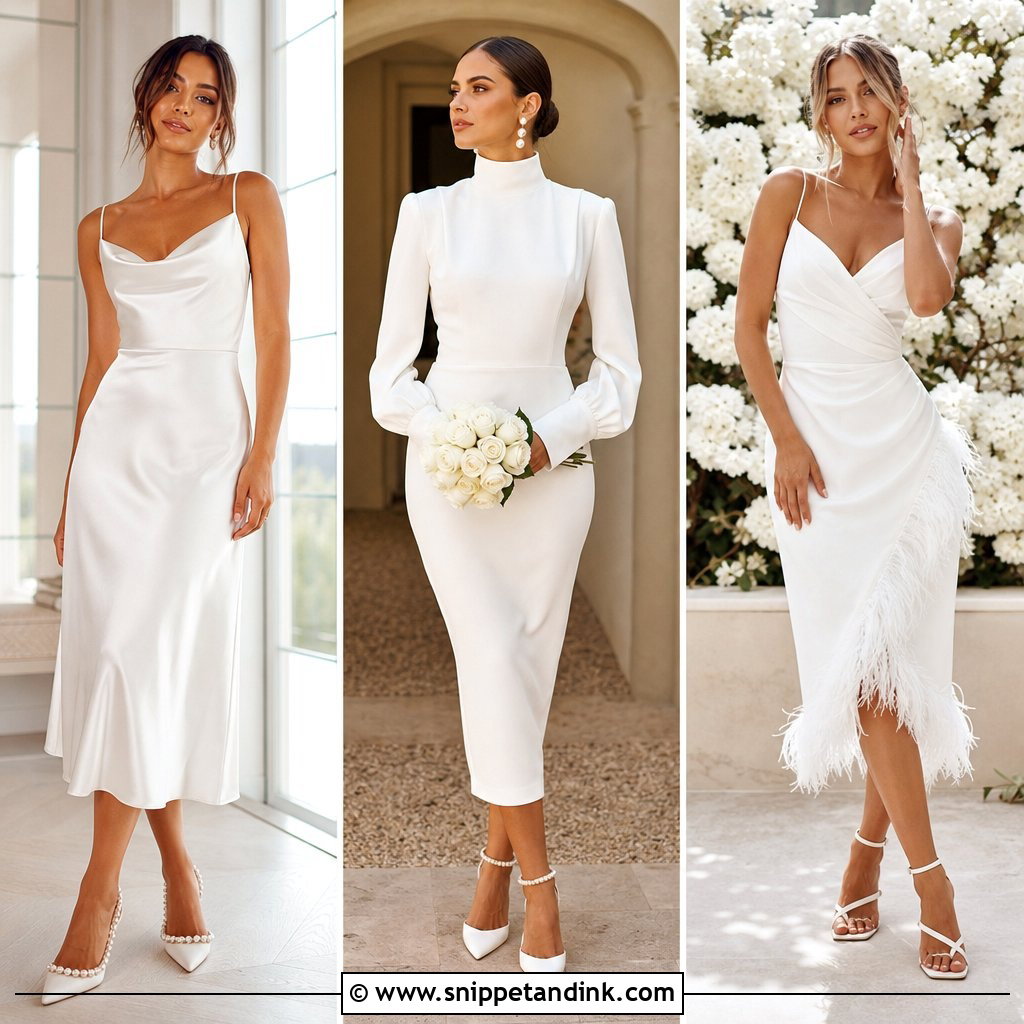
Silk slips are honest dresses, and that’s the risk. Bias-cut silk follows the body closely and shows everything underneath it, so I ask brides to bring their exact undergarments, in a shade near their skin, to the first fitting rather than the last. Look for thin straps, a softly draped neckline and an open back. Slim sandals, small studs, a sheer fingertip veil and a neat low bun keep the neckline clear. I’d hesitate on an unlined slip for a long, hot outdoor day, since charmeuse marks with sweat. For a beach or a small loft ceremony, though, nothing moves better.
3. Simple Crepe Sheath Bridal Gown
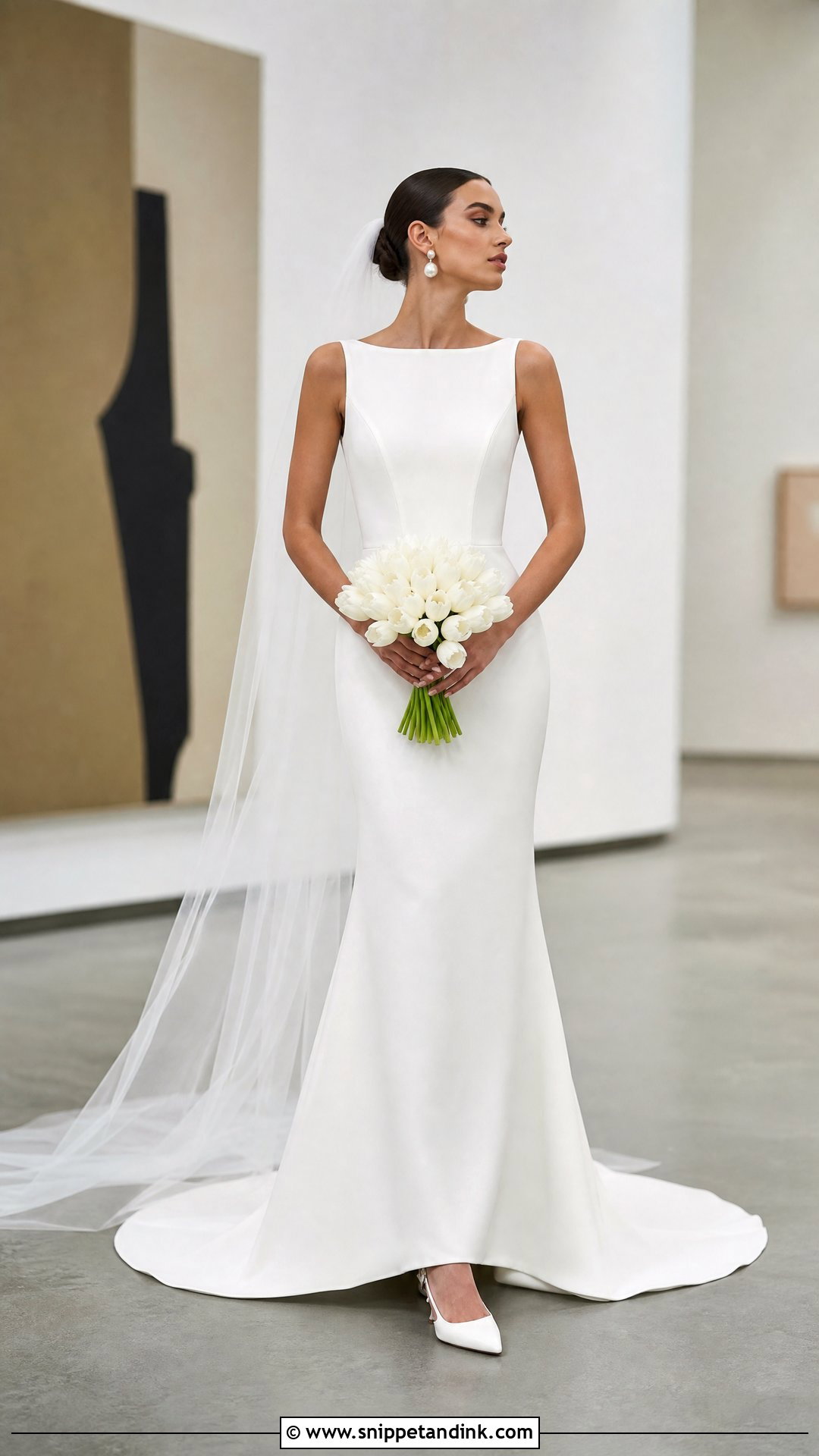
A crepe sheath gown has enough weight to skim the body without clinging, which is why I trust it more than silk on brides who worry about lumps and lines. Matte crepe doesn’t bounce flash back at the camera the way shiny satin can, so it holds up under bright indoor light. Supportive internal seaming, a modest train and a bateau or square neckline are the details to ask for. Pointed slingbacks, sculptural pearl earrings and a narrow cathedral veil add height, and white tulips or orchids suit its clean lines. The trap with a sheath is the hip. I always have the bride sit down at the fitting, because crepe that looks smooth standing can pull into horizontal creases once you’re seated.
4. Simple Strapless Column Bridal Gown
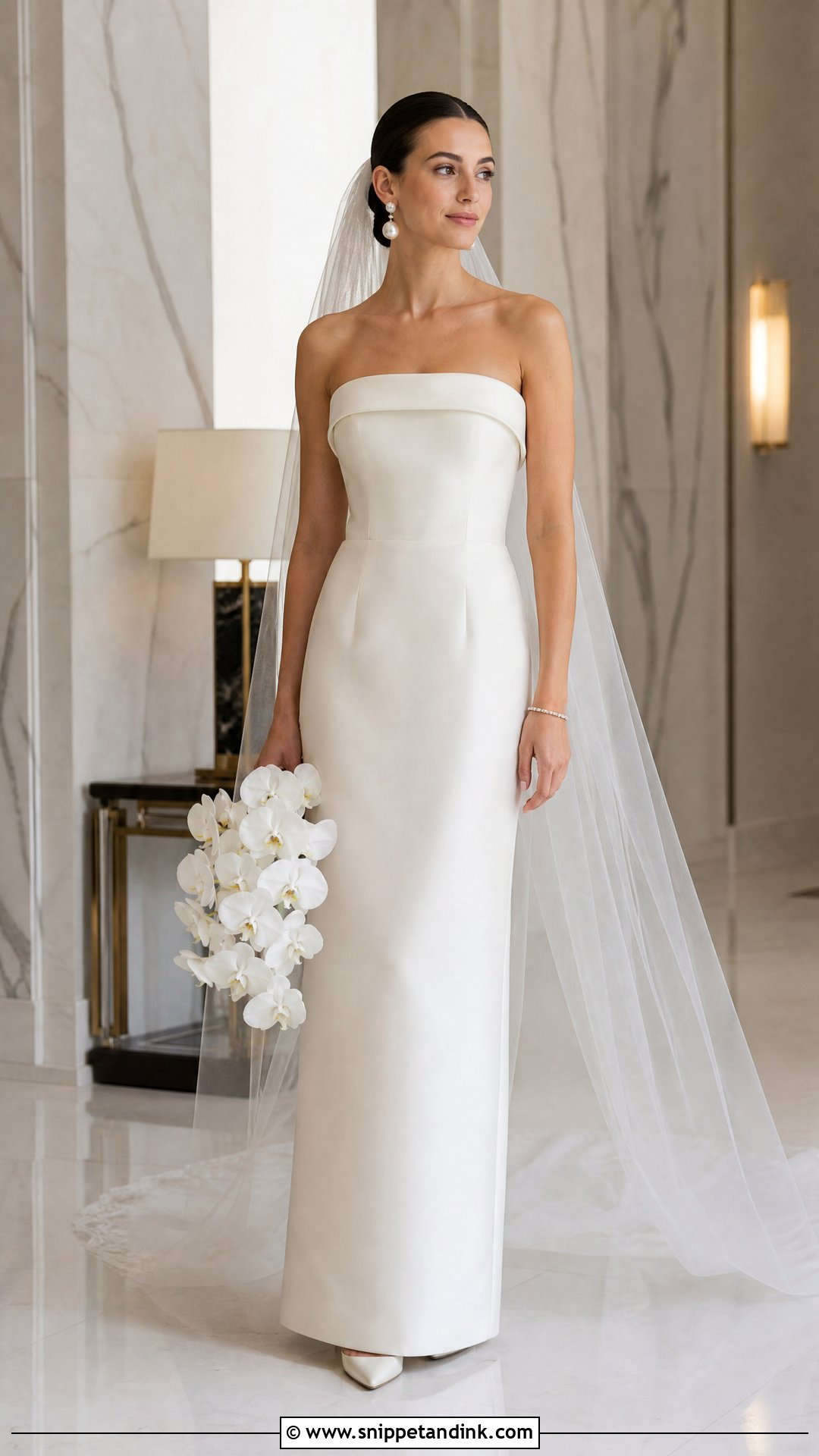
A strapless column draws one long line from bust to floor, and it lives or dies on its internal structure. I want boning, a waist stay and grip tape inside the bodice before I’d let a bride rely on it for a full day. Structured satin, mikado or heavy crepe hold the shape; anything lighter starts to slide by the reception. A folded straight neckline adds depth without any lace or beading. Style it with a sleek updo, statement pearl earrings, pointed pumps, a long plain veil and one tennis bracelet. At every fitting, raise both arms over your head. If the bodice drops more than a finger’s width, it needs more support, not a tighter fit.
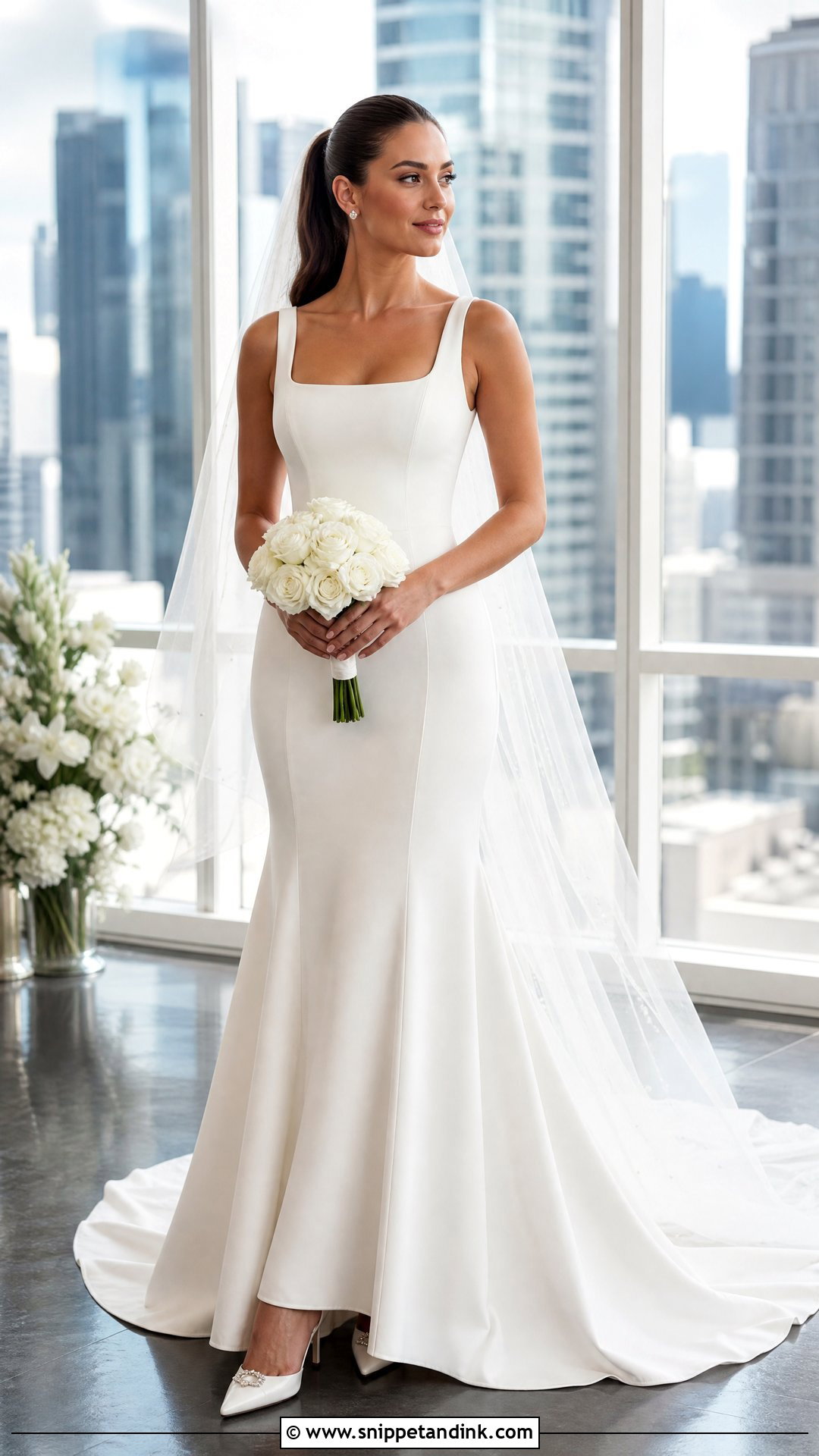
5. Simple Square Neck Bridal Gown
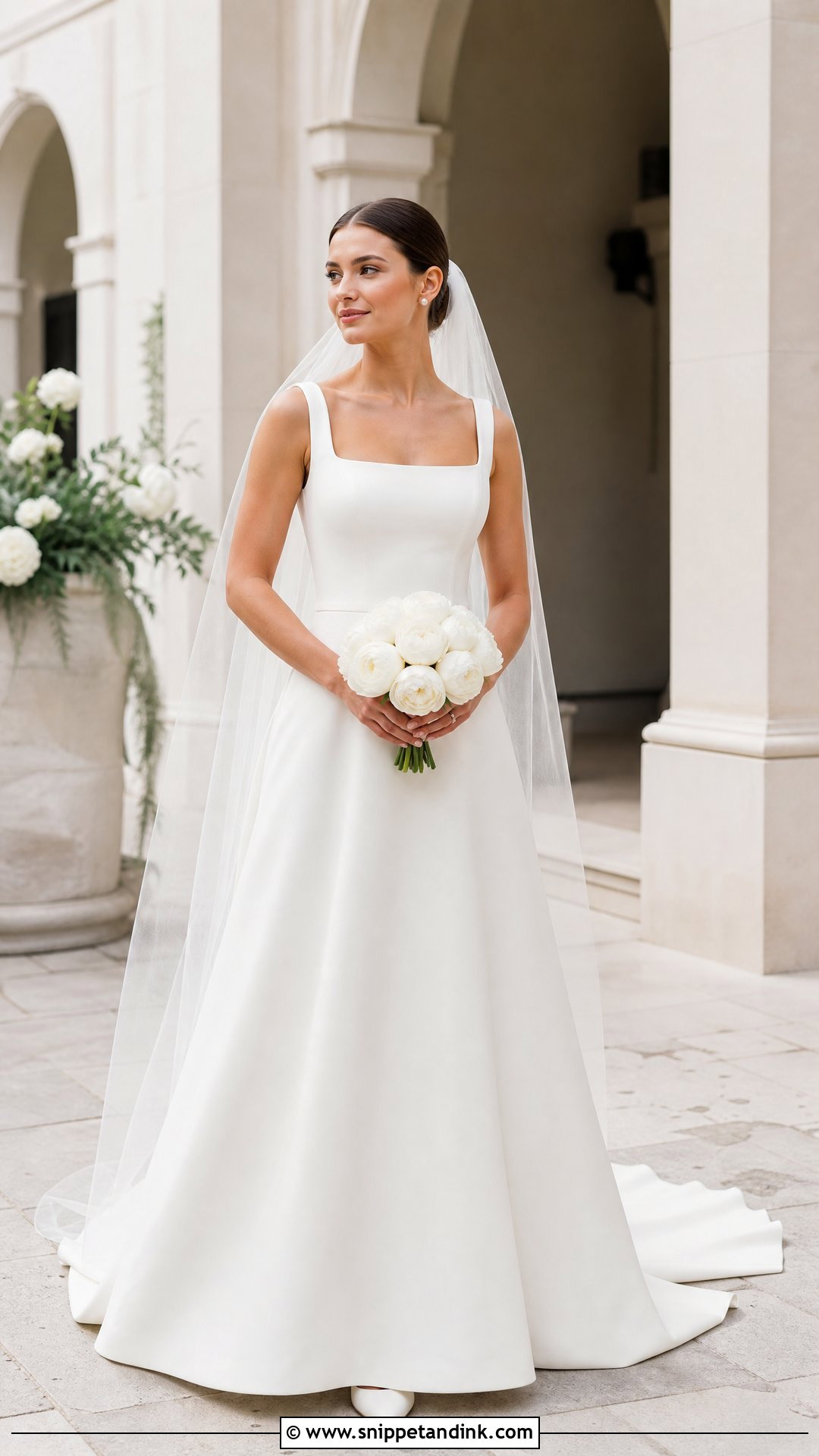
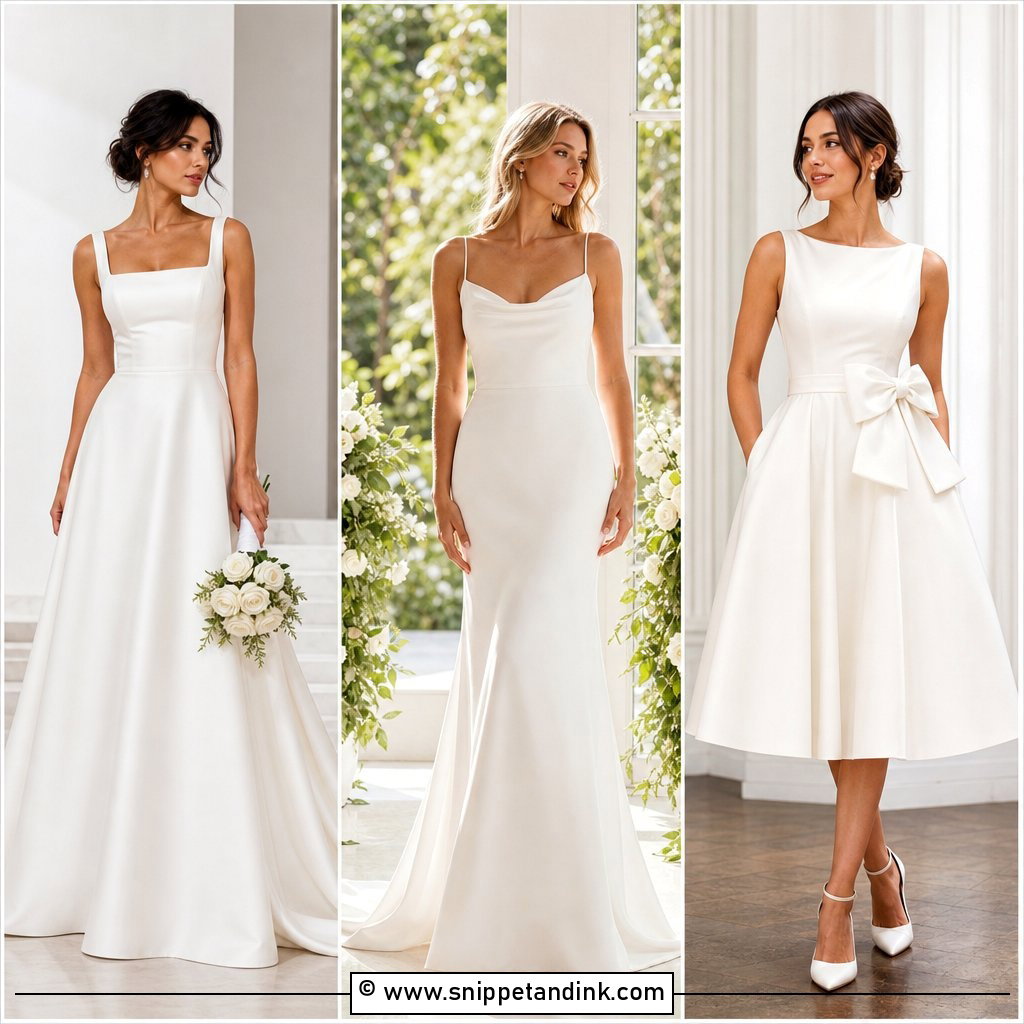
Square necklines are harder to sew than they look. The two corners have to sit level and flat, and if the bodice is even slightly loose they buckle forward when you lean, so my first check at a fitting is a bend at the waist while I watch the corners. With wide straps and a fitted bodice over an A-line or straight skirt, the shape frames the collarbone well. Matte crepe reads modern; satin reads traditional. Pearl studs, a low chignon with the veil tucked beneath it, closed-toe ivory heels and a few white peonies soften the hard edges. Short sleeves or wider straps add coverage without spoiling the line.
6. Simple Off Shoulder Bridal Gown
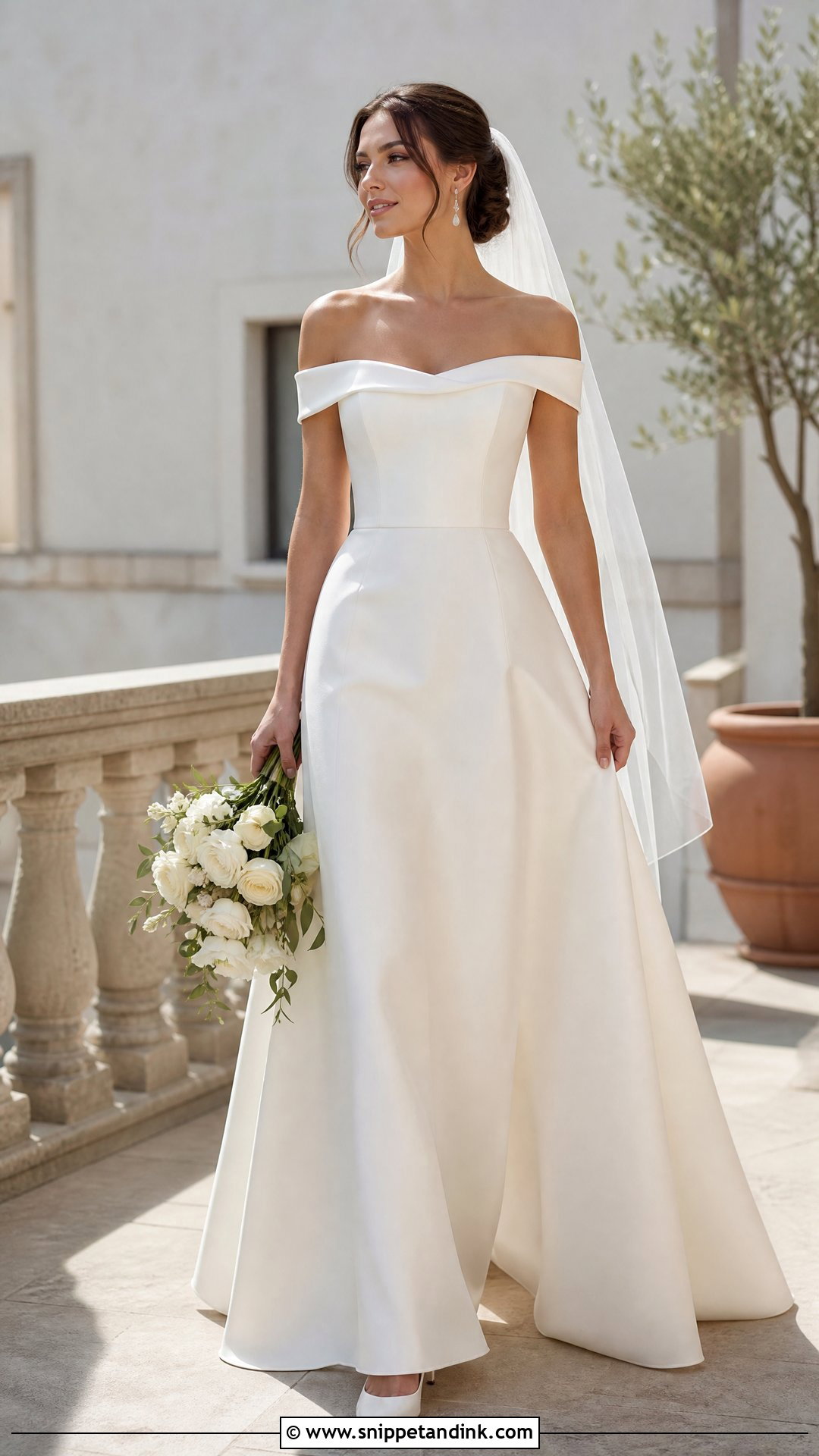
Off-the-shoulder gowns are the ones I see brides tug at most, because the band sits on the upper arm and every movement pulls on it. A smooth folded neckline needs a firm satin or crepe and an internal elastic or silicone grip to stay put. Over a fitted bodice and softly flared skirt, it frames the shoulders nicely. A polished bun, fine drop earrings, an unadorned fingertip veil, pointed pumps and a small clutch are enough, with white garden roses and greenery to keep it relaxed. Before you commit, hug someone in the fitting room and reach for something on a high shelf. If the band rides up, you’ll be adjusting it in every photo.
7. Simple Long Sleeve Bridal Gown
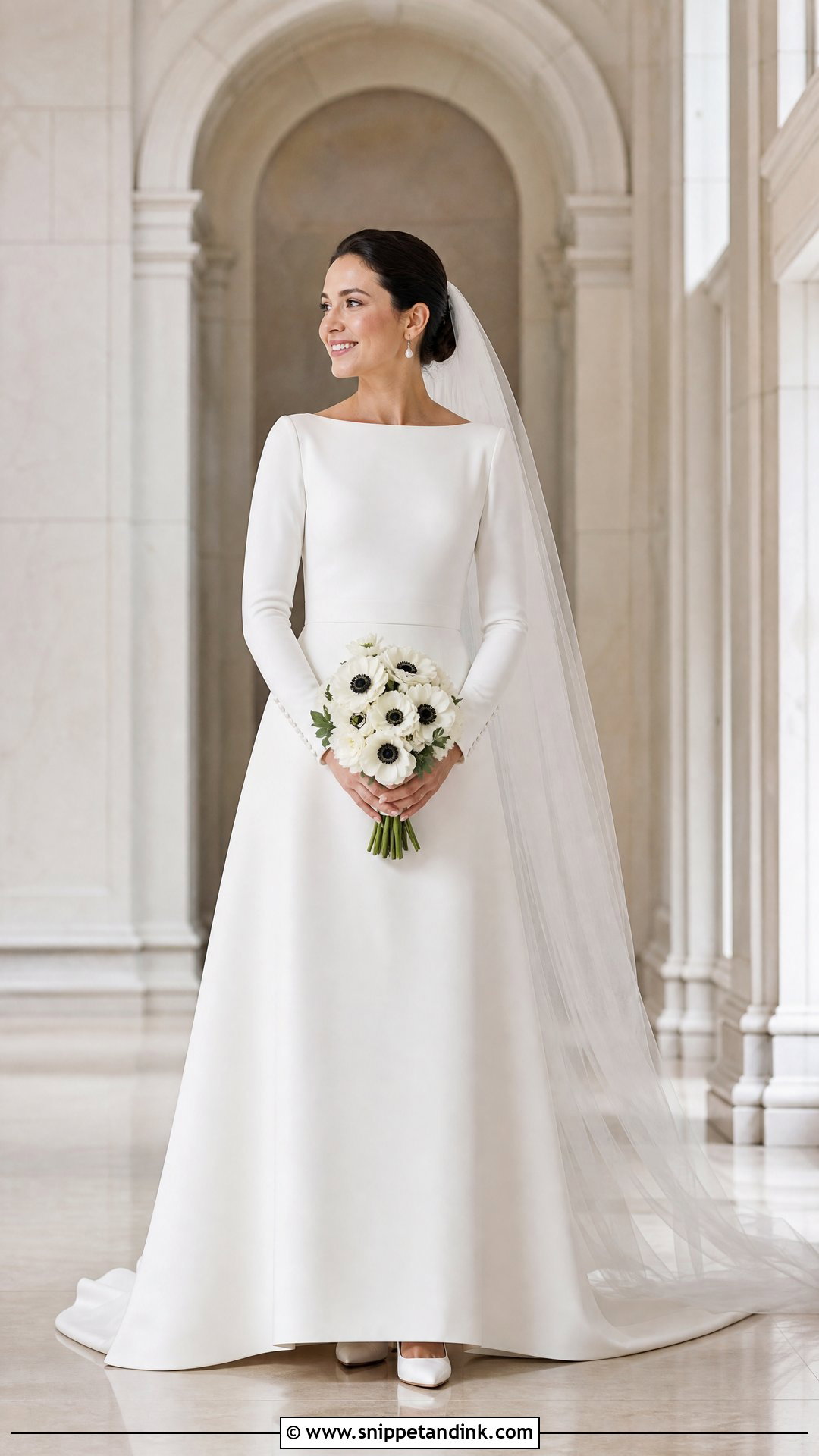
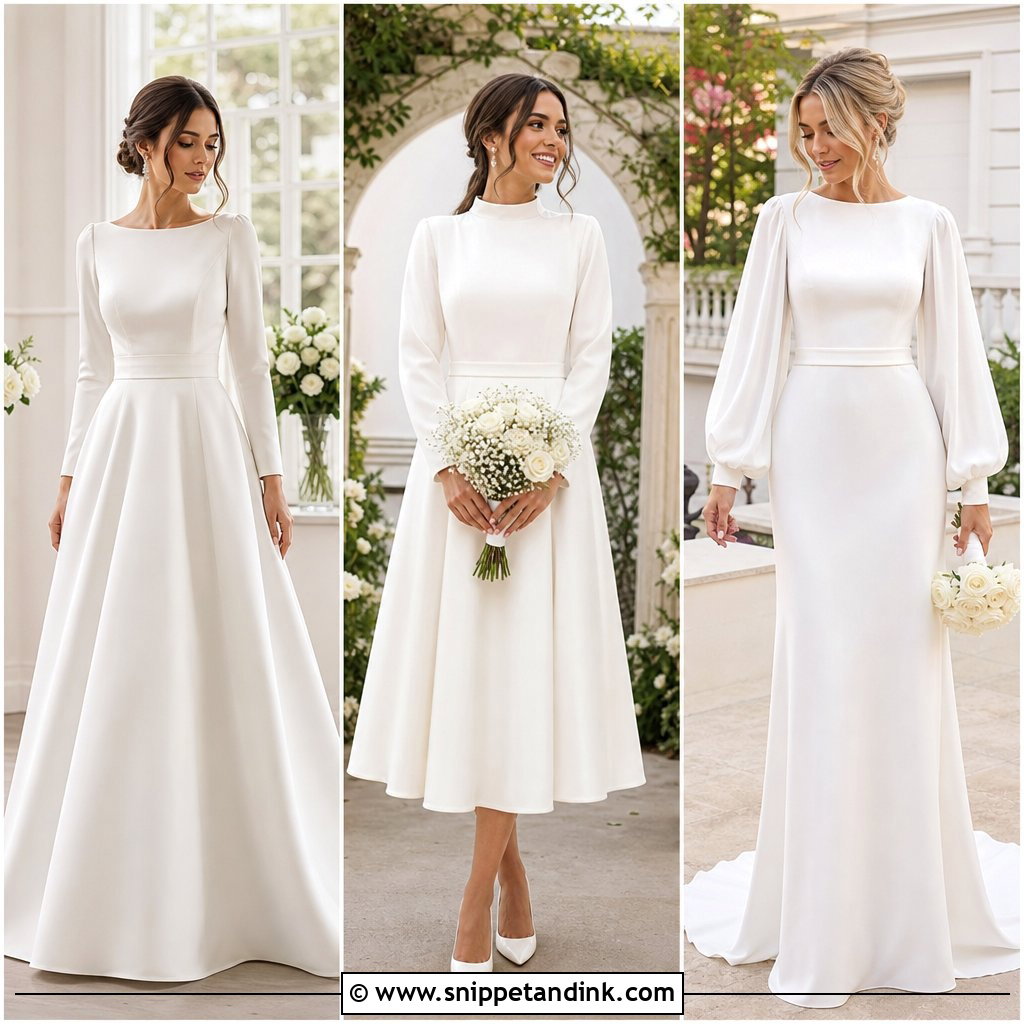
Fitted crepe sleeves with covered buttons at the wrist are the cleanest way to cover the arms on a plain gown, far cleaner than lace. A bateau neckline, a defined waist and a straight or A-line skirt balance the extra fabric above. Satin pumps, pearl earrings, a low bun and a light cathedral veil finish it, with white anemones for a little contrast. The fitting problem is always the armhole. A sleeve set too low means you can’t lift your bouquet without the whole bodice rising, so I have brides hold their arms out as if hugging and I watch the shoulder seams. In cooler months and in formal churches, this one earns its place.
8. Simple Halter Neck Bridal Gown
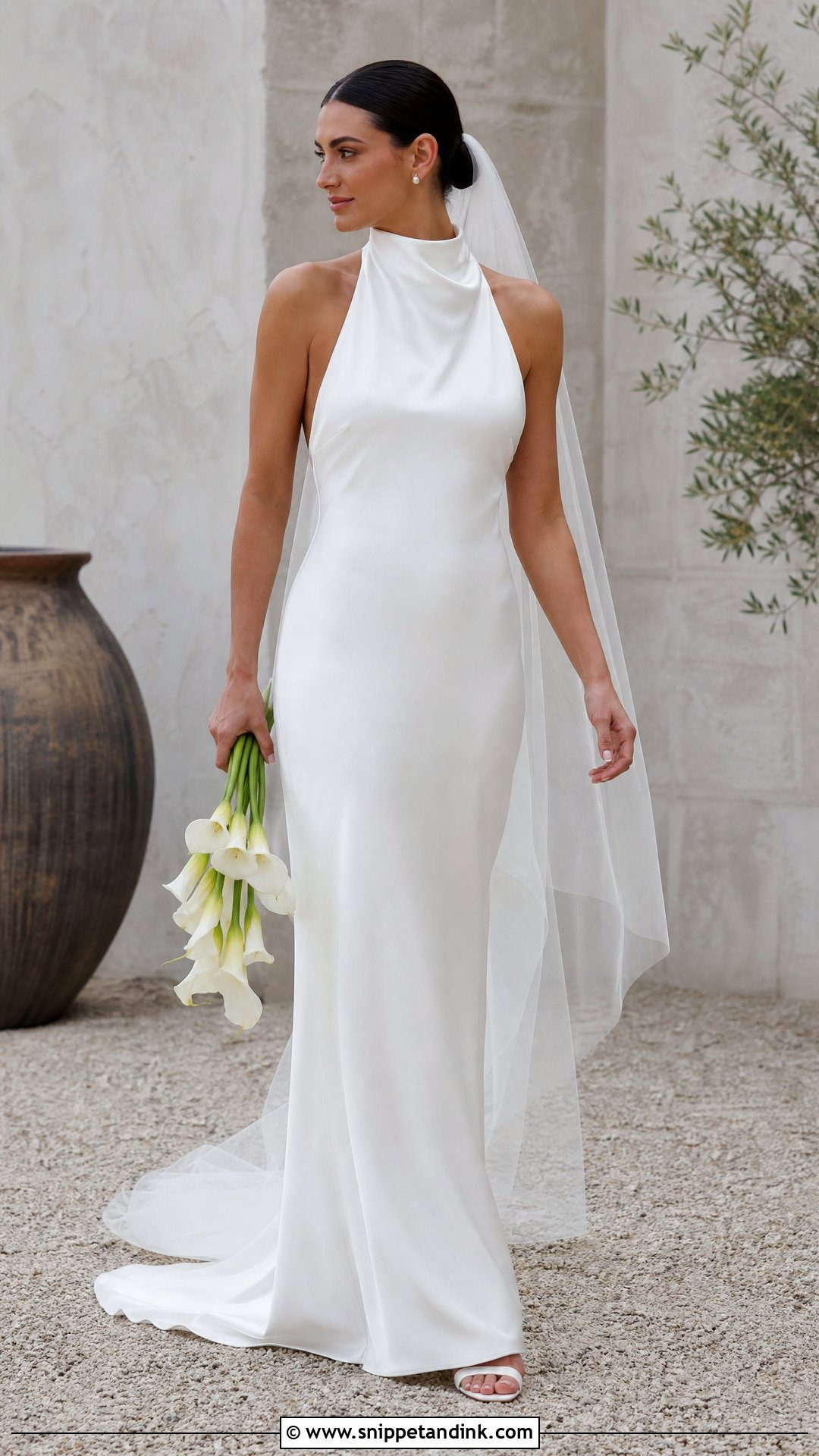
Halters suit brides with strong shoulders, and I’d think twice about one if you need a lot of bust support, because there’s no strap system to build it on. The neck strap carries weight, so a high, softly draped halter should be adjusted until it stops pressing on the back of your neck after an hour of wear. An open or keyhole back and a column or slightly flared skirt keep the outline clean. Wear a high bun or twist so the neckline shows, with small gold or pearl earrings, slim sandals and a light veil set under the hair. Skip the necklace. A long-stemmed calla lily bouquet echoes the vertical line. Check the armholes from the side as well as the front; that’s where a halter gapes.
9. Simple High Neck Bridal Gown
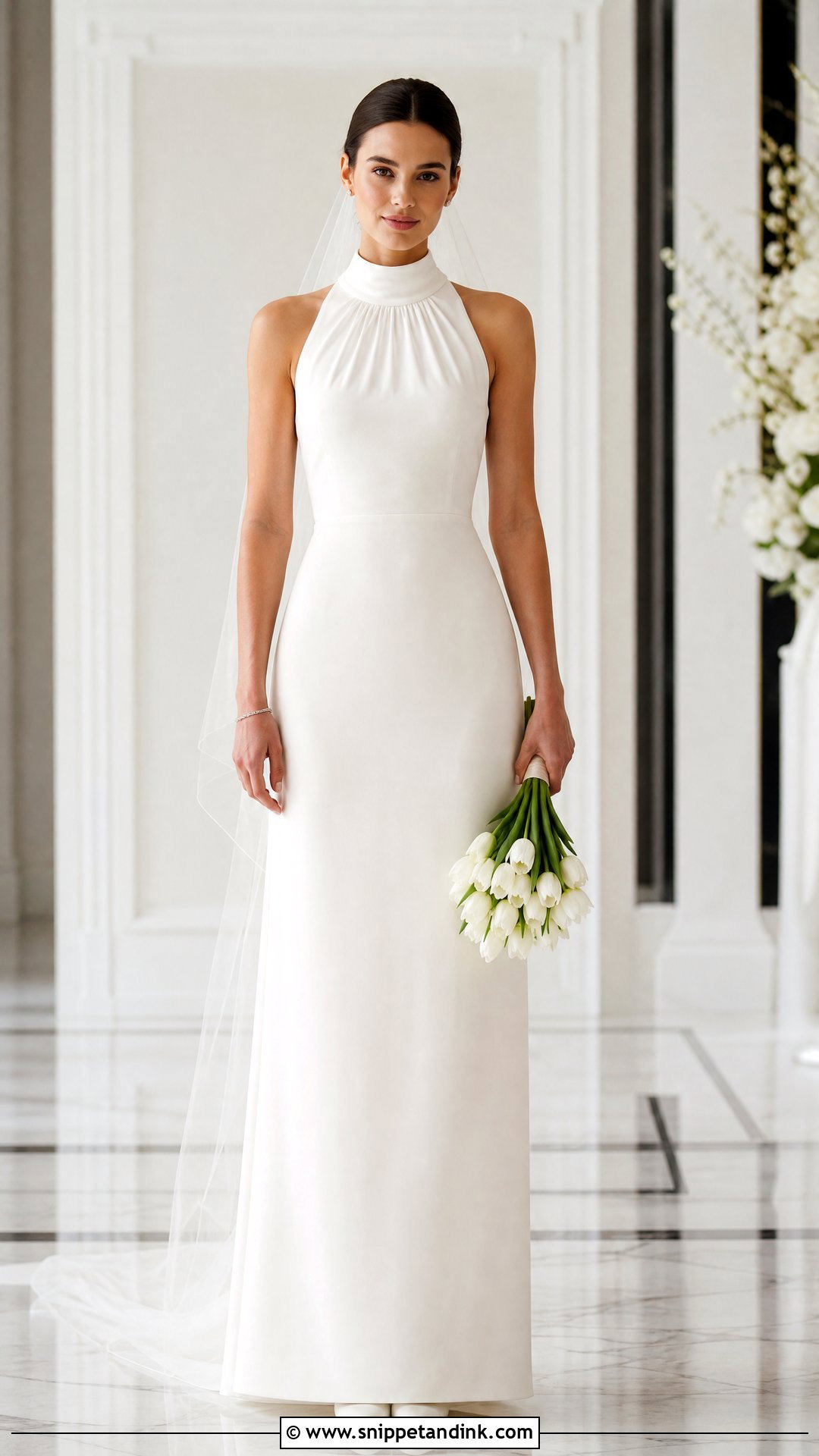
High necks give coverage without fuss, and in fluid crepe, silk or satin over a long column skirt they look very modern. A little gathering at the collar softens the effect. With the neckline doing the work, I leave off necklaces entirely and let a bracelet or the ring carry the shine. A neat bun, small studs, pointed heels and a sheer veil placed low at the back keep the line long, and narrow white tulips match it. Test the collar by turning your head fully left and right. If it rubs or creases, ask for a fraction more ease at the neck or a softer interfacing before the final fitting, not after.
10. Simple V Neck Bridal Gown
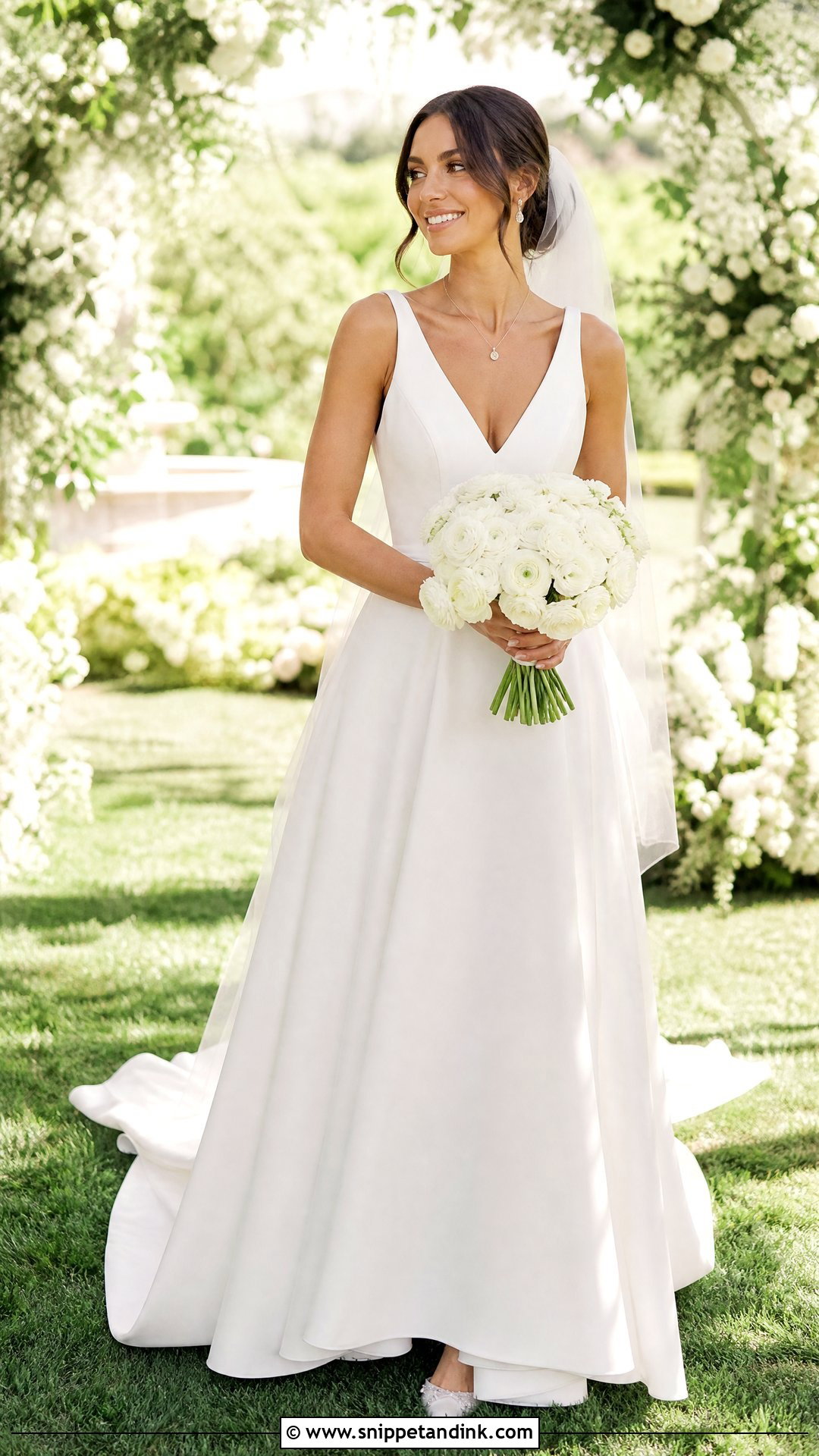
A V-neck lengthens the torso and lightens a simple gown, but the depth has to suit you, not the sample. I pin the V at a few heights during the fitting so the bride can see the difference before anything is cut. Wide straps and a structured bodice keep it secure, while an A-line skirt keeps it easy to wear. A fine pendant, small earrings, pointed slingbacks and a gathered veil are plenty, and white ranunculus adds rounded texture. Ask the seamstress about built-in cups or a stay tape along the V edge. Then lean forward. A well-fitted V stays against the skin without fashion tape doing all the work.
11. Simple Scoop Neck Bridal Gown
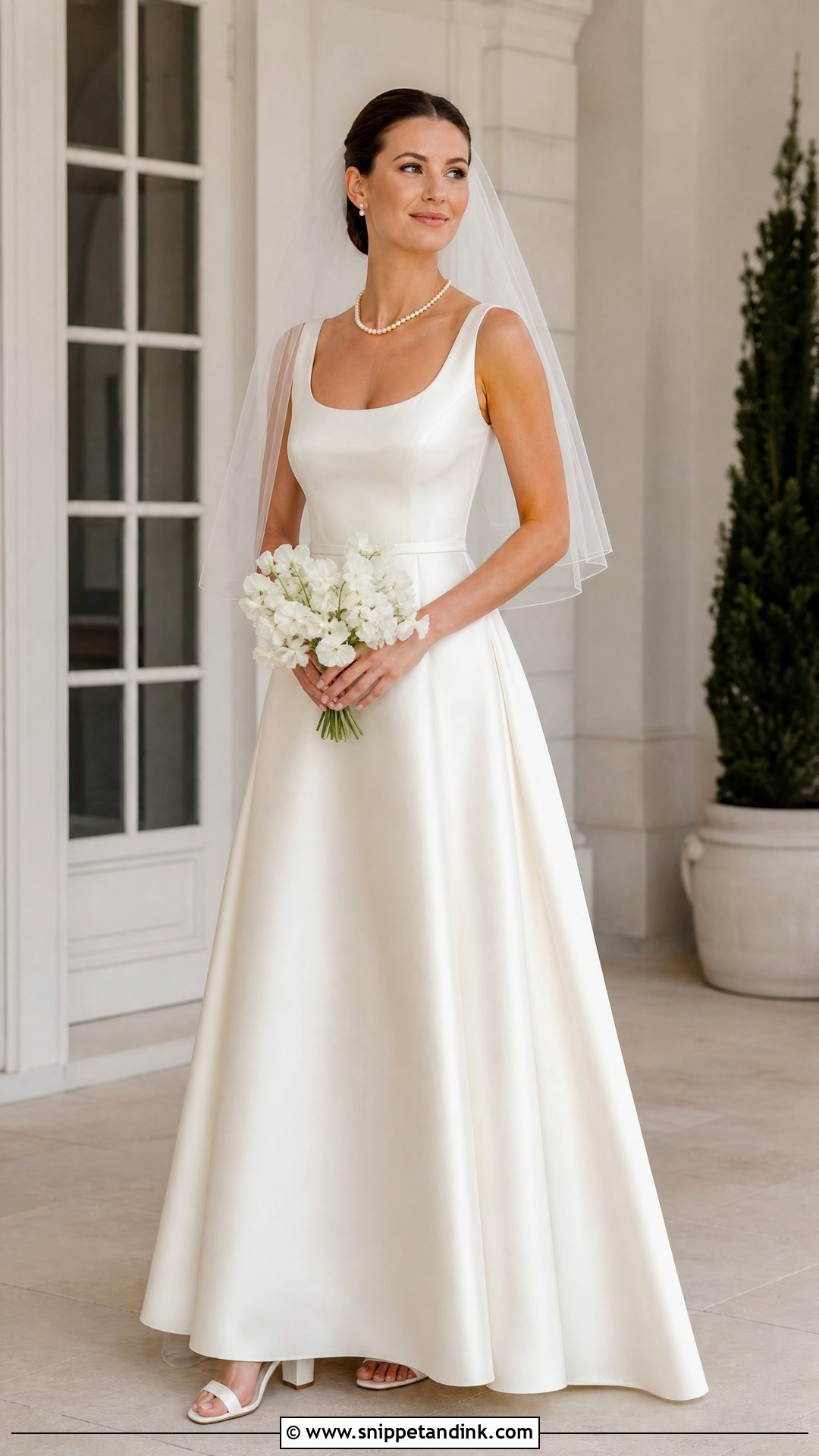
Scoop necks are the gentlest neckline I fit, and they flatter more chest shapes than almost anything else. With broad straps, a fitted waist and a sheath or full A-line skirt, the curve feels classic without being stiff. Silk satin gives a soft shine; matte crepe gives a quieter finish. This is one of the few necklines where I happily add a short pearl necklace, with matching studs and ivory block heels. An elbow-length veil and a small round bouquet of sweet peas or roses keep it simple. Watch for one strap sitting higher than the other. Most of us are slightly uneven, and a scoop shows it.
12. Simple Cowl Neck Bridal Gown
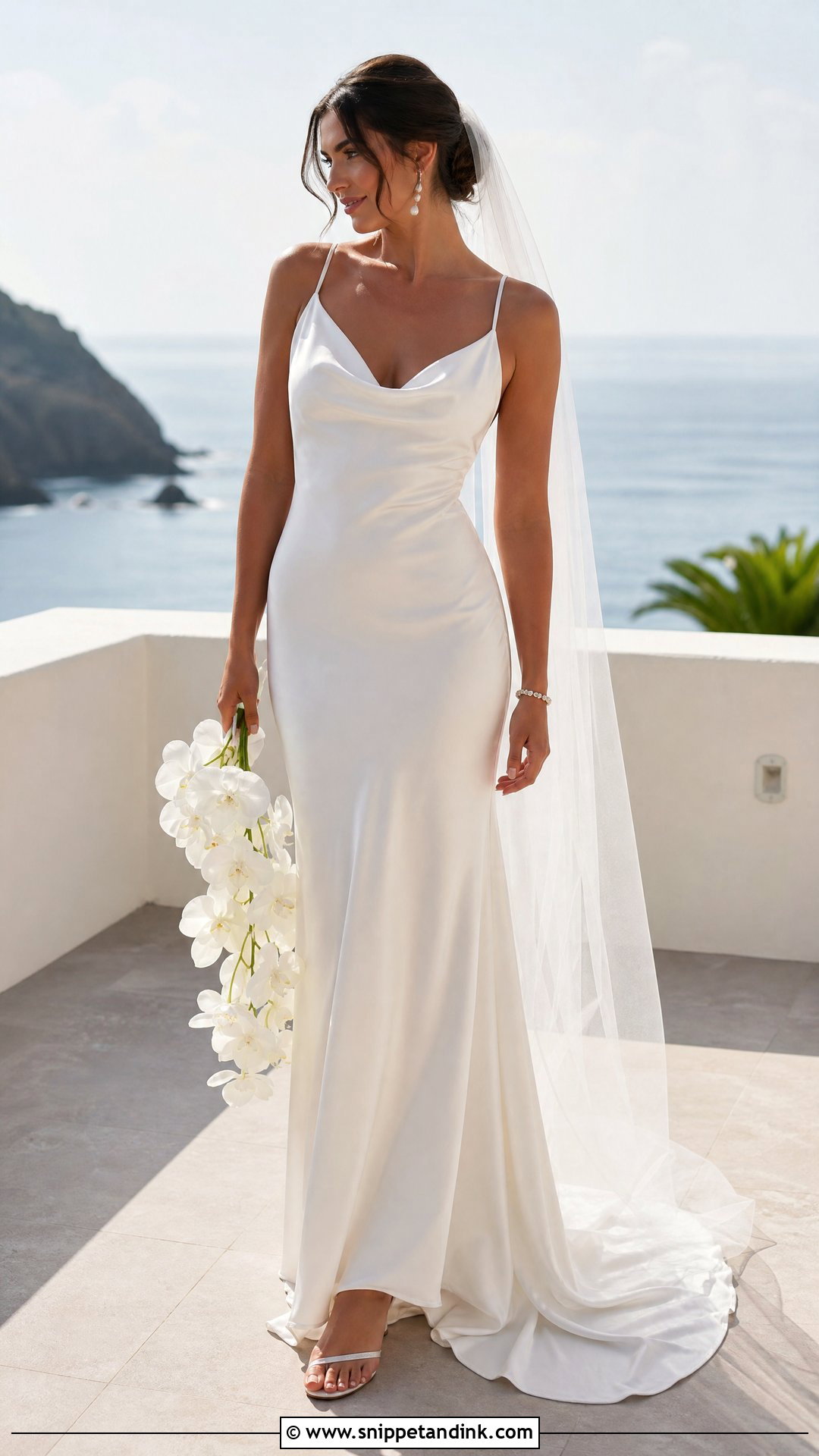
A cowl is drape made from the fabric itself, so it only works in something fluid. Silk charmeuse or satin lets the folds fall, where a stiffer cloth just bunches. Keep everything else plain: slim straps, a bias-cut skirt, a softly open back. Delicate sandals, small drop earrings, one bracelet and a sheer veil from a low bun are enough, with orchids or calla lilies in a loose bouquet. My caution is coverage. A cowl moves when you bend, so I always look at it from the side and from above, the way a photographer on a balcony would. A small weight or a discreet tack inside the drape fixes most of it.
13. Simple Empire Waist Bridal Gown
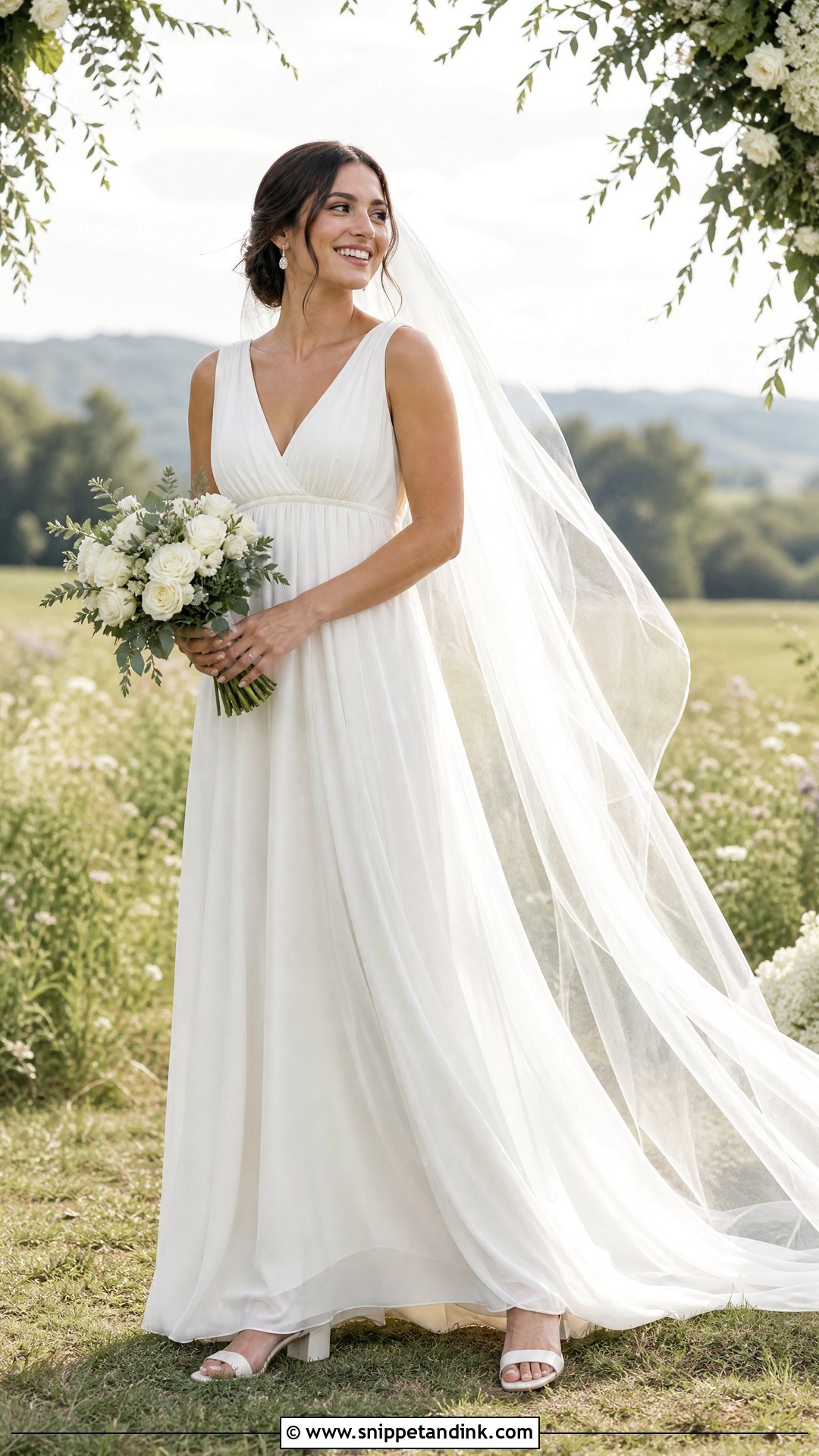
Empire waists set the seam just under the bust and let the skirt fall straight from there, so nothing grips your natural waist. That’s why I suggest it to brides who want to eat dinner in comfort, and to brides who are pregnant. Airy chiffon over a smooth lining floats; soft crepe gives a more tailored result. A modest V and narrow straps balance it, with low block heels, fine drop earrings, a plain fingertip veil and a bunch of daisies, roses or seasonal greenery. It comes into its own outdoors in warm weather. Seam placement is everything here. Too high and the bodice looks cropped, too low and the skirt hangs crooked over the bust.
14. Simple Fit And Flare Bridal Gown
Fit-and-flare follows the bodice and hips, then opens around mid-thigh or the knee. You get the curve with a far easier stride than a true mermaid, which is why I steer brides who plan to dance hard toward it. Plain crepe or stretch satin with clean princess seams and a modest sweep train keeps it understated. Pointed heels, crystal studs and a veil a little longer than the train finish it, and a polished ponytail or low bun keeps it current. Carry a narrow bouquet of roses and greenery. At alterations, climb some stairs and sit for several minutes. Horizontal wrinkles across the thighs mean the hip is too tight.
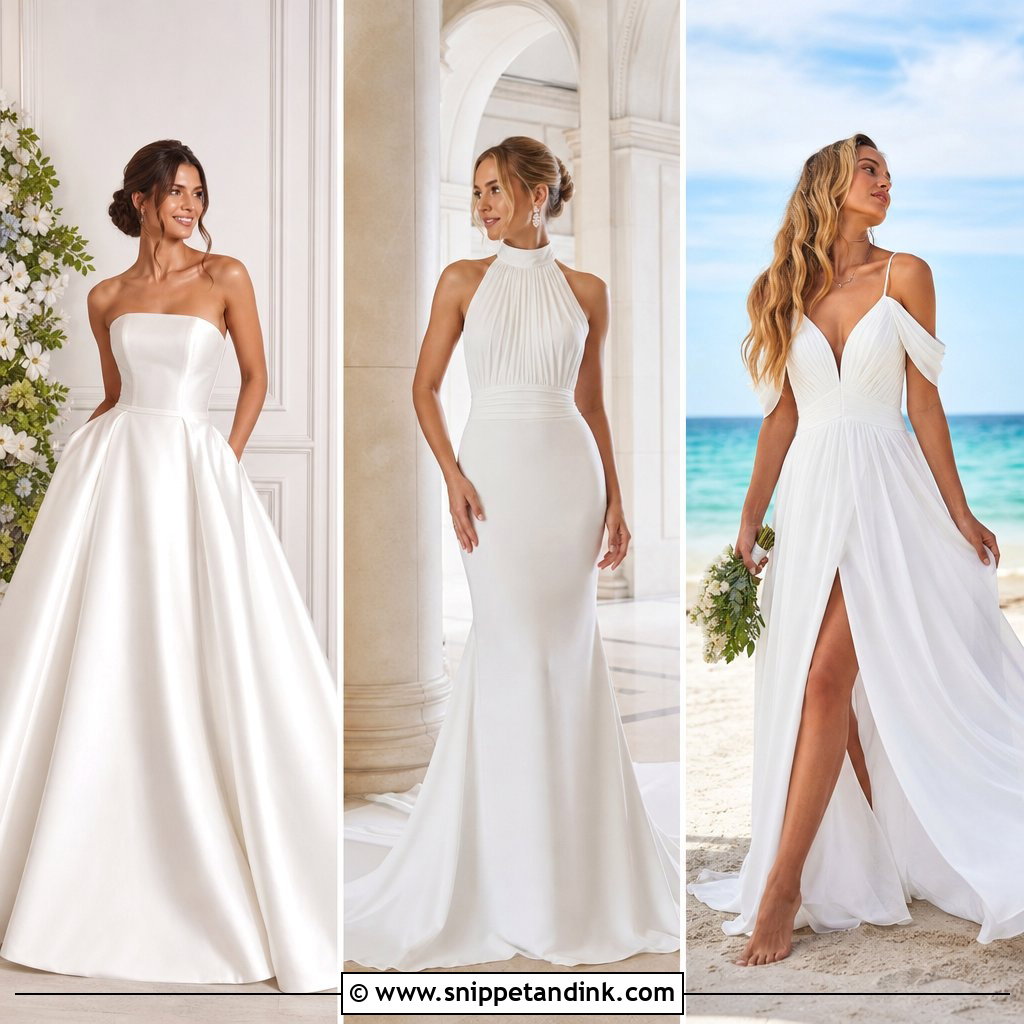
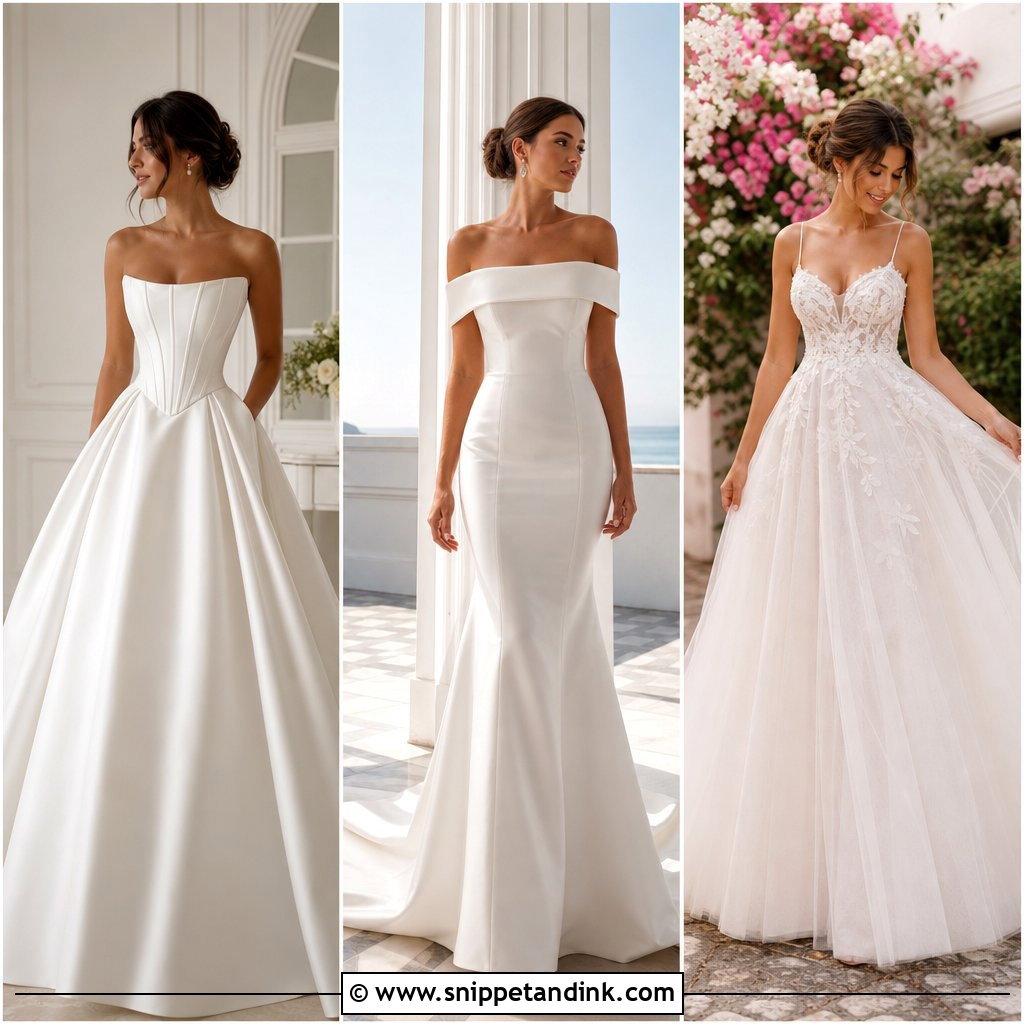

15. Simple Mermaid Bridal Gown
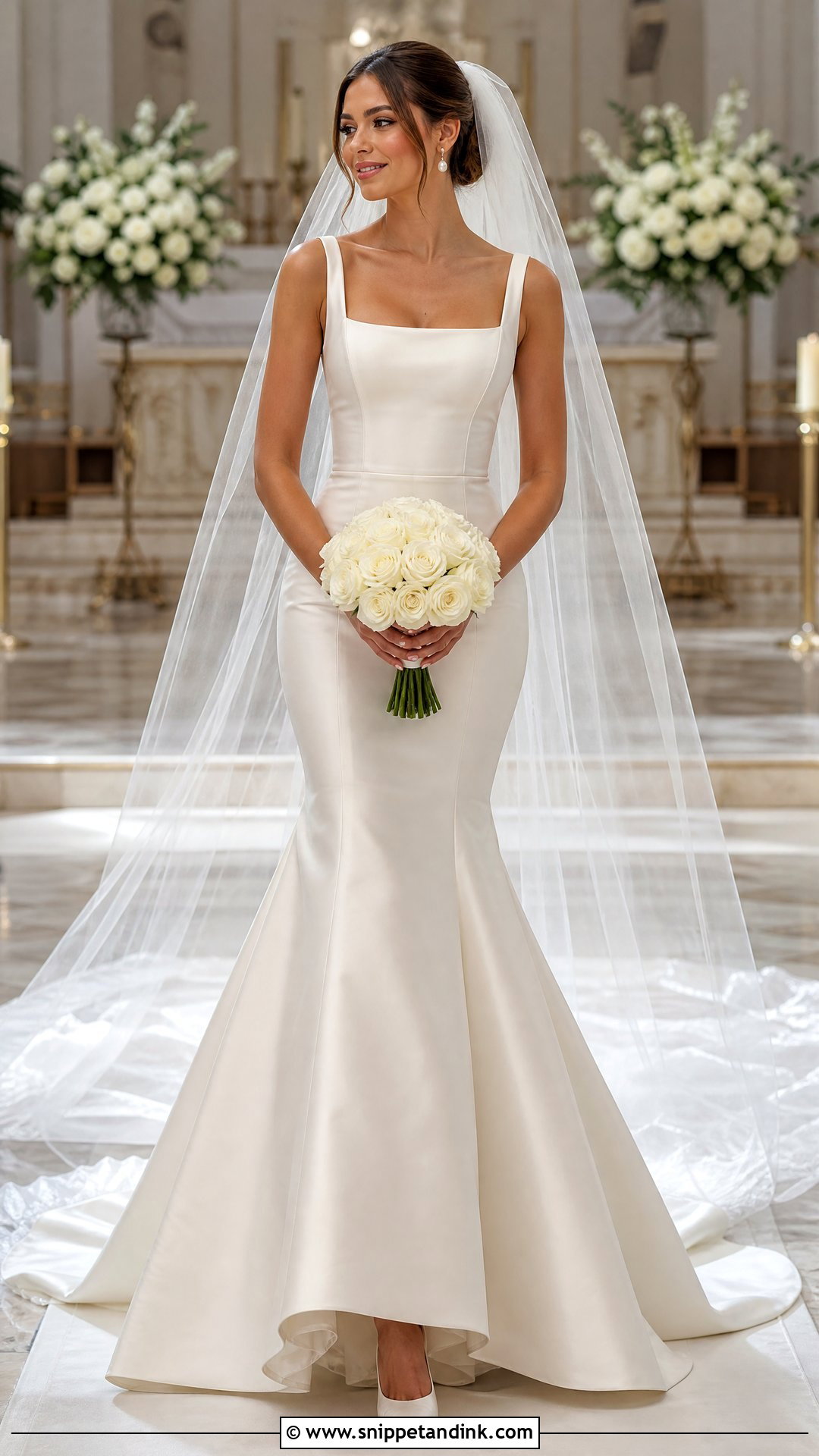
On a mermaid, the point where the flare starts decides whether you can walk. Set it too low on a petite bride and she shuffles; set it right and the hem moves when she does. I mark the flare point on the actual body at the first fitting, never from a size chart. Smooth fabric beats heavy lace here, and a structured bodice should define waist and hips before the skirt opens below the knee. Strapless, square and off-the-shoulder versions all work. Pearl earrings, a sleek bun, pointed pumps, a cathedral veil and a compact bouquet of white roses keep the attention on the shape. This is the gown I’d most want you to sit in for ten full minutes before buying.
16. Simple Satin Ball Gown
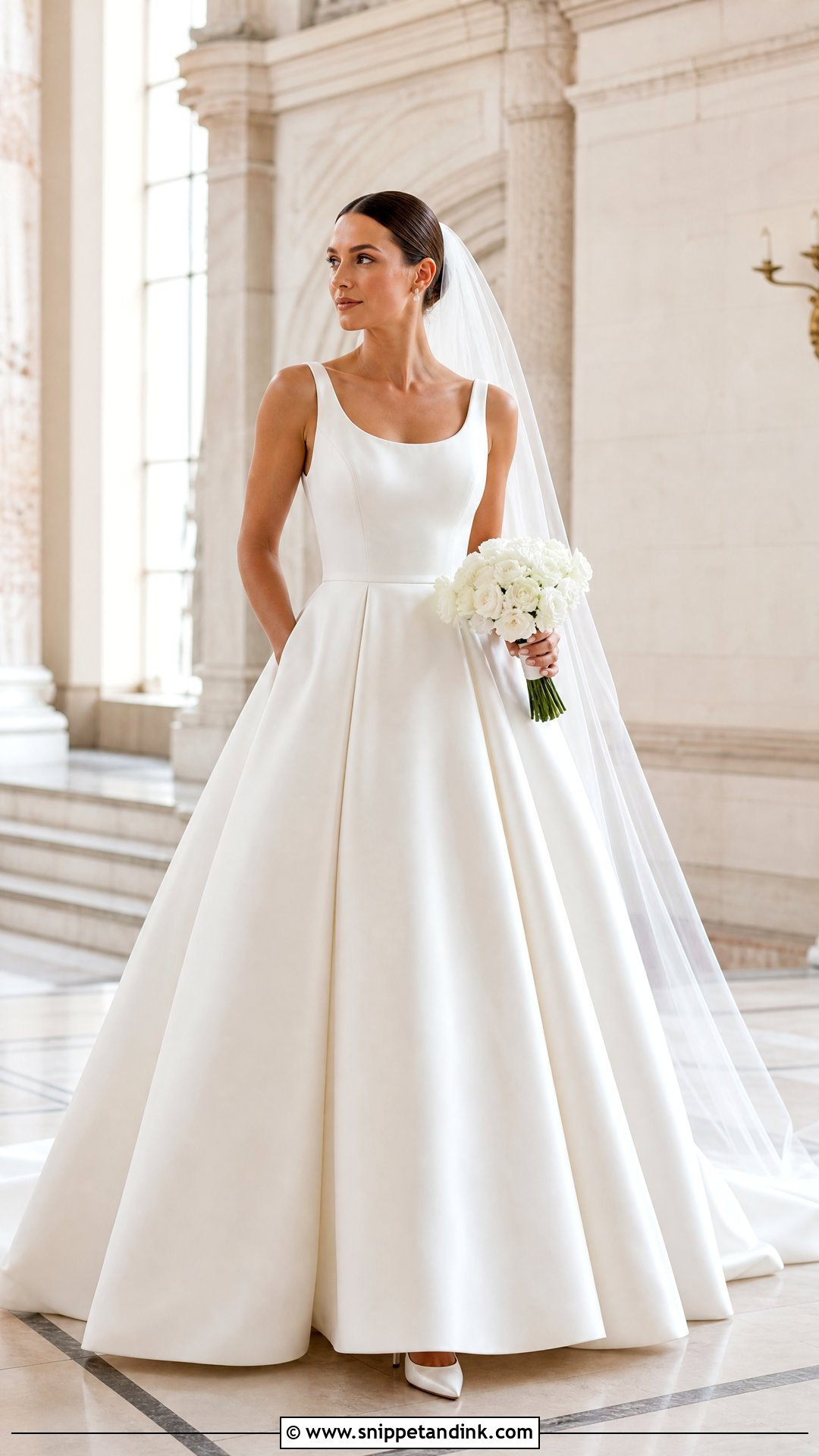
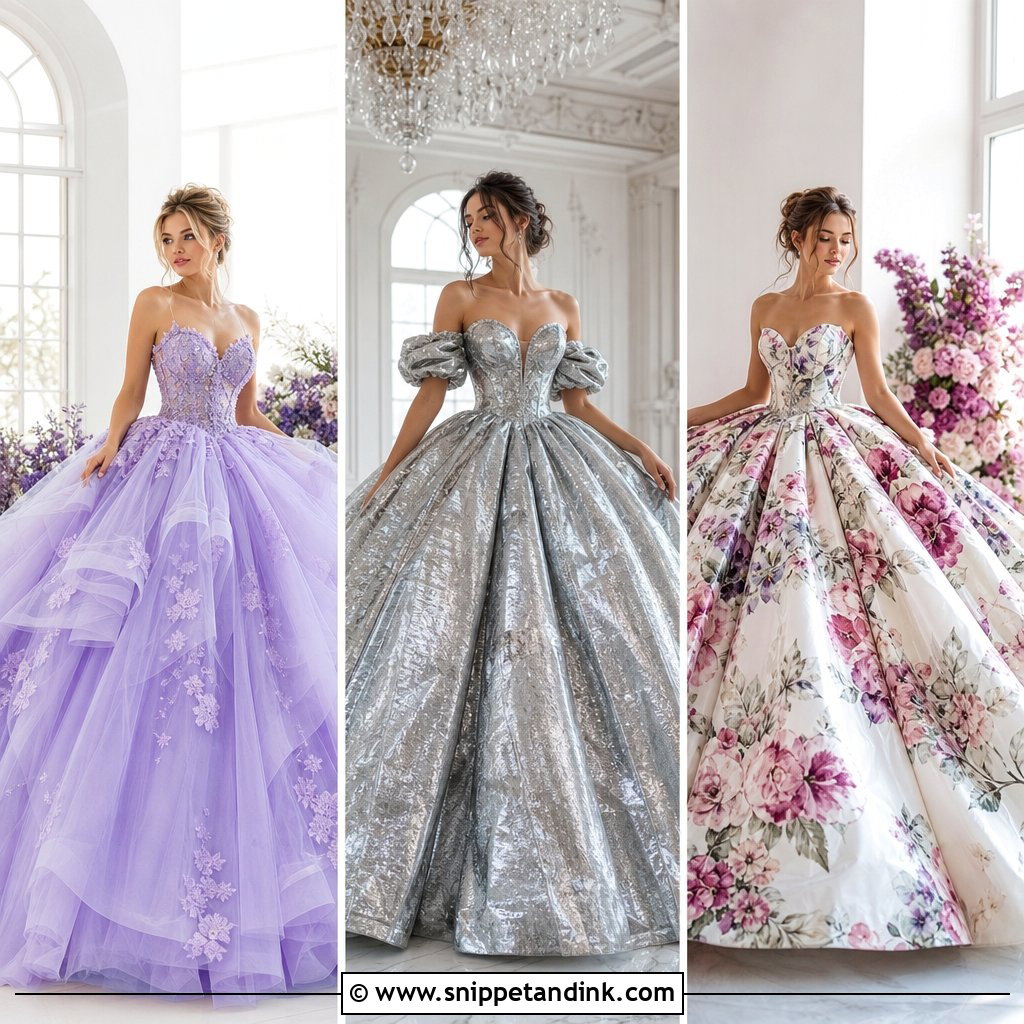
A ball gown stays simple when its impact comes from shape rather than decoration. Smooth satin or mikado, a clean bodice, a defined waist and a full skirt are enough, and a strapless scoop neckline or wide square neckline gives it structure. Pearl studs, satin pumps, a neat chignon and a plain cathedral veil keep the accessories quiet, and a small structured bouquet won’t fight the skirt. Before you buy, ask how many petticoat layers are inside and lift the dress yourself. A mikado ball gown can be heavy, and that weight hangs from your waist all day. I always ask for pockets in the side seams; there’s room for them under all that skirt.
17. Simple Tea Length Bridal Gown
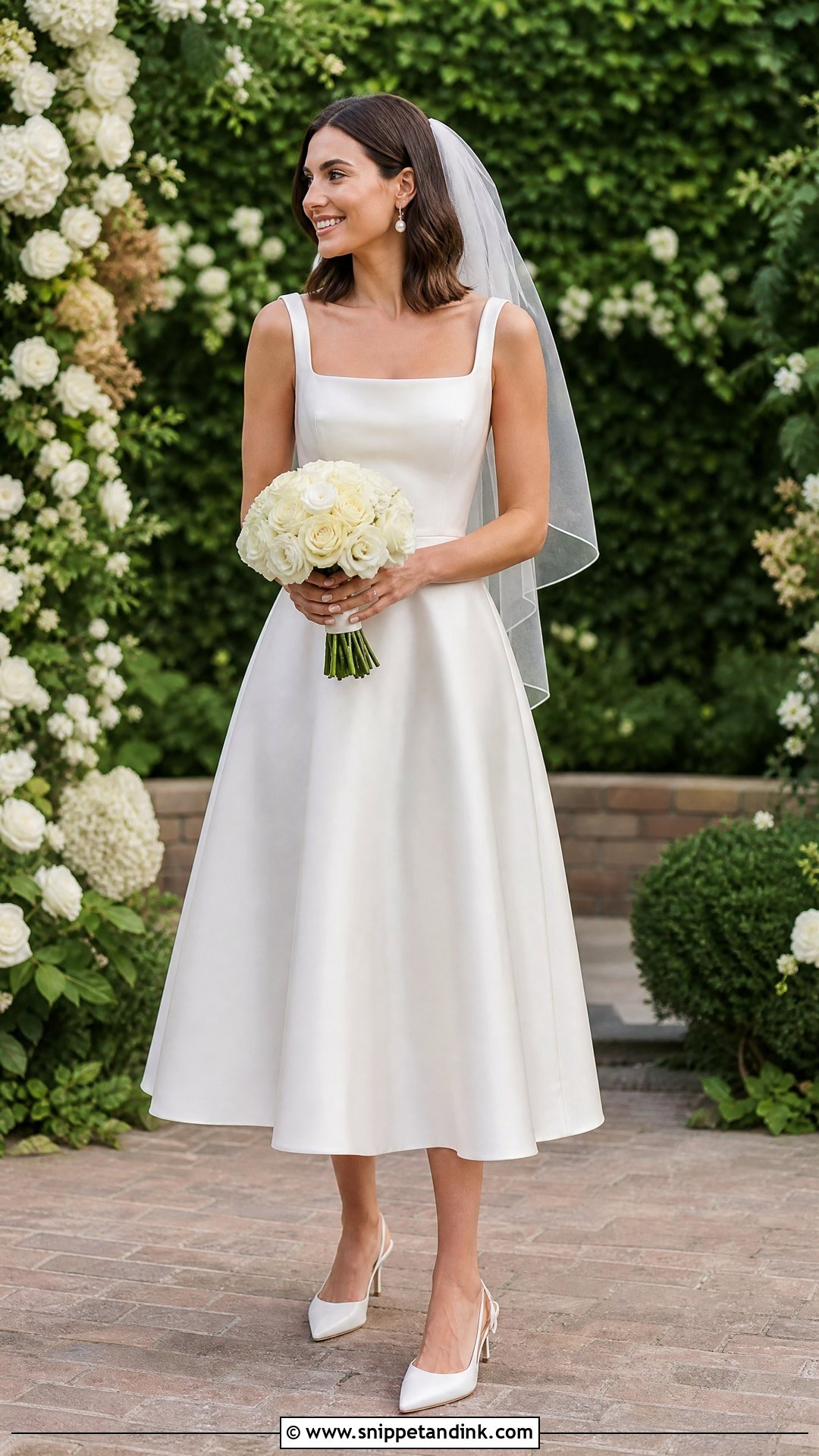
Tea length falls between knee and ankle, which means your shoes become part of the dress. I won’t hem one until the bride brings the exact pair she’ll wear, because half an inch of heel changes where the skirt breaks. A fitted bodice with a square, scoop or bateau neckline over a gently flared satin skirt is the classic version. Pointed slingbacks, pearl earrings and a birdcage or shoulder-length veil keep the proportions neat, with a compact bouquet of white roses. It suits a courthouse, a garden lunch or a reception change. Ask for a petticoat with a little body but not much, since too much net makes it look like costume.
18. Simple Bridal Mini Gown
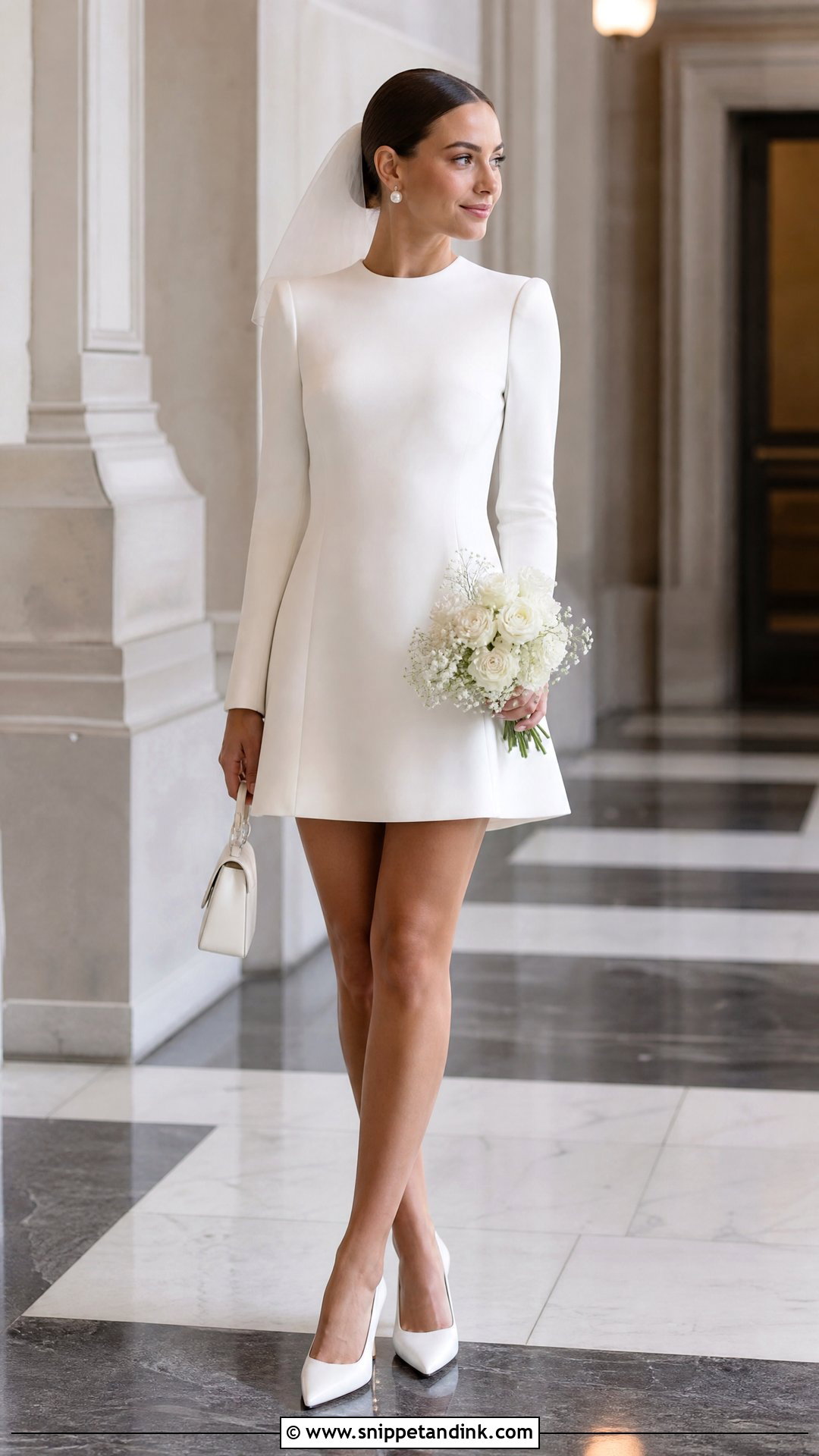
A mini is the most practical bridal dress there is, and the least forgiving of a sloppy hem. A clean shift, tailored A-line or fitted column in structured crepe or satin keeps it crisp. I balance the short skirt with coverage above it, usually a high neck or long sleeves. Pointed pumps or slingbacks, pearl earrings and a short veil or a hair bow finish it, with a small white bag and a petite bouquet. It’s my usual pick for a courthouse or an evening change. Sit, walk and climb a few stairs before the hem is final, then check it in a mirror from behind. A mini that rides up when you sit is one you’ll be pulling at all night.
19. Simple Bridal Gown With Cape
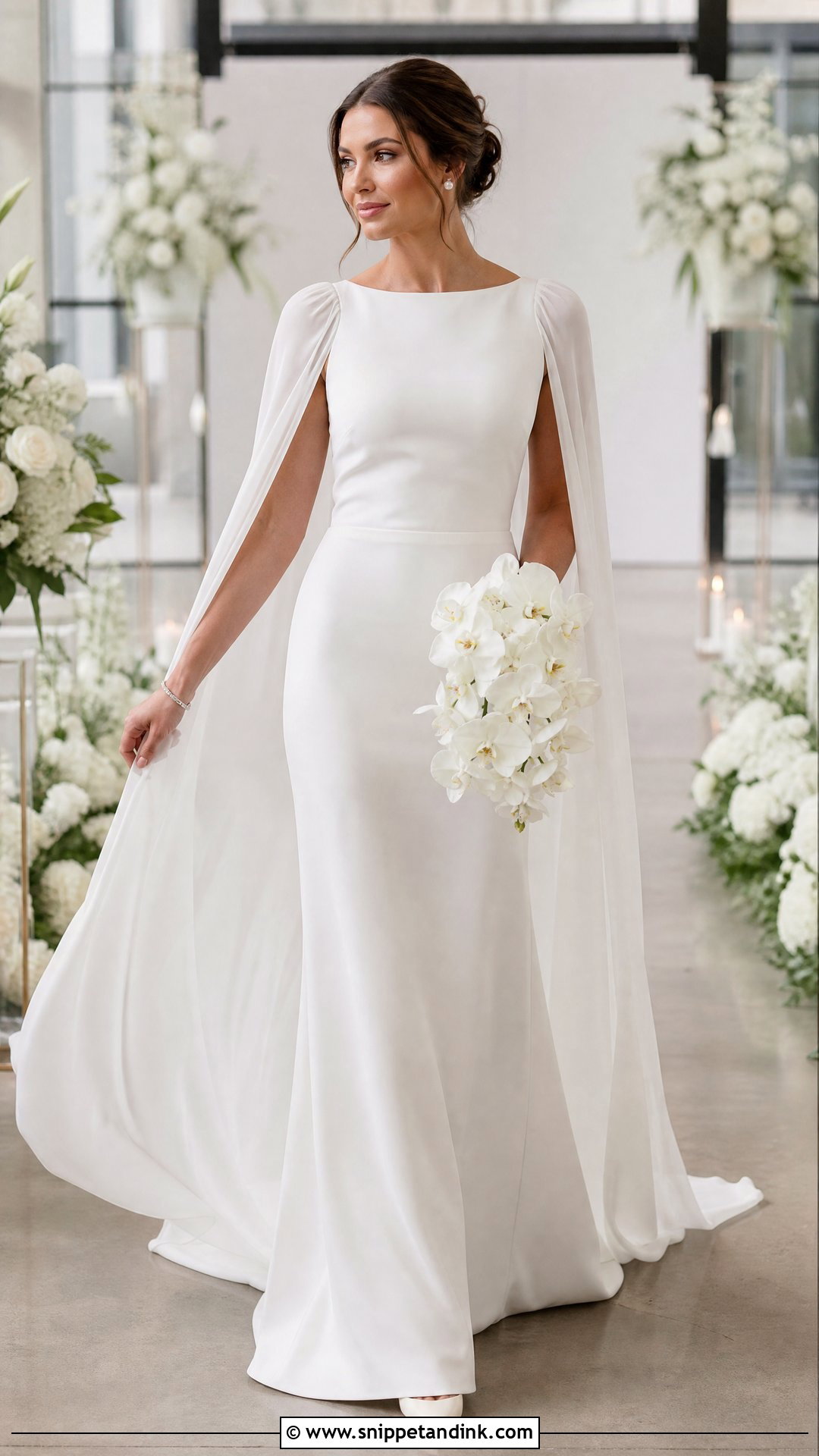
A removable cape gives a plain gown some ceremony drama, then comes off for dinner. Start with a fitted crepe column, a satin sheath or a simple A-line with a clean neckline, and add a sheer floor-length cape attached at the shoulders. Pearl studs, a slim bracelet, pointed ivory heels and a modern white bouquet are all it needs. The attachment is where I spend fitting time. Hooks, snaps or thin loops should spread the weight along the shoulder seam; a cape fixed at two small points drags the gown backward and pulls the neckline up against your throat. Have someone take it off you during the fitting, so you both know how it comes off on the day.

20. Simple Bridal Gown With Bow
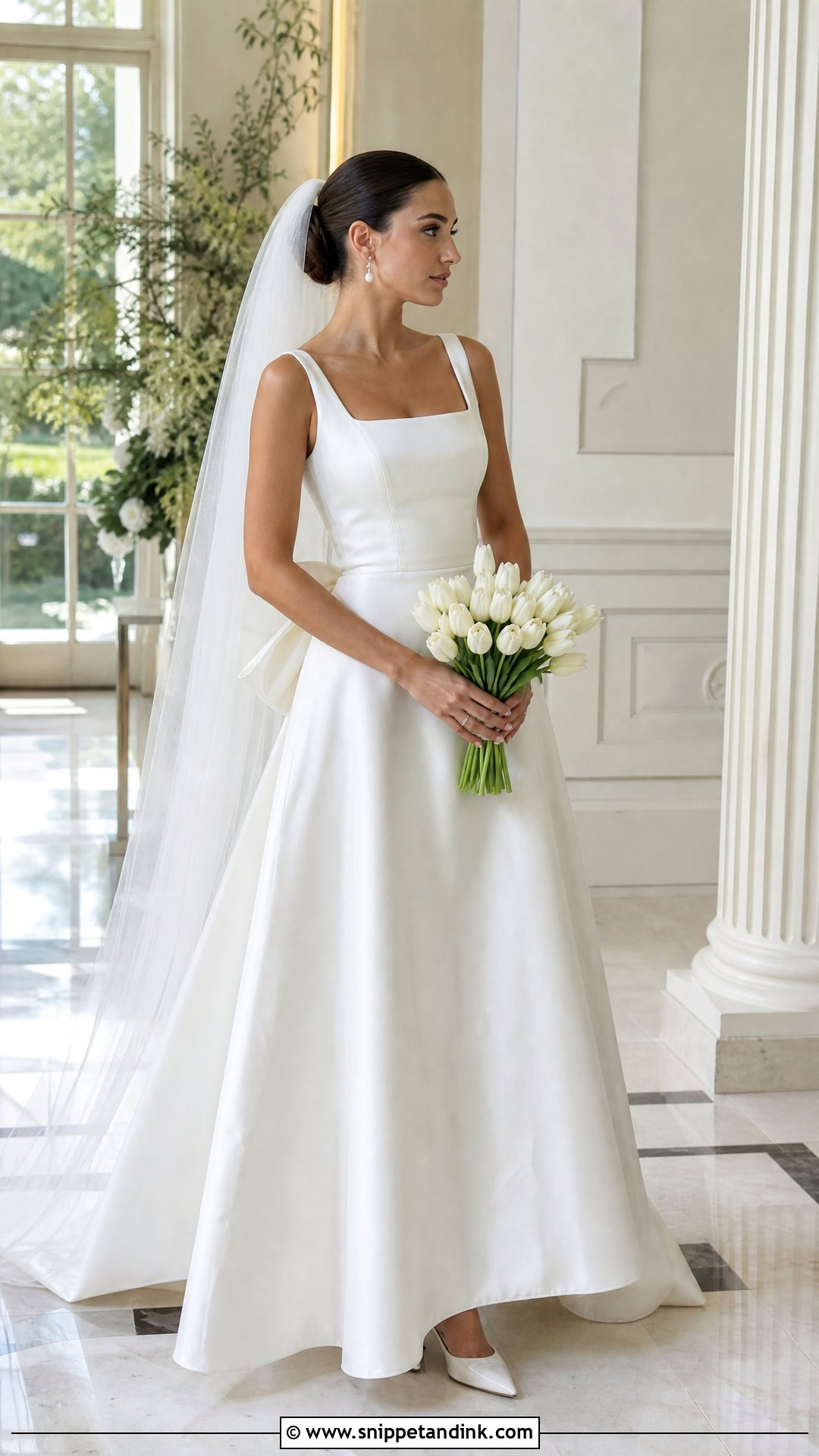
One bow is plenty. Placed at the back waist or the shoulder of a clean satin column, A-line or ball gown, it gives the dress personality without clutter. Scale matters more than anything else, so I hold bows of different sizes against the bride in the mirror before the seamstress cuts one; a bow that looks right on a hanger often looks small on a body. Pearl earrings, smooth pointed pumps and a plain veil let it stand alone, and a sleek bun keeps a back bow in view. White tulips suit it. Ask for the loops to be lightly interfaced and tacked down so they hold their shape after you’ve sat on them through a long dinner.
Bustles, Steam and the Train After the Aisle
A clean train looks wonderful walking in and becomes a trip hazard the moment the dancing starts. Any gown with a sweep train or longer needs a bustle, and on a plain dress I want it as invisible as possible. An over bustle lifts the train with hooks or buttons onto the back of the skirt. An under bustle, sometimes called a French bustle, tucks it beneath with ribbon ties. Satin and crepe usually take an under bustle more cleanly, because the hooks of an over bustle can show on a smooth surface.
Ask your seamstress to color-code the ties or number the loops, then teach the bustle to the person who will actually do it, not just to your mother in the fitting room. I make that person do it twice before the final fitting ends. It takes longer than people expect in a dim reception corridor.
A small kit for the dress on the day
- A handheld steamer, never an iron, held a few inches from the fabric and kept moving so it can’t water-mark silk.
- A white chalk block or stain stick tested on a hidden seam well before the wedding.
- Fashion tape, a few safety pins and a needle threaded in ivory.
- A clean white cloth to sit on in the car, since dye from upholstery can transfer to pale satin.
Afterwards, get the gown to a specialist cleaner within a few weeks. Sugary drinks and sweat dry invisible on ivory and turn yellow-brown over time, and a plain dress shows that more than a lace one would.
A Plain Dress Is Mostly Tailoring
Plain dresses aren’t easier to get right. They’re harder, because there’s no lace to hide a wobbly seam. Start with the silhouette that lets you move, then settle the fabric: satin for structure, silk for movement, crepe for a smooth matte line. Let one detail lead, a neckline, sleeves, a bow or a cape, and keep the shoes, jewelry and veil quiet around it. Book alterations early and test the dress the way you’ll really wear it, sitting, hugging and dancing. When every seam lies flat, a simple gown looks made for you, because by then it is.
You'll Like These Ideas:






Leave a Reply