
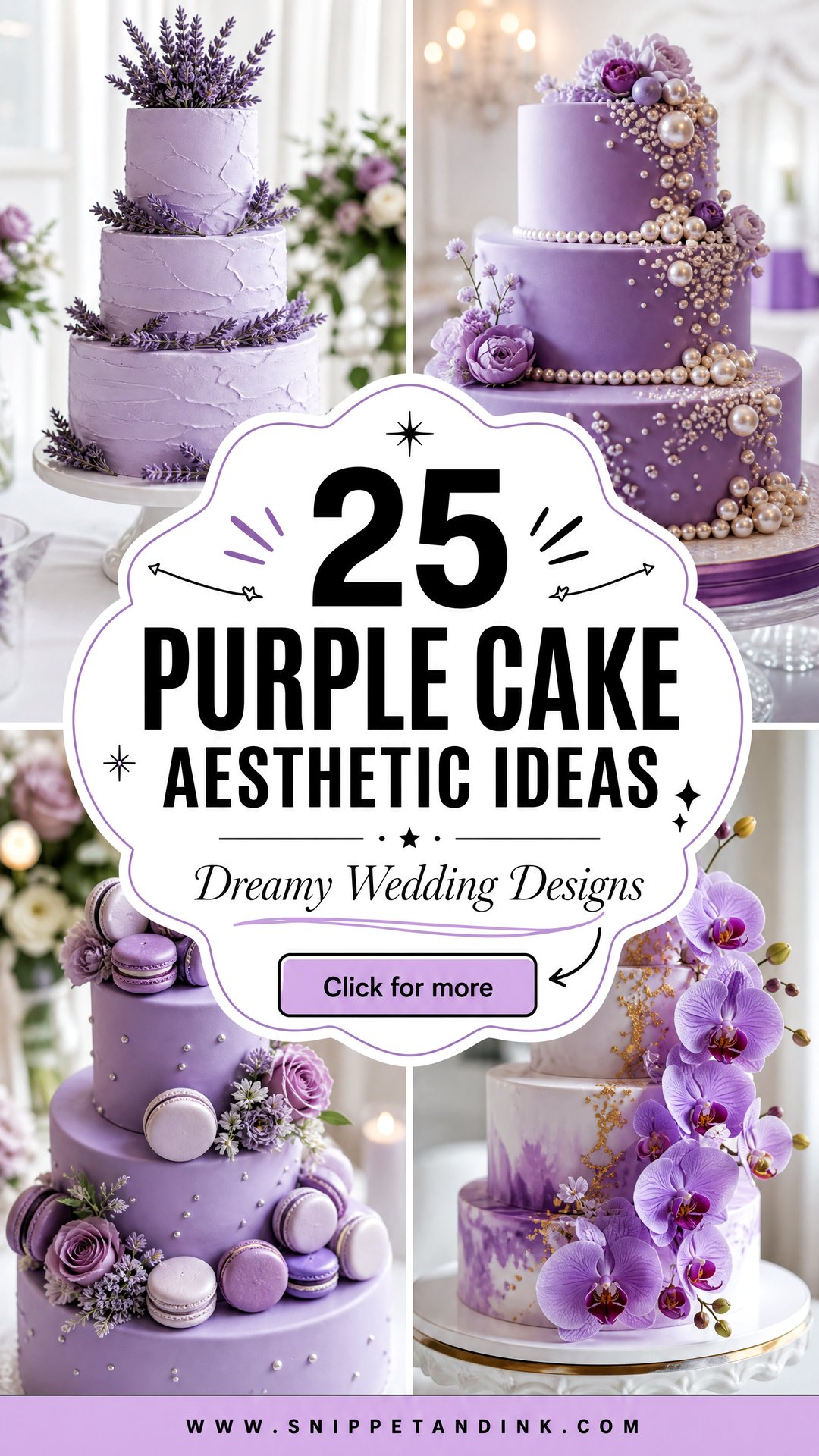
Purple covers a huge range on a cake, from a barely there lavender to an aubergine dark enough to read almost black under evening light. Lavender looks fresh and garden-like, lilac leans sweeter, plum and eggplant belong to formal evening receptions. Couples are also asking for textured buttercream, pressed and sugar flowers, pearls, fruit, and smaller cakes alongside a dessert table, and purple works with all of them. It is also one of the trickiest colors I mix, so I’ve added notes on how each design behaves once it leaves my kitchen. Here are 25 purple cakes worth showing your baker.
Purple Is the Fussiest Frosting Color to Keep True
Every cake designer has a story about a lavender cake that arrived blue. Purple food coloring is a blend, and the pigments behave differently. Light breaks some of them down quickly, so a lilac cake left near a sunny window can drift toward grey or blue within hours.
There are a few things I do and ask couples to plan for:
- Mix the color the day before. Gel colors deepen as they sit, so a shade that looks right fresh from the mixer is often darker by morning.
- Place the cake table away from windows and out of direct sun, and ask the venue about the lighting where it will stand.
- For deep shades, start from a chocolate base rather than forcing white buttercream dark with gel.
- Ask for a color sample on the frosting you’ll have, not on paper. Ink and buttercream never look the same.
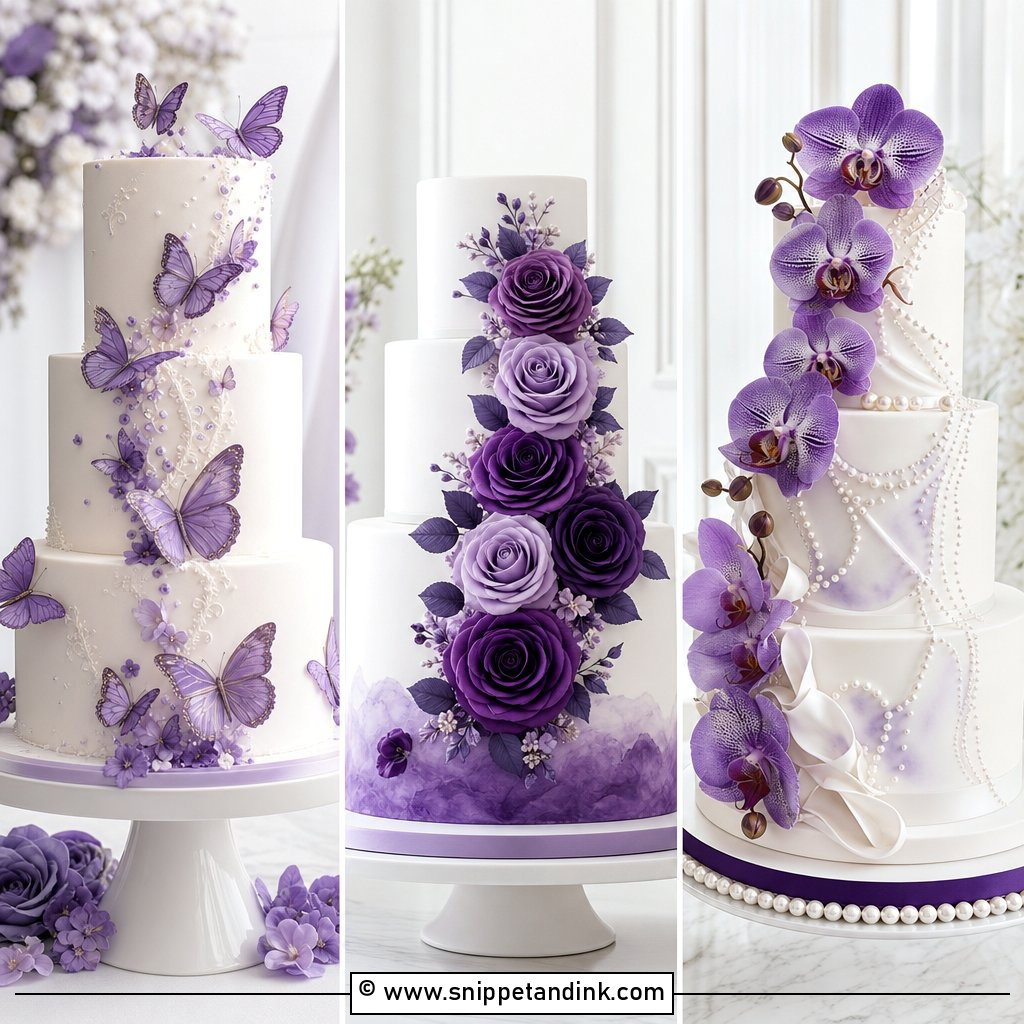
Fondant and sugar decorations hold color better than buttercream, so if the exact shade matters a lot, putting the purple in the details is the safer route.
1. Purple Wedding Cake With Fresh Flowers
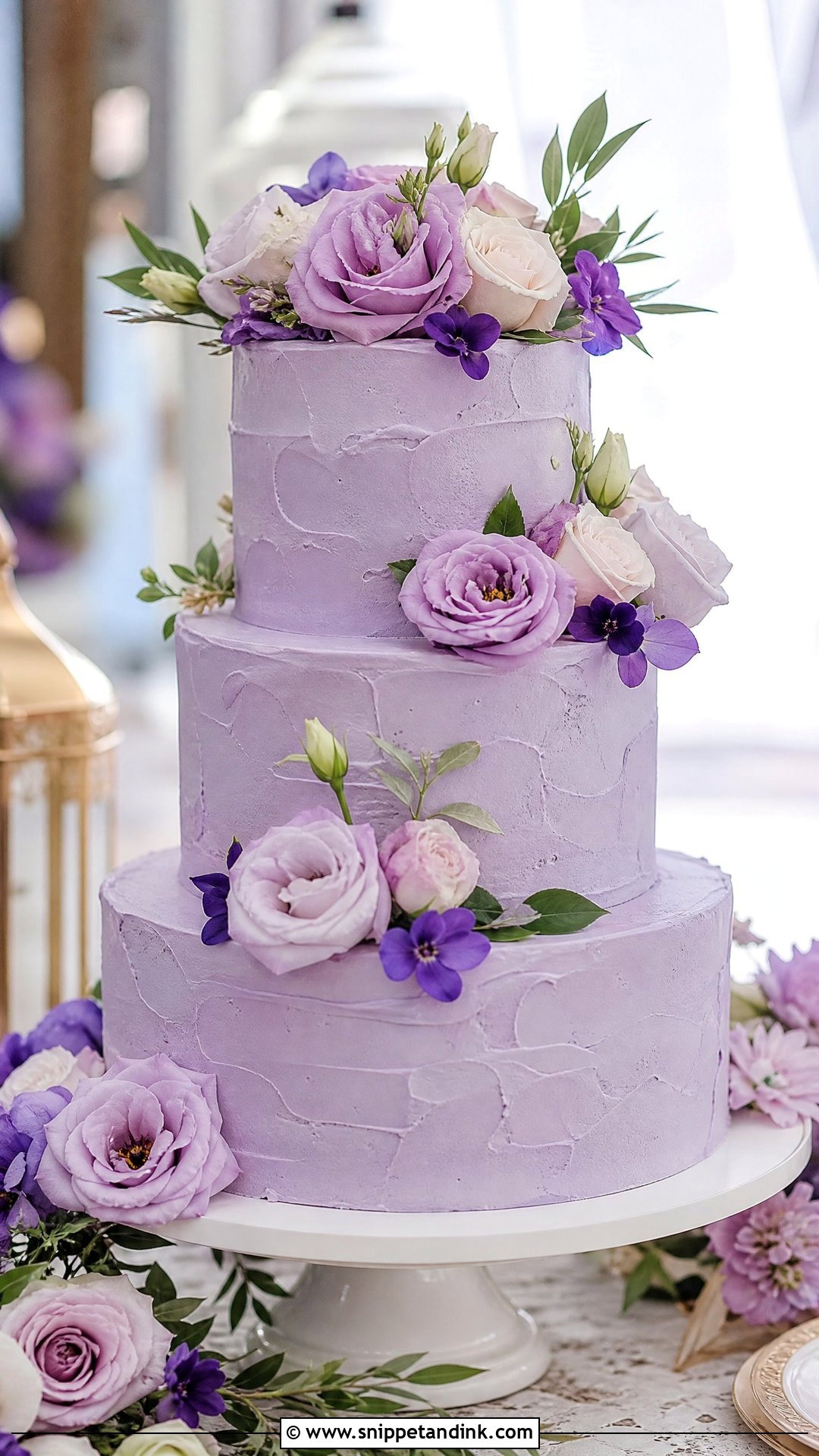
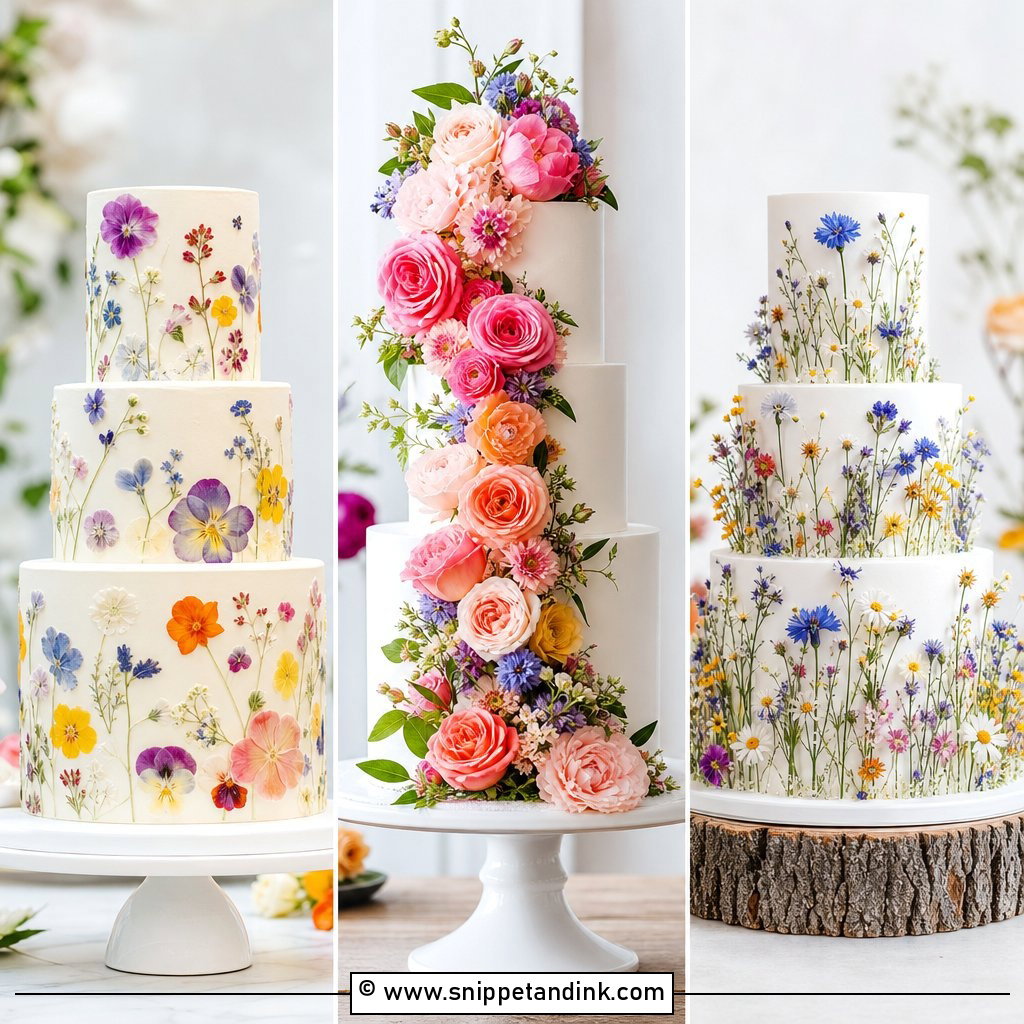
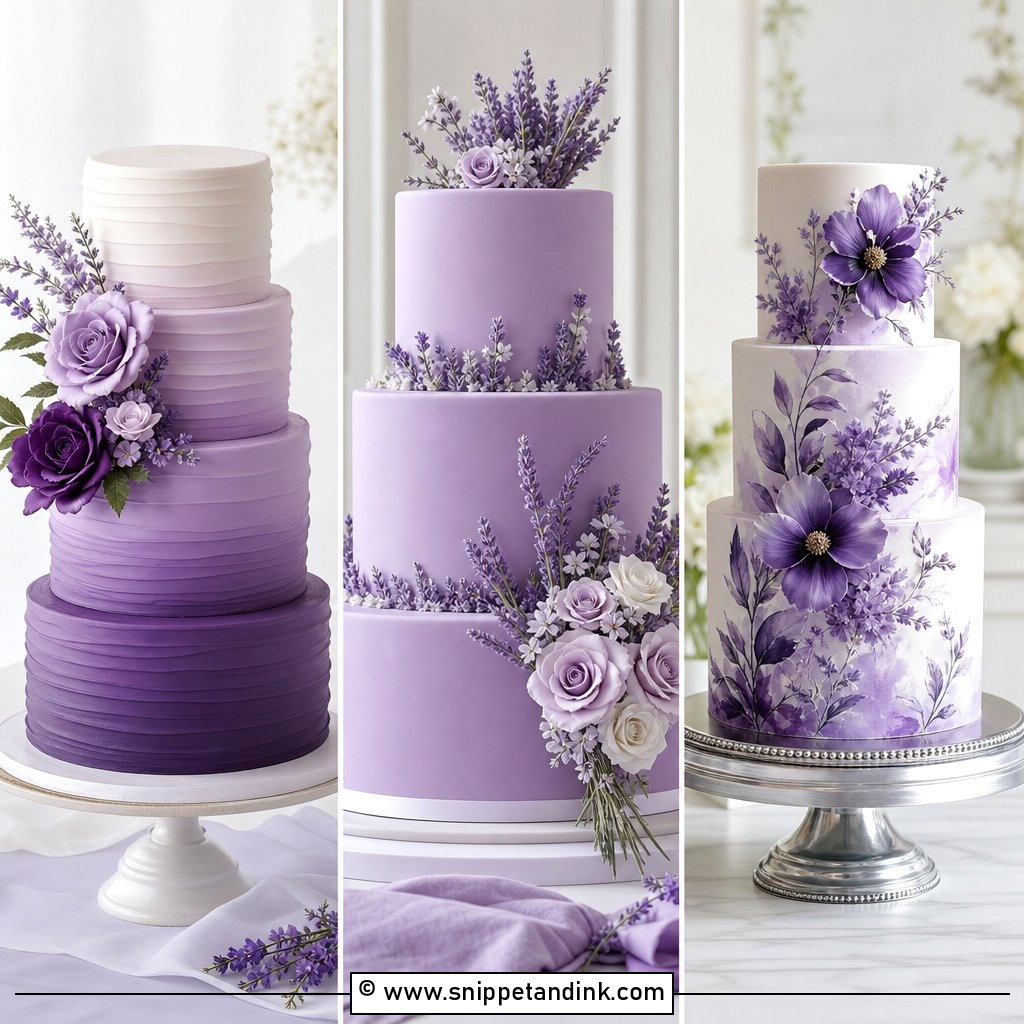
Fresh flowers make purple look natural rather than dyed, because the frosting sits next to real petals. I start with soft lavender or lilac buttercream and take the blooms straight from the bouquet recipe: garden roses, lisianthus, orchids, pansies and violets all work. The flowers must be pesticide-free and the stems wrapped or set in food-safe picks so they never touch the cake directly, which means the florist and I agree on the list well ahead. A smooth two or three tier shape gives full, layered flowers room. It suits spring and outdoor receptions with soft pastel decor.
2. Purple Ombre Wedding Cake
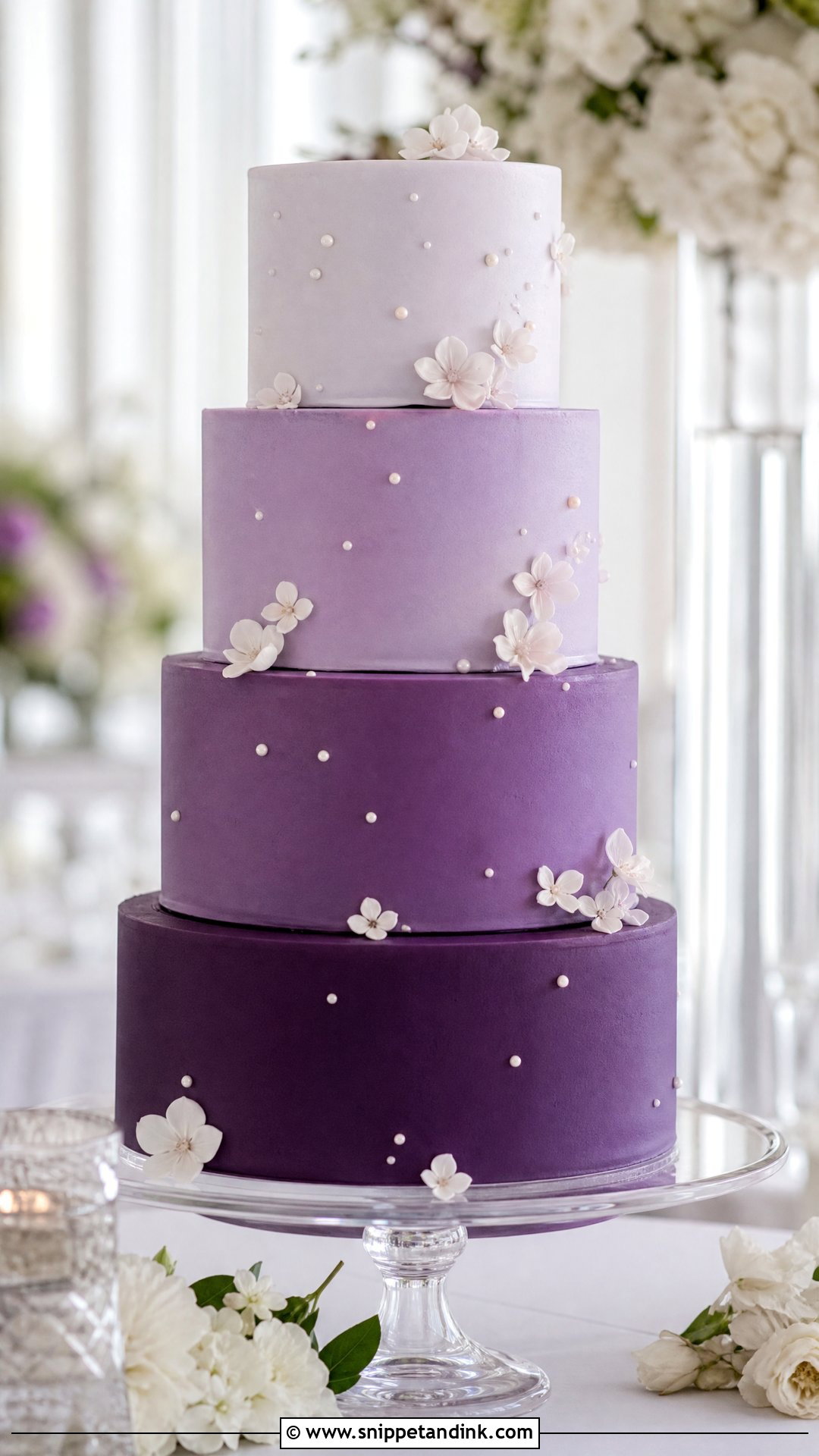
For a purple ombre wedding cake I tint every shade from one base batch, adding more color for each step down, so the plum at the bottom and the pale lavender at the top clearly belong together. Mixing each tier separately rarely gives a smooth progression. It can be done in buttercream, fondant or airbrush. Sugar flowers or delicate piping make it romantic; a smooth surface lets the gradient do the work. It’s a good way to carry color without adding clutter.
3. Lavender Wedding Cake
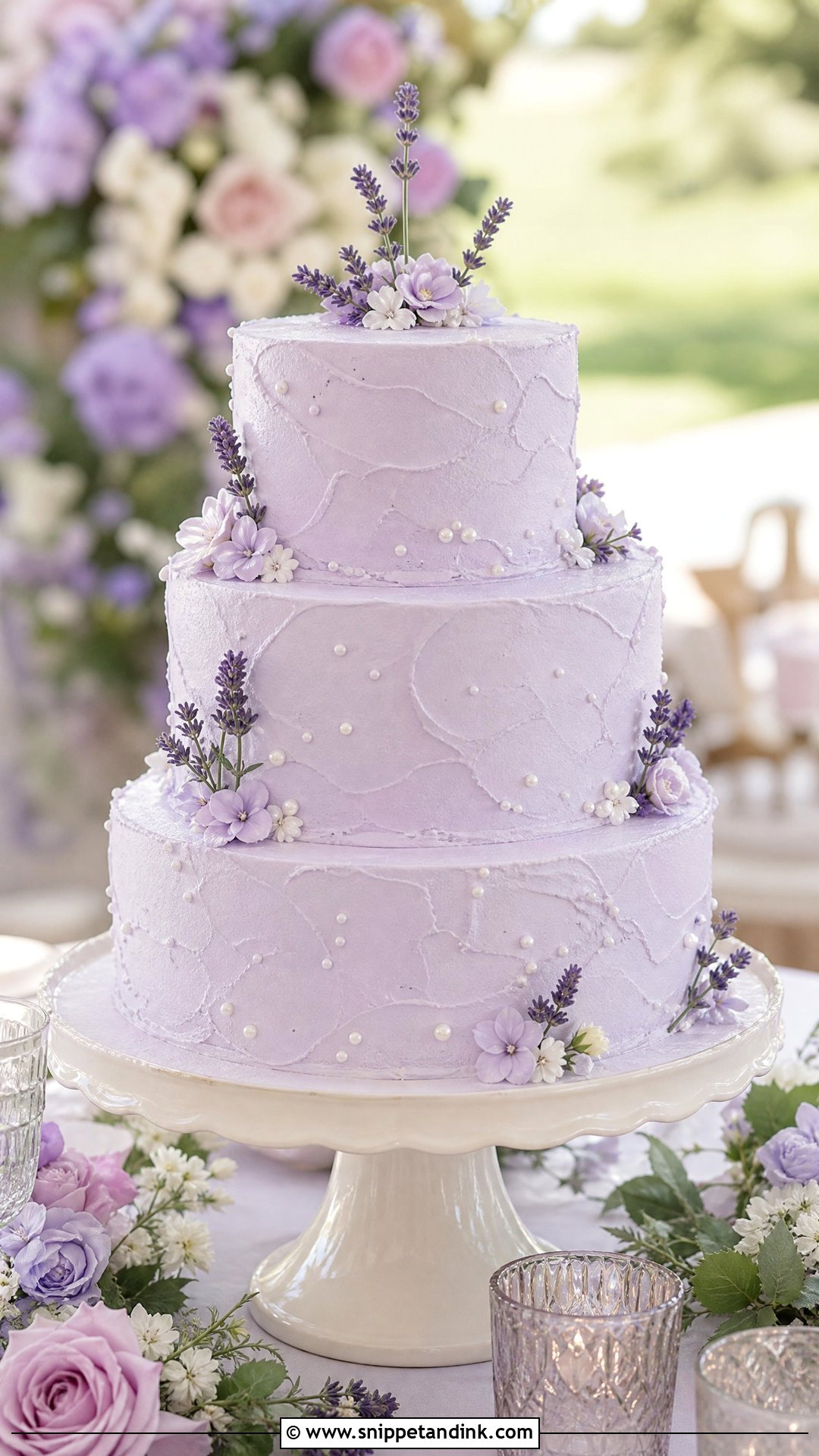
Pale lavender with ivory accents is the purple I’d recommend to couples who are nervous about color. It also invites a flavor match: vanilla bean, honey, lemon, almond, or a lavender infusion. Use culinary lavender sparingly in the sponge or syrup; too much tastes soapy, and I always do a tasting before committing. Textured buttercream gives it a handmade feel, fondant a polished one. Small edible flowers, pearls or a ribbon at each tier base finish it quietly.
4. Lilac Wedding Cake
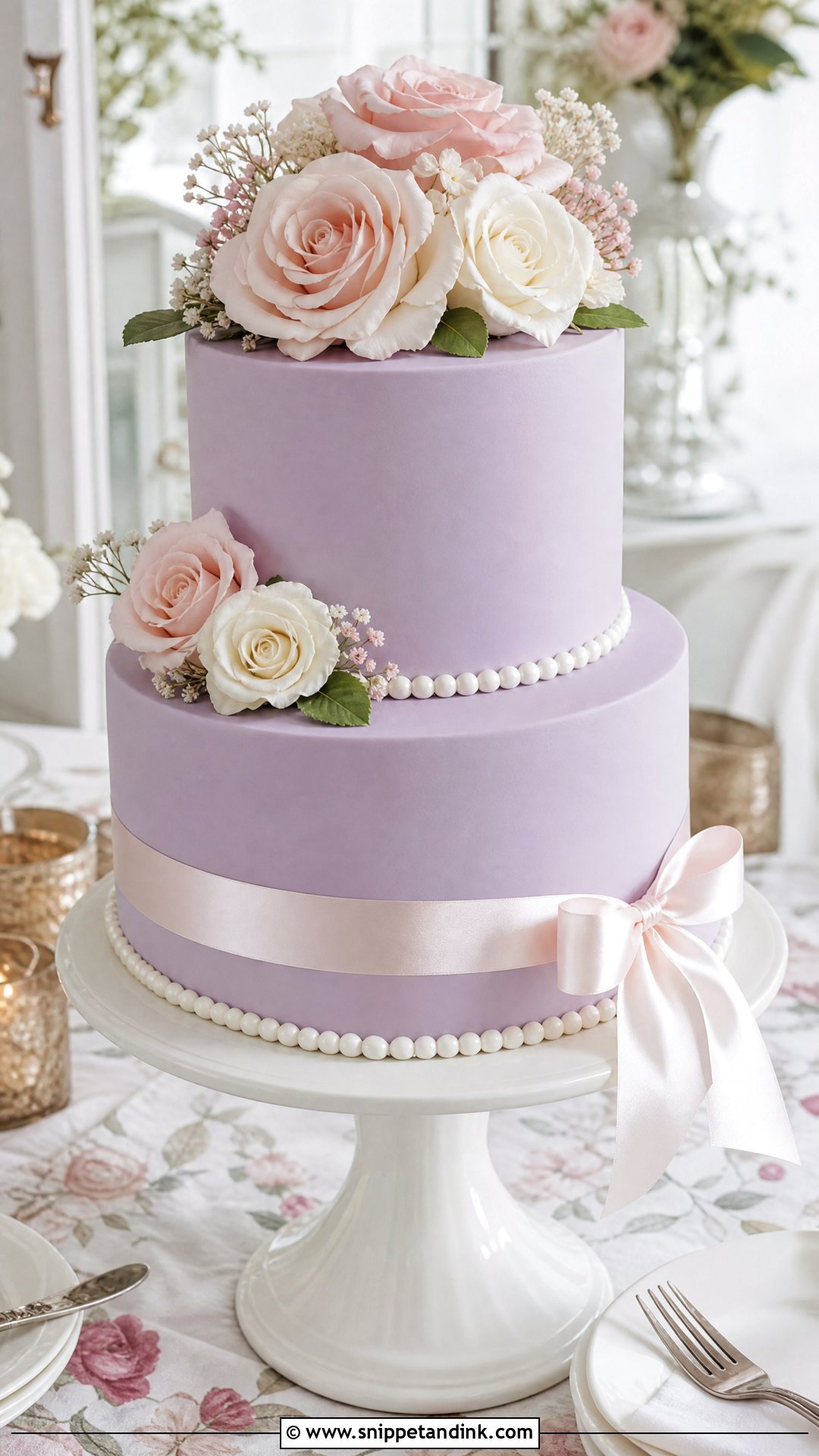
Lilac sits between lavender and pink and leans sweet, which makes it easy to pair with blush flowers, ivory linens and silver. It can be very simple, smooth buttercream with a few fresh blooms, or more detailed with piped borders and pearl trim. Two tiers suit an intimate wedding, but it scales up fine. Raspberry, lemon, elderflower or vanilla layers match the color’s light mood. Lilac is also the shade that fades fastest in daylight, so keep it out of the sun.
5. Dark Purple Wedding Cake
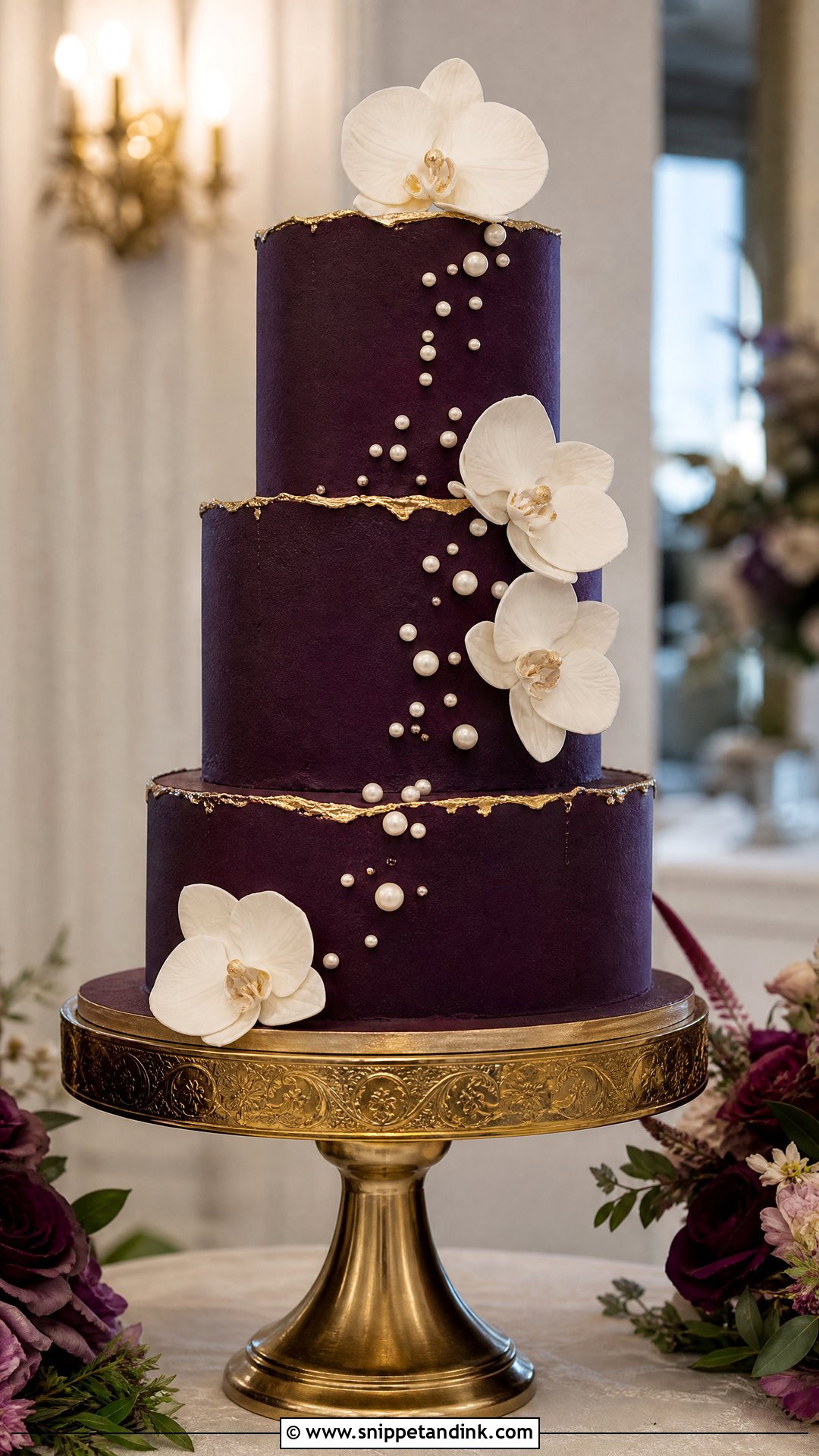
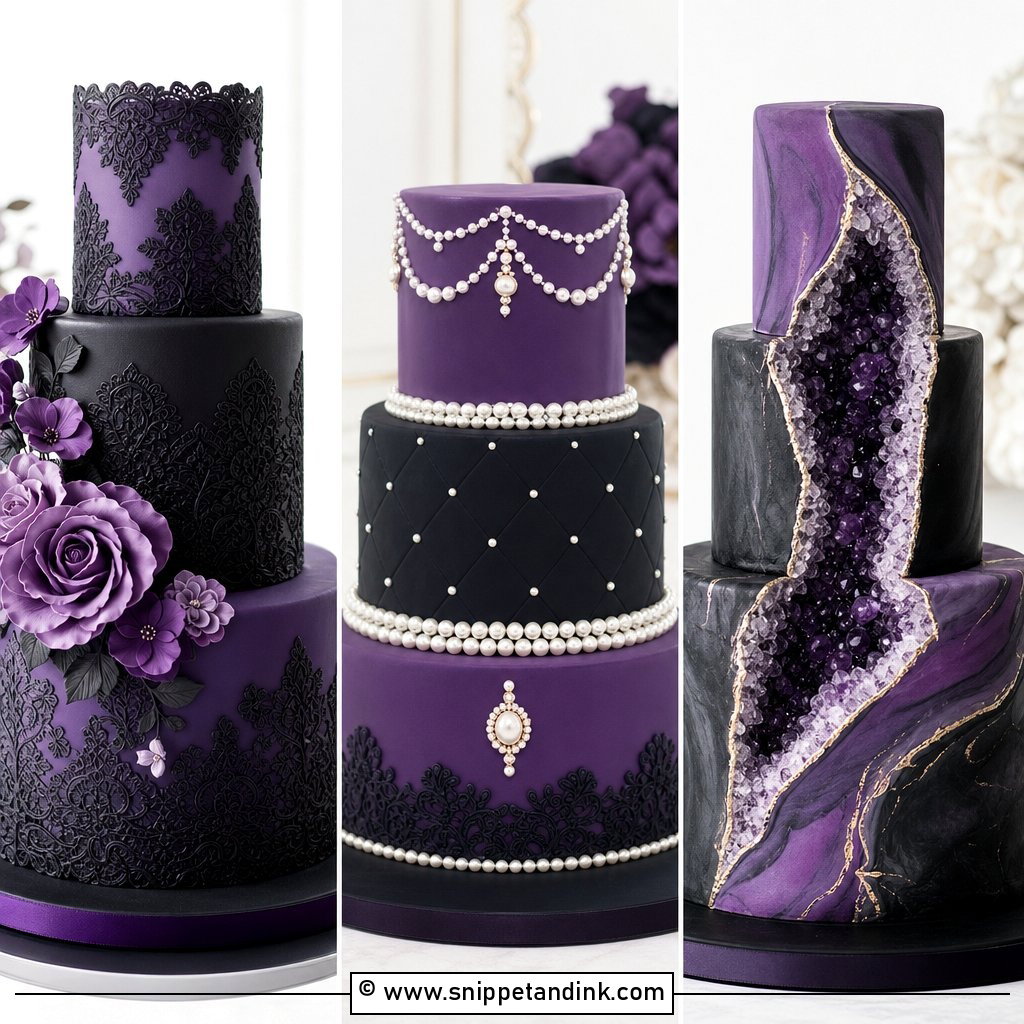
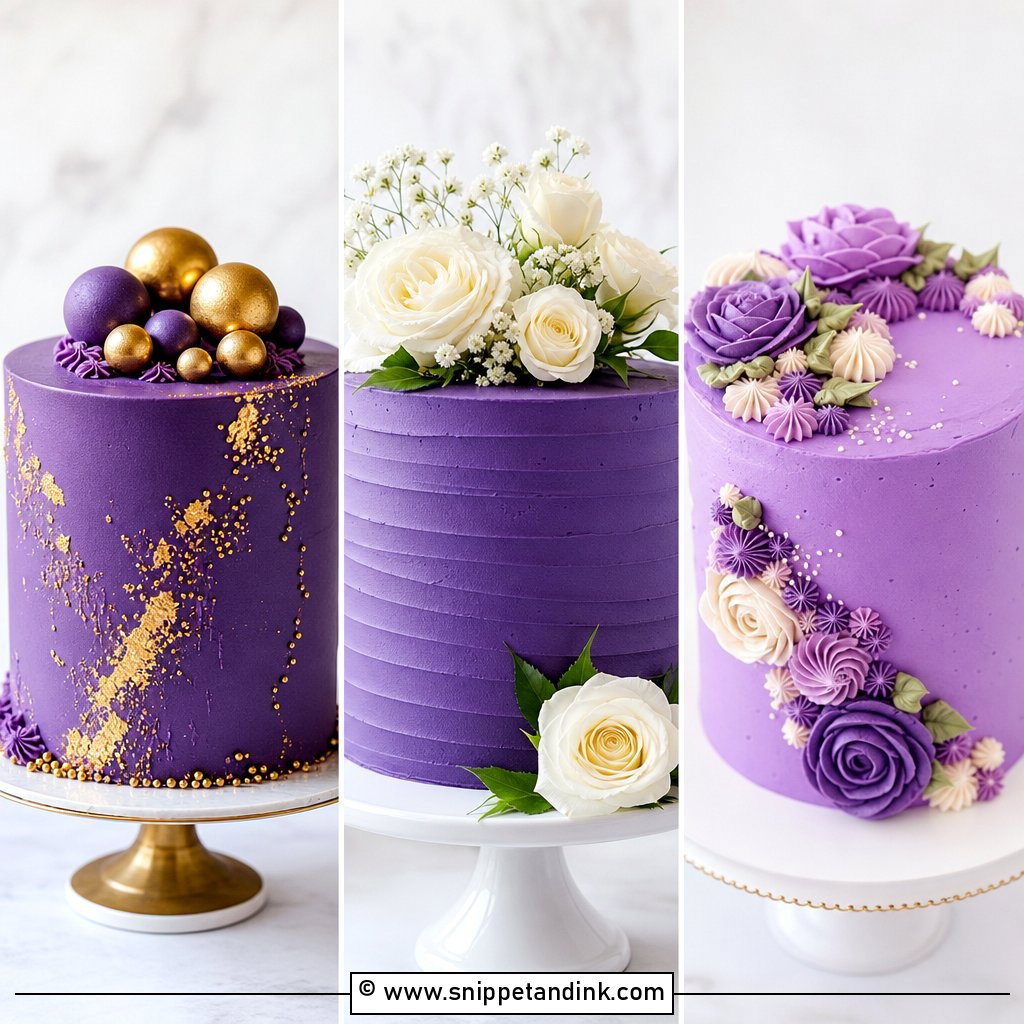
Plum, aubergine, blackberry and deep violet look rich on a formal evening table. They’re also the hardest shades to make taste good. Getting a deep purple from white buttercream takes so much gel color that the frosting can taste bitter and stain teeth, so I usually start from a chocolate or dark base, which needs far less color to get there. Smooth fondant gives a sleek finish; a velvet spray gives a modern matte texture. Ivory flowers or gold accents keep it from looking heavy. Chocolate, blackberry, espresso and almond flavors suit it.
6. Purple And Gold Wedding Cake
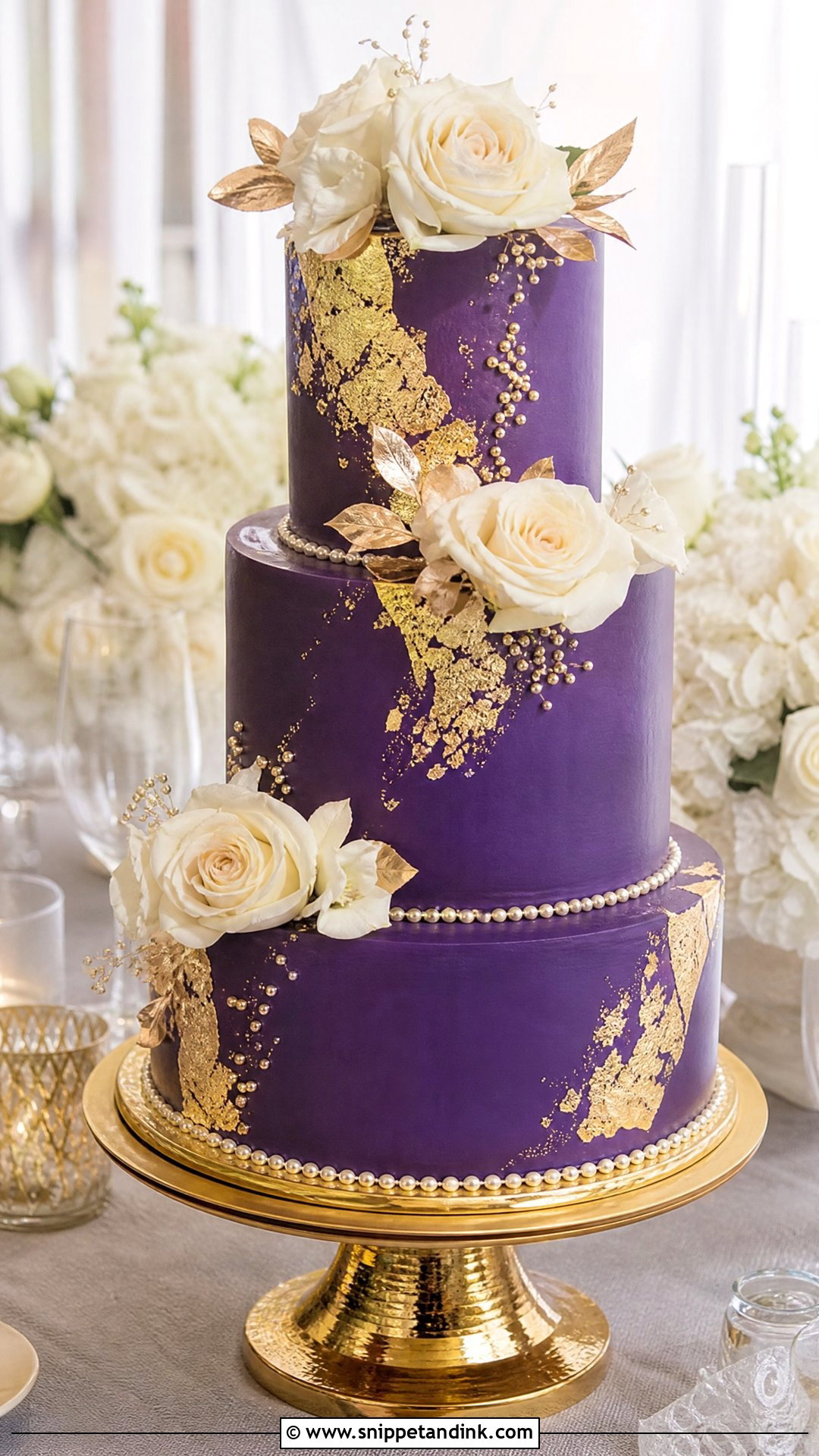
Purple and gold looks regal, and it stays modern when the gold is a detail. A deep violet base with brushed gold edges is luxe without decoration; lavender with small gold leaf touches, pearls and ivory roses is softer. Brushed gold is luster dust mixed with a little alcohol and painted on, and it dries to a sheen; real edible gold leaf is applied in small pieces and has a brighter, metallic finish. Use it on edges, a monogram plaque or piping. It suits a ballroom reception, with vanilla, champagne, blackberry or chocolate layers.
7. Purple And White Wedding Cake
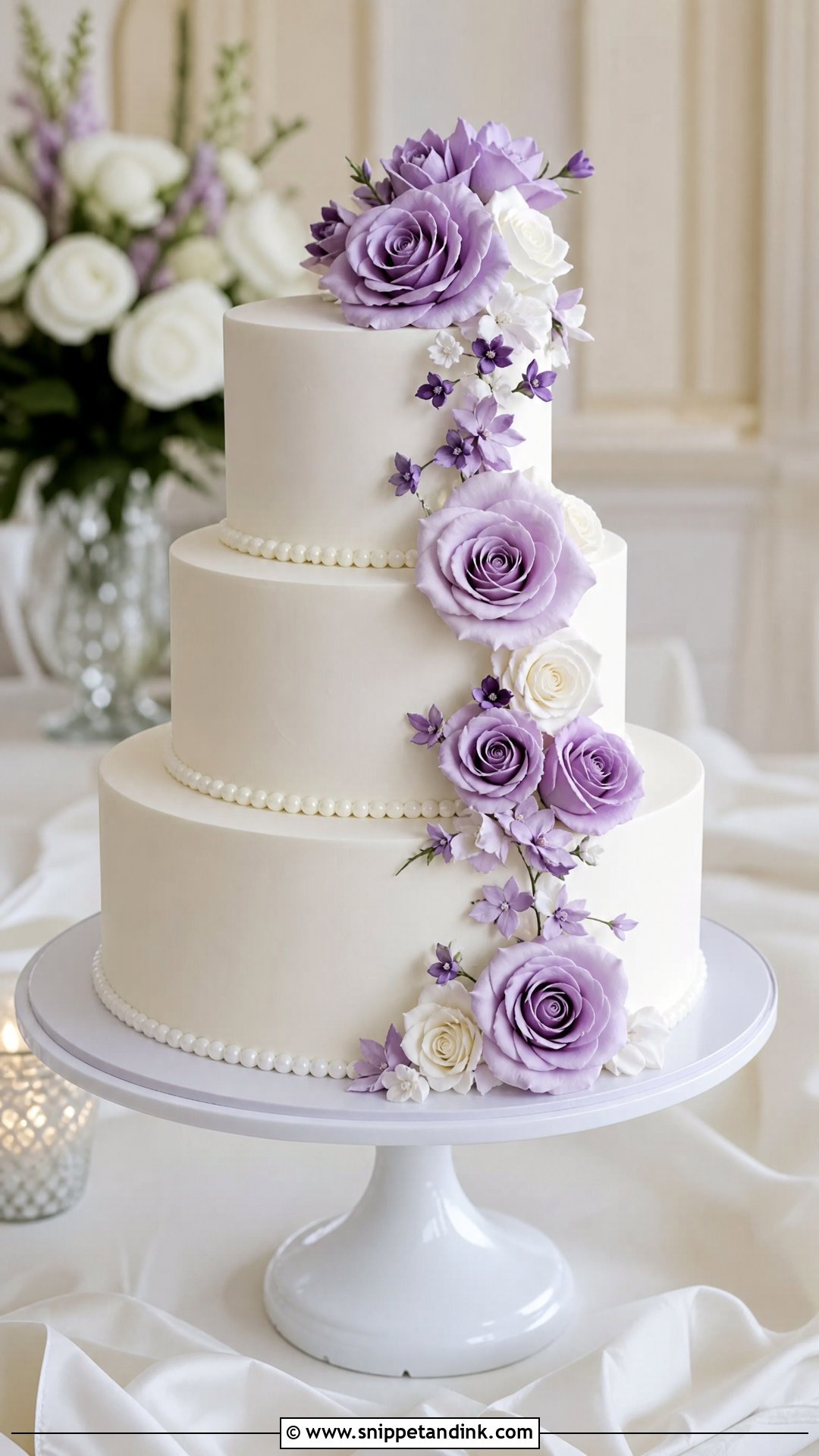
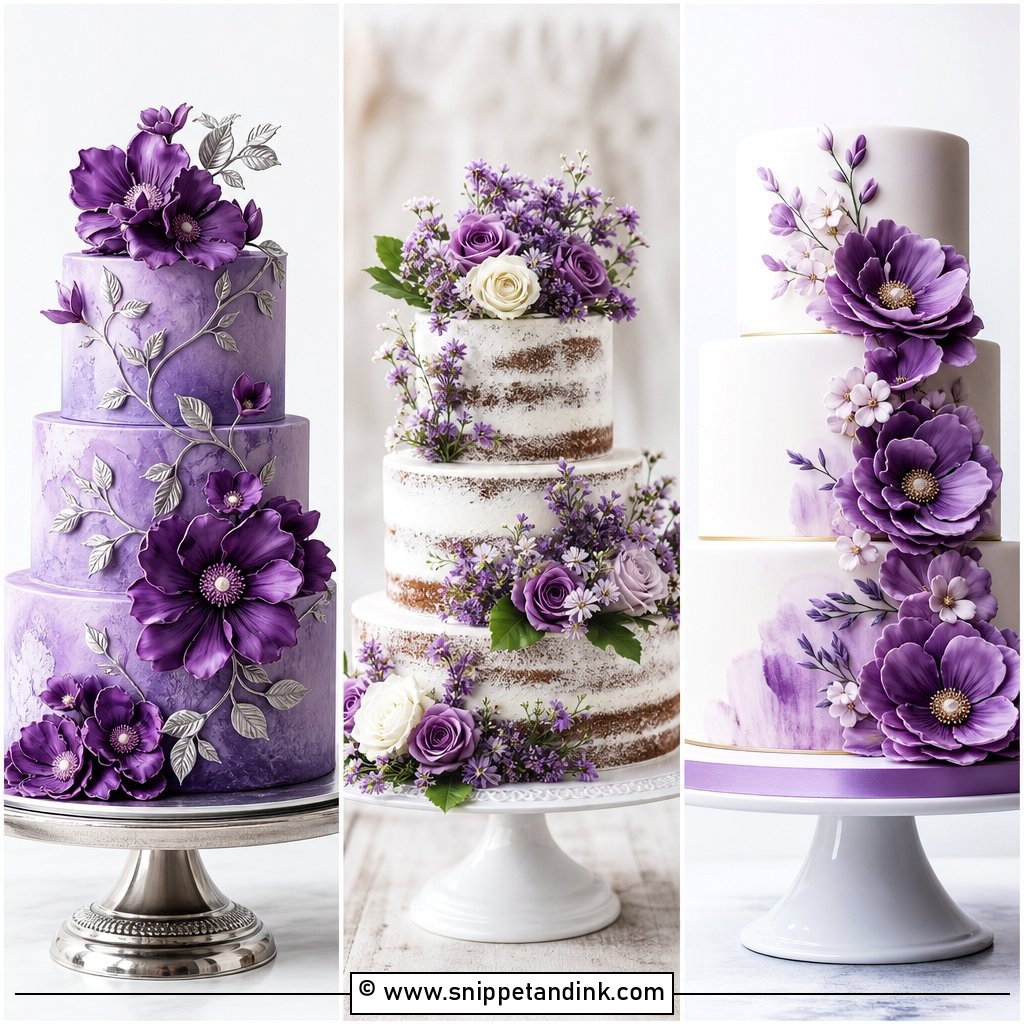
White tiers with purple details are the easiest way to add color without competing with a detailed dress or venue. Purple sugar flowers, watercolor strokes or piping add personality, from pale lavender for softness to deep plum for contrast. White buttercream with purple sugar flowers is my most requested version. It works with almost any flavor, from vanilla bean to lemon blueberry. Because the color sits in the decoration, not the frosting, there’s no risk of the whole cake fading.
8. Purple Butterfly Wedding Cake
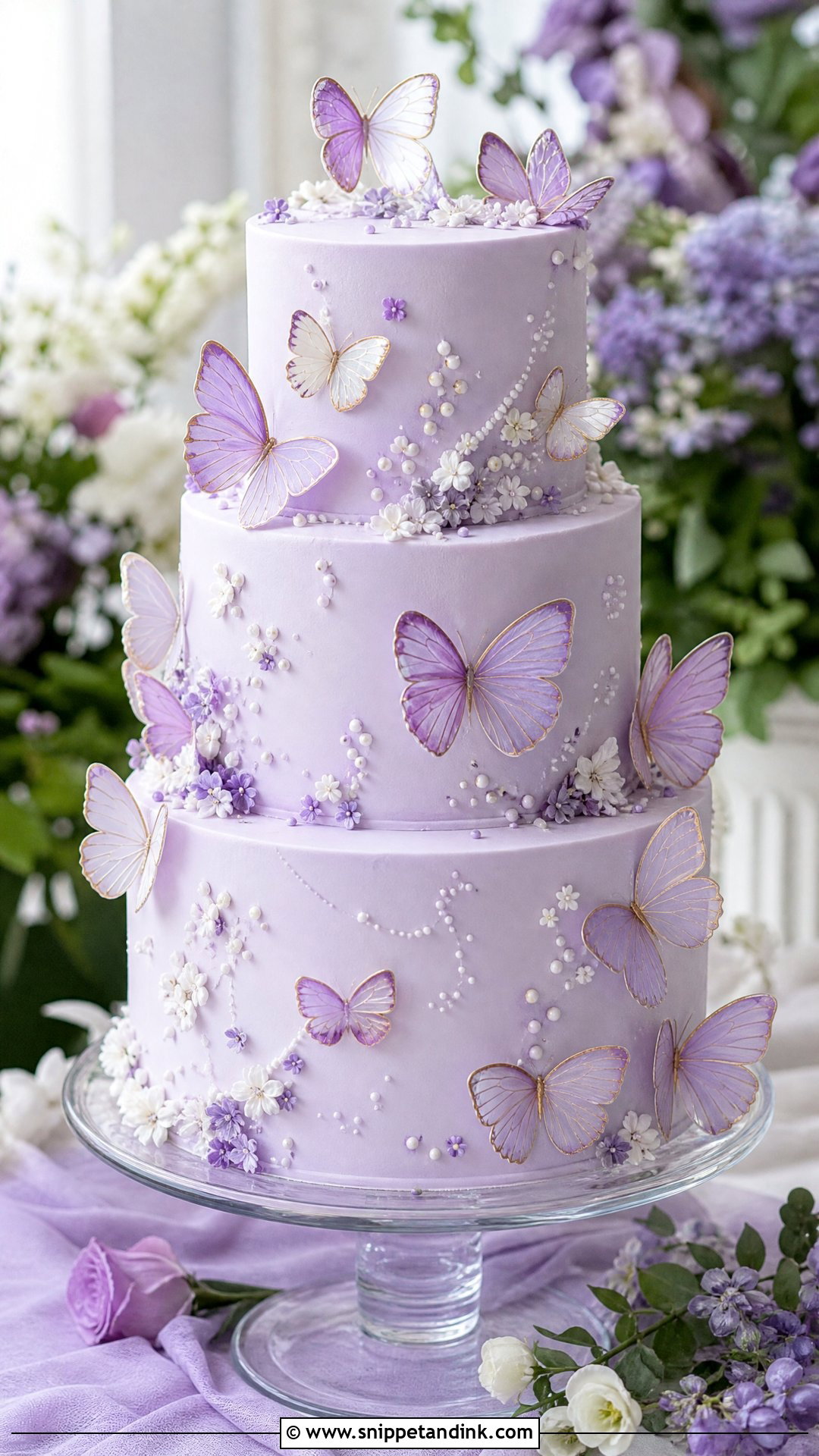
A purple butterfly wedding cake needs restraint: a few delicate butterflies, well spaced, look like they’ve just landed, while dozens look crowded. I make them from wafer paper or sugar in lavender, violet and pearl white. Wafer paper is the lighter option but softens in humidity and when it touches moist buttercream, so I attach them at the venue and angle the wings away from the surface. A smooth white or pale lilac base lets them stand out. Small flowers or pearl dots add depth.
9. Purple Floral Wedding Cake
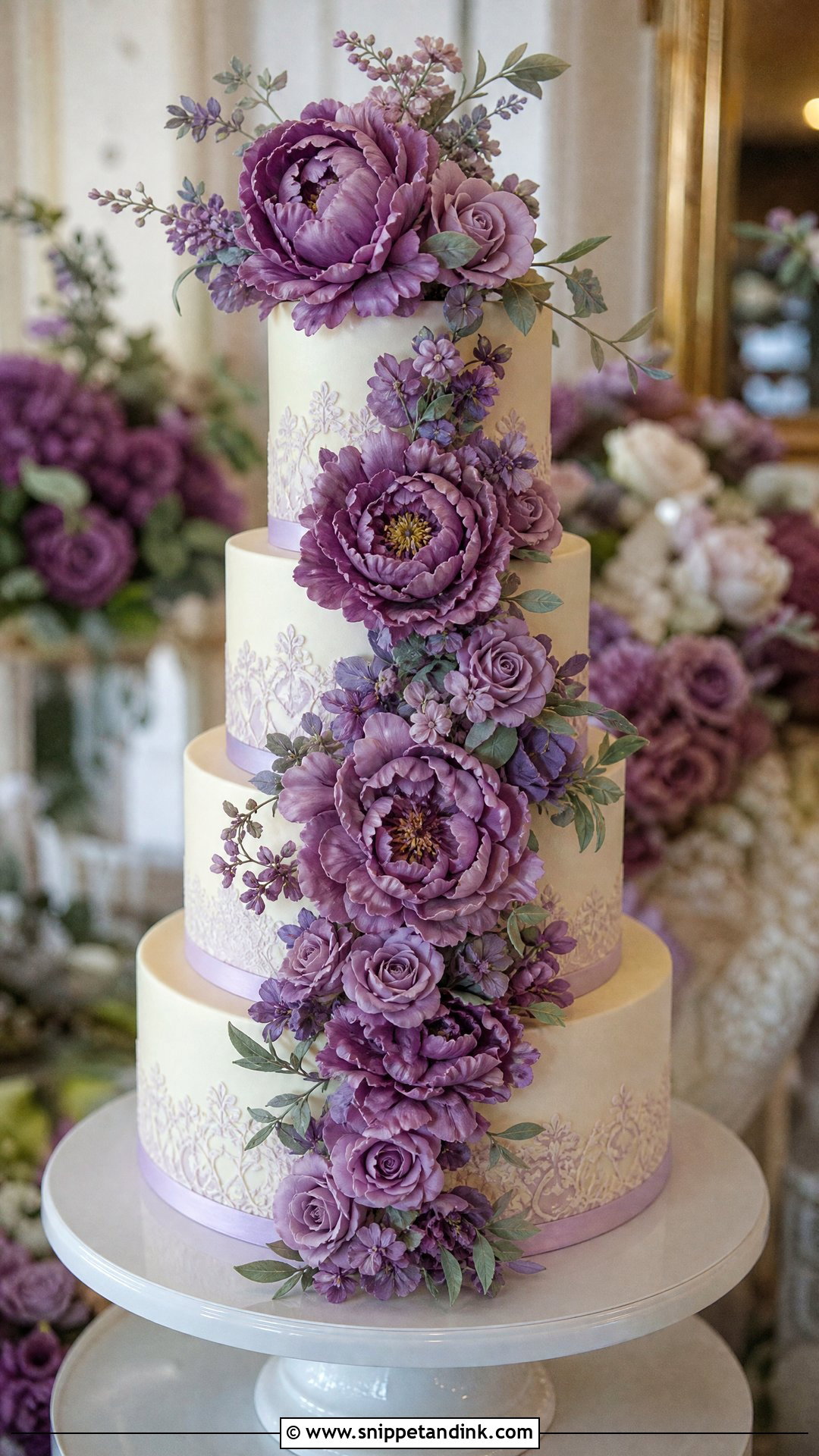
A purple floral wedding cake lets flowers shape the whole design: a cascade, scattered sugar blossoms, pressed edible flowers or hand-painted blooms. Lavender, violet, mauve and plum flowers all sit well against ivory or pale purple frosting. Dark flowers on a white cake give contrast; lilac petals with pearls are softer. If the flowers are fresh, a full cascade is the heaviest option, and the cake needs proper dowels and the florist present at setup.
10. Purple Geode Wedding Cake
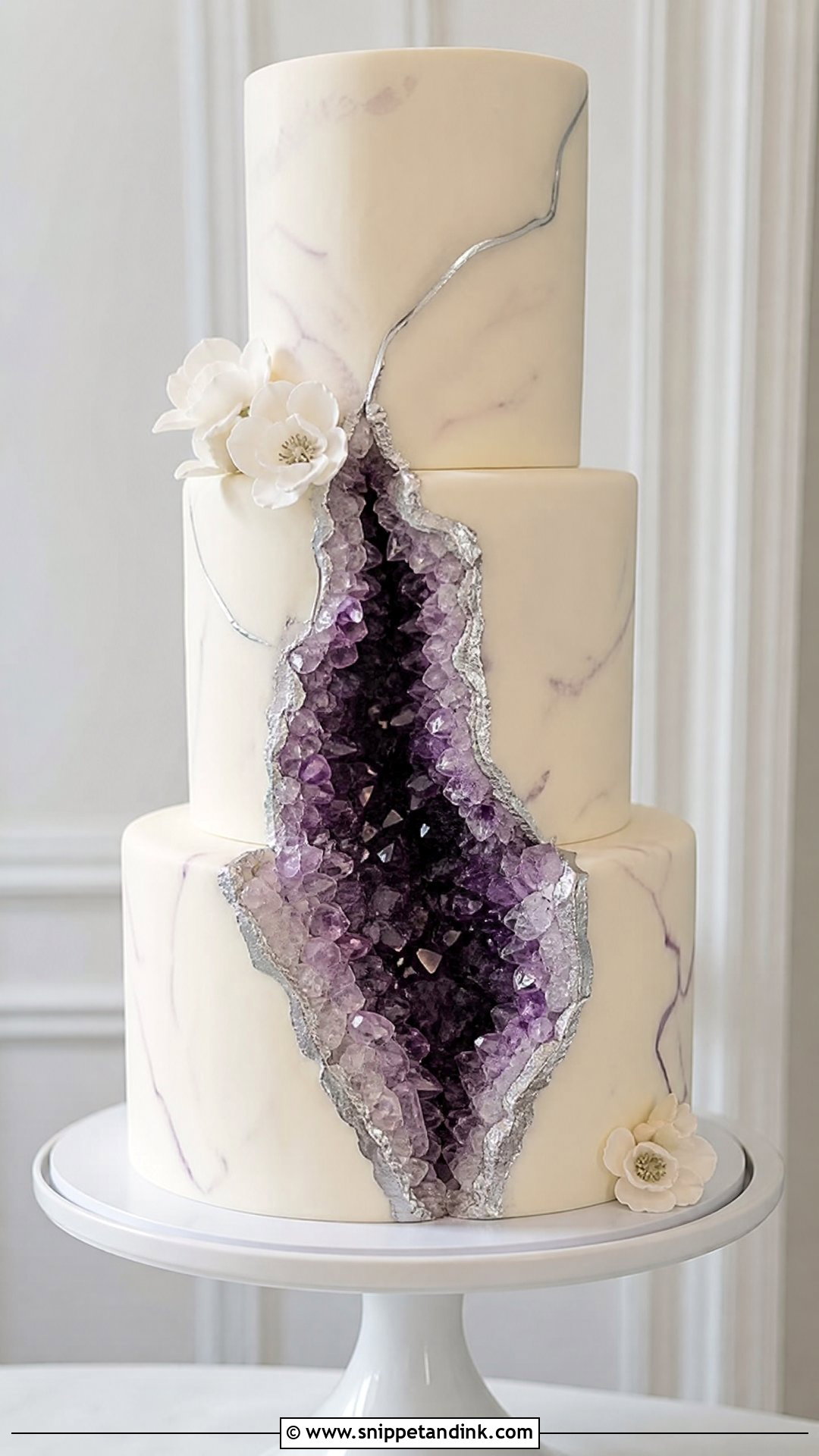
A purple geode wedding cake is a carved cake: I cut a channel into the tier and fill it with rock candy or isomalt crystals in amethyst tones, then paint the edges with edible silver or gold. Rock candy is heavy and gets sticky in humidity, so this design is better suited to an air-conditioned room. A white, marble or pale lavender base keeps the crystals clean. Keep other decoration minimal. It suits modern, glam or celestial styling.
11. Purple Drip Wedding Cake
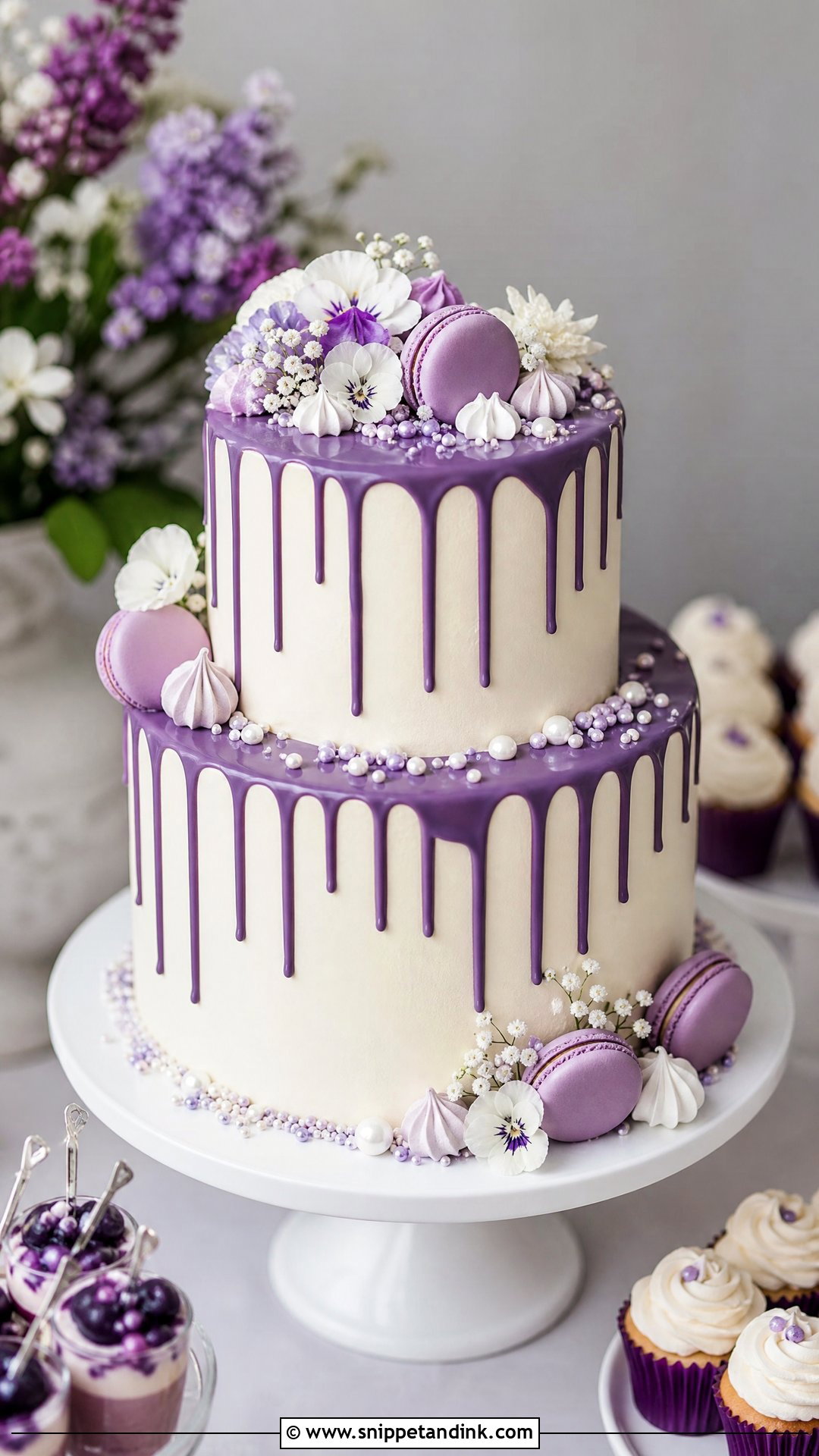
A purple drip wedding cake is usually a tinted white chocolate ganache poured over a chilled cake. Temperature decides everything: too warm and the drips run all the way to the board, too cool and they stop short. I always test one drip before going around the tier. White buttercream gives the most contrast; a lavender base gives a tone-on-tone look. Macarons, flowers, berries or pearls on top finish it. It’s less traditional and works well beside a dessert table with matching mini treats.
12. Purple Buttercream Wedding Cake
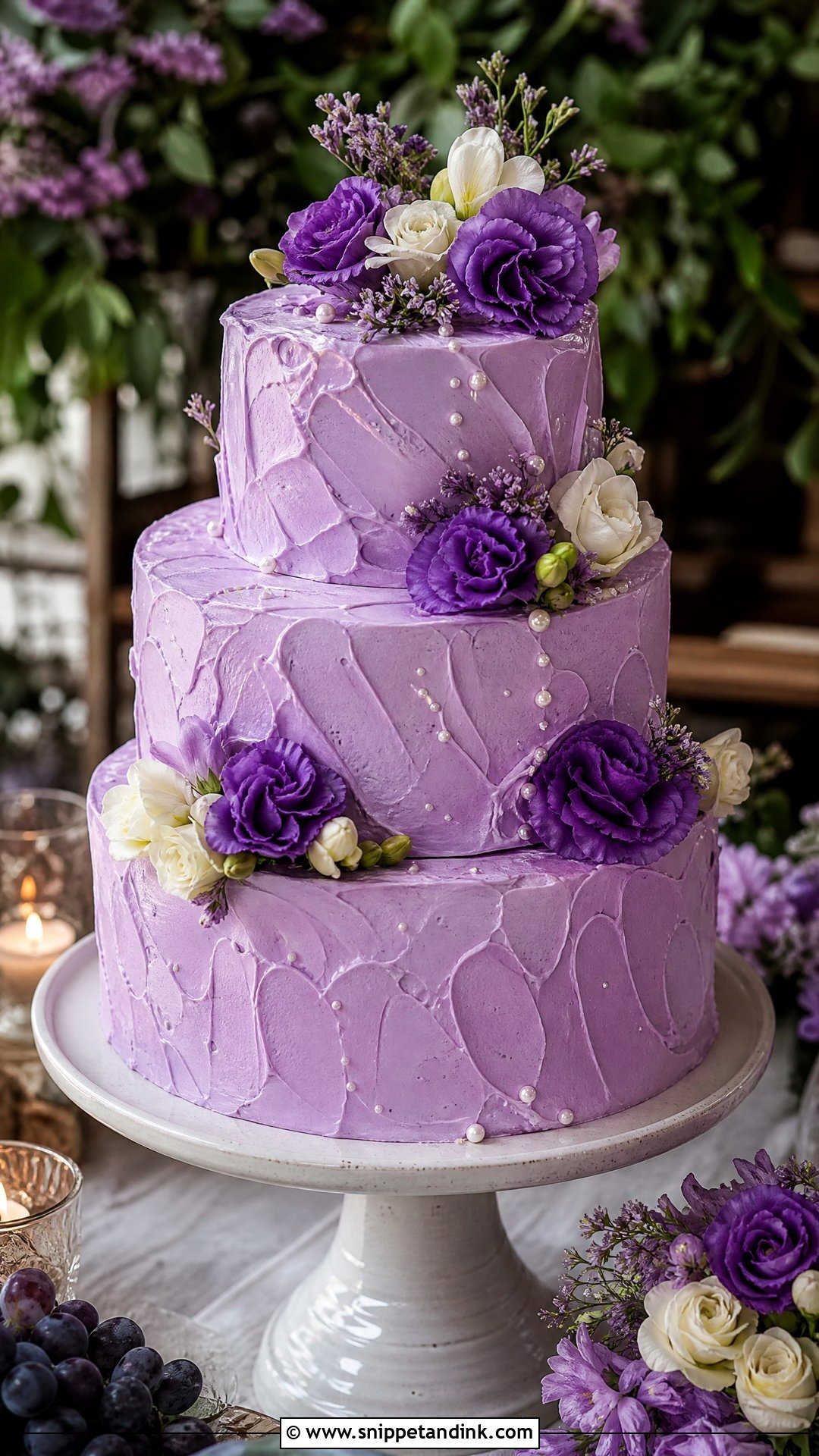
Buttercream gives purple texture: smooth, ruffled, swirled, combed or finished with palette knife strokes. Pale lavender reads soft, deep purple reads bold. It tastes creamier than fondant, which is why many couples prefer it. One color issue to know: a butter-based frosting is slightly yellow, and yellow plus purple drifts grey, so I whiten the base first or use a shortening blend for clearer lavender. Buttercream also softens in heat, so this suits an indoor reception better than a summer lawn.
13. Purple Fondant Wedding Cake
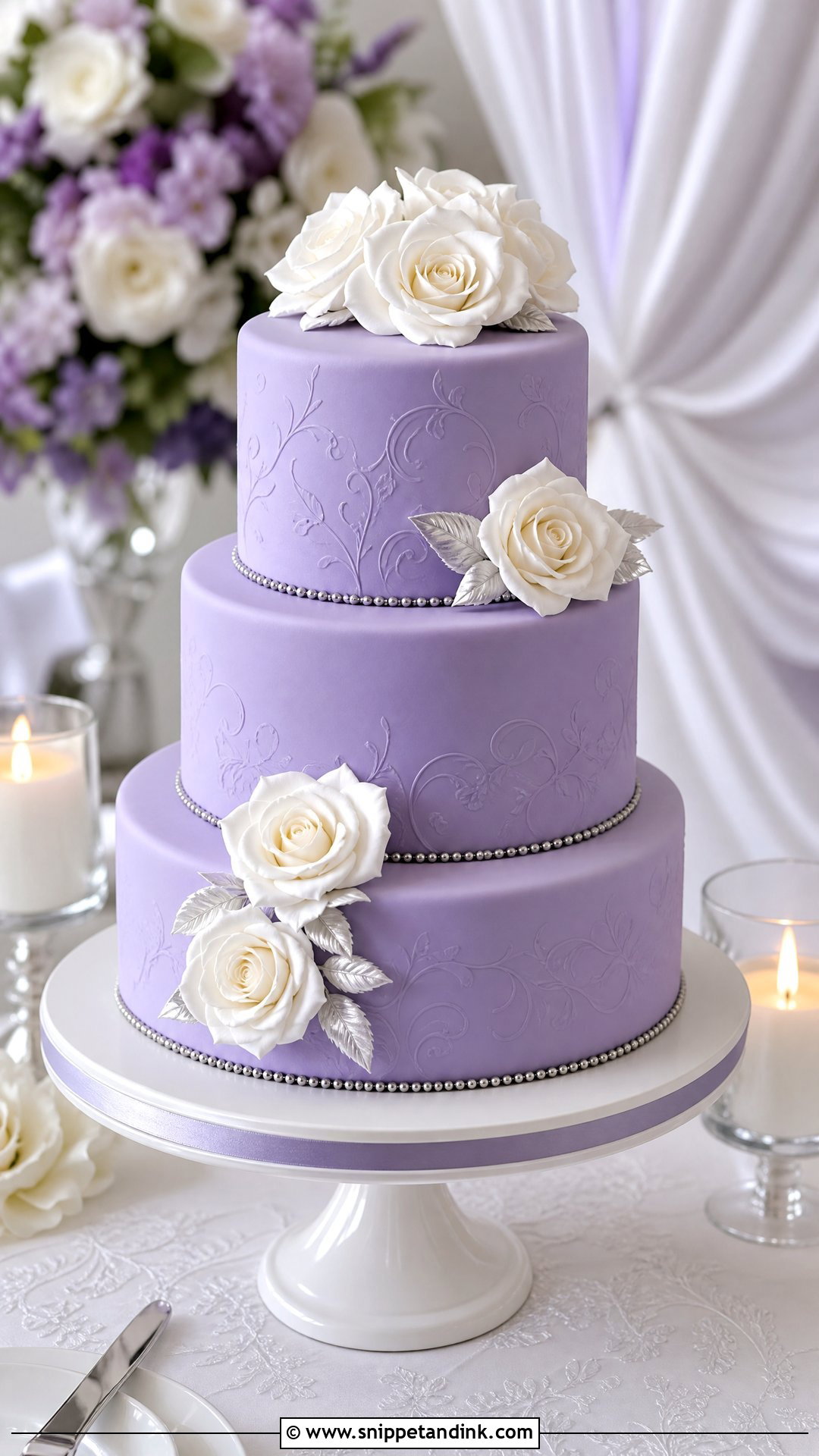
Fondant holds sharp edges well, so it’s the choice for clean tiers, sculpted flowers, pleats, bows and embossing. Pale lilac fondant looks refined; deep plum looks formal. It also holds color better than buttercream. The weakness is condensation: a fondant cake taken from a cold fridge into a warm room sweats and can streak, so I let it come up to temperature inside its box. White sugar flowers or metallic trim add contrast. It’s helpful for large receptions where the cake needs a clean presence.
14. Purple Vintage Wedding Cake
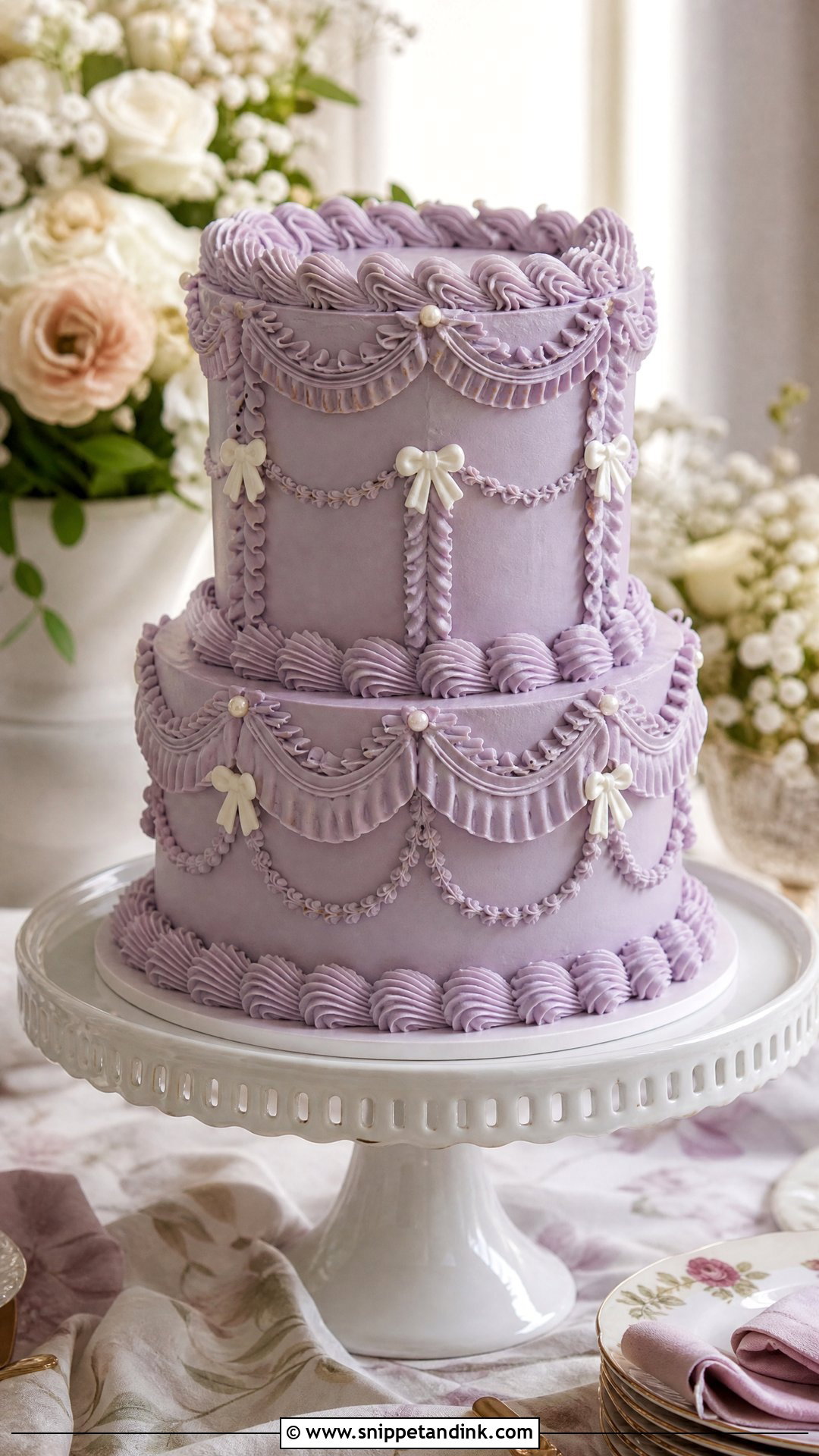
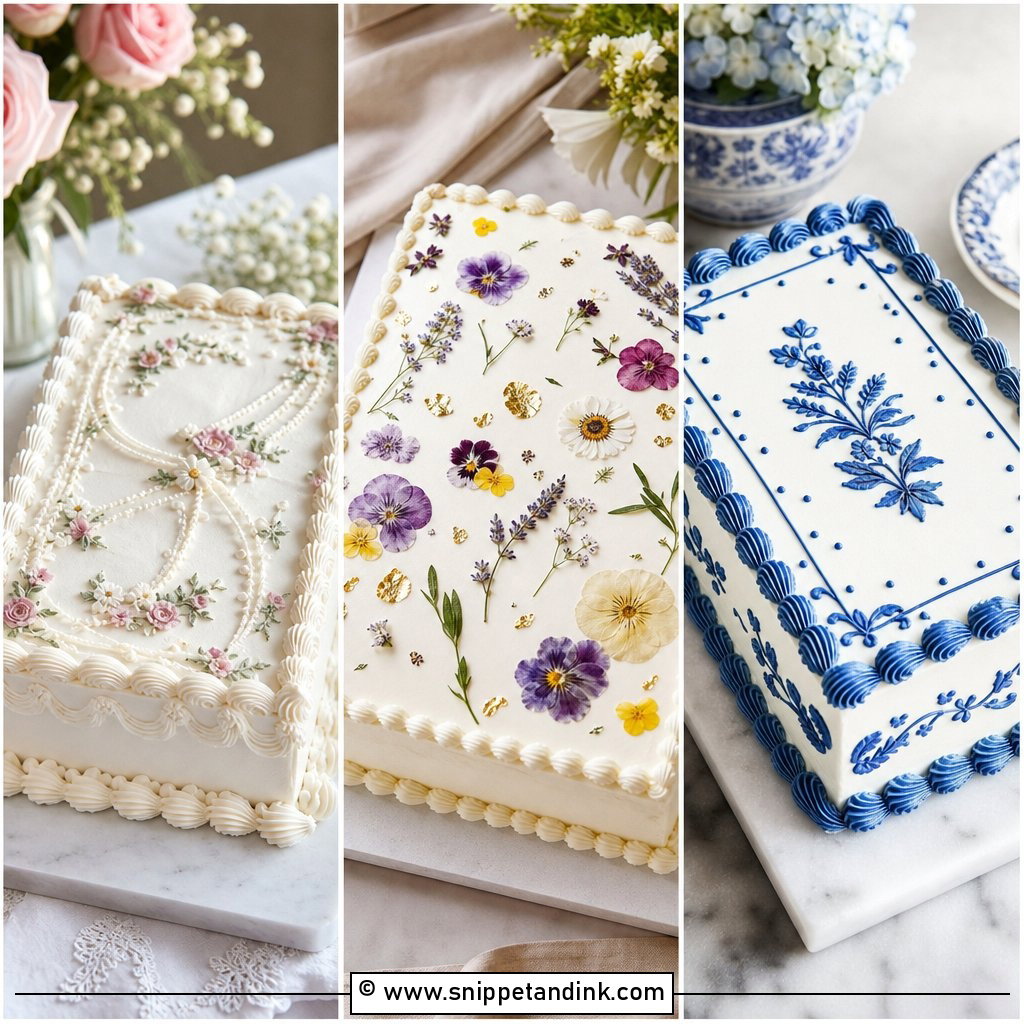
Vintage piping, with borders, shells, ruffles and swags, looks best in soft purples like lilac, mauve or dusty lavender, with a darker violet line for contrast. A heart-shaped cake suits a small reception, while tiers feel more traditional. Heavy over-piping takes a lot of buttercream and time, and it can soften in a warm room, so I’d plan the cake’s display time carefully. Keep the details balanced. Pearls, bows and small sugar flowers suit the style.
15. Purple Pearl Wedding Cake
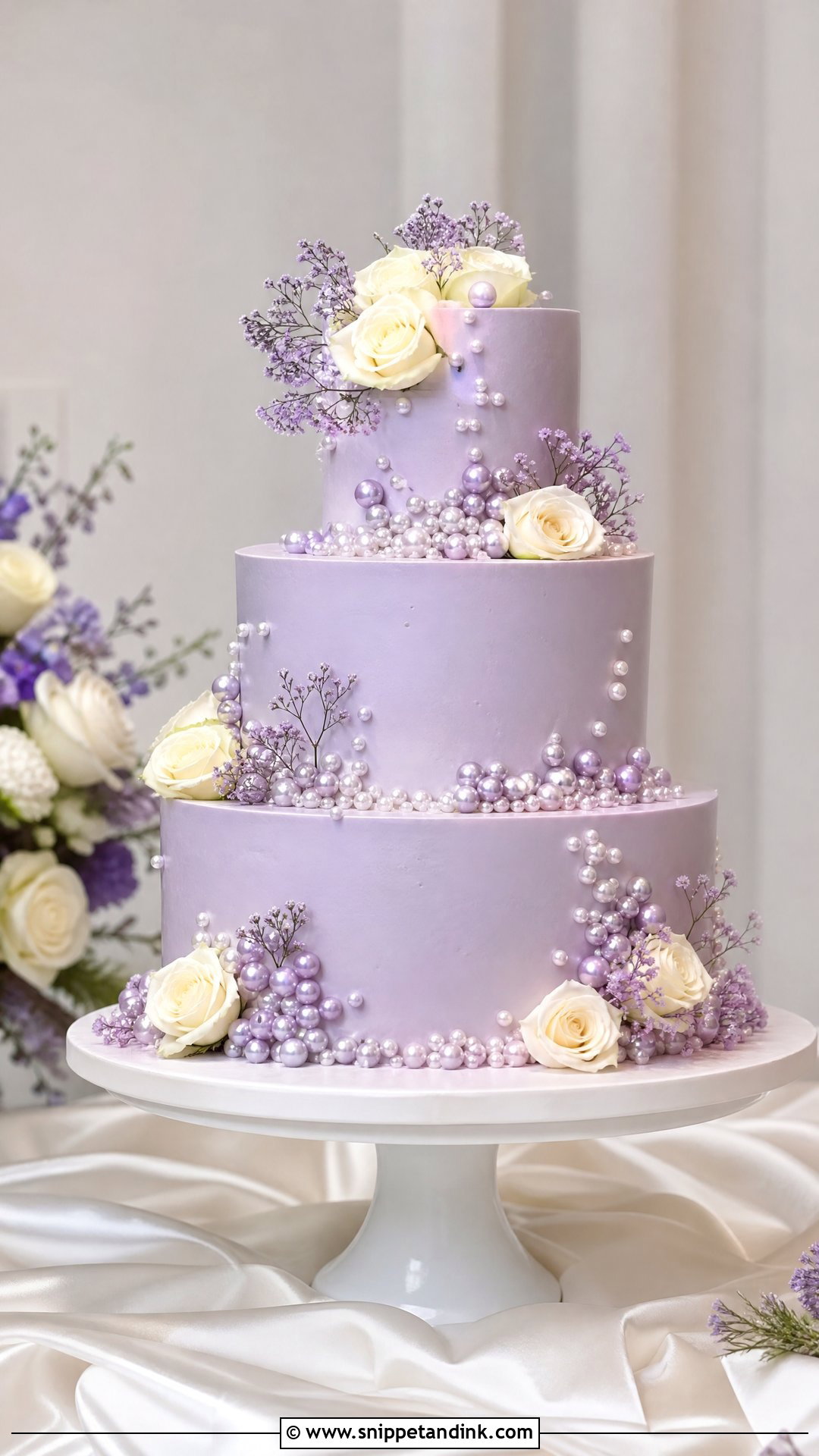
Pearls can circle the tier bases, scatter across the surface or form patterns. Lavender with pearl white is graceful; plum with pearl gives more contrast. I attach sugar pearls with a dab of piping gel, and they need a smooth surface, buttercream or fondant, to read clearly. Sugar roses or a small floral cluster can be added, but the pearls should stay the focus. It suits satin decor and classic arrangements.
16. Purple Marble Wedding Cake
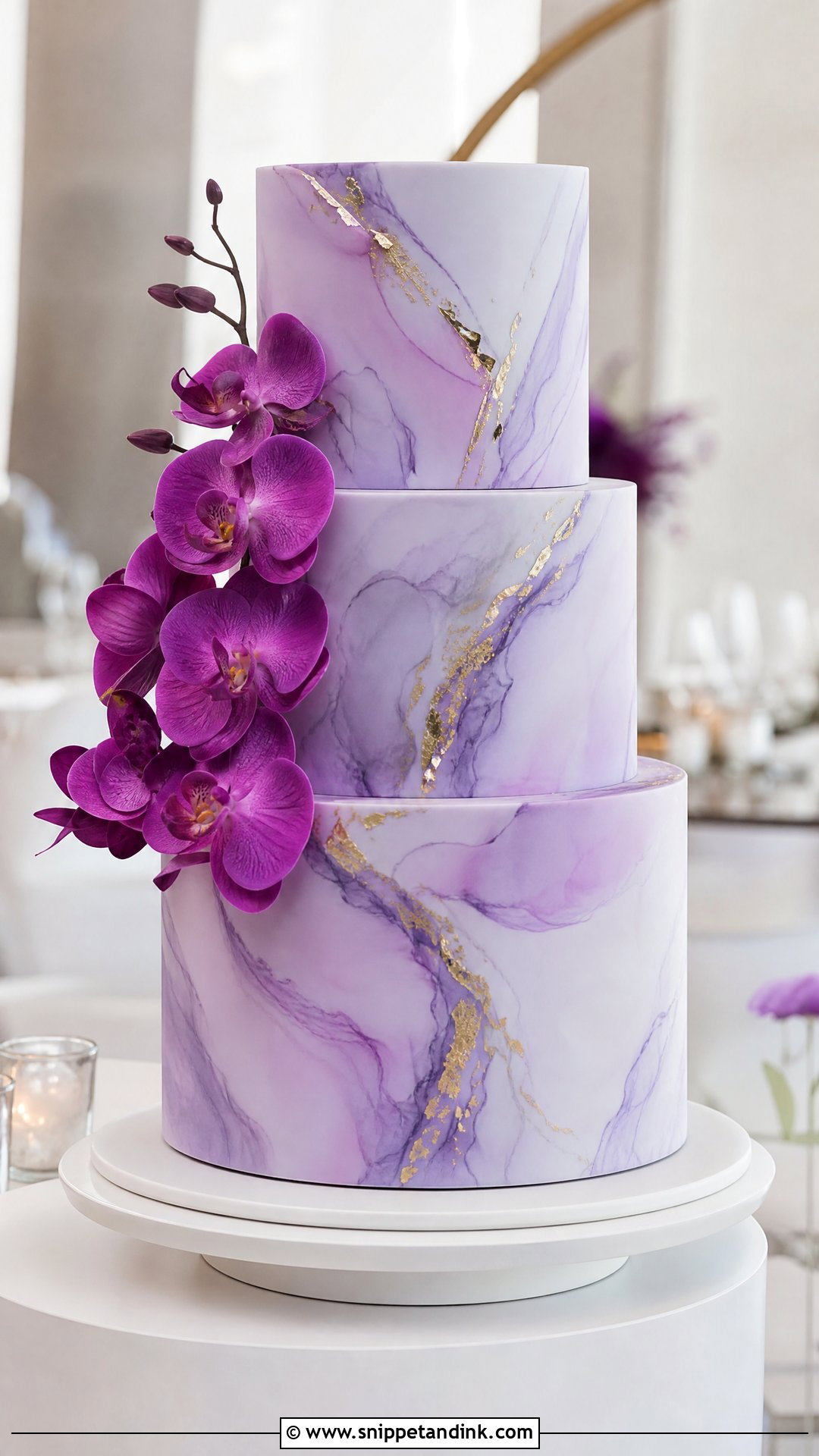
Marbled fondant is made by kneading colors together only partly, so every cake is different. Swirls of lilac, violet, white and grey look soft and cloudy or bold and stone-like, depending on how far I knead it. Gold leaf warms it, silver cools it. It’s ideal if you want purple as a pattern, not solid frosting. Keep the flowers minimal, such as one orchid spray or a few sugar blooms.
17. Purple Watercolor Wedding Cake
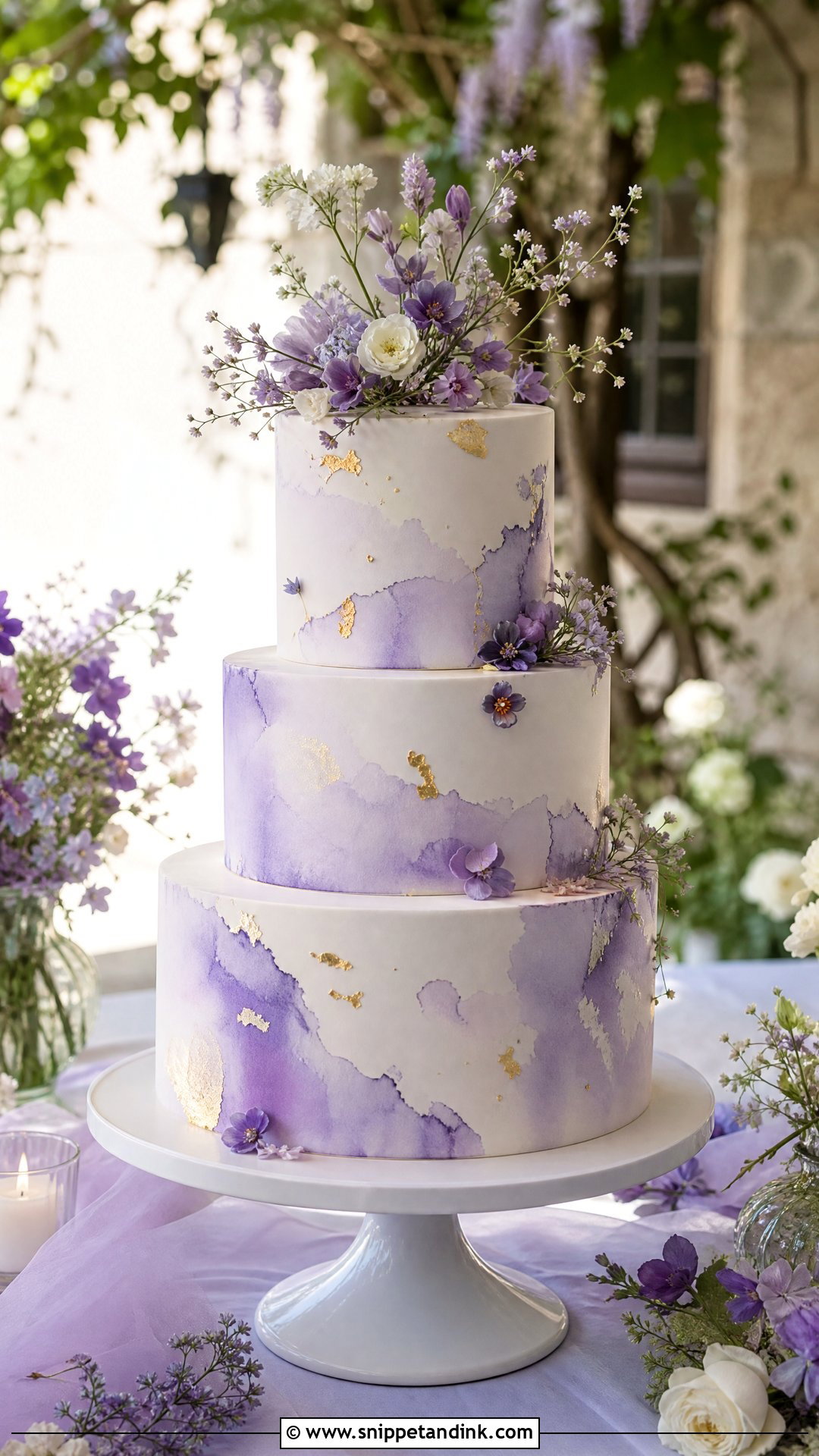
A watercolor finish is made by brushing diluted gel color onto fondant or by smearing thin layers of tinted buttercream with a palette knife, so no two cakes match. Lavender, lilac, mauve and violet give depth. A white base keeps it airy; a pale purple base makes it richer. It pairs well with loose flower arrangements and spring or summer palettes. A few fresh flowers or gold flecks add detail.
18. Purple Sugar Flower Wedding Cake
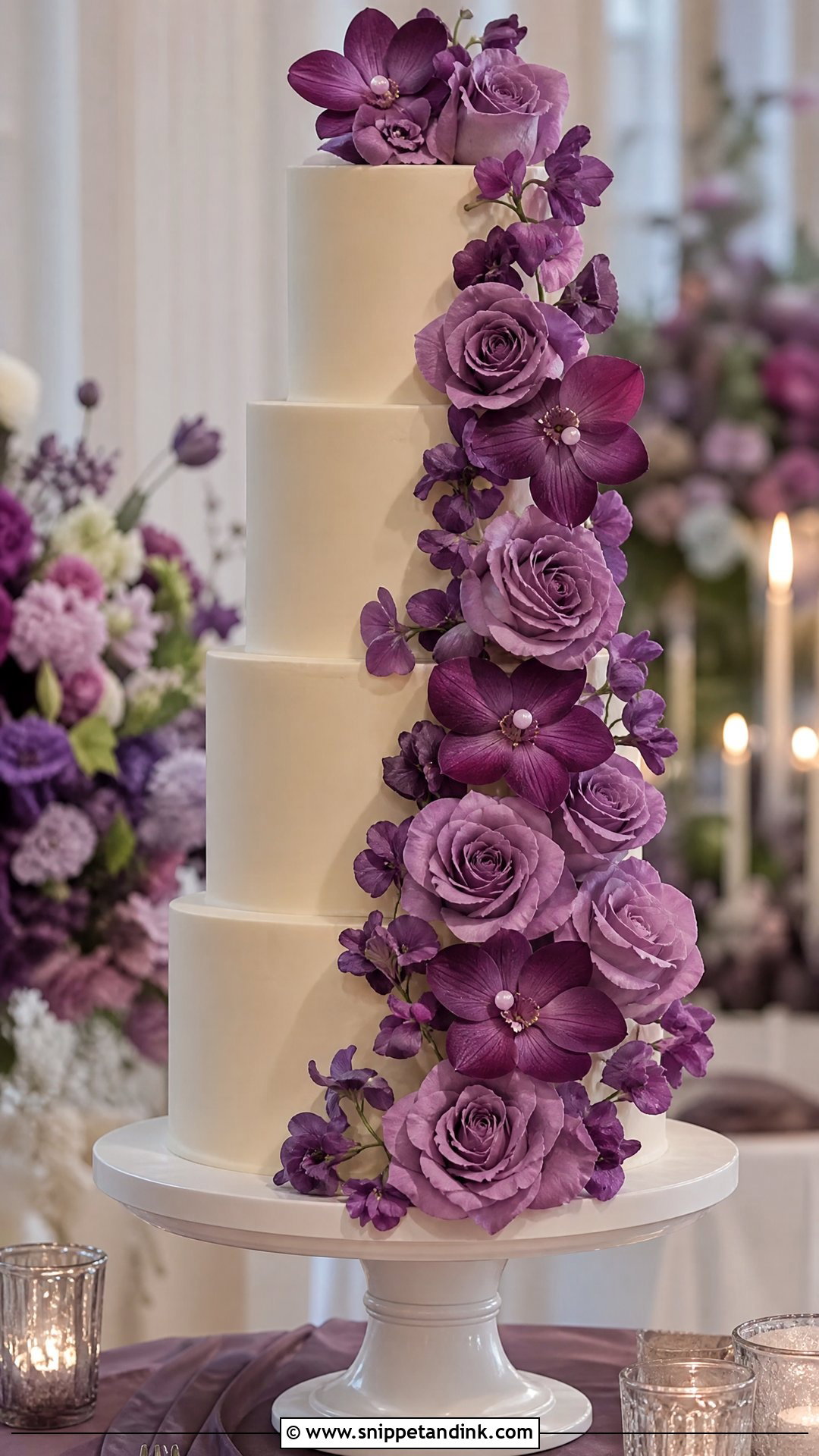
Sugar flowers give the most control, because I can match the exact purple of the wedding palette, from pale lavender to dark plum. They hold their shape for the whole reception and can be kept afterward. Roses, orchids, peonies, sweet peas and violets all translate well into sugar. They are slow to make, so they need to be ordered weeks ahead. A white or ivory tiered cake with purple sugar flowers feels classic; a lavender base feels more coordinated.
19. Purple Pressed Flower Wedding Cake
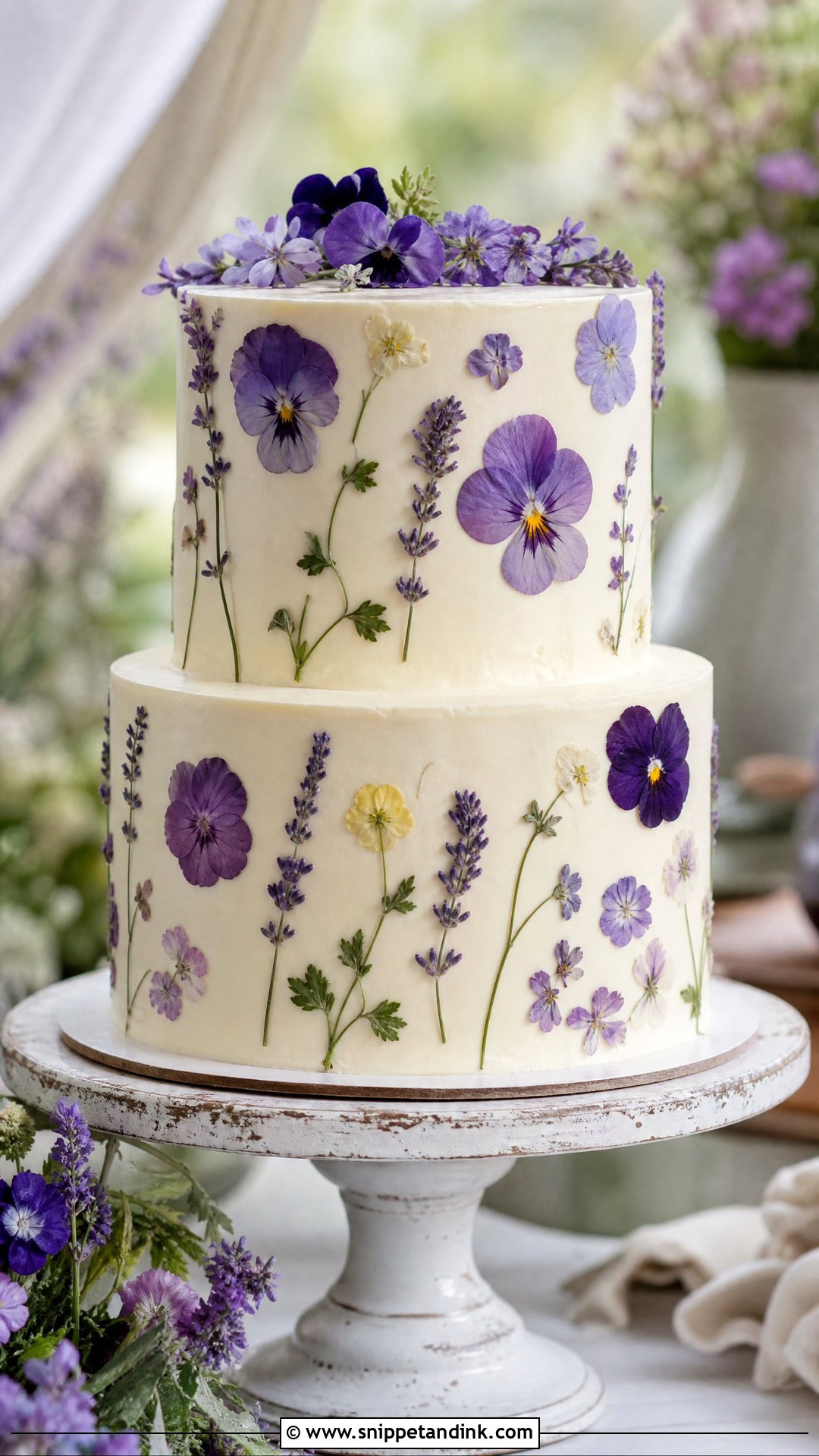
Pressed edible flowers sit flat against smooth buttercream and become the pattern. Purple pansies, violets and lavender sprigs are safe choices, and anything else should be checked by your baker. Pressed petals can darken or fade, so I add them close to delivery and keep the cake out of direct light. Vanilla, lemon, honey or almond flavors suit it. The look is romantic, informal and connected to the wedding’s flowers.


20. Purple Ruffle Wedding Cake
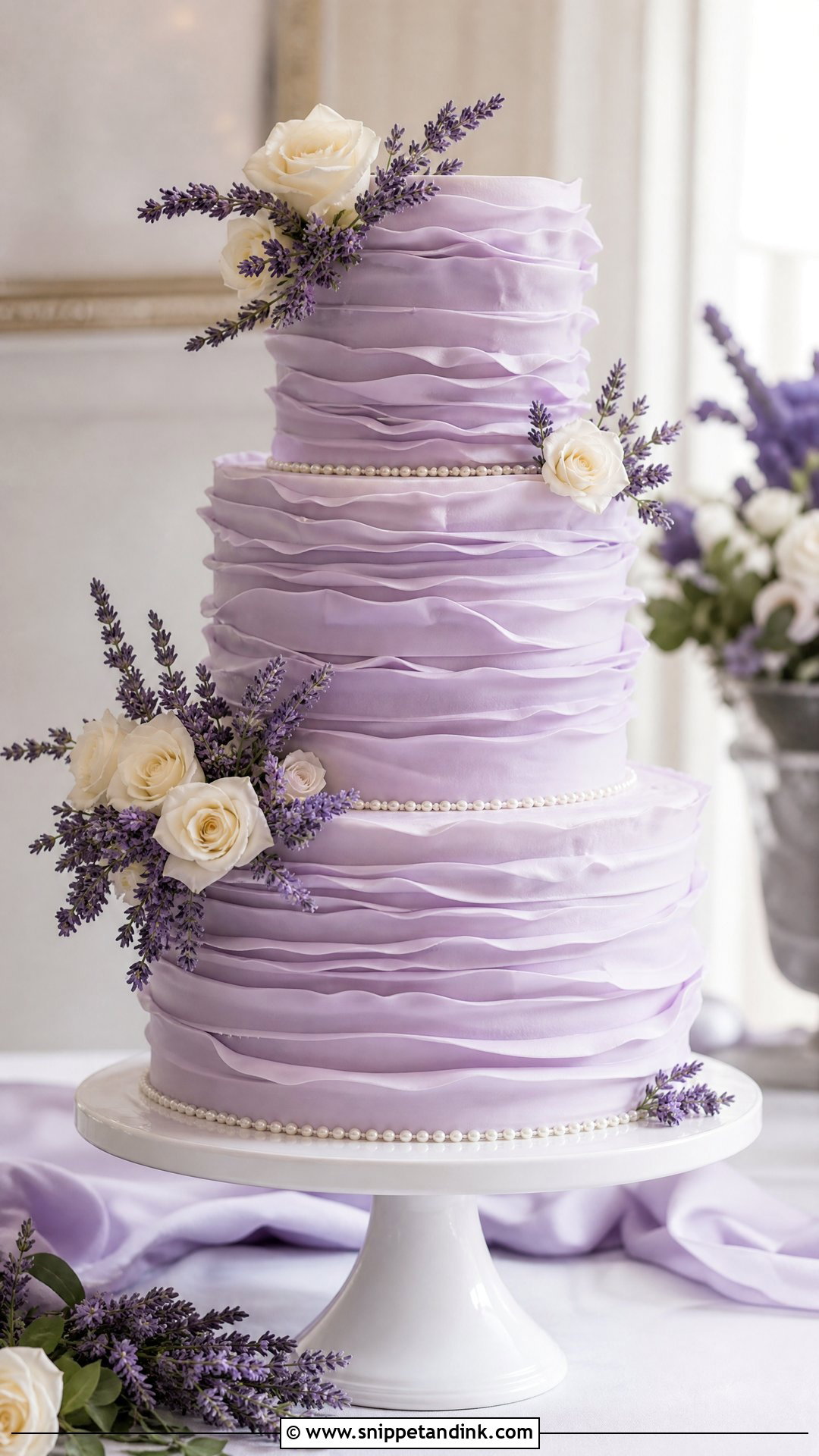
Ruffles add movement without extra decoration. Buttercream ruffles are piped with a petal tip; fondant ruffles are cut and layered by hand. Buttercream ruffles soften and can droop in heat, while fondant ruffles hold their shape but add weight. Lilac, lavender and mauve suit the texture. One floral cluster near the top is enough, or leave them plain.
21. Purple Wedding Cake With Macarons
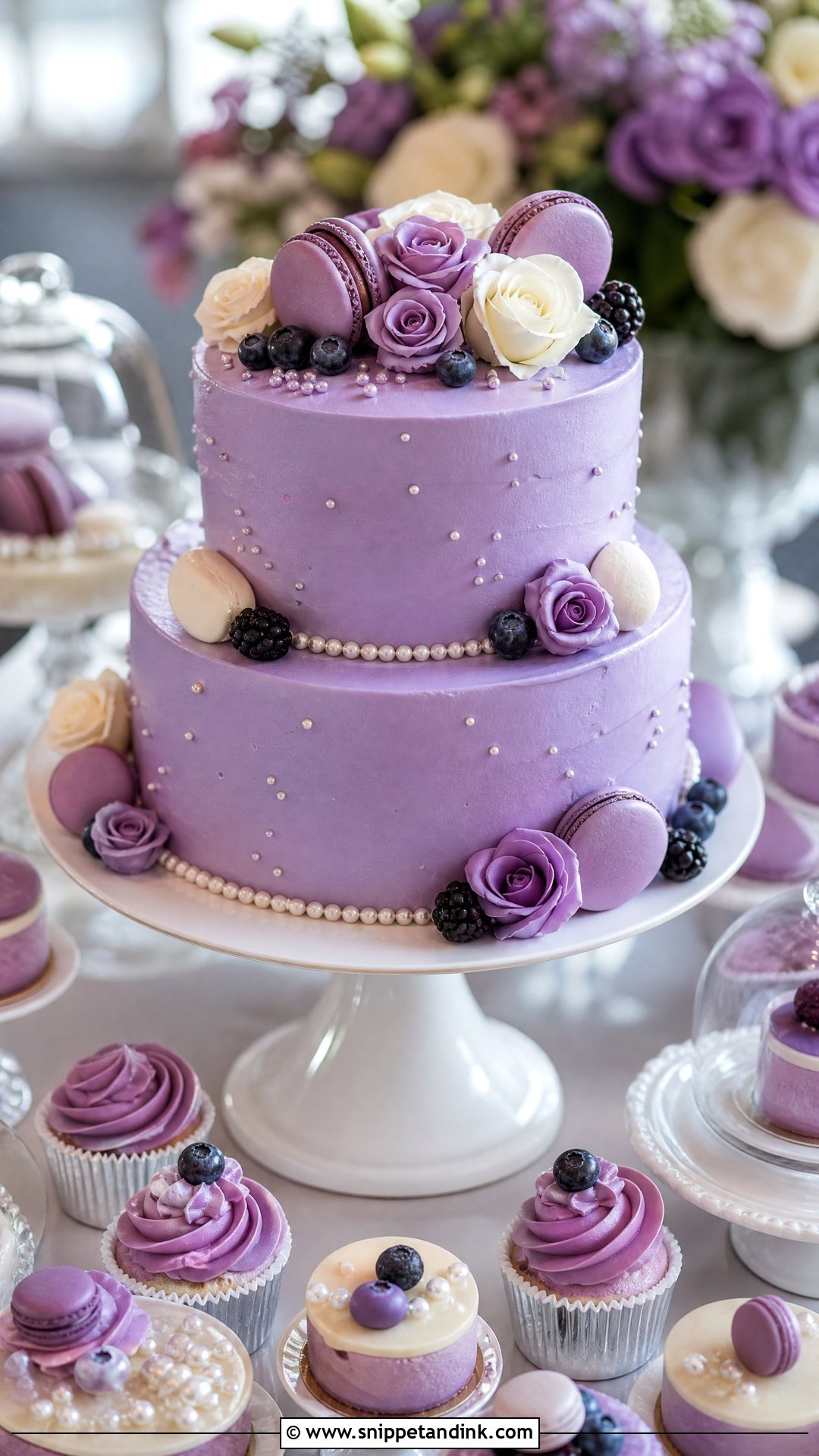
Macarons tie the cake to the dessert table. Lavender, violet and ivory macarons can sit on top, along the sides or around the base. The thing to watch is moisture: macarons pressed into buttercream soften over a few hours, so I attach them at the venue rather than in my kitchen. Smooth or lightly textured frosting makes them look intentional. Berries, small flowers or pearls finish it.
22. Purple Wedding Cake With Berries
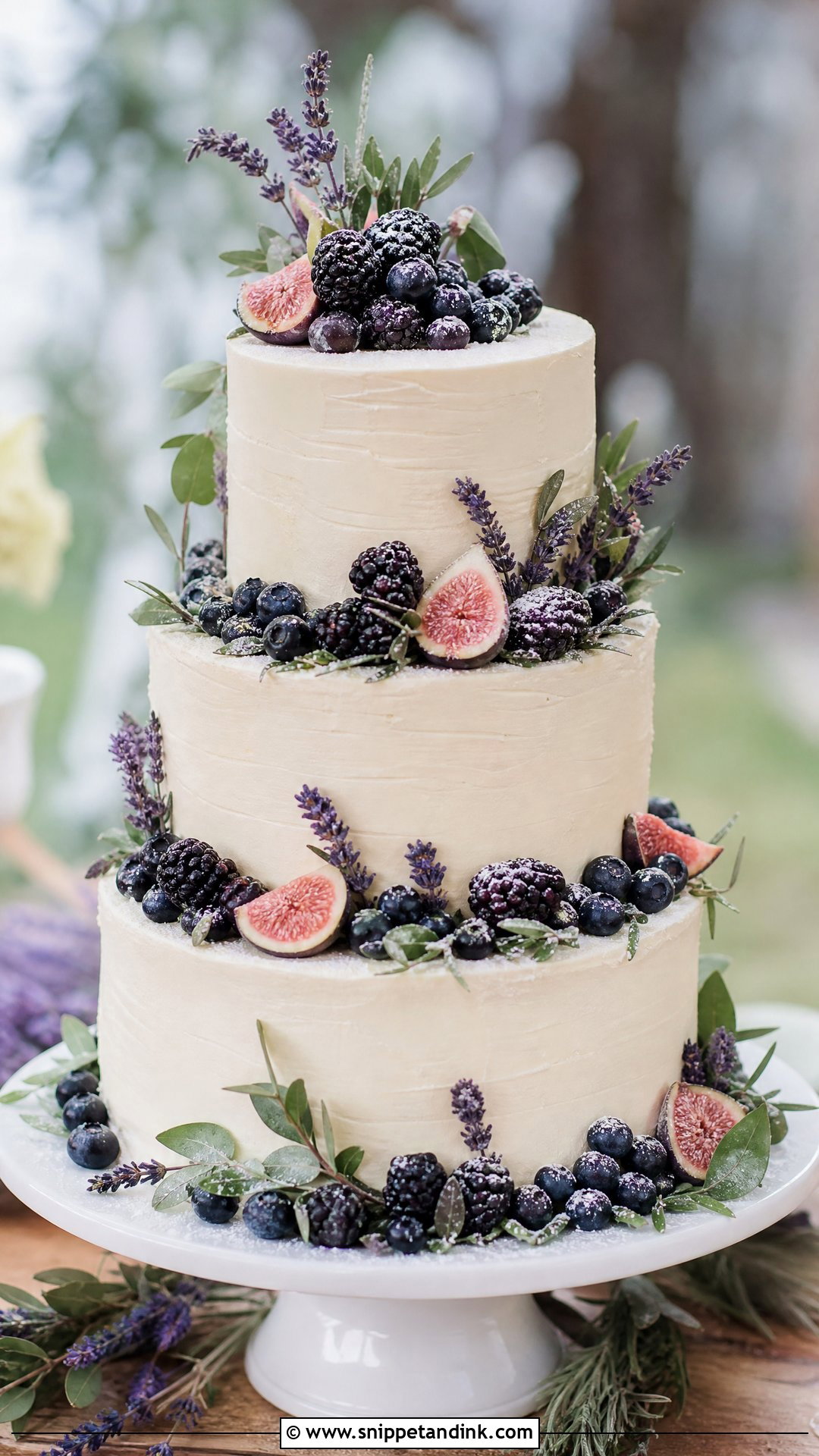
Blackberries, blueberries and figs bring purple naturally, without relying on tinted frosting. On white, ivory, lavender or pale grey buttercream they look fresh. Berries bleed juice onto frosting over time, so I dry them thoroughly and add them as late as possible. Powdered sugar dusting melts on moist fruit after a while, so it’s a last-minute touch. Plum frosting and gold suit a dramatic version. It’s a late-summer and fall cake that pairs well with lemon, almond, blackberry and chocolate.
23. Purple Orchid Wedding Cake
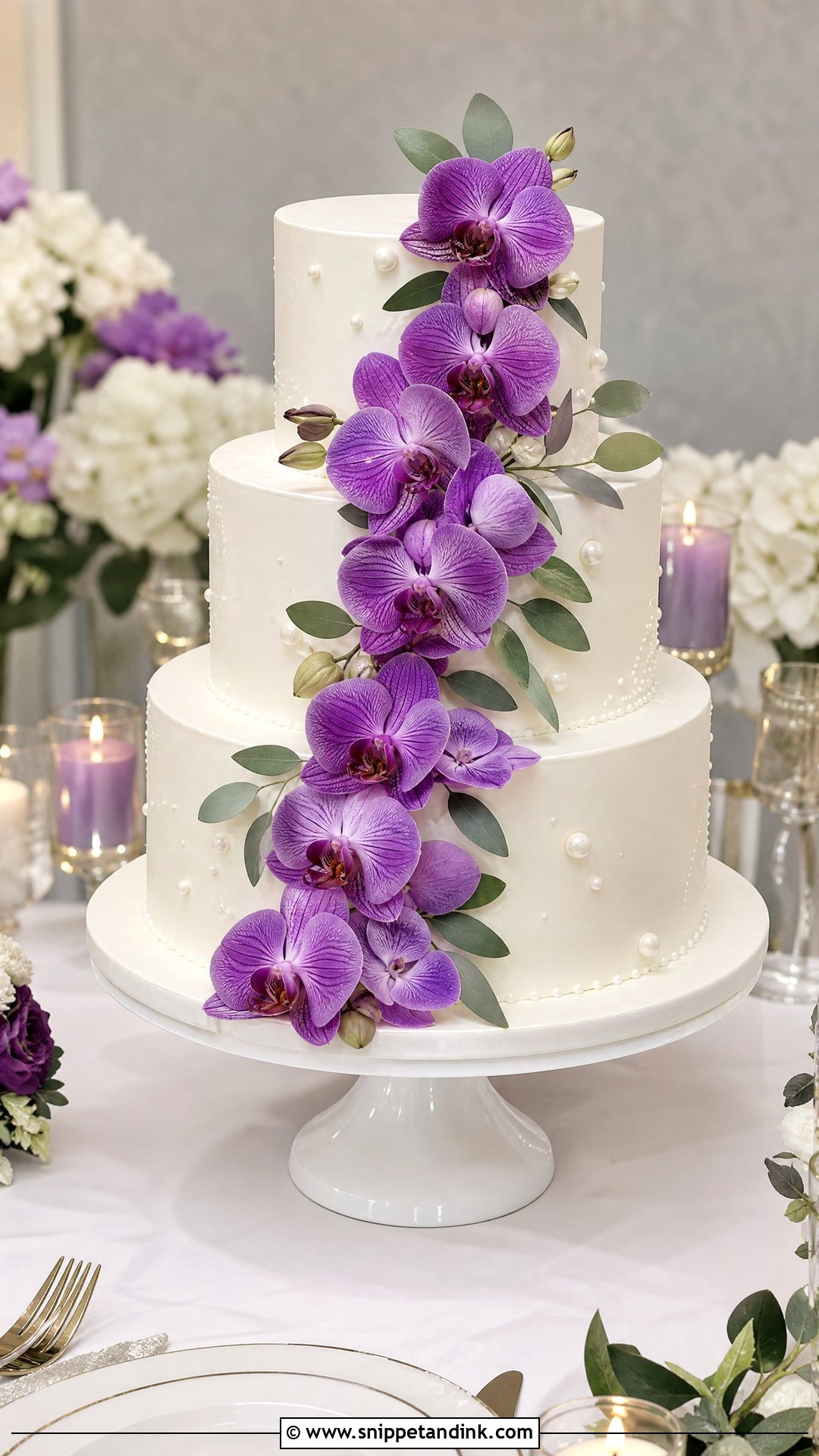
Orchids have a sculptural shape that suits modern cakes, cascading down smooth white tiers or placed boldly on lavender. They’re hardy out of water, which makes them more reliable on a cake than many soft blooms. Purple orchids pair with silver, pearl, ivory and soft green. They suit hotel and destination-style receptions. Keep the surface clean so the orchids look deliberate.
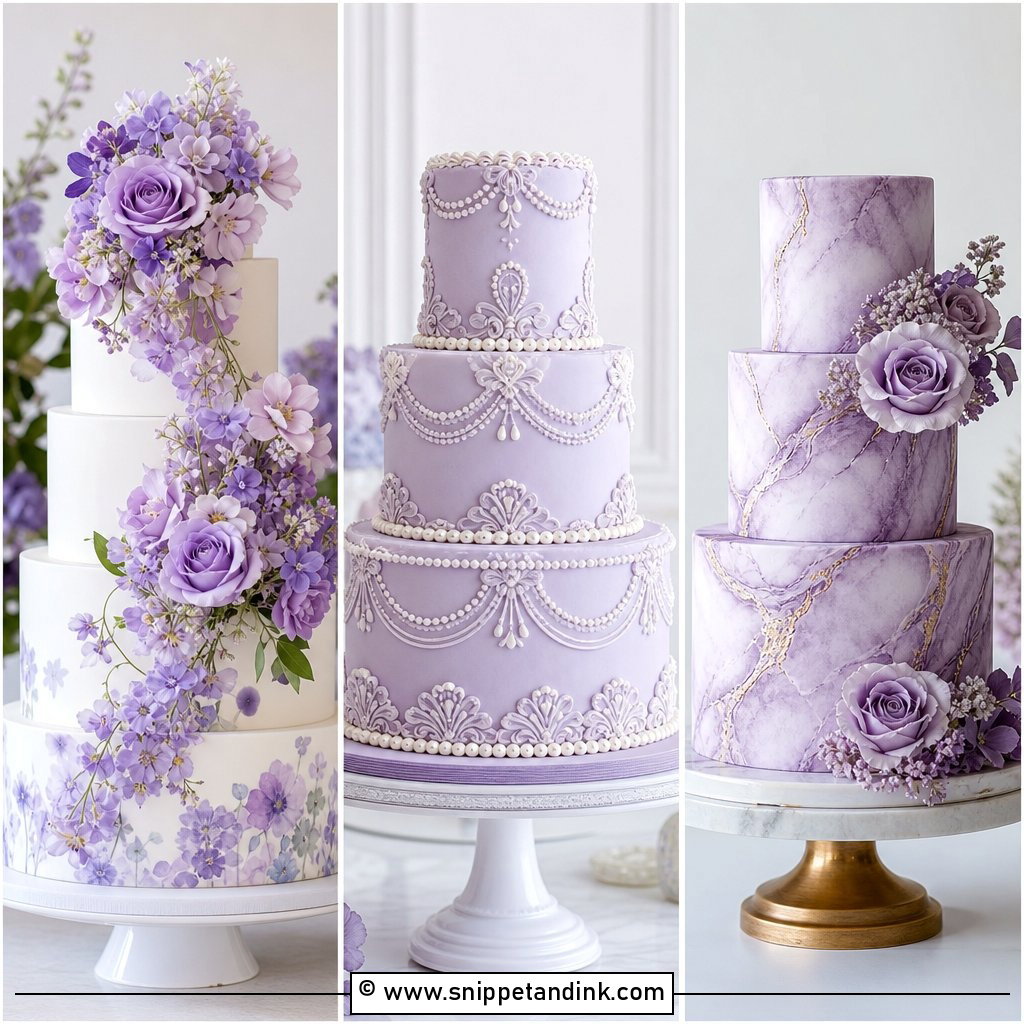
24. Purple Two Tier Wedding Cake
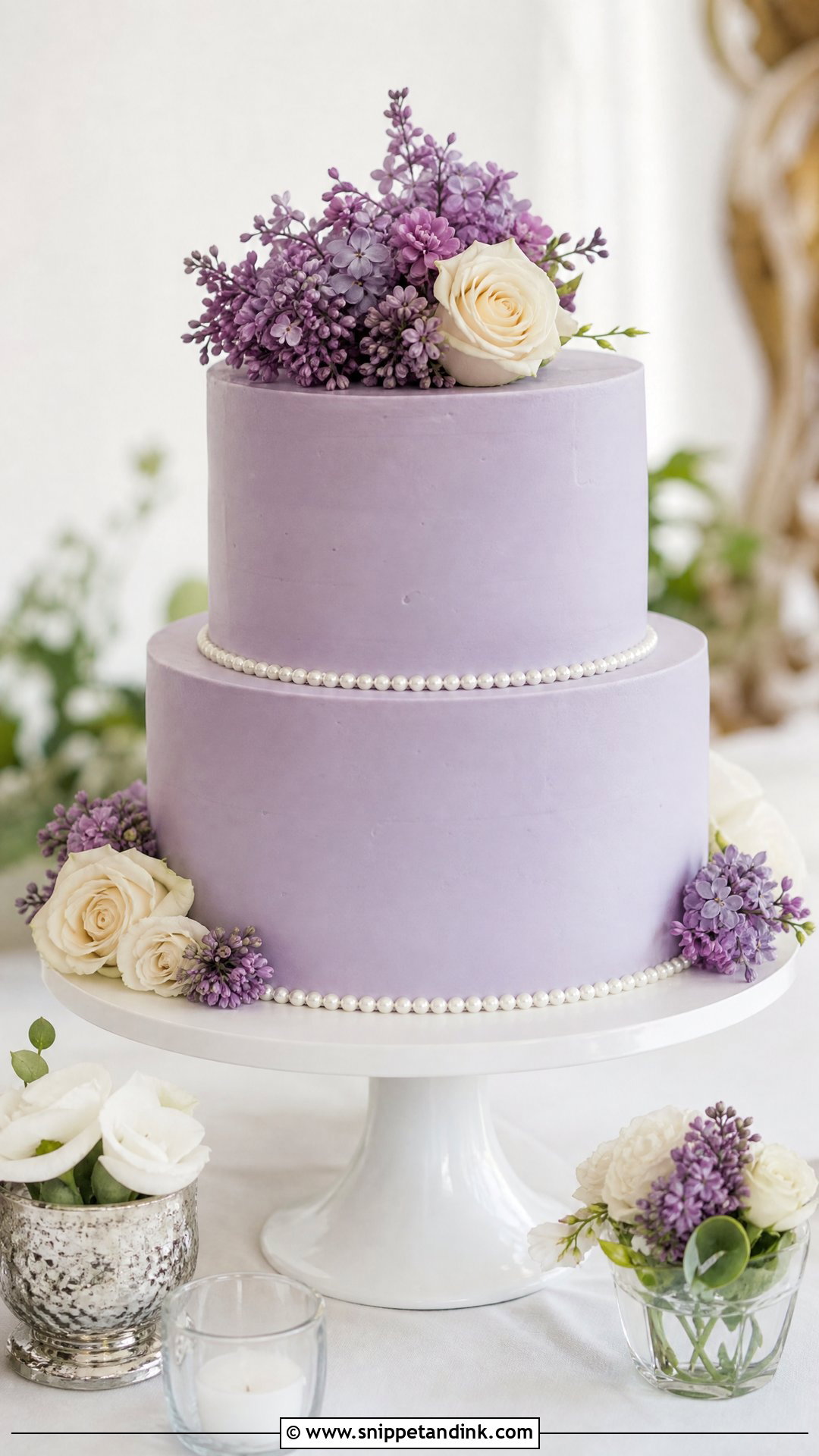
Two tiers suit smaller weddings, elopements, or couples serving a dessert table alongside. A purple two tier wedding cake is easier to transport and style, and a kitchen cake in the same flavor can cover extra servings without extra tiers. Try lavender buttercream with fresh flowers, lilac fondant with pearl trim, or deep plum with white blooms. A pedestal stand adds height.
25. Purple Three Tier Wedding Cake
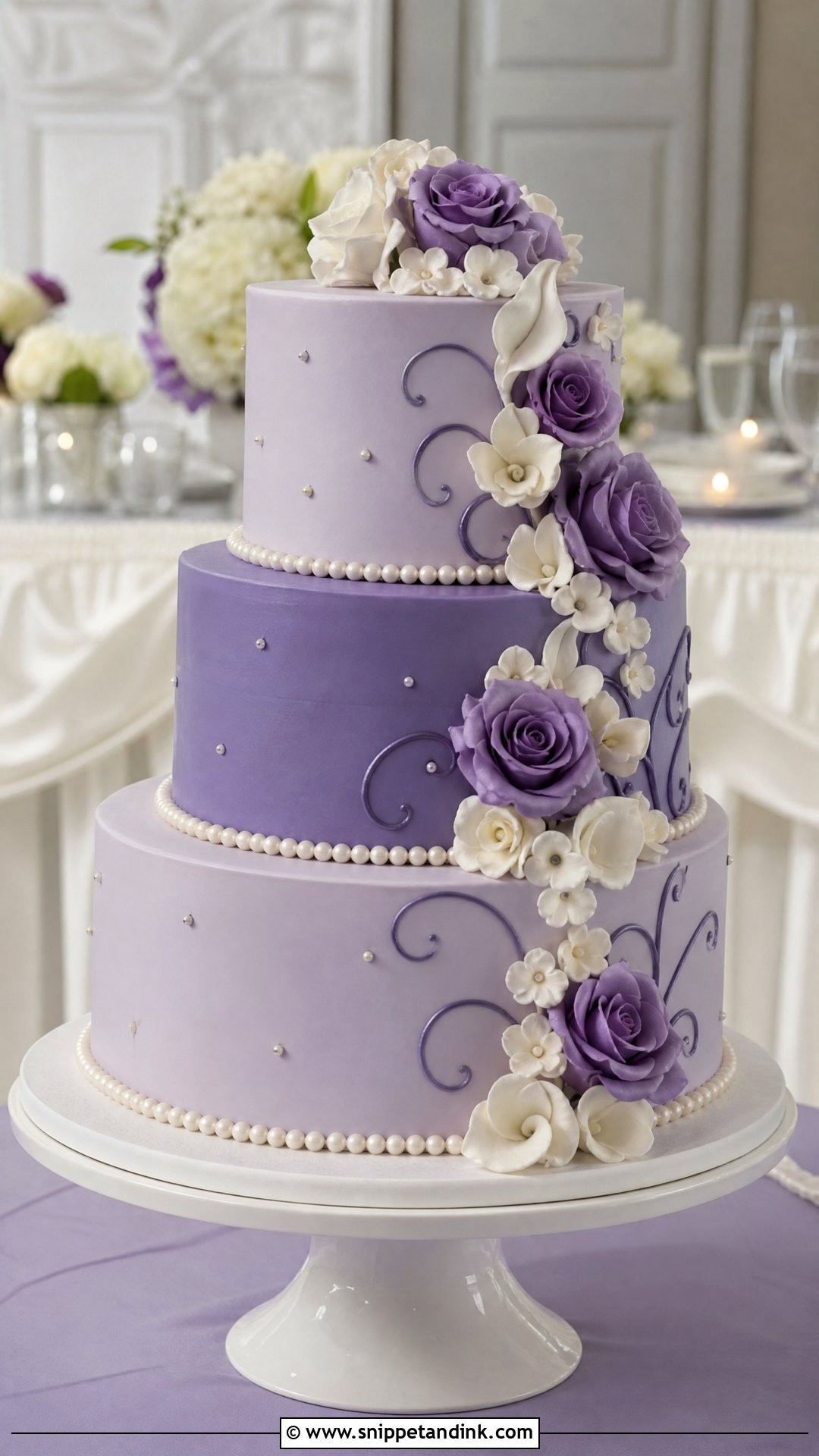
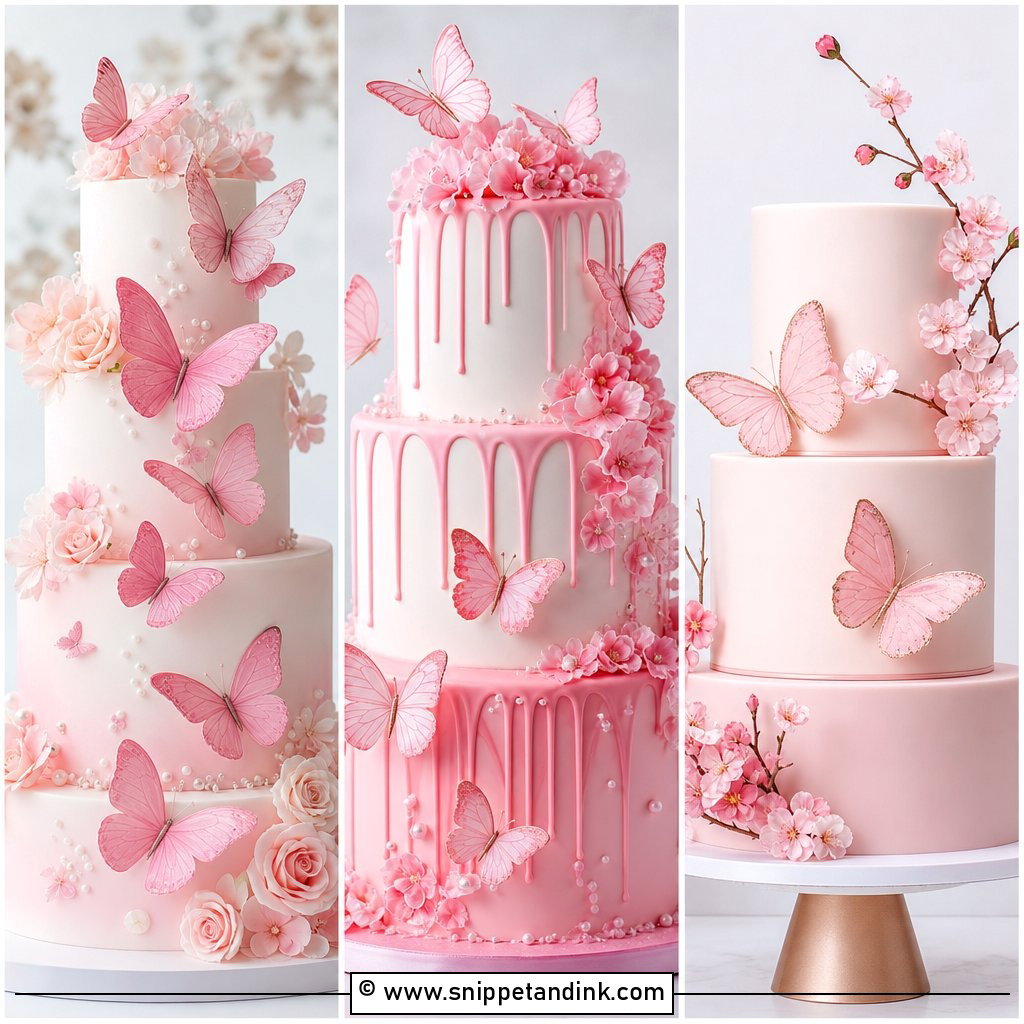
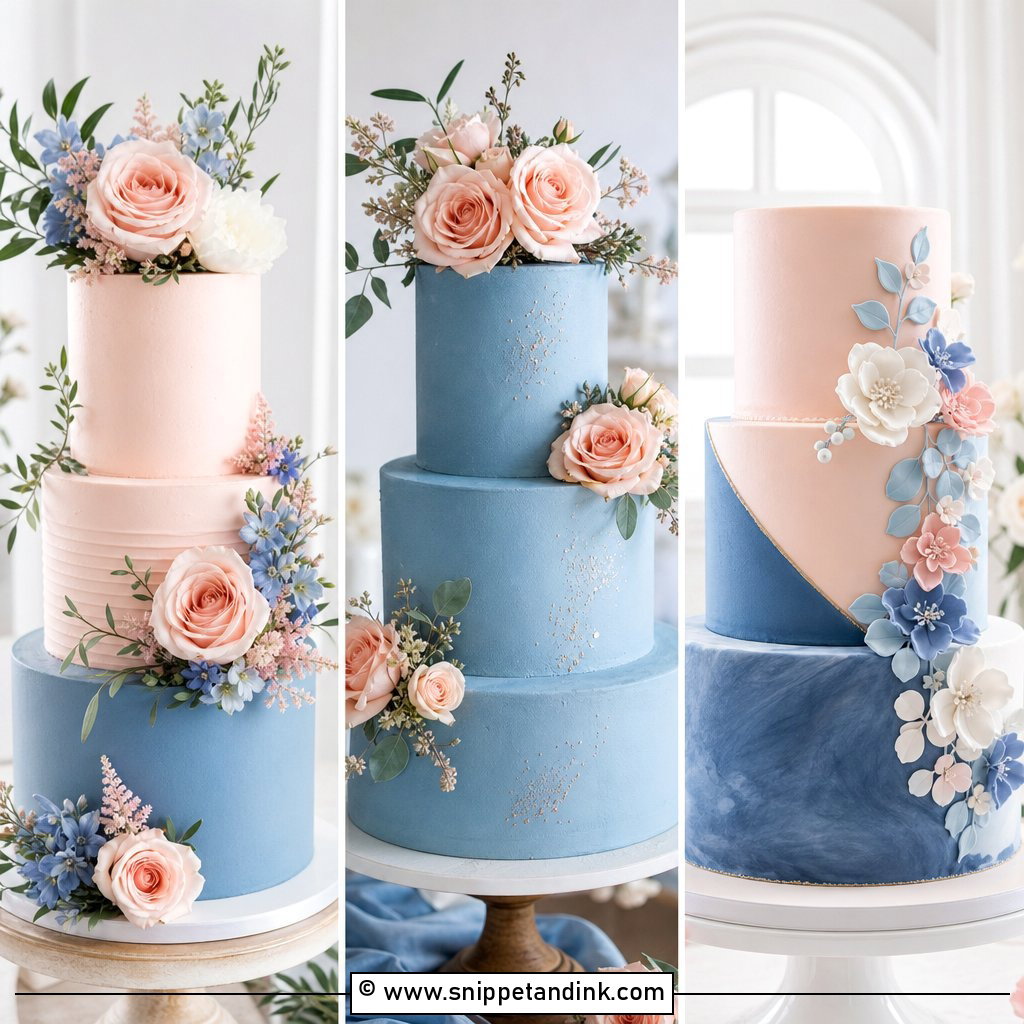
Three tiers give the classic shape with room for detail. Each tier can have a different finish, such as smooth lavender, floral piping and pearl trim, or all three can share one shade. Every tier above the base sits on dowels and a board, which is what keeps it level through the evening. Flowers placed diagonally add movement. It suits medium-sized receptions and creates a clear focal point.
Which Purple Flowers Can Touch a Cake
Many popular purple flowers are not food-safe. Hydrangea, foxglove, sweet pea and lily of the valley are toxic and should never sit on a cake, even as decoration. Sweet peas are fine as sugar flowers, but not as the real bloom.
Safer fresh options include violas and pansies, lavender, roses grown without pesticides, and orchids used decoratively with protected stems. Even with safe flowers, stems should be wrapped or set into food-safe picks so sap doesn’t reach the cake. I always ask the florist where the flowers were grown and whether they were sprayed.
Ordering Timeline for Sugar Work and Custom Colors
Sugar flowers and custom color matching take time. Booking a designer several months before the wedding is normal for tiered cakes, and detailed sugar work is made in the weeks before. Lead times vary a lot by designer and season, so ask early.
- Book a tasting and share your palette, ideally with a fabric swatch from the bridesmaid dresses or linens.
- Confirm the color sample and decoration plan a few weeks before.
- Agree on delivery time and room conditions with the venue, since heat and sunlight both affect purple.
Bring Your Swatches to the Tasting
Purple has more range on a cake than most couples expect, from pastel to dramatic, vintage to sleek. The right shade depends on your venue, season, flowers and lighting. With simple decor, a purple cake can be the centerpiece. With a busy palette, choose white tiers with purple details. Bring fabric swatches, flower photos and your dessert table plan to your tasting, and ask to see the color mixed in the frosting you’ll actually have. That’s how you make sure the cake on the day matches the one you imagined.
You'll Like These Ideas:





Leave a Reply