
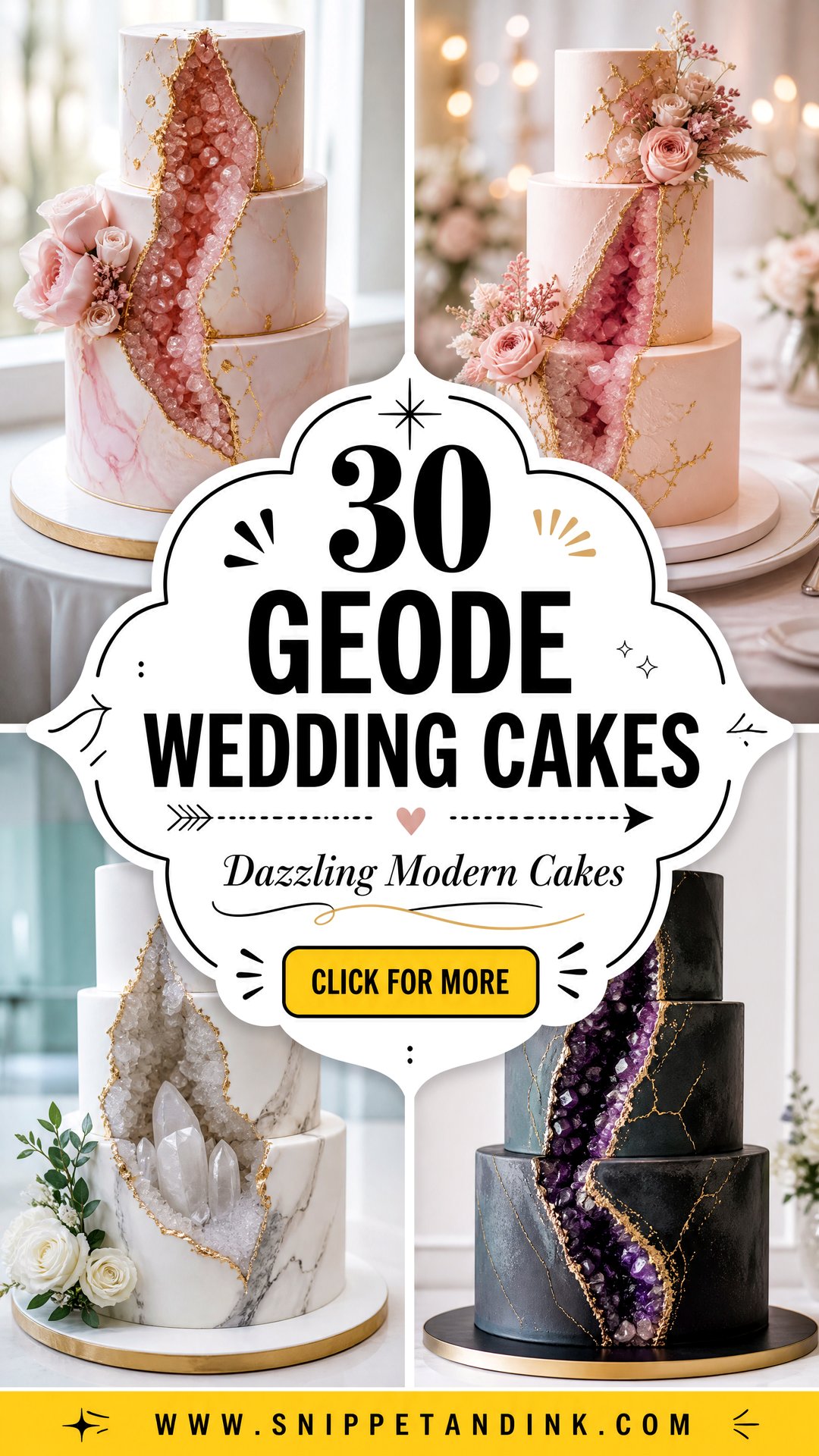
A geode cake looks like a smooth tiered cake that has cracked open to show a seam of crystals. In my kitchen that seam is carved out of the cake by hand, then packed with rock candy, sugar crystals or poured isomalt, shaded with edible paint and edged in metallic leaf. The good ones are restrained: a white fondant cake with one deep amethyst slice, a blush cake with a rose quartz opening, a black marble cake with silver crystals. Below are thirty versions, with the colour, finish and practical notes I’d go through with a couple at a tasting.
Rock Candy, Isomalt and Whether Anyone Eats It
Every crystal on these cakes is sugar, but not all of it is pleasant to bite. Rock candy is grown slowly from a supersaturated sugar syrup, which is why geode work needs lead time; it’s rock hard and can be tough on teeth. Isomalt is a sugar substitute that can be poured, cooled and shattered into shards, and it holds clarity well. Coarse sugar crystals fill the edges where fine texture is needed.
In practice, I plan the cutting before I plan the colour. The crystals are usually lifted out before the tier is sliced, or the geode sits on a section that the caterer cuts around. Tell whoever is serving which part that is, so nobody gets a slice with a shard of rock candy in it.
Deeply coloured crystals in navy, emerald or black also stain tongues. That’s harmless, but worth knowing before the cake cutting photos.
1. Amethyst Geode Wedding Cake
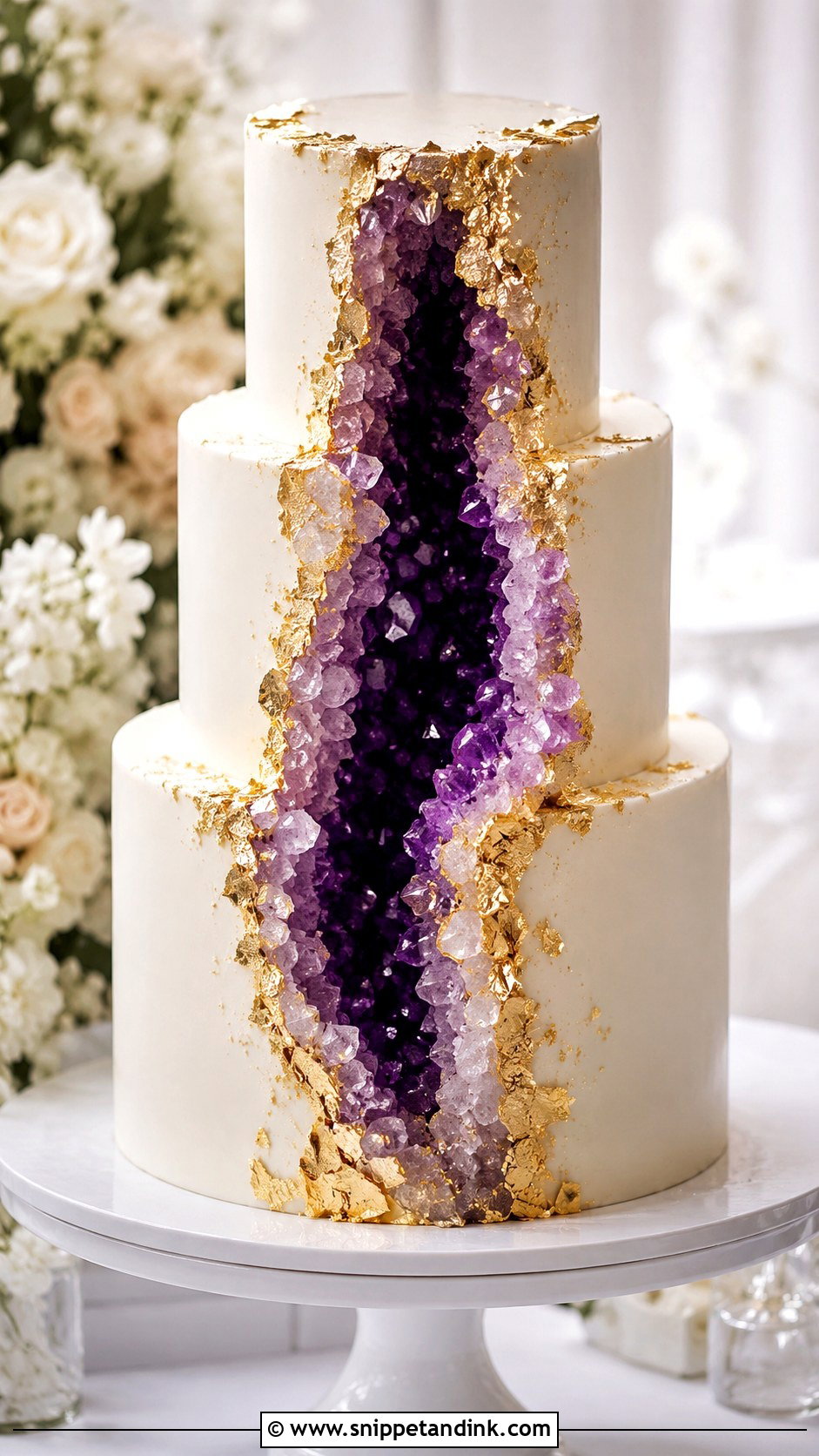
Amethyst is the geode most couples picture first. I set it in white, ivory or pale grey fondant and grade the crystals from dark violet in the centre to lavender at the edges, because real amethyst gets paler toward the rim and a single flat purple looks fake. Gold leaf around the opening suits a ballroom or evening reception. Vanilla bean, almond, lemon or white chocolate raspberry sit well underneath. Leave the rest of the cake plain; the slice is the decoration.
2. Rose Quartz Geode Wedding Cake
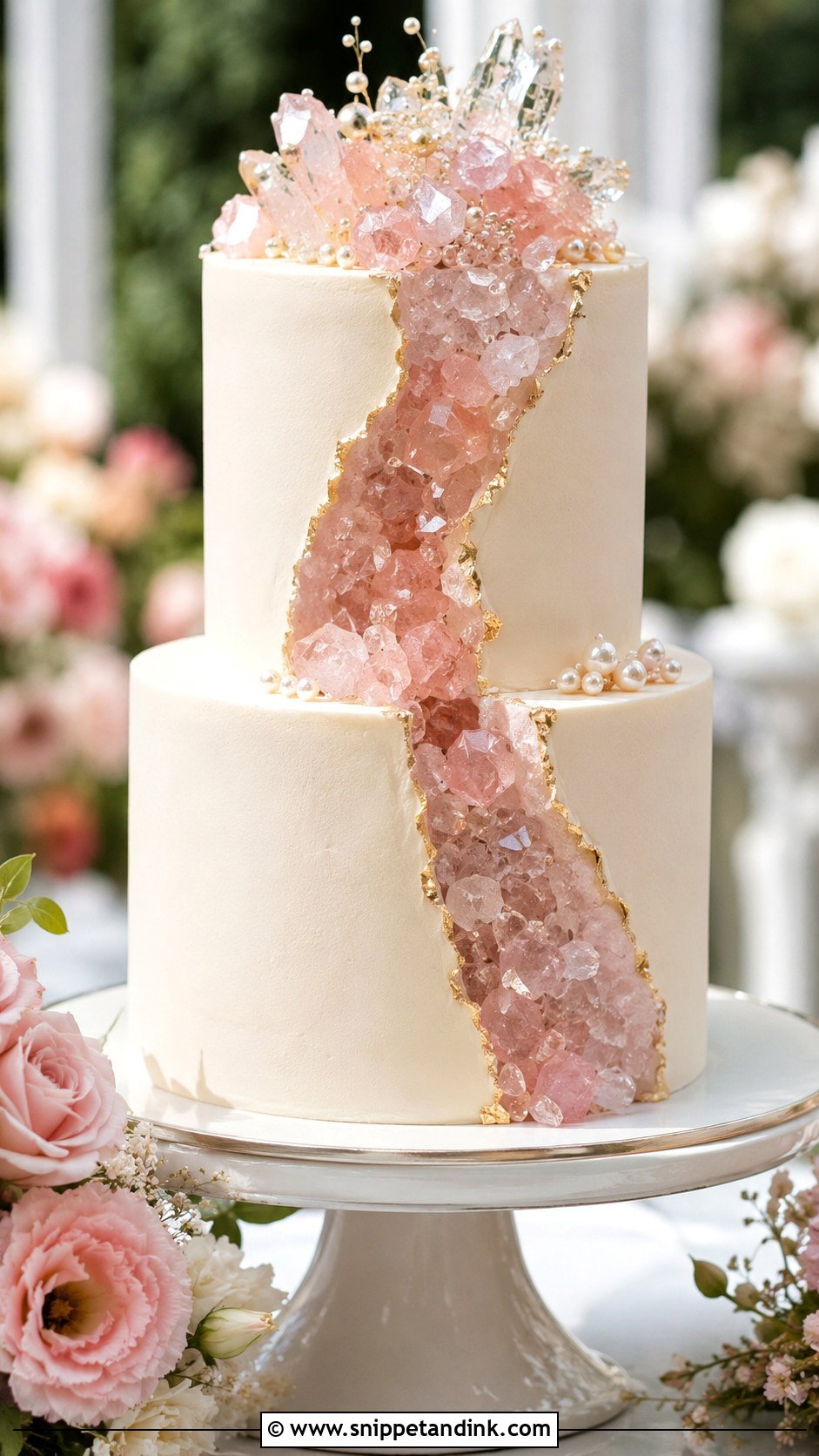
Rose quartz reads romantic without tipping into candy pink, provided the pinks stay dusty. I run a vertical opening across two or three tiers of ivory buttercream or fondant and mix pale rose, champagne and clear crystals for depth. A thin line of gold or pearl shimmer defines the edge. Strawberry champagne, vanilla rose, raspberry cream or almond suit the colour, and it settles easily into blush palettes and garden venues.
3. Blue Agate Geode Wedding Cake
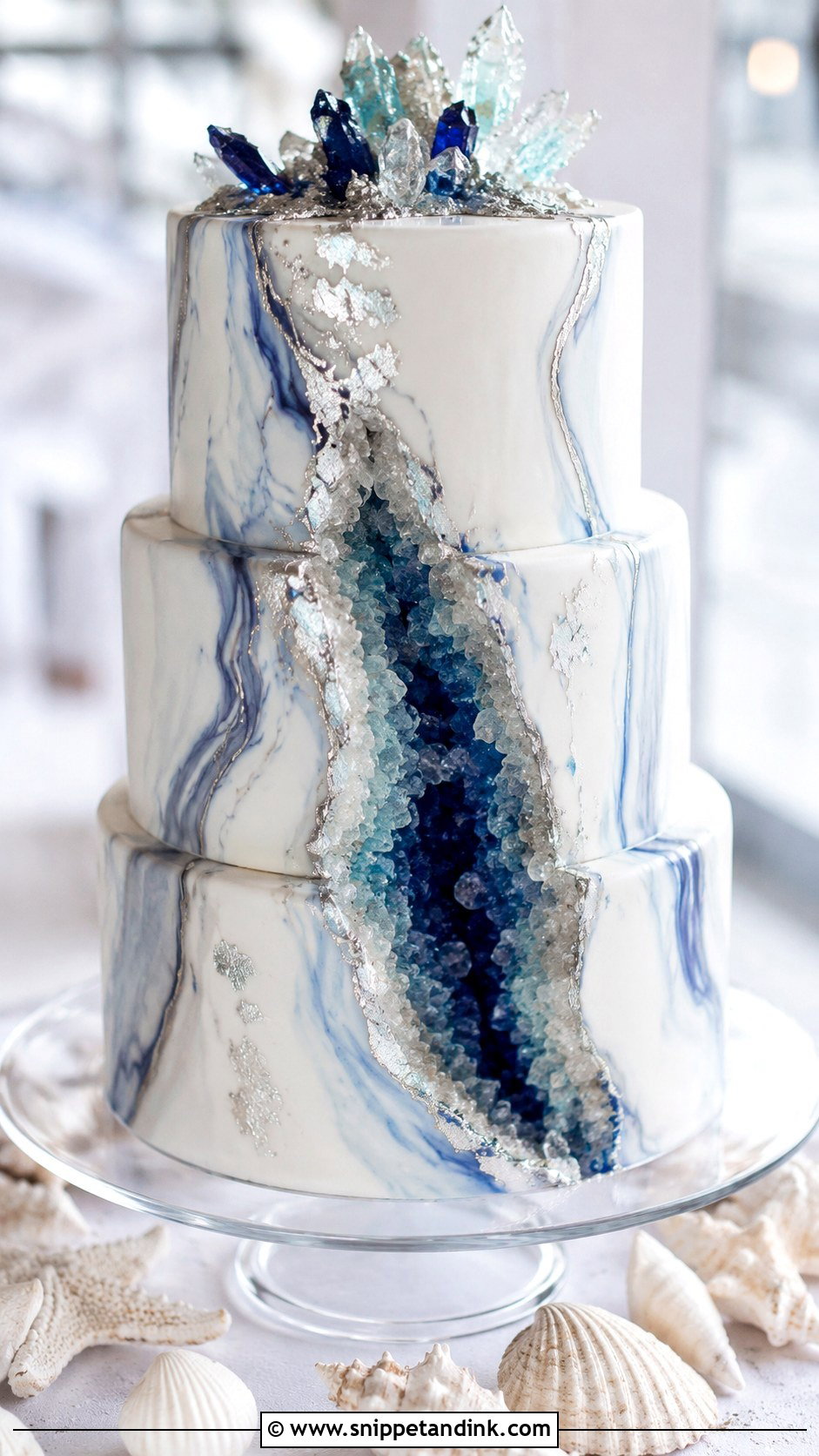
Blue agate needs bands, not one blue. I build navy at the core, then aqua, sky blue and finally translucent white toward the edge, which gives the striped look of real agate. A white marble finish with faint grey veining frames it well. Silver leaf keeps it cool; gold warms it and makes it more formal. It suits beach weddings, hotel receptions and dusty blue palettes, with lemon blueberry, coconut or almond inside.
4. Emerald Geode Wedding Cake
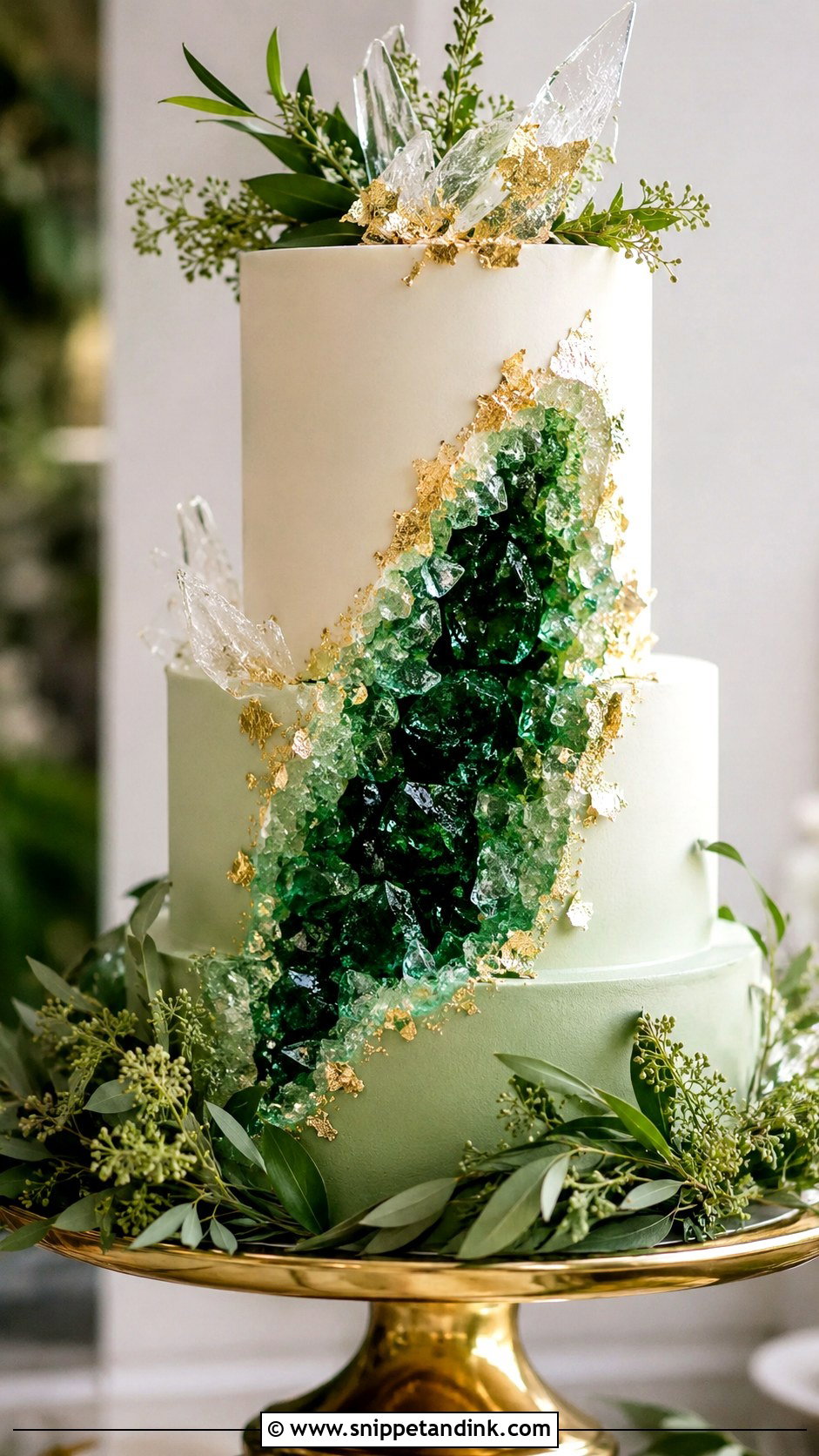
An emerald geode wedding cake carries the richest colour on this list. Deep green rock candy fills a carved vertical opening, with mint and clear crystals near the edges so it doesn’t read as a dark hole from across the room. White fondant gives contrast; soft grey marble gives a more natural stone look. Gold leaf suits emerald particularly well. Pistachio, dark chocolate, matcha or almond pair with it, and I keep flowers minimal so the green stays clear.
5. Gold Geode Wedding Cake
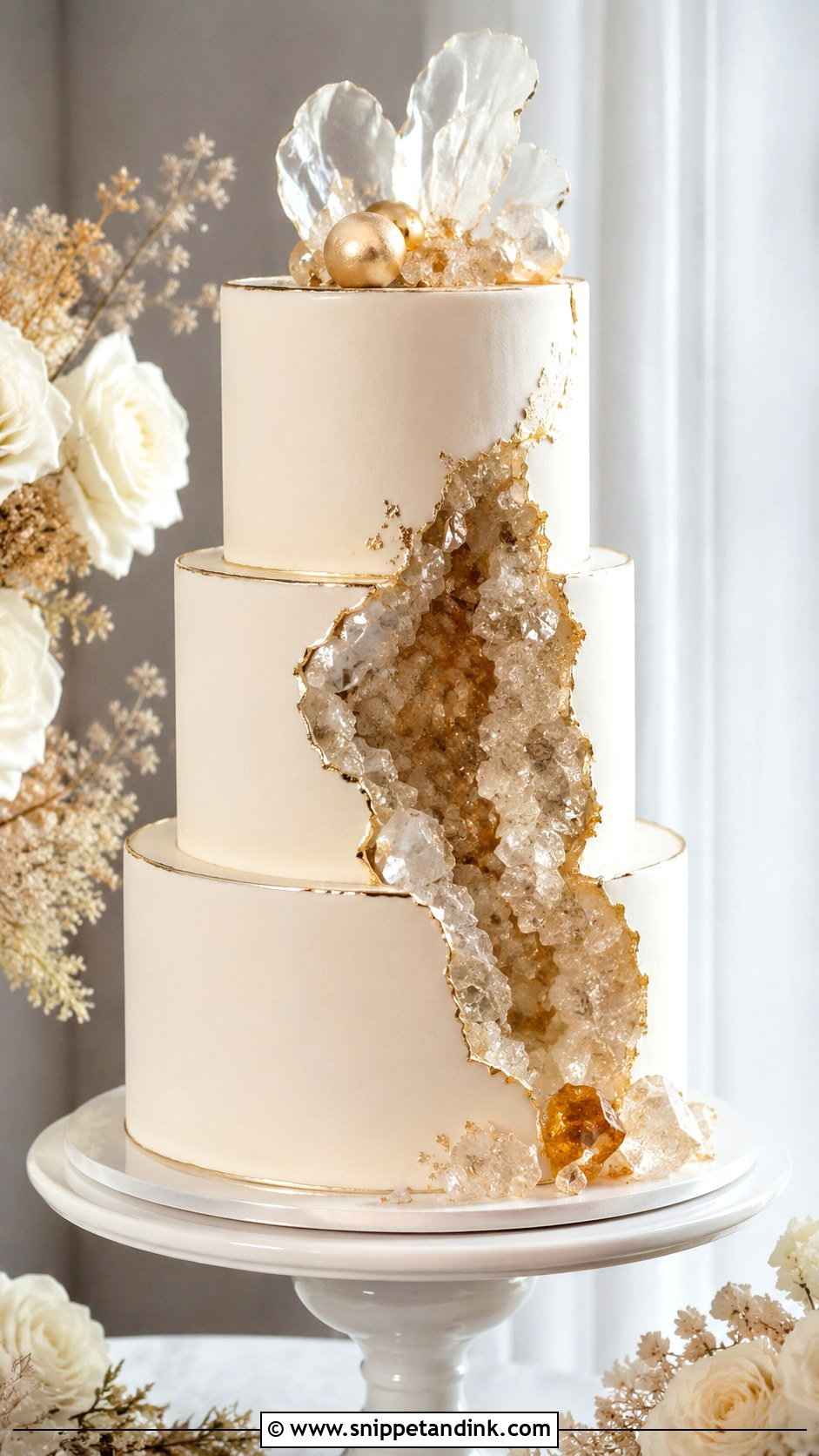
Gold geodes give sparkle without committing to a colour. Clear, champagne, pale amber or white crystals edged with edible gold leaf glow under reception lighting. Smooth ivory fondant, marble or sharp-edged white buttercream all work. One thing I check every time: the metallic has to be labelled edible, not just non-toxic, since some decorative dusts aren’t meant to be eaten at all. Honey almond, salted caramel or white chocolate suit the golden theme.
6. Silver Geode Wedding Cake
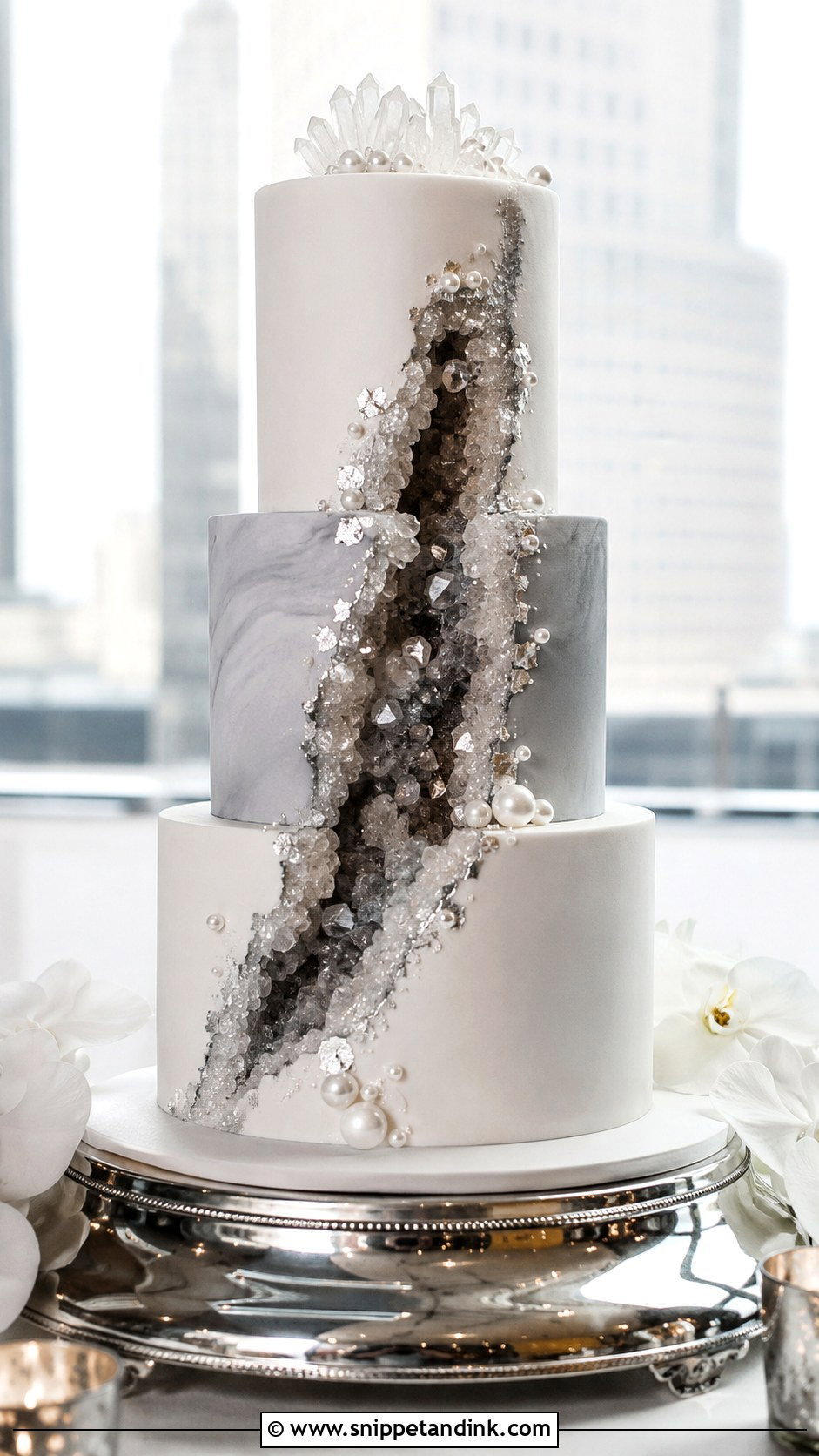
Silver geodes belong with white, grey, black and icy blue palettes. I fill the opening with clear rock candy, white sugar crystals and a little grey shading, then outline it in edible silver leaf. Smooth white fondant keeps it clean, and marble veining adds stone detail. Winter weddings that aren’t holiday themed, city receptions and minimal venues suit it. A few white flowers or pearl details are all it needs beside the crystals.
7. Marble Geode Wedding Cake
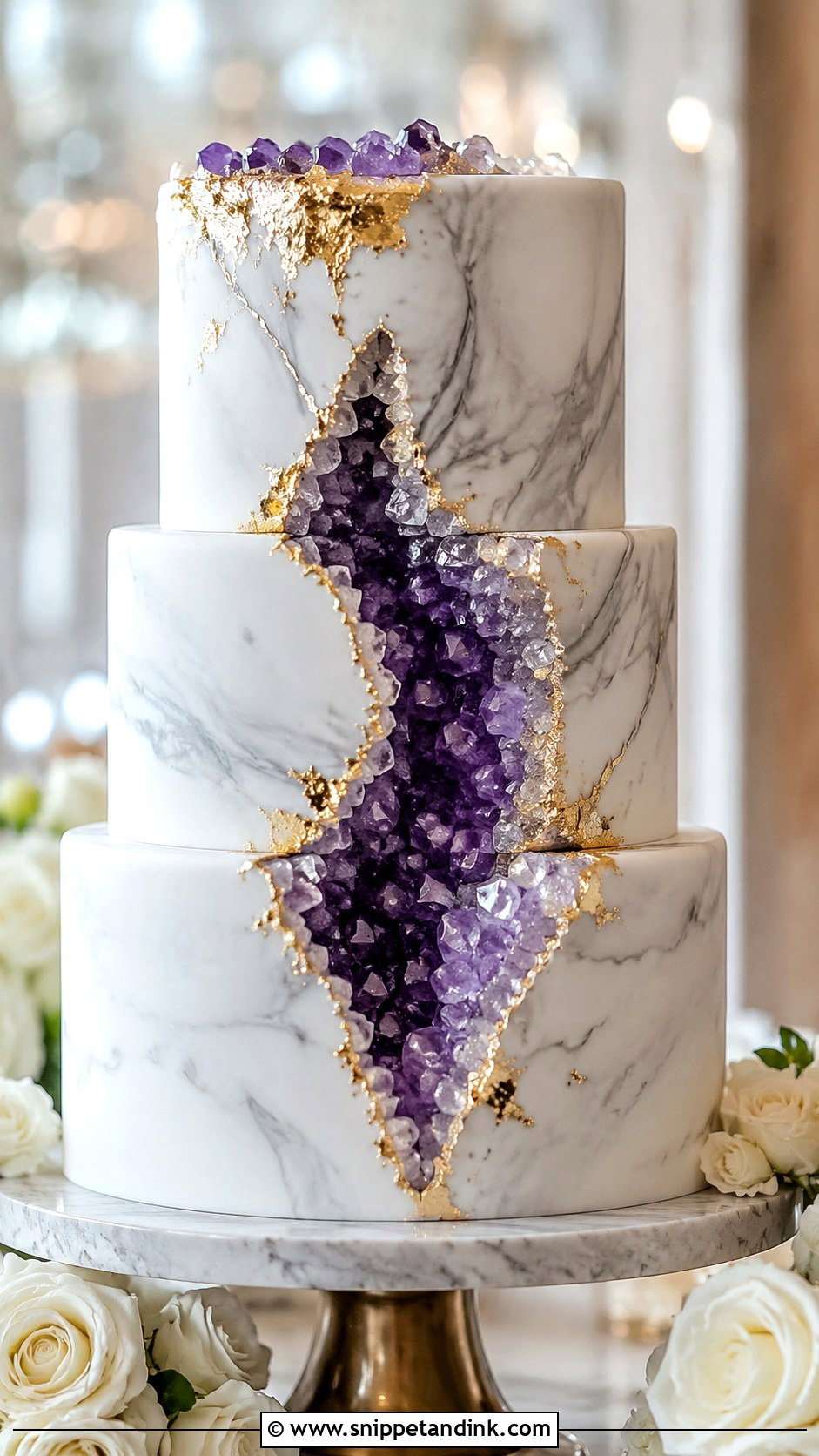
Marble and geode together can go wrong fast. The veining has to stay thin and natural, a few fine grey lines on white fondant, or the cake starts competing with itself. I run the geode as a vertical seam across stacked tiers for height and let purple, blue, emerald or clear crystals provide the colour. Stone floors, white florals and clean table styling suit it, with vanilla, almond, chocolate or lemon layers inside.
8. Black Geode Wedding Cake
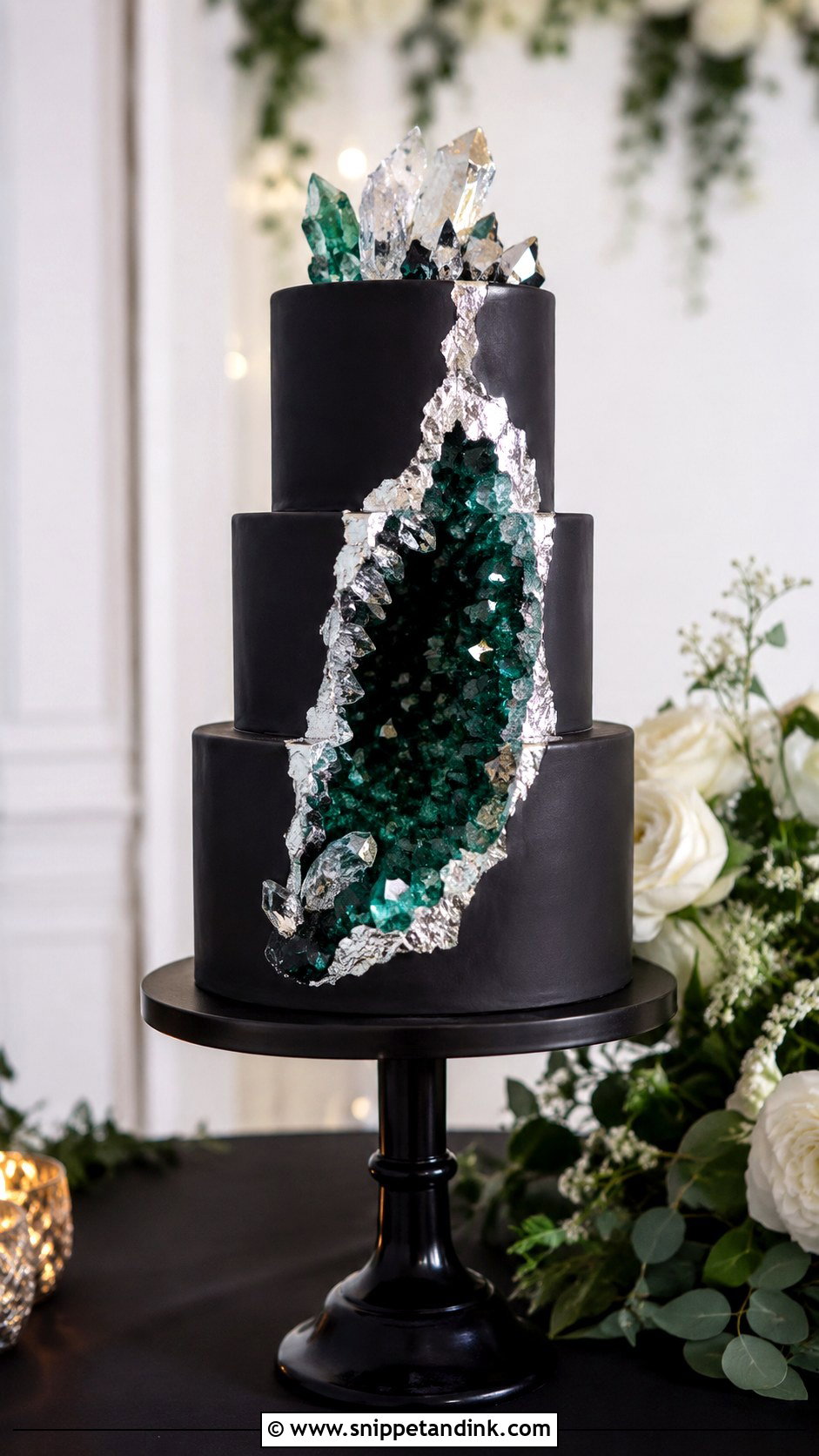
Black makes any crystal look brighter. Amethyst, emerald, sapphire or clear quartz-style candy all glow against a dark exterior. Matte black fondant reads modern, black buttercream softer. Be aware that a true black needs a lot of colouring, which can leave a slightly bitter taste and tint mouths, so I often make the black tiers chocolate or black cocoa to help. Gold leaf warms it; silver gives a cool, moonlit finish. It’s for evening receptions and couples who don’t want a traditional cake.
9. White Geode Wedding Cake
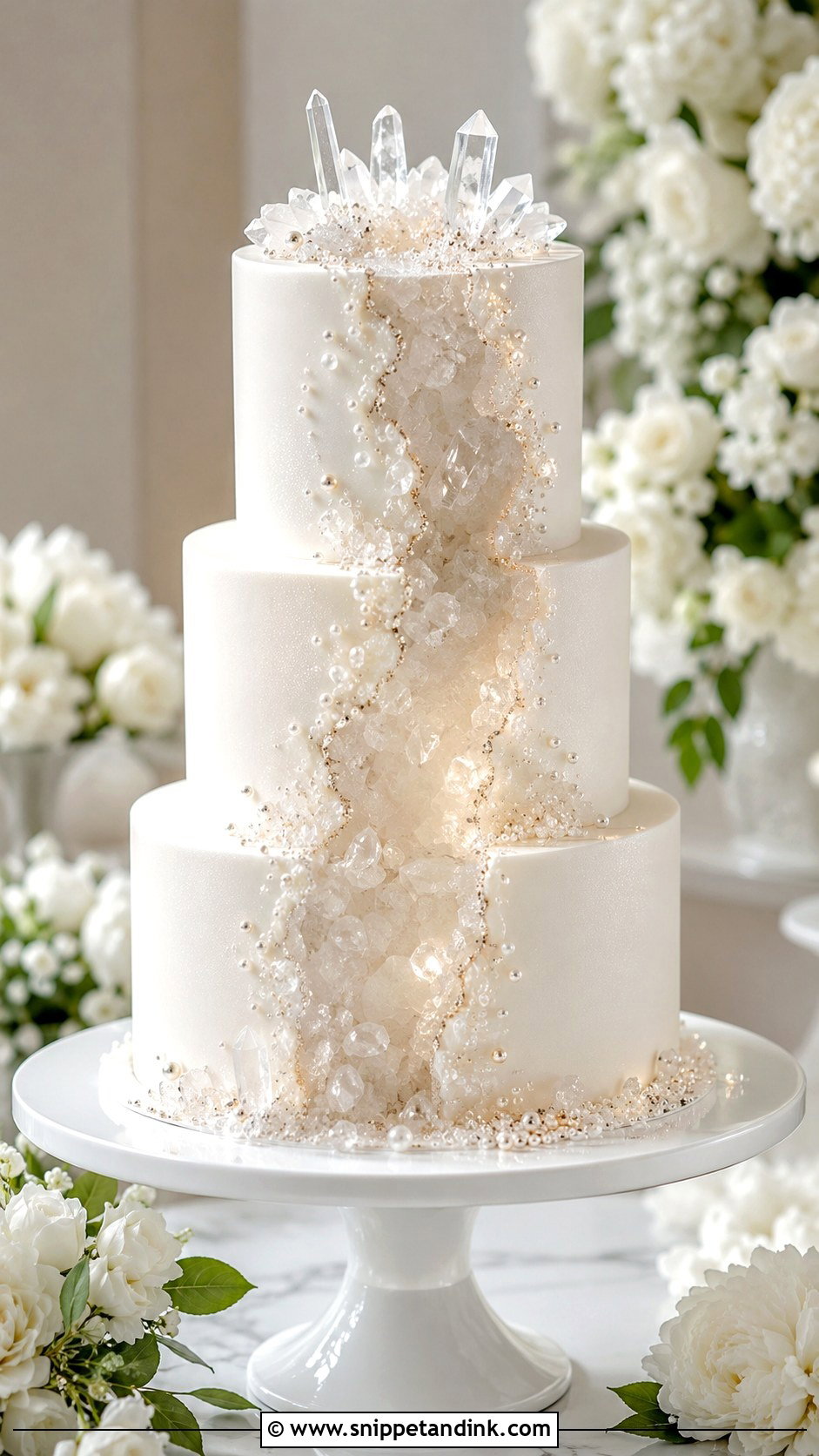
White geodes look classic from across the room and only reveal their detail close up. Smooth white fondant or buttercream holds a clean opening in clear, pale pink, lavender or soft blue, and a little pearl dust adds glow without changing the palette. It works with almost any flower choice. If you’re unsure about committing to a colour, this is the version I’d suggest; it photographs as a traditional cake with one modern surprise.
10. Blush Geode Wedding Cake
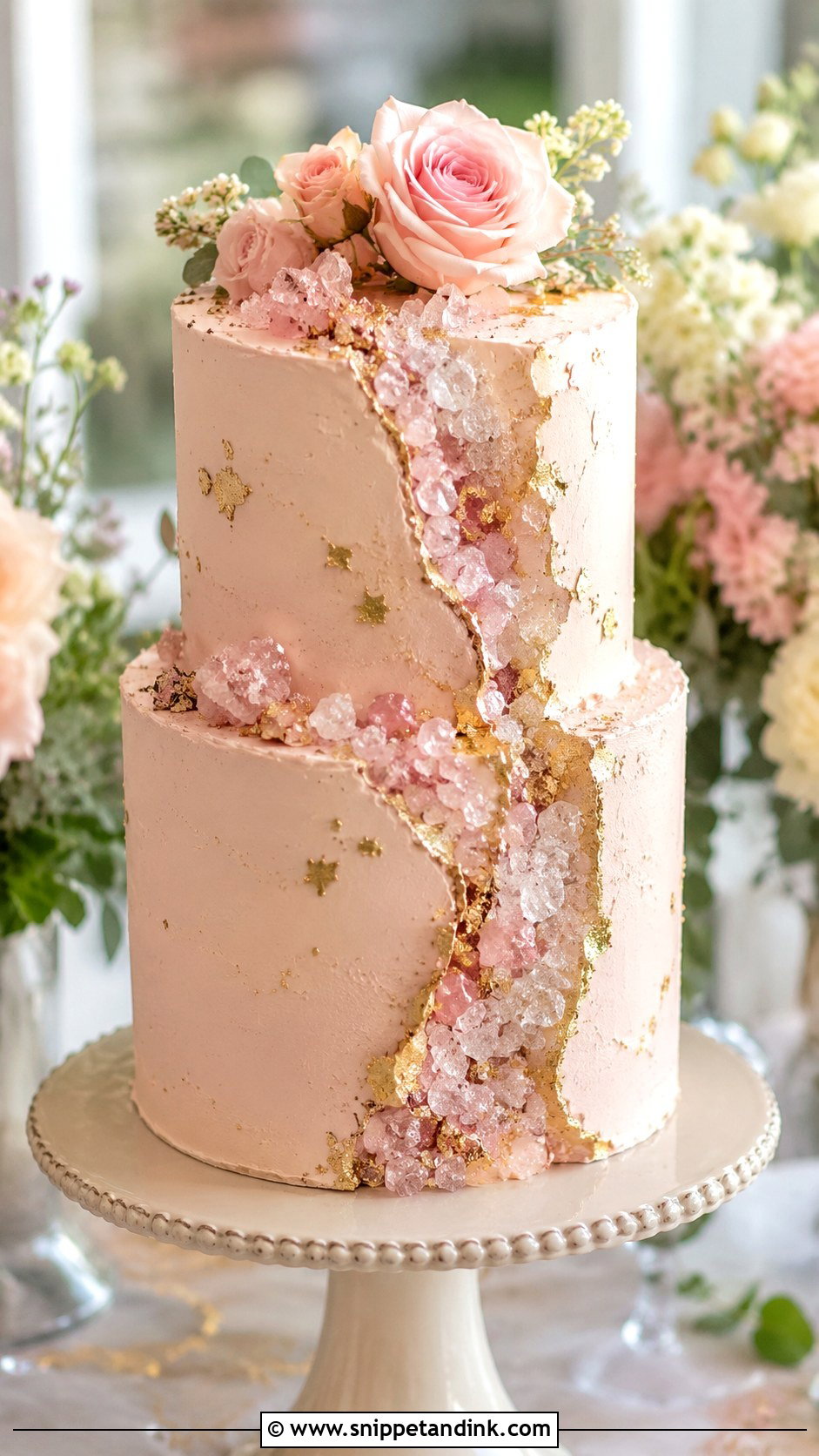
Blush geodes keep everything soft. Pale blush buttercream or ivory fondant with blush watercolour shading surrounds an opening of rose quartz crystals, clear rock candy and a touch of champagne gold. Garden roses, ranunculus and soft greenery sit well beside it. I keep the crystal opening slim here; a wide blush geode starts to look bold, which defeats the point. Strawberry, raspberry vanilla or lemon cream fit the colour.
11. Navy Geode Wedding Cake
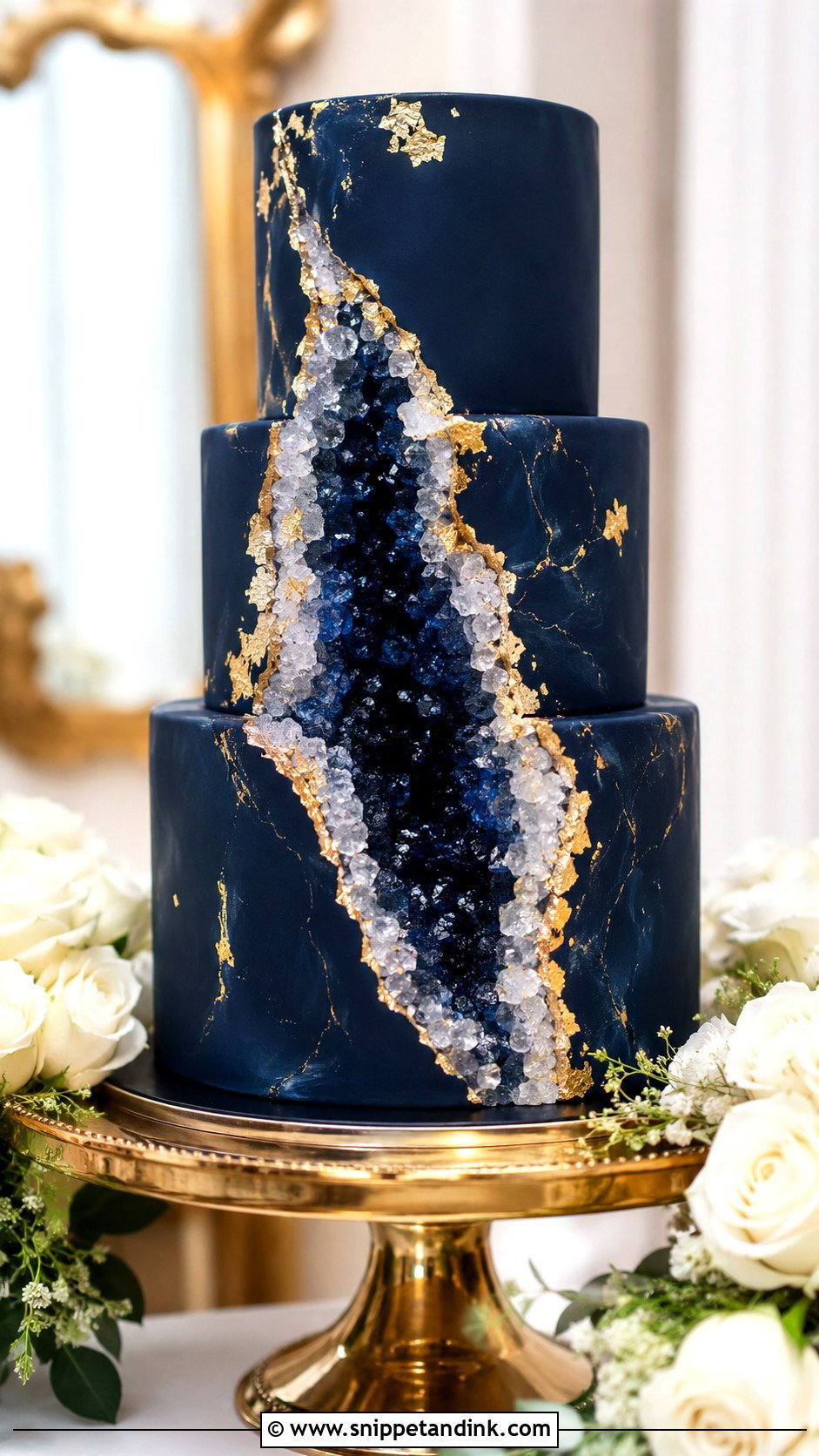
A navy geode wedding cake feels grown-up and formal. The exterior can be smooth fondant, painted buttercream or marble with navy accents, and the geode holds sapphire crystals, icy white edges and touches of silver or gold. Navy shows every dent and smudge, so I only do it on very crisp tiers. White flowers and brass accents suit it, and it can nod to a nautical wedding without anchors anywhere in sight.
12. Turquoise Geode Wedding Cake
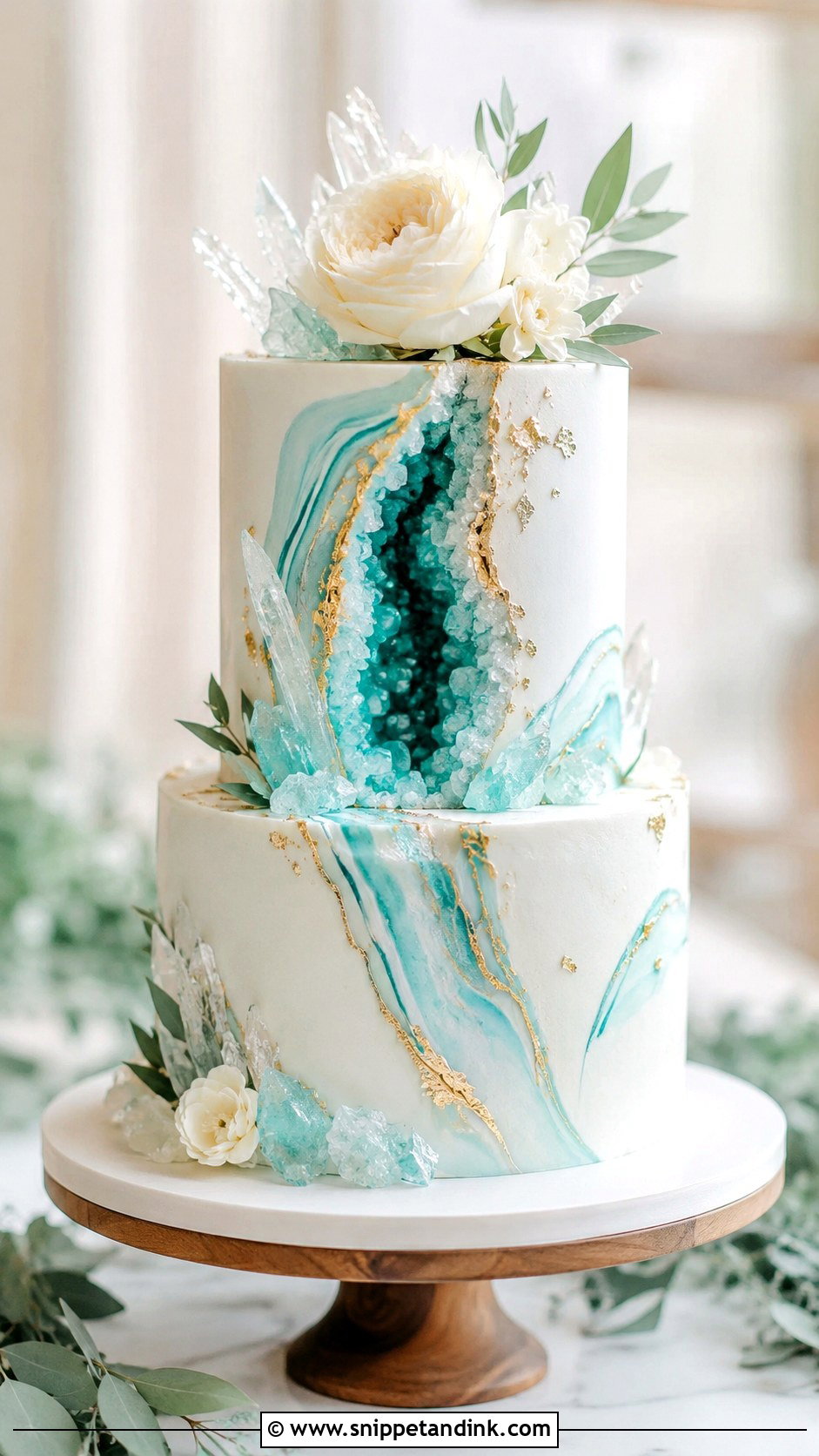
Turquoise is the brightest crystal I’d put on a wedding cake, and it needs a calm base. White or sand-coloured fondant with a gold-edged turquoise opening works, especially with faint agate rings painted around the crystals. Depending on the table, it can lean coastal, desert or boho. Keep the colour confined to the geode; turquoise spread across the tiers gets loud quickly. Coconut lime, lemon or pineapple cream suit it.
13. Purple Geode Wedding Cake
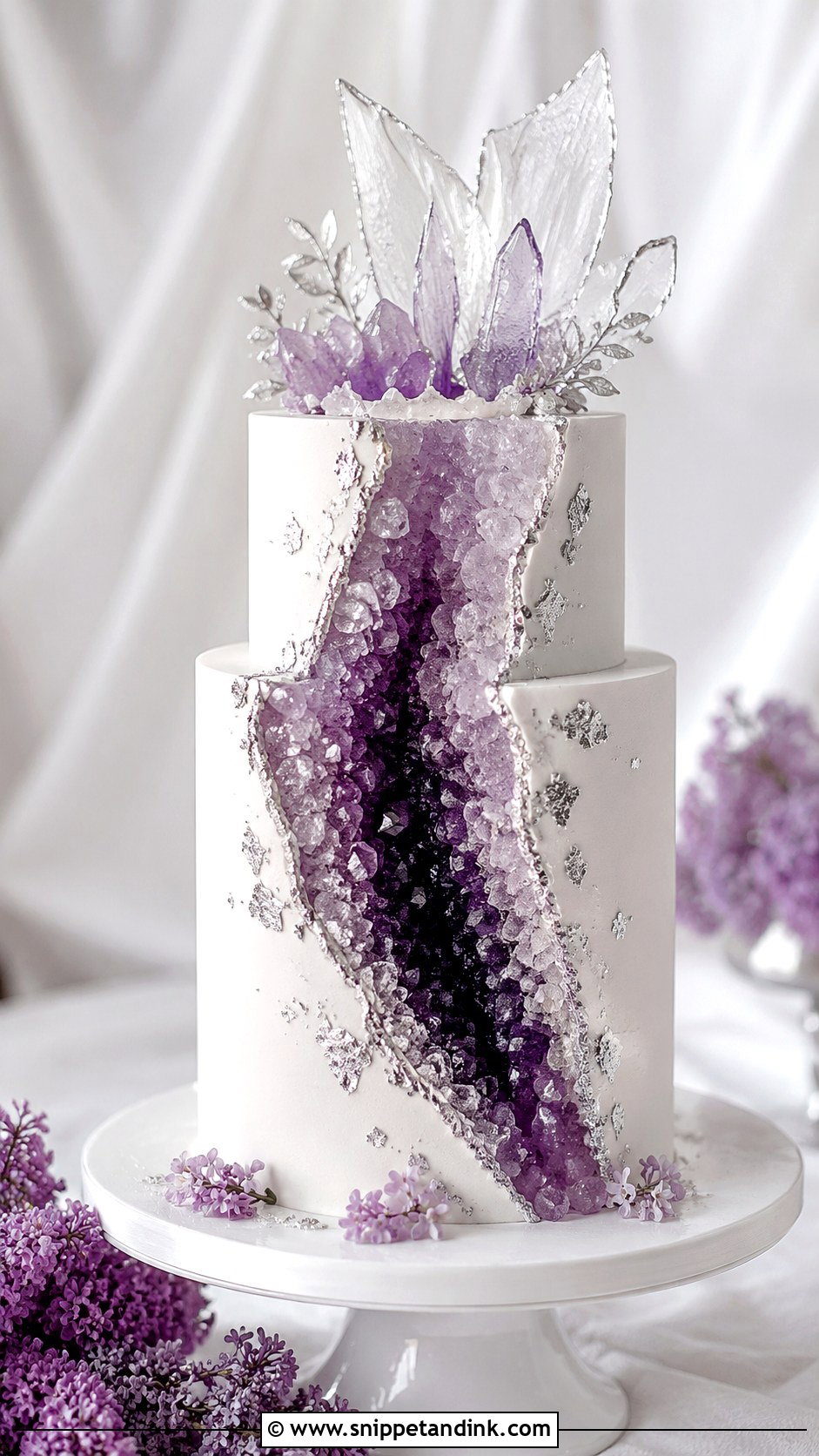
Purple is broader than amethyst. Lavender crystals give a dreamy, soft cake; plum and violet give drama. A white, ivory or pale grey base keeps the purple true in photos, since warm cream bases can push lavender toward grey. I always mix several crystal sizes rather than one uniform rock candy, which is what makes the opening look mined rather than poured. Lavender vanilla, blackberry or white chocolate pair with it.
14. Green Geode Wedding Cake
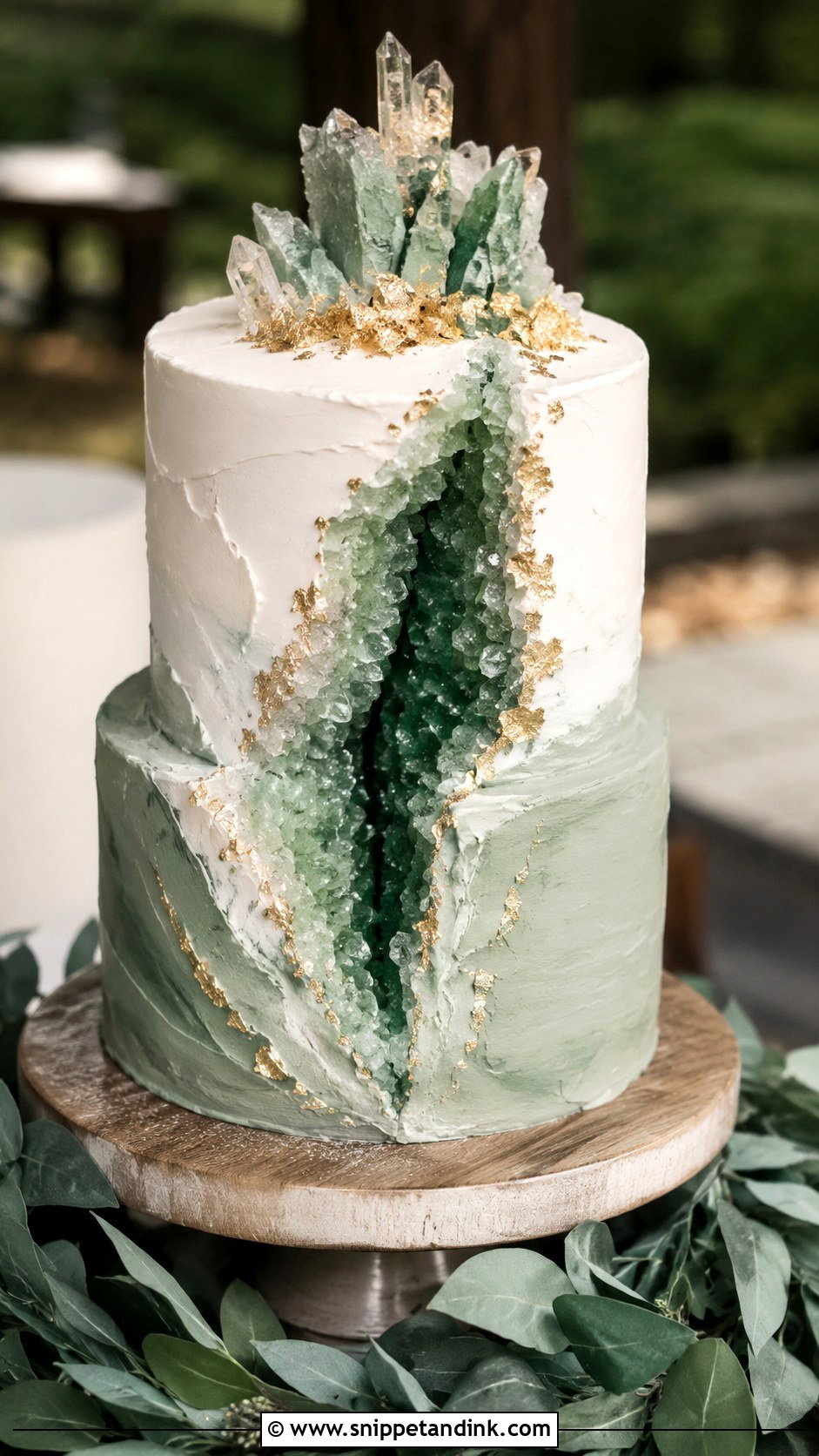
Green geodes suit outdoor and greenery-heavy weddings. Sage and mint crystals give a soft look; emerald and forest green give drama. White fondant, stone grey marble or pale sage buttercream all work as a base, and clear crystals stop the opening getting too dark. Layering several greens is what makes it look like a real mineral. Pistachio, matcha, lemon or chocolate mint suit it.
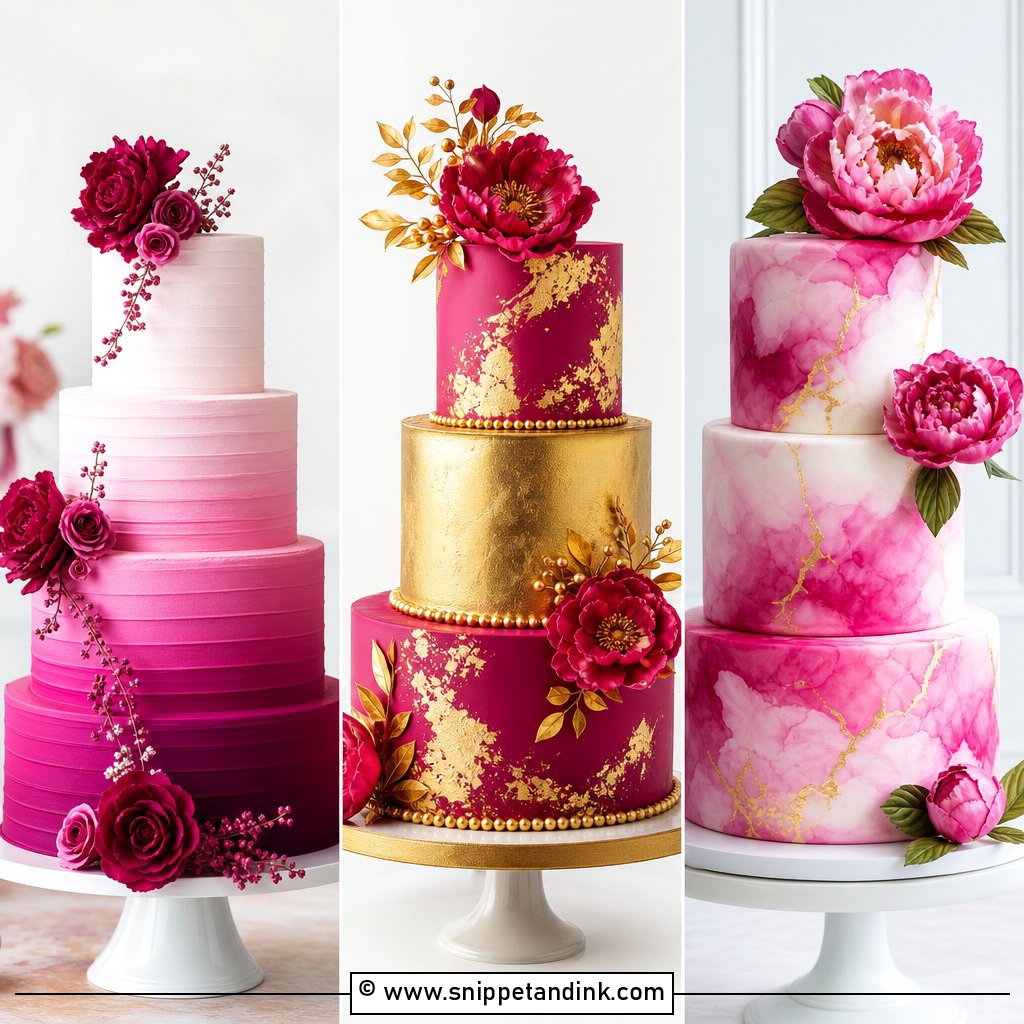


15. Pink Geode Wedding Cake
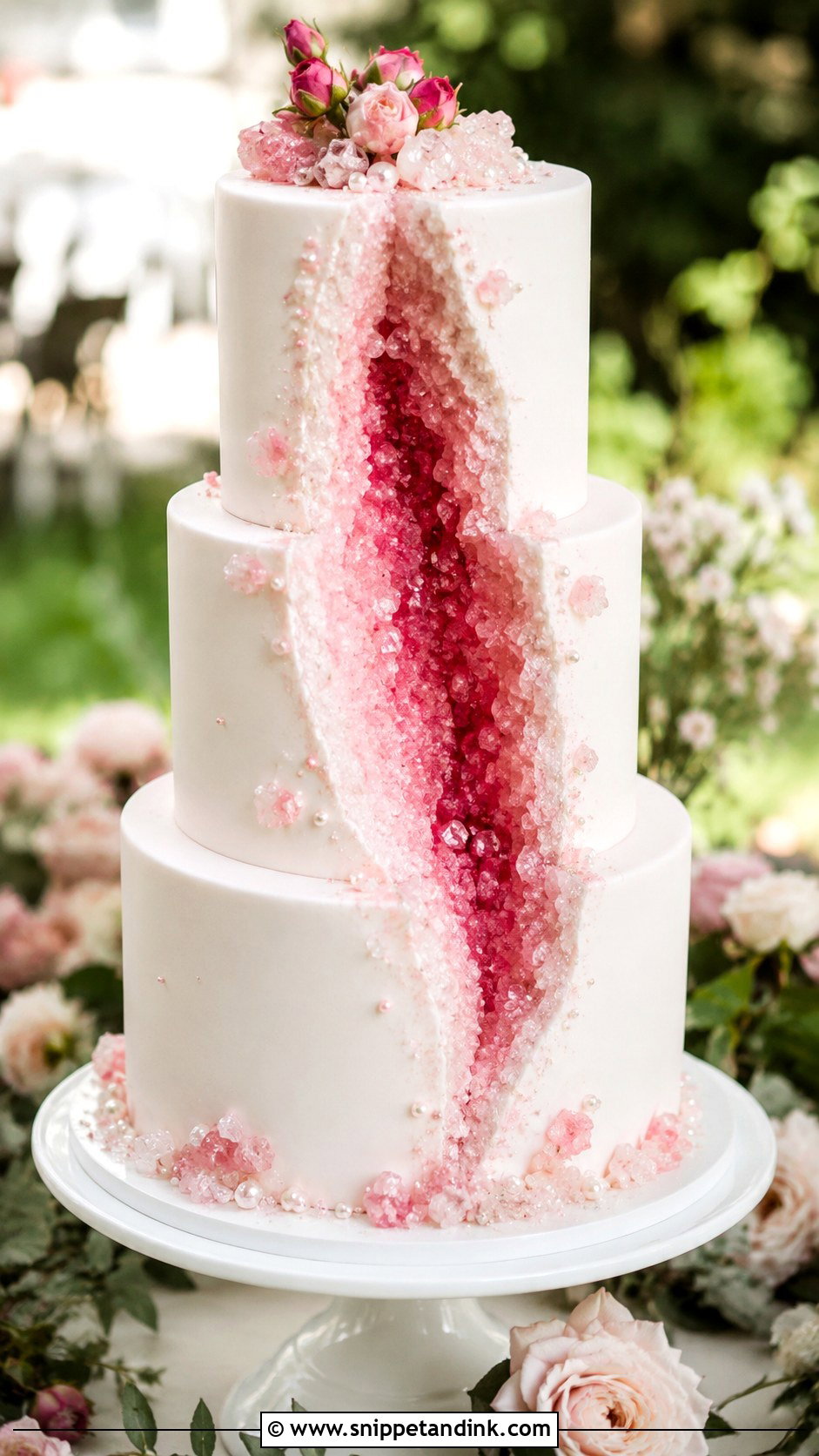
Pink geodes look best as a gradient, deep raspberry at the centre fading to pale blush at the edge. That shift gives far more dimension than one flat pink. White fondant is the safe base, though pale pink buttercream works if the room isn’t warm. Pearl shimmer or clear sugar crystals soften the colour. Strawberry, raspberry or champagne flavours suit bright spring tables.
16. Gray Geode Wedding Cake
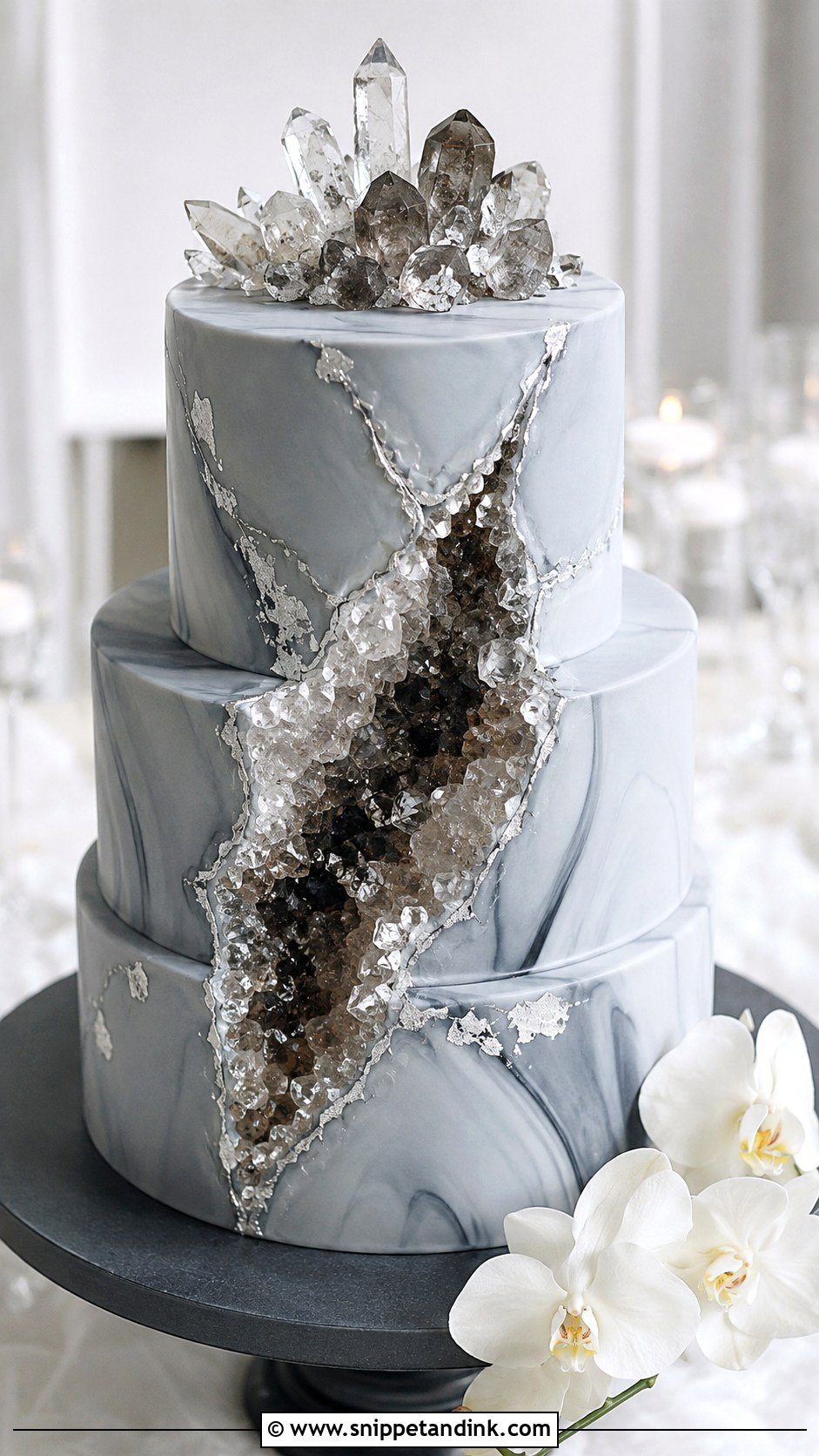
Grey geodes suit couples who want texture without colour. Pale grey fondant, charcoal watercolour or white marble with grey veining wraps around clear quartz, smoky grey, silver or soft blue crystals. They sit well in industrial venues, museums and loft spaces, beside white orchids and anemones. Vanilla, Earl Grey or cookies and cream keep it crowd-friendly underneath a quiet exterior.
17. Quartz Geode Wedding Cake
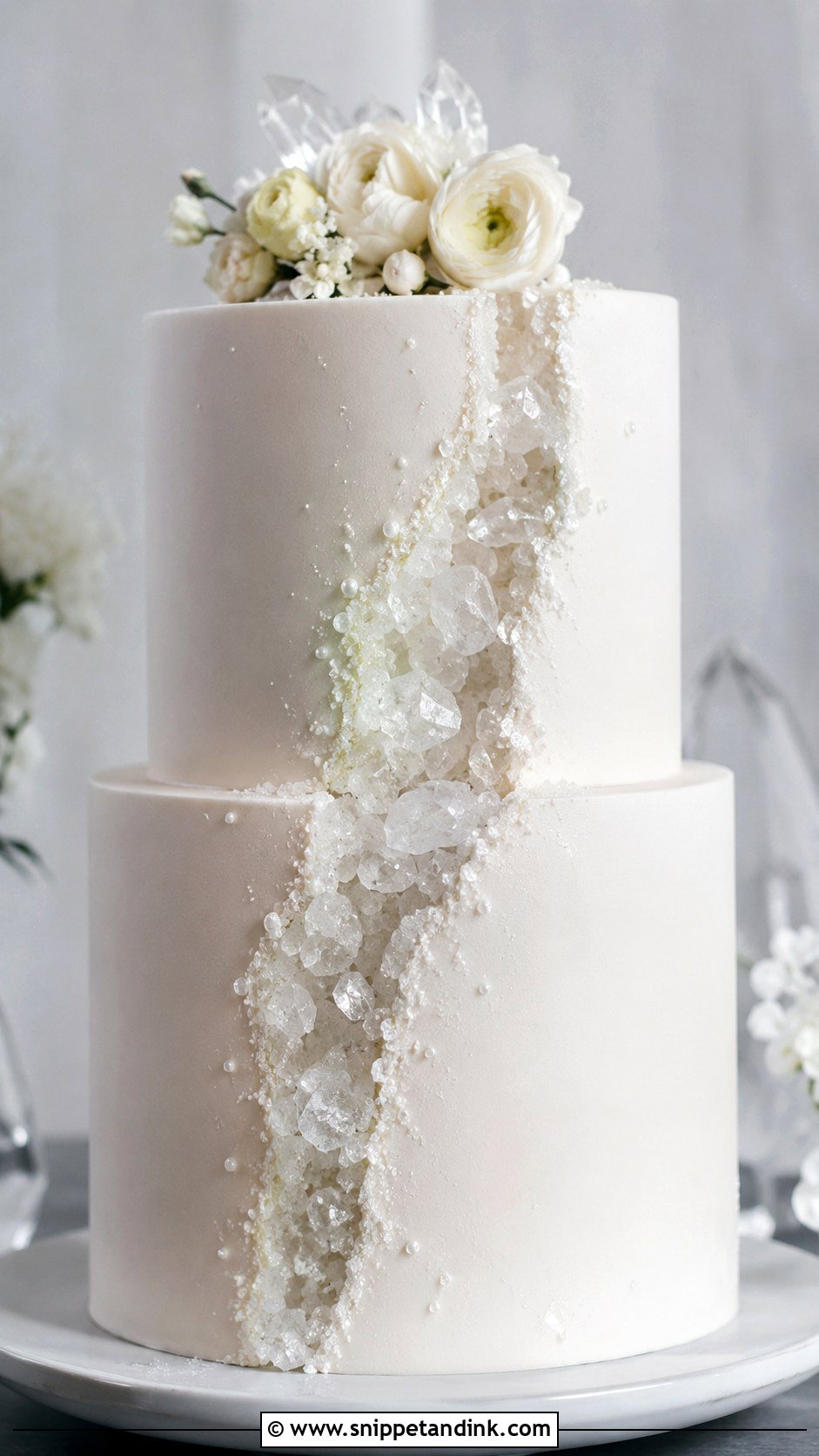
Quartz geodes use only clear, white and translucent sugar crystals, so the sparkle comes from the light passing through rather than from colour. A white, ivory or light marble base and a fine silver or pearl edge keep it understated. It’s my first suggestion for minimalist weddings and modern chapels. If you add fresh white blooms, keep them well away from the opening, because petals over clear crystals simply look like a mistake.
18. Agate Slice Geode Wedding Cake
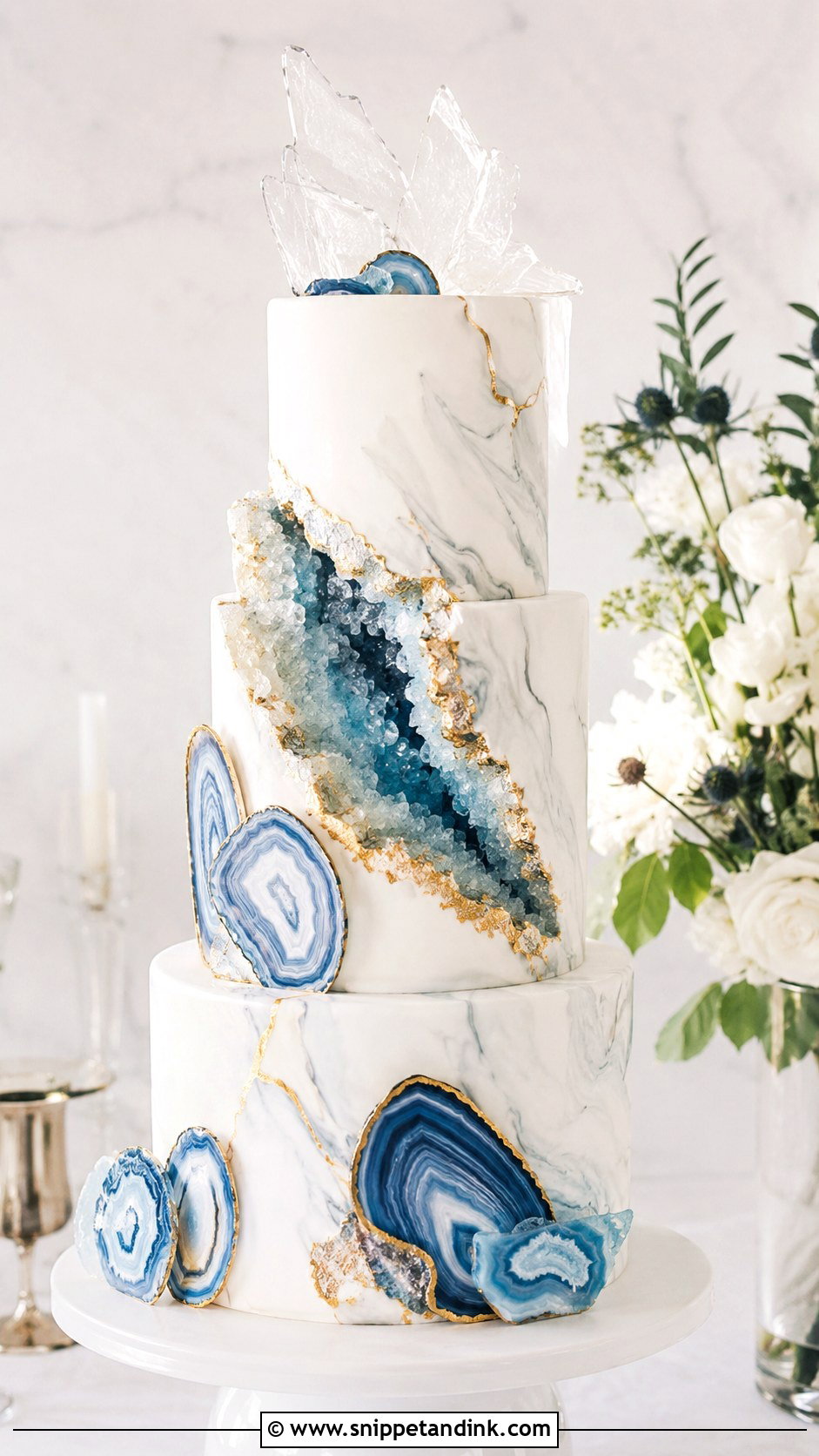
Agate slices are thin sheets of poured isomalt or sugar painted with stone rings, used as toppers or side accents beside a crystal opening. Painted bands in blue, pink, green or purple add movement. I limit them to two or three per cake; more than that and the cake starts to look like a mineral shop shelf. A white or marble base helps the colours stand out, with vanilla, lemon or berry layers inside.
19. Watercolor Geode Wedding Cake
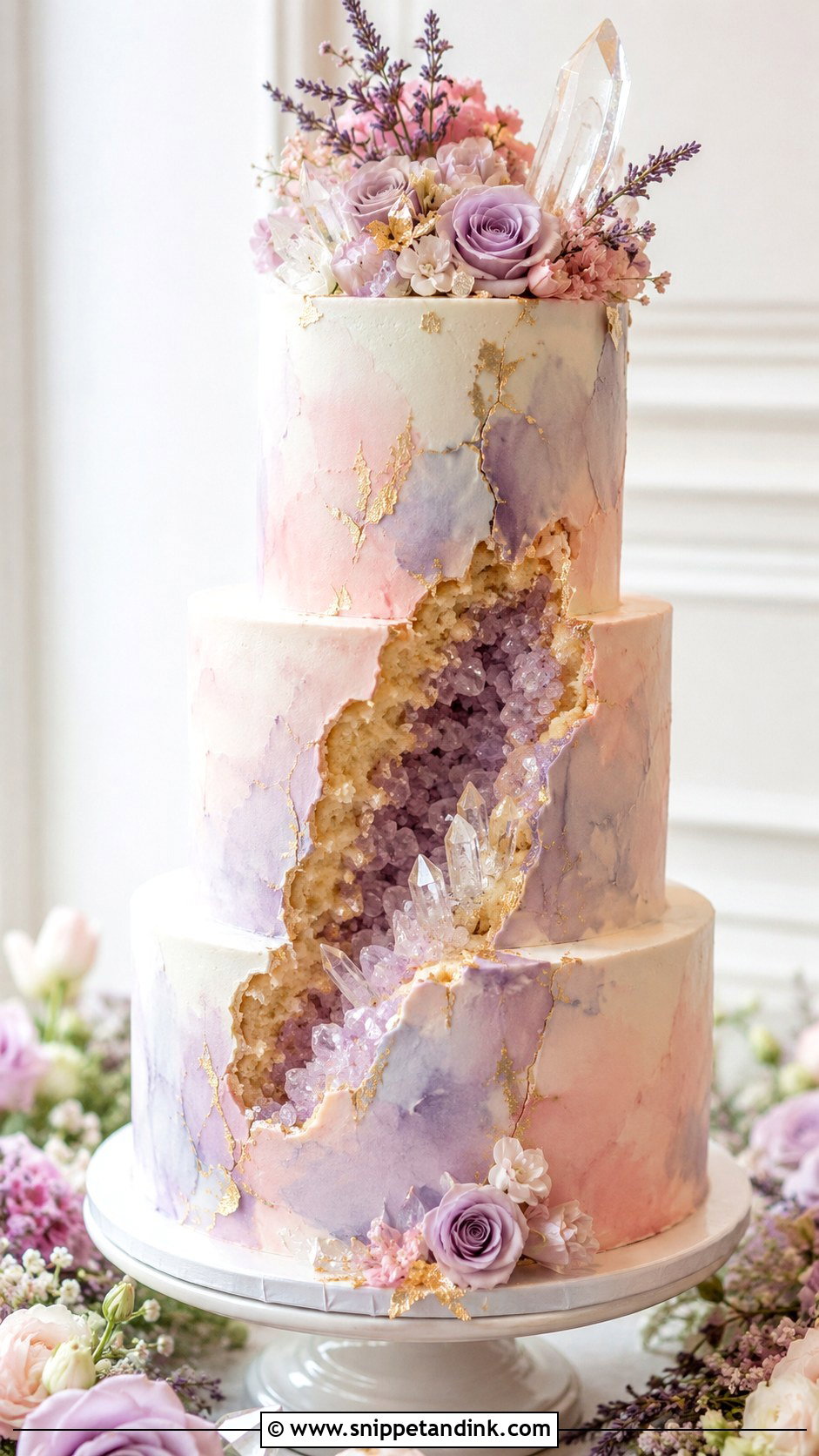
Watercolour geodes wash the outside of the cake with blush, lavender, blue or sage, then open into crystals in matching tones. The wash should look airy, not streaky, which takes thin layers of colour and patience. A thin metallic outline around the geode keeps the crystals from blending into the painted surface. Garden weddings and pastel palettes suit it, with small flowers in the same colours to finish.


20. Rustic Geode Wedding Cake
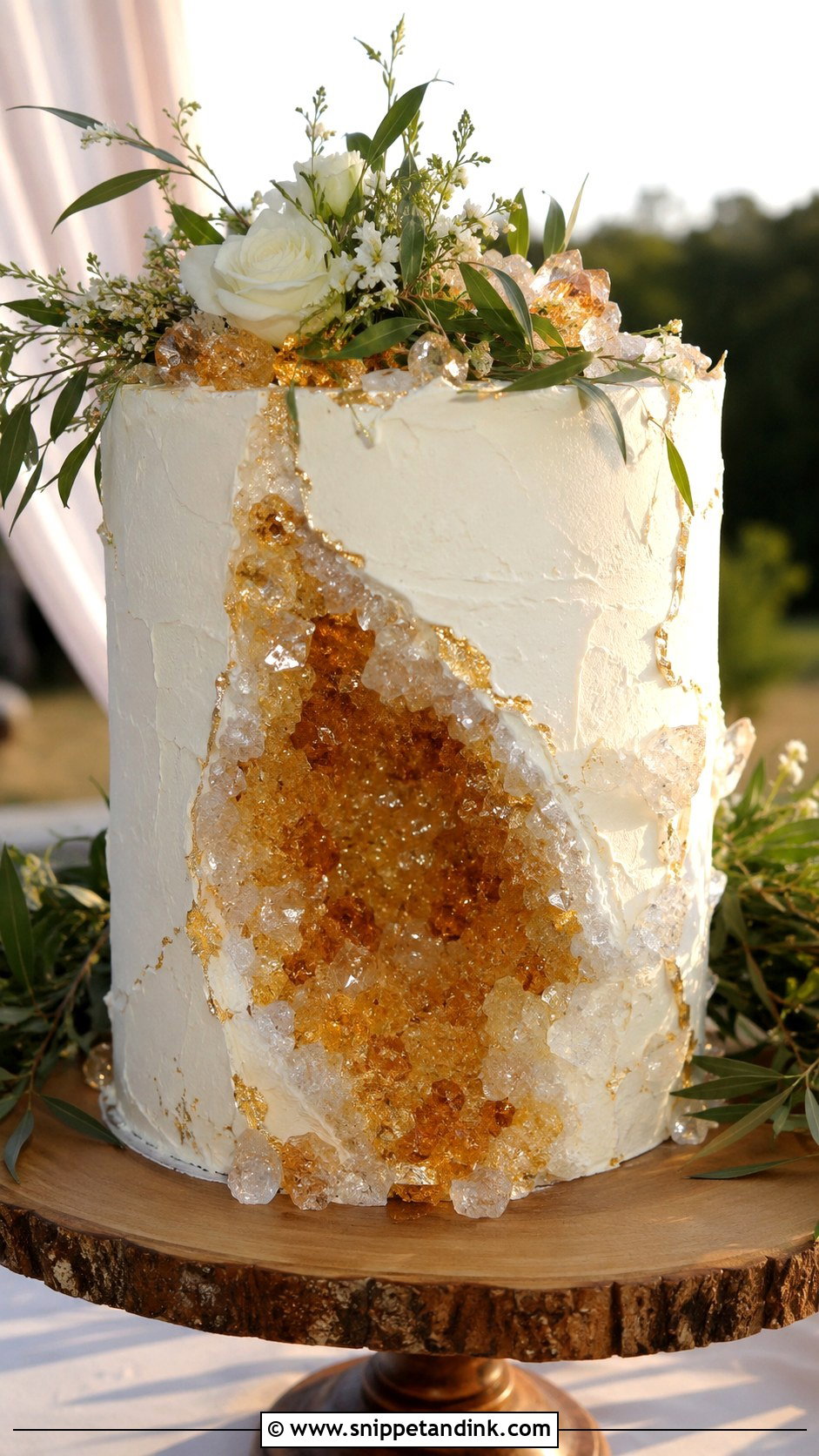
Rustic geodes trade smooth fondant for textured buttercream, stone-grey shading or a semi-naked look, with amber, clear, sage or soft purple crystals inside. The contrast between rough frosting and bright crystals is the whole effect. Barns, mountains and outdoor celebrations suit it. Any fresh flowers or greenery must be food-safe and kept off the cut surfaces. Carrot, spice or honey almond suit the warmer mood.
21. Modern Geode Wedding Cake
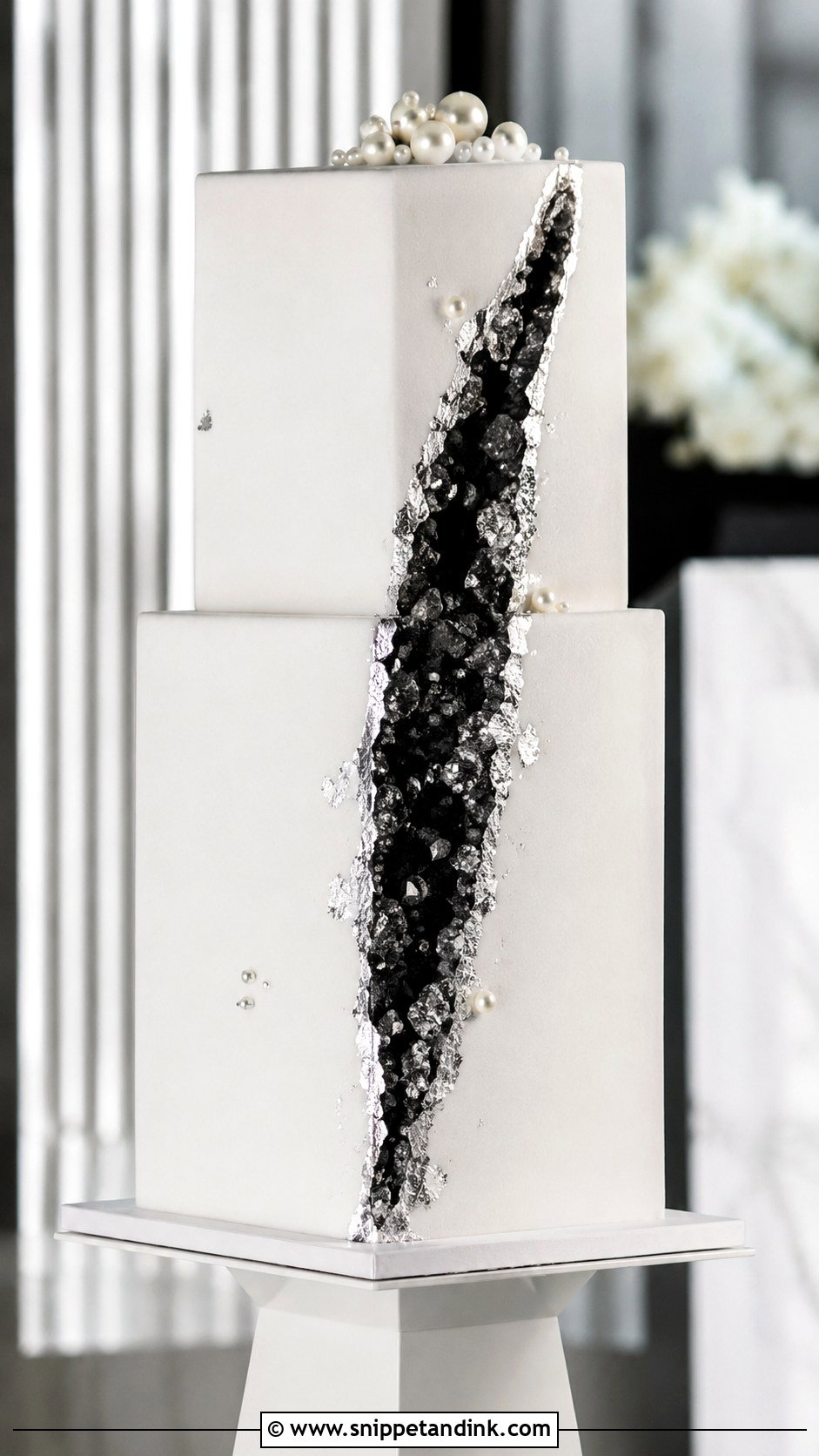
Modern geodes are an exercise in editing. Tall tiers, smooth fondant, crisp edges and one crystal feature in clear quartz, black, emerald or navy. No heavy piping, no crowd of flowers, maybe one metallic line. I treat empty fondant as part of the design so the geode has room to breathe. Lofts, galleries and rooftops suit it, and flavours can be as unexpected as espresso or matcha.
22. Boho Geode Wedding Cake
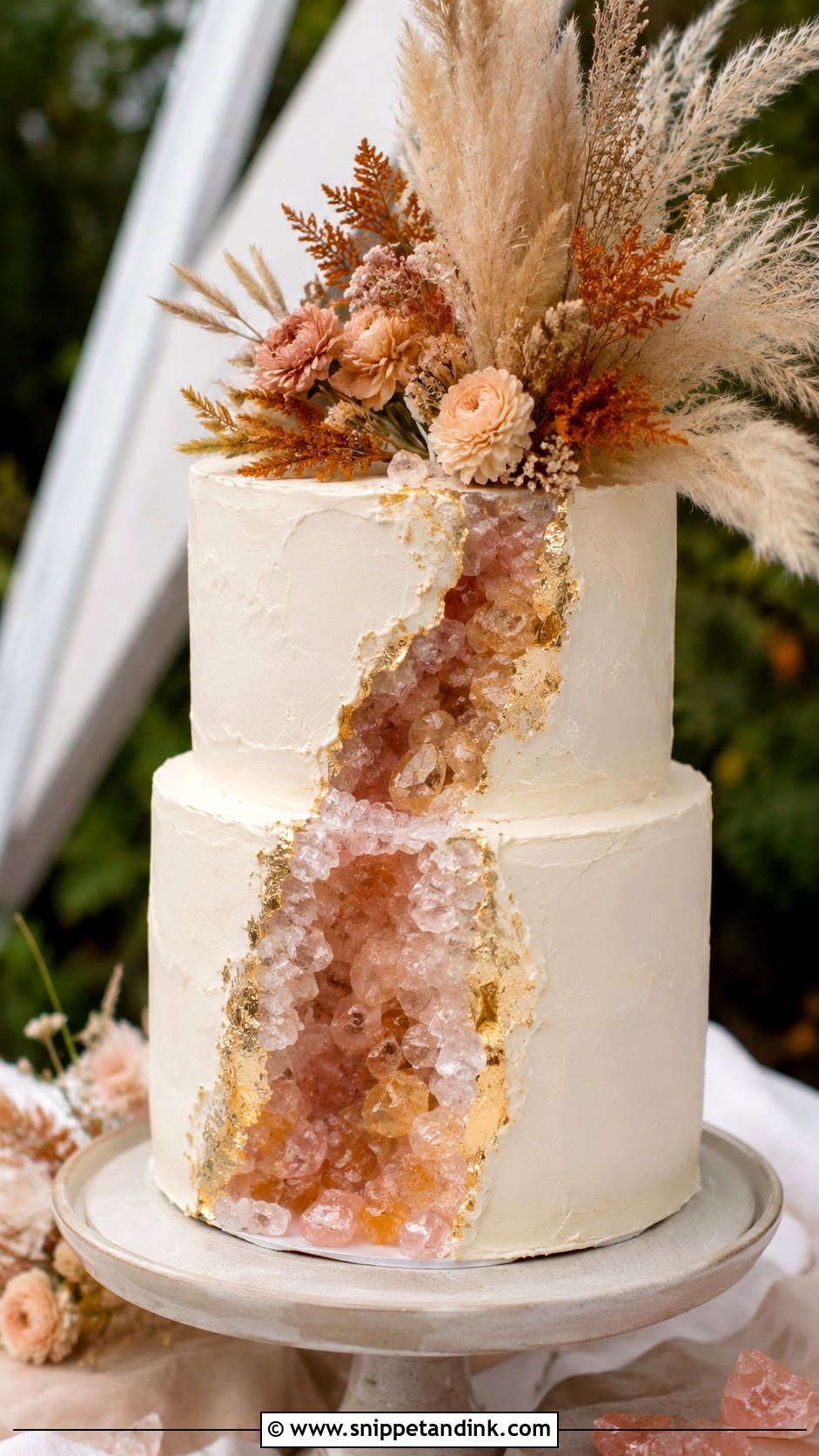
Boho geodes combine ivory buttercream, sand-toned shading, dried-style florals and a geode in rose quartz, amber, turquoise or smoky quartz. A slightly imperfect finish works here as long as the crystal opening itself stays clean and precise; that contrast is what keeps it from looking messy. Desert venues and relaxed receptions suit it, with honey lavender, vanilla chai or coconut inside.
23. Minimalist Geode Wedding Cake
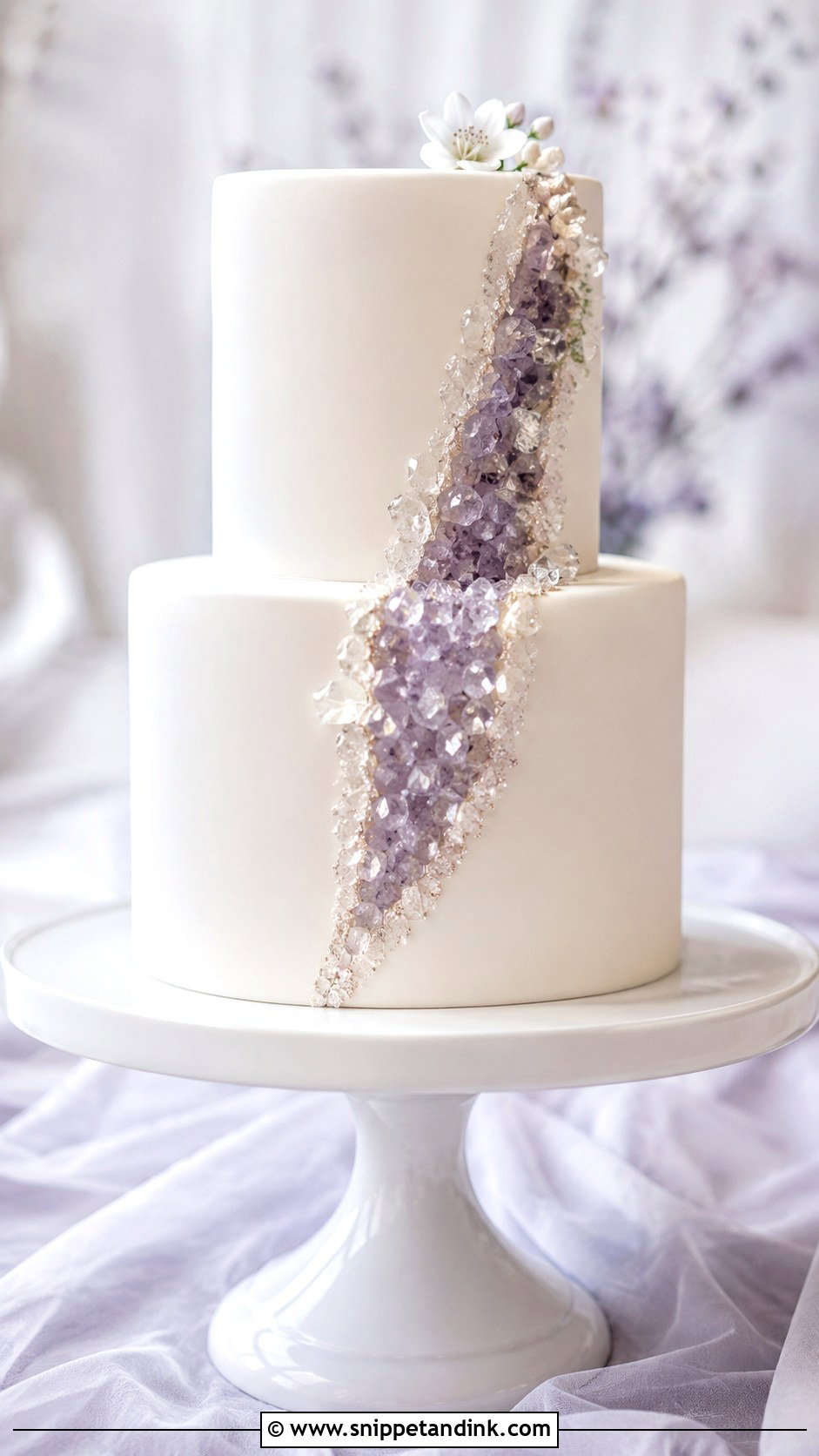
One slim crystal seam on the front tier of a smooth white or ivory cake is all a minimalist geode needs. Clear quartz, pale blush, soft grey or light lavender crystals work best, and the topper and flowers should be close to absent. Because there’s nothing to distract the eye, the fondant has to be flawless, so this is not the place to save on finish. Intimate weddings and modern venues suit it.
24. Tall Geode Wedding Cake
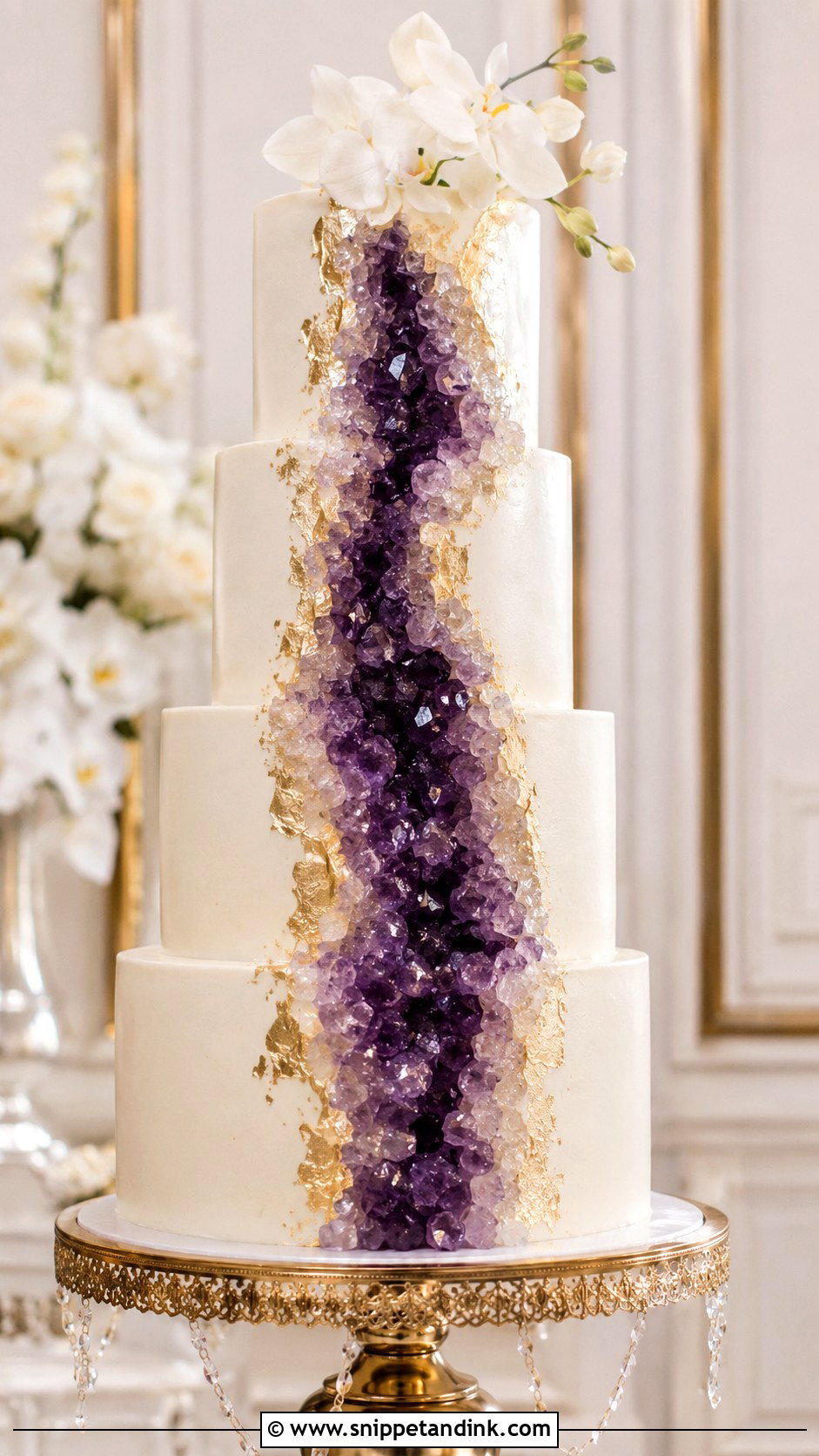
Tall geode cakes let the crystal opening travel down several tiers, which pulls the eye upward and makes even simple colours feel grand. White fondant with amethyst, emerald, sapphire or clear crystals is the strongest pairing. Rock candy is heavy, so the carved tiers need proper internal supports and boards; I often use extended-height tiers or a dummy tier at the top to gain height without extra weight. Large receptions that need a centrepiece suit it.


25. Two Tier Geode Wedding Cake
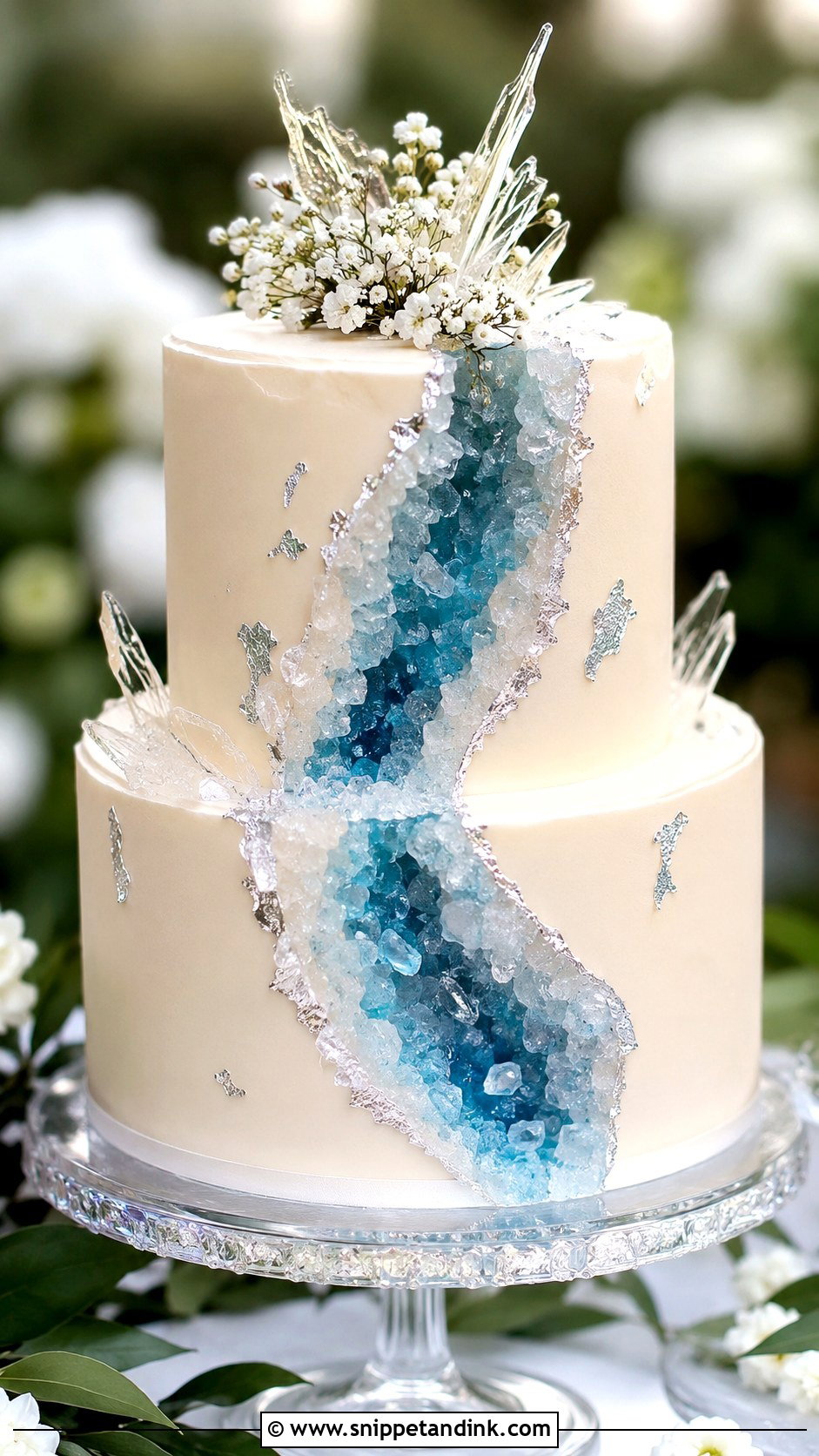
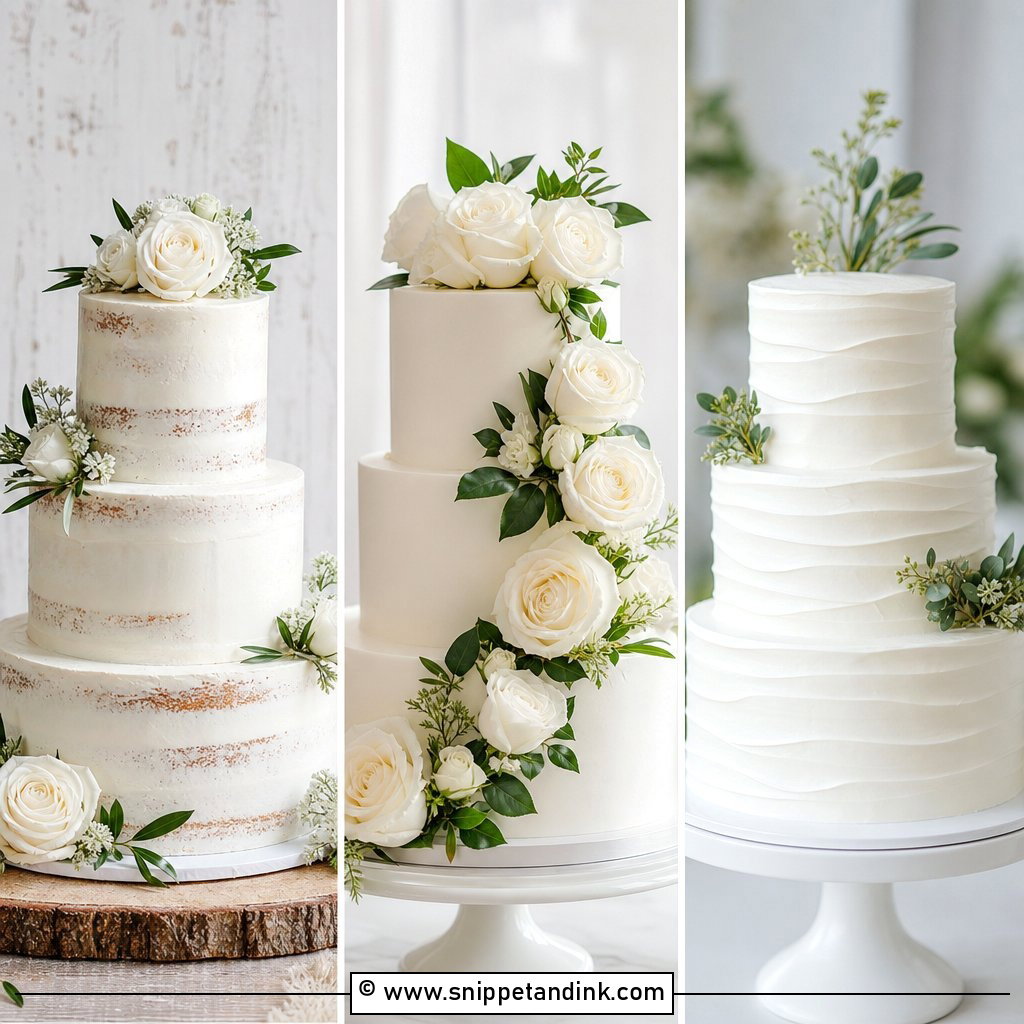
Two tiers still give room for a geode. One opening can run from the top tier into the bottom, or a smaller geode can sit on one side only. Pale pink, lavender, blue and clear crystals suit the smaller scale without overpowering it. Smooth buttercream or fondant keeps it clean, and a raised cake stand adds the height a short cake lacks. Micro weddings, courthouse celebrations and brunch receptions are where I make these most.
26. Three Tier Geode Wedding Cake
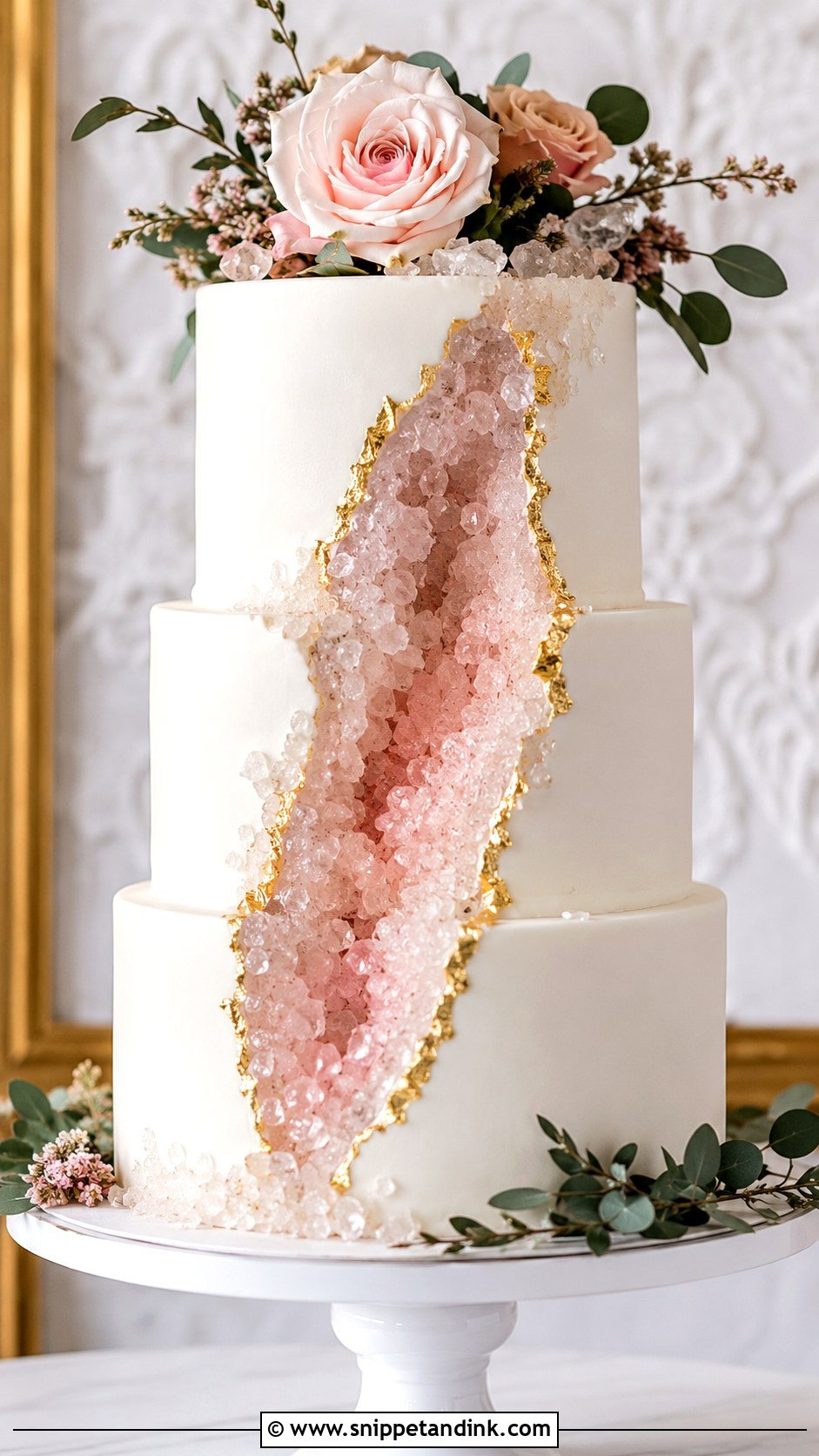
Three tiers is the most practical size for a medium wedding, with room for a full crystal feature without excess. The geode can run vertically down the front, curve around the side or sit as one carved pocket. White, marble, blush or grey exteriors all work, and I match the gold or silver edging to the couple’s rings or table metals. Each tier can be a different flavour, which helps feed mixed preferences.
27. Semi Naked Geode Wedding Cake
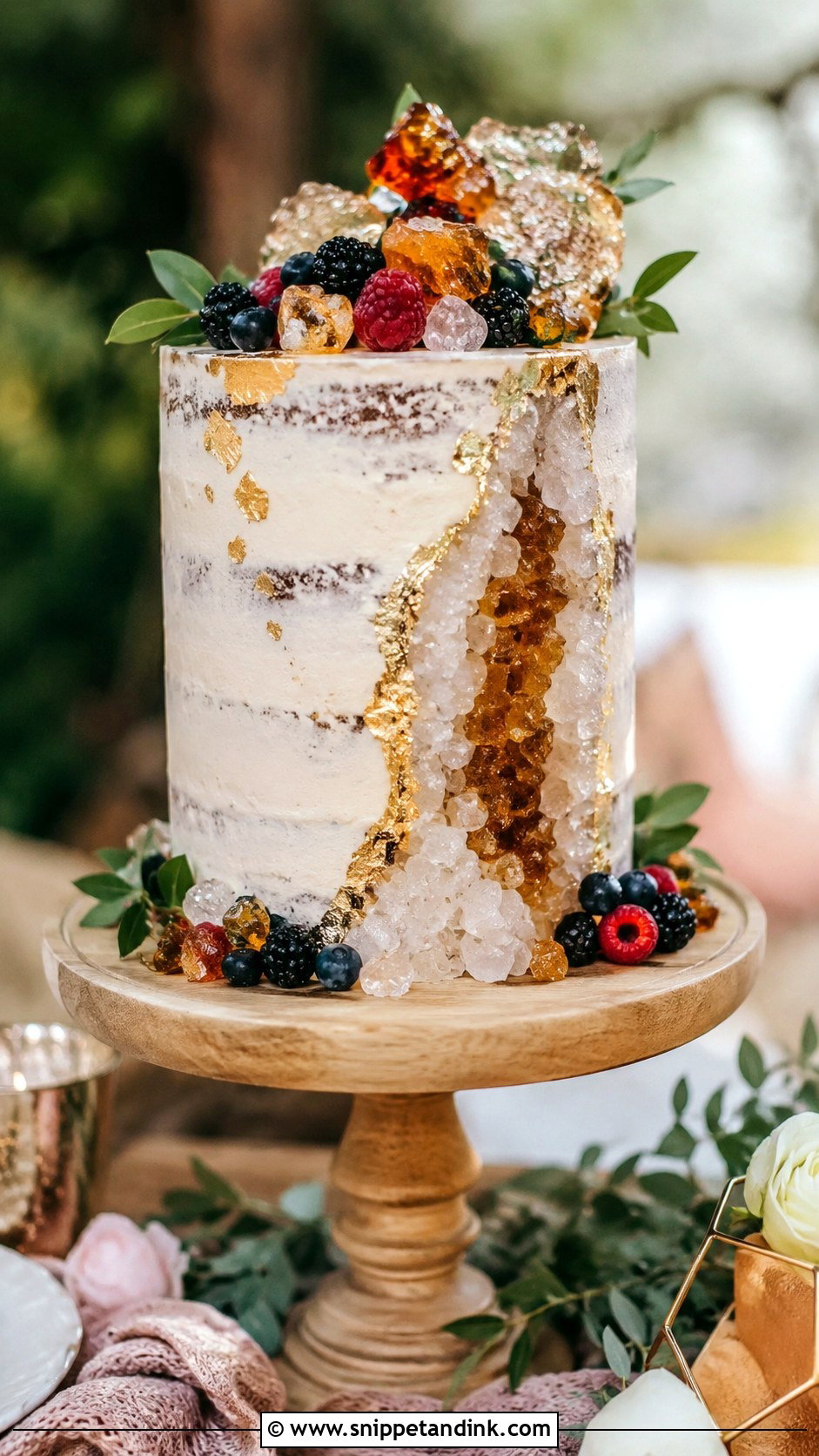
Semi-naked geodes show the cake layers through a thin coat of buttercream, with one side opening into crystals. Amber, rose quartz, clear or pale purple look natural against the light frosting. This finish dries out faster than a full coat, so I assemble and finish these as close to the event as possible. Berries and greenery around the base suit garden receptions, with lemon elderflower or vanilla berry inside.
28. Buttercream Geode Wedding Cake
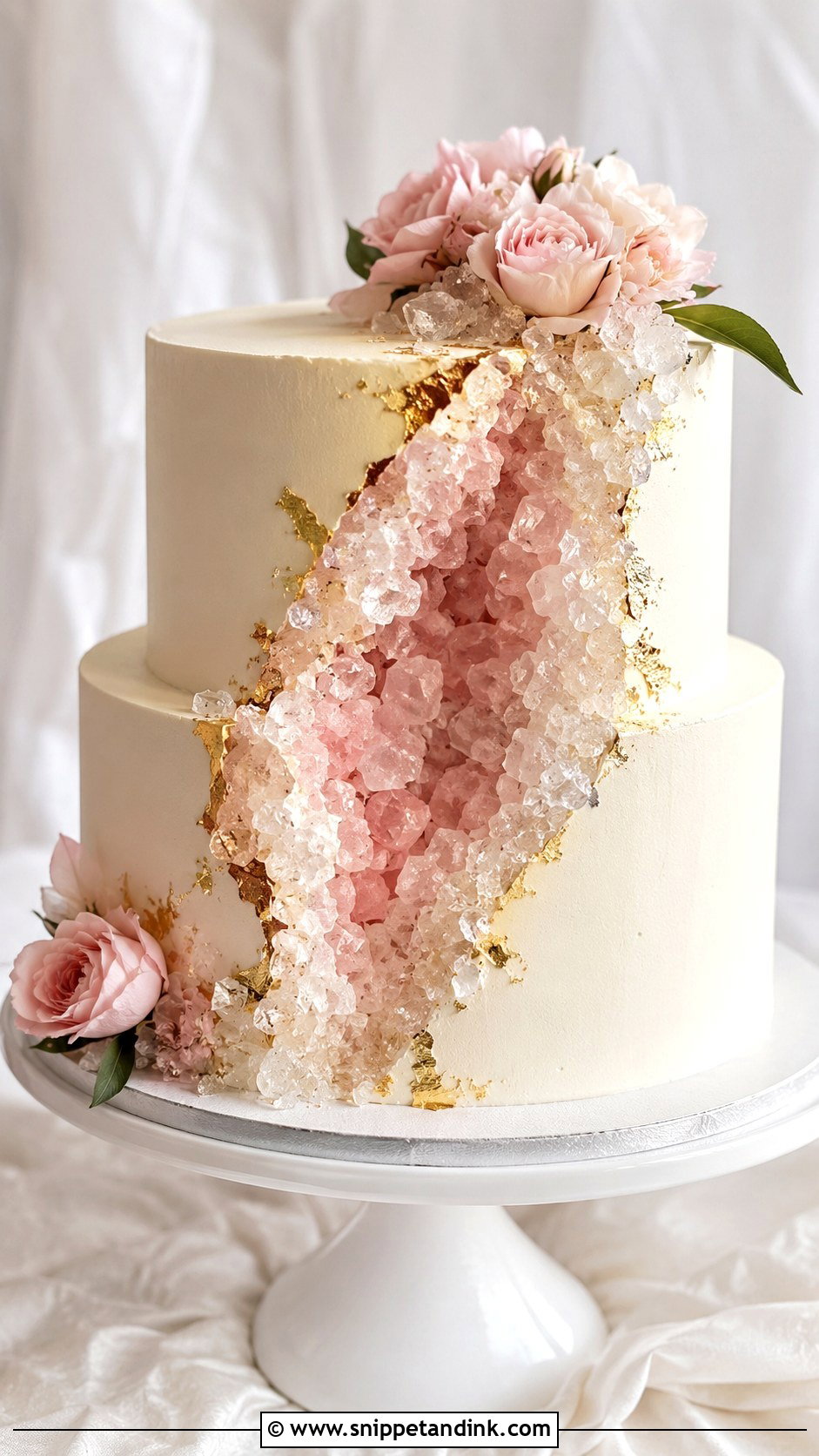
Buttercream geodes look softer than fondant and cut more easily. The cavity is carved carefully, lined with rock candy or sugar crystals and edged in buttercream, modelling chocolate or metallic leaf. Heat is the risk: buttercream softens, and heavy crystals can slump or slide in a warm room. I use a firm, well-chilled buttercream or a ganache layer behind the crystals, and the cake should stay cool until it’s displayed.
29. Fondant Geode Wedding Cake
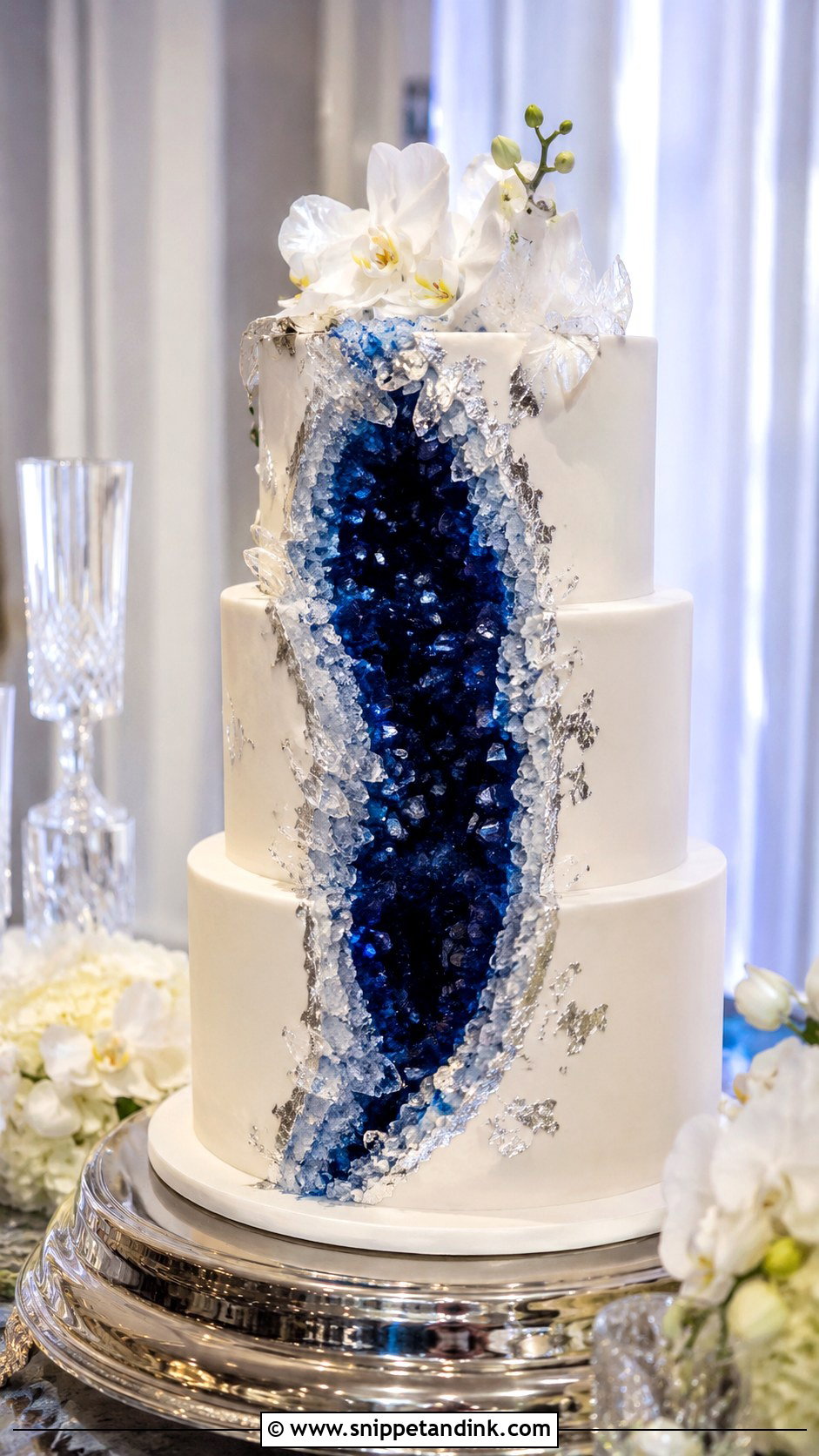
Fondant gives the cleanest surface for crystal work: sharp edges, crisp tiers, marble veining, painted stone and precise metallic detail. It suits dramatic openings on tall cakes, and purple, blue, emerald, clear and black crystals all stand out against it. The inside stays soft, with buttercream or ganache under the fondant. Formal weddings that need a polished, sculptural finish are where it earns its place.
30. Crystal Geode Wedding Cake
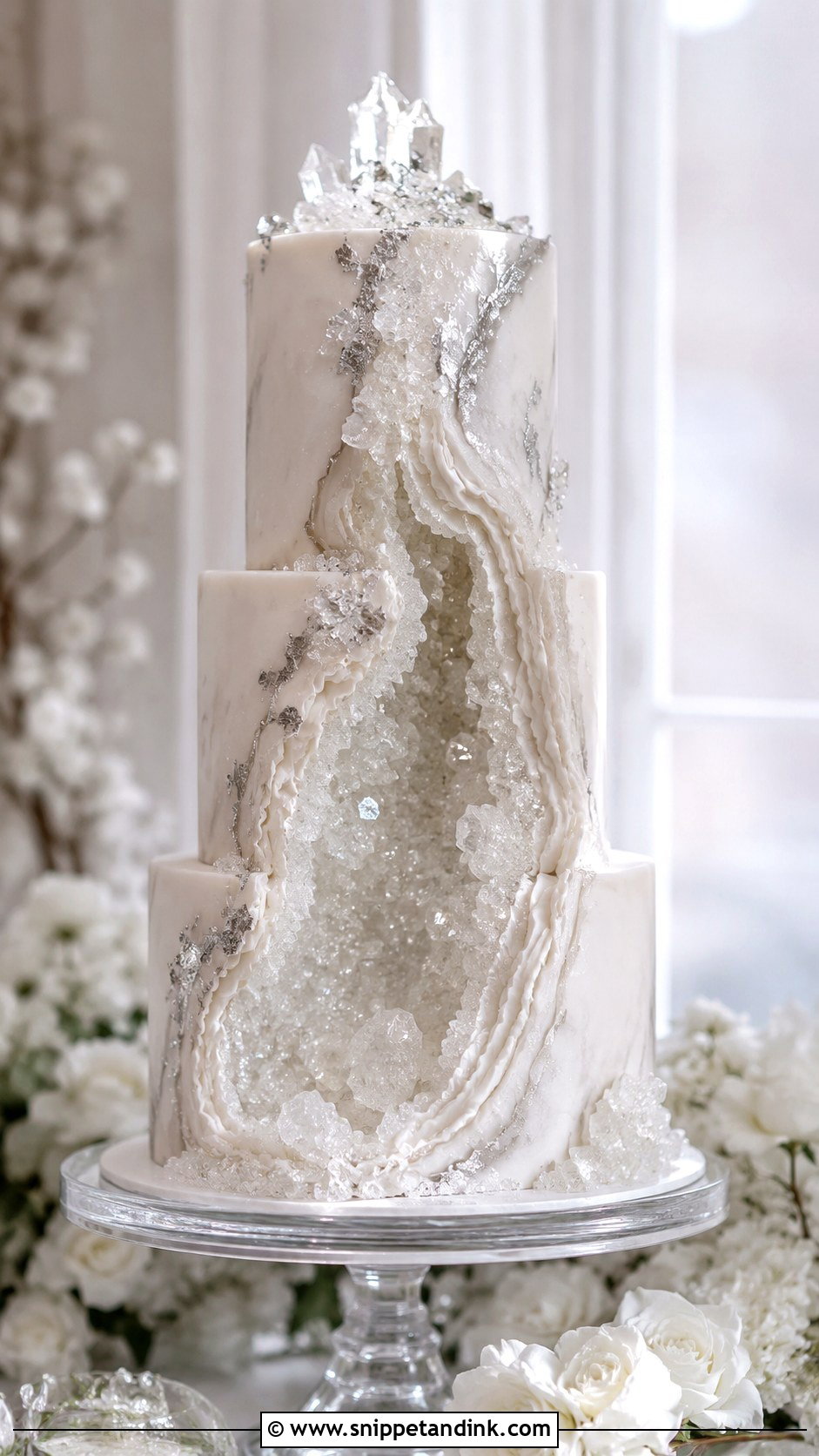
Crystal depth comes from size variation: tiny sugar grains at the rim, larger rock candy pieces at the centre, just as real geodes form. Clear quartz, amethyst, rose quartz, emerald, sapphire and smoky grey all work, inside a white, marble, black, blush or metallic exterior. Skip the edible glitter; the crystals already catch light, and glitter just muddies them. Vanilla, chocolate or berry layers sit underneath.
Sugar Crystals Hate a Humid Marquee
Sugar pulls water from the air. On a humid day, rock candy loses its sharp edges and isomalt can turn tacky or cloudy, while buttercream underneath softens in heat. That doesn’t rule out a summer wedding, but it changes the plan. I’d keep the cake indoors or under cover and out of direct sun, ideally in an air-conditioned room until it’s displayed, and set it up as late as the venue allows.
Settle these with your baker before you confirm the order
- How far ahead she needs the booking. Geode work is slow and hand-carved, so lead times are usually longer than for a plain tiered cake.
- Whether the cake travels stacked or is assembled on site. Rock candy is heavy, and a tall geode cake is often safer finished at the venue.
- Which tiers are real cake and which, if any, are dummies for height.
- Where the crystals sit relative to the cutting plan, and who removes them.
- Whether every metallic and colour on the cake is edible, not only decorative.
If your baker suggests a sample crystal or a photo of a test geode in your colours, say yes. Crystal colour shifts once it sits against fondant and under warm reception bulbs, and a quick test is far cheaper than a surprise on the day. I’d also ask for a dry, shaded corner of the room rather than the spot beside the dance floor, where heat and bumped tables do the most damage.
Where the Crystal Face Should Point on the Day
The decisions that matter most are crystal colour, cake finish, metallic edging and the size of the opening. A small quartz seam feels quiet and modern; a tall amethyst cavern becomes the room’s centrepiece. Pull your crystal colour from something already in your flowers, linens or stationery so the cake belongs to the room. Then ask your venue to place the table so the crystal face looks toward the guests and catches the light.
You'll Like These Ideas:











Leave a Reply