
When couples sit down at my consultation table, they usually bring a screenshot of a cake they love and very little idea of whether it will work in their room. A design that looks right in a studio photo can melt on a July lawn or vanish on a long buffet. So I start somewhere less glamorous: where the cake will stand, how warm the room gets and how many people need a slice. Those answers narrow the field quickly. These twenty wedding cake ideas range from vintage piping to geodes and cupcake towers, and for each one I’ve noted how it’s made and where it struggles.
Getting the Most From a Cake Tasting
A tasting is part flavour test, part design meeting. Most bakers offer three to six flavours, and couples often taste them all and remember none. A few habits make the hour more useful.
- Taste the sponge and the filling separately before combining them. A dry sponge hides behind a rich filling at a tasting, then shows on the day.
- Ask what the frosting will be. A tasting slice often comes with a different buttercream from the one that suits your design or season.
- Bring your invitation, a fabric swatch or a flower photo so colour discussions happen against something real.
- Plan different flavours for different tiers if you can’t agree; most bakers are happy to do this.
- Note the slices you go back to for a second bite. That’s usually the answer.
Bring the person whose opinion you’ll actually listen to, and no more than one or two others. A crowd at a tasting turns into a vote, and the flavour that wins a vote is rarely the one either of you loved most. Eat something light beforehand too; tasting six rich slices on an empty stomach blunts the palate by the third.
1. Vintage Wedding Cake
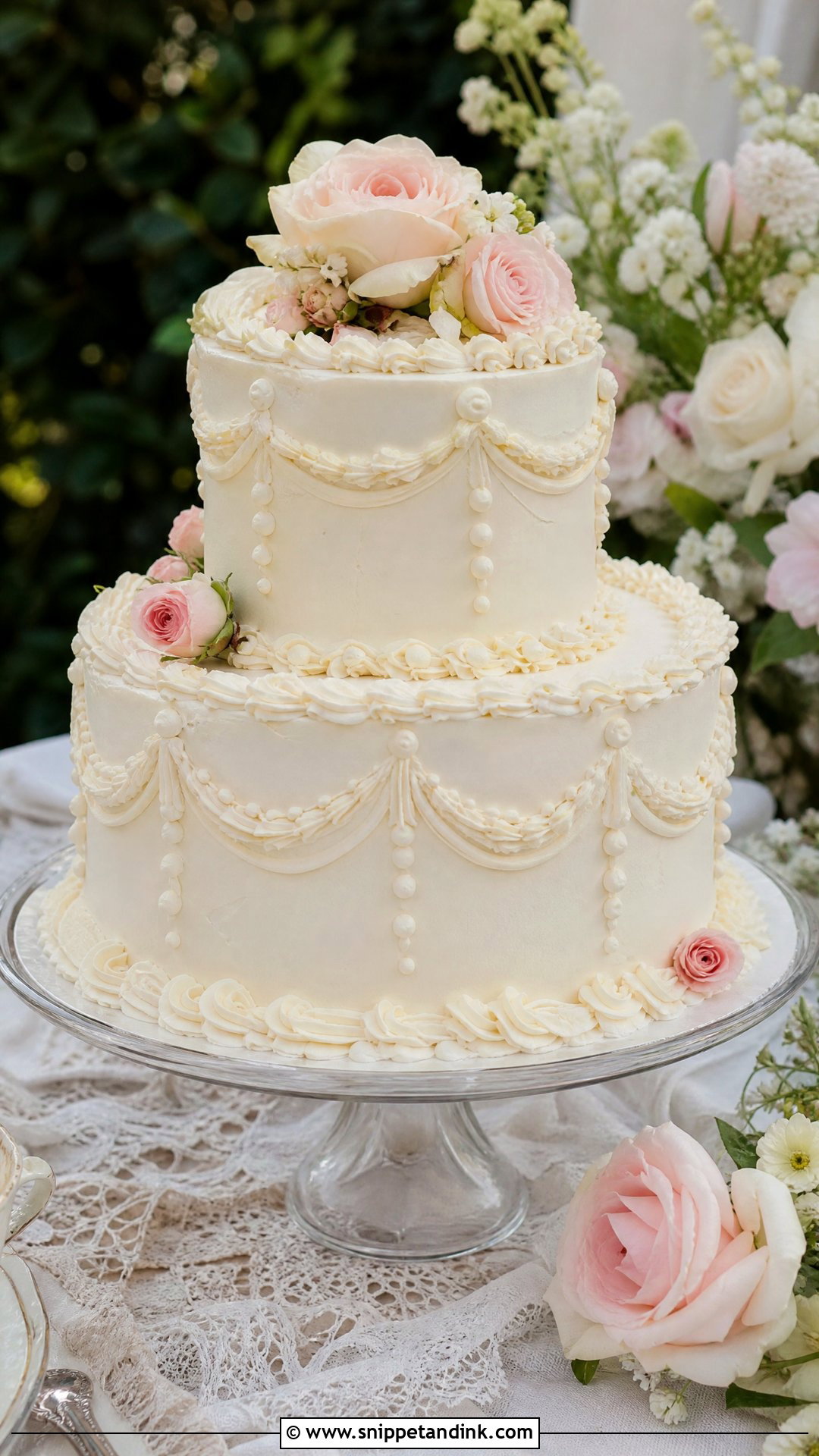
Vintage cakes are all about buttercream piping: shell borders, small swags, bows and the odd cherry. The skill is in restraint, since piping every surface makes the cake look fussy rather than nostalgic. I map the piping on a sketch first so each tier has one main border and one accent. Ivory reads classic; butter yellow or baby blue modernises it. Almond sponge with raspberry is my favourite under all that frosting, because the tart filling cuts through the sweetness.
2. Lambeth Wedding Cake
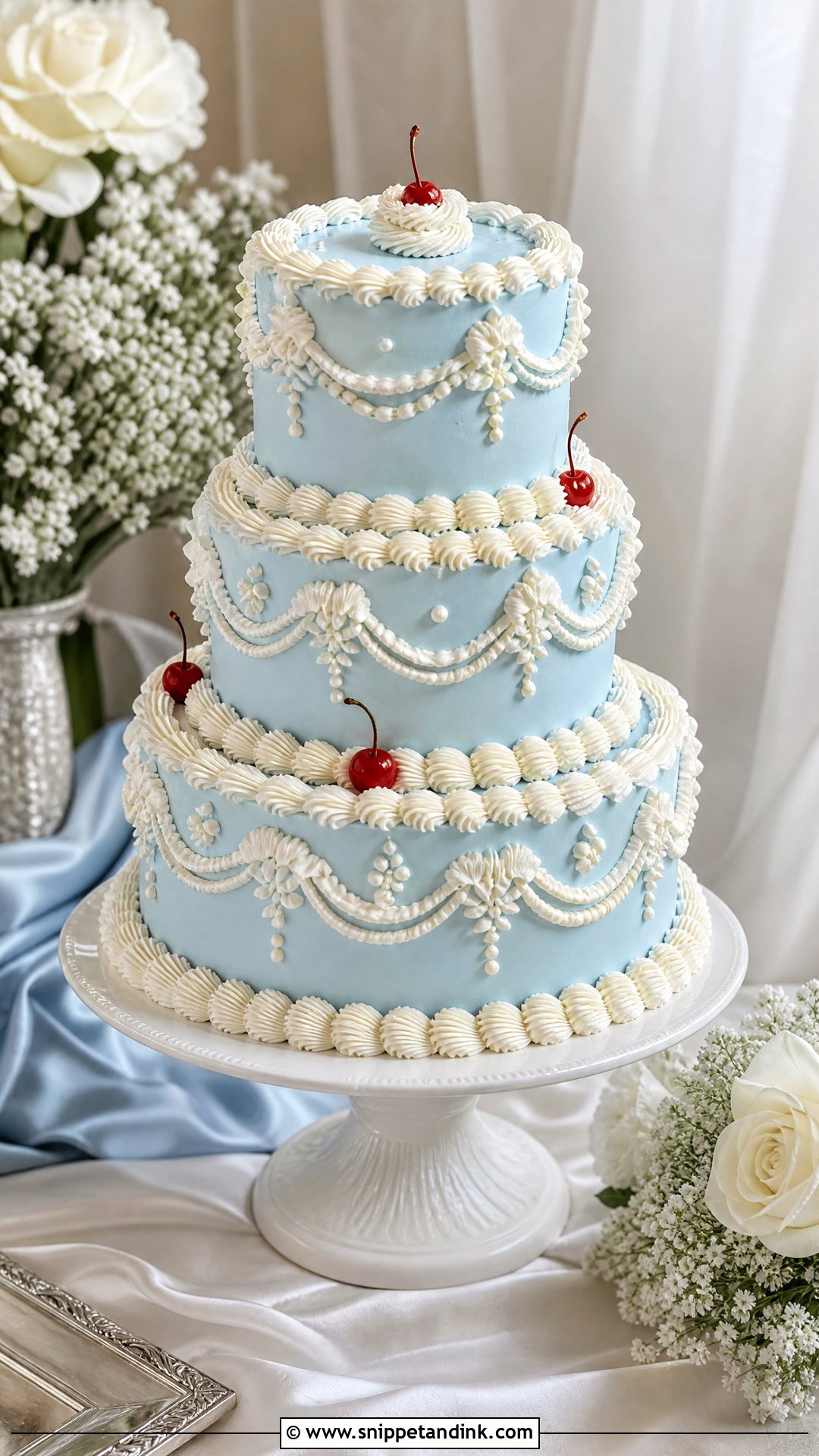
A Lambeth wedding cake takes vintage piping to its extreme, with borders stacked on borders until the tiers look carved. It needs a stiff, stable buttercream, which means it’s safer indoors than at an outdoor summer reception. Two or three tiers is enough; more and the piping time climbs steeply. I’d keep the topper small or skip it entirely, because the piped texture is already the decoration.
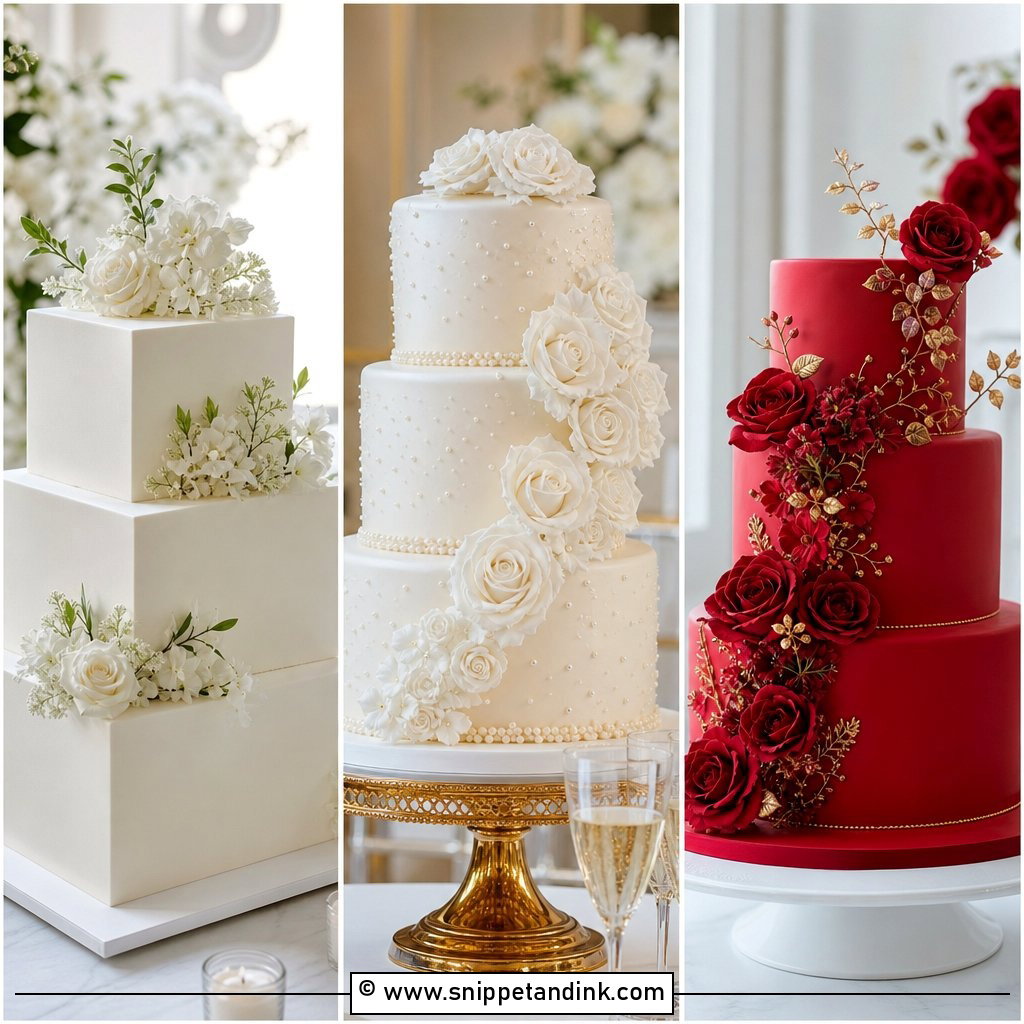
3. Modern Square Wedding Cake
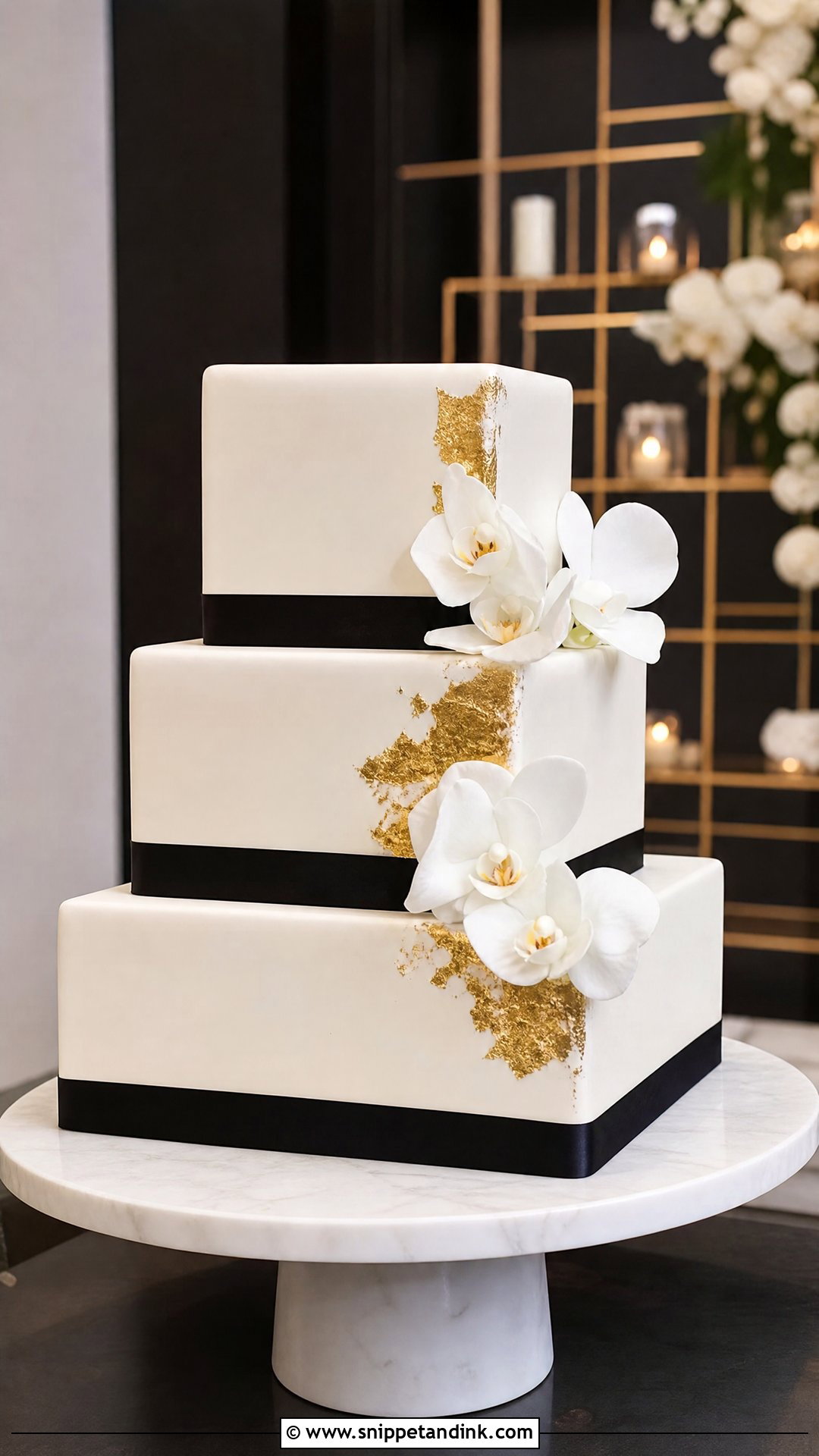
Square tiers need sharp corners, and those come from chilled cake, a firm ganache coat and careful fondant work, or very patient buttercream. They suit a gallery, rooftop or other clean-lined space. One statement, such as a black ribbon or a single sugar flower, is enough, because the outline is already doing the talking. Leave clear space around the stand so the shape reads from across the room. Pistachio or lemon elderflower sponge gives it a modern flavour to match.
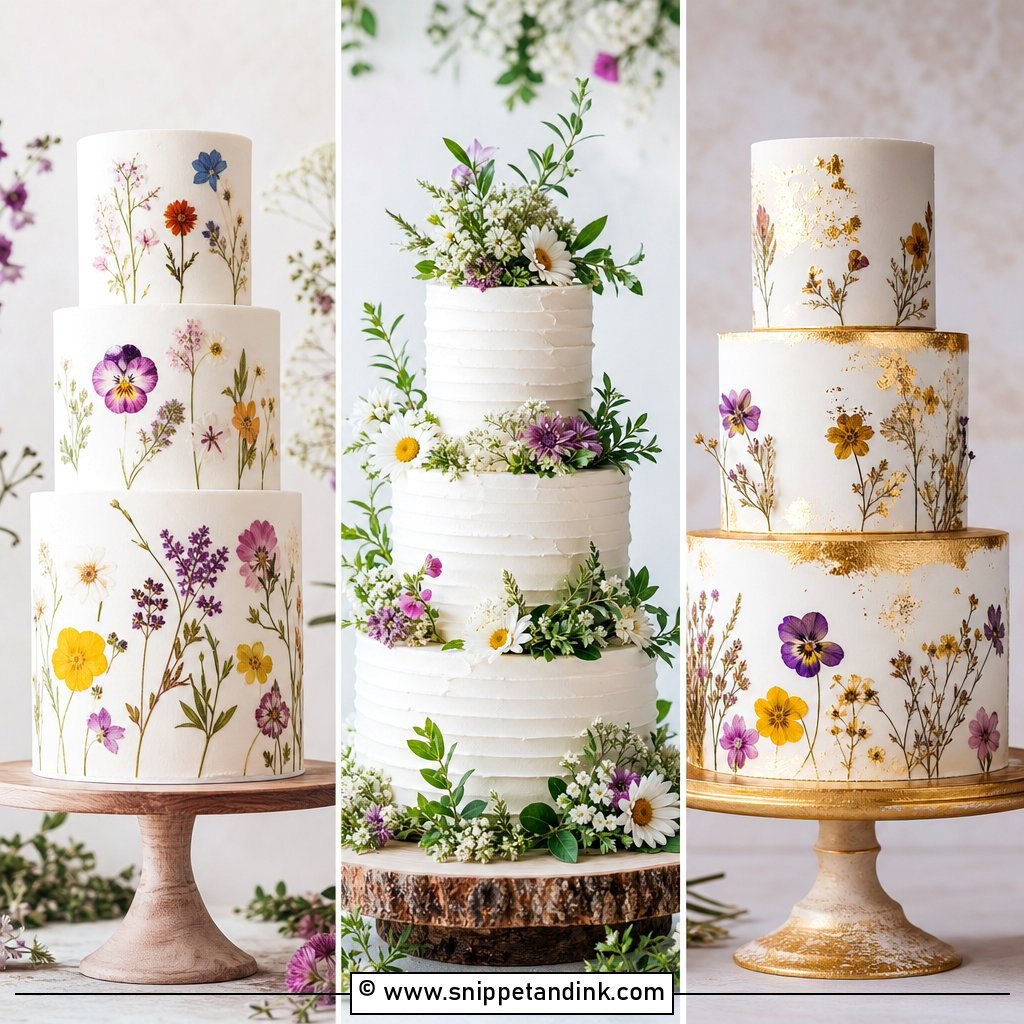
4. Floral Meadow Wedding Cake
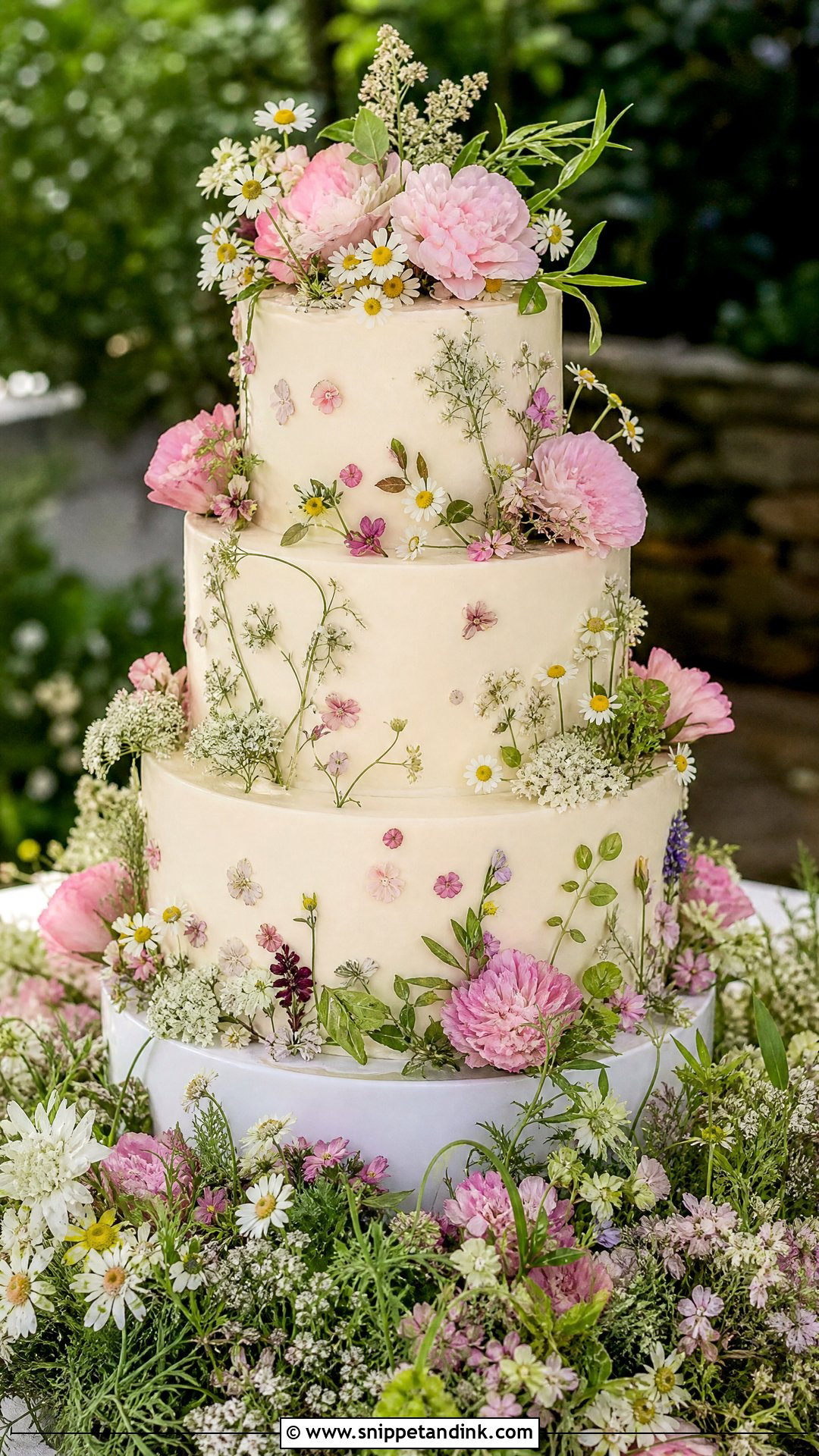
A meadow cake is mostly about the table, not the cake. The tiers stay plain, smooth or lightly ribbed, and the flowers are arranged in low clusters around the base and the stand. That’s good news, because the blooms sit on the table rather than in the frosting, which means fewer food-safety concerns and more freedom for your florist. Matching those flowers to your bouquet ties the whole reception together. Honey lavender or lemon blueberry sponge fits the garden feel.
5. Pressed Flower Wedding Cake
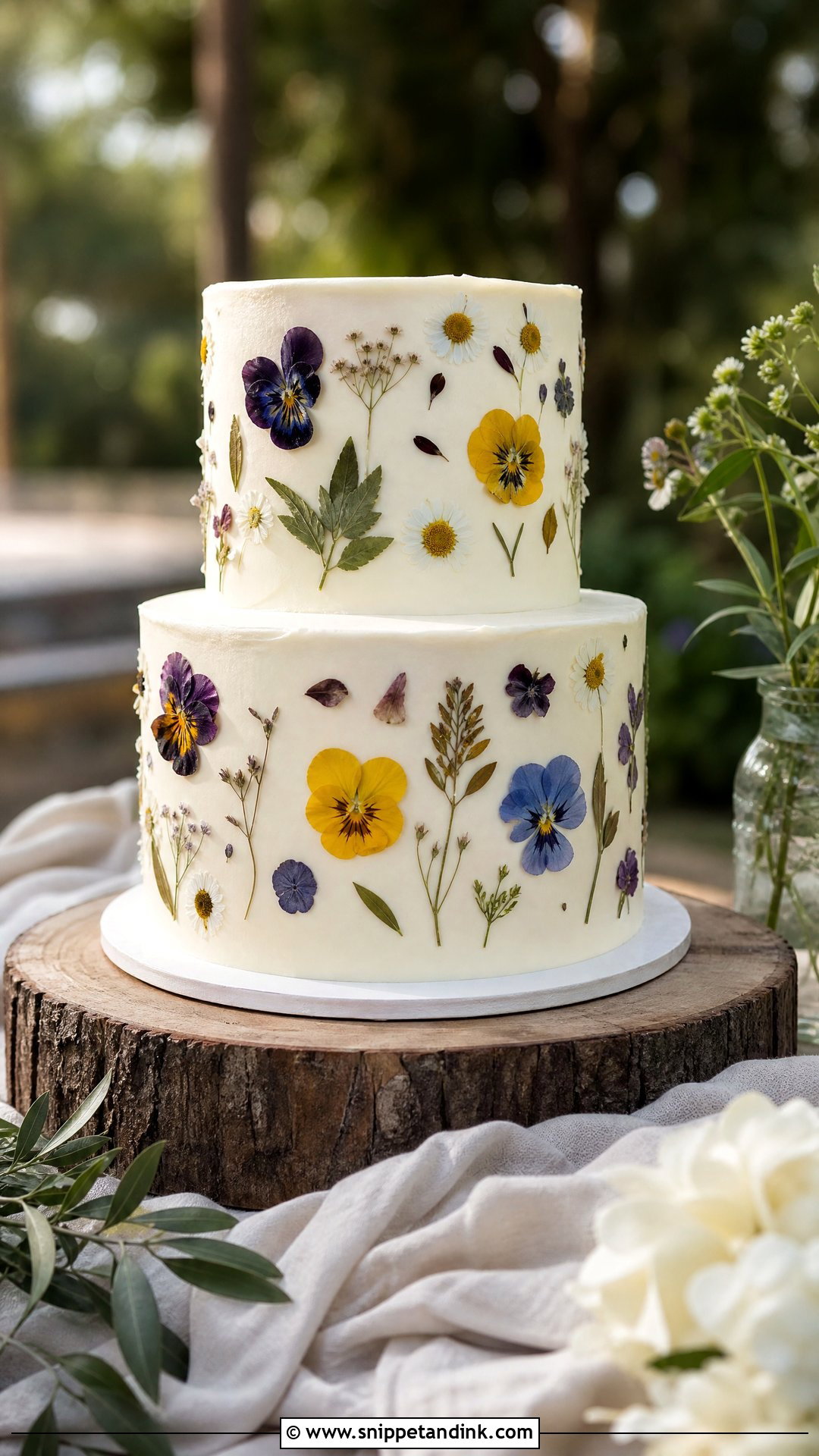
Pressed petals only lie flat on a very smooth surface, so this design needs a well-finished base before anything else. I press edible flowers gently onto a chilled tier so they bond without smearing the frosting. Only flowers sold as edible or grown without sprays should be used. Keep the tier shape simple and the arrangement sparse at first; you can always add more petals, but lifting one off leaves a mark.
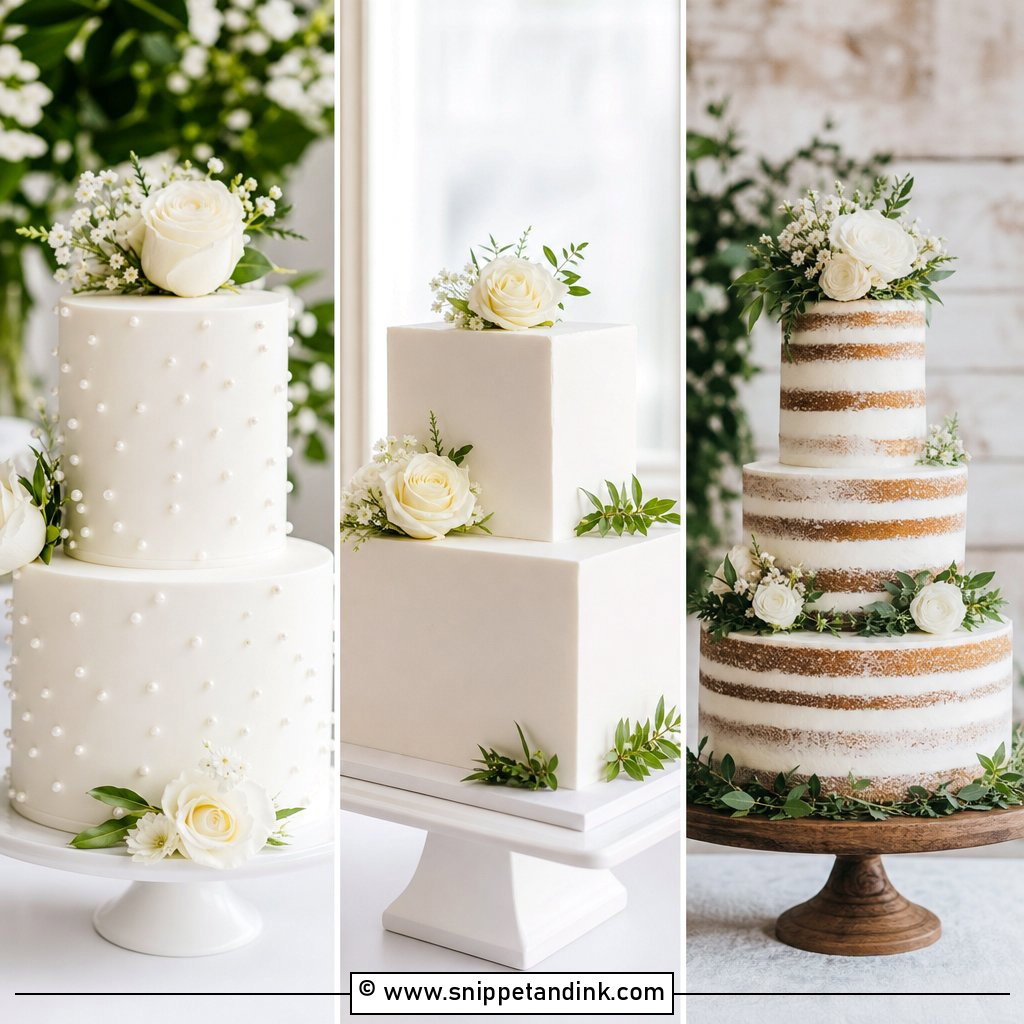
6. Pearl Wedding Cake
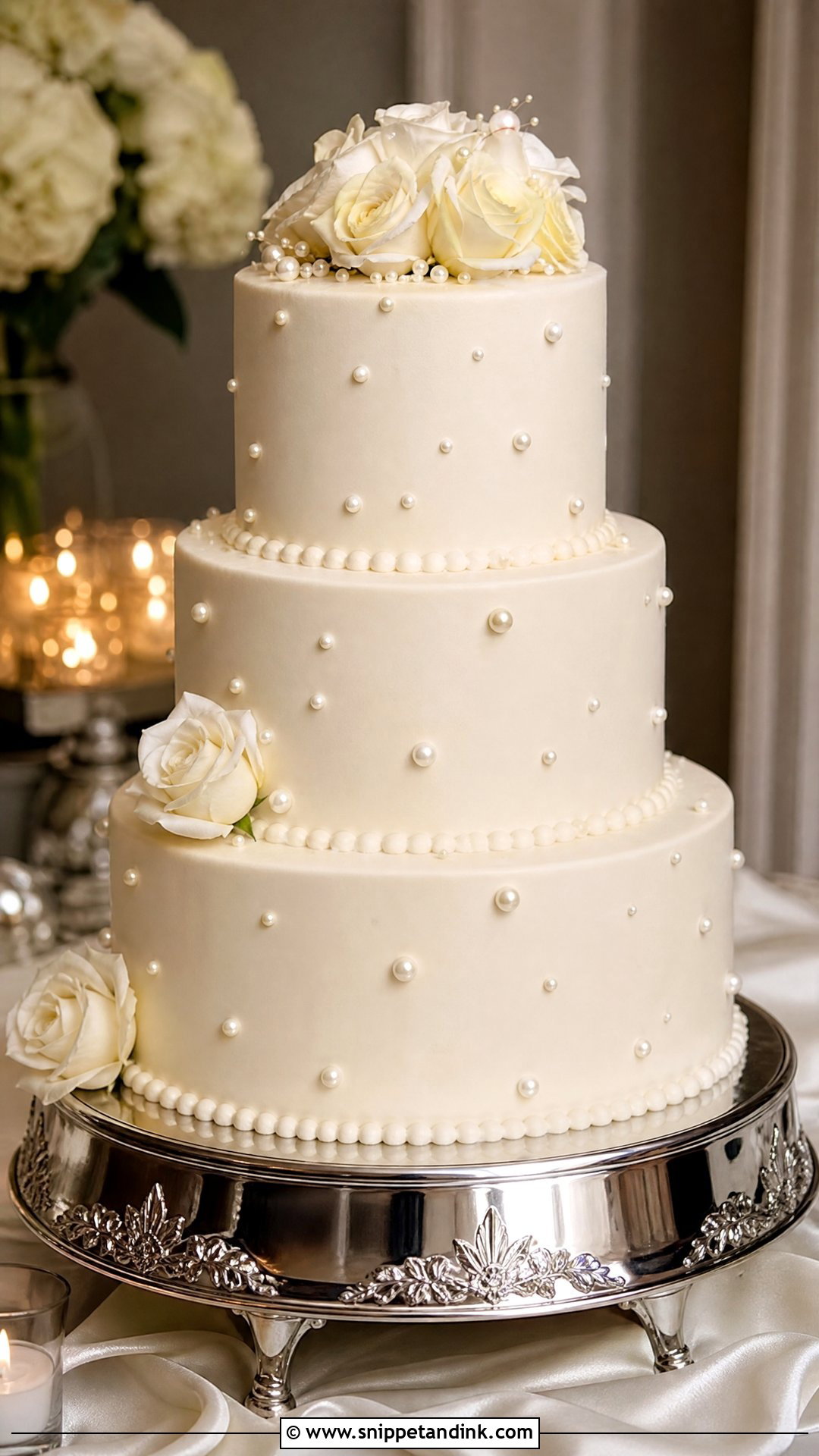
Pearls look refined in small numbers, and a single tier dotted in graduated sizes often looks more expensive than a whole cake covered in them. I pipe soft pearls in buttercream for a warmer look or use sugar pearls on fondant for a polished one. Hard sugar pearls can be tough to bite, so I tell the caterer to brush them off the slices if needed. White chocolate or coconut sponge keeps the palette soft.
7. Watercolor Wedding Cake
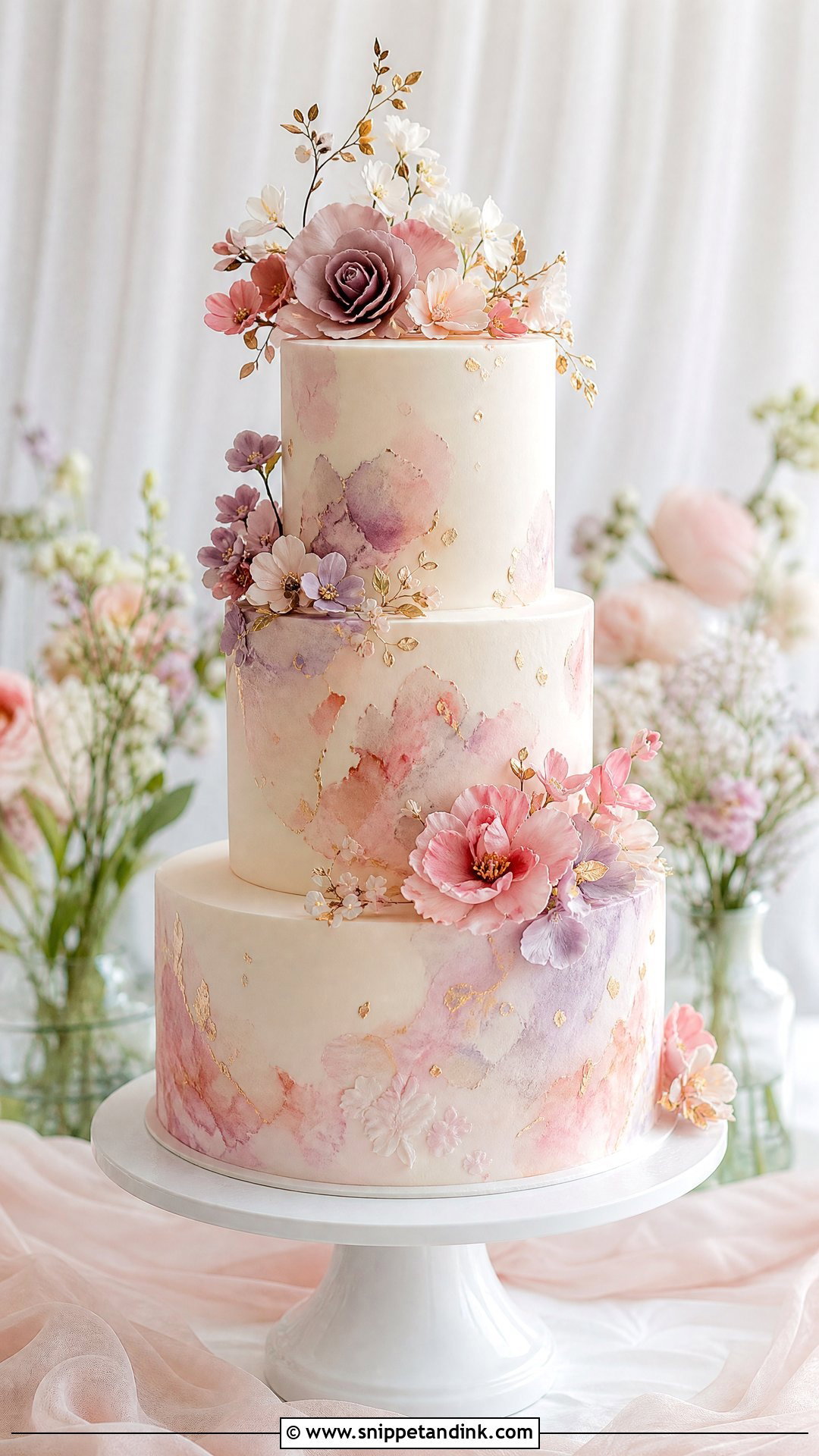
Watercolour finishes are made by blending two or three shades of buttercream on the spinning cake with a scraper, or by brushing thinned colour onto fondant. The blend works best with colours next to each other on the wheel, such as blush into peach, because opposites mix into a muddy grey. I usually pull the shades from your invitation or bridesmaid dresses. A few sugar flowers on top finish it.
8. Black And White Wedding Cake
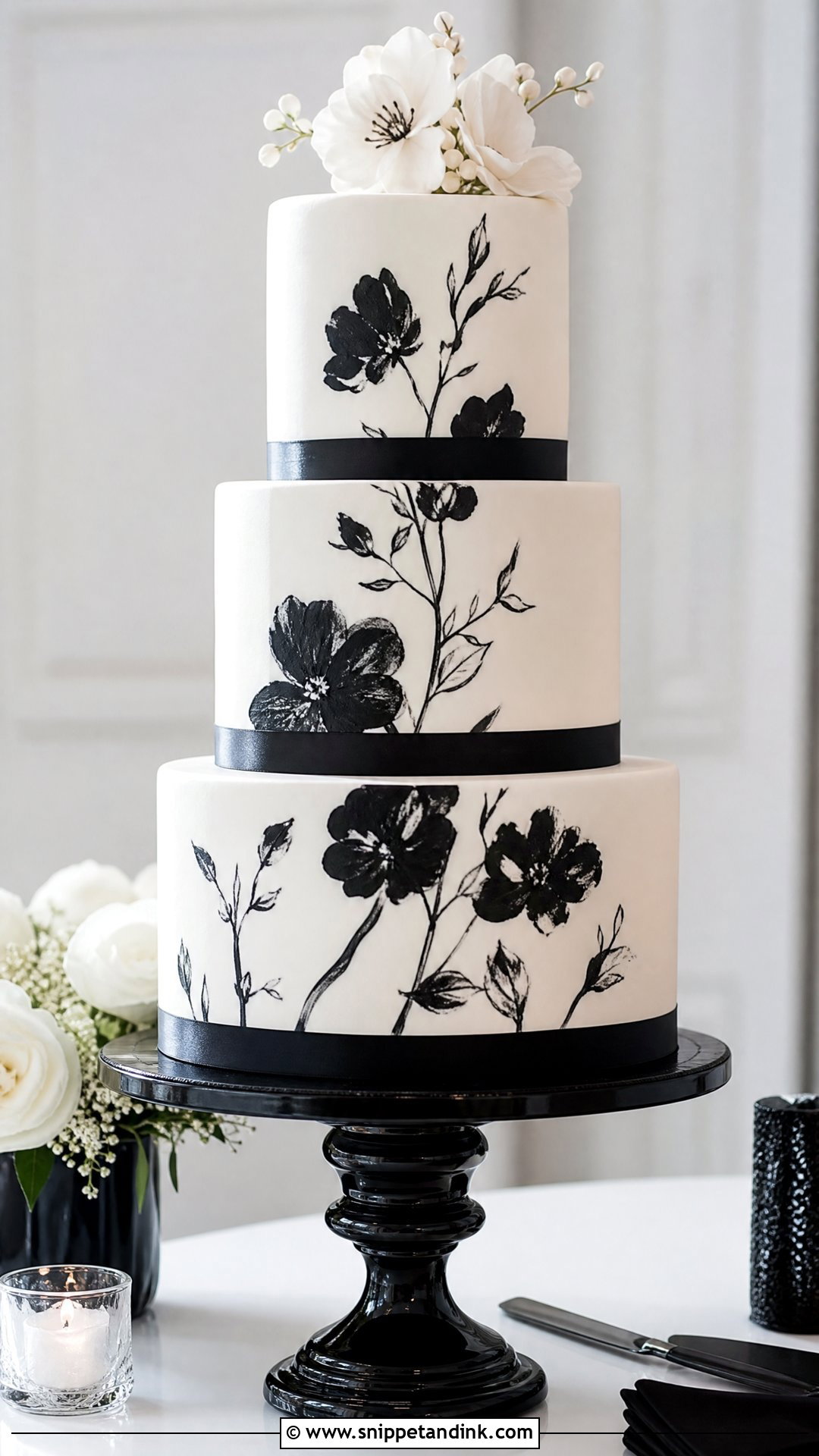
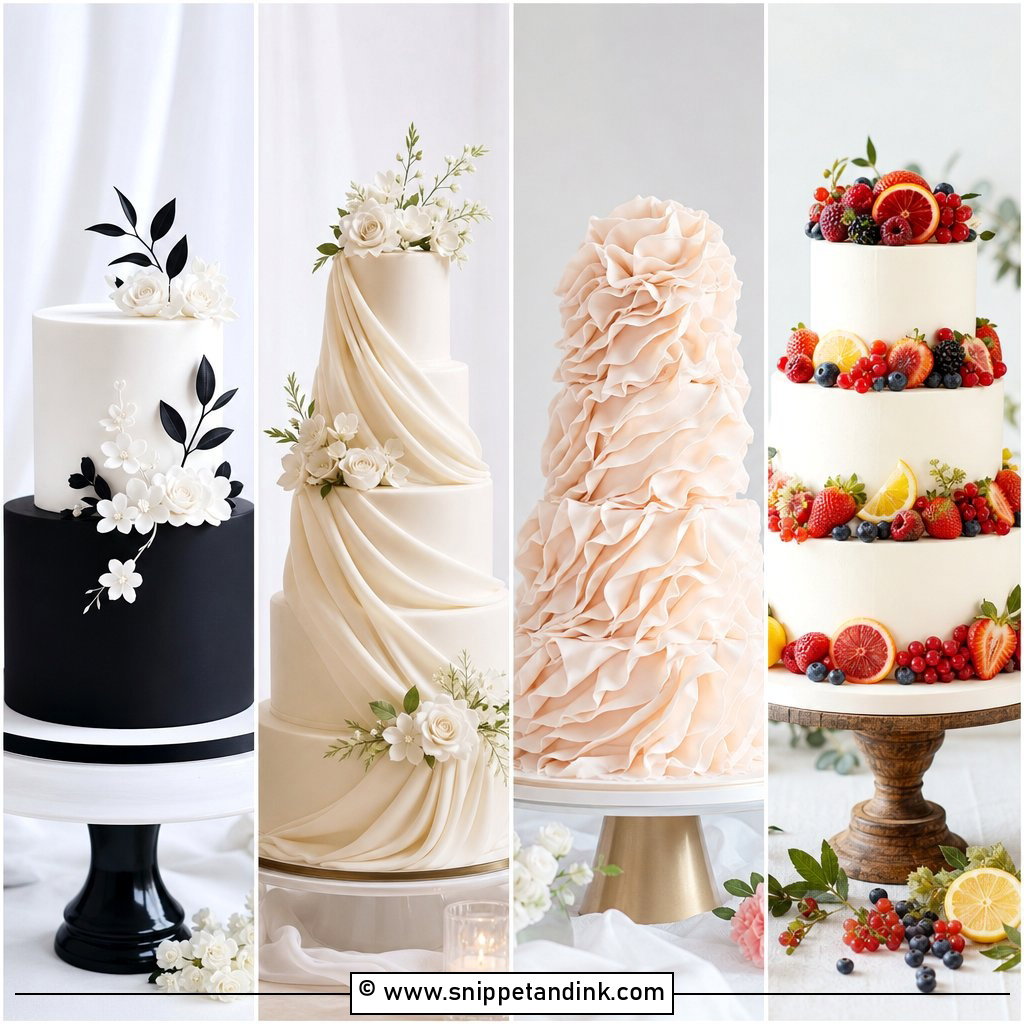
Black and white is crisp but unforgiving; a smudge of black on white fondant can’t be hidden. I apply black details last, with clean hands and tools. Ribbons, painted florals or one black statement tier all work. Very dark fondant can stain lips and teeth, so I keep large black areas to tiers that won’t be served or to a thin outer layer. Cookies and cream or mocha sponge suits the graphic look.
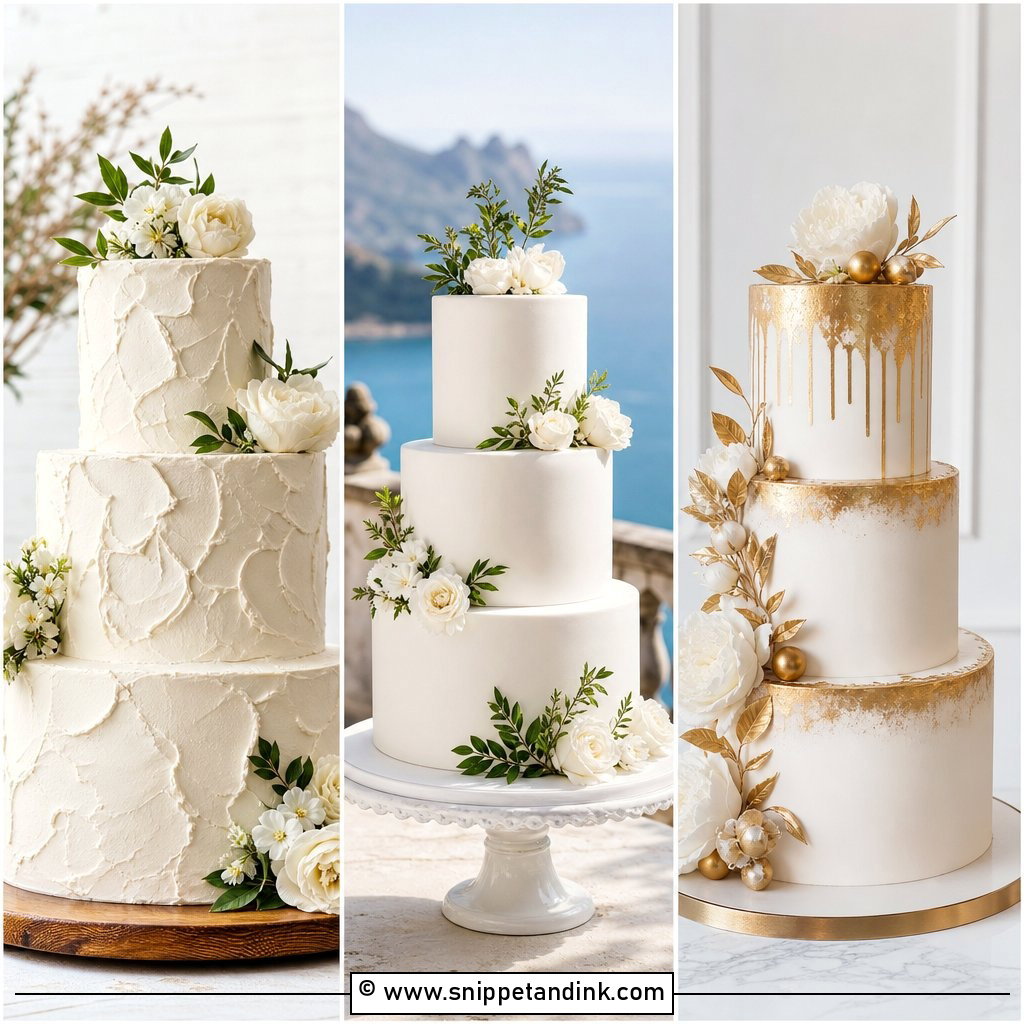
9. Greenery Wedding Cake
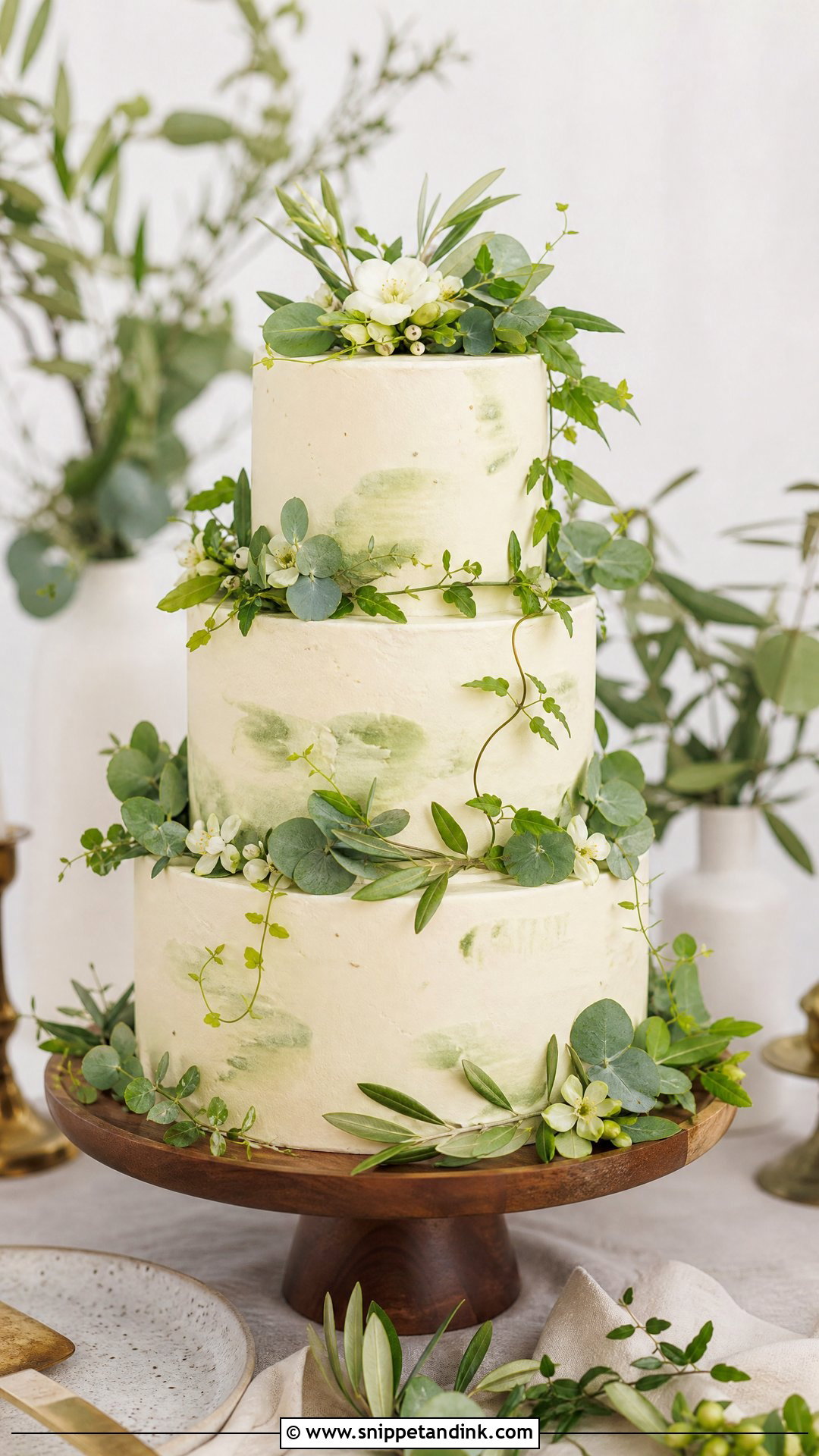
Greenery sounds simple, but it’s where I see the most safety mistakes. Olive branches, ferns from a food-safe supplier, and herbs like rosemary or thyme are fine. Eucalyptus is common in bouquets but toxic, so it shouldn’t touch frosting at all; a sugar or wafer-paper version gives the same silvery leaf. Every stem goes into floral tape or a food-safe pick. A few sprigs look modern; a fuller trail down the tiers feels rustic.
10. Fruit Wedding Cake
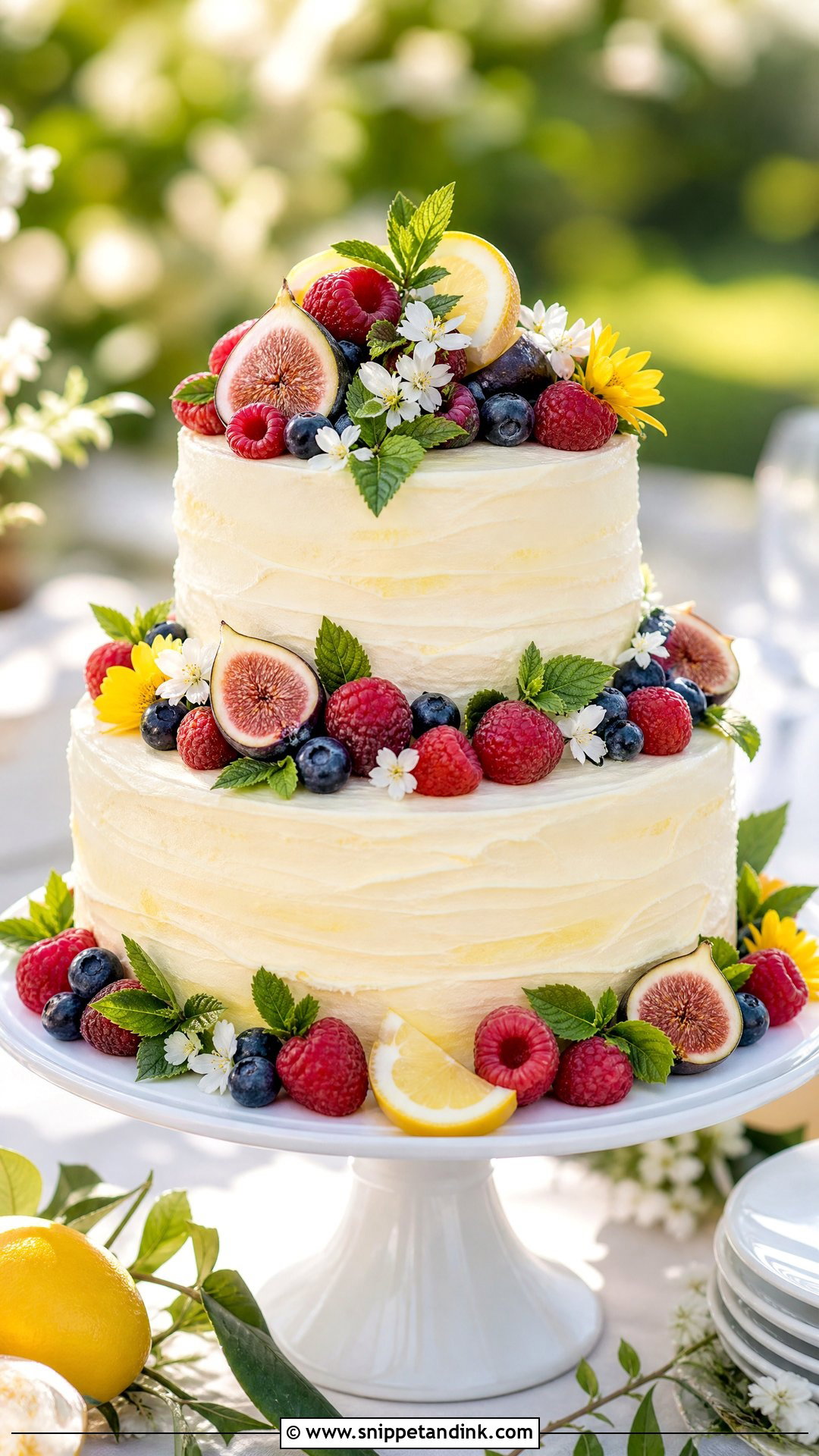
Fruit decorates and flavours at once, which makes sense for a summer or Mediterranean-inspired celebrations. The problem is moisture. Cut fruit weeps juice into the frosting and berries can bleed colour within a couple of hours, so I place fruit on site, as close to the reception as possible, and brush it with a little glaze. Whole figs, cherries and firm berries hold up better than sliced peaches. Olive oil citrus sponge pairs well.
11. Drip Wedding Cake
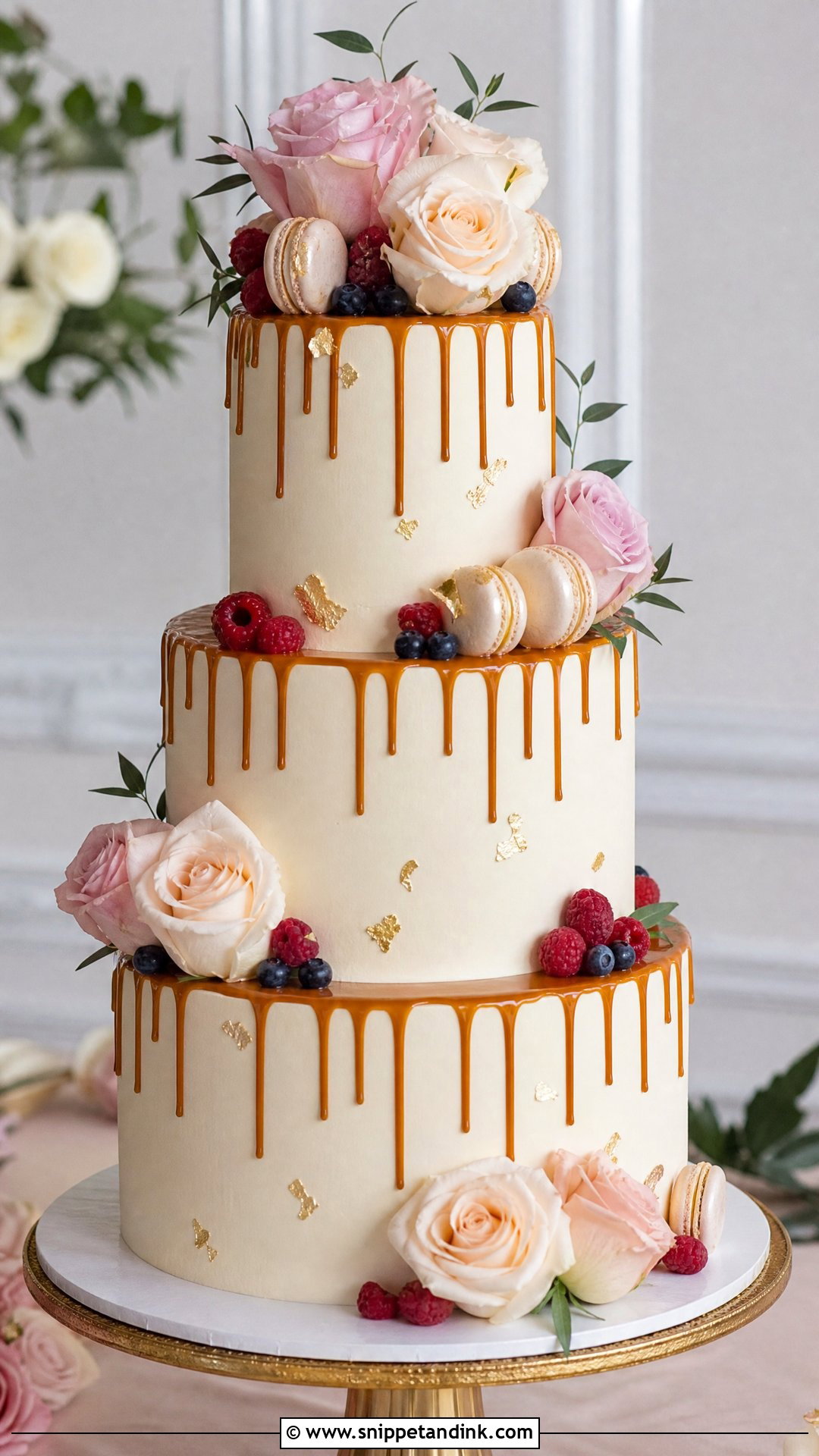
Drips look casual but depend on temperature. The ganache has to be just warm enough to flow and the cake cold enough to stop it halfway down, otherwise you get pools at the base. I test one drip on the back of the cake first. Thin, even drips look deliberate; thick, uneven ones look like an accident. For flavour, chocolate salted caramel sponge suits the caramel or dark chocolate versions, and the drip adds flavour as well as movement.
12. Textured Buttercream Wedding Cake
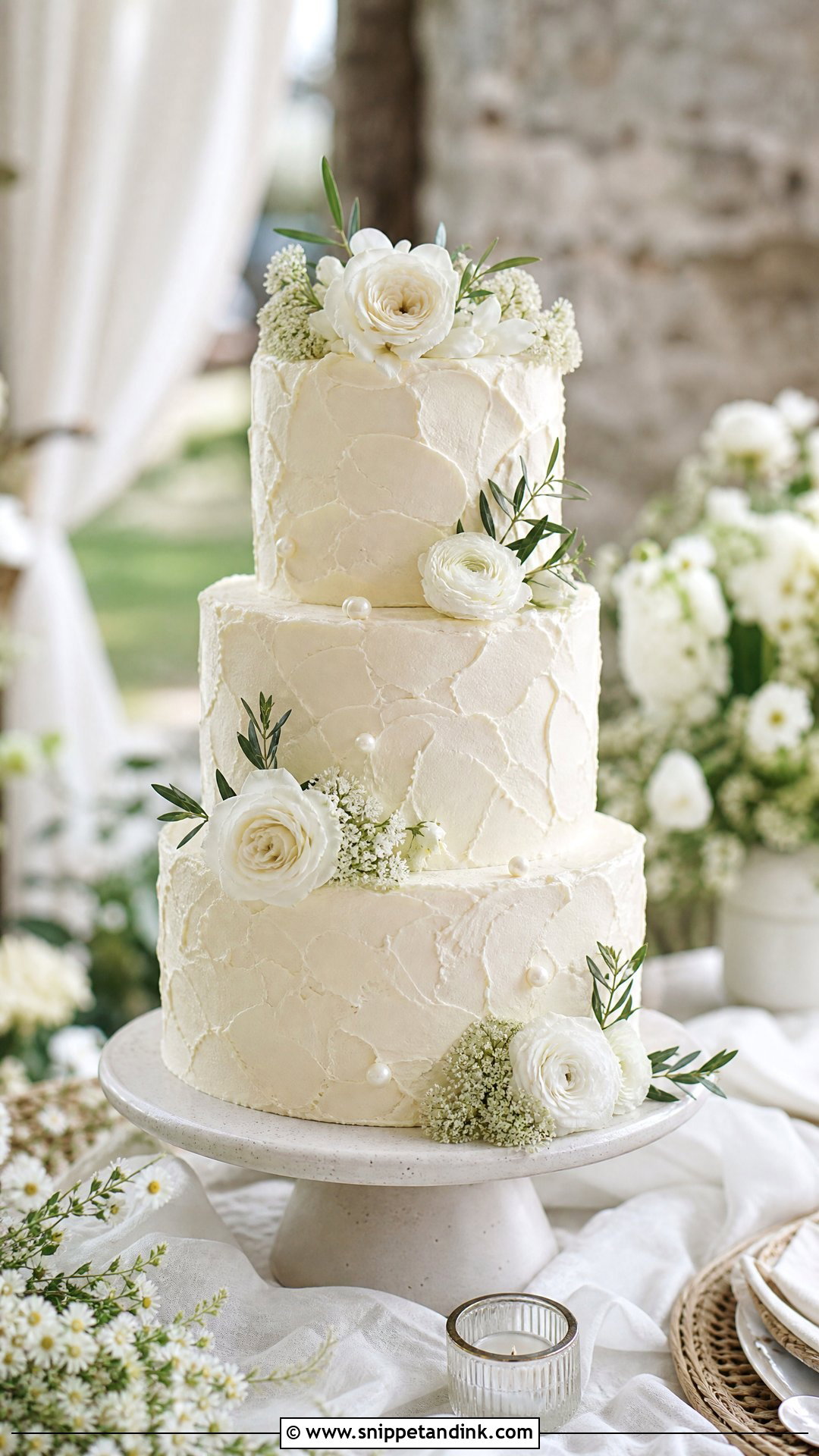
Texture is the finish I’d recommend to almost anyone nervous about the cake surviving the day. Spatula strokes, stucco or soft horizontal ridges catch the light and disguise small marks from transport and handling. It suits beach, barn and ballroom alike. Keep it monochrome for calm, or add flowers for colour. Flavours like vanilla bean, lemon curd sit happily under it.
13. Fondant Draped Wedding Cake
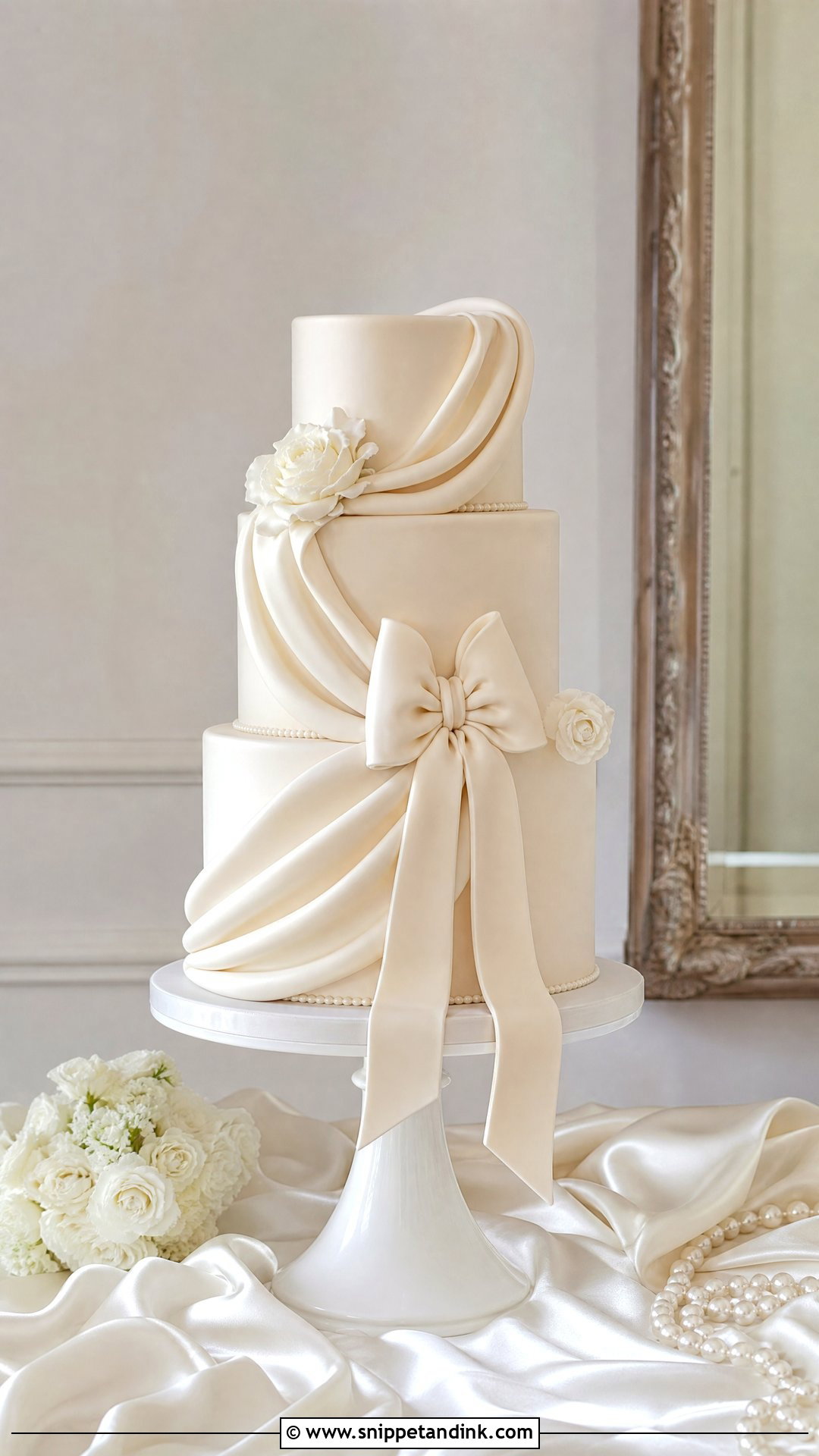
Draped fondant is rolled thin and folded by hand, then supported until it holds its shape, so it’s one of the longer jobs on a cake. Ivory and champagne show the shadows in the folds best; pale grey or blue looks cool and modern. Because the outside is all sugar, I’d put the effort into the inside, such as lemon elderflower or chocolate hazelnut. A sculptural bow or a few pearls is the most decoration it needs.
14. Single Tier Wedding Cake
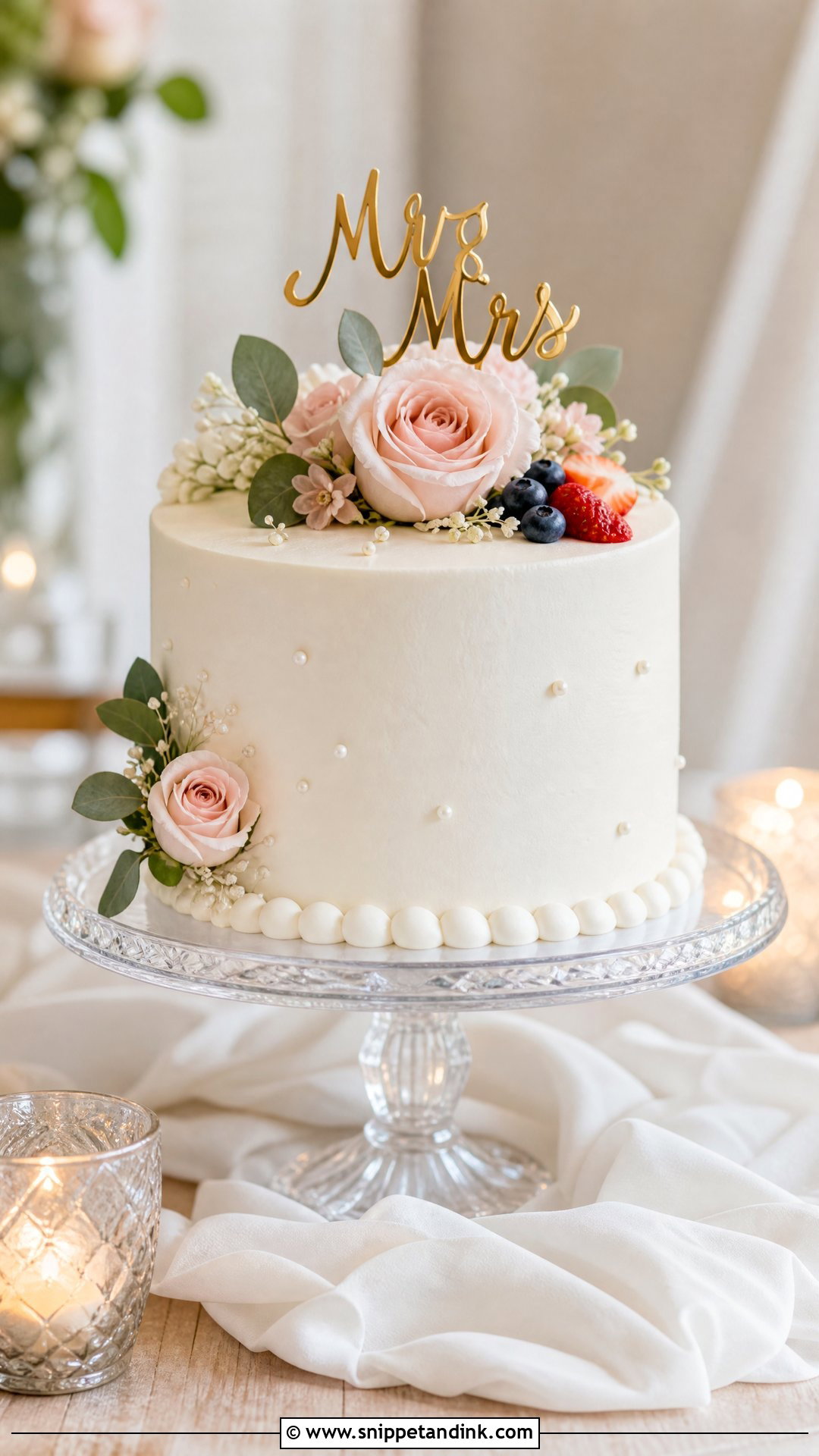
A single tier looks special when it’s tall, around five or six inches, with a proper stand under it. It’s my usual suggestion for elopements and courthouse weddings, often paired with a kitchen sheet cake if the guest list grows. Because there’s only one tier, you can afford a more detailed finish without it overwhelming the table. Surround it with candles or small desserts to make a full display.


15. Mini Wedding Cakes
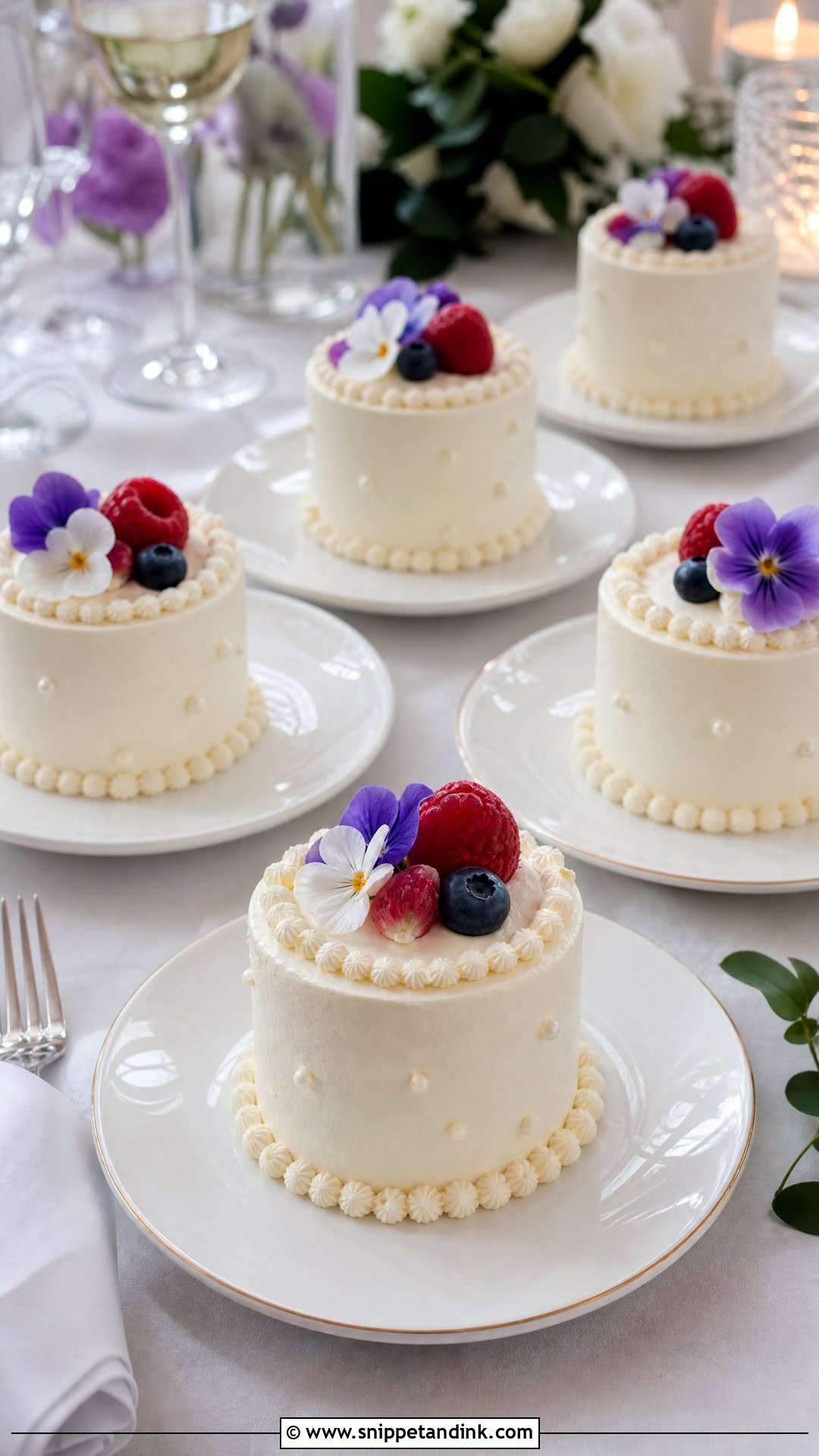
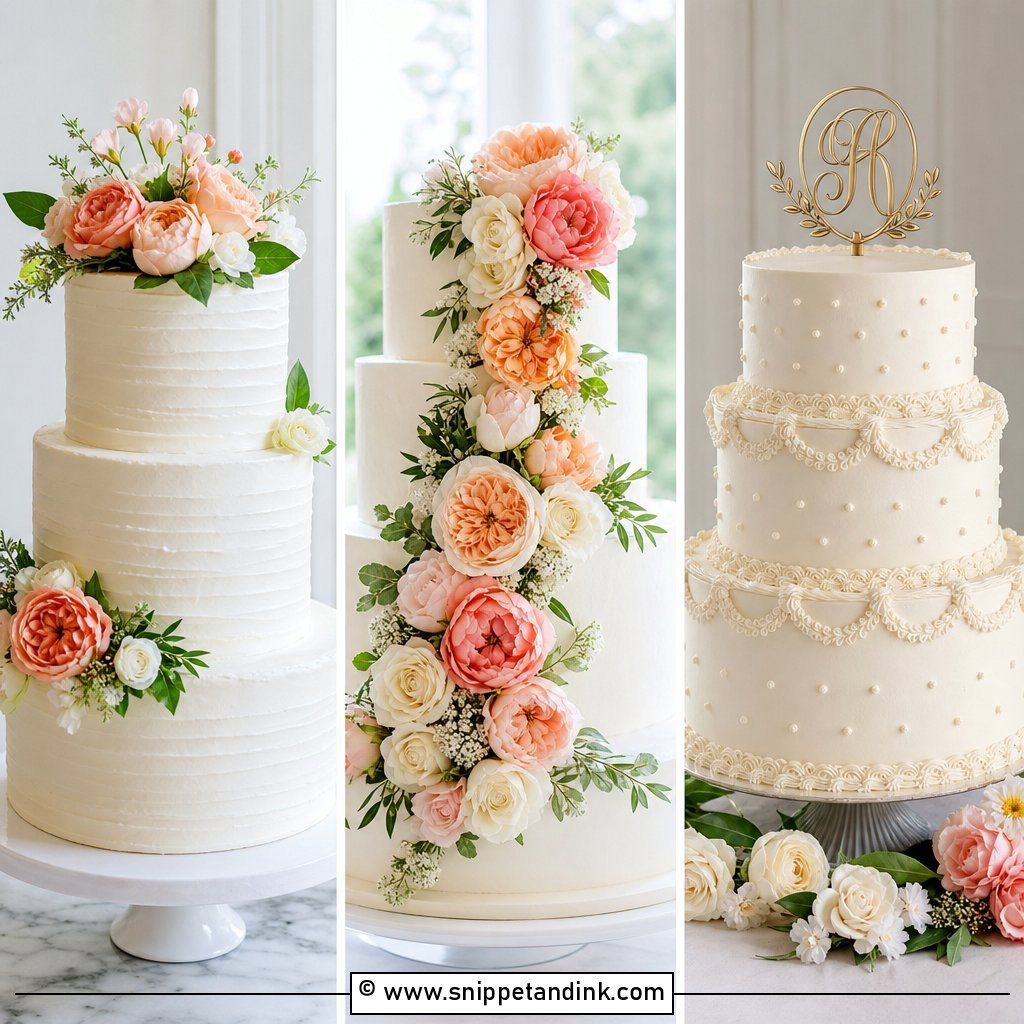
Mini wedding cakes look effortless on the table, but each one is finished by hand, so they take far more time than slicing a large cake. They also need flat, cool transport and careful plating. For a plated dinner they are a treat; for a big buffet, I’d use them as a feature alongside a cutting cake rather than as the only dessert. Keep the decoration identical across every mini so the tables look uniform.
16. Cupcake Wedding Cake
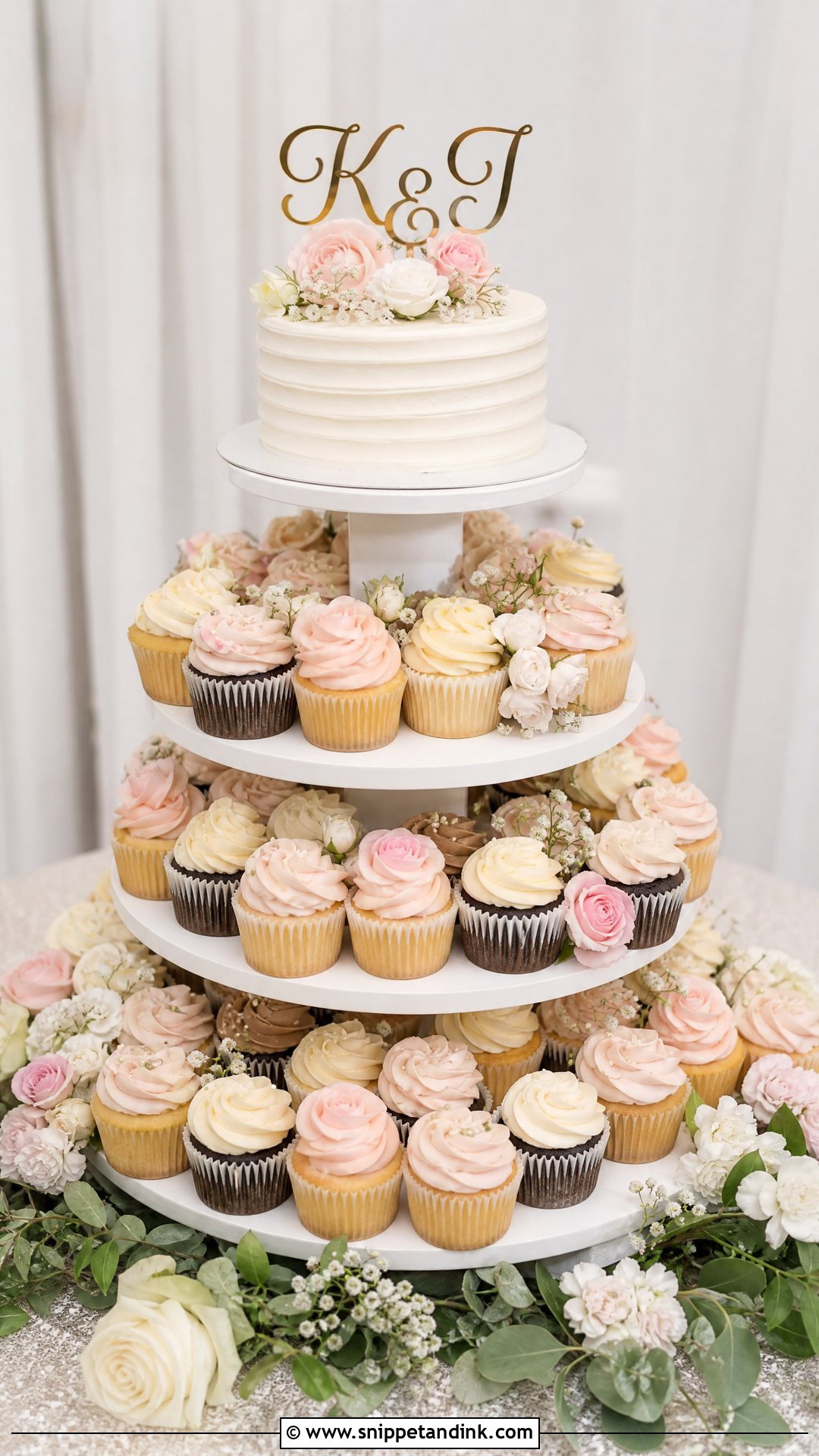
Cupcakes solve two problems: no one needs to slice a cake, and guests can pick a flavour. I put a small cutting cake on top of the stand so you still get the cutting moment. Cupcakes dry out faster than a frosted tier, so they’re baked as close to the day as possible. Mixing four or five flavours on one stand looks busy, so I group them by flavour in rings, each with a slightly different topping.
17. Geode Wedding Cake
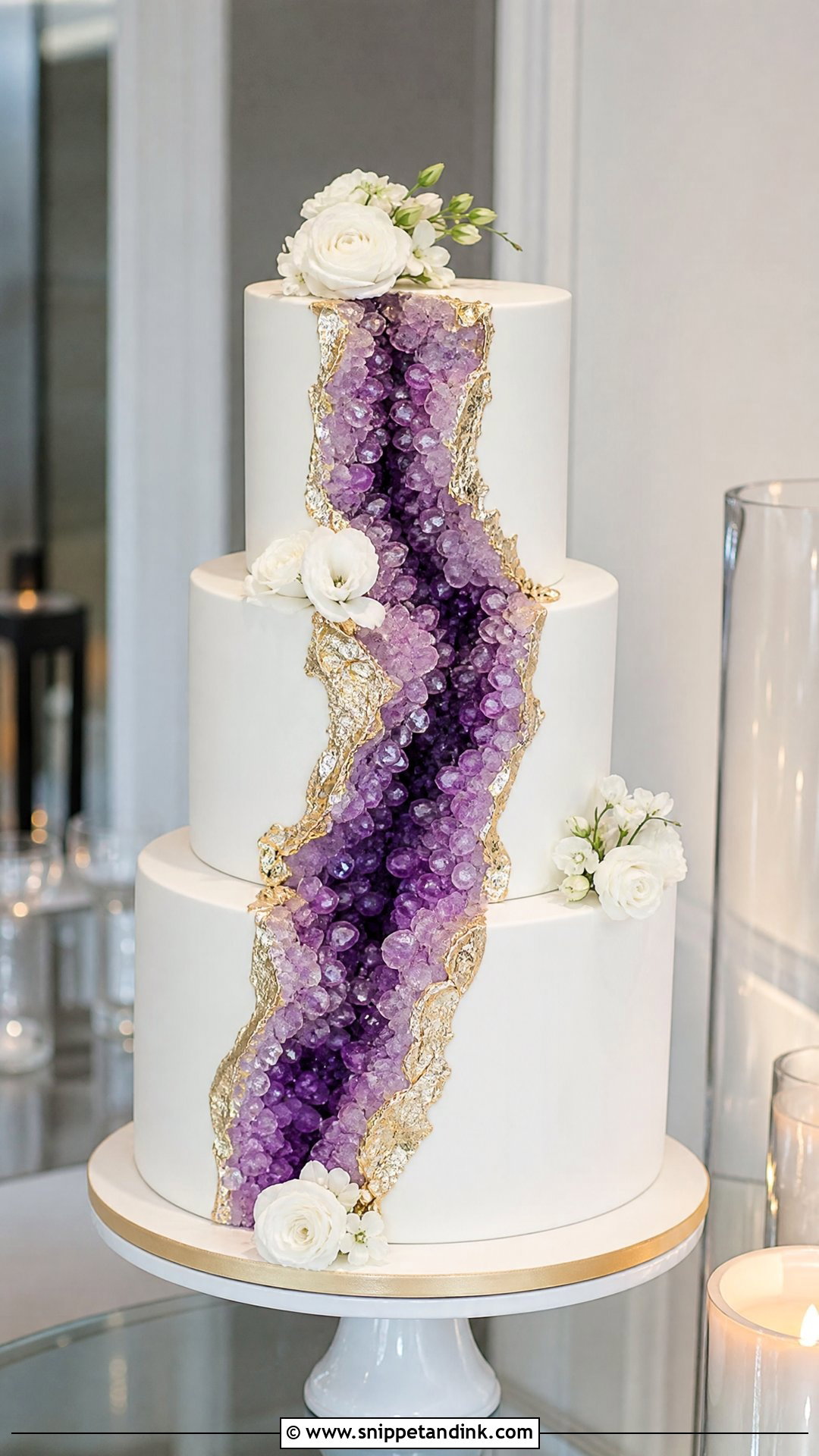
Geodes are made by carving a cavity into the side of a tier and filling it with rock candy or isomalt crystals, then edging it with gold paint. Isomalt can be very hard, so I tell caterers to remove the crystal section before slicing. The cavity needs a stable cake, which is why I use a dense sponge for this design. White or marble fondant shows the colour best; amethyst and rose quartz are the most requested tones.
18. Marble Wedding Cake
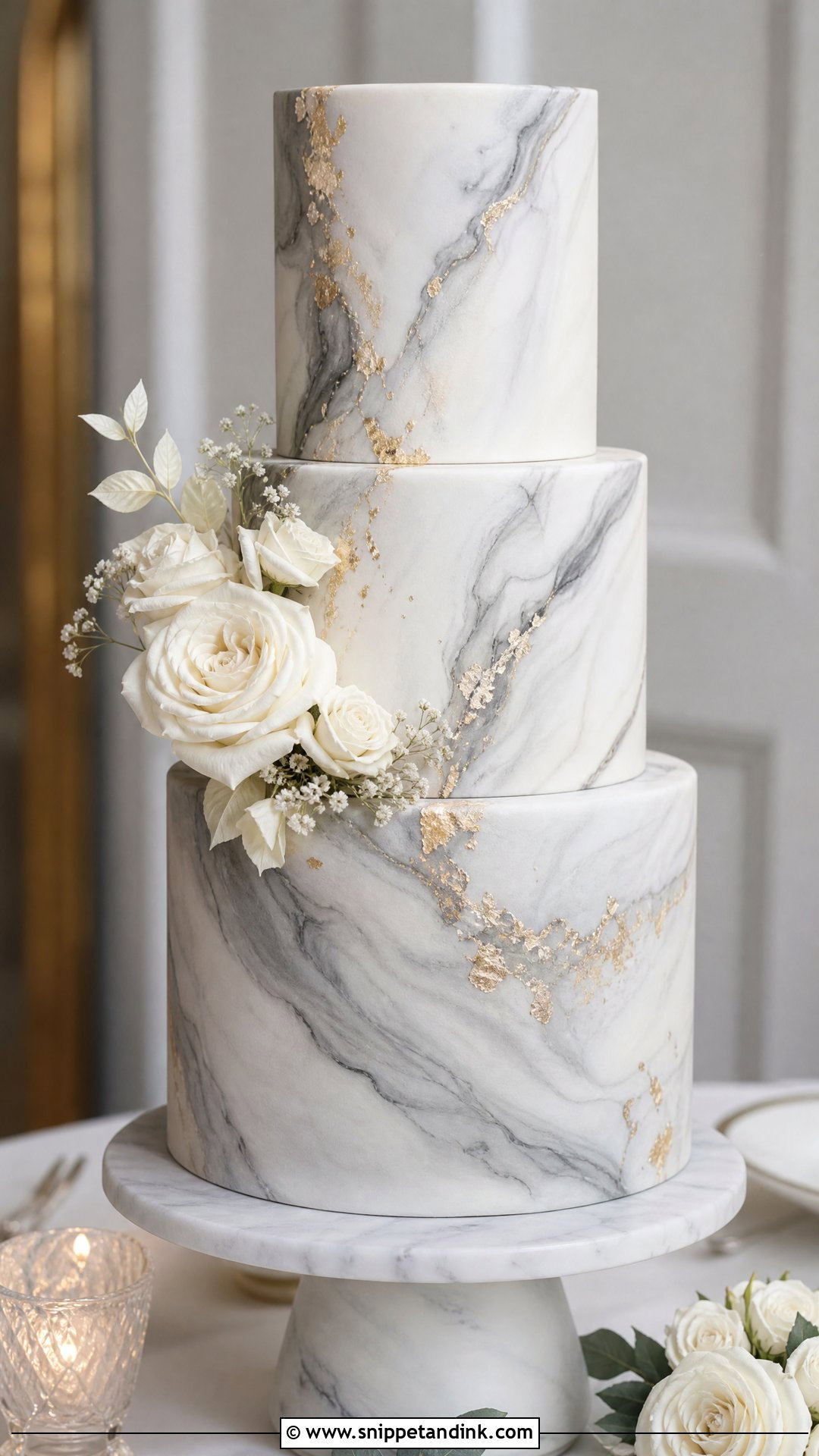
Marble veining is made by twisting coloured fondant through white before rolling, or by painting the veins on by hand. Subtle grey on white looks like stone; strong contrast can make the cake feel heavy. Sharp tier edges and a touch of gold leaf make it formal. Chocolate espresso or hazelnut sponge gives it a grown-up flavour.
19. Painted Wedding Cake
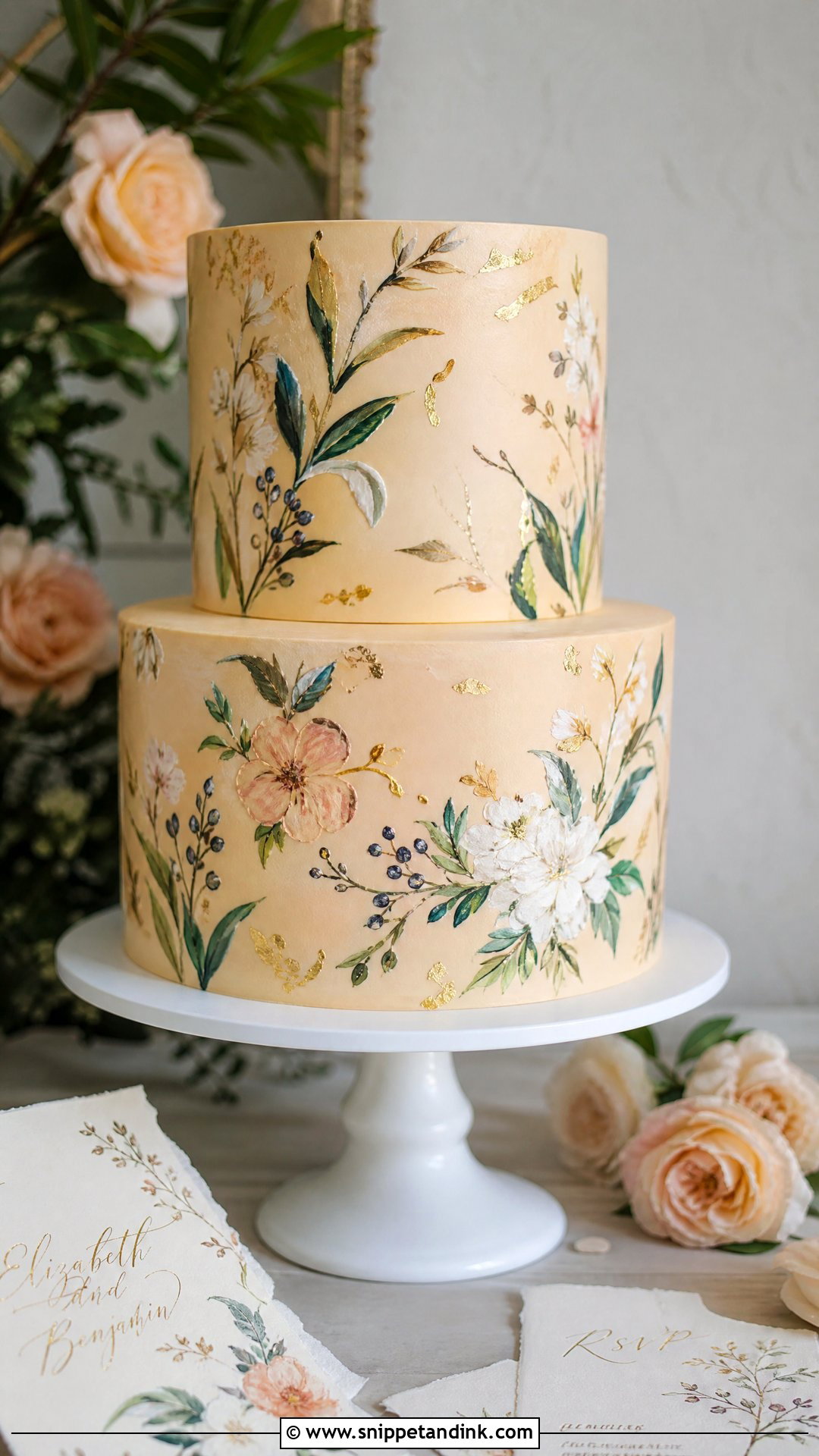
Painting is done with edible colours thinned in a little clear alcohol or extract, which evaporates and leaves only colour. Fondant is the easiest canvas; buttercream must be chilled and crusted first or the brush drags. Motifs from your invitation or venue work well. I’d keep the rest of the cake plain so the painting gets full attention. Vanilla peach or lemon raspberry sponge suit it.



20. Dessert Table Wedding Cake
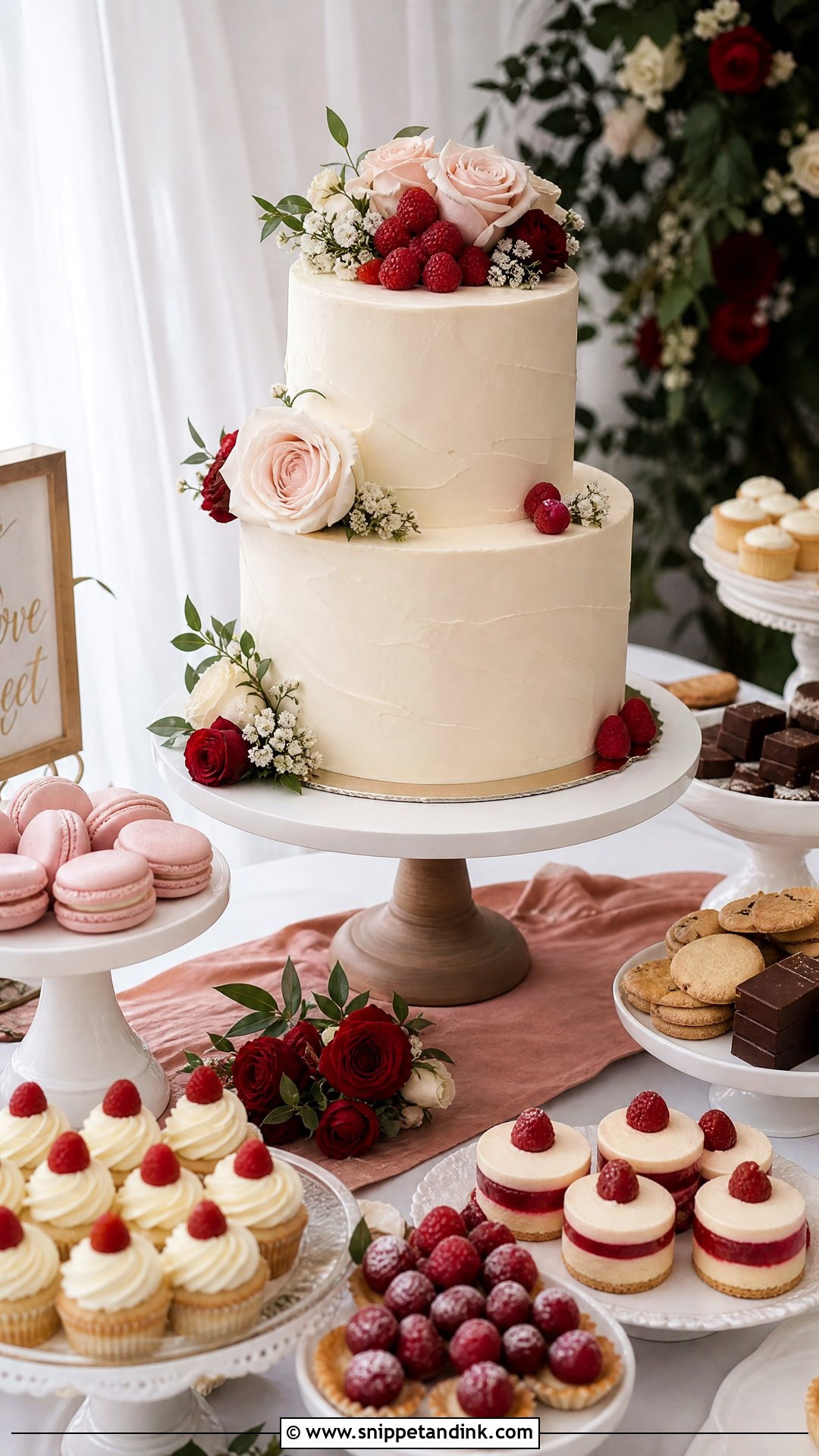
A dessert table wedding cake works when the cake becomes the tallest point in a larger display. Two tiers is usually enough, surrounded by cookies, small tarts and macarons that echo its colour. Stands at different heights stop the table looking flat. Choose items that hold up at room temperature for a few hours; mousse cups and cream pastries need a cooler, shorter display.
After the Cutting: Serving, Leftovers and the Top Tier
The cutting itself takes a minute. Serving a tiered cake properly takes longer, and it helps to decide in advance who does it. Many venues charge a cutting fee if a cake comes from an outside baker, so check your contract.
How a tiered cake is cut
The top tier usually comes off first and is set aside. Larger tiers are cut by scoring a circle a couple of inches in from the edge, slicing that ring into narrow pieces, then moving inward. That’s how a cake yields its full number of servings. Make sure whoever cuts knows where the dowels and any inedible decorations sit.
Saving the top tier
Chill it until the frosting is firm, wrap it tightly in several layers of plastic wrap, add a layer of foil, and freeze it in a box. Buttercream and fondant cakes freeze well this way. Fresh fruit, whipped cream and mousse fillings don’t, so if you plan to keep a tier, choose a sturdier filling for that tier only. Thaw it slowly in the fridge, still wrapped, so condensation forms on the wrapping rather than the cake.
Let the Room Decide Before the Photo Does
Every idea here can look right somewhere and wrong somewhere else. A Lambeth cake shines in a cool hall; a naked fruit cake struggles in midday sun; mini cakes suit a seated dinner but slow down a buffet. Start with the venue, the season and the headcount, then pick the finish and flavour that will hold up there. Bring your favourite photos to the consultation, and let your baker tell you honestly which ones will survive your day.
You'll Like These Ideas:









Leave a Reply