
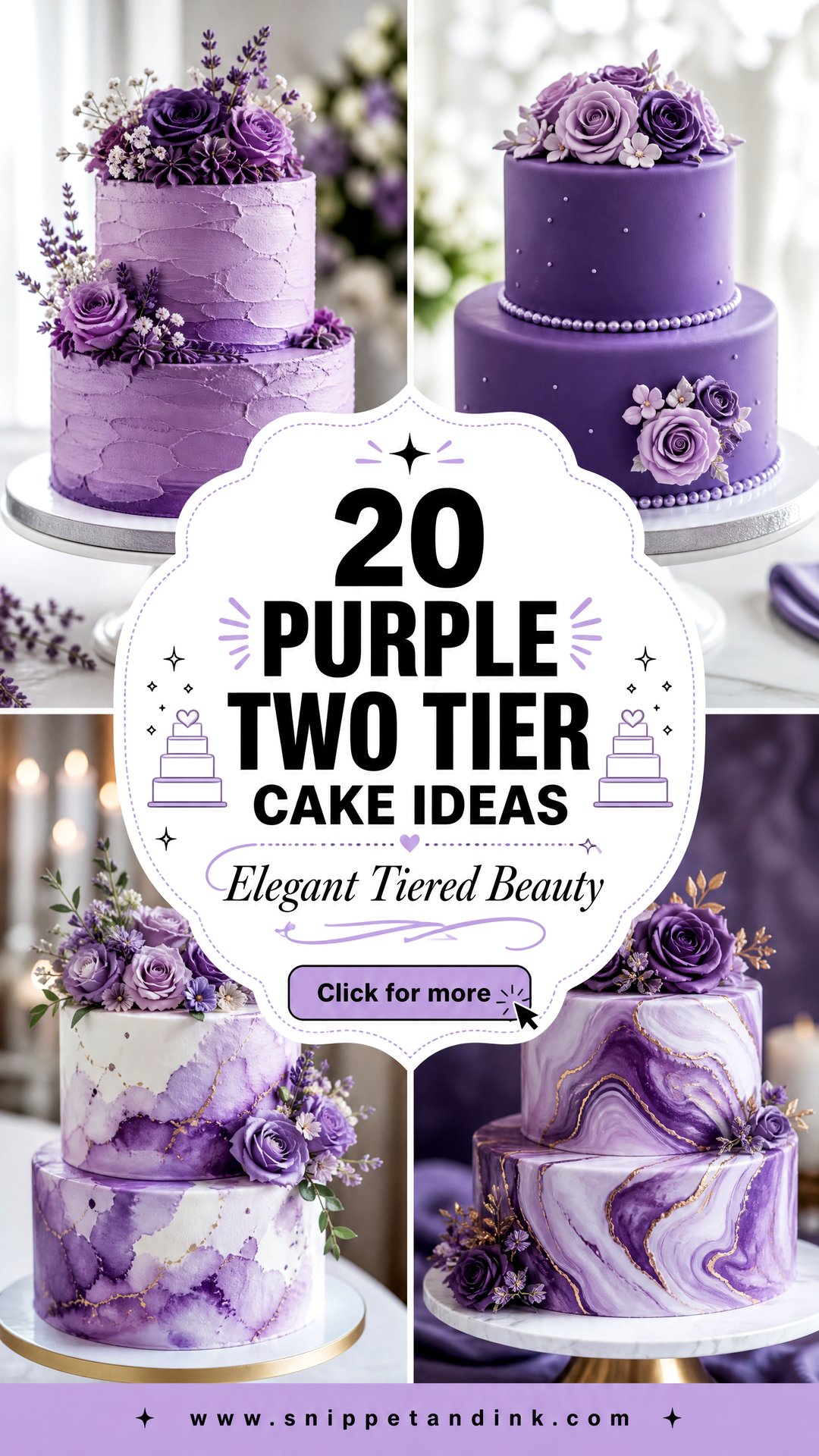
A two-tier cake is the size I make most often for smaller weddings. It gives you a proper cutting moment and a cake with some height, without paying for portions nobody eats. Purple adds the mood: airy in lavender, fresh in lilac, dramatic in plum, regal with gold. It also sits well with garden flowers, pressed blooms, pearls, ruffles and smooth buttercream. The catch with only two tiers is proportion, since a small cake can disappear on a long table, so I’ve added notes on sizing, flavors and saving the top tier alongside the twenty designs.
Sizing Two Tiers So the Cake Doesn’t Look Lost
The most common two-tier pairings step down by two inches, a 6-inch tier on an 8-inch tier or an 8 on a 10. A bigger jump, such as a 6 on a 10, gives a wider ledge for flowers and a more stepped silhouette. As a rough idea, a 6 and 8 combination serves somewhere around three dozen wedding-sized portions; your baker’s own chart will differ slightly.
Height is where a small cake gains presence. Extended tiers, built taller than standard, make two tiers look like a substantial cake without adding diameter. A raised stand helps too, and so does the table. A small cake on a long buffet looks lost, while the same cake alone on a small round table looks deliberate.
Two tiers also travel more easily than tall cakes. I usually deliver them stacked with a central dowel, which a three- or four-tier cake often can’t manage safely.
1. Purple Two Tier Wedding Cake With Fresh Flowers
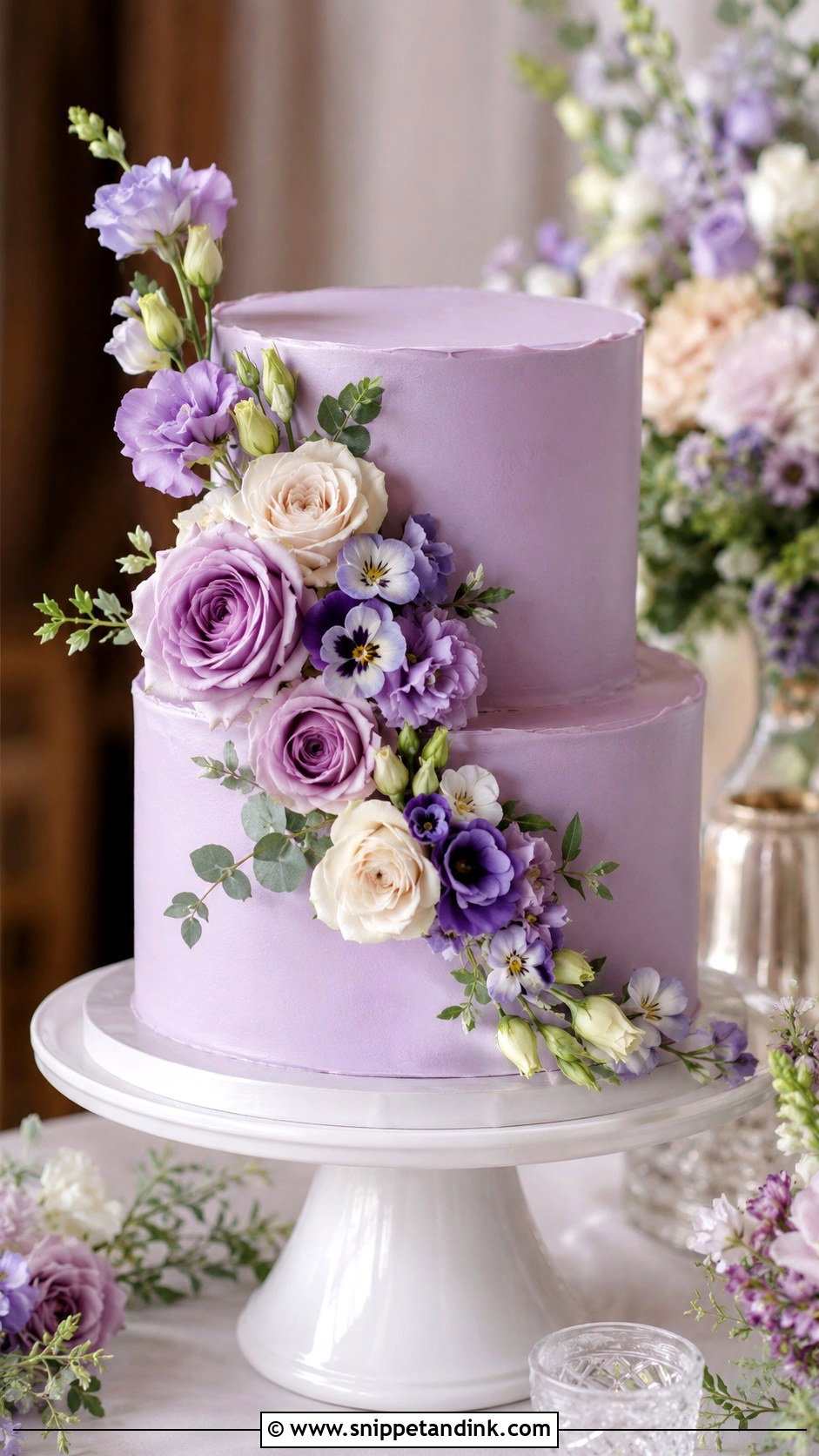
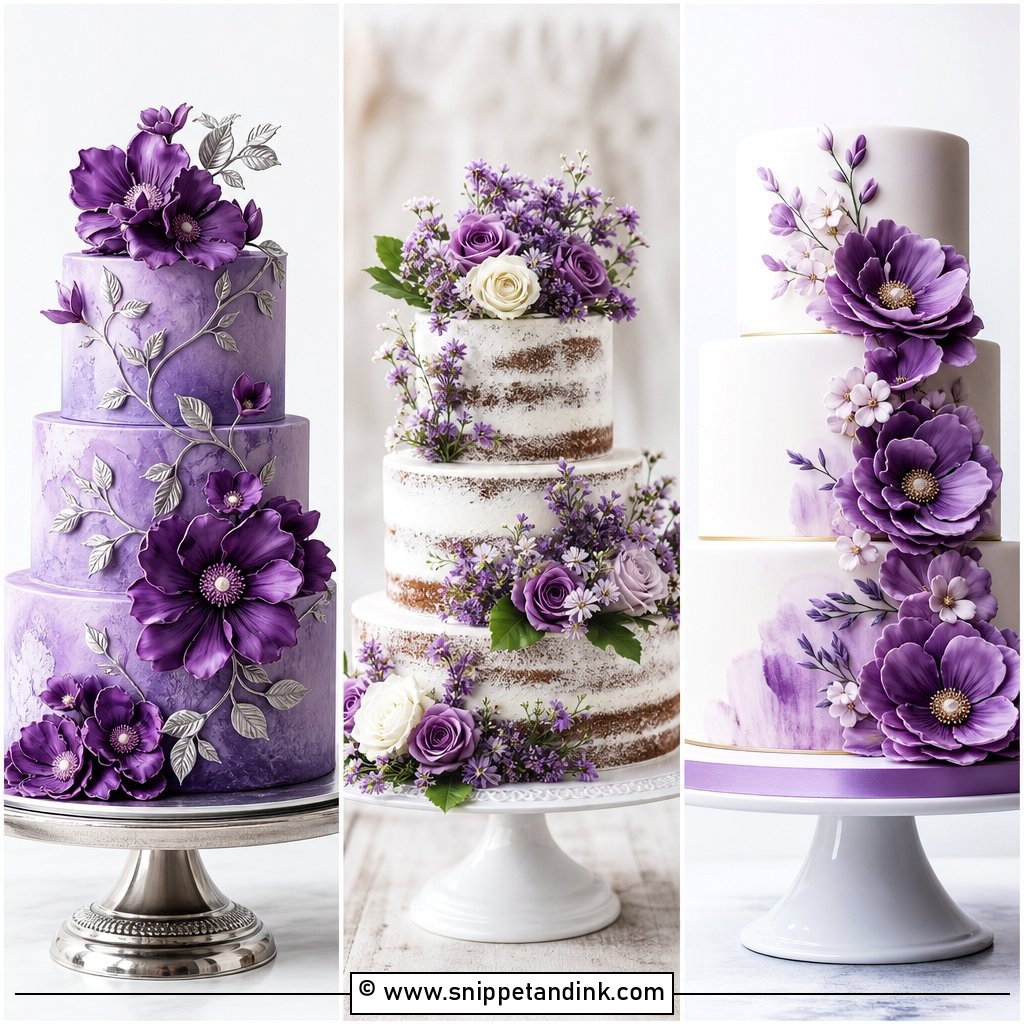
Fresh flowers are the quickest route to a soft, romantic two-tier cake. I start with smooth lavender buttercream or fondant and use blooms that repeat the bouquet: roses, lisianthus, orchids, pansies and small fillers, run in a gentle diagonal from the top tier down to the bottom one. A diagonal works better than a ring on two tiers, because it carries the eye across the step between them. Every stem gets wrapped or set in a food-safe pick, and anything sprayed or toxic stays off the cake. Garden weddings and spring receptions suit it.
2. Lavender Two Tier Wedding Cake
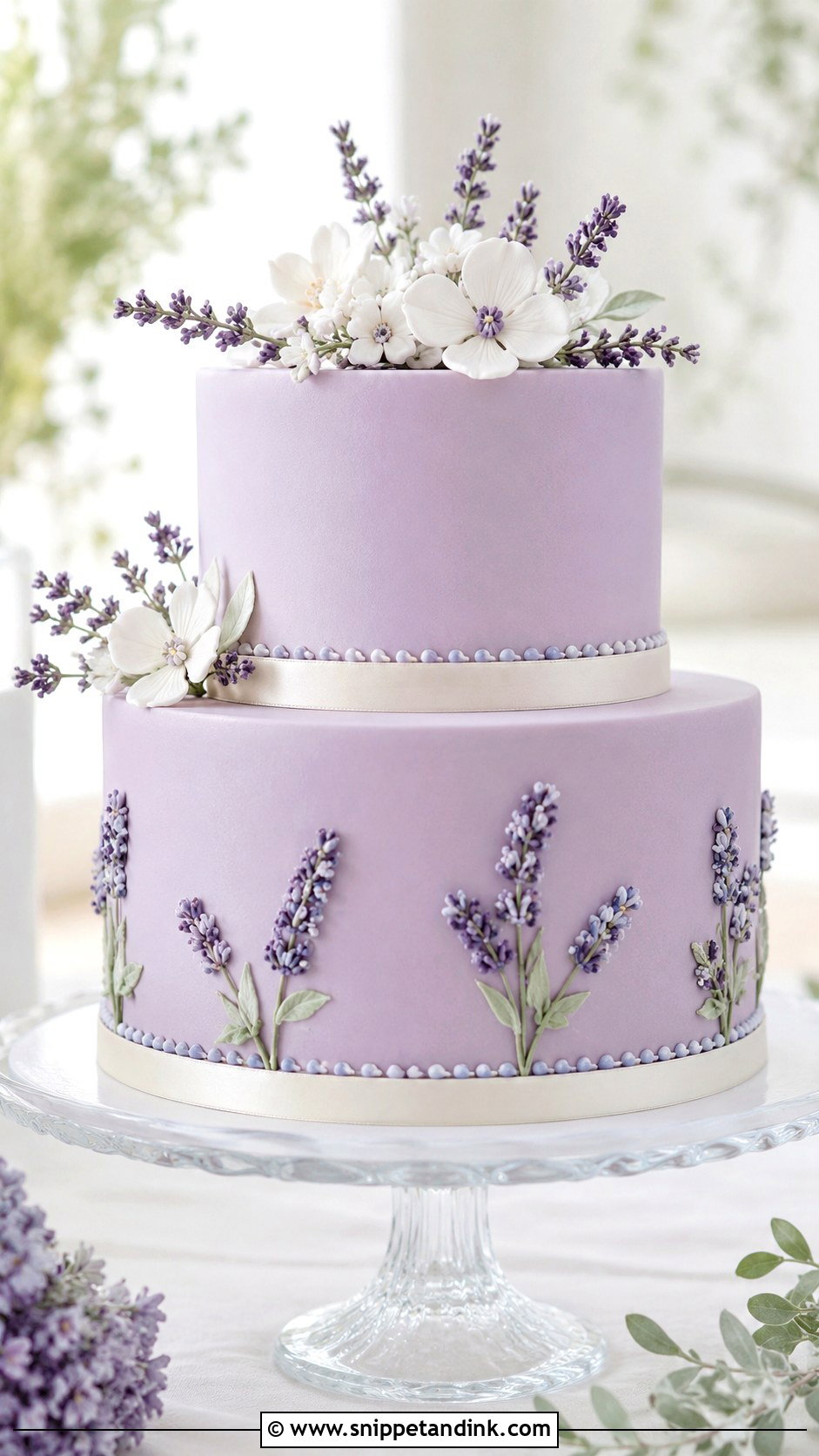
Pale lavender is the shade I’d pick for a couple who wants color without leaving the bridal end of the spectrum. Buttercream gives a softer surface; fondant looks cleaner if the wedding is formal. All it needs for decoration is a few tiny piped pearls, white flowers, culinary lavender sprigs or a ribbon at each base. If you want lavender in the flavor too, go gently. A little in a vanilla, honey, lemon, Earl Grey or almond sponge tastes floral; too much tastes like soap.
3. Lilac Two Tier Wedding Cake
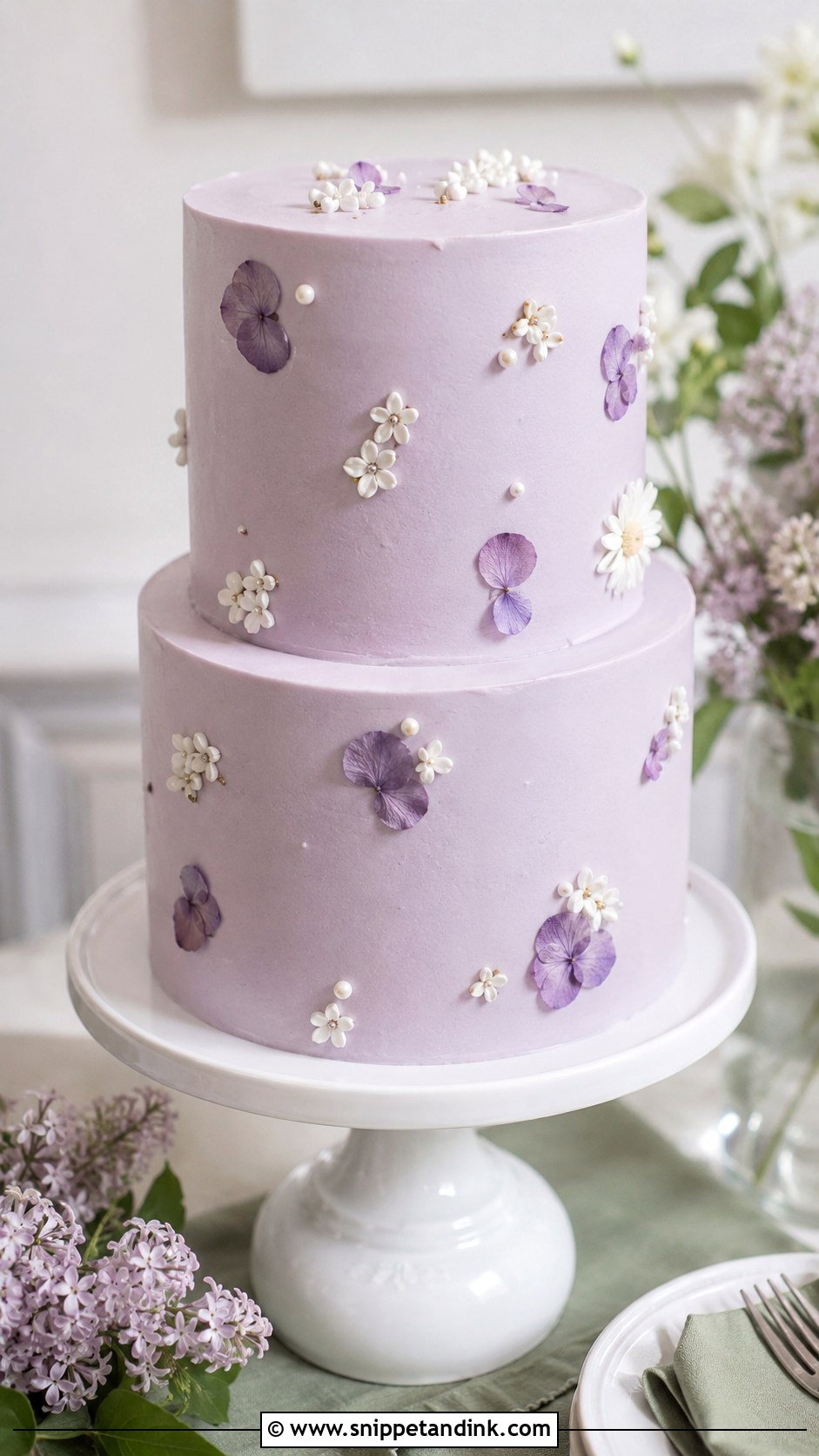
Lilac is lighter and pinker than lavender, and it reads young and fresh, which is why I tend to suggest it for daytime weddings and greenhouse venues. Smooth lilac frosting with small white or ivory details keeps it balanced. Sugar flowers, pressed edible flowers, pearl borders or a single floral topper all suit it. Lilac sits happily beside cream, sage, blush and butter yellow, so it’s easy to work into a mixed pastel palette. Vanilla bean, lemon curd, white chocolate raspberry or a lavender honey filling between light sponges match the color.
4. Plum Two Tier Wedding Cake
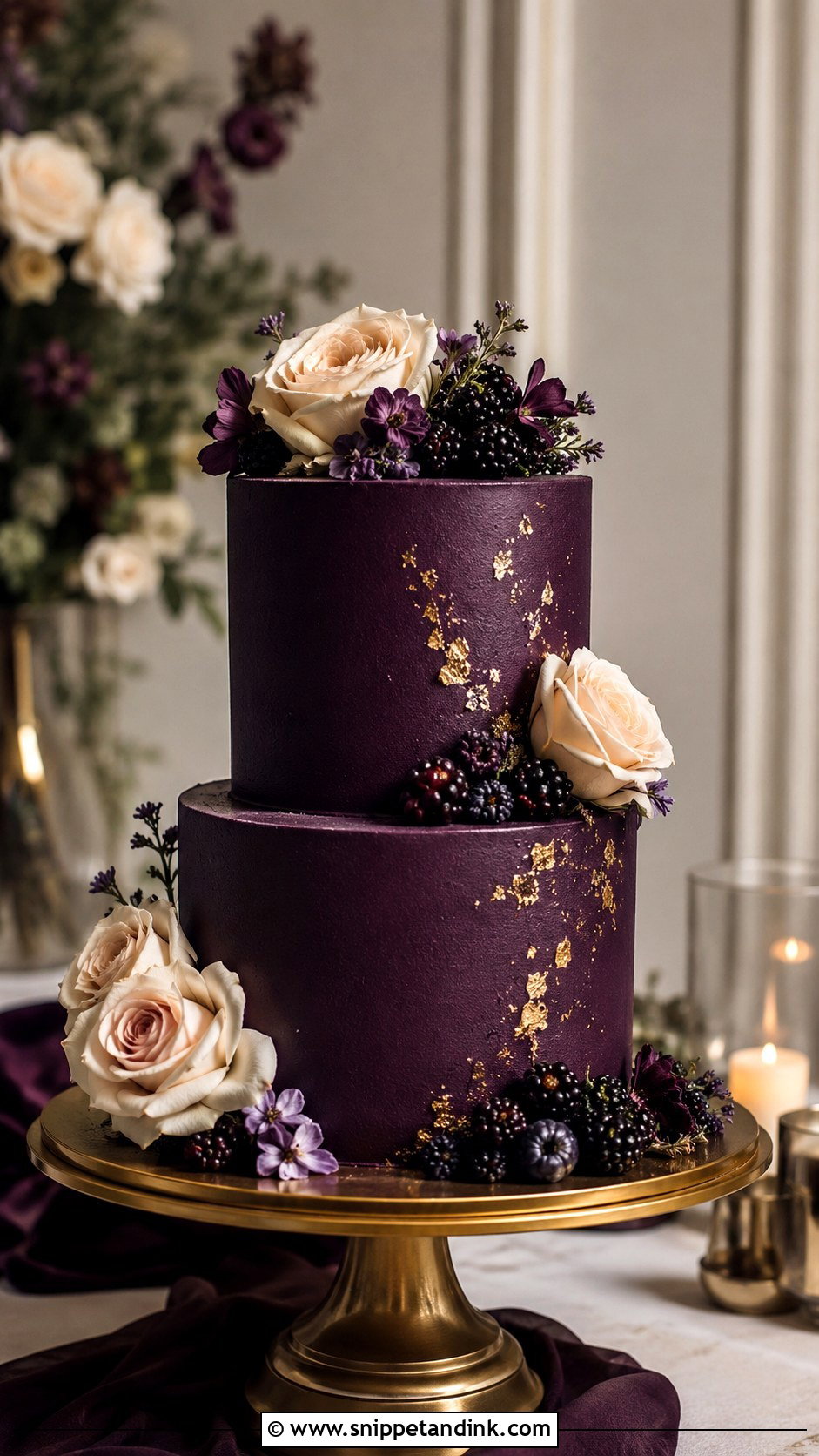
Plum is the shade for fall and for evening. A deep plum buttercream or fondant gets softened with ivory flowers, gold leaf or pale lavender details; a semi-matte finish looks modern, and metallic touches look richer. Very dark frosting is the hardest to get right, because it takes a lot of coloring and can leave a bitter taste or stain teeth. I often cover dark tiers in fondant, or tint a chocolate buttercream, which needs far less dye to reach plum. Blackberry, dark chocolate, fig, brown butter and vanilla bean all pair well, and the color pulls together palettes with burgundy, eggplant or smoky green.
5. Purple Ombre Two Tier Wedding Cake
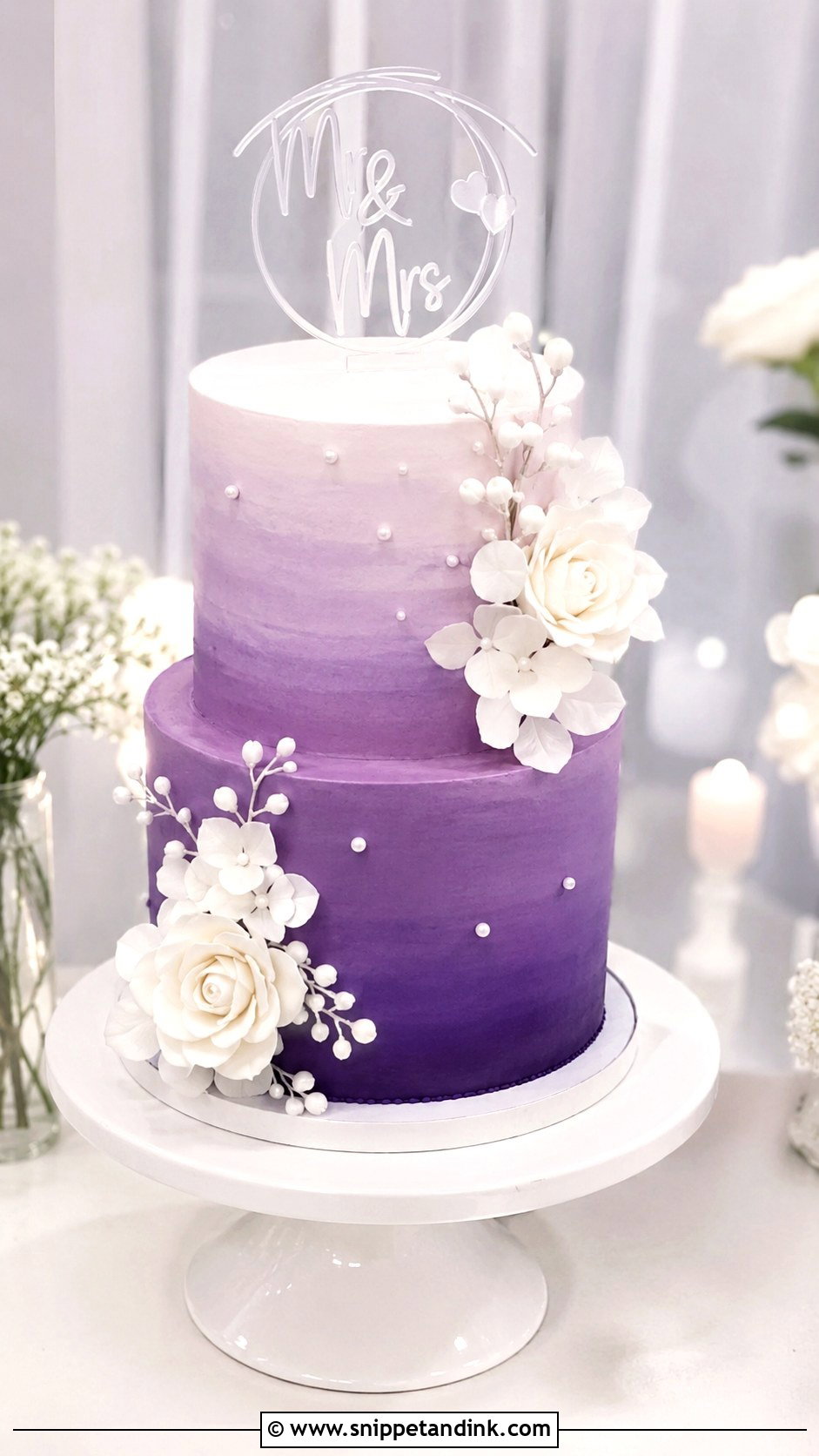
An ombre across two tiers needs planning, because the fade has to continue across the step instead of restarting on each tier. I mix four or five shades, from deep violet at the bottom to pale lavender at the top, or lilac into white for something softer, and spread them so the top of the lower tier matches the bottom of the upper. Buttercream blends best, smoothed or textured with a spatula. Simple flowers, pearls or a clear acrylic topper add detail without hiding the gradient. It’s a good choice if you love color but want a clean outline.
6. Purple Drip Two Tier Wedding Cake
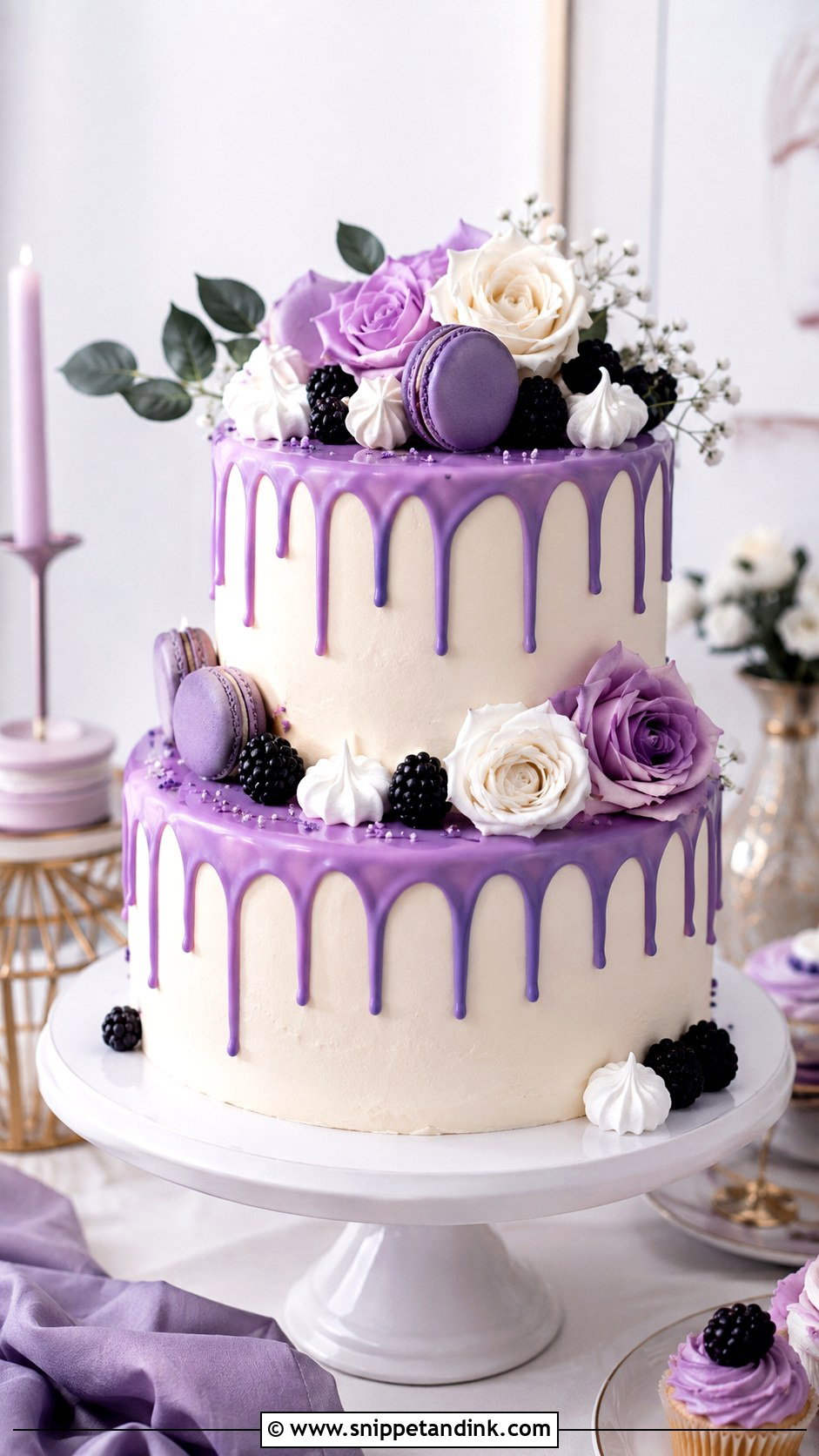
A purple drip two tier wedding cake is the playful entry here. I use a white, ivory or lavender base and drip white chocolate ganache tinted violet, lilac or plum around the edge of each tier. The lower tier’s drip is the tricky one, since the upper tier is already sitting there and there’s little room for the bottle, so I usually drip both tiers before stacking. Macarons, fresh berries, sugar flowers or small meringues crown it. Keep the toppings neat; the drip already supplies plenty of movement.
7. Purple Floral Two Tier Wedding Cake
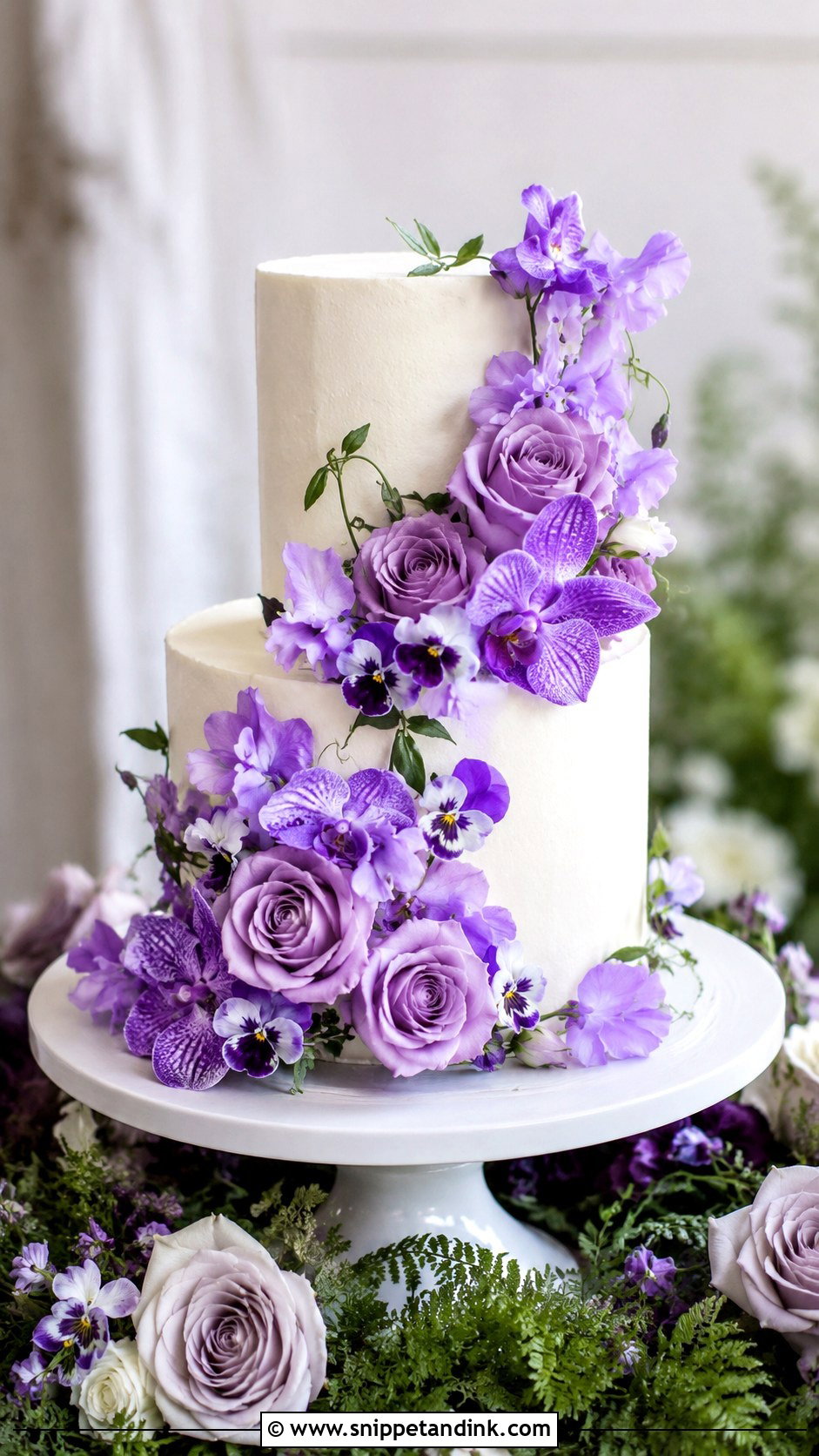
Mixing several purples gives a floral cake depth that one shade can’t. Lavender roses, violet orchids, lilac sweet peas and tiny edible pansies together look lush, and the base stays white or pale lavender so they show clearly. On two tiers, a crescent, a side cascade or a heavier arrangement on top all work, but I avoid covering the join between tiers completely; that ledge is part of what makes it look like a two-tier cake. It echoes the bouquet and table flowers well at botanical venues.
8. Purple And Gold Two Tier Wedding Cake
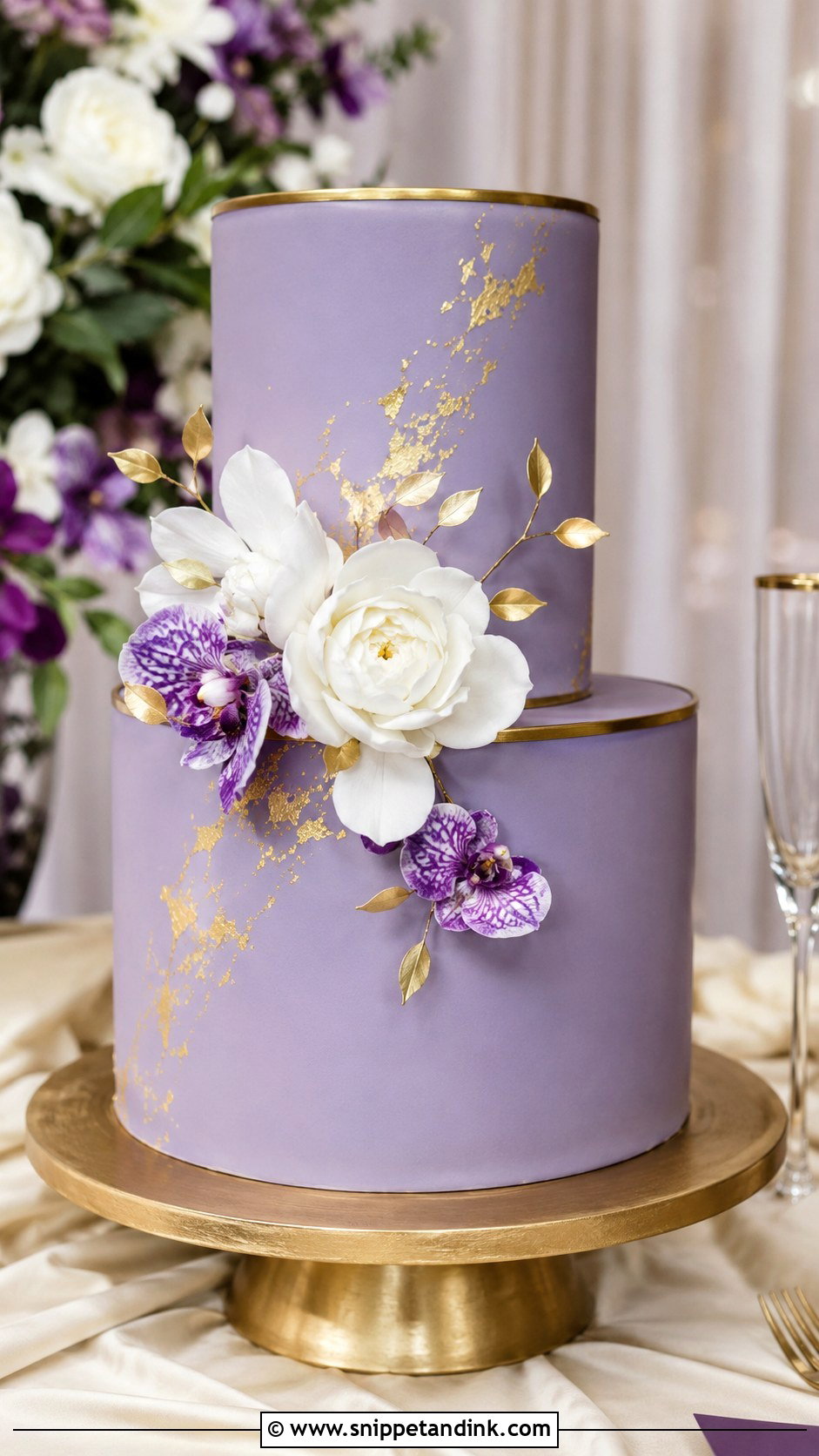
Gold turns purple regal, and the skill is in using very little of it. A lavender or plum base with a few patches of gold leaf, a thin metallic border or painted gold edges is enough to look rich. I paint gold on fondant or very firm buttercream, since it drags and dulls on anything soft. White sugar flowers, purple orchids or pearls bring balance. Ballrooms and formal tables suit it, and so do flavors with some depth: champagne vanilla, almond raspberry, honey lavender, or chocolate with blackberry filling.
9. Purple And White Two Tier Wedding Cake
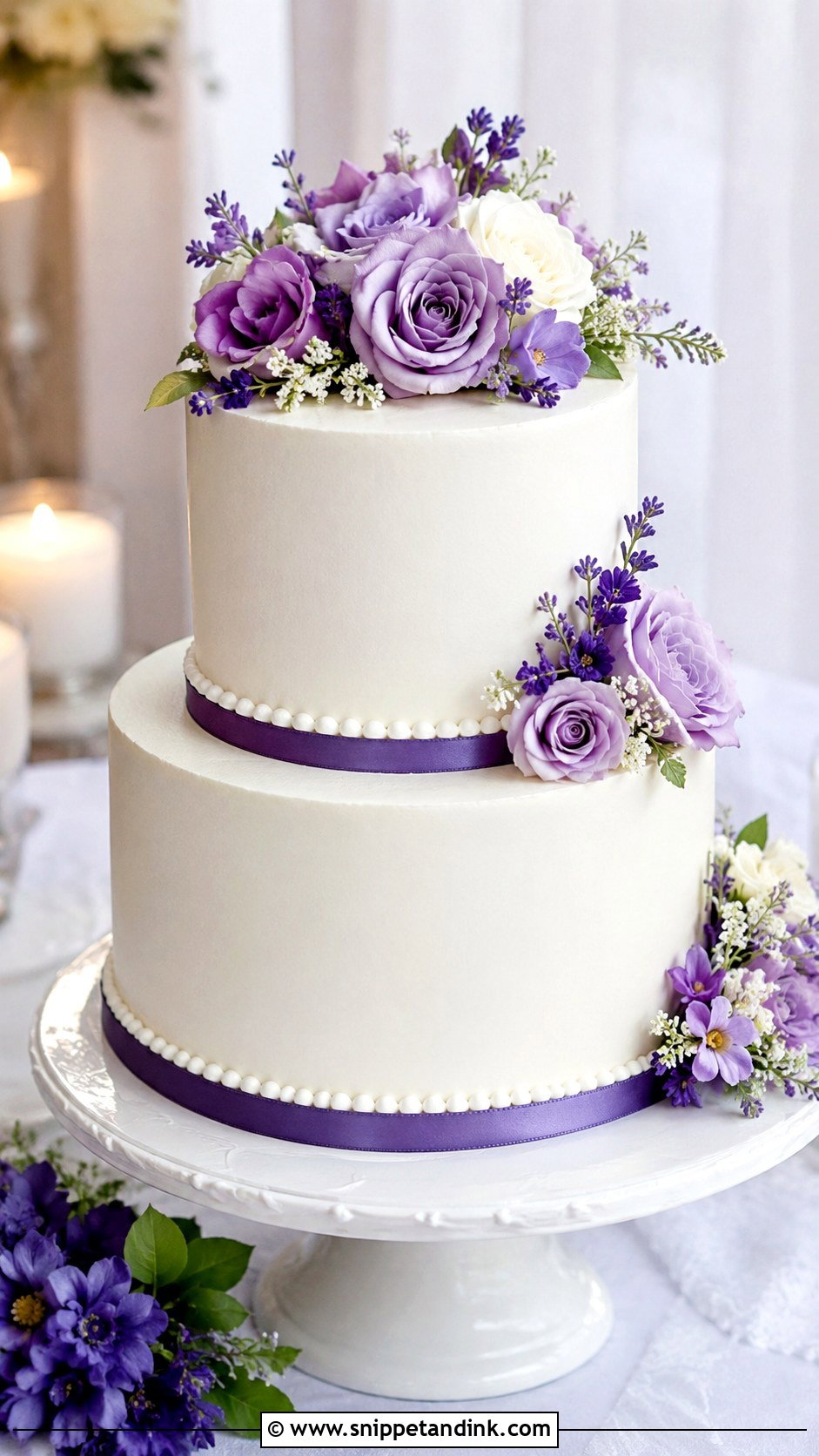
White frosting with purple details is the version most guests will think of as a classic wedding cake, just with color added. I’d choose purple sugar flowers, lavender piping, an ombre lower tier or a narrow purple ribbon at each base. The contrast reads clearly in photos without being dramatic, and it fits palettes from lilac and ivory to violet and silver. White frosting forgives nothing, so it needs a perfectly smooth finish. Vanilla, lemon, almond and coconut keep the flavor light and easy for a mixed crowd.
10. Purple Buttercream Two Tier Wedding Cake
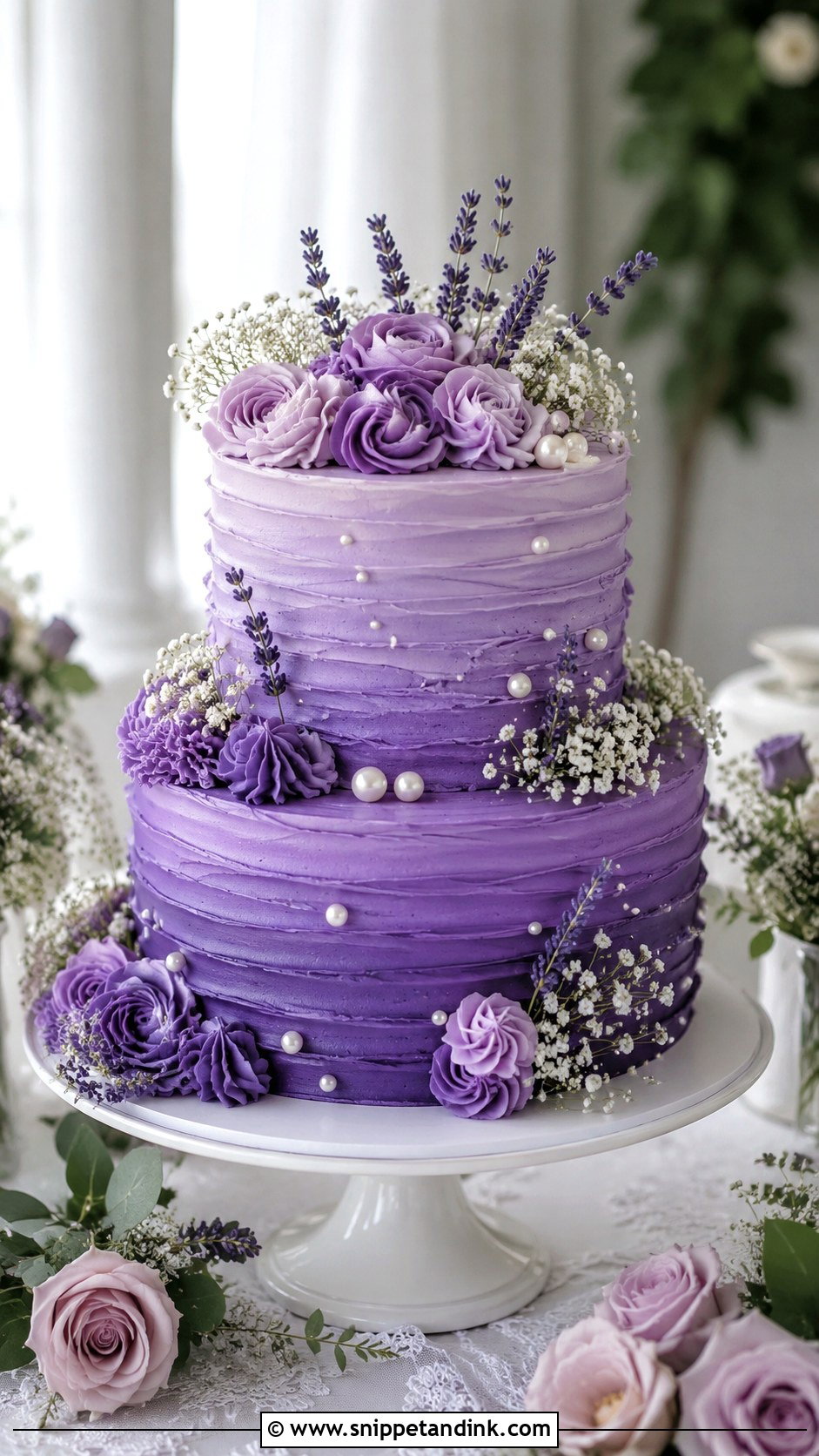
Buttercream is what I’d recommend if flavor matters more to you than sharp edges, and for many guests it does; plenty of people peel fondant off. It can be smooth, ribbed, ruffled, swirled or rustic, so it bends to most styles. Pale lavender looks romantic, deep purple more dramatic. Fresh flowers, piped borders, edible pearls or small gold accents finish it. Heat is its weakness. For an outdoor summer reception, I switch to a firmer meringue-based or ganache-stabilized buttercream and ask for the cake to stay in the shade until it’s cut.
11. Purple Fondant Two Tier Wedding Cake
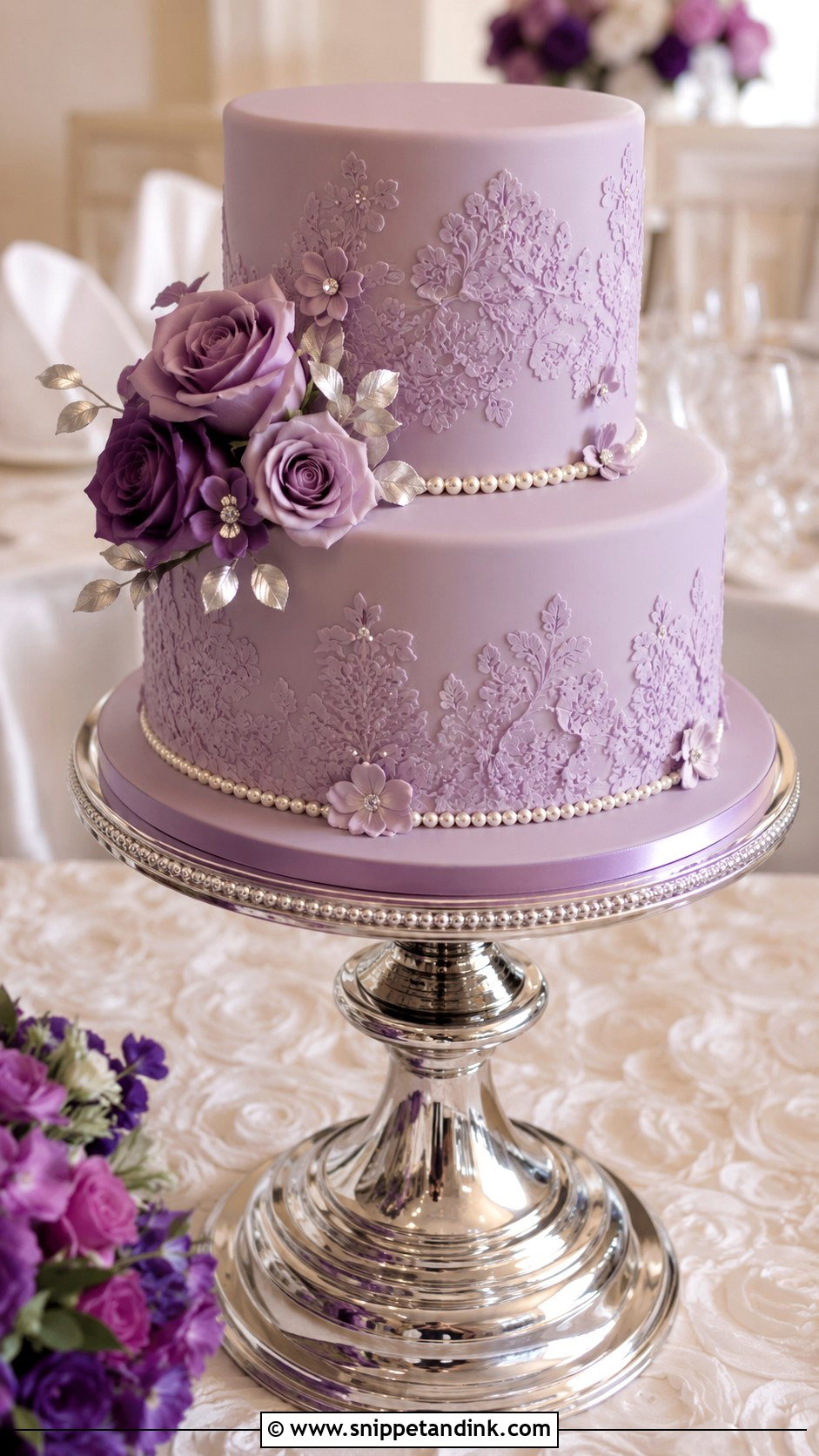
Fondant gives the crispest finish: sharp edges, even color and a smooth surface for detailed work. Pale lilac fondant looks soft; deep violet looks bold, and fondant is often the easier way to reach a dark shade evenly. Sugar flowers, embossed patterns, pearl trim or painted metallics all sit well on it. Since fondant’s flavor is mild at best, I put the personality inside, with a good filling such as lemon curd, raspberry or salted caramel. Ballrooms, modern venues and tightly coordinated palettes suit it.
12. Purple Ruffle Two Tier Wedding Cake
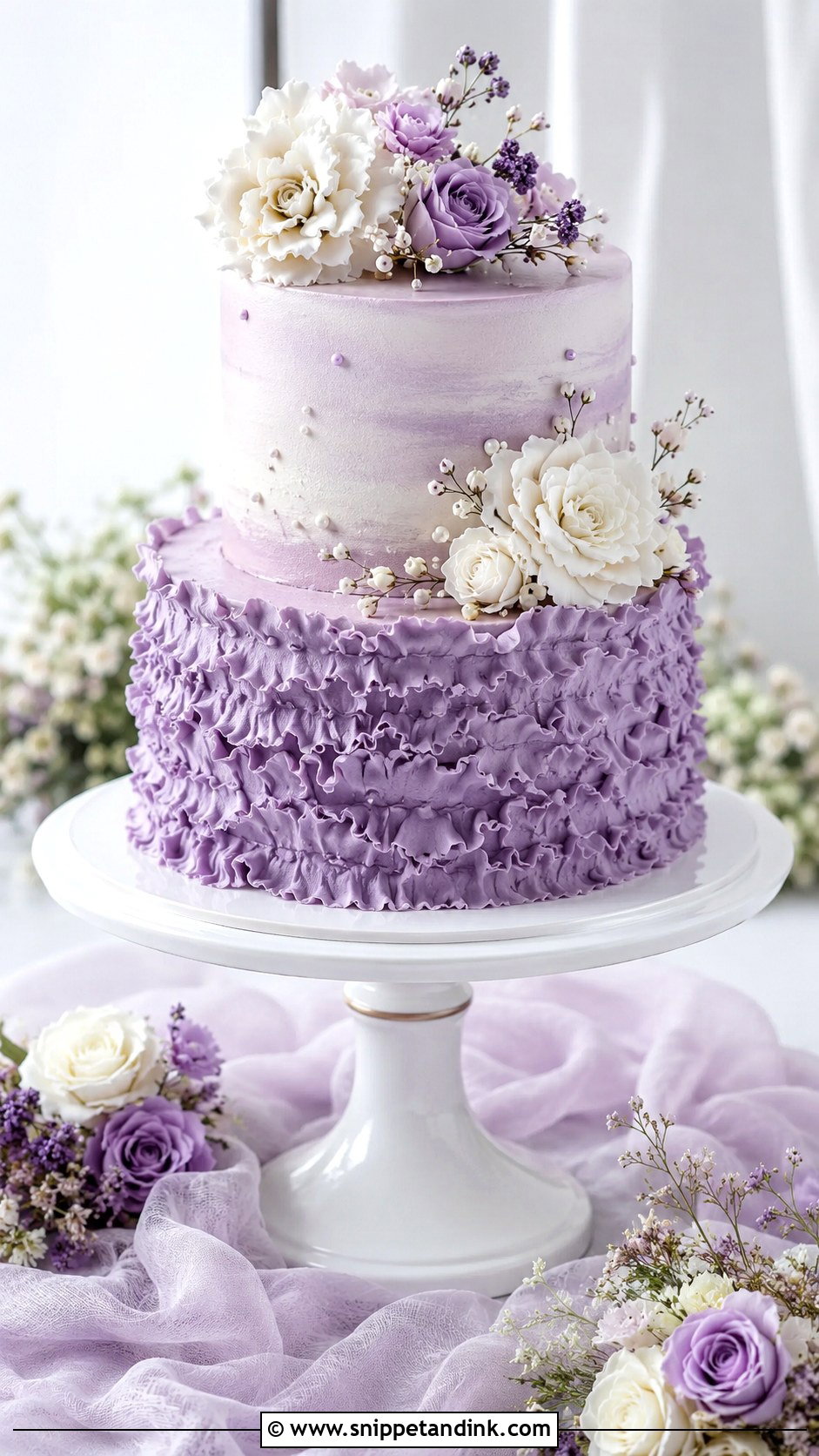
Ruffles turn frosting into something that looks like fabric. They can cover both tiers, or sit only on the bottom tier under a smooth top tier, which I prefer on a two-tier cake because the contrast shows off both finishes. Lavender and lilac ruffles feel airy; plum ruffles are more dramatic. Buttercream ruffles look soft and handmade, while fondant ones hold a sculptural shape but add real weight to the lower tier, which then needs proper support. A few flowers or a minimal topper are enough on top.
13. Purple Watercolor Two Tier Wedding Cake
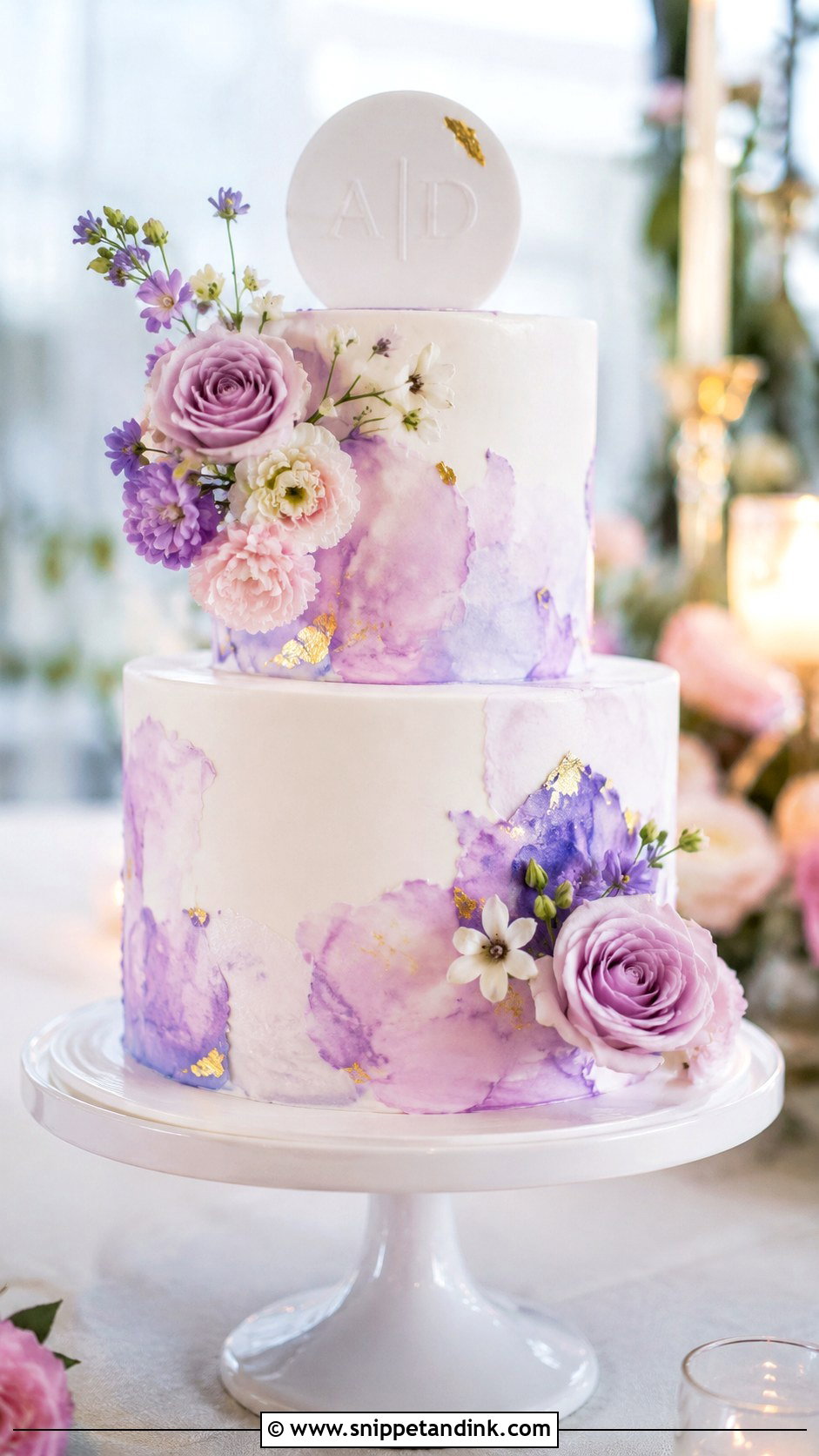
Watercolor lets you include several purples without committing to one solid shade. I blend washes of lilac, lavender, violet and white across smooth buttercream or paint them onto fondant with diluted color, and I keep it a little uneven on purpose, like brushstrokes on paper. To finish, I add delicate sugar flowers, gold leaf, pressed flowers or a simple white topper. Painted fondant needs time to dry before the tiers are boxed, so this one isn’t a last-minute order. It suits garden weddings and art-inspired receptions.
14. Purple Marble Two Tier Wedding Cake
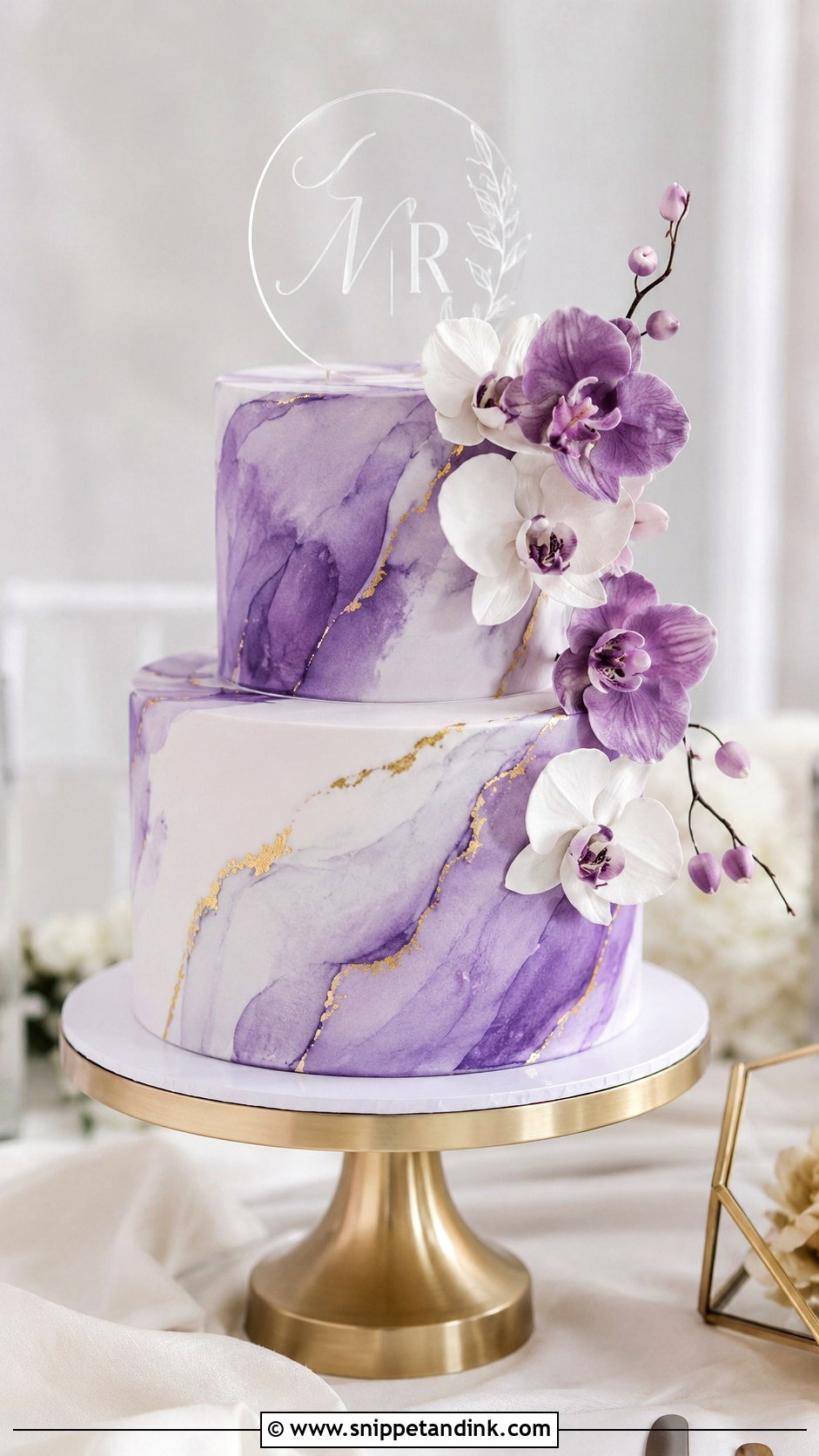
Marble can be soft, white, lavender, violet and grey swirled into something like stone, or deeper with plum for drama. Fondant gives the cleanest marble, because the colors are twisted together before it’s rolled; buttercream marble is softer and blurrier. Gold leaf, sugar orchids or a clear acrylic topper keep it elegant. On only two tiers, I place the strongest vein so it runs across the front of both, which makes the cake look like one piece of stone. A plain white or gold stand suits it best.
15. Purple Geode Two Tier Wedding Cake
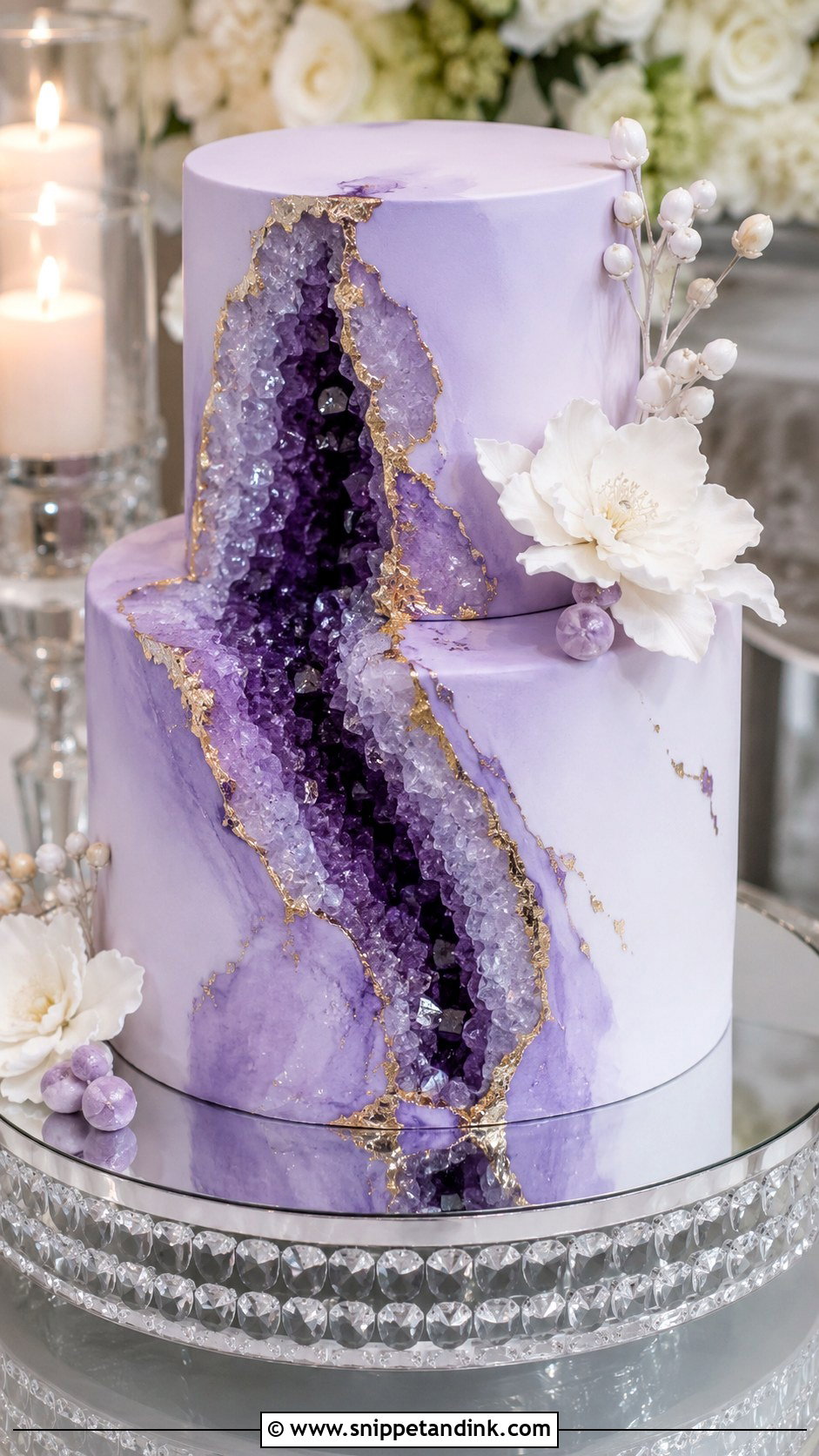
A geode is the most dramatic thing you can put on a two-tier cake. I carve an opening into the side and fill it with rock candy or sugar crystals in amethyst shades, then edge it in gold. White, lavender or pale grey outside lets the purple geode detail take over. On a small cake, I’d put the geode on the lower tier, where it has more height to work with, and keep any flowers small so the two-tier shape stays readable. Sugar crystals go tacky in a humid room, so check the venue’s conditions before choosing it.
16. Purple Vintage Two Tier Wedding Cake
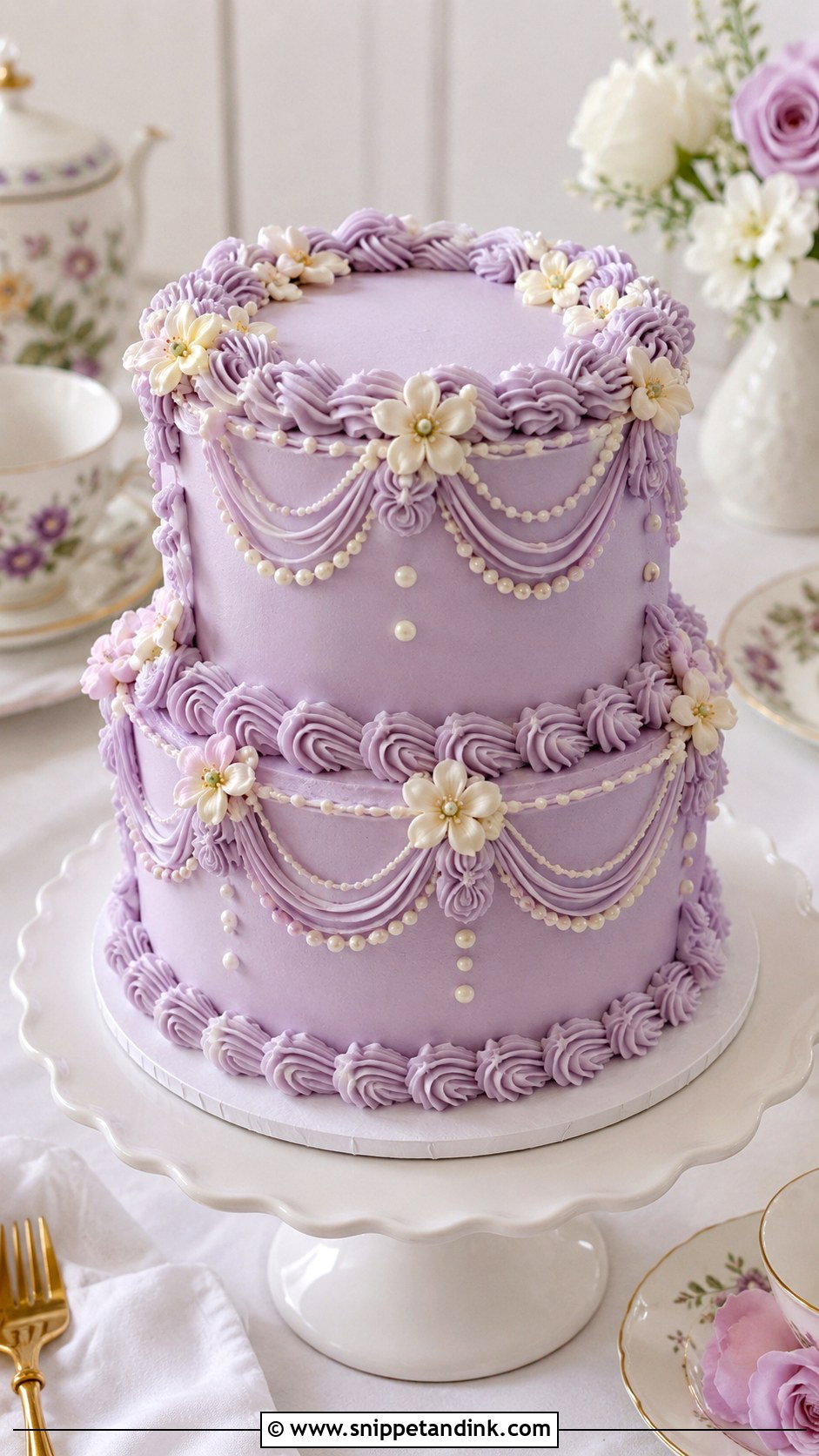
Vintage piping brings back shell borders, swags, small rosettes and pearl dots, here in lavender buttercream or as purple piping on ivory for a lighter look. It needs no large flowers. Glacé cherries often turn up on retro cakes, but on a wedding version I’d swap them for sugar pearls and tiny piped flowers, which look more refined and don’t bleed red into the frosting. The piping takes a stiff buttercream and a cool room to stay crisp. Intimate receptions and tea-party themes suit it.
17. Purple Orchid Two Tier Wedding Cake
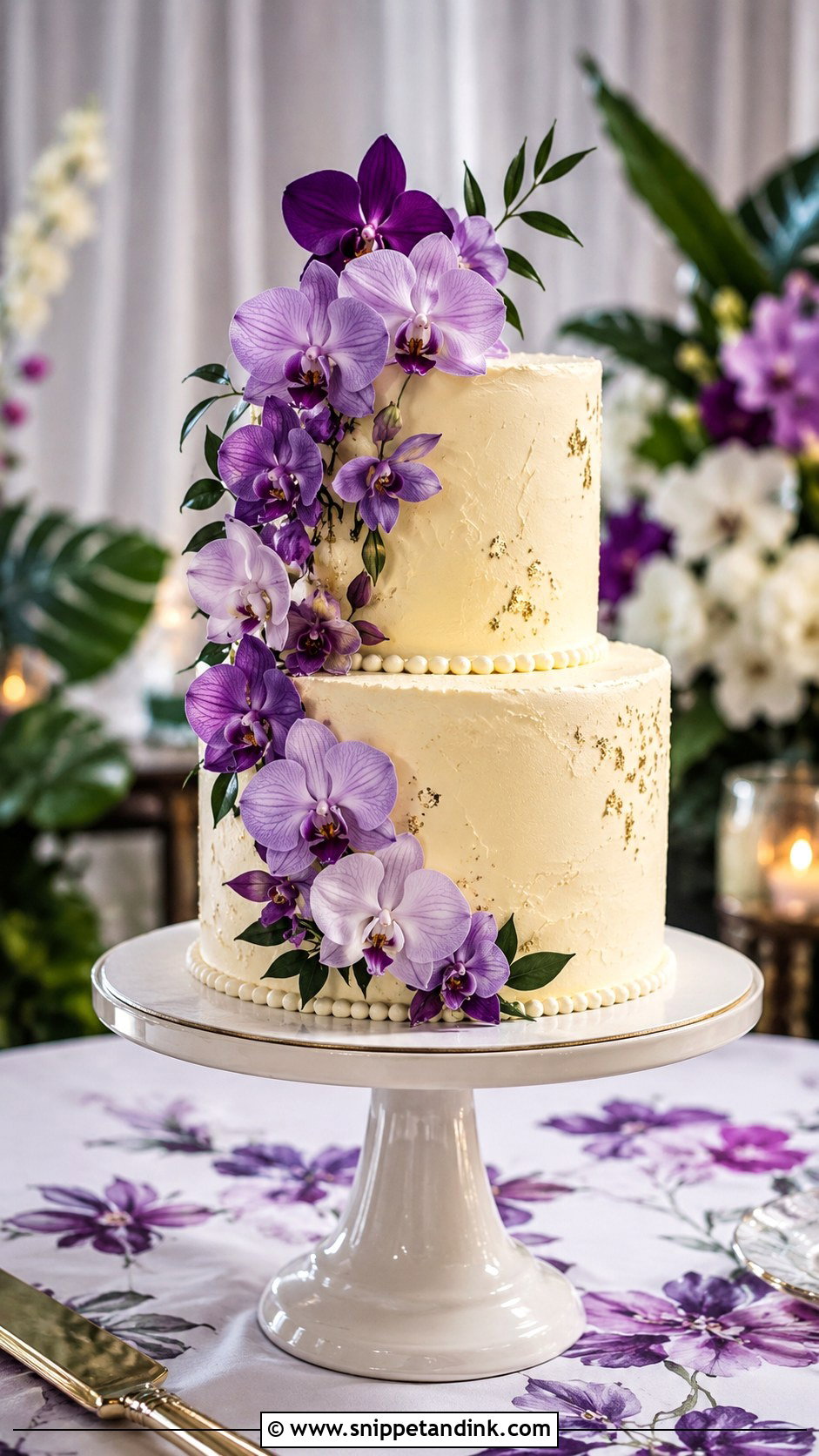
Orchids are sculptural, so three or four stems are enough to carry a two-tier cake. I cascade them from the top tier down one side over a smooth white, ivory or pale lavender base, with gold accents, green leaves or pearl borders as support. Fresh orchids need their stems wrapped, and I check with the florist which varieties are fine near food; sugar orchids remove that worry. The rest of the cake stays clean. Coconut, vanilla bean, lemon or passion fruit sponge fits the tropical feel of hotel and destination weddings.
18. Purple Pressed Flower Two Tier Wedding Cake
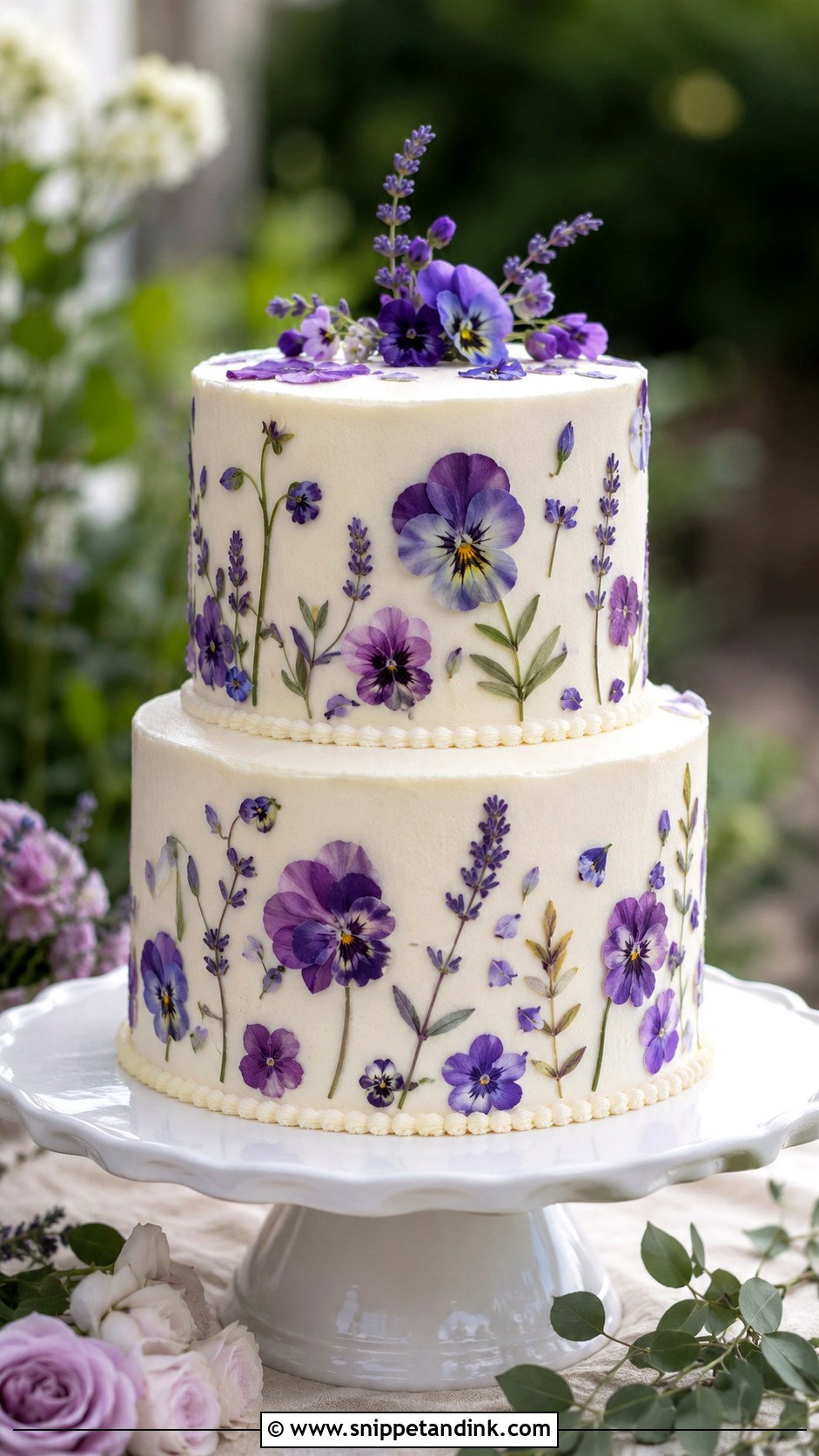
Pressed flowers lie flat, which makes them the most delicate floral option. Edible pansies, violas, lavender petals and tiny blooms go onto smooth white or lavender buttercream to make a light botanical pattern. Spacing is everything; too many and the cake looks like wallpaper. The flowers have to be grown for eating, not bought from a florist, and pressed thoroughly dry, or they wilt and leak color into the frosting. A clean base and minimal borders suit it, and it belongs at spring weddings and cottage-style celebrations.
19. Purple Pearl Two Tier Wedding Cake
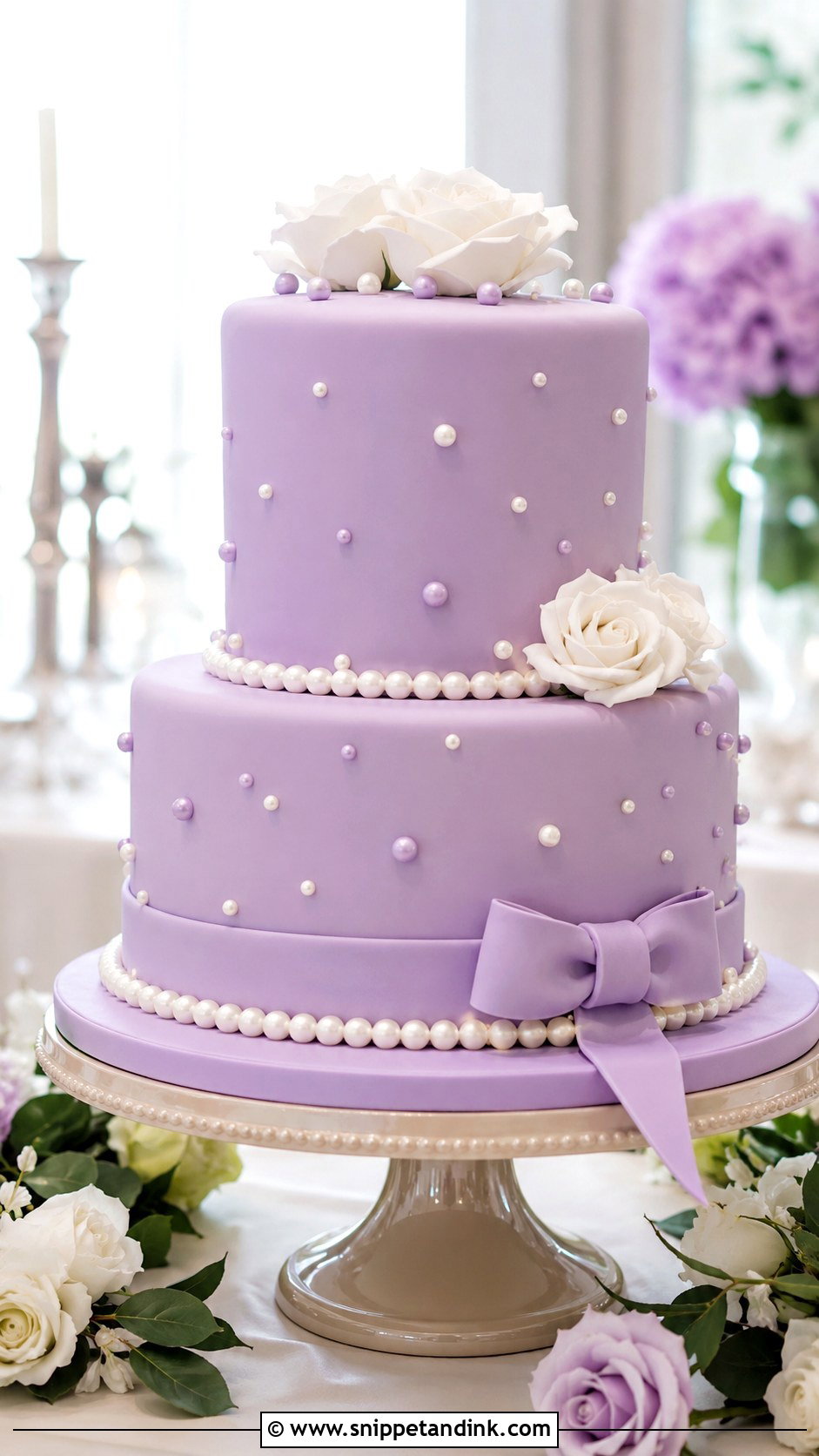
Pearls give a two-tier cake shine without fuss. On a lilac or lavender base I add edible pearls around the tier borders, scatter them across the sides or set them in soft vertical lines, in white, silver or pale lavender to suit the palette. Smooth buttercream or fondant lets them stand out. Pearls pressed into buttercream can slip in a warm room, so I set them while the frosting is chilled and firm. A few white flowers or a small sugar bow soften it. Classic venues and evening receptions suit it.
20. Purple Square Two Tier Wedding Cake
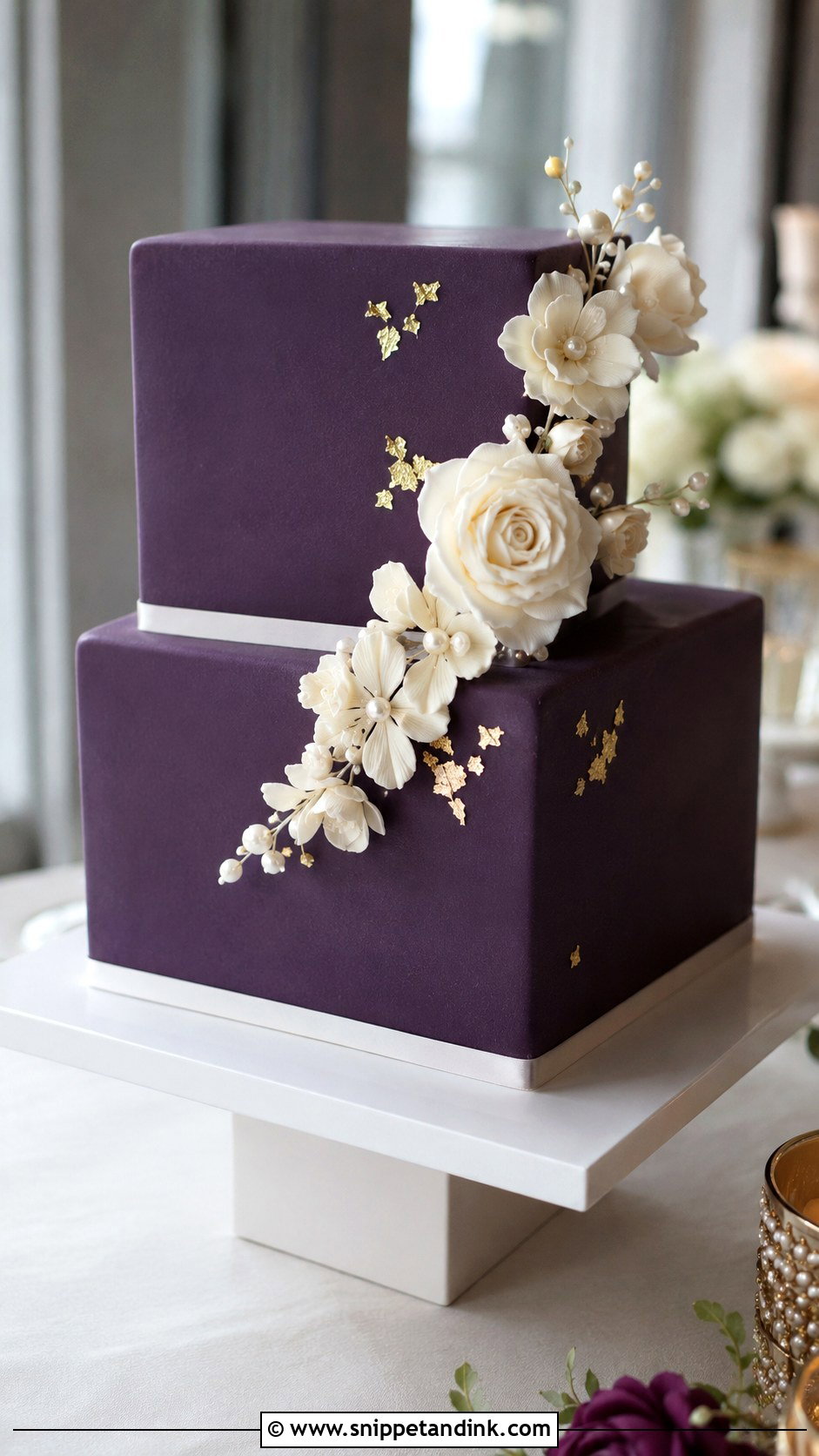
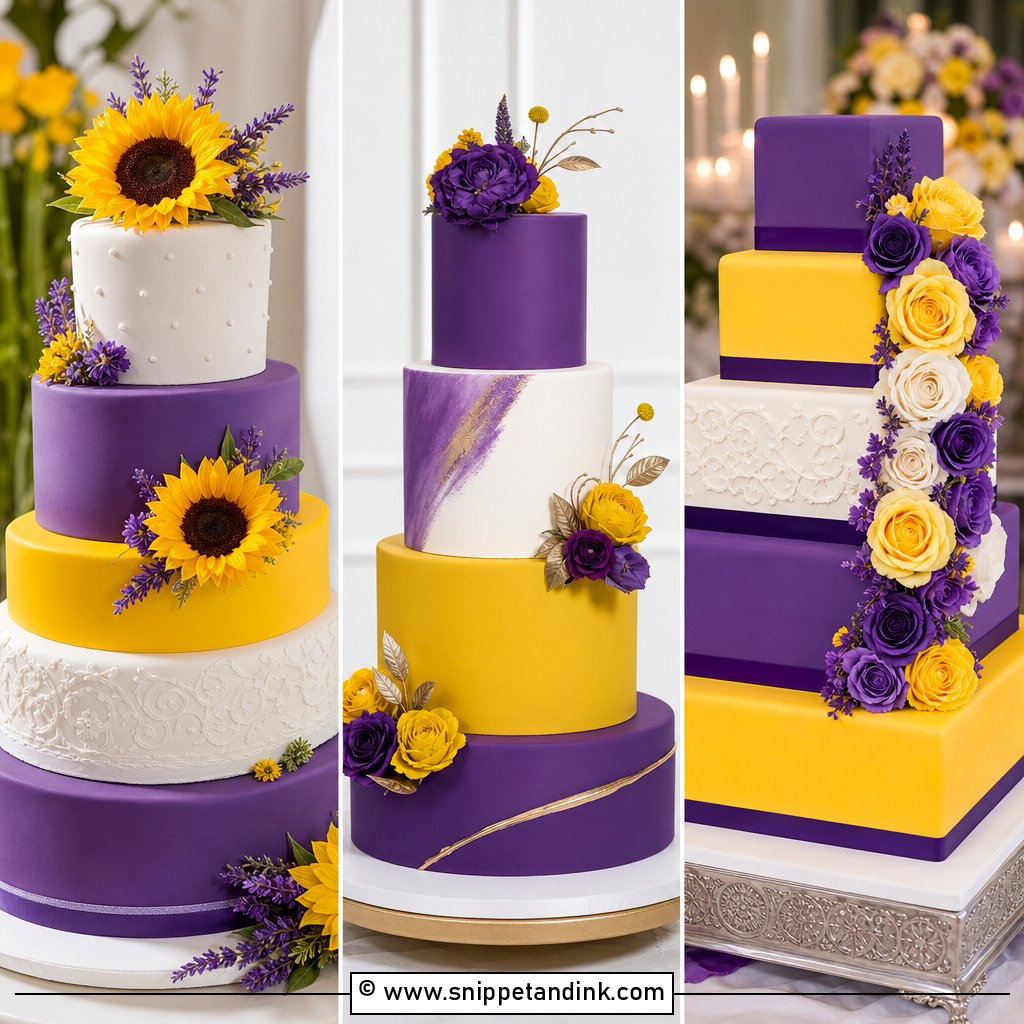
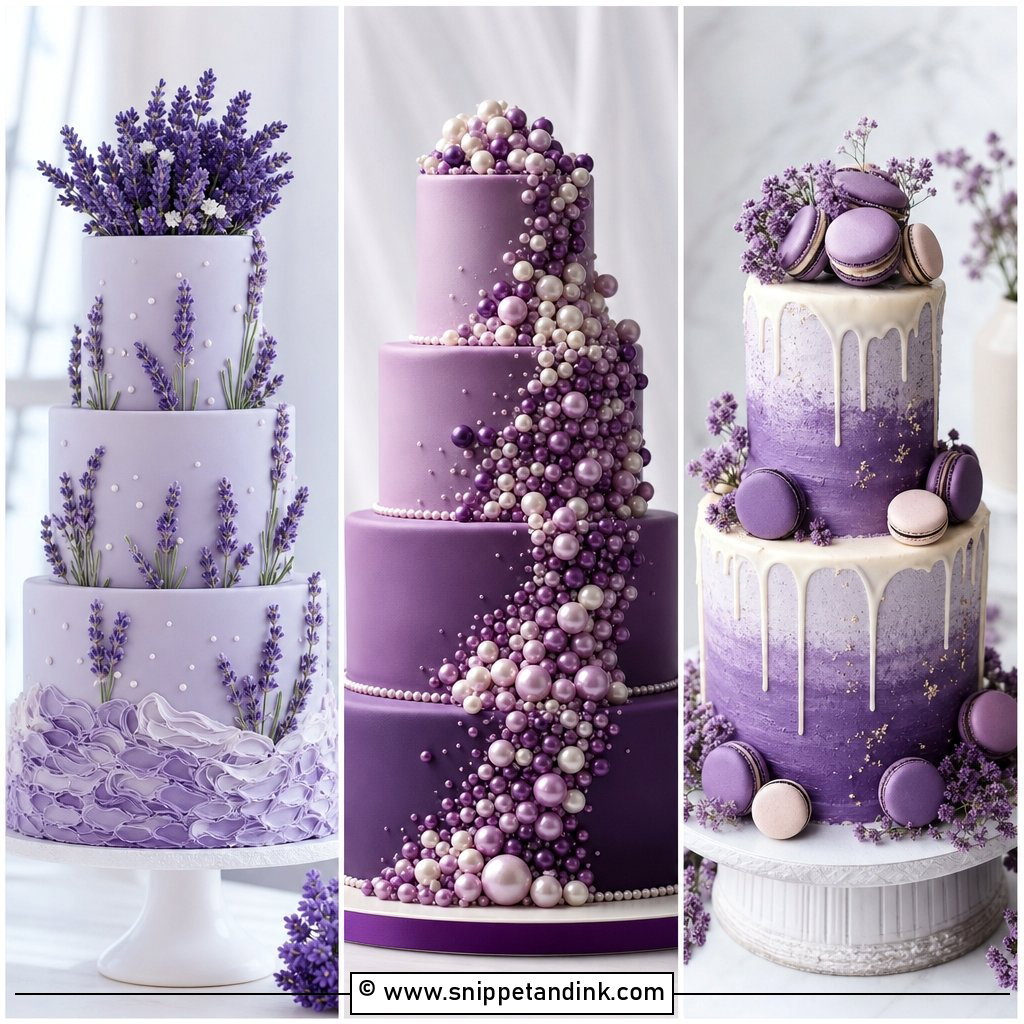
Square tiers look architectural, with clean lines and corners that read well from the front. A smooth lavender or plum finish makes the shape look strong. Sharp white borders, gold leaf, sugar flowers or a diagonal floral arrangement soften the edges. Squares are harder to finish than rounds, because the corners have to be crisp, and they’re more easily dented in transport, so expect a little more care in the quote. They also cut into more even portions. City weddings and modern venues suit it, on a sleek stand.
One Flavor per Tier, and Fillings That Survive the Day
Two tiers means you can offer two flavors, and I’d use that. Pair one that’s crowd-safe, like vanilla or lemon, with one that’s more personal. Purple themes have some natural matches: blackberry, blueberry, fig, a light touch of lavender, or ube, the purple yam that gives a sponge real violet color without dye.
The filling has to cope with the room. Jams, curds, ganache and stable buttercreams hold up for hours. Fresh whipped cream, mousse and custard need refrigeration and are risky for a cake on display through a warm reception, so I keep those for cooler venues or for a cake that comes out just before cutting.
Saving the Top Tier for Your First Anniversary
On a two-tier cake, saving the top tier means freezing half your cake, so decide early and order the size accordingly. If you do keep it, ask someone to box it before the evening’s end and handle it this way.
- Take off flowers, toppers, dowels and any non-edible decorations.
- Chill the tier uncovered until the frosting is firm, so wrapping doesn’t crush it.
- Wrap it tightly in several layers of cling film, then foil or an airtight box, and freeze.
- To serve, thaw it in the fridge overnight still wrapped, so condensation forms on the wrap and not on the cake.
Be realistic about the result. Frozen cake is at its best within a few months, and fresh fruit or cream fillings don’t freeze well. Many couples prefer to order a small fresh cake in the same flavor for the anniversary instead.
Settle the Size and Flavor First, Then the Decoration
Two tiers can carry any mood, from soft lavender garden cakes to deep plum for an evening reception. Buttercream gives you flavor and texture; fondant gives you clean lines and an even color. Flowers, pearls, gold leaf, watercolor, ruffles, marble and pressed blooms each turn a small cake into a proper centerpiece. Start with your guest count and your room, settle the tier sizes and flavors, and then pick the decoration. It’s far easier to choose a design once you know exactly how big the cake will be and where it will stand.
You'll Like These Ideas:




Leave a Reply