
Purple round wedding cakes keep coming up in my consultations, and I understand why. The round tier is the most traditional wedding shape, and purple gives it a mood without changing that familiar outline. You can go soft with lavender, polished with lilac and pearl, bold with plum, or modern with marble and metal. Round cakes are also the practical shape: they ice more evenly than squares, have no corners to dent in the van, and cut cleanly into wedding portions. Below are twenty ways I’d decorate one, with notes on how each finish behaves and what it asks of your venue.
Bring a Fabric Swatch, Not a Screenshot, for the Purple
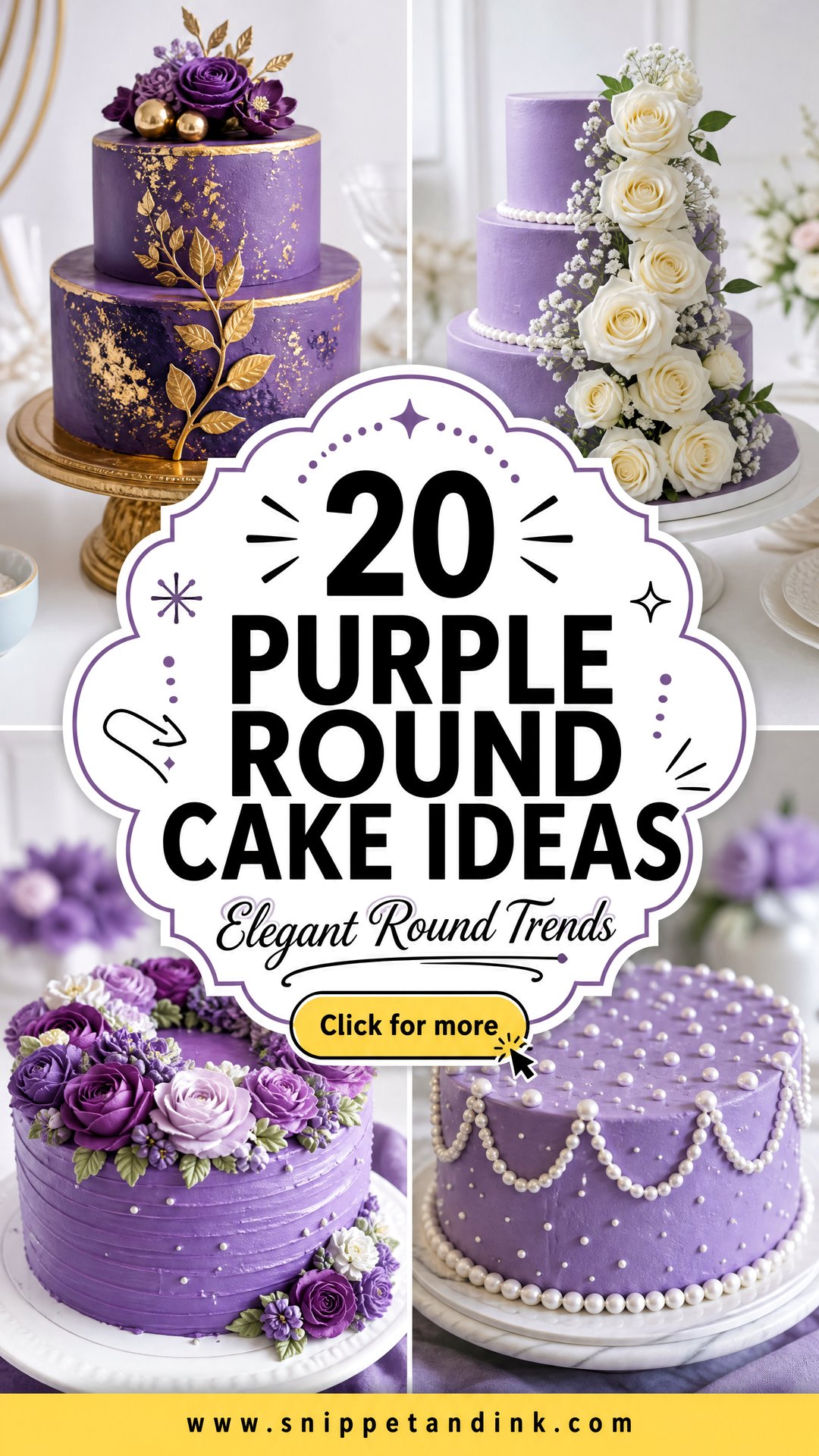
Matching purple is harder than matching almost any other wedding color. A photo on your phone shifts with screen brightness, and the same lilac can look pinker or bluer on two different screens. A scrap of bridesmaid fabric, a ribbon or a printed invitation gives me something stable to hold next to the mixing bowl in daylight.
The base matters too. Real butter buttercream is naturally pale yellow, and yellow mixed with purple drifts toward grey or muddy brown. To get a clean lavender, I either whiten the buttercream first or add a tiny amount of violet to cancel the yellow before tinting. Fondant starts bright white, so if your shade has to be exact, fondant is the more predictable choice.
Expect deep shades to darken as they rest. I mix plum and violet the day before and check them again in the morning, because the color the next day is what you’ll actually see on the table.
1. Purple Round Wedding Cake With Lavender Flowers
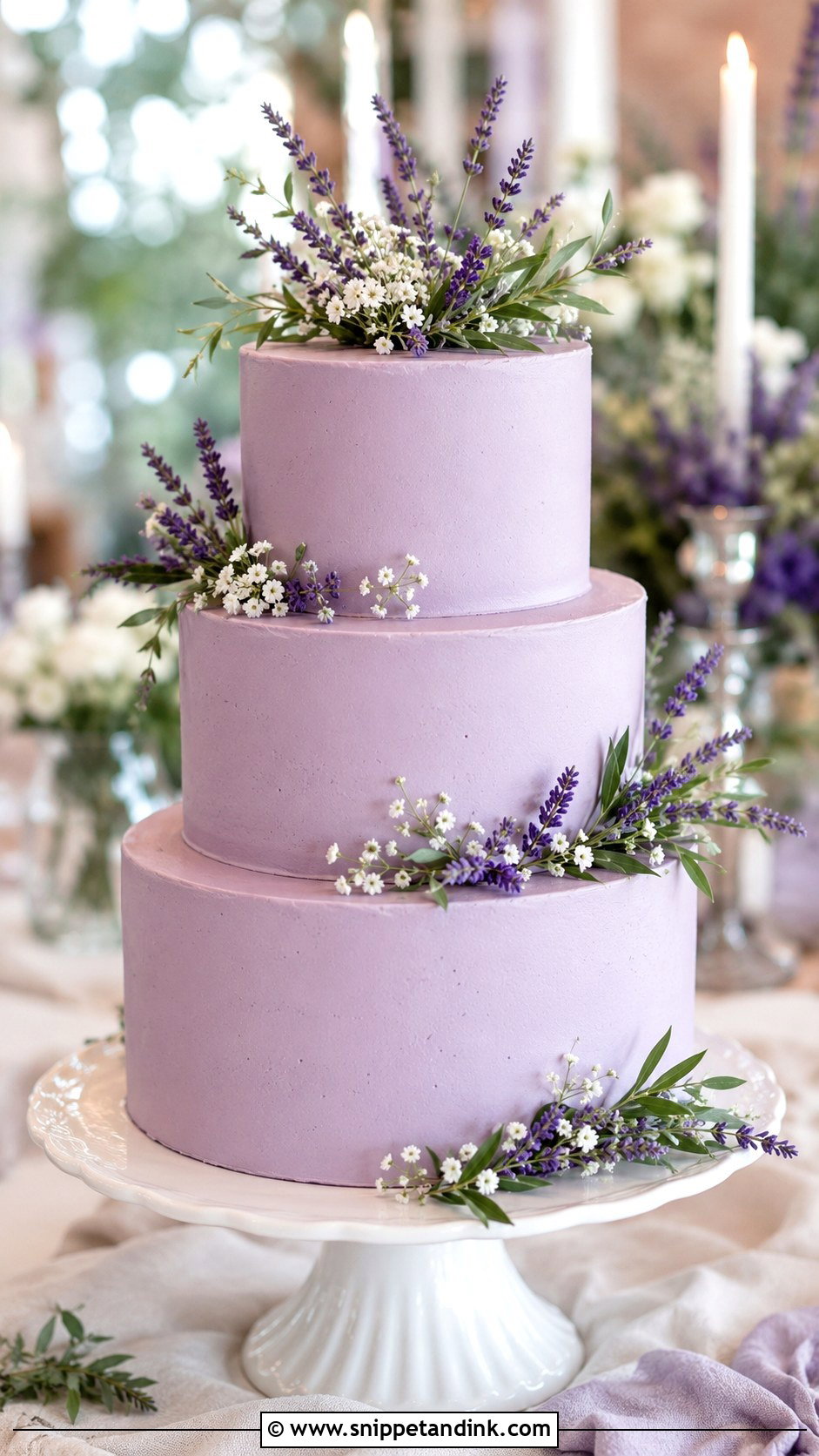
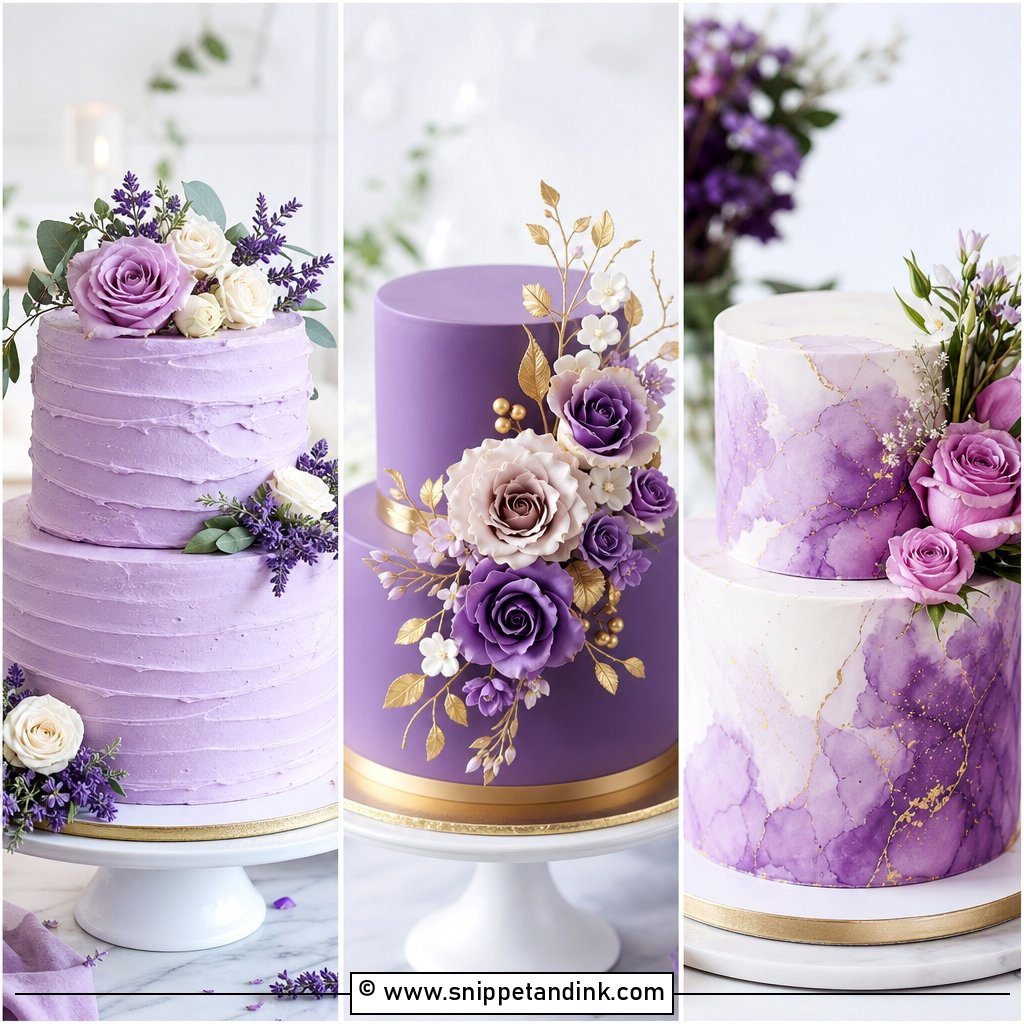
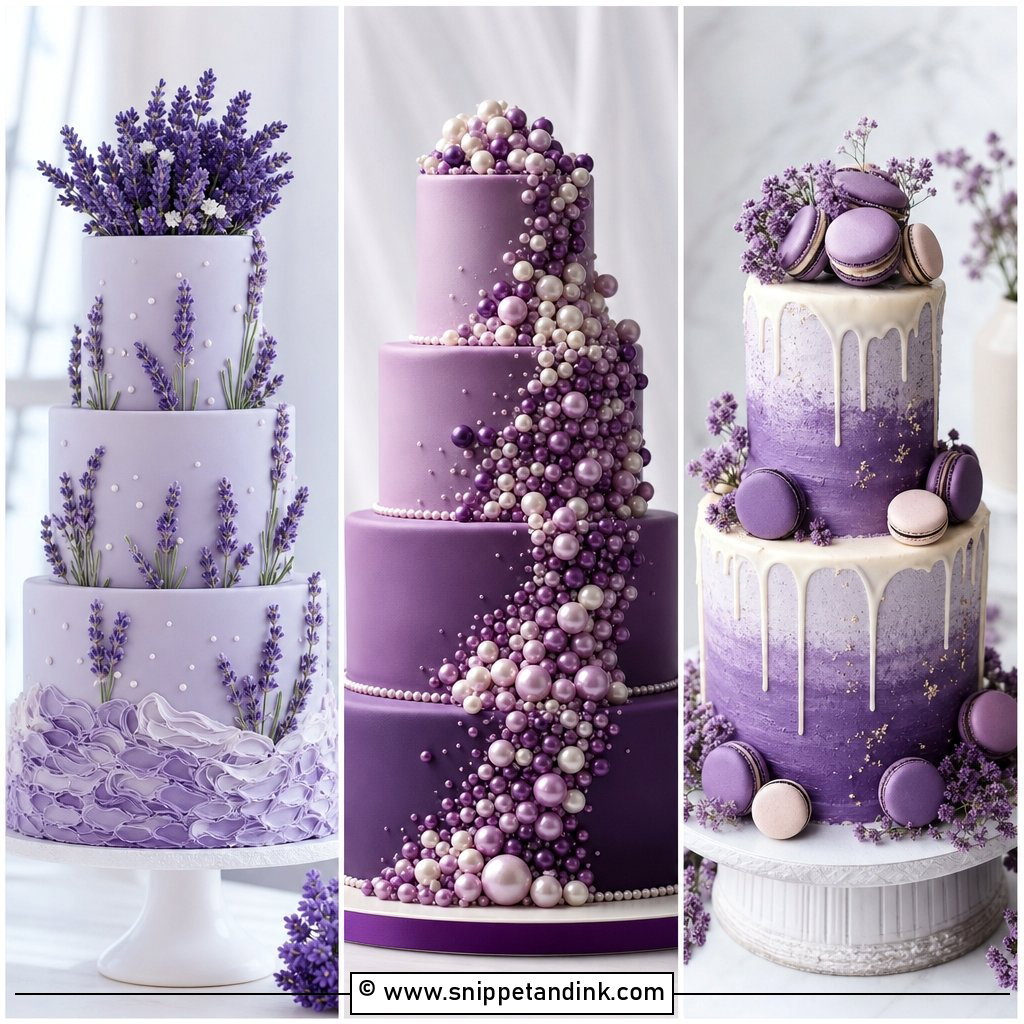
Lavender blooms on pale purple buttercream give the gentlest version of this cake, with ivory accents and a little greenery to lift it. I cluster the flowers in two or three spots instead of wrapping every tier, which keeps the cake looking fresh rather than crowded. If the lavender is real, it needs to be culinary grade or kept off the frosting on picks, since florist bunches are often sprayed. Lavender also sheds tiny buds, so I add it on site at the last moment. Spring weddings, brunches and outdoor receptions suit it.
2. Purple Round Wedding Cake With Gold
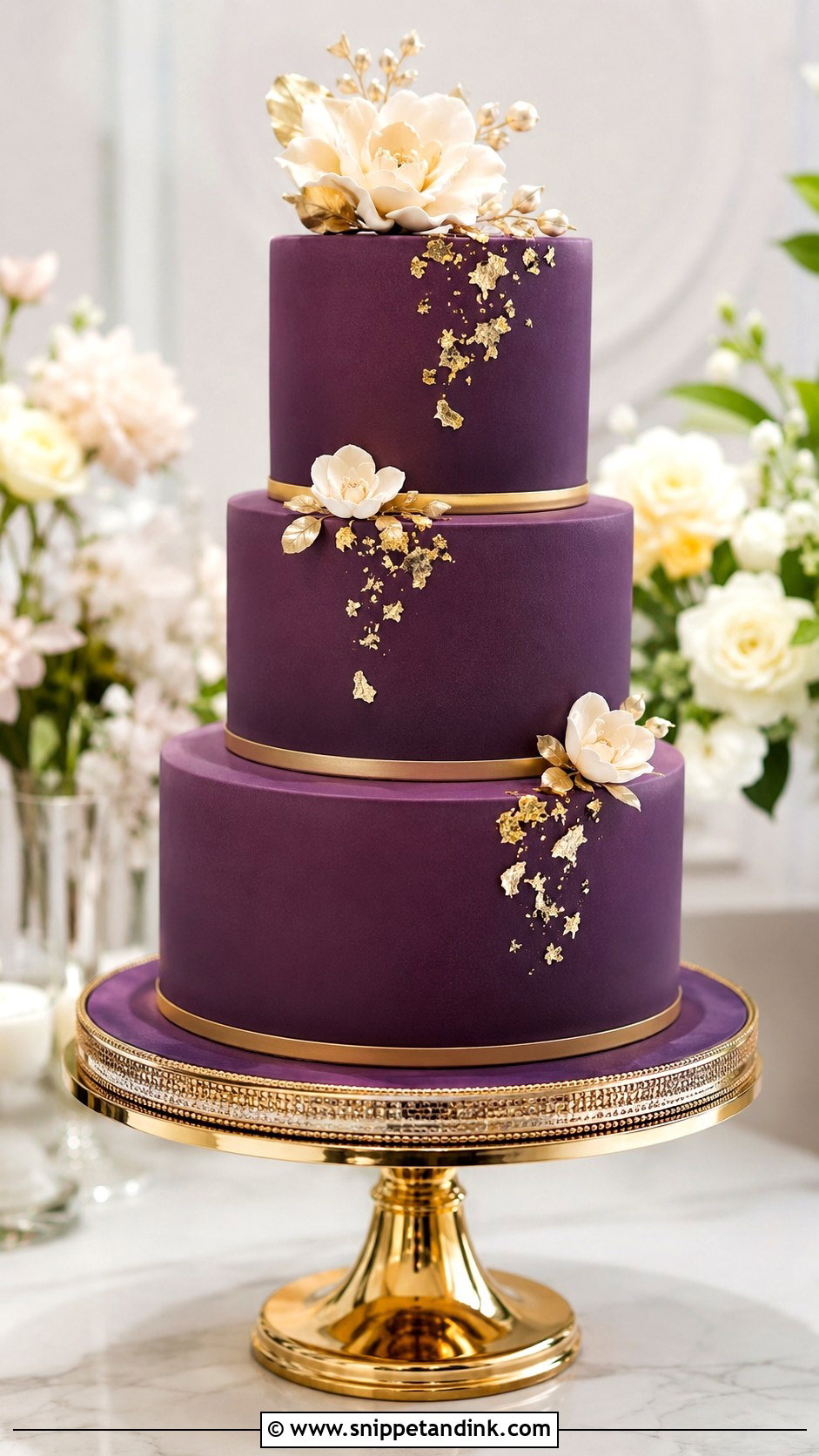
Gold warms purple and makes the cake read as more formal. Gold leaf, thin painted lines or a metallic fondant trim all work against deep plum or royal purple on smooth buttercream or fondant. For something softer, lilac with small gold flecks feels delicate and modern. Gold leaf is easiest to apply cleanly on fondant or well-chilled buttercream; on soft frosting it tears and smudges. I keep it to edges, a few flowers or one statement tier, because a fully gold cake loses the purple. Ballrooms and evening receptions are where it belongs.
3. Purple Round Wedding Cake With White Roses
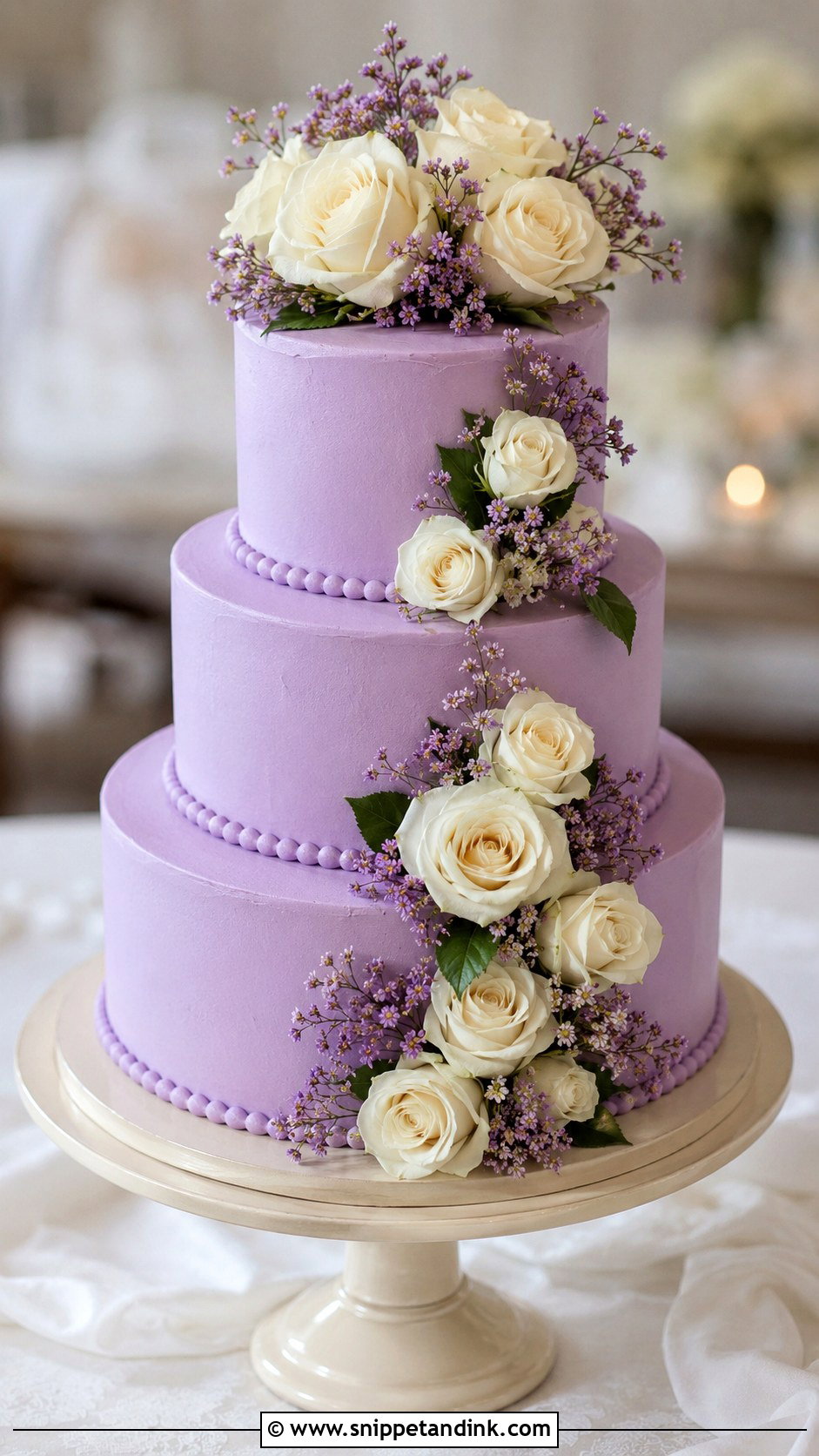
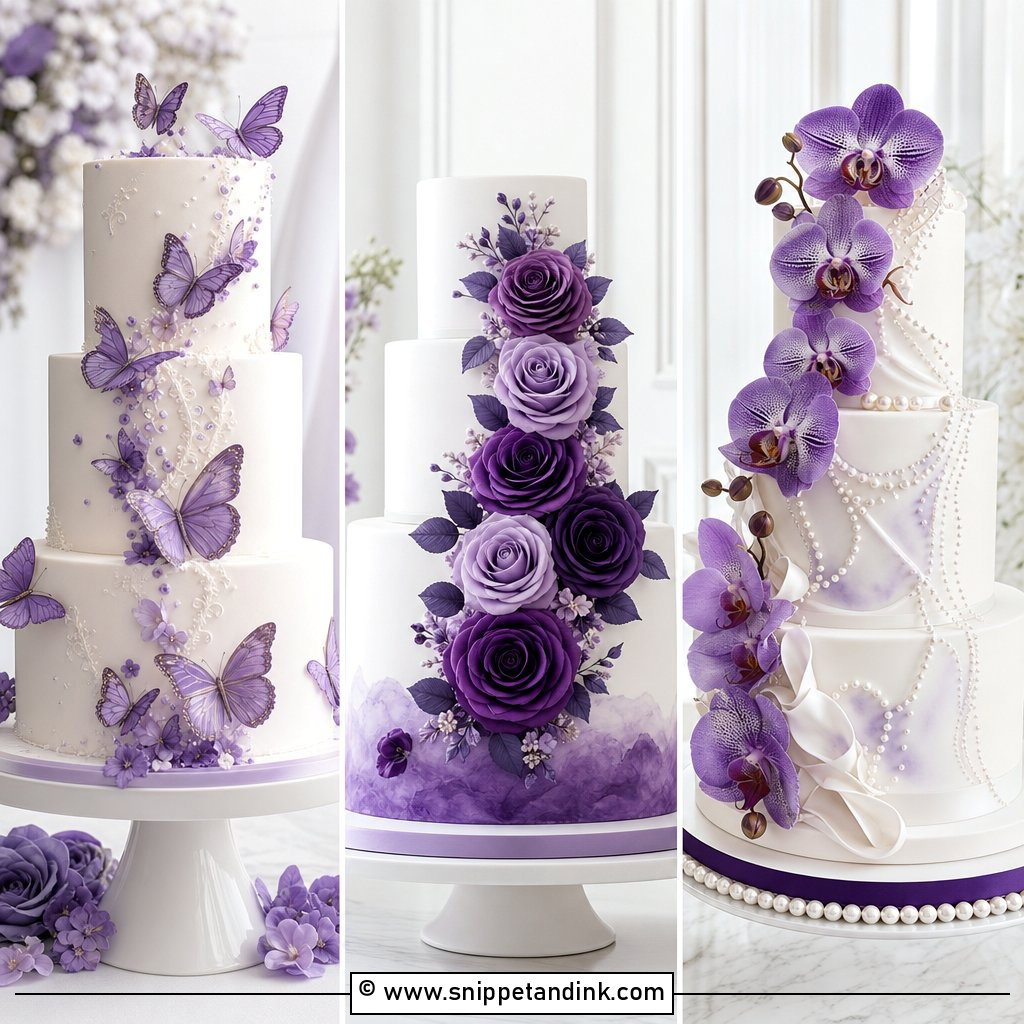
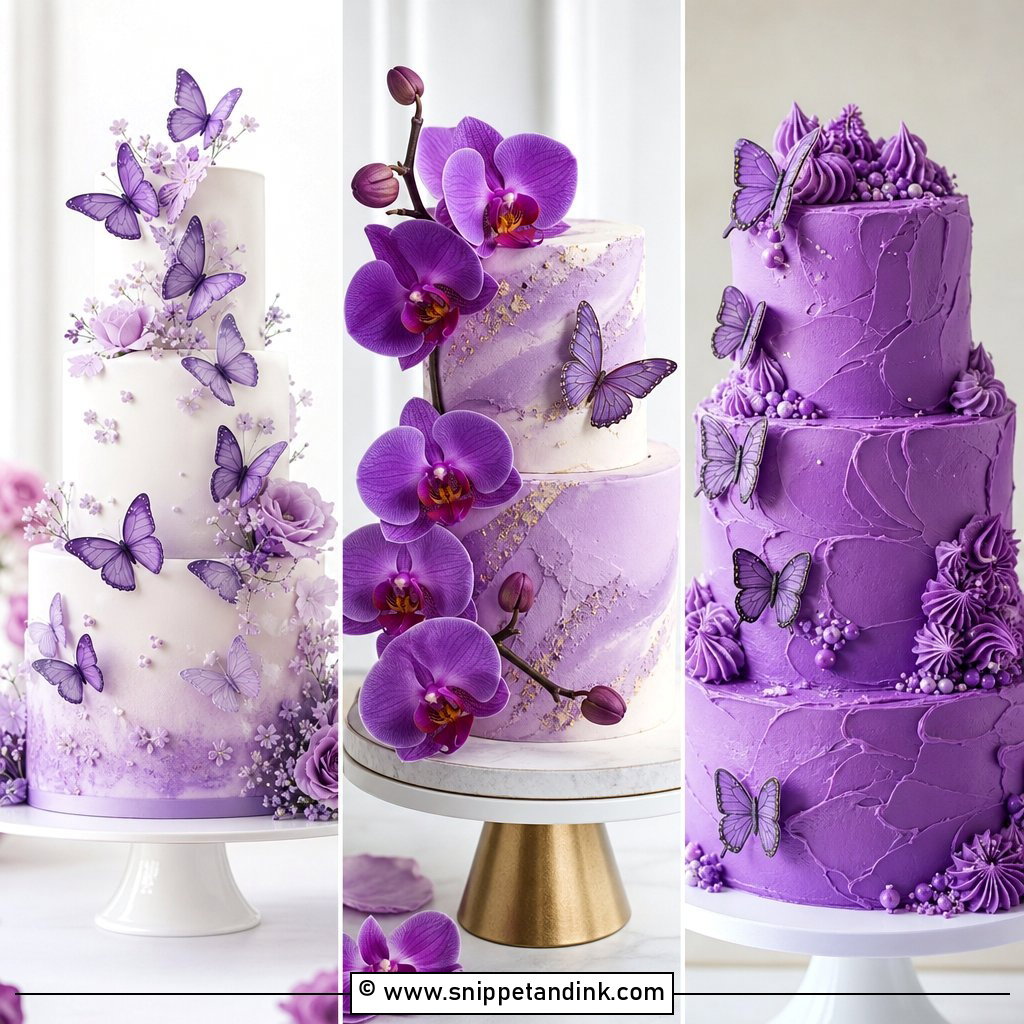
White roses against purple frosting is a contrast that’s hard to get wrong. Fresh, sugar or buttercream roses all work, and the choice usually comes down to budget and venue rules, since some venues don’t allow fresh flowers on food. On a three-tier round cake, I place them in a diagonal line down the side, which leads the eye around the curve instead of straight down. Lavender frosting keeps it dreamy; darker purple adds drama. Small pearls or a simple piped border add texture if you want it. Traditional weddings and purple-and-white palettes suit it best.
4. Purple Round Wedding Cake With Ombre Buttercream
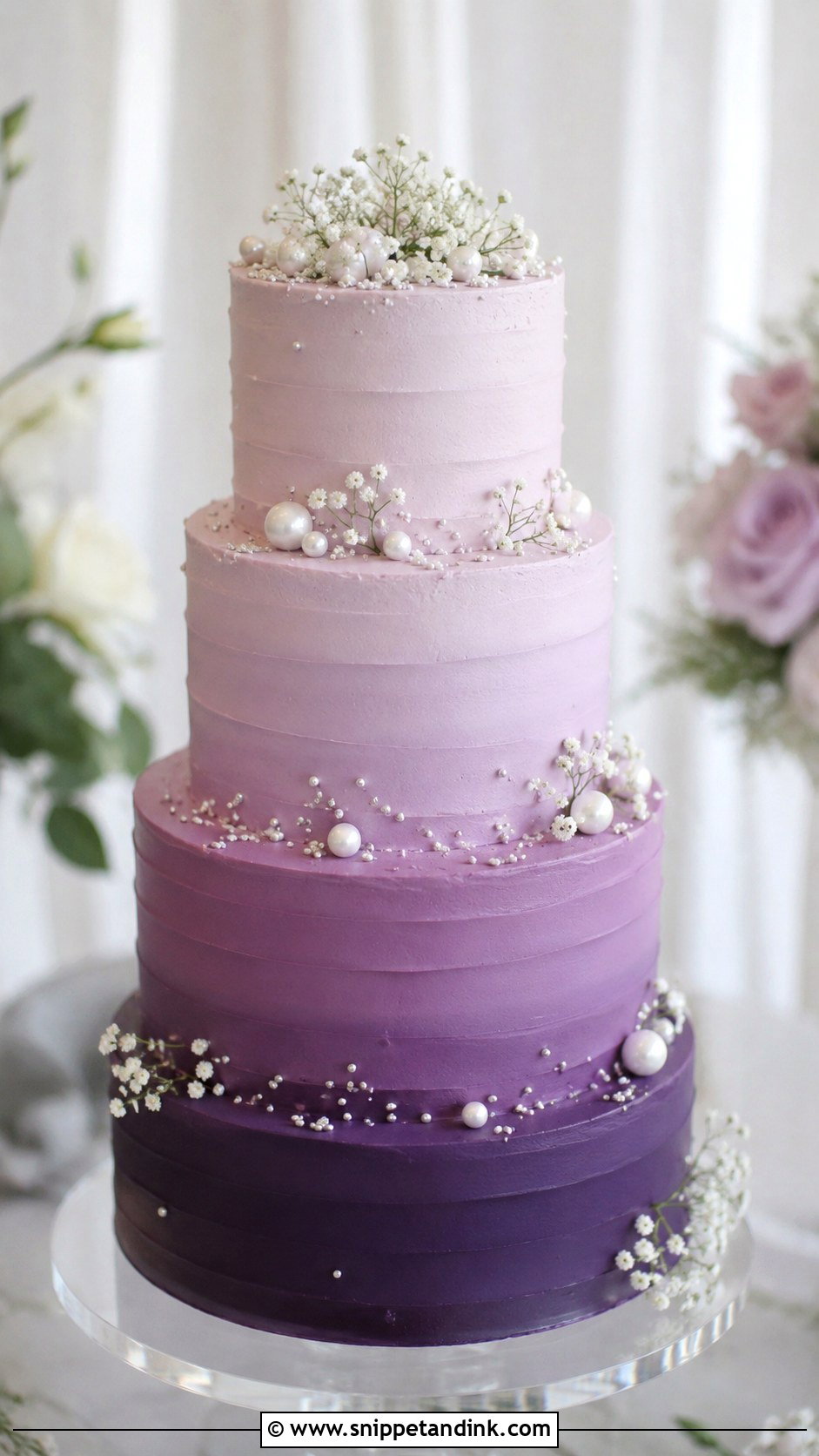
Round tiers show an ombre better than any other shape, because the gradient wraps around without a corner breaking it. I’ll fade from deep plum at the base to pale lavender at the top, or from soft lilac into bright violet, applying each shade in bands and smoothing them together with a tall scraper while the buttercream is still soft. Smooth sides look cleaner; light texture looks more handmade. I keep the decoration to a few flowers, pearls or silver touches, so the color is the point. Ask to see a mixed sample of the darkest shade, since deep purple buttercream can taste of coloring if it’s pushed too far.
5. Purple Round Wedding Cake With Marble Fondant
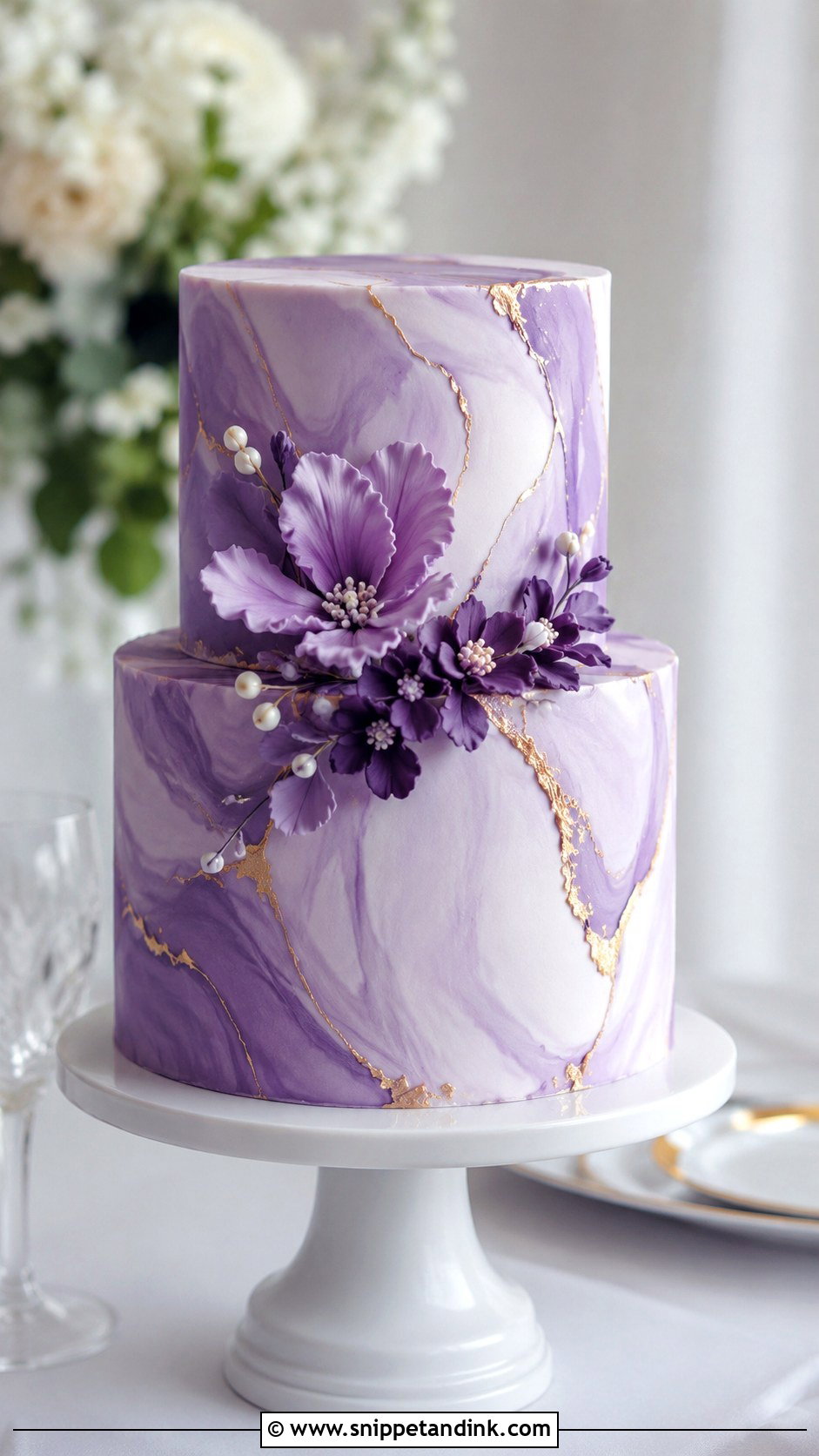
Marble fondant brings movement to a round cake without any extra decoration. White, lavender, violet and plum get twisted together and rolled, and the swirl lands differently on every tier, so no two cakes look the same. That’s the appeal, and also something to accept: you can’t specify exactly where a vein will fall. Gold veining painted on afterward adds a luxe touch, while matte marble looks minimal. Acrylic stands, modern florals and contemporary or hotel venues all suit it.
6. Purple Round Wedding Cake With Silver
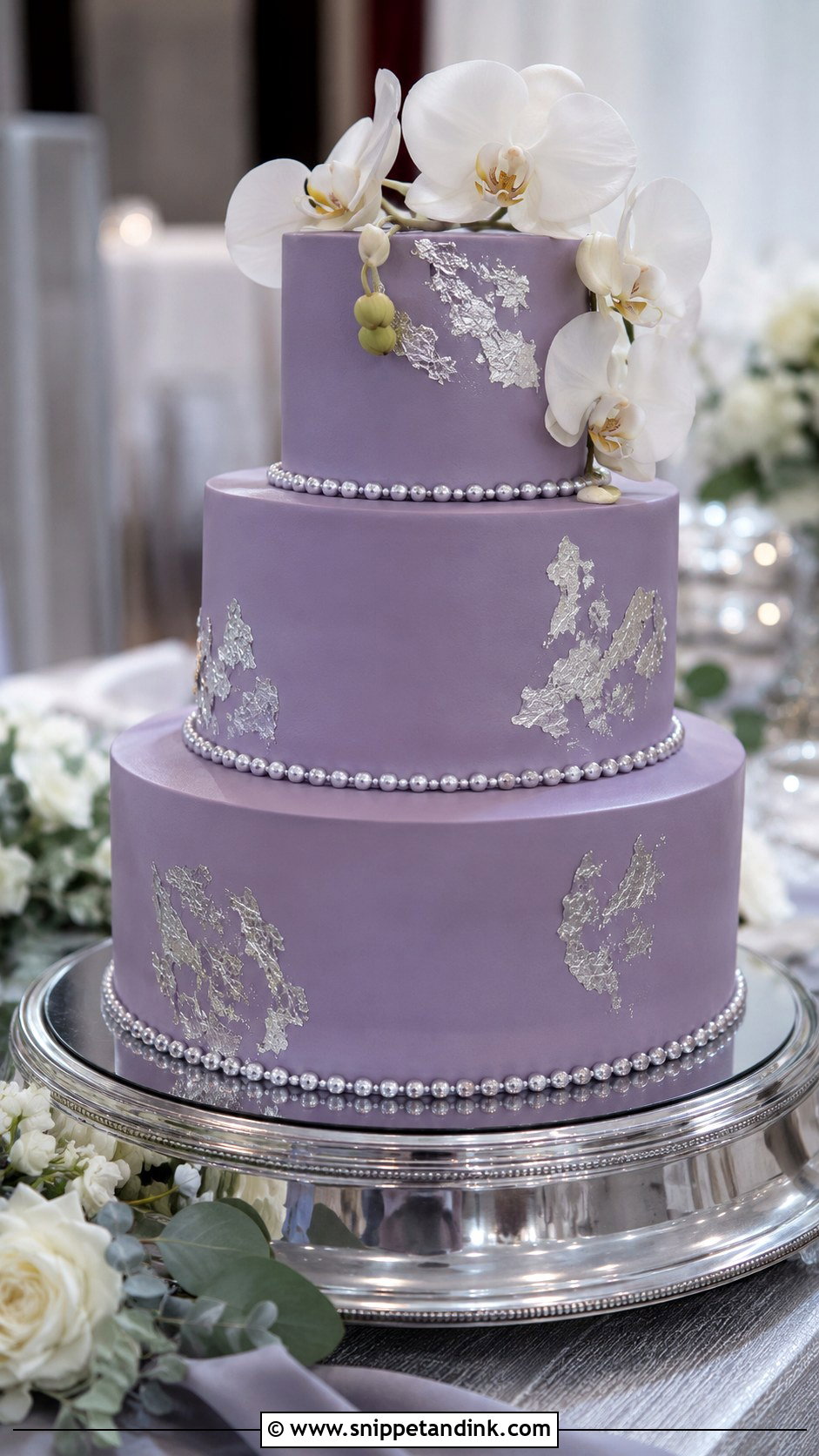
Silver gives purple a cool glow that suits evening receptions and purple-and-grey palettes. I’d use silver leaf, pearlized sugar, metallic ribbon or fine silver piping around each tier. Smooth fondant makes the silver crisp; buttercream softens it and feels more romantic. Before choosing, check that the silver products are edible where you live, since rules on metallic decorations differ by country and some are sold for decoration only. White orchids or pale purple sugar flowers finish the cake quietly.
7. Purple Round Wedding Cake With Buttercream Flowers
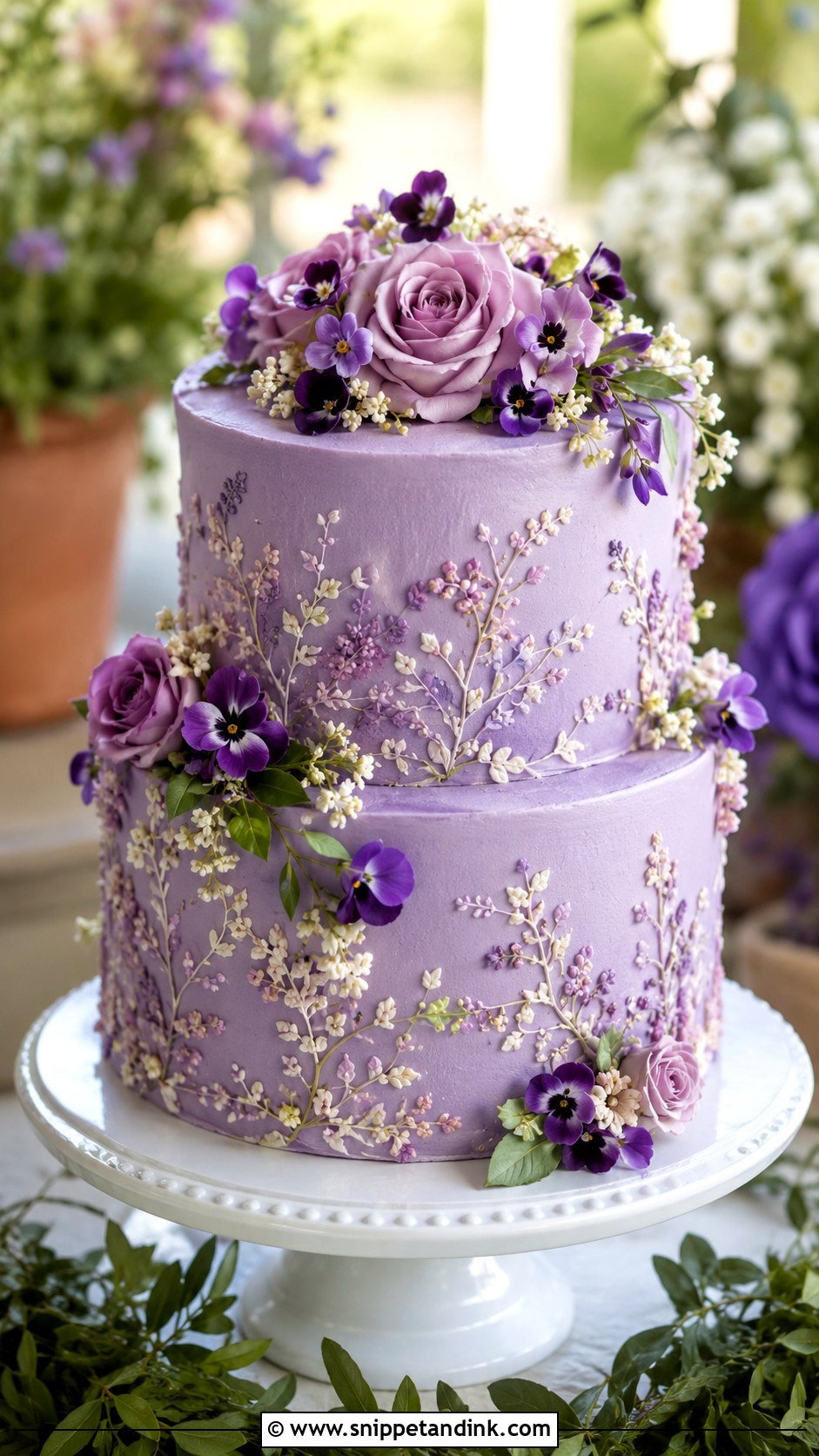
Piped buttercream flowers are what I recommend when a couple wants a full floral cake that is entirely edible and color-matched. I pipe roses, blossoms and ruffled petals in lilac, violet, plum, ivory and dusty purple, and because I mix every shade myself, the colors stay consistent from tier to tier. Round tiers give the flowers an even canvas all the way around. The catch is temperature. Buttercream flowers soften and lose their edges in a warm room, so this is a cake for an air-conditioned space or a cooler season, not a hot marquee.
8. Purple Round Wedding Cake With Fresh Berries
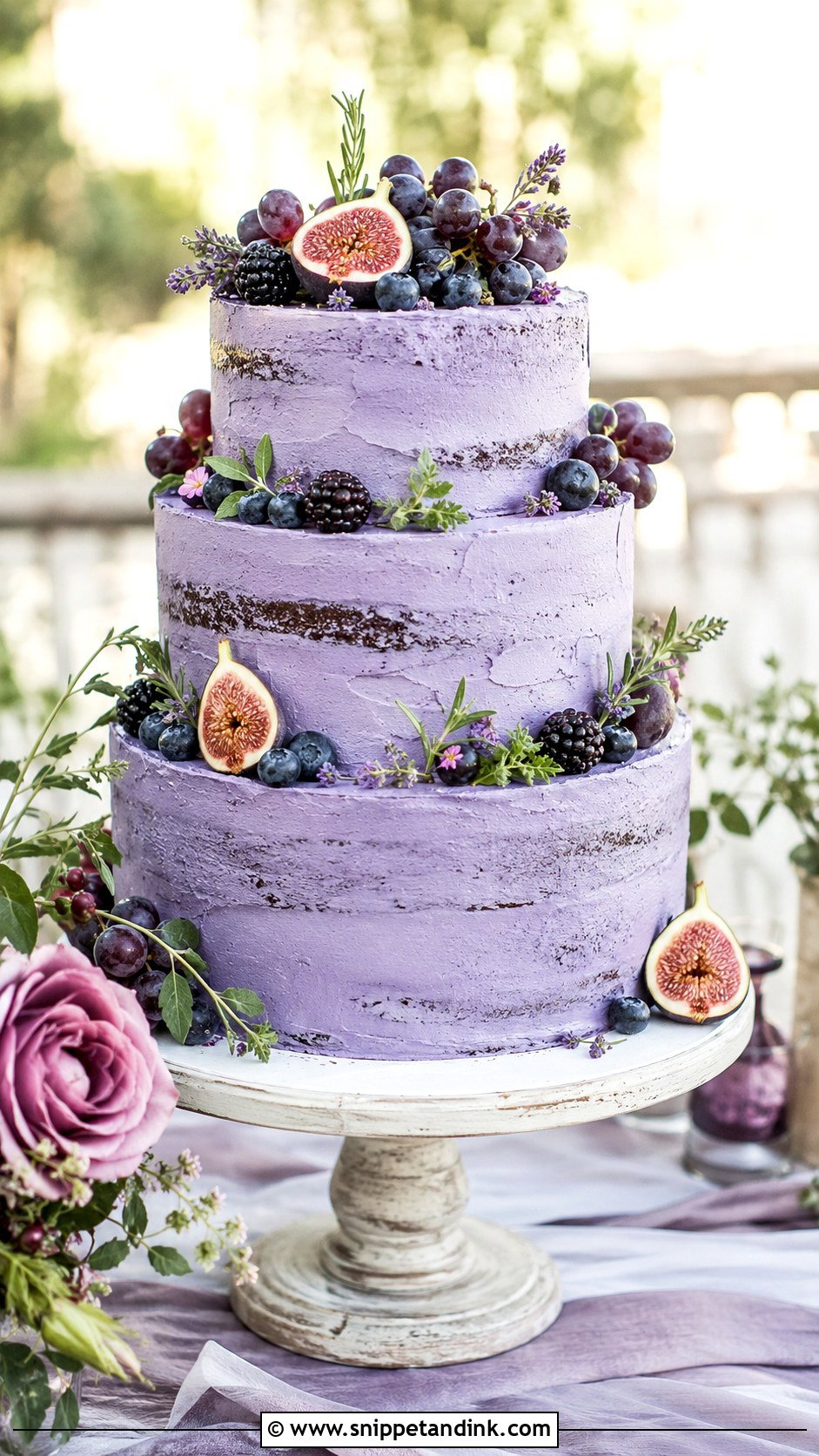
Fruit brings real purple onto the cake: blackberries, blueberries, figs and purple grapes against lavender buttercream, vanilla frosting or a semi-naked finish. The round shape makes it easy to ring the fruit around the tier edges or run it down one side. I add berries at the venue, washed and patted completely dry, because damp fruit weeps into the frosting and blackberries stain white buttercream within the hour. Cut figs brown quickly, so they go on last. Small flowers and herbs fill the gaps. It suits outdoor weddings, summer receptions and garden venues.
9. Purple Round Wedding Cake With Pearl Details
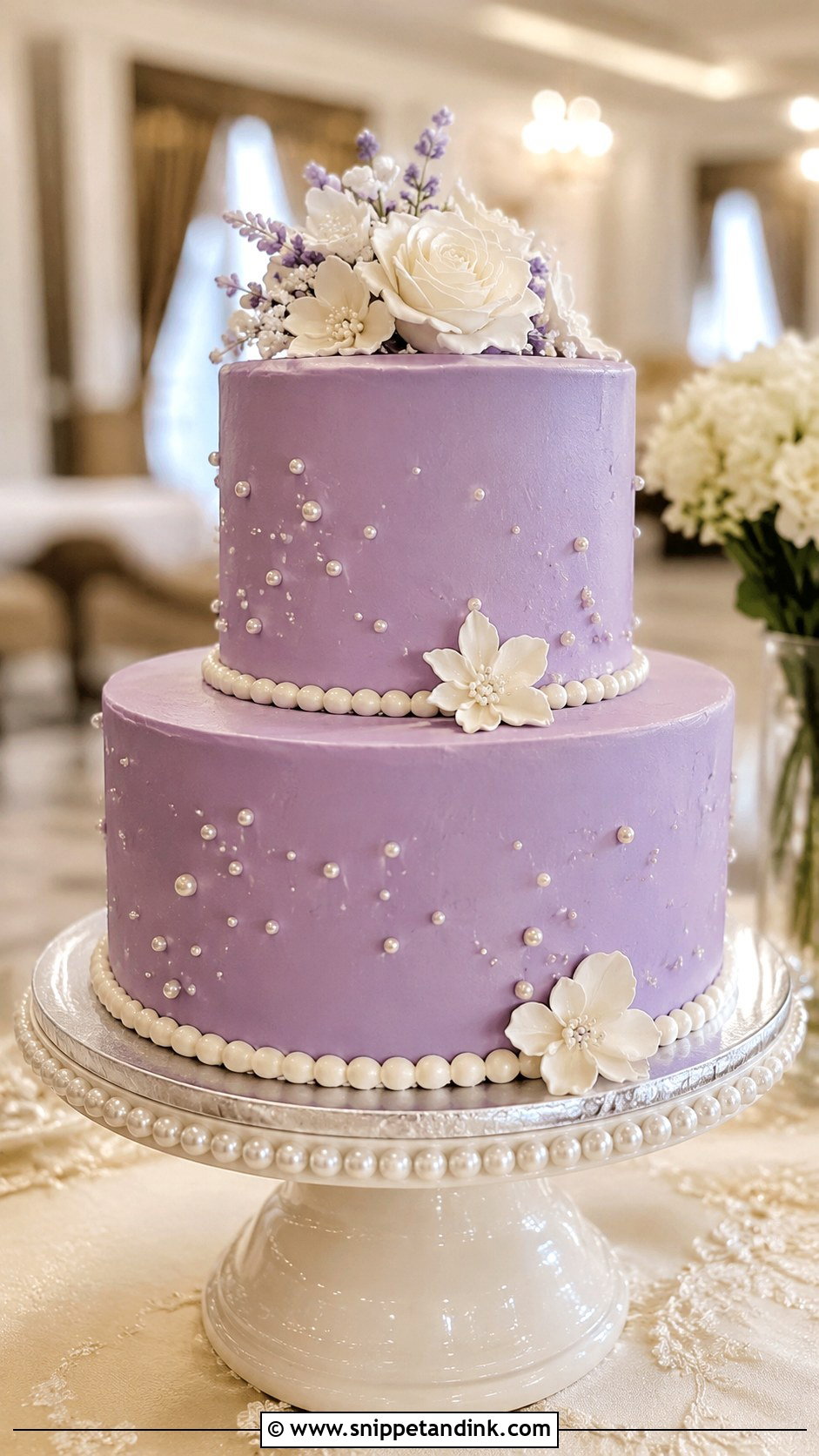
Pearls on lavender, lilac or mauve frosting add texture without clutter. I scatter tiny edible pearls across the tiers, pipe pearl borders around each base, or cover the bottom tier entirely for more impact. That full pearl tier takes hours of placement, so expect it to be reflected in the quote. Smooth buttercream or fondant gives the pearls a clean surface to sit on, and white flowers or small sugar blossoms keep the rest simple. Classic receptions, ballrooms and soft palettes all suit it. Sugar pearls are hard, so I keep them small enough to bite comfortably.
10. Purple Round Wedding Cake With Sugar Flowers
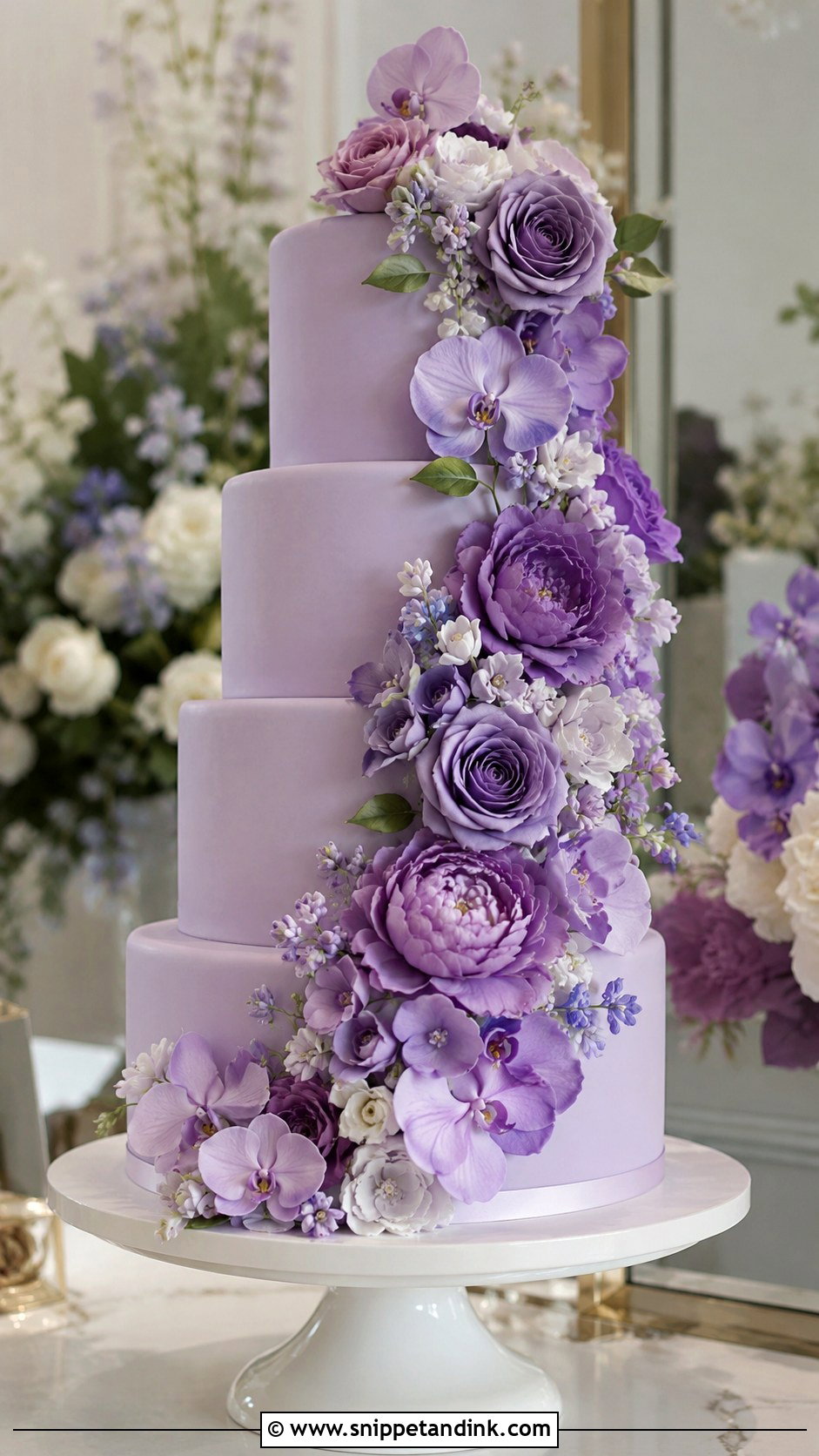
Sugar flowers let me match your colors exactly, because I tint the paste petal by petal. Roses, orchids, peonies, hydrangeas or lavender sprigs can all be made in your shades, and they hold their shape for days, which suits structured tiered cakes and warm rooms. On smooth ivory or pale lavender frosting, a single large cluster reads as a centerpiece, while a soft cascade carries the eye across the tiers. Sugar flowers take time, often made weeks ahead, so order early. Formal weddings and detailed cake tables suit them.
11. Purple Round Wedding Cake With Drip
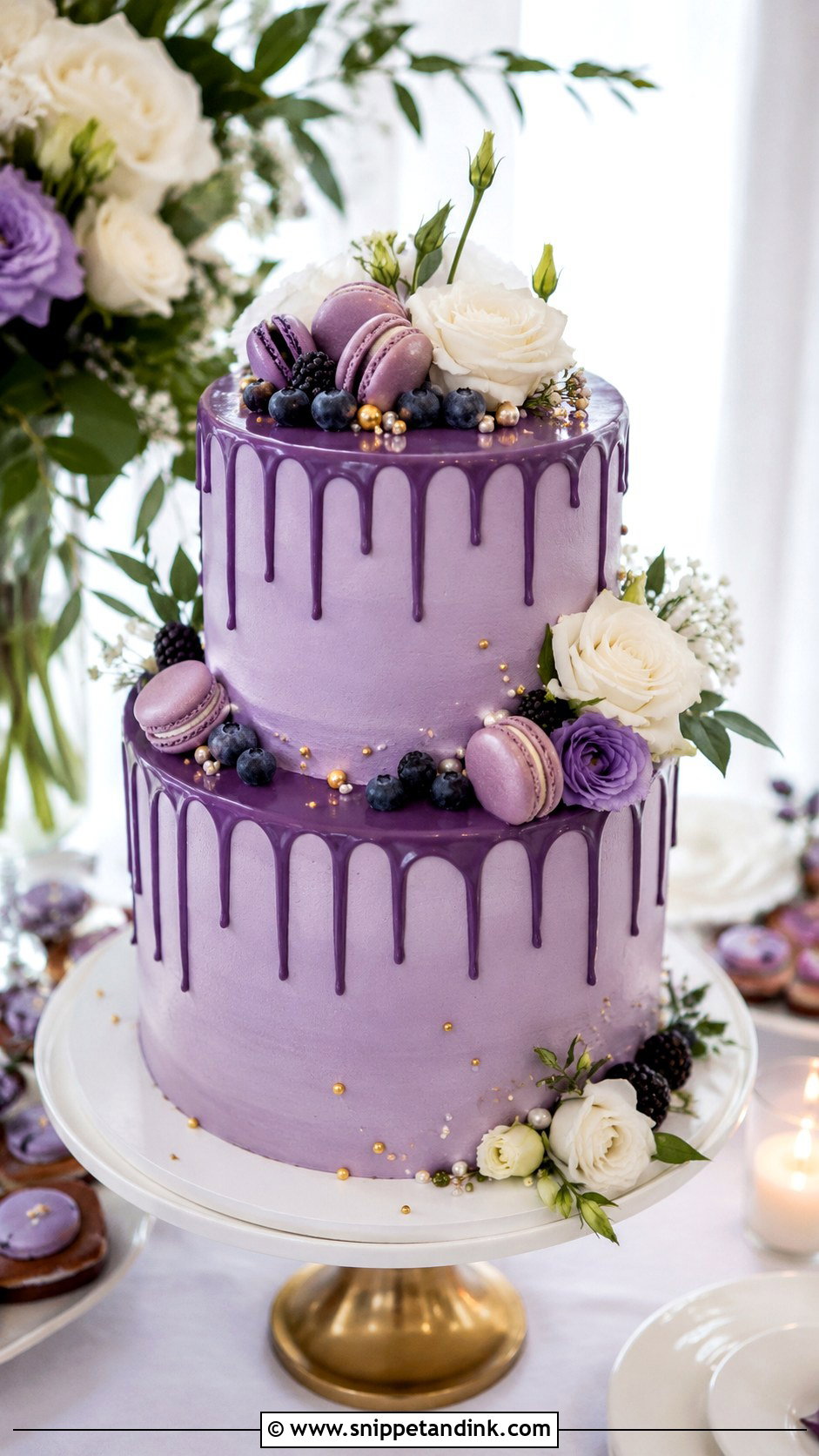
A purple round wedding cake with drip icing is the relaxed option, and it only looks deliberate when the drip is controlled. I use white chocolate tinted lavender, deep purple ganache or a metallic purple glaze over a well-chilled, smooth round buttercream cake. Ganache temperature decides everything: too warm, and it runs to the board; too cool, and it stops short in thick blobs. I test one drip before going around the tier. Flowers, macarons, berries or small pearls on top give height. It suits intimate receptions and dessert tables more than a formal ballroom.
12. Purple Round Wedding Cake With Hydrangeas
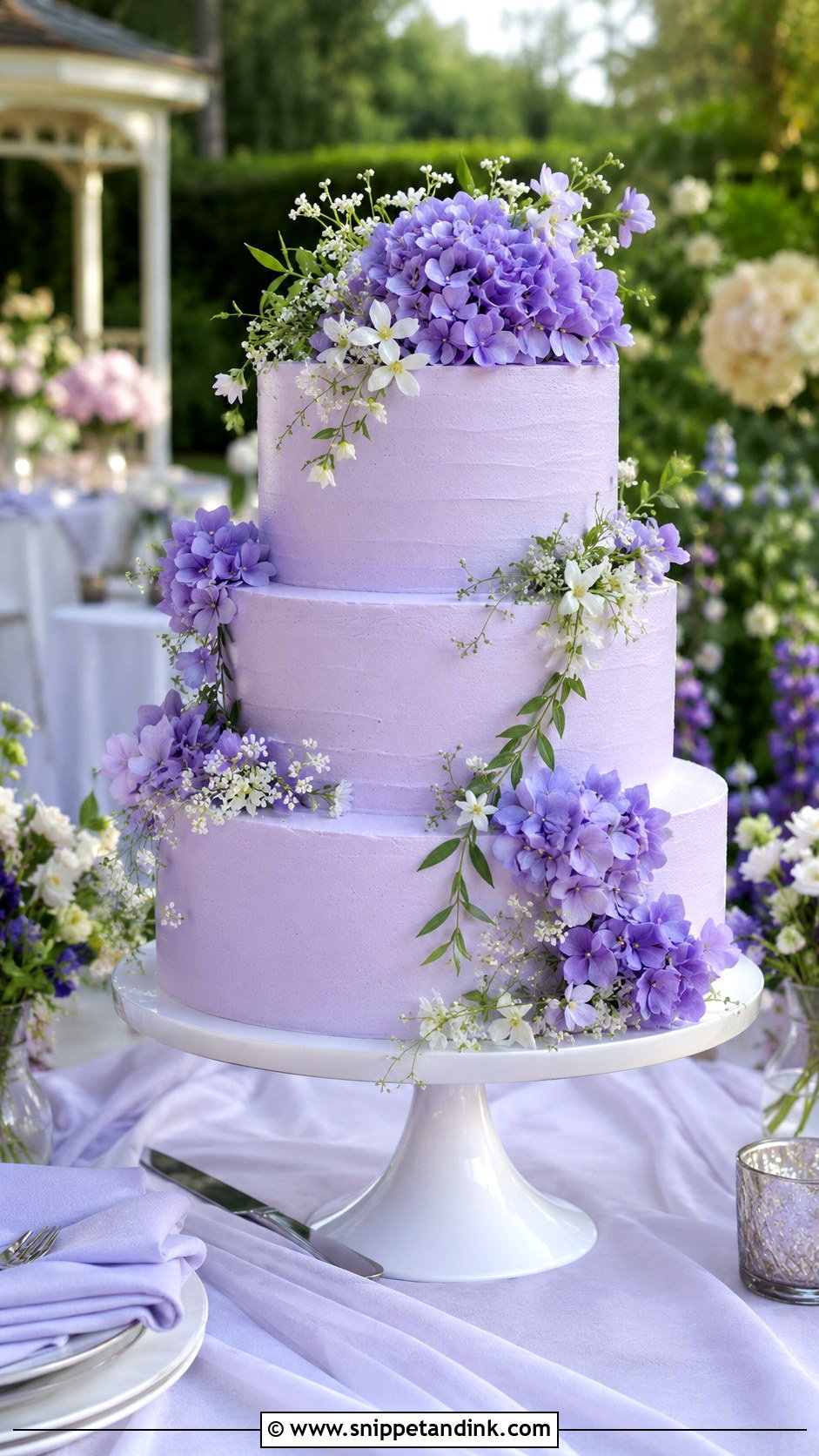
Hydrangeas come naturally in purple, blue-purple, lavender and white, so they match a purple palette easily and fill space between tiers, around the base or in a cluster on the front. White or pale lavender frosting keeps them bright. Hydrangea is not a food-safe flower, though, so if you use fresh heads, they need to sit on barriers with their stems sealed and come off before cutting. Sugar hydrangeas are the easier route: no safety question, and they don’t wilt. Garden weddings and summer receptions suit it.
13. Purple Round Wedding Cake With Ruffles
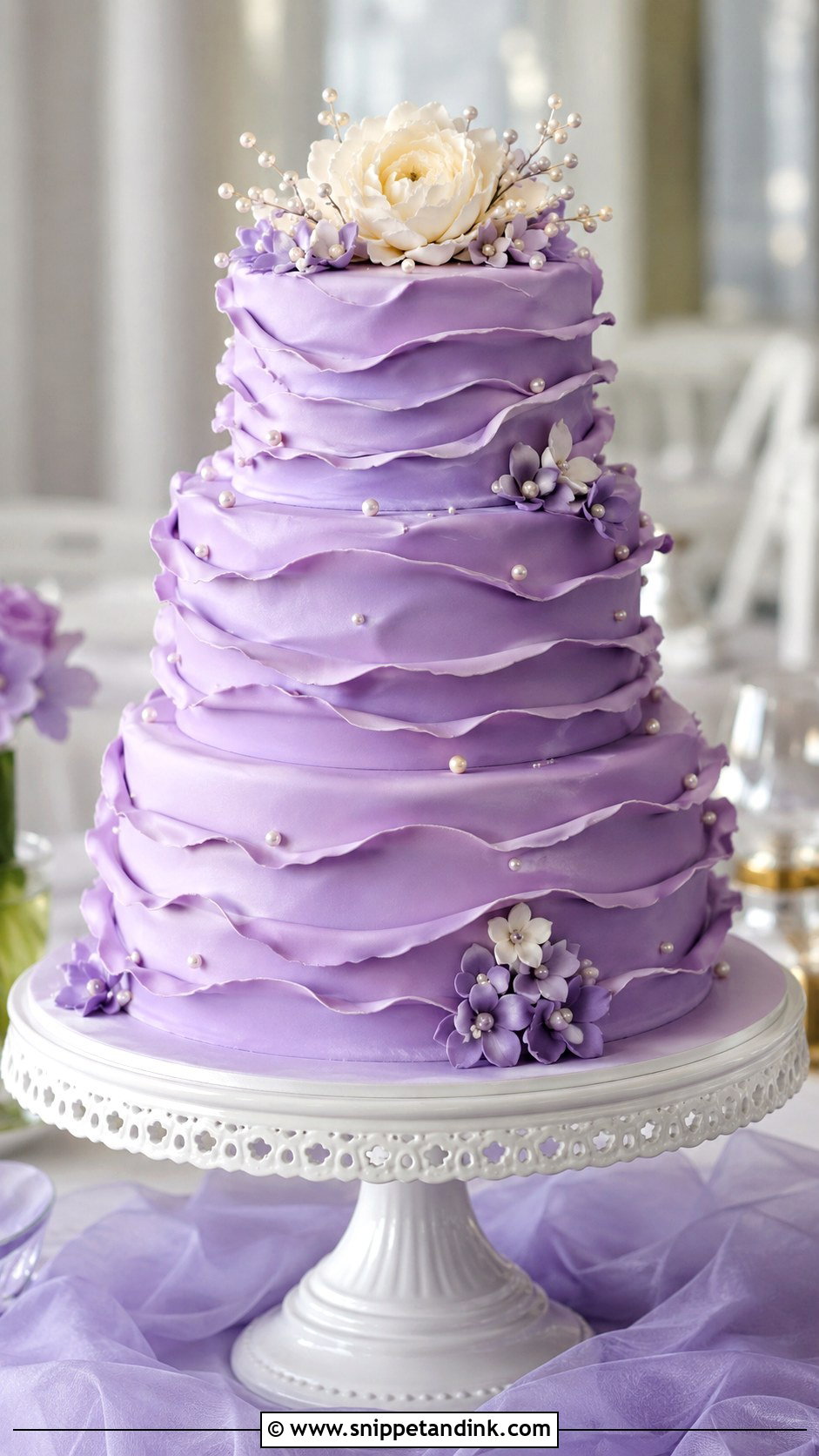
Ruffles give a round cake the look of draped fabric, and they’re one of the few textures that look right from every side. I pipe buttercream ruffles with a petal tip or layer thin fondant strips around each tier. Pale lavender reads airy; darker purple ruffles feel dramatic. Fondant ruffles add a lot of weight and sugar, so I make sure the tiers below are properly doweled. With this much texture, a few sugar flowers, pearls or a small topper are enough. Romantic receptions with soft draping are its natural setting.
14. Purple Round Wedding Cake With Geode
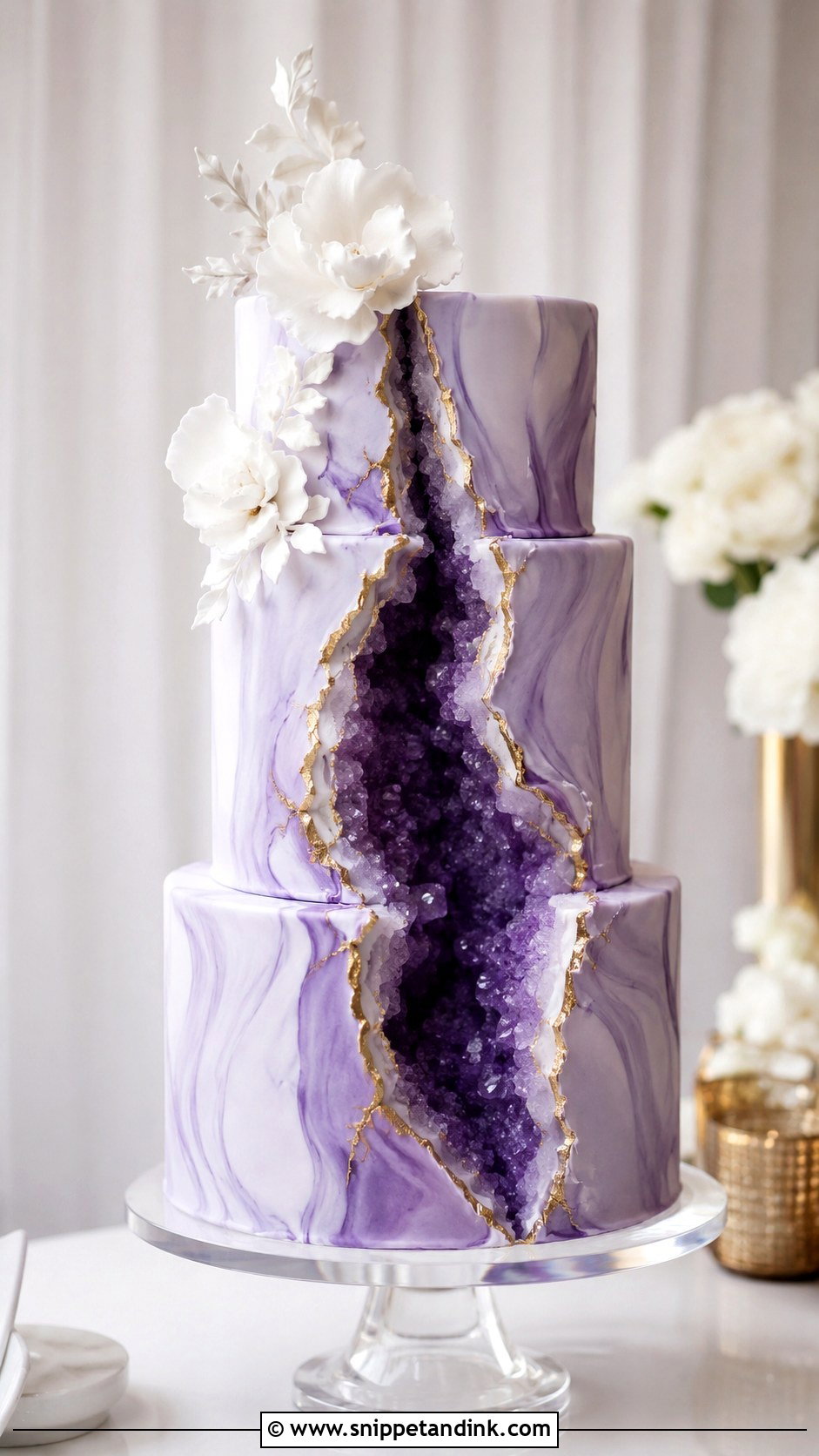
A geode detail is a showpiece. I carve a cavity into one side of the tier and fill it with purple rock candy or isomalt crystals, then edge it with gold or silver. Smooth white, lavender or marble fondant around it makes the crystals stand out. Two practical notes. Isomalt and rock candy can go sticky in humidity, so a geode cake needs a cool, dry room. And because the geode is decorative sugar, the portions from that tier change, so I plan servings around it. It’s a front-facing design, best on a simple stand for modern or glam receptions.
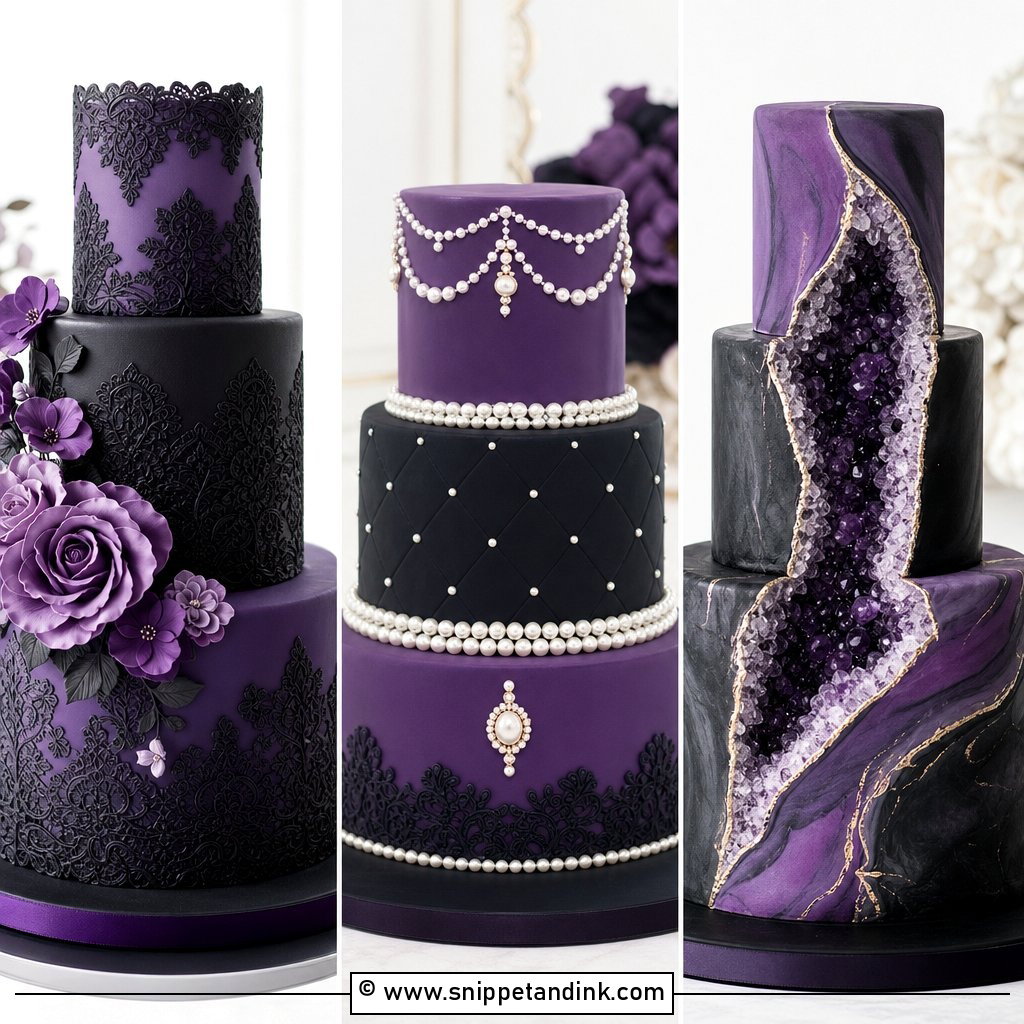
15. Purple Round Wedding Cake With Lace
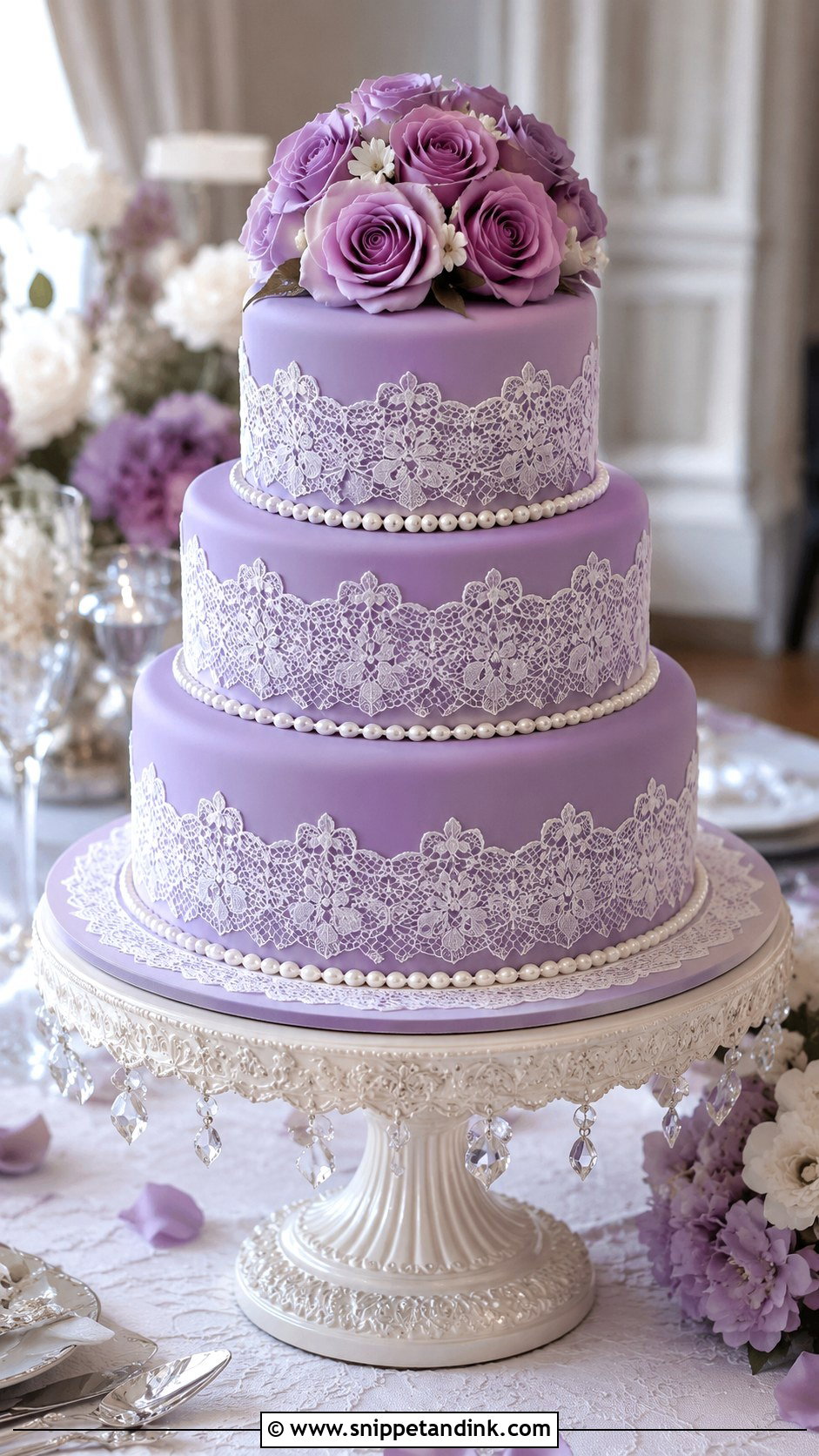
Lace can be made with fondant, royal icing, stencils or edible lace sheets, and each gives a slightly different texture over lilac or lavender frosting. White lace over purple is the classic contrast; tone-on-tone purple lace is subtler and looks more expensive close up. Round tiers let the pattern run continuously, without a seam at a corner. Edible lace sheets go tacky in humidity and crack when too dry, so I apply them on the day. A few roses, pearls or a fondant ribbon finish the cake. Traditional weddings and vintage themes suit it.
16. Purple Round Wedding Cake With Orchids
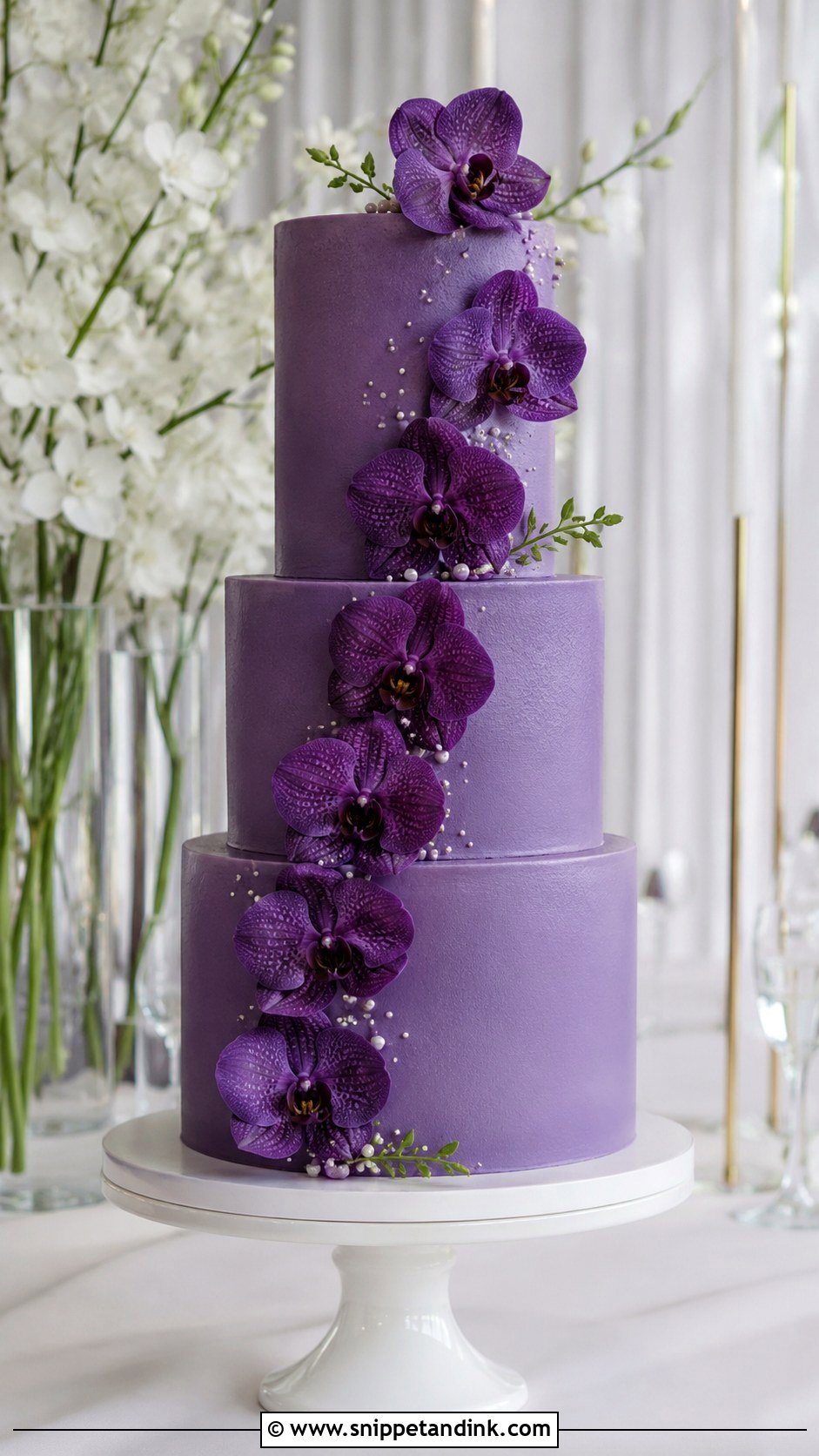
Orchids are sculptural enough to make an impact even when I use only three or four. Purple orchids on smooth white or pale lavender tiers give contrast; against deep plum frosting they turn dramatic. A vertical cascade down the round tiers adds height. I keep the rest of the cake clean, with sharp edges and almost no piping. If you want fresh orchids, ask your florist which varieties are safe to have near food, and expect the stems to be wrapped or set in picks. It suits modern venues, formal receptions and destination-style weddings.
17. Purple Round Wedding Cake With Watercolor
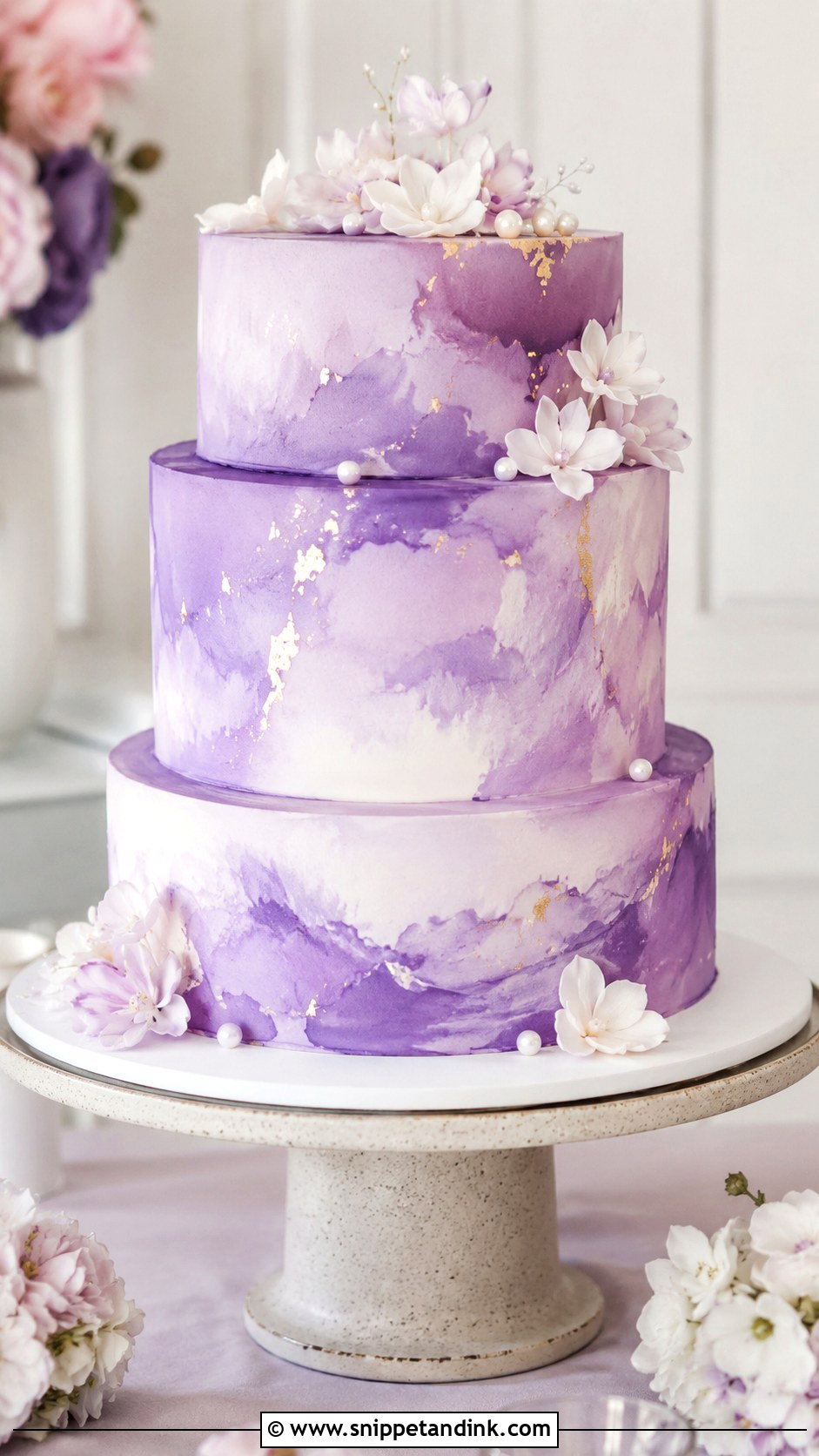
Watercolor is how I put purple on a cake when the couple wants color but not a solid tier of it. I brush loose layers of lavender, violet and mauve onto fondant, or press softened colored buttercream onto a chilled cake and scrape it smooth. Because the effect is gentle, I keep the rest simple: white flowers, a few gold flecks or a thin piped border. Each cake comes out slightly different, so if you need an exact color match, choose a solid finish instead. Spring weddings and garden venues suit it.
18. Purple Round Wedding Cake With Macarons
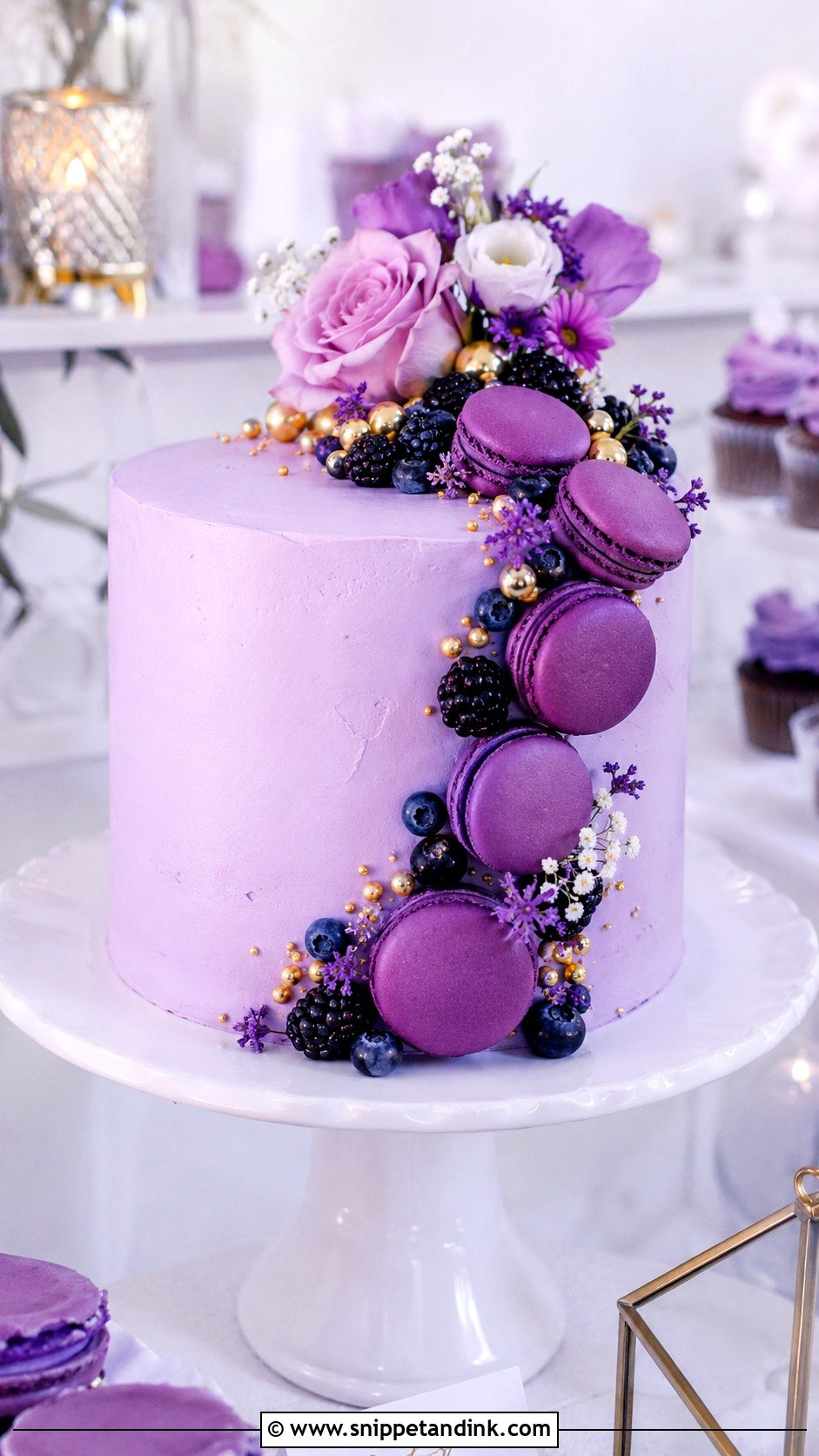
Macarons tie the cake to the rest of the dessert table, especially if extra shells are stacked beside it. Lavender, violet, plum and mauve macarons can match the frosting or contrast with it, placed around the base, on top or in a neat cascade down one side. Smooth buttercream is the steadiest base. I attach macarons at the venue, since they soften once pressed against moist frosting for hours. Small flowers, berries or gold accents add detail if you want more. It suits modern weddings and coordinated sweet tables.
19. Purple Round Wedding Cake With Vintage Piping
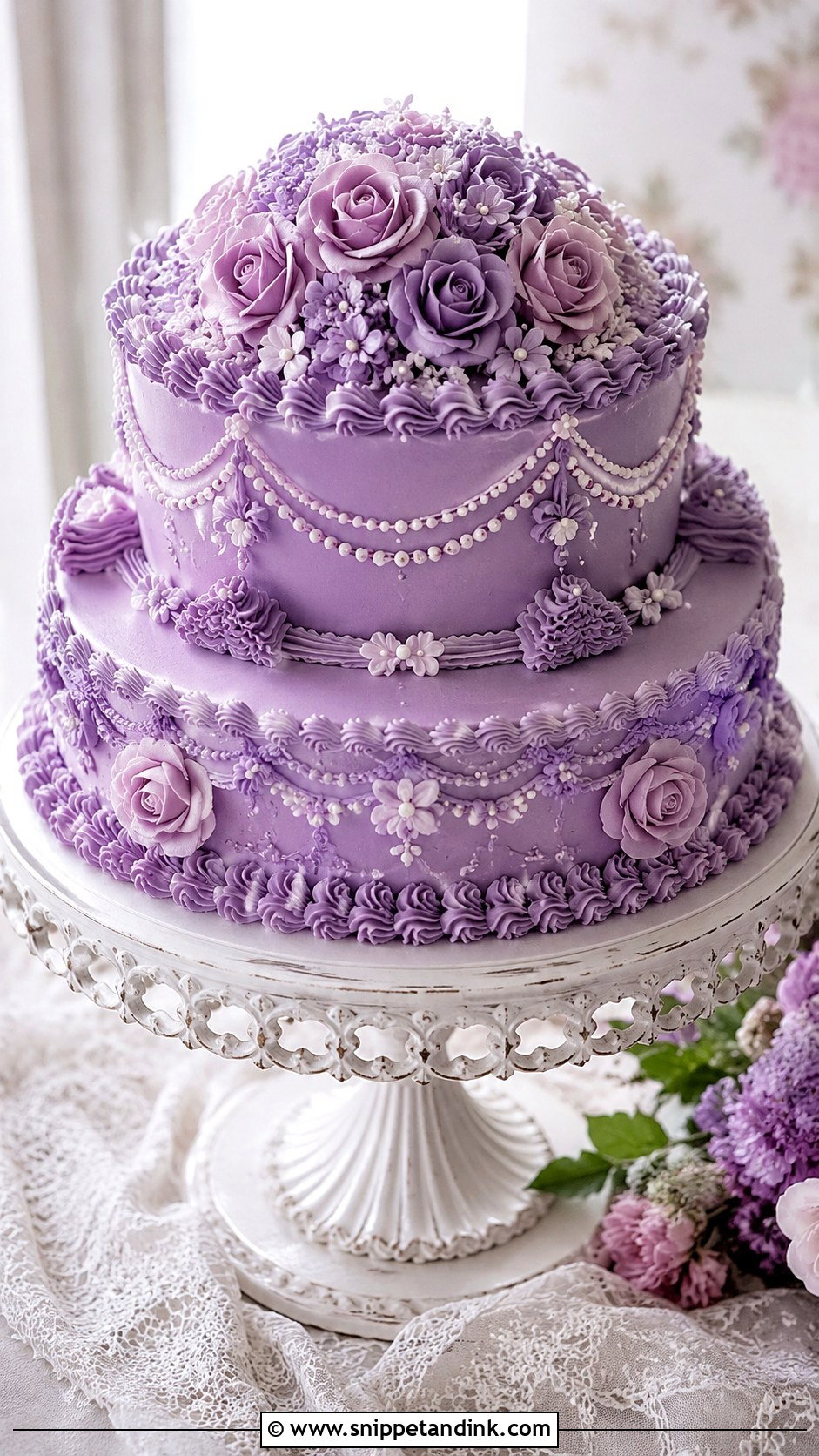
Vintage piping is having a real comeback: scalloped borders, shell work, small rosettes and layered buttercream swags. Purple keeps the style from looking dated. Pale lavender looks sweet; deep violet feels editorial. Round tiers suit it best because the piping wraps evenly with no corners to interrupt the pattern. This style takes a firm buttercream or royal icing to hold crisp edges, and fine piped work slumps in heat, so it needs a cool room. Pearls or tiny buttercream flowers add charm. Retro-inspired receptions are a natural fit.



20. Purple Round Wedding Cake With Satin Ribbon
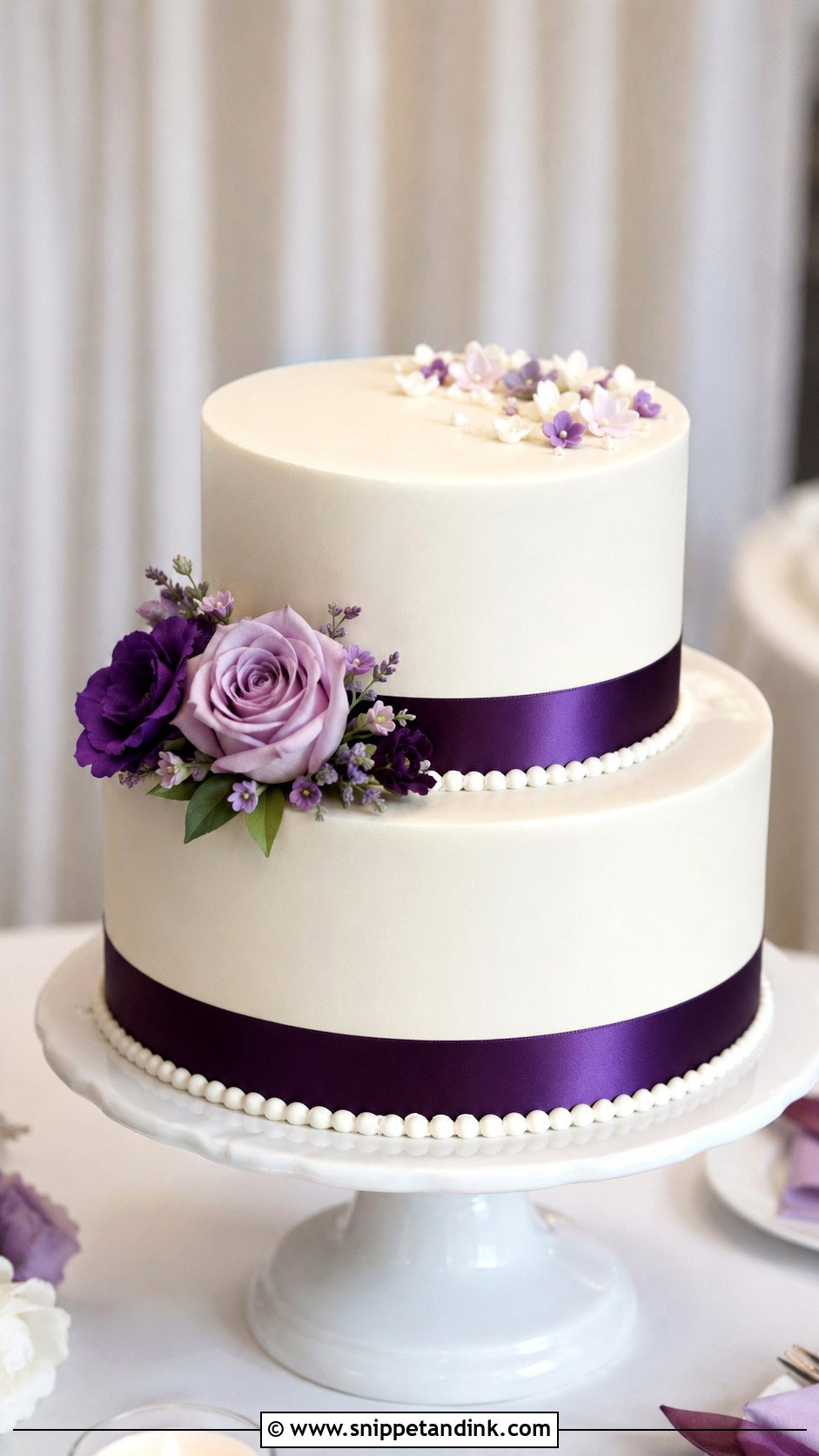
A ribbon around each tier is the simplest decoration on the list, and one of the most refined. Real ribbon absorbs butter from the frosting and develops grease spots, so I back it with food-safe tape or a strip of acetate, or make the ribbon from fondant for a fully edible finish. Deep purple ribbon against white frosting looks formal; lavender on ivory buttercream feels softer. One floral cluster, a small topper or pearl borders complete it. It suits minimalist receptions and couples who prefer neat detail to a lot of decoration.
How Many Slices Does a Round Tier Give?
Wedding portions are cut smaller than party slices, usually tall, narrow fingers, and round tiers give a predictable number of them. As a rough guide, many bakers work with figures close to these for a standard-height round tier cut into wedding portions. Charts vary from baker to baker, so ask yours for their own numbers.
- 6-inch tier: about 12 portions
- 8-inch tier: about 24 portions
- 10-inch tier: about 38 portions
- 12-inch tier: about 56 portions
Tier height changes the math. Extended tiers, built taller than the standard four inches or so, look more modern and give noticeably more portions from the same diameter, which can mean one tier fewer for the same guest count. Heavier decoration works the other way. A geode cavity, a pearl-covered tier or a lot of sugar flowers means some of the surface isn’t cake, and I plan the count around it.
When the cake is smaller than the guest list
If you want a tall display cake but fewer real portions, ask about a dummy tier, a decorated foam layer that looks identical on the table. The opposite works as well: a modest display cake plus a plain kitchen cake in the same flavor, cut out of sight. Both are common, and both are much easier to plan before the design is finalized than after.
Run Your Favorite Past the Room, the Clock and the Guest List
A round cake gives you the most traditional wedding outline, and purple lets you push it softer or bolder without changing that shape. For an elegant room, I’d look at gold, pearls, lace or sugar flowers. For a relaxed one, berries, lavender, watercolor or piped buttercream blooms. Marble, drip, geode and macarons bring a modern edge. Before you settle on a favorite, check it against three things: the temperature of the room, how long the cake will be on display, and how many people need a slice. The design that survives all three is the one to book.
You'll Like These Ideas:




Leave a Reply