
Red has carried wishes for happiness and good fortune at Chinese weddings for generations, and today it comes in many shapes: traditional qun kwa sets, fitted qipao, layered hanfu and Western gowns with Chinese embroidery. Most of the brides I dress wear more than one of these in a day. So I start by asking where each outfit has to work, from kneeling at the tea ceremony to walking between banquet tables, before we talk about motifs. Dragons and phoenixes, peonies, clouds and gold thread all carry meaning, but the dress also has to let you bow, sit, pour and greet family for hours. The twenty ideas below cover every stage of the day.
Mapping Outfit Changes From Tea Ceremony to Banquet Toasts
Many Chinese weddings have two or three distinct stages, and each asks something different of a dress. The tea ceremony means kneeling or bowing and handing cups to elders with both hands. The banquet means a grand entrance. Then the toasts mean walking from table to table for an hour or more. I plan the outfits backward from those movements, not from the photos.
- Tea ceremony: a qun kwa, xiu he fu or A-line dress with room at the hips.
- Banquet entrance: the most dramatic piece, such as a gown with a train or a fitted mermaid qipao.
- Table toasts: something light and short enough to walk quickly, often a short or tea-length qipao.
- Choose one hairstyle that suits all of them, since a full restyle between courses is rarely realistic.
Changes take longer than couples expect, especially out of a heavily embroidered jacket or a gown with a bustle. Ask your planner to build a clear gap into the banquet running order, and have someone you trust in the changing room to handle hooks and frog closures.
1. Traditional Red Qun Kwa Wedding Dress
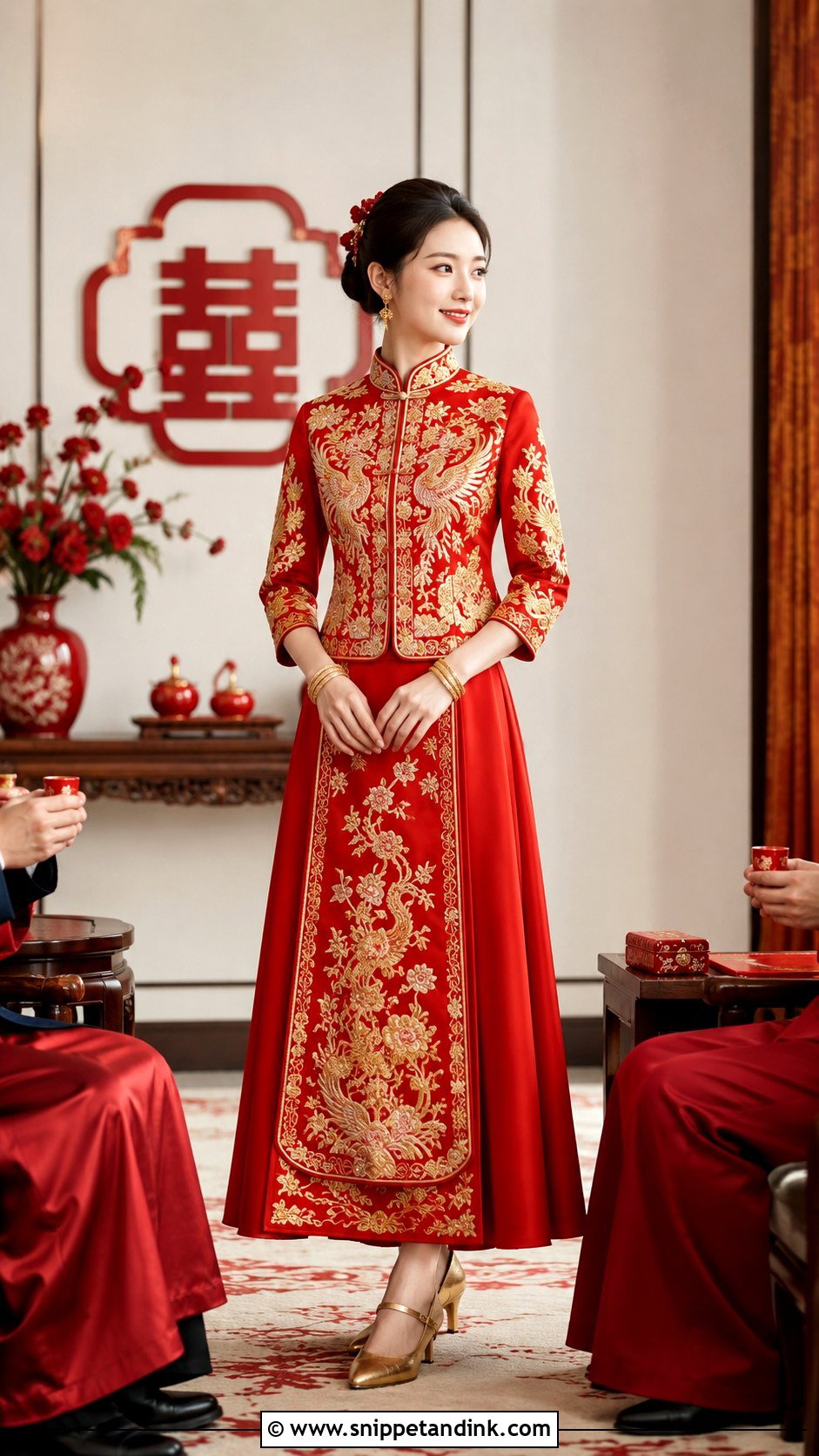
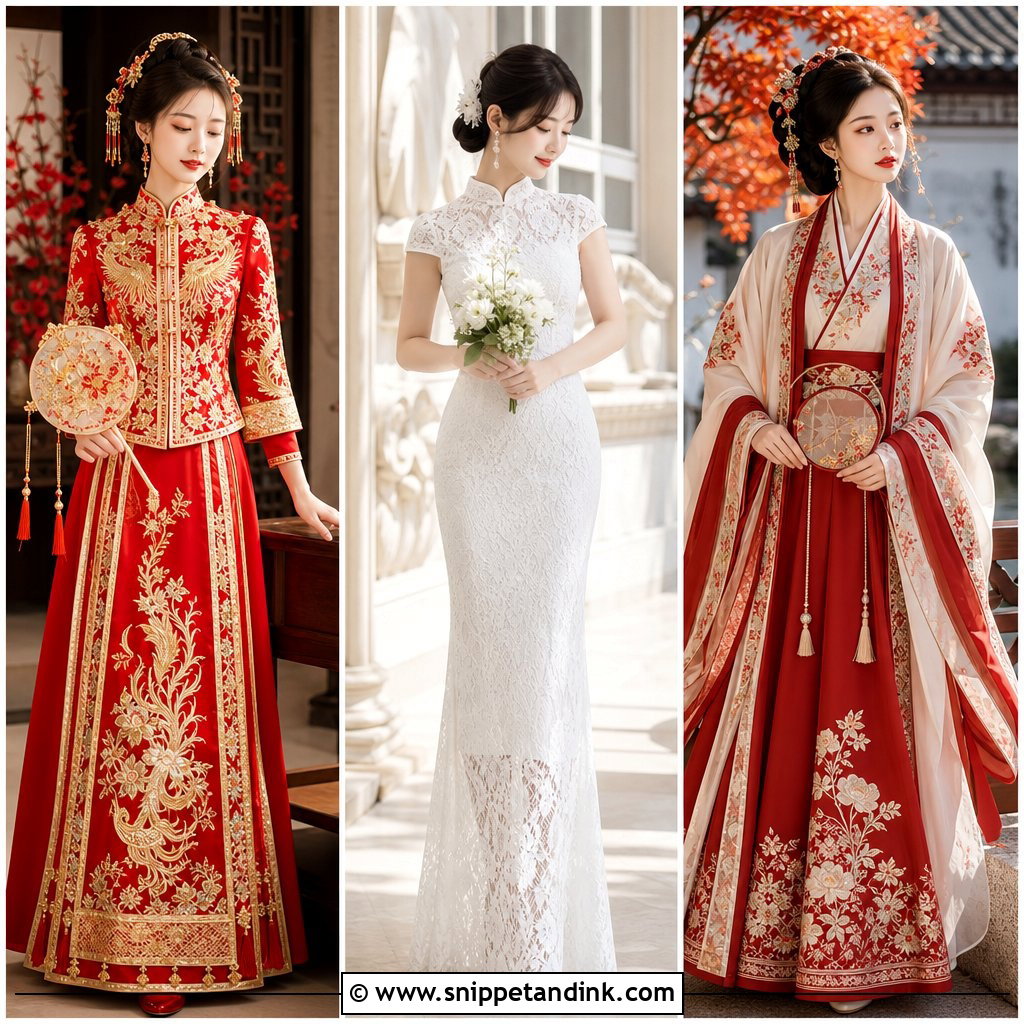
The qun kwa is the outfit I’d put first for a tea ceremony, because the loose jacket and A-line skirt let you kneel and bow without any strain at the seams. Gold or silver thread carries the dragons, phoenixes and flowers; the denser the stitching, the more formal and the heavier the set, so try on a fully worked jacket before you fall for it. Since the garment is already busy, keep the accessories few: gold studs, the bangles your family gives you and a small red embroidered bag. Red or gold block heels under the skirt are steadier than stilettos when you’re getting up from kneeling. A low bun with traditional hairpins keeps the collar and embroidery clear.
2. Red Xiu He Fu Wedding Dress
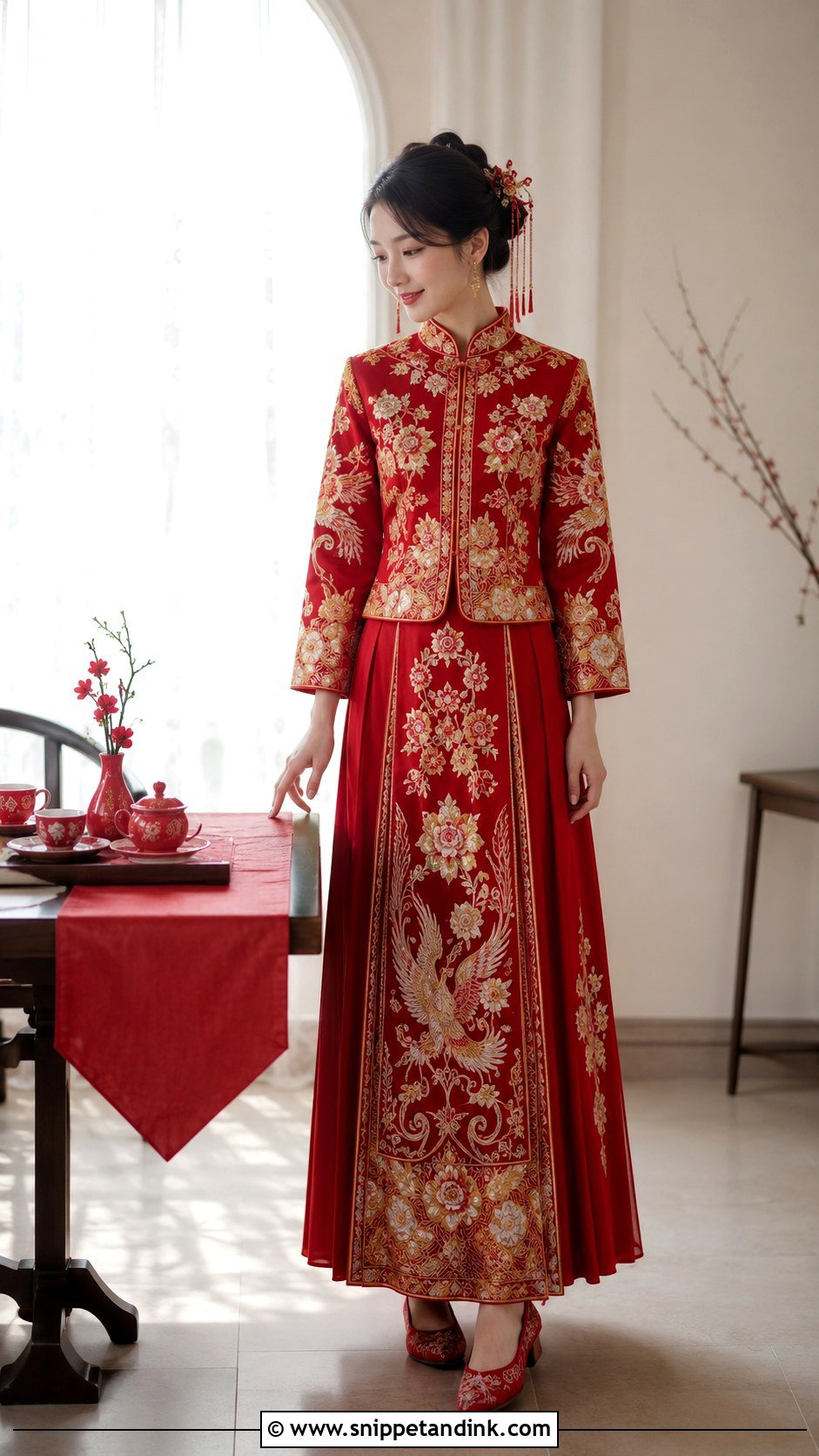
Xiu he fu is closely related to the qun kwa: an embroidered jacket over a long, full skirt, with more room at the waist and hips than any qipao. That ease is why I like it for brides who’ll be kneeling, bowing and serving tea several times over. Look for detailed cuffs, rounded hems and gold embroidery placed where it still shows when you’re seated, since most tea ceremony photos are taken from that angle. Low red heels or embroidered flats, fine gold earrings and a neat bun suit it, and a red tassel hairpiece adds a little movement as you bow. It looks most at home indoors, among red flowers and lanterns.
3. Red Qipao With Gold Embroidery
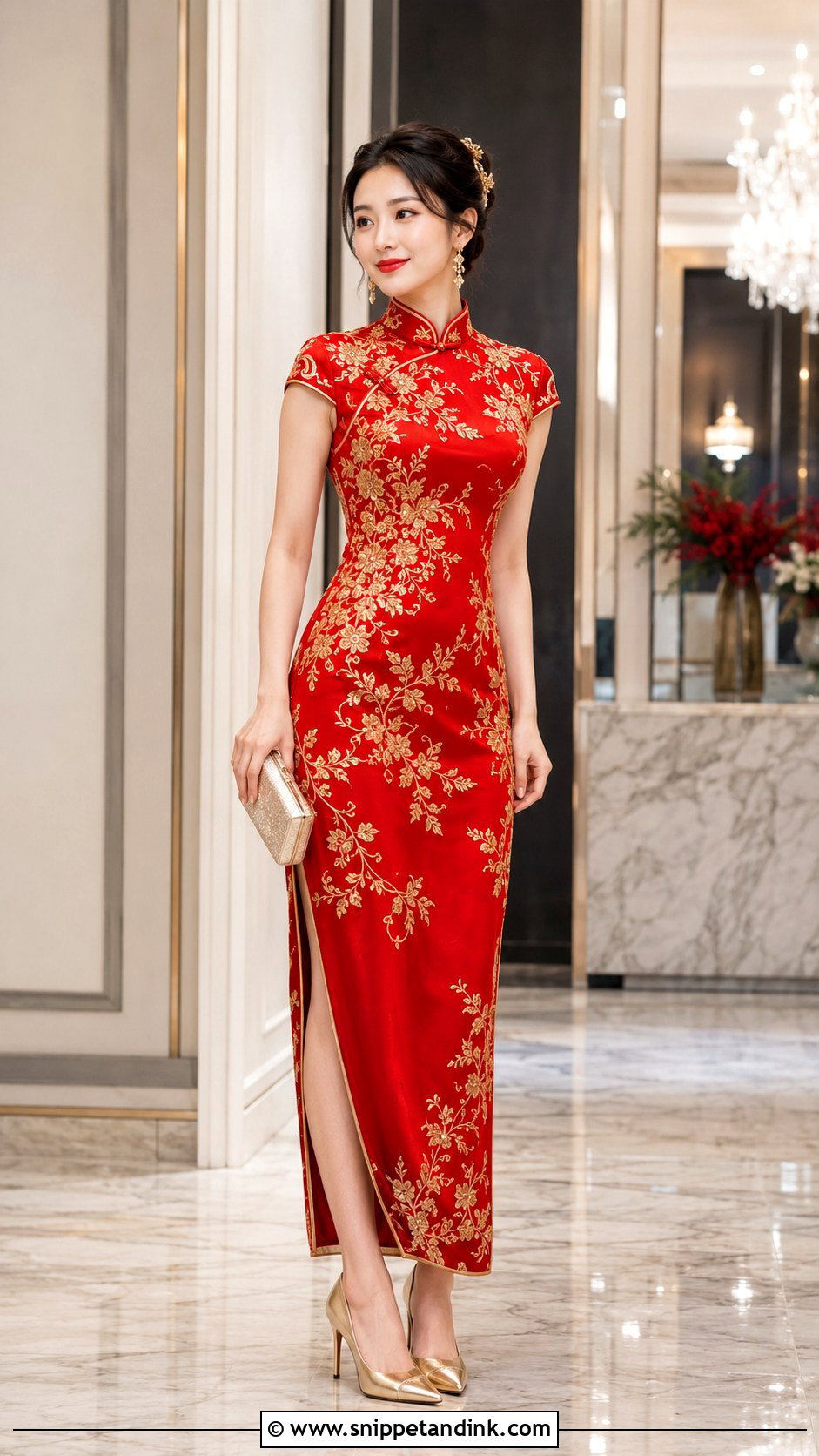
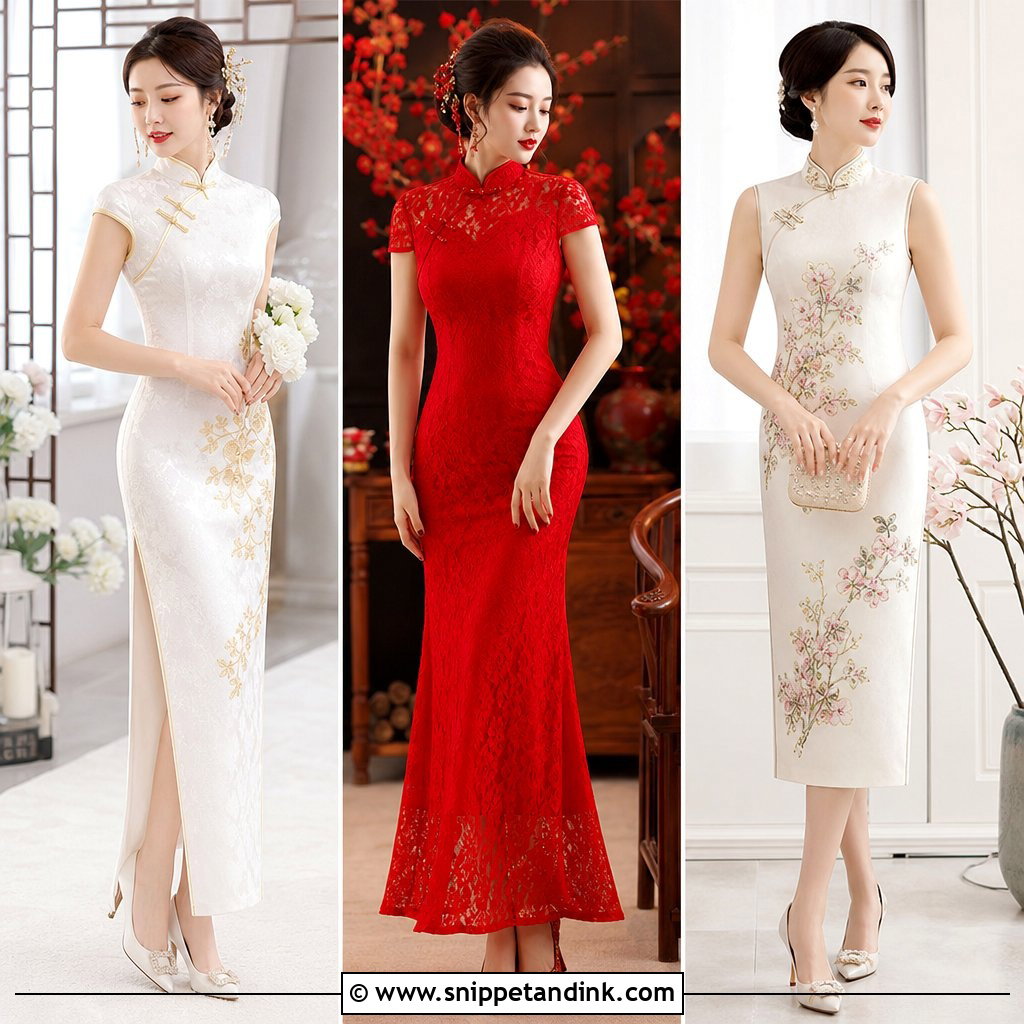
Gold embroidery on a red qipao is the pairing most people picture first, and the fit decides whether it looks tailored or tight. I look for a long dress with a Mandarin collar that sits flat against the neck without pressing, a shaped waist and a slit you can actually walk in. Embroidery at the neckline, one shoulder or the lower skirt frames the body without crowding it. Pointed gold pumps, small drops and a slim metallic clutch are enough. Wear a smooth chignon for the ceremony, or soft side-parted waves later. With heavy embroidery near the collar, skip the necklace altogether. It moves from tea ceremony to family portraits to banquet without a change.
4. Sleeveless Red Qipao Wedding Dress
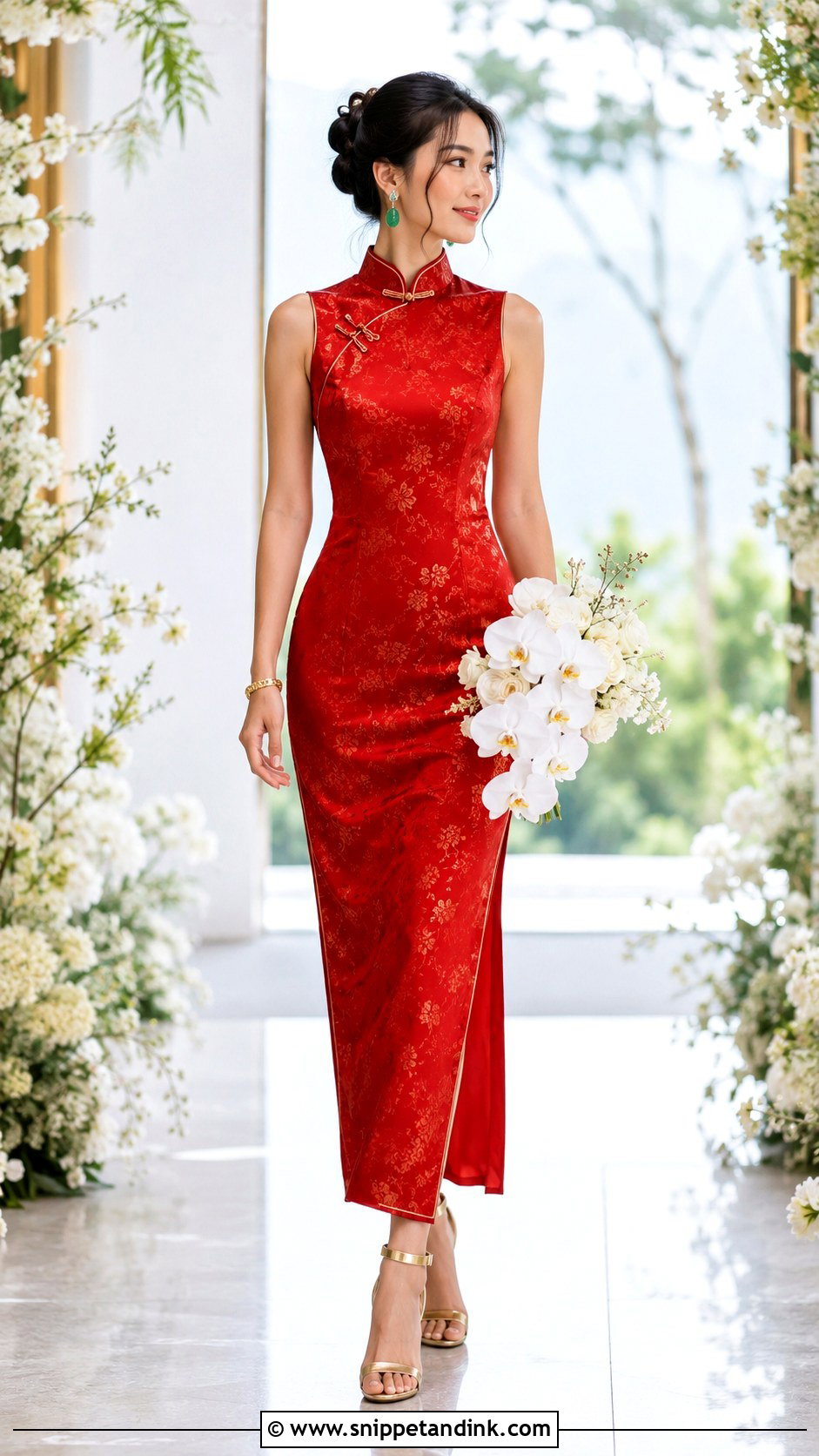
Bare shoulders keep a sleeveless red qipao cool on a hot day, while the high collar and column shape keep it formal. Breathable silk or a lined jacquard is kinder in heat than polyester satin, which traps warmth and shows sweat marks under the arms. Gold ankle-strap heels, pearl or jade-style earrings and one bracelet suit it, and a sleek bun shows off the collar. Carry a matching red shawl for air-conditioned banquet halls, which can be surprisingly cold after an outdoor ceremony. I set the slit by having the bride sit, step up a stair and walk, then mark the highest point she’s comfortable with.
5. Red Lace Qipao Wedding Dress
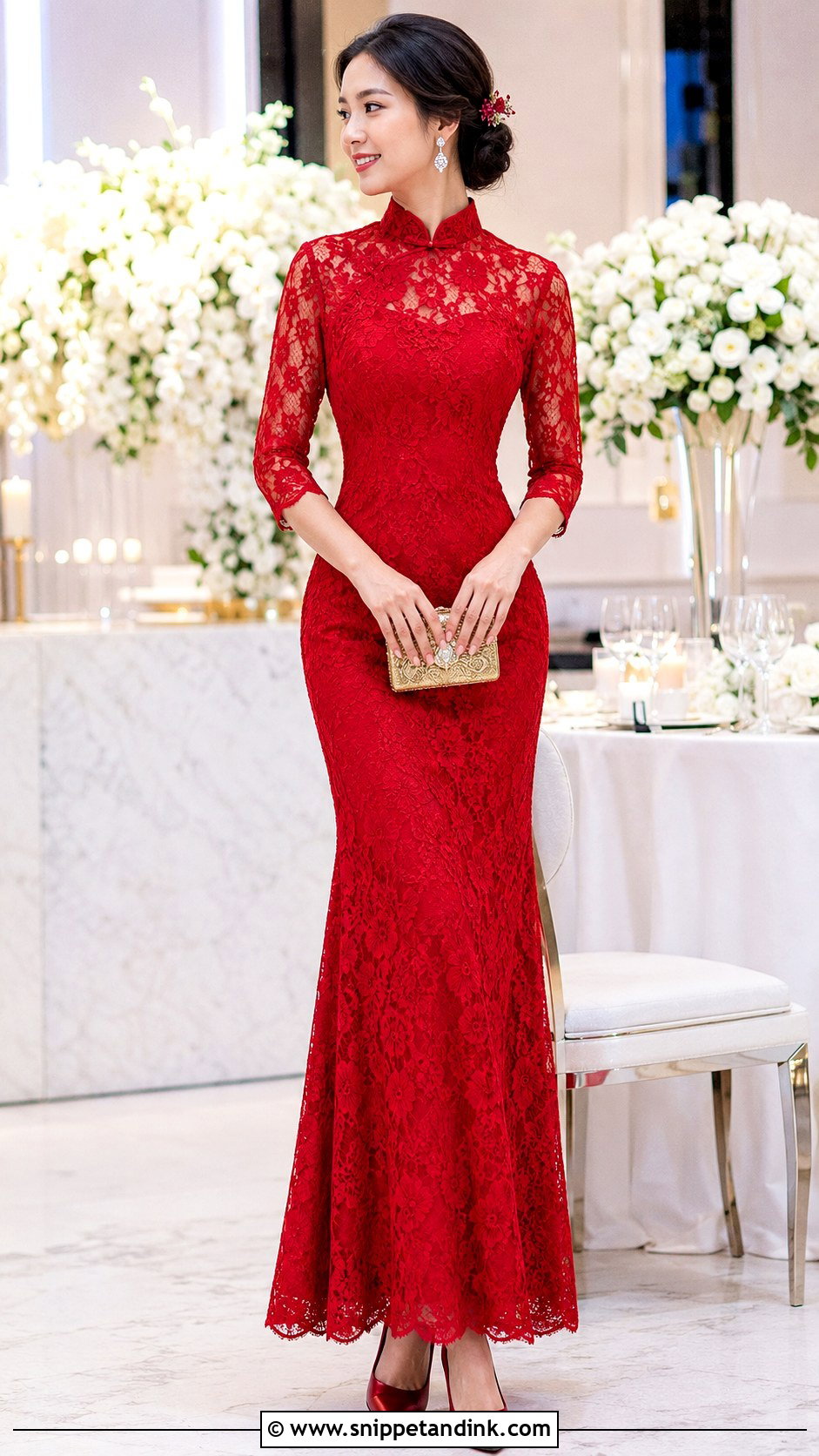
Lace softens the qipao’s structure without losing its identity. A floral overlay on a tonal lining, with cap sleeves or sheer three-quarter sleeves, looks finished up close. I’d check where the lace pattern lands on the collar. A cut motif at the Mandarin collar looks messy, so a good maker places a scalloped edge or a whole flower there. Simple red pumps, crystal earrings and a compact gold clutch suit it, with one floral pin in a low bun. Keep the jewellery minimal, since the lace already covers you from neck to hem. It makes a good reception change after a structured qun kwa or a Western gown.
6. Red Mermaid Qipao Wedding Dress
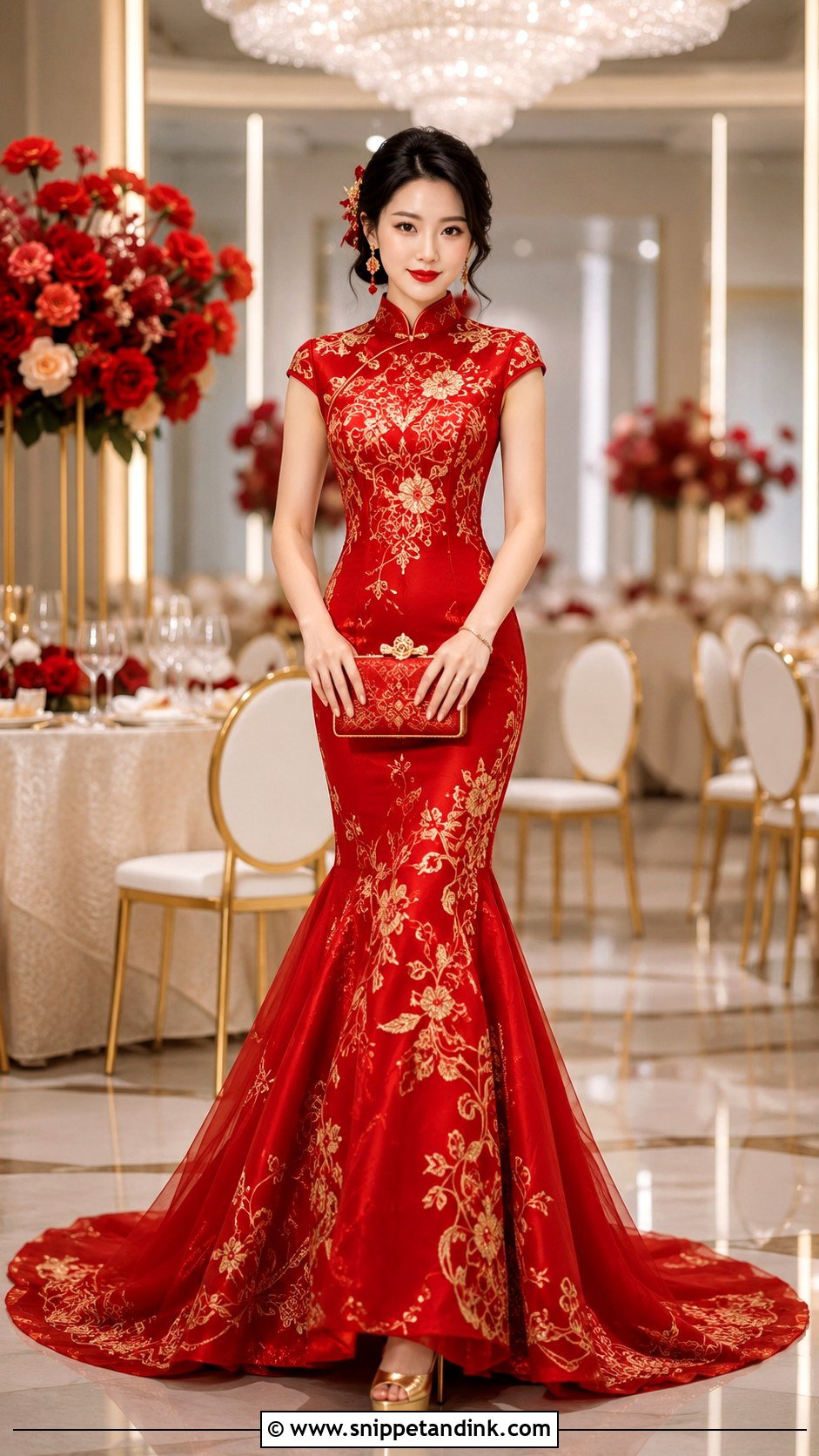
A mermaid qipao pairs a close Chinese-style bodice with a skirt that flares near the knee, and it belongs at the banquet, not the tea ceremony. You cannot kneel in it. The bodice should support you without relying on the collar to hold the dress up, and a Mandarin collar, covered buttons and gold phoenix embroidery keep the link to tradition. Red or gold platforms, statement earrings and a structured clutch finish it, with an updo or long waves that leave the neckline visible. Walk, sit and climb stairs in it before you buy. If the flare starts too low, ask for it raised slightly or for a stretch lining.
7. Long Sleeve Red Qipao Wedding Dress
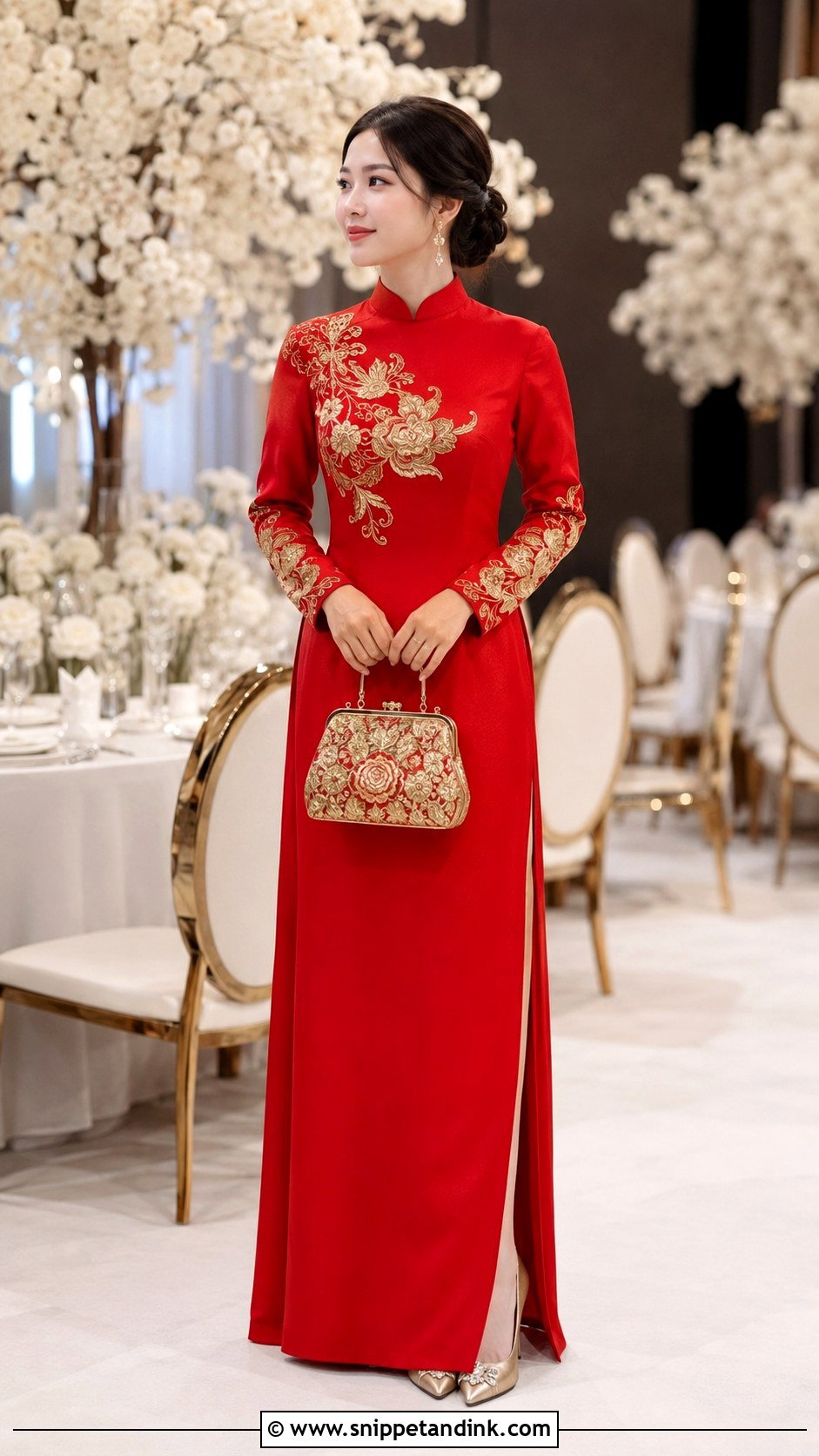
In winter I reach for a long-sleeved qipao, and the sleeve fabric changes the mood completely. Embroidered satin or jacquard reads formal and holds warmth, while sheer lace looks lighter but does little against the cold. A floor-length skirt with a modest slit keeps you moving freely. Closed-toe gold heels, drop earrings and a small brocade bag suit it, with a low twisted bun or smooth ponytail to keep the collar clear. Check that a fitted sleeve still lets you lift a teapot and raise a toasting glass. For an outdoor entrance, add a red cape or embroidered shawl.
8. Tea Length Red Qipao Wedding Dress
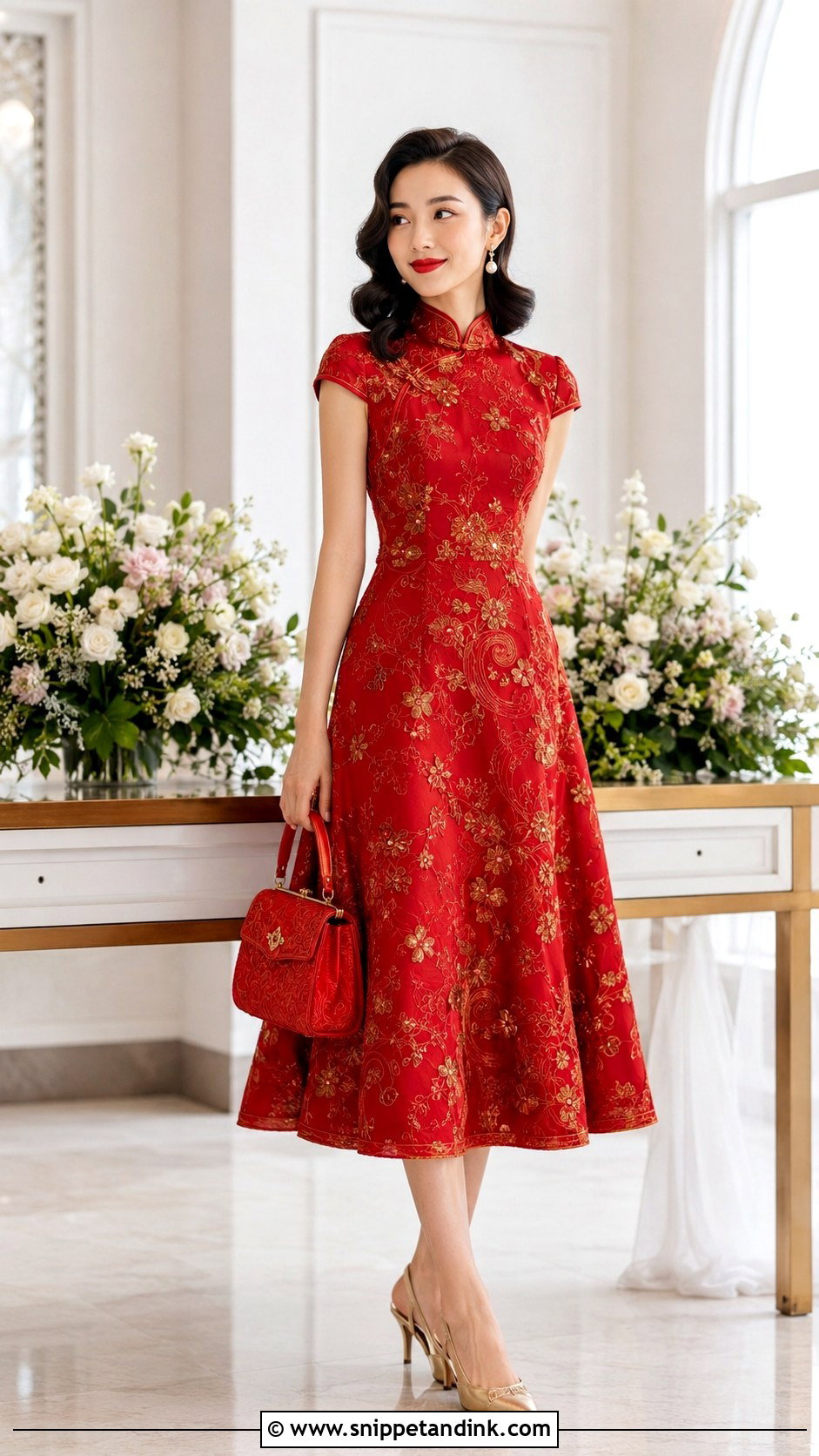
Tea length is the qipao for a busy day with a lot of walking. The hem lands between knee and ankle, so your shoes become part of the outfit. A gently fitted bodice, Mandarin collar and an A-line or pencil skirt give it a vintage feel. Gold slingbacks, pearl drops and a small red top-handle bag suit it, and soft waves or a French twist carry the retro mood without tipping into costume. I mark this hem in the wedding shoes, aiming for the narrowest part of the lower leg rather than mid-calf, which can cut the leg at its widest point. It suits a civil ceremony or a reception change.
9. Red A-Line Chinese Wedding Dress
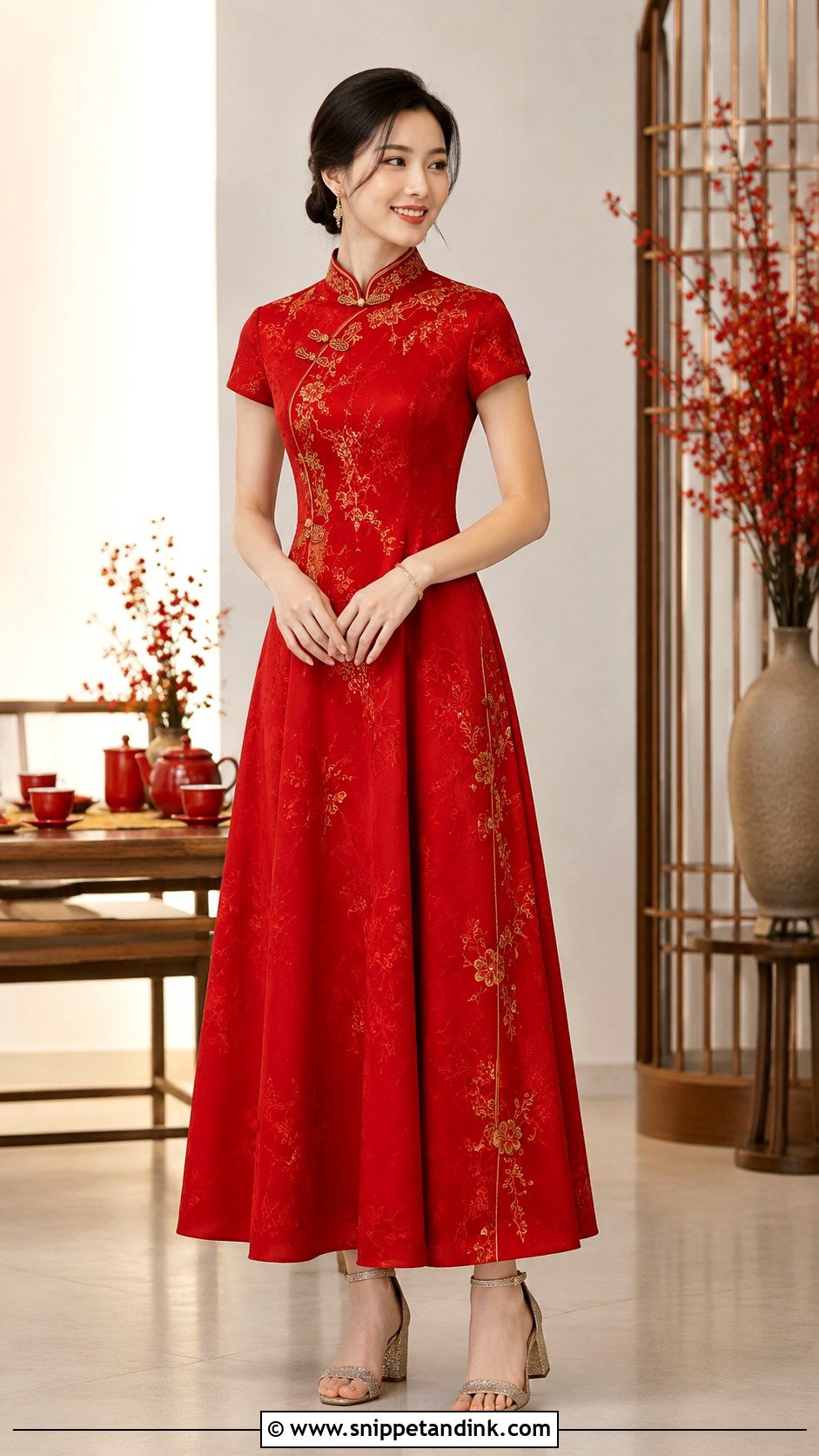
An A-line Chinese dress is my usual suggestion for a bride who wants the qipao look but dreads the close fit. The bodice has structure, the skirt has room, and you can sit, walk and kneel at the tea ceremony without worrying about seams. Look for a Mandarin collar, frog closures and subtle gold embroidery at the waist or hem. A defined waistband gives shape without restricting you. Gold block heels, a delicate bracelet and understated drops are plenty, with a low bun and a small comb. It suits most body types and most venues, and it handles a long day well.
10. Red Ball Gown With Chinese Embroidery
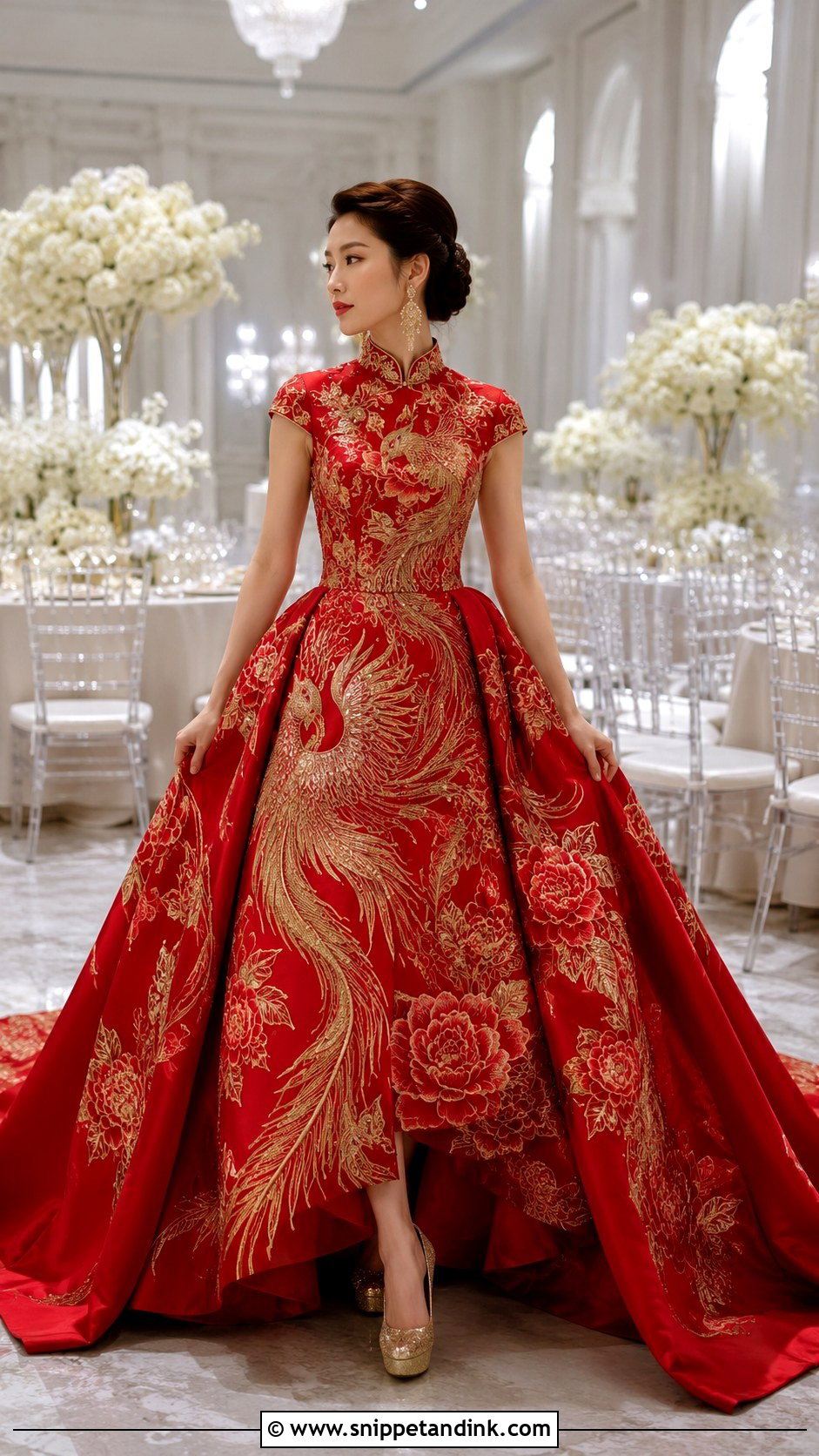
A red ball gown with Chinese embroidery is pure entrance. Phoenixes, peonies, cloud patterns or gold vines placed across a fitted bodice and full skirt join a Western shape to Chinese design, and a Mandarin-style neckline or knotted closures make that link clearer. That volume needs room, though. In a narrow banquet aisle the skirt brushes every chair, so I’d only suggest it for a large hall. Wear stable heels, and ask for a bustle or wrist loop if there is a train. Gold chandelier earrings and a smooth updo complete it, without a big necklace over an embroidered bodice. Change into a narrower qipao later for the table toasts.
11. Red Wedding Gown With Train
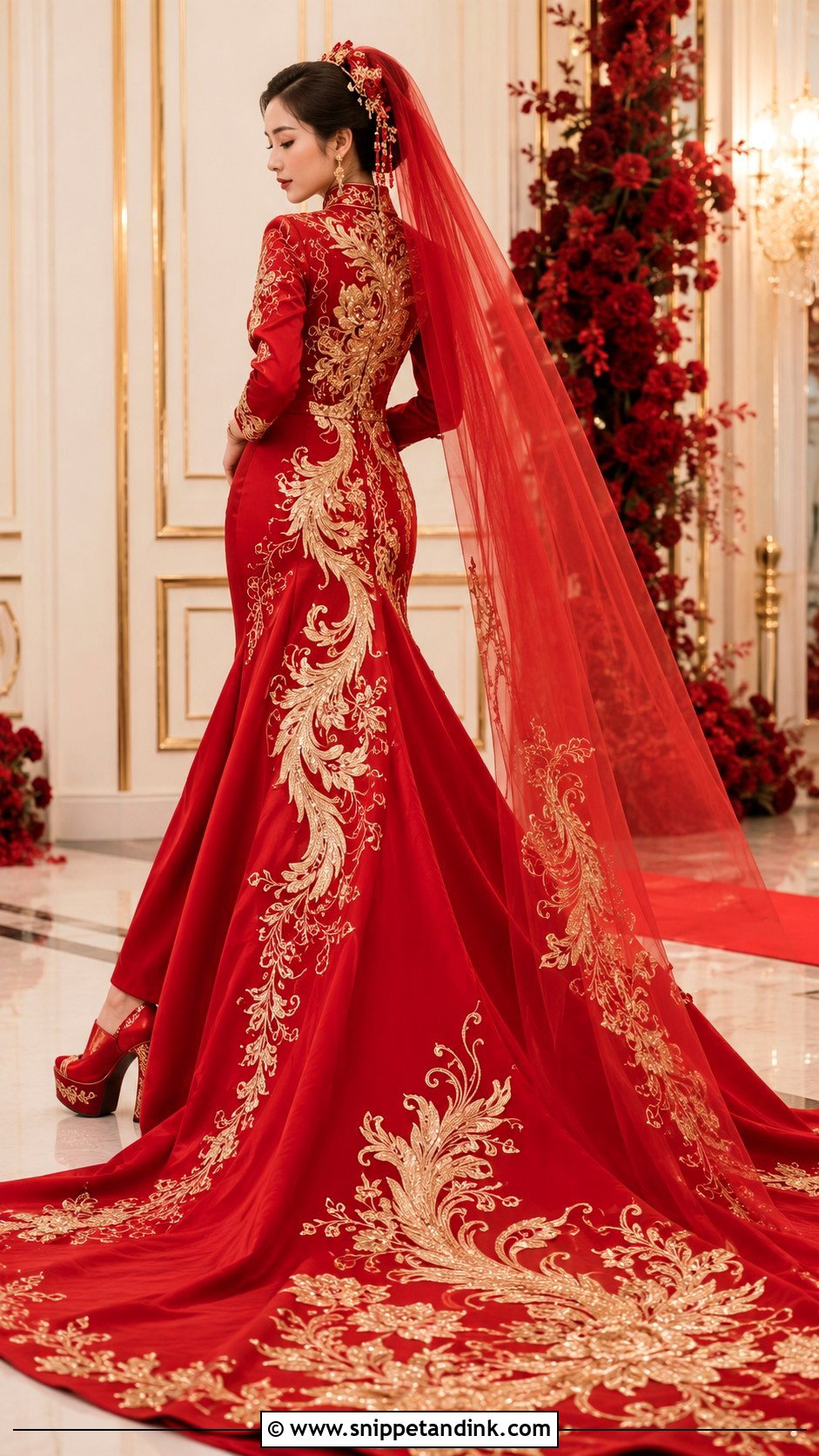
With a sweeping train, the back of the gown is what most guests will see during the processional, so that is where the embroidery belongs. Choose a fitted A-line or column shape so the train stays the focal point, and let Chinese-inspired work start at the shoulder and run down the back. Red platforms, gold earrings and a fine bracelet suit it. A long red veil gives a tonal finish; an embroidered cape is more structured. Have a bustle added. Greeting guests and moving between banquet tables with a loose train is close to impossible, and someone will step on it.
12. Red Qipao With Bridal Cape
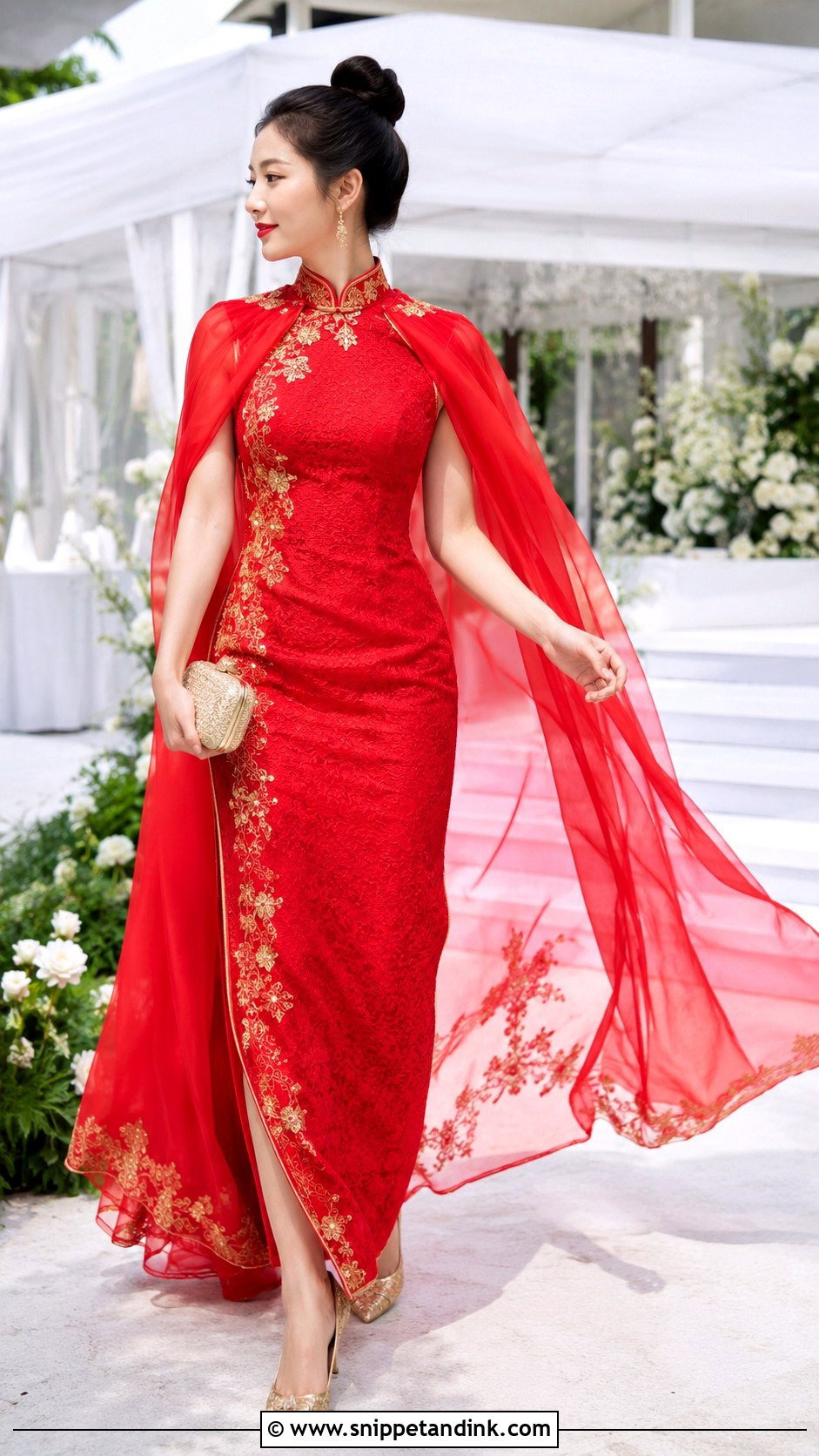
A cape gives a fitted qipao movement and extra coverage, and it comes off for a second look. Start with a sleek floor-length qipao with a Mandarin collar and restrained gold detail, then layer a light red cape in chiffon, organza or embroidered tulle. I attach the cape at the shoulder seams rather than the collar where possible, because a cape hung from the collar pulls it backward against the throat. Keep the length clear of your feet. Pointed gold heels, delicate earrings and a compact clutch are enough, with a high bun so the cape falls cleanly. It catches the breeze nicely in outdoor portraits.
13. Red Hanfu Wedding Dress
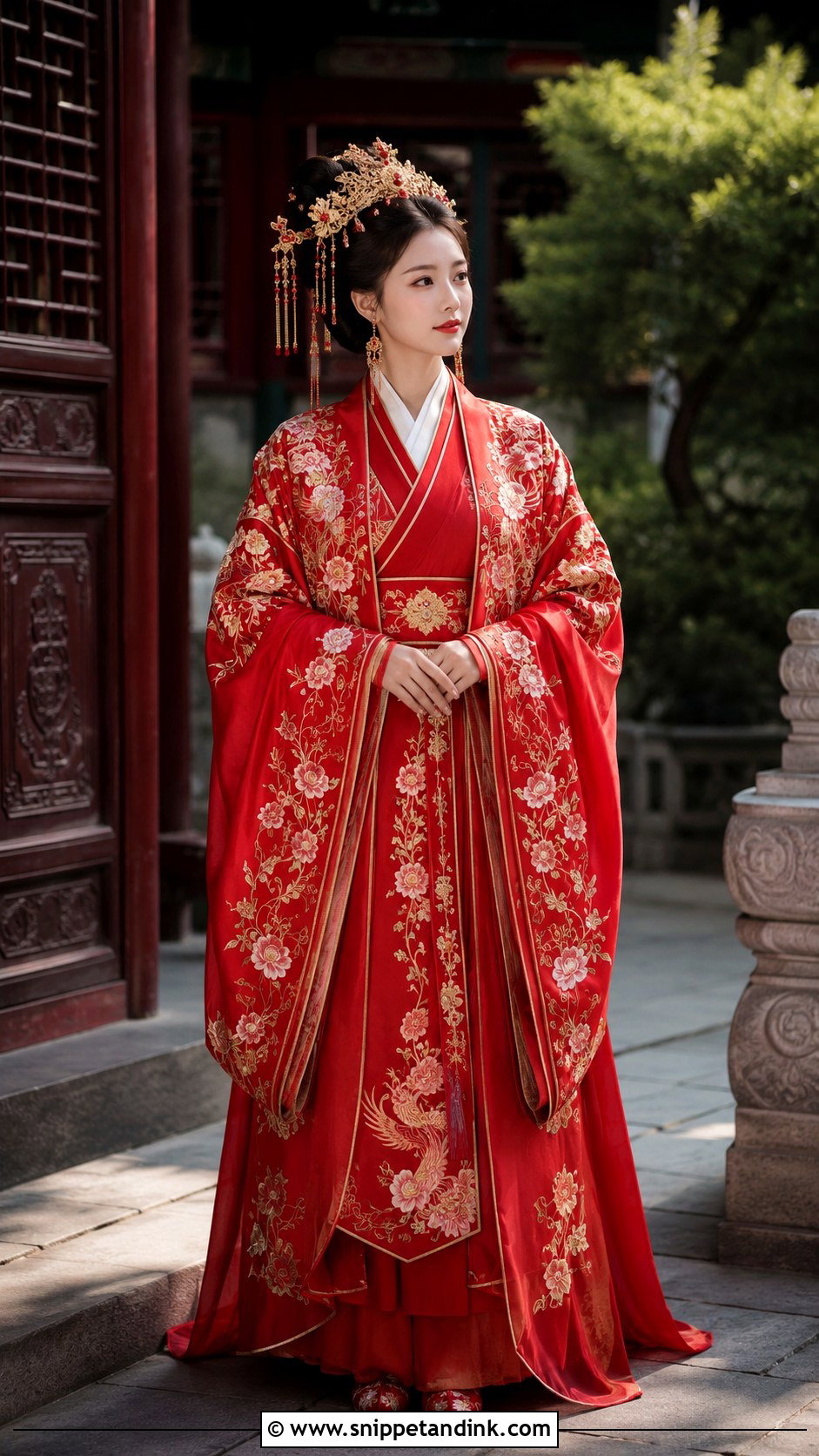
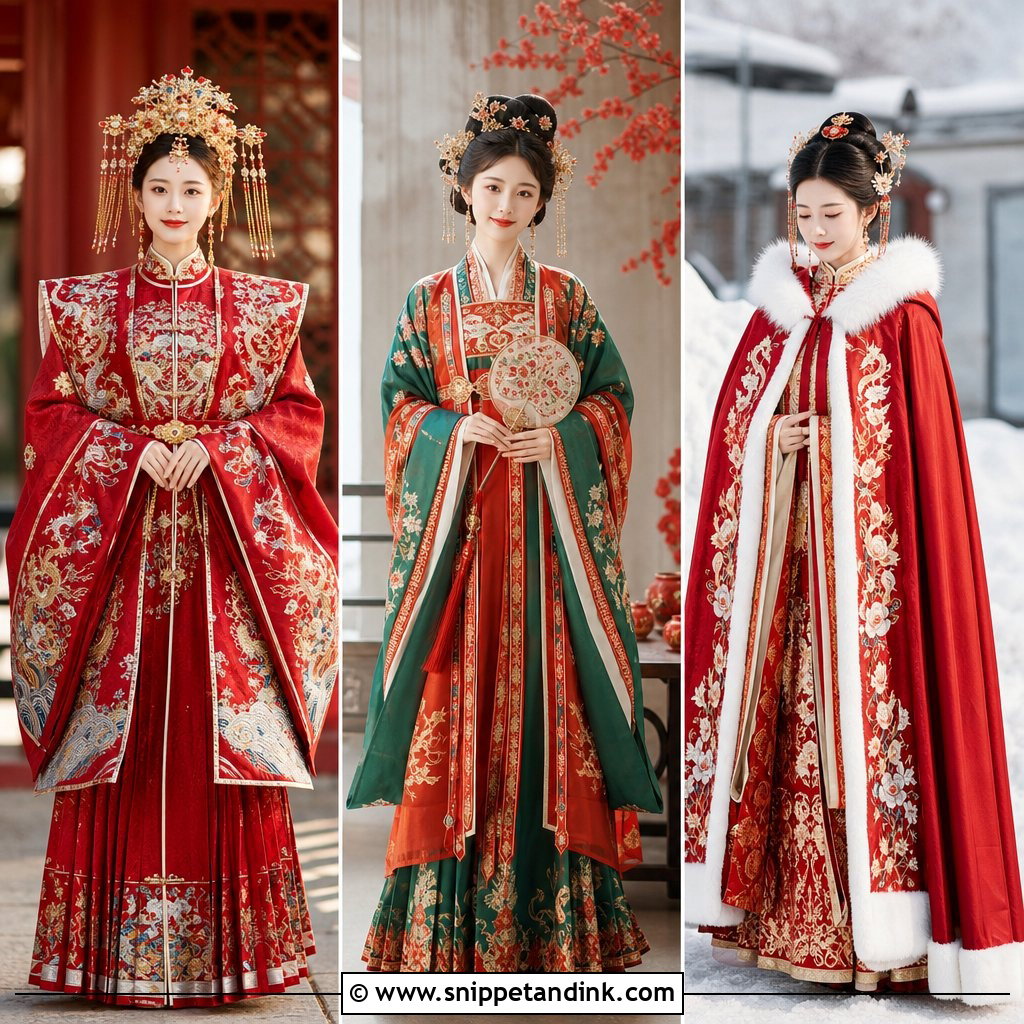
A red hanfu wedding outfit is layered and flowing, drawn from historical Chinese dress. It may include crossed collars, wide sleeves, a long skirt and an embroidered outer layer, depending on the period and your family’s preferences. Use coordinated reds that are close but not identical, so each layer still reads. Gold edging or small phoenix details define the layers. Embroidered flats, traditional hair ornaments and an updo scaled to the clothing complete it; a large modern handbag would look out of place. Wide sleeves trail into everything, so practise walking, sitting and reaching. Ask an experienced maker or older relatives about period and regional details before you commit.
14. Red Tang Inspired Hanfu Wedding Dress
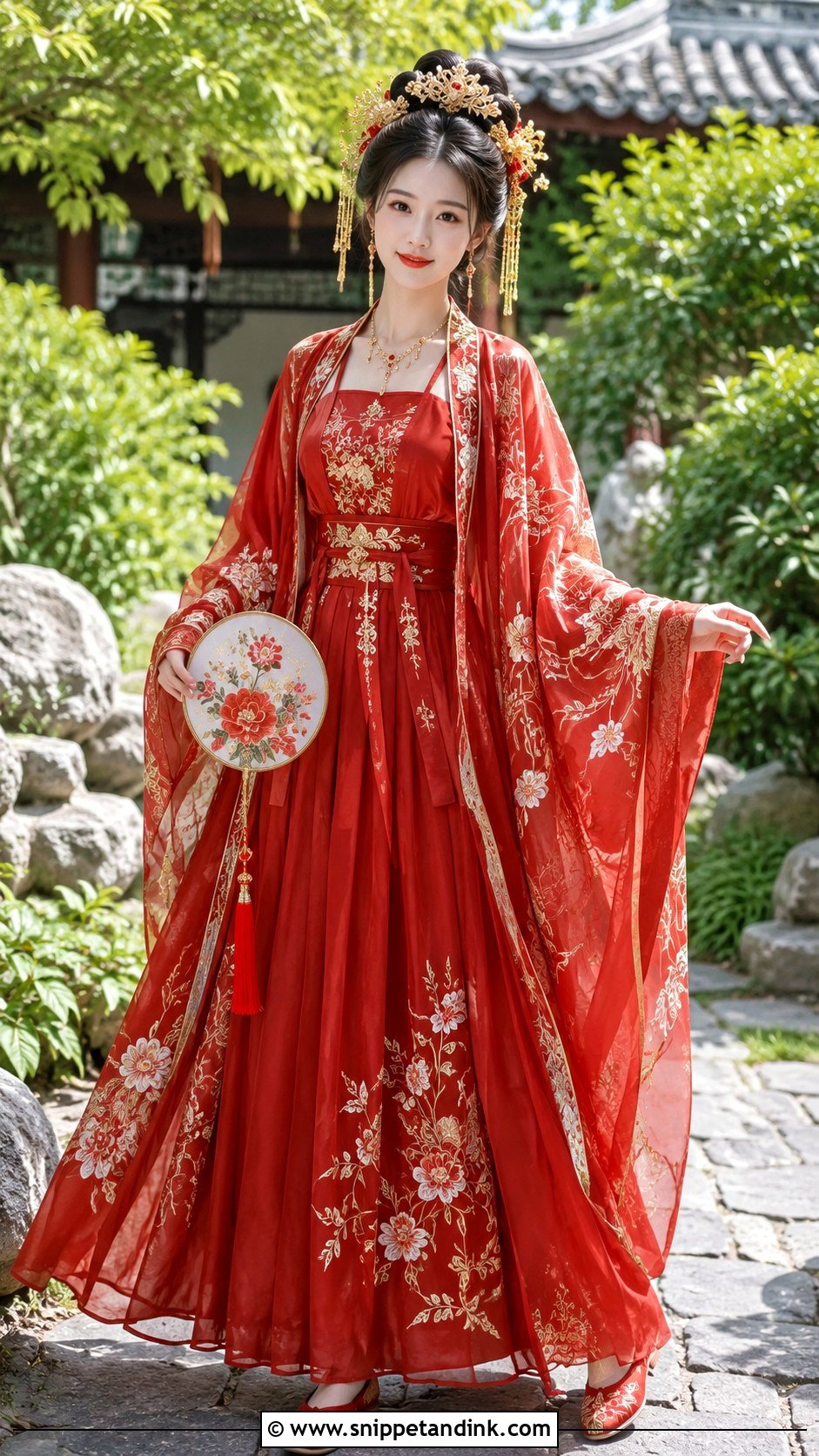
Tang-inspired hanfu ties the skirt high, close to the chest, so the silhouette is soft and long. Rich red can sit alongside restrained gold, ivory or pale pink so the layers are easy to read. Build it from a fitted inner top, the long skirt and an airy embroidered robe with wide sleeves. Embroidered flats fit beneath the floor-length hem, and delicate gold hairpins, drop earrings and a silk fan are lovely in portraits. Keep makeup fresh rather than heavy. I’d warn every bride in this look about the sleeves and ribbons: around food, candles and a crowded banquet they need someone watching them.
15. Red Ming Inspired Hanfu Wedding Dress
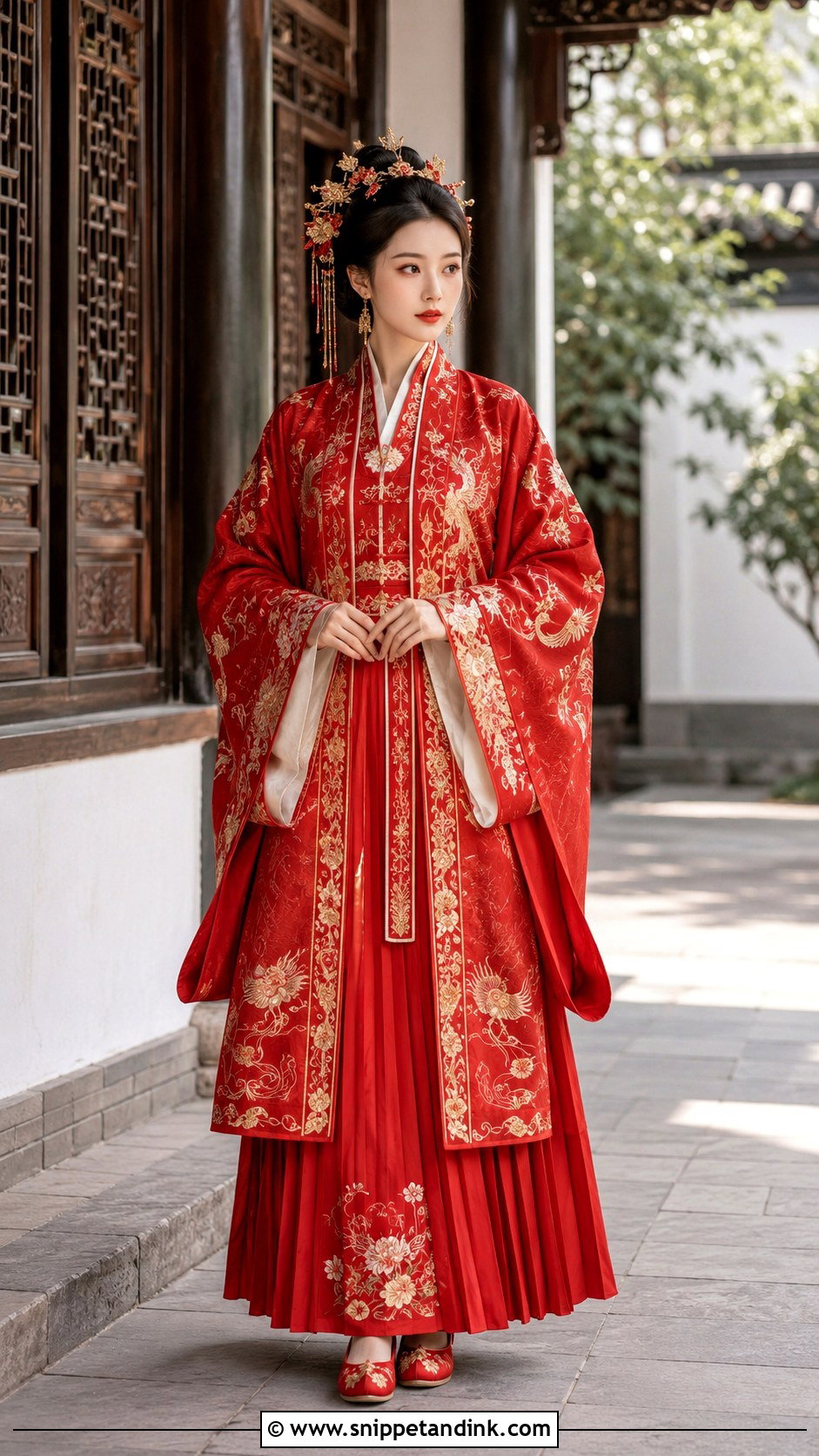
Ming-inspired hanfu is more structured: a long pleated skirt, a crossed or upright collar, an embroidered outer robe and wide sleeves with contrasting borders. The pleats have to be pressed sharp the day before, because they’re the backbone of the look. Add a traditional-style headpiece only if it suits that specific garment and the formality of your ceremony. Red embroidered flats, small gold earrings and carefully dressed hair finish it. The lines are already strong, so don’t layer in unrelated motifs. Ask the maker how the garment closes and which accessories belong with it, since hanfu styles are not interchangeable. It suits a formal tea ceremony or portraits in a historic setting.
16. Red Fengguan Xiapei Wedding Dress
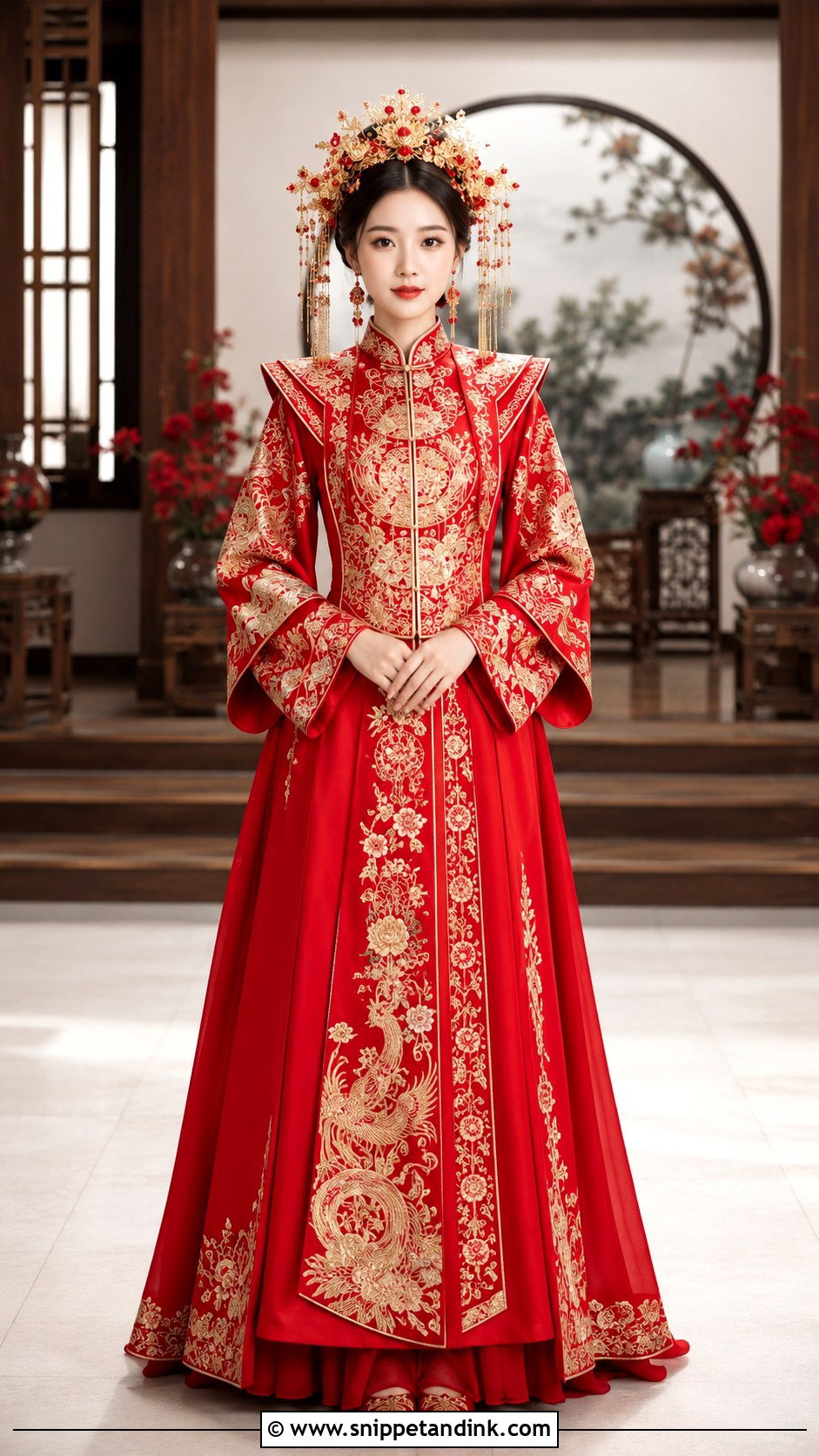
The fengguan xiapei is the most ceremonial outfit here: an elaborate robe, a decorative shoulder piece and a phoenix crown. Historical forms and modern bridal versions differ a great deal, so I’d work with a specialist who understands the whole set rather than assembling it piece by piece. The crown is heavy, and if it isn’t fitted and anchored properly it tips forward every time you bow. Keep your footwear secure under the long hem. A classic red lip and softly defined eyes suit it; extra jewellery mostly gets lost. It makes the strongest impression worn as one coordinated outfit, never mixed with Western bridal pieces.
17. Red Dragon And Phoenix Wedding Dress
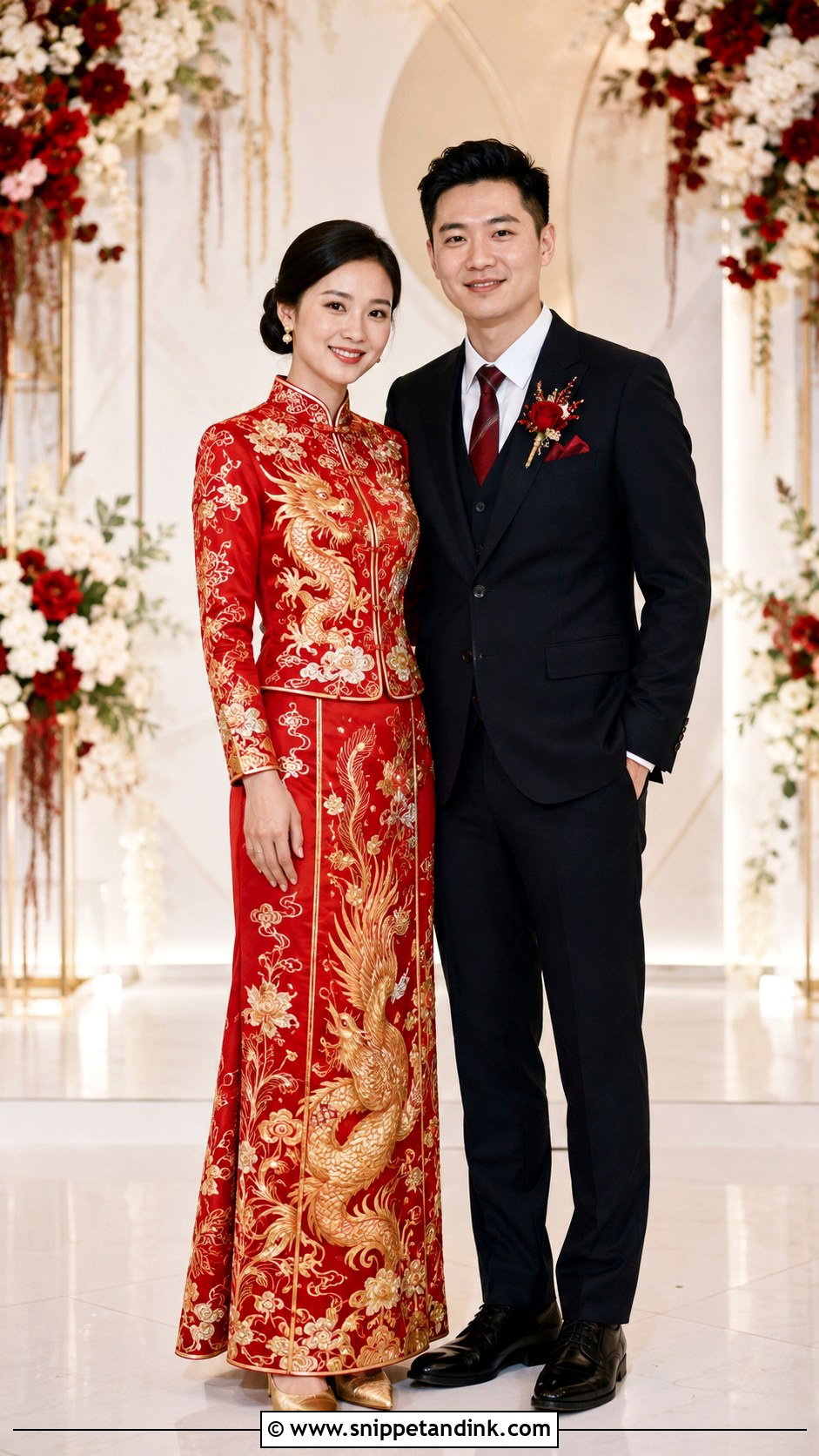
Dragon and phoenix together stand for the couple, which is why the pairing appears on so many qun kwa, qipao and modern gowns. Placement is the decision. Work across the bodice draws the eye up, along the skirt draws it down, and a symmetrical layout on a two-piece set reads most traditional. Gold heels, simple earrings and a smooth bun keep the embroidery as the main feature, so don’t add more pattern through the bag or jewellery. Couples can coordinate quietly with a red pocket square, an embroidered collar or a gold accent on the groom’s attire, rather than matching exactly from head to toe.
18. Minimalist Red Satin Qipao Wedding Dress
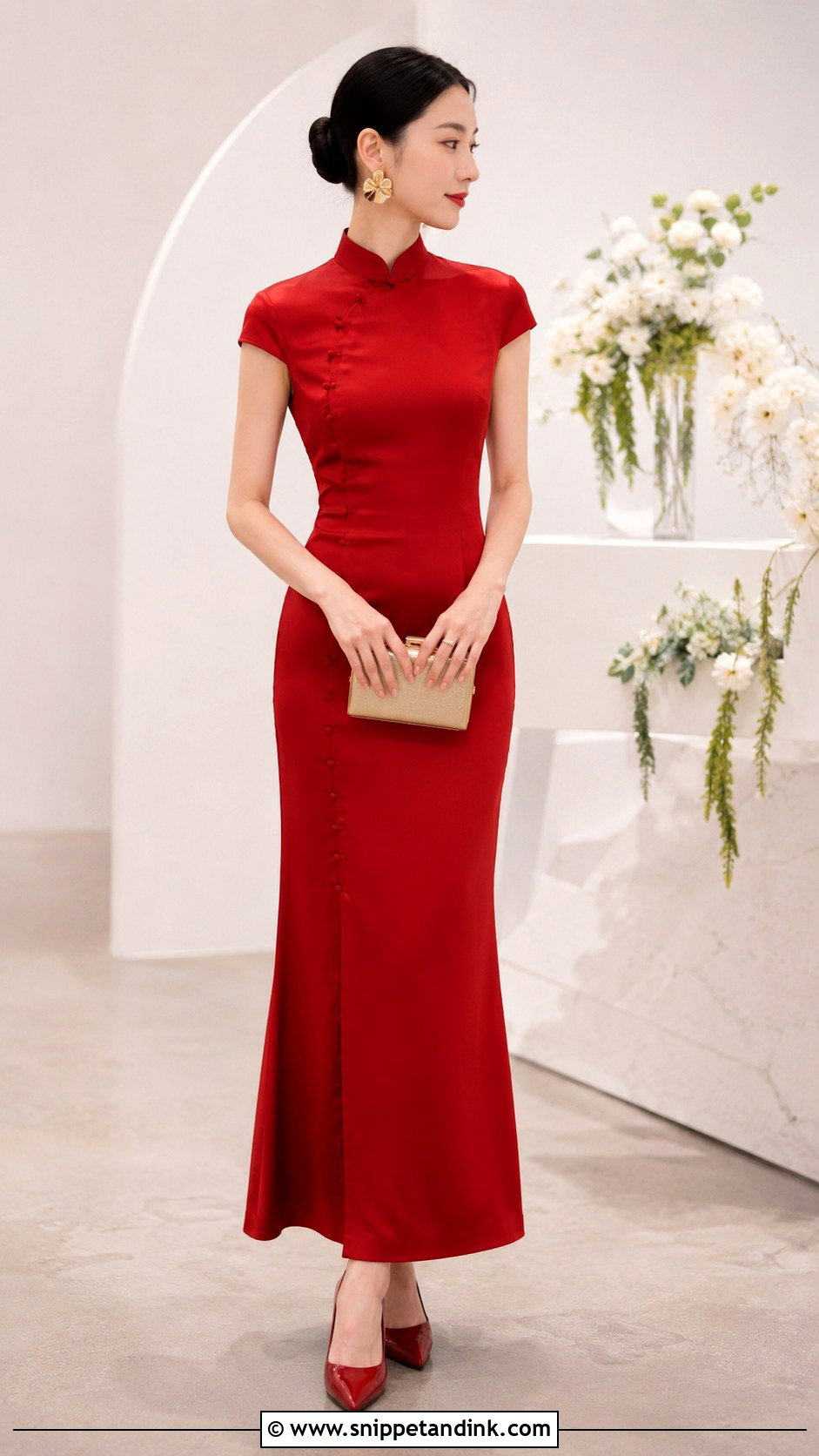
Plain satin hides nothing. Every pucker, every badly placed seam and every pull across the hip shows, so a minimal red satin qipao needs the best tailoring of anything on this list. A rich red with a smooth surface, carefully shaped seams and a structured Mandarin collar is enough on its own. An ankle or floor-length cut keeps it sleek, and one row of covered buttons or a small embroidered detail at the shoulder can be all the decoration. Pointed red pumps, sculptural gold earrings and a box clutch suit it, with a polished low bun. Satin reflects light flatly in photos, so I’d ask your makeup artist for skin with some glow.
19. Plus Size Red A-Line Qipao Wedding Dress
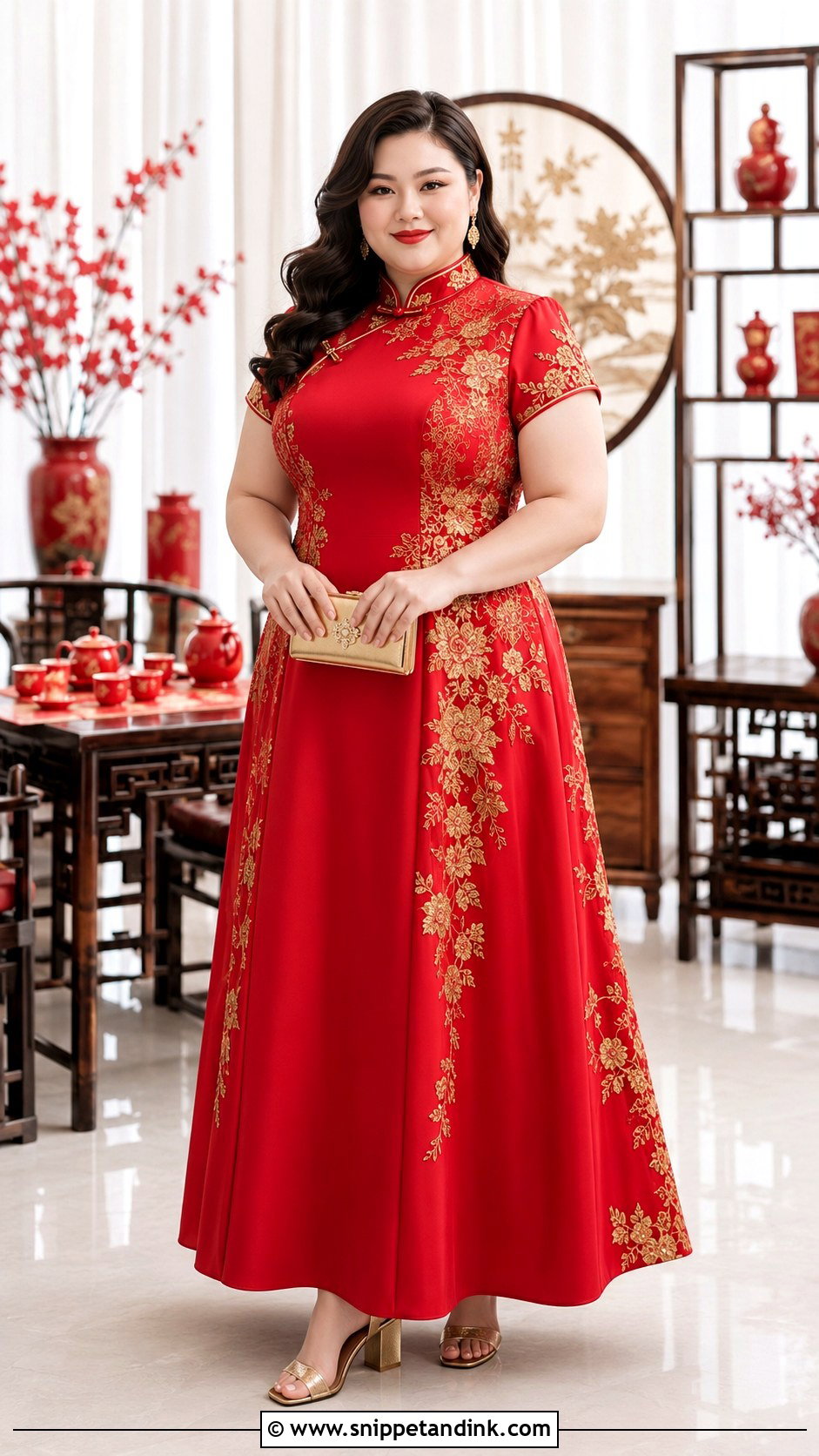
For a plus-size A-line qipao, I buy for the largest measurement and alter everything else down. A dress chosen a size small pulls into horizontal creases across the bust or hips, and no amount of styling hides that. Look for supportive lining, a Mandarin collar proportioned to your neck and princess seams that follow the body. An A-line or gentle fit-and-flare skirt is usually easier to wear than a narrow column. Embroidery at the neckline, waist or lower skirt places the emphasis where you want it. Stable gold block heels, medium-scale earrings and a structured clutch suit it, with a soft updo or side-swept waves.
20. Short Red Qipao Reception Dress
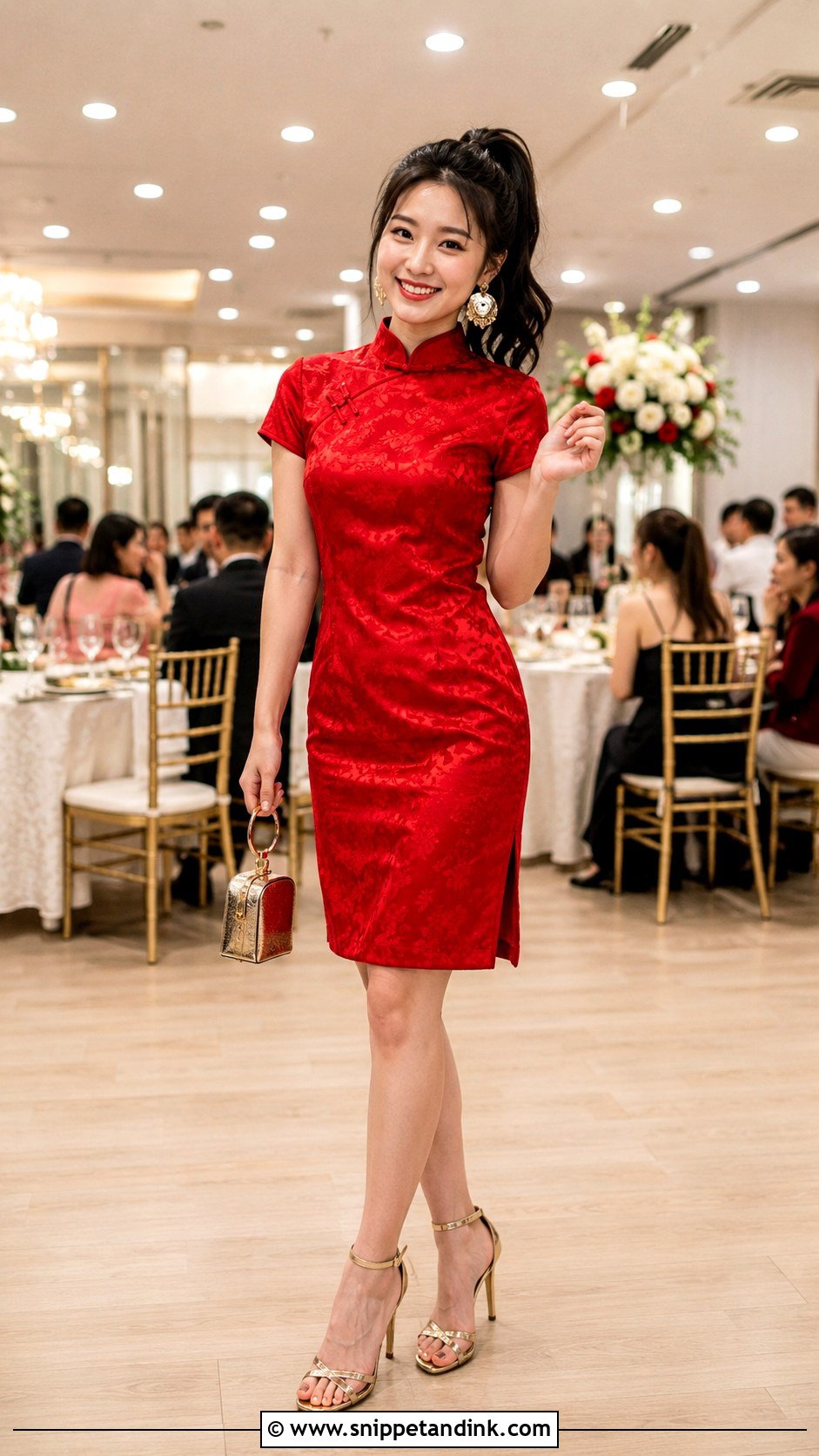
By the time the toasts start, many brides are ready to be out of a heavy ceremony outfit, and a short red qipao is the easiest change. A knee-length or just-above-knee cut with a secure Mandarin collar, shaped waist and enough room to move works in satin, jacquard or lace. Gold ankle-strap heels, statement earrings and a small metallic bag suit it, with a high ponytail, smooth bun or soft waves. Sit down in it before the day. A short qipao with a high slit rides up quickly at a banquet table. It carries you through table greetings, dessert and the last dance while still matching the rest of the day.
Can You Kneel and Pour Tea in It?
This is the test I run at every fitting for a tea ceremony outfit. I put a cushion on the floor and ask the bride to kneel, hold a cup out with both hands, bow and stand up again without using her hands. A fitted qipao often fails at the slit or the hips, and a stiff jacket can ride up at the back of the neck. If the outfit fights you, you’ll see it in every photo of the ceremony.
Not every family kneels, and customs vary a lot between regions and generations, so ask the elders running the ceremony what they expect. If kneeling is part of it, a skirt with a little extra ease at the hip or a dress with a softer slit will make a real difference.
Leaving Room for the Gold Your Family Gives You
In many Chinese families, especially Cantonese ones, the bride receives gold jewellery as a wedding gift, often including a pair of dragon and phoenix bangles, and she’s expected to wear it during the tea ceremony and the banquet. That gold arrives on the day, so the outfit has to make space for it. I’d keep your own jewellery minimal, choose sleeves that end above the wrist or fit loosely enough to slide over bangles, and leave the neckline clear for a necklace you haven’t seen yet. Heavy bangles also need a sleeve cuff without beading, or they’ll catch every time you lift a cup.
Which Red Goes With Which Part of the Day
Your decision comes down to culture, comfort and the moments you’re dressing for. A qun kwa or xiu he fu suits the tea ceremony, a qipao carries portraits and the banquet, hanfu and the ceremonial sets bring layered tradition, and a red gown blends Chinese embroidery with a Western shape. Before you order, confirm measurements, fabric quality, embroidery placement and how much can be altered. Then kneel, sit, walk and bow in every outfit, wearing the shoes and headpiece. A red Chinese wedding dress that passes that test can honour your family and still feel like yours.
You'll Like These Ideas:



Leave a Reply