
An Assamese wedding outfit is built from woven cloth rather than tailoring: the mekhela, a pleated wrap skirt, the sador draped over the body, and for many brides a riha wrapped across the chest. Around those pieces sit thoughtfully chosen blouses, jewellery, hair and footwear. The silk decides the character. Muga has a natural golden sheen that no dye can copy, while pat silk is smoother and takes brighter colour. The twenty looks below run from bridal white and gold to reception colours, bridesmaid sets and quieter guest outfits. Customs differ between families and communities, so before I style a bride I always ask what her family expects at each ceremony, and only then talk colour.

Draping a Mekhela Sador Without Spending the Morning Re-pinning It
Most guests can drape a mekhela sador themselves for an ordinary function. Bridal draping, with a riha and heavy silk, is different, and I always book time for it in the bride’s morning. This is the order I work in:
- Put on the blouse and a well-fitted petticoat first. The mekhela tucks into the petticoat, so a loose one lets the whole skirt sag by afternoon.
- Wrap the mekhela, bring the pleats to the front and tuck them firmly. Check the hem just clears the floor in the shoes you will wear.
- For a bride, wrap the riha across the chest next, keeping its border in a straight line.
- Tuck one end of the sador at the waist, take it around the body and over the shoulder, then pin it from the inside so the pin doesn’t show.
- Walk, sit and raise both arms. Re-pin anything that pulls before the jewellery goes on.
Practise once with the actual set before the wedding. Muga holds a fold well; pat silk is slippery and needs more pins. Keep a small pouch of safety pins and a spare petticoat string with whoever is helping you that day.
1. White And Gold Assamese Bridal Mekhela Sador
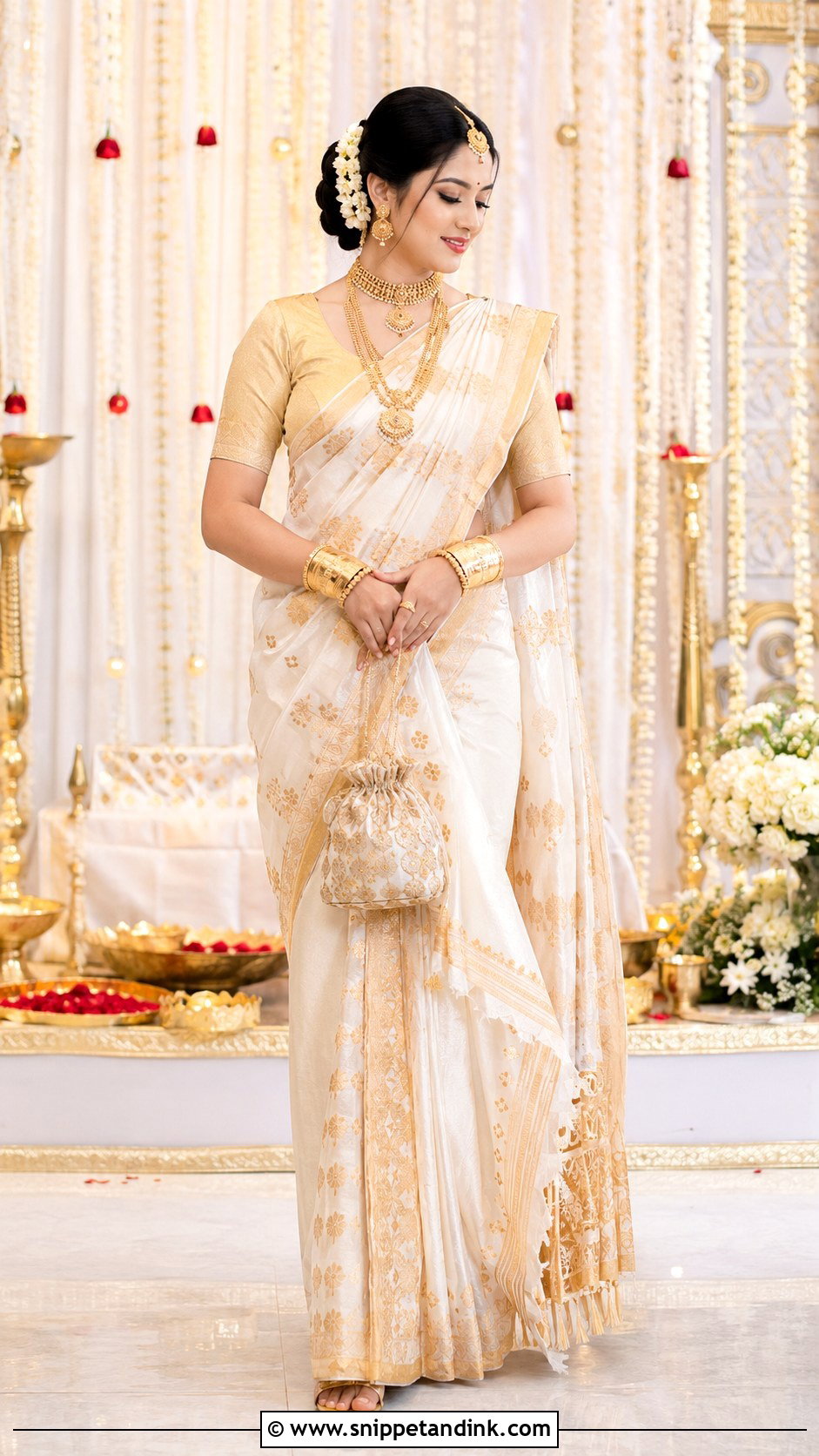
White and gold is the look most people picture for an Assamese bride, and the sheen of the gold motifs on pale silk is what carries it. Ask for an ivory or creamy white set with fine gold work and a broad border. A fitted gold blouse gives the pale fabric definition. The pleats are where I spend my time with this one: white silk shows every crooked fold, so I pleat the mekhela and the sador in front of a full-length mirror and pin each fold from inside. Add the riha, gold jewellery such as a statement necklace, earrings and heavy bangles, and a low bun with white flowers. Gold sandals and a small embroidered potli finish it.
2. Muga Silk Assamese Wedding Mekhela Sador
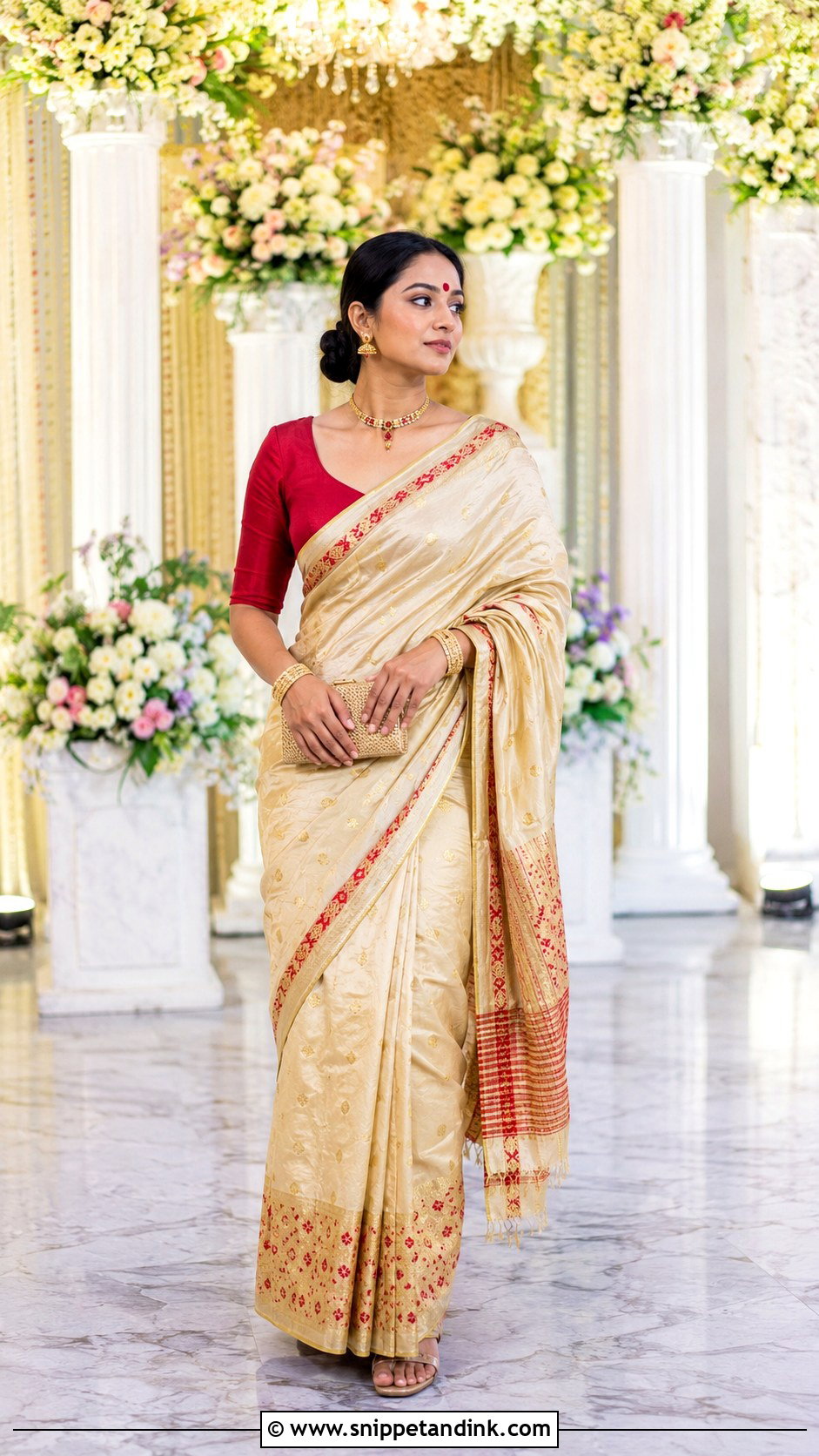
Muga silk has a golden-beige glow that comes from the silk itself, not from dye, and it looks richer the longer it is worn and washed. That is why a Muga silk mekhela sador is the heirloom piece in so many families. Deep red, maroon or bottle-green blouses bring out the gold. Woven floral or geometric borders give interest without covering the silk. Muga is firmer than pat, so the sador sits crisply on the shoulder but needs a secure pin to stay put during long ceremonies. Pair it with a structured elbow-length blouse, the riha, layered gold necklaces, gamkharu-style bangles and a small red bindi. A smooth bun or centre-parted braid, low block heels and a compact gold clutch complete it.
3. Pat Silk Assamese Bridal Mekhela Sador
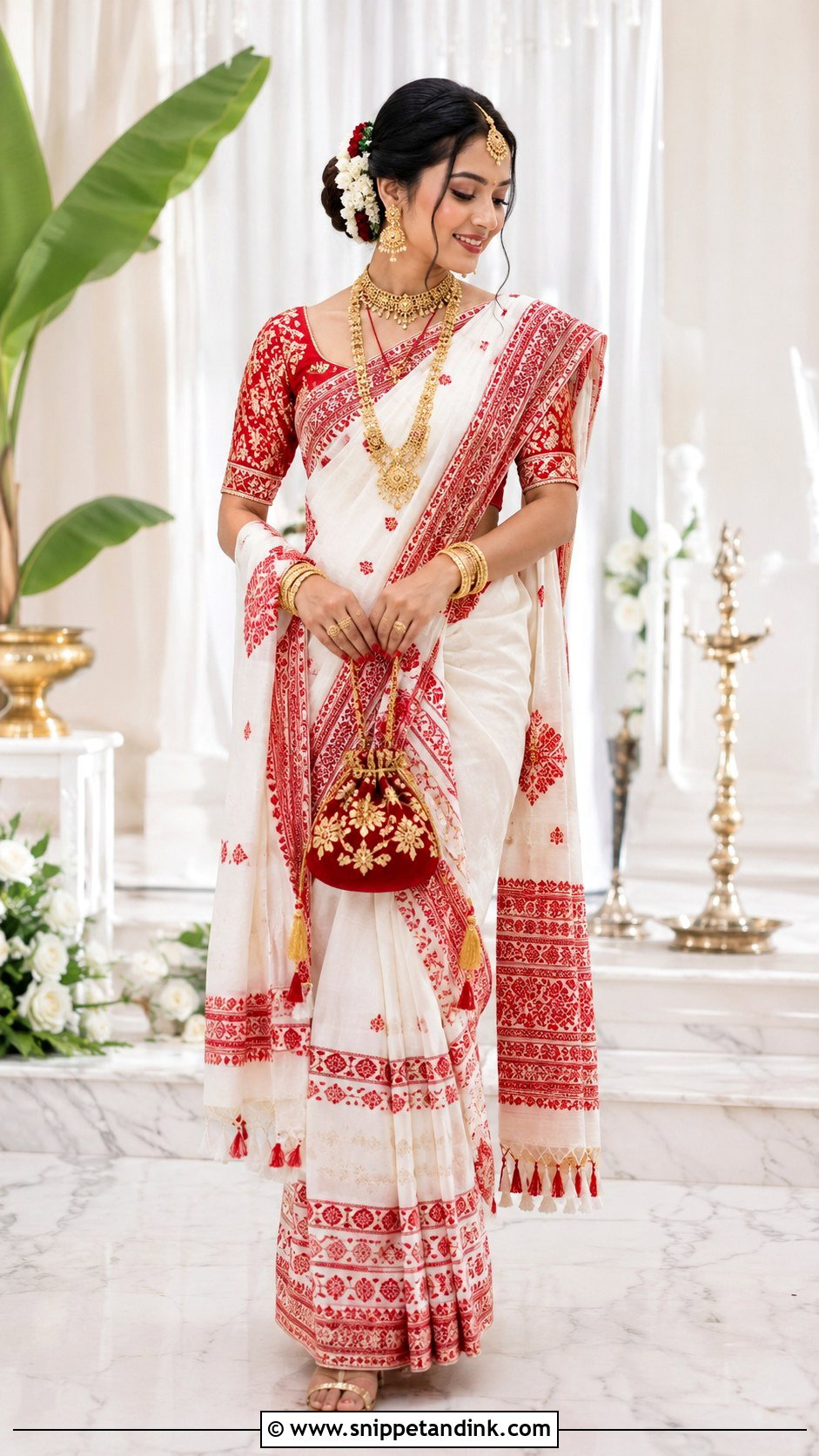
Pat silk is the brighter, smoother choice. A white pat mekhela sador with red woven borders and a red blouse is the classic combination, and the smooth surface lets every motif show crisply. It is also slippery, which surprises brides; pleats slide out of place unless they are pinned from the inside and the sador is secured at the shoulder with more than one pin. An elbow-sleeve blouse with a modest neckline gives layered jewellery room: a galpata-style choker, a longer necklace, traditional earrings and matching bangles. Finish with a flower-trimmed low bun, a red bindi, gold sandals and an embroidered potli.
4. Red Assamese Bridal Mekhela Sador
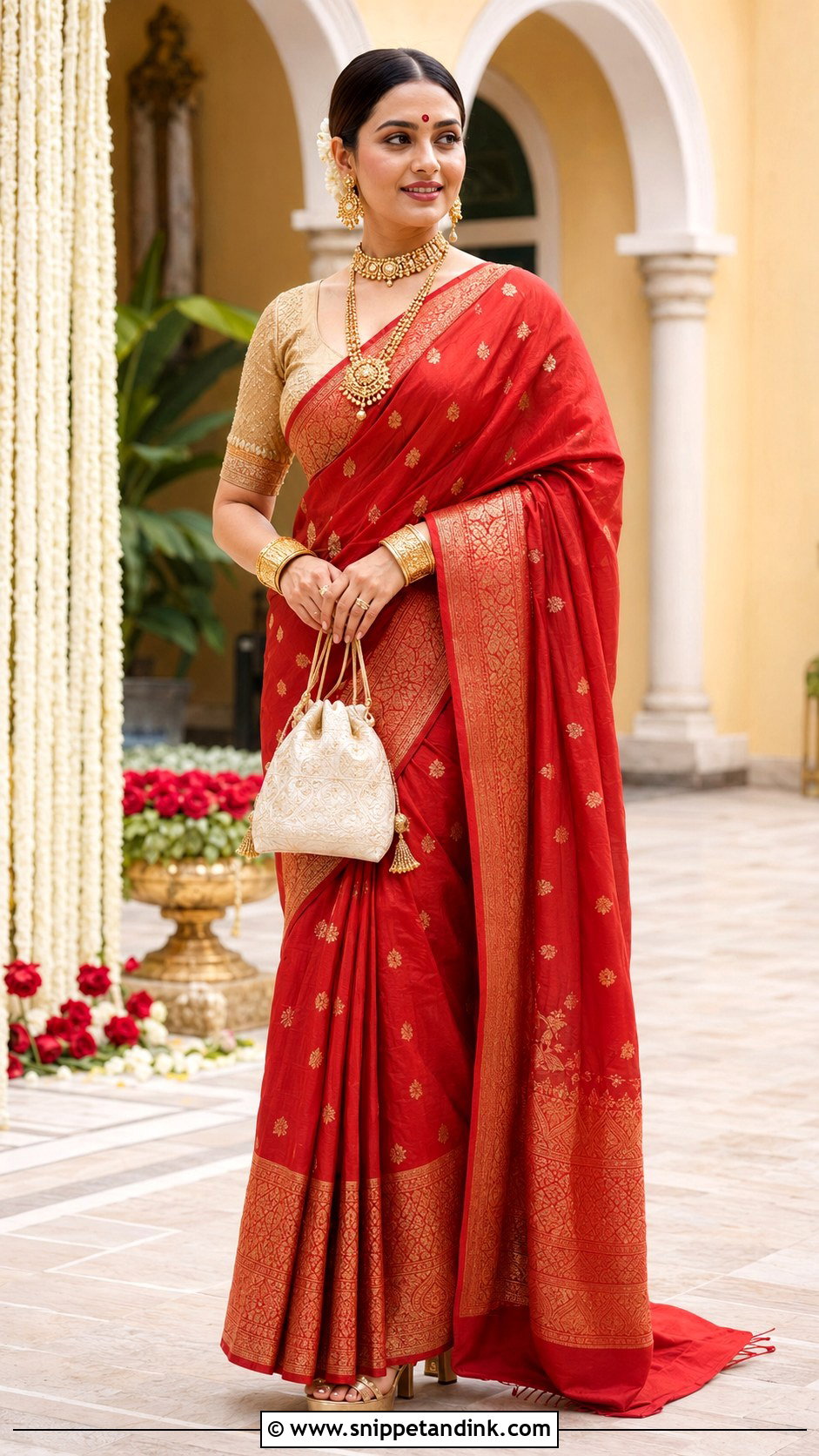
Red is a confident break from white and gold, and in Assam it carries the same festive meaning as elsewhere in India. Choose deep vermilion, crimson or ruby silk with woven gold motifs instead of sequins. A matching blouse gives one continuous line; antique gold adds contrast. Because the colour already does a lot, I edit the jewellery hard: a gold choker, one medium necklace, earrings and broad bangles are enough. A sleek centre-parted bun, soft makeup, a red bindi and gold block heels complete the look. Carry a cream or gold potli; a red one disappears against the silk.
5. Ivory Assamese Bridal Mekhela Sador With Riha
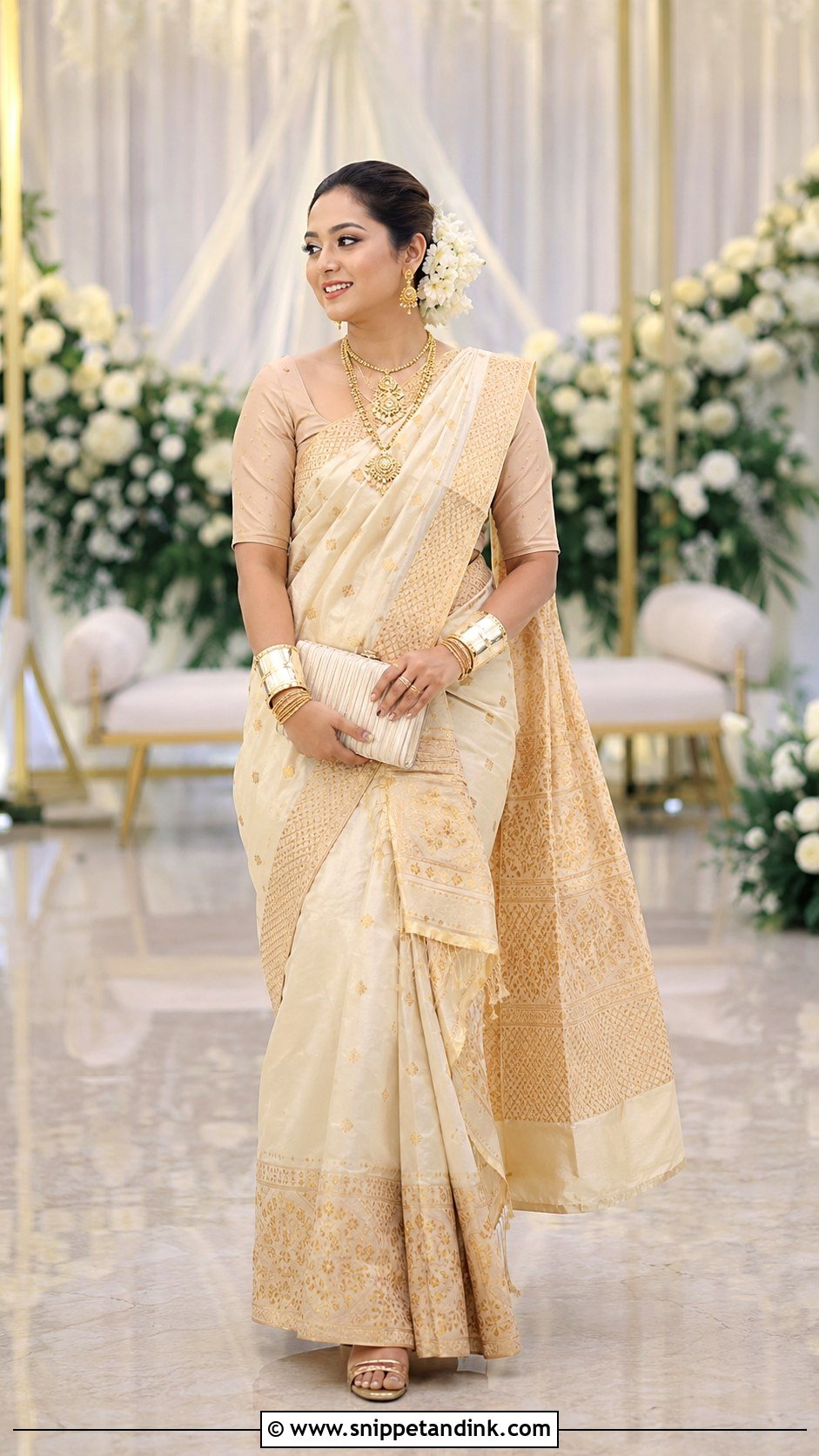
Ivory suits a bride who prefers quiet luxury. An ivory Muga or pat set with fine gold motifs, worn with a coordinated riha, is all ceremony and no fuss. A champagne-gold blouse gives the gentlest contrast. I drape the sador so its border runs clearly across the shoulder and down the front, since on a pale set the border is the only strong line in the outfit. Traditional necklaces, ornate earrings and wide bangles add texture without more colour. Wear a low bun with white flowers, fresh makeup with defined eyes and a muted red lip, gold sandals and a structured ivory clutch.
6. Cream And Red Assamese Wedding Mekhela Sador
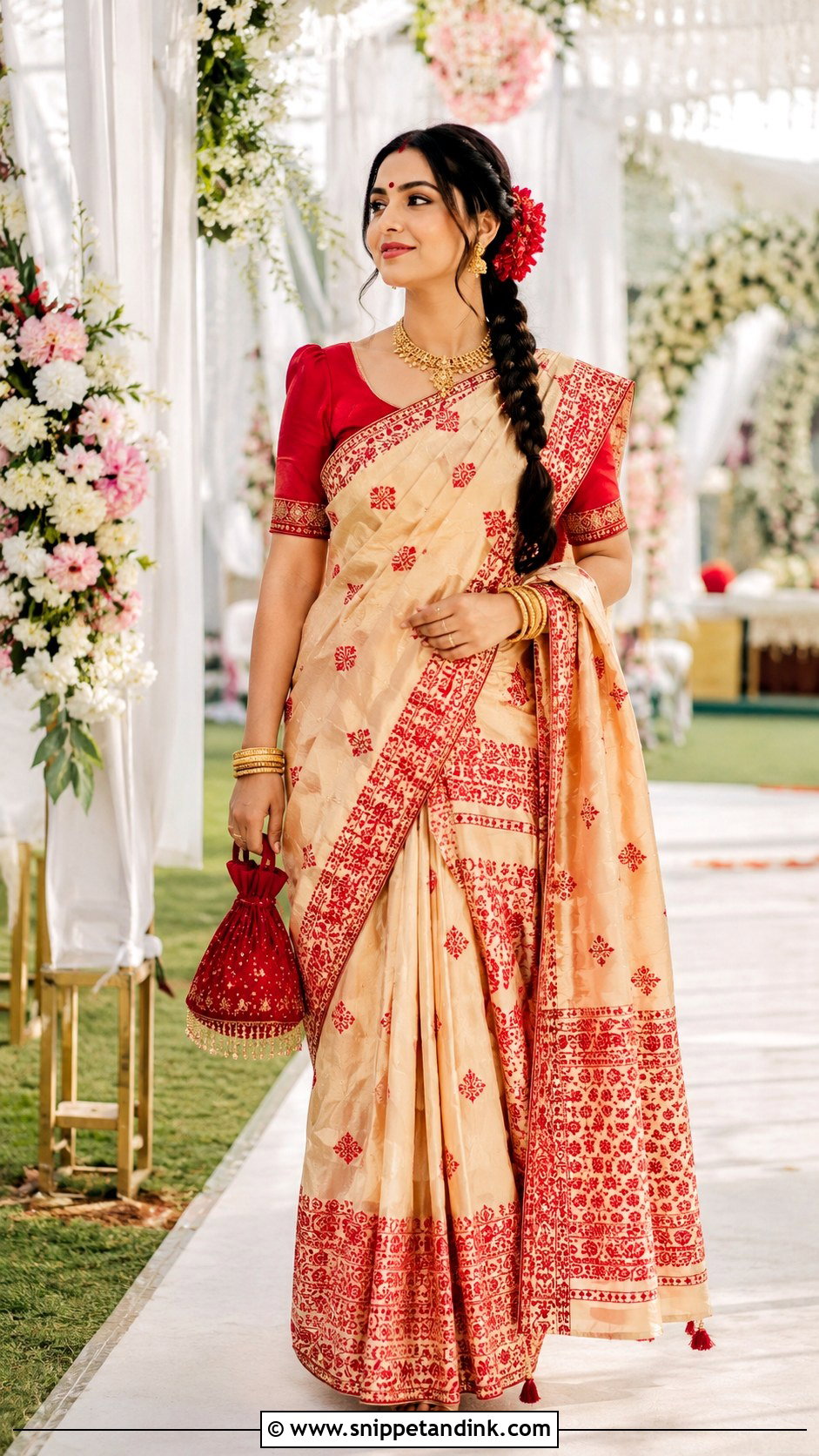
Cream and red is the most flexible set here; with or without the riha and heavy jewellery, it suits a bride, a mother of the bride or a bridesmaid. Look for a cream mekhela with a strongly woven red border, a matching cream sador with repeated red motifs and a red blouse. Brides add the riha and layered gold; guests wear one statement necklace and smaller earrings. A polished bun or a long braid depends on the formality of the event. Red or gold sandals, a small red potli and a bindi complete it.
7. Gold Assamese Reception Mekhela Sador
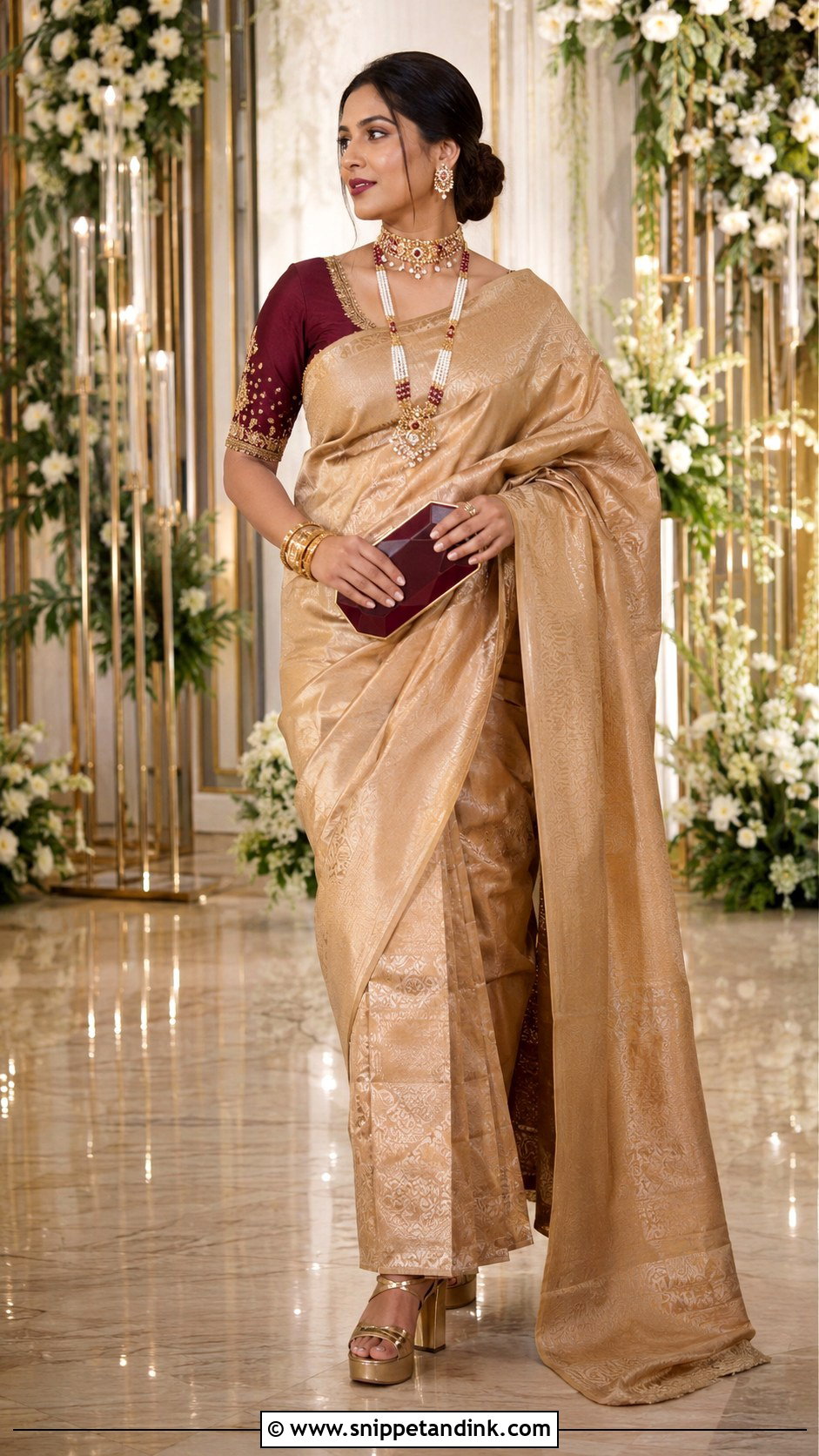
Gold looks its best under warm reception lighting, but bright yellow-gold silk can glare in flash photos. I steer brides toward antique gold or champagne. A deep maroon velvet or silk blouse gives depth and an evening mood. A slightly wider neckline frames a traditional choker, and a longer necklace adds a vertical line. Velvet blouses get warm in a crowded hall, so if the reception is long, I’d choose silk instead. Keep the drape clean so it doesn’t look bulky. A smooth low bun, defined eyes, berry lipstick, a small bindi, metallic block heels and a maroon clutch finish it.
8. Pink Assamese Bridesmaid Mekhela Sador
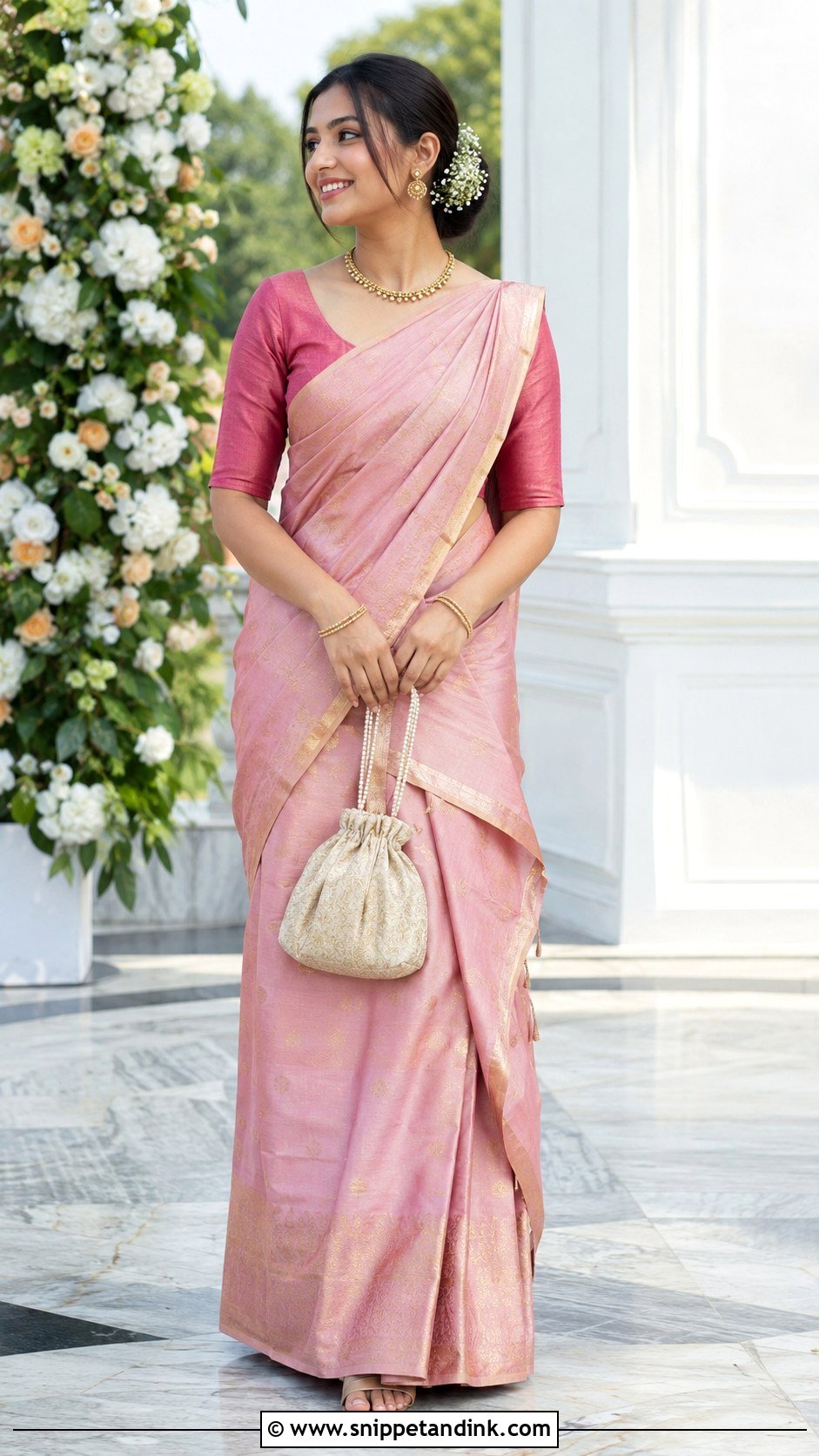
Pink works well for bridesmaids because it stays festive without stepping into bridal territory. Dusty rose, lotus pink and muted raspberry suit a group. Lightweight pat silk with restrained gold borders lets everyone move and help the bride all day. My tip for groups is to buy the sets together from one weaver or shop; dye lots vary, and five slightly different pinks look accidental in photos. Matching or slightly deeper pink blouses with elbow sleeves, one gold necklace, traditional earrings, slim bangles, low buns with white flowers, nude-gold sandals and cream potlis keep the group consistent. Each woman can still choose her own sleeve and neckline.
9. Blue Assamese Wedding Guest Mekhela Sador
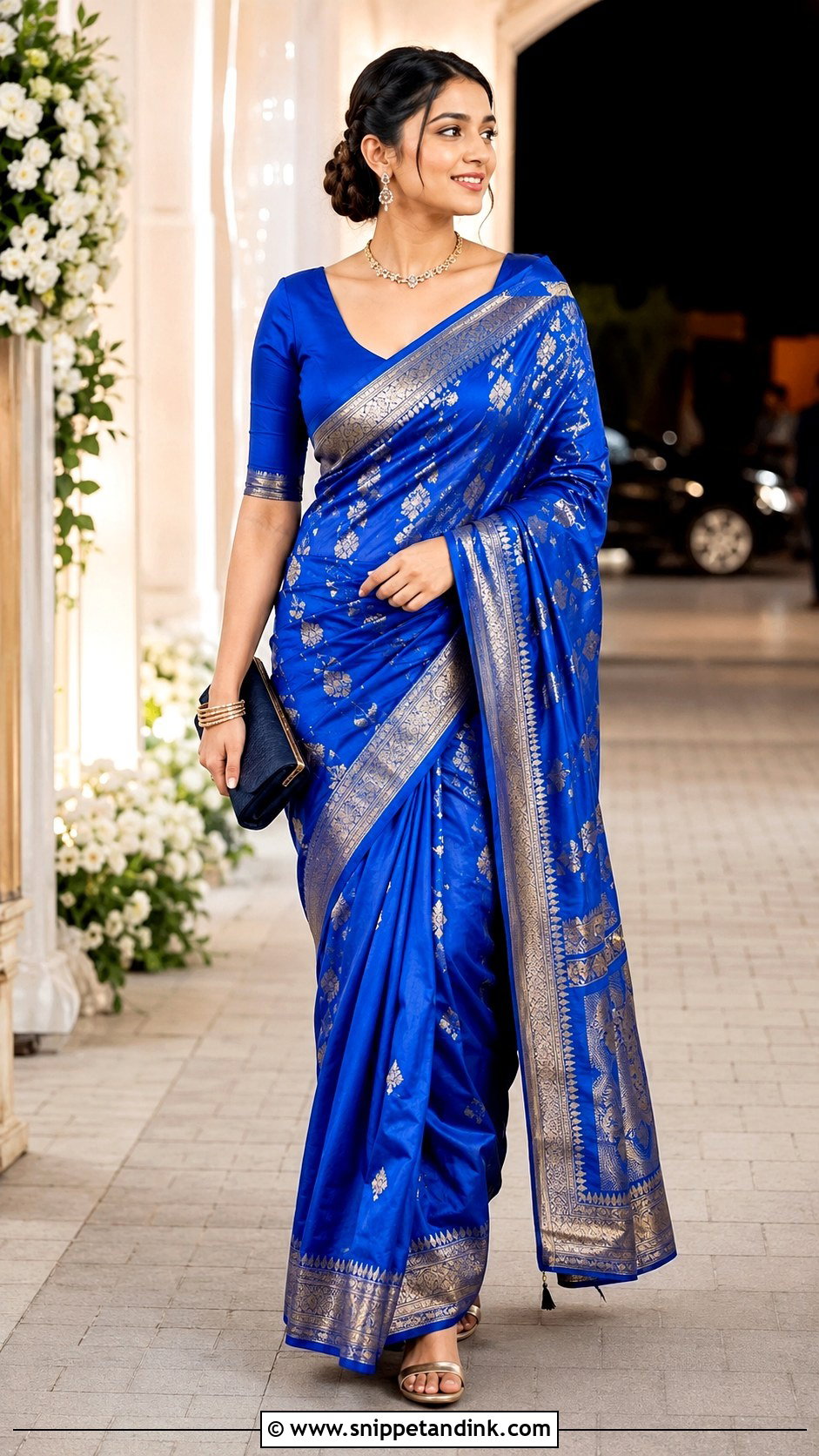
Deep blue silk with fine silver or gold weaving is a strong guest look for an evening wedding. Navy, royal blue and peacock blue all work. A matching blouse is sleek; a silver-grey blouse adds gentle contrast. Keep the jewellery festive but not bridal: a compact necklace, drop earrings and several slim bangles. Wear the sador over one shoulder and pin it discreetly so it doesn’t slide when you greet people. A low ponytail, braided bun or smooth open hair, metallic sandals and a silver or navy clutch complete it.
10. Green Assamese Wedding Mekhela Sador
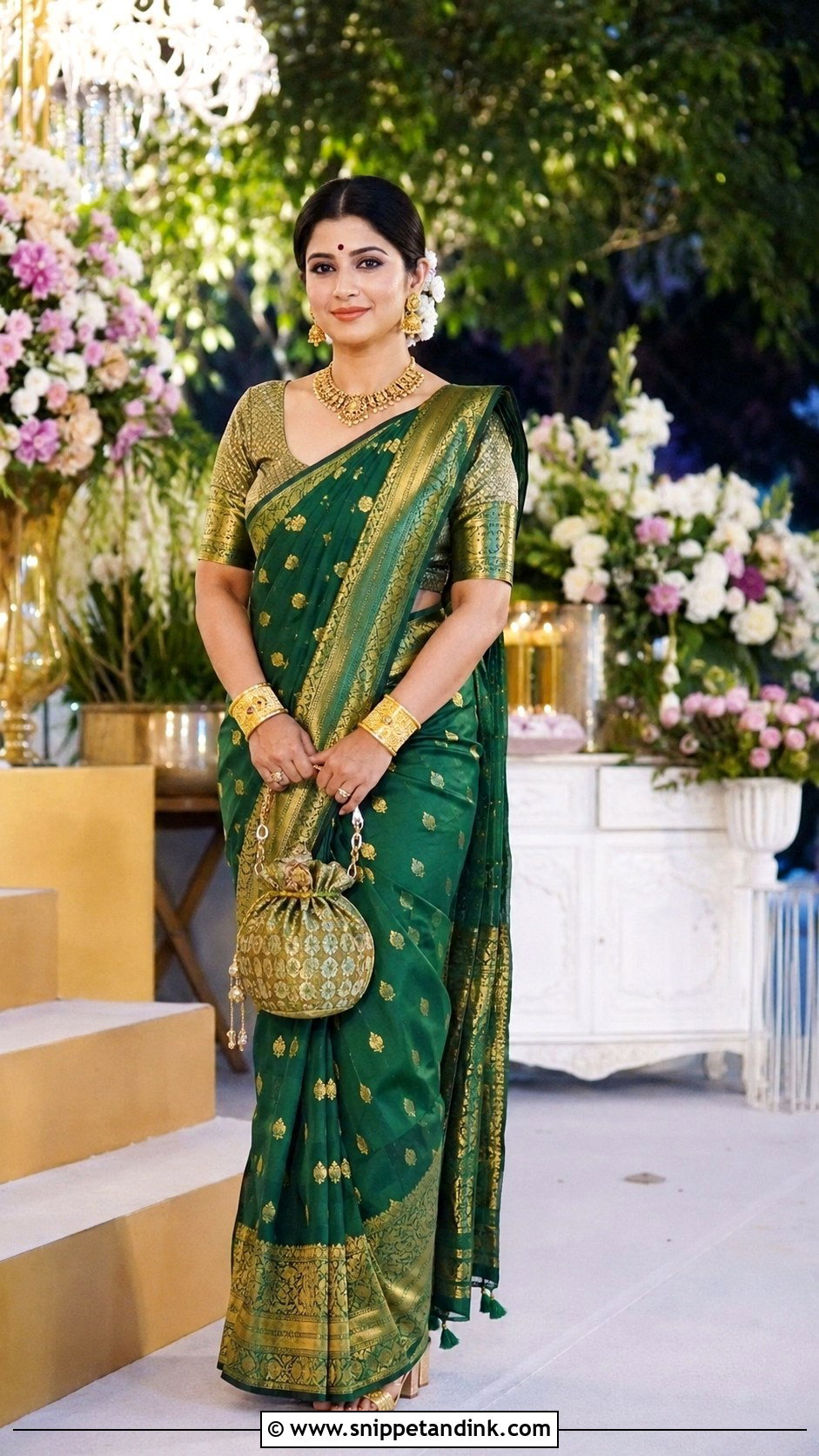
Green silk feels rich and fresh among the flowers and greenery of most wedding venues. Emerald, bottle green and forest green with gold borders are the safest shades. A gold blouse brightens it; a matching green blouse is more understated. I’d keep the blouse structured and the mekhela cleanly pleated, then arrange the sador so the border shows. Gold-toned earrings, a medium necklace and broad bangles suit the jewel tone, and a small maroon bindi adds contrast. A flower-trimmed bun, gold block heels and a structured potli finish it. It suits bridesmaids, close relatives and reception guests equally.
11. Maroon Assamese Bridal Mekhela Sador
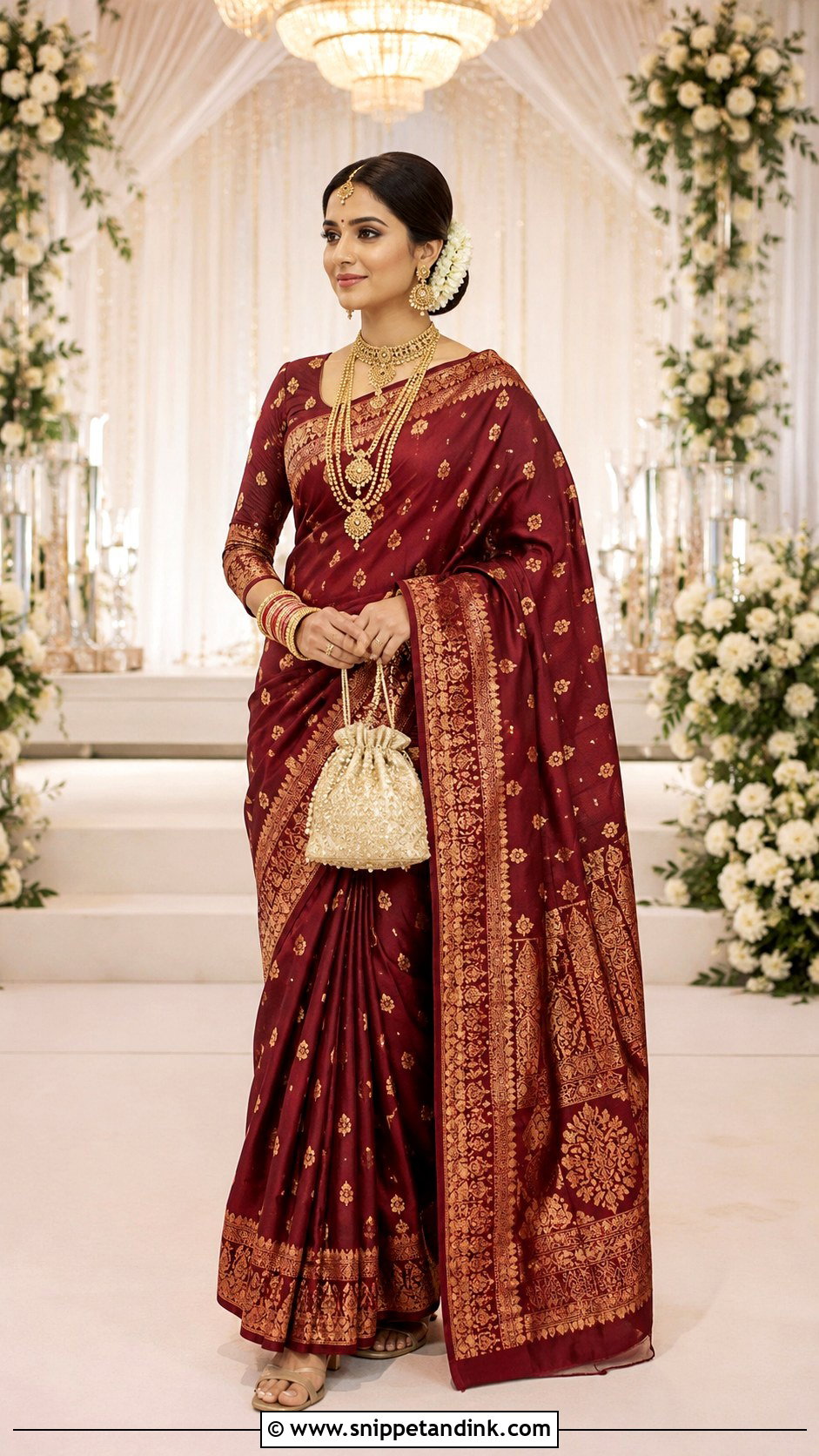
Maroon gives a bride the depth of red without its brightness. Look for a silk mekhela sador with antique-gold motifs and a broad border to define the drape. A matching maroon blouse is continuous; antique gold makes the weaving stand out. Add the riha if your family’s bridal customs include it. Dark silk can look heavy around the face, so I add white flowers to a centre-parted low bun and keep the eye makeup in soft gold. Layer a choker with a longer necklace, statement earrings and substantial bangles. Muted gold sandals, a cream embroidered potli and a classic bindi complete it.
12. Purple Assamese Reception Mekhela Sador
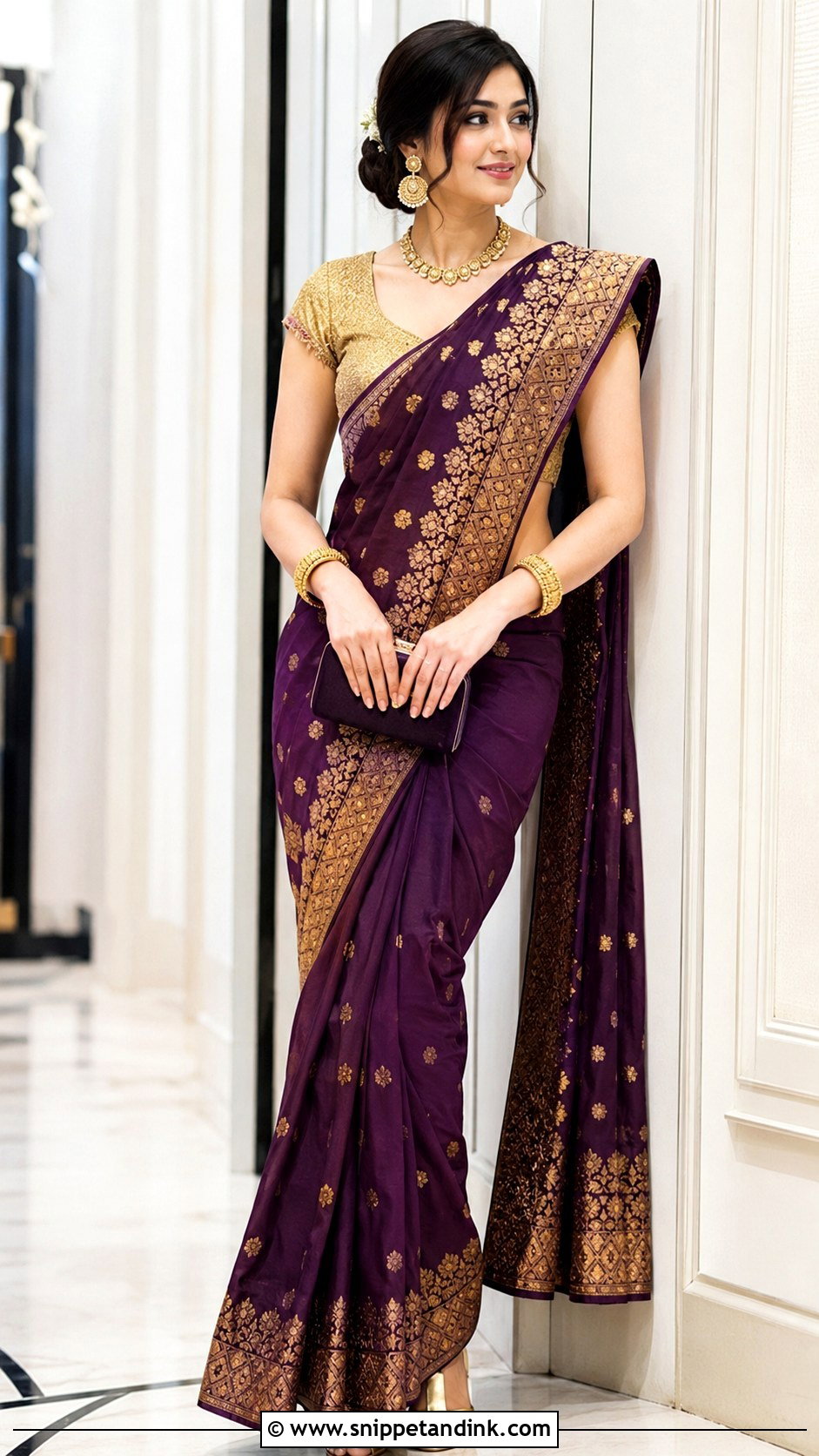
Purple is a modern jewel tone for an Assamese reception. Aubergine, plum and deep violet look rich in pat or Muga-blend silk, especially with gold geometric or floral borders. A fitted gold blouse warms the cooler colour; a purple blouse with subtle embroidered sleeves gives a monochrome look. Gold necklace and earrings, two broad bangles or several narrow ones, a side-parted bun or polished waves, gold heels and a matching clutch complete it. One honest caveat: deep purple can read almost black in dim evening light, so check it in the venue’s lighting if you can.
13. Peach Assamese Bridesmaid Mekhela Sador
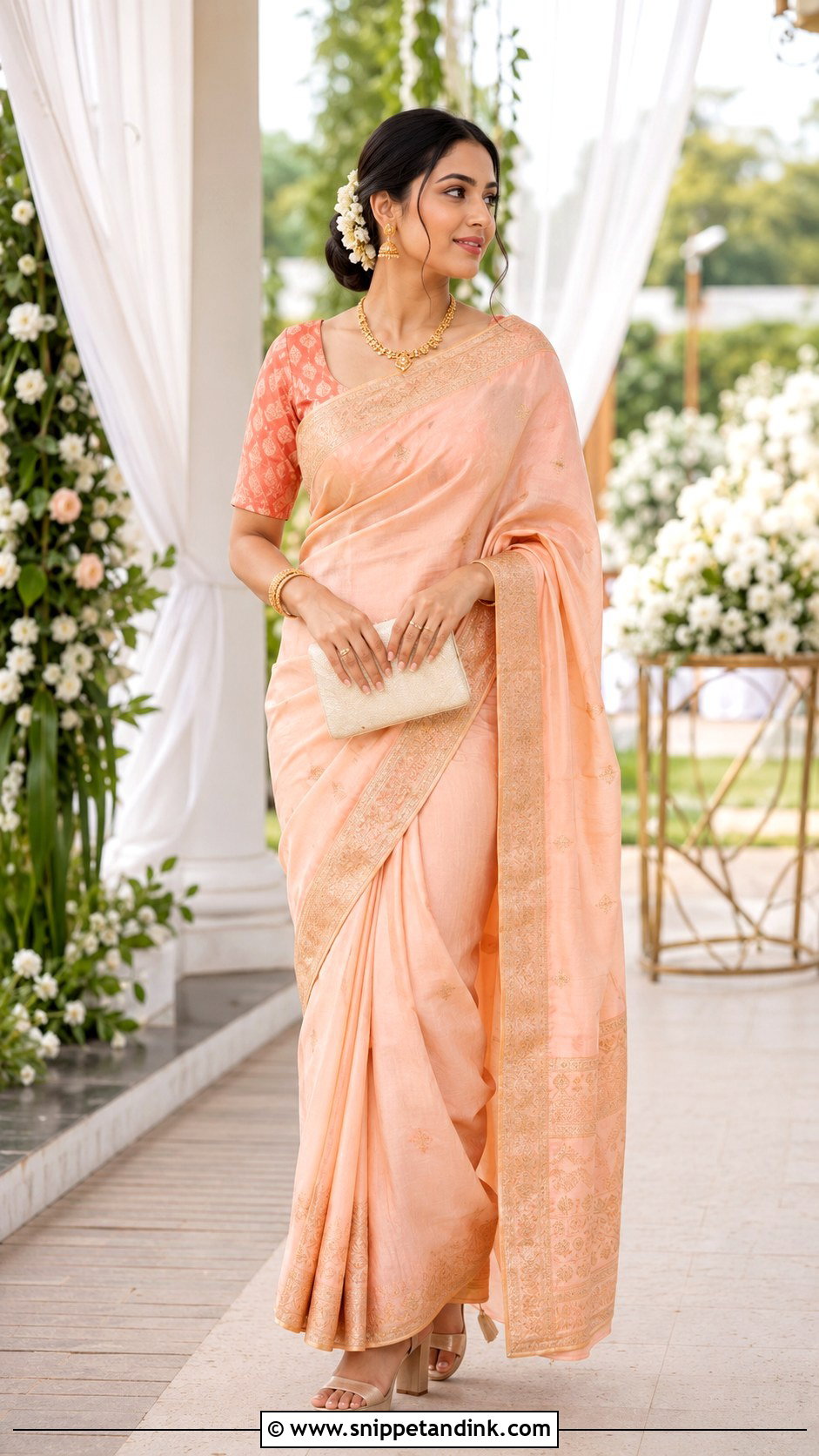
Peach is my favourite daytime bridesmaid colour. It glows in natural light and sits comfortably beside ivory, red and gold bridal sets. Choose lightweight silk with fine gold borders and a slightly deeper coral-peach blouse, so the drape has some definition. One medium necklace, small earrings, slim bangles, a neat braid or low bun with white flowers, champagne block heels and a cream clutch keep the group consistent. Pale peach can wash out very fair skin in direct sun, so I hold the fabric to each bridesmaid’s face before ordering.
14. Black And Gold Assamese Reception Mekhela Sador
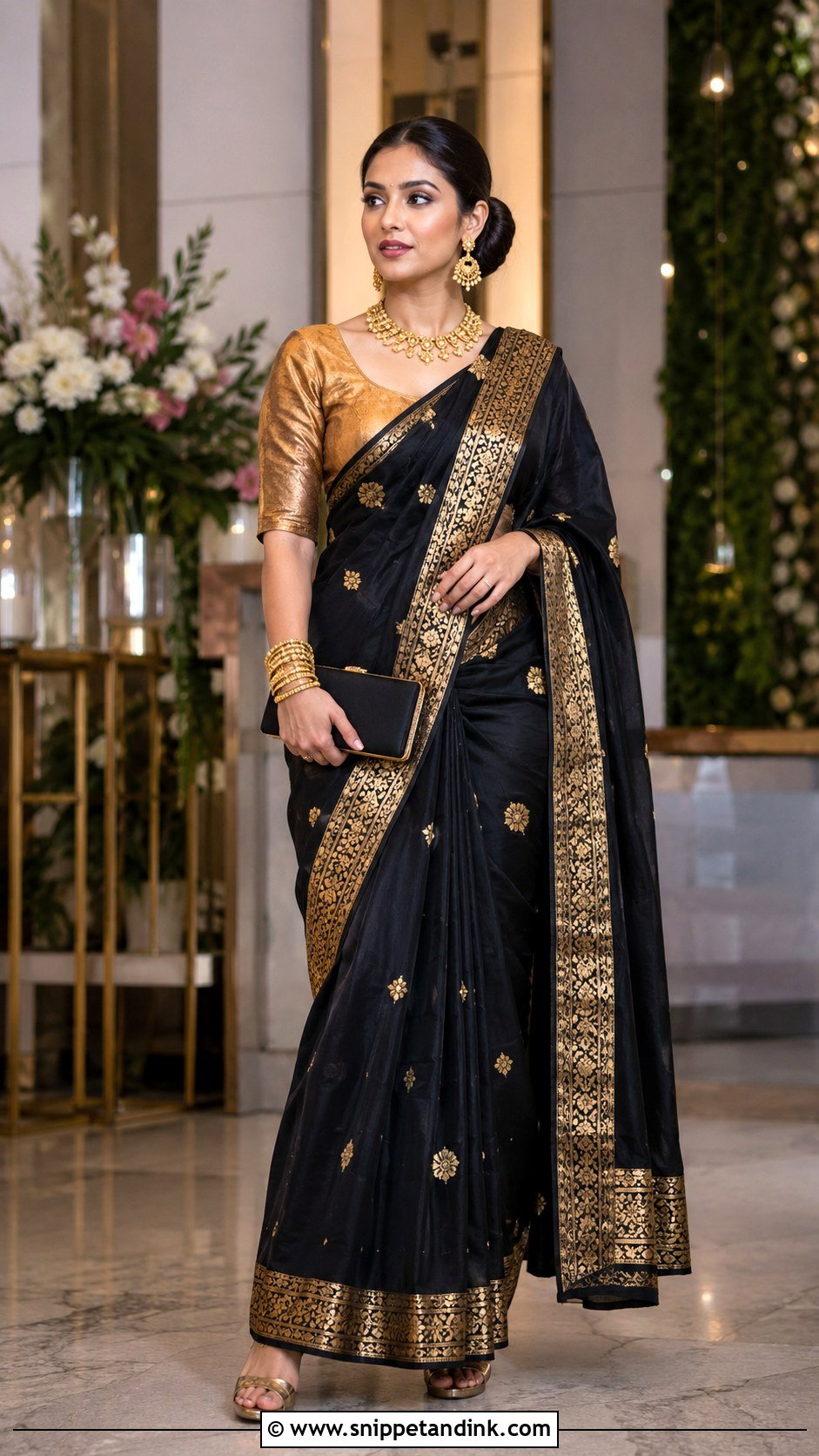
Black and gold is dramatic, and it is the one colour here I would clear with the family first. Some households are entirely relaxed about black at a wedding; others avoid it, especially at ceremonies. For receptions or modern parties, a black silk set with clean gold borders and limited motifs looks sharp. Pair it with an antique-gold blouse or a black blouse with gold woven sleeves. One statement necklace, matching earrings and broad bangles are enough. A sleek bun or side-parted waves, gold block heels and a black clutch complete the look.
15. Pastel Assamese Wedding Guest Mekhela Sador
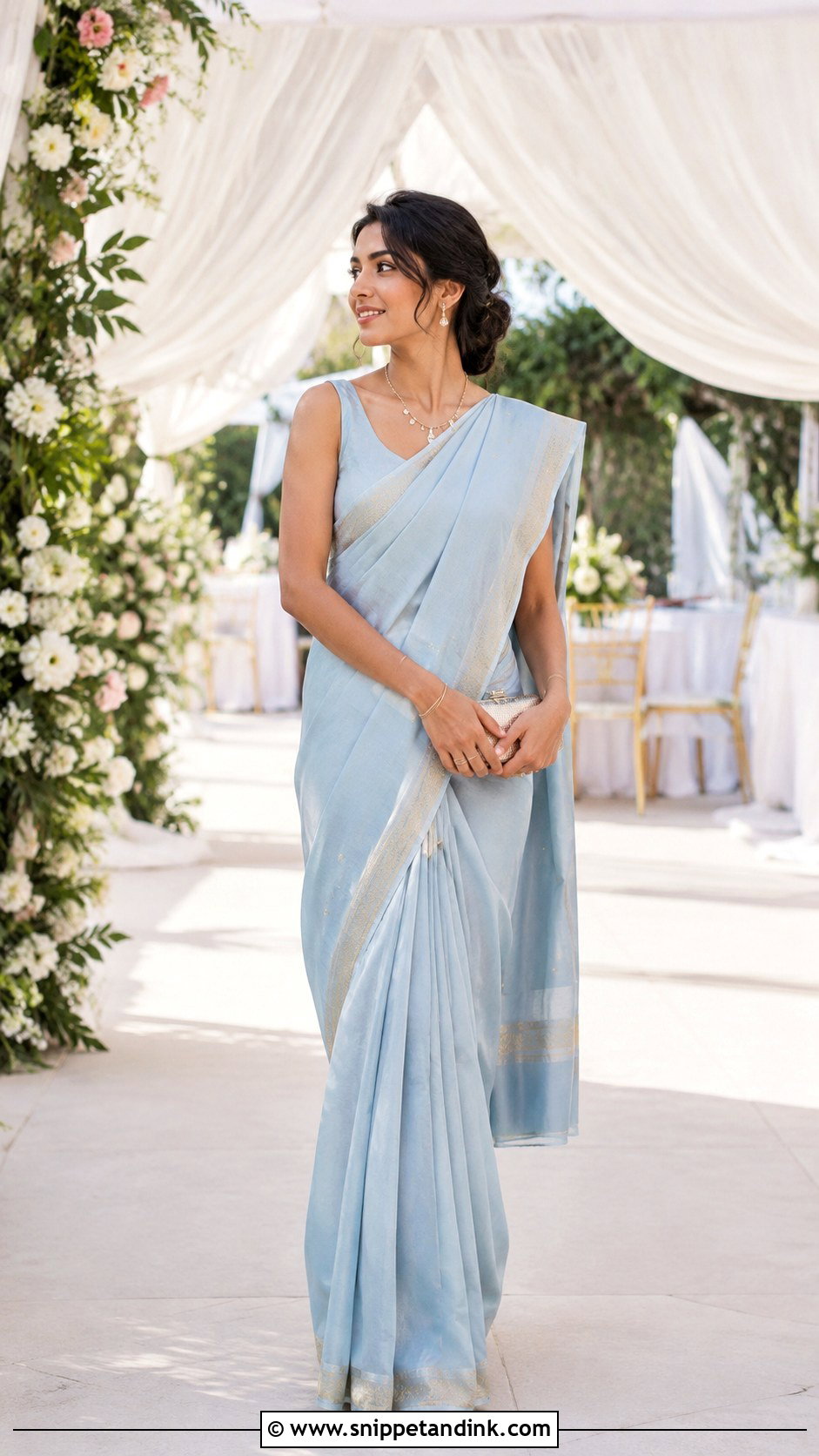
Pastels suit warm daytime celebrations. Powder blue, mint, pale lilac, blush and soft yellow in lightweight pat silk feel airy, with a slim silver or muted-gold border. Pair a tonal blouse rather than a strong contrast. Pearl-like studs, a fine gold necklace and narrow bangles are plenty. Pale silk shows perspiration marks, so I’d wear a cotton blouse lining and keep the drape slightly relaxed for airflow. A low ponytail or loose bun, nude sandals and a small metallic clutch complete an understated guest outfit.
16. Floral Assamese Wedding Mekhela Sador
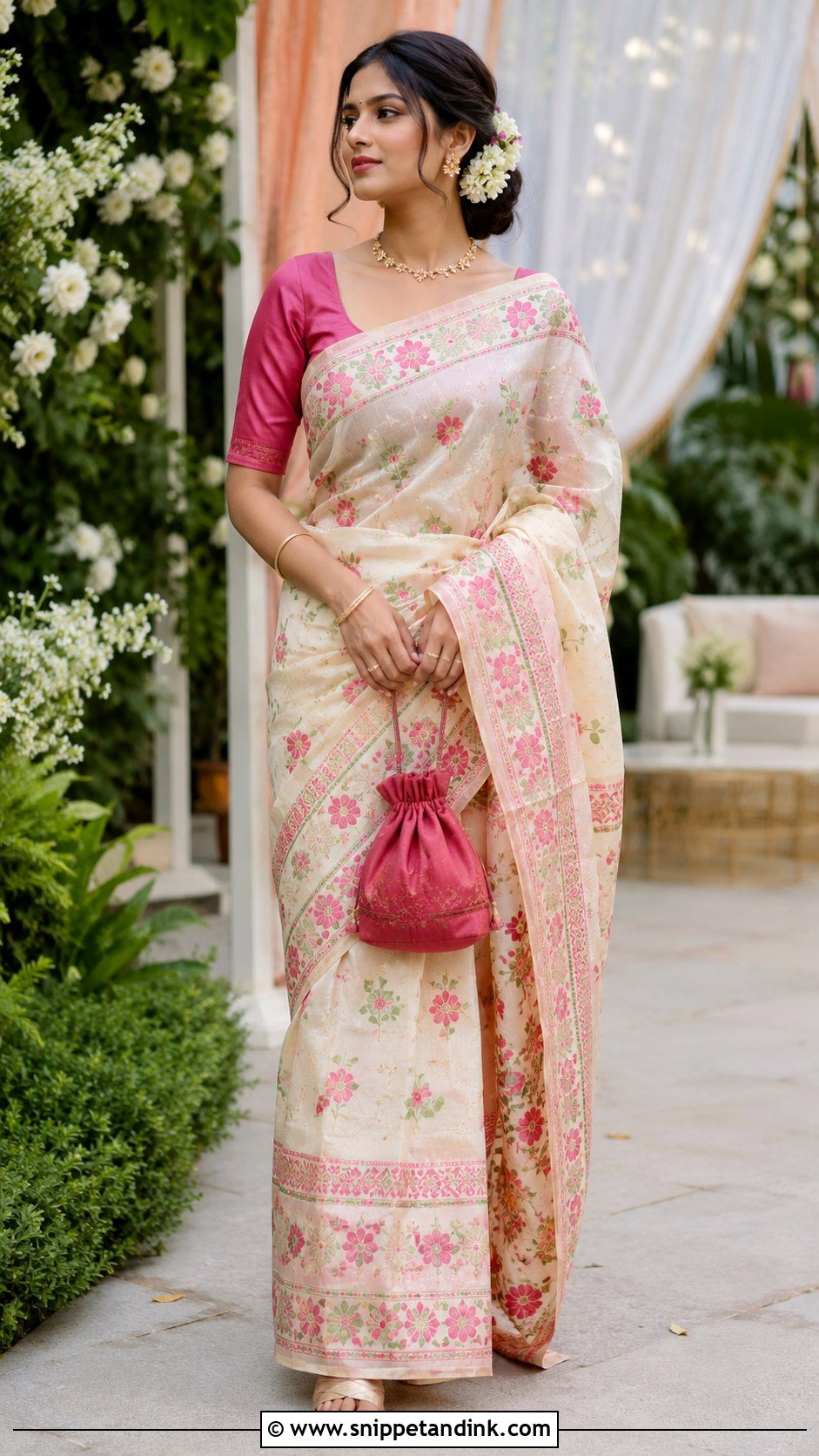
Florals look most Assamese when they are woven into the border and sador, not printed all over. An ivory set with pink, red or green woven flowers is easy to work with. Match the blouse to one colour inside the motifs so the outfit connects. Keep the jewellery small: a delicate necklace, floral earrings and slim bangles. A low bun with fresh flowers echoes the theme; just avoid adding floral jewellery, floral hair and a floral bag all at once, which tips into costume. Neutral gold sandals and a solid potli finish it. It suits daytime ceremonies, pre-wedding gatherings, bridesmaids and close family.
17. Assamese Silk Saree Wedding Outfit
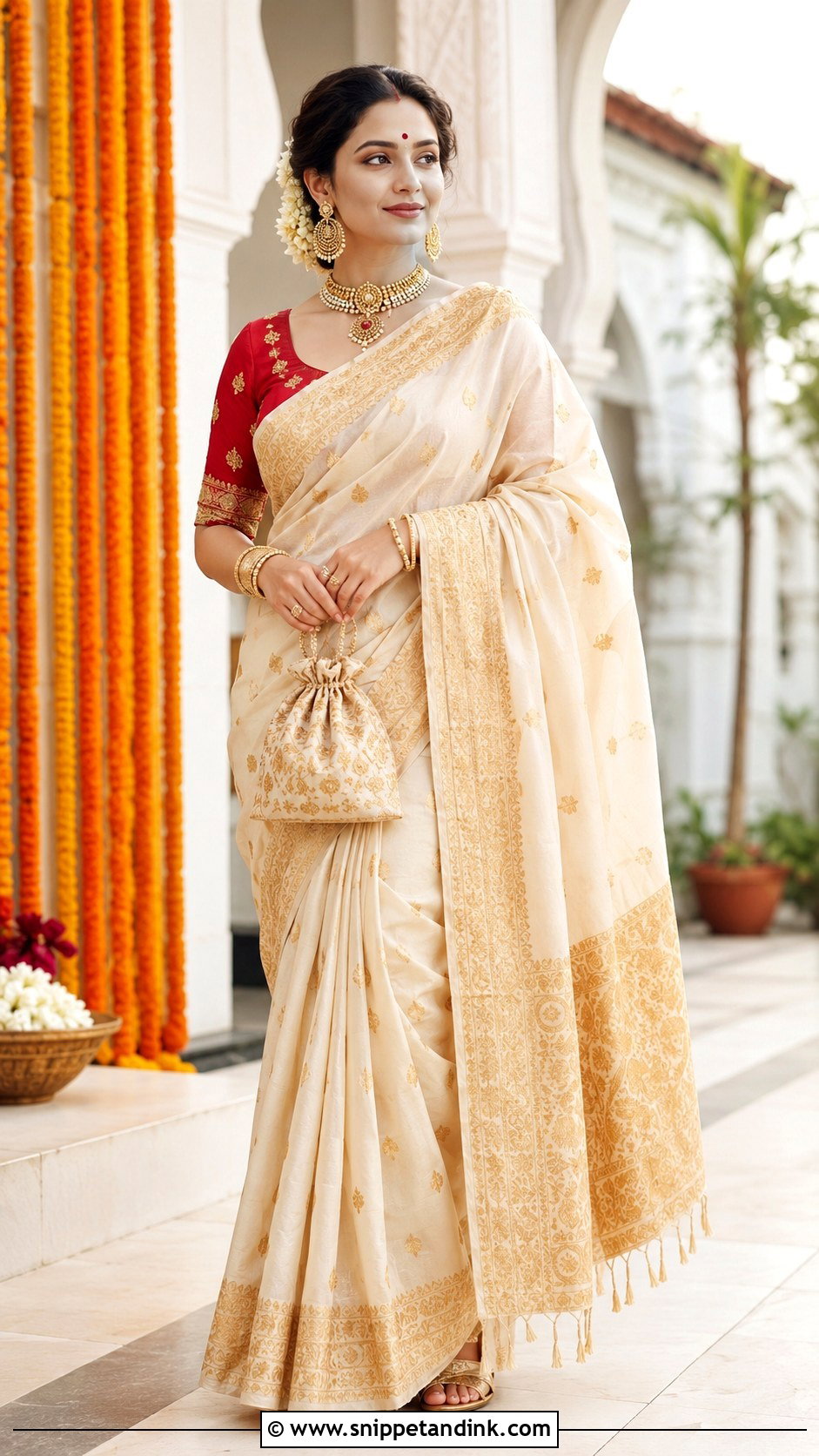
In some Assamese families and communities, a silk saree is worn for the wedding or one of the related ceremonies, and a handloom saree keeps the regional character. Choose a Muga, pat or Assamese handloom saree with woven borders. Ivory and gold with a red blouse is classic; jewel tones suit a reception. I sometimes recommend this to guests who are far more confident pleating a saree than draping a mekhela sador. Pair it with traditional Assamese jewellery, a low bun, a bindi, gold bangles, comfortable sandals and a compact coordinated bag.
18. Contemporary Assamese Wedding Mekhela Sador
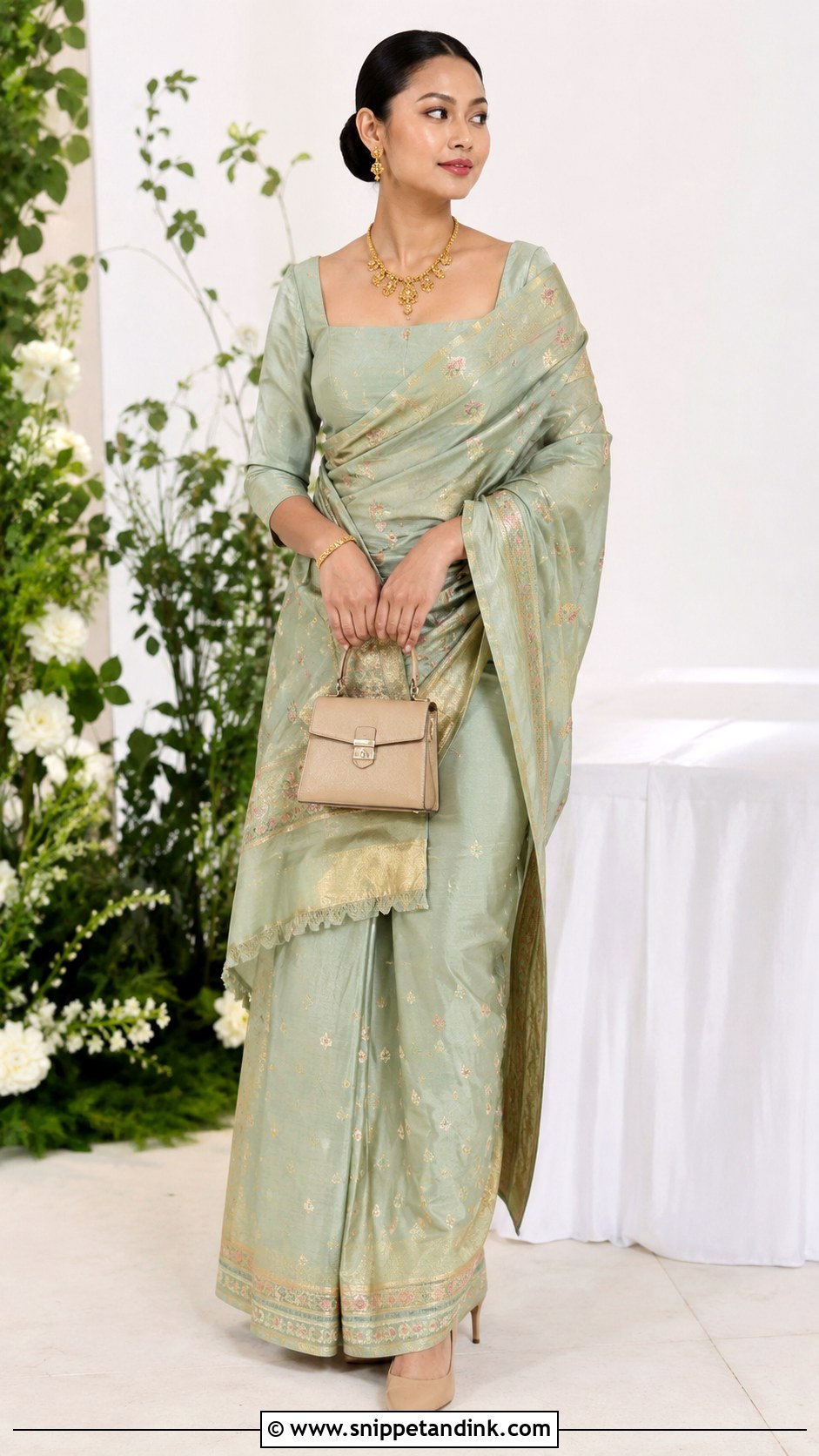
A contemporary mekhela sador outfit keeps the authentic handloom cloth and changes the styling around it. Ivory, sage, dusty rose and slate blue all suit this approach. The modern element is the blouse: a square neck, longer sleeves or subtle woven detailing, cut cleanly. Leave sequins off; they fight the weave. I drape the sador minimally so the border crosses the shoulder in one clean line. One traditional statement necklace or a pair of distinctive Assamese earrings keeps the cultural anchor. A sleek bun, pointed low heels and a structured mini bag complete it.
19. Plus Size Assamese Wedding Mekhela Sador
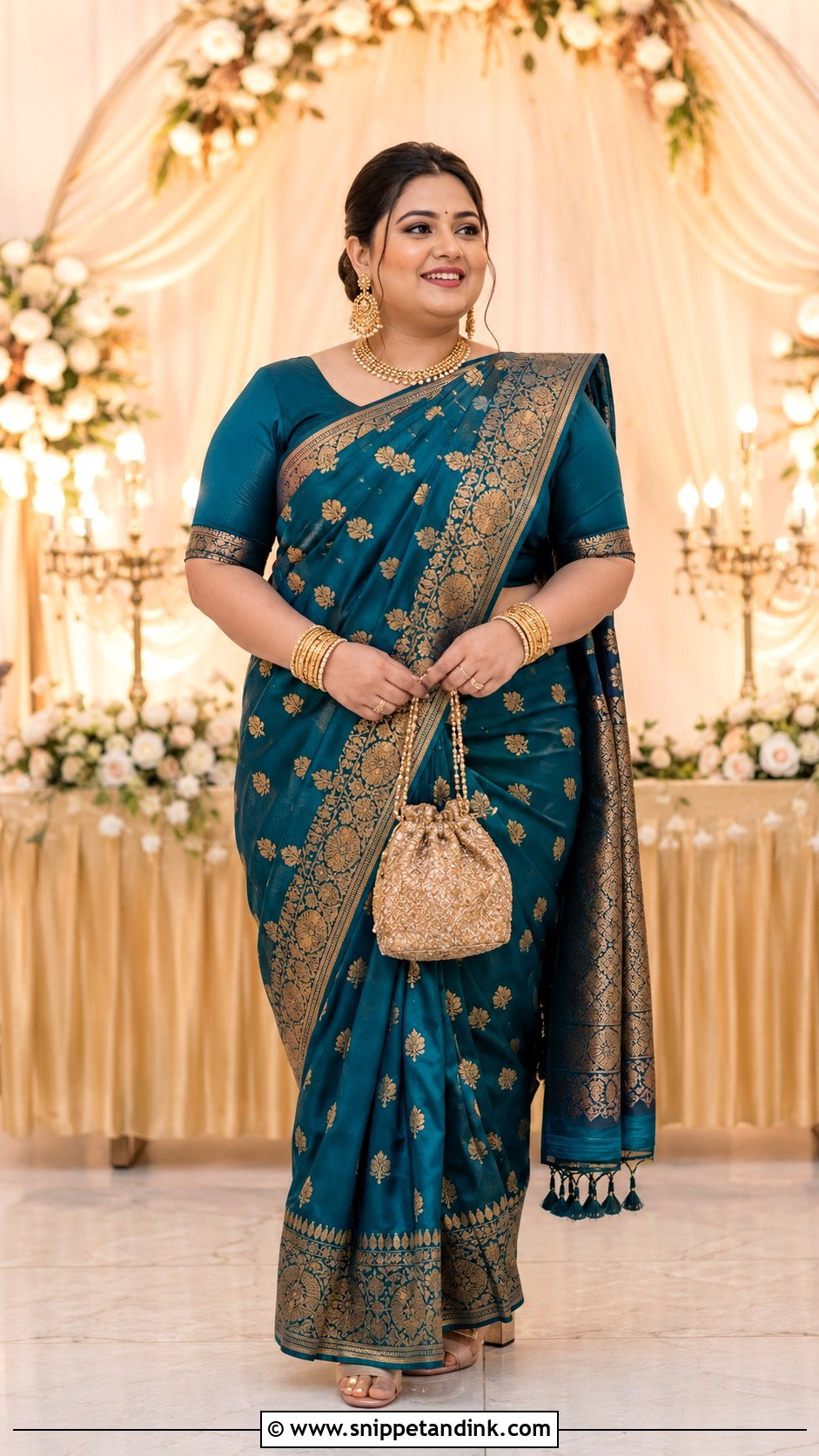
A mekhela sador is wrapped and pleated rather than cut to size, so it adapts to any body if it is draped well. The blouse is where fit matters. For plus-size wearers I want accurate measurements, a slightly wider neckline, sleeves set so they don’t cut into the arm, and a hem that sits smoothly under the sador. Medium-scale motifs and a visible border balance the frame. Jewel tones, ivory, Muga gold and rich red all work. The mistake I correct most is pulling the sador tight to look slimmer; a relaxed drape with discreet pins sits better and looks calmer. A medium necklace, statement earrings, block heels and a structured potli finish it.
20. Simple Assamese Wedding Guest Mekhela Sador
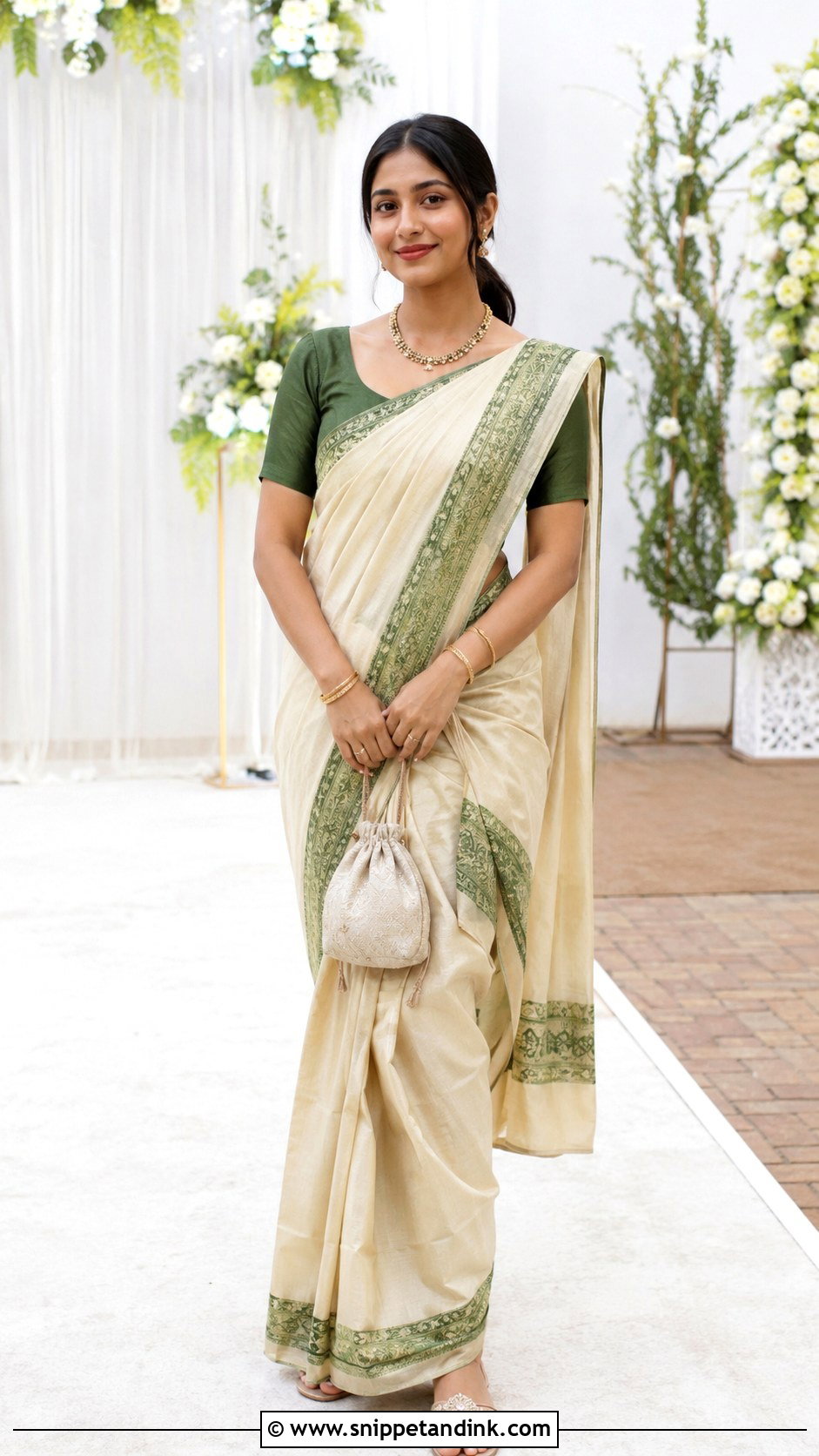
When the invitation suggests something quiet, a simple mekhela sador in cream, soft gold, muted green or pale pink is right. Lightweight silk or silk-cotton with a narrow woven border is comfortable for a long ceremony and still festive. Pair it with a fitted coordinating blouse and a neat, uncomplicated drape. One traditional necklace, small earrings and a few bangles are all you need. A low bun, braid or smooth ponytail, natural makeup with a small bindi, low block heels or flat embellished sandals and a compact potli complete it.
Caring for Muga and Pat Silk So It Lasts Another Generation
Bridal mekhela sadors are usually kept, and a good Muga set can be worn by a daughter or niece years later if it is stored properly. The two silks need slightly different care.
Muga is unusually tough for silk. Its sheen tends to deepen with careful washing over the years, so many families hand wash it gently in cold water with a mild soap and dry it flat in the shade. Never wring it. Pat silk is finer and its colours can bleed, so I’d send a heavily worked or brightly coloured pat set to a trusted dry cleaner rather than risk a home wash.
After the wedding, air the set for a day before folding it. Wrap it in soft cotton or muslin rather than plastic, store it away from damp, and keep moth repellents from touching the silk directly. Every few months, refold along new lines; zari borders crease permanently along a fold that never moves, and the metallic thread can crack there.
Assam’s Silk Deserves a Drape That Lets It Show
From white and gold bridal sets to coloured reception silks, bridesmaid groups and simple guest outfits, every look here rests on the same base: good cloth, a careful drape and the right blouse. Muga and pat silk feel and behave differently, and the riha adds ceremonial weight to a bridal set. Traditional jewellery, a tidy hairstyle, comfortable footwear and a small bag finish each outfit. Before deciding on bridal clothing, talk to the relatives or weavers who know your family’s practices. Then pick the set you can move, sit and celebrate in, and let Assam’s handloom do the rest.
You'll Like These Ideas:



Leave a Reply