
African bridal fashion is, first of all, a conversation about cloth. Kente, Ankara, Aso Oke, Adire, Shweshwe, beaded lace and hand embroidery each behave differently on a body, and each carries meaning that shifts from one country, region and family to the next. When a bride sits down with me, I ask two questions before we look at a single silhouette: whose traditions does this wedding need to honour, and how many hours will you be wearing it? The twenty looks below run from fully traditional ensembles to white gowns with heritage accents, and for each one I’ve noted where the fit tends to fail and what I’d ask the maker to reinforce.
Commissioning a Gown From Handwoven Cloth
Most of the looks below start with cloth that has to be woven, dyed or beaded by hand before a tailor can touch it, and that stretches your timeline. Kente and Aso Oke are often woven to order, hand-beaded lace takes time to finish, and a good tailor in wedding season has a queue of her own. For a custom piece I’d begin the fabric search somewhere around eight to twelve months out, knowing that makers and seasons vary.
What I ask brides to bring to the first appointment
- The actual fabric, or at least a swatch. A photo can’t tell a tailor how heavy the cloth is or how it drapes.
- Enough yardage for the gown plus a spare length for pattern matching and later repairs. Ask the tailor for the figure before you buy.
- Your wedding shoes, or the exact heel height you’ve committed to.
- Any heirloom beads, collars or headpieces, so the bodice can be built to carry their weight.
- A short note of which cultural details your family considers fixed and which are open to change.
Plan on at least three fittings. The first checks structure, the second checks fit and print placement, and the last happens in the complete outfit with the gele or headwrap tied, because a tall head tie changes how the neckline and shoulders read.
1. Kente Mermaid African Bridal Dress
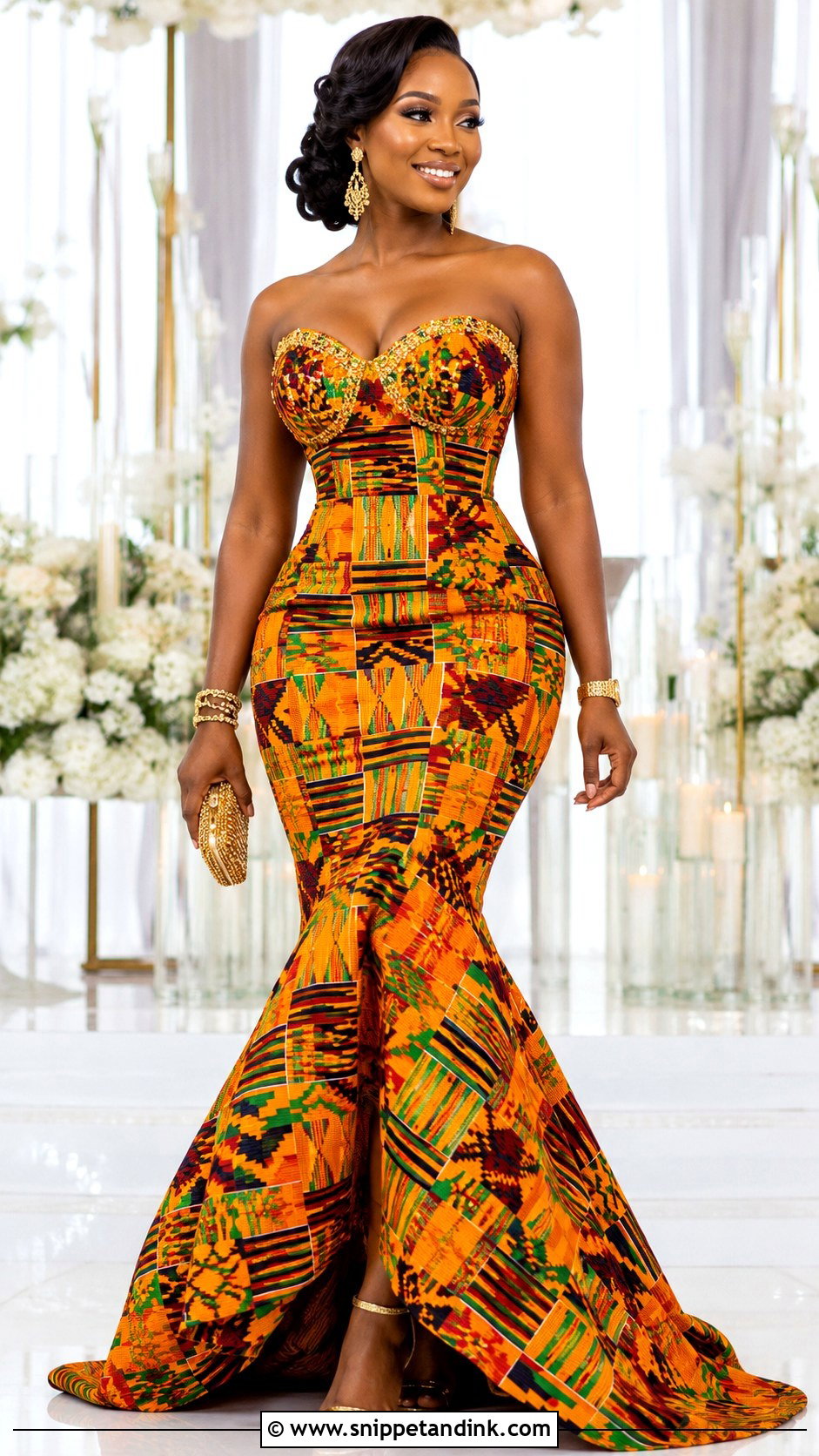
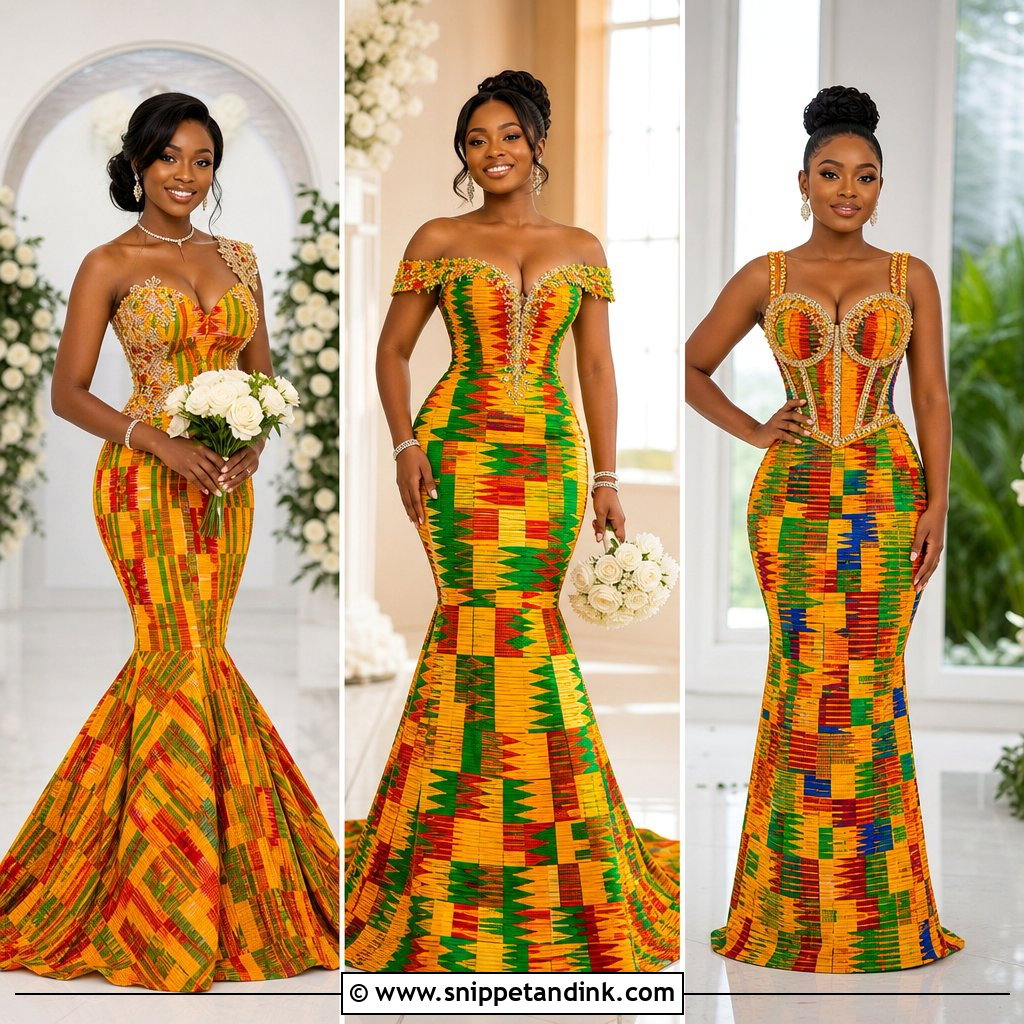
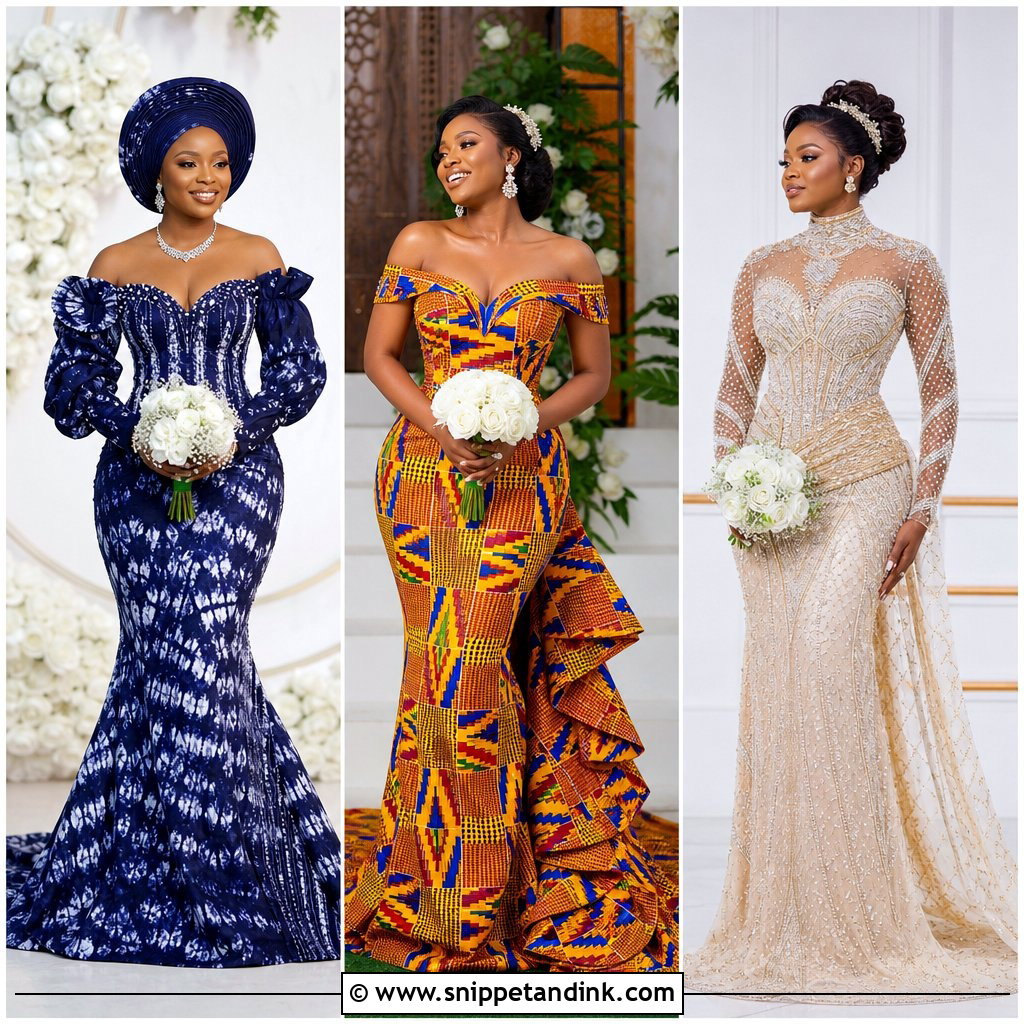
Kente is a handwoven strip cloth, so it has more body than a printed cotton and far less give. That’s exactly why it suits a mermaid cut: the fabric holds the shape on its own. The catch is the flare. Woven strips are stiff, so I ask for the flare to start a little higher than it would on a crepe gown, or you’ll be shuffling down the aisle. A sweetheart, square or soft off-shoulder neckline all sit well against the weave, and a solid satin panel in gold, green, burgundy or ivory gives the eye somewhere to rest when the pattern is busy. Keep accessories to metallic heels, sculptural gold earrings and a small beaded clutch, with a plain headpiece or neat head tie. Kente colours and motifs can carry specific meanings, so run your chosen cloth past a weaver or an older relative before the gown is cut.
2. Ankara Ball Gown African Bridal Dress
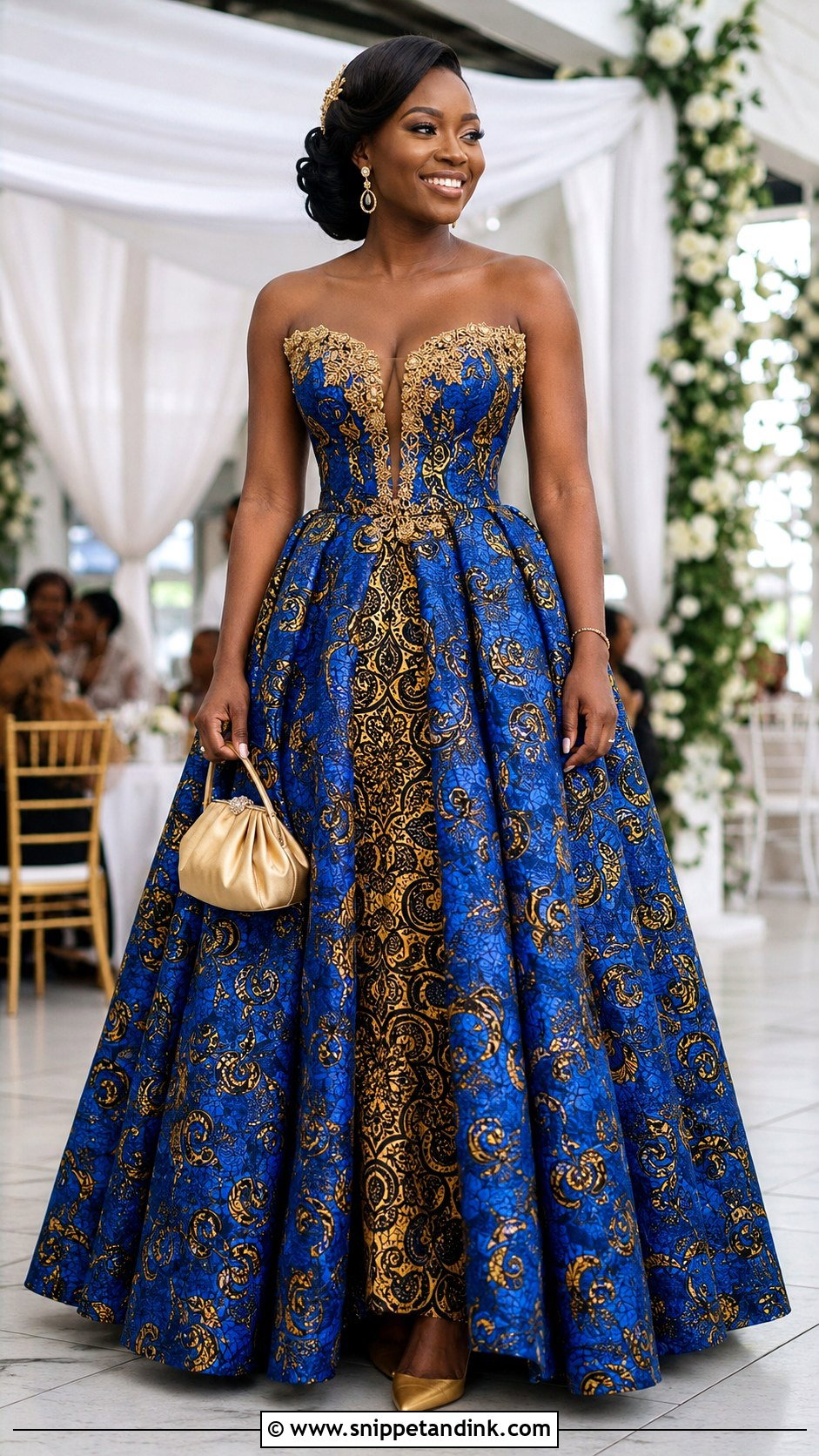
Ankara is a wax print on cotton, and the bigger the skirt, the better a large print reads. On a narrow sheath a bold repeat gets chopped up at every seam; on a full ball gown it finally has room. I usually suggest a corset-style bodice with wide straps or sheer sleeves, because a heavy skirt pulls on the waist all day and straps take some of that load. Tulle underlayers give volume without hiding the print. Pick shoes and jewellery that repeat one colour from the fabric, not all of them, and a low bun or braided updo to keep the shoulders clear. The detail I always put in writing for the dressmaker: pattern-match the visible seams and reinforce the waistband, since that’s where a cotton skirt this full starts to drop by evening.
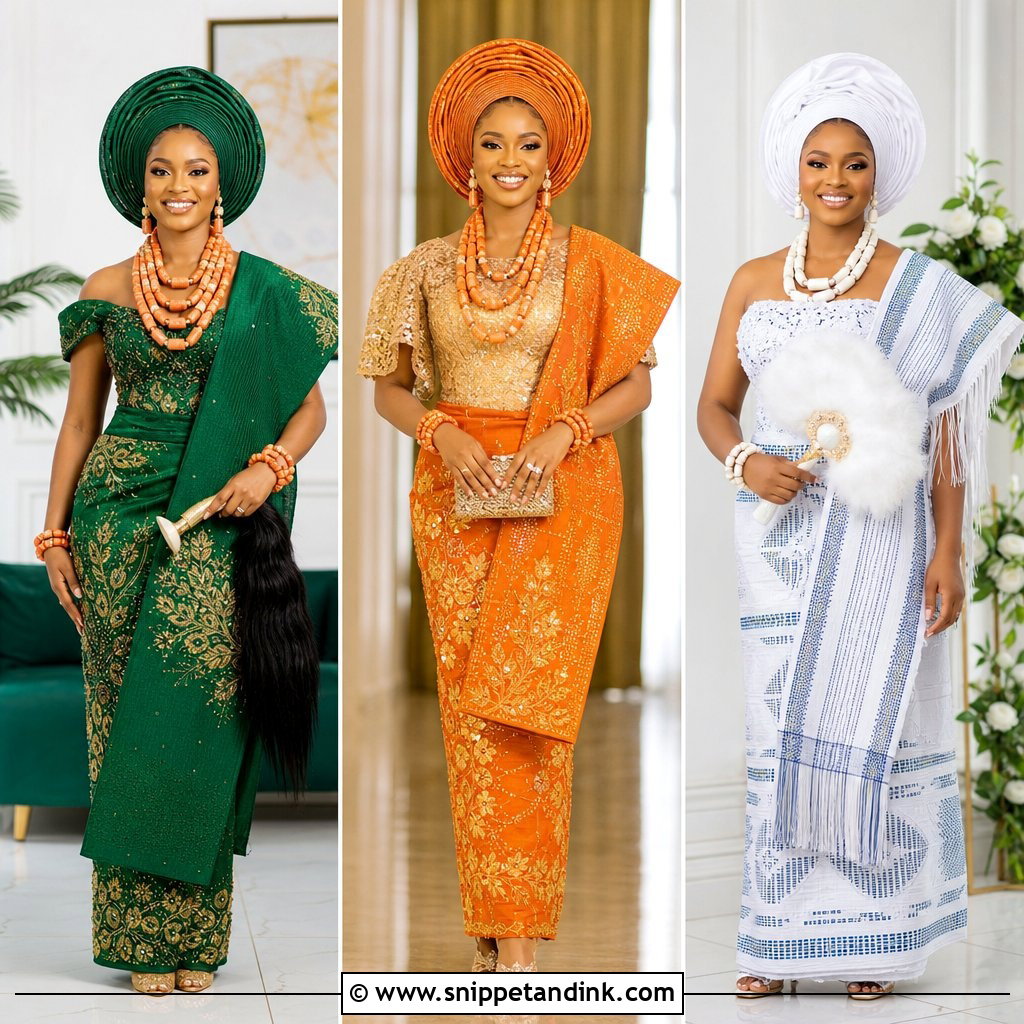
3. Aso Oke Iro And Buba African Bridal Outfit
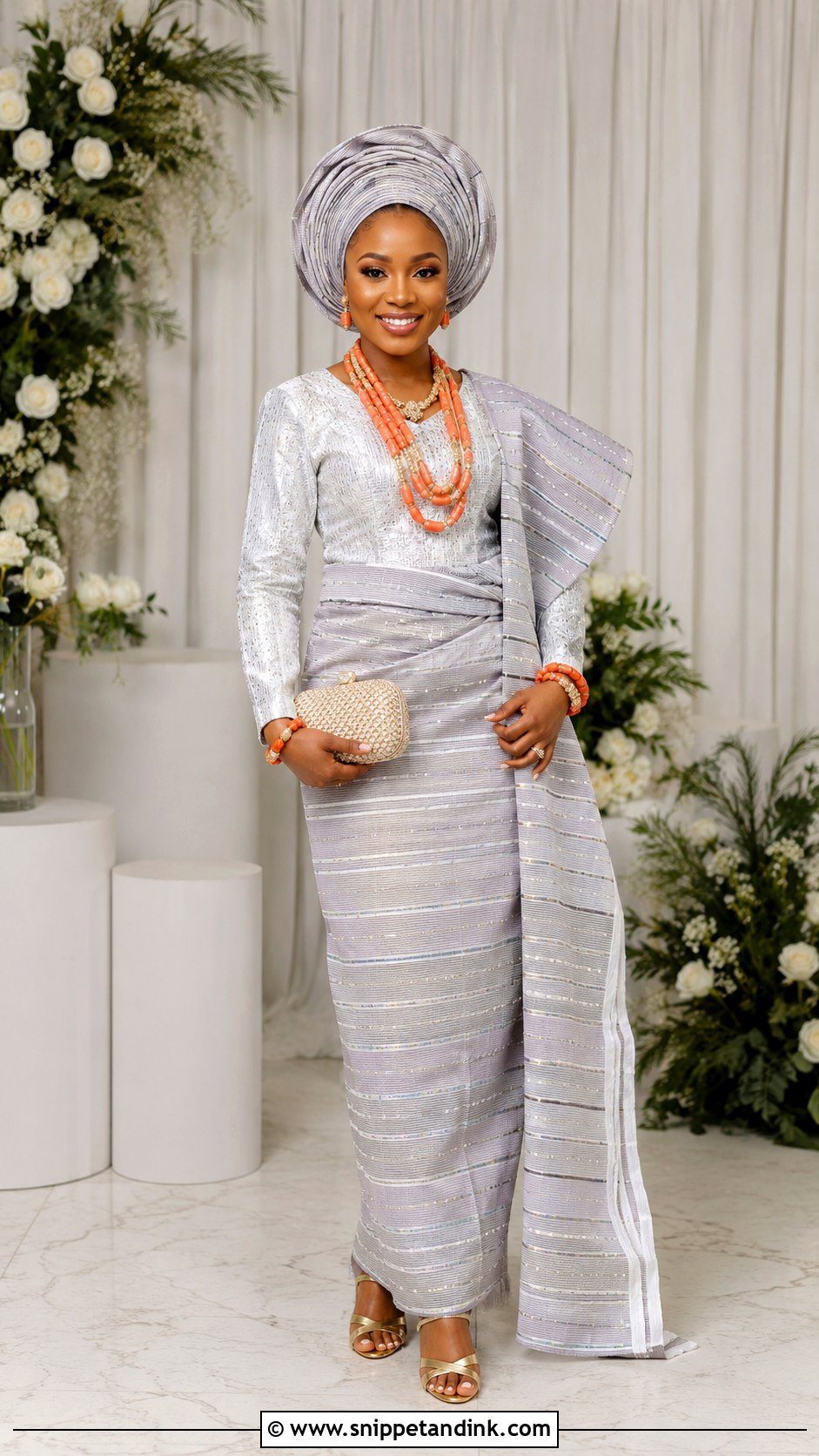
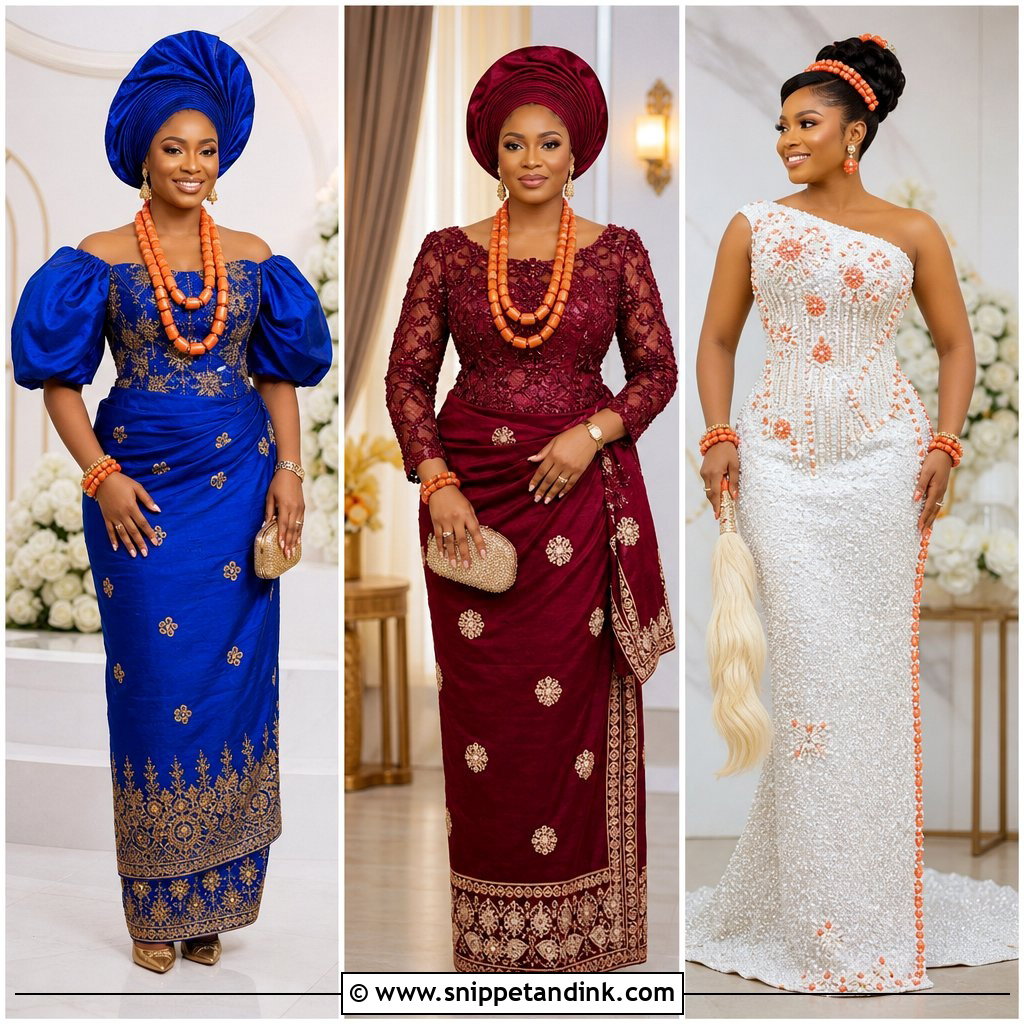
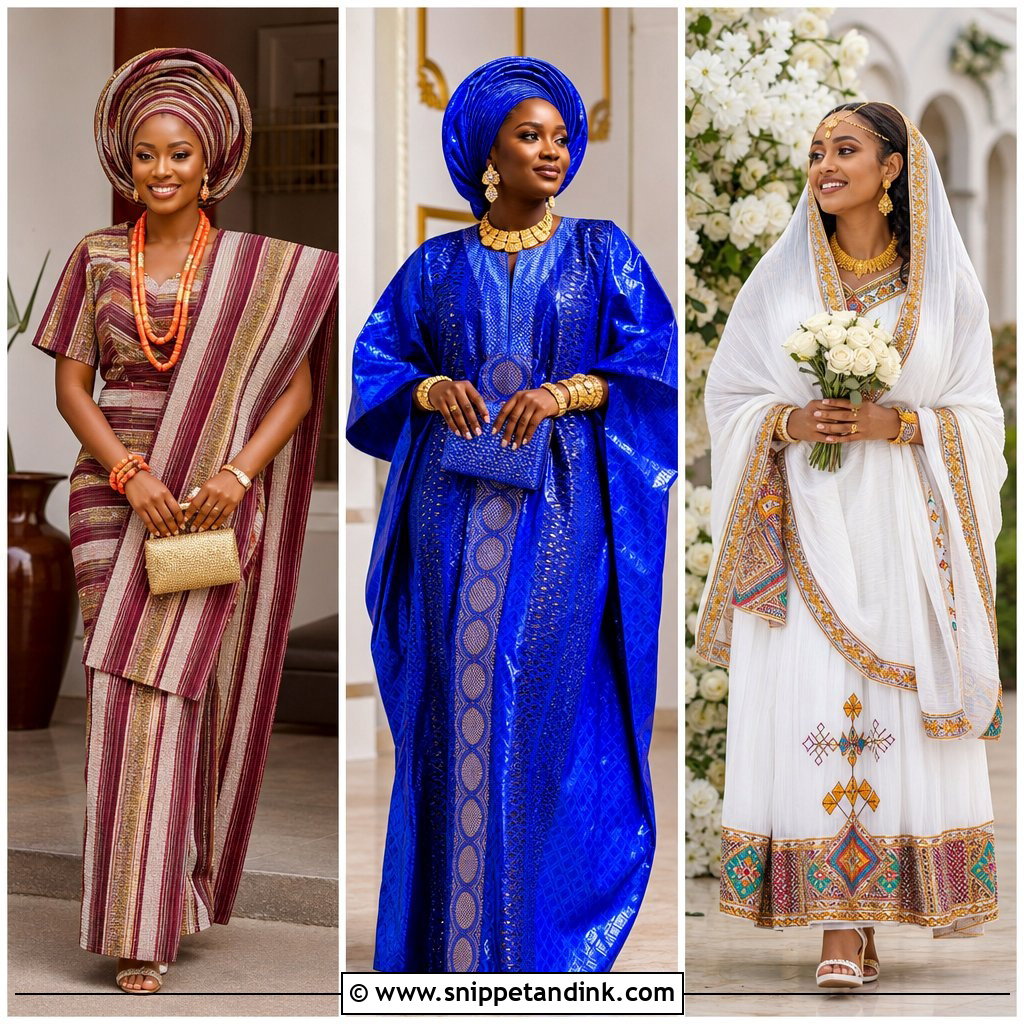
An Aso Oke iro and buba outfit is the classic Yoruba bridal set: wrapper, blouse and gele, all from the same handwoven cloth. Aso Oke is thick and slightly crisp, which gives the wrapper its sculpted drape but also makes it warm, so in a hot hall I’d lean toward a softly fitted buba with elbow-length sleeves. The wrapper should be tied by someone who does it often; a loose iro slips the first time you dance. Gele is its own skill. I book a gele artist rather than leaving it to the hairstylist, and I ask for the height to be set against the bride’s face and frame, not copied from a photo. Layered beads, earrings and bracelets suit the set, but stop before the jewellery starts competing with the weave.
4. White Lace And Kente African Bridal Gown
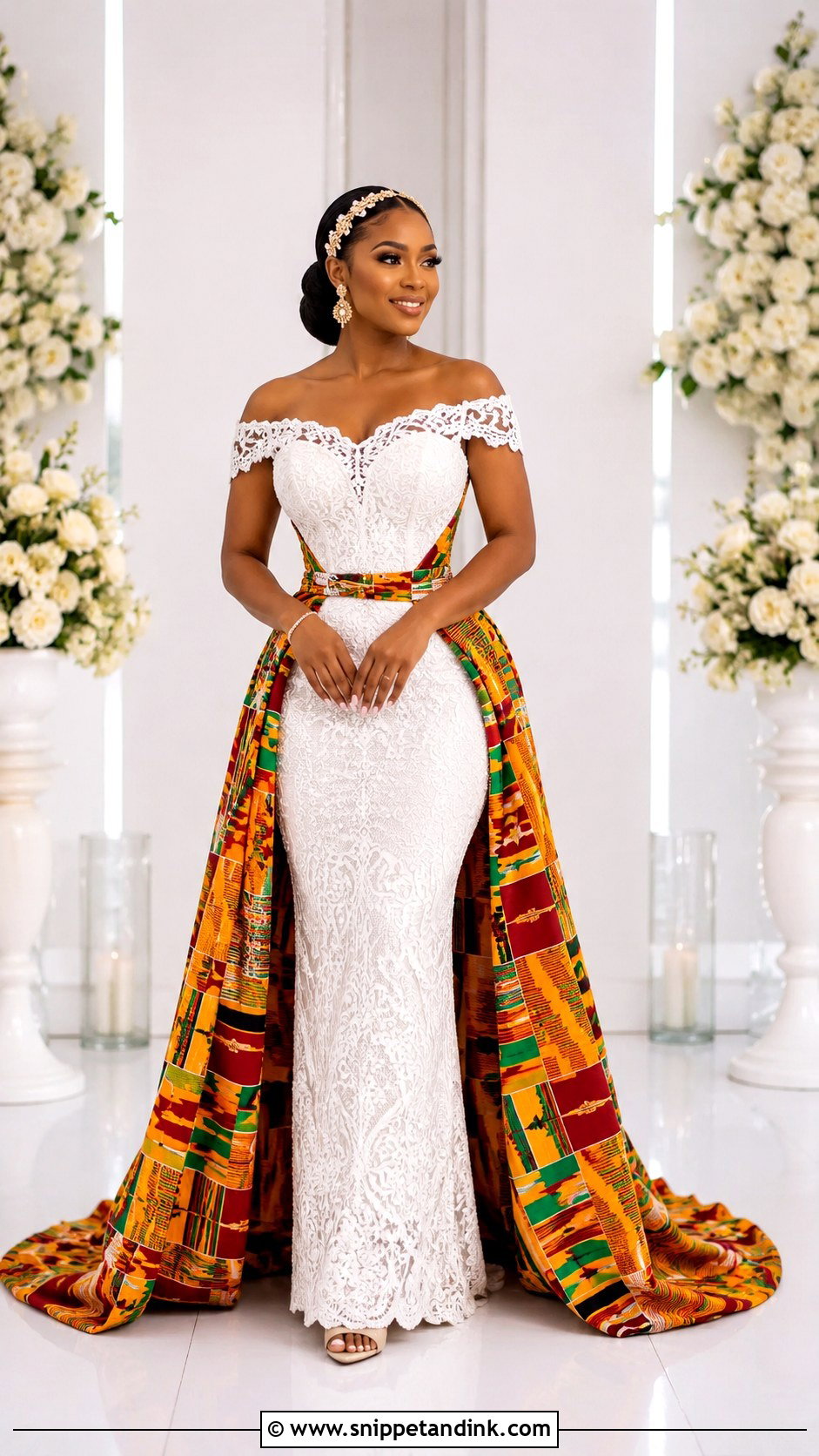
This is the answer I give most often to a bride who wants a white gown for church and still wants her family’s cloth in the room. Start with a fitted A-line, trumpet or ball gown in white or soft ivory, then put Kente in one or two places only: a detachable overskirt, a waist sash, a bodice panel or the train. Spread it across five places and the lace and the weave start fighting. Warm gold jewellery picks up the yellows in most Kente better than silver does. A short veil works, though a sculptural headpiece often suits the mix better. If the groom wears a matching Kente detail, keep his to a stole, pocket square or lapel, so the two outfits relate without looking like a set.
5. Shweshwe A-Line African Bridal Dress
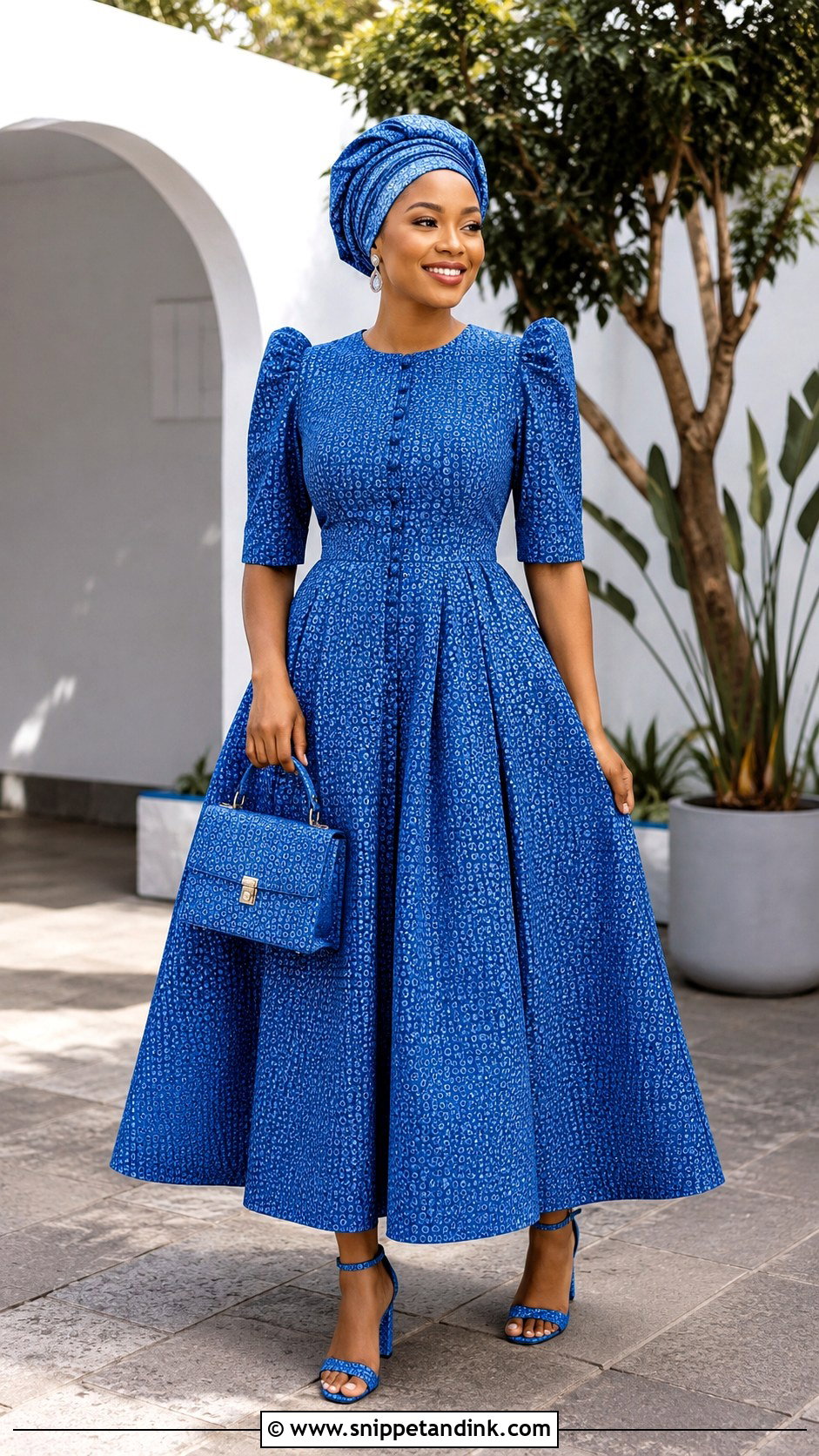
Shweshwe is a printed cotton that arrives stiff with starch, which is why it holds pleats, covered buttons and puff sleeves so well. That starch washes out, and the cloth softens and can shrink, so I always ask the maker to pre-wash it before cutting a fitted bodice. Indigo is the colour most people picture, though brown and red are just as established. An A-line with a defined waist suits the fabric’s body, and a solid panel at the neckline or waist gives the print a clean edge. Block heels, a structured bag and a headwrap or small fascinator finish it, and a tulle overlay or detachable train softens it if you want a more bridal feel. Shweshwe is closely tied to Southern African dress, so a maker who knows the cloth will also know where to source the genuine article.
6. Adire Off-Shoulder African Bridal Dress
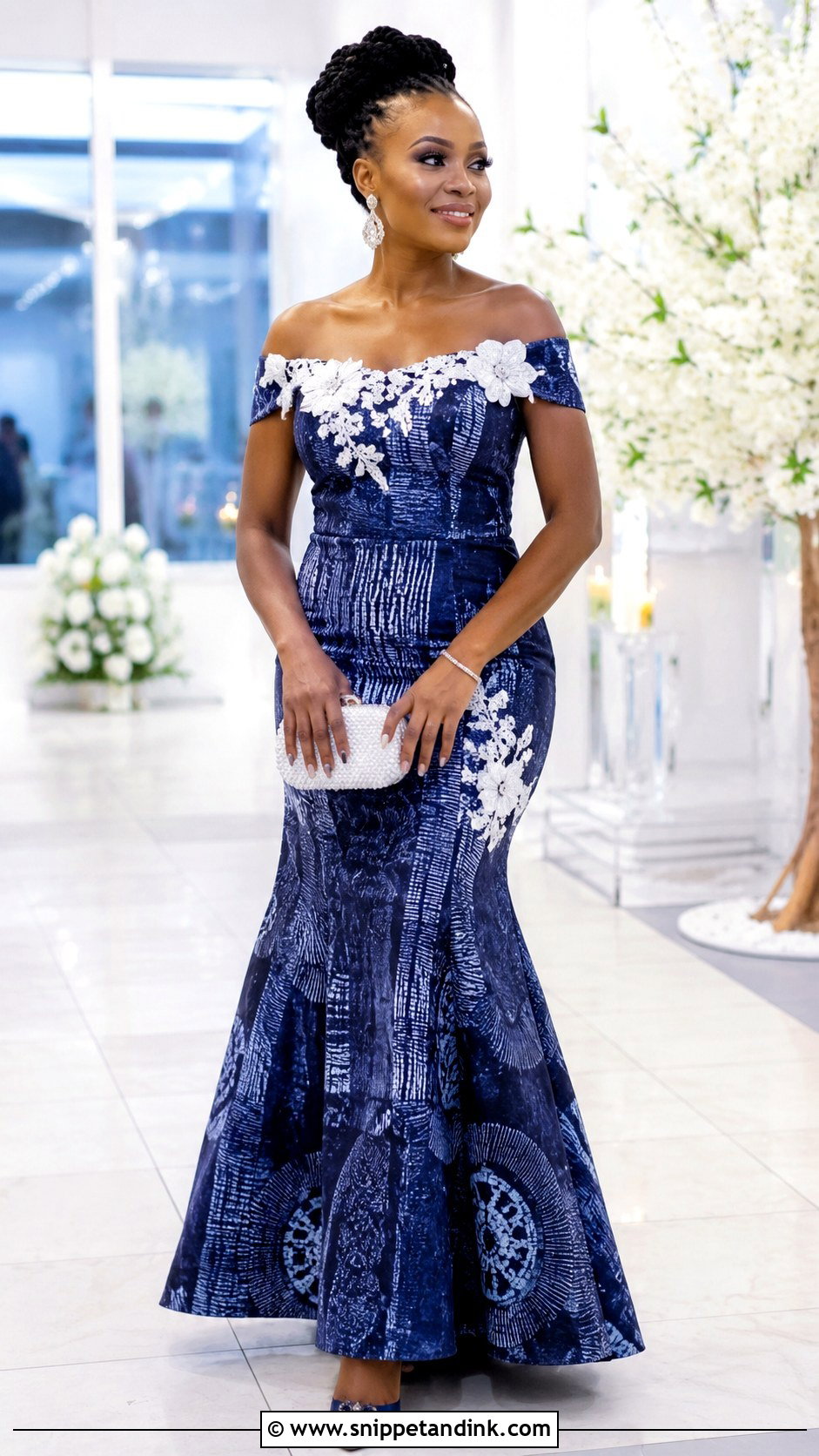
Adire is resist-dyed by hand, usually in indigo, and no two lengths come out identical. That’s its charm and its practical problem: buy fabric in two batches and the second may be a shade lighter. Buy everything at once and let the dressmaker lay out every pattern piece before the first cut. An off-shoulder bodice shows the deep blue against the skin, but the band has to stay up on its own, with boning or a silicone grip, or you’ll be hitching it every time you lift your arms. Silver and crystal sit better against indigo than yellow gold, and a braided bun keeps the neckline clear. White embroidery or beading adds contrast if the dye pattern is quiet. One honest warning: indigo can rub off onto very pale accessories, so test a white clutch against the fabric first.
7. Beaded Nigerian Lace African Bridal Dress
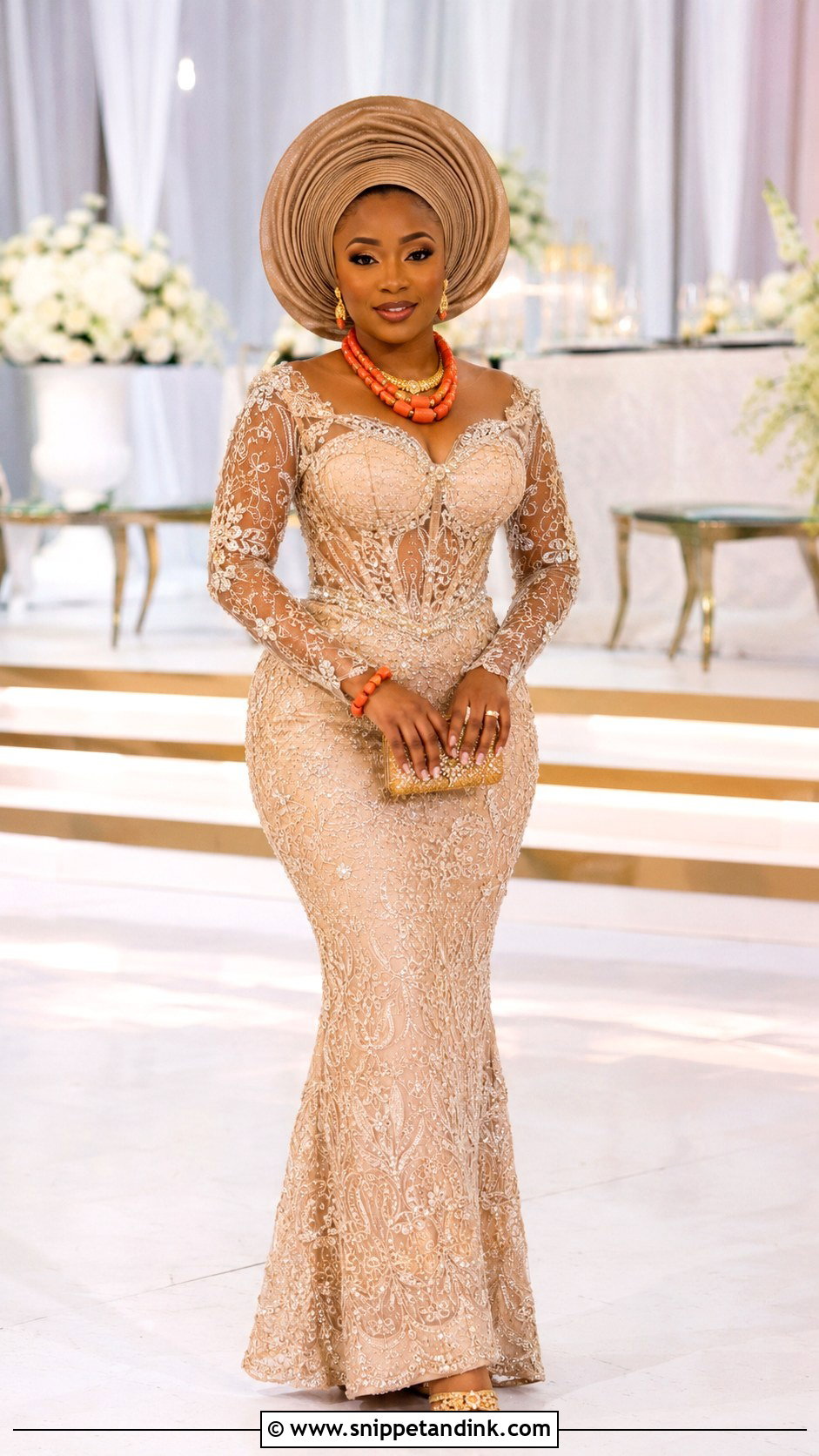
A beaded Nigerian lace dress is heavier than it looks on a hanger. Hand-beaded lace pulls downward all day, so I ask for a firm lining and reinforced seams at the waist and hips, which is where I see stitches give first. Whether it’s a fitted trumpet, a skirt-and-blouse set or a column should depend on how much sitting and dancing you’ll do. Sheer lace sleeves over a lined bodice keep it lighter. Add a structured gele, embellished heels and coral or crystal jewellery and everything starts competing quickly, so if the lace is densely beaded, I simplify the neckline and cut the jewellery back. A small back slit or a fuller hem isn’t a style choice here. It’s what lets you walk and greet guests.
8. Senegalese Embroidered Kaftan Bridal Dress
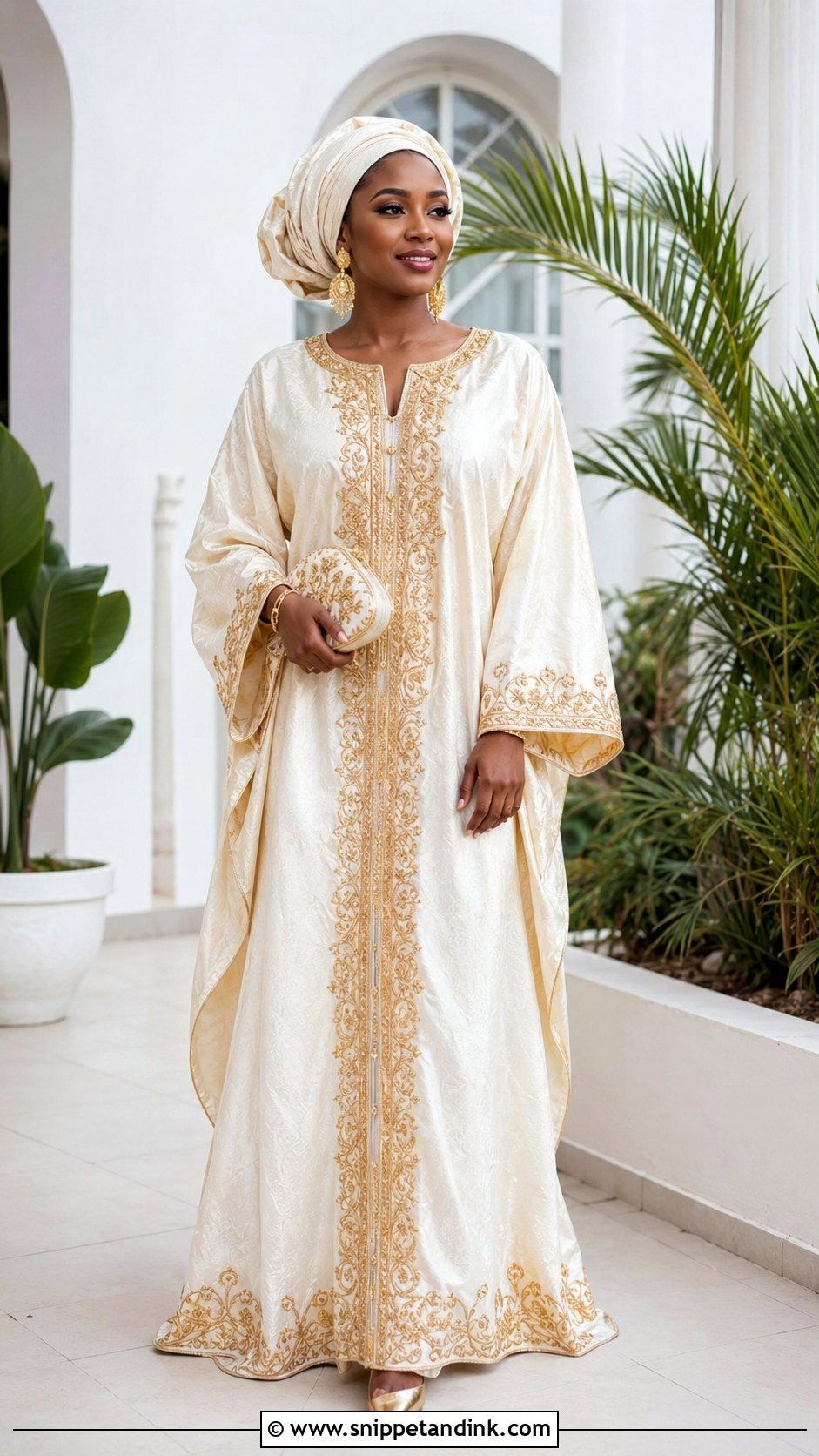
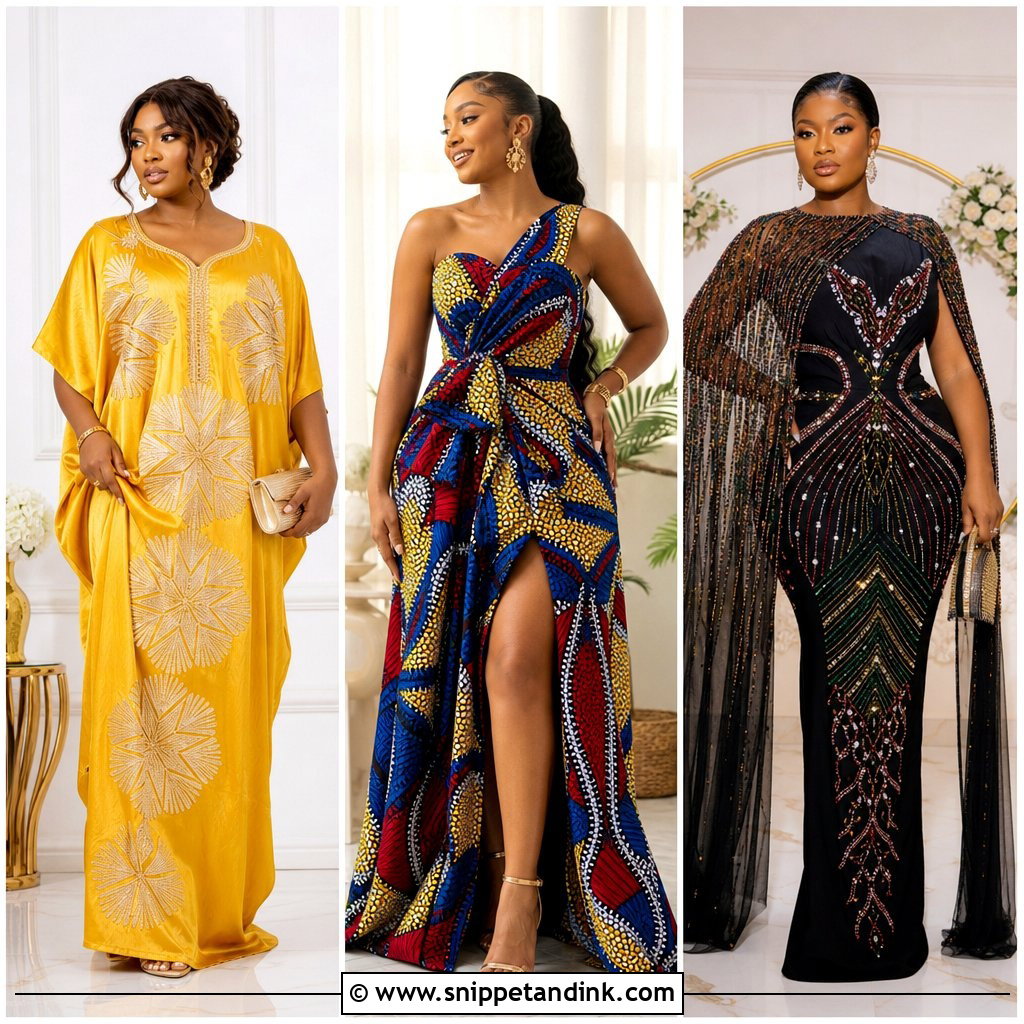
A kaftan is the most comfortable silhouette in this list and the one that depends most on embroidery. On a Senegalese-style kaftan, the stitching at the neckline, centre front, cuffs and hem carries the whole look, so I’d spend the budget there rather than on the base fabric. White, cream, gold, emerald, blush and deep blue all read bridal in a good brocade or damask. If you want shape, ask for light internal structure or a slim belt. Two fitting checks I never skip: the hem must clear the floor in the shoes you’ll actually wear, and you should be able to raise both arms without the whole garment riding up. A headwrap can echo the embroidery colour. If the heritage is yours, a Senegalese or diaspora tailor will know how the garment is meant to be built.
9. Moroccan Bridal Kaftan With Gold Embroidery
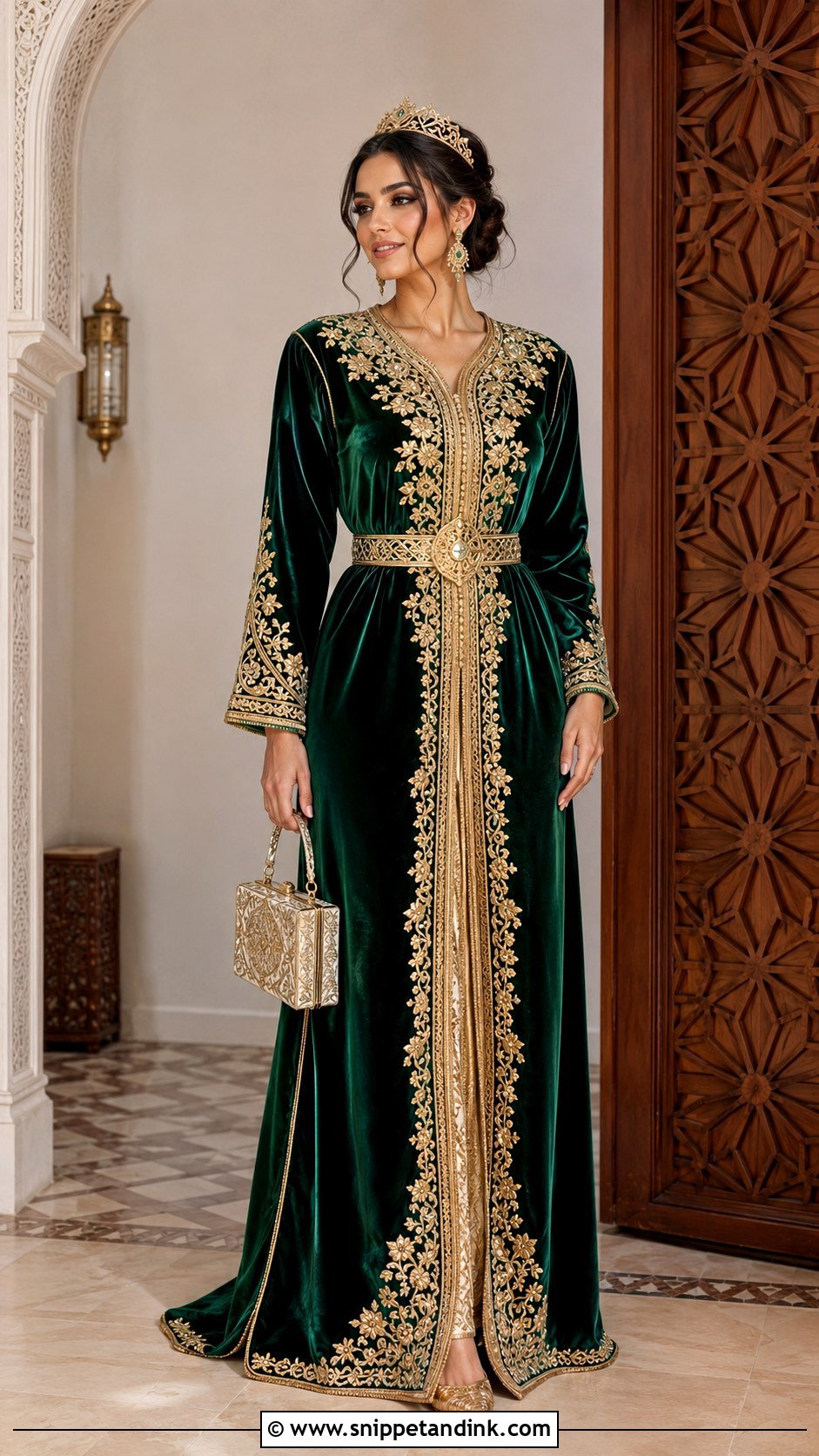
Moroccan bridal dressing is a sequence rather than a single dress, and many brides change several times in one night. For a single standout kaftan, choose velvet, silk or brocade heavy enough to carry gold trim and the traditional small button closures. Velvet in emerald, ruby, navy or plum is warm, so I’d save it for an evening or a cooler month and use champagne or white silk in daylight. A belt at the natural waist gives the long line its shape. Pointed metallic slippers, drop earrings and a small bag finish it, with sleek hair so the neckline embroidery stays visible. If you want the full Moroccan sequence of outfits, a specialist dresser manages the changes, and you’ll want to know that before you build your timeline.
10. Zulu Beaded African Bridal Dress
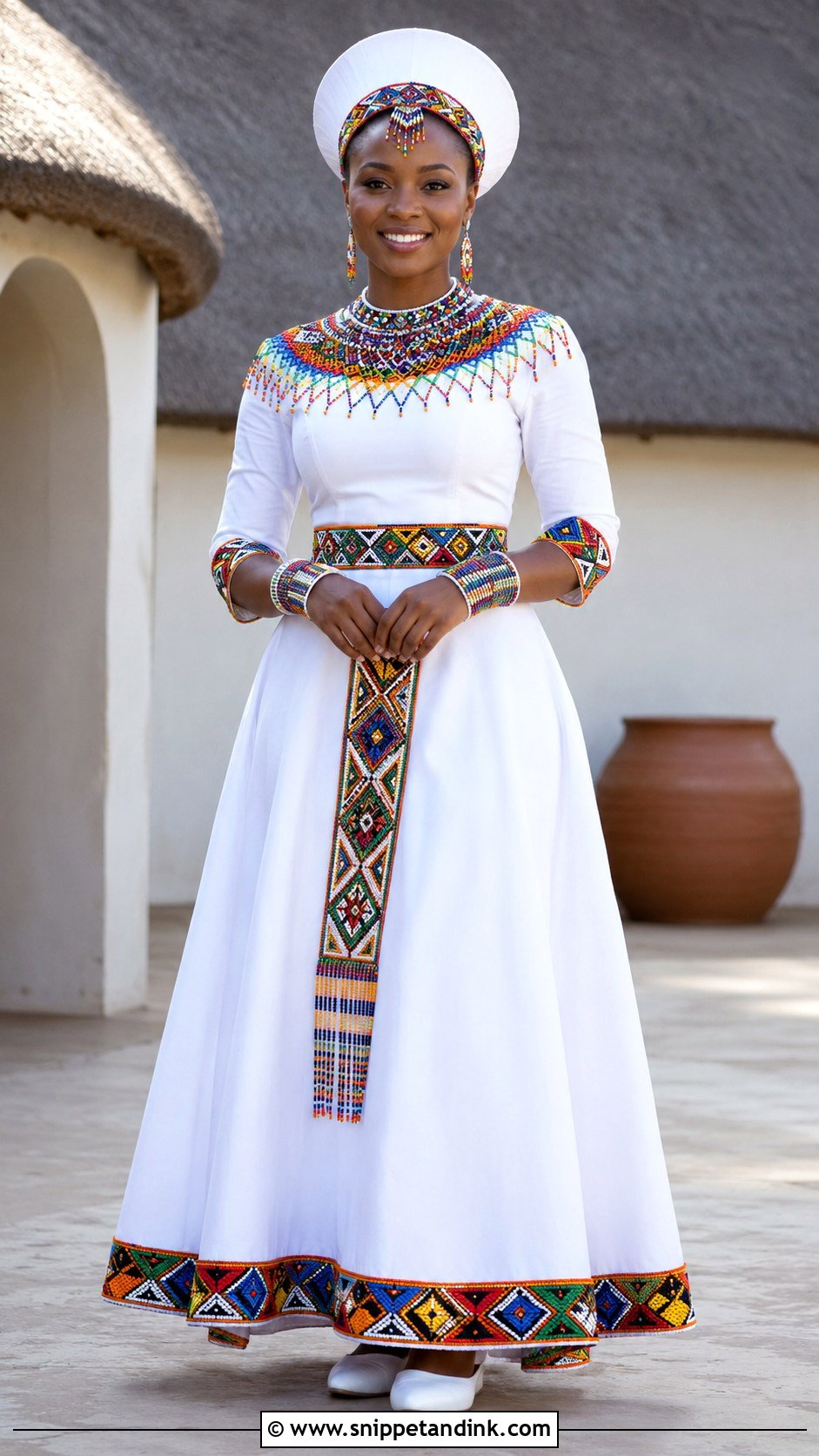
Zulu beadwork is a language as much as a decoration. Colours and arrangements can signal things like region and marital status, and that meaning matters more at a wedding than anywhere else. So the beadwork is decided first, with family or a knowledgeable maker, and the dress is designed around it. A plain fitted white, black or coloured base gives the beads a clean ground; a full skirt moves well, a column feels more modern. Place beadwork at the neckline, waist, sleeves or hem, then add the necklaces, earrings, bracelets and headpiece. Heavy beaded collars need a secure clasp and some support from the bodice, so bring the actual pieces to every fitting.
11. Xhosa Black And White African Bridal Dress
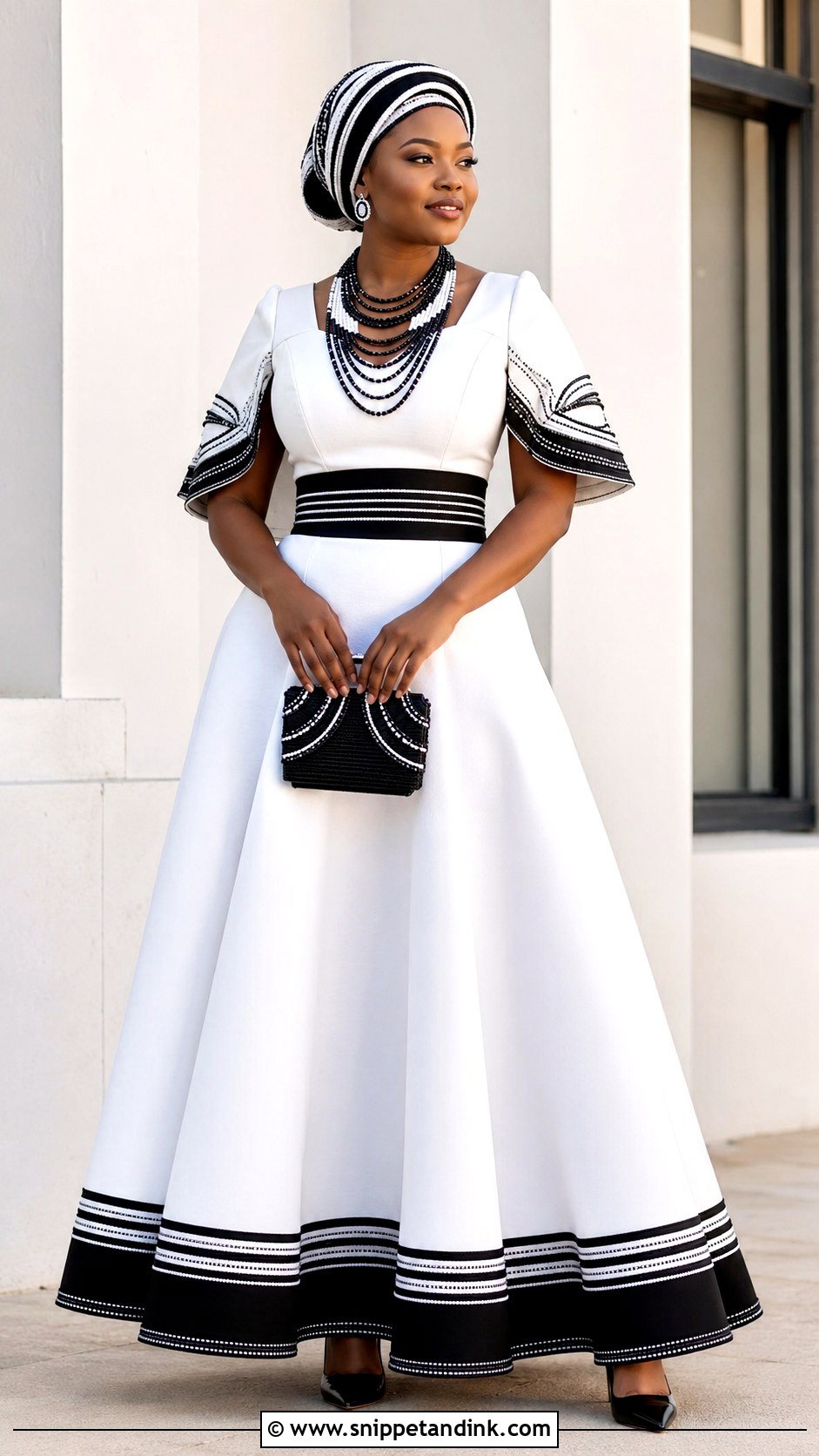
Xhosa bridal dress is built on contrast: a white or cream base with black bands, braid or embroidered borders, often with beadwork and a head wrap. The lines are the whole design, so they have to be straight. Ask your tailor to apply the bands after the main seams are fitted, not before, or a small adjustment at the second fitting pulls every stripe off true. A modest fitted bodice with a softly flared hem gives a contemporary shape that still carries traditional trim. Add the appropriate head covering, layered necklace, earrings and black heels. Red or blue accents belong only where they match your family’s customs. I’d skip motifs added purely for looks; ask relatives which details are expected and build from there.
12. Ethiopian Habesha Kemis Bridal Dress
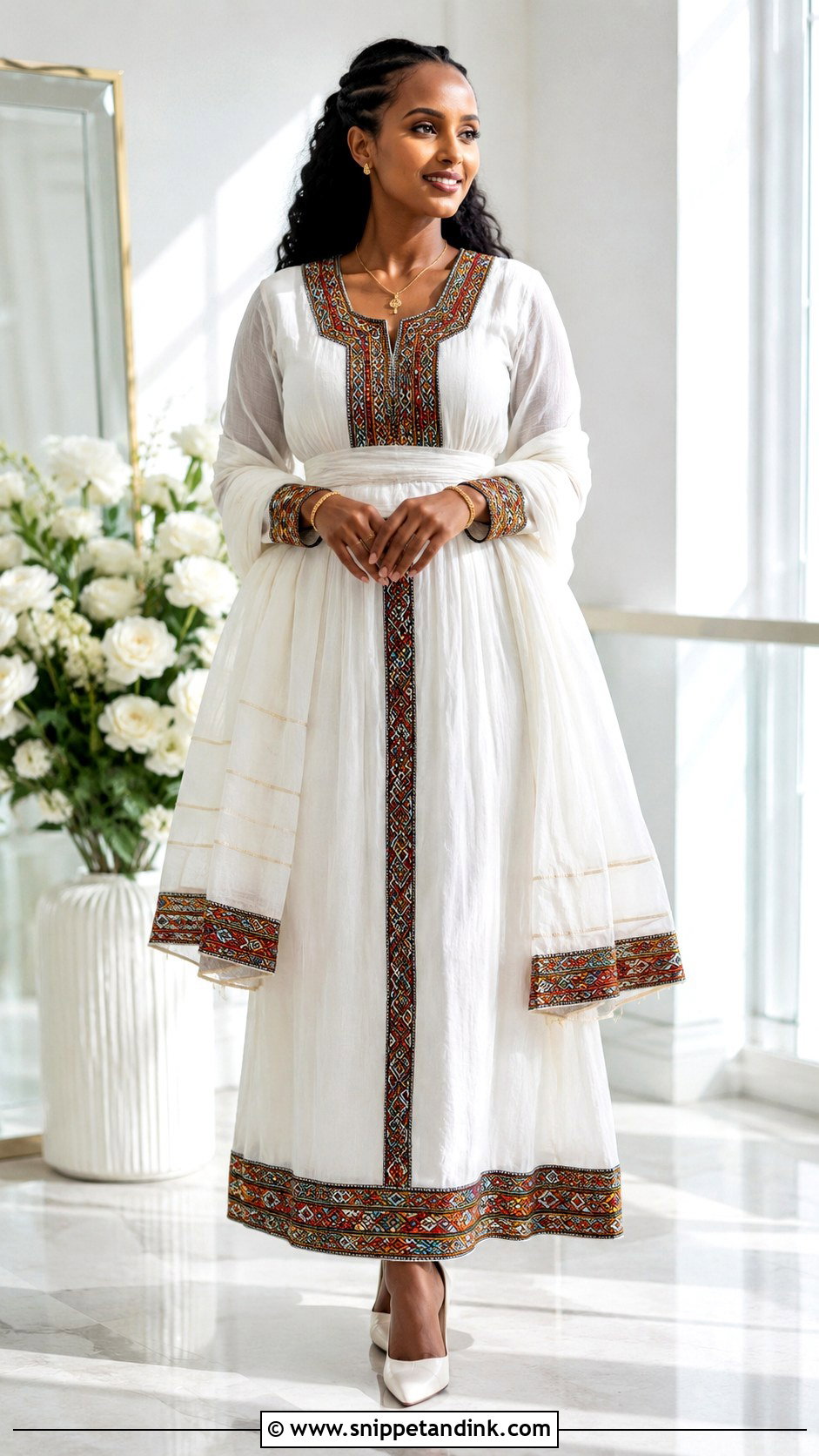
The Habesha kemis is usually handwoven cotton, light and breathable, with the coloured tibeb border running around the neckline, cuffs and hem. Because the cloth is so airy it stays cool and moves well, but it also creases and shows every seam, so it needs pressing on the morning and a steamer at the venue. White in ankle or floor length is the classic choice; a slightly more fitted upper with a gently flared skirt modernises it. The shawl does real work, adding coverage for church and catching the air in portraits. Fine gold jewellery and a braided style keep the focus on the weave. Regional patterns and names vary, so check with family or an Ethiopian weaver before settling on a tibeb.
13. Maasai Beaded African Bridal Gown
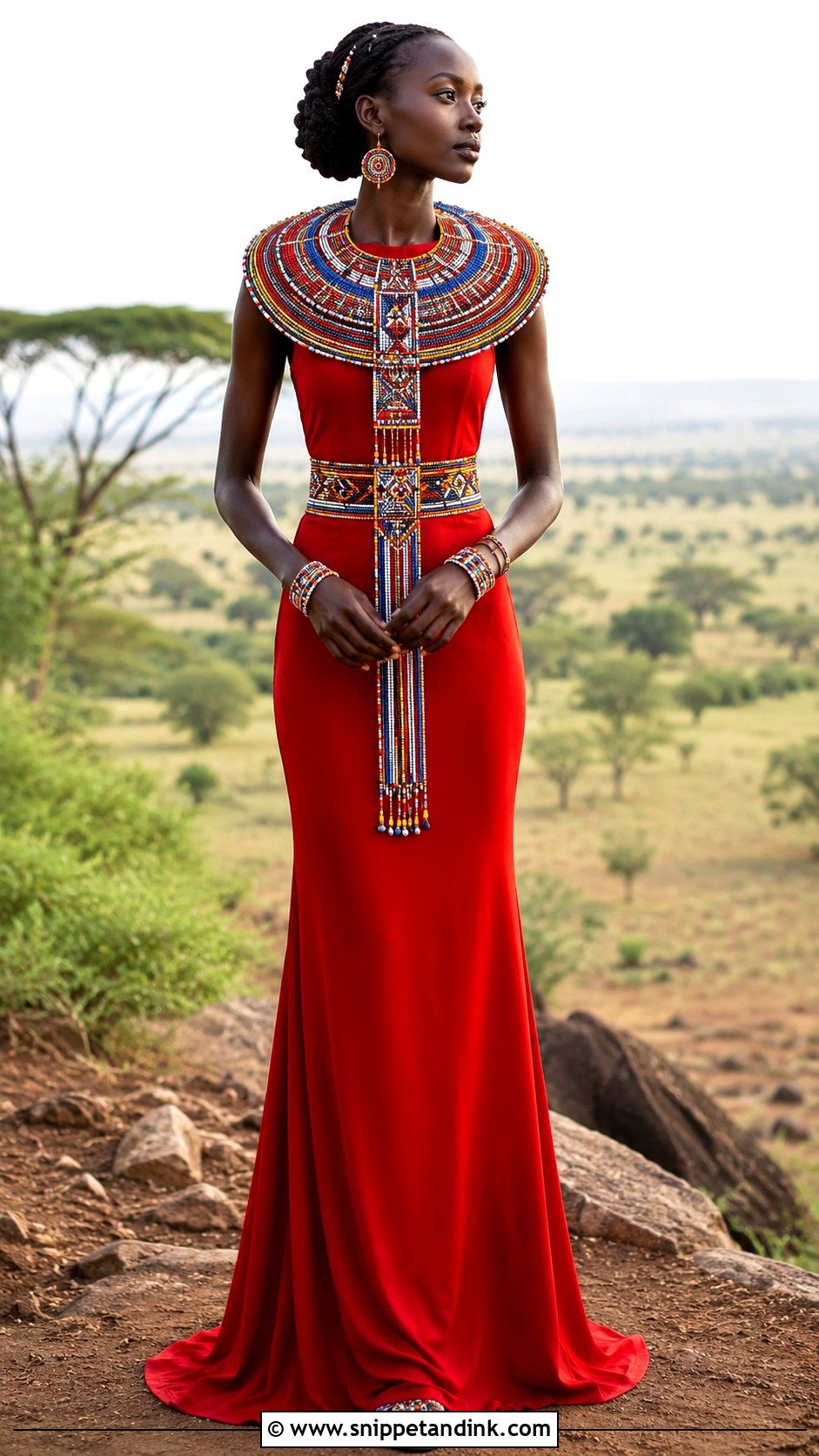
In a Maasai-inspired look the beaded collars, earrings and bracelets lead, and the gown is only the backdrop. A plain red, white, black or blue floor-length dress works. I’d decide the neckline only once you know how wide the collar is: strapless shows a broad collar fully, while a bateau or square neckline gives it something to rest on and is kinder for a heavy piece. Keep hair up and off the shoulders. These colours and arrangements communicate identity, so this look belongs to brides with a genuine Maasai connection who can work with Maasai artisans and relatives. For anyone else, I’d honestly point you to another idea on this list.
14. Kitenge Peplum African Bridal Dress
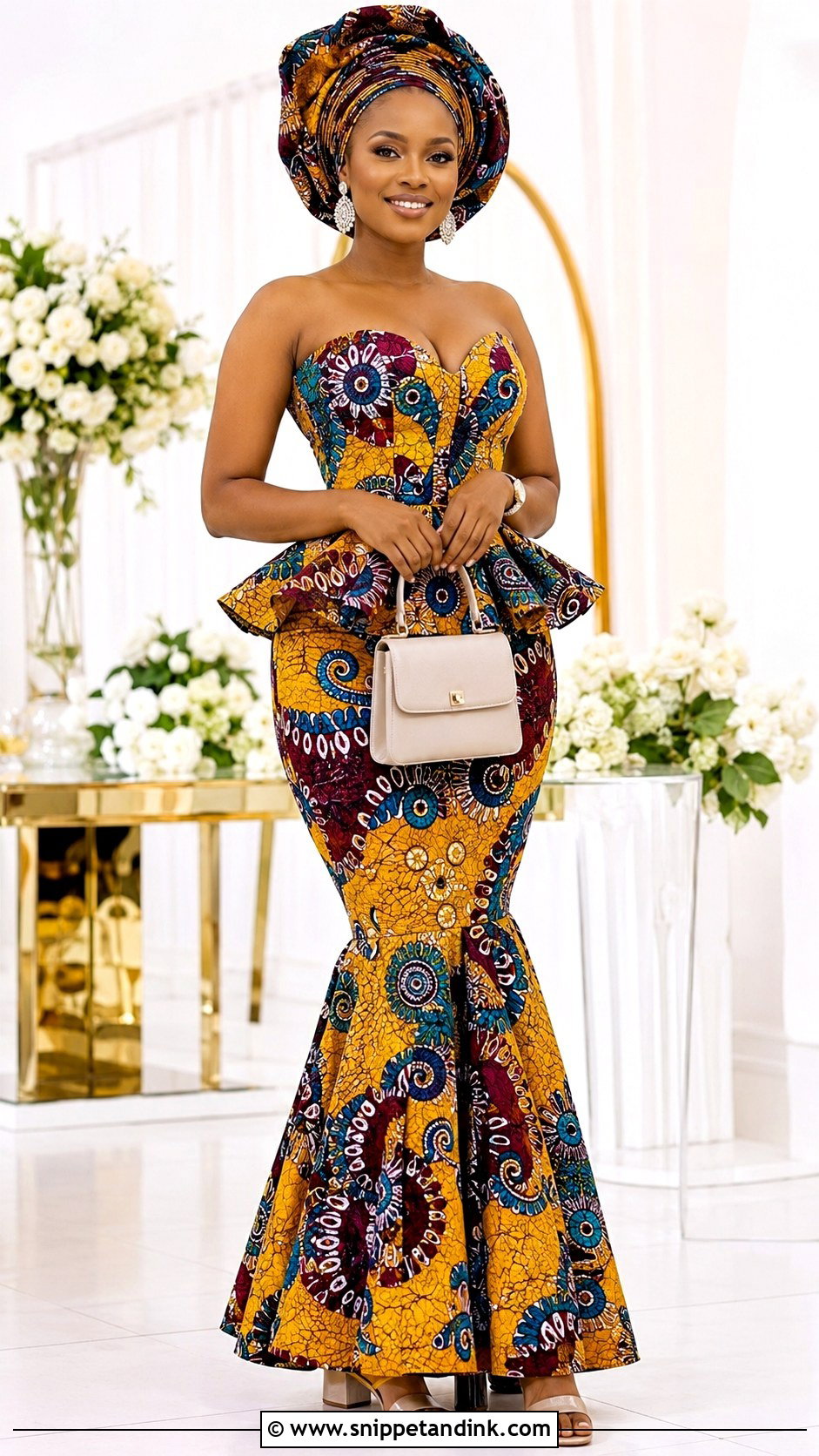
A Kitenge peplum dress is one of the more forgiving shapes for an East African print. The peplum marks the waist and can sit over a trumpet, straight or A-line skirt. Its length changes everything: a short peplum defines the waist on a petite frame, while a longer or asymmetric one gives hip coverage and suits a taller bride. Choose a print with only two or three dominant colours, which makes shoes and jewellery far easier to match, and add a solid neckline or belt if it still looks busy. The tailoring point I check first is print alignment across centre front and back. On a fitted bodice, a mismatched repeat is the first thing a camera catches.
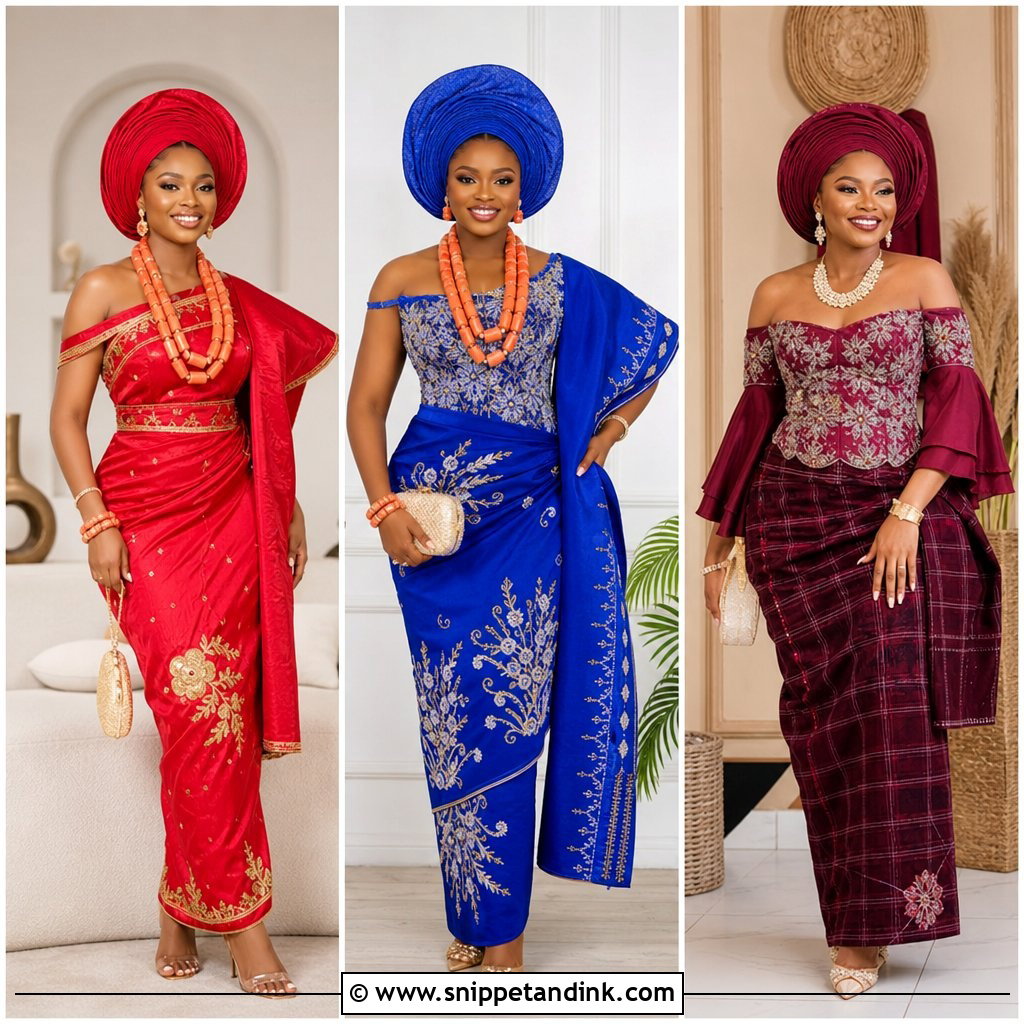
15. African Print Bridal Jumpsuit
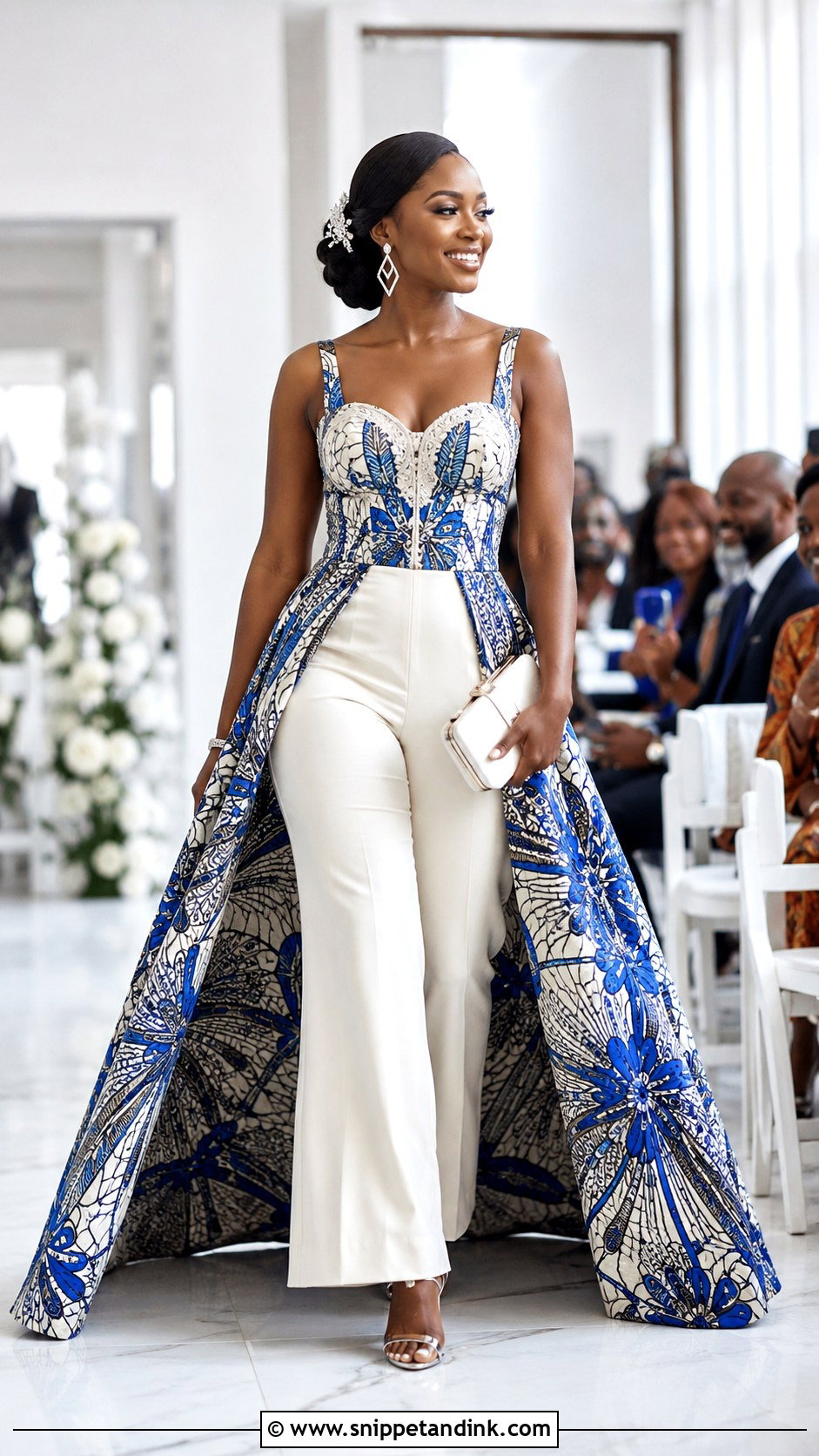
A jumpsuit makes sense for a civil ceremony, a reception change or a bride who simply dislikes skirts. Wide-leg trousers with a fitted bodice read like a gown when you stand still and let you move freely on the dance floor. A detachable overskirt or train adds ceremony drama and comes off for the party. Balance a bold print with solid heels and plain metallic jewellery. A V-neck, square or one-shoulder top all work; the waist is where it must fit closely, or the whole thing looks borrowed. The practical issue nobody mentions is the bathroom, so ask for a zip you can manage with one helper, or a two-piece built to look like one. Hem it in your actual shoes, just grazing the floor.
16. Aso Oke Mermaid African Bridal Gown
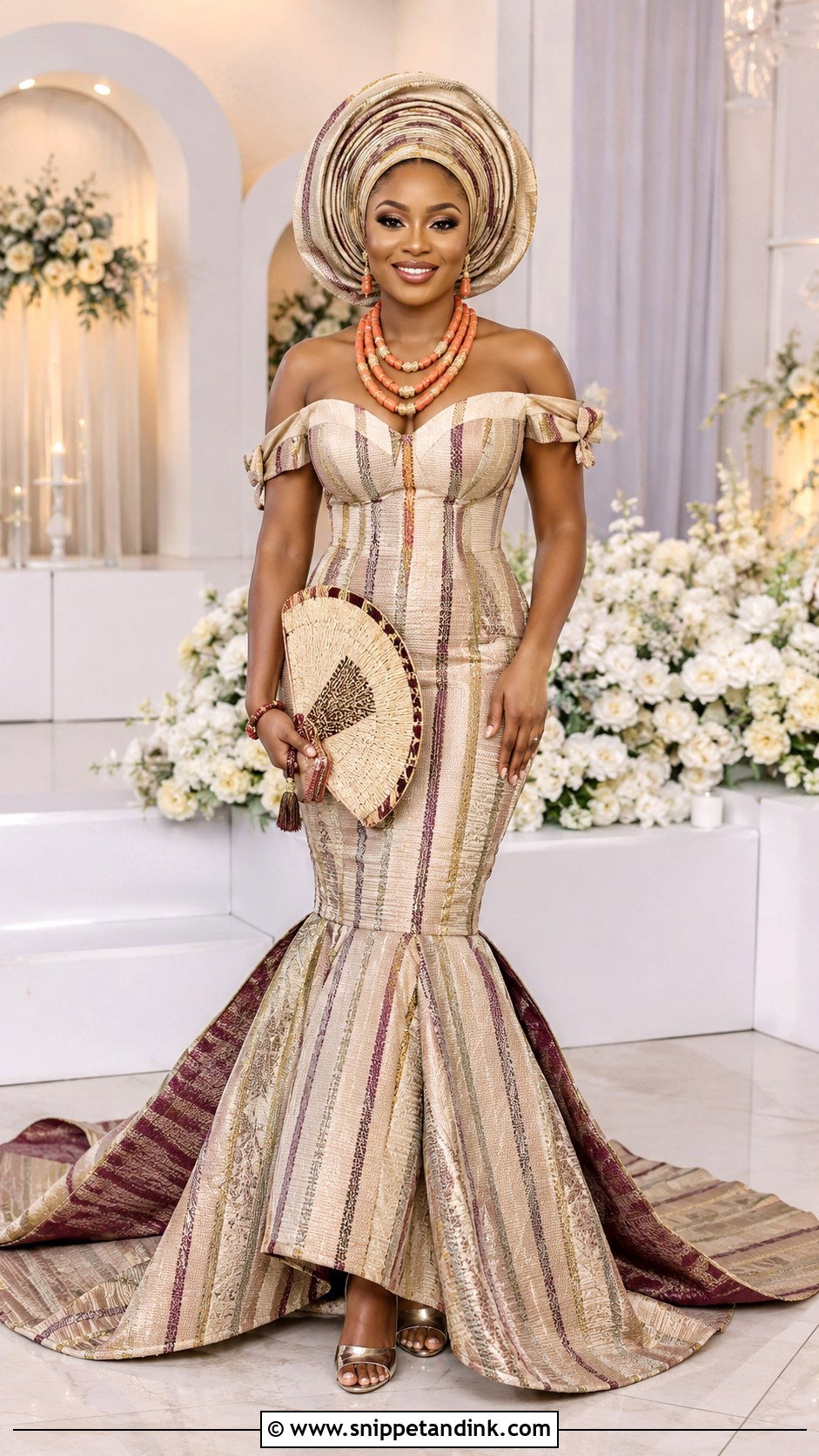
An Aso Oke mermaid gown takes a cloth usually worn wrapped and cuts it into a fitted bridal shape. Aso Oke is thick, so the corset-style bodice needs internal support, and the flare should break at or just above the knee; set it lower and walking becomes a real struggle in this weight. An off-shoulder neckline or structured sleeves both suit the cloth. Finish with a coordinated gele, metallic heels, a hand fan or clutch, and coral beads where they’re culturally appropriate. A full Aso Oke train gets heavy fast, which is why I’d make any train detachable. The cloth carries strong Yoruba associations, so source it from experienced weavers and let them guide the colour.
17. Kente Two-Piece African Bridal Outfit
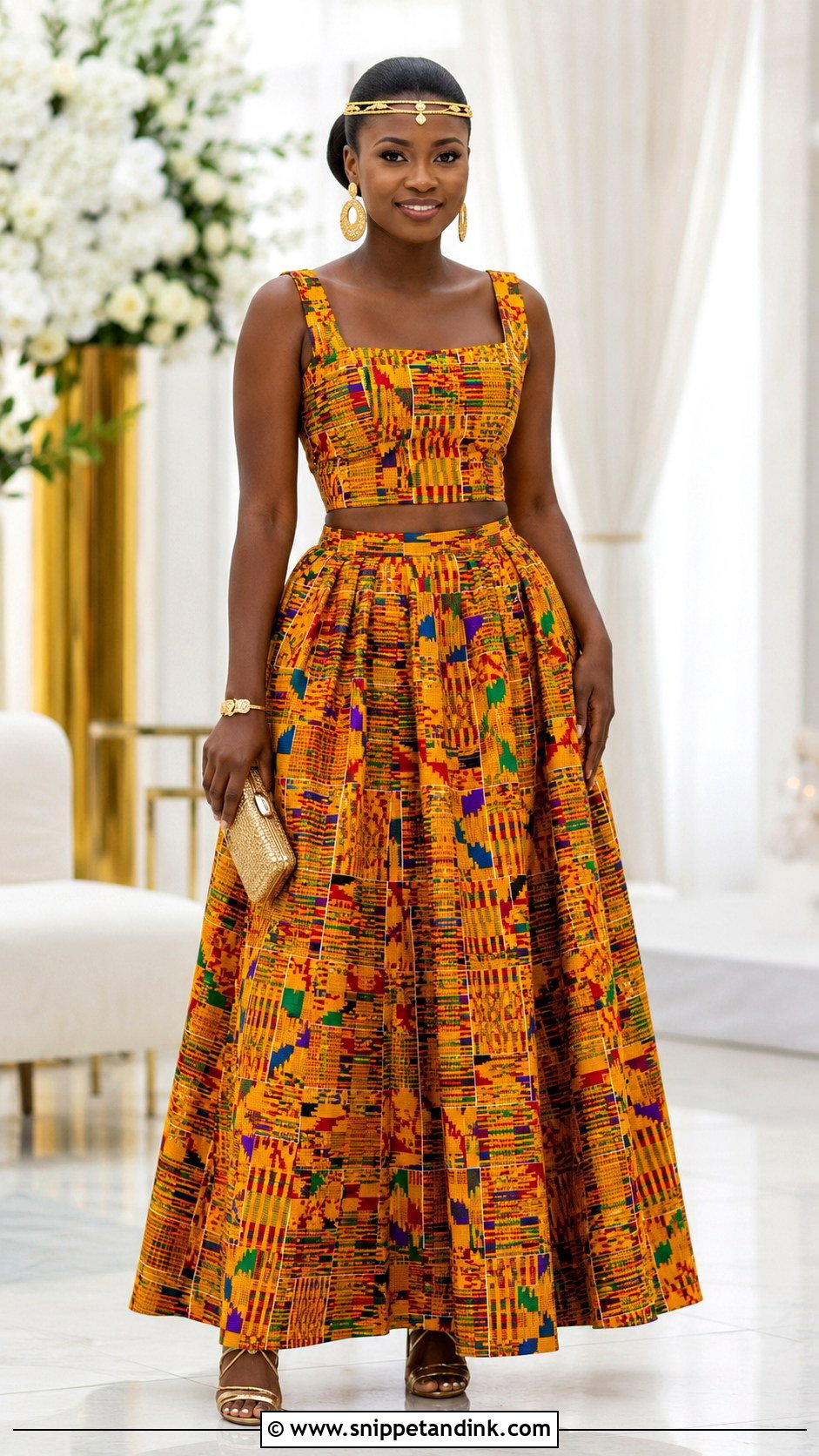
A two-piece gives you two garments you can wear again, which matters when handwoven Kente may be the most expensive thing in your wardrobe. Pair a structured top with a square neck, peplum or light corset shape with a full maxi, trumpet or wrapped skirt. A narrow line of skin between the pieces looks modern; letting them meet is more formal. At fittings I have the bride sit, reach and hug, because a cropped top tends to ride up by the third hug. If two full Kente pieces feel heavy on the eye, make one of them solid. Gold heels, earrings, a sleek clutch and a simple headpiece are enough.
18. Ankara High-Low African Bridal Dress
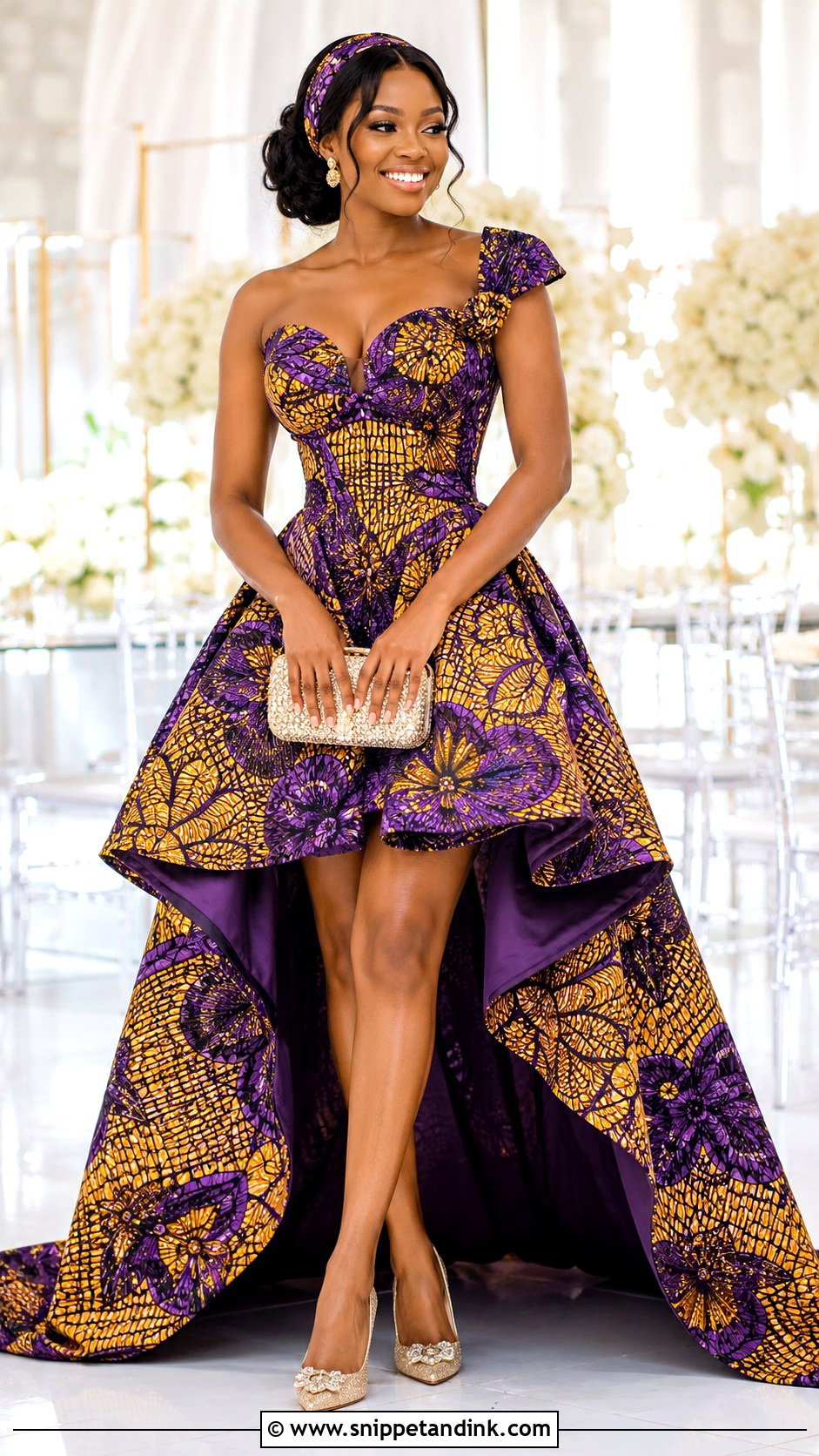
With a high-low hem your shoes become part of the outfit, so buy them before the hem is set. The front should fall near the knee and the back sweep to the floor through a gradual curve; a steep drop from mini to train looks unfinished and flips up when you walk. Ankara cotton has good body for this, but a skirt with too many layers gets heavy at the back, so I’d keep it to one lined layer and a light petticoat. A solid waistband calms a very bright print. Embellished pumps or metallic sandals, a compact clutch, simple earrings and a head tie or headband complete it, and a detachable train adds formality for portraits.
19. White Satin Gown With African Print Train
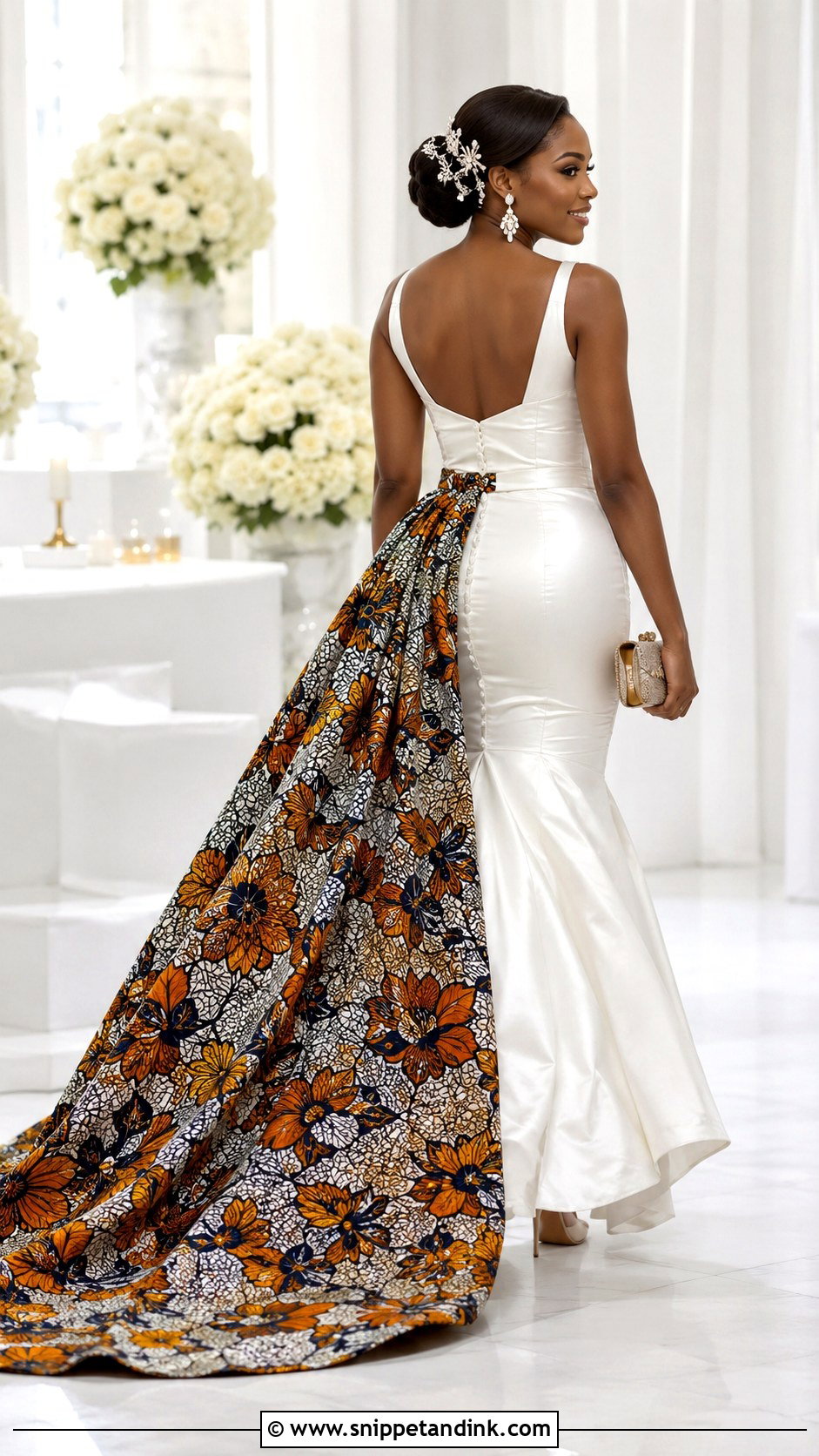
Imagine the moment you walk away from the camera and a printed train opens behind a sleek white satin gown. From the front it reads as a classic bridal dress. Pick a column, A-line or mermaid base with a clean neckline and almost no embellishment, because satin shows every ripple and the train already does the talking. It can start at the waist, attach as an overskirt or drop as a centre-back panel. Satin creases where you sit, so choose one with some weight and keep a steamer at hand before the reception entrance. Pull one colour from the print into the shoes, earrings or clutch. Make the train detachable, and ask the maker to centre the main motif across its widest point before cutting.
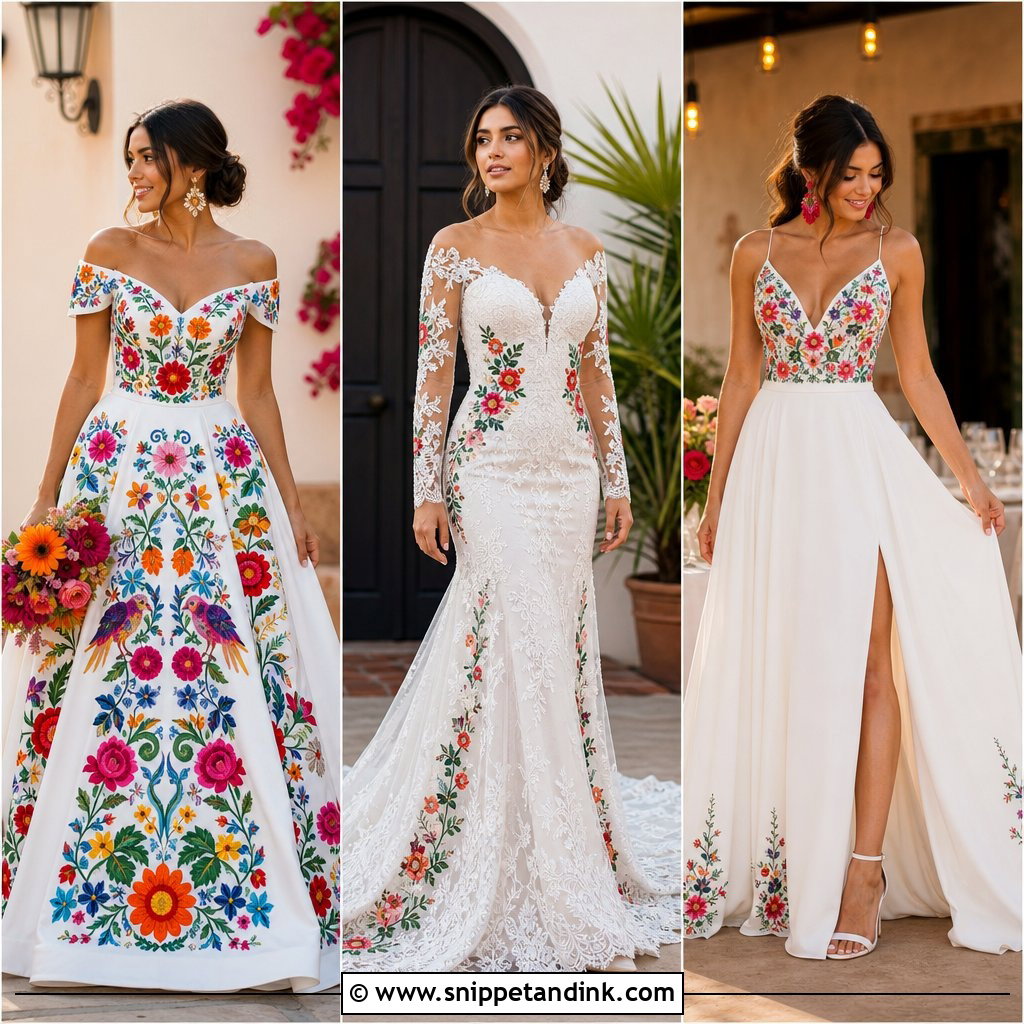
20. Gold Embroidered African Bridal Cape Gown
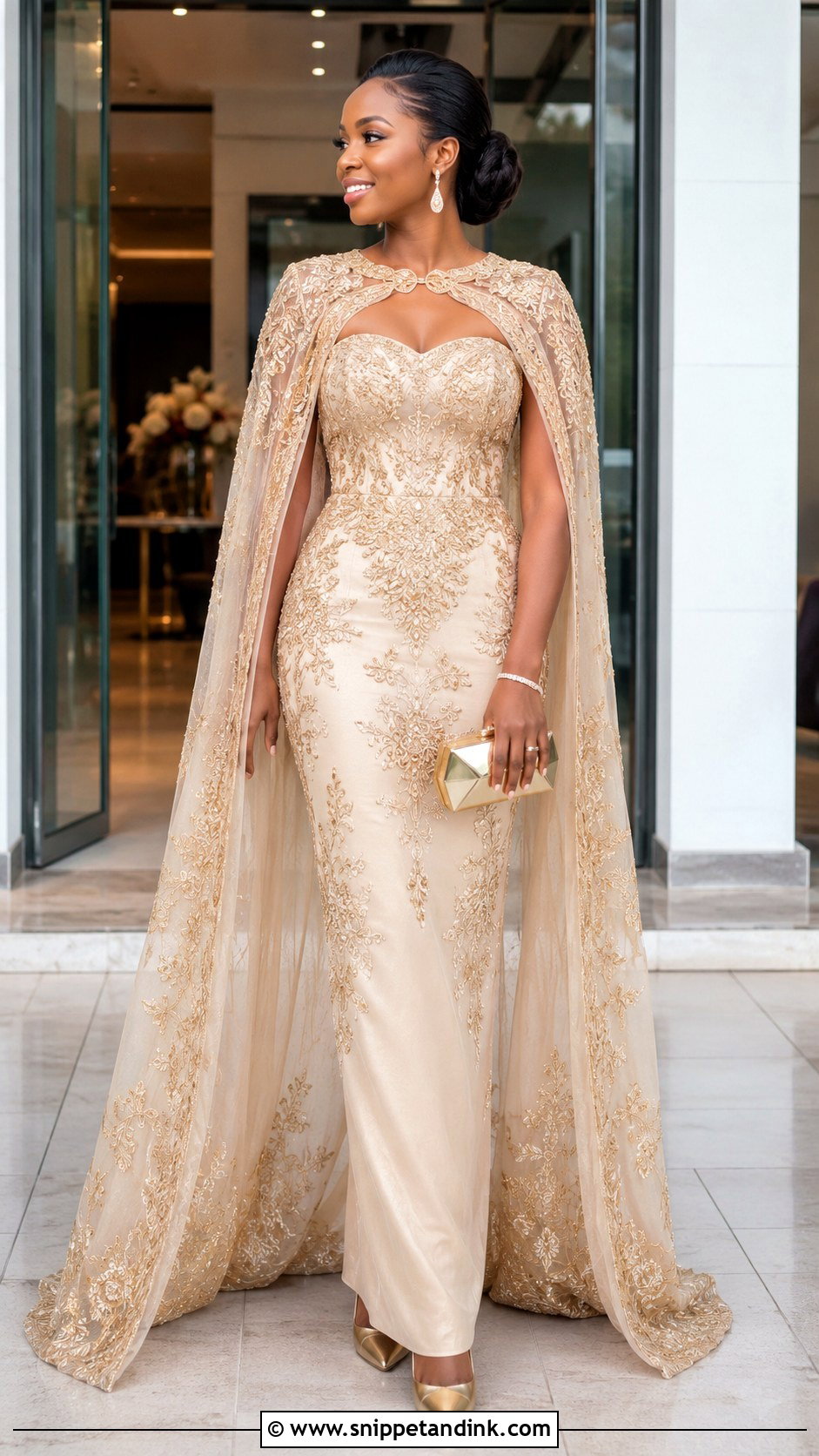
A cape gives coverage and drama in one piece, and it comes off after the entrance. Start with a fitted white, champagne, emerald or burgundy gown, then add a floor-length cape with gold embroidery at the neckline, shoulders and edges. The attachment is what I check hardest. An embroidered cape is heavy, and if it hangs from two thin loops it drags the gown’s neckline backward all evening, so ask for anchor points sewn into the bodice or a hidden collar fastening. One statement piece is enough: if the cape is richly worked, keep the dress plain. A sleek updo lets the cape fall flat across the back. Custom embroidery can include family symbols chosen with relatives or the artisan.
Planning the Outfit Change Between Church and Party
Many African weddings involve more than one outfit: a traditional look for the introduction or engagement, a white gown for church, then a reception change. That’s normal, and frankly easier on your body than one heavy garment from morning to midnight. I plan the changeover like a scene change in a play.
- Allow twenty to thirty minutes per change when a gele or headwrap has to be retied. Done properly, it isn’t quick.
- Book the gele artist or dresser for the whole event, not only the morning.
- Hang each outfit separately and label it, with its own shoes and jewellery bagged alongside.
- Make the last look something you can dance in, such as the jumpsuit, two-piece or high-low ideas above.
Storing Handwoven Kente and Aso Oke Afterward
Handwoven cloth outlasts most bridal fabrics if you look after it. Have it cleaned by someone who handles hand-dyed and beaded pieces, and point out any stains before they set. Store it rolled or loosely folded in acid-free tissue inside a cotton bag, never in a plastic cover, which traps moisture. Refold it along different lines every few months so the creases don’t wear through the weave, and keep beaded pieces flat, since hanging lets the weight stretch the lace. Cared for this way, a Kente or Aso Oke outfit can be retailored for an anniversary or passed down.
Your Family’s Cloth Comes First, the Silhouette Second
From Kente mermaid gowns and Aso Oke sets to Shweshwe, kaftans, jumpsuits and white-and-print fusions, every look here comes down to the same order of decisions. Settle with your family first whether this is a traditional outfit, a contemporary gown in heritage cloth, or a mix. Then weigh the fabric against your venue’s temperature, the hours you’ll spend in it and any planned outfit changes. Ask relatives about the meaning of specific cloths, beads and headpieces before you fall for a photo. A maker who truly knows the textile will save you more trouble than any trend.
You'll Like These Ideas:


Leave a Reply