
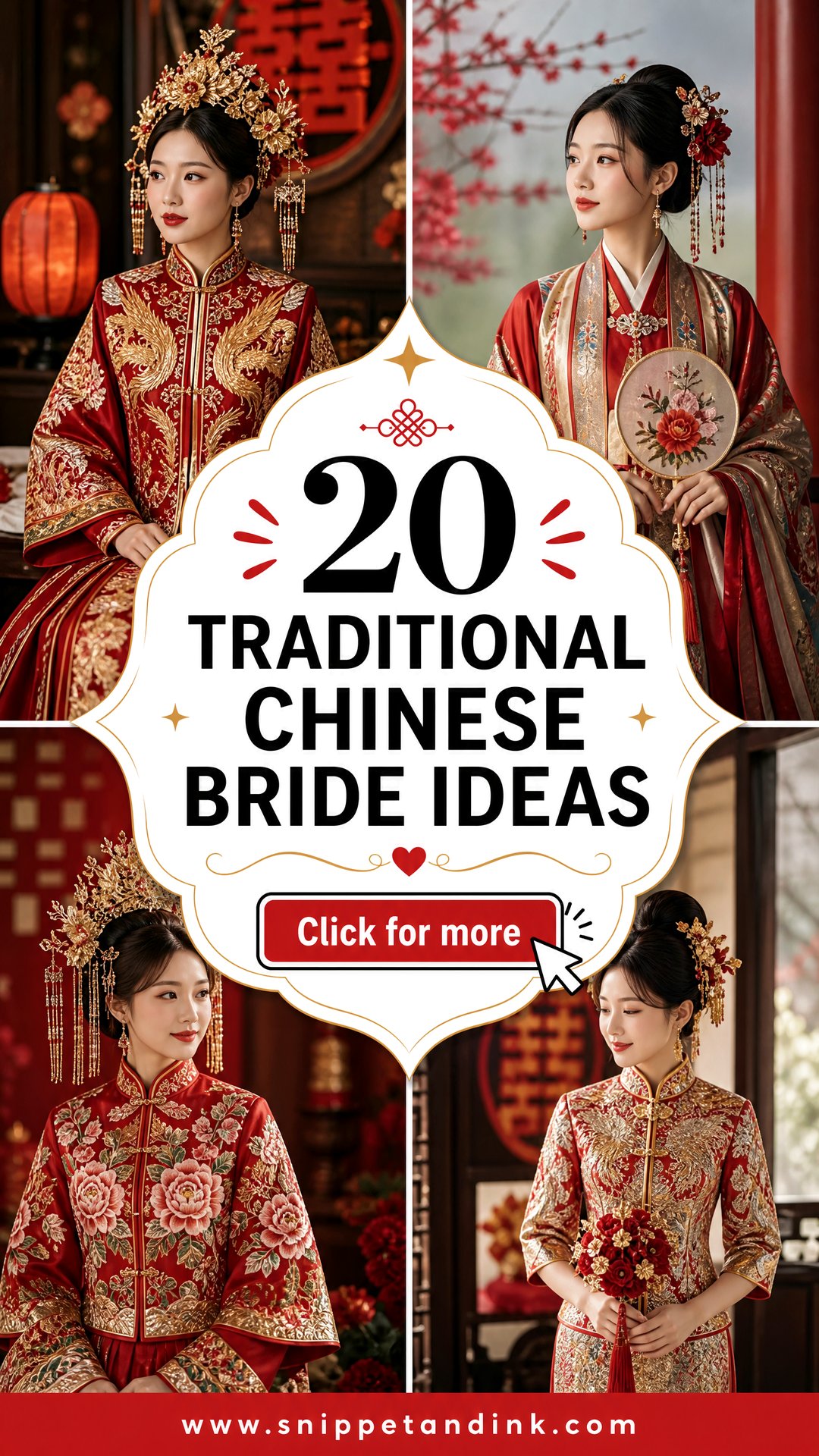
Traditional Chinese bridal fashion is never just a red dress. When I style a Chinese bride, I’m dressing her for a sequence: the morning door games, the tea ceremony on her knees or bent over a tray, the portraits, and then a banquet where she’ll stand and toast table after table. Red and gold carry most of the meaning, and phoenix crowns, embroidered shoes, jade and red veils fill in the rest. Customs shift between Cantonese, Hokkien, Teochew, northern and diaspora families, so the first conversation I have is about whose traditions the day follows. The looks below are complete outfits, from qun kwa sets to hanfu-inspired ensembles, each with the practical detail that decides whether it works on the day.
How Many Outfit Changes a Chinese Wedding Day Usually Holds
Most Chinese brides I dress wear more than one outfit, and planning the changes is as important as picking the clothes. A common pattern is a qun kwa or xiuhefu for the morning tea ceremony, a white gown or a second traditional piece for the ceremony or portraits, and a qipao for the banquet toasts. Some families add another change mid-banquet. None of this is mandatory; a single well-chosen outfit is fine for a smaller day.
What breaks a schedule is underestimating change time. Getting out of a fitted qipao and into a qun kwa with bangles, pins and a crown takes longer than people think, often around twenty minutes with a helper. Build that into the run sheet and keep a changing room close to the banquet hall.
Matching hair and makeup to each change
- Choose one base hairstyle that works under a crown and with a simple comb, so the stylist only swaps ornaments between looks.
- A red lip that suits red silk usually suits a qipao too, but test it against gold thread in daylight.
- Bangles slide on before the jacket, not after, so put them on early and leave them on.
- Pack each outfit with its own shoes and jewelry in a labelled bag, so nobody hunts for an earring between courses.
1. Traditional Chinese Bride Red Qun Kwa Outfit
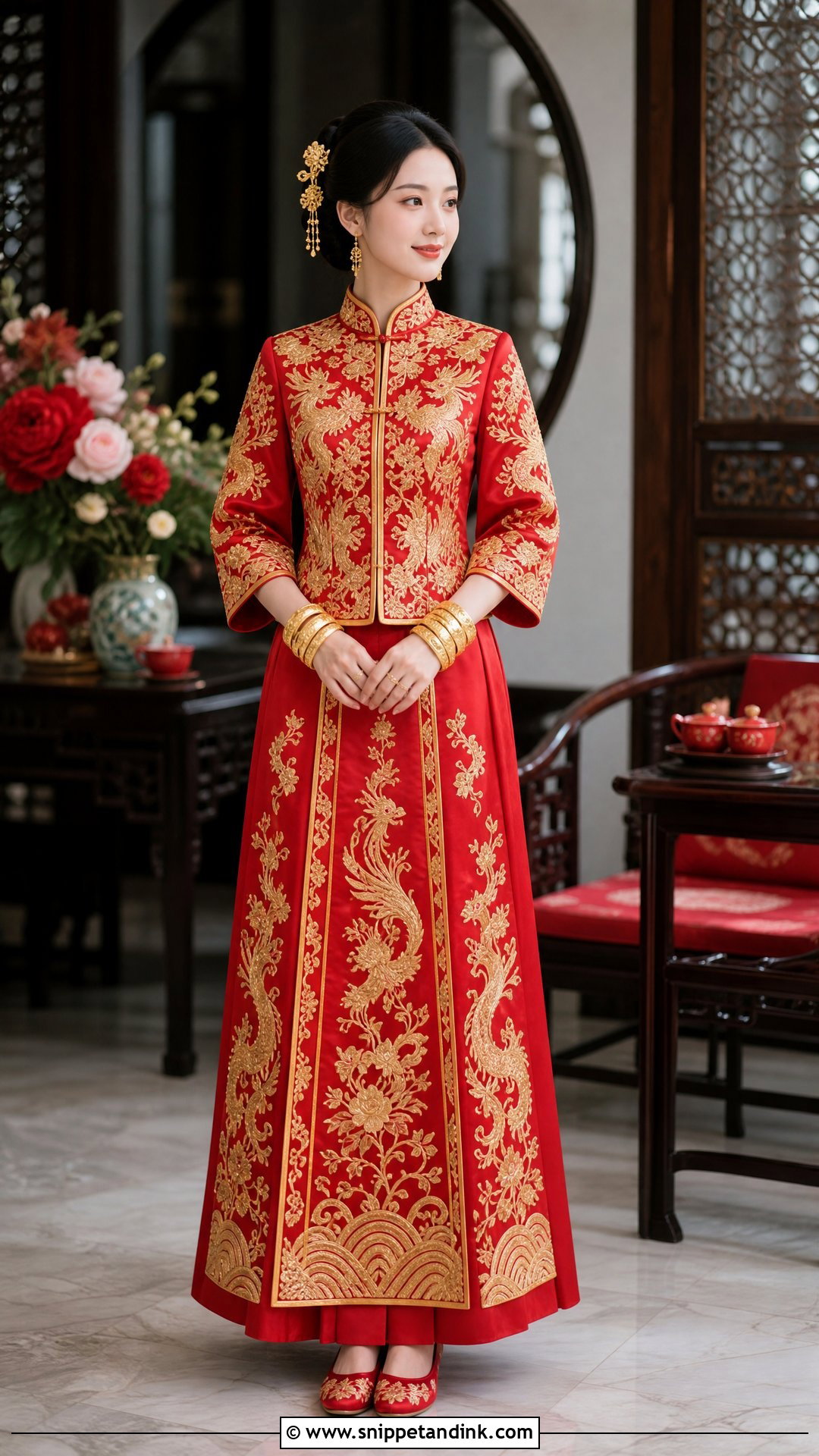
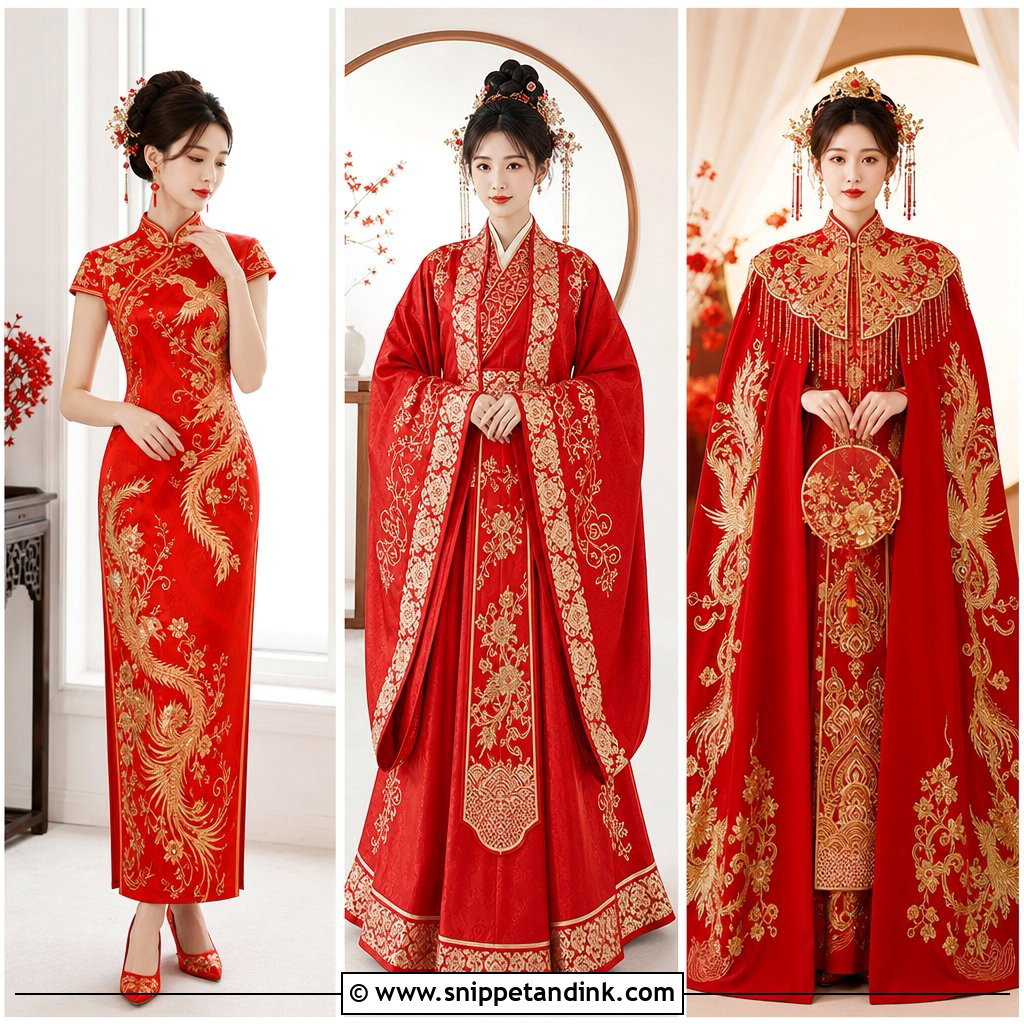
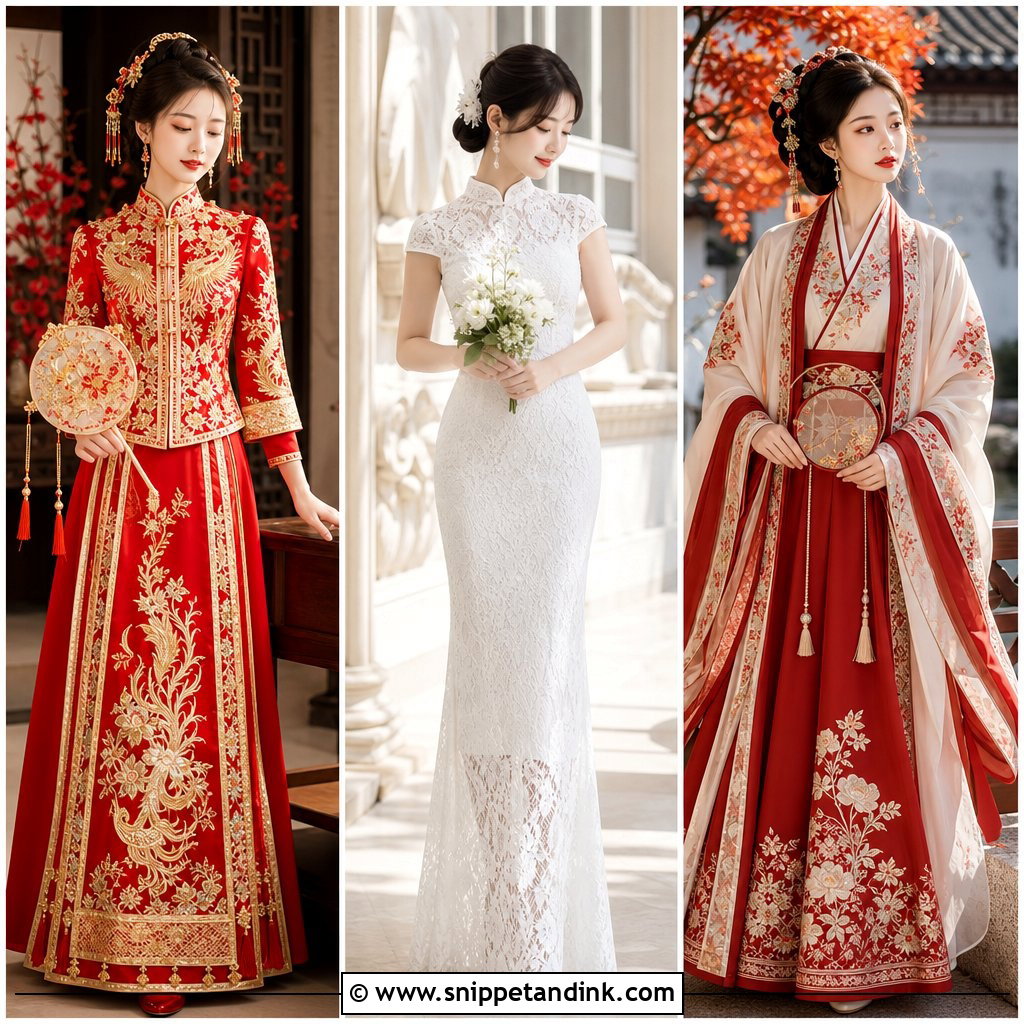
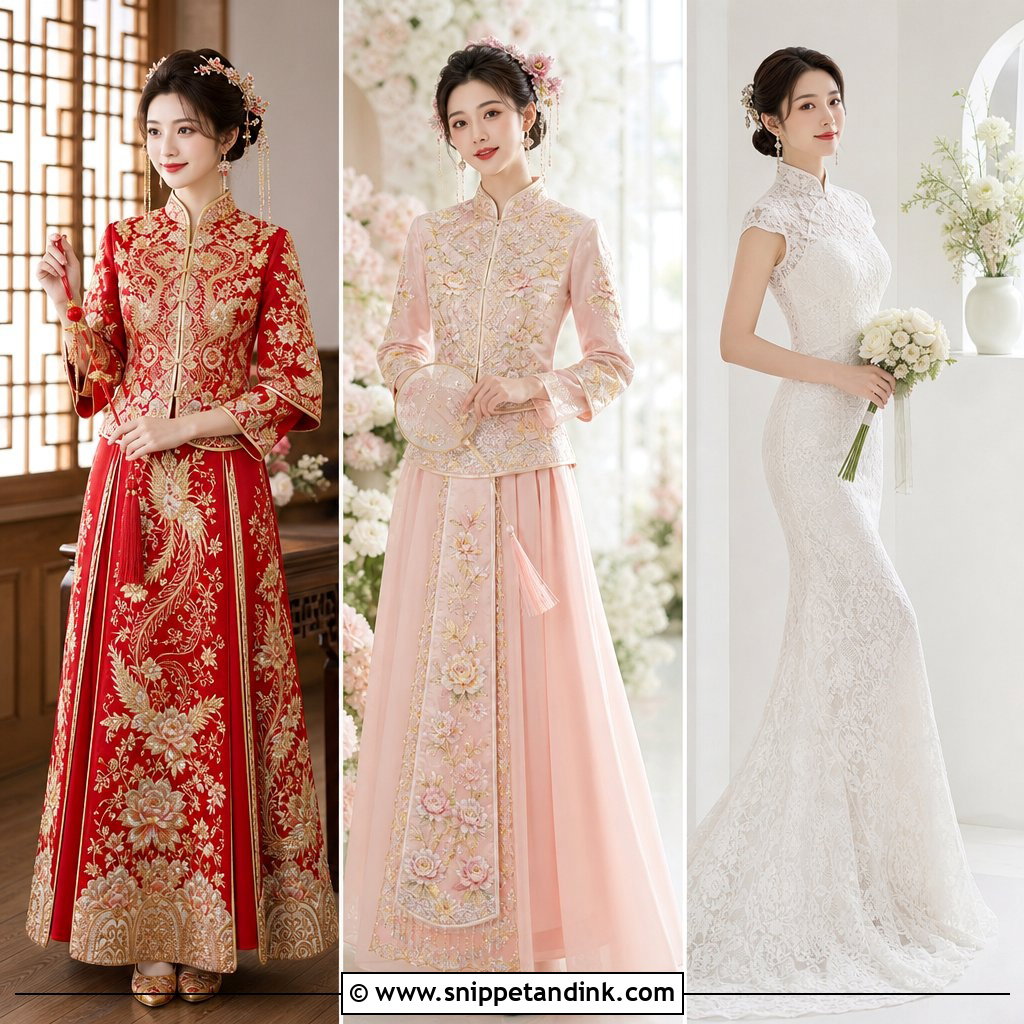
For a Cantonese bride, the red qun kwa is usually the outfit the grandmothers are waiting to see. It’s a two-piece set: an embroidered jacket over a long skirt. The thing I look at first is coverage. Some sets are so dense with gold thread that the red almost disappears, and the jacket becomes stiff enough to stand on its own. A balanced dragon-and-phoenix layout with red showing between the motifs moves better and reads better in photos. Finish with embroidered red flats, stacked gold bangles, drop earrings, a low bun and one small phoenix pin. Any alteration has to respect where the embroidery sits, because a seamstress can’t move a motif without unpicking it.
2. Traditional Chinese Bride Xiuhefu Outfit
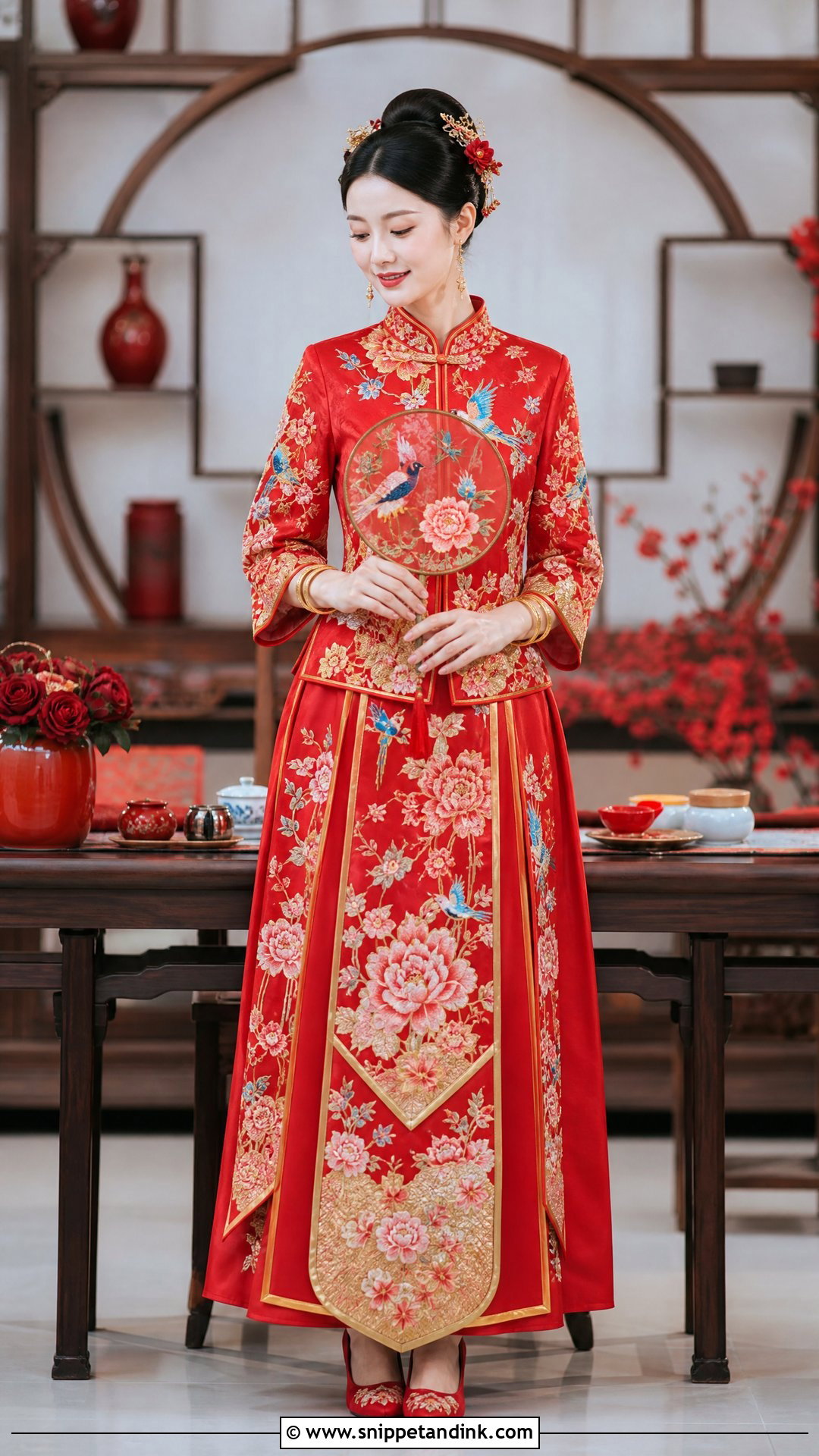
The modern xiuhefu owes much of its fame to a period television drama, so treat it as a garment inspired by older forms rather than a fixed ancient costume. In person it’s softer than a qun kwa: rounded sleeves, a skirt that swings, and embroidery that tends toward peonies, birds and clouds. That softness is why I like it for brides who’ll be serving tea for an hour. Add red embroidered shoes under the long skirt and a round silk fan that repeats one motif from the jacket. Keep the jewelry to gold earrings and two plain bangles. A smooth bun with matching pins on each side keeps the symmetry the outfit is built on.
3. Traditional Chinese Bride Fengguan Xiapei Outfit
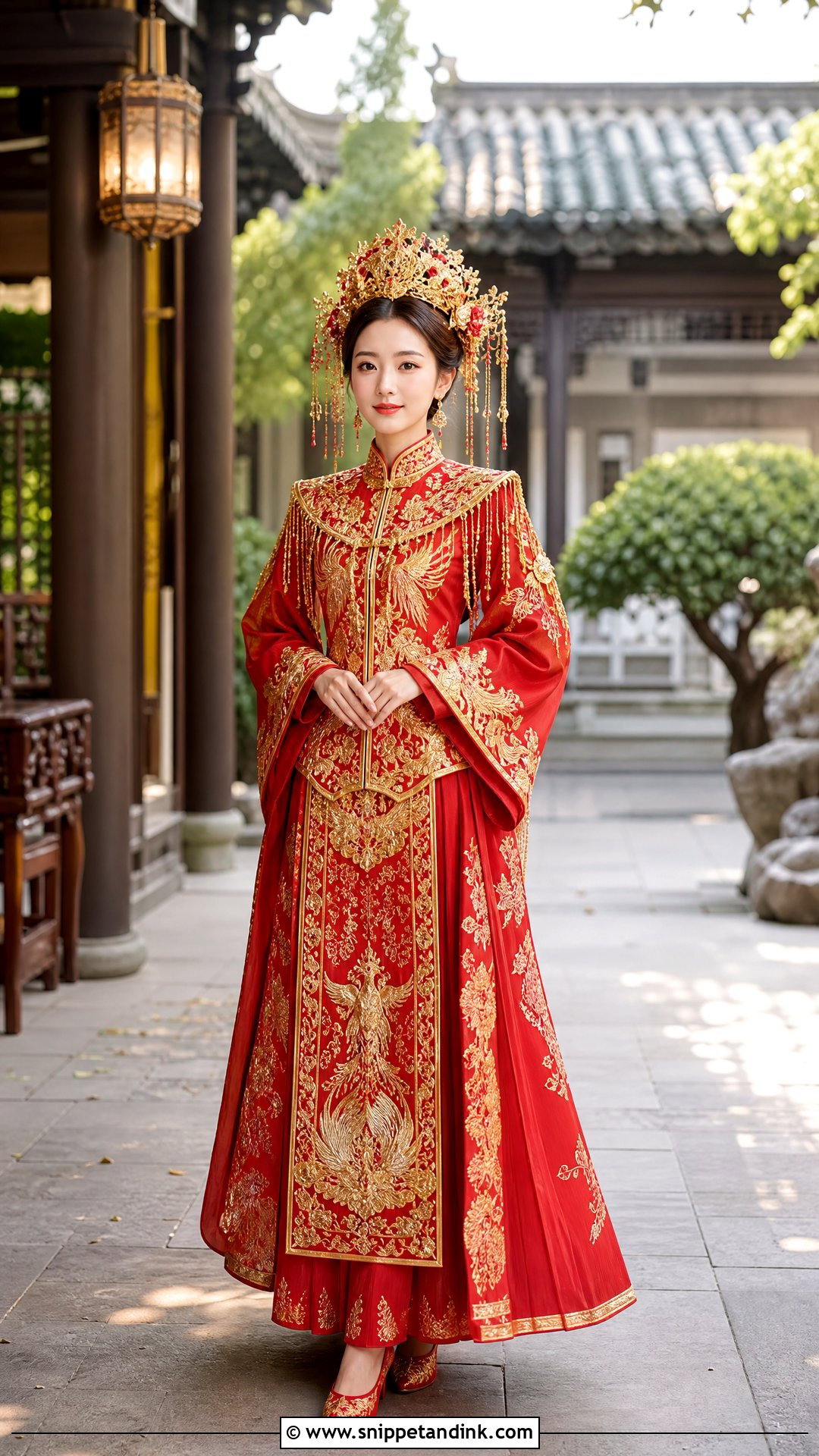
Fengguan xiapei, the phoenix crown with its embroidered shoulder piece, became tied to bridal dress during the Ming period and still sets the tone for the most formal Chinese wedding looks. Pair it with an ankle-length red robe with wide sleeves and gold borders. The crown is where this outfit succeeds or fails. I always have the hairstylist build a flat, center-parted base first, because a crown sitting on volume will tilt within the hour. Keep every other piece of jewelry quiet. This is the look for a grand entrance or a heritage venue, and I’d skip it for a small home tea ceremony where the bride needs to bend and kneel.
4. Traditional Chinese Bride Ming Hanfu Outfit
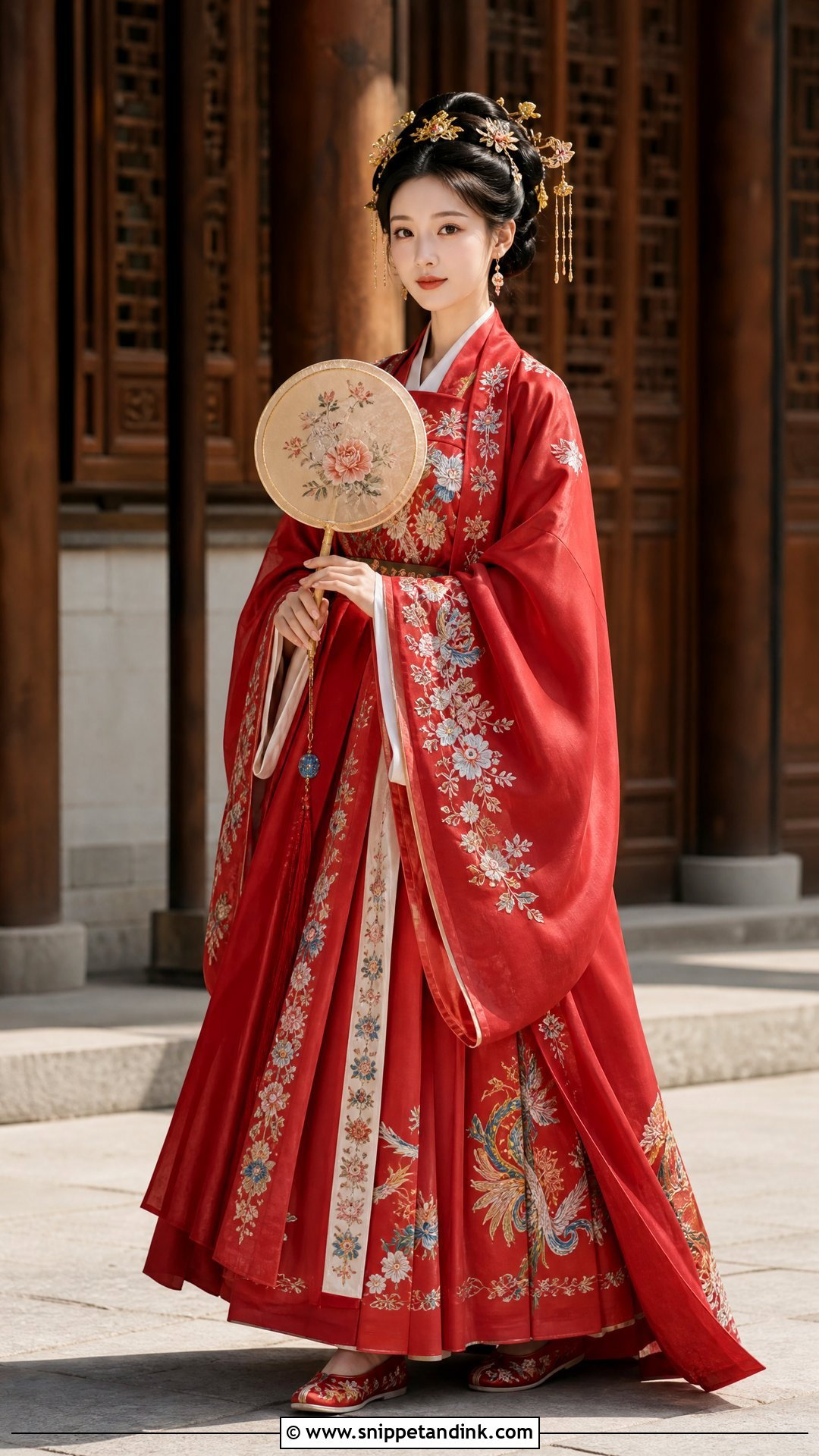
A Ming-inspired bridal set feels composed and dignified. Start with a red upper garment, either cross-collar or standing-collar, over a mamianqun, the pleated skirt with flat front and back panels. Gold embroidery along the hem catches movement as she walks. An embroidered outer robe makes it ceremonial and comes off for the banquet, which matters more than brides expect once the room warms up. Finish with red cloth shoes, gold hairpins, small earrings and a silk fan. Hair should be tidy enough that the collar and shoulders stay readable. Reproduction quality varies a lot, so if historical accuracy matters to your family, speak to a hanfu maker who can explain each choice.
5. Traditional Chinese Bride Tang Hanfu Outfit
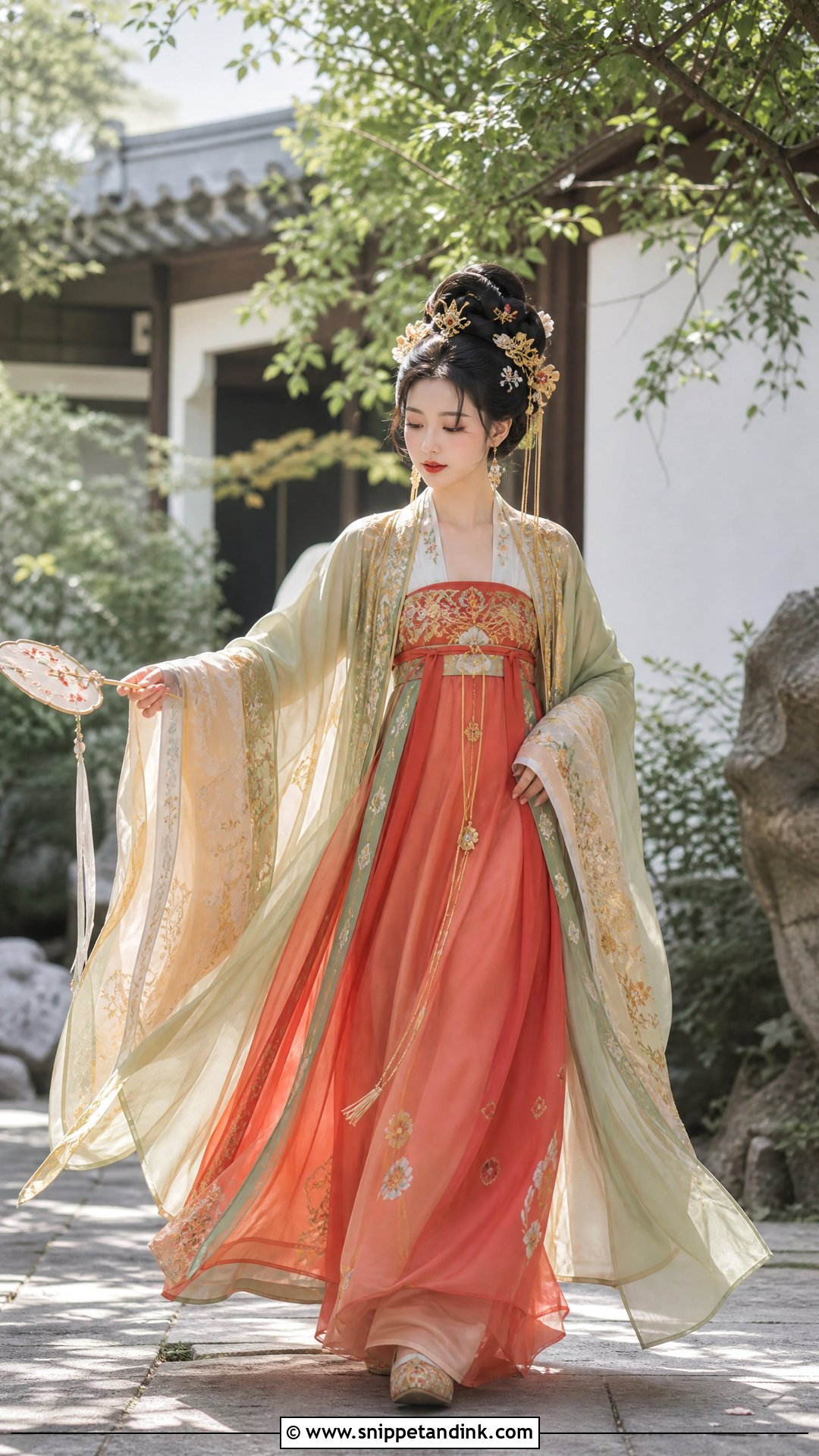
Tang-inspired dress is the most colorful of the hanfu styles and the least forgiving of sloppy styling. The high skirt line on a red or deep coral ruqun lengthens the body, and a shawl in gold, green or ivory adds the contrast Tang painting is known for. Wide-sleeved outer layers look wonderful in motion, but they catch on chair backs and teacups, so I pin them during the ceremony. Hide embroidered cloth shoes under the long skirt. An ornamental updo with gold floral pieces suits it, and a forehead decoration only if it fits the reference you’ve chosen. The mistake I see most is mixing pieces from three dynasties because each looked pretty online. Pick one reference and stay with it.
6. Traditional Chinese Bride Song Hanfu Outfit
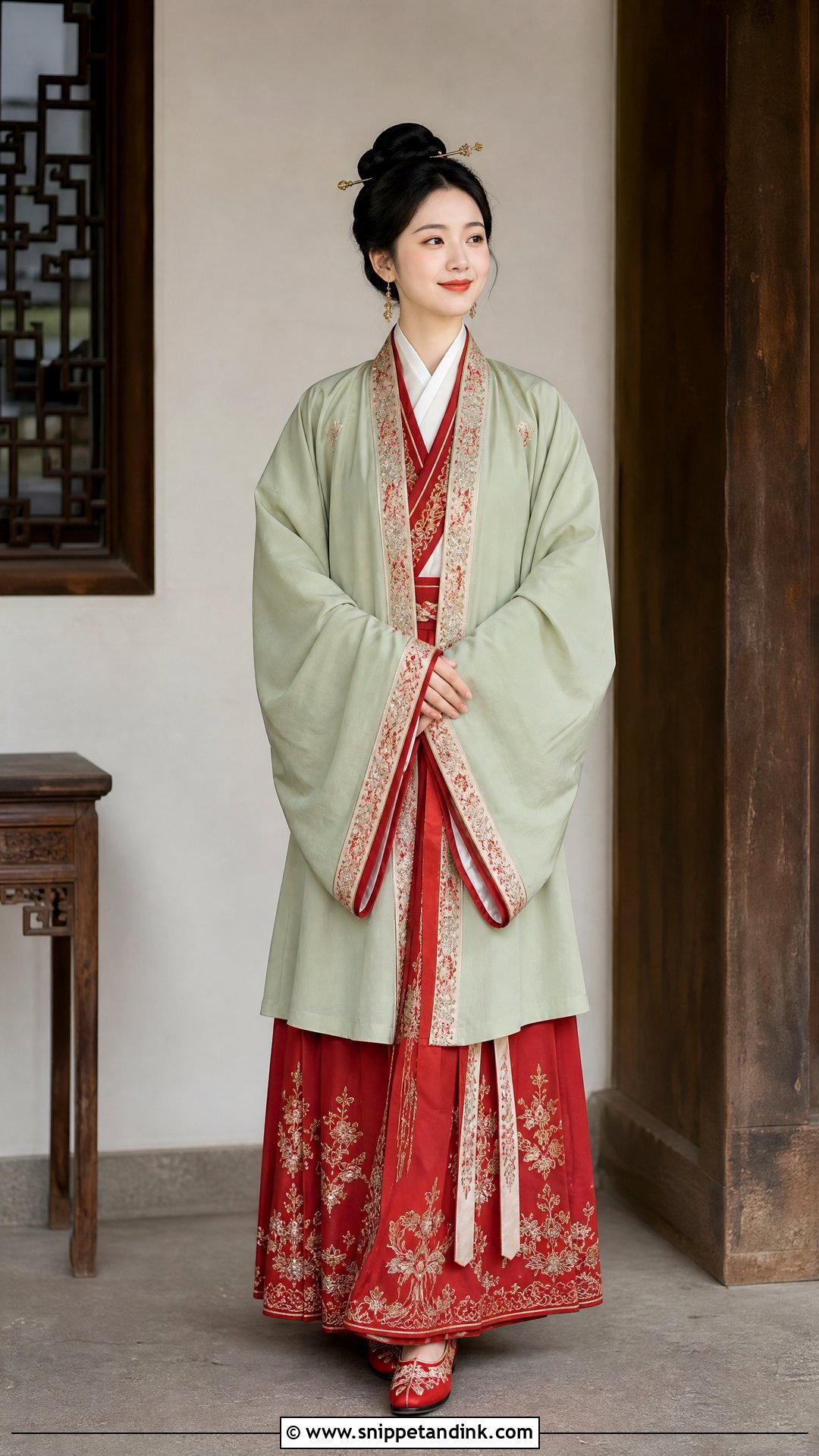
A Song-inspired hanfu outfit is the one I suggest to brides who find heavy red embroidery overwhelming. The Song look is narrow and layered: a long red or muted vermilion skirt, a clean-collared top, and a lightweight beizi over it in soft gold, pale green or ivory. Ask your parents whether a non-red outer layer is acceptable before you buy, since some families feel strongly about it. Narrow embroidered borders give enough definition. Flat shoes, small gold earrings and an updo with one or two pins keep the proportions quiet. It carries far less visual weight than a phoenix crown, which some brides find a relief.
7. Traditional Chinese Bride Red Qipao Outfit
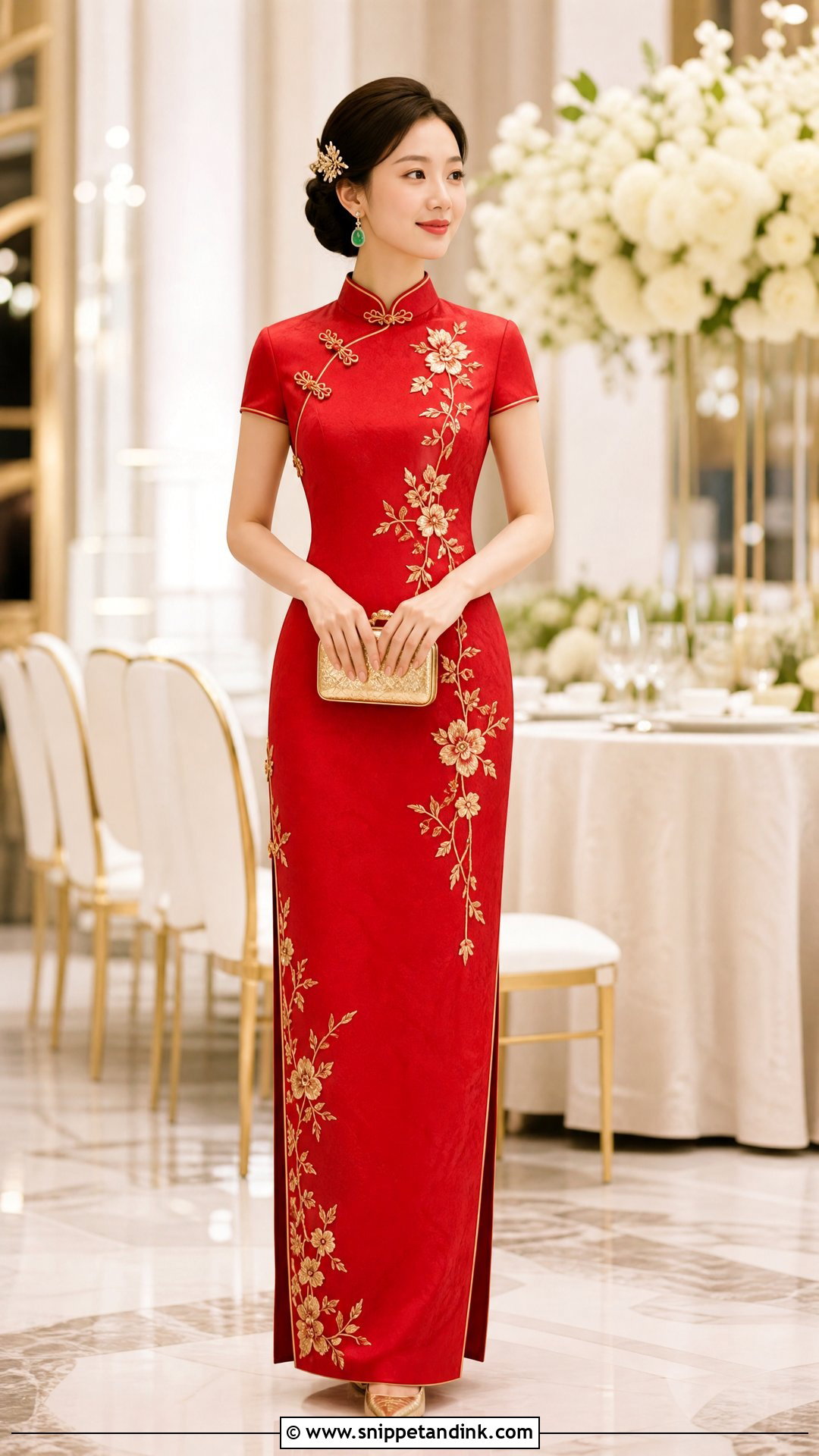
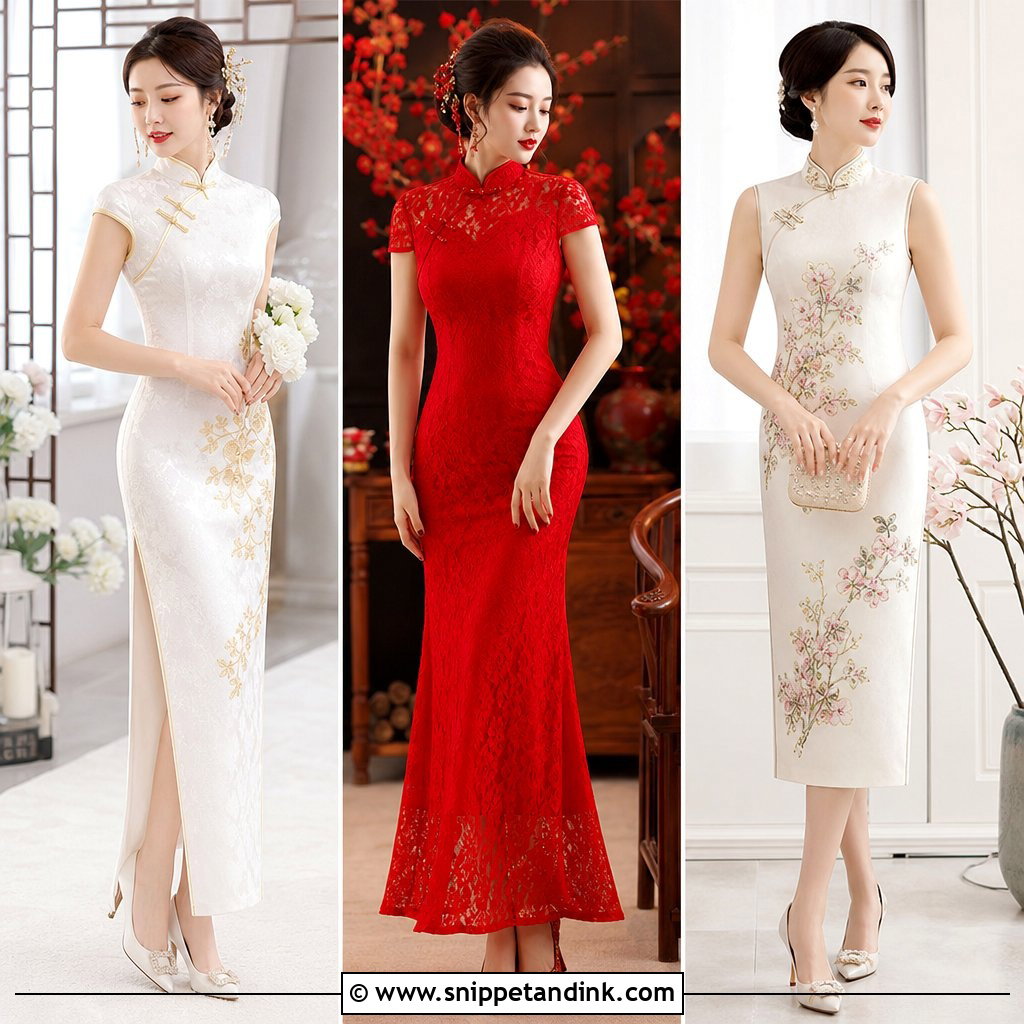
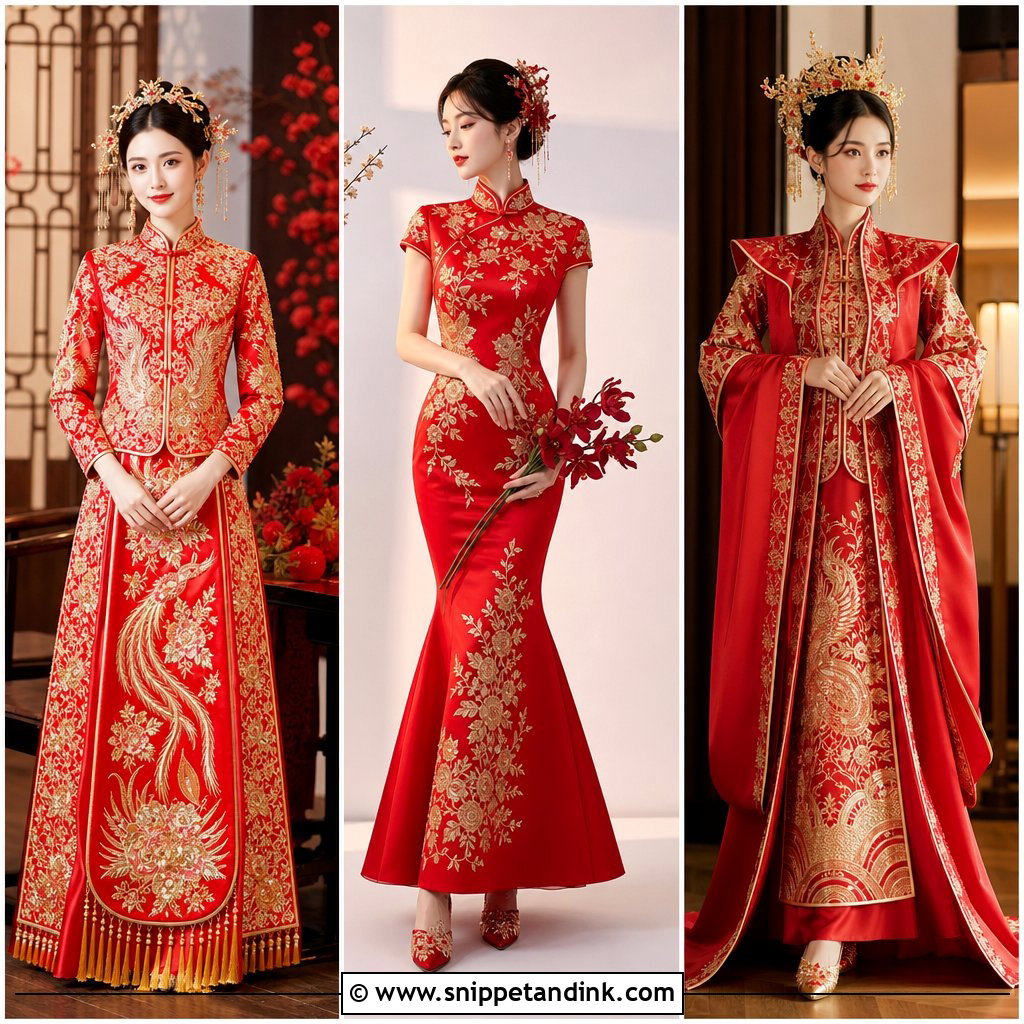
A floor-length red qipao is the cleanest silhouette in this list, and the most dependent on fit. Before anything else I have the bride sit, climb a step and bow in it. If the hips pull or the side slit gapes, it needs letting out, because a qipao that only works standing will ruin the tea ceremony. Look for a Mandarin collar that doesn’t press on the throat, knot closures and gold embroidery that frames one side instead of covering everything. Pair it with closed-toe red or metallic heels, a gold clutch, jade earrings and a plain bracelet. With a detailed collar, leave the neck bare.
8. Traditional Chinese Bride Velvet Qipao Outfit
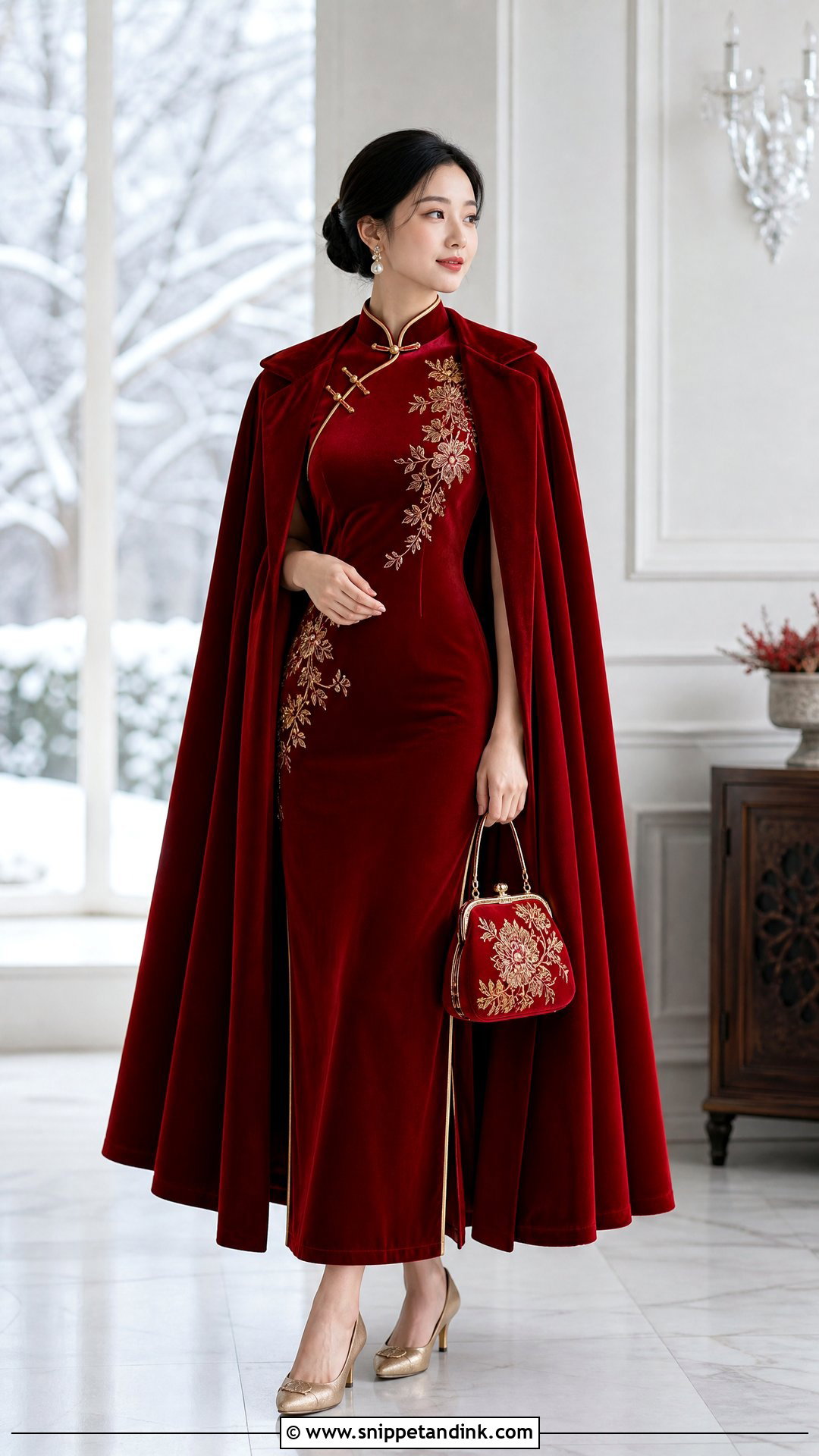
For a winter wedding, red velvet gives warmth and depth that silk can’t. Look for deep crimson or true red with gold piping and restrained embroidery, cut midi or full length. Velvet has no stretch, so I ask for slightly more room at the seat than you’d want in silk; the fabric also marks where it’s been pressed, so avoid sitting on it in a car for long before photos. Gold low heels, a small embroidered bag, pearl-and-gold earrings and a decorative comb complete it. Outdoors, layer with a red cape or embroidered jacket, never your everyday coat. Velvet swallows light, so ask your photographer for bright, even light to keep the embroidery visible.
9. Traditional Chinese Bride Dragon And Phoenix Outfit
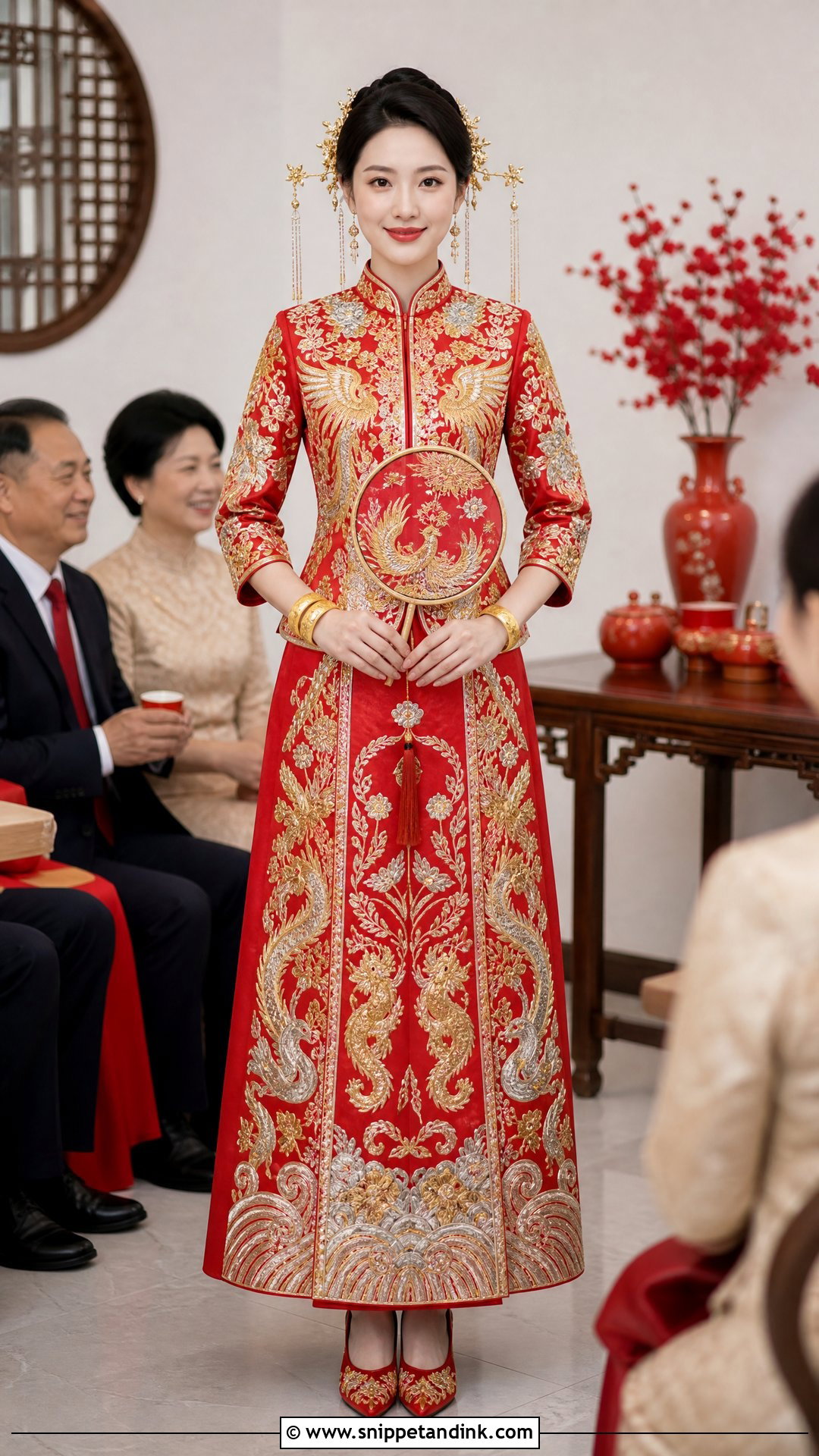
Dragon and phoenix together stand for the balance between husband and wife, which is why they appear on so many qun kwa sets. The embroidery should be distributed evenly across chest, sleeves and lower skirt panels. I check symmetry on the hanger and again on the body, because a dragon that lands lopsided over the bust is very noticeable in front-facing tea photos. Gold thread is the classic finish, and touches of silver help small details separate in pictures. Add red embroidered shoes, gold bangles, drop earrings and a phoenix ornament. Hold a round fan for portraits, then hand it to a bridesmaid when the tea service starts. The groom can coordinate in red or a dark traditional jacket without copying her motifs.
10. Traditional Chinese Bride Peony Xiuhefu Outfit
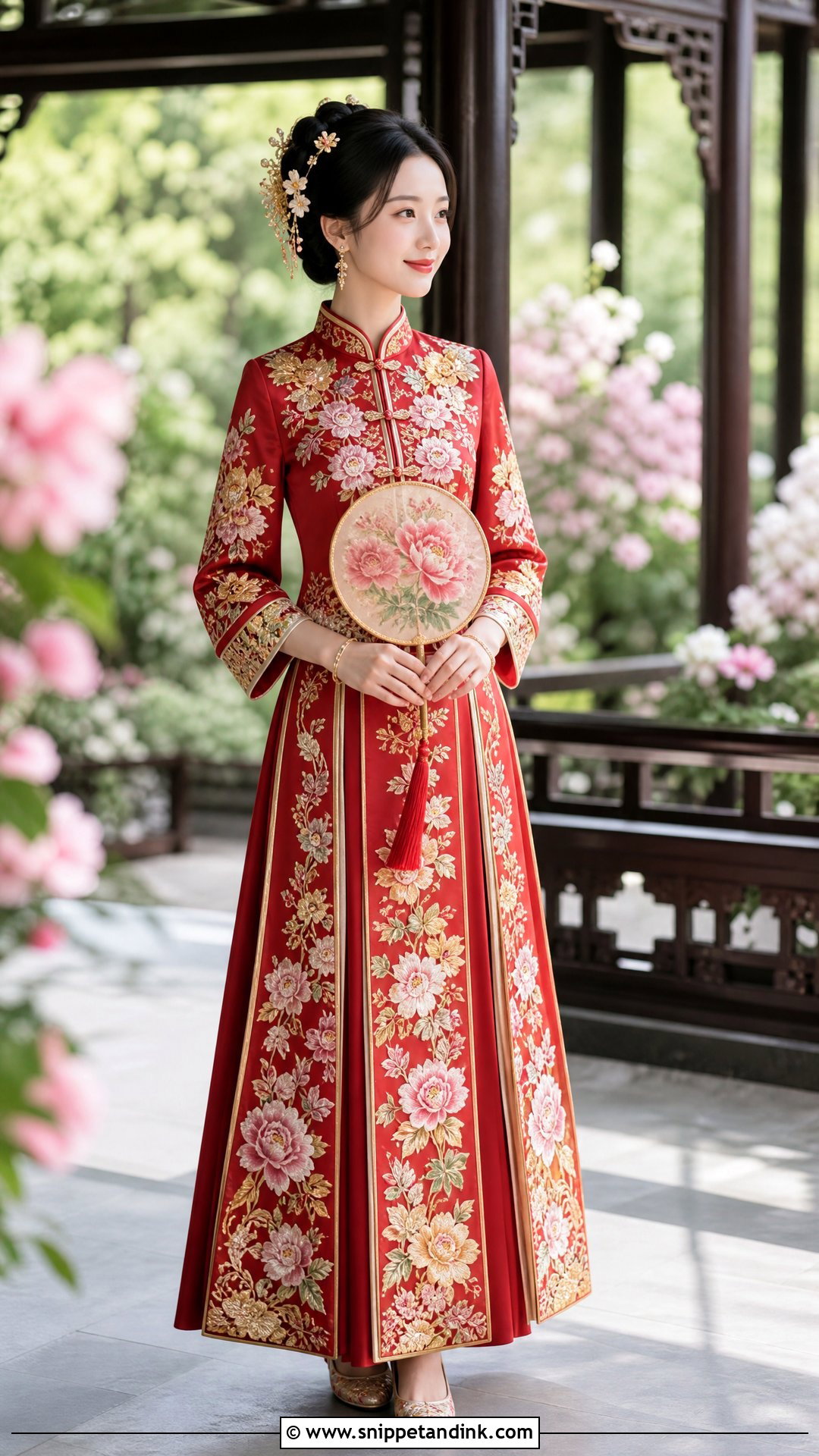
Peonies soften a red xiuhefu without making it less formal. I like the blossoms concentrated at shoulders, cuffs and front closure, with matching flowers along the skirt hem so the eye travels top to bottom. Pink and ivory thread mixed with gold lighten the red, which suits brides with cooler skin tones who find solid red harsh near the face. Style it with red embroidered flats, pearl drops, slim gold bangles and a round fan carrying one large peony. Silk flowers or floral pins around a low bun echo the theme. Don’t bring in cranes or dragons as well; the peony should be the only story.
11. Traditional Chinese Bride Mamianqun Outfit
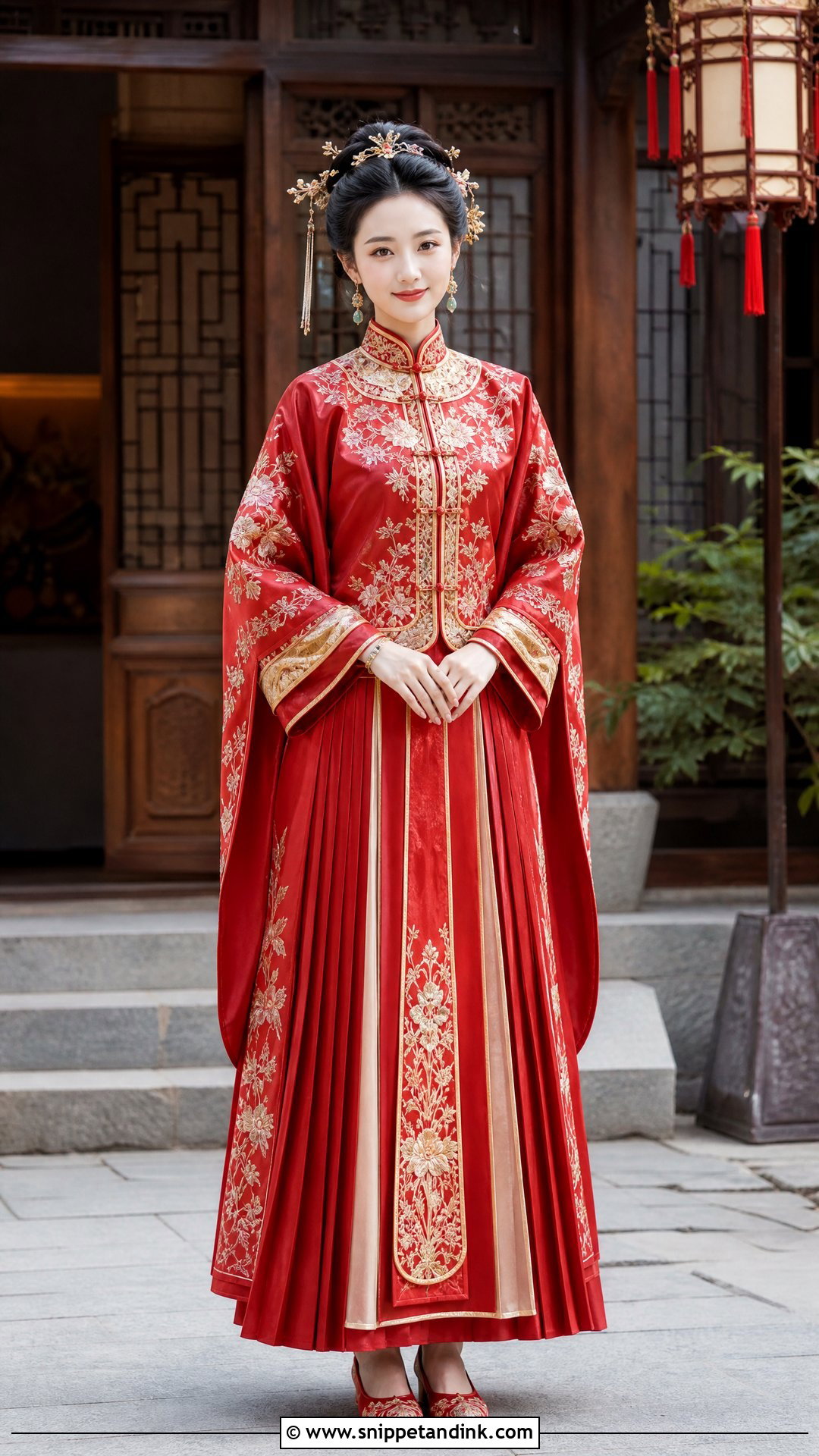
A red mamianqun is the most adaptable base in this list because the top half can change while the skirt stays. Choose crisp pleats, defined flat panels and embroidered borders that show when you stand. A fitted red or gold jacket should meet the waistband without bunching, and an embroidered outer robe turns it ceremonial before coming off for the reception. Finish with red cloth shoes, jade-and-gold earrings, a narrow bracelet and a bun secured with traditional-inspired hairpins. The skirt wraps, and the overlap changes how it hangs, so I mark the wrap point at the fitting. The hem must clear the floor enough that she can climb steps without lifting it.
12. Traditional Chinese Bride Red Veil Outfit
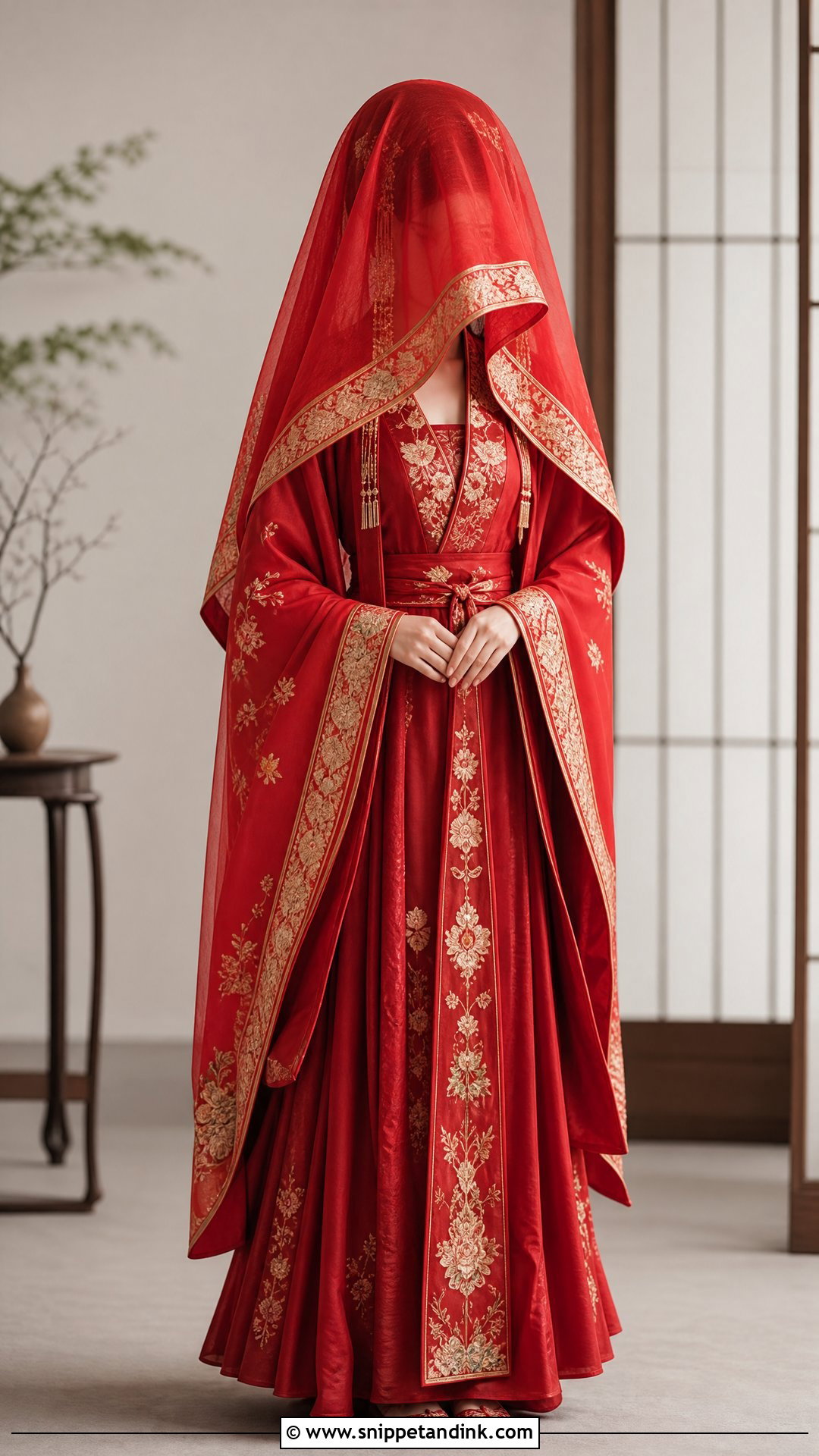
The honggaitou, the red bridal veil, is pure ceremony, and it only makes sense over a full traditional outfit such as hanfu, xiuhefu or a robe and skirt. A gold embroidered border, tassels or one central motif is plenty. Weight matters more than decoration: a heavy veil drags pins loose and flattens the hair beneath. I ask the stylist for a smooth updo with pins that sit flush, and earrings small enough not to snag the fabric. Embroidered red shoes and a fan for after the reveal finish it. Rehearse the lifting with whoever will do it, slowly and upward, so the headpiece stays put.
13. Traditional Chinese Bride Phoenix Crown Outfit
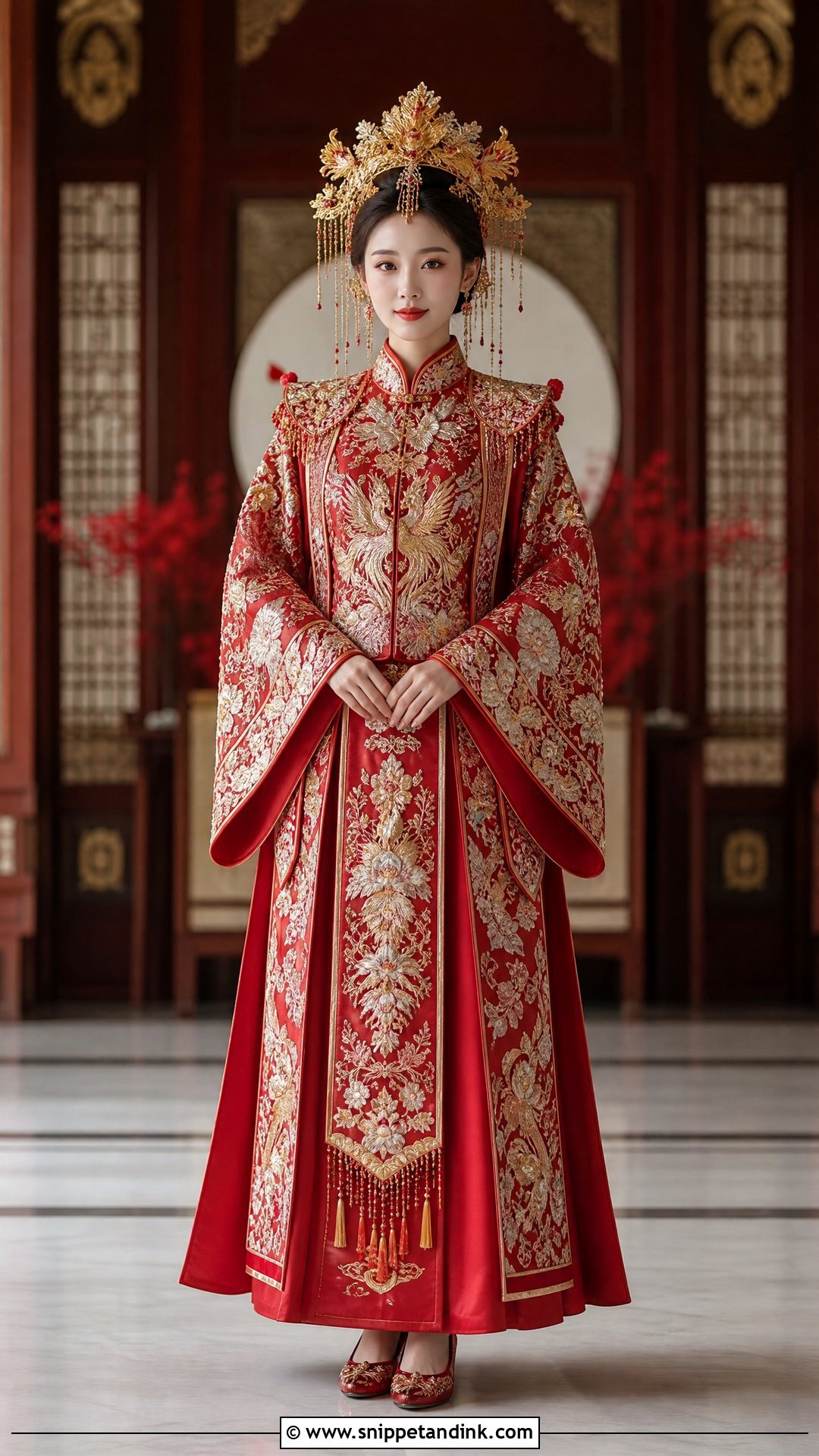
With a phoenix crown, everything else on the bride exists to support it. Pair it with a fitted red robe, an embroidered skirt and a coordinated shoulder adornment. Never buy a crown for its height. The tall, heavily beaded ones press on the forehead and start aching within two hours, and a bride who keeps adjusting her crown looks uneasy in every photo. Secure fit beats size. Keep earrings small, leave the neck uncluttered and wear red flats or low heels under the long hem. Book a fitting with the crown, hair and full outfit together, then turn, bow, sit and walk in it before you sign off.
14. Traditional Chinese Bride Gold Embroidered Outfit
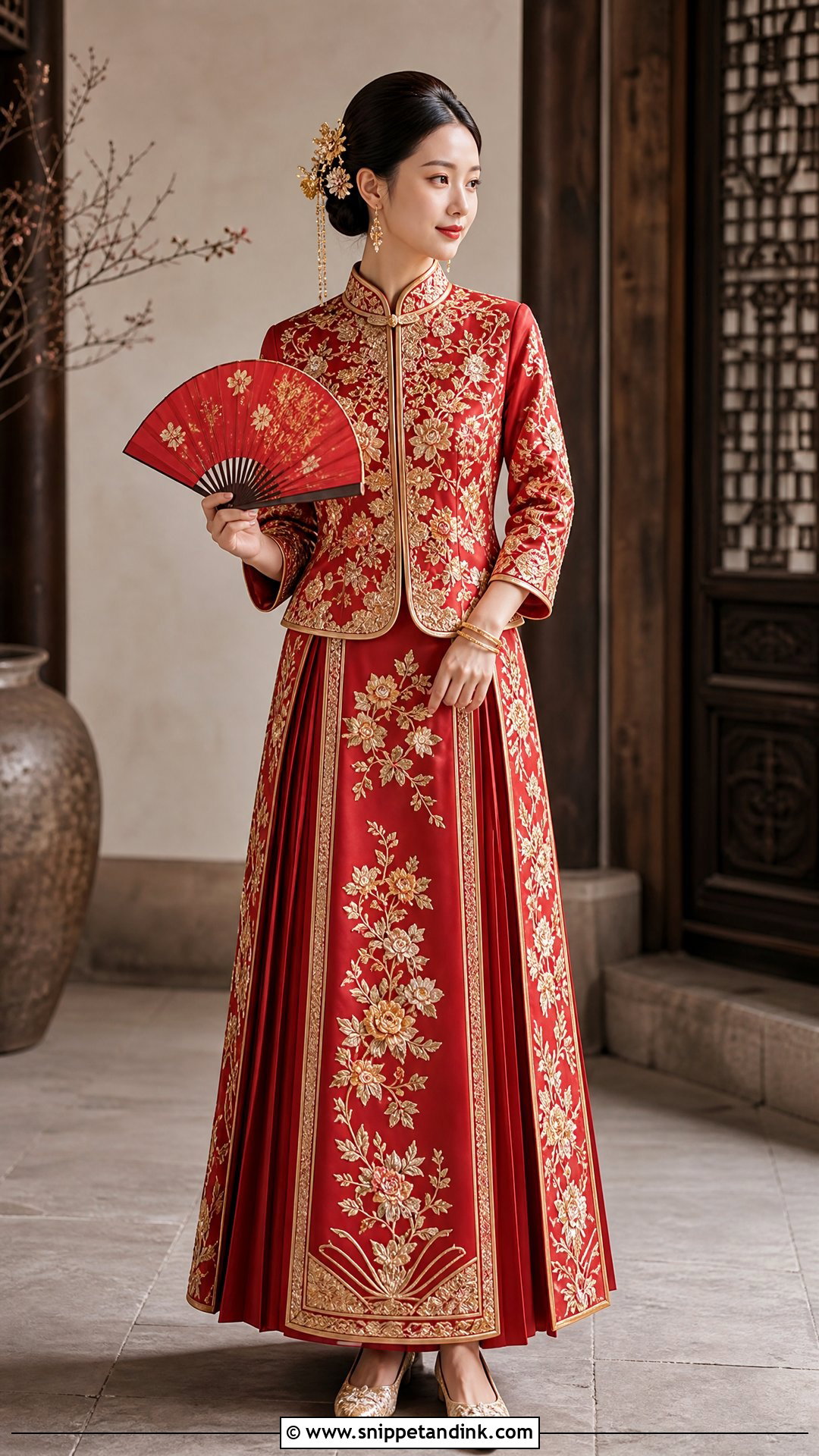
Dense gold embroidery looks rich on a hanger and can turn into a flat metallic sheet on camera. That’s why I look for qun kwa or xiuhefu sets where the work is concentrated at neckline, sleeves, jacket front and skirt panels, with red left showing in between. Gold-thread jackets are heavy, often noticeably heavier than brides expect, so try one on for twenty minutes before committing. Keep shoes plain gold, bangles smooth, earrings small, and use one ornamental hairpiece. A red fan with a narrow gold border ties it together. A clean complexion and classic red lip keep the face from competing with the jacket. Photograph in bright, neutral light so thread, fabric and beading look distinct.
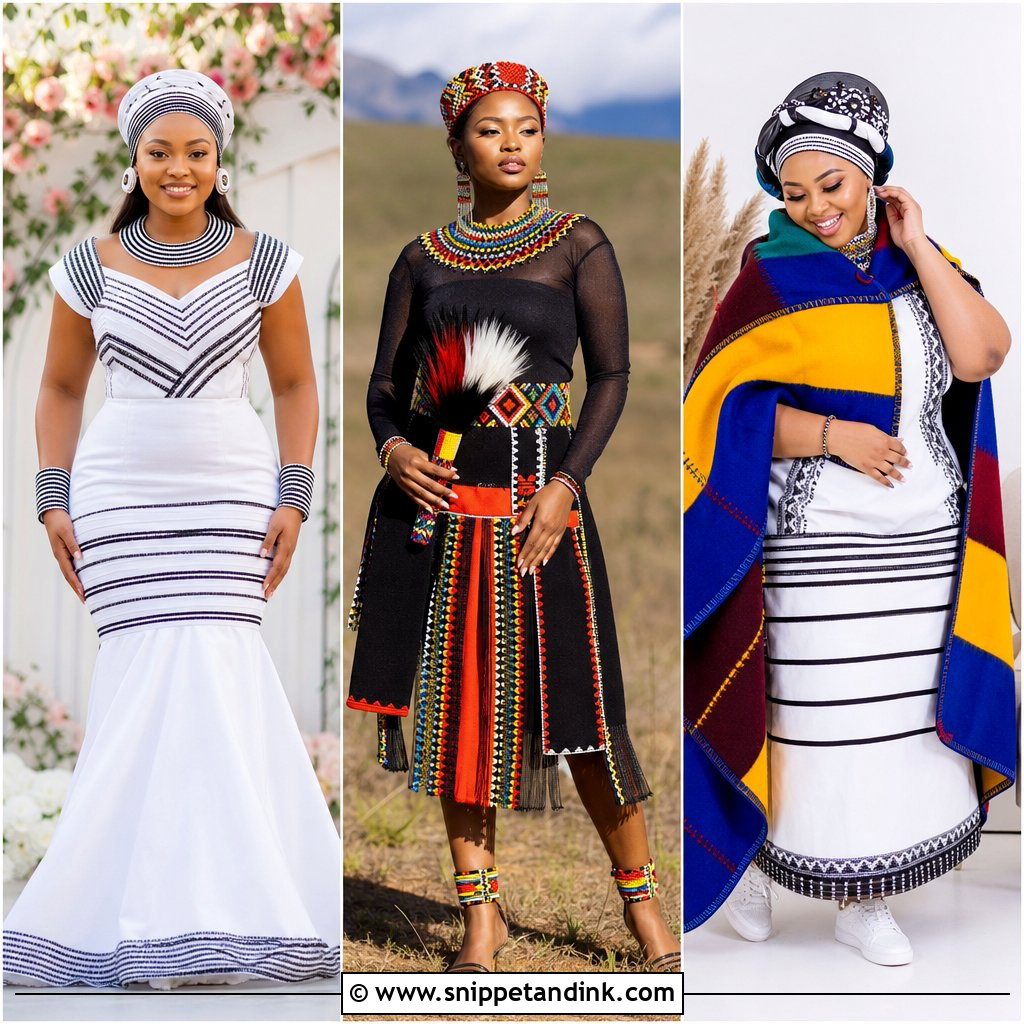
15. Traditional Chinese Bride Heirloom Qun Kwa Outfit
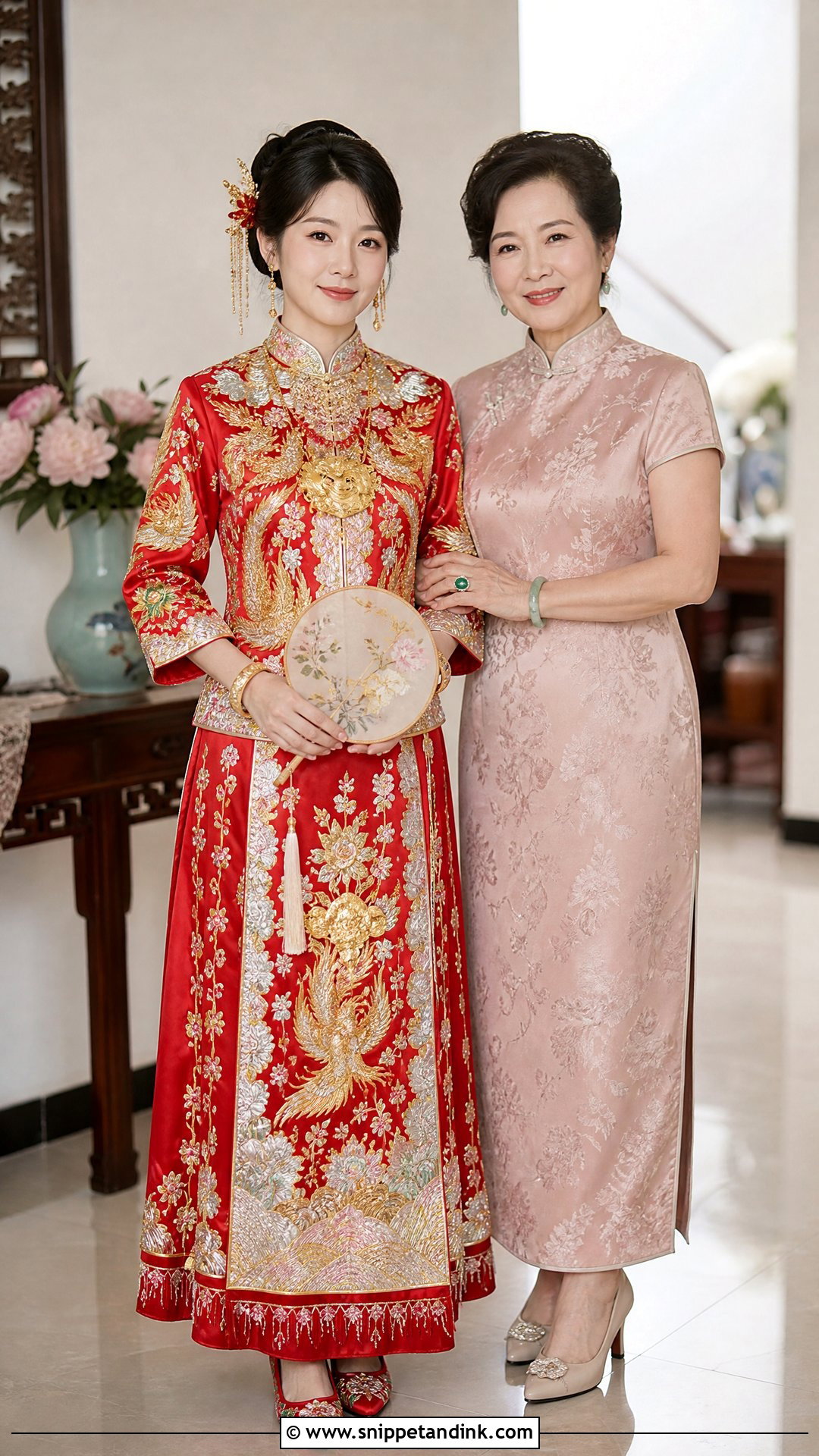
An heirloom qun kwa needs a conservator’s eye before it needs a stylist. Have it inspected for loose thread, tired closures, stains and fragile lining, and ask for alterations that can be undone, such as taking in a seam rather than cutting it. Older metallic thread can tarnish and fray, so I avoid pinning through embroidered areas at all. Style it with red flats, restored family jewelry and one gold pin. If the skirt is short for you, choose shoes worth showing. Keep new accessories to a fan or small gold bag, and photograph yourself with the relative who wore it first.
16. Traditional Chinese Bride Plus Size Xiuhefu Outfit
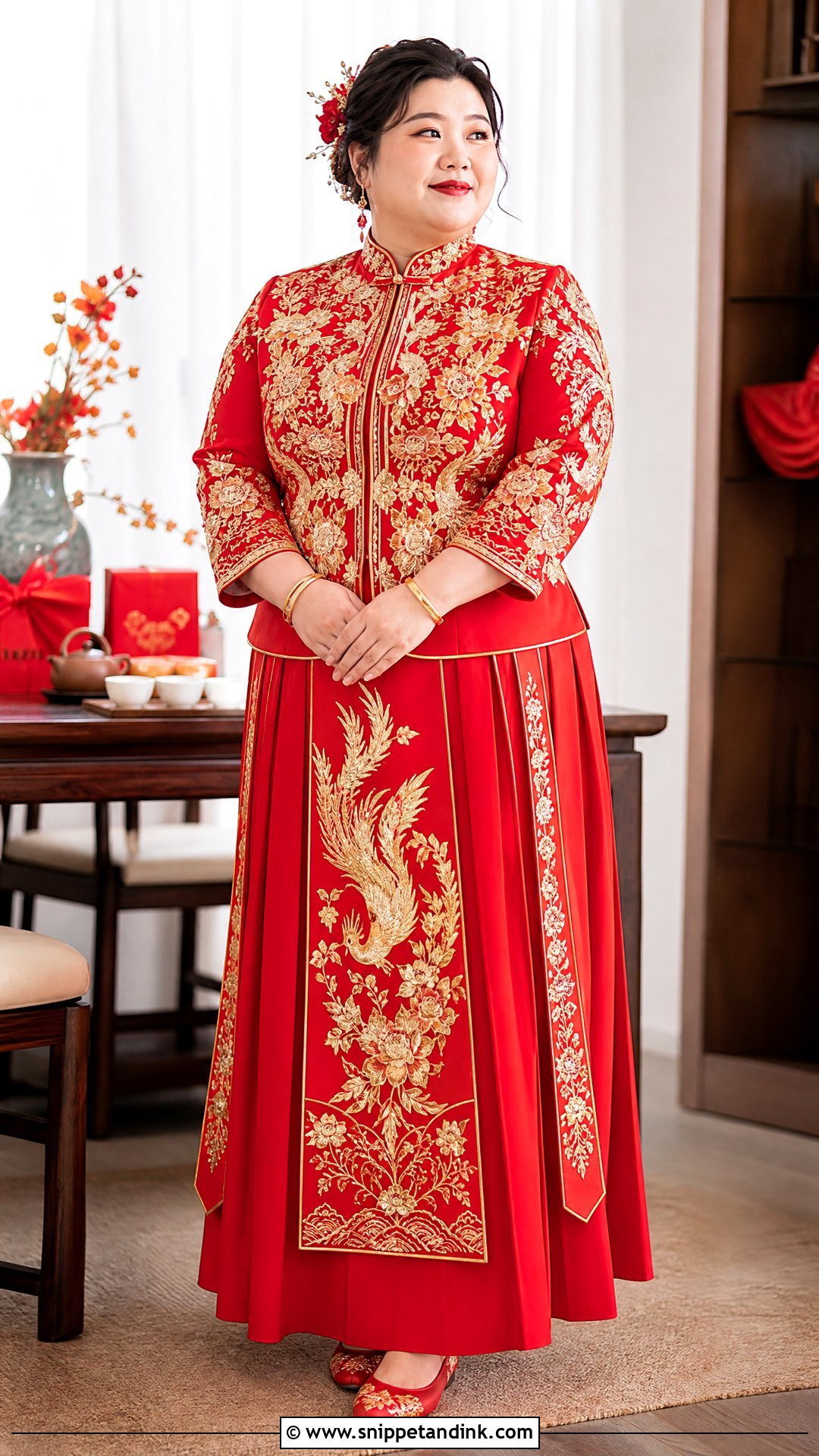
A xiuhefu suits a curvier bride well when the shoulders and waist are right. Most of the fit problems I see come from shoulder seams sitting too wide and sleeves cut for a slimmer arm, which pulls the whole jacket across the bust. Get those right and there’s no need to bury the body in extra fabric. A gently shaped jacket with a clean center closure gives definition, and an adjustable or custom waistband keeps sitting comfortable through the tea ceremony. Ask for embroidery spread evenly rather than one big motif in a single spot. Add supportive embroidered flats, medium earrings, slim bangles and a floral hairpiece in proportion. Custom measurements matter here, since standard sizes rarely match the ratio of bust, arm and hip.
17. Traditional Chinese Bride Petite Qun Kwa Outfit
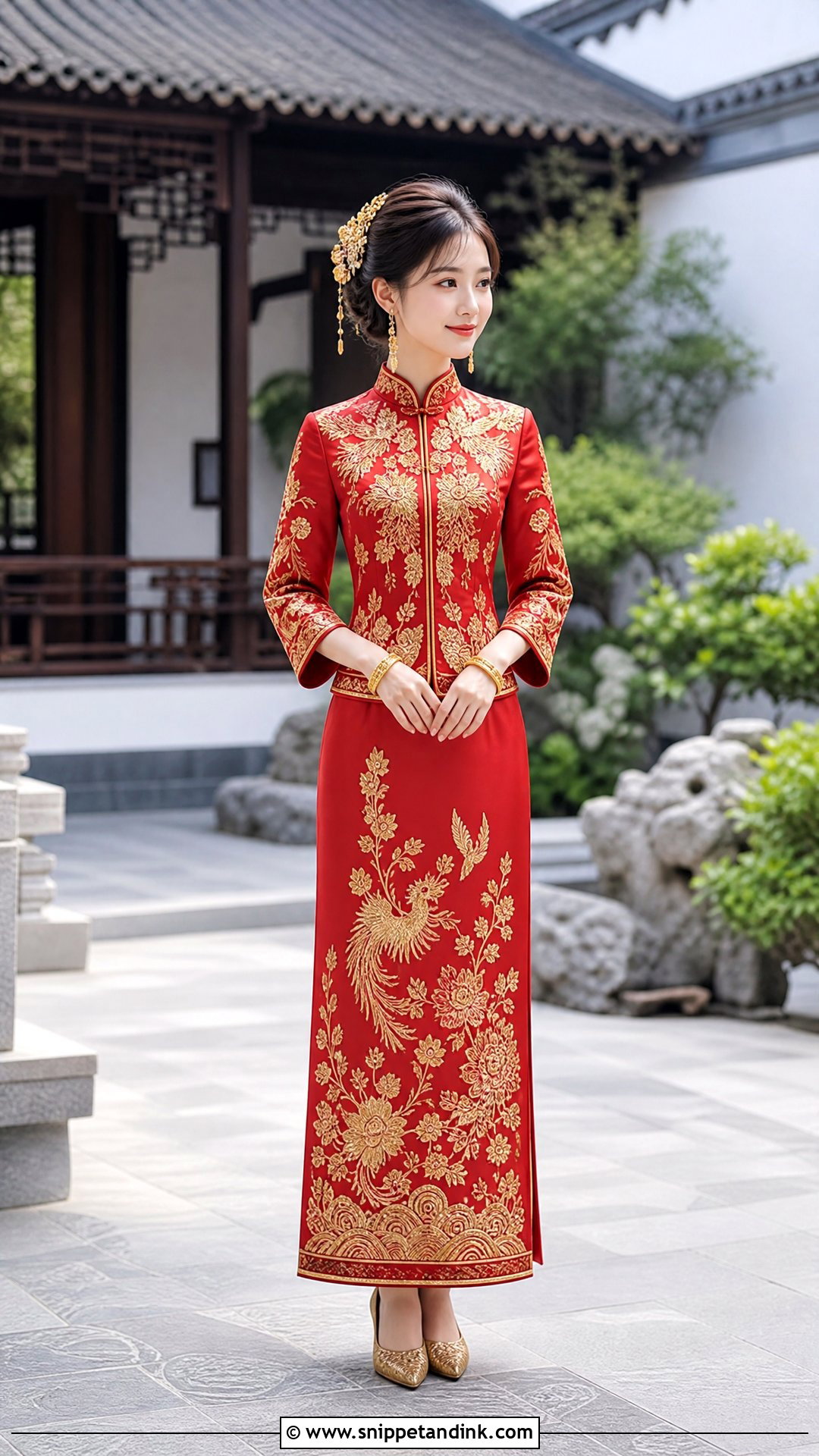
Petite brides can carry an ornate qun kwa, provided the scale is adjusted. The jacket should end near the natural waist; an off-the-rack one often drops lower and cuts the leg line in half. Smaller motifs keep more red visible on a small frame. Hem the skirt so the shoe fronts show, and do it from the waistband if you can, so the embroidered border survives intact. Low gold heels, delicate bangles, drop earrings and a compact phoenix comb fit the proportions. A high, controlled bun adds a little height. I’d avoid oversized sleeves, broad shoulder details and any crown wider than your face.
18. Traditional Chinese Bride Jade Accessory Outfit
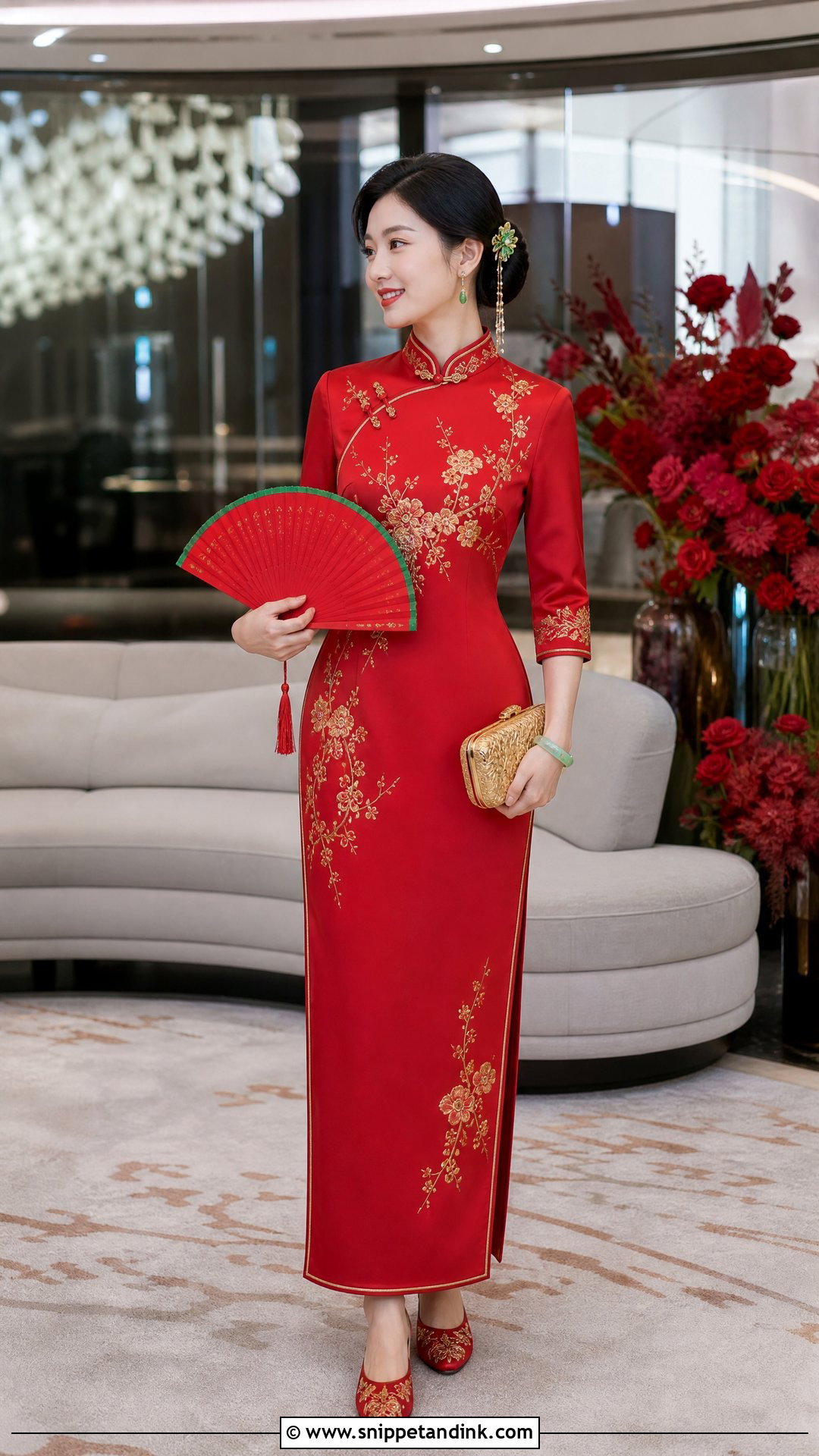
Jade’s cool green is the most natural contrast to bridal red, and it carries its own meaning for many families. Start with a red qipao, qun kwa or xiuhefu with moderate gold work, not dense multicolor embroidery that would fight the green. Jade drop earrings, one jade bangle and a gold hairpin with a small green stone are enough. Red embroidered shoes and a structured gold clutch keep the rest calm. An open neckline can take a short jade pendant; a high collar can’t. Many brides wear a jade bangle that was a family gift, and I always check it slides on and off easily before the morning, since hands swell a little through a long day.
19. Traditional Chinese Bride Tea Ceremony Outfit
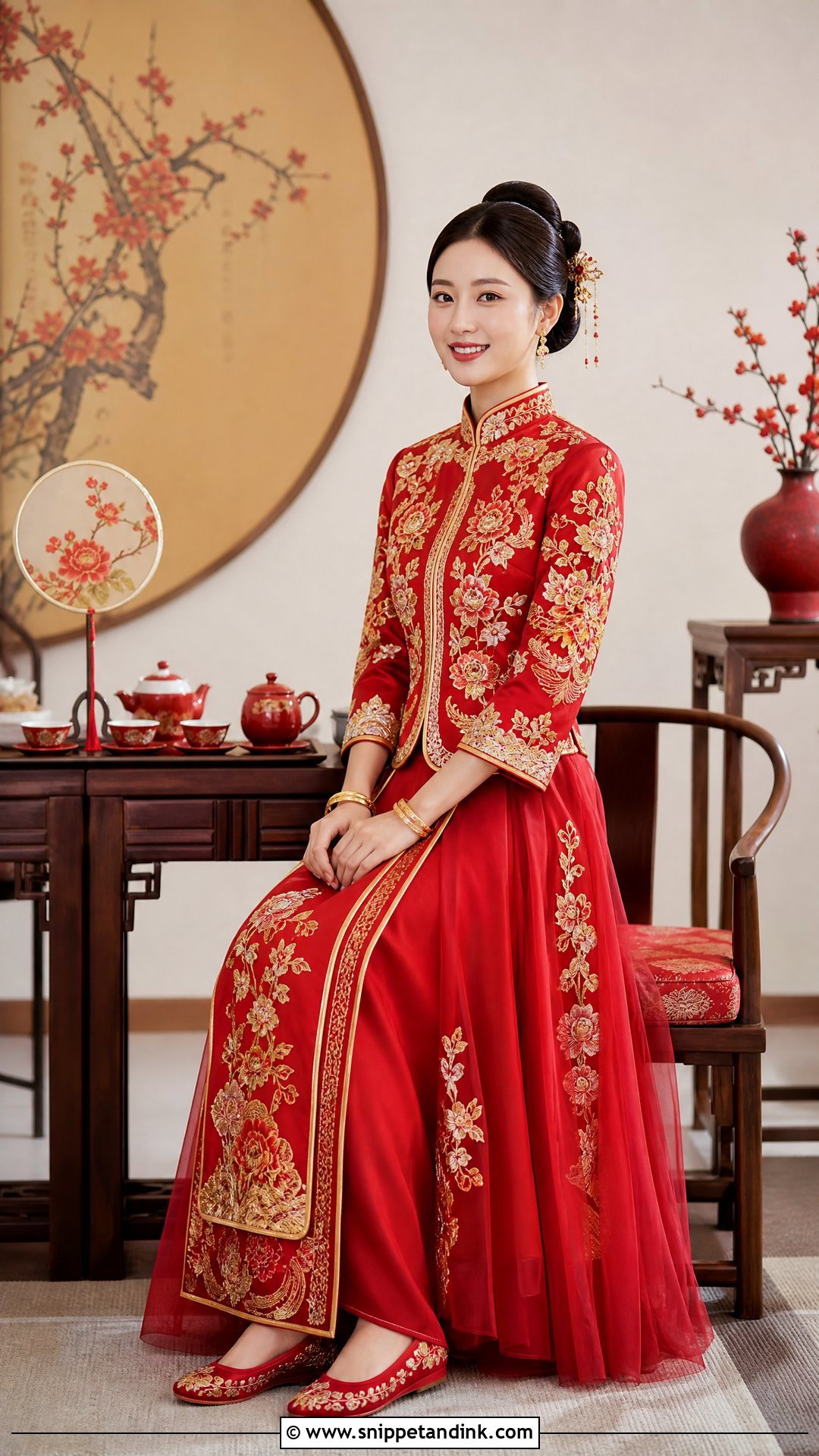
For the tea ceremony, I dress the bride for the movements before the photos. She’ll kneel or bend, pass cups with both hands, and stand and sit repeatedly as elders are served. A red qun kwa or xiuhefu handles this well, because a two-piece outfit gives more freedom than a long ceremonial robe. Check that sleeves stay clear of the cups and that the skirt length is safe when kneeling. Wear stable embroidered flats, gold bangles, small earrings and a firmly pinned bun. Keep the fan for portraits only. Many couples who wear Western dress later still change into traditional clothing for this ritual. A full practice run at home, with real cups, saves embarrassment on the day.
20. Traditional Chinese Bride Reception Qipao Outfit
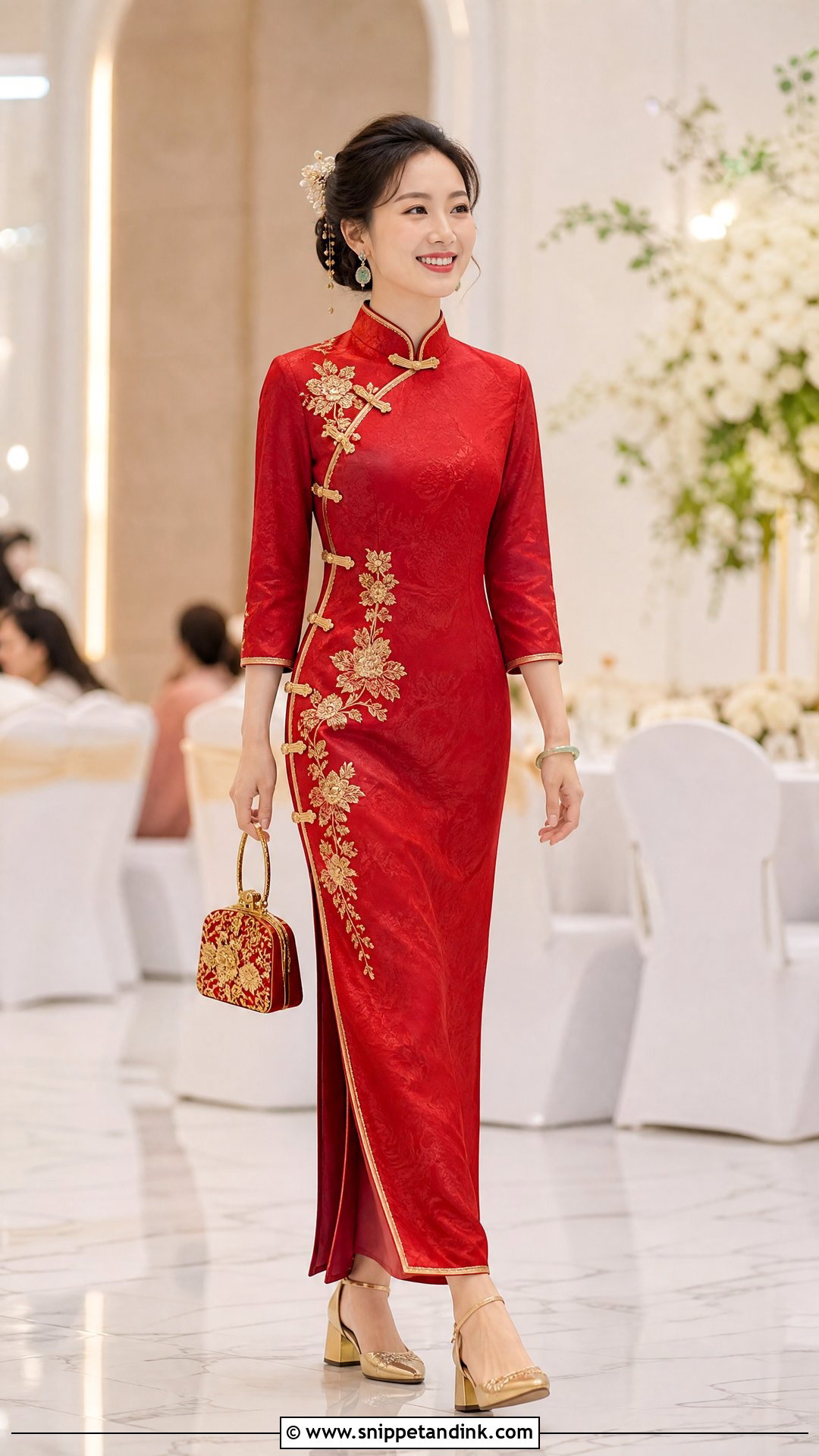
The reception qipao is the outfit you’ll actually live in for the evening, so I prioritize movement over grandeur. A red midi or ankle-length dress with a Mandarin collar, knot closures and gold embroidery along one side gives the formality without the weight. A back slit or modest side slits lets you walk between tables freely. Gold block heels, jade earrings, a slim bracelet and a small embroidered bag finish it. Swap the ceremony crown for a light comb or floral pin; your neck will thank you after a day of headpieces. A sleek bun or polished waves both work, as long as the collar stays visible.
Ordering a Qun Kwa or Hanfu Set in Good Time
Hand-embroidered qun kwa are slow to make, and the finest ones are graded by how much of the fabric the embroidery covers. A made-to-measure, hand-stitched set can take several months, while machine-embroidered sets and rentals arrive much faster. If you want hand work, start looking well ahead of your date, and budget a fitting near the end for small adjustments.
Tell the maker every movement the outfit must handle. A bride who will kneel for tea needs a different skirt ease than one who will stand. Mention the crown or headpiece too, since a heavy ornament changes how the collar should sit at the back of the neck.
Caring for Gold Thread Once the Wedding Is Over
Metallic embroidery hates moisture and creases. I never steam directly over gold thread; press from the reverse with a cloth between, or leave it to a specialist cleaner who handles embroidered silk. Spot stains like tea or makeup should be dealt with soon, not after months in a bag.
- Store the jacket flat in acid-free tissue, with tissue rolled inside the sleeves so the fold never runs through a motif.
- Keep it in a breathable cotton bag, not plastic, away from damp walls and direct light.
- Refold along different lines every year or so to avoid permanent creases in the embroidery.
- Keep jade and metal jewelry separate from the fabric so clasps can’t snag the thread.
Ask Whose Traditions Lead Before You Fall for an Outfit
A traditional Chinese bridal outfit works when it carries the meaning your family recognizes, fits a body that will kneel and toast, and stays comfortable for a long day. Qun kwa, xiuhefu, qipao, hanfu-inspired sets, ceremonial robes and jade accessories all have a place, but the right one depends on your family’s region and the rituals you’re keeping. Talk to your elders early, find a tailor who understands embroidered garments, and rehearse in the full outfit with shoes, jewelry, hair and headpiece. Historically inspired or modernized, the outfit should honor where you come from and let you move freely.
You'll Like These Ideas:


Leave a Reply