
Hanfu bridal dressing covers far more than the red embroidered gown most people picture. Historical Chinese wedding attire changed from dynasty to dynasty, so colors, silhouettes, layers and headpieces were never one fixed set. Tang-inspired looks tend to be colorful and flowing, Song looks quieter and longer in line, and formal Ming bridal dress is known for the phoenix coronet and embroidered robes. In fittings, the first question I ask isn’t about color. It’s how historically faithful the bride wants to be, because that decides the garment system, the layers and the maker. Below are twenty complete looks, from strict Ming ceremony to modern minimal.
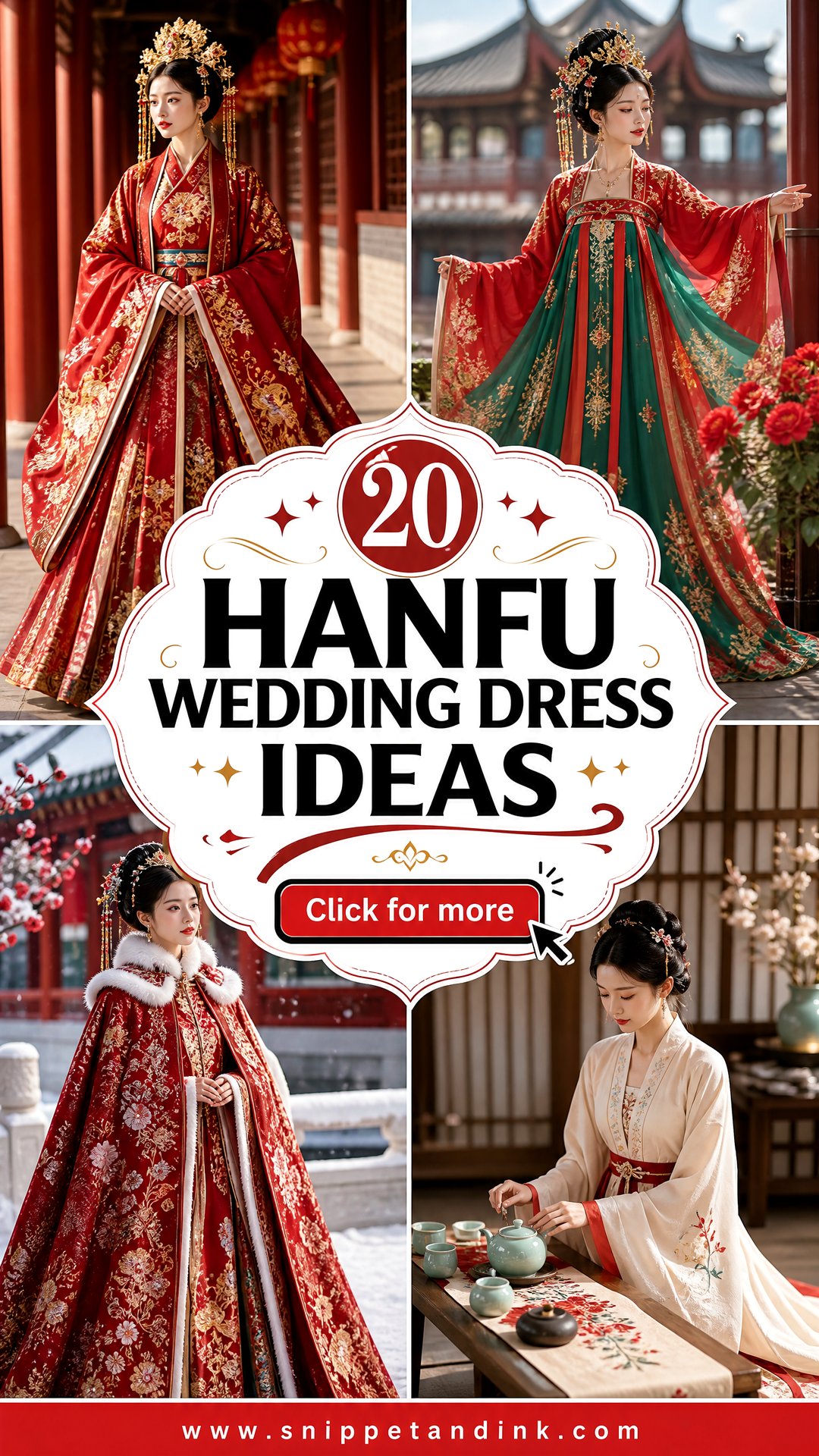
How Accurate Do You Want to Be? Briefing a Hanfu Maker
Hanfu makers usually work in one of three modes, and telling them which you want saves weeks of back-and-forth.
- Reconstruction: garments cut and layered as closely as possible to surviving pieces or period images of one dynasty. Expect strict rules on collar shape, sleeve width and accessories.
- Dynasty-inspired: the recognizable silhouette of one period, with freedom in color, embroidery and fabric. This is what most brides choose.
- Modern Hanfu: crossover collars, wrapped skirts and wide sleeves adapted for comfort, with zips or hidden fastenings and simplified layers.
Then give the maker your practical facts: the ceremony length, whether you’ll kneel or bow, indoor or outdoor, the season, and whether you’ll change for the banquet. I also ask brides to bring photos of the groom’s outfit, if he’s wearing Hanfu, so the two match in period and formality. A Ming bride beside a Tang-style groom can look oddly mismatched in photos.
Custom embroidered pieces take time, so ask for the maker’s timeline at the first conversation and leave room for at least one fitting after the garment arrives.
1. Ming Dynasty Fengguan Xiapei Hanfu Wedding Dress
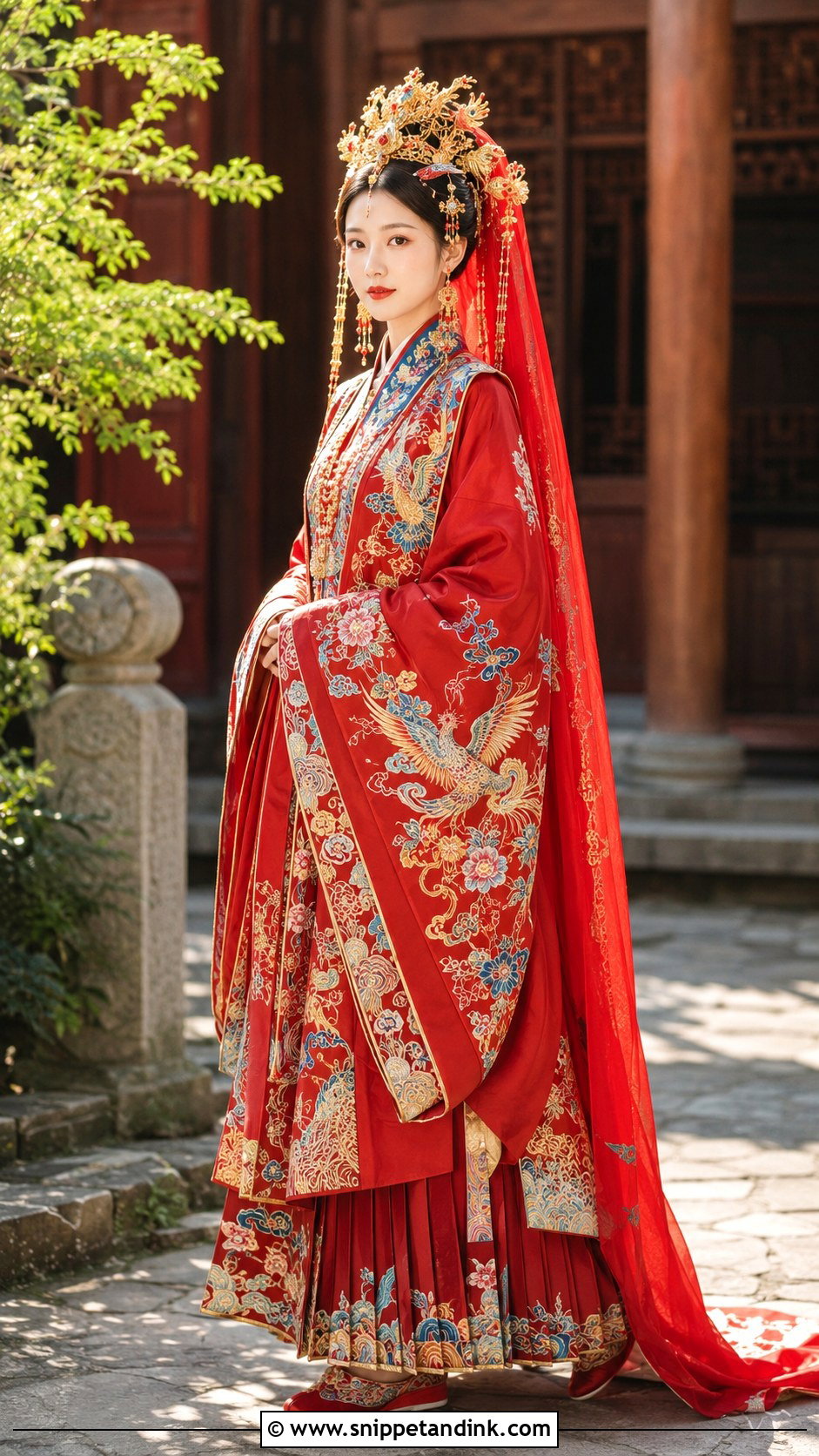
The Ming-inspired fengguan xiapei ensemble is the grandest option here, and the one that needs the most rehearsal. A rich red robe embroidered with phoenixes, clouds or flowers sits over a structured pleated skirt, and the look is defined by two accessories: the phoenix coronet and the long embroidered xiapei stole falling from the shoulders. Ming wedding imagery shows brides in exactly this combination, which is why it reads as ceremonial to almost everyone. A full coronet is heavy and sits high, so book a fitting where you wear it for at least an hour and walk a few steps. Red cloth shoes and a classic red lip finish it.
2. Red Ming Dynasty Mamian Skirt Hanfu Wedding Dress
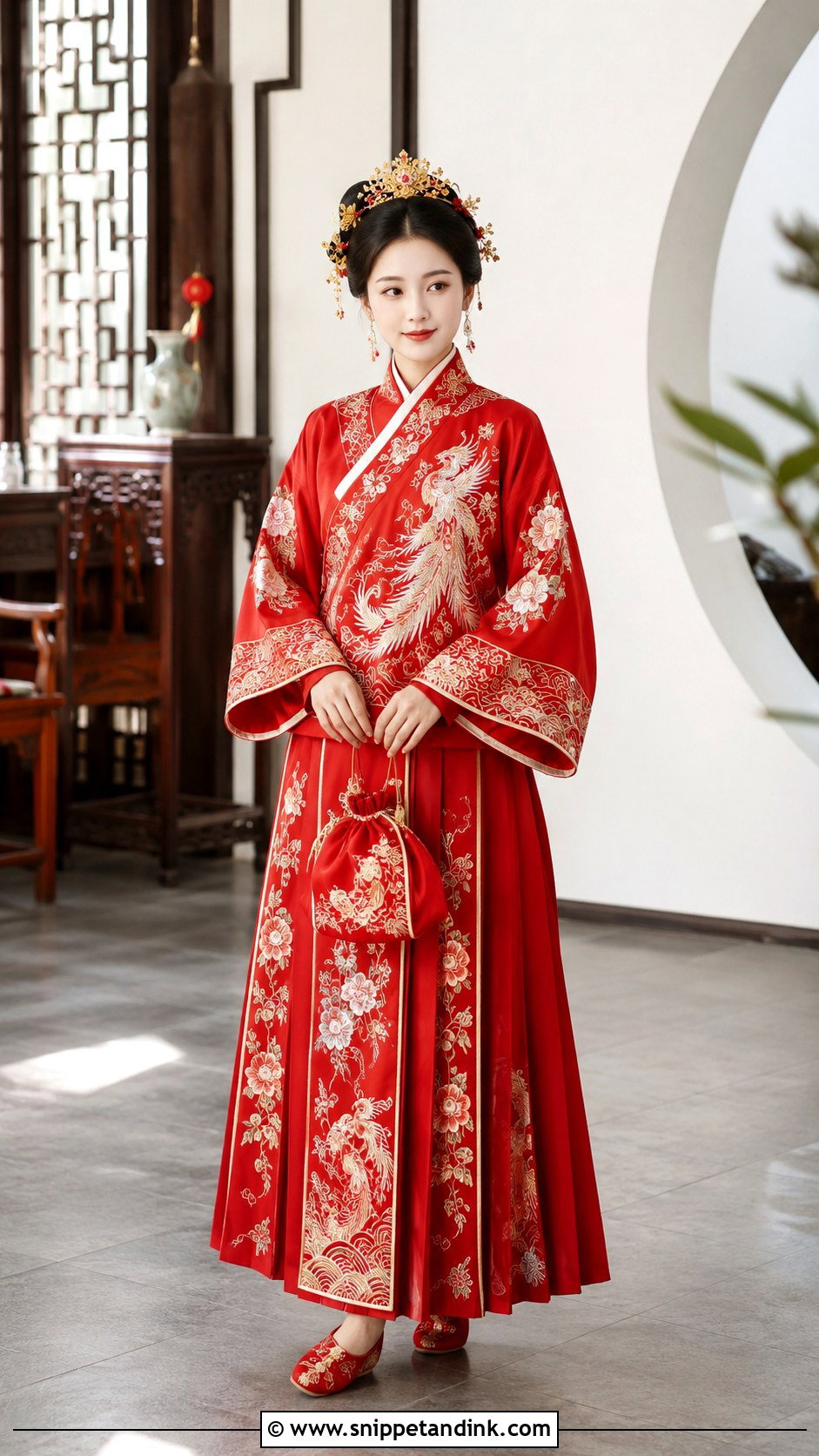
If you love the Ming shape but not the weight of a full crown, a red jacket over a mamian skirt is the answer. The mamian, sometimes called a horse-face skirt, has flat panels at front and back with deep pleats at the sides, so it looks crisp standing and opens gracefully when you walk. Choose a standing-collar or crossover jacket embroidered with peonies or paired birds, with gold edging tying it to the skirt. A smaller crown or floral comb is far lighter on the neck. It works well for tea ceremonies and banquet entrances, where you’ll be moving a lot.
3. Tang Dynasty Qiyao Ruqun Hanfu Wedding Dress
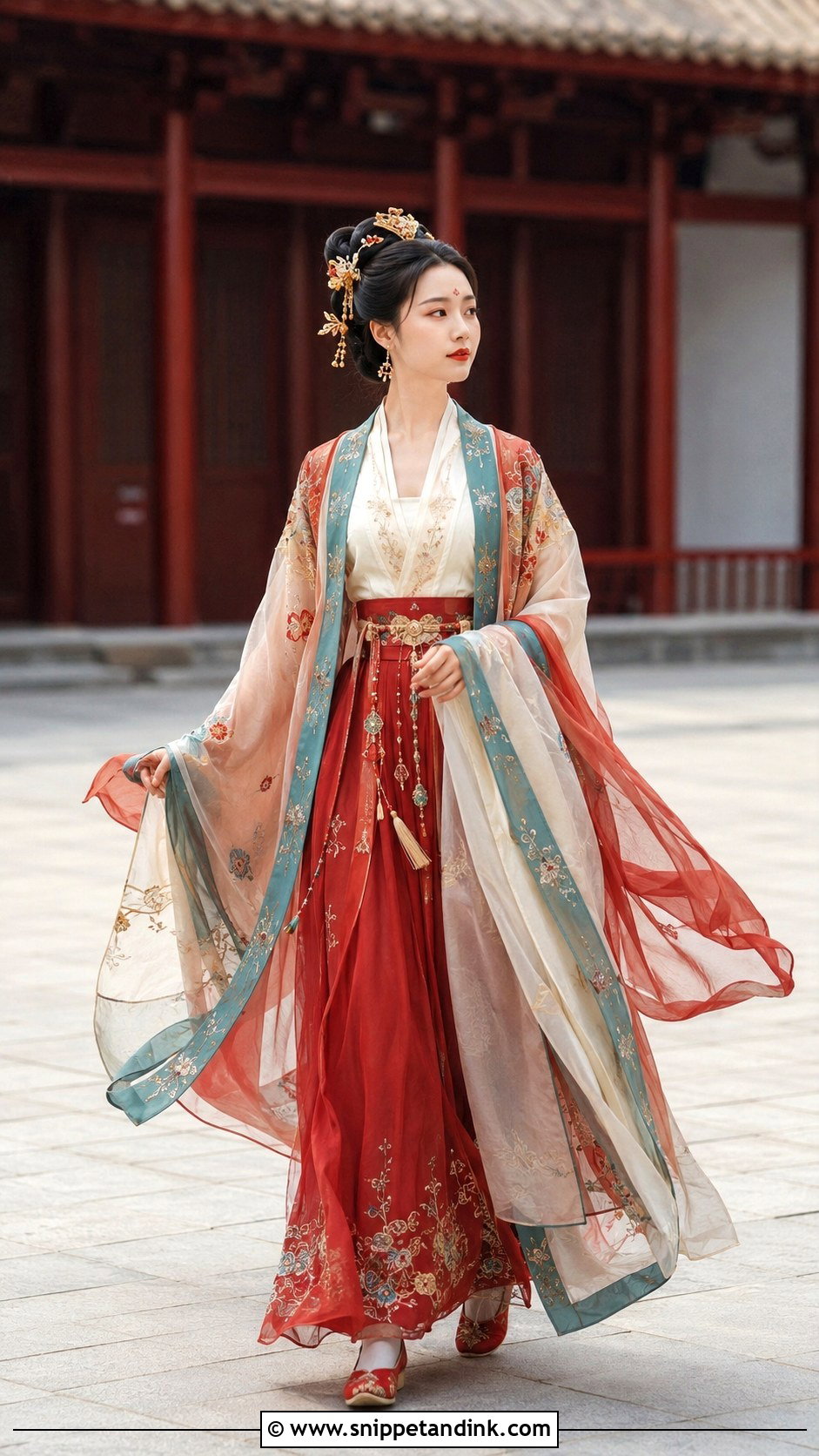
In a Tang-style qiyao ruqun the skirt ties at the natural waist, and the effect is long and flowing. A soft inner top, a red or crimson skirt with plenty of movement, and a wide-sleeved outer robe build the layers. Tang dress mixes colors freely, so turquoise, deep green or blue at the borders and ribbons look right rather than off-theme. The pibo, the long shawl draped over the arms, is where brides struggle: it slides off unless it’s pinned discreetly at the inner elbow. Keep the hair balanced, not oversized, so the colors lead.
4. Tang Dynasty Red And Green Hanfu Wedding Dress
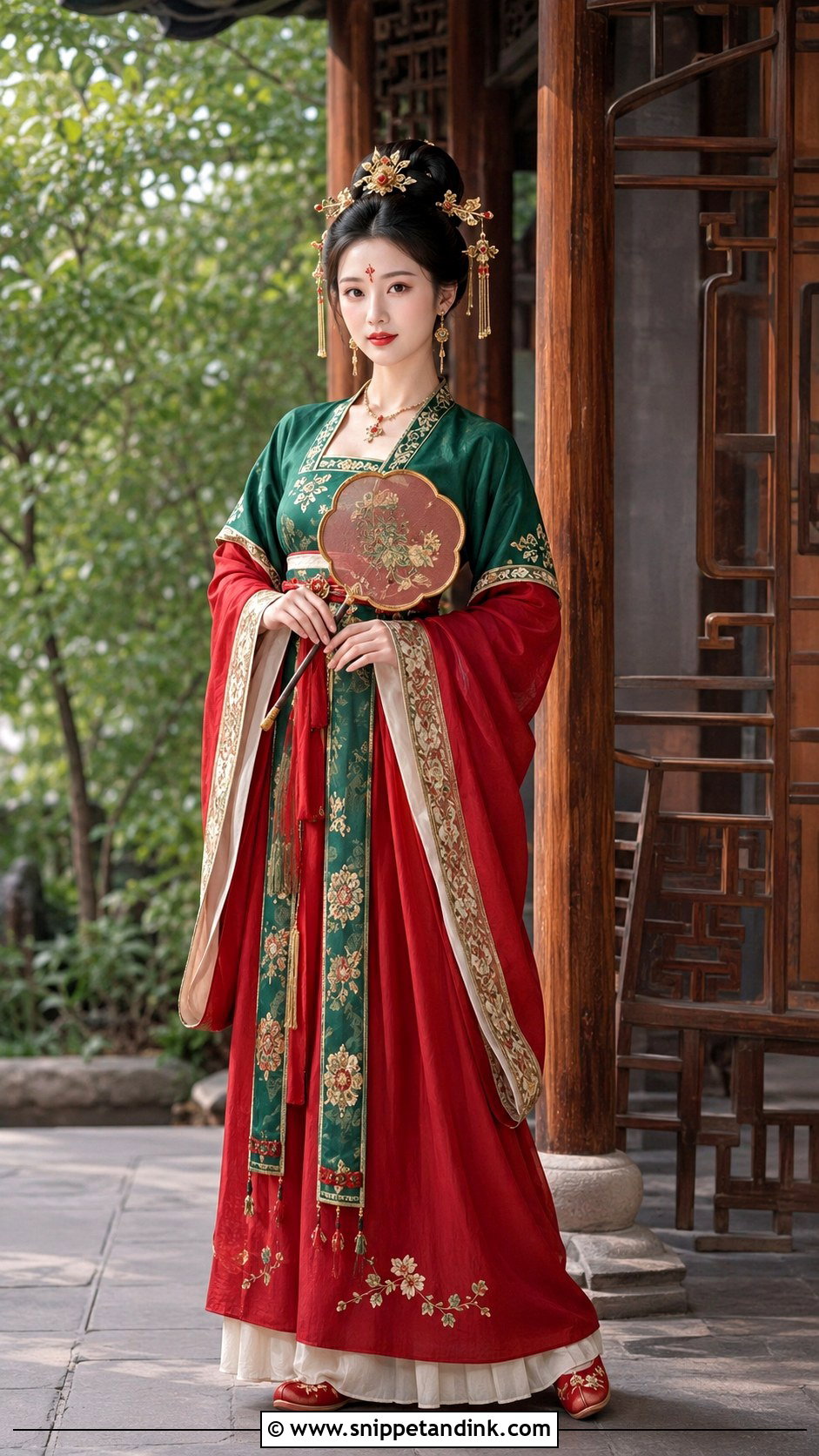
Red and emerald is a bold Tang-style pairing. A green fitted top under a high red skirt and a light wide-sleeved robe, tied together with gold trim and floral borders. I like a pale cream underlayer showing at the neckline and cuffs; it separates the two strong colors where they meet near the face. A green or gold pibo, embroidered red shoes and a fan complete it. Skip necklaces entirely, since the layered collar is already the focal point. Dark wood interiors and red lanterns suit it.
5. Song Dynasty Green Beizi Hanfu Wedding Dress
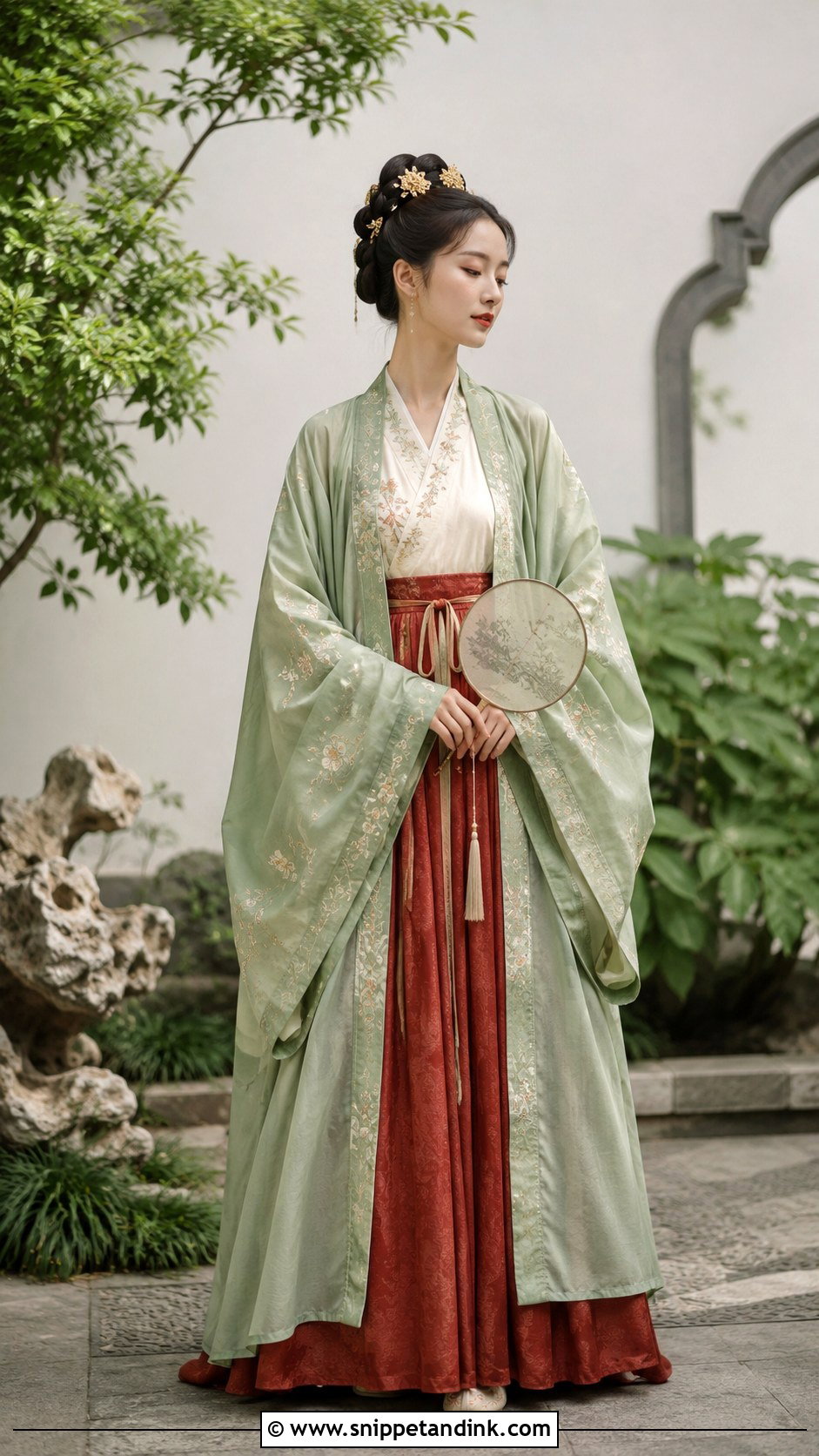
Not every bride wants embroidery everywhere. A Song-inspired green beizi, the long open-fronted coat with straight lines, layered over a pale cross-collar top and a floor-length skirt in ivory, peach or muted red, is refined and quiet. Song bridal dress is generally associated with green or indigo and restraint. The beizi’s narrow borders are where the decoration should live. A smooth updo or half-up style suits the straight silhouette, and there’s no heavy crown to manage, which makes this one of the most comfortable bridal looks on the list.
6. Song Dynasty Indigo Beizi Hanfu Wedding Dress
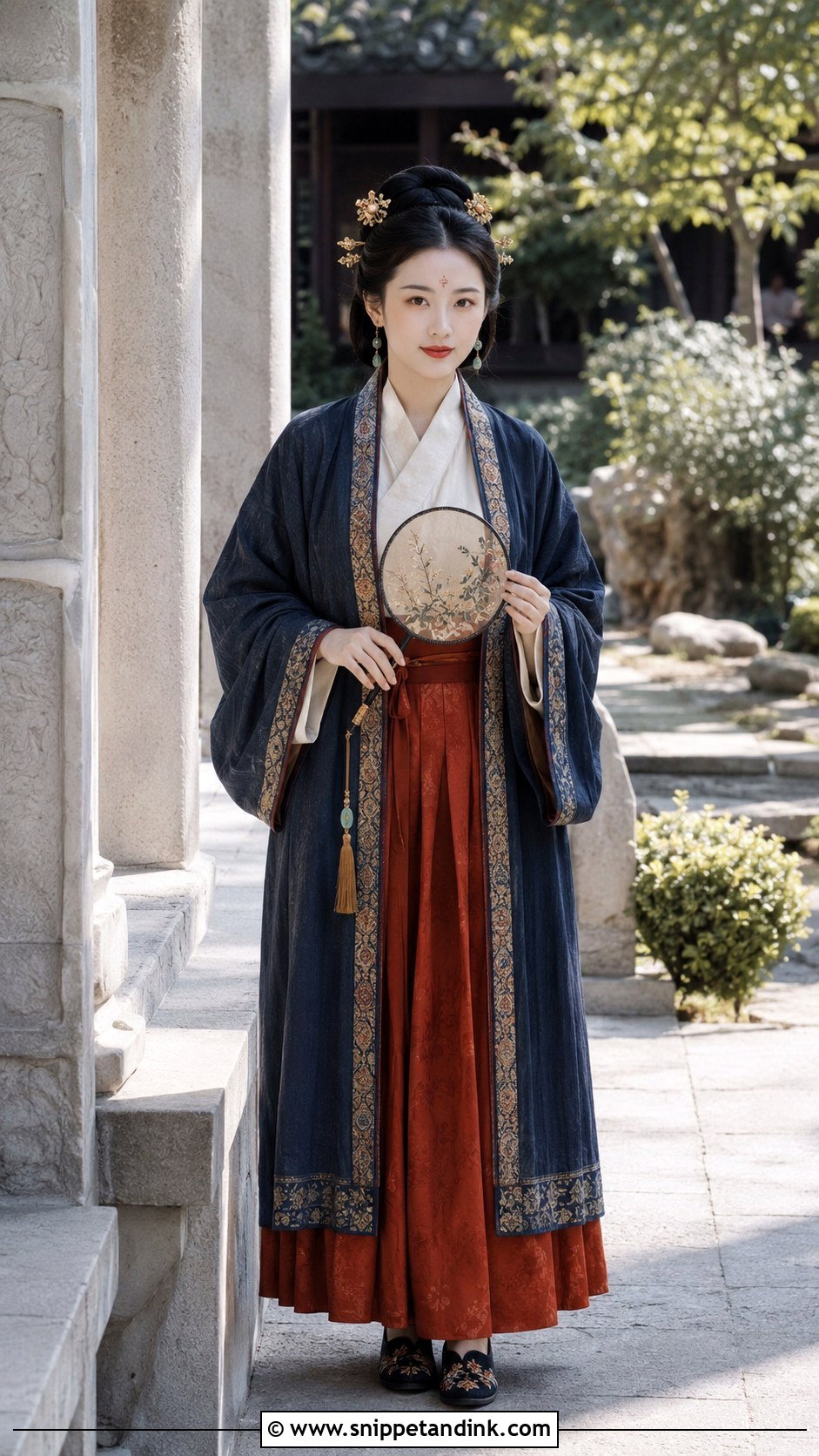
Indigo over warm red gives a contrast that looks deep in photos without being loud. A long, straight indigo beizi with delicate embroidery at the collar and front edges, an ivory crossover top and a softly pleated red or rust skirt make the base. Beizi are traditionally worn open and straight, so I’d only add a waist sash if your specific garment was designed for one; forcing a belt onto it breaks the long line. Jade-colored earrings and gold hair ornaments around a neat bun finish it. Pale stone and wood surroundings flatter the palette.
7. Han Dynasty Black And Red Shenyi Wedding Dress
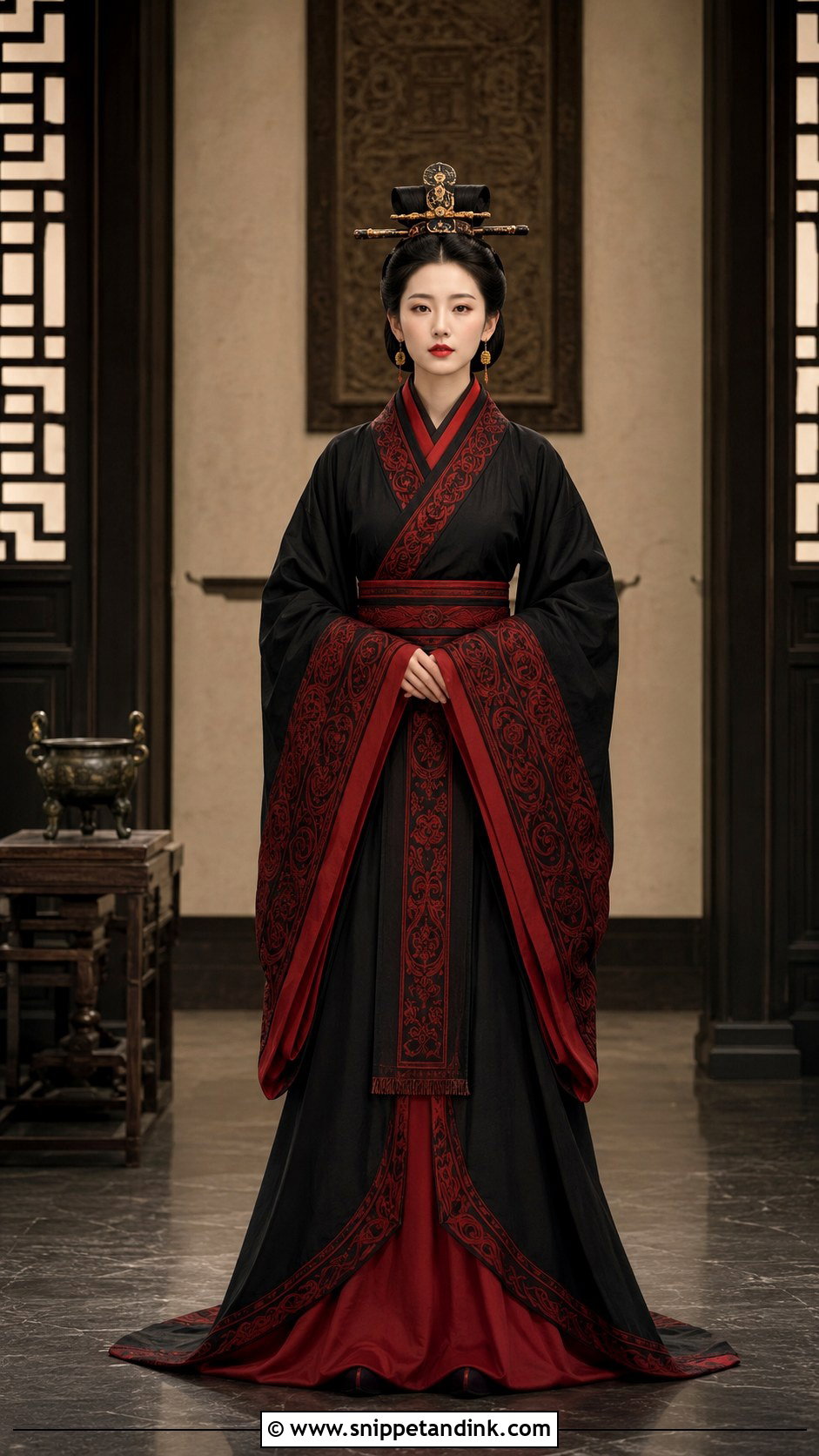
Black and red takes its mood from early imperial clothing, when ceremonial colors were darker and more solemn than in later dynasties. A long crossover shenyi-style robe, the wrapped one-piece garment that spirals around the body, has a black outer layer, deep red borders and red showing at the collar and hem. The spiral wrap has to be tied precisely, or the hem hangs unevenly, so practice dressing in it with a helper. A broad sash defines the waist. Pair with a dark hairpiece and black cloth shoes edged in red, and skip modern embroidery for a cleaner historical feel.
8. Wei Jin Wide Sleeve Hanfu Wedding Dress
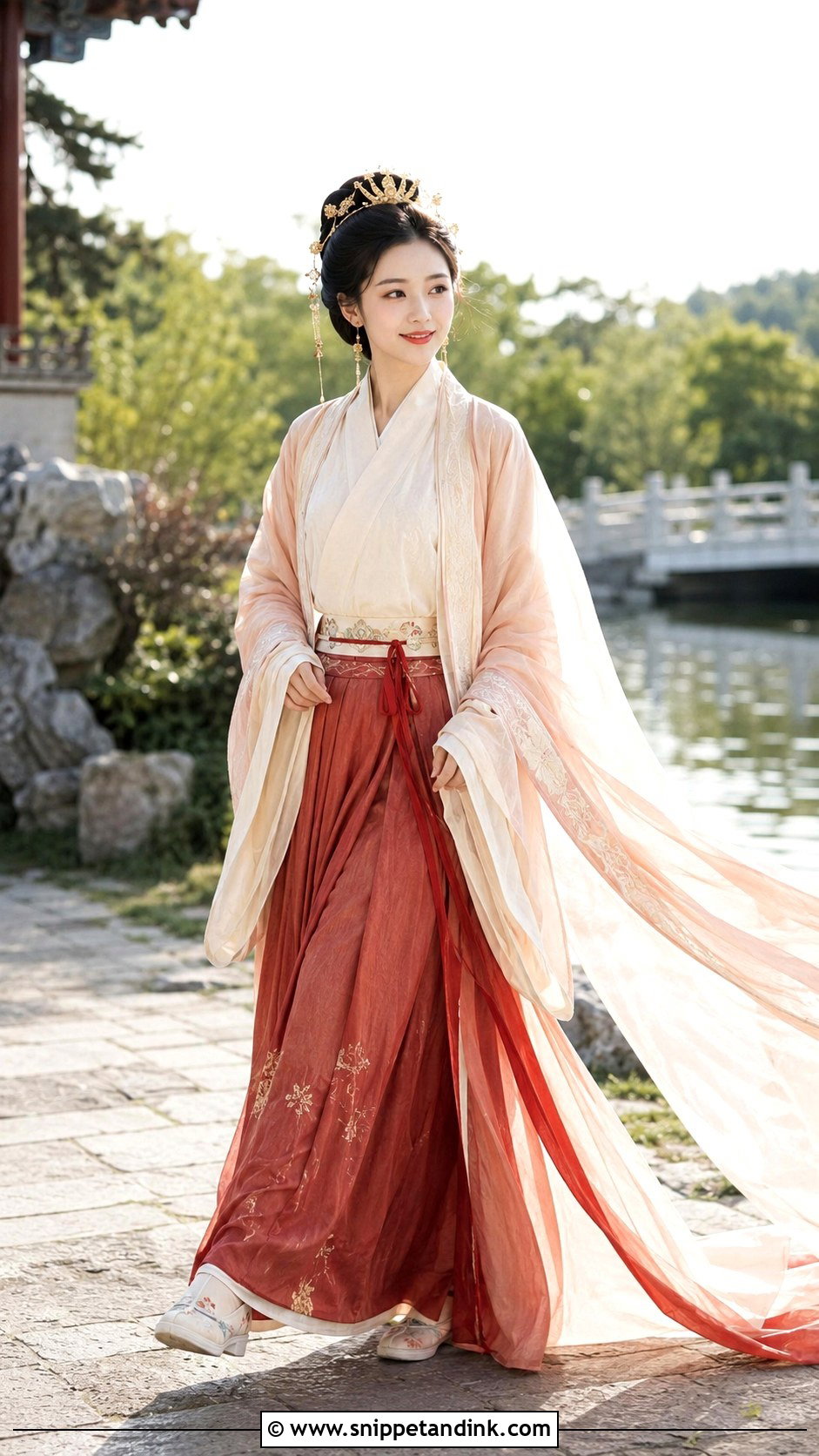
Light fabric and long sleeves give a Wei Jin-inspired outfit its floating quality. An ivory or pale blush cross-collar robe, a soft red skirt and a sheer wide-sleeved outer layer, with fine cloud or vine embroidery at the hems. That trailing sash looks lovely and is a genuine trip hazard, so have it secured and shortened if needed. The risk with this style is that pale layers merge into one blur on camera, so make sure each layer is a slightly different tone. Spring gardens and lakeside portraits suit it.
9. Dunhuang Inspired Hanfu Wedding Dress
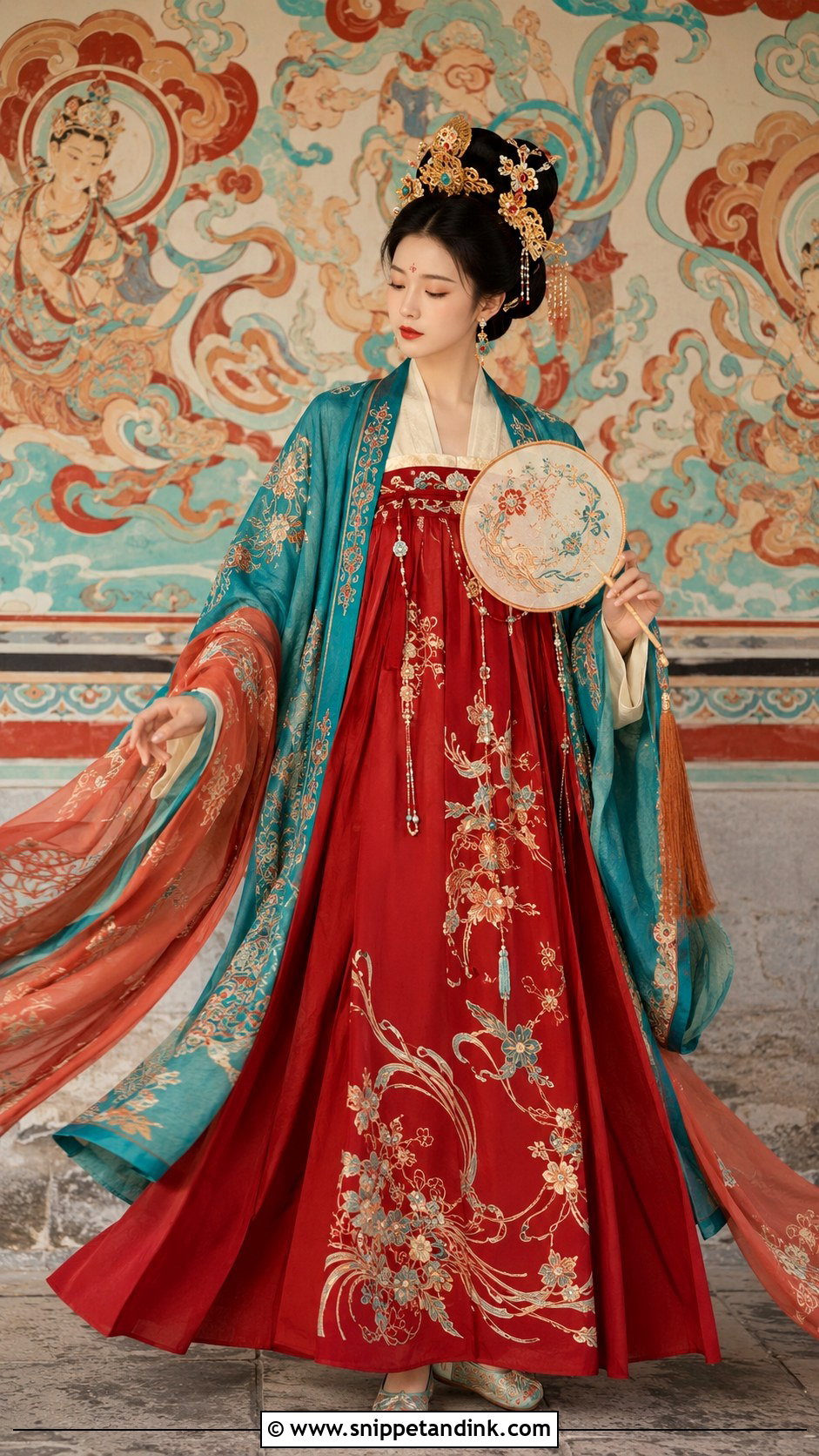
Dunhuang-inspired dress draws on the painted cave murals: saturated color, layered tops, broad sleeves and decorative shawls. Pair a crimson high-waisted skirt with an ivory inner top and a blue-green outer robe, then add a pibo in coral, turquoise or soft gold. With this many colors, discipline matters more than in any other look. I limit it to a jewel-tone palette and repeat each color at least twice, or the outfit tips into costume. Gold floral hair ornaments and a round fan finish it.
10. Red And Gold Phoenix Hanfu Wedding Dress
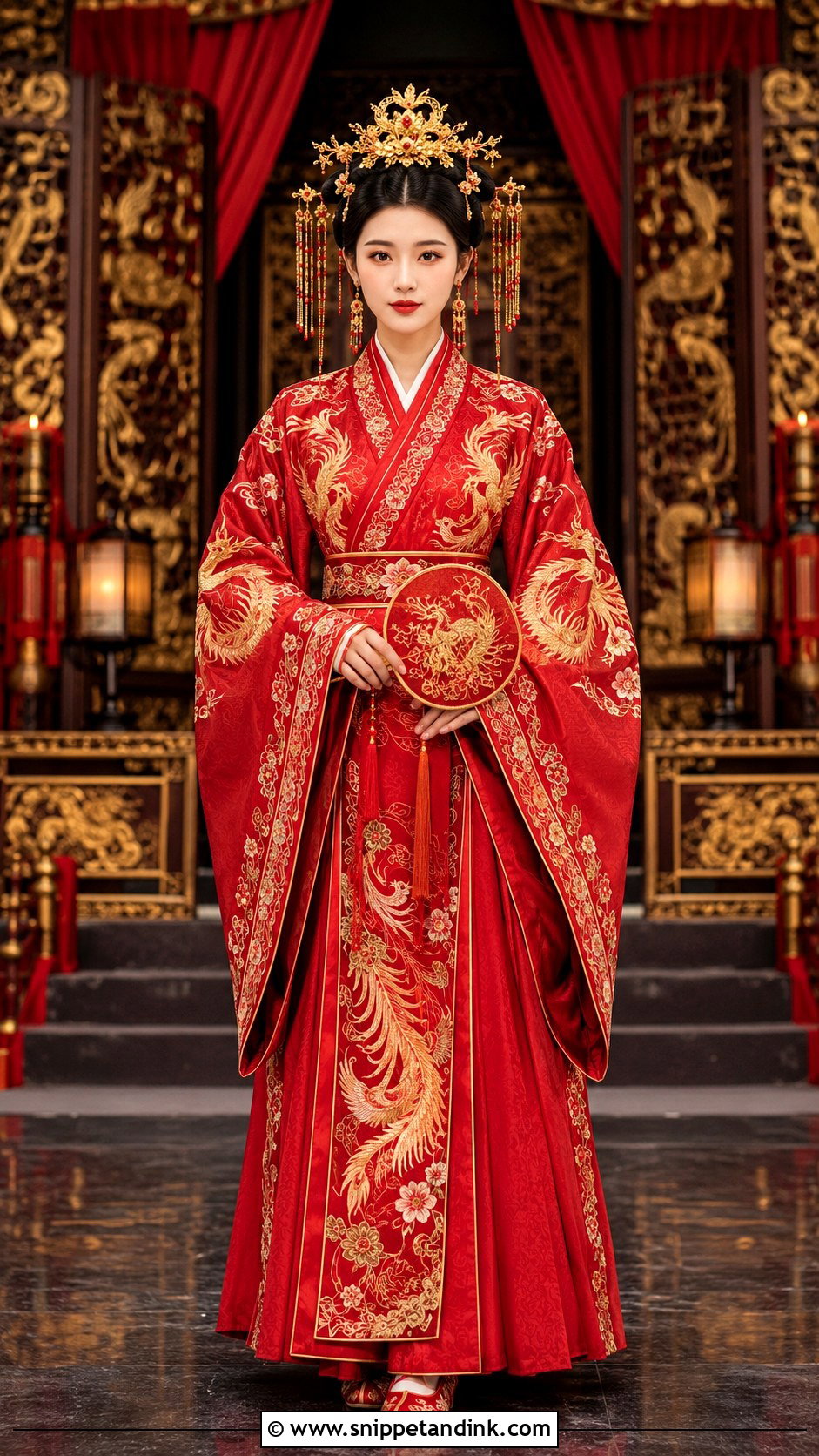
Red with gold phoenix embroidery is the celebratory classic, and the detail to check is direction. On a well-made robe, the phoenixes face and flow consistently across bodice, sleeves and skirt; on cheaper pieces, motifs in mismatched sizes point every which way. A red sash with gold edging defines the waist, and a structured underlayer helps the skirt hold its shape. Choose a round fan with a single phoenix rather than a different motif. A polished bun and balanced makeup keep the bride from being lost in the decoration.
11. Ivory And Red Hanfu Wedding Dress
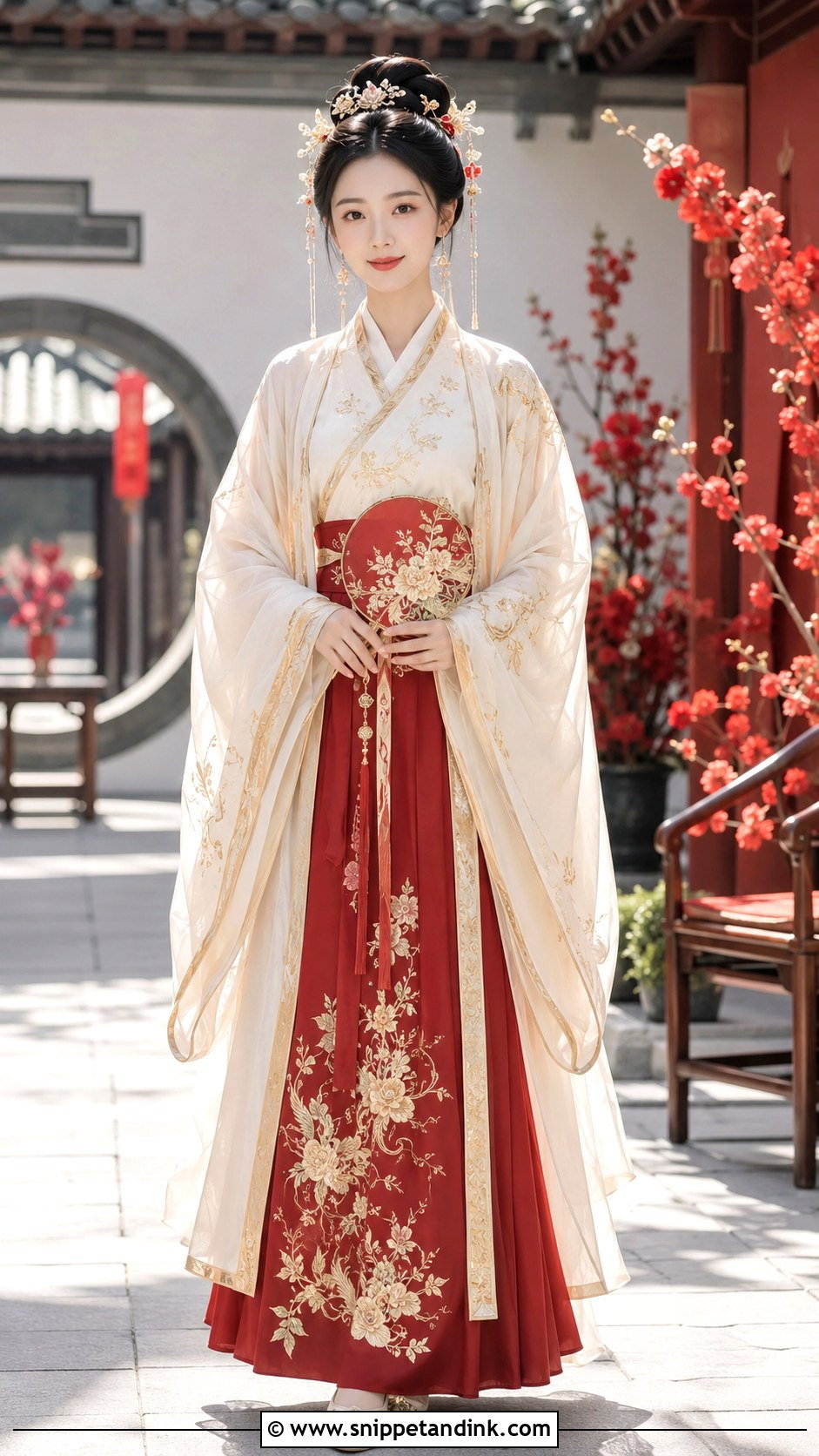
Ivory softens wedding red and suits a daytime or summer ceremony. An ivory cross-collar top and outer robe, with a deep red skirt, sash and sleeve borders, plus small gold details to link them. The fabric has to be substantial. Thin ivory reads as everyday Hanfu, or worse, shows the layers underneath in daylight. Pearl-and-gold hairpins and a red silk fan suit it. If your family is traditional, check that ivory-dominant bridal wear is welcome; some elders strongly prefer red for the bride.
12. Blue And Red Hanfu Wedding Dress
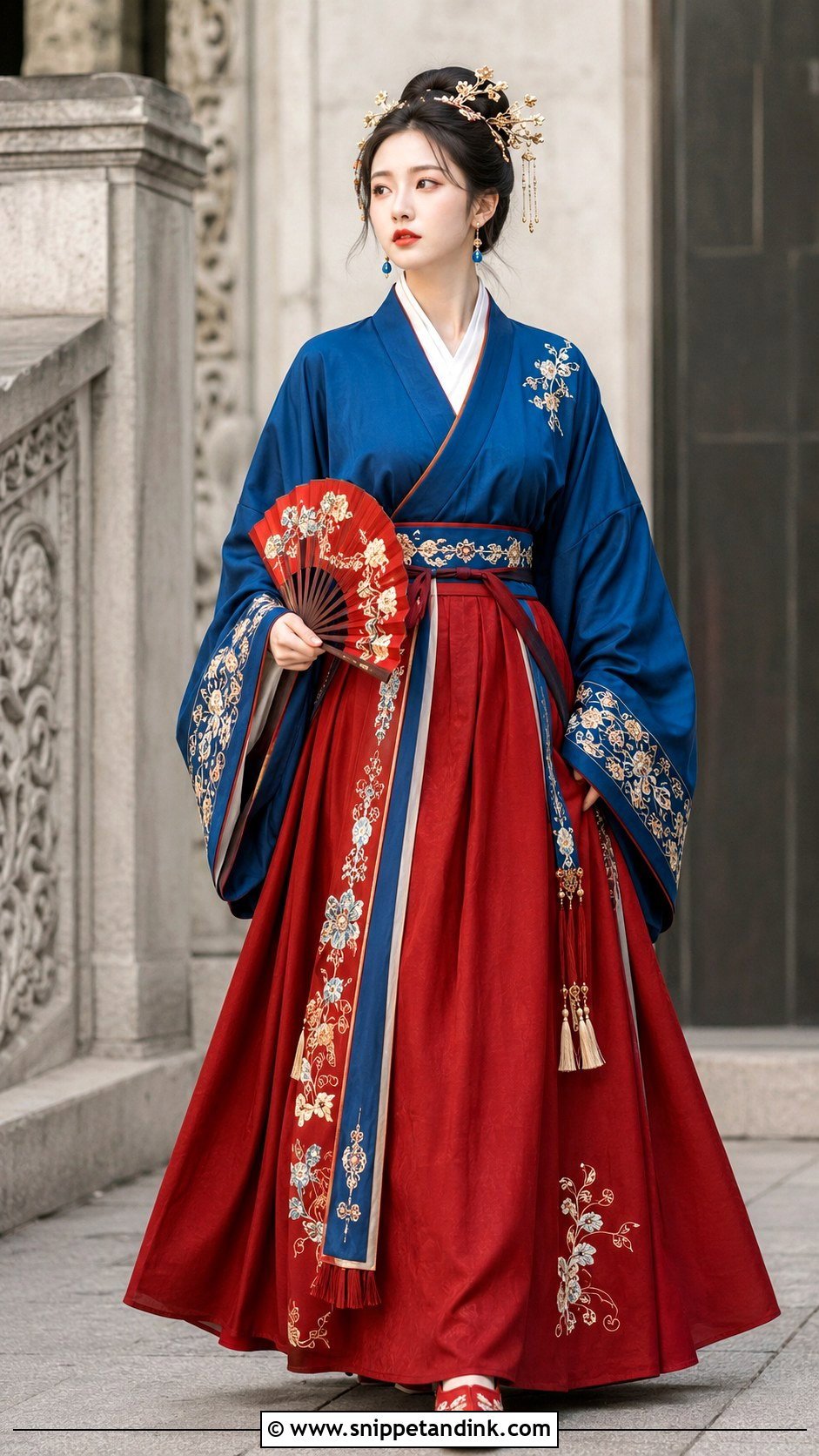
Blue and red is a confident pairing that doesn’t rely on gold everywhere. A deep blue crossover jacket or wide-sleeved robe, a long red skirt and a pale inner collar make the base. Repeat the blue at least once lower down, in a border, sash or shawl, otherwise it looks like two separate outfits. Restrained gold at cuffs and hem gives the ceremonial finish. A clean updo keeps it polished, and neutral stone or garden backgrounds show the contrast clearly.
13. Pastel Embroidered Hanfu Wedding Dress
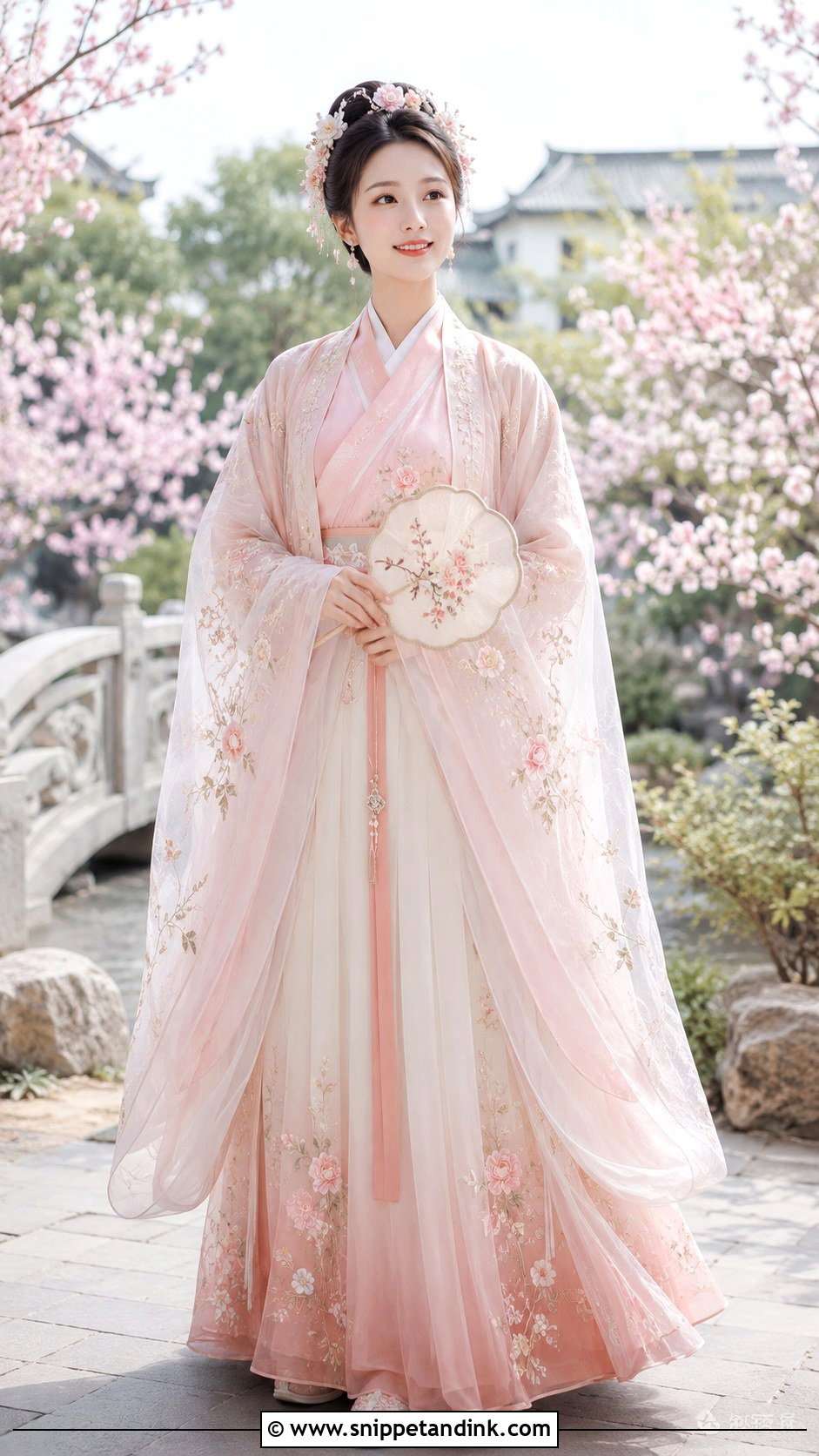
Pastel Hanfu works best when you limit the palette. A blush crossover top, an ivory-to-pink gradient skirt and a sheer outer robe with small flowers is plenty; adding lavender and blue as well makes it look scattered. I’d stick to two main colors and one accent. Keep embroidery at the sleeves and hem so close-up portraits show a clean bodice. A narrow sash defines the waist without breaking the light look. It suits spring ceremonies and pre-wedding shoots.
14. Plus Size Ming Hanfu Wedding Dress
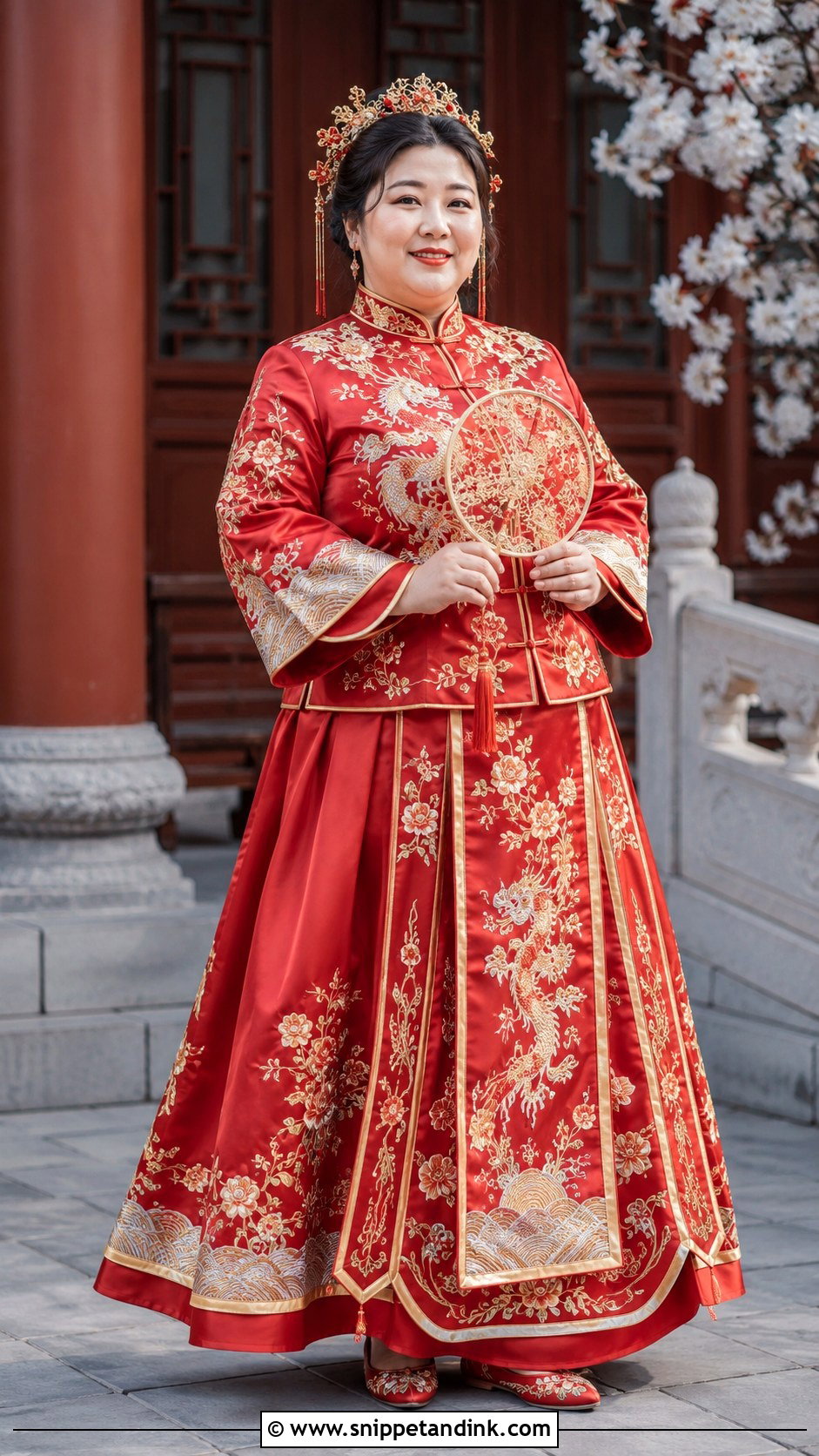
Ming-style construction is generous to fuller figures, because the jacket hangs straight and the mamian wraps and ties rather than closing at a fixed size. The jacket needs to close smoothly without pulling across the bust or shoulders, and the skirt waistband should sit securely without digging in. Continuous vertical borders create a long line. Breathable lining and no extra bulk under the arms make a long day comfortable. Custom measurements matter more than the size label here, and a good Hanfu maker can move fastenings while keeping the look intact.
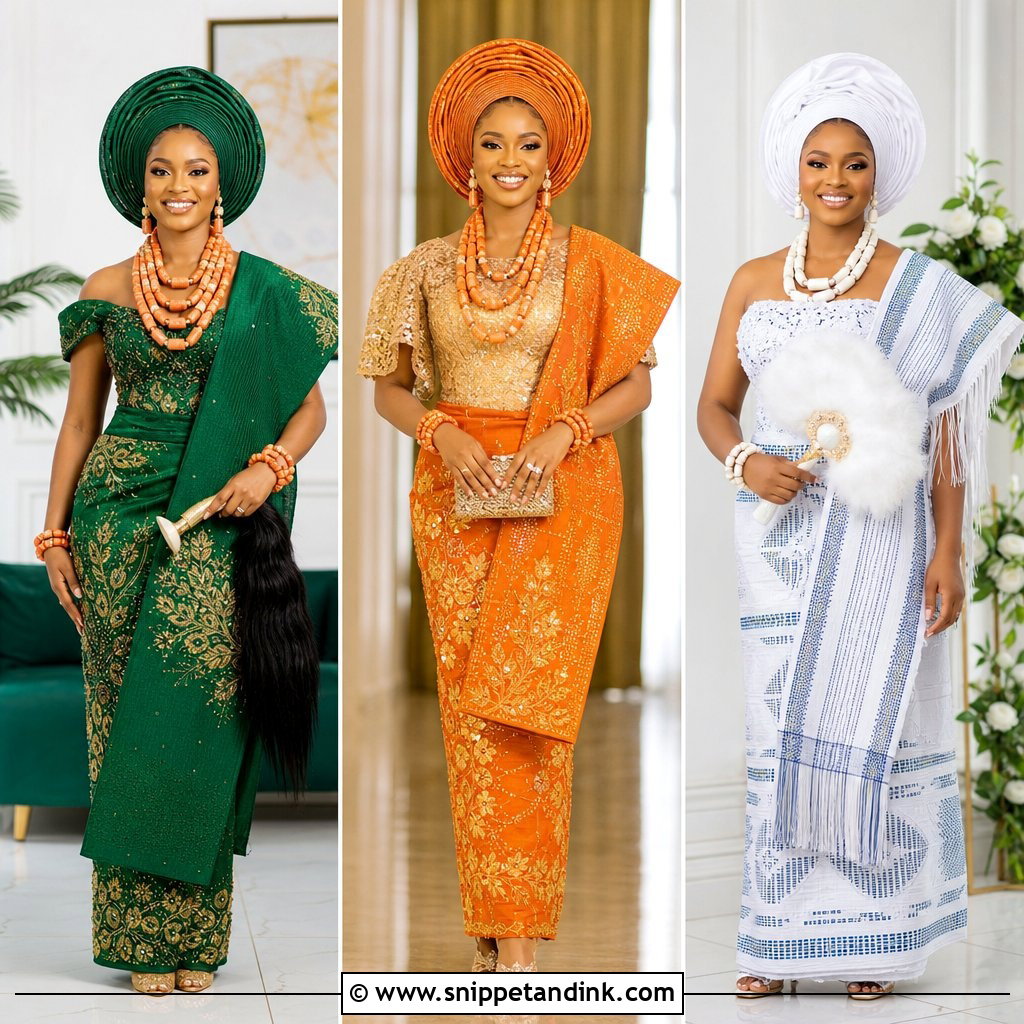
15. Petite Tang Hanfu Wedding Dress
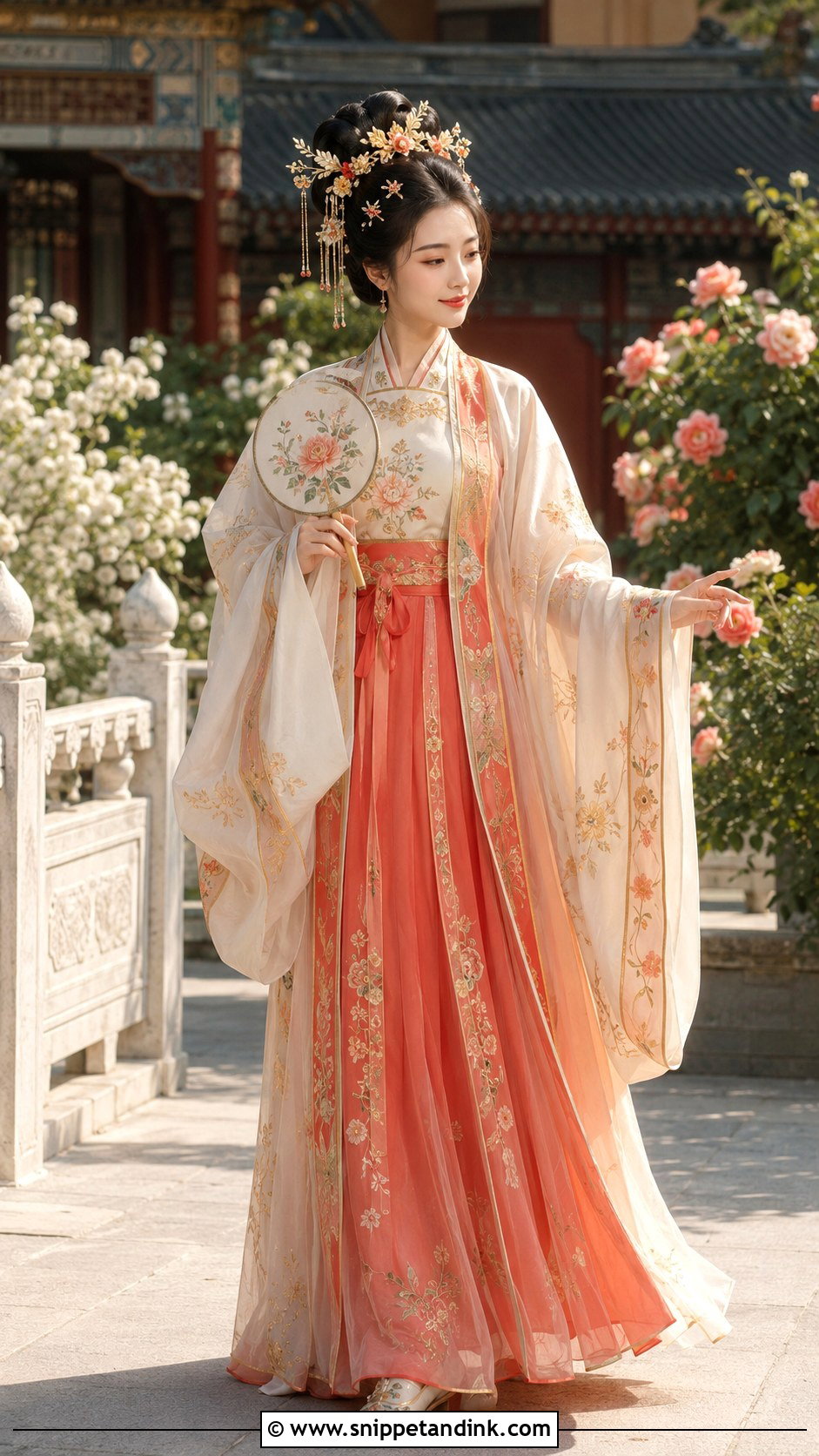
On a petite bride, a Tang-style ruqun can add length, but every proportion needs controlling. A narrow waistband and an uninterrupted skirt in red, coral or apricot lengthen the body. The outer robe’s sleeves shouldn’t extend past the fingertips, and the embroidery and borders should be scaled down. Oversized crowns and very long pibo overpower a small frame. Shoes with a small concealed lift help the skirt hang cleanly. Set the waistband position in the fitting by trying a few heights and looking at the full-length mirror.
16. Winter Brocade Hanfu Wedding Dress
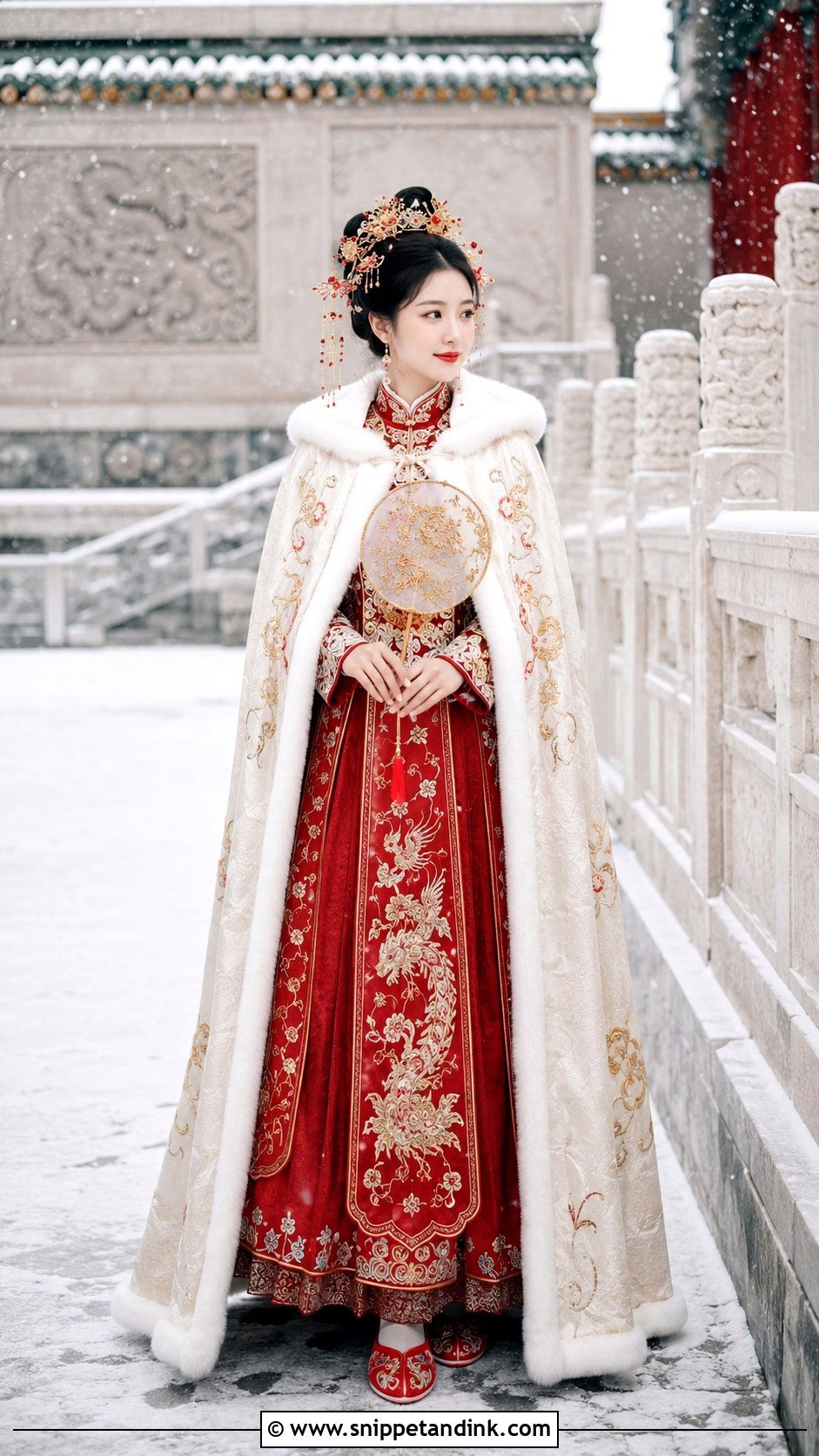
Brocade is a woven pattern, so it gives depth even without embroidery, and it’s warm. A red brocade jacket with wide sleeves, a lined mamian and a long outer robe make a strong winter base. Hanfu layers hide a thermal base layer easily, provided it doesn’t peek out at the cross collar. For outdoor moments, a hooded ivory or red cloak looks far better than a modern coat over the outfit. Take the skirt slightly shorter if the ground may be wet or snowy.
17. Summer Silk Hanfu Wedding Dress
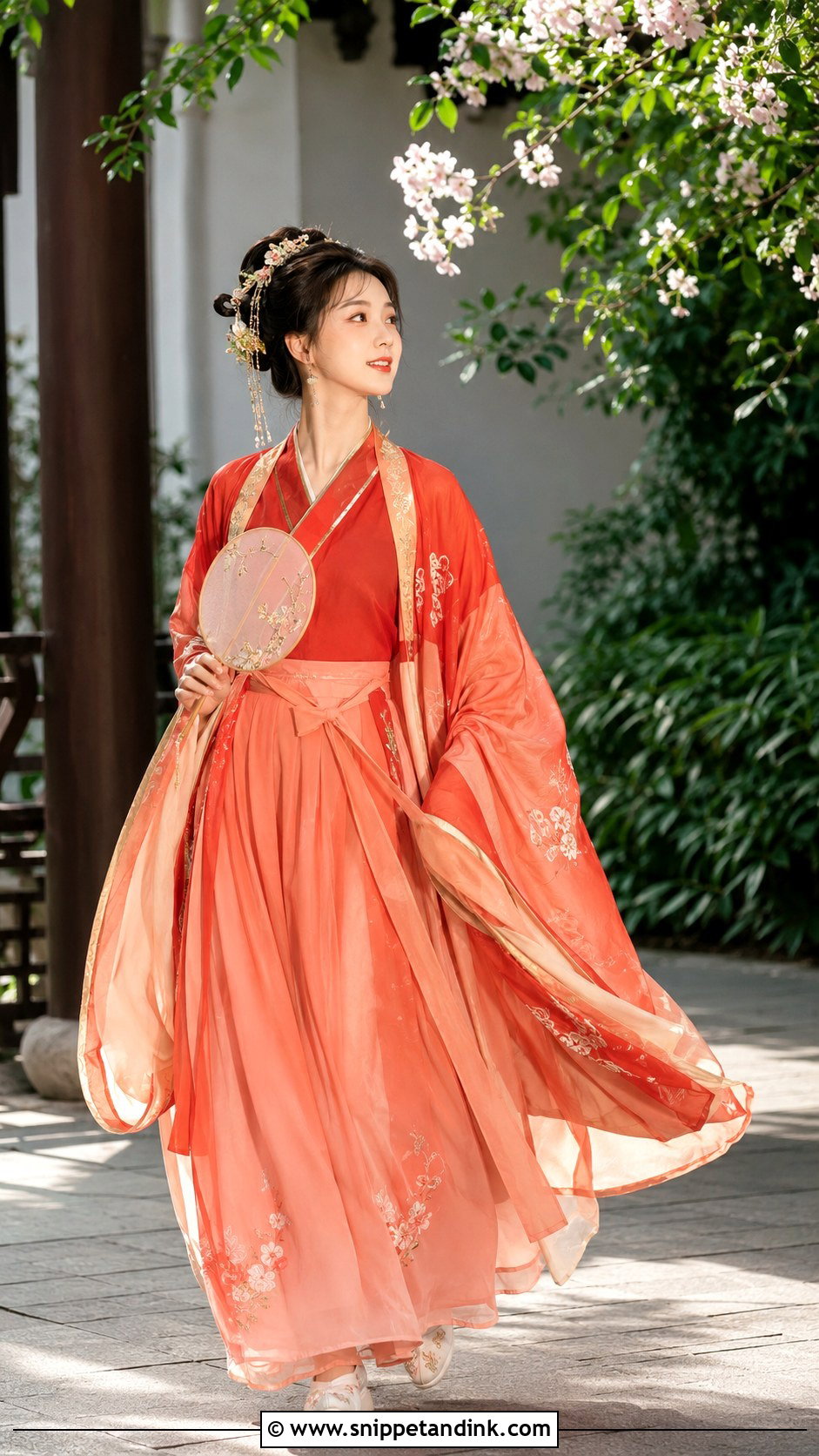
Summer Hanfu should feel light without turning sheer. Silk or silk blends in a red crossover top, flowing skirt and an unlined wide-sleeved robe keep the weight down, with embroidered borders instead of dense work. A coral, ivory or pale gold lining under the thinnest layer prevents see-through moments in direct sun. Carry a silk fan; it’s both accessory and cooling tool. A secure updo keeps hair off the neck. Before an outdoor ceremony, test the sleeves and shawl in a breeze, because light fabric flies up more than you’d expect.
18. Simple Tea Ceremony Hanfu Wedding Dress
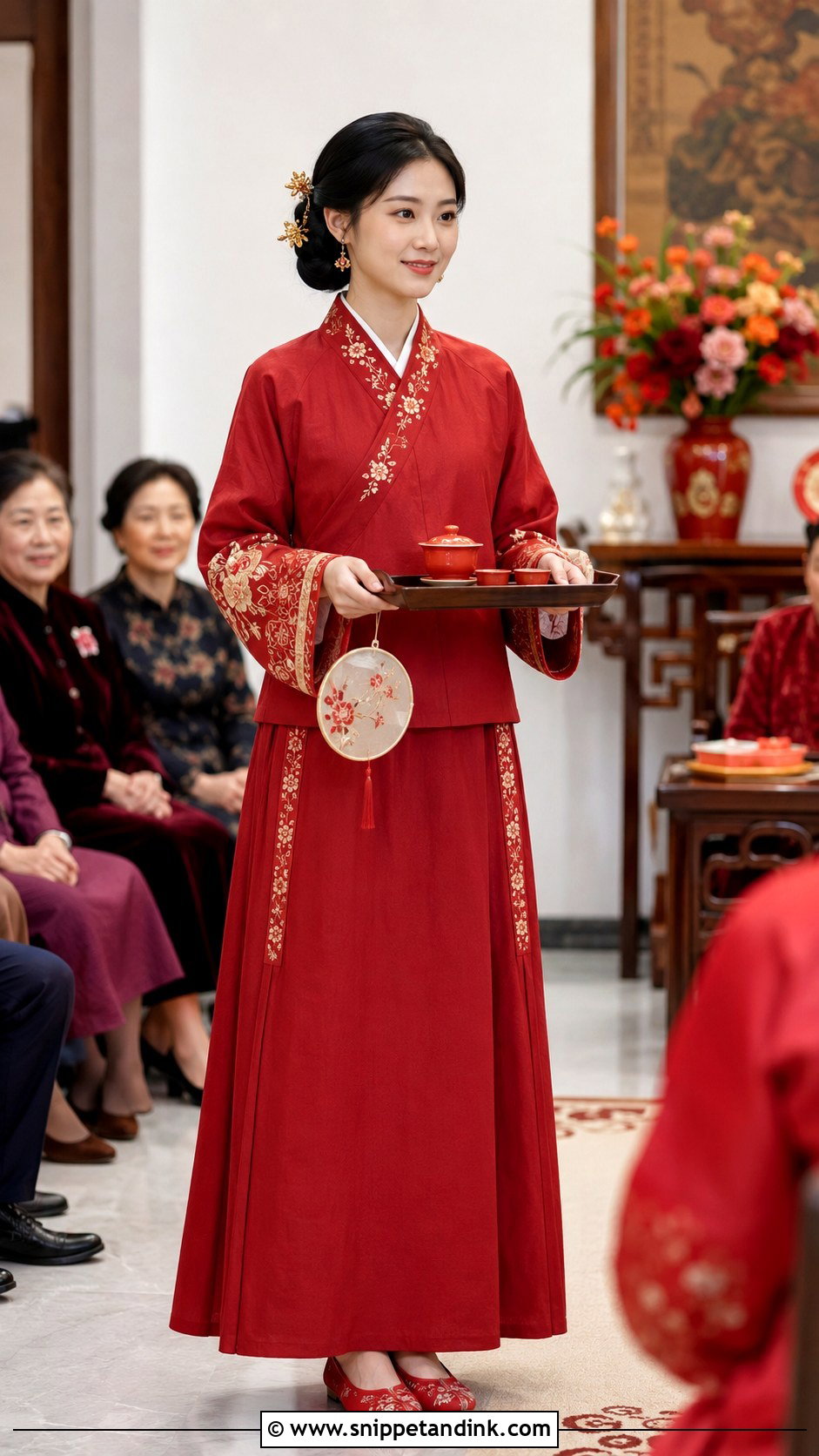
Tea ceremonies involve kneeling, bowing, sitting and pouring, so I plan these outfits around the arms. A red crossover jacket with moderately wide sleeves and an ankle-length or floor-length skirt suit the movement best. Very long sleeves drag across the tea tray, so either choose shorter ones or secure them discreetly at the forearm while serving. Limit embroidery to collar, cuffs and front panels. Skip a heavy crown if it restricts bowing. Good tailoring and meaningful motifs carry the ceremony, chosen with help from the maker or family.
19. Green Garden Hanfu Wedding Dress
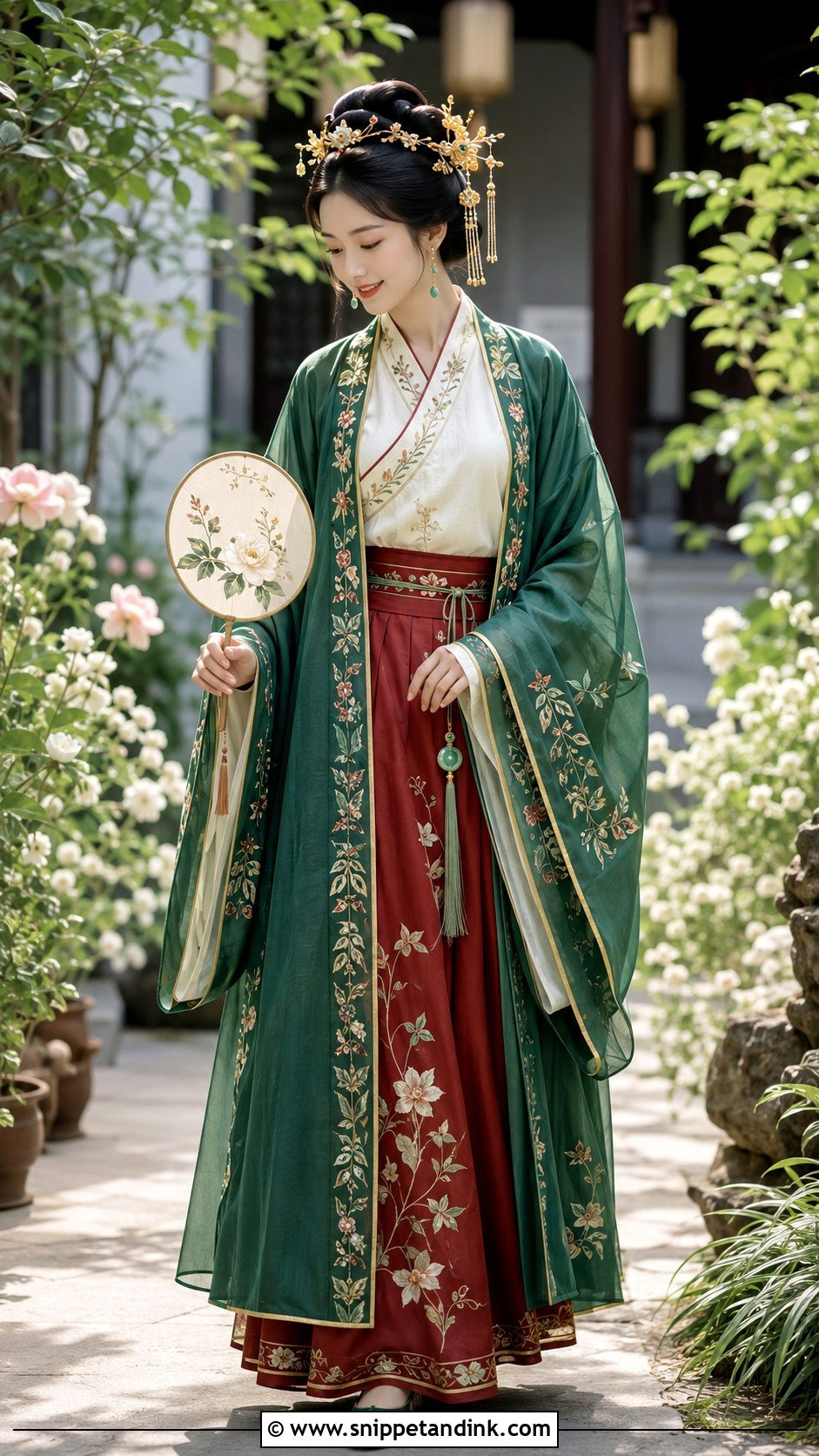
A green Hanfu ensemble feels connected to a garden setting. A long emerald or jade beizi over an ivory inner top and a muted red skirt, with narrow gold borders and small botanical embroidery that shows in close-ups. Medium-weight fabric is safer than featherweight here; thin green silk goes transparent in sunlight and clings in humidity. A half-up hairstyle keeps the face visible. It’s a good alternative for couples who don’t want an all-red ensemble.
20. Modern Minimalist Hanfu Wedding Dress
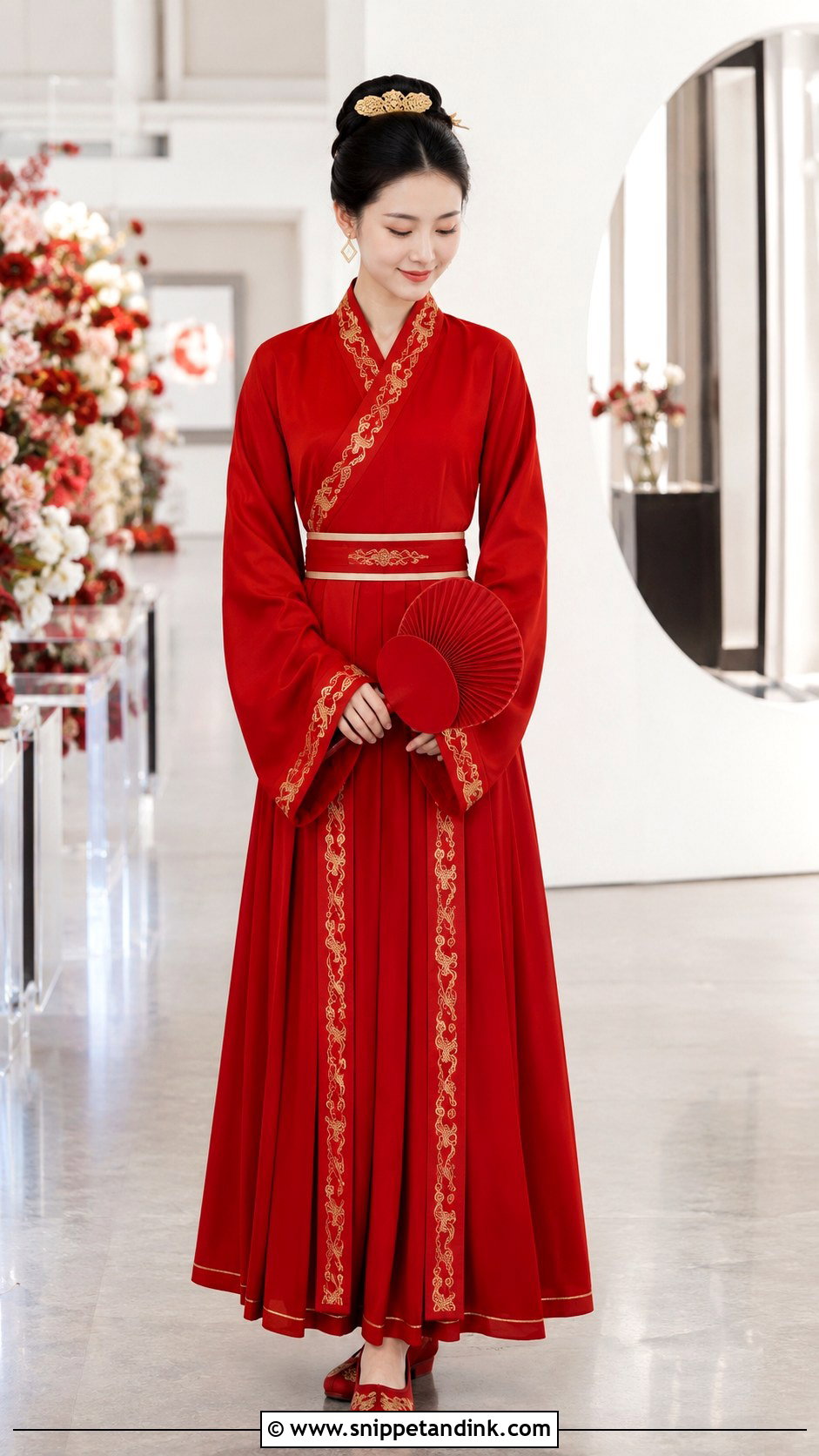
Minimal Hanfu is mostly about restraint in motif. A solid red crossover robe with long sleeves and a matching pleated skirt, with one embroidered border repeated at neckline, cuffs and hem, looks contemporary without losing its roots. Mixing unrelated motifs breaks the effect. Whether a sash suits depends on the garment system, so ask the maker. A smooth low bun and fresh makeup suit modern hotels and civil ceremonies. It’s also the easiest base for matching a groom’s Hanfu.
Surviving Hours Under a Phoenix Coronet
A full fengguan is the most memorable part of a Ming bridal look and the most tiring. Weight sits high on the head, so neck fatigue sets in long before the dress gets uncomfortable. A few things make a real difference.
Build a base for it
The crown needs a firm, flat foundation: a smooth low bun or padded base with the crown pinned into it at several points, not just perched on top. Ask your hair stylist to do one practice session with the actual crown, since its balance depends on its weight and shape.
Wear it only when it counts
Many brides wear the full coronet for the ceremony and formal portraits, then swap to a lighter hair crown or decorative pins for the banquet. Plan the swap with your stylist and leave ten quiet minutes for it.
- Keep movements slow and turn from the shoulders, not the neck.
- Have someone hold the xiapei and outer sleeves when you sit or stand.
- Eat before dressing; once the full outfit and crown are on, eating is awkward.
- Pack spare pins and a small mirror for the person helping you.
Which Dynasty, How Faithful, and What Feels Like Yours
Respecting the cultural context and serving the bride’s comfort can go hand in hand. The looks above range from formal Ming phoenix coronets to flowing Tang combinations, restrained Song outfits and minimal modern pieces. Before ordering, decide whether you want historical accuracy, general dynasty inspiration or contemporary Hanfu bridalwear, then learn the garment layers and accessories that belong to that choice. Book fittings with your real shoes and headpiece, and practice sitting, walking, bowing and using the fan. Preparation is what makes the outfit look cohesive and feel meaningful on the day.
You'll Like These Ideas:



Leave a Reply