
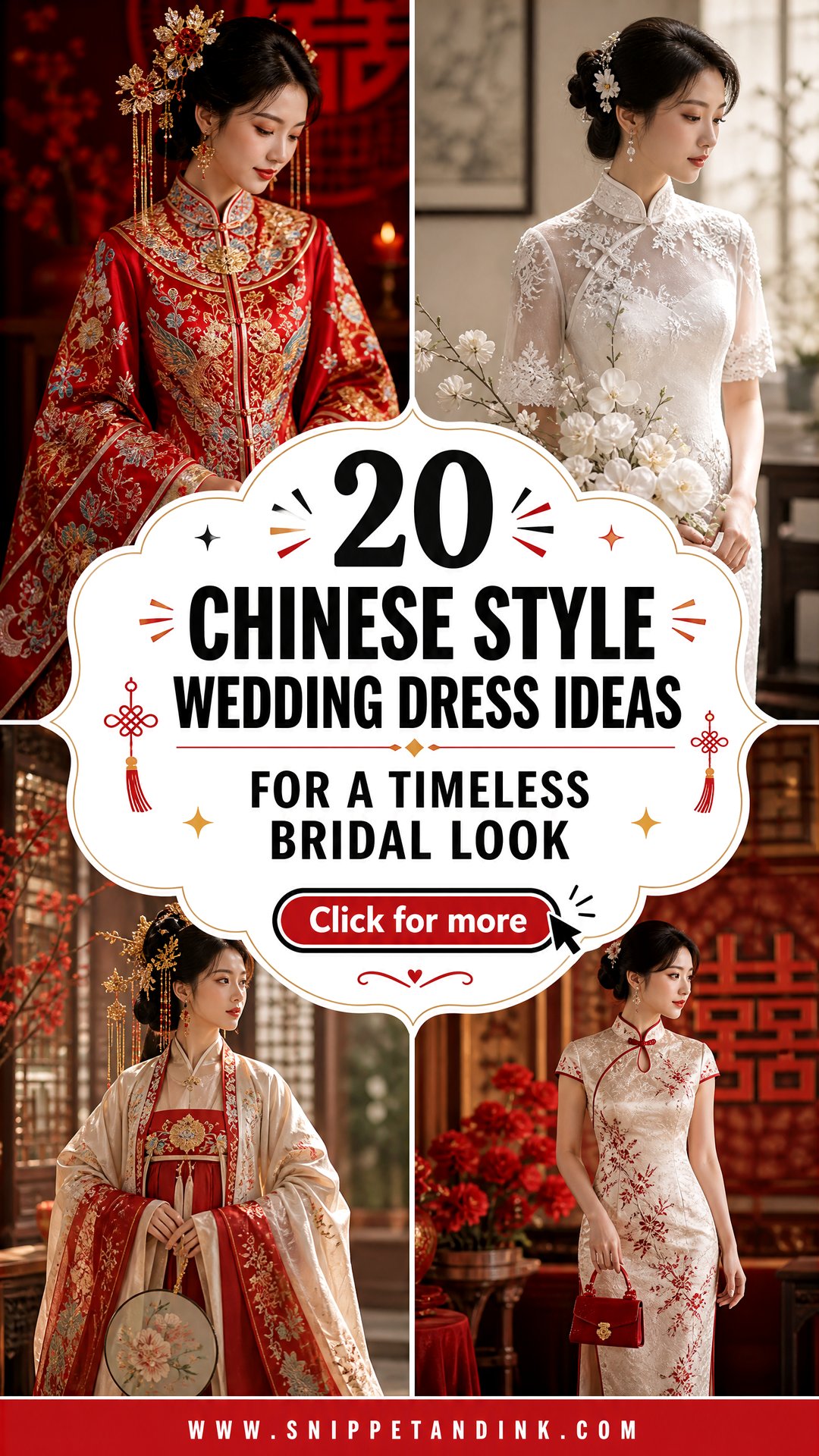
Mapping the Outfit Changes Across a Chinese Wedding Day
Most Chinese weddings involve more than one outfit, and the dresses below often work as a team rather than a single choice. Before a bride falls for one style, I sit down with her and list the parts of the day, because each part asks something different of the clothes.
- Tea ceremony: you’ll bow, kneel or stand and pour tea for elders, often many times. Red is expected in most families, and the Qun Kwa or Xiuhefu is the usual choice.
- Western ceremony or civil signing: many couples wear a white or ivory gown here, sometimes with a Chinese collar or red accent.
- Banquet: a qipao is popular because it’s lighter and you’ll be seated, toasting table by table.
- Late evening: some brides change once more into something short or tea length for dancing.
Every change takes time. A simple swap with help is around fifteen minutes; a heavy embroidered set with hair pieces can take twice that. Build those breaks into the timeline and keep one person in charge of hangers, shoes and the bag of pins.
Rent, buy or commission?
A hand-embroidered Qun Kwa is a serious investment and custom pieces can take several months to make, so order early if you want one made for you. Many families rent instead, or pass one down. Qipao are easier: made-to-measure options are widely available, though you should still allow time for at least one fitting and alterations once it arrives.
1. Red Dragon And Phoenix Qun Kwa Wedding Dress
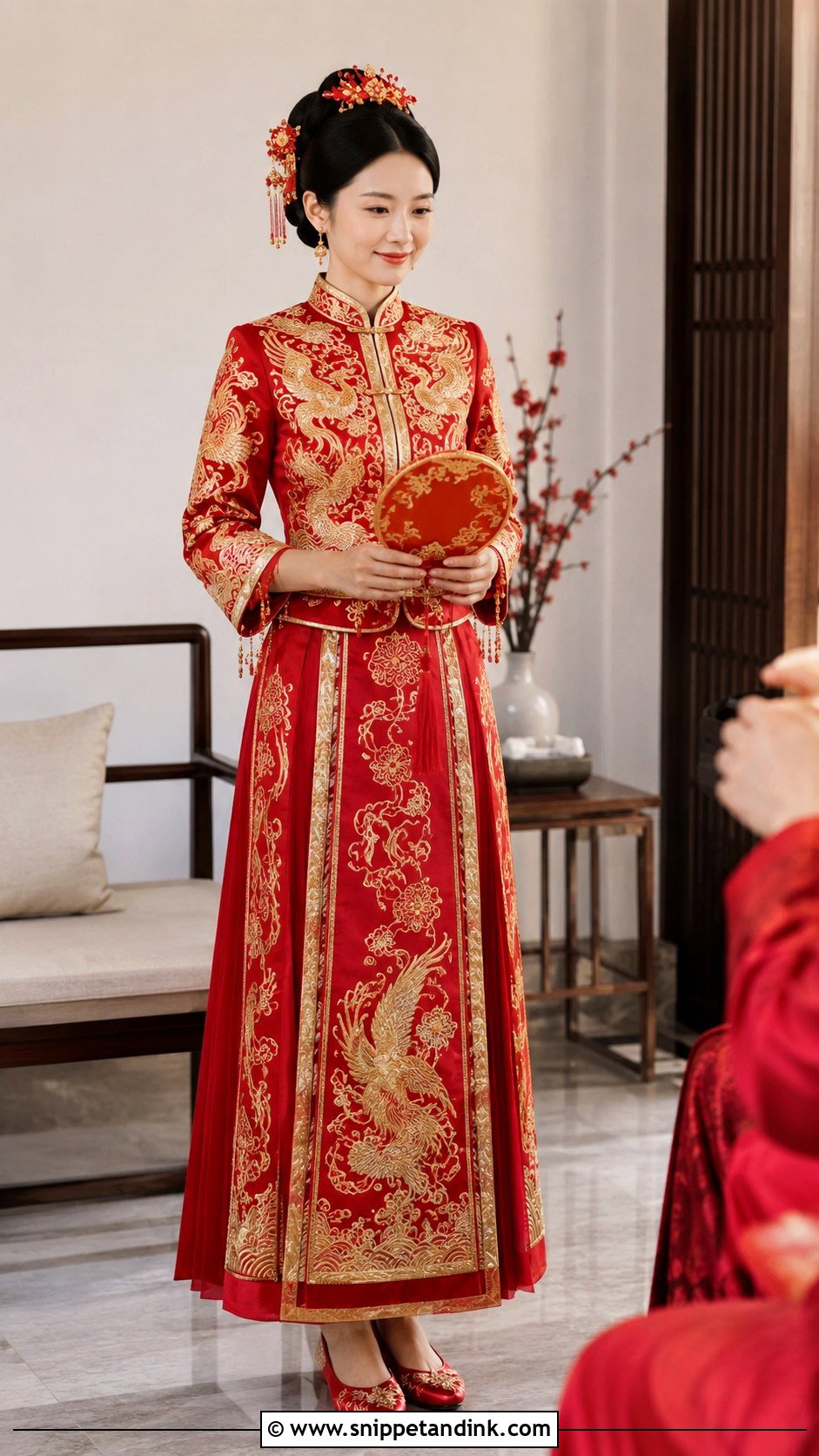
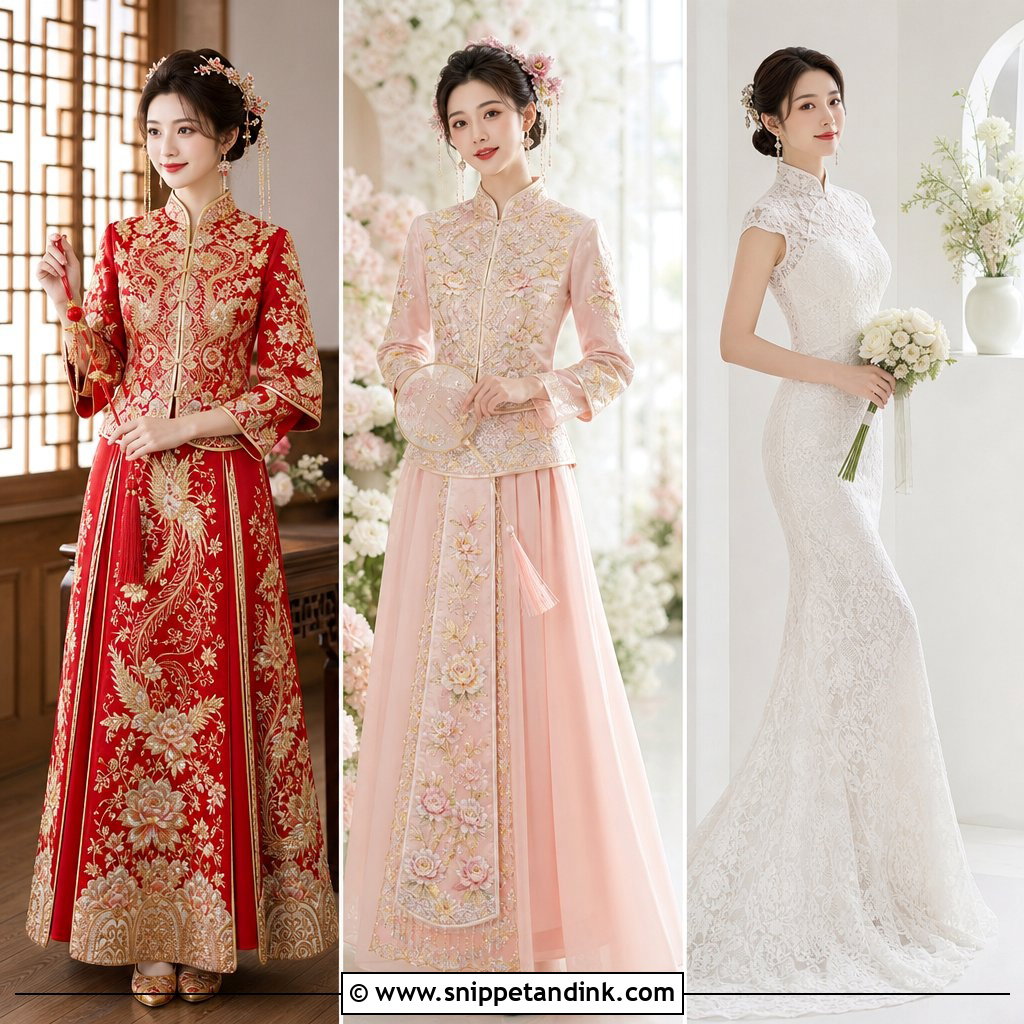
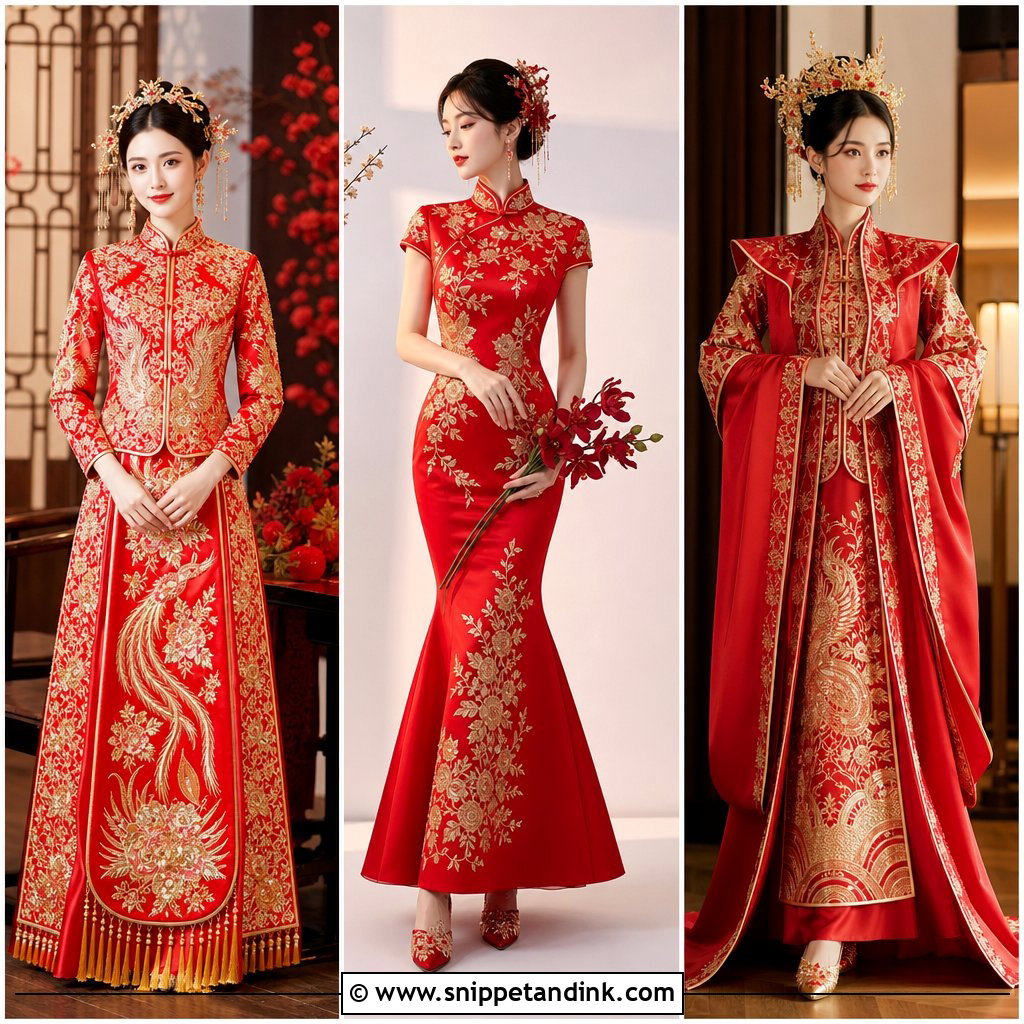
Red silk covered in gold dragon and phoenix embroidery is the most recognisable Chinese bridal look there is. The Qun Kwa is a two-piece: a structured jacket over a long matching skirt, and it’s the outfit most families expect at the tea ceremony and in the formal portraits. The dragon stands for the groom and the phoenix for the bride, so the pairing carries meaning, not just decoration. Because the embroidery already does so much, I keep the rest simple: red embroidered flats or a low block heel, plain gold earrings, a fine bracelet and a red hair ornament. A neat low bun leaves the collar clear. I’d also swap a big bouquet for a small red and gold fan, which suits the proportions far better.
2. Gold Embroidered Qun Kwa Wedding Dress
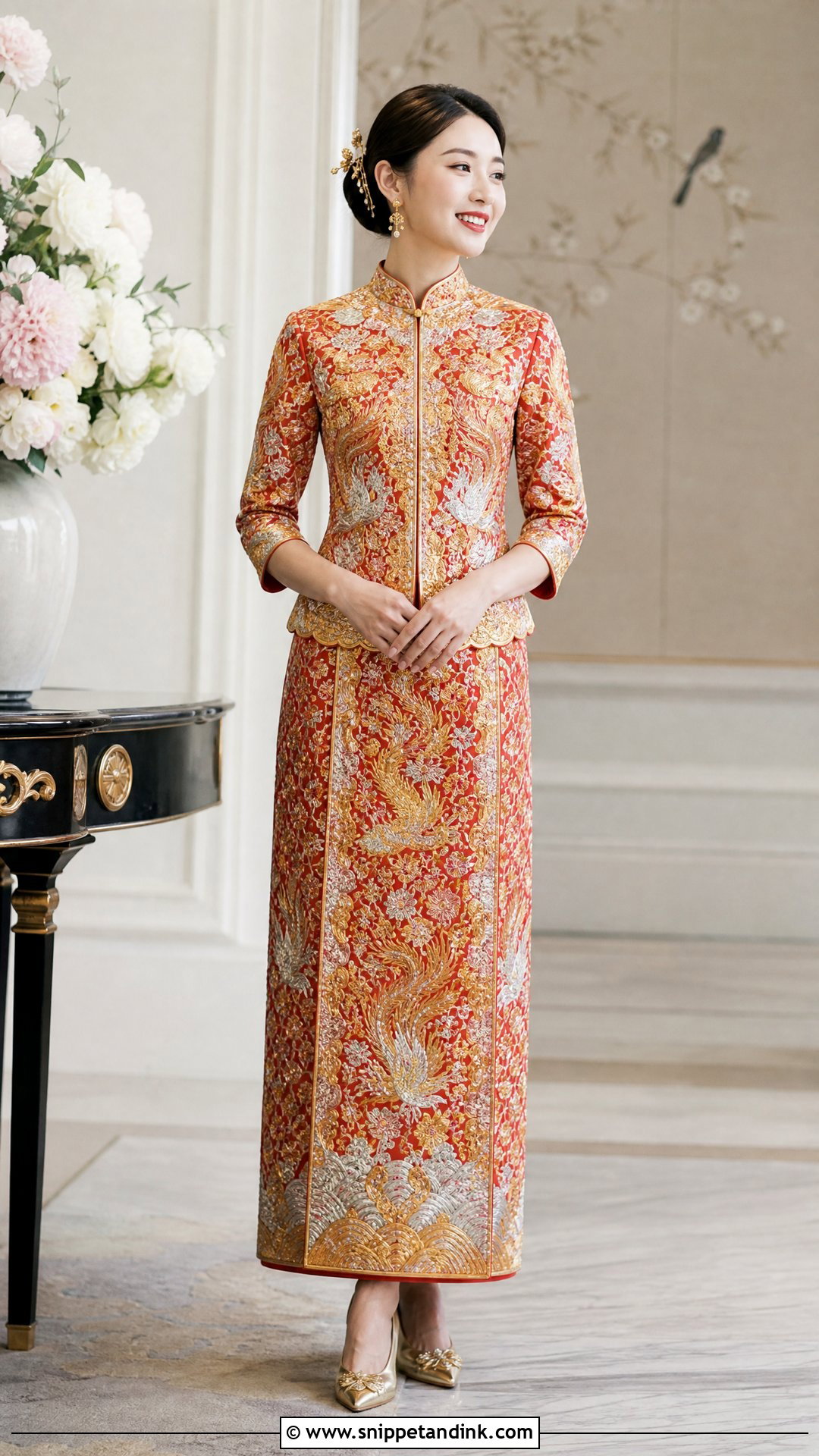
Qun Kwa are graded by how much of the red base is covered in gold and silver thread, and the most heavily worked ones barely show any red at all. That density is what makes them glow under indoor lighting, but it also makes the jacket stiff and heavy. The fit point I’m strictest about is the shoulders and upper arm: you need to be able to lift a teacup to an elder’s hands without the jacket riding up. A straight or gently flared skirt keeps the traditional line and still lets you walk. Gold pointed flats, pearl and gold drops and a small embroidered bag complete it, with a polished chignon and a few gold pins on one side. Pair it with defined brows and a classic red lip.
3. Red Xiuhefu Wedding Dress
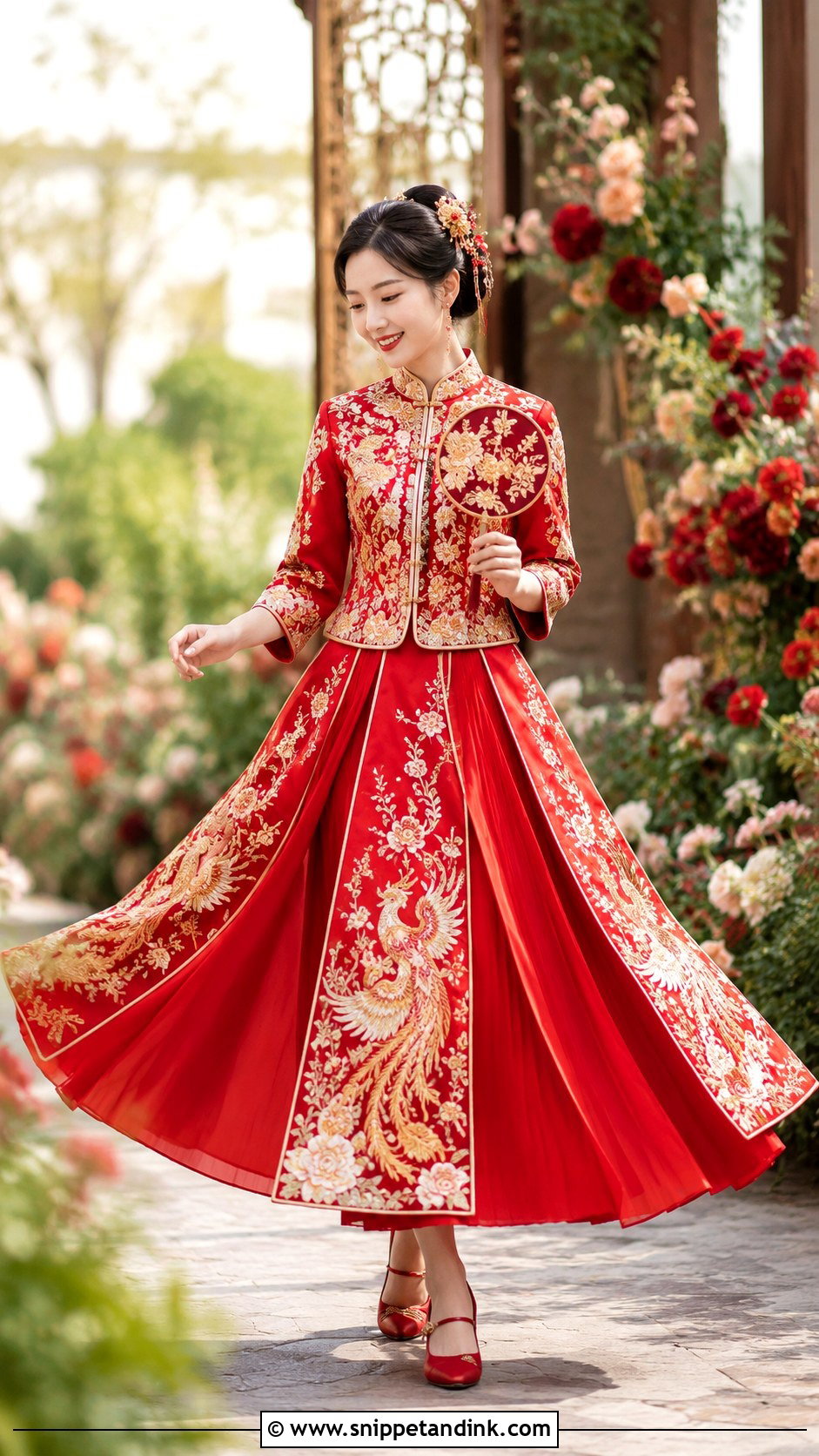
The Xiuhefu has a fuller skirt than the Qun Kwa, so it moves more and feels lighter to wear for a long ceremony. When I’m choosing one with a bride, I look at how the embroidery is spread: evenly placed motifs across the bodice and hem read balanced in group photos, while one heavy cluster pulls the eye to that spot. Red satin block heels give a bit of height and stability under the skirt. A round embroidered fan is a graceful prop for portraits, and gold drops bring light to the face. Finish with a smooth updo and red floral pins. It suits a garden venue or a roomy tea ceremony space where the skirt has room.
4. Pink Xiuhefu Wedding Dress
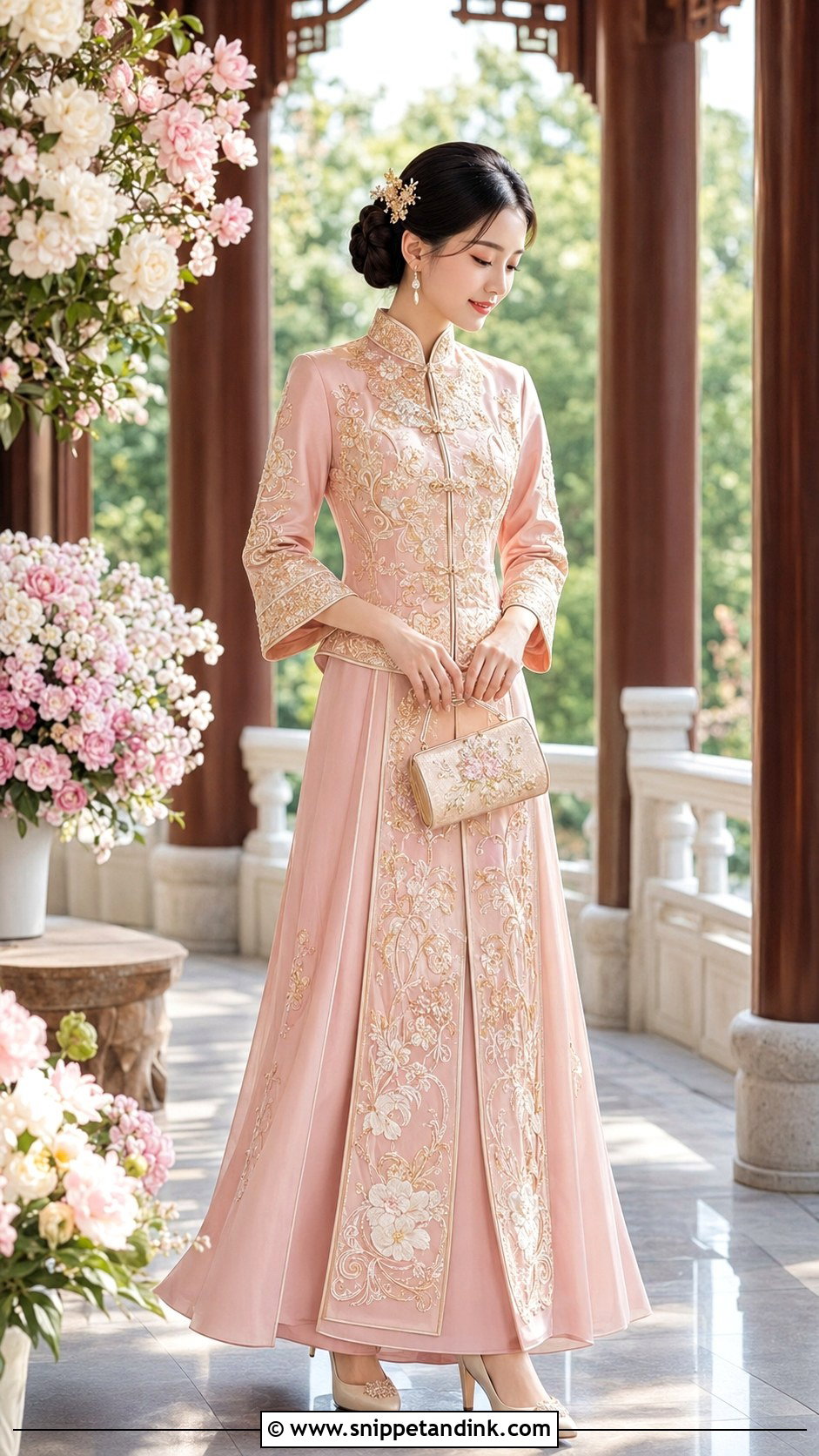
Blush pink keeps the Xiuhefu’s jacket-and-skirt shape but changes the mood completely. Look for dusty rose or pale pink with gold, silver or champagne thread. Stiff skirts look flat in pink, so I’d pick one with a fluid drape that moves when you walk. Champagne block heels, pearl earrings, a small blush clutch and a low braided bun with tiny gold flowers suit a daytime celebration. Before ordering anything that isn’t red for a ceremony, talk to the elders in your family. Red is still the expected colour in many households, and it’s far easier to have that conversation before the deposit than at the fitting.
5. Red Silk Qipao Wedding Dress
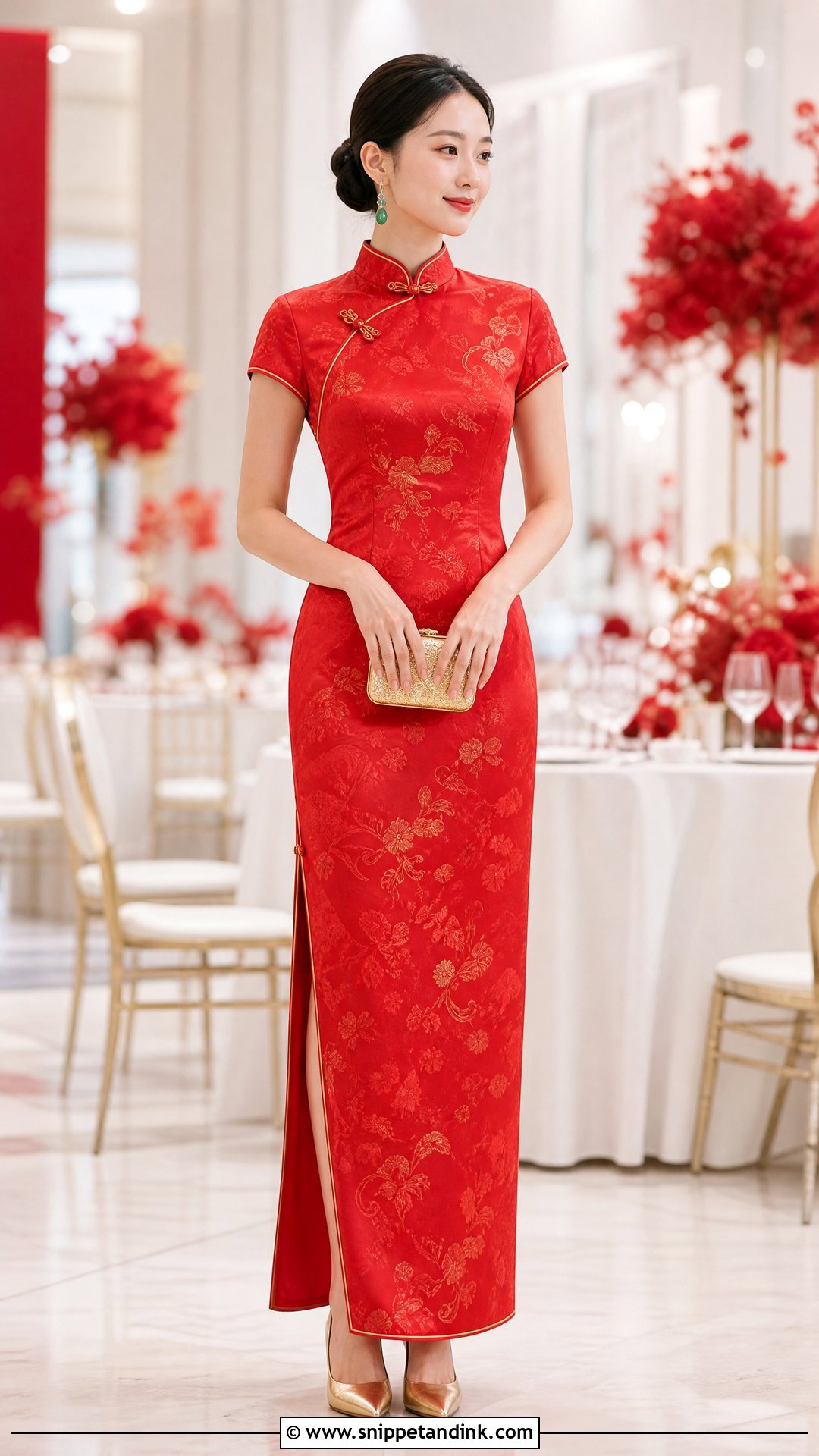
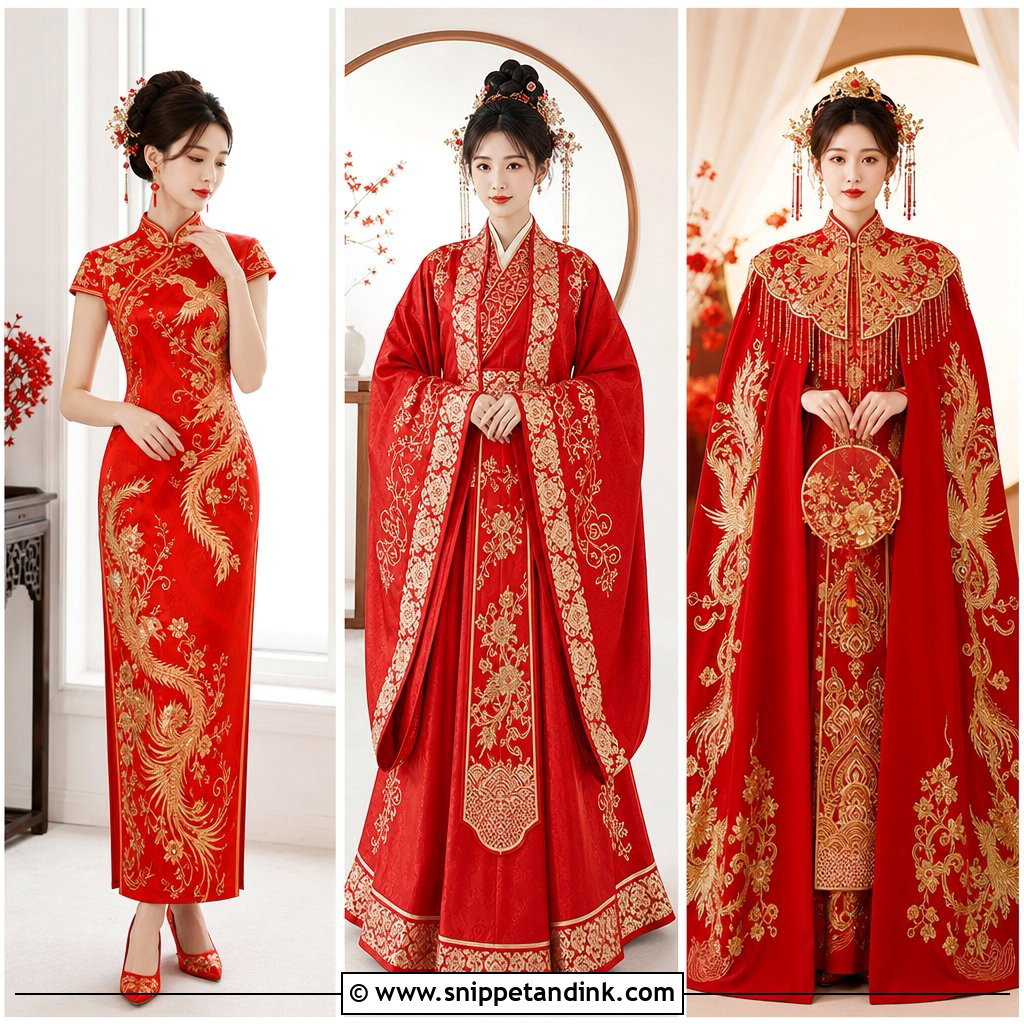
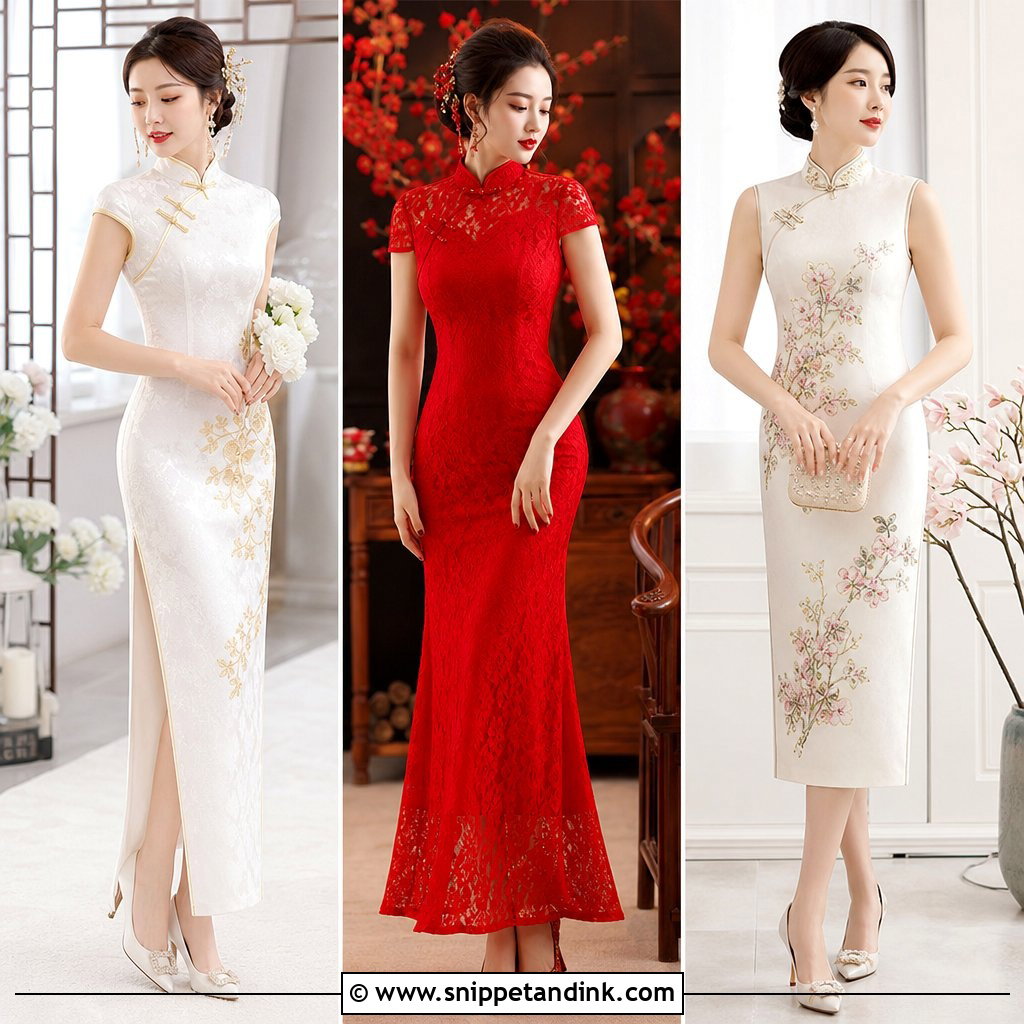
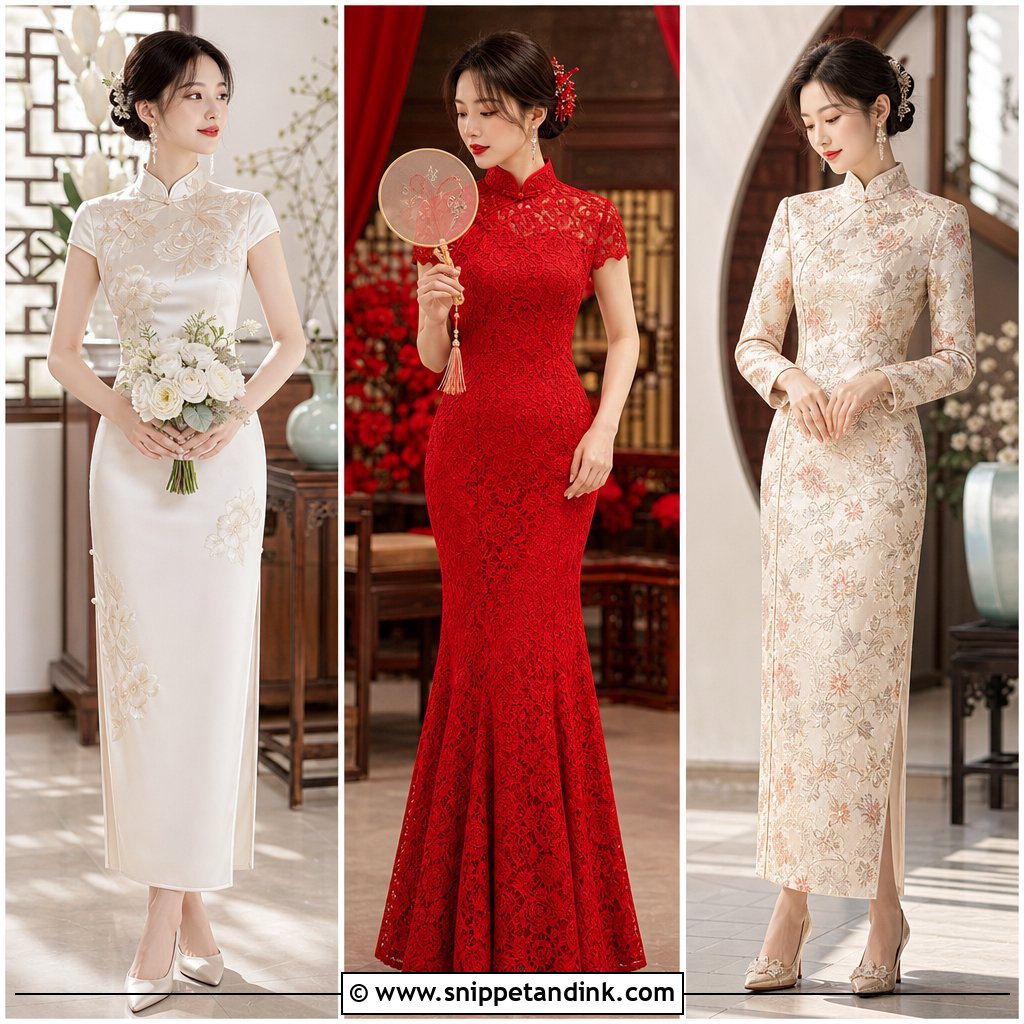
A floor-length red silk qipao is clean, fitted and unmistakably Chinese: standing collar, frog closures, a side slit and very little extra decoration needed. Many brides wear one for the banquet because it’s lighter than a Qun Kwa and easier to sit in through a long dinner. Silk shows every pull, so the fit across the hips and the collar height have to be right; a collar that’s even slightly tight becomes miserable by the toasts. Red or metallic pointed pumps, a small gold clutch and jade or gold studs are enough. Sit, walk and greet people in the fitting room to check the slit height.
6. White Lace Qipao Wedding Dress
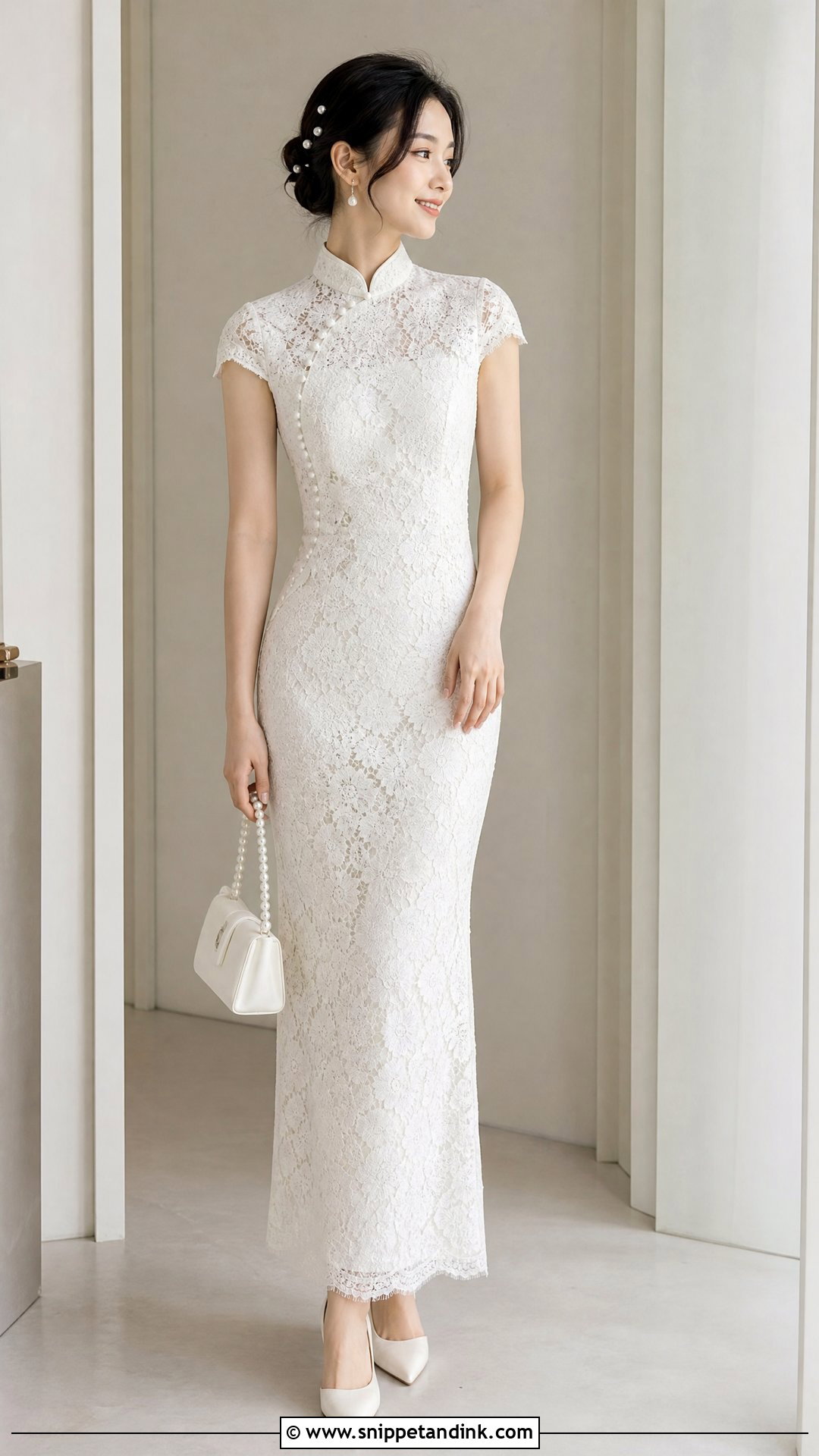
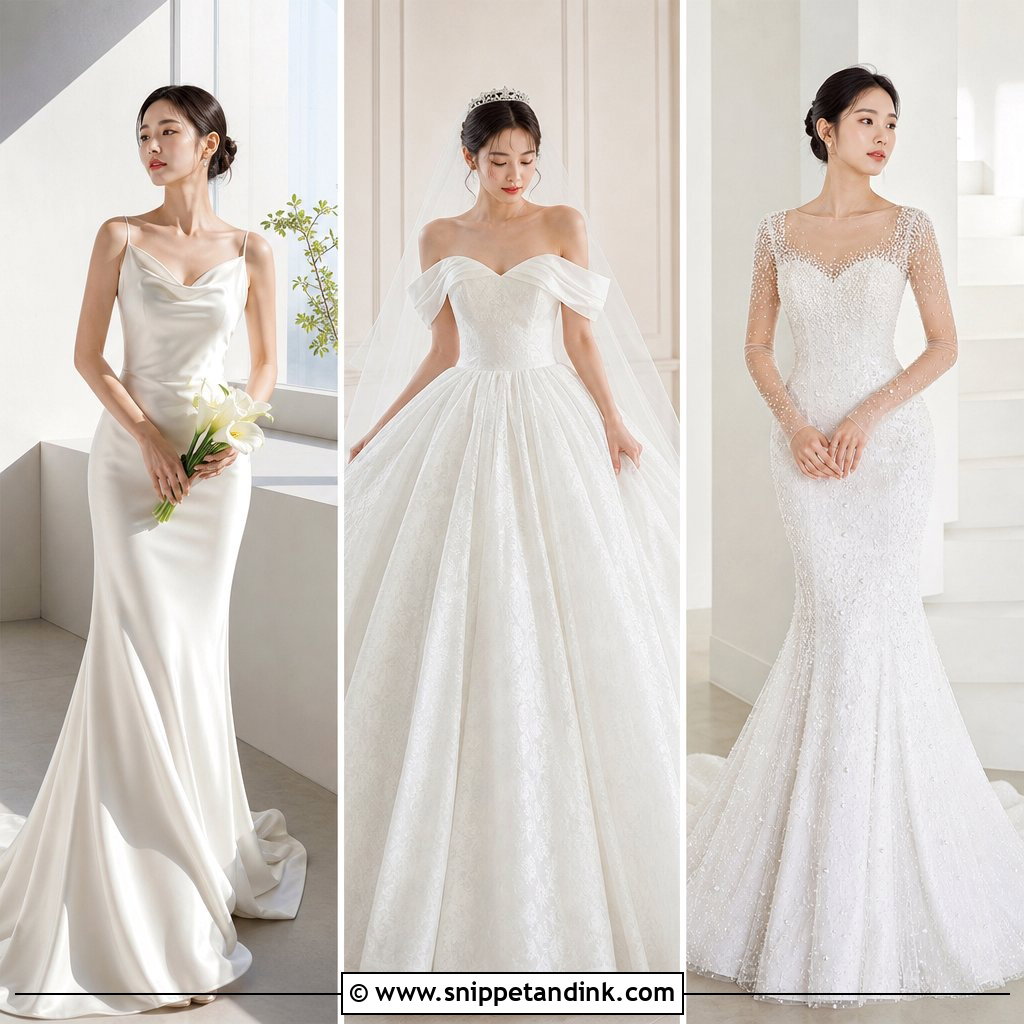
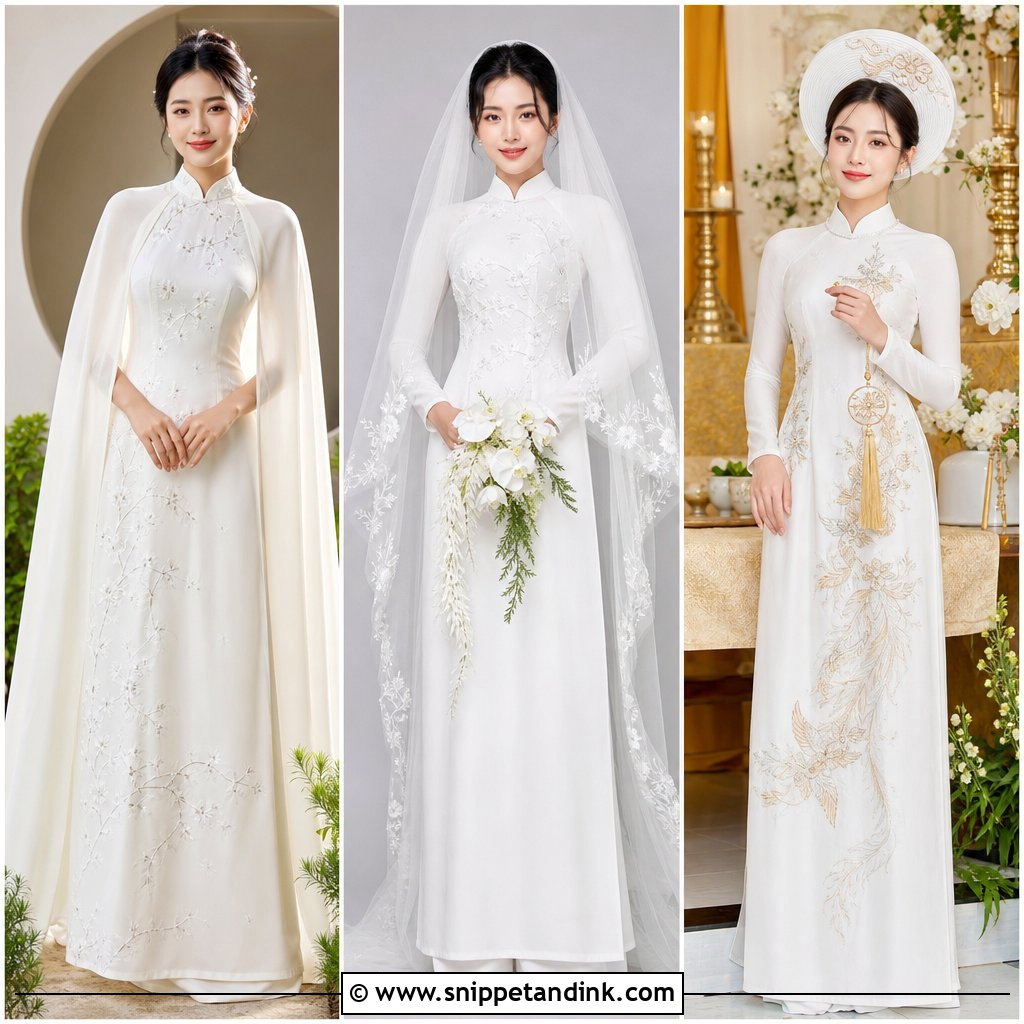
A white lace qipao mixes Western bridal white with a Chinese silhouette, and it’s a common choice for a civil ceremony or the reception entrance. The lining colour decides whether the lace pattern shows: nude or ivory makes it visible, pure white hides it. I like a fitted column or soft A-line with a Mandarin collar and covered buttons. Ivory pointed heels, pearl drops and a structured white mini bag finish it. A chapel veil can work if it attaches below a simple bun so it doesn’t hide the collar; pearl pins are the cleaner option. Older relatives may see an all-white outfit as a mourning colour, so I usually add one red detail, such as a lip color or embroidered clutch.
7. Red Velvet Qipao Wedding Dress
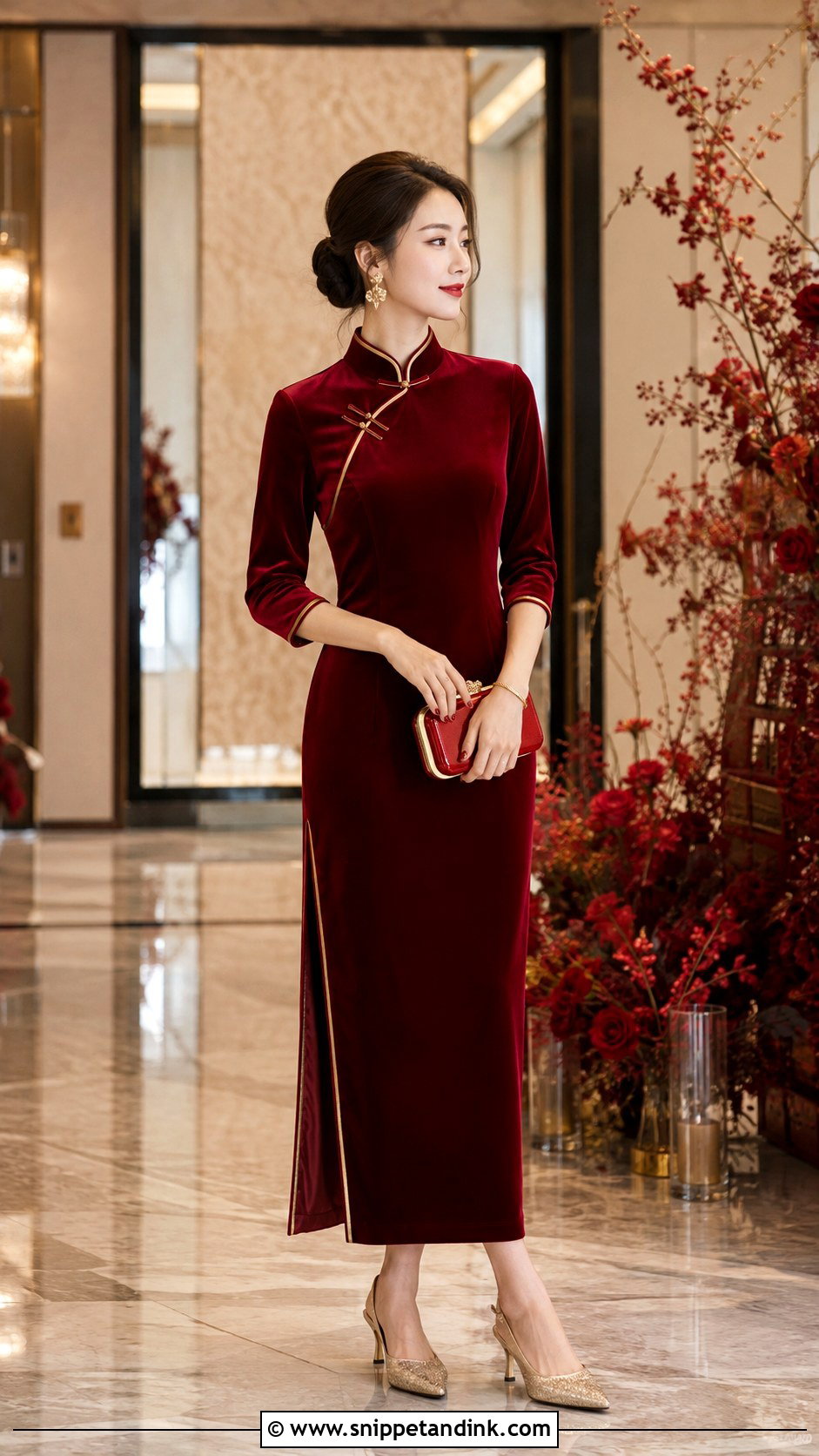
Velvet gives a red qipao weight and depth, which is why I keep it for autumn and winter weddings; in summer it’s simply too warm. Velvet doesn’t need much embroidery, so limit it to the shoulder or lower skirt and let gold piping outline the collar, sleeves and closure. One practical warning: velvet crushes where you sit and marks if steamed carelessly, so steam from the inside and avoid pressing it flat. Gold slingbacks, a hard-shell clutch and sculptural earrings look right at an evening banquet. Ask for a breathable lining and a little stretch through the hips.
8. Mermaid Qipao Wedding Dress
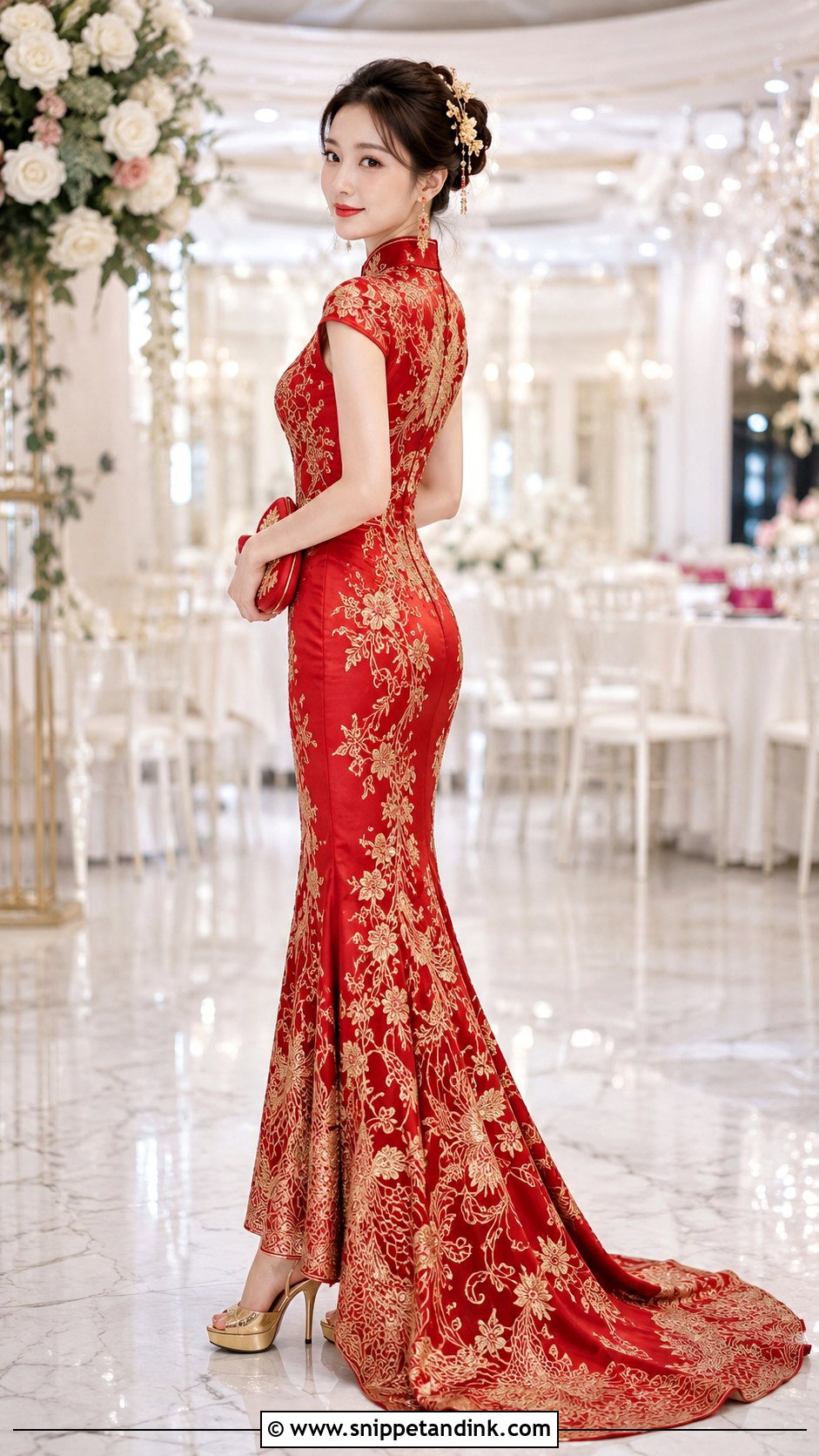
A mermaid qipao keeps the collar and closures of the qipao but flares into a dramatic skirt from the knee. The shape is only wearable if the flare point sits at or just above the knee; set too low, you’ll take tiny steps all night. Red jacquard, brocade or embroidered silk hold the line best. Gold platform heels add height under the longer hem, and a red clutch, small earrings and one hair comb are plenty. I always make brides walk, turn and sit at every fitting in this one. It shines for a banquet entrance or as a portrait outfit.
9. Qipao Wedding Dress With Train
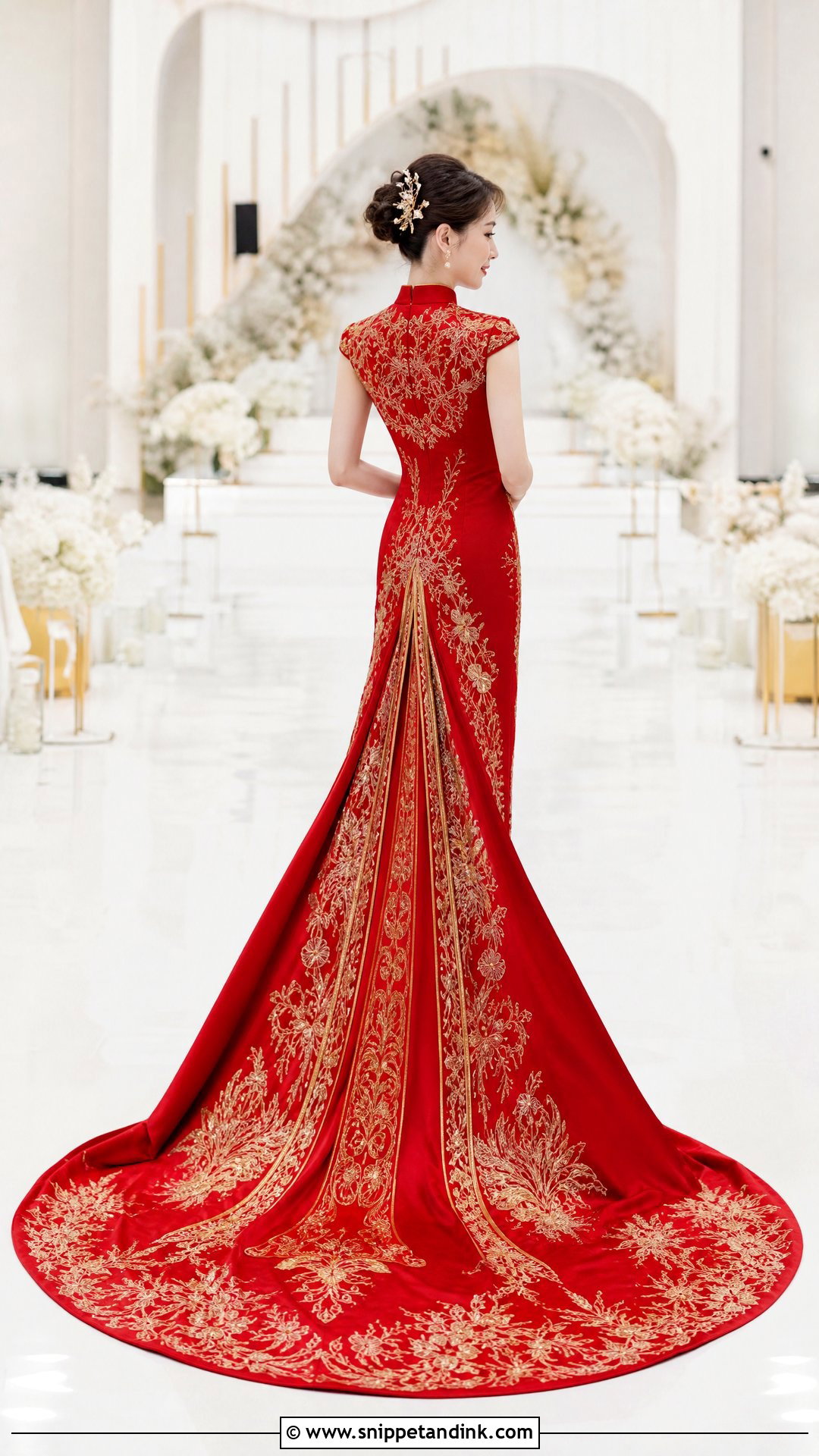
A detachable train is the clever answer when you want ceremony drama and an easy evening. The base is a fitted red or ivory qipao with a high collar, side closure and restrained gold embroidery; the overskirt or train clips or hooks at the waist. Check how it attaches. Hidden hooks or snaps under a waistband look cleaner than visible buttons, and someone in your party should practise removing it before the day. Metallic heels, a long veil or ornate hairpiece and a structured clutch suit the ceremony. Afterwards, drop the train and change into lower shoes.
10. Modern Mandarin Collar Wedding Gown
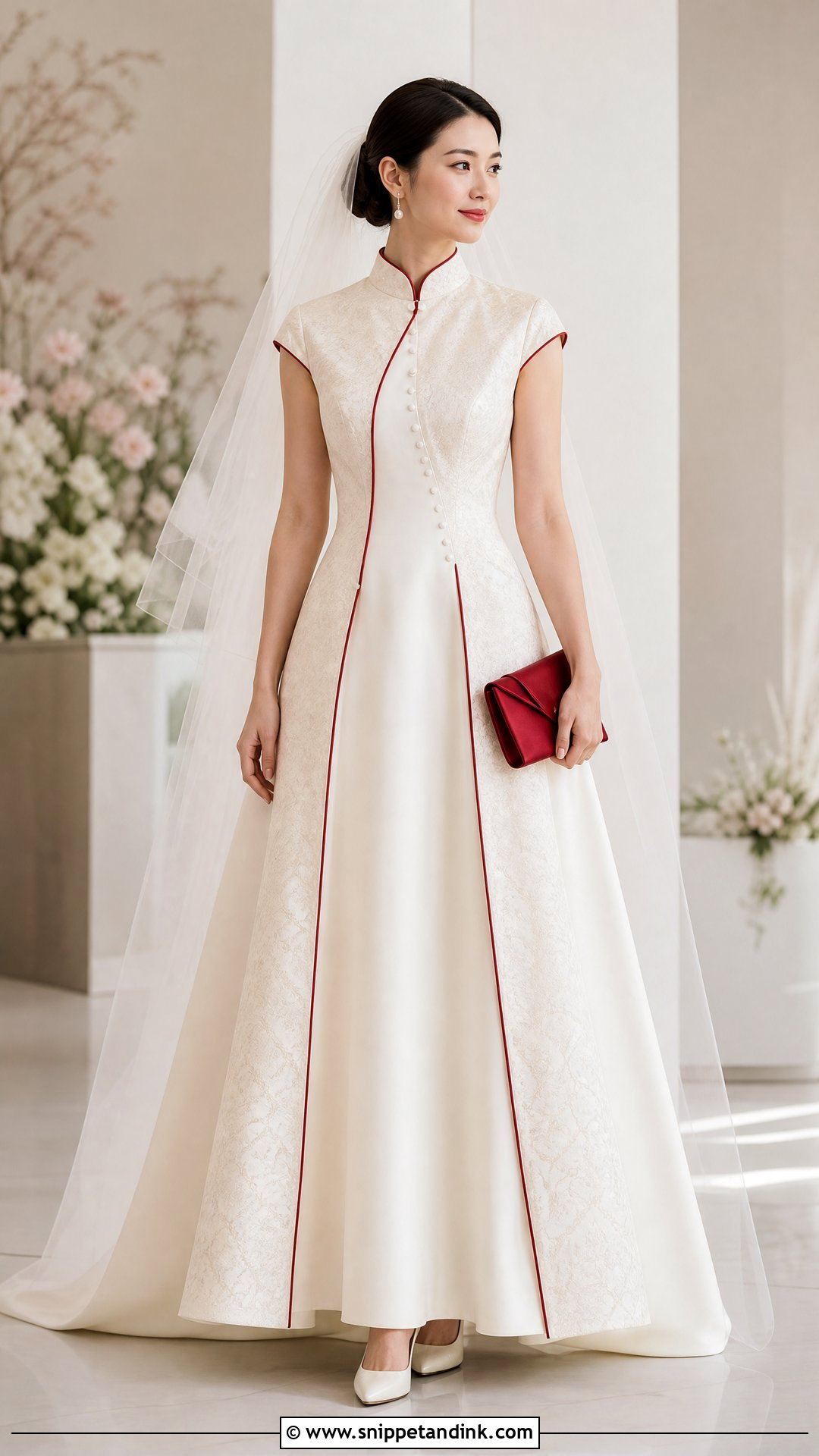
Some brides want a Chinese reference without a fully red outfit, and a white or ivory gown with a Mandarin collar does exactly that. I like it with cap sleeves, a fitted waist, covered buttons and a thin line of red piping at the collar or down the back. Brocade panels at the bodice or hem add more culture without going ornate. Ivory pumps, pearl earrings and a red satin clutch give one controlled pop of colour. A low bun with a minimal gold comb and a fingertip veil suit the ceremony. Lightweight satin or crepe carries it comfortably into dinner.
11. Red A-Line Chinese Wedding Dress
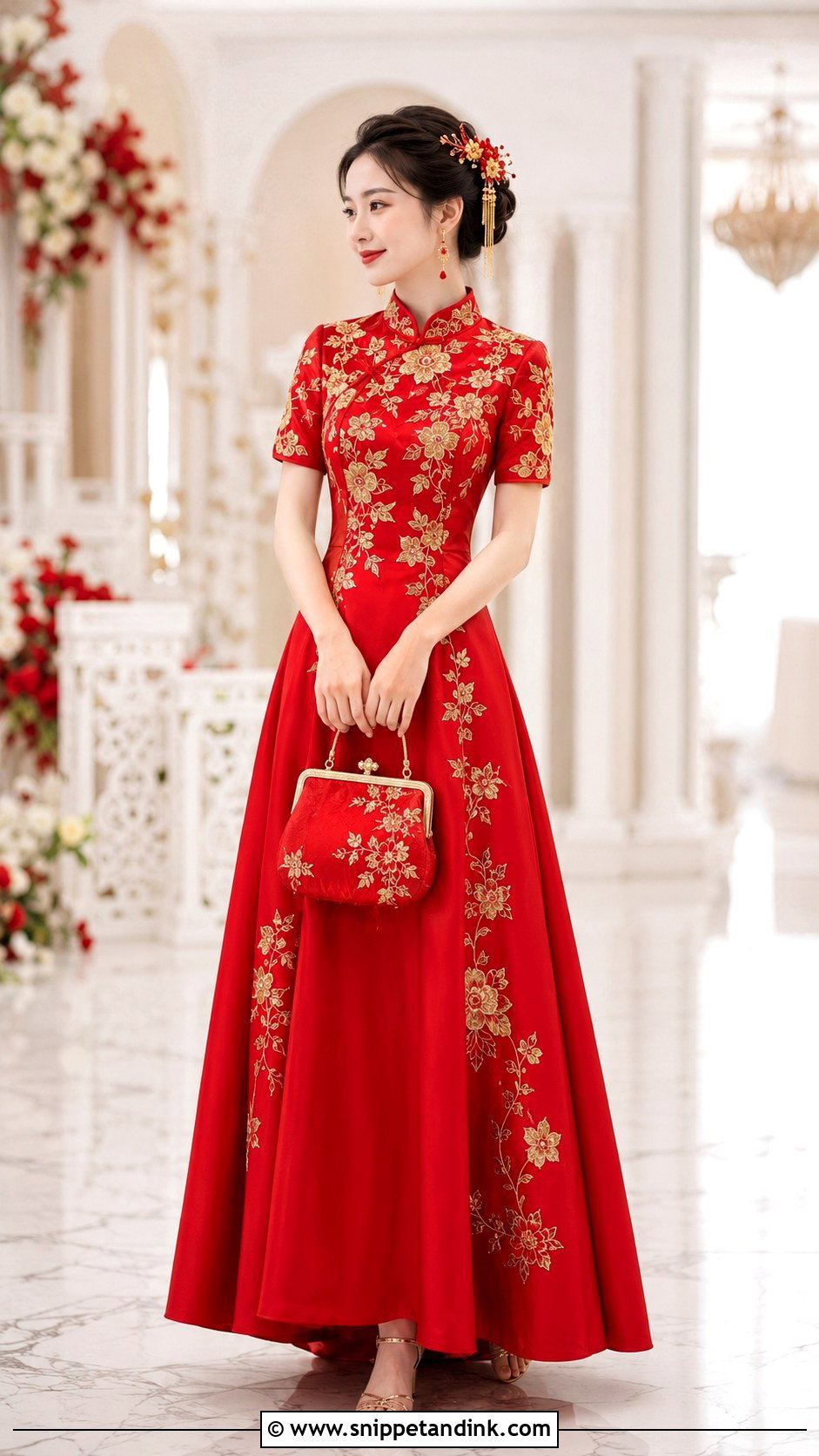
An A-line takes the pressure off a fitted qipao: it’s defined at the waist and falls away from the hips, so it suits a wider range of bodies and lets you sit through a long ceremony. Red satin or brocade with a Mandarin collar and closures near the shoulder looks traditional. Gold floral embroidery around the waist and hem frames the shape. Gold ankle-strap heels, a small embroidered bag and medium drops are enough; with a detailed collar, I’d skip the necklace. A softly twisted bun with a red and gold comb finishes it.
12. Two-Piece Chinese Bridal Skirt Set
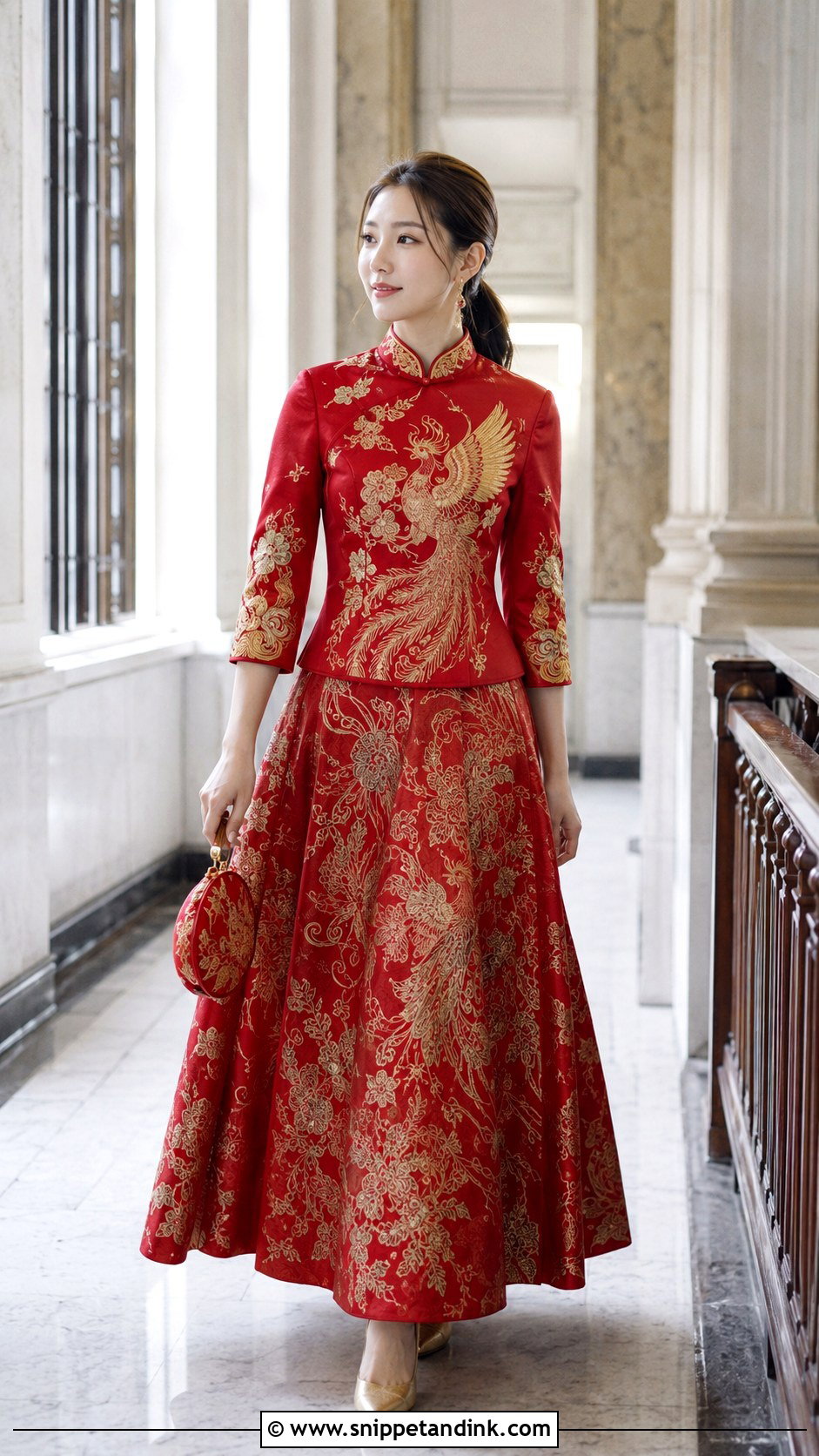
Separates are my favourite suggestion for a smaller wedding, because a fitted Mandarin-collar top and full red brocade skirt can each be altered on their own and the top can be worn again. The top might have three-quarter sleeves, frog closures or a little phoenix embroidery; keep the skirt plainer so they don’t compete. Make sure the top is long enough to stay tucked or overlap the skirt when you raise your arms. Gold block heels, an embroidered wristlet and understated drops suit it, and a smooth ponytail or low knot feels fresher than a formal updo for a tea ceremony at home or a courthouse celebration.
13. Ming-Inspired Hanfu Wedding Dress
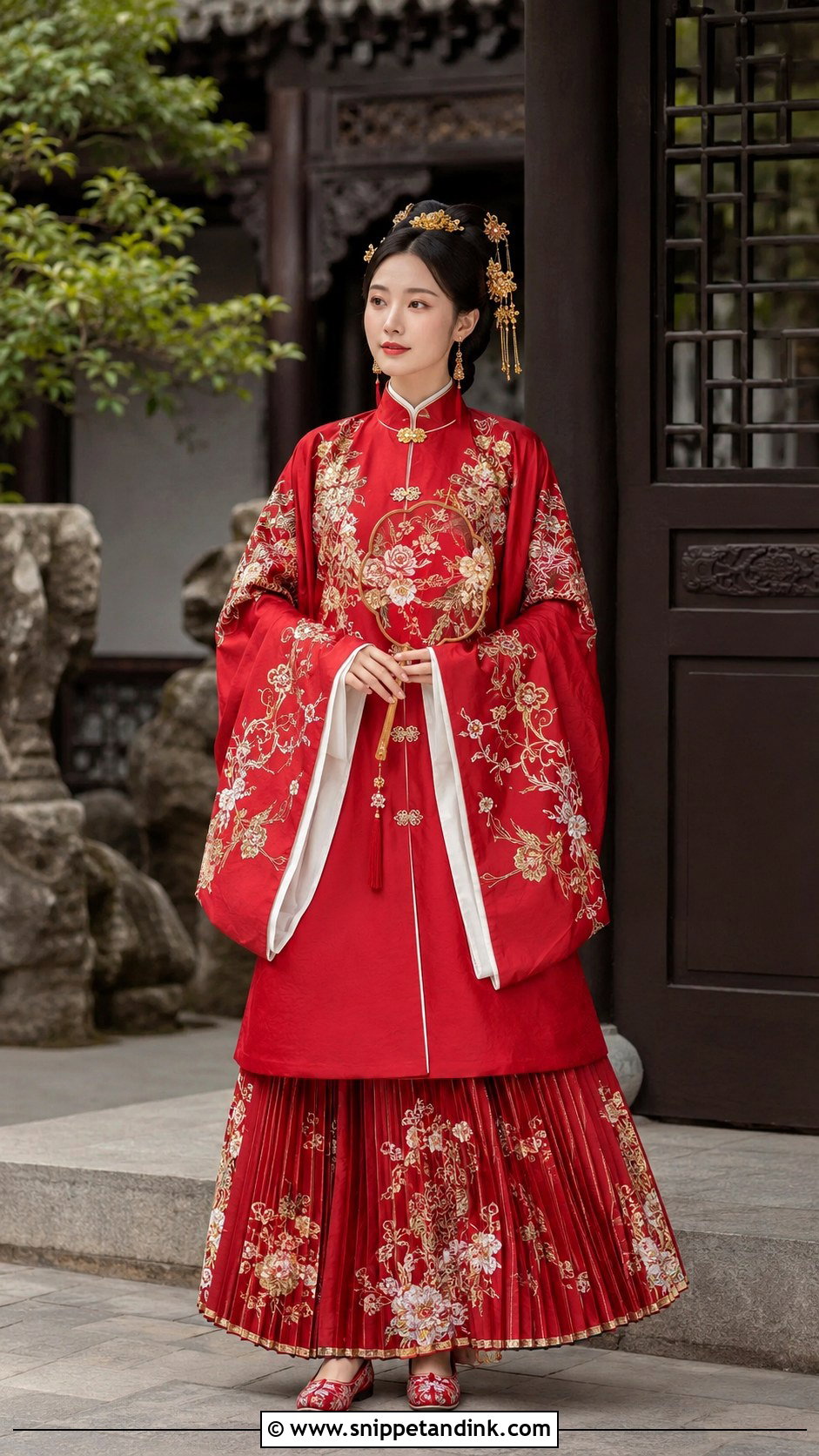
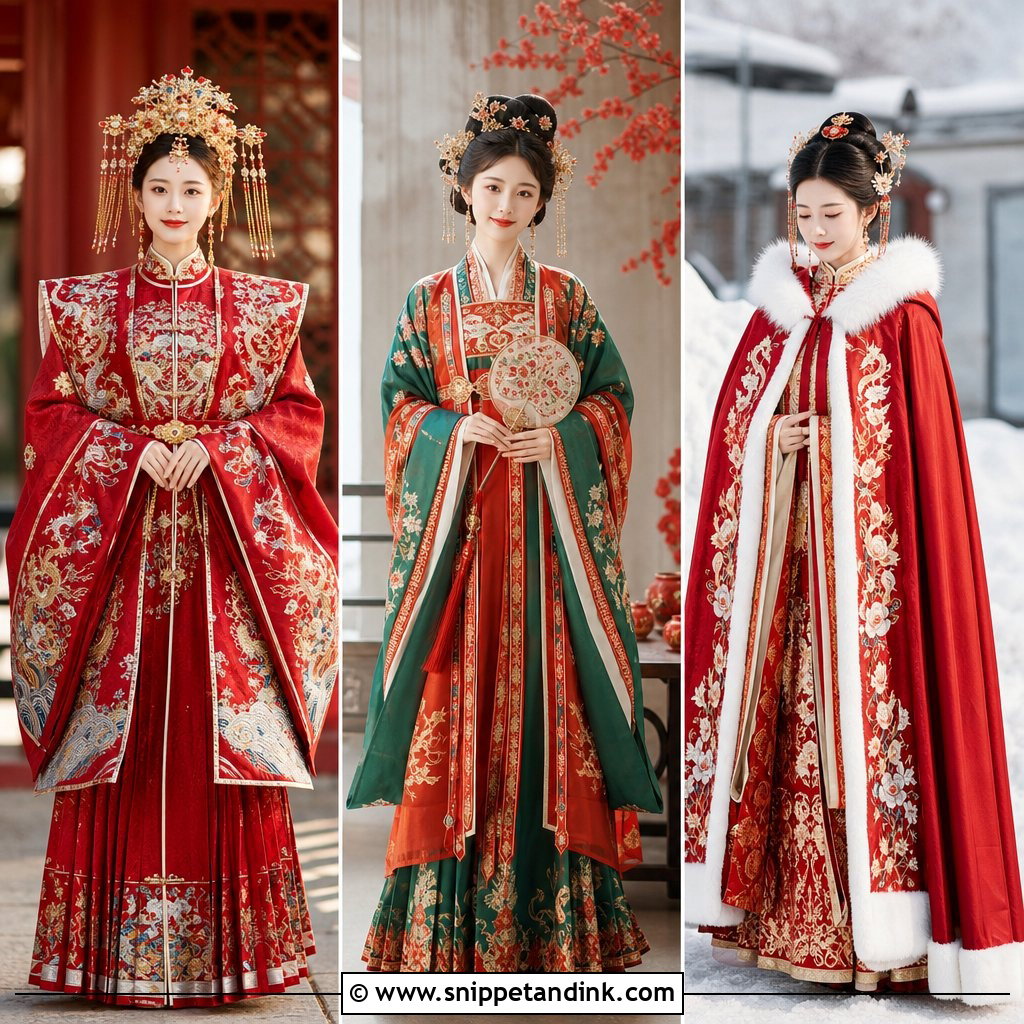
A Ming-inspired Hanfu is layered and dignified: a long red robe or jacket over a pleated skirt, with broad sleeves and embroidered borders. The horse-face skirt, with its flat front and back panels and pleated sides, gives strong vertical lines. Historical Hanfu follows quite specific combinations of garments, so if accuracy matters to you, work with a maker who knows the period rather than mixing pieces from different shops. I’d keep the underlayers light so the outfit doesn’t bulk up. Embroidered red flats, a ceremonial fan and a gold hairpiece on a secure updo complete it.
14. Tang-Inspired Hanfu Wedding Dress
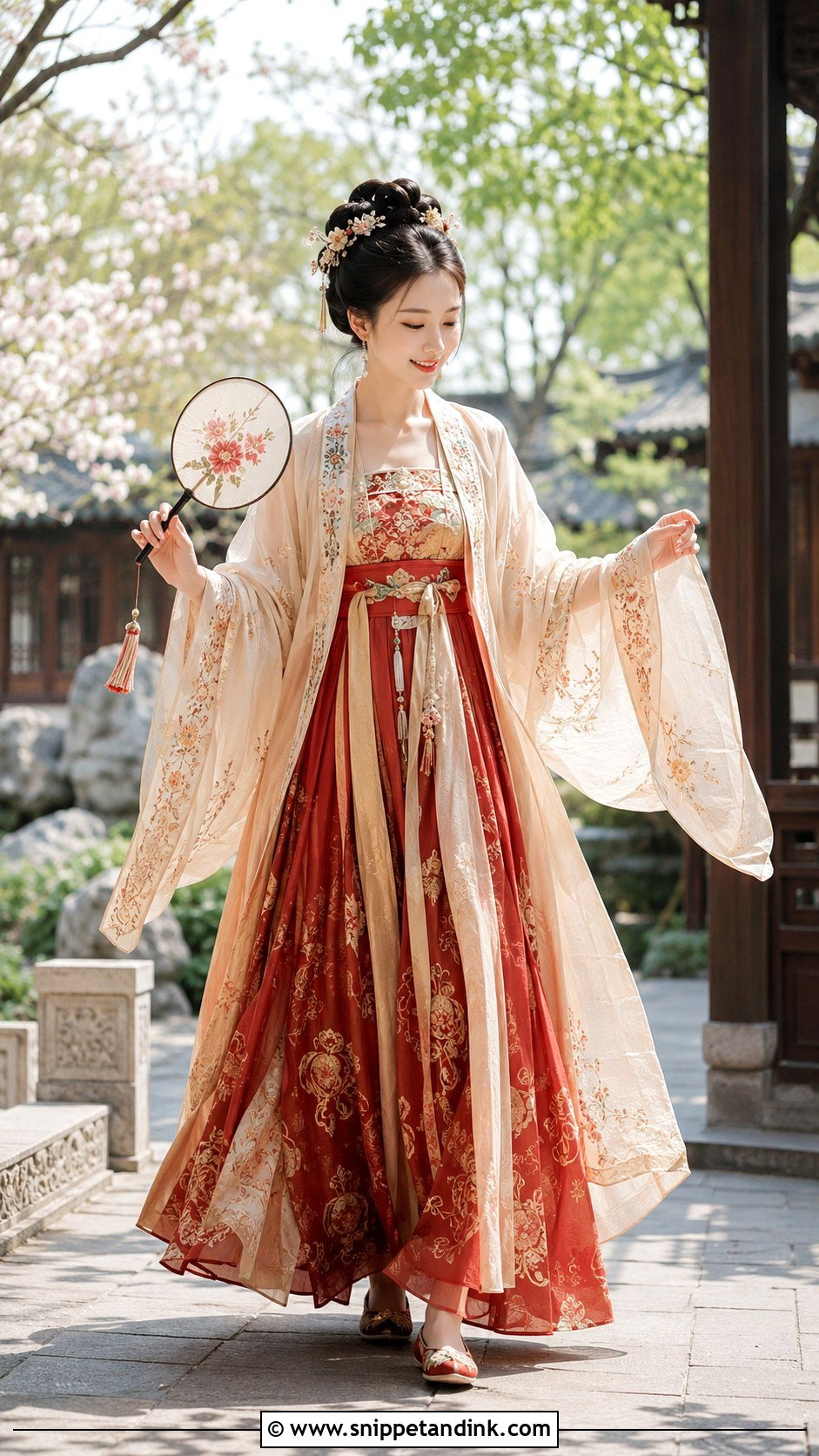
Tang-inspired Hanfu sits high on the chest, with the skirt tied above the bust and a light outer robe with wide sleeves on top. It flows beautifully in a courtyard or garden, but those sleeves are the practical issue: they trail into teacups and dinner plates, so plan to have a bridesmaid help you hold them back at the table. Choose breathable fabrics that let your arms move. Embroidered flats, a gold floral headpiece, delicate earrings and a round silk fan suit it. A raised updo looks right, as long as it’s pinned securely enough to last the whole ceremony. Keep make-up luminous rather than heavy.
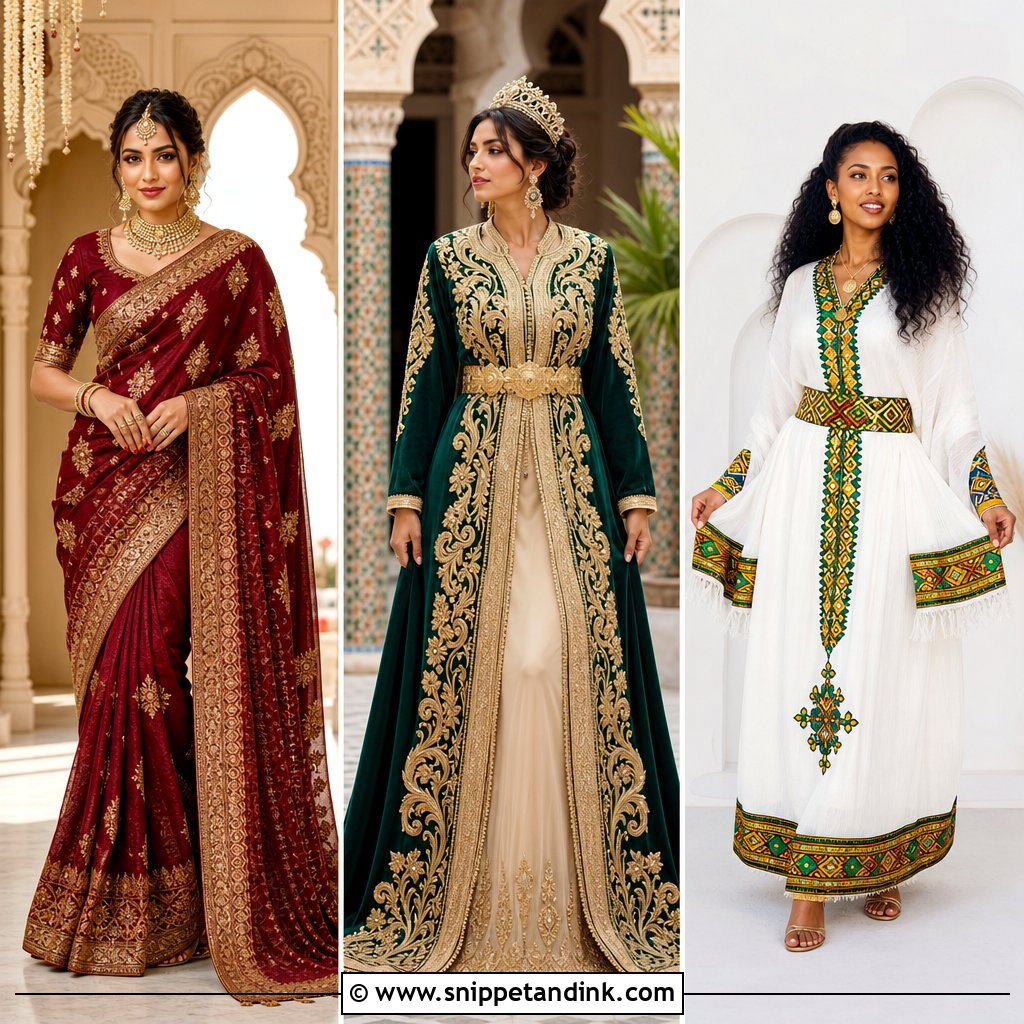
15. Song-Inspired Hanfu Wedding Dress
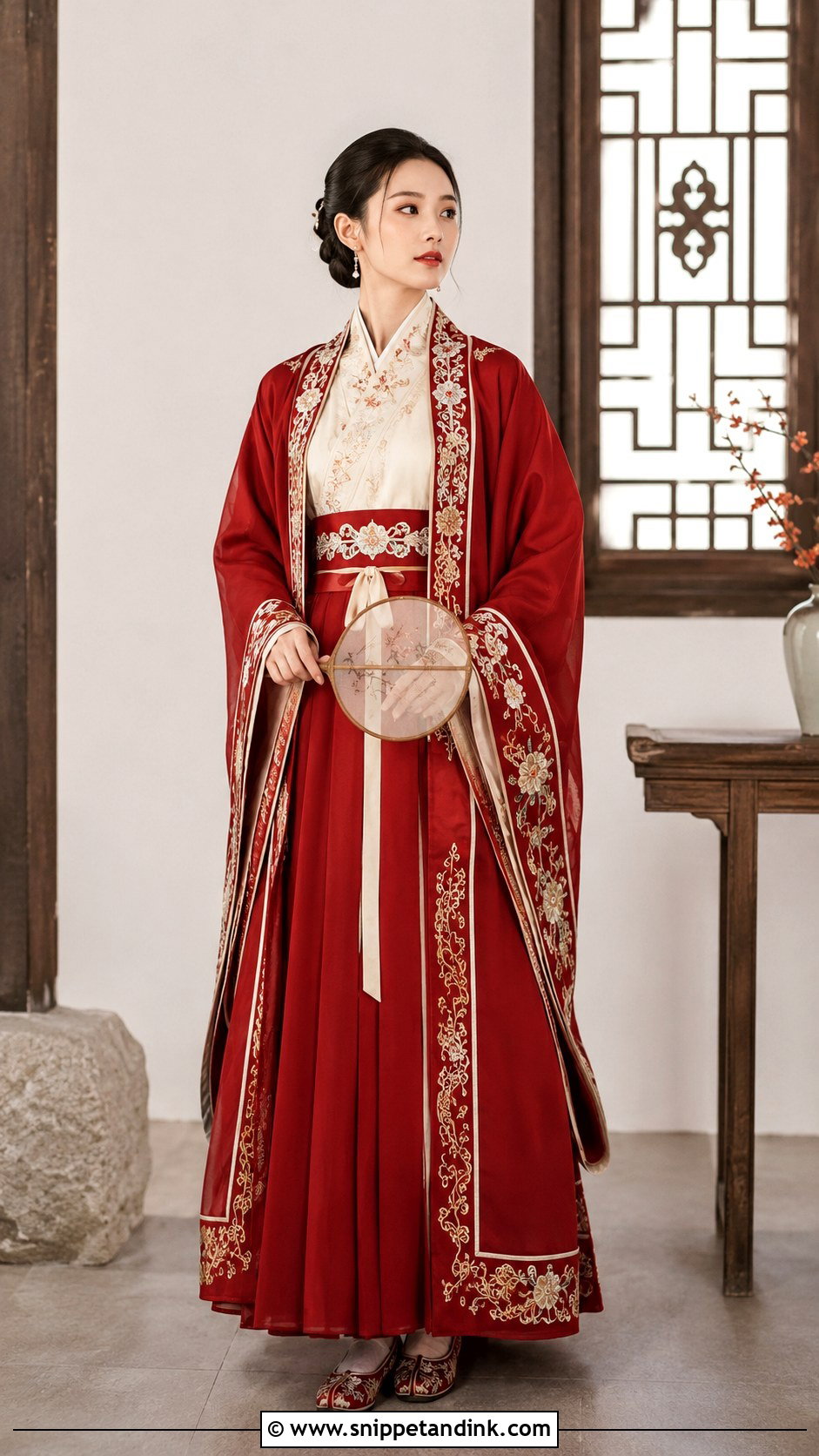
For an understated Hanfu look, the Song style is the quietest of the three periods here: a fitted inner top, a high-waisted skirt and a straight, light outer layer. Pick deep red, ivory or muted gold and repeat one colour through the trim, sash and hair pieces, which is what makes it look intentional. The proportions are the decoration, so I’d keep embroidery small and well placed. Flat embroidered shoes, pearl earrings and a narrow silk fan suit it, with a low, neatly pinned style. It’s lovely for pre-wedding portraits or an intimate tea service at home.
16. Fengguan Xiapei Wedding Dress
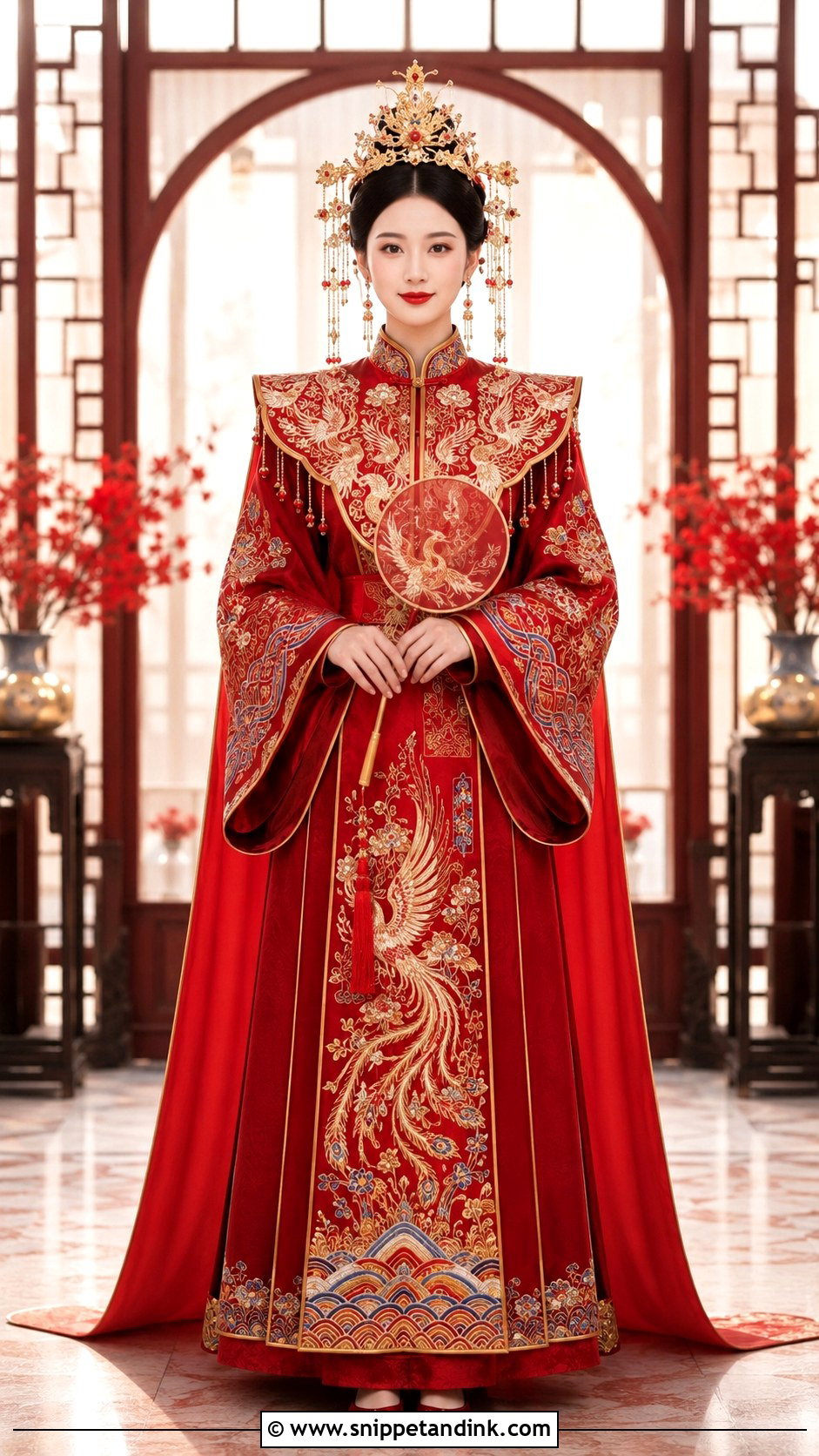
The Fengguan Xiapei is the most elaborate outfit here: a red robe, a decorative cape over the shoulders and a phoenix crown. Every element has to be planned together, since a cape from one maker and a crown from another rarely sit right. Crowns vary hugely in weight. Before the day, I have the bride wear hers for an hour or so at the trial, because a heavy crown that feels fine for ten minutes can cause a headache by the end of the ceremony. A hairstylist should anchor it to a firm updo. Hide comfortable red flats under the robe and keep visible jewellery minimal. A small round fan suits portraits better than a bouquet.
17. Red And Gold Chinese Ball Gown
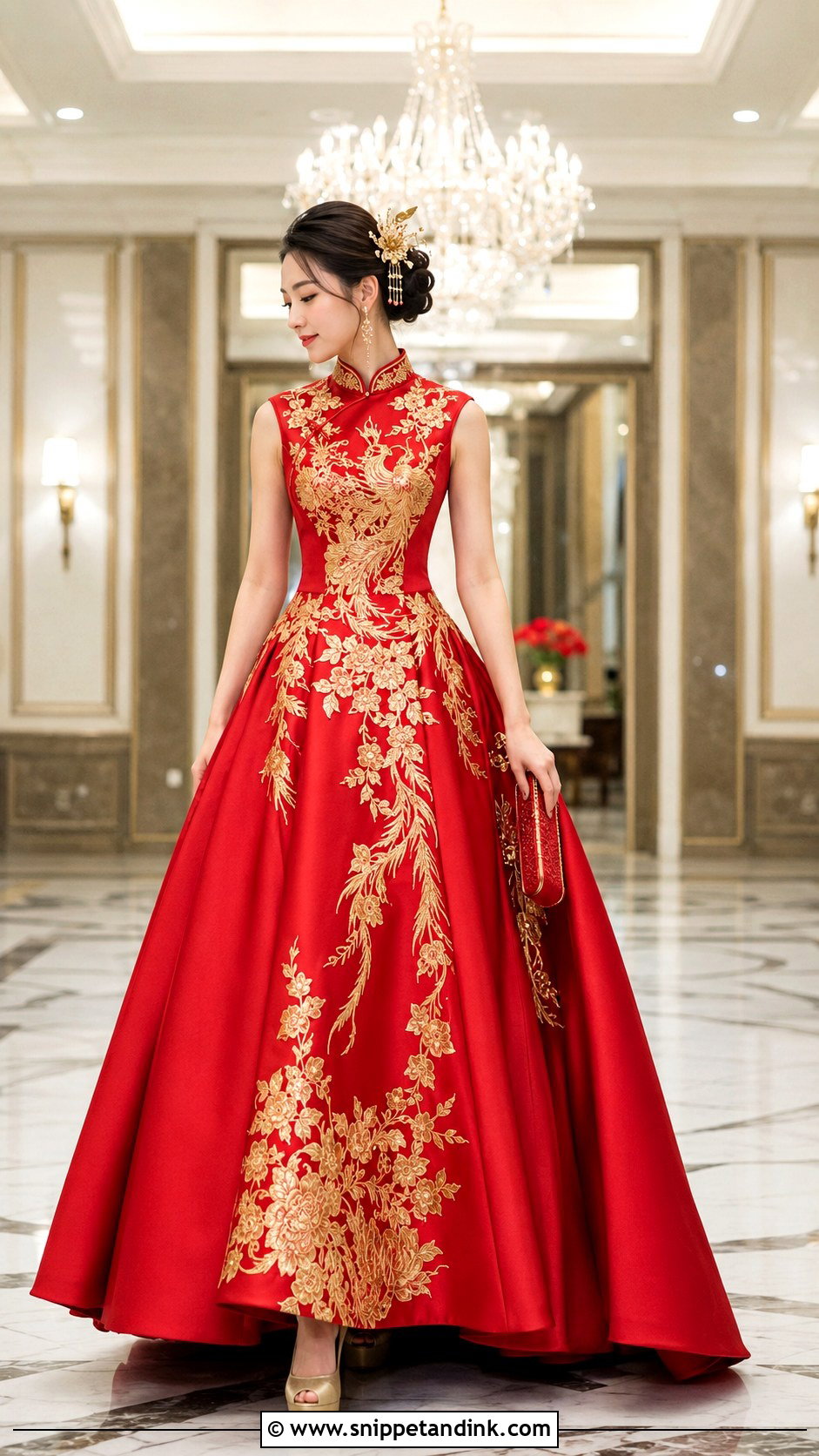
A red and gold ball gown is the Western silhouette with Chinese details: a fitted Mandarin-collar bodice and a full skirt in satin, jacquard or layered tulle. Concentrate the gold embroidery at the neckline, waist and lower skirt so the eye travels from top to hem. Gold platform heels add height and stability under the volume. The common mistake is stacking statement pieces; a big crown, heavy necklace and oversized bouquet together look crowded, so pick one. A polished bun with a small phoenix comb is enough. It’s a grand choice for a ballroom entrance.
18. White And Red Chinese Fusion Wedding Dress
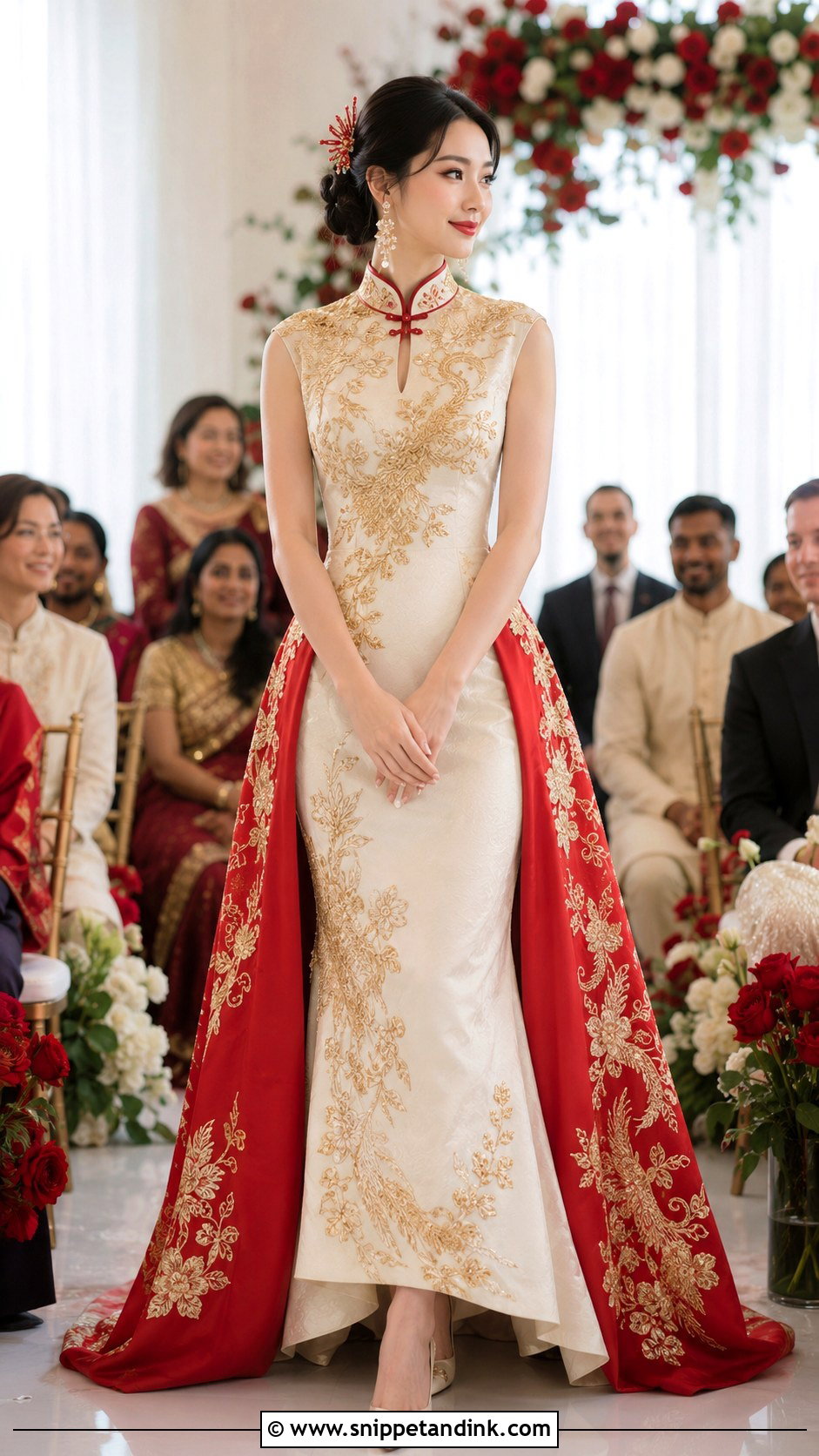
Can’t decide between a white gown and a red Chinese dress? A fusion design puts both in one outfit. I’d start with an ivory A-line or fit-and-flare, then bring in red at the collar, waistband or as a removable overskirt, using gold thread to tie the two colours together so the placement looks deliberate. Ivory heels with a red sole, a compact red bouquet or clutch, pearl and gold earrings and a low bun finish it. A simple veil for the ceremony can be swapped for a red comb at the reception. It works well for a multicultural wedding with two sets of family traditions.
19. Tea-Length Qipao Wedding Dress
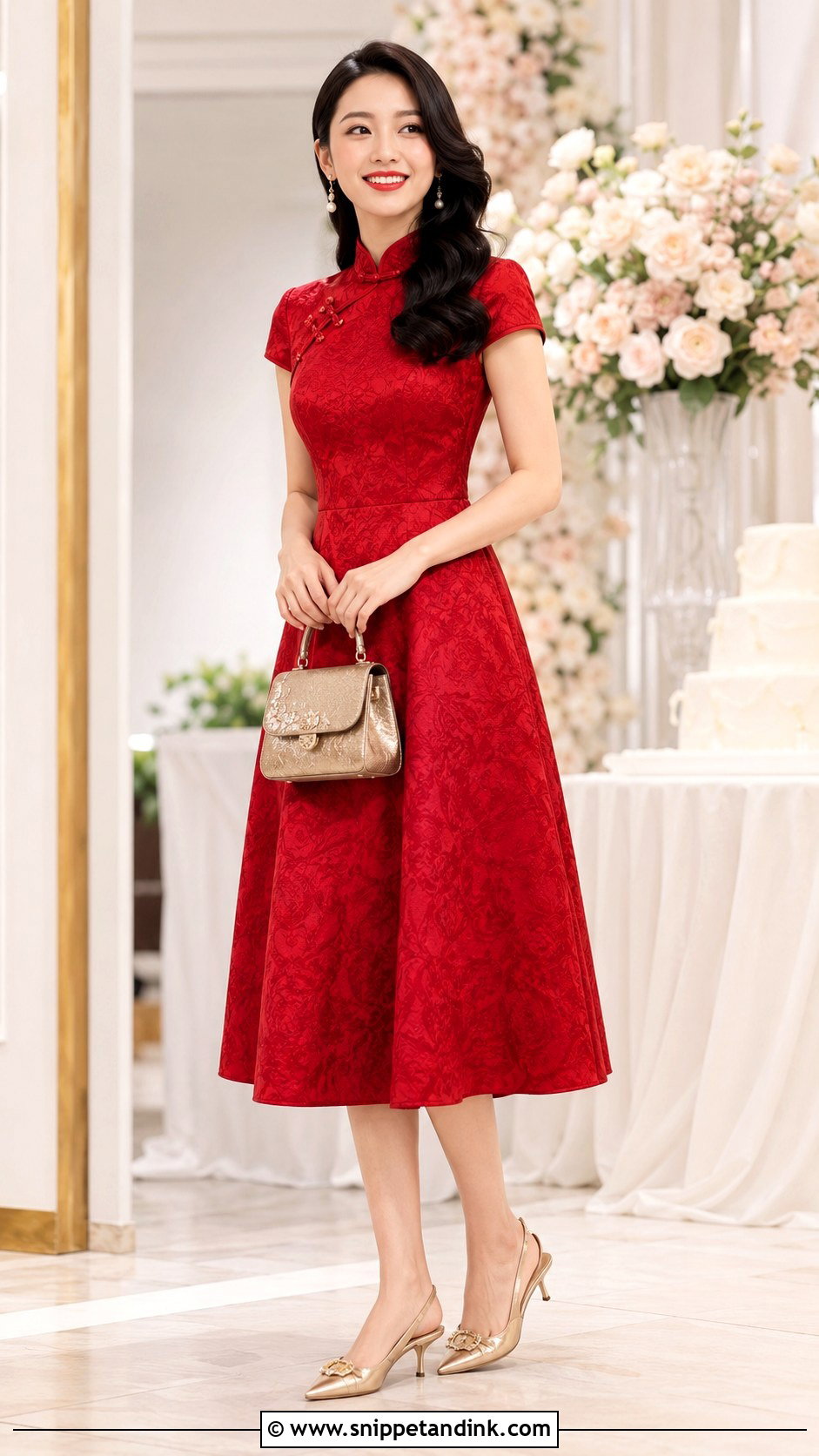
Tea length gets you onto the dance floor. A red jacquard qipao with a fitted bodice, Mandarin collar and a skirt ending between knee and ankle is practical for a civil ceremony or daytime tea ceremony, and a gentle flare moves better than a pencil cut. Since your shoes are fully visible, they matter more: gold slingbacks, embellished flats or red block heels. A small top-handle bag and pearl drops give it a vintage feel, with glossy waves or a clean low bun and one decorative pin. It’s the most comfortable dress here if you’ll be moving between locations.
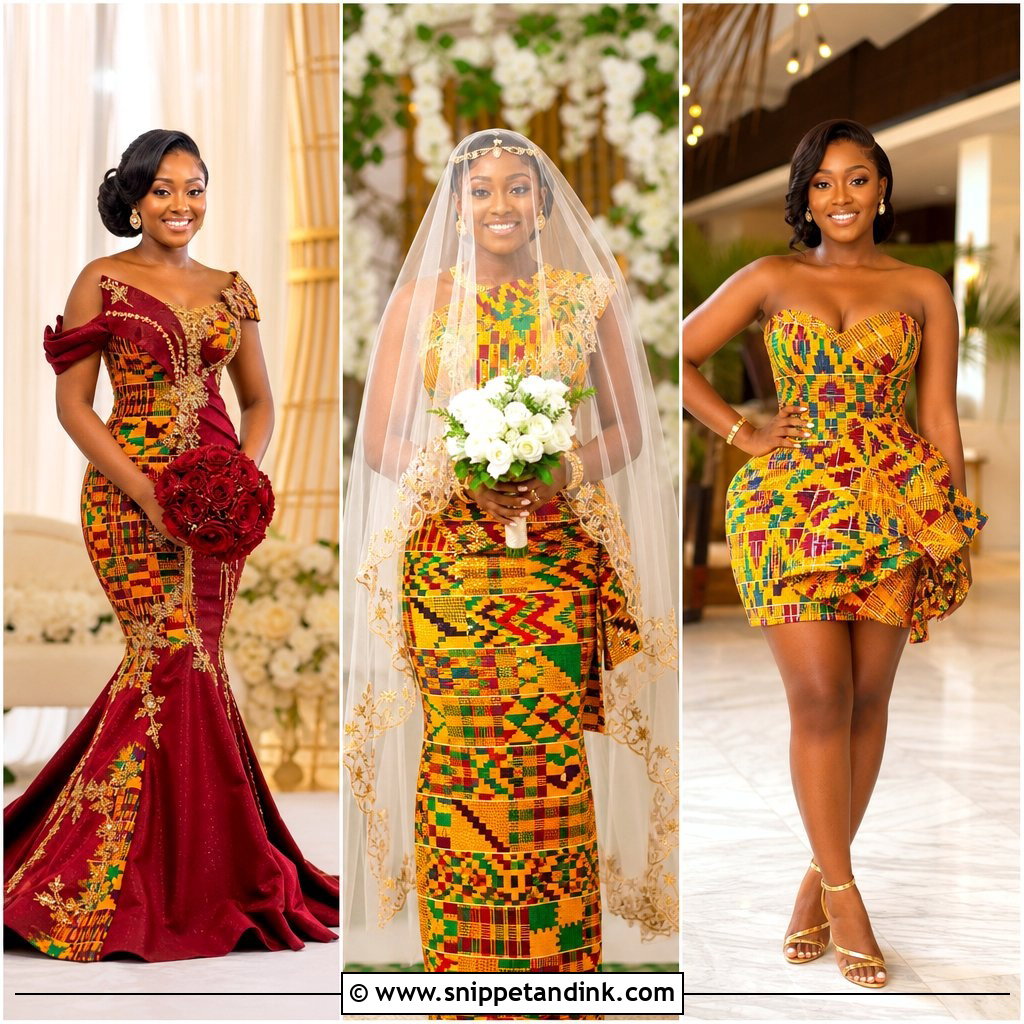
20. Plus-Size Red Qipao Wedding Dress
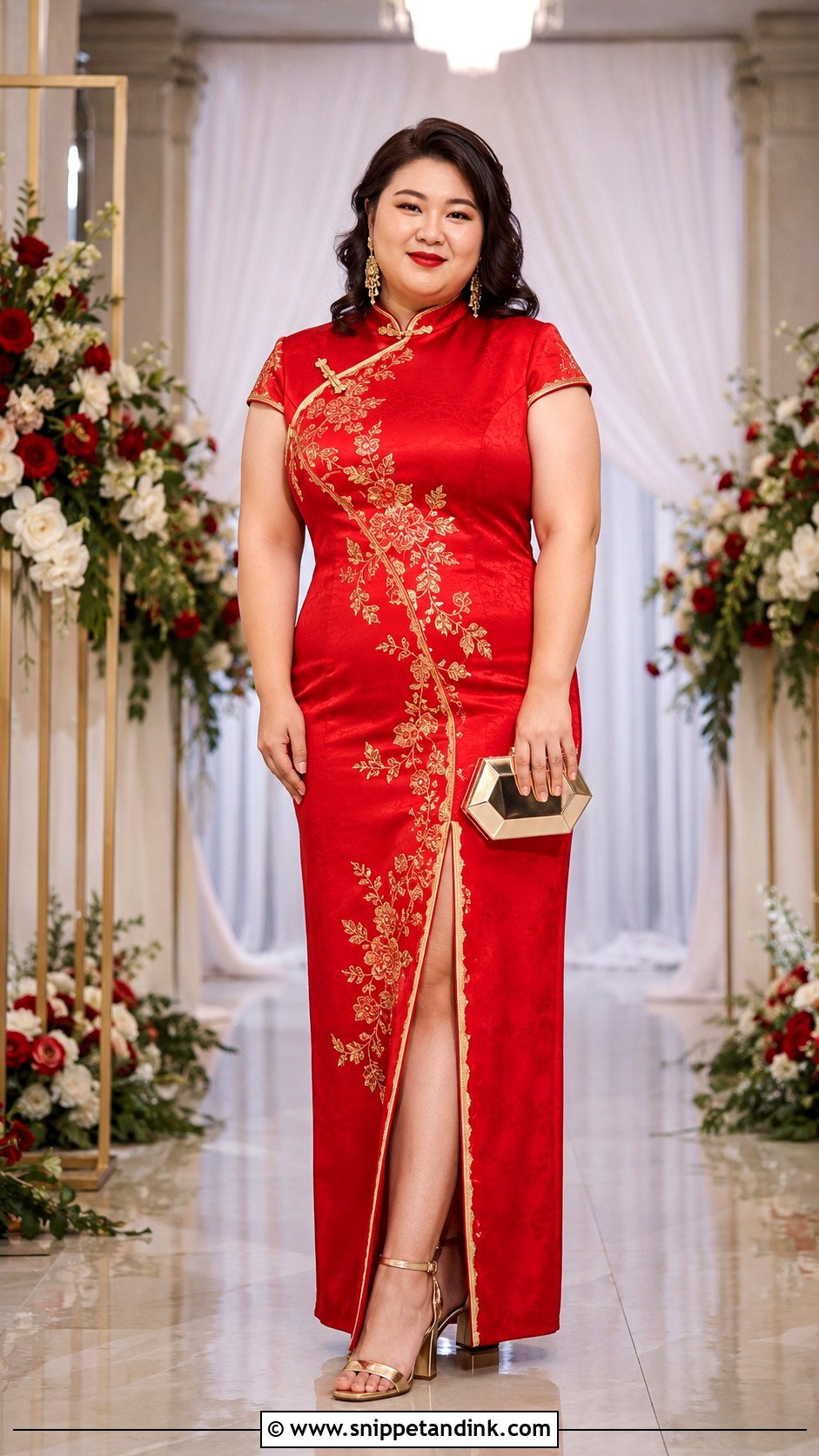
A plus-size red qipao should follow your body comfortably, not squeeze it. I’d always recommend made-to-measure for this cut, because off-the-rack qipao are drafted on a narrow block and the side seams have no room to let out. Supportive lining, a little stretch or side panels and a skirt wide enough to walk and sit in are the essentials. A shaped waist, the asymmetric V opening and vertical embroidery lengthen the line. Set the slit height where you feel secure. Cushioned gold block heels or red flats, statement earrings, a metallic clutch and a smooth updo or soft waves complete it.
Can You Kneel, Pour and Bow in It?
The tea ceremony is where a beautiful dress most often turns out to be impractical. At the final fitting, I ask brides to rehearse the actual movements with a tray and a cup, not just to stand in front of a mirror.
- Kneel on a cushion and stand back up without using your hands. A narrow qipao skirt or a tight mermaid flare will tell you very quickly.
- Hold a cup out at arm’s length with both hands. The jacket shouldn’t lift at the hem or pull across the back.
- Bow from the waist. Check the collar doesn’t dig into your throat and the closures don’t gape.
- Walk up a step in your shoes. Embroidered flats can be slippery on polished floors, so scuff the soles or add grip pads.
- Sit for ten minutes. Silk and velvet both show creases at the lap, and you’ll want to know how much before the photos.
If you’re wearing a heavy Qun Kwa or a crown, plan short breaks between rounds of tea. I’d also keep a small kit nearby with safety pins, a needle and red thread, blotting papers and a lint roller for the dark velvet or satin pieces.
Red, Gold and the Traditions Your Family Cares About
Chinese bridal fashion covers a lot of ground, from heavily embroidered Qun Kwa and flowing Xiuhefu to fitted qipao, Hanfu and fusion gowns. Start from the events you’ll actually attend, the family customs that matter to your household, the venue and the weather, and how many hours you’ll spend in each outfit. Then get the measurements, shoes and fabric right. If authenticity matters, ask your relatives and an experienced Chinese bridalwear maker before ordering. The outfit that works is the one that respects your family and still lets you move, eat and enjoy it.
You'll Like These Ideas:




Leave a Reply