
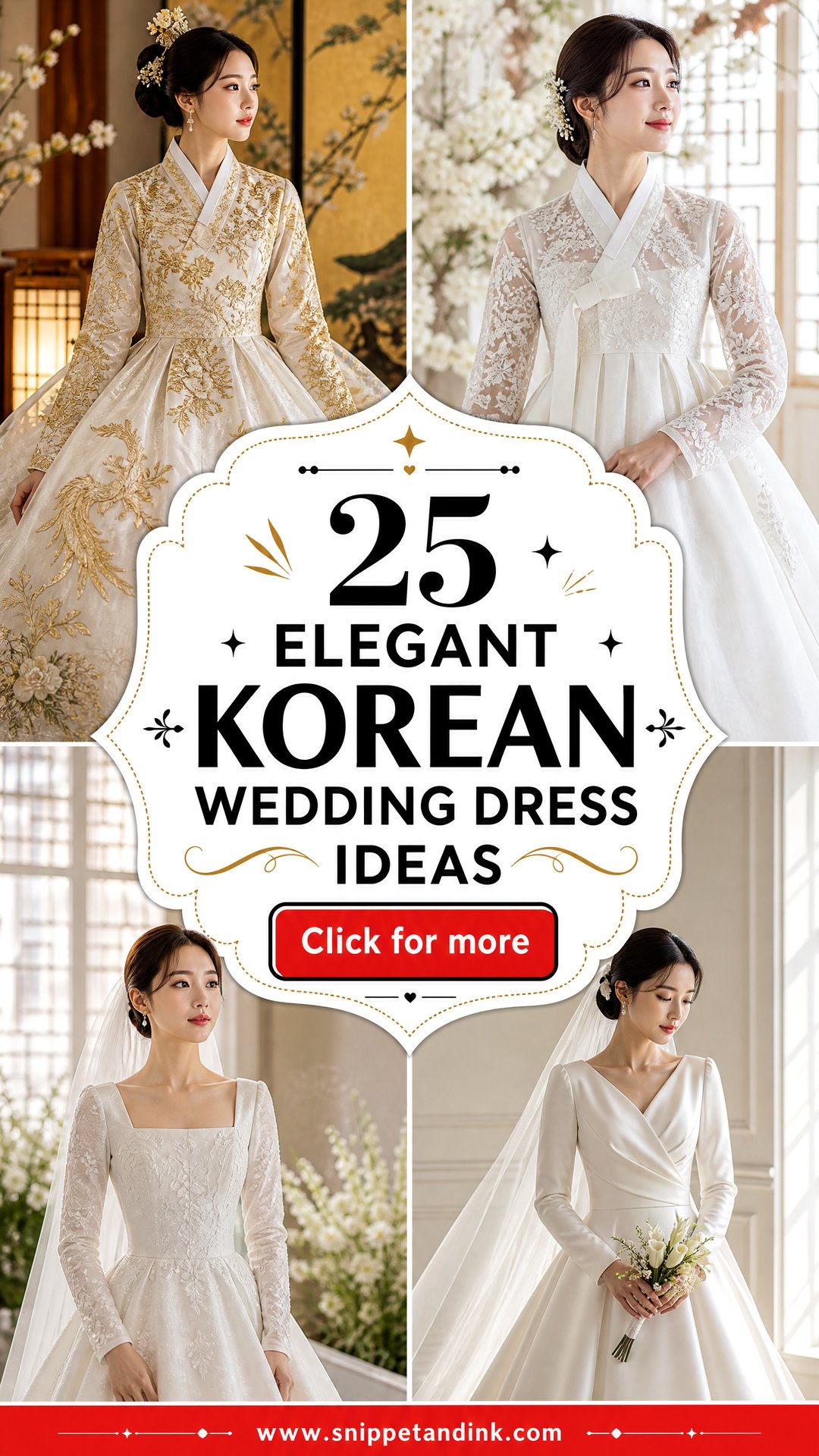
Elegant Korean bridal fashion gives a bride an unusual amount of range. One wedding might include a ceremonial robe for the paebaek, a white hanbok for the reception and a clean satin gown for the main ceremony. When I style a Korean wedding, I plan every outfit around what the bride will physically do in it: bow deeply, sit on the floor, stand for portraits, greet a long line of relatives. Fabric, proportion and how each piece moves matter as much as the look. Below are twenty-five options, traditional, fusion and Western, with the practical points I’d raise for each.
Bows, Floor Cushions and Catching Chestnuts in Your Chima
If your wedding includes a paebaek, the outfit has a very particular job. It’s a short, intimate ceremony, but it’s physically demanding in a way a Western reception isn’t, and the hanbok has to cope.
The deep bow
The traditional bridal bow involves lowering yourself to the floor with your arms raised in front of your face, often with helpers at each side. Practise it in the full outfit, including the robe and headpiece, at least once before the day. You’ll find out quickly whether the jokduri is pinned firmly enough and whether the robe’s sleeves cover your face the way you want.
Sitting on the floor
Brides often sit on cushions during the paebaek. A full chima worn over a petticoat spreads neatly around you; a slim gown doesn’t. That’s one reason so many brides switch into hanbok for this part, even if they wear a Western dress elsewhere.
The skirt as a basket
Near the end, the elders traditionally toss jujubes and chestnuts for the couple to catch in the bride’s skirt, a wish for children. The chima needs enough width to hold out between you. Silk that marks easily is worth protecting with a cloth for this moment, since dried fruit leaves sticky spots.
- Wear a petticoat under the chima for shape and ease when sitting.
- Keep flat embroidered shoes for the paebaek, even if you wear heels later.
- Ask the person helping you dress to check the jeogori ties after the bows; they loosen.
1. Traditional Hwarot Korean Wedding Dress
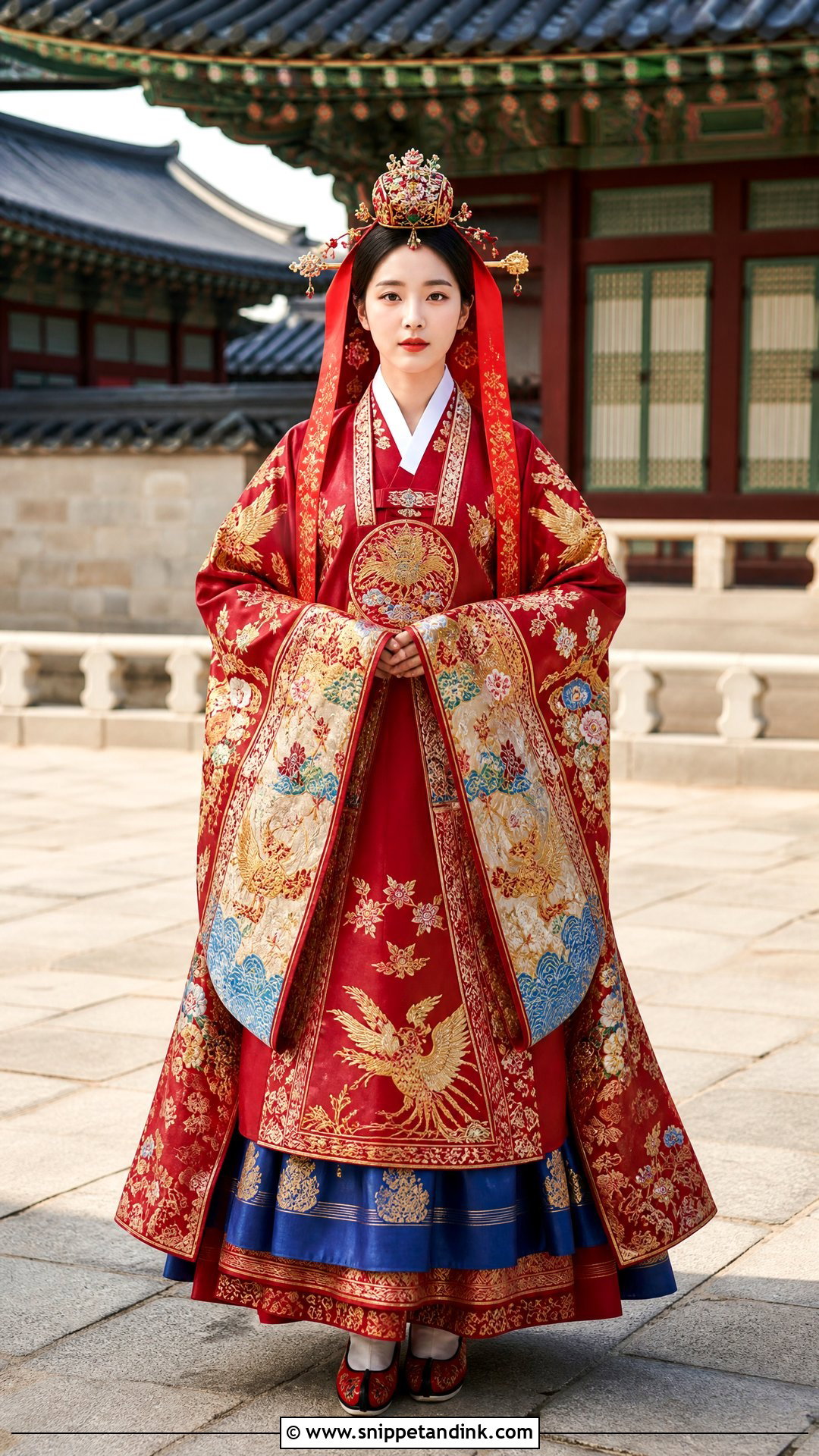
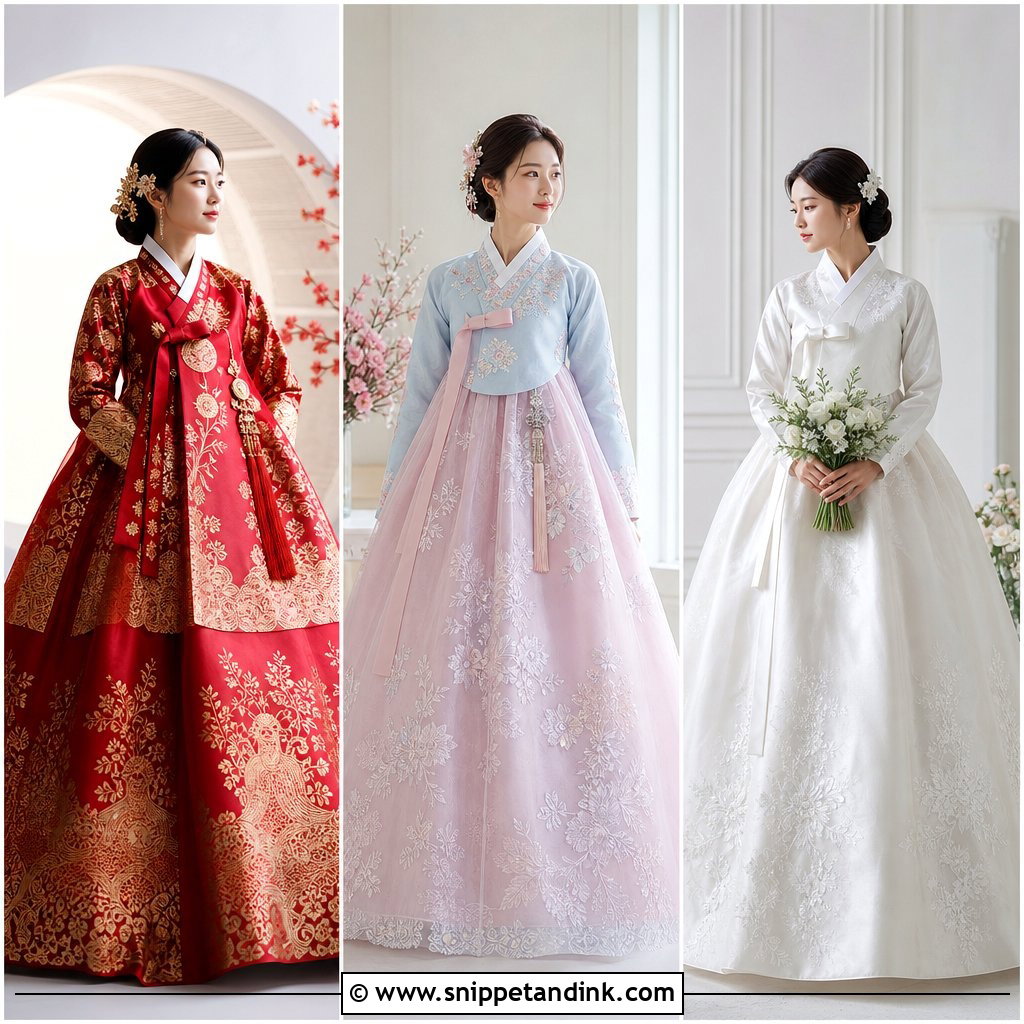
A traditional hwarot is the most ceremonial piece a Korean bride can wear: a long red robe embroidered with flowers, birds and symbols of long life and a happy marriage. Historically, brides wore a red hwarot or a wonsam for the wedding rites, so it carries real meaning at a paebaek. It goes over a full hanbok, and it’s heavy. The embroidery adds real weight, and the wide sleeves hang low when your arms are raised for the formal bow, so I have brides practise that bow in the robe. A jokduri crown, ornamental hairpins and a long red ribbon complete it. Keep the makeup soft so the robe’s colours lead.
2. Red Skirt And Green Jeogori Korean Wedding Dress
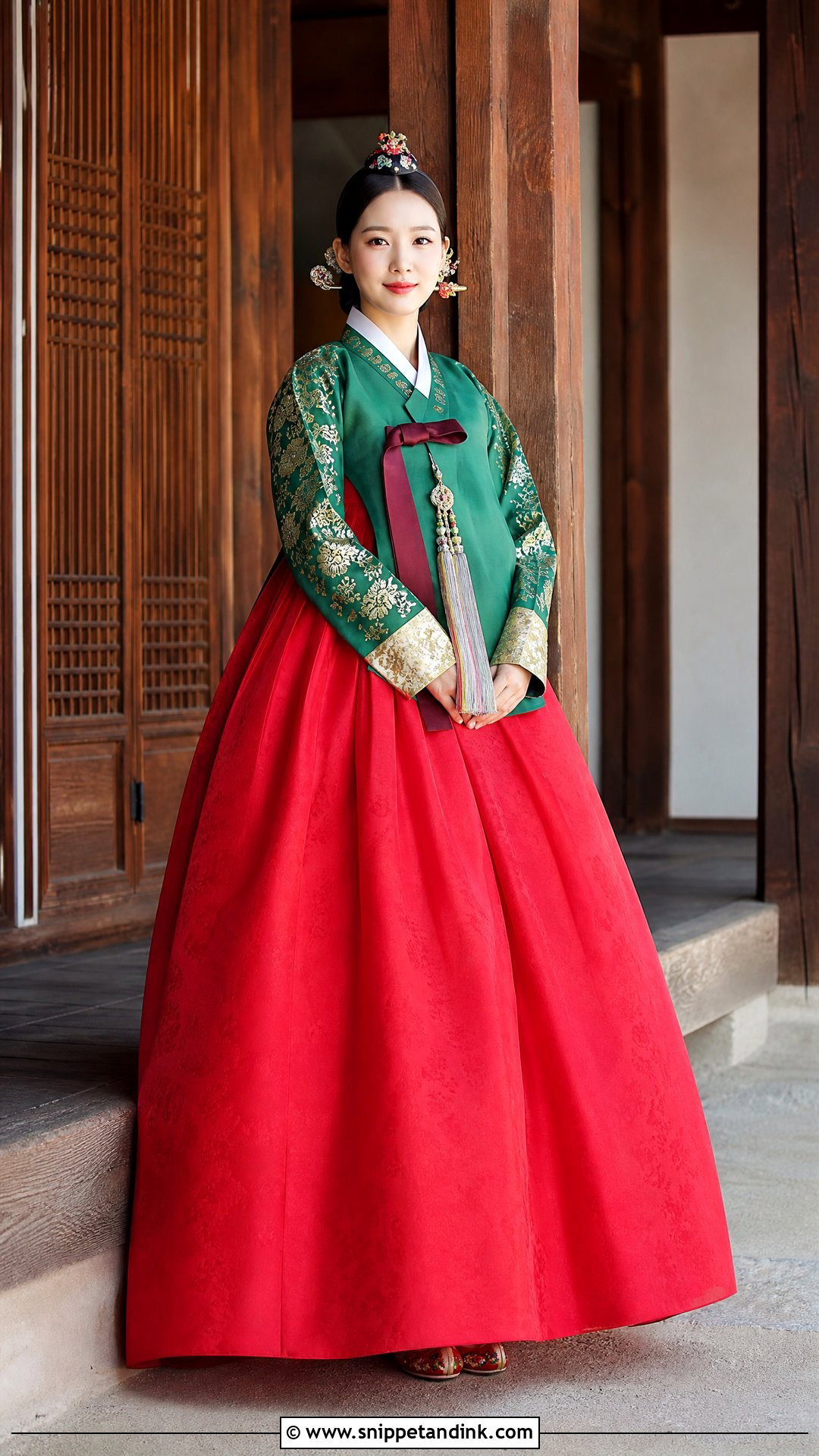
The red chima with a green jeogori is the classic bridal colour pairing in traditional dress, and it suits the paebaek especially well. Silk or a fine silk blend gives the colours depth. The jeogori should sit neatly without pulling at the back when you bring your hands together; a too-short jacket rides up during bows. Gold embroidery at the cuffs, collar or skirt panel makes it more ceremonial. A small jokduri over a smooth centre-parted bun and embroidered shoes finish it, and a ceremonial robe can go on top for formal portraits.
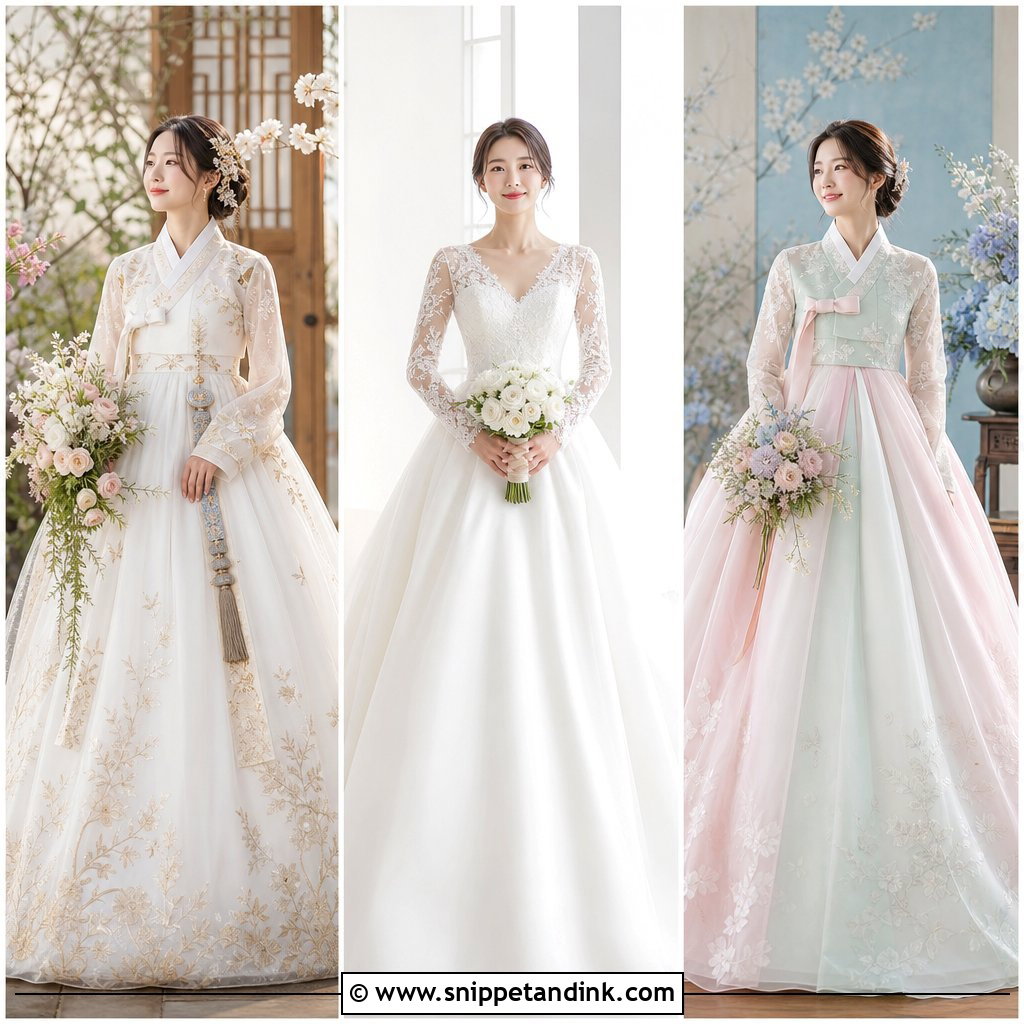
3. White Silk Modern Hanbok Wedding Dress
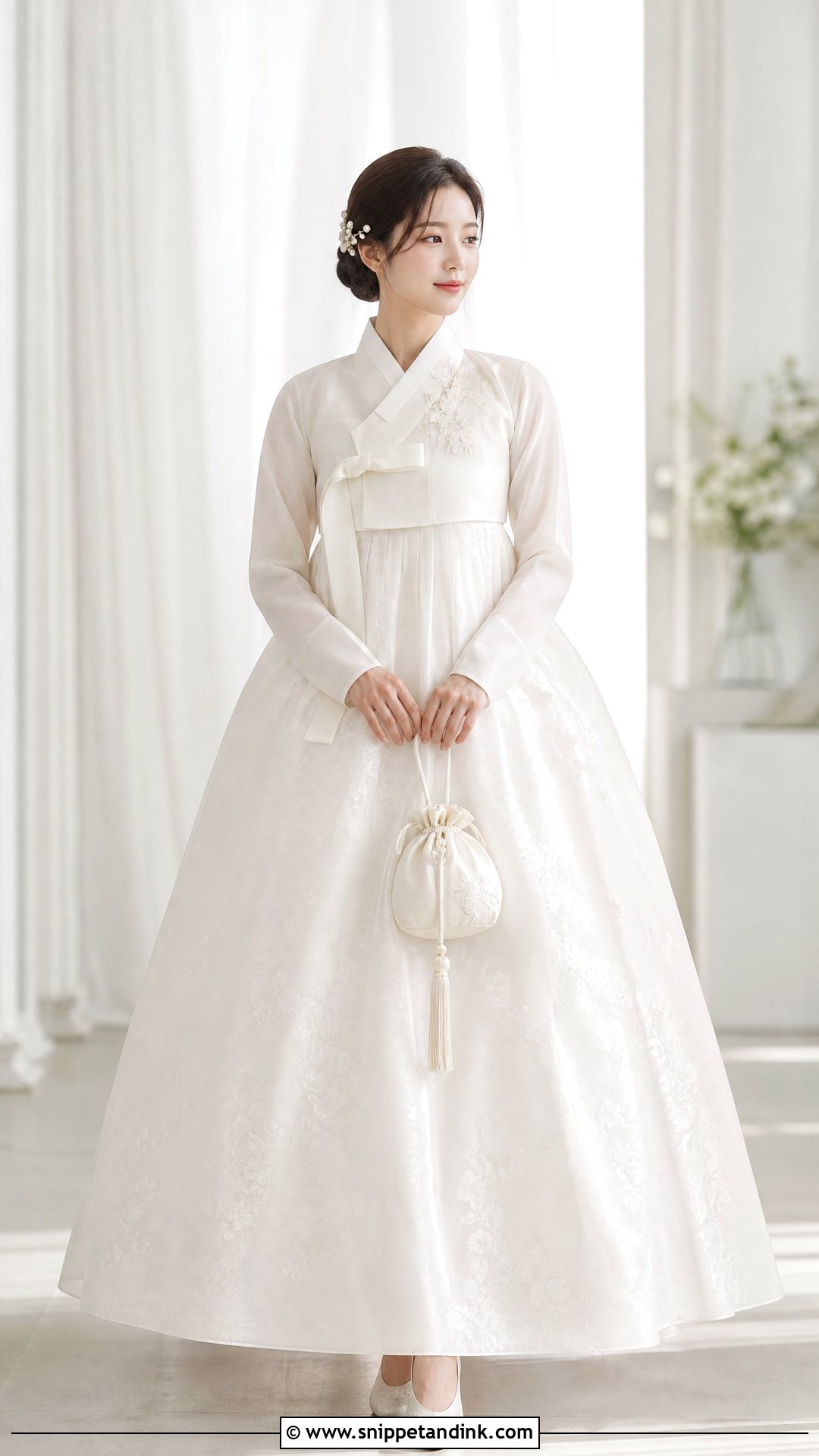
White silk gives the hanbok shape a fresh bridal reading. A softly structured jeogori with clean ties over a floor-length chima that falls from the chest lets the curved lines carry the look. I’d look for jacquard flowers woven into the silk rather than heavy surface work, because it keeps the outline clean. Contemporary bridal hanbok often borrows white, lace and beadwork from Western gowns while keeping traditional proportions, and this is the simplest version of that idea. Pearl hairpins, white embroidered shoes and a small silk pouch are enough.
4. Ivory Wonsam Korean Wedding Dress
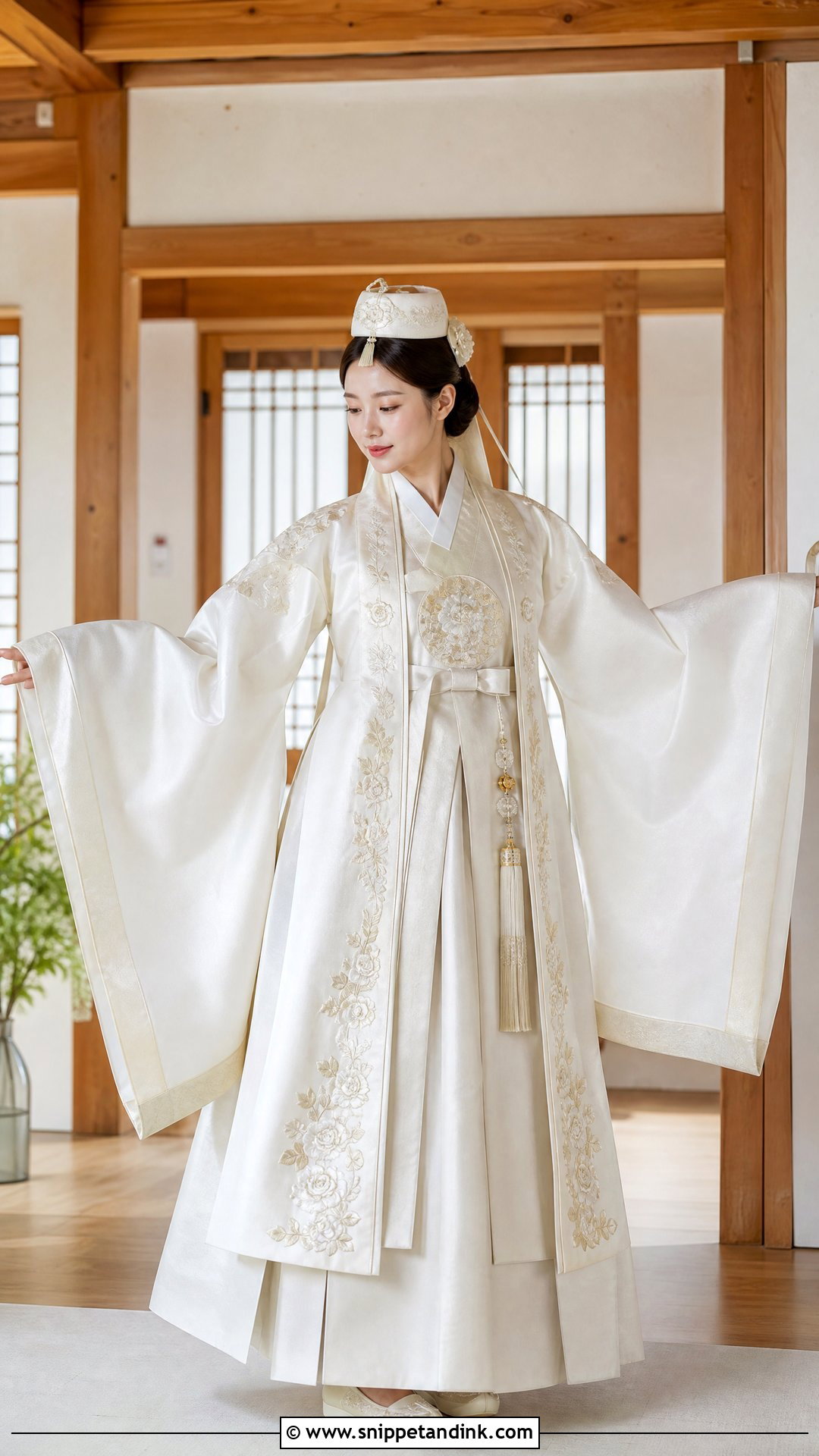
An ivory wonsam is a gentler take on the ceremonial robe. The wonsam has a long formal history in Korean wedding dress, and the ivory palette softens it for a modern ceremony. It layers over a matching jeogori and full chima. Wide sleeves photograph well when the arms are gently extended, but they also catch on chair backs and table edges, so someone should help lift them when you sit. Muted gold trim and fine floral embroidery suit a minimalist venue where the needlework can be seen up close. An ivory jokduri or gold ornament keeps the palette consistent.
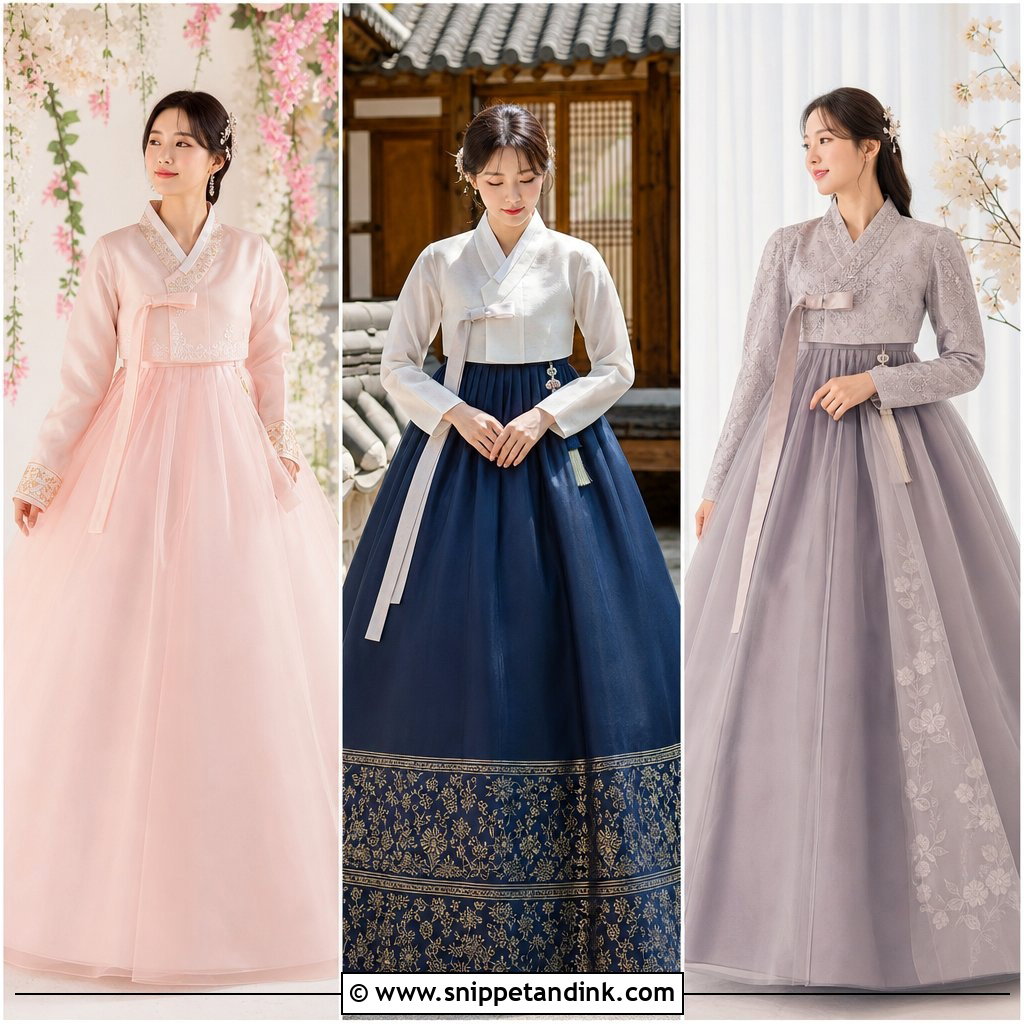
5. Blush Pink Hanbok Korean Wedding Dress
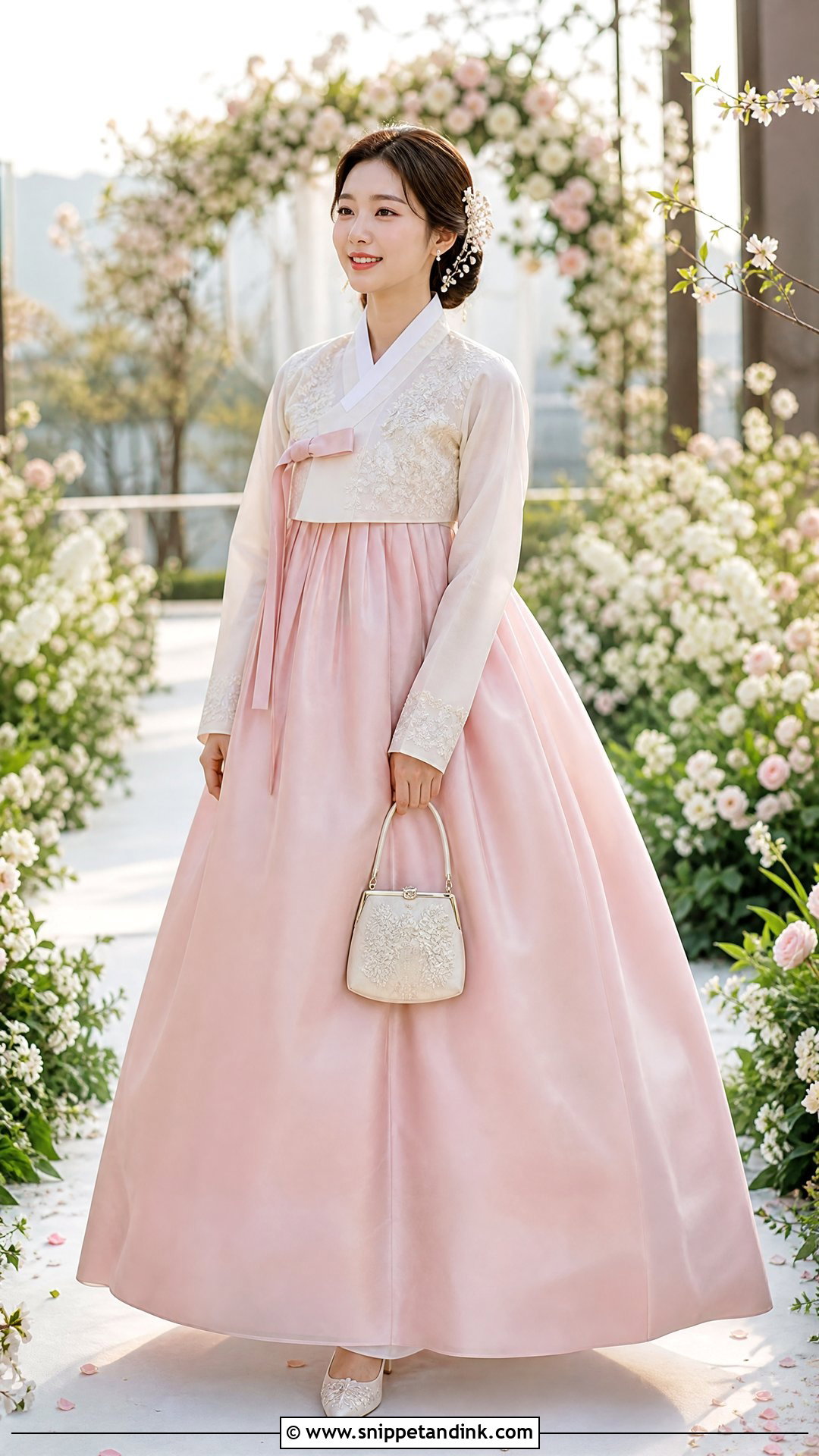
Blush pink softens a wedding hanbok without making it sweet. A pale pink chima in silk or organza with an ivory jeogori tied in pink keeps the contrast quiet. I test pink against the bride’s skin in daylight before choosing the shade, because the same blush can look rosy on one complexion and washed out on another; there’s a wide range from cool rose to warm peach. A sheer outer layer adds movement for portraits. Pearl comb, embroidered shoes. It suits spring, a garden, or a reception change.
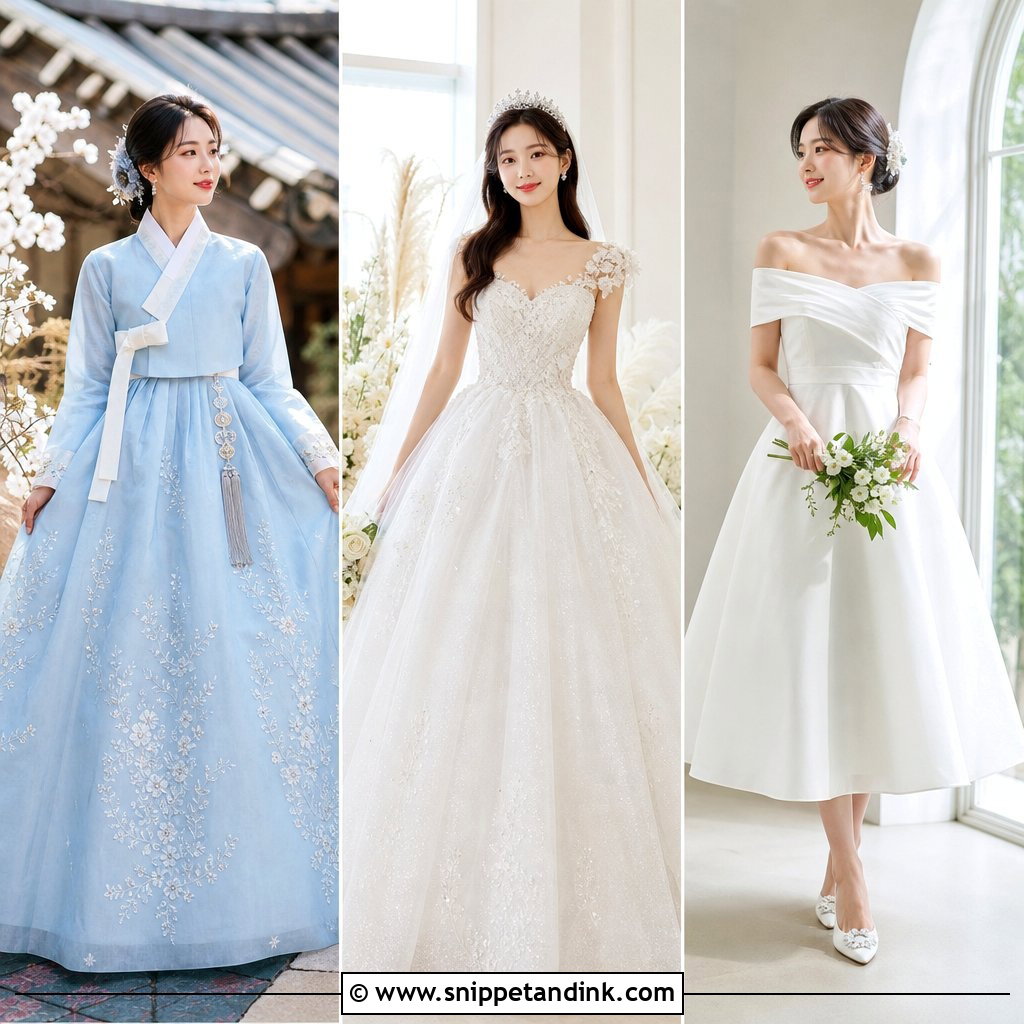
6. Blue And Ivory Korean Wedding Dress
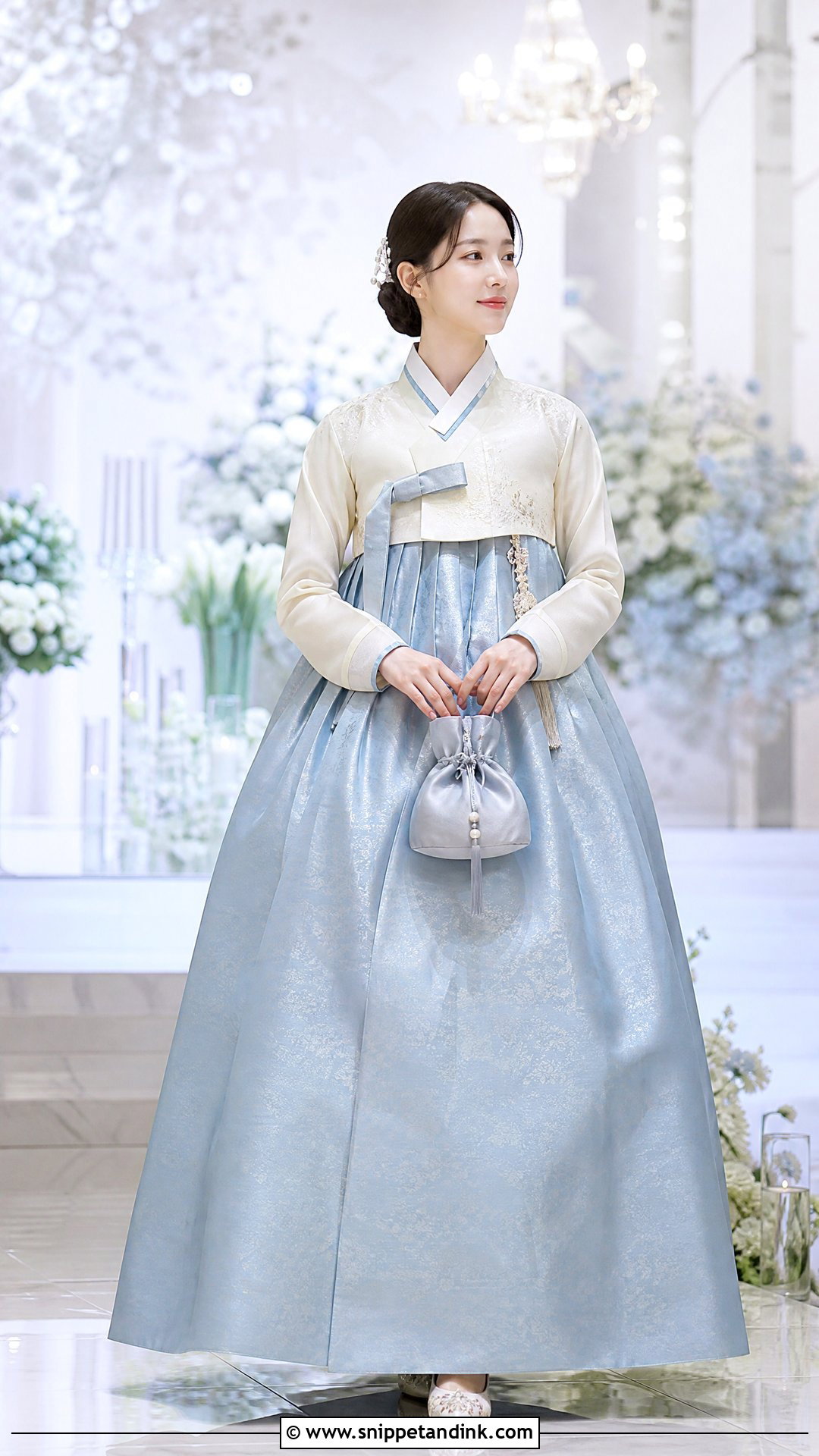
Powder blue and ivory make one of the calmest bridal combinations here. A flowing blue chima, an ivory jeogori with blue piping at the collar and cuffs, and perhaps a faint silver pattern woven through the skirt. Pale blue silk shows water marks and perspiration more than you’d expect, so dress shields and a careful hand with drinks help. It looks especially good in winter and in rooms with cool, bright interiors. A low bun with pearl pins keeps the collar visible, and a sheer ivory overcoat adds formality if you want it.
7. Gold Embroidered Korean Wedding Dress
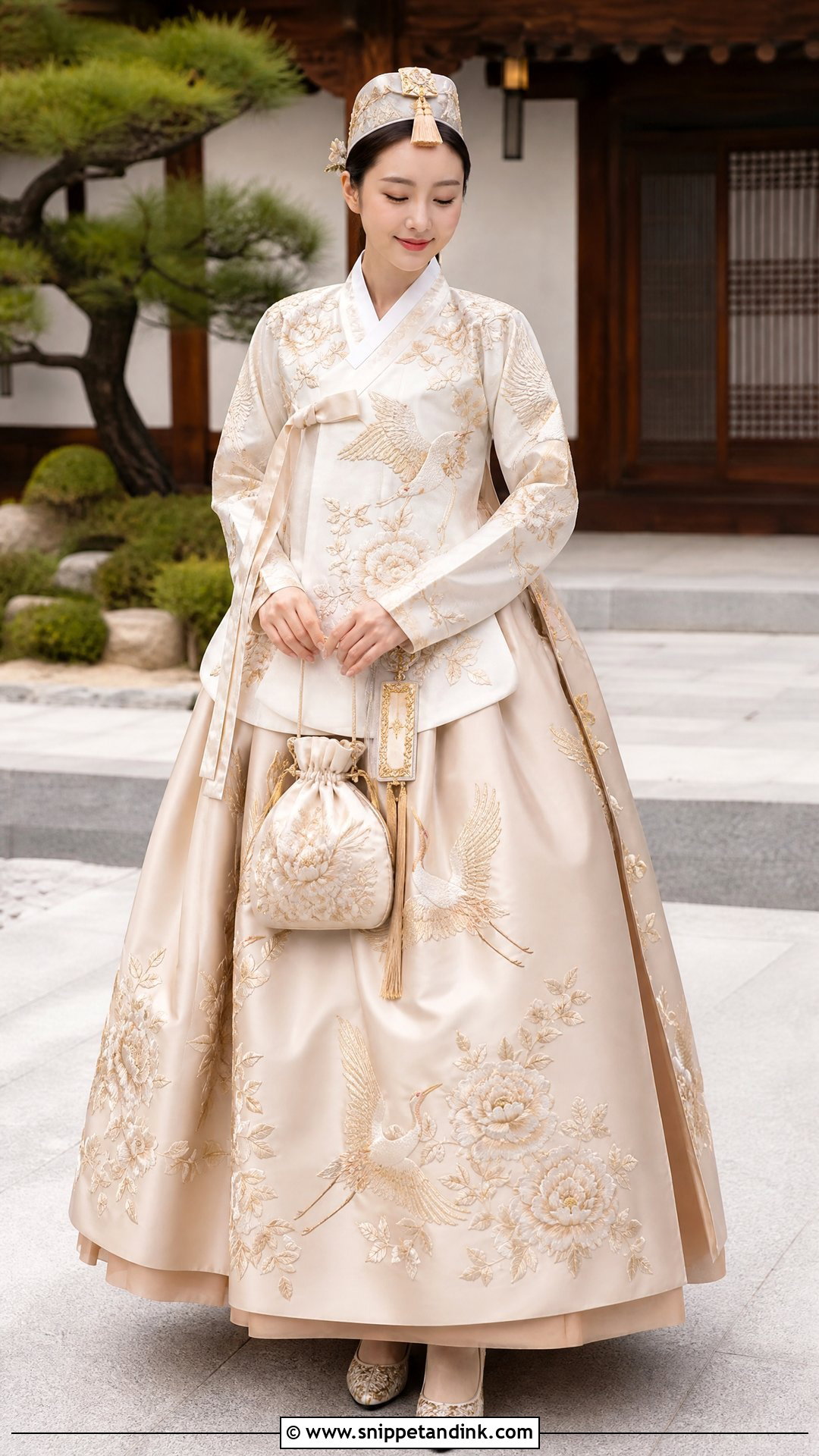
Gold embroidery gives a hanbok an instantly ceremonial presence. On ivory or champagne silk, peonies, cranes, butterflies and botanical patterns show clearly on the jeogori, the skirt panel or wide outer sleeves. Dense metallic embroidery stiffens fabric, though, so I keep it where the garment doesn’t need to fold much: the collar, the cuffs and the lower skirt rather than the underarm. Keep the base simple and let the needlework carry the texture. A smooth low bun and luminous makeup stop it from looking crowded.
8. Pearl White Korean Wedding Dress
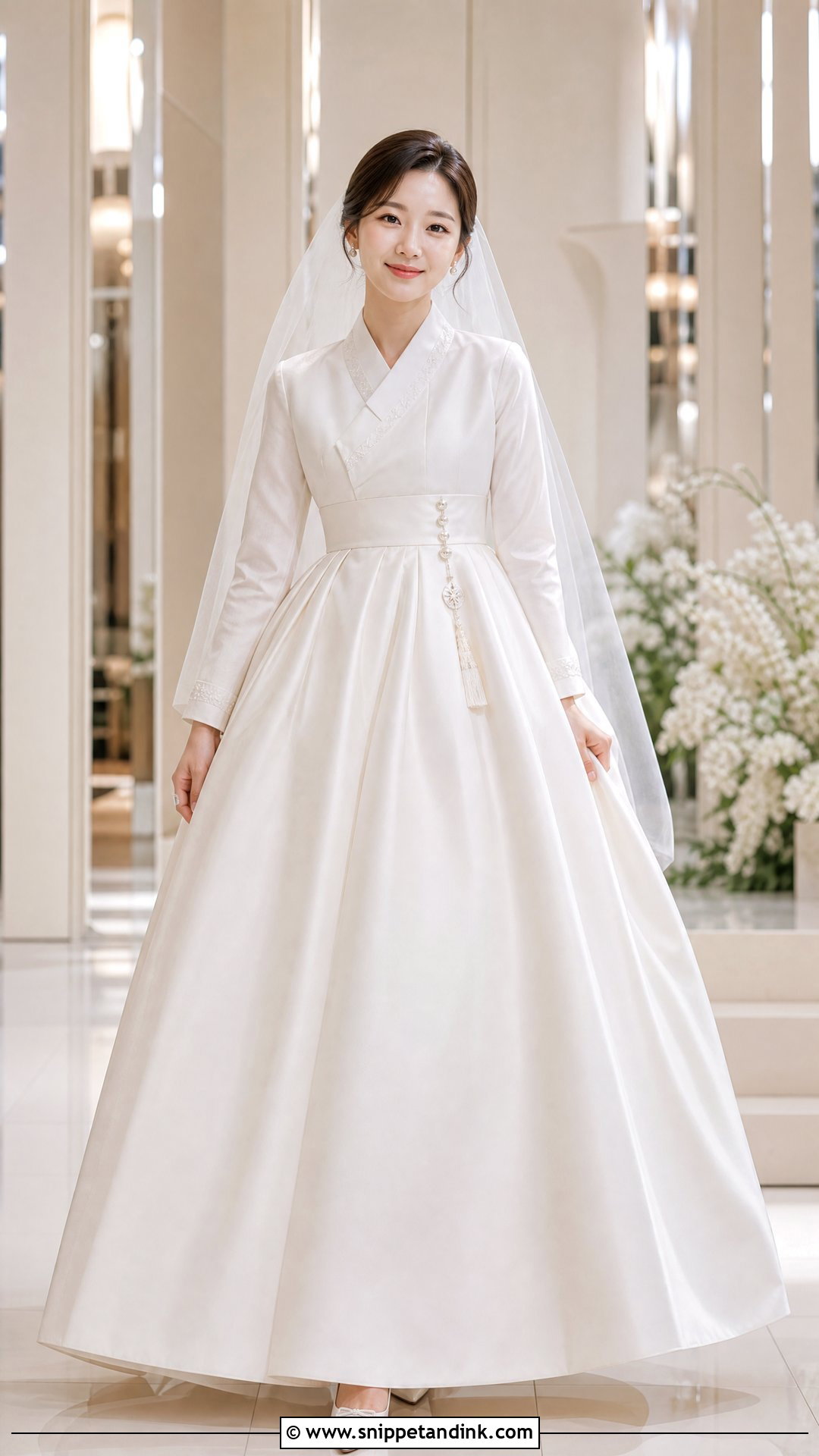
A pearl-white gown glows rather than sparkles, through silk, satin or a softly reflective jacquard. A hanbok-inspired wrapped bodice over a full skirt from a raised waist gives it a Korean reference without being literal. Mother-of-pearl buttons or tiny iridescent appliqués nod to the inlay work found in Korean crafts. Pearl drops, white pumps and a structured clutch finish it. Attach a sheer veil beneath a sleek bun so the neckline stays visible. It works for a formal ceremony and carries into an evening reception.
9. Lace Sleeve Hanbok Wedding Dress
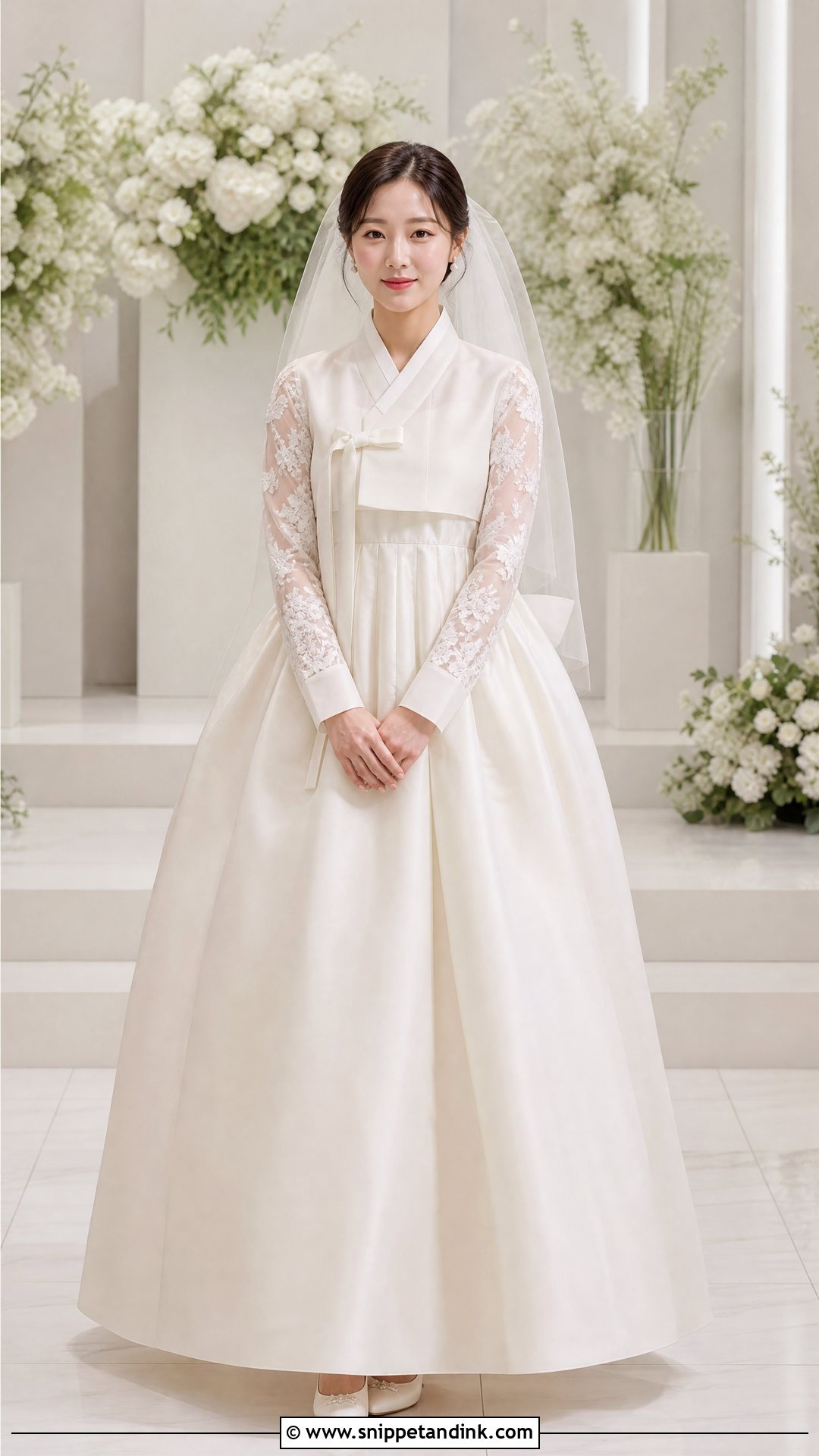
Lace sleeves lighten the structure of a bridal hanbok. An ivory silk jeogori with sheer lace sleeves to the wrist, over a smooth full chima, gives the detailed top a calm base. The seam where silk meets lace at the shoulder is where cheaper versions pucker, so I look closely there. Floral lace is softer; geometric lace is sharper. Skip a heavily embellished veil and choose a plain fingertip veil or sheer robe instead. Ivory satin shoes and a single pin above a low bun finish it.
10. Off Shoulder Hanbok Wedding Dress
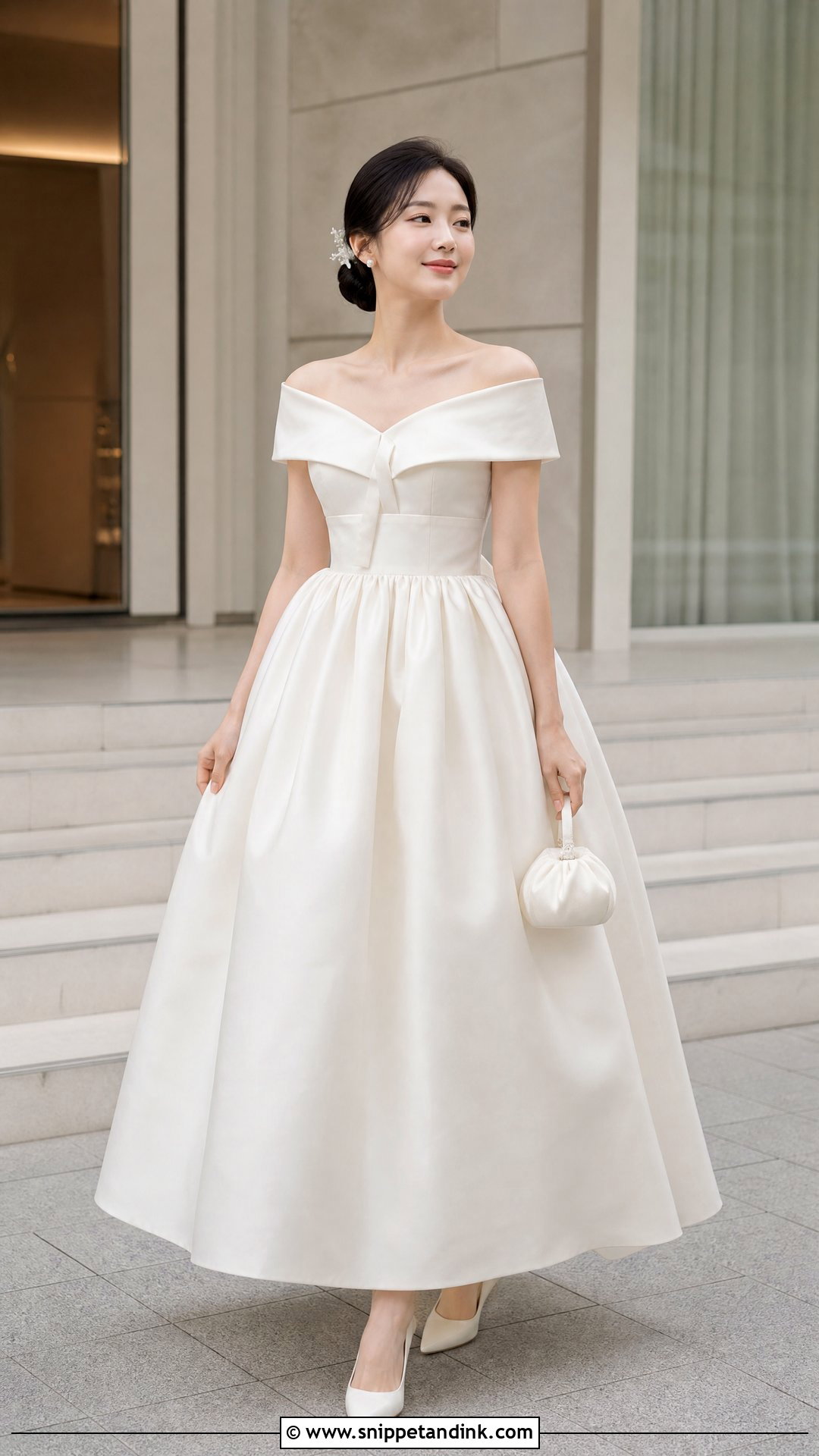
An off-shoulder neckline with a raised waist and a gathered skirt keeps the hanbok volume but changes the top completely. The folded neckline needs structure to stay put, so mikado, satin or silk faille work better than soft silk. As with any off-shoulder cut, lifting your arms is limited, which matters if you’ll do a traditional bow in it. A polished bun or softly waved bob keeps the shoulders clear. A detachable sheer bolero adds coverage for the ceremony. It suits hotels and formal studio portraits.
11. Square Neck Korean Wedding Dress
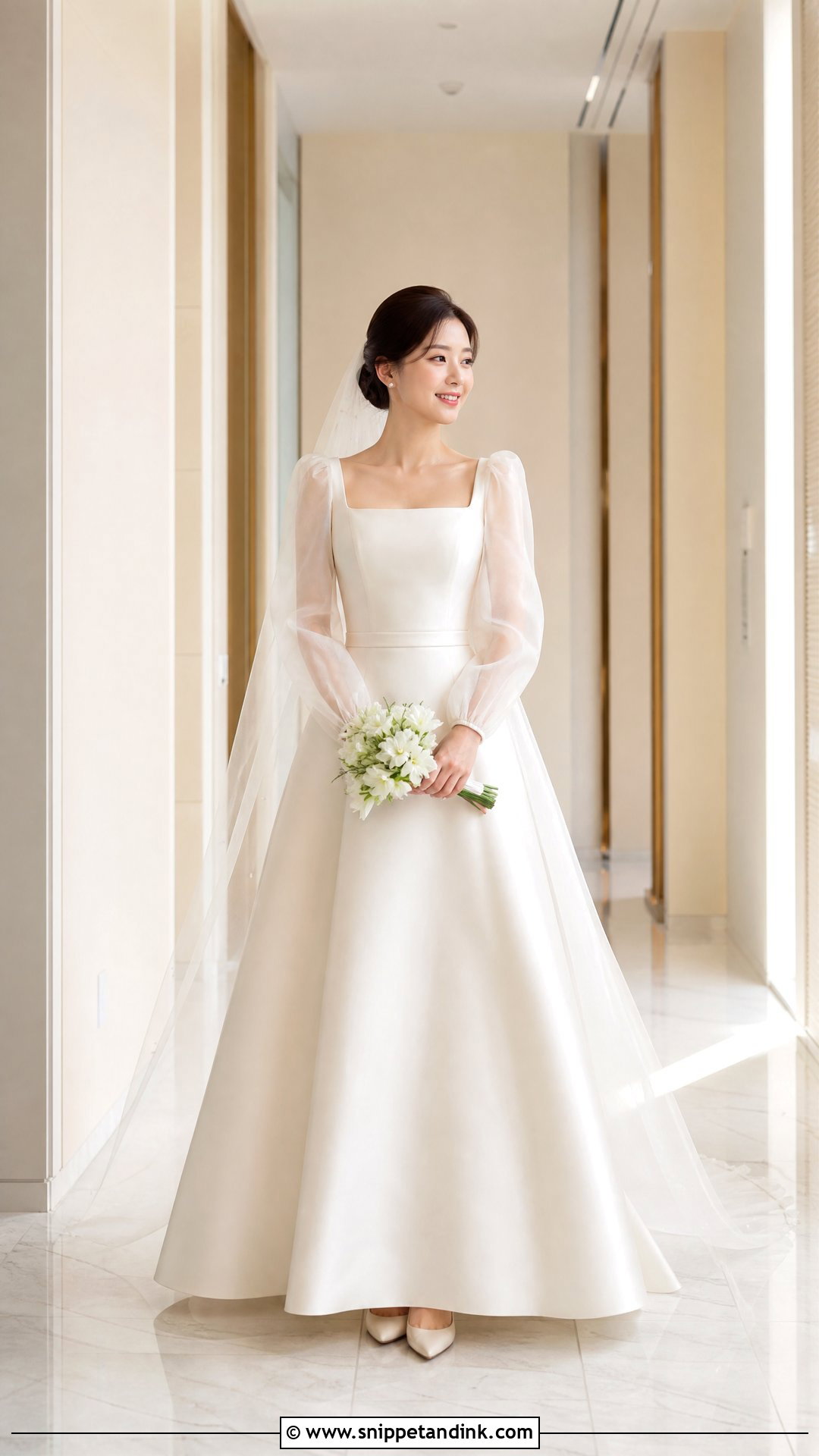
A square neckline adds clean structure. An A-line gown with a fitted bodice, gently raised waist and full skirt can echo the neat geometry of a jeogori through seam lines alone. Sheer organza sleeves balance the open neck, and a satin waistband defines it quietly. Concentrate any embellishment at the cuffs or back so the front stays clear. Low ivory heels and a chapel-length veil, or just a bun with one decorative pin for a more minimal finish. The square frames the collarbone well in formal photos.
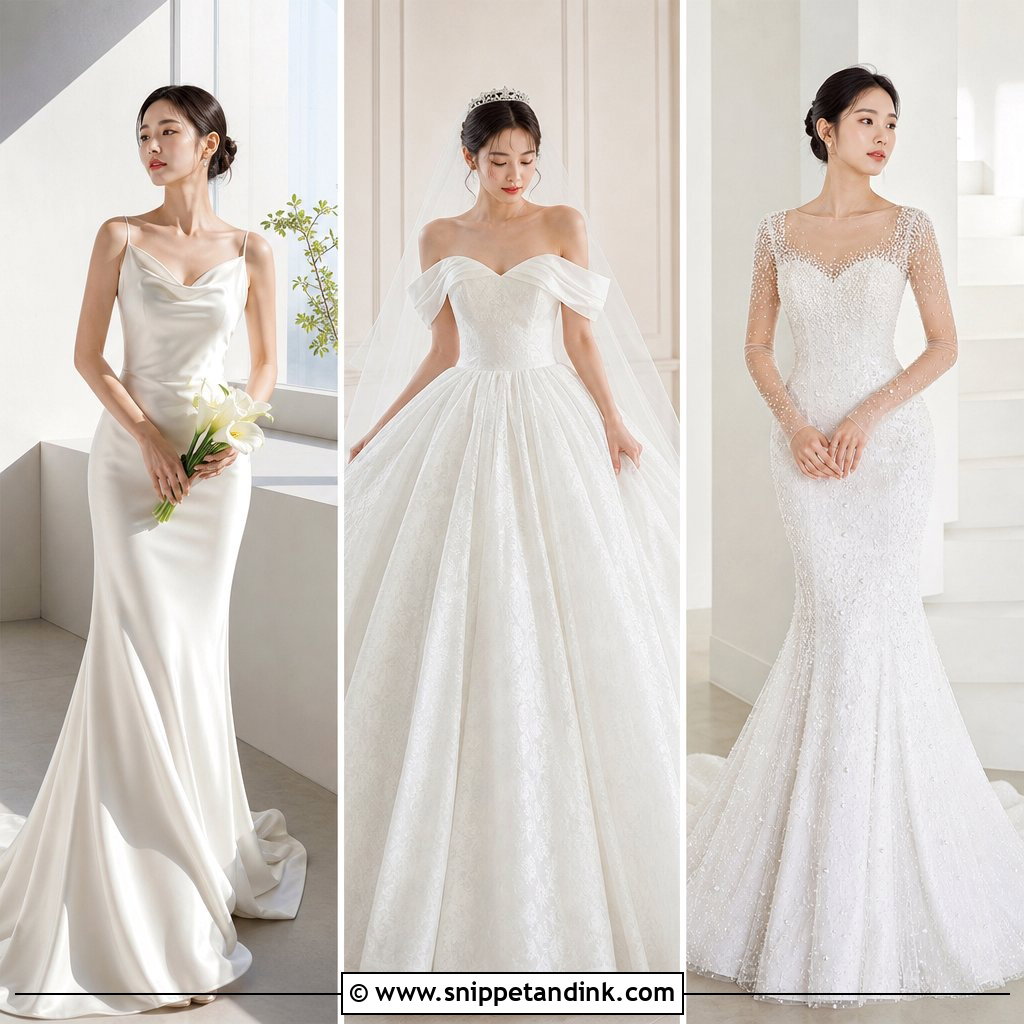
12. Minimalist Satin Korean Wedding Dress
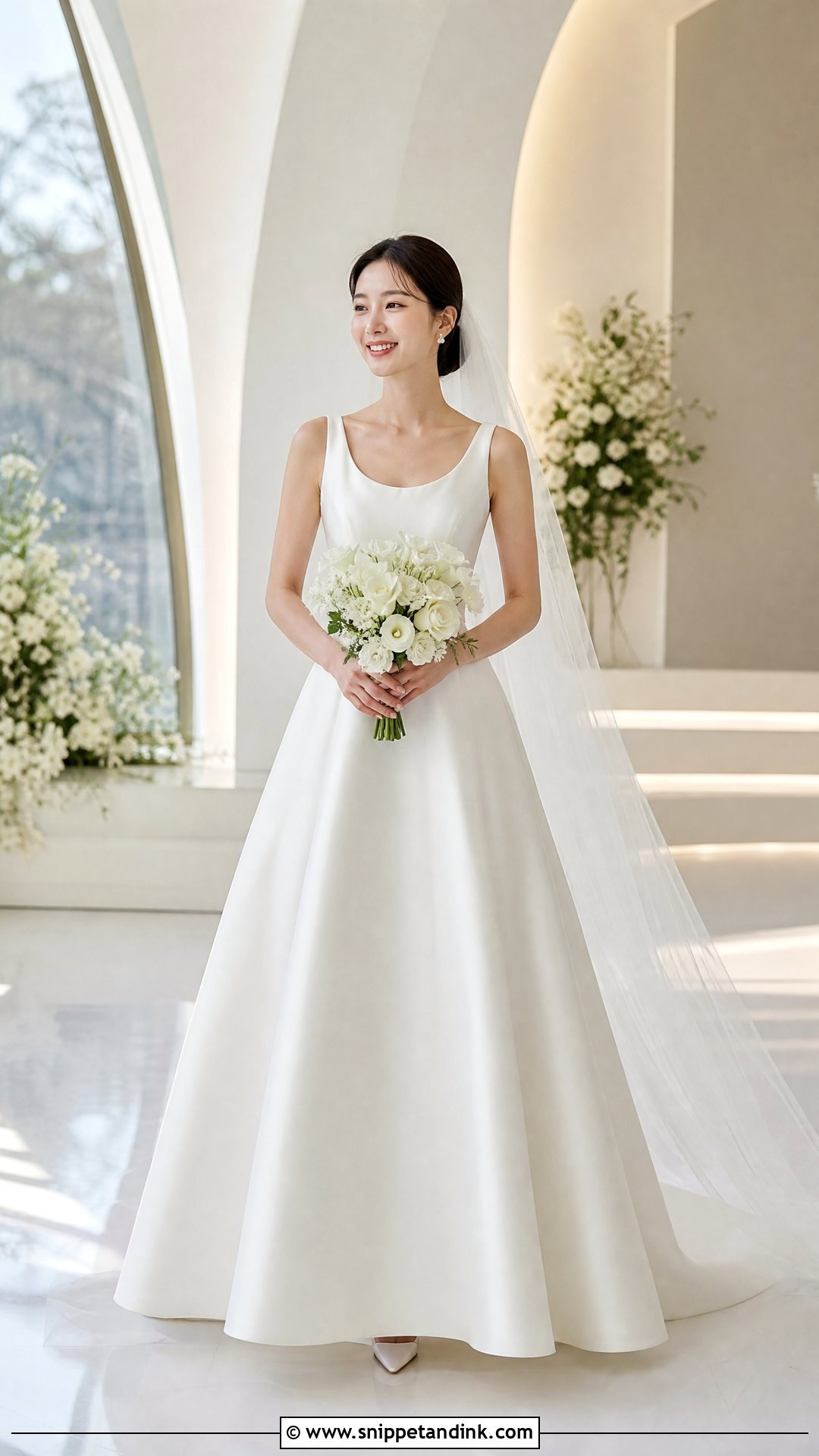
Minimal satin captures the polished, pared-back look many Korean brides love. A fitted scoop-neck bodice, a softly flared skirt and a slightly raised waist that lengthens the legs. Covered buttons down the back give detail without disturbing the front. With this little decoration, tailoring shows in every seam, so I’d allow an extra fitting. Wear a long plain veil for the ceremony and take it off for the reception to show a sleek low bun. This is the dress for photos that won’t date.
13. Long Sleeve Lace Korean Wedding Dress
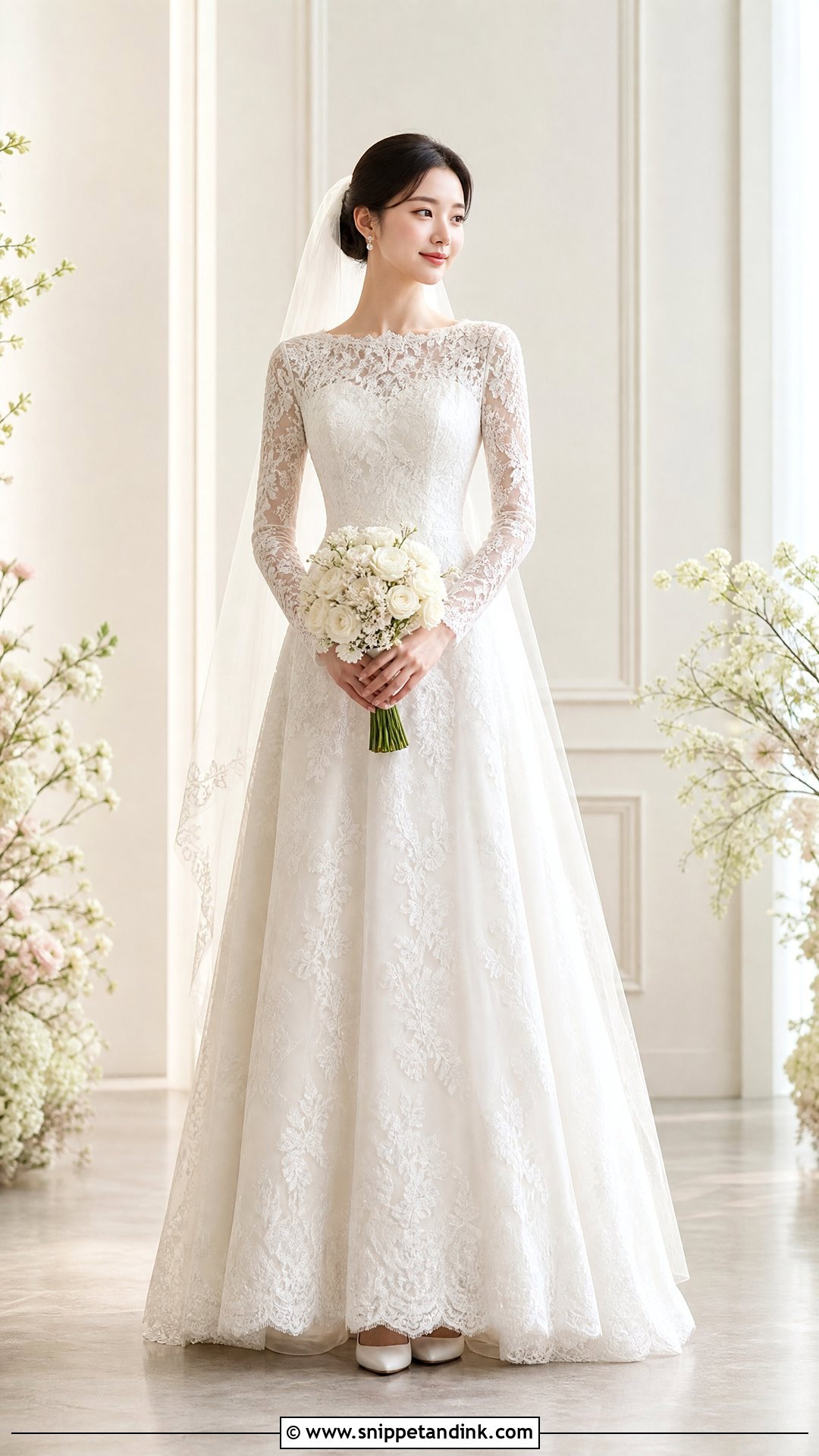
Long lace sleeves give graceful coverage, which many Korean brides prefer for a formal ceremony. A fitted lace bodice with a bateau or round neck and a flowing A-line skirt keeps it classic. Fine floral lace stays softer around the face than oversized motifs. A satin lining under the bodice gives a clean finish; for a more modern look, leave only the sleeves and upper neckline unlined. Low chignon, narrow comb, fingertip veil. It’s especially good for autumn and winter.
14. High Neck Korean Wedding Dress
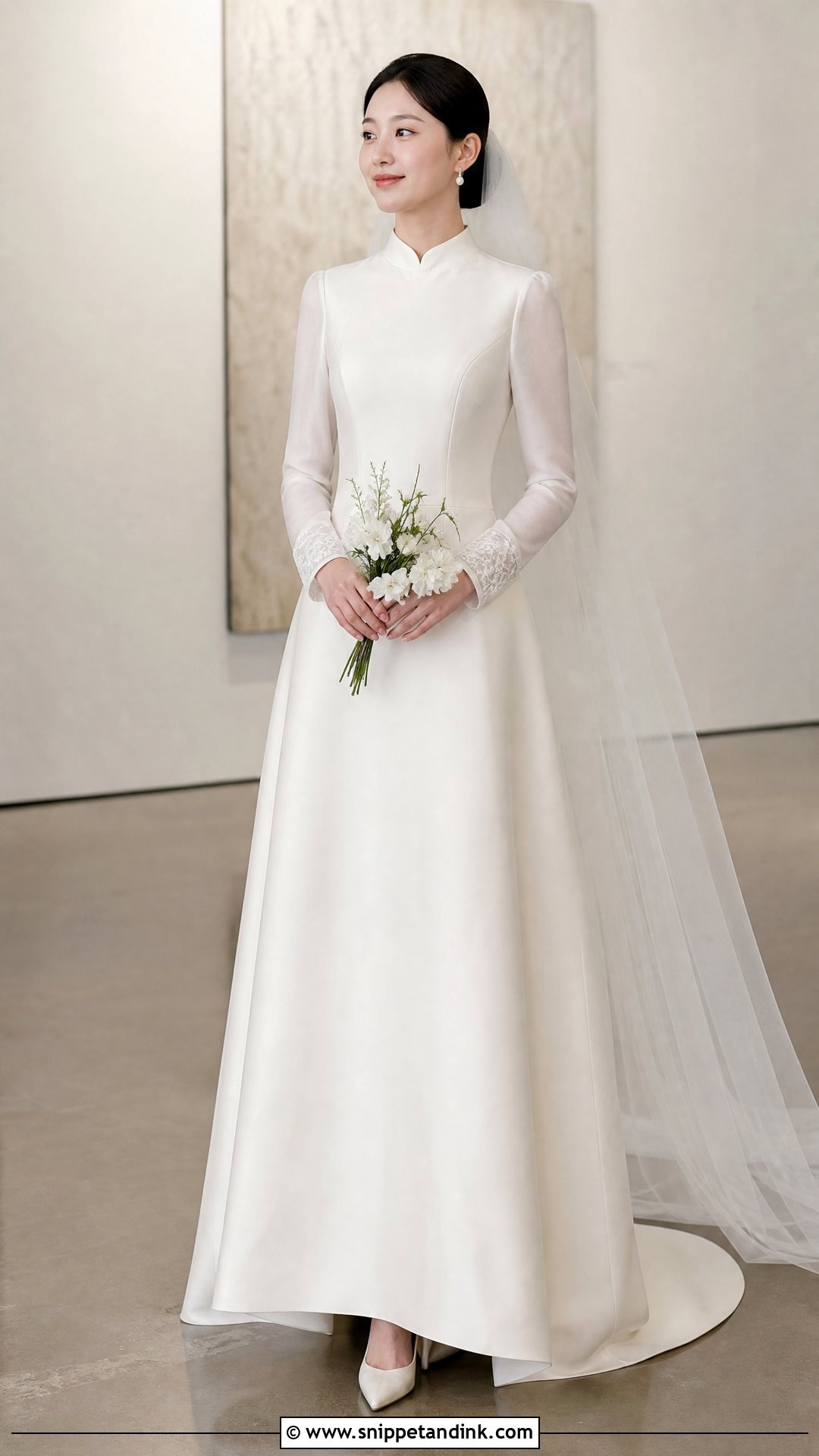
A soft stand collar borrowed from traditional Korean necklines gives a high-neck gown a quiet cultural link. Silk crepe is fluid; mikado is sculptural. Balance the covered top with an A-line skirt, an open back or sheer sleeves. The collar must be comfortable when you look down, because a tight stand collar presses on the throat in a seated bow. A narrow embroidered border at the collar and cuffs adds the Korean reference. No necklace; pearl drops and a long veil under a neat bun are enough.
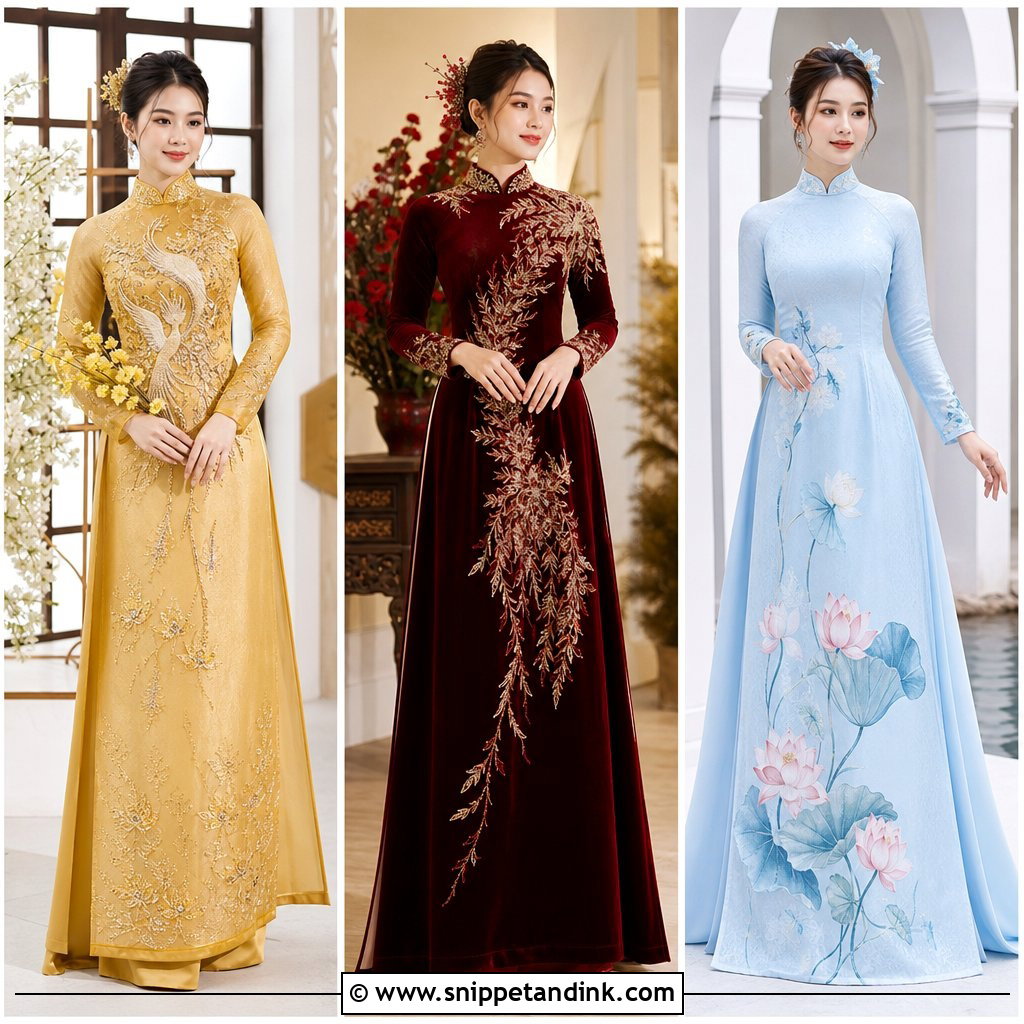
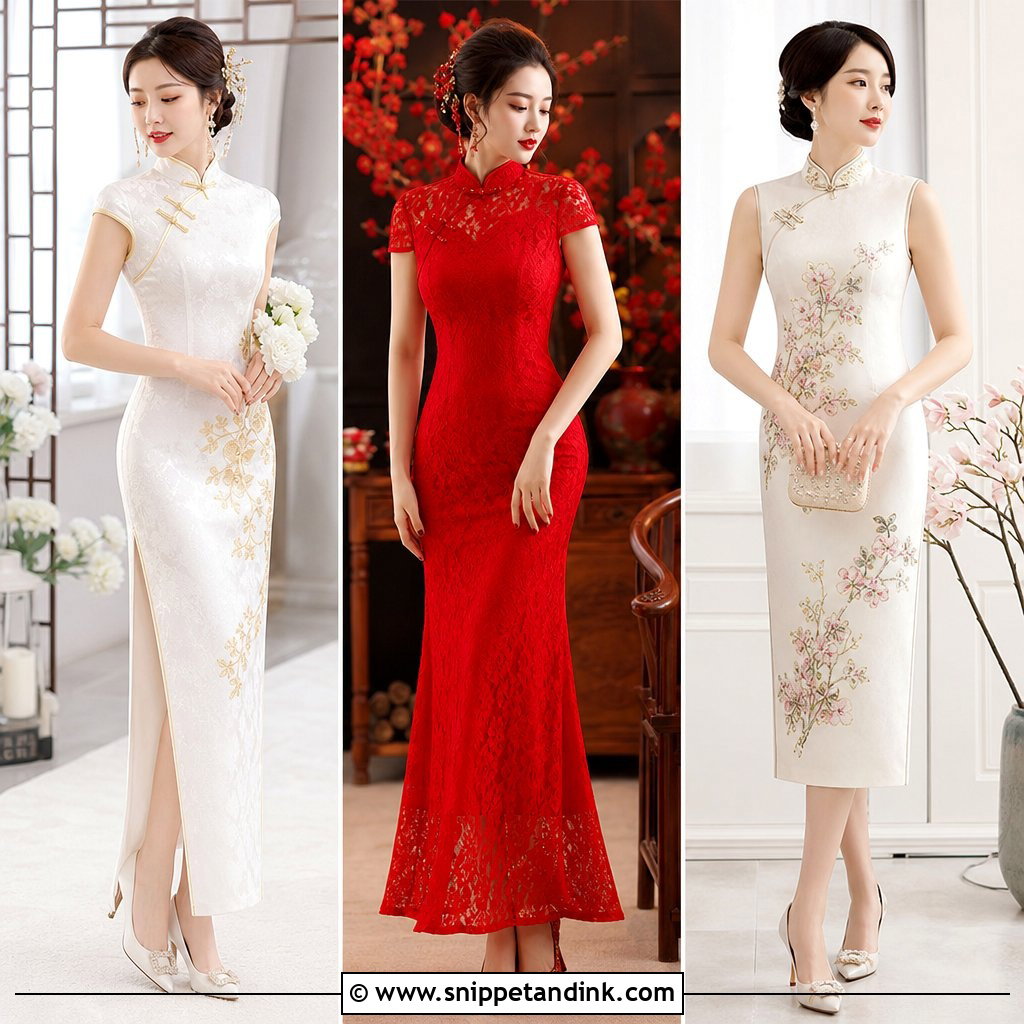
15. Cape Sleeve Korean Wedding Dress
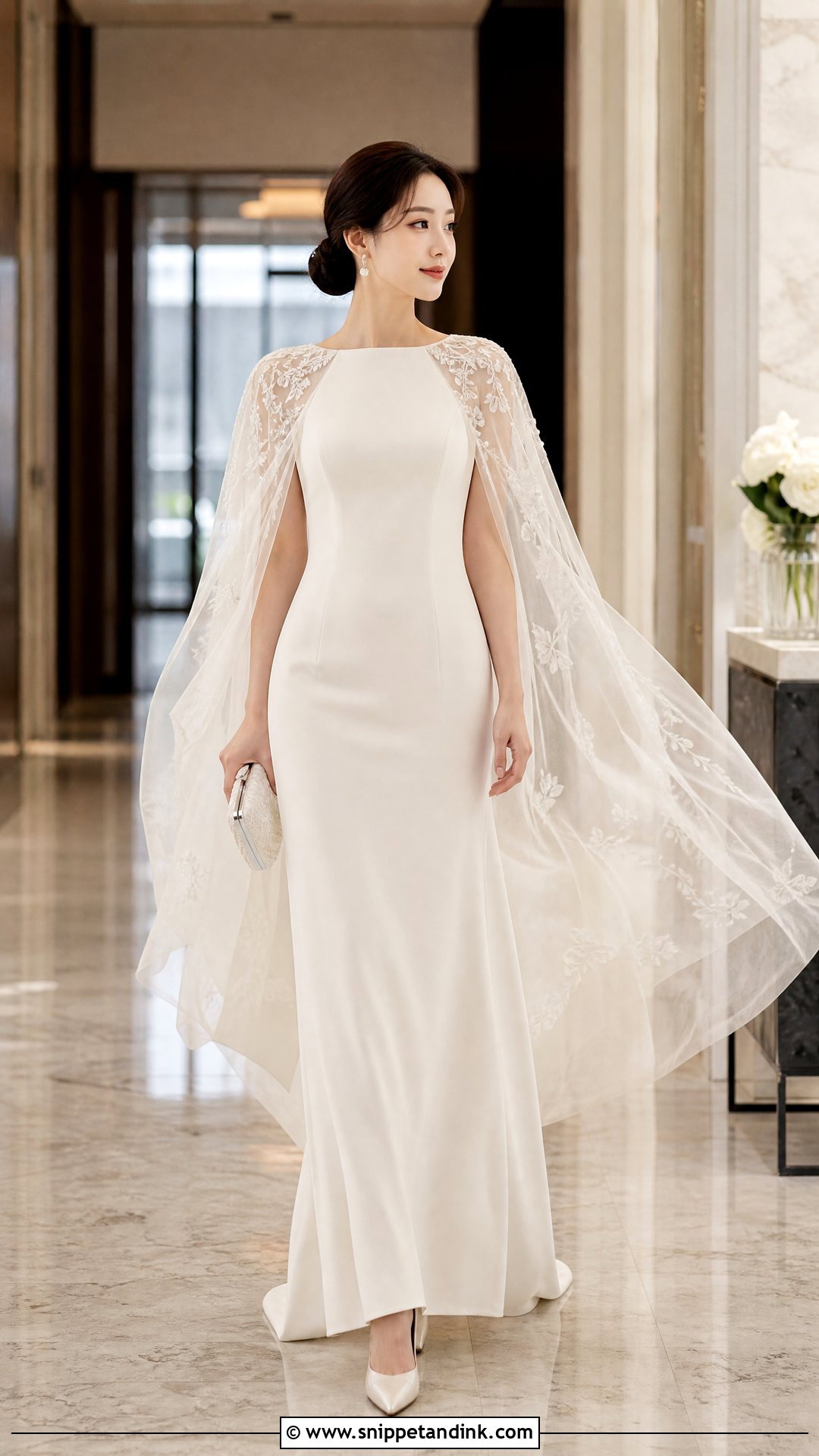
A cape can turn a simple crepe column or A-line into something memorable. A detachable sheer cape with fine floral embroidery at the edges gives movement without hiding the gown. I’d make sure it’s light: a heavily embroidered cape drags at the neckline and pulls the gown back. Skip the veil and let the cape provide the drama. It comes off after the ceremony, leaving a clean, comfortable reception dress. Satin heels, pearl earrings and a sleek low bun suit it.
16. Floral Organza Korean Wedding Dress
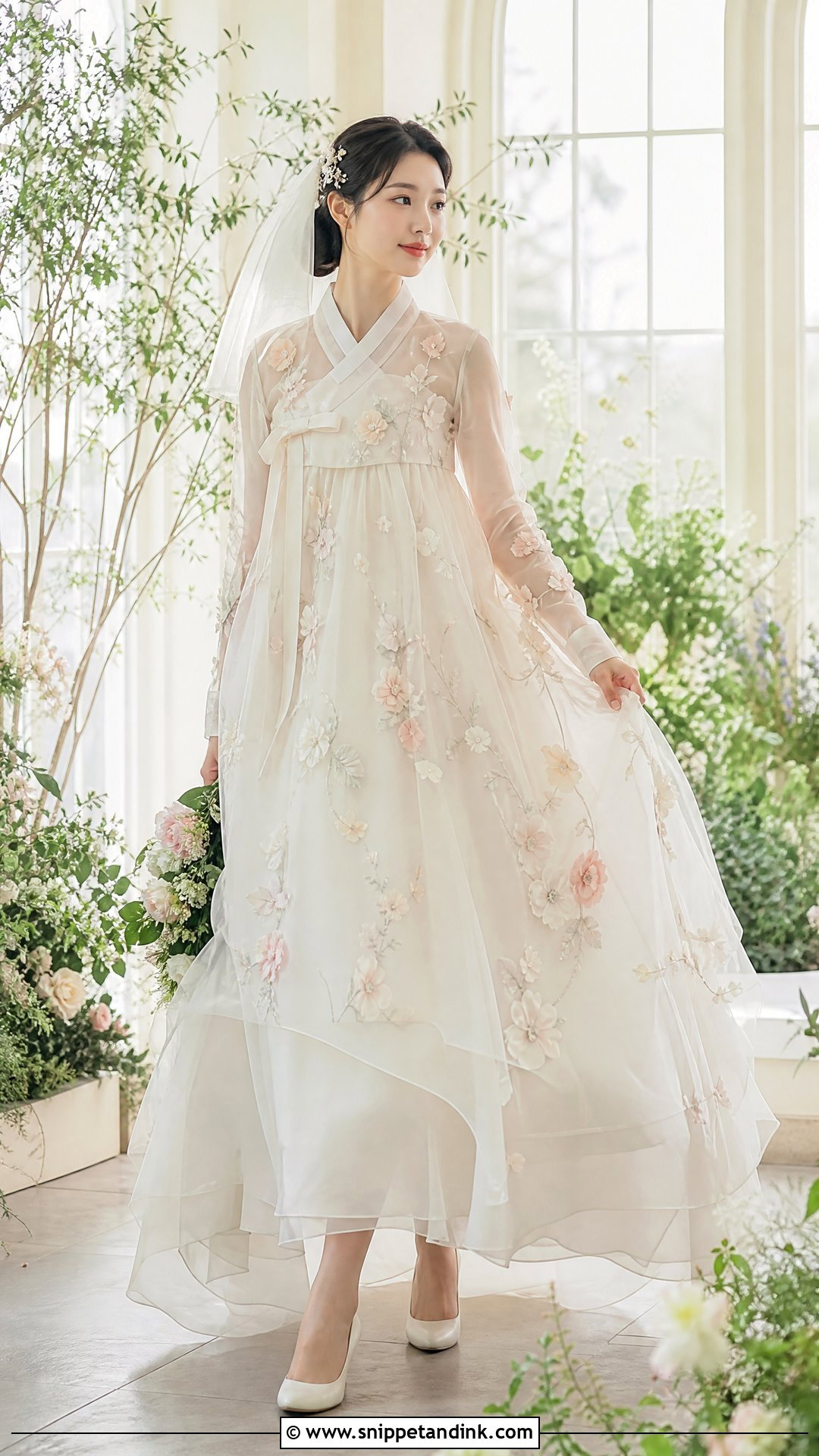
Layered organza scattered with floral appliqué catches light softly. A hanbok-inspired raised waist, a short fitted bodice and a full translucent skirt give it volume without weight. Cherry blossoms, peonies or plum blossoms on the sleeves and lower skirt look best with open space between them. Organza creases sharply and holds the creases, so plan a steam before you dress, especially if you’re travelling. A short sheer veil, floral pins and a small tonal bouquet keep the appliqué visible. It suits spring and bright studios.
17. Tulle Ball Gown Korean Wedding Dress
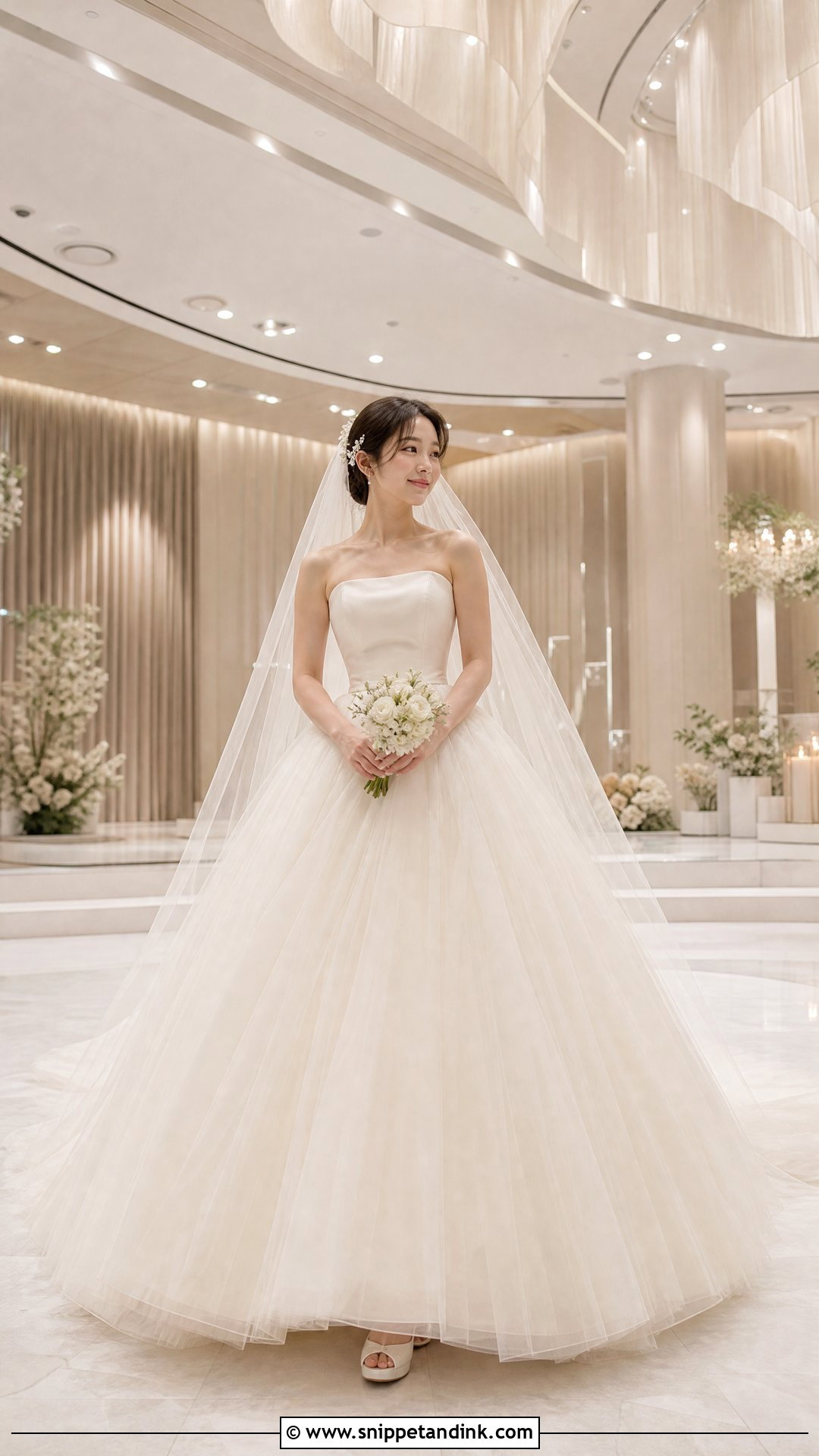
Tulle gives a ball gown volume without stiffness, which suits a big entrance. A fitted satin bodice, a softly curved neckline and many layers of fine ivory tulle, with a raised waist or wrap detail for a hanbok reference. Keep glitter off the skirt and let the scale carry it. Low platform heels hidden under the hem make the long day easier. Give the skirt room: it needs a spacious venue. Ask for a secure bustle and have someone practise it, because tulle trains are long and light and catch every heel.
18. Pearl Beaded Korean Wedding Dress
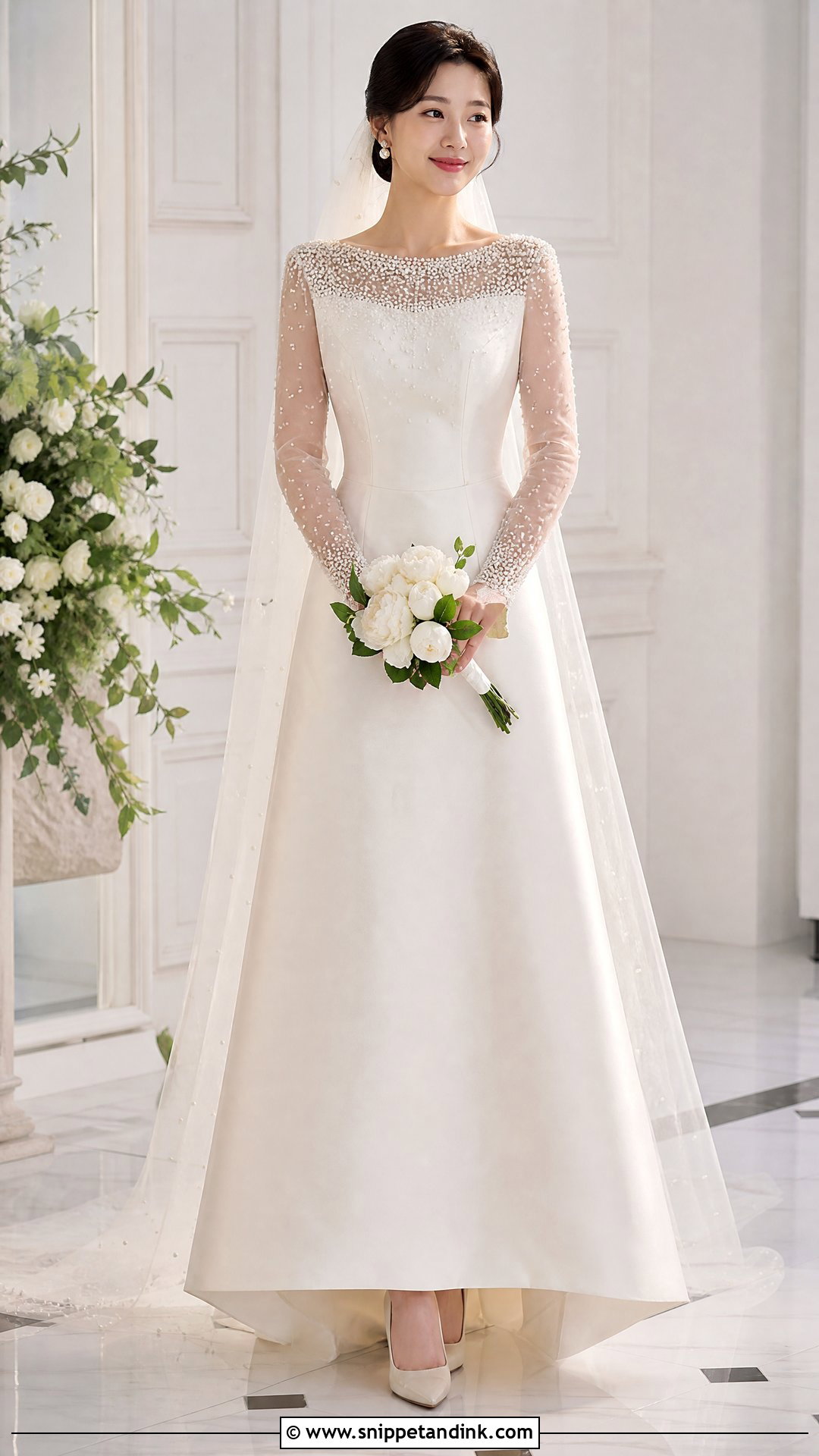
Tiny pearl beads give a soft texture that reads well in daylight and indoors. Concentrate them at the neckline, shoulders and cuffs, then let a smooth A-line skirt balance them. A sheer pearl-dotted overlay adds depth. Skip a heavily jewelled crown, since the detail near the face is already there. At the fitting, swing your arms and check that beads on the sleeves don’t catch on beads at the bodice, and ask that each bead be secured individually so a broken thread doesn’t shed a row.
19. Mermaid Korean Wedding Dress
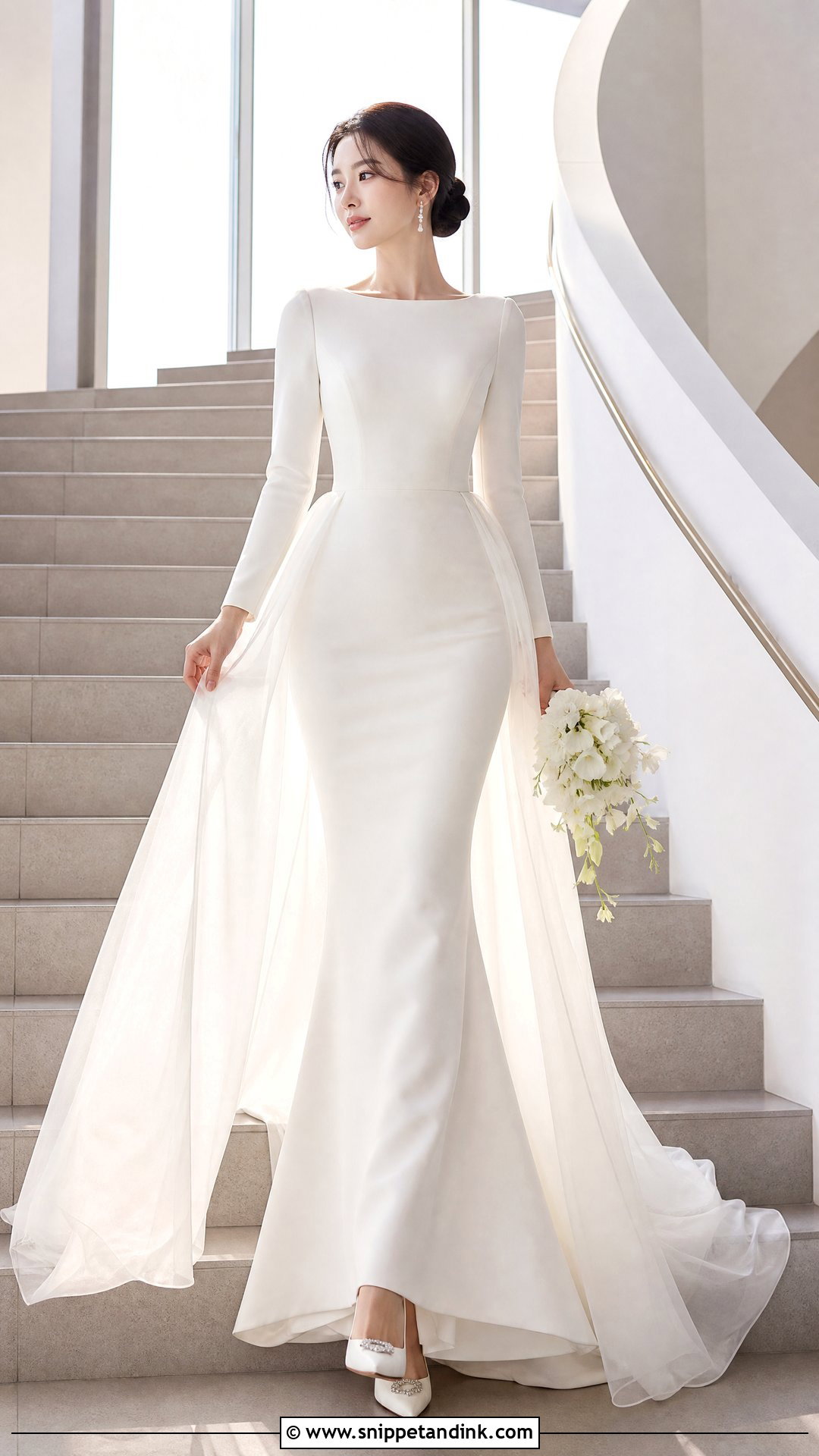
A mermaid gives a more fitted option. It follows the body through the hips and opens into a flare; ask for a soft, manageable one. Matte crepe looks sleek; lace looks romantic. A bateau neck and long sleeves balance the lower half. The honest limitation is ceremony movement. A mermaid makes kneeling and deep bows very hard, so either save it for the main ceremony and reception, or add a detachable overskirt that gives traditional volume for photos and comes off later.
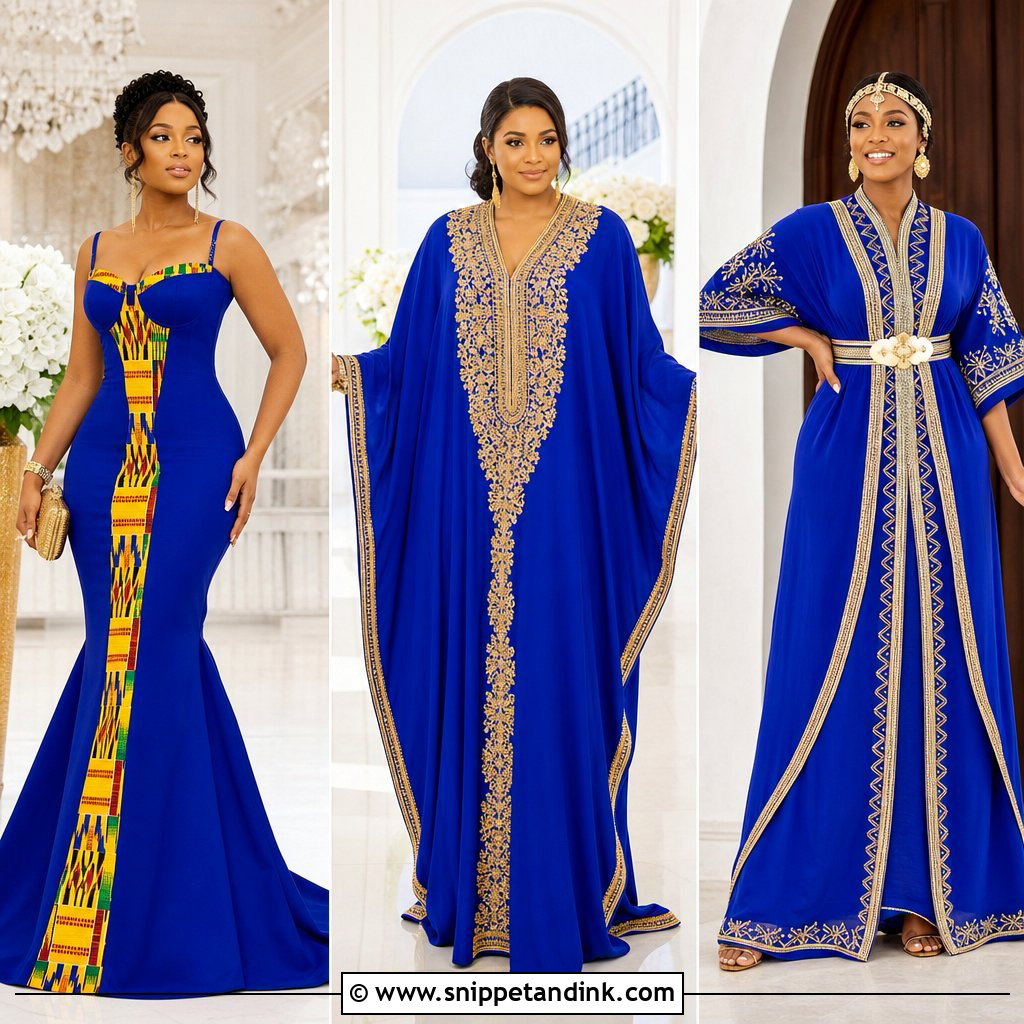
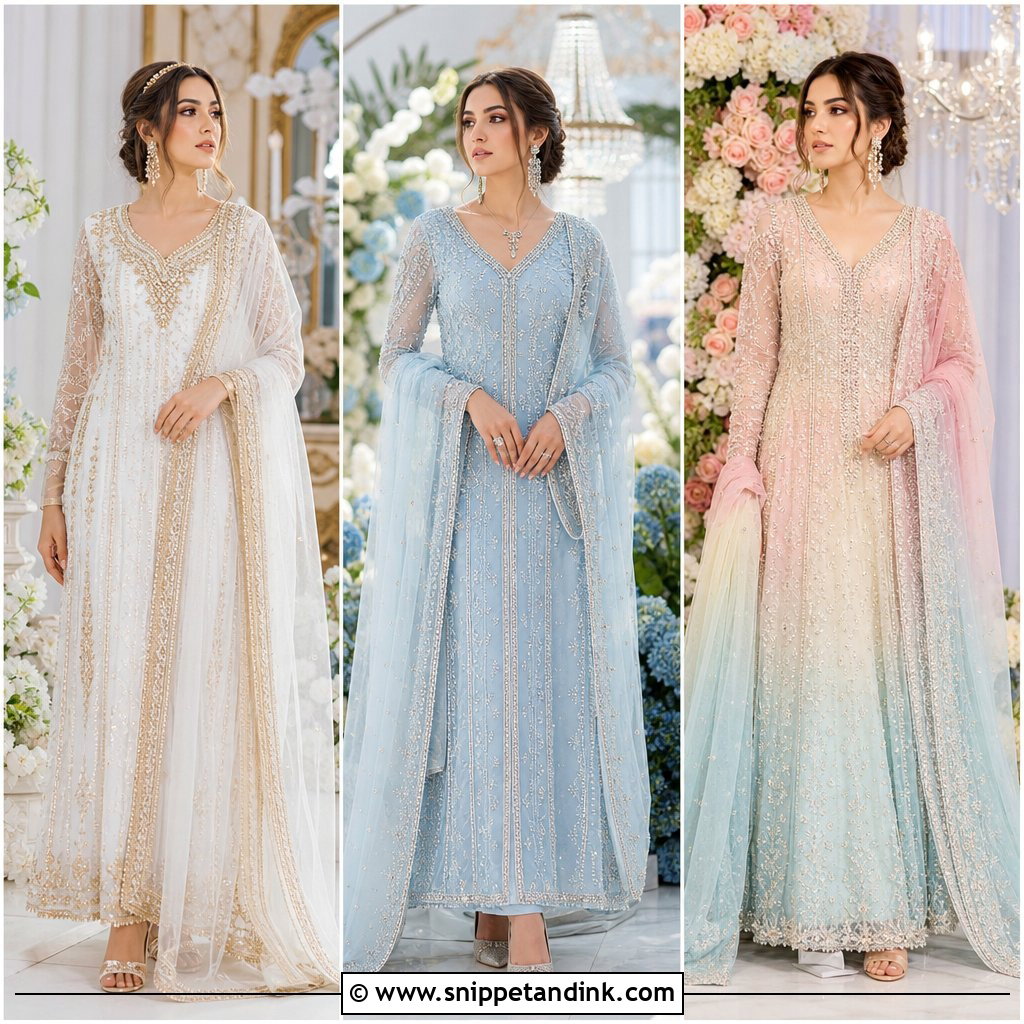
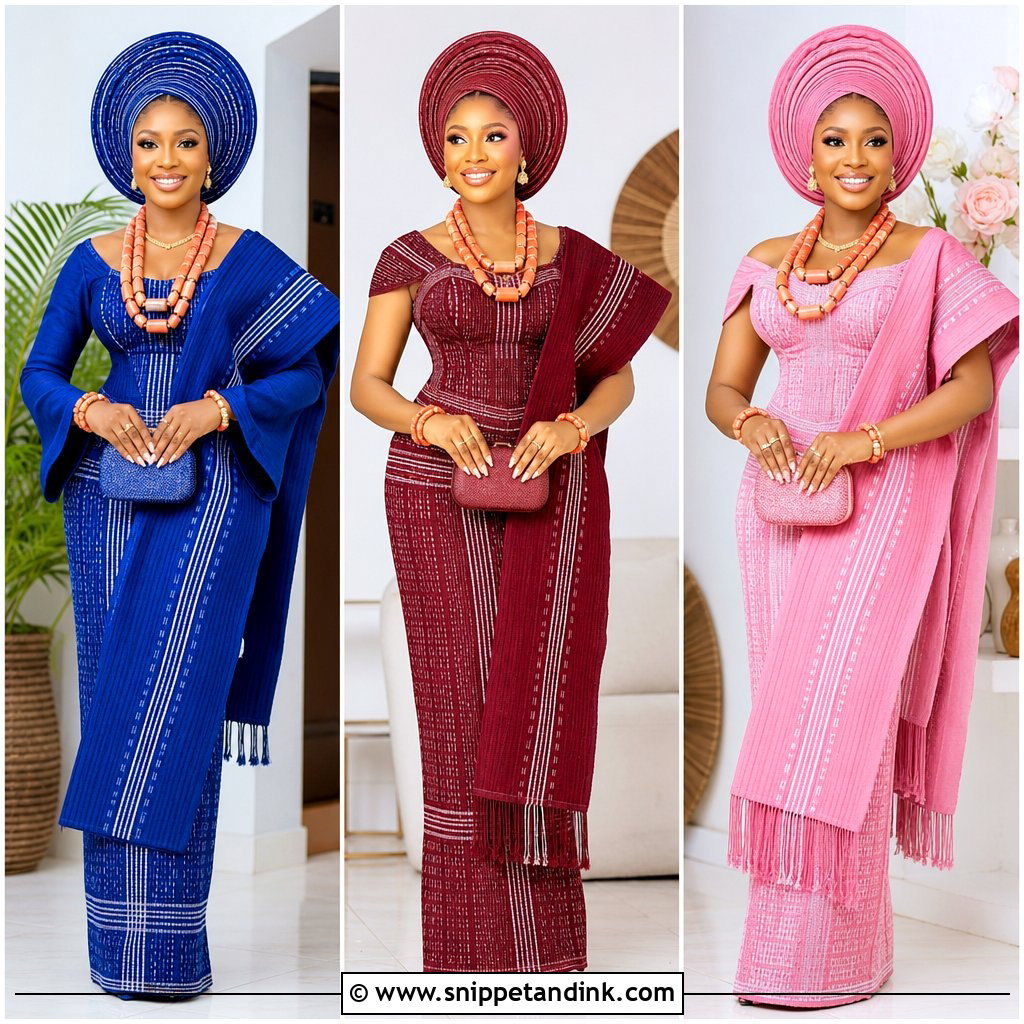
20. Tea Length Korean Wedding Dress
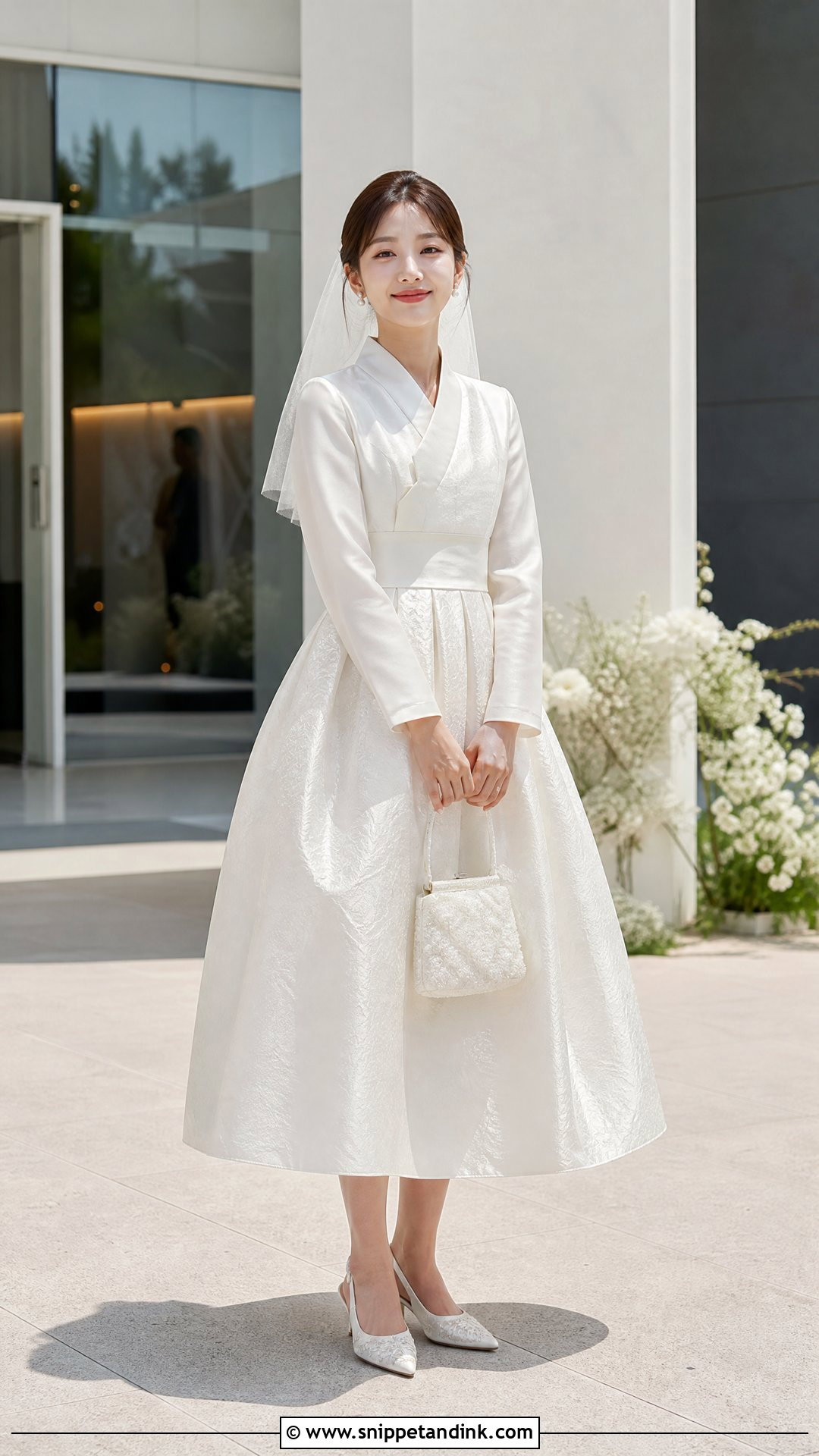
Tea length is light and easy to move in. A hanbok-inspired wrap bodice over a structured skirt ending between knee and ankle, in ivory jacquard with a wide satin waistband, keeps it formal. Your shoes are on show, so slingbacks or embroidered flats need choosing alongside the dress. Keep the skirt full but controlled, because too soft a skirt makes the shorter length look casual. A short veil and pearl earrings complete it for a civil ceremony or second look.
21. Detachable Overskirt Korean Wedding Dress
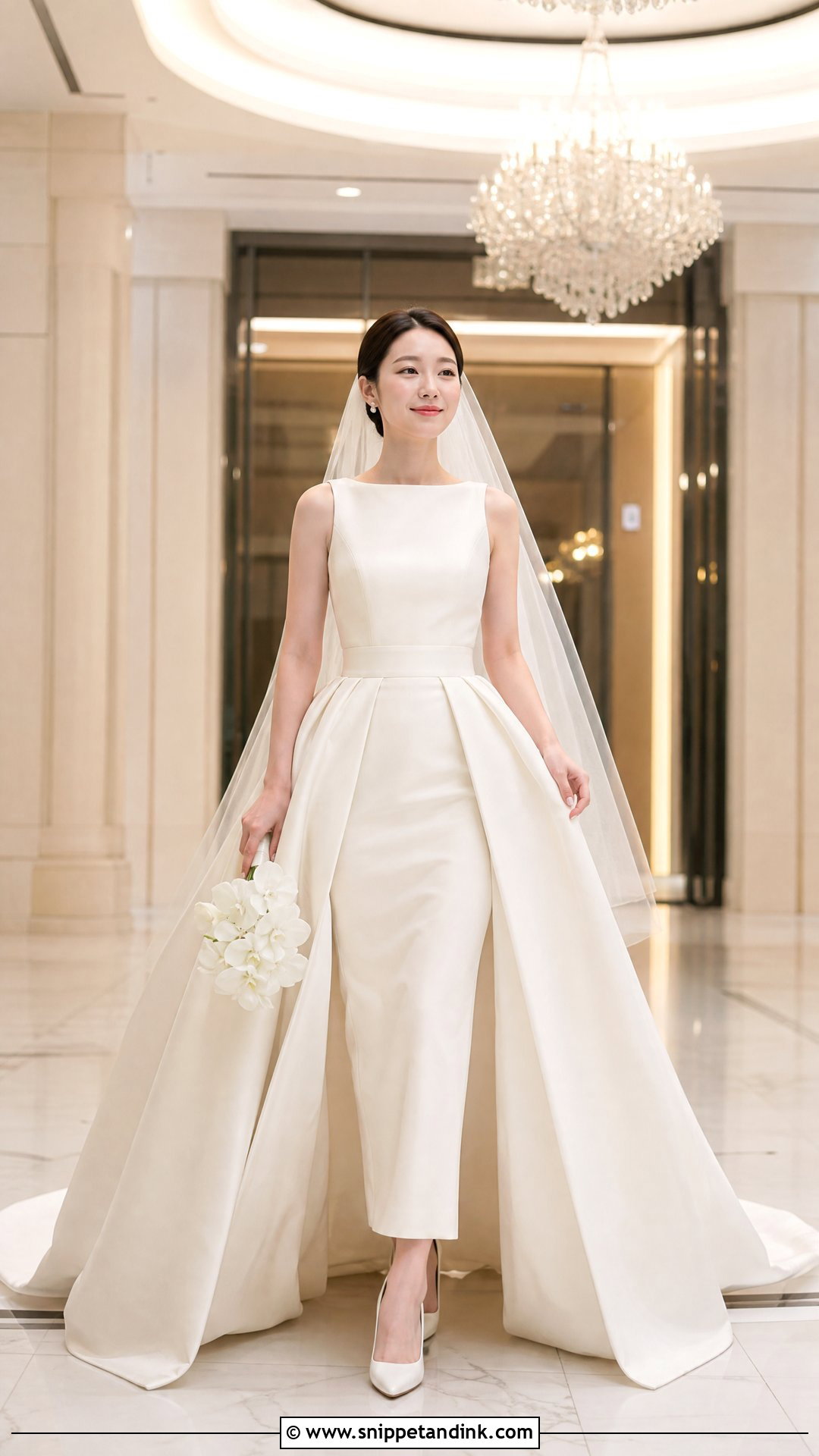
A fitted ivory gown with a detachable overskirt gives you two silhouettes in one. The overskirt can start at a slightly raised waist and fall in generous folds, like the volume of a chima, over a clean column or fit-and-flare underneath. The waistband is what I test: it should close smoothly, sit invisibly from every angle and come off in a minute with one helper. Long veil and pointed pumps for the ceremony; a decorative comb once the overskirt comes off.
22. Bow Back Korean Wedding Dress
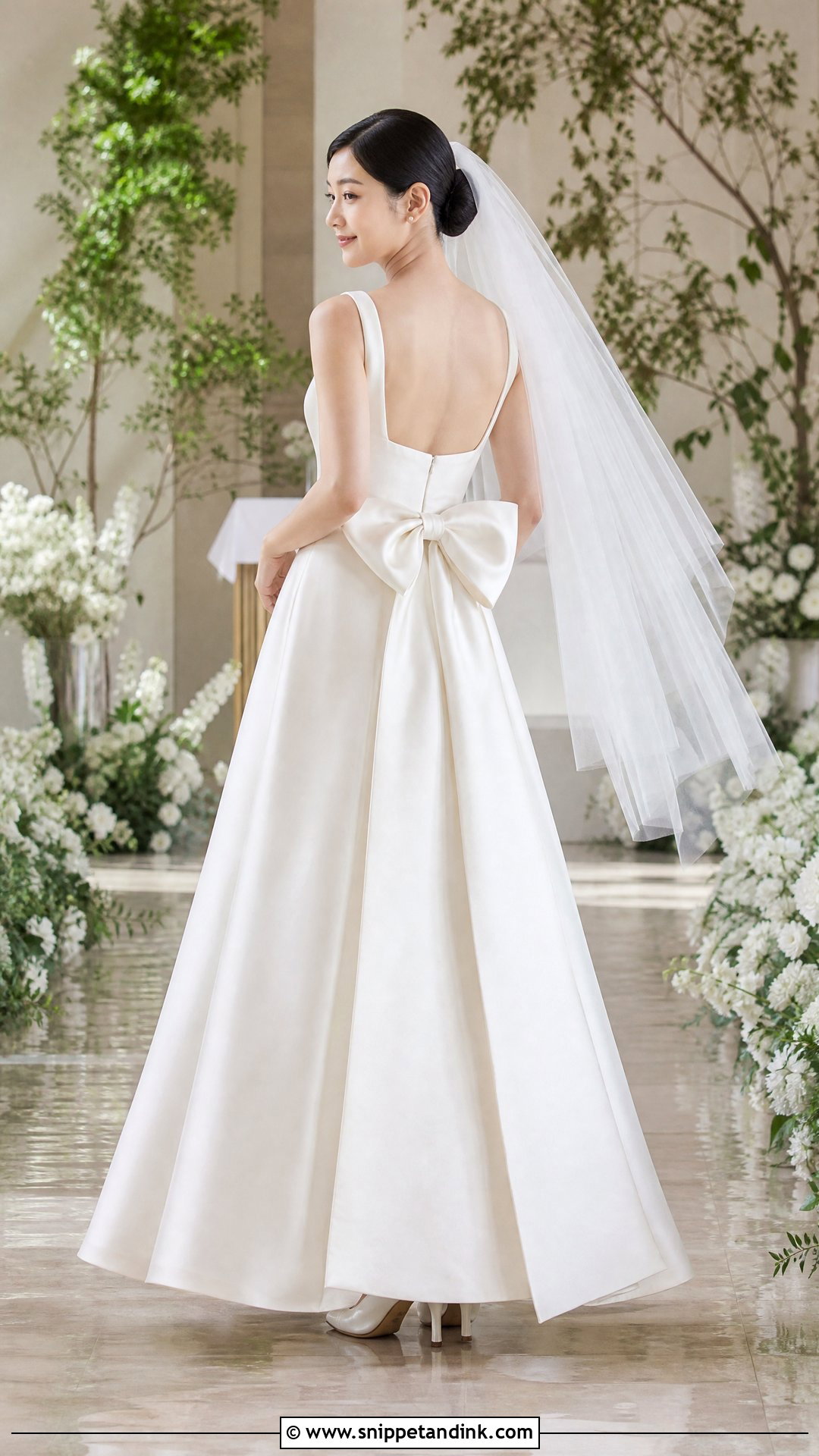
A back bow keeps the front simple and puts the interest behind you, which is where guests look during the ceremony. On a clean satin A-line with a bateau or square neckline, the bow sits at the back waist and can trail into long tails. It echoes the ribbon ties of a jeogori without copying them. The bow should hold its shape without being stiff; a little interfacing inside helps. Choose a veil that ends above or below it, and wear your hair up.
23. Mikado Ball Gown Korean Wedding Dress
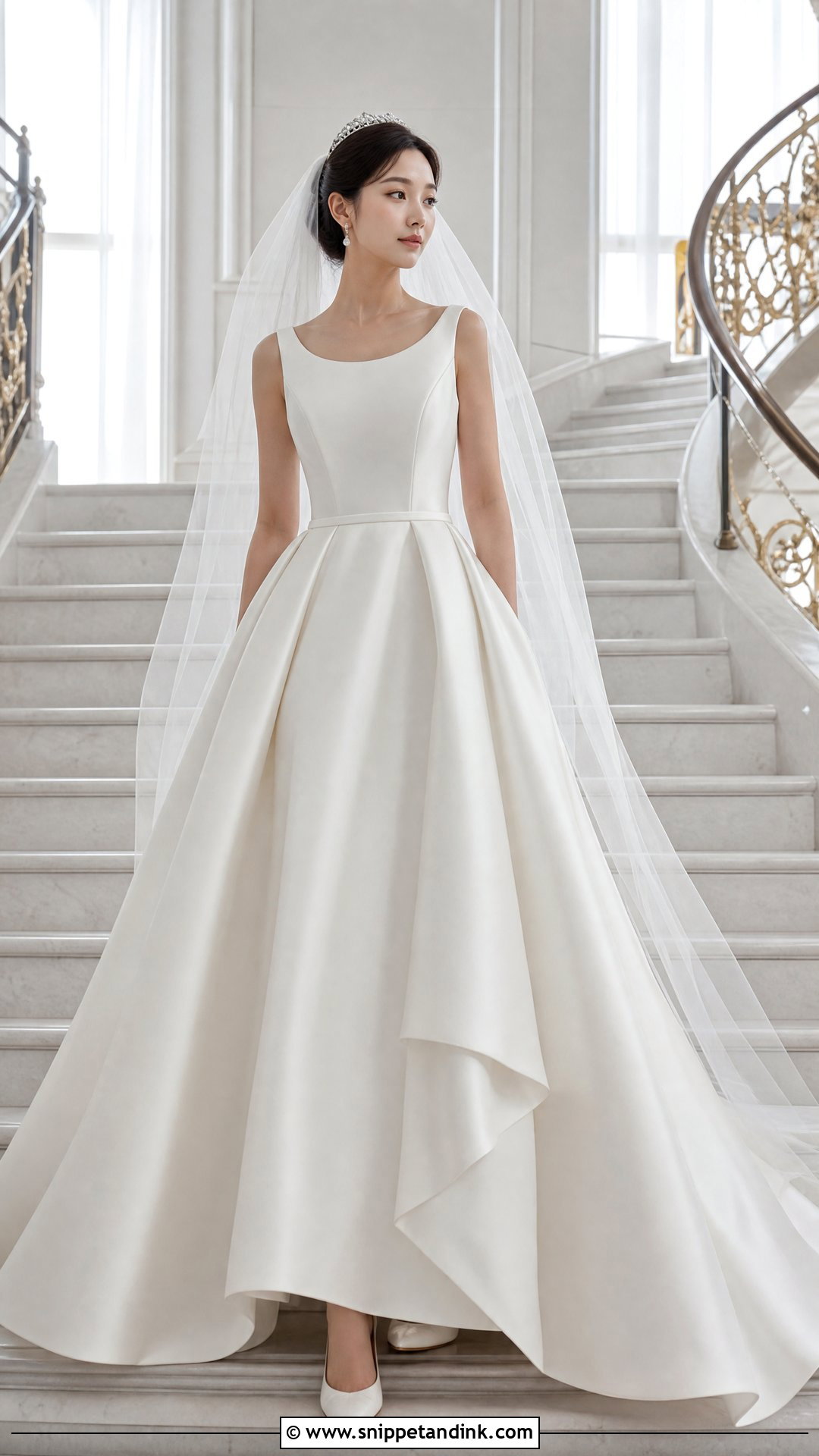
Mikado gives a ball gown clean, architectural volume. A smooth bodice with a modest scoop neck and a full skirt from just above the natural waist creates wide folds that loosely echo a chima. Mikado is warm and substantial, so a hem tailored exactly to your shoes matters more than usual; a too-long mikado hem is a trip hazard on stairs. Hidden pockets are worth asking for. A long plain veil and a slim tiara or polished bun finish it.
24. Blush Reception Hanbok Wedding Dress
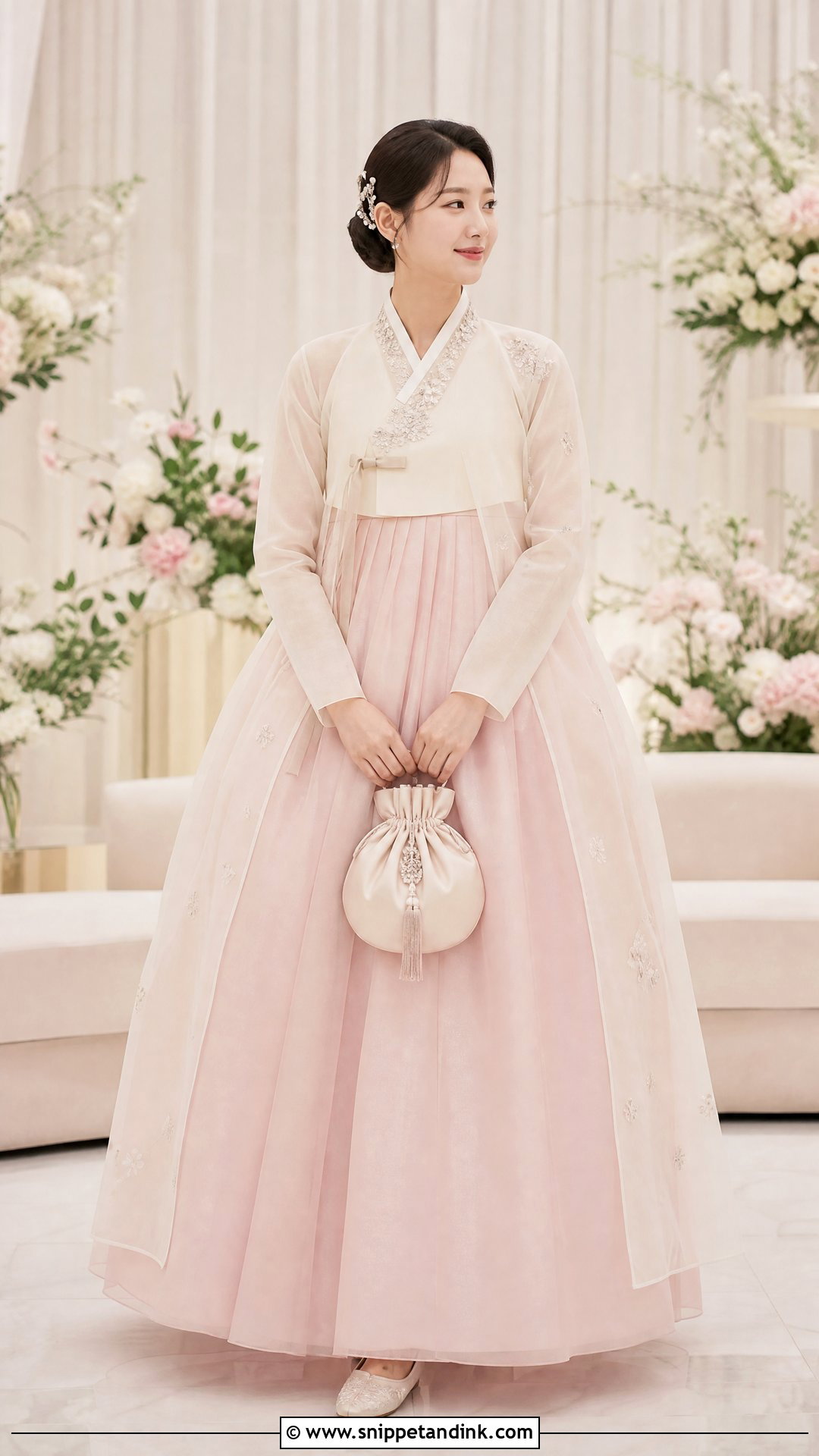
A blush hanbok for the reception changes the mood to something softer. A lightweight pink chima with an ivory or champagne jeogori and fine beading near the collar works well. Make the skirt less full than a ceremonial version so you can walk the room and greet guests easily. Many brides choose modern hanbok or Korean-Western fusion outfits for exactly this reason: they keep the cultural meaning and are far more practical to wear. Embroidered flats, a silk pouch and pearl pins round a low bun suit it, and the colour contrasts clearly with a white ceremony gown.

25. Two Look Korean Wedding Dress
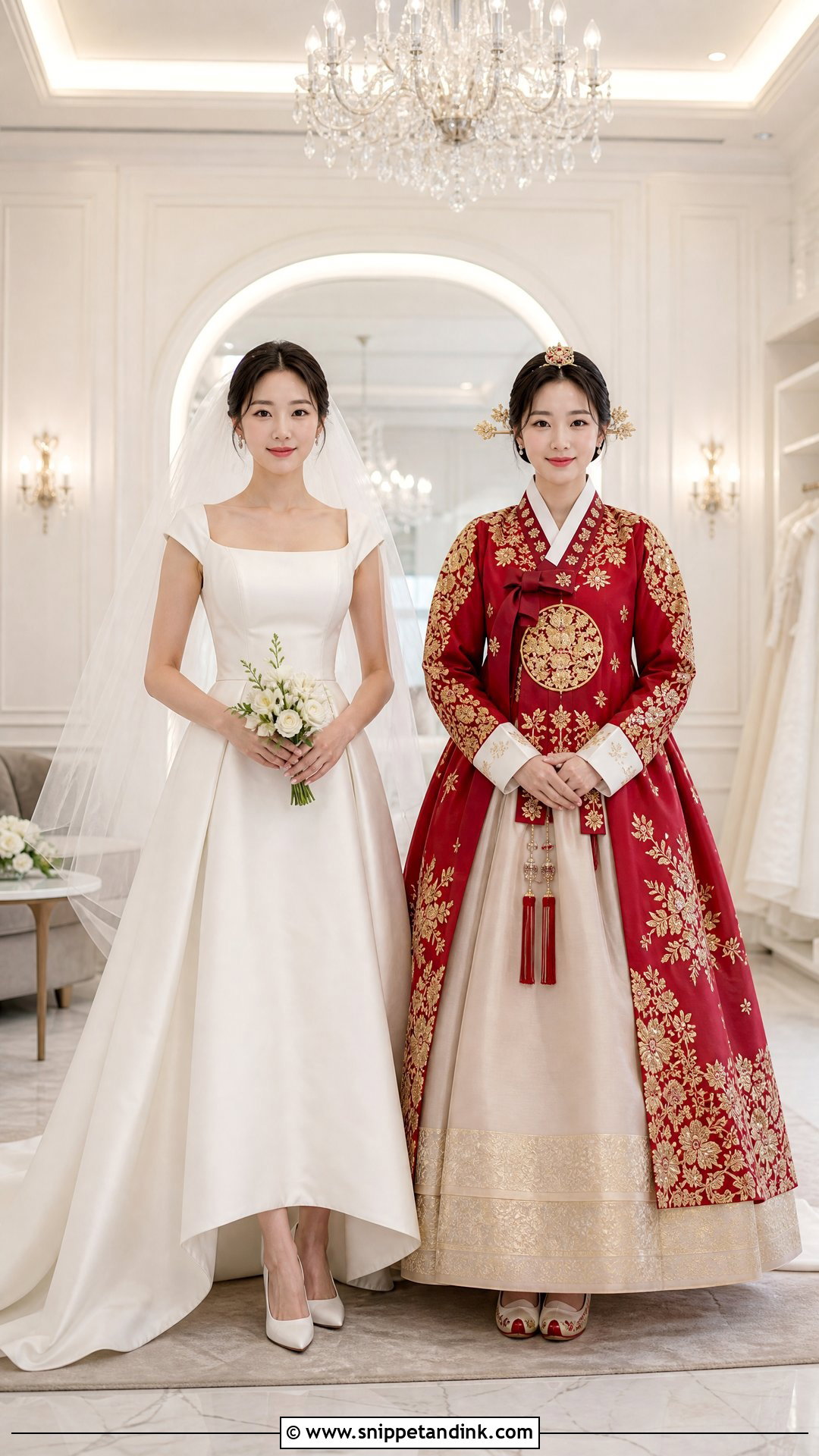
Two looks let you honour tradition and still wear a Western gown. A white satin gown with a long veil for the main ceremony, then an embroidered bridal hanbok for the paebaek or reception. Many Korean weddings now pair a Western gown with ceremonial hanbok, each with its own role. I link the two with one repeated element: pearls, a floral motif or an ivory-and-gold palette. Start with a smooth low bun that supports either a veil or a traditional ornament, and set out shoes at the right height for each hem so neither drags.
Rent the Robe, Buy the Gown? Splitting a Korean Bridal Wardrobe
Brides planning several looks often ask me what’s worth buying. My usual answer is to buy the piece you’ll wear longest and rent the pieces you’ll wear briefly.
Ceremonial robes like the hwarot and wonsam are elaborate and worn for a short time, and renting them along with the jokduri and hair ornaments is common. Hanbok rental shops usually fit the robe over your own hanbok, so take your measurements and the hanbok you plan to wear to the appointment. Confirm early when the pieces must be collected and returned, and who is responsible if embroidery is marked.
A bridal hanbok you might wear again at family occasions can be worth having made. A tailored hanbok is fitted mostly at the chest and shoulders, since the chima wraps and ties, so it handles small weight changes better than a fitted gown. Allow several weeks for a custom piece, and longer if it’s hand-embroidered.
Your main white gown needs the usual timeline: order months ahead and plan two or three fittings. Bring both pairs of shoes to the last fitting so the gown and the hanbok hems can each be checked. If you change outfits on the day, set aside a proper window for it, with a helper who knows how to tie the jeogori bow. A rushed tie looks lopsided in every photo afterwards.
Which Outfit Belongs to Which Part of Your Wedding?
Korean bridal dress gives you a choice between tradition, fusion and pure Western style, and many brides wear more than one. A hwarot or colourful bridal hanbok carries ceremonial meaning; a minimalist satin gown feels modern; fusion pieces borrow raised waists, wrapped necklines, embroidery and flowing skirts. Map out the ceremony, the venue, the season and how much bowing and sitting each outfit has to survive. Then let comfort and genuine details guide the final choice, so every look photographs well and feels right in its setting.
You'll Like These Ideas:




Leave a Reply