
Most of the Chinese brides I dress are really planning two or three looks, not one. The tea ceremony in the morning asks for something you can kneel, bow and pour in, while the banquet at night can carry a train or a fitted silhouette that would be miserable at 9 a.m. Qun kwa, xiuhefu, hanfu and qipao-inspired dresses each come from a different history and sit differently on the body, so I always ask about family background and the running order of the day before we look at a single sample. Below are the twenty outfits I’d talk a bride through, with the shoes, jewelry and hair that suit each one and the fitting checks I wouldn’t skip.
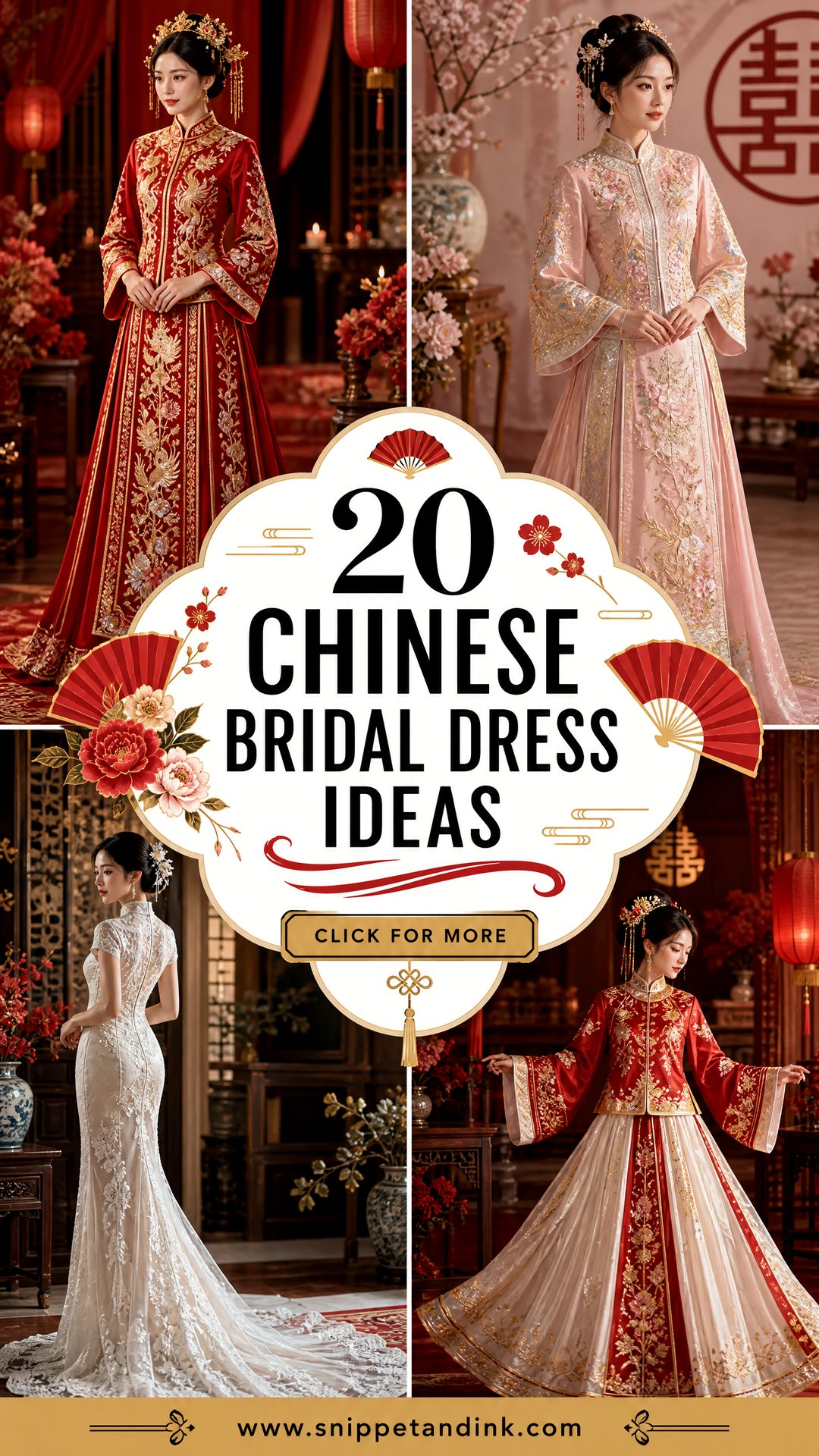
Mapping Each Outfit to Its Part of the Day
Before we talk colour or embroidery, I ask the bride to walk me through her day in order. A typical Chinese wedding can include the door games and pickup, a tea ceremony at one or both family homes, a Western-style ceremony, photos, and an evening banquet. Each of those puts different demands on a dress.
- Tea ceremony: you’ll kneel or bow, hold cups out at arm’s length and stand up and down repeatedly. Sleeves, collar comfort and a skirt you can kneel in matter more than a train.
- Western ceremony: this is where a white gown, a fusion gown or a longer train makes sense, since you’re mostly standing and walking.
- Banquet: you’ll sit for long stretches, eat, stand for toasts and visit every table. A fitted qipao or an A-line works; a big hoop skirt is tiring.
- After-party: something short, light and easy to dance in.
Once the events are written down, the number of outfits usually decides itself. Two is common: red for the tea ceremony, something else for the evening. Plan for the changes, too. Getting into a hanfu or a fengguan xiapei crown with layers and pins takes far longer than slipping into a qipao, so build at least half an hour for each change into the schedule and have someone there to help.
1. Red Qun Kwa Chinese Bridal Dress
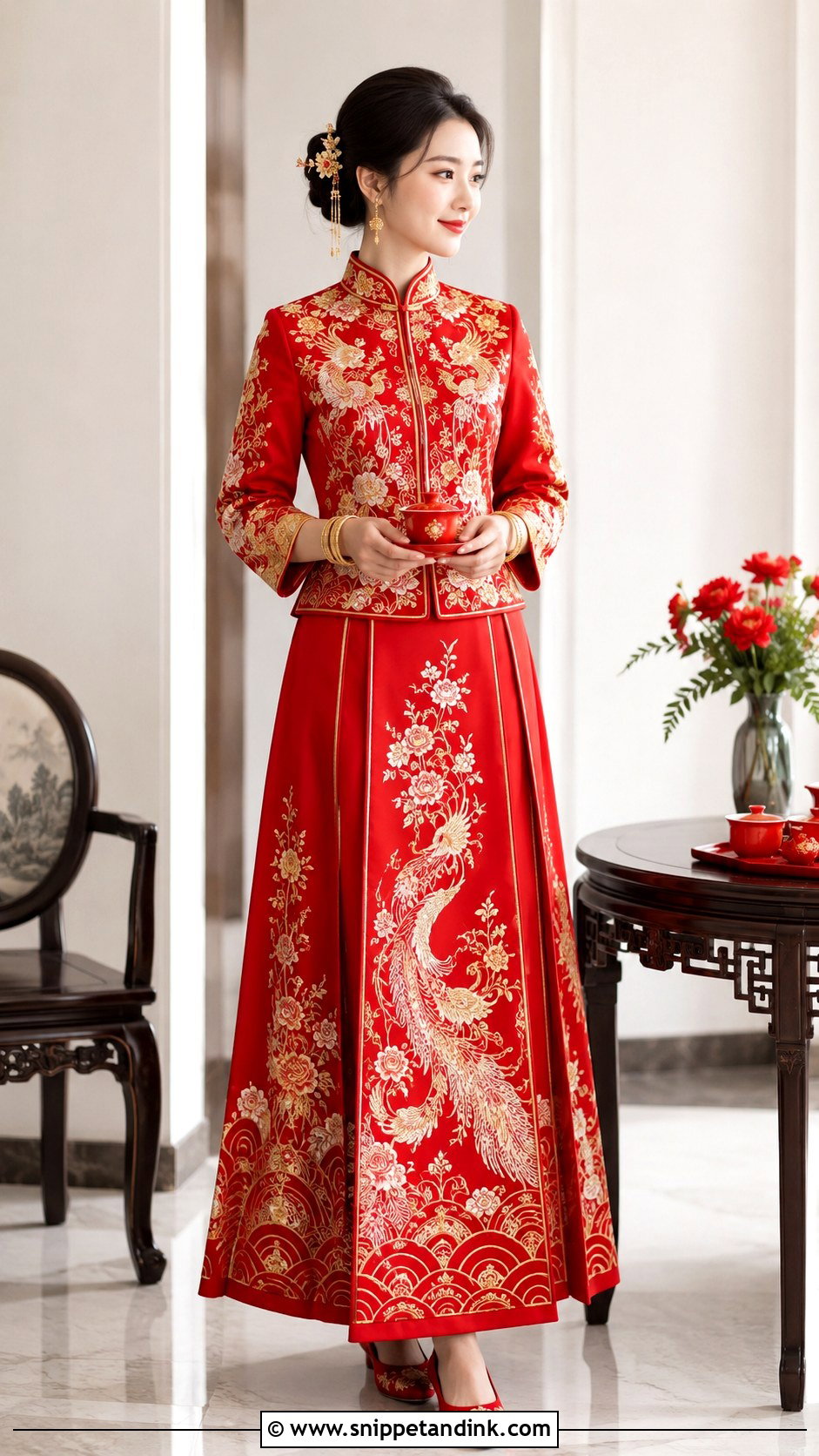
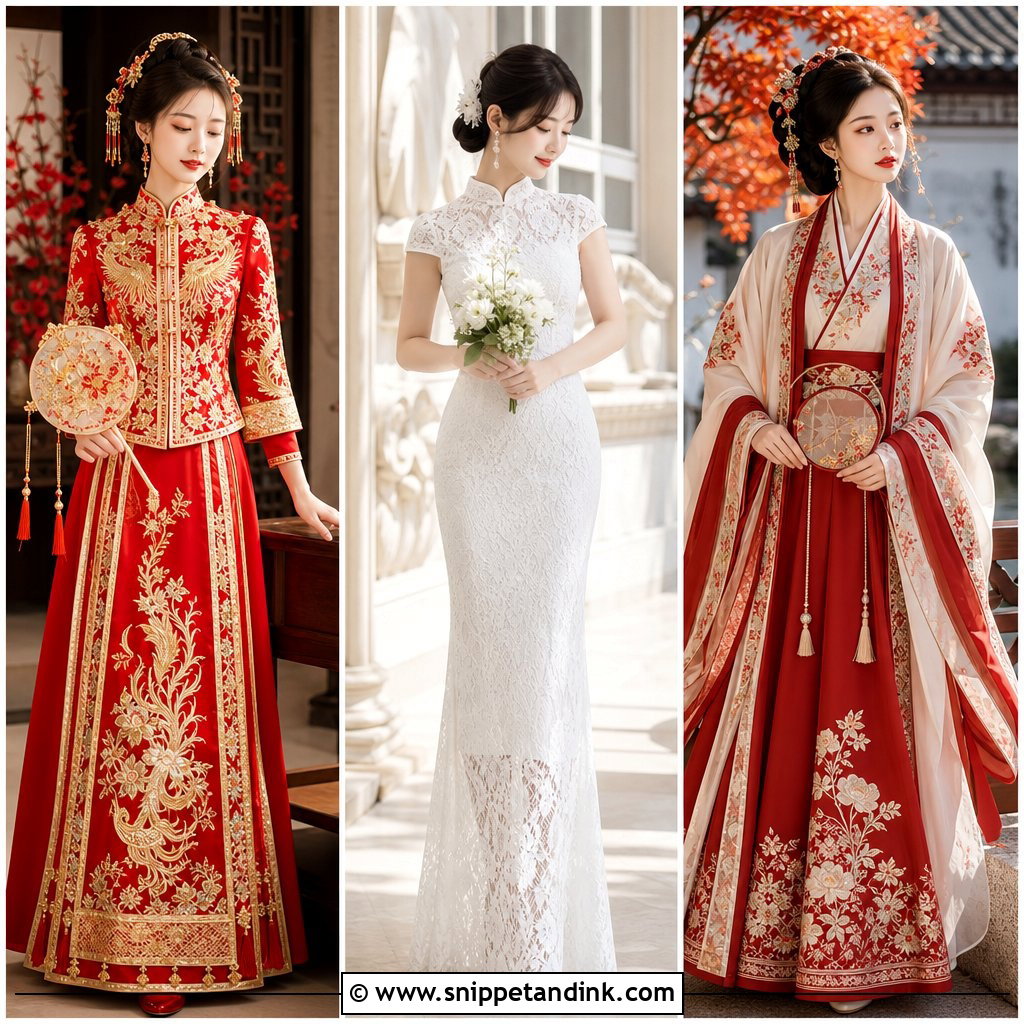
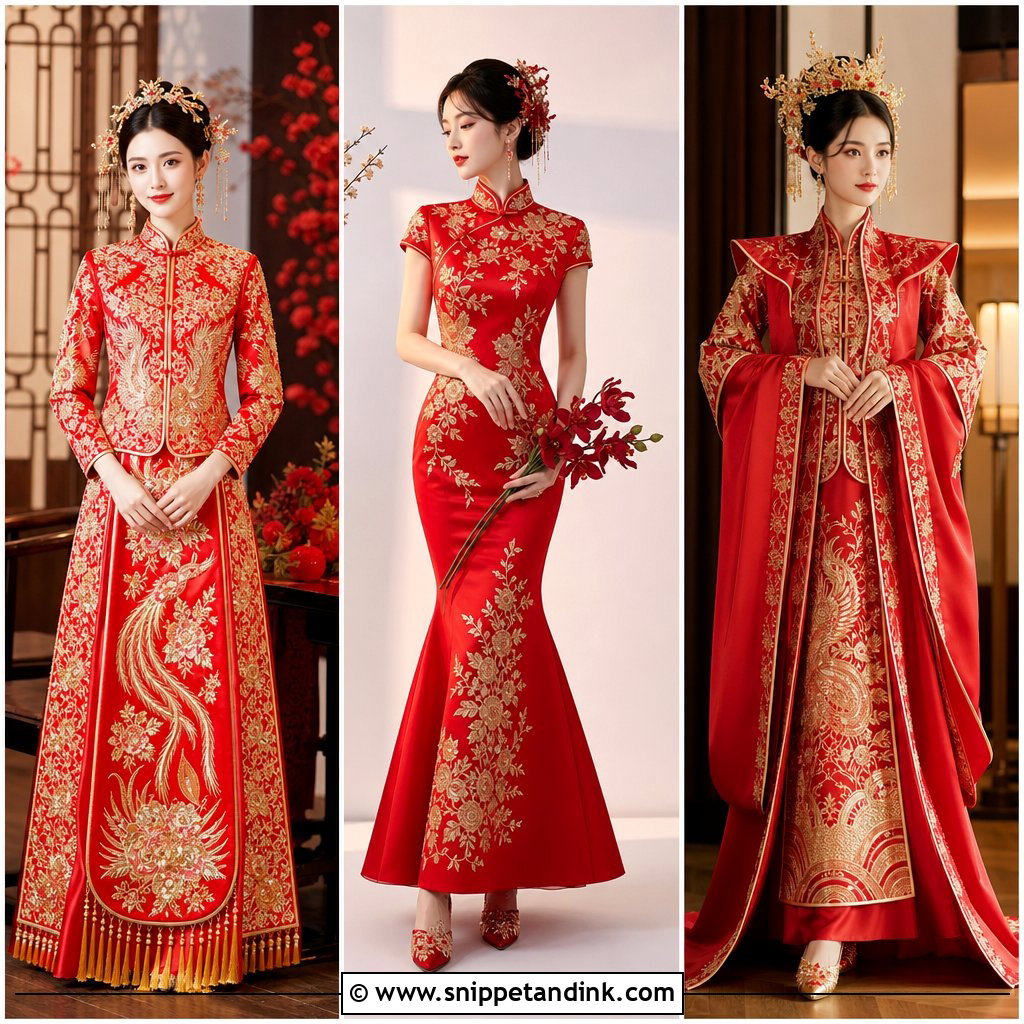
A traditional red qun kwa is the outfit I see most often at Cantonese and Southern Chinese tea ceremonies: an embroidered jacket over an ankle-length skirt, both heavy with gold or silver thread. The motifs carry meaning, so it’s worth asking the maker what the phoenixes, clouds and flowers on your set represent. Because the jacket is stiff with embroidery, the cuffs don’t bend the way a cotton sleeve does. When you hold out a teacup, a cuff that’s a centimetre too long will drag across the tray, so I have brides mime serving tea at every fitting. Red embroidered flats, gold bangles and a low bun with small gold pins are all it needs; the garment does the talking.
2. Gold Qun Kwa Chinese Bridal Dress
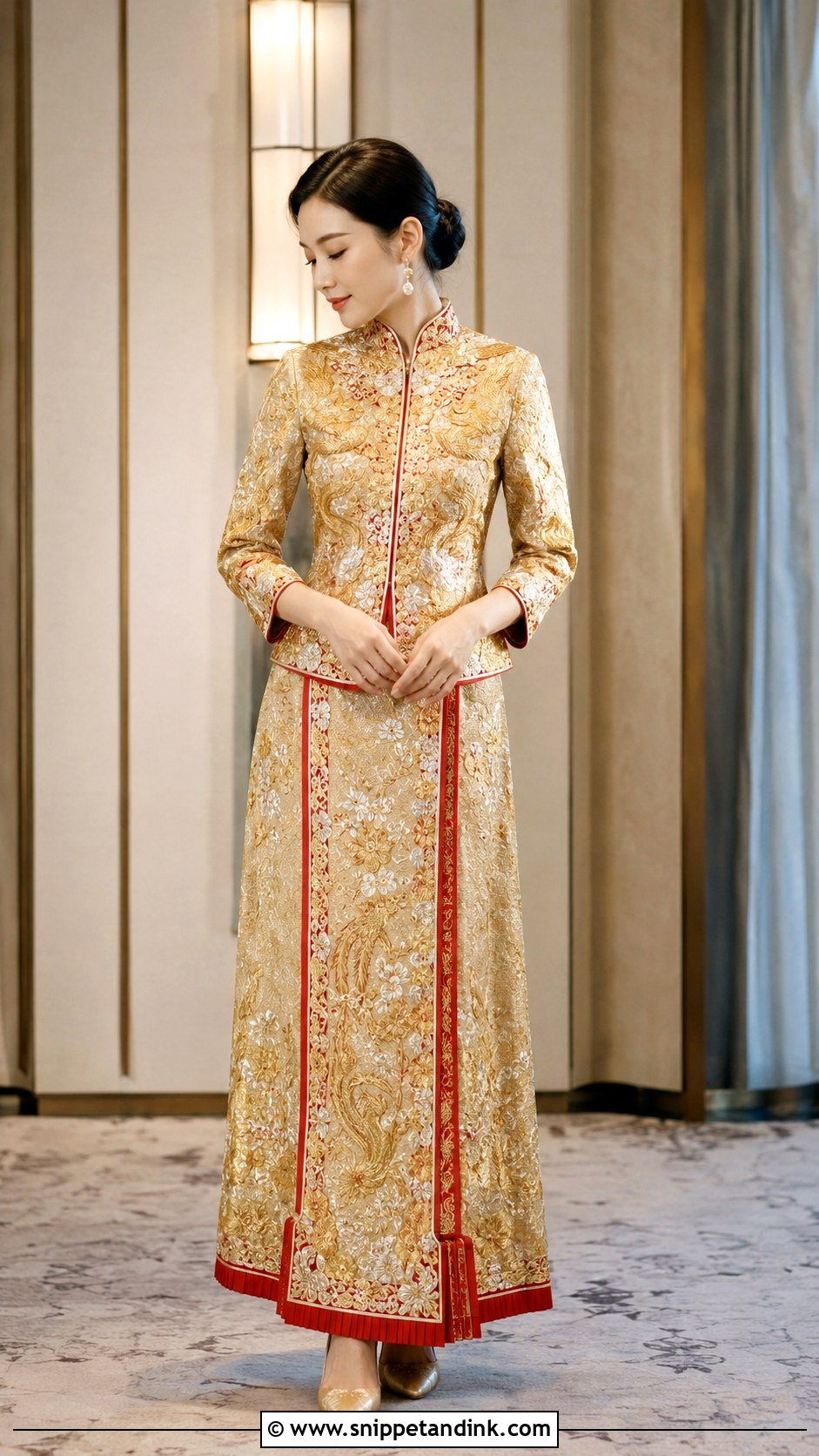
A fully gold qun kwa reads almost metallic from a distance, and that’s both its appeal and its risk. When every centimetre is embroidered, the motifs blur together on camera, so I look for sets where a little red ground still shows at the collar, cuffs and skirt panels to give the eye an edge to follow. The weight is real, too. A densely worked jacket can feel like a light coat, which matters during a long tea ceremony with lots of kneeling and standing. Keep the jewelry to pearl-and-gold earrings and one bracelet, and make sure the skirt waistband sits firmly at your natural waist, because a boxy jacket hides a slipping skirt until it’s too late.
3. Red Xiuhefu Chinese Bridal Dress
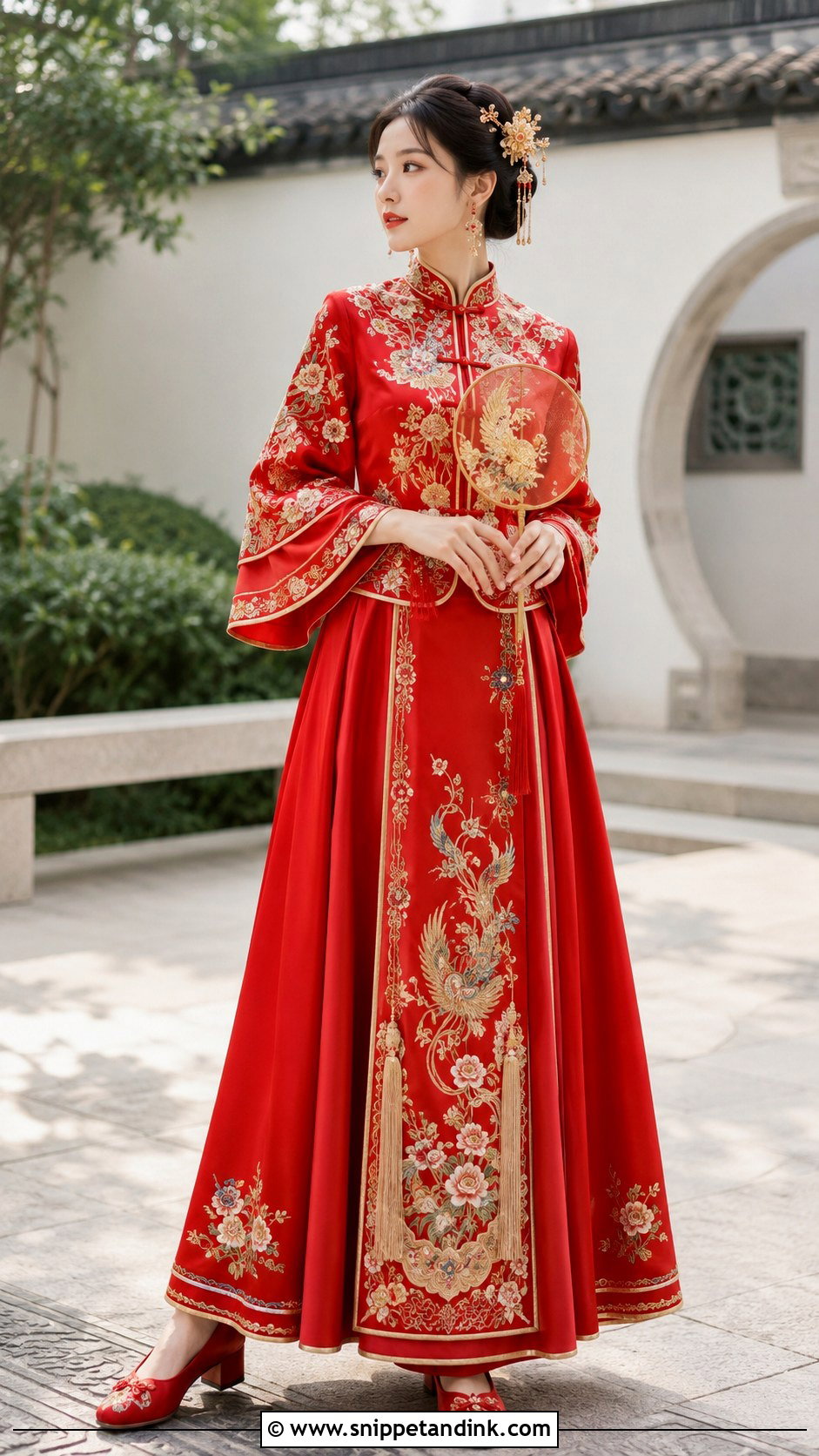
Xiuhefu moves more than qun kwa because the skirt is usually softer and fuller, which is why brides who find the qun kwa too rigid often settle here. The style as worn today is a modern bridal adaptation of older Chinese dress rather than one unchanged historical garment, so you’ll see a wide range of cuts and embroidery from different makers. At a fitting I check two things first: that the hem clears the floor in the shoes you’ll actually wear, and that the jacket closes without pulling at the shoulder blades when your arms come forward. Red block heels, gold earrings and floral ornaments around a low updo suit it, and a round silk fan gives your hands something to do in portraits.
4. Blush Pink Xiuhefu Chinese Bridal Dress
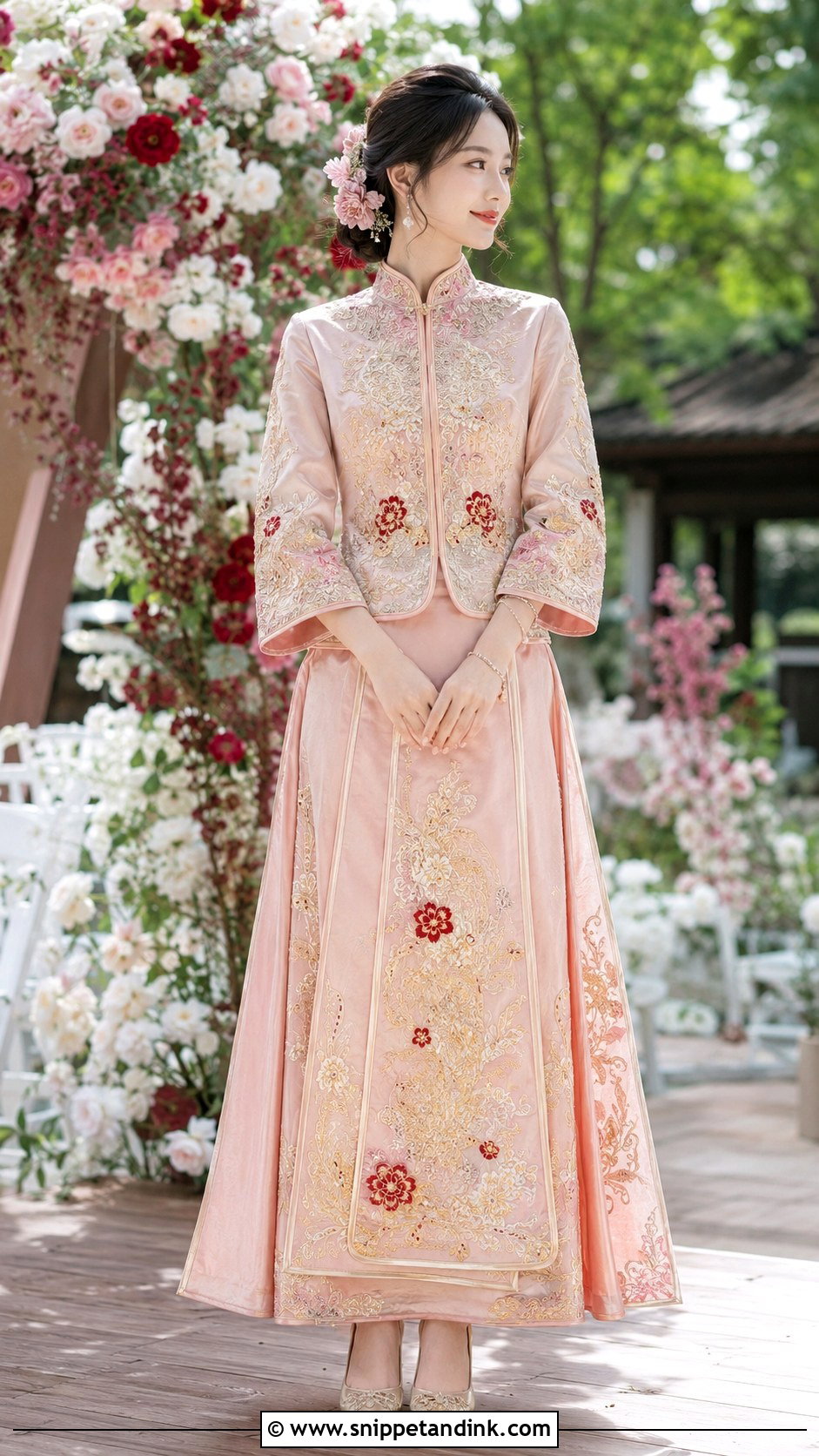
Blush pink softens the xiuhefu shape, but before you fall for it, ask your parents and grandparents how they feel about a non-red ceremonial outfit. Some families are relaxed about it; others would rather you save it for a second look. If pink gets the nod, a dusty rose base with red, champagne and gold threadwork keeps it from looking washed out. Pale fabric is unforgiving in tailoring: puckered seams, a wavy hem and badly matched embroidery at the side seams all show far more than they would on deep red. I’d spend more on the alterations than on the accessories for this one. Pale gold pumps and pearl drops are enough.
5. Fengguan Xiapei Chinese Bridal Dress
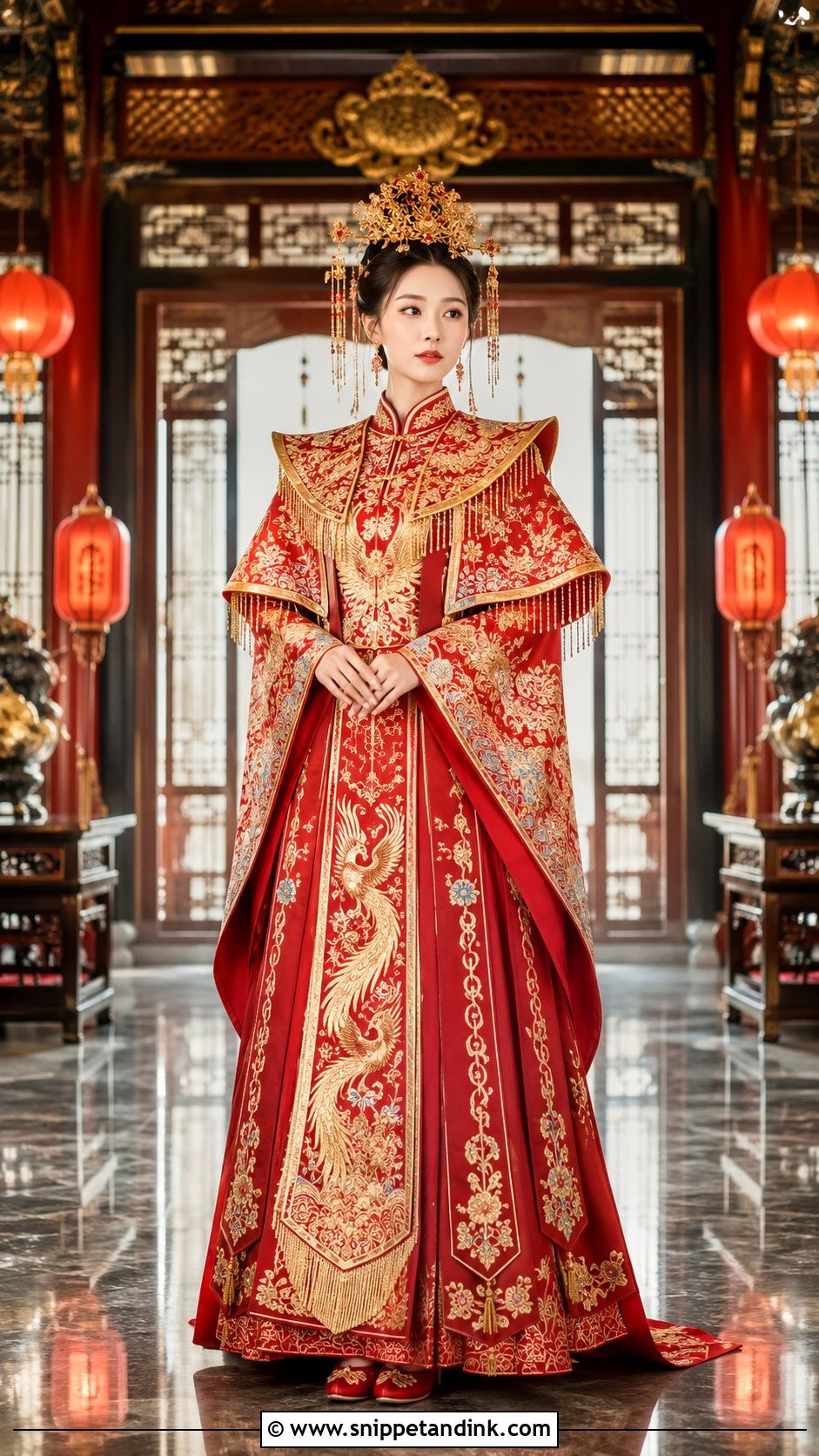
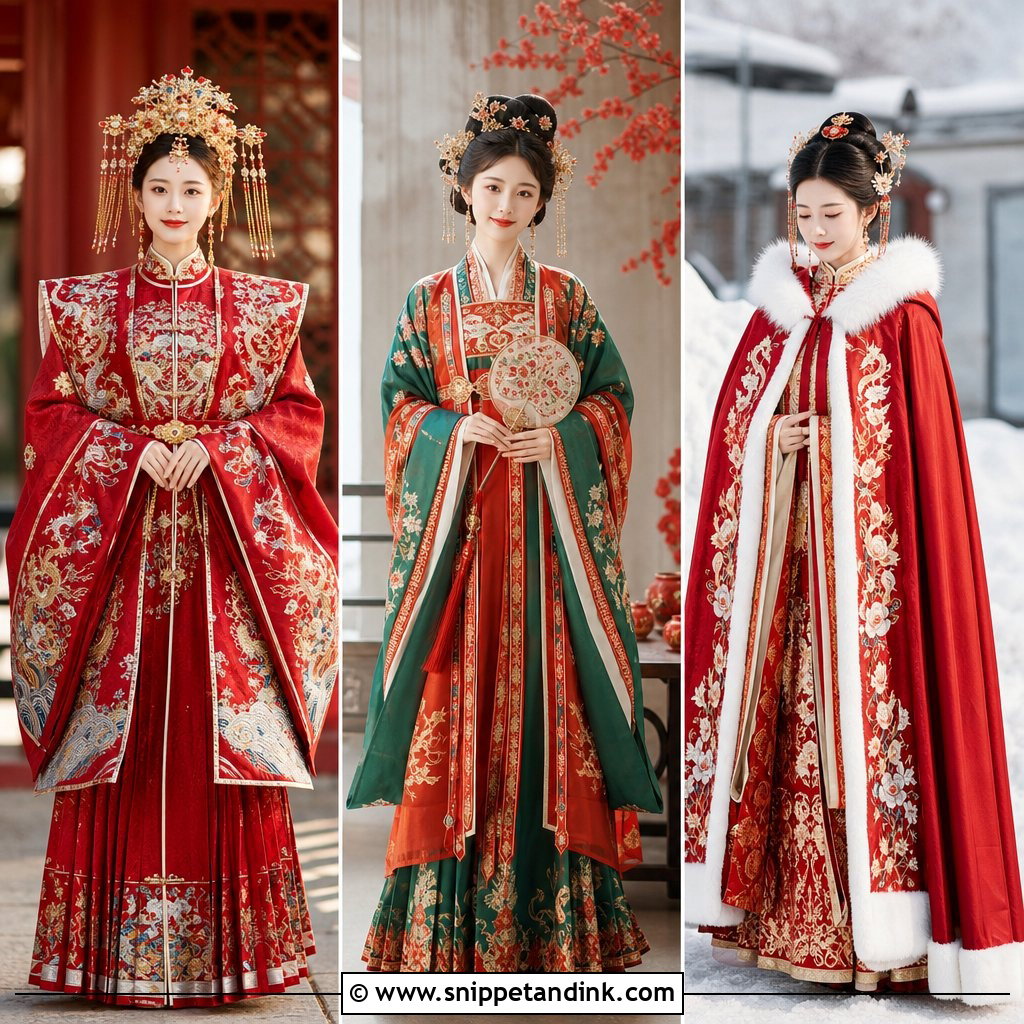
For a full ceremonial entrance, fengguan xiapei-inspired bridalwear pairs an embroidered robe or skirt ensemble with a decorative shoulder cape and a phoenix crown. The crown is the piece I worry about. Even well-made versions are top-heavy, and they need a hairstyle built underneath them as a base, with pins anchored into a firm foundation rather than loose hair. Do a full trial wearing the crown for at least an hour so you know whether your neck and temples tolerate it. Low, stable heels and very little extra jewelry, plus a dresser on hand, because this is not an outfit you get into alone.
6. Red Ming Dynasty Hanfu Bridal Dress
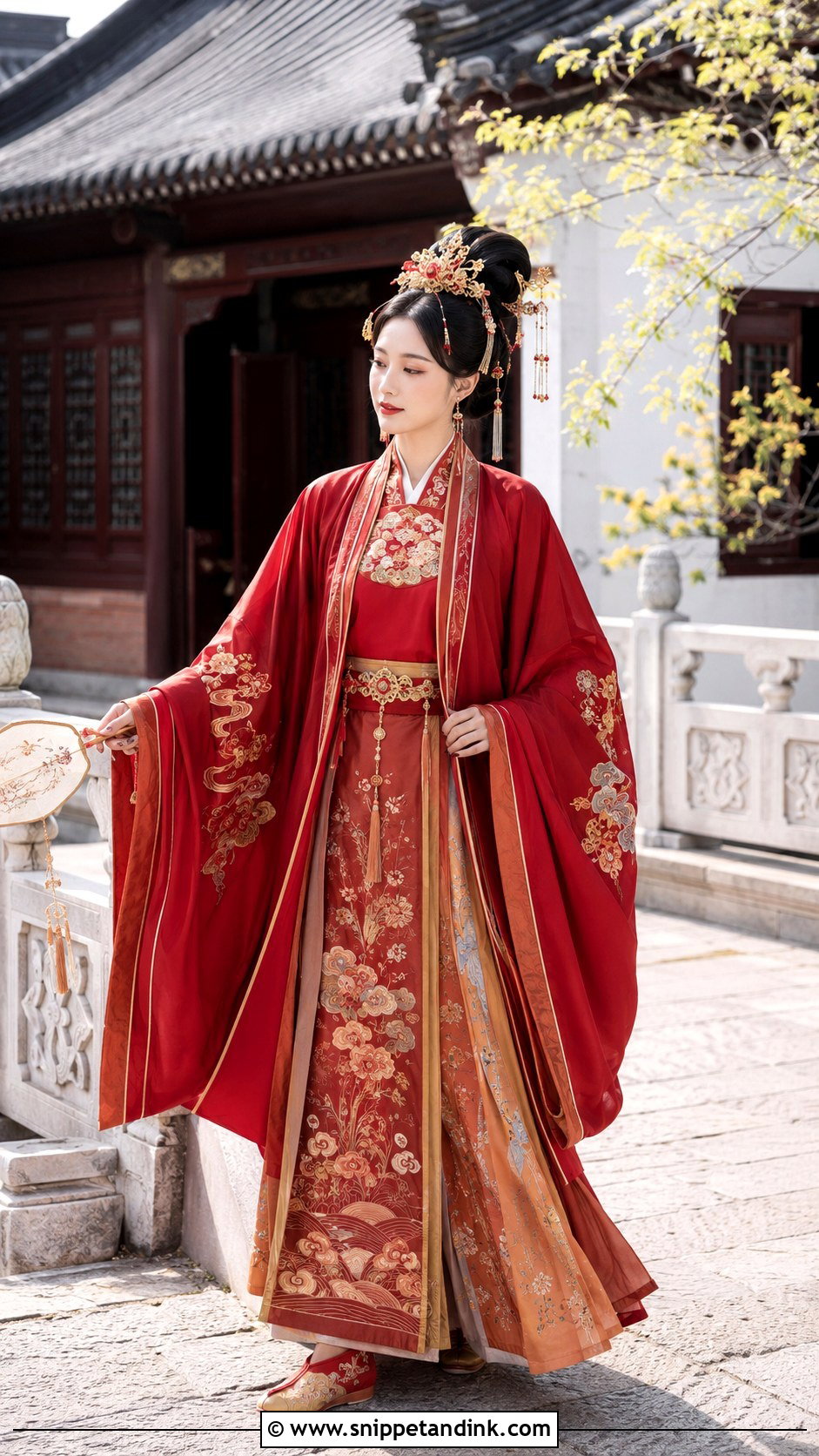
Ming-inspired hanfu is stately and layered: wide sleeves, a long structured skirt, often deep red with gold and a green accent. Layers are where the trouble starts. Each one adds warmth, and with three or four pieces plus a lining, an indoor summer ceremony can get uncomfortable fast, so ask exactly how many pieces come in the set and what each is made of. Skip a modern necklace if the collar is already trimmed. Practise lifting the front of the skirt a few centimetres as you climb steps, because the hem is long and the layers catch the toe of embroidered cloth shoes.
7. Gold Tang Dynasty Hanfu Bridal Dress
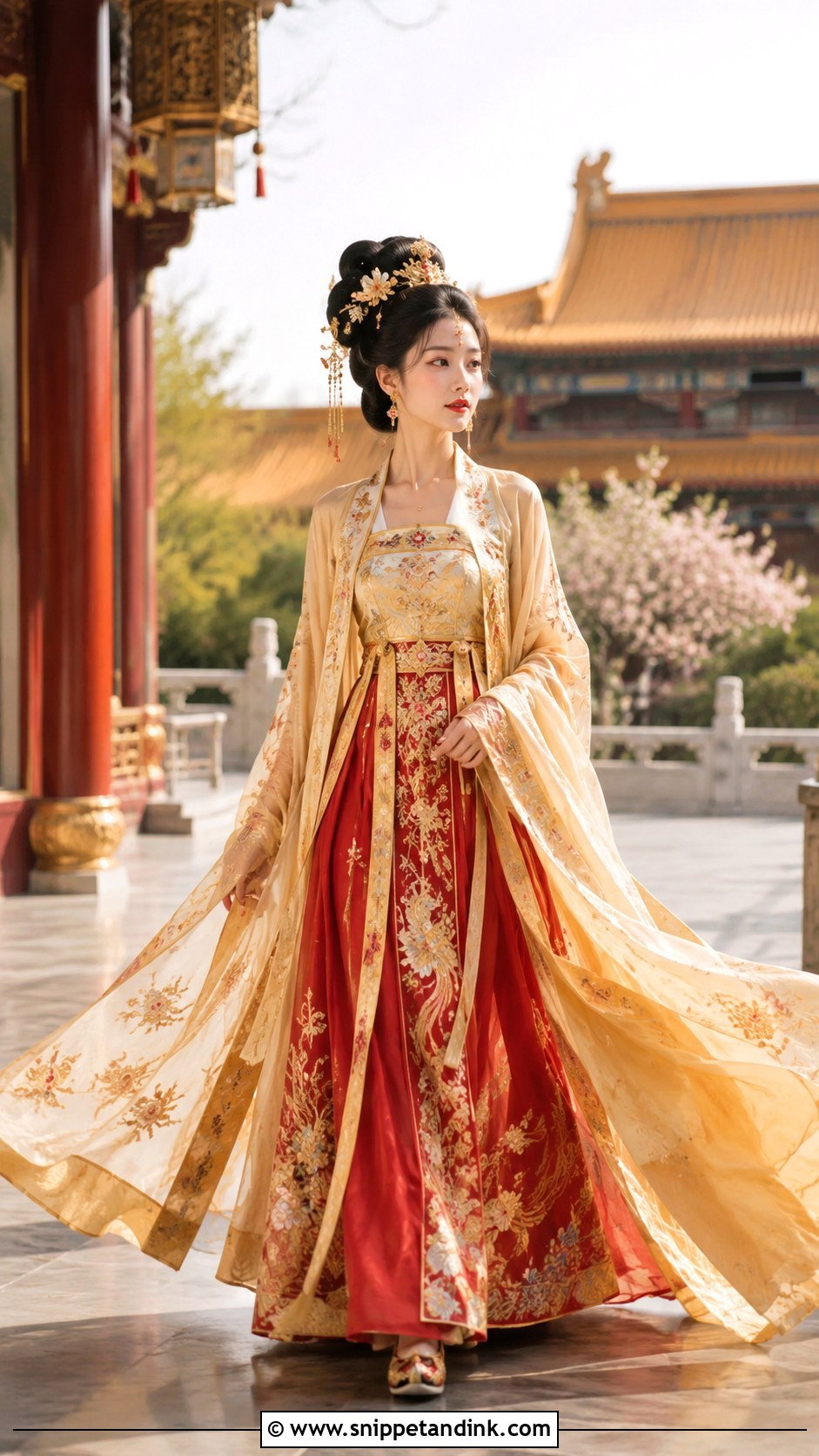
Generous draping is what makes a Tang-inspired hanfu bridal dress feel so expressive: a high-waisted red-and-gold skirt, a fitted upper layer and long sleeves or a silk shawl. The overlapping layers shift as you move, and the neckline is usually the first thing to drift sideways. I secure the crossover with small hidden stitches or safety pins on the inside before the bride steps out. A softly rounded hairstyle balances all that fabric far better than a tight, scraped-back bun. Wide indoor spaces and plain garden backdrops let the shape show; a crowded room swallows it.
8. Green Song Dynasty Hanfu Bridal Dress
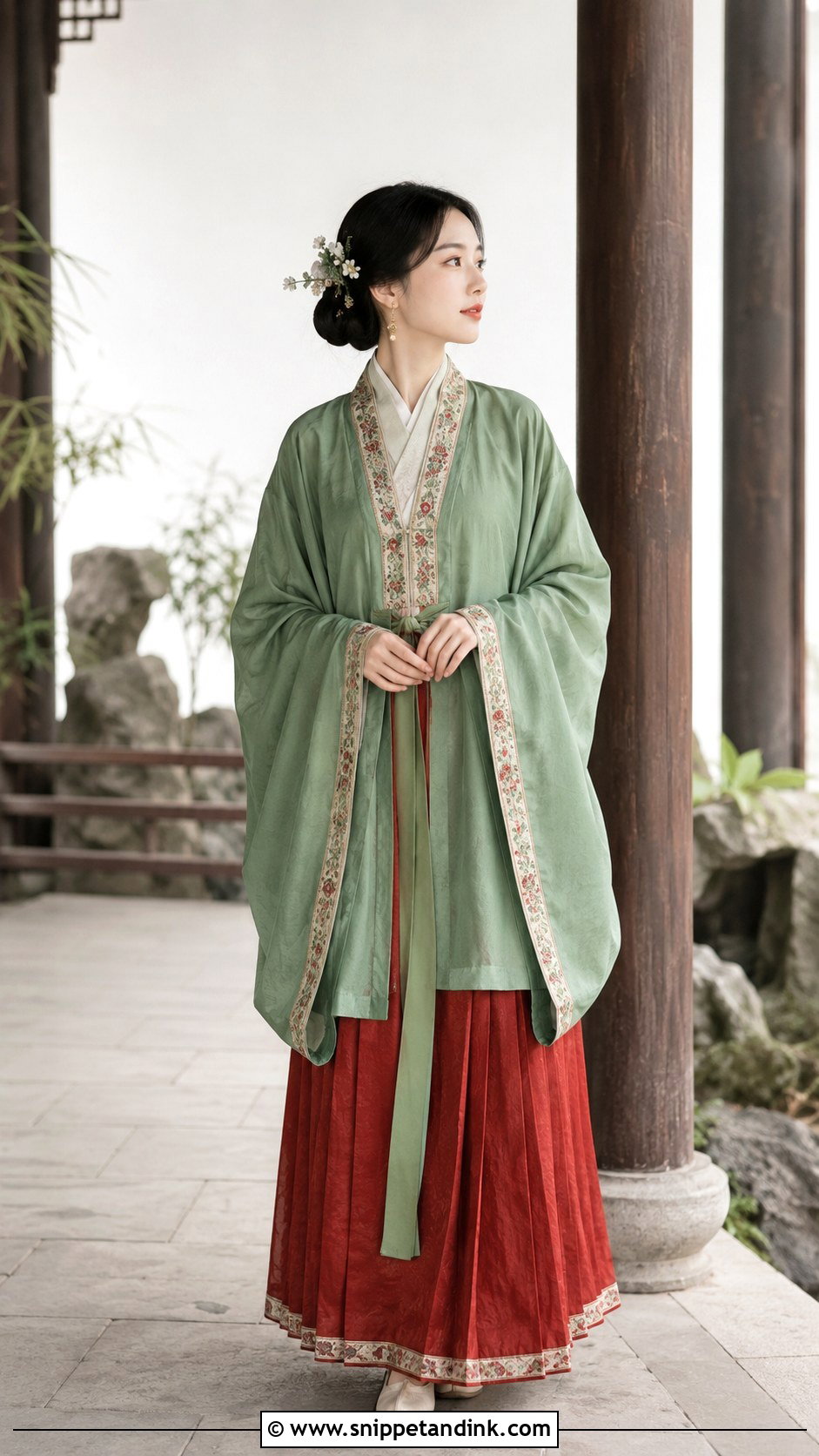
Green is a real option for Song-inspired hanfu, with jade or emerald outer layers over a red skirt and narrow embroidered borders. The silhouette is straighter and lighter than Ming or Tang styles, which makes it one of the easier historical looks to wear through a daytime ceremony. Fabric choice matters more than colour here: high-shine satin flares white under flash, so I steer brides toward silk or a matte jacquard with a soft sheen. If you’re drawing on a particular period, talk to a maker who knows it, because a mismatched sash or collar is something knowledgeable guests will spot.
9. Red Qipao Chinese Bridal Dress
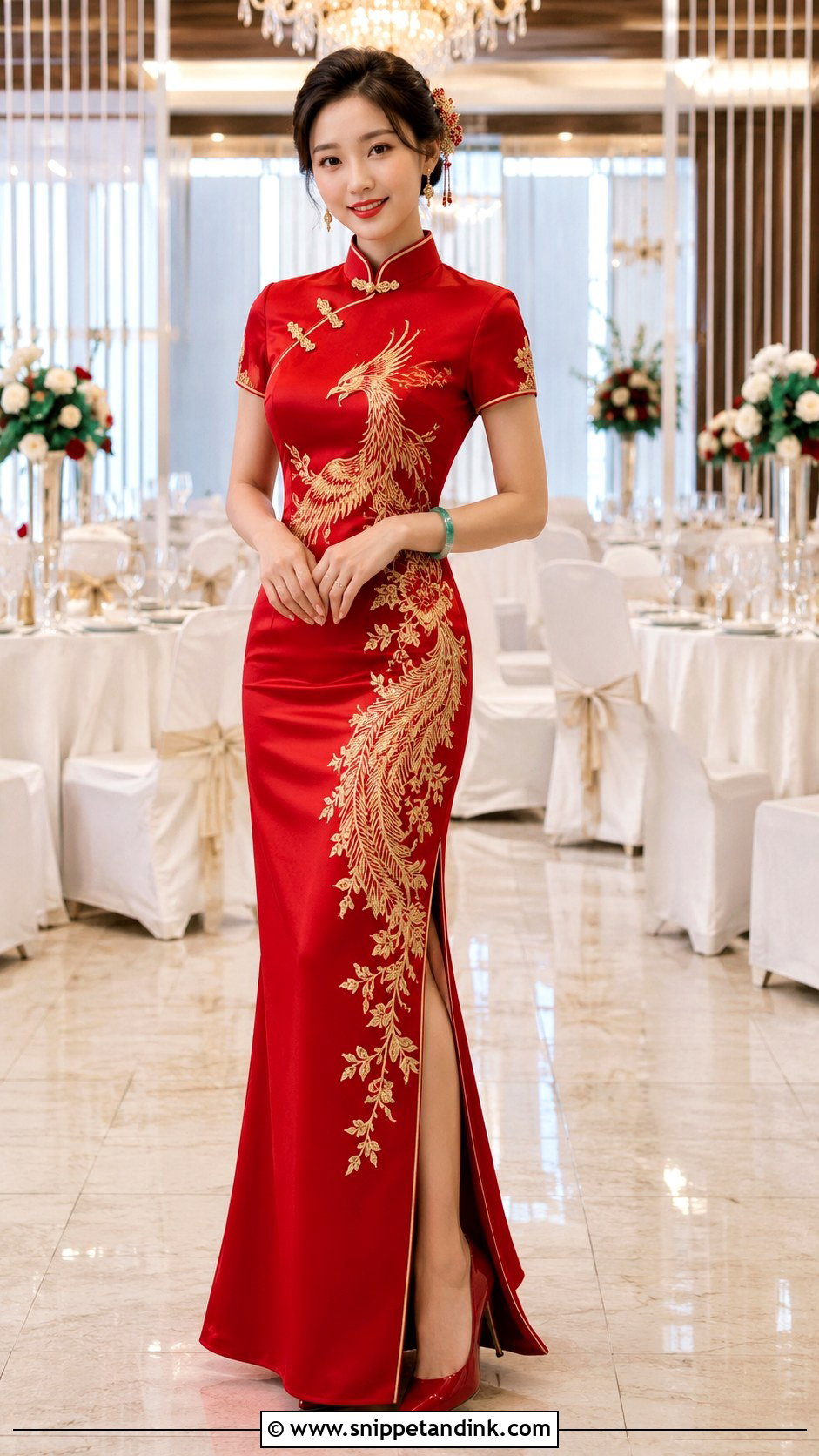
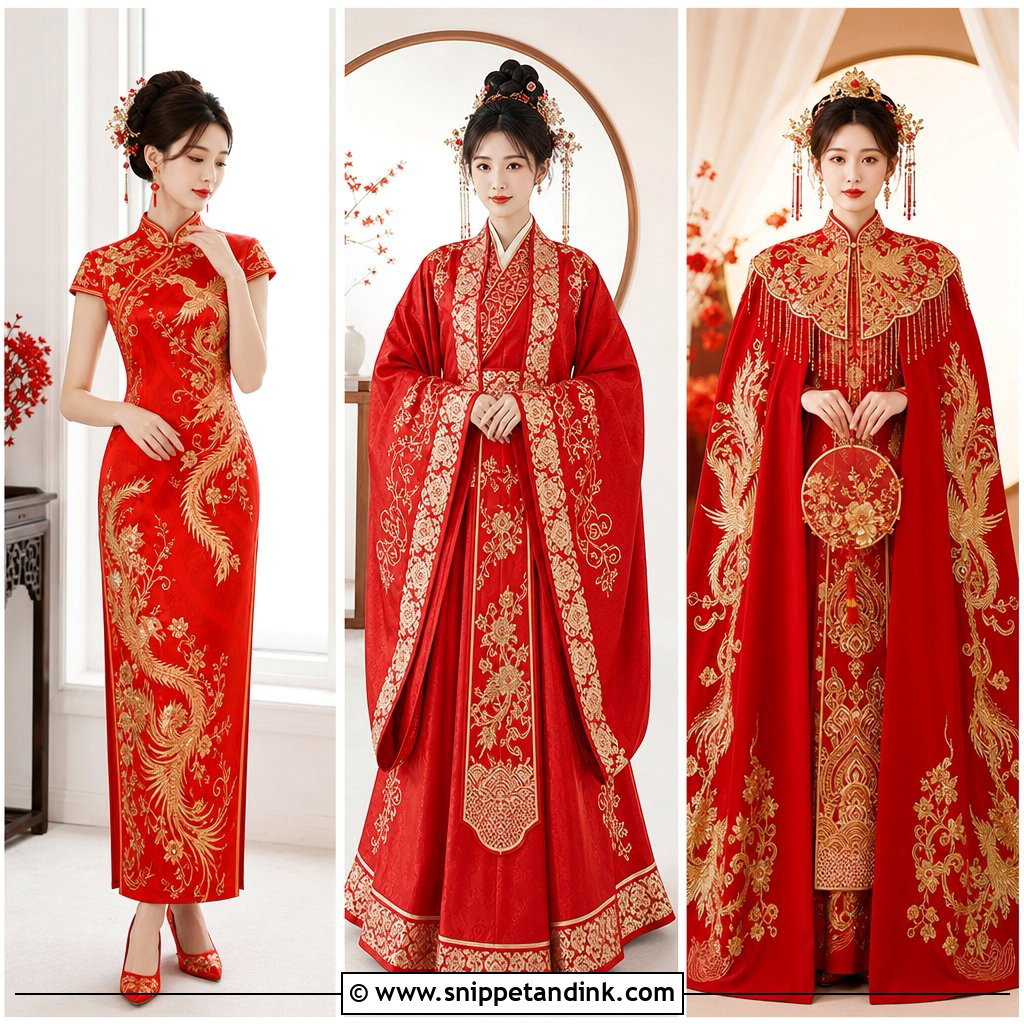
A floor-length red qipao is close-fitting by design, so the fitting does more work than the choice of fabric. Bridal qipao and cheongsam looks turn up at tea ceremonies, banquets and modern receptions alike, and the ones that look best are cut to skim, not cling. At the final fitting I have the bride sit, walk, take stairs and turn her head fully left and right. A mandarin collar that’s even slightly tight will bother you within the hour. Watch the hip line too: if the fabric pulls into horizontal creases when you sit, the dress needs letting out or the slit needs to start a little higher.
10. White Qipao Chinese Bridal Dress
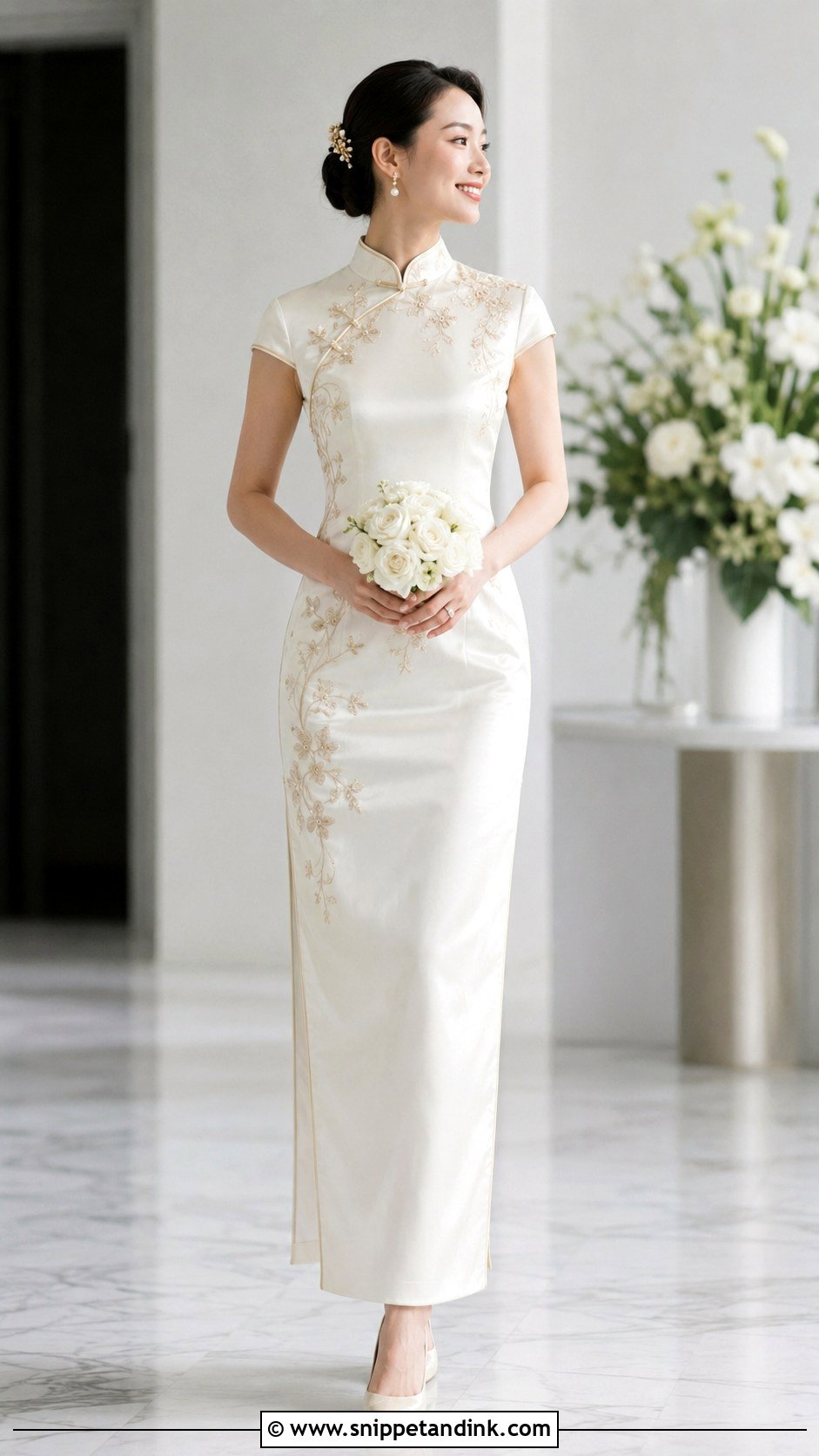
White or ivory qipao is the fusion choice I suggest when a civil ceremony or a Western-style reception sits alongside the Chinese traditions. Gold embroidery at the collar or side panels keeps the cultural thread, and a red lip or small red accessory ties it back to the rest of the day. The catch is transparency. Ivory silk and thin satin can turn see-through under strong daylight or a camera flash, so I always photograph the bride in it with flash during a fitting. Smooth, skin-tone underwear and a full lining in a matching tone fix most problems.
11. Red Mermaid Qipao Bridal Dress
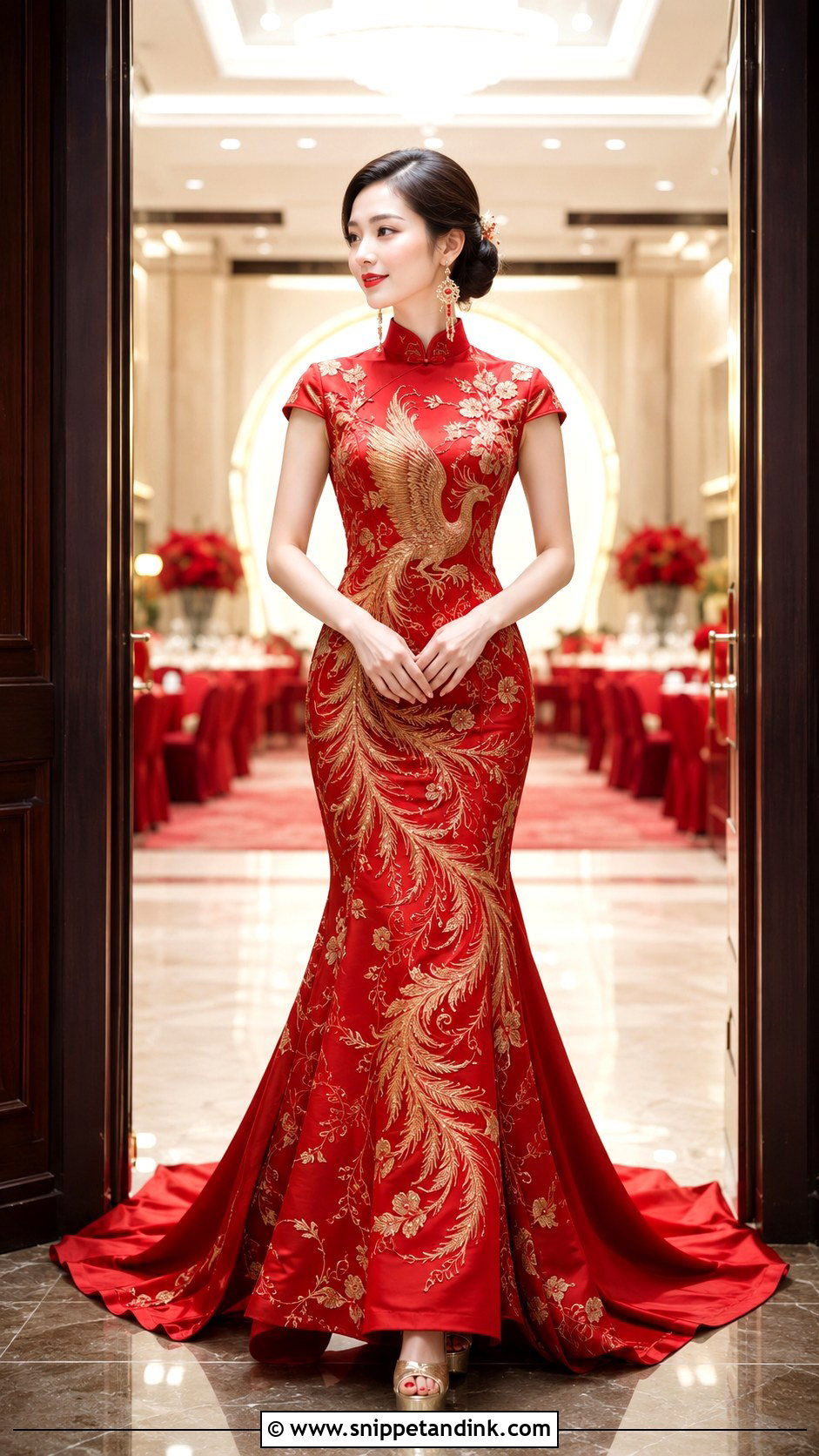
The mermaid qipao keeps the mandarin collar and knotted closures but flares into a Western skirt below the knee. Where the flare starts decides whether you can walk. Too low and you’ll shuffle all night; I like it to release just around the knee for most brides. If there’s a train, ask for a hidden wrist loop or a bustle so you can dance at the banquet. It makes a strong entrance, so keep the bag, necklace and hair pieces quiet and let the shape carry the moment.
12. Lace Cheongsam Bridal Dress With Train
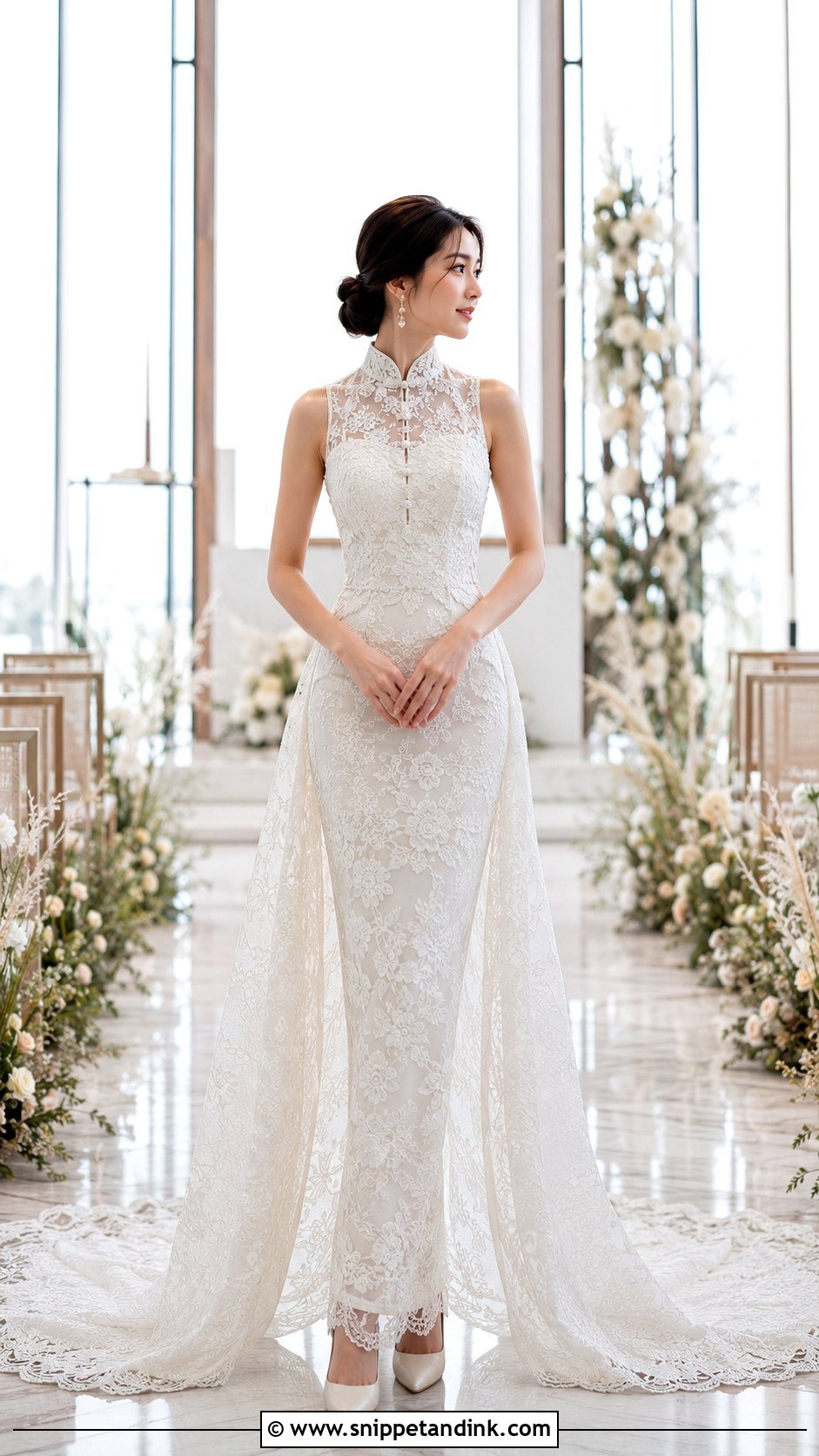
Lace takes the stiffness out of a cheongsam neckline, and a detachable chapel-length train gives you drama for the ceremony and freedom for the banquet. The detail I fuss over is motif placement. Lace appliqués should mirror each other across the collar and bodice, and in close-up portraits a flower that sits two centimetres higher on one side is the first thing your eye catches. Choose a lining that matches either your skin or the lace itself so you don’t get a visible band at the neckline. Pointed pumps, pearl-and-gold earrings and a low bun with one floral pin complete it.
13. Mandarin Collar Ball Gown Bridal Dress
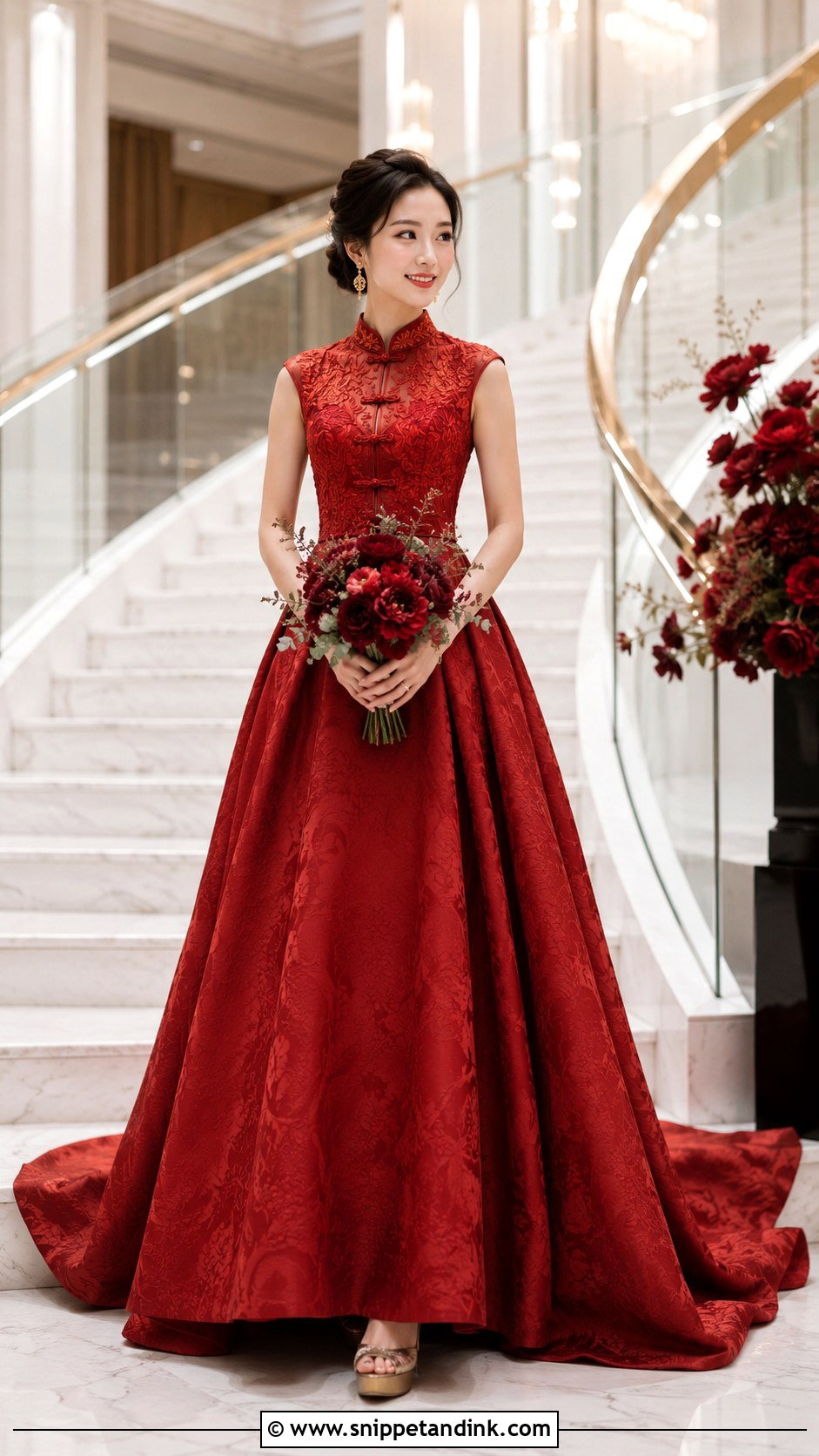
A ball gown with a mandarin collar suits brides who want full volume and a big staircase or ballroom entrance. It also comes with the most practical problems. The petticoat needs enough structure to hold the skirt out, but if you can’t sit at the banquet table without the hoop flipping up, it’s too much. I also check the collar while the bride raises her arms: a stiff bodice pushes the collar up toward the jaw. Keep the bouquet small so it doesn’t hide the embroidered bodice, and choose platform heels with some cushioning because you’ll stand for hours.
14. Red A-Line Chinese Bridal Dress
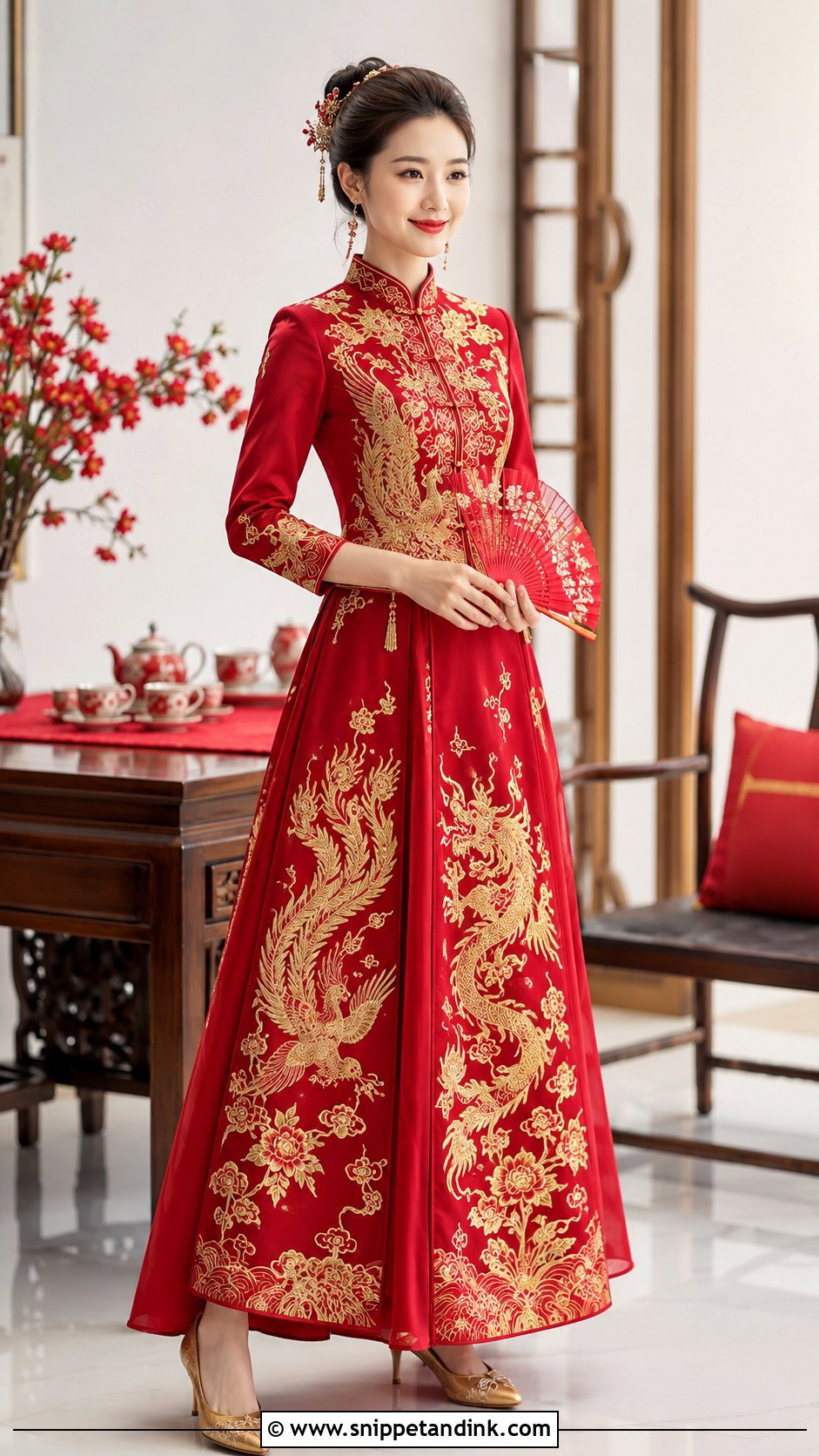
Red A-line gowns are the one-dress solution for brides who don’t want an outfit change. The shape forgives a lot and moves well, and gold embroidery along the bodice or hem gives it the ceremonial weight. Dragon-and-phoenix motifs are the traditional pairing for marriage, symbolising harmony between the couple, and they sit nicely along a hem. Ask for pockets. A lip colour, tissues and a phone fit in them, and you’ll use them more than you expect. A red silk fan and a soft updo finish it without any fuss.
15. White Gown With Red Chinese Embroidery
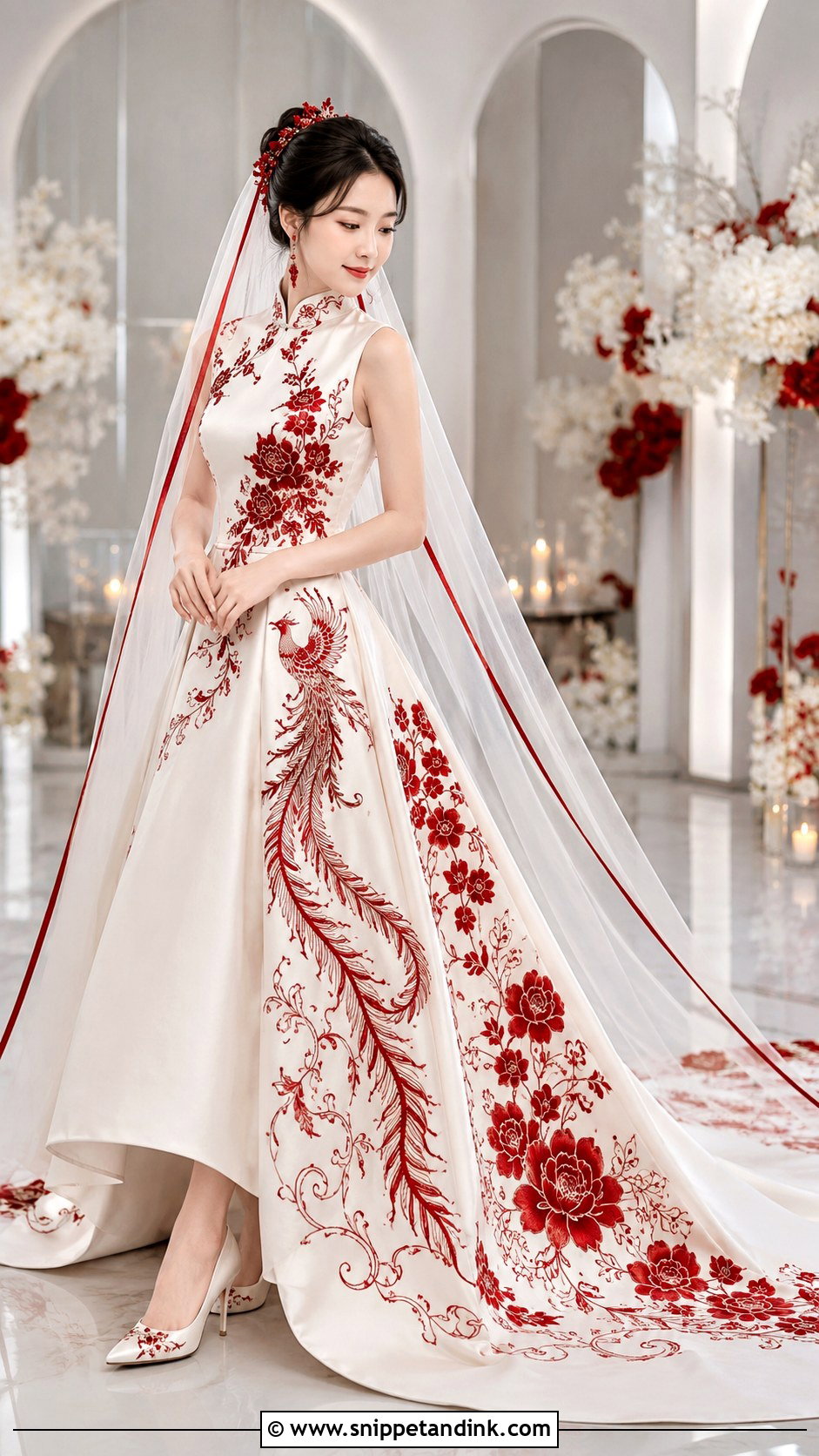
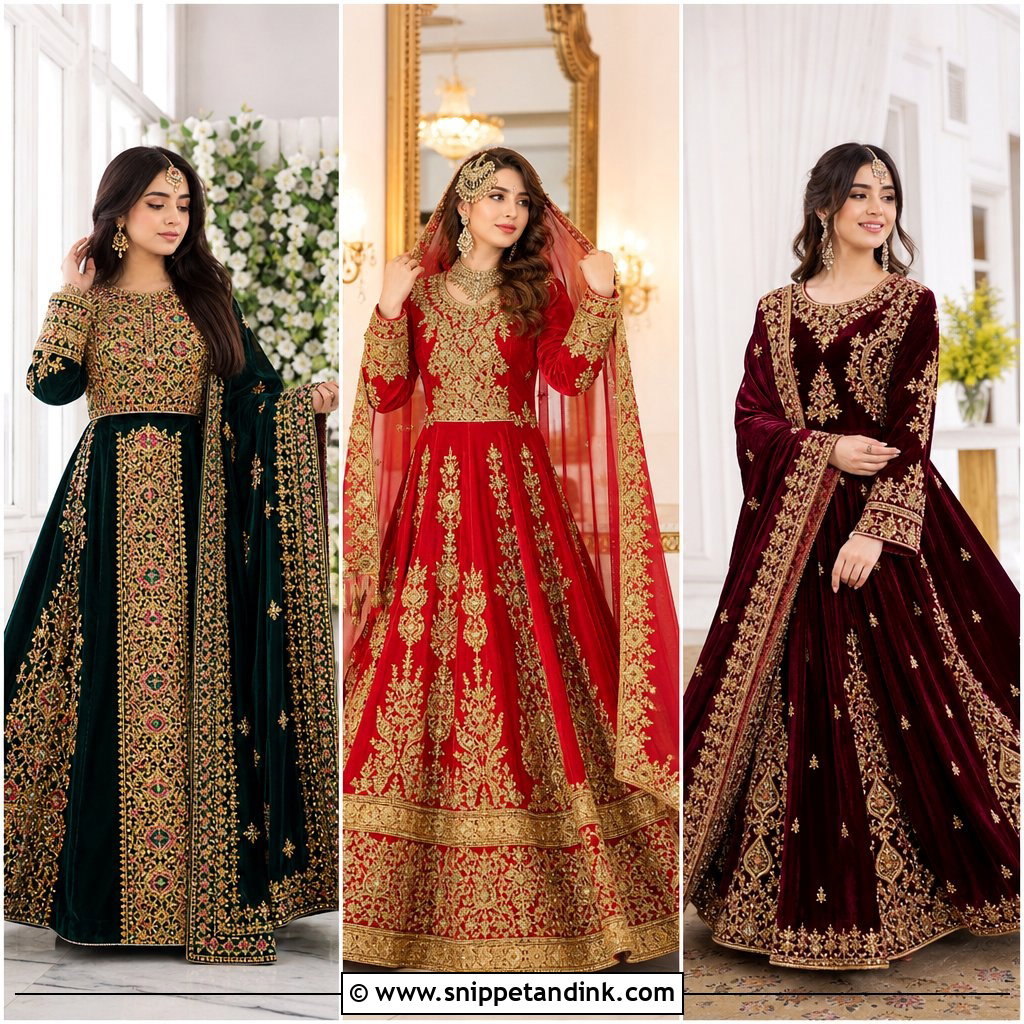
A white gown embroidered in red brings Western and Chinese bridal colour together in one dress, and the embroidery is where the money should go. Peonies, phoenixes and cloud scrolls can climb the neckline, wrap the waist or run along the train, but they have to be planned with the pattern pieces. Embroidery that stops dead at a seam or a dart looks like an afterthought, so ask the designer to show placement on the toile before production. A red-edged veil carries the colour up toward the face without covering the work on the dress.
16. Mamianqun Chinese Bridal Dress
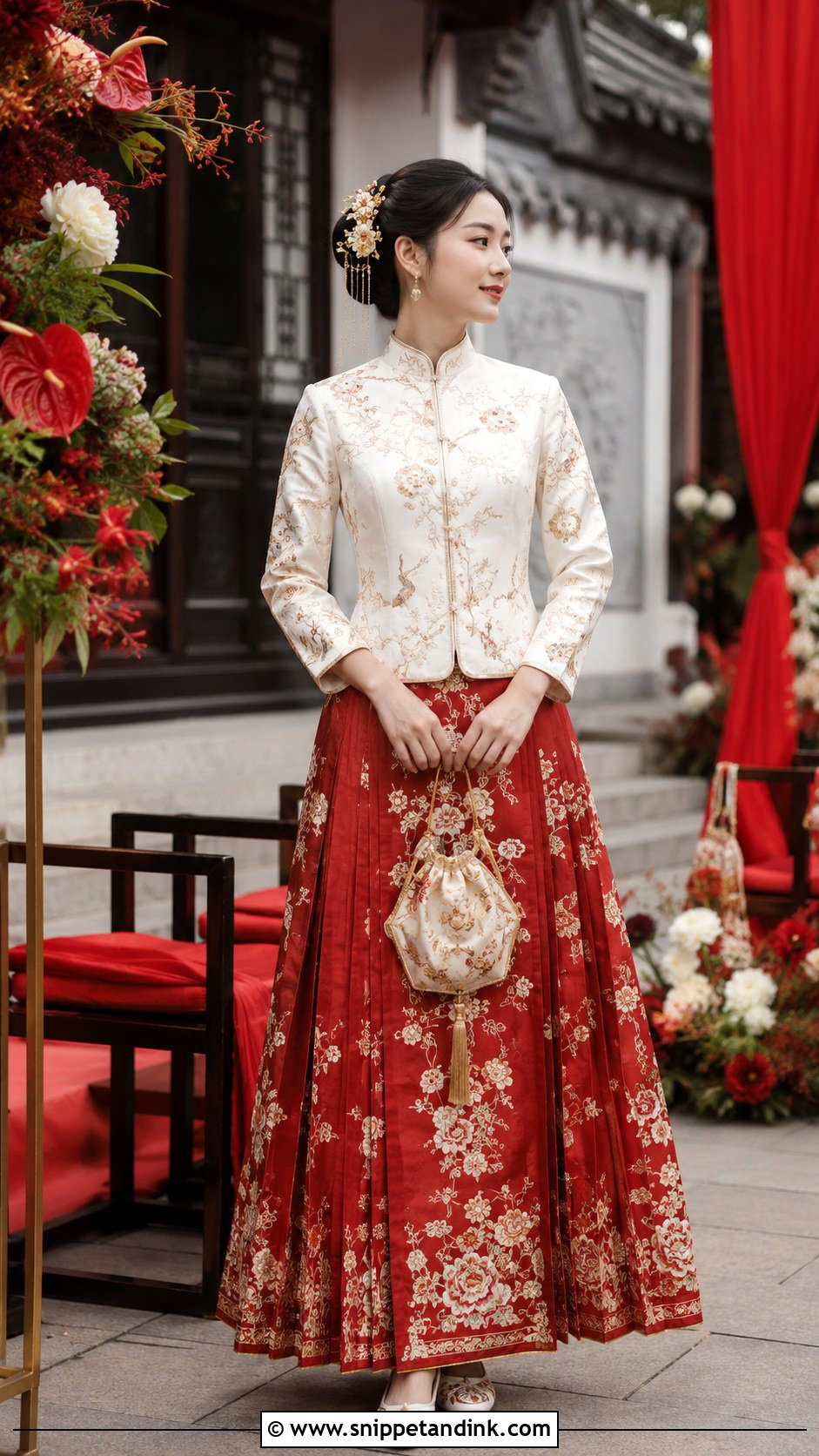
The mamianqun, or horse-face skirt, has flat front and back panels with pleats along the sides, and those panels must stay centred when you move. I check this by having the bride walk ten steps and sit down; if the front panel twists off to one side, the waistband needs adjusting. Pair it with a fitted embroidered jacket, or a modern ivory mandarin-collar top for a lighter feel, and keep the top short enough that the waist and pleats stay visible. Because makers draw from different historical periods, keep the trims and collar style consistent. Mixing references at random is the most common way this outfit goes wrong.
17. Chinese Bridal Dress With Cape Sleeves
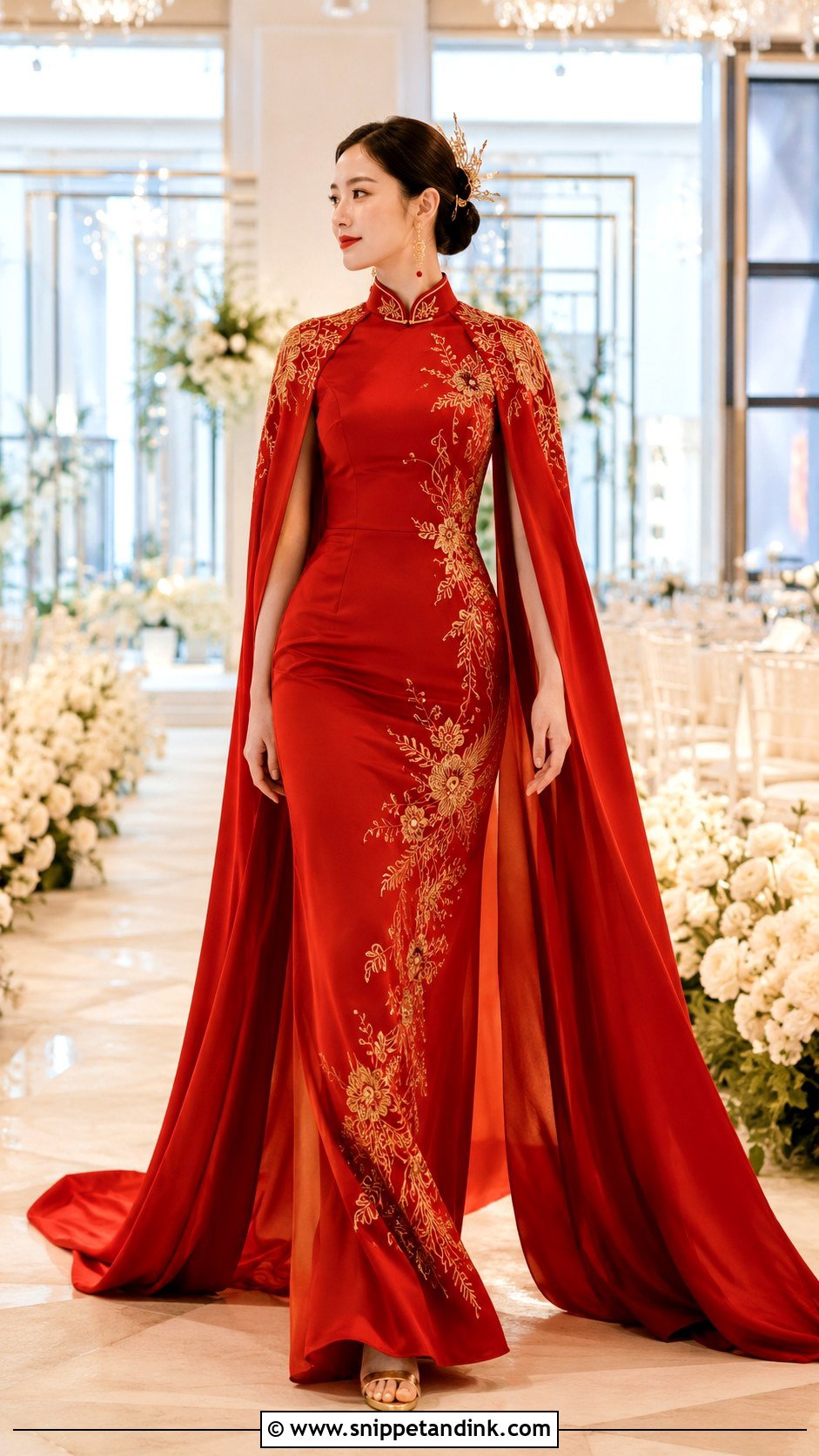
Cape sleeves give you the sweep of a ceremonial robe without the weight. A fitted red column gown with a mandarin collar and fine gold embroidery is the usual base, with sheer or light satin panels falling from the shoulders to the floor. Outdoors, wind is the enemy: long panels wrap around the arms and catch on bouquets. I’d always make the cape detachable so it comes off for dinner and dancing. A sleek bun under a small phoenix comb and long earrings keep the neck clear for the line of the cape.
18. Tea-Length Qipao Bridal Dress
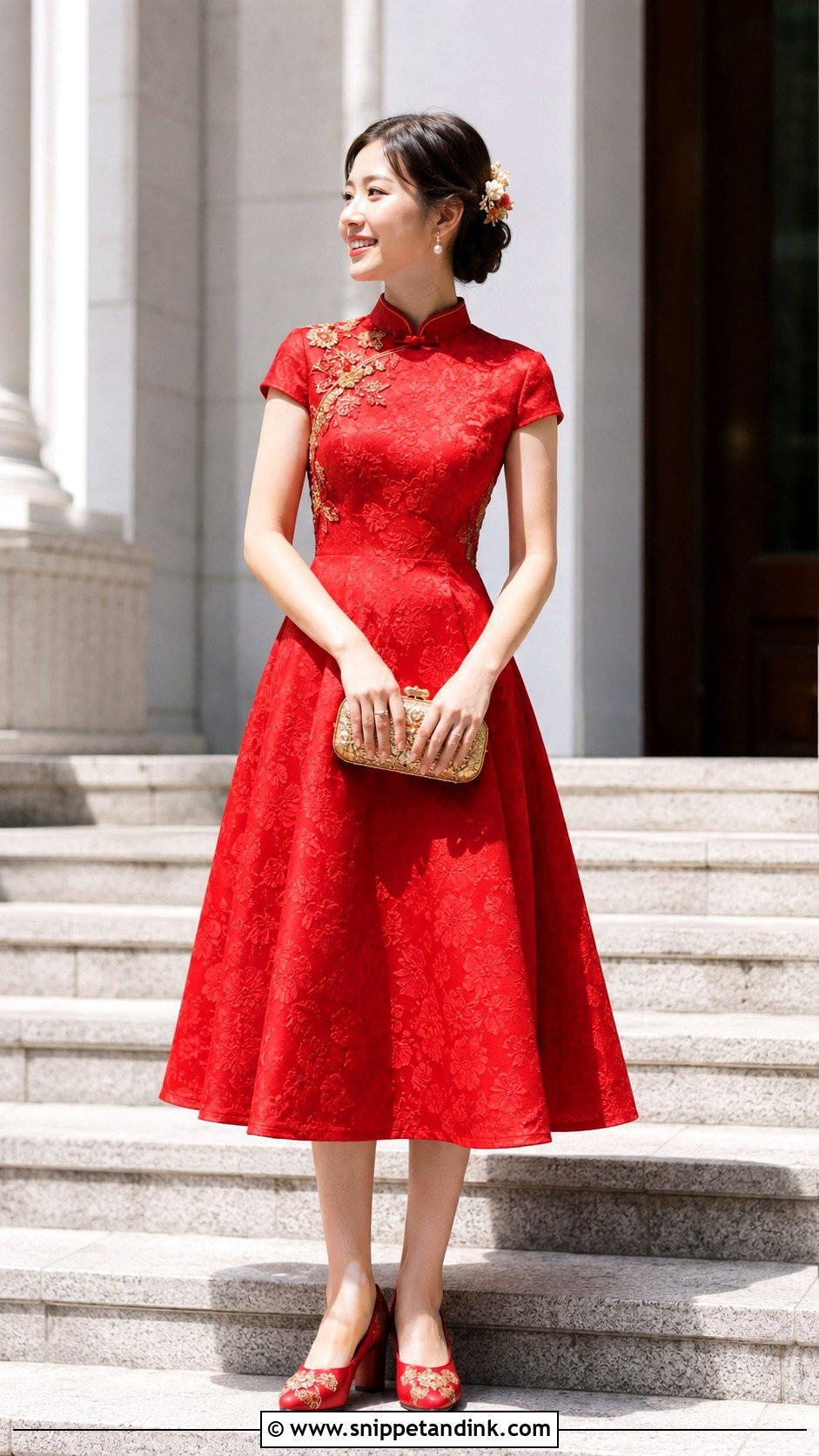
Tea-length qipao is my pick for courthouse weddings, daytime tea service or a small reception where a floor-length gown would feel overdressed. A red jacquard with a defined waist and a gently flared skirt between knee and ankle still reads as bridal. The thing to test is how the skirt behaves when you sit: a fitted tea-length hem can ride up several inches, which is fine standing and awkward in seated photos. Block heels make all the walking and greeting easy. Ivory with red piping is a softer alternative for a smaller celebration.
19. Maroon Velvet Qipao Bridal Dress
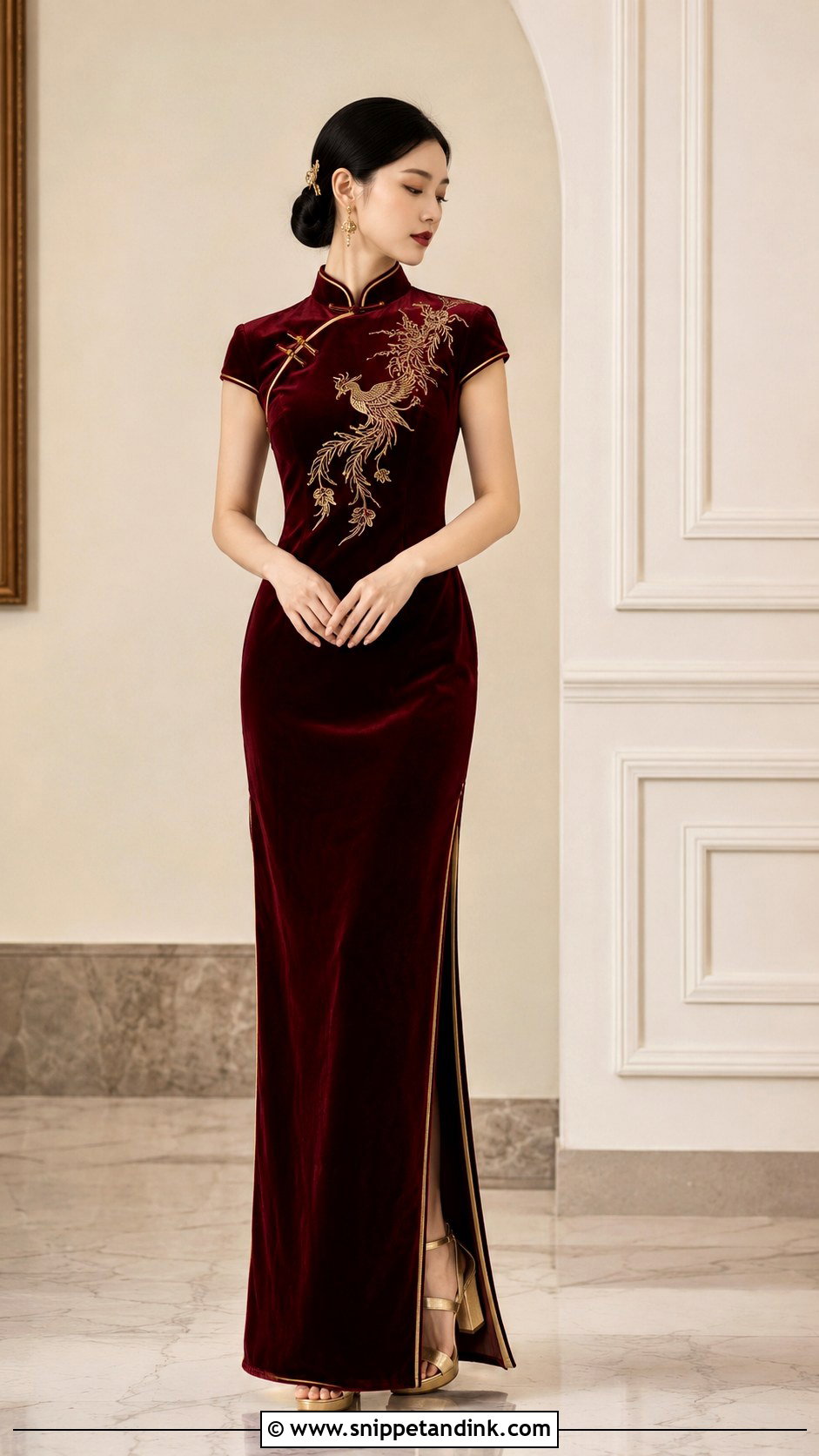
Maroon velvet makes sense for an evening banquet or a winter tea ceremony. Velvet has a nap, so every pattern piece must be cut with the pile running the same way, or one panel will look lighter than the next under the venue lights. Ask about the lining before you order: fitted velvet with a synthetic lining gets warm quickly in a heated banquet hall, and a breathable lining makes a real difference. Gold piping, a comfortable side slit and restrained embroidery are enough. Skip a heavy necklace and let the fabric’s depth do the work.


20. Red Mini Qipao Reception Dress
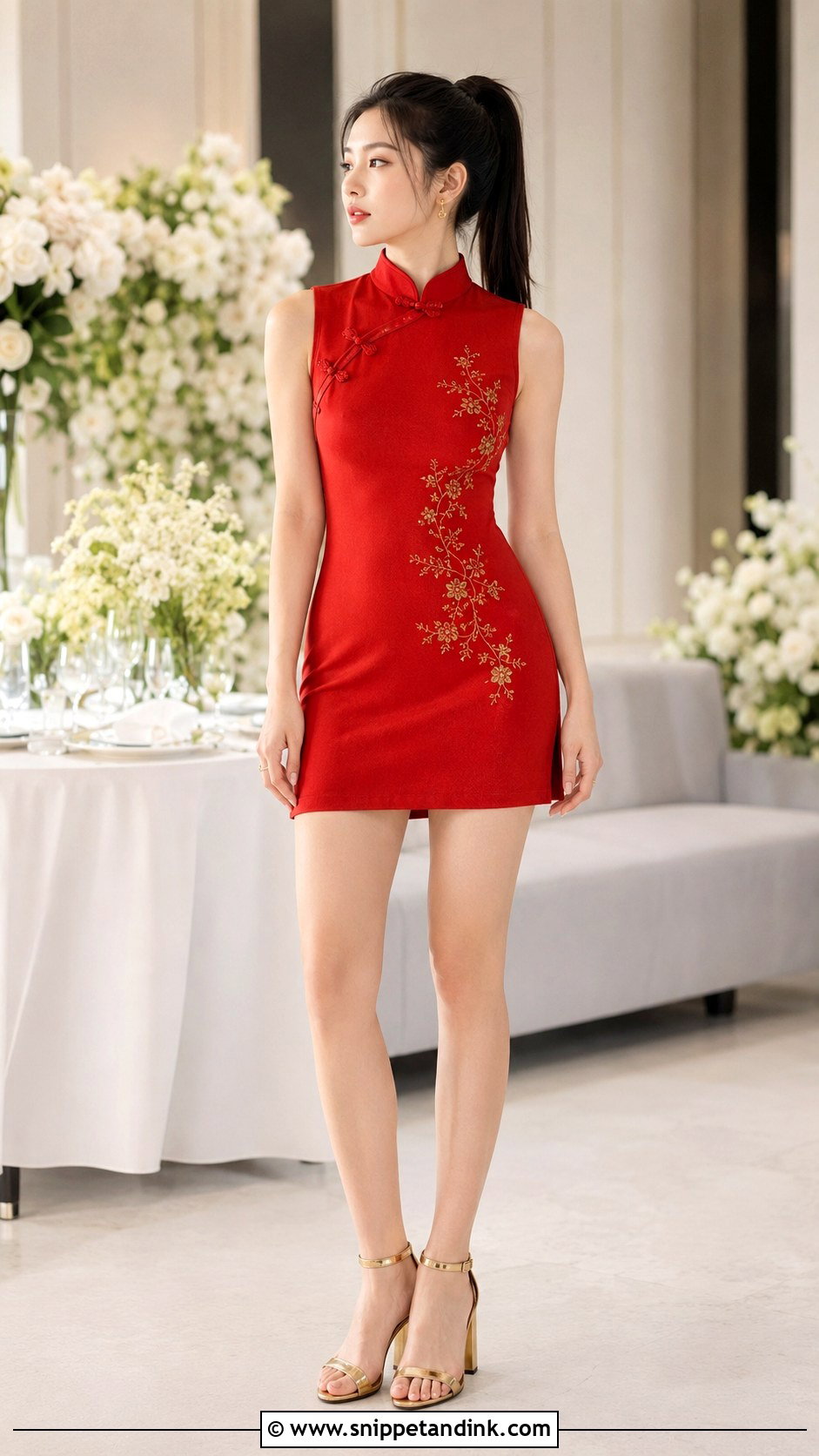
A red mini qipao is the outfit I suggest for the last stretch of the night: the after-party, the dancing, the farewell. It needs secure closures, especially frog buttons that won’t pop when you lift your arms, and a lining with built-in shorts gives you freedom to move. Keep the neckline and sleeves refined so the short hem still looks bridal rather than like a party dress. A compact clutch is plenty, and a high ponytail or sleek bun stays put while you dance.
Ordering Made-to-Measure From a Specialist Maker
Many qun kwa, xiuhefu and hanfu sets are made to order, often by specialist workshops overseas, and hand embroidery takes time. Start the search at least six months out, and longer for heavily embroidered pieces, because production times vary a lot between makers and shipping and customs add more. Ask for the timeline in writing before you pay a deposit.
Measurements and the limits of alteration
Take your measurements with a professional, in centimetres if that’s what the maker uses, and send photos if they ask. Embroidered jackets are hard to alter afterwards because the motifs cross the seams; letting out a side seam can break a phoenix in half. So it’s better to order slightly generous and take in than to order tight and hope. Plain skirts and qipao with clean seams are far easier for a local tailor to adjust.
Looking After Metallic Embroidery After the Wedding
Gold and silver thread tarnishes and frays if it’s treated like an ordinary dress. I tell brides never to iron directly on the embroidery; if creases need easing, use a gentle steamer from the inside of the garment, held well back. Spot-clean food or makeup marks quickly and ask a cleaner who handles embroidered or vintage pieces before anything goes in for full cleaning.
For storage, fold the jacket and skirt with acid-free tissue padding each fold so the metallic thread doesn’t crack along a sharp line, and keep them in a breathable cotton bag or box rather than plastic, away from damp and sunlight. Many families keep the qun kwa to pass down, and an outfit stored this way stays in good shape for the next bride.
One Outfit or Three Across a Chinese Wedding Day
Whichever direction you lean, from qun kwa and graceful xiuhefu to layered hanfu, a fitted qipao or a fusion gown, the decision usually comes down to the order of your day. Sketch out each event, where it happens and how long you’ll be in each outfit, then check the weather and your family’s expectations. Heavy embroidery wants plain accessories; a simpler dress can carry a bigger headpiece or a train. And book enough fittings to sit, walk, kneel and serve tea in the finished look. That rehearsal tells you more than any photo can.
You'll Like These Ideas:



Leave a Reply