
A white lehenga is a harder outfit to style than a red one, and that’s exactly why I enjoy it. With a strong base colour, the fabric does most of the work. With white, every choice shows: the shade of ivory, the metal of the embroidery, the colour of the dupatta, even the shoes peeking out under the hem. Below are twenty complete bridal looks, from gold zari and pearl work to velvet, organza and a mermaid cut, each styled from blouse to shoes to makeup. As you read, I’d keep two questions in mind: what time of day is your ceremony, and how much colour does your family expect to see on you?

Ivory, Pearl or Off-White Against Your Own Skin
There is no single white in bridal fabric, and the wrong one is the most common mistake I see. Optic white has a blue cast; ivory and cream lean yellow; pearl and champagne carry a faint pink or grey. Next to skin, those differences are obvious.
- Warm or olive undertones usually glow in ivory, cream or champagne. Optic white can make them look sallow.
- Cool or pink undertones often suit pearl or soft white; very yellow ivory can look aged next to them.
- Deeper skin tones carry crisp white beautifully, and gold embroidery adds warmth near the face.
- Hold the fabric under your chin in daylight, not just under the shop’s warm bulbs.
I also ask to see a swatch of the embroidery thread against the base. Gold zari on stark white looks brassy in some light; the same zari on ivory looks antique and soft.
1. White Bridal Lehenga With Gold Embroidery
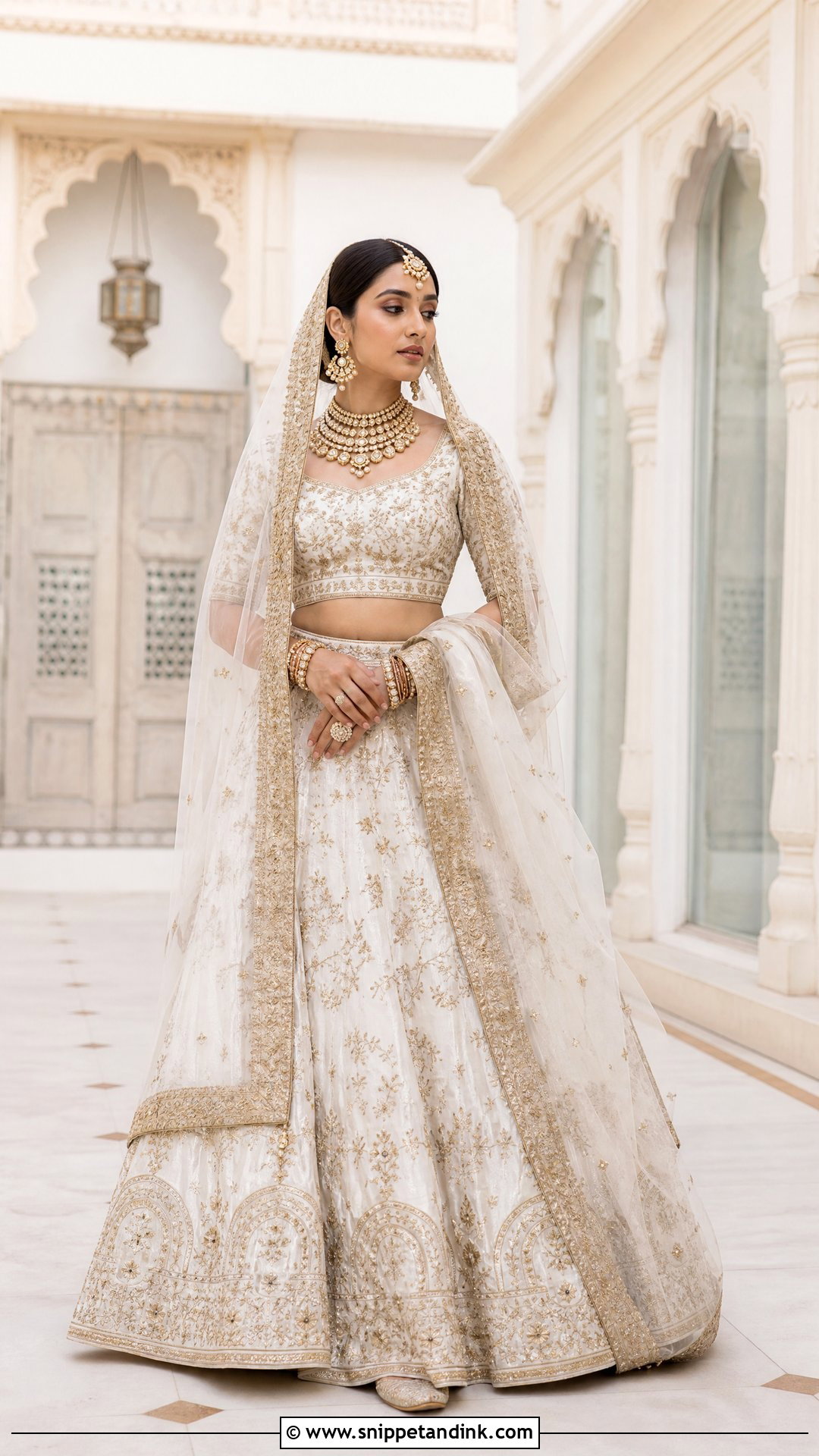
Antique gold zari is the safest way into white for a traditional family, because it reads as bridal from across a room. I’d pick ivory raw silk over pure white here; raw silk has a slight slub that catches the gold and keeps the skirt from looking flat. Zari vines and a wide border, an elbow-sleeve blouse, and a sheer dupatta edged in gold. A second light veil can go over the head for the pheras. Antique jhumkas, a layered necklace, a maang tikka and embroidered juttis complete it. Bronze eyes, peach blush and a muted red lip stop the face from fading against so much pale fabric. It’s at its best indoors, at a palace venue, or under warm evening light.
2. White Bridal Lehenga With Pearl Work
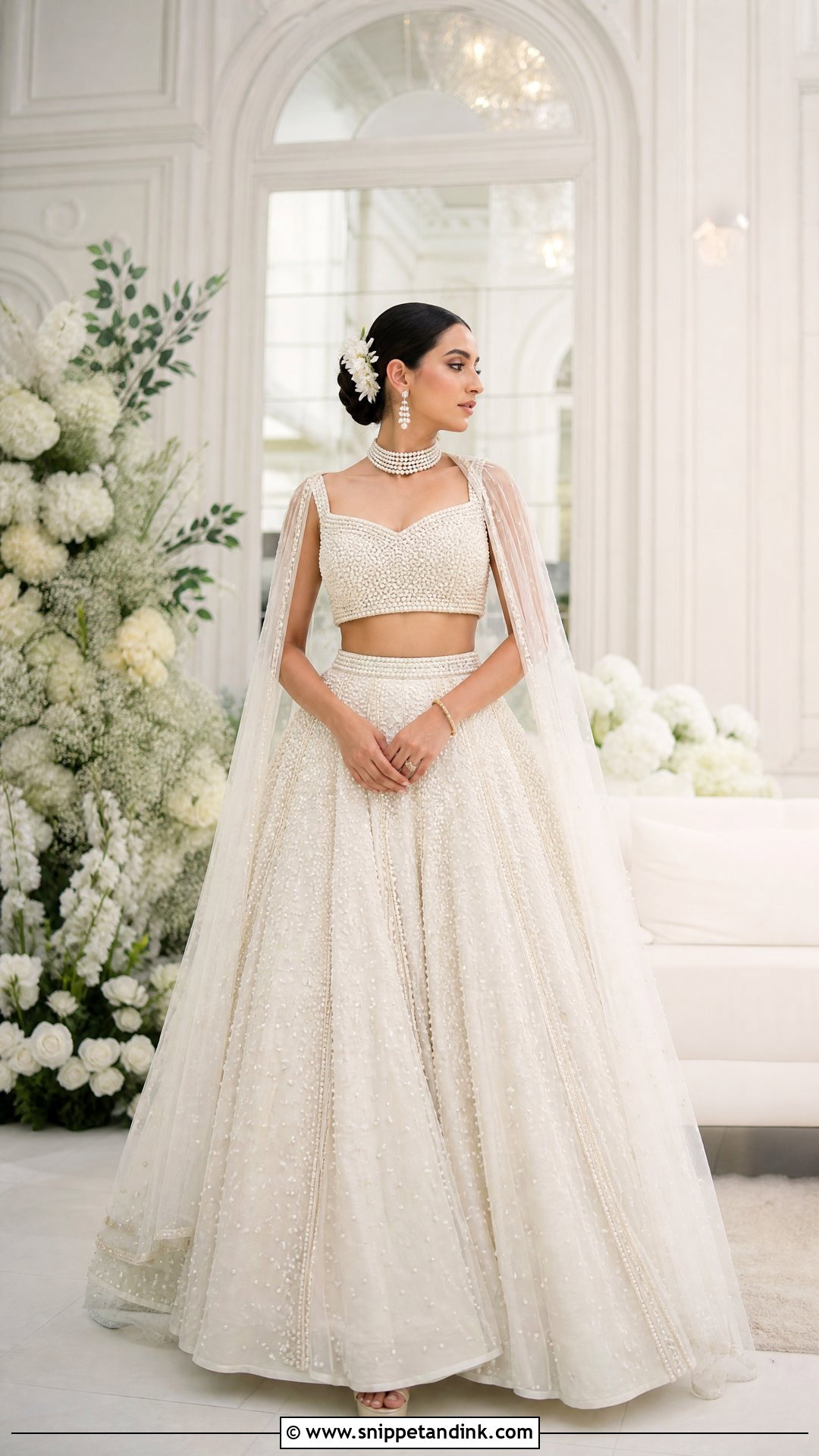
Pearl work keeps the lehenga tonal but gives it texture you notice up close. On a tulle skirt, I prefer pearls concentrated toward the hem and scattered above; that weights the skirt so it hangs rather than floats. The blouse needs a supportive neckline, and pearl-covered straps or sleeves should be stitched through, not glued, because glued pearls pop off when you hug people. A pearl-edged dupatta over the head makes it unmistakably bridal. Pair a pearl choker, matching earrings and a delicate matha patti with ivory block heels. Taupe eyes and a rose lip, with a sleek bun dotted with small white flowers.
3. White Chikankari Bridal Lehenga
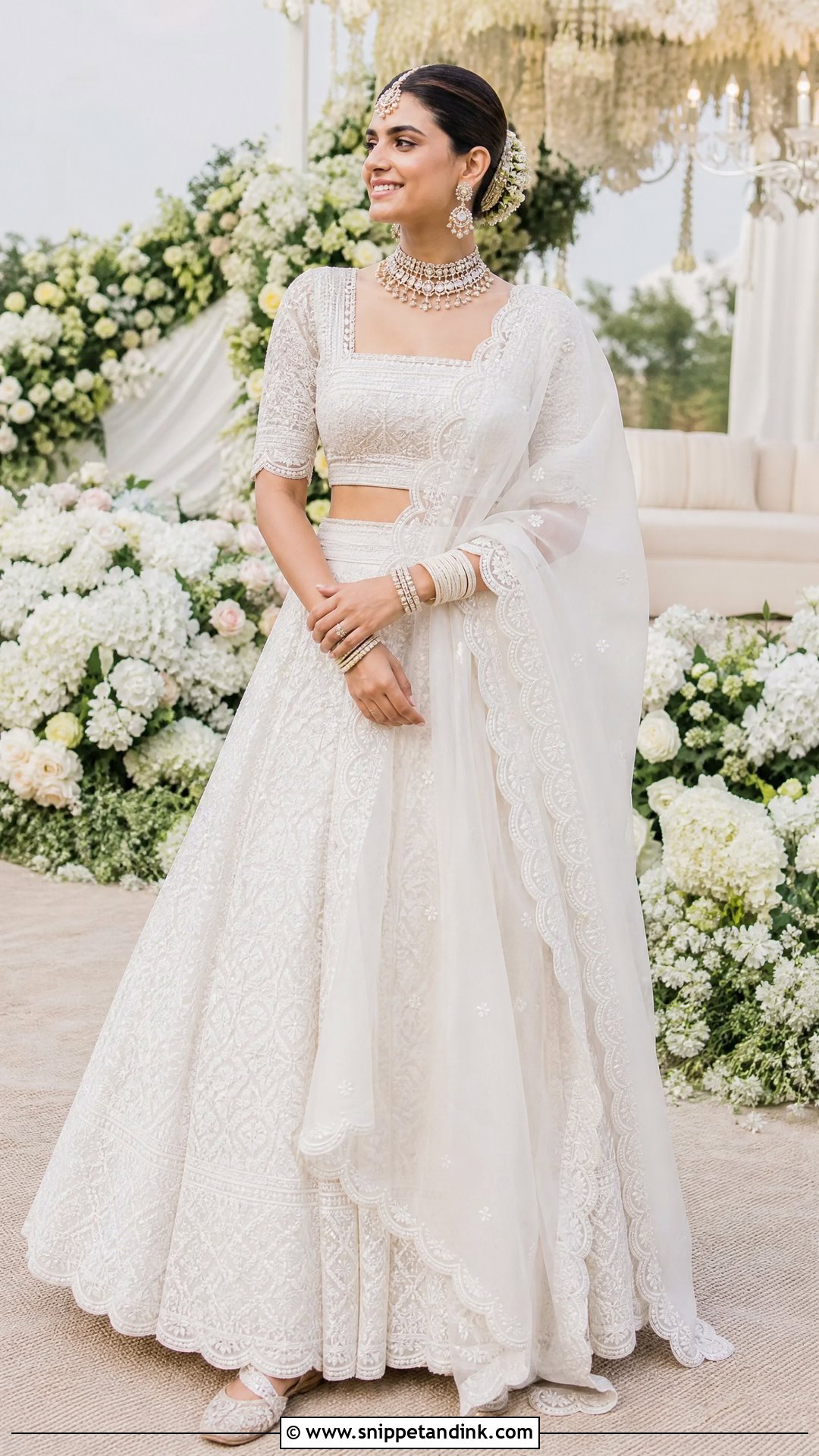
Delicate chikankari breathes, which makes it my first suggestion for a summer or garden ceremony. Off-white georgette carries the embroidery well; add subtle sequins and scalloped edges for a bridal finish. The thing to know is that chikankari needs a lining in a tone matching your skin or the fabric, or the stitch pattern vanishes in sunlight. A sweetheart or square neckline keeps the blouse polished, and an organza dupatta gives structure the soft georgette lacks. One shoulder for daytime, a second veil for the main ceremony. Uncut diamonds, pearl drops and ivory bangles suit it, with embroidered juttis. Keep makeup fresh: defined brows, rosy cheeks, a berry lip.
4. White Mirror Work Bridal Lehenga
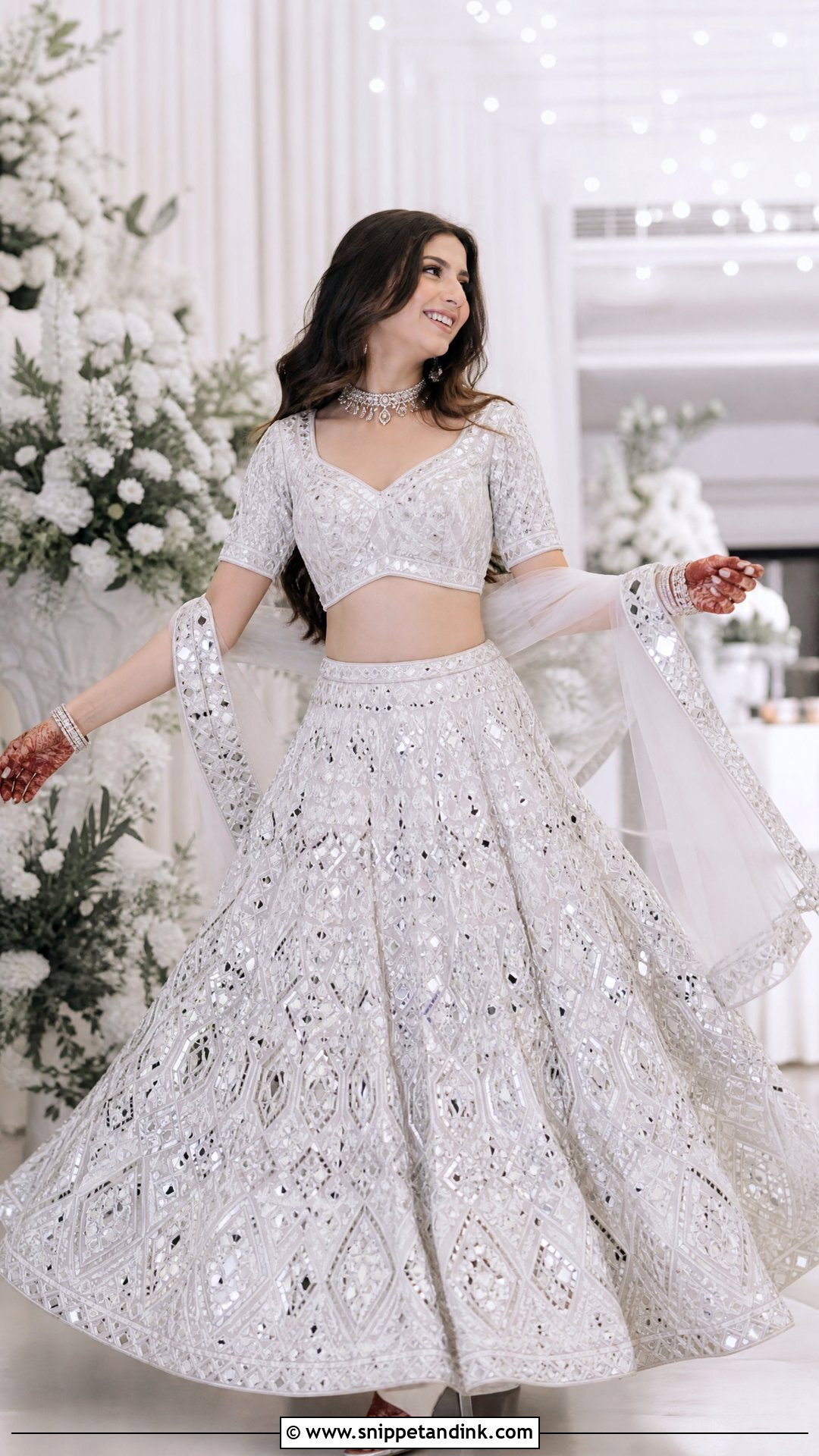
Mirror work sparkles by reflection, not shine, so it reads lively without looking metallic. That makes a white mirror work lehenga a good pick for a sangeet or a reception full of dancing. Small mirrors in geometric or floral patterns on a flared skirt, and a fitted blouse with secure straps and a proper lining, since mirror edges can scratch bare skin over a long night. A plain chiffon dupatta with a narrow reflective border keeps it from getting busy. Silver-toned earrings, a choker, stacked bangles and cushioned metallic heels. I’d wear a braided ponytail or soft waves, waterproof liner and a pink lip stain that won’t smudge when you’re hot.
5. White Floral Bridal Lehenga
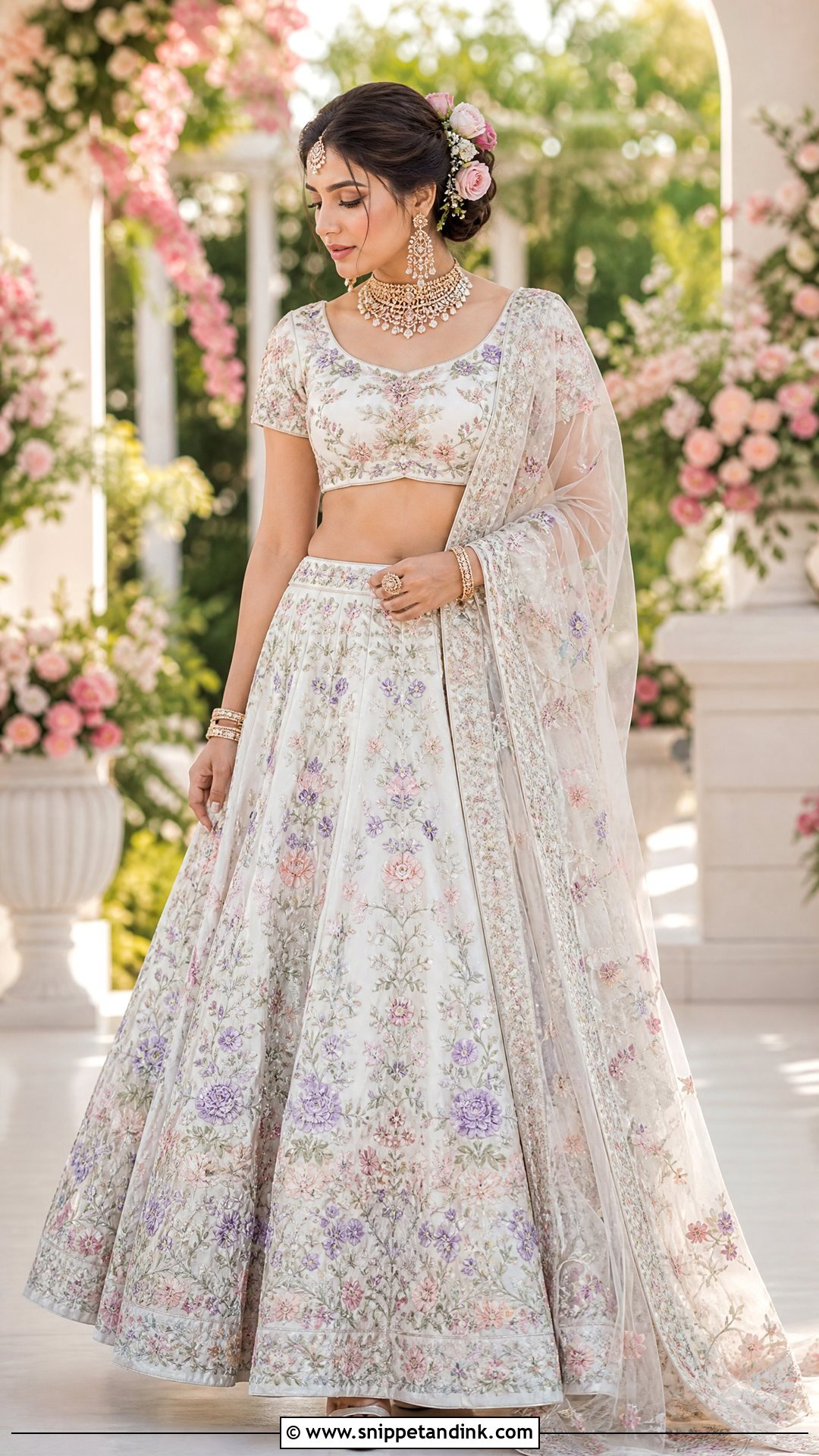
Pastel floral embroidery turns white into something personal. Look for an ivory skirt worked in blush, lavender, sage and powder blue, with the same flowers carried into the blouse. My rule is that the dupatta repeats only a few motifs from the skirt. When it repeats all of them, the whole outfit blurs into one pattern and the skirt’s handwork gets lost. Rose-gold jewellery, pink bangles and ivory heels with floral detail suit it, along with a loose low bun pinned with tiny pastel flowers. Mauve eyes and a satin pink lip. Daylight is where this design looks best, so a morning ceremony or a floral mandap outdoors is ideal.
6. White Bridal Lehenga With Red Dupatta
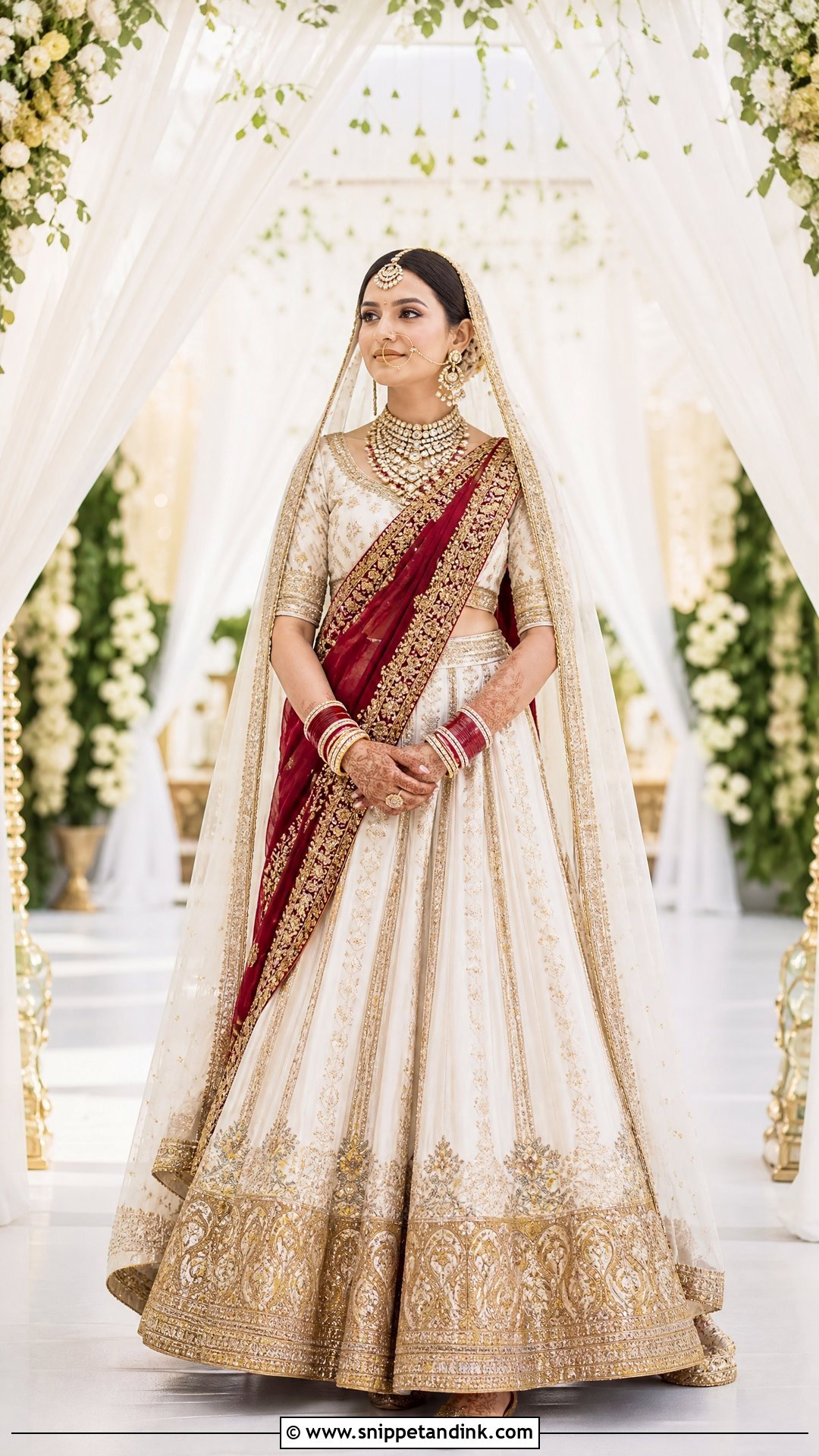
For brides whose grandmothers will ask where the red is, this is the compromise that works. Start with a white silk lehenga in gold embroidery and a blouse with a neckline open enough for layered jewellery. The red dupatta goes across the torso; a sheer white veil goes over the head. When I style two dupattas, I match the embroidery metal on both, otherwise the gold on one and the antique gold on the other look like they came from different outfits. Kundan, red and ivory bangles, a statement nath and gold juttis complete it, with a classic bun, defined eyes and a deep red lip.
7. White Bridal Lehenga With Pink Dupatta
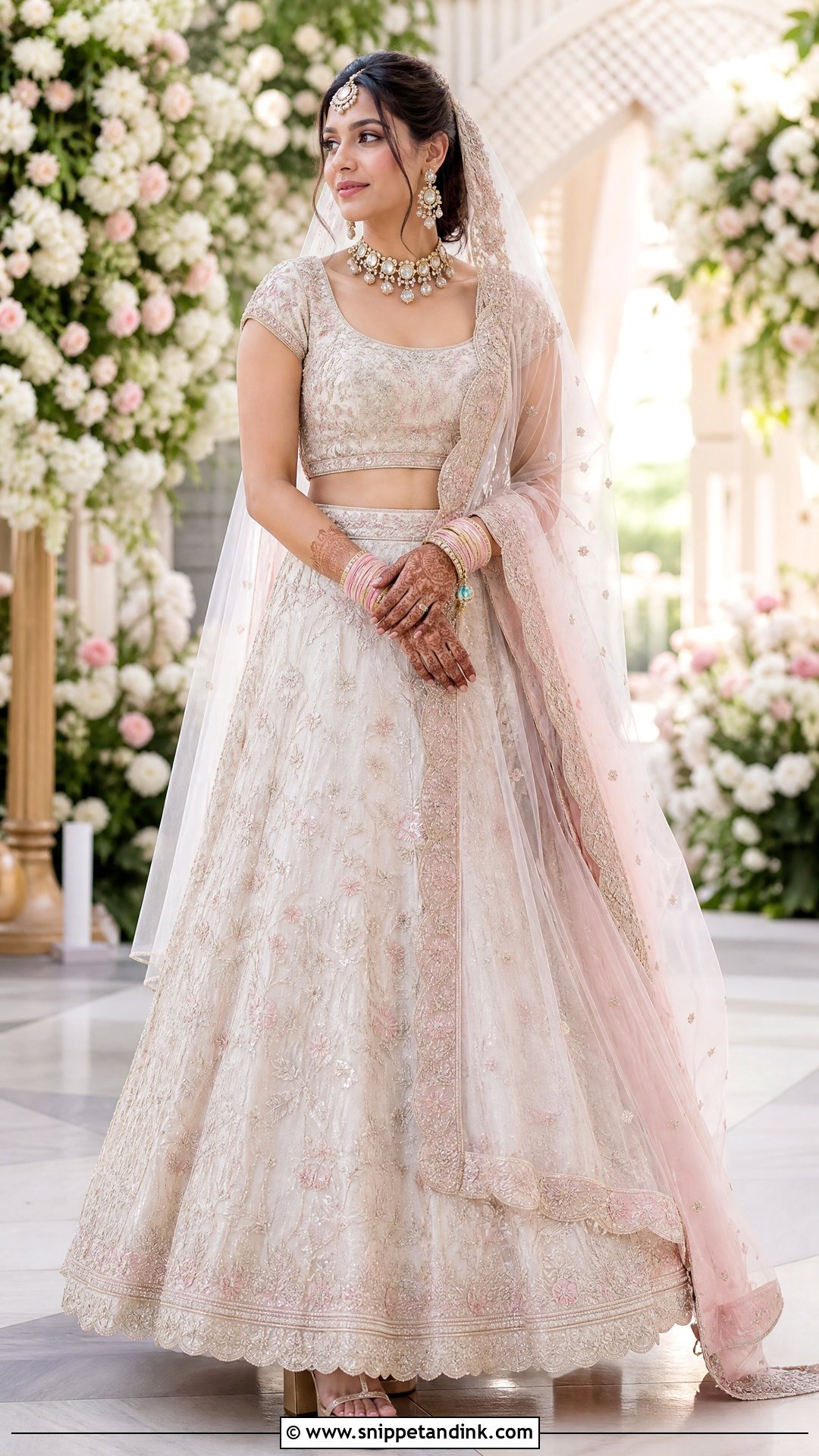
Blush pink softens white without changing its airiness. Pick a pearl-white skirt with silver or champagne embroidery, rather than yellow gold, because cool metals sit better with pink. Pair a coordinated blouse with a pale pink organza dupatta, and pin a second white dupatta over the head if you want the layered effect. Rose-cut jewellery, pink meenakari and pearl bangles, with neutral platforms hidden under the hem. Soft waves or a low textured bun. Makeup stays fresh: pink cheeks, a touch of shimmer on the lids, rosy nude lipstick. Morning weddings and engagements suit it most.
8. White Sequin Bridal Lehenga
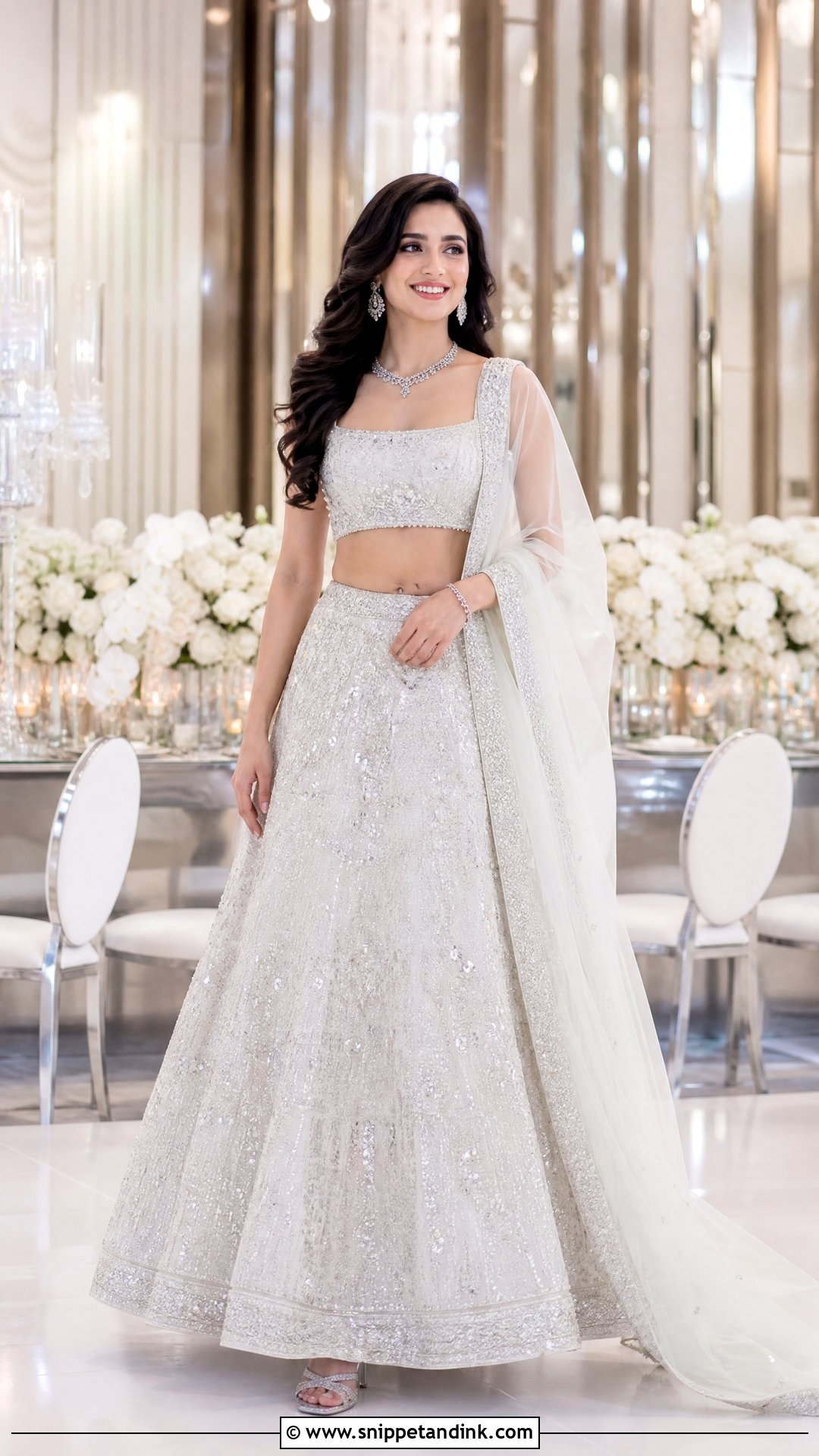
Sequins need artificial light to come alive, so I only recommend this one for evening. Choose a lehenga with tonal sequins, crystal beads and vertical embroidery that lengthens the skirt. The blouse should be fully lined with comfortable straps, because the backs of sequins are scratchy against skin after a few hours. A sheer dupatta with a clean sequin border, diamond-style jewellery, crystal earrings, a slim bracelet stack and silver block heels finish it. A polished ponytail or smooth waves keep it modern. Cool-toned eyes, defined lashes and a pinkish nude lip work for a ballroom reception or a city wedding.
9. White Silk Bridal Lehenga With Zari Border
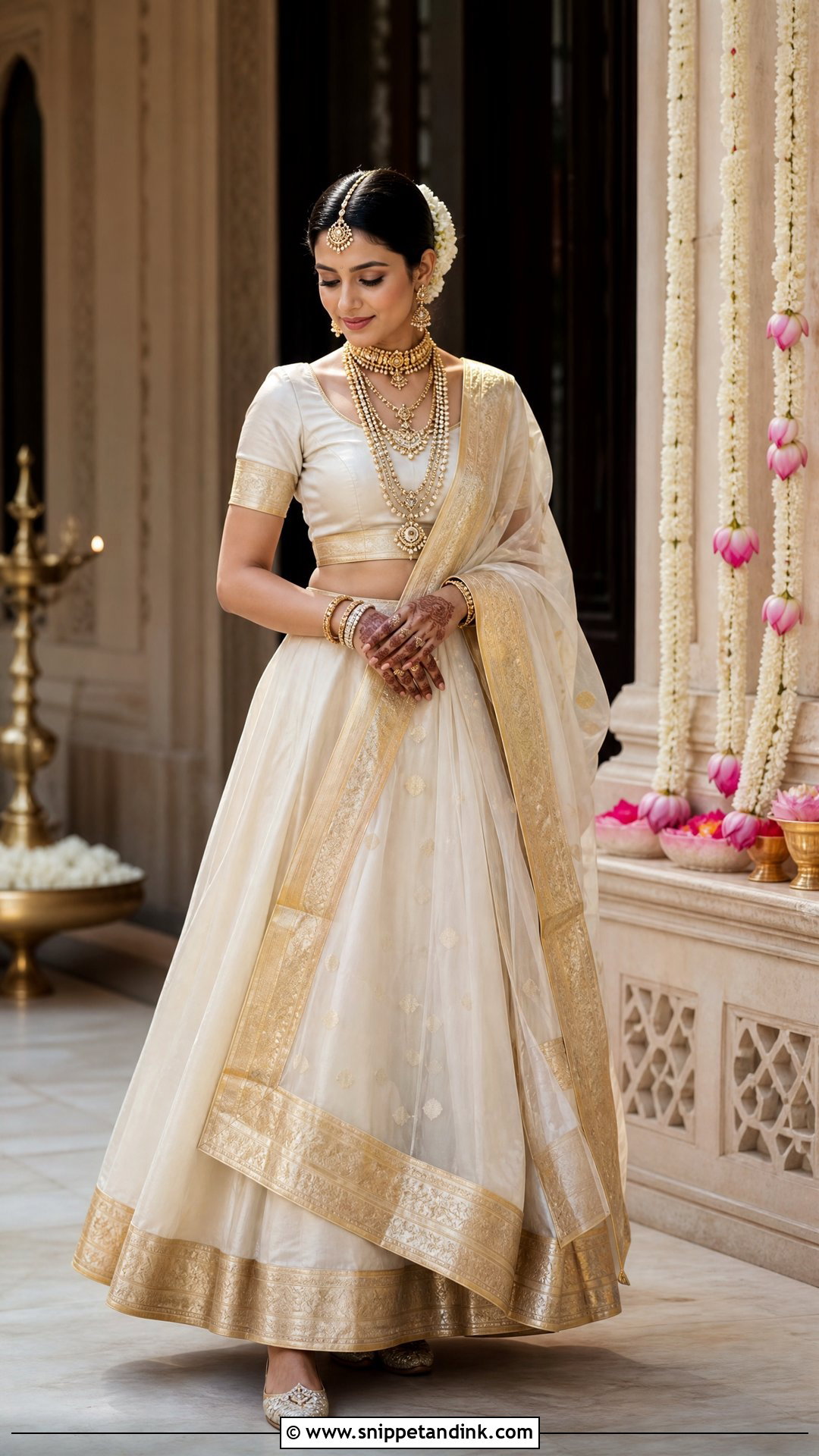
Silk does the work here, not surface decoration. An ivory silk skirt with a broad zari border and small woven motifs has weight and sheen that photograph as rich even in a plain room. Pair a short-sleeved silk blouse with a tissue dupatta in matching gold edging. Traditional gold jewellery, the choker, long necklace, earrings and maang tikka, warms the neutral palette. Gold bangles and padded brocade juttis follow. A centre-parted bun with fresh flowers is classic. Warm brown shadow, kohl, terracotta blush and a brick lip give definition. This is my recommendation for heritage venues and full traditional rituals.
10. White Velvet Bridal Lehenga
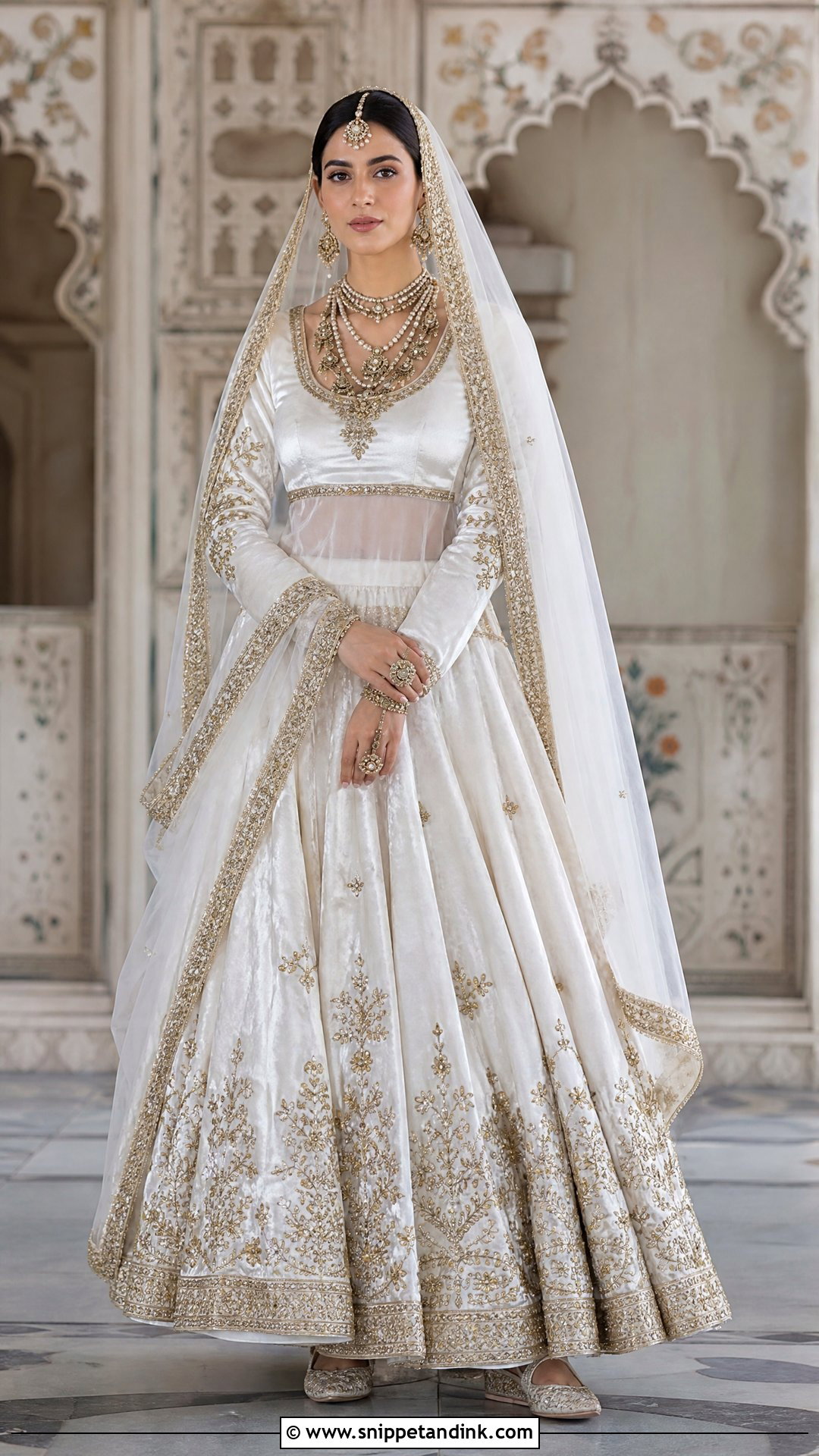
Velvet is a winter fabric, full stop; I wouldn’t put a bride in it for a warm afternoon. In cold weather, a winter-white velvet skirt with antique gold embroidery at the hem and waist feels luxurious. Wear it with a long-sleeved structured blouse for warmth. Velvet is heavy, so the dupatta should be light net or organza, with a velvet-edged veil tying it back to the skirt. Antique jewellery, layered necklaces, statement earrings and closed-toe embroidered shoes. One more caution from fittings: velvet crushes when you sit for long rituals, so ask your tailor about pile direction and have the skirt steamed on the morning. A low bun and berry lip, with natural base makeup.
11. White Organza Bridal Lehenga
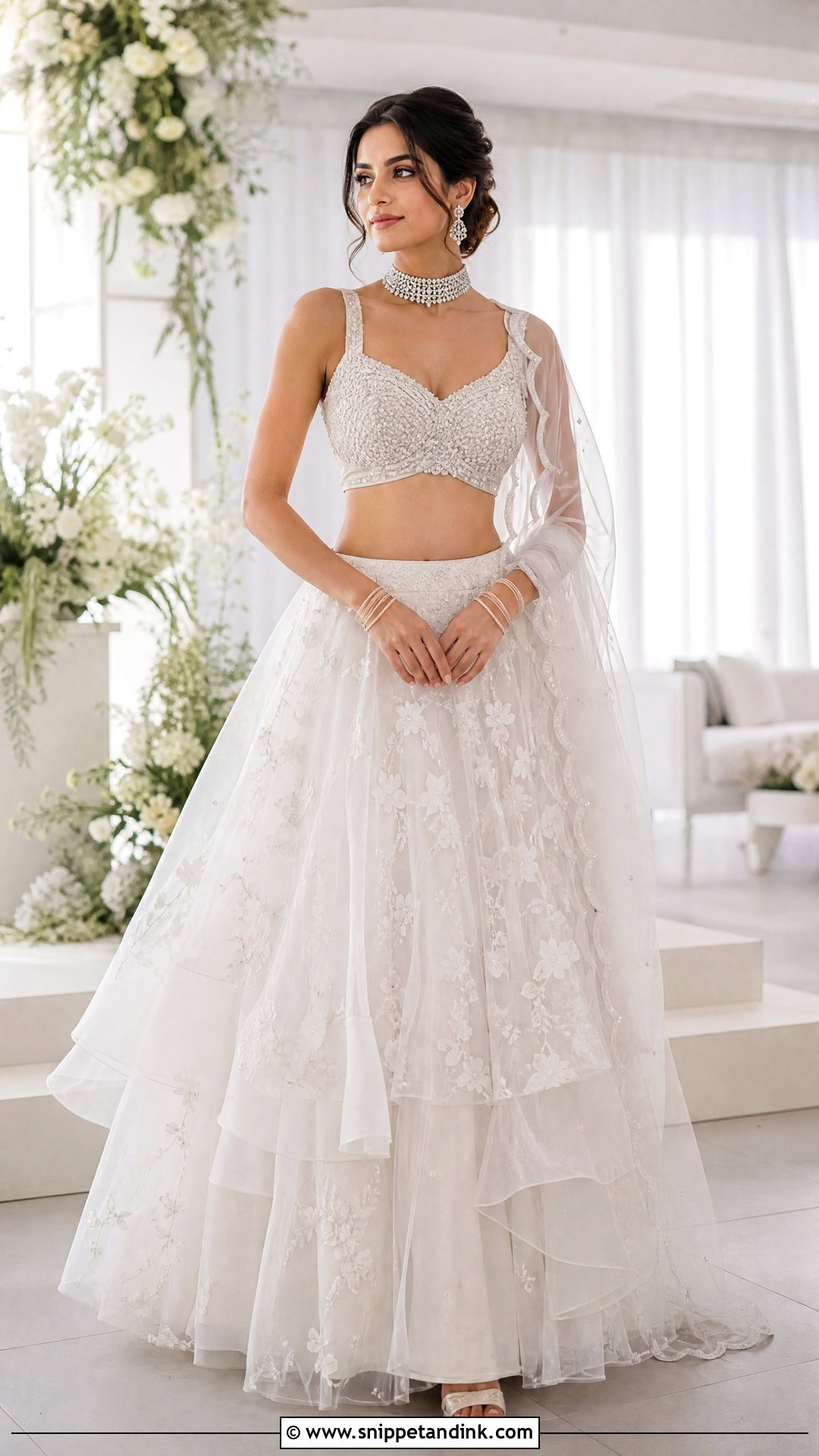
Organza gives you volume without weight, which is why so many modern brides like it. Layered white organza with floral appliqué or fine thread embroidery holds its shape on its own. The blouse needs secure cups and supportive seams, because the crisp skirt makes any sagging at the bust obvious. A transparent organza dupatta with a scalloped edge completes it without hiding the silhouette. A diamond choker, drop earrings, slender bangles and comfortable ivory heels. A neat bun or half-up style keeps the lines clean. Glowing skin, soft liner, peach blush and a glossy pink lip suit a minimalist venue or a daylight reception.
12. White Bridal Lehenga With Long Train
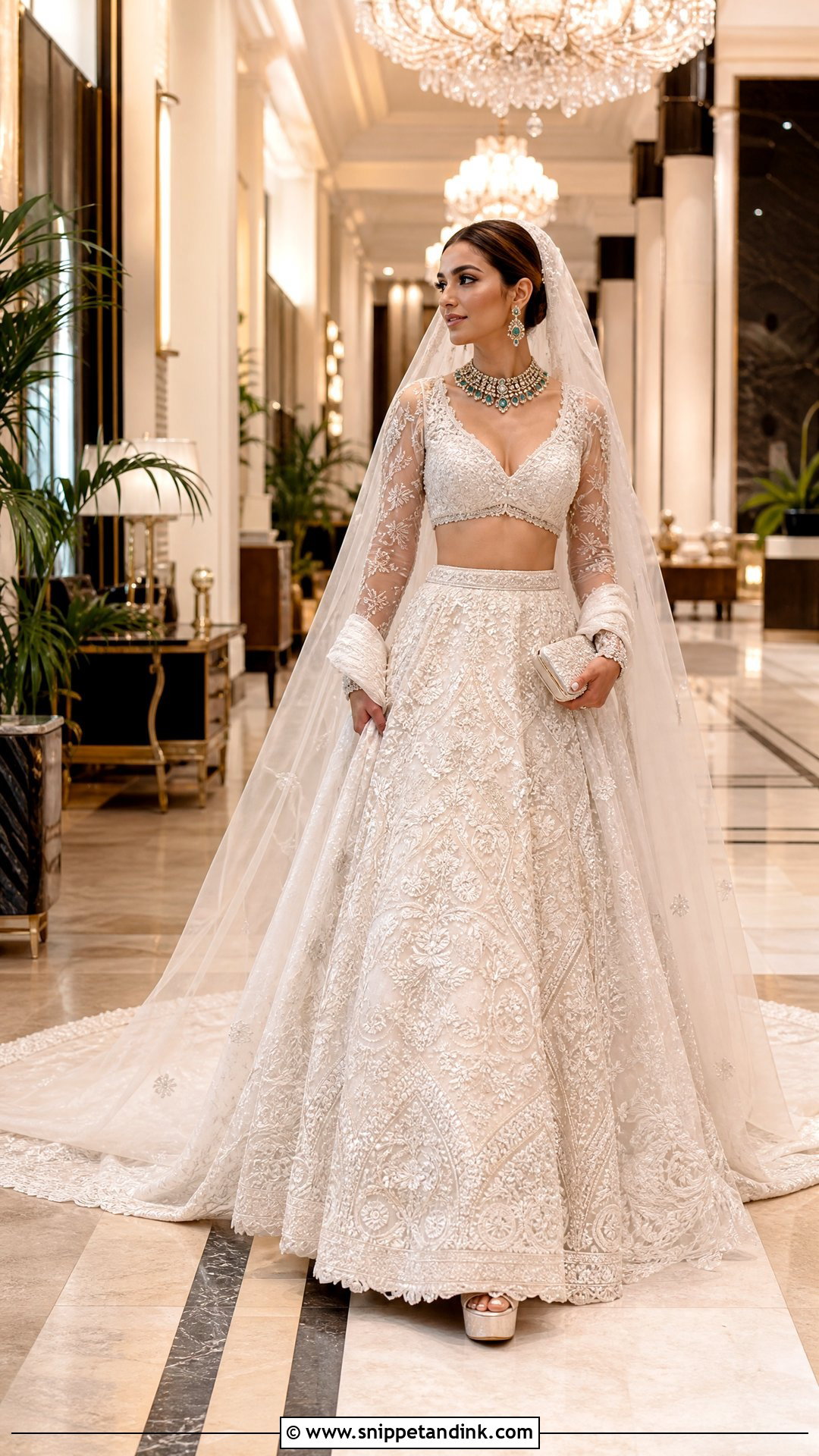
A train turns a lehenga into an entrance, but it’s also the piece of clothing I spend most time managing on the day. Choose a white skirt with a structured waist, controlled flare, and a detachable train so you can walk freely once the ceremony is done. Keep the front hem at floor length in the shoes you’ll wear, ideally stable platforms. An embroidered blouse and cathedral veil push the formality further. A statement necklace, drop earrings, a delicate headpiece and a small clutch. Name one person, before the day, whose job is the train for the aisle and for photos. It suits a grand aisle, a hotel ballroom, or a cross-cultural wedding.
13. White Corset Bridal Lehenga
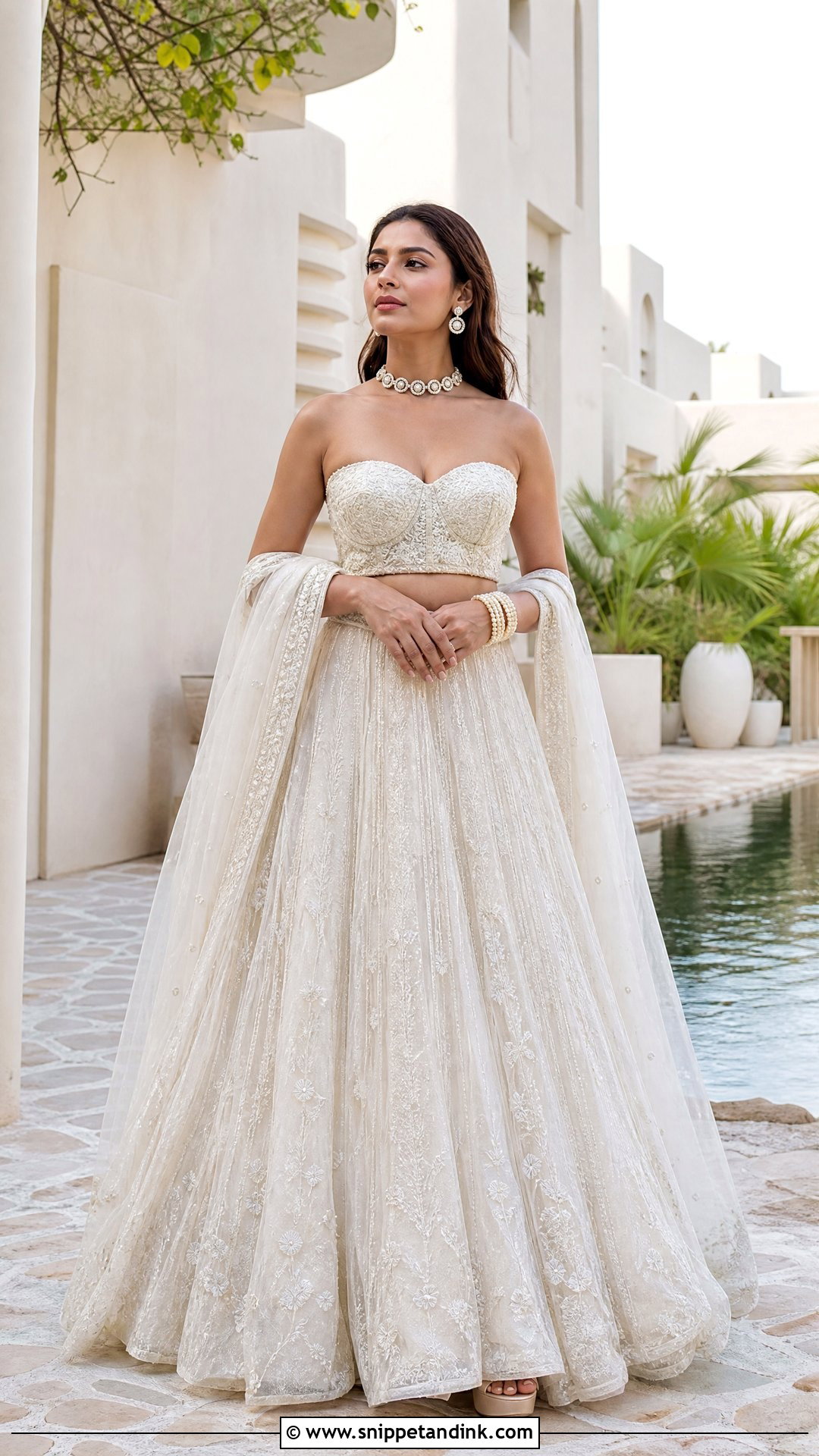
Corset blouses look simple in photos and take real fitting work in person. The bodice needs proper internal boning and should be fitted at least twice, because a corset that’s slightly loose rides up when you sit and one that’s slightly tight digs in at the ribs after dinner. Embroidery that continues from bodice into skirt makes it look like one garment. Pair a high-waisted flared lehenga in ivory tulle, silk or organza, with a soft dupatta draped from the elbows. A collar necklace, earrings, pearl bangles and neutral platforms. Sleek ponytail or loose waves depending on neckline; rose-brown lip. I’d save it for a reception or a modern destination ceremony.
14. White Full-Sleeve Bridal Lehenga With Cape
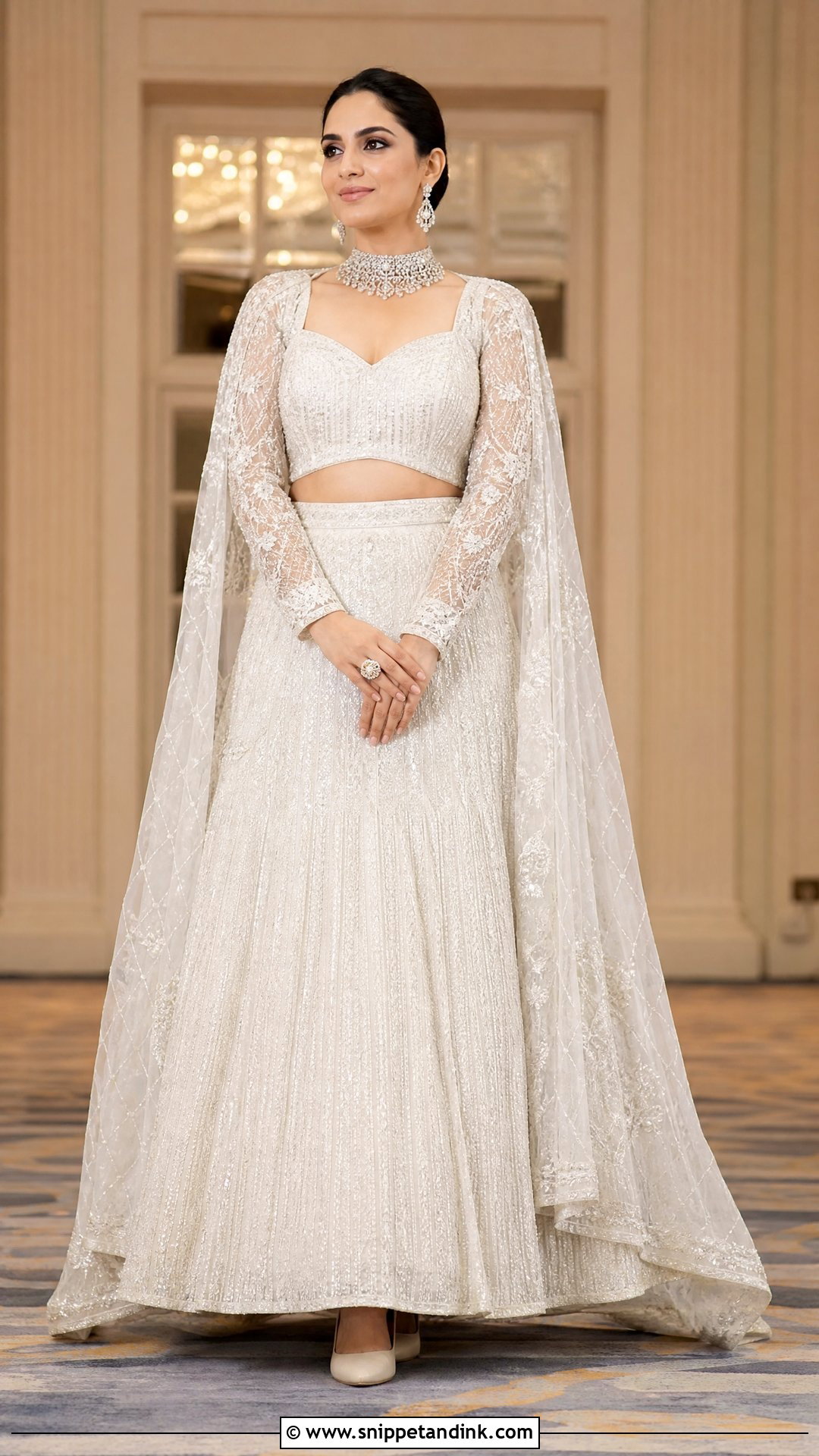
Full sleeves plus a cape give coverage and drama at once, which works well when a family prefers covered arms but the bride wants something modern. Start with a clean A-line white lehenga, add a fitted blouse with sheer embellished sleeves, and secure a floor-length cape at the shoulders. Since the cape is the statement, keep the skirt embroidery refined. Statement earrings, a close choker, a cocktail ring and closed-toe ivory heels. A sleek centre-parted bun shows the neckline. Soft smoky eyes and a muted berry lip. For a formal evening without a conventional dupatta, it’s a strong choice.

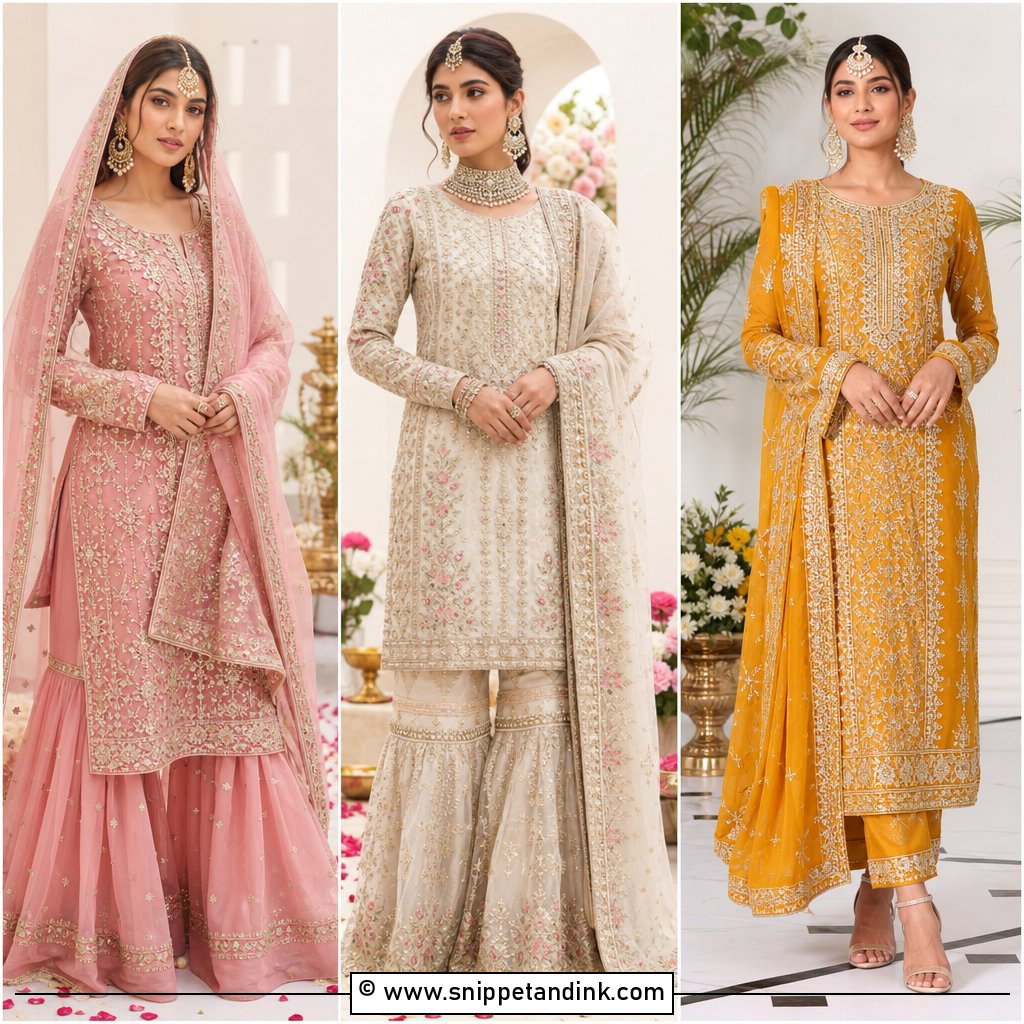

15. White Bridal Lehenga With Embroidered Jacket
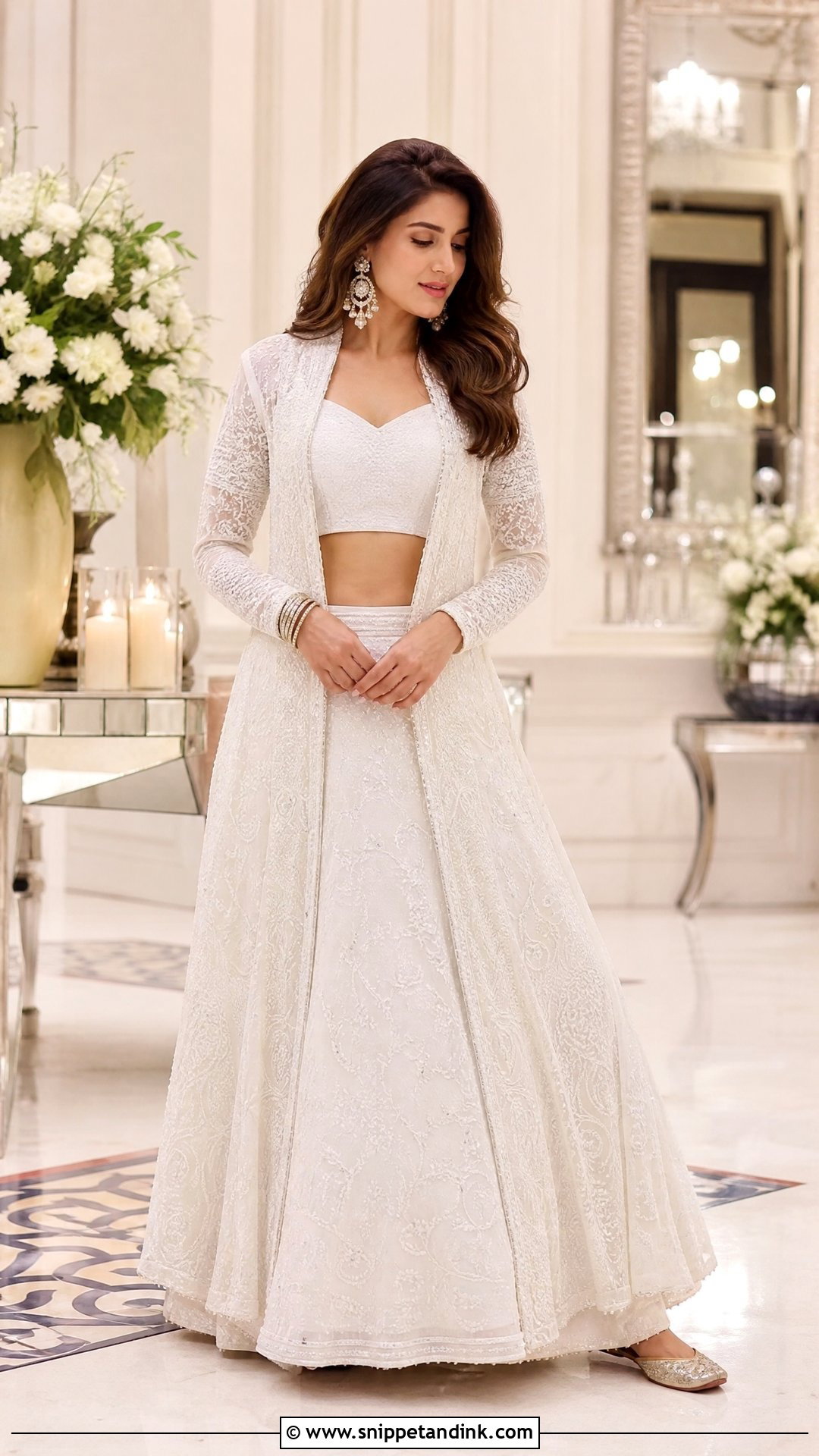
Dupatta draping is the most fiddly part of a bridal look, and a jacket removes the problem. A long sheer jacket embellished with pearls, sequins or gold thread goes over a fitted blouse and a moderately flared white lehenga. I have it end near the skirt hem so the line is unbroken. Chandelier earrings, a slim necklace, stacked bangles and metallic juttis. A loose braided bun or side-swept waves. Luminous makeup with bronze shadow and a coral lip. Take the jacket off later and you have a second look for dancing.
16. White Banarasi Bridal Lehenga
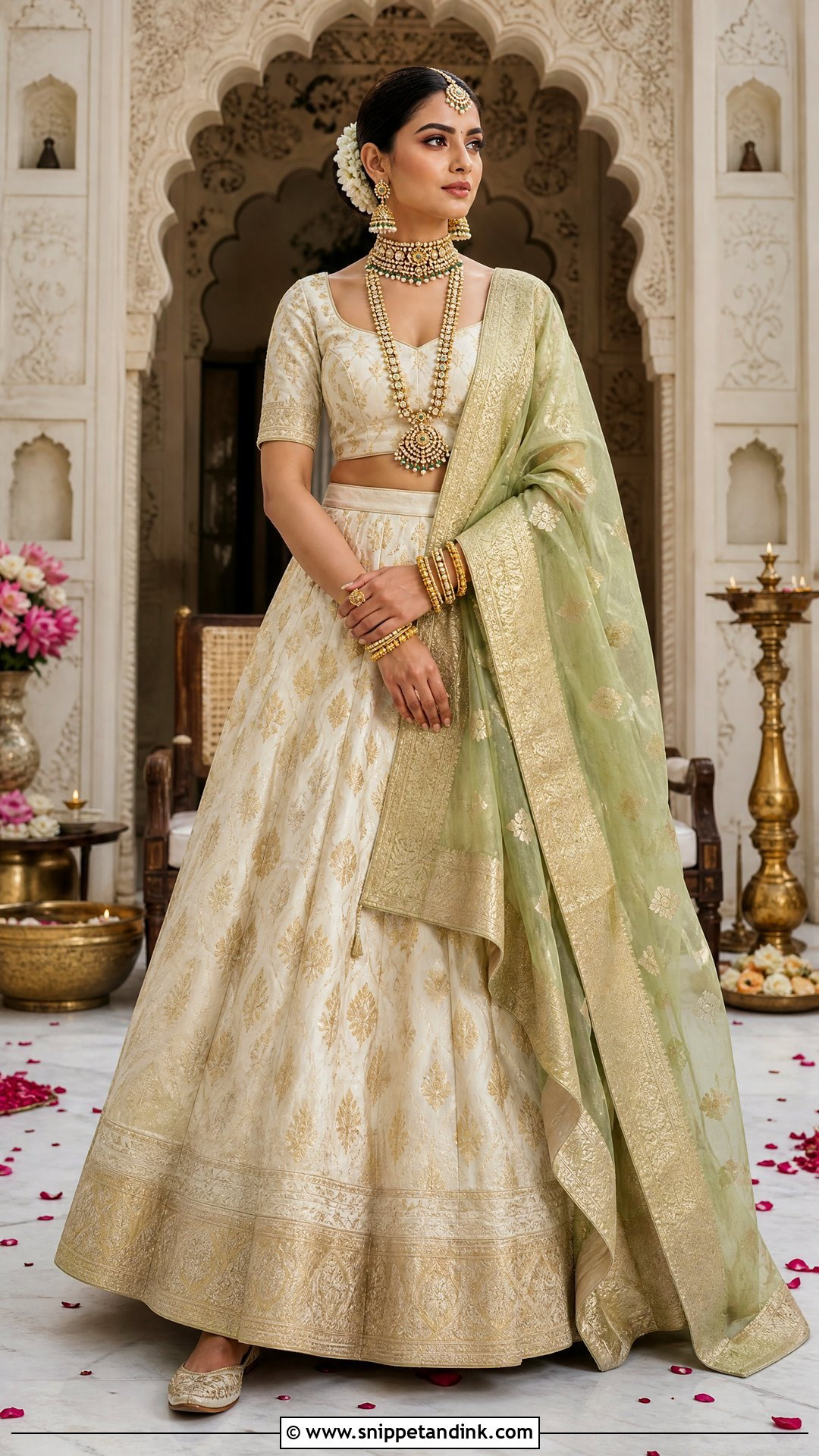
Woven fabric makes a white Banarasi lehenga feel traditional even in a pale palette, because the pattern is in the cloth itself. Choose ivory woven with gold butis and a broad heritage border. Pair a matching blouse with a red, green or gold tissue dupatta. A gold choker, long necklace, jhumkas and bangles strengthen the look. Brocade juttis and a bun with fresh flowers. I’d keep kohl, warm blush and a classic red lip; a pale base with pale makeup washes out on camera. Match the gold tone across fabric and jewellery and the whole thing looks considered.
17. White Bridal Lehenga With Temple Jewelry
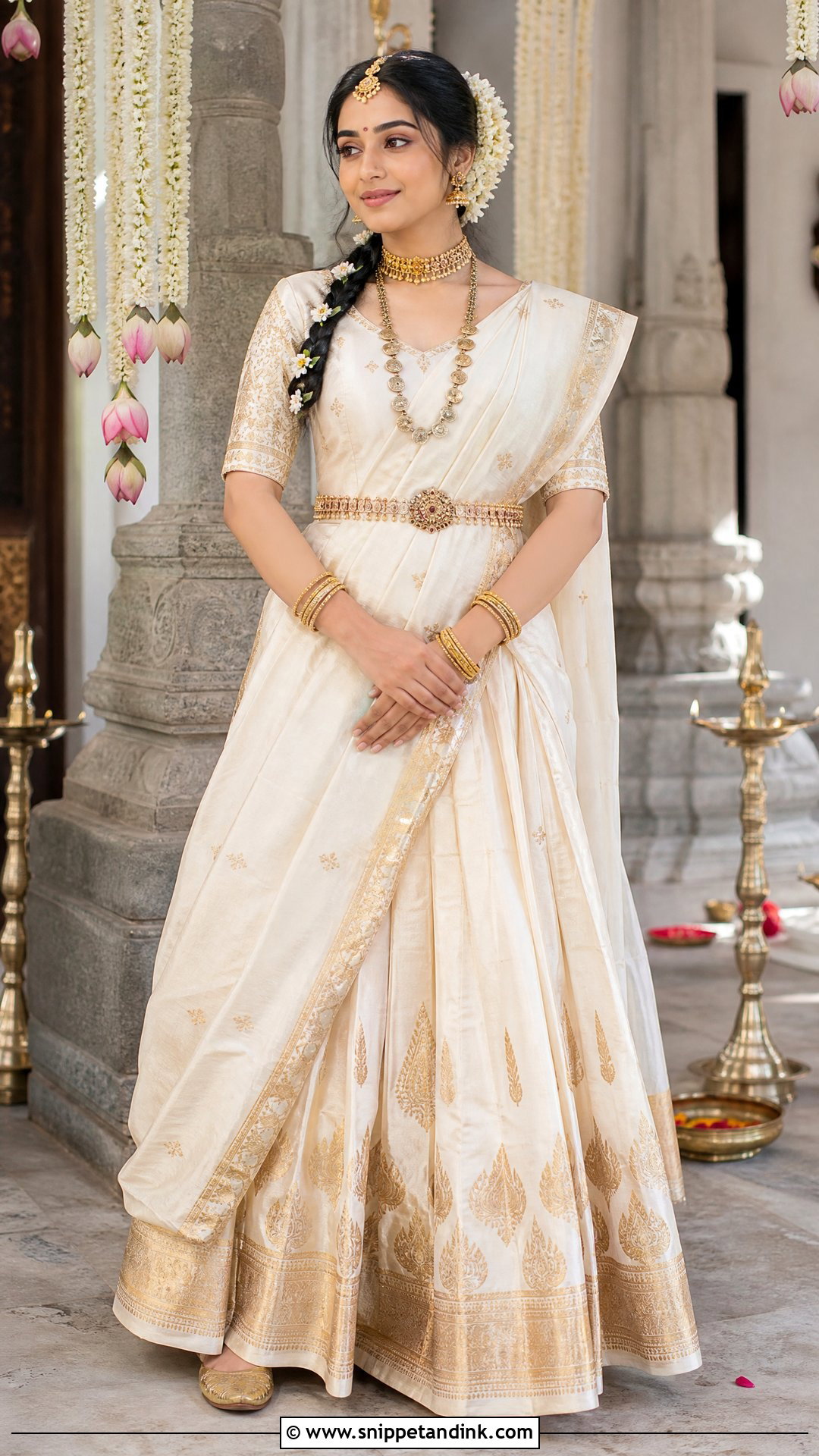
Can white carry the richness of a traditional gold bridal look? With temple jewellery, yes. A cream-white silk lehenga with gold zari and an elbow-sleeve blouse is the base. Drape the dupatta over one shoulder only so the jewellery stays in view. A temple choker, long coin necklace, jhumkas, waist belt, bangles and hair ornaments: this is a lot of gold, and I’d check the waist belt’s weight at the fitting, because it sits on the skirt’s waistband and can drag it down. Gold juttis, a long braid or low bun with white flowers, defined kohl, bronze shadow, warm blush and a deep red lip balance it.
18. White Bridal Lehenga With Emerald Jewelry
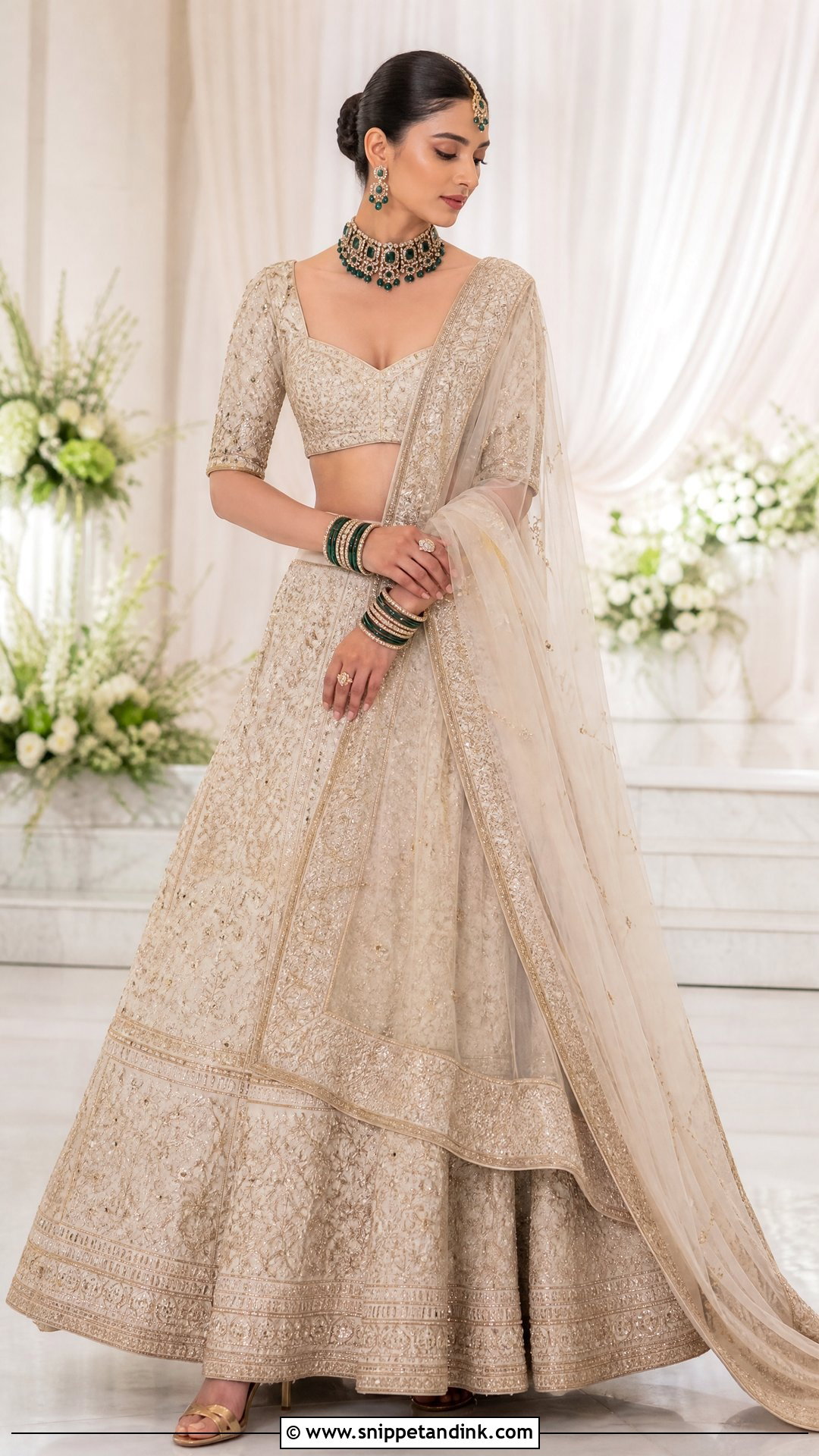
Emeralds against white are one of my favourite contrasts. Green sits opposite the warm tones in skin, so it makes the face look brighter. Choose an ivory lehenga with champagne or muted gold embroidery and a light veil that doesn’t cover the necklace. An emerald choker, matching earrings, maang tikka and a few green-accented bangles. Everything else stays neutral: gold heels or juttis, an ivory clutch, a smooth bun. Don’t match the makeup to the stones; bronzed eyes and a rose lip let the green lead. It suits brides who want bold colour without a coloured lehenga.
19. White Beach Wedding Bridal Lehenga
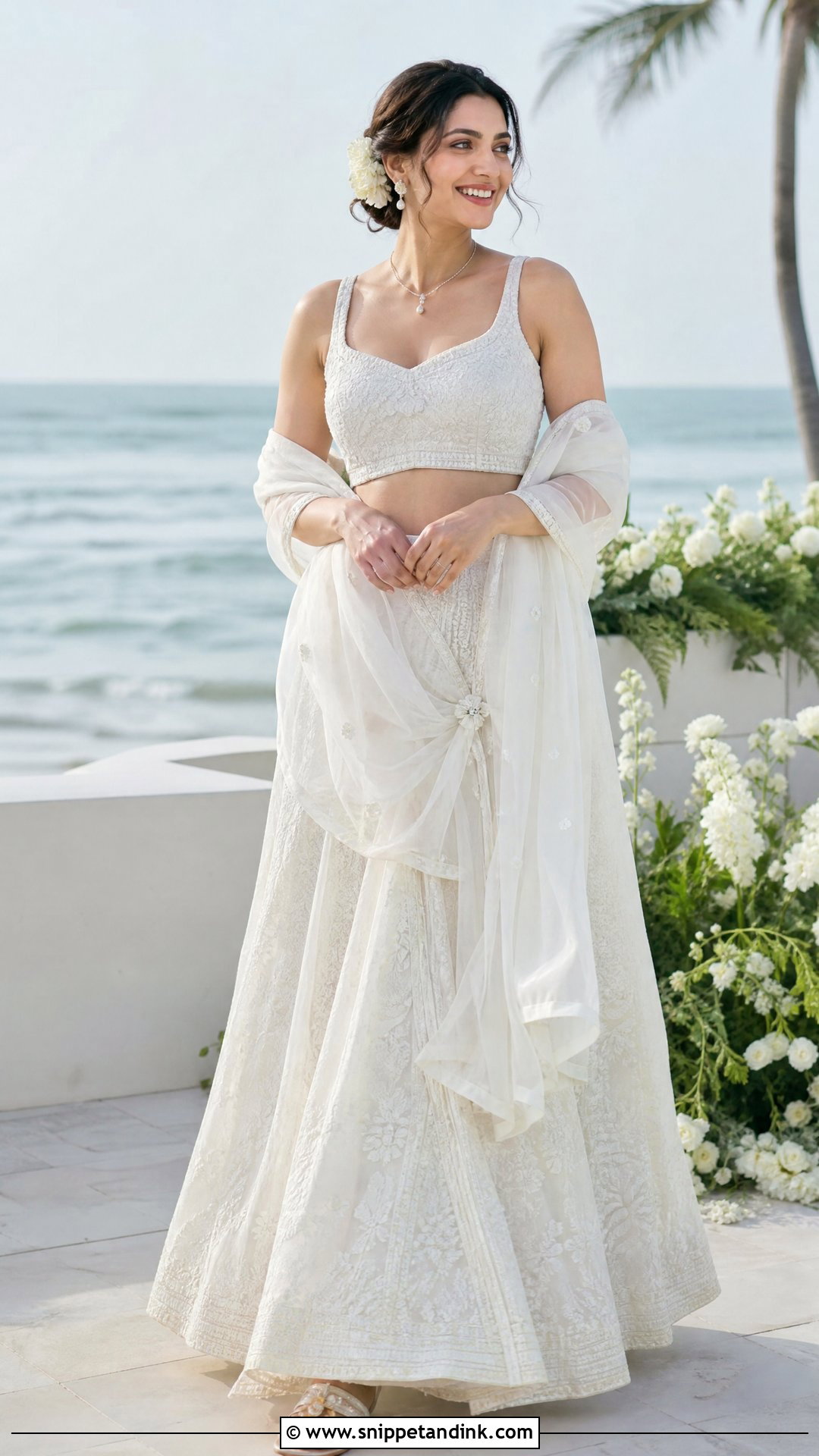
Humidity and wind change everything for a beach lehenga. Lightweight georgette or chiffon with tonal threadwork moves easily; heavy stones and velvet borders get hot, collect sand and drag. A secure fitted blouse and one airy dupatta pinned at the shoulder. Skip a long train. Pearl earrings, a delicate necklace, floral hair accessories and embellished flats. Soft waves or a braided bun hold up in a breeze far better than open curls. Long-wear makeup, waterproof mascara, peach blush and a coral-pink lip finish it.





20. White Mermaid Bridal Lehenga
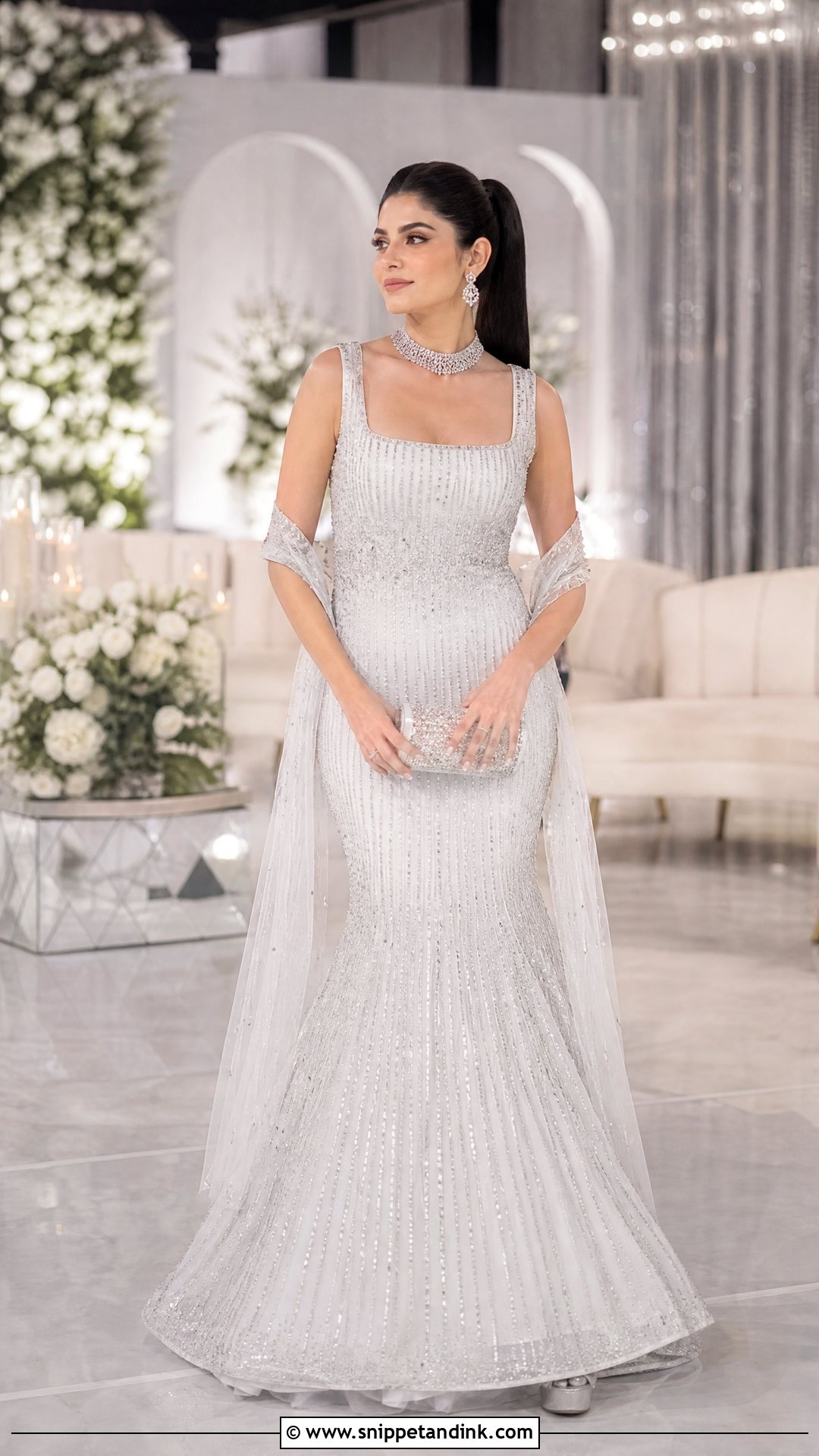
A mermaid lehenga follows the hips and flares below the knee, a gown-like line many brides want for the reception. Vertical beadwork and sequins lengthen it further. Pair a supportive off-shoulder or square-neck blouse with a sheer dupatta attached at the back. Crystal earrings, a diamond-style choker, a structured clutch and platform heels; sleek waves or a high ponytail; cool shimmer and a mauve lip. My honest warning: mermaid cuts restrict your stride and make sitting on low seating awkward. Walk, sit and dance in it at the final fitting before you commit to it for a long night.
A White Lehenga’s Worst Enemies on the Wedding Day
White shows everything, and a bridal lehenga gets handled by dozens of people. I pack for that. These are the four things that mark white outfits most often, and what I do about each:
- Foundation on the neckline and dupatta. Dress after makeup, step into the skirt rather than pulling anything over your head, and drape the dupatta last.
- Fresh mehndi. If mehndi was the night before, any leftover paste or oil can transfer orange onto silk. Scrape and wash your hands well, and avoid oiling them on the morning.
- Hem dirt. Outdoor floors, mandap petals and wet grass stain the bottom edge first. A hem that clears the floor by a finger’s width saves you here.
- Food and drink at the reception. Keep a white napkin over your lap, and drink anything red through a straw.
My emergency kit for white always holds a stain pen, white chalk for covering small marks on matte fabric, safety pins and a lint roller. After the wedding, get it to a dry cleaner who handles embroidered bridalwear within a week or two. Stains you can’t see yet, like sweat and perfume, yellow over time if they’re left in.
Your White, Your Way, Tested Under Real Light
A white lehenga becomes personal through its details: the embroidery metal, the fabric, the blouse shape and the colour you bring in through the dupatta or jewellery. Gold work feels traditional, pearls and sequins feel modern, florals feel romantic, and red, pink or green accents bring in colour with meaning. Before you commit, try the complete outfit under light like your venue’s, walk in the shoes, and sit down for ten minutes. Check blouse support, skirt length and where the veil falls. Then pick the one that sounds like you, not the one that ticks every trend.
You'll Like These Ideas:








Leave a Reply