
White is the most forgiving base a half-saree can have. It takes a silk border in any color, lets a bright blouse do the talking, and sits happily under fresh jasmine and heavy temple gold. The same three pieces, skirt, blouse and dupatta, can be quiet enough for a morning pooja or rich enough for a cousin’s wedding; the fabric and finishing decide which. I’ve grouped twenty white dhavani combinations below, from kasavu-style gold borders and strong contrast blouses to organza, cotton and an all-white embroidered set. For each I’ve noted the blouse, drape, footwear, jewelry, hair and the kind of occasion it suits.

Draping a Half-Saree So It Survives Hours of Sitting
A dhavani looks simple and behaves like three separate garments, because it is. Most of the trouble I see at functions comes from a skirt tied too loosely or a dupatta held by a single pin. Here’s the order I drape in.
- Tie the skirt drawstring firmly at the natural waist, with the opening at the side so it hides under the drape. Wear your footwear while checking the hem; it should just clear the floor.
- Tuck the plain end of the dupatta into the skirt waistband, usually at the right side, and bring it across the front of the bodice.
- Pleat the decorated end evenly, five or six folds, and lay the pleats over the left shoulder so the border sits on top.
- Pin the pleats to the blouse at the shoulder from underneath, then add a second pin where the dupatta crosses the waist. Two hidden pins hold far better than one visible one.
- Sit down, stand up and raise your arms before leaving. If the dupatta pulls, loosen the waist tuck slightly rather than adding more pins.
Heavy silk dupattas need safety pins with a coil at the end so they don’t slip; light cotton and organza hold with smaller pins. A waist belt, as in idea 20, makes everything steadier for younger wearers.
1. White Dhavani With Gold Border
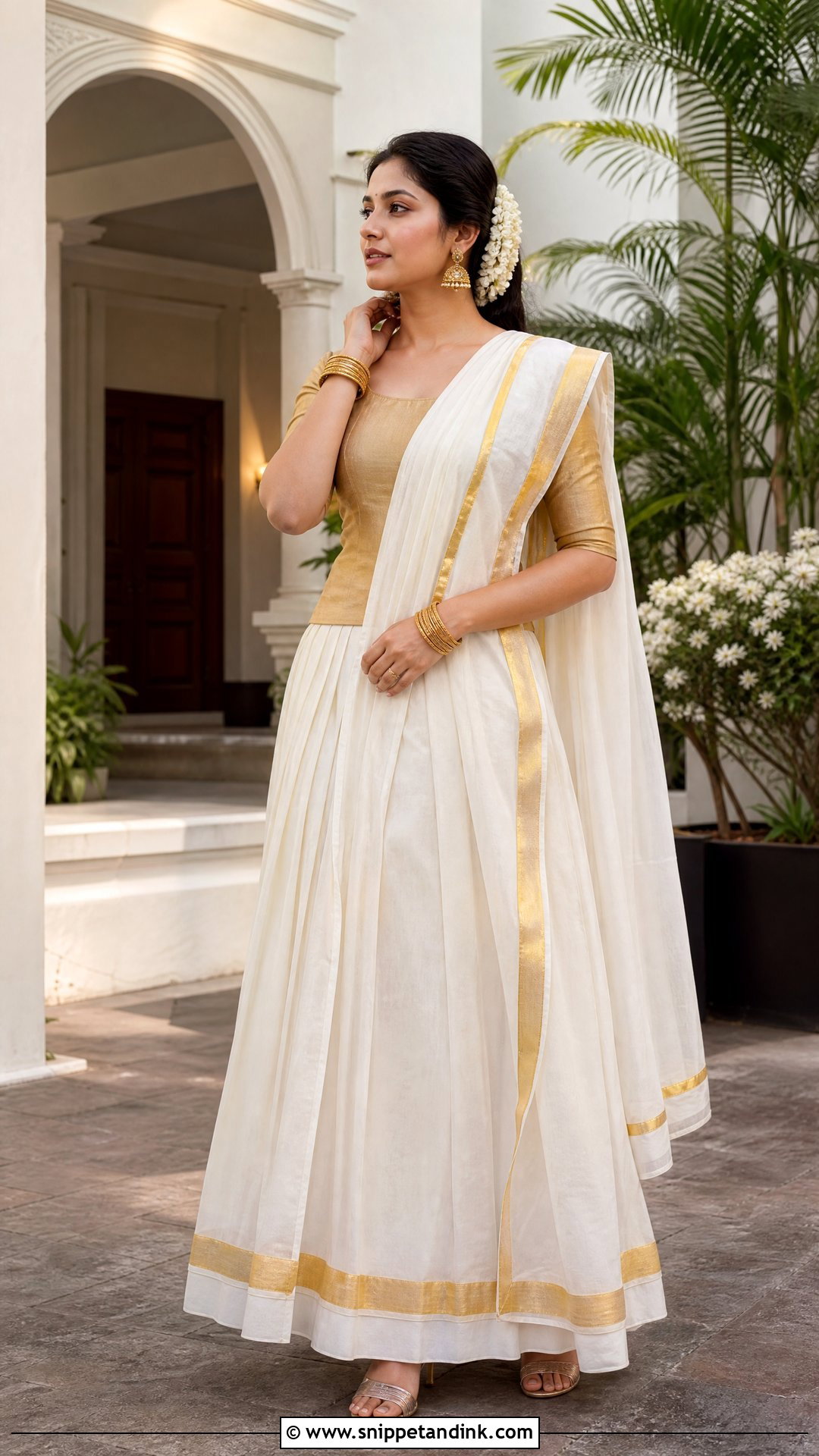
Gold on white is the classic for a reason, and the width of the border is what I’d decide first. A medium border, about a hand’s width, reads festive without making a petite wearer look cut in half. Pleat the skirt softly and pair it with a gold blouse at elbow length. Repeat the border on the dupatta and drape it flat across the bodice. Gold jhumkas, slim bangles and one delicate necklace are plenty. A low braid with jasmine, gold sandals or embroidered juttis, warm makeup and a small red bindi give the neutral outfit its focus.
2. White Dhavani With Red Blouse
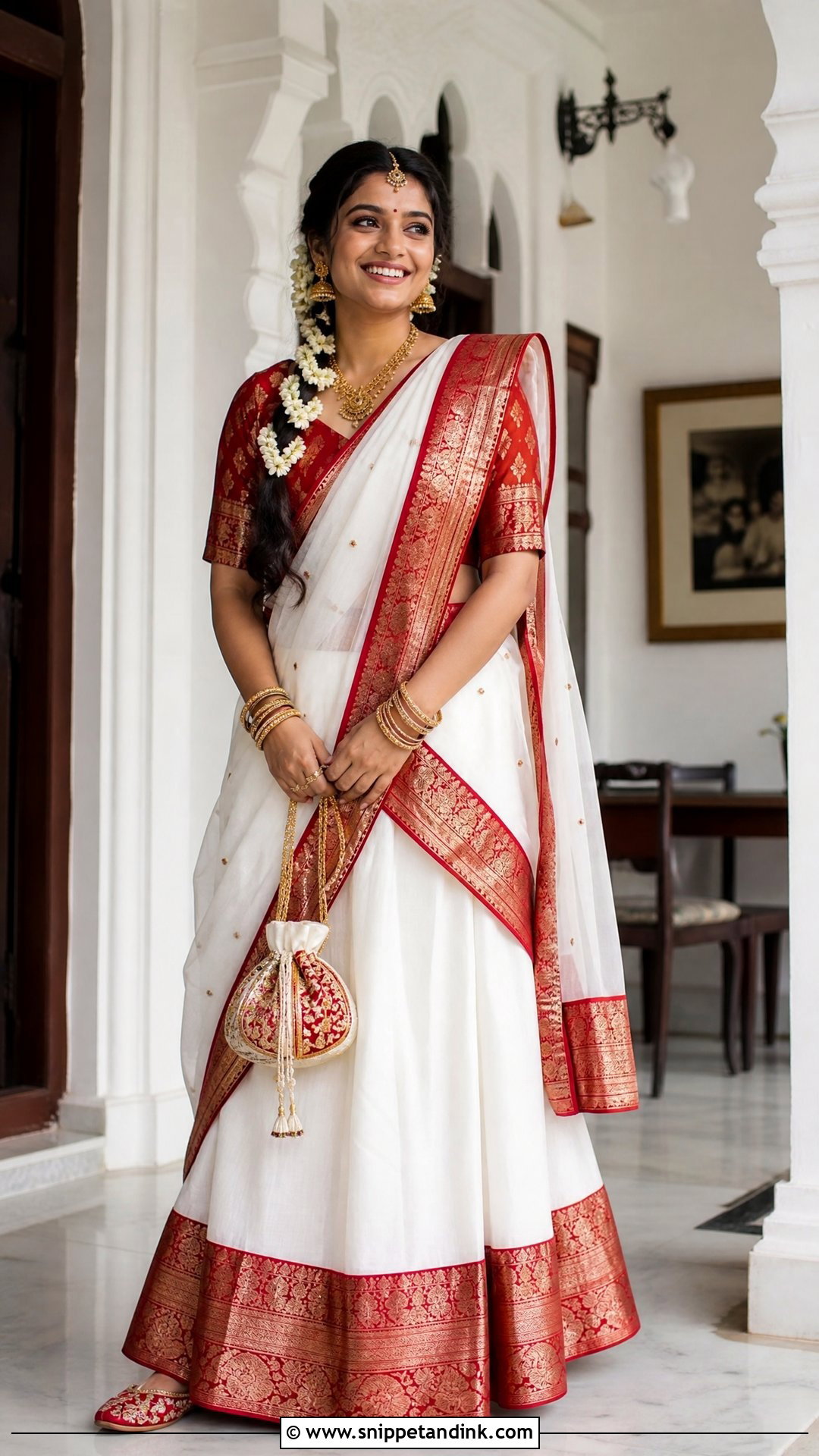
Red and white is the combination I reach for when a family wants the outfit to look unmistakably auspicious. Choose a white silk skirt with a red-and-gold woven border and a fitted red blouse in raw silk or brocade. One practical warning: deep red silk can bleed when damp, so I never let a red blouse sit against a white skirt in a humid bag before the event. A white dupatta with red piping, antique gold jhumkas, stacked bangles and a slim waist belt suit it. Wear a long braid or low bun with white flowers, red juttis, defined eyeliner and a muted red lip.
3. White Dhavani With Green Blouse
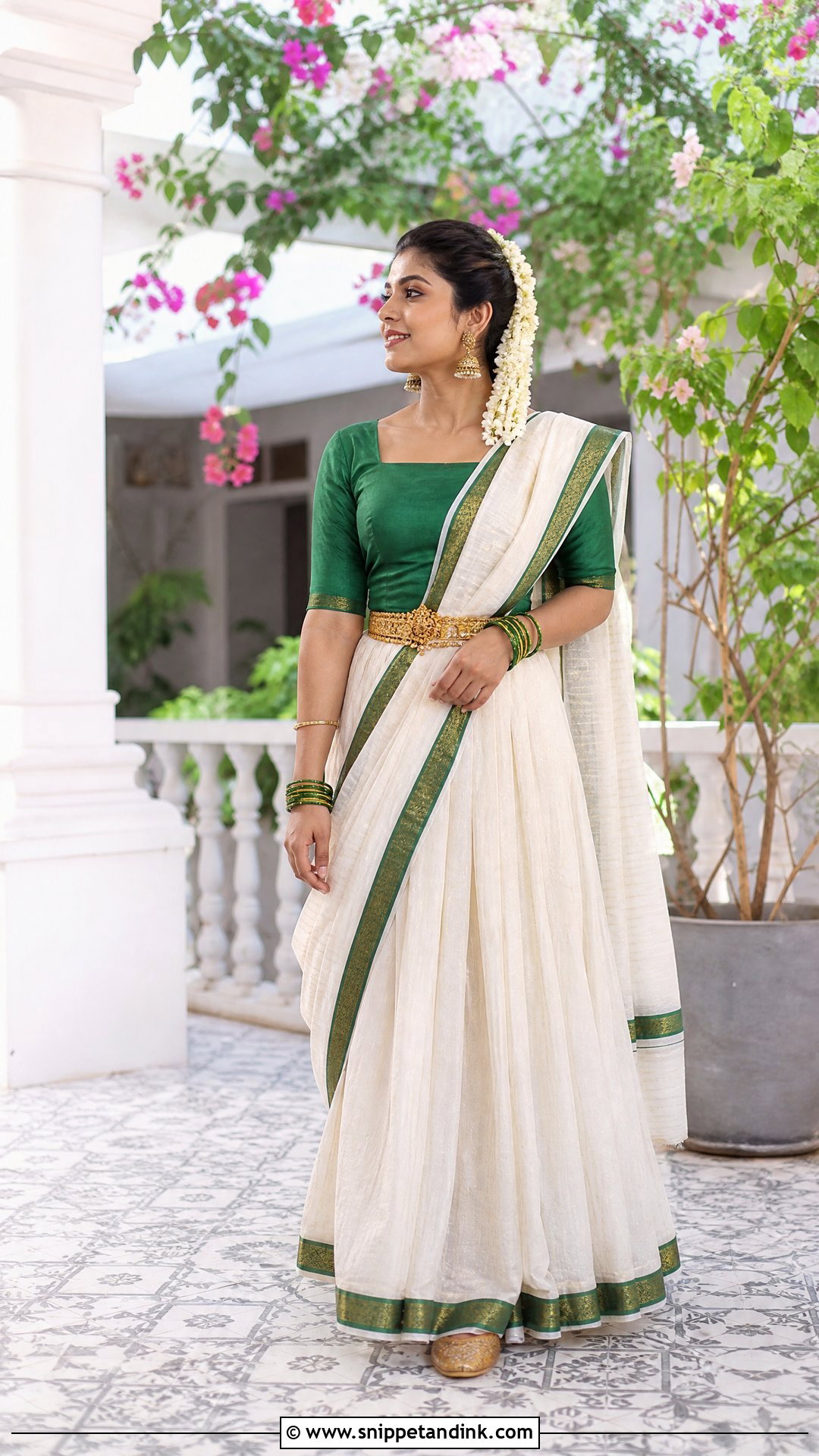
Green brings freshness. I find bottle green easier to wear than bright parrot green, which can turn harsh against pure white in daylight. An off-white skirt with a green border softens the contrast. Add an emerald or bottle-green silk blouse, and drape a green-edged dupatta in narrow pleats for a longer line. Temple-style earrings, a slim necklace and green glass bangles bring color up toward the face. Keep the waist plain, or add one gold belt for a formal function. A center-parted braid with jasmine, gold flats and soft peach makeup with kajal complete it.
4. White Dhavani With Royal Blue Blouse
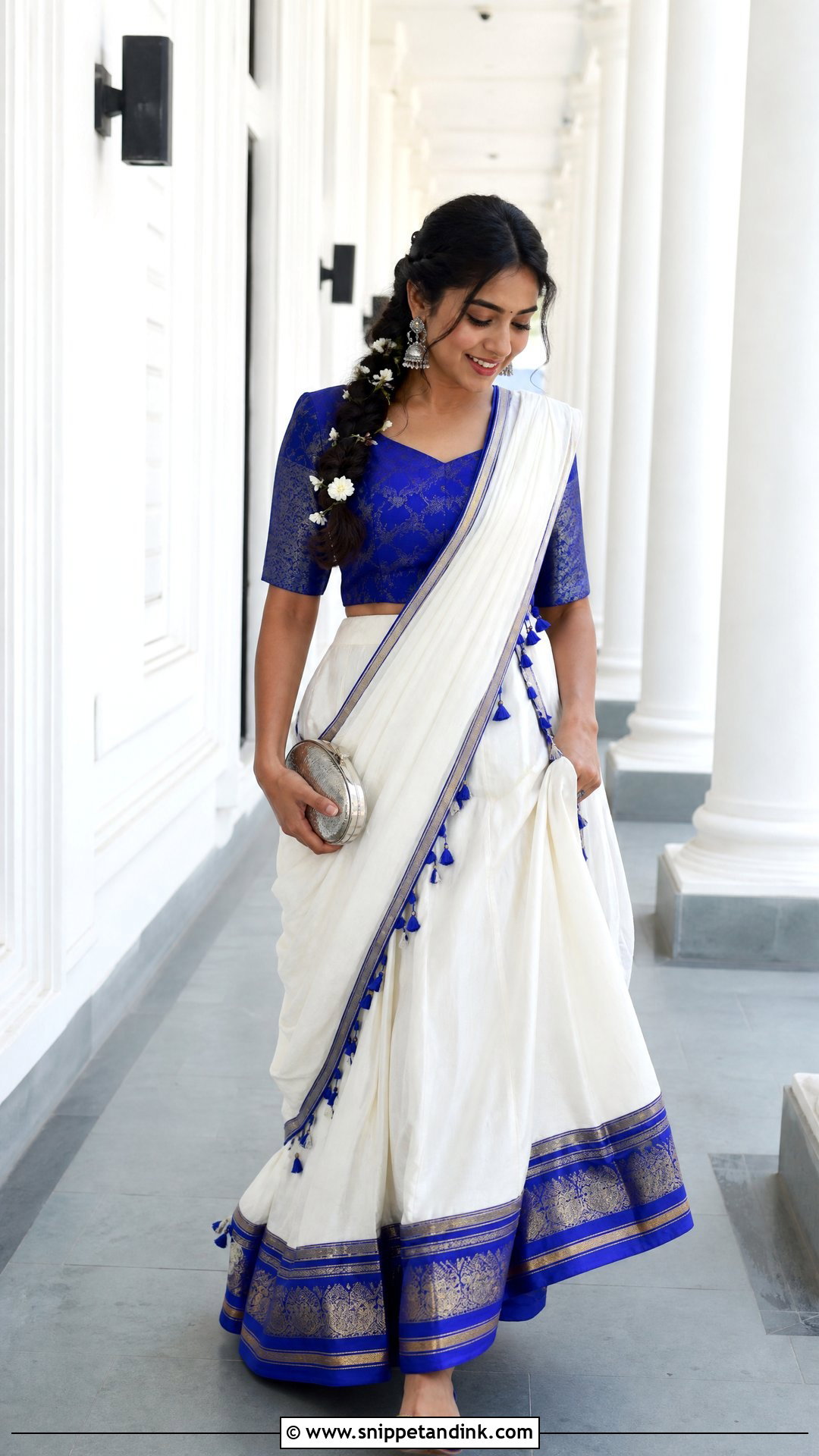
Royal blue against white can look like a school uniform if the two are not linked. Blue piping or a narrow blue-and-gold border on the skirt makes the combination look deliberate. A royal blue blouse with fine zari motifs, a square neck and structured sleeves holds the look together, and blue tassels on the dupatta add movement. Here the jewelry metal changes the mood: silver reads cooler and more modern, gold richer and more traditional. Pick one and keep to it. Finish with a soft braid with white flowers, blue juttis, a metallic clutch and a pink lip.
5. White Dhavani With Pink Blouse
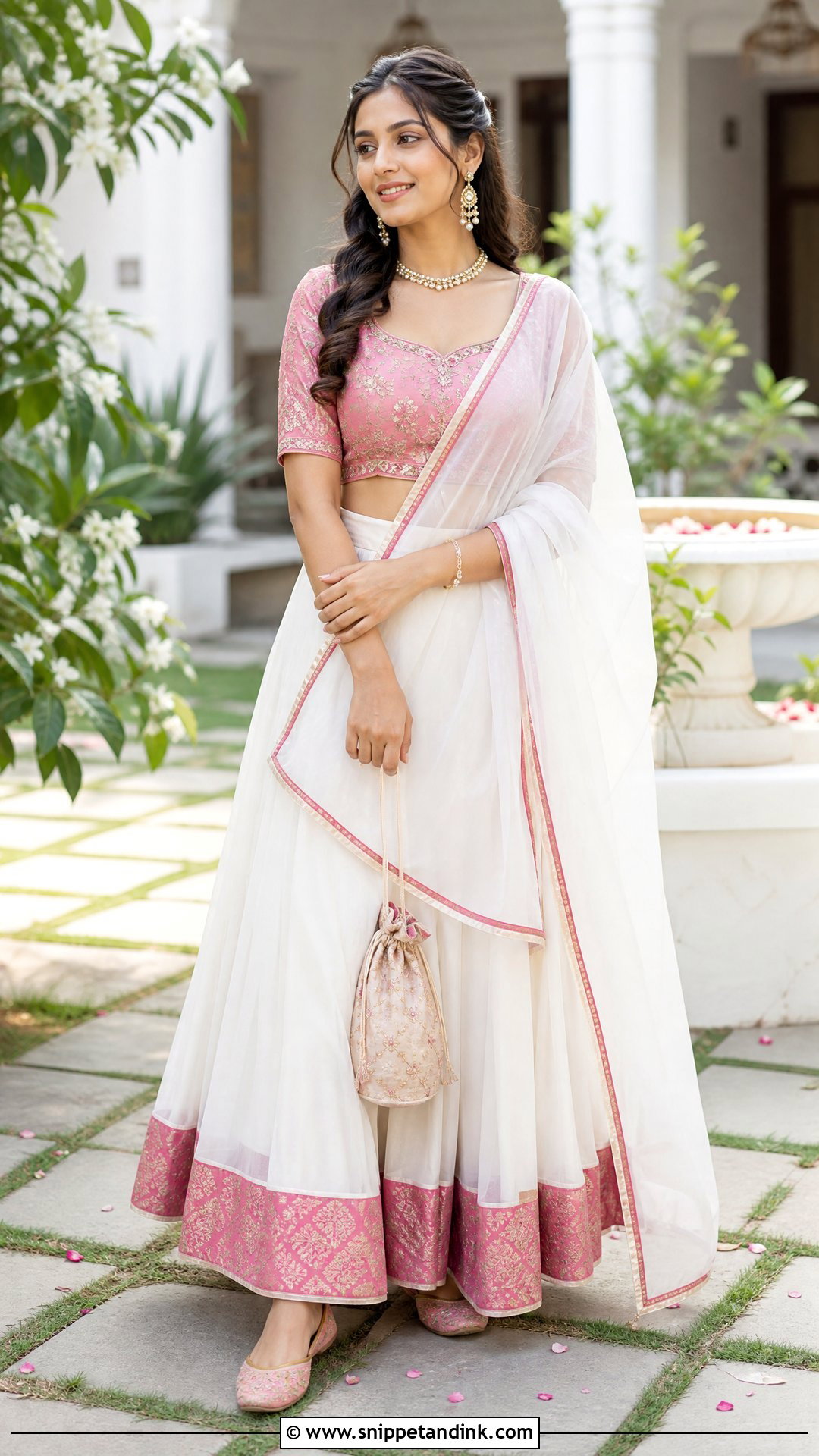
Pink is the daytime choice, and it suits younger wearers especially well. Pair a bright white or creamy skirt with a blush, rose or rani-pink border and a silk blouse from the same pink family; small floral embroidery adds detail if you want it. A sheer white dupatta with pink piping keeps it light. Pearl-and-gold earrings, fine bangles and a potli bag suit it. Pink flats for a casual event, pale gold sandals for a formal one. Loose curls in a half-up style feel relaxed; a flower-wrapped braid feels traditional.
6. White Dhavani With Maroon Blouse
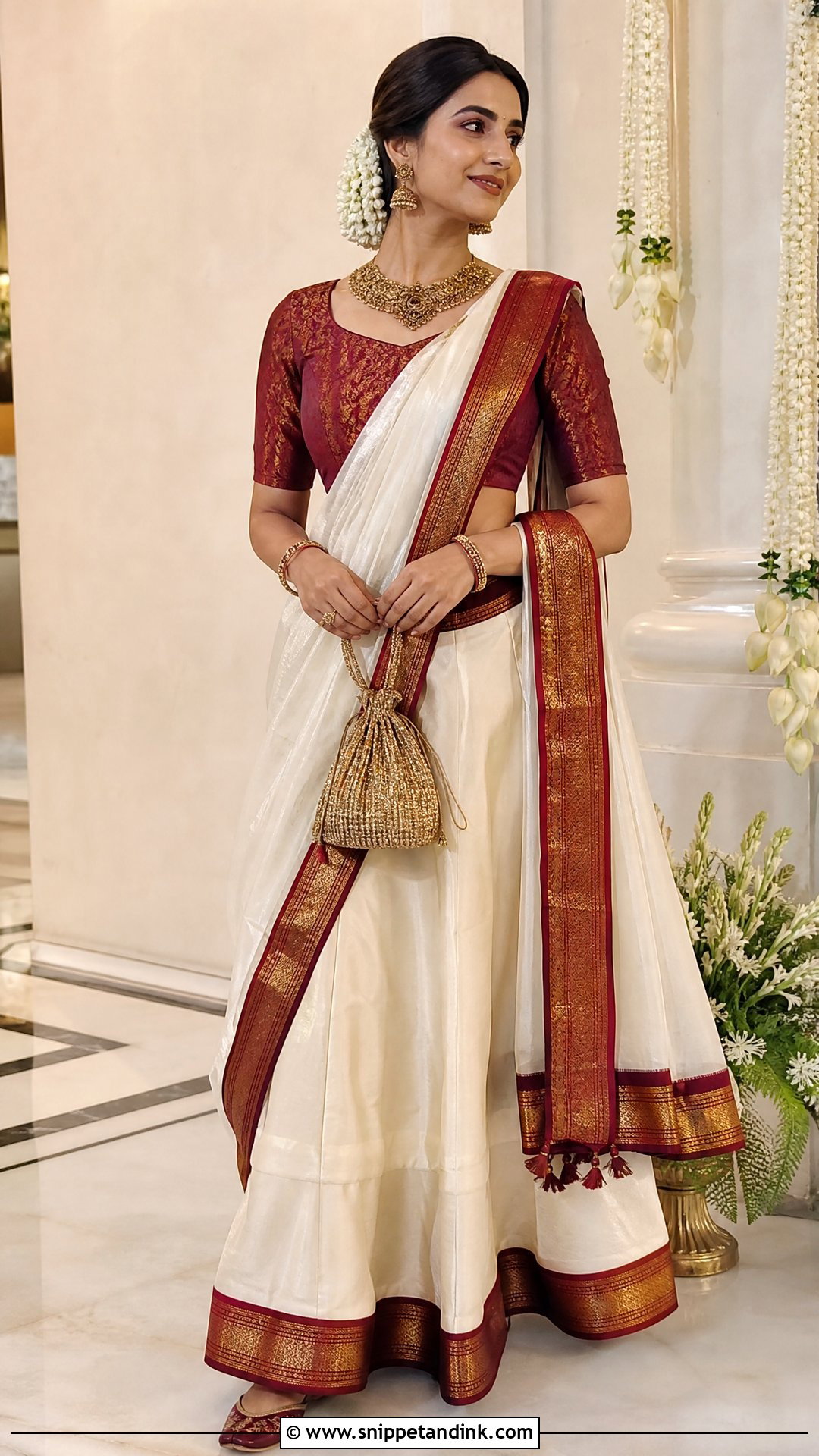
Maroon has the depth that evening functions need, and it hides the small spills that white silk and a long dinner tend to produce near the blouse. An ivory silk skirt with a broad maroon-and-gold border, a maroon brocade blouse at elbow length and an ivory dupatta edged in maroon tie the pieces together. Antique gold suits it best: dome earrings, a layered necklace and a slim belt, balanced so the blouse stays the strongest color. A sleek low bun with jasmine, maroon juttis, a gold potli, smoky liner and a deep rose lip that complements rather than matches the blouse finish it.
7. White Dhavani With Purple Blouse
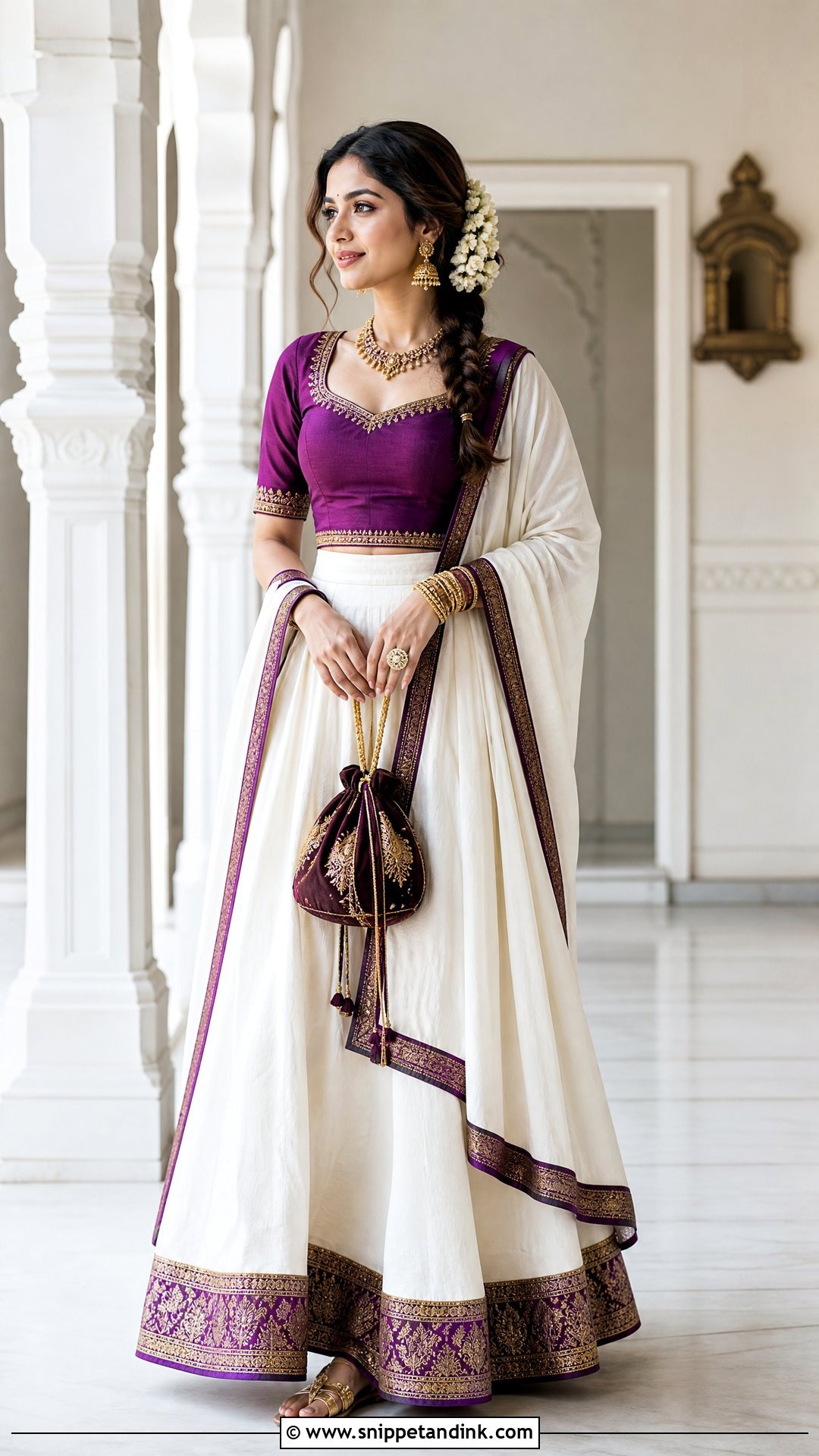
Purple is less expected than red or green, which is why I suggest it to girls who’ll be one of several cousins in half-sarees at the same wedding. Start with a white silk skirt whose purple border carries fine gold lines, and a plum, violet or deep purple blouse in brocade or raw silk with fitted elbow sleeves. Drape the white dupatta over one shoulder with the purple border fully visible. Antique gold earrings, matching bangles, a simple pendant, a loose braid with jasmine, gold sandals and a purple potli complete the color story. A mauve lip suits it.
8. White Dhavani With Yellow Blouse
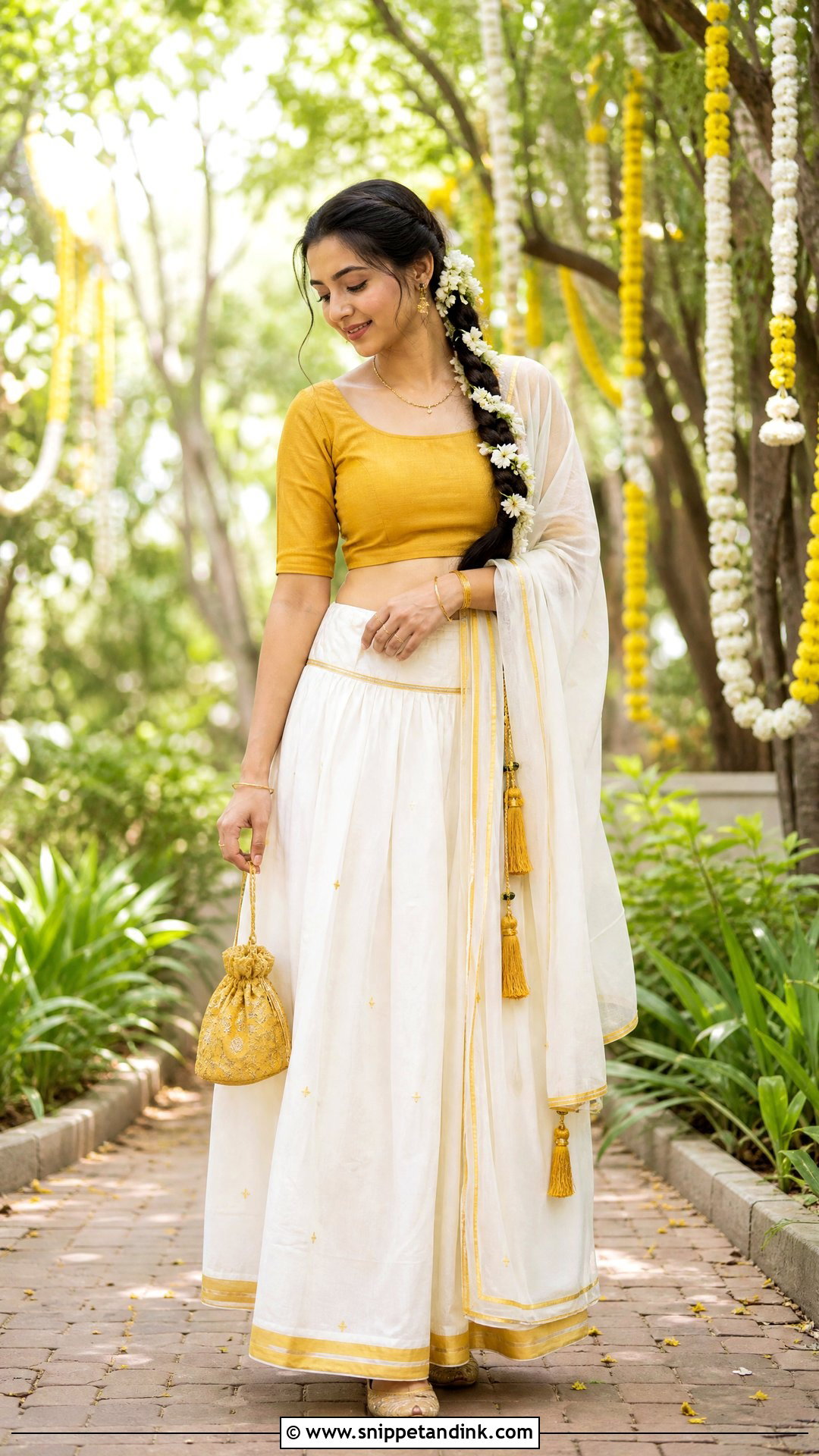
Yellow is a morning color. In bright sun it glows; under warm evening lights it can look flat and slightly dull next to white. A lightweight white skirt with a mustard or golden-yellow border and a fitted yellow blouse with small woven motifs or restrained thread embroidery keep it cheerful. Leave the dupatta white and airy with yellow tassels. Gold studs or small jhumkas and slim bangles are enough. Wear a relaxed braid with white flowers, tan-gold flats, peach blush and a coral lip.
9. White Dhavani With Orange Blouse
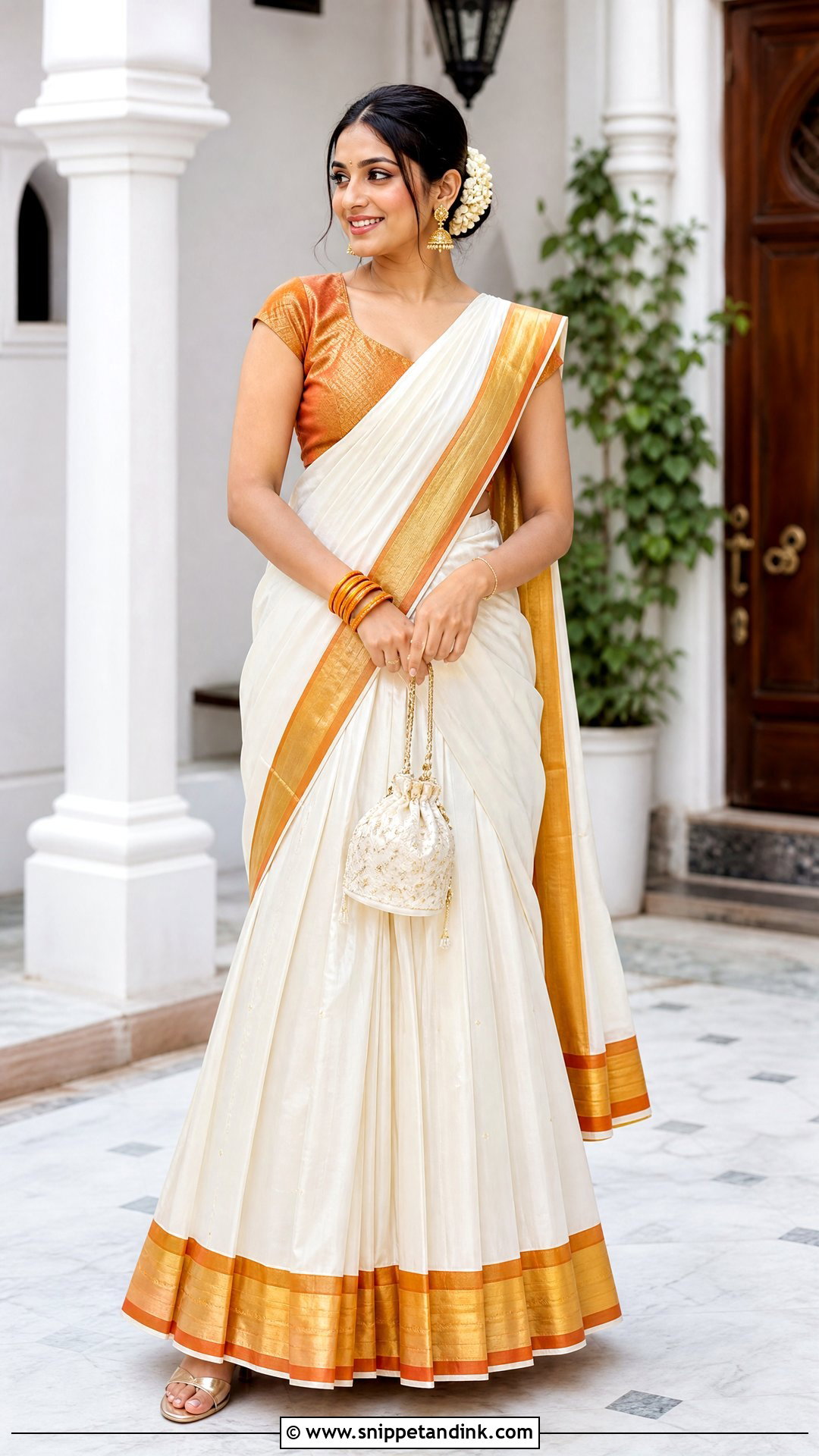
Orange is loud, so the skirt should be quiet: ivory with a slim orange-and-gold border rather than all-over decoration. A burnt-orange or saffron blouse with clean tailoring carries the color. I’d pleat the dupatta crisply so its orange edge frames the bodice in a clear line instead of a loose swirl. Traditional gold earrings and a single necklace, orange and gold bangles mixed together, and a braided bun with jasmine suit a formal function. Gold block heels, an ivory potli, warm brown eye makeup and a terracotta lip finish it.
10. White Dhavani With Teal Blouse
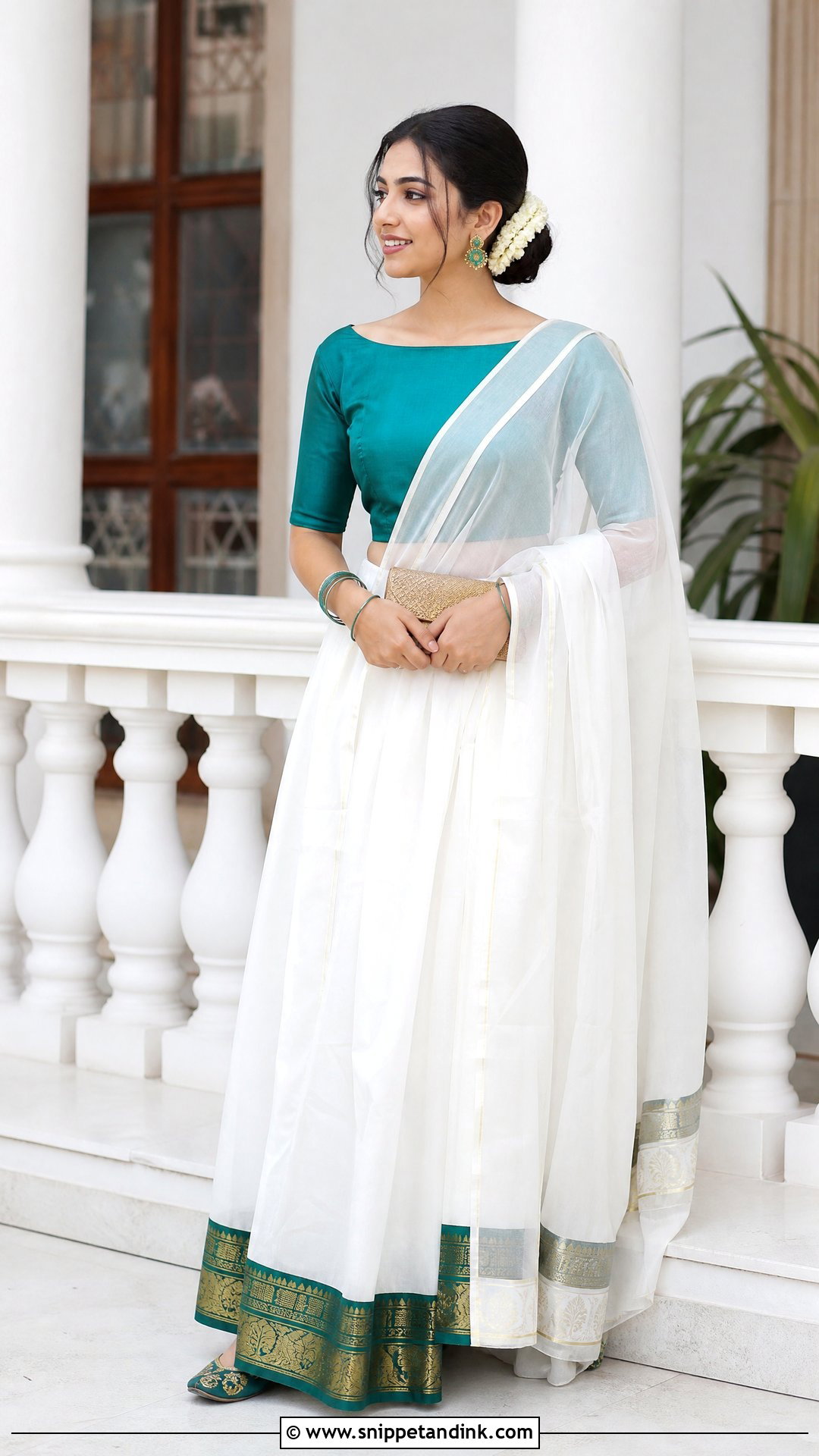
Teal feels colorful but calm, and it flatters a wide range of skin tones. A white silk or cotton-silk skirt with a teal border and fine gold detail pairs well with a boat-neck teal blouse and light embroidery at the cuffs. Arrange the white dupatta with teal piping in crisp pleats so the colors stay clearly separated. Gold works; jewelry with green stones looks even more coordinated. Small jhumkas, a short necklace, a few bangles, a low bun or side braid with flowers, teal juttis and peach makeup with sharp liner complete it.
11. White Dhavani With Black Blouse
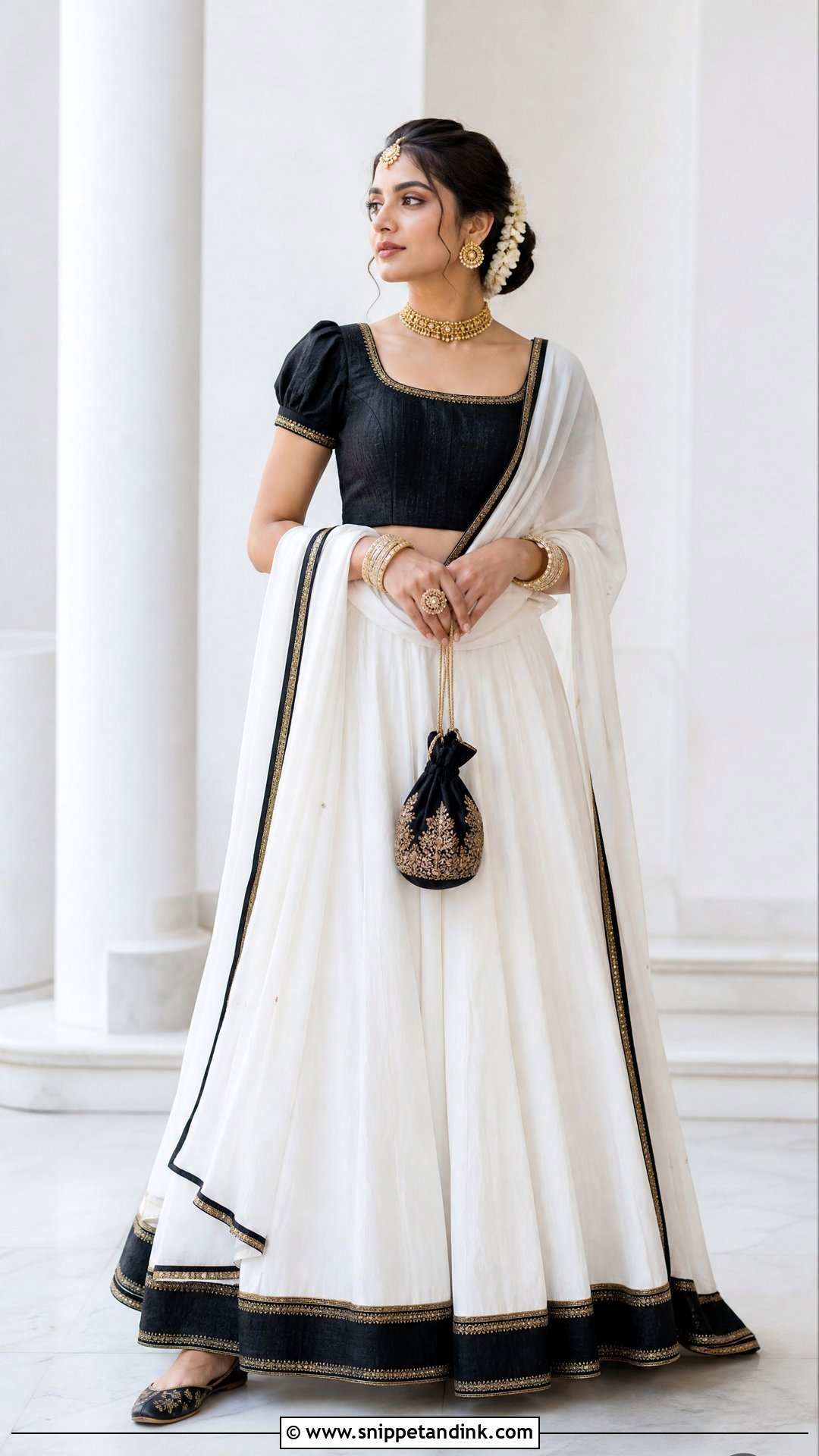
Before suggesting black, I check with the family. Some households still avoid black at auspicious functions, while others are happy with it for a sangeet or an evening reception. Where it’s welcome, a bright white skirt with a narrow black-and-gold border and a structured black raw-silk blouse with subtle gold work look sharp and modern. Keep the dupatta mostly white with black piping. Antique gold earrings, one statement cuff and a compact necklace warm up the palette. Wear a sleek center-parted bun with a little jasmine, black-and-gold juttis, defined kajal and a berry lip.
12. White Dhavani With Silver Border
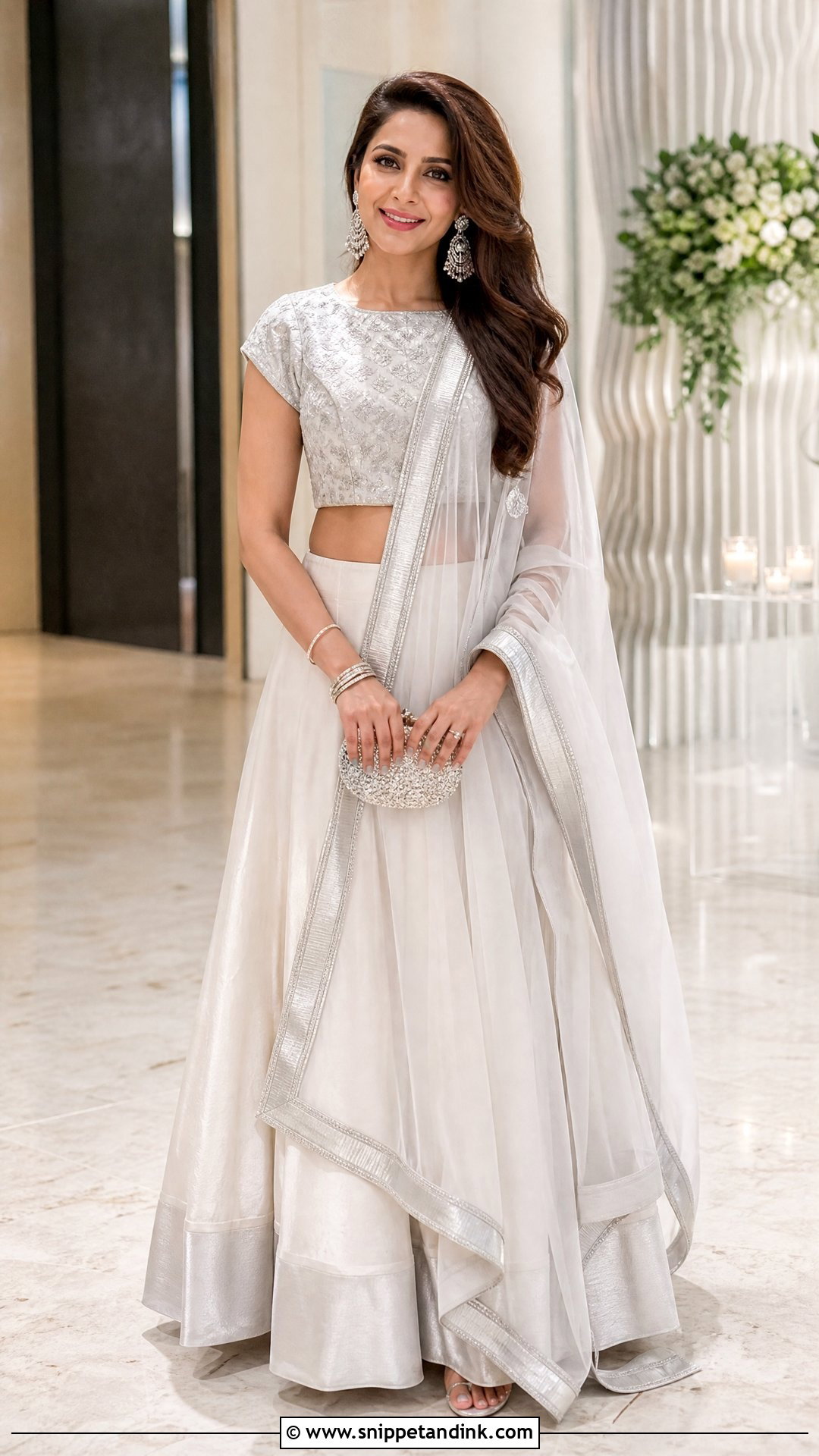
Silver zari is cooler and quieter than gold, and it suits wearers whose skin looks best with silver jewelry. A white silk or tissue skirt with a silver border, a pale silver blouse in brocade or satin and a sheer white dupatta with silver edging stay luminous without becoming ornate. Oxidized silver earrings for a relaxed event, polished stones for a formal one, and just a few bangles. Keep silver zari away from rubber bands and perfume, which tarnish it. Silver sandals, a beaded clutch and cool pink makeup finish it.
13. White Dhavani With Floral Blouse
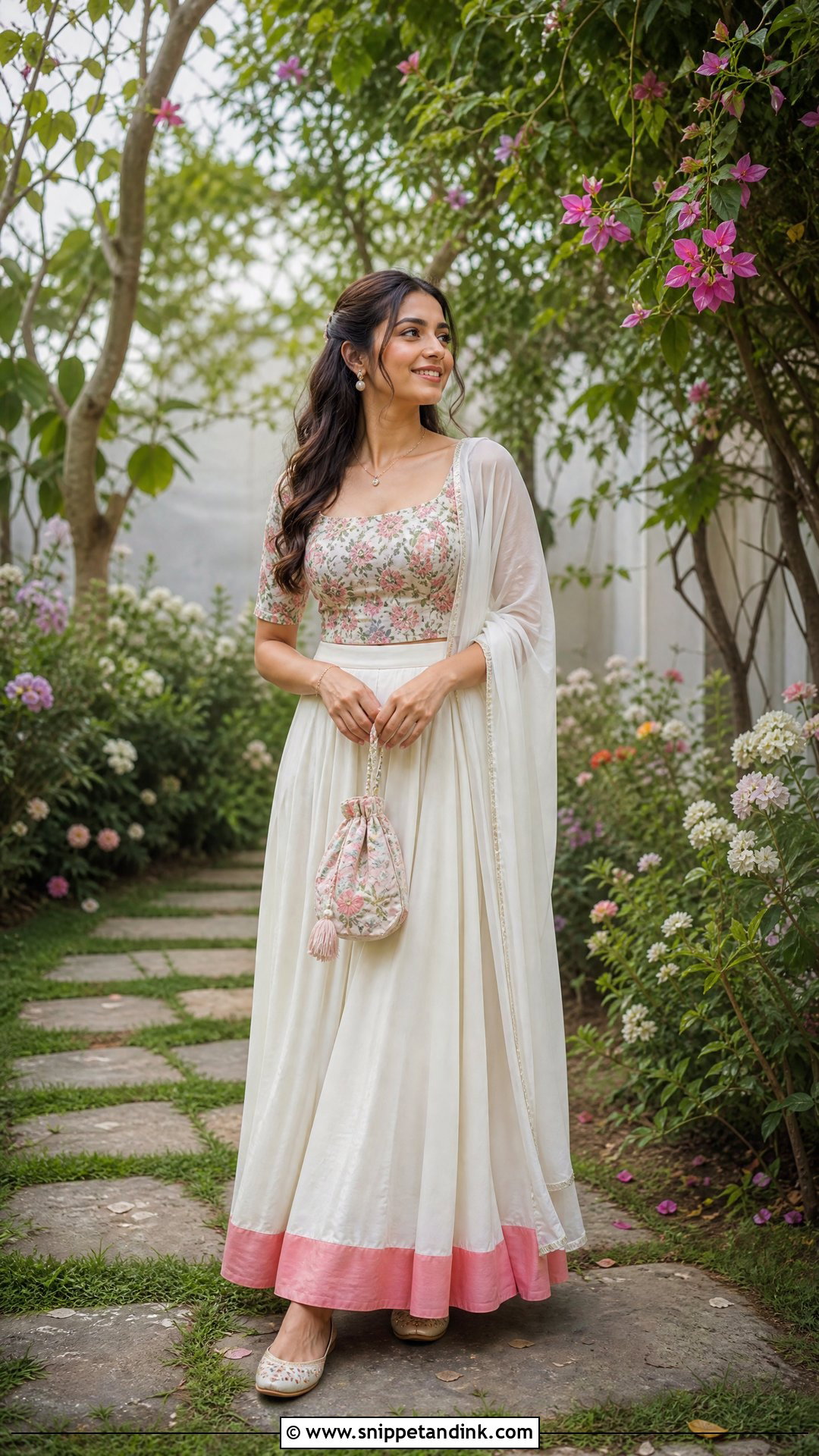
Prints are the hardest blouse to get right with a half-saree, and scale is everything. Small flowers work; a big crowded print fights the skirt border and makes the bodice look wider. Pull one shade from the print for the skirt’s narrow border. Keep the dupatta white, with floral edging or tiny embroidered buds if you like. Pearl earrings, thin bangles and a fine pendant suit it, with loose waves, a half-up style or a relaxed braid. Neutral juttis and a pastel potli keep the balance, and natural makeup with rosy cheeks, soft eyeliner and a pink tint keeps it fresh for daytime.
14. White Dhavani With Mirror Work Blouse
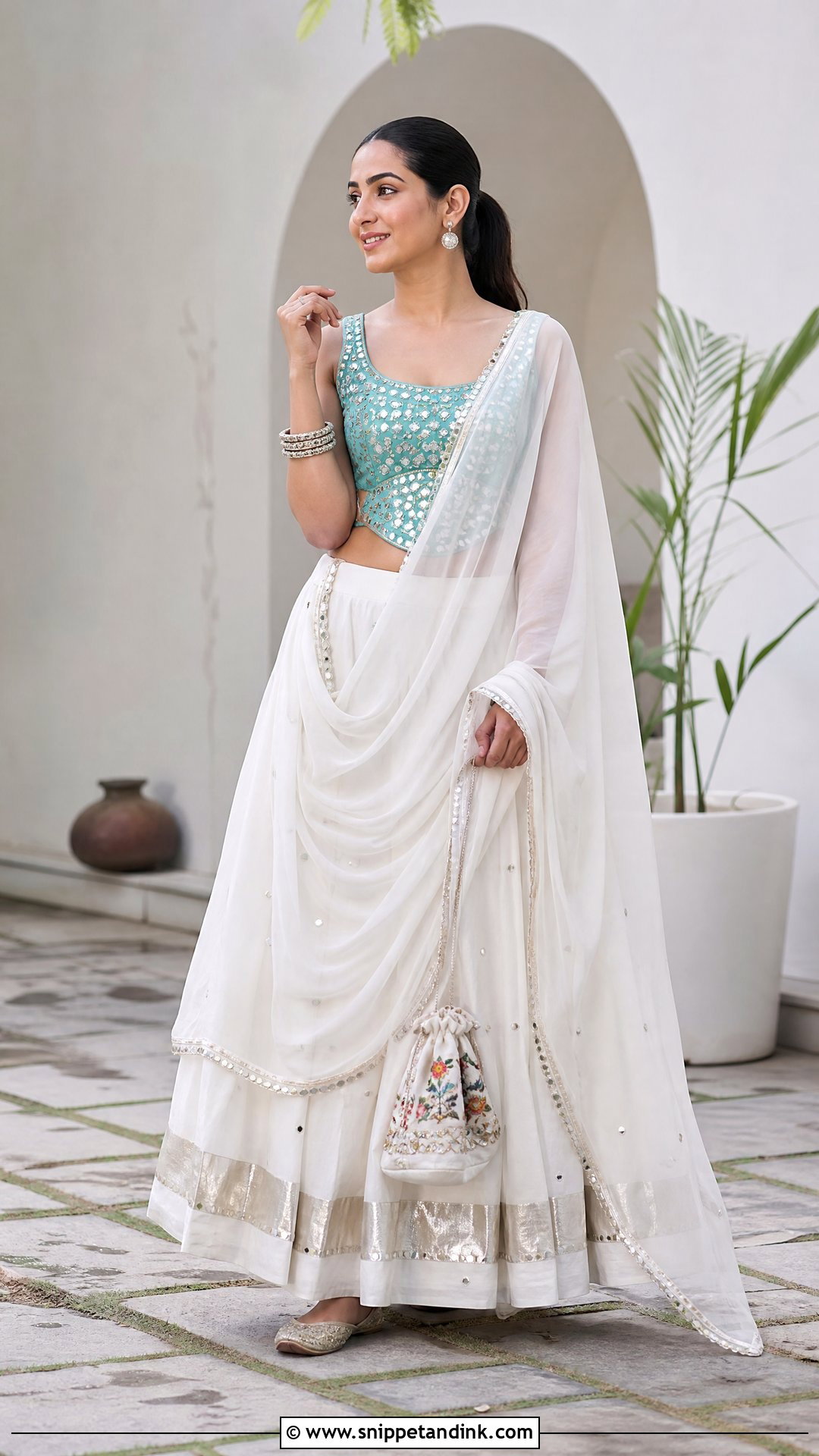
Mirror work does the job of jewelry, so I’d leave the necklace off entirely if the neckline is embroidered. Check that every mirror is held by a full ring of stitching. Loose mirrors catch on the dupatta and on hair, and a dropped one has sharp edges. Turquoise, pink, green or multicolor thread gives a festive feel. A flowing white skirt with a slim metallic border and a sheer dupatta keep the blouse as the feature. Simple earrings, a few bangles and a smooth braid or low ponytail keep it from looking too formal. Metallic juttis, an embroidered bag and a neutral lip finish it.
15. White Dhavani With White Embroidered Blouse
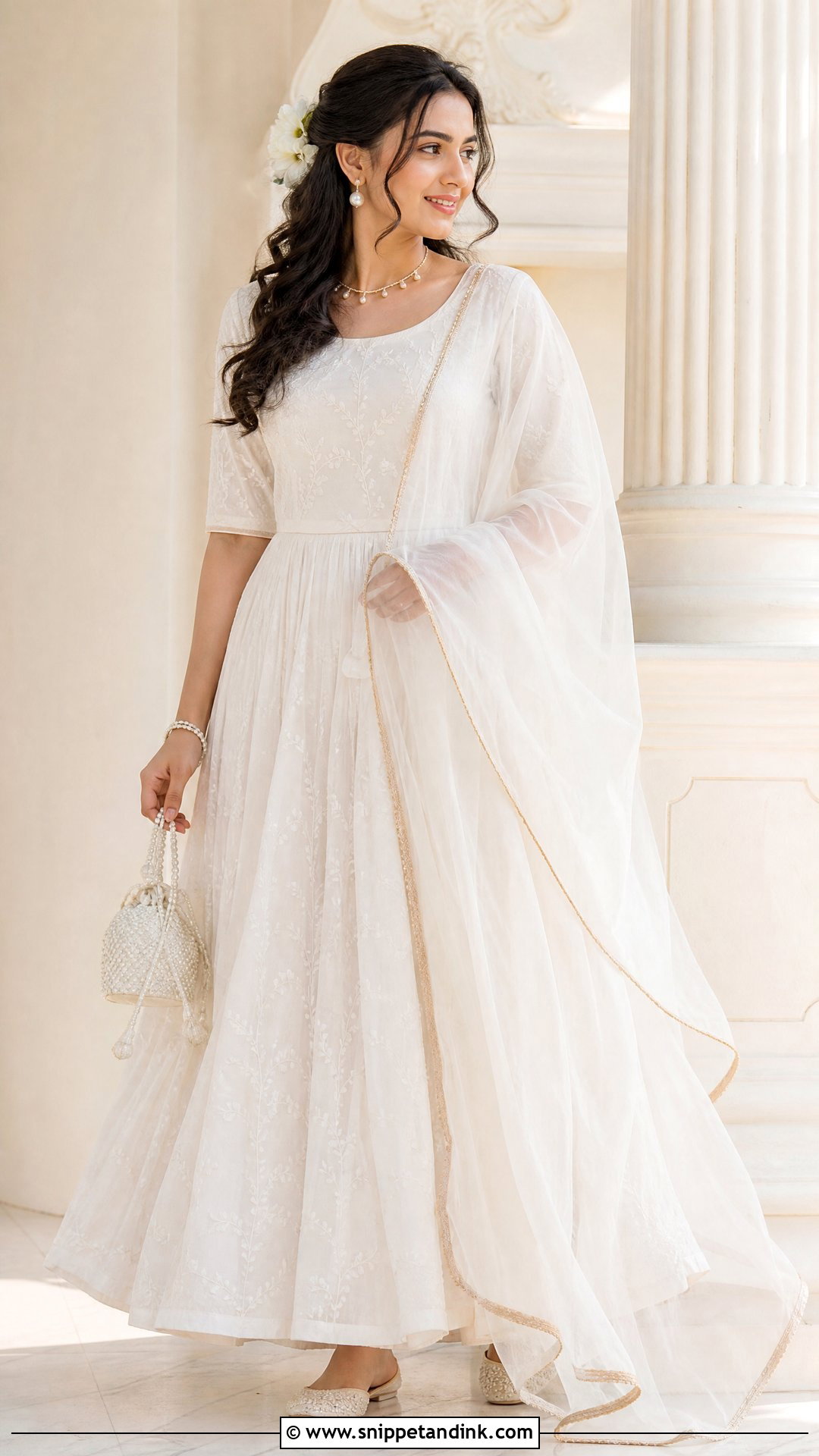
Head-to-toe white needs texture to avoid looking flat in photographs. Thread embroidery, cutwork, pearls or small sequins on the blouse give the camera something to catch. A subtle silver or pale gold border on the skirt and dupatta defines the shapes. A fitted elbow-sleeve blouse gives structure. I’d keep jewelry to pearl drops, a fine bracelet and one necklace. Soft curls or a low bun with white flowers, ivory juttis, a pearl potli and luminous skin suit it. As noted below, check family custom first, since an all-white outfit is not worn at every function.
16. White Kanjivaram Silk Dhavani
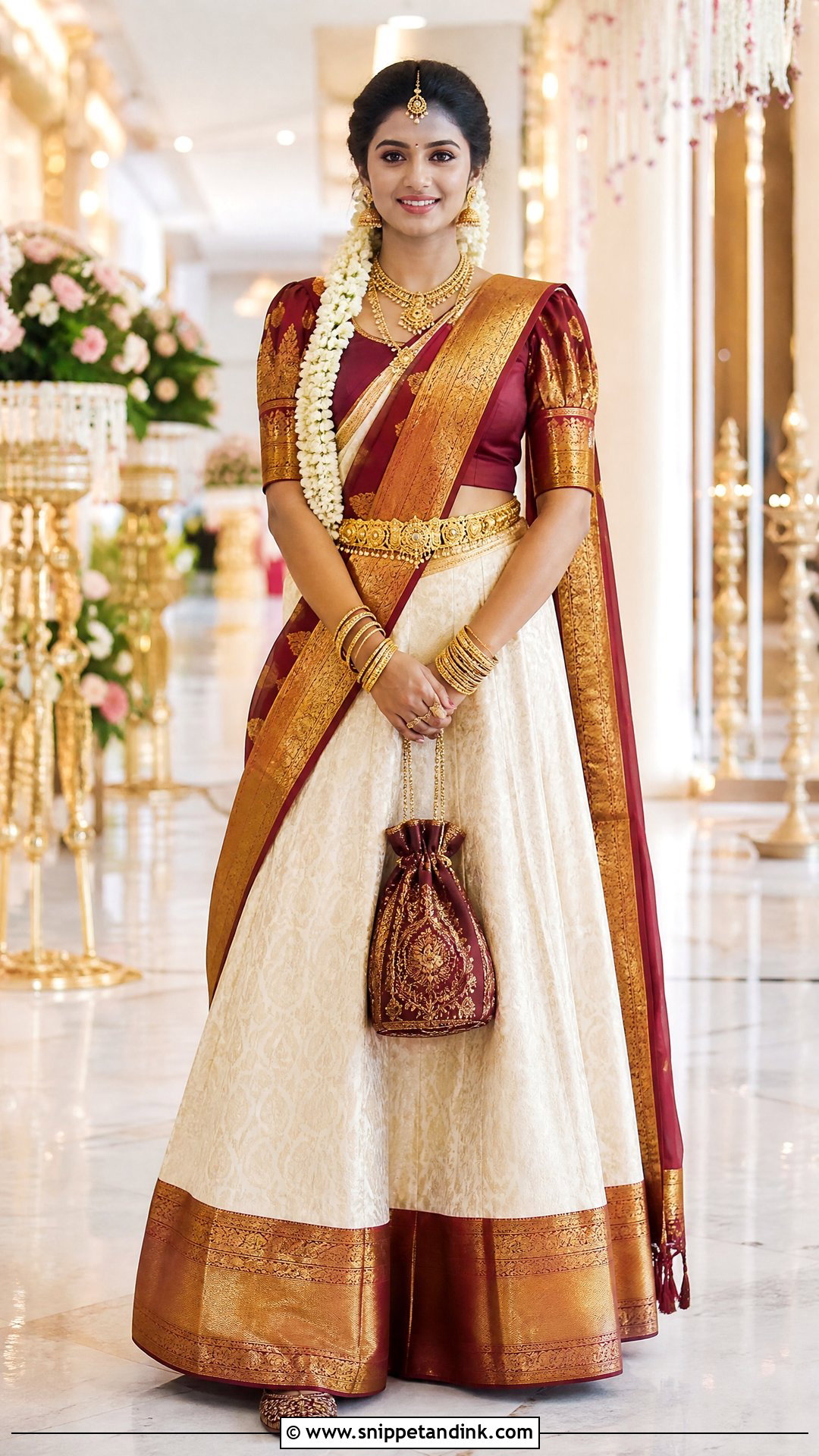
Kanjivaram silk is heavy and structured, so a white Kanjivaram dhavani holds pleats crisply and suits weddings and major ceremonies. An ivory skirt with woven motifs and a broad contrast border in gold, maroon, green or pink sets the color. Match the blouse to the border. The silk dupatta needs careful pleating and a secure shoulder pin; it’s too heavy to stay put on its own. Traditional gold jhumkas, a short necklace, bangles and an optional waist belt suit the weight of the fabric. A long jasmine braid and comfortable gold or color-matched juttis keep it classic. Defined eyes, a red bindi and a warm rose lip balance the weight of the silk.
17. White Cotton Dhavani
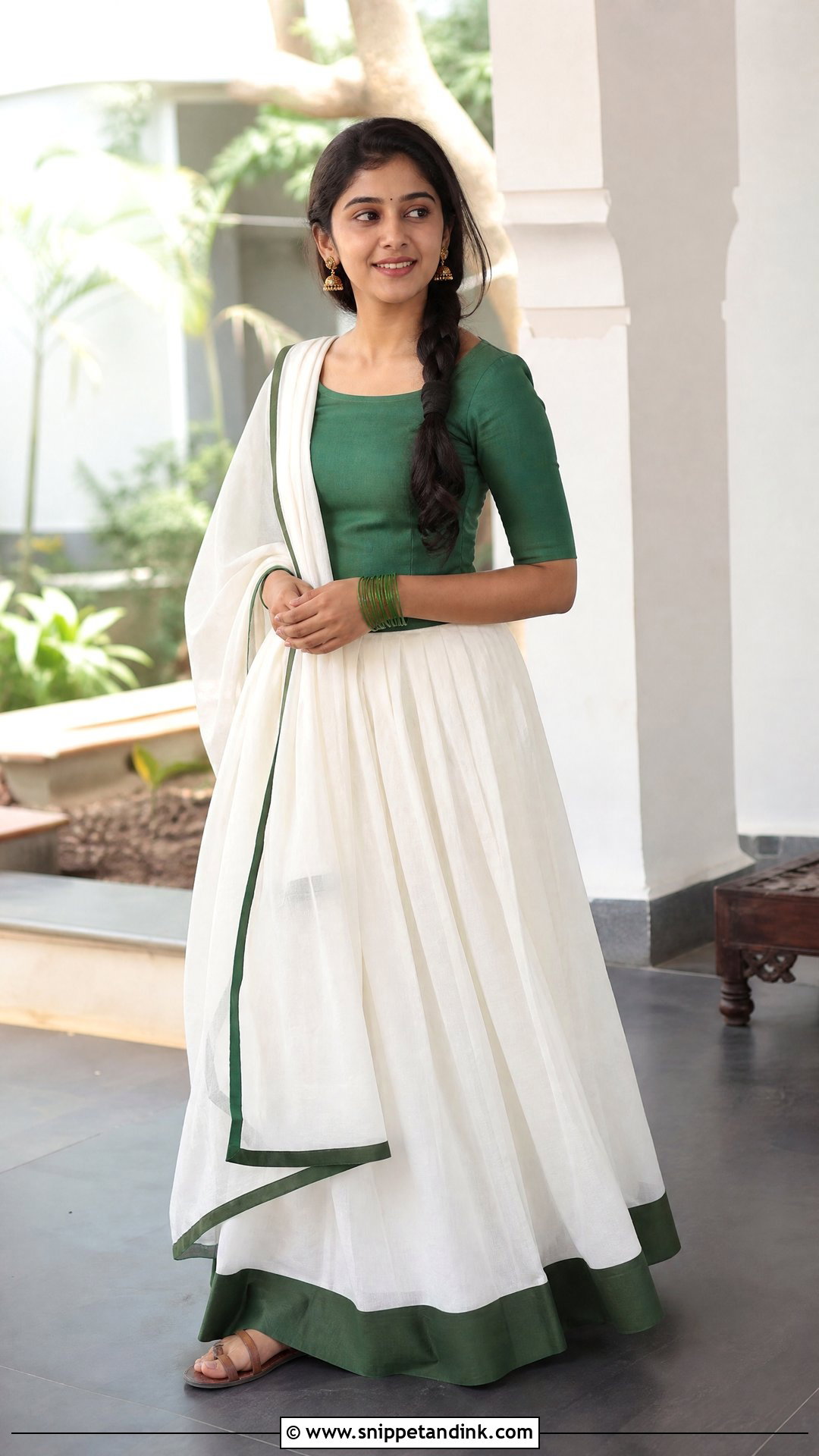
Cotton is what I suggest for long daytime functions in the heat, especially for younger girls who’ll be running around all day. A crisp cotton skirt with a green, red, blue or mustard border and a plain, well-fitted cotton blouse without heavy padding stay comfortable. Starch the dupatta lightly so it holds its pleats in humid air. Small gold earrings, glass bangles and a fine chain are enough. A simple braid, low bun or half-up style, flat leather sandals or woven juttis, kajal, a small bindi and tinted lip balm complete it.
18. White Organza Dhavani
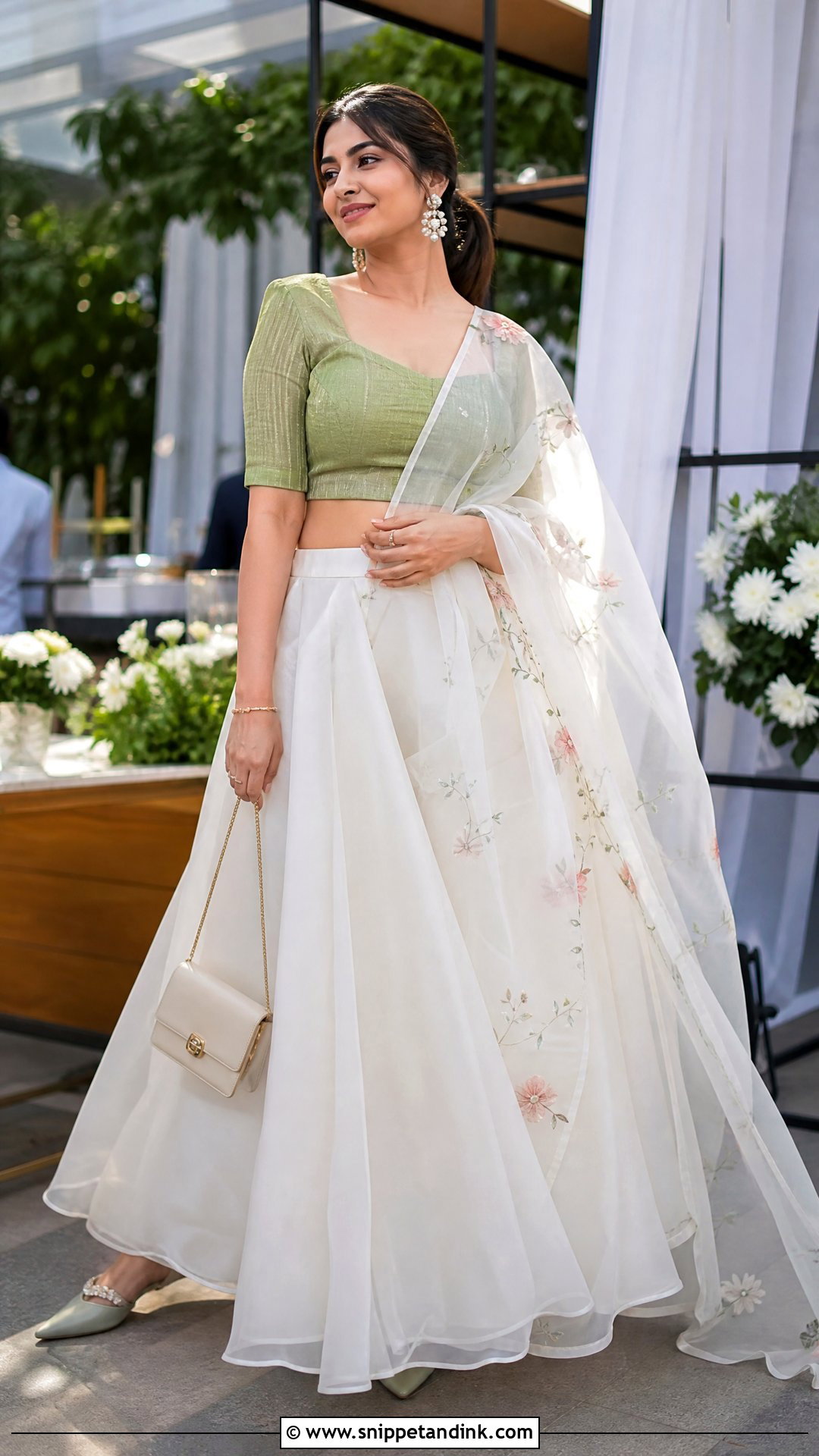
Organza gives volume without weight, but it scratches bare skin, so the skirt must be lined and the waistband finished neatly. A narrow embroidered border keeps it modern. Pair it with a structured silk blouse in pastel pink, sage, powder blue or ivory, and a sheer organza dupatta with scattered florals or a clean satin edge. Pearl-and-stone earrings, a slim bracelet and a small pendant suit the light fabric. Soft curls or a polished low ponytail, embroidered flats, a pastel bag and luminous makeup with a pink-nude lip finish this daytime look.
19. White Dhavani With Temple Jewelry
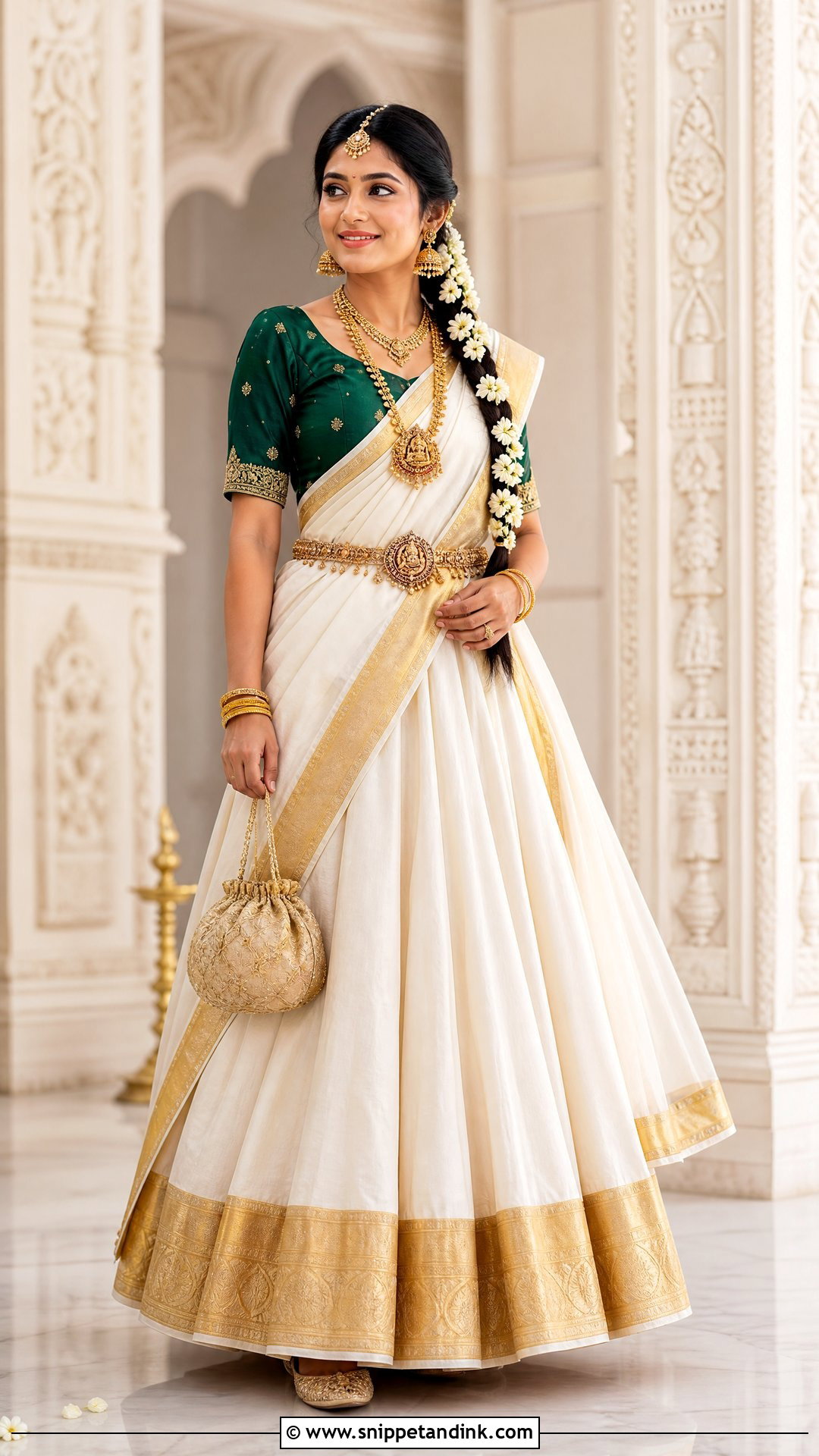
Temple jewelry gives a simple white dhavani a grand, traditional finish, but it is heavy, and I’d plan the neckline around it. An ivory silk skirt with a broad gold border, a deep green, red or maroon blouse and a white-and-gold dupatta pleated to leave the neckline clear make the base. Gold jhumkas, a short temple necklace, matching bangles and a slim belt are enough. Don’t layer extra chains over a detailed necklace. A long jasmine braid or a bun ringed with flowers, gold juttis, a brocade potli, kajal and a red bindi complete it.
20. White Dhavani With Waist Belt
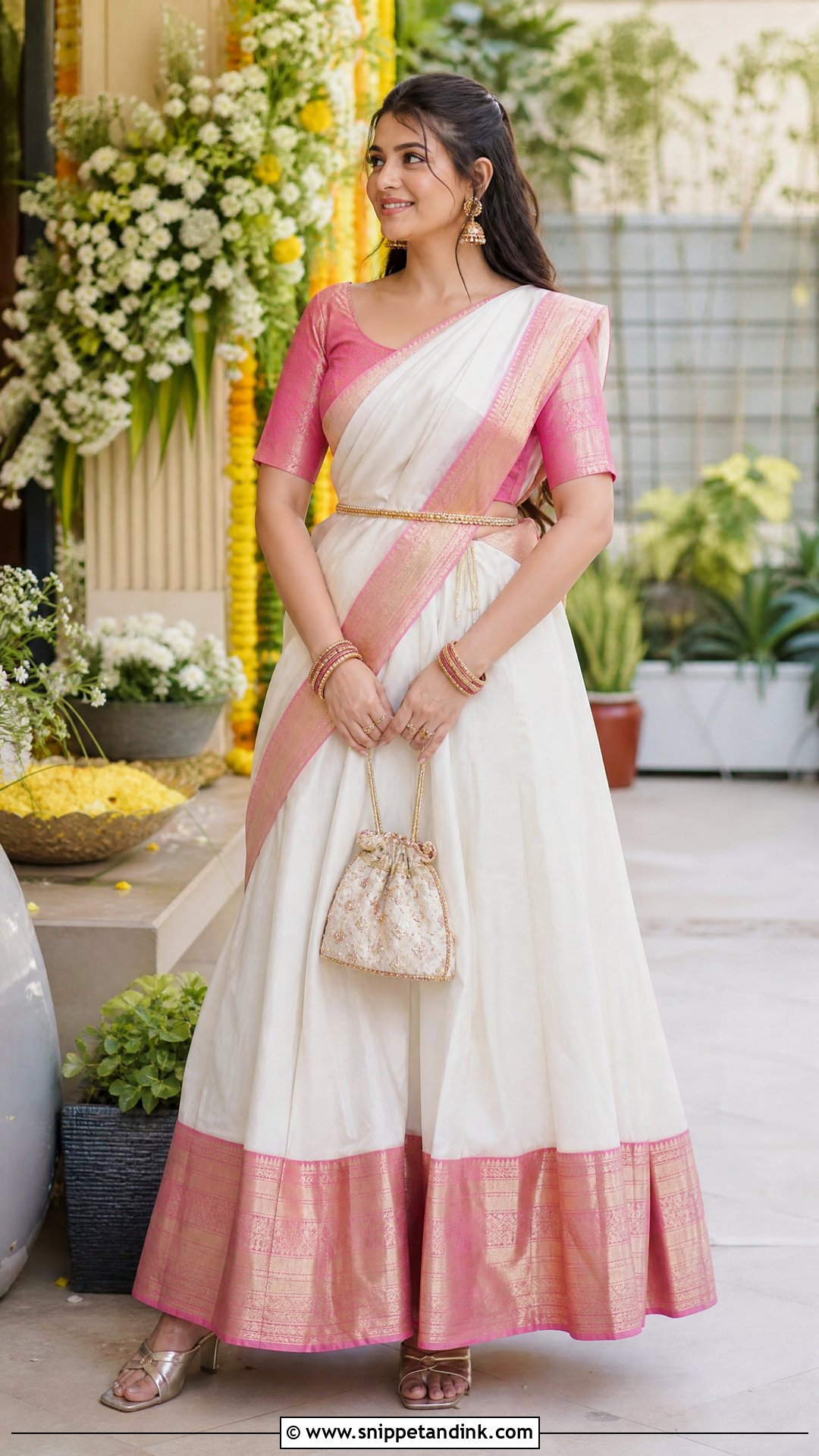
The belt is doing structural work here, not just decoration. It holds the lower dupatta pleats in place, which matters during a long function with a lot of sitting and standing. Coordinate the blouse with the skirt border, drape the dupatta diagonally and tuck its lower pleats under a slim gold, silver, pearl or fabric belt at the natural waist. It should feel snug but never tight enough to leave marks after lunch. Match earrings and bangles to the belt metal. A structured braid, low bun or half-up style, metallic sandals, a small potli and a coordinated bindi finish it.
Is White Right for This Function? A Word on Custom
Half-sarees are traditionally associated with girls in their teens, worn from the coming-of-age ceremony until marriage, and today they appear at weddings, festivals and family functions across South India. Off-white with a gold border is deeply festive in many homes, Kerala’s kasavu tradition being the obvious example.
Even so, in some families plain white without a colored border, or white paired with black, is still avoided at auspicious events. I always ask before I style an all-white or black-and-white set. A colored blouse, a woven border and fresh flowers in the hair usually settle any doubt.
Keeping White Silk and Zari Bright After the Event
- Air the outfit inside out in shade for a few hours before folding; sweat left in silk yellows it.
- Spot spills quickly and take silk and Kanjivaram pieces to a cleaner who handles silk sarees; home washing can make red and maroon borders bleed into white.
- Wrap the skirt and dupatta in a soft cotton or muslin cloth, never plastic, and keep zari borders away from direct contact with metal hangers.
- Refold silk along different lines every few months; zari cracks along the same fold over time.
- Keep perfume, hair oil and deodorant off the fabric, since all of them dull zari and stain silk.
Fresh Jasmine, a Steady Pin and the Right Blouse Color
A white dhavani should feel graceful and comfortable for the whole function and suit the occasion. Gold borders and silk lean traditional; floral blouses, organza, silver detailing and waist belts lean contemporary. The blouse color is where you personalize a white base to your skin tone and jewelry. Get the fit, the pinning and the footwear right first, and balance the accessories after that. Fresh flowers, coordinated bangles and a well-chosen bindi will finish any of these white half-sarees without excess decoration.
You'll Like These Ideas:





Leave a Reply