
Silk doesn’t need beading or lace to look expensive. Light runs across it, it moves when you walk, and it gives a gown a quiet luxury that synthetics rarely manage. Bridal collections right now lean into exactly that: clean silhouettes, sculpted draping, slim slips and ball gowns stripped of ornament, where the fabric is the whole design. Silk suits that mood because one fibre can be woven into satin, charmeuse, crepe, mikado or organza, each with its own weight and shine. In the 25 gowns below I’ve noted the weave I’d ask for, and what each shape needs in a fitting.
Ivory, Champagne or Diamond White on Your Skin
Raw silk is naturally a warm, creamy colour. Bright white silk has been bleached or dyed, and every mill’s “ivory” is a little different. That’s why the same shape can flatter one bride and drain another.
My rule is to judge the colour by daylight, near a window, with the fabric held under your chin and no makeup on. Bridal salon lighting is usually warm and kind, and it hides undertones. Then compare:
- Diamond or bright white tends to suit deeper skin and cool undertones. On very fair skin it can make you look pale.
- Ivory, with a faint warmth, suits the widest range of skin and photographs softly.
- Champagne or a blush-tinted silk has visible colour. It can look warm and modern, but under flash it reads more golden than you expect.
Bring the shade of foundation you plan to wear on the day to the second appointment. Silk sits right against the collarbones, and a warm foundation next to a cool white bodice shows a visible line at the neckline in close-up photos.
Order your veil, sleeves or overskirt from the same maker if you can, and ask for a swatch to take shoe shopping. Silk tones that look identical in a shop can separate in photographs.
1. Silk Slip Wedding Gown
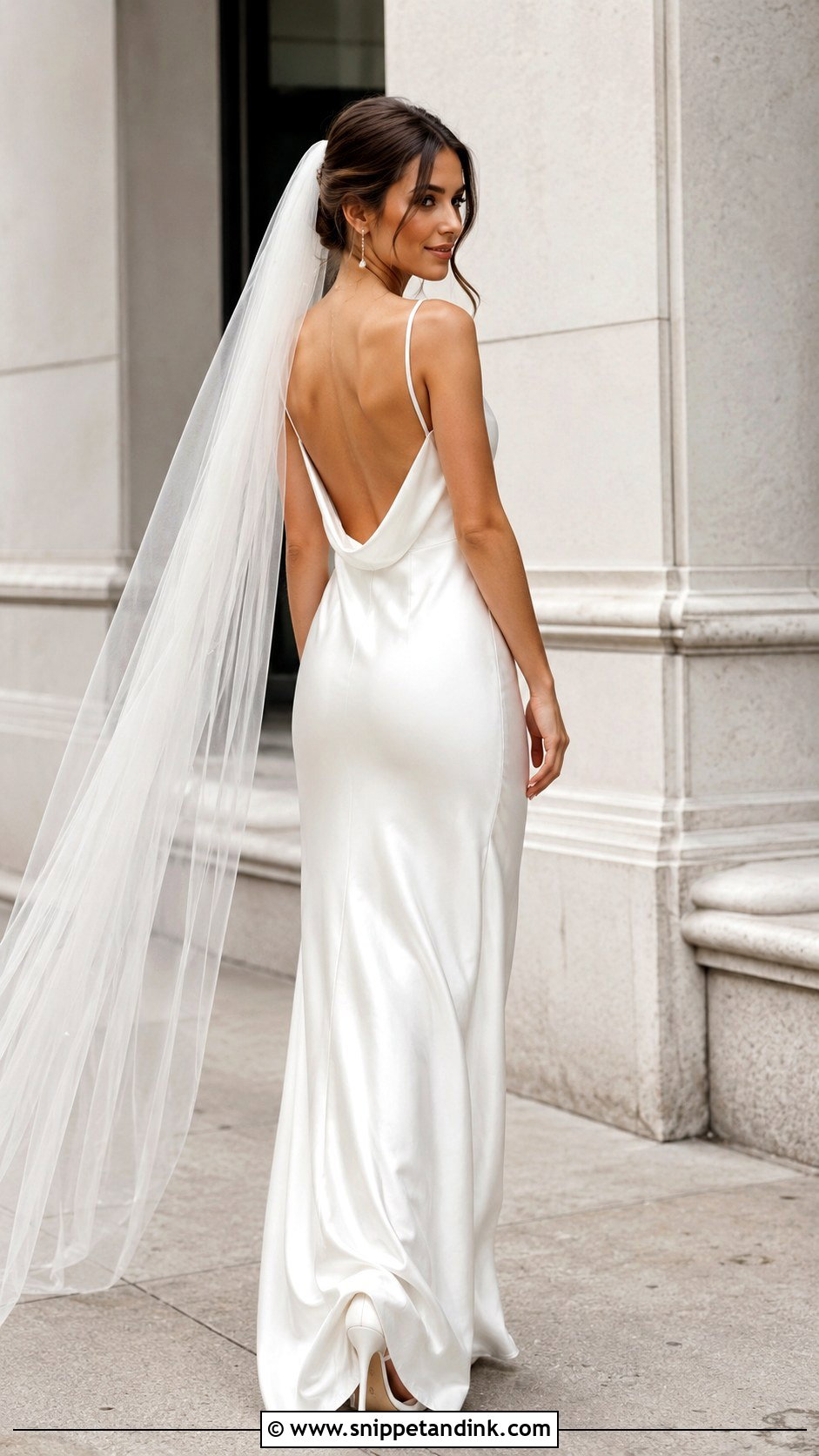
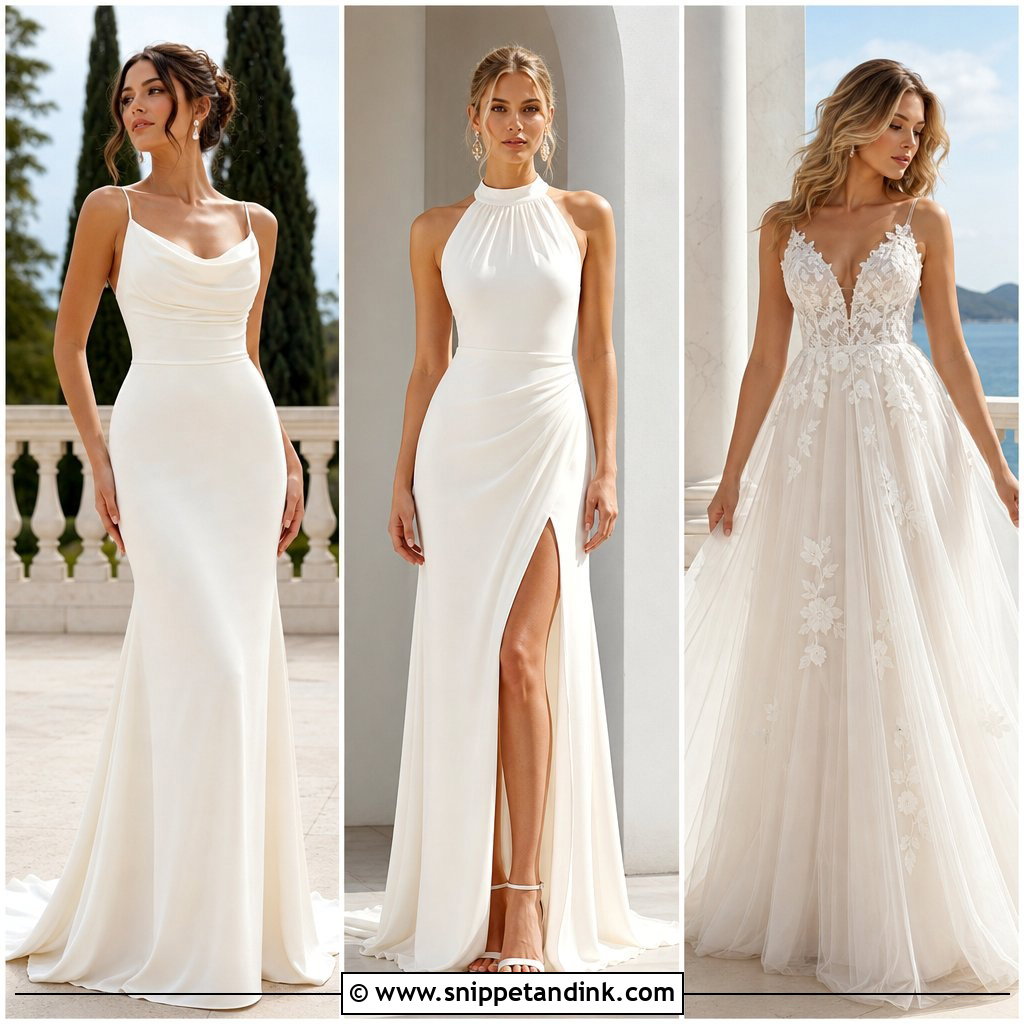
Most of my slip-dress fittings start with one conversation: what goes underneath. A silk slip wedding gown in charmeuse or satin is cut on the bias, so it follows the body and reveals anything beneath it. Thin straps, a cowl and a low back keep the shape simple. Barely-there ivory heels, pearl drops and a long sheer veil add softness. In cooler weather, a light silk shawl or a tailored bridal jacket covers the shoulders without hiding the line.
2. Silk Ball Gown Wedding Dress
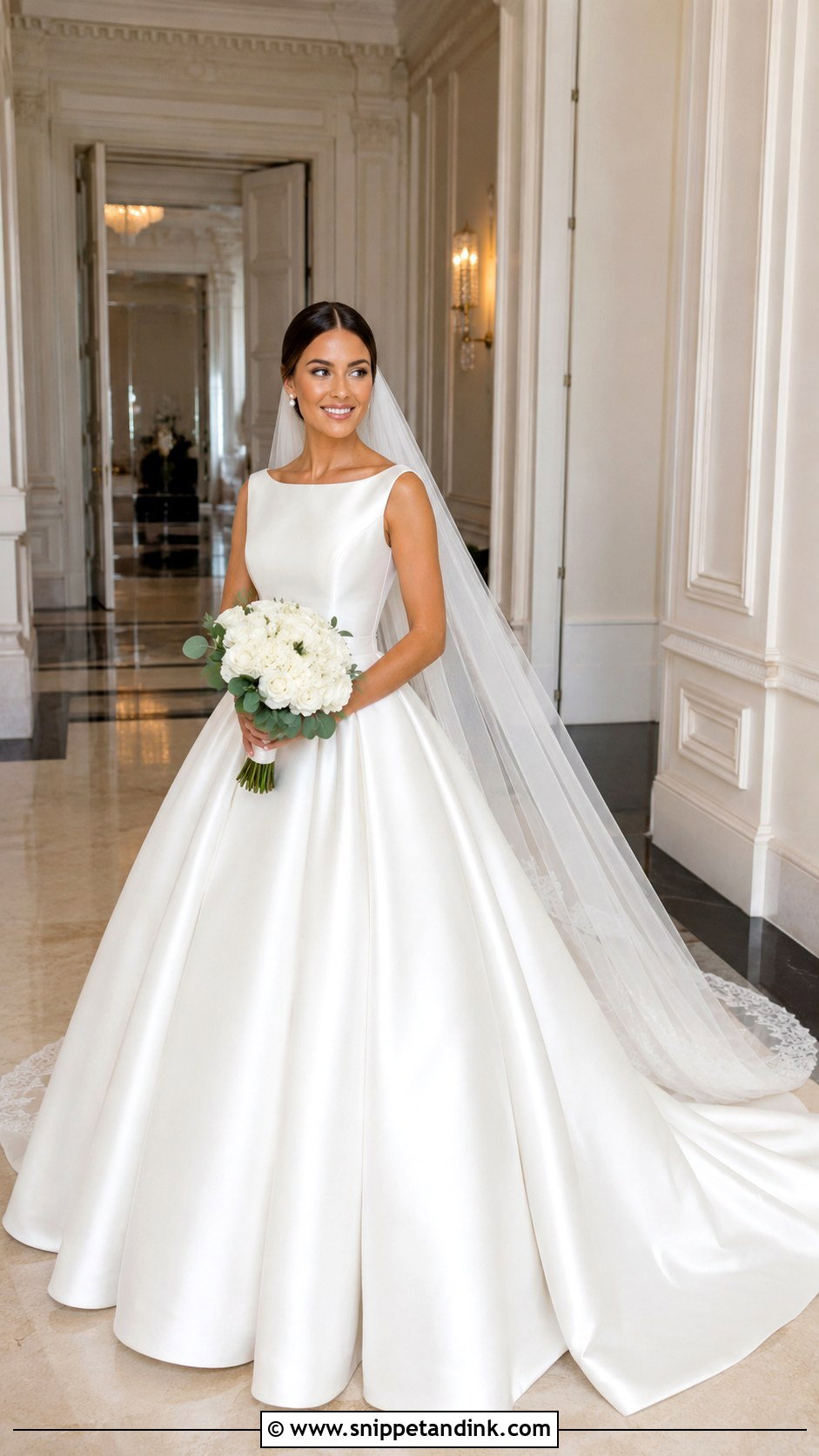
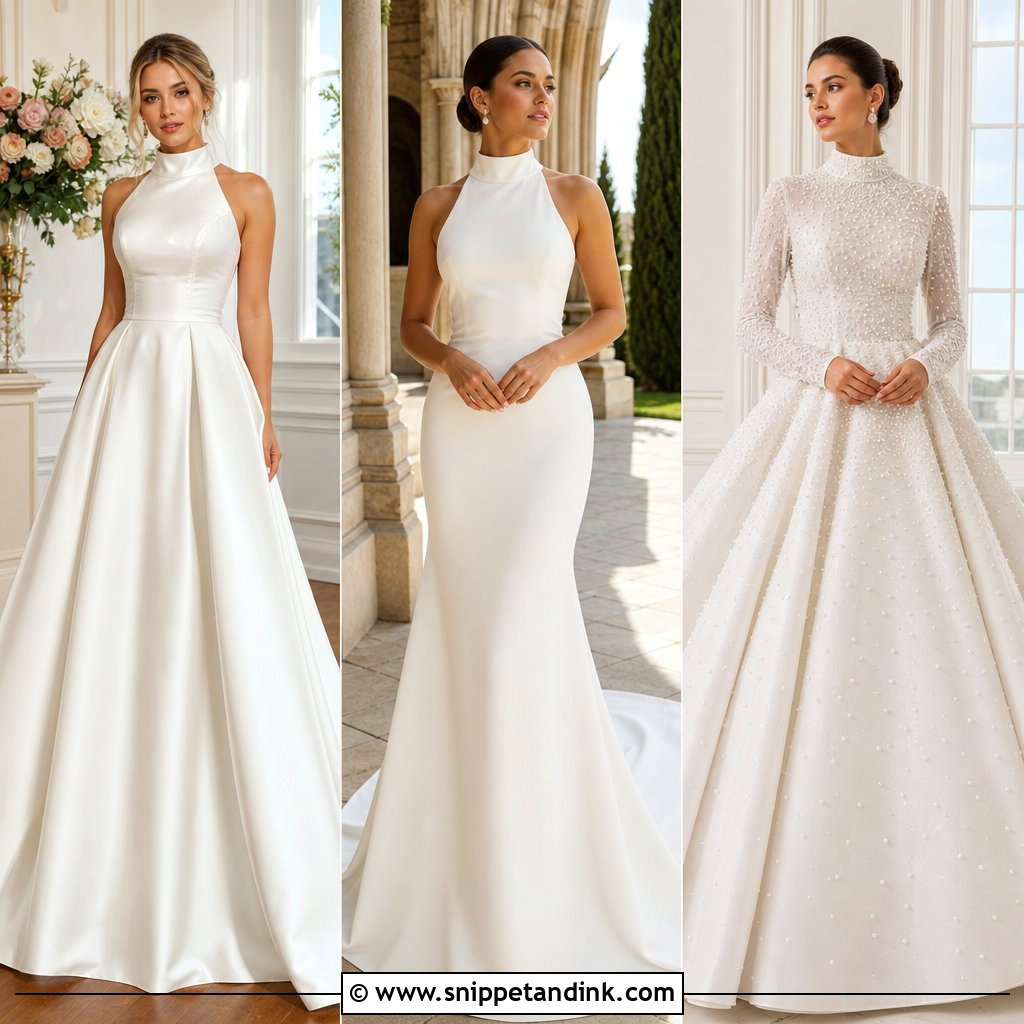
Volume in a silk ball gown comes from the weave, not from layers of net. Mikado or a heavy duchess satin holds a full skirt out with fewer petticoats beneath, which keeps the gown lighter and the silhouette crisp, and it gives you that classic bridal entrance. A fitted bodice and a clean waist balance all that skirt. Pointed satin heels, a structured bouquet, pearl studs and a cathedral veil suit grand hotels and black-tie estates. A strapless corset or square neckline gives the most support.
3. Silk A Line Wedding Gown
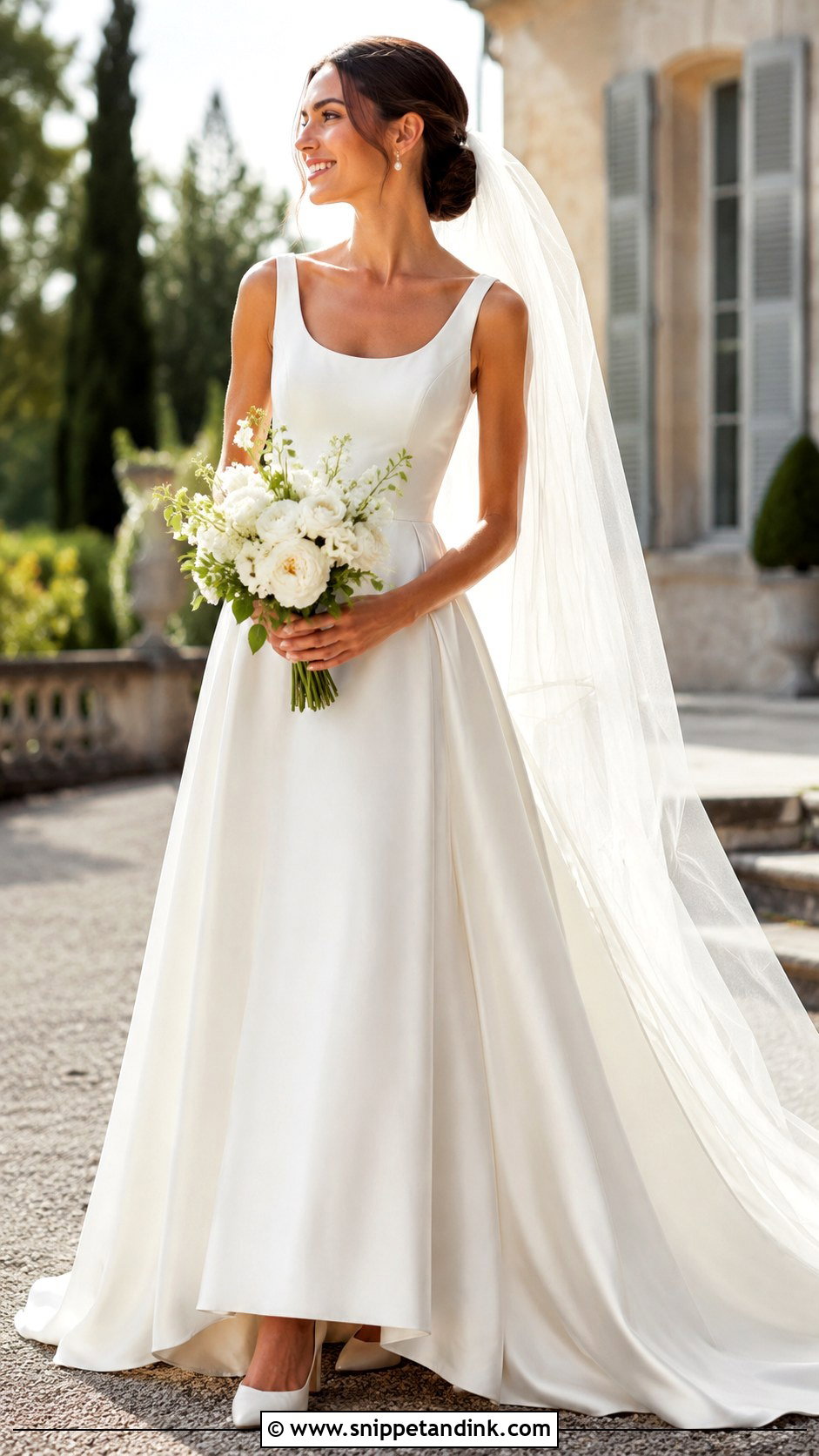
I suggest a silk A-line to almost every bride who isn’t sure what she wants yet. It defines the waist, then moves away from the hips, so walking, sitting and dancing are all easy. Satin gives shine, crepe a softer fall, mikado more structure. A scoop or square neckline, or delicate straps, keep it fresh. Pearl earrings, low block heels and a fingertip veil suit an outdoor ceremony as much as a ballroom.
4. Silk Mermaid Wedding Gown
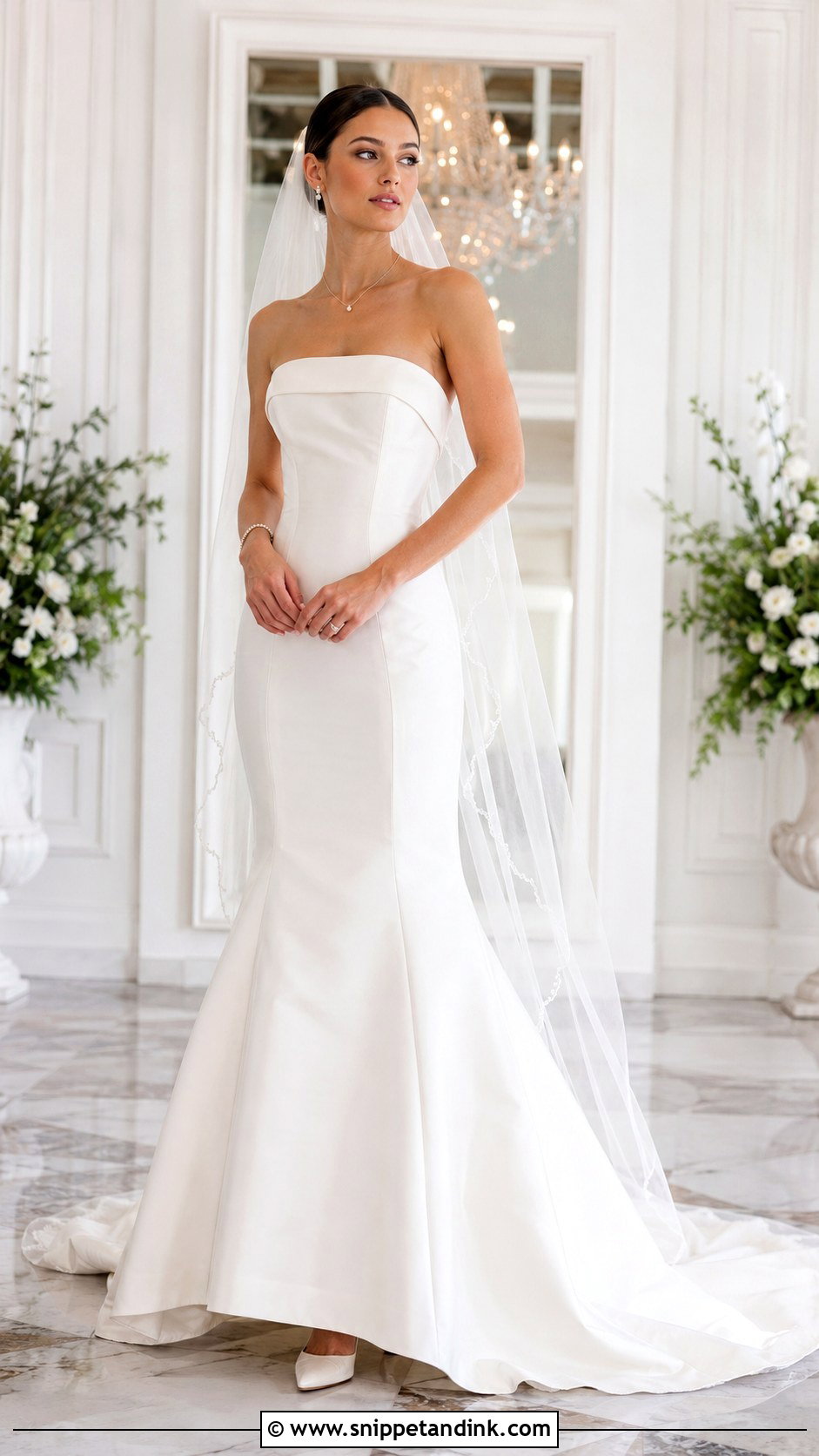
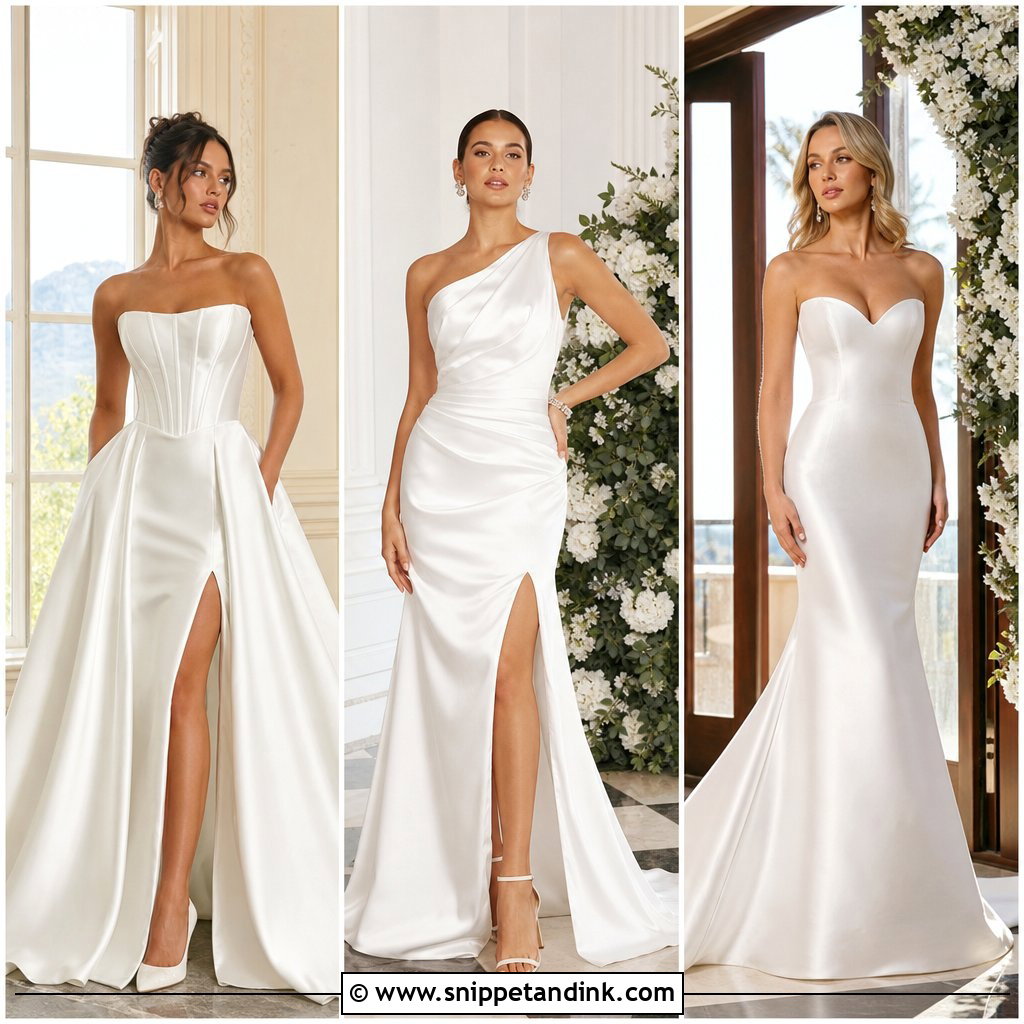
On a mermaid, the alterations are the design. Silk crepe or satin smooths over the body and flares from the knee or lower thigh, and if the flare point sits even slightly wrong for your height, the gown either pulls when you walk or looks bottom-heavy. Expect at least two or three fittings. A strapless, off-shoulder or bateau neckline keeps it sophisticated. Sleek heels, a sculptural bun, simple diamond or pearl jewellery and a long veil balance the fitted shape for an evening ceremony.
5. Silk Column Wedding Dress
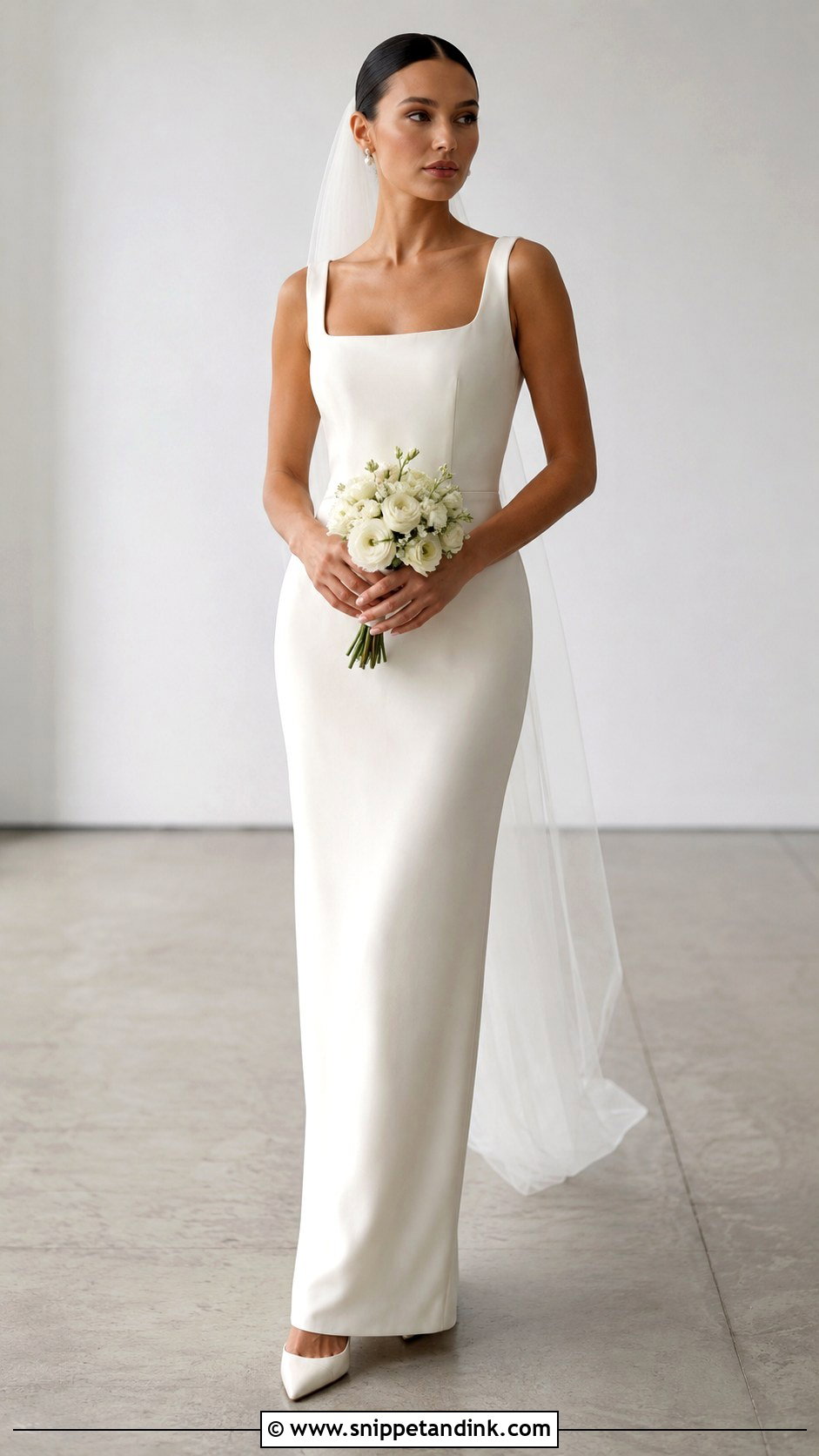
Columns are quieter than mermaids, with no flare at all, and much easier to move in. Silk crepe drapes into one long vertical line, though its matte surface does show tight spots across the hips, so I leave a little ease there. A high neckline, square neck or one-shoulder cut feels current. Pointed ivory pumps, a low veil, pearl studs and a small structured bouquet suit gallery and city weddings.
6. Silk Off Shoulder Wedding Gown
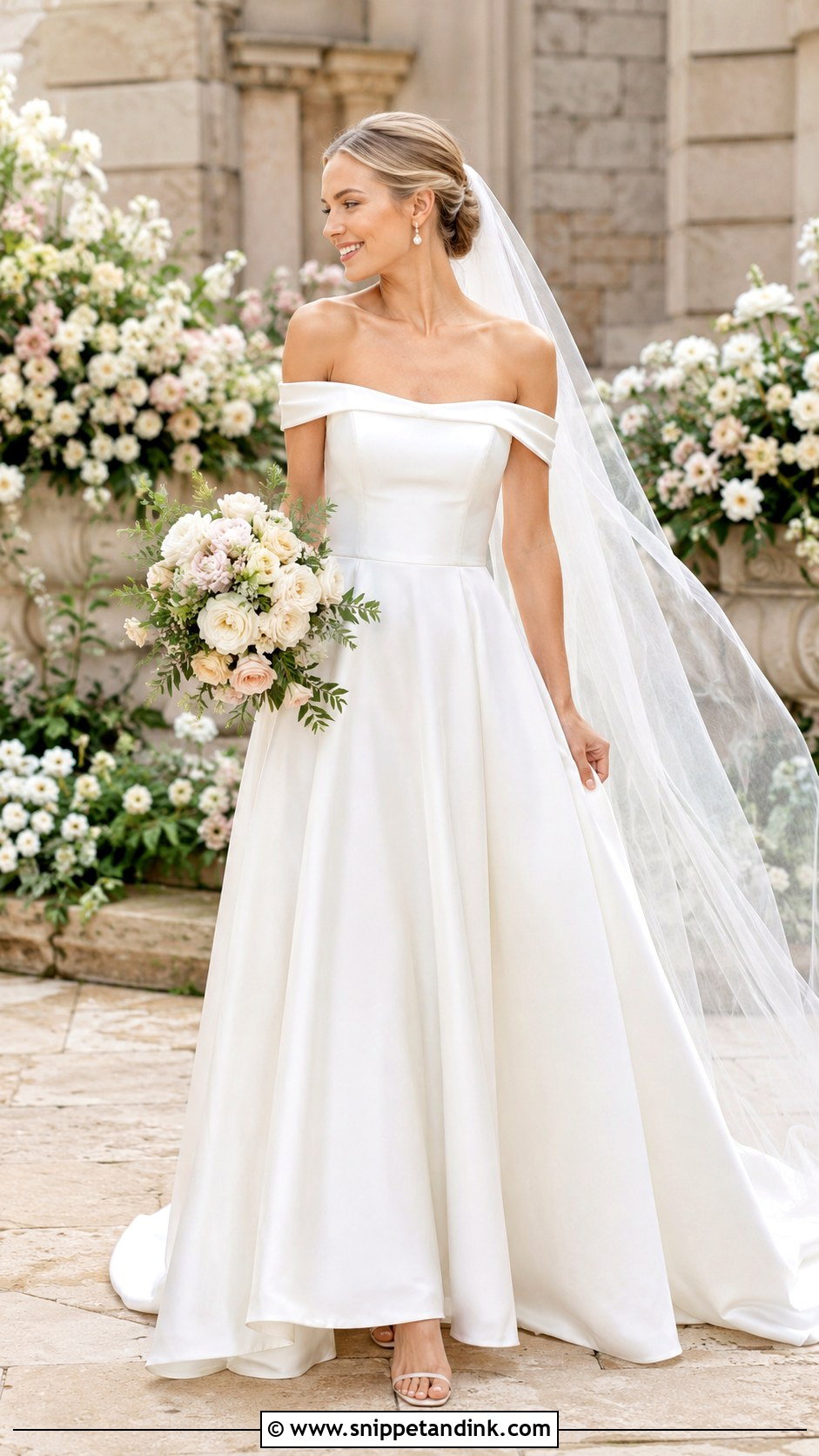
Off-shoulder necklines give silk a romantic frame without lace. In satin or mikado, the neckline band holds its shape; in softer silks it can slip, so it needs a firm inner band and fitting with your arms raised. The skirt can be a column, a soft A-line or a full ball gown. Keep accessories delicate: pearl drops, a low bun, ivory heels and a sheer veil set low at the back. Spring and garden weddings suit it best.
7. Silk Long Sleeve Wedding Gown
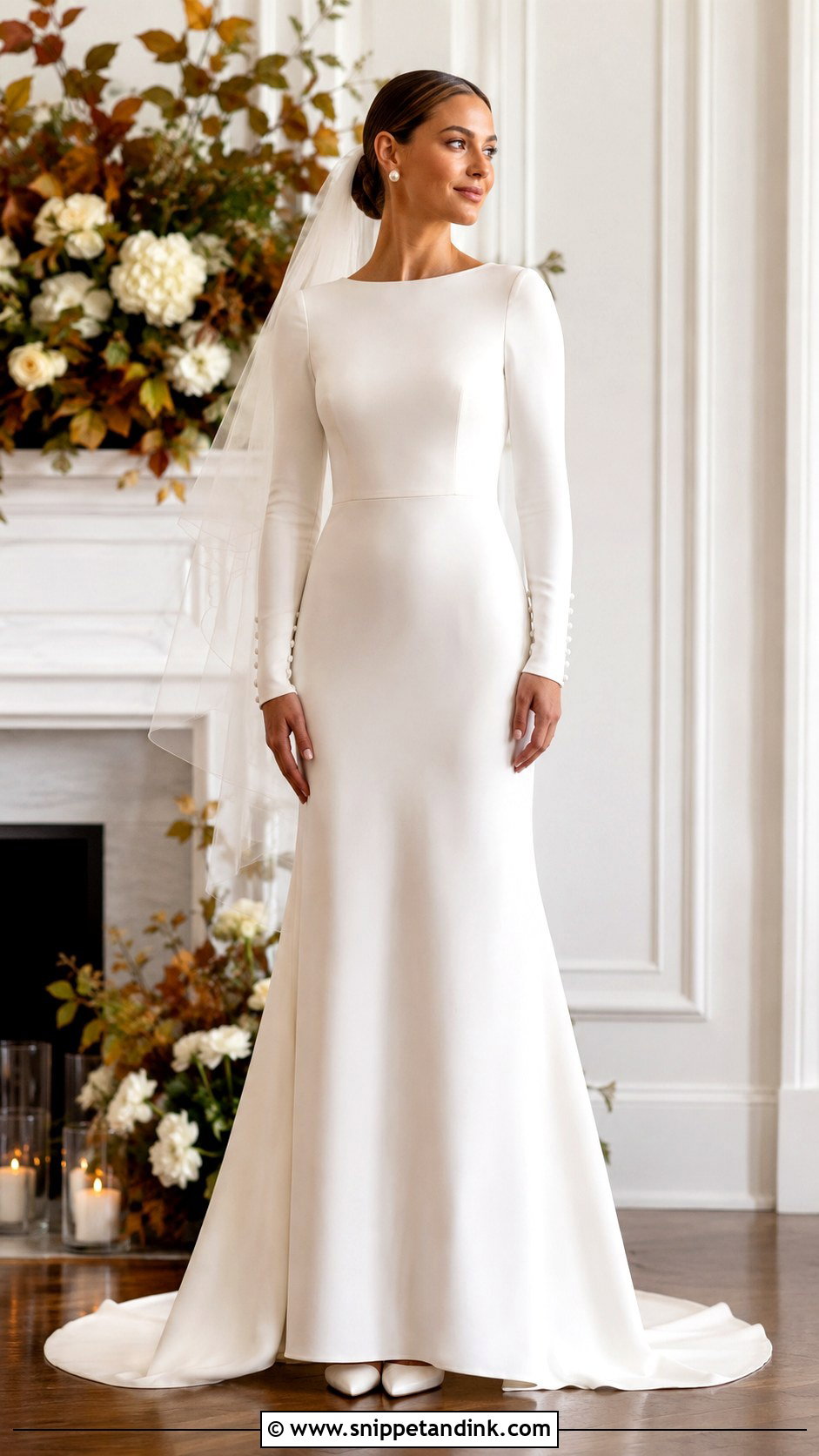
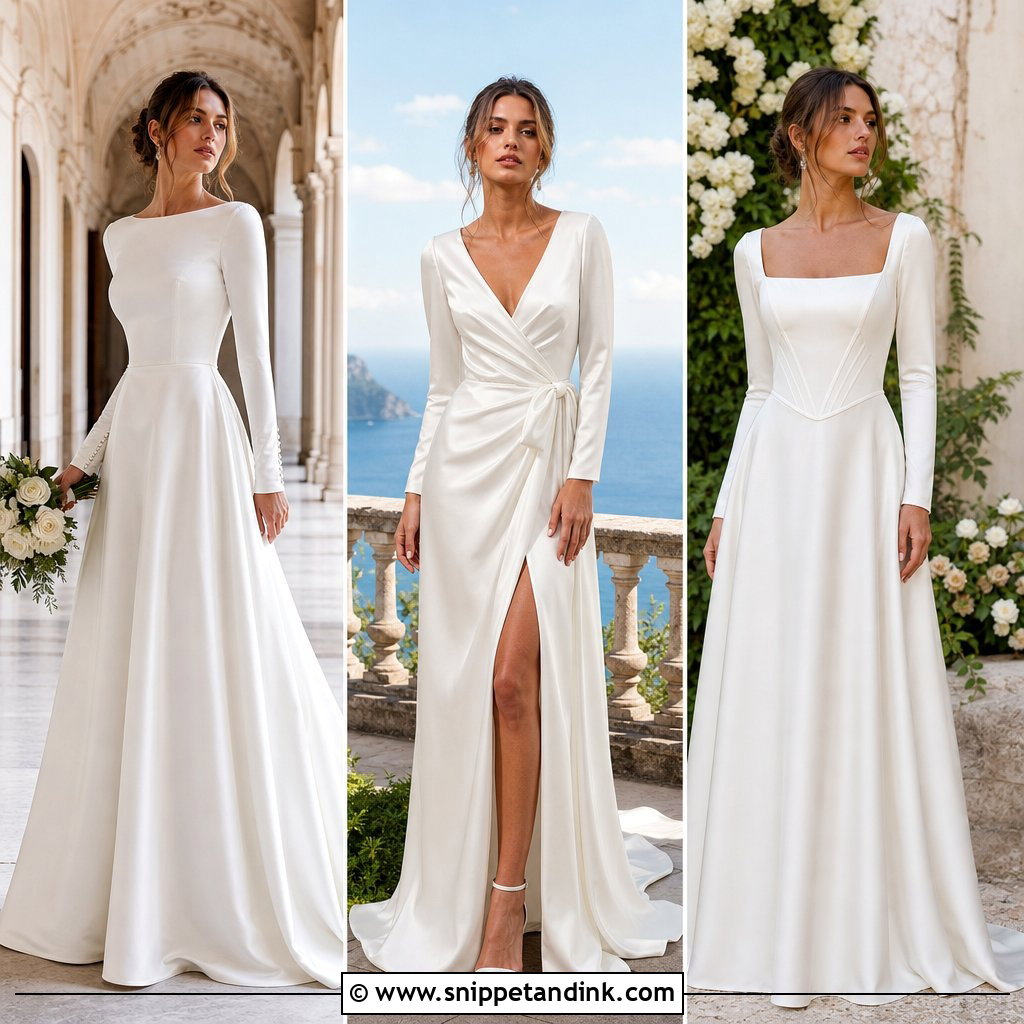
Long silk sleeves look romantic with covered buttons at the wrist, or modern on a clean high-neck column. Crepe gives a smooth, close sleeve; satin adds glow. Sleeves need a properly cut armhole to let you hug and raise a glass, and I always have brides do both at the fitting. Simple heels, a soft veil and small studs complete it. In a lighter silk it works for spring as well as autumn and winter.
8. Silk Strapless Wedding Dress
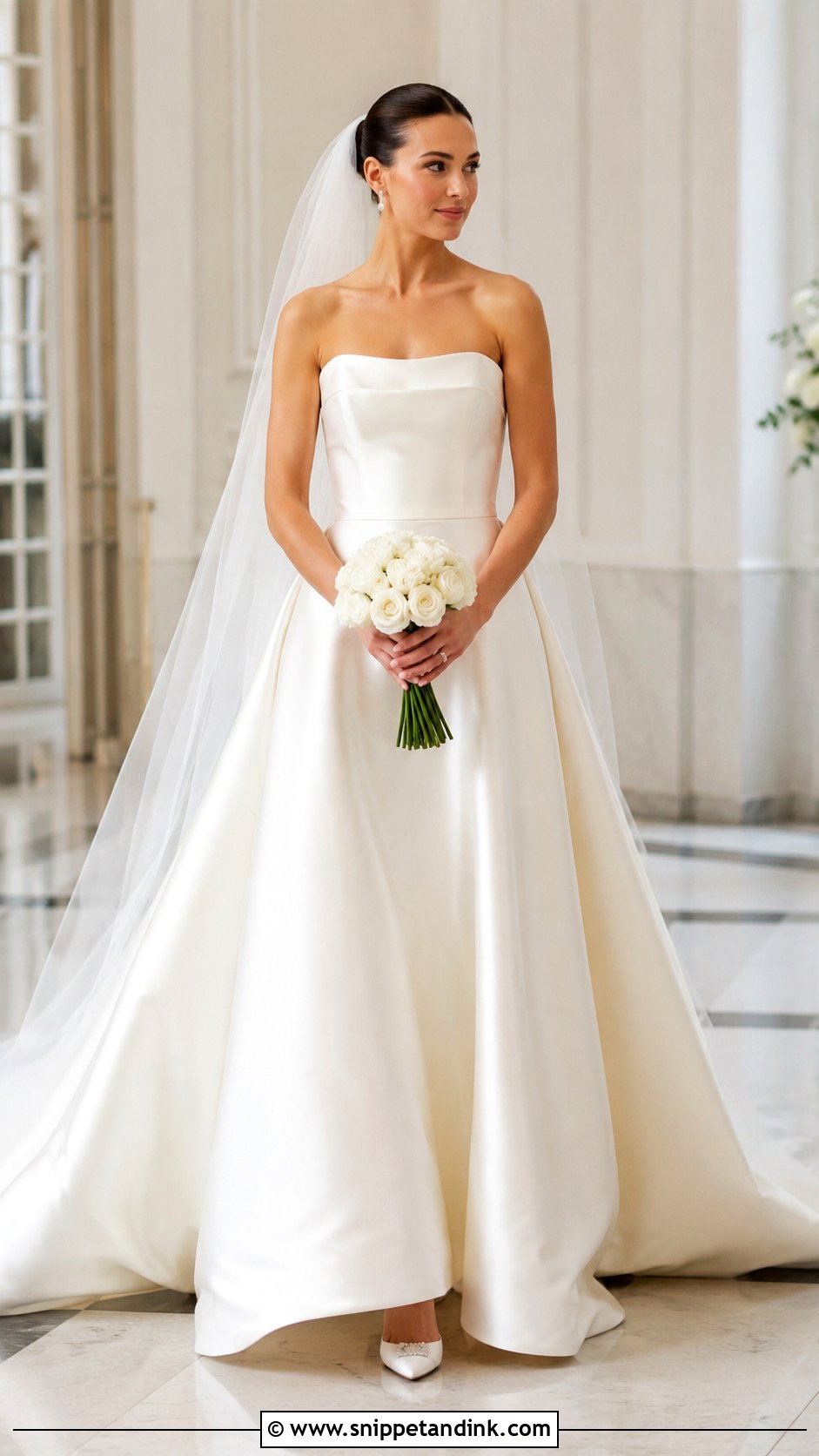
Strapless silk gowns are held up by an inner corset, not the silk. Look inside the bodice for boning and a waist stay, and expect the bodice to be fitted closely at the alterations stage. Mikado and satin give the cleanest line. The skirt can be a ball gown, an A-line or a column. A statement veil, sleek heels and earrings with a little detail finish it, in a ballroom or a city ceremony.
9. Silk Cowl Neck Wedding Gown
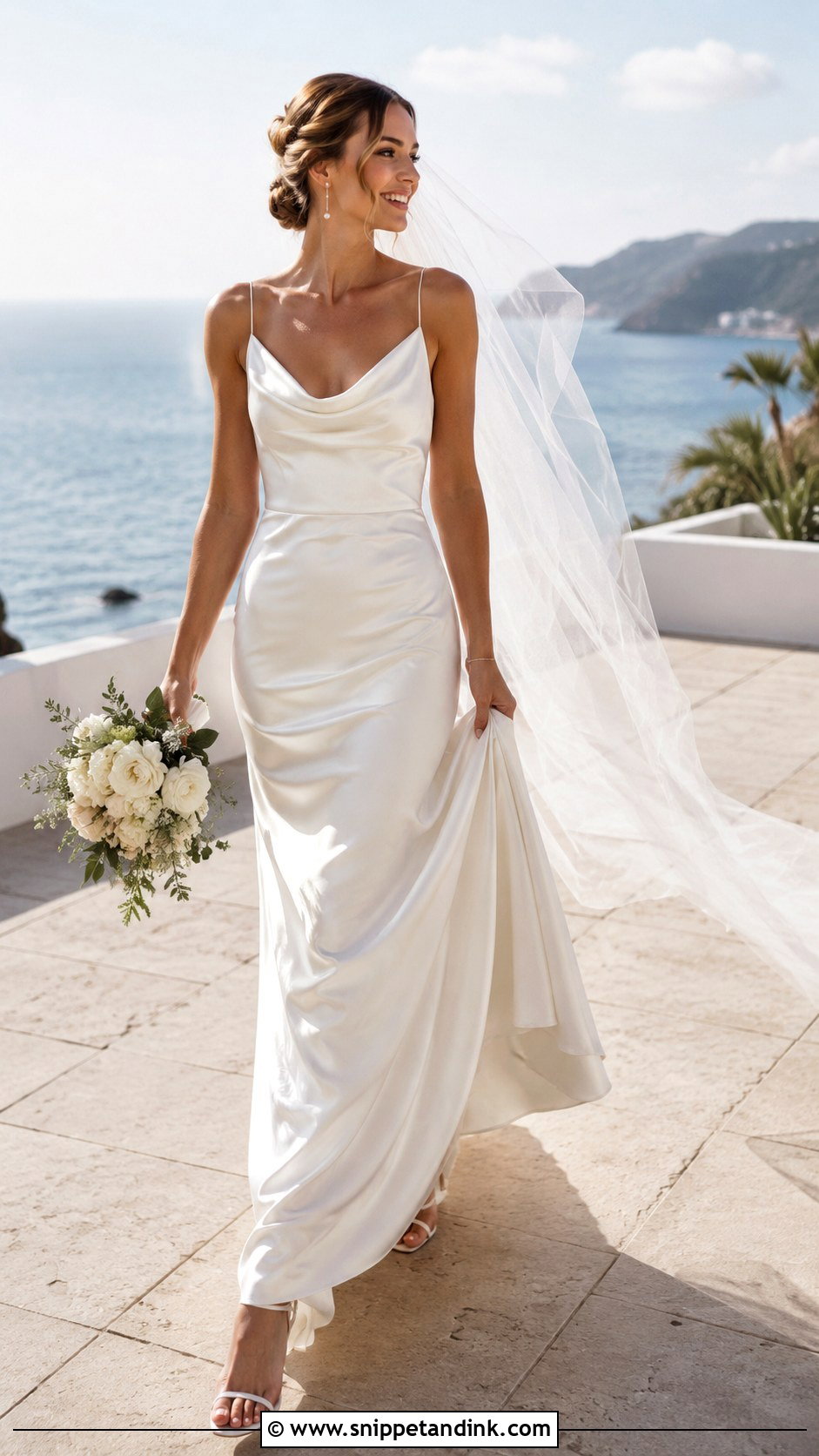
Charmeuse falls into soft folds by itself, which is why a cowl neck in this fabric looks so natural. It suits brides who like the slip but want more movement at the neckline. Thin straps, a bias cut and a low back keep it relaxed rather than formal. A cowl can shift when you lean forward, so I tack it discreetly inside. Strappy ivory heels, pearl earrings and a light veil suit a beach or destination ceremony.
10. Silk Square Neck Wedding Gown
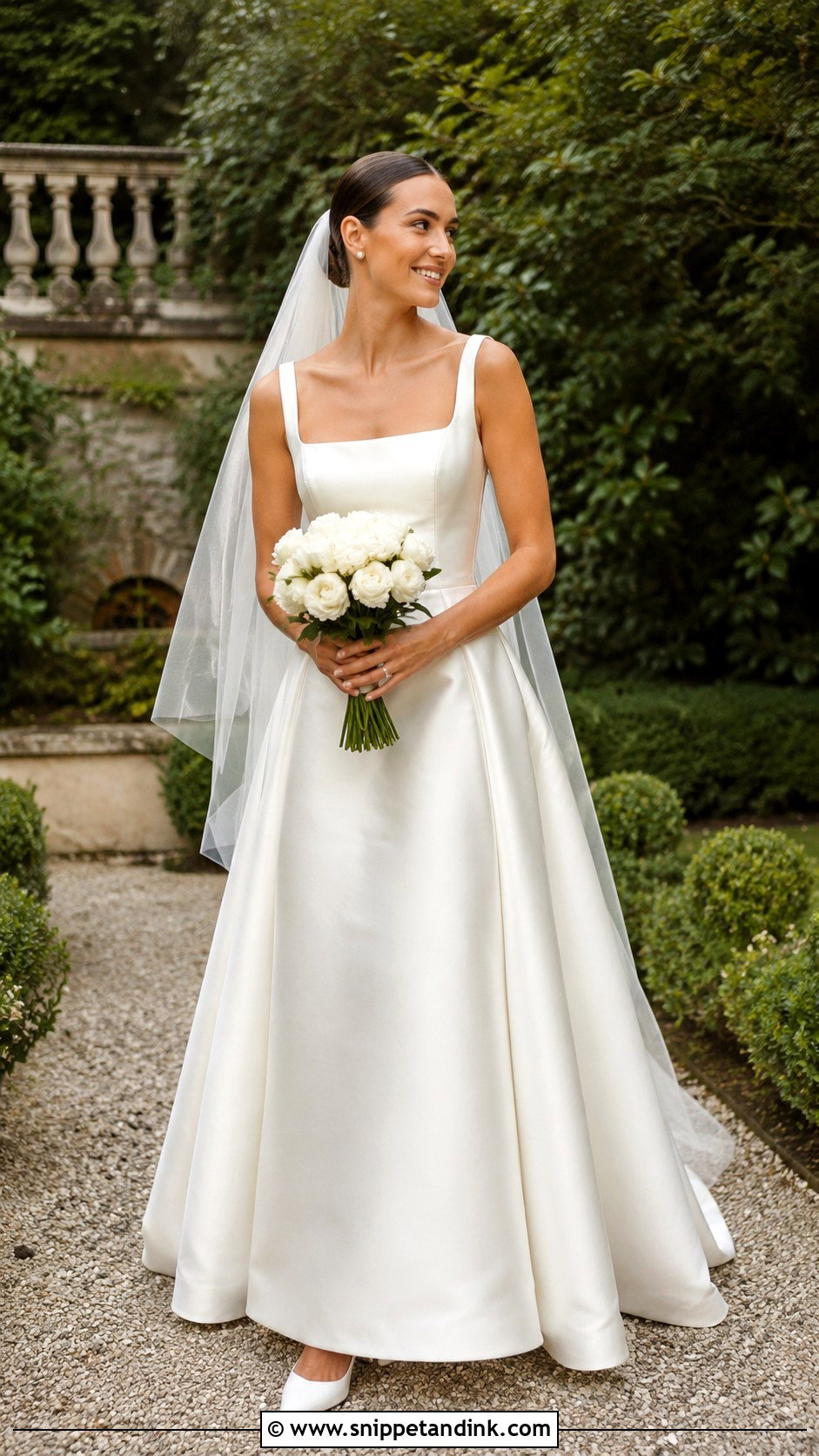
Square necklines frame the shoulders with structure but no harshness. In mikado, the corners stay crisp; in crepe, they soften. Paired with an A-line skirt the gown feels classic; with a column it turns architectural. A smooth updo, pearl studs, pointed heels and a plain veil keep the neckline clear. It’s a sensible pick for anyone who wants elegance without drama, at an estate or a garden.
11. Silk High Neck Wedding Dress
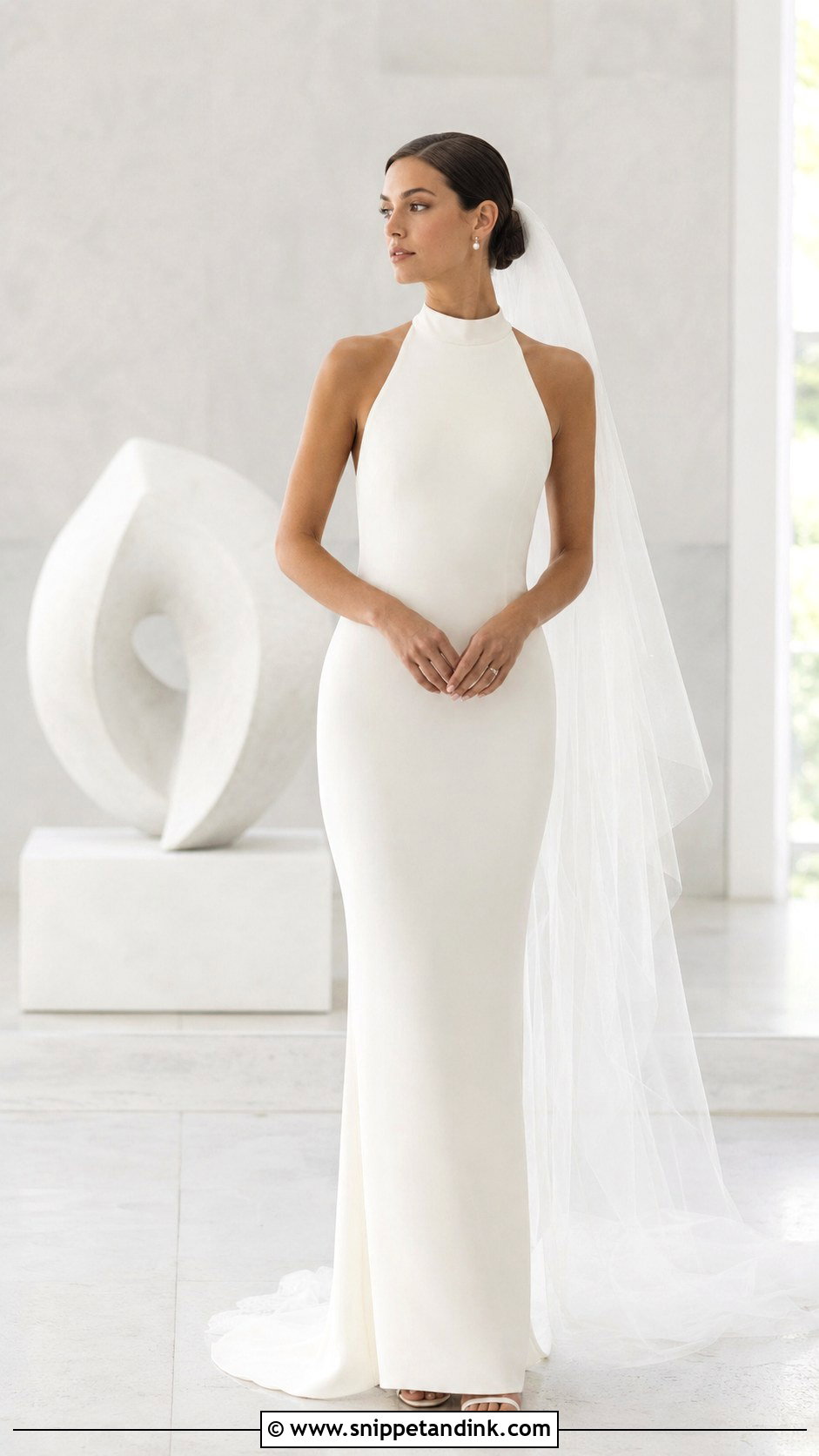
High necklines are where silk’s precision tailoring earns its cost. If the neckline is a few millimetres too tight, it pulls across the throat; too loose, it stands away. Crepe makes a soft column; satin looks more formal. A sleeveless version reads modern, long sleeves classic. A clean bun, small earrings and a veil falling from the back of the head balance the covered front at a museum or city wedding.
12. Silk One Shoulder Wedding Gown
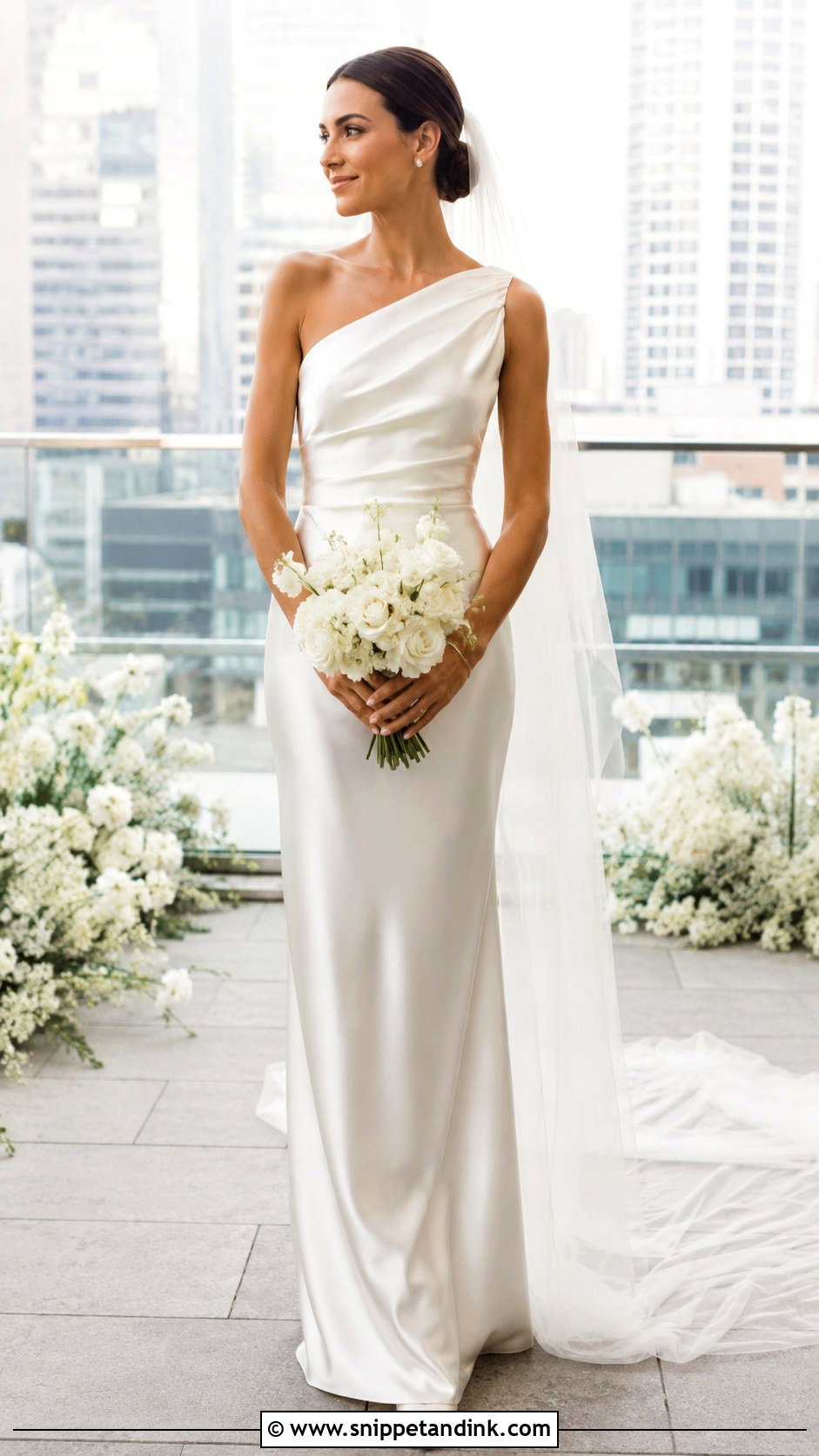
One-shoulder gowns depend on that single strap holding the bodice in place, so it should be anchored into internal structure, not just the outer fabric. Satin and crepe drape cleanly from the shoulder. A column skirt is sleek; a soft A-line adds movement. With the neckline making the statement, I keep jewellery to one bracelet or small earrings. Pointed heels and a simple low veil finish it for a rooftop or gallery wedding.
13. Silk Halter Wedding Gown
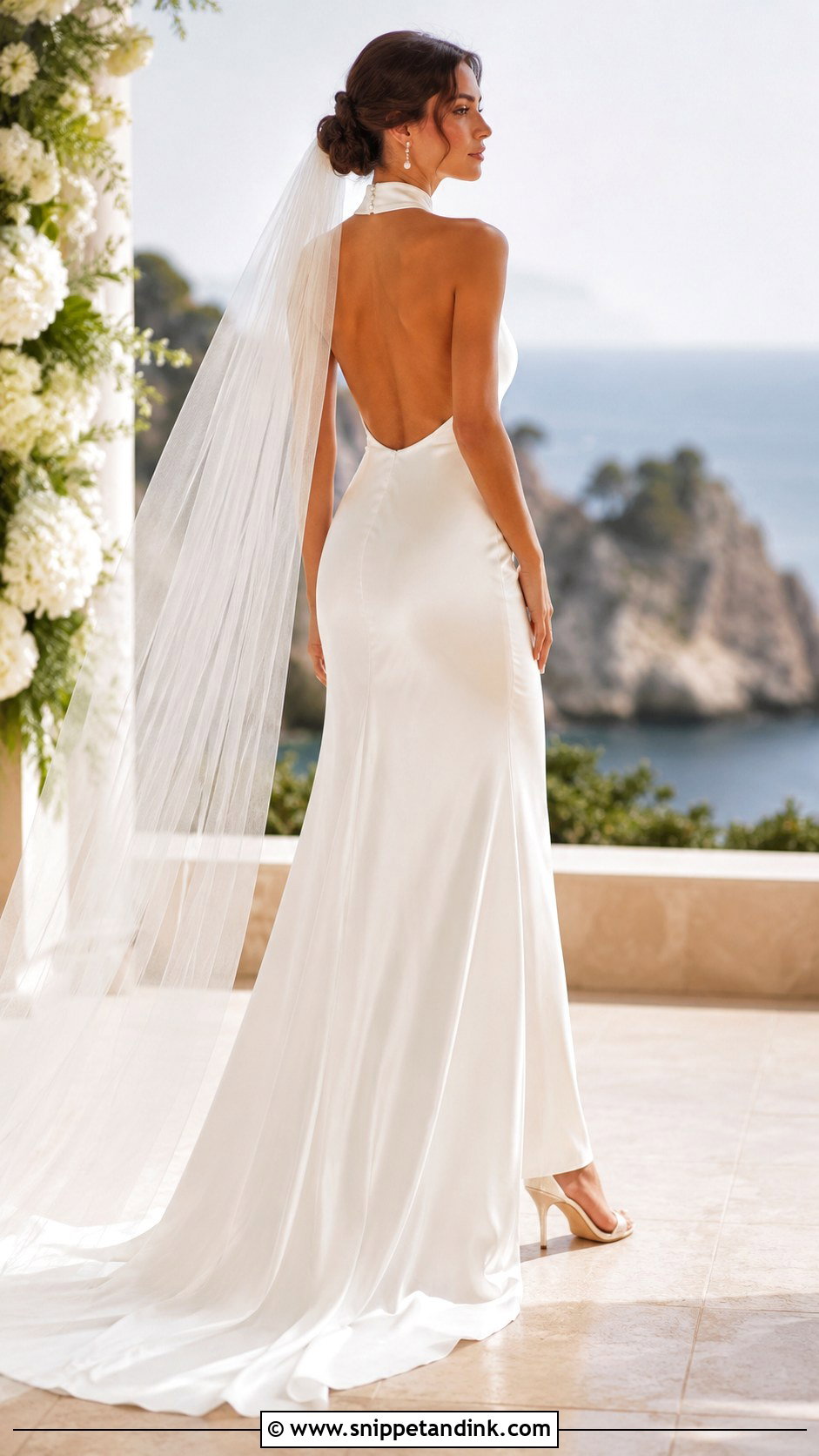
With a halter, the weight of the gown hangs partly from the neck, so I check the strap after the bride has worn it for twenty minutes, not two. Charmeuse feels fluid; crepe is smoother and holds the shape more firmly. An open back, covered buttons or a neck tie add detail. Simple earrings, a low bun and slim ivory heels suit it, and a long veil adds ceremony drama without hiding the neckline.
14. Silk Draped Wedding Gown
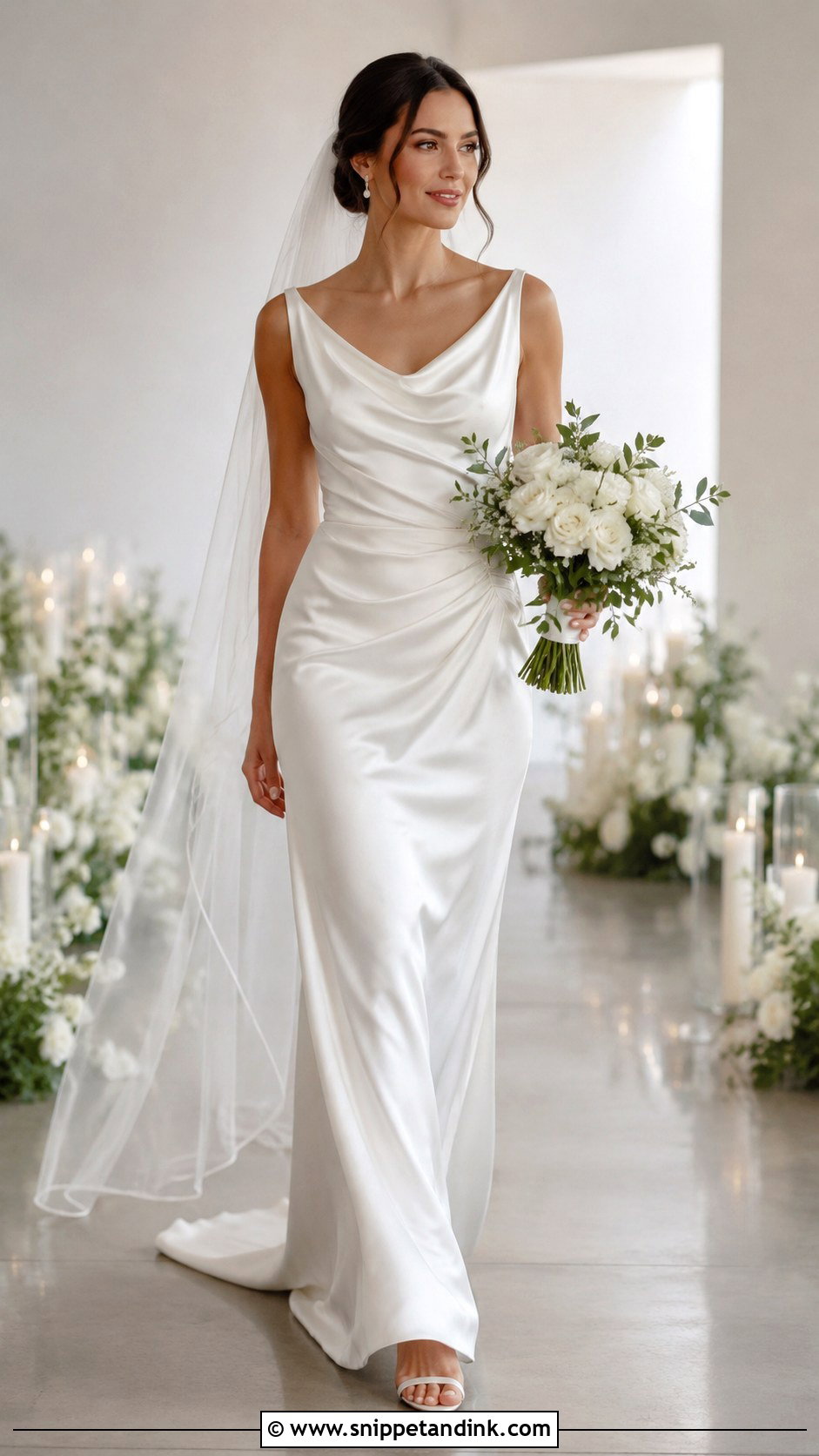
Draping is fabric folded and stitched into place, and in silk it shapes the waist, softens the hips or flows across the bodice without any beading. The folds also hide minor fit variations better than a flat panel. Satin, charmeuse and crepe all drape, with descending shine. A draped bodice with a column skirt feels current; a draped waist over an A-line is more romantic. Delicate heels, pearl earrings and a sheer veil keep it uncluttered.



15. Silk Corset Wedding Gown
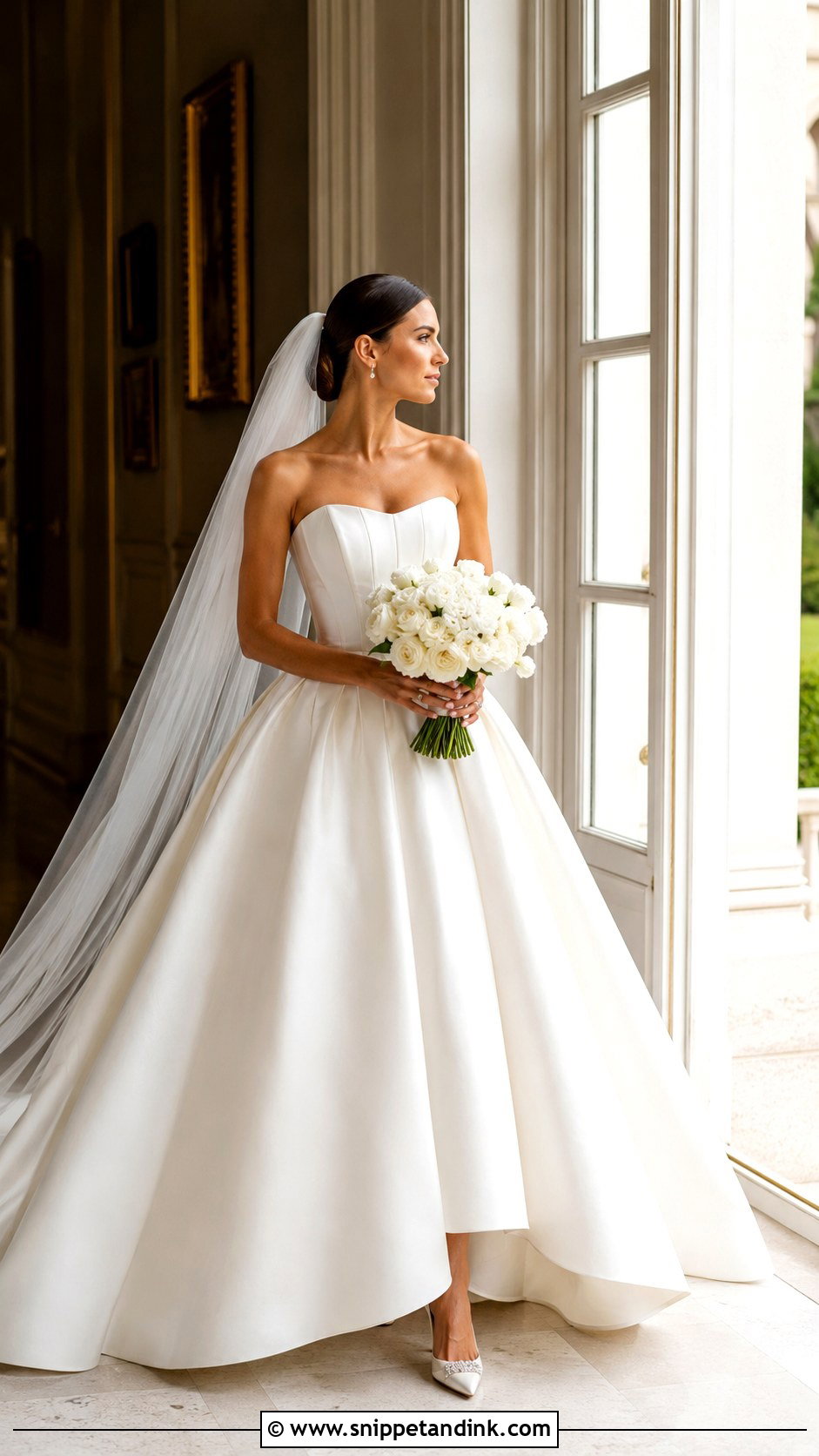
A corset bodice gives support and definition, while satin or mikado over it keeps the surface smooth. Pair the corset with a full skirt for drama or a slim skirt for a cleaner line. Ask how the corset fastens: lace-up backs adjust if your measurements shift before the wedding, while zips don’t. Simple earrings, polished heels and a veil matched to the formality finish it in a ballroom or estate.
16. Silk Wrap Wedding Dress
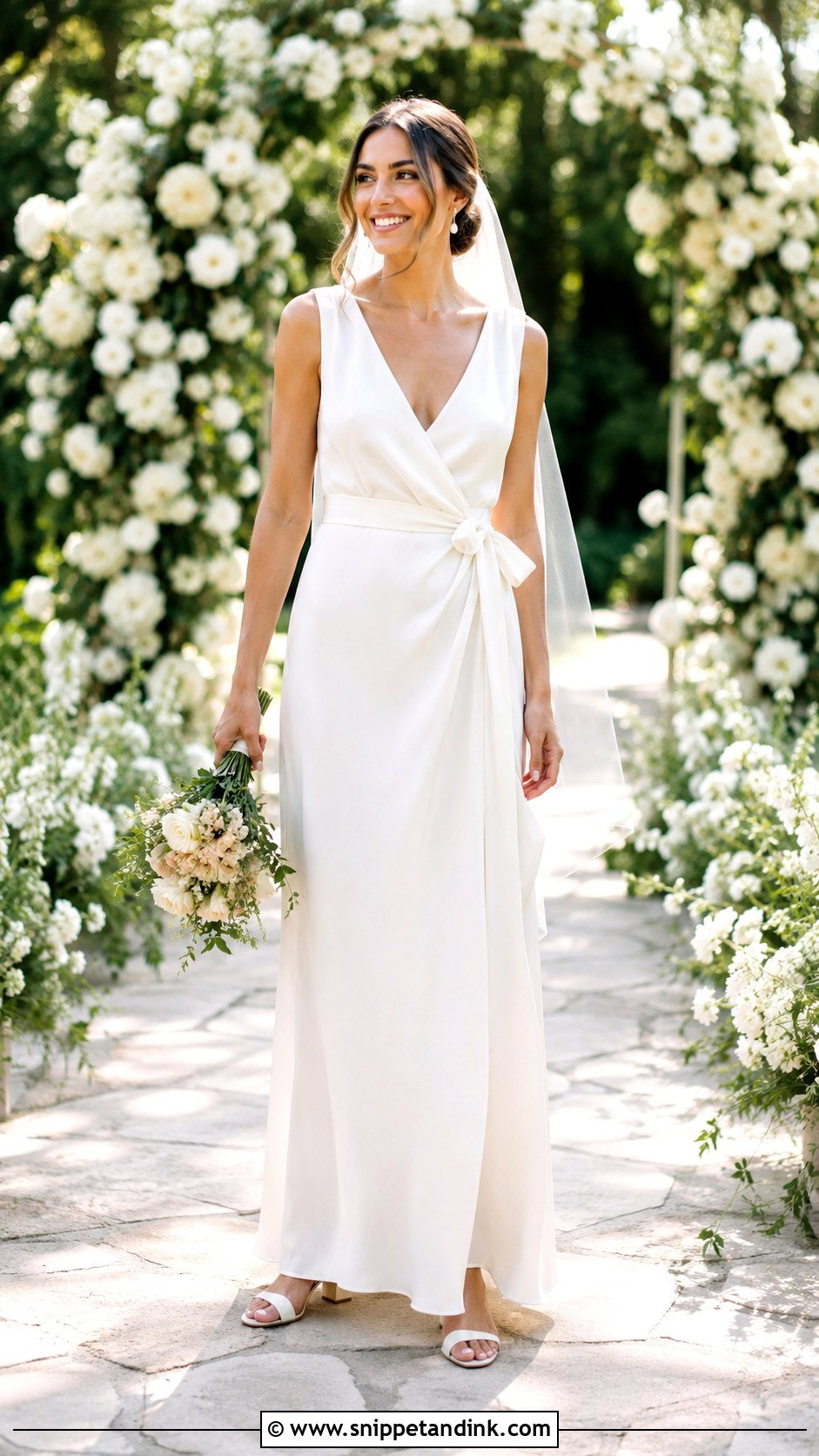
The wrap is the only gown here that adjusts to you rather than the other way round. It shapes the waist and the neckline without a rigid bodice. Crepe drapes gracefully; satin adds shine. Long sleeves suit cooler months, sleeveless suits warm ones. Because silk is slippery, the crossover needs a hidden snap or two to stop it opening as you move. Block heels, pearl earrings and a simple veil suit a garden or courthouse ceremony.
17. Silk Tea Length Wedding Gown
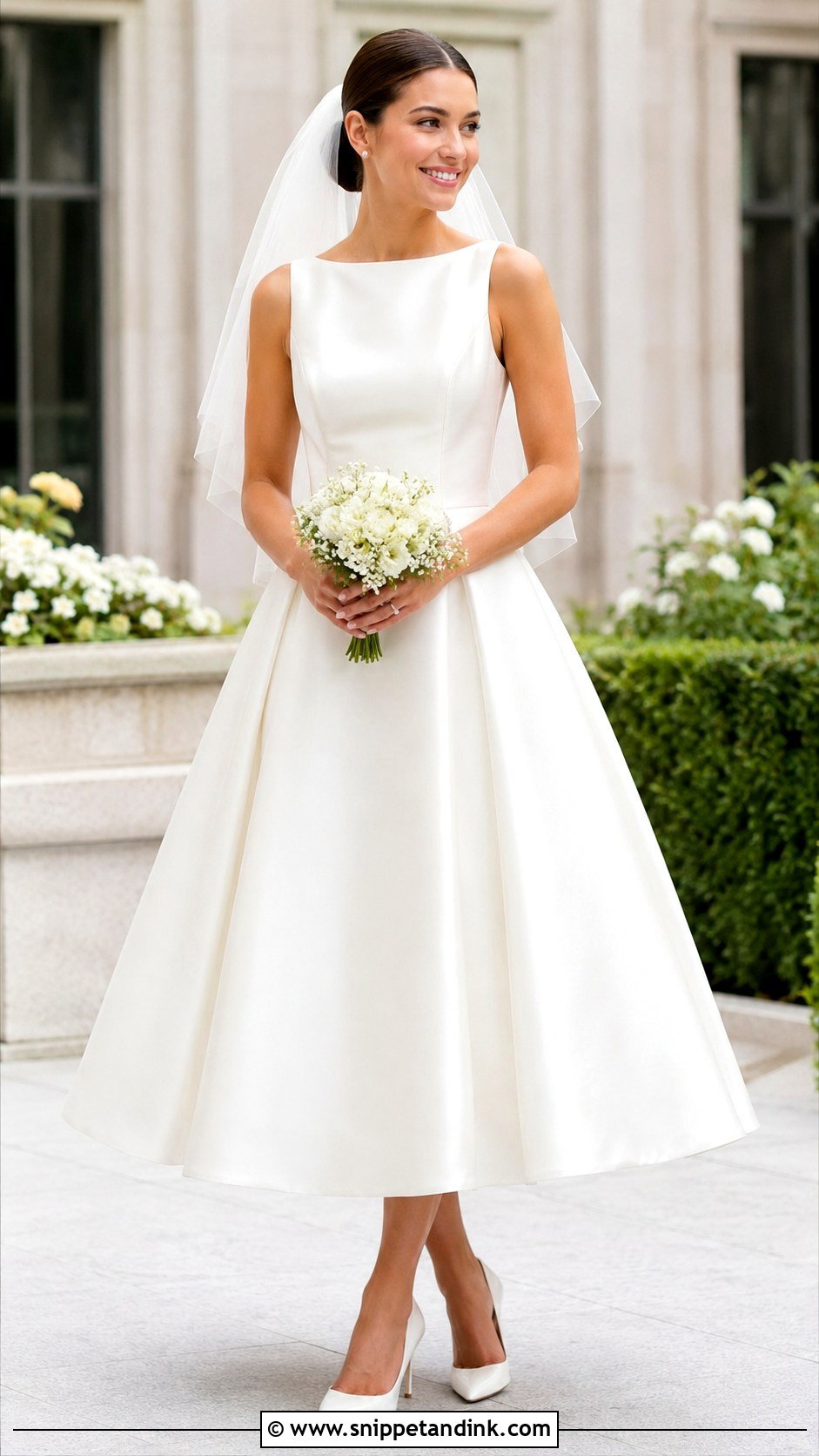
Tea-length silk puts your shoes on view, so choose them before the first fitting and hem to their height. Mikado gives the skirt shape; satin adds a smooth shine. A fitted bodice and full skirt are classic, a simple slip shape modern. Pointed pumps, pearl earrings, a short veil and a neat bouquet suit courthouse weddings, garden ceremonies and brunch receptions.
18. Silk Wedding Gown With Train
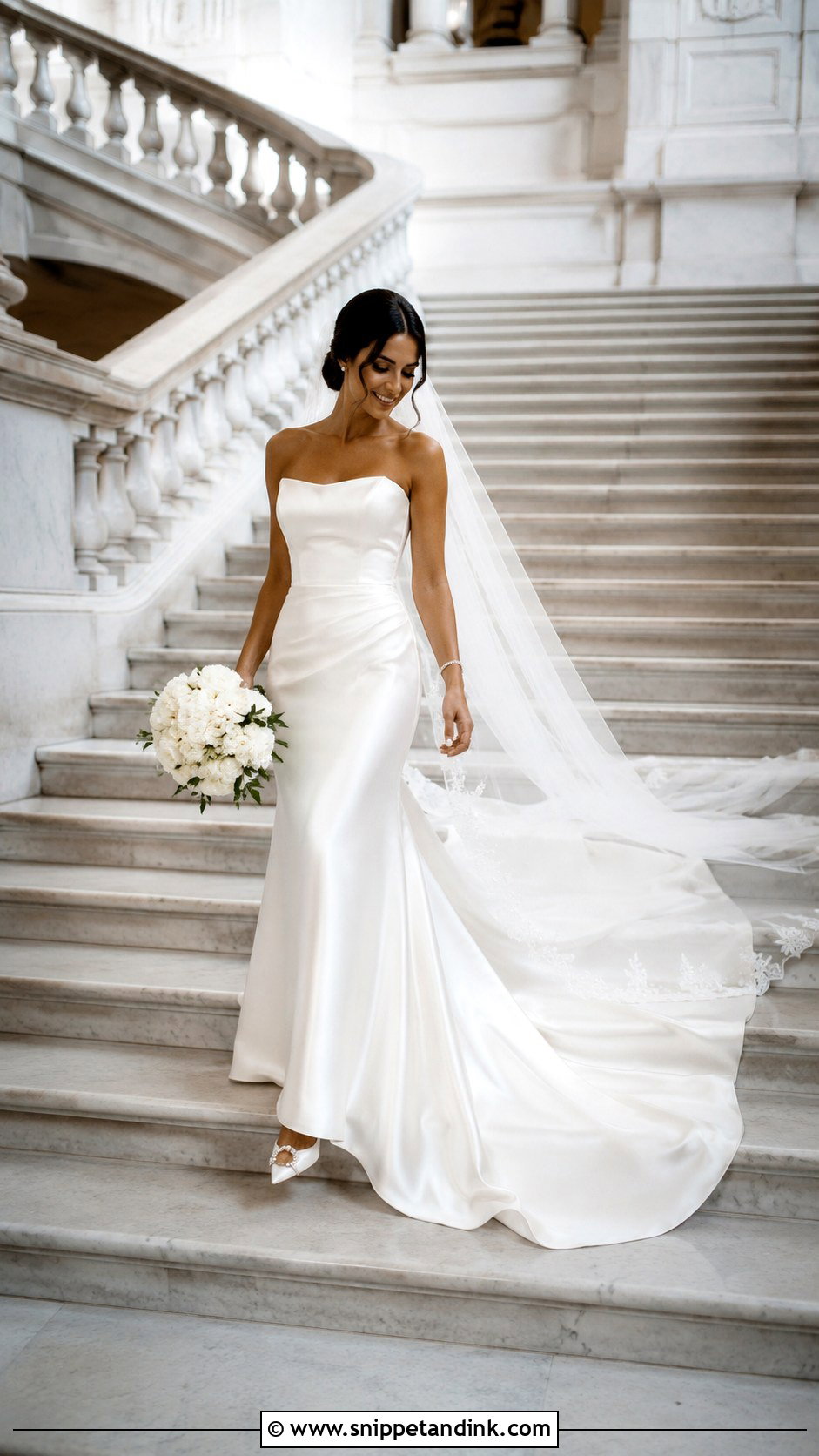
Silk trains are lighter than they look, but satin shows every footprint and scuff. A sweep train is the most wearable; a chapel or cathedral train makes a grander entrance. Satin and mikado show a train off because they catch light and hold their shape. Plan the bustle at your final fitting and have a bridesmaid learn it. Long veil, classic heels, minimal jewellery. Grand staircases and estates suit it.
19. Silk Wedding Gown With Bow
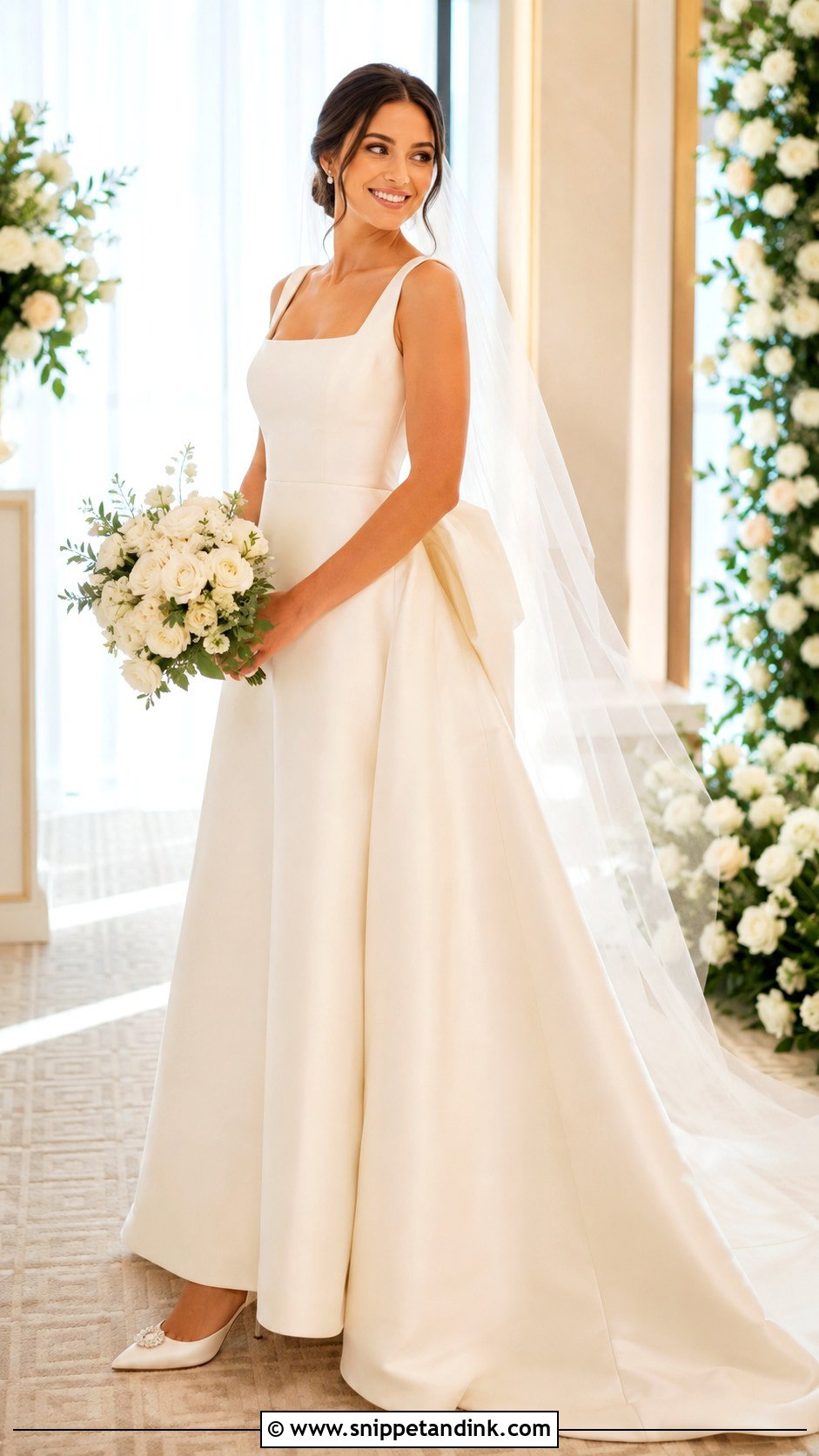
A bow in silk only holds its shape when the fabric has body, so satin or mikado, often with interfacing inside the loops. At the back waist it’s classic, at the shoulder more fashion-led, on the train playful. One bow is enough, and the rest of the outfit should stay clean: pearl studs, ivory heels, a smooth veil. It’s a sweet detail for a garden or hotel wedding.

20. Silk Wedding Gown With Pearl Details
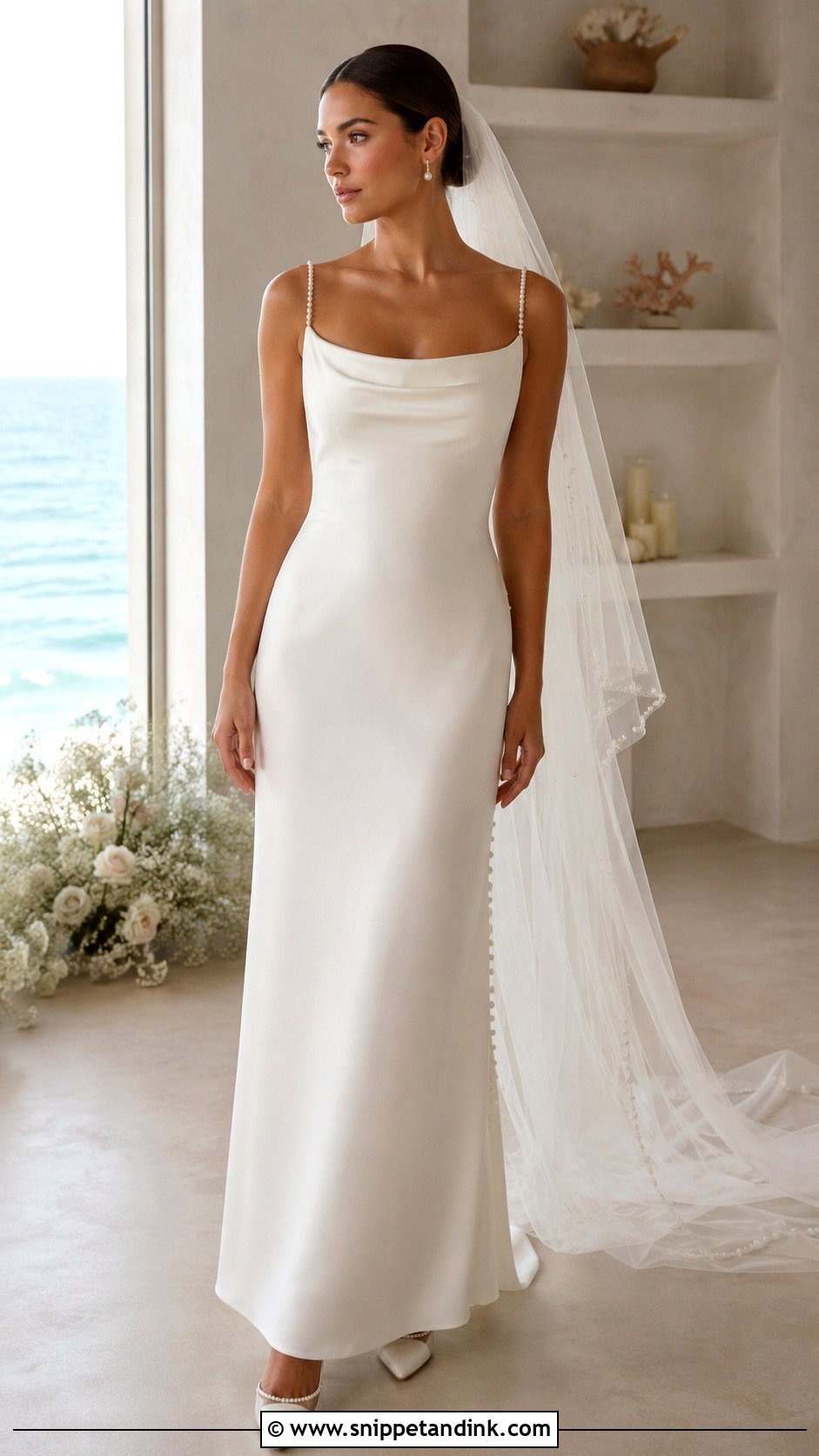
Pearls on silk need restraint because the fabric already has a sheen of its own. They can run along the straps, close the buttons, scatter across a bodice or edge the veil. Pearl buttons down a satin back are my favourite version. Stitched pearls add weight, so a heavily pearled bodice needs stronger support underneath. Pearl earrings, a smooth updo and simple heels finish it.
21. Silk Wedding Gown With Lace Bodice
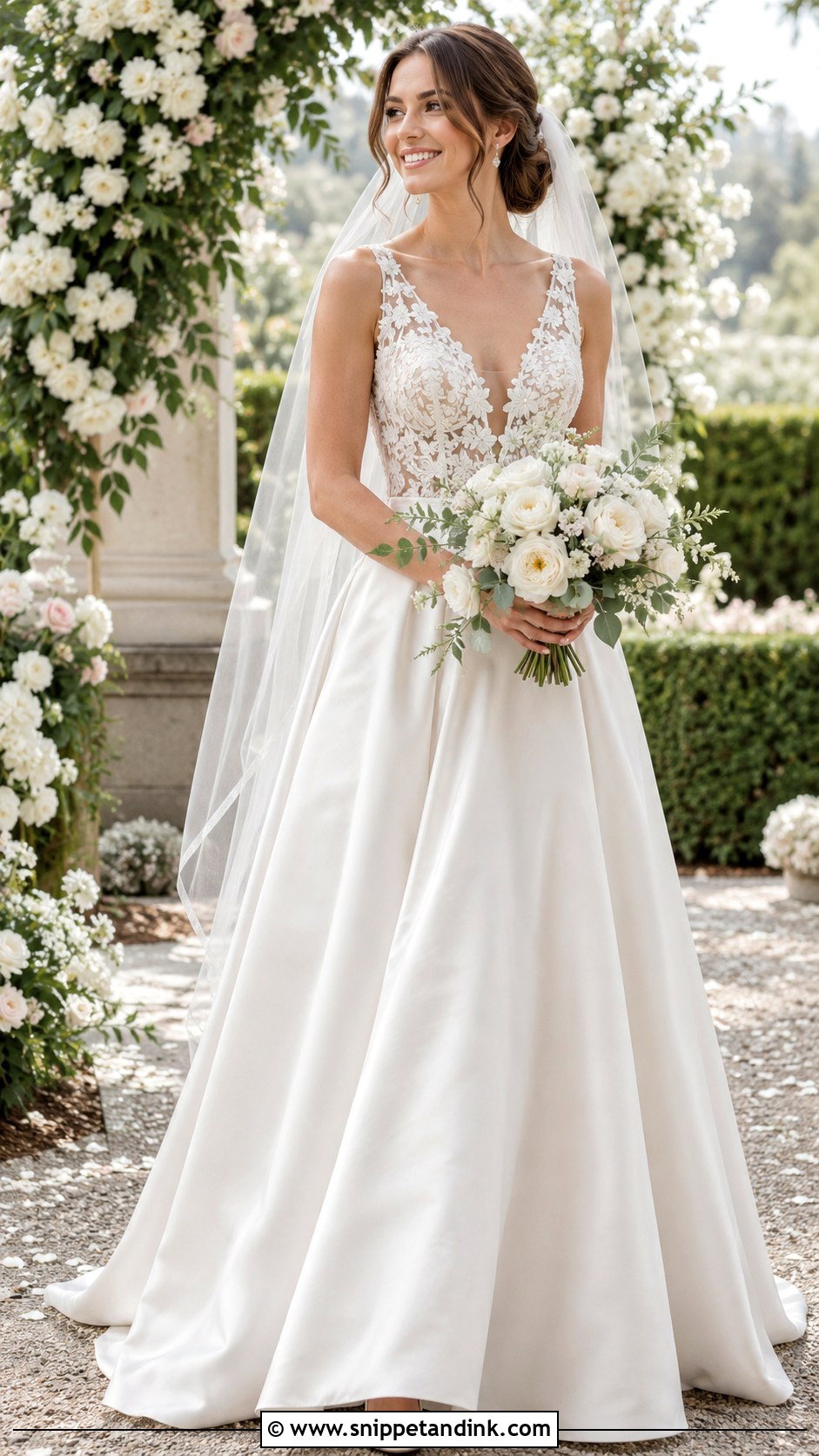
Lace and silk contrast in texture, and the best combinations keep the lace on the bodice and the silk on the skirt. Lace can cover the whole bodice, trim the neckline or form subtle sleeves. Satin or crepe below keeps the skirt clean. Ask whether the ivory of the lace matches the ivory of the silk in daylight; they’re often dyed separately and can differ. Delicate earrings, a sheer veil and ivory heels suit historic venues and garden ceremonies.
22. Silk Wedding Gown With Overskirt
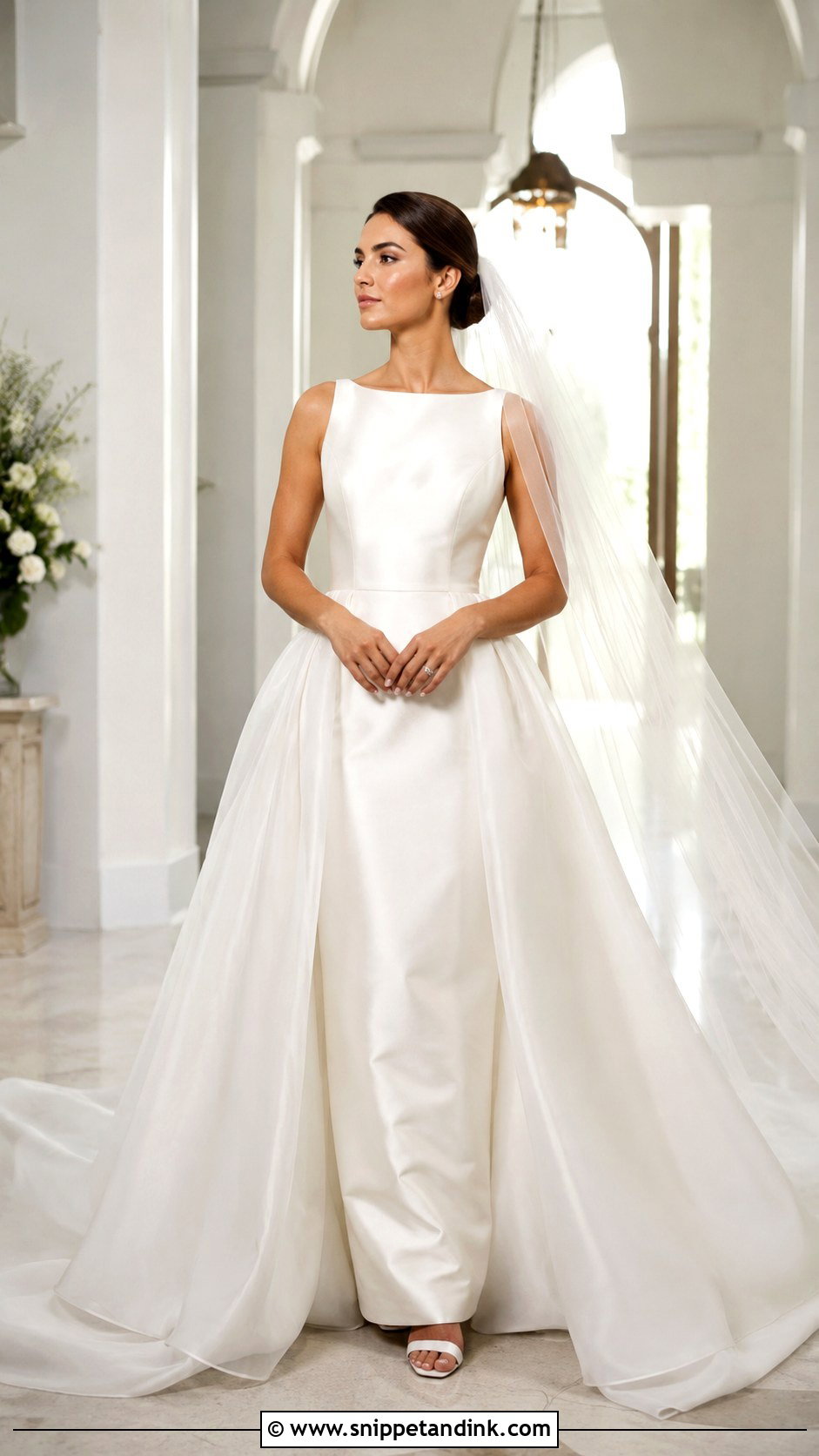
An overskirt adds ceremony volume over a slim silk gown, then comes off for the reception. Organza gives airy movement, mikado and satin more structure. The underlying column must stand on its own, so fit it as if no overskirt existed. Removing the overskirt usually means unhooking it at the waist; practise that with whoever will help you. A long veil, simple heels and minimal jewellery finish it.
23. Silk Wedding Gown With Detachable Sleeves
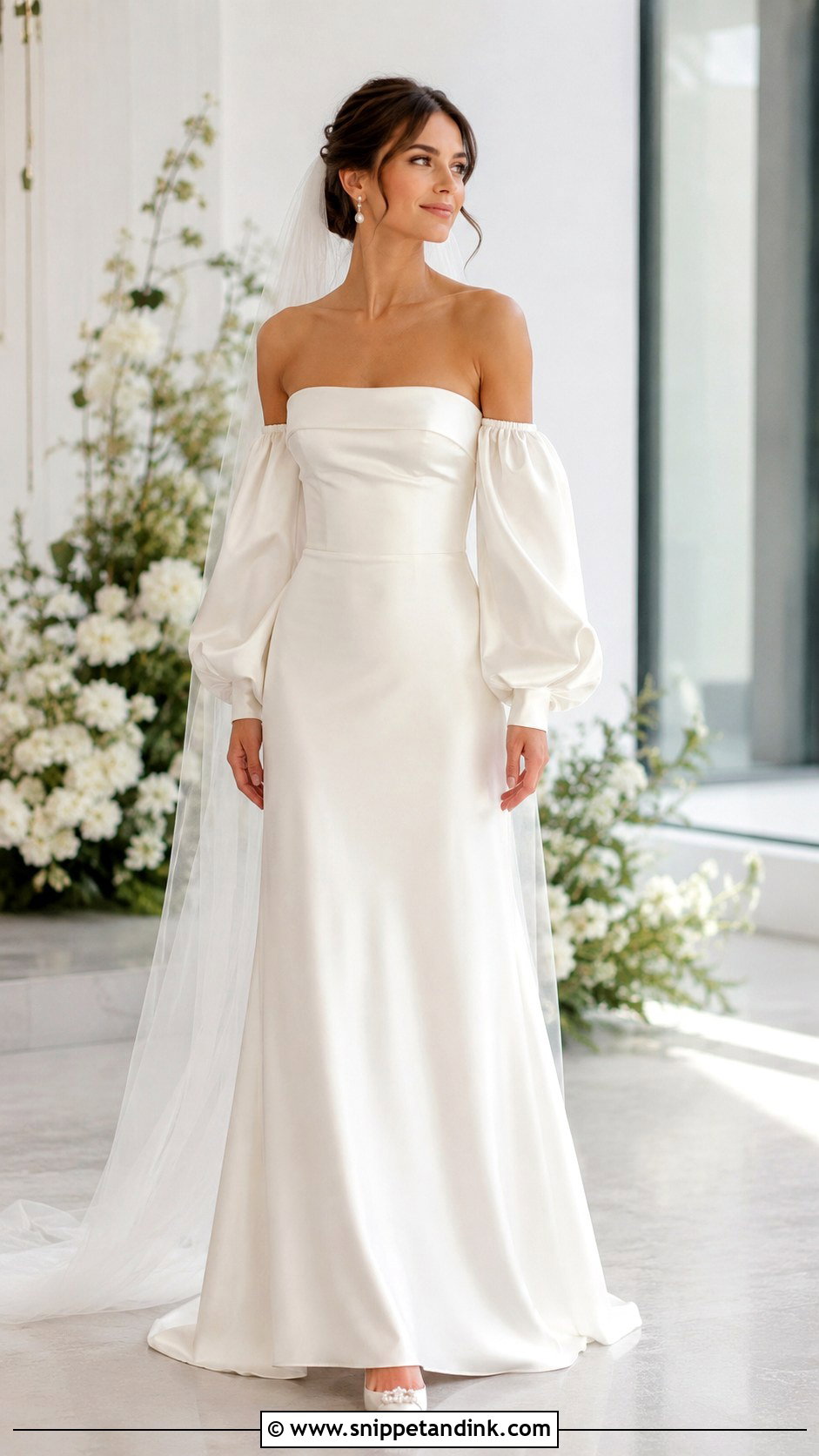
Detachable sleeves change the gown’s mood between ceremony and reception, and they suit religious ceremonies where arms should be covered. Satin or mikado pairs with puff, off-shoulder or fitted sleeves over a strapless, square or sweetheart bodice. The sleeves should be cut from the same fabric lot so the colour matches exactly. Ivory heels, pearl earrings and a veil that doesn’t compete complete it.
24. Silk Wedding Gown With Cape
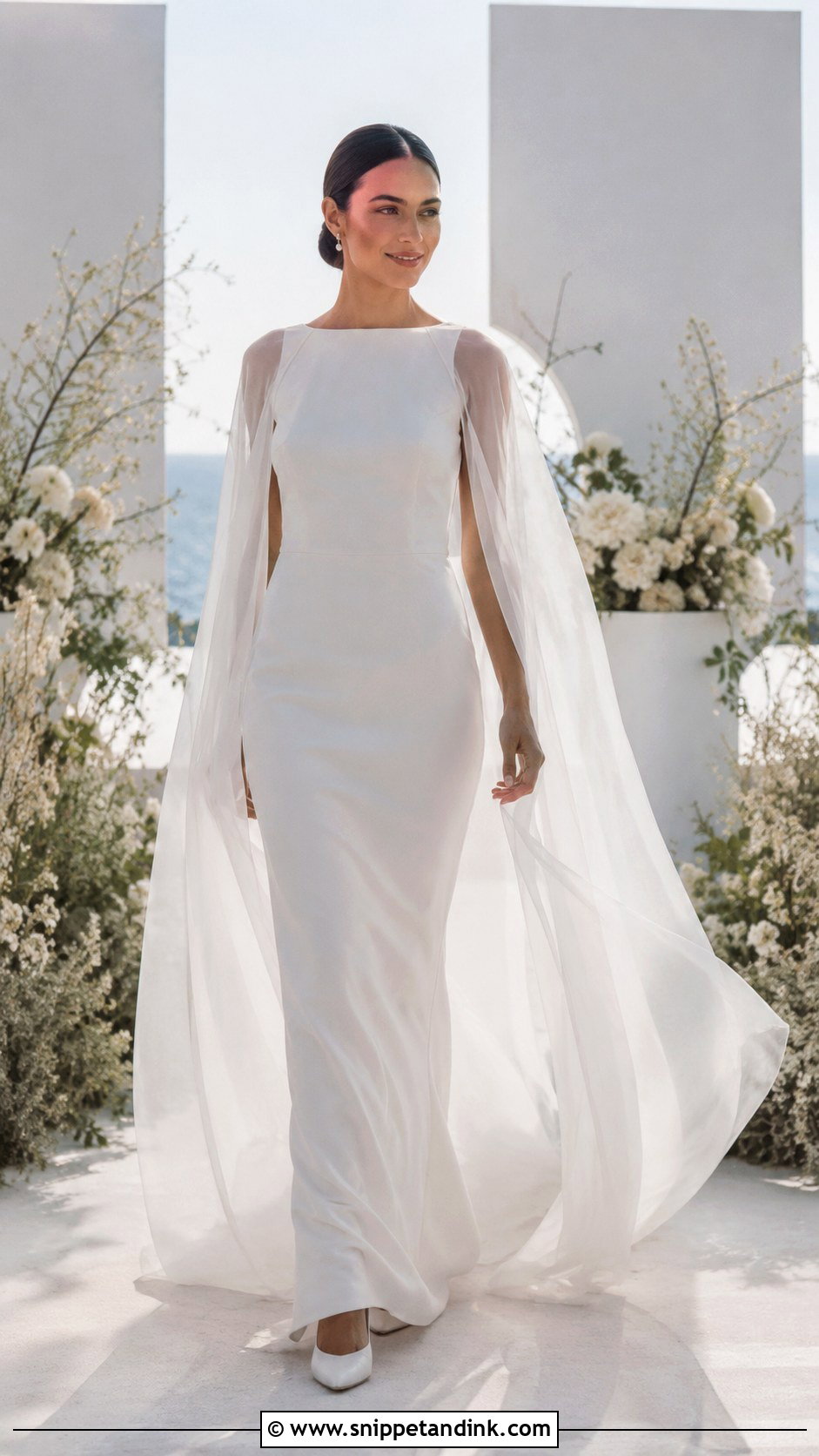
A cape replaces a veil and moves from the shoulders as you walk. It might be sheer chiffon, organza or a soft satin-backed layer. A floor-length cape makes a ceremony entrance; a capelet feels softer. It suits a simple column, slip or A-line underneath. I anchor capes at the shoulders as well as the neck, because a floor-length cape pulls backward. Clean heels, small earrings and a sleek hairstyle complete it.




25. Silk Wedding Reception Gown
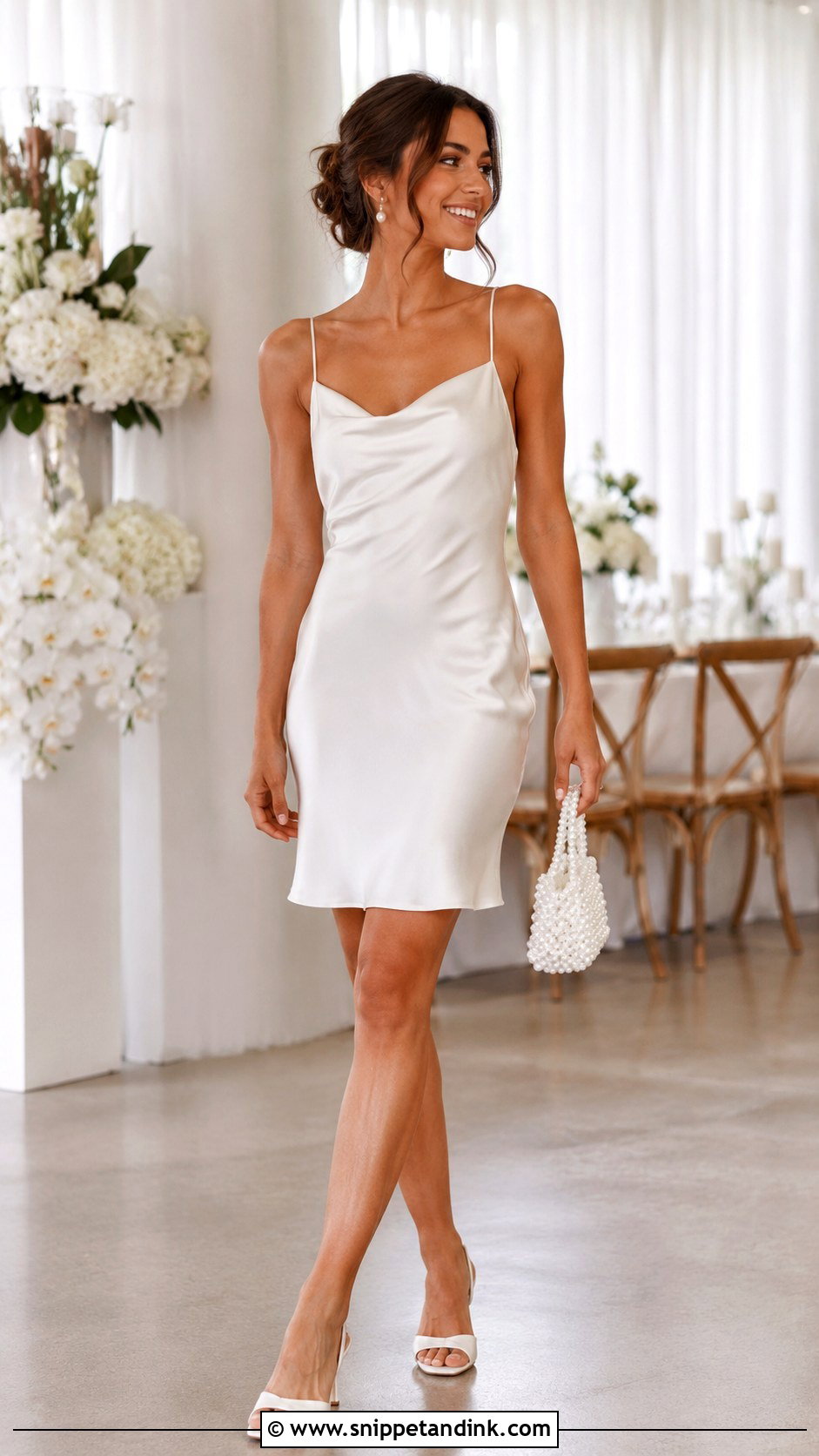
A reception gown is for moving. A short silk slip, a bias cut midi, a halter or a slim column all let you dance and greet guests with ease. Charmeuse glows under evening light; crepe is smoother and slightly firmer. If your ceremony gown is heavy and formal, a lighter silk change makes the evening far more comfortable. Comfortable heels, pearl earrings, a small bridal bag and a looser hairstyle refresh the look.
Silk Under a Summer Sun
Silk breathes better than polyester, so in principle it’s the cooler choice. In practice, a heavy mikado ball gown with a boned bodice and petticoats is warm in any fibre. For a hot outdoor wedding I steer brides toward lighter weaves such as crepe, charmeuse or organza, and toward a lining in silk or cotton rather than polyester.
The other issue is moisture. Satin and charmeuse show damp patches and perspiration under the arms more than matte crepe. A few things help:
- Ask your seamstress about sewn-in dress shields; they’re invisible and replaceable.
- Get into the dress as late as possible, in a cool room.
- Keep portraits in the shade or at the cooler ends of the day, which is also kinder light.
- Have a hand fan and blotting papers with a bridesmaid, and keep the gown away from sunscreen, which marks silk.
If the dress does get damp, let it dry hanging, never in front of a heater, and mention any marks to the cleaner afterward.
Which Weave Will Feel Right at Hour Ten?
Silk can be a slim slip or a grand ball gown, a fitted mermaid or an easy A-line, and it keeps the same rich finish across all of them. Trends will move on; the questions that matter don’t. How heavy is the weave, does the neckline stay put, can you move and sit, and how will it feel at hour ten? Answer those in the fitting room, and the gown that’s left will be the right silk for you.
You'll Like These Ideas:






Leave a Reply