
The terno used to mean one formal silhouette. Now I dress brides and their families in everything from classic gowns with butterfly sleeves to sleek minimal pieces, embroidered bridal gowns, pastel bridesmaid looks and reception outfits that still read as Filipiniana. What makes the style special is that it carries heritage in its details: piña and jusi, pañuelo-inspired layers, hand embroidery and that sculpted sleeve. You can keep those and still choose a shape that suits your body and your event. Below are twenty-five gowns for weddings, cultural nights, galas, debuts and family celebrations, with notes on how each one behaves once you’re wearing it.
Piña, Jusi or Organza? What the Fabric Label Tells You
Many gowns are described as piña when they’re actually a blend or a lookalike, and that changes how the gown wears, how it’s cleaned and what it costs. Ask your maker exactly what the fabric is before you commit.
- Pure piña: handwoven pineapple leaf fibre, crisp with a soft sheen. It is slow to produce, delicate and usually the most expensive. It creases where you sit and should be cleaned by a specialist.
- Piña blends: piña mixed with silk or another fibre, a little softer and sturdier. A good middle ground for sleeves and overlays.
- Jusi: light, sheer and crisp, traditionally used for barong and baro’t saya. Today it is often machine-made, more affordable and comfortable in heat.
- Silk organza and other synthetics: hold a butterfly sleeve shape well and handle humidity better, though they don’t breathe like natural fibres.
If you want hand embroidery or handwoven piña, start early. These pieces often take months, and rushing hand embroidery is where quality slips.
1. Modern Filipiniana Terno Gown
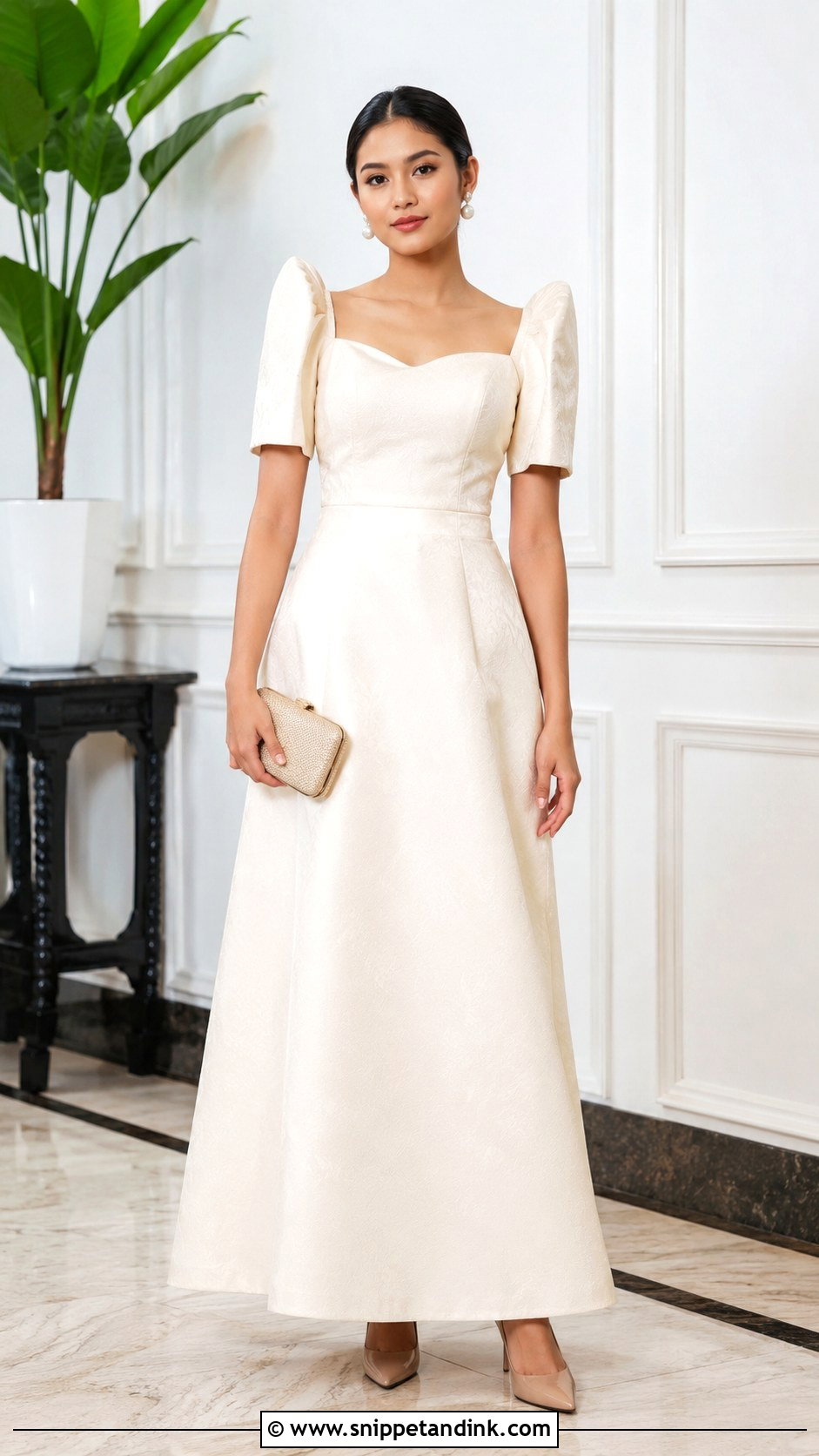
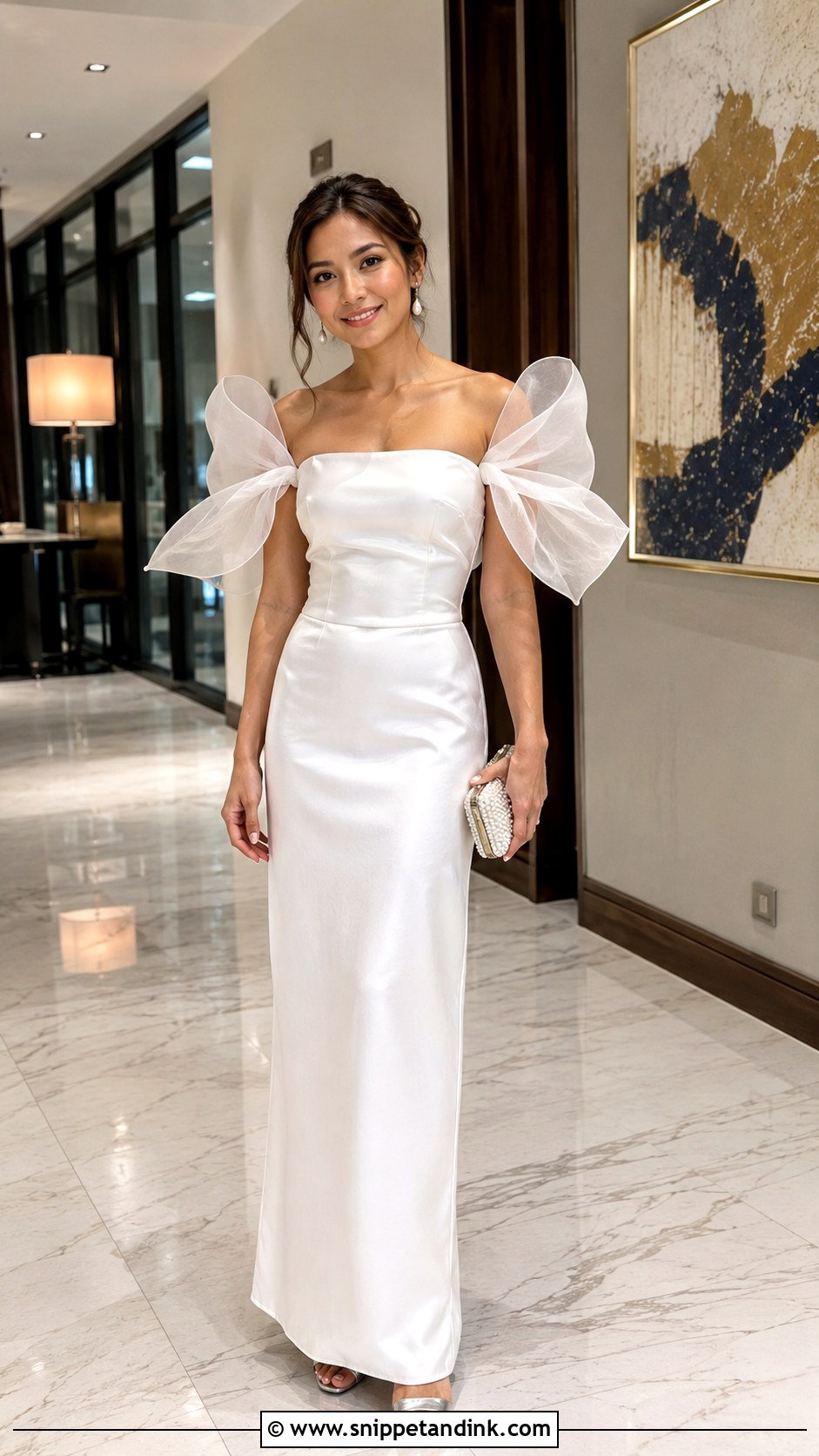
The modern terno keeps the butterfly sleeve and strips back the rest. A fitted bodice, a clean waistline and a straight or A-line skirt suit most figures, and ivory, champagne, navy, black and blush are the easiest colors to style. Because the sleeve is the statement, I keep earrings to pearls, the clutch small and the heels plain. On a gown with embroidery or beadwork, go even quieter. It suits weddings, cultural celebrations and formal family dinners equally well.
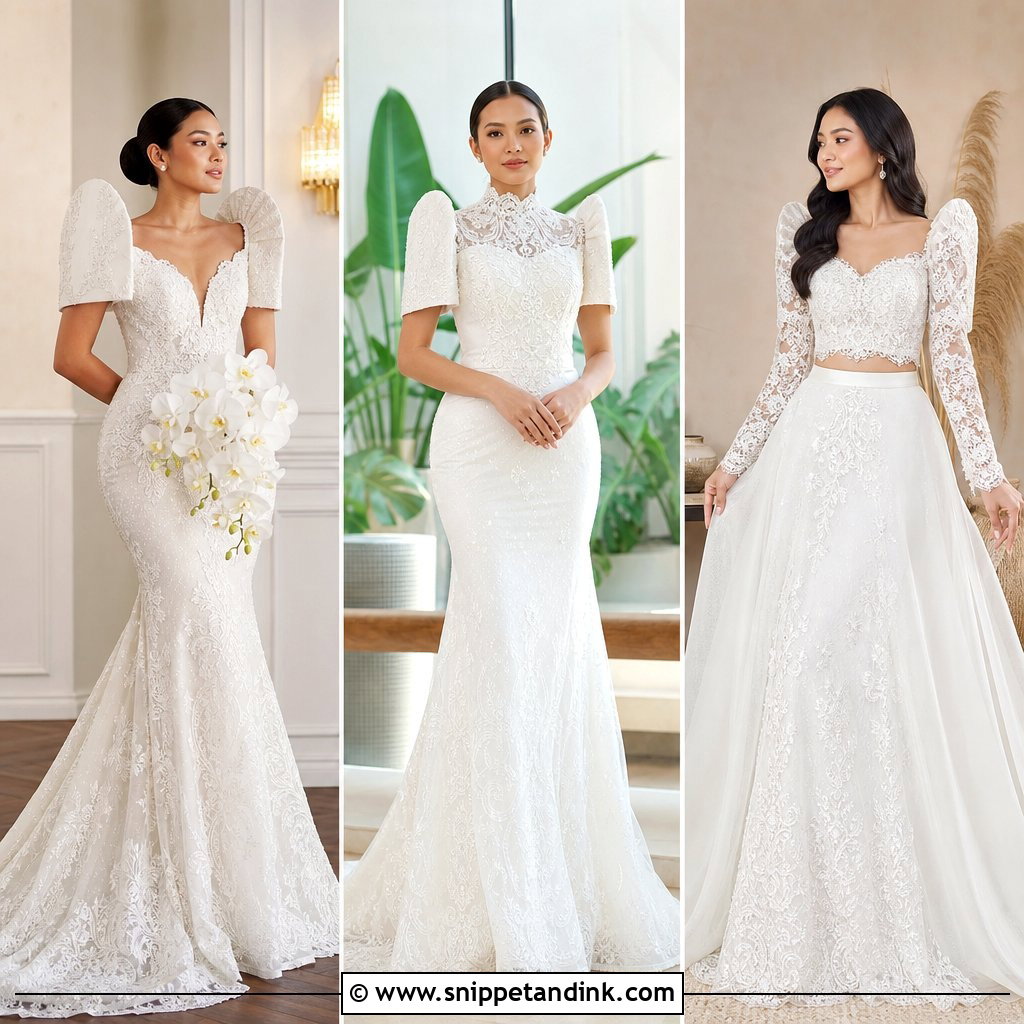
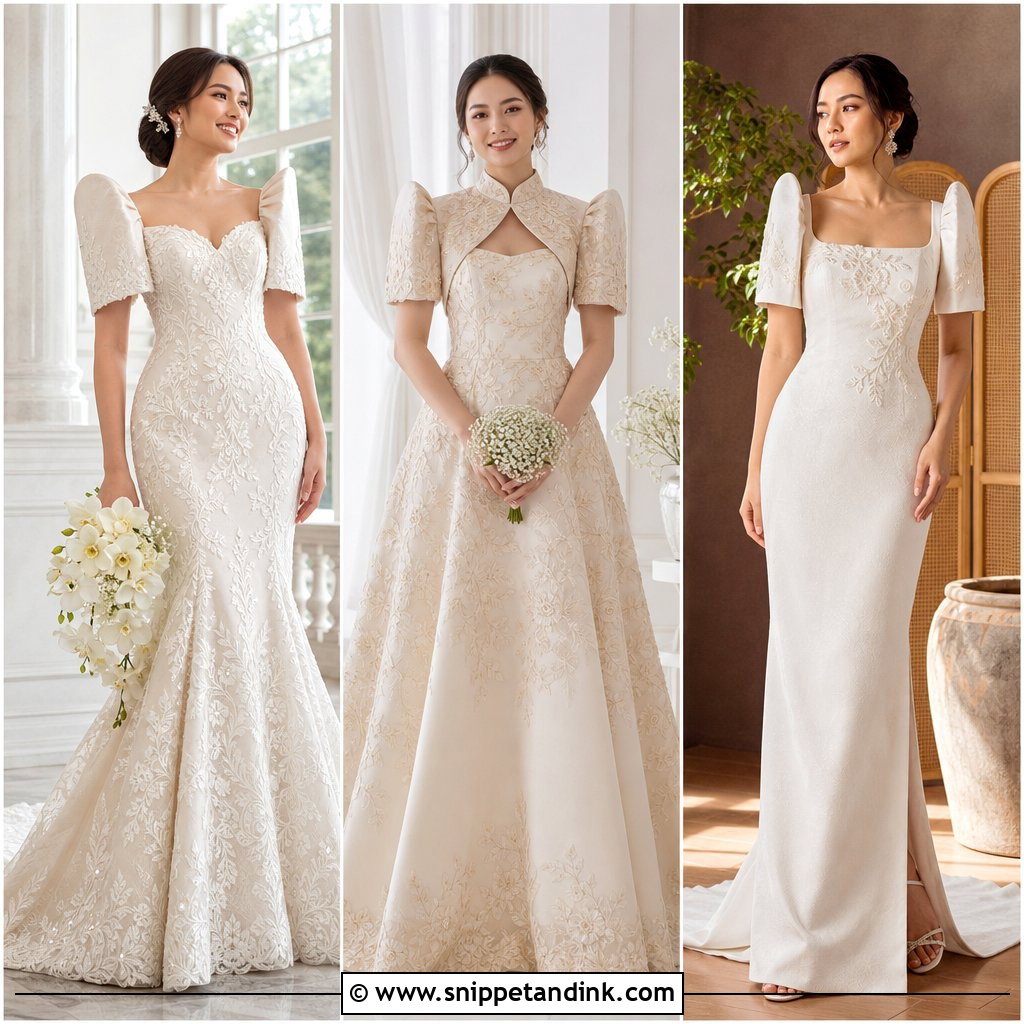
2. White Filipiniana Bridal Gown
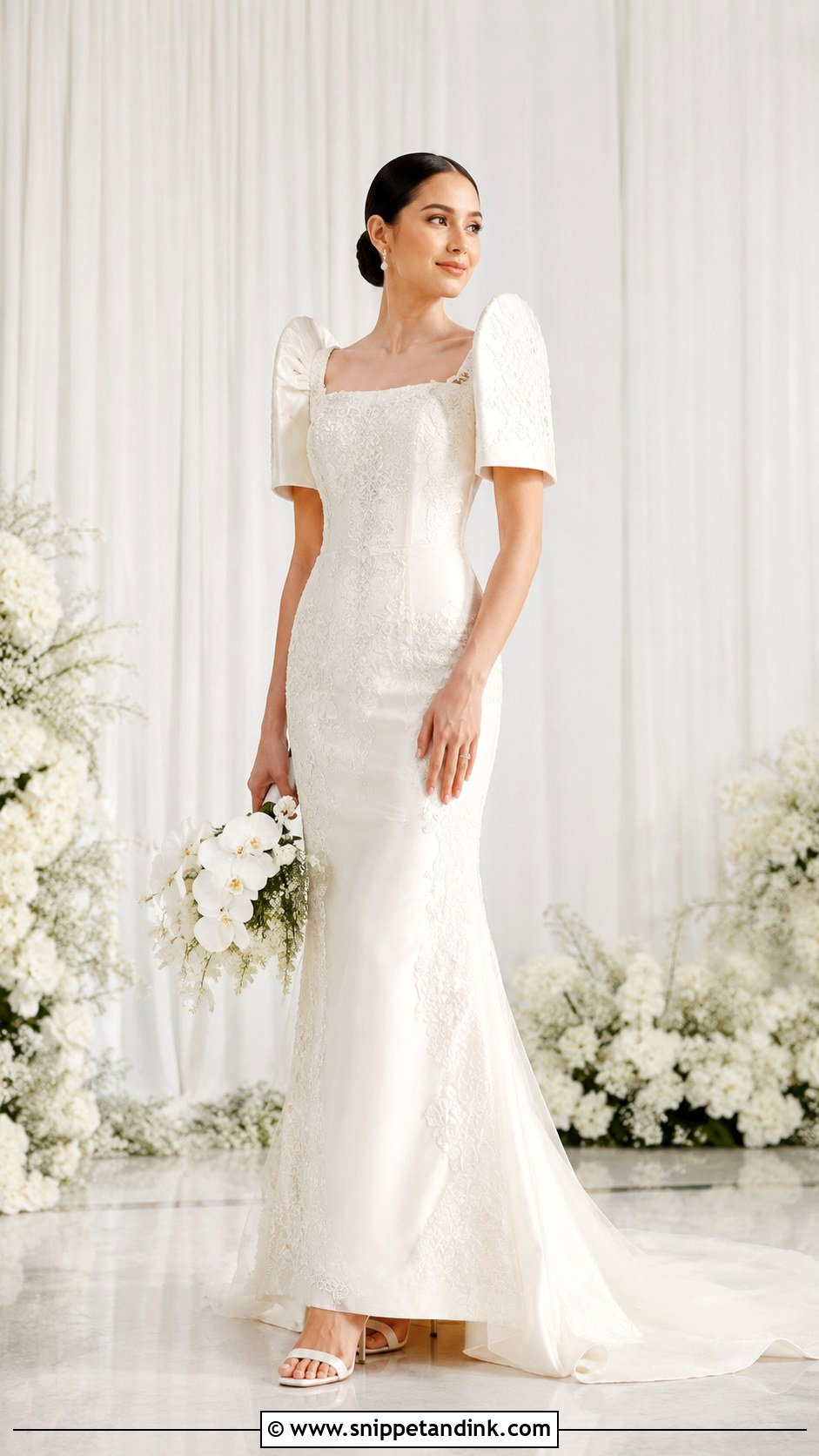
A white bridal terno reads as tradition the moment you walk in. The butterfly sleeves give structure at the top, and a soft train finishes it as a wedding gown. Piña-inspired fabric, silk organza, duchess satin or a jusi overlay all add texture. A fitted waist over an A-line skirt is the most comfortable bridal shape. Pearl drops, a low bun, white or silver heels and a delicate veil complete it, though I’d fit the veil comb below the bun so it doesn’t push the sleeves flat in the back view. A round bouquet held low keeps the bodice embroidery visible.
3. Champagne Filipiniana Gown
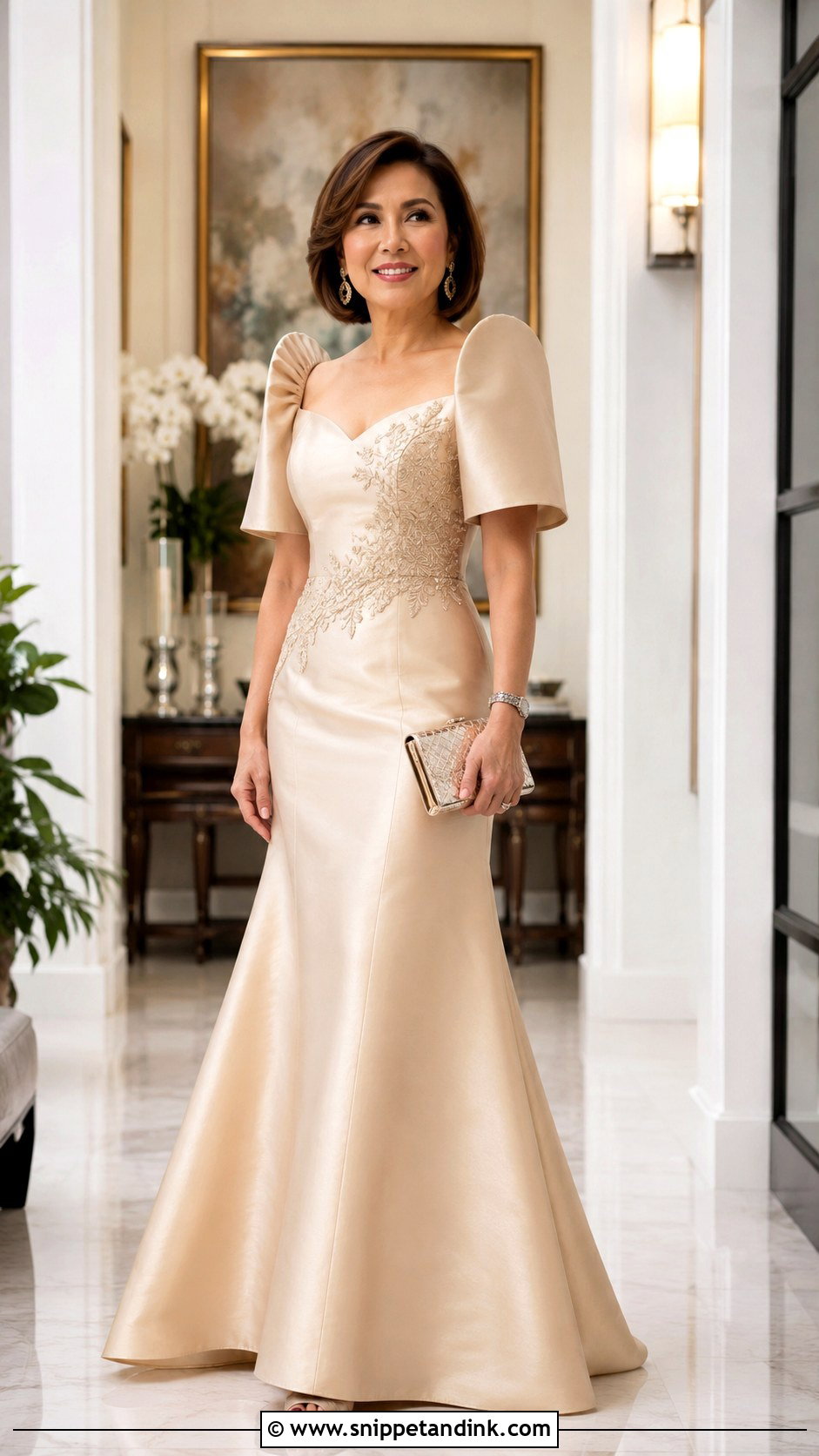
Champagne is the softer, less expected alternative to white, and it flatters warm and olive skin especially well. A satin or silk-blend gown with structured butterfly sleeves and a lightly flared skirt is formal without being stiff. Gold, pearl or crystal accessories all suit it; nude heels lengthen the line and a metallic clutch dresses it up. I often suggest this one to mothers of the bride and formal guests who want to look polished without competing with the bride’s white.
4. Black Filipiniana Gown
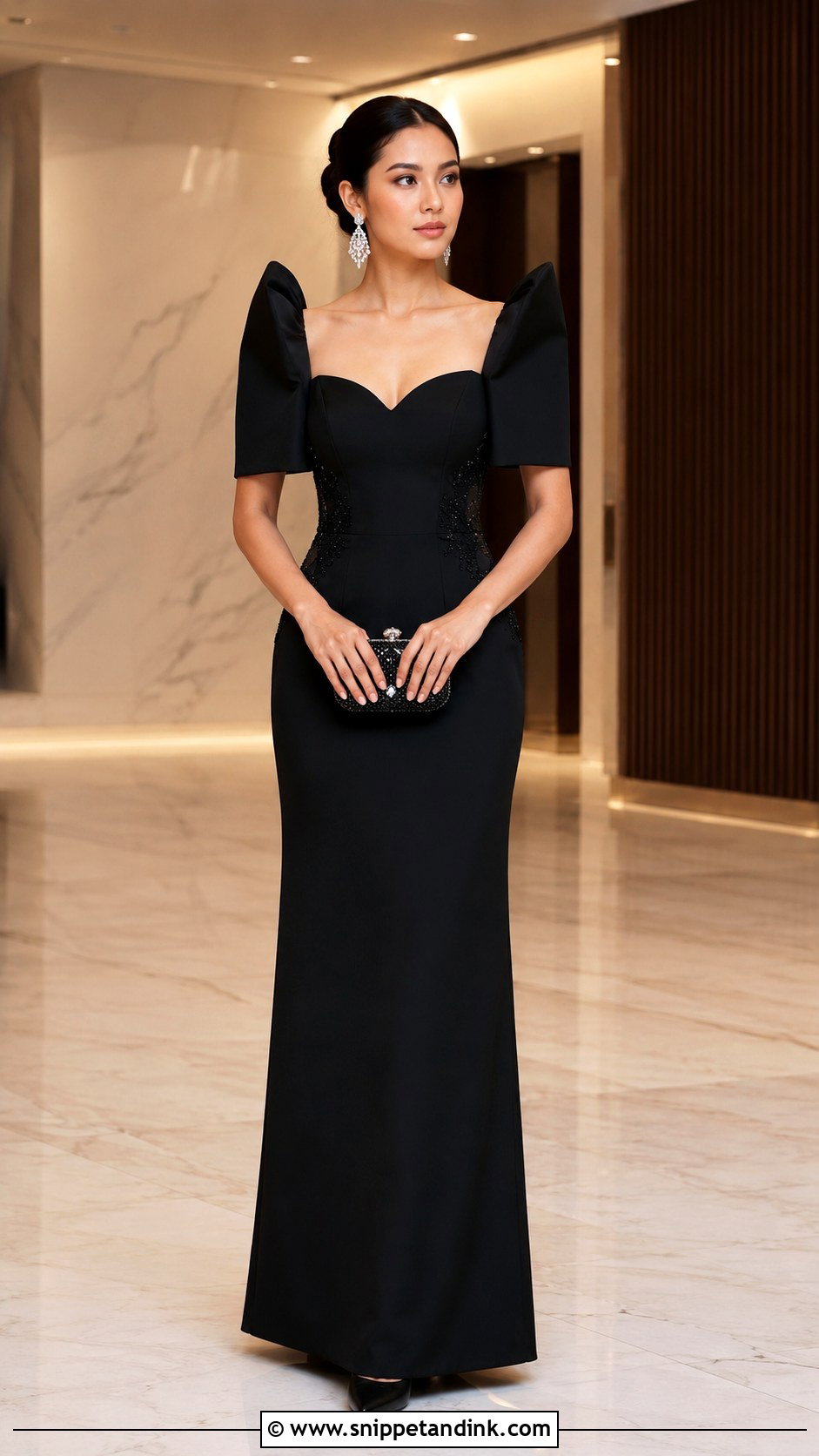
Black turns the terno into evening wear. Matte crepe gives a clean silhouette, satin a more dramatic one, and silver, gold or tonal black embroidery adds refinement. With structured sleeves, a fitted waist and a floor-length skirt, the neckline should stay clean so the sleeves stand out. Pointed black heels, a compact clutch and statement earrings finish it. At a Filipino wedding, black is still worn mostly by guests at evening events rather than by family members in daytime, so check the mood of the occasion first.
5. Red Filipiniana Gown
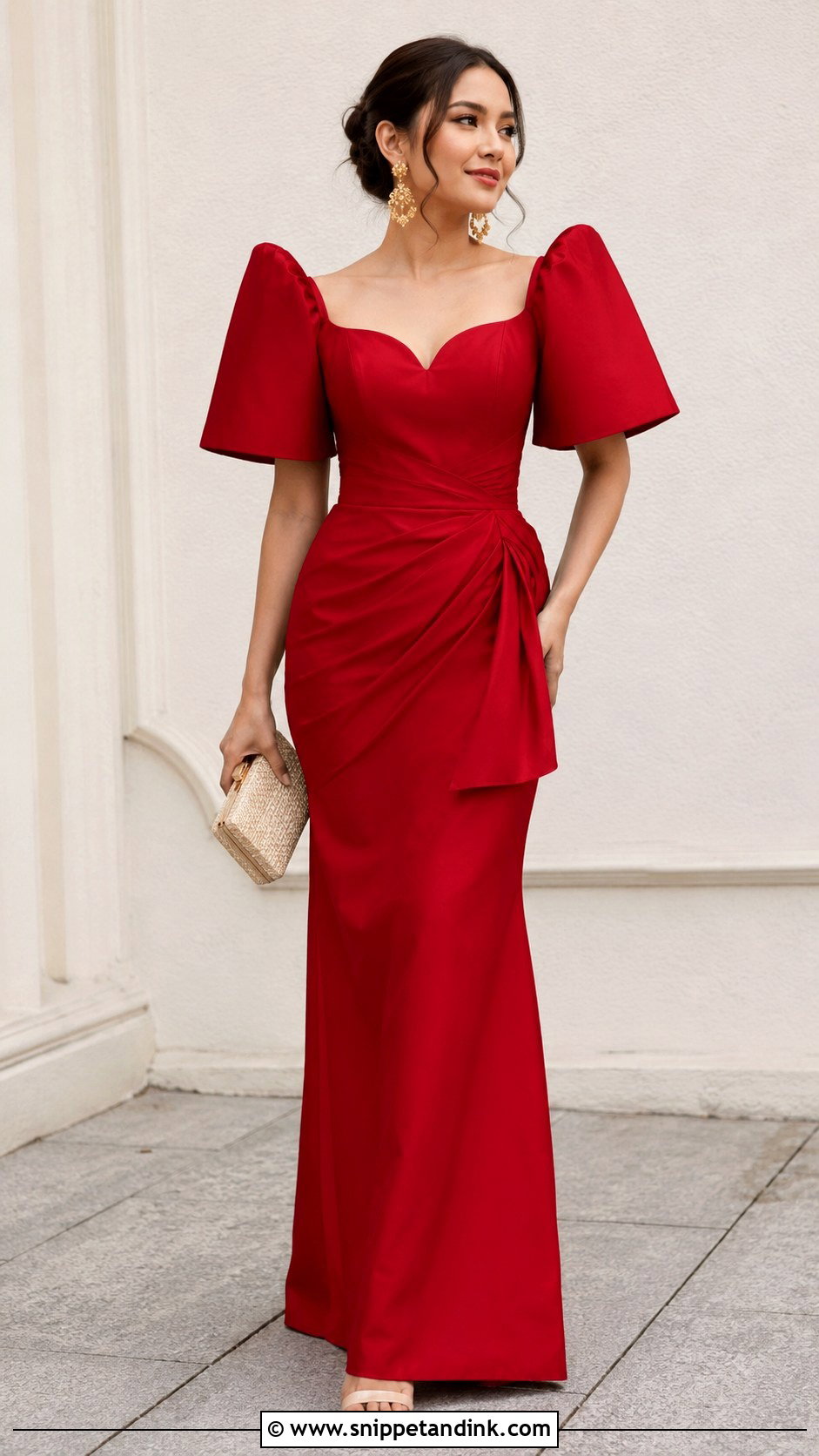
Red is festive and confident. A structured bodice, defined sleeves and a smooth skirt help balance such a strong color. Ruby, deep red, tomato and burgundy each suit different undertones, so drape the fabric under your chin in daylight before choosing. Gold earrings, nude or metallic heels and a small structured clutch complete it. On a beaded or embroidered gown, skip the necklace and let the color and sleeves lead. A note for guests: red can pull focus at a wedding, so it is often a safer pick for galas and cultural nights.
6. Pastel Filipiniana Gown
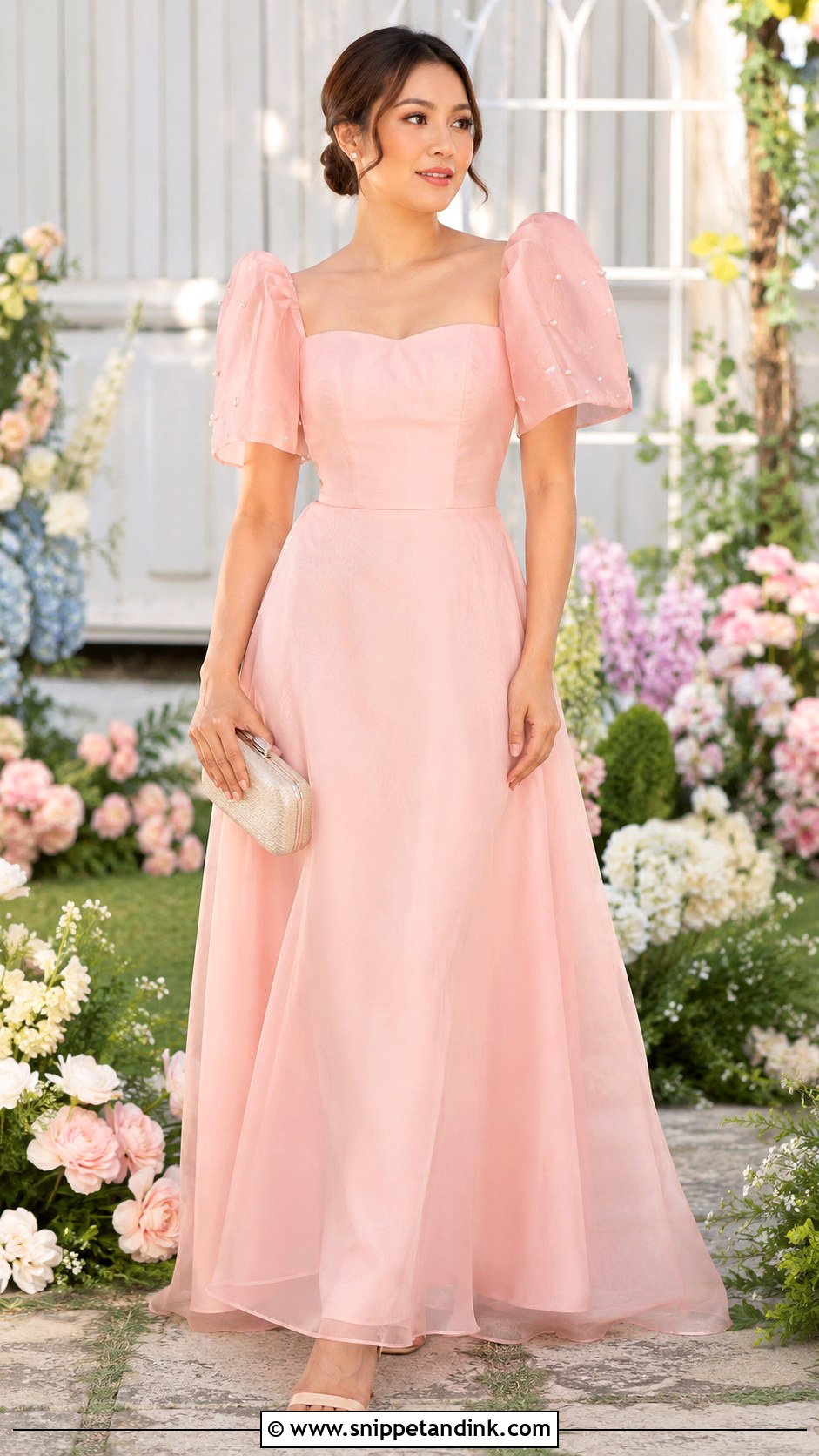
Pastels lighten the terno for daytime and garden events. Soft pink, powder blue, sage, lavender and butter yellow all suit butterfly sleeves, especially in organza, chiffon or light satin that let the sleeve float rather than stand stiff. A fitted bodice and flowing skirt flatter without adding bulk. Nude heels, pearl studs and a cream clutch keep it gentle, and soft natural hair matches the mood. It works well for bridesmaids, debut entourages and family portraits.
7. Embroidered Filipiniana Gown
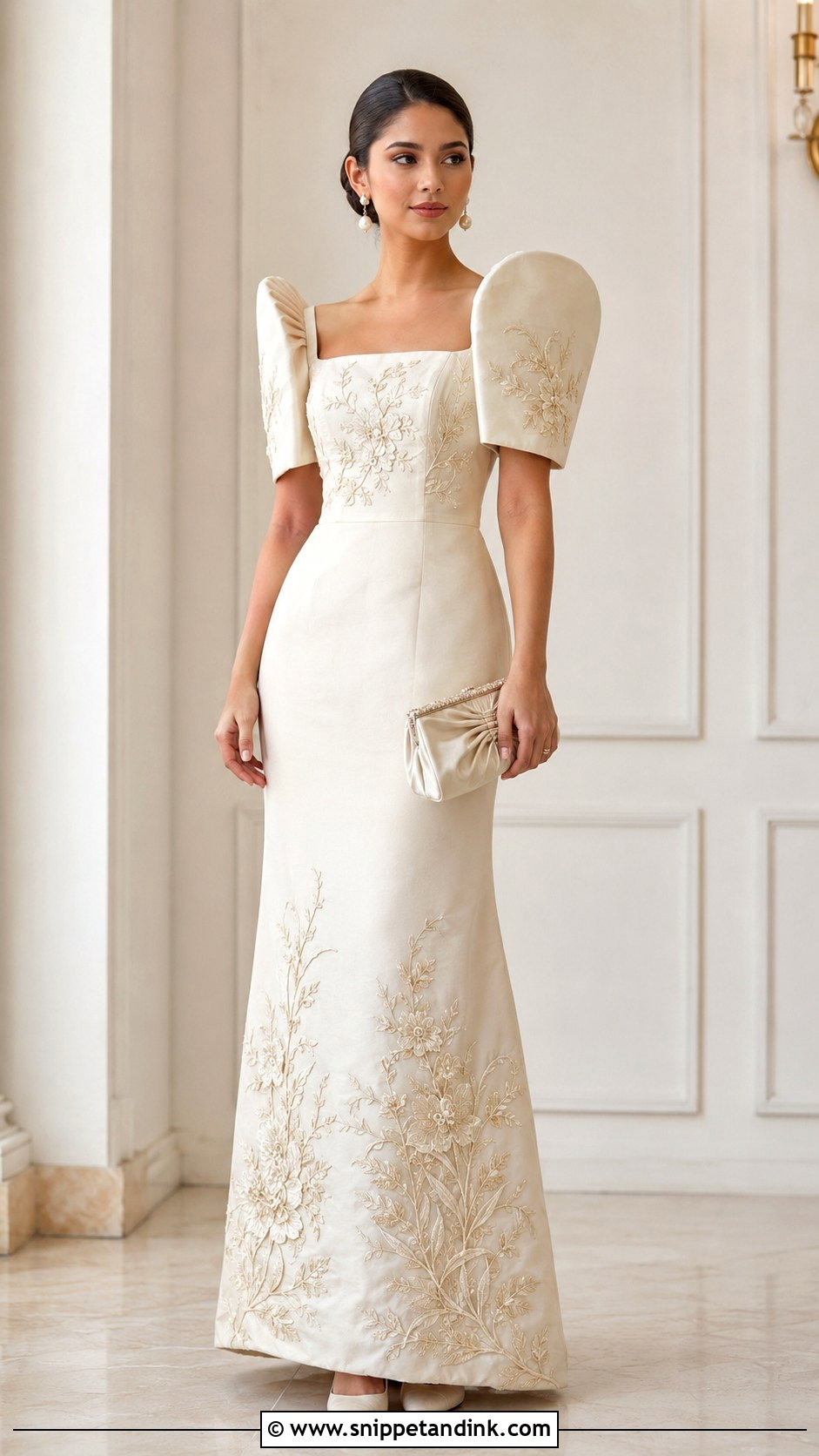
Embroidery is where a Filipiniana gown becomes personal. Floral, leaf, sampaguita or custom motifs can run along the sleeves, bodice, hem or train, and a simple gown shape gives them room. Ivory thread on white is classic; gold on champagne or black is more formal. Hand embroidery takes time, so if you’re commissioning a design, allow extra weeks on top of the gown itself. Understated jewelry, sleek heels and a clean hairstyle let the stitching speak. Avoid oversized accessories, which fight the texture.
8. Piña Filipiniana Gown
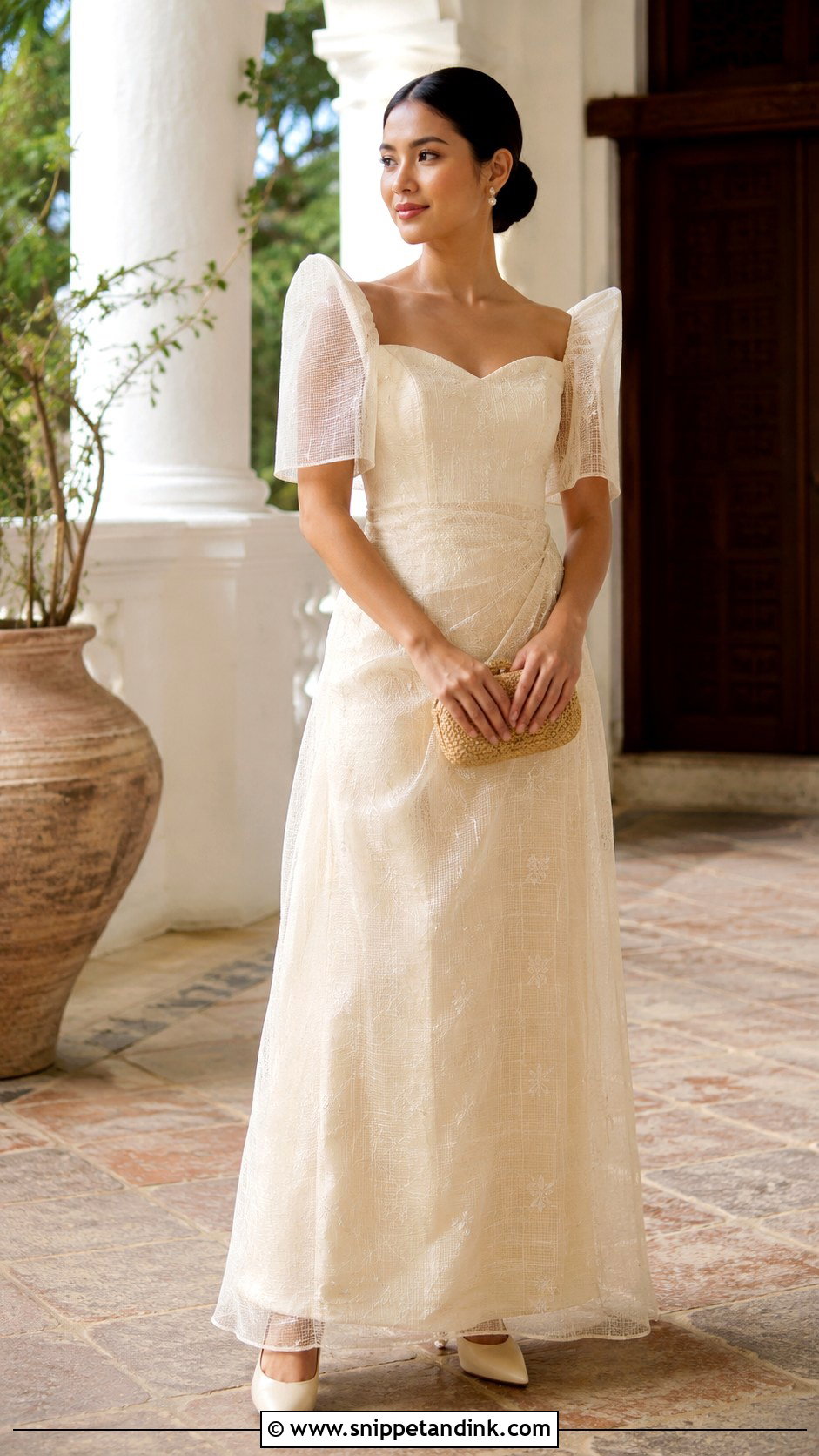
Real piña is woven from pineapple leaf fibre, and it has a crisp sheen and slight stiffness that synthetic copies never quite match. That natural sheerness makes a piña Filipiniana gown ideal for overlays, sleeves, shawl details and embroidered panels. Choose a piña overlay over a lined bodice, with structured butterfly sleeves and a soft floor-length skirt. Pearl earrings, cream heels and a small woven or satin clutch suit it. Piña is delicate, so keep perfume and hairspray off it, and plan for it to crease a little where you sit.
9. Jusi Filipiniana Gown
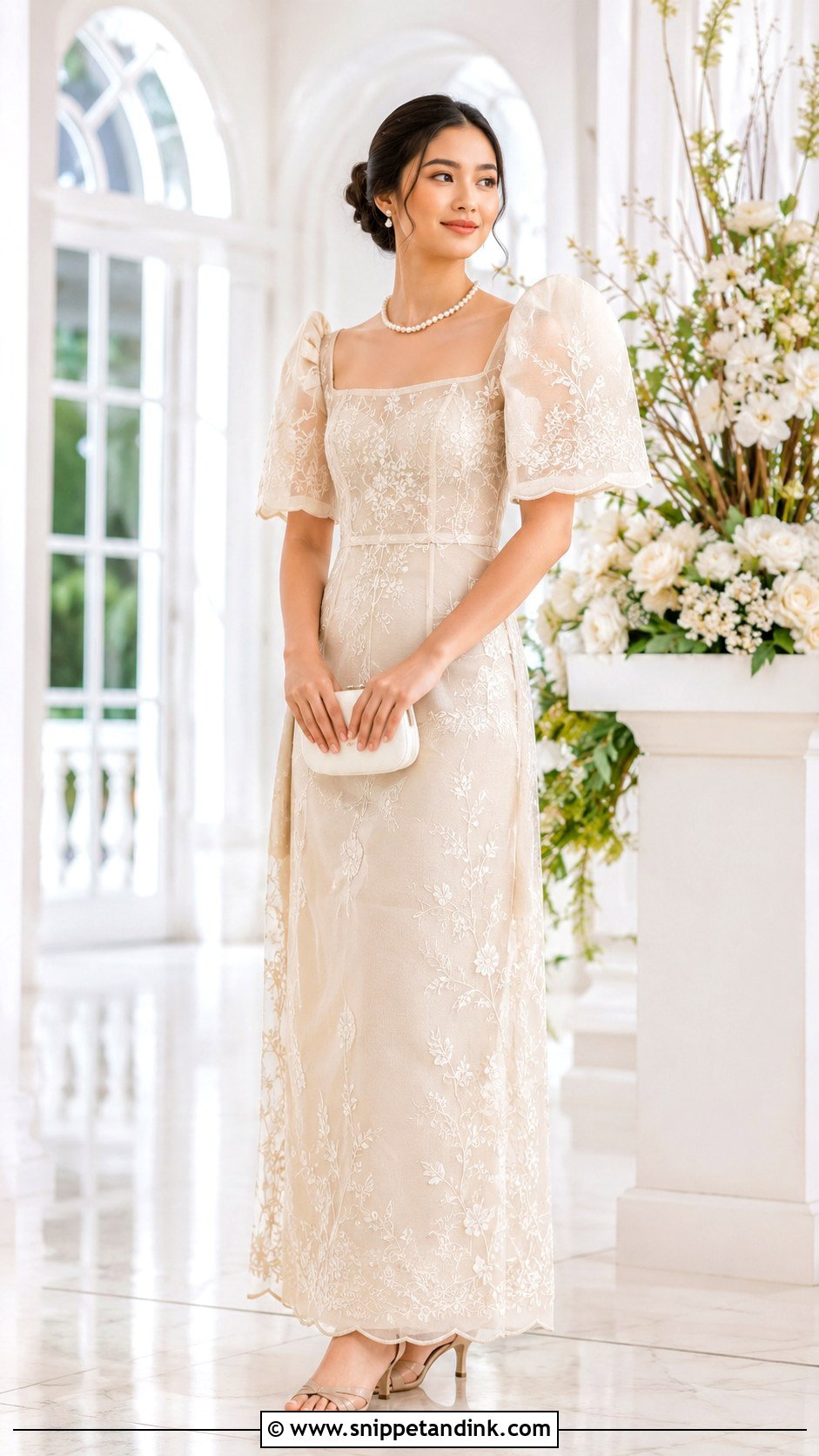
Jusi is lighter and crisper than satin, which is why it feels comfortable at warm daytime events. A simple column gown with butterfly sleeves and a sheer embroidered overlay suits it, in ivory, beige, pale gold or soft pastels. Low heels, pearls and a neat clutch keep the styling modest. Outdoors, choose a skirt with enough room to walk freely. It is a respectful, practical choice for cultural programs, weddings and family celebrations.
10. Lace Filipiniana Gown
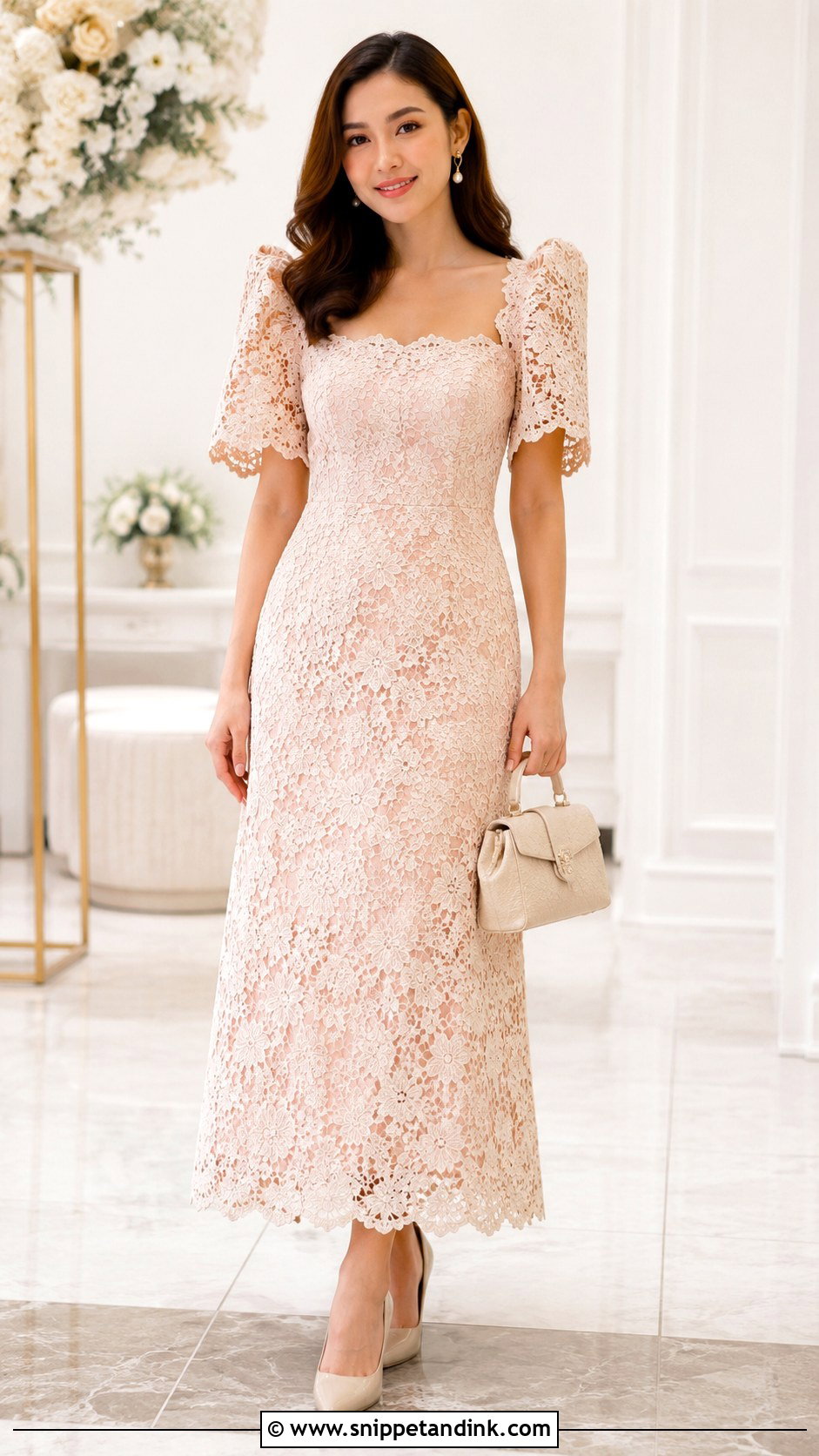
Lace softens the terno’s structure. It can cover just the bodice, just the sleeves or the whole gown, depending on how formal you want it. A lined skirt with a slightly sheer sleeve gives depth. White lace reads bridal, blush reads sweet, and navy or black reads formal. Lace on butterfly sleeves needs an organza or tulle base to hold the shape, so ask what’s inside the sleeve. Simple heels, fine jewelry and a low bun or soft waves let the pattern stay in focus.
11. Satin Filipiniana Gown
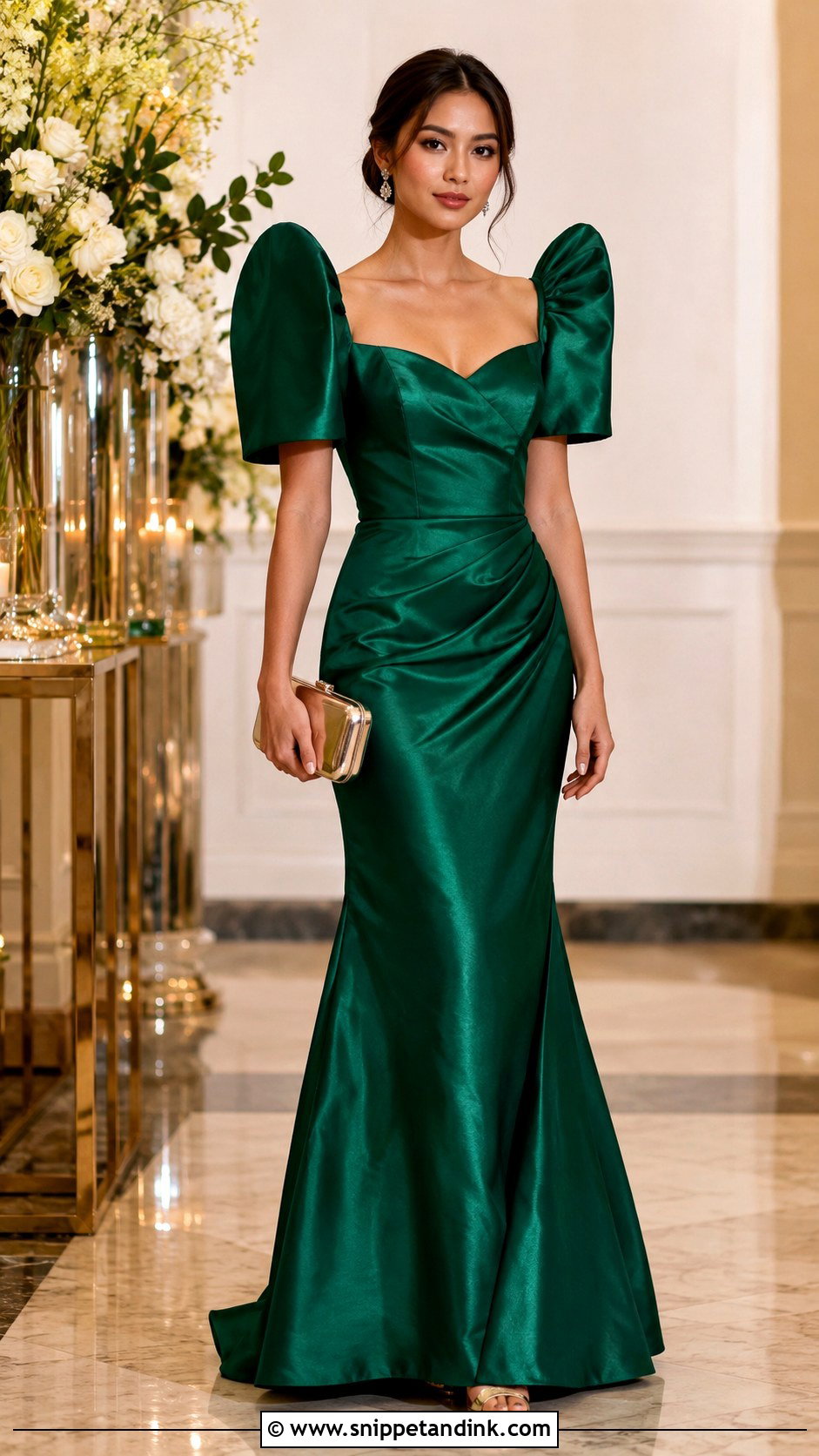
Satin catches light, so even a plain terno looks rich at night. Structured butterfly sleeves, a clean neckline and a straight or mermaid skirt give it a modern shape, and champagne, emerald, navy, ivory and black all look deep in this fabric. Metallic heels, a sleek clutch and refined earrings are plenty; satin already shines, so skip extra sparkle. Satin marks with water, so keep a napkin over your lap at dinner.
12. Minimalist Filipiniana Gown
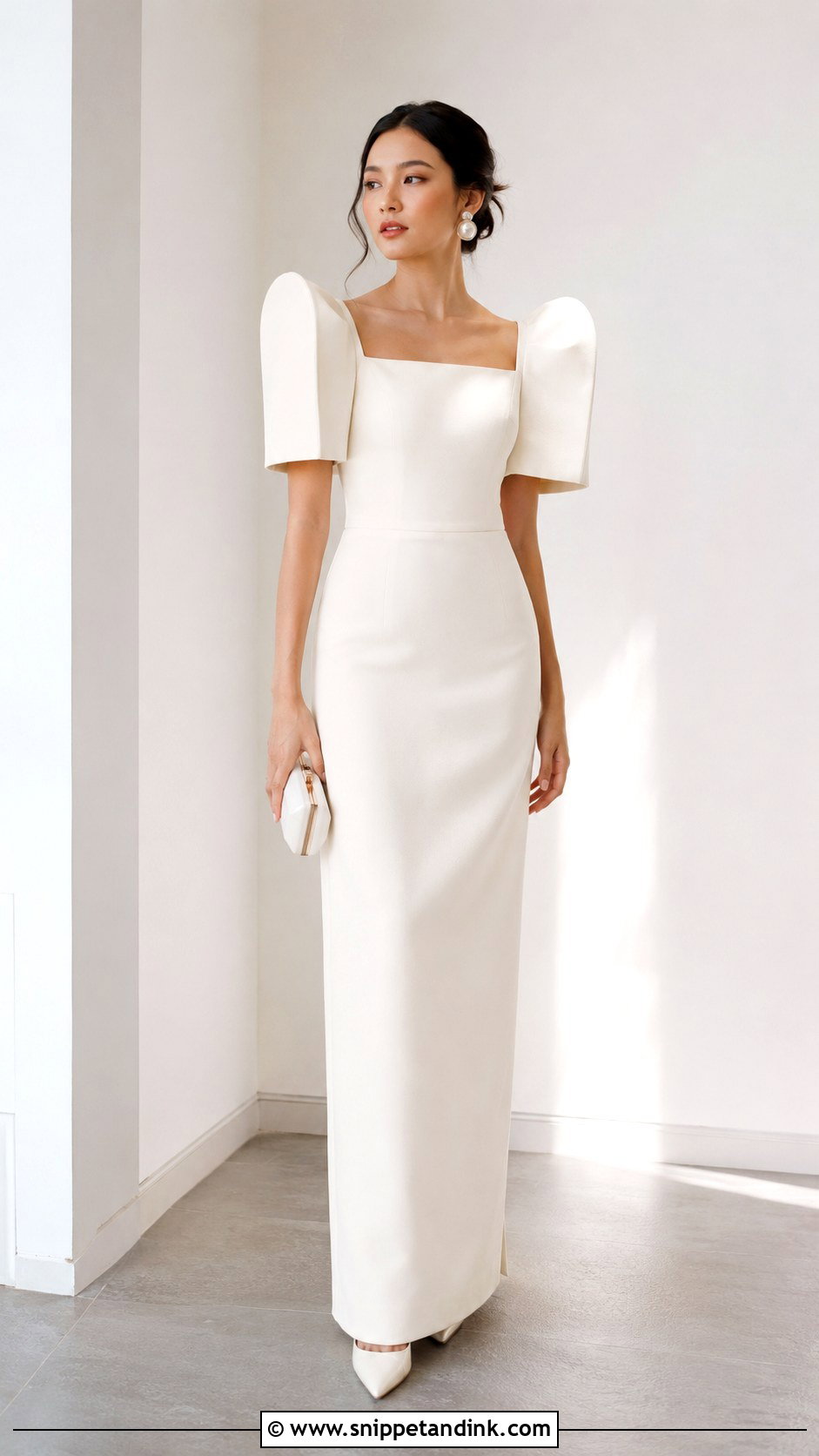
When there’s no beading to hide behind, every seam shows, so a minimalist terno is really a tailoring test. Plain crepe or satin with a well-cut butterfly sleeve can look very refined when the fit is right, and a little off when it isn’t. Ivory, black, beige, soft gray or navy suit the clean lines. Sculptural earrings, pointed heels and a structured clutch, with a sleek bun or straight hair, keep it sharp for civil weddings, formal dinners and gallery events.
13. Beaded Filipiniana Gown
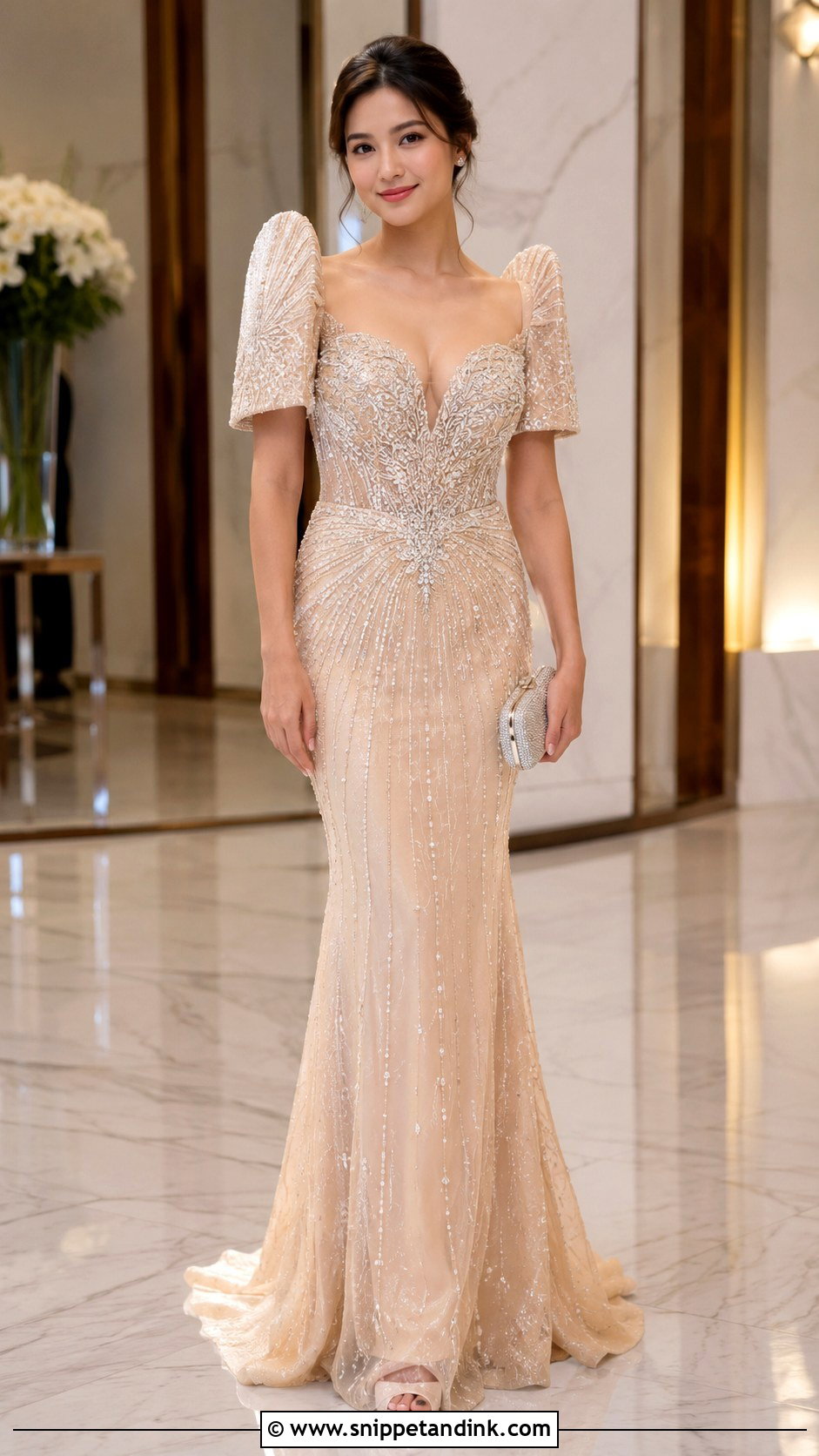
Beadwork is for the nights you want glamour. It can highlight the bodice, sleeves, waist or hem without changing the traditional shape. The most flattering beading follows the line of the body rather than sitting in heavy clusters, which also keeps the gown lighter to wear for hours. A neutral base with silver, pearl or gold beads is easiest to style. Simple heels and a small evening clutch are enough, and skip the necklace if the neckline is detailed. Galas, receptions, pageants and milestone birthdays suit it.
14. Off Shoulder Filipiniana Gown
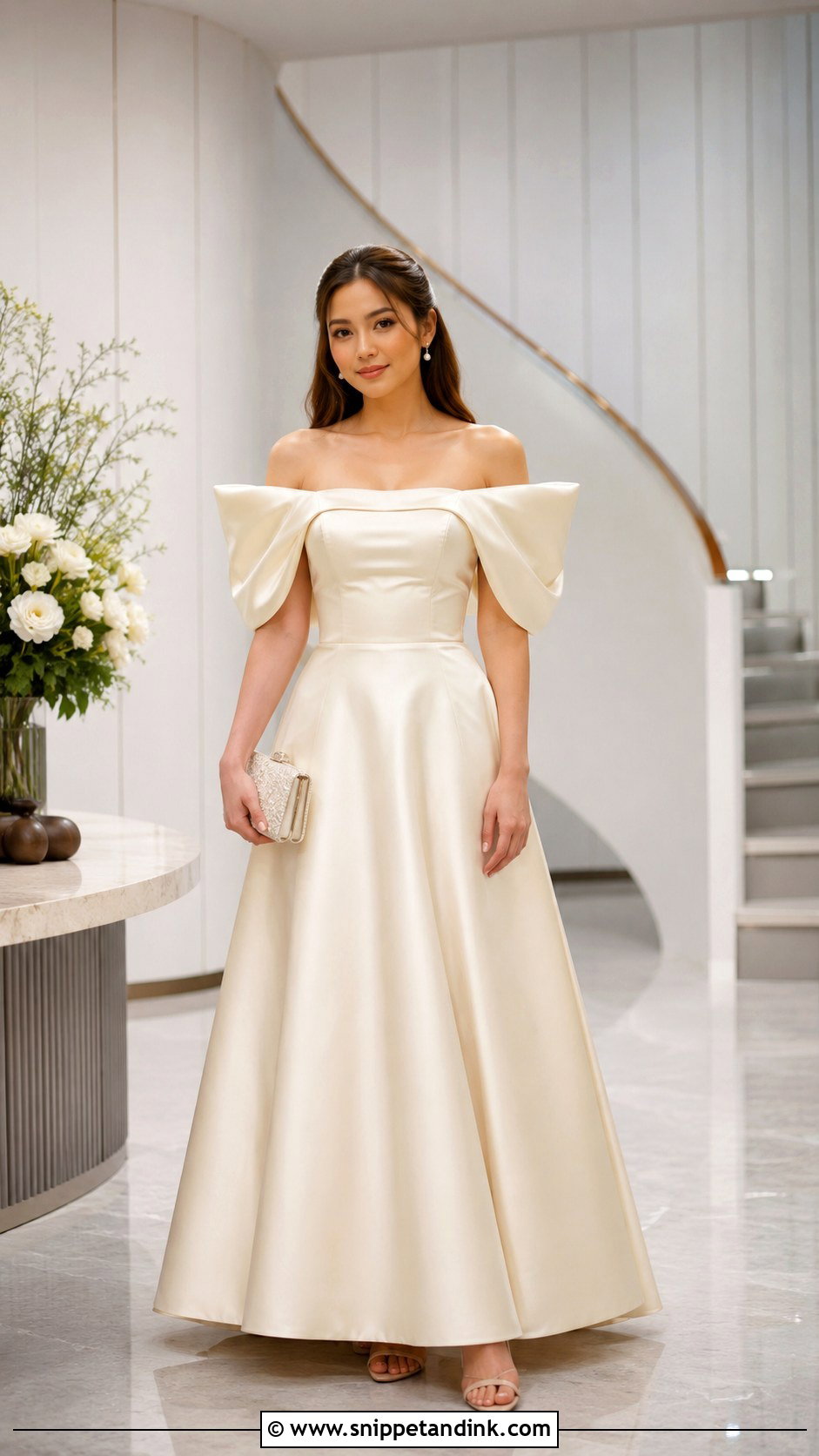
Off-shoulder is the trickiest version to construct, because the sleeve must keep its butterfly shape while the neckline opens. A fitted bodice with internal boning holds it in place, and a smooth A-line or mermaid skirt balances it. Satin, crepe or organza give a clean finish. Pearl earrings, soft waves and strappy heels are plenty; with a wide neckline, put the attention on the earrings rather than a necklace. Try lifting your arms at the fitting, since off-shoulder bodices can creep down.
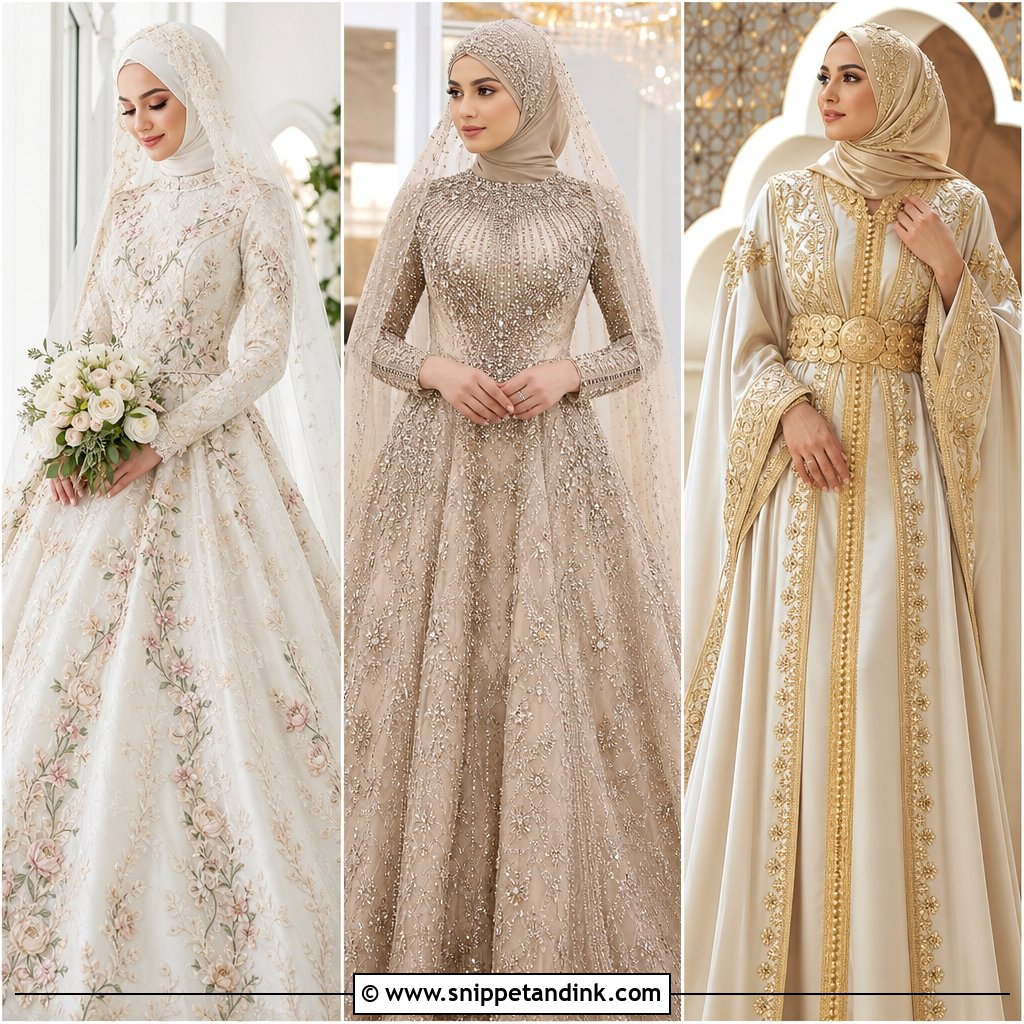
15. Long Sleeve Filipiniana Gown
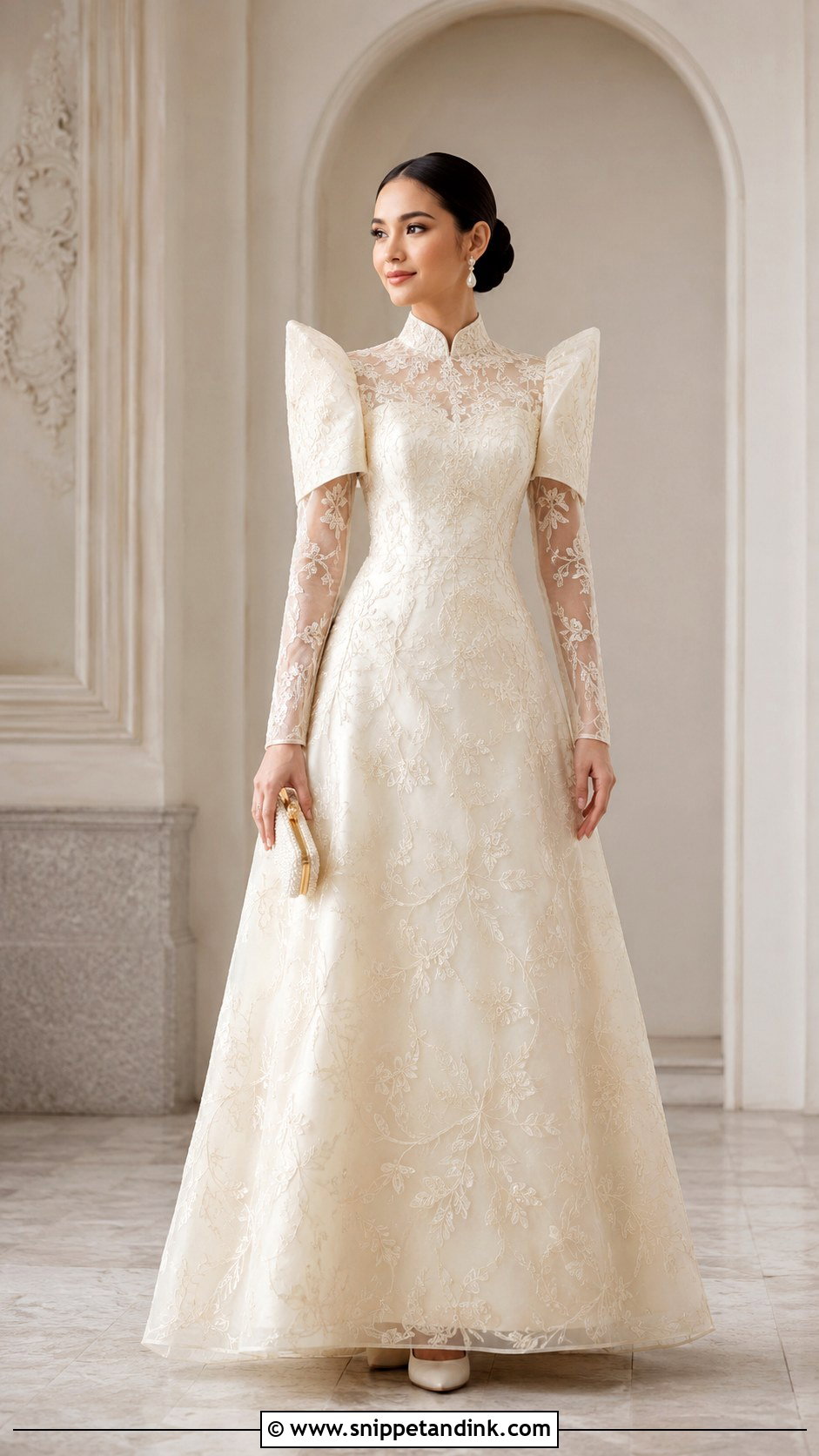
Full-length sleeves give coverage and grace. They often combine butterfly shaping at the shoulder with fitted sheer or embroidered sleeves down to the wrist. Lace, piña-inspired fabric, organza or embroidered mesh keep them soft. A high or boat neckline makes the gown more formal. Closed-toe heels, pearl jewelry and a neat hairstyle complete it. It suits formal ceremonies and church weddings with dress expectations, and cooler indoor venues where air conditioning runs cold.
16. Mermaid Filipiniana Gown
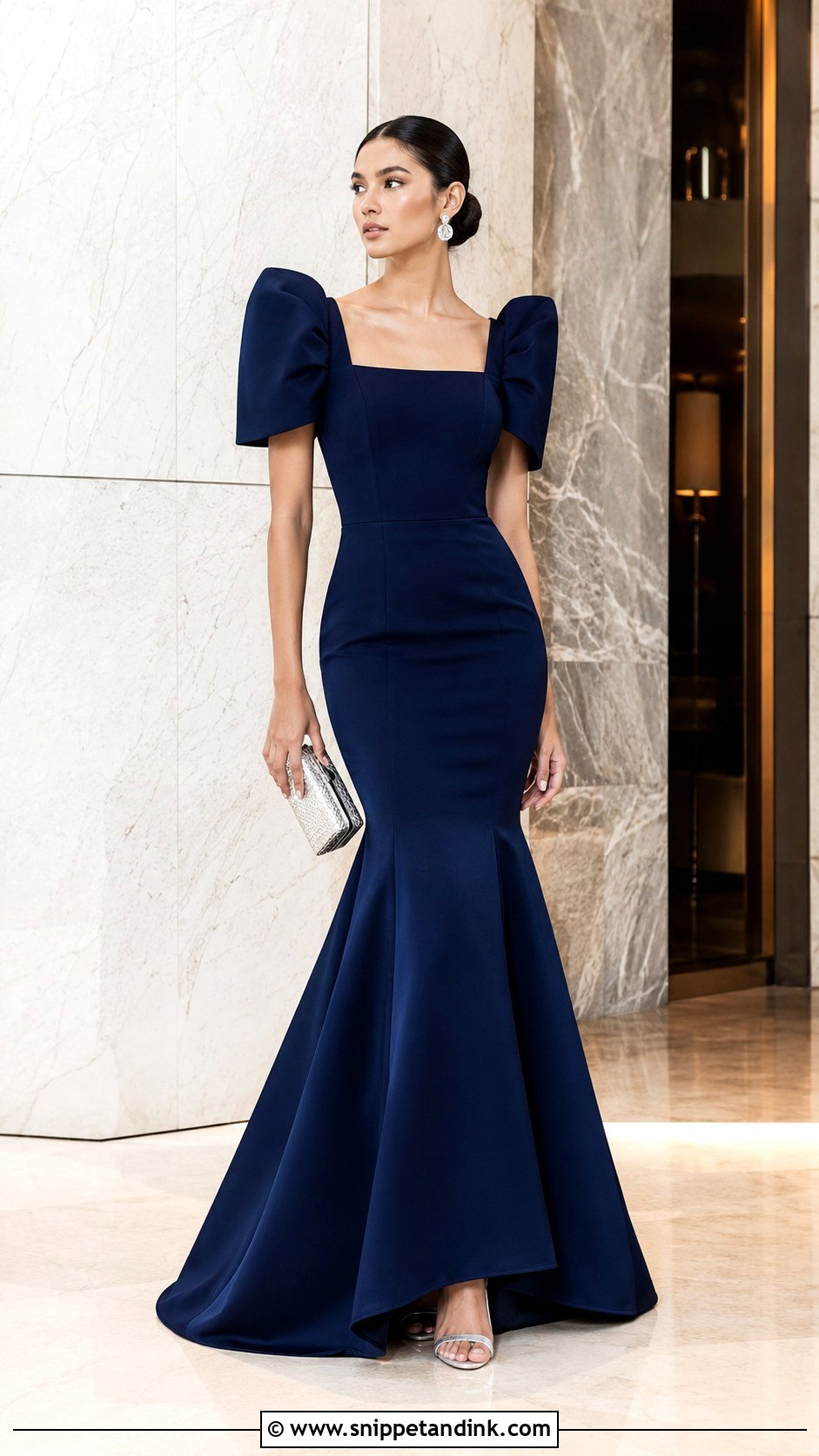
A mermaid Filipiniana gown fits through the body and flares below the knee, and the butterfly sleeves balance that fitted skirt with structure at the shoulders. Stretch crepe, satin or mikado give a smooth, supportive fit. Ivory, emerald, navy, red and black all carry it. Wear proper heels, since the flare needs the extra length to fall correctly, and have the hem set in those exact shoes. Mermaid skirts limit your stride and make stairs awkward, so check the venue before choosing it for a long night.
17. A Line Filipiniana Gown
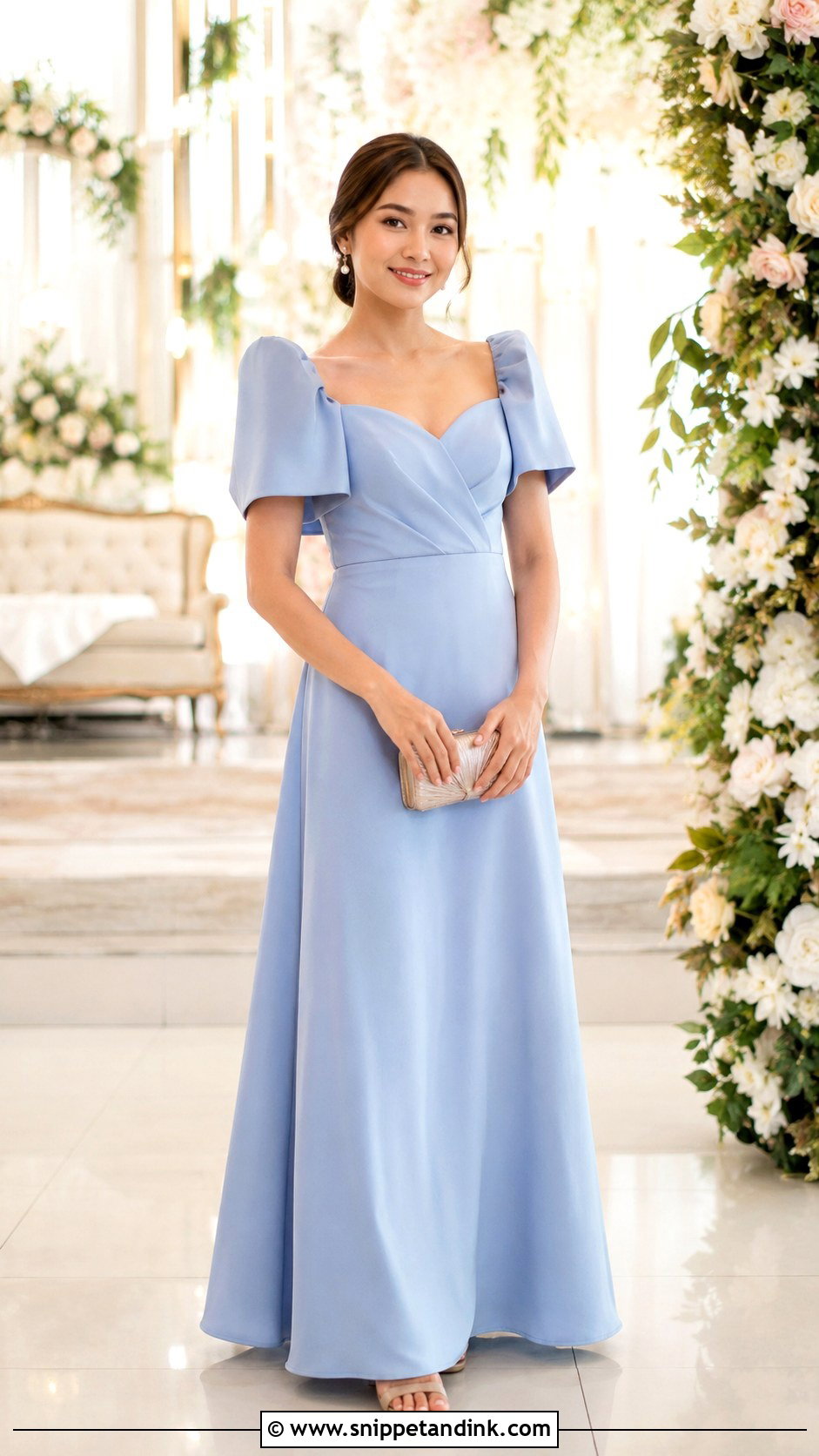
The A-line widens gently from the waist, so it flatters most body shapes and is easy to move, sit and dance in. With butterfly sleeves, it gives a balanced silhouette that never overwhelms. Organza adds light volume, satin structure and chiffon softness, and almost any color works. Comfortable heels, pearl earrings and a small clutch complete it. It is the gown I’d suggest for bridesmaids, mothers and guests who need to stay comfortable through a full program.
18. Ball Gown Filipiniana Gown
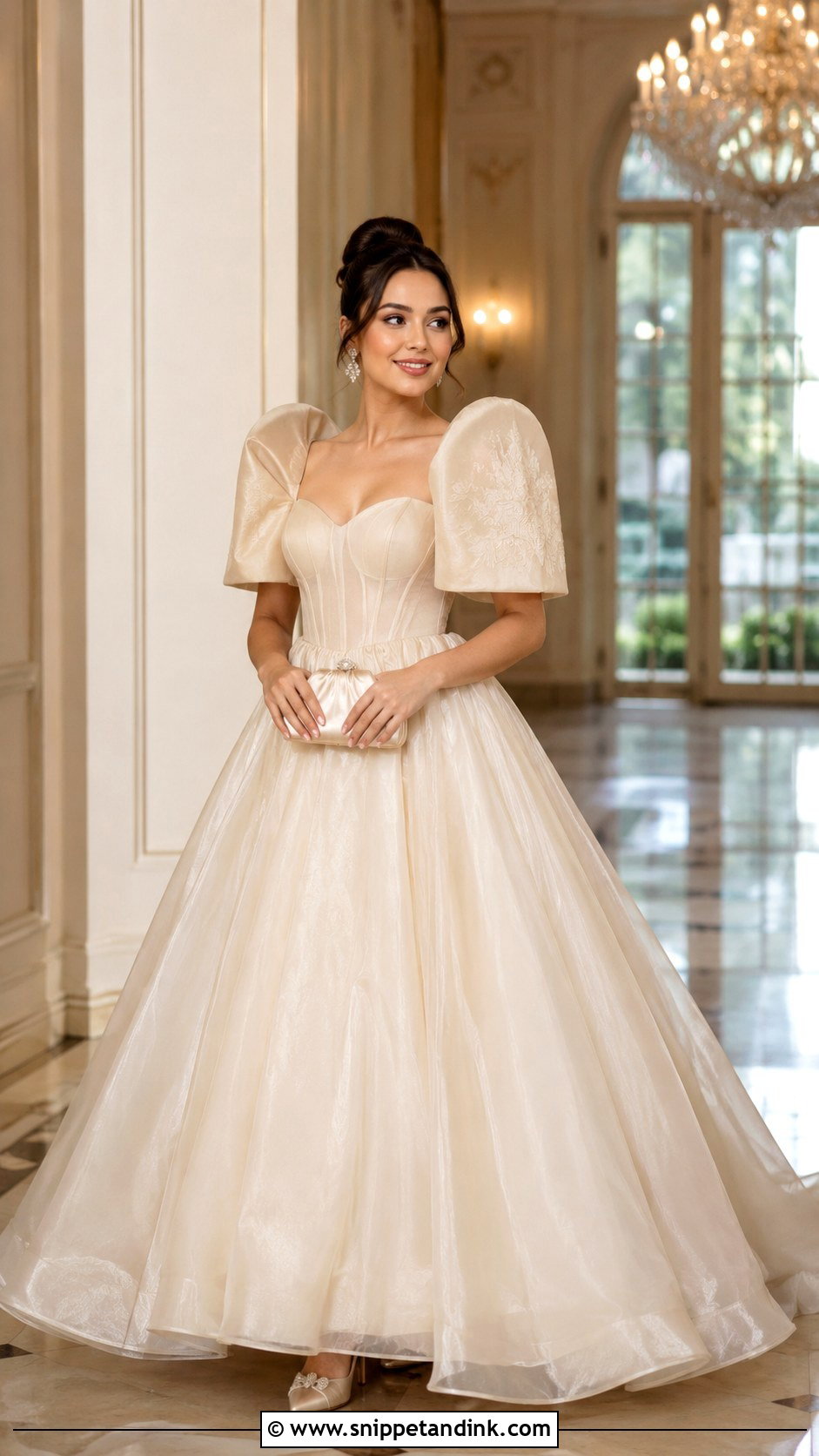
The ball gown is the grand option. A full skirt gives the regal shape while the butterfly sleeves keep it rooted in Filipino design. A fitted bodice and a skirt that starts cleanly at the natural waist stop the volume from swamping you. Tulle, organza or structured satin all work, in white, champagne, blush or deep jewel tones. Delicate earrings, a neat updo and supportive heels finish it. Full skirts take up space, so tell your coordinator; aisles and bridal car back seats are narrower than you’d think.
19. Two Piece Filipiniana Gown
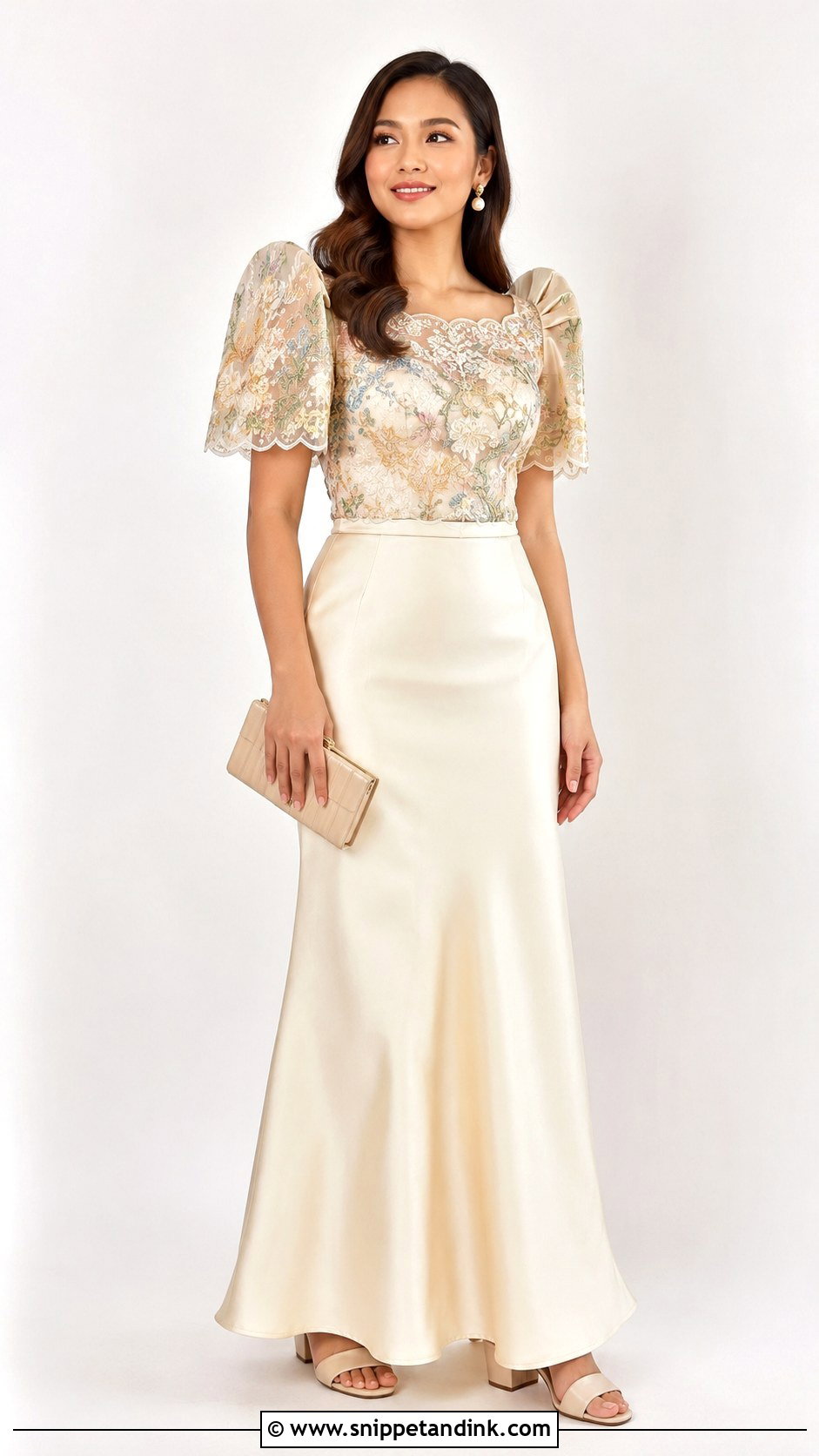
Two pieces give flexibility. A butterfly-sleeve top or embroidered blouse with a long skirt echoes traditional baro’t saya while staying fresh. A cropped or tucked top with a high-waisted skirt gives clean proportions; pair an embroidered top with a plain skirt, or a textured skirt with a simple top. Block heels, pearl jewelry and a structured clutch finish it. Because the pieces are separate, the skirt and top can be fitted to different sizes, which helps anyone who’s two sizes apart top to bottom.
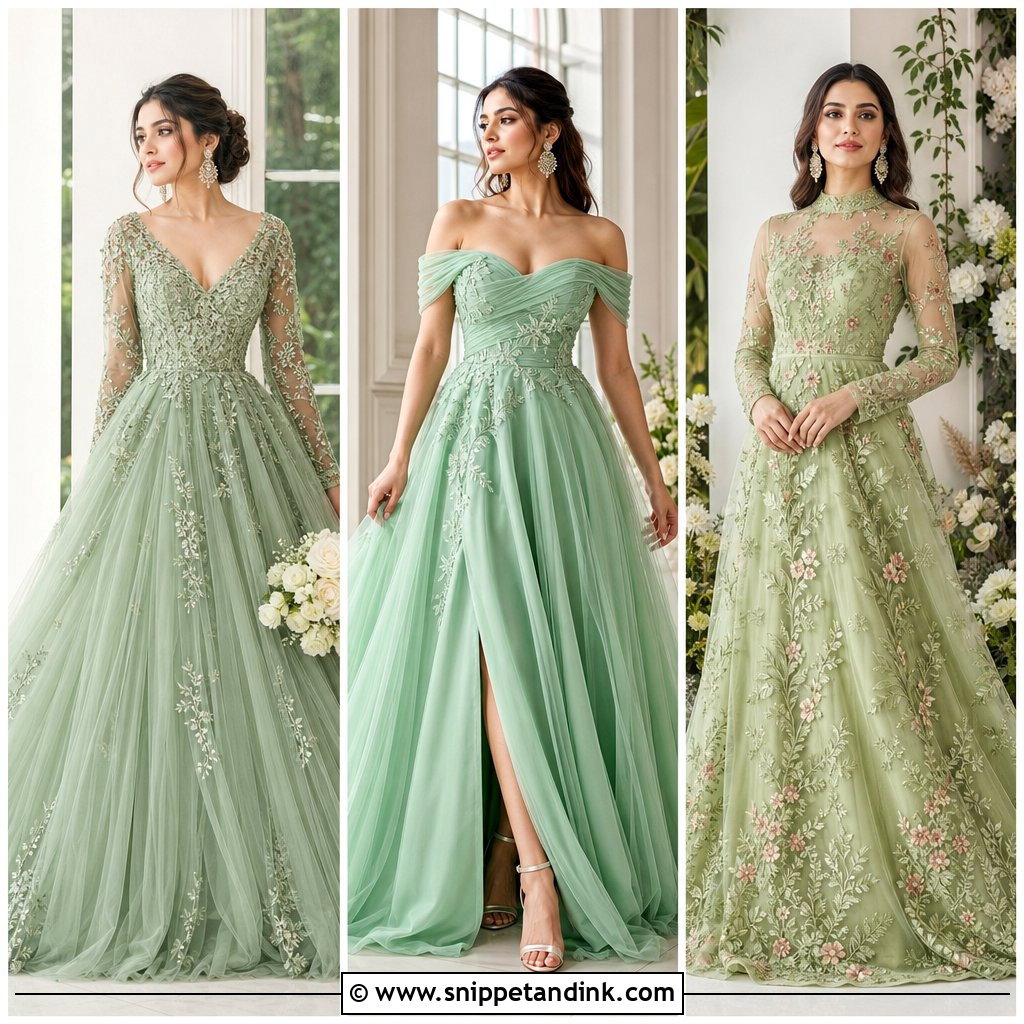
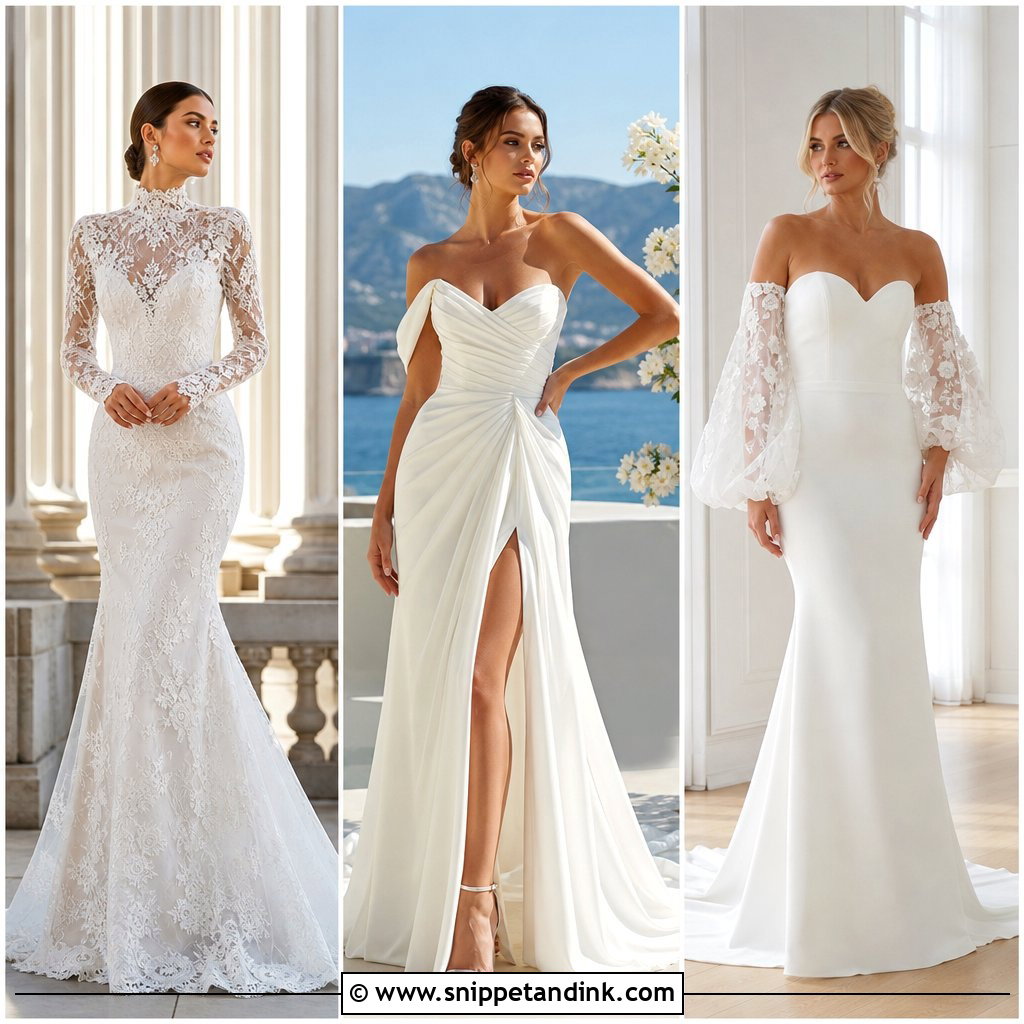
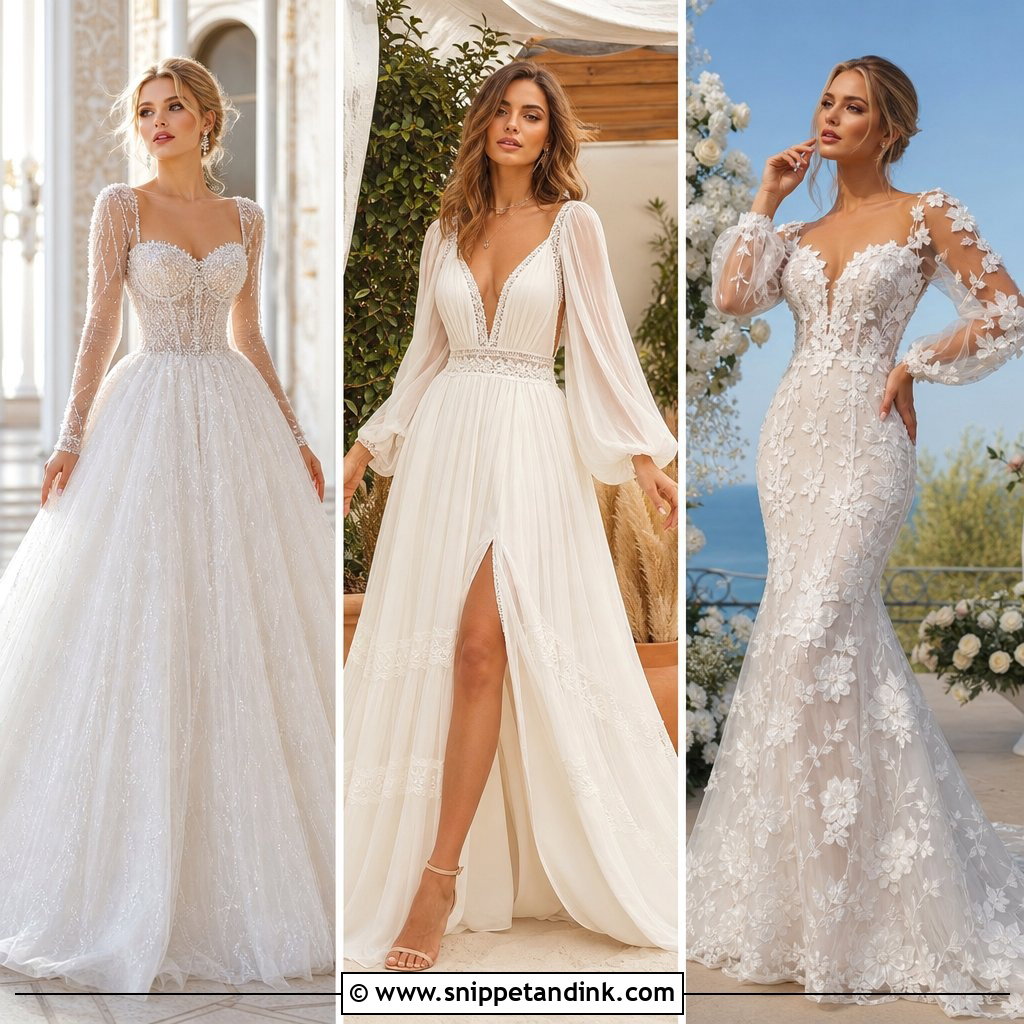
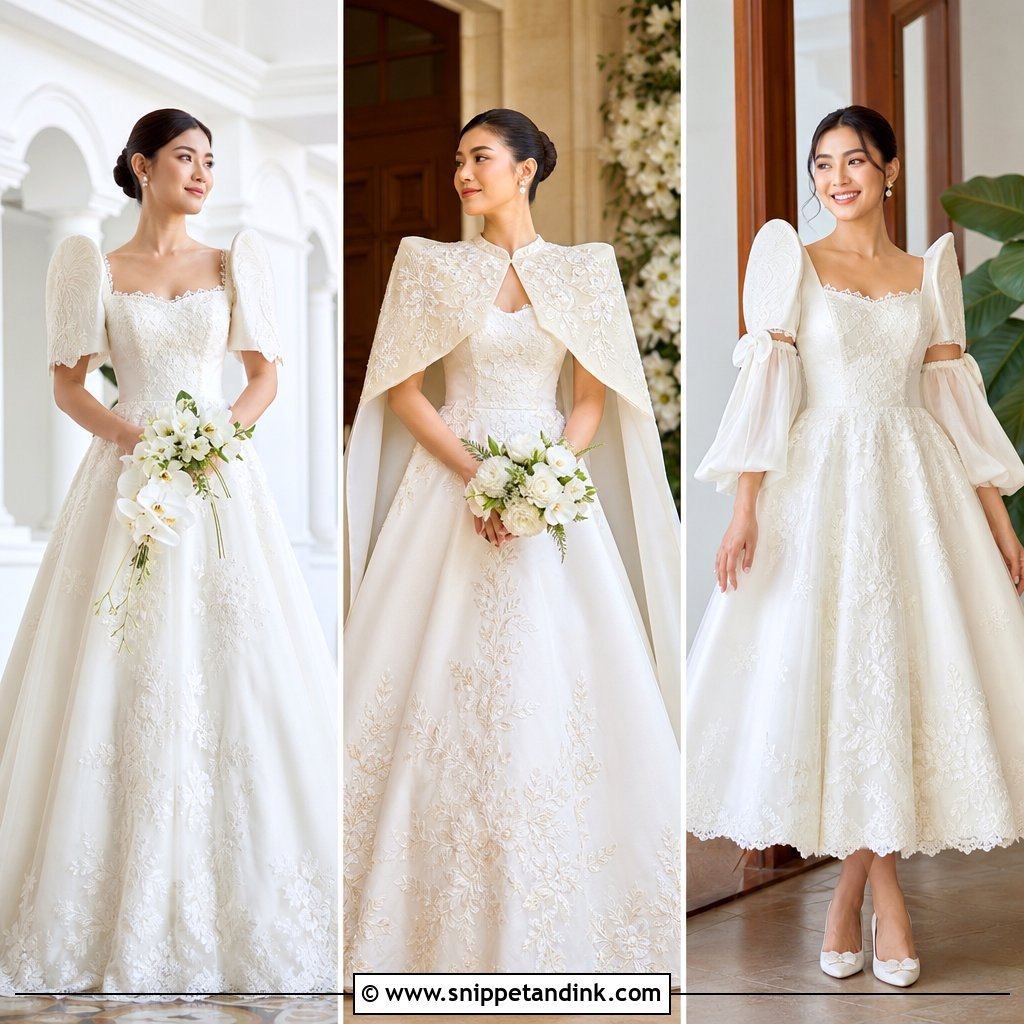
20. Filipiniana Gown With Detachable Sleeves
Detachable sleeves solve a real problem: butterfly sleeves look regal in ceremony photos, but they get in the way during dinner and dancing. Wear them for the ceremony, then unfasten them for the reception. Organza, piña-inspired fabric, lace or embroidered mesh all work for the sleeves. Keep the base gown simple so it still looks finished without them, and choose jewelry that suits both versions. Ask how the sleeves attach; hidden snaps are quicker to remove than hooks.
21. Filipiniana Gown With Alampay
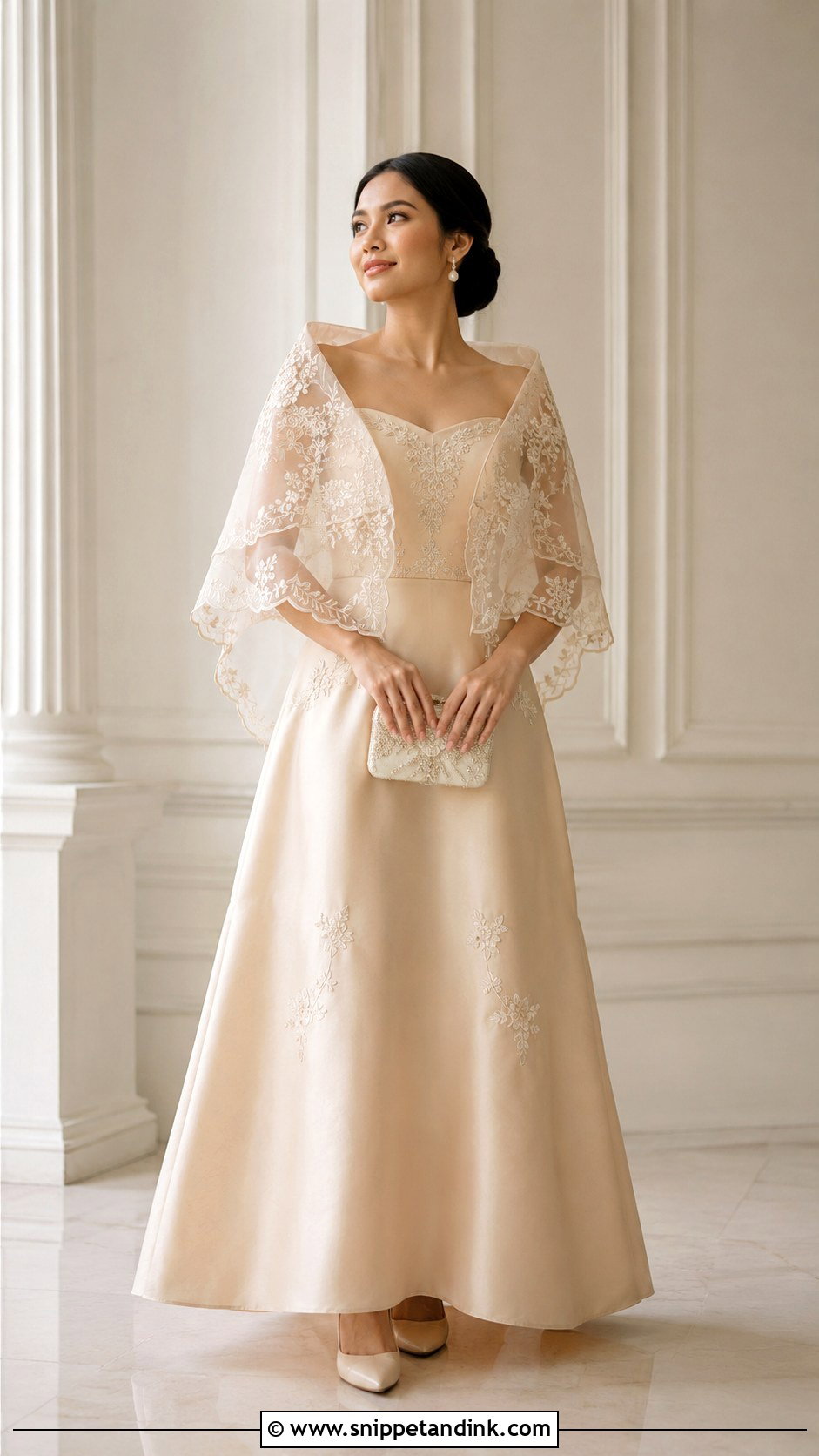
An alampay is a shawl laid over the shoulders, and it gives a softer frame than structured sleeves. It can be sheer, embroidered, lace-trimmed or piña-inspired, and it works best over a simple fitted or A-line gown in ivory, champagne, blush or black. Pearl earrings, soft heels and a clutch that doesn’t compete with the fabric finish it. Have it pinned discreetly at the back or shoulder seam, since a loose shawl slides every time you hug someone. It suits heritage celebrations and anyone who finds butterfly sleeves too bold.
22. Short Filipiniana Gown
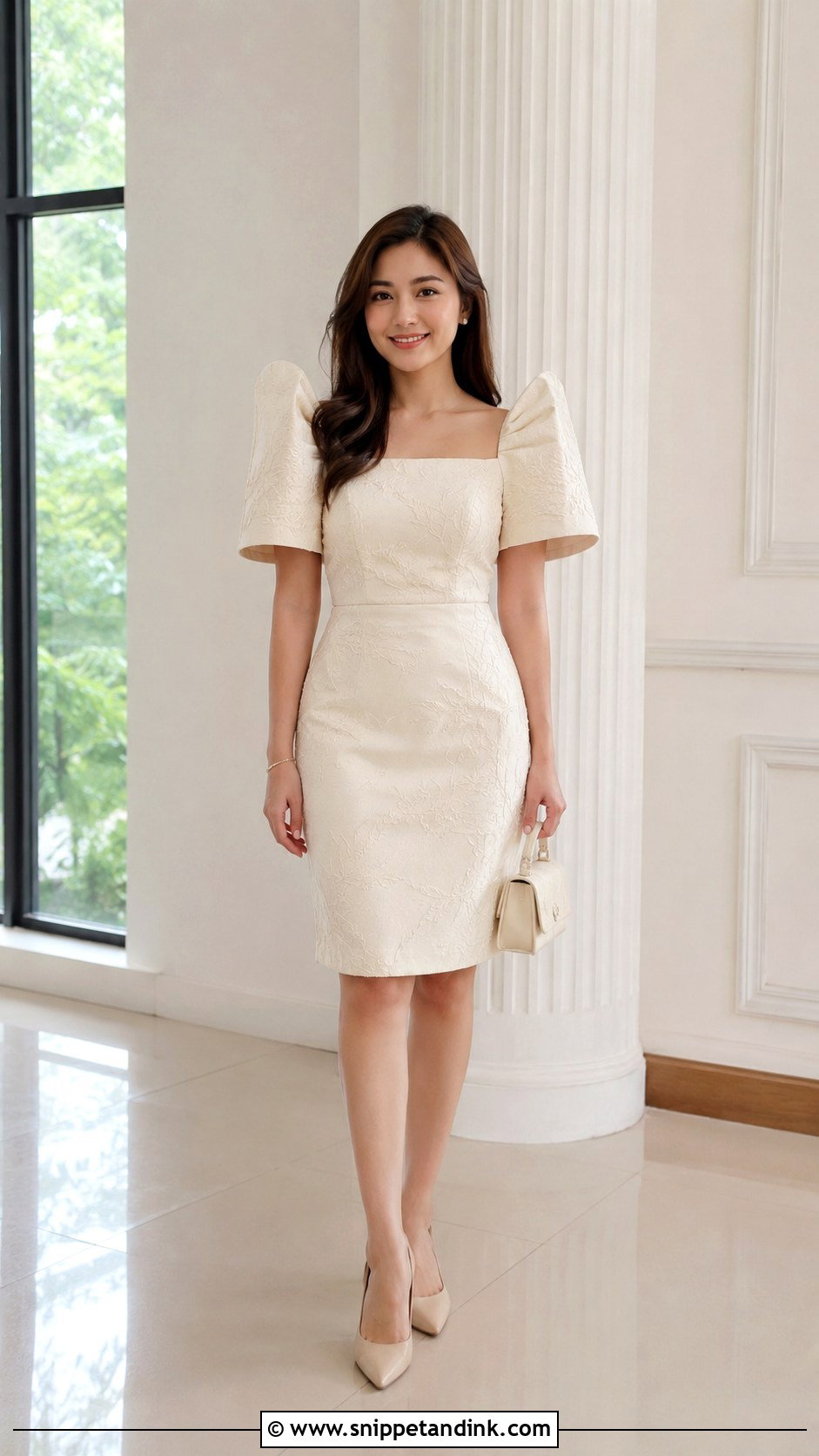
A shorter terno, cut to the knee or midi, keeps the cultural identity in the butterfly sleeves while making the outfit easy to wear. A fitted waist and clean skirt suit it in satin, crepe, jacquard or embroidered fabric. Pointed heels, pearl studs and a small handbag finish it. Keep the styling polished, because a short hem can tip casual quickly. It’s a good fit for graduations, cultural presentations, daytime celebrations and modern receptions.
23. Floral Filipiniana Gown
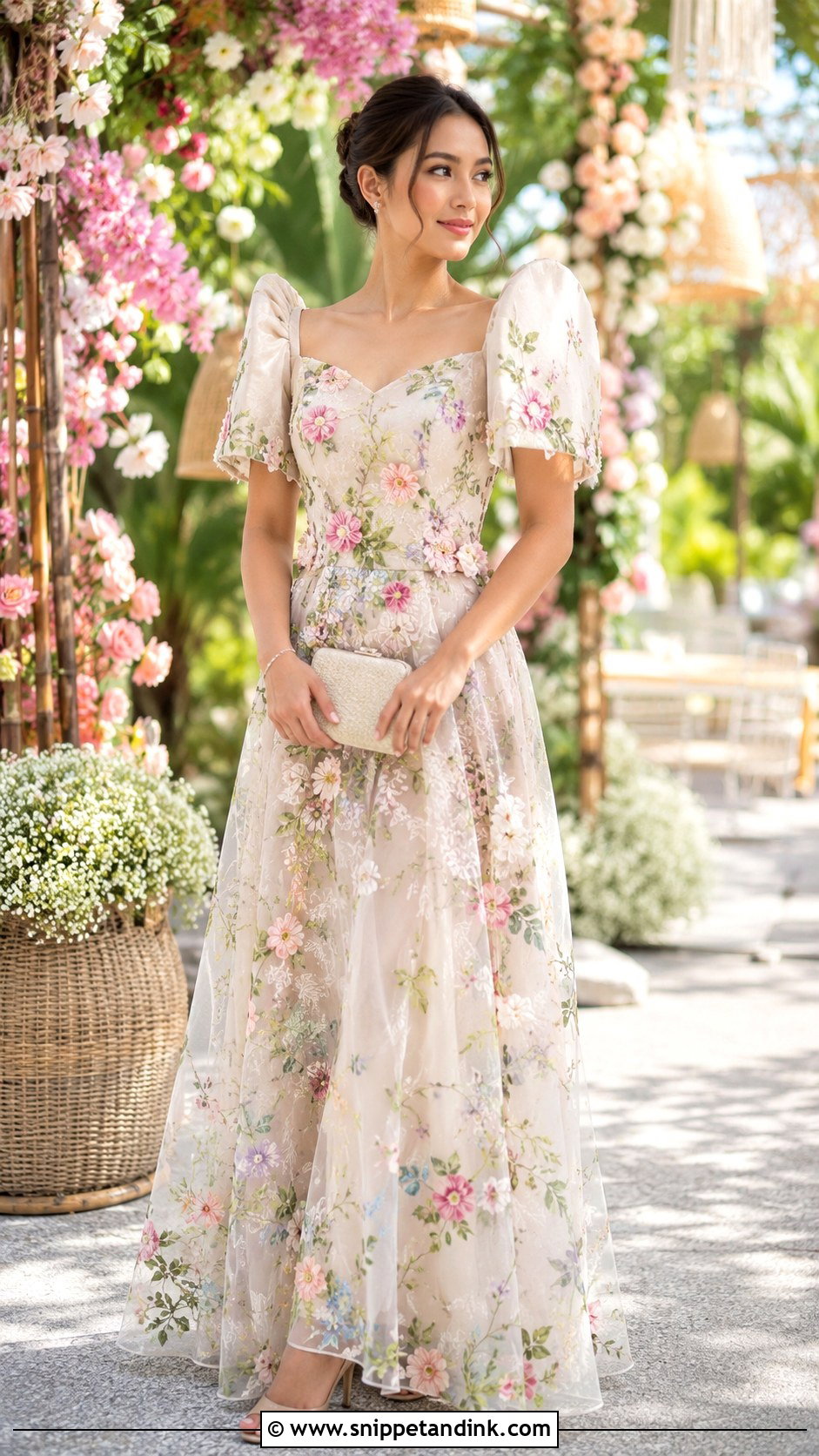
Florals make the terno festive. They can be printed, embroidered, appliquéd or beaded, and one strong floral feature looks better than flowers everywhere. A floral bodice with a plain skirt balances well, while embroidered sleeves frame the face. Pastel blooms feel delicate; bold tropical florals feel lively. Neutral heels and simple earrings keep the gown in charge. Garden parties, family events, bridesmaids and festivals all suit it.
24. Filipiniana Gown For Mother Of The Bride
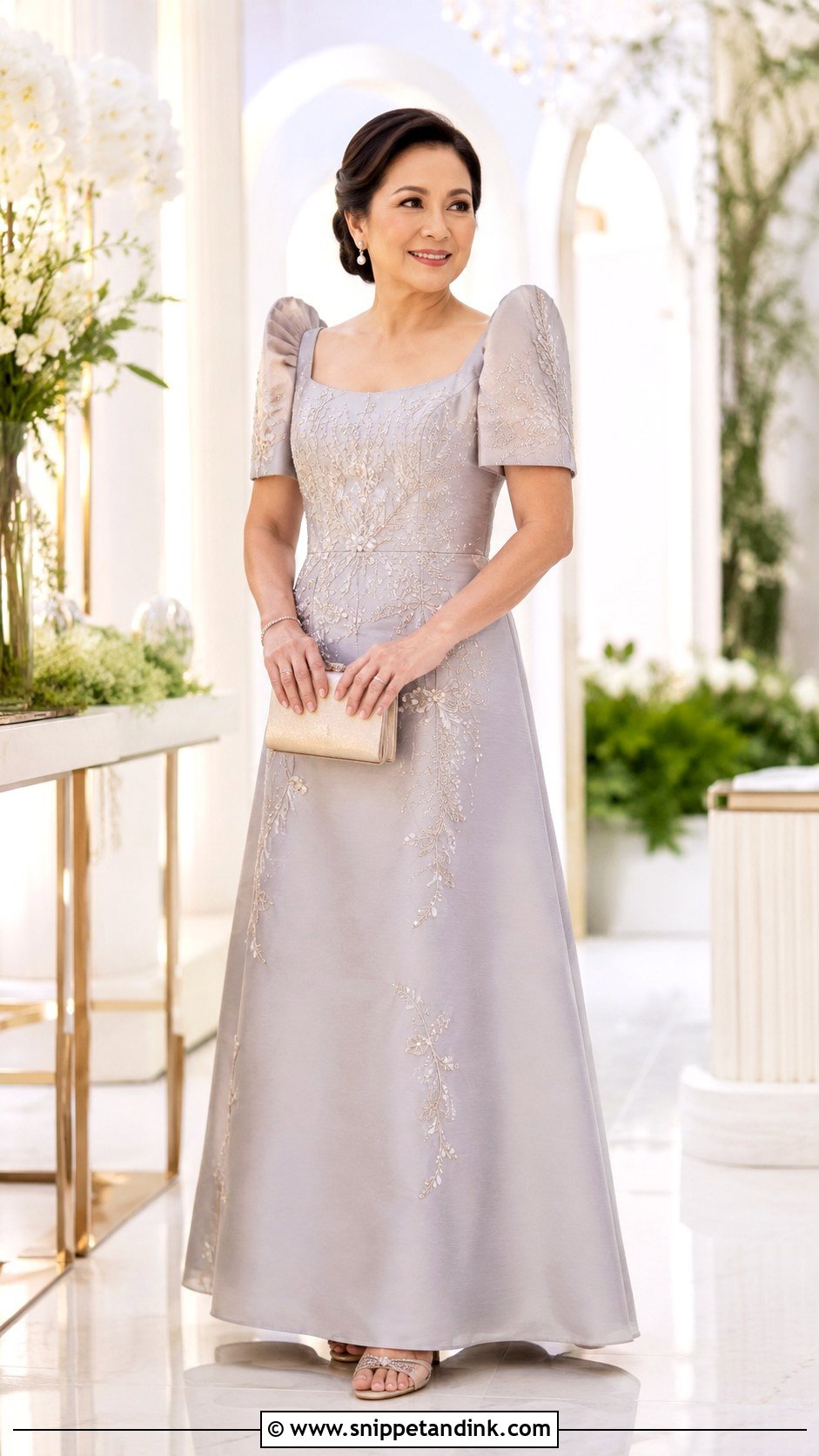
For the mother of the bride, comfort matters as much as looks, since she’ll be hugging, greeting and standing for photos all day. Soft neutrals, champagne, dove gray, blush, navy and sage complement most palettes. A structured bodice, gentle butterfly sleeves and an A-line or straight skirt allow easy movement. Subtle embroidery, lace panels or light beading add formality without overshadowing the bride. Comfortable heels, pearl or crystal earrings and a refined clutch complete it. I’d ask the bride for a fabric swatch so the colors sit well together in portraits.

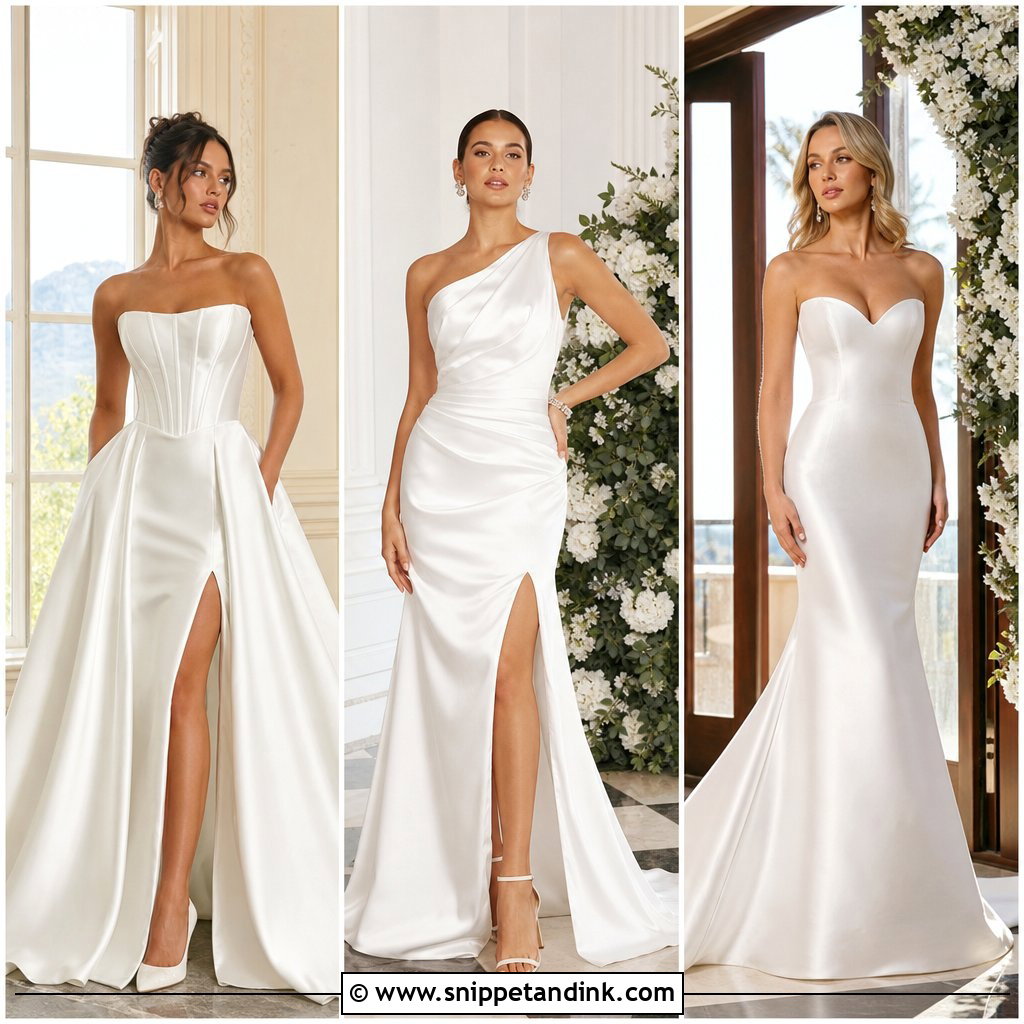
25. Filipiniana Gown For Bridesmaids
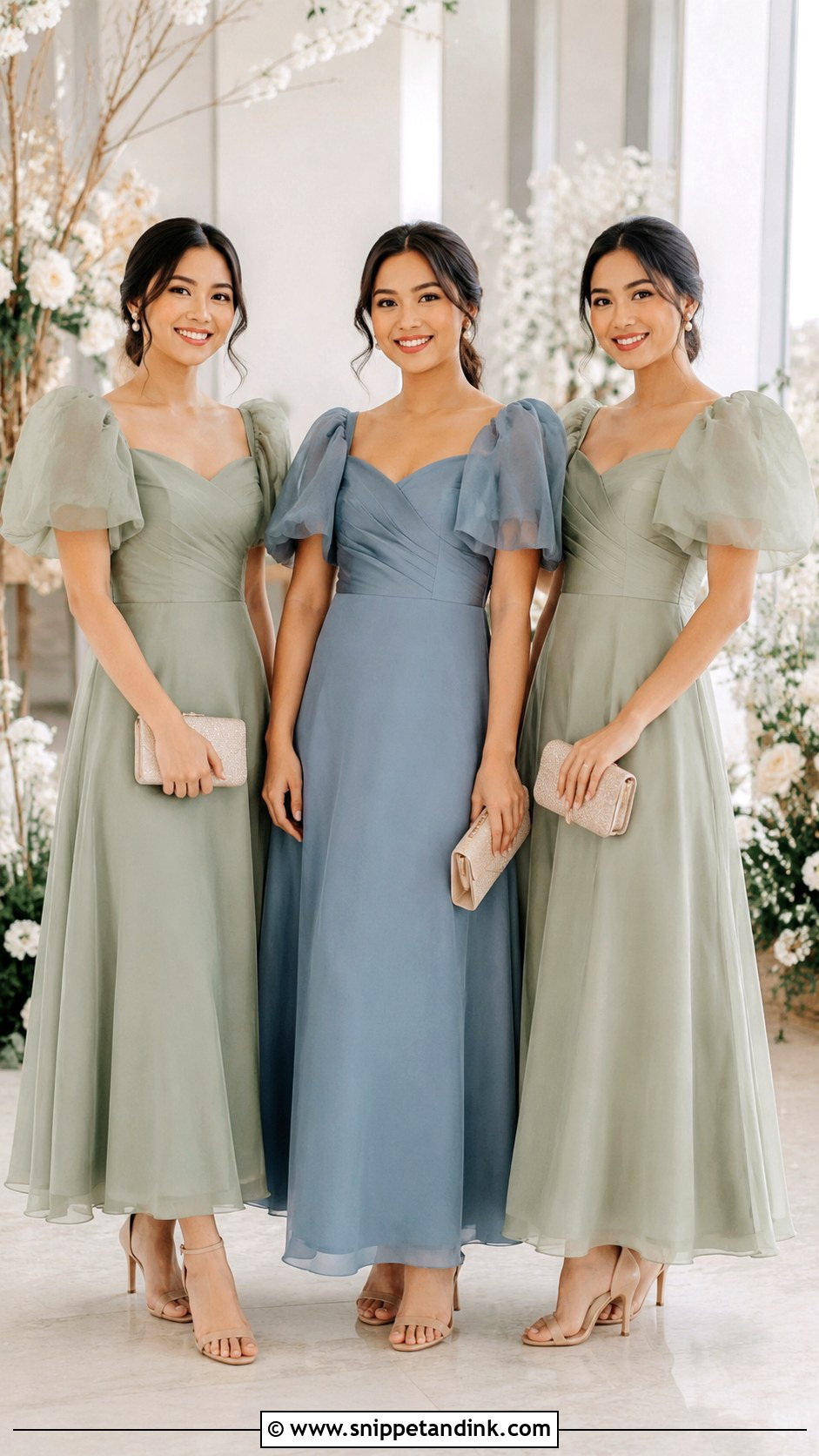
For bridesmaids, pick one shared detail, such as butterfly sleeves, embroidered bodices or one fabric, and let each woman choose a neckline or skirt she feels good in. Pastels, sage, dusty blue, champagne and soft pink photograph well together. A-line skirts are easiest for a group of different figures. Matching nude heels, pearl earrings and simple hairstyles tie the line-up together without making it stiff. Order everyone’s gowns from the same dye batch, because pastels from separate batches can vary visibly.
Butterfly Sleeves on the Day and in the Closet
Butterfly sleeves are pleated and stiffened so they stand up at the shoulder, and that shape is easy to crush. Get dressed at the venue if you can. If not, sit in the car with the sleeves free, not pressed against the seat back, and ask whoever helps you dress to fluff each pleat back into place before photos.
Hugs flatten sleeves too. You’ll be greeting lots of relatives, so a quick check by a bridesmaid between the ceremony and portraits keeps them looking fresh.
After the Wedding
Natural fibres yellow in humid storage and in plastic bags. Have the gown cleaned by someone who handles piña and jusi, then store it flat or loosely folded with acid-free tissue in the sleeves and between folds, in a breathable cotton bag away from sunlight. Check on it once or twice a year and refold along new lines so the fibres don’t crack at the creases.
Matching the Groom’s Barong
If the groom wears a barong, the two outfits look best when they share a fabric or embroidery motif rather than matching exactly. A piña barong beside a piña overlay, or the same floral thread on his chest panel and your sleeves, links you in photos without looking like a costume set.
Fit, Fabric and the Sleeve Come First
The Filipiniana gowns I love most respect tradition and still suit the body, the occasion and the woman wearing them. A classic terno will always have its place, and detachable sleeves, minimalist cuts, pastels, lace and two-piece outfits now make the style far more flexible. Get the fit, fabric and sleeve structure right, then balance the accessories: strong embroidery or beadwork wants simple styling, and a minimal gown can carry pearls, a good clutch and refined heels. Get those details right and the gown will feel both modern and rooted in heritage.
You'll Like These Ideas:




Leave a Reply