
Sleeves decide how the blouse frames your shoulders, where your bangles sit and how much of your mehndi anyone sees, so they deserve as much thought as the neckline. Bridal sleeves now range from traditional zari-covered elbow lengths to sheer full sleeves, sculpted puffs, capes and pearl-trimmed edges. I look at three things before the design itself: the season, the weight of the fabric and how much the bride will move during each ceremony. Then I check that the sleeve embroidery picks up the border of the saree or lehenga, because a sleeve designed on its own tends to look like it came from a different outfit. Here are twenty sleeve designs, with the styling and fitting notes I’d give each one.
Will Your Mehndi and Bangles Show With This Sleeve?
Two things sit on a bride’s arms besides the blouse: her mehndi and her bangles. I plan the sleeve length around both, because a beautiful sleeve that hides a week of henna work or crushes the bangle stack is the wrong sleeve.
- Full opaque sleeves cover any mehndi above the wrist. If your design climbs to the elbow, sheer net or a three-quarter length lets it show.
- Three-quarter sleeves end just above the bangle stack, which is why so many brides end up choosing them. Have the cuff fitted with the bangles on, not before.
- Elbow length shows the full forearm and suits a long chooda or a heavy stack of kadas.
- Short, cap and flutter sleeves keep you coolest at an outdoor or summer wedding, and show the most mehndi.
Climate matters as much as the jewelry. Full silk or velvet sleeves are pleasant in a cool hall in winter and miserable at a daytime outdoor ceremony in summer. If the venue isn’t air-conditioned, I’d choose sheer or short sleeves, or detachable ones you can remove after the ritual.
1. Full Sleeve Bridal Blouse With Zari Work
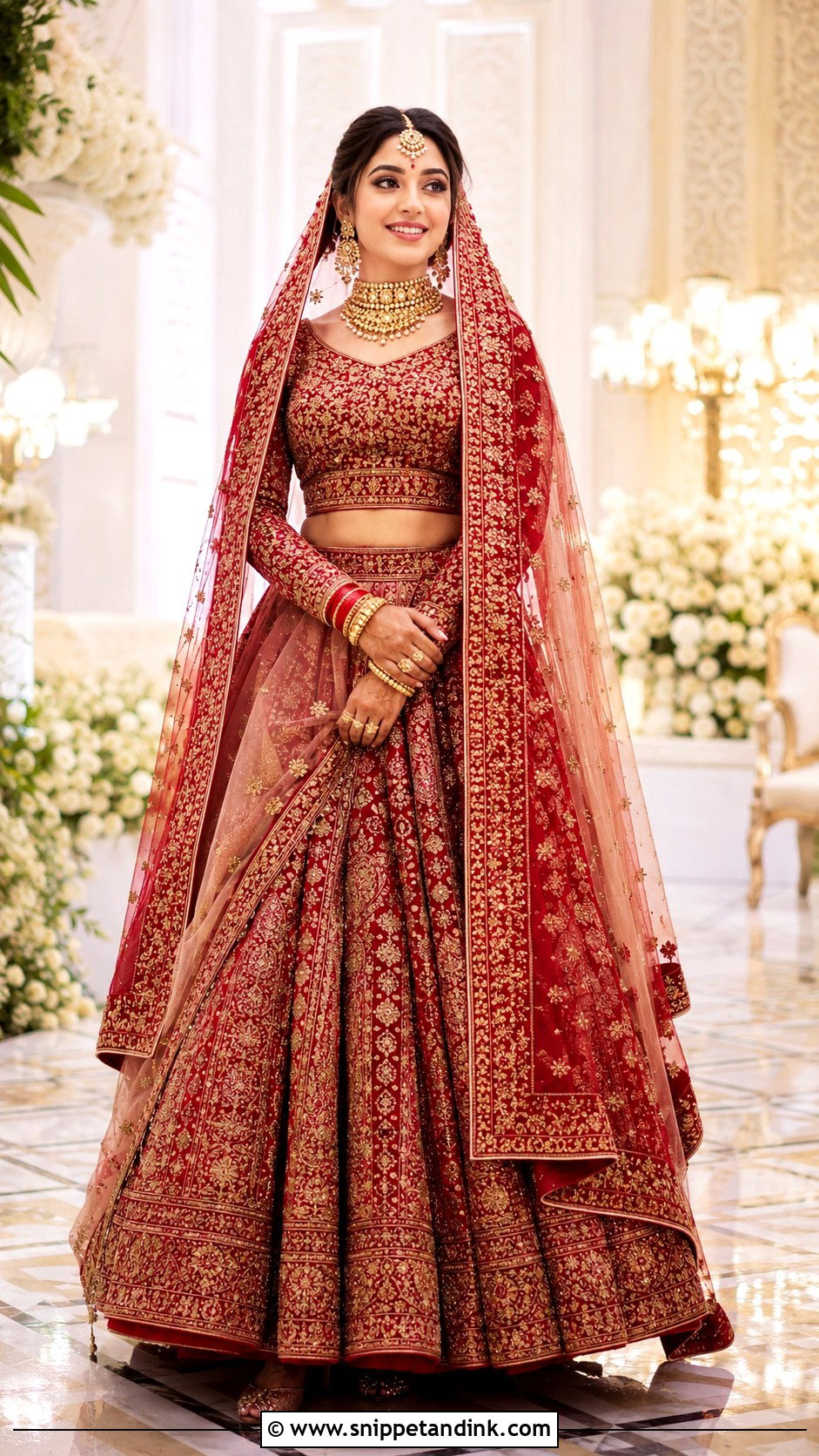
Full sleeves covered in zari read as formal straight away, which is why they suit a traditional ceremony. Choose fitted sleeves in silk, velvet or lined net, and let gold vines, florals and small bead accents run from the bodice down to the wrist. Pair the blouse with a red, maroon, ivory, or jewel-toned lehenga and a matching dupatta, or a silk saree with a wide zari border, then add a choker, drop earrings, bangles and embroidered heels. A moderately open neckline keeps the sleeves and jewelry from crowding each other. The catch with heavy zari is stiffness: metal thread doesn’t stretch, so I ask for slightly more room through the forearm than you’d want in a plain sleeve.
2. Elbow Length Bridal Blouse With Maggam Work
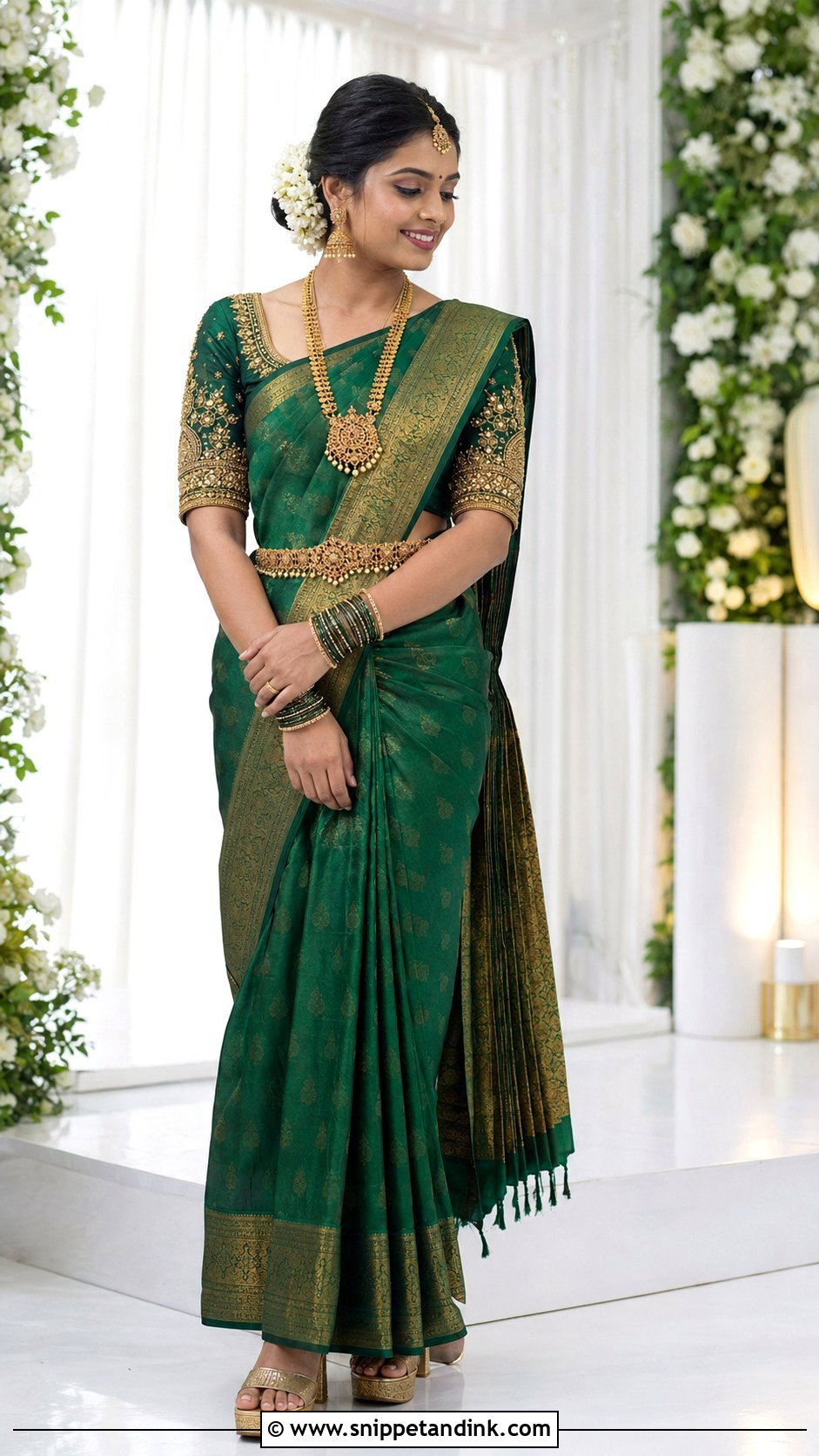
Maggam is raised hand embroidery worked on a frame with zari, beads and stones, and on an elbow-length sleeve it has room to show without hiding your bangles. Ask your tailor to place the densest work near the sleeve border, where it can echo the motifs on your saree or lehenga. This length sits well with Kanjeevaram, Banarasi and other heavy silk sarees. Style it with a pleated pallu, antique gold jewelry, a floral bun and platform sandals under the saree. The elbow is the point that suffers: if the sleeve ends tight right on the joint, it bites every time you bend your arm, so leave a little ease there and line it softly.
3. Sheer Full Sleeve Bridal Blouse
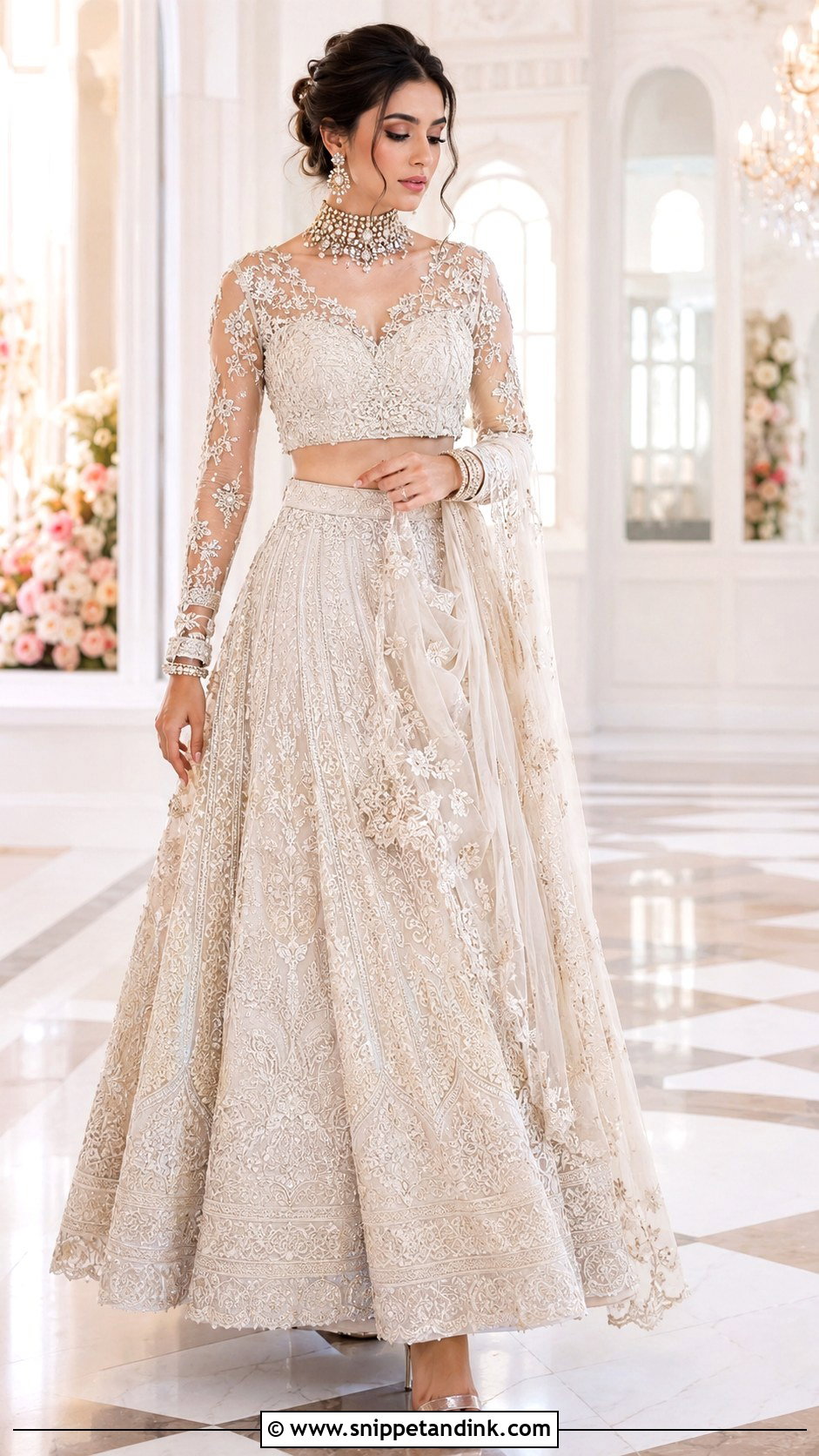
Sheer full sleeves lighten an outfit that’s heavy everywhere else. Use good net, tulle or organza in a shade close to the bodice, and scatter sequins, embroidered vines or small floral appliqués so the decoration seems to float on the arm. A tonal lehenga, a soft net dupatta and a structured skirt with matching motifs suit it, along with statement earrings, a fine choker, stacked bangles and metallic heels. The point where these sleeves usually fail is the shoulder seam. Sheer fabric under heavy embellishment pulls away from the armhole, so I’d always ask for that seam to be reinforced, with a fitted inner bodice doing the supporting.
4. Puff Sleeve Bridal Blouse With Embroidery
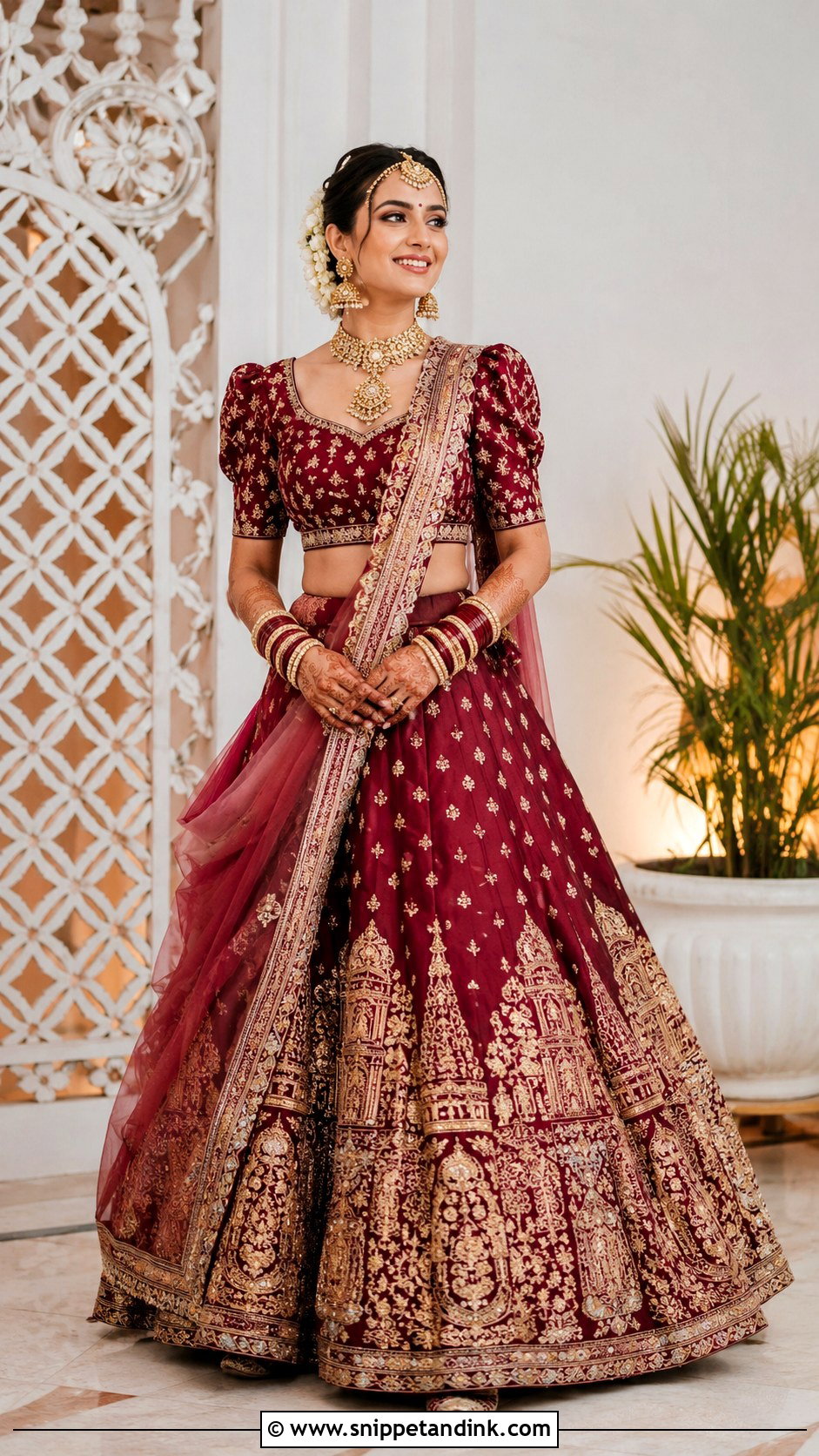
Volume belongs at the top of a puff sleeve, not all the way down. The most flattering puff sleeve bridal blouse has a controlled puff at the shoulder and a fitted embroidered band around the upper arm or elbow. Silk, brocade and organza hold the shape; lightweight net gives a softer puff that collapses a little under a dupatta. Pair it with a high-waisted lehenga, a tidy dupatta and a round neckline with a temple necklace, jhumkas, bangles and juttis. If the skirt is already very structured, go smaller on the puff. Broad-shouldered brides usually prefer a modest puff too, since a large one widens the frame noticeably.
5. Bell Sleeve Bridal Blouse
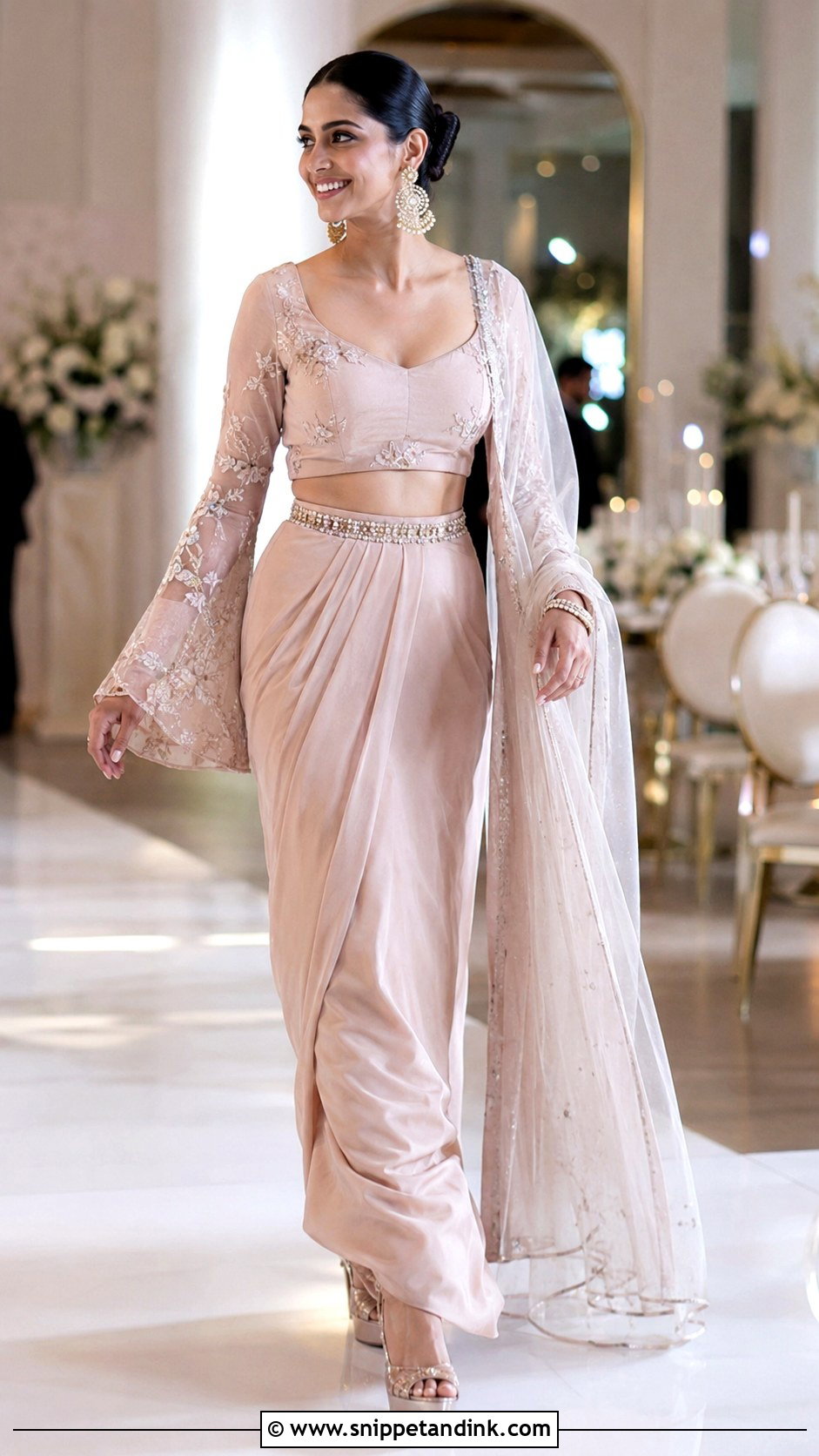
A bell sleeve should stay fitted to the elbow and open gradually below it; width from the shoulder makes the whole arm look heavy. A scalloped edge, embroidered border or light bead trim finishes the flare. Wear it with a streamlined lehenga or draped bridal saree so the sleeves stay the focus, plus a waist belt, medium earrings, a sleek bun and platform heels. It suits a reception or sangeet, where you’re moving more. I’d keep the hem well above the fingertips. A bell that reaches the hand drags through food, dips into the havan area and catches on bangles.
6. Cape Sleeve Bridal Blouse
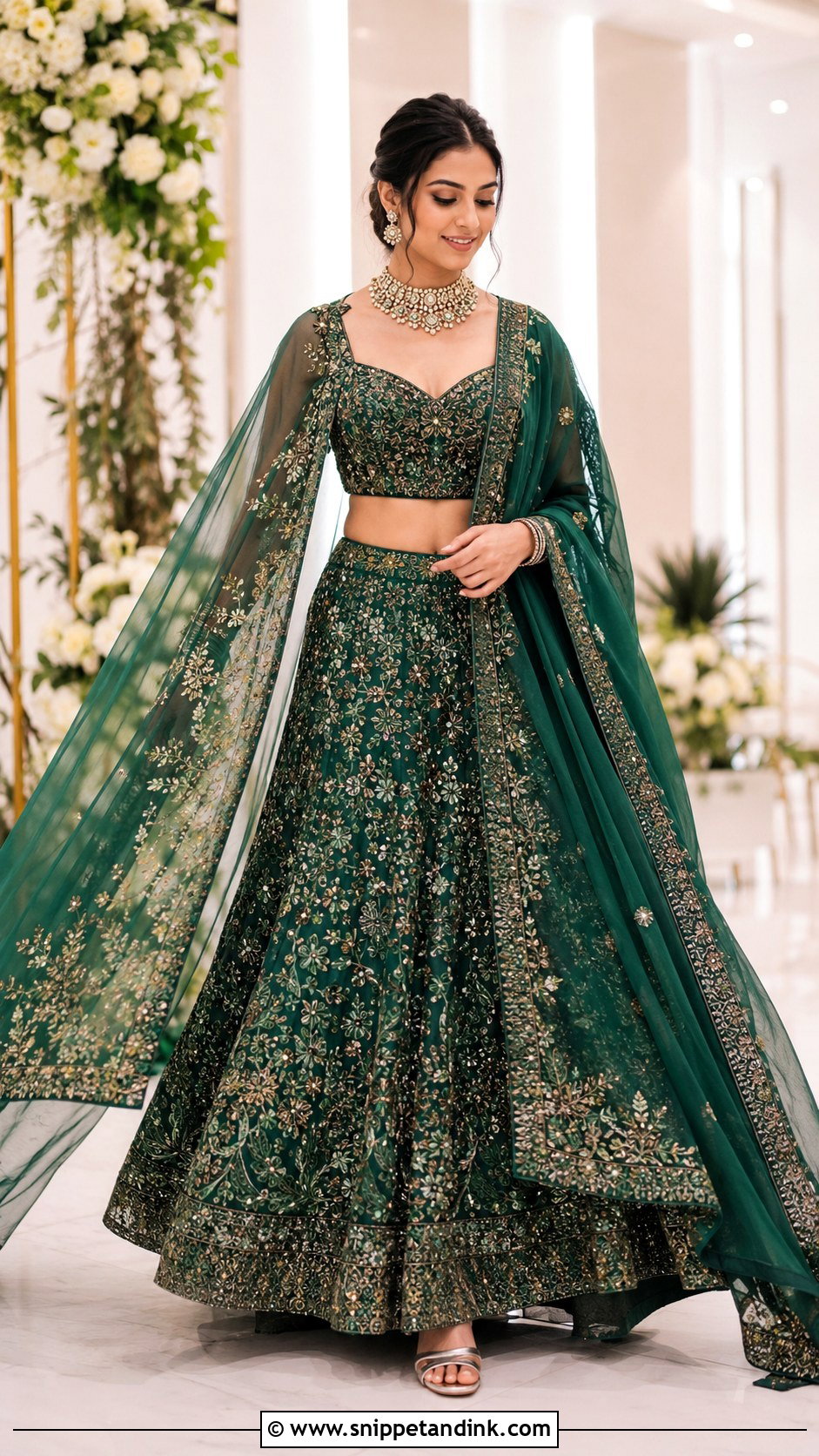
Capes add drama without loading the arms with embroidery. The cape can fall from the shoulders, attach at the neckline or extend from the upper sleeve across the back. Light net, chiffon or organza lets it move; anything heavier overwhelms the lehenga. A fitted blouse underneath gives shape, and scattered crystals, pearls or a border tie the cape to the skirt. You can wear a single dupatta or skip it if the cape gives enough coverage. Add a statement necklace, matching earrings, an updo and metallic heels. Check the cape length with your arms in front of you: it should leave your hands free to greet people and hold the garland.
7. Cold Shoulder Bridal Blouse With Beaded Sleeves
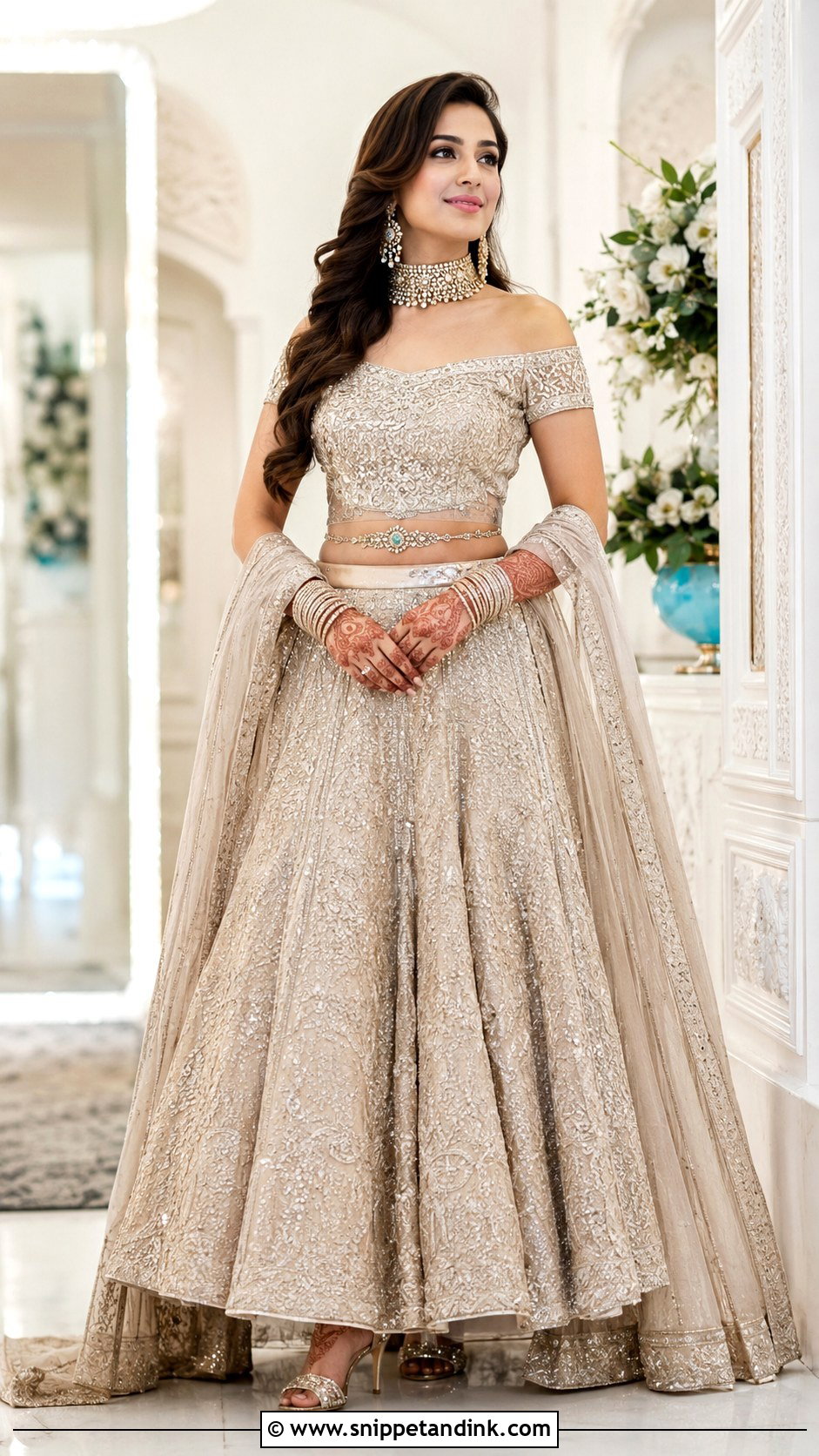
Cold shoulders show a little skin at the top of the arm while the sleeve below stays covered, a middle ground between sleeveless and full coverage. Outline the cutout with beads, pearls or fine embroidery so it looks designed, not cut away. A modern lehenga with clean paneling, controlled sparkle and a light dupatta draped away from the shoulders suits it, along with crystal earrings, a slim necklace, bangles and embellished sandals. It belongs at a reception or evening party. The fitting problem is placement: if the opening sits even slightly too low, it slips down the arm when you lift it, so test it by raising and bending your arms several times.
8. Off Shoulder Bridal Blouse With Short Sleeves
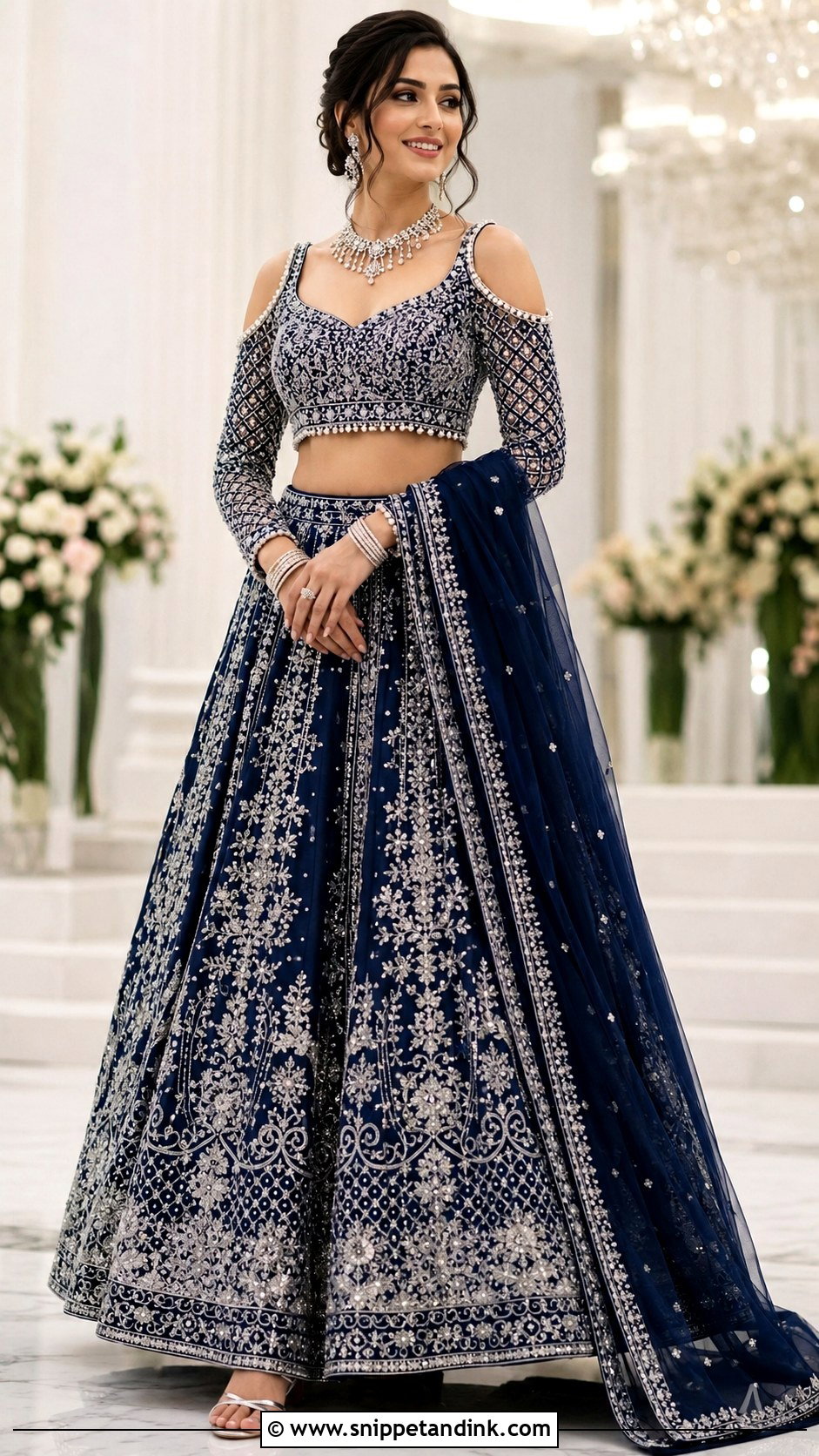
Off-shoulder blouses depend completely on what’s built inside them. With nothing over the shoulder holding them up, internal boning, secure cups and a band of hidden elastic do the work, and I won’t sign one off until the bride has hugged someone and raised both arms without it slipping. Short sleeves just below the shoulder frame the neckline; brocade, embroidered silk or another firm fabric holds that shape. Pair it with a high-waisted lehenga, a sheer dupatta across the arms and a bridal belt. A collar necklace or statement choker fills the open neckline, with drop earrings and soft waves. It isn’t the right choice for a ritual where you’ll keep reaching forward for long periods.
9. Cap Sleeve Bridal Blouse With Pearls
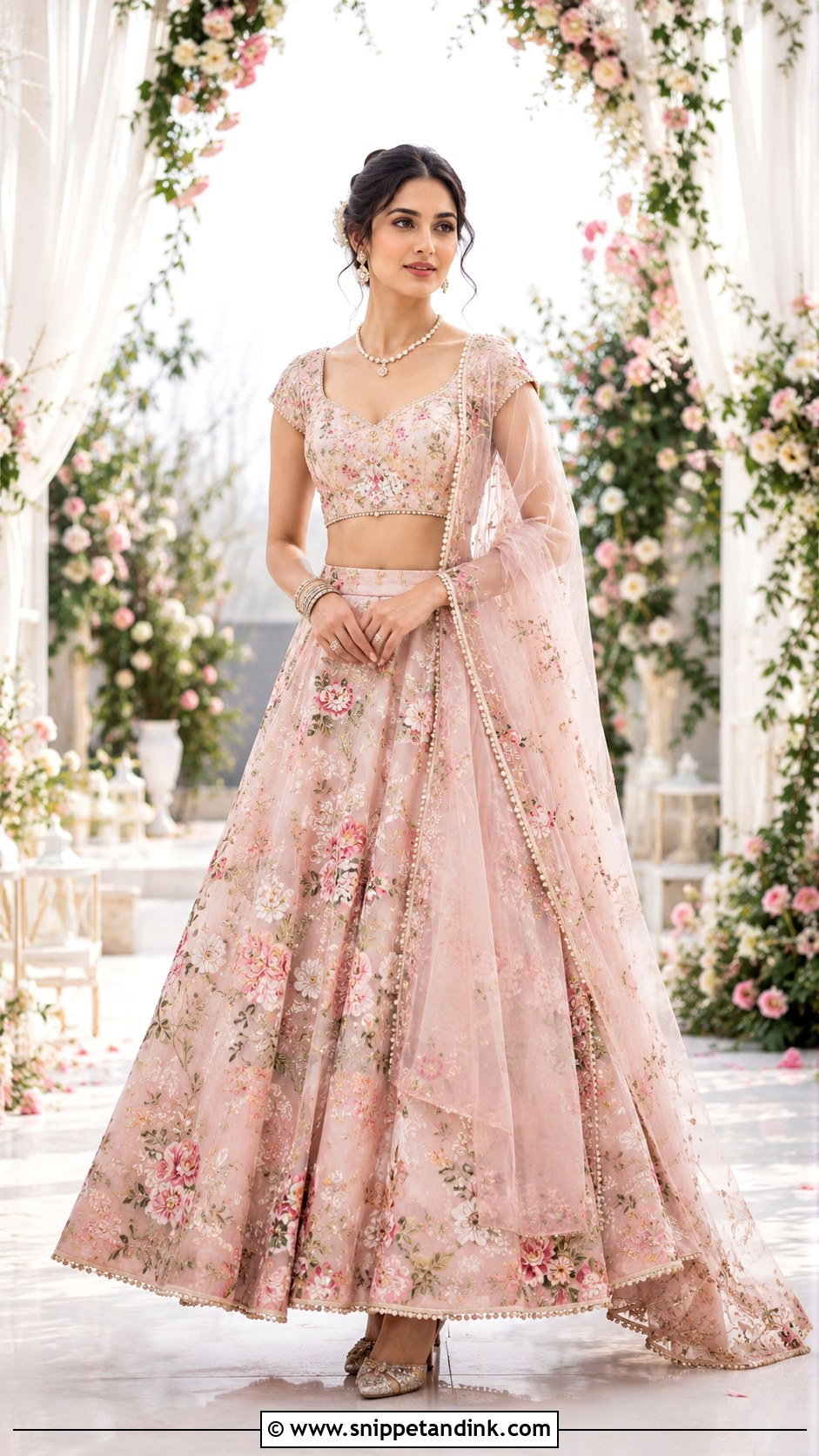
Cap sleeves cover just the top of the shoulder and keep the blouse looking almost sleeveless. Edge them with seed pearls, crystals or a narrow embroidered scallop for a bridal finish. The cap should follow the shoulder’s natural curve without biting into the upper arm; a cap that’s too tight leaves a red line within an hour. A pastel lehenga, an organza saree or a floral skirt suits it, with pearl earrings, a fine necklace, slim bangles, embroidered heels and a low bun or side-swept hair. Cap sleeves are cool in warm weather, but the armhole has to be cut carefully, because a low armhole shows the side of the bra or cups.
10. Flutter Sleeve Bridal Blouse
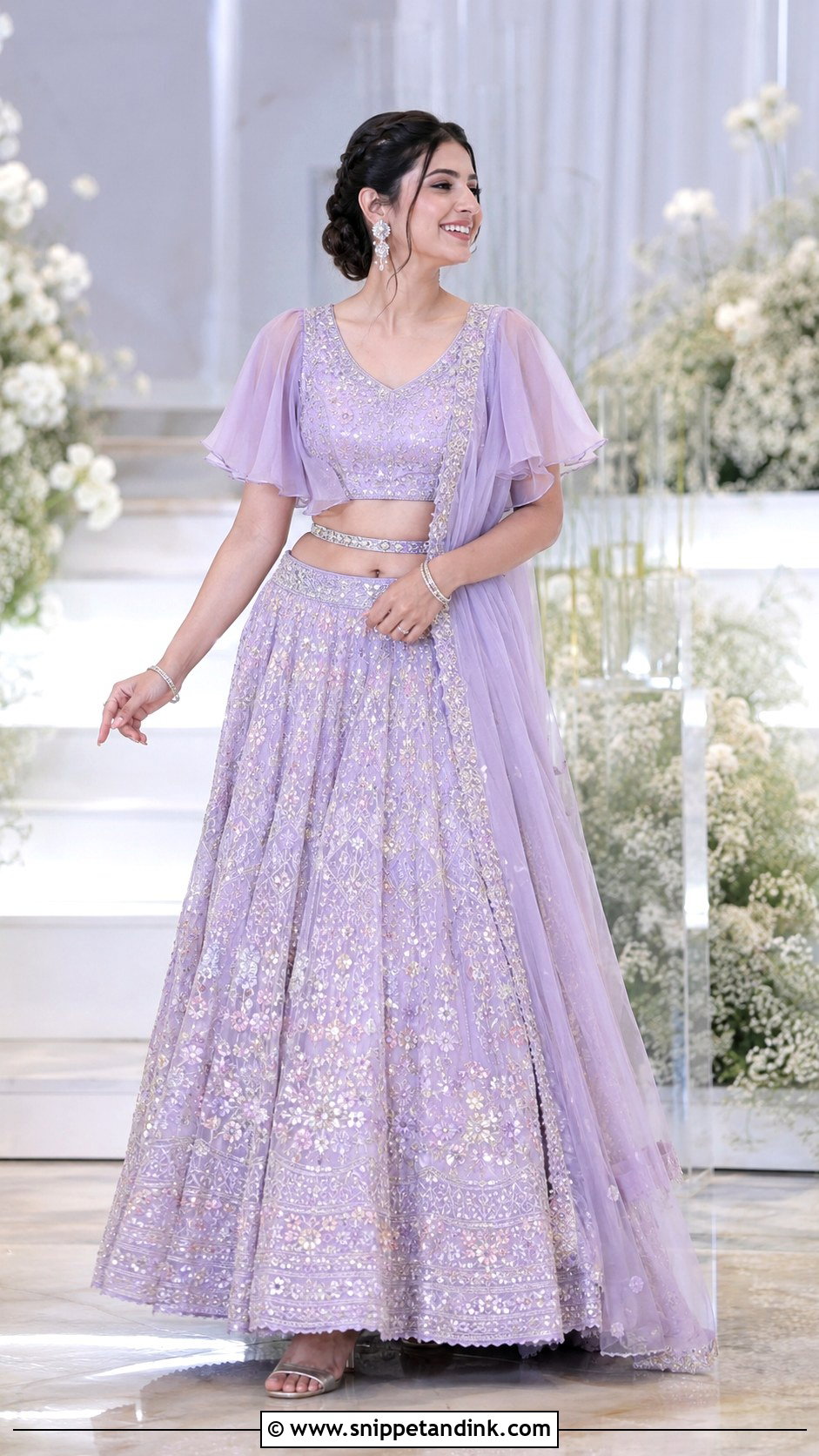
Flutter sleeves are cut from a circle, so they ripple as you move instead of standing out like a puff or bell. Chiffon, georgette and light organza drape best. Trim the edge with narrow embroidery or a few sequins, never heavy stones, which drag the flutter flat. A flowing lehenga, a lightly embellished dupatta, drop earrings, a slim belt, a braided bun and metallic sandals suit it. Keep the sleeve above the elbow so it never meets the bangles. They also soften a square or V-neck bodice, since the flutter adds a little width at the shoulder, which helps if your shoulders are narrow.
11. Layered Ruffle Sleeve Bridal Blouse
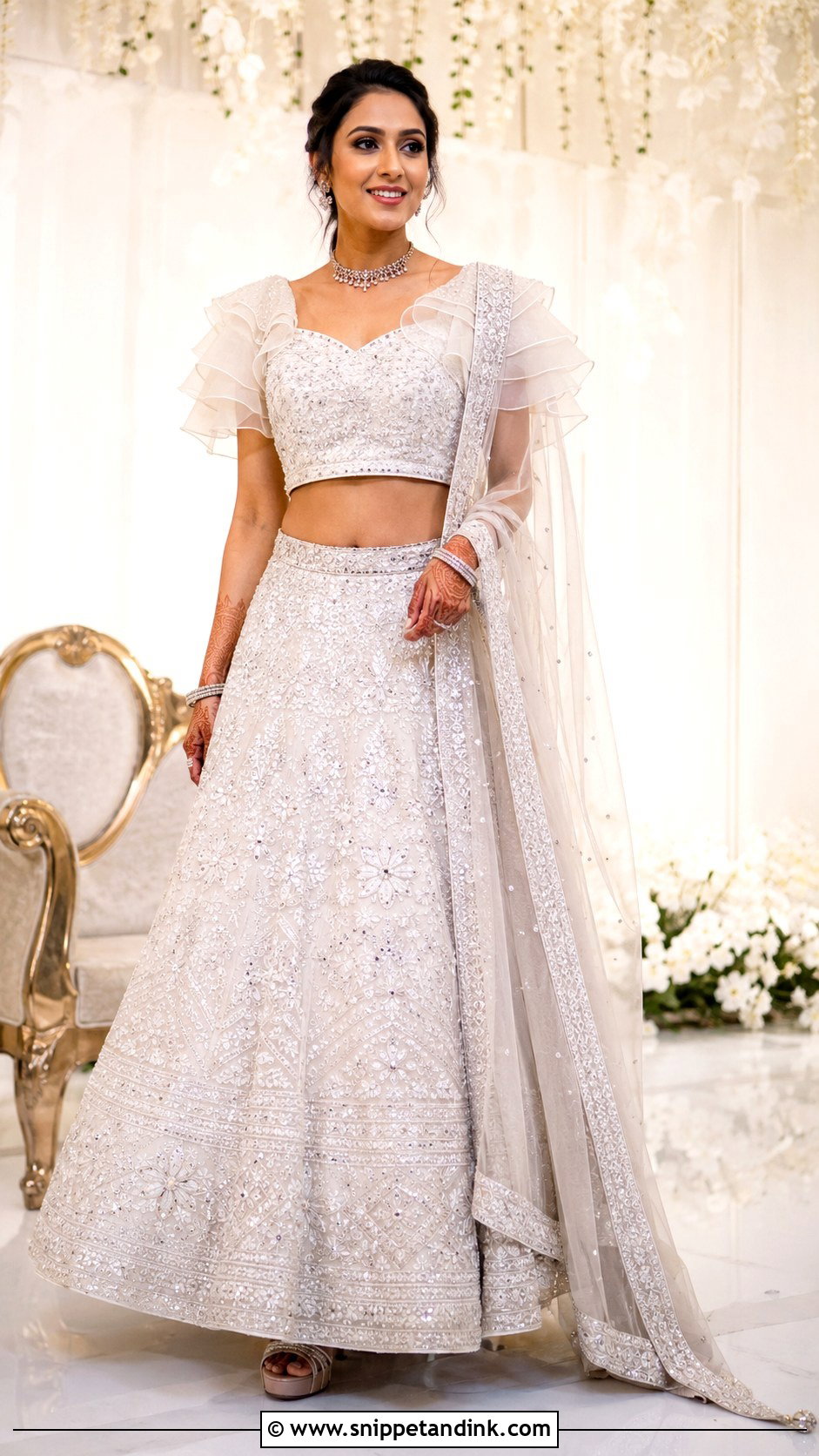
Two or three neat ruffle layers are enough; more than that and the shoulders start to look crowded. Organza, tulle and fine net hold a ruffle while staying light, and an embroidered edge or tiny beads on each tier link the sleeve to the bodice. Keep the rest controlled: a fitted-waist lehenga, a simple drape, a short necklace, studs, few bangles and platform heels. On a petite frame, I narrow each ruffle. Try the layers under your dupatta before the final fitting, because a heavy dupatta crushes ruffles flat and you lose the effect you paid for.
12. Bishop Sleeve Bridal Blouse
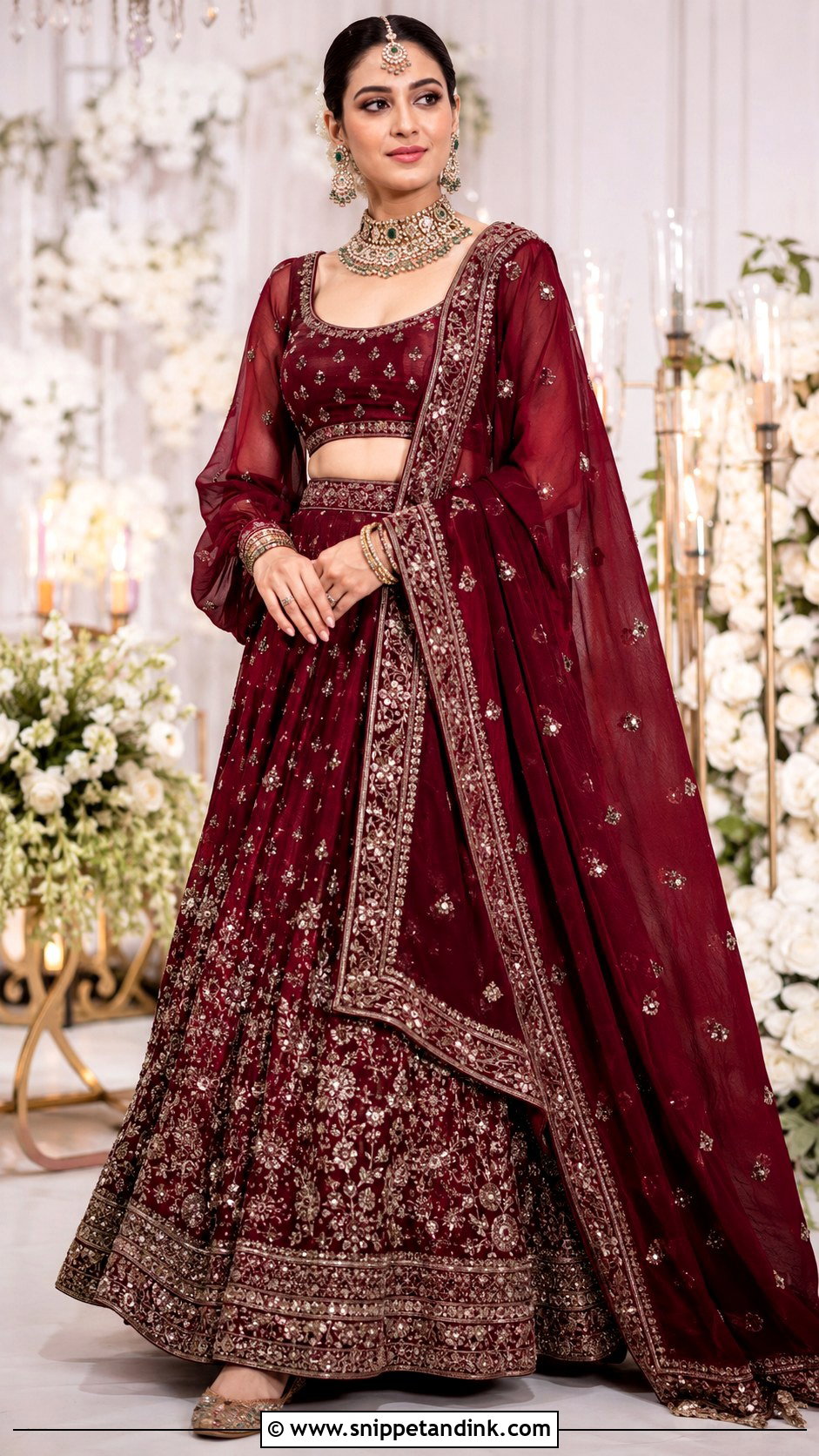
A bishop sleeve stays loose down the arm and gathers into a fitted cuff. Sheer net, organza or chiffon keeps it airy, while an embroidered cuff adds structure; match its motifs to the bodice or lehenga border. A fitted blouse and high-waisted skirt balance the sleeve volume. Add a neatly pinned dupatta, a choker, chandelier earrings, stacked bangles and juttis. It suits a winter wedding or an indoor reception. Insist on hooks or hidden snaps at the cuff. Without an opening, you can’t get bangles on or off over a tight cuff, and forcing them tears fine fabric.
13. Balloon Sleeve Bridal Blouse
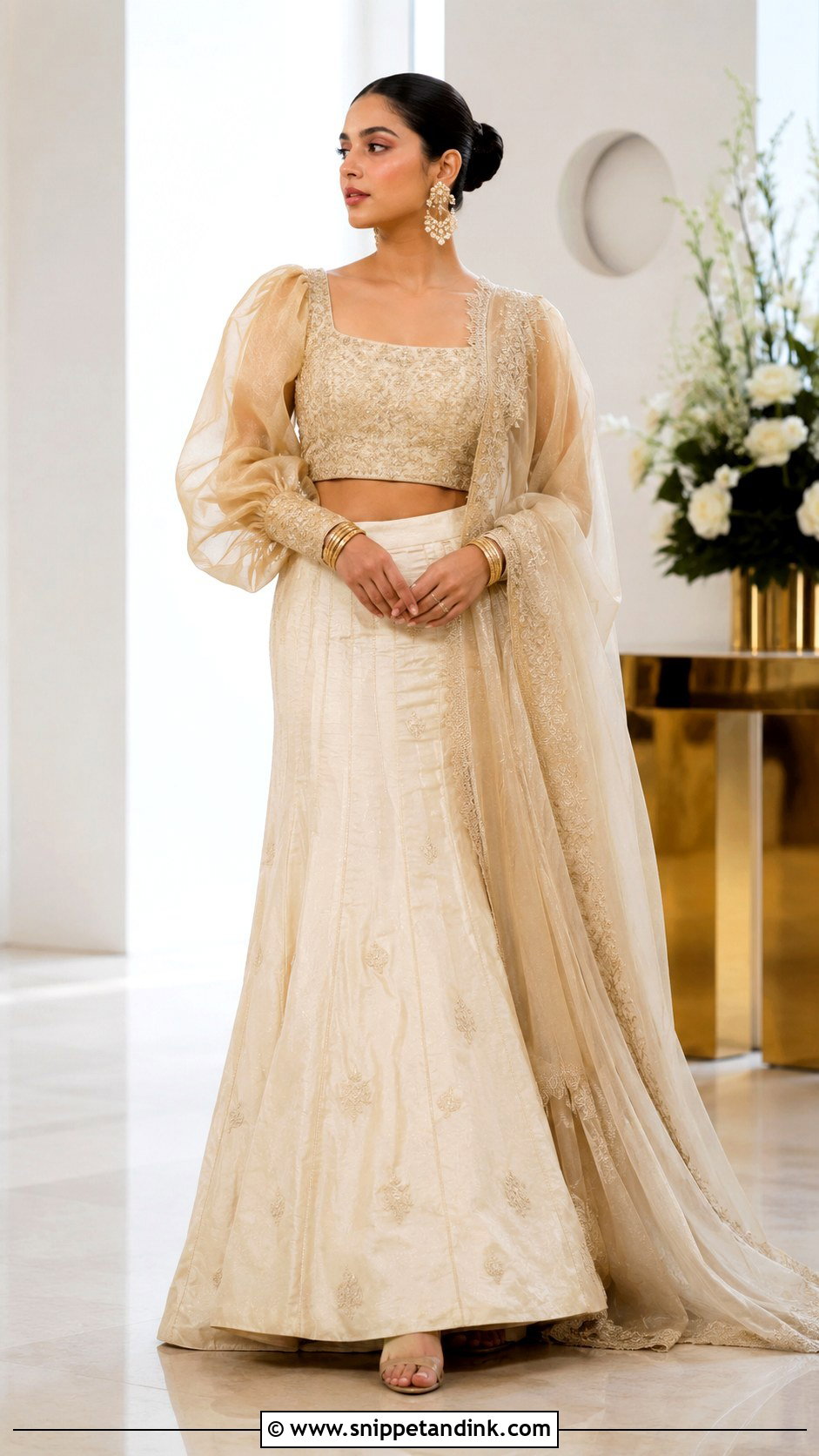
Balloon sleeves are rounder and bigger than bishop sleeves, gathered at the elbow or the wrist depending on how much drama you want. Organza or light net gives the shape without weight; a heavy fabric just droops. Keep the bodice fitted and embroidered and the lehenga streamlined, with a single-shoulder dupatta, structured earrings, a neat bun and plain shoes. Put any heavy work at the cuff or shoulder seam only, so the sleeve keeps its rounded form. I check this sleeve from the front, side and back at fittings. From the side, a big balloon can hide the waist entirely and make the whole silhouette look boxy.
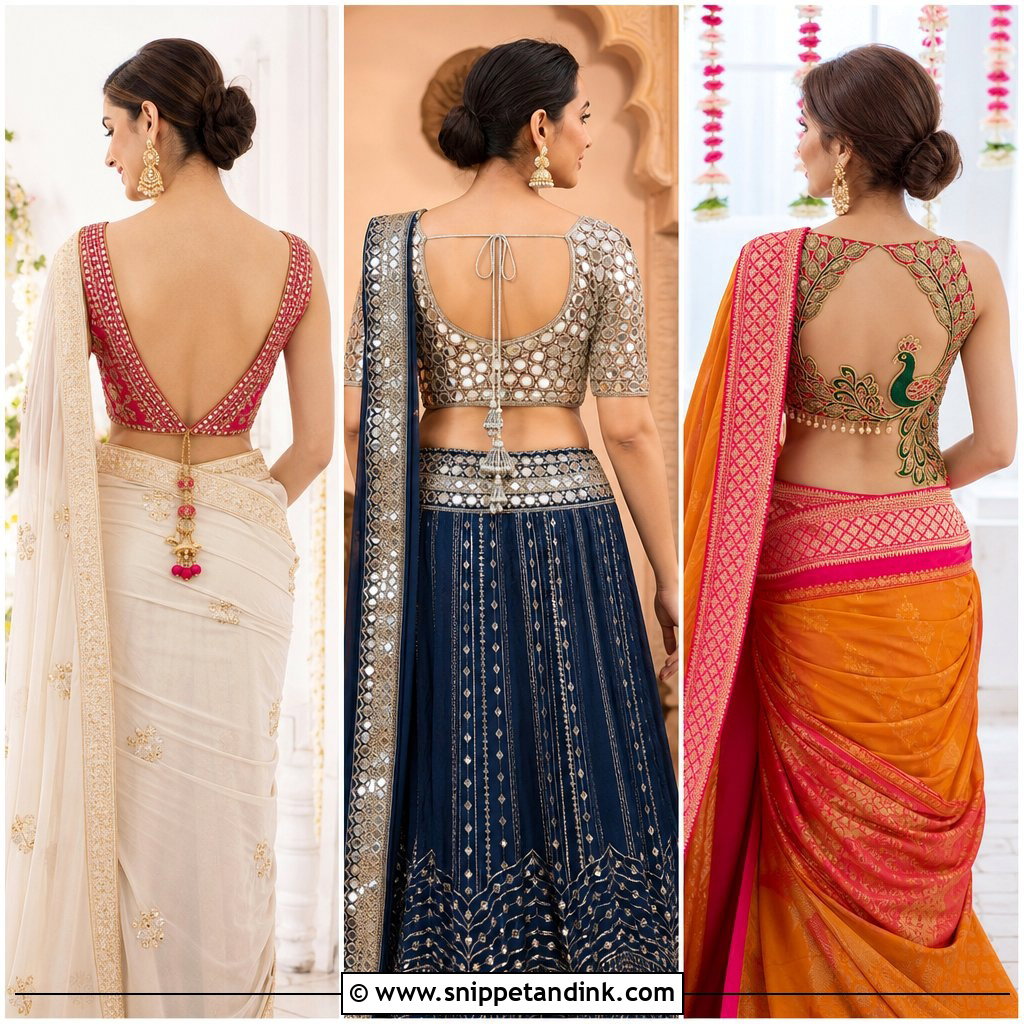
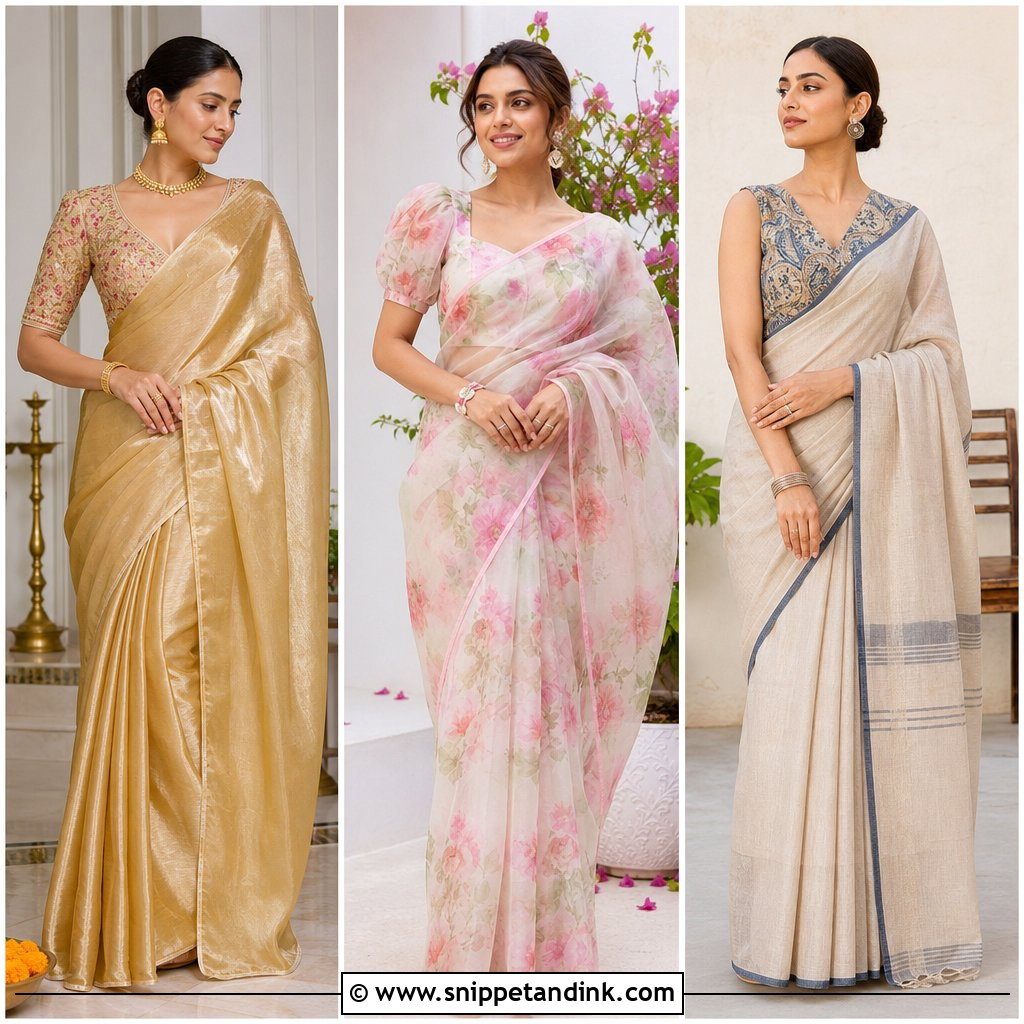
14. Petal Sleeve Bridal Blouse
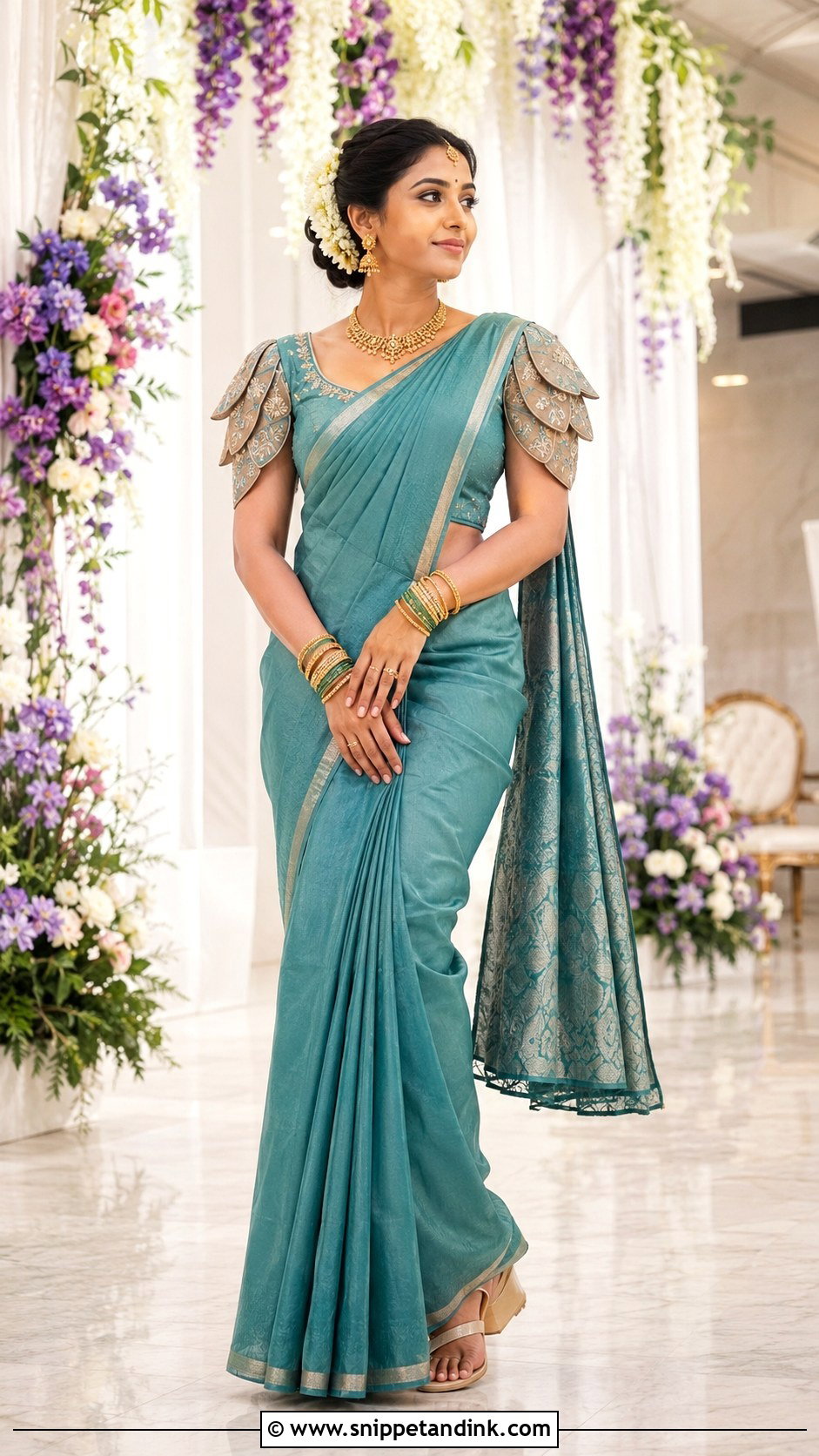
Petal sleeves are made of curved panels that overlap at the upper arm and part slightly when you move. Silk, brocade and embroidered organza all work, as long as the fabric is light enough that the petals don’t turn stiff and stand away from the arm. Edge them with piping, pearls or fine zari. A silk saree, a floral lehenga or a simple embroidered skirt suits it, with a draped dupatta, traditional earrings, a medium necklace, bangles and low block heels. The overlap needs careful placement: too little and the petals gape open when you raise your arm, too much and they look like a plain cap sleeve.
15. Scalloped Sleeve Bridal Blouse
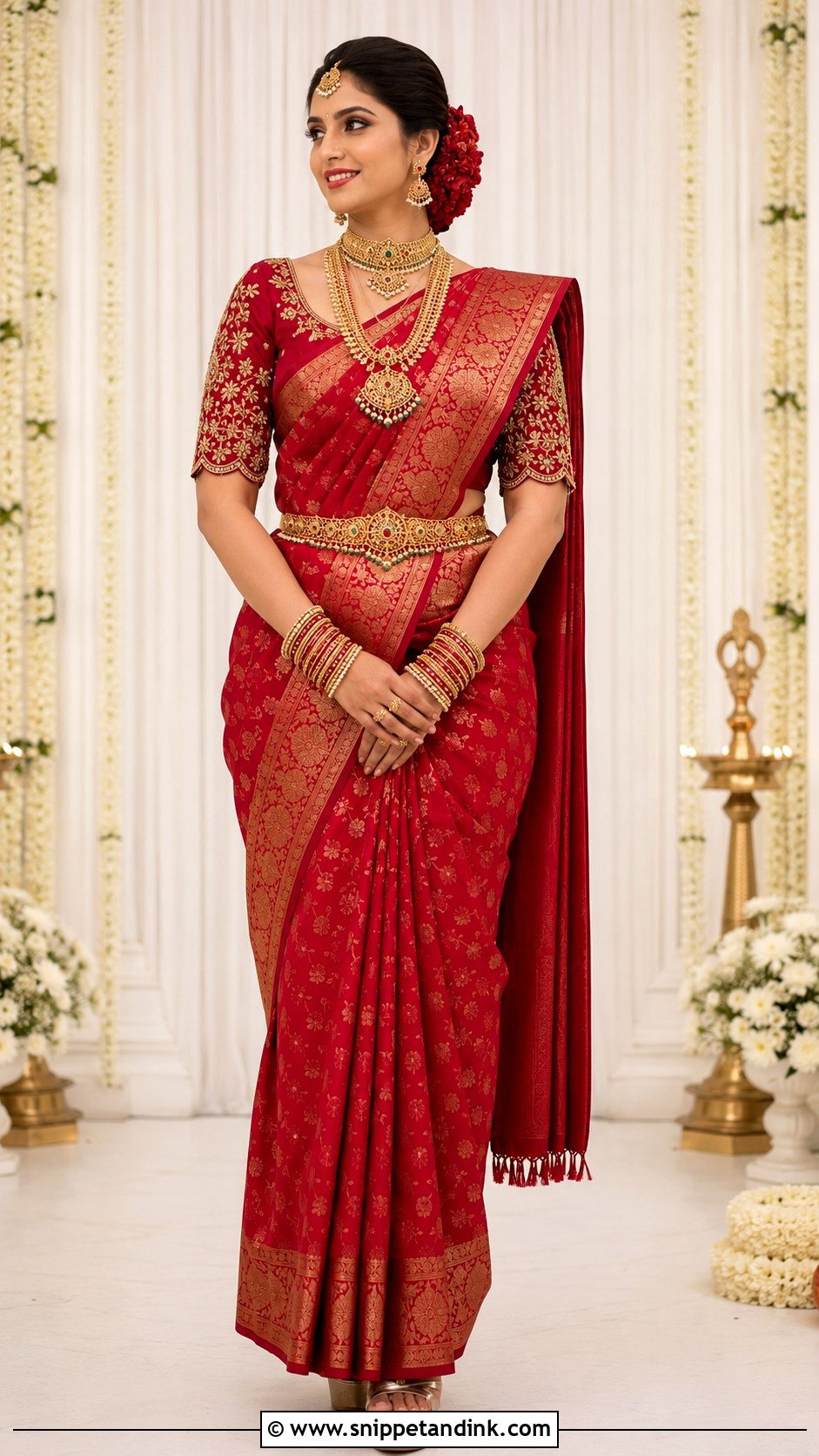
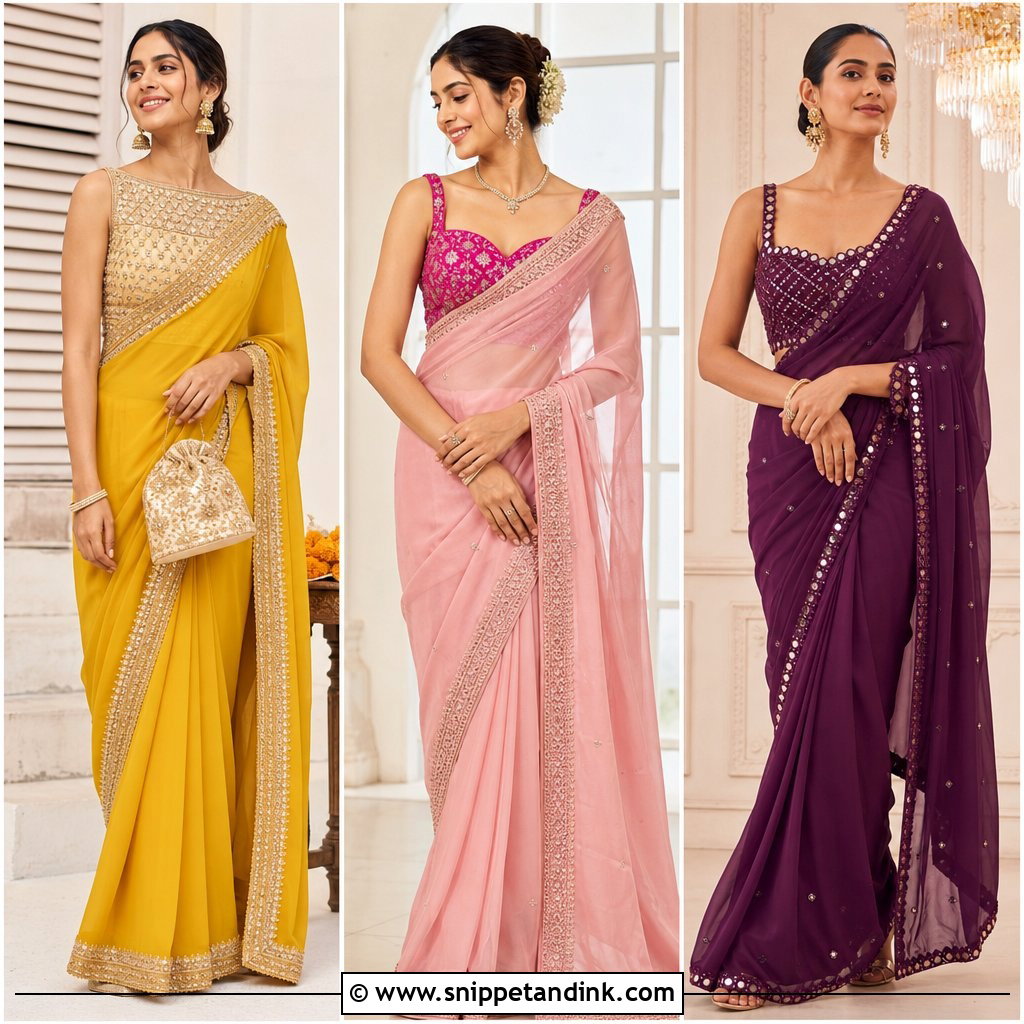
Scallops change the edge of a sleeve, not its shape, so they fit almost any length: short, elbow or three-quarter. Define each curve with zari, pearls, sequins or contrast piping. An elbow-length scallop looks especially good with a silk saree; a short one suits a lighter lehenga. Add coordinated jewelry, a waist belt, a floral bun, bangles and metallic heels. Scale the scallops to the embroidery, with small curves for fine motifs and broader ones for large florals. Without a facing or reinforced edge, scallops curl upward after a few hours, which is easy to prevent at the stitching stage and impossible to fix on the day.
16. Cutwork Sleeve Bridal Blouse
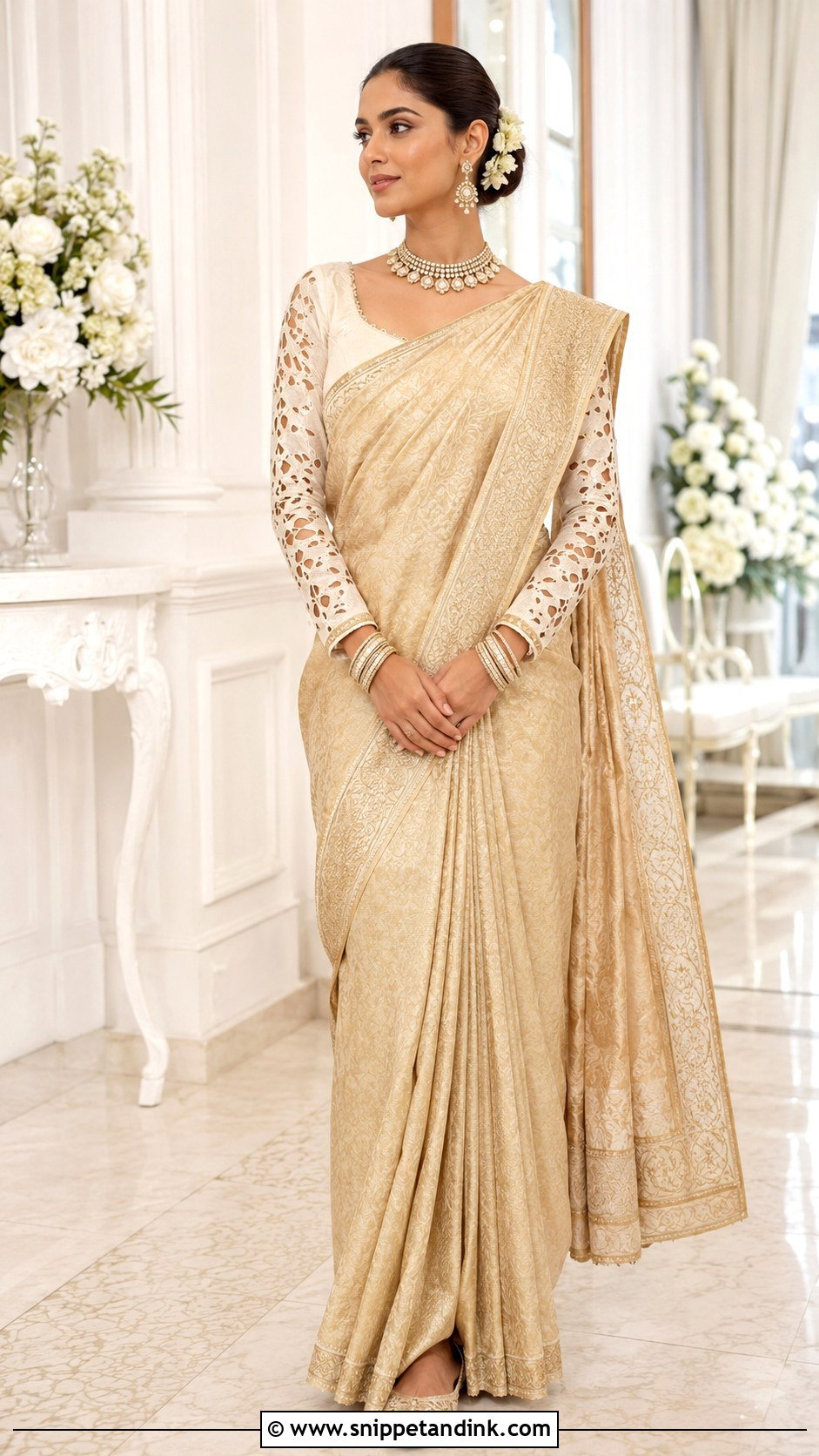
Cutwork sleeves show small areas of skin through embroidered openings, giving detail without sheer fabric. Floral, paisley or geometric patterns can be cut into silk, velvet or a stable blend. Keep the openings modest and evenly spaced, because large cut areas weaken the sleeve and it starts to sag. A solid or lightly patterned saree lets the work stand out, as does a lehenga with matching cutwork along the border. Add a choker, traditional earrings, stacked bangles, a sleek bun and embroidered shoes. Every opening needs a soft, finished edge; raw-edged cutwork scratches. A light lining in the upper sleeve helps comfort without hiding the work near the cuff.
17. Pearl Tassel Sleeve Bridal Blouse
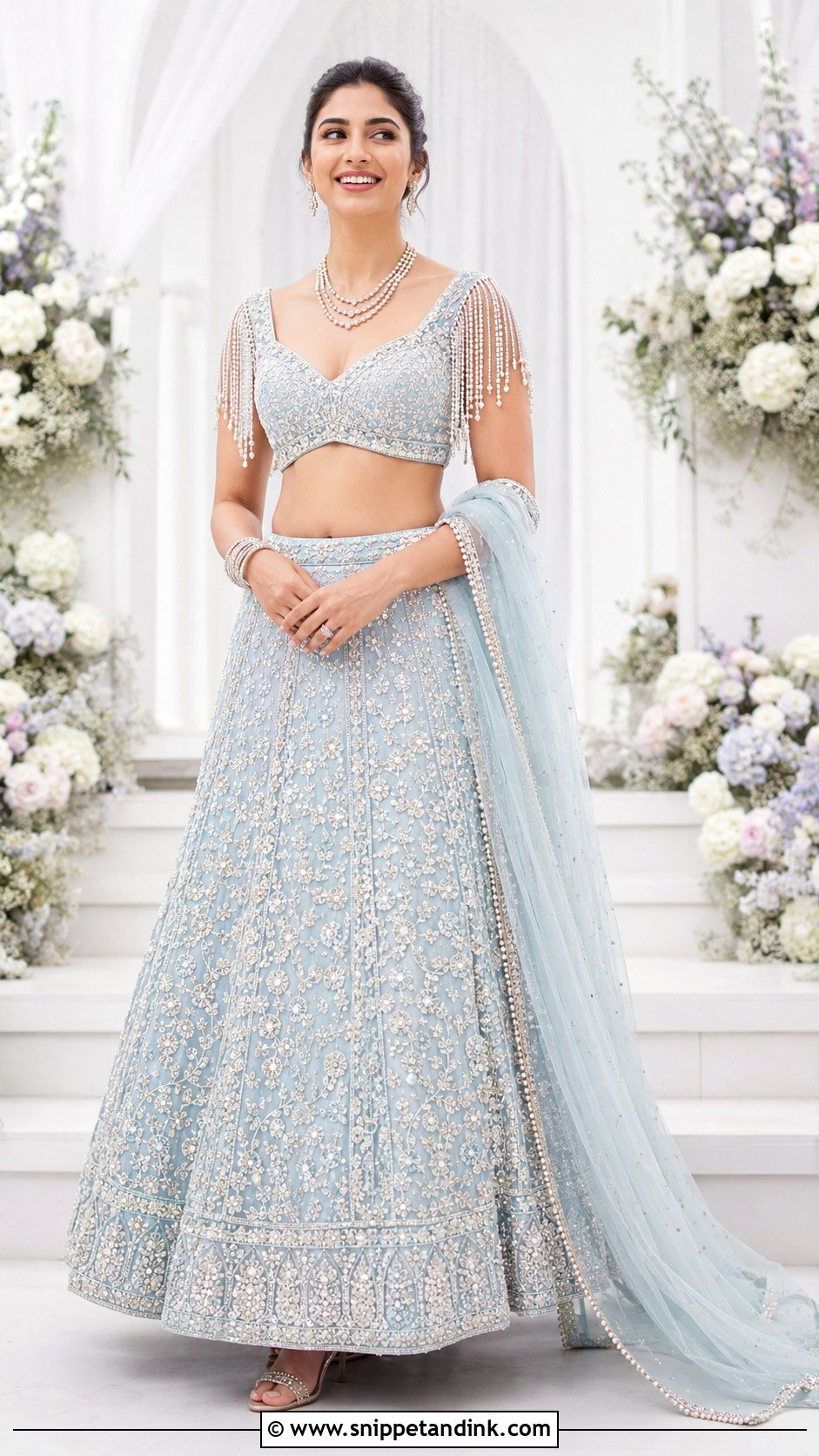
Pearl tassels on a sleeve swing every time you move. They can hang from a short sleeve edge, form fine shoulder chains or fall as spaced strands over a sheer base. Choose lightweight faux pearls or small beads; real or glass pearls in any quantity pull the sleeve down. A pearl-embroidered lehenga, a soft net dupatta, pearl earrings, a layered necklace, slim bangles and embellished heels complete the outfit, with hair swept away from the shoulders. Ask for each strand to be stitched on separately. If they share a single thread and it breaks, you lose the whole row. Test them against your necklace and dupatta too, since tassels tangle easily.
18. Mirror Work Sleeve Bridal Blouse
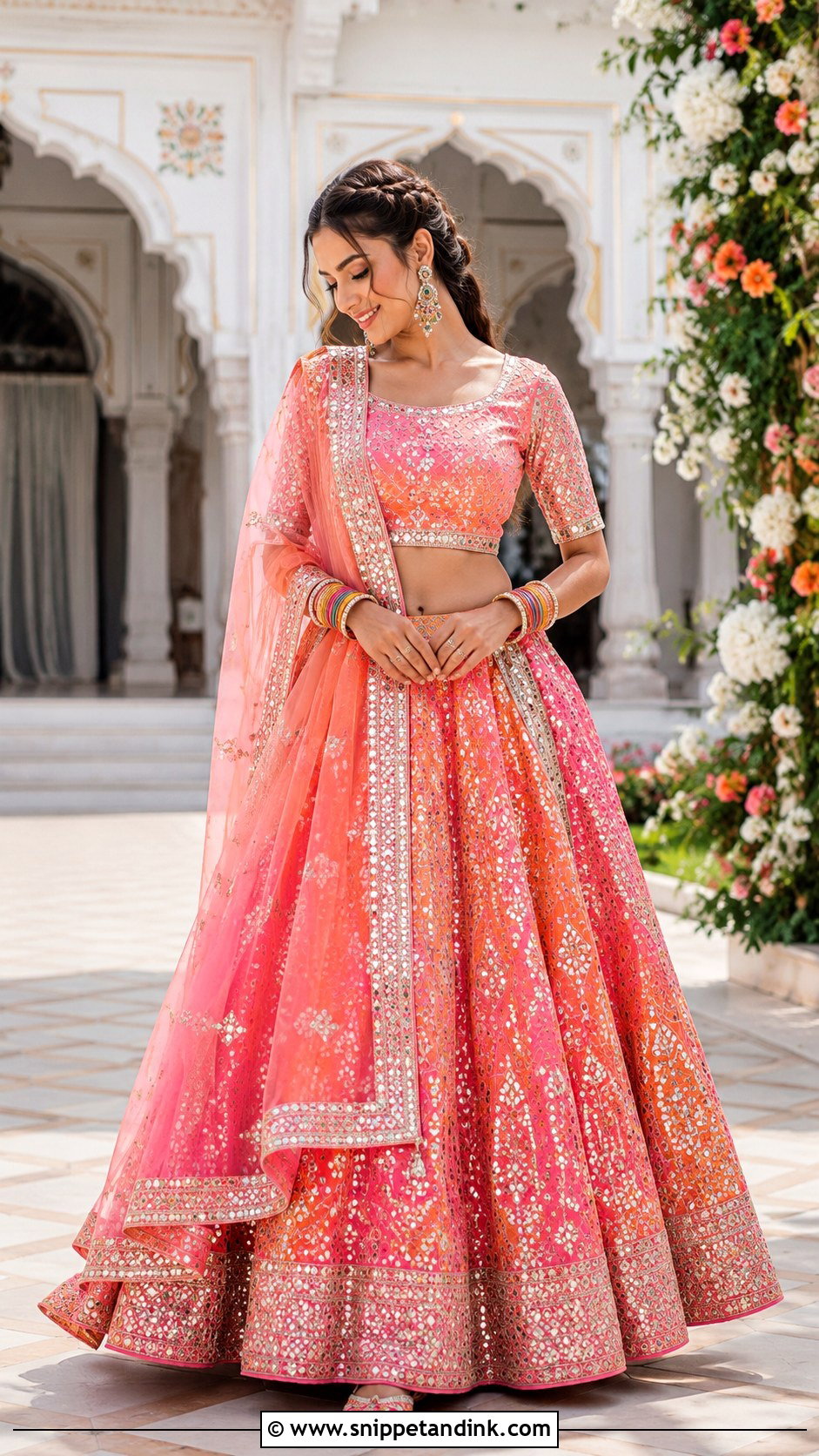
Mirror work sleeves are made for a colorful wedding. Set small mirrors across fitted elbow-length sleeves or in borders separated by thread embroidery. A lined base is essential, since mirror edges and backing stitches feel rough on bare skin. Wear it with a bright lehenga in yellow, pink, green, coral or blue and a light dupatta that doesn’t hide the sleeves, plus statement earrings, colorful bangles, a braid and juttis. Skip a big necklace if the blouse is already busy. The elbows take the most strain, so ask for extra stitching there, and pack a needle and matching thread in case a mirror loosens.
19. Three Quarter Sleeve Bridal Blouse With Embroidery
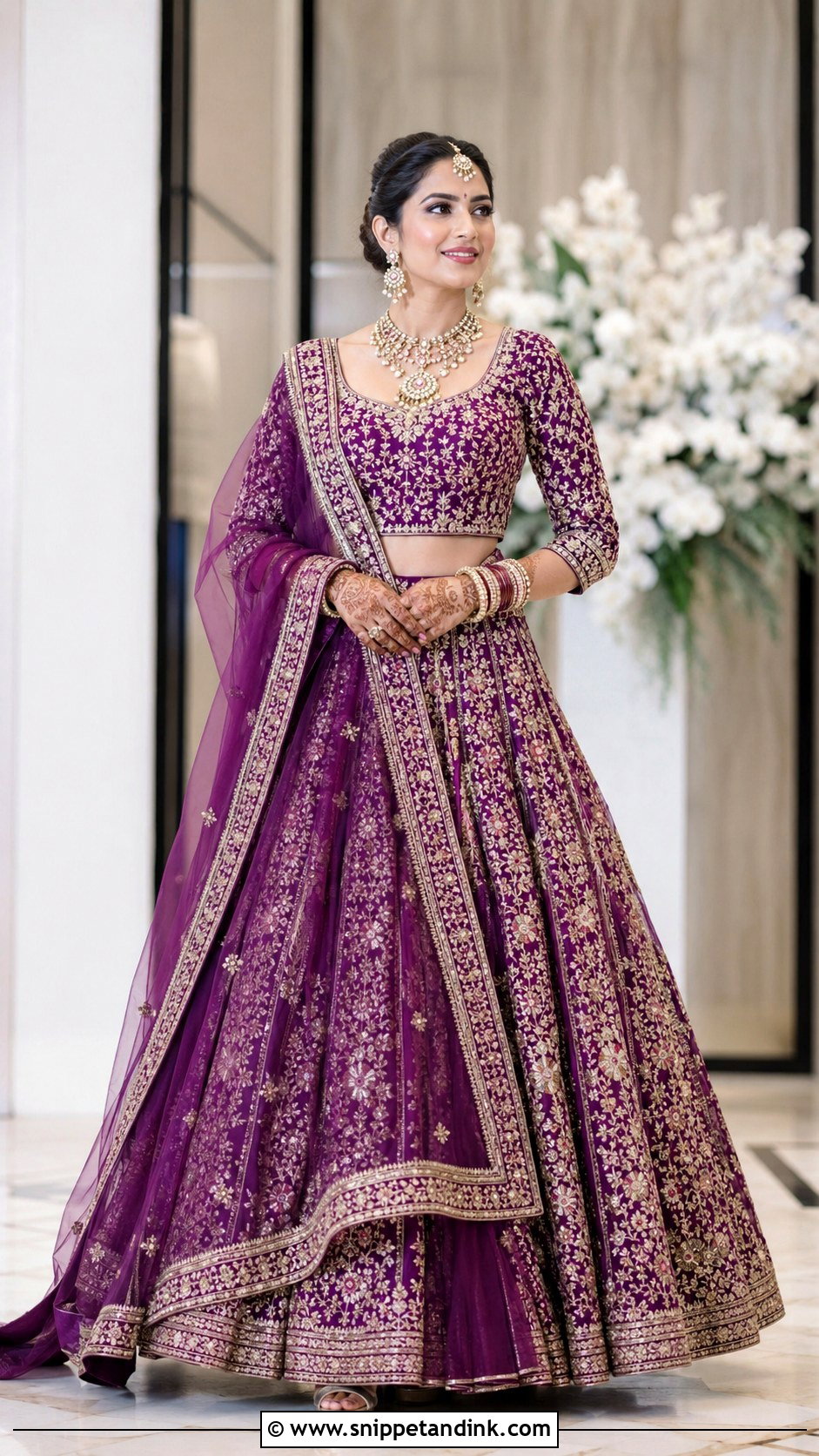
Three-quarter sleeves cover most of the arm and stop short of the wrist, which leaves the bangles uncovered. That’s why they’re such a common bridal length. Fit them closely with some ease at the elbow, and let zari vines, floral threadwork, sequins or tonal beads run from the shoulder to a defined cuff. A pleated silk saree or a paneled lehenga with an embroidered dupatta suits it, along with a layered necklace, matching earrings, a bridal bun, bangles and platform heels. Keep the cuff narrow so it doesn’t compete with your hand jewelry, and line the sleeve in something breathable if the outer fabric carries dense metal thread.



20. Detachable Sleeve Bridal Blouse
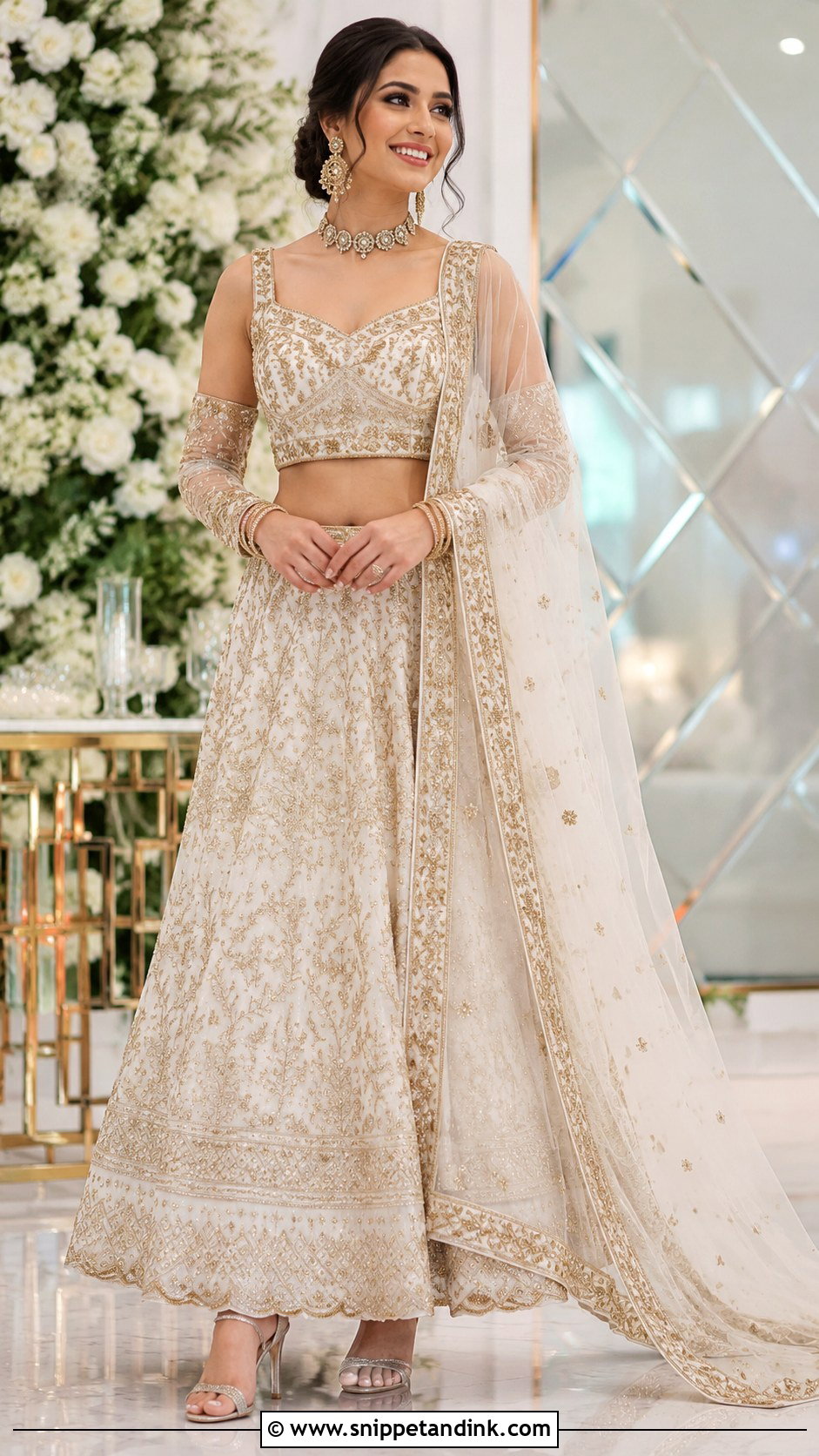
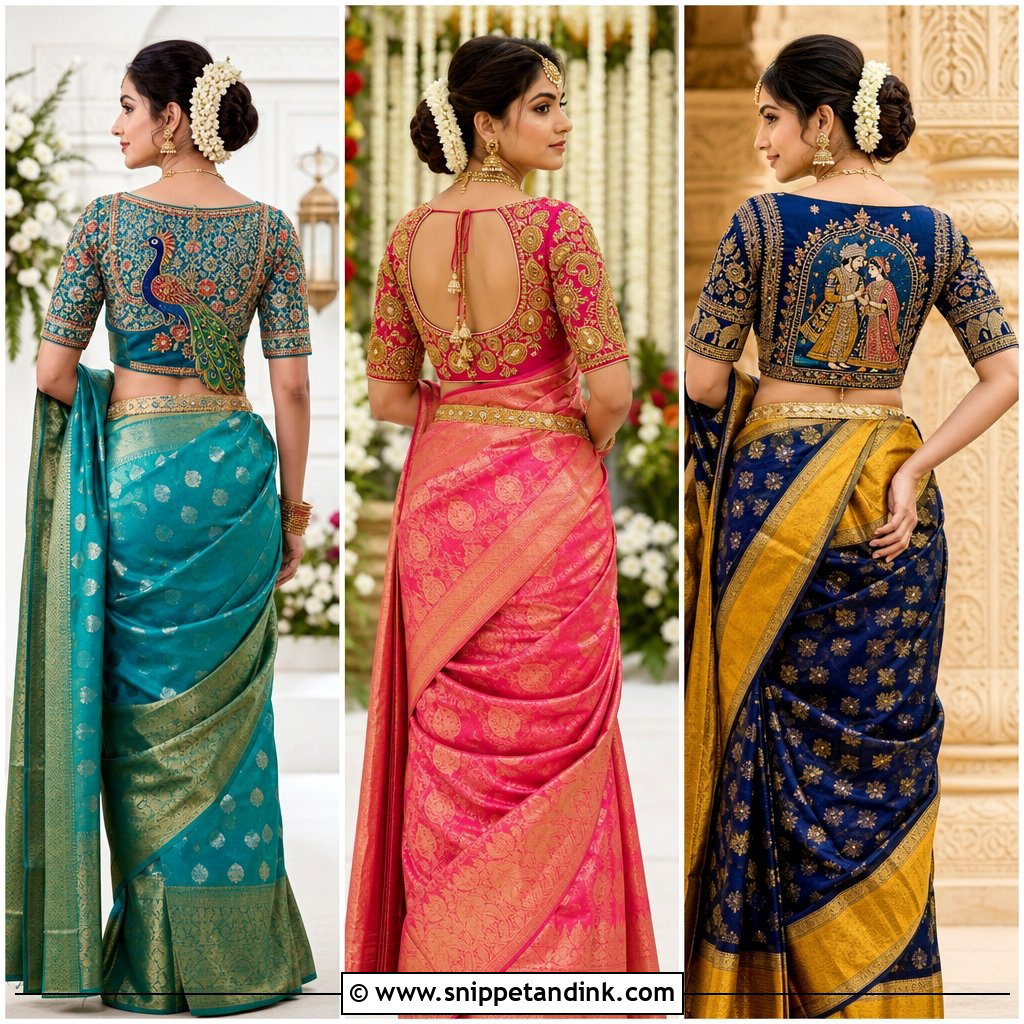
Detachable sleeves give you two blouses in one: full sleeves for the ceremony, then off for a lighter reception look. Fitted net sleeves, embellished shoulder drapes or structured puffs can fasten with hidden snaps under the armhole. The blouse must look finished on its own, so I ask the tailor to complete the armhole edge properly rather than leaving a raw seam hidden by the sleeve. Match the sleeve fabric exactly to the bodice; a slightly different dye lot shows at the join. Pair it with a versatile lehenga, a coordinated dupatta, statement earrings, a comfortable necklace, bangles and supportive heels. Test every fastener at the final fitting and keep spare snaps in your emergency kit.
The Armhole Decides How Far You Can Lift Your Arms
Brides tend to judge a sleeve by its decoration, but comfort comes down to how the sleeve is joined to the blouse. These are the points I check at every fitting, whatever the design.
A higher armhole moves better
It sounds backwards, but a sleeve set into a higher, closer armhole lets you raise your arm further than a deep, loose one. With a low armhole, lifting your arm drags the whole blouse up with it. Ask your tailor to fit it close under the arm, then test by reaching above your head.
Embroidery removes stretch
Dense zari, maggam or bead work turns a soft fabric almost rigid. A sleeve that fits snugly before embroidery can feel tight afterwards, so mention the planned work at the first measurement and leave room at the bicep and elbow.
Sweat and lining
Silk and velvet mark easily under the arm, and those marks rarely wash out of embroidered pieces. A soft cotton lining in the sleeve and discreet underarm shields stitched into the blouse protect it through a long day. They’re cheap to add during stitching and very hard to add later.
Sleeves You Can Raise a Garland In
A sleeve changes the balance, comfort and character of the whole outfit. Full zari sleeves and embroidered elbow lengths feel traditional; capes, ruffles, sheer fabrics and detachable sleeves feel more contemporary. Before you commit, hold the design up against your saree or lehenga, your jewelry, the way you’ll wear the dupatta and the setting. Fabric weight and fit matter as much as the embroidery. Do a full trial with your undergarments, bangles and dupatta on, and move in it properly. Choose sleeves that feel secure and suit you, because a bride who’s comfortable carries even an elaborate blouse with ease.
You'll Like These Ideas:



Leave a Reply