
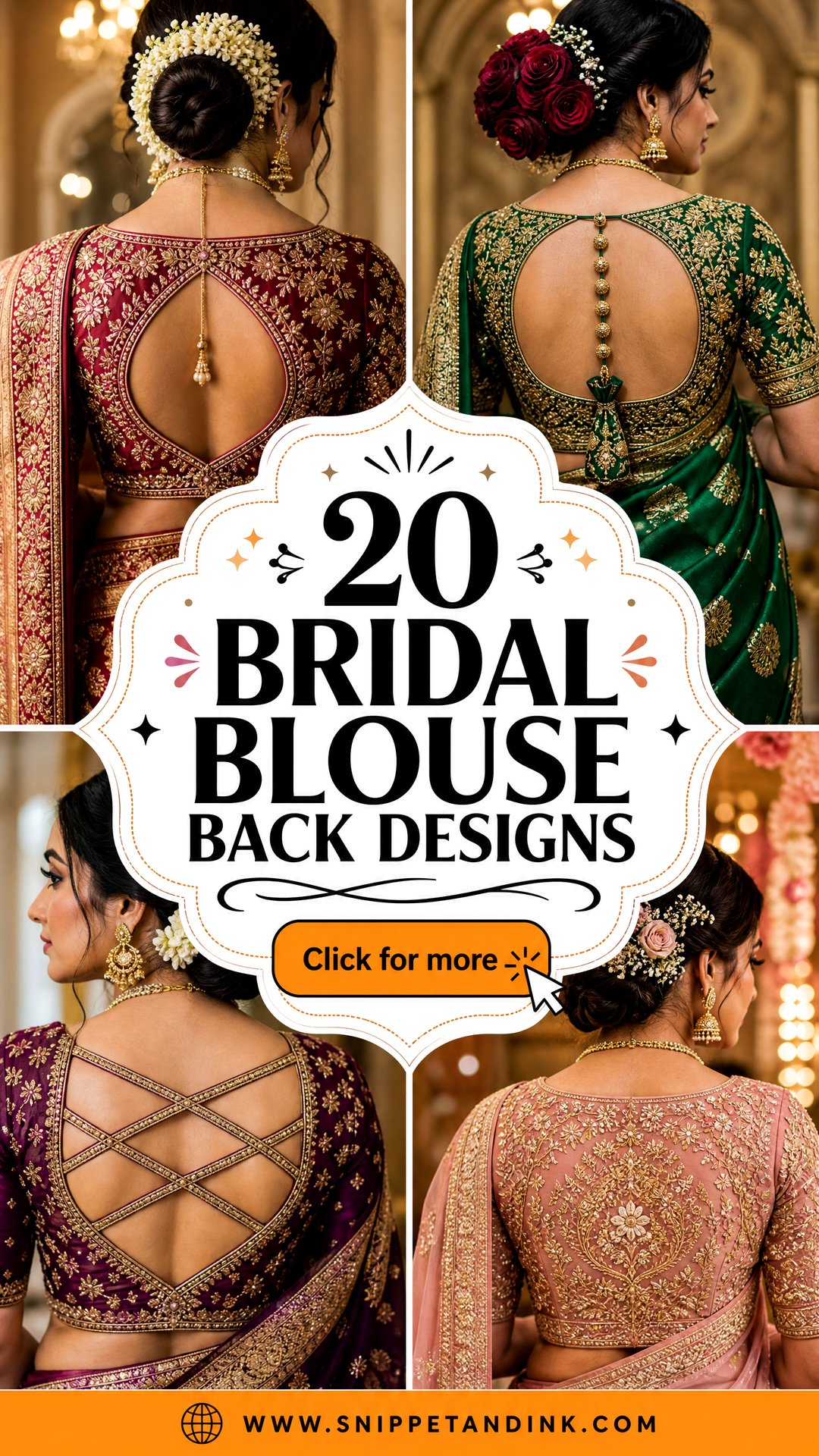
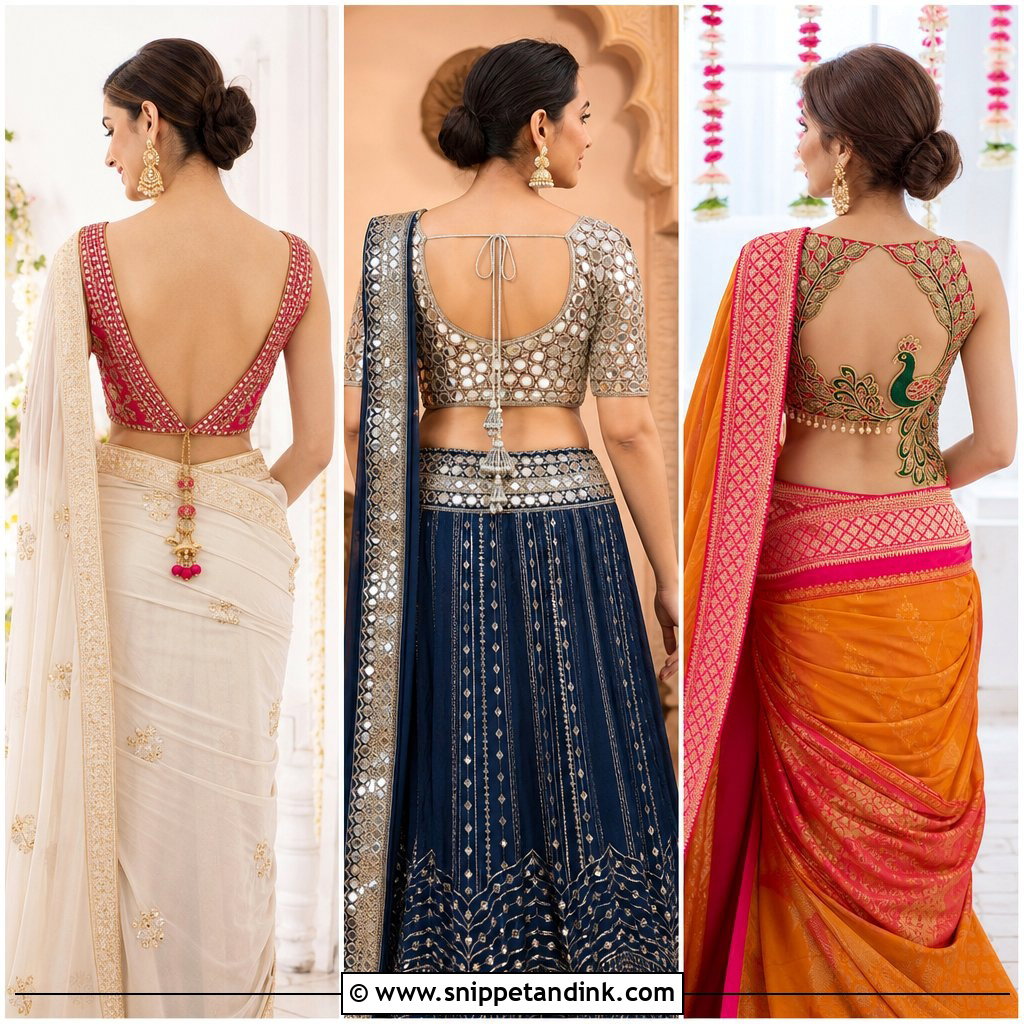
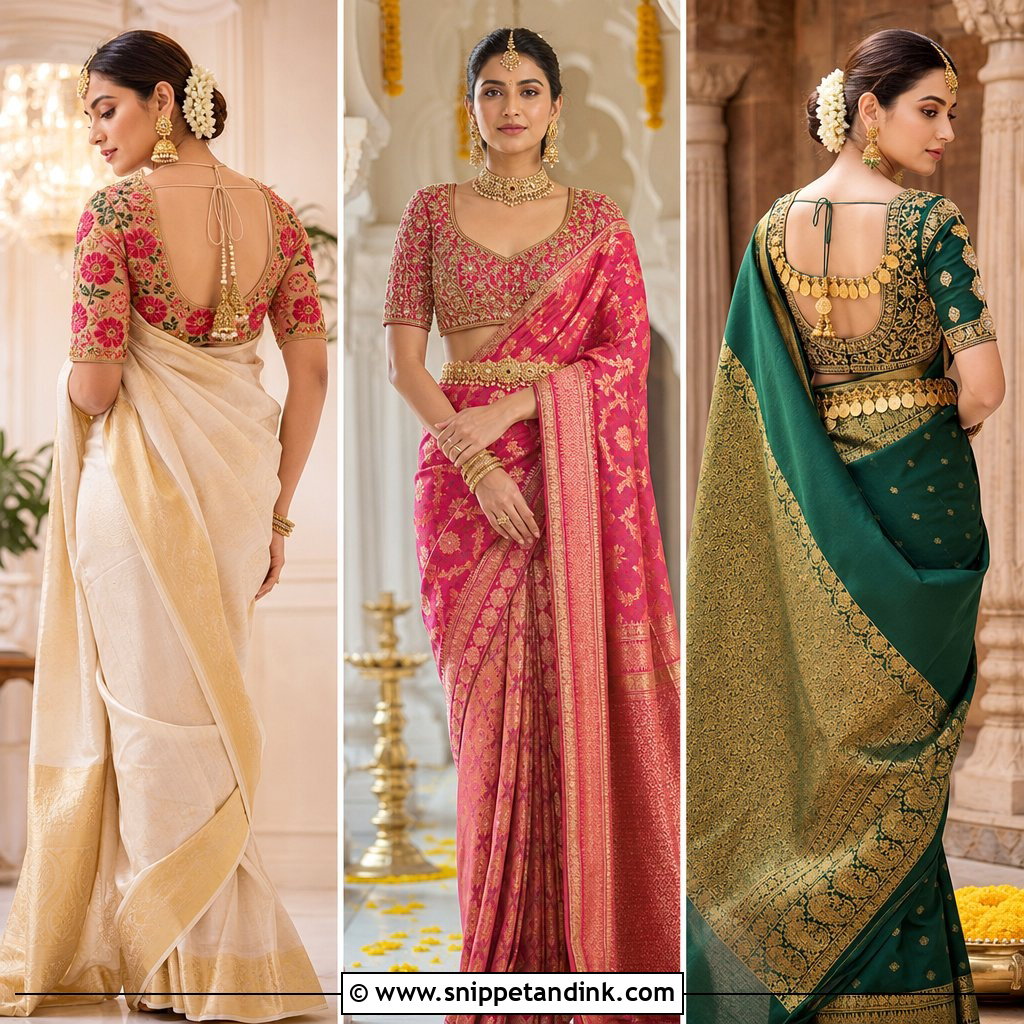
During the pheras, the vows or the walk to the mandap, guests spend far more time looking at your back than your front. That’s why I treat the blouse back as a design decision in its own right. The twenty backs below range from deep U and V cuts to sheer panels, pearl tassels, potli buttons, bows, embroidery and adjustable ties, along with fully covered options if you’d rather keep your back hidden. Deep necklines, illusion net and button trails are much requested right now, but the right back depends on more than fashion. It has to hold the blouse up, connect with the embroidery on the rest of the outfit and stay comfortable through hours of sitting. Your hairstyle, dupatta drape and jewelry all change how much of it anyone actually sees, so think about those before you sign off on a pattern.
Sorting Out Support Before the Back Is Cut
Every open back raises the same question: what holds you up? A regular bra strap will show across most of the designs below, so the support has to be built into the blouse. I settle that first and only then talk about the shape of the back.
The usual answer is padded cups stitched inside the blouse, with the side seams and under-bust seam fitted closely enough to carry the weight. Ask your tailor to attach the cups to the lining, not just tack them at a few points, or they shift during the day. A fuller bust generally needs more coverage at the back or a strong lower fastening to anchor the cups. Very deep cuts work best on smaller busts, or with a sheer net panel taking some of the strain.
Bring whatever you plan to wear underneath to the first measurement, whether that’s an adhesive bra, a backless bra or nothing at all. Measurements taken over a normal bra won’t match a blouse with built-in cups, and that mismatch is behind most blouses that gape or pinch on the day.
1. Deep U Bridal Blouse Back
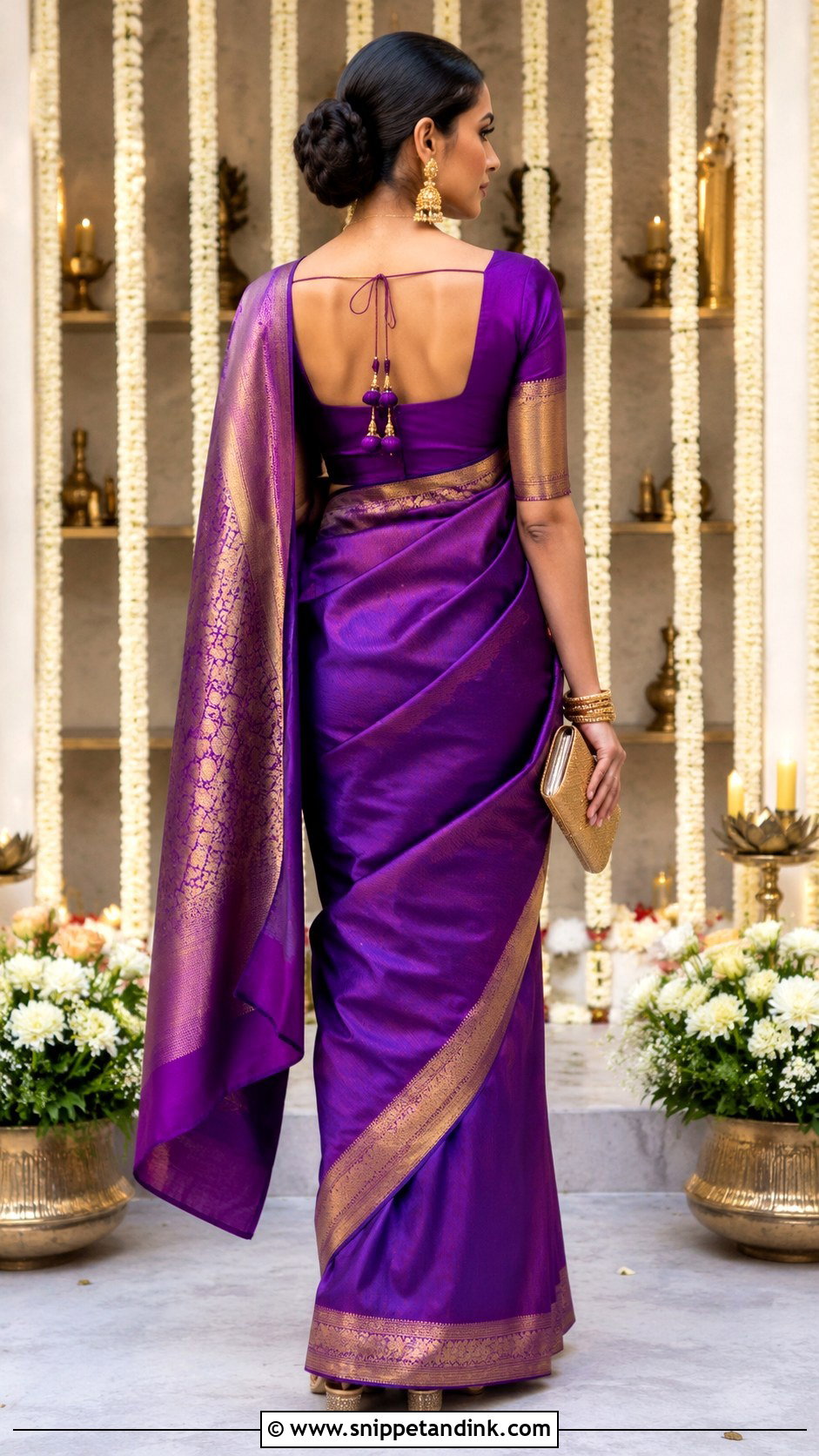
A deep U frames the spine with a soft curve and suits both sarees and lehengas. The depth is the decision that matters: I have brides sit on a low stool and lean forward at the fitting, because a U that looks modest standing can open much lower when you’re seated for a long ritual. Repeat zari, zardozi or beadwork from the skirt or saree along the border, and add a slim dori across the shoulders for stability, with pearl or bead tassels if you like movement. Ask the tailor to reinforce the bottom of the curve with a facing or stay tape, which stops it stretching out of shape by evening. A low bun and statement earrings keep the back on show.
2. Deep V Bridal Blouse Back
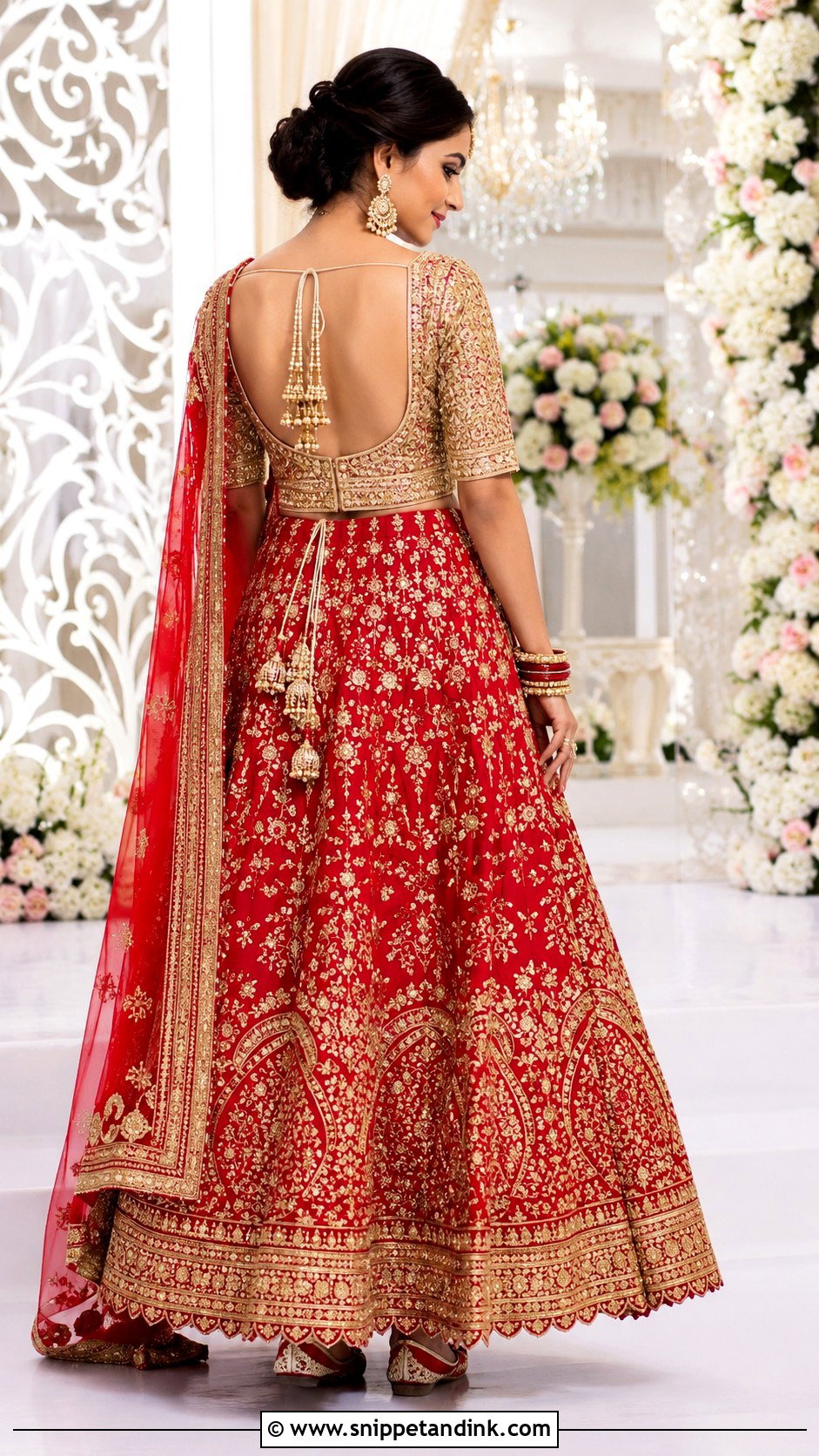
The V is sharper than the U and looks especially good with a structured lehenga or a heavy woven silk saree. A narrow embroidered border keeps it sleek, a wider one turns it ornate. Don’t automatically choose the lowest point: past a certain depth, the shoulder straps lose their anchor and start sliding outward, so a hidden support panel or a well-placed shoulder tie becomes necessary. A sleek braid, polished bun or side-swept curls keep it visible, and a waist belt links the blouse to the lehenga or drape. Keep tassels restrained if the outfit is already covered in embroidery, sequins or stones.
3. Sheer Net Bridal Blouse Back
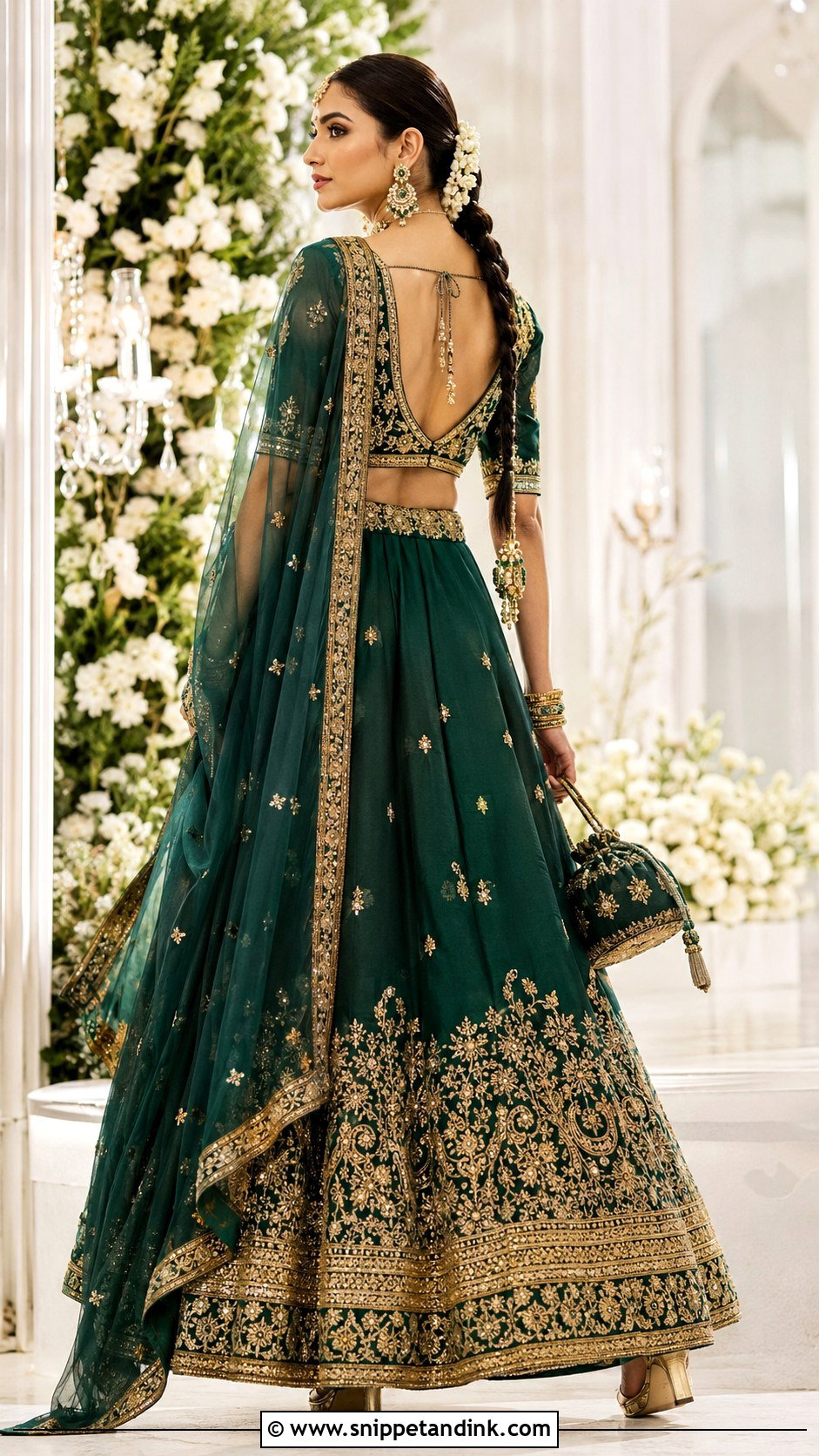
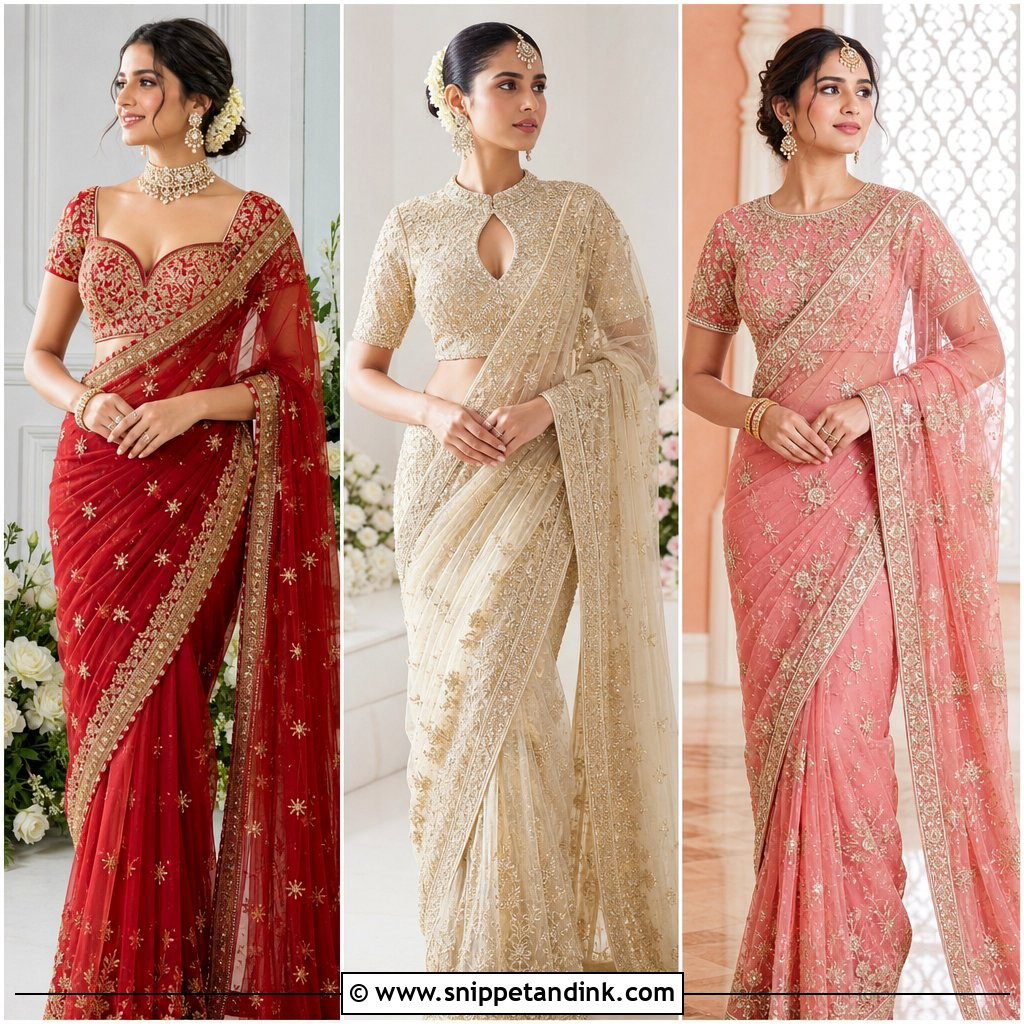
Sheer net gives you the look of an open back with the coverage of a closed one. Skin-tone net creates the illusion; net dyed to the blouse color looks more traditional and modest. Embroidered vines, scattered crystals, floral appliqués or small bridal motifs can be spread across the panel. I always feel the net before approving it. Cheap net is stiff and scratchy, wrinkles across the shoulder blades, and turns a slightly different shade in flash photographs. Soft, flat net that closely matches your skin, with smoothly finished edges, is worth the extra cost. It pairs well with a flowing lehenga, an organza saree or a tulle dupatta, and a neat bun or braid shows the detail.
4. Dori Bridal Blouse Back
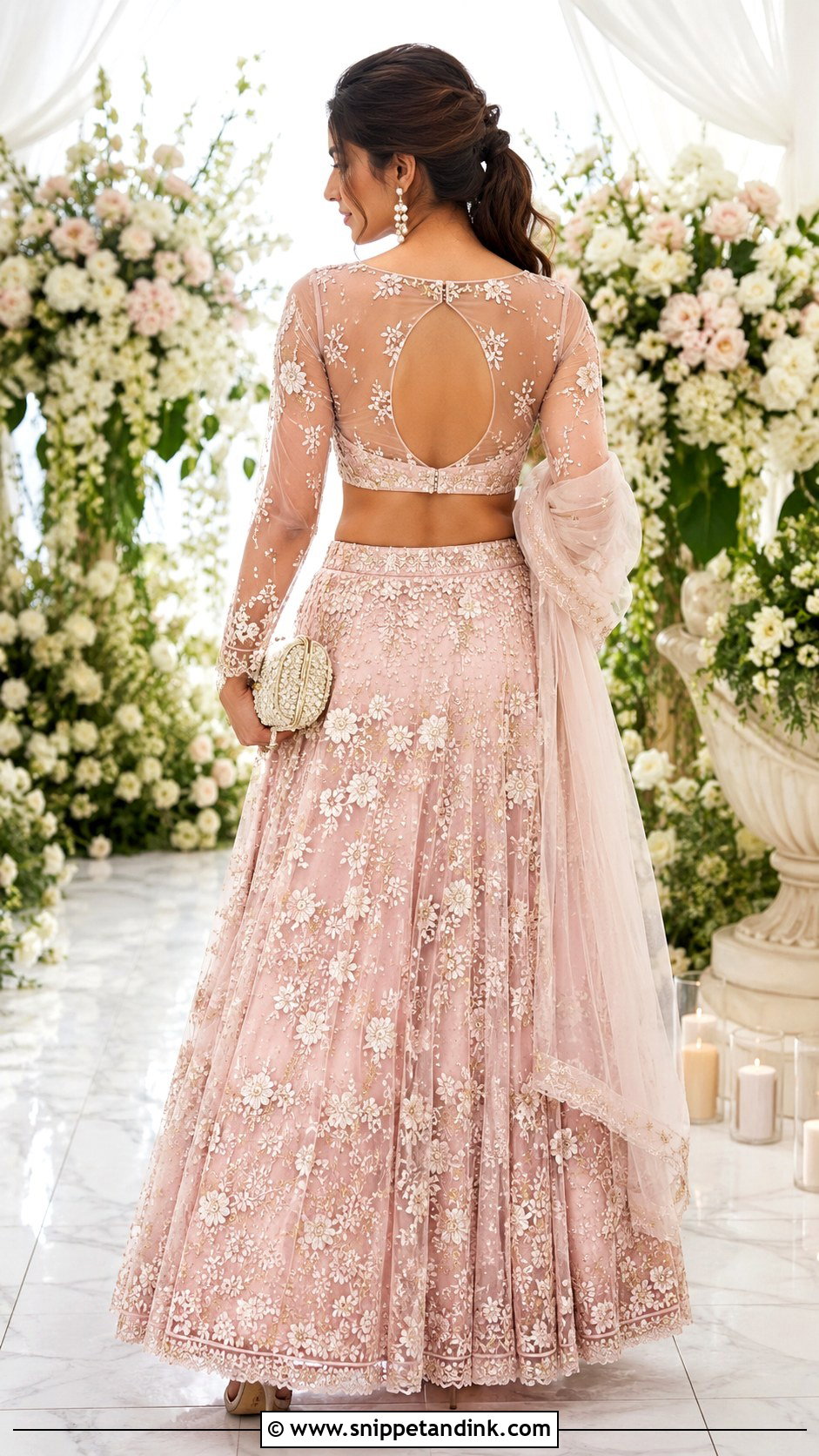
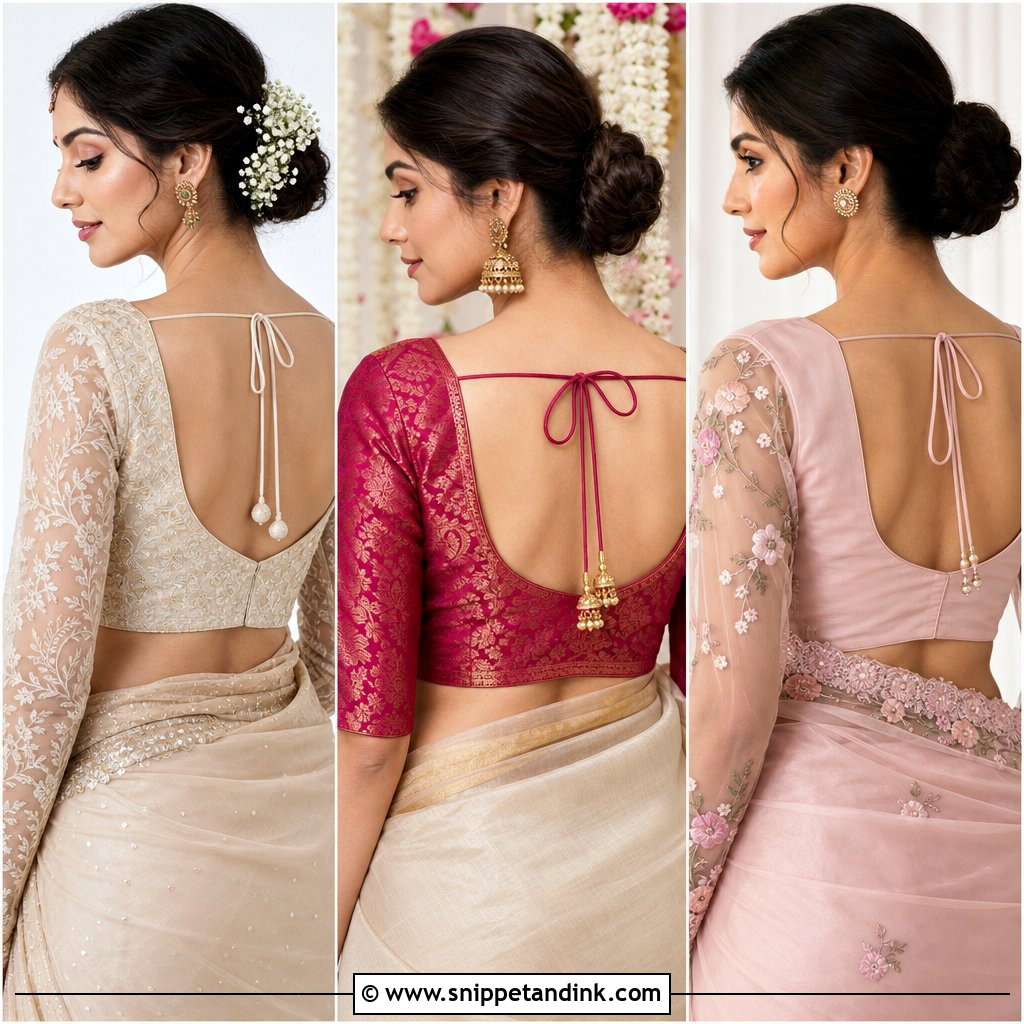
Ties are the oldest way to adjust a blouse, and they’re still the most forgiving if your weight shifts in the weeks before the wedding. A dori back can use one shoulder tie, several slim cords or ties combined with a lower fastening. With a heavily embellished blouse, choose braided cords; very thin strings look lost next to dense work. Finish the ends with pearls, fabric tassels, beads or tiny embroidered ornaments. I’d keep latkans short, since long ones catch on the dupatta and tangle in necklace chains. Pair it with a silk saree, an embroidered lehenga and a low bun, and tie and retie it at the fitting to make sure the knot doesn’t dig into the shoulders after an hour.
5. Keyhole Bridal Blouse Back
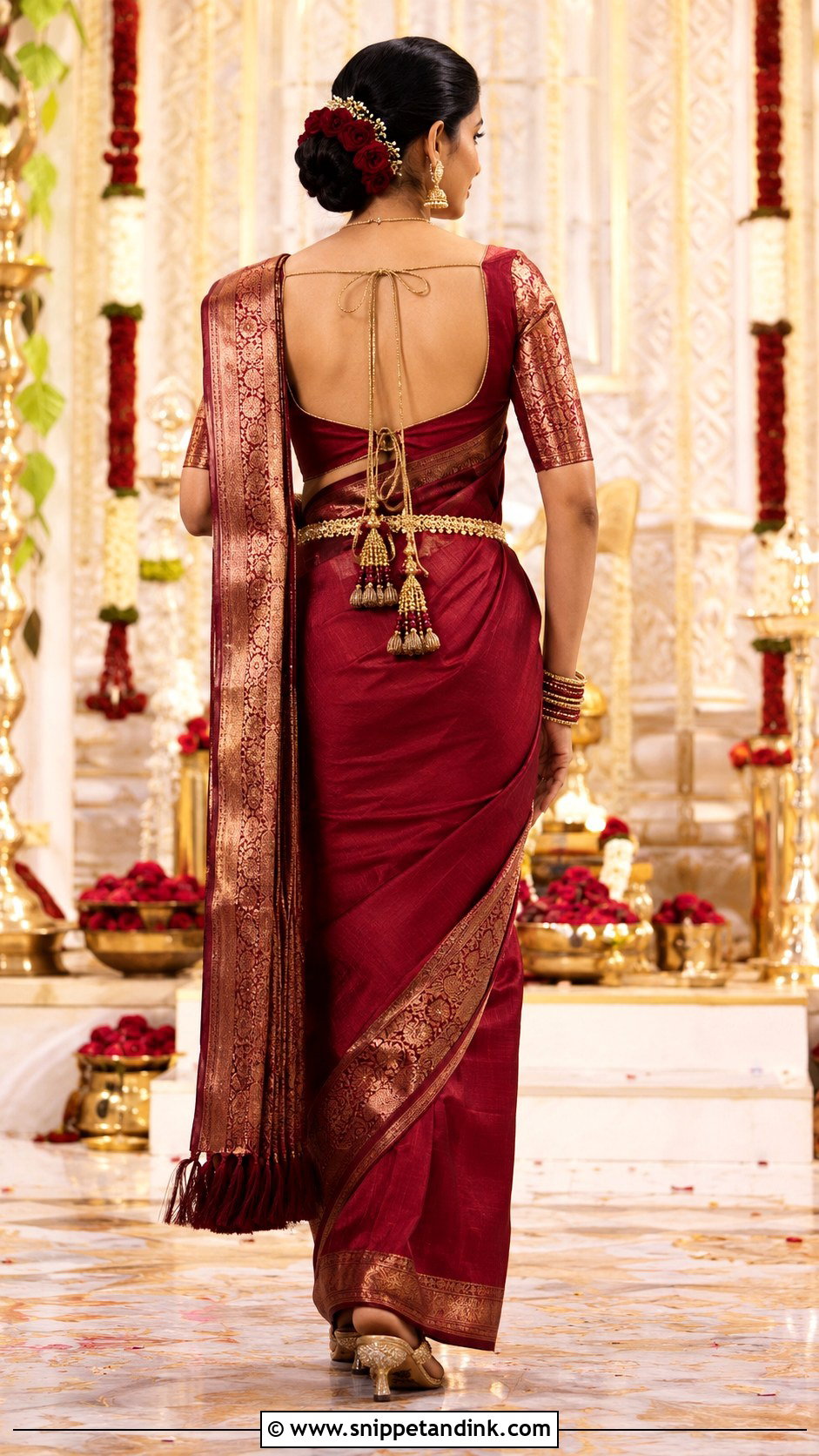
If a deep neckline feels like too much, a keyhole gives the back a focal point with far less skin. The opening can be round, oval, teardrop or softly pointed. Metallic threadwork, pearls, sequins or contrast piping around the edge make the shape read clearly from a distance. A fabric-covered button at the top closes it neatly, with a hidden fastening below for support. It suits traditional silk sarees, embellished lehengas and lighter outfits, styled with a bun, small hair flowers and coordinated earrings. The common fault is a keyhole that gapes when you reach forward, so raise both arms at the fitting and check that it still lies flat.
6. Potli Button Bridal Blouse Back
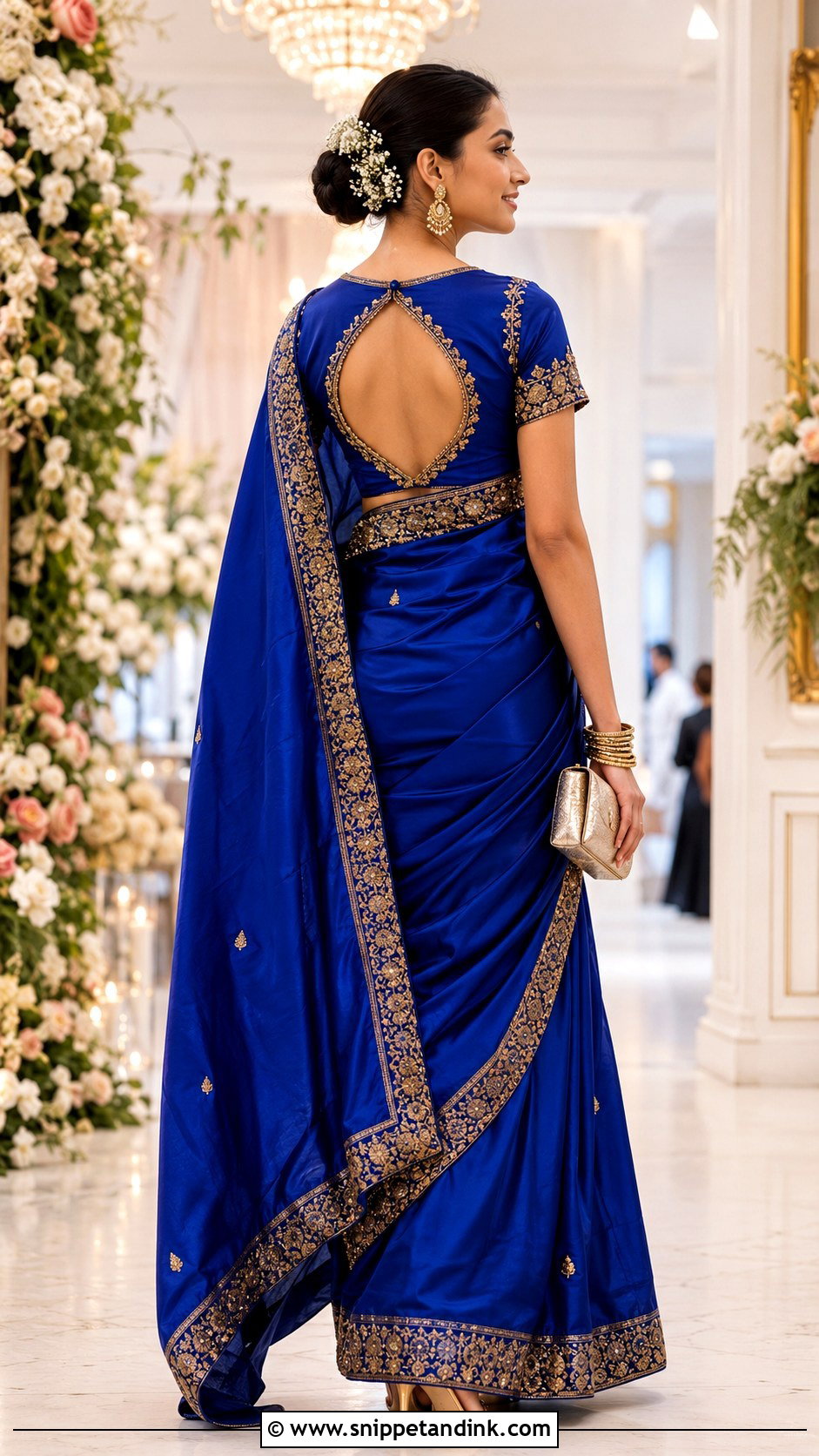
Potli buttons are small fabric-covered domes, and a trail of them gives the back a handcrafted look. A row of potli buttons can run from neckline to waist or cover just the upper back. Match them to the blouse for a subtle effect, or use contrast brocade and metallic embroidery for more definition. Closely spaced buttons look formal and suit Kanjeevaram, Banarasi and other richly woven sarees, as well as a paneled lehenga. I never rely on the buttons alone to close the blouse. Doing up twenty loops while you’re being dressed takes far too long, so ask for hidden hooks or a concealed zip underneath. Keep hair in a smooth bun so the trail stays visible.
7. Corset Bridal Blouse Back
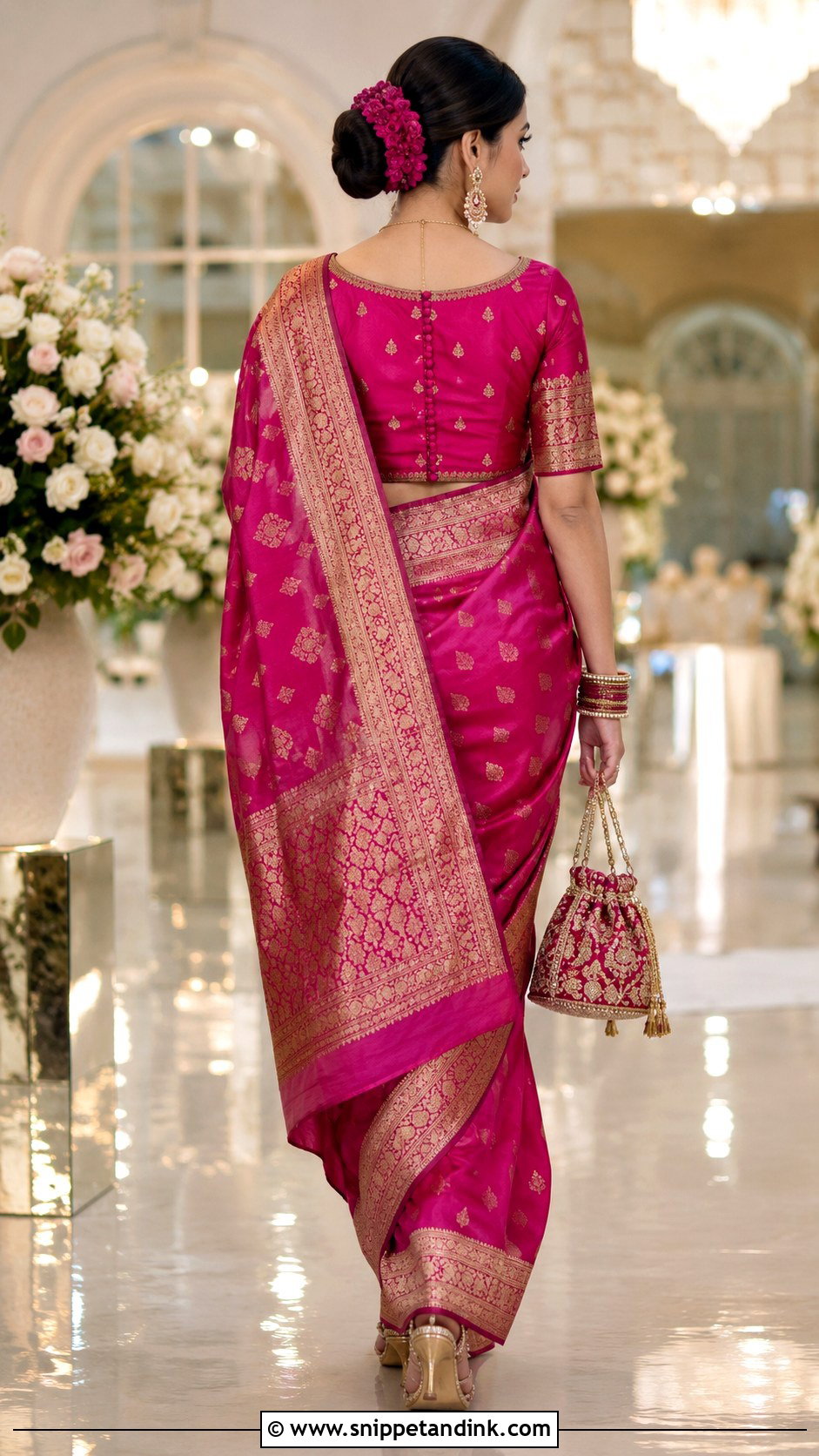
Corset lacing lets you tighten the fit on the day, which helps if you’re still unsure of your measurements. It looks best with a lehenga that has clean paneling, defined embroidery or a contemporary cut. Satin ribbon reads soft; embroidered cords suit traditional handwork better. Add a modesty panel behind the lacing if you want coverage. The structure should support you, not squeeze: I ask brides to eat a full meal before the final fitting, because a corset fitted on an empty stomach becomes painful by dinner. Pair it with a high-waisted lehenga and a tidy dupatta, wear a ponytail, braid or bun, and sit and lift your arms during alterations.
8. Square Bridal Blouse Back
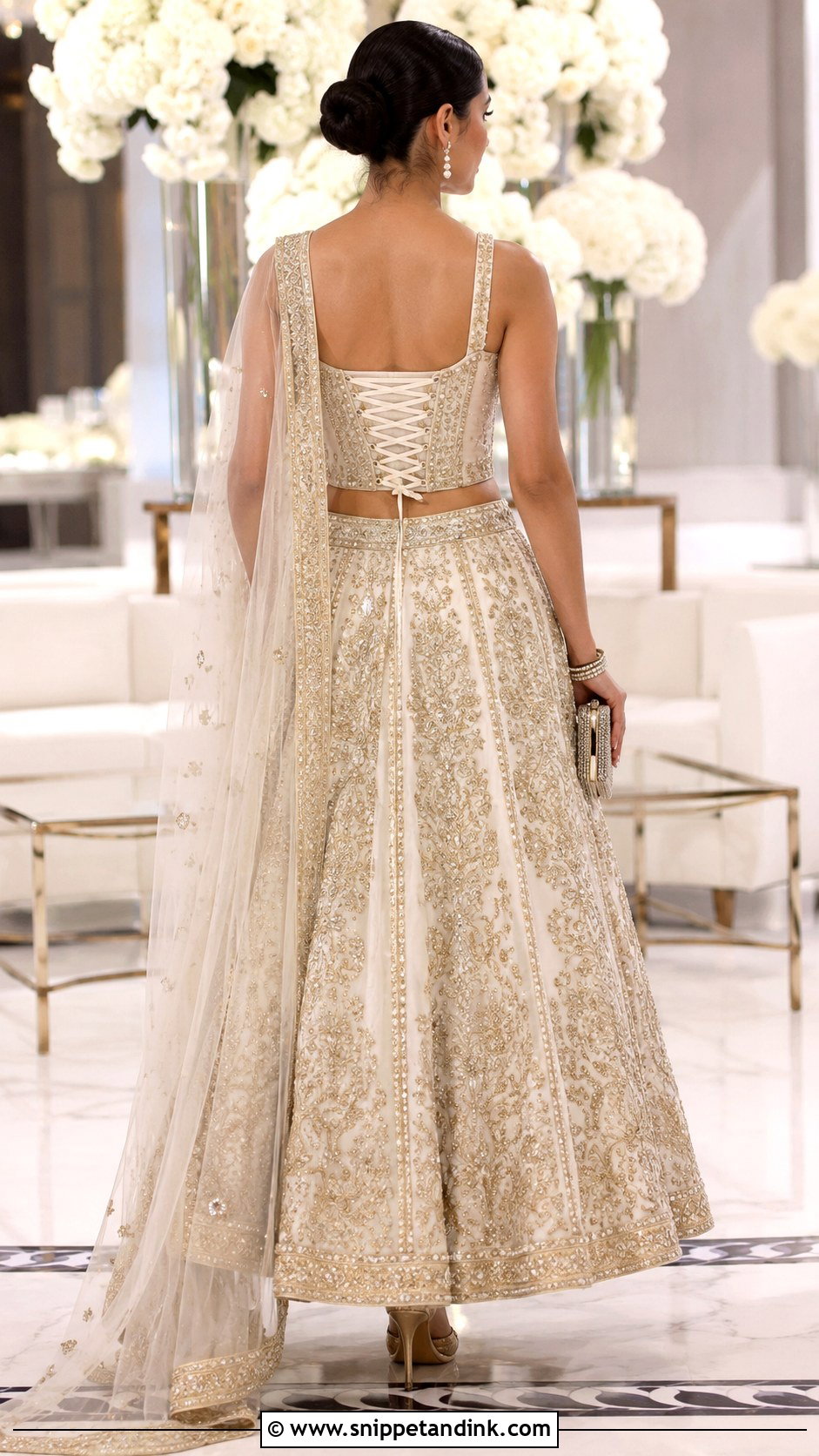
Square backs suit brides who want a defined neckline without much depth. Outline it with contrast piping, zari ribbon, pearls or an embroidered border lifted from the saree or lehenga. A shoulder dori adds security if needed, but keep it plain so the square stays clean. It works well with a pleated silk saree or a geometric lehenga pattern, finished with a center-parted bun, jhumkas and a structured clutch. The corners are the weak point. Without reinforcement, they stretch and curl after a few hours of movement, so check that your tailor has clipped and faced them properly.
9. Round Cutout Bridal Blouse Back
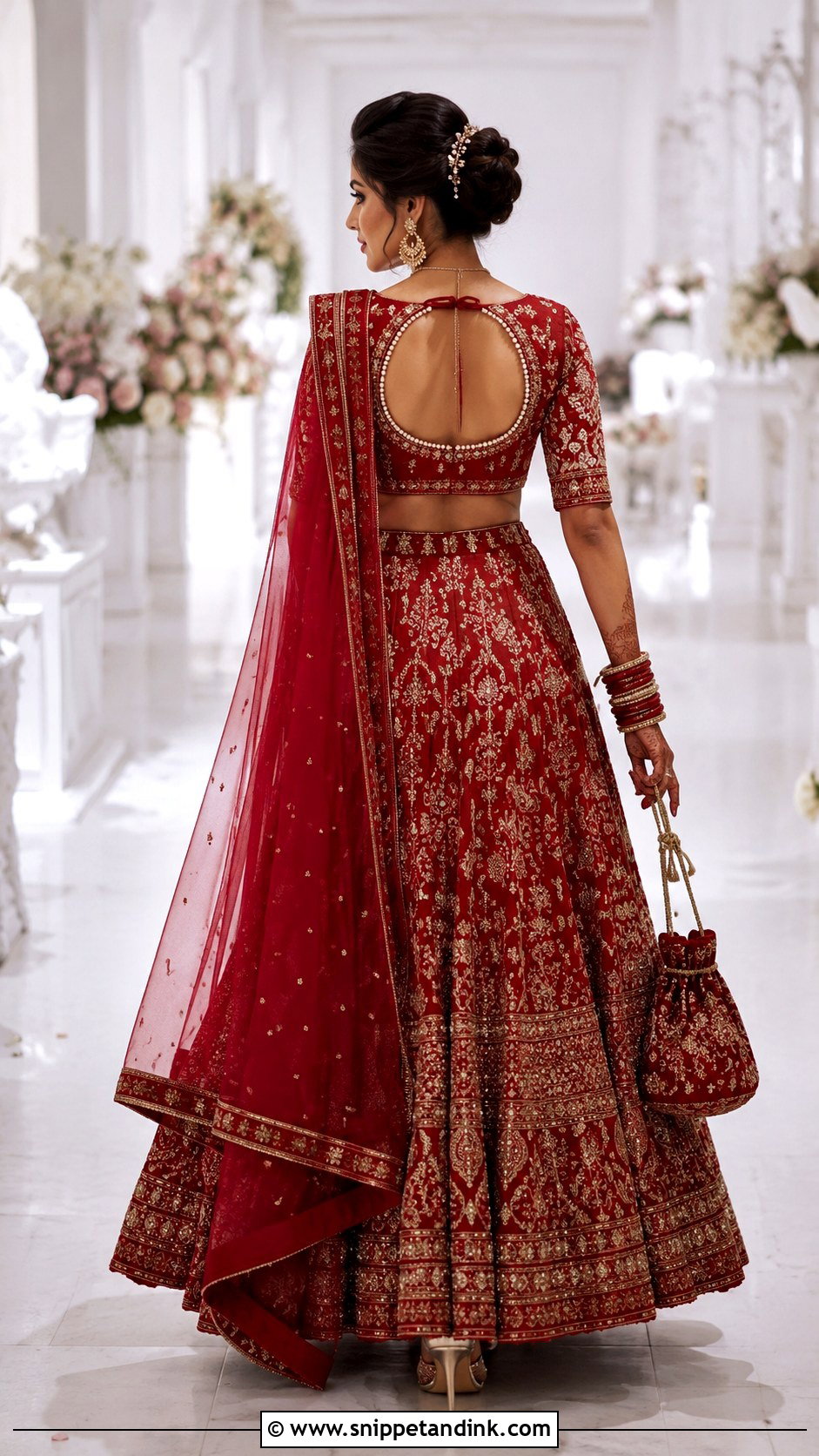
A round cutout puts a single soft focal point in the middle of an otherwise covered back. It gives more structure than an open back while still feeling modern. Edge the circle with pearls, embroidery, mirror work or a narrow scalloped trim, and keep the surrounding fabric closely fitted so the shape doesn’t sag. A small button or hook at the neckline makes dressing easy. Pair it with a flowing lehenga, a jewel-toned saree or a dupatta over one shoulder, and wear a high bun. When the outfit is heavily decorated, I size the opening down and keep the trim plain; a big circle with heavy beading competes with everything else.
10. High Neck Open Bridal Blouse Back
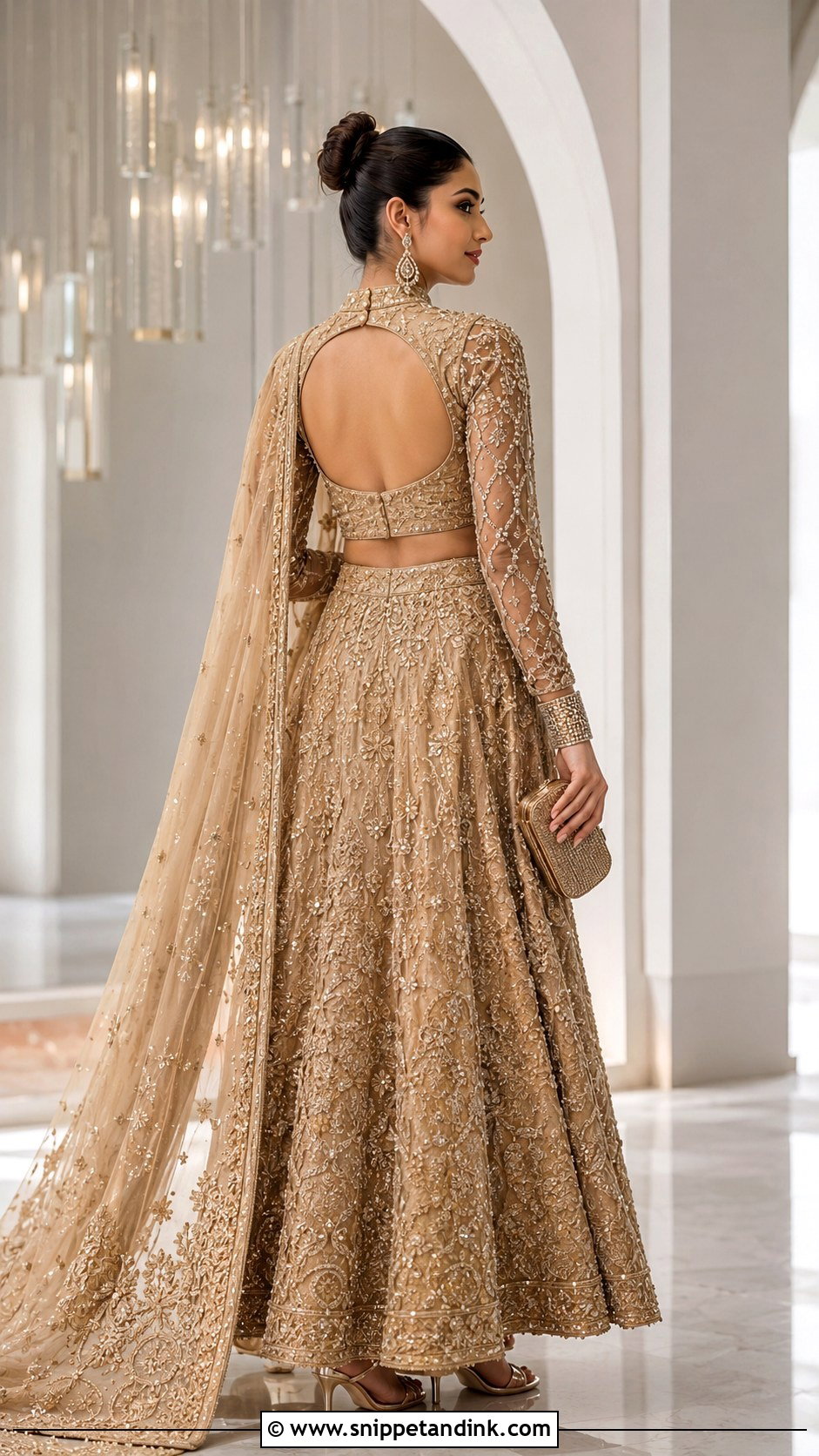
A high neck with an open back plays coverage against drama: covered at the front and collar, cut away behind. The open section can be an oval, an arch, a teardrop or a deep curve, and embroidered shoulders make it a natural match for a lehenga with a neatly arranged dupatta. A row of tiny buttons at the nape adds detail. Style it with a high bun, a sleek braid or short hair so the full shape shows. Because the collar sits against the throat, a soft lining matters, and you should be able to swallow and turn your head comfortably. I’d skip a necklace entirely and let earrings and hair ornaments do the work.
11. Bow Bridal Blouse Back
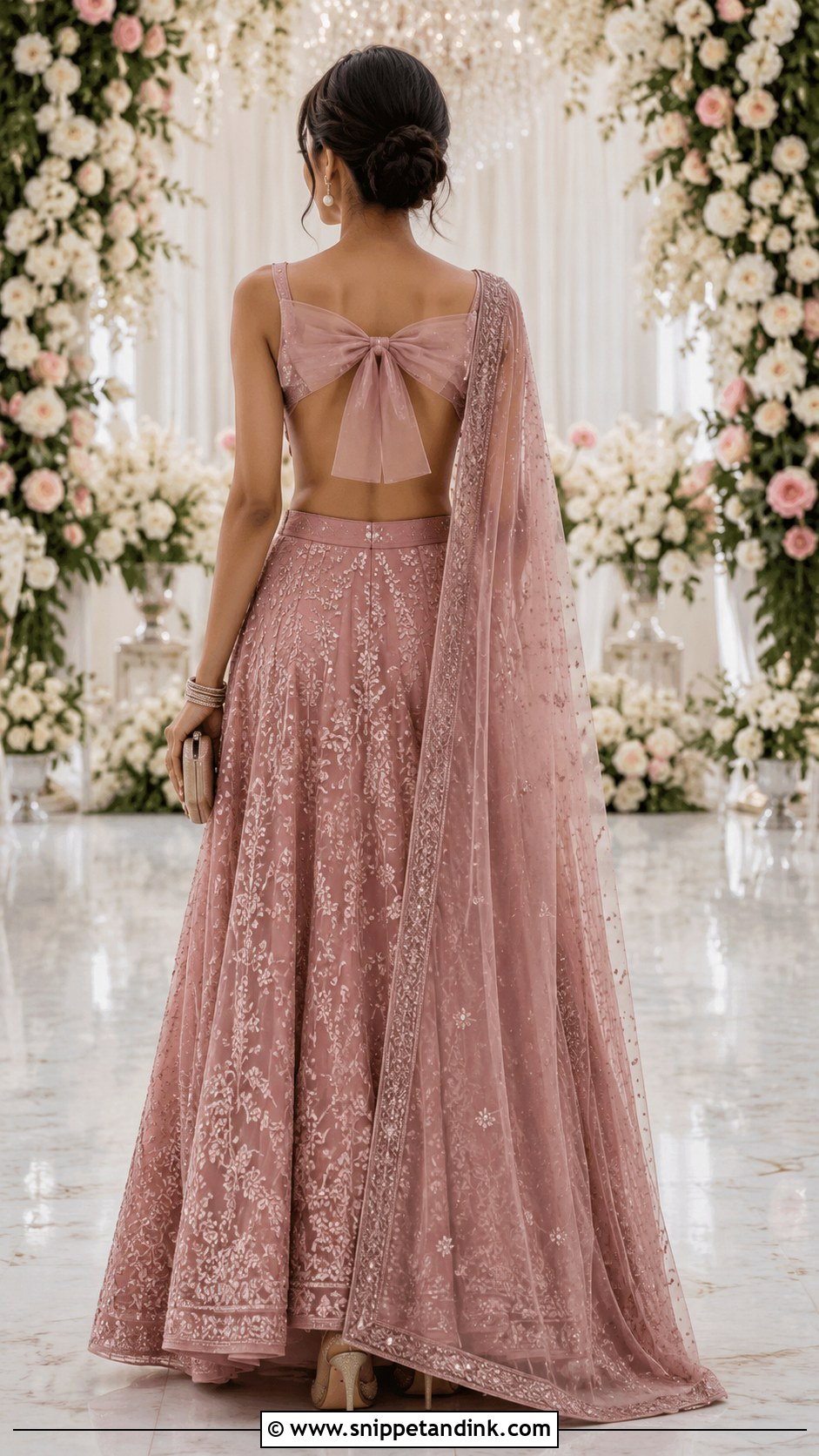
A bow sits at the shoulders, mid-back or waist, and suits a more contemporary outfit. Use satin, organza, velvet or embroidered fabric in a shade from the lehenga or saree, and keep it medium-sized; a very large bow overwhelms a petite frame and gets crushed against the chair during dinner. Concealed hooks underneath should do the actual fastening, so the bow is decoration only. Pair it with a streamlined lehenga, a soft dupatta and pearl or diamond-style jewelry, with an updo to show it off. Ask for snaps or detachable loops if you’d like to remove the bow and wear the blouse again later.
12. Pearl Chain Bridal Blouse Back
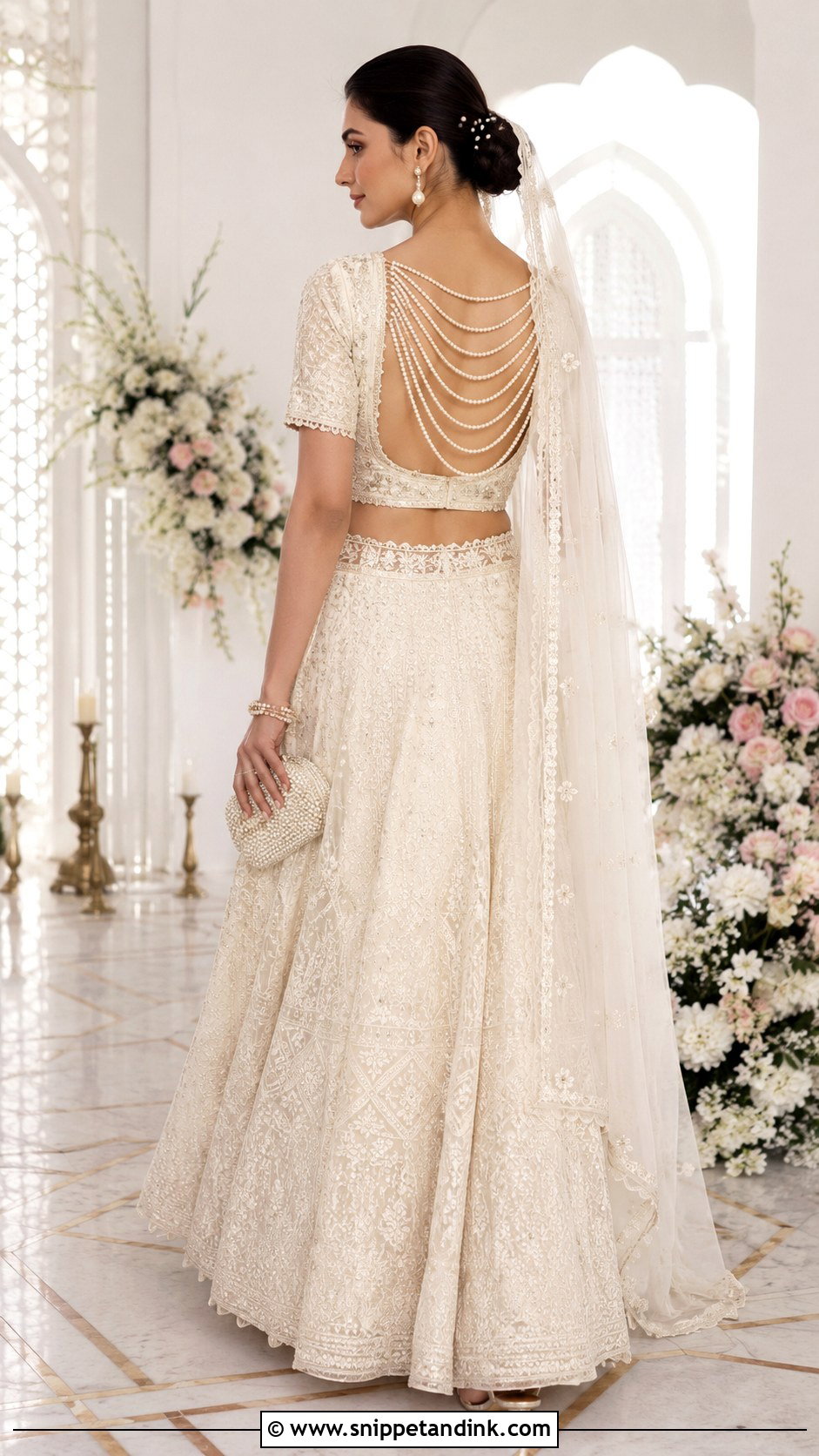
Pearl chains across an open back look delicate, but they need careful engineering. Several strands can cross the upper back, fall in a curve or bridge the two sides of a deep neckline. The chains should never carry the weight of the blouse; I ask for them to be stitched to a reinforced tab, not straight onto the fabric, or they tear the edge after a few hours. Small pearls look subtle, mixed sizes look more couture. They suit ivory, blush, champagne, pastel or deep red lehengas. A low bun with pearl pins repeats the detail. Keep the dupatta on one shoulder or over the head, because chains and a loose dupatta tangle quickly.
13. Mirror Work Bridal Blouse Back
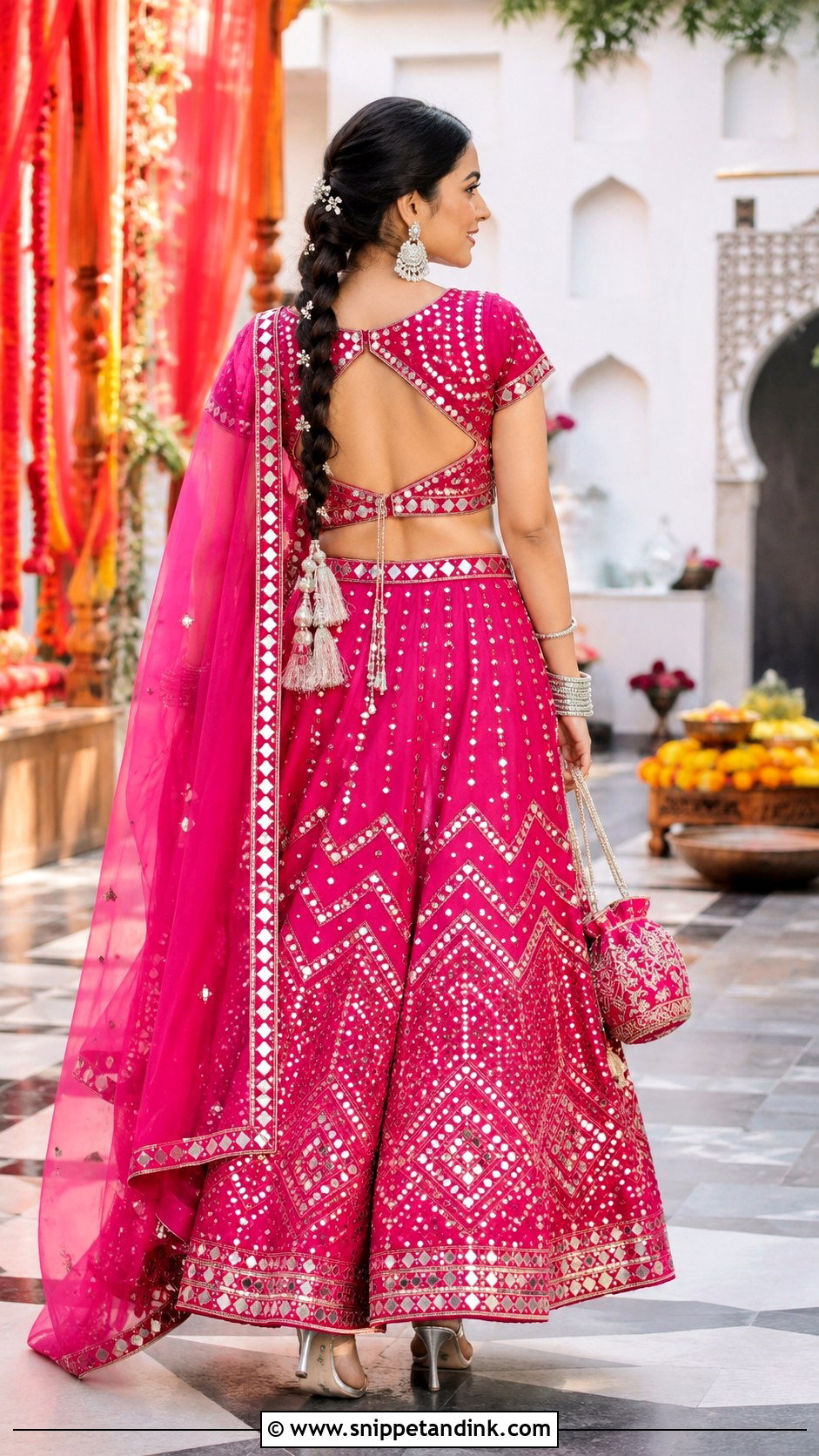
Mirror work belongs at a colorful wedding, where it catches every light. Place mirrors around a deep neckline, across a covered panel or along geometric cutouts, and repeat the same shapes on the lehenga border and dupatta for a coherent outfit. The backing is what I check first: each mirror should be stitched into a smooth, lined base so no edge touches skin. Choose lightweight pieces, since dozens of mirrors add up. Pair the blouse with a jewel-toned or multicolored lehenga, metallic sandals and statement earrings, with a braid dressed in matching fabric accents. If the outfit already has dense mirror work, drop the tassels and keep the necklace small.
14. Zardozi Bridal Blouse Back
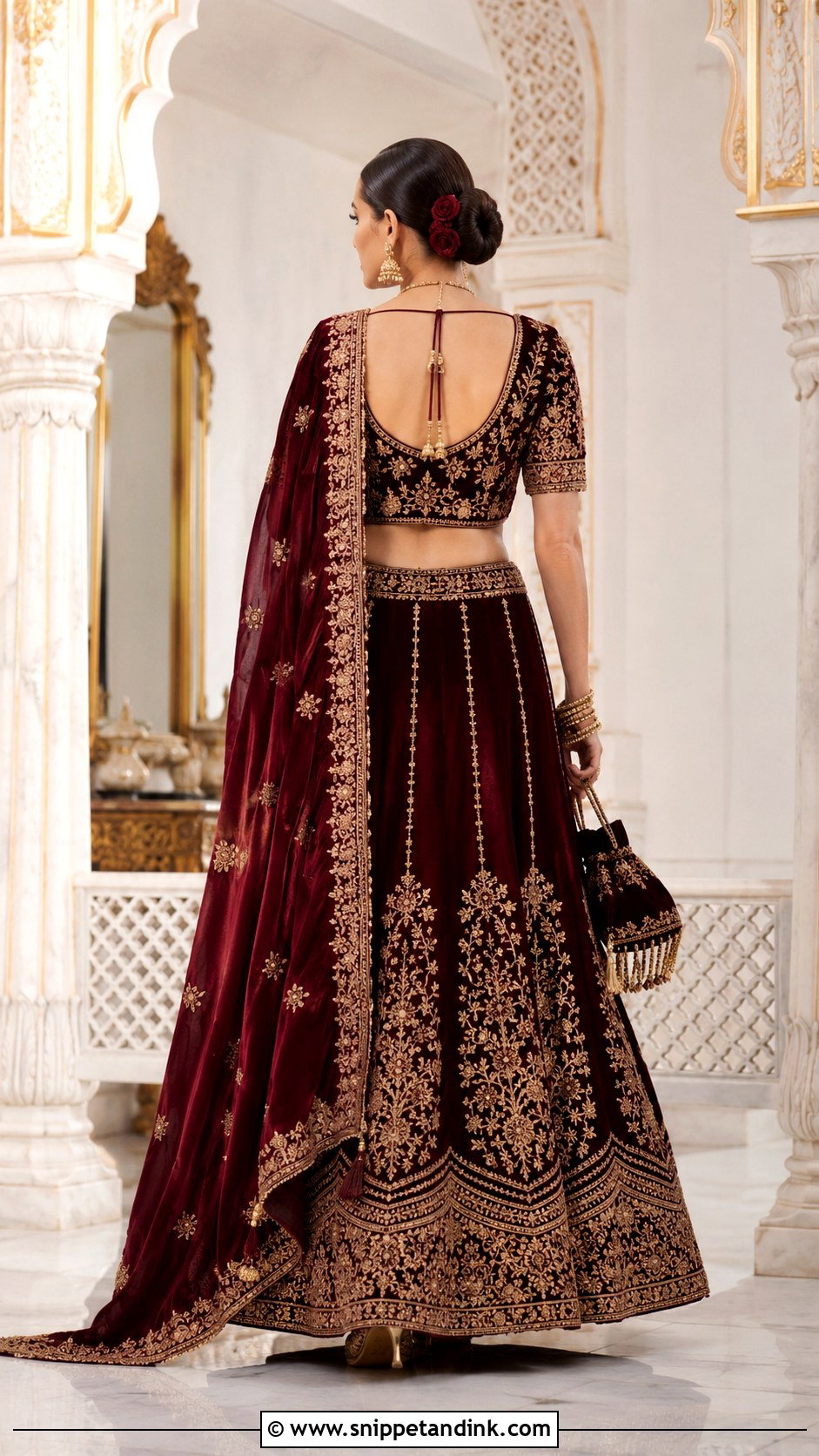
Zardozi is metal-thread embroidery, and a zardozi-covered back needs a fabric strong enough to carry it. Velvet, raw silk and brocade hold dense handwork; a thin silk will pucker under it. Choose floral vines, paisleys, architectural borders or personal motifs that connect to the rest of the outfit, and keep the neckline moderately open so the embroidery has room. A soft lining is not optional here, because metal thread and beads scratch bare skin within an hour. Style it with a silk saree, traditional jewelry and a bun, and drape the dupatta slightly to one side so the work shows.
15. Scalloped Bridal Blouse Back
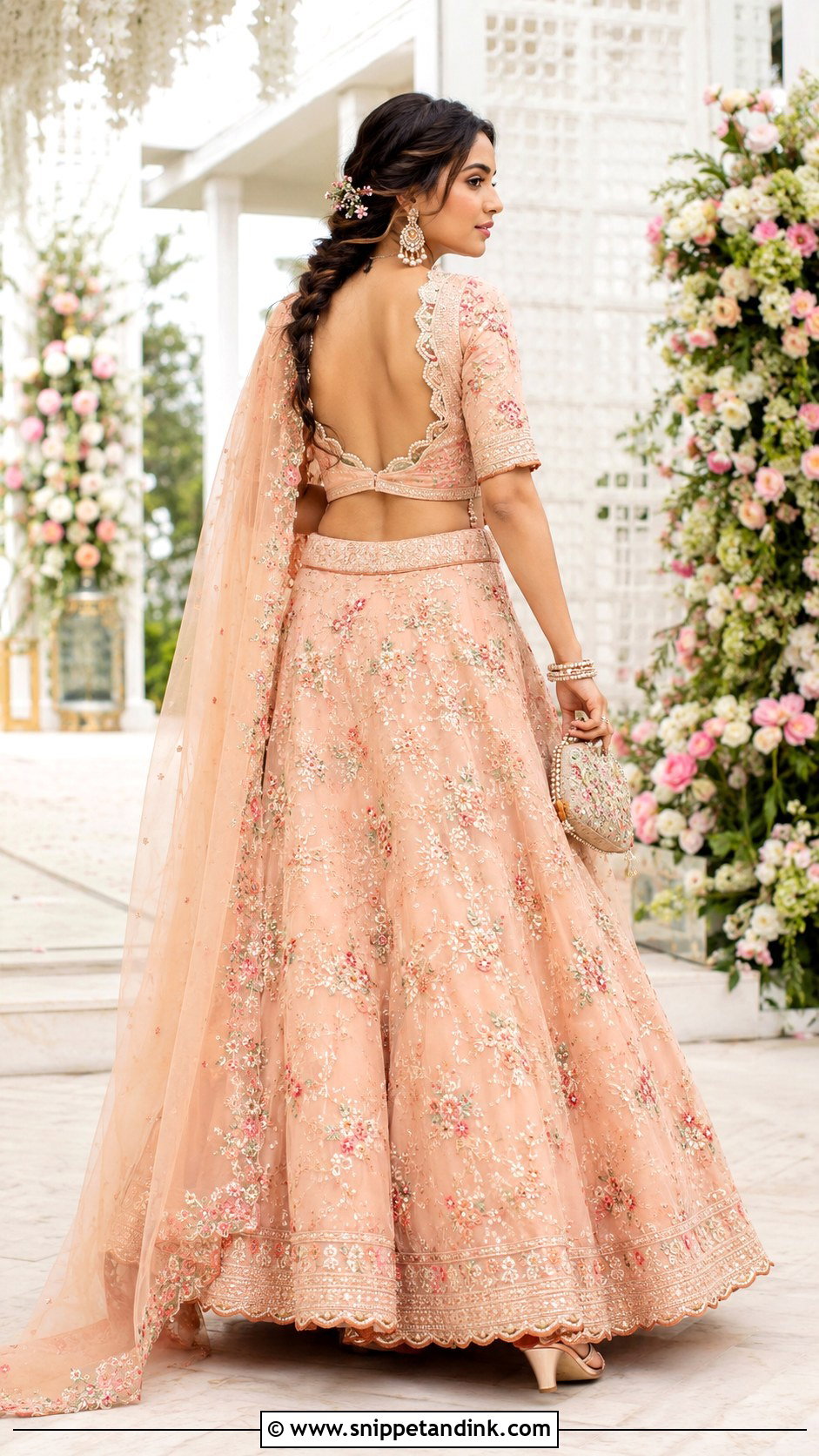
Scallops soften the edge of a back without needing heavy decoration. They can frame a U, V, square or moderately open neckline, and each curve can be outlined with pearls, sequins, metallic thread or piping. Pastel outfits with floral embroidery suit them well, and gold scallops also look right on traditional red and maroon. Earrings that repeat the curve, a coordinated lehenga, a light dupatta and a bun or side braid finish it. This is a test of your tailor’s skill. Uneven scallops are obvious from across a room, so ask to see a sample edge before the blouse is cut.
16. Crisscross Bridal Blouse Back
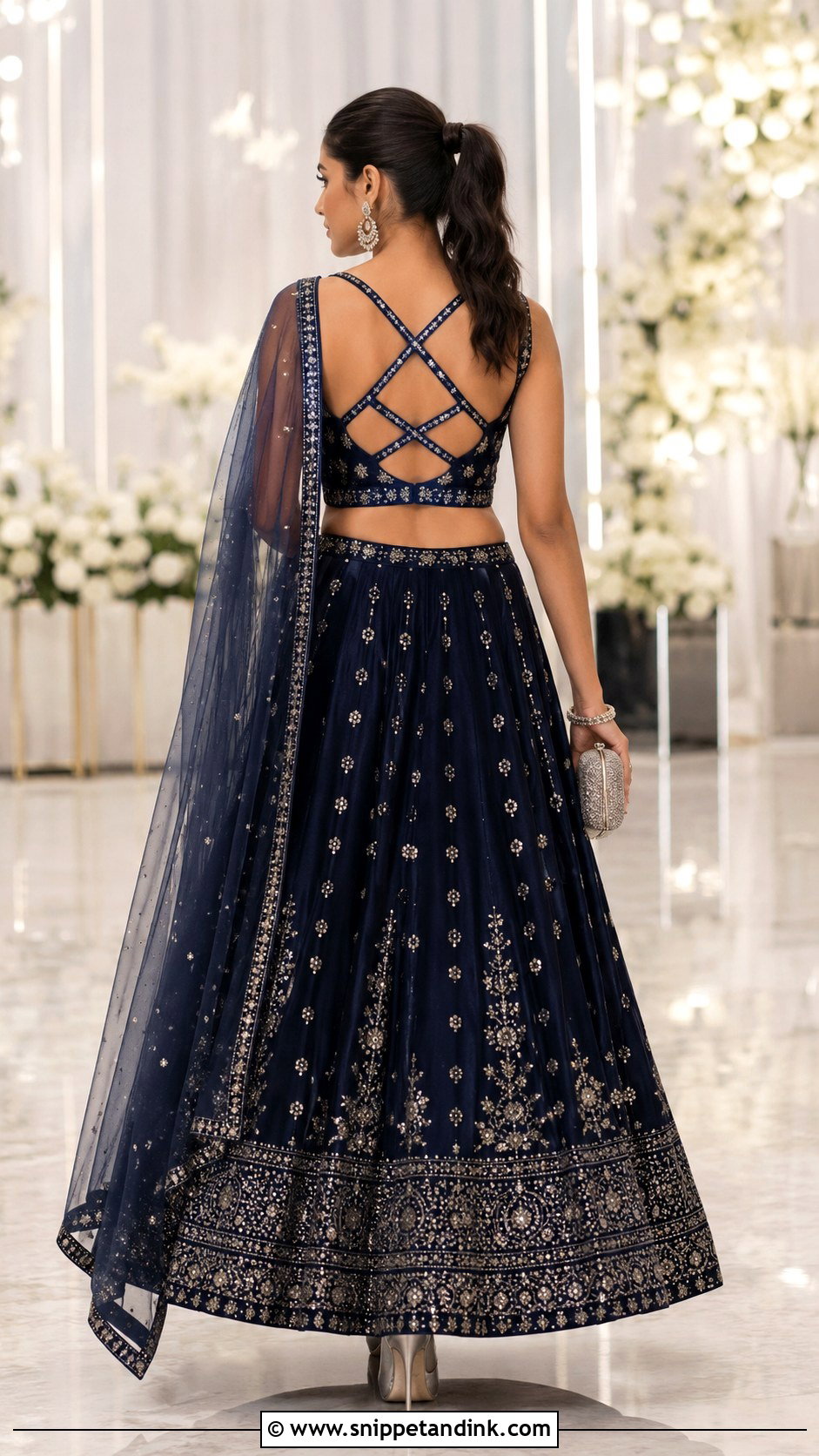
Crisscross straps give a back strong lines and suit a contemporary lehenga, a pre-draped saree or a lighter reception outfit. Make the straps from embroidered fabric, velvet ribbon, pearls, braided cord or narrow silk-covered bands, and space them evenly so the pattern doesn’t look cluttered. A proper closure should sit underneath; the straps alone won’t hold a blouse in place. Keep jewelry streamlined, with a sleek ponytail or high bun. At the fitting, turn, sit and raise your arms. Straps that look flat while you stand often twist or bow outward once you move, and adjustable lower ties help when you’ll wear it for hours.
17. Floral Appliqué Bridal Blouse Back
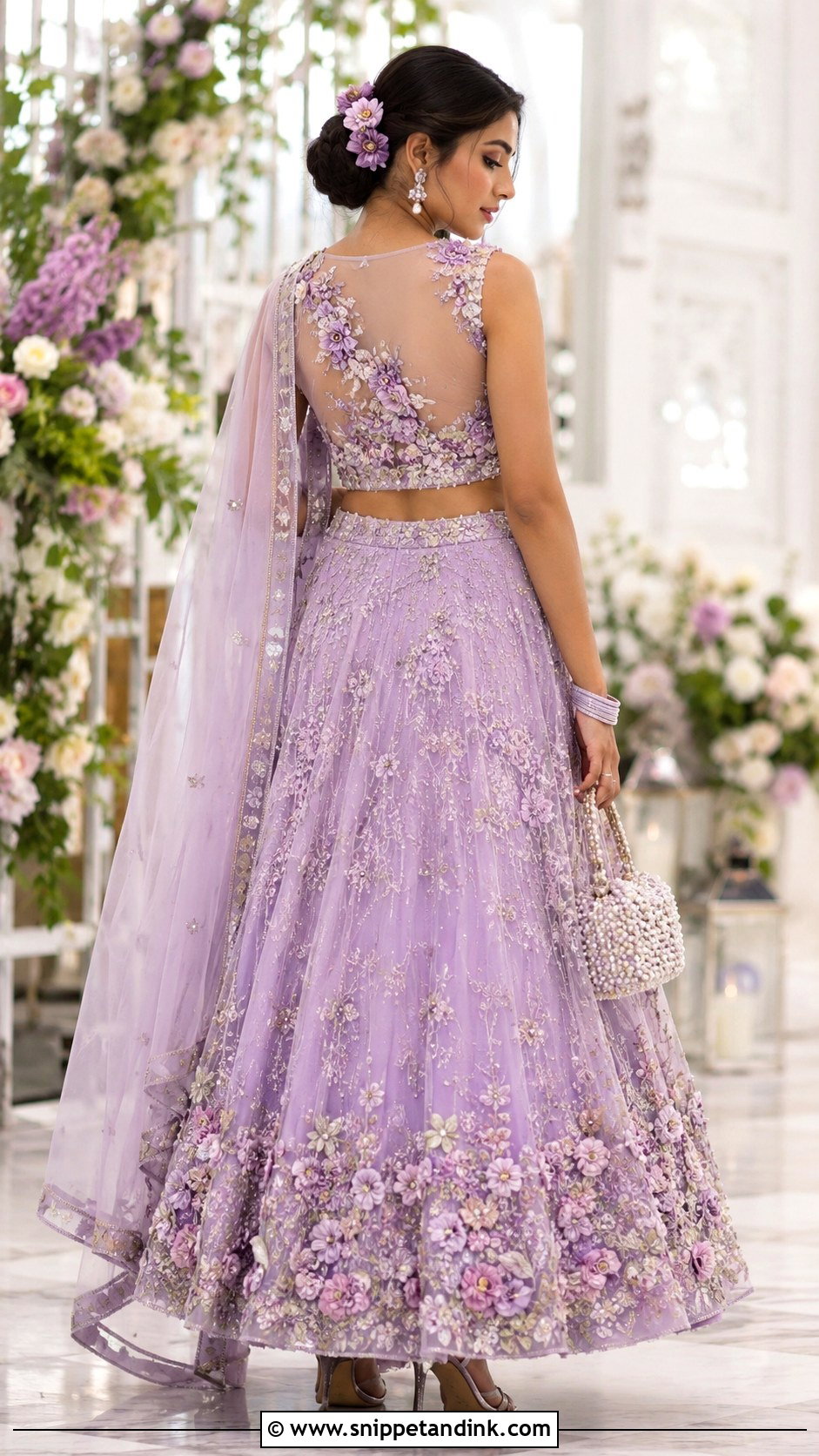
Raised floral appliqués give a back soft texture. Place three-dimensional flowers on sheer net for an illusion effect, or arrange embroidered blossoms around an open neckline, then repeat them on the sleeves, lehenga border or dupatta corners. Small pearls or crystals at the flower centers add light without weight. Pastels, ivory, pink, lavender and peach suit it best. A flowing lehenga, delicate earrings and a low bun with matching flowers complete the outfit. Check every appliqué by tugging gently at the fitting; loose petals catch on jewelry, and raised stitching needs lining behind it so it doesn’t rub.
18. Bridal Motif Blouse Back
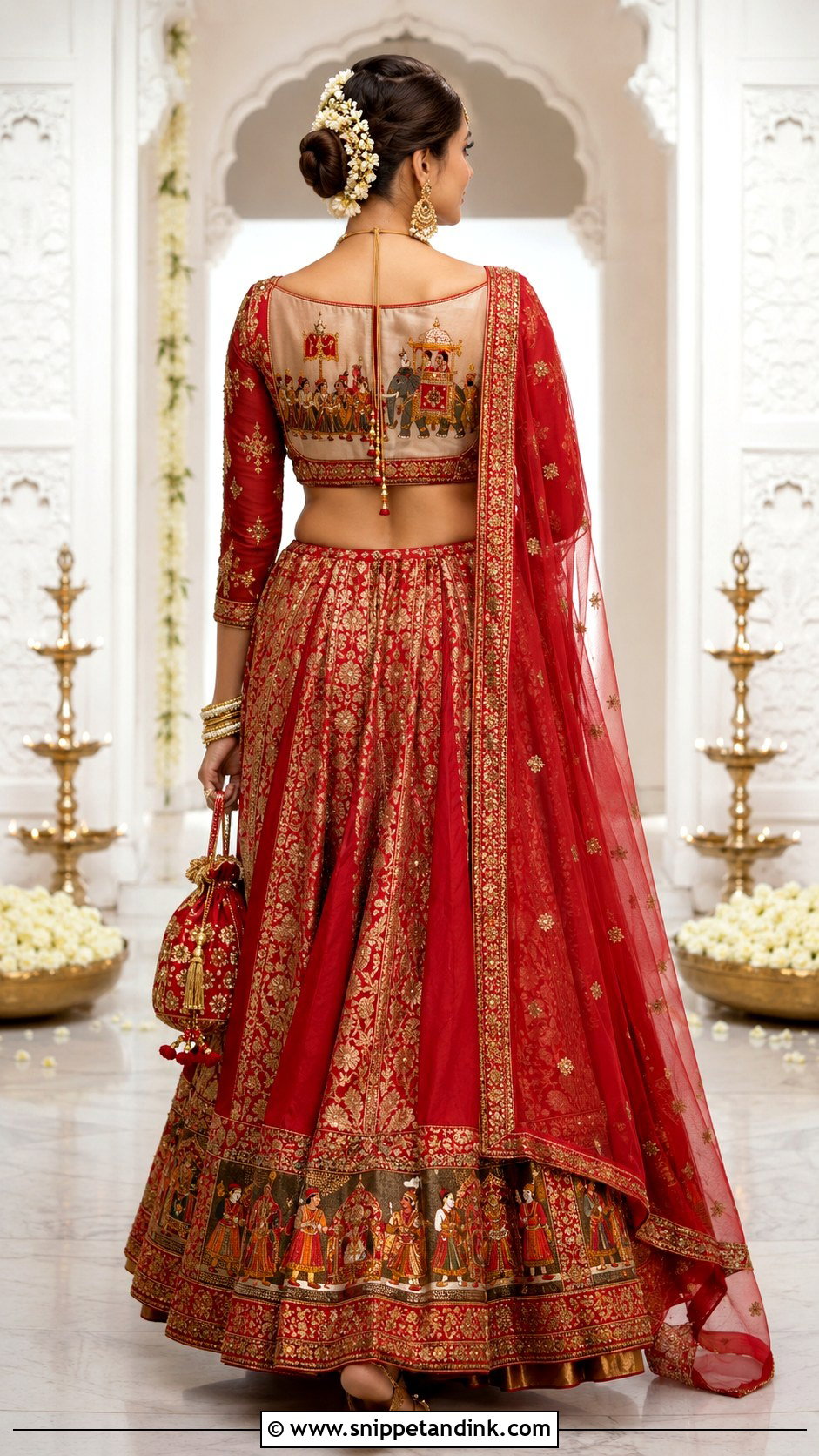
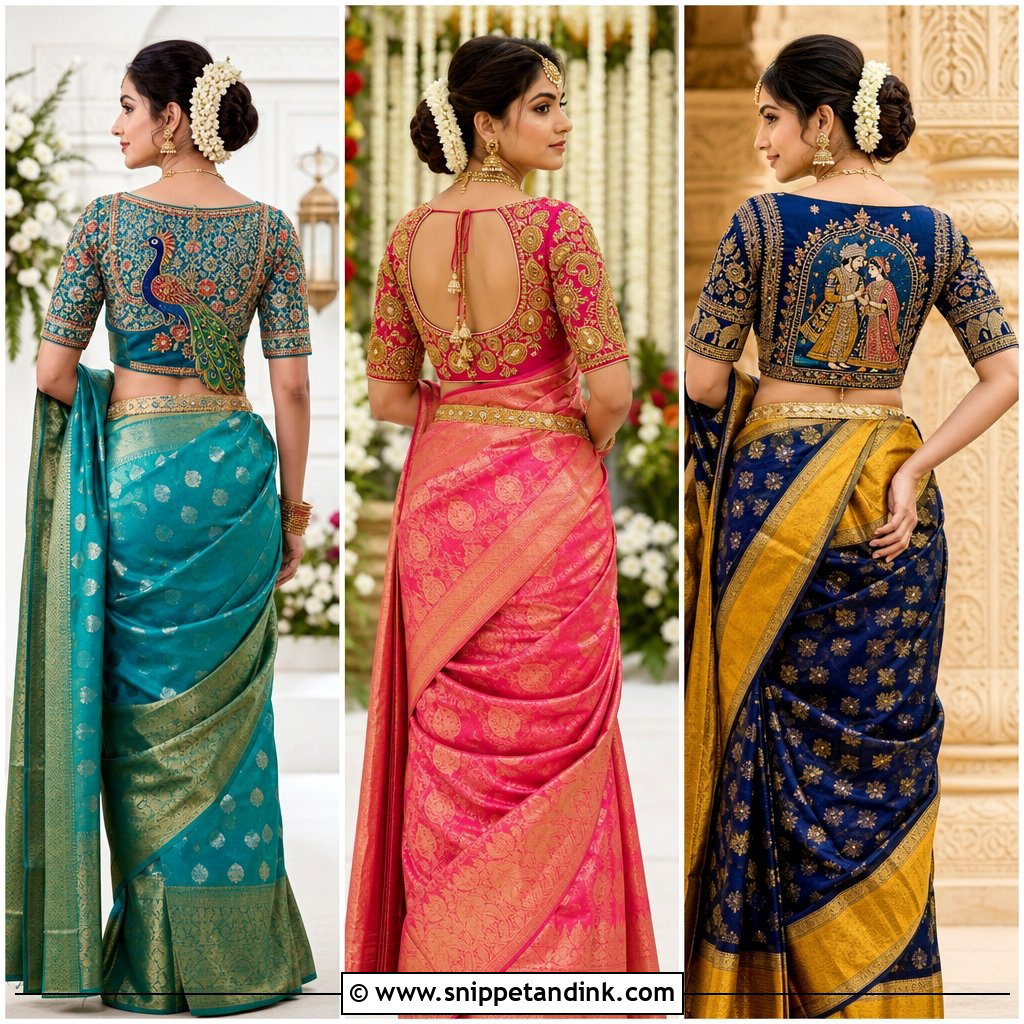
A custom motif makes the back personal. Brides ask for wedding processions, floral scenes, peacocks, architecture, initials or symbols that mean something to the couple. Work it on a covered silk panel so the embroidery has room and support, keep the neckline and closure simple, and coordinate the thread colors with the saree, lehenga or dupatta border. A high bun or side braid keeps it visible. Before any stitching starts, I insist on a full-size sketch held against your actual back. A motif that looks right on paper can be far too large or sit too low once it’s placed on a real body.
19. Double Dori Bridal Blouse Back
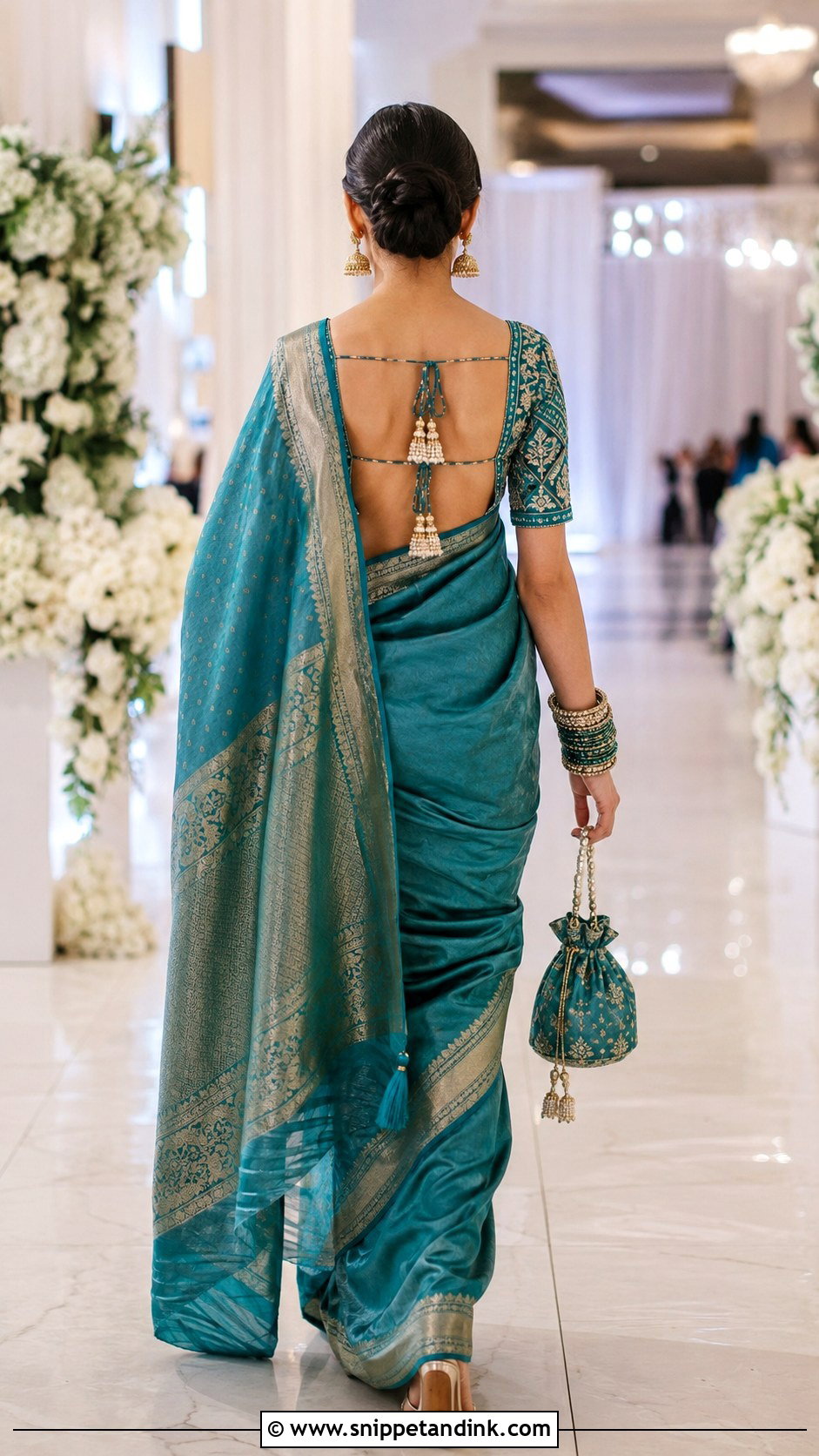
Two ties instead of one spread the load across the back. One cord sits across the shoulders and the second secures the middle or lower section. Matching braided cords look understated; pearls, beads, fabric flowers and small tassels make it decorative. Vary tassel lengths a little so they don’t bunch together. It pairs well with a silk saree, a brocade lehenga or an embroidered skirt, plus a center-parted bun and statement earrings. Spacing matters more than decoration: ties placed too close together look crowded and support less, so let your tailor set them where the blouse actually needs holding.
20. Full Coverage Bridal Blouse Back
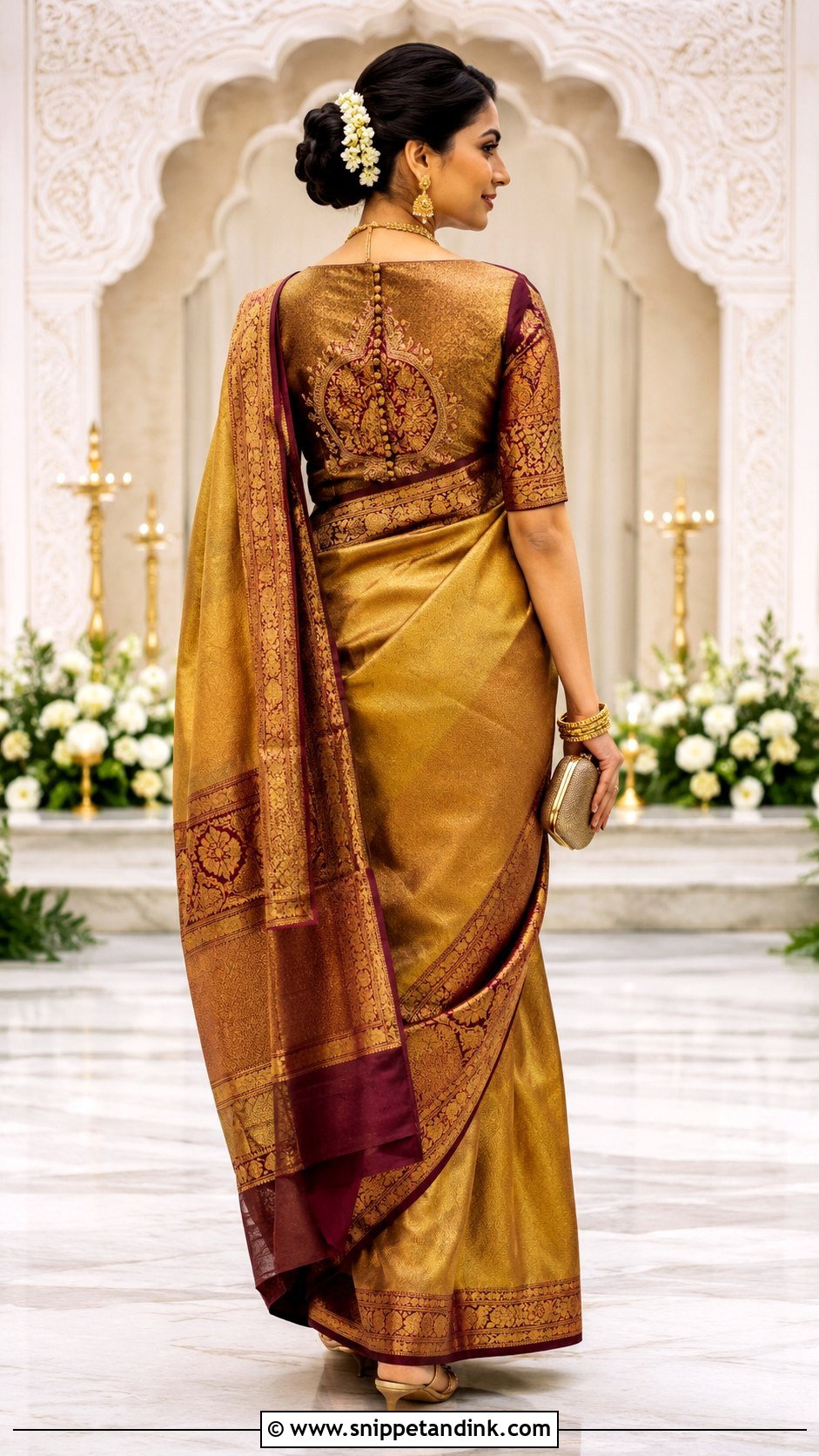
A covered back can be just as memorable as an open one. Rich embroidery, beadwork, woven motifs, button rows and contrast borders all create interest while giving full coverage. It’s the sensible choice for temple ceremonies, cooler venues and anyone who simply feels more at ease covered. Use a strong base such as silk, brocade, velvet or raw silk, with a breathable lining. Pair it with a traditional saree or regal lehenga, a neatly pinned dupatta and coordinated jewelry, and keep your hair in a bun. To control weight, I concentrate the heaviest work around the neckline and center and leave small areas plainer; a blouse covered edge to edge in beading gets hot and heavy fast.
When to Start the Blouse, and What to Test at Each Fitting
Bridal blouses take longer than brides expect, because hand embroidery is usually done on the fabric before it’s stitched into shape. Zardozi, aari and dense beadwork can take weeks on their own, and wedding season fills every tailor’s calendar. I’d start the blouse at least two to three months before the wedding and plan for two fittings. Leave the final one two to three weeks before the date, so there’s time for alterations without a rush.
- First fitting, before embroidery is finished: confirm the depth of the back, the placement of ties and cutouts, and how the cups sit. This is the cheapest moment to change the cut.
- Sit the way you’ll sit at the ceremony. If you’ll be cross-legged on the floor for the pheras, do that in the blouse. The back rides up and opens more when you’re seated low.
- Lift your arms high, as you would for a garland exchange or a hug. Watch for gaping at the neckline and pulling across the shoulder blades.
- Final fitting with the full set: wear the jewelry, pin the dupatta the way you’ll wear it and put your hair up, then have someone photograph your back. A design that disappears under a heavy dupatta may need its detail moved higher.
- Collect it with time to spare. Try it on at home with the lehenga or saree and keep a small kit of safety pins, matching thread and spare hooks for the day.
A Back That Still Sits Flat After the Last Ritual
A good blouse back feels secure, looks connected to the outfit and still lets you move. Deep U and V cuts are the classic statement; sheer net, appliqués and pearl chains are softer; potli buttons, zardozi, custom motifs and covered backs bring traditional richness. Before you settle on one, think about your fabric, the support you need, where the dupatta will sit, your hairstyle and how long you’ll be seated. Give your tailor clear reference photos and ask for a trial fitting before the final embroidery goes on. Choose the back you’ll forget you’re wearing, not a dramatic cut you’ll spend the day adjusting.
You'll Like These Ideas:


Leave a Reply