
I prepare flowers for a lot of wedding cakes, and the simple ones are my favorite to work on. A clean frosting, a soft palette and a few blooms placed with some thought will look better in photos than a cake buried under stems. Real flowers are only one option: pressed petals, buttercream, wafer paper and small sugar blossoms all have their place. Lately couples ask me for textured buttercream, small cutting cakes and flowers that look like they came from a garden rather than a cooler. Here are twenty flower cakes, with what I’d send to the baker for each.
What’s in Season on Your Wedding Date
Before you fall for a cake photo, check whether its flowers will exist the week you marry. Out-of-season stems can be imported, but they cost more and arrive less fresh. Roughly, in the northern hemisphere:
- Late winter into spring: ranunculus, anemones, tulips, sweet peas, early garden roses.
- Late spring: peonies, which have a short window, plus lilac and more garden roses.
- Summer: sunflowers, daisies, lavender, cosmos, chamomile.
- Late summer into autumn: dahlias, zinnias, smaller sunflowers, berries and seed heads.
- All year from most suppliers: standard and spray roses, lisianthus, orchids, carnations, baby’s breath.
If your heart is set on peonies for an October wedding, I’d steer you toward garden roses, which give a similar full shape, or ask your baker about sugar peonies.
1. Simple White Wedding Cake With Fresh Flowers
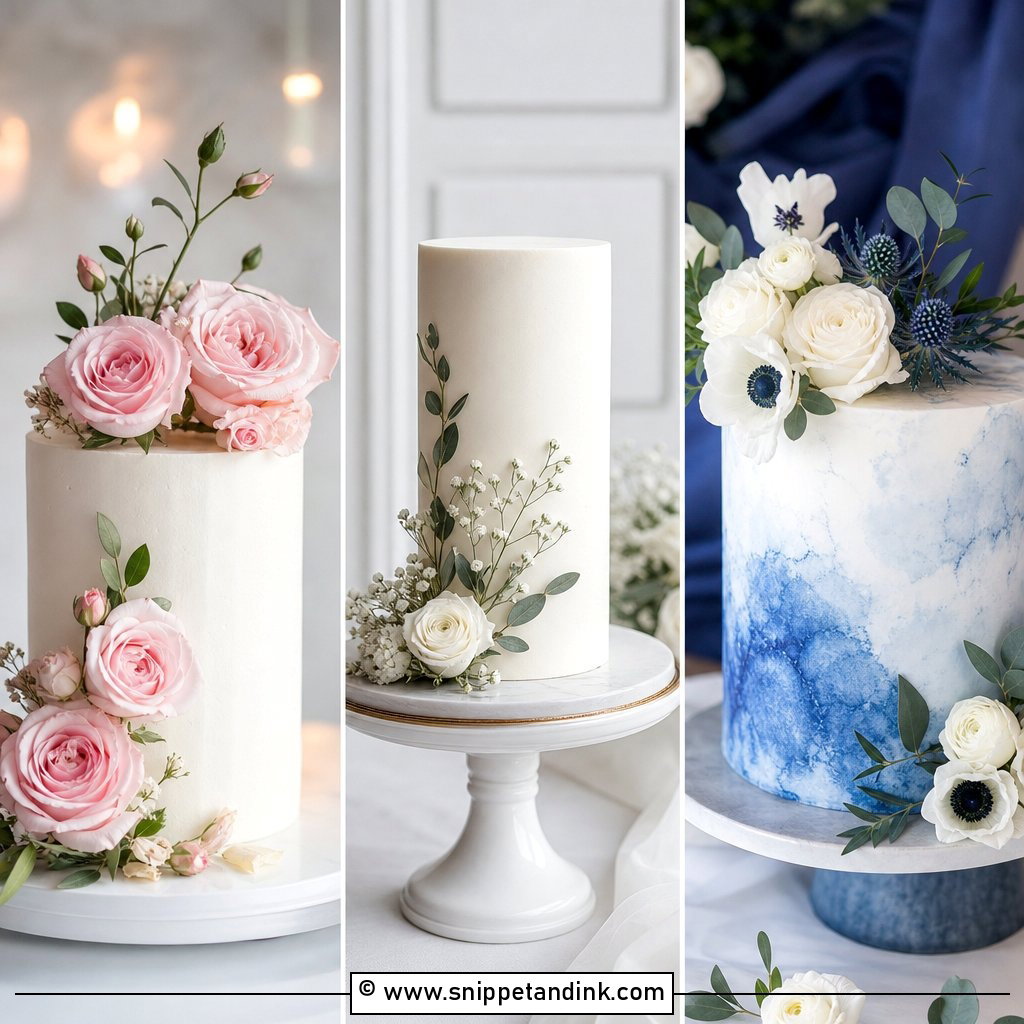
White cake, a small cluster of fresh blooms on top or down one side. When I prepare flowers for this, I pick roses, spray roses and ranunculus because they hold their heads up for hours out of water, and edible pansies if any petals will actually touch the frosting. The stems get wrapped before the baker places them. I take the cake flowers from the same bunches as the bouquet, so the colors match exactly. A few leaves are enough; skip extra borders.
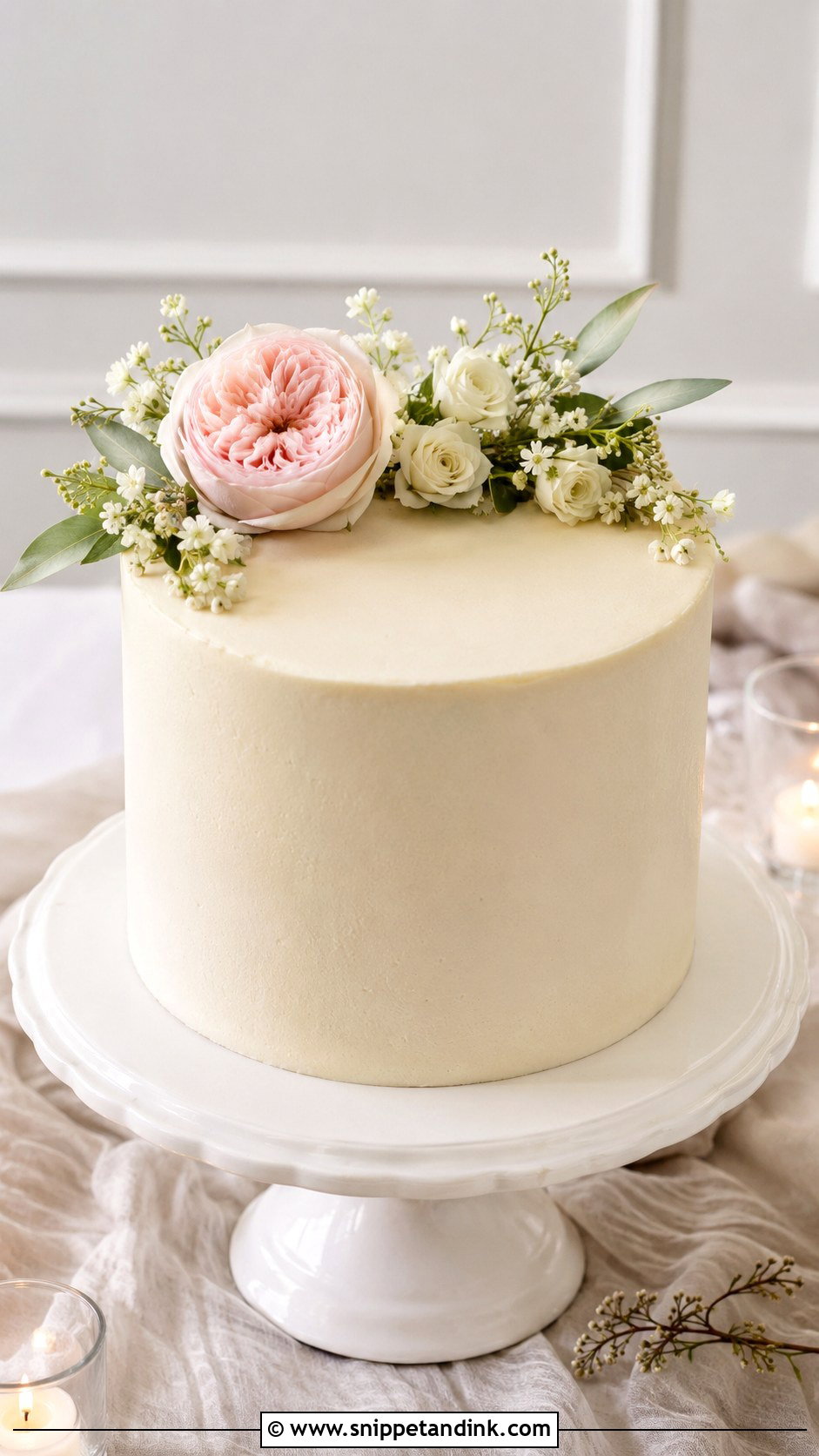
2. One Tier Wedding Cake With Flowers
One tall tier with a crescent of flowers curving around the top edge is my go-to for elopements and small receptions. The crescent needs smaller blooms than people expect; anything bigger than a spray rose overhangs the edge and looks heavy. A single statement bloom on the front is the modern version. It costs less in flowers and in decorating time, and sits well beside candles, linen and a few plates of cookies and cupcakes.
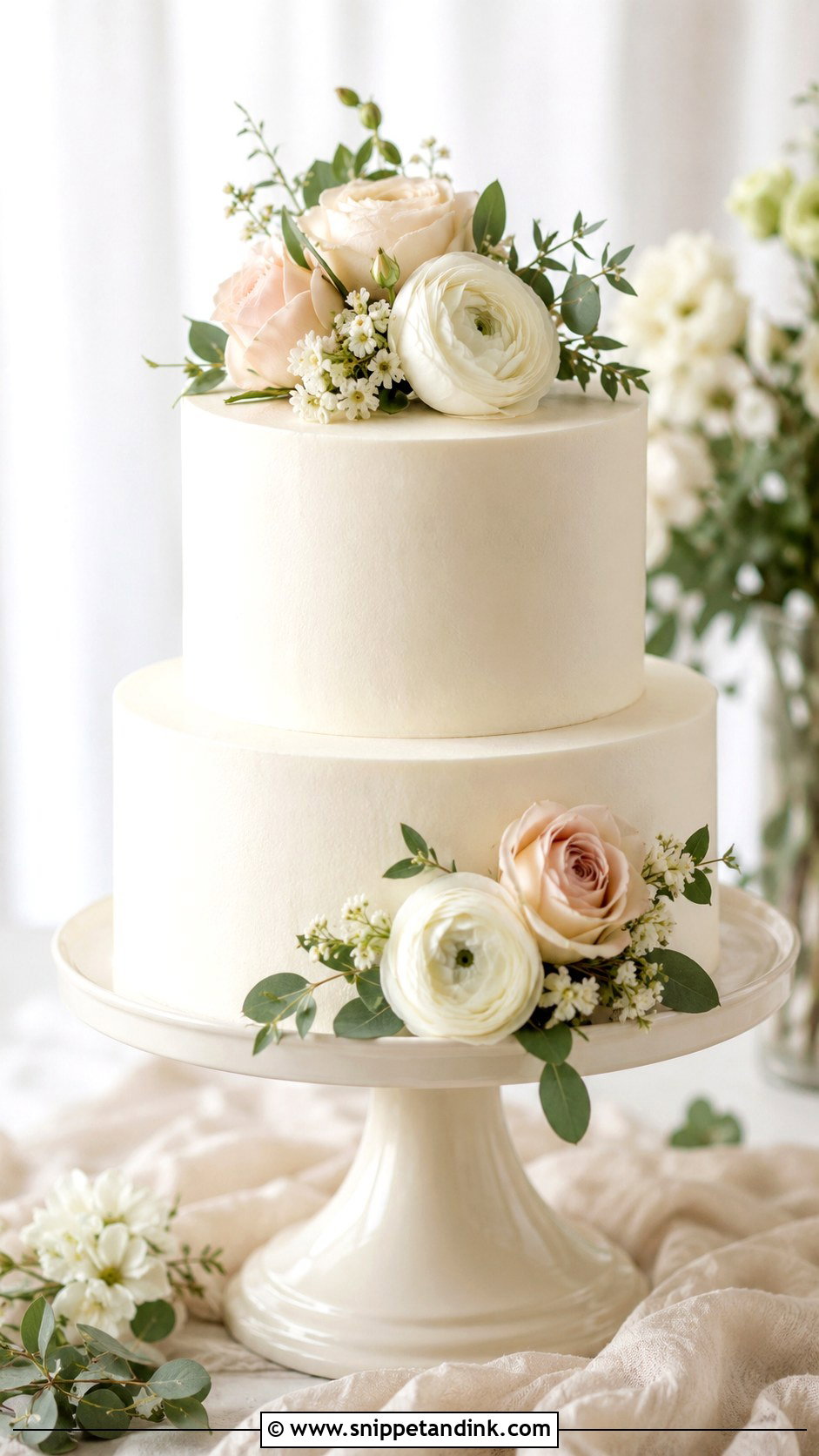
3. Two Tier Wedding Cake With Flowers
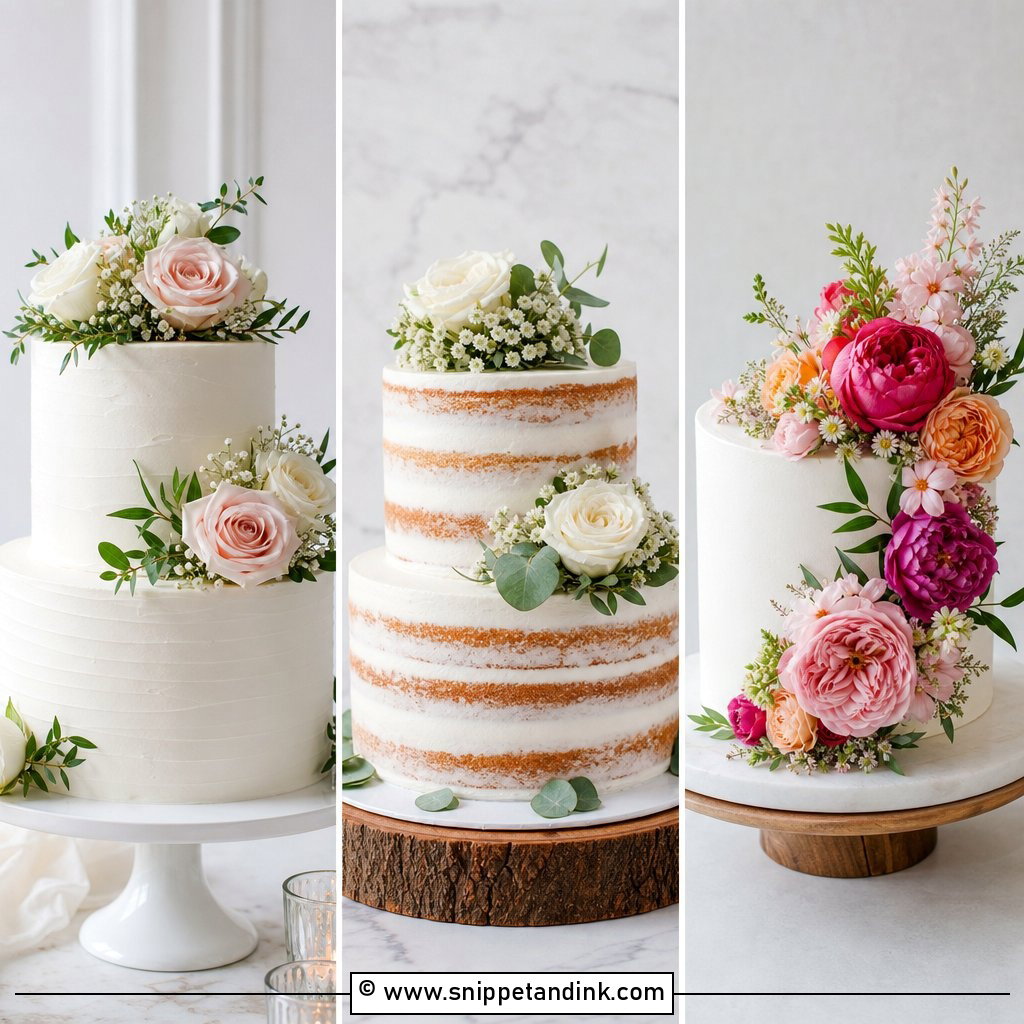
Two tiers give you a proper wedding cake silhouette without the formality. I’d put the flowers either between the tiers or gathered at the base, not both, on smooth ivory buttercream. For a garden feel, I bundle blush roses, white ranunculus and a few filler sprigs. For something more modern, mostly white blooms with a few green stems. Set it on a pedestal so the flowers sit at eye level.
4. Small Wedding Cake With Flowers
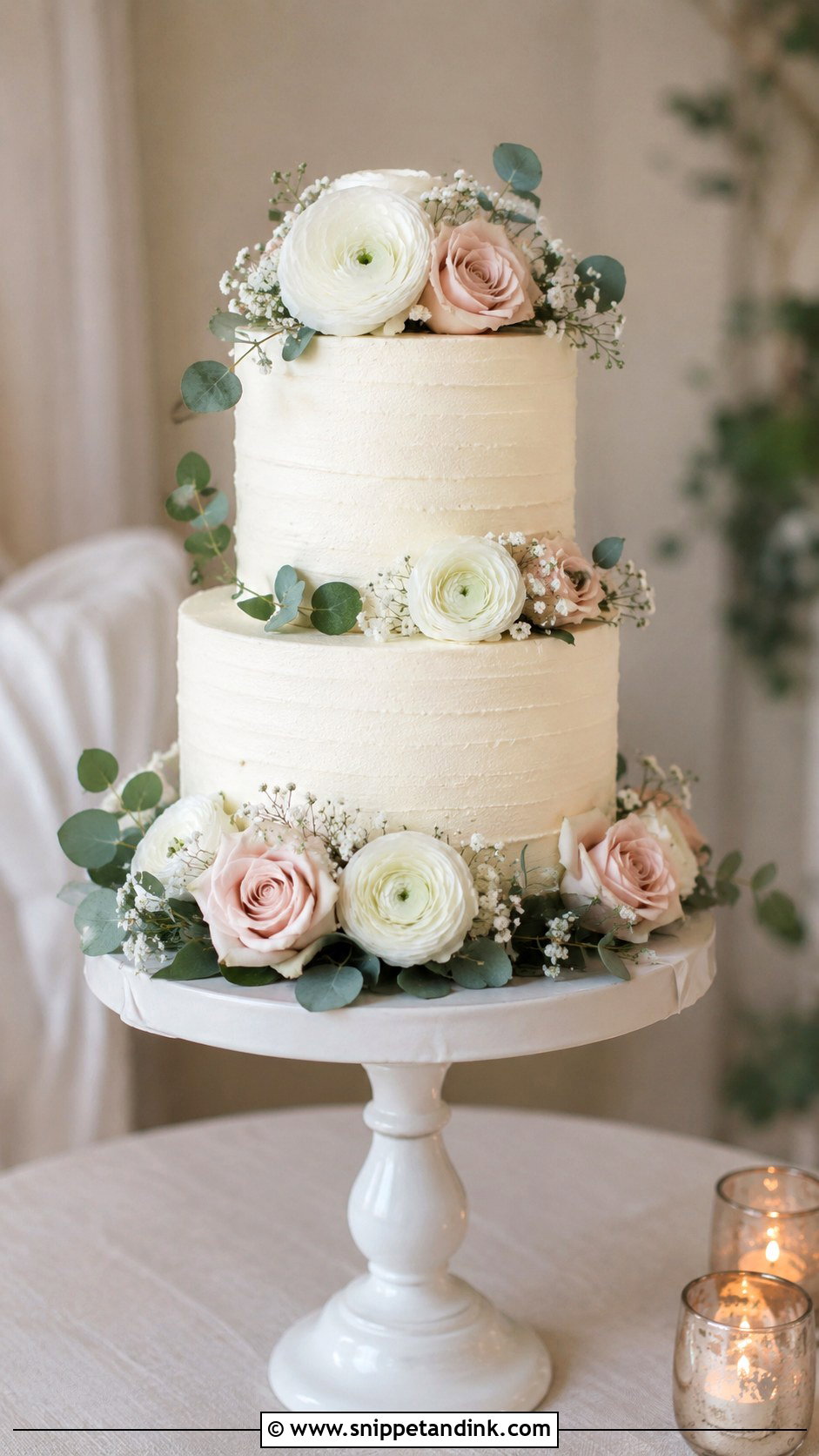
Plenty of couples now order a small decorated cake for the cutting and photos, then serve sheet cake, cupcakes or mini desserts to guests. From my side, a six- or eight-inch cake needs only five to seven stems, which I can pull straight from the bouquet order at almost no extra cost. Use the same flowers the bride carries. A smaller cake also frees up the budget for a special flavor, such as lemon elderflower, vanilla bean, almond or raspberry cream.
5. Buttercream Wedding Cake With Flowers
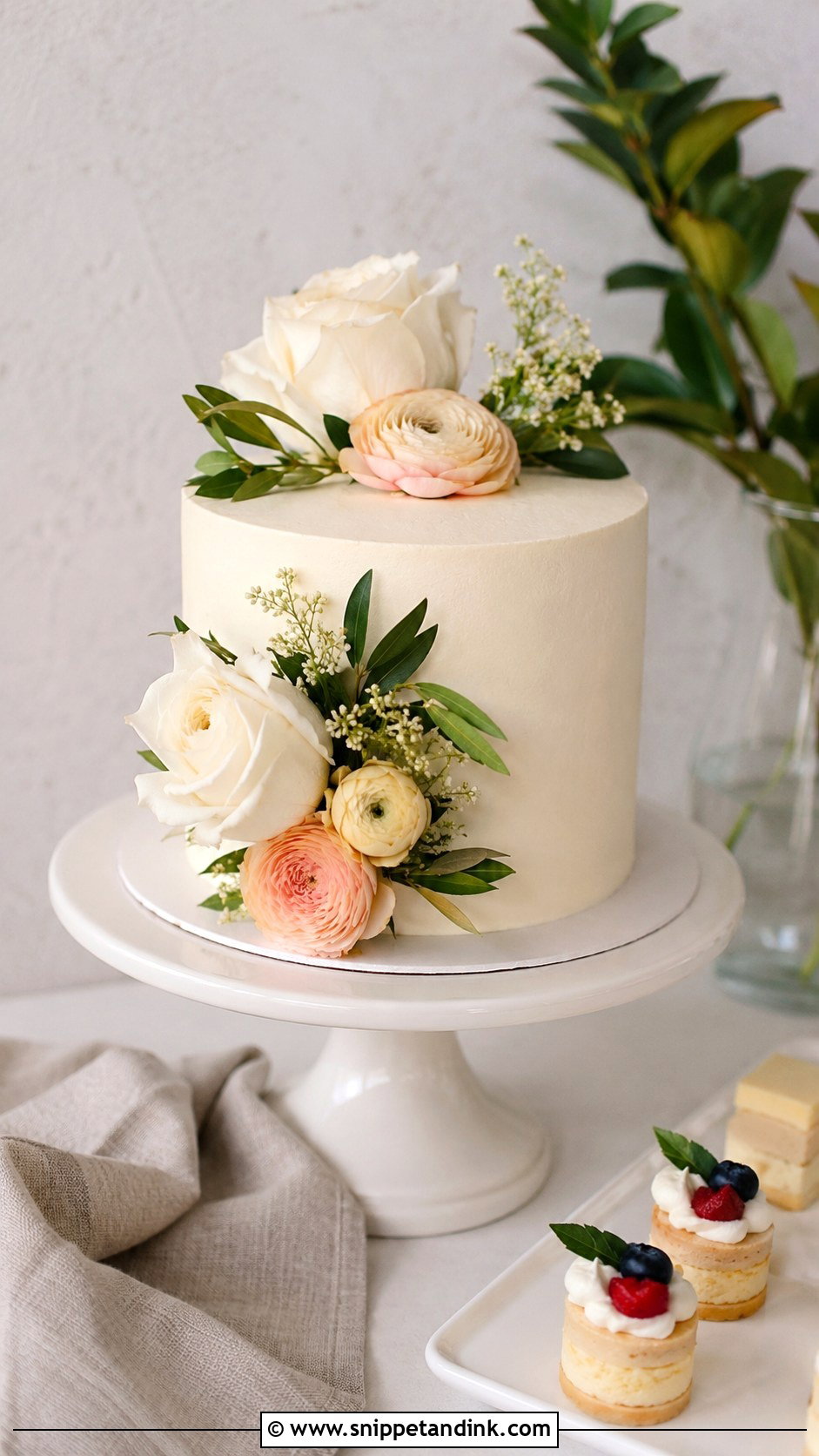
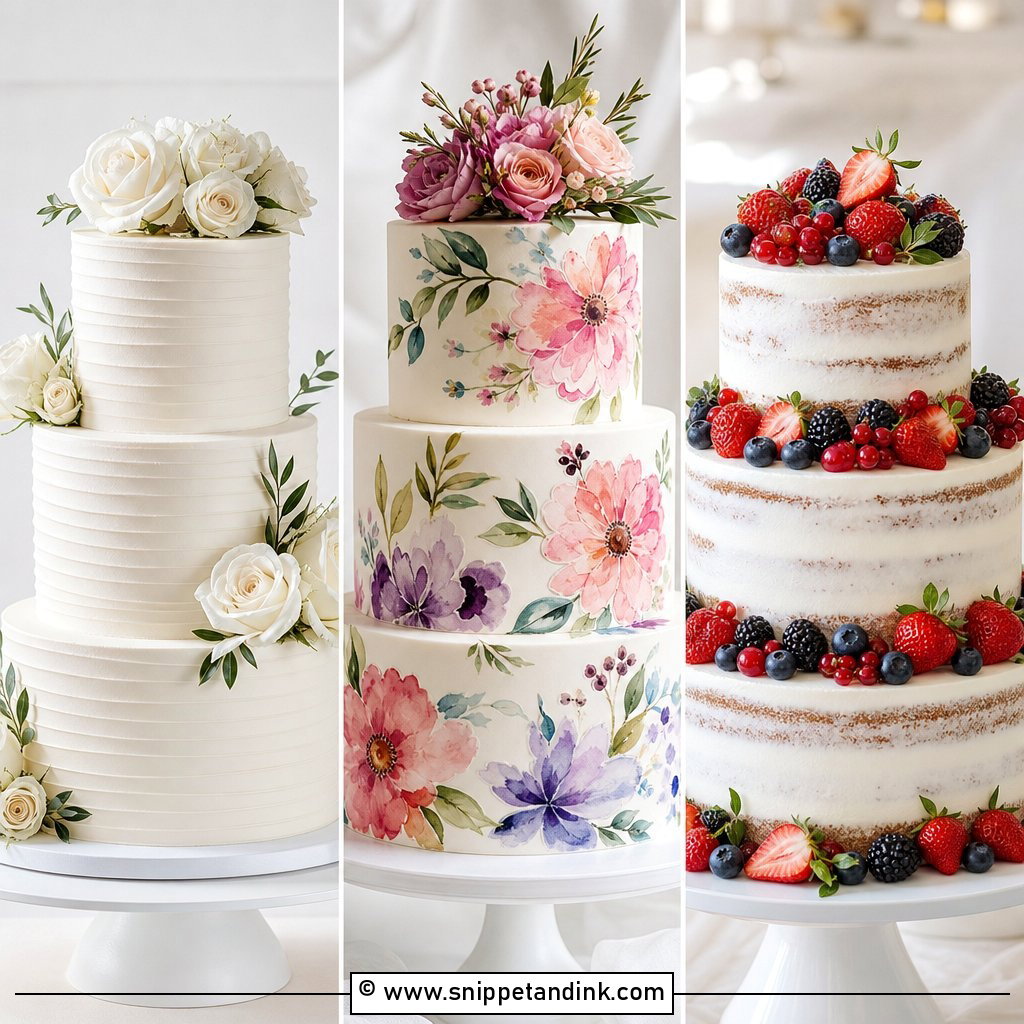
Buttercream is my favorite surface to put flowers against, because it’s soft enough to look natural and matte enough that petals don’t slide around in photos. It can be smooth, lightly textured or combed in soft horizontal lines. I’d place fresh flowers on top, between tiers or down one side, and stop before it looks crowded. One thing to know: buttercream is greasy, so stems and petals need a barrier, or they’ll leave marks when they’re lifted off.
6. Textured Buttercream Wedding Cake With Flowers
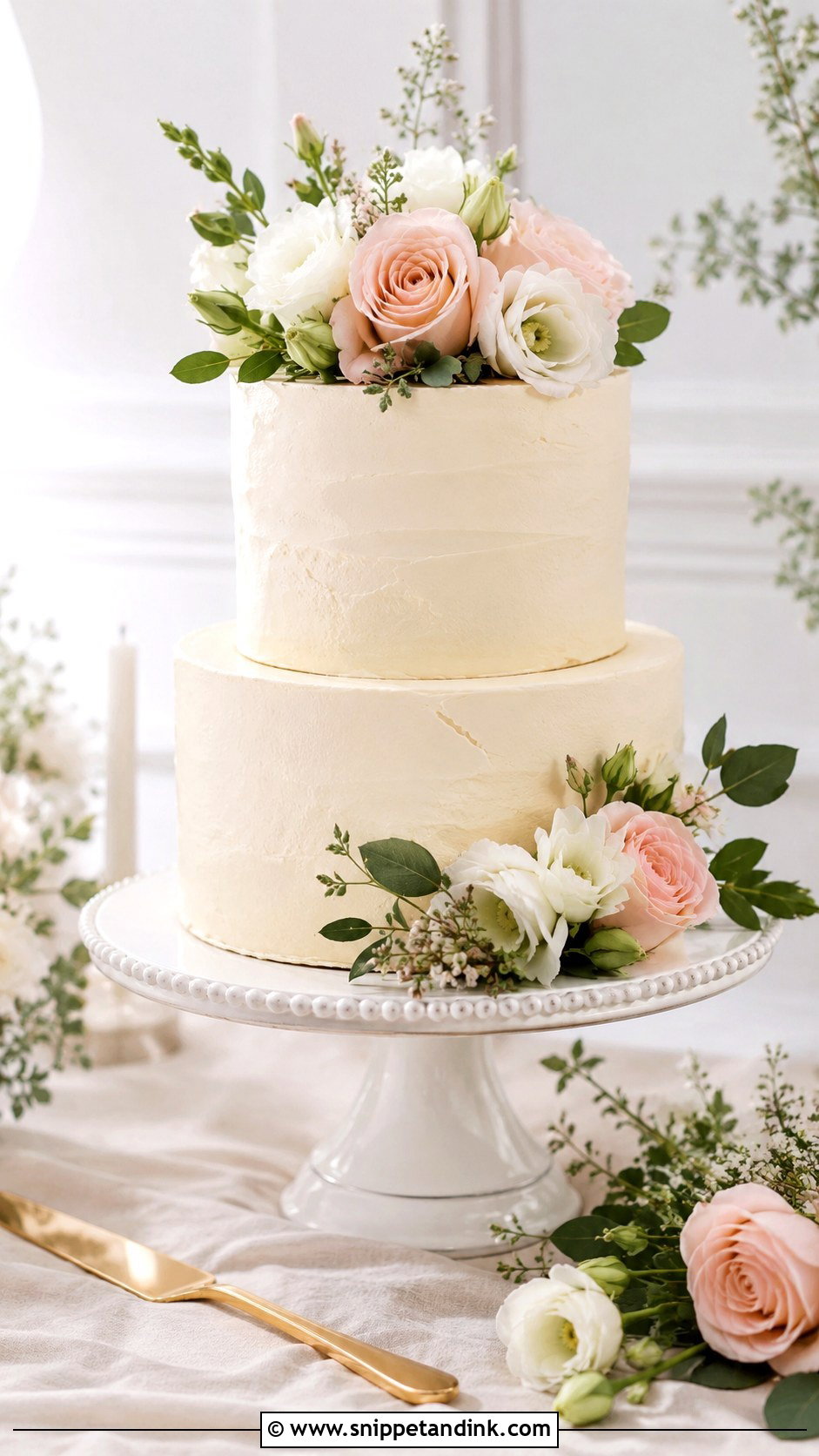
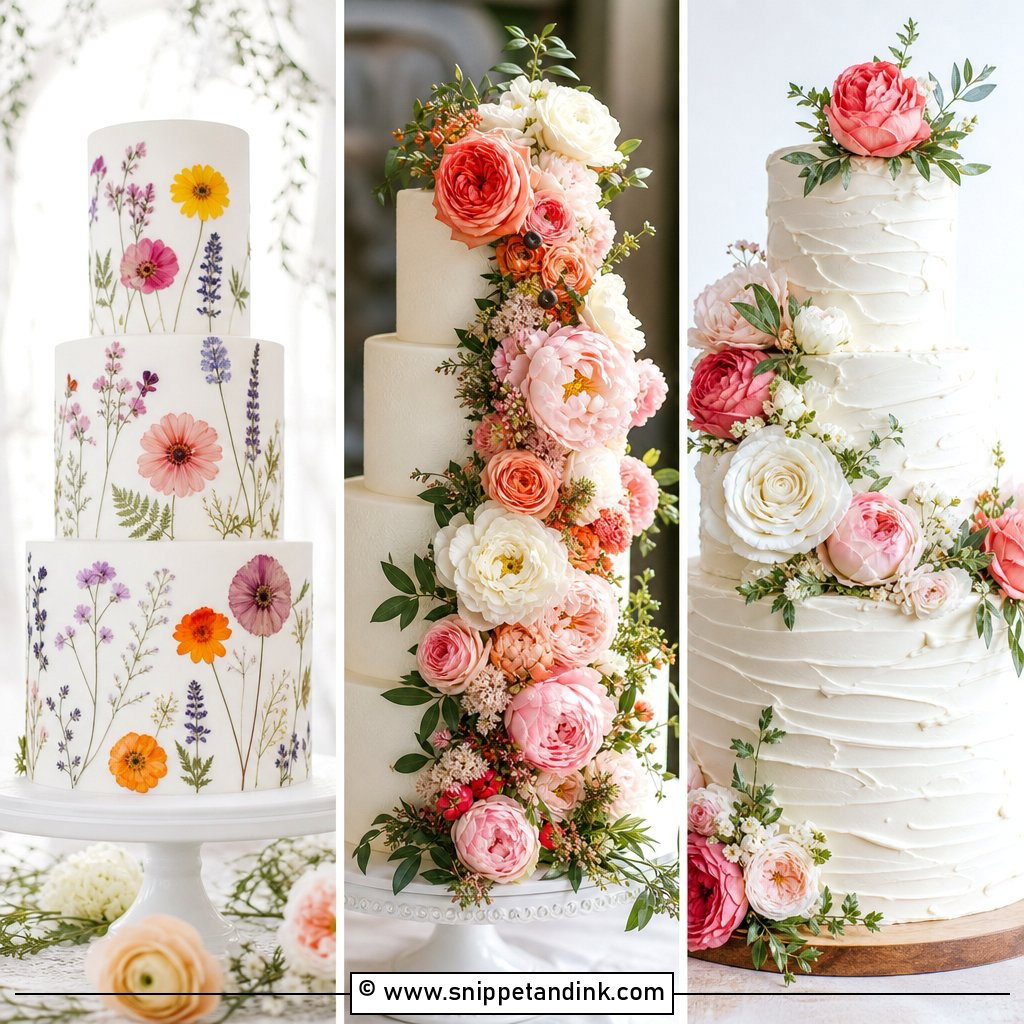
Ridges, waves, palette knife strokes or a light stucco finish give the cake its own detail before a single flower goes on. That changes what I pick. Delicate blooms like garden roses, sweet peas or small daisies work, because large heads fight the texture. Textured frosting also hides small imperfections, which is why it’s the finish I’d suggest for a homemade or semi-DIY cake. Outdoor, barn and garden receptions suit it best.
7. Pressed Flower Wedding Cake
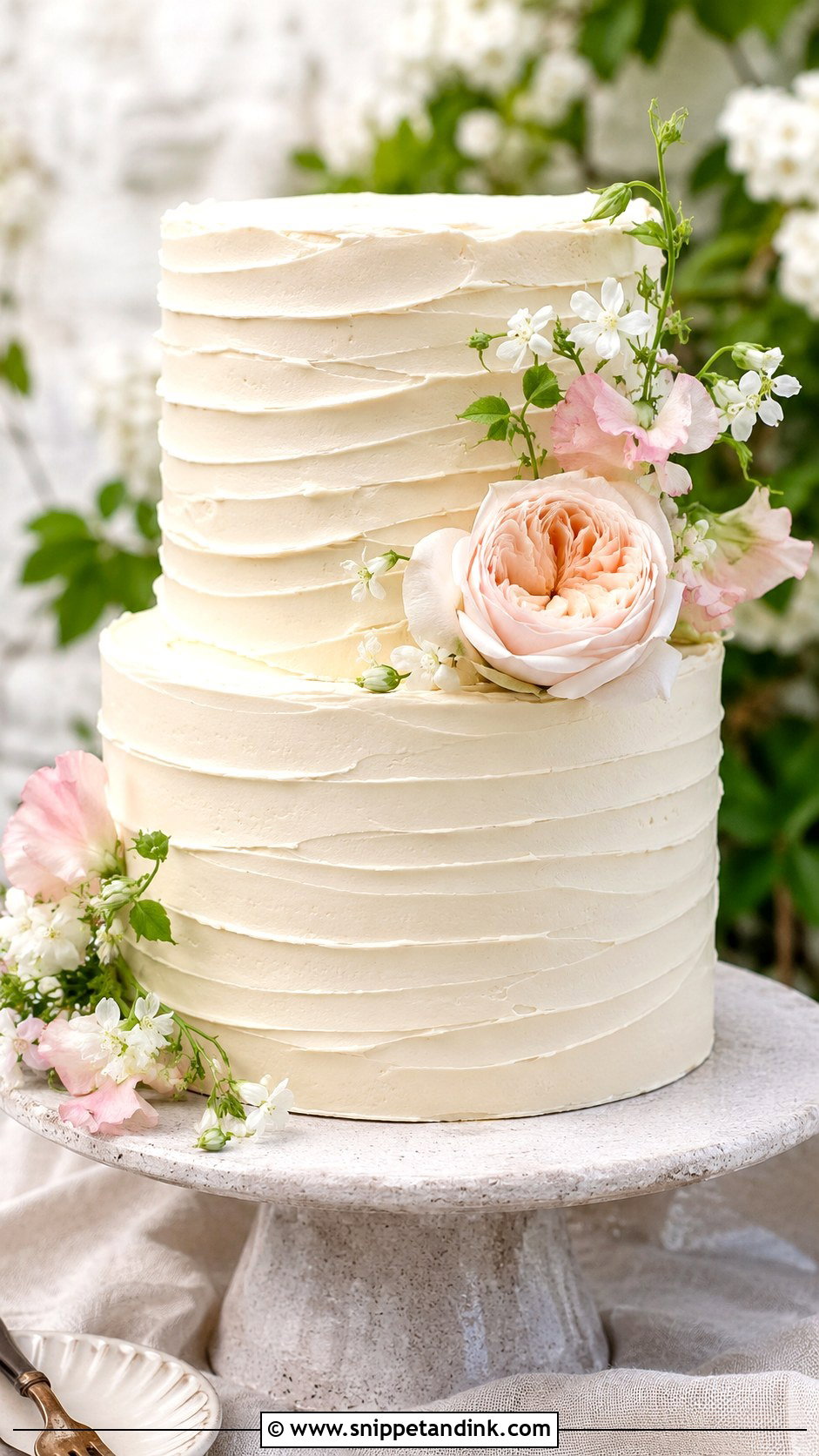
Pressed flowers lie flat on the frosting like a botanical print. They have to be edible varieties, pressed dry in advance, such as violas, pansies, cornflower petals or small ferns. On white or ivory buttercream they show their color clearly. Soft shades read classic; brighter petals feel playful. I always tell couples that pressed petals look their best placed on the day, since they slowly soak up moisture from the frosting and go translucent.
8. Wildflower Wedding Cake
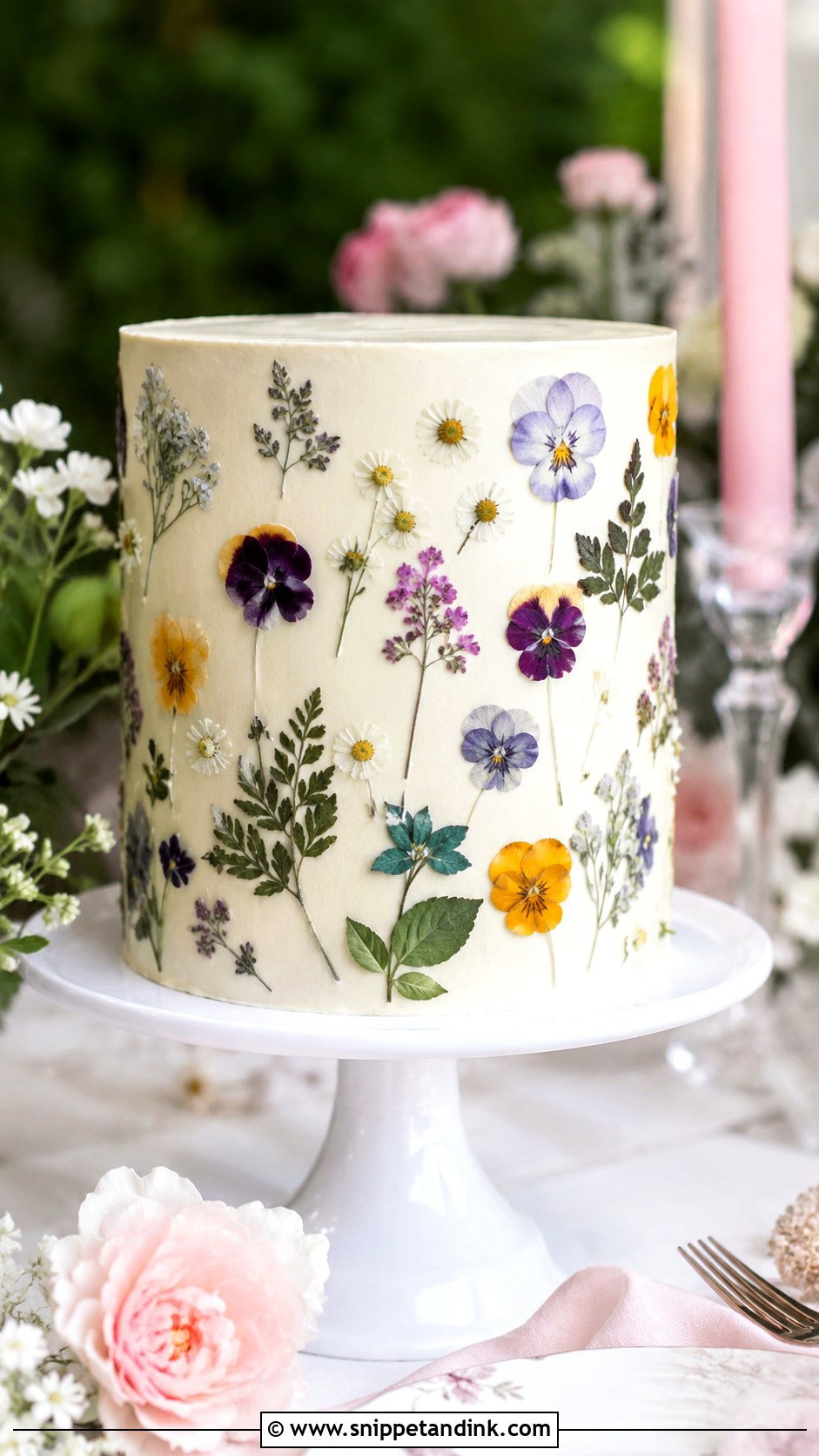
A wildflower wedding cake works when it looks scattered by hand rather than arranged. Small edible flowers, tiny daisies, lavender sprigs, chamomile and fine greenery, a few on top and some trailing down the sides. I’ll be honest that true wildflowers are the most fragile thing I send to a cake; many flop within an hour out of water. So I condition them overnight and place them last. White, cream, pale yellow or lightly textured frosting all suit it, as do rustic tables and linen runners.
9. Rose Wedding Cake
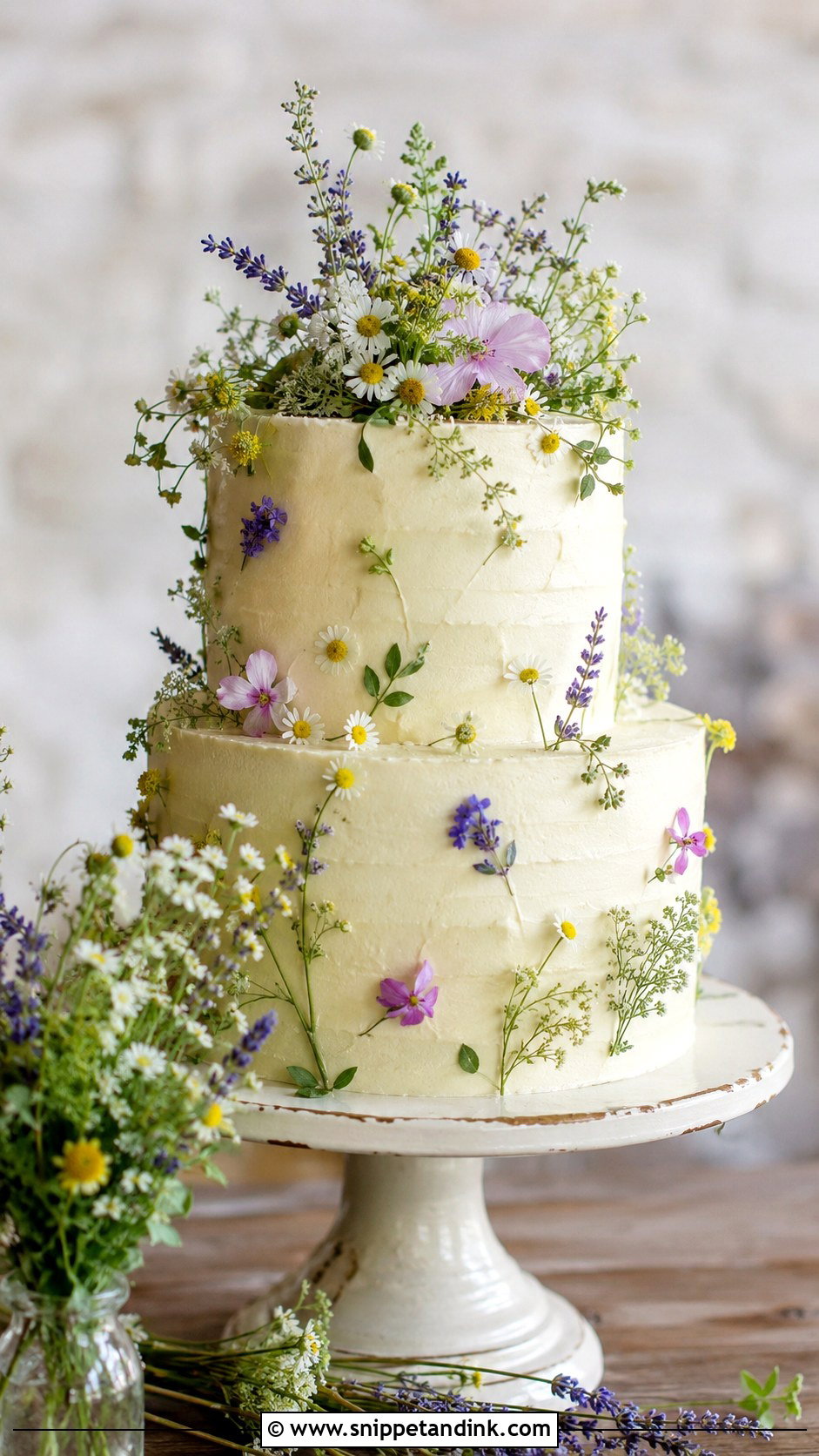
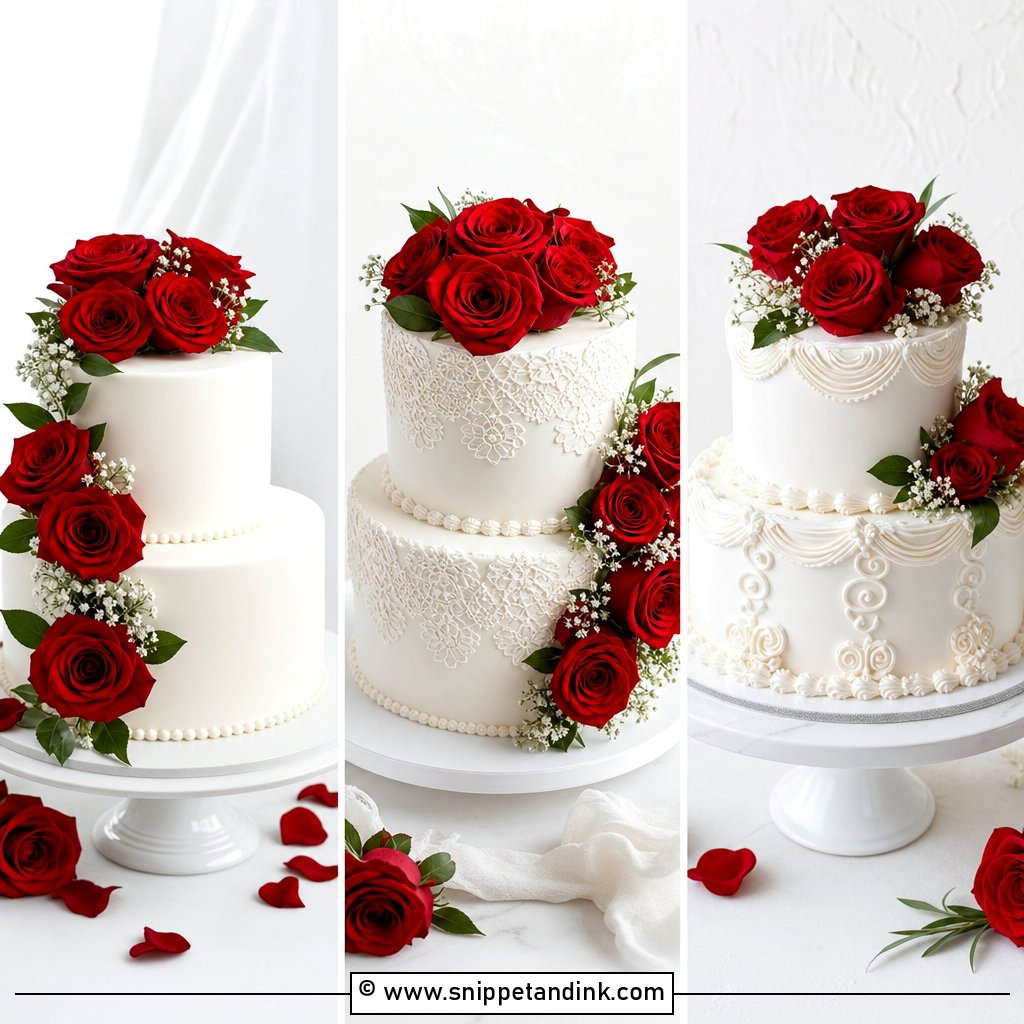
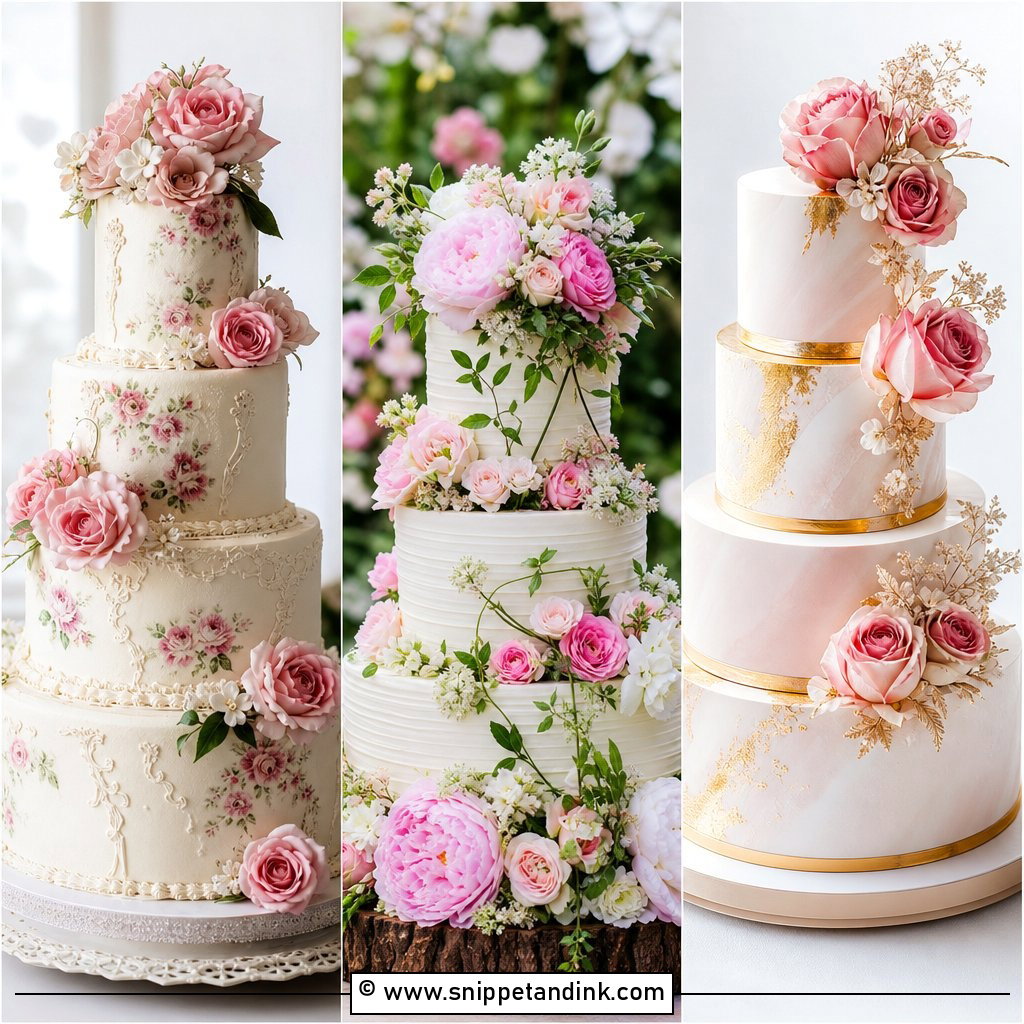
Roses are the flower I trust most on a cake. They’re firm, they don’t drop pollen and they last. For a simple version, choose one or two colors: blush is soft, white is traditional, peach adds warmth. I strip thorns and remove the bruised outer guard petals before they go anywhere near frosting. A few full blooms with some buds and greenery, around the base, on the top tier or in a short diagonal cascade, look finished without covering every tier.
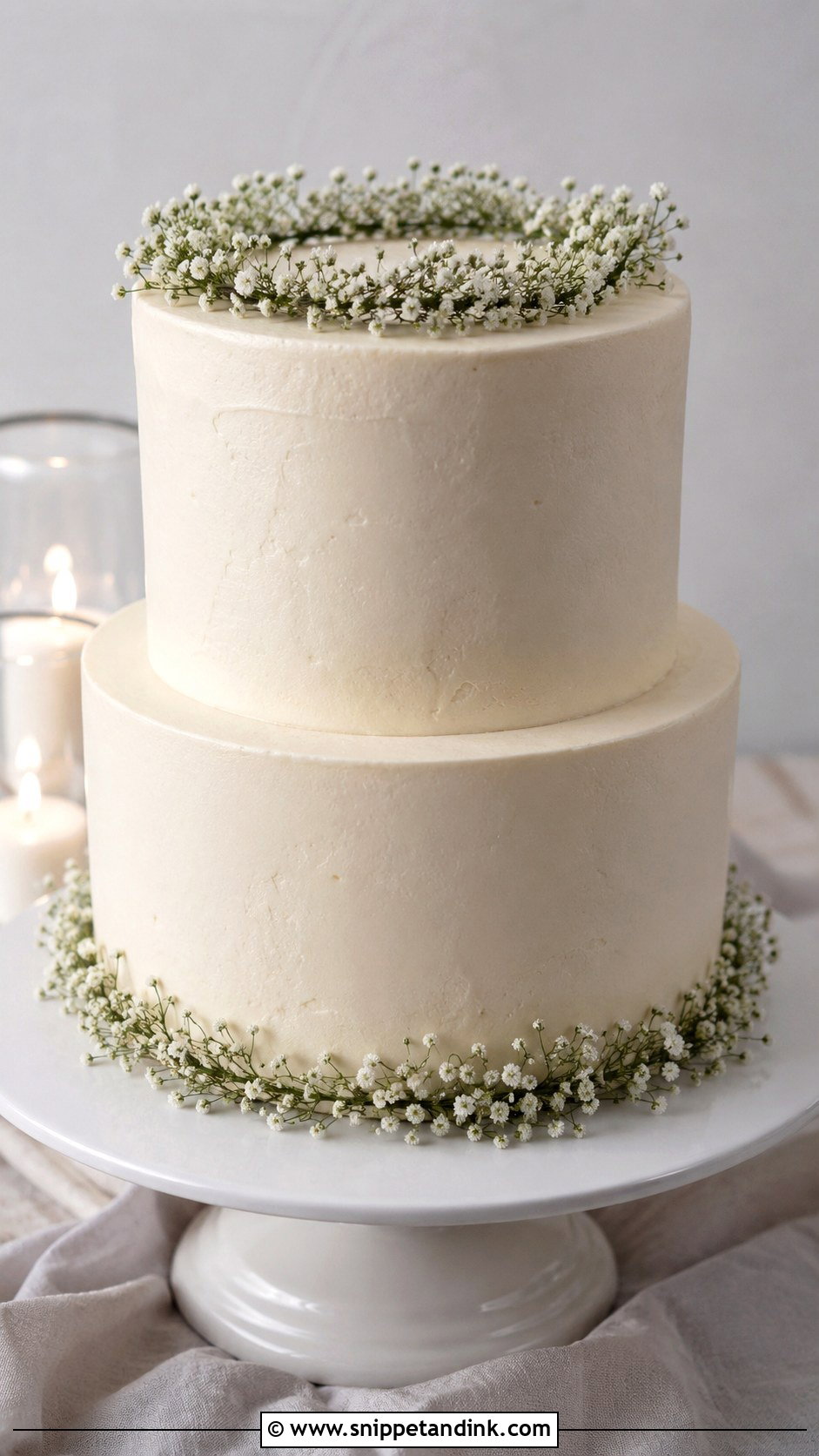
10. Baby’s Breath Wedding Cake
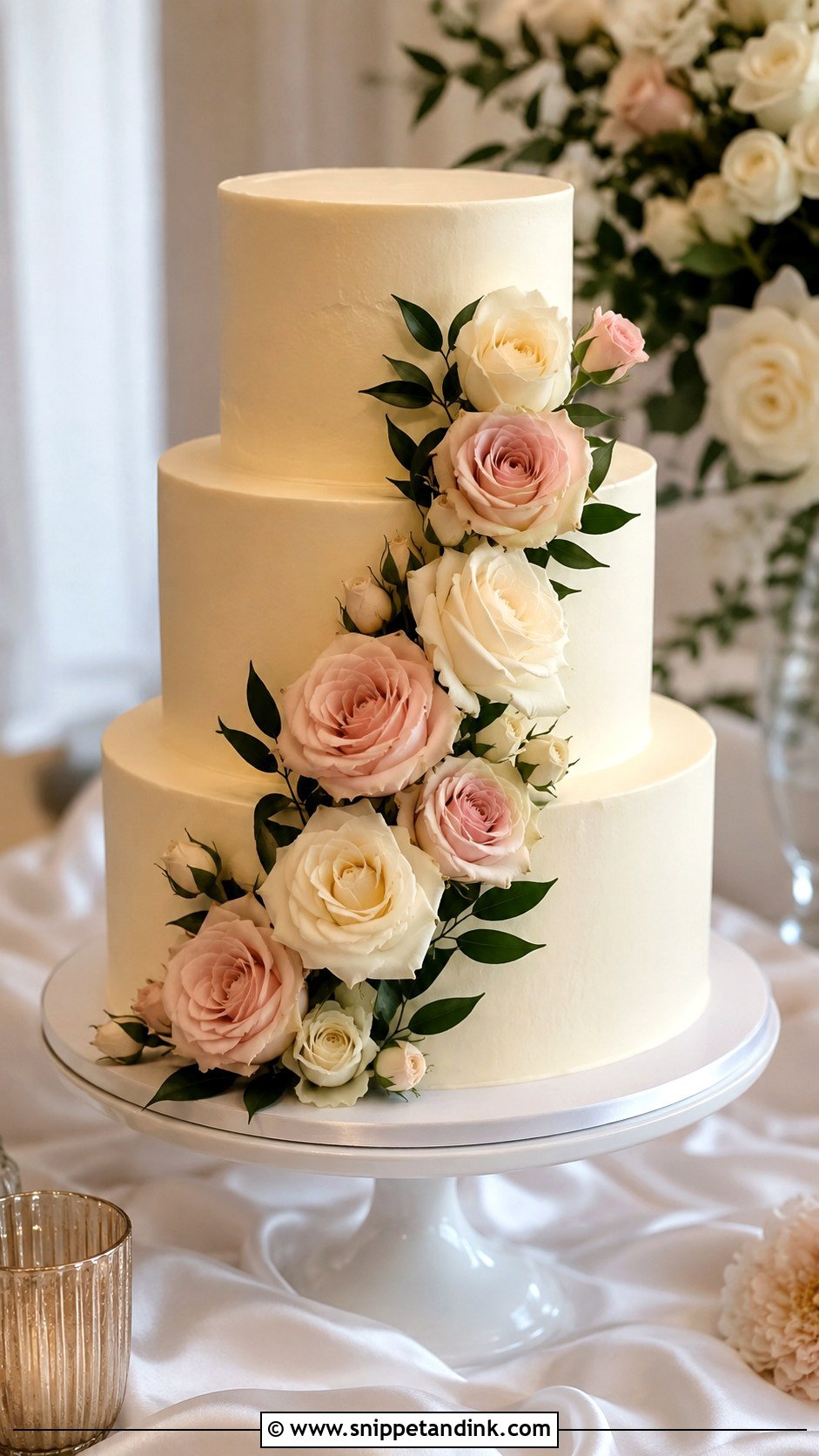
Baby’s breath is airy and inexpensive, and tiny white sprigs add texture without stealing attention from the cake shape. It sits nicely around the base of each tier, as a small wreath on top or in tight clusters along one side. It isn’t meant to be eaten, though, so I wrap each bunch and the baker keeps it off the buttercream itself. It can stand alone on a minimalist cake or sit alongside roses. Clean cake lines let the tiny flowers stay the focus.
11. Daisy Wedding Cake
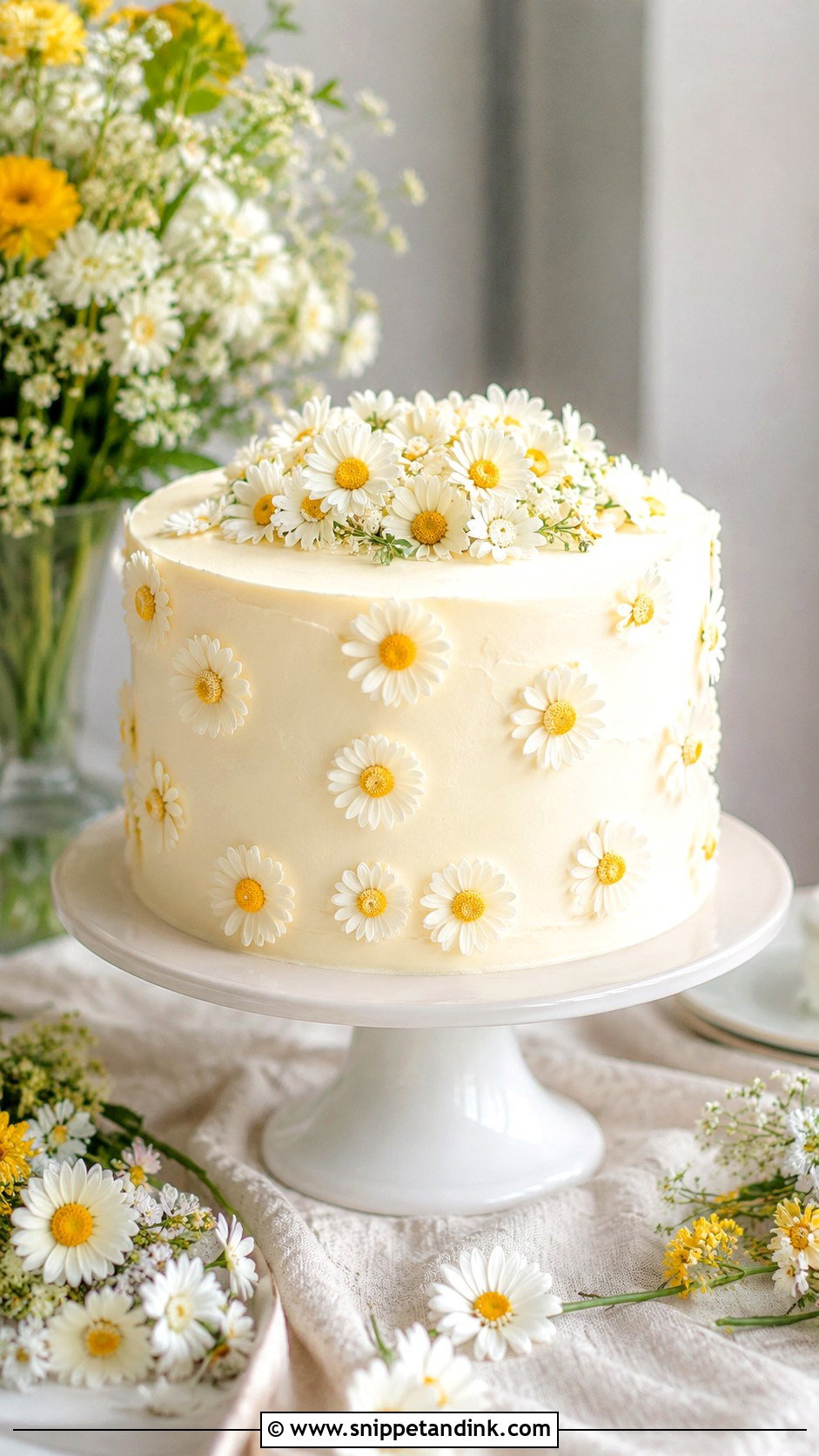
Daisies are cheerful and relaxed, and they suit single- or two-tier cakes for spring and summer. White petals with yellow centers stand out on smooth buttercream. You can scatter edible daisies over the sides, set a few fresh ones on top or ring the base. Fresh daisies drink a lot, so I keep them in water until the very last moment. Vanilla, lemon, honey or almond sponge keeps the flavor as light as the look.
12. Lavender Wedding Cake
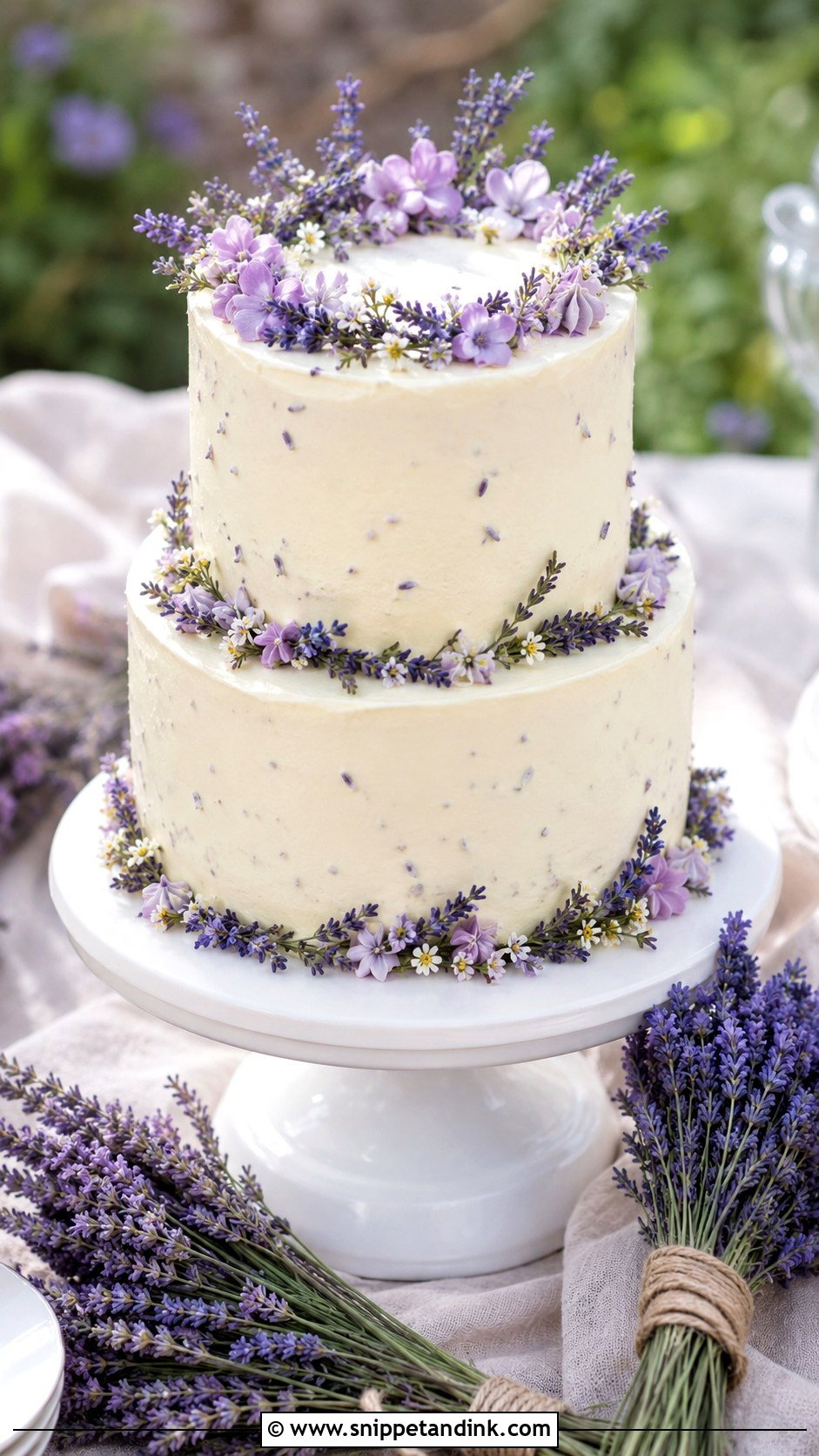
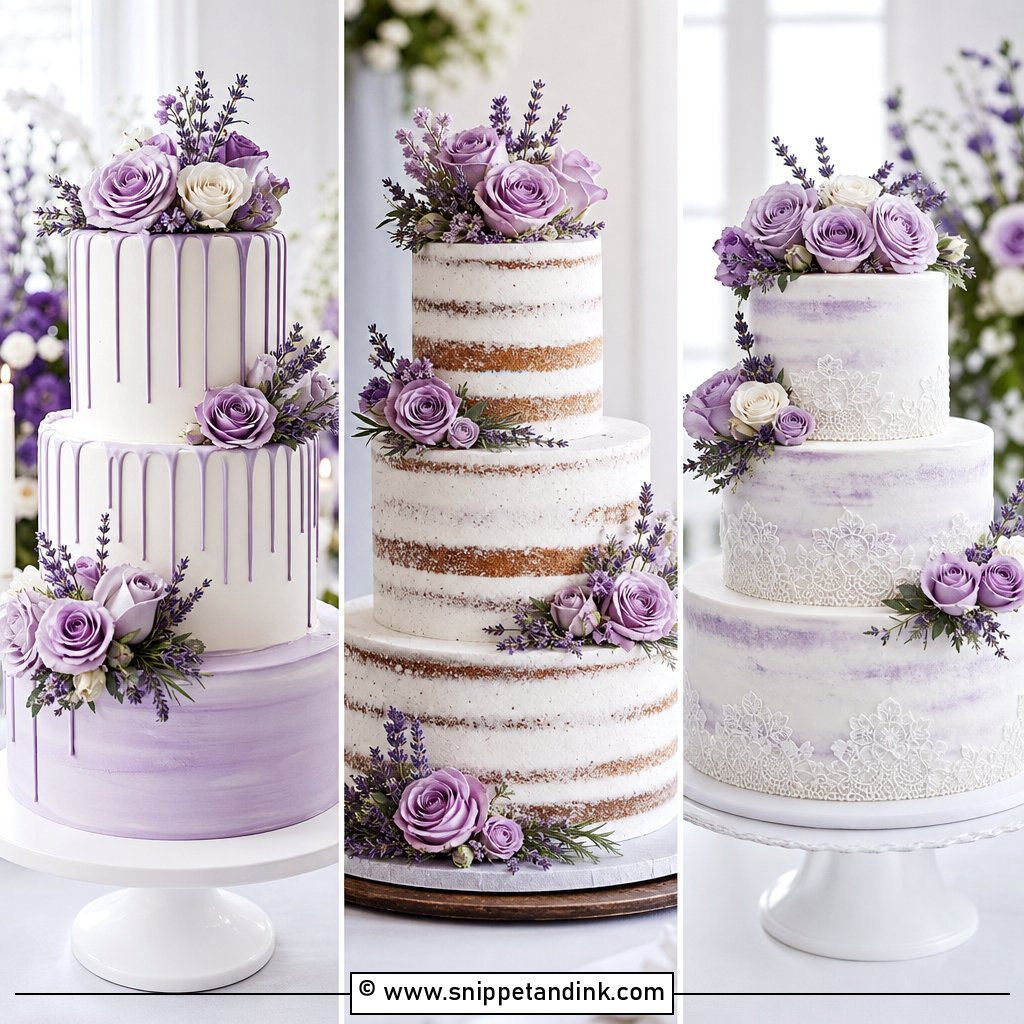
Lavender gives you a gentle purple without bold color. Sprigs, pale purple buttercream flowers or tiny edible blossoms all work, against white or ivory frosting so the purple reads clearly. If lavender is going on the frosting, I source culinary lavender, not the treated bunches sold for arrangements. A ring around the top edge and a few sprigs at the base is the simplest version. Lemon, honey and vanilla lavender flavors carry the theme through to the slice.
13. Sunflower Wedding Cake
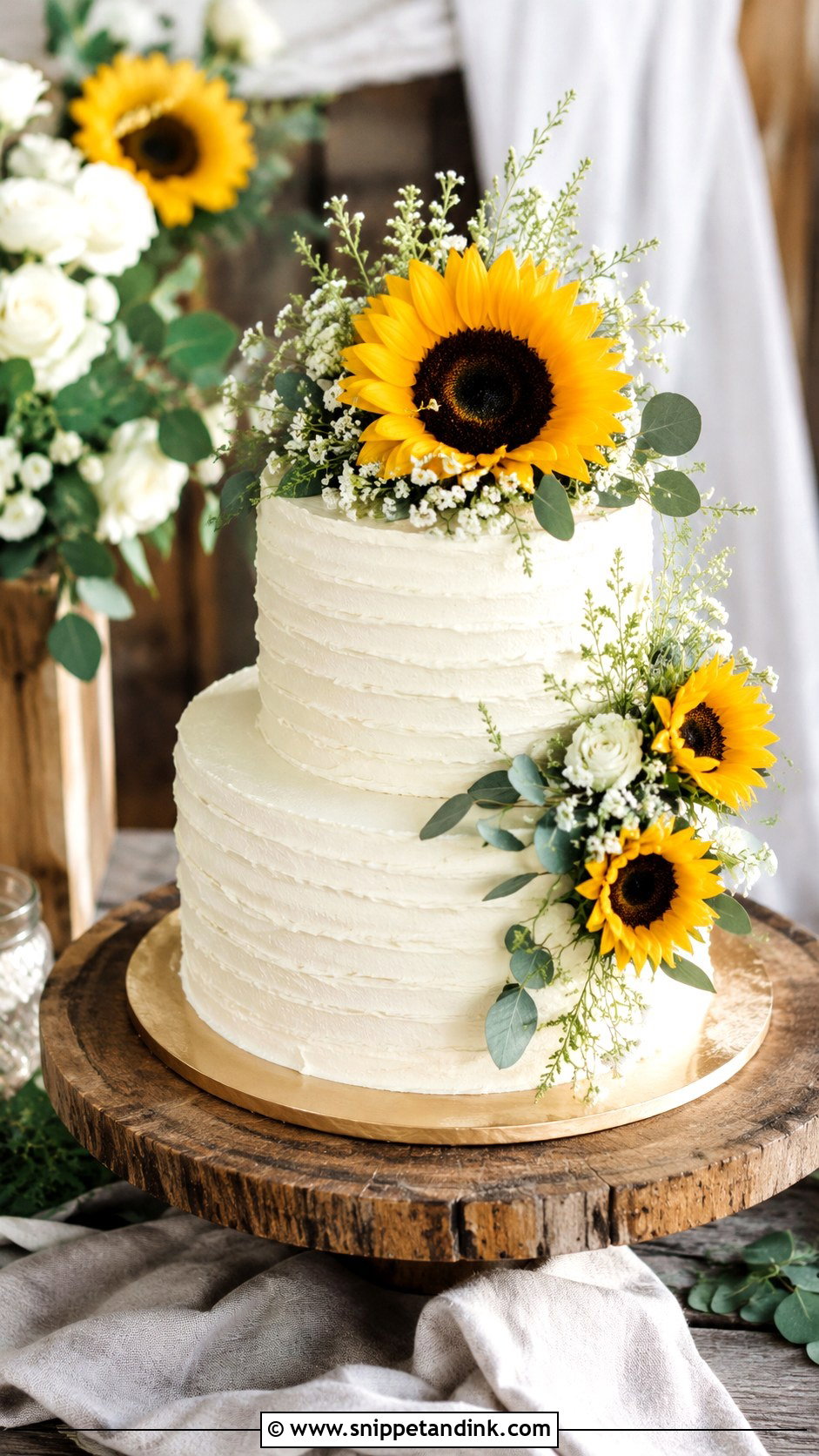
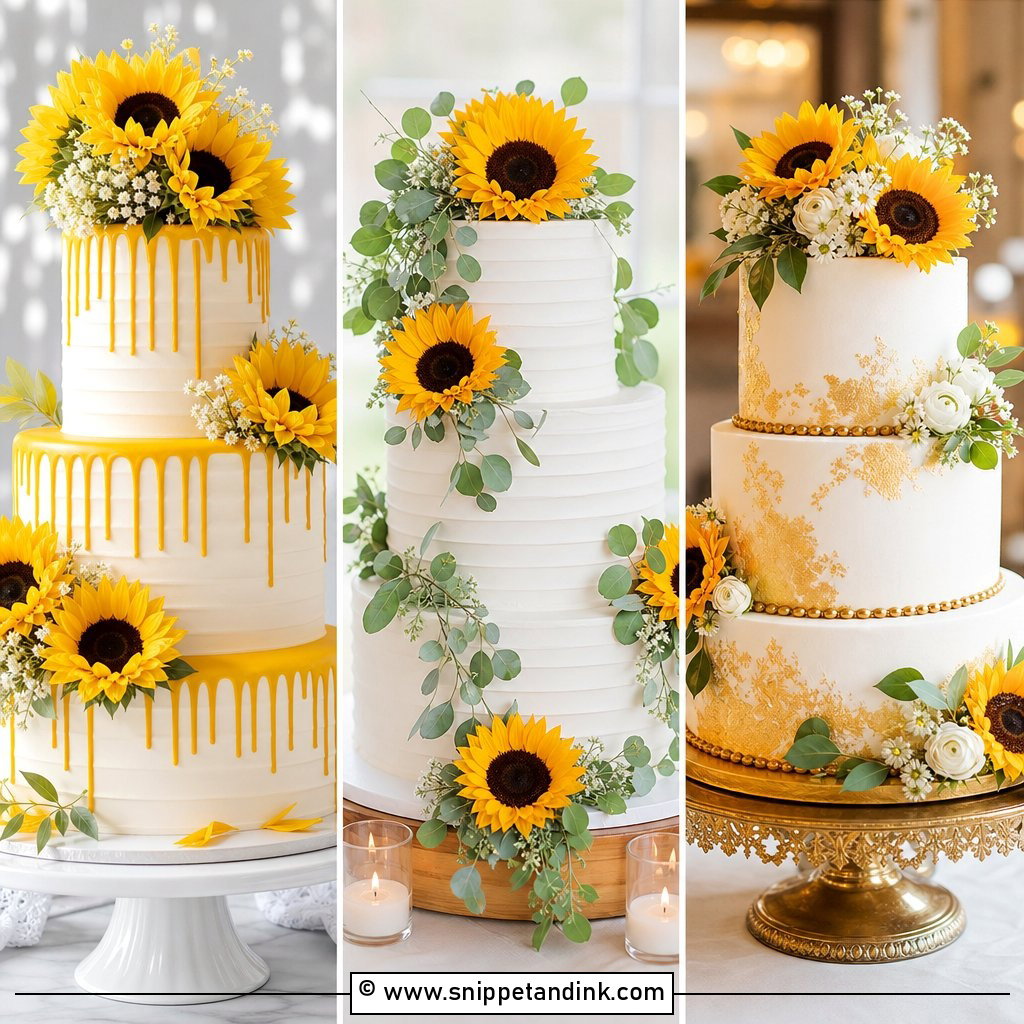
A sunflower wedding cake needs only one or two heads, because sunflowers are big and bold. That size is also the problem: a fresh sunflower is heavy and sheds pollen. I choose the smaller pollen-free varieties for cakes and cut the stems short so they sit low. Sugar sunflowers give a polished, lighter version; buttercream ones are fully edible. White buttercream, sage greenery and a wood stand give the farmhouse look. Vanilla, honey, lemon, spice or carrot cake suit late summer and early autumn.
14. Floral Cascade Wedding Cake
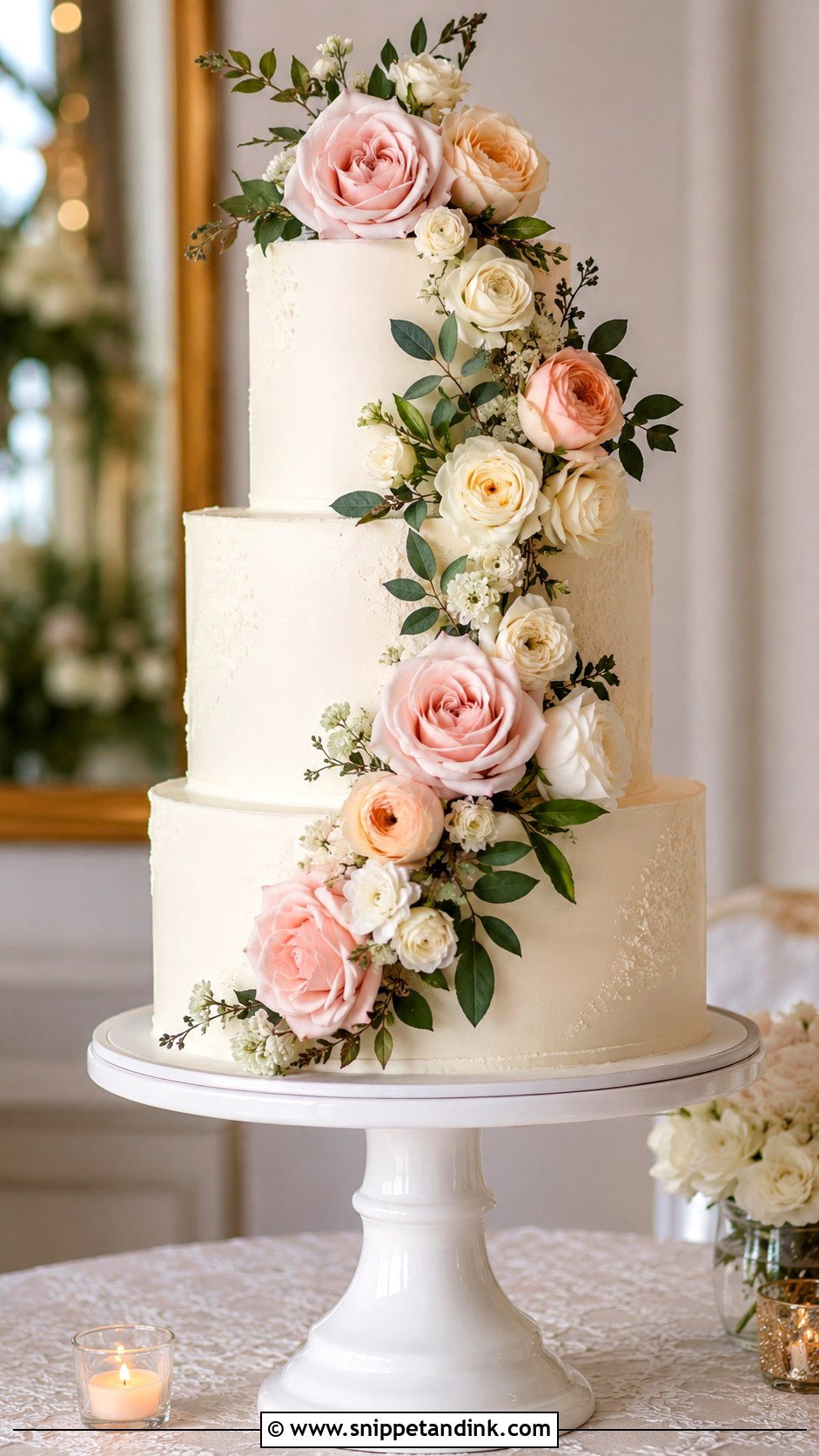
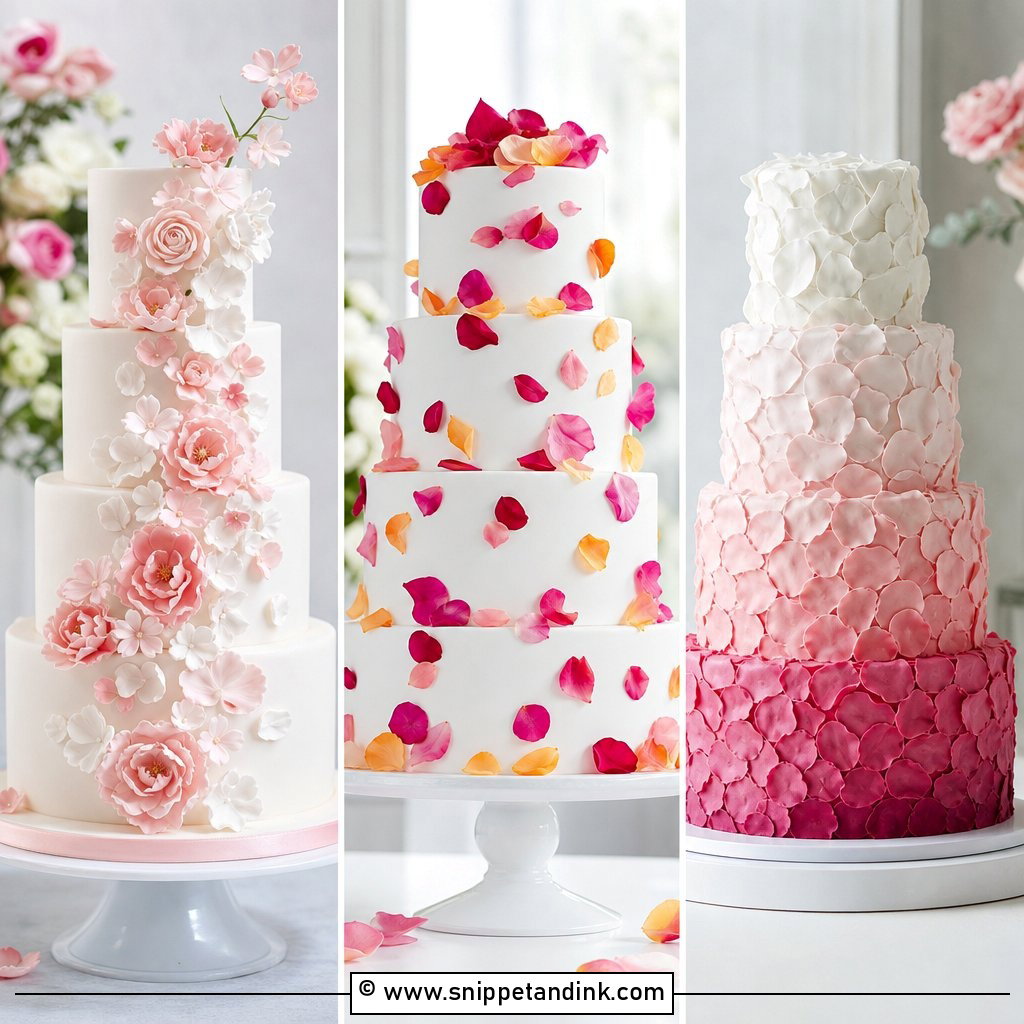
A cascade stays simple when it follows one diagonal line from the top tier to the bottom. I build it from medium blooms, small buds and greenery, larger flowers at the top and smaller ones trailing off, so it looks like it’s falling naturally. White and blush are classic; peach and mauve add warmth. Two or three tiers with smooth frosting give it room to move. In photos, the diagonal adds height and drama without any complicated piping.
15. Minimalist Wedding Cake With Flowers
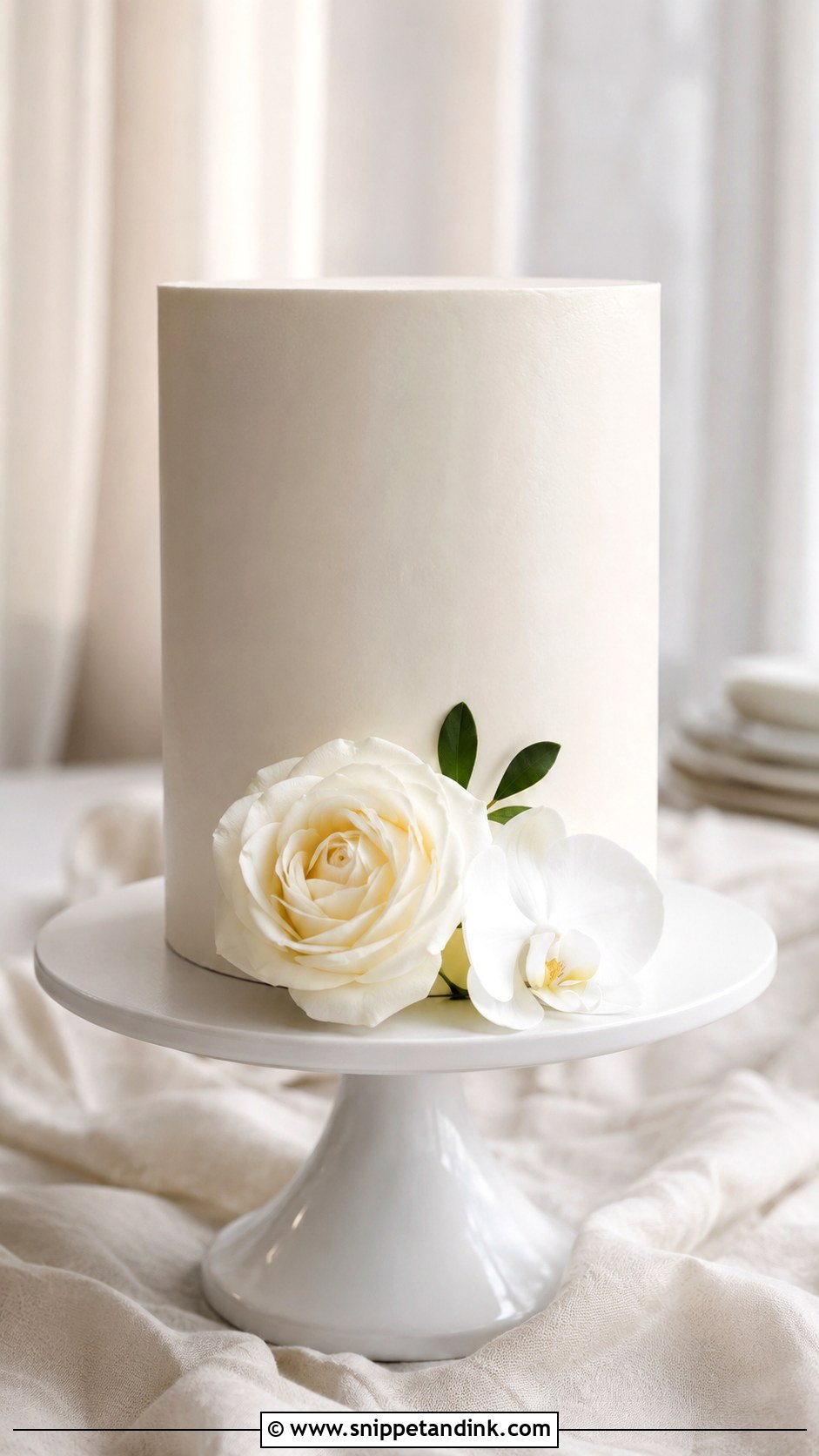
Minimalist cakes depend on clean space: smooth white or ivory frosting, sharp edges and very few flowers. One large bloom on top, a tiny side cluster or a slim ring at the base. I’d choose flowers with clear shapes, like roses, orchids, ranunculus or anemones, because their outline holds up on a plain background. Anemones are worth a note; their dark centers give contrast, but they close in the cold and open in warmth, so they can look different by cutting time.
16. Rustic Wedding Cake With Flowers
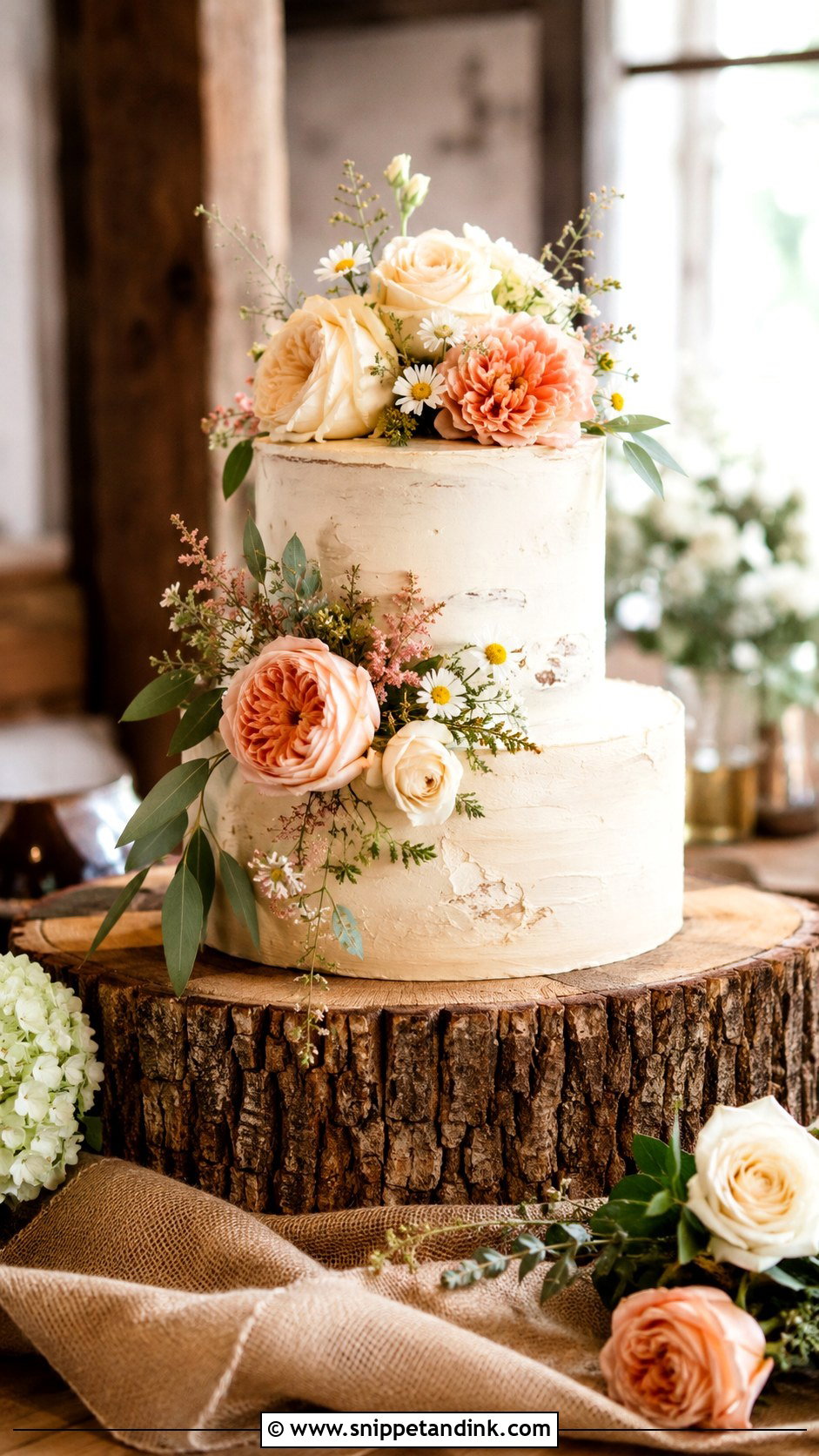
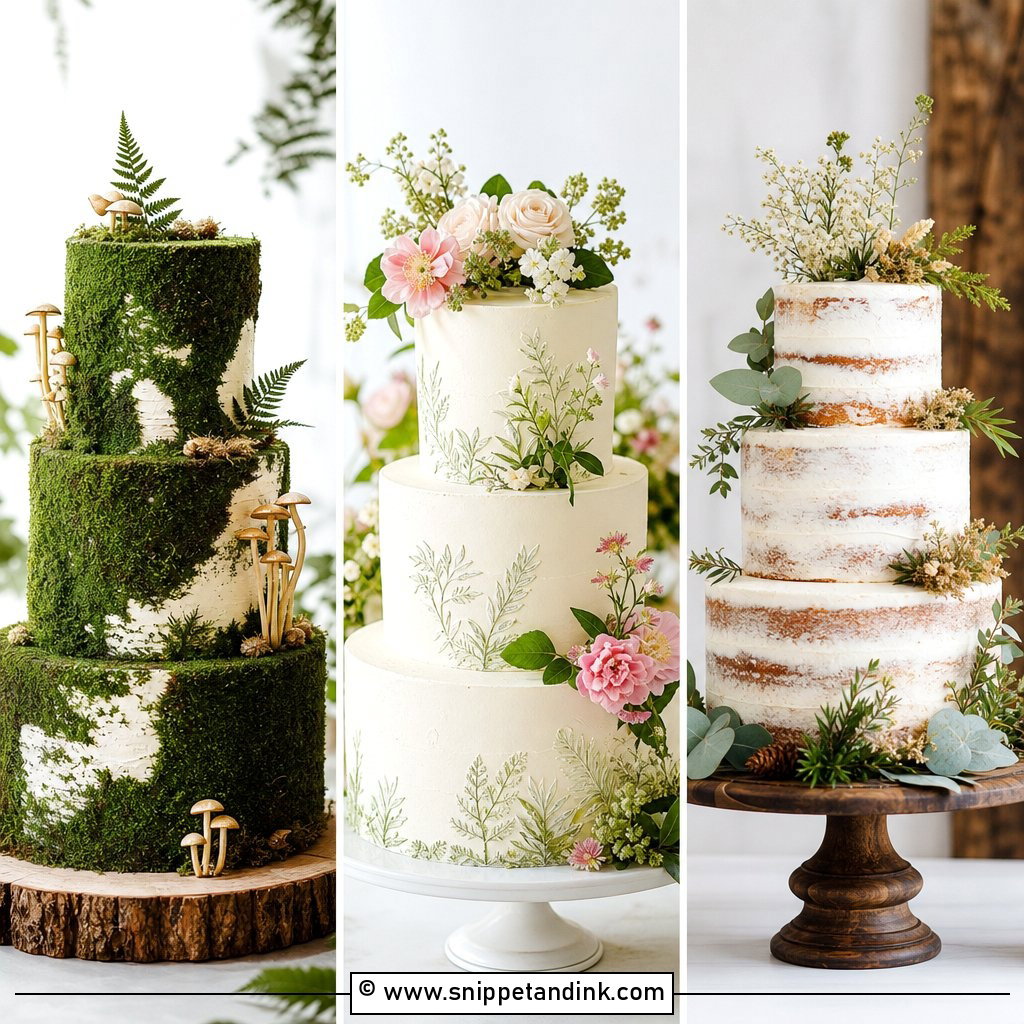
Rustic cakes usually have textured, semi-naked or scraped frosting, with loose clusters of flowers, greenery, herbs or small seasonal blooms. Cream, blush, peach, yellow and dusty pink fit the mood. A wood slice, ceramic stand or plain white pedestal finishes it. I add herbs like rosemary and thyme for this style because they hold up well and smell lovely, but I keep woody stems wrapped. Vanilla bean, carrot, spice, almond or lemon flavors suit barns and countryside receptions.
17. Naked Wedding Cake With Flowers
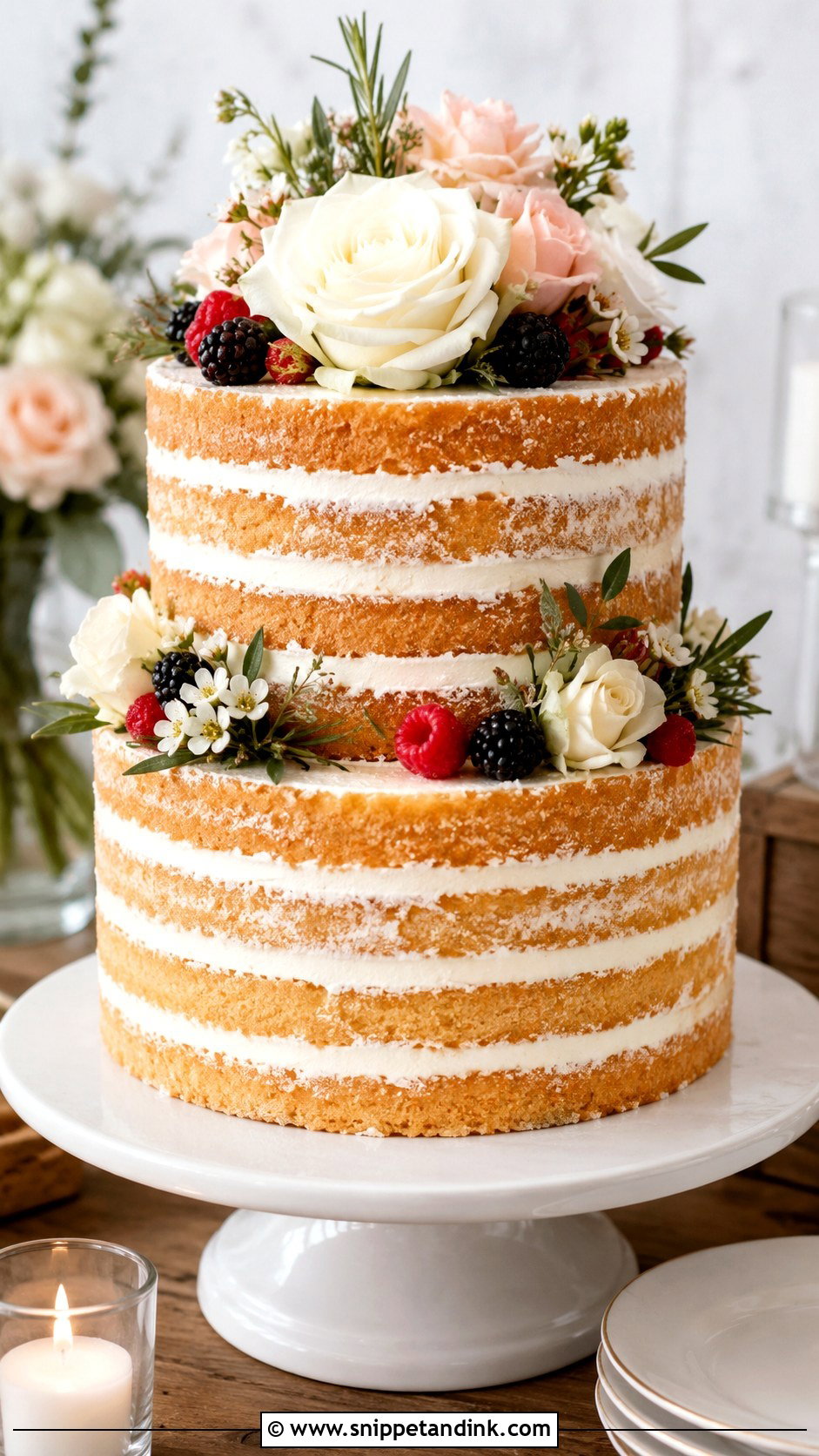
On a naked cake the layers and filling show, so the baker’s work has to be even and neat; flowers can’t cover sloppy layers. Fresh blooms soften the exposed sponge, on top, between tiers or around the base. Berries, figs or small herbs work if they match the season and menu. Because there’s no frosting barrier, I’m extra careful that nothing sappy or sprayed touches the cake. Vanilla, lemon, almond and chocolate layers all show well.
18. Semi Naked Wedding Cake With Flowers
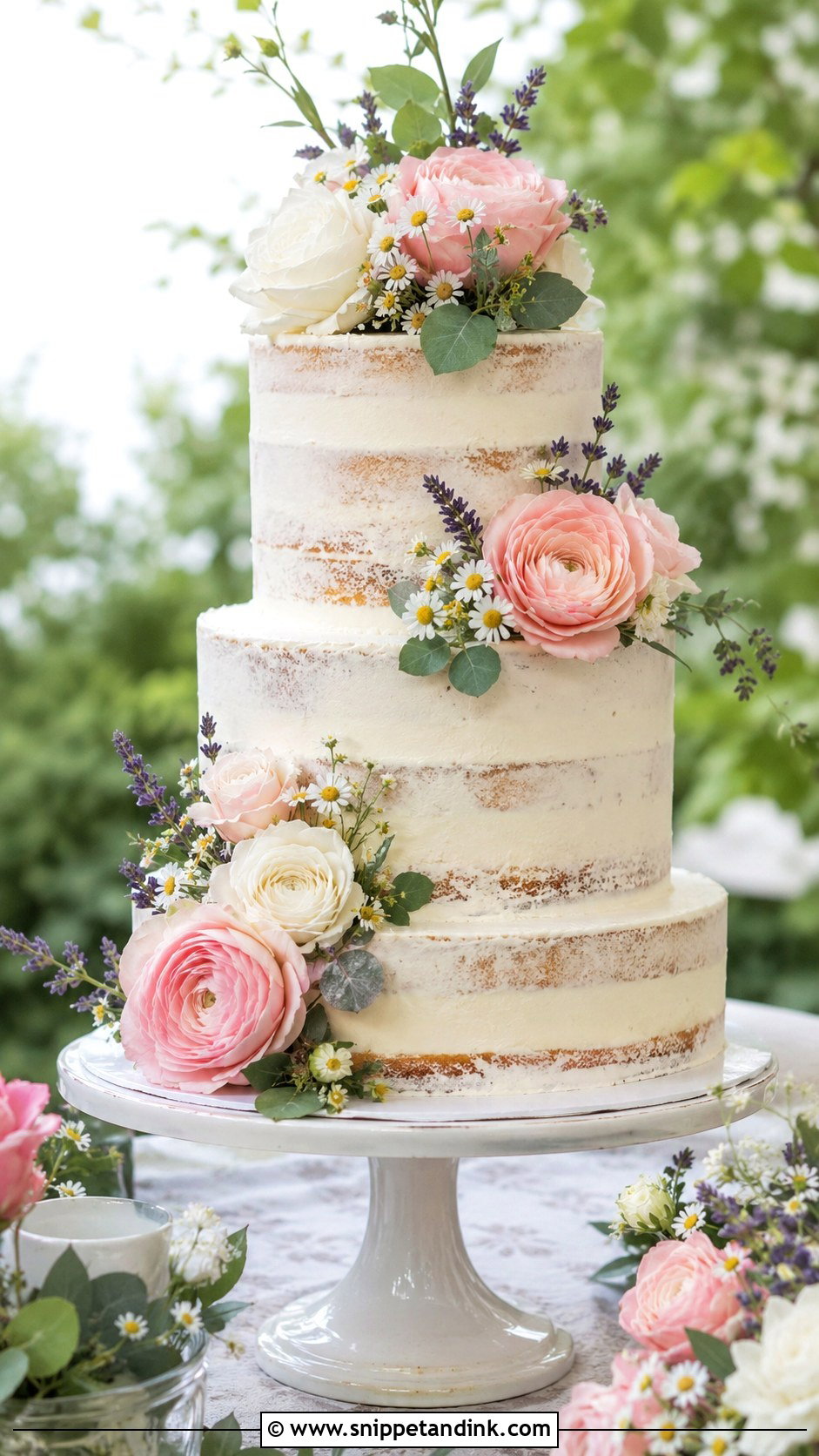
A thin coat of buttercream with the sponge just showing through gives a semi-naked cake a slightly more finished look than a fully naked one. Soft clusters around each tier or a gentle cascade down one side suit it. I’d keep the blooms seasonal and fresh-looking: white roses, blush ranunculus, lavender and tiny daisies. It’s at home in gardens, barns and outdoor receptions, though on a hot day I’d ask the baker to keep it inside until close to cutting.
19. Square Wedding Cake With Flowers
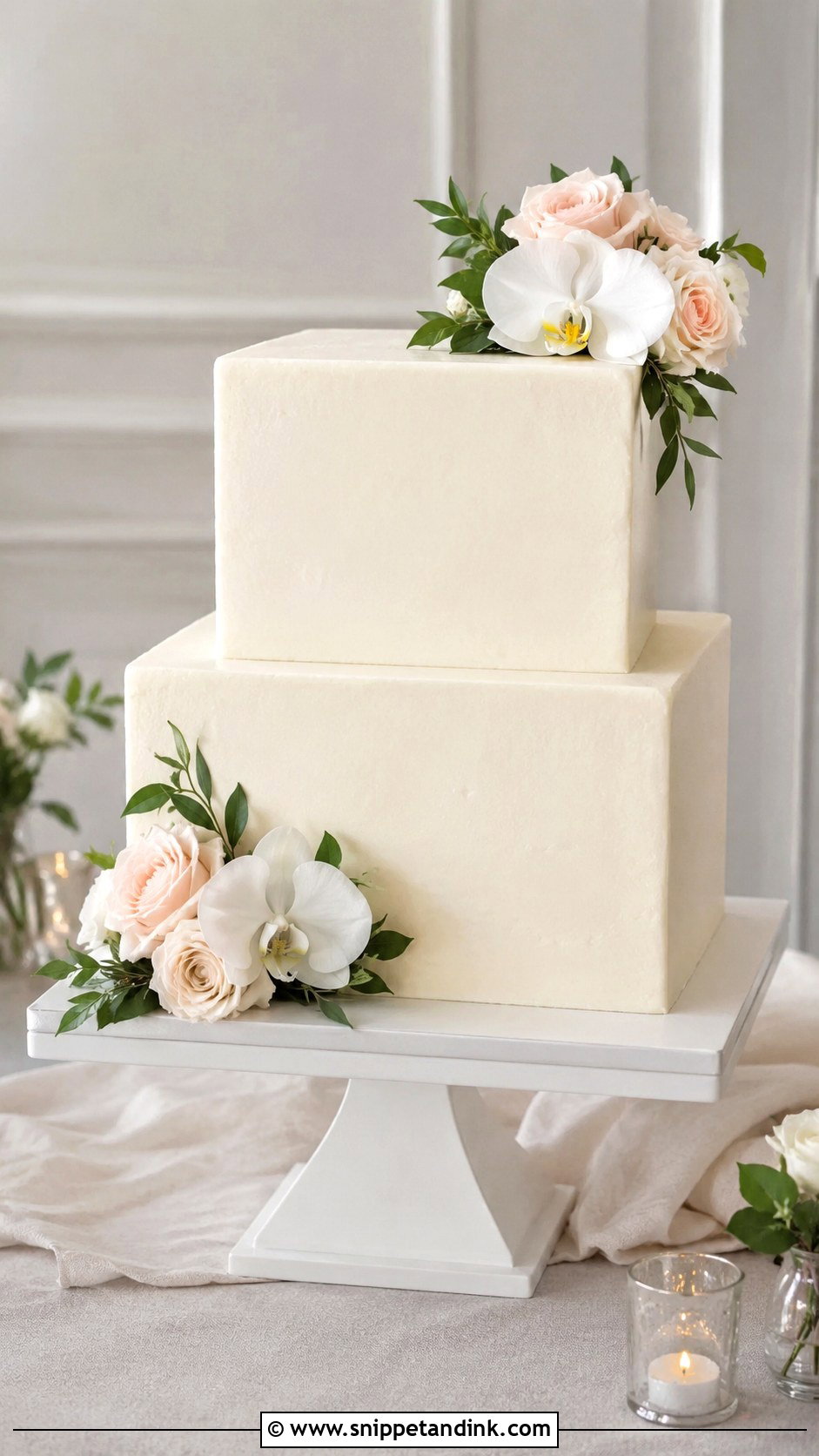
Square tiers give a structured, slightly unexpected shape, and flowers soften the straight edges. I usually place a cluster on one corner of each tier, alternating sides as you go down, or one cluster on the top corner for a sparer look. Smooth buttercream or fondant both work, in white, ivory, blush or sage. Square cakes also slice into neat portions, which caterers appreciate.



20. Sheet Wedding Cake With Flowers
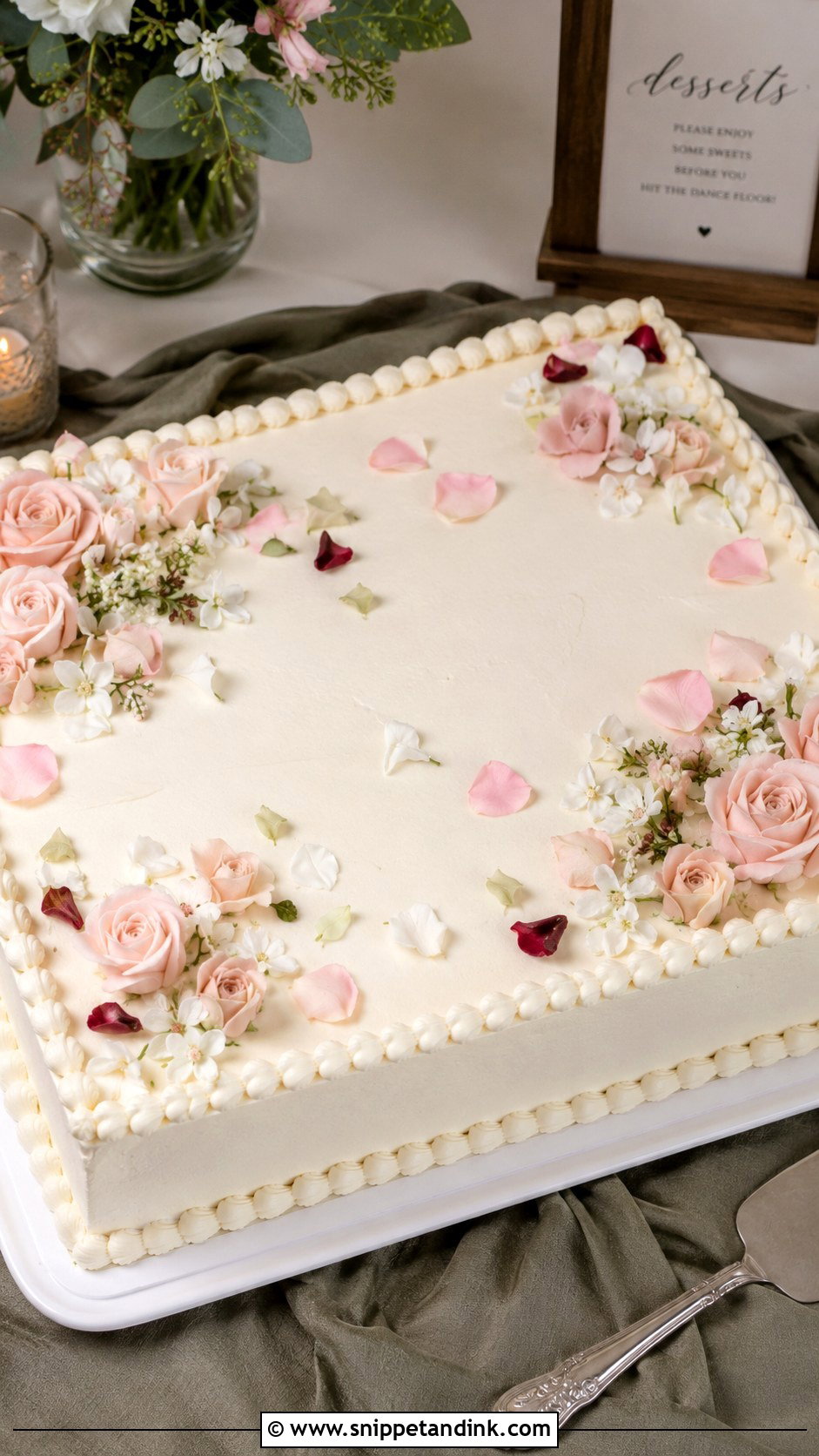
A sheet wedding cake serves a crowd without the cost of tiers. Smooth buttercream, a piped border and fresh or buttercream flowers in the corners make it look wedding-worthy, or small edible flowers can be scattered across the top for a garden feel. When it sits next to a decorated cutting cake, I send matching flowers for both so the table looks like one display. Vanilla, lemon, almond and chocolate are the usual flavors for casual and brunch receptions.
How I Prepare Stems the Day Before They Touch a Cake
Cake flowers have the hardest job of any arrangement at a wedding. They sit without water, often in a warm room, for an hour or more. I give them a head start.
- Recut every stem at an angle and let it drink in cool water overnight, away from fruit.
- Strip thorns, lower leaves and any bruised outer petals.
- Check each head for insects and pollen, and shake it out over the sink.
- Cut stems short, wrap them in floral tape, and pack them in a lidded box with a damp towel.
- Label which flowers go where, so the baker isn’t guessing at setup.
Pollen, Sap and Sprays on a Cake
Lilies are the flower I won’t send for a cake. Their pollen stains frosting orange and won’t brush off, and they’re toxic to cats if any trimmings go home with guests. Euphorbia and some other stems leak a milky sap. Most commercially grown flowers have been treated, so anything that will touch the frosting should come from a grower of edible or unsprayed flowers, and everything else should sit on a barrier. Ask your florist which of your stems are which.
Sunflowers, poppies and open-centered dahlias also drop pollen as they warm up. I pick these at the stage where the center is still tight, or choose pollen-free varieties, and the baker can lift a stray grain off buttercream with a dry brush before anyone notices.
A Few Good Flowers Beat a Cake Full of Them
None of these cakes needs size or complicated work to feel bridal. Clean frosting, the right flower and a sensible placement do the job. Fresh flowers give the most natural finish; buttercream, pressed, wafer paper and sugar flowers give you more control and nothing to worry about when the cake is sliced. Your venue, season and budget will narrow it quickly. Talk to your florist and baker together, early, and the flowers on the cake will match the ones in your hands.
You'll Like These Ideas:



Leave a Reply