
Flowers are the decoration I get asked for most at cake consultations, and for good reason: they can make a cake read garden-soft, ballroom-formal, vintage or almost bare. Right now I’m seeing a lot of textured buttercream, pressed edible petals, loose fresh cascades and sugar flowers that echo the venue’s own arrangements rather than sitting apart from them. Your season, your palette and the number of guests you’re feeding will narrow the field faster than any photo will. Below are twenty floral cakes I’d happily build, with notes on how each one behaves on the day.
Real Stems, Sugar or Buttercream? Sorting Out What Can Touch the Icing
Every floral cake starts with the same question in my studio: is the flower going to be eaten, or just sit on the cake? That decides the method, the budget and who’s responsible for it.
- Edible fresh flowers such as pansies, violas, roses, calendula, borage and chamomile can sit directly on icing, but only if they were grown for eating. Florist stock is usually sprayed, so I source these separately.
- Decorative fresh flowers are fine on a cake as long as no stem, leaf or sap touches it. I wrap stems in floral tape and push them into plastic posy picks, and anything resting flat gets a small disc of parchment underneath.
- Flowers I won’t use at all: hydrangea, lily of the valley, foxglove, sweet pea, delphinium, oleander and baby’s breath, plus anything sprayed. Some are toxic, others drop pollen or sap onto icing.
- Sugar and buttercream flowers avoid the safety question completely and can be made in any season, at the cost of more decorating time.
If your florist is placing the flowers, I’d ask them to send a list of the varieties beforehand. It takes two minutes and avoids a last-minute swap at the venue.
1. Fresh Flower Wedding Cake
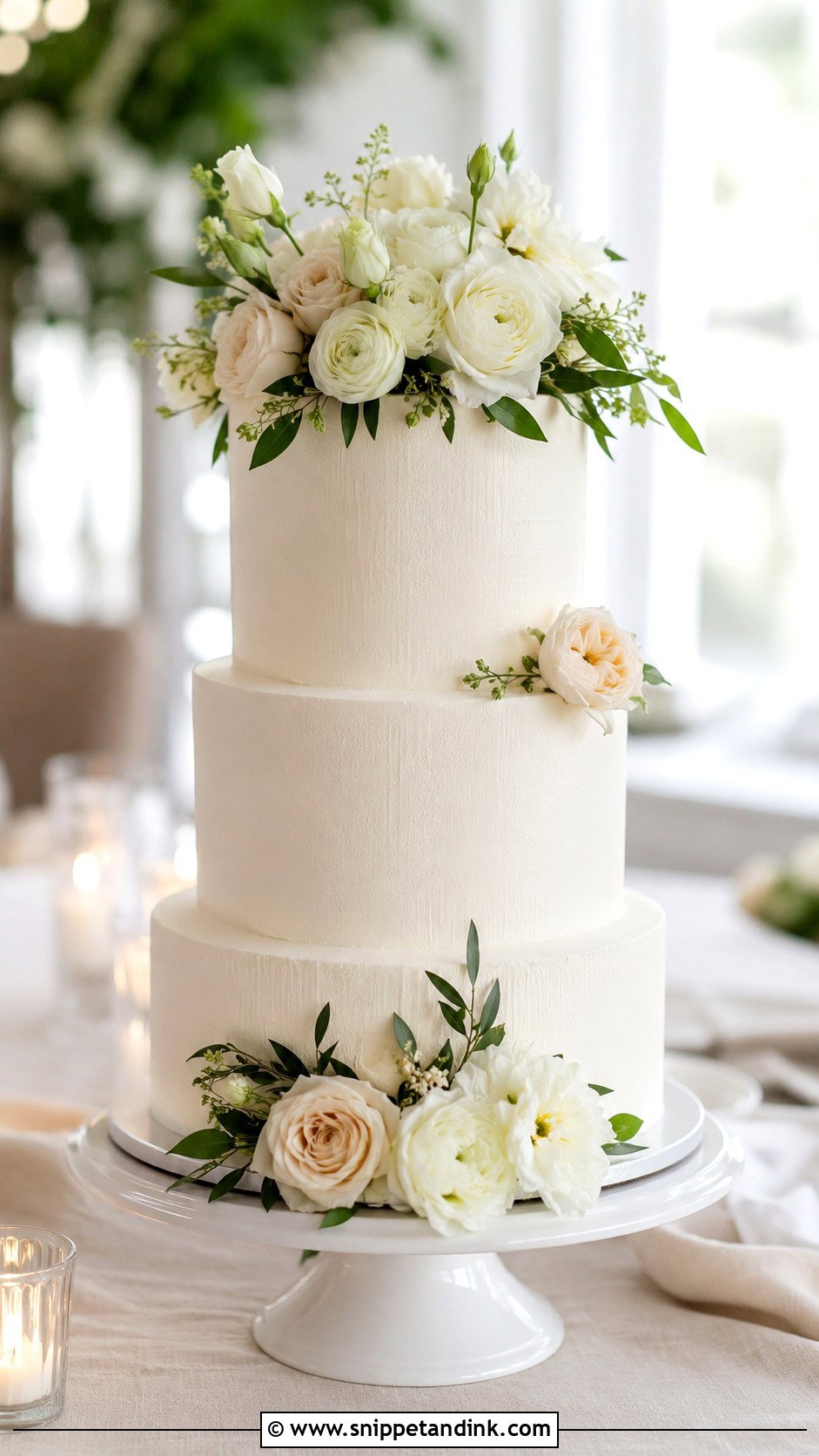
Real stems on the cake tie it straight to the bouquets and centrepieces, which is why this is still the request I hear most. I keep the finish plain, smooth buttercream or fondant, so the blooms do the talking. Roses, ranunculus, lisianthus and spray orchids are sturdy enough to sit out for hours; sweet peas and garden poppies flop within the first hour on a warm day. The rule I never bend: no raw stem goes into the cake. Every one is wrapped in floral tape or set into a food-safe pick, and the florist and I agree in writing who does the placing.
2. Pressed Flower Wedding Cake
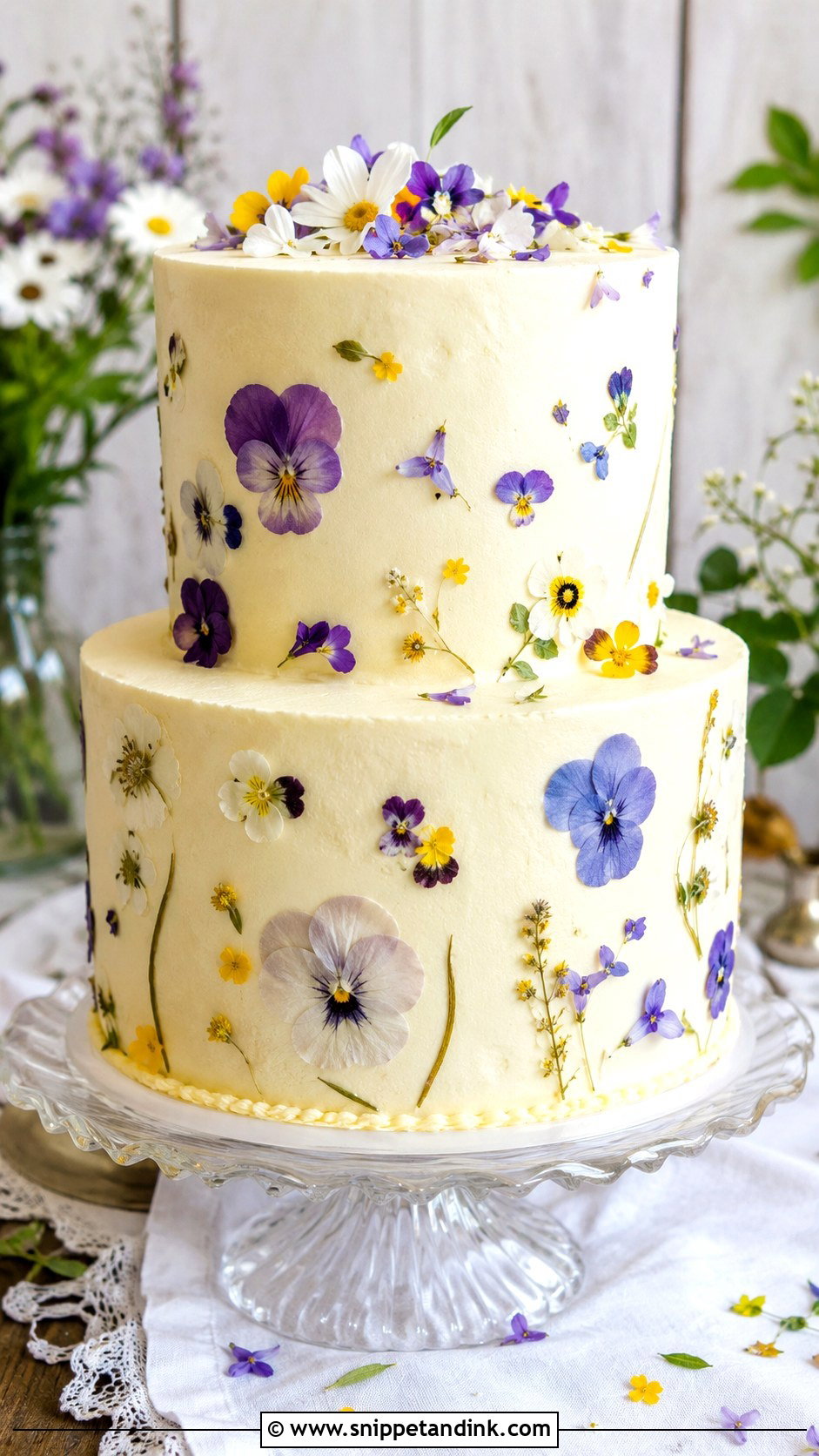
Pressed flower wedding cakes swap big bunches for tiny edible blooms and petals laid flat against smooth buttercream or fondant. The petals are pressed and dried weeks ahead, then laid onto a freshly crusted coat so they bond without sliding. I keep the base pale (ivory, pale blush or a soft sage) because a dark base swallows the thin petals entirely. One colour family looks calm and refined; mixed pastels give you a meadow. Heat is the weak spot: in a hot marquee the buttercream softens and petals can start to curl at the edges, so I’d save this one for spring or an air-conditioned room.
3. Cascading Flower Wedding Cake
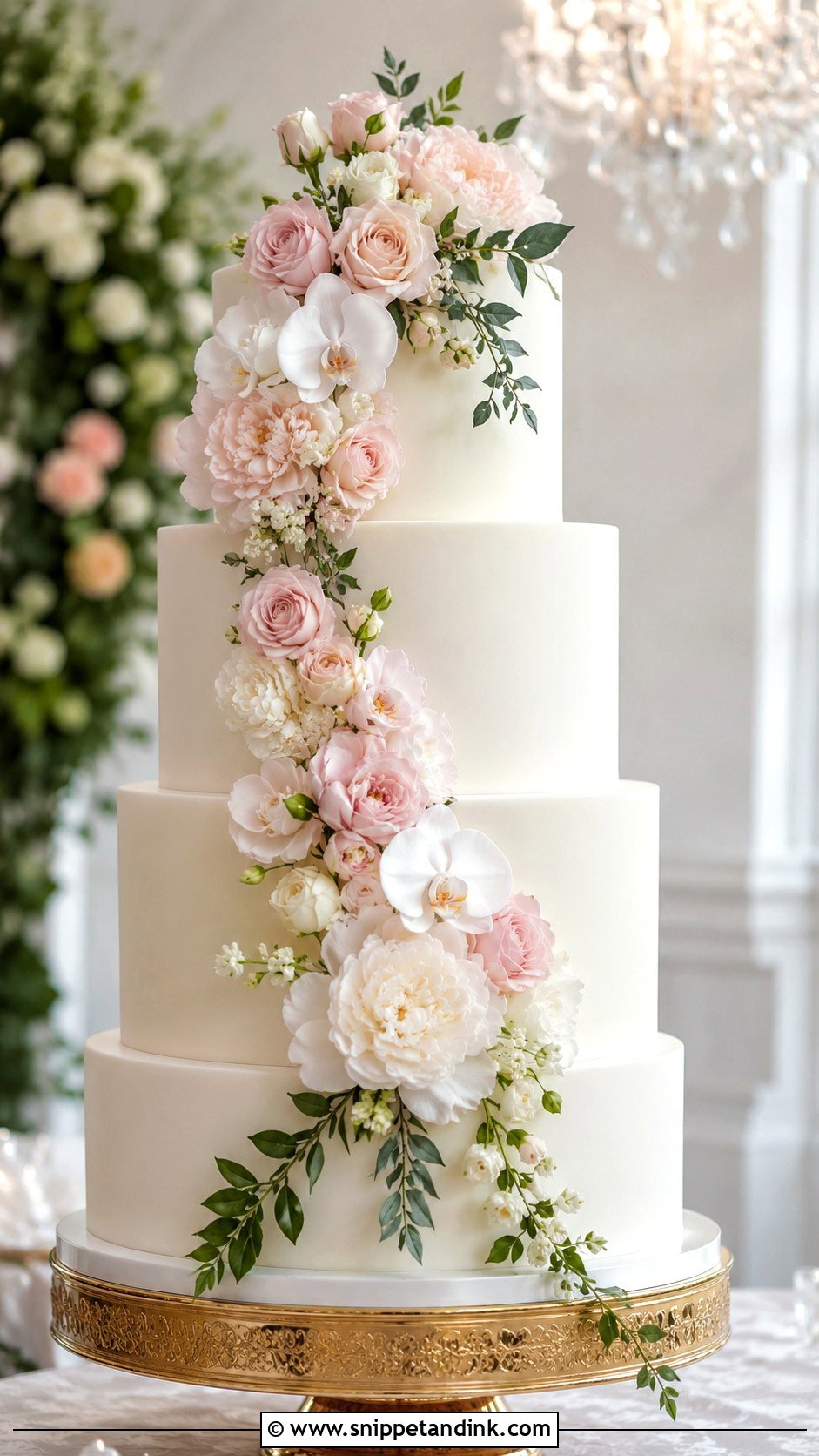
A cascading flower wedding cake gets its drama from one line of blooms falling from the top tier down the side, no heavy piping needed. The line only looks natural if the flowers get smaller as they travel down, so I put the largest roses or peonies at the top and finish with trailing greenery near the base. Two and three tiers carry it best. Blush and ivory keep it romantic; coral, mauve or burgundy push it toward an evening reception. I always ask which side faces the room before I start, because a cascade built on the wrong side is the one guests never see.
4. Buttercream Flower Wedding Cake
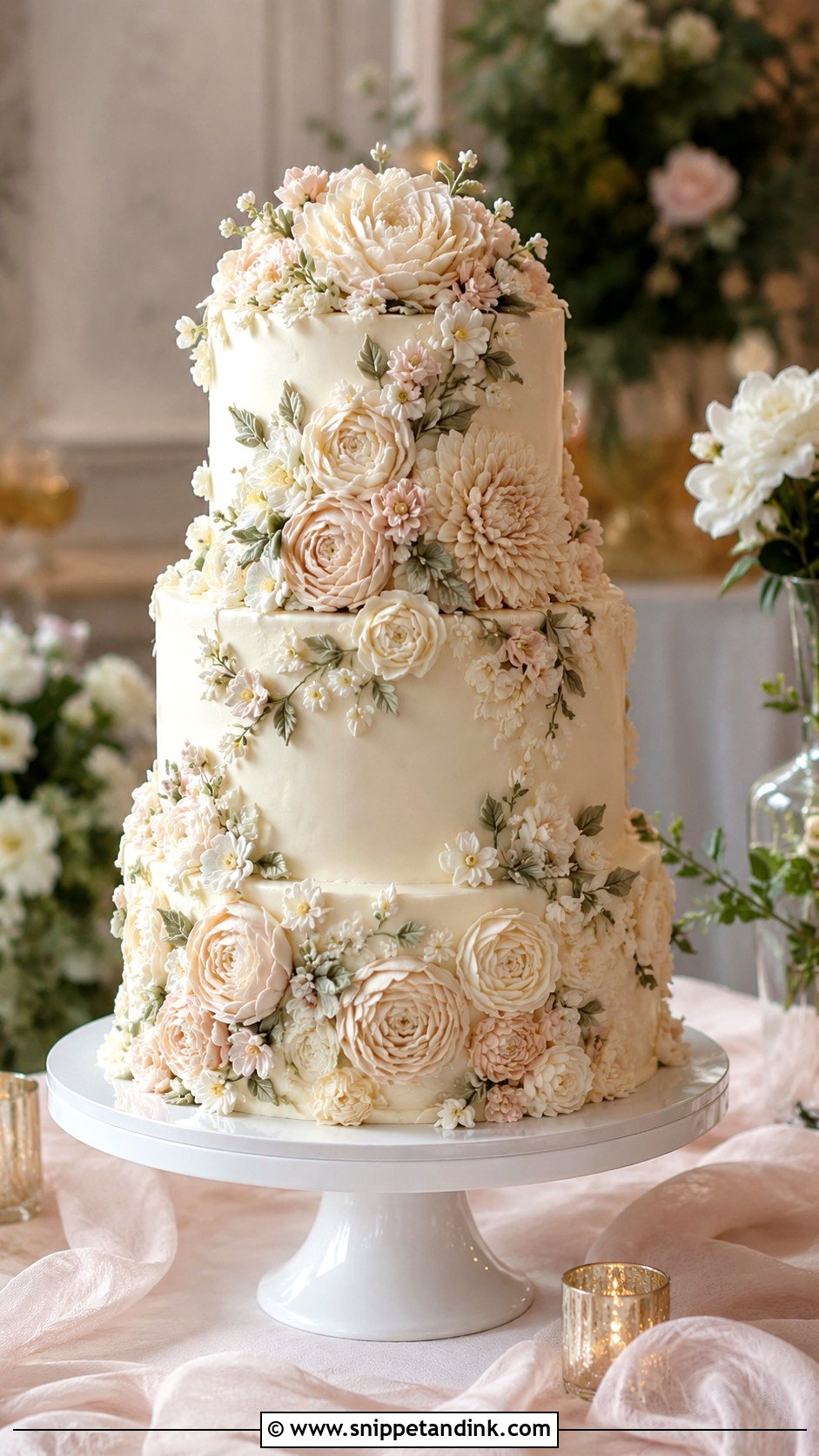
Piped buttercream flowers mean every petal on the board can be eaten, and they can be tinted to almost any shade, from dusty blue to terracotta. Roses, peonies, daisies and dahlias are piped on parchment squares, chilled until firm, then lifted onto the cake, which is how they keep crisp edges. I’d point you here if your venue or caterer is nervous about fresh flowers touching food. The honest drawback is temperature: an American-style buttercream holds up better outdoors than a silky Swiss meringue, and I’ll pick the recipe around your venue before we talk about colour.
5. Sugar Flower Wedding Cake
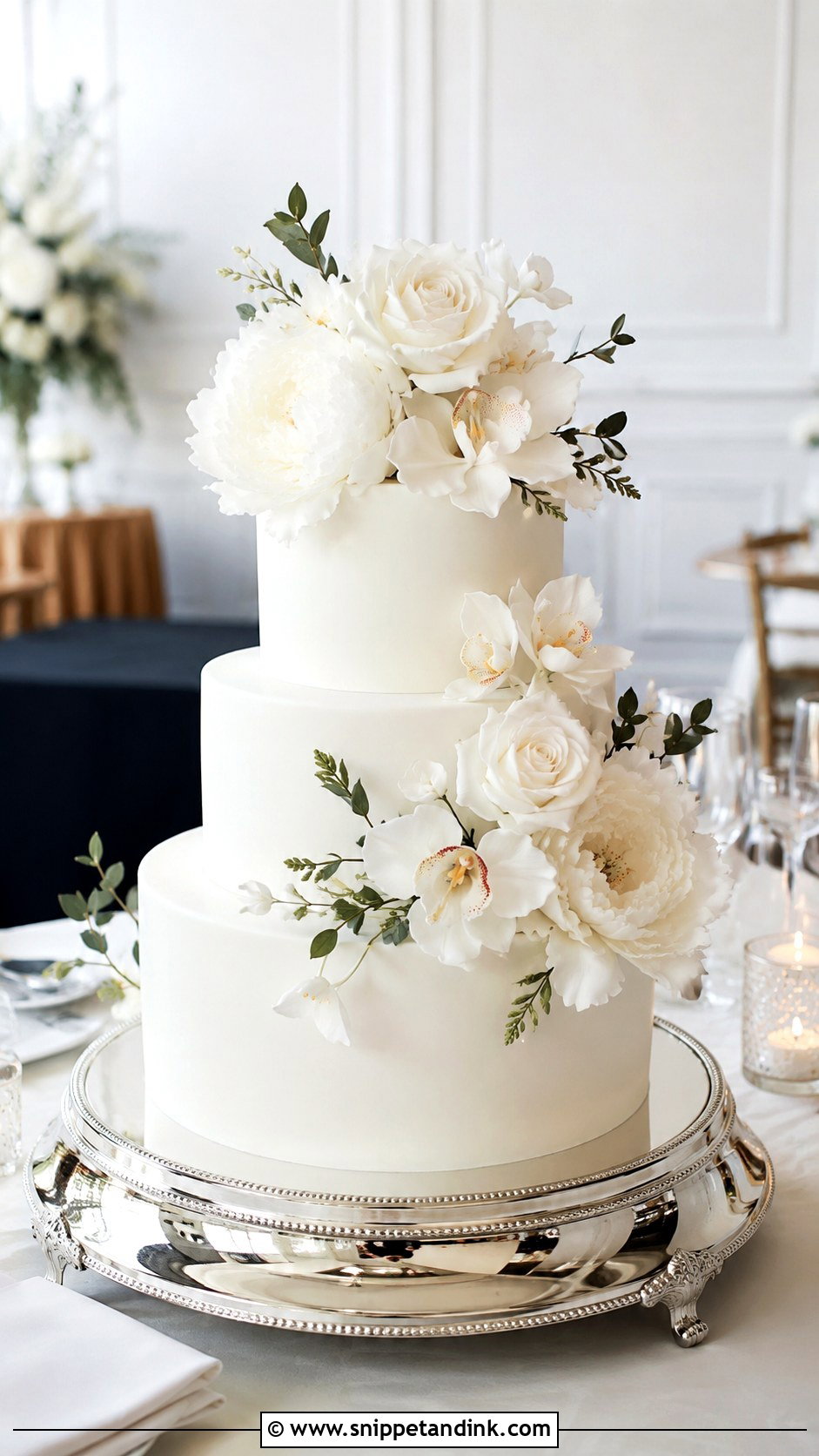
Sugar flowers are made from gum paste, rolled paper-thin, wired, dusted with colour and left to dry for days. They won’t wilt, so they’re my answer when the bloom you love is out of season or too fragile to sit on a cake for six hours. Peonies, garden roses, magnolias and ranunculus are the ones I’m asked to make most. Book early: a full spray is many hours of handwork, which is also why it’s priced the way it is. They’re technically edible but hard and wired inside, so I treat them as decoration and remove them before cutting. Afterwards they keep for years in a closed box away from damp, and many couples take them home.
6. Wildflower Wedding Cake
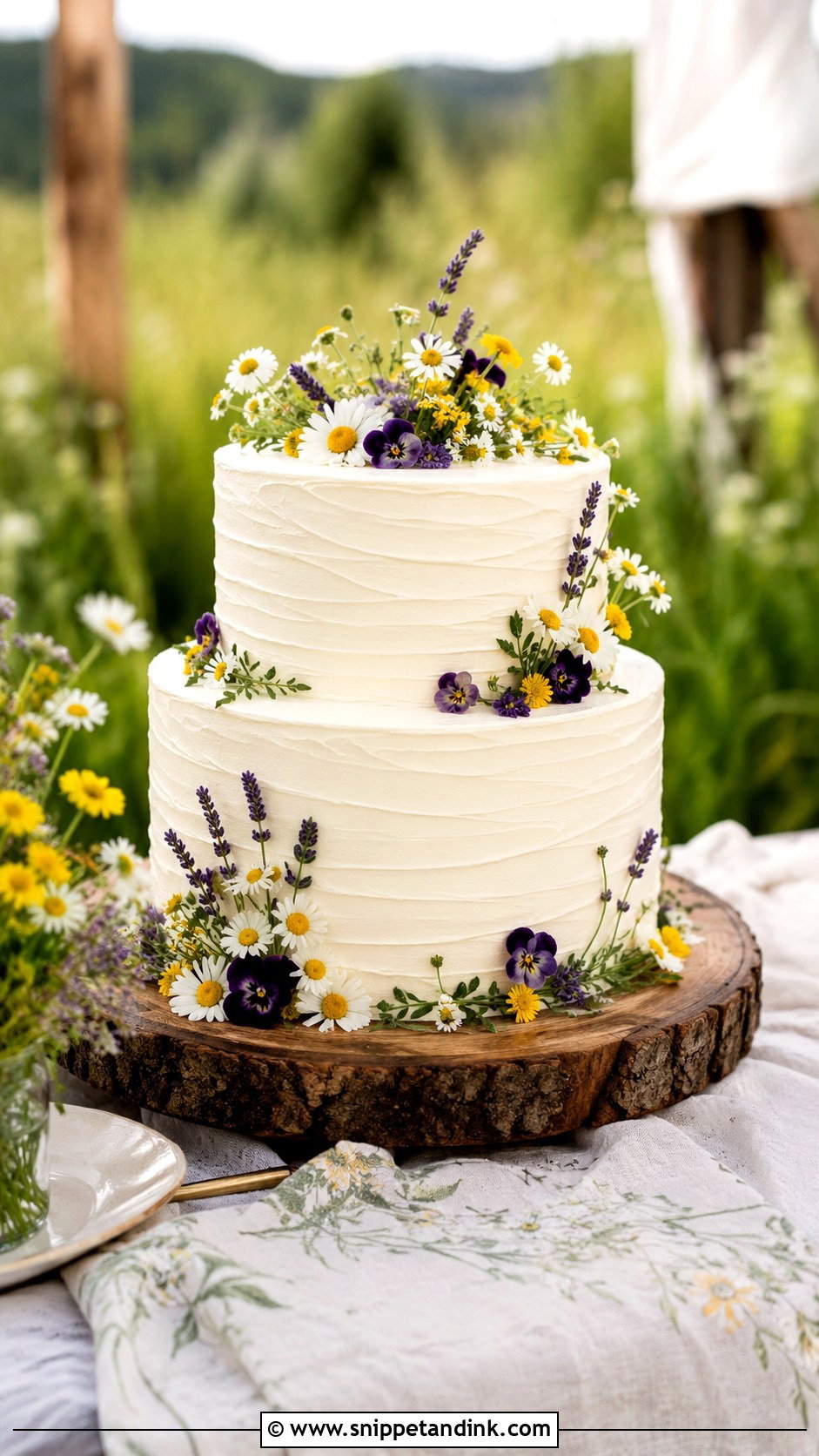
A wildflower wedding cake should look gathered, not arranged. Small daisies, chamomile, lavender, pansies and violets work, as long as each one is food-safe and grown without sprays. “Wildflower” sometimes tempts couples to pick from a hedgerow, and that’s where I step in: several common field flowers are toxic, foxglove, lily of the valley and buttercups among them. I set them in loose clusters on a semi-naked or textured finish and leave some gaps. Soft yellow, white and lilac reads as early summer; deeper golds and rust tones suit late August.
7. Garden Rose Wedding Cake
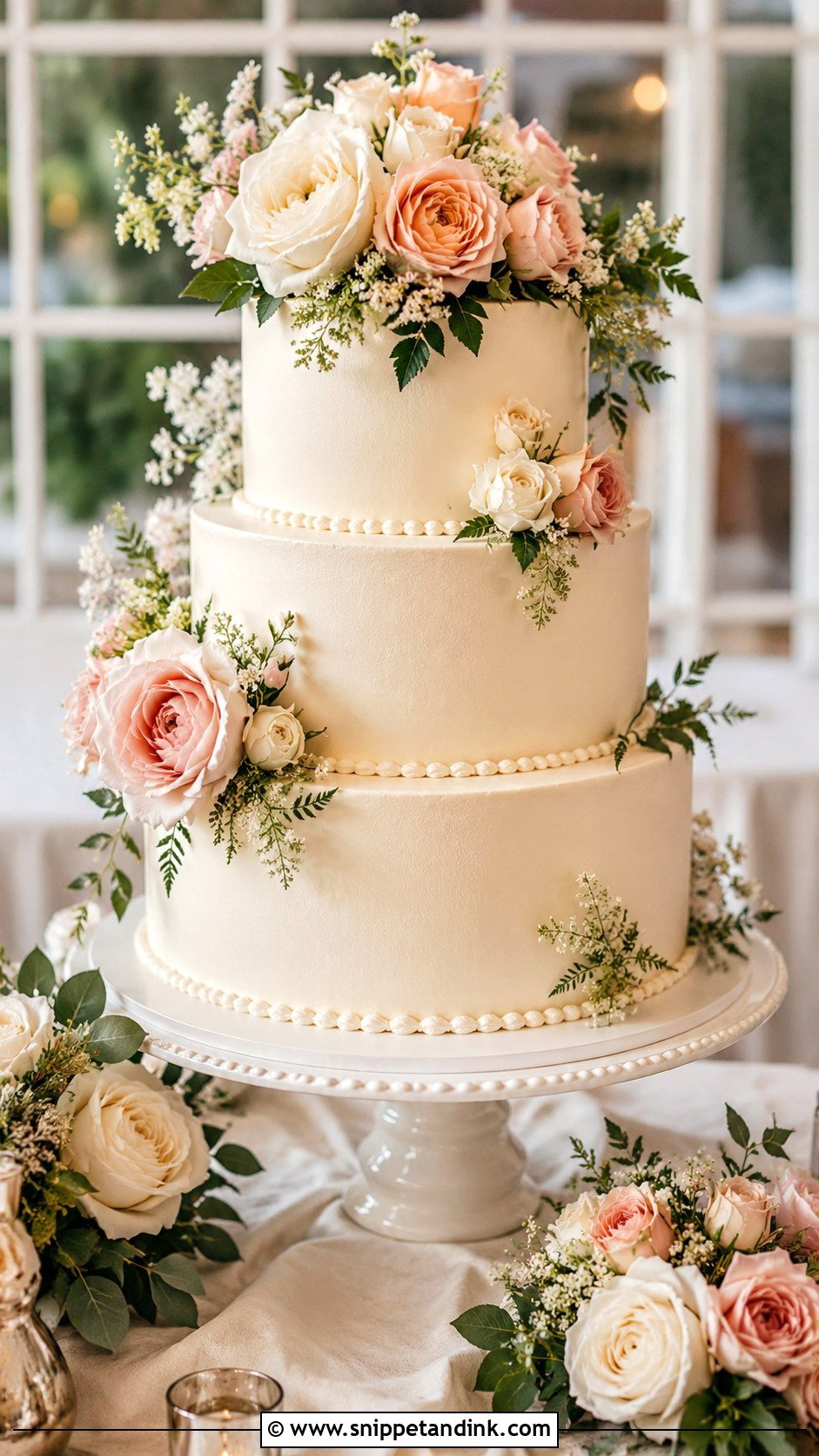
Garden roses have so many layered petals that three or four of them can carry a whole tier. They come in ivory, peach, mauve and a warm cream that looks far richer in person than standard roses. I tuck them between tiers, crown the top, or run a soft line down one side. One thing to know: they open quickly once they’re out of the cooler, so I place them as late as I can and choose blooms that are only just unfurling. Minimal greenery keeps it classic. Loose petals and filler flowers at the base turn it into a garden party.
8. Orchid Wedding Cake
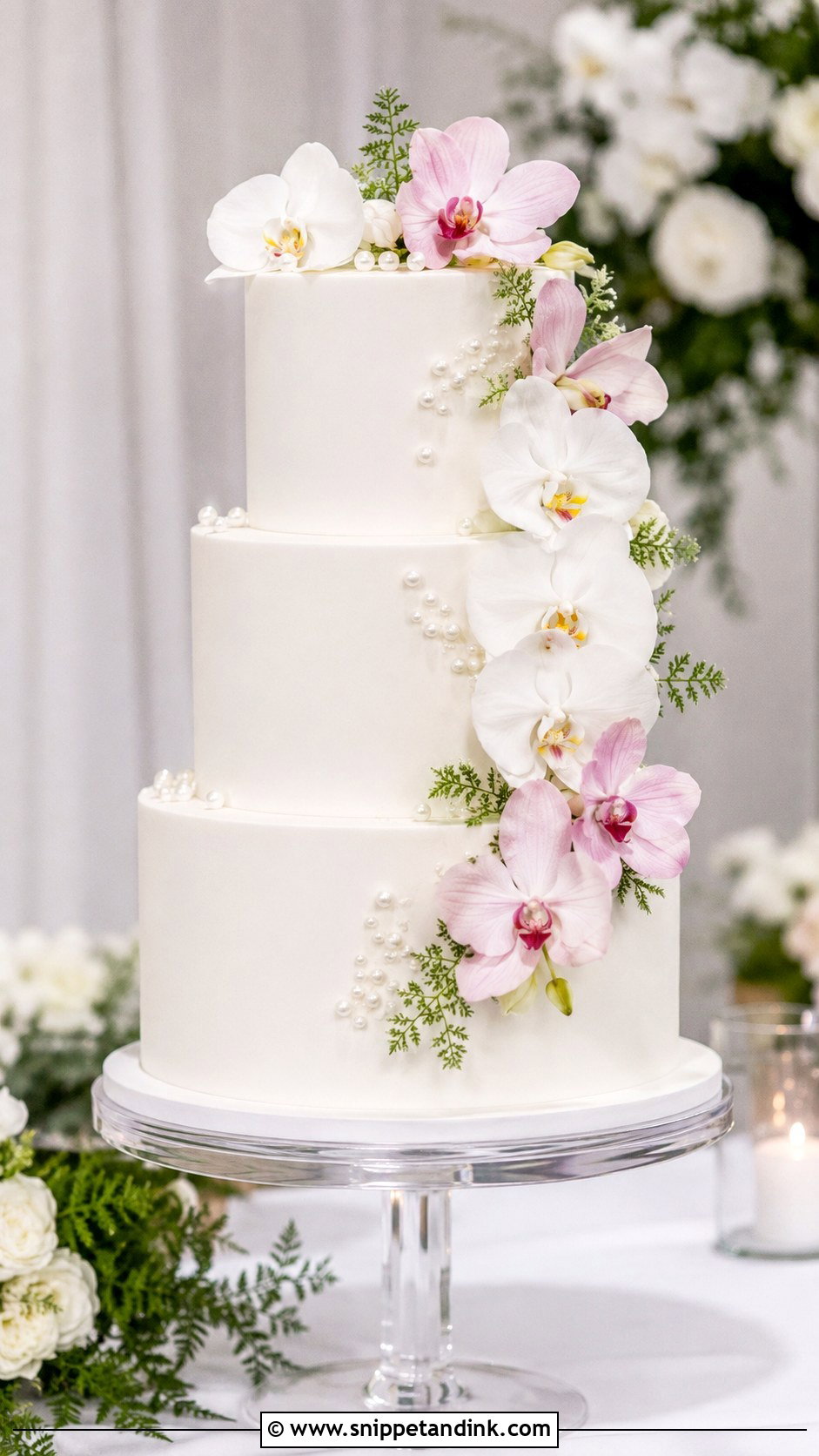
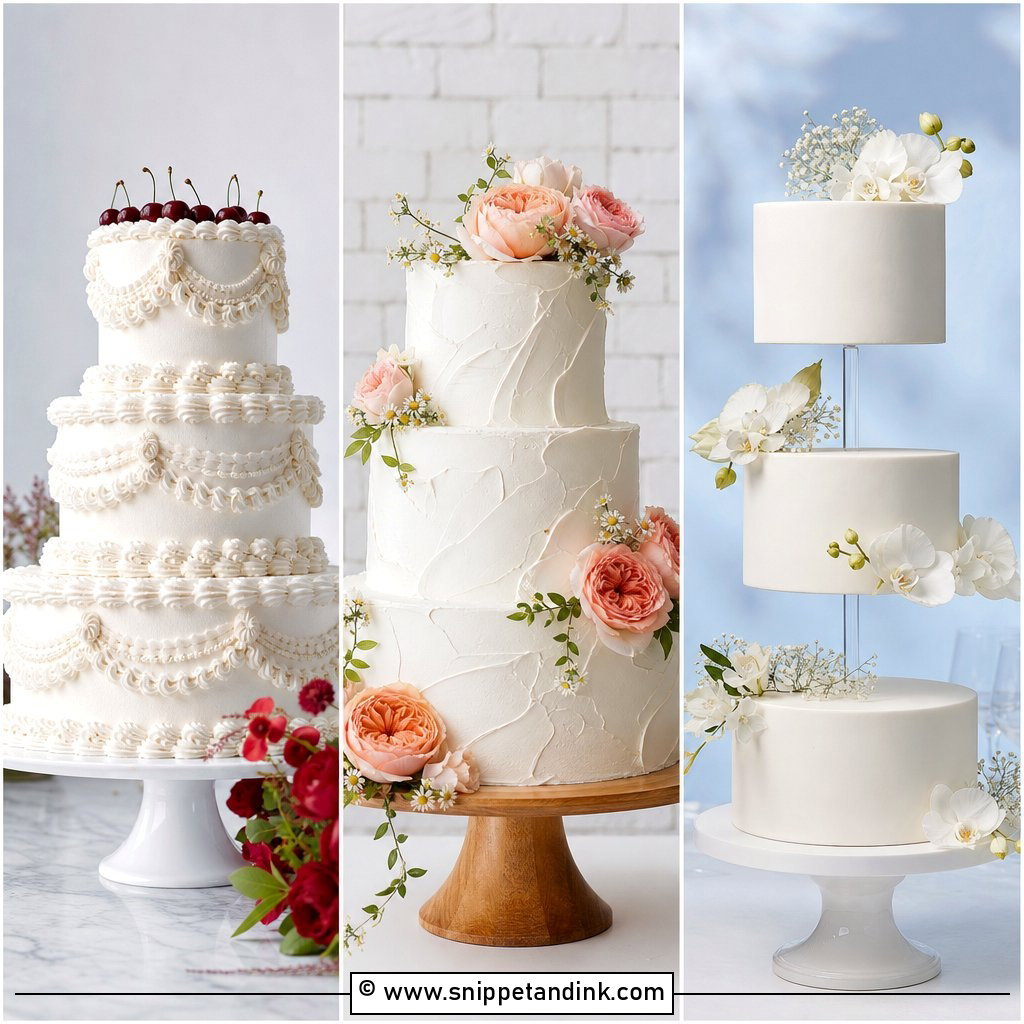
Orchids are sculptural, so a few stems make a strong statement on their own. White phalaenopsis gives that clean hotel-ballroom look; pink, purple or peach brings more personality. They sit well on a smooth white or ivory finish, either as a few blooms per tier or one long diagonal line. I like them for tropical venues because they tolerate heat far better than most garden flowers. The catch is weight and angle: heavy blooms need a support pick so they don’t slide on buttercream, and I keep greenery sparse so the shape of each flower stays readable.
9. Peony Wedding Cake
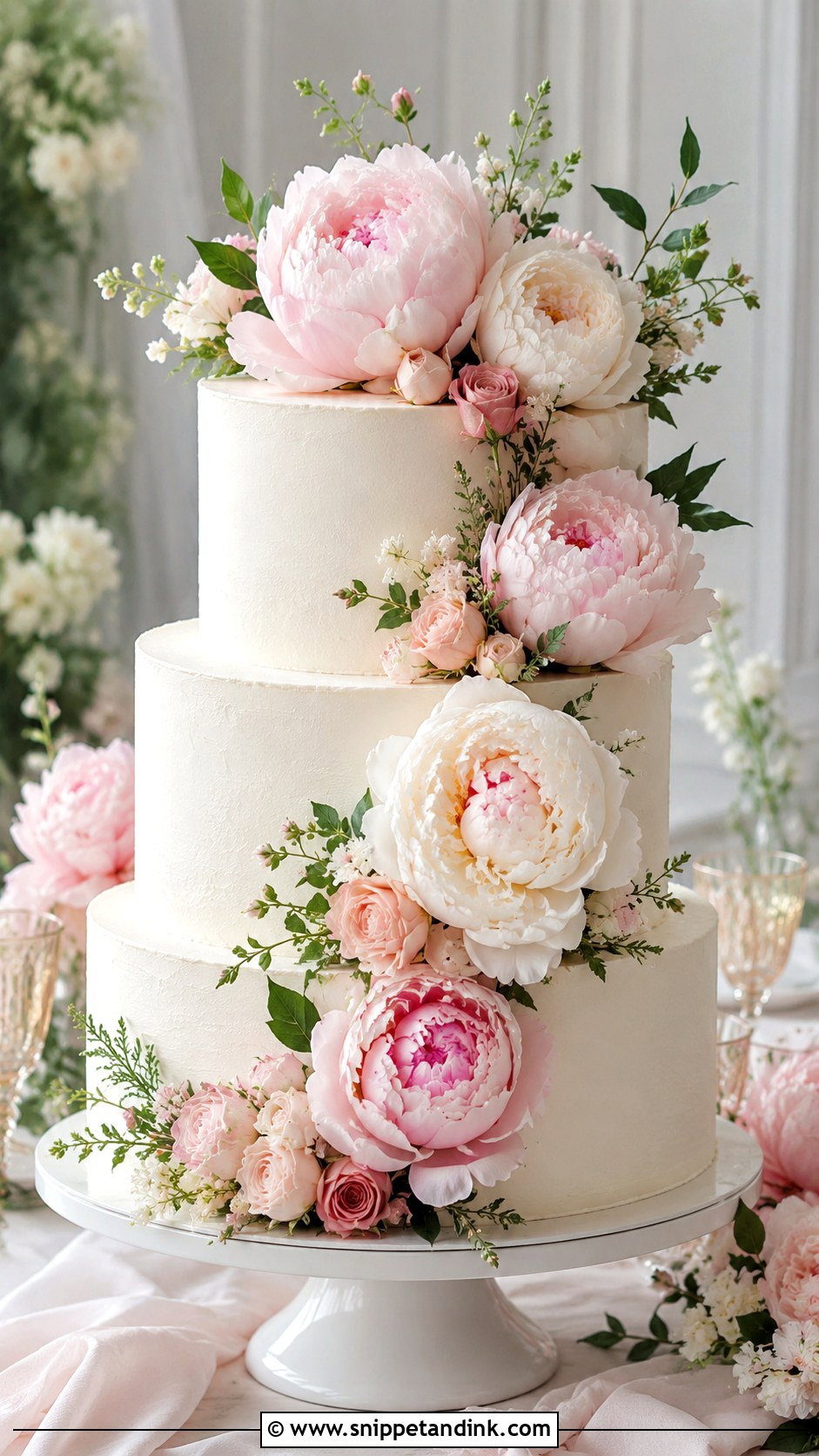
Peonies have the ruffled volume that makes even a small cake look generous. Fresh ones are a late spring and early summer flower, so outside that window I’d make them in sugar rather than paying for imported stems that may arrive tight and refuse to open. Blush, coral and pale pink are the classics. Because each bloom is so large, balance matters more than quantity: a top cluster plus two or three side blooms reads full, while a dozen crowds the tiers. A satin fondant or soft palette-knife texture gives them a calm background.
10. Floral Buttercream Lambeth Wedding Cake
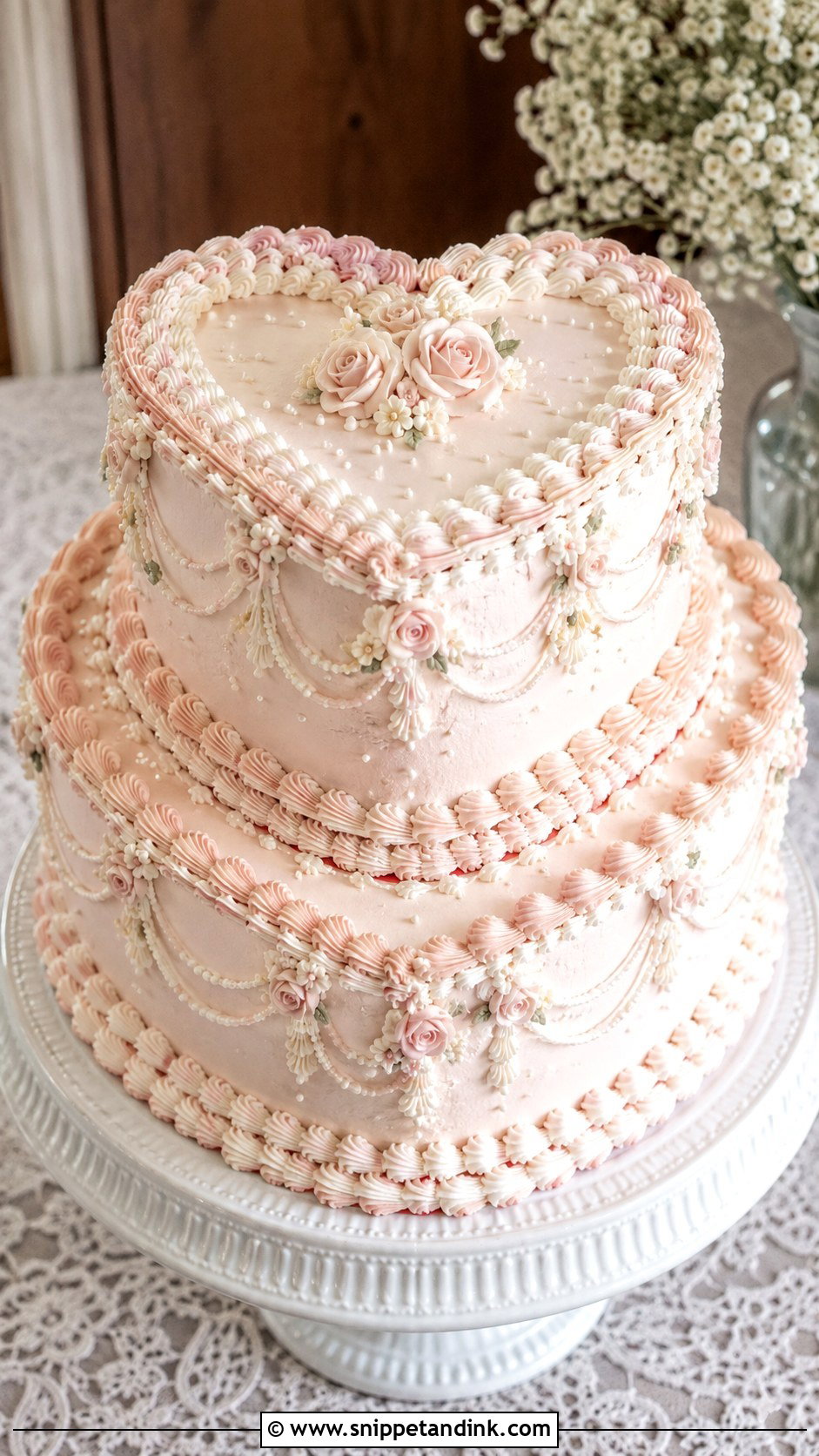
A Lambeth cake is all overpiping: layered borders, shells, swags, beads and scrolls built up in buttercream, so it’s decorative before a single flower goes on. It’s slow work, and piping that deep needs a stable icing, so I chill between layers to keep the ridges sharp. Ivory, blush, pale blue and soft butter yellow suit it. Small piped roses or a few sugar blossoms on the top tier and corners are plenty; this is a natural centrepiece for a vintage reception or a retro-inspired dessert table. Too much colour or too many flowers and the piping turns into noise, so I keep the blooms soft.
11. White Flower Wedding Cake
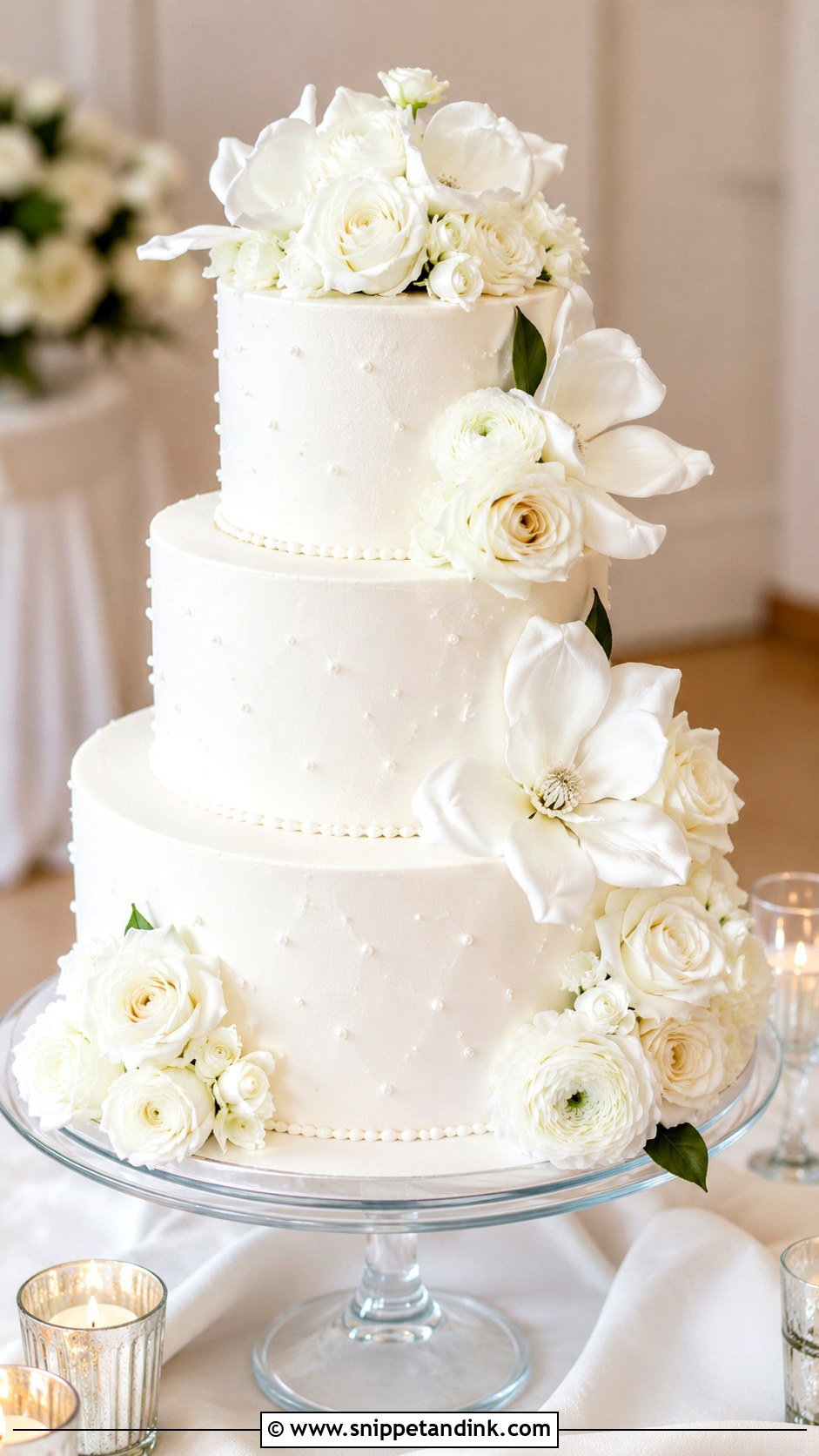
With no colour to lean on, a white flower cake depends entirely on texture and shape. I layer white roses, ranunculus, anemones or sugar blossoms over ivory or bright white and mix flower sizes deliberately, because one size of white bloom on white icing goes flat in photos. A little ridged or palette-knife frosting adds shadow. One practical check: “white” flowers are rarely pure white, and a cream rose against a bright white fondant can look dingy. I hold a petal against the icing sample before I commit. It pairs easily with pearl details, clear stands and candlelight.
12. Blush Flower Wedding Cake
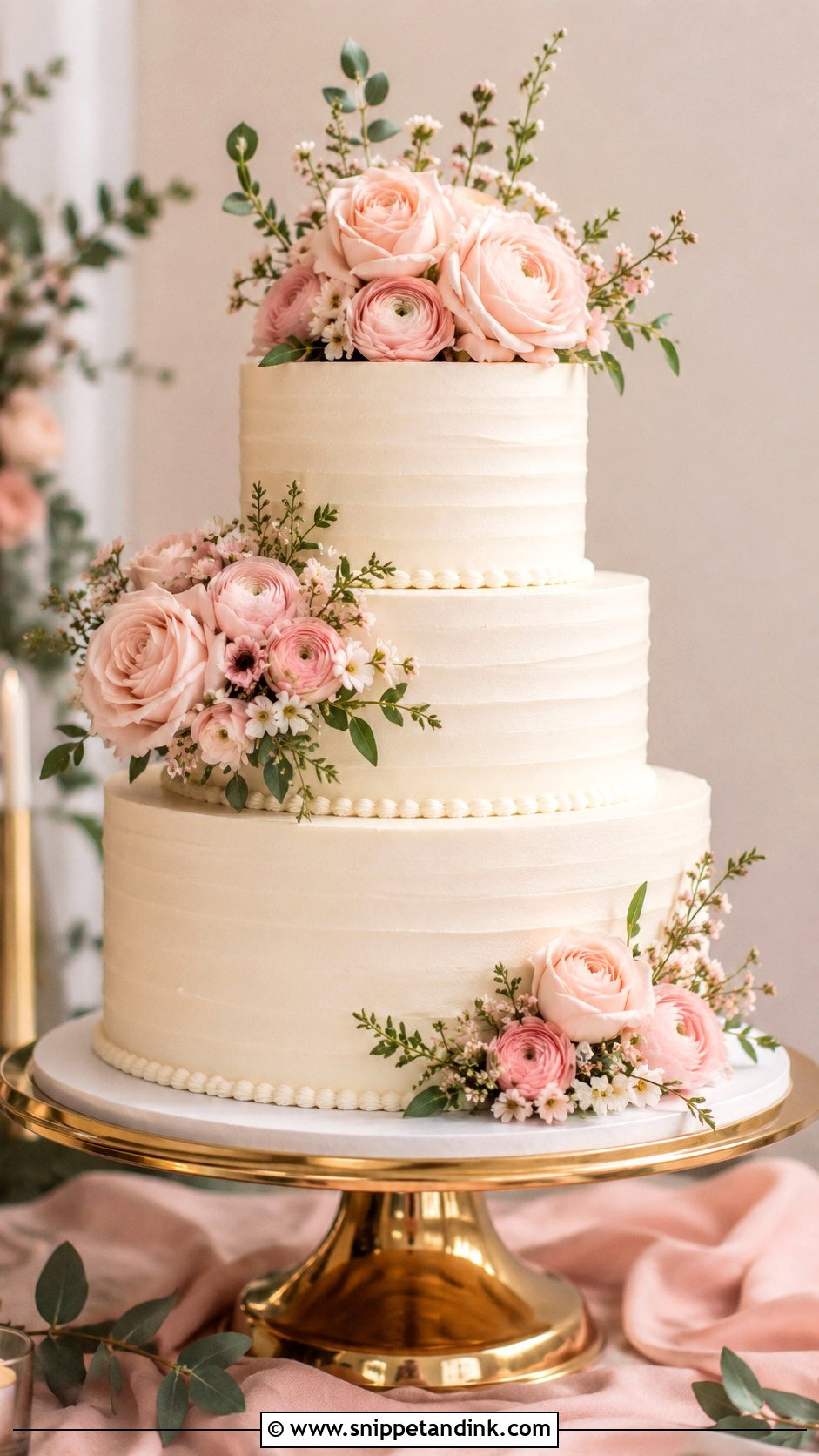
Blush flatters almost every palette I’m handed: ivory, champagne, gold, sage, dusty rose, mauve. I’ll use fresh roses, sugar flowers or piped blossoms on smooth buttercream. For a modern feel I keep the tiers plain and set the flowers off to one side; for something fuller I put clusters between every tier. Blush warms the cake table without taking it over. Watch real blush roses under warm reception lighting, though, since some varieties look almost white by evening. If the pink needs to read, I go a shade deeper than you think you want.
13. Blue Flower Wedding Cake
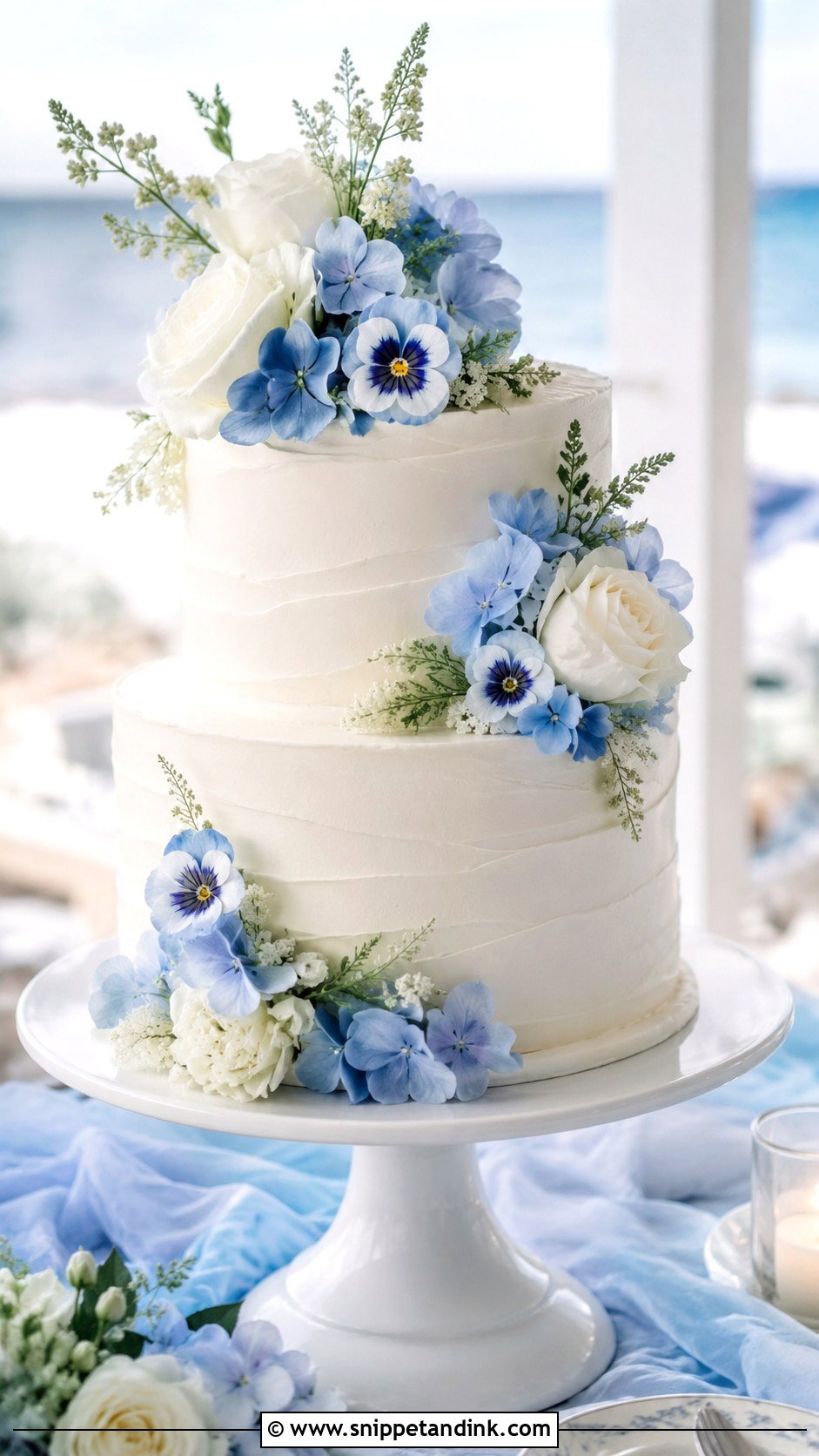
True blue is rare in nature and rarer still in edible flowers, which is why this cake surprises people. Borage, cornflowers and some pansies are edible options; delphinium is not, and despite its colour it stays off the cake. More often I make the blue in sugar, hydrangea florets are a favourite, or pipe it in buttercream. Ivory icing, pearl details and silver accents keep it calm, and a cool palette like this suits coastal venues or invitations already in blue. A few blue flowers look intentional; mixing them with white and pale lavender gives a softer garden version.
14. Purple Flower Wedding Cake
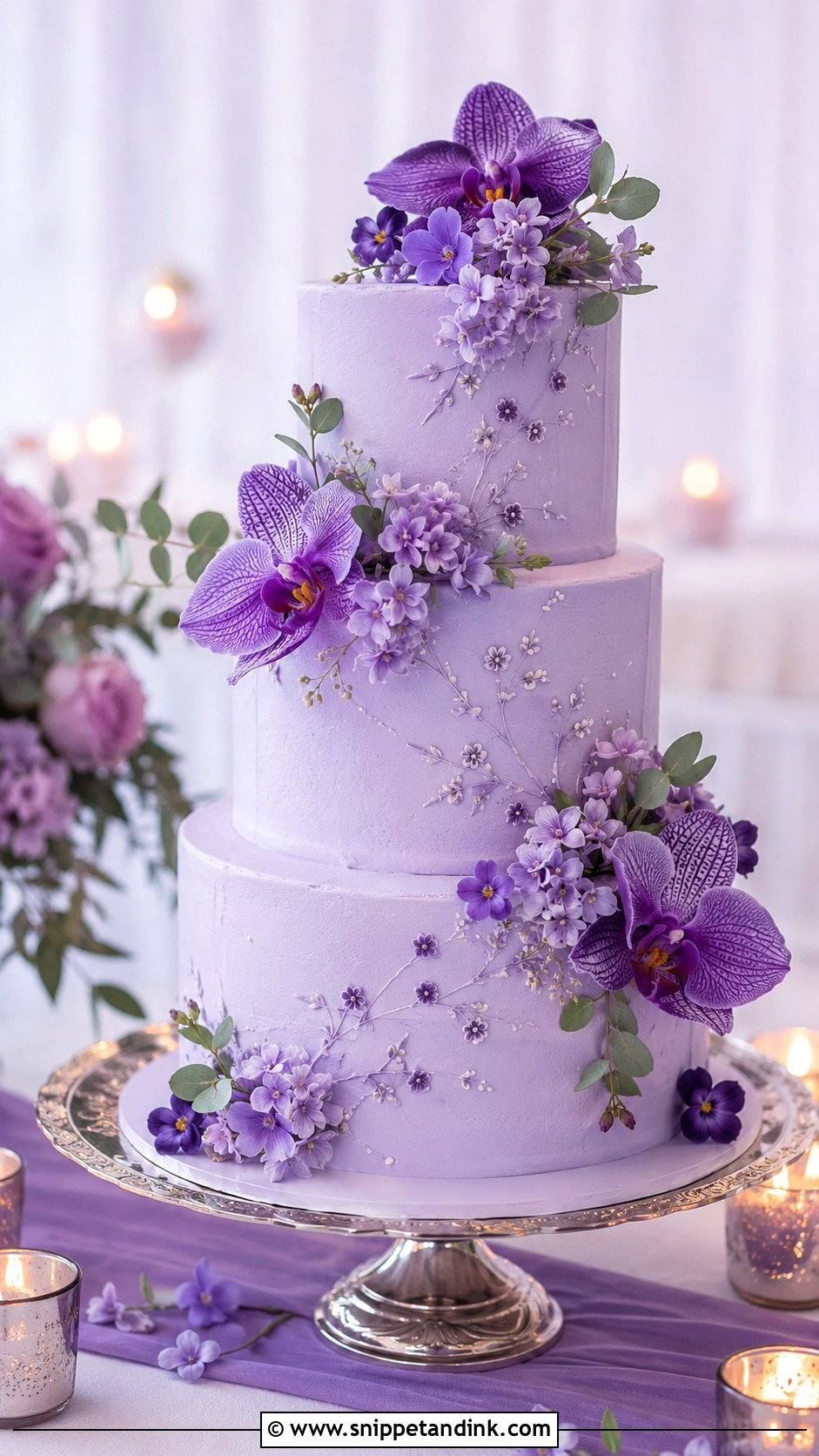
The shade decides the mood: lavender and lilac feel garden-soft, plum and violet feel formal. A purple flower wedding cake can be built with sugar violets, fresh lavender sprigs, purple orchids, pansies or piped flowers on buttercream, fondant or a semi-naked finish. I always set the purple against ivory icing, which keeps it bridal rather than birthday. The trap is tinting: purple buttercream can drift grey or blue as it sits and fades in daylight, so for deep shades I lean on the flowers for colour instead of the icing.

15. Pink Flower Wedding Cake
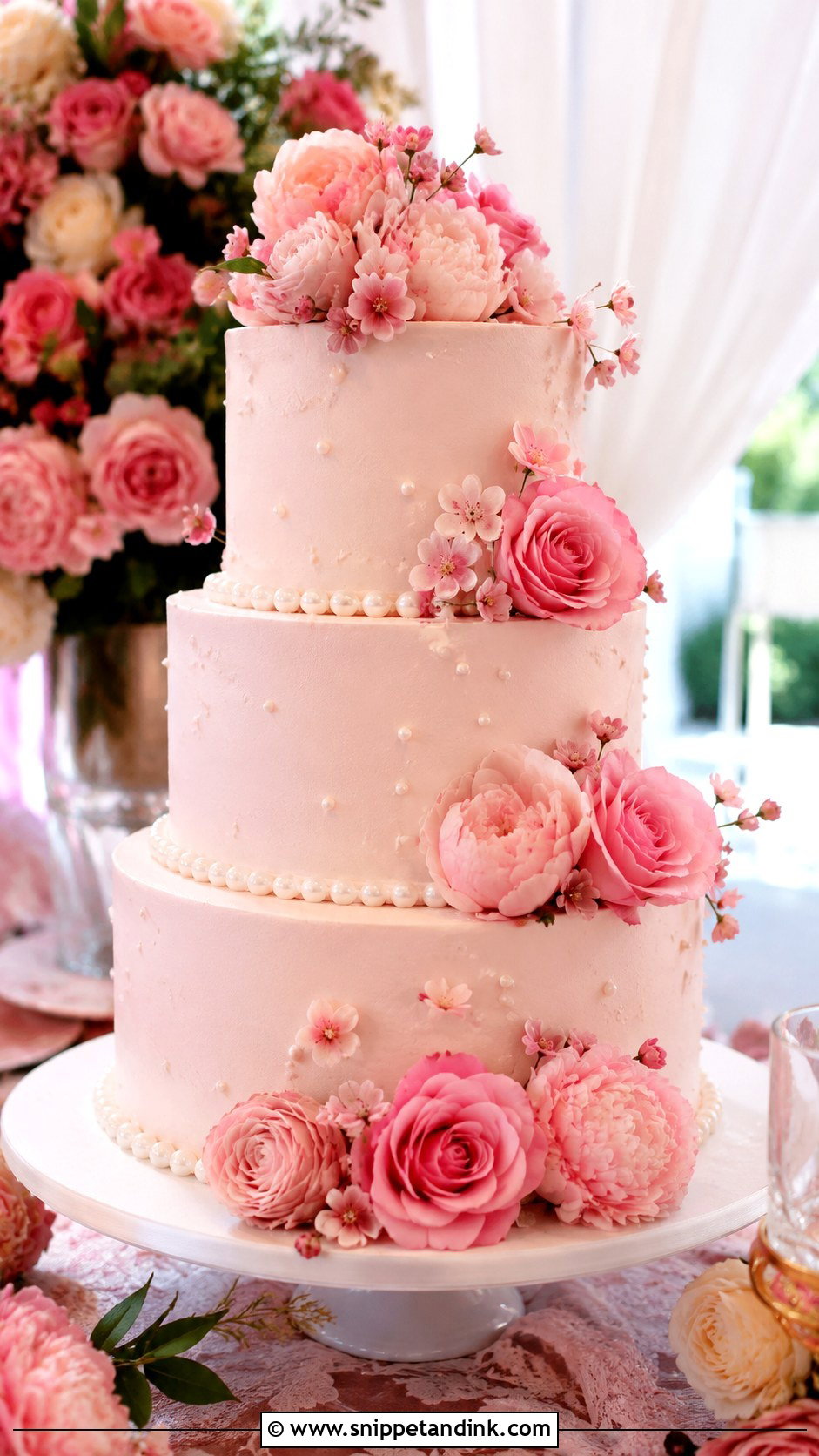
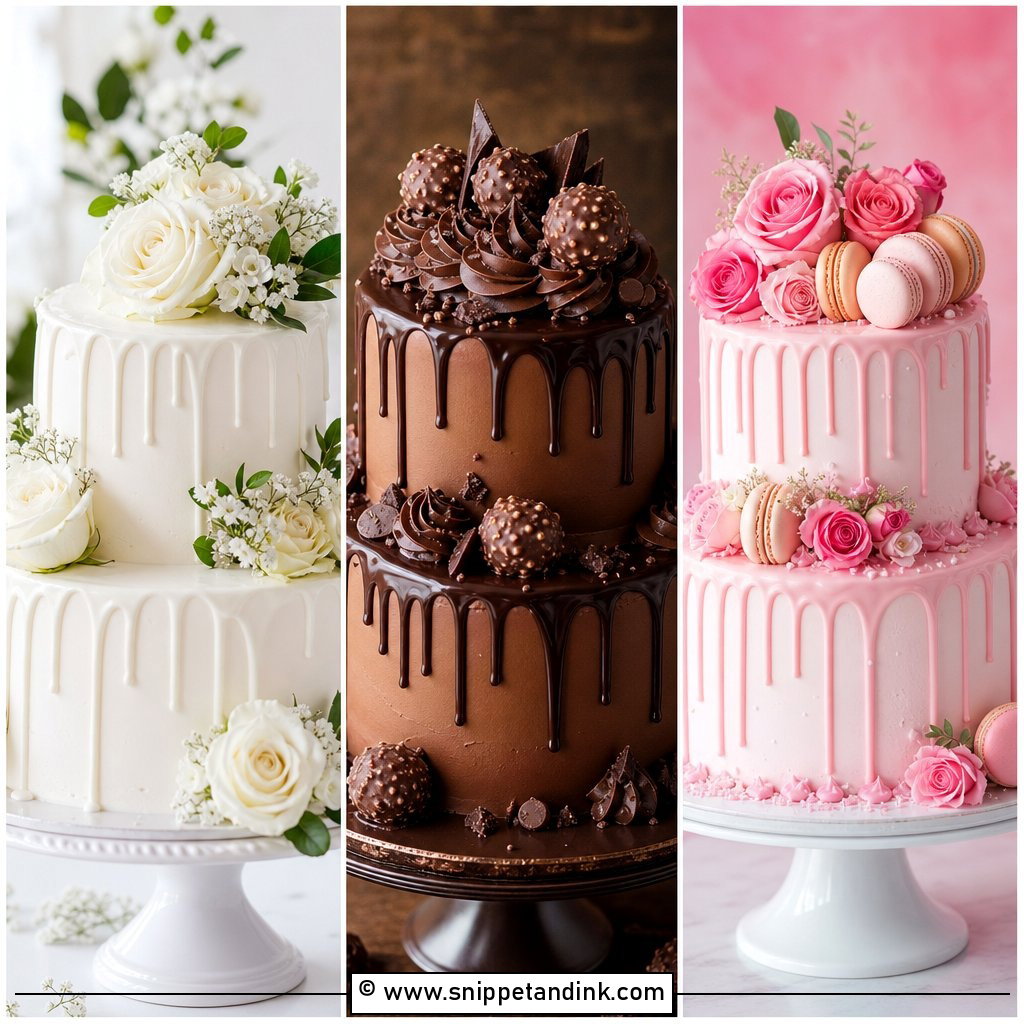
Pink is the easiest colour to tune. Pale pink stays classic; hot pink or fuchsia gives a bold reception some fun. Roses, peonies, ranunculus and piped cherry blossoms all work, either on white icing for contrast or a pale pink buttercream wash for something softer. Gold leaf, pearl dots or a little greenery finish it. I find this one sits best at garden weddings and brunch receptions, and the sweeter it looks, the cleaner I keep the tiers so it still reads as a wedding cake.
16. Floral Naked Wedding Cake
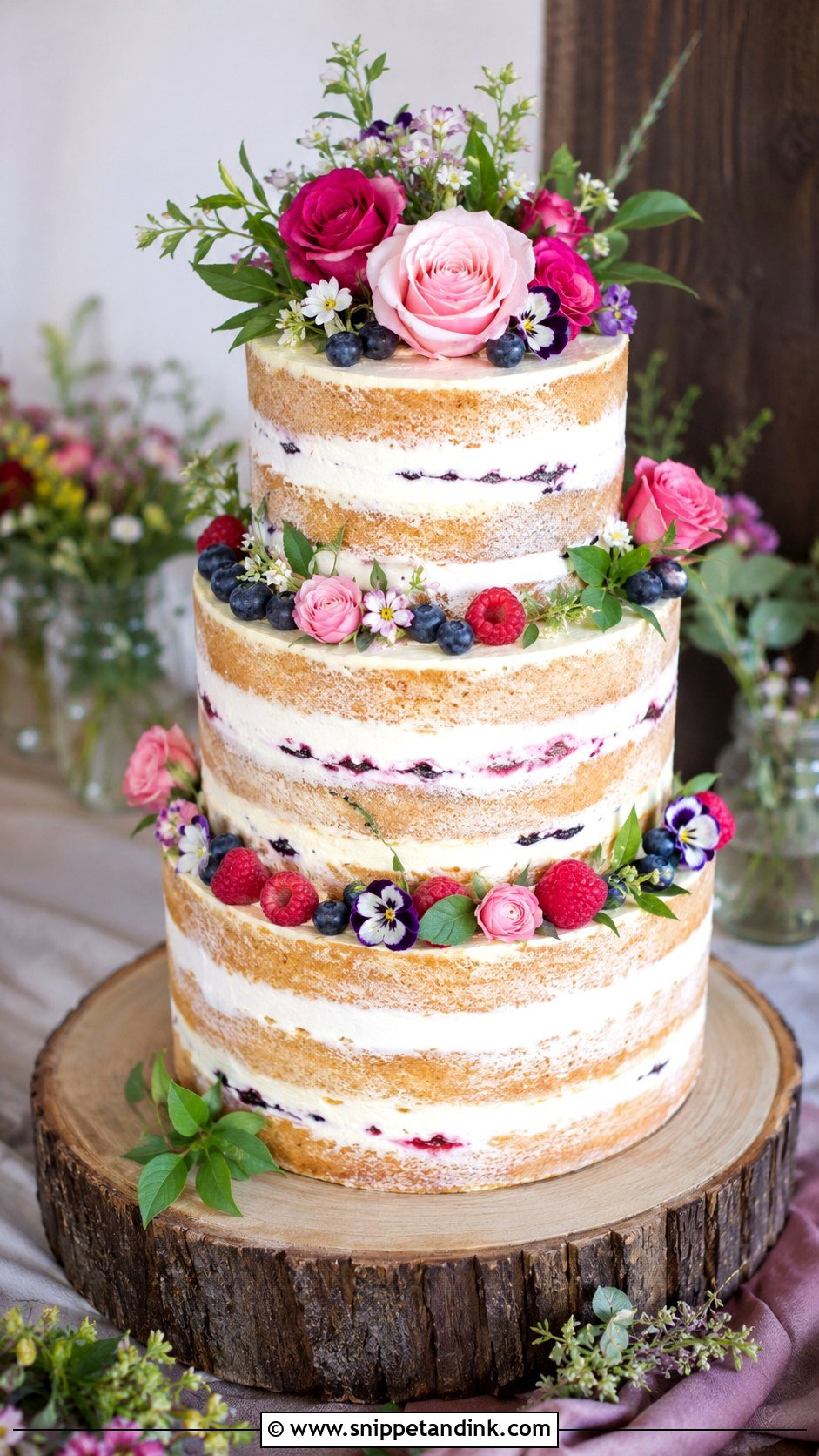
A naked cake has only a thin scrape of frosting, so the sponge layers show through and the flowers add the softness. Vanilla, lemon, almond, carrot and berry-filled cakes all suit it. The weakness is moisture: exposed sponge dries out in a few hours, especially outdoors, so I soak the layers with syrup, assemble as late as I can and ask how long it will sit before cutting. If the answer is five hours in the sun, I’ll suggest the semi-naked version below. Fresh fruit adds colour and some extra moisture.
17. Floral Semi Naked Wedding Cake
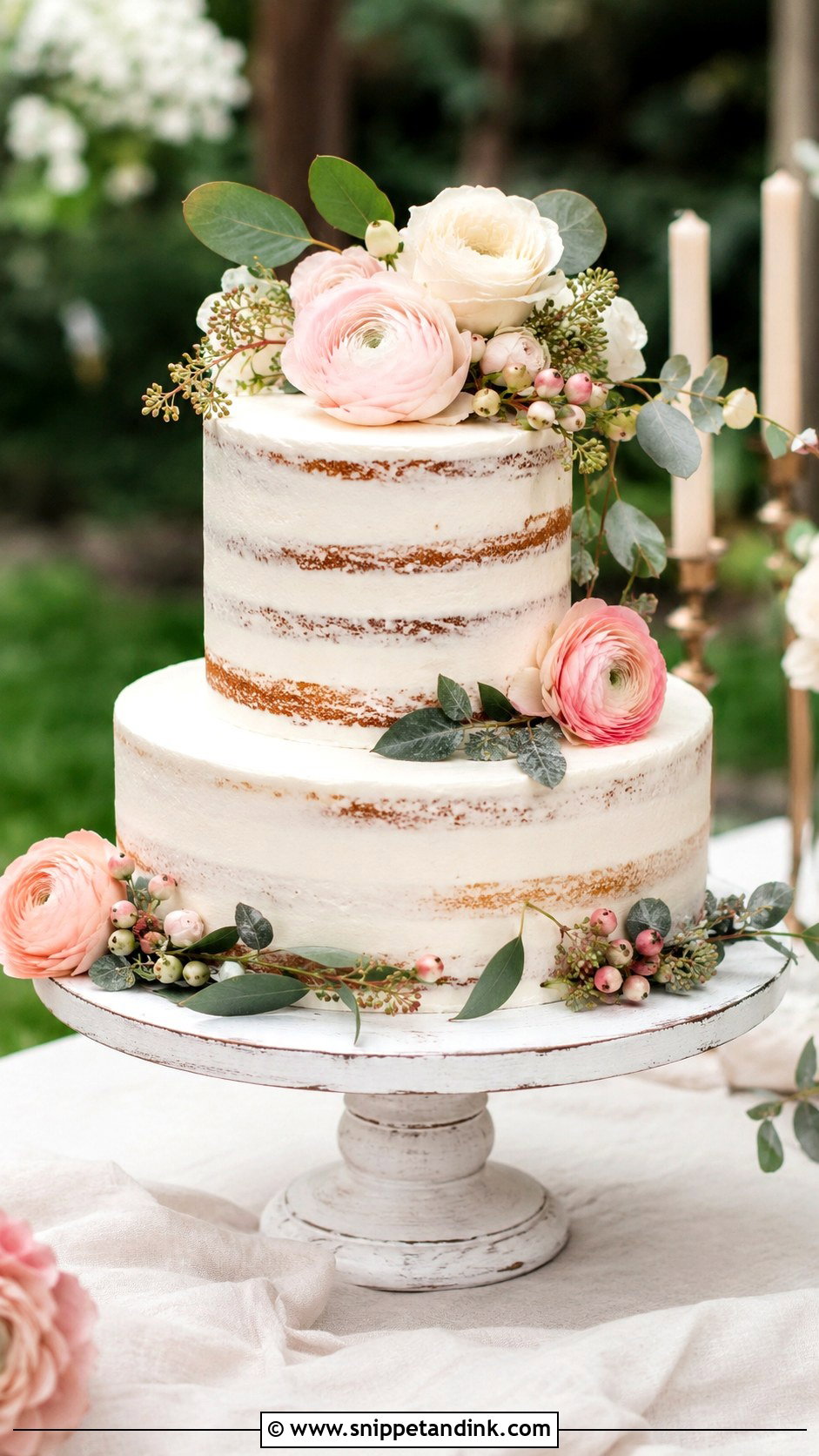
Semi-naked gives you the rustic look of exposed layers with one more thin coat of buttercream, so the cake peeks through but stays protected. That extra layer is what buys it time on a barn or vineyard table. I arrange flowers in small clusters per tier or gather them on top: ivory roses, blush ranunculus, berries, greenery, whatever is in season. It’s the version I suggest most for outdoor summer receptions. Wooden stands, linen tablecloths and warm lighting suit it well.
18. Floral Watercolor Wedding Cake
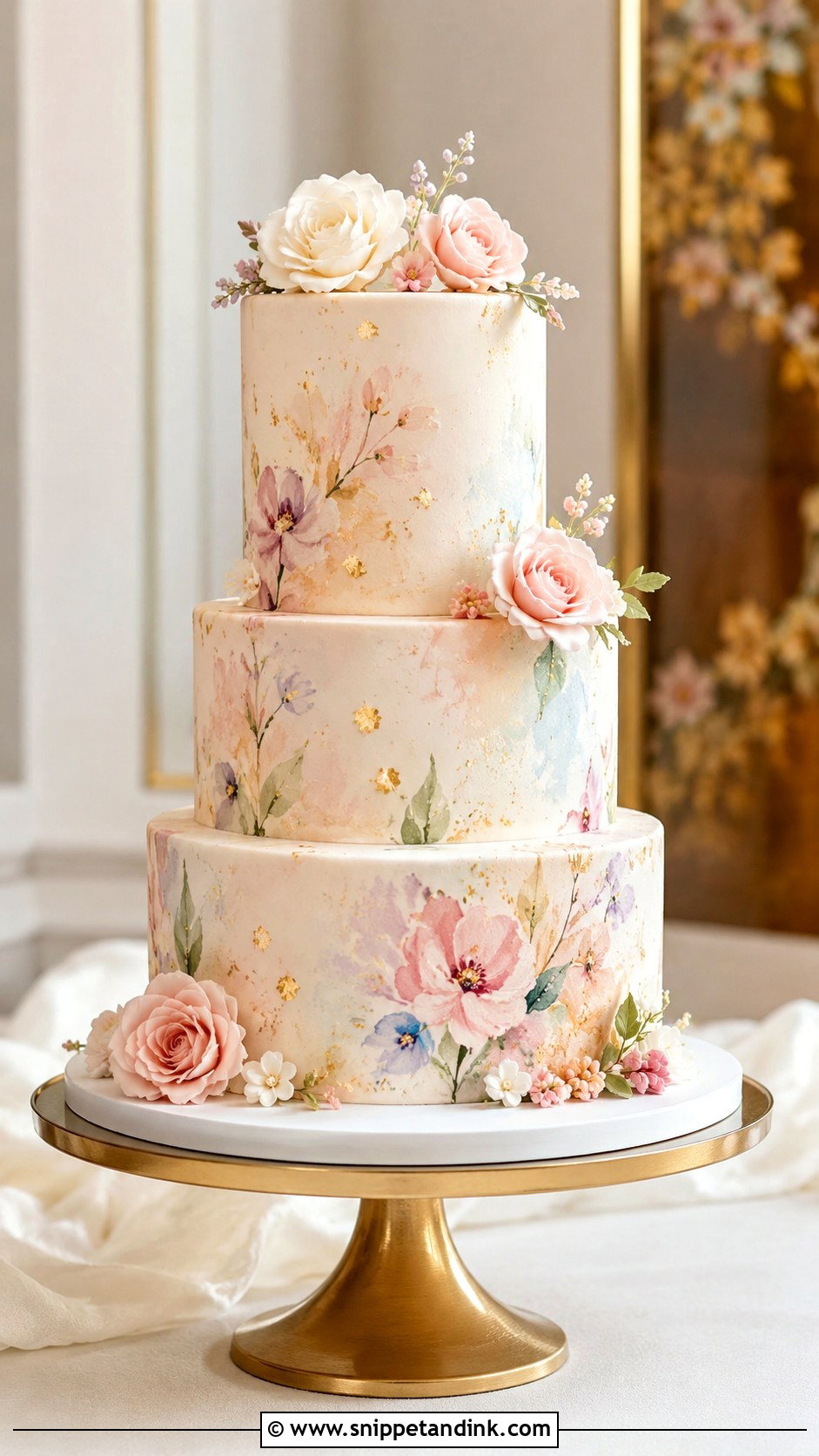
A watercolour cake gets its colour from soft washes brushed onto fondant or buttercream with diluted food colour: pink, blue, lavender, peach or sage. Fresh, sugar or hand-painted flowers then pick up the same colours. Fondant takes the brushwork more evenly; on buttercream the wash blooms and spreads, which some couples love and others find messy, so I show both on samples. I keep it pale so it still reads as a wedding cake, and add a few blooms on top or along one side without covering the painting.
19. Floral Tiered Wedding Cake
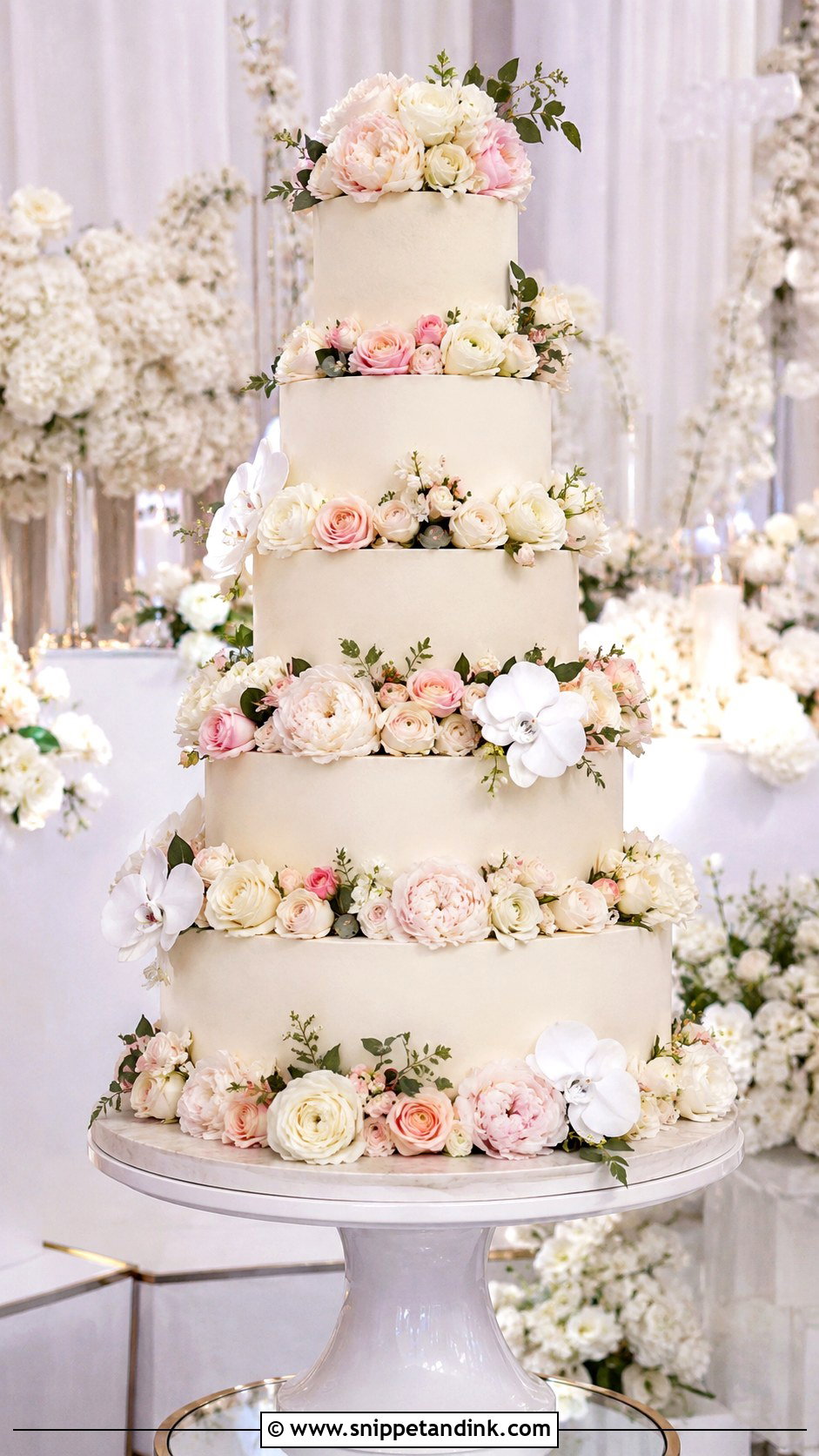
Extra tiers give you more surface for flowers and more room for flavours, which is the practical reason big weddings go tall. I keep each tier smooth and let clusters create movement, between tiers, wrapping round, or cascading down one side. One main flower plus one or two supporting blooms keeps it balanced. Structurally, anything over three tiers needs dowels and a central rod, and for very tall cakes I’ll often stack on site rather than drive it assembled. Ballrooms, garden tents and country clubs all suit it, and guests do appreciate being offered a choice of flavour.




20. Small Flower Wedding Cake
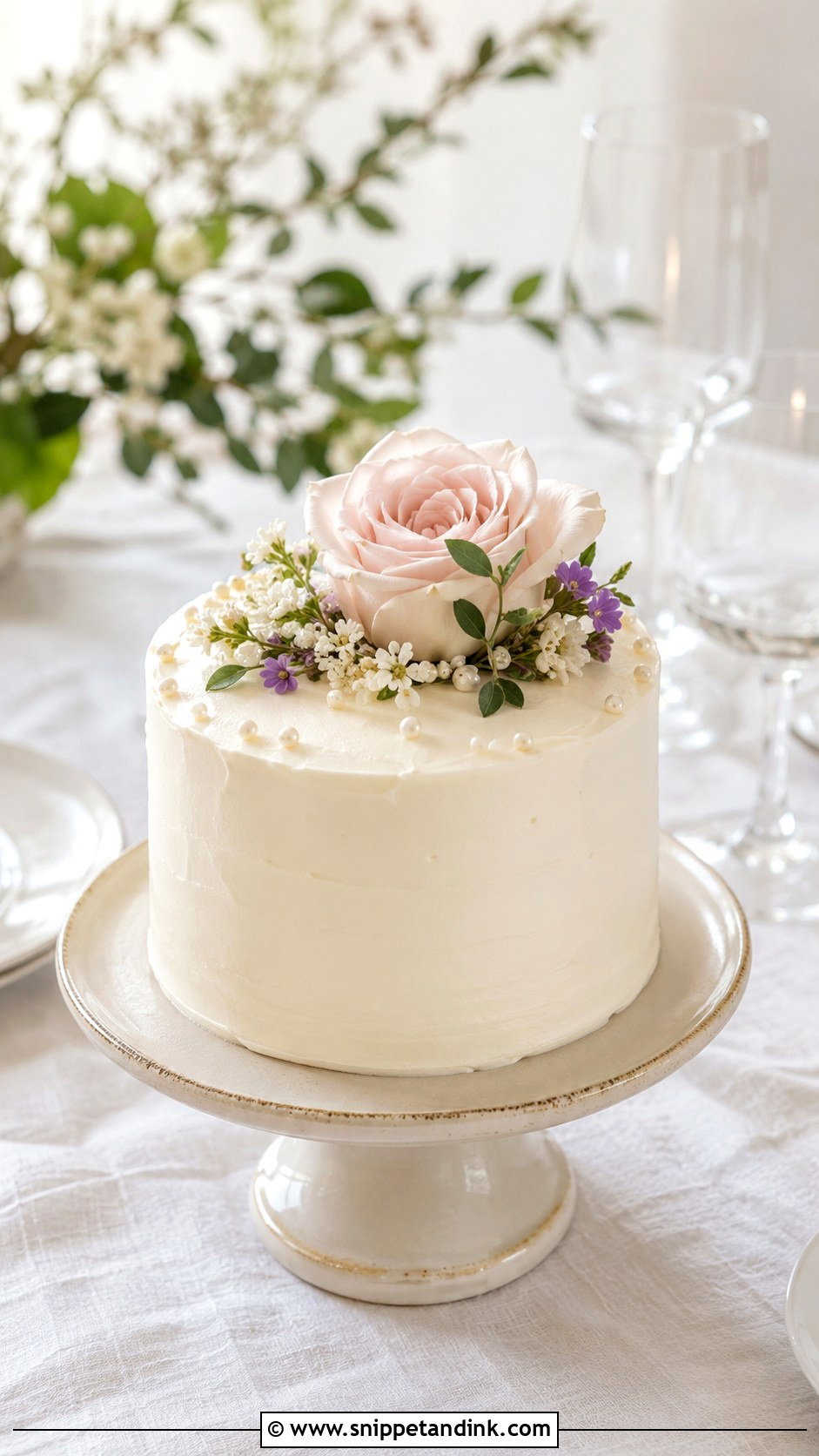
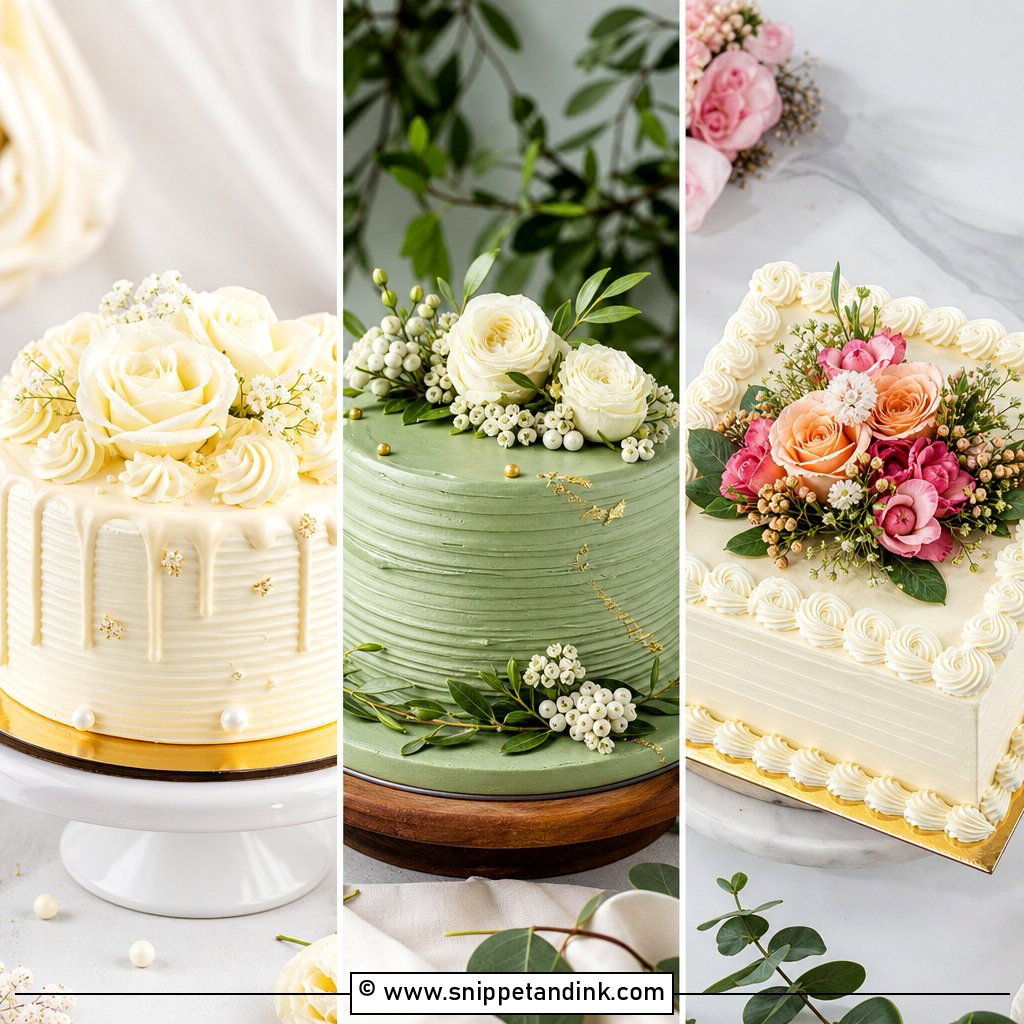
Intimate weddings, elopements and courthouse celebrations rarely need more than a one-tier or two-tier cake, and small cakes take floral styling surprisingly well. One statement bloom, a tidy pressed-flower pattern or a ring of blossoms around the top is enough. It’s easy to display, easier to transport, and lets you put money into one expensive flower instead of an armful. If you’re also serving other desserts, or keeping sheet cakes in the kitchen for slicing, this size makes good sense. Buttercream for softness, fondant for a crisp line.
From the Delivery Van to the First Slice
Most floral cakes that go wrong do so between delivery and cutting, not in the kitchen. A few things I plan around on every booking:
Heat and where the table sits
Buttercream starts to soften somewhere in the mid-twenties Celsius, and a cake table by a sunny window or the dance floor heats up fast. I ask to see the floor plan and move the table into shade if I can. Fresh petals wilt faster in the same spot, so the same move protects both.
Timing the flowers
Fresh blooms go on at the venue, as close to the guests’ arrival as the schedule allows, never the night before. Sugar flowers can travel already in place if they’re boxed well, though I still add the most fragile sprays on site. Allow the decorator thirty to forty-five minutes of uninterrupted table time.
Cutting and what happens after
Whoever cuts the cake needs to know which flowers come off first. I leave a short note with the caterer listing the picks and any wires. Sugar flowers can be lifted, boxed and kept as a souvenir; fresh ones get thrown away, and sprayed stems should stay out of any compost that feeds a vegetable bed.
Season First, Then Palette, Then the Flowers
Pressed petals feel botanical, a cascade feels dramatic, sugar flowers show their handwork and a small floral cake feels personal. Start with your season and venue, then let the palette decide the flowers. Before you sign anything, sit down with your baker and florist together and settle three things: which flowers are safe, who places them, and how long the cake will stand before it’s cut. Fresh blooms, piped petals or sugar flowers can each hold up through a long reception when that conversation happens early.
You'll Like These Ideas:











Leave a Reply