
Flowers are the decoration I’m asked for most, and the one that needs the most planning between baker and florist. A good floral cake isn’t just a cake with blooms pushed into it. The flowers have to suit the venue, the season and the rest of the reception, and they have to be safe sitting against something people are going to eat. Some couples want one quiet cluster on clean buttercream; others want cascading roses, pressed petals or a full garden of sugar work. Below are twenty floral cake styles, with notes from the decorating side on what each one asks of your baker.
Flowers I Won’t Push Straight Into Frosting
Plenty of popular wedding flowers are toxic or sprayed with chemicals that were never meant for food. Florist stock is grown to look good, not to be eaten. So the first conversation I have about a floral cake is which flowers can touch it and which need protecting or swapping for sugar.
- Keep off the cake or use sugar versions: hydrangea, delphinium, lily of the valley, sweet pea, foxglove, daffodil and oleander.
- Lilies: the pollen stains frosting orange and is harmful, so the stamens come out or the lily stays off.
- Baby’s breath is mildly irritating, so it sits on a barrier rather than in the frosting.
- Generally fine with care: roses, orchids, ranunculus, lisianthus and dahlias, with stems sealed.
Sealing means wrapping each stem in floral tape and setting it into a food-safe pick or a small plastic straw, so sap never meets the sponge. For a heavy cluster I put a disc of parchment or wafer paper under the flowers. Guests will still try to eat a petal now and then, so the flowers on the cake should be the cleanest ones in the order.
1. Fresh Flower Wedding Cake
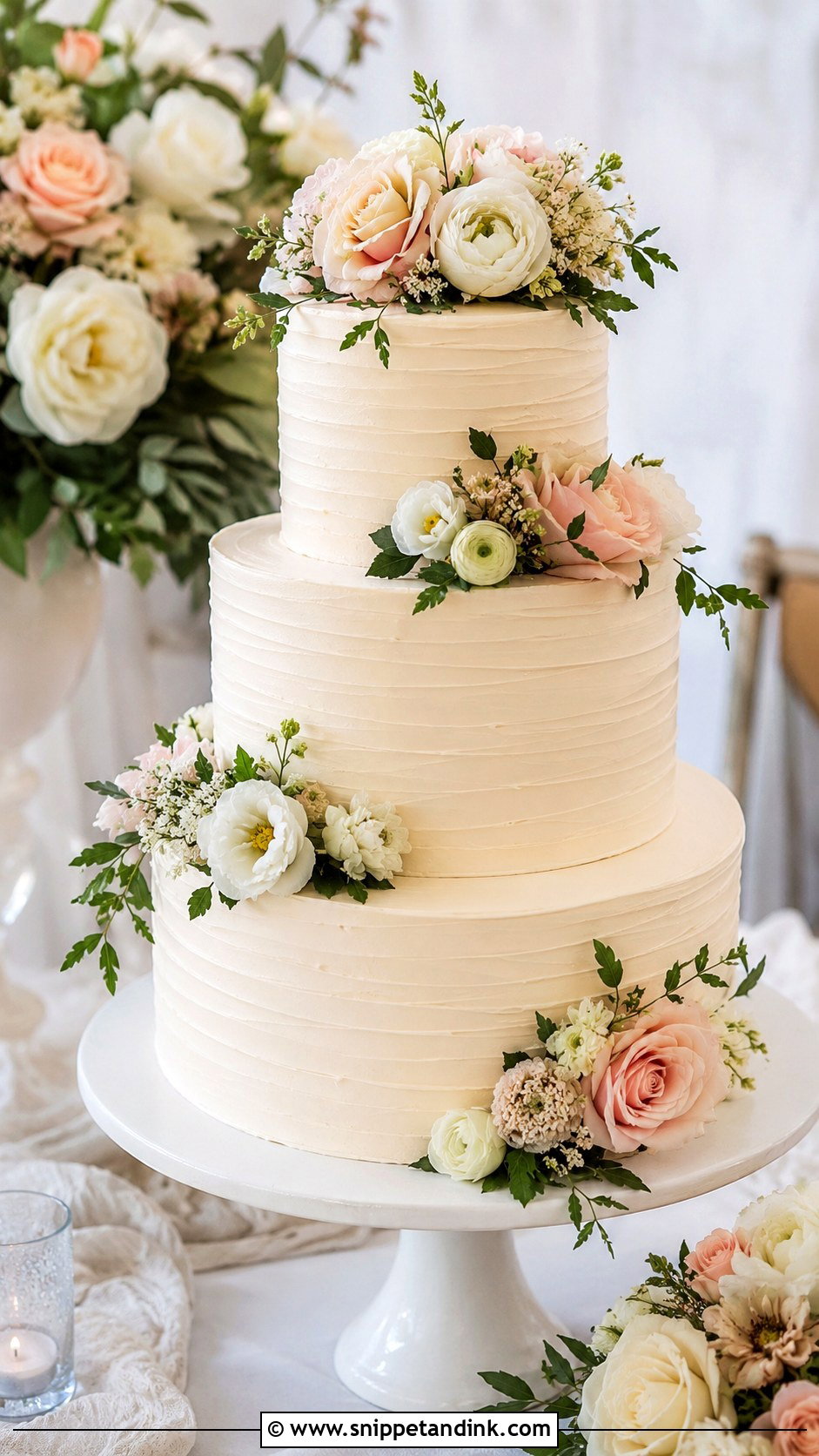
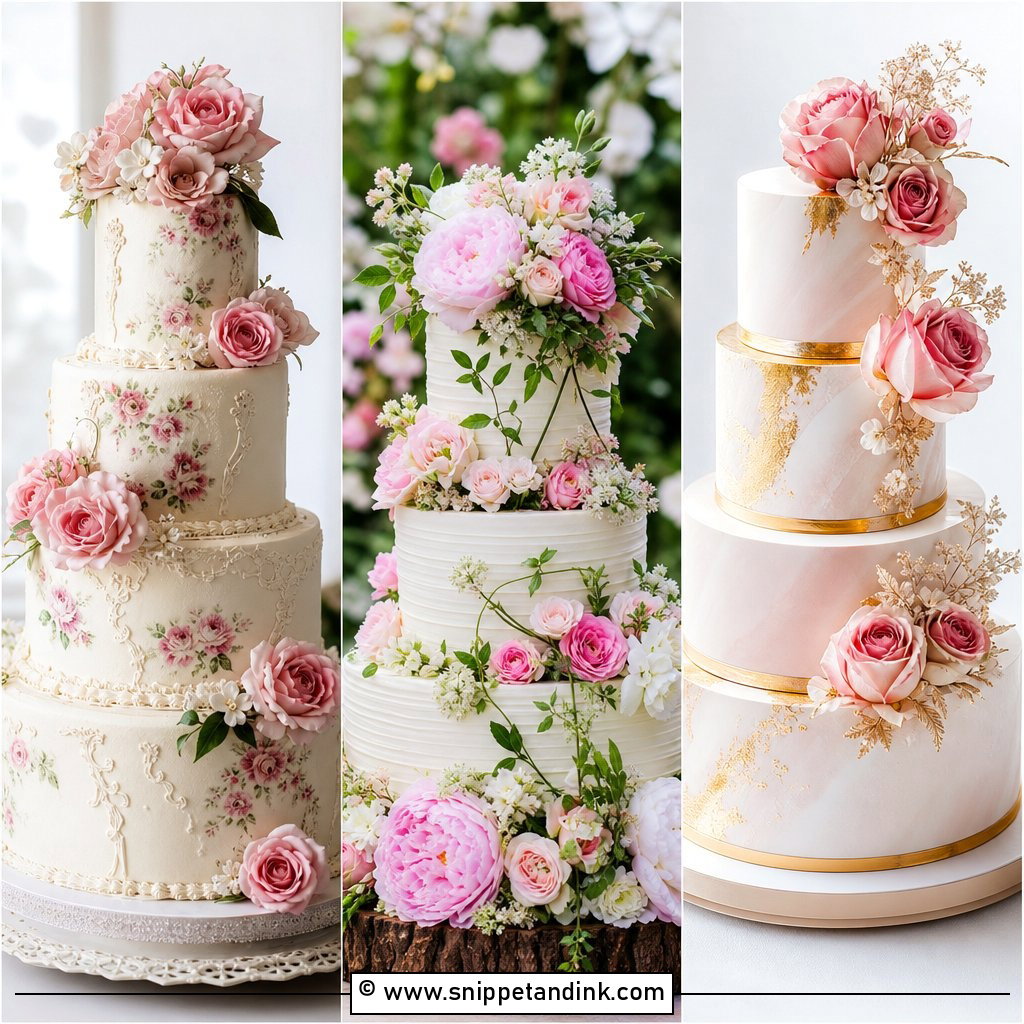
Real blooms bring movement and softness that piping can’t quite copy. Roses, ranunculus, lisianthus, orchids and dahlias all work. What matters most is the order of operations: the florist chooses blooms that are grown without heavy spraying where possible, and every stem gets wrapped in floral tape or set into a food-safe pick before it goes near the frosting. Plain white or ivory buttercream gives fresh flowers the cleanest background. I place them in small clusters on each tier rather than covering everything, partly for looks and partly so fewer stems touch the cake.
2. Pressed Flower Wedding Cake
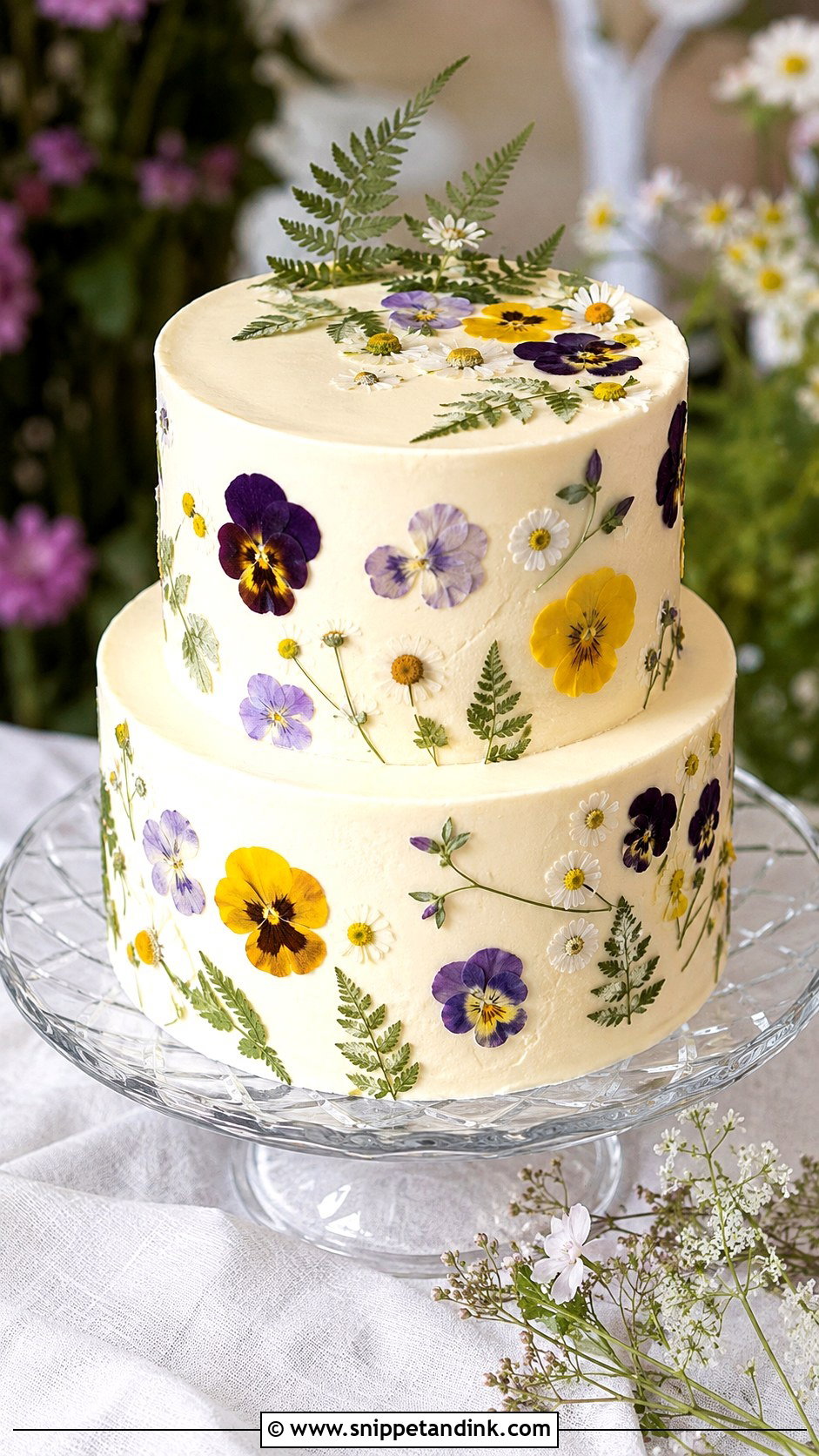
Pressed petals are laid flat against smooth buttercream or fondant, so the cake reads like a botanical print. Pansies, violas, chamomile, cornflowers and small herb leaves all press well. The flowers need to be edible varieties pressed for food use, and they are best applied the day the cake is finished. On buttercream they soak up a little moisture and darken after many hours, so I keep the base pale and apply them late. It suits a garden or spring reception and adds no height or weight at all.
3. Sugar Flower Wedding Cake
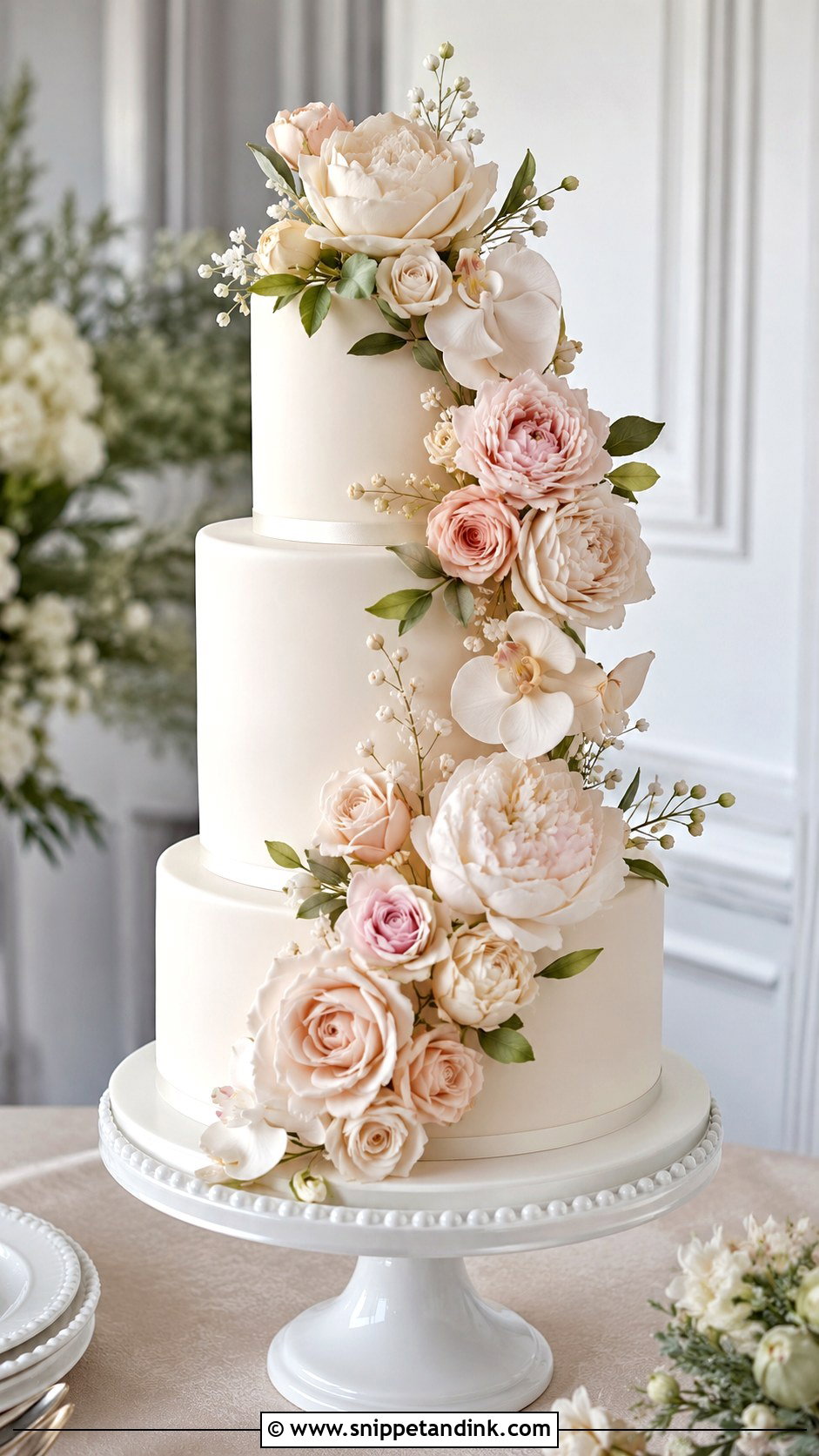
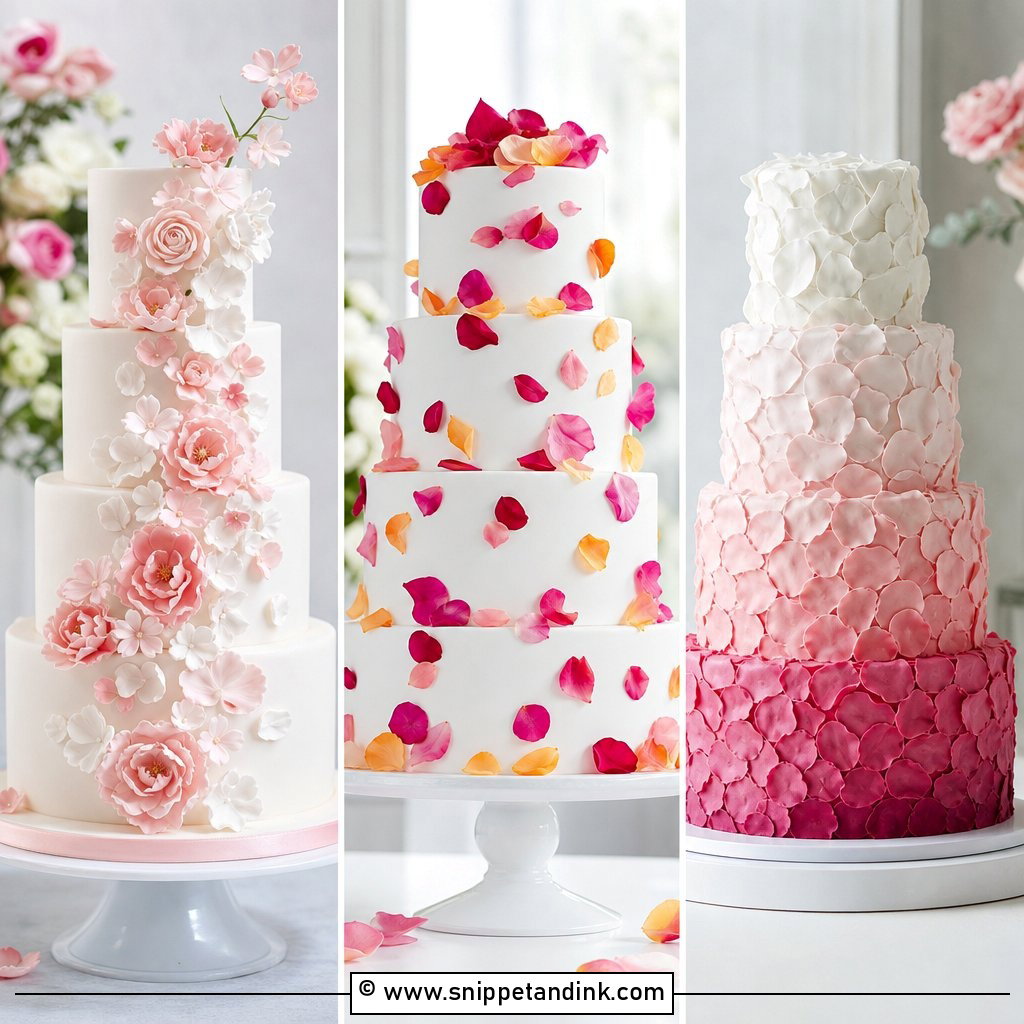
Gum paste flowers are what I recommend when a couple needs blooms that won’t wilt. Roses, peonies, orchids, poppies, magnolias and small fillers can all be shaped by hand, petal by petal, and tinted to an exact shade like dusty blue, mauve or champagne. They are slow to make, often hours for a single large rose, so they need to be ordered well ahead and are priced accordingly. Sugar flowers hate humidity and condensation, so a cake carrying them should not go in and out of a fridge on the day. One statement spray looks modern; flowers across every tier look classic.
4. Cascading Flower Wedding Cake
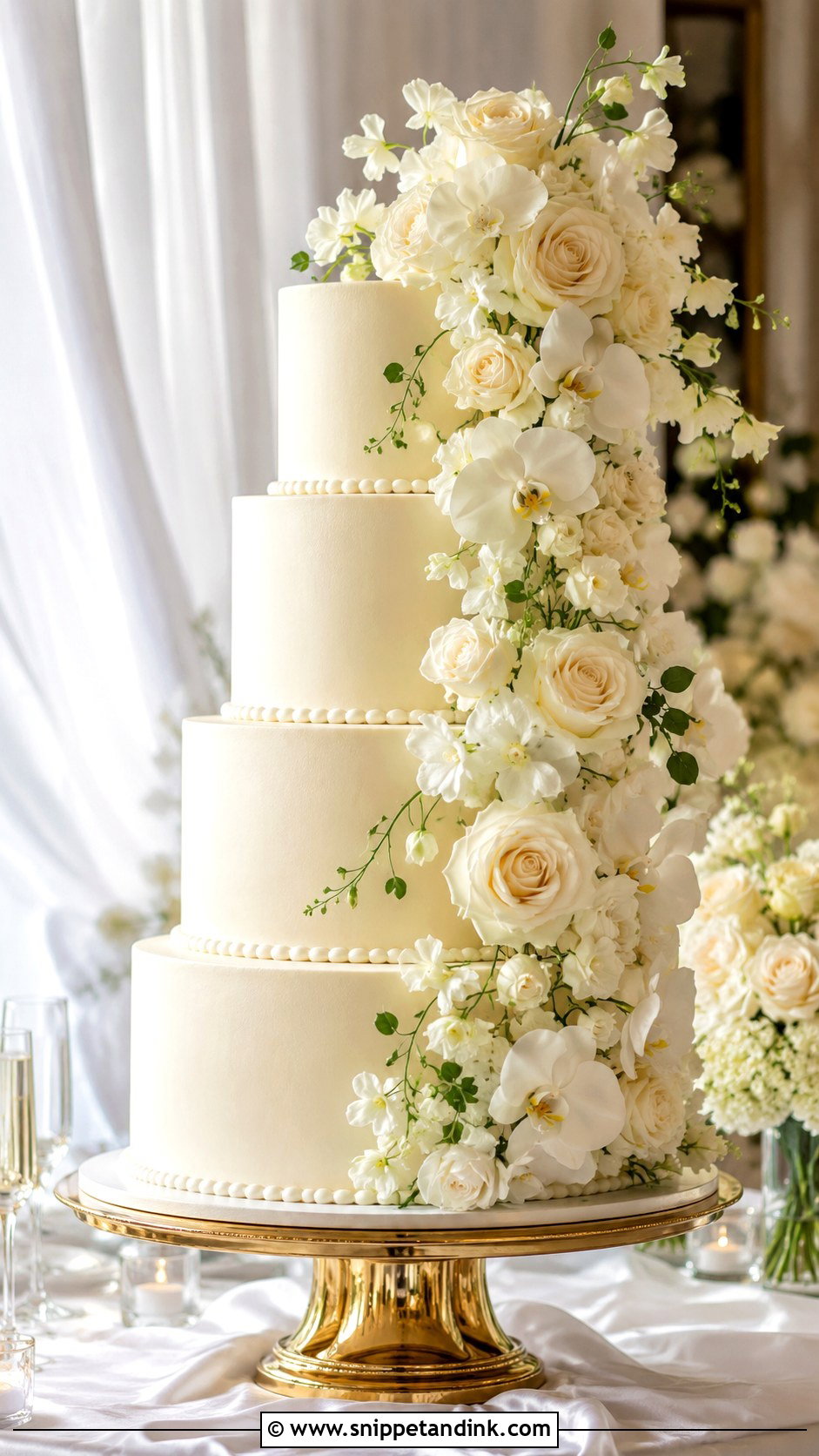
A cascade trails from the top tier down one side, the way a bouquet falls over an arm. It needs height to look graceful, so I’d plan it on three or four tiers rather than two. Roses, orchids, greenery and small fillers suit it. Sweet peas show up in a lot of cascade photos, but the plant isn’t edible, so in my work they are either sugar or kept off the frosting on a barrier. Smooth frosting lets the line of the cascade show. Blush and ivory keep it soft; berry or coral makes it bolder.
5. Minimalist Flower Wedding Cake
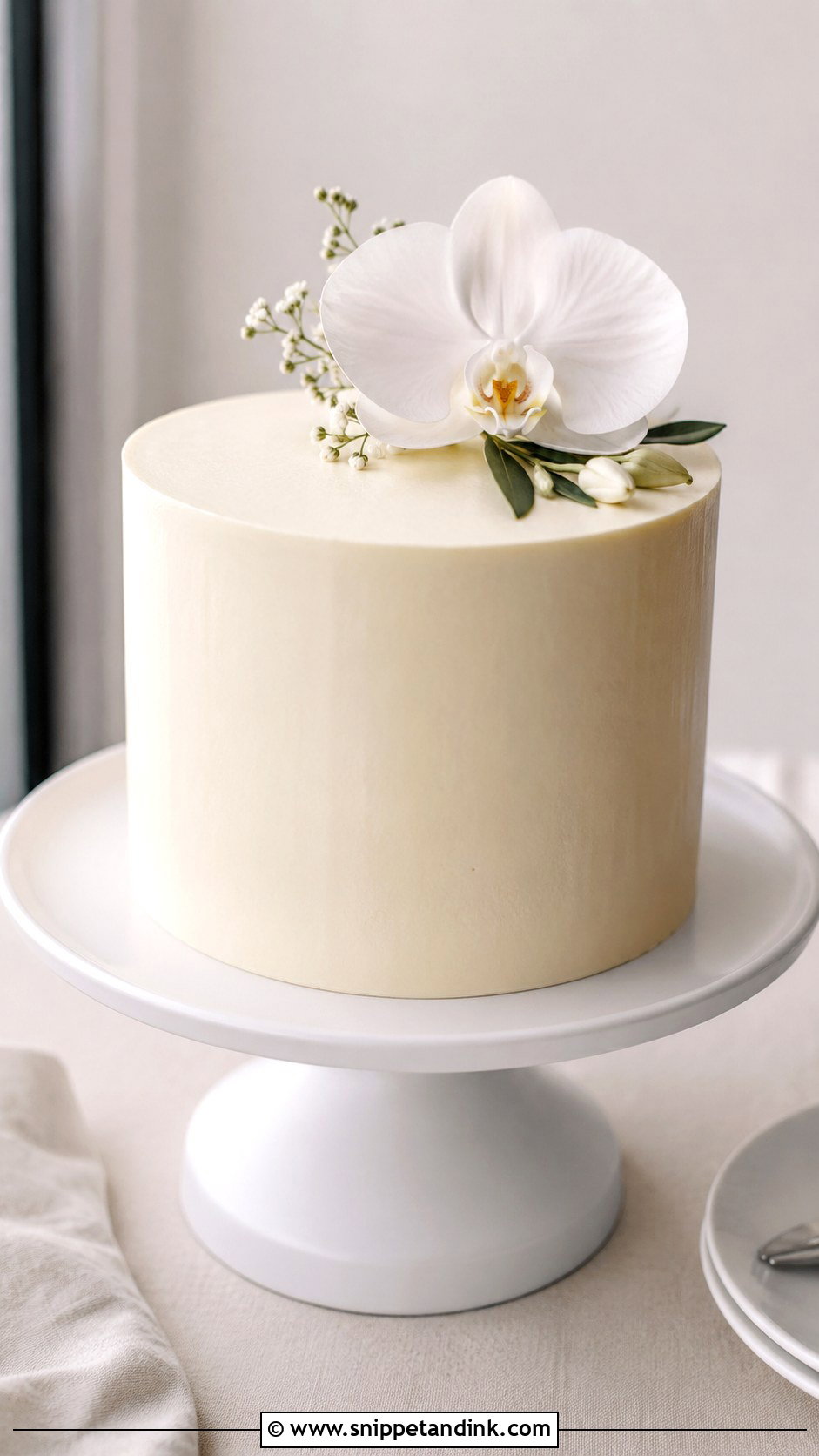
A single rose, orchid or anemone on smooth, neutral frosting is the most restrained floral cake, and it suits modern venues, courthouse weddings and small receptions. The catch with one flower is that there is nowhere to hide. Its petals need to be perfect and its stem must be fully sealed, because everyone’s eye goes straight to it. A sharp-edged round cake gives the sleekest finish; soft buttercream edges feel more relaxed. Let the shape and one well-chosen bloom carry the design.
6. Rustic Flower Wedding Cake
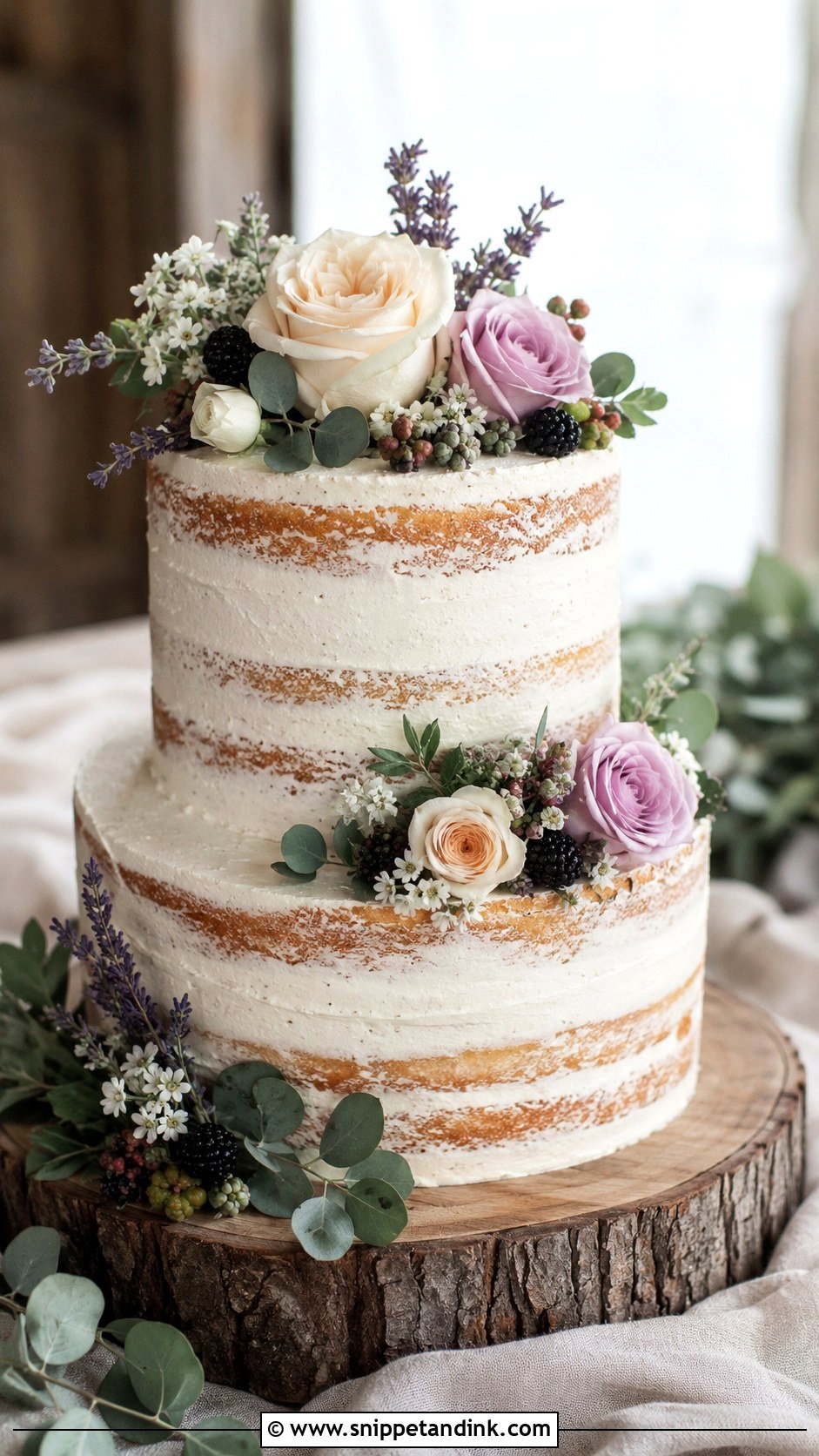
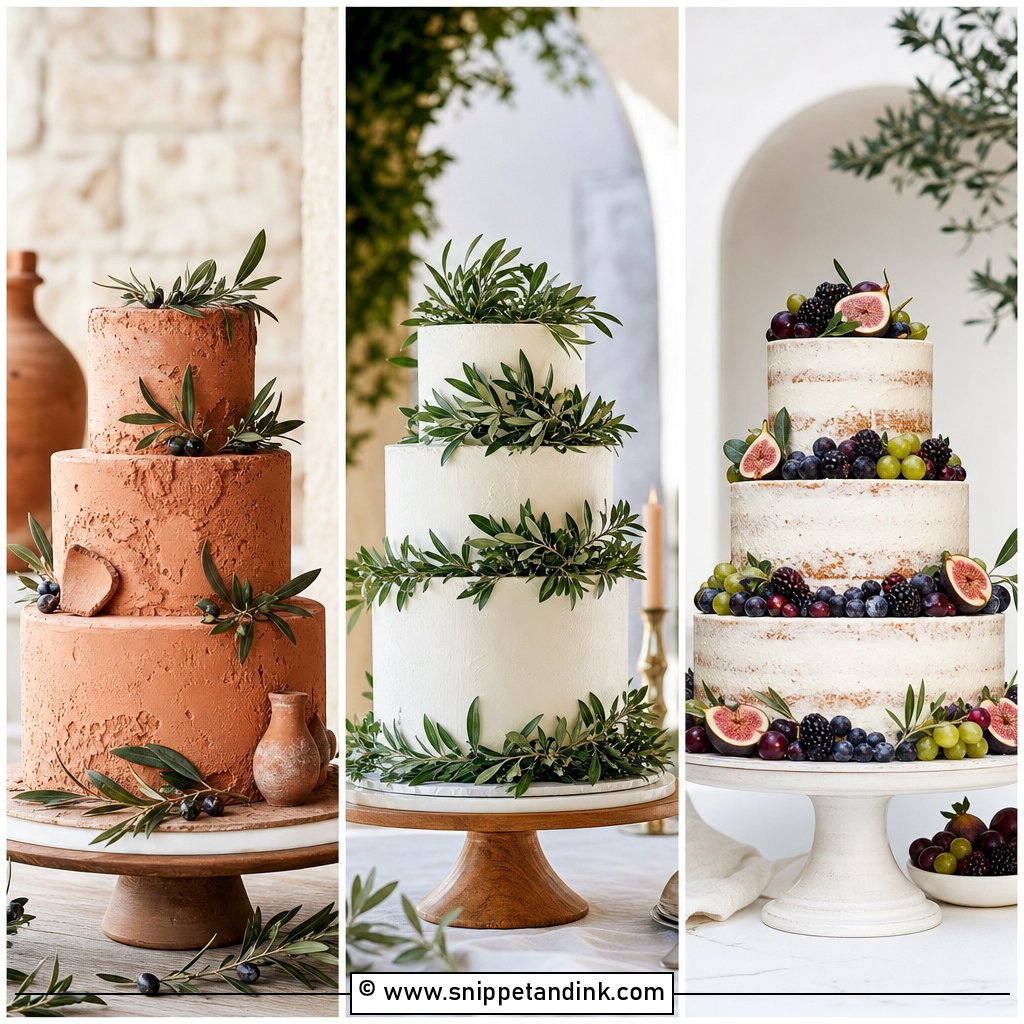
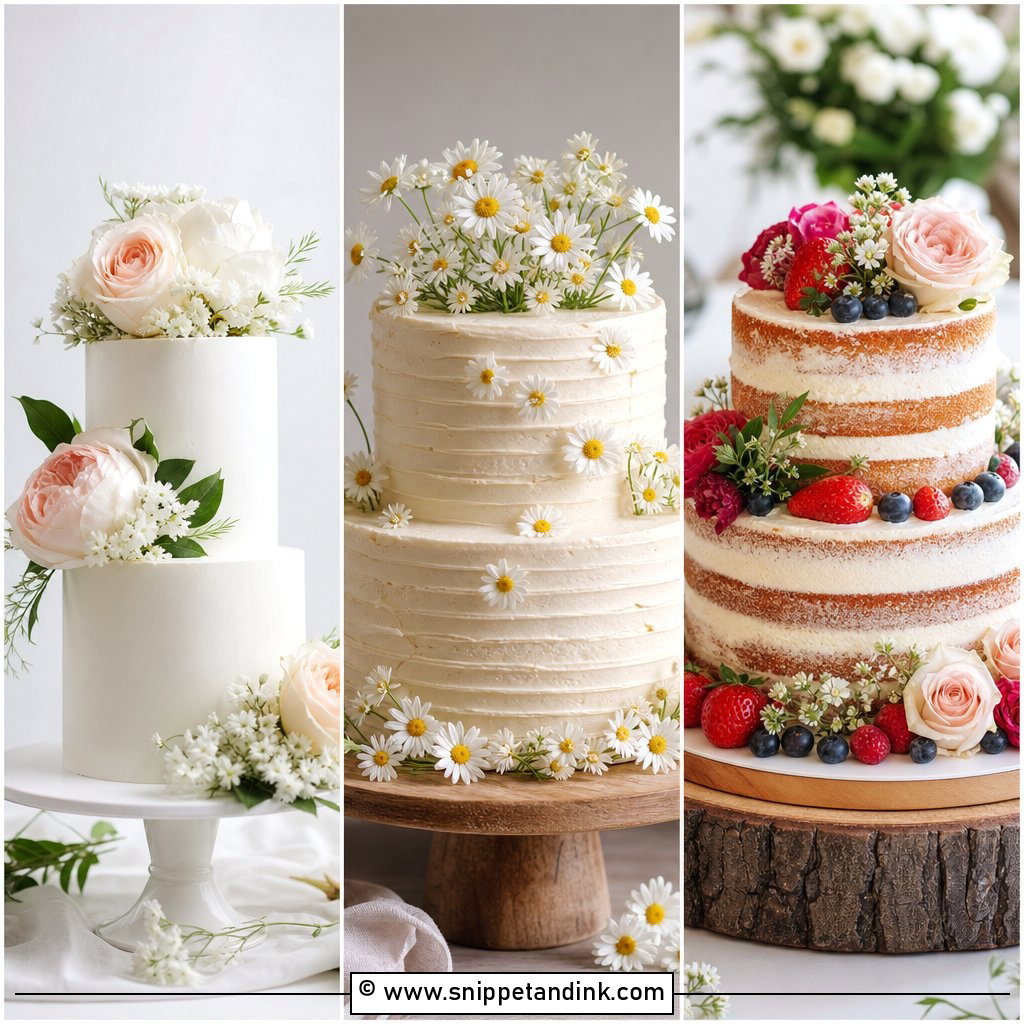
Semi-naked buttercream, where the sponge layers peek through a thin scrape of frosting, is the usual base for a rustic cake at a barn, backyard or countryside reception. Fresh flowers, greenery, berries, figs and herbs make it look abundant. Be aware that a semi-naked finish has less frosting protecting the sponge, so it dries out faster on a display table. I’d keep it out of direct sun and set it out closer to cutting time. Roses, lavender, chamomile and eucalyptus suit it, displayed on a wood slice or a plain linen-covered table.
7. White Flower Wedding Cake
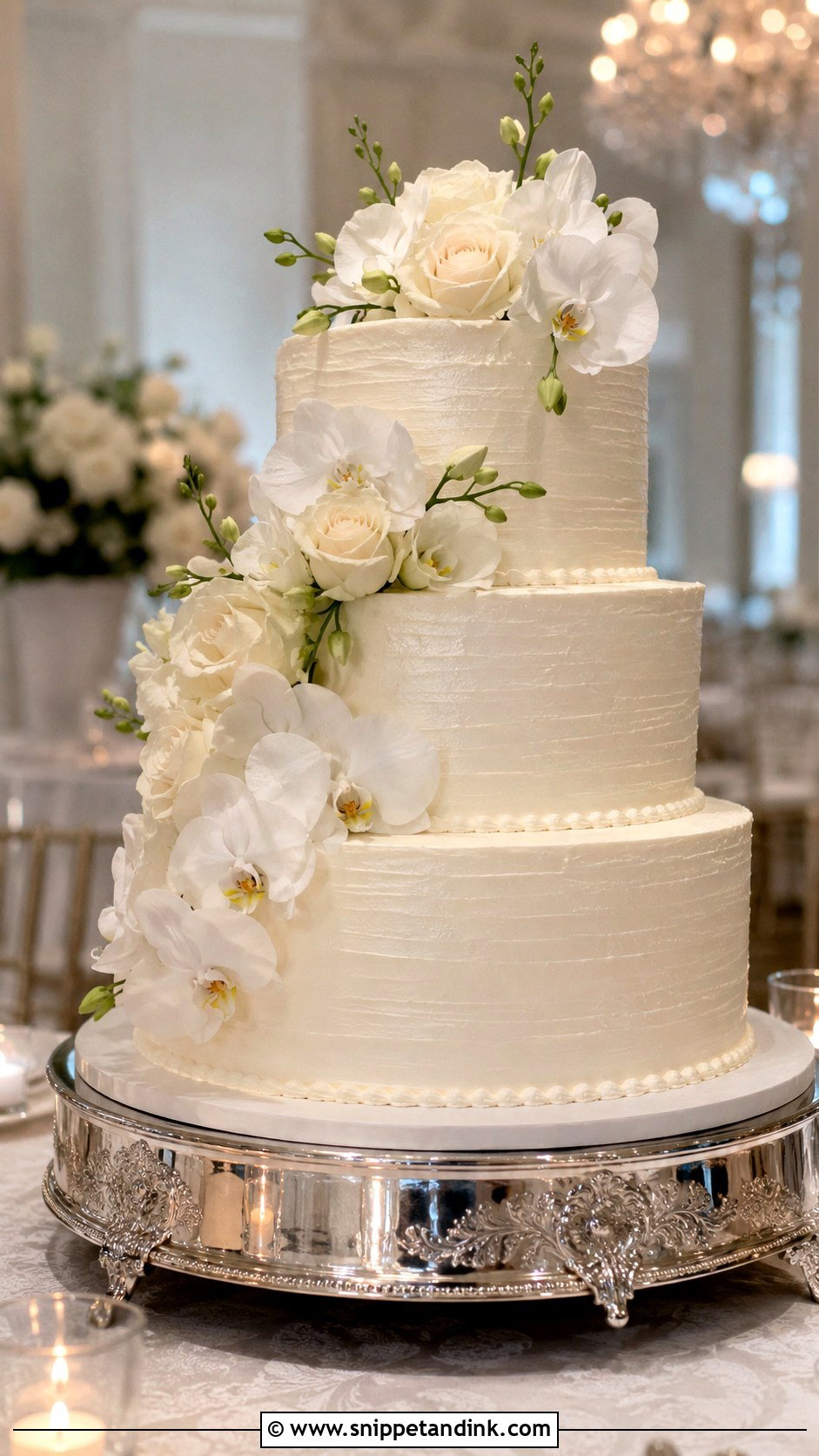
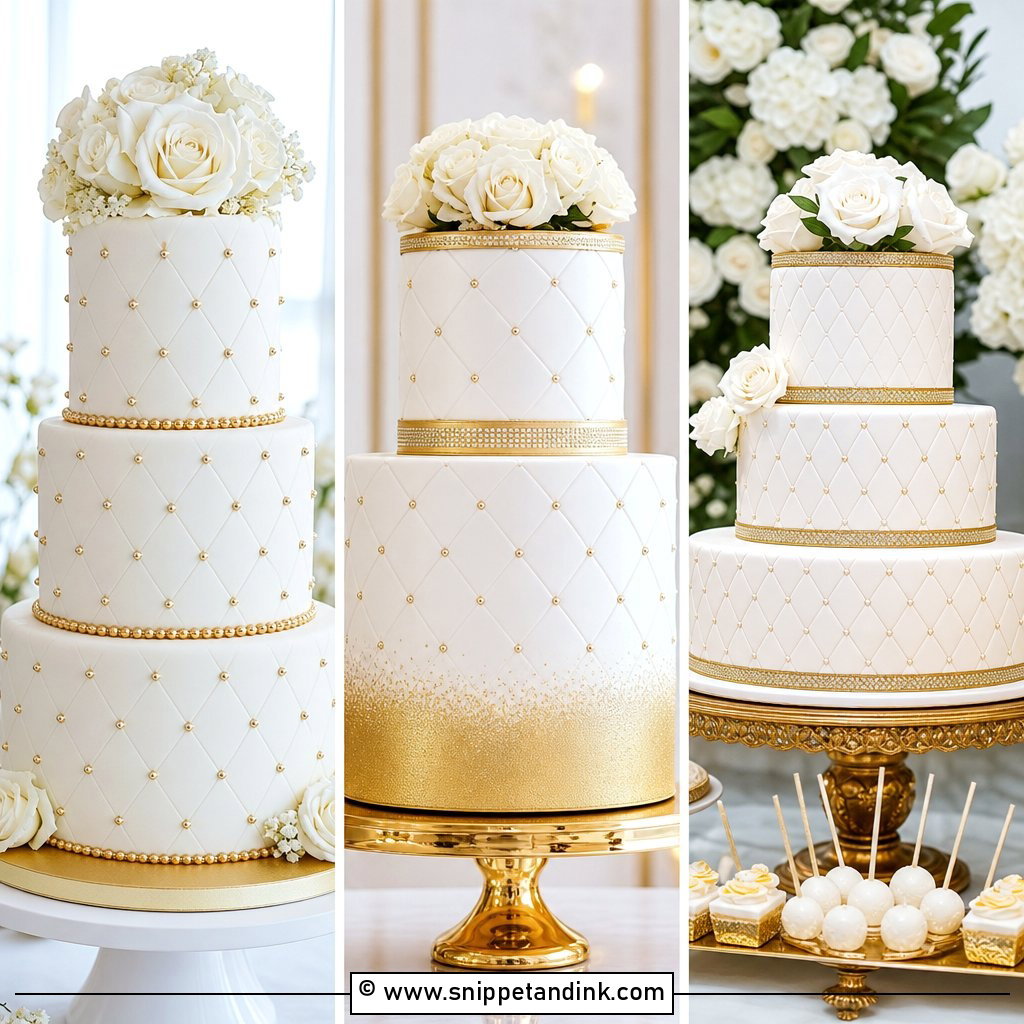
White flowers on ivory frosting are easy to fit into almost any wedding, from black-tie to coastal. White roses, orchids, peonies and ranunculus add texture, and pearl accents or fine piping finish the look. The problem with all-white is that it can look flat in photos, especially under bright light. I mix flower sizes deliberately and add a little greenery or a few tight buds so the shapes read. Hydrangea is often used here, but it isn’t a food-safe flower, so I keep it on a barrier or make it from sugar.
8. Blush Flower Wedding Cake
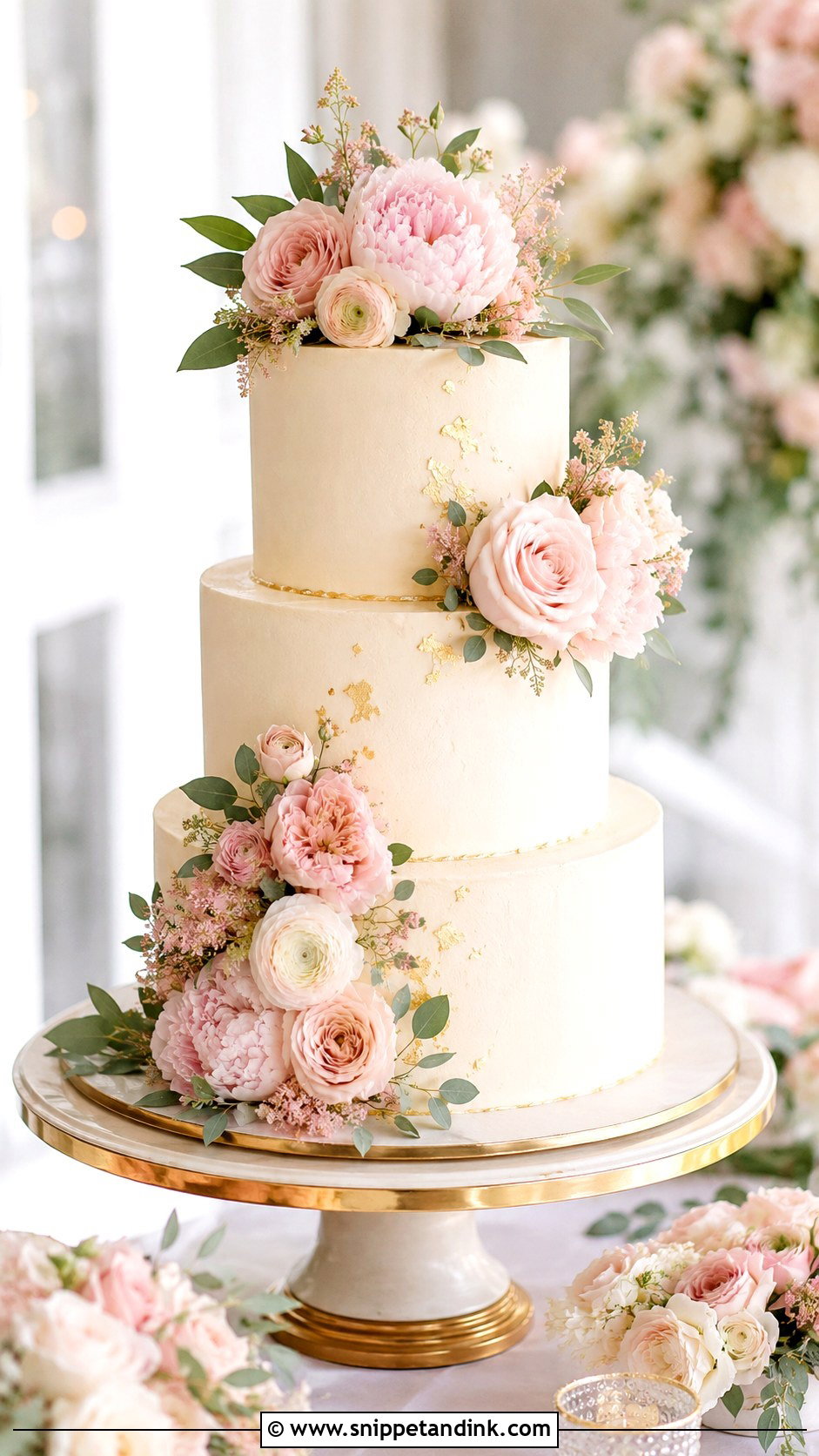
Blush roses, pale pink peonies, ranunculus and sugar sweet peas against ivory, cream or champagne frosting give soft color without shouting. This palette sits naturally in a spring wedding, a ballroom or a garden. Ruffled buttercream, pearls or a soft drip add texture. One thing I watch: very pale pink fresh flowers can look almost white in a flash-lit photo, so I add a few blooms a shade deeper. Gold accents, sage greenery and a couple of ivory flowers keep it balanced.
9. Blue Flower Wedding Cake
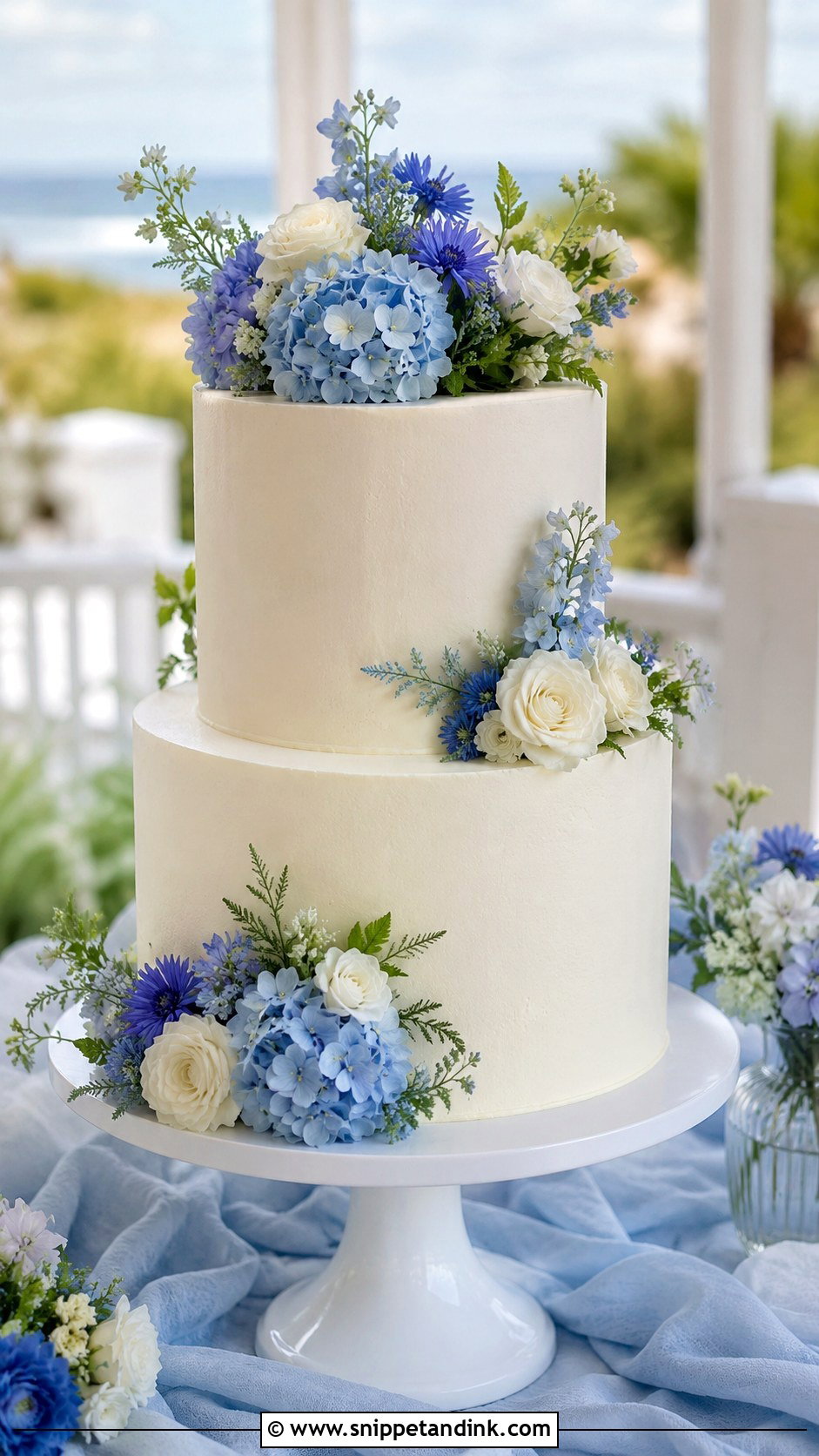
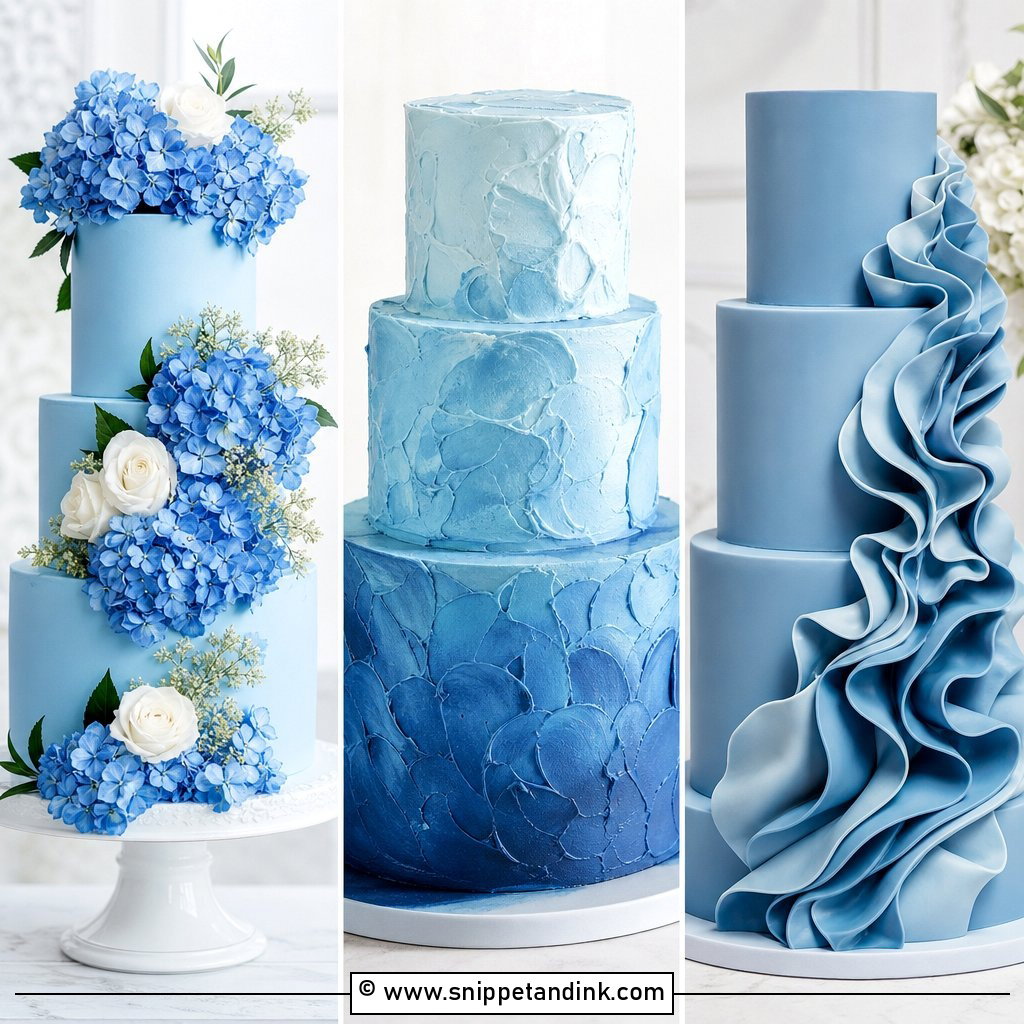
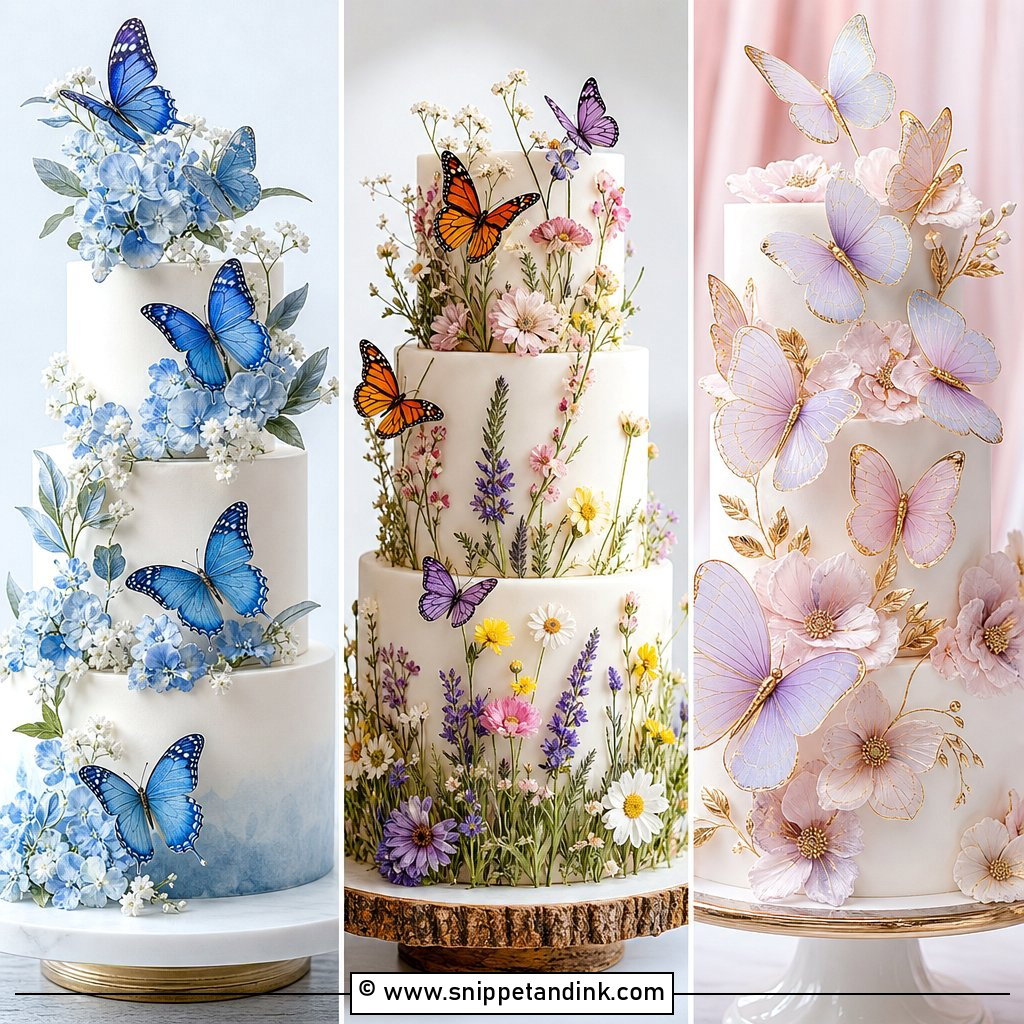
Blue on a white or pale grey cake looks fresh and slightly unexpected, and it suits coastal weddings and anyone wanting a nod to something blue. Delphinium and hydrangea are the blooms that usually give that color, and both are toxic, so they should never sit directly in frosting. Cornflowers are edible and safe, but small. In practice, sugar flowers are the easiest way to get an exact blue, from soft powder tones for daytime to deeper navy for a formal evening, with white roses and silver details alongside.
10. Wildflower Wedding Cake
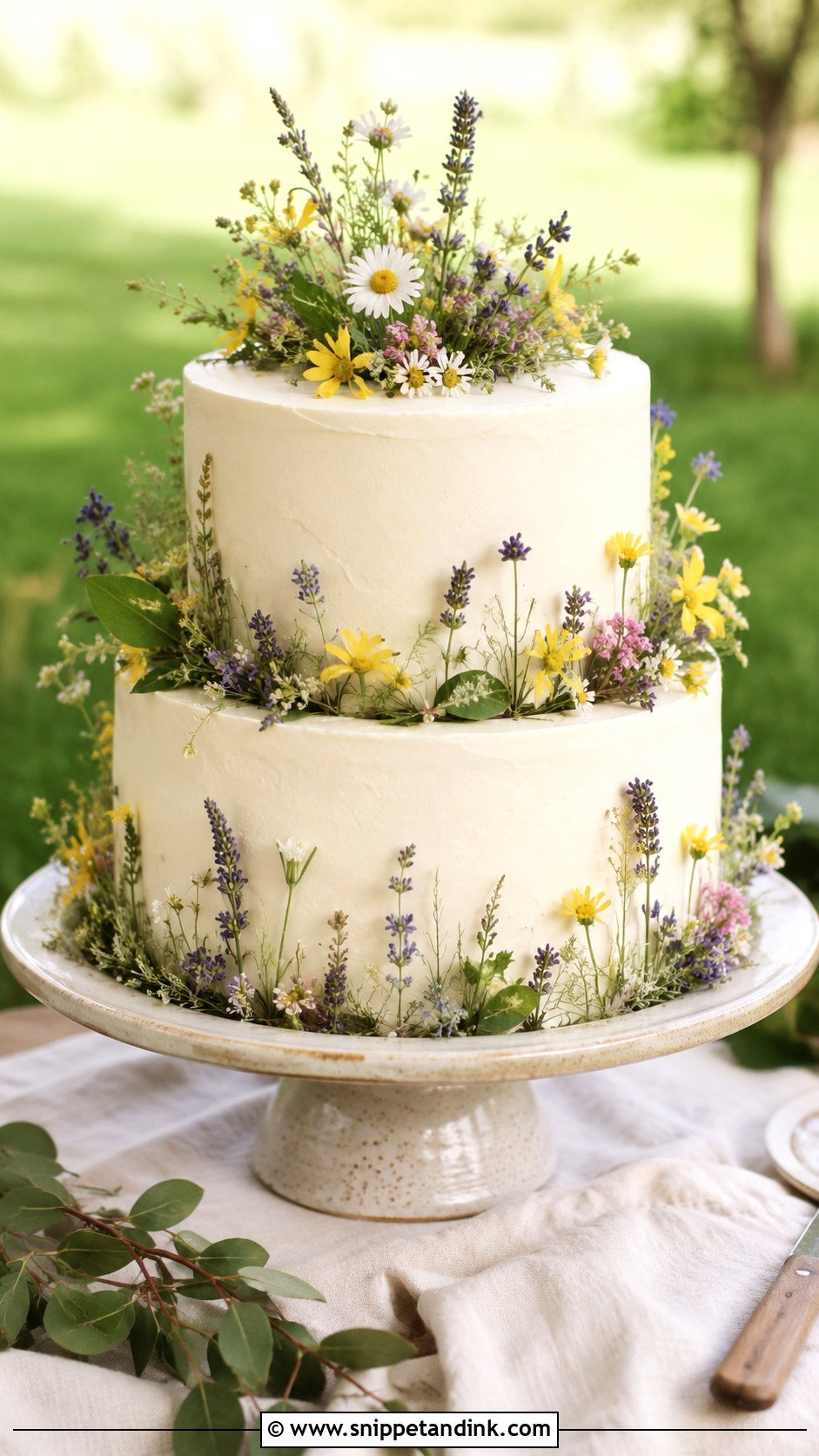
Small colorful blooms, fine stems and loose greenery give a wildflower cake its meadow feel, and it fits outdoor, boho and summer receptions. Pressed wildflowers give a flat botanical look, while fresh or sugar ones add height. The arrangement needs to look loose but not messy. I lay out the flowers on a board first and plan where each color sits, so yellow, lavender, pink and blue repeat around the tiers rather than bunching on one side.
11. Garden Flower Wedding Cake
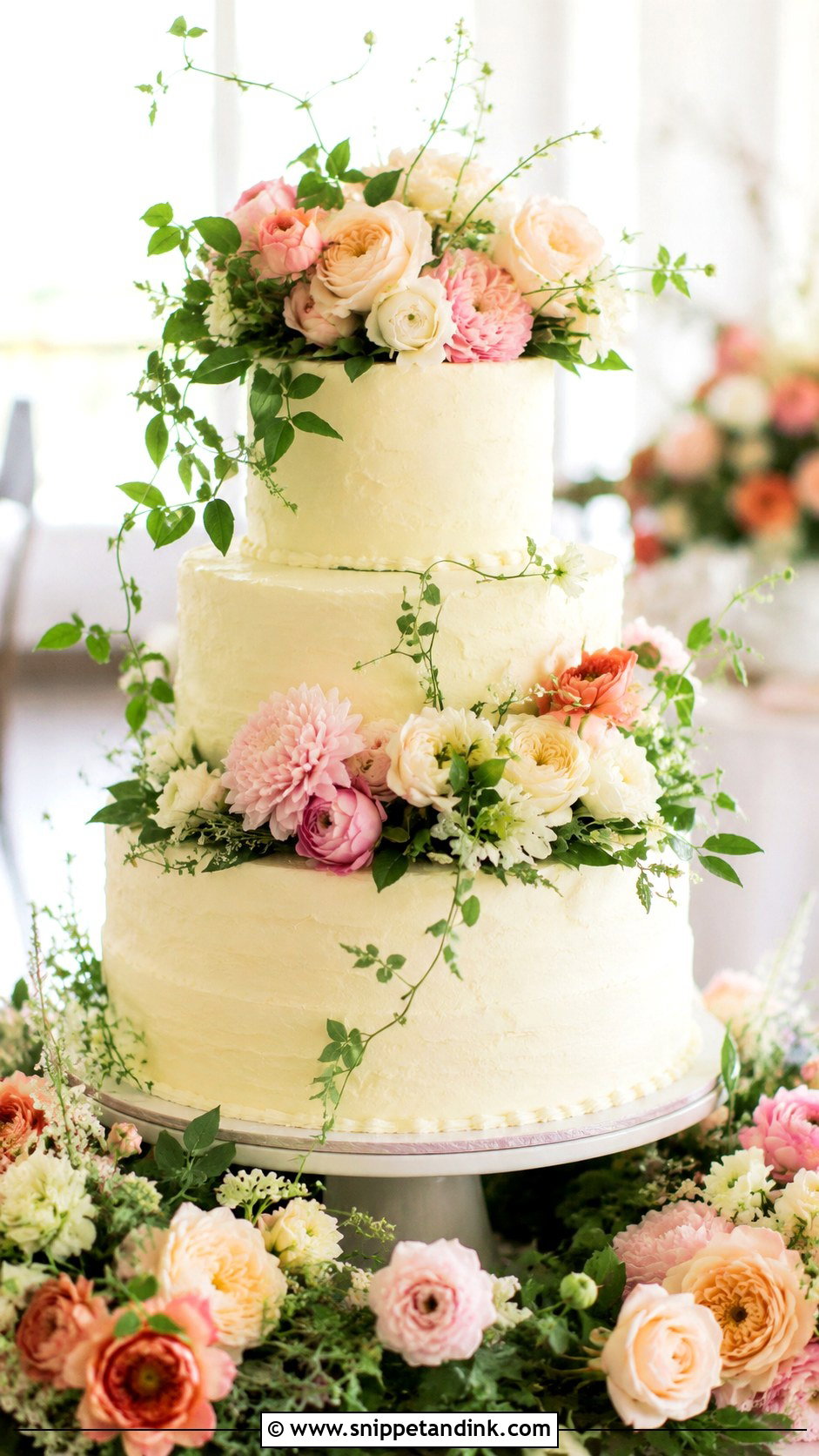
A garden cake layers roses, peonies, ranunculus and dahlias with trailing greenery for a full, natural effect. It suits a greenhouse, botanical garden, estate or tented reception. The more flowers, the more weight, and big blooms like dahlias and peonies are heavy. I make sure the tiers are properly doweled to take it, and I keep the colors tied to the table arrangements so the dessert table looks planned. Aim for abundant rather than crowded; leave some frosting showing.
12. Orchid Flower Wedding Cake
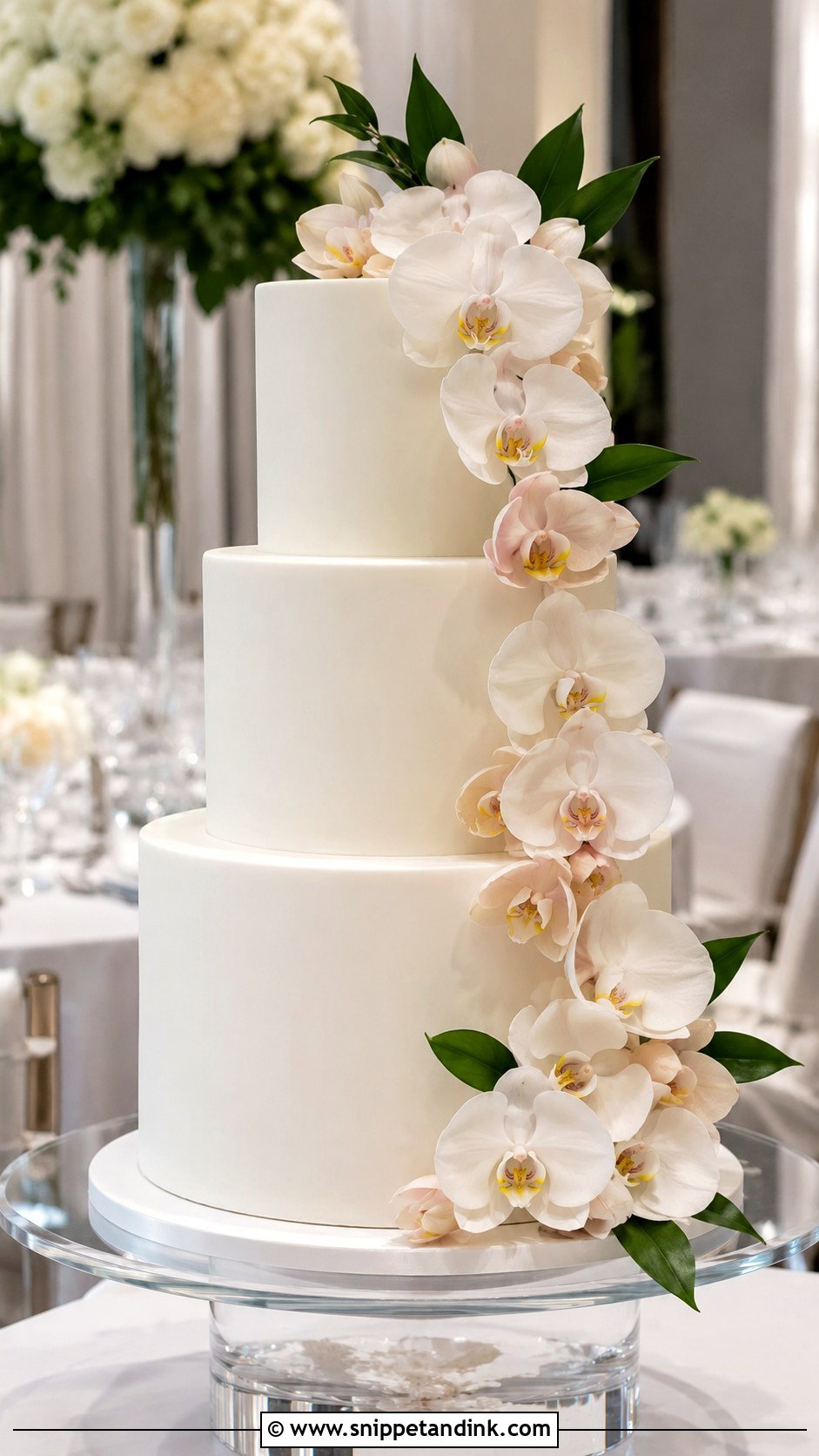
Orchids have a clean, flat shape that sits beautifully on smooth fondant or sharp buttercream and on tall, architectural cakes. White is classic; pale pink, lavender or burgundy adds personality. They are also one of the more forgiving fresh flowers. They hold for hours without wilting and don’t drop petals. A few blooms running down one side often look better than every tier covered. It suits tropical weddings, hotel ballrooms and black-tie receptions.
13. Rose Flower Wedding Cake
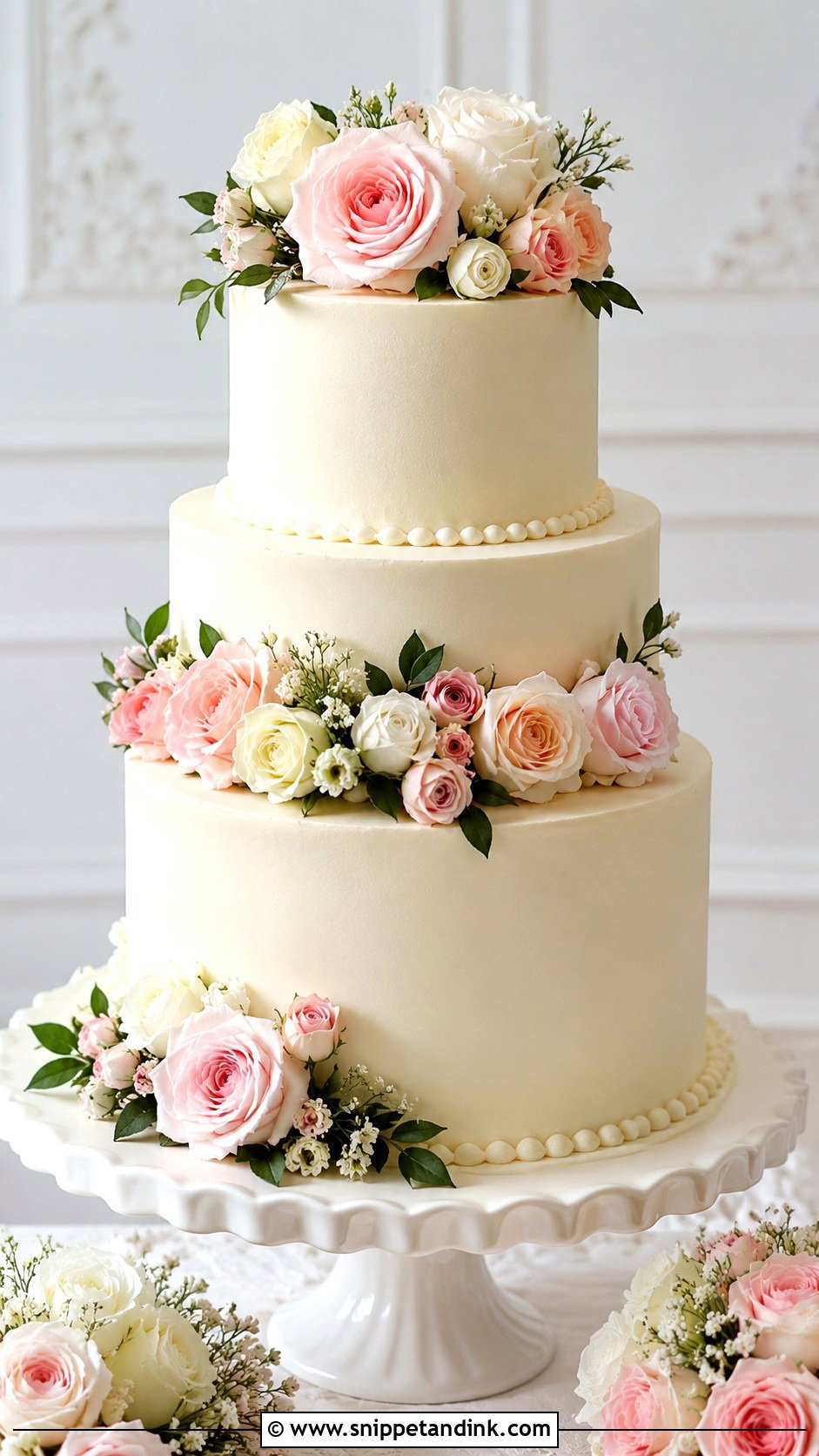
Roses fit almost every wedding style. White feels classic, blush feels soft, red feels dramatic and garden roses feel full. They can sit between tiers, cascade down one side or form one cluster on a smaller cake. Buttercream keeps them approachable; fondant feels more formal. Florist roses are often heavily treated, so for anything touching the cake I prefer roses grown for culinary use or a wrapped stem on a barrier. Match the colors to the bouquet and keep the number of shades small.
14. Peony Flower Wedding Cake
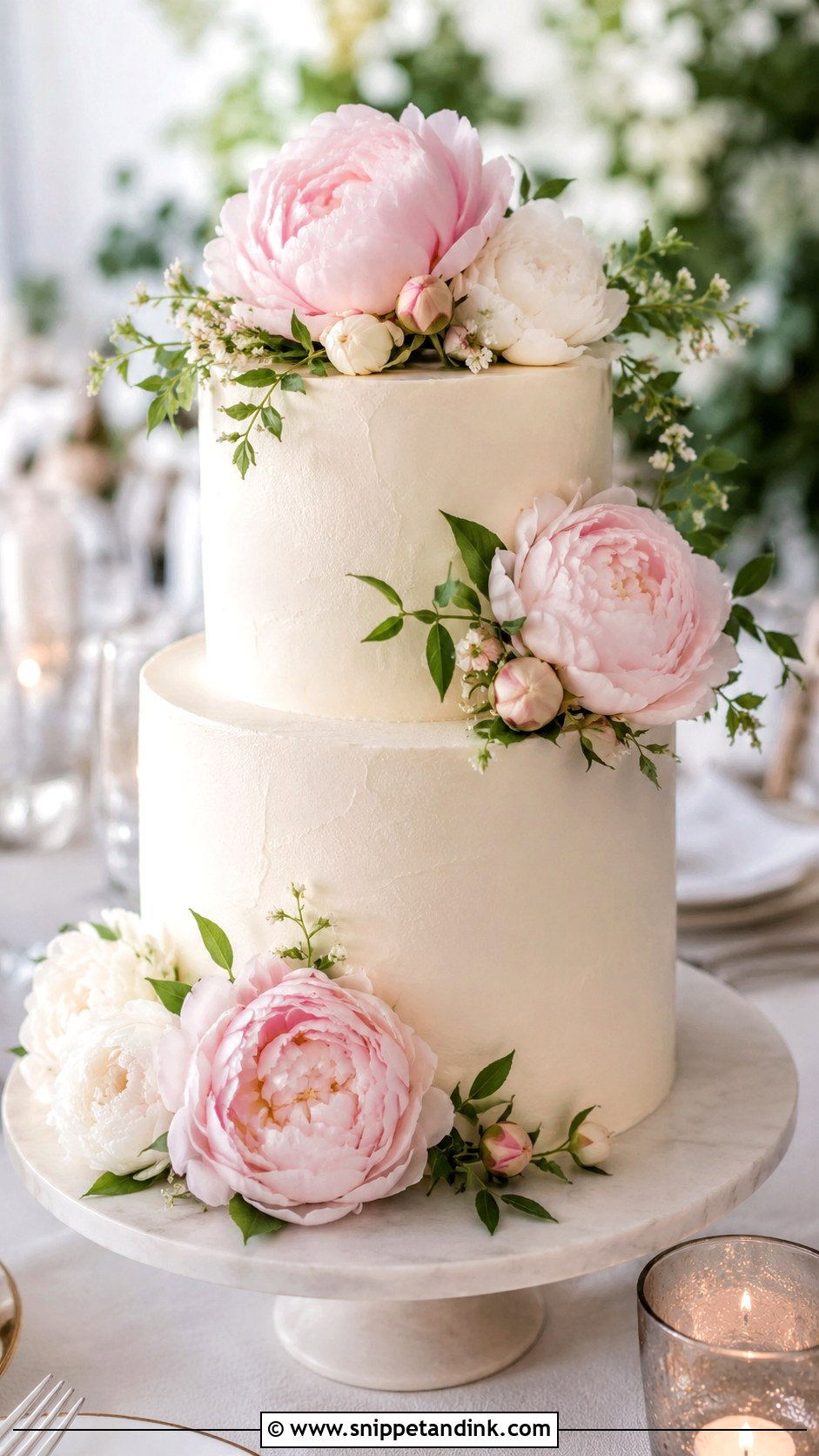
Peonies have so many layered petals that even three or four make a cake feel finished. Fresh peonies are only in season for a short spring and early summer window, so for weddings outside it, sugar peonies are the realistic option. They pair with smooth buttercream, light texture or ruffles in blush, ivory, coral or pale pink. Open fresh peonies also shed petals as they warm up, so I place them as late as possible. Keep everything else simple and let them lead.


15. Sunflower Wedding Cake
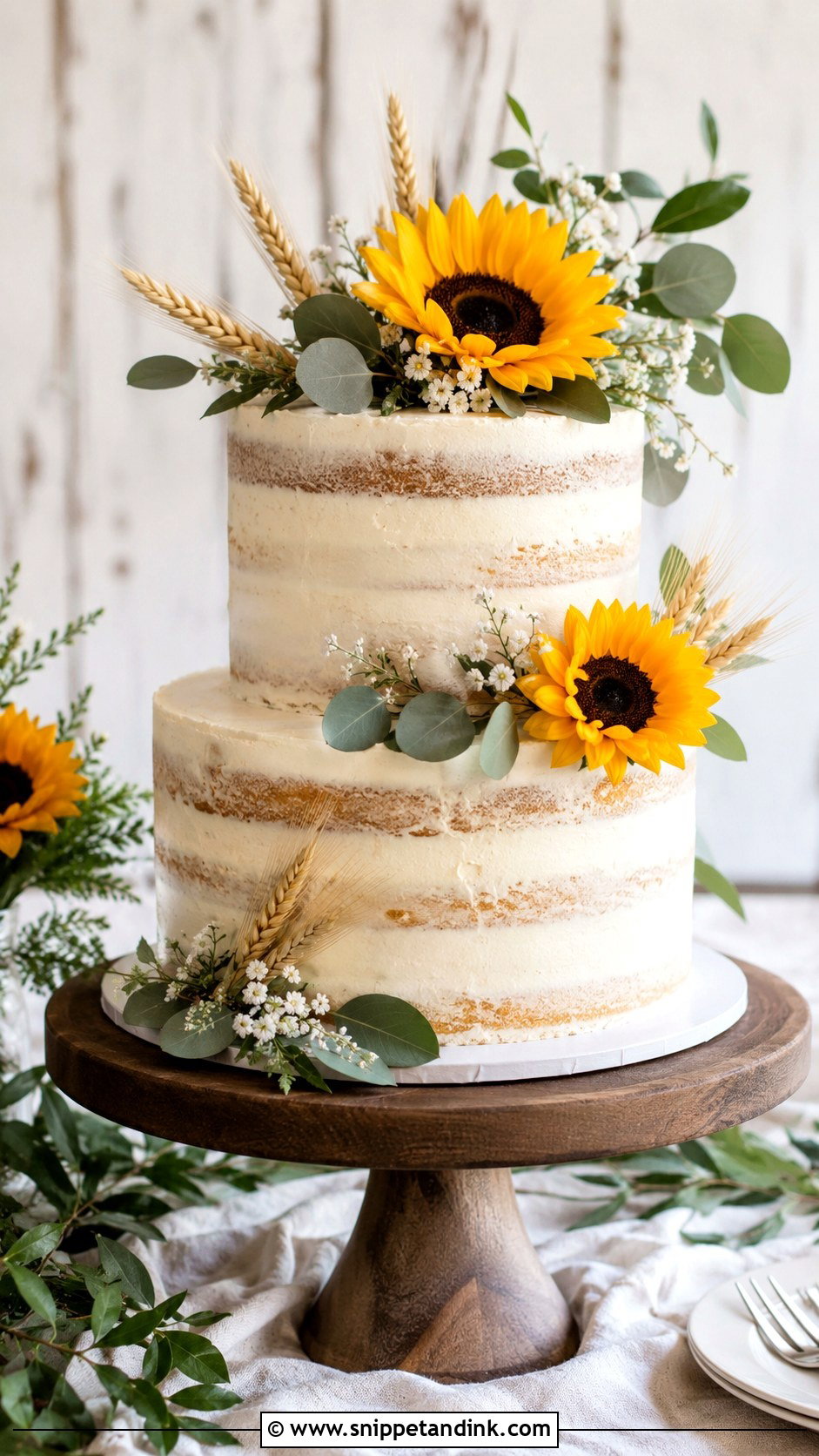
A sunflower wedding cake is warm and friendly, and it belongs at a late summer, farm or countryside reception. Bold yellow reads best on white, ivory or semi-naked buttercream. Sunflowers are big and heavy, with thick stems, so I use them sparingly. One cluster on top and a few on the sides is usually plenty, balanced with small white flowers, greenery or wheat. Neat frosting and a simple table keep it polished.
16. Lavender Flower Wedding Cake
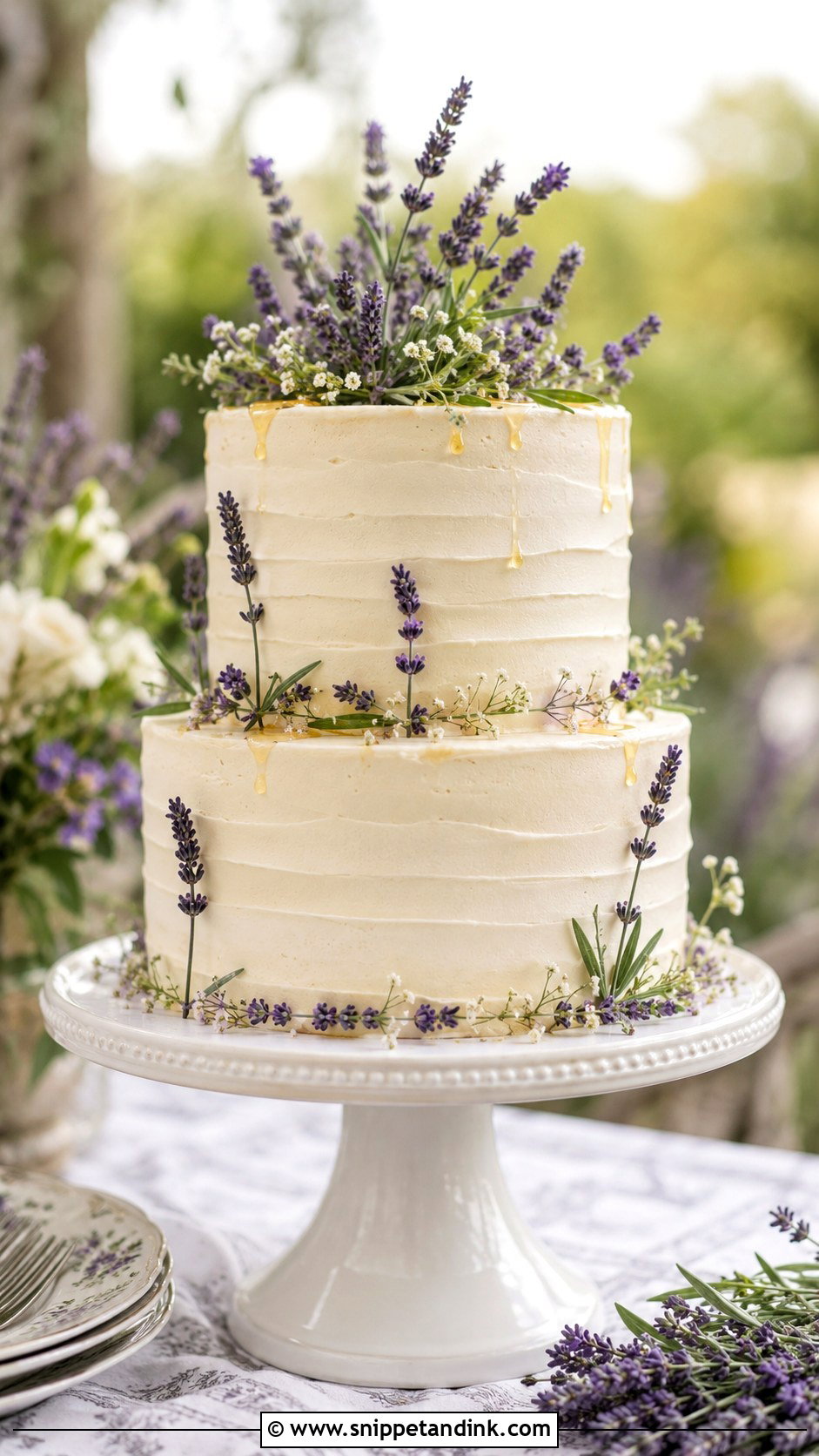
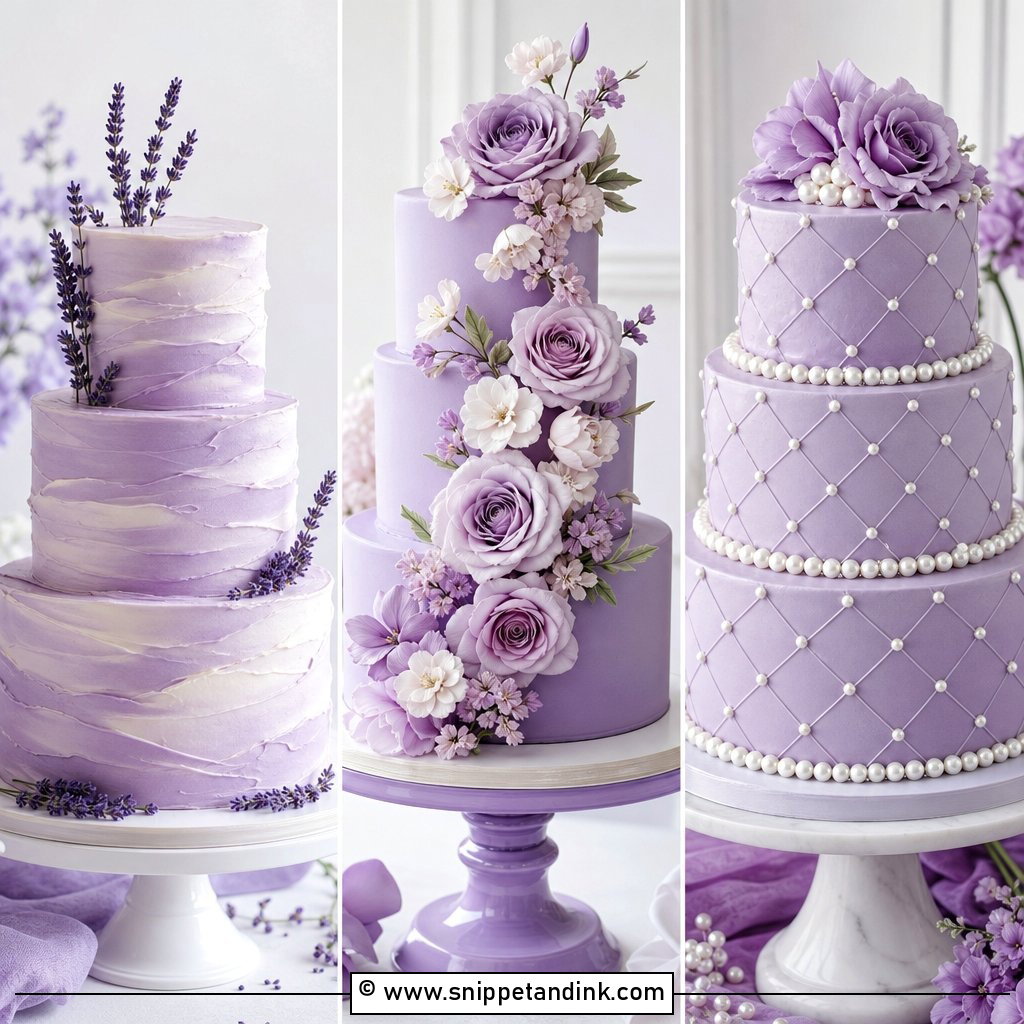
Lavender can decorate the outside or flavor the inside, and the two work well together. A few sprigs on ivory buttercream look light and fresh, and lavender in the sponge or frosting pairs well with honey, lemon, vanilla or blueberry. Go easy with the flavor. Too much culinary lavender tastes soapy, and I always test the strength at tasting. The stems are thin, so keep the arrangement airy; it suits garden, spring and French countryside themes.
17. Edible Flower Wedding Cake
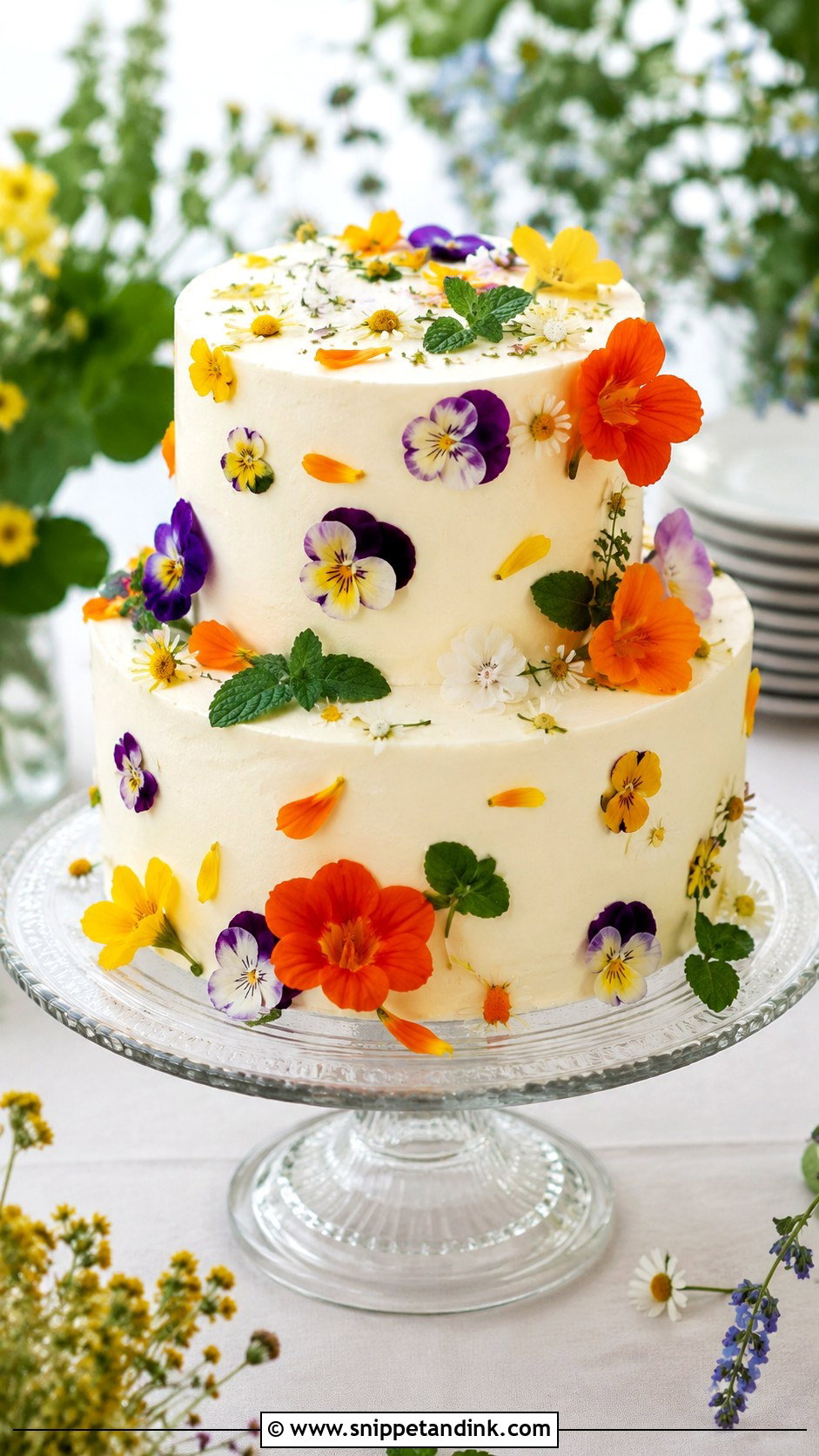
Edible petals give color and a garden feel without any of the risks of ordinary florist stems. Common edible flowers include pansies, violas, nasturtiums, calendula, chamomile and certain roses grown for food use. Confirm with your baker or florist that they are edible varieties grown without pesticides, not just pretty flowers from a shop. Edible petals are delicate and wilt quickly against moist frosting, so they go on late, scattered, pressed or in small clusters on plain buttercream.
18. Floral Buttercream Wedding Cake
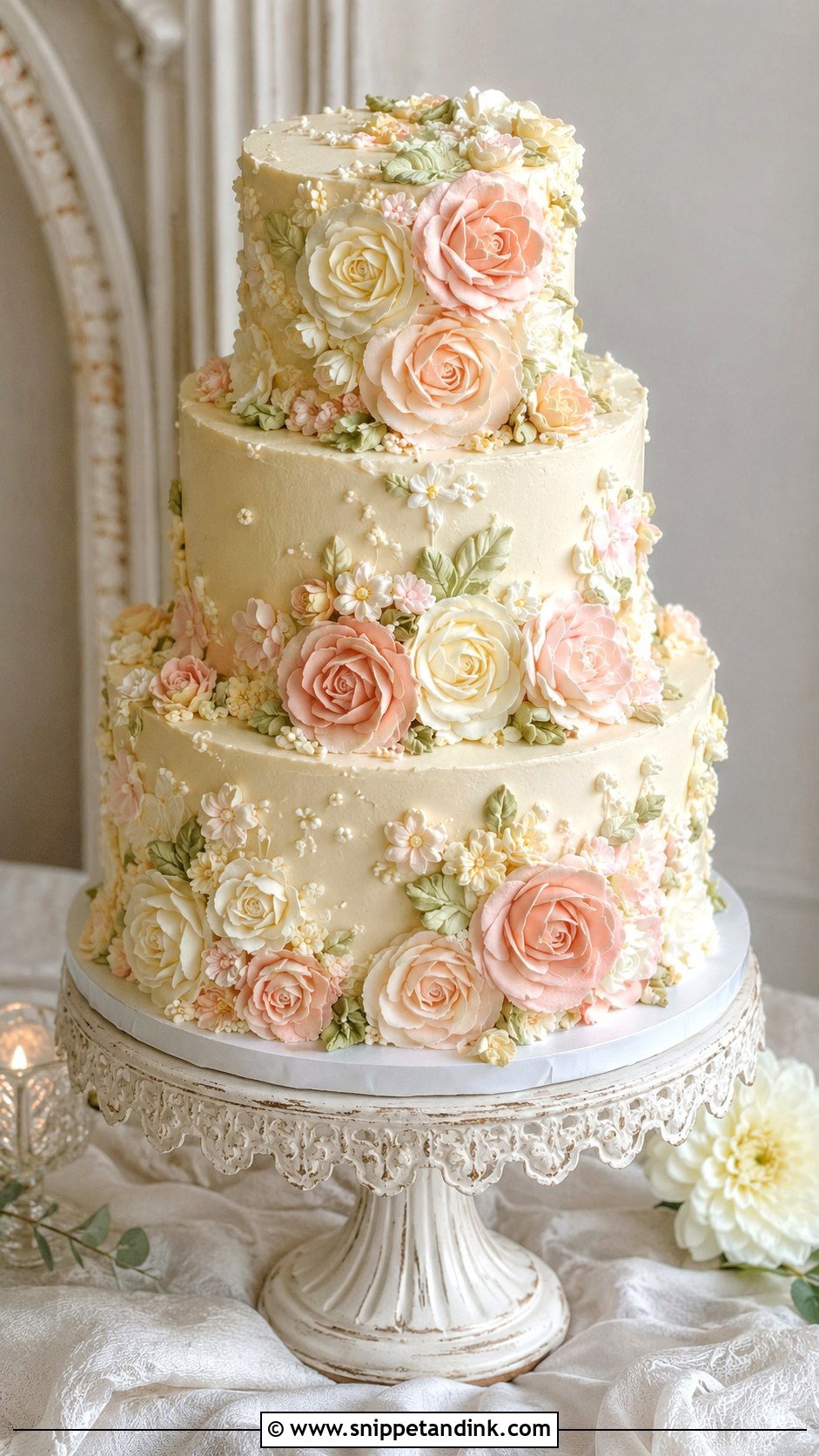
Here the flowers are the frosting. Roses, blossoms, leaves and buds are piped straight onto the cake, and the result can be vintage, soft or modern depending on color and placement. White-on-white piping is the most refined version; pastels feel more like a garden. The honest limitation is temperature. Piped buttercream flowers soften and lose their edges in a warm room, so for a summer outdoor reception I’d use a firmer recipe or keep the cake inside until cutting. It is the simplest way to a fully edible floral cake.
19. Floral Painted Wedding Cake
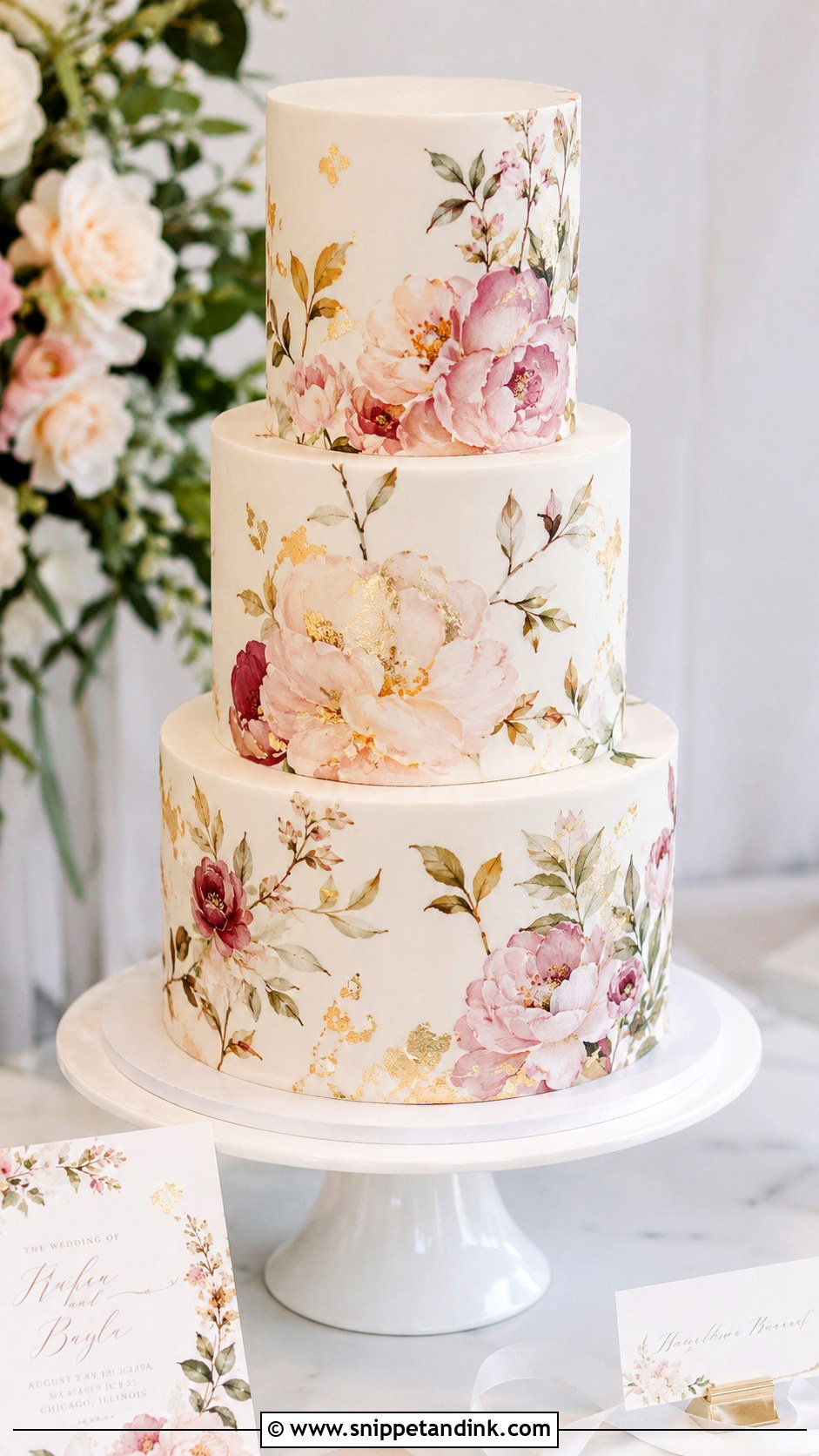
Painted cakes use food-safe colors brushed onto fondant or a very smooth, chilled buttercream, for a watercolor or fine-art effect. Roses, wildflowers, vines and cherry blossoms all paint well, and I often take motifs straight from the invitation suite so the cake and paper match. Fondant is the easier canvas; buttercream needs a crusted, cold surface or the brush drags. Pale washes look subtle, while larger blooms feel bolder. There is nothing bulky on the cake, which helps in the heat.

20. Floral Tiered Wedding Cake
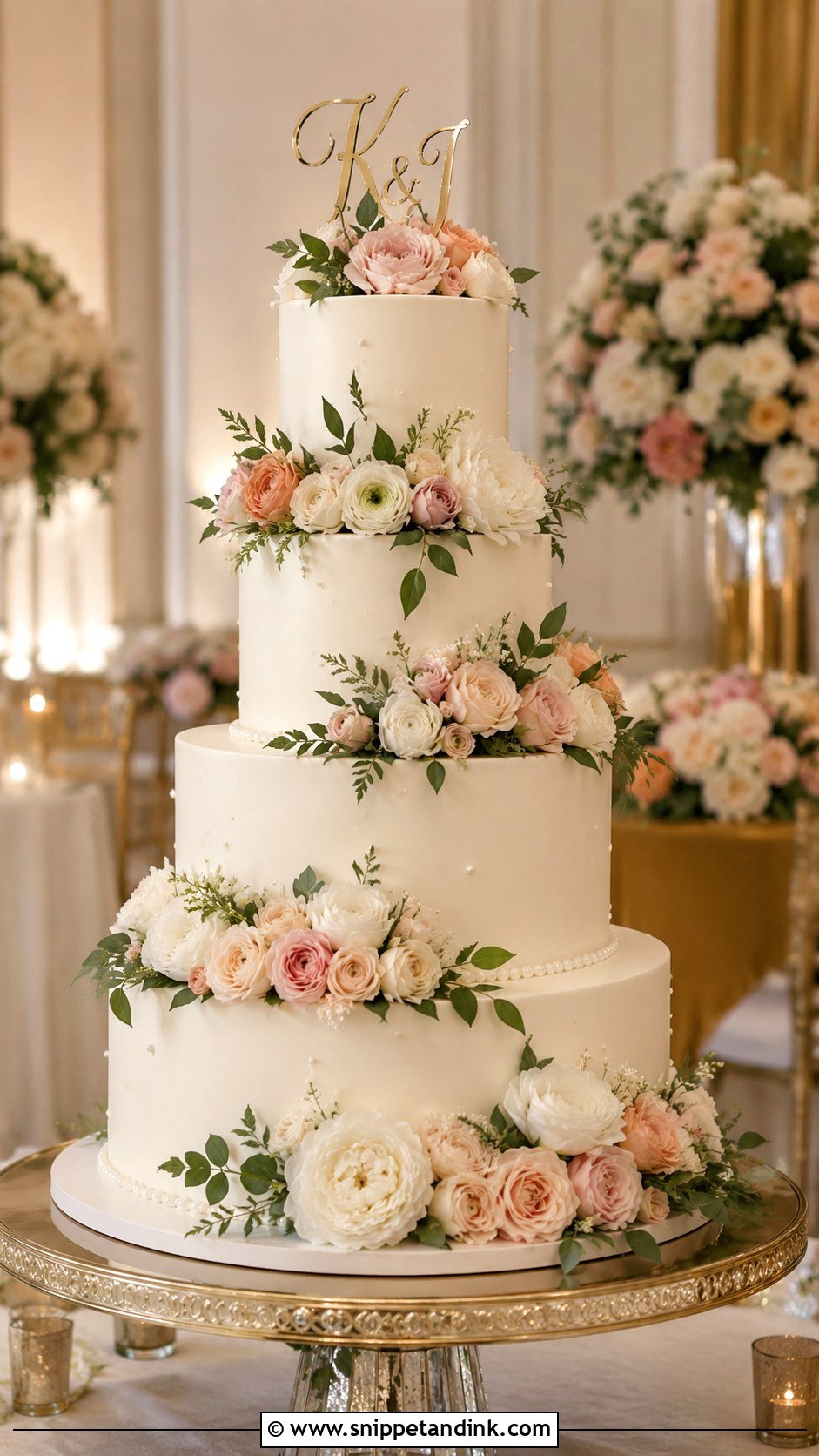
A floral tiered wedding cake is the classic reception centerpiece. Three tiers suit a medium guest list; four or more give grand height for a large one. Flowers can sit between tiers, trail down one side, wrap the base or form a topper, and fresh, sugar, pressed or piped flowers all work. My one rule is to pick a single floral direction. A cake with sugar roses, fresh greenery, pressed petals and piped buds at once never looks planned. Each tier also needs internal supports, especially once flowers add weight.
Who Places the Flowers, and How Close to the Reception
Cakes and flowers usually arrive from two different vendors, and the gap between them is where things go wrong. Settle these points in writing before the wedding week.
- Decide who dresses the cake. Some bakers place fresh flowers themselves; others want the florist to do it at the venue.
- Ask the florist to set aside the cake flowers separately, pre-wrapped, so nobody pulls stems from a centerpiece at the last minute.
- Agree on a time. Fresh flowers go on as close to the reception as setup allows, ideally within the last hour or two.
- Ask where the cake will stand. Direct sun or a spot near a heater softens buttercream and wilts petals far faster than room temperature does.
Sugar flowers need their own timeline
Gum paste flowers are made weeks before the wedding and stored dry. That means your colors and flower list have to be fixed well ahead, not tweaked in the final fortnight. They also break easily in transit, so I bring spares of the small fillers and attach the main sprays at the venue.
One Floral Plan Your Baker and Florist Both Agree On
Floral cakes can be quiet, rustic or dramatic, and the right one depends on your venue, season and guest count more than on any trend. Before you finalize, talk with your baker about structure, heat, delivery time and how long the cake will sit on display. If you are using fresh flowers, get your florist and baker talking early about which stems are safe and who places them. If you need exact colors or long-lasting detail, sugar, painted or buttercream flowers may suit you better. Bring a few photos you love to your tasting and build the design from there.
You'll Like These Ideas:




Leave a Reply