
Piped flowers are the part of a wedding cake I’d spend all week on if I could. They’re edible, they take any color, and the same tier can look like a vintage parlour cake or a loose meadow depending on the nozzle and the hand behind it. Couples are asking for painterly textures, vintage piping and flower meadows more often now, and buttercream does all of those well. The 25 cakes below run from plain white tiers to full garden cascades. Use them to see the overall shape before you book a tasting, because it’s much easier to brief a baker with a picture than with adjectives.
Heat, Humidity and Which Buttercream Holds a Petal
Not all buttercream behaves the same on a wedding day, and the type your baker uses affects how the flowers look by the time you cut the cake.
- American buttercream (butter and powdered sugar) forms a light crust. Petals hold a crisp edge and survive warm rooms better, but it’s sweeter.
- Swiss or Italian meringue is silkier and less sweet, with a smoother finish. It softens sooner in heat, so piped petals can droop if the cake sits in the sun.
- Buttercreams with some shortening hold up better in hot weather, though some couples notice the difference in taste.
For an outdoor summer reception, I ask where the cake will stand and for how long. Shade, a cool room until the last minute and a short display time do more for piped flowers than any recipe change. If the cake has to sit outside for hours, I’d suggest a crusting buttercream or smaller, flatter flowers.
1. White Buttercream Flower Wedding Cake
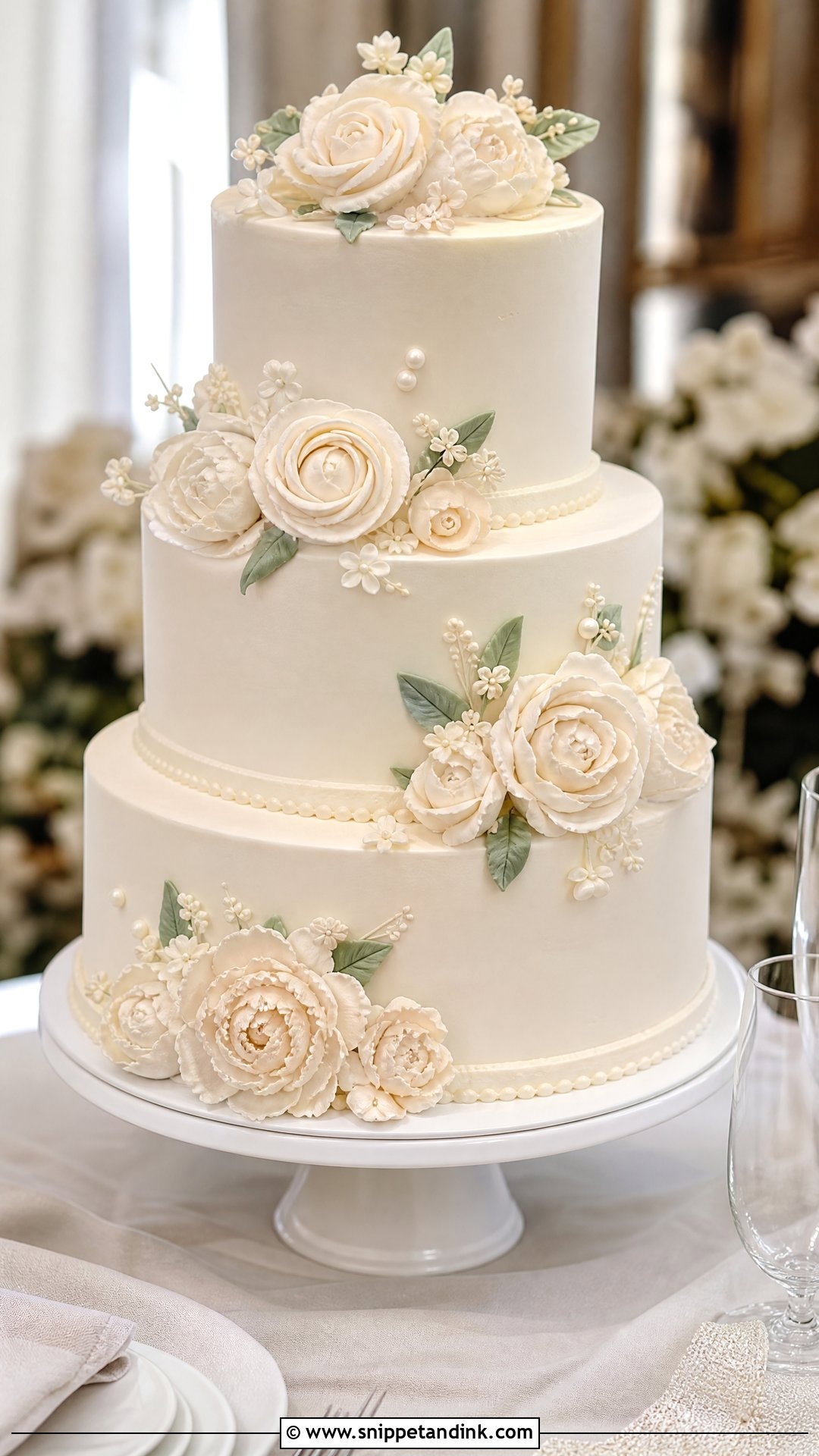
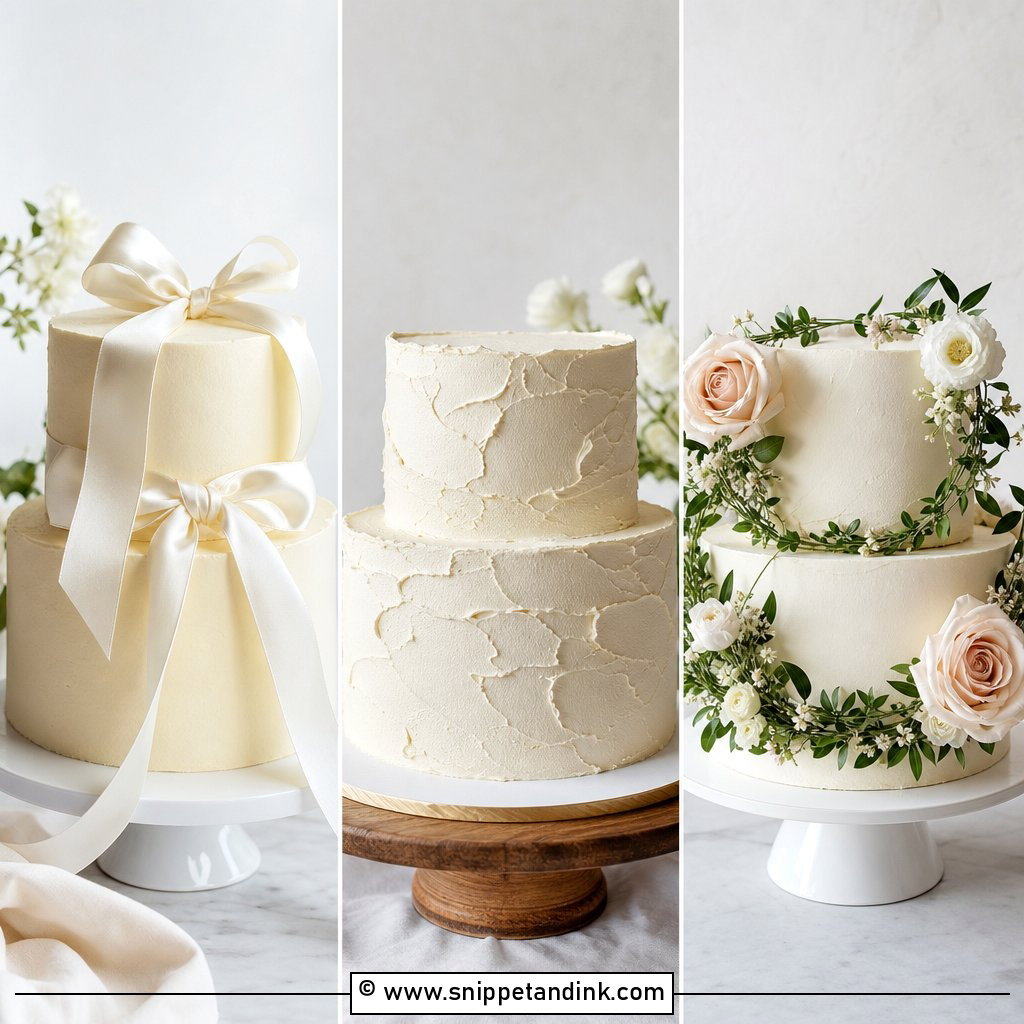
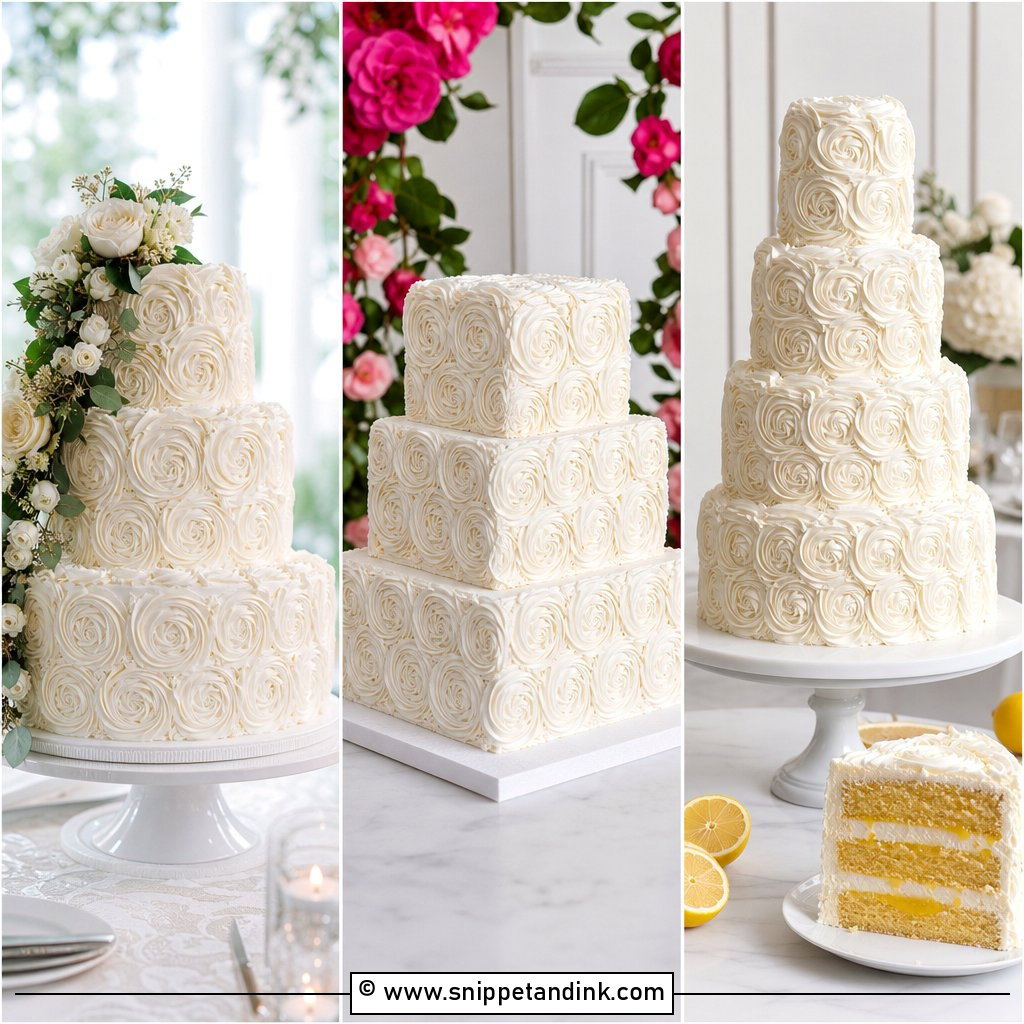
An all-white cake with piped roses, peonies and small fillers goes with any palette, which is why it’s still one of the cakes I’m asked for most. The trick is getting depth without color. I pipe the flowers in two or three shades of ivory and cream so the petals don’t blur into the base. Swiss meringue buttercream gives the smoothest, glossiest finish, while American buttercream crusts and holds a petal edge more firmly. Tiny piped pearls between the blooms finish it without adding another color.
2. Two Tier Buttercream Flower Wedding Cake
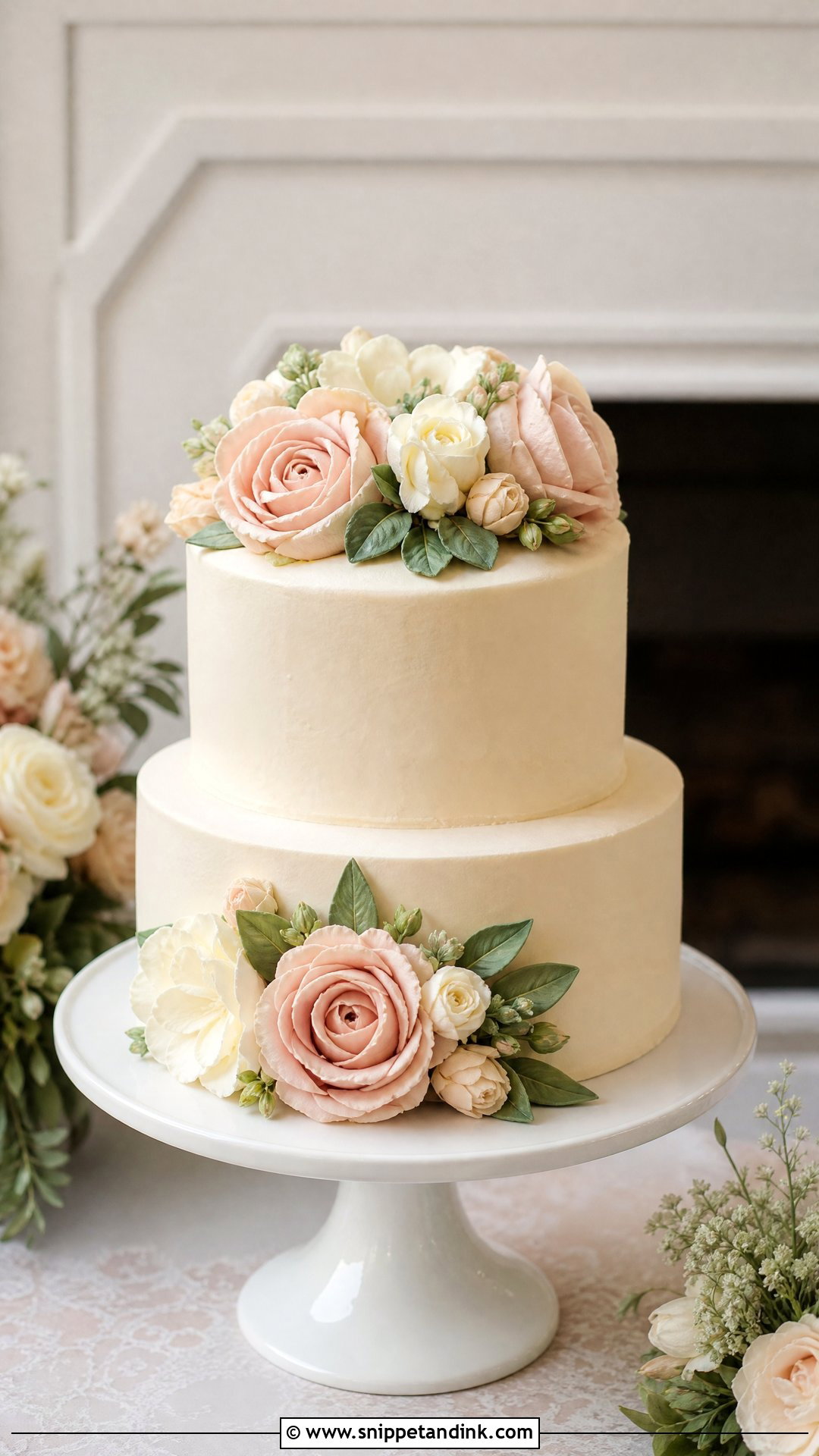
Two tiers suit smaller weddings and elopements, and they’re easier to transport than anything taller. With less surface, every flower is seen up close, so I put the effort into a few well-shaped blooms: a small cluster on top and a wider arrangement near the base. Blush, cream and pale green read romantic without overwhelming the shape. Ask your baker how many servings it gives; a two-tier cake often needs a kitchen cake or sheet cake alongside it for larger guest counts.
3. Three Tier Buttercream Flower Wedding Cake
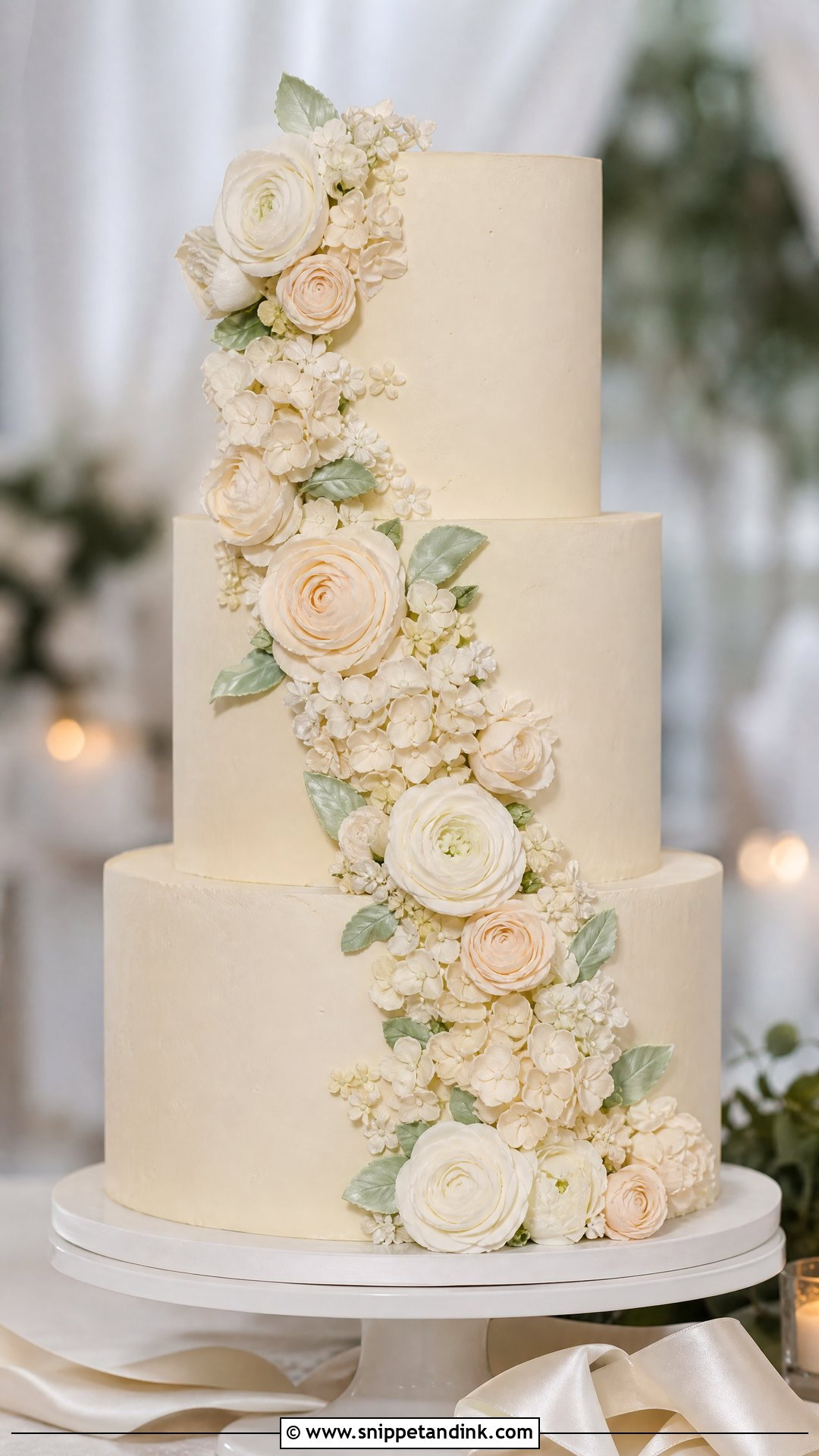
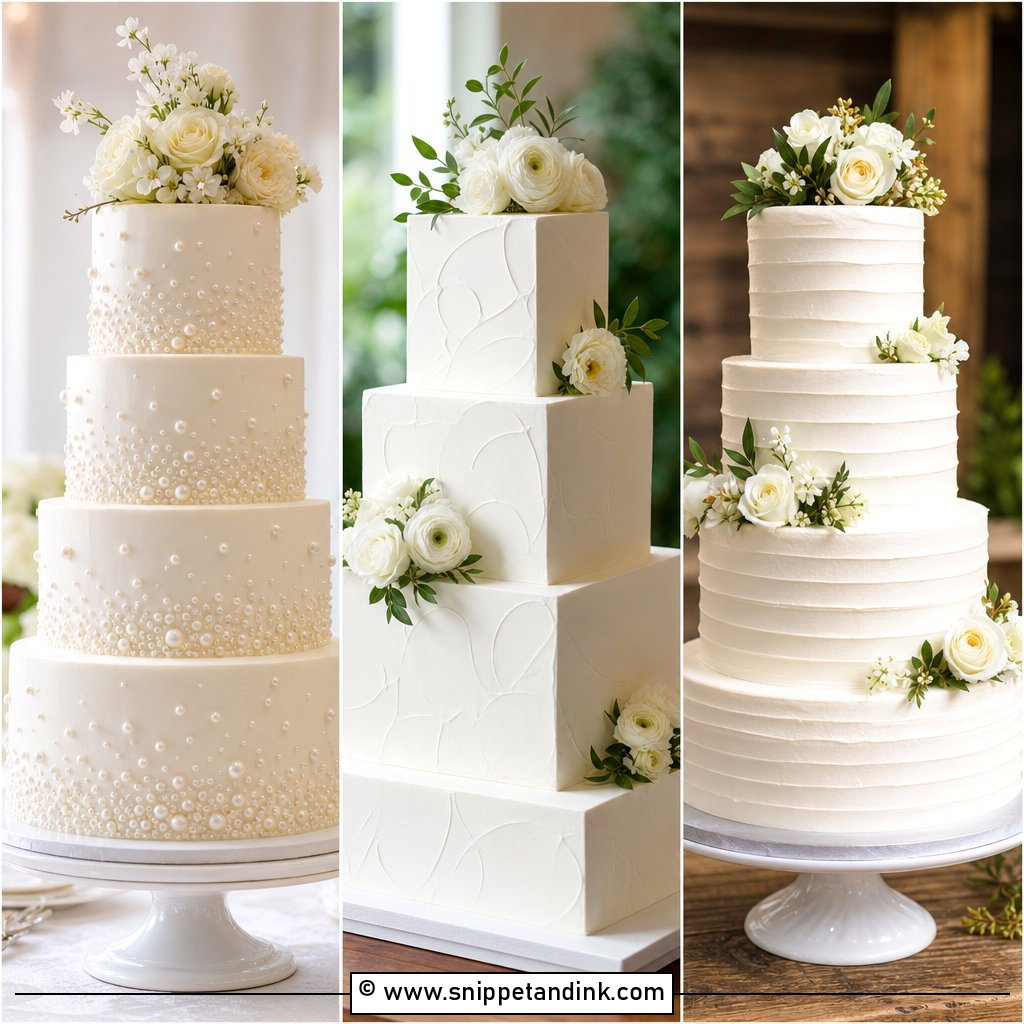
Three tiers give height and room for a floral path, usually running diagonally from the top tier to the base. Another approach is placing clusters between the tiers, which hides the seams and makes the cake look like stacked garden beds. Roses, hydrangeas, ranunculus and tiny blossoms can all be piped to match your bouquet. With this height, I add a central dowel through all three tiers for transport. The cake is heavy, and piped flowers on the side tend to crack if the tiers shift even slightly.
4. Buttercream Rose Wedding Cake
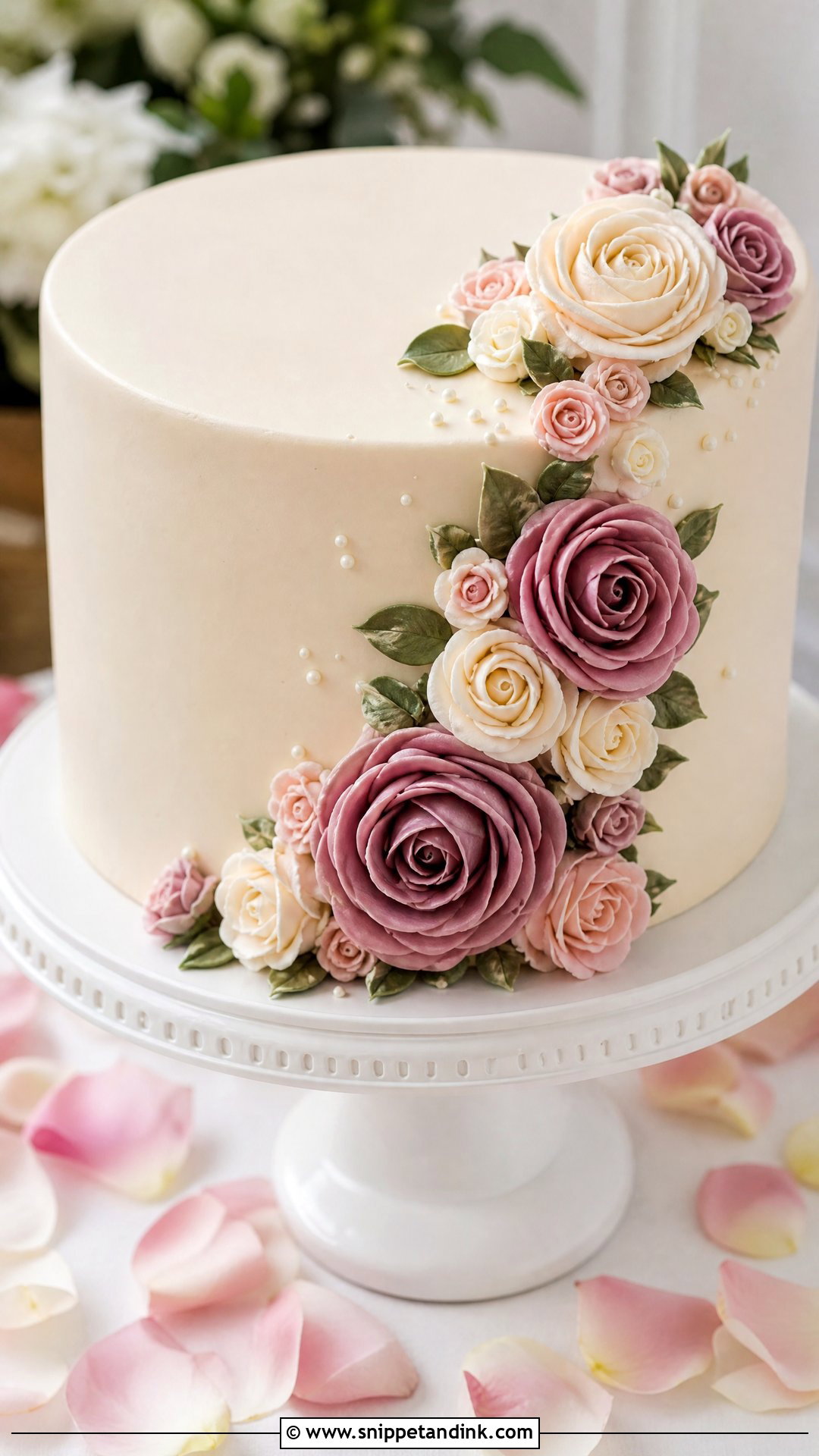
Roses are the flower I’m asked to pipe more than any other. I pipe them on a flower nail, petal by petal, then chill them firm before placing them on the cake so they keep their shape. Large roses look bold; small ones read vintage. White roses on an ivory base look refined, while blush, mauve and dusty pink bring warmth. For a modern take, cluster a few oversized roses on one side instead of covering every tier. Vanilla, almond, lemon and champagne sponges sit well under this look.
5. Buttercream Peony Wedding Cake
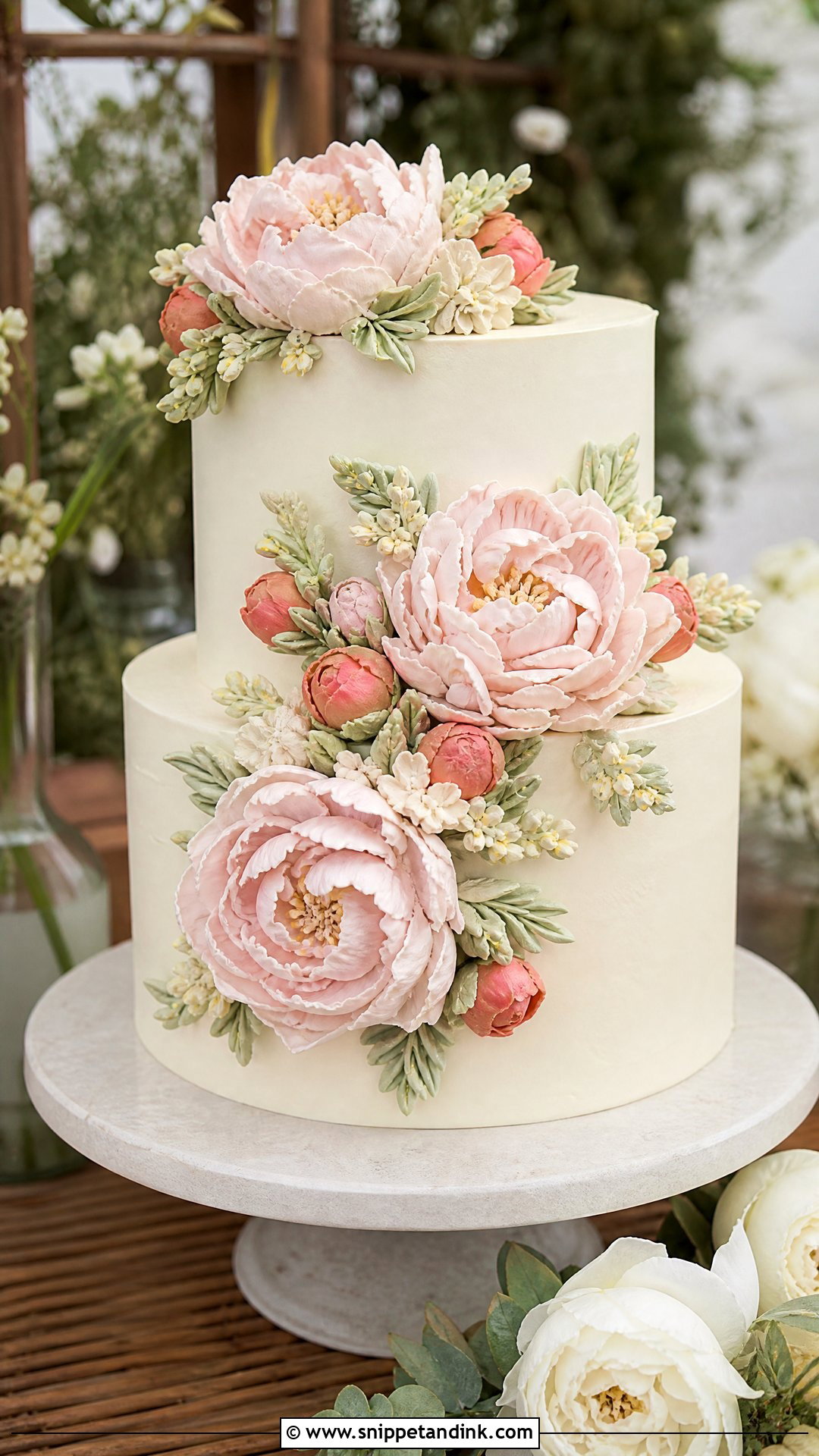
Peonies are wide, layered flowers, so they look best when there are fewer of them. Three or four large blooms make more of an impact than a dozen small ones. Each peony takes a lot of piping, and the outer petals are delicate, so I build them on a dome of buttercream and chill them between layers. Pale blush, ivory, coral and soft peach suit a smooth white or cream base. A few piped leaves and closed buds make them look like real cut stems.
6. Buttercream Wildflower Wedding Cake
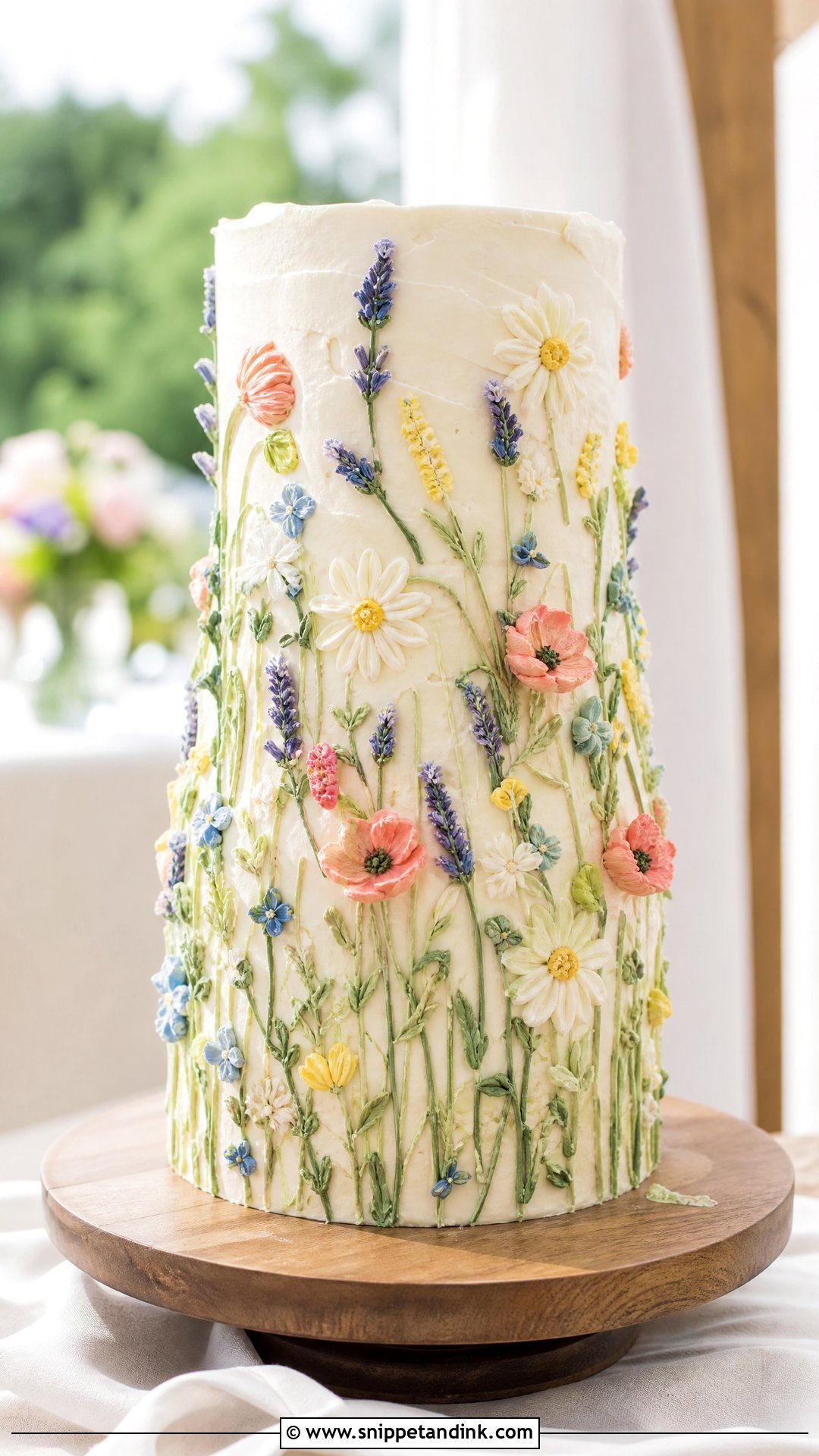
A buttercream wildflower wedding cake trades formal roses for daisies, lavender sprigs, poppies and tiny blossoms climbing the tiers in a loose meadow. It’s one of the most forgiving designs to pipe, because wildflowers don’t need perfect symmetry. Outdoor, backyard and barn weddings suit it. Pastel colors stay gentle, while yellow, blue, coral and pink feel cheerful. I vary stem heights and leave small gaps so it looks gathered rather than placed.
7. Cascading Buttercream Flower Wedding Cake
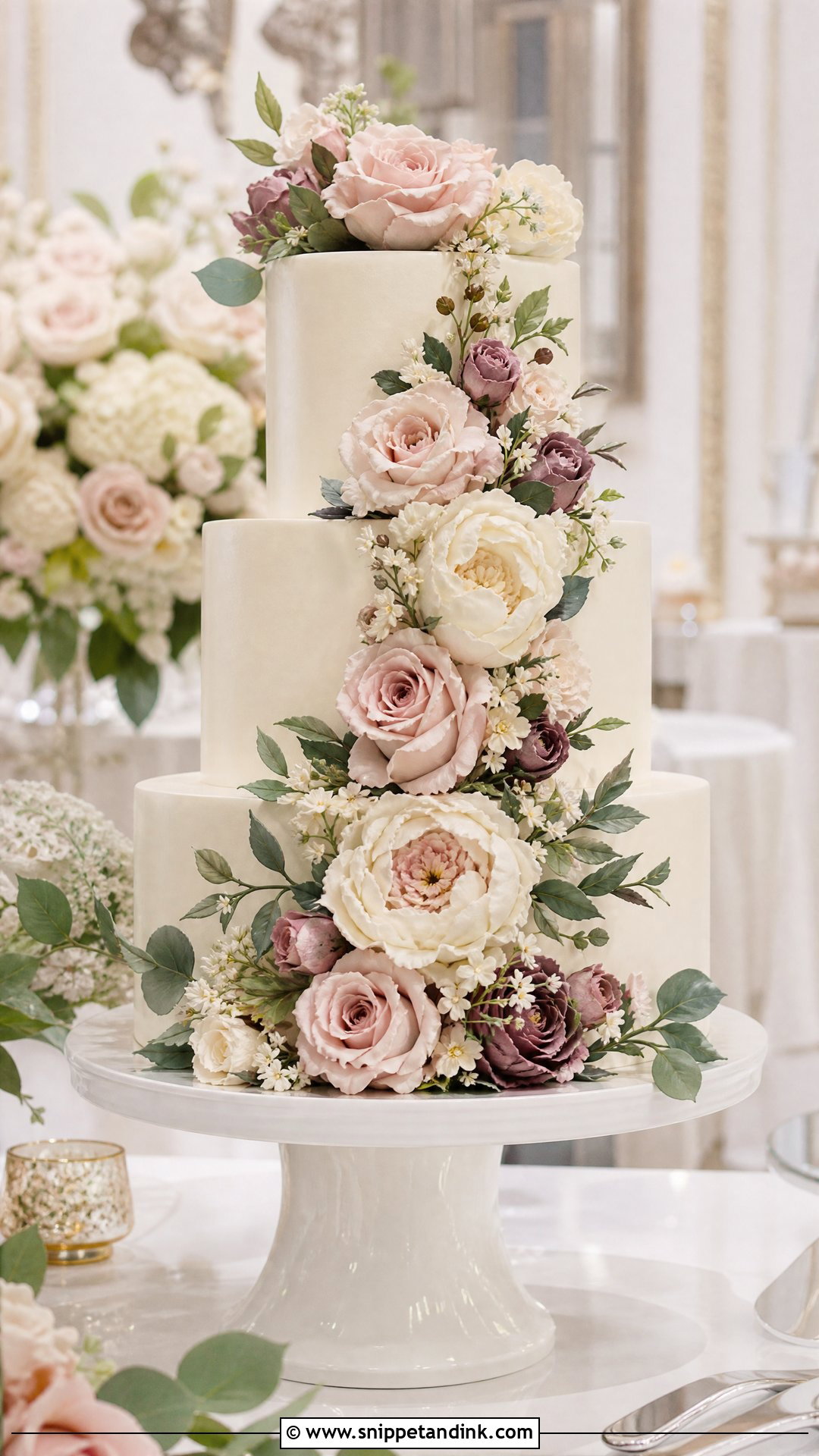
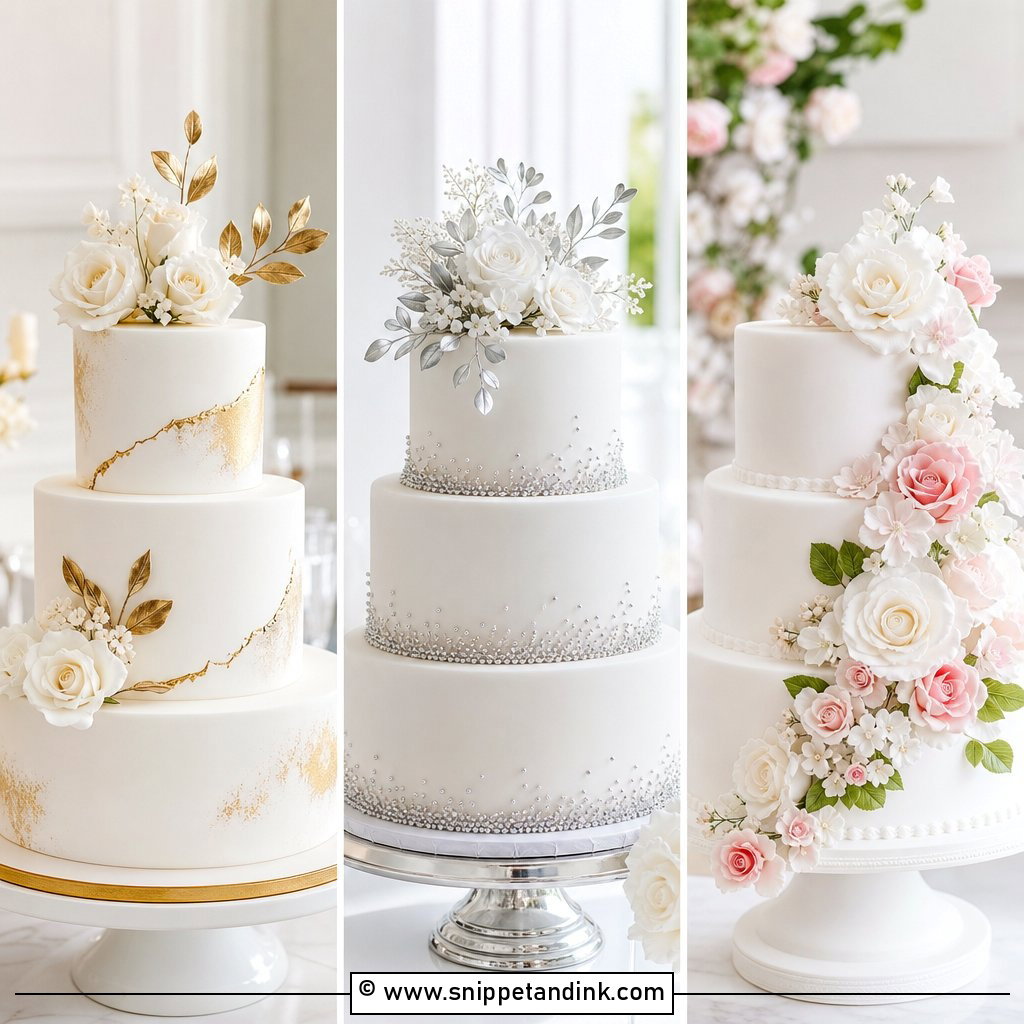
A cascade gives you drama without any non-edible decoration. Flowers pour from the top tier down one side, with large roses or peonies as anchors and smaller buds and leaves softening the edges. It suits two to four tiers. The challenge is weight: big buttercream flowers on a vertical surface can slide in a warm room, so I pipe the larger blooms ahead, chill them, and attach them with a dab of fresh buttercream. Blush, ivory, mauve and sage are the colors I’m asked for most for cascades.
8. Vintage Buttercream Flower Wedding Cake
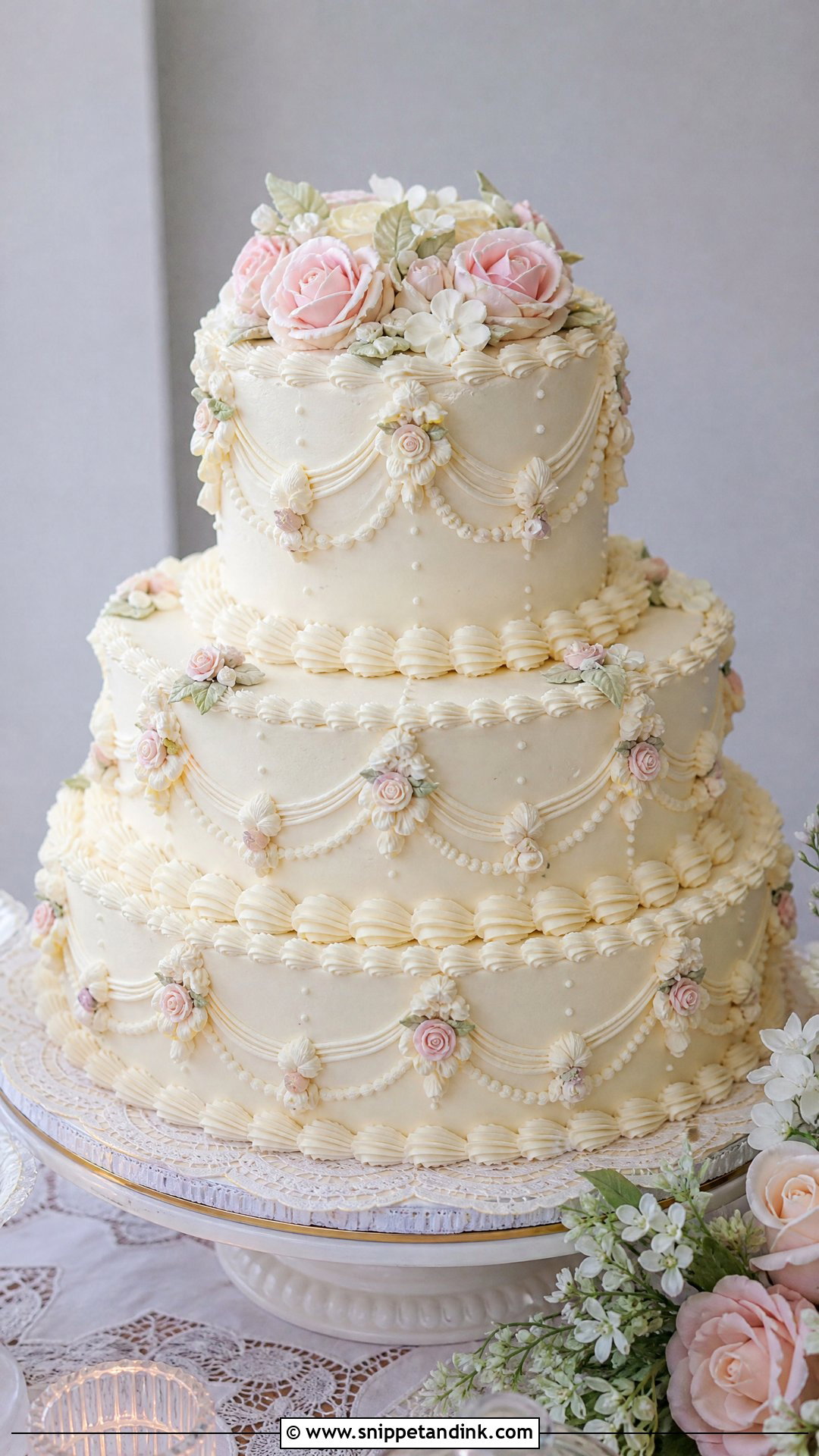
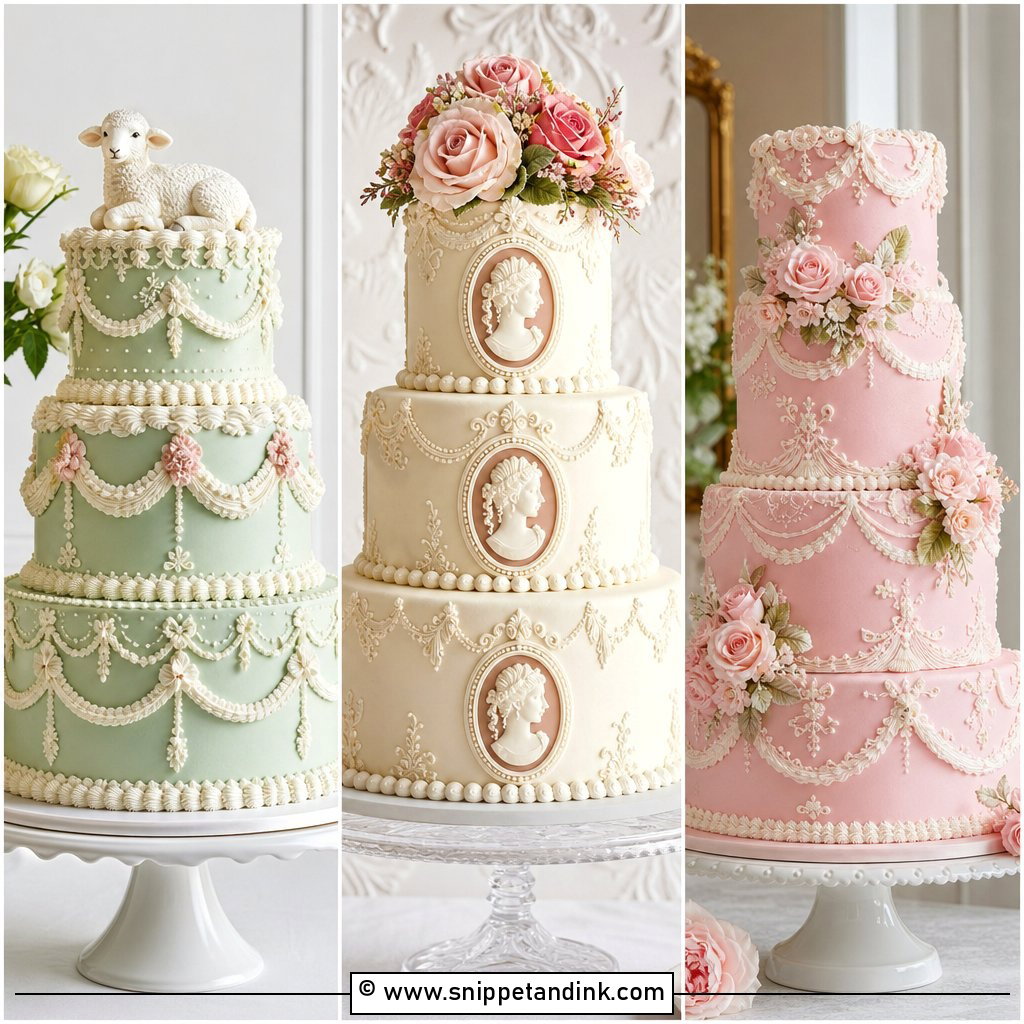
Vintage cakes revive shell borders, swags, ruffles, small roses and piped pearls. It’s detailed work, and the most common problem is crowding. I sketch the borders first so the flowers have room. A soft ivory base with blush roses and pale green leaves feels nostalgic. Small heart-shaped piping or scalloped borders add a retro touch. This style suits historic homes and garden venues, and it rewards bakers who enjoy piping.
9. Modern Buttercream Flower Wedding Cake
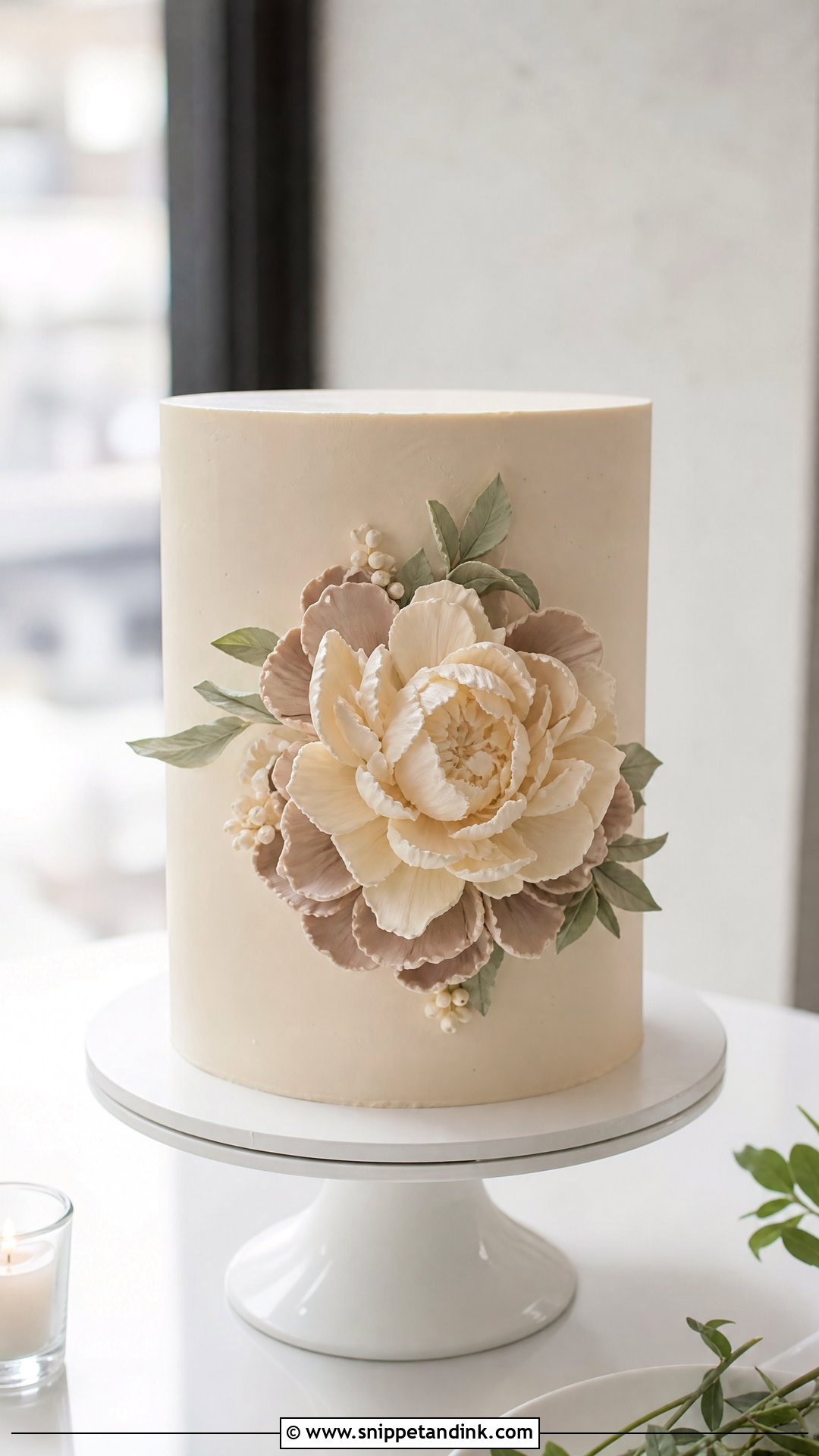
A modern floral cake has clean, sharp edges and one strong floral moment, usually a single oversized flower on the front or side. That sharp edge is harder to get in buttercream than in fondant, so ask your baker to show you a sharp-edged cake they’ve made before. Neutral bases in white, ivory or pale beige keep it gallery-like, with taupe, cream, dusty blush or muted green flowers. Square tiers or a tall single tier make it feel more contemporary. City receptions and minimal weddings tend to choose it.
10. Rustic Buttercream Flower Wedding Cake
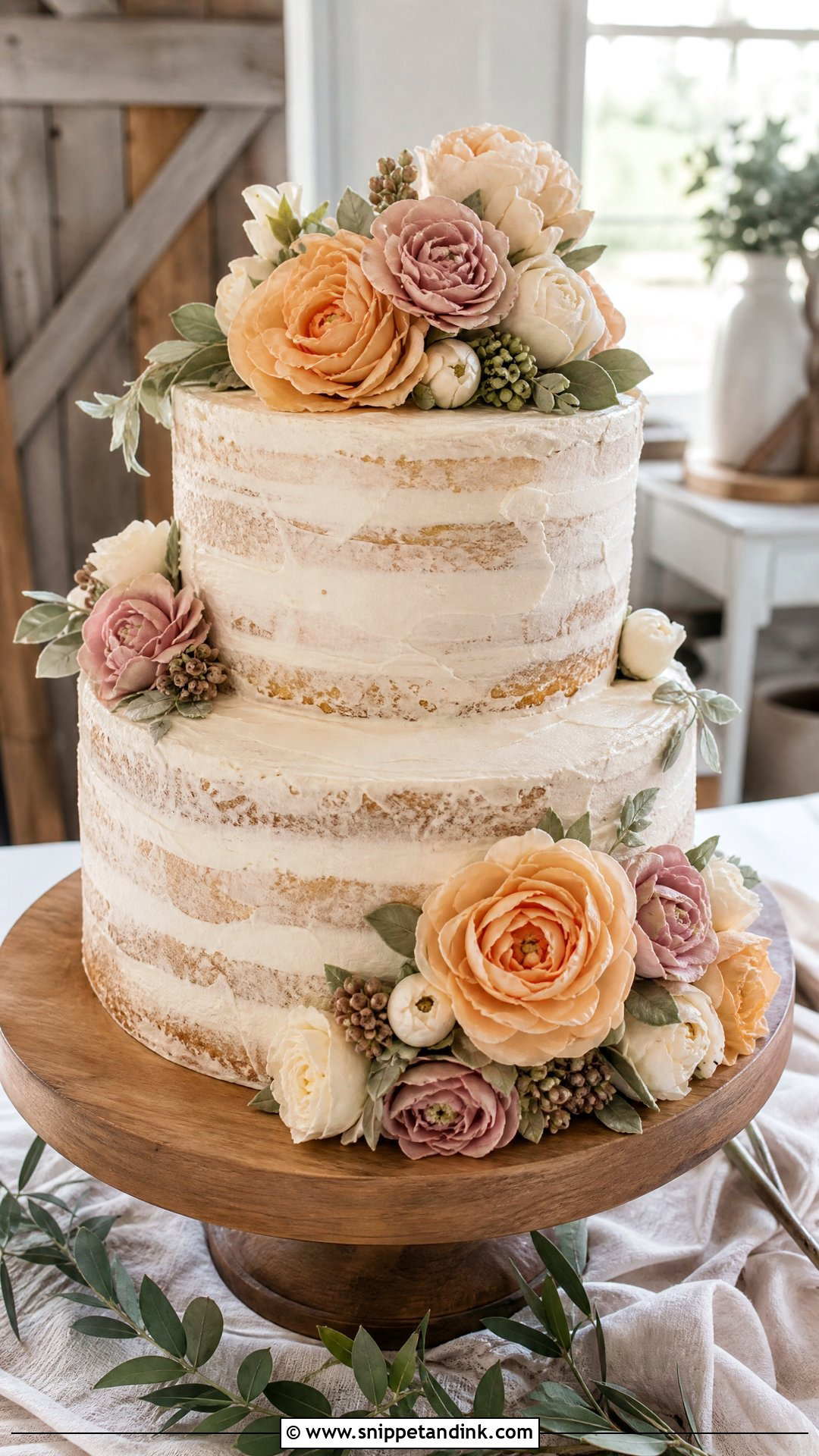
Rustic cakes have a lightly textured finish, sometimes semi-naked, with piped flowers in cream, peach, dusty rose and sage. The textured base is forgiving and hides small marks from transport. They sit well on wooden stands with linen styling, and suit barn and outdoor venues. Gather the flowers in natural clusters rather than straight lines. A semi-naked finish dries out faster than a fully covered cake, so I’d keep it covered until shortly before guests see it.
11. Garden Buttercream Flower Wedding Cake
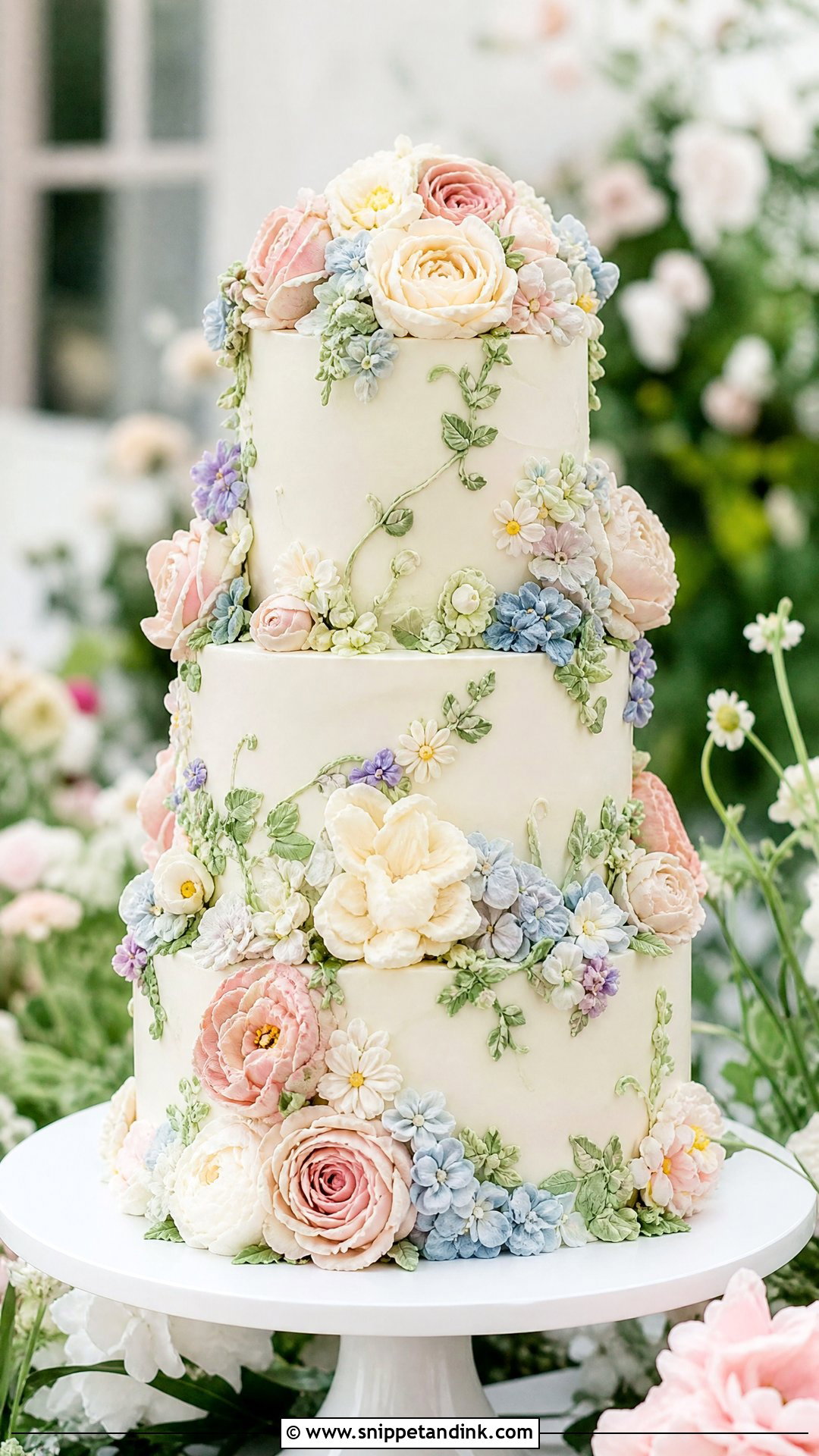
A garden cake uses many flower types at once, roses, peonies, hydrangeas, daisies and small buds, arranged around the tiers like a border in bloom. I match the colors to the bouquet or reception flowers, then build depth by layering petals at different heights. A white base keeps it elegant. Spring weddings, botanical venues and greenhouses are where I see it most. Abundance is the goal, but I still leave some plain cake visible so the eye has somewhere to rest.
12. Pastel Buttercream Flower Wedding Cake
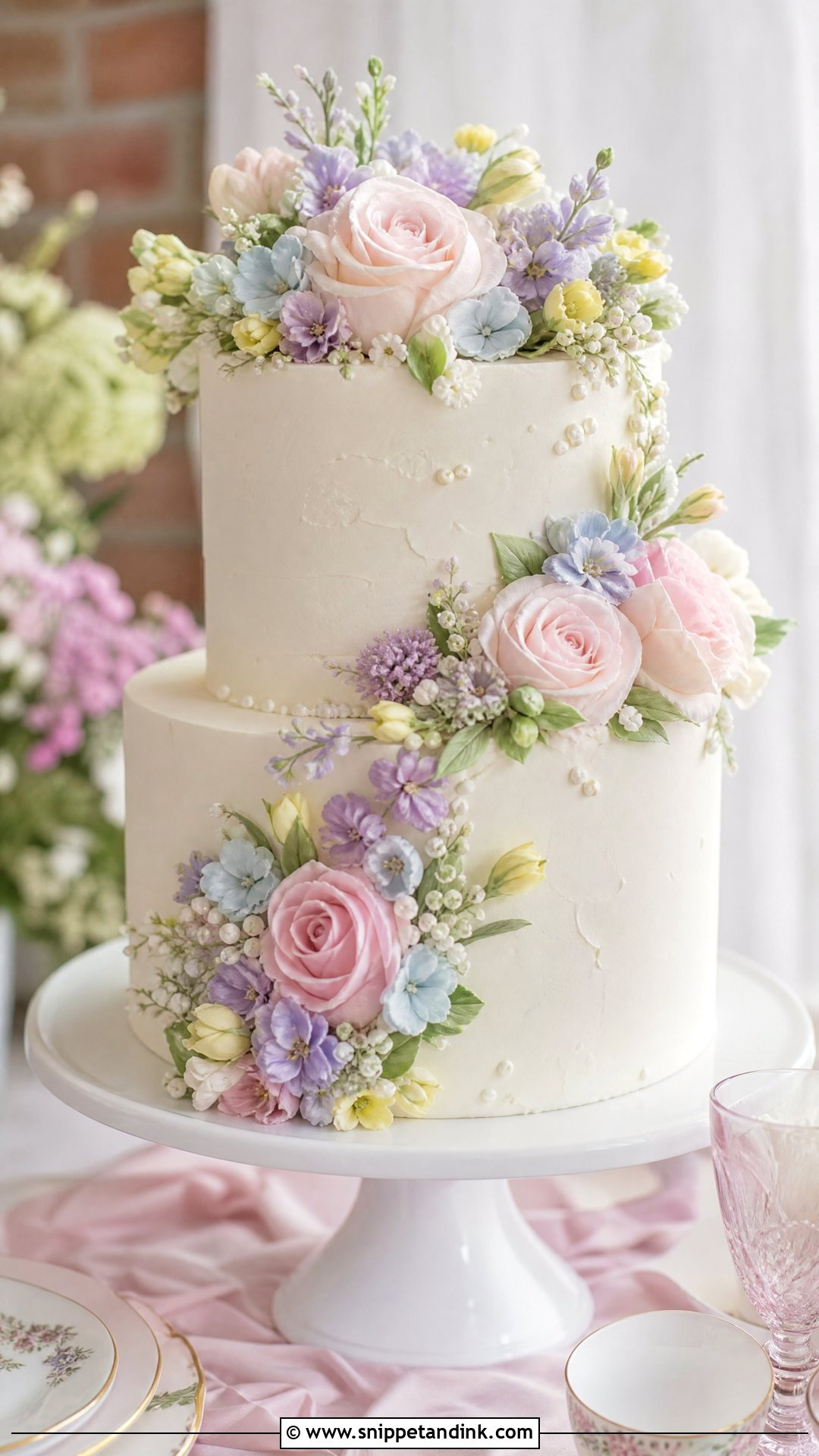
Pastel flowers in pale pink, lavender, baby blue, butter yellow, mint or peach look soft on a white or ivory base. The common mistake is using every pastel at once. I limit a cake to two or three, plus a green for leaves, so it reads intentional. Roses, small daisies, peonies or simple blossoms all suit the palette. A light pearl border or tiny white buds finish the cake neatly.
13. Blue Buttercream Flower Wedding Cake
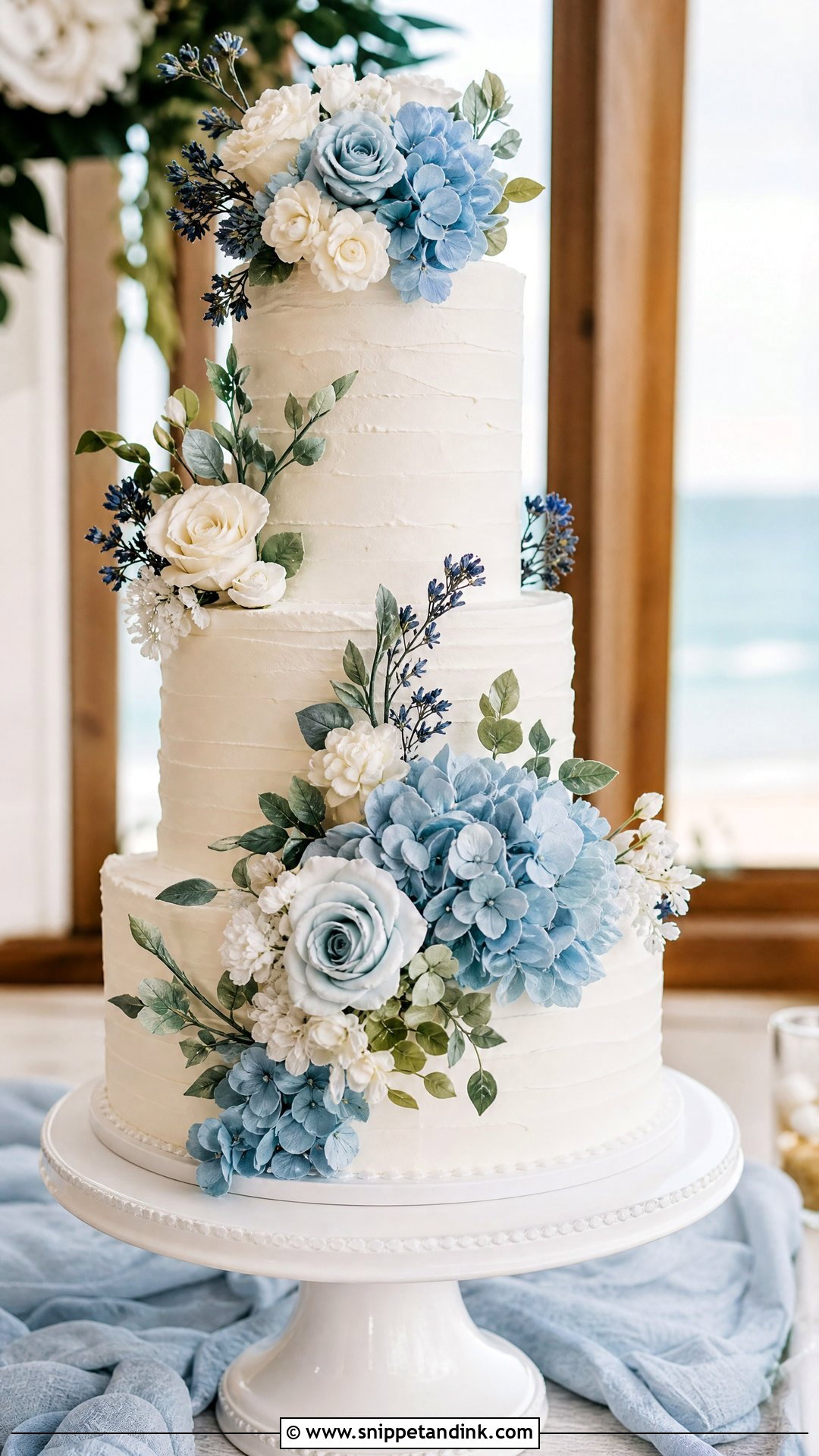
Blue flowers on a white base feel calm and a little unexpected. Hydrangeas are the obvious choice because piped blue petals mimic their texture well. Pair them with ivory roses, small white blossoms and muted green leaves for balance. Blue buttercream is tricky: most buttercream has a yellow tint from the butter, which pushes blue toward green. I whiten the base first so the blue stays true. Keep the shades soft for romance, or add deeper accents for contrast.
14. Pink Buttercream Flower Wedding Cake
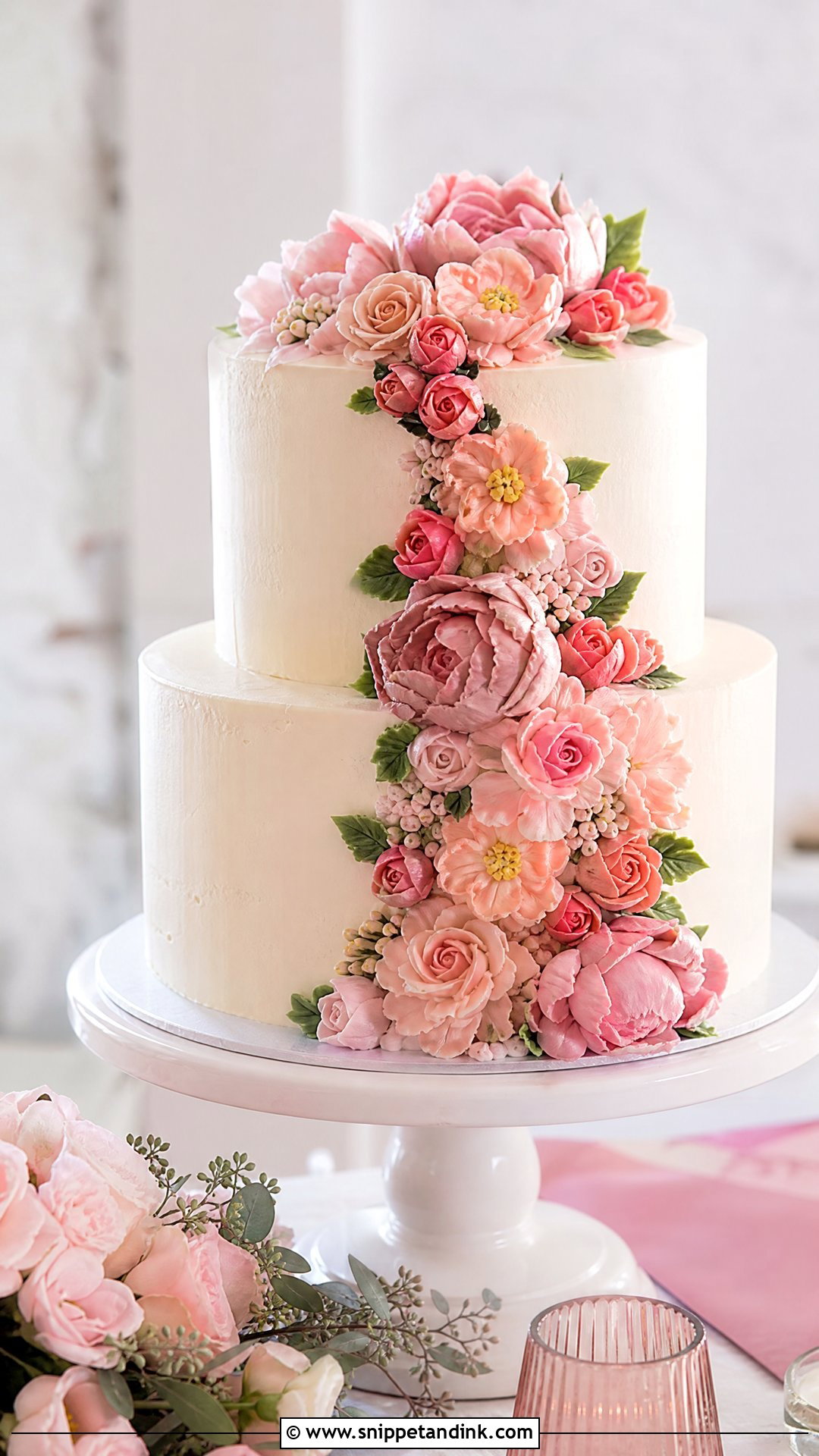
Pink is the easiest flower color to pipe and the easiest to match to a theme. Blush is classic; dusty rose, mauve, coral and soft peach also work. I put deeper pink flowers near the base and lighter blooms toward the top, so the cake feels grounded. Vanilla, strawberry, almond and lemon sponges pair well. Pink can tip into sugary quickly, so I balance it with plenty of green leaves.
15. Purple Buttercream Flower Wedding Cake
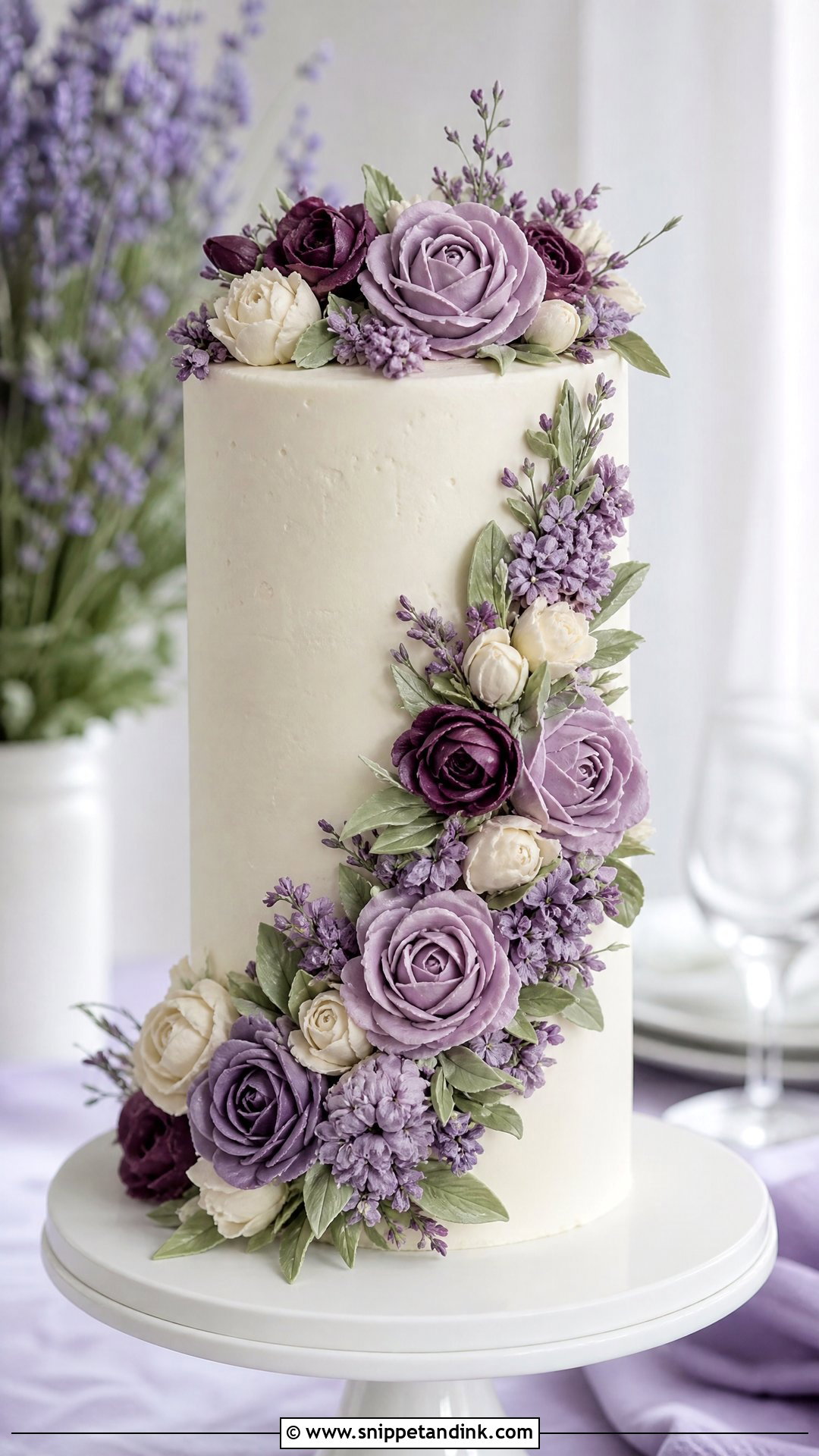
A purple buttercream flower wedding cake can be soft or rich, depending on the shade. Lavender and lilac feel like spring; plum and violet add depth for an evening reception. Purple needs care: it can fade or shift toward grey under some lighting and in sunlight. I mix purples a day ahead so they develop, and keep the cake out of direct sun. Pair purple flowers with ivory roses and muted green leaves, and use the darkest tones sparingly.
16. Yellow Buttercream Flower Wedding Cake
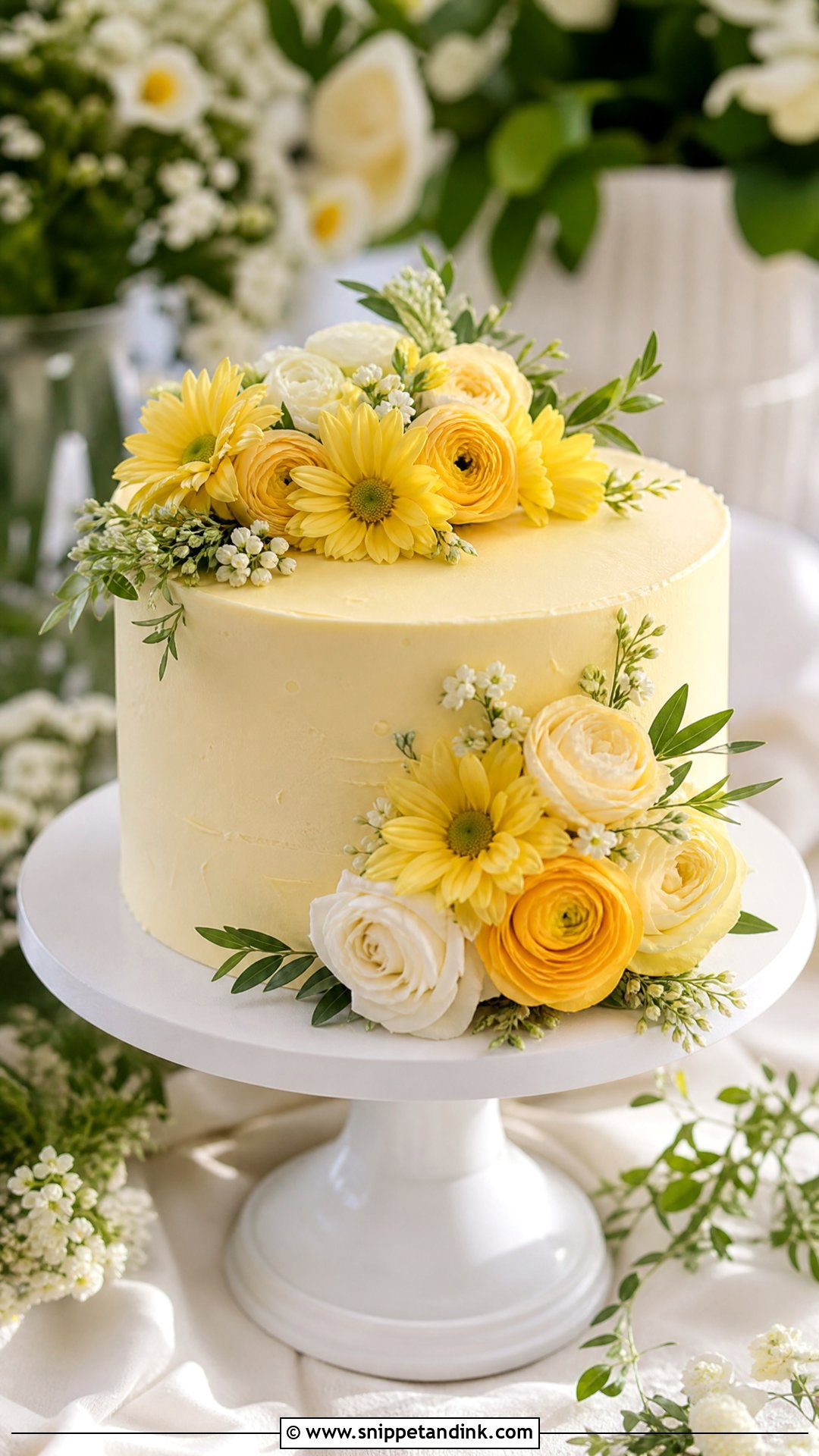
Yellow flowers brighten a cake instantly. Piped daisies, ranunculus, small roses and lemon blossoms suit spring, summer and outdoor weddings. Butter yellow and golden tones look elegant; bright lemon yellow can look neon under some lights, so I tone it down with a touch of ivory. Pair yellow with ivory petals and soft greenery, or use one bold cluster on a smooth white cake for a modern take. Lemon, vanilla, almond and honey sponges suit the palette.
17. Green Buttercream Flower Wedding Cake
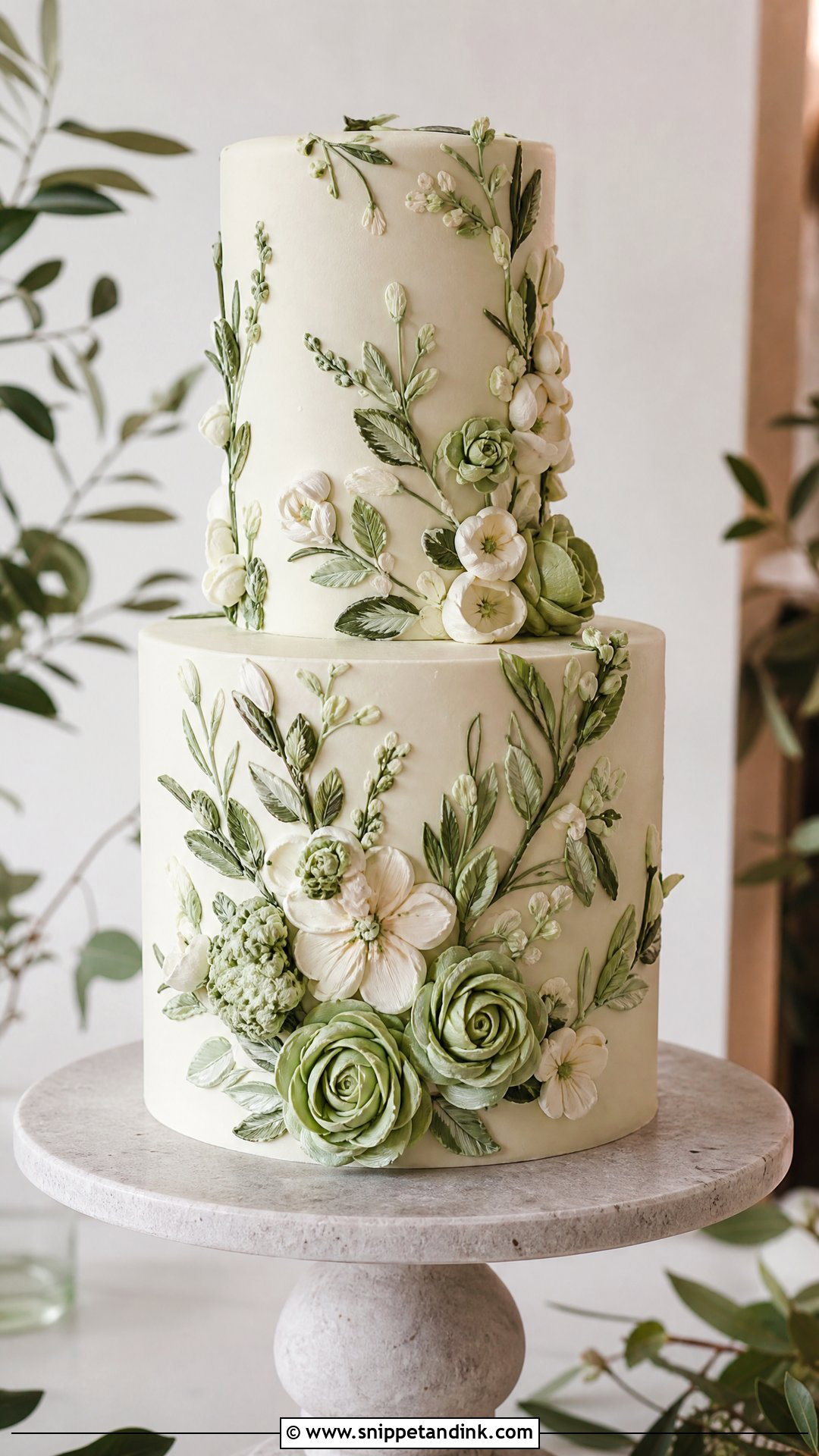
A green buttercream flower wedding cake uses pale green flowers, sage foliage, eucalyptus-style piping and ivory blossoms for a natural palette. Muted greens like sage, olive and soft mint look refined, while bright greens look artificial. Matcha, pistachio, almond or vanilla sponge connect the flavor to the color. Botanical weddings and greenhouse receptions suit it. Leaf tips are piped with a leaf nozzle and pulled away quickly so they form a natural point.
18. Floral Wreath Buttercream Wedding Cake
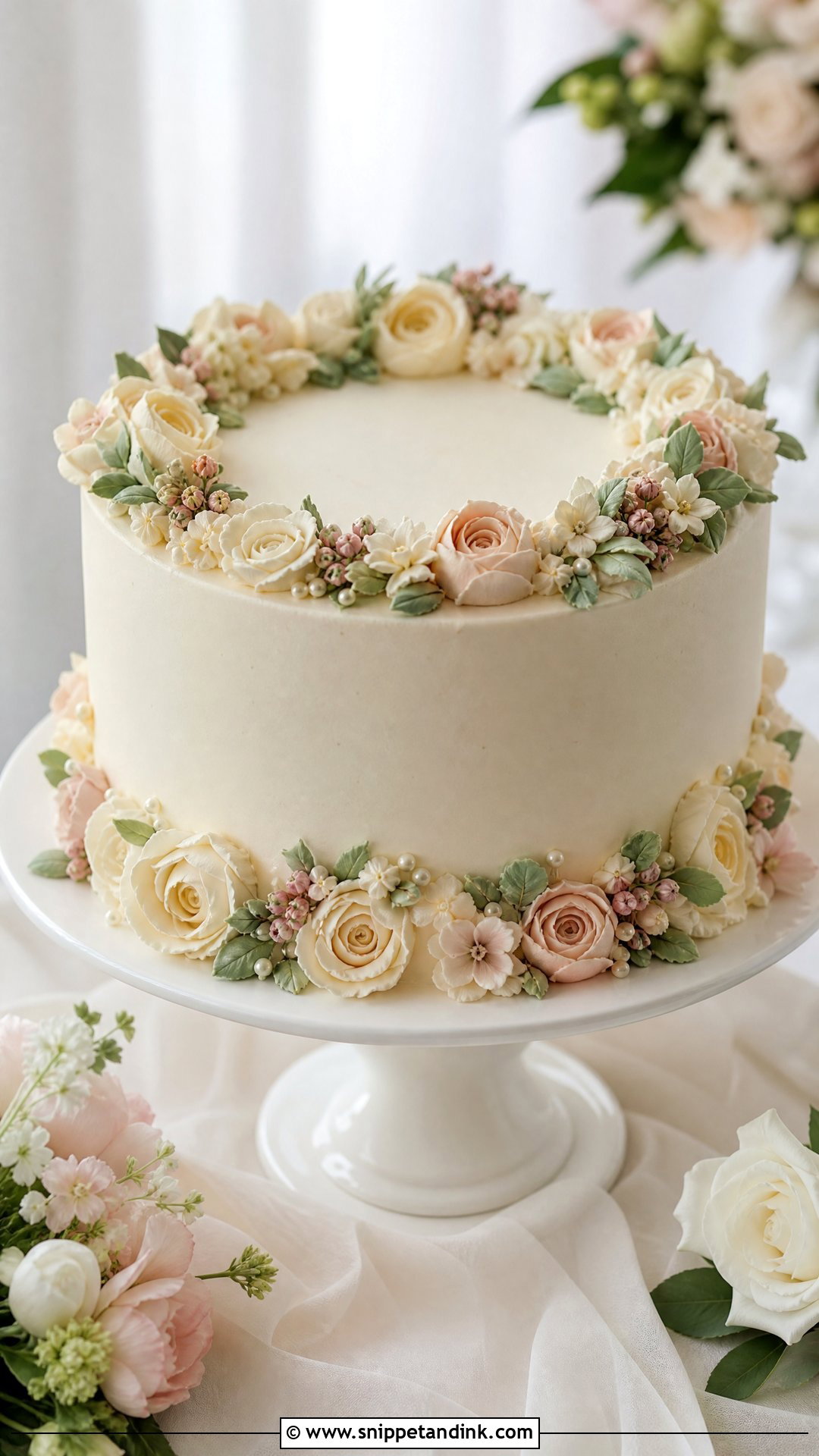
A wreath arranges flowers in a ring around one tier, usually the top, middle or base. It’s neat and finished without the commitment of a full cascade. Piped roses, tiny blossoms, leaves and pearl dots form the ring while the rest of the cake stays smooth. A base wreath frames the cake on its stand and also hides the join between cake and board, which is often the messiest part of a buttercream cake. White, blush, sage and cream suit it.
19. Floral Meadow Buttercream Wedding Cake
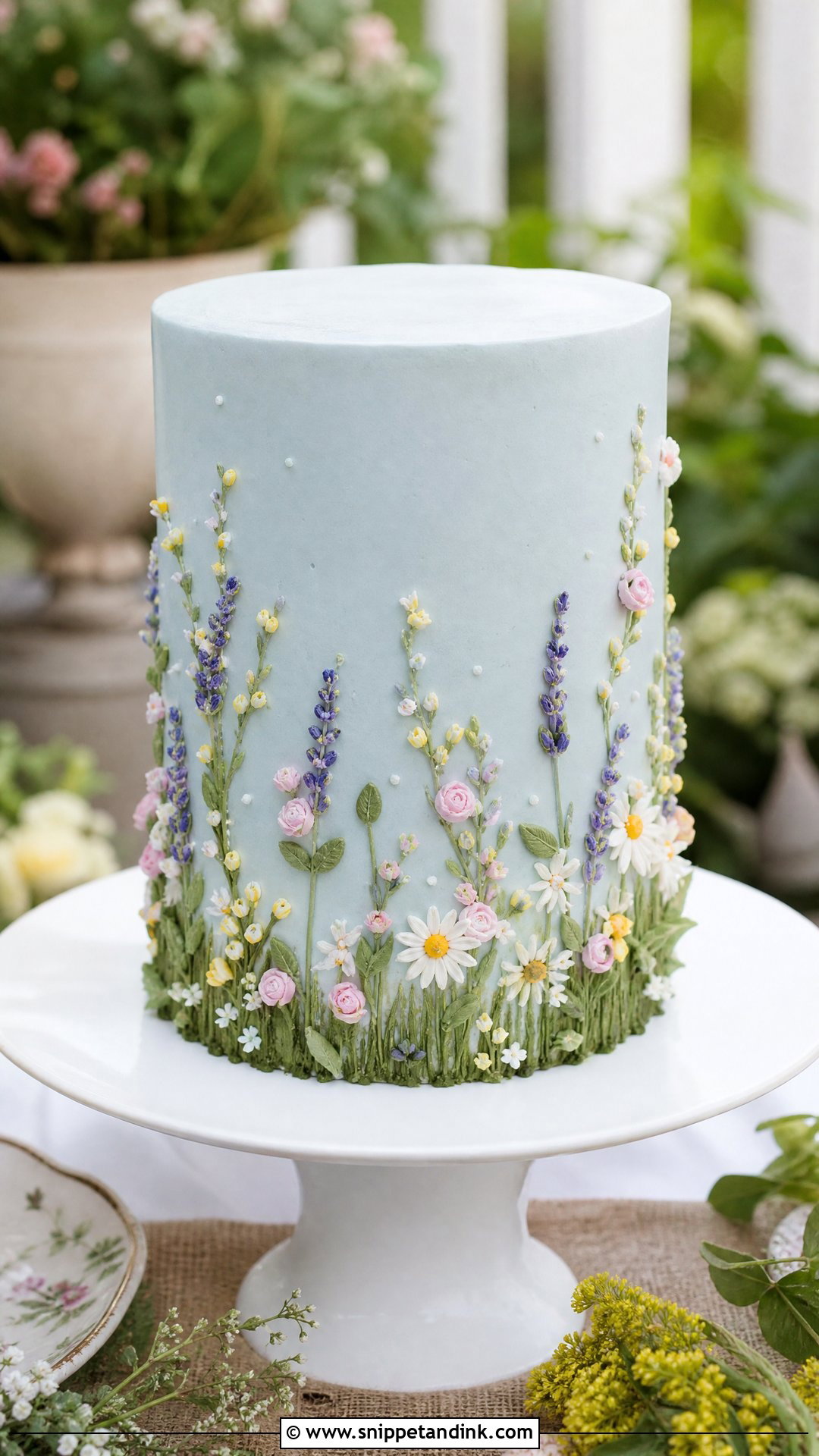
Meadow cakes pipe flowers low around the base, climbing gently upward, as if the cake is sitting in a field. Small blossoms, piped grass, tiny leaves, daisies and buds create the effect. Piped grass uses a multi-opening grass tip, pulled upward in short strokes. Keep the top simple so the meadow gets the attention. A white or pale blue base makes the flowers pop, while pastel blooms keep it soft.
20. Watercolor Buttercream Flower Wedding Cake
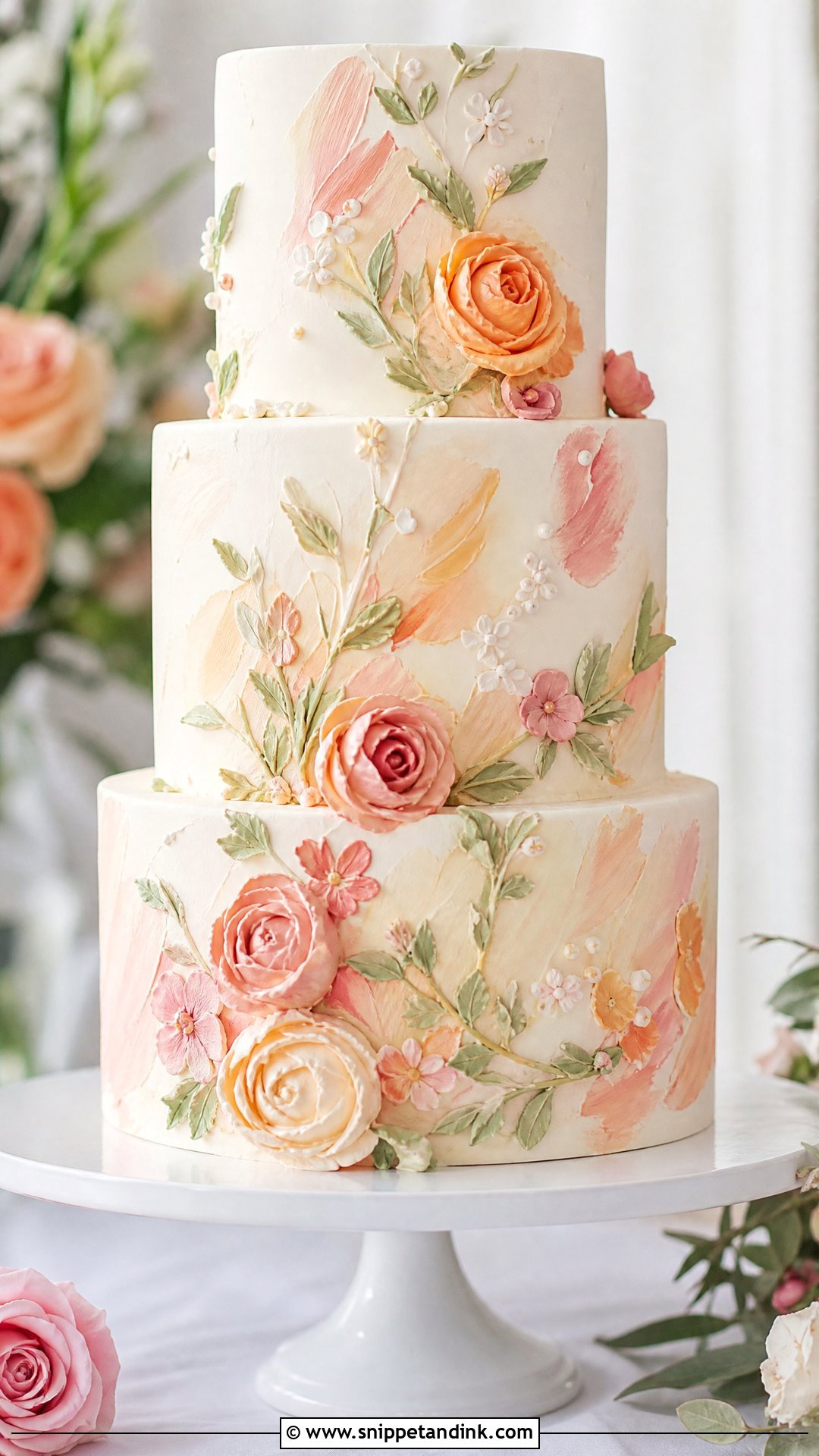
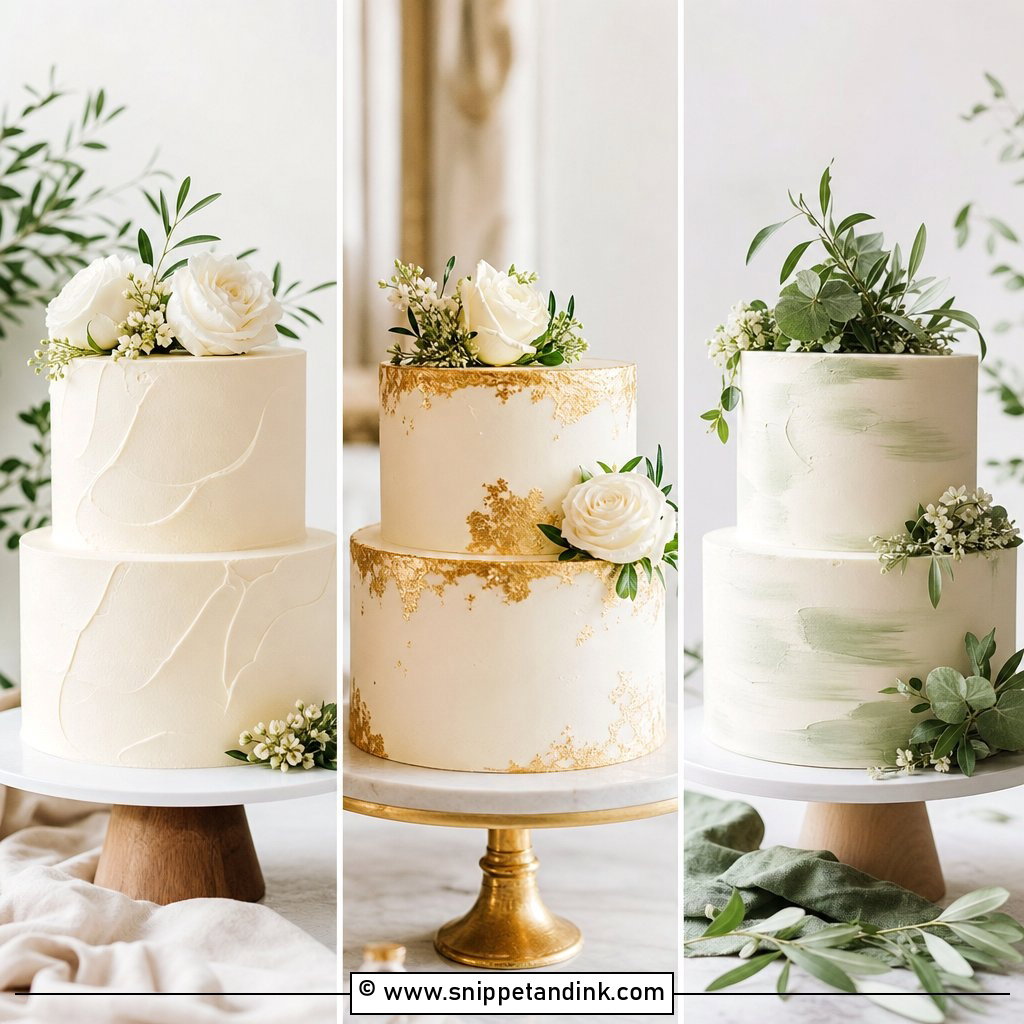
A watercolor cake blends gentle swipes of blush, peach, lavender or blue buttercream on the base, then finishes with matching piped flowers. I apply the colors with a palette knife and smooth them with a bench scraper so the edges blur. The effect should stay soft, so the flowers remain the focus. A few roses, buds and leafy accents add dimension. A simple white stand lets the painted surface stand out.
21. Textured Buttercream Flower Wedding Cake
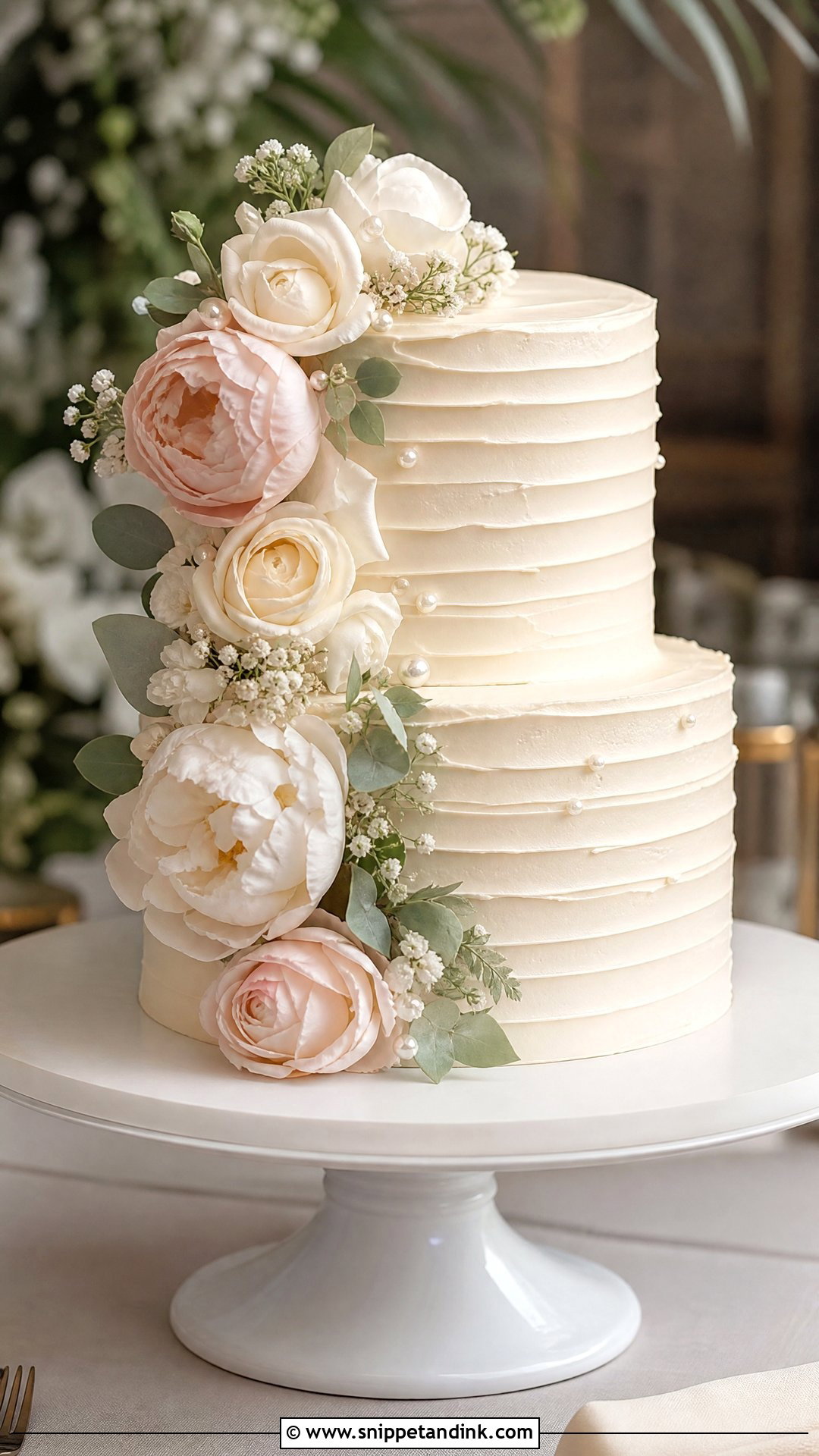
Textured cakes use horizontal lines, stucco, palette-knife strokes or ridges on the base, then add flowers on top. Texture is forgiving and easier to transport, since small marks blend in. An ivory textured cake with cream roses and sage leaves feels classic; a blush base with peach flowers is warmer. Keep the flowers in one or two areas so the cake doesn’t look overloaded. Comb textures are done with a cake comb while the buttercream is still soft, so they need to be planned before the cake is chilled.
22. Lambeth Buttercream Flower Wedding Cake
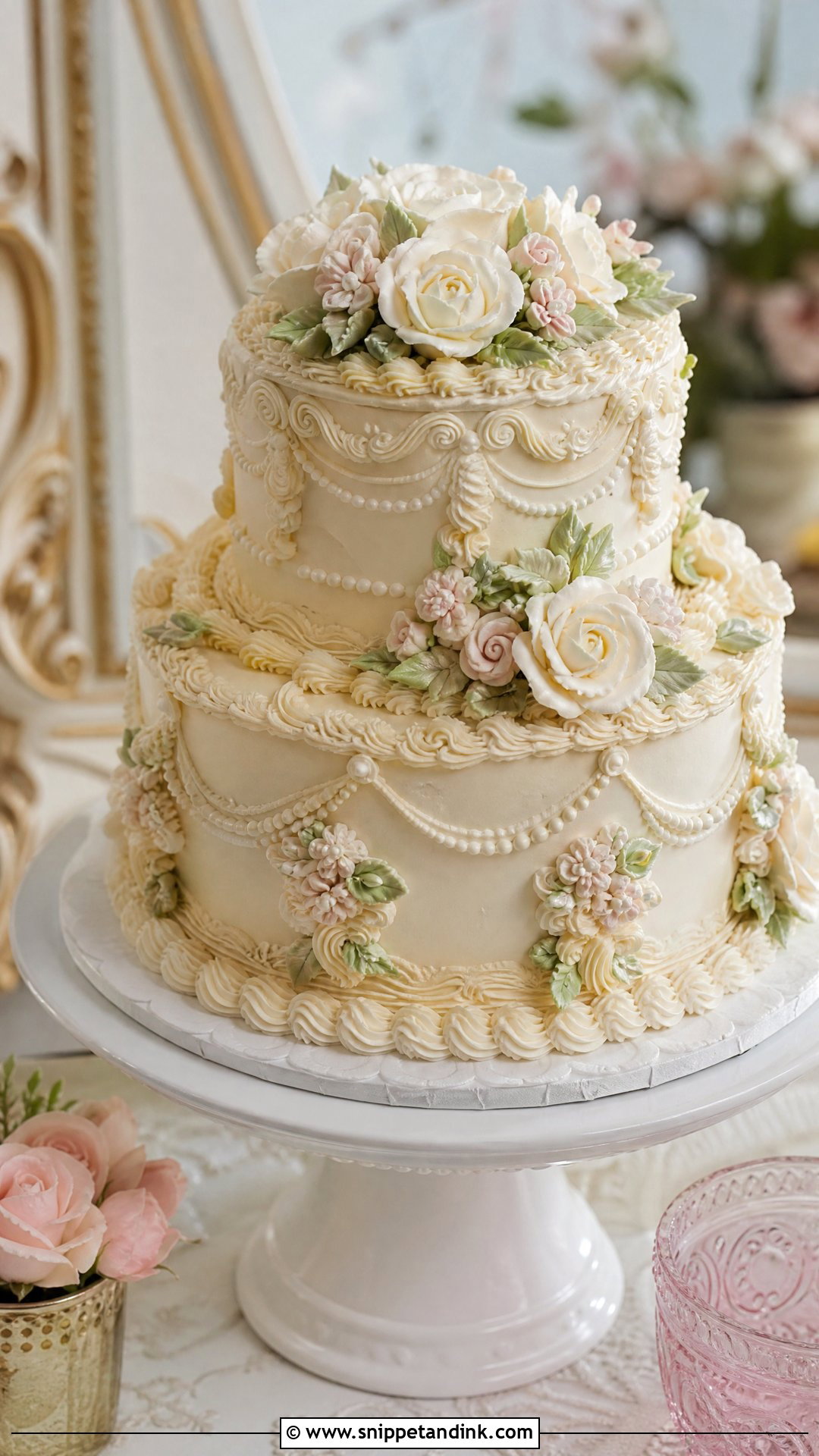
Lambeth is an English overpiping technique: layer after layer of borders, shells and scrolls built out from the cake. It takes time, and stiff buttercream is essential so the layers don’t slump. Roses or small blossoms sit on top, between borders, or around the base. White on white is the most classic version; blush, ivory and pale blue also suit it. With so much detail, I keep the flower colors soft and coordinated. Formal receptions and vintage weddings are where it fits best.
23. Single Tier Buttercream Flower Wedding Cake
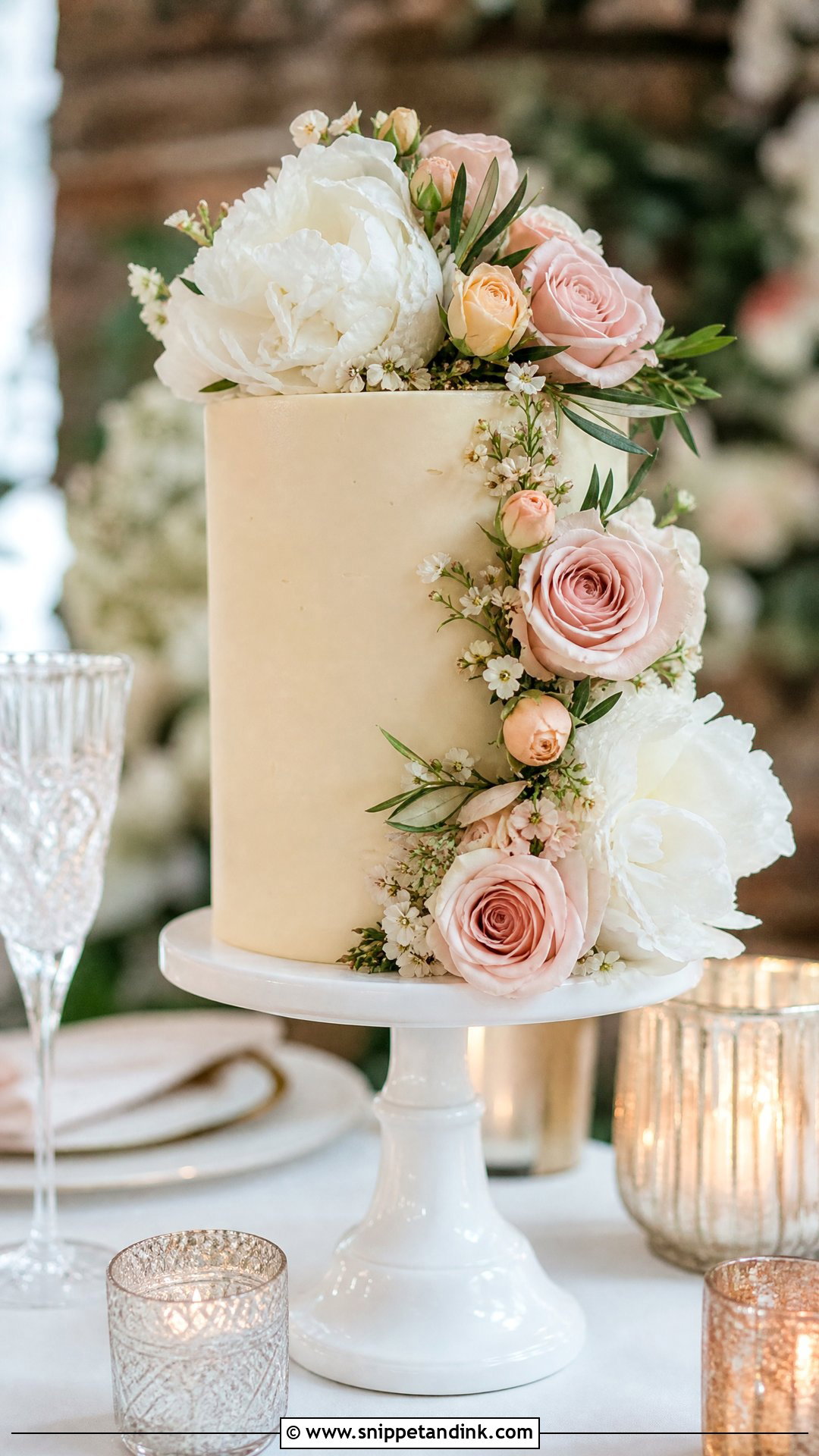
A single tier is enough for elopements, micro weddings, a cutting cake or a dessert table centerpiece. A tall round cake gives room for flowers down the side; a shorter one looks better with blooms on top. Choose a smooth ivory base and add roses, peonies or wildflowers in the couple’s wedding colors. It’s budget-friendly and easy to display, and pairs well with cupcakes, cookies or plated desserts.
24. Square Buttercream Flower Wedding Cake
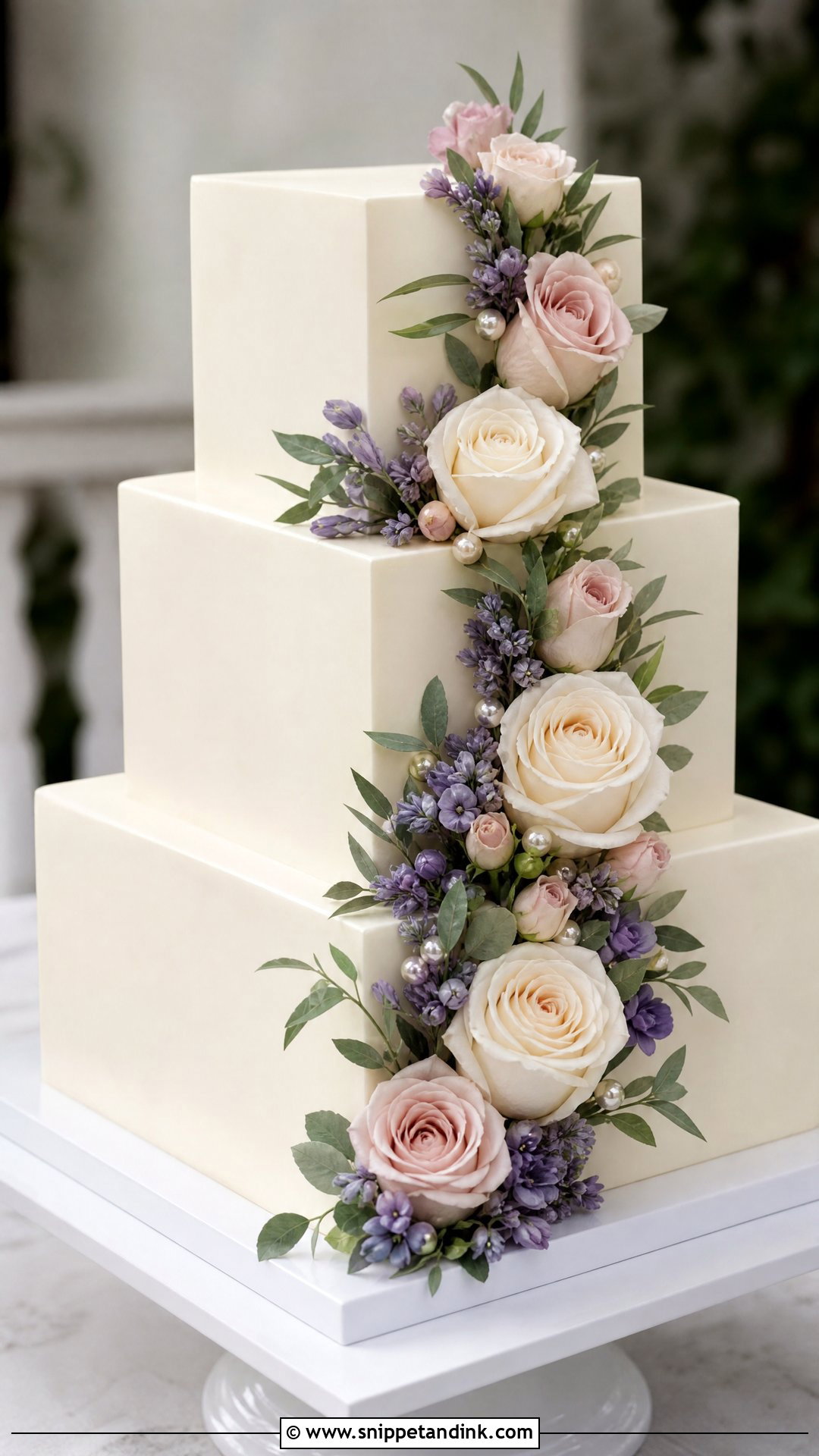
Square tiers feel clean and modern, and flowers soften the sharp corners. Corners are the hardest part to finish in buttercream, so ask your baker for photos of square cakes they’ve made. Place flowers along one corner, across the top edge or in a diagonal line between tiers. Ivory with white roses and sage leaves feels classic; blush or lavender flowers are romantic. A minimal cake stand suits the shape.
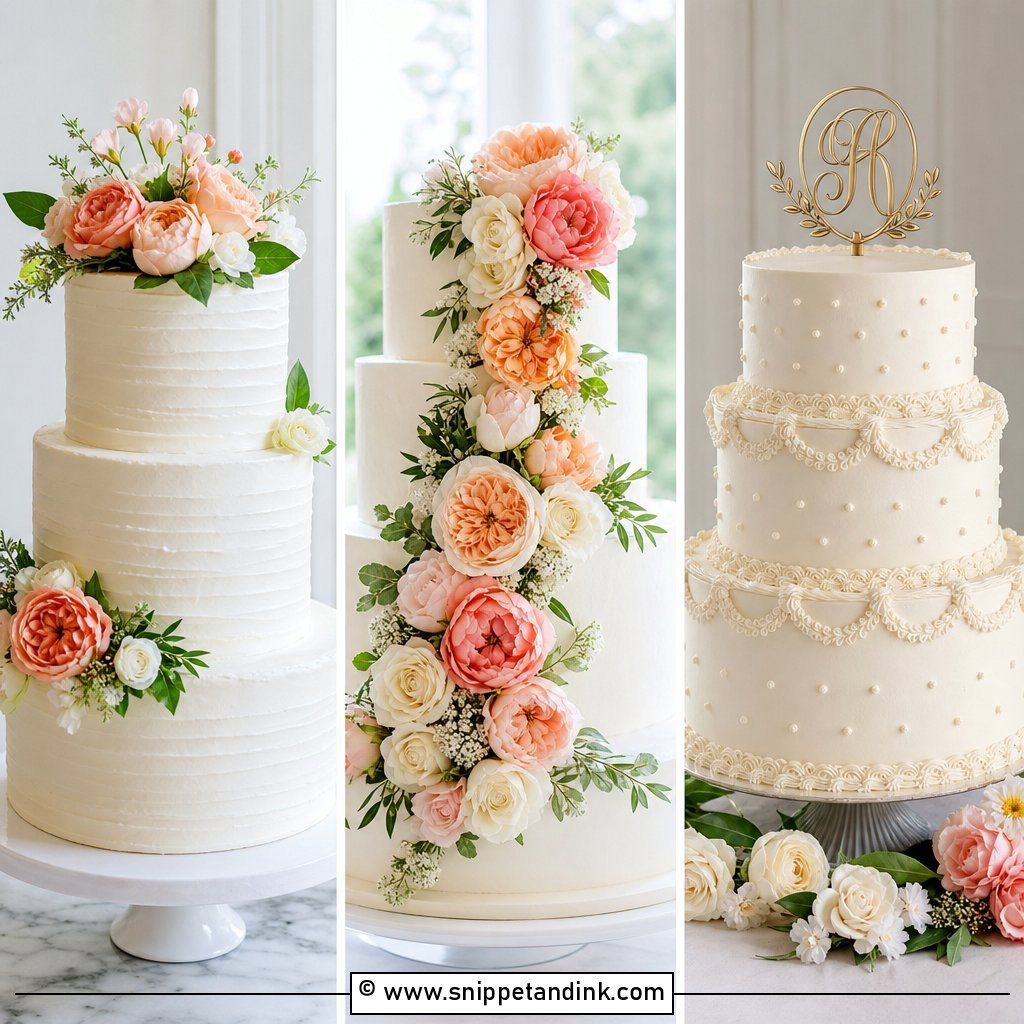

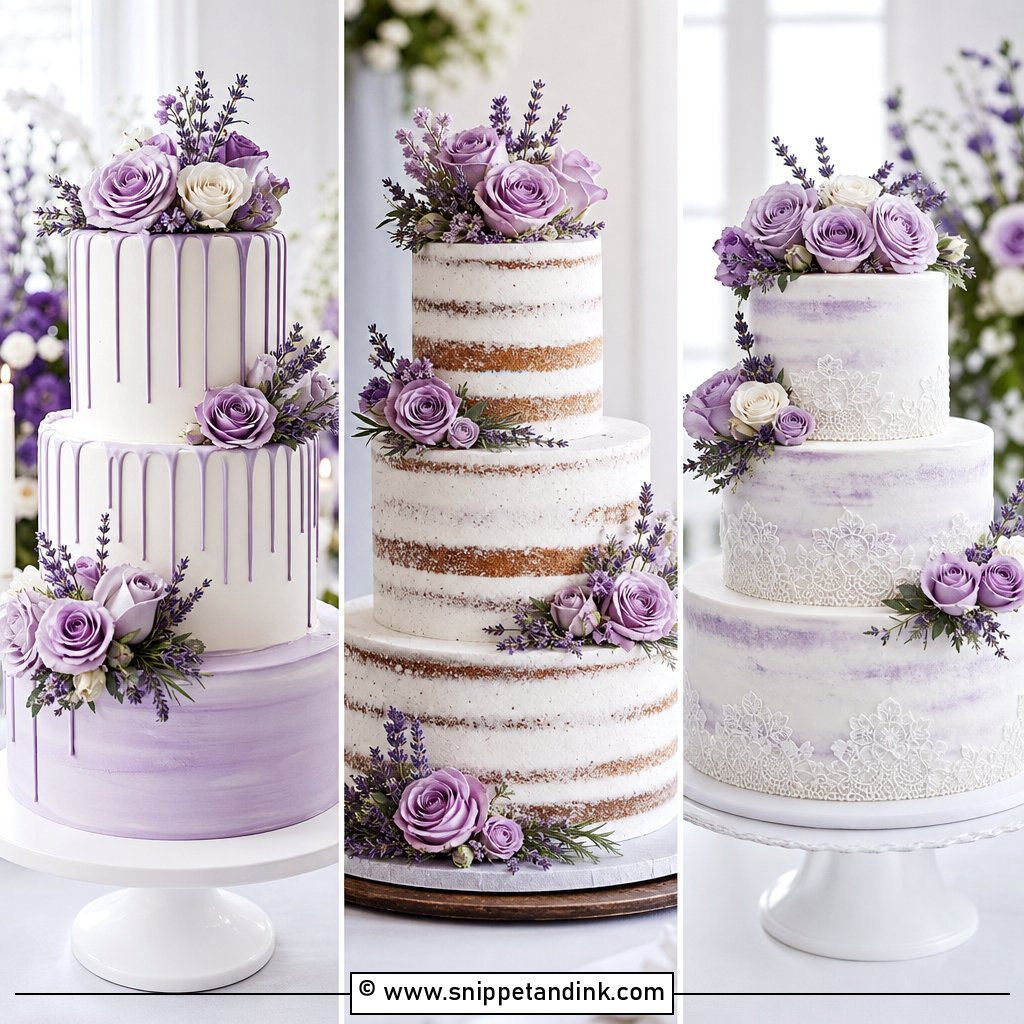
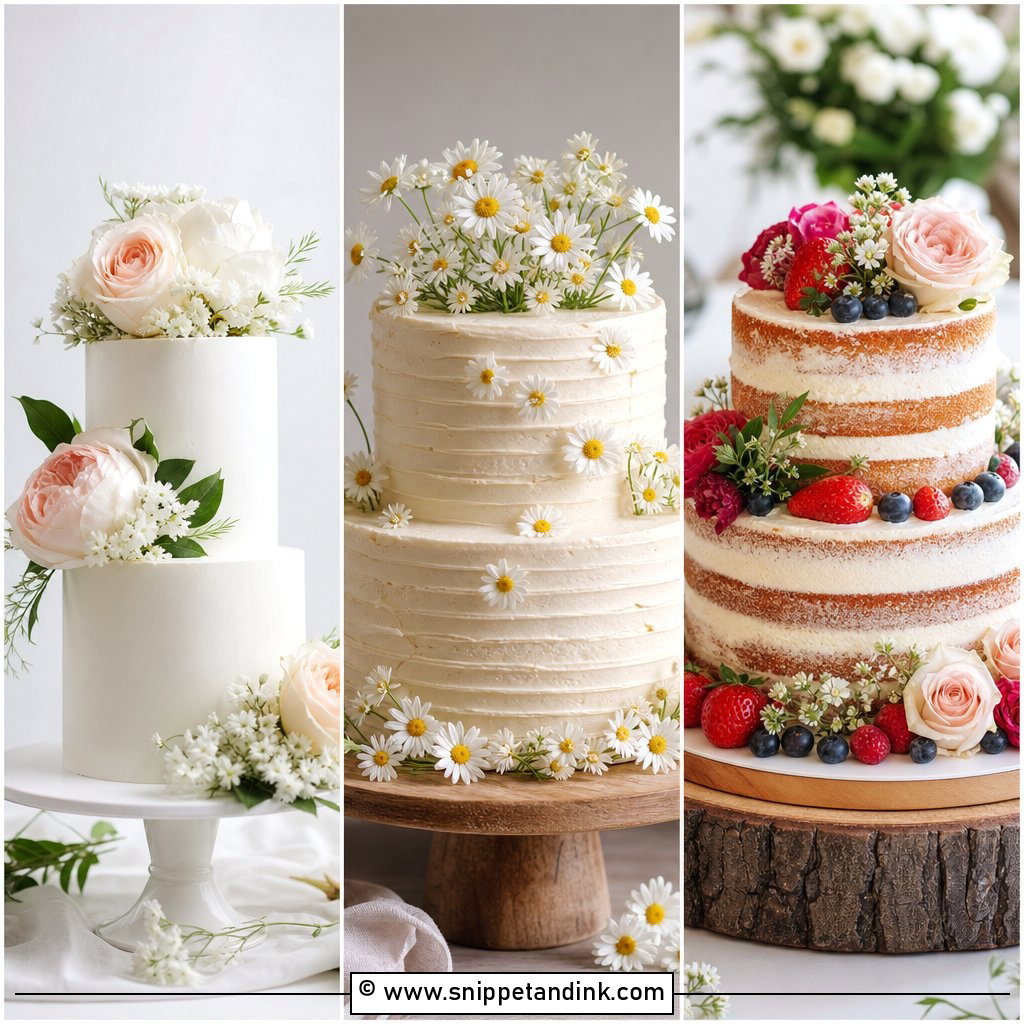

25. Heart Buttercream Flower Wedding Cake
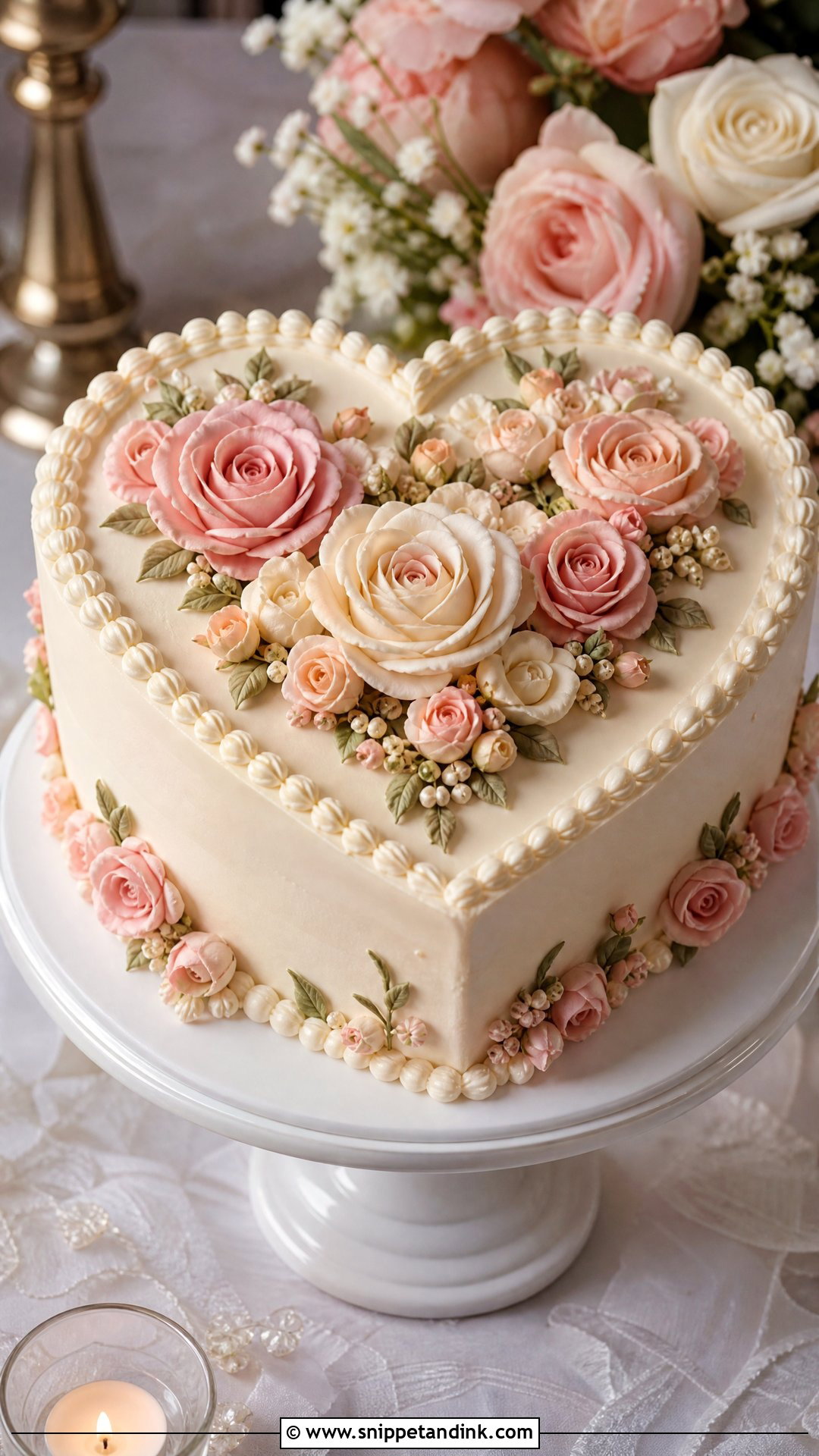
A heart-shaped cake is already sentimental, so I keep the flowers to the edges and leave the shape visible. Piped roses, small blossoms and delicate borders along the curve work well, with pearl piping or tiny leaves for texture. A white or blush base suits pink, ivory and pale peach flowers. It’s lovely for intimate weddings, engagement parties, bridal showers or a small reception dessert table. The point of the heart can be fragile in buttercream, so I chill it well before transport.
Bring Your Baker a Brief She Can Actually Pipe From
A screenshot of a cake is a good start, but it doesn’t tell me which parts you love. When couples come to a consultation, these details help me most.
- A photo of your bouquet or the florist’s mood board, so the piped flowers echo the real ones.
- Your guest count, so I can size the tiers and suggest a kitchen cake if needed.
- Venue and timing: indoors or out, the season, and how long the cake will be on display.
- The one or two cakes you love most, with a note on what you like about each: the shape, the colors or the flower style.
Many bakers book up months ahead in peak season, so get in touch as soon as you have a date and venue. Lead times vary a lot, and detailed piping like Lambeth or a full garden cascade takes more prep time than a simple wreath.
Deep colors need a day to develop
Purple, navy, burgundy and deep pink darken as they sit, so I mix them the day before. Adding more gel color to rush the shade can make buttercream taste bitter. If you want a dark flower, ask your baker how they get there.
Fewer Flowers, Piped Well, Beat a Crowded Tier
Buttercream flowers can look classic, colorful, rustic or modern, and the right one depends on your venue, palette and how much floral detail you want. White tiers with blush or ivory flowers are the safest; cascades, meadows, watercolor and vintage piping feel more current. Whatever you pick, bring photos of your bouquet to the tasting and ask your baker to pipe a sample flower, so you can see their hand before you commit.
You'll Like These Ideas:




Leave a Reply