
Three tiers is the cake size I make more than any other. It is tall enough to look like a wedding cake from across the room, it suits a mid-sized guest list, and it fits on a standard cake table without a special stand. It also gives me three surfaces to work with, which is where the design decisions start: flowers on one, pearls on another, texture on all three, or one idea carried down the whole stack. These twenty finishes are the ones couples ask about most, with what each involves from my side of the counter.
How Many Guests Do Three Tiers Feed?
This is the first question I answer, because the tier sizes set the price, the height and even which finishes are practical. A “three-tier cake” can serve a small dinner or a large reception depending on the diameters.
Roughly, using slim wedding portions rather than generous dessert slices:
- 4, 6 and 8 inch rounds: around 40 to 50 portions, good for an intimate wedding.
- 6, 8 and 10 inch rounds: around 70 to 80 portions, the size I make most often.
- 8, 10 and 12 inch rounds: well over 100 portions for a larger guest list.
These numbers vary by baker and by how the cake is cut, so ask yours for their own chart. If the guest list is larger than the cake you love, a kitchen sheet cake in the same flavour fills the gap and costs far less than a fourth decorated tier.
Height matters too. Extra-tall, double-height tiers make three tiers look grand, but each one needs internal dowels and a board inside it, so tell your baker early if that is the look you want.
1. Three Layer Wedding Cake With Fresh Flowers
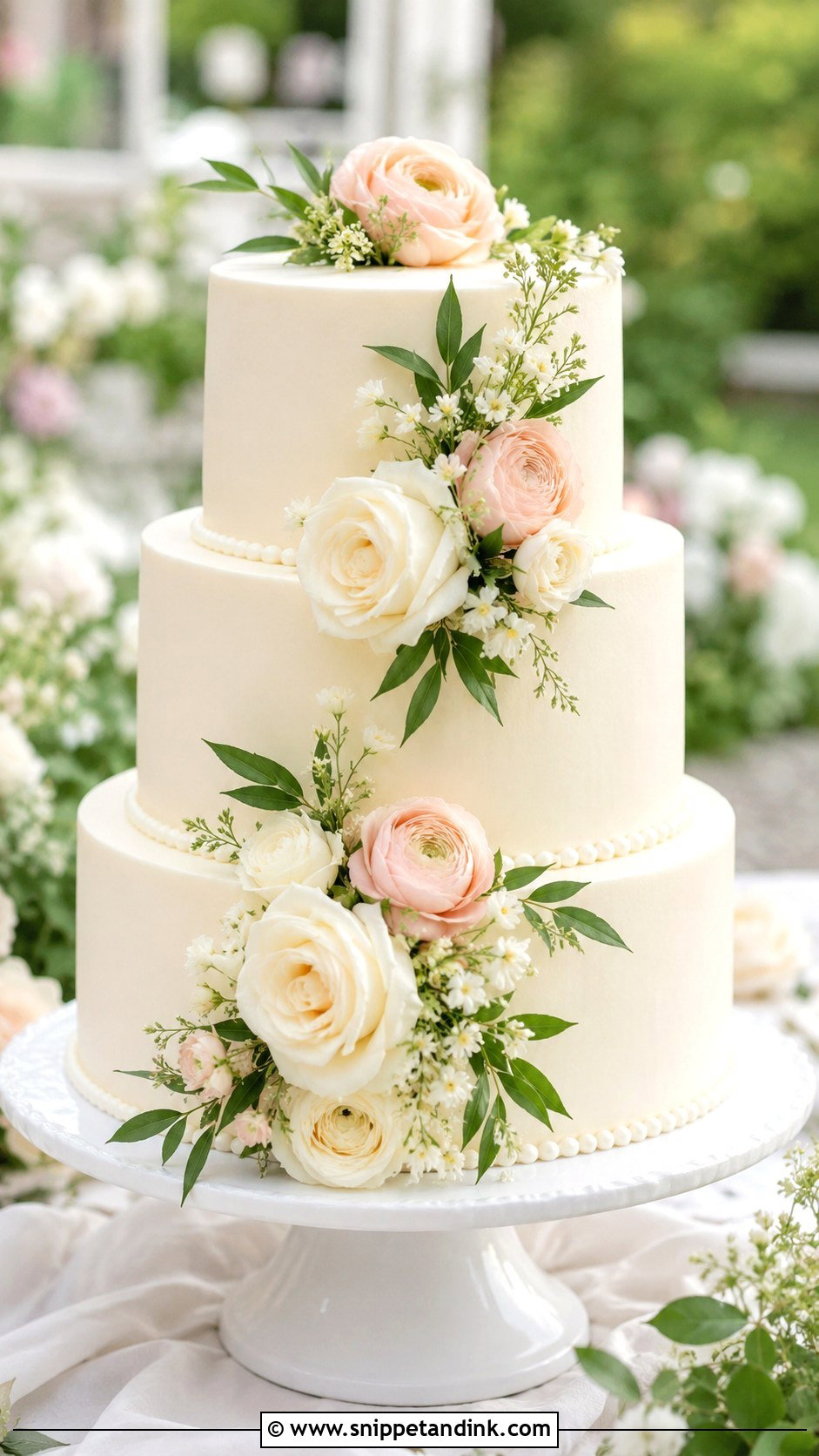
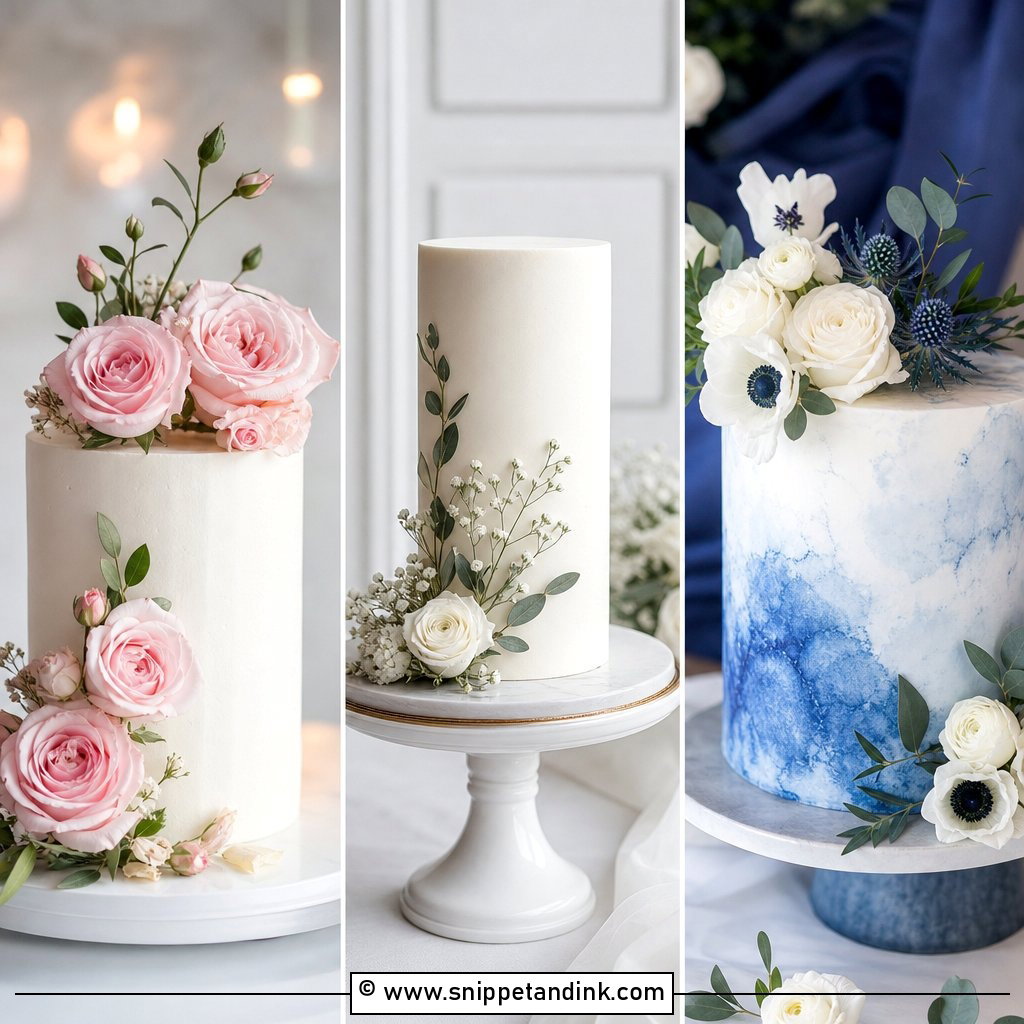
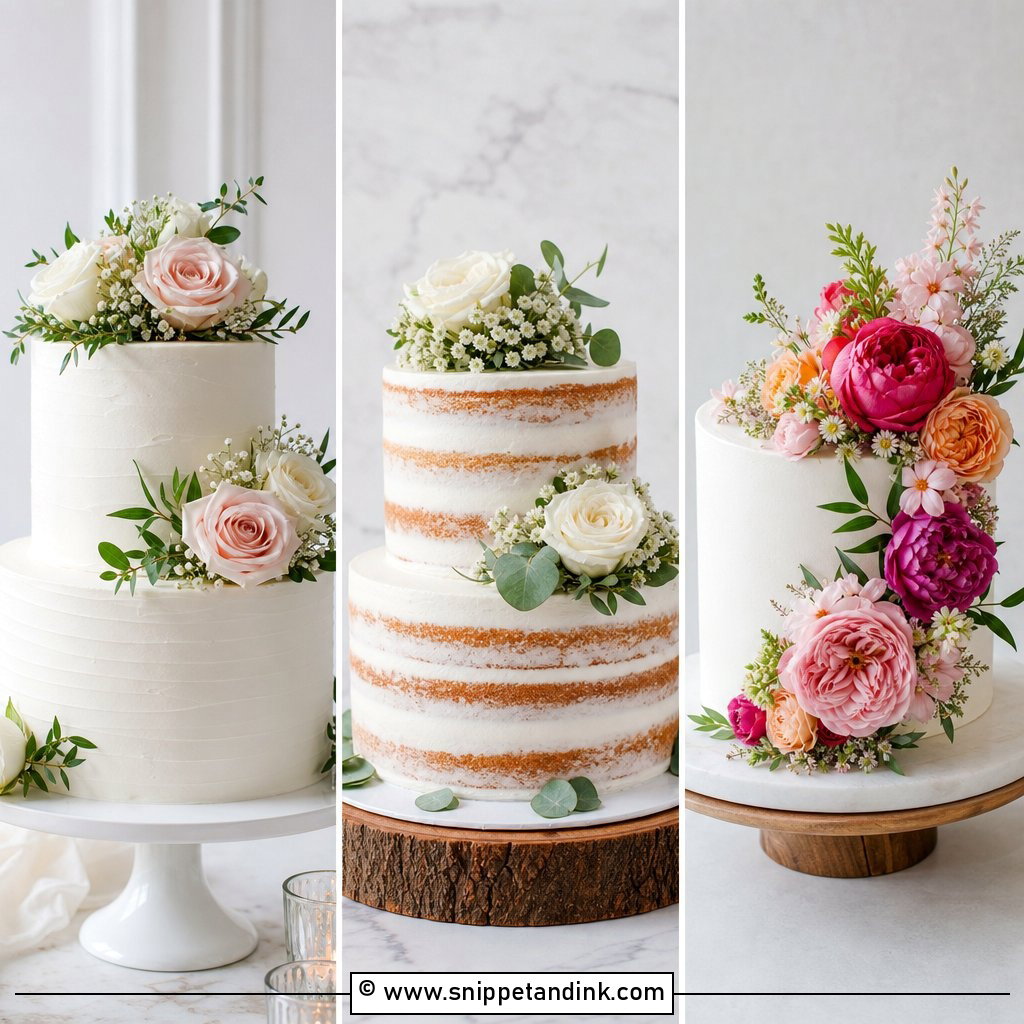
Fresh flowers are the cheapest way to make a three-tier cake look abundant, and the one that needs the most care. I keep the icing smooth ivory and place blooms in small clusters, usually at one tier join and the base. Roses, ranunculus and sweet peas sit neatly; big peonies need support or they droop over the edge by evening. Not every flower is safe near food, and some are toxic, so stems are wrapped and inserted into straws or picks, never pushed straight into the sponge. Florist and baker need to agree who does this and when.
2. Three Layer Wedding Cake With Pearls
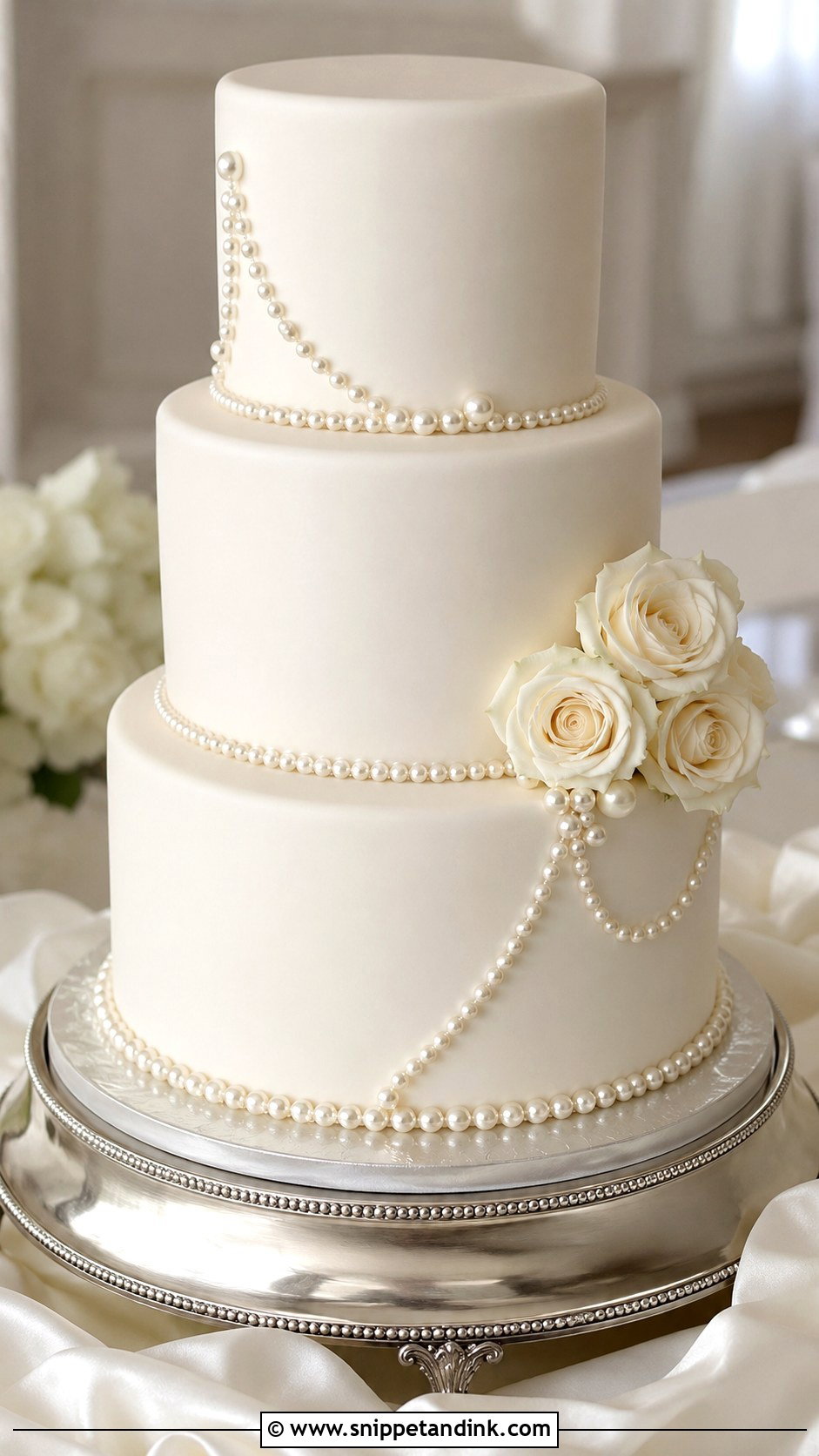
Pearls are quiet but they do a lot. Tiny sugar pearls dotted across fondant, a border at the base of each tier, or a draped swag that echoes a necklace. Each pearl is placed by hand with tweezers and a dab of edible glue, so a fully dotted tier takes real time. Ivory, white, champagne and pale blush let them catch light softly. If your dress has pearl buttons or beading, this is an easy match. One floral accent or simple piping is all they need beside them.
3. Three Layer Wedding Cake With Buttercream Flowers
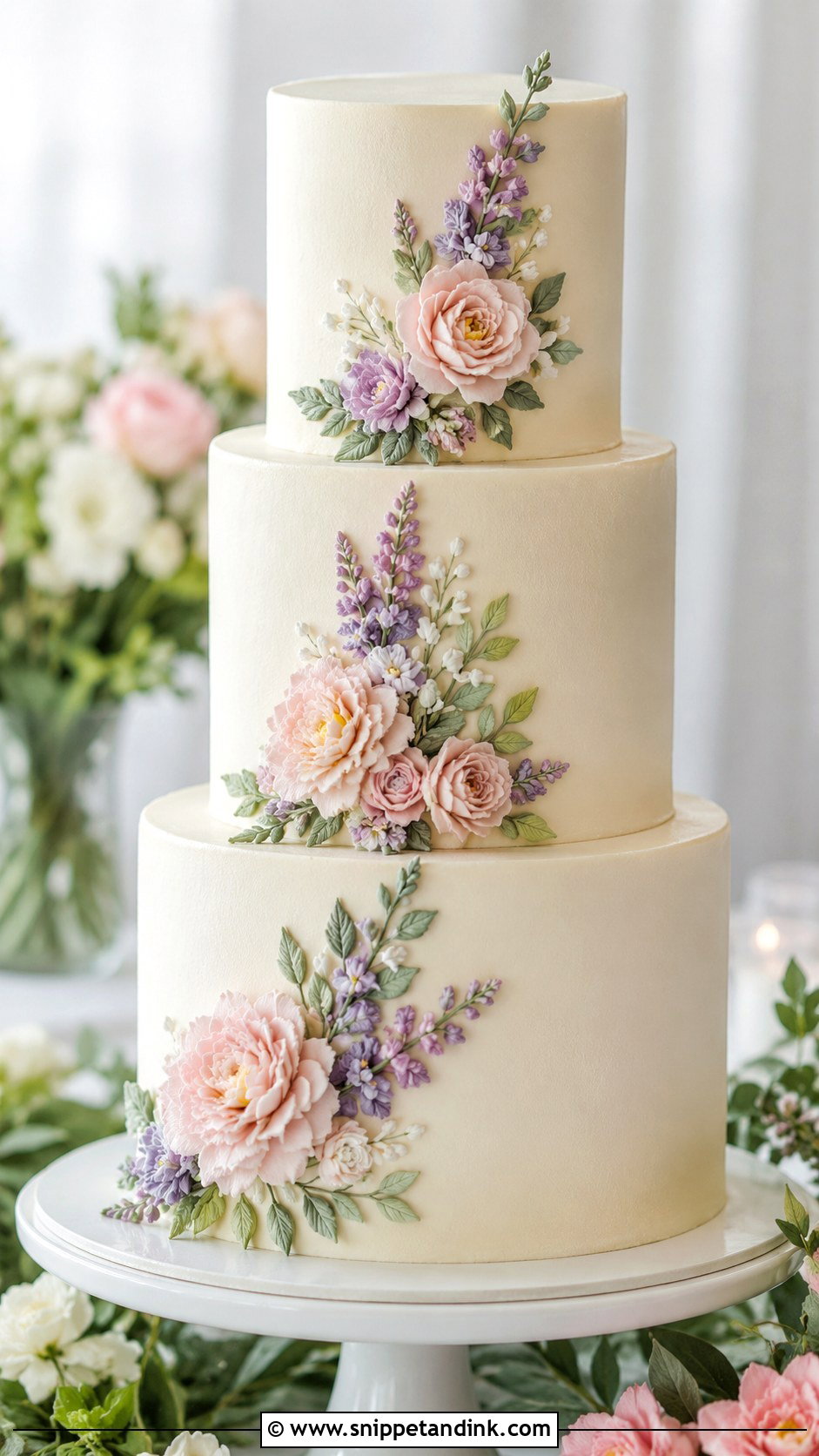
I love buttercream flowers because guests actually eat them. Roses, peonies, blossoms and vines are piped straight onto the cake in dusty pink, sage, lavender, peach or ivory, often trailing diagonally across the tiers. They are softer and more handmade than sugar flowers, and that charm is the point. The limitation is temperature: piped petals start to droop in a hot room or direct sun, so this is a design for indoor or shaded receptions.
4. Three Layer Wedding Cake With Gold Leaf
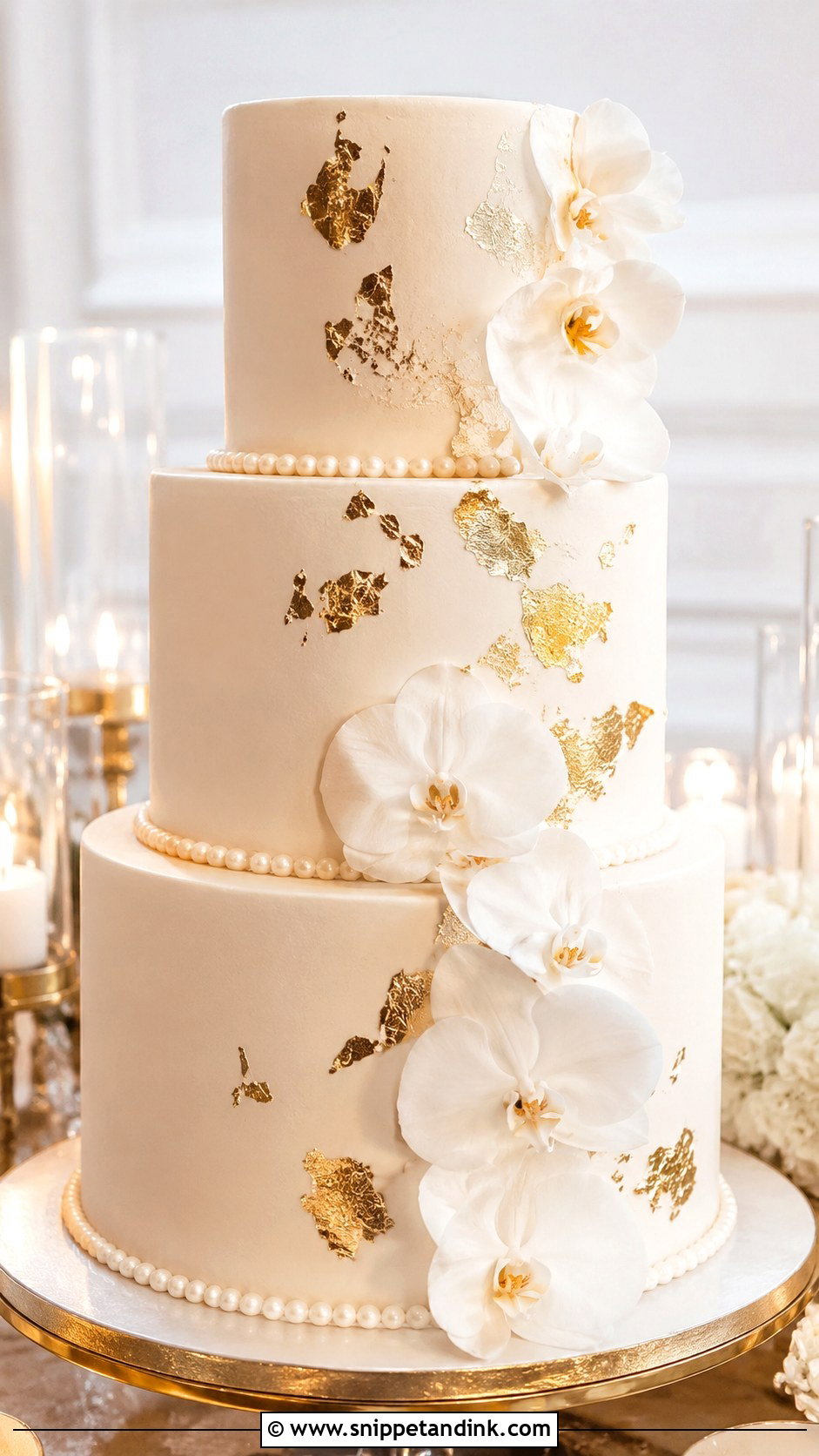
Gold leaf works best in small doses. A few torn flakes of edible gold leaf on white buttercream, marble fondant or champagne icing reads as refined; a fully gilded tier reads loud. I apply it with a dry brush in a room with no draught, because the leaf is so thin it flies off at a breath. It suits evening and hotel receptions, and ties in easily if your tables already carry gold chargers or candles. White roses, orchids or a pearl border sit well beside it.
5. Three Layer Wedding Cake With Vintage Piping
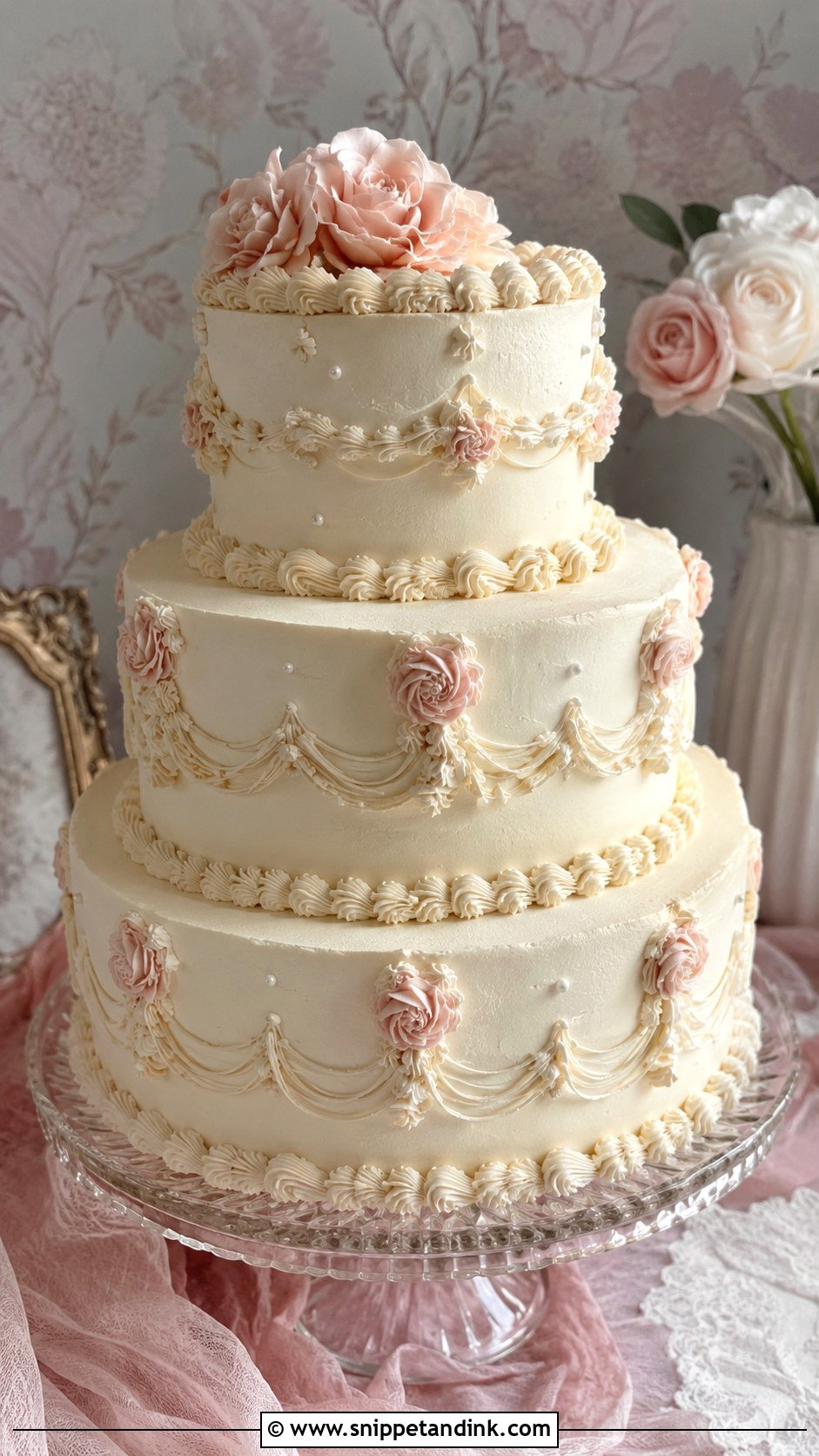
Vintage piping is back in demand, and it is the most labour-heavy finish on this list. Shell borders, scalloped swags, tiny pearls and rosettes across three tiers can mean many hours of piping, which shows in the price. It has to be symmetrical, so I mark the spacing on each tier before I start. Ivory, soft pink, pale blue and butter yellow suit it. Cherries, a few sugar flowers or a satin ribbon finish the theme. Keep it indoors; detailed buttercream loses its crisp edges as it warms.
6. Three Layer Wedding Cake With Pressed Flowers
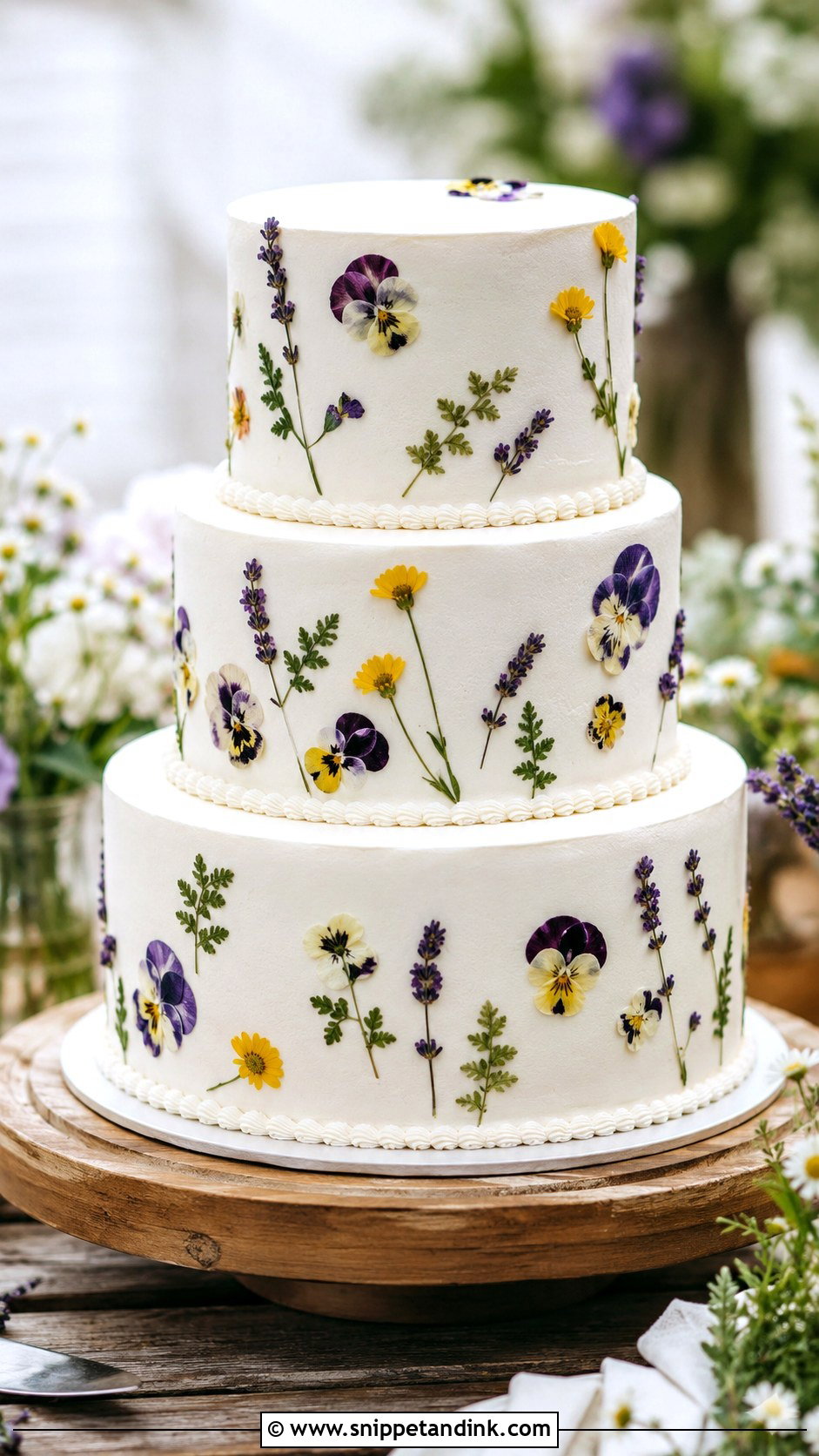
Pressed flowers sit flat against smooth buttercream or fondant, giving a botanical look with almost no bulk. Use edible or food-safe pressed flowers such as violas, cornflowers or small herbs in lavender, yellow, blush, blue or green, on a mostly white cake. I press them gently into the icing so the edges don’t lift. They fade slightly when exposed to light for days, so I apply them close to the wedding. A slim ribbon or tiny piped border is all the design needs beyond that.
7. Three Layer Wedding Cake With White Roses
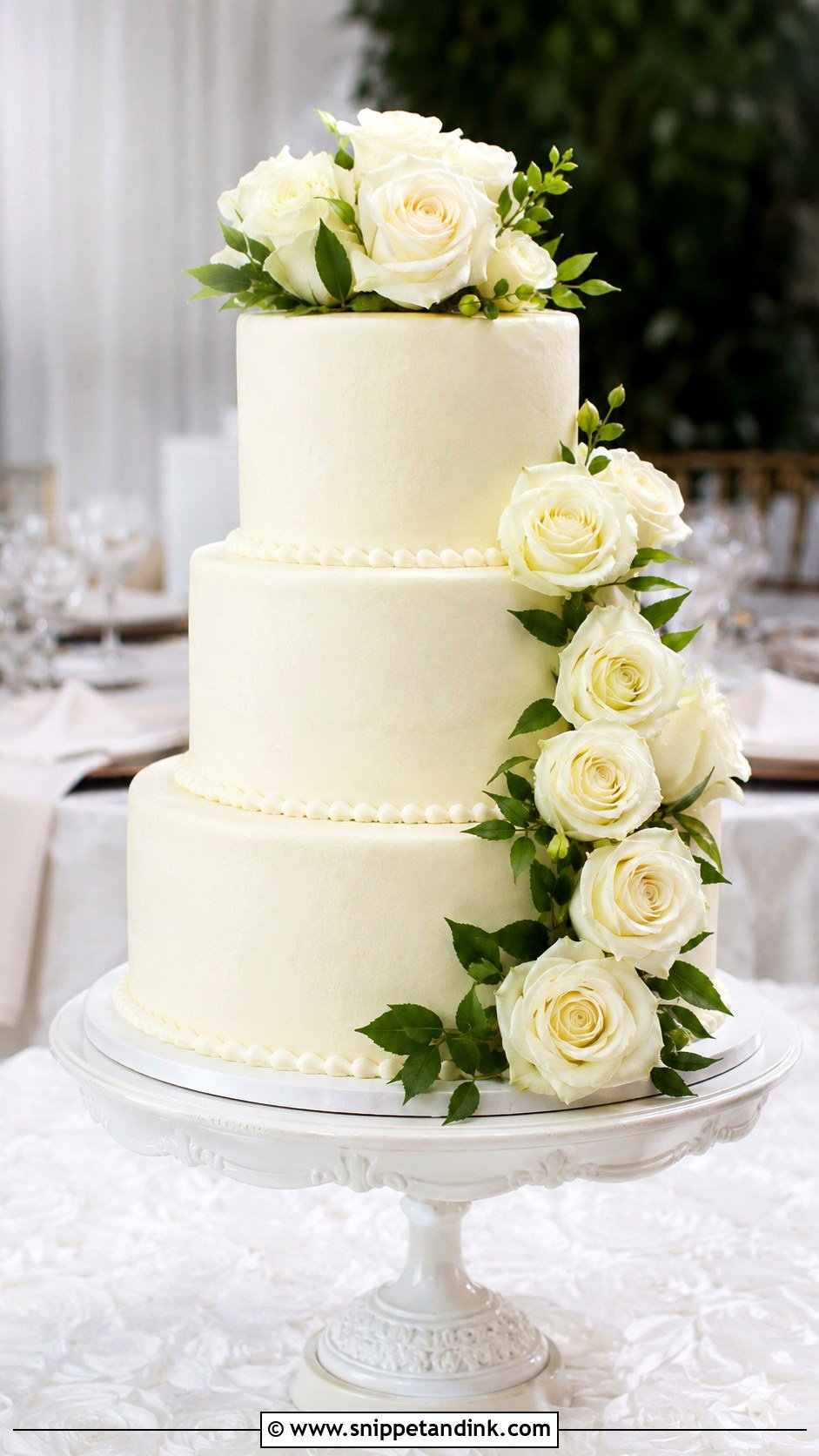
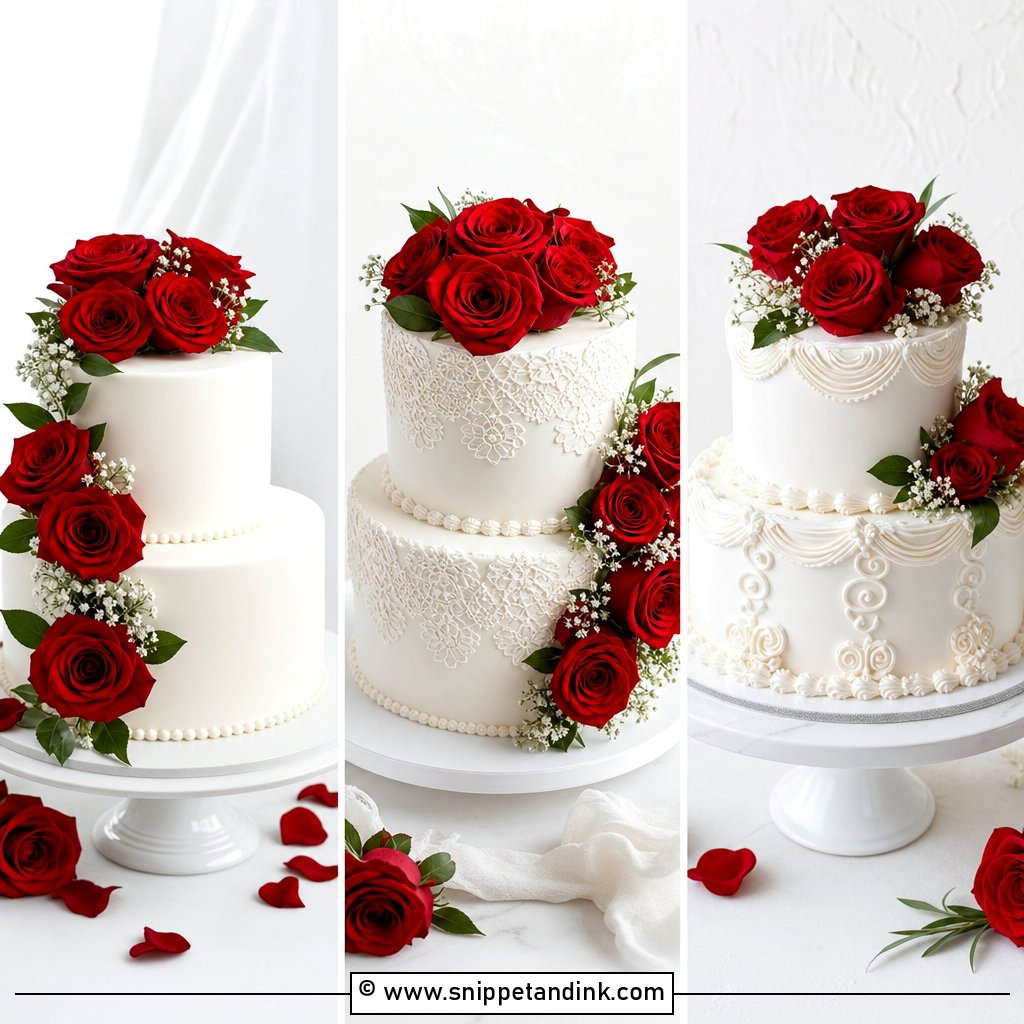
White roses rarely look wrong in any venue, which is exactly why couples choose them. I place them between tiers or down one side in a loose cascade against smooth ivory buttercream, white fondant or a subtle pearl border. A few green leaves add freshness; all-white blooms feel more formal. If you use fresh white roses, ask your florist for firm, fully hydrated heads, because bruised or browning edges show up immediately against white icing.
8. Three Layer Wedding Cake With Watercolor Flowers
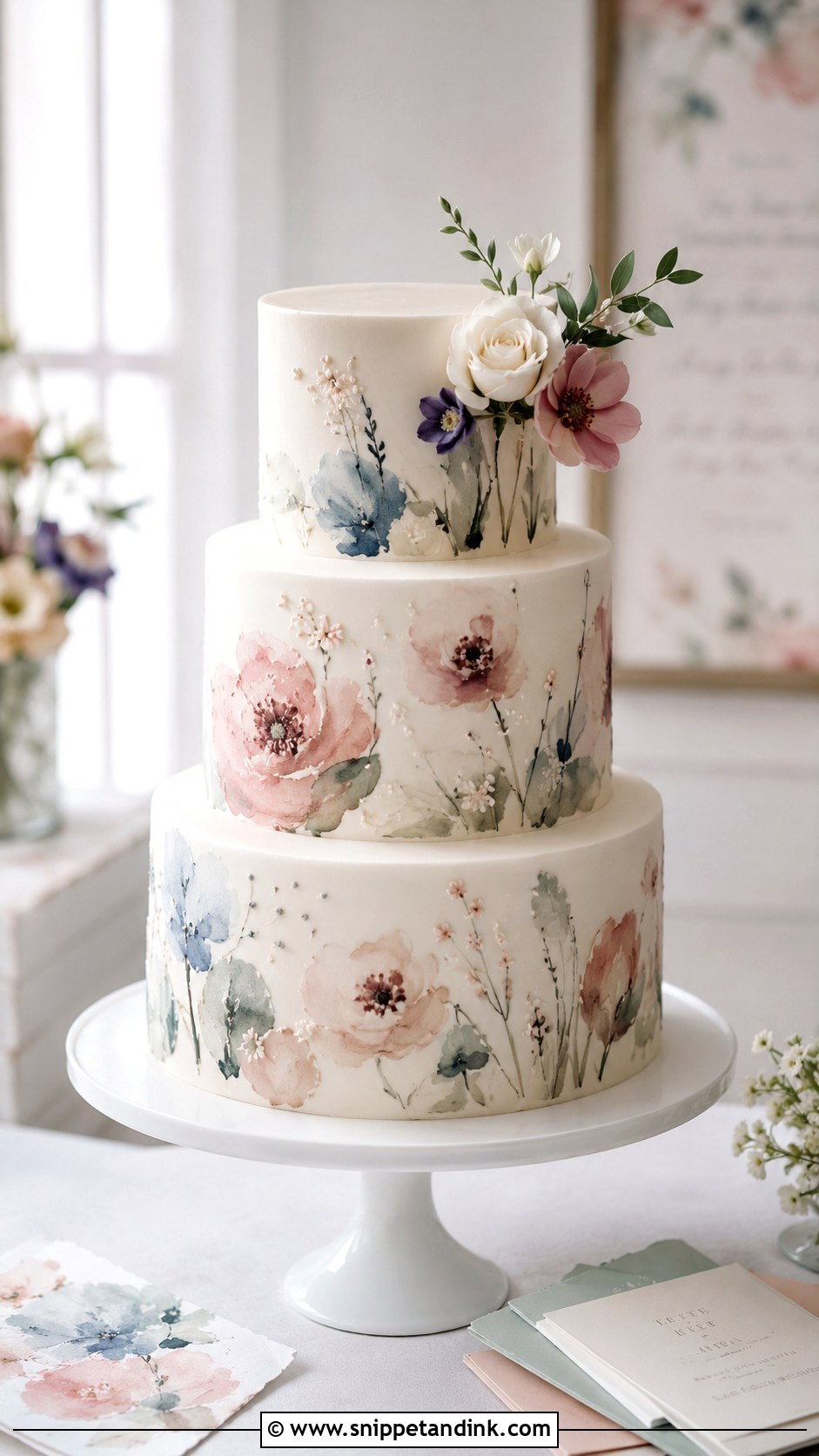
Watercolour florals give the colour of flowers without the height. I paint them onto fondant with edible colours thinned in alcohol, or onto chilled buttercream with tinted cream, building layers of blush, mauve, dusty blue, lavender, peach and sage. The painting can echo your invitations or bridesmaid dresses closely if you send me the artwork. Too many layers of wet colour on fondant can make it sticky, so I let each wash dry before the next.
9. Three Layer Wedding Cake With Marble Fondant
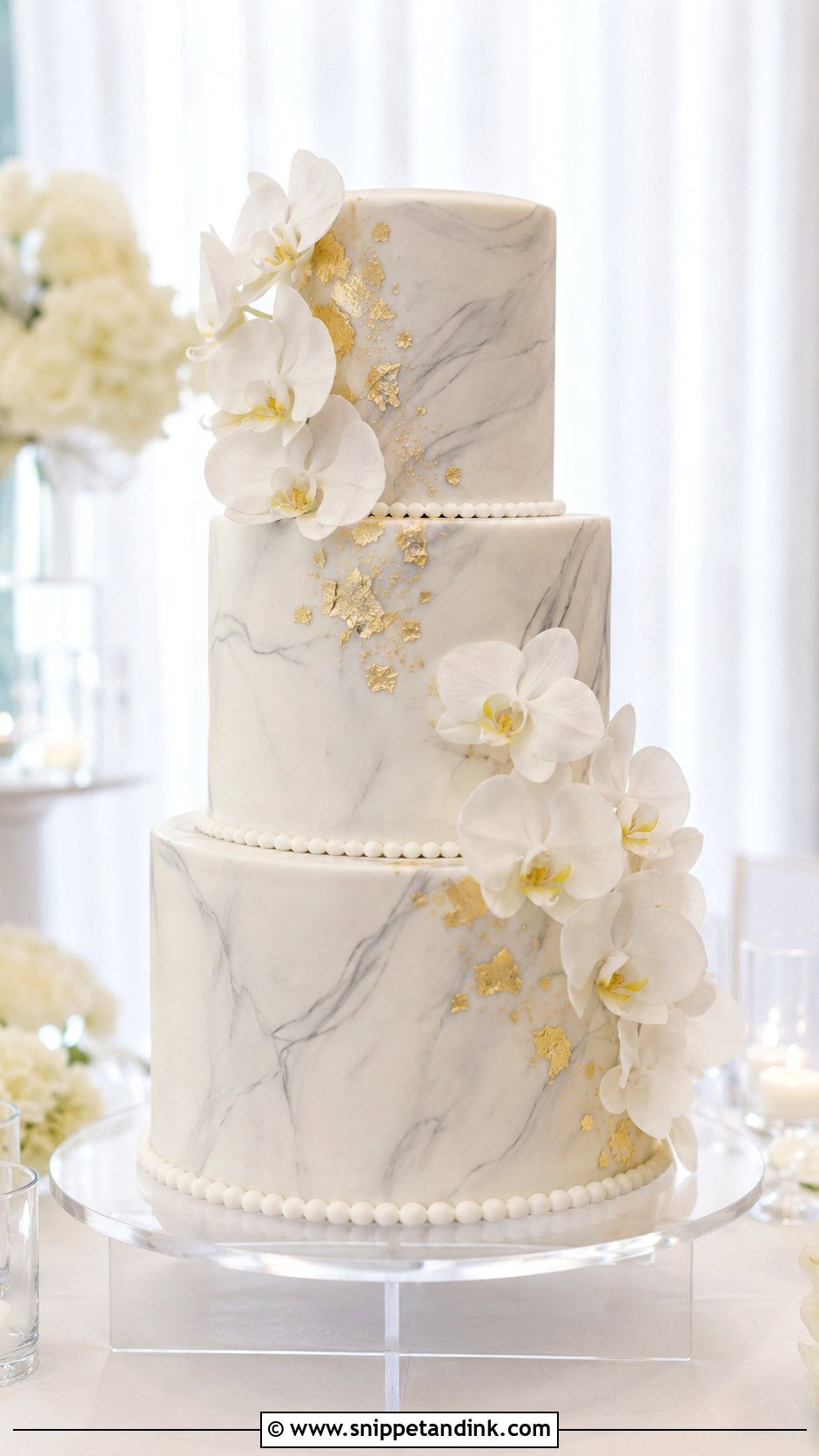
Marble fondant looks modern, and it is less predictable than it seems. Each marble is created by folding coloured paste into white, so no two tiers match perfectly; that variation is part of its appeal. Soft grey veining on white feels crisp, while blush, beige or champagne veins feel warmer. Keep the contrast gentle; strong dark veins look heavy on a cake. A touch of gold leaf, white orchids or a slim pearl border keeps it bridal.
10. Three Layer Wedding Cake With Sugar Flowers
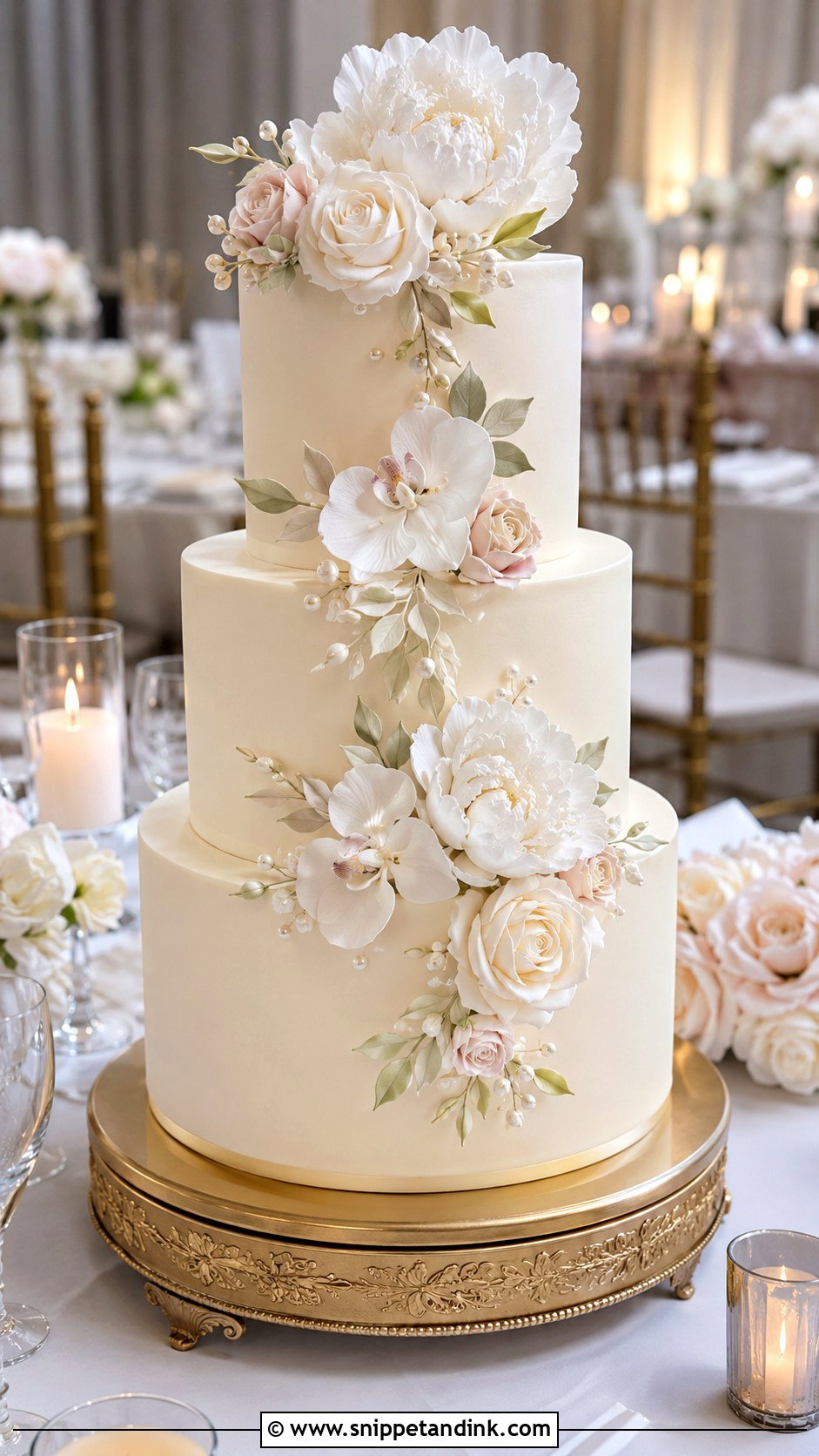
Sugar flowers won’t wilt, and they let you have blooms that are out of season. I model roses, orchids, peonies, lilies or wildflowers petal by petal in gum paste, wire them and dry them over several days, so they need to be designed well ahead. They cost more because of those hours, but they can be kept for years in a box away from damp, and many couples save the top spray. They look best climbing one side of the cake or sitting at a tier join.
11. Three Layer Wedding Cake With Lace
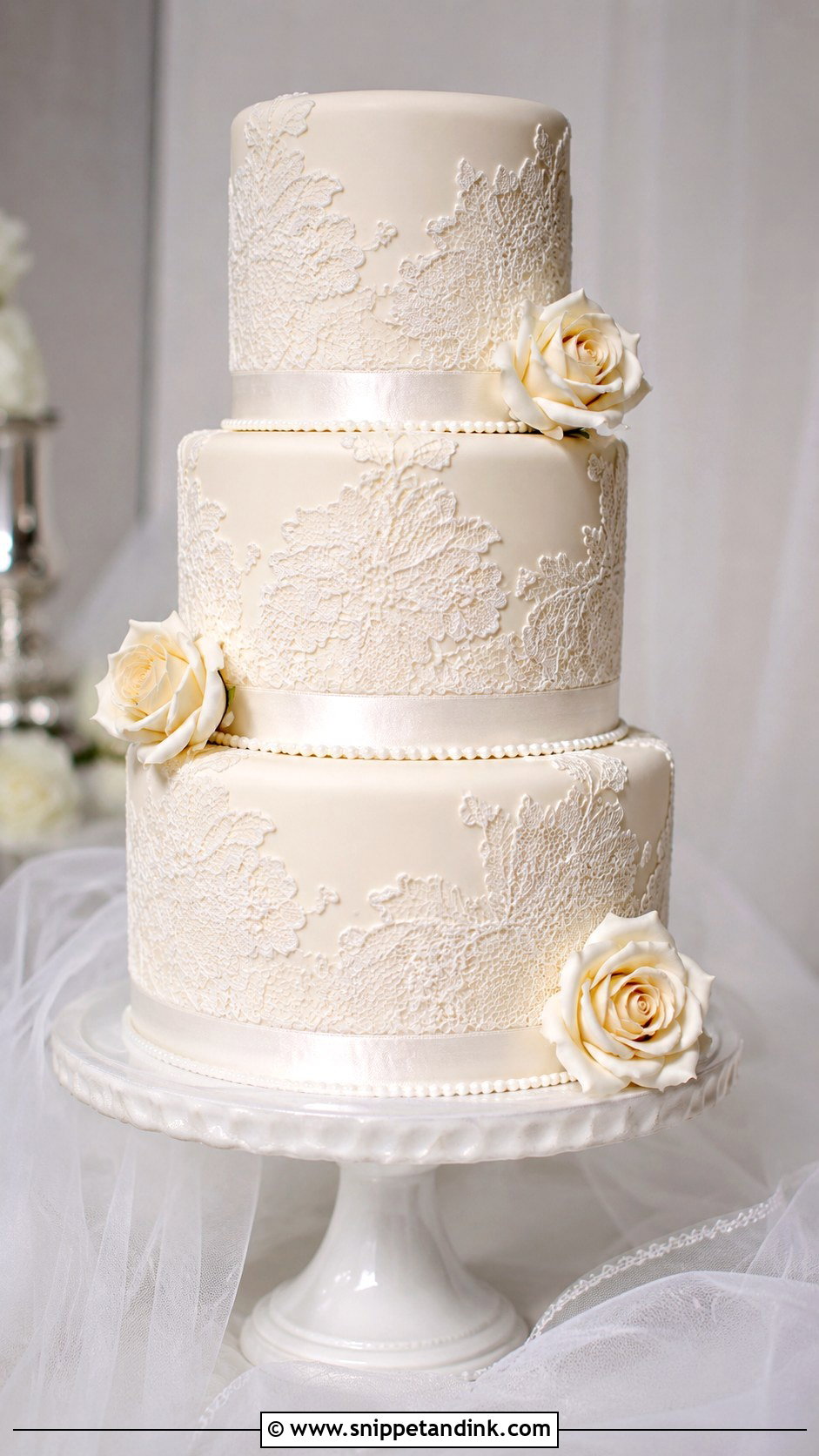
Lace on a cake can match a dress almost exactly. The pattern can be piped with royal icing, cut from edible lace sheets, or pressed into fondant with a mould for a fabric texture. Bring a photo or a scrap of your dress lace and I can trace its motif. Ivory on ivory is subtle; white lace over blush fondant is more romantic. Keep it to one or two tiers, with a satin ribbon or small sugar roses to finish.
12. Three Layer Wedding Cake With Ruffles
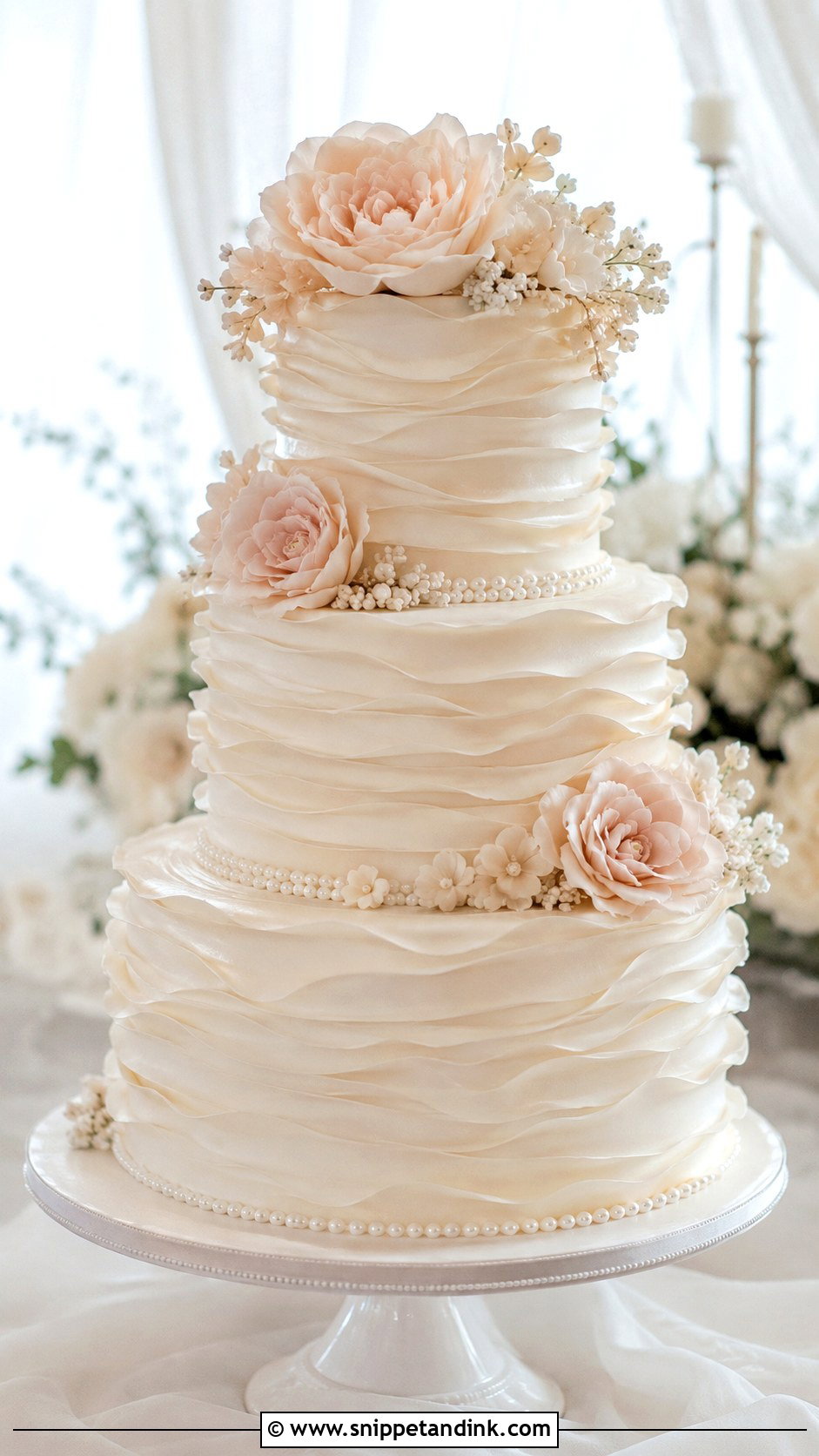
Ruffles bring movement. Buttercream ruffles are soft and edible but can slump in heat; fondant ruffles hold their shape; wafer paper ruffles are the lightest and look almost like fabric, though they wilt if they meet humidity. Horizontal rows feel full and romantic, vertical ones more modern. White, ivory, blush and champagne all suit them. Keep the top tier smooth for contrast, or ruffle all three for drama.
13. Three Layer Wedding Cake With Satin Ribbon
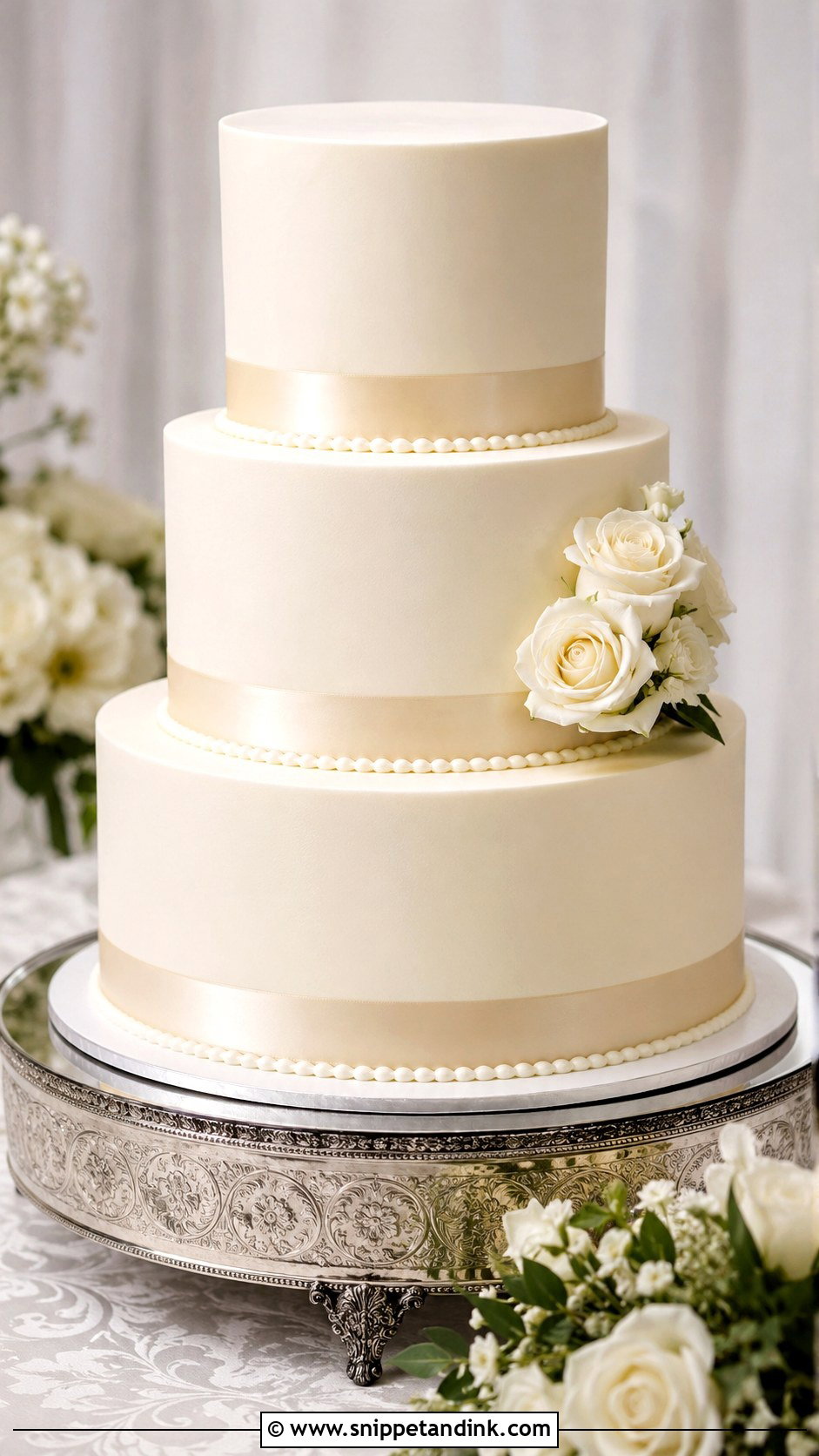
Ribbon makes a three-tier cake look tidy with almost no cost. It wraps the base of each tier and hides the join between cake and board. Real satin ribbon absorbs butter from the icing and darkens in spots, so I back it with a strip of food-safe tape or a thin fondant band first. Match it to ivory, champagne, blush, navy, sage or black. One floral cluster, a pearl border or a small monogram is plenty beside it.
14. Three Layer Wedding Cake With Greenery
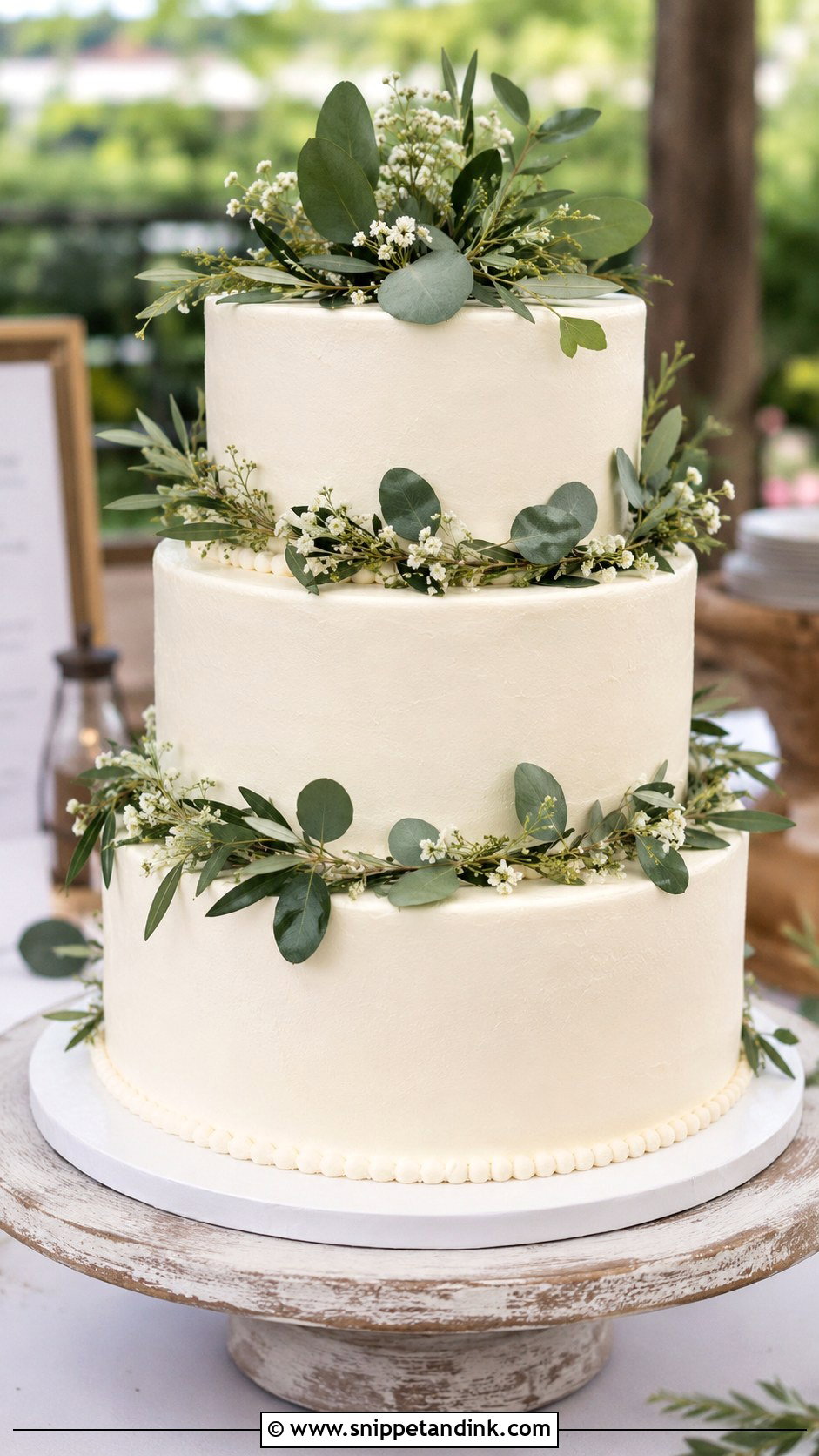
Greenery gives a fresh, organic style, but check every leaf. Rosemary and bay are culinary herbs; olive leaves, ferns and ruscus are commonly used decoratively; eucalyptus is not edible. All of them need washing and a barrier before touching icing. Smooth white or ivory buttercream keeps the leaves looking crisp. Wrap them round each tier, place small clusters, or run a diagonal vine. Barns, gardens and vineyard-style venues suit this one.
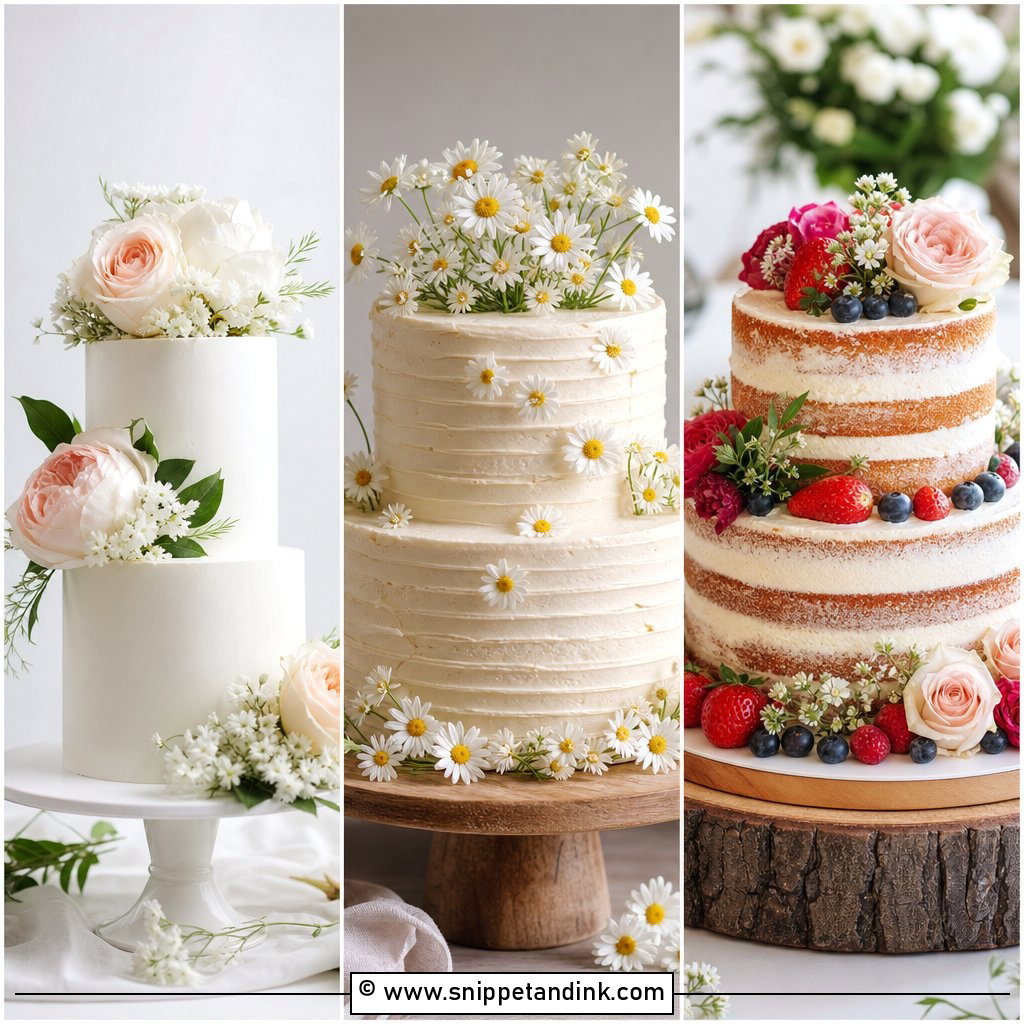
15. Three Layer Wedding Cake With Blue Details
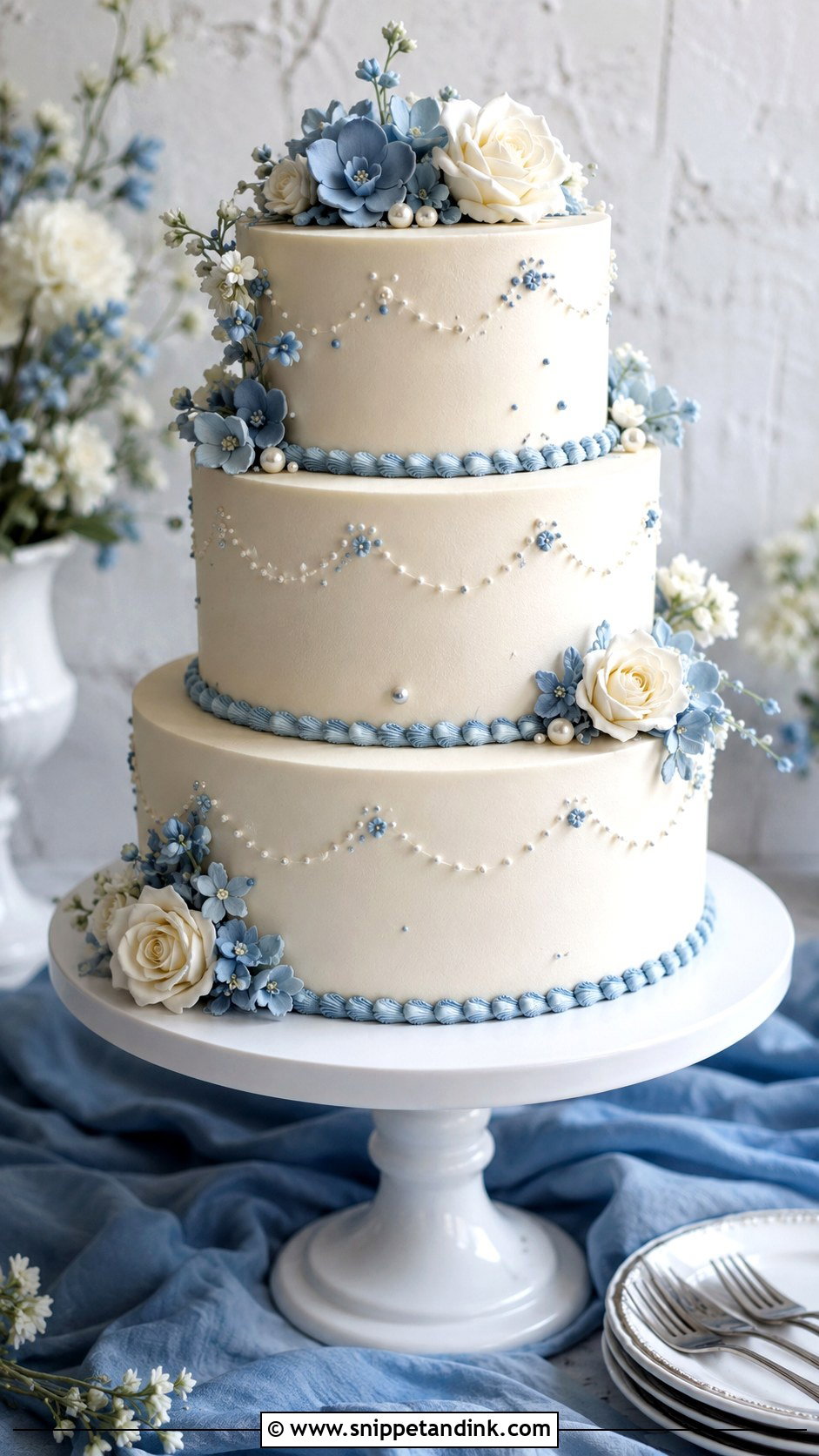
Blue is the colour couples most often bring in as their something blue, and on a cake it reads calm. Pale blue icing with white piping looks vintage; white icing with blue sugar flowers feels fresh. Navy is formal and works best as a thin line, not a whole tier. Blue food colouring can fade under strong light and turn slightly grey in some buttercreams, so I mix it the day before to let it settle and check the shade in daylight. Pearls, white roses or silver details pair well.
16. Three Layer Wedding Cake With Blush Flowers
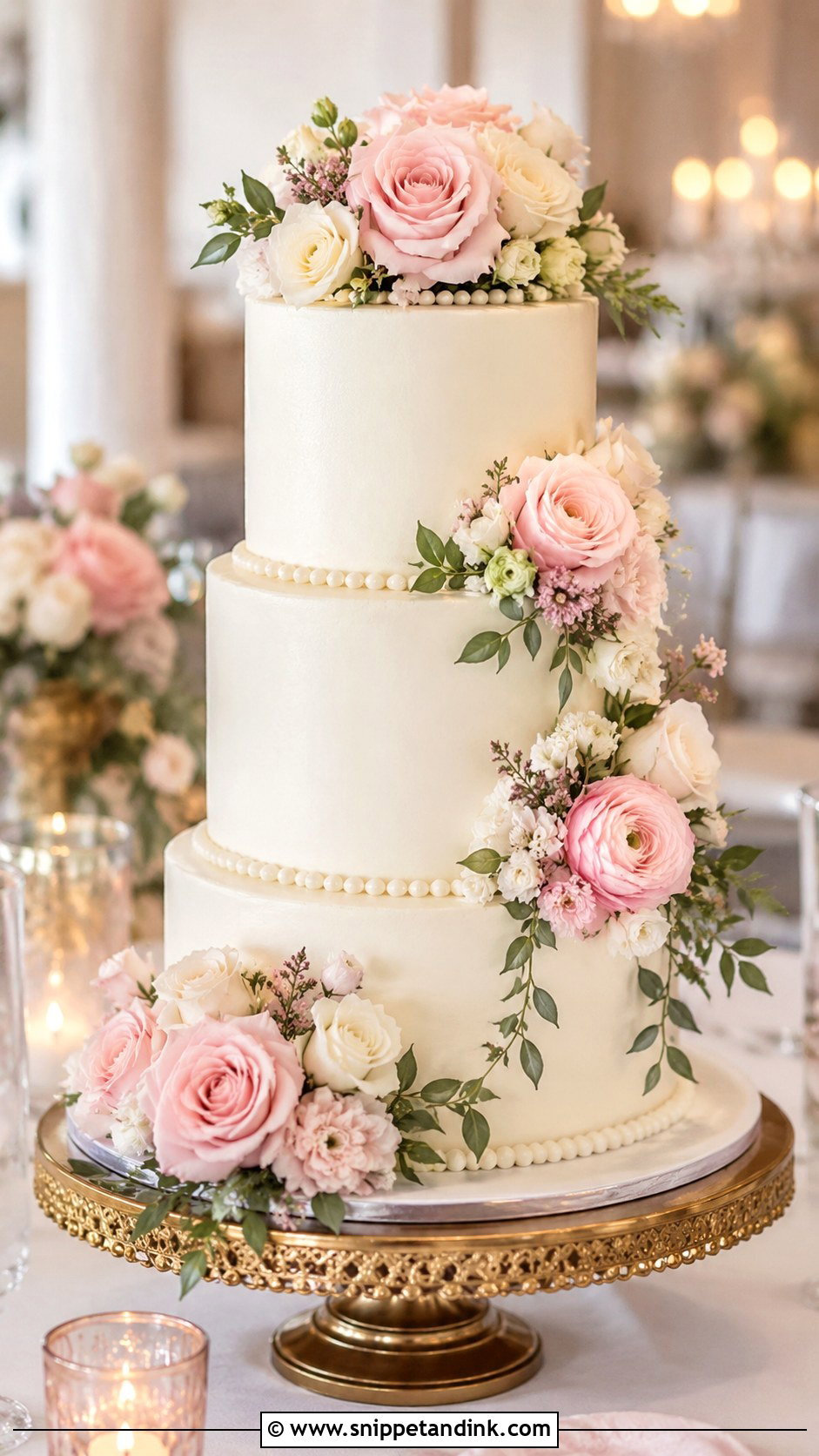
Blush flowers suit almost every season and every palette, which is why they show up on so many cake orders. Pink roses, ranunculus, sweet peas, peonies or sugar blossoms look soft against white or ivory icing. A cascade, clusters between tiers or groups at the top and base all work. Pale pinks can vanish in bright daylight photos, so I add one or two deeper pink blooms to the mix for definition. Greenery adds a garden feel; ivory and blush alone look more polished.
17. Three Layer Wedding Cake With Textured Buttercream
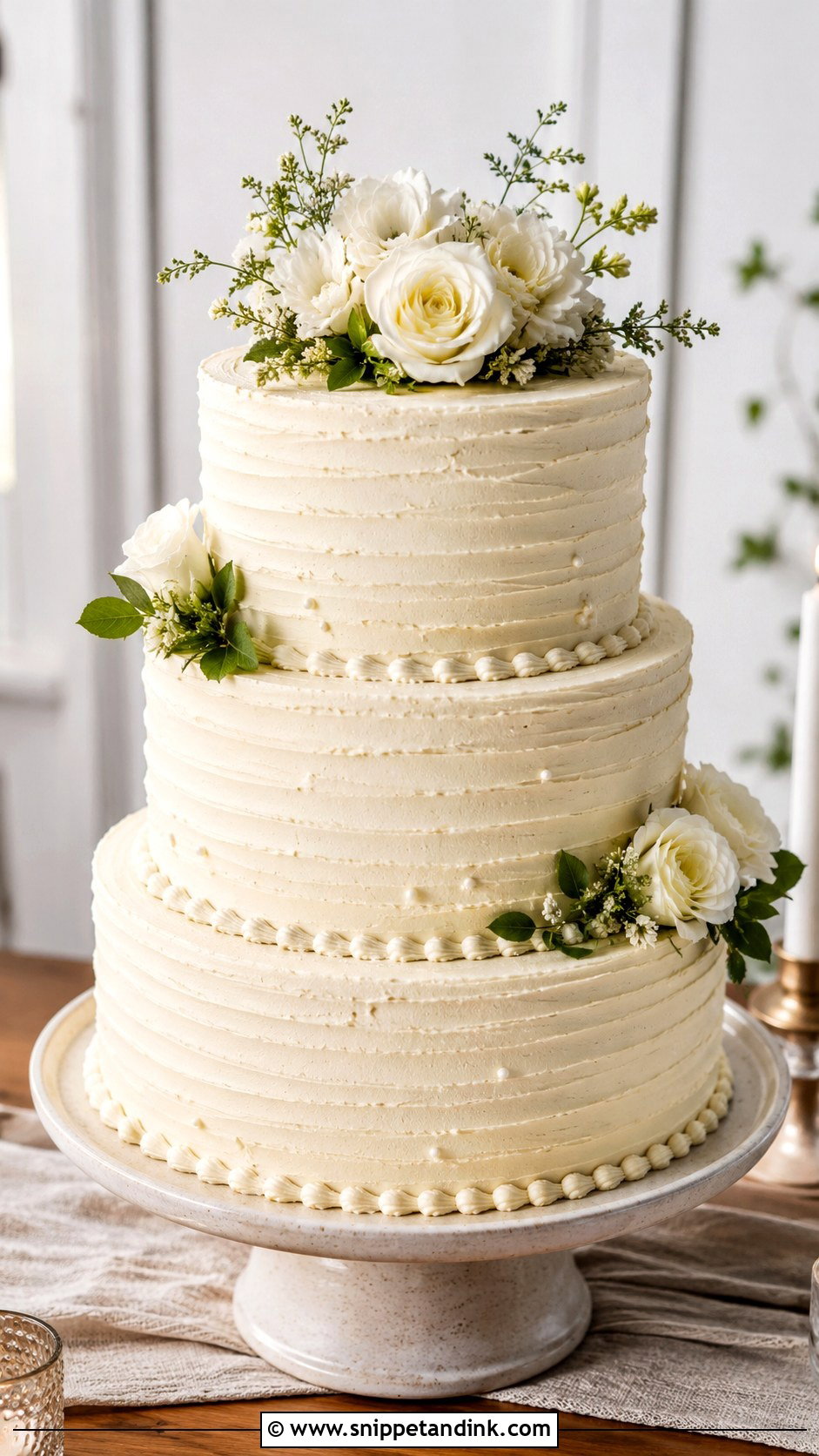
Textured buttercream is less formal than fondant but still neat. Soft ridges, palette knife strokes or horizontal combed lines catch the light and hide small imperfections, which also makes it a little more forgiving to transport. Ivory and white are classic; pale peach, sage or a warm buttercream beige feel modern. I match the texture to the venue: loose knife strokes for a barn, fine combed lines for a city hotel.
18. Three Layer Wedding Cake With Orchids
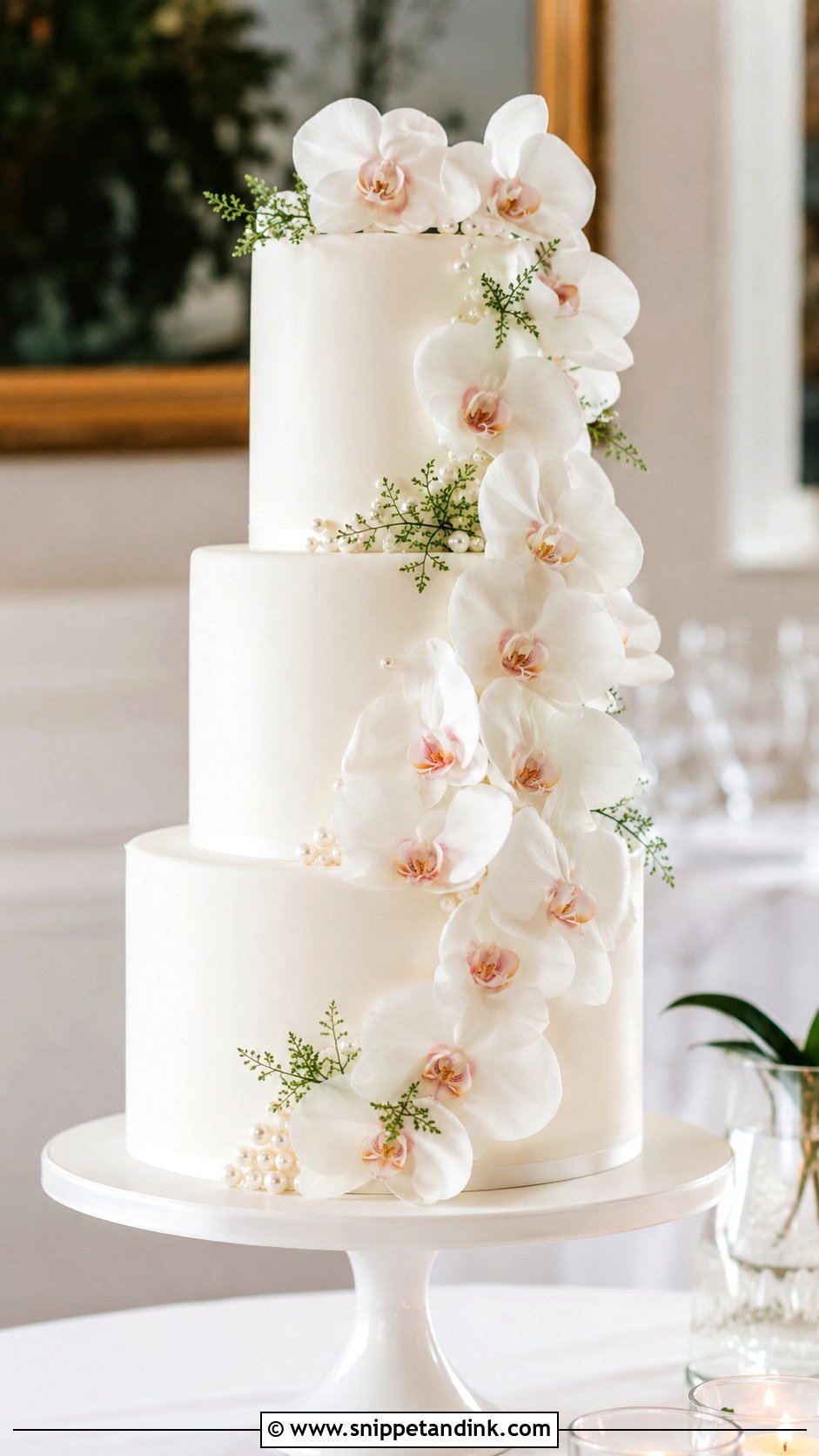
Orchids give a sleek, modern line. White orchids on ivory buttercream look clean; blush or purple add colour where the palette allows. A cascading orchid arrangement down one side makes three tiers look taller. Phalaenopsis orchids are a favourite for this because their arching shape is natural to cascade, but fresh stems need to be wrapped, and sugar orchids are the safer choice for a long reception. Smooth fondant or satin buttercream keeps the base quiet.
19. Three Layer Wedding Cake With Fruit
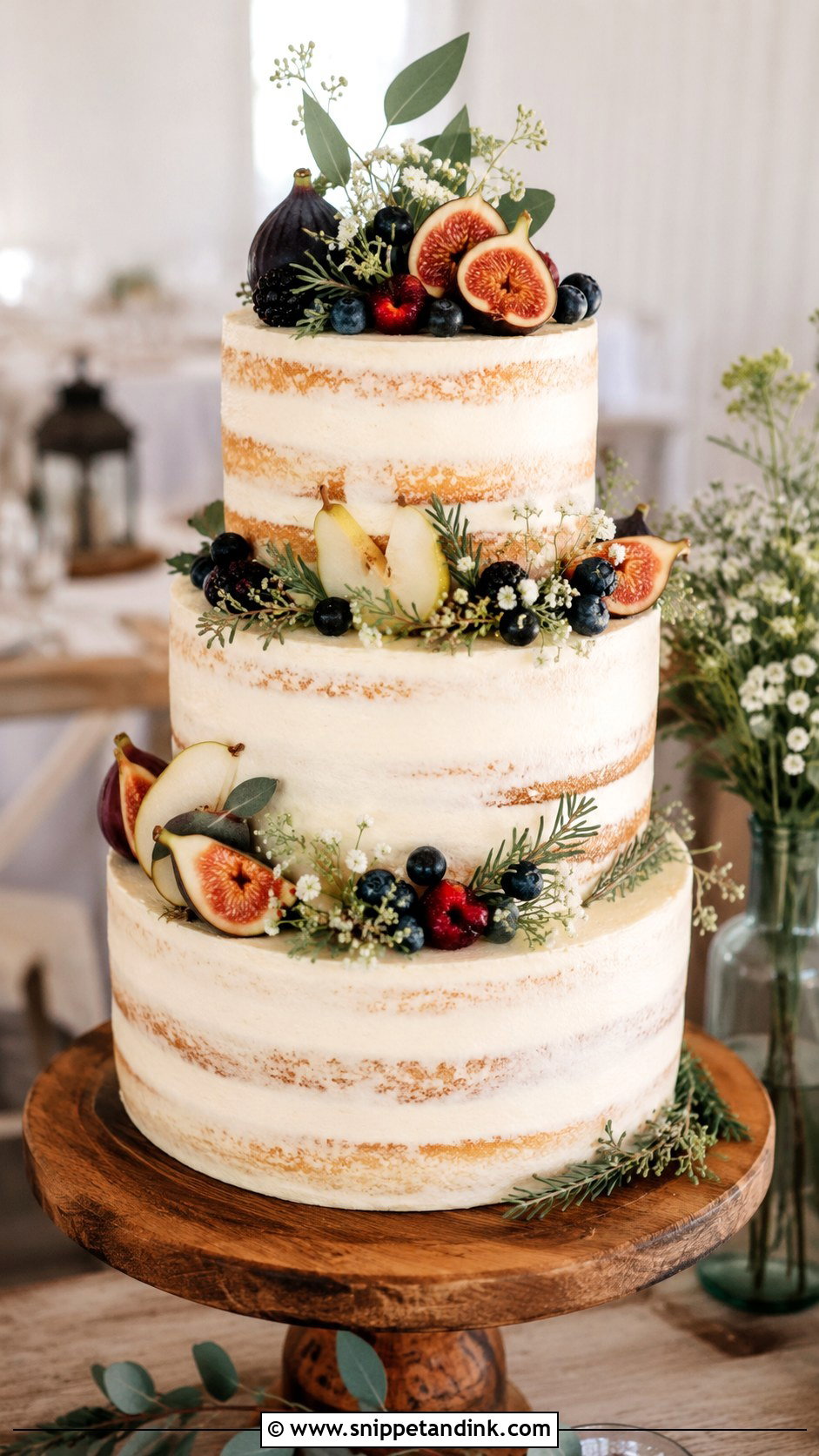
Fruit makes a cake look generous and seasonal. Berries suit a summer wedding; figs, pears and caramel-toned flowers suit autumn. It pairs naturally with semi-naked frosting, textured buttercream or a simple white base. Cut fruit weeps and browns, so I use whole berries and halved figs rather than slices, wash and dry them thoroughly, and brush them with a thin glaze. Balance the fruit across the tiers so one side doesn’t look heavier.
20. Three Layer Wedding Cake With Bow
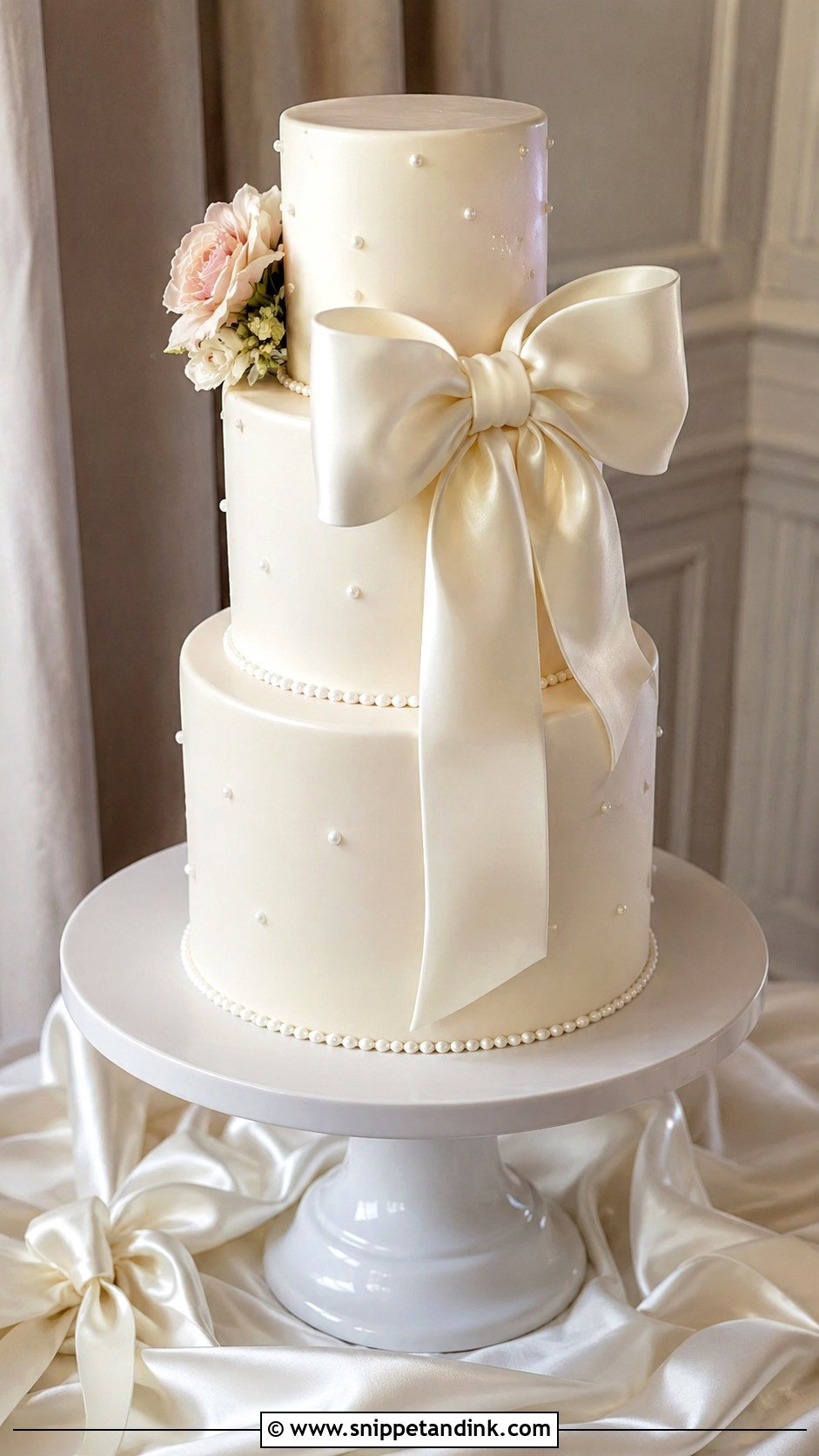
A bow is the most fashion-led finish here. One oversized fondant or gum paste bow on the front of the middle tier looks chic; smaller bows around each tier feel traditional. Large bows need a day or two to dry with tissue in the loops so they hold their shape, and they sometimes need a hidden support. Smooth buttercream or fondant gives the clean background a bow needs. Ivory, white, blush or pale blue work, with minimal pearls or a single flower beside it.
Three Tiers, Three Flavours: What Holds Up Inside
A three-tier cake is a good chance to offer more than one flavour, and most bakers are happy to make each tier different. A common plan is a crowd-pleaser on the bottom tier, which is the largest, and something more adventurous on top.
Fillings decide how the cake behaves. Buttercream, ganache and firm jam are stable at room temperature for a reception. Fresh cream, mousse, custard and cream cheese need refrigeration and soften fast in a warm room, so I keep those to small tiers or suggest a firmer alternative.
If you plan to freeze the top tier
- Choose a top-tier flavour that freezes well: butter sponge, chocolate or carrot cake with buttercream.
- Remove sugar flowers, ribbons and any fresh decoration before wrapping.
- Chill it until the icing is firm, then wrap tightly in several layers of cling film and foil.
- Thaw it slowly in the fridge, still wrapped, so condensation forms on the wrapping instead of the cake.
Many couples now eat the top tier within a few weeks instead of waiting a full year, which tastes much better. Fresh fruit and cream fillings don’t freeze well at all.
Start With Your Guest Count, Then Pick the Finish
Three tiers can be classic, modern, vintage or almost bare, and the finish is the easy part to decide. Start with how many people the cake needs to feed and where it will stand, then choose one finish that suits your dress, flowers and venue. Fresh flowers and textured buttercream suit a relaxed day; pearls, lace and sugar flowers suit a formal one. Ask about flavour options for each tier, check which decorations are edible, and book your baker early enough for any handmade work.
You'll Like These Ideas:





Leave a Reply