
Petals are a quieter way to put flowers on a cake. Instead of whole blooms, you get loose petals, pressed petals, piped petals or petals rolled out of sugar or wafer paper, which lets me control the colour and the spacing far more precisely. Fresh petals can work too, as long as they’re grown for eating. What makes these cakes look right is scale and placement: cascading blooms, a scatter of petals, petal-textured tiers or a floral border picked up from the bouquet. Below are twenty petal cakes I make, and because flavour matters as much as the outside, I’ve noted what I’d bake inside each one.
How Far Ahead Each Kind of Petal Gets Made
Petals look simple, but each type has its own production time, and that decides how early you need to book. This is roughly how I schedule them:
- Sugar petals and flowers: started several weeks out. Each petal has to dry before it’s assembled, and a large bloom can take a full day of work.
- Pressed petals: pressed one to two weeks ahead, depending on how thick and juicy the petal is.
- Crystallised petals: painted with egg white or a gum solution and dusted with sugar a few days before. They keep for weeks in a dry tin.
- Wafer paper: cut and shaped a few days before, then kept airtight so humidity doesn’t soften them.
- Fresh edible petals: ordered from a grower of edible flowers for delivery a day or two before, kept chilled and placed at the venue.
If your date is in peak season, I’d book the baker before anything else involving flowers. Petal work is slow, so most decorators can only take a few of these cakes a week.
1. White Flower Petal Wedding Cake
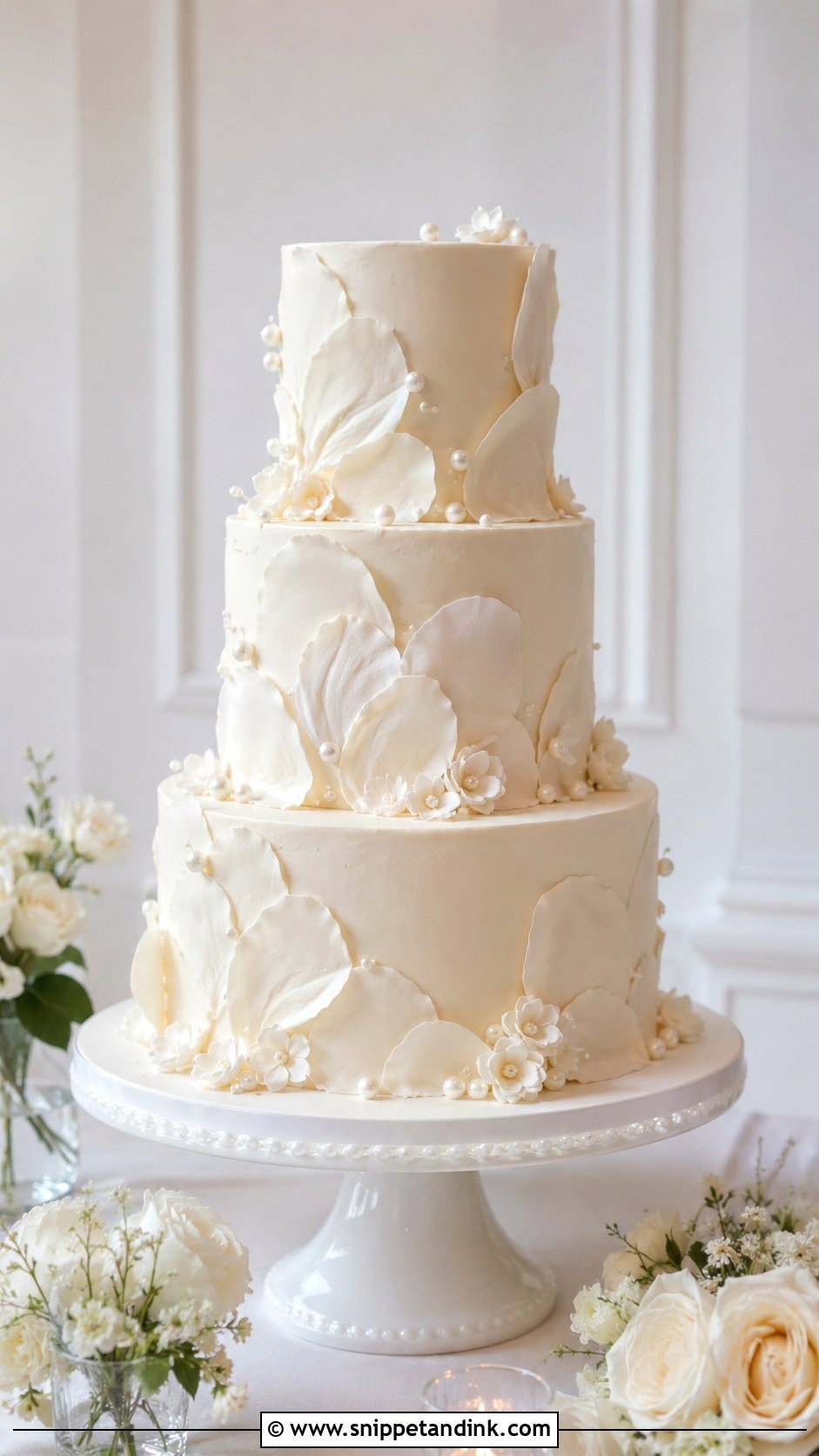
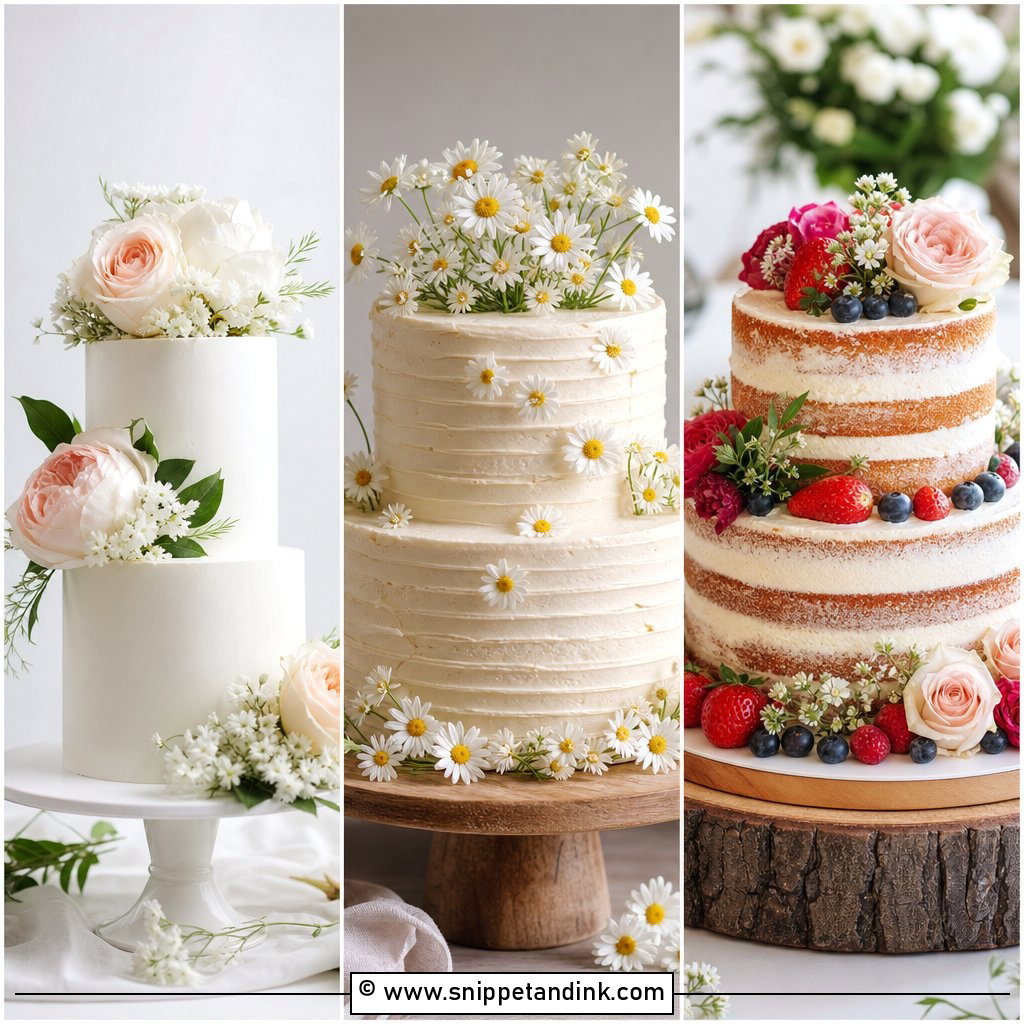
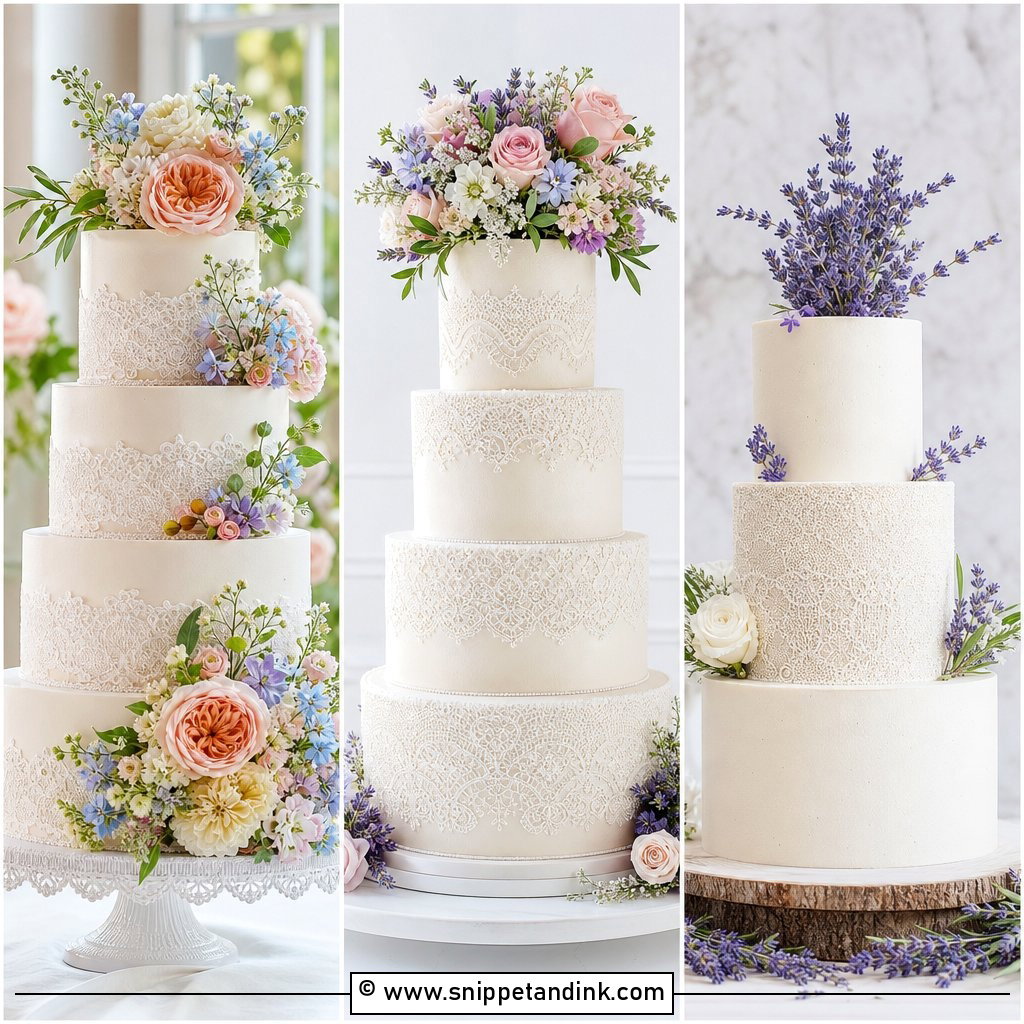
All-white petals rely on shape alone, so I make the sugar petals in three or four sizes and thin the edges until they’re almost translucent. Even sizing is what makes a white cake look flat. The base can be smooth white buttercream or fondant, and a few pearls or tiny blossoms add depth. Formal ballrooms, gardens and small outdoor receptions all suit it. Inside, I’d bake vanilla, almond or white chocolate; something light matches the calm outside.
2. Pink Flower Petal Wedding Cake
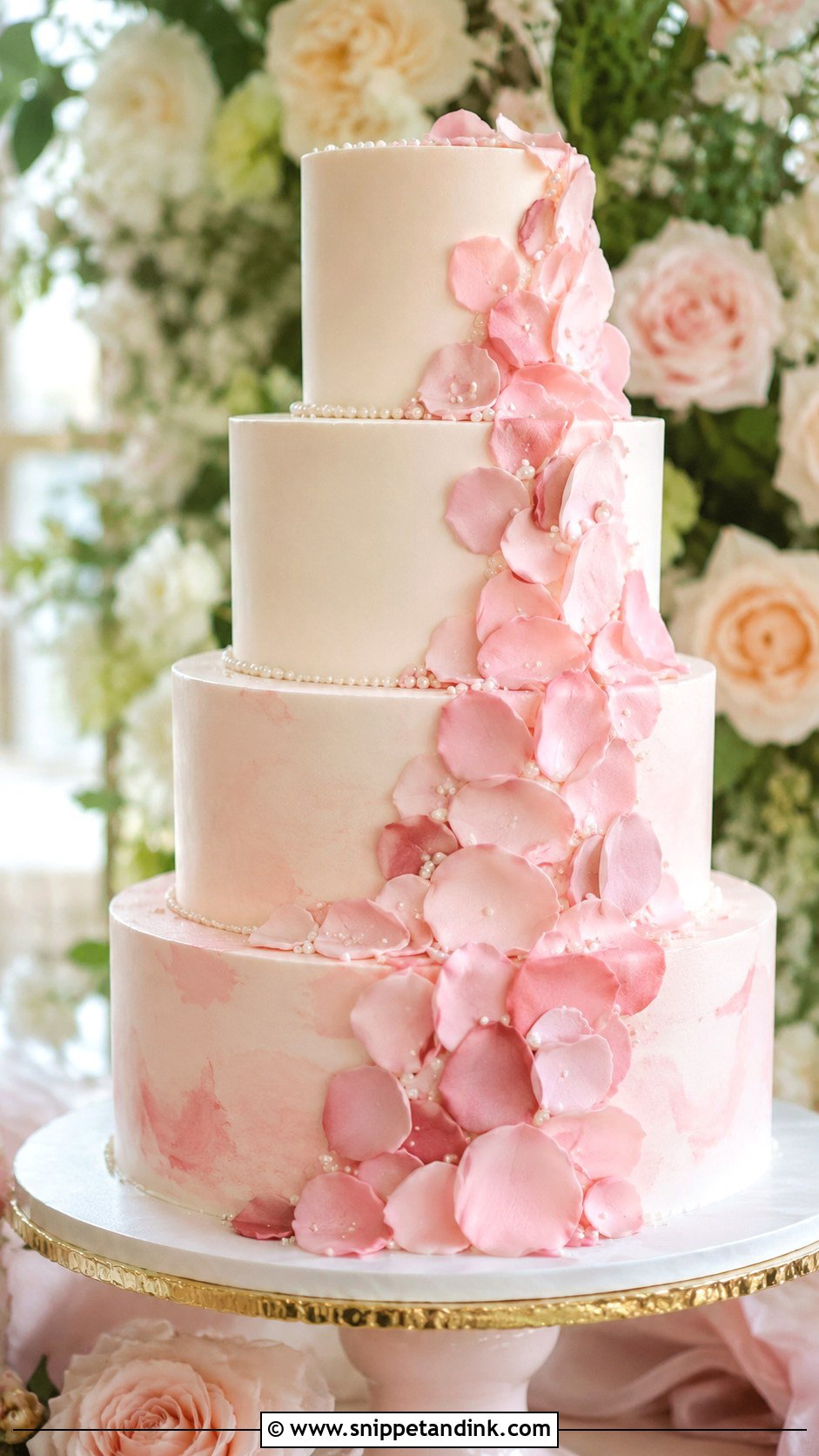
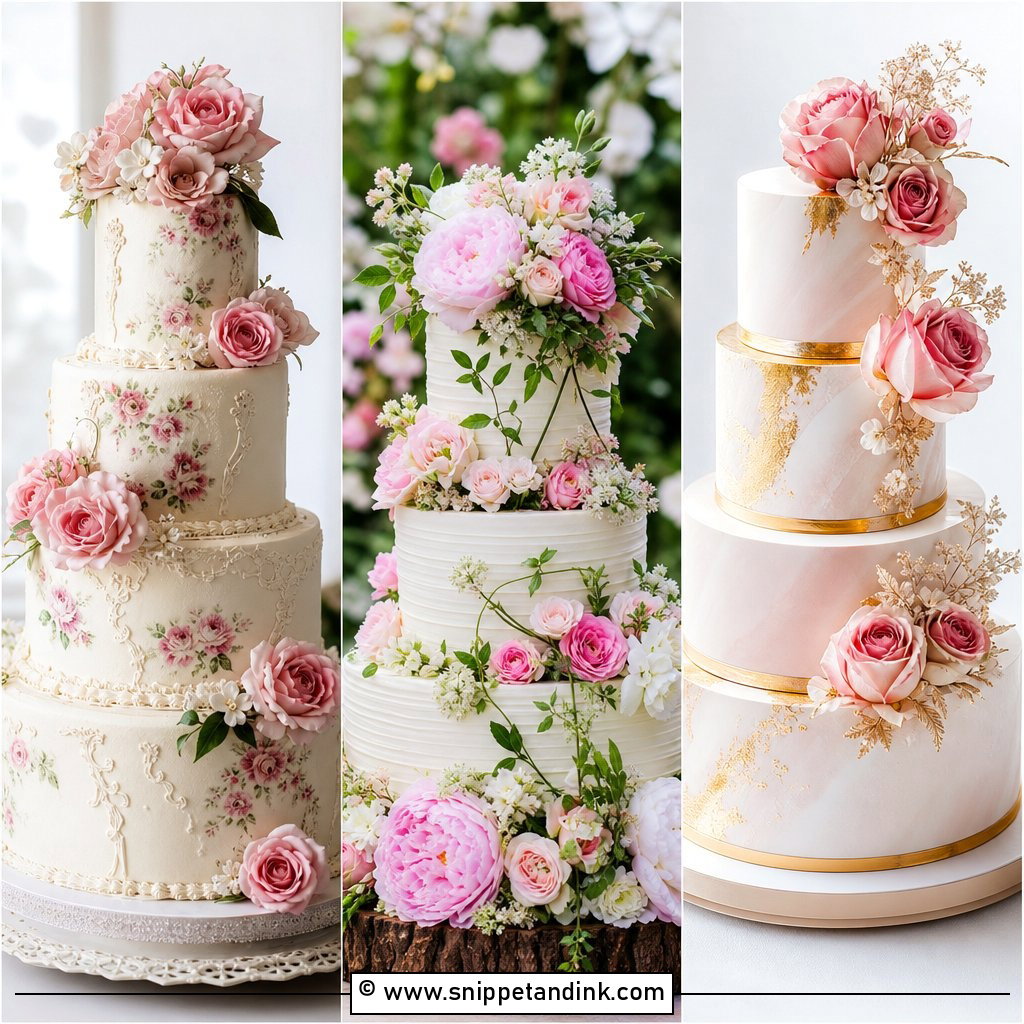
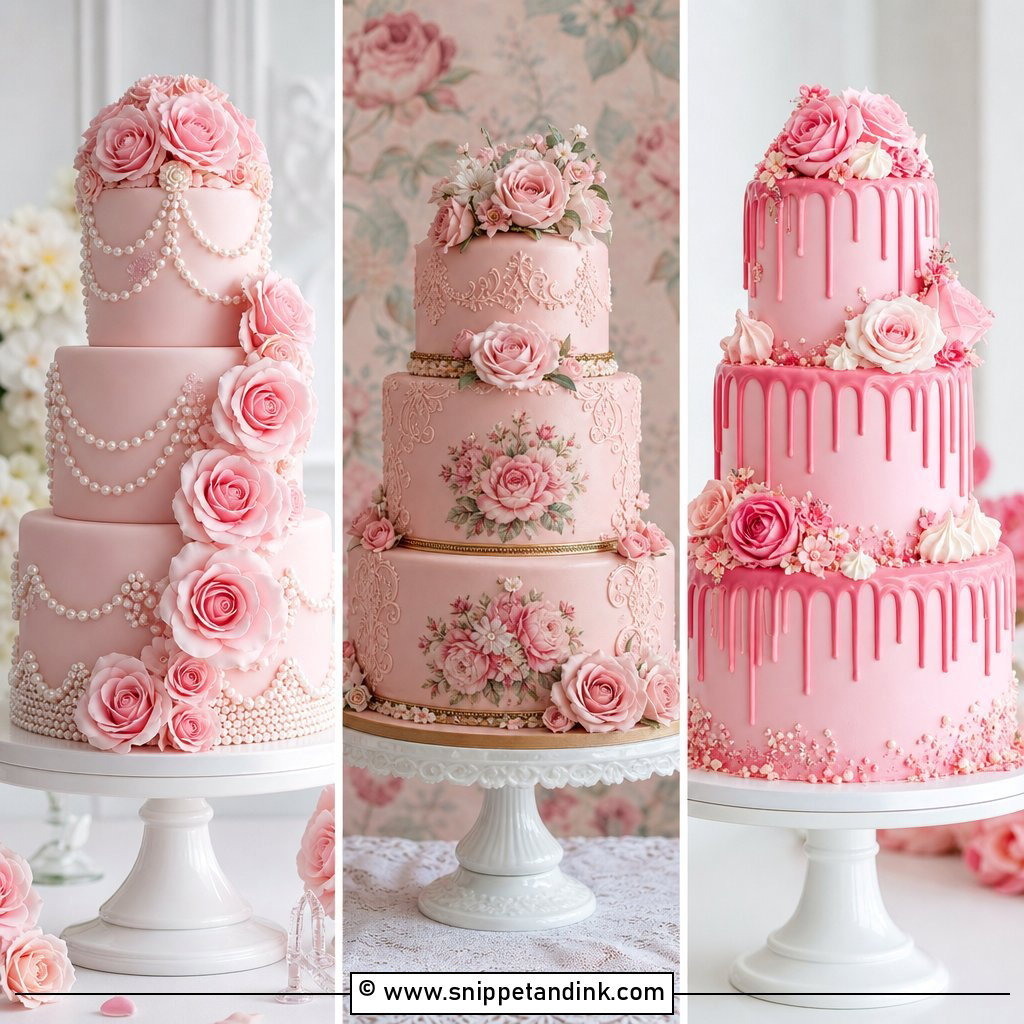
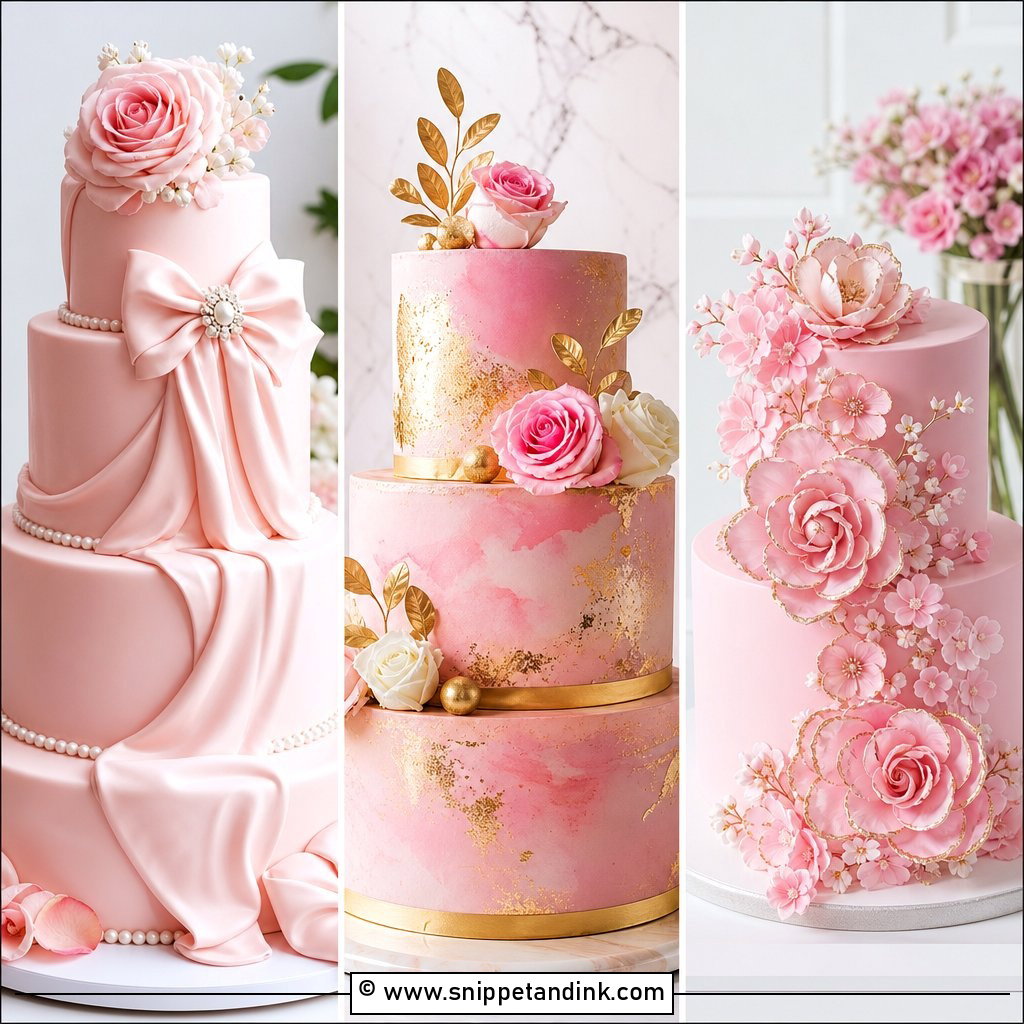
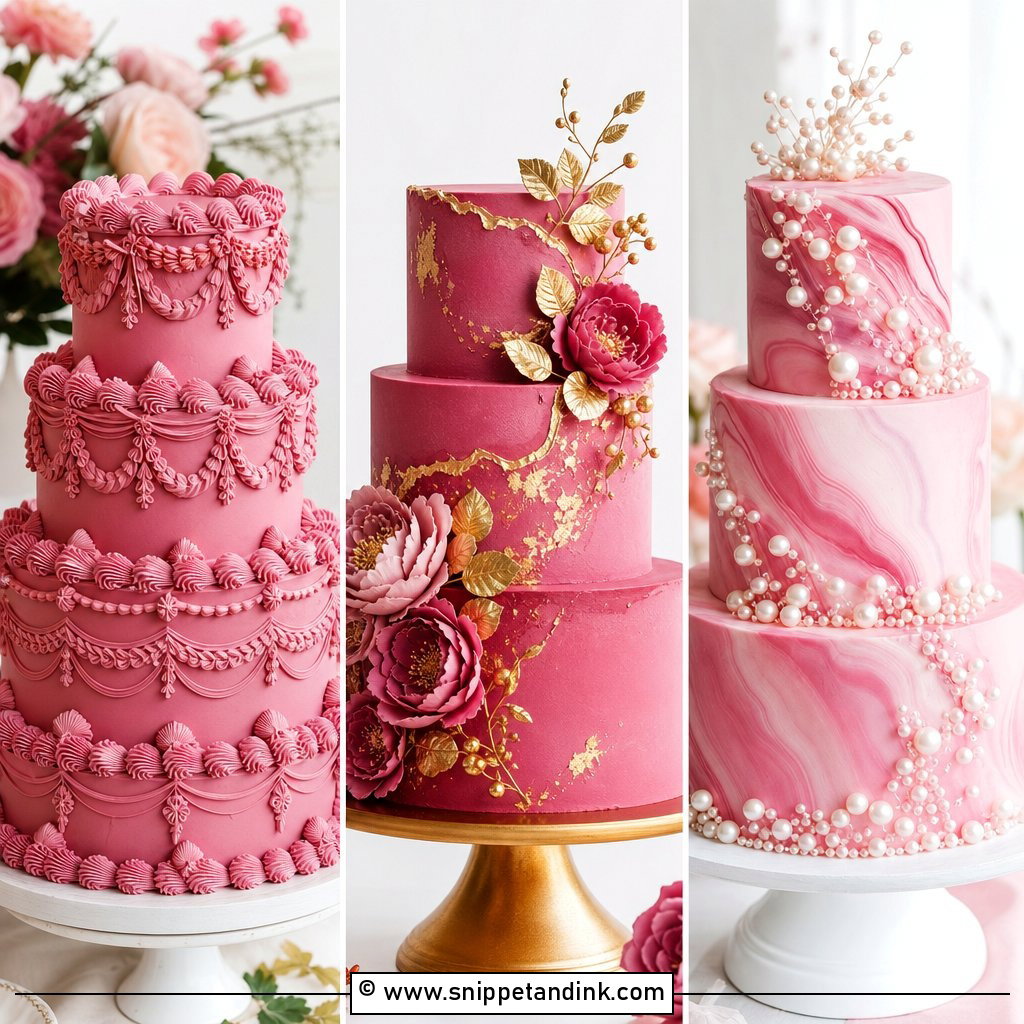
Pink petals on white icing can run from barely-there blush to deep rose. My preference is a mix of blush, dusty pink and pale peach, because a single flat pink looks printed rather than grown. Trailing them down one side reads softer than covering the whole tier. Spring weddings and pastel palettes are its natural home. Strawberry, vanilla bean, raspberry or champagne sponge all pair well, and a raspberry filling echoes the colour when the cake is cut.
3. Pressed Flower Petal Wedding Cake
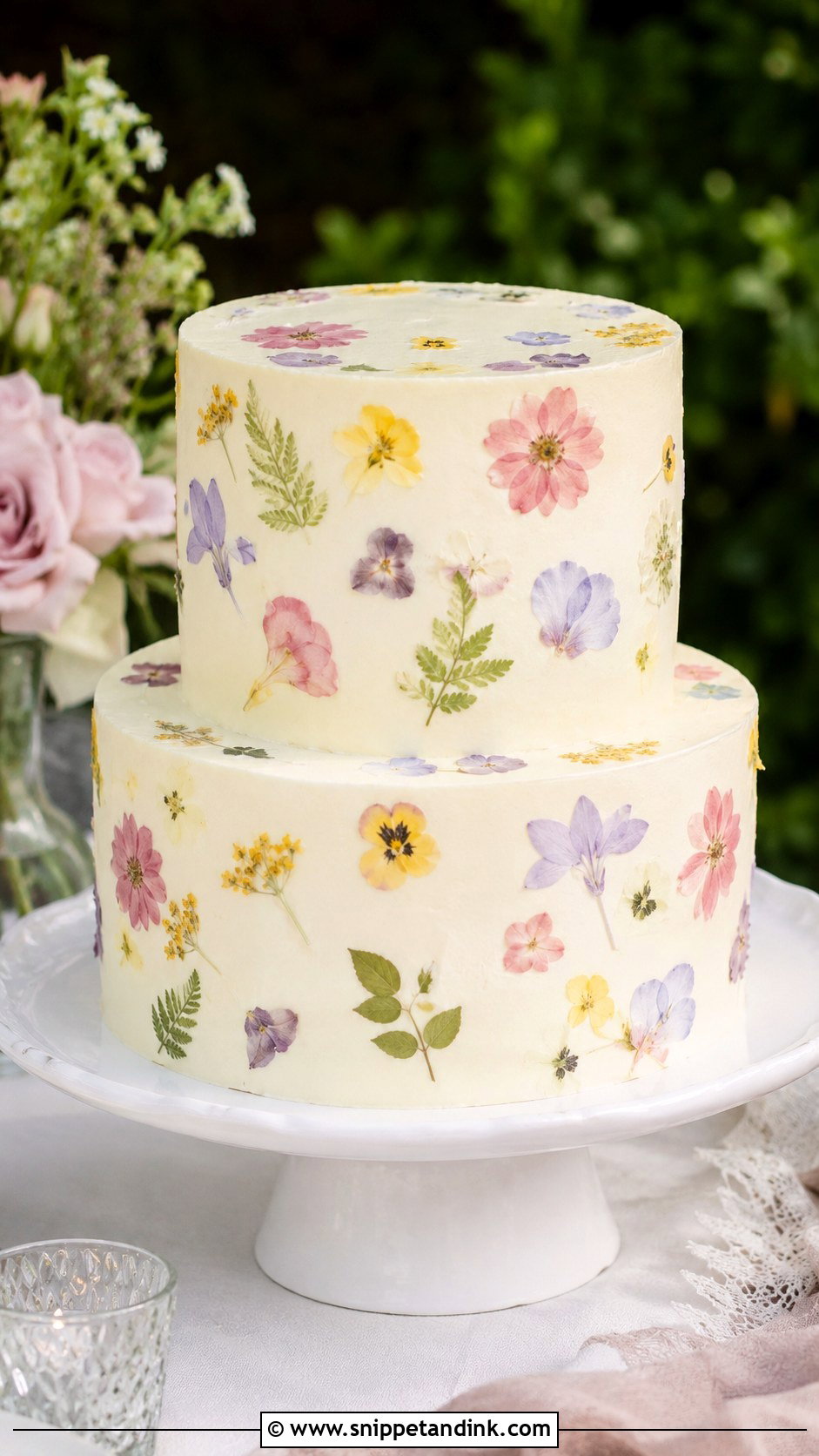
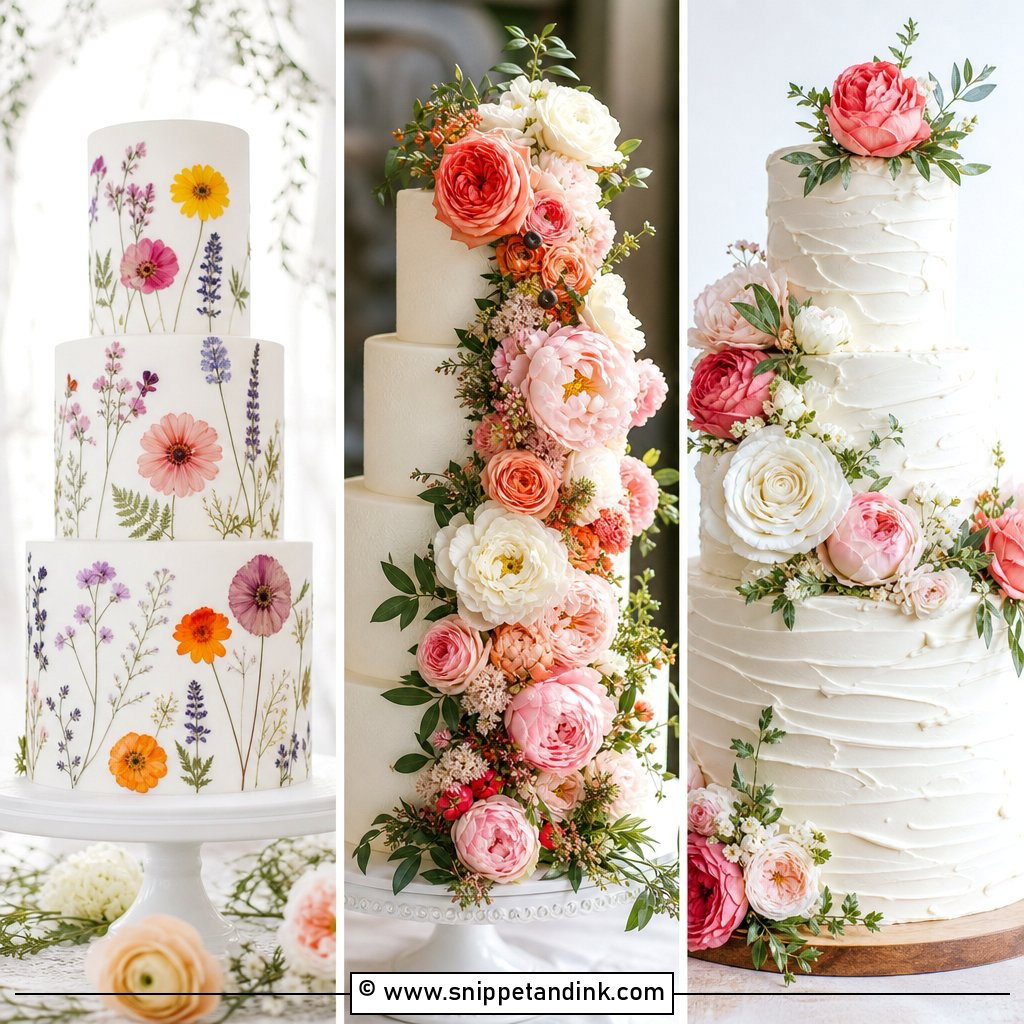
Pressed petals sit flat against smooth buttercream like a herbarium page. I press edible petals and leaves for a week or two between paper, then set them on a lightly crusted coat so they bond without sliding. Garden weddings and relaxed outdoor receptions suit it. I always leave patches of plain frosting showing; when every inch is covered the pattern turns into clutter. Lemon, vanilla, honey or lavender sponge suit the botanical feel, and honey in particular stays moist in warm weather.
4. Sugar Flower Petal Wedding Cake
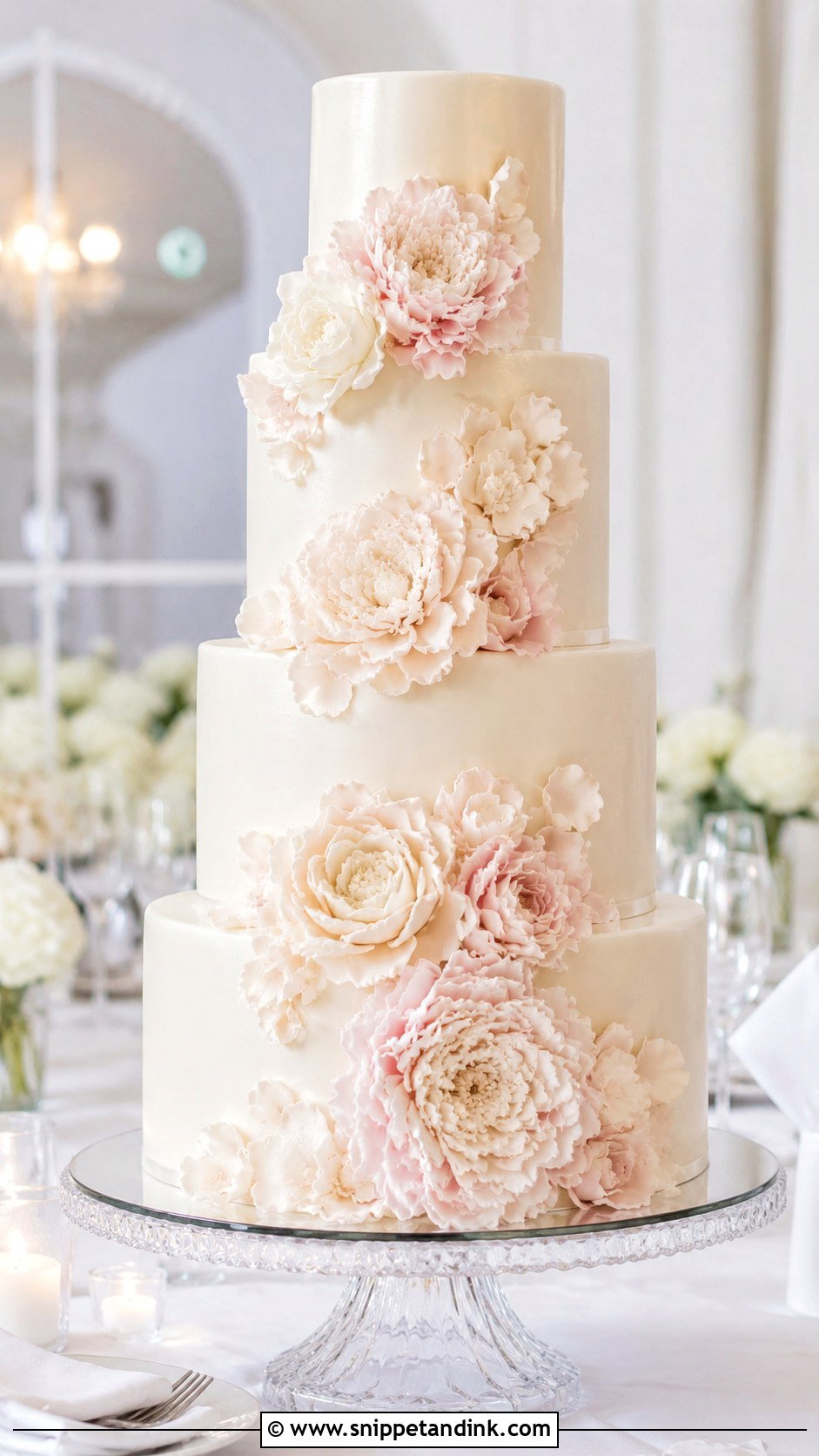
Sugar petals are cut one at a time from gum paste, veined, thinned, dusted and wired, then assembled into roses, peonies, orchids or loose clusters. That gives you complete control over colour and size, and it solves the problem of flowers out of season or unsafe to place on food. One large bloom keeps it simple; a full cascade adds drama. Smooth fondant shows sugar work off best. Vanilla almond, red velvet, lemon and chocolate with silky buttercream are the flavours I’m asked for most under this kind of finish.
5. Buttercream Flower Petal Wedding Cake
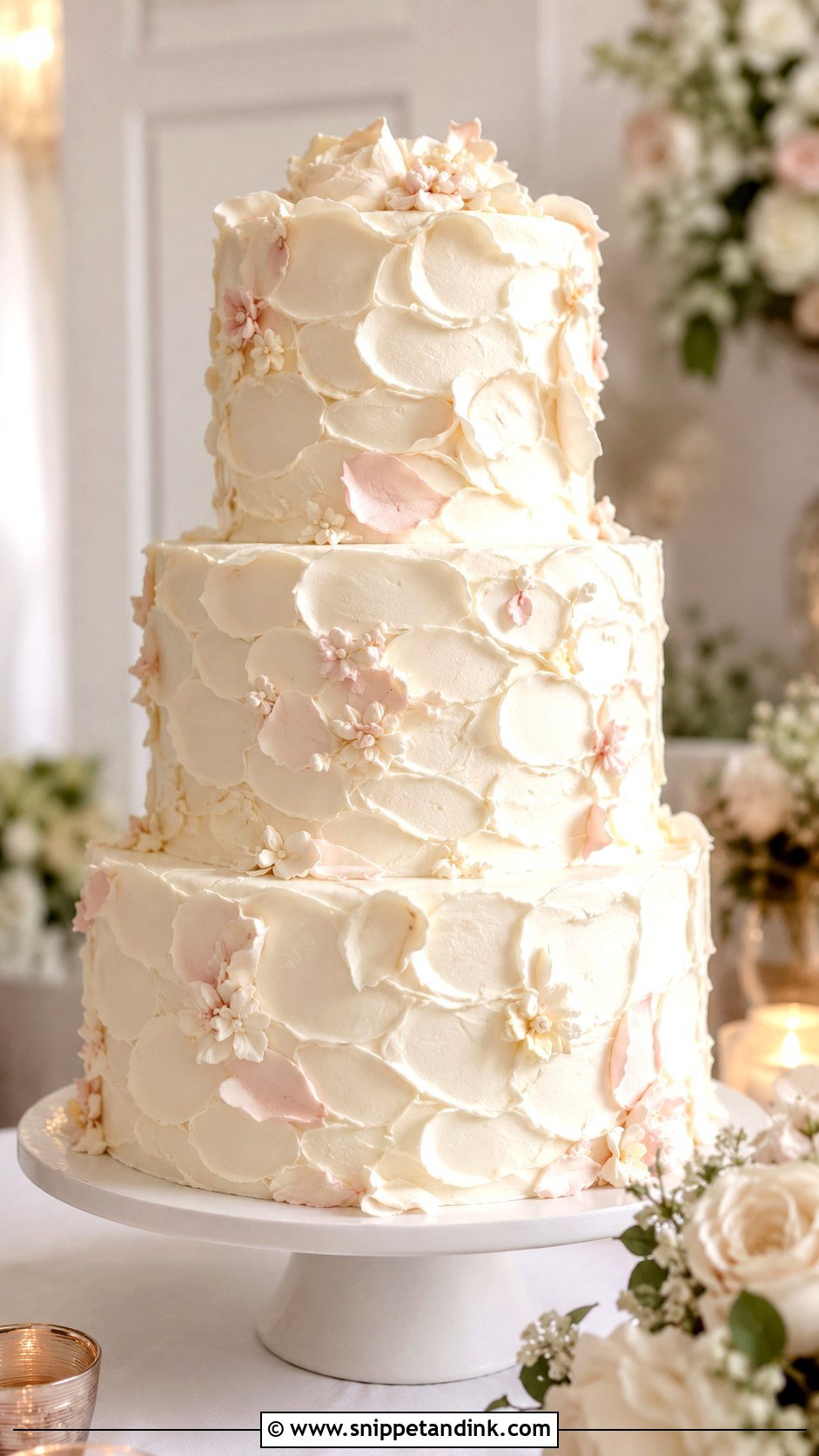
Piped petals go straight onto the cake with a petal tip, layered into ruffles, roses or overlapping blossoms around each tier. Everything is edible and there’s nothing to remove before cutting, which caterers appreciate. Piped work also takes an ombré well, ivory at the top fading into blush or lavender lower down. The catch is warmth: fine piped edges start to slump in a hot room, so for summer I use a firmer buttercream. Vanilla, funfetti, almond or raspberry inside keeps the mood cheerful.
6. Wafer Paper Petal Wedding Cake
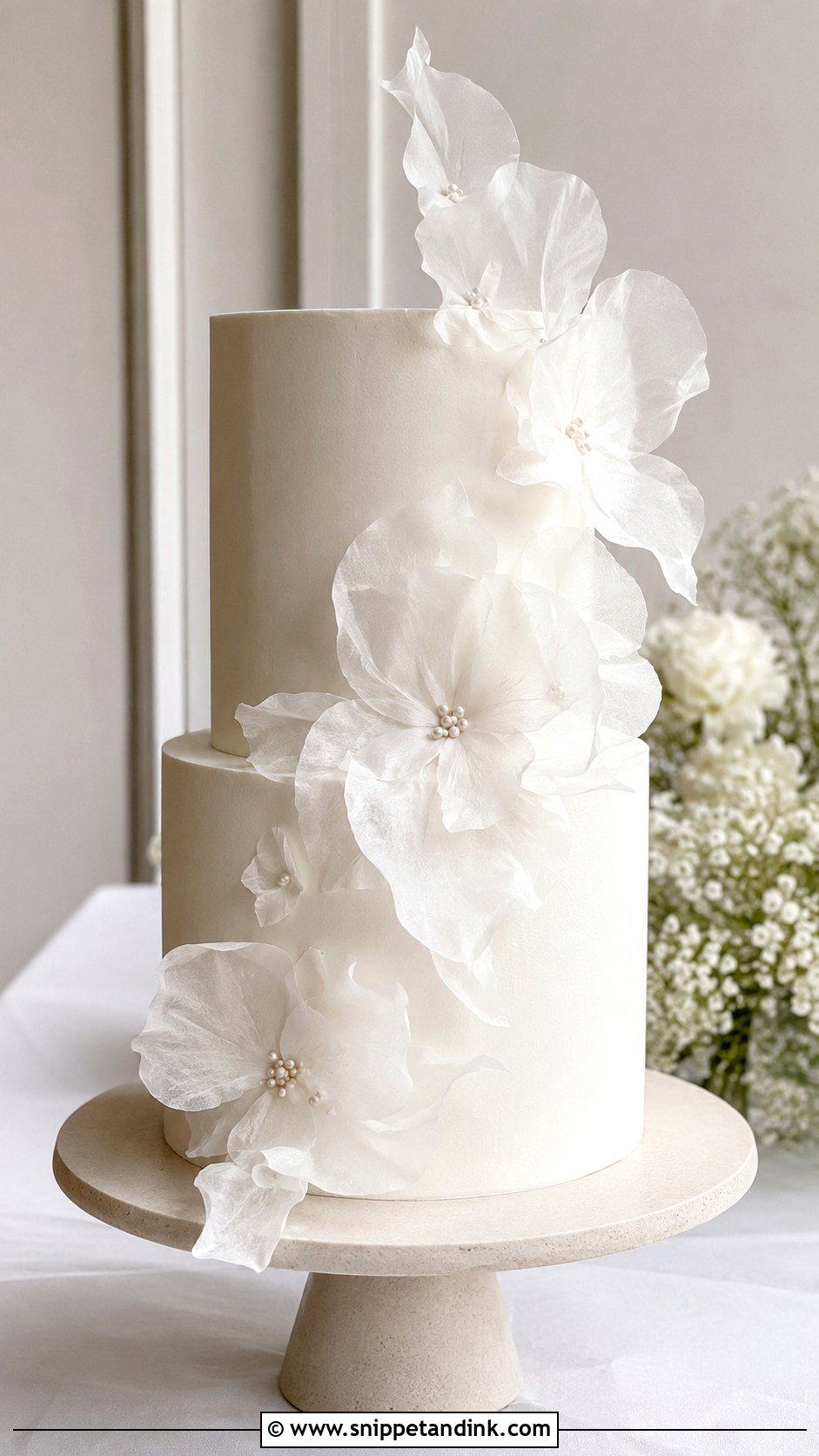
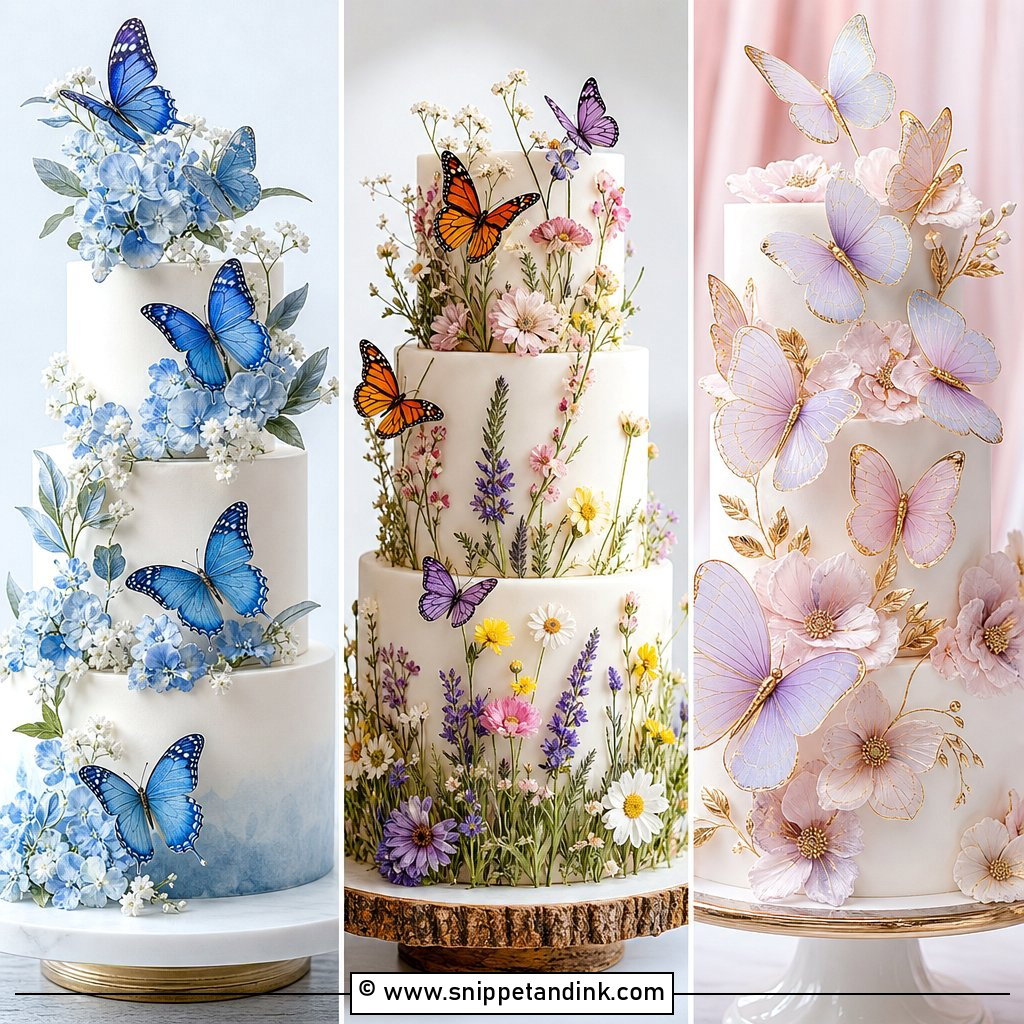
Wafer paper petals are thin enough to look like they’re floating. I shape them into large blooms, lifted edges or soft ruffles, and they add movement without weight. White, ivory, blush and pale blue work best because the paper’s slight translucency shows through. They suit minimalist and gallery-style venues. Wafer paper reacts to humidity, though, so on a muggy day the petals relax and lose their curl, and I’d suggest sugar instead for a humid outdoor reception. Vanilla, coconut, champagne or citrus suit its clean look.
7. Rose Petal Wedding Cake
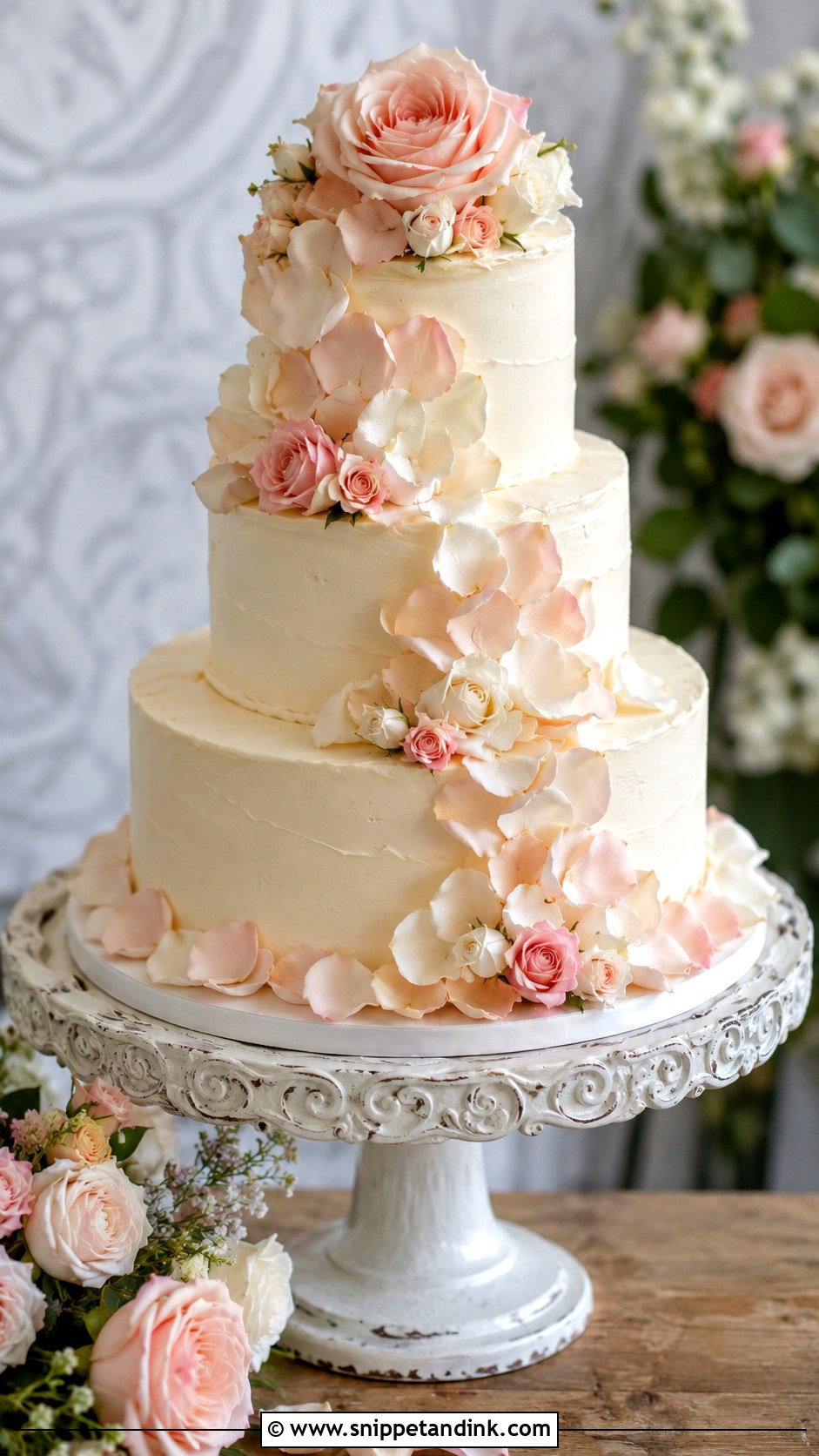
Rose petals are the classic choice, and they can be sugar, piped or real, edible petals from unsprayed roses. A loose scatter looks relaxed; a full cascade looks formal. Rose works in white, blush, mauve and burgundy. Fresh edible rose petals brown at the edges after a few hours out of the fridge, so I add them at the venue and keep a few spares. Smooth ivory frosting and a plain stand let them carry the cake. Rose vanilla, raspberry, almond, chocolate or champagne inside; if you want rose in the sponge, go lightly.
8. Orchid Petal Wedding Cake
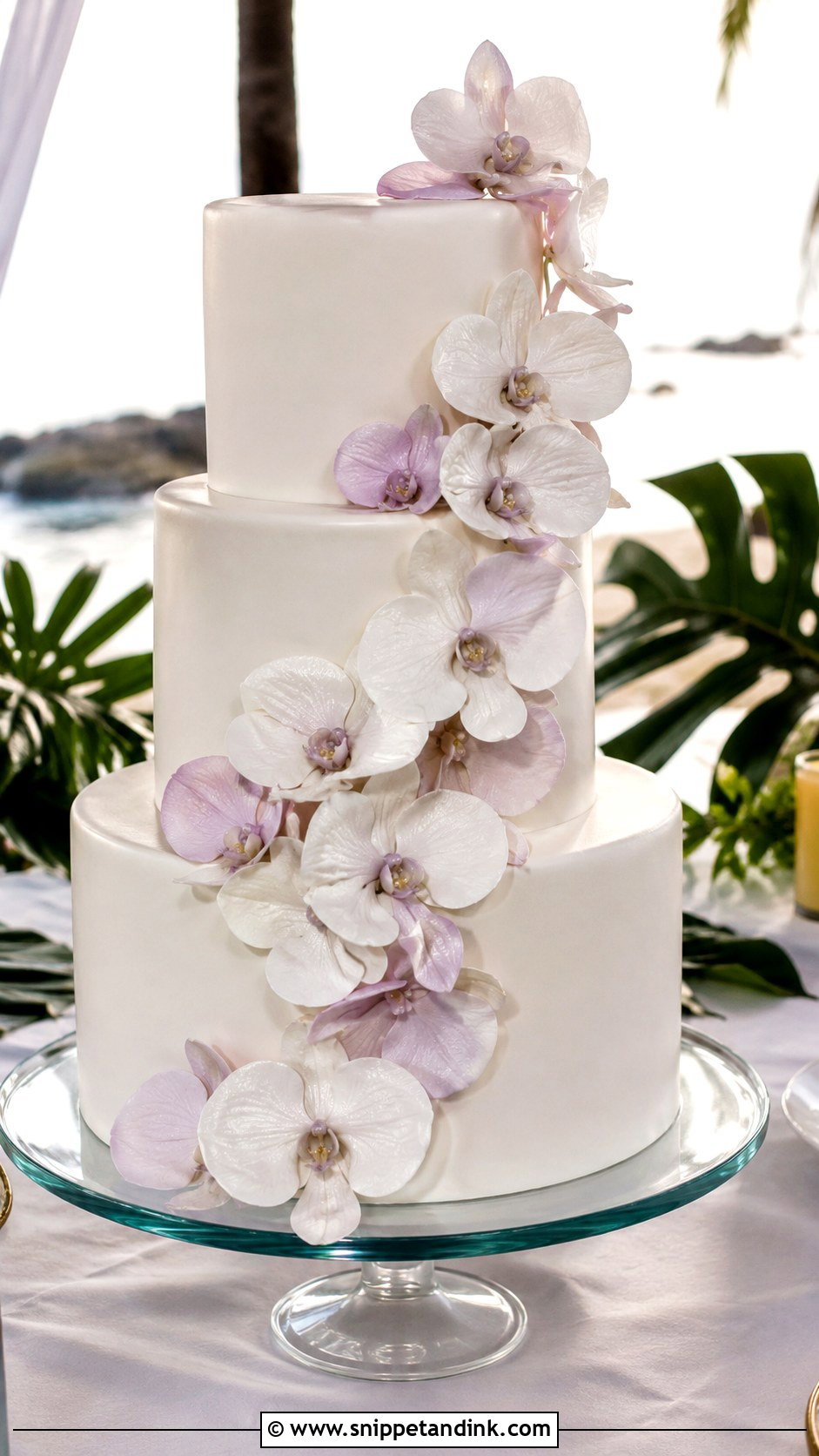
Orchid petals are big and sculptural, and in sugar or wafer paper they make a clean cascade down smooth tiers. White feels luxurious, while lavender, peach or magenta add personality. I keep everything else plain, since orchids already carry the cake, and they’re a natural match for beach and destination weddings. Sugar orchid petals are fragile at the edges, so I box them separately and assemble on site. Coconut, passion fruit, vanilla, mango or white chocolate sponge all suit the tropical feel.
9. Peony Petal Wedding Cake
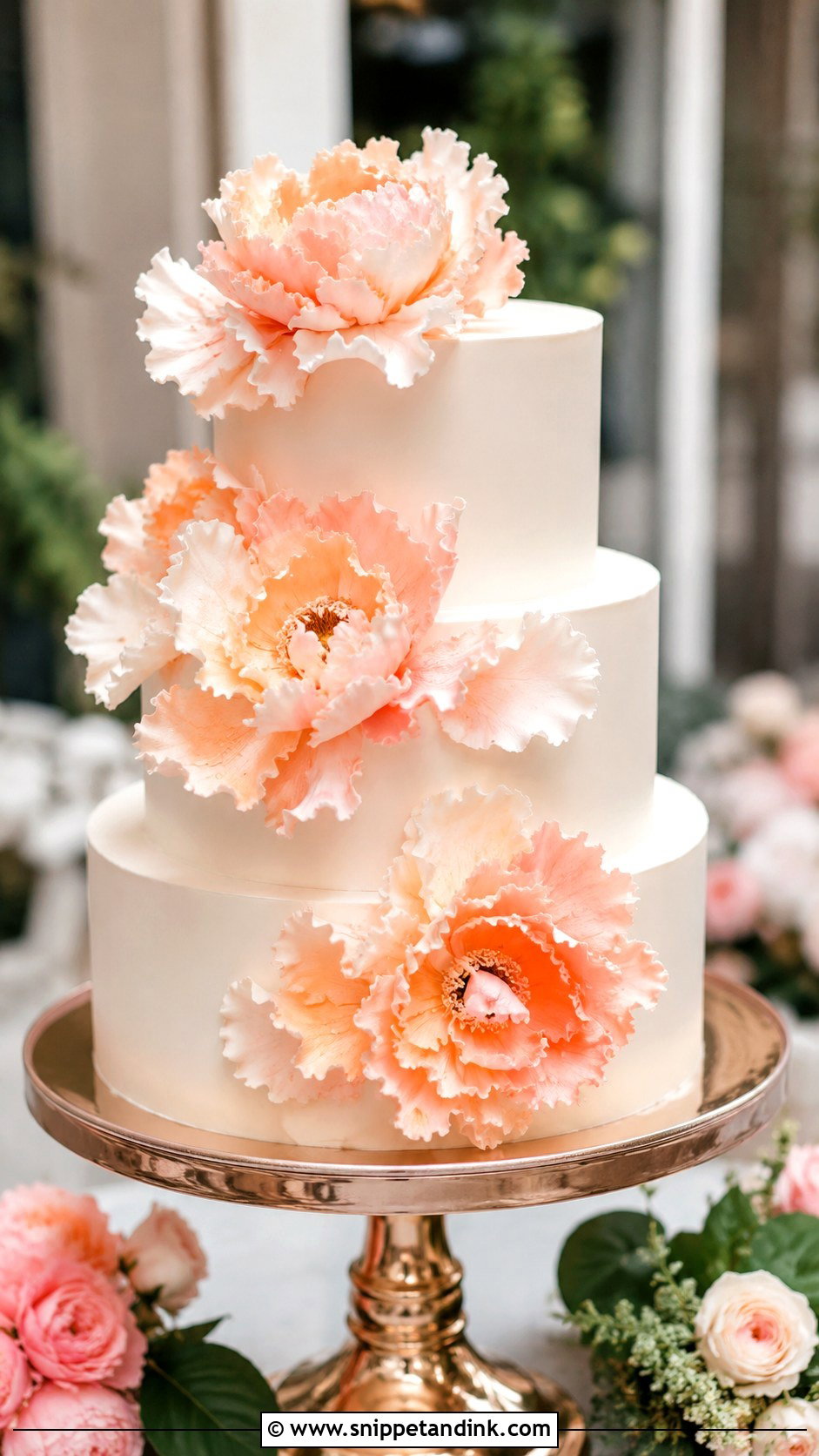
A peony petal wedding cake gets its fullness from the sheer number of petals in each bloom, which is also why a sugar peony takes so long to make. One oversized peony on the side of a tier looks modern; several together feel like a lush garden. Blush, cream, coral and pale pink are the usual shades. Because peonies bring so much texture, I keep the icing smooth underneath. Almond, vanilla, strawberry or lemon keep the inside bright.
10. Daisy Petal Wedding Cake
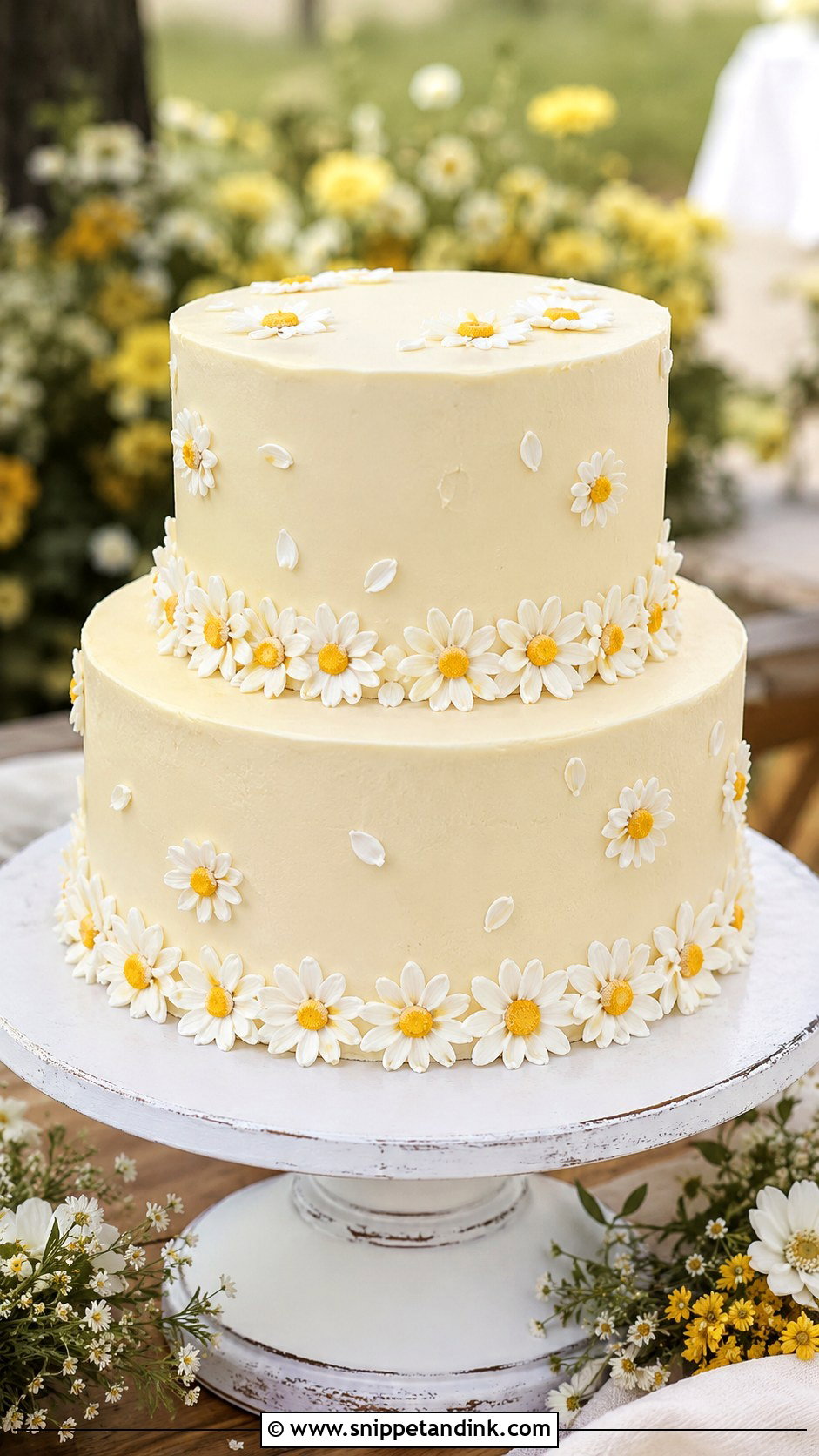
Daisies are cheerful without trying, and on a wedding cake that’s their strength, as long as the petals are placed neatly rather than at random. Small white daisies with yellow centres can be scattered around the tiers or gathered into a border. Backyard and barn receptions suit it. Semi-naked buttercream relaxes it; smooth white frosting polishes it. Fresh daisies wilt quickly in heat, so outdoors in summer I’d make them in sugar or pipe them. Lemon, vanilla, honey or coconut pairs well.
11. Wildflower Petal Wedding Cake
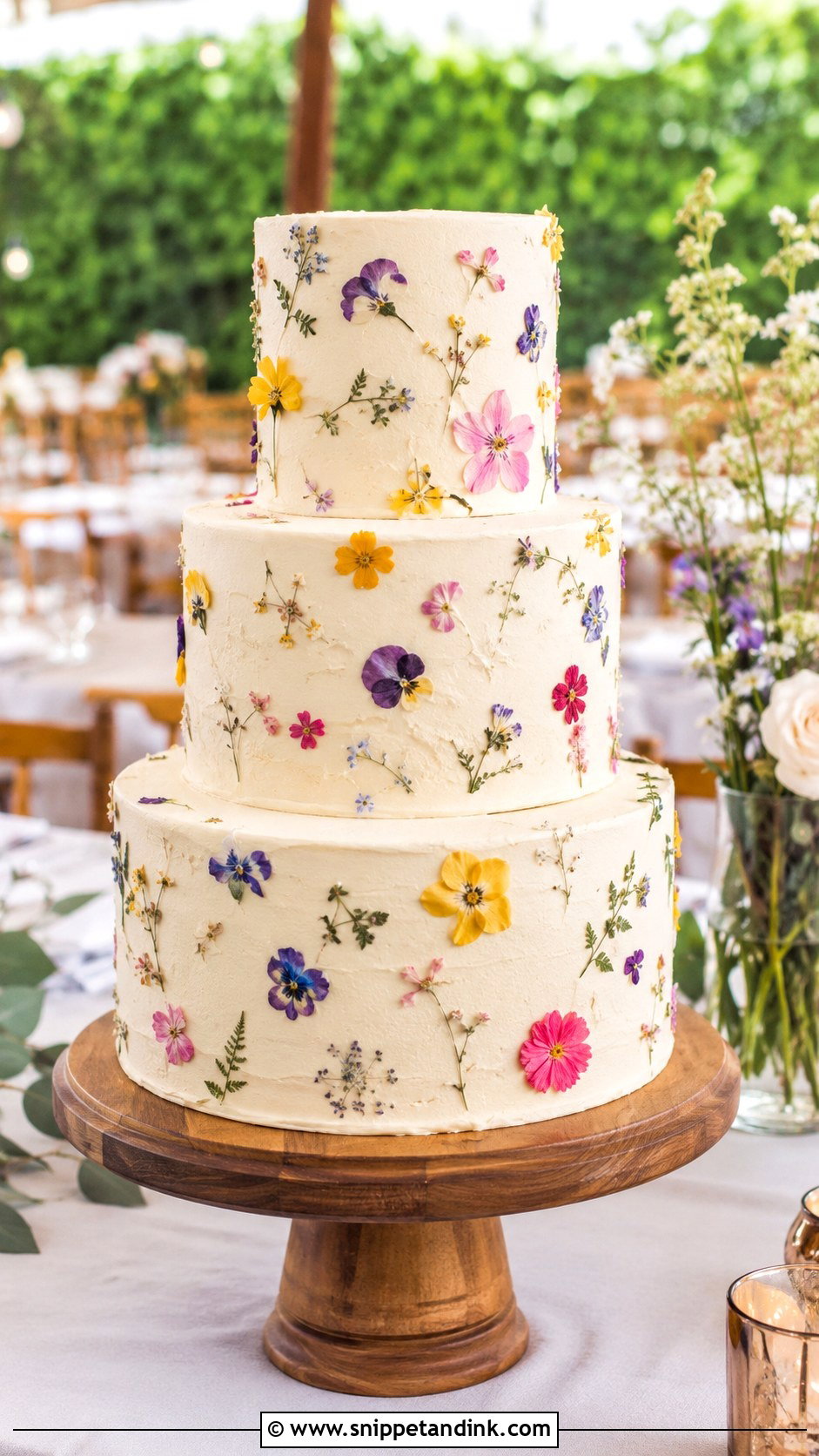
A wildflower petal wedding cake uses edible petals in yellows, purples, pinks and blues, pressed into buttercream or arranged around the tiers like a meadow. It should look natural, but I still limit the palette to three or four colours drawn from the wedding flowers, because ten colours just look messy. White or ivory icing makes them stand out. Vanilla, lemon, honey, lavender or berry sponge echoes the garden feel.
12. Cascading Flower Petal Wedding Cake
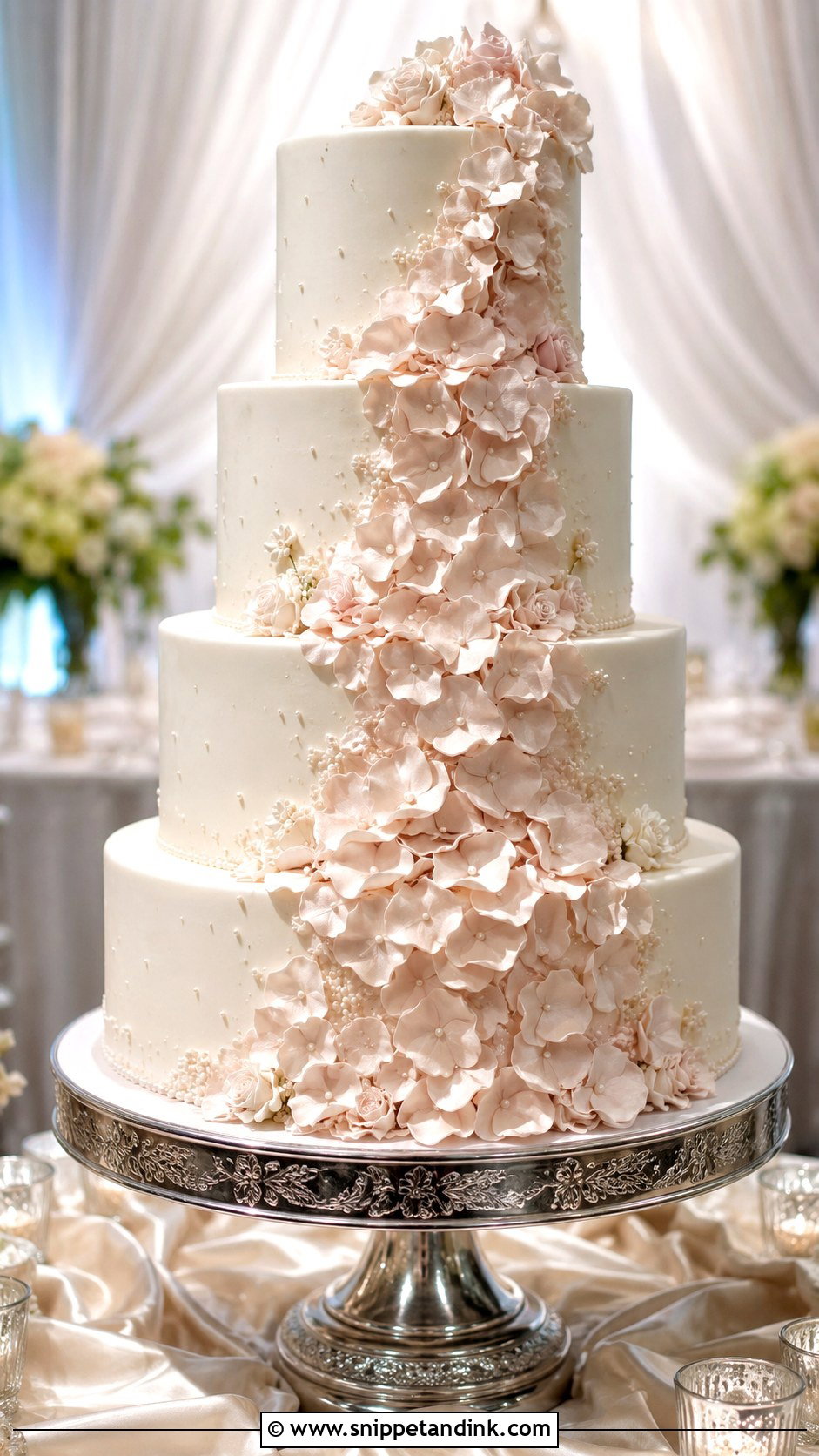
Petals running from the top tier down one side give you height and movement, which is why a cascade suits tall cakes best. It can use sugar petals, wafer paper petals or edible flower petals. I build it from larger petals at the top to smaller ones near the base so it looks like it’s falling naturally, and I ask which side faces the guests first. Ivory frosting, blush petals and a little gold detail suit a formal reception, and the colours should come straight from the bouquet.
13. Scattered Flower Petal Wedding Cake
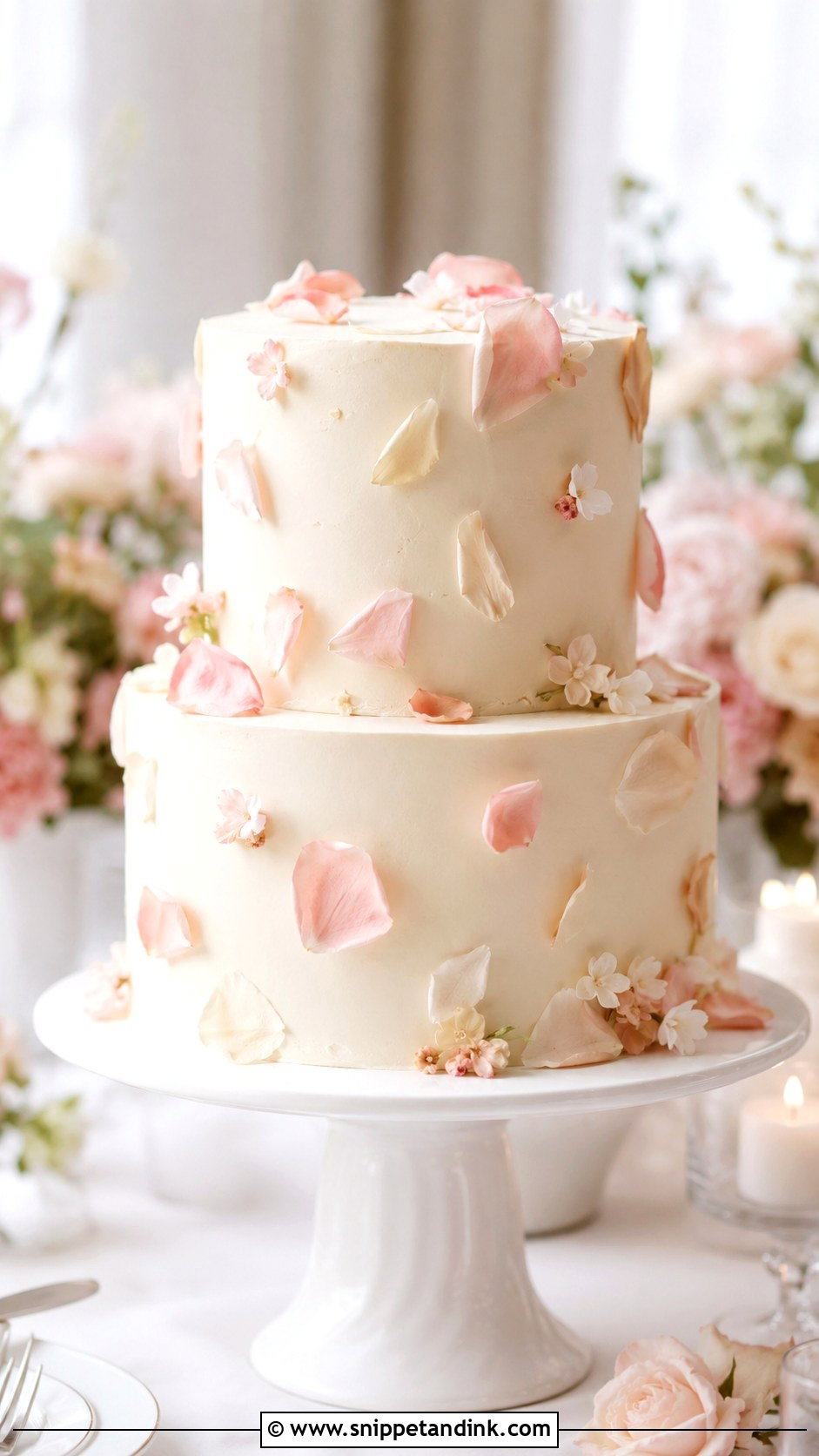
Petals spaced across the cake like confetti look light and airy. They sit well on smooth white buttercream, a pale pink coat or a barely tinted ivory. One colour family stays elegant; mixed pastels feel more like a garden party. Spacing is the skill here, and I mark the pattern with tiny dots before placing a single petal, because random spacing done freehand always ends up clumped. Vanilla, lemon, almond or raspberry sponge keeps it light.
14. Ombré Flower Petal Wedding Cake
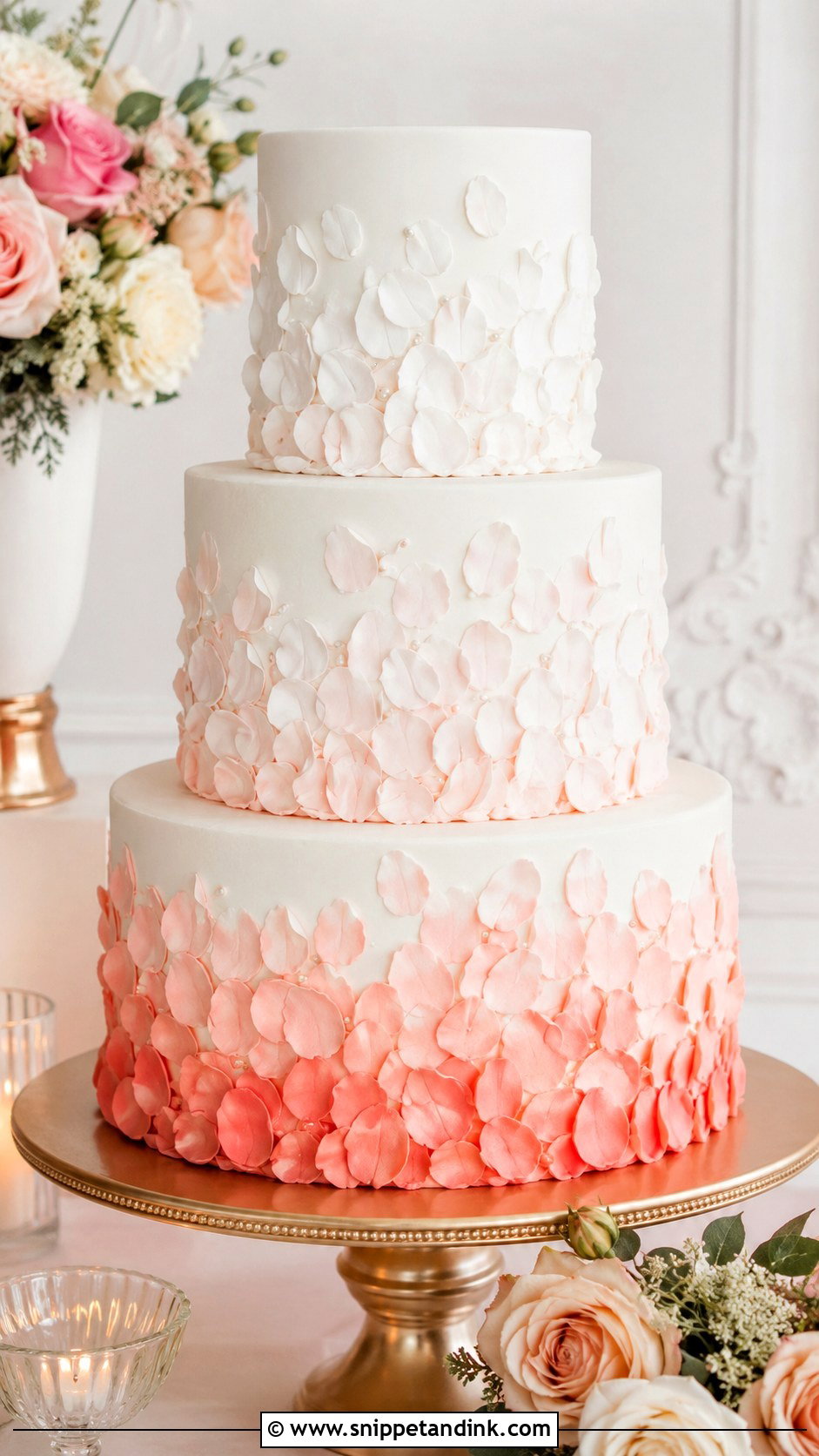
Ombré petals move through a colour as they descend the tiers: white to blush, peach to coral, lavender to plum. I mix each shade from the same base colour so the steps look related. The frosting stays simple, letting the petals carry the gradient. If your wedding has a defined palette, this ties the cake to it directly. Vanilla raspberry, lemon, strawberry or champagne all work, and I’d match the filling to the deepest shade at the base.
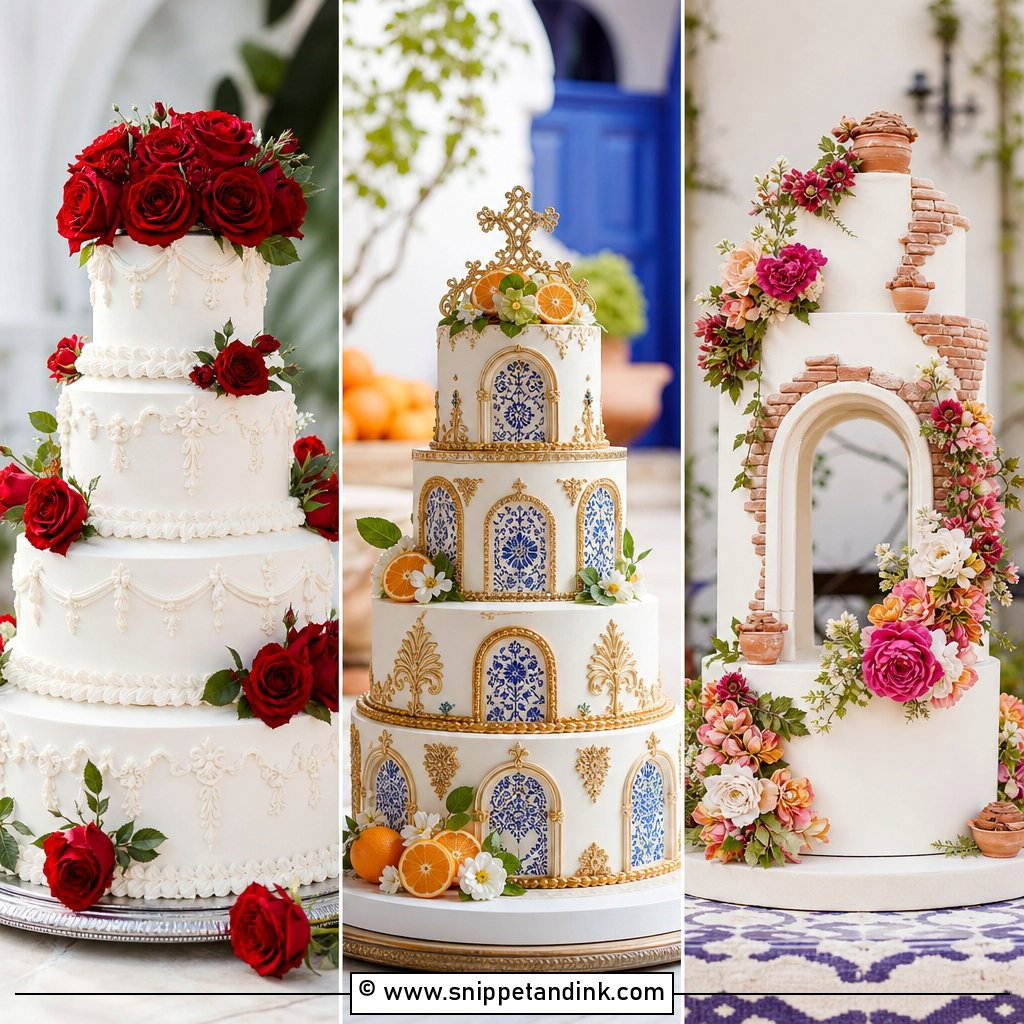


15. Gold Flower Petal Wedding Cake
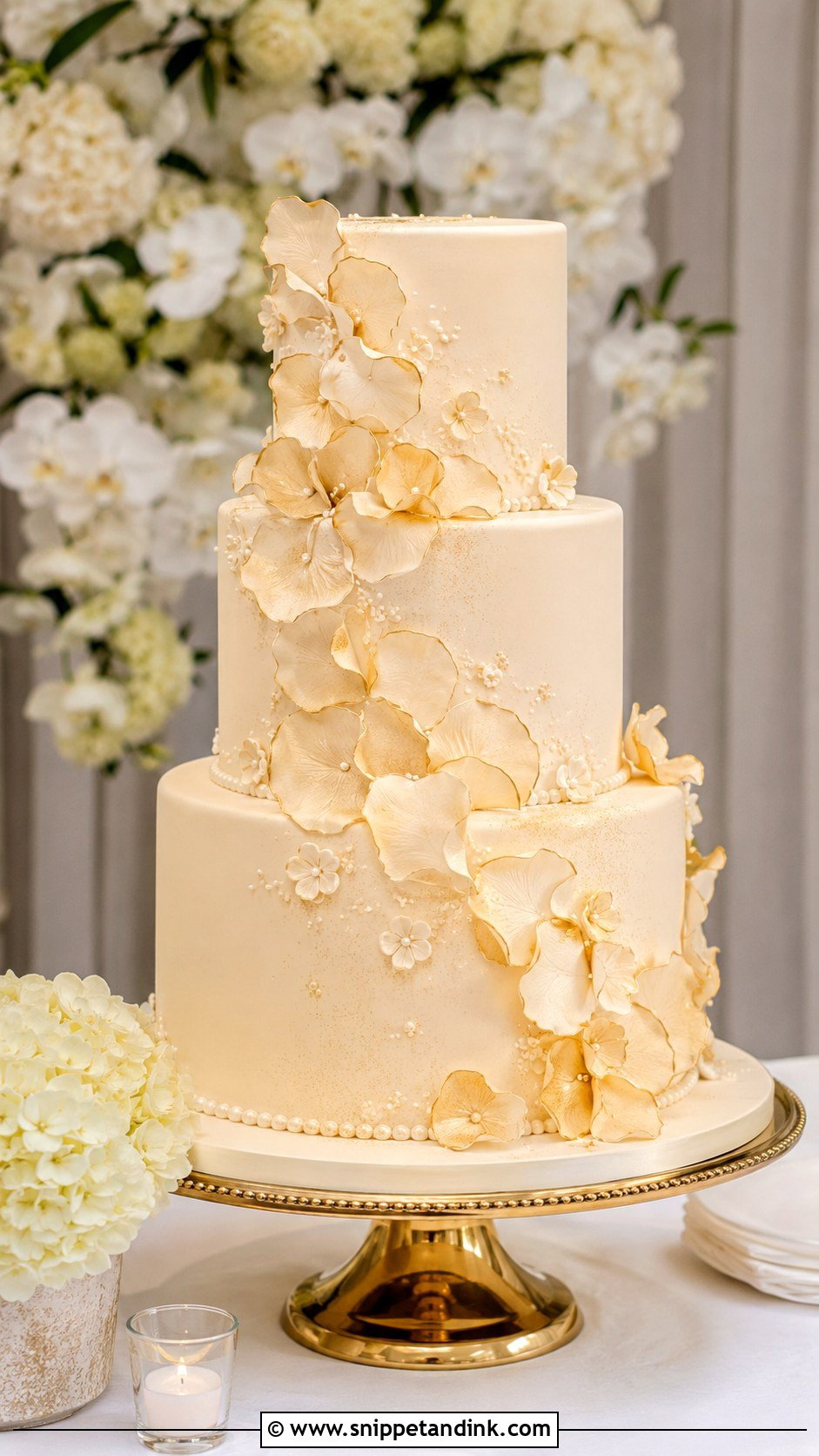
Gold petals stay romantic as long as there aren’t too many. I brush petals with edible gold lustre, edge them in gold, or mix a few metallic petals in among ivory ones, keeping most of the cake white or cream. Evening receptions and black-tie weddings suit it. Sugar petals take gold dust best, since the dust clings to the matte surface. Not every gold product sold for cakes is meant to be eaten, so I only use lustres labelled edible. Vanilla bean, chocolate, almond or caramel sponge matches its rich mood.
16. Blue Flower Petal Wedding Cake
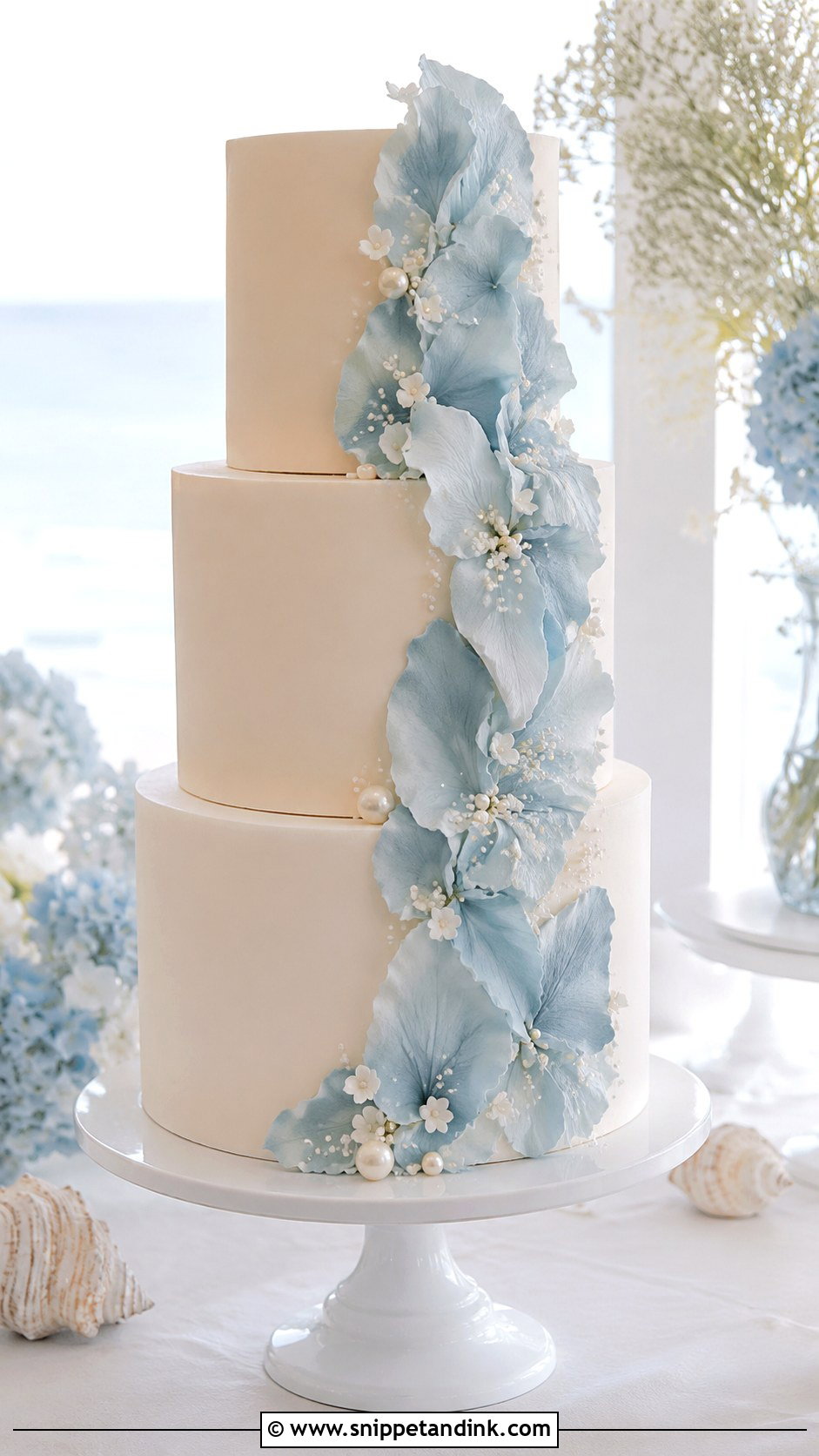
Blue petals can be your “something blue”, and they suit coastal weddings and cool palettes well. Pale blue looks airy; dusty blue looks more modern. White buttercream, ivory fondant and pearl accents finish it. Soft blue works better than bright, which tends to look artificial on a wedding cake. Few fresh edible flowers are truly blue, so I usually make these in sugar or wafer paper. Vanilla, blueberry, lemon, coconut or white chocolate inside keeps the cool palette inviting.
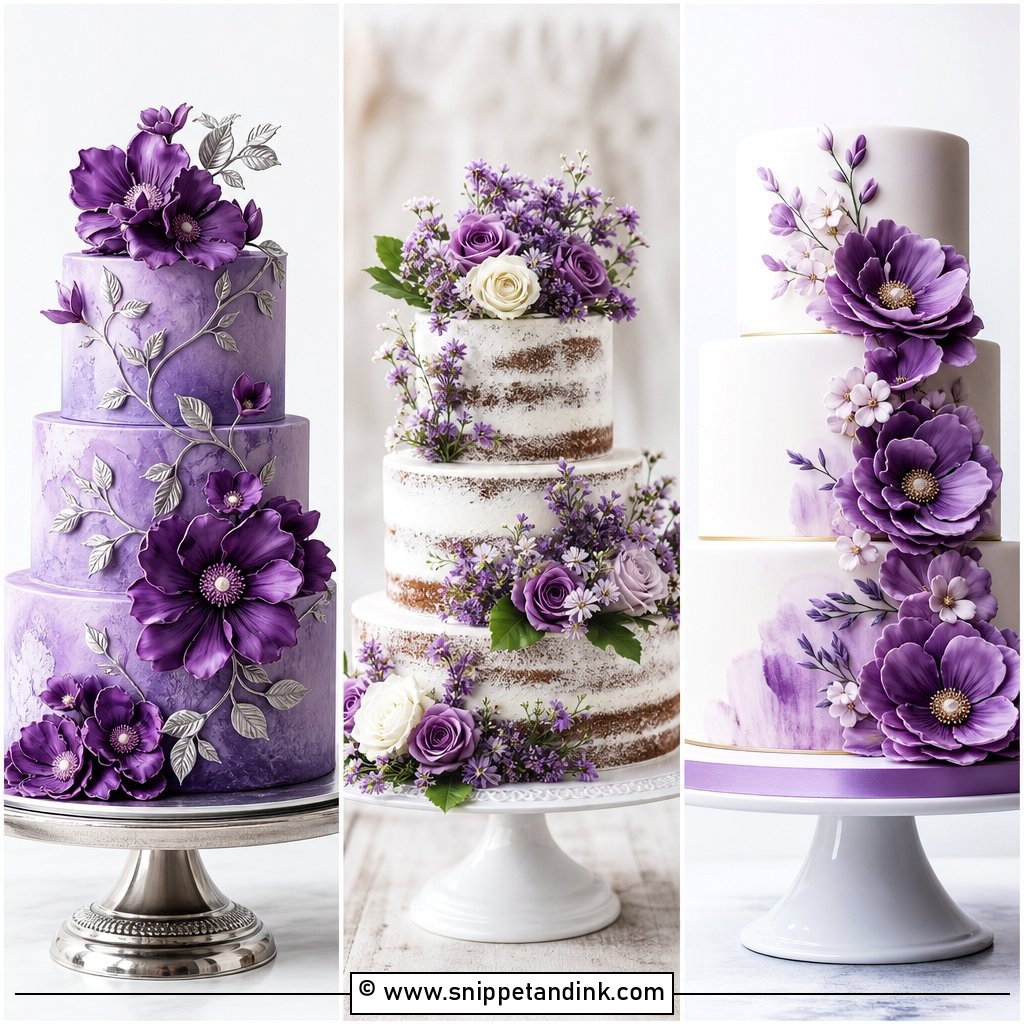
17. Lavender Flower Petal Wedding Cake
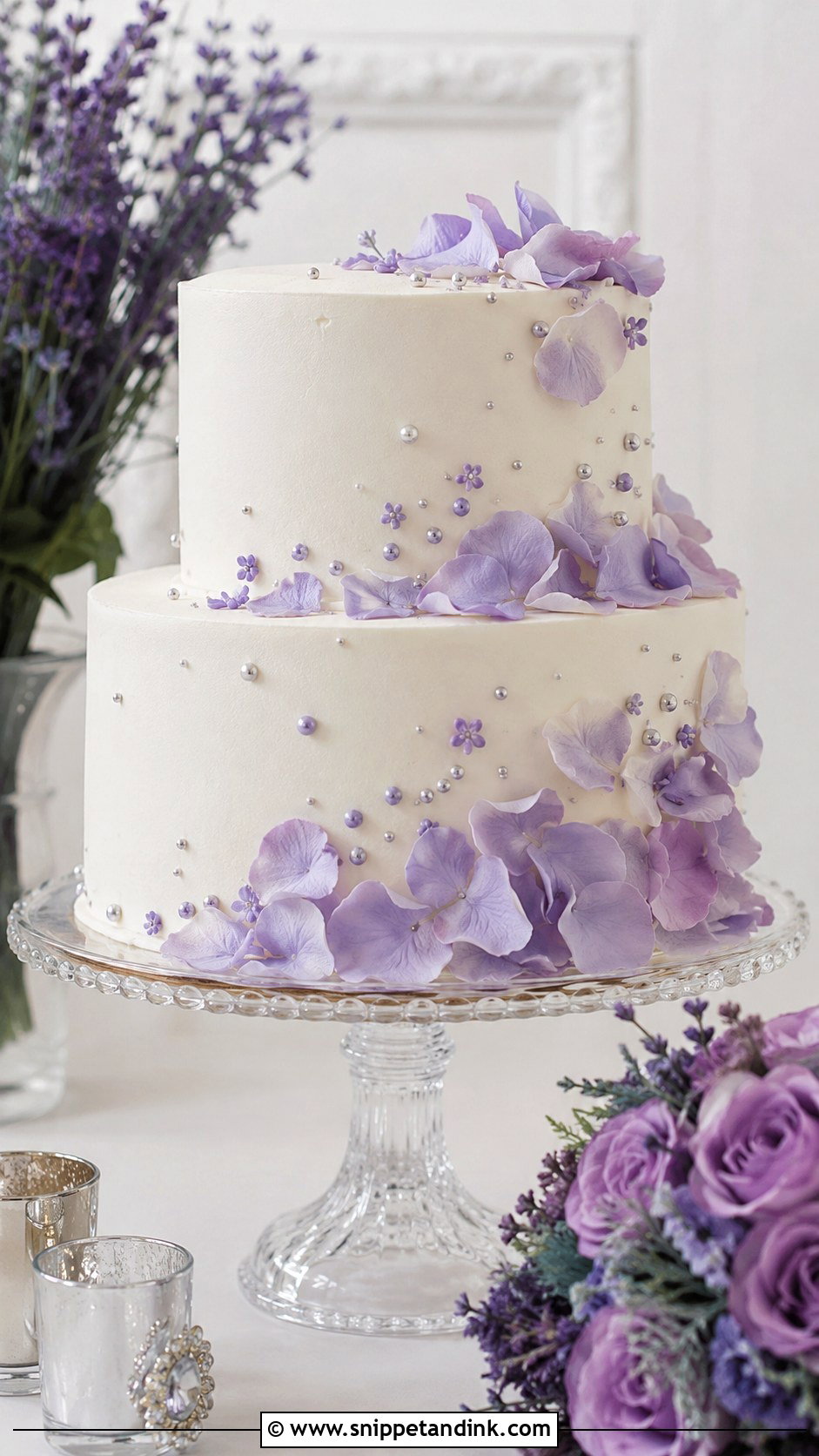
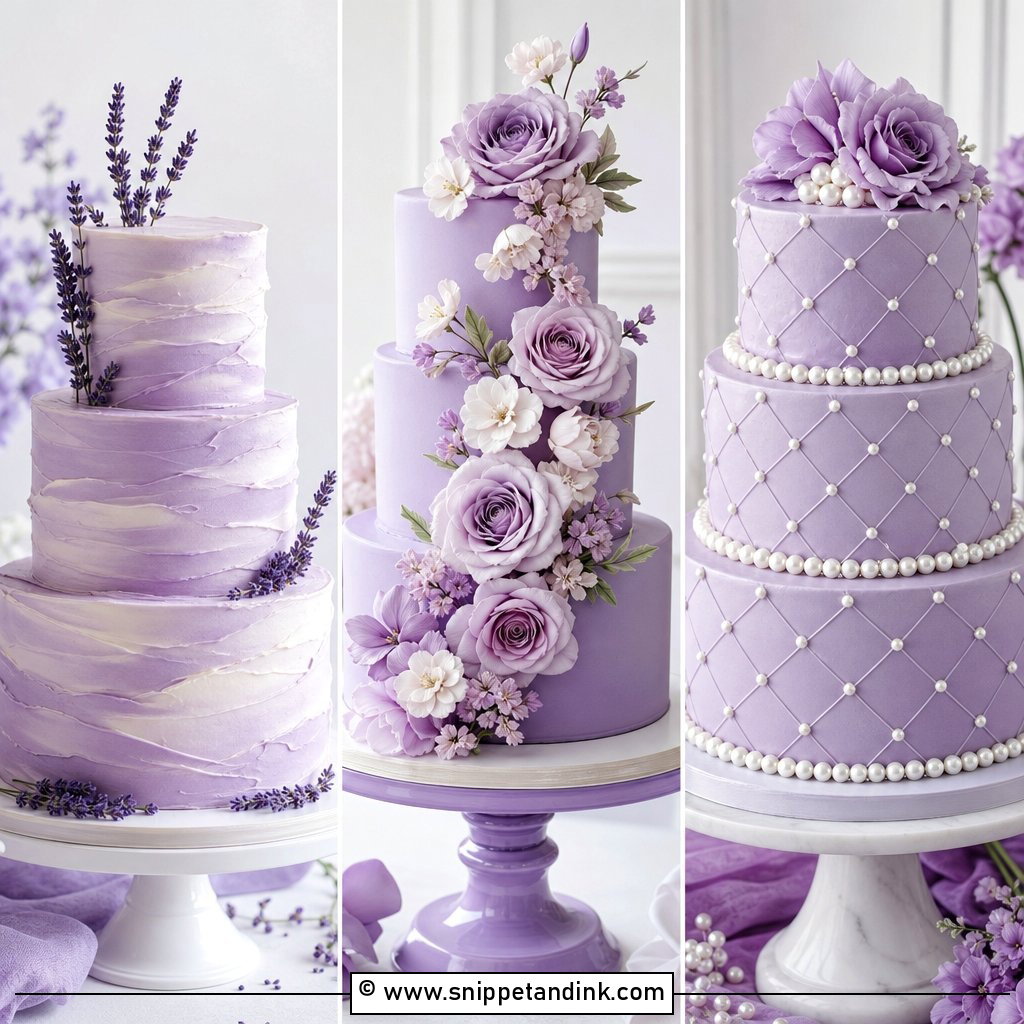
A lavender flower petal wedding cake looks calm and suits spring and summer. Soft purple petals can be clustered, pressed into buttercream or used as a gentle cascade, with ivory frosting, silver details and some greenery. A muted shade reads grown-up; bright violet can look like a child’s party. Lavender vanilla, lemon, honey, almond or blackberry sponge brings the theme inside, though culinary lavender is strong, and a little too much tastes like soap.
18. Minimal Flower Petal Wedding Cake
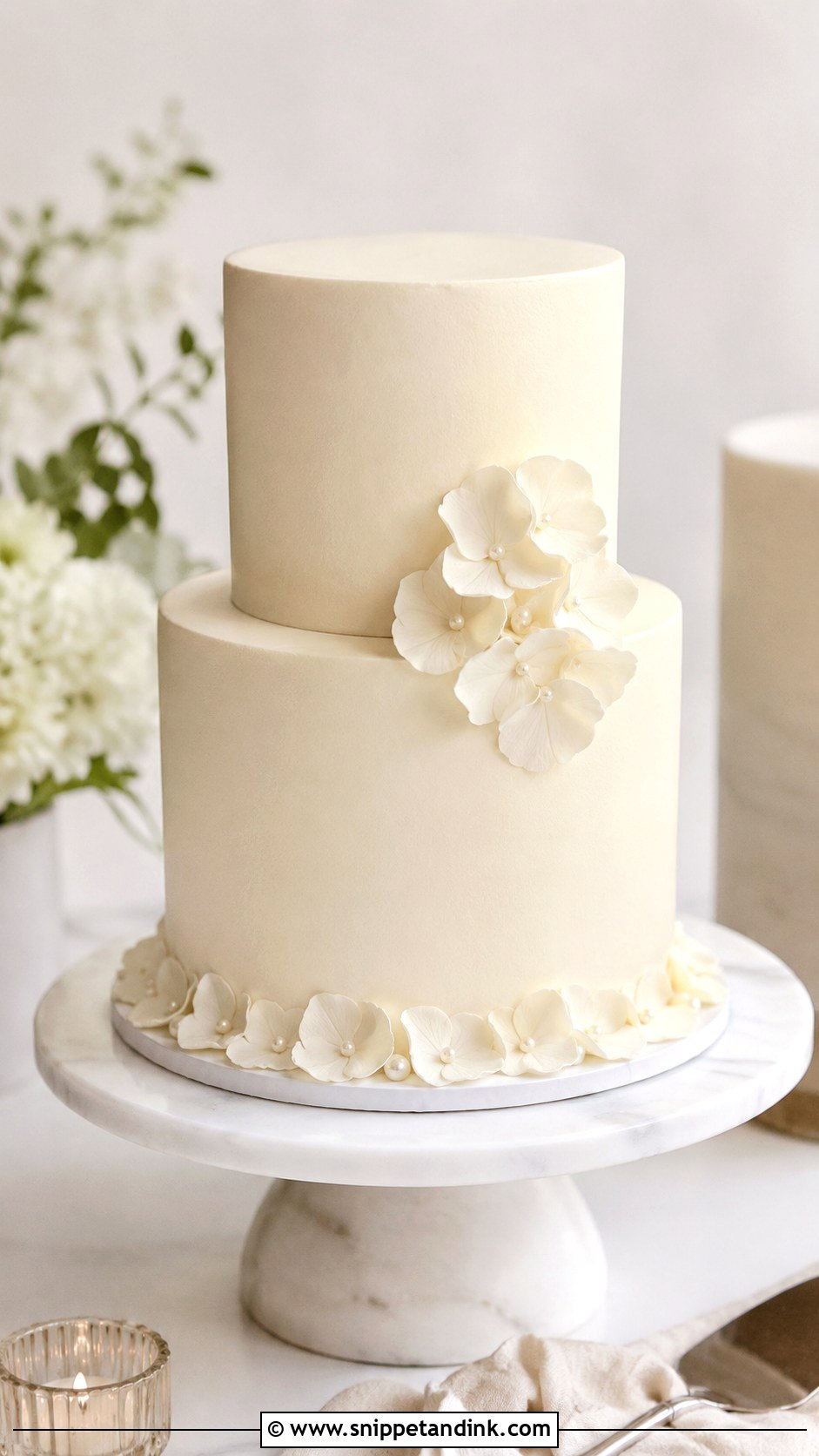
A minimal petal cake shows how little you need. I start with a smooth white or ivory cake and add one small petal cluster, a single bloom or a crisp petal border. Plenty of blank space is the point, so the icing finish has to be flawless, since nothing hides a dent. A slim two-tier cake suits it, especially for intimate weddings and modern rooms. Vanilla bean, almond, lemon or white chocolate keep the inside as refined as the outside.
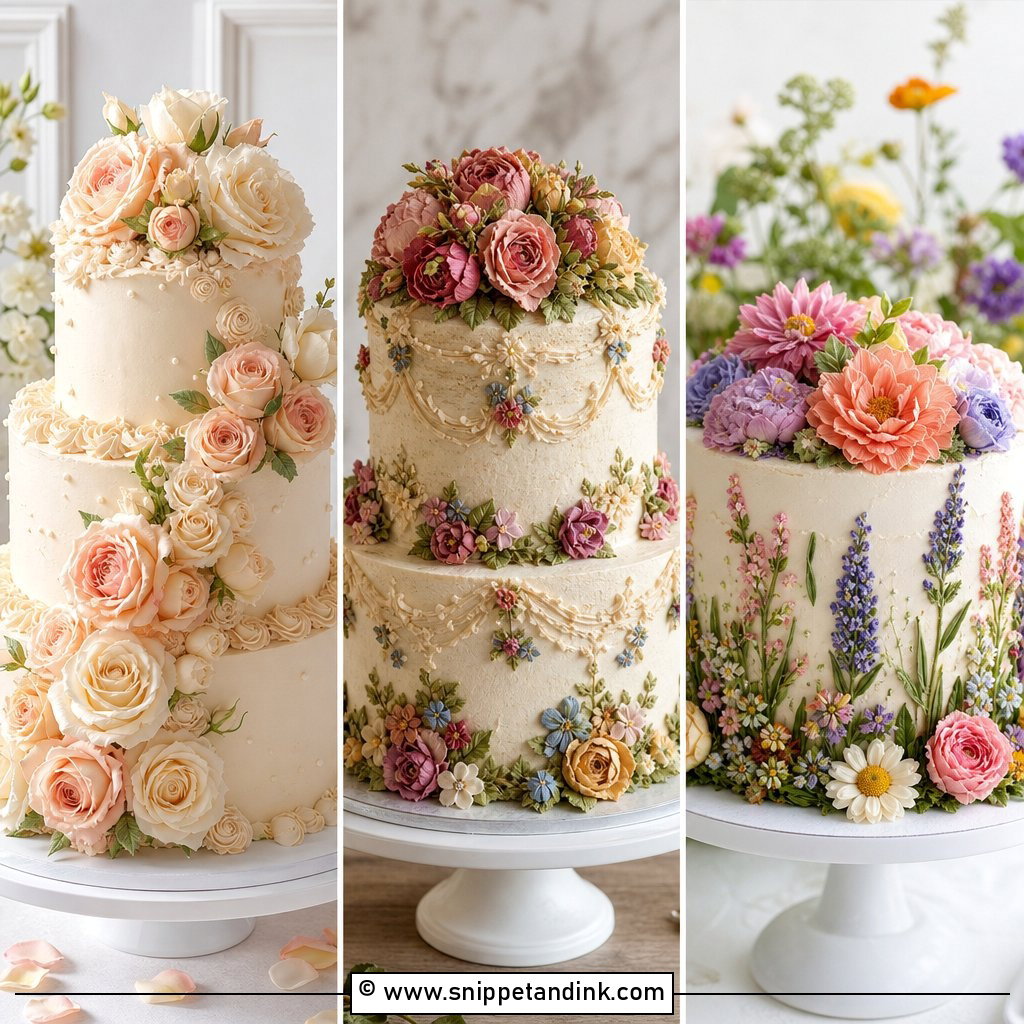
19. Garden Flower Petal Wedding Cake
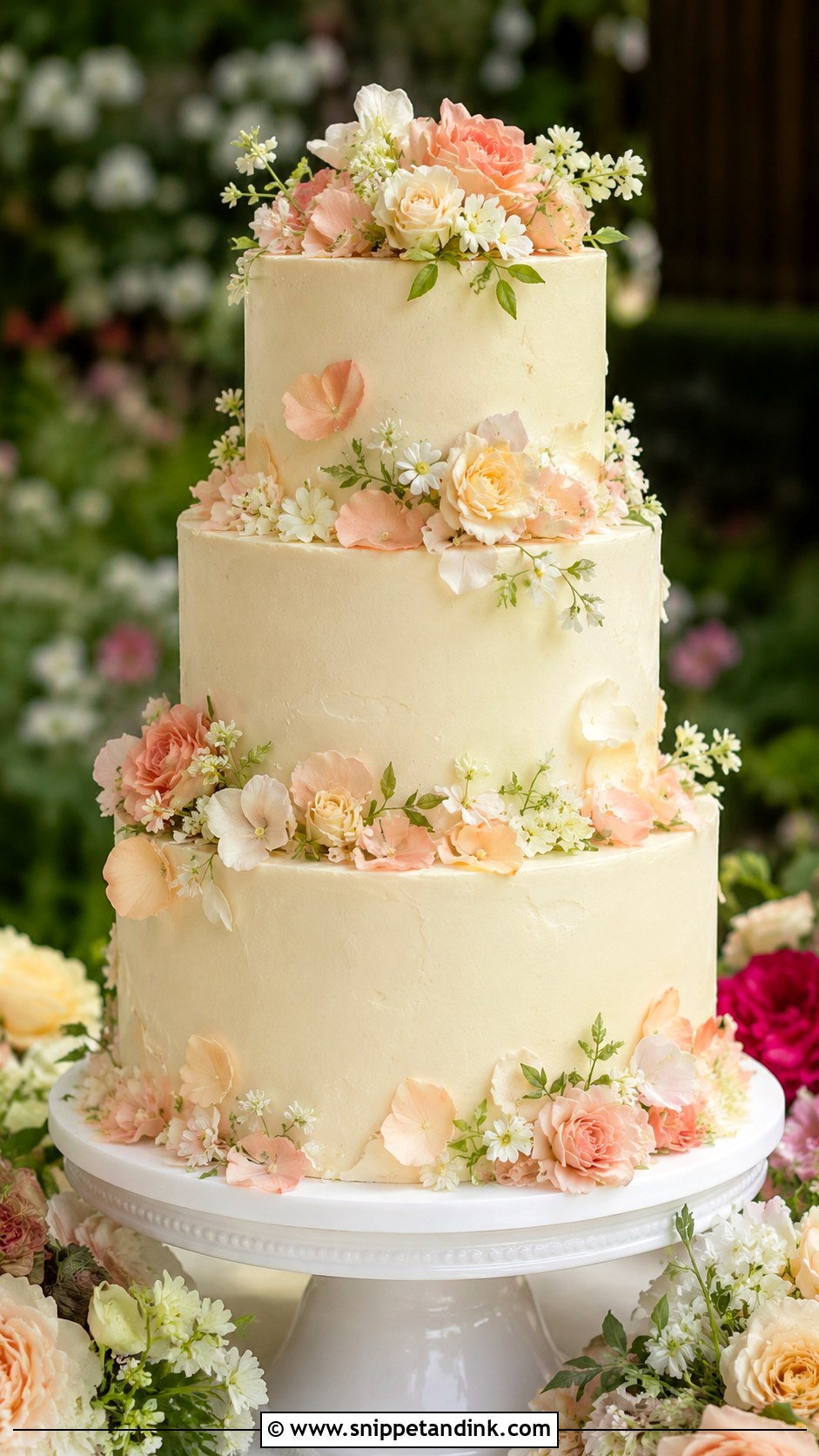
Garden petal cakes mix edible petals, sugar flowers, small blossoms and greenery-style accents around the tiers. The aim is a path through a garden, not a crowded flower bed, so I leave space between clusters. Cream, blush, peach and soft green make a reliable palette. A pedestal stand with the reception florals nearby connects it to the room. Vanilla, lemon, strawberry, honey or elderflower sponge suit the garden mood, and elderflower with lemon is one of my favourite summer pairings.


20. Petal Texture Wedding Cake
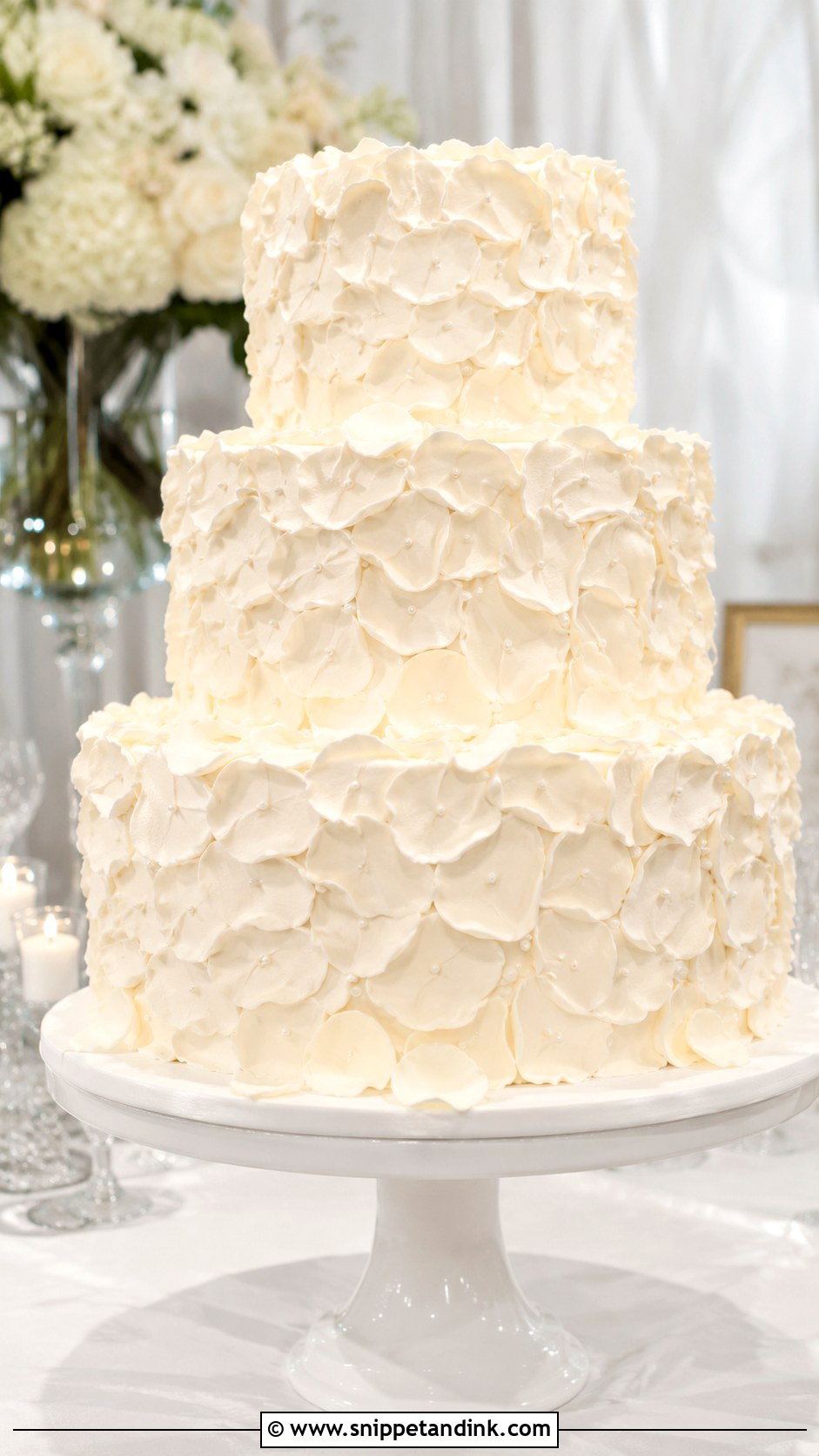
Here the cake itself becomes the flower. Instead of adding loose petals, I shape frosting or fondant into repeating petal layers that wrap each tier, usually piped with a petal tip or cut and overlapped in fondant. It gives depth from every side and suits couples who want a floral cake without big toppers. White looks classic, blush romantic, and ivory with pearls formal. There’s already plenty of movement, so I keep extra decoration to a minimum. Vanilla, almond, coconut or champagne match its finish.
Rose, Lavender and Elderflower Without the Soapy Aftertaste
Couples often want the flowers on the outside to show up in the flavour. It can work very well, but floral flavours are easy to overdo, and there’s a fine line between perfumed and pleasant.
Keep the flower in one layer
I put the floral note in a syrup or a filling rather than the sponge, the frosting and the filling all at once. One layer gives a clear hint; three give you a mouthful of potpourri.
Pair it with fruit or citrus
Rose sits well with raspberry or lychee, lavender with lemon or blackberry, and elderflower with lemon or strawberry. The fruit carries the flavour and keeps the flower in the background.
Taste it at room temperature
Floral flavours get stronger as cake warms up. I serve tasting samples at the temperature they’ll be eaten, not straight from the fridge, so nobody is surprised at the reception. Ask for a plain tier too; not every guest enjoys lavender.
Bring the Bouquet Photo to Your Tasting
Petal cakes fit almost any wedding because the petal type does most of the work. Sugar gives the most control, wafer paper looks light and artistic, piped buttercream adds soft texture and pressed petals feel freshly picked. Your venue, season, budget and floral plan narrow the choice. When you meet your baker, bring pictures of your bouquet, dress, table decor and colour palette, plus any flavours you love, so the inside and outside get planned together.
You'll Like These Ideas:




Leave a Reply